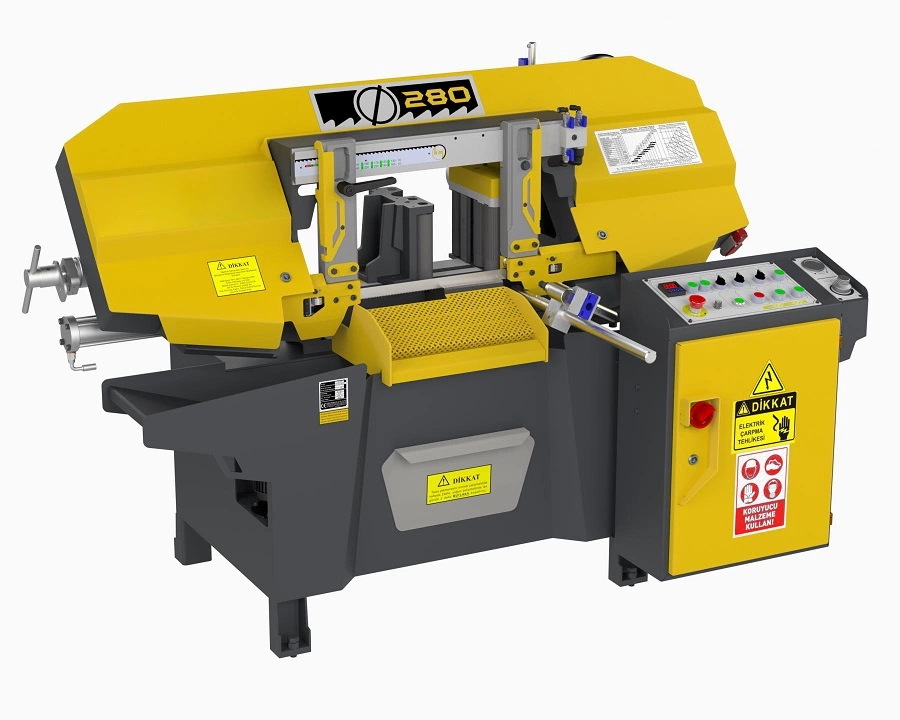
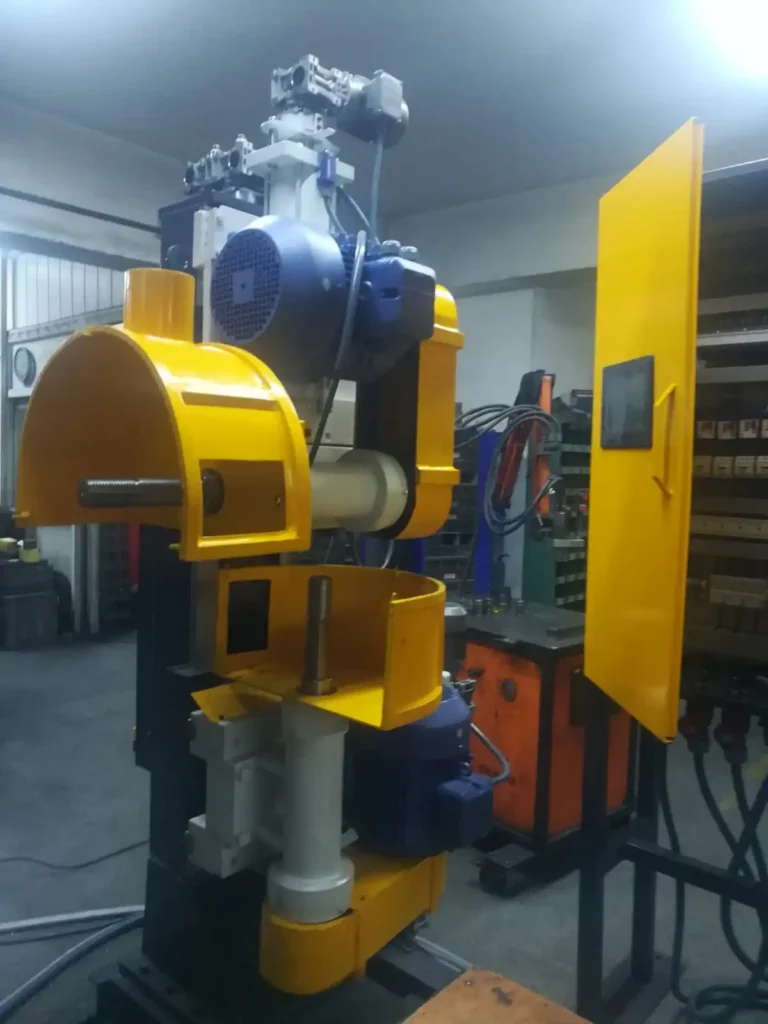
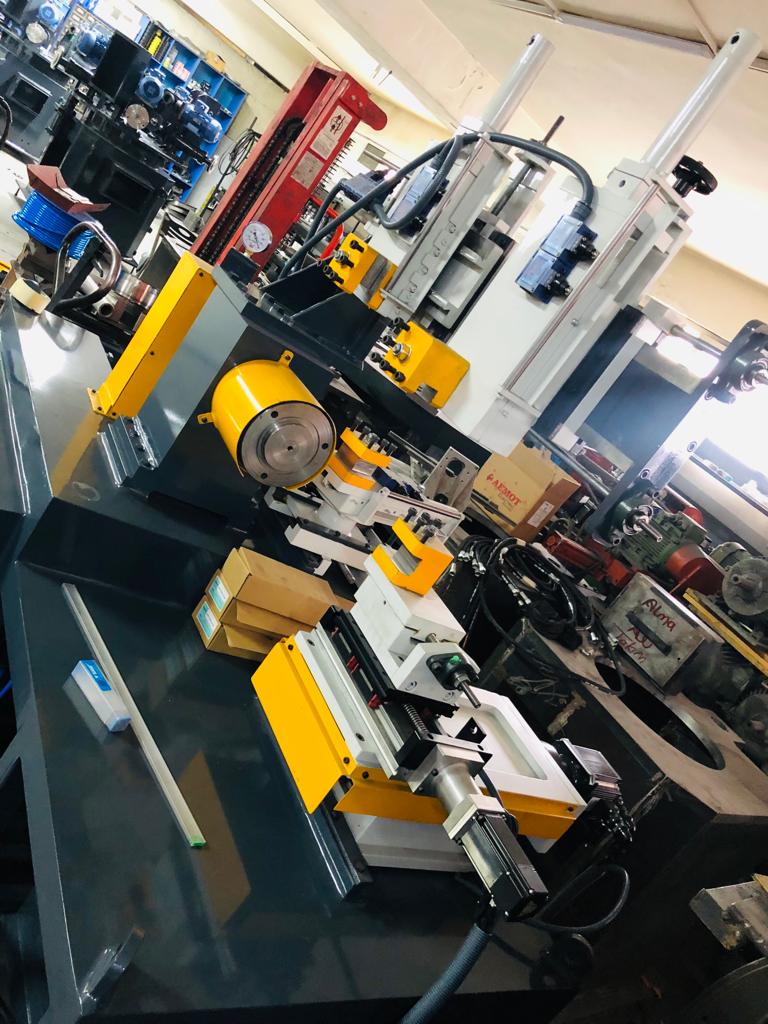
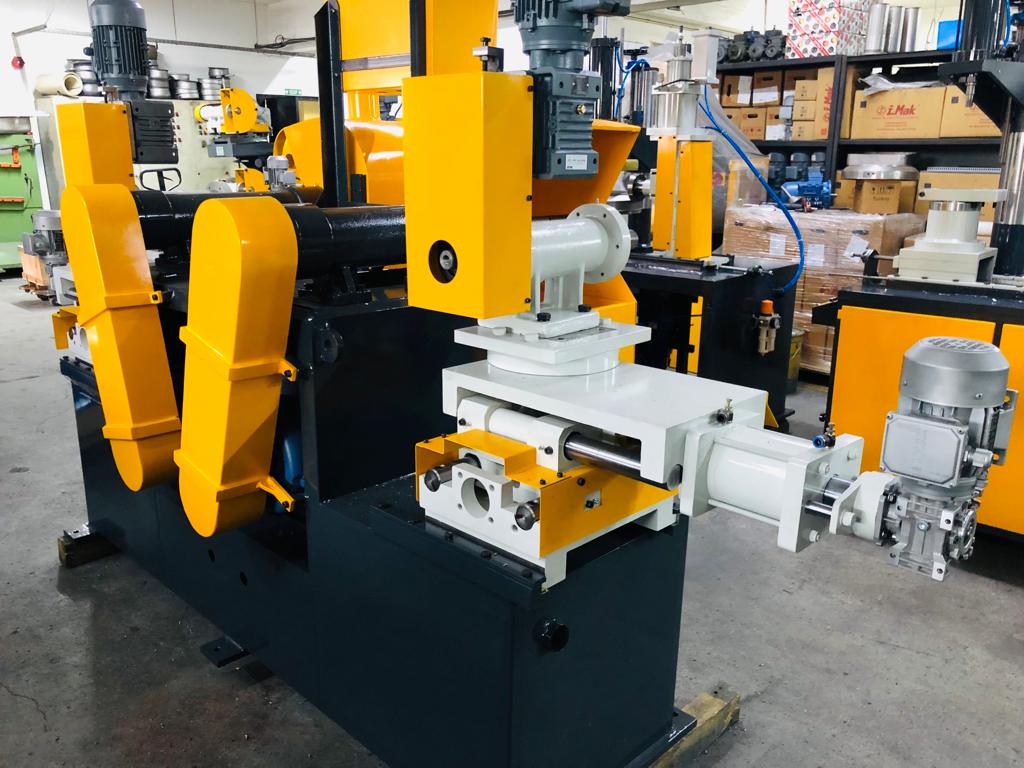
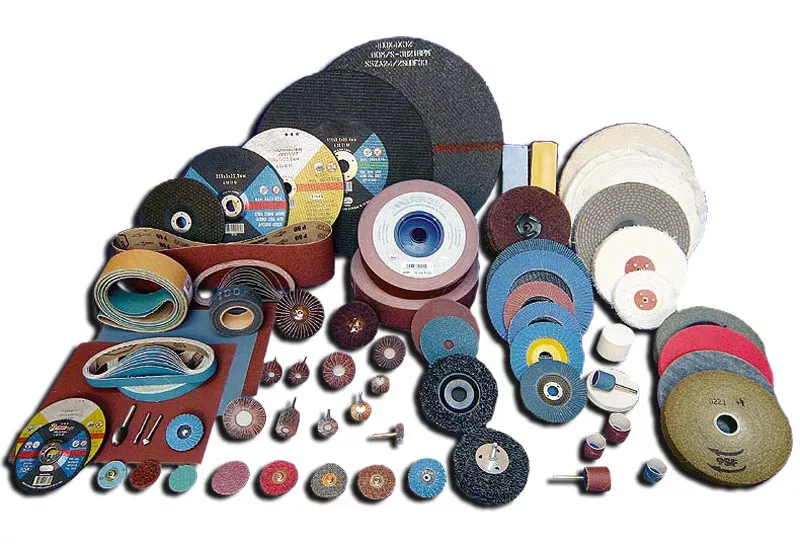
We manufacture the Second Hand Metal Cutting Bandsaw for Sale to cut metal in different forms. These machines are used in metalworking industries for cutting operations
We sell the Second Hand Metal Cutting Bandsaw for Sale to cut metal in different forms. When it comes to metal-cutting machinery, buying a second-hand machine can offer a cost-effective solution for businesses and individuals.
A metal cutting bandsaw is a must-have for any metalworking shop, allowing for quick and precise cutting of metal pieces of different shapes and sizes. However, purchasing a brand-new metal cutting bandsaw can be quite expensive. This is where second hand metal cutting bandsaws come into play. They offer a more affordable option for those in need of a reliable saw.
For those who are looking to save money while still obtaining a reliable metal cutting tool, second hand options are available. In this essay, we will discuss the benefits and considerations of purchasing a used metal cutting bandsaw, as well as how to use this tool effectively.
Choosing the Right Second Hand Metal Cutting Bandsaw for Sale
When it comes to finding the right second hand metal bandsaw for sale, there are a few important factors to consider. First and foremost, it’s important to find a reputable seller who has properly maintained and serviced the saw. This will ensure that the saw is in good working condition and will perform as expected.
Another important factor to consider is the size and type of saw. There are two main types of metal cutting bandsaws: vertical and horizontal. Vertical saws are ideal for cutting smaller pieces of metal, while horizontal saws are better suited for larger, thicker pieces. It’s important to choose the right type of saw for your specific needs.
One more factor is considering the features of the bandsaw, such as the blade speed, blade size, and cutting capacity. This is necessary for becoming sure the bandsaw has the features you need to complete your projects. Firstly, you should check the overall condition of the bandsaw, including the blade, motor, guides, and wheels. Looking for signs of wear and tear or damage is also important.
Lastly, compare prices of similar bandsaws are getting a fair deal. It is important to notice that cheaper isn’t always better. That means a lower-priced bandsaw may require more maintenance or repairs in the long run.
Advantages of A Second Hand Metal Cutting Bandsaw For Sale
One of the main advantages of purchasing a second-hand metal cutting bandsaw is the cost savings. A second hand metal cutting saw is typically much cheaper than buying a brand-new one. As long as it is in good condition, it can be just as effective. This means that small business owners, hobbyists, or those who have a limited budget can still obtain high-quality tools without breaking the bank.
Additionally, purchasing second-hand equipment is an eco-friendly option. It reduces waste and its impact on the environment. They require less energy to produce and transport, which reduces their carbon footprint. Besides, by purchasing a second-hand machine, you are not only reducing your environmental impact but also your overall cost. This is particularly true when you consider the potential costs of disposal and waste management associated with new machinery.
However, when considering purchasing a second-hand metal cutting bandsaw for sale, it is important to consider the potential risks involved. As with any used equipment, there is a risk that it may be damaged or faulty, which can lead to safety hazards and extra expenses in repairs or replacement parts. Therefore, it is essential to thoroughly inspect the equipment before making a purchase. Also, it is necessary to ask for a demonstration of the equipment in action if possible.
Overall, a second hand metal bandsaw for sale can be a great investment for any metalworking shop. By following these tips and taking the time to find the right saw for your needs, you can save money without sacrificing quality or performance. So if you’re in the market for a metal cutting bandsaw, be sure to consider the many options available in the used market.
Using A Second Hand Metal Cutting Bandsaw
Once you have found a second hand metal cutting saw that meets your needs, it is important to know how to use it properly. The first step is to read the owner’s manual and familiarize yourself with the various parts and components of the saw. Make sure you understand how to properly adjust the blade tension, blade speed, and blade guide settings.
Once second hand metal bandsaw has been purchased, it is essential to know how to use it effectively. The first step is to read the user manual and become familiar with the machine’s parts and features. It is crucial to wear appropriate protective gear, such as safety glasses and gloves when operating the machine. Always follow safety protocols and ensure the machine is correctly set up before starting to cut.
When using a metal cutting band saw, safety should always be a top priority. Wearing safety goggles and ear protection should be a workplace safety rule. Additionally, you should make sure your clothing and hair are properly secured. The other notice means never forcing the metal through the blade. And always you should use a push stick or other safety device to keep your hands away from the blade.
Types of Second Hand Metal Cutting Bandsaw
There are several types of used metal cutting bandsaws available for sale, including horizontal and vertical bandsaws. Each type of machine has its unique benefits and considerations to keep in mind. The usage of horizontal bandsaws is typically for cutting large metal pieces. The design of vertical bandsaws is for cutting smaller metal pieces. Depending on the specific needs of the user, one may choose to purchase a second hand horizontal or vertical bandsaw. We will discuss the details of each type below.
Second-hand horizontal band saws for sale are a popular option for cutting large metal pieces at precise angles. They consist of a toothed metal blade that is stretched between two or more wheels. The movement of these bandsaws is continuously in a horizontal direction to cut through the metal. Purchasing a second-hand horizontal band saw can provide significant cost savings compared to buying a new machine. However, it is important to carefully consider the machine’s condition, age, and level of use before making a purchase.
On the other hand, used vertical metal cutting band saws for sale are ideal for cutting smaller pieces of metal. Unlike horizontal band saws, these machines have a blade that moves in a vertical direction. And this can easily make cuts at different angles. Like horizontal band saws, purchasing a used vertical metal cutting band saw can provide significant cost savings compared to buying new ones. However, as with any used machinery, it is important to carefully consider the machine’s condition and history.
Selling of Second Hand Metal Cutting Bandsaw
Our company has a wide selection of used horizontal and vertical second hand metal cutting band saws for sale at competitive prices. Our production range includes both manual and automatic models, which are perfect for any kind of metalworking project. All our used band saws are in excellent condition. So you can rest assured that you are getting an optimum choice.
Whether you are looking for a small or large machine, we have the perfect solution to meet your needs. We guarantee that all our products are in excellent condition. They are ready to be used in any workshop or industrial setting. Whether you need a band saw for occasional use or regular production, we have the right machine for your needs. Our experienced team can help you find the perfect second hand metal cutting band saw that meets your exact requirements.
We manufacture the Band Saw for Steel to cut metal in different forms. These machines are used in metalworking industries for cutting operations
A band saw for steel cutting, also known as a metal cutting band saw, is a powerful tool that is specifically designed for cutting metal. A band saw for steel is an essential tool for any metalworking or fabrication shop.
Band saws have become a staple in many workshops and manufacturing facilities. They can cut through various materials with precision and speed. However, using a regular band saw for metal is not always an option when it comes to cutting steel. A metal cutting band saw, specifically designed for cutting steel, achieves the desired results.
The Metal Cutting Band Saws
Unlike regular band saws for metal, which are designed for woodworking or other applications. The metal cutting band saws have special features. These make the saws suitable for cutting through different types of metal, including steel. The band saw steel cutting machine offers precise cutting, versatility, and efficiency. All these make the saw ideal for a wide range of applications. Whether you are cutting stainless steel, alloy steel, or hardened steel, there is a band saw steel cutting machine that can meet your needs.
The band saw for steel cutting offers several advantages over other metal cutting methods, such as abrasive cutting or torch cutting. It produces a clean, precise cut without generating heat, which can cause distortion or warping of the materials. Those materials require tight tolerances, such as parts for machinery or tools. This means that the band saw for steel cutting is ideal for cutting materials like that. Additionally, the blade on a band saw for steel cutting can be easily replaced. It allows for efficient maintenance and long-term cost savings.
The Applications of A Band Saw For Steel
The applications of a band saw for steel cutting are vast and variable. The usage area is commonly in metalworking shops. The operations such as cutting stock material into size or shape, making cuts for joint fabrication, and cutting angles or curves. Additionally, the band saw for steel cutting is used in the production of industrial equipment, including pipelines, automotive parts, and aerospace components.
Several types of band saw steel cutting machines are available, each with unique features and benefits. One common type is the vertical band saw, which is a stationary machine for cutting large pieces of steel. Another type is the horizontal band saw for cutting smaller or medium-sized steel pieces. Some band saws for steel cutting are also equipped with automatic feeding and cutting systems. The systems make them ideal for mass production.
The best band saw for steel cutting depends on the type and thickness of the steel being cut, as well as the size and power of the band saw. For instance, a vertical band saw for steel is suitable for cutting thin and narrow strips of steel. While a horizontal band saw for steel is more suitable for cutting larger pieces of steel.
Choosing the right band saw blade for steel cutting is just as important as selecting the right band saw. As we have mentioned earlier, the type of blade used depends on the material being cut. For steel cutting, bi-metal blades are the most popular due to their durability and ability to withstand high temperatures. Bi-metal blades are made of two different types of steel. The cutting edge is made of high-speed steel for cutting through the steel. While the back of the blade is made of tougher steel for added durability.
The Blades Used in Band Saws For Cutting Steel
Steel is a tough and dense material that requires a high-powered cutting tool. Band saws are capable of providing just that. The use of a band saw for steel cutting results in a clean, precise cut that requires minimal finishing, saving both time and money in the long run.
When selecting a metal cutting band saw, the steel type of the blade itself is important. The blades used in band saws for cutting steel are typically made of high-speed steel or carbide-tipped steel. The steel used to make band saw blades can vary greatly. And the steel type can impact the blade’s performance and lifespan.
Generally, band saw blades made from high-speed steel (HSS) are better for cutting stainless steel. Because they are more durable and can handle the heat generated during cutting. Other steel types that can be used for band saw blades include carbon steel and bi-metal. But they may not be as effective when cutting stainless steel.
Cutting Stainless Steel
However, for cutting stainless steel, special blades made of high-speed steel or bi-metal are used. Stainless steel is a hard and heat-resistant material that requires a specific blade to achieve a clean cut. Stainless steel bandsaw blades withstand the high temperature which becomes during the cutting process. Besides, this design prevents the blade from overheating and breaking.
When it comes to cutting hardened steel, you should choose the band saw carefully to ensure the machine is doing the job efficiently and effectively. The band saw blades for cutting hardened steel are typically made from materials such as tungsten carbide or bi-metal. Tungsten carbide is a popular choice for cutting hardened steel. Because it is extremely hard and durable. Bi-metal blades, on the other hand, are made from two different types of metal. These are typically high-speed steel and a tougher, more wear-resistant alloy. This combination of materials allows for a blade that can cut through hardened steel without becoming dull or damaged.
Band Saw Blade Tpi for Stainless Steel
There is another point about choosing a band saw for steel cutting. It is important to consider the thickness of the material being cut as well as the tooth pitch of the blade. As a result, one of the essential factors to consider when selecting a band saw blade for cutting stainless steel is the blade’s TPI or teeth per inch.
TPI refers to the number of teeth on a blade that engages with the material being cut per inch of blade length. The general rule of thumb is that a higher TPI blade is best suited for cutting thinner materials. While a lower TPI blade is better for thicker materials. When cutting stainless steel, it is recommended to use a blade with a lower TPI, typically between 10 and 14. This will help prevent blade breakage and improve cutting accuracy.
The best band saw blade for mild steel is typically a bi-metal blade with a tooth pitch of 10-14 TPI. This type of blade is ideal for cutting through mild steel. Hence, it can handle softer material while still providing a clean and precise cut. A lower tooth pitch is better for thicker materials. So, the tooth pitch of the blade should also be adjusted based on the thickness of the material being cut.
On the other hand, for cutting hardened steel with a band saw, it is important to choose the right type of blade. Tungsten carbide and bi-metal blades are popular choices for cutting hardened steel, with a tooth pitch of 4-6 TPI being ideal. That tooth pitch is ideal for cutting hardened steel. Because it provides a good balance between cutting speed and blade life.
The Speed at Band Saw For Steel Cutting
The cutting speed is also a critical factor when cutting stainless steel with a band saw. Cutting speed refers to the rate at which the blade moves through the material being cut. And it is usually measured in surface feet per minute (SFM). The ideal cutting speed for cutting stainless steel with a band saw is typically around 150 to 300 SFM. However, the cutting speed may vary depending on the thickness and hardness of the stainless steel being cut.
The band saw speed for mild steel is typically slower than that for cutting hardened steel. This is because mild steel is softer and more pliable, making it easier to cut. The recommended band saw speed depends on the thickness of the material being cut. For cutting mild steel, the speed should be between 50 and 300 feet per minute. You should adjust the band saw speed based on the material being cut to ensure a clean and precise cut.
In conclusion, selecting the right band saw blade is critical when cutting stainless steel. The blade’s TPI, steel type, and cutting speed are also important when selecting a blade for this application. There are helpful features to ensure precise and efficient cuts while also prolonging the blade’s lifespan: A blade with a lower TPI, made from high-speed steel, and operated at the appropriate cutting speed are them. By considering these factors, metalworkers can achieve optimal results when using a band saw for cutting stainless steel.
How To Use A Band Saw Safely
While band saws are powerful and efficient, they can also be dangerous if you do not use them properly. Using a band saw safely when cutting steel requires proper setup. Also, careful attention to the blade and workpiece and wearing the right safety gear is necessary. By following these guidelines, you can ensure a safe and efficient cutting experience. By doing these, you will also extend the life of your band saw and its blades. Remember, safety should always be your top priority when using any power tool. And the band saw for steel is no exception.
Before you start cutting steel with a band saw, it’s essential to make sure the machine is set up correctly. First, check the blade tension. It should be tight enough to prevent the blade from slipping off the wheels. But, also it should not be so tight that it breaks. Also, make sure the blade guides are adjusted correctly. So the blade doesn’t twist or wobble during cutting. Next, prepare the workpiece by securing it to the table with clamps or a vise. It’s essential to make sure the workpiece is stable and won’t move during cutting. Because this can cause the blade to bind or break.
Ready to Start
When you’re ready to start cutting, turn on the band saw and let the blade reach its full speed before beginning the cut. It’s important to feed the workpiece slowly and steadily, so the blade doesn’t get overloaded and break. Don’t force the blade or push the workpiece too hard. While this can cause the blade to deflect or break.
It’s also essential to wear proper safety gear when using a band saw. This includes safety glasses or goggles to protect your eyes from flying debris. The reason is as well as hearing protection reduces noise levels. If you’re cutting a large piece of steel or doing a lot of cutting, it may be worth wearing a dust mask or respirator. This can protect your lungs from metal dust. Finally, make sure to clean up the work area after you’re done cutting. Sweep up any metal shavings or debris and dispose of them properly. This will help prevent accidents and keep the work area safe and clean.
Used Steel Band Saw For Sale
A steel band saw for sale is an excellent investment for any workshop or manufacturing facility that regularly works with steel materials. Unlike other cutting tools, such as circular saws or angle grinders, a band saw produces a cleaner and more accurate cut. This makes it ideal for cutting intricate shapes or curves. Steel band saws are also more efficient than other types of saws. Because they require less force and produce less waste.
One of the primary benefits of purchasing a steel band saw for sale is the increased versatility it provides. Steel band saws are capable of cutting through a wide variety of steel materials. These are including thick or hardened steel that would be difficult to cut with other tools. This versatility makes steel band saws an essential tool for any metalworking operation. They can be used for everything from cutting through large steel beams to making precision cuts on small parts.
While purchasing a brand new steel band saw can be expensive, there are many used steel band saws for sale. They can provide the same benefits at a fraction of the cost. It is possible to find used steel band saws in good condition with minimal wear and tear. So, these benefits make them an excellent investment for businesses on a budget. However, it is essential to do your due diligence when purchasing a used steel band saw. Hence, it is crucial to ensure that the saw is in good working condition and is not overly worn.
Band Saw for Steel Manufacturing
In conclusion, a steel band saw is an essential tool for any metalworking operation. We have a broad range of productions according to your requirements. These can be cutting through thick or hardened steel or making precision cuts on small parts. Steel band saws come in different sizes, shapes, and configurations to meet various metalworking needs.
The good news is that while a brand new steel band saw can be expensive, we can offer you our many used steel band saws for sale. Our company can provide you with the same benefits at a fraction of the cost. When purchasing a used steel band saw for sale, it is important to inspect the machine thoroughly before making a purchase.
Look for signs of excessive wear. These are such worn or broken blades, worn out wheels, or damage to the motor or other critical components. It is also essential to test the saw to ensure that it is in good working condition and capable of producing the desired results. With proper inspection and maintenance, a used steel band saw can be an excellent investment for any workshop or manufacturing facility.
Finally, with our band saw for steel cutting and the experience we have gained in this field, we can meet all your needs. Also, we can provide a variety of solutions as an invaluable tool for any workshop or production line. Additionally, we provide written, understandable documentation with each machine, with many drawings, diagrams, and plans useful to operators.
Bandsaws for Metal Cutting
Introduction
Bandsaws are an essential tool in metalworking, offering precision and efficiency in cutting various metals. These machines consist of a continuous band of toothed metal, known as the blade, which runs on two or more wheels to cut material. Bandsaws are valued for their versatility, capable of performing straight, curved, and irregular cuts. This article provides an in-depth look into bandsaws specifically designed for metal cutting, detailing their types, components, blade selection, operation techniques, applications, maintenance, and troubleshooting. By the end of this article, professionals in the field will have a comprehensive understanding of how to optimize their use of bandsaws for metal cutting.
Types of Bandsaws for Metal Cutting
Vertical Bandsaws
Vertical bandsaws feature a stationary blade that cuts vertically through the material. These bandsaws are highly versatile, suitable for cutting complex shapes and angles. They are commonly used in metal fabrication shops for tasks requiring intricate cuts. The primary advantage of vertical bandsaws is their ability to make precise, detailed cuts. However, they generally have a smaller cutting capacity compared to horizontal bandsaws and may require more manual handling of the material.
Horizontal Bandsaws
Horizontal bandsaws operate with the blade in a horizontal position, and the material is fed into the blade by a moving table or vice mechanism. These saws are ideal for cutting large metal stock and making straight cuts. The primary advantage of horizontal bandsaws is their efficiency in cutting larger pieces of metal with minimal manual intervention. They are typically used in industrial settings where high-volume cutting is required. However, they are less suited for intricate or detailed cuts compared to vertical bandsaws.
Portable Bandsaws
Portable bandsaws, also known as handheld bandsaws, are compact and designed for on-site metal cutting. These tools are ideal for maintenance work, field operations, and construction sites where portability is essential. Portable bandsaws are highly versatile and can handle a variety of cutting tasks. Their main advantage is mobility, allowing users to make cuts in situ without moving heavy materials to a fixed bandsaw. However, they may lack the power and precision of stationary bandsaws.
Key Components of a Metal-Cutting Bandsaw
Frame
The frame of a bandsaw provides the structural support for the machine. It ensures stability and alignment of the blade and other components. Frames are typically made of cast iron or steel, offering the necessary rigidity to handle the forces involved in metal cutting.
Blade
The blade is the cutting component of the bandsaw, and its selection is critical for effective metal cutting. Blades vary in teeth per inch (TPI), width, thickness, and material.
Types of Blades: Blades can be classified based on their teeth configuration, such as regular tooth, hook tooth, and variable tooth blades. Each type is suited for different cutting applications.
Blade Materials: Blades are made from various materials, including carbon steel, bi-metal, and carbide-tipped. The choice of material affects the blade’s durability and cutting performance.
Motor
The motor powers the bandsaw, driving the blade to cut through metal. Motor specifications, such as horsepower and speed, determine the saw’s cutting capacity and efficiency. Bandsaws for metal cutting typically feature variable speed motors to accommodate different materials and cutting conditions.
Coolant System
A coolant system is essential in metal-cutting bandsaws to reduce heat generated during cutting. The system delivers coolant to the blade and workpiece, preventing overheating, extending blade life, and ensuring smooth cuts.
Guides and Rollers
Guides and rollers support and guide the blade during cutting, maintaining alignment and reducing vibration. Properly adjusted guides and rollers are crucial for achieving precise cuts and prolonging blade life.
Blade Selection and Maintenance
Blade TPI (Teeth Per Inch)
The TPI of a blade determines the cut’s smoothness and speed. Higher TPI blades produce smoother cuts but may cut more slowly, while lower TPI blades cut faster but may leave rougher edges. The choice of TPI depends on the material thickness and desired finish.
Blade Width and Thickness
Blade width and thickness affect the blade’s stability and cutting ability. Wider and thicker blades are more rigid and suitable for straight cuts, while narrower blades are more flexible for intricate cuts.
Blade Material
Blade material influences the blade’s durability and performance. Carbon steel blades are cost-effective and suitable for general-purpose cutting. Bi-metal blades combine toughness and wear resistance, ideal for cutting harder metals. Carbide-tipped blades offer exceptional durability and are used for cutting extremely hard materials.
Blade Tension
Proper blade tension is crucial for optimal cutting performance. Insufficient tension can cause the blade to wander, leading to inaccurate cuts, while excessive tension can cause premature blade wear or breakage. Bandsaws typically have tension adjustment mechanisms to ensure correct blade tension.
Blade Maintenance
Regular blade maintenance is essential for ensuring cutting efficiency and prolonging blade life.
Cleaning: Blades should be cleaned regularly to remove debris and metal particles that can affect cutting performance.
Sharpening: Dull blades should be sharpened or replaced to maintain cutting efficiency. Some blades can be resharpened, while others, like bi-metal blades, are typically replaced when dull.
Replacement: Blades should be inspected regularly for signs of wear, such as tooth damage or cracks. Timely replacement of worn blades prevents cutting issues and maintains safety.
Operation and Techniques
Safety Precautions
Safety is paramount when operating bandsaws for metal cutting. Operators should wear appropriate personal protective equipment (PPE), such as safety glasses, gloves, and hearing protection. It is essential to follow the manufacturer’s safety guidelines and ensure the machine is in good working condition before use.
Setup and Calibration
Proper setup and calibration are critical for achieving accurate cuts. This involves aligning the blade, adjusting blade tension, and setting the correct speed and feed rate for the material being cut. Calibration should be checked regularly to maintain cutting precision.
Cutting Techniques
Straight Cuts: For straight cuts, the material is fed into the blade at a consistent rate, ensuring the blade remains aligned and the cut is straight.
Contour Cuts: Contour cutting involves guiding the material to follow a curved or irregular path. This requires a narrower blade and careful handling to achieve the desired shape.
Speed and Feed Rates
The speed and feed rate should be adjusted based on the material and blade type. Faster speeds and feed rates are suitable for softer metals, while harder metals require slower speeds to prevent blade damage and ensure smooth cuts.
Applications of Metal-Cutting Bandsaws
Industrial Applications
In industrial settings, bandsaws are used for cutting large quantities of metal stock, including bars, pipes, and sheets. They are essential in manufacturing, construction, and metal fabrication industries for their efficiency and precision.
Workshop Applications
In workshops, bandsaws are used for various metalworking tasks, including prototype development, custom fabrication, and repair work. Their versatility makes them a valuable tool for machinists and metalworkers.
DIY and Hobbyist Applications
For DIY enthusiasts and hobbyists, portable bandsaws provide a convenient solution for small-scale metal cutting projects. These tools are ideal for crafting, home repairs, and creating custom metal pieces.
Maintenance and Troubleshooting
Regular Maintenance
Routine maintenance ensures the longevity and performance of a bandsaw.
Lubrication: Moving parts should be lubricated regularly to reduce friction and wear.
Inspection: Regular inspection of the machine, including the blade, motor, and guides, helps identify and address potential issues before they become serious.
Coolant System Maintenance: The coolant system should be checked regularly to ensure it functions correctly and the coolant is clean and at the proper level.
Common Issues and Solutions
Blade Breakage: Blade breakage can result from improper tension, incorrect blade type, or excessive feed rate. Ensuring correct blade tension, selecting the appropriate blade, and adjusting the feed rate can prevent breakage.
Inaccurate Cuts: Inaccurate cuts may be caused by blade misalignment, dull blades, or incorrect speed settings. Regular calibration, blade maintenance, and speed adjustments can resolve these issues.
Motor Problems: Motor issues, such as overheating or failure, can result from overloading or lack of maintenance. Ensuring proper load limits and regular motor maintenance can prevent these problems.
Conclusion
Bandsaws are indispensable tools for metal cutting, offering versatility, precision, and efficiency. Understanding the different types of bandsaws, their key components, blade selection, and proper operation techniques is crucial for optimizing their performance. Regular maintenance and troubleshooting ensure the longevity and reliability of the machine. By following the guidelines and best practices outlined in this article, professionals can achieve excellent results in their metal cutting projects, enhancing productivity and quality.
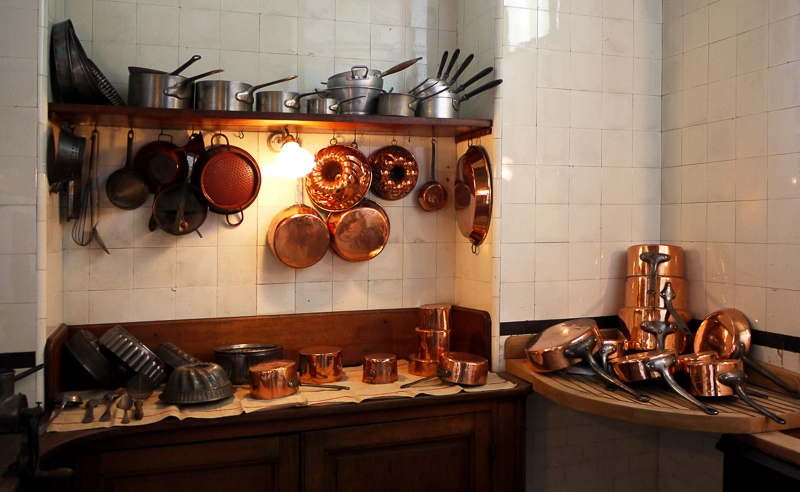
We manufacture the machines for making copper pots in different forms. Our experience with how copper pots are made has advanced significantly in recent years.
People use coppers for centuries in the manufacturing of kitchenware and cooking utensils. And copper pots are no exception. Professional chefs and home cooks alike value copper pots highly due to copper pots are good for cooking and worth money. However, copper pot cooking safety is an important consideration for anyone who uses copper pots in their cooking. Copper is a reactive metal. That means it can react with certain foods and liquids and create harmful compounds. To minimize the risk of this happening, you should use copper pots that are lined with another metal during manufacturing time. This will prevent the copper from coming into direct contact with the food.
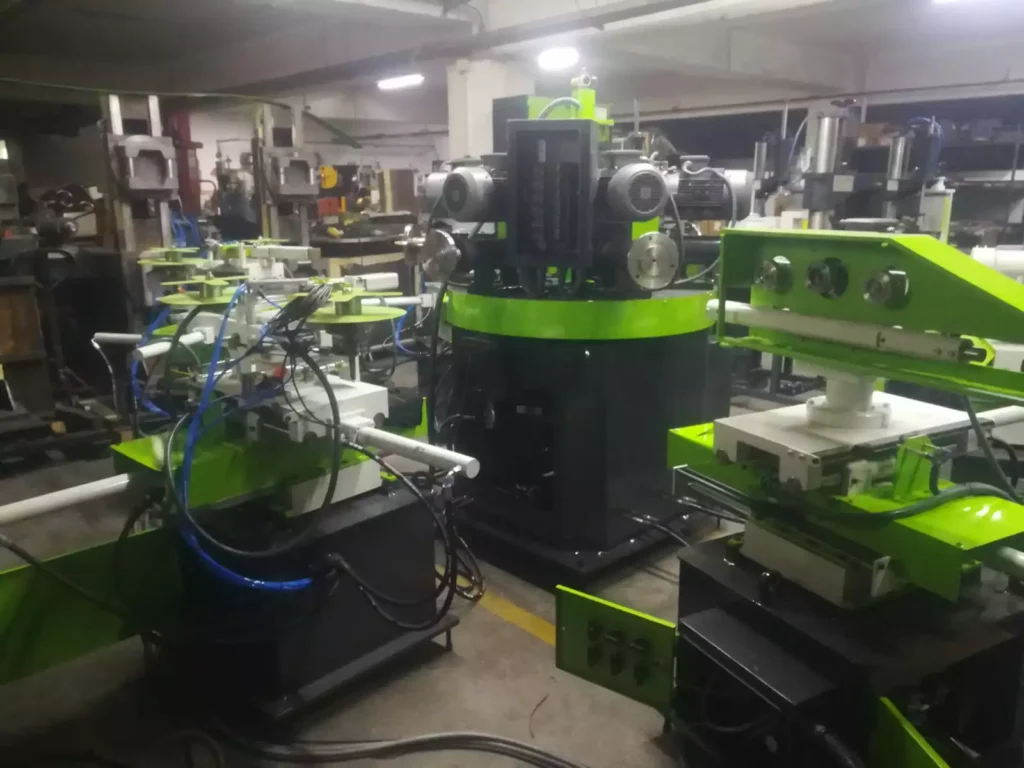
Meanwhile, copper pot making machinery is becoming increasingly popular as a way to make high-quality copper pans. This type of machinery allows for faster and more efficient production of copper pans. This can happen with the benefit of being able to customize the shape and size of each pan. The machinery also helps to reduce waste. It is capable of recycling scrap copper into usable raw materials. With this type of machinery, manufacturers can create beautiful and unique copper pans that are both durable and cost-effective.
Copper pot making machines are revolutionizing the way of making copper pans are made. By automating the process of copper pan production, these machines can produce high-quality pans. These pans have greater speed and precision than ever before. In this essay, we will explore the process of copper pot making ( how copper pots are made/ how copper pans are made) and the machinery used for it.
How Copper Pots are Made
The manufacturing process for copper pots involves several steps, including:
Material Preparation:
Copper sheets or coils are received at the manufacturing facility.
The sheets or coils are inspected for defects and imperfections.
If necessary, the sheets are cut into smaller pieces to match the desired pot sizes.
Blanking and Pressing:
A stamping press is used to cut out circular blanks from the prepared copper sheets.
The blanks are then placed in a hydraulic press, which shapes them into the desired pot form.
The first pressing creates a shallow pot shape, while subsequent pressings gradually deepen the pot and form its walls.
Annealing:
Copper is a soft metal that can become work-hardened during the pressing process.
To restore the copper’s ductility and prevent cracking, the pot blanks are subjected to annealing.
Annealing involves heating the copper to a specific temperature and then cooling it slowly, allowing the metal to relax and regain its malleability.
Spinning and Forming:
The annealed pot blanks are placed on a spinning lathe, which rotates the blank while a shaping tool is pressed against it.
The spinning process further forms the pot’s walls and bottom, ensuring a smooth and consistent surface.
Additional forming processes, such as flanging and beading, may be applied to create specific features like handles, rims, and spouts.
Tinning or Nickel Lining:
Copper is a reactive metal that can react with acidic foods, causing discoloration and metallic taste.
To prevent this, the interior of the pot is typically lined with a non-reactive metal, such as tin or nickel.
Tinning involves dipping the pot in molten tin, while nickel lining is applied using an electroplating process.
Polishing and Finishing:
The exterior of the copper pot is polished to achieve a desired finish, which may range from a bright, reflective shine to a more antiqued or rustic look.
Polishing involves using progressively finer abrasives to remove surface imperfections and create a smooth, aesthetically pleasing surface.
Handle Attachment:
The pot handle, typically made from stainless steel or brass, is securely attached to the pot body using rivets, welds, or brazing.
The handle is designed for comfort and grip, and it should be strong enough to withstand the weight of the pot and its contents.
Quality Control:
Each pot is inspected for defects, surface finish, and overall quality.
Inspectors check for any imperfections in the copper, the lining, and the handle attachment.
Pots that do not meet the quality standards are either reworked or rejected.
Packaging and Shipping:
The finished copper pots are cleaned and packaged for shipment.
The packaging protects the pots from scratches and damage during transportation.
The manufacturing process for copper pots is designed to produce durable, high-quality cookware that combines traditional craftsmanship with modern techniques. Copper pots are valued for their exceptional heat conductivity, which allows for even cooking and precise temperature control.
The Process of Copper Pot Making
The cookware manufacturing process, such as copper pot making is a time-honored craft that requires skill and patience. The process begins with sheets of copper by cutting into desired shapes and sizes. Then, forming these sheets into the shape of a pot, pan, or bowl using a spinning technique is the second step. Spinning involves placing the copper sheet on a spinning lathe and using specialized tools to shape it into the desired form. The spinning process requires precision and expertise to ensure that the final product is symmetrical and uniform in thickness.
The process of making copper pots involves several steps, including shaping, joining, and finishing. The first step is to select the copper sheet. It is typically between 1.5 and 2.5 mm thick, depending on the size of the pot. The operator cuts the sheet into the appropriate size and shape using a cutting machine. Then, the next step is heating the sheet to make it malleable and easier to shape.
The shaping of the copper sheet requires using a hammer and a mold. The mold is necessary to shape the copper sheet into the desired form, while the hammer is necessary to carefully beat the copper into shape. This process is repeated until the copper sheet is formed into a pot or pan.
The next step is to join the copper pieces together using solder. After melting the solder and applying it to the joint between two pieces of copper, you have a strong and durable bond. By removing the excess solder, the operator can give it a smooth and shiny finish by cleaning and polishing the pot.
Copper Uttensils with the Similar Processes to Cooper Pots Manufacturing
Copper utensils are copper pans, bowls, stills, etc. Copper pan making and copper bowl making follow a similar process to copper pot making. The only difference is the shape and size of the end product. However, the quality of the craftsmanship remains the same. And each piece is made with the same care and attention to detail.
Making a copper pot still is a process that is used to make distilled spirits, such as whiskey and vodka. The process involves heating a mixture of fermented grains or fruits and capturing the steam that is released. The steam then condenses back into a liquid, resulting in a highly concentrated alcohol. In this case, copper is necessary to use in the construction of the still. Because it helps to remove unwanted flavors and impurities from the final product, resulting in a cleaner, smoother taste.
The Machinery Used For Copper Pot Making
The machinery used for copper pot making has advanced significantly in recent years. The usage rate of modern copper utensils making machines is increasing to shape and cut copper sheets. These machines have reduced the time and labor required for the process. These machines use hydraulic pressure to shape the copper sheet. This allows for greater precision and consistency in the final product.
Modern copper utensils making machines use computer-controlled spinning lathes to ensure that each pot, pan, still, or bowl has a perfect shape and is uniform in thickness. These machines also can create intricate designs and patterns on the surface of the copper. They can add an aesthetic appeal to the final product.
Also, making a copper pot still is another popular application for copper in the kitchen. The usage area of a copper pot still is to distill alcohol and other liquids. And it is an essential tool for anyone interested in home brewing or distilling. The process of making a copper pot still is similar to that of making a copper pot. The additional step is creating a distillation column to separate the alcohol from the liquid.
The use of these machines has allowed for more intricate designs to be created with far less effort than traditional methods. The use of copper pot making machinery has drastically reduced costs. Also, it has improved production times, allowing for more creative designs and faster delivery times to customers.
Manufacturing of Copper Pots Making
Copper pot making machines have revolutionized the way copper pans are made. These machines can quickly and accurately form pans from sheets of copper. As a result, this saves time and money in the production process. With the advent of modern copper utensils making machines, the process has become faster and more efficient. Besides, still maintains the high-quality craftsmanship that is synonymous with copper pots.
In conclusion, copper pot making is a skilled craft that requires precision and expertise. Therefore, we can guarantee that our customers will receive consistent, reliable performance from our company’s products. With our copper pot machines and the experience we have gained in this field, we can meet all needs and provide variable solutions for an invaluable tool for any workshop or production line.
Surface finishing operations are essential processes applied to sheet metal parts to enhance their appearance, functionality, and durability. These operations involve the removal of imperfections, smoothing of surfaces, and application of protective coatings. The importance of surface finishing cannot be overstated, as it directly impacts the performance, longevity, and aesthetic appeal of the final product.
Key Objectives of Surface Finishing:
Improve aesthetic appearance.
Enhance corrosion resistance.
Reduce friction and wear.
Remove surface defects.
Prepare surfaces for further processing.
Overview of Surface Finishing Techniques
Surface finishing techniques encompass a wide range of processes, each tailored to achieve specific results. The primary techniques include deburring, polishing, and buffing, each serving a unique purpose in the finishing workflow.
Deburring: The process of removing burrs—tiny protrusions or unwanted materials—from the edges of sheet metal parts.
Polishing: Involves smoothing and shining the surface to achieve a reflective finish.
Buffing: A finishing process that further enhances the shine and smoothness of the surface.
Applications in Industry
Surface finishing operations are vital across various industries, including automotive, aerospace, electronics, and consumer goods. The demand for high-quality finishes in these sectors drives innovation and the development of advanced finishing techniques.
Automotive: Enhancing the appearance and durability of car components.
Aerospace: Ensuring precision and performance in aircraft parts.
Electronics: Improving the aesthetic and functional quality of devices.
Consumer Goods: Increasing the appeal and longevity of products.
Section 2: Deburring in Sheet Metal Parts
Section 2: Deburring in Sheet Metal Parts
Definition and Types of Burrs
Deburring is the process of removing small, unwanted protrusions or burrs that form on the edges of sheet metal parts during manufacturing processes like cutting, drilling, and stamping. Burrs can negatively affect the performance, safety, and appearance of metal parts, making deburring a critical step in the production cycle.
Types of Burrs:
Poisson Burr: Caused by material deformation, often appears as a thin edge.
Roll-Over Burr: Occurs when material is pushed over the edge of a part.
Tear Burr: Created by tearing of material, resulting in irregular edges.
Cut-Off Burr: Occurs at the end of the cutting process, often requiring specific removal techniques.
Methods of Burr Removal
The selection of a deburring method depends on factors such as the type of burr, material properties, and desired surface finish. Below are common deburring methods:
Manual Deburring
Tools Used: Files, scrapers, abrasive pads, and brushes.
Advantages:
Cost-effective for small-scale production.
Provides control over the finishing process.
Disadvantages:
Labor-intensive and time-consuming.
Inconsistent results due to human error.
Mechanical Deburring
Methods:
Tumbling: Parts are placed in a tumbler with abrasive media that polishes the edges.
Vibratory Finishing: Uses vibrations to agitate parts and media for deburring.
Grinding: Utilizes rotating abrasive wheels to remove burrs.
Advantages:
Suitable for large-scale production.
Consistent and repeatable results.
Disadvantages:
May require additional equipment and space.
Potential for media contamination.
Thermal Deburring
Process: Involves exposing parts to a controlled explosion of gas to burn away burrs.
Advantages:
Effective for hard-to-reach areas.
Fast and efficient for complex parts.
Disadvantages:
High initial setup cost.
Limited to specific materials.
Electrochemical Deburring
Process: Involves the use of electrolytic solutions to dissolve burrs.
Material Compatibility: Different materials require specific deburring techniques.
Cost Considerations: Balancing cost and efficiency in high-volume production.
Quality Control: Ensuring consistent results across batches.
Case Studies
Case Study 1: Automotive Component Deburring
Objective: Improve the precision and safety of automotive parts.
Method Used: Mechanical deburring with vibratory finishing.
Outcome: Enhanced safety and performance of components, reduced production time.
Case Study 2: Aerospace Part Deburring
Objective: Achieve high precision and reliability in aircraft parts.
Method Used: Electrochemical deburring for intricate components.
Outcome: Improved accuracy and reliability, meeting industry standards.
Section 3: Polishing of Sheet Metal Parts
Section 3: Polishing of Sheet Metal Parts
Definition and Purpose
Polishing is a surface finishing process aimed at smoothing and shining metal parts to achieve a reflective finish. It enhances the appearance and functionality of metal parts by removing scratches, pits, and other imperfections.
Purpose of Polishing:
Improve aesthetic appeal.
Increase corrosion resistance.
Enhance surface smoothness and reflectivity.
Prepare surfaces for further coating or finishing processes.
Polishing Techniques
Various polishing techniques are employed based on the desired finish and application requirements.
Mechanical Polishing
Process: Involves the use of abrasive materials to remove surface irregularities.
Techniques:
Belt Polishing: Uses abrasive belts for continuous polishing.
Disk Polishing: Utilizes rotating disks with abrasive pads.
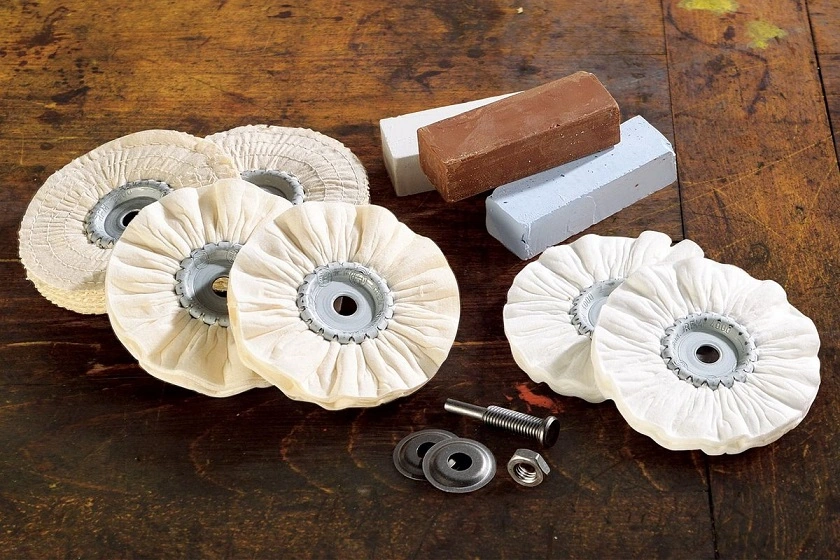
Buffing Wheels: Employs rotating cloth wheels with polishing compounds.
Advantages:
Cost-effective and versatile.
Suitable for various metals and shapes.
Disadvantages:
Limited precision for complex geometries.
Requires skilled operators for optimal results.
Electropolishing
Process: Involves the use of an electrolytic bath to dissolve the surface layer of metal, resulting in a smooth and shiny finish.
Advantages:
Superior surface finish and reflectivity.
Removes microscopic imperfections.
Enhances corrosion resistance.
Disadvantages:
High setup and operational costs.
Limited to specific metals and applications.
Tools and Equipment Used
Abrasive Belts and Disks: Used for mechanical polishing.
Buffing Wheels and Compounds: For fine finishing.
Electropolishing Equipment: Includes electrolytic baths and power supplies.
Comparison of Different Polishing Methods
Method
Advantages
Disadvantages
Mechanical
Cost-effective, versatile
Limited precision for complex parts
Electropolishing
Superior finish, corrosion resistance
High cost, limited material compatibility
Applications in Various Industries
Automotive: Enhancing the appearance of exterior and interior components.
Medical Devices: Ensuring the smoothness and biocompatibility of implants and tools.
Aerospace: Improving the aerodynamics and aesthetics of aircraft parts.
Consumer Electronics: Enhancing the visual appeal of devices and components.
Challenges and Solutions
Surface Uniformity: Achieving consistent finishes across complex geometries.
Material Constraints: Adapting techniques for various metals and alloys.
Environmental Concerns: Managing waste and emissions from polishing processes.
Section 4: Buffing Process for Sheet Metal Parts
Section 4: Buffing Process for Sheet Metal Parts
Definition and Difference from Polishing
Buffing is a surface finishing process that involves the use of soft cloth wheels and polishing compounds to achieve a high-gloss finish on metal surfaces. While similar to polishing, buffing focuses on enhancing the final appearance rather than removing significant surface imperfections.
Difference from Polishing:
Polishing: Involves removing surface material to smooth and refine.
Buffing: Focuses on creating a high-gloss, reflective finish.
Buffing Techniques
Different buffing techniques are employed based on the desired finish and complexity of the parts.
Manual Buffing
Process: Involves the use of hand-held buffing wheels and compounds.
Advantages:
Flexibility for small-scale production.
Control over the finishing process.
Disadvantages:
Labor-intensive and time-consuming.
Inconsistent results due to human error.
Automatic Buffing
Process: Utilizes automated machines and robotic arms for buffing.
Advantages:
Suitable for large-scale production.
Consistent and repeatable results.
Disadvantages:
High initial setup cost.
Limited flexibility for intricate parts.
Buffing Compounds and Materials
Buffing compounds are essential for achieving desired finishes and vary based on the material and application.
Types of Buffing Compounds:
Tripoli: Used for initial cutting and smoothing.
Rouge: Provides a high-gloss finish.
White Diamond: Removes light scratches and enhances shine.
Materials Used:
Cloth Wheels: Made from cotton, flannel, or sisal.
Buffing Pads: Available in various grades for different finishes.
Tools and Equipment Used
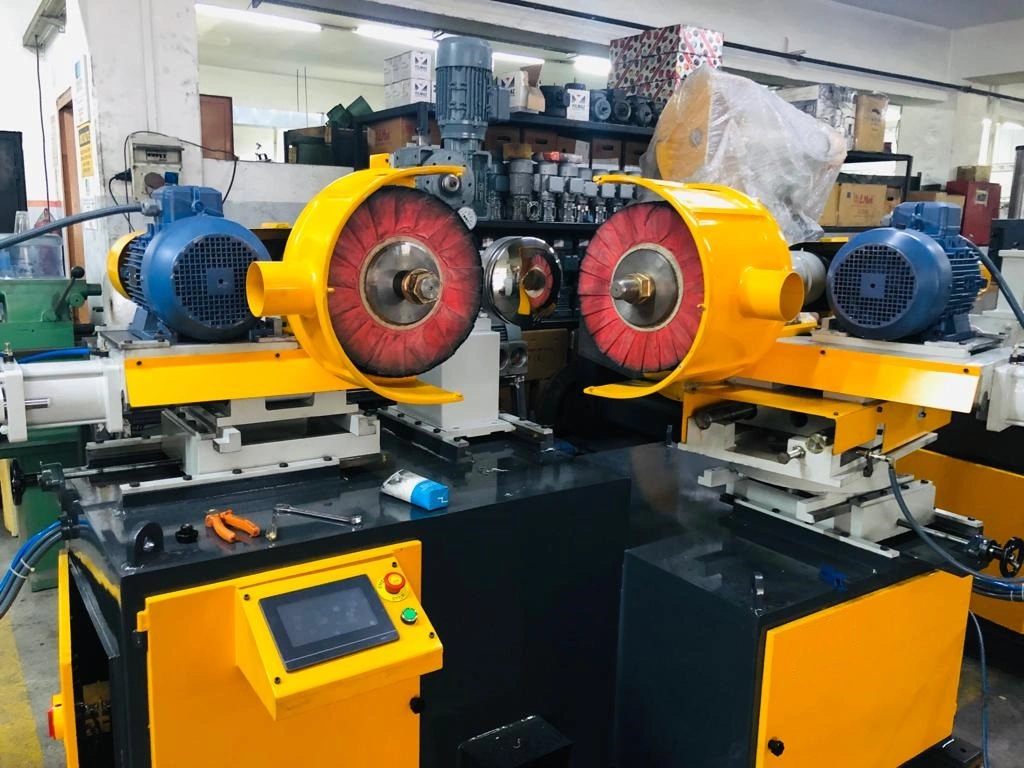
Buffing Machines: Includes bench grinders and automated buffing stations.
Buffing Wheels and Pads: Available in different sizes and materials.
Polishing Compounds: Formulated for specific applications and finishes.
Applications in Various Industries
Jewelry: Enhancing the luster and appeal of metal pieces.
Automotive: Achieving high-gloss finishes on body panels and trim.
Furniture: Polishing metal components for aesthetic appeal.
Consumer Goods: Improving the appearance of household items and appliances.
Advantages and Limitations
Advantages:
Enhances aesthetic appeal and surface smoothness.
Suitable for various metals and applications.
Limitations:
Limited material removal capability.
Requires careful handling to avoid surface damage.
Section 5: Comparison of Deburring, Polishing, and Buffing
Differences in Techniques and Applications
Process
Purpose
Applications
Deburring
Remove burrs and imperfections
Manufacturing, machining
Polishing
Smooth and shine surfaces
Automotive, aerospace, electronics
Buffing
Enhance gloss and appearance
Jewelry, consumer goods, automotive
Suitability for Different Types of Sheet Metal
Deburring: Essential for parts with sharp edges and complex geometries.
Polishing: Suitable for achieving reflective finishes on flat and contoured surfaces.
Buffing: Ideal for enhancing the appearance of decorative and high-visibility parts.
Cost and Time Considerations
Deburring: Cost-effective for high-volume production, but may require specialized equipment.
Polishing: Balances cost with desired finish quality, may involve multiple steps.
Buffing: Cost-effective for achieving high-gloss finishes, but may require additional polishing.
Environmental and Safety Considerations
Deburring: Potential for media and chemical contamination, requires proper disposal.
Polishing: Generates dust and waste, necessitating effective ventilation and filtration.
Buffing: Involves the use of chemicals, requires protective equipment and safety measures.
Section 6: Advancements in Surface Finishing Technologies
Automation and Robotics
The integration of automation and robotics in surface finishing operations has revolutionized the industry, offering improved efficiency, precision, and consistency.
Benefits of Automation:
Reduced labor costs and human error.
Enhanced precision and repeatability.
Increased production speed and efficiency.
Applications:
Robotic deburring for intricate parts.
Automated polishing systems for large components.
Intelligent buffing machines with adaptive control.
Innovative Materials and Techniques
Advancements in materials and techniques continue to drive improvements in surface finishing processes.
Innovative Materials:
Advanced Abrasives: Developments in abrasive materials enhance cutting and polishing efficiency.
Eco-Friendly Compounds: Formulations that reduce environmental impact and improve safety.
New Techniques:
Laser Deburring: Uses laser beams to remove burrs with precision.
Nano-Polishing: Employs nanotechnology for superior surface finishes.
Impact of Industry 4.0
Industry 4.0 is reshaping surface finishing operations through the integration of smart technologies and data-driven approaches.
Key Aspects of Industry 4.0:
IoT Connectivity: Enables real-time monitoring and control of finishing processes.
Data Analytics: Provides insights into process optimization and quality control.
AI and Machine Learning: Enhances decision-making and process automation.
Case Studies on Modern Applications
Case Study 1: Automotive Industry
Objective: Improve production efficiency and finish quality.
Solution: Implementation of robotic polishing systems with IoT connectivity.
Outcome: Increased production speed, reduced defects, and enhanced finish quality.
Case Study 2: Aerospace Industry
Objective: Achieve high precision and consistency in aircraft parts.
Solution: Integration of AI-driven deburring and polishing systems.
Outcome: Improved accuracy, reduced waste, and compliance with industry standards.
Section 7: Best Practices and Quality Control
Quality Standards and Certifications
Adhering to quality standards and certifications ensures the reliability and performance of surface-finished parts.
Key Standards:
ISO 9001: Quality management systems for consistent product quality.
ISO 14001: Environmental management standards for sustainable practices.
NADCAP: Aerospace industry standards for process quality and control.
Inspection Techniques
Effective inspection techniques are crucial for maintaining the quality and consistency of finished parts.
Visual Inspection: Identifying surface defects and irregularities.
Dimensional Inspection: Measuring critical dimensions and tolerances.
Surface Roughness Testing: Assessing surface smoothness and texture.
Non-Destructive Testing: Evaluating structural integrity without damaging parts.
Process Optimization
Optimizing surface finishing processes enhances efficiency and reduces costs.
Key Strategies:
Lean Manufacturing: Minimizing waste and improving workflow.
Continuous Improvement: Implementing feedback loops for process refinement.
Process Automation: Utilizing technology for increased efficiency and precision.
Safety Measures and Precautions
Ensuring safety in surface finishing operations is paramount to protect workers and the environment.
Safety Precautions:
Personal Protective Equipment (PPE): Gloves, masks, goggles, and protective clothing.
Ventilation and Filtration: Effective air quality management to reduce dust and fumes.
Training and Education: Ongoing training programs for workers to ensure safe practices.
Section 8: Conclusion
Summary of Key Points
Surface finishing operations, including deburring, polishing, and buffing, are essential for enhancing the appearance, functionality, and durability of sheet metal parts.
Deburring removes burrs and imperfections, while polishing smooths and shines surfaces, and buffing enhances gloss and appearance.
Advancements in technology, automation, and materials continue to drive improvements in surface finishing processes.
Future Trends in Surface Finishing
The future of surface finishing operations will be shaped by continued advancements in automation, materials, and sustainability.
Emerging Trends:
Green Technologies: Development of eco-friendly compounds and processes.
Advanced Robotics: Increased use of robotics for precision and efficiency.
Smart Manufacturing: Integration of IoT and AI for data-driven process optimization.
Final Thoughts
Surface finishing operations are a vital component of modern manufacturing, contributing to the quality and performance of sheet metal parts across various industries. By staying abreast of technological advancements and best practices, manufacturers can achieve superior finishes and meet the evolving demands of the market.
Types of Polishing
Types of Polishing
Polishing is primarily categorized into mechanical and chemical methods, each serving different purposes and achieving unique results.
1. Mechanical Polishing
Mechanical polishing involves using abrasive tools and materials to physically remove surface material and achieve a smooth, reflective finish.
a. Belt Polishing
Process: Uses abrasive belts that continuously rotate around rollers to polish the surface of the metal.
Applications: Ideal for flat surfaces and edges.
Advantages: Cost-effective, easy to set up, and suitable for removing larger imperfections.
Commonly Used Materials:
Aluminum Oxide: A widely used abrasive for general-purpose polishing.
Silicon Carbide: Suitable for hard metals and provides a fine finish.
b. Disk Polishing
Process: Utilizes rotating disks with abrasive pads to polish surfaces.
Applications: Suitable for curved and irregular surfaces.
Advantages: Provides uniform pressure and can reach tight spots.
Commonly Used Materials:
Diamond Abrasives: Known for cutting efficiency and durability, especially on hard metals.
Ceramic Abrasives: Used for rapid stock removal and fine finishes.
c. Buffing Wheels
Process: Employs cloth wheels coated with polishing compounds to achieve a high-gloss finish.
Applications: Suitable for finishing and enhancing shine on metal surfaces.
Advantages: Produces a mirror-like finish, ideal for aesthetic applications.
Commonly Used Materials:
Cotton and Flannel Wheels: Provide softness and flexibility, allowing for smooth finishes.
Sisal Wheels: Used for cutting and initial buffing stages due to their firmness.
d. Vibratory Polishing
Process: Involves placing parts in a vibrating container filled with abrasive media and compounds.
Applications: Ideal for small and complex parts that require even polishing.
Advantages: Provides consistent finishes, handles large volumes, and reduces manual labor.
Commonly Used Materials:
Ceramic Media: Effective for heavy cutting and smoothing.
Plastic Media: Used for delicate parts and achieving fine finishes.
2. Chemical and Electrochemical Polishing
Chemical and electrochemical polishing methods involve the use of chemical reactions to remove surface material and achieve a smooth finish.
a. Electropolishing
Process: Uses an electrolytic bath to dissolve the surface layer of metal, smoothing and leveling the surface.
Applications: Commonly used in industries requiring high precision and cleanliness, such as medical and food processing.
Electrolytic Solutions: Acidic solutions containing phosphoric and sulfuric acids.
Anodes and Cathodes: Typically made from stainless steel or titanium for durability.
b. Chemical Polishing
Process: Involves submerging the metal in a chemical solution that selectively removes surface material.
Applications: Suitable for intricate shapes and areas difficult to reach with mechanical methods.
Advantages: Provides uniform finishes and is effective for complex geometries.
Commonly Used Materials:
Acidic Solutions: Mixtures of nitric, hydrochloric, and sulfuric acids tailored to specific metals.
Additives: Agents that control the polishing rate and improve surface quality.
3. Abrasive Polishing
Abrasive polishing uses fine abrasive particles to refine the surface, removing minor scratches and achieving a high level of smoothness.
a. Sandblasting
Process: Propels fine abrasive particles against the surface of the metal to remove contaminants and smoothen the surface.
Applications: Suitable for preparing surfaces for painting or coating.
Advantages: Fast and effective for large surfaces and tough residues.
Commonly Used Materials:
Silica Sand: Traditional abrasive for general-purpose sandblasting.
Glass Beads: Provides a smoother finish and is less aggressive than sand.
Garnet: Known for its hardness and sharpness, ideal for heavy-duty applications.
b. Lapping
Process: Involves using a lapping plate and abrasive slurry to achieve a fine, flat surface finish.
Applications: Used in precision applications requiring tight tolerances, such as in optics and semiconductor industries.
Advantages: Produces extremely flat surfaces and fine finishes.
Commonly Used Materials:
Diamond Slurry: Provides precision and is used for hard materials.
Aluminum Oxide Slurry: Suitable for softer materials and less abrasive applications.
c. Micro-Abrasive Blasting
Process: Uses a controlled stream of micro-abrasive particles to remove fine surface layers.
Applications: Ideal for delicate and detailed parts requiring precision.
Advantages: Highly controlled process, reduces risk of surface damage.
Commonly Used Materials:
Aluminum Oxide Powder: Common for general applications and provides a good balance of cutting and polishing.
Sodium Bicarbonate: Gentle abrasive for sensitive materials.
Materials Used in Polishing
Materials Used in Polishing
The choice of materials used in polishing depends on the type of metal, desired finish, and specific polishing method. Below are commonly used materials and compounds in metal polishing:
1. Abrasive Materials
Aluminum Oxide: A versatile and widely used abrasive for various metals, including steel and aluminum. It provides a good balance between cutting and finishing capabilities.
Silicon Carbide: Known for its hardness and sharpness, it is used for polishing hard metals and achieving a smooth surface.
Diamond Abrasives: Offers superior cutting efficiency and is ideal for polishing hard and brittle metals, such as tungsten and ceramics.
Ceramic Abrasives: Used for heavy-duty applications, offering high material removal rates and durability.
2. Polishing Compounds
Polishing compounds are essential in achieving the desired finish and are formulated for specific metals and applications.
a. Tripoli Compound
Description: A coarse compound used for initial cutting and smoothing of surfaces.
Applications: Commonly used on softer metals like aluminum and brass to remove scratches and surface imperfections.
b. Rouge Compound
Description: A fine polishing compound used for achieving a high-gloss finish.
Applications: Ideal for polishing precious metals such as gold and silver, as well as achieving a mirror-like finish on stainless steel.
c. White Diamond Compound
Description: A versatile compound used for polishing and refining surfaces.
Applications: Suitable for use on plastics and metals, providing a bright finish and removing light scratches.
d. Green Chromium Oxide Compound
Description: A compound containing chromium oxide, used for achieving a fine finish.
Applications: Ideal for polishing stainless steel and other hard metals, providing a high level of smoothness and shine.
3. Polishing Pads and Wheels
Polishing pads and wheels come in various materials and are selected based on the desired finish and application requirements.
Cotton Buffing Wheels: Soft and flexible, suitable for applying polishing compounds and achieving a smooth finish.
Flannel Buffing Wheels: Provide a finer finish and are often used in the final buffing stage.
Sisal Buffing Wheels: Firm and durable, used for cutting and initial buffing stages.
Foam Polishing Pads: Used in conjunction with polishing compounds for fine finishing and detailing.
4. Chemical Solutions
Chemical solutions play a critical role in chemical and electrochemical polishing processes, providing the necessary reactions to achieve desired surface finishes.
Electrolytic Solutions: Composed of acids like phosphoric and sulfuric acids, used in electropolishing to dissolve surface material and enhance smoothness.
Chemical Polishing Solutions: Tailored mixtures of acids and additives designed for specific metals and applications, providing controlled material removal and surface refinement.
Conclusion
Polishing is a vital surface finishing process that enhances the appearance and functionality of metal parts. By understanding the various polishing methods and materials, manufacturers can achieve the desired finishes for different applications and industries. Whether through mechanical, chemical, or abrasive techniques, the choice of polishing materials and compounds plays a crucial role in achieving high-quality surface finishes.
Best Polishing Methods for Metal
Best Polishing Methods for Metal
Polishing metal surfaces is a critical step in many manufacturing processes, enhancing both the aesthetic appeal and functional properties of metal parts. The best polishing methods depend on various factors, including the type of metal, the desired finish, and specific application requirements. Below, we’ll explore some of the most effective polishing methods and their respective advantages, disadvantages, and suitable applications.
1. Mechanical Polishing
Mechanical polishing is one of the most commonly used methods due to its versatility and effectiveness in achieving smooth, shiny surfaces. This method involves using abrasive materials to physically remove surface imperfections.
a. Belt Polishing
Process: Belt polishing uses continuous abrasive belts to grind and polish metal surfaces. It is suitable for flat and slightly curved surfaces.
Advantages:
Cost-effective and suitable for high-volume production.
Can handle a wide range of metals, including steel, aluminum, and brass.
Efficient at removing larger surface imperfections.
Disadvantages:
Limited precision for intricate parts and complex geometries.
May require additional finishing steps to achieve a mirror-like finish.
Applications:
Automotive parts such as body panels and bumpers.
Large metal sheets and plates.
Metal furniture components.
b. Disk Polishing
Process: Disk polishing involves rotating abrasive disks to smooth and shine metal surfaces. It is often used for smaller or more intricate parts.
Advantages:
Provides uniform pressure and consistent results.
Suitable for complex shapes and small parts.
Versatile for a range of metals and finishes.
Disadvantages:
Requires skilled operators to avoid over-polishing.
Limited to flat and moderately curved surfaces.
Applications:
Jewelry and small metal components.
Precision instruments and tools.
Metal parts with intricate designs.
c. Vibratory Polishing
Process: Vibratory polishing involves placing metal parts in a vibrating container filled with abrasive media and compounds. The vibrations cause the media to polish the surfaces of the parts.
Advantages:
Ideal for large batches of small parts.
Provides even polishing across surfaces.
Reduces manual labor and operator fatigue.
Disadvantages:
Slower than other mechanical methods.
Limited to smaller parts and components.
Applications:
Small automotive components.
Hardware and fasteners.
Jewelry and decorative items.
d. Buffing Wheels
Process: Buffing involves using cloth wheels and polishing compounds to achieve a high-gloss finish on metal surfaces. It is often used as a final finishing step.
Advantages:
Achieves a mirror-like, high-gloss finish.
Suitable for a wide range of metals, including stainless steel and aluminum.
Enhances the aesthetic appeal of metal surfaces.
Disadvantages:
Limited material removal capability.
Requires careful handling to avoid surface damage.
Applications:
Automotive trim and decorative parts.
Consumer electronics and appliances.
Jewelry and luxury goods.
2. Chemical and Electrochemical Polishing
Chemical and electrochemical polishing methods use chemical reactions to smooth and refine metal surfaces, offering high precision and uniform finishes.
a. Electropolishing
Process: Electropolishing involves submerging metal parts in an electrolytic bath, where controlled electrical currents dissolve the surface layer of the metal, smoothing and leveling it.
Advantages:
Produces superior surface finishes with excellent reflectivity.
Removes microscopic burrs and imperfections.
Enhances corrosion resistance and passivation of metals.
Disadvantages:
High initial setup and operational costs.
Limited to conductive materials like stainless steel, titanium, and aluminum.
Applications:
Medical devices and implants.
Food processing equipment.
Aerospace components.
b. Chemical Polishing
Process: Chemical polishing involves immersing metal parts in a chemical solution that selectively removes surface material, refining and smoothing the surface.
Advantages:
Uniform finishes on complex geometries.
Suitable for delicate parts and thin-walled components.
Reduces surface stress and improves fatigue resistance.
Disadvantages:
Requires precise control of chemical concentrations and temperature.
Potential environmental and safety concerns with chemical handling.
Applications:
Intricate metal parts and components.
Electronics and semiconductor industries.
Decorative metal products.
3. Abrasive Polishing
Abrasive polishing methods involve using fine abrasive particles to achieve a smooth and refined surface finish, often used for precision applications.
a. Lapping
Process: Lapping uses a lapping plate and abrasive slurry to achieve flat, smooth surfaces with tight tolerances. It is often used for precision applications.
Advantages:
Achieves extremely flat and smooth surfaces.
Suitable for high-precision parts and components.
Provides tight tolerances and uniform finishes.
Disadvantages:
Requires specialized equipment and expertise.
Limited to flat surfaces and precision applications.
Applications:
Optics and lenses.
Semiconductor wafers.
Precision mechanical components.
b. Micro-Abrasive Blasting
Process: Micro-abrasive blasting uses a controlled stream of micro-abrasive particles to remove fine surface layers and achieve precision finishes.
Advantages:
Highly controlled process for precision applications.
Suitable for delicate and detailed parts.
Minimizes surface damage and distortion.
Disadvantages:
Limited to small areas and precision applications.
Requires specialized equipment and expertise.
Applications:
Aerospace and aviation components.
Medical devices and instruments.
Precision electronics and circuit boards.
Comparison of Polishing Methods
Here’s a table comparing the various polishing methods to highlight their advantages, disadvantages, and applications:
Method
Advantages
Disadvantages
Applications
Belt Polishing
Cost-effective, handles large surfaces
Limited precision, may require additional finishing
Automotive parts, large metal sheets
Disk Polishing
Uniform pressure, suitable for intricate parts
Skilled operation required, limited to flat surfaces
Jewelry, precision instruments, complex shapes
Vibratory Polishing
Even polishing, suitable for large batches
Slower process, limited to small parts
Small automotive components, hardware, jewelry
Buffing Wheels
Achieves high-gloss finish, enhances aesthetics
Limited material removal, requires careful handling
Automotive trim, consumer electronics, jewelry
Electropolishing
Superior finishes, removes microscopic burrs, enhances corrosion resistance
High setup costs, limited to conductive materials
Medical devices, food processing, aerospace components
Chemical Polishing
Uniform finishes on complex geometries, reduces surface stress
Precise control required, environmental concerns
Intricate parts, electronics, decorative products
Lapping
Extremely flat surfaces, tight tolerances
Requires specialized equipment, limited to flat surfaces
Limited to small areas, requires specialized equipment
Aerospace components, medical devices, precision electronics
Factors to Consider When Choosing a Polishing Method
Selecting the best polishing method for a specific application involves considering several key factors:
Material Type: Different metals have varying properties, such as hardness and corrosion resistance, that affect their suitability for specific polishing methods. For example, stainless steel benefits from electropolishing due to its corrosion resistance, while softer metals like aluminum can be effectively polished using mechanical methods.
Desired Finish: The intended appearance and surface quality of the finished product influence the choice of polishing method. For instance, a high-gloss finish may require buffing, while a matte finish could be achieved with abrasive blasting.
Component Geometry: The shape and complexity of the metal parts play a crucial role in determining the most suitable polishing method. Intricate geometries may require chemical or electrochemical polishing for uniform finishes, while flat surfaces can be efficiently polished using mechanical methods.
Production Volume: The scale of production impacts the choice of polishing method, with high-volume production benefiting from automated mechanical processes and small-batch or custom work requiring more manual techniques.
Cost and Efficiency: The overall cost and efficiency of the polishing process, including equipment, labor, and materials, must be evaluated to determine the most cost-effective solution without compromising quality.
Environmental and Safety Considerations: The environmental impact and safety of the polishing process, including waste management and operator safety, should be considered when selecting a method. Chemical processes may require special handling and disposal procedures, while mechanical methods can generate dust and noise.
Conclusion
Polishing is a vital process in the metalworking industry, significantly impacting the appearance and functionality of metal parts. By understanding the strengths and limitations of each polishing method, manufacturers can select the most appropriate technique to achieve the desired finish and meet specific application requirements. Whether through mechanical, chemical, or abrasive methods, the choice of polishing technique plays a critical role in producing high-quality, durable metal products.
What is Industrial Buffing?
What is Industrial Buffing?
Industrial buffing is a crucial process in the metal finishing industry, aimed at enhancing the appearance and functional properties of metal surfaces. It involves using buffing wheels and compounds to produce smooth, reflective finishes on various metal products. This section will explore the methods, materials, applications, and advancements in industrial buffing, providing a comprehensive understanding of this essential metalworking technique.
Industrial buffing is a surface finishing process used to achieve a high-gloss, mirror-like finish on metal surfaces. It involves using buffing wheels made from cloth, felt, or other materials, along with buffing compounds, to polish and smoothen the surface of metal parts. Buffing is often the final step in the finishing process, following grinding or polishing, to achieve the desired surface quality.
Objectives of Industrial Buffing
Enhance Aesthetic Appeal: Buffing improves the visual appearance of metal parts by creating a reflective, glossy surface.
Improve Surface Smoothness: The process removes fine scratches and imperfections, resulting in a smooth, even surface.
Increase Corrosion Resistance: A polished surface can help reduce the risk of corrosion by minimizing surface irregularities where moisture could accumulate.
Prepare for Further Coating: Buffing can prepare metal surfaces for additional coatings, such as paint or plating, by ensuring a smooth base.
Buffing Methods
Industrial buffing can be performed using various methods, each tailored to specific applications and desired finishes. Below are the primary methods used in industrial buffing:
1. Manual Buffing
Manual buffing involves skilled operators using hand-held buffing tools to polish metal surfaces. This method is often used for small-scale production or intricate parts requiring precise attention to detail.
Advantages:
Provides greater control over the buffing process.
Suitable for complex shapes and detailed work.
Allows for adjustments during the process to achieve the desired finish.
Disadvantages:
Labor-intensive and time-consuming.
Inconsistent results due to human error.
Limited to small production volumes.
Applications:
Jewelry and decorative items.
Small automotive components.
Custom metalwork.
2. Automated Buffing
Automated buffing employs machines and robotic systems to buff metal surfaces, offering consistent and efficient results for large-scale production.
Advantages:
High-speed production and consistent quality.
Reduces labor costs and human error.
Capable of handling large and complex parts.
Disadvantages:
High initial setup and equipment costs.
Limited flexibility for intricate parts or custom finishes.
Applications:
Automotive parts and assemblies.
Household appliances and electronics.
Aerospace components.
3. Robotic Buffing
Robotic buffing utilizes robotic arms equipped with buffing tools to perform precise and efficient buffing operations, especially for complex geometries and large parts.
Advantages:
High precision and repeatability.
Reduced human labor and increased safety.
Capable of handling intricate and large-scale parts.
Disadvantages:
High capital investment for robotic systems.
Requires programming and maintenance expertise.
Applications:
Aerospace and automotive industries.
Large metal structures and equipment.
High-volume production of standardized parts.
Buffing Compounds and Materials
Buffing Compounds and Materials
The choice of buffing compounds and materials significantly influences the quality and efficiency of the buffing process. Various compounds are used based on the type of metal and desired finish.
Buffing Compounds
Buffing compounds are abrasive materials mixed with binders that help achieve the desired finish on metal surfaces. They come in different formulations, each suited for specific applications.
a. Tripoli Compound
Description: A coarse compound used for initial cutting and smoothing of metal surfaces.
Applications: Ideal for removing scratches and surface imperfections on softer metals like aluminum and brass.
b. Rouge Compound
Description: A fine compound used to achieve a high-gloss, mirror-like finish.
Applications: Suitable for polishing precious metals such as gold and silver, as well as stainless steel.
c. White Diamond Compound
Description: A versatile compound used for polishing and refining metal surfaces.
Applications: Effective on plastics and metals, providing a bright finish and removing light scratches.
d. Green Chromium Oxide Compound
Description: A compound containing chromium oxide, used for achieving a fine finish.
Applications: Ideal for polishing stainless steel and other hard metals, offering a high level of smoothness and shine.
Buffing Wheels and Materials
Buffing wheels are essential tools in the buffing process, available in various materials and configurations to suit different applications.
a. Cloth Buffing Wheels
Description: Made from cotton or flannel, cloth wheels are soft and flexible, allowing for smooth finishes.
Applications: Commonly used for applying buffing compounds and achieving a polished finish.
b. Sisal Buffing Wheels
Description: Made from natural fibers, sisal wheels are firm and durable, making them suitable for initial cutting and buffing stages.
Applications: Used for aggressive cutting and removing surface imperfections before finer buffing.
c. Felt Buffing Wheels
Description: Dense and rigid, felt wheels are used for precision buffing and achieving high-gloss finishes.
Applications: Ideal for detailed work and achieving mirror-like finishes on metals.
Applications of Industrial Buffing
Applications of Industrial Buffing
Industrial buffing is used across various industries to enhance the appearance and functionality of metal parts. Here are some key applications:
1. Automotive Industry
Applications:
Buffing car body panels to achieve a smooth, glossy finish.
Polishing chrome trim and accessories for enhanced aesthetic appeal.
Smoothing engine components and parts for improved performance.
Benefits:
Improves the overall appearance and marketability of vehicles.
Enhances corrosion resistance and durability of parts.
Prepares surfaces for additional coatings or treatments.
2. Aerospace Industry
Applications:
Buffing aircraft components for improved aerodynamics and aesthetics.
Polishing turbine blades and engine parts for enhanced performance.
Smoothing fuselage and wing surfaces for reduced drag.
Benefits:
Increases the efficiency and reliability of aerospace components.
Enhances safety and performance of aircraft.
Meets stringent industry standards for quality and precision.
3. Jewelry and Decorative Products
Applications:
Buffing gold, silver, and platinum jewelry to achieve a high-gloss finish.
Polishing decorative metal items such as sculptures and ornaments.
Enhancing the appearance of metal art pieces and custom creations.
Benefits:
Improves the aesthetic appeal and value of jewelry and decorative items.
Provides a luxurious and professional finish to products.
Enhances the durability and wear resistance of metal pieces.
4. Electronics and Appliances
Applications:
Buffing metal casings and components for electronics and appliances.
Polishing stainless steel surfaces for enhanced appearance and cleanliness.
Smoothing metal parts for improved functionality and aesthetics.
Benefits:
Enhances the visual appeal and marketability of products.
Improves the performance and longevity of electronic devices.
Provides a polished and professional finish to consumer goods.
Advancements in Industrial Buffing
Advancements in Industrial Buffing
The field of industrial buffing has seen significant advancements in recent years, driven by technological innovations and industry demands for improved efficiency and quality. Here are some notable advancements:
1. Automation and Robotics
The integration of automation and robotics in industrial buffing processes has revolutionized the industry, offering improved precision, efficiency, and consistency.
Benefits:
Reduces labor costs and human error.
Increases production speed and throughput.
Provides consistent and repeatable results.
Applications:
Automated buffing systems for automotive and aerospace components.
Robotic buffing for large and complex parts in various industries.
Intelligent systems with adaptive control for customized finishes.
2. Innovative Materials and Compounds
Advancements in buffing materials and compounds have led to improved performance and environmental sustainability.
Innovative Materials:
Eco-Friendly Compounds: Formulations that reduce environmental impact and improve safety.
Advanced Abrasives: Developments in abrasive materials enhance cutting and polishing efficiency.
Applications:
High-performance compounds for demanding industrial applications.
Environmentally friendly solutions for sustainable manufacturing practices.
Custom formulations for specific metals and finishes.
3. Industry 4.0 and Smart Technologies
Industry 4.0 is reshaping industrial buffing through the integration of smart technologies and data-driven approaches.
Key Aspects:
IoT Connectivity: Enables real-time monitoring and control of buffing processes.
Data Analytics: Provides insights into process optimization and quality control.
AI and Machine Learning: Enhances decision-making and process automation.
Applications:
Smart buffing systems for adaptive process control and optimization.
Predictive maintenance and quality assurance through data-driven insights.
Integration of IoT and AI for intelligent manufacturing solutions.
Challenges and Solutions in Industrial Buffing
Challenges and Solutions in Industrial Buffing
Despite its advantages, industrial buffing also presents certain challenges that need to be addressed for optimal performance and quality. Here are some common challenges and their solutions:
1. Surface Uniformity
Challenge: Achieving consistent finishes across complex geometries and large surfaces can be difficult, leading to variations in surface quality.
Solution: Implementing automated and robotic systems ensures uniform pressure and consistent results, reducing variations in surface quality.
2. Material Compatibility
Challenge: Different metals have varying properties, such as hardness and corrosion resistance, that affect their compatibility with specific buffing methods and materials.
Solution: Selecting appropriate buffing compounds and materials for each metal type ensures optimal performance and finish quality.
3. Cost and Efficiency
Challenge: Balancing cost and efficiency in high-volume production while maintaining quality can be challenging, especially with manual buffing processes.
Solution: Investing in automated and robotic systems reduces labor costs and increases efficiency, allowing for cost-effective production without compromising quality.
4. Environmental and Safety Concerns
Challenge: Managing waste and emissions from buffing processes, as well as ensuring operator safety, can be challenging, especially with chemical compounds and dust generation.
Solution: Implementing effective ventilation and filtration systems, as well as using eco-friendly compounds, minimizes environmental impact and enhances safety.
Best Practices for Industrial Buffing
To achieve optimal results in industrial buffing, it is essential to follow best practices that ensure quality, efficiency, and safety. Here are some key best practices:
1. Quality Control and Inspection
Implementing robust quality control and inspection processes ensures the consistency and reliability of buffing results.
Visual Inspection: Identifying surface defects and irregularities to ensure uniform finishes.
Surface Roughness Testing: Assessing surface smoothness and texture to meet quality standards.
Dimensional Inspection: Measuring critical dimensions and tolerances to ensure precision.
Lean Manufacturing: Minimizing waste and improving workflow for efficient production.
Continuous Improvement: Implementing feedback loops for process refinement and optimization.
Process Automation: Utilizing technology for increased efficiency and precision.
3. Safety Measures and Precautions
Ensuring safety in industrial buffing operations is paramount to protect workers and the environment.
Personal Protective Equipment (PPE): Providing gloves, masks, goggles, and protective clothing to ensure operator safety.
Ventilation and Filtration: Implementing effective air quality management systems to reduce dust and fumes.
Training and Education: Offering ongoing training programs for workers to ensure safe practices and awareness.
4. Maintenance and Upkeep
Regular maintenance and upkeep of buffing equipment and systems ensure optimal performance and longevity.
Routine Inspections: Conducting regular inspections and maintenance to identify and address equipment issues.
Cleaning and Lubrication: Keeping buffing tools and equipment clean and lubricated for smooth operation.
Calibration and Adjustments: Ensuring equipment is calibrated and adjusted for precise and consistent results.
Conclusion
Industrial buffing is a vital process in the metalworking industry, offering numerous benefits in terms of appearance, functionality, and durability. By understanding the methods, materials, applications, and advancements in buffing, manufacturers can achieve high-quality finishes and meet the evolving demands of the market. Whether through manual, automated, or robotic methods, the choice of buffing technique plays a critical role in producing superior metal products. By adhering to best practices and addressing challenges, the industry can continue to innovate and improve the efficiency and quality of industrial buffing operations.
Types of Deburring Machines
Types of Deburring Machines
A deburring machine is an essential tool in metal fabrication, designed to remove burrs and other imperfections from metal parts. Burrs are unwanted projections of material that often occur during machining, cutting, or stamping processes. These imperfections can negatively affect the performance, safety, and appearance of metal parts, making deburring an important step in the manufacturing process.
Below, we’ll explore the various types of deburring machines, their working principles, applications, advantages, and considerations for selecting the right machine for your needs.
Deburring machines come in various types, each suited for specific applications and materials. Here are some of the most common types of deburring machines used in the industry:
1. Vibratory Deburring Machines
Description
Vibratory deburring machines use a vibrating bowl filled with abrasive media and parts to remove burrs. The vibrations cause the media to rub against the parts, effectively deburring and polishing them.
Working Principle
Parts and abrasive media are placed inside a vibrating chamber.
The vibrations cause the media to move in a circular motion, rubbing against the parts.
The abrasive action of the media removes burrs and smooths the surface of the parts.
Applications
Suitable for small to medium-sized parts.
Ideal for batch processing of components.
Used in industries such as automotive, aerospace, and electronics.
Advantages
Effective for complex shapes and geometries.
Can process multiple parts simultaneously.
Provides a consistent and uniform finish.
Disadvantages
Limited to smaller parts and components.
May require longer processing times for heavy burrs.
2. Centrifugal Disc Deburring Machines
Description
Centrifugal disc deburring machines use a rotating disc to generate high-speed motion, creating a sliding movement of abrasive media against the parts.
Working Principle
Parts and abrasive media are placed in a stationary container with a rotating disc at the bottom.
The rotation creates a centrifugal force that causes the media to slide against the parts.
The abrasive action removes burrs and smooths the surfaces.
Applications
Suitable for small to medium-sized parts with intricate shapes.
Used in industries such as jewelry, electronics, and precision engineering.
Advantages
Provides fast and efficient deburring.
Produces smooth and polished finishes.
Suitable for delicate and intricate parts.
Disadvantages
Limited to smaller parts and components.
May not be suitable for large or heavy parts.
3. Tumbling Deburring Machines
Description
Tumbling deburring machines use a rotating barrel filled with abrasive media and parts. The rotation causes the media to tumble against the parts, removing burrs and smoothing surfaces.
Working Principle
Parts and abrasive media are placed in a rotating barrel or drum.
The rotation causes the media and parts to tumble against each other.
The abrasive action of the media removes burrs and polishes the surfaces.
Applications
Suitable for small to medium-sized parts.
Commonly used in industries such as automotive, aerospace, and consumer goods.
Advantages
Cost-effective and simple to operate.
Capable of processing large batches of parts.
Provides consistent and uniform finishes.
Disadvantages
Limited to smaller parts and components.
May require longer processing times for heavy burrs.
4. Magnetic Deburring Machines
Description
Magnetic deburring machines use magnetic fields to agitate small steel pins or media, which in turn deburr and polish the surfaces of metal parts.
Working Principle
Parts are placed in a chamber with small steel pins or media.
Magnetic fields agitate the pins, causing them to move and interact with the parts.
The mechanical action of the pins removes burrs and polishes surfaces.
Applications
Suitable for small, delicate, and intricate parts.
Commonly used in industries such as electronics, medical devices, and jewelry.
Advantages
Gentle and precise deburring.
Suitable for intricate and delicate parts.
Can access hard-to-reach areas.
Disadvantages
Limited to small parts and components.
May require additional equipment for larger parts.
5. Brush Deburring Machines
Description
Brush deburring machines use rotating brushes made from abrasive materials to remove burrs and smooth surfaces.
Working Principle
Parts are fed through the machine where rotating brushes make contact with the surfaces.
The abrasive action of the brushes removes burrs and smooths the surfaces.
Applications
Suitable for flat surfaces and edges.
Used in industries such as automotive, aerospace, and metal fabrication.
Advantages
Effective for flat surfaces and edges.
Provides consistent and uniform finishes.
Can be integrated into production lines.
Disadvantages
Limited to flat surfaces and edges.
May not be suitable for complex shapes or intricate parts.
6. Thermal Deburring Machines
Description
Thermal deburring machines use controlled explosions of gas to burn away burrs from metal parts.
Working Principle
Parts are placed in a chamber filled with a mixture of gases.
The gases are ignited, creating a controlled explosion that burns away burrs.
Applications
Suitable for complex and intricate parts.
Commonly used in industries such as automotive, aerospace, and precision engineering.
Advantages
Effective for hard-to-reach areas and complex shapes.
Provides a clean and burr-free finish.
Fast and efficient process.
Disadvantages
High initial setup and operational costs.
Limited to specific materials and applications.
7. Electrochemical Deburring Machines
Description
Electrochemical deburring machines use electrolytic solutions to dissolve burrs from metal parts.
Working Principle
Parts are submerged in an electrolytic bath with an electric current applied.
The current causes the burrs to dissolve, leaving a smooth surface.
Applications
Suitable for precision and intricate parts.
Used in industries such as aerospace, medical devices, and electronics.
Advantages
Precise and controlled deburring.
Minimal tool wear and surface damage.
Suitable for intricate and delicate parts.
Disadvantages
Requires careful handling of chemicals.
High operational costs.
Selecting the Right Deburring Machine
Choosing the right deburring machine involves considering several factors, including the type of metal, the size and complexity of the parts, and the desired finish. Here are some key considerations for selecting the right deburring machine:
1. Type of Metal
Different metals have varying properties that affect their deburring requirements. Consider the hardness, ductility, and conductivity of the metal when selecting a deburring machine.
2. Size and Complexity of Parts
The size and complexity of the parts influence the choice of deburring machine. Consider the geometry, size, and intricacy of the parts to determine the most suitable machine.
3. Desired Finish
The desired finish and surface quality of the parts play a crucial role in selecting the right deburring machine. Consider the level of smoothness, precision, and appearance required for the finished parts.
4. Production Volume
The scale of production impacts the choice of deburring machine. Consider the production volume and batch size to determine whether manual or automated machines are more suitable.
5. Cost and Efficiency
Evaluate the overall cost and efficiency of the deburring process, including equipment, labor, and materials, to determine the most cost-effective solution without compromising quality.
6. Environmental and Safety Considerations
Consider the environmental impact and safety of the deburring process, including waste management and operator safety, when selecting a machine. Some machines may require special handling and disposal procedures for chemicals or emissions.
Advantages of Deburring Machines
Advantages of Deburring Machines
Deburring machines offer several advantages over manual deburring methods, making them essential tools in modern manufacturing processes. Here are some key advantages of using deburring machines:
1. Improved Efficiency and Productivity
Deburring machines automate the deburring process, significantly reducing the time and labor required compared to manual methods. This results in increased efficiency and productivity in manufacturing operations.
2. Consistent and Uniform Finishes
Deburring machines provide consistent and uniform finishes across batches, ensuring high-quality results with minimal variations in surface quality. This is particularly important for precision parts and components.
3. Reduced Labor Costs
Automated deburring machines reduce the need for manual labor, leading to lower labor costs and improved resource allocation in manufacturing operations.
4. Enhanced Safety
Deburring machines reduce the risk of operator injuries associated with manual deburring processes, such as cuts and abrasions. Additionally, automated machines minimize the exposure to hazardous materials and chemicals.
5. Versatility and Flexibility
Deburring machines offer versatility and flexibility in handling a wide range of parts and materials, making them suitable for various industries and applications.
6. Precision and Accuracy
Deburring machines provide precise and accurate deburring, ensuring high-quality finishes with minimal surface damage or tool wear.
Challenges and Solutions in Deburring
Challenges and Solutions in Deburring
Despite their advantages, deburring machines also present certain challenges that need to be addressed for optimal performance and quality. Here are some common challenges and their solutions:
1. Material Compatibility
Challenge: Different materials require specific deburring techniques, which can impact the selection of deburring machines and abrasive media.
Solution: Select appropriate deburring machines and materials for each metal type to ensure optimal performance and finish quality.
2. Surface Uniformity
Challenge: Achieving consistent finishes across complex geometries and large surfaces can be difficult, leading to variations in surface quality.
Solution: Implement automated and robotic systems to ensure uniform pressure and consistent results, reducing variations in surface quality.
3. Cost and Efficiency
Challenge: Balancing cost and efficiency in high-volume production while maintaining quality can be challenging, especially with manual deburring processes.
Solution: Invest in automated and robotic systems to reduce labor costs and increase efficiency, allowing for cost-effective production without compromising quality.
4. Environmental and Safety Concerns
Challenge: Managing waste and emissions from deburring processes, as well as ensuring operator safety, can be challenging, especially with chemical compounds and dust generation.
Solution: Implement effective ventilation and filtration systems, as well as use eco-friendly compounds, to minimize environmental impact and enhance safety.
Best Practices for Using Deburring Machines
Best Practices for Using Deburring Machines
To achieve optimal results in deburring, it is essential to follow best practices that ensure quality, efficiency, and safety. Here are some key best practices for using deburring machines:
1. Quality Control and Inspection
Implement robust quality control and inspection processes to ensure the consistency and reliability of deburring results.
Visual Inspection: Identify surface defects and irregularities to ensure uniform finishes.
Surface Roughness Testing: Assess surface smoothness and texture to meet quality standards.
Dimensional Inspection: Measure critical dimensions and tolerances to ensure precision.
2. Process Optimization
Optimize deburring processes to enhance efficiency and reduce costs, ensuring high-quality results.
Lean Manufacturing: Minimize waste and improve workflow for efficient production.
Continuous Improvement: Implement feedback loops for process refinement and optimization.
Process Automation: Utilize technology for increased efficiency and precision.
3. Safety Measures and Precautions
Ensure safety in deburring operations to protect workers and the environment.
Personal Protective Equipment (PPE): Provide gloves, masks, goggles, and protective clothing to ensure operator safety.
Ventilation and Filtration: Implement effective air quality management systems to reduce dust and fumes.
Training and Education: Offer ongoing training programs for workers to ensure safe practices and awareness.
4. Maintenance and Upkeep
Regular maintenance and upkeep of deburring equipment and systems ensure optimal performance and longevity.
Routine Inspections: Conduct regular inspections and maintenance to identify and address equipment issues.
Cleaning and Lubrication: Keep deburring tools and equipment clean and lubricated for smooth operation.
Calibration and Adjustments: Ensure equipment is calibrated and adjusted for precise and consistent results.
Conclusion
Deburring machines play a crucial role in the metalworking industry, providing efficient and effective solutions for removing burrs and imperfections from metal parts. By understanding the types, applications, and considerations for selecting deburring machines, manufacturers can achieve high-quality finishes and meet the evolving demands of the market. Whether through vibratory, centrifugal, tumbling, or advanced methods like thermal and electrochemical deburring, the choice of deburring machine plays a critical role in producing superior metal products. By adhering to best practices and addressing challenges, the industry can continue to innovate and improve the efficiency and quality of deburring operations.
If you have any further questions or need more detailed information on specific aspects of deburring machines, feel free to ask!
Best Deburring Techniques
Best Deburring Techniques
Deburring is a crucial step in metalworking and manufacturing that involves removing burrs—unwanted protrusions or rough edges—resulting from machining, cutting, drilling, or stamping processes. The presence of burrs can negatively affect the performance, safety, and aesthetics of metal parts. Therefore, selecting the best deburring techniques is essential for achieving smooth, functional, and visually appealing products.
Below, we’ll explore the most effective deburring techniques, their applications, advantages, disadvantages, and considerations for choosing the right method for specific needs.
1. Manual Deburring
Manual deburring involves using hand tools to remove burrs from metal parts. It is one of the oldest and most straightforward methods, offering flexibility and precision for small-scale or intricate tasks.
Tools Used
Files: Metal files are used to manually scrape and smooth burrs off the edges of metal parts. Available in various shapes and sizes to match specific needs.
Scrapers: Sharp, flat tools used for removing burrs from flat surfaces and edges.
Abrasive Pads: Scouring pads that can be used to smooth out small imperfections and surface burrs.
Rotary Tools: Dremel-like tools with small abrasive attachments for precise deburring of intricate areas.
Applications
Suitable for small batches and custom jobs.
Ideal for intricate and delicate parts where precision is critical.
Commonly used in the aerospace, automotive, and jewelry industries.
Advantages
Low initial investment and setup costs.
Provides precise control over the deburring process.
Flexibility to handle various part sizes and shapes.
Disadvantages
Labor-intensive and time-consuming for large volumes.
Inconsistent results due to human error.
Limited efficiency for high-volume production.
Best Practices
Ensure operators are well-trained and skilled in using manual tools.
Use appropriate safety gear, such as gloves and goggles, to protect against metal filings.
Regularly maintain and sharpen tools to ensure efficiency and precision.
2. Mechanical Deburring
Mechanical deburring involves using machines to automate the deburring process. This method is suitable for high-volume production and can handle various part sizes and shapes.
Types of Mechanical Deburring
a. Vibratory Deburring
Process: Uses a vibrating container filled with abrasive media to deburr parts. The vibration causes the media to rub against the parts, removing burrs.
Applications: Suitable for small to medium-sized parts with complex geometries.
Advantages: Handles multiple parts simultaneously, consistent finishes, effective for complex shapes.
Disadvantages: Limited to smaller parts, longer processing times for heavy burrs.
b. Tumbling Deburring
Process: Uses a rotating barrel filled with abrasive media and parts. The rotation causes the media to tumble against the parts, removing burrs.
Applications: Ideal for small parts and batch processing.
Advantages: Cost-effective, simple operation, capable of processing large batches.
Disadvantages: Limited to smaller parts, may require longer processing times for heavy burrs.
c. Brush Deburring
Process: Involves using rotating brushes made from abrasive materials to remove burrs from flat surfaces and edges.
Applications: Suitable for flat surfaces and edges, used in industries such as automotive and aerospace.
Advantages: Consistent finishes, can be integrated into production lines, effective for flat surfaces.
Disadvantages: Limited to flat surfaces, not suitable for intricate shapes.
Best Practices
Choose the right abrasive media for the specific material and part geometry.
Regularly monitor and maintain machinery to ensure optimal performance.
Adjust processing times and media compositions based on part specifications and desired finishes.
3. Thermal Deburring
Thermal deburring is an advanced method that uses controlled explosions of gas to remove burrs from metal parts. It is particularly effective for complex and intricate parts.
Process
Parts are placed in a chamber filled with a mixture of combustible gases, such as hydrogen and oxygen.
The gases are ignited, creating a controlled explosion that burns away burrs.
Applications
Suitable for intricate and complex parts with hard-to-reach areas.
Commonly used in the automotive and aerospace industries.
Advantages
Effective for hard-to-reach areas and complex shapes.
Provides a clean and burr-free finish.
Fast and efficient process for large volumes.
Disadvantages
High initial setup and operational costs.
Limited to specific materials that can withstand high temperatures.
Requires careful handling and safety measures.
Best Practices
Ensure the chamber and parts are properly sealed to prevent gas leaks.
Conduct thorough safety checks and adhere to safety protocols to prevent accidents.
Regularly maintain equipment to ensure consistent and safe operation.
4. Electrochemical Deburring
Electrochemical deburring uses electrolytic solutions to dissolve burrs from metal parts. This method is precise and effective for parts with complex geometries.
Process
Parts are submerged in an electrolytic bath with an electric current applied.
The current causes the burrs to dissolve, leaving a smooth surface.
Applications
Suitable for precision parts and intricate geometries.
Used in industries such as aerospace, medical devices, and electronics.
Advantages
Precise and controlled deburring.
Minimal tool wear and surface damage.
Suitable for intricate and delicate parts.
Disadvantages
Requires careful handling of chemicals and electrolytes.
High operational costs and initial setup.
Limited to conductive materials.
Best Practices
Use appropriate personal protective equipment (PPE) to handle chemicals safely.
Regularly test and maintain electrolyte solutions to ensure effective deburring.
Optimize current levels and exposure times based on part specifications.
5. High-Pressure Water Jet Deburring
High-pressure water jet deburring uses water jets to remove burrs and clean metal surfaces. This technique is suitable for parts that are sensitive to heat and require precision deburring.
Process
High-pressure water jets are directed at the metal parts, removing burrs through the force of the water.
The process may involve rotating nozzles to reach all areas of the part.
Applications
Suitable for heat-sensitive materials and precision components.
Commonly used in the aerospace, automotive, and medical device industries.
Advantages
No thermal distortion or material stress.
Environmentally friendly, as it uses water instead of chemicals.
Effective for precision and intricate parts.
Disadvantages
High initial setup costs for equipment.
Limited to parts that can withstand high water pressure.
May require additional drying processes after deburring.
Best Practices
Ensure proper pressure levels and nozzle configurations for effective deburring.
Implement drying procedures to prevent corrosion or water damage.
Regularly inspect and maintain equipment to ensure consistent performance.
6. Cryogenic Deburring
Cryogenic deburring uses extremely low temperatures to embrittle burrs, making them easier to remove. This method is effective for flexible or rubber-like materials that are difficult to deburr using traditional methods.
Process
Parts are exposed to cryogenic temperatures using liquid nitrogen or similar substances.
The low temperature makes the burrs brittle, allowing them to be easily removed by tumbling or blasting.
Applications
Suitable for plastic, rubber, and flexible materials.
Commonly used in the automotive, electronics, and medical device industries.
Advantages
Effective for materials that are difficult to deburr using traditional methods.
Minimal impact on the part’s structural integrity.
Environmentally friendly, as it uses no chemicals.
Disadvantages
Limited to materials that can withstand low temperatures.
High setup and operational costs for cryogenic equipment.
May require additional processes to remove residual cold materials.
Best Practices
Ensure proper handling and safety measures when using cryogenic materials.
Optimize exposure times and temperatures based on material specifications.
Regularly maintain equipment to ensure efficient and safe operation.
Comparison of Deburring Techniques
Here’s a comparison table summarizing the advantages, disadvantages, and applications of each deburring technique:
Technique
Advantages
Disadvantages
Applications
Manual Deburring
Low cost, precise control, flexible for various shapes
Cost-effective, simple operation, large batch processing
Limited to smaller parts, longer processing times
Small parts, batch processing
Brush Deburring
Consistent finishes, integrated into production lines
Limited to flat surfaces, not suitable for intricate shapes
Flat surfaces, edges, automotive and aerospace
Thermal Deburring
Effective for complex shapes, fast and efficient
High costs, limited to specific materials, safety concerns
Intricate parts, automotive, aerospace
Electrochemical Deburring
Precise deburring, minimal tool wear, suitable for intricate parts
Requires chemical handling, high costs, limited to conductive materials
Precision parts, aerospace, medical devices
High-Pressure Water Jet
No thermal distortion, environmentally friendly
High costs, limited to parts that can withstand water pressure
Heat-sensitive materials, precision components
Cryogenic Deburring
Effective for flexible materials, minimal impact on structural integrity
Limited to low-temperature materials, high costs
Plastic, rubber, flexible materials
Factors to Consider When Choosing a Deburring Technique
Selecting the right deburring technique depends on several factors, including the type of material, part geometry, production volume, and desired finish. Here are some key considerations:
Material Type: Different materials have varying properties that affect their deburring requirements. Consider the hardness, ductility, and thermal sensitivity of the material when choosing a deburring method.
Part Geometry: The shape and complexity of the parts influence the choice of deburring technique. Intricate geometries may require advanced methods like electrochemical or thermal deburring for effective results.
Production Volume: The scale of production impacts the choice of deburring technique, with high-volume production benefiting from automated methods and small-batch or custom work requiring manual techniques.
Cost and Efficiency: Evaluate the overall cost and efficiency of the deburring process, including equipment, labor, and materials, to determine the most cost-effective solution without compromising quality.
Environmental and Safety Considerations: Consider the environmental impact and safety of the deburring process, including waste management and operator safety. Some methods may require special handling and disposal procedures for chemicals or emissions.
Desired Finish: The intended surface quality of the finished product influences the choice of deburring technique. For instance, precision parts with tight tolerances may benefit from electrochemical deburring, while simpler parts may be effectively deburred using mechanical methods.
Conclusion
Deburring is a vital process in manufacturing, significantly impacting the quality and functionality of metal parts. By understanding the strengths and limitations of each deburring technique, manufacturers can select the most appropriate method to achieve the desired finish and meet specific application requirements. Whether through manual, mechanical, thermal, or advanced methods, the choice of deburring technique plays a critical role in producing high-quality, durable metal products. By adhering to best practices and addressing challenges, the industry can continue to innovate and improve the efficiency and quality of deburring operations.
We manufacture the machinery for the Cooking Pan Manufacturing Process in different forms. These machines are used in metalworking industries for cookware production
The manufacturing process for cooking pans involves several steps, from transforming raw materials into usable forms to shaping and finishing the final product. Here’s a comprehensive overview of the key stages involved:
Raw Material Preparation:
Material Selection: The choice of material for cooking pans depends on desired properties, such as heat conductivity, durability, and non-stick characteristics. Common materials include aluminum, stainless steel, cast iron, and enamel-coated steel.
Material Procurement: Raw materials are sourced from reliable suppliers, ensuring consistent quality and adherence to safety standards. Aluminum ingots, stainless steel sheets, cast iron ingots, or enameled steel blanks are received at the manufacturing facility.
Cutting and Shaping:
Cutting to Size: Large sheets or ingots of the chosen material are cut into smaller blanks using a variety of methods, such as laser cutting, stamping presses, or shearing machines. The blanks are precisely dimensioned to match the desired size and shape of the pans.
Forming and Shaping: The cut blanks undergo forming processes to transform them into the desired pan shapes. This may involve deep drawing, spinning, or stamping techniques, depending on the complexity of the pan’s design. Deep drawing utilizes a punch and die to press the blank into the desired shape, while spinning involves rotating the blank on a lathe while a tool presses it into the desired form. Stamping uses a stamping press to cut and form the blank in one step.
Welding and Assembly:
Component Welding: For pans that require handles, lids, or other attachments, welding is used to securely join these components to the main body. Common welding techniques include MIG (metal inert gas) welding or TIG (tungsten inert gas) welding, ensuring strong and durable joints.
Assembly and Inspection: The individual components of the pan are assembled, ensuring proper alignment and fit. The assembly is thoroughly inspected for any defects or inconsistencies before moving on to the next stage.
Surface Preparation and Finishing:
Surface Cleaning: The pan’s surface is thoroughly cleaned to remove any impurities or contaminants that could affect the pan’s performance or aesthetics. This may involve using solvents, abrasives, or specialized cleaning solutions.
Polishing and Finishing: The pan undergoes polishing and finishing processes to achieve the desired surface texture and appearance. This may involve grinding, buffing, or anodizing, depending on the material and desired finish. Anodizing creates a thin oxide layer that enhances corrosion resistance and provides a non-stick coating for some materials.
Quality Control and Testing:
Rigorous Inspection: Each pan undergoes rigorous inspection to ensure it meets the specified standards for dimensions, surface finish, overall quality, and safety. Inspectors check for any defects, blemishes, or irregularities, and any non-conforming items are either reworked or scrapped.
Performance Testing: Some pans may undergo performance testing to evaluate their heat distribution, non-stick properties, and durability. This ensures that the pans meet consumer expectations and perform as intended.
Packaging and Shipping:
Protective Packaging: The finished cooking pans are carefully packaged to protect them from damage during transportation and storage. The packaging typically consists of protective foam inserts, cardboard boxes, and labels that identify the product and its specifications.
Distribution and Shipping: The packaged pans are shipped to retailers, distributors, or directly to consumers through reliable logistics partners. Efficient shipping methods and tracking systems ensure timely delivery to their intended destinations.
Cooking Pan Manufacturing Process
The manufacturing process for cooking pans involves a series of steps that transform raw materials into durable, high-quality cookware. The specific steps may vary depending on the type of pan being produced and the desired features, but the general process typically follows this sequence:
Raw Material Preparation:
The raw materials used for cooking pans vary depending on the desired properties and characteristics of the cookware. Common materials include aluminum, stainless steel, cast iron, copper, and enamel-coated steel.
The raw materials are carefully inspected and prepared for the manufacturing process. This may involve cleaning, cutting, or shaping the materials to the desired dimensions.
Forming and Shaping:
The prepared raw materials are subjected to various forming and shaping techniques to create the basic shape of the pan. These techniques may include:
Spinning: A spinning lathe is used to shape a circular blank of material into the desired pot or pan form.
Stamping: A stamping press is used to cut out circular blanks from sheets of metal and then form them into the desired pan shape.
Casting: Molten metal is poured into molds to create the desired pan shape. This technique is commonly used for cast iron pans.
Joining and Welding:
Different components of the pan, such as the handle and the body, are joined together using various welding techniques. Common welding methods include:
TIG (Tungsten Inert Gas) Welding: This method uses a non-consumable tungsten electrode to create a precise and clean weld.
MIG (Metal Inert Gas) Welding: This method uses a consumable wire electrode to create a faster and more efficient weld.
Finishing and Polishing:
The pans undergo a series of finishing and polishing steps to achieve the desired surface finish. This may involve:
Grinding: Abrasive belts or discs are used to remove surface imperfections and even out the pan’s surface.
Buffing: Polishing wheels or compounds are used to create a smooth and shiny surface.
Anodizing: This process creates a thin, oxide layer on aluminum cookware, enhancing corrosion resistance and providing a durable non-stick coating.
Quality Control and Inspection:
Each pan undergoes rigorous quality control inspections to ensure that it meets the specified standards for dimensions, surface finish, and overall quality. Inspectors check for any defects, blemishes, or irregularities, and any non-conforming items are either reworked or scrapped.
Packaging and Distribution:
The finished cooking pans are carefully packaged to protect them from damage during transportation and storage. The packaging typically consists of protective foam inserts, cardboard boxes, and labels that identify the product and its specifications.
Compliance and Certification:
The manufacturers of cooking pans adhere to strict safety standards and regulations to ensure that their products are safe for consumers. This includes testing for lead and other harmful substances and obtaining certifications from relevant safety agencies.
Additional Considerations:
The manufacturing process may also include additional steps, such as:
Heat treatment: This process is used to improve the mechanical properties of the pan, such as its hardness, strength, and ductility.
Application of non-stick coatings: Some pans have non-stick coatings applied to their cooking surface to prevent food from sticking and make cleaning easier.
Handle attachment: Handles are securely attached to the pans using rivets, welds, or adhesives.
Final inspection and packaging: The completed pans are inspected once more before being carefully packaged for shipment.
Cookware manufacturing is a vital industry that plays a significant role in daily life. From professional chefs to home cooks, quality cookware is essential for preparing meals efficiently and safely. The manufacturing process involves a series of steps that transform raw materials into functional and aesthetically pleasing kitchen tools. This document explores the different types of cookware, the raw materials used, the detailed manufacturing processes, technological advancements, challenges, and future trends in the industry.
Types of Cookware
Cookware comes in various types, each with unique properties and manufacturing processes. The primary types include stainless steel, aluminum, cast iron, copper, non-stick, and ceramic cookware.
Stainless steel cookware is known for its durability, resistance to rust and corrosion, and non-reactive properties. It is often used in professional kitchens and for high-quality home cookware.
Aluminum cookware is lightweight, conducts heat well, and is typically more affordable than other types. It is often anodized or coated to prevent reaction with acidic foods.
Cast iron cookware is renowned for its excellent heat retention and even cooking. It is durable and can be used on various heat sources, including induction cooktops.
Copper cookware provides superior heat conductivity, allowing precise temperature control. It is often lined with stainless steel or tin to prevent reactions with food.
Non-stick cookware features a coating that prevents food from sticking, making it easy to clean. It is popular for low-fat cooking but requires careful handling to avoid damaging the coating.
Ceramic cookware is valued for its non-reactive surface and even heating. It is often used for baking and roasting due to its ability to withstand high temperatures.
Raw Materials and Sourcing
The selection and sourcing of raw materials are critical in cookware manufacturing. The quality of the final product depends heavily on the quality of the materials used.
For stainless steel cookware, high-grade stainless steel alloys such as 18/10 (18% chromium, 10% nickel) are commonly used. These alloys offer excellent durability and resistance to corrosion.
Aluminum cookware typically uses pure aluminum or aluminum alloys. Pure aluminum is soft and lightweight, while alloys provide added strength and durability.
Cast iron cookware is made from iron alloys with a high carbon content. The iron is melted and poured into molds to create the desired shapes.
Copper cookware uses high-purity copper, often with a lining of stainless steel or tin to prevent reactions with food.
Non-stick cookware starts with a base of aluminum or stainless steel, to which a non-stick coating such as PTFE (polytetrafluoroethylene) is applied.
Ceramic cookware is made from natural clay, which is shaped and fired at high temperatures to create a hard, non-porous surface.
Quality control of raw materials involves rigorous testing and inspection to ensure they meet industry standards. Environmental considerations also play a role in material selection, with manufacturers increasingly opting for sustainable and eco-friendly options.
Manufacturing Process
The manufacturing process of cookware involves several stages, each crucial for producing high-quality products.
Forming
Forming is the initial stage where the raw materials are shaped into cookware.
Casting: Involves pouring molten metal into molds to create the desired shape. This method is commonly used for cast iron and some types of aluminum cookware.
Stamping: Uses heavy machinery to stamp out shapes from sheets of metal. This process is often used for stainless steel and aluminum cookware.
Spinning: Involves rotating a metal disc and shaping it over a form using a lathe. This method is used for making items like pots and pans from stainless steel and aluminum.
Surface Preparation
Surface preparation ensures the cookware’s surface is smooth and ready for coating or finishing.
Grinding: Removes any rough edges and surface imperfections using abrasive wheels.
Polishing: Uses finer abrasives to create a smooth, shiny surface on the cookware.
Sandblasting: Blasts the surface with fine particles to clean and texture it, preparing it for further finishing.
Coating and Finishing
Coating and finishing enhance the cookware’s performance and appearance.
Non-stick Coating Application: Involves applying a non-stick layer, usually PTFE, to the cookware surface. The coating is then baked to cure it.
Enameling: Applies a glass-like coating to metal cookware, providing a durable, non-reactive surface. This process is commonly used for cast iron and steel cookware.
Anodizing: Involves electrochemically treating aluminum to create a hard, non-reactive surface. Anodized aluminum cookware is known for its durability and resistance to corrosion.
Assembly and Attachment
Handles and knobs are attached to the cookware, ensuring they are secure and ergonomic.
Handles and Knobs: Made from materials such as stainless steel, plastic, or silicone, are attached using riveting, welding, or screwing.
Riveting and Welding: Securely attach handles and other components to the cookware, ensuring they can withstand regular use.
Quality Control and Testing
Quality control is critical in cookware manufacturing to ensure the final products meet safety and performance standards.
Inspection Procedures: Involve visual and mechanical inspection of cookware to detect any defects or irregularities.
Performance Testing: Includes tests for heat distribution, durability, and resistance to scratching and corrosion.
Safety Standards Compliance: Ensures that the cookware meets all relevant safety standards and regulations, such as those set by the FDA or other regulatory bodies.
Technological Advancements in Cookware Manufacturing
Technological advancements are continually improving the efficiency, quality, and sustainability of cookware manufacturing.
Automation and Robotics: Modern manufacturing facilities often use automated systems and robotics to handle repetitive tasks, improving consistency and reducing labor costs.
Advanced Materials: Research into new materials and coatings has led to the development of cookware with improved performance, such as better non-stick properties and enhanced durability.
Sustainable Manufacturing Practices: Manufacturers are increasingly adopting eco-friendly practices, such as using recycled materials, reducing energy consumption, and minimizing waste.
Smart Cookware: The integration of smart technology into cookware, such as temperature sensors and connectivity features, is a growing trend, providing users with more control and information during cooking.
Challenges in Cookware Manufacturing
Cookware manufacturing faces several challenges, including maintaining quality and consistency, cost management, technological advancements, and environmental regulations.
Maintaining Quality and Consistency: Ensuring that every piece of cookware meets high standards of quality and performance is challenging, particularly in high-volume production.
Cost Management: Balancing the costs of materials, labor, and production while remaining competitive in the market requires careful planning and efficiency.
Technological Advancements: Keeping up with rapid technological changes and integrating new technologies into existing manufacturing processes can be demanding.
Environmental Regulations: Compliance with environmental regulations requires manufacturers to adopt sustainable practices and invest in eco-friendly technologies, which can be costly and complex.
Future Trends in Cookware Manufacturing
The future of cookware manufacturing is likely to be shaped by innovations in materials, enhanced functionality, and sustainability.
Innovations in Materials: Continued research into new materials and coatings will likely result in cookware with superior performance, such as improved heat distribution and non-stick properties.
Enhanced Functionality and Features: Cookware with added features, such as smart technology, will provide users with more control and convenience during cooking.
Eco-friendly and Sustainable Products: As consumers become more environmentally conscious, demand for eco-friendly cookware made from sustainable materials and produced using green manufacturing practices will likely increase.
Conclusion
Cookware manufacturing is a complex and multifaceted industry that produces essential tools for cooking. Understanding the various types of cookware, raw materials, manufacturing processes, and technological advancements is crucial for producing high-quality products. Despite challenges such as maintaining quality, managing costs, and complying with environmental regulations, the industry continues to evolve and innovate. Future trends in materials, functionality, and sustainability promise to drive the industry forward, ensuring that cookware remains a vital part of daily life and culinary excellence.
Surface finishing operations are essential processes applied to sheet metal parts to enhance their appearance, functionality, and durability. These operations involve the removal of imperfections, smoothing of surfaces, and application of protective coatings. The importance of surface finishing cannot be overstated, as it directly impacts the performance, longevity, and aesthetic appeal of the final product.
Key Objectives of Surface Finishing:
Improve aesthetic appearance.
Enhance corrosion resistance.
Reduce friction and wear.
Remove surface defects.
Prepare surfaces for further processing.
Overview of Surface Finishing Techniques
Surface finishing techniques encompass a wide range of processes, each tailored to achieve specific results. The primary techniques include deburring, polishing, and buffing, each serving a unique purpose in the finishing workflow.
Deburring: The process of removing burrs—tiny protrusions or unwanted materials—from the edges of sheet metal parts.
Polishing: Involves smoothing and shining the surface to achieve a reflective finish.
Buffing: A finishing process that further enhances the shine and smoothness of the surface.
Applications in Industry
Surface finishing operations are vital across various industries, including automotive, aerospace, electronics, and consumer goods. The demand for high-quality finishes in these sectors drives innovation and the development of advanced finishing techniques.
Automotive: Enhancing the appearance and durability of car components.
Aerospace: Ensuring precision and performance in aircraft parts.
Electronics: Improving the aesthetic and functional quality of devices.
Consumer Goods: Increasing the appeal and longevity of products.
Section 2: Deburring in Sheet Metal Parts
Section 2: Deburring in Sheet Metal Parts
Definition and Types of Burrs
Deburring is the process of removing small, unwanted protrusions or burrs that form on the edges of sheet metal parts during manufacturing processes like cutting, drilling, and stamping. Burrs can negatively affect the performance, safety, and appearance of metal parts, making deburring a critical step in the production cycle.
Types of Burrs:
Poisson Burr: Caused by material deformation, often appears as a thin edge.
Roll-Over Burr: Occurs when material is pushed over the edge of a part.
Tear Burr: Created by tearing of material, resulting in irregular edges.
Cut-Off Burr: Occurs at the end of the cutting process, often requiring specific removal techniques.
Methods of Burr Removal
The selection of a deburring method depends on factors such as the type of burr, material properties, and desired surface finish. Below are common deburring methods:
Manual Deburring
Tools Used: Files, scrapers, abrasive pads, and brushes.
Advantages:
Cost-effective for small-scale production.
Provides control over the finishing process.
Disadvantages:
Labor-intensive and time-consuming.
Inconsistent results due to human error.
Mechanical Deburring
Methods:
Tumbling: Parts are placed in a tumbler with abrasive media that polishes the edges.
Vibratory Finishing: Uses vibrations to agitate parts and media for deburring.
Grinding: Utilizes rotating abrasive wheels to remove burrs.
Advantages:
Suitable for large-scale production.
Consistent and repeatable results.
Disadvantages:
May require additional equipment and space.
Potential for media contamination.
Thermal Deburring
Process: Involves exposing parts to a controlled explosion of gas to burn away burrs.
Advantages:
Effective for hard-to-reach areas.
Fast and efficient for complex parts.
Disadvantages:
High initial setup cost.
Limited to specific materials.
Electrochemical Deburring
Process: Involves the use of electrolytic solutions to dissolve burrs.
Material Compatibility: Different materials require specific deburring techniques.
Cost Considerations: Balancing cost and efficiency in high-volume production.
Quality Control: Ensuring consistent results across batches.
Case Studies
Case Study 1: Automotive Component Deburring
Objective: Improve the precision and safety of automotive parts.
Method Used: Mechanical deburring with vibratory finishing.
Outcome: Enhanced safety and performance of components, reduced production time.
Case Study 2: Aerospace Part Deburring
Objective: Achieve high precision and reliability in aircraft parts.
Method Used: Electrochemical deburring for intricate components.
Outcome: Improved accuracy and reliability, meeting industry standards.
Section 3: Polishing of Sheet Metal Parts
Section 3: Polishing of Sheet Metal Parts
Definition and Purpose
Polishing is a surface finishing process aimed at smoothing and shining metal parts to achieve a reflective finish. It enhances the appearance and functionality of metal parts by removing scratches, pits, and other imperfections.
Purpose of Polishing:
Improve aesthetic appeal.
Increase corrosion resistance.
Enhance surface smoothness and reflectivity.
Prepare surfaces for further coating or finishing processes.
Polishing Techniques
Various polishing techniques are employed based on the desired finish and application requirements.
Mechanical Polishing
Process: Involves the use of abrasive materials to remove surface irregularities.
Techniques:
Belt Polishing: Uses abrasive belts for continuous polishing.
Disk Polishing: Utilizes rotating disks with abrasive pads.
Buffing Wheels: Employs rotating cloth wheels with polishing compounds.
Advantages:
Cost-effective and versatile.
Suitable for various metals and shapes.
Disadvantages:
Limited precision for complex geometries.
Requires skilled operators for optimal results.
Electropolishing
Process: Involves the use of an electrolytic bath to dissolve the surface layer of metal, resulting in a smooth and shiny finish.
Advantages:
Superior surface finish and reflectivity.
Removes microscopic imperfections.
Enhances corrosion resistance.
Disadvantages:
High setup and operational costs.
Limited to specific metals and applications.
Tools and Equipment Used
Abrasive Belts and Disks: Used for mechanical polishing.
Buffing Wheels and Compounds: For fine finishing.
Electropolishing Equipment: Includes electrolytic baths and power supplies.
Comparison of Different Polishing Methods
Method
Advantages
Disadvantages
Mechanical
Cost-effective, versatile
Limited precision for complex parts
Electropolishing
Superior finish, corrosion resistance
High cost, limited material compatibility
Applications in Various Industries
Automotive: Enhancing the appearance of exterior and interior components.
Medical Devices: Ensuring the smoothness and biocompatibility of implants and tools.
Aerospace: Improving the aerodynamics and aesthetics of aircraft parts.
Consumer Electronics: Enhancing the visual appeal of devices and components.
Challenges and Solutions
Surface Uniformity: Achieving consistent finishes across complex geometries.
Material Constraints: Adapting techniques for various metals and alloys.
Environmental Concerns: Managing waste and emissions from polishing processes.
Section 4: Buffing Process for Sheet Metal Parts
Section 4: Buffing Process for Sheet Metal Parts
Definition and Difference from Polishing
Buffing is a surface finishing process that involves the use of soft cloth wheels and polishing compounds to achieve a high-gloss finish on metal surfaces. While similar to polishing, buffing focuses on enhancing the final appearance rather than removing significant surface imperfections.
Difference from Polishing:
Polishing: Involves removing surface material to smooth and refine.
Buffing: Focuses on creating a high-gloss, reflective finish.
Buffing Techniques
Different buffing techniques are employed based on the desired finish and complexity of the parts.
Manual Buffing
Process: Involves the use of hand-held buffing wheels and compounds.
Advantages:
Flexibility for small-scale production.
Control over the finishing process.
Disadvantages:
Labor-intensive and time-consuming.
Inconsistent results due to human error.
Automatic Buffing
Process: Utilizes automated machines and robotic arms for buffing.
Advantages:
Suitable for large-scale production.
Consistent and repeatable results.
Disadvantages:
High initial setup cost.
Limited flexibility for intricate parts.
Buffing Compounds and Materials
Buffing compounds are essential for achieving desired finishes and vary based on the material and application.
Types of Buffing Compounds:
Tripoli: Used for initial cutting and smoothing.
Rouge: Provides a high-gloss finish.
White Diamond: Removes light scratches and enhances shine.
Materials Used:
Cloth Wheels: Made from cotton, flannel, or sisal.
Buffing Pads: Available in various grades for different finishes.
Tools and Equipment Used
Buffing Machines: Includes bench grinders and automated buffing stations.
Buffing Wheels and Pads: Available in different sizes and materials.
Polishing Compounds: Formulated for specific applications and finishes.
Applications in Various Industries
Jewelry: Enhancing the luster and appeal of metal pieces.
Automotive: Achieving high-gloss finishes on body panels and trim.
Furniture: Polishing metal components for aesthetic appeal.
Consumer Goods: Improving the appearance of household items and appliances.
Advantages and Limitations
Advantages:
Enhances aesthetic appeal and surface smoothness.
Suitable for various metals and applications.
Limitations:
Limited material removal capability.
Requires careful handling to avoid surface damage.
Section 5: Comparison of Deburring, Polishing, and Buffing
Differences in Techniques and Applications
Process
Purpose
Applications
Deburring
Remove burrs and imperfections
Manufacturing, machining
Polishing
Smooth and shine surfaces
Automotive, aerospace, electronics
Buffing
Enhance gloss and appearance
Jewelry, consumer goods, automotive
Suitability for Different Types of Sheet Metal
Deburring: Essential for parts with sharp edges and complex geometries.
Polishing: Suitable for achieving reflective finishes on flat and contoured surfaces.
Buffing: Ideal for enhancing the appearance of decorative and high-visibility parts.
Cost and Time Considerations
Deburring: Cost-effective for high-volume production, but may require specialized equipment.
Polishing: Balances cost with desired finish quality, may involve multiple steps.
Buffing: Cost-effective for achieving high-gloss finishes, but may require additional polishing.
Environmental and Safety Considerations
Deburring: Potential for media and chemical contamination, requires proper disposal.
Polishing: Generates dust and waste, necessitating effective ventilation and filtration.
Buffing: Involves the use of chemicals, requires protective equipment and safety measures.
Section 6: Advancements in Surface Finishing Technologies
Automation and Robotics
The integration of automation and robotics in surface finishing operations has revolutionized the industry, offering improved efficiency, precision, and consistency.
Benefits of Automation:
Reduced labor costs and human error.
Enhanced precision and repeatability.
Increased production speed and efficiency.
Applications:
Robotic deburring for intricate parts.
Automated polishing systems for large components.
Intelligent buffing machines with adaptive control.
Innovative Materials and Techniques
Advancements in materials and techniques continue to drive improvements in surface finishing processes.
Innovative Materials:
Advanced Abrasives: Developments in abrasive materials enhance cutting and polishing efficiency.
Eco-Friendly Compounds: Formulations that reduce environmental impact and improve safety.
New Techniques:
Laser Deburring: Uses laser beams to remove burrs with precision.
Nano-Polishing: Employs nanotechnology for superior surface finishes.
Impact of Industry 4.0
Industry 4.0 is reshaping surface finishing operations through the integration of smart technologies and data-driven approaches.
Key Aspects of Industry 4.0:
IoT Connectivity: Enables real-time monitoring and control of finishing processes.
Data Analytics: Provides insights into process optimization and quality control.
AI and Machine Learning: Enhances decision-making and process automation.
Case Studies on Modern Applications
Case Study 1: Automotive Industry
Objective: Improve production efficiency and finish quality.
Solution: Implementation of robotic polishing systems with IoT connectivity.
Outcome: Increased production speed, reduced defects, and enhanced finish quality.
Case Study 2: Aerospace Industry
Objective: Achieve high precision and consistency in aircraft parts.
Solution: Integration of AI-driven deburring and polishing systems.
Outcome: Improved accuracy, reduced waste, and compliance with industry standards.
Section 7: Best Practices and Quality Control
Quality Standards and Certifications
Adhering to quality standards and certifications ensures the reliability and performance of surface-finished parts.
Key Standards:
ISO 9001: Quality management systems for consistent product quality.
ISO 14001: Environmental management standards for sustainable practices.
NADCAP: Aerospace industry standards for process quality and control.
Inspection Techniques
Effective inspection techniques are crucial for maintaining the quality and consistency of finished parts.
Visual Inspection: Identifying surface defects and irregularities.
Dimensional Inspection: Measuring critical dimensions and tolerances.
Surface Roughness Testing: Assessing surface smoothness and texture.
Non-Destructive Testing: Evaluating structural integrity without damaging parts.
Process Optimization
Optimizing surface finishing processes enhances efficiency and reduces costs.
Key Strategies:
Lean Manufacturing: Minimizing waste and improving workflow.
Continuous Improvement: Implementing feedback loops for process refinement.
Process Automation: Utilizing technology for increased efficiency and precision.
Safety Measures and Precautions
Ensuring safety in surface finishing operations is paramount to protect workers and the environment.
Safety Precautions:
Personal Protective Equipment (PPE): Gloves, masks, goggles, and protective clothing.
Ventilation and Filtration: Effective air quality management to reduce dust and fumes.
Training and Education: Ongoing training programs for workers to ensure safe practices.
Section 8: Conclusion
Summary of Key Points
Surface finishing operations, including deburring, polishing, and buffing, are essential for enhancing the appearance, functionality, and durability of sheet metal parts.
Deburring removes burrs and imperfections, while polishing smooths and shines surfaces, and buffing enhances gloss and appearance.
Advancements in technology, automation, and materials continue to drive improvements in surface finishing processes.
Future Trends in Surface Finishing
The future of surface finishing operations will be shaped by continued advancements in automation, materials, and sustainability.
Emerging Trends:
Green Technologies: Development of eco-friendly compounds and processes.
Advanced Robotics: Increased use of robotics for precision and efficiency.
Smart Manufacturing: Integration of IoT and AI for data-driven process optimization.
Final Thoughts
Surface finishing operations are a vital component of modern manufacturing, contributing to the quality and performance of sheet metal parts across various industries. By staying abreast of technological advancements and best practices, manufacturers can achieve superior finishes and meet the evolving demands of the market.
Types of Polishing
Types of Polishing
Polishing is primarily categorized into mechanical and chemical methods, each serving different purposes and achieving unique results.
1. Mechanical Polishing
Mechanical polishing involves using abrasive tools and materials to physically remove surface material and achieve a smooth, reflective finish.
a. Belt Polishing
Process: Uses abrasive belts that continuously rotate around rollers to polish the surface of the metal.
Applications: Ideal for flat surfaces and edges.
Advantages: Cost-effective, easy to set up, and suitable for removing larger imperfections.
Commonly Used Materials:
Aluminum Oxide: A widely used abrasive for general-purpose polishing.
Silicon Carbide: Suitable for hard metals and provides a fine finish.
b. Disk Polishing
Process: Utilizes rotating disks with abrasive pads to polish surfaces.
Applications: Suitable for curved and irregular surfaces.
Advantages: Provides uniform pressure and can reach tight spots.
Commonly Used Materials:
Diamond Abrasives: Known for cutting efficiency and durability, especially on hard metals.
Ceramic Abrasives: Used for rapid stock removal and fine finishes.
c. Buffing Wheels
Process: Employs cloth wheels coated with polishing compounds to achieve a high-gloss finish.
Applications: Suitable for finishing and enhancing shine on metal surfaces.
Advantages: Produces a mirror-like finish, ideal for aesthetic applications.
Commonly Used Materials:
Cotton and Flannel Wheels: Provide softness and flexibility, allowing for smooth finishes.
Sisal Wheels: Used for cutting and initial buffing stages due to their firmness.
d. Vibratory Polishing
Process: Involves placing parts in a vibrating container filled with abrasive media and compounds.
Applications: Ideal for small and complex parts that require even polishing.
Advantages: Provides consistent finishes, handles large volumes, and reduces manual labor.
Commonly Used Materials:
Ceramic Media: Effective for heavy cutting and smoothing.
Plastic Media: Used for delicate parts and achieving fine finishes.
2. Chemical and Electrochemical Polishing
Chemical and electrochemical polishing methods involve the use of chemical reactions to remove surface material and achieve a smooth finish.
a. Electropolishing
Process: Uses an electrolytic bath to dissolve the surface layer of metal, smoothing and leveling the surface.
Applications: Commonly used in industries requiring high precision and cleanliness, such as medical and food processing.
Electrolytic Solutions: Acidic solutions containing phosphoric and sulfuric acids.
Anodes and Cathodes: Typically made from stainless steel or titanium for durability.
b. Chemical Polishing
Process: Involves submerging the metal in a chemical solution that selectively removes surface material.
Applications: Suitable for intricate shapes and areas difficult to reach with mechanical methods.
Advantages: Provides uniform finishes and is effective for complex geometries.
Commonly Used Materials:
Acidic Solutions: Mixtures of nitric, hydrochloric, and sulfuric acids tailored to specific metals.
Additives: Agents that control the polishing rate and improve surface quality.
3. Abrasive Polishing
Abrasive polishing uses fine abrasive particles to refine the surface, removing minor scratches and achieving a high level of smoothness.
a. Sandblasting
Process: Propels fine abrasive particles against the surface of the metal to remove contaminants and smoothen the surface.
Applications: Suitable for preparing surfaces for painting or coating.
Advantages: Fast and effective for large surfaces and tough residues.
Commonly Used Materials:
Silica Sand: Traditional abrasive for general-purpose sandblasting.
Glass Beads: Provides a smoother finish and is less aggressive than sand.
Garnet: Known for its hardness and sharpness, ideal for heavy-duty applications.
b. Lapping
Process: Involves using a lapping plate and abrasive slurry to achieve a fine, flat surface finish.
Applications: Used in precision applications requiring tight tolerances, such as in optics and semiconductor industries.
Advantages: Produces extremely flat surfaces and fine finishes.
Commonly Used Materials:
Diamond Slurry: Provides precision and is used for hard materials.
Aluminum Oxide Slurry: Suitable for softer materials and less abrasive applications.
c. Micro-Abrasive Blasting
Process: Uses a controlled stream of micro-abrasive particles to remove fine surface layers.
Applications: Ideal for delicate and detailed parts requiring precision.
Advantages: Highly controlled process, reduces risk of surface damage.
Commonly Used Materials:
Aluminum Oxide Powder: Common for general applications and provides a good balance of cutting and polishing.
Sodium Bicarbonate: Gentle abrasive for sensitive materials.
Materials Used in Polishing
Materials Used in Polishing
The choice of materials used in polishing depends on the type of metal, desired finish, and specific polishing method. Below are commonly used materials and compounds in metal polishing:
1. Abrasive Materials
Aluminum Oxide: A versatile and widely used abrasive for various metals, including steel and aluminum. It provides a good balance between cutting and finishing capabilities.
Silicon Carbide: Known for its hardness and sharpness, it is used for polishing hard metals and achieving a smooth surface.
Diamond Abrasives: Offers superior cutting efficiency and is ideal for polishing hard and brittle metals, such as tungsten and ceramics.
Ceramic Abrasives: Used for heavy-duty applications, offering high material removal rates and durability.
2. Polishing Compounds
Polishing compounds are essential in achieving the desired finish and are formulated for specific metals and applications.
a. Tripoli Compound
Description: A coarse compound used for initial cutting and smoothing of surfaces.
Applications: Commonly used on softer metals like aluminum and brass to remove scratches and surface imperfections.
b. Rouge Compound
Description: A fine polishing compound used for achieving a high-gloss finish.
Applications: Ideal for polishing precious metals such as gold and silver, as well as achieving a mirror-like finish on stainless steel.
c. White Diamond Compound
Description: A versatile compound used for polishing and refining surfaces.
Applications: Suitable for use on plastics and metals, providing a bright finish and removing light scratches.
d. Green Chromium Oxide Compound
Description: A compound containing chromium oxide, used for achieving a fine finish.
Applications: Ideal for polishing stainless steel and other hard metals, providing a high level of smoothness and shine.
3. Polishing Pads and Wheels
Polishing pads and wheels come in various materials and are selected based on the desired finish and application requirements.
Cotton Buffing Wheels: Soft and flexible, suitable for applying polishing compounds and achieving a smooth finish.
Flannel Buffing Wheels: Provide a finer finish and are often used in the final buffing stage.
Sisal Buffing Wheels: Firm and durable, used for cutting and initial buffing stages.
Foam Polishing Pads: Used in conjunction with polishing compounds for fine finishing and detailing.
4. Chemical Solutions
Chemical solutions play a critical role in chemical and electrochemical polishing processes, providing the necessary reactions to achieve desired surface finishes.
Electrolytic Solutions: Composed of acids like phosphoric and sulfuric acids, used in electropolishing to dissolve surface material and enhance smoothness.
Chemical Polishing Solutions: Tailored mixtures of acids and additives designed for specific metals and applications, providing controlled material removal and surface refinement.
Conclusion
Polishing is a vital surface finishing process that enhances the appearance and functionality of metal parts. By understanding the various polishing methods and materials, manufacturers can achieve the desired finishes for different applications and industries. Whether through mechanical, chemical, or abrasive techniques, the choice of polishing materials and compounds plays a crucial role in achieving high-quality surface finishes.
Best Polishing Methods for Metal
Best Polishing Methods for Metal
Polishing metal surfaces is a critical step in many manufacturing processes, enhancing both the aesthetic appeal and functional properties of metal parts. The best polishing methods depend on various factors, including the type of metal, the desired finish, and specific application requirements. Below, we’ll explore some of the most effective polishing methods and their respective advantages, disadvantages, and suitable applications.
1. Mechanical Polishing
Mechanical polishing is one of the most commonly used methods due to its versatility and effectiveness in achieving smooth, shiny surfaces. This method involves using abrasive materials to physically remove surface imperfections.
a. Belt Polishing
Process: Belt polishing uses continuous abrasive belts to grind and polish metal surfaces. It is suitable for flat and slightly curved surfaces.
Advantages:
Cost-effective and suitable for high-volume production.
Can handle a wide range of metals, including steel, aluminum, and brass.
Efficient at removing larger surface imperfections.
Disadvantages:
Limited precision for intricate parts and complex geometries.
May require additional finishing steps to achieve a mirror-like finish.
Applications:
Automotive parts such as body panels and bumpers.
Large metal sheets and plates.
Metal furniture components.
b. Disk Polishing
Process: Disk polishing involves rotating abrasive disks to smooth and shine metal surfaces. It is often used for smaller or more intricate parts.
Advantages:
Provides uniform pressure and consistent results.
Suitable for complex shapes and small parts.
Versatile for a range of metals and finishes.
Disadvantages:
Requires skilled operators to avoid over-polishing.
Limited to flat and moderately curved surfaces.
Applications:
Jewelry and small metal components.
Precision instruments and tools.
Metal parts with intricate designs.
c. Vibratory Polishing
Process: Vibratory polishing involves placing metal parts in a vibrating container filled with abrasive media and compounds. The vibrations cause the media to polish the surfaces of the parts.
Advantages:
Ideal for large batches of small parts.
Provides even polishing across surfaces.
Reduces manual labor and operator fatigue.
Disadvantages:
Slower than other mechanical methods.
Limited to smaller parts and components.
Applications:
Small automotive components.
Hardware and fasteners.
Jewelry and decorative items.
d. Buffing Wheels
Process: Buffing involves using cloth wheels and polishing compounds to achieve a high-gloss finish on metal surfaces. It is often used as a final finishing step.
Advantages:
Achieves a mirror-like, high-gloss finish.
Suitable for a wide range of metals, including stainless steel and aluminum.
Enhances the aesthetic appeal of metal surfaces.
Disadvantages:
Limited material removal capability.
Requires careful handling to avoid surface damage.
Applications:
Automotive trim and decorative parts.
Consumer electronics and appliances.
Jewelry and luxury goods.
2. Chemical and Electrochemical Polishing
Chemical and electrochemical polishing methods use chemical reactions to smooth and refine metal surfaces, offering high precision and uniform finishes.
a. Electropolishing
Process: Electropolishing involves submerging metal parts in an electrolytic bath, where controlled electrical currents dissolve the surface layer of the metal, smoothing and leveling it.
Advantages:
Produces superior surface finishes with excellent reflectivity.
Removes microscopic burrs and imperfections.
Enhances corrosion resistance and passivation of metals.
Disadvantages:
High initial setup and operational costs.
Limited to conductive materials like stainless steel, titanium, and aluminum.
Applications:
Medical devices and implants.
Food processing equipment.
Aerospace components.
b. Chemical Polishing
Process: Chemical polishing involves immersing metal parts in a chemical solution that selectively removes surface material, refining and smoothing the surface.
Advantages:
Uniform finishes on complex geometries.
Suitable for delicate parts and thin-walled components.
Reduces surface stress and improves fatigue resistance.
Disadvantages:
Requires precise control of chemical concentrations and temperature.
Potential environmental and safety concerns with chemical handling.
Applications:
Intricate metal parts and components.
Electronics and semiconductor industries.
Decorative metal products.
3. Abrasive Polishing
Abrasive polishing methods involve using fine abrasive particles to achieve a smooth and refined surface finish, often used for precision applications.
a. Lapping
Process: Lapping uses a lapping plate and abrasive slurry to achieve flat, smooth surfaces with tight tolerances. It is often used for precision applications.
Advantages:
Achieves extremely flat and smooth surfaces.
Suitable for high-precision parts and components.
Provides tight tolerances and uniform finishes.
Disadvantages:
Requires specialized equipment and expertise.
Limited to flat surfaces and precision applications.
Applications:
Optics and lenses.
Semiconductor wafers.
Precision mechanical components.
b. Micro-Abrasive Blasting
Process: Micro-abrasive blasting uses a controlled stream of micro-abrasive particles to remove fine surface layers and achieve precision finishes.
Advantages:
Highly controlled process for precision applications.
Suitable for delicate and detailed parts.
Minimizes surface damage and distortion.
Disadvantages:
Limited to small areas and precision applications.
Requires specialized equipment and expertise.
Applications:
Aerospace and aviation components.
Medical devices and instruments.
Precision electronics and circuit boards.
Comparison of Polishing Methods
Here’s a table comparing the various polishing methods to highlight their advantages, disadvantages, and applications:
Method
Advantages
Disadvantages
Applications
Belt Polishing
Cost-effective, handles large surfaces
Limited precision, may require additional finishing
Automotive parts, large metal sheets
Disk Polishing
Uniform pressure, suitable for intricate parts
Skilled operation required, limited to flat surfaces
Jewelry, precision instruments, complex shapes
Vibratory Polishing
Even polishing, suitable for large batches
Slower process, limited to small parts
Small automotive components, hardware, jewelry
Buffing Wheels
Achieves high-gloss finish, enhances aesthetics
Limited material removal, requires careful handling
Automotive trim, consumer electronics, jewelry
Electropolishing
Superior finishes, removes microscopic burrs, enhances corrosion resistance
High setup costs, limited to conductive materials
Medical devices, food processing, aerospace components
Chemical Polishing
Uniform finishes on complex geometries, reduces surface stress
Precise control required, environmental concerns
Intricate parts, electronics, decorative products
Lapping
Extremely flat surfaces, tight tolerances
Requires specialized equipment, limited to flat surfaces
Limited to small areas, requires specialized equipment
Aerospace components, medical devices, precision electronics
Factors to Consider When Choosing a Polishing Method
Selecting the best polishing method for a specific application involves considering several key factors:
Material Type: Different metals have varying properties, such as hardness and corrosion resistance, that affect their suitability for specific polishing methods. For example, stainless steel benefits from electropolishing due to its corrosion resistance, while softer metals like aluminum can be effectively polished using mechanical methods.
Desired Finish: The intended appearance and surface quality of the finished product influence the choice of polishing method. For instance, a high-gloss finish may require buffing, while a matte finish could be achieved with abrasive blasting.
Component Geometry: The shape and complexity of the metal parts play a crucial role in determining the most suitable polishing method. Intricate geometries may require chemical or electrochemical polishing for uniform finishes, while flat surfaces can be efficiently polished using mechanical methods.
Production Volume: The scale of production impacts the choice of polishing method, with high-volume production benefiting from automated mechanical processes and small-batch or custom work requiring more manual techniques.
Cost and Efficiency: The overall cost and efficiency of the polishing process, including equipment, labor, and materials, must be evaluated to determine the most cost-effective solution without compromising quality.
Environmental and Safety Considerations: The environmental impact and safety of the polishing process, including waste management and operator safety, should be considered when selecting a method. Chemical processes may require special handling and disposal procedures, while mechanical methods can generate dust and noise.
Conclusion
Polishing is a vital process in the metalworking industry, significantly impacting the appearance and functionality of metal parts. By understanding the strengths and limitations of each polishing method, manufacturers can select the most appropriate technique to achieve the desired finish and meet specific application requirements. Whether through mechanical, chemical, or abrasive methods, the choice of polishing technique plays a critical role in producing high-quality, durable metal products.
What is Industrial Buffing?
What is Industrial Buffing?
Industrial buffing is a crucial process in the metal finishing industry, aimed at enhancing the appearance and functional properties of metal surfaces. It involves using buffing wheels and compounds to produce smooth, reflective finishes on various metal products. This section will explore the methods, materials, applications, and advancements in industrial buffing, providing a comprehensive understanding of this essential metalworking technique.
Industrial buffing is a surface finishing process used to achieve a high-gloss, mirror-like finish on metal surfaces. It involves using buffing wheels made from cloth, felt, or other materials, along with buffing compounds, to polish and smoothen the surface of metal parts. Buffing is often the final step in the finishing process, following grinding or polishing, to achieve the desired surface quality.
Objectives of Industrial Buffing
Enhance Aesthetic Appeal: Buffing improves the visual appearance of metal parts by creating a reflective, glossy surface.
Improve Surface Smoothness: The process removes fine scratches and imperfections, resulting in a smooth, even surface.
Increase Corrosion Resistance: A polished surface can help reduce the risk of corrosion by minimizing surface irregularities where moisture could accumulate.
Prepare for Further Coating: Buffing can prepare metal surfaces for additional coatings, such as paint or plating, by ensuring a smooth base.
Buffing Methods
Industrial buffing can be performed using various methods, each tailored to specific applications and desired finishes. Below are the primary methods used in industrial buffing:
1. Manual Buffing
Manual buffing involves skilled operators using hand-held buffing tools to polish metal surfaces. This method is often used for small-scale production or intricate parts requiring precise attention to detail.
Advantages:
Provides greater control over the buffing process.
Suitable for complex shapes and detailed work.
Allows for adjustments during the process to achieve the desired finish.
Disadvantages:
Labor-intensive and time-consuming.
Inconsistent results due to human error.
Limited to small production volumes.
Applications:
Jewelry and decorative items.
Small automotive components.
Custom metalwork.
2. Automated Buffing
Automated buffing employs machines and robotic systems to buff metal surfaces, offering consistent and efficient results for large-scale production.
Advantages:
High-speed production and consistent quality.
Reduces labor costs and human error.
Capable of handling large and complex parts.
Disadvantages:
High initial setup and equipment costs.
Limited flexibility for intricate parts or custom finishes.
Applications:
Automotive parts and assemblies.
Household appliances and electronics.
Aerospace components.
3. Robotic Buffing
Robotic buffing utilizes robotic arms equipped with buffing tools to perform precise and efficient buffing operations, especially for complex geometries and large parts.
Advantages:
High precision and repeatability.
Reduced human labor and increased safety.
Capable of handling intricate and large-scale parts.
Disadvantages:
High capital investment for robotic systems.
Requires programming and maintenance expertise.
Applications:
Aerospace and automotive industries.
Large metal structures and equipment.
High-volume production of standardized parts.
Buffing Compounds and Materials
Buffing Compounds and Materials
The choice of buffing compounds and materials significantly influences the quality and efficiency of the buffing process. Various compounds are used based on the type of metal and desired finish.
Buffing Compounds
Buffing compounds are abrasive materials mixed with binders that help achieve the desired finish on metal surfaces. They come in different formulations, each suited for specific applications.
a. Tripoli Compound
Description: A coarse compound used for initial cutting and smoothing of metal surfaces.
Applications: Ideal for removing scratches and surface imperfections on softer metals like aluminum and brass.
b. Rouge Compound
Description: A fine compound used to achieve a high-gloss, mirror-like finish.
Applications: Suitable for polishing precious metals such as gold and silver, as well as stainless steel.
c. White Diamond Compound
Description: A versatile compound used for polishing and refining metal surfaces.
Applications: Effective on plastics and metals, providing a bright finish and removing light scratches.
d. Green Chromium Oxide Compound
Description: A compound containing chromium oxide, used for achieving a fine finish.
Applications: Ideal for polishing stainless steel and other hard metals, offering a high level of smoothness and shine.
Buffing Wheels and Materials
Buffing wheels are essential tools in the buffing process, available in various materials and configurations to suit different applications.
a. Cloth Buffing Wheels
Description: Made from cotton or flannel, cloth wheels are soft and flexible, allowing for smooth finishes.
Applications: Commonly used for applying buffing compounds and achieving a polished finish.
b. Sisal Buffing Wheels
Description: Made from natural fibers, sisal wheels are firm and durable, making them suitable for initial cutting and buffing stages.
Applications: Used for aggressive cutting and removing surface imperfections before finer buffing.
c. Felt Buffing Wheels
Description: Dense and rigid, felt wheels are used for precision buffing and achieving high-gloss finishes.
Applications: Ideal for detailed work and achieving mirror-like finishes on metals.
Applications of Industrial Buffing
Applications of Industrial Buffing
Industrial buffing is used across various industries to enhance the appearance and functionality of metal parts. Here are some key applications:
1. Automotive Industry
Applications:
Buffing car body panels to achieve a smooth, glossy finish.
Polishing chrome trim and accessories for enhanced aesthetic appeal.
Smoothing engine components and parts for improved performance.
Benefits:
Improves the overall appearance and marketability of vehicles.
Enhances corrosion resistance and durability of parts.
Prepares surfaces for additional coatings or treatments.
2. Aerospace Industry
Applications:
Buffing aircraft components for improved aerodynamics and aesthetics.
Polishing turbine blades and engine parts for enhanced performance.
Smoothing fuselage and wing surfaces for reduced drag.
Benefits:
Increases the efficiency and reliability of aerospace components.
Enhances safety and performance of aircraft.
Meets stringent industry standards for quality and precision.
3. Jewelry and Decorative Products
Applications:
Buffing gold, silver, and platinum jewelry to achieve a high-gloss finish.
Polishing decorative metal items such as sculptures and ornaments.
Enhancing the appearance of metal art pieces and custom creations.
Benefits:
Improves the aesthetic appeal and value of jewelry and decorative items.
Provides a luxurious and professional finish to products.
Enhances the durability and wear resistance of metal pieces.
4. Electronics and Appliances
Applications:
Buffing metal casings and components for electronics and appliances.
Polishing stainless steel surfaces for enhanced appearance and cleanliness.
Smoothing metal parts for improved functionality and aesthetics.
Benefits:
Enhances the visual appeal and marketability of products.
Improves the performance and longevity of electronic devices.
Provides a polished and professional finish to consumer goods.
Advancements in Industrial Buffing
Advancements in Industrial Buffing
The field of industrial buffing has seen significant advancements in recent years, driven by technological innovations and industry demands for improved efficiency and quality. Here are some notable advancements:
1. Automation and Robotics
The integration of automation and robotics in industrial buffing processes has revolutionized the industry, offering improved precision, efficiency, and consistency.
Benefits:
Reduces labor costs and human error.
Increases production speed and throughput.
Provides consistent and repeatable results.
Applications:
Automated buffing systems for automotive and aerospace components.
Robotic buffing for large and complex parts in various industries.
Intelligent systems with adaptive control for customized finishes.
2. Innovative Materials and Compounds
Advancements in buffing materials and compounds have led to improved performance and environmental sustainability.
Innovative Materials:
Eco-Friendly Compounds: Formulations that reduce environmental impact and improve safety.
Advanced Abrasives: Developments in abrasive materials enhance cutting and polishing efficiency.
Applications:
High-performance compounds for demanding industrial applications.
Environmentally friendly solutions for sustainable manufacturing practices.
Custom formulations for specific metals and finishes.
3. Industry 4.0 and Smart Technologies
Industry 4.0 is reshaping industrial buffing through the integration of smart technologies and data-driven approaches.
Key Aspects:
IoT Connectivity: Enables real-time monitoring and control of buffing processes.
Data Analytics: Provides insights into process optimization and quality control.
AI and Machine Learning: Enhances decision-making and process automation.
Applications:
Smart buffing systems for adaptive process control and optimization.
Predictive maintenance and quality assurance through data-driven insights.
Integration of IoT and AI for intelligent manufacturing solutions.
Challenges and Solutions in Industrial Buffing
Challenges and Solutions in Industrial Buffing
Despite its advantages, industrial buffing also presents certain challenges that need to be addressed for optimal performance and quality. Here are some common challenges and their solutions:
1. Surface Uniformity
Challenge: Achieving consistent finishes across complex geometries and large surfaces can be difficult, leading to variations in surface quality.
Solution: Implementing automated and robotic systems ensures uniform pressure and consistent results, reducing variations in surface quality.
2. Material Compatibility
Challenge: Different metals have varying properties, such as hardness and corrosion resistance, that affect their compatibility with specific buffing methods and materials.
Solution: Selecting appropriate buffing compounds and materials for each metal type ensures optimal performance and finish quality.
3. Cost and Efficiency
Challenge: Balancing cost and efficiency in high-volume production while maintaining quality can be challenging, especially with manual buffing processes.
Solution: Investing in automated and robotic systems reduces labor costs and increases efficiency, allowing for cost-effective production without compromising quality.
4. Environmental and Safety Concerns
Challenge: Managing waste and emissions from buffing processes, as well as ensuring operator safety, can be challenging, especially with chemical compounds and dust generation.
Solution: Implementing effective ventilation and filtration systems, as well as using eco-friendly compounds, minimizes environmental impact and enhances safety.
Best Practices for Industrial Buffing
To achieve optimal results in industrial buffing, it is essential to follow best practices that ensure quality, efficiency, and safety. Here are some key best practices:
1. Quality Control and Inspection
Implementing robust quality control and inspection processes ensures the consistency and reliability of buffing results.
Visual Inspection: Identifying surface defects and irregularities to ensure uniform finishes.
Surface Roughness Testing: Assessing surface smoothness and texture to meet quality standards.
Dimensional Inspection: Measuring critical dimensions and tolerances to ensure precision.
Lean Manufacturing: Minimizing waste and improving workflow for efficient production.
Continuous Improvement: Implementing feedback loops for process refinement and optimization.
Process Automation: Utilizing technology for increased efficiency and precision.
3. Safety Measures and Precautions
Ensuring safety in industrial buffing operations is paramount to protect workers and the environment.
Personal Protective Equipment (PPE): Providing gloves, masks, goggles, and protective clothing to ensure operator safety.
Ventilation and Filtration: Implementing effective air quality management systems to reduce dust and fumes.
Training and Education: Offering ongoing training programs for workers to ensure safe practices and awareness.
4. Maintenance and Upkeep
Regular maintenance and upkeep of buffing equipment and systems ensure optimal performance and longevity.
Routine Inspections: Conducting regular inspections and maintenance to identify and address equipment issues.
Cleaning and Lubrication: Keeping buffing tools and equipment clean and lubricated for smooth operation.
Calibration and Adjustments: Ensuring equipment is calibrated and adjusted for precise and consistent results.
Conclusion
Industrial buffing is a vital process in the metalworking industry, offering numerous benefits in terms of appearance, functionality, and durability. By understanding the methods, materials, applications, and advancements in buffing, manufacturers can achieve high-quality finishes and meet the evolving demands of the market. Whether through manual, automated, or robotic methods, the choice of buffing technique plays a critical role in producing superior metal products. By adhering to best practices and addressing challenges, the industry can continue to innovate and improve the efficiency and quality of industrial buffing operations.
Types of Deburring Machines
Types of Deburring Machines
A deburring machine is an essential tool in metal fabrication, designed to remove burrs and other imperfections from metal parts. Burrs are unwanted projections of material that often occur during machining, cutting, or stamping processes. These imperfections can negatively affect the performance, safety, and appearance of metal parts, making deburring an important step in the manufacturing process.
Below, we’ll explore the various types of deburring machines, their working principles, applications, advantages, and considerations for selecting the right machine for your needs.
Deburring machines come in various types, each suited for specific applications and materials. Here are some of the most common types of deburring machines used in the industry:
1. Vibratory Deburring Machines
Description
Vibratory deburring machines use a vibrating bowl filled with abrasive media and parts to remove burrs. The vibrations cause the media to rub against the parts, effectively deburring and polishing them.
Working Principle
Parts and abrasive media are placed inside a vibrating chamber.
The vibrations cause the media to move in a circular motion, rubbing against the parts.
The abrasive action of the media removes burrs and smooths the surface of the parts.
Applications
Suitable for small to medium-sized parts.
Ideal for batch processing of components.
Used in industries such as automotive, aerospace, and electronics.
Advantages
Effective for complex shapes and geometries.
Can process multiple parts simultaneously.
Provides a consistent and uniform finish.
Disadvantages
Limited to smaller parts and components.
May require longer processing times for heavy burrs.
2. Centrifugal Disc Deburring Machines
Description
Centrifugal disc deburring machines use a rotating disc to generate high-speed motion, creating a sliding movement of abrasive media against the parts.
Working Principle
Parts and abrasive media are placed in a stationary container with a rotating disc at the bottom.
The rotation creates a centrifugal force that causes the media to slide against the parts.
The abrasive action removes burrs and smooths the surfaces.
Applications
Suitable for small to medium-sized parts with intricate shapes.
Used in industries such as jewelry, electronics, and precision engineering.
Advantages
Provides fast and efficient deburring.
Produces smooth and polished finishes.
Suitable for delicate and intricate parts.
Disadvantages
Limited to smaller parts and components.
May not be suitable for large or heavy parts.
3. Tumbling Deburring Machines
Description
Tumbling deburring machines use a rotating barrel filled with abrasive media and parts. The rotation causes the media to tumble against the parts, removing burrs and smoothing surfaces.
Working Principle
Parts and abrasive media are placed in a rotating barrel or drum.
The rotation causes the media and parts to tumble against each other.
The abrasive action of the media removes burrs and polishes the surfaces.
Applications
Suitable for small to medium-sized parts.
Commonly used in industries such as automotive, aerospace, and consumer goods.
Advantages
Cost-effective and simple to operate.
Capable of processing large batches of parts.
Provides consistent and uniform finishes.
Disadvantages
Limited to smaller parts and components.
May require longer processing times for heavy burrs.
4. Magnetic Deburring Machines
Description
Magnetic deburring machines use magnetic fields to agitate small steel pins or media, which in turn deburr and polish the surfaces of metal parts.
Working Principle
Parts are placed in a chamber with small steel pins or media.
Magnetic fields agitate the pins, causing them to move and interact with the parts.
The mechanical action of the pins removes burrs and polishes surfaces.
Applications
Suitable for small, delicate, and intricate parts.
Commonly used in industries such as electronics, medical devices, and jewelry.
Advantages
Gentle and precise deburring.
Suitable for intricate and delicate parts.
Can access hard-to-reach areas.
Disadvantages
Limited to small parts and components.
May require additional equipment for larger parts.
5. Brush Deburring Machines
Description
Brush deburring machines use rotating brushes made from abrasive materials to remove burrs and smooth surfaces.
Working Principle
Parts are fed through the machine where rotating brushes make contact with the surfaces.
The abrasive action of the brushes removes burrs and smooths the surfaces.
Applications
Suitable for flat surfaces and edges.
Used in industries such as automotive, aerospace, and metal fabrication.
Advantages
Effective for flat surfaces and edges.
Provides consistent and uniform finishes.
Can be integrated into production lines.
Disadvantages
Limited to flat surfaces and edges.
May not be suitable for complex shapes or intricate parts.
6. Thermal Deburring Machines
Description
Thermal deburring machines use controlled explosions of gas to burn away burrs from metal parts.
Working Principle
Parts are placed in a chamber filled with a mixture of gases.
The gases are ignited, creating a controlled explosion that burns away burrs.
Applications
Suitable for complex and intricate parts.
Commonly used in industries such as automotive, aerospace, and precision engineering.
Advantages
Effective for hard-to-reach areas and complex shapes.
Provides a clean and burr-free finish.
Fast and efficient process.
Disadvantages
High initial setup and operational costs.
Limited to specific materials and applications.
7. Electrochemical Deburring Machines
Description
Electrochemical deburring machines use electrolytic solutions to dissolve burrs from metal parts.
Working Principle
Parts are submerged in an electrolytic bath with an electric current applied.
The current causes the burrs to dissolve, leaving a smooth surface.
Applications
Suitable for precision and intricate parts.
Used in industries such as aerospace, medical devices, and electronics.
Advantages
Precise and controlled deburring.
Minimal tool wear and surface damage.
Suitable for intricate and delicate parts.
Disadvantages
Requires careful handling of chemicals.
High operational costs.
Selecting the Right Deburring Machine
Choosing the right deburring machine involves considering several factors, including the type of metal, the size and complexity of the parts, and the desired finish. Here are some key considerations for selecting the right deburring machine:
1. Type of Metal
Different metals have varying properties that affect their deburring requirements. Consider the hardness, ductility, and conductivity of the metal when selecting a deburring machine.
2. Size and Complexity of Parts
The size and complexity of the parts influence the choice of deburring machine. Consider the geometry, size, and intricacy of the parts to determine the most suitable machine.
3. Desired Finish
The desired finish and surface quality of the parts play a crucial role in selecting the right deburring machine. Consider the level of smoothness, precision, and appearance required for the finished parts.
4. Production Volume
The scale of production impacts the choice of deburring machine. Consider the production volume and batch size to determine whether manual or automated machines are more suitable.
5. Cost and Efficiency
Evaluate the overall cost and efficiency of the deburring process, including equipment, labor, and materials, to determine the most cost-effective solution without compromising quality.
6. Environmental and Safety Considerations
Consider the environmental impact and safety of the deburring process, including waste management and operator safety, when selecting a machine. Some machines may require special handling and disposal procedures for chemicals or emissions.
Advantages of Deburring Machines
Advantages of Deburring Machines
Deburring machines offer several advantages over manual deburring methods, making them essential tools in modern manufacturing processes. Here are some key advantages of using deburring machines:
1. Improved Efficiency and Productivity
Deburring machines automate the deburring process, significantly reducing the time and labor required compared to manual methods. This results in increased efficiency and productivity in manufacturing operations.
2. Consistent and Uniform Finishes
Deburring machines provide consistent and uniform finishes across batches, ensuring high-quality results with minimal variations in surface quality. This is particularly important for precision parts and components.
3. Reduced Labor Costs
Automated deburring machines reduce the need for manual labor, leading to lower labor costs and improved resource allocation in manufacturing operations.
4. Enhanced Safety
Deburring machines reduce the risk of operator injuries associated with manual deburring processes, such as cuts and abrasions. Additionally, automated machines minimize the exposure to hazardous materials and chemicals.
5. Versatility and Flexibility
Deburring machines offer versatility and flexibility in handling a wide range of parts and materials, making them suitable for various industries and applications.
6. Precision and Accuracy
Deburring machines provide precise and accurate deburring, ensuring high-quality finishes with minimal surface damage or tool wear.
Challenges and Solutions in Deburring
Challenges and Solutions in Deburring
Despite their advantages, deburring machines also present certain challenges that need to be addressed for optimal performance and quality. Here are some common challenges and their solutions:
1. Material Compatibility
Challenge: Different materials require specific deburring techniques, which can impact the selection of deburring machines and abrasive media.
Solution: Select appropriate deburring machines and materials for each metal type to ensure optimal performance and finish quality.
2. Surface Uniformity
Challenge: Achieving consistent finishes across complex geometries and large surfaces can be difficult, leading to variations in surface quality.
Solution: Implement automated and robotic systems to ensure uniform pressure and consistent results, reducing variations in surface quality.
3. Cost and Efficiency
Challenge: Balancing cost and efficiency in high-volume production while maintaining quality can be challenging, especially with manual deburring processes.
Solution: Invest in automated and robotic systems to reduce labor costs and increase efficiency, allowing for cost-effective production without compromising quality.
4. Environmental and Safety Concerns
Challenge: Managing waste and emissions from deburring processes, as well as ensuring operator safety, can be challenging, especially with chemical compounds and dust generation.
Solution: Implement effective ventilation and filtration systems, as well as use eco-friendly compounds, to minimize environmental impact and enhance safety.
Best Practices for Using Deburring Machines
Best Practices for Using Deburring Machines
To achieve optimal results in deburring, it is essential to follow best practices that ensure quality, efficiency, and safety. Here are some key best practices for using deburring machines:
1. Quality Control and Inspection
Implement robust quality control and inspection processes to ensure the consistency and reliability of deburring results.
Visual Inspection: Identify surface defects and irregularities to ensure uniform finishes.
Surface Roughness Testing: Assess surface smoothness and texture to meet quality standards.
Dimensional Inspection: Measure critical dimensions and tolerances to ensure precision.
2. Process Optimization
Optimize deburring processes to enhance efficiency and reduce costs, ensuring high-quality results.
Lean Manufacturing: Minimize waste and improve workflow for efficient production.
Continuous Improvement: Implement feedback loops for process refinement and optimization.
Process Automation: Utilize technology for increased efficiency and precision.
3. Safety Measures and Precautions
Ensure safety in deburring operations to protect workers and the environment.
Personal Protective Equipment (PPE): Provide gloves, masks, goggles, and protective clothing to ensure operator safety.
Ventilation and Filtration: Implement effective air quality management systems to reduce dust and fumes.
Training and Education: Offer ongoing training programs for workers to ensure safe practices and awareness.
4. Maintenance and Upkeep
Regular maintenance and upkeep of deburring equipment and systems ensure optimal performance and longevity.
Routine Inspections: Conduct regular inspections and maintenance to identify and address equipment issues.
Cleaning and Lubrication: Keep deburring tools and equipment clean and lubricated for smooth operation.
Calibration and Adjustments: Ensure equipment is calibrated and adjusted for precise and consistent results.
Conclusion
Deburring machines play a crucial role in the metalworking industry, providing efficient and effective solutions for removing burrs and imperfections from metal parts. By understanding the types, applications, and considerations for selecting deburring machines, manufacturers can achieve high-quality finishes and meet the evolving demands of the market. Whether through vibratory, centrifugal, tumbling, or advanced methods like thermal and electrochemical deburring, the choice of deburring machine plays a critical role in producing superior metal products. By adhering to best practices and addressing challenges, the industry can continue to innovate and improve the efficiency and quality of deburring operations.
If you have any further questions or need more detailed information on specific aspects of deburring machines, feel free to ask!
Best Deburring Techniques
Best Deburring Techniques
Deburring is a crucial step in metalworking and manufacturing that involves removing burrs—unwanted protrusions or rough edges—resulting from machining, cutting, drilling, or stamping processes. The presence of burrs can negatively affect the performance, safety, and aesthetics of metal parts. Therefore, selecting the best deburring techniques is essential for achieving smooth, functional, and visually appealing products.
Below, we’ll explore the most effective deburring techniques, their applications, advantages, disadvantages, and considerations for choosing the right method for specific needs.
1. Manual Deburring
Manual deburring involves using hand tools to remove burrs from metal parts. It is one of the oldest and most straightforward methods, offering flexibility and precision for small-scale or intricate tasks.
Tools Used
Files: Metal files are used to manually scrape and smooth burrs off the edges of metal parts. Available in various shapes and sizes to match specific needs.
Scrapers: Sharp, flat tools used for removing burrs from flat surfaces and edges.
Abrasive Pads: Scouring pads that can be used to smooth out small imperfections and surface burrs.
Rotary Tools: Dremel-like tools with small abrasive attachments for precise deburring of intricate areas.
Applications
Suitable for small batches and custom jobs.
Ideal for intricate and delicate parts where precision is critical.
Commonly used in the aerospace, automotive, and jewelry industries.
Advantages
Low initial investment and setup costs.
Provides precise control over the deburring process.
Flexibility to handle various part sizes and shapes.
Disadvantages
Labor-intensive and time-consuming for large volumes.
Inconsistent results due to human error.
Limited efficiency for high-volume production.
Best Practices
Ensure operators are well-trained and skilled in using manual tools.
Use appropriate safety gear, such as gloves and goggles, to protect against metal filings.
Regularly maintain and sharpen tools to ensure efficiency and precision.
2. Mechanical Deburring
Mechanical deburring involves using machines to automate the deburring process. This method is suitable for high-volume production and can handle various part sizes and shapes.
Types of Mechanical Deburring
a. Vibratory Deburring
Process: Uses a vibrating container filled with abrasive media to deburr parts. The vibration causes the media to rub against the parts, removing burrs.
Applications: Suitable for small to medium-sized parts with complex geometries.
Advantages: Handles multiple parts simultaneously, consistent finishes, effective for complex shapes.
Disadvantages: Limited to smaller parts, longer processing times for heavy burrs.
b. Tumbling Deburring
Process: Uses a rotating barrel filled with abrasive media and parts. The rotation causes the media to tumble against the parts, removing burrs.
Applications: Ideal for small parts and batch processing.
Advantages: Cost-effective, simple operation, capable of processing large batches.
Disadvantages: Limited to smaller parts, may require longer processing times for heavy burrs.
c. Brush Deburring
Process: Involves using rotating brushes made from abrasive materials to remove burrs from flat surfaces and edges.
Applications: Suitable for flat surfaces and edges, used in industries such as automotive and aerospace.
Advantages: Consistent finishes, can be integrated into production lines, effective for flat surfaces.
Disadvantages: Limited to flat surfaces, not suitable for intricate shapes.
Best Practices
Choose the right abrasive media for the specific material and part geometry.
Regularly monitor and maintain machinery to ensure optimal performance.
Adjust processing times and media compositions based on part specifications and desired finishes.
3. Thermal Deburring
Thermal deburring is an advanced method that uses controlled explosions of gas to remove burrs from metal parts. It is particularly effective for complex and intricate parts.
Process
Parts are placed in a chamber filled with a mixture of combustible gases, such as hydrogen and oxygen.
The gases are ignited, creating a controlled explosion that burns away burrs.
Applications
Suitable for intricate and complex parts with hard-to-reach areas.
Commonly used in the automotive and aerospace industries.
Advantages
Effective for hard-to-reach areas and complex shapes.
Provides a clean and burr-free finish.
Fast and efficient process for large volumes.
Disadvantages
High initial setup and operational costs.
Limited to specific materials that can withstand high temperatures.
Requires careful handling and safety measures.
Best Practices
Ensure the chamber and parts are properly sealed to prevent gas leaks.
Conduct thorough safety checks and adhere to safety protocols to prevent accidents.
Regularly maintain equipment to ensure consistent and safe operation.
4. Electrochemical Deburring
Electrochemical deburring uses electrolytic solutions to dissolve burrs from metal parts. This method is precise and effective for parts with complex geometries.
Process
Parts are submerged in an electrolytic bath with an electric current applied.
The current causes the burrs to dissolve, leaving a smooth surface.
Applications
Suitable for precision parts and intricate geometries.
Used in industries such as aerospace, medical devices, and electronics.
Advantages
Precise and controlled deburring.
Minimal tool wear and surface damage.
Suitable for intricate and delicate parts.
Disadvantages
Requires careful handling of chemicals and electrolytes.
High operational costs and initial setup.
Limited to conductive materials.
Best Practices
Use appropriate personal protective equipment (PPE) to handle chemicals safely.
Regularly test and maintain electrolyte solutions to ensure effective deburring.
Optimize current levels and exposure times based on part specifications.
5. High-Pressure Water Jet Deburring
High-pressure water jet deburring uses water jets to remove burrs and clean metal surfaces. This technique is suitable for parts that are sensitive to heat and require precision deburring.
Process
High-pressure water jets are directed at the metal parts, removing burrs through the force of the water.
The process may involve rotating nozzles to reach all areas of the part.
Applications
Suitable for heat-sensitive materials and precision components.
Commonly used in the aerospace, automotive, and medical device industries.
Advantages
No thermal distortion or material stress.
Environmentally friendly, as it uses water instead of chemicals.
Effective for precision and intricate parts.
Disadvantages
High initial setup costs for equipment.
Limited to parts that can withstand high water pressure.
May require additional drying processes after deburring.
Best Practices
Ensure proper pressure levels and nozzle configurations for effective deburring.
Implement drying procedures to prevent corrosion or water damage.
Regularly inspect and maintain equipment to ensure consistent performance.
6. Cryogenic Deburring
Cryogenic deburring uses extremely low temperatures to embrittle burrs, making them easier to remove. This method is effective for flexible or rubber-like materials that are difficult to deburr using traditional methods.
Process
Parts are exposed to cryogenic temperatures using liquid nitrogen or similar substances.
The low temperature makes the burrs brittle, allowing them to be easily removed by tumbling or blasting.
Applications
Suitable for plastic, rubber, and flexible materials.
Commonly used in the automotive, electronics, and medical device industries.
Advantages
Effective for materials that are difficult to deburr using traditional methods.
Minimal impact on the part’s structural integrity.
Environmentally friendly, as it uses no chemicals.
Disadvantages
Limited to materials that can withstand low temperatures.
High setup and operational costs for cryogenic equipment.
May require additional processes to remove residual cold materials.
Best Practices
Ensure proper handling and safety measures when using cryogenic materials.
Optimize exposure times and temperatures based on material specifications.
Regularly maintain equipment to ensure efficient and safe operation.
Comparison of Deburring Techniques
Here’s a comparison table summarizing the advantages, disadvantages, and applications of each deburring technique:
Technique
Advantages
Disadvantages
Applications
Manual Deburring
Low cost, precise control, flexible for various shapes
Cost-effective, simple operation, large batch processing
Limited to smaller parts, longer processing times
Small parts, batch processing
Brush Deburring
Consistent finishes, integrated into production lines
Limited to flat surfaces, not suitable for intricate shapes
Flat surfaces, edges, automotive and aerospace
Thermal Deburring
Effective for complex shapes, fast and efficient
High costs, limited to specific materials, safety concerns
Intricate parts, automotive, aerospace
Electrochemical Deburring
Precise deburring, minimal tool wear, suitable for intricate parts
Requires chemical handling, high costs, limited to conductive materials
Precision parts, aerospace, medical devices
High-Pressure Water Jet
No thermal distortion, environmentally friendly
High costs, limited to parts that can withstand water pressure
Heat-sensitive materials, precision components
Cryogenic Deburring
Effective for flexible materials, minimal impact on structural integrity
Limited to low-temperature materials, high costs
Plastic, rubber, flexible materials
Factors to Consider When Choosing a Deburring Technique
Selecting the right deburring technique depends on several factors, including the type of material, part geometry, production volume, and desired finish. Here are some key considerations:
Material Type: Different materials have varying properties that affect their deburring requirements. Consider the hardness, ductility, and thermal sensitivity of the material when choosing a deburring method.
Part Geometry: The shape and complexity of the parts influence the choice of deburring technique. Intricate geometries may require advanced methods like electrochemical or thermal deburring for effective results.
Production Volume: The scale of production impacts the choice of deburring technique, with high-volume production benefiting from automated methods and small-batch or custom work requiring manual techniques.
Cost and Efficiency: Evaluate the overall cost and efficiency of the deburring process, including equipment, labor, and materials, to determine the most cost-effective solution without compromising quality.
Environmental and Safety Considerations: Consider the environmental impact and safety of the deburring process, including waste management and operator safety. Some methods may require special handling and disposal procedures for chemicals or emissions.
Desired Finish: The intended surface quality of the finished product influences the choice of deburring technique. For instance, precision parts with tight tolerances may benefit from electrochemical deburring, while simpler parts may be effectively deburred using mechanical methods.
Conclusion
Deburring is a vital process in manufacturing, significantly impacting the quality and functionality of metal parts. By understanding the strengths and limitations of each deburring technique, manufacturers can select the most appropriate method to achieve the desired finish and meet specific application requirements. Whether through manual, mechanical, thermal, or advanced methods, the choice of deburring technique plays a critical role in producing high-quality, durable metal products. By adhering to best practices and addressing challenges, the industry can continue to innovate and improve the efficiency and quality of deburring operations.
We manufacture Aluminium Cookware Manufacturing processes to cut metal in different forms. These machines are used in metalworking industries for cutting operations
The manufacturing process for aluminum cookware typically involves several steps:
Material preparation: The raw material, which is usually aluminum sheets or discs, is prepared by cutting it into the appropriate size and shape for the cookware being produced.
Forming: The prepared material is then formed into the shape of the cookware through a process called deep drawing. This involves placing the material into a die, which is a specialized tool that shapes the material through a series of presses and punches.
Trimming and Finishing: After the cookware has been formed, it is trimmed to remove any excess material and smooth out any rough edges. Depending on the desired finish, the surface may also be polished or textured.
Heat treatment: The cookware is then heat-treated to improve its strength and durability. This involves heating the cookware to a high temperature and then cooling it rapidly to create a specific crystalline structure.
Coating: Some aluminum cookware may also be coated with a non-stick material or another protective coating to prevent food from sticking and to enhance durability.
Packaging: The finished cookware is then packaged for shipping to retail stores or distributors.
Overall, the manufacturing process for aluminum cookware involves several steps that require specialized equipment and skilled labor. The end result is a durable, versatile product that is widely used in kitchens around the world.
Aluminium Cookware Manufacturing Process
The manufacturing process of aluminum cookware involves several steps to transform raw aluminum into high-quality cooking vessels. Here’s a comprehensive overview of the key phases involved:
Raw Material Preparation:
Alumina Smelting: Pure aluminum is extracted from bauxite ore through a multi-step process involving crushing, digesting, and refining to produce alumina, a high-purity crystalline form of aluminum oxide.
Electrolysis: Alumina is further refined through electrolysis, a process that separates aluminum from its oxygen atoms. The alumina is dissolved in a molten salt bath, and an electric current is passed through the solution, causing the aluminum ions to migrate to the cathode, where they are collected and form pure aluminum ingots.
Rolling and Extrusion:
The aluminum ingots are heated to a molten state and then cast into slabs or billets. These slabs are then passed through a series of rollers to reduce their thickness and achieve the desired gauge (thickness) for the cookware material.
For complex shapes, the aluminum is subjected to extrusion, a process where the molten metal is forced through a shaped die, creating long, continuous extruded tubes or sheets.
Blanking and Deep Drawing:
The extruded aluminum sheets or tubes are cut into individual blanks using a stamping press or laser cutting machine. These blanks are then subjected to deep drawing, a process that utilizes a punch and die to deform the metal into the desired pot shape, ensuring consistent wall thickness and smooth contours.
Forming and Welding:
The deep-drawn pot blanks undergo further forming processes, such as spinning and flanging, to create specific features like handles, lids, and spouts. These components are then welded onto the pot body using either MIG (metal inert gas) welding or TIG (tungsten inert gas) welding, ensuring strong and durable joints.
Heat Treatment and Annealing:
To improve the mechanical properties and reduce the internal stresses of the aluminum cookware, the pots are subjected to heat treatment processes. This involves heating the pots to a specific temperature range and then cooling them slowly to achieve the desired hardness, ductility, and strength.
Polishing and Finishing:
The cookware undergoes a series of polishing and finishing steps to remove any surface imperfections and achieve a smooth, non-stick surface. This typically involves grinding, buffing, and anodizing, which creates a thin, oxide layer that enhances corrosion resistance and provides a durable non-stick coating.
Quality Control and Inspection:
Each piece of cookware undergoes rigorous quality control inspections to ensure that it meets the specified standards for dimensions, surface finish, and overall quality. Inspectors check for any defects, blemishes, or irregularities, and any non-conforming items are either reworked or scrapped.
Packaging and Distribution:
The finished aluminum cookware is carefully packaged to protect it from damage during transportation and storage. The packaging typically consists of protective foam inserts, cardboard boxes, and labels that identify the product and its specifications.
Compliance and Certification:
The manufacturers of aluminum cookware adhere to strict safety standards and regulations to ensure that their products are safe for consumers. This includes testing for lead and other harmful substances and obtaining certifications from relevant safety agencies.
Steps of the Aluminium Cookware Manufacturing Process
Material selection: The type and quality of aluminum used in the cookware is an important consideration. High-quality aluminum sheets or discs with a consistent thickness and purity are typically used to ensure the best results in terms of durability, heat distribution, and cooking performance.
Lubrication: During the deep drawing process, lubrication reduces friction between the material and the die and prevents tearing or cracking. Different types of lubricants, such as oil or wax, may be used depending on the type of aluminum and the specific manufacturing process.
Testing and inspection: Throughout the manufacturing process, the cookware may be tested and inspected to ensure that it meets the desired quality and performance standards. This may involve visual inspection, measurement, and testing for strength, durability, and heat distribution.
Recycling: Aluminum is a highly recyclable material, and many manufacturers incorporate recycling into their production processes. Scrap aluminum from the manufacturing process can be collected and recycled, reducing waste and minimizing the environmental impact of the production process.
Overall, the manufacturing process for aluminum cookware involves a range of specialized equipment and skilled labor, and requires attention to detail at each step to ensure that the end product meets the desired quality and performance standards.
Cookware manufacturing is a vital industry that plays a significant role in daily life. From professional chefs to home cooks, quality cookware is essential for preparing meals efficiently and safely. The manufacturing process involves a series of steps that transform raw materials into functional and aesthetically pleasing kitchen tools. This document explores the different types of cookware, the raw materials used, the detailed manufacturing processes, technological advancements, challenges, and future trends in the industry.
Types of Cookware
Cookware comes in various types, each with unique properties and manufacturing processes. The primary types include stainless steel, aluminum, cast iron, copper, non-stick, and ceramic cookware.
Stainless steel cookware is known for its durability, resistance to rust and corrosion, and non-reactive properties. It is often used in professional kitchens and for high-quality home cookware.
Aluminum cookware is lightweight, conducts heat well, and is typically more affordable than other types. It is often anodized or coated to prevent reaction with acidic foods.
Cast iron cookware is renowned for its excellent heat retention and even cooking. It is durable and can be used on various heat sources, including induction cooktops.
Copper cookware provides superior heat conductivity, allowing precise temperature control. It is often lined with stainless steel or tin to prevent reactions with food.
Non-stick cookware features a coating that prevents food from sticking, making it easy to clean. It is popular for low-fat cooking but requires careful handling to avoid damaging the coating.
Ceramic cookware is valued for its non-reactive surface and even heating. It is often used for baking and roasting due to its ability to withstand high temperatures.
Raw Materials and Sourcing
The selection and sourcing of raw materials are critical in cookware manufacturing. The quality of the final product depends heavily on the quality of the materials used.
For stainless steel cookware, high-grade stainless steel alloys such as 18/10 (18% chromium, 10% nickel) are commonly used. These alloys offer excellent durability and resistance to corrosion.
Aluminum cookware typically uses pure aluminum or aluminum alloys. Pure aluminum is soft and lightweight, while alloys provide added strength and durability.
Cast iron cookware is made from iron alloys with a high carbon content. The iron is melted and poured into molds to create the desired shapes.
Copper cookware uses high-purity copper, often with a lining of stainless steel or tin to prevent reactions with food.
Non-stick cookware starts with a base of aluminum or stainless steel, to which a non-stick coating such as PTFE (polytetrafluoroethylene) is applied.
Ceramic cookware is made from natural clay, which is shaped and fired at high temperatures to create a hard, non-porous surface.
Quality control of raw materials involves rigorous testing and inspection to ensure they meet industry standards. Environmental considerations also play a role in material selection, with manufacturers increasingly opting for sustainable and eco-friendly options.
Manufacturing Process
The manufacturing process of cookware involves several stages, each crucial for producing high-quality products.
Forming
Forming is the initial stage where the raw materials are shaped into cookware.
Casting: Involves pouring molten metal into molds to create the desired shape. This method is commonly used for cast iron and some types of aluminum cookware.
Stamping: Uses heavy machinery to stamp out shapes from sheets of metal. This process is often used for stainless steel and aluminum cookware.
Spinning: Involves rotating a metal disc and shaping it over a form using a lathe. This method is used for making items like pots and pans from stainless steel and aluminum.
Surface Preparation
Surface preparation ensures the cookware’s surface is smooth and ready for coating or finishing.
Grinding: Removes any rough edges and surface imperfections using abrasive wheels.
Polishing: Uses finer abrasives to create a smooth, shiny surface on the cookware.
Sandblasting: Blasts the surface with fine particles to clean and texture it, preparing it for further finishing.
Coating and Finishing
Coating and finishing enhance the cookware’s performance and appearance.
Non-stick Coating Application: Involves applying a non-stick layer, usually PTFE, to the cookware surface. The coating is then baked to cure it.
Enameling: Applies a glass-like coating to metal cookware, providing a durable, non-reactive surface. This process is commonly used for cast iron and steel cookware.
Anodizing: Involves electrochemically treating aluminum to create a hard, non-reactive surface. Anodized aluminum cookware is known for its durability and resistance to corrosion.
Assembly and Attachment
Handles and knobs are attached to the cookware, ensuring they are secure and ergonomic.
Handles and Knobs: Made from materials such as stainless steel, plastic, or silicone, are attached using riveting, welding, or screwing.
Riveting and Welding: Securely attach handles and other components to the cookware, ensuring they can withstand regular use.
Quality Control and Testing
Quality control is critical in cookware manufacturing to ensure the final products meet safety and performance standards.
Inspection Procedures: Involve visual and mechanical inspection of cookware to detect any defects or irregularities.
Performance Testing: Includes tests for heat distribution, durability, and resistance to scratching and corrosion.
Safety Standards Compliance: Ensures that the cookware meets all relevant safety standards and regulations, such as those set by the FDA or other regulatory bodies.
Technological Advancements in Cookware Manufacturing
Technological advancements are continually improving the efficiency, quality, and sustainability of cookware manufacturing.
Automation and Robotics: Modern manufacturing facilities often use automated systems and robotics to handle repetitive tasks, improving consistency and reducing labor costs.
Advanced Materials: Research into new materials and coatings has led to the development of cookware with improved performance, such as better non-stick properties and enhanced durability.
Sustainable Manufacturing Practices: Manufacturers are increasingly adopting eco-friendly practices, such as using recycled materials, reducing energy consumption, and minimizing waste.
Smart Cookware: The integration of smart technology into cookware, such as temperature sensors and connectivity features, is a growing trend, providing users with more control and information during cooking.
Challenges in Cookware Manufacturing
Cookware manufacturing faces several challenges, including maintaining quality and consistency, cost management, technological advancements, and environmental regulations.
Maintaining Quality and Consistency: Ensuring that every piece of cookware meets high standards of quality and performance is challenging, particularly in high-volume production.
Cost Management: Balancing the costs of materials, labor, and production while remaining competitive in the market requires careful planning and efficiency.
Technological Advancements: Keeping up with rapid technological changes and integrating new technologies into existing manufacturing processes can be demanding.
Environmental Regulations: Compliance with environmental regulations requires manufacturers to adopt sustainable practices and invest in eco-friendly technologies, which can be costly and complex.
Future Trends in Cookware Manufacturing
The future of cookware manufacturing is likely to be shaped by innovations in materials, enhanced functionality, and sustainability.
Innovations in Materials: Continued research into new materials and coatings will likely result in cookware with superior performance, such as improved heat distribution and non-stick properties.
Enhanced Functionality and Features: Cookware with added features, such as smart technology, will provide users with more control and convenience during cooking.
Eco-friendly and Sustainable Products: As consumers become more environmentally conscious, demand for eco-friendly cookware made from sustainable materials and produced using green manufacturing practices will likely increase.
Conclusion
Cookware manufacturing is a complex and multifaceted industry that produces essential tools for cooking. Understanding the various types of cookware, raw materials, manufacturing processes, and technological advancements is crucial for producing high-quality products. Despite challenges such as maintaining quality, managing costs, and complying with environmental regulations, the industry continues to evolve and innovate. Future trends in materials, functionality, and sustainability promise to drive the industry forward, ensuring that cookware remains a vital part of daily life and culinary excellence.
Surface finishing operations are essential processes applied to sheet metal parts to enhance their appearance, functionality, and durability. These operations involve the removal of imperfections, smoothing of surfaces, and application of protective coatings. The importance of surface finishing cannot be overstated, as it directly impacts the performance, longevity, and aesthetic appeal of the final product.
Key Objectives of Surface Finishing:
Improve aesthetic appearance.
Enhance corrosion resistance.
Reduce friction and wear.
Remove surface defects.
Prepare surfaces for further processing.
Overview of Surface Finishing Techniques
Surface finishing techniques encompass a wide range of processes, each tailored to achieve specific results. The primary techniques include deburring, polishing, and buffing, each serving a unique purpose in the finishing workflow.
Deburring: The process of removing burrs—tiny protrusions or unwanted materials—from the edges of sheet metal parts.
Polishing: Involves smoothing and shining the surface to achieve a reflective finish.
Buffing: A finishing process that further enhances the shine and smoothness of the surface.
Applications in Industry
Surface finishing operations are vital across various industries, including automotive, aerospace, electronics, and consumer goods. The demand for high-quality finishes in these sectors drives innovation and the development of advanced finishing techniques.
Automotive: Enhancing the appearance and durability of car components.
Aerospace: Ensuring precision and performance in aircraft parts.
Electronics: Improving the aesthetic and functional quality of devices.
Consumer Goods: Increasing the appeal and longevity of products.
Section 2: Deburring in Sheet Metal Parts
Section 2: Deburring in Sheet Metal Parts
Definition and Types of Burrs
Deburring is the process of removing small, unwanted protrusions or burrs that form on the edges of sheet metal parts during manufacturing processes like cutting, drilling, and stamping. Burrs can negatively affect the performance, safety, and appearance of metal parts, making deburring a critical step in the production cycle.
Types of Burrs:
Poisson Burr: Caused by material deformation, often appears as a thin edge.
Roll-Over Burr: Occurs when material is pushed over the edge of a part.
Tear Burr: Created by tearing of material, resulting in irregular edges.
Cut-Off Burr: Occurs at the end of the cutting process, often requiring specific removal techniques.
Methods of Burr Removal
The selection of a deburring method depends on factors such as the type of burr, material properties, and desired surface finish. Below are common deburring methods:
Manual Deburring
Tools Used: Files, scrapers, abrasive pads, and brushes.
Advantages:
Cost-effective for small-scale production.
Provides control over the finishing process.
Disadvantages:
Labor-intensive and time-consuming.
Inconsistent results due to human error.
Mechanical Deburring
Methods:
Tumbling: Parts are placed in a tumbler with abrasive media that polishes the edges.
Vibratory Finishing: Uses vibrations to agitate parts and media for deburring.
Grinding: Utilizes rotating abrasive wheels to remove burrs.
Advantages:
Suitable for large-scale production.
Consistent and repeatable results.
Disadvantages:
May require additional equipment and space.
Potential for media contamination.
Thermal Deburring
Process: Involves exposing parts to a controlled explosion of gas to burn away burrs.
Advantages:
Effective for hard-to-reach areas.
Fast and efficient for complex parts.
Disadvantages:
High initial setup cost.
Limited to specific materials.
Electrochemical Deburring
Process: Involves the use of electrolytic solutions to dissolve burrs.
Material Compatibility: Different materials require specific deburring techniques.
Cost Considerations: Balancing cost and efficiency in high-volume production.
Quality Control: Ensuring consistent results across batches.
Case Studies
Case Study 1: Automotive Component Deburring
Objective: Improve the precision and safety of automotive parts.
Method Used: Mechanical deburring with vibratory finishing.
Outcome: Enhanced safety and performance of components, reduced production time.
Case Study 2: Aerospace Part Deburring
Objective: Achieve high precision and reliability in aircraft parts.
Method Used: Electrochemical deburring for intricate components.
Outcome: Improved accuracy and reliability, meeting industry standards.
Section 3: Polishing of Sheet Metal Parts
Section 3: Polishing of Sheet Metal Parts
Definition and Purpose
Polishing is a surface finishing process aimed at smoothing and shining metal parts to achieve a reflective finish. It enhances the appearance and functionality of metal parts by removing scratches, pits, and other imperfections.
Purpose of Polishing:
Improve aesthetic appeal.
Increase corrosion resistance.
Enhance surface smoothness and reflectivity.
Prepare surfaces for further coating or finishing processes.
Polishing Techniques
Various polishing techniques are employed based on the desired finish and application requirements.
Mechanical Polishing
Process: Involves the use of abrasive materials to remove surface irregularities.
Techniques:
Belt Polishing: Uses abrasive belts for continuous polishing.
Disk Polishing: Utilizes rotating disks with abrasive pads.
Buffing Wheels: Employs rotating cloth wheels with polishing compounds.
Advantages:
Cost-effective and versatile.
Suitable for various metals and shapes.
Disadvantages:
Limited precision for complex geometries.
Requires skilled operators for optimal results.
Electropolishing
Process: Involves the use of an electrolytic bath to dissolve the surface layer of metal, resulting in a smooth and shiny finish.
Advantages:
Superior surface finish and reflectivity.
Removes microscopic imperfections.
Enhances corrosion resistance.
Disadvantages:
High setup and operational costs.
Limited to specific metals and applications.
Tools and Equipment Used
Abrasive Belts and Disks: Used for mechanical polishing.
Buffing Wheels and Compounds: For fine finishing.
Electropolishing Equipment: Includes electrolytic baths and power supplies.
Comparison of Different Polishing Methods
Method
Advantages
Disadvantages
Mechanical
Cost-effective, versatile
Limited precision for complex parts
Electropolishing
Superior finish, corrosion resistance
High cost, limited material compatibility
Applications in Various Industries
Automotive: Enhancing the appearance of exterior and interior components.
Medical Devices: Ensuring the smoothness and biocompatibility of implants and tools.
Aerospace: Improving the aerodynamics and aesthetics of aircraft parts.
Consumer Electronics: Enhancing the visual appeal of devices and components.
Challenges and Solutions
Surface Uniformity: Achieving consistent finishes across complex geometries.
Material Constraints: Adapting techniques for various metals and alloys.
Environmental Concerns: Managing waste and emissions from polishing processes.
Section 4: Buffing Process for Sheet Metal Parts
Section 4: Buffing Process for Sheet Metal Parts
Definition and Difference from Polishing
Buffing is a surface finishing process that involves the use of soft cloth wheels and polishing compounds to achieve a high-gloss finish on metal surfaces. While similar to polishing, buffing focuses on enhancing the final appearance rather than removing significant surface imperfections.
Difference from Polishing:
Polishing: Involves removing surface material to smooth and refine.
Buffing: Focuses on creating a high-gloss, reflective finish.
Buffing Techniques
Different buffing techniques are employed based on the desired finish and complexity of the parts.
Manual Buffing
Process: Involves the use of hand-held buffing wheels and compounds.
Advantages:
Flexibility for small-scale production.
Control over the finishing process.
Disadvantages:
Labor-intensive and time-consuming.
Inconsistent results due to human error.
Automatic Buffing
Process: Utilizes automated machines and robotic arms for buffing.
Advantages:
Suitable for large-scale production.
Consistent and repeatable results.
Disadvantages:
High initial setup cost.
Limited flexibility for intricate parts.
Buffing Compounds and Materials
Buffing compounds are essential for achieving desired finishes and vary based on the material and application.
Types of Buffing Compounds:
Tripoli: Used for initial cutting and smoothing.
Rouge: Provides a high-gloss finish.
White Diamond: Removes light scratches and enhances shine.
Materials Used:
Cloth Wheels: Made from cotton, flannel, or sisal.
Buffing Pads: Available in various grades for different finishes.
Tools and Equipment Used
Buffing Machines: Includes bench grinders and automated buffing stations.
Buffing Wheels and Pads: Available in different sizes and materials.
Polishing Compounds: Formulated for specific applications and finishes.
Applications in Various Industries
Jewelry: Enhancing the luster and appeal of metal pieces.
Automotive: Achieving high-gloss finishes on body panels and trim.
Furniture: Polishing metal components for aesthetic appeal.
Consumer Goods: Improving the appearance of household items and appliances.
Advantages and Limitations
Advantages:
Enhances aesthetic appeal and surface smoothness.
Suitable for various metals and applications.
Limitations:
Limited material removal capability.
Requires careful handling to avoid surface damage.
Section 5: Comparison of Deburring, Polishing, and Buffing
Differences in Techniques and Applications
Process
Purpose
Applications
Deburring
Remove burrs and imperfections
Manufacturing, machining
Polishing
Smooth and shine surfaces
Automotive, aerospace, electronics
Buffing
Enhance gloss and appearance
Jewelry, consumer goods, automotive
Suitability for Different Types of Sheet Metal
Deburring: Essential for parts with sharp edges and complex geometries.
Polishing: Suitable for achieving reflective finishes on flat and contoured surfaces.
Buffing: Ideal for enhancing the appearance of decorative and high-visibility parts.
Cost and Time Considerations
Deburring: Cost-effective for high-volume production, but may require specialized equipment.
Polishing: Balances cost with desired finish quality, may involve multiple steps.
Buffing: Cost-effective for achieving high-gloss finishes, but may require additional polishing.
Environmental and Safety Considerations
Deburring: Potential for media and chemical contamination, requires proper disposal.
Polishing: Generates dust and waste, necessitating effective ventilation and filtration.
Buffing: Involves the use of chemicals, requires protective equipment and safety measures.
Section 6: Advancements in Surface Finishing Technologies
Automation and Robotics
The integration of automation and robotics in surface finishing operations has revolutionized the industry, offering improved efficiency, precision, and consistency.
Benefits of Automation:
Reduced labor costs and human error.
Enhanced precision and repeatability.
Increased production speed and efficiency.
Applications:
Robotic deburring for intricate parts.
Automated polishing systems for large components.
Intelligent buffing machines with adaptive control.
Innovative Materials and Techniques
Advancements in materials and techniques continue to drive improvements in surface finishing processes.
Innovative Materials:
Advanced Abrasives: Developments in abrasive materials enhance cutting and polishing efficiency.
Eco-Friendly Compounds: Formulations that reduce environmental impact and improve safety.
New Techniques:
Laser Deburring: Uses laser beams to remove burrs with precision.
Nano-Polishing: Employs nanotechnology for superior surface finishes.
Impact of Industry 4.0
Industry 4.0 is reshaping surface finishing operations through the integration of smart technologies and data-driven approaches.
Key Aspects of Industry 4.0:
IoT Connectivity: Enables real-time monitoring and control of finishing processes.
Data Analytics: Provides insights into process optimization and quality control.
AI and Machine Learning: Enhances decision-making and process automation.
Case Studies on Modern Applications
Case Study 1: Automotive Industry
Objective: Improve production efficiency and finish quality.
Solution: Implementation of robotic polishing systems with IoT connectivity.
Outcome: Increased production speed, reduced defects, and enhanced finish quality.
Case Study 2: Aerospace Industry
Objective: Achieve high precision and consistency in aircraft parts.
Solution: Integration of AI-driven deburring and polishing systems.
Outcome: Improved accuracy, reduced waste, and compliance with industry standards.
Section 7: Best Practices and Quality Control
Quality Standards and Certifications
Adhering to quality standards and certifications ensures the reliability and performance of surface-finished parts.
Key Standards:
ISO 9001: Quality management systems for consistent product quality.
ISO 14001: Environmental management standards for sustainable practices.
NADCAP: Aerospace industry standards for process quality and control.
Inspection Techniques
Effective inspection techniques are crucial for maintaining the quality and consistency of finished parts.
Visual Inspection: Identifying surface defects and irregularities.
Dimensional Inspection: Measuring critical dimensions and tolerances.
Surface Roughness Testing: Assessing surface smoothness and texture.
Non-Destructive Testing: Evaluating structural integrity without damaging parts.
Process Optimization
Optimizing surface finishing processes enhances efficiency and reduces costs.
Key Strategies:
Lean Manufacturing: Minimizing waste and improving workflow.
Continuous Improvement: Implementing feedback loops for process refinement.
Process Automation: Utilizing technology for increased efficiency and precision.
Safety Measures and Precautions
Ensuring safety in surface finishing operations is paramount to protect workers and the environment.
Safety Precautions:
Personal Protective Equipment (PPE): Gloves, masks, goggles, and protective clothing.
Ventilation and Filtration: Effective air quality management to reduce dust and fumes.
Training and Education: Ongoing training programs for workers to ensure safe practices.
Section 8: Conclusion
Summary of Key Points
Surface finishing operations, including deburring, polishing, and buffing, are essential for enhancing the appearance, functionality, and durability of sheet metal parts.
Deburring removes burrs and imperfections, while polishing smooths and shines surfaces, and buffing enhances gloss and appearance.
Advancements in technology, automation, and materials continue to drive improvements in surface finishing processes.
Future Trends in Surface Finishing
The future of surface finishing operations will be shaped by continued advancements in automation, materials, and sustainability.
Emerging Trends:
Green Technologies: Development of eco-friendly compounds and processes.
Advanced Robotics: Increased use of robotics for precision and efficiency.
Smart Manufacturing: Integration of IoT and AI for data-driven process optimization.
Final Thoughts
Surface finishing operations are a vital component of modern manufacturing, contributing to the quality and performance of sheet metal parts across various industries. By staying abreast of technological advancements and best practices, manufacturers can achieve superior finishes and meet the evolving demands of the market.
Types of Polishing
Types of Polishing
Polishing is primarily categorized into mechanical and chemical methods, each serving different purposes and achieving unique results.
1. Mechanical Polishing
Mechanical polishing involves using abrasive tools and materials to physically remove surface material and achieve a smooth, reflective finish.
a. Belt Polishing
Process: Uses abrasive belts that continuously rotate around rollers to polish the surface of the metal.
Applications: Ideal for flat surfaces and edges.
Advantages: Cost-effective, easy to set up, and suitable for removing larger imperfections.
Commonly Used Materials:
Aluminum Oxide: A widely used abrasive for general-purpose polishing.
Silicon Carbide: Suitable for hard metals and provides a fine finish.
b. Disk Polishing
Process: Utilizes rotating disks with abrasive pads to polish surfaces.
Applications: Suitable for curved and irregular surfaces.
Advantages: Provides uniform pressure and can reach tight spots.
Commonly Used Materials:
Diamond Abrasives: Known for cutting efficiency and durability, especially on hard metals.
Ceramic Abrasives: Used for rapid stock removal and fine finishes.
c. Buffing Wheels
Process: Employs cloth wheels coated with polishing compounds to achieve a high-gloss finish.
Applications: Suitable for finishing and enhancing shine on metal surfaces.
Advantages: Produces a mirror-like finish, ideal for aesthetic applications.
Commonly Used Materials:
Cotton and Flannel Wheels: Provide softness and flexibility, allowing for smooth finishes.
Sisal Wheels: Used for cutting and initial buffing stages due to their firmness.
d. Vibratory Polishing
Process: Involves placing parts in a vibrating container filled with abrasive media and compounds.
Applications: Ideal for small and complex parts that require even polishing.
Advantages: Provides consistent finishes, handles large volumes, and reduces manual labor.
Commonly Used Materials:
Ceramic Media: Effective for heavy cutting and smoothing.
Plastic Media: Used for delicate parts and achieving fine finishes.
2. Chemical and Electrochemical Polishing
Chemical and electrochemical polishing methods involve the use of chemical reactions to remove surface material and achieve a smooth finish.
a. Electropolishing
Process: Uses an electrolytic bath to dissolve the surface layer of metal, smoothing and leveling the surface.
Applications: Commonly used in industries requiring high precision and cleanliness, such as medical and food processing.
Electrolytic Solutions: Acidic solutions containing phosphoric and sulfuric acids.
Anodes and Cathodes: Typically made from stainless steel or titanium for durability.
b. Chemical Polishing
Process: Involves submerging the metal in a chemical solution that selectively removes surface material.
Applications: Suitable for intricate shapes and areas difficult to reach with mechanical methods.
Advantages: Provides uniform finishes and is effective for complex geometries.
Commonly Used Materials:
Acidic Solutions: Mixtures of nitric, hydrochloric, and sulfuric acids tailored to specific metals.
Additives: Agents that control the polishing rate and improve surface quality.
3. Abrasive Polishing
Abrasive polishing uses fine abrasive particles to refine the surface, removing minor scratches and achieving a high level of smoothness.
a. Sandblasting
Process: Propels fine abrasive particles against the surface of the metal to remove contaminants and smoothen the surface.
Applications: Suitable for preparing surfaces for painting or coating.
Advantages: Fast and effective for large surfaces and tough residues.
Commonly Used Materials:
Silica Sand: Traditional abrasive for general-purpose sandblasting.
Glass Beads: Provides a smoother finish and is less aggressive than sand.
Garnet: Known for its hardness and sharpness, ideal for heavy-duty applications.
b. Lapping
Process: Involves using a lapping plate and abrasive slurry to achieve a fine, flat surface finish.
Applications: Used in precision applications requiring tight tolerances, such as in optics and semiconductor industries.
Advantages: Produces extremely flat surfaces and fine finishes.
Commonly Used Materials:
Diamond Slurry: Provides precision and is used for hard materials.
Aluminum Oxide Slurry: Suitable for softer materials and less abrasive applications.
c. Micro-Abrasive Blasting
Process: Uses a controlled stream of micro-abrasive particles to remove fine surface layers.
Applications: Ideal for delicate and detailed parts requiring precision.
Advantages: Highly controlled process, reduces risk of surface damage.
Commonly Used Materials:
Aluminum Oxide Powder: Common for general applications and provides a good balance of cutting and polishing.
Sodium Bicarbonate: Gentle abrasive for sensitive materials.
Materials Used in Polishing
Materials Used in Polishing
The choice of materials used in polishing depends on the type of metal, desired finish, and specific polishing method. Below are commonly used materials and compounds in metal polishing:
1. Abrasive Materials
Aluminum Oxide: A versatile and widely used abrasive for various metals, including steel and aluminum. It provides a good balance between cutting and finishing capabilities.
Silicon Carbide: Known for its hardness and sharpness, it is used for polishing hard metals and achieving a smooth surface.
Diamond Abrasives: Offers superior cutting efficiency and is ideal for polishing hard and brittle metals, such as tungsten and ceramics.
Ceramic Abrasives: Used for heavy-duty applications, offering high material removal rates and durability.
2. Polishing Compounds
Polishing compounds are essential in achieving the desired finish and are formulated for specific metals and applications.
a. Tripoli Compound
Description: A coarse compound used for initial cutting and smoothing of surfaces.
Applications: Commonly used on softer metals like aluminum and brass to remove scratches and surface imperfections.
b. Rouge Compound
Description: A fine polishing compound used for achieving a high-gloss finish.
Applications: Ideal for polishing precious metals such as gold and silver, as well as achieving a mirror-like finish on stainless steel.
c. White Diamond Compound
Description: A versatile compound used for polishing and refining surfaces.
Applications: Suitable for use on plastics and metals, providing a bright finish and removing light scratches.
d. Green Chromium Oxide Compound
Description: A compound containing chromium oxide, used for achieving a fine finish.
Applications: Ideal for polishing stainless steel and other hard metals, providing a high level of smoothness and shine.
3. Polishing Pads and Wheels
Polishing pads and wheels come in various materials and are selected based on the desired finish and application requirements.
Cotton Buffing Wheels: Soft and flexible, suitable for applying polishing compounds and achieving a smooth finish.
Flannel Buffing Wheels: Provide a finer finish and are often used in the final buffing stage.
Sisal Buffing Wheels: Firm and durable, used for cutting and initial buffing stages.
Foam Polishing Pads: Used in conjunction with polishing compounds for fine finishing and detailing.
4. Chemical Solutions
Chemical solutions play a critical role in chemical and electrochemical polishing processes, providing the necessary reactions to achieve desired surface finishes.
Electrolytic Solutions: Composed of acids like phosphoric and sulfuric acids, used in electropolishing to dissolve surface material and enhance smoothness.
Chemical Polishing Solutions: Tailored mixtures of acids and additives designed for specific metals and applications, providing controlled material removal and surface refinement.
Conclusion
Polishing is a vital surface finishing process that enhances the appearance and functionality of metal parts. By understanding the various polishing methods and materials, manufacturers can achieve the desired finishes for different applications and industries. Whether through mechanical, chemical, or abrasive techniques, the choice of polishing materials and compounds plays a crucial role in achieving high-quality surface finishes.
Best Polishing Methods for Metal
Best Polishing Methods for Metal
Polishing metal surfaces is a critical step in many manufacturing processes, enhancing both the aesthetic appeal and functional properties of metal parts. The best polishing methods depend on various factors, including the type of metal, the desired finish, and specific application requirements. Below, we’ll explore some of the most effective polishing methods and their respective advantages, disadvantages, and suitable applications.
1. Mechanical Polishing
Mechanical polishing is one of the most commonly used methods due to its versatility and effectiveness in achieving smooth, shiny surfaces. This method involves using abrasive materials to physically remove surface imperfections.
a. Belt Polishing
Process: Belt polishing uses continuous abrasive belts to grind and polish metal surfaces. It is suitable for flat and slightly curved surfaces.
Advantages:
Cost-effective and suitable for high-volume production.
Can handle a wide range of metals, including steel, aluminum, and brass.
Efficient at removing larger surface imperfections.
Disadvantages:
Limited precision for intricate parts and complex geometries.
May require additional finishing steps to achieve a mirror-like finish.
Applications:
Automotive parts such as body panels and bumpers.
Large metal sheets and plates.
Metal furniture components.
b. Disk Polishing
Process: Disk polishing involves rotating abrasive disks to smooth and shine metal surfaces. It is often used for smaller or more intricate parts.
Advantages:
Provides uniform pressure and consistent results.
Suitable for complex shapes and small parts.
Versatile for a range of metals and finishes.
Disadvantages:
Requires skilled operators to avoid over-polishing.
Limited to flat and moderately curved surfaces.
Applications:
Jewelry and small metal components.
Precision instruments and tools.
Metal parts with intricate designs.
c. Vibratory Polishing
Process: Vibratory polishing involves placing metal parts in a vibrating container filled with abrasive media and compounds. The vibrations cause the media to polish the surfaces of the parts.
Advantages:
Ideal for large batches of small parts.
Provides even polishing across surfaces.
Reduces manual labor and operator fatigue.
Disadvantages:
Slower than other mechanical methods.
Limited to smaller parts and components.
Applications:
Small automotive components.
Hardware and fasteners.
Jewelry and decorative items.
d. Buffing Wheels
Process: Buffing involves using cloth wheels and polishing compounds to achieve a high-gloss finish on metal surfaces. It is often used as a final finishing step.
Advantages:
Achieves a mirror-like, high-gloss finish.
Suitable for a wide range of metals, including stainless steel and aluminum.
Enhances the aesthetic appeal of metal surfaces.
Disadvantages:
Limited material removal capability.
Requires careful handling to avoid surface damage.
Applications:
Automotive trim and decorative parts.
Consumer electronics and appliances.
Jewelry and luxury goods.
2. Chemical and Electrochemical Polishing
Chemical and electrochemical polishing methods use chemical reactions to smooth and refine metal surfaces, offering high precision and uniform finishes.
a. Electropolishing
Process: Electropolishing involves submerging metal parts in an electrolytic bath, where controlled electrical currents dissolve the surface layer of the metal, smoothing and leveling it.
Advantages:
Produces superior surface finishes with excellent reflectivity.
Removes microscopic burrs and imperfections.
Enhances corrosion resistance and passivation of metals.
Disadvantages:
High initial setup and operational costs.
Limited to conductive materials like stainless steel, titanium, and aluminum.
Applications:
Medical devices and implants.
Food processing equipment.
Aerospace components.
b. Chemical Polishing
Process: Chemical polishing involves immersing metal parts in a chemical solution that selectively removes surface material, refining and smoothing the surface.
Advantages:
Uniform finishes on complex geometries.
Suitable for delicate parts and thin-walled components.
Reduces surface stress and improves fatigue resistance.
Disadvantages:
Requires precise control of chemical concentrations and temperature.
Potential environmental and safety concerns with chemical handling.
Applications:
Intricate metal parts and components.
Electronics and semiconductor industries.
Decorative metal products.
3. Abrasive Polishing
Abrasive polishing methods involve using fine abrasive particles to achieve a smooth and refined surface finish, often used for precision applications.
a. Lapping
Process: Lapping uses a lapping plate and abrasive slurry to achieve flat, smooth surfaces with tight tolerances. It is often used for precision applications.
Advantages:
Achieves extremely flat and smooth surfaces.
Suitable for high-precision parts and components.
Provides tight tolerances and uniform finishes.
Disadvantages:
Requires specialized equipment and expertise.
Limited to flat surfaces and precision applications.
Applications:
Optics and lenses.
Semiconductor wafers.
Precision mechanical components.
b. Micro-Abrasive Blasting
Process: Micro-abrasive blasting uses a controlled stream of micro-abrasive particles to remove fine surface layers and achieve precision finishes.
Advantages:
Highly controlled process for precision applications.
Suitable for delicate and detailed parts.
Minimizes surface damage and distortion.
Disadvantages:
Limited to small areas and precision applications.
Requires specialized equipment and expertise.
Applications:
Aerospace and aviation components.
Medical devices and instruments.
Precision electronics and circuit boards.
Comparison of Polishing Methods
Here’s a table comparing the various polishing methods to highlight their advantages, disadvantages, and applications:
Method
Advantages
Disadvantages
Applications
Belt Polishing
Cost-effective, handles large surfaces
Limited precision, may require additional finishing
Automotive parts, large metal sheets
Disk Polishing
Uniform pressure, suitable for intricate parts
Skilled operation required, limited to flat surfaces
Jewelry, precision instruments, complex shapes
Vibratory Polishing
Even polishing, suitable for large batches
Slower process, limited to small parts
Small automotive components, hardware, jewelry
Buffing Wheels
Achieves high-gloss finish, enhances aesthetics
Limited material removal, requires careful handling
Automotive trim, consumer electronics, jewelry
Electropolishing
Superior finishes, removes microscopic burrs, enhances corrosion resistance
High setup costs, limited to conductive materials
Medical devices, food processing, aerospace components
Chemical Polishing
Uniform finishes on complex geometries, reduces surface stress
Precise control required, environmental concerns
Intricate parts, electronics, decorative products
Lapping
Extremely flat surfaces, tight tolerances
Requires specialized equipment, limited to flat surfaces
Limited to small areas, requires specialized equipment
Aerospace components, medical devices, precision electronics
Factors to Consider When Choosing a Polishing Method
Selecting the best polishing method for a specific application involves considering several key factors:
Material Type: Different metals have varying properties, such as hardness and corrosion resistance, that affect their suitability for specific polishing methods. For example, stainless steel benefits from electropolishing due to its corrosion resistance, while softer metals like aluminum can be effectively polished using mechanical methods.
Desired Finish: The intended appearance and surface quality of the finished product influence the choice of polishing method. For instance, a high-gloss finish may require buffing, while a matte finish could be achieved with abrasive blasting.
Component Geometry: The shape and complexity of the metal parts play a crucial role in determining the most suitable polishing method. Intricate geometries may require chemical or electrochemical polishing for uniform finishes, while flat surfaces can be efficiently polished using mechanical methods.
Production Volume: The scale of production impacts the choice of polishing method, with high-volume production benefiting from automated mechanical processes and small-batch or custom work requiring more manual techniques.
Cost and Efficiency: The overall cost and efficiency of the polishing process, including equipment, labor, and materials, must be evaluated to determine the most cost-effective solution without compromising quality.
Environmental and Safety Considerations: The environmental impact and safety of the polishing process, including waste management and operator safety, should be considered when selecting a method. Chemical processes may require special handling and disposal procedures, while mechanical methods can generate dust and noise.
Conclusion
Polishing is a vital process in the metalworking industry, significantly impacting the appearance and functionality of metal parts. By understanding the strengths and limitations of each polishing method, manufacturers can select the most appropriate technique to achieve the desired finish and meet specific application requirements. Whether through mechanical, chemical, or abrasive methods, the choice of polishing technique plays a critical role in producing high-quality, durable metal products.
What is Industrial Buffing?
What is Industrial Buffing?
Industrial buffing is a crucial process in the metal finishing industry, aimed at enhancing the appearance and functional properties of metal surfaces. It involves using buffing wheels and compounds to produce smooth, reflective finishes on various metal products. This section will explore the methods, materials, applications, and advancements in industrial buffing, providing a comprehensive understanding of this essential metalworking technique.
Industrial buffing is a surface finishing process used to achieve a high-gloss, mirror-like finish on metal surfaces. It involves using buffing wheels made from cloth, felt, or other materials, along with buffing compounds, to polish and smoothen the surface of metal parts. Buffing is often the final step in the finishing process, following grinding or polishing, to achieve the desired surface quality.
Objectives of Industrial Buffing
Enhance Aesthetic Appeal: Buffing improves the visual appearance of metal parts by creating a reflective, glossy surface.
Improve Surface Smoothness: The process removes fine scratches and imperfections, resulting in a smooth, even surface.
Increase Corrosion Resistance: A polished surface can help reduce the risk of corrosion by minimizing surface irregularities where moisture could accumulate.
Prepare for Further Coating: Buffing can prepare metal surfaces for additional coatings, such as paint or plating, by ensuring a smooth base.
Buffing Methods
Industrial buffing can be performed using various methods, each tailored to specific applications and desired finishes. Below are the primary methods used in industrial buffing:
1. Manual Buffing
Manual buffing involves skilled operators using hand-held buffing tools to polish metal surfaces. This method is often used for small-scale production or intricate parts requiring precise attention to detail.
Advantages:
Provides greater control over the buffing process.
Suitable for complex shapes and detailed work.
Allows for adjustments during the process to achieve the desired finish.
Disadvantages:
Labor-intensive and time-consuming.
Inconsistent results due to human error.
Limited to small production volumes.
Applications:
Jewelry and decorative items.
Small automotive components.
Custom metalwork.
2. Automated Buffing
Automated buffing employs machines and robotic systems to buff metal surfaces, offering consistent and efficient results for large-scale production.
Advantages:
High-speed production and consistent quality.
Reduces labor costs and human error.
Capable of handling large and complex parts.
Disadvantages:
High initial setup and equipment costs.
Limited flexibility for intricate parts or custom finishes.
Applications:
Automotive parts and assemblies.
Household appliances and electronics.
Aerospace components.
3. Robotic Buffing
Robotic buffing utilizes robotic arms equipped with buffing tools to perform precise and efficient buffing operations, especially for complex geometries and large parts.
Advantages:
High precision and repeatability.
Reduced human labor and increased safety.
Capable of handling intricate and large-scale parts.
Disadvantages:
High capital investment for robotic systems.
Requires programming and maintenance expertise.
Applications:
Aerospace and automotive industries.
Large metal structures and equipment.
High-volume production of standardized parts.
Buffing Compounds and Materials
Buffing Compounds and Materials
The choice of buffing compounds and materials significantly influences the quality and efficiency of the buffing process. Various compounds are used based on the type of metal and desired finish.
Buffing Compounds
Buffing compounds are abrasive materials mixed with binders that help achieve the desired finish on metal surfaces. They come in different formulations, each suited for specific applications.
a. Tripoli Compound
Description: A coarse compound used for initial cutting and smoothing of metal surfaces.
Applications: Ideal for removing scratches and surface imperfections on softer metals like aluminum and brass.
b. Rouge Compound
Description: A fine compound used to achieve a high-gloss, mirror-like finish.
Applications: Suitable for polishing precious metals such as gold and silver, as well as stainless steel.
c. White Diamond Compound
Description: A versatile compound used for polishing and refining metal surfaces.
Applications: Effective on plastics and metals, providing a bright finish and removing light scratches.
d. Green Chromium Oxide Compound
Description: A compound containing chromium oxide, used for achieving a fine finish.
Applications: Ideal for polishing stainless steel and other hard metals, offering a high level of smoothness and shine.
Buffing Wheels and Materials
Buffing wheels are essential tools in the buffing process, available in various materials and configurations to suit different applications.
a. Cloth Buffing Wheels
Description: Made from cotton or flannel, cloth wheels are soft and flexible, allowing for smooth finishes.
Applications: Commonly used for applying buffing compounds and achieving a polished finish.
b. Sisal Buffing Wheels
Description: Made from natural fibers, sisal wheels are firm and durable, making them suitable for initial cutting and buffing stages.
Applications: Used for aggressive cutting and removing surface imperfections before finer buffing.
c. Felt Buffing Wheels
Description: Dense and rigid, felt wheels are used for precision buffing and achieving high-gloss finishes.
Applications: Ideal for detailed work and achieving mirror-like finishes on metals.
Applications of Industrial Buffing
Applications of Industrial Buffing
Industrial buffing is used across various industries to enhance the appearance and functionality of metal parts. Here are some key applications:
1. Automotive Industry
Applications:
Buffing car body panels to achieve a smooth, glossy finish.
Polishing chrome trim and accessories for enhanced aesthetic appeal.
Smoothing engine components and parts for improved performance.
Benefits:
Improves the overall appearance and marketability of vehicles.
Enhances corrosion resistance and durability of parts.
Prepares surfaces for additional coatings or treatments.
2. Aerospace Industry
Applications:
Buffing aircraft components for improved aerodynamics and aesthetics.
Polishing turbine blades and engine parts for enhanced performance.
Smoothing fuselage and wing surfaces for reduced drag.
Benefits:
Increases the efficiency and reliability of aerospace components.
Enhances safety and performance of aircraft.
Meets stringent industry standards for quality and precision.
3. Jewelry and Decorative Products
Applications:
Buffing gold, silver, and platinum jewelry to achieve a high-gloss finish.
Polishing decorative metal items such as sculptures and ornaments.
Enhancing the appearance of metal art pieces and custom creations.
Benefits:
Improves the aesthetic appeal and value of jewelry and decorative items.
Provides a luxurious and professional finish to products.
Enhances the durability and wear resistance of metal pieces.
4. Electronics and Appliances
Applications:
Buffing metal casings and components for electronics and appliances.
Polishing stainless steel surfaces for enhanced appearance and cleanliness.
Smoothing metal parts for improved functionality and aesthetics.
Benefits:
Enhances the visual appeal and marketability of products.
Improves the performance and longevity of electronic devices.
Provides a polished and professional finish to consumer goods.
Advancements in Industrial Buffing
Advancements in Industrial Buffing
The field of industrial buffing has seen significant advancements in recent years, driven by technological innovations and industry demands for improved efficiency and quality. Here are some notable advancements:
1. Automation and Robotics
The integration of automation and robotics in industrial buffing processes has revolutionized the industry, offering improved precision, efficiency, and consistency.
Benefits:
Reduces labor costs and human error.
Increases production speed and throughput.
Provides consistent and repeatable results.
Applications:
Automated buffing systems for automotive and aerospace components.
Robotic buffing for large and complex parts in various industries.
Intelligent systems with adaptive control for customized finishes.
2. Innovative Materials and Compounds
Advancements in buffing materials and compounds have led to improved performance and environmental sustainability.
Innovative Materials:
Eco-Friendly Compounds: Formulations that reduce environmental impact and improve safety.
Advanced Abrasives: Developments in abrasive materials enhance cutting and polishing efficiency.
Applications:
High-performance compounds for demanding industrial applications.
Environmentally friendly solutions for sustainable manufacturing practices.
Custom formulations for specific metals and finishes.
3. Industry 4.0 and Smart Technologies
Industry 4.0 is reshaping industrial buffing through the integration of smart technologies and data-driven approaches.
Key Aspects:
IoT Connectivity: Enables real-time monitoring and control of buffing processes.
Data Analytics: Provides insights into process optimization and quality control.
AI and Machine Learning: Enhances decision-making and process automation.
Applications:
Smart buffing systems for adaptive process control and optimization.
Predictive maintenance and quality assurance through data-driven insights.
Integration of IoT and AI for intelligent manufacturing solutions.
Challenges and Solutions in Industrial Buffing
Challenges and Solutions in Industrial Buffing
Despite its advantages, industrial buffing also presents certain challenges that need to be addressed for optimal performance and quality. Here are some common challenges and their solutions:
1. Surface Uniformity
Challenge: Achieving consistent finishes across complex geometries and large surfaces can be difficult, leading to variations in surface quality.
Solution: Implementing automated and robotic systems ensures uniform pressure and consistent results, reducing variations in surface quality.
2. Material Compatibility
Challenge: Different metals have varying properties, such as hardness and corrosion resistance, that affect their compatibility with specific buffing methods and materials.
Solution: Selecting appropriate buffing compounds and materials for each metal type ensures optimal performance and finish quality.
3. Cost and Efficiency
Challenge: Balancing cost and efficiency in high-volume production while maintaining quality can be challenging, especially with manual buffing processes.
Solution: Investing in automated and robotic systems reduces labor costs and increases efficiency, allowing for cost-effective production without compromising quality.
4. Environmental and Safety Concerns
Challenge: Managing waste and emissions from buffing processes, as well as ensuring operator safety, can be challenging, especially with chemical compounds and dust generation.
Solution: Implementing effective ventilation and filtration systems, as well as using eco-friendly compounds, minimizes environmental impact and enhances safety.
Best Practices for Industrial Buffing
To achieve optimal results in industrial buffing, it is essential to follow best practices that ensure quality, efficiency, and safety. Here are some key best practices:
1. Quality Control and Inspection
Implementing robust quality control and inspection processes ensures the consistency and reliability of buffing results.
Visual Inspection: Identifying surface defects and irregularities to ensure uniform finishes.
Surface Roughness Testing: Assessing surface smoothness and texture to meet quality standards.
Dimensional Inspection: Measuring critical dimensions and tolerances to ensure precision.
Lean Manufacturing: Minimizing waste and improving workflow for efficient production.
Continuous Improvement: Implementing feedback loops for process refinement and optimization.
Process Automation: Utilizing technology for increased efficiency and precision.
3. Safety Measures and Precautions
Ensuring safety in industrial buffing operations is paramount to protect workers and the environment.
Personal Protective Equipment (PPE): Providing gloves, masks, goggles, and protective clothing to ensure operator safety.
Ventilation and Filtration: Implementing effective air quality management systems to reduce dust and fumes.
Training and Education: Offering ongoing training programs for workers to ensure safe practices and awareness.
4. Maintenance and Upkeep
Regular maintenance and upkeep of buffing equipment and systems ensure optimal performance and longevity.
Routine Inspections: Conducting regular inspections and maintenance to identify and address equipment issues.
Cleaning and Lubrication: Keeping buffing tools and equipment clean and lubricated for smooth operation.
Calibration and Adjustments: Ensuring equipment is calibrated and adjusted for precise and consistent results.
Conclusion
Industrial buffing is a vital process in the metalworking industry, offering numerous benefits in terms of appearance, functionality, and durability. By understanding the methods, materials, applications, and advancements in buffing, manufacturers can achieve high-quality finishes and meet the evolving demands of the market. Whether through manual, automated, or robotic methods, the choice of buffing technique plays a critical role in producing superior metal products. By adhering to best practices and addressing challenges, the industry can continue to innovate and improve the efficiency and quality of industrial buffing operations.
Types of Deburring Machines
Types of Deburring Machines
A deburring machine is an essential tool in metal fabrication, designed to remove burrs and other imperfections from metal parts. Burrs are unwanted projections of material that often occur during machining, cutting, or stamping processes. These imperfections can negatively affect the performance, safety, and appearance of metal parts, making deburring an important step in the manufacturing process.
Below, we’ll explore the various types of deburring machines, their working principles, applications, advantages, and considerations for selecting the right machine for your needs.
Deburring machines come in various types, each suited for specific applications and materials. Here are some of the most common types of deburring machines used in the industry:
1. Vibratory Deburring Machines
Description
Vibratory deburring machines use a vibrating bowl filled with abrasive media and parts to remove burrs. The vibrations cause the media to rub against the parts, effectively deburring and polishing them.
Working Principle
Parts and abrasive media are placed inside a vibrating chamber.
The vibrations cause the media to move in a circular motion, rubbing against the parts.
The abrasive action of the media removes burrs and smooths the surface of the parts.
Applications
Suitable for small to medium-sized parts.
Ideal for batch processing of components.
Used in industries such as automotive, aerospace, and electronics.
Advantages
Effective for complex shapes and geometries.
Can process multiple parts simultaneously.
Provides a consistent and uniform finish.
Disadvantages
Limited to smaller parts and components.
May require longer processing times for heavy burrs.
2. Centrifugal Disc Deburring Machines
Description
Centrifugal disc deburring machines use a rotating disc to generate high-speed motion, creating a sliding movement of abrasive media against the parts.
Working Principle
Parts and abrasive media are placed in a stationary container with a rotating disc at the bottom.
The rotation creates a centrifugal force that causes the media to slide against the parts.
The abrasive action removes burrs and smooths the surfaces.
Applications
Suitable for small to medium-sized parts with intricate shapes.
Used in industries such as jewelry, electronics, and precision engineering.
Advantages
Provides fast and efficient deburring.
Produces smooth and polished finishes.
Suitable for delicate and intricate parts.
Disadvantages
Limited to smaller parts and components.
May not be suitable for large or heavy parts.
3. Tumbling Deburring Machines
Description
Tumbling deburring machines use a rotating barrel filled with abrasive media and parts. The rotation causes the media to tumble against the parts, removing burrs and smoothing surfaces.
Working Principle
Parts and abrasive media are placed in a rotating barrel or drum.
The rotation causes the media and parts to tumble against each other.
The abrasive action of the media removes burrs and polishes the surfaces.
Applications
Suitable for small to medium-sized parts.
Commonly used in industries such as automotive, aerospace, and consumer goods.
Advantages
Cost-effective and simple to operate.
Capable of processing large batches of parts.
Provides consistent and uniform finishes.
Disadvantages
Limited to smaller parts and components.
May require longer processing times for heavy burrs.
4. Magnetic Deburring Machines
Description
Magnetic deburring machines use magnetic fields to agitate small steel pins or media, which in turn deburr and polish the surfaces of metal parts.
Working Principle
Parts are placed in a chamber with small steel pins or media.
Magnetic fields agitate the pins, causing them to move and interact with the parts.
The mechanical action of the pins removes burrs and polishes surfaces.
Applications
Suitable for small, delicate, and intricate parts.
Commonly used in industries such as electronics, medical devices, and jewelry.
Advantages
Gentle and precise deburring.
Suitable for intricate and delicate parts.
Can access hard-to-reach areas.
Disadvantages
Limited to small parts and components.
May require additional equipment for larger parts.
5. Brush Deburring Machines
Description
Brush deburring machines use rotating brushes made from abrasive materials to remove burrs and smooth surfaces.
Working Principle
Parts are fed through the machine where rotating brushes make contact with the surfaces.
The abrasive action of the brushes removes burrs and smooths the surfaces.
Applications
Suitable for flat surfaces and edges.
Used in industries such as automotive, aerospace, and metal fabrication.
Advantages
Effective for flat surfaces and edges.
Provides consistent and uniform finishes.
Can be integrated into production lines.
Disadvantages
Limited to flat surfaces and edges.
May not be suitable for complex shapes or intricate parts.
6. Thermal Deburring Machines
Description
Thermal deburring machines use controlled explosions of gas to burn away burrs from metal parts.
Working Principle
Parts are placed in a chamber filled with a mixture of gases.
The gases are ignited, creating a controlled explosion that burns away burrs.
Applications
Suitable for complex and intricate parts.
Commonly used in industries such as automotive, aerospace, and precision engineering.
Advantages
Effective for hard-to-reach areas and complex shapes.
Provides a clean and burr-free finish.
Fast and efficient process.
Disadvantages
High initial setup and operational costs.
Limited to specific materials and applications.
7. Electrochemical Deburring Machines
Description
Electrochemical deburring machines use electrolytic solutions to dissolve burrs from metal parts.
Working Principle
Parts are submerged in an electrolytic bath with an electric current applied.
The current causes the burrs to dissolve, leaving a smooth surface.
Applications
Suitable for precision and intricate parts.
Used in industries such as aerospace, medical devices, and electronics.
Advantages
Precise and controlled deburring.
Minimal tool wear and surface damage.
Suitable for intricate and delicate parts.
Disadvantages
Requires careful handling of chemicals.
High operational costs.
Selecting the Right Deburring Machine
Choosing the right deburring machine involves considering several factors, including the type of metal, the size and complexity of the parts, and the desired finish. Here are some key considerations for selecting the right deburring machine:
1. Type of Metal
Different metals have varying properties that affect their deburring requirements. Consider the hardness, ductility, and conductivity of the metal when selecting a deburring machine.
2. Size and Complexity of Parts
The size and complexity of the parts influence the choice of deburring machine. Consider the geometry, size, and intricacy of the parts to determine the most suitable machine.
3. Desired Finish
The desired finish and surface quality of the parts play a crucial role in selecting the right deburring machine. Consider the level of smoothness, precision, and appearance required for the finished parts.
4. Production Volume
The scale of production impacts the choice of deburring machine. Consider the production volume and batch size to determine whether manual or automated machines are more suitable.
5. Cost and Efficiency
Evaluate the overall cost and efficiency of the deburring process, including equipment, labor, and materials, to determine the most cost-effective solution without compromising quality.
6. Environmental and Safety Considerations
Consider the environmental impact and safety of the deburring process, including waste management and operator safety, when selecting a machine. Some machines may require special handling and disposal procedures for chemicals or emissions.
Advantages of Deburring Machines
Advantages of Deburring Machines
Deburring machines offer several advantages over manual deburring methods, making them essential tools in modern manufacturing processes. Here are some key advantages of using deburring machines:
1. Improved Efficiency and Productivity
Deburring machines automate the deburring process, significantly reducing the time and labor required compared to manual methods. This results in increased efficiency and productivity in manufacturing operations.
2. Consistent and Uniform Finishes
Deburring machines provide consistent and uniform finishes across batches, ensuring high-quality results with minimal variations in surface quality. This is particularly important for precision parts and components.
3. Reduced Labor Costs
Automated deburring machines reduce the need for manual labor, leading to lower labor costs and improved resource allocation in manufacturing operations.
4. Enhanced Safety
Deburring machines reduce the risk of operator injuries associated with manual deburring processes, such as cuts and abrasions. Additionally, automated machines minimize the exposure to hazardous materials and chemicals.
5. Versatility and Flexibility
Deburring machines offer versatility and flexibility in handling a wide range of parts and materials, making them suitable for various industries and applications.
6. Precision and Accuracy
Deburring machines provide precise and accurate deburring, ensuring high-quality finishes with minimal surface damage or tool wear.
Challenges and Solutions in Deburring
Challenges and Solutions in Deburring
Despite their advantages, deburring machines also present certain challenges that need to be addressed for optimal performance and quality. Here are some common challenges and their solutions:
1. Material Compatibility
Challenge: Different materials require specific deburring techniques, which can impact the selection of deburring machines and abrasive media.
Solution: Select appropriate deburring machines and materials for each metal type to ensure optimal performance and finish quality.
2. Surface Uniformity
Challenge: Achieving consistent finishes across complex geometries and large surfaces can be difficult, leading to variations in surface quality.
Solution: Implement automated and robotic systems to ensure uniform pressure and consistent results, reducing variations in surface quality.
3. Cost and Efficiency
Challenge: Balancing cost and efficiency in high-volume production while maintaining quality can be challenging, especially with manual deburring processes.
Solution: Invest in automated and robotic systems to reduce labor costs and increase efficiency, allowing for cost-effective production without compromising quality.
4. Environmental and Safety Concerns
Challenge: Managing waste and emissions from deburring processes, as well as ensuring operator safety, can be challenging, especially with chemical compounds and dust generation.
Solution: Implement effective ventilation and filtration systems, as well as use eco-friendly compounds, to minimize environmental impact and enhance safety.
Best Practices for Using Deburring Machines
Best Practices for Using Deburring Machines
To achieve optimal results in deburring, it is essential to follow best practices that ensure quality, efficiency, and safety. Here are some key best practices for using deburring machines:
1. Quality Control and Inspection
Implement robust quality control and inspection processes to ensure the consistency and reliability of deburring results.
Visual Inspection: Identify surface defects and irregularities to ensure uniform finishes.
Surface Roughness Testing: Assess surface smoothness and texture to meet quality standards.
Dimensional Inspection: Measure critical dimensions and tolerances to ensure precision.
2. Process Optimization
Optimize deburring processes to enhance efficiency and reduce costs, ensuring high-quality results.
Lean Manufacturing: Minimize waste and improve workflow for efficient production.
Continuous Improvement: Implement feedback loops for process refinement and optimization.
Process Automation: Utilize technology for increased efficiency and precision.
3. Safety Measures and Precautions
Ensure safety in deburring operations to protect workers and the environment.
Personal Protective Equipment (PPE): Provide gloves, masks, goggles, and protective clothing to ensure operator safety.
Ventilation and Filtration: Implement effective air quality management systems to reduce dust and fumes.
Training and Education: Offer ongoing training programs for workers to ensure safe practices and awareness.
4. Maintenance and Upkeep
Regular maintenance and upkeep of deburring equipment and systems ensure optimal performance and longevity.
Routine Inspections: Conduct regular inspections and maintenance to identify and address equipment issues.
Cleaning and Lubrication: Keep deburring tools and equipment clean and lubricated for smooth operation.
Calibration and Adjustments: Ensure equipment is calibrated and adjusted for precise and consistent results.
Conclusion
Deburring machines play a crucial role in the metalworking industry, providing efficient and effective solutions for removing burrs and imperfections from metal parts. By understanding the types, applications, and considerations for selecting deburring machines, manufacturers can achieve high-quality finishes and meet the evolving demands of the market. Whether through vibratory, centrifugal, tumbling, or advanced methods like thermal and electrochemical deburring, the choice of deburring machine plays a critical role in producing superior metal products. By adhering to best practices and addressing challenges, the industry can continue to innovate and improve the efficiency and quality of deburring operations.
If you have any further questions or need more detailed information on specific aspects of deburring machines, feel free to ask!
Best Deburring Techniques
Best Deburring Techniques
Deburring is a crucial step in metalworking and manufacturing that involves removing burrs—unwanted protrusions or rough edges—resulting from machining, cutting, drilling, or stamping processes. The presence of burrs can negatively affect the performance, safety, and aesthetics of metal parts. Therefore, selecting the best deburring techniques is essential for achieving smooth, functional, and visually appealing products.
Below, we’ll explore the most effective deburring techniques, their applications, advantages, disadvantages, and considerations for choosing the right method for specific needs.
1. Manual Deburring
Manual deburring involves using hand tools to remove burrs from metal parts. It is one of the oldest and most straightforward methods, offering flexibility and precision for small-scale or intricate tasks.
Tools Used
Files: Metal files are used to manually scrape and smooth burrs off the edges of metal parts. Available in various shapes and sizes to match specific needs.
Scrapers: Sharp, flat tools used for removing burrs from flat surfaces and edges.
Abrasive Pads: Scouring pads that can be used to smooth out small imperfections and surface burrs.
Rotary Tools: Dremel-like tools with small abrasive attachments for precise deburring of intricate areas.
Applications
Suitable for small batches and custom jobs.
Ideal for intricate and delicate parts where precision is critical.
Commonly used in the aerospace, automotive, and jewelry industries.
Advantages
Low initial investment and setup costs.
Provides precise control over the deburring process.
Flexibility to handle various part sizes and shapes.
Disadvantages
Labor-intensive and time-consuming for large volumes.
Inconsistent results due to human error.
Limited efficiency for high-volume production.
Best Practices
Ensure operators are well-trained and skilled in using manual tools.
Use appropriate safety gear, such as gloves and goggles, to protect against metal filings.
Regularly maintain and sharpen tools to ensure efficiency and precision.
2. Mechanical Deburring
Mechanical deburring involves using machines to automate the deburring process. This method is suitable for high-volume production and can handle various part sizes and shapes.
Types of Mechanical Deburring
a. Vibratory Deburring
Process: Uses a vibrating container filled with abrasive media to deburr parts. The vibration causes the media to rub against the parts, removing burrs.
Applications: Suitable for small to medium-sized parts with complex geometries.
Advantages: Handles multiple parts simultaneously, consistent finishes, effective for complex shapes.
Disadvantages: Limited to smaller parts, longer processing times for heavy burrs.
b. Tumbling Deburring
Process: Uses a rotating barrel filled with abrasive media and parts. The rotation causes the media to tumble against the parts, removing burrs.
Applications: Ideal for small parts and batch processing.
Advantages: Cost-effective, simple operation, capable of processing large batches.
Disadvantages: Limited to smaller parts, may require longer processing times for heavy burrs.
c. Brush Deburring
Process: Involves using rotating brushes made from abrasive materials to remove burrs from flat surfaces and edges.
Applications: Suitable for flat surfaces and edges, used in industries such as automotive and aerospace.
Advantages: Consistent finishes, can be integrated into production lines, effective for flat surfaces.
Disadvantages: Limited to flat surfaces, not suitable for intricate shapes.
Best Practices
Choose the right abrasive media for the specific material and part geometry.
Regularly monitor and maintain machinery to ensure optimal performance.
Adjust processing times and media compositions based on part specifications and desired finishes.
3. Thermal Deburring
Thermal deburring is an advanced method that uses controlled explosions of gas to remove burrs from metal parts. It is particularly effective for complex and intricate parts.
Process
Parts are placed in a chamber filled with a mixture of combustible gases, such as hydrogen and oxygen.
The gases are ignited, creating a controlled explosion that burns away burrs.
Applications
Suitable for intricate and complex parts with hard-to-reach areas.
Commonly used in the automotive and aerospace industries.
Advantages
Effective for hard-to-reach areas and complex shapes.
Provides a clean and burr-free finish.
Fast and efficient process for large volumes.
Disadvantages
High initial setup and operational costs.
Limited to specific materials that can withstand high temperatures.
Requires careful handling and safety measures.
Best Practices
Ensure the chamber and parts are properly sealed to prevent gas leaks.
Conduct thorough safety checks and adhere to safety protocols to prevent accidents.
Regularly maintain equipment to ensure consistent and safe operation.
4. Electrochemical Deburring
Electrochemical deburring uses electrolytic solutions to dissolve burrs from metal parts. This method is precise and effective for parts with complex geometries.
Process
Parts are submerged in an electrolytic bath with an electric current applied.
The current causes the burrs to dissolve, leaving a smooth surface.
Applications
Suitable for precision parts and intricate geometries.
Used in industries such as aerospace, medical devices, and electronics.
Advantages
Precise and controlled deburring.
Minimal tool wear and surface damage.
Suitable for intricate and delicate parts.
Disadvantages
Requires careful handling of chemicals and electrolytes.
High operational costs and initial setup.
Limited to conductive materials.
Best Practices
Use appropriate personal protective equipment (PPE) to handle chemicals safely.
Regularly test and maintain electrolyte solutions to ensure effective deburring.
Optimize current levels and exposure times based on part specifications.
5. High-Pressure Water Jet Deburring
High-pressure water jet deburring uses water jets to remove burrs and clean metal surfaces. This technique is suitable for parts that are sensitive to heat and require precision deburring.
Process
High-pressure water jets are directed at the metal parts, removing burrs through the force of the water.
The process may involve rotating nozzles to reach all areas of the part.
Applications
Suitable for heat-sensitive materials and precision components.
Commonly used in the aerospace, automotive, and medical device industries.
Advantages
No thermal distortion or material stress.
Environmentally friendly, as it uses water instead of chemicals.
Effective for precision and intricate parts.
Disadvantages
High initial setup costs for equipment.
Limited to parts that can withstand high water pressure.
May require additional drying processes after deburring.
Best Practices
Ensure proper pressure levels and nozzle configurations for effective deburring.
Implement drying procedures to prevent corrosion or water damage.
Regularly inspect and maintain equipment to ensure consistent performance.
6. Cryogenic Deburring
Cryogenic deburring uses extremely low temperatures to embrittle burrs, making them easier to remove. This method is effective for flexible or rubber-like materials that are difficult to deburr using traditional methods.
Process
Parts are exposed to cryogenic temperatures using liquid nitrogen or similar substances.
The low temperature makes the burrs brittle, allowing them to be easily removed by tumbling or blasting.
Applications
Suitable for plastic, rubber, and flexible materials.
Commonly used in the automotive, electronics, and medical device industries.
Advantages
Effective for materials that are difficult to deburr using traditional methods.
Minimal impact on the part’s structural integrity.
Environmentally friendly, as it uses no chemicals.
Disadvantages
Limited to materials that can withstand low temperatures.
High setup and operational costs for cryogenic equipment.
May require additional processes to remove residual cold materials.
Best Practices
Ensure proper handling and safety measures when using cryogenic materials.
Optimize exposure times and temperatures based on material specifications.
Regularly maintain equipment to ensure efficient and safe operation.
Comparison of Deburring Techniques
Here’s a comparison table summarizing the advantages, disadvantages, and applications of each deburring technique:
Technique
Advantages
Disadvantages
Applications
Manual Deburring
Low cost, precise control, flexible for various shapes
Cost-effective, simple operation, large batch processing
Limited to smaller parts, longer processing times
Small parts, batch processing
Brush Deburring
Consistent finishes, integrated into production lines
Limited to flat surfaces, not suitable for intricate shapes
Flat surfaces, edges, automotive and aerospace
Thermal Deburring
Effective for complex shapes, fast and efficient
High costs, limited to specific materials, safety concerns
Intricate parts, automotive, aerospace
Electrochemical Deburring
Precise deburring, minimal tool wear, suitable for intricate parts
Requires chemical handling, high costs, limited to conductive materials
Precision parts, aerospace, medical devices
High-Pressure Water Jet
No thermal distortion, environmentally friendly
High costs, limited to parts that can withstand water pressure
Heat-sensitive materials, precision components
Cryogenic Deburring
Effective for flexible materials, minimal impact on structural integrity
Limited to low-temperature materials, high costs
Plastic, rubber, flexible materials
Factors to Consider When Choosing a Deburring Technique
Selecting the right deburring technique depends on several factors, including the type of material, part geometry, production volume, and desired finish. Here are some key considerations:
Material Type: Different materials have varying properties that affect their deburring requirements. Consider the hardness, ductility, and thermal sensitivity of the material when choosing a deburring method.
Part Geometry: The shape and complexity of the parts influence the choice of deburring technique. Intricate geometries may require advanced methods like electrochemical or thermal deburring for effective results.
Production Volume: The scale of production impacts the choice of deburring technique, with high-volume production benefiting from automated methods and small-batch or custom work requiring manual techniques.
Cost and Efficiency: Evaluate the overall cost and efficiency of the deburring process, including equipment, labor, and materials, to determine the most cost-effective solution without compromising quality.
Environmental and Safety Considerations: Consider the environmental impact and safety of the deburring process, including waste management and operator safety. Some methods may require special handling and disposal procedures for chemicals or emissions.
Desired Finish: The intended surface quality of the finished product influences the choice of deburring technique. For instance, precision parts with tight tolerances may benefit from electrochemical deburring, while simpler parts may be effectively deburred using mechanical methods.
Conclusion
Deburring is a vital process in manufacturing, significantly impacting the quality and functionality of metal parts. By understanding the strengths and limitations of each deburring technique, manufacturers can select the most appropriate method to achieve the desired finish and meet specific application requirements. Whether through manual, mechanical, thermal, or advanced methods, the choice of deburring technique plays a critical role in producing high-quality, durable metal products. By adhering to best practices and addressing challenges, the industry can continue to innovate and improve the efficiency and quality of deburring operations.
We explain What are Cooking Pots Made of in different forms. These machines are used in metalworking industries for cookware production operations
Cooking pots can be made of a variety of materials, each with their own advantages and disadvantages. Some common materials used in the production of cooking pots include:
Stainless steel: Stainless steel is a popular material for cooking pots due to its durability, resistance to corrosion, and non-reactivity with acidic or alkaline foods. It is also easy to clean and maintain. Stainless steel pots are available in a range of sizes and styles, and are suitable for cooking a variety of dishes. Stainless steel is a popular material for cooking pots due to its durability, resistance to corrosion, and non-reactivity with acidic or alkaline foods. It is a combination of iron, carbon, and other metals such as nickel and chromium. Stainless steel pots can be made from different grades, each with varying levels of durability and rust resistance. Higher quality stainless steel pots are typically made with 18/10 stainless steel, which contains 18% chromium and 10% nickel. These pots are more resistant to corrosion and discoloration, and are typically more expensive. Stainless steel pots are also easy to clean and maintain, making them a popular choice for home cooks and professional chefs alike.
Aluminum: Aluminum is a lightweight, durable, and affordable material used in the production of cooking pots. It is a good conductor of heat, making it ideal for cooking foods that require even heat distribution. However, aluminum can react with acidic foods, causing them to discolor and giving them a metallic taste. To prevent this, many aluminum pots are coated with a non-stick surface or lined with stainless steel or other non-reactive materials.
Cast iron: Cast iron is a durable material that heats slowly and evenly, making it ideal for cooking foods that require long, slow cooking. It is also non-reactive with acidic foods and can be used on a variety of heat sources, including stovetops and ovens. However, cast iron pots are heavy and require seasoning and proper care to prevent rusting.
Ceramic: Ceramic pots are non-reactive and retain heat well, making them ideal for slow-cooking dishes such as stews and casseroles. They are also available in a range of colors and styles, making them a popular choice for serving dishes. However, ceramic pots are fragile and can chip or crack easily. Seasoning involves coating the pot with oil and heating it to create a non-stick surface. Cast iron pots can also be prone to cracking if heated or cooled too quickly. Ceramic pots are made from clay that is fired at high temperatures to create a hard, durable material. They are non-reactive and retain heat well, making them ideal for slow-cooking dishes such as stews and casseroles. They are also available in a range of colors and styles, making them a popular choice for serving dishes. Ceramic pots are typically glazed to create a non-stick surface and to prevent food from sticking to the pot. However, ceramic pots are fragile and can chip or crack easily if not handled with care.
Copper: Copper is a good conductor of heat and provides even heat distribution, making it a popular material for cooking pots. It is also a beautiful material, with a warm, rich color that adds to the aesthetics of the kitchen. However, copper pots can be expensive and require special care to prevent tarnishing and corrosion. They are also not suitable for use on induction cooktops, as copper is not magnetic.
Overall, the choice of material for cooking pots depends on personal preferences, cooking style, and budget. Each material has its own advantages and disadvantages, and it is important to choose a pot that suits your needs and requirements.
What are Cooking Pots Made of
Cooking pots are made from a variety of materials, each with its own unique properties and advantages. Here are some of the most common materials used for cooking pots:
Stainless steel: Stainless steel is a popular choice for cooking pots due to its durability, corrosion resistance, and ease of cleaning. It is also non-reactive with most foods, making it a safe and versatile material for cooking.
Aluminum: Aluminum is a lightweight and inexpensive material that heats up quickly and evenly. It is also a good conductor of heat, meaning that it can distribute heat evenly throughout the pot. However, aluminum can react with acidic foods, so it is not recommended for cooking acidic sauces or marinades.
Cast iron: Cast iron is a heavy and durable material that retains heat well. It is also a good conductor of heat, meaning that it can sear food quickly and evenly. However, cast iron can rust if not properly cared for, and it is not suitable for cooking acidic foods.
Ceramic: Ceramic is a non-stick material that is easy to clean. It is also resistant to scratching and chipping. However, ceramic pots can crack if dropped or subjected to extreme temperature changes.
Copper: Copper is an excellent conductor of heat, meaning that it can heat up quickly and evenly. It is also a good at distributing heat throughout the pot. However, copper is expensive and can react with acidic foods.
Enameled steel: Enameled steel is a combination of steel and porcelain enamel. The porcelain enamel coating makes the pot non-stick, easy to clean, and resistant to scratches and chipping. However, enameled steel pots can chip if dropped or subjected to extreme temperature changes.
The best material for a cooking pot depends on your individual needs and preferences. Consider the type of cooking you do most often, the foods you typically cook, and your budget when choosing a material.
Advantages and Disadvantages
Here are some advantages and disadvantages of the different materials used in cooking pots:
Stainless steel: Advantages: Durable, easy to clean, non-reactive with acidic or alkaline foods, corrosion-resistant, available in a variety of styles and sizes. Disadvantages: Can be a poor heat conductor, more expensive than some other materials.
Aluminum: Advantages: Affordable, lightweight, good heat conductor, available in a variety of styles and sizes. Disadvantages: Can react with acidic foods, can scratch or dent easily, not as durable as other materials.
Cast iron: Advantages: Durable, good heat retention and distribution, non-reactive with acidic foods, suitable for high-heat cooking methods, can be used on a variety of heat sources. Disadvantages: Heavy, requires seasoning and proper care to prevent rusting, can be prone to cracking.
Ceramic: Advantages: Retains heat well, non-reactive with acidic foods, available in a variety of colors and styles, can be used for serving dishes. Disadvantages: Fragile, can chip or crack easily, not suitable for high-heat cooking methods.
Copper: Advantages: Good heat conductor, provides even heat distribution, aesthetically pleasing, available in a variety of styles and sizes. Disadvantages: Expensive, requires special care to prevent tarnishing and corrosion, not suitable for use on induction cooktops.
Overall, the choice of material for a cooking pot depends on individual preferences, cooking style, and budget. It is important to consider factors such as durability, heat conductivity, non-reactivity, ease of cleaning, and maintenance when selecting a cooking pot.
Cookware manufacturing is a vital industry that plays a significant role in daily life. From professional chefs to home cooks, quality cookware is essential for preparing meals efficiently and safely. The manufacturing process involves a series of steps that transform raw materials into functional and aesthetically pleasing kitchen tools. This document explores the different types of cookware, the raw materials used, the detailed manufacturing processes, technological advancements, challenges, and future trends in the industry.
Types of Cookware
Cookware comes in various types, each with unique properties and manufacturing processes. The primary types include stainless steel, aluminum, cast iron, copper, non-stick, and ceramic cookware.
Stainless steel cookware is known for its durability, resistance to rust and corrosion, and non-reactive properties. It is often used in professional kitchens and for high-quality home cookware.
Aluminum cookware is lightweight, conducts heat well, and is typically more affordable than other types. It is often anodized or coated to prevent reaction with acidic foods.
Cast iron cookware is renowned for its excellent heat retention and even cooking. It is durable and can be used on various heat sources, including induction cooktops.
Copper cookware provides superior heat conductivity, allowing precise temperature control. It is often lined with stainless steel or tin to prevent reactions with food.
Non-stick cookware features a coating that prevents food from sticking, making it easy to clean. It is popular for low-fat cooking but requires careful handling to avoid damaging the coating.
Ceramic cookware is valued for its non-reactive surface and even heating. It is often used for baking and roasting due to its ability to withstand high temperatures.
Raw Materials and Sourcing
The selection and sourcing of raw materials are critical in cookware manufacturing. The quality of the final product depends heavily on the quality of the materials used.
For stainless steel cookware, high-grade stainless steel alloys such as 18/10 (18% chromium, 10% nickel) are commonly used. These alloys offer excellent durability and resistance to corrosion.
Aluminum cookware typically uses pure aluminum or aluminum alloys. Pure aluminum is soft and lightweight, while alloys provide added strength and durability.
Cast iron cookware is made from iron alloys with a high carbon content. The iron is melted and poured into molds to create the desired shapes.
Copper cookware uses high-purity copper, often with a lining of stainless steel or tin to prevent reactions with food.
Non-stick cookware starts with a base of aluminum or stainless steel, to which a non-stick coating such as PTFE (polytetrafluoroethylene) is applied.
Ceramic cookware is made from natural clay, which is shaped and fired at high temperatures to create a hard, non-porous surface.
Quality control of raw materials involves rigorous testing and inspection to ensure they meet industry standards. Environmental considerations also play a role in material selection, with manufacturers increasingly opting for sustainable and eco-friendly options.
Manufacturing Process
The manufacturing process of cookware involves several stages, each crucial for producing high-quality products.
Forming
Forming is the initial stage where the raw materials are shaped into cookware.
Casting: Involves pouring molten metal into molds to create the desired shape. This method is commonly used for cast iron and some types of aluminum cookware.
Stamping: Uses heavy machinery to stamp out shapes from sheets of metal. This process is often used for stainless steel and aluminum cookware.
Spinning: Involves rotating a metal disc and shaping it over a form using a lathe. This method is used for making items like pots and pans from stainless steel and aluminum.
Surface Preparation
Surface preparation ensures the cookware’s surface is smooth and ready for coating or finishing.
Grinding: Removes any rough edges and surface imperfections using abrasive wheels.
Polishing: Uses finer abrasives to create a smooth, shiny surface on the cookware.
Sandblasting: Blasts the surface with fine particles to clean and texture it, preparing it for further finishing.
Coating and Finishing
Coating and finishing enhance the cookware’s performance and appearance.
Non-stick Coating Application: Involves applying a non-stick layer, usually PTFE, to the cookware surface. The coating is then baked to cure it.
Enameling: Applies a glass-like coating to metal cookware, providing a durable, non-reactive surface. This process is commonly used for cast iron and steel cookware.
Anodizing: Involves electrochemically treating aluminum to create a hard, non-reactive surface. Anodized aluminum cookware is known for its durability and resistance to corrosion.
Assembly and Attachment
Handles and knobs are attached to the cookware, ensuring they are secure and ergonomic.
Handles and Knobs: Made from materials such as stainless steel, plastic, or silicone, are attached using riveting, welding, or screwing.
Riveting and Welding: Securely attach handles and other components to the cookware, ensuring they can withstand regular use.
Quality Control and Testing
Quality control is critical in cookware manufacturing to ensure the final products meet safety and performance standards.
Inspection Procedures: Involve visual and mechanical inspection of cookware to detect any defects or irregularities.
Performance Testing: Includes tests for heat distribution, durability, and resistance to scratching and corrosion.
Safety Standards Compliance: Ensures that the cookware meets all relevant safety standards and regulations, such as those set by the FDA or other regulatory bodies.
Technological Advancements in Cookware Manufacturing
Technological advancements are continually improving the efficiency, quality, and sustainability of cookware manufacturing.
Automation and Robotics: Modern manufacturing facilities often use automated systems and robotics to handle repetitive tasks, improving consistency and reducing labor costs.
Advanced Materials: Research into new materials and coatings has led to the development of cookware with improved performance, such as better non-stick properties and enhanced durability.
Sustainable Manufacturing Practices: Manufacturers are increasingly adopting eco-friendly practices, such as using recycled materials, reducing energy consumption, and minimizing waste.
Smart Cookware: The integration of smart technology into cookware, such as temperature sensors and connectivity features, is a growing trend, providing users with more control and information during cooking.
Challenges in Cookware Manufacturing
Cookware manufacturing faces several challenges, including maintaining quality and consistency, cost management, technological advancements, and environmental regulations.
Maintaining Quality and Consistency: Ensuring that every piece of cookware meets high standards of quality and performance is challenging, particularly in high-volume production.
Cost Management: Balancing the costs of materials, labor, and production while remaining competitive in the market requires careful planning and efficiency.
Technological Advancements: Keeping up with rapid technological changes and integrating new technologies into existing manufacturing processes can be demanding.
Environmental Regulations: Compliance with environmental regulations requires manufacturers to adopt sustainable practices and invest in eco-friendly technologies, which can be costly and complex.
Future Trends in Cookware Manufacturing
The future of cookware manufacturing is likely to be shaped by innovations in materials, enhanced functionality, and sustainability.
Innovations in Materials: Continued research into new materials and coatings will likely result in cookware with superior performance, such as improved heat distribution and non-stick properties.
Enhanced Functionality and Features: Cookware with added features, such as smart technology, will provide users with more control and convenience during cooking.
Eco-friendly and Sustainable Products: As consumers become more environmentally conscious, demand for eco-friendly cookware made from sustainable materials and produced using green manufacturing practices will likely increase.
Conclusion
Cookware manufacturing is a complex and multifaceted industry that produces essential tools for cooking. Understanding the various types of cookware, raw materials, manufacturing processes, and technological advancements is crucial for producing high-quality products. Despite challenges such as maintaining quality, managing costs, and complying with environmental regulations, the industry continues to evolve and innovate. Future trends in materials, functionality, and sustainability promise to drive the industry forward, ensuring that cookware remains a vital part of daily life and culinary excellence.
Surface finishing operations are essential processes applied to sheet metal parts to enhance their appearance, functionality, and durability. These operations involve the removal of imperfections, smoothing of surfaces, and application of protective coatings. The importance of surface finishing cannot be overstated, as it directly impacts the performance, longevity, and aesthetic appeal of the final product.
Key Objectives of Surface Finishing:
Improve aesthetic appearance.
Enhance corrosion resistance.
Reduce friction and wear.
Remove surface defects.
Prepare surfaces for further processing.
Overview of Surface Finishing Techniques
Surface finishing techniques encompass a wide range of processes, each tailored to achieve specific results. The primary techniques include deburring, polishing, and buffing, each serving a unique purpose in the finishing workflow.
Deburring: The process of removing burrs—tiny protrusions or unwanted materials—from the edges of sheet metal parts.
Polishing: Involves smoothing and shining the surface to achieve a reflective finish.
Buffing: A finishing process that further enhances the shine and smoothness of the surface.
Applications in Industry
Surface finishing operations are vital across various industries, including automotive, aerospace, electronics, and consumer goods. The demand for high-quality finishes in these sectors drives innovation and the development of advanced finishing techniques.
Automotive: Enhancing the appearance and durability of car components.
Aerospace: Ensuring precision and performance in aircraft parts.
Electronics: Improving the aesthetic and functional quality of devices.
Consumer Goods: Increasing the appeal and longevity of products.
Section 2: Deburring in Sheet Metal Parts
Section 2: Deburring in Sheet Metal Parts
Definition and Types of Burrs
Deburring is the process of removing small, unwanted protrusions or burrs that form on the edges of sheet metal parts during manufacturing processes like cutting, drilling, and stamping. Burrs can negatively affect the performance, safety, and appearance of metal parts, making deburring a critical step in the production cycle.
Types of Burrs:
Poisson Burr: Caused by material deformation, often appears as a thin edge.
Roll-Over Burr: Occurs when material is pushed over the edge of a part.
Tear Burr: Created by tearing of material, resulting in irregular edges.
Cut-Off Burr: Occurs at the end of the cutting process, often requiring specific removal techniques.
Methods of Burr Removal
The selection of a deburring method depends on factors such as the type of burr, material properties, and desired surface finish. Below are common deburring methods:
Manual Deburring
Tools Used: Files, scrapers, abrasive pads, and brushes.
Advantages:
Cost-effective for small-scale production.
Provides control over the finishing process.
Disadvantages:
Labor-intensive and time-consuming.
Inconsistent results due to human error.
Mechanical Deburring
Methods:
Tumbling: Parts are placed in a tumbler with abrasive media that polishes the edges.
Vibratory Finishing: Uses vibrations to agitate parts and media for deburring.
Grinding: Utilizes rotating abrasive wheels to remove burrs.
Advantages:
Suitable for large-scale production.
Consistent and repeatable results.
Disadvantages:
May require additional equipment and space.
Potential for media contamination.
Thermal Deburring
Process: Involves exposing parts to a controlled explosion of gas to burn away burrs.
Advantages:
Effective for hard-to-reach areas.
Fast and efficient for complex parts.
Disadvantages:
High initial setup cost.
Limited to specific materials.
Electrochemical Deburring
Process: Involves the use of electrolytic solutions to dissolve burrs.
Material Compatibility: Different materials require specific deburring techniques.
Cost Considerations: Balancing cost and efficiency in high-volume production.
Quality Control: Ensuring consistent results across batches.
Case Studies
Case Study 1: Automotive Component Deburring
Objective: Improve the precision and safety of automotive parts.
Method Used: Mechanical deburring with vibratory finishing.
Outcome: Enhanced safety and performance of components, reduced production time.
Case Study 2: Aerospace Part Deburring
Objective: Achieve high precision and reliability in aircraft parts.
Method Used: Electrochemical deburring for intricate components.
Outcome: Improved accuracy and reliability, meeting industry standards.
Section 3: Polishing of Sheet Metal Parts
Section 3: Polishing of Sheet Metal Parts
Definition and Purpose
Polishing is a surface finishing process aimed at smoothing and shining metal parts to achieve a reflective finish. It enhances the appearance and functionality of metal parts by removing scratches, pits, and other imperfections.
Purpose of Polishing:
Improve aesthetic appeal.
Increase corrosion resistance.
Enhance surface smoothness and reflectivity.
Prepare surfaces for further coating or finishing processes.
Polishing Techniques
Various polishing techniques are employed based on the desired finish and application requirements.
Mechanical Polishing
Process: Involves the use of abrasive materials to remove surface irregularities.
Techniques:
Belt Polishing: Uses abrasive belts for continuous polishing.
Disk Polishing: Utilizes rotating disks with abrasive pads.
Buffing Wheels: Employs rotating cloth wheels with polishing compounds.
Advantages:
Cost-effective and versatile.
Suitable for various metals and shapes.
Disadvantages:
Limited precision for complex geometries.
Requires skilled operators for optimal results.
Electropolishing
Process: Involves the use of an electrolytic bath to dissolve the surface layer of metal, resulting in a smooth and shiny finish.
Advantages:
Superior surface finish and reflectivity.
Removes microscopic imperfections.
Enhances corrosion resistance.
Disadvantages:
High setup and operational costs.
Limited to specific metals and applications.
Tools and Equipment Used
Abrasive Belts and Disks: Used for mechanical polishing.
Buffing Wheels and Compounds: For fine finishing.
Electropolishing Equipment: Includes electrolytic baths and power supplies.
Comparison of Different Polishing Methods
Method
Advantages
Disadvantages
Mechanical
Cost-effective, versatile
Limited precision for complex parts
Electropolishing
Superior finish, corrosion resistance
High cost, limited material compatibility
Applications in Various Industries
Automotive: Enhancing the appearance of exterior and interior components.
Medical Devices: Ensuring the smoothness and biocompatibility of implants and tools.
Aerospace: Improving the aerodynamics and aesthetics of aircraft parts.
Consumer Electronics: Enhancing the visual appeal of devices and components.
Challenges and Solutions
Surface Uniformity: Achieving consistent finishes across complex geometries.
Material Constraints: Adapting techniques for various metals and alloys.
Environmental Concerns: Managing waste and emissions from polishing processes.
Section 4: Buffing Process for Sheet Metal Parts
Section 4: Buffing Process for Sheet Metal Parts
Definition and Difference from Polishing
Buffing is a surface finishing process that involves the use of soft cloth wheels and polishing compounds to achieve a high-gloss finish on metal surfaces. While similar to polishing, buffing focuses on enhancing the final appearance rather than removing significant surface imperfections.
Difference from Polishing:
Polishing: Involves removing surface material to smooth and refine.
Buffing: Focuses on creating a high-gloss, reflective finish.
Buffing Techniques
Different buffing techniques are employed based on the desired finish and complexity of the parts.
Manual Buffing
Process: Involves the use of hand-held buffing wheels and compounds.
Advantages:
Flexibility for small-scale production.
Control over the finishing process.
Disadvantages:
Labor-intensive and time-consuming.
Inconsistent results due to human error.
Automatic Buffing
Process: Utilizes automated machines and robotic arms for buffing.
Advantages:
Suitable for large-scale production.
Consistent and repeatable results.
Disadvantages:
High initial setup cost.
Limited flexibility for intricate parts.
Buffing Compounds and Materials
Buffing compounds are essential for achieving desired finishes and vary based on the material and application.
Types of Buffing Compounds:
Tripoli: Used for initial cutting and smoothing.
Rouge: Provides a high-gloss finish.
White Diamond: Removes light scratches and enhances shine.
Materials Used:
Cloth Wheels: Made from cotton, flannel, or sisal.
Buffing Pads: Available in various grades for different finishes.
Tools and Equipment Used
Buffing Machines: Includes bench grinders and automated buffing stations.
Buffing Wheels and Pads: Available in different sizes and materials.
Polishing Compounds: Formulated for specific applications and finishes.
Applications in Various Industries
Jewelry: Enhancing the luster and appeal of metal pieces.
Automotive: Achieving high-gloss finishes on body panels and trim.
Furniture: Polishing metal components for aesthetic appeal.
Consumer Goods: Improving the appearance of household items and appliances.
Advantages and Limitations
Advantages:
Enhances aesthetic appeal and surface smoothness.
Suitable for various metals and applications.
Limitations:
Limited material removal capability.
Requires careful handling to avoid surface damage.
Section 5: Comparison of Deburring, Polishing, and Buffing
Differences in Techniques and Applications
Process
Purpose
Applications
Deburring
Remove burrs and imperfections
Manufacturing, machining
Polishing
Smooth and shine surfaces
Automotive, aerospace, electronics
Buffing
Enhance gloss and appearance
Jewelry, consumer goods, automotive
Suitability for Different Types of Sheet Metal
Deburring: Essential for parts with sharp edges and complex geometries.
Polishing: Suitable for achieving reflective finishes on flat and contoured surfaces.
Buffing: Ideal for enhancing the appearance of decorative and high-visibility parts.
Cost and Time Considerations
Deburring: Cost-effective for high-volume production, but may require specialized equipment.
Polishing: Balances cost with desired finish quality, may involve multiple steps.
Buffing: Cost-effective for achieving high-gloss finishes, but may require additional polishing.
Environmental and Safety Considerations
Deburring: Potential for media and chemical contamination, requires proper disposal.
Polishing: Generates dust and waste, necessitating effective ventilation and filtration.
Buffing: Involves the use of chemicals, requires protective equipment and safety measures.
Section 6: Advancements in Surface Finishing Technologies
Automation and Robotics
The integration of automation and robotics in surface finishing operations has revolutionized the industry, offering improved efficiency, precision, and consistency.
Benefits of Automation:
Reduced labor costs and human error.
Enhanced precision and repeatability.
Increased production speed and efficiency.
Applications:
Robotic deburring for intricate parts.
Automated polishing systems for large components.
Intelligent buffing machines with adaptive control.
Innovative Materials and Techniques
Advancements in materials and techniques continue to drive improvements in surface finishing processes.
Innovative Materials:
Advanced Abrasives: Developments in abrasive materials enhance cutting and polishing efficiency.
Eco-Friendly Compounds: Formulations that reduce environmental impact and improve safety.
New Techniques:
Laser Deburring: Uses laser beams to remove burrs with precision.
Nano-Polishing: Employs nanotechnology for superior surface finishes.
Impact of Industry 4.0
Industry 4.0 is reshaping surface finishing operations through the integration of smart technologies and data-driven approaches.
Key Aspects of Industry 4.0:
IoT Connectivity: Enables real-time monitoring and control of finishing processes.
Data Analytics: Provides insights into process optimization and quality control.
AI and Machine Learning: Enhances decision-making and process automation.
Case Studies on Modern Applications
Case Study 1: Automotive Industry
Objective: Improve production efficiency and finish quality.
Solution: Implementation of robotic polishing systems with IoT connectivity.
Outcome: Increased production speed, reduced defects, and enhanced finish quality.
Case Study 2: Aerospace Industry
Objective: Achieve high precision and consistency in aircraft parts.
Solution: Integration of AI-driven deburring and polishing systems.
Outcome: Improved accuracy, reduced waste, and compliance with industry standards.
Section 7: Best Practices and Quality Control
Quality Standards and Certifications
Adhering to quality standards and certifications ensures the reliability and performance of surface-finished parts.
Key Standards:
ISO 9001: Quality management systems for consistent product quality.
ISO 14001: Environmental management standards for sustainable practices.
NADCAP: Aerospace industry standards for process quality and control.
Inspection Techniques
Effective inspection techniques are crucial for maintaining the quality and consistency of finished parts.
Visual Inspection: Identifying surface defects and irregularities.
Dimensional Inspection: Measuring critical dimensions and tolerances.
Surface Roughness Testing: Assessing surface smoothness and texture.
Non-Destructive Testing: Evaluating structural integrity without damaging parts.
Process Optimization
Optimizing surface finishing processes enhances efficiency and reduces costs.
Key Strategies:
Lean Manufacturing: Minimizing waste and improving workflow.
Continuous Improvement: Implementing feedback loops for process refinement.
Process Automation: Utilizing technology for increased efficiency and precision.
Safety Measures and Precautions
Ensuring safety in surface finishing operations is paramount to protect workers and the environment.
Safety Precautions:
Personal Protective Equipment (PPE): Gloves, masks, goggles, and protective clothing.
Ventilation and Filtration: Effective air quality management to reduce dust and fumes.
Training and Education: Ongoing training programs for workers to ensure safe practices.
Section 8: Conclusion
Summary of Key Points
Surface finishing operations, including deburring, polishing, and buffing, are essential for enhancing the appearance, functionality, and durability of sheet metal parts.
Deburring removes burrs and imperfections, while polishing smooths and shines surfaces, and buffing enhances gloss and appearance.
Advancements in technology, automation, and materials continue to drive improvements in surface finishing processes.
Future Trends in Surface Finishing
The future of surface finishing operations will be shaped by continued advancements in automation, materials, and sustainability.
Emerging Trends:
Green Technologies: Development of eco-friendly compounds and processes.
Advanced Robotics: Increased use of robotics for precision and efficiency.
Smart Manufacturing: Integration of IoT and AI for data-driven process optimization.
Final Thoughts
Surface finishing operations are a vital component of modern manufacturing, contributing to the quality and performance of sheet metal parts across various industries. By staying abreast of technological advancements and best practices, manufacturers can achieve superior finishes and meet the evolving demands of the market.
Types of Polishing
Types of Polishing
Polishing is primarily categorized into mechanical and chemical methods, each serving different purposes and achieving unique results.
1. Mechanical Polishing
Mechanical polishing involves using abrasive tools and materials to physically remove surface material and achieve a smooth, reflective finish.
a. Belt Polishing
Process: Uses abrasive belts that continuously rotate around rollers to polish the surface of the metal.
Applications: Ideal for flat surfaces and edges.
Advantages: Cost-effective, easy to set up, and suitable for removing larger imperfections.
Commonly Used Materials:
Aluminum Oxide: A widely used abrasive for general-purpose polishing.
Silicon Carbide: Suitable for hard metals and provides a fine finish.
b. Disk Polishing
Process: Utilizes rotating disks with abrasive pads to polish surfaces.
Applications: Suitable for curved and irregular surfaces.
Advantages: Provides uniform pressure and can reach tight spots.
Commonly Used Materials:
Diamond Abrasives: Known for cutting efficiency and durability, especially on hard metals.
Ceramic Abrasives: Used for rapid stock removal and fine finishes.
c. Buffing Wheels
Process: Employs cloth wheels coated with polishing compounds to achieve a high-gloss finish.
Applications: Suitable for finishing and enhancing shine on metal surfaces.
Advantages: Produces a mirror-like finish, ideal for aesthetic applications.
Commonly Used Materials:
Cotton and Flannel Wheels: Provide softness and flexibility, allowing for smooth finishes.
Sisal Wheels: Used for cutting and initial buffing stages due to their firmness.
d. Vibratory Polishing
Process: Involves placing parts in a vibrating container filled with abrasive media and compounds.
Applications: Ideal for small and complex parts that require even polishing.
Advantages: Provides consistent finishes, handles large volumes, and reduces manual labor.
Commonly Used Materials:
Ceramic Media: Effective for heavy cutting and smoothing.
Plastic Media: Used for delicate parts and achieving fine finishes.
2. Chemical and Electrochemical Polishing
Chemical and electrochemical polishing methods involve the use of chemical reactions to remove surface material and achieve a smooth finish.
a. Electropolishing
Process: Uses an electrolytic bath to dissolve the surface layer of metal, smoothing and leveling the surface.
Applications: Commonly used in industries requiring high precision and cleanliness, such as medical and food processing.
Electrolytic Solutions: Acidic solutions containing phosphoric and sulfuric acids.
Anodes and Cathodes: Typically made from stainless steel or titanium for durability.
b. Chemical Polishing
Process: Involves submerging the metal in a chemical solution that selectively removes surface material.
Applications: Suitable for intricate shapes and areas difficult to reach with mechanical methods.
Advantages: Provides uniform finishes and is effective for complex geometries.
Commonly Used Materials:
Acidic Solutions: Mixtures of nitric, hydrochloric, and sulfuric acids tailored to specific metals.
Additives: Agents that control the polishing rate and improve surface quality.
3. Abrasive Polishing
Abrasive polishing uses fine abrasive particles to refine the surface, removing minor scratches and achieving a high level of smoothness.
a. Sandblasting
Process: Propels fine abrasive particles against the surface of the metal to remove contaminants and smoothen the surface.
Applications: Suitable for preparing surfaces for painting or coating.
Advantages: Fast and effective for large surfaces and tough residues.
Commonly Used Materials:
Silica Sand: Traditional abrasive for general-purpose sandblasting.
Glass Beads: Provides a smoother finish and is less aggressive than sand.
Garnet: Known for its hardness and sharpness, ideal for heavy-duty applications.
b. Lapping
Process: Involves using a lapping plate and abrasive slurry to achieve a fine, flat surface finish.
Applications: Used in precision applications requiring tight tolerances, such as in optics and semiconductor industries.
Advantages: Produces extremely flat surfaces and fine finishes.
Commonly Used Materials:
Diamond Slurry: Provides precision and is used for hard materials.
Aluminum Oxide Slurry: Suitable for softer materials and less abrasive applications.
c. Micro-Abrasive Blasting
Process: Uses a controlled stream of micro-abrasive particles to remove fine surface layers.
Applications: Ideal for delicate and detailed parts requiring precision.
Advantages: Highly controlled process, reduces risk of surface damage.
Commonly Used Materials:
Aluminum Oxide Powder: Common for general applications and provides a good balance of cutting and polishing.
Sodium Bicarbonate: Gentle abrasive for sensitive materials.
Materials Used in Polishing
Materials Used in Polishing
The choice of materials used in polishing depends on the type of metal, desired finish, and specific polishing method. Below are commonly used materials and compounds in metal polishing:
1. Abrasive Materials
Aluminum Oxide: A versatile and widely used abrasive for various metals, including steel and aluminum. It provides a good balance between cutting and finishing capabilities.
Silicon Carbide: Known for its hardness and sharpness, it is used for polishing hard metals and achieving a smooth surface.
Diamond Abrasives: Offers superior cutting efficiency and is ideal for polishing hard and brittle metals, such as tungsten and ceramics.
Ceramic Abrasives: Used for heavy-duty applications, offering high material removal rates and durability.
2. Polishing Compounds
Polishing compounds are essential in achieving the desired finish and are formulated for specific metals and applications.
a. Tripoli Compound
Description: A coarse compound used for initial cutting and smoothing of surfaces.
Applications: Commonly used on softer metals like aluminum and brass to remove scratches and surface imperfections.
b. Rouge Compound
Description: A fine polishing compound used for achieving a high-gloss finish.
Applications: Ideal for polishing precious metals such as gold and silver, as well as achieving a mirror-like finish on stainless steel.
c. White Diamond Compound
Description: A versatile compound used for polishing and refining surfaces.
Applications: Suitable for use on plastics and metals, providing a bright finish and removing light scratches.
d. Green Chromium Oxide Compound
Description: A compound containing chromium oxide, used for achieving a fine finish.
Applications: Ideal for polishing stainless steel and other hard metals, providing a high level of smoothness and shine.
3. Polishing Pads and Wheels
Polishing pads and wheels come in various materials and are selected based on the desired finish and application requirements.
Cotton Buffing Wheels: Soft and flexible, suitable for applying polishing compounds and achieving a smooth finish.
Flannel Buffing Wheels: Provide a finer finish and are often used in the final buffing stage.
Sisal Buffing Wheels: Firm and durable, used for cutting and initial buffing stages.
Foam Polishing Pads: Used in conjunction with polishing compounds for fine finishing and detailing.
4. Chemical Solutions
Chemical solutions play a critical role in chemical and electrochemical polishing processes, providing the necessary reactions to achieve desired surface finishes.
Electrolytic Solutions: Composed of acids like phosphoric and sulfuric acids, used in electropolishing to dissolve surface material and enhance smoothness.
Chemical Polishing Solutions: Tailored mixtures of acids and additives designed for specific metals and applications, providing controlled material removal and surface refinement.
Conclusion
Polishing is a vital surface finishing process that enhances the appearance and functionality of metal parts. By understanding the various polishing methods and materials, manufacturers can achieve the desired finishes for different applications and industries. Whether through mechanical, chemical, or abrasive techniques, the choice of polishing materials and compounds plays a crucial role in achieving high-quality surface finishes.
Best Polishing Methods for Metal
Best Polishing Methods for Metal
Polishing metal surfaces is a critical step in many manufacturing processes, enhancing both the aesthetic appeal and functional properties of metal parts. The best polishing methods depend on various factors, including the type of metal, the desired finish, and specific application requirements. Below, we’ll explore some of the most effective polishing methods and their respective advantages, disadvantages, and suitable applications.
1. Mechanical Polishing
Mechanical polishing is one of the most commonly used methods due to its versatility and effectiveness in achieving smooth, shiny surfaces. This method involves using abrasive materials to physically remove surface imperfections.
a. Belt Polishing
Process: Belt polishing uses continuous abrasive belts to grind and polish metal surfaces. It is suitable for flat and slightly curved surfaces.
Advantages:
Cost-effective and suitable for high-volume production.
Can handle a wide range of metals, including steel, aluminum, and brass.
Efficient at removing larger surface imperfections.
Disadvantages:
Limited precision for intricate parts and complex geometries.
May require additional finishing steps to achieve a mirror-like finish.
Applications:
Automotive parts such as body panels and bumpers.
Large metal sheets and plates.
Metal furniture components.
b. Disk Polishing
Process: Disk polishing involves rotating abrasive disks to smooth and shine metal surfaces. It is often used for smaller or more intricate parts.
Advantages:
Provides uniform pressure and consistent results.
Suitable for complex shapes and small parts.
Versatile for a range of metals and finishes.
Disadvantages:
Requires skilled operators to avoid over-polishing.
Limited to flat and moderately curved surfaces.
Applications:
Jewelry and small metal components.
Precision instruments and tools.
Metal parts with intricate designs.
c. Vibratory Polishing
Process: Vibratory polishing involves placing metal parts in a vibrating container filled with abrasive media and compounds. The vibrations cause the media to polish the surfaces of the parts.
Advantages:
Ideal for large batches of small parts.
Provides even polishing across surfaces.
Reduces manual labor and operator fatigue.
Disadvantages:
Slower than other mechanical methods.
Limited to smaller parts and components.
Applications:
Small automotive components.
Hardware and fasteners.
Jewelry and decorative items.
d. Buffing Wheels
Process: Buffing involves using cloth wheels and polishing compounds to achieve a high-gloss finish on metal surfaces. It is often used as a final finishing step.
Advantages:
Achieves a mirror-like, high-gloss finish.
Suitable for a wide range of metals, including stainless steel and aluminum.
Enhances the aesthetic appeal of metal surfaces.
Disadvantages:
Limited material removal capability.
Requires careful handling to avoid surface damage.
Applications:
Automotive trim and decorative parts.
Consumer electronics and appliances.
Jewelry and luxury goods.
2. Chemical and Electrochemical Polishing
Chemical and electrochemical polishing methods use chemical reactions to smooth and refine metal surfaces, offering high precision and uniform finishes.
a. Electropolishing
Process: Electropolishing involves submerging metal parts in an electrolytic bath, where controlled electrical currents dissolve the surface layer of the metal, smoothing and leveling it.
Advantages:
Produces superior surface finishes with excellent reflectivity.
Removes microscopic burrs and imperfections.
Enhances corrosion resistance and passivation of metals.
Disadvantages:
High initial setup and operational costs.
Limited to conductive materials like stainless steel, titanium, and aluminum.
Applications:
Medical devices and implants.
Food processing equipment.
Aerospace components.
b. Chemical Polishing
Process: Chemical polishing involves immersing metal parts in a chemical solution that selectively removes surface material, refining and smoothing the surface.
Advantages:
Uniform finishes on complex geometries.
Suitable for delicate parts and thin-walled components.
Reduces surface stress and improves fatigue resistance.
Disadvantages:
Requires precise control of chemical concentrations and temperature.
Potential environmental and safety concerns with chemical handling.
Applications:
Intricate metal parts and components.
Electronics and semiconductor industries.
Decorative metal products.
3. Abrasive Polishing
Abrasive polishing methods involve using fine abrasive particles to achieve a smooth and refined surface finish, often used for precision applications.
a. Lapping
Process: Lapping uses a lapping plate and abrasive slurry to achieve flat, smooth surfaces with tight tolerances. It is often used for precision applications.
Advantages:
Achieves extremely flat and smooth surfaces.
Suitable for high-precision parts and components.
Provides tight tolerances and uniform finishes.
Disadvantages:
Requires specialized equipment and expertise.
Limited to flat surfaces and precision applications.
Applications:
Optics and lenses.
Semiconductor wafers.
Precision mechanical components.
b. Micro-Abrasive Blasting
Process: Micro-abrasive blasting uses a controlled stream of micro-abrasive particles to remove fine surface layers and achieve precision finishes.
Advantages:
Highly controlled process for precision applications.
Suitable for delicate and detailed parts.
Minimizes surface damage and distortion.
Disadvantages:
Limited to small areas and precision applications.
Requires specialized equipment and expertise.
Applications:
Aerospace and aviation components.
Medical devices and instruments.
Precision electronics and circuit boards.
Comparison of Polishing Methods
Here’s a table comparing the various polishing methods to highlight their advantages, disadvantages, and applications:
Method
Advantages
Disadvantages
Applications
Belt Polishing
Cost-effective, handles large surfaces
Limited precision, may require additional finishing
Automotive parts, large metal sheets
Disk Polishing
Uniform pressure, suitable for intricate parts
Skilled operation required, limited to flat surfaces
Jewelry, precision instruments, complex shapes
Vibratory Polishing
Even polishing, suitable for large batches
Slower process, limited to small parts
Small automotive components, hardware, jewelry
Buffing Wheels
Achieves high-gloss finish, enhances aesthetics
Limited material removal, requires careful handling
Automotive trim, consumer electronics, jewelry
Electropolishing
Superior finishes, removes microscopic burrs, enhances corrosion resistance
High setup costs, limited to conductive materials
Medical devices, food processing, aerospace components
Chemical Polishing
Uniform finishes on complex geometries, reduces surface stress
Precise control required, environmental concerns
Intricate parts, electronics, decorative products
Lapping
Extremely flat surfaces, tight tolerances
Requires specialized equipment, limited to flat surfaces
Limited to small areas, requires specialized equipment
Aerospace components, medical devices, precision electronics
Factors to Consider When Choosing a Polishing Method
Selecting the best polishing method for a specific application involves considering several key factors:
Material Type: Different metals have varying properties, such as hardness and corrosion resistance, that affect their suitability for specific polishing methods. For example, stainless steel benefits from electropolishing due to its corrosion resistance, while softer metals like aluminum can be effectively polished using mechanical methods.
Desired Finish: The intended appearance and surface quality of the finished product influence the choice of polishing method. For instance, a high-gloss finish may require buffing, while a matte finish could be achieved with abrasive blasting.
Component Geometry: The shape and complexity of the metal parts play a crucial role in determining the most suitable polishing method. Intricate geometries may require chemical or electrochemical polishing for uniform finishes, while flat surfaces can be efficiently polished using mechanical methods.
Production Volume: The scale of production impacts the choice of polishing method, with high-volume production benefiting from automated mechanical processes and small-batch or custom work requiring more manual techniques.
Cost and Efficiency: The overall cost and efficiency of the polishing process, including equipment, labor, and materials, must be evaluated to determine the most cost-effective solution without compromising quality.
Environmental and Safety Considerations: The environmental impact and safety of the polishing process, including waste management and operator safety, should be considered when selecting a method. Chemical processes may require special handling and disposal procedures, while mechanical methods can generate dust and noise.
Conclusion
Polishing is a vital process in the metalworking industry, significantly impacting the appearance and functionality of metal parts. By understanding the strengths and limitations of each polishing method, manufacturers can select the most appropriate technique to achieve the desired finish and meet specific application requirements. Whether through mechanical, chemical, or abrasive methods, the choice of polishing technique plays a critical role in producing high-quality, durable metal products.
What is Industrial Buffing?
What is Industrial Buffing?
Industrial buffing is a crucial process in the metal finishing industry, aimed at enhancing the appearance and functional properties of metal surfaces. It involves using buffing wheels and compounds to produce smooth, reflective finishes on various metal products. This section will explore the methods, materials, applications, and advancements in industrial buffing, providing a comprehensive understanding of this essential metalworking technique.
Industrial buffing is a surface finishing process used to achieve a high-gloss, mirror-like finish on metal surfaces. It involves using buffing wheels made from cloth, felt, or other materials, along with buffing compounds, to polish and smoothen the surface of metal parts. Buffing is often the final step in the finishing process, following grinding or polishing, to achieve the desired surface quality.
Objectives of Industrial Buffing
Enhance Aesthetic Appeal: Buffing improves the visual appearance of metal parts by creating a reflective, glossy surface.
Improve Surface Smoothness: The process removes fine scratches and imperfections, resulting in a smooth, even surface.
Increase Corrosion Resistance: A polished surface can help reduce the risk of corrosion by minimizing surface irregularities where moisture could accumulate.
Prepare for Further Coating: Buffing can prepare metal surfaces for additional coatings, such as paint or plating, by ensuring a smooth base.
Buffing Methods
Industrial buffing can be performed using various methods, each tailored to specific applications and desired finishes. Below are the primary methods used in industrial buffing:
1. Manual Buffing
Manual buffing involves skilled operators using hand-held buffing tools to polish metal surfaces. This method is often used for small-scale production or intricate parts requiring precise attention to detail.
Advantages:
Provides greater control over the buffing process.
Suitable for complex shapes and detailed work.
Allows for adjustments during the process to achieve the desired finish.
Disadvantages:
Labor-intensive and time-consuming.
Inconsistent results due to human error.
Limited to small production volumes.
Applications:
Jewelry and decorative items.
Small automotive components.
Custom metalwork.
2. Automated Buffing
Automated buffing employs machines and robotic systems to buff metal surfaces, offering consistent and efficient results for large-scale production.
Advantages:
High-speed production and consistent quality.
Reduces labor costs and human error.
Capable of handling large and complex parts.
Disadvantages:
High initial setup and equipment costs.
Limited flexibility for intricate parts or custom finishes.
Applications:
Automotive parts and assemblies.
Household appliances and electronics.
Aerospace components.
3. Robotic Buffing
Robotic buffing utilizes robotic arms equipped with buffing tools to perform precise and efficient buffing operations, especially for complex geometries and large parts.
Advantages:
High precision and repeatability.
Reduced human labor and increased safety.
Capable of handling intricate and large-scale parts.
Disadvantages:
High capital investment for robotic systems.
Requires programming and maintenance expertise.
Applications:
Aerospace and automotive industries.
Large metal structures and equipment.
High-volume production of standardized parts.
Buffing Compounds and Materials
Buffing Compounds and Materials
The choice of buffing compounds and materials significantly influences the quality and efficiency of the buffing process. Various compounds are used based on the type of metal and desired finish.
Buffing Compounds
Buffing compounds are abrasive materials mixed with binders that help achieve the desired finish on metal surfaces. They come in different formulations, each suited for specific applications.
a. Tripoli Compound
Description: A coarse compound used for initial cutting and smoothing of metal surfaces.
Applications: Ideal for removing scratches and surface imperfections on softer metals like aluminum and brass.
b. Rouge Compound
Description: A fine compound used to achieve a high-gloss, mirror-like finish.
Applications: Suitable for polishing precious metals such as gold and silver, as well as stainless steel.
c. White Diamond Compound
Description: A versatile compound used for polishing and refining metal surfaces.
Applications: Effective on plastics and metals, providing a bright finish and removing light scratches.
d. Green Chromium Oxide Compound
Description: A compound containing chromium oxide, used for achieving a fine finish.
Applications: Ideal for polishing stainless steel and other hard metals, offering a high level of smoothness and shine.
Buffing Wheels and Materials
Buffing wheels are essential tools in the buffing process, available in various materials and configurations to suit different applications.
a. Cloth Buffing Wheels
Description: Made from cotton or flannel, cloth wheels are soft and flexible, allowing for smooth finishes.
Applications: Commonly used for applying buffing compounds and achieving a polished finish.
b. Sisal Buffing Wheels
Description: Made from natural fibers, sisal wheels are firm and durable, making them suitable for initial cutting and buffing stages.
Applications: Used for aggressive cutting and removing surface imperfections before finer buffing.
c. Felt Buffing Wheels
Description: Dense and rigid, felt wheels are used for precision buffing and achieving high-gloss finishes.
Applications: Ideal for detailed work and achieving mirror-like finishes on metals.
Applications of Industrial Buffing
Applications of Industrial Buffing
Industrial buffing is used across various industries to enhance the appearance and functionality of metal parts. Here are some key applications:
1. Automotive Industry
Applications:
Buffing car body panels to achieve a smooth, glossy finish.
Polishing chrome trim and accessories for enhanced aesthetic appeal.
Smoothing engine components and parts for improved performance.
Benefits:
Improves the overall appearance and marketability of vehicles.
Enhances corrosion resistance and durability of parts.
Prepares surfaces for additional coatings or treatments.
2. Aerospace Industry
Applications:
Buffing aircraft components for improved aerodynamics and aesthetics.
Polishing turbine blades and engine parts for enhanced performance.
Smoothing fuselage and wing surfaces for reduced drag.
Benefits:
Increases the efficiency and reliability of aerospace components.
Enhances safety and performance of aircraft.
Meets stringent industry standards for quality and precision.
3. Jewelry and Decorative Products
Applications:
Buffing gold, silver, and platinum jewelry to achieve a high-gloss finish.
Polishing decorative metal items such as sculptures and ornaments.
Enhancing the appearance of metal art pieces and custom creations.
Benefits:
Improves the aesthetic appeal and value of jewelry and decorative items.
Provides a luxurious and professional finish to products.
Enhances the durability and wear resistance of metal pieces.
4. Electronics and Appliances
Applications:
Buffing metal casings and components for electronics and appliances.
Polishing stainless steel surfaces for enhanced appearance and cleanliness.
Smoothing metal parts for improved functionality and aesthetics.
Benefits:
Enhances the visual appeal and marketability of products.
Improves the performance and longevity of electronic devices.
Provides a polished and professional finish to consumer goods.
Advancements in Industrial Buffing
Advancements in Industrial Buffing
The field of industrial buffing has seen significant advancements in recent years, driven by technological innovations and industry demands for improved efficiency and quality. Here are some notable advancements:
1. Automation and Robotics
The integration of automation and robotics in industrial buffing processes has revolutionized the industry, offering improved precision, efficiency, and consistency.
Benefits:
Reduces labor costs and human error.
Increases production speed and throughput.
Provides consistent and repeatable results.
Applications:
Automated buffing systems for automotive and aerospace components.
Robotic buffing for large and complex parts in various industries.
Intelligent systems with adaptive control for customized finishes.
2. Innovative Materials and Compounds
Advancements in buffing materials and compounds have led to improved performance and environmental sustainability.
Innovative Materials:
Eco-Friendly Compounds: Formulations that reduce environmental impact and improve safety.
Advanced Abrasives: Developments in abrasive materials enhance cutting and polishing efficiency.
Applications:
High-performance compounds for demanding industrial applications.
Environmentally friendly solutions for sustainable manufacturing practices.
Custom formulations for specific metals and finishes.
3. Industry 4.0 and Smart Technologies
Industry 4.0 is reshaping industrial buffing through the integration of smart technologies and data-driven approaches.
Key Aspects:
IoT Connectivity: Enables real-time monitoring and control of buffing processes.
Data Analytics: Provides insights into process optimization and quality control.
AI and Machine Learning: Enhances decision-making and process automation.
Applications:
Smart buffing systems for adaptive process control and optimization.
Predictive maintenance and quality assurance through data-driven insights.
Integration of IoT and AI for intelligent manufacturing solutions.
Challenges and Solutions in Industrial Buffing
Challenges and Solutions in Industrial Buffing
Despite its advantages, industrial buffing also presents certain challenges that need to be addressed for optimal performance and quality. Here are some common challenges and their solutions:
1. Surface Uniformity
Challenge: Achieving consistent finishes across complex geometries and large surfaces can be difficult, leading to variations in surface quality.
Solution: Implementing automated and robotic systems ensures uniform pressure and consistent results, reducing variations in surface quality.
2. Material Compatibility
Challenge: Different metals have varying properties, such as hardness and corrosion resistance, that affect their compatibility with specific buffing methods and materials.
Solution: Selecting appropriate buffing compounds and materials for each metal type ensures optimal performance and finish quality.
3. Cost and Efficiency
Challenge: Balancing cost and efficiency in high-volume production while maintaining quality can be challenging, especially with manual buffing processes.
Solution: Investing in automated and robotic systems reduces labor costs and increases efficiency, allowing for cost-effective production without compromising quality.
4. Environmental and Safety Concerns
Challenge: Managing waste and emissions from buffing processes, as well as ensuring operator safety, can be challenging, especially with chemical compounds and dust generation.
Solution: Implementing effective ventilation and filtration systems, as well as using eco-friendly compounds, minimizes environmental impact and enhances safety.
Best Practices for Industrial Buffing
To achieve optimal results in industrial buffing, it is essential to follow best practices that ensure quality, efficiency, and safety. Here are some key best practices:
1. Quality Control and Inspection
Implementing robust quality control and inspection processes ensures the consistency and reliability of buffing results.
Visual Inspection: Identifying surface defects and irregularities to ensure uniform finishes.
Surface Roughness Testing: Assessing surface smoothness and texture to meet quality standards.
Dimensional Inspection: Measuring critical dimensions and tolerances to ensure precision.
Lean Manufacturing: Minimizing waste and improving workflow for efficient production.
Continuous Improvement: Implementing feedback loops for process refinement and optimization.
Process Automation: Utilizing technology for increased efficiency and precision.
3. Safety Measures and Precautions
Ensuring safety in industrial buffing operations is paramount to protect workers and the environment.
Personal Protective Equipment (PPE): Providing gloves, masks, goggles, and protective clothing to ensure operator safety.
Ventilation and Filtration: Implementing effective air quality management systems to reduce dust and fumes.
Training and Education: Offering ongoing training programs for workers to ensure safe practices and awareness.
4. Maintenance and Upkeep
Regular maintenance and upkeep of buffing equipment and systems ensure optimal performance and longevity.
Routine Inspections: Conducting regular inspections and maintenance to identify and address equipment issues.
Cleaning and Lubrication: Keeping buffing tools and equipment clean and lubricated for smooth operation.
Calibration and Adjustments: Ensuring equipment is calibrated and adjusted for precise and consistent results.
Conclusion
Industrial buffing is a vital process in the metalworking industry, offering numerous benefits in terms of appearance, functionality, and durability. By understanding the methods, materials, applications, and advancements in buffing, manufacturers can achieve high-quality finishes and meet the evolving demands of the market. Whether through manual, automated, or robotic methods, the choice of buffing technique plays a critical role in producing superior metal products. By adhering to best practices and addressing challenges, the industry can continue to innovate and improve the efficiency and quality of industrial buffing operations.
Types of Deburring Machines
Types of Deburring Machines
A deburring machine is an essential tool in metal fabrication, designed to remove burrs and other imperfections from metal parts. Burrs are unwanted projections of material that often occur during machining, cutting, or stamping processes. These imperfections can negatively affect the performance, safety, and appearance of metal parts, making deburring an important step in the manufacturing process.
Below, we’ll explore the various types of deburring machines, their working principles, applications, advantages, and considerations for selecting the right machine for your needs.
Deburring machines come in various types, each suited for specific applications and materials. Here are some of the most common types of deburring machines used in the industry:
1. Vibratory Deburring Machines
Description
Vibratory deburring machines use a vibrating bowl filled with abrasive media and parts to remove burrs. The vibrations cause the media to rub against the parts, effectively deburring and polishing them.
Working Principle
Parts and abrasive media are placed inside a vibrating chamber.
The vibrations cause the media to move in a circular motion, rubbing against the parts.
The abrasive action of the media removes burrs and smooths the surface of the parts.
Applications
Suitable for small to medium-sized parts.
Ideal for batch processing of components.
Used in industries such as automotive, aerospace, and electronics.
Advantages
Effective for complex shapes and geometries.
Can process multiple parts simultaneously.
Provides a consistent and uniform finish.
Disadvantages
Limited to smaller parts and components.
May require longer processing times for heavy burrs.
2. Centrifugal Disc Deburring Machines
Description
Centrifugal disc deburring machines use a rotating disc to generate high-speed motion, creating a sliding movement of abrasive media against the parts.
Working Principle
Parts and abrasive media are placed in a stationary container with a rotating disc at the bottom.
The rotation creates a centrifugal force that causes the media to slide against the parts.
The abrasive action removes burrs and smooths the surfaces.
Applications
Suitable for small to medium-sized parts with intricate shapes.
Used in industries such as jewelry, electronics, and precision engineering.
Advantages
Provides fast and efficient deburring.
Produces smooth and polished finishes.
Suitable for delicate and intricate parts.
Disadvantages
Limited to smaller parts and components.
May not be suitable for large or heavy parts.
3. Tumbling Deburring Machines
Description
Tumbling deburring machines use a rotating barrel filled with abrasive media and parts. The rotation causes the media to tumble against the parts, removing burrs and smoothing surfaces.
Working Principle
Parts and abrasive media are placed in a rotating barrel or drum.
The rotation causes the media and parts to tumble against each other.
The abrasive action of the media removes burrs and polishes the surfaces.
Applications
Suitable for small to medium-sized parts.
Commonly used in industries such as automotive, aerospace, and consumer goods.
Advantages
Cost-effective and simple to operate.
Capable of processing large batches of parts.
Provides consistent and uniform finishes.
Disadvantages
Limited to smaller parts and components.
May require longer processing times for heavy burrs.
4. Magnetic Deburring Machines
Description
Magnetic deburring machines use magnetic fields to agitate small steel pins or media, which in turn deburr and polish the surfaces of metal parts.
Working Principle
Parts are placed in a chamber with small steel pins or media.
Magnetic fields agitate the pins, causing them to move and interact with the parts.
The mechanical action of the pins removes burrs and polishes surfaces.
Applications
Suitable for small, delicate, and intricate parts.
Commonly used in industries such as electronics, medical devices, and jewelry.
Advantages
Gentle and precise deburring.
Suitable for intricate and delicate parts.
Can access hard-to-reach areas.
Disadvantages
Limited to small parts and components.
May require additional equipment for larger parts.
5. Brush Deburring Machines
Description
Brush deburring machines use rotating brushes made from abrasive materials to remove burrs and smooth surfaces.
Working Principle
Parts are fed through the machine where rotating brushes make contact with the surfaces.
The abrasive action of the brushes removes burrs and smooths the surfaces.
Applications
Suitable for flat surfaces and edges.
Used in industries such as automotive, aerospace, and metal fabrication.
Advantages
Effective for flat surfaces and edges.
Provides consistent and uniform finishes.
Can be integrated into production lines.
Disadvantages
Limited to flat surfaces and edges.
May not be suitable for complex shapes or intricate parts.
6. Thermal Deburring Machines
Description
Thermal deburring machines use controlled explosions of gas to burn away burrs from metal parts.
Working Principle
Parts are placed in a chamber filled with a mixture of gases.
The gases are ignited, creating a controlled explosion that burns away burrs.
Applications
Suitable for complex and intricate parts.
Commonly used in industries such as automotive, aerospace, and precision engineering.
Advantages
Effective for hard-to-reach areas and complex shapes.
Provides a clean and burr-free finish.
Fast and efficient process.
Disadvantages
High initial setup and operational costs.
Limited to specific materials and applications.
7. Electrochemical Deburring Machines
Description
Electrochemical deburring machines use electrolytic solutions to dissolve burrs from metal parts.
Working Principle
Parts are submerged in an electrolytic bath with an electric current applied.
The current causes the burrs to dissolve, leaving a smooth surface.
Applications
Suitable for precision and intricate parts.
Used in industries such as aerospace, medical devices, and electronics.
Advantages
Precise and controlled deburring.
Minimal tool wear and surface damage.
Suitable for intricate and delicate parts.
Disadvantages
Requires careful handling of chemicals.
High operational costs.
Selecting the Right Deburring Machine
Choosing the right deburring machine involves considering several factors, including the type of metal, the size and complexity of the parts, and the desired finish. Here are some key considerations for selecting the right deburring machine:
1. Type of Metal
Different metals have varying properties that affect their deburring requirements. Consider the hardness, ductility, and conductivity of the metal when selecting a deburring machine.
2. Size and Complexity of Parts
The size and complexity of the parts influence the choice of deburring machine. Consider the geometry, size, and intricacy of the parts to determine the most suitable machine.
3. Desired Finish
The desired finish and surface quality of the parts play a crucial role in selecting the right deburring machine. Consider the level of smoothness, precision, and appearance required for the finished parts.
4. Production Volume
The scale of production impacts the choice of deburring machine. Consider the production volume and batch size to determine whether manual or automated machines are more suitable.
5. Cost and Efficiency
Evaluate the overall cost and efficiency of the deburring process, including equipment, labor, and materials, to determine the most cost-effective solution without compromising quality.
6. Environmental and Safety Considerations
Consider the environmental impact and safety of the deburring process, including waste management and operator safety, when selecting a machine. Some machines may require special handling and disposal procedures for chemicals or emissions.
Advantages of Deburring Machines
Advantages of Deburring Machines
Deburring machines offer several advantages over manual deburring methods, making them essential tools in modern manufacturing processes. Here are some key advantages of using deburring machines:
1. Improved Efficiency and Productivity
Deburring machines automate the deburring process, significantly reducing the time and labor required compared to manual methods. This results in increased efficiency and productivity in manufacturing operations.
2. Consistent and Uniform Finishes
Deburring machines provide consistent and uniform finishes across batches, ensuring high-quality results with minimal variations in surface quality. This is particularly important for precision parts and components.
3. Reduced Labor Costs
Automated deburring machines reduce the need for manual labor, leading to lower labor costs and improved resource allocation in manufacturing operations.
4. Enhanced Safety
Deburring machines reduce the risk of operator injuries associated with manual deburring processes, such as cuts and abrasions. Additionally, automated machines minimize the exposure to hazardous materials and chemicals.
5. Versatility and Flexibility
Deburring machines offer versatility and flexibility in handling a wide range of parts and materials, making them suitable for various industries and applications.
6. Precision and Accuracy
Deburring machines provide precise and accurate deburring, ensuring high-quality finishes with minimal surface damage or tool wear.
Challenges and Solutions in Deburring
Challenges and Solutions in Deburring
Despite their advantages, deburring machines also present certain challenges that need to be addressed for optimal performance and quality. Here are some common challenges and their solutions:
1. Material Compatibility
Challenge: Different materials require specific deburring techniques, which can impact the selection of deburring machines and abrasive media.
Solution: Select appropriate deburring machines and materials for each metal type to ensure optimal performance and finish quality.
2. Surface Uniformity
Challenge: Achieving consistent finishes across complex geometries and large surfaces can be difficult, leading to variations in surface quality.
Solution: Implement automated and robotic systems to ensure uniform pressure and consistent results, reducing variations in surface quality.
3. Cost and Efficiency
Challenge: Balancing cost and efficiency in high-volume production while maintaining quality can be challenging, especially with manual deburring processes.
Solution: Invest in automated and robotic systems to reduce labor costs and increase efficiency, allowing for cost-effective production without compromising quality.
4. Environmental and Safety Concerns
Challenge: Managing waste and emissions from deburring processes, as well as ensuring operator safety, can be challenging, especially with chemical compounds and dust generation.
Solution: Implement effective ventilation and filtration systems, as well as use eco-friendly compounds, to minimize environmental impact and enhance safety.
Best Practices for Using Deburring Machines
Best Practices for Using Deburring Machines
To achieve optimal results in deburring, it is essential to follow best practices that ensure quality, efficiency, and safety. Here are some key best practices for using deburring machines:
1. Quality Control and Inspection
Implement robust quality control and inspection processes to ensure the consistency and reliability of deburring results.
Visual Inspection: Identify surface defects and irregularities to ensure uniform finishes.
Surface Roughness Testing: Assess surface smoothness and texture to meet quality standards.
Dimensional Inspection: Measure critical dimensions and tolerances to ensure precision.
2. Process Optimization
Optimize deburring processes to enhance efficiency and reduce costs, ensuring high-quality results.
Lean Manufacturing: Minimize waste and improve workflow for efficient production.
Continuous Improvement: Implement feedback loops for process refinement and optimization.
Process Automation: Utilize technology for increased efficiency and precision.
3. Safety Measures and Precautions
Ensure safety in deburring operations to protect workers and the environment.
Personal Protective Equipment (PPE): Provide gloves, masks, goggles, and protective clothing to ensure operator safety.
Ventilation and Filtration: Implement effective air quality management systems to reduce dust and fumes.
Training and Education: Offer ongoing training programs for workers to ensure safe practices and awareness.
4. Maintenance and Upkeep
Regular maintenance and upkeep of deburring equipment and systems ensure optimal performance and longevity.
Routine Inspections: Conduct regular inspections and maintenance to identify and address equipment issues.
Cleaning and Lubrication: Keep deburring tools and equipment clean and lubricated for smooth operation.
Calibration and Adjustments: Ensure equipment is calibrated and adjusted for precise and consistent results.
Conclusion
Deburring machines play a crucial role in the metalworking industry, providing efficient and effective solutions for removing burrs and imperfections from metal parts. By understanding the types, applications, and considerations for selecting deburring machines, manufacturers can achieve high-quality finishes and meet the evolving demands of the market. Whether through vibratory, centrifugal, tumbling, or advanced methods like thermal and electrochemical deburring, the choice of deburring machine plays a critical role in producing superior metal products. By adhering to best practices and addressing challenges, the industry can continue to innovate and improve the efficiency and quality of deburring operations.
If you have any further questions or need more detailed information on specific aspects of deburring machines, feel free to ask!
Best Deburring Techniques
Best Deburring Techniques
Deburring is a crucial step in metalworking and manufacturing that involves removing burrs—unwanted protrusions or rough edges—resulting from machining, cutting, drilling, or stamping processes. The presence of burrs can negatively affect the performance, safety, and aesthetics of metal parts. Therefore, selecting the best deburring techniques is essential for achieving smooth, functional, and visually appealing products.
Below, we’ll explore the most effective deburring techniques, their applications, advantages, disadvantages, and considerations for choosing the right method for specific needs.
1. Manual Deburring
Manual deburring involves using hand tools to remove burrs from metal parts. It is one of the oldest and most straightforward methods, offering flexibility and precision for small-scale or intricate tasks.
Tools Used
Files: Metal files are used to manually scrape and smooth burrs off the edges of metal parts. Available in various shapes and sizes to match specific needs.
Scrapers: Sharp, flat tools used for removing burrs from flat surfaces and edges.
Abrasive Pads: Scouring pads that can be used to smooth out small imperfections and surface burrs.
Rotary Tools: Dremel-like tools with small abrasive attachments for precise deburring of intricate areas.
Applications
Suitable for small batches and custom jobs.
Ideal for intricate and delicate parts where precision is critical.
Commonly used in the aerospace, automotive, and jewelry industries.
Advantages
Low initial investment and setup costs.
Provides precise control over the deburring process.
Flexibility to handle various part sizes and shapes.
Disadvantages
Labor-intensive and time-consuming for large volumes.
Inconsistent results due to human error.
Limited efficiency for high-volume production.
Best Practices
Ensure operators are well-trained and skilled in using manual tools.
Use appropriate safety gear, such as gloves and goggles, to protect against metal filings.
Regularly maintain and sharpen tools to ensure efficiency and precision.
2. Mechanical Deburring
Mechanical deburring involves using machines to automate the deburring process. This method is suitable for high-volume production and can handle various part sizes and shapes.
Types of Mechanical Deburring
a. Vibratory Deburring
Process: Uses a vibrating container filled with abrasive media to deburr parts. The vibration causes the media to rub against the parts, removing burrs.
Applications: Suitable for small to medium-sized parts with complex geometries.
Advantages: Handles multiple parts simultaneously, consistent finishes, effective for complex shapes.
Disadvantages: Limited to smaller parts, longer processing times for heavy burrs.
b. Tumbling Deburring
Process: Uses a rotating barrel filled with abrasive media and parts. The rotation causes the media to tumble against the parts, removing burrs.
Applications: Ideal for small parts and batch processing.
Advantages: Cost-effective, simple operation, capable of processing large batches.
Disadvantages: Limited to smaller parts, may require longer processing times for heavy burrs.
c. Brush Deburring
Process: Involves using rotating brushes made from abrasive materials to remove burrs from flat surfaces and edges.
Applications: Suitable for flat surfaces and edges, used in industries such as automotive and aerospace.
Advantages: Consistent finishes, can be integrated into production lines, effective for flat surfaces.
Disadvantages: Limited to flat surfaces, not suitable for intricate shapes.
Best Practices
Choose the right abrasive media for the specific material and part geometry.
Regularly monitor and maintain machinery to ensure optimal performance.
Adjust processing times and media compositions based on part specifications and desired finishes.
3. Thermal Deburring
Thermal deburring is an advanced method that uses controlled explosions of gas to remove burrs from metal parts. It is particularly effective for complex and intricate parts.
Process
Parts are placed in a chamber filled with a mixture of combustible gases, such as hydrogen and oxygen.
The gases are ignited, creating a controlled explosion that burns away burrs.
Applications
Suitable for intricate and complex parts with hard-to-reach areas.
Commonly used in the automotive and aerospace industries.
Advantages
Effective for hard-to-reach areas and complex shapes.
Provides a clean and burr-free finish.
Fast and efficient process for large volumes.
Disadvantages
High initial setup and operational costs.
Limited to specific materials that can withstand high temperatures.
Requires careful handling and safety measures.
Best Practices
Ensure the chamber and parts are properly sealed to prevent gas leaks.
Conduct thorough safety checks and adhere to safety protocols to prevent accidents.
Regularly maintain equipment to ensure consistent and safe operation.
4. Electrochemical Deburring
Electrochemical deburring uses electrolytic solutions to dissolve burrs from metal parts. This method is precise and effective for parts with complex geometries.
Process
Parts are submerged in an electrolytic bath with an electric current applied.
The current causes the burrs to dissolve, leaving a smooth surface.
Applications
Suitable for precision parts and intricate geometries.
Used in industries such as aerospace, medical devices, and electronics.
Advantages
Precise and controlled deburring.
Minimal tool wear and surface damage.
Suitable for intricate and delicate parts.
Disadvantages
Requires careful handling of chemicals and electrolytes.
High operational costs and initial setup.
Limited to conductive materials.
Best Practices
Use appropriate personal protective equipment (PPE) to handle chemicals safely.
Regularly test and maintain electrolyte solutions to ensure effective deburring.
Optimize current levels and exposure times based on part specifications.
5. High-Pressure Water Jet Deburring
High-pressure water jet deburring uses water jets to remove burrs and clean metal surfaces. This technique is suitable for parts that are sensitive to heat and require precision deburring.
Process
High-pressure water jets are directed at the metal parts, removing burrs through the force of the water.
The process may involve rotating nozzles to reach all areas of the part.
Applications
Suitable for heat-sensitive materials and precision components.
Commonly used in the aerospace, automotive, and medical device industries.
Advantages
No thermal distortion or material stress.
Environmentally friendly, as it uses water instead of chemicals.
Effective for precision and intricate parts.
Disadvantages
High initial setup costs for equipment.
Limited to parts that can withstand high water pressure.
May require additional drying processes after deburring.
Best Practices
Ensure proper pressure levels and nozzle configurations for effective deburring.
Implement drying procedures to prevent corrosion or water damage.
Regularly inspect and maintain equipment to ensure consistent performance.
6. Cryogenic Deburring
Cryogenic deburring uses extremely low temperatures to embrittle burrs, making them easier to remove. This method is effective for flexible or rubber-like materials that are difficult to deburr using traditional methods.
Process
Parts are exposed to cryogenic temperatures using liquid nitrogen or similar substances.
The low temperature makes the burrs brittle, allowing them to be easily removed by tumbling or blasting.
Applications
Suitable for plastic, rubber, and flexible materials.
Commonly used in the automotive, electronics, and medical device industries.
Advantages
Effective for materials that are difficult to deburr using traditional methods.
Minimal impact on the part’s structural integrity.
Environmentally friendly, as it uses no chemicals.
Disadvantages
Limited to materials that can withstand low temperatures.
High setup and operational costs for cryogenic equipment.
May require additional processes to remove residual cold materials.
Best Practices
Ensure proper handling and safety measures when using cryogenic materials.
Optimize exposure times and temperatures based on material specifications.
Regularly maintain equipment to ensure efficient and safe operation.
Comparison of Deburring Techniques
Here’s a comparison table summarizing the advantages, disadvantages, and applications of each deburring technique:
Technique
Advantages
Disadvantages
Applications
Manual Deburring
Low cost, precise control, flexible for various shapes
Cost-effective, simple operation, large batch processing
Limited to smaller parts, longer processing times
Small parts, batch processing
Brush Deburring
Consistent finishes, integrated into production lines
Limited to flat surfaces, not suitable for intricate shapes
Flat surfaces, edges, automotive and aerospace
Thermal Deburring
Effective for complex shapes, fast and efficient
High costs, limited to specific materials, safety concerns
Intricate parts, automotive, aerospace
Electrochemical Deburring
Precise deburring, minimal tool wear, suitable for intricate parts
Requires chemical handling, high costs, limited to conductive materials
Precision parts, aerospace, medical devices
High-Pressure Water Jet
No thermal distortion, environmentally friendly
High costs, limited to parts that can withstand water pressure
Heat-sensitive materials, precision components
Cryogenic Deburring
Effective for flexible materials, minimal impact on structural integrity
Limited to low-temperature materials, high costs
Plastic, rubber, flexible materials
Factors to Consider When Choosing a Deburring Technique
Selecting the right deburring technique depends on several factors, including the type of material, part geometry, production volume, and desired finish. Here are some key considerations:
Material Type: Different materials have varying properties that affect their deburring requirements. Consider the hardness, ductility, and thermal sensitivity of the material when choosing a deburring method.
Part Geometry: The shape and complexity of the parts influence the choice of deburring technique. Intricate geometries may require advanced methods like electrochemical or thermal deburring for effective results.
Production Volume: The scale of production impacts the choice of deburring technique, with high-volume production benefiting from automated methods and small-batch or custom work requiring manual techniques.
Cost and Efficiency: Evaluate the overall cost and efficiency of the deburring process, including equipment, labor, and materials, to determine the most cost-effective solution without compromising quality.
Environmental and Safety Considerations: Consider the environmental impact and safety of the deburring process, including waste management and operator safety. Some methods may require special handling and disposal procedures for chemicals or emissions.
Desired Finish: The intended surface quality of the finished product influences the choice of deburring technique. For instance, precision parts with tight tolerances may benefit from electrochemical deburring, while simpler parts may be effectively deburred using mechanical methods.
Conclusion
Deburring is a vital process in manufacturing, significantly impacting the quality and functionality of metal parts. By understanding the strengths and limitations of each deburring technique, manufacturers can select the most appropriate method to achieve the desired finish and meet specific application requirements. Whether through manual, mechanical, thermal, or advanced methods, the choice of deburring technique plays a critical role in producing high-quality, durable metal products. By adhering to best practices and addressing challenges, the industry can continue to innovate and improve the efficiency and quality of deburring operations.
We explain here How are Stainless Steel Pots Made in different forms. These machines are used in metalworking industries for cookware production operations
Stainless steel pots are typically made using a process called deep drawing, which involves shaping a flat sheet of stainless steel into a cylindrical shape. Here are the steps involved in the manufacturing process:
Material preparation: The raw material, which is typically stainless steel sheets, is prepared by cutting it into the appropriate size and shape for the pot being produced.
Deep drawing: The prepared material is then placed into a die, which is a specialized tool that shapes the material through a series of presses and punches. The material is formed into the shape of the pot through a process of repeated pressing and stretching until it reaches the desired depth and shape.
Trimming and Finishing: After the pot has been formed, excess material is trimmed away and the edges are smoothed out. The pot may also be polished or textured, depending on the desired finish.
Assembly: The pot may be assembled with other parts such as handles, lids, and knobs.
Testing and inspection: The finished pot is then tested and inspected to ensure that it meets the desired quality and performance standards. This may involve visual inspection, measurement, and testing for strength, durability, and heat distribution.
Packaging: The finished pot is then shipped to retail stores or distributors.
Overall, the manufacturing process for stainless steel pots involves specialized equipment and skilled labor to ensure that the end product meets the desired quality and performance standards.
How are Stainless Steel Pots Made
The manufacturing process for stainless steel pots involves several steps, including:
Material Preparation:
Stainless steel sheets or coils are received at the manufacturing facility.
The sheets or coils are inspected for defects and imperfections.
If necessary, the sheets are cut into smaller pieces to match the desired pot sizes.
Blanking and Pressing:
A stamping press is used to cut out circular blanks from the prepared stainless steel sheets.
The blanks are then placed in a hydraulic press, which shapes them into the desired pot form.
Trimming and Forming:
Excess material is trimmed from the edges of the pot blanks using a trimming machine.
The trimmed pot blanks are then formed further using a spinning lathe.
The spinning lathe shapes the pot’s walls and bottom, ensuring a smooth and consistent surface.
Welding:
The pot’s handle and any other attachments are welded onto the pot body using either TIG (tungsten inert gas) welding or MIG (metal inert gas) welding.
TIG welding is preferred for its precision and cleanliness, while MIG welding is faster and more efficient.
Finishing and Polishing:
The pot is subjected to a series of grinding and polishing processes to remove any surface imperfections and achieve a desired finish.
The grinding and polishing steps involve using progressively finer abrasives to achieve a smooth, shiny, and aesthetically pleasing surface.
Quality Control:
Each pot is inspected for defects, surface finish, and overall quality.
Pots that do not meet the quality standards are either reworked or rejected.
Packaging and Shipping:
The finished pots are cleaned and packaged for shipment.
The packaging protects the pots from scratches and damage during transportation.
The manufacturing process for stainless steel pots is designed to produce durable, high-quality cookware that meets consumer expectations and safety standards.
Which Machines are Used for the Production of the Stainless Steel Pots
The production of stainless steel pots involves the use of several different machines and equipment, including:
Shearing machine: This machine is used to cut the stainless steel sheets into the appropriate size and shape for the pots being produced.
Deep drawing press: This is the main machine used in the production process, which shapes the stainless steel sheets into the cylindrical shape of the pots. The deep drawing press uses a die, which is a specialized tool that shapes the material through a series of presses and punches.
Trimming machine: This machine is used to remove any excess material and smooth out the edges of the pot after it has been formed.
Polishing machine: This machine is used to give the pots a smooth and shiny finish, by polishing the surface of the stainless steel.
Welding machine: This machine is used to attach handles, lids, and other parts to the pot through a process called welding.
Testing and inspection equipment: Various equipment is used to test and inspect the pots for quality and performance, including visual inspection, measurement, and testing for strength, durability, and heat distribution.
Overall, the production of stainless steel pots involves a range of specialized machines and equipment that work together to create a high-quality and durable product.
Stainless Steel in Cookware Production
Stainless steel is a popular material used in the production of cookware due to its many desirable properties, such as its durability, corrosion resistance, and ability to withstand high temperatures. Here are some ways stainless steel is used in cookware production:
Core material: Stainless steel is often used as the core material in cookware, which provides a strong and durable base for the cooking surface. The stainless steel core may be surrounded by other materials, such as aluminum or copper, which help to improve heat distribution and responsiveness.
Cooking surface: Stainless steel is also commonly used as the cooking surface in many types of cookware, such as pots, pans, and skillets. The smooth and non-reactive surface of stainless steel makes it easy to clean and prevents the transfer of flavors or odors between foods.
Handles and knobs: Many cookware items are also equipped with stainless steel handles and knobs, which are durable and heat-resistant. The handles may also be coated with materials such as silicone or rubber to make them more comfortable to grip and reduce the risk of burns.
Construction: Stainless steel is often used in the construction of multi-layered cookware, which consists of multiple layers of different materials that work together to improve heat distribution and responsiveness. Stainless steel may be used as the core material or as one of the outer layers in these types of cookware.
Overall, stainless steel is a versatile and popular material used in cookware production due to its many desirable properties and ability to create high-quality and long-lasting cookware.
Cookware manufacturing is a vital industry that plays a significant role in daily life. From professional chefs to home cooks, quality cookware is essential for preparing meals efficiently and safely. The manufacturing process involves a series of steps that transform raw materials into functional and aesthetically pleasing kitchen tools. This document explores the different types of cookware, the raw materials used, the detailed manufacturing processes, technological advancements, challenges, and future trends in the industry.
Types of Cookware
Cookware comes in various types, each with unique properties and manufacturing processes. The primary types include stainless steel, aluminum, cast iron, copper, non-stick, and ceramic cookware.
Stainless steel cookware is known for its durability, resistance to rust and corrosion, and non-reactive properties. It is often used in professional kitchens and for high-quality home cookware.
Aluminum cookware is lightweight, conducts heat well, and is typically more affordable than other types. It is often anodized or coated to prevent reaction with acidic foods.
Cast iron cookware is renowned for its excellent heat retention and even cooking. It is durable and can be used on various heat sources, including induction cooktops.
Copper cookware provides superior heat conductivity, allowing precise temperature control. It is often lined with stainless steel or tin to prevent reactions with food.
Non-stick cookware features a coating that prevents food from sticking, making it easy to clean. It is popular for low-fat cooking but requires careful handling to avoid damaging the coating.
Ceramic cookware is valued for its non-reactive surface and even heating. It is often used for baking and roasting due to its ability to withstand high temperatures.
Raw Materials and Sourcing
The selection and sourcing of raw materials are critical in cookware manufacturing. The quality of the final product depends heavily on the quality of the materials used.
For stainless steel cookware, high-grade stainless steel alloys such as 18/10 (18% chromium, 10% nickel) are commonly used. These alloys offer excellent durability and resistance to corrosion.
Aluminum cookware typically uses pure aluminum or aluminum alloys. Pure aluminum is soft and lightweight, while alloys provide added strength and durability.
Cast iron cookware is made from iron alloys with a high carbon content. The iron is melted and poured into molds to create the desired shapes.
Copper cookware uses high-purity copper, often with a lining of stainless steel or tin to prevent reactions with food.
Non-stick cookware starts with a base of aluminum or stainless steel, to which a non-stick coating such as PTFE (polytetrafluoroethylene) is applied.
Ceramic cookware is made from natural clay, which is shaped and fired at high temperatures to create a hard, non-porous surface.
Quality control of raw materials involves rigorous testing and inspection to ensure they meet industry standards. Environmental considerations also play a role in material selection, with manufacturers increasingly opting for sustainable and eco-friendly options.
Manufacturing Process
The manufacturing process of cookware involves several stages, each crucial for producing high-quality products.
Forming
Forming is the initial stage where the raw materials are shaped into cookware.
Casting: Involves pouring molten metal into molds to create the desired shape. This method is commonly used for cast iron and some types of aluminum cookware.
Stamping: Uses heavy machinery to stamp out shapes from sheets of metal. This process is often used for stainless steel and aluminum cookware.
Spinning: Involves rotating a metal disc and shaping it over a form using a lathe. This method is used for making items like pots and pans from stainless steel and aluminum.
Surface Preparation
Surface preparation ensures the cookware’s surface is smooth and ready for coating or finishing.
Grinding: Removes any rough edges and surface imperfections using abrasive wheels.
Polishing: Uses finer abrasives to create a smooth, shiny surface on the cookware.
Sandblasting: Blasts the surface with fine particles to clean and texture it, preparing it for further finishing.
Coating and Finishing
Coating and finishing enhance the cookware’s performance and appearance.
Non-stick Coating Application: Involves applying a non-stick layer, usually PTFE, to the cookware surface. The coating is then baked to cure it.
Enameling: Applies a glass-like coating to metal cookware, providing a durable, non-reactive surface. This process is commonly used for cast iron and steel cookware.
Anodizing: Involves electrochemically treating aluminum to create a hard, non-reactive surface. Anodized aluminum cookware is known for its durability and resistance to corrosion.
Assembly and Attachment
Handles and knobs are attached to the cookware, ensuring they are secure and ergonomic.
Handles and Knobs: Made from materials such as stainless steel, plastic, or silicone, are attached using riveting, welding, or screwing.
Riveting and Welding: Securely attach handles and other components to the cookware, ensuring they can withstand regular use.
Quality Control and Testing
Quality control is critical in cookware manufacturing to ensure the final products meet safety and performance standards.
Inspection Procedures: Involve visual and mechanical inspection of cookware to detect any defects or irregularities.
Performance Testing: Includes tests for heat distribution, durability, and resistance to scratching and corrosion.
Safety Standards Compliance: Ensures that the cookware meets all relevant safety standards and regulations, such as those set by the FDA or other regulatory bodies.
Technological Advancements in Cookware Manufacturing
Technological advancements are continually improving the efficiency, quality, and sustainability of cookware manufacturing.
Automation and Robotics: Modern manufacturing facilities often use automated systems and robotics to handle repetitive tasks, improving consistency and reducing labor costs.
Advanced Materials: Research into new materials and coatings has led to the development of cookware with improved performance, such as better non-stick properties and enhanced durability.
Sustainable Manufacturing Practices: Manufacturers are increasingly adopting eco-friendly practices, such as using recycled materials, reducing energy consumption, and minimizing waste.
Smart Cookware: The integration of smart technology into cookware, such as temperature sensors and connectivity features, is a growing trend, providing users with more control and information during cooking.
Challenges in Cookware Manufacturing
Cookware manufacturing faces several challenges, including maintaining quality and consistency, cost management, technological advancements, and environmental regulations.
Maintaining Quality and Consistency: Ensuring that every piece of cookware meets high standards of quality and performance is challenging, particularly in high-volume production.
Cost Management: Balancing the costs of materials, labor, and production while remaining competitive in the market requires careful planning and efficiency.
Technological Advancements: Keeping up with rapid technological changes and integrating new technologies into existing manufacturing processes can be demanding.
Environmental Regulations: Compliance with environmental regulations requires manufacturers to adopt sustainable practices and invest in eco-friendly technologies, which can be costly and complex.
Future Trends in Cookware Manufacturing
The future of cookware manufacturing is likely to be shaped by innovations in materials, enhanced functionality, and sustainability.
Innovations in Materials: Continued research into new materials and coatings will likely result in cookware with superior performance, such as improved heat distribution and non-stick properties.
Enhanced Functionality and Features: Cookware with added features, such as smart technology, will provide users with more control and convenience during cooking.
Eco-friendly and Sustainable Products: As consumers become more environmentally conscious, demand for eco-friendly cookware made from sustainable materials and produced using green manufacturing practices will likely increase.
Conclusion
Cookware manufacturing is a complex and multifaceted industry that produces essential tools for cooking. Understanding the various types of cookware, raw materials, manufacturing processes, and technological advancements is crucial for producing high-quality products. Despite challenges such as maintaining quality, managing costs, and complying with environmental regulations, the industry continues to evolve and innovate. Future trends in materials, functionality, and sustainability promise to drive the industry forward, ensuring that cookware remains a vital part of daily life and culinary excellence.
Surface finishing operations are essential processes applied to sheet metal parts to enhance their appearance, functionality, and durability. These operations involve the removal of imperfections, smoothing of surfaces, and application of protective coatings. The importance of surface finishing cannot be overstated, as it directly impacts the performance, longevity, and aesthetic appeal of the final product.
Key Objectives of Surface Finishing:
Improve aesthetic appearance.
Enhance corrosion resistance.
Reduce friction and wear.
Remove surface defects.
Prepare surfaces for further processing.
Overview of Surface Finishing Techniques
Surface finishing techniques encompass a wide range of processes, each tailored to achieve specific results. The primary techniques include deburring, polishing, and buffing, each serving a unique purpose in the finishing workflow.
Deburring: The process of removing burrs—tiny protrusions or unwanted materials—from the edges of sheet metal parts.
Polishing: Involves smoothing and shining the surface to achieve a reflective finish.
Buffing: A finishing process that further enhances the shine and smoothness of the surface.
Applications in Industry
Surface finishing operations are vital across various industries, including automotive, aerospace, electronics, and consumer goods. The demand for high-quality finishes in these sectors drives innovation and the development of advanced finishing techniques.
Automotive: Enhancing the appearance and durability of car components.
Aerospace: Ensuring precision and performance in aircraft parts.
Electronics: Improving the aesthetic and functional quality of devices.
Consumer Goods: Increasing the appeal and longevity of products.
Section 2: Deburring in Sheet Metal Parts
Section 2: Deburring in Sheet Metal Parts
Definition and Types of Burrs
Deburring is the process of removing small, unwanted protrusions or burrs that form on the edges of sheet metal parts during manufacturing processes like cutting, drilling, and stamping. Burrs can negatively affect the performance, safety, and appearance of metal parts, making deburring a critical step in the production cycle.
Types of Burrs:
Poisson Burr: Caused by material deformation, often appears as a thin edge.
Roll-Over Burr: Occurs when material is pushed over the edge of a part.
Tear Burr: Created by tearing of material, resulting in irregular edges.
Cut-Off Burr: Occurs at the end of the cutting process, often requiring specific removal techniques.
Methods of Burr Removal
The selection of a deburring method depends on factors such as the type of burr, material properties, and desired surface finish. Below are common deburring methods:
Manual Deburring
Tools Used: Files, scrapers, abrasive pads, and brushes.
Advantages:
Cost-effective for small-scale production.
Provides control over the finishing process.
Disadvantages:
Labor-intensive and time-consuming.
Inconsistent results due to human error.
Mechanical Deburring
Methods:
Tumbling: Parts are placed in a tumbler with abrasive media that polishes the edges.
Vibratory Finishing: Uses vibrations to agitate parts and media for deburring.
Grinding: Utilizes rotating abrasive wheels to remove burrs.
Advantages:
Suitable for large-scale production.
Consistent and repeatable results.
Disadvantages:
May require additional equipment and space.
Potential for media contamination.
Thermal Deburring
Process: Involves exposing parts to a controlled explosion of gas to burn away burrs.
Advantages:
Effective for hard-to-reach areas.
Fast and efficient for complex parts.
Disadvantages:
High initial setup cost.
Limited to specific materials.
Electrochemical Deburring
Process: Involves the use of electrolytic solutions to dissolve burrs.
Material Compatibility: Different materials require specific deburring techniques.
Cost Considerations: Balancing cost and efficiency in high-volume production.
Quality Control: Ensuring consistent results across batches.
Case Studies
Case Study 1: Automotive Component Deburring
Objective: Improve the precision and safety of automotive parts.
Method Used: Mechanical deburring with vibratory finishing.
Outcome: Enhanced safety and performance of components, reduced production time.
Case Study 2: Aerospace Part Deburring
Objective: Achieve high precision and reliability in aircraft parts.
Method Used: Electrochemical deburring for intricate components.
Outcome: Improved accuracy and reliability, meeting industry standards.
Section 3: Polishing of Sheet Metal Parts
Section 3: Polishing of Sheet Metal Parts
Definition and Purpose
Polishing is a surface finishing process aimed at smoothing and shining metal parts to achieve a reflective finish. It enhances the appearance and functionality of metal parts by removing scratches, pits, and other imperfections.
Purpose of Polishing:
Improve aesthetic appeal.
Increase corrosion resistance.
Enhance surface smoothness and reflectivity.
Prepare surfaces for further coating or finishing processes.
Polishing Techniques
Various polishing techniques are employed based on the desired finish and application requirements.
Mechanical Polishing
Process: Involves the use of abrasive materials to remove surface irregularities.
Techniques:
Belt Polishing: Uses abrasive belts for continuous polishing.
Disk Polishing: Utilizes rotating disks with abrasive pads.
Buffing Wheels: Employs rotating cloth wheels with polishing compounds.
Advantages:
Cost-effective and versatile.
Suitable for various metals and shapes.
Disadvantages:
Limited precision for complex geometries.
Requires skilled operators for optimal results.
Electropolishing
Process: Involves the use of an electrolytic bath to dissolve the surface layer of metal, resulting in a smooth and shiny finish.
Advantages:
Superior surface finish and reflectivity.
Removes microscopic imperfections.
Enhances corrosion resistance.
Disadvantages:
High setup and operational costs.
Limited to specific metals and applications.
Tools and Equipment Used
Abrasive Belts and Disks: Used for mechanical polishing.
Buffing Wheels and Compounds: For fine finishing.
Electropolishing Equipment: Includes electrolytic baths and power supplies.
Comparison of Different Polishing Methods
Method
Advantages
Disadvantages
Mechanical
Cost-effective, versatile
Limited precision for complex parts
Electropolishing
Superior finish, corrosion resistance
High cost, limited material compatibility
Applications in Various Industries
Automotive: Enhancing the appearance of exterior and interior components.
Medical Devices: Ensuring the smoothness and biocompatibility of implants and tools.
Aerospace: Improving the aerodynamics and aesthetics of aircraft parts.
Consumer Electronics: Enhancing the visual appeal of devices and components.
Challenges and Solutions
Surface Uniformity: Achieving consistent finishes across complex geometries.
Material Constraints: Adapting techniques for various metals and alloys.
Environmental Concerns: Managing waste and emissions from polishing processes.
Section 4: Buffing Process for Sheet Metal Parts
Section 4: Buffing Process for Sheet Metal Parts
Definition and Difference from Polishing
Buffing is a surface finishing process that involves the use of soft cloth wheels and polishing compounds to achieve a high-gloss finish on metal surfaces. While similar to polishing, buffing focuses on enhancing the final appearance rather than removing significant surface imperfections.
Difference from Polishing:
Polishing: Involves removing surface material to smooth and refine.
Buffing: Focuses on creating a high-gloss, reflective finish.
Buffing Techniques
Different buffing techniques are employed based on the desired finish and complexity of the parts.
Manual Buffing
Process: Involves the use of hand-held buffing wheels and compounds.
Advantages:
Flexibility for small-scale production.
Control over the finishing process.
Disadvantages:
Labor-intensive and time-consuming.
Inconsistent results due to human error.
Automatic Buffing
Process: Utilizes automated machines and robotic arms for buffing.
Advantages:
Suitable for large-scale production.
Consistent and repeatable results.
Disadvantages:
High initial setup cost.
Limited flexibility for intricate parts.
Buffing Compounds and Materials
Buffing compounds are essential for achieving desired finishes and vary based on the material and application.
Types of Buffing Compounds:
Tripoli: Used for initial cutting and smoothing.
Rouge: Provides a high-gloss finish.
White Diamond: Removes light scratches and enhances shine.
Materials Used:
Cloth Wheels: Made from cotton, flannel, or sisal.
Buffing Pads: Available in various grades for different finishes.
Tools and Equipment Used
Buffing Machines: Includes bench grinders and automated buffing stations.
Buffing Wheels and Pads: Available in different sizes and materials.
Polishing Compounds: Formulated for specific applications and finishes.
Applications in Various Industries
Jewelry: Enhancing the luster and appeal of metal pieces.
Automotive: Achieving high-gloss finishes on body panels and trim.
Furniture: Polishing metal components for aesthetic appeal.
Consumer Goods: Improving the appearance of household items and appliances.
Advantages and Limitations
Advantages:
Enhances aesthetic appeal and surface smoothness.
Suitable for various metals and applications.
Limitations:
Limited material removal capability.
Requires careful handling to avoid surface damage.
Section 5: Comparison of Deburring, Polishing, and Buffing
Differences in Techniques and Applications
Process
Purpose
Applications
Deburring
Remove burrs and imperfections
Manufacturing, machining
Polishing
Smooth and shine surfaces
Automotive, aerospace, electronics
Buffing
Enhance gloss and appearance
Jewelry, consumer goods, automotive
Suitability for Different Types of Sheet Metal
Deburring: Essential for parts with sharp edges and complex geometries.
Polishing: Suitable for achieving reflective finishes on flat and contoured surfaces.
Buffing: Ideal for enhancing the appearance of decorative and high-visibility parts.
Cost and Time Considerations
Deburring: Cost-effective for high-volume production, but may require specialized equipment.
Polishing: Balances cost with desired finish quality, may involve multiple steps.
Buffing: Cost-effective for achieving high-gloss finishes, but may require additional polishing.
Environmental and Safety Considerations
Deburring: Potential for media and chemical contamination, requires proper disposal.
Polishing: Generates dust and waste, necessitating effective ventilation and filtration.
Buffing: Involves the use of chemicals, requires protective equipment and safety measures.
Section 6: Advancements in Surface Finishing Technologies
Automation and Robotics
The integration of automation and robotics in surface finishing operations has revolutionized the industry, offering improved efficiency, precision, and consistency.
Benefits of Automation:
Reduced labor costs and human error.
Enhanced precision and repeatability.
Increased production speed and efficiency.
Applications:
Robotic deburring for intricate parts.
Automated polishing systems for large components.
Intelligent buffing machines with adaptive control.
Innovative Materials and Techniques
Advancements in materials and techniques continue to drive improvements in surface finishing processes.
Innovative Materials:
Advanced Abrasives: Developments in abrasive materials enhance cutting and polishing efficiency.
Eco-Friendly Compounds: Formulations that reduce environmental impact and improve safety.
New Techniques:
Laser Deburring: Uses laser beams to remove burrs with precision.
Nano-Polishing: Employs nanotechnology for superior surface finishes.
Impact of Industry 4.0
Industry 4.0 is reshaping surface finishing operations through the integration of smart technologies and data-driven approaches.
Key Aspects of Industry 4.0:
IoT Connectivity: Enables real-time monitoring and control of finishing processes.
Data Analytics: Provides insights into process optimization and quality control.
AI and Machine Learning: Enhances decision-making and process automation.
Case Studies on Modern Applications
Case Study 1: Automotive Industry
Objective: Improve production efficiency and finish quality.
Solution: Implementation of robotic polishing systems with IoT connectivity.
Outcome: Increased production speed, reduced defects, and enhanced finish quality.
Case Study 2: Aerospace Industry
Objective: Achieve high precision and consistency in aircraft parts.
Solution: Integration of AI-driven deburring and polishing systems.
Outcome: Improved accuracy, reduced waste, and compliance with industry standards.
Section 7: Best Practices and Quality Control
Quality Standards and Certifications
Adhering to quality standards and certifications ensures the reliability and performance of surface-finished parts.
Key Standards:
ISO 9001: Quality management systems for consistent product quality.
ISO 14001: Environmental management standards for sustainable practices.
NADCAP: Aerospace industry standards for process quality and control.
Inspection Techniques
Effective inspection techniques are crucial for maintaining the quality and consistency of finished parts.
Visual Inspection: Identifying surface defects and irregularities.
Dimensional Inspection: Measuring critical dimensions and tolerances.
Surface Roughness Testing: Assessing surface smoothness and texture.
Non-Destructive Testing: Evaluating structural integrity without damaging parts.
Process Optimization
Optimizing surface finishing processes enhances efficiency and reduces costs.
Key Strategies:
Lean Manufacturing: Minimizing waste and improving workflow.
Continuous Improvement: Implementing feedback loops for process refinement.
Process Automation: Utilizing technology for increased efficiency and precision.
Safety Measures and Precautions
Ensuring safety in surface finishing operations is paramount to protect workers and the environment.
Safety Precautions:
Personal Protective Equipment (PPE): Gloves, masks, goggles, and protective clothing.
Ventilation and Filtration: Effective air quality management to reduce dust and fumes.
Training and Education: Ongoing training programs for workers to ensure safe practices.
Section 8: Conclusion
Summary of Key Points
Surface finishing operations, including deburring, polishing, and buffing, are essential for enhancing the appearance, functionality, and durability of sheet metal parts.
Deburring removes burrs and imperfections, while polishing smooths and shines surfaces, and buffing enhances gloss and appearance.
Advancements in technology, automation, and materials continue to drive improvements in surface finishing processes.
Future Trends in Surface Finishing
The future of surface finishing operations will be shaped by continued advancements in automation, materials, and sustainability.
Emerging Trends:
Green Technologies: Development of eco-friendly compounds and processes.
Advanced Robotics: Increased use of robotics for precision and efficiency.
Smart Manufacturing: Integration of IoT and AI for data-driven process optimization.
Final Thoughts
Surface finishing operations are a vital component of modern manufacturing, contributing to the quality and performance of sheet metal parts across various industries. By staying abreast of technological advancements and best practices, manufacturers can achieve superior finishes and meet the evolving demands of the market.
Types of Polishing
Types of Polishing
Polishing is primarily categorized into mechanical and chemical methods, each serving different purposes and achieving unique results.
1. Mechanical Polishing
Mechanical polishing involves using abrasive tools and materials to physically remove surface material and achieve a smooth, reflective finish.
a. Belt Polishing
Process: Uses abrasive belts that continuously rotate around rollers to polish the surface of the metal.
Applications: Ideal for flat surfaces and edges.
Advantages: Cost-effective, easy to set up, and suitable for removing larger imperfections.
Commonly Used Materials:
Aluminum Oxide: A widely used abrasive for general-purpose polishing.
Silicon Carbide: Suitable for hard metals and provides a fine finish.
b. Disk Polishing
Process: Utilizes rotating disks with abrasive pads to polish surfaces.
Applications: Suitable for curved and irregular surfaces.
Advantages: Provides uniform pressure and can reach tight spots.
Commonly Used Materials:
Diamond Abrasives: Known for cutting efficiency and durability, especially on hard metals.
Ceramic Abrasives: Used for rapid stock removal and fine finishes.
c. Buffing Wheels
Process: Employs cloth wheels coated with polishing compounds to achieve a high-gloss finish.
Applications: Suitable for finishing and enhancing shine on metal surfaces.
Advantages: Produces a mirror-like finish, ideal for aesthetic applications.
Commonly Used Materials:
Cotton and Flannel Wheels: Provide softness and flexibility, allowing for smooth finishes.
Sisal Wheels: Used for cutting and initial buffing stages due to their firmness.
d. Vibratory Polishing
Process: Involves placing parts in a vibrating container filled with abrasive media and compounds.
Applications: Ideal for small and complex parts that require even polishing.
Advantages: Provides consistent finishes, handles large volumes, and reduces manual labor.
Commonly Used Materials:
Ceramic Media: Effective for heavy cutting and smoothing.
Plastic Media: Used for delicate parts and achieving fine finishes.
2. Chemical and Electrochemical Polishing
Chemical and electrochemical polishing methods involve the use of chemical reactions to remove surface material and achieve a smooth finish.
a. Electropolishing
Process: Uses an electrolytic bath to dissolve the surface layer of metal, smoothing and leveling the surface.
Applications: Commonly used in industries requiring high precision and cleanliness, such as medical and food processing.
Electrolytic Solutions: Acidic solutions containing phosphoric and sulfuric acids.
Anodes and Cathodes: Typically made from stainless steel or titanium for durability.
b. Chemical Polishing
Process: Involves submerging the metal in a chemical solution that selectively removes surface material.
Applications: Suitable for intricate shapes and areas difficult to reach with mechanical methods.
Advantages: Provides uniform finishes and is effective for complex geometries.
Commonly Used Materials:
Acidic Solutions: Mixtures of nitric, hydrochloric, and sulfuric acids tailored to specific metals.
Additives: Agents that control the polishing rate and improve surface quality.
3. Abrasive Polishing
Abrasive polishing uses fine abrasive particles to refine the surface, removing minor scratches and achieving a high level of smoothness.
a. Sandblasting
Process: Propels fine abrasive particles against the surface of the metal to remove contaminants and smoothen the surface.
Applications: Suitable for preparing surfaces for painting or coating.
Advantages: Fast and effective for large surfaces and tough residues.
Commonly Used Materials:
Silica Sand: Traditional abrasive for general-purpose sandblasting.
Glass Beads: Provides a smoother finish and is less aggressive than sand.
Garnet: Known for its hardness and sharpness, ideal for heavy-duty applications.
b. Lapping
Process: Involves using a lapping plate and abrasive slurry to achieve a fine, flat surface finish.
Applications: Used in precision applications requiring tight tolerances, such as in optics and semiconductor industries.
Advantages: Produces extremely flat surfaces and fine finishes.
Commonly Used Materials:
Diamond Slurry: Provides precision and is used for hard materials.
Aluminum Oxide Slurry: Suitable for softer materials and less abrasive applications.
c. Micro-Abrasive Blasting
Process: Uses a controlled stream of micro-abrasive particles to remove fine surface layers.
Applications: Ideal for delicate and detailed parts requiring precision.
Advantages: Highly controlled process, reduces risk of surface damage.
Commonly Used Materials:
Aluminum Oxide Powder: Common for general applications and provides a good balance of cutting and polishing.
Sodium Bicarbonate: Gentle abrasive for sensitive materials.
Materials Used in Polishing
Materials Used in Polishing
The choice of materials used in polishing depends on the type of metal, desired finish, and specific polishing method. Below are commonly used materials and compounds in metal polishing:
1. Abrasive Materials
Aluminum Oxide: A versatile and widely used abrasive for various metals, including steel and aluminum. It provides a good balance between cutting and finishing capabilities.
Silicon Carbide: Known for its hardness and sharpness, it is used for polishing hard metals and achieving a smooth surface.
Diamond Abrasives: Offers superior cutting efficiency and is ideal for polishing hard and brittle metals, such as tungsten and ceramics.
Ceramic Abrasives: Used for heavy-duty applications, offering high material removal rates and durability.
2. Polishing Compounds
Polishing compounds are essential in achieving the desired finish and are formulated for specific metals and applications.
a. Tripoli Compound
Description: A coarse compound used for initial cutting and smoothing of surfaces.
Applications: Commonly used on softer metals like aluminum and brass to remove scratches and surface imperfections.
b. Rouge Compound
Description: A fine polishing compound used for achieving a high-gloss finish.
Applications: Ideal for polishing precious metals such as gold and silver, as well as achieving a mirror-like finish on stainless steel.
c. White Diamond Compound
Description: A versatile compound used for polishing and refining surfaces.
Applications: Suitable for use on plastics and metals, providing a bright finish and removing light scratches.
d. Green Chromium Oxide Compound
Description: A compound containing chromium oxide, used for achieving a fine finish.
Applications: Ideal for polishing stainless steel and other hard metals, providing a high level of smoothness and shine.
3. Polishing Pads and Wheels
Polishing pads and wheels come in various materials and are selected based on the desired finish and application requirements.
Cotton Buffing Wheels: Soft and flexible, suitable for applying polishing compounds and achieving a smooth finish.
Flannel Buffing Wheels: Provide a finer finish and are often used in the final buffing stage.
Sisal Buffing Wheels: Firm and durable, used for cutting and initial buffing stages.
Foam Polishing Pads: Used in conjunction with polishing compounds for fine finishing and detailing.
4. Chemical Solutions
Chemical solutions play a critical role in chemical and electrochemical polishing processes, providing the necessary reactions to achieve desired surface finishes.
Electrolytic Solutions: Composed of acids like phosphoric and sulfuric acids, used in electropolishing to dissolve surface material and enhance smoothness.
Chemical Polishing Solutions: Tailored mixtures of acids and additives designed for specific metals and applications, providing controlled material removal and surface refinement.
Conclusion
Polishing is a vital surface finishing process that enhances the appearance and functionality of metal parts. By understanding the various polishing methods and materials, manufacturers can achieve the desired finishes for different applications and industries. Whether through mechanical, chemical, or abrasive techniques, the choice of polishing materials and compounds plays a crucial role in achieving high-quality surface finishes.
Best Polishing Methods for Metal
Best Polishing Methods for Metal
Polishing metal surfaces is a critical step in many manufacturing processes, enhancing both the aesthetic appeal and functional properties of metal parts. The best polishing methods depend on various factors, including the type of metal, the desired finish, and specific application requirements. Below, we’ll explore some of the most effective polishing methods and their respective advantages, disadvantages, and suitable applications.
1. Mechanical Polishing
Mechanical polishing is one of the most commonly used methods due to its versatility and effectiveness in achieving smooth, shiny surfaces. This method involves using abrasive materials to physically remove surface imperfections.
a. Belt Polishing
Process: Belt polishing uses continuous abrasive belts to grind and polish metal surfaces. It is suitable for flat and slightly curved surfaces.
Advantages:
Cost-effective and suitable for high-volume production.
Can handle a wide range of metals, including steel, aluminum, and brass.
Efficient at removing larger surface imperfections.
Disadvantages:
Limited precision for intricate parts and complex geometries.
May require additional finishing steps to achieve a mirror-like finish.
Applications:
Automotive parts such as body panels and bumpers.
Large metal sheets and plates.
Metal furniture components.
b. Disk Polishing
Process: Disk polishing involves rotating abrasive disks to smooth and shine metal surfaces. It is often used for smaller or more intricate parts.
Advantages:
Provides uniform pressure and consistent results.
Suitable for complex shapes and small parts.
Versatile for a range of metals and finishes.
Disadvantages:
Requires skilled operators to avoid over-polishing.
Limited to flat and moderately curved surfaces.
Applications:
Jewelry and small metal components.
Precision instruments and tools.
Metal parts with intricate designs.
c. Vibratory Polishing
Process: Vibratory polishing involves placing metal parts in a vibrating container filled with abrasive media and compounds. The vibrations cause the media to polish the surfaces of the parts.
Advantages:
Ideal for large batches of small parts.
Provides even polishing across surfaces.
Reduces manual labor and operator fatigue.
Disadvantages:
Slower than other mechanical methods.
Limited to smaller parts and components.
Applications:
Small automotive components.
Hardware and fasteners.
Jewelry and decorative items.
d. Buffing Wheels
Process: Buffing involves using cloth wheels and polishing compounds to achieve a high-gloss finish on metal surfaces. It is often used as a final finishing step.
Advantages:
Achieves a mirror-like, high-gloss finish.
Suitable for a wide range of metals, including stainless steel and aluminum.
Enhances the aesthetic appeal of metal surfaces.
Disadvantages:
Limited material removal capability.
Requires careful handling to avoid surface damage.
Applications:
Automotive trim and decorative parts.
Consumer electronics and appliances.
Jewelry and luxury goods.
2. Chemical and Electrochemical Polishing
Chemical and electrochemical polishing methods use chemical reactions to smooth and refine metal surfaces, offering high precision and uniform finishes.
a. Electropolishing
Process: Electropolishing involves submerging metal parts in an electrolytic bath, where controlled electrical currents dissolve the surface layer of the metal, smoothing and leveling it.
Advantages:
Produces superior surface finishes with excellent reflectivity.
Removes microscopic burrs and imperfections.
Enhances corrosion resistance and passivation of metals.
Disadvantages:
High initial setup and operational costs.
Limited to conductive materials like stainless steel, titanium, and aluminum.
Applications:
Medical devices and implants.
Food processing equipment.
Aerospace components.
b. Chemical Polishing
Process: Chemical polishing involves immersing metal parts in a chemical solution that selectively removes surface material, refining and smoothing the surface.
Advantages:
Uniform finishes on complex geometries.
Suitable for delicate parts and thin-walled components.
Reduces surface stress and improves fatigue resistance.
Disadvantages:
Requires precise control of chemical concentrations and temperature.
Potential environmental and safety concerns with chemical handling.
Applications:
Intricate metal parts and components.
Electronics and semiconductor industries.
Decorative metal products.
3. Abrasive Polishing
Abrasive polishing methods involve using fine abrasive particles to achieve a smooth and refined surface finish, often used for precision applications.
a. Lapping
Process: Lapping uses a lapping plate and abrasive slurry to achieve flat, smooth surfaces with tight tolerances. It is often used for precision applications.
Advantages:
Achieves extremely flat and smooth surfaces.
Suitable for high-precision parts and components.
Provides tight tolerances and uniform finishes.
Disadvantages:
Requires specialized equipment and expertise.
Limited to flat surfaces and precision applications.
Applications:
Optics and lenses.
Semiconductor wafers.
Precision mechanical components.
b. Micro-Abrasive Blasting
Process: Micro-abrasive blasting uses a controlled stream of micro-abrasive particles to remove fine surface layers and achieve precision finishes.
Advantages:
Highly controlled process for precision applications.
Suitable for delicate and detailed parts.
Minimizes surface damage and distortion.
Disadvantages:
Limited to small areas and precision applications.
Requires specialized equipment and expertise.
Applications:
Aerospace and aviation components.
Medical devices and instruments.
Precision electronics and circuit boards.
Comparison of Polishing Methods
Here’s a table comparing the various polishing methods to highlight their advantages, disadvantages, and applications:
Method
Advantages
Disadvantages
Applications
Belt Polishing
Cost-effective, handles large surfaces
Limited precision, may require additional finishing
Automotive parts, large metal sheets
Disk Polishing
Uniform pressure, suitable for intricate parts
Skilled operation required, limited to flat surfaces
Jewelry, precision instruments, complex shapes
Vibratory Polishing
Even polishing, suitable for large batches
Slower process, limited to small parts
Small automotive components, hardware, jewelry
Buffing Wheels
Achieves high-gloss finish, enhances aesthetics
Limited material removal, requires careful handling
Automotive trim, consumer electronics, jewelry
Electropolishing
Superior finishes, removes microscopic burrs, enhances corrosion resistance
High setup costs, limited to conductive materials
Medical devices, food processing, aerospace components
Chemical Polishing
Uniform finishes on complex geometries, reduces surface stress
Precise control required, environmental concerns
Intricate parts, electronics, decorative products
Lapping
Extremely flat surfaces, tight tolerances
Requires specialized equipment, limited to flat surfaces
Limited to small areas, requires specialized equipment
Aerospace components, medical devices, precision electronics
Factors to Consider When Choosing a Polishing Method
Selecting the best polishing method for a specific application involves considering several key factors:
Material Type: Different metals have varying properties, such as hardness and corrosion resistance, that affect their suitability for specific polishing methods. For example, stainless steel benefits from electropolishing due to its corrosion resistance, while softer metals like aluminum can be effectively polished using mechanical methods.
Desired Finish: The intended appearance and surface quality of the finished product influence the choice of polishing method. For instance, a high-gloss finish may require buffing, while a matte finish could be achieved with abrasive blasting.
Component Geometry: The shape and complexity of the metal parts play a crucial role in determining the most suitable polishing method. Intricate geometries may require chemical or electrochemical polishing for uniform finishes, while flat surfaces can be efficiently polished using mechanical methods.
Production Volume: The scale of production impacts the choice of polishing method, with high-volume production benefiting from automated mechanical processes and small-batch or custom work requiring more manual techniques.
Cost and Efficiency: The overall cost and efficiency of the polishing process, including equipment, labor, and materials, must be evaluated to determine the most cost-effective solution without compromising quality.
Environmental and Safety Considerations: The environmental impact and safety of the polishing process, including waste management and operator safety, should be considered when selecting a method. Chemical processes may require special handling and disposal procedures, while mechanical methods can generate dust and noise.
Conclusion
Polishing is a vital process in the metalworking industry, significantly impacting the appearance and functionality of metal parts. By understanding the strengths and limitations of each polishing method, manufacturers can select the most appropriate technique to achieve the desired finish and meet specific application requirements. Whether through mechanical, chemical, or abrasive methods, the choice of polishing technique plays a critical role in producing high-quality, durable metal products.
What is Industrial Buffing?
What is Industrial Buffing?
Industrial buffing is a crucial process in the metal finishing industry, aimed at enhancing the appearance and functional properties of metal surfaces. It involves using buffing wheels and compounds to produce smooth, reflective finishes on various metal products. This section will explore the methods, materials, applications, and advancements in industrial buffing, providing a comprehensive understanding of this essential metalworking technique.
Industrial buffing is a surface finishing process used to achieve a high-gloss, mirror-like finish on metal surfaces. It involves using buffing wheels made from cloth, felt, or other materials, along with buffing compounds, to polish and smoothen the surface of metal parts. Buffing is often the final step in the finishing process, following grinding or polishing, to achieve the desired surface quality.
Objectives of Industrial Buffing
Enhance Aesthetic Appeal: Buffing improves the visual appearance of metal parts by creating a reflective, glossy surface.
Improve Surface Smoothness: The process removes fine scratches and imperfections, resulting in a smooth, even surface.
Increase Corrosion Resistance: A polished surface can help reduce the risk of corrosion by minimizing surface irregularities where moisture could accumulate.
Prepare for Further Coating: Buffing can prepare metal surfaces for additional coatings, such as paint or plating, by ensuring a smooth base.
Buffing Methods
Industrial buffing can be performed using various methods, each tailored to specific applications and desired finishes. Below are the primary methods used in industrial buffing:
1. Manual Buffing
Manual buffing involves skilled operators using hand-held buffing tools to polish metal surfaces. This method is often used for small-scale production or intricate parts requiring precise attention to detail.
Advantages:
Provides greater control over the buffing process.
Suitable for complex shapes and detailed work.
Allows for adjustments during the process to achieve the desired finish.
Disadvantages:
Labor-intensive and time-consuming.
Inconsistent results due to human error.
Limited to small production volumes.
Applications:
Jewelry and decorative items.
Small automotive components.
Custom metalwork.
2. Automated Buffing
Automated buffing employs machines and robotic systems to buff metal surfaces, offering consistent and efficient results for large-scale production.
Advantages:
High-speed production and consistent quality.
Reduces labor costs and human error.
Capable of handling large and complex parts.
Disadvantages:
High initial setup and equipment costs.
Limited flexibility for intricate parts or custom finishes.
Applications:
Automotive parts and assemblies.
Household appliances and electronics.
Aerospace components.
3. Robotic Buffing
Robotic buffing utilizes robotic arms equipped with buffing tools to perform precise and efficient buffing operations, especially for complex geometries and large parts.
Advantages:
High precision and repeatability.
Reduced human labor and increased safety.
Capable of handling intricate and large-scale parts.
Disadvantages:
High capital investment for robotic systems.
Requires programming and maintenance expertise.
Applications:
Aerospace and automotive industries.
Large metal structures and equipment.
High-volume production of standardized parts.
Buffing Compounds and Materials
Buffing Compounds and Materials
The choice of buffing compounds and materials significantly influences the quality and efficiency of the buffing process. Various compounds are used based on the type of metal and desired finish.
Buffing Compounds
Buffing compounds are abrasive materials mixed with binders that help achieve the desired finish on metal surfaces. They come in different formulations, each suited for specific applications.
a. Tripoli Compound
Description: A coarse compound used for initial cutting and smoothing of metal surfaces.
Applications: Ideal for removing scratches and surface imperfections on softer metals like aluminum and brass.
b. Rouge Compound
Description: A fine compound used to achieve a high-gloss, mirror-like finish.
Applications: Suitable for polishing precious metals such as gold and silver, as well as stainless steel.
c. White Diamond Compound
Description: A versatile compound used for polishing and refining metal surfaces.
Applications: Effective on plastics and metals, providing a bright finish and removing light scratches.
d. Green Chromium Oxide Compound
Description: A compound containing chromium oxide, used for achieving a fine finish.
Applications: Ideal for polishing stainless steel and other hard metals, offering a high level of smoothness and shine.
Buffing Wheels and Materials
Buffing wheels are essential tools in the buffing process, available in various materials and configurations to suit different applications.
a. Cloth Buffing Wheels
Description: Made from cotton or flannel, cloth wheels are soft and flexible, allowing for smooth finishes.
Applications: Commonly used for applying buffing compounds and achieving a polished finish.
b. Sisal Buffing Wheels
Description: Made from natural fibers, sisal wheels are firm and durable, making them suitable for initial cutting and buffing stages.
Applications: Used for aggressive cutting and removing surface imperfections before finer buffing.
c. Felt Buffing Wheels
Description: Dense and rigid, felt wheels are used for precision buffing and achieving high-gloss finishes.
Applications: Ideal for detailed work and achieving mirror-like finishes on metals.
Applications of Industrial Buffing
Applications of Industrial Buffing
Industrial buffing is used across various industries to enhance the appearance and functionality of metal parts. Here are some key applications:
1. Automotive Industry
Applications:
Buffing car body panels to achieve a smooth, glossy finish.
Polishing chrome trim and accessories for enhanced aesthetic appeal.
Smoothing engine components and parts for improved performance.
Benefits:
Improves the overall appearance and marketability of vehicles.
Enhances corrosion resistance and durability of parts.
Prepares surfaces for additional coatings or treatments.
2. Aerospace Industry
Applications:
Buffing aircraft components for improved aerodynamics and aesthetics.
Polishing turbine blades and engine parts for enhanced performance.
Smoothing fuselage and wing surfaces for reduced drag.
Benefits:
Increases the efficiency and reliability of aerospace components.
Enhances safety and performance of aircraft.
Meets stringent industry standards for quality and precision.
3. Jewelry and Decorative Products
Applications:
Buffing gold, silver, and platinum jewelry to achieve a high-gloss finish.
Polishing decorative metal items such as sculptures and ornaments.
Enhancing the appearance of metal art pieces and custom creations.
Benefits:
Improves the aesthetic appeal and value of jewelry and decorative items.
Provides a luxurious and professional finish to products.
Enhances the durability and wear resistance of metal pieces.
4. Electronics and Appliances
Applications:
Buffing metal casings and components for electronics and appliances.
Polishing stainless steel surfaces for enhanced appearance and cleanliness.
Smoothing metal parts for improved functionality and aesthetics.
Benefits:
Enhances the visual appeal and marketability of products.
Improves the performance and longevity of electronic devices.
Provides a polished and professional finish to consumer goods.
Advancements in Industrial Buffing
Advancements in Industrial Buffing
The field of industrial buffing has seen significant advancements in recent years, driven by technological innovations and industry demands for improved efficiency and quality. Here are some notable advancements:
1. Automation and Robotics
The integration of automation and robotics in industrial buffing processes has revolutionized the industry, offering improved precision, efficiency, and consistency.
Benefits:
Reduces labor costs and human error.
Increases production speed and throughput.
Provides consistent and repeatable results.
Applications:
Automated buffing systems for automotive and aerospace components.
Robotic buffing for large and complex parts in various industries.
Intelligent systems with adaptive control for customized finishes.
2. Innovative Materials and Compounds
Advancements in buffing materials and compounds have led to improved performance and environmental sustainability.
Innovative Materials:
Eco-Friendly Compounds: Formulations that reduce environmental impact and improve safety.
Advanced Abrasives: Developments in abrasive materials enhance cutting and polishing efficiency.
Applications:
High-performance compounds for demanding industrial applications.
Environmentally friendly solutions for sustainable manufacturing practices.
Custom formulations for specific metals and finishes.
3. Industry 4.0 and Smart Technologies
Industry 4.0 is reshaping industrial buffing through the integration of smart technologies and data-driven approaches.
Key Aspects:
IoT Connectivity: Enables real-time monitoring and control of buffing processes.
Data Analytics: Provides insights into process optimization and quality control.
AI and Machine Learning: Enhances decision-making and process automation.
Applications:
Smart buffing systems for adaptive process control and optimization.
Predictive maintenance and quality assurance through data-driven insights.
Integration of IoT and AI for intelligent manufacturing solutions.
Challenges and Solutions in Industrial Buffing
Challenges and Solutions in Industrial Buffing
Despite its advantages, industrial buffing also presents certain challenges that need to be addressed for optimal performance and quality. Here are some common challenges and their solutions:
1. Surface Uniformity
Challenge: Achieving consistent finishes across complex geometries and large surfaces can be difficult, leading to variations in surface quality.
Solution: Implementing automated and robotic systems ensures uniform pressure and consistent results, reducing variations in surface quality.
2. Material Compatibility
Challenge: Different metals have varying properties, such as hardness and corrosion resistance, that affect their compatibility with specific buffing methods and materials.
Solution: Selecting appropriate buffing compounds and materials for each metal type ensures optimal performance and finish quality.
3. Cost and Efficiency
Challenge: Balancing cost and efficiency in high-volume production while maintaining quality can be challenging, especially with manual buffing processes.
Solution: Investing in automated and robotic systems reduces labor costs and increases efficiency, allowing for cost-effective production without compromising quality.
4. Environmental and Safety Concerns
Challenge: Managing waste and emissions from buffing processes, as well as ensuring operator safety, can be challenging, especially with chemical compounds and dust generation.
Solution: Implementing effective ventilation and filtration systems, as well as using eco-friendly compounds, minimizes environmental impact and enhances safety.
Best Practices for Industrial Buffing
To achieve optimal results in industrial buffing, it is essential to follow best practices that ensure quality, efficiency, and safety. Here are some key best practices:
1. Quality Control and Inspection
Implementing robust quality control and inspection processes ensures the consistency and reliability of buffing results.
Visual Inspection: Identifying surface defects and irregularities to ensure uniform finishes.
Surface Roughness Testing: Assessing surface smoothness and texture to meet quality standards.
Dimensional Inspection: Measuring critical dimensions and tolerances to ensure precision.
Lean Manufacturing: Minimizing waste and improving workflow for efficient production.
Continuous Improvement: Implementing feedback loops for process refinement and optimization.
Process Automation: Utilizing technology for increased efficiency and precision.
3. Safety Measures and Precautions
Ensuring safety in industrial buffing operations is paramount to protect workers and the environment.
Personal Protective Equipment (PPE): Providing gloves, masks, goggles, and protective clothing to ensure operator safety.
Ventilation and Filtration: Implementing effective air quality management systems to reduce dust and fumes.
Training and Education: Offering ongoing training programs for workers to ensure safe practices and awareness.
4. Maintenance and Upkeep
Regular maintenance and upkeep of buffing equipment and systems ensure optimal performance and longevity.
Routine Inspections: Conducting regular inspections and maintenance to identify and address equipment issues.
Cleaning and Lubrication: Keeping buffing tools and equipment clean and lubricated for smooth operation.
Calibration and Adjustments: Ensuring equipment is calibrated and adjusted for precise and consistent results.
Conclusion
Industrial buffing is a vital process in the metalworking industry, offering numerous benefits in terms of appearance, functionality, and durability. By understanding the methods, materials, applications, and advancements in buffing, manufacturers can achieve high-quality finishes and meet the evolving demands of the market. Whether through manual, automated, or robotic methods, the choice of buffing technique plays a critical role in producing superior metal products. By adhering to best practices and addressing challenges, the industry can continue to innovate and improve the efficiency and quality of industrial buffing operations.
Types of Deburring Machines
Types of Deburring Machines
A deburring machine is an essential tool in metal fabrication, designed to remove burrs and other imperfections from metal parts. Burrs are unwanted projections of material that often occur during machining, cutting, or stamping processes. These imperfections can negatively affect the performance, safety, and appearance of metal parts, making deburring an important step in the manufacturing process.
Below, we’ll explore the various types of deburring machines, their working principles, applications, advantages, and considerations for selecting the right machine for your needs.
Deburring machines come in various types, each suited for specific applications and materials. Here are some of the most common types of deburring machines used in the industry:
1. Vibratory Deburring Machines
Description
Vibratory deburring machines use a vibrating bowl filled with abrasive media and parts to remove burrs. The vibrations cause the media to rub against the parts, effectively deburring and polishing them.
Working Principle
Parts and abrasive media are placed inside a vibrating chamber.
The vibrations cause the media to move in a circular motion, rubbing against the parts.
The abrasive action of the media removes burrs and smooths the surface of the parts.
Applications
Suitable for small to medium-sized parts.
Ideal for batch processing of components.
Used in industries such as automotive, aerospace, and electronics.
Advantages
Effective for complex shapes and geometries.
Can process multiple parts simultaneously.
Provides a consistent and uniform finish.
Disadvantages
Limited to smaller parts and components.
May require longer processing times for heavy burrs.
2. Centrifugal Disc Deburring Machines
Description
Centrifugal disc deburring machines use a rotating disc to generate high-speed motion, creating a sliding movement of abrasive media against the parts.
Working Principle
Parts and abrasive media are placed in a stationary container with a rotating disc at the bottom.
The rotation creates a centrifugal force that causes the media to slide against the parts.
The abrasive action removes burrs and smooths the surfaces.
Applications
Suitable for small to medium-sized parts with intricate shapes.
Used in industries such as jewelry, electronics, and precision engineering.
Advantages
Provides fast and efficient deburring.
Produces smooth and polished finishes.
Suitable for delicate and intricate parts.
Disadvantages
Limited to smaller parts and components.
May not be suitable for large or heavy parts.
3. Tumbling Deburring Machines
Description
Tumbling deburring machines use a rotating barrel filled with abrasive media and parts. The rotation causes the media to tumble against the parts, removing burrs and smoothing surfaces.
Working Principle
Parts and abrasive media are placed in a rotating barrel or drum.
The rotation causes the media and parts to tumble against each other.
The abrasive action of the media removes burrs and polishes the surfaces.
Applications
Suitable for small to medium-sized parts.
Commonly used in industries such as automotive, aerospace, and consumer goods.
Advantages
Cost-effective and simple to operate.
Capable of processing large batches of parts.
Provides consistent and uniform finishes.
Disadvantages
Limited to smaller parts and components.
May require longer processing times for heavy burrs.
4. Magnetic Deburring Machines
Description
Magnetic deburring machines use magnetic fields to agitate small steel pins or media, which in turn deburr and polish the surfaces of metal parts.
Working Principle
Parts are placed in a chamber with small steel pins or media.
Magnetic fields agitate the pins, causing them to move and interact with the parts.
The mechanical action of the pins removes burrs and polishes surfaces.
Applications
Suitable for small, delicate, and intricate parts.
Commonly used in industries such as electronics, medical devices, and jewelry.
Advantages
Gentle and precise deburring.
Suitable for intricate and delicate parts.
Can access hard-to-reach areas.
Disadvantages
Limited to small parts and components.
May require additional equipment for larger parts.
5. Brush Deburring Machines
Description
Brush deburring machines use rotating brushes made from abrasive materials to remove burrs and smooth surfaces.
Working Principle
Parts are fed through the machine where rotating brushes make contact with the surfaces.
The abrasive action of the brushes removes burrs and smooths the surfaces.
Applications
Suitable for flat surfaces and edges.
Used in industries such as automotive, aerospace, and metal fabrication.
Advantages
Effective for flat surfaces and edges.
Provides consistent and uniform finishes.
Can be integrated into production lines.
Disadvantages
Limited to flat surfaces and edges.
May not be suitable for complex shapes or intricate parts.
6. Thermal Deburring Machines
Description
Thermal deburring machines use controlled explosions of gas to burn away burrs from metal parts.
Working Principle
Parts are placed in a chamber filled with a mixture of gases.
The gases are ignited, creating a controlled explosion that burns away burrs.
Applications
Suitable for complex and intricate parts.
Commonly used in industries such as automotive, aerospace, and precision engineering.
Advantages
Effective for hard-to-reach areas and complex shapes.
Provides a clean and burr-free finish.
Fast and efficient process.
Disadvantages
High initial setup and operational costs.
Limited to specific materials and applications.
7. Electrochemical Deburring Machines
Description
Electrochemical deburring machines use electrolytic solutions to dissolve burrs from metal parts.
Working Principle
Parts are submerged in an electrolytic bath with an electric current applied.
The current causes the burrs to dissolve, leaving a smooth surface.
Applications
Suitable for precision and intricate parts.
Used in industries such as aerospace, medical devices, and electronics.
Advantages
Precise and controlled deburring.
Minimal tool wear and surface damage.
Suitable for intricate and delicate parts.
Disadvantages
Requires careful handling of chemicals.
High operational costs.
Selecting the Right Deburring Machine
Choosing the right deburring machine involves considering several factors, including the type of metal, the size and complexity of the parts, and the desired finish. Here are some key considerations for selecting the right deburring machine:
1. Type of Metal
Different metals have varying properties that affect their deburring requirements. Consider the hardness, ductility, and conductivity of the metal when selecting a deburring machine.
2. Size and Complexity of Parts
The size and complexity of the parts influence the choice of deburring machine. Consider the geometry, size, and intricacy of the parts to determine the most suitable machine.
3. Desired Finish
The desired finish and surface quality of the parts play a crucial role in selecting the right deburring machine. Consider the level of smoothness, precision, and appearance required for the finished parts.
4. Production Volume
The scale of production impacts the choice of deburring machine. Consider the production volume and batch size to determine whether manual or automated machines are more suitable.
5. Cost and Efficiency
Evaluate the overall cost and efficiency of the deburring process, including equipment, labor, and materials, to determine the most cost-effective solution without compromising quality.
6. Environmental and Safety Considerations
Consider the environmental impact and safety of the deburring process, including waste management and operator safety, when selecting a machine. Some machines may require special handling and disposal procedures for chemicals or emissions.
Advantages of Deburring Machines
Advantages of Deburring Machines
Deburring machines offer several advantages over manual deburring methods, making them essential tools in modern manufacturing processes. Here are some key advantages of using deburring machines:
1. Improved Efficiency and Productivity
Deburring machines automate the deburring process, significantly reducing the time and labor required compared to manual methods. This results in increased efficiency and productivity in manufacturing operations.
2. Consistent and Uniform Finishes
Deburring machines provide consistent and uniform finishes across batches, ensuring high-quality results with minimal variations in surface quality. This is particularly important for precision parts and components.
3. Reduced Labor Costs
Automated deburring machines reduce the need for manual labor, leading to lower labor costs and improved resource allocation in manufacturing operations.
4. Enhanced Safety
Deburring machines reduce the risk of operator injuries associated with manual deburring processes, such as cuts and abrasions. Additionally, automated machines minimize the exposure to hazardous materials and chemicals.
5. Versatility and Flexibility
Deburring machines offer versatility and flexibility in handling a wide range of parts and materials, making them suitable for various industries and applications.
6. Precision and Accuracy
Deburring machines provide precise and accurate deburring, ensuring high-quality finishes with minimal surface damage or tool wear.
Challenges and Solutions in Deburring
Challenges and Solutions in Deburring
Despite their advantages, deburring machines also present certain challenges that need to be addressed for optimal performance and quality. Here are some common challenges and their solutions:
1. Material Compatibility
Challenge: Different materials require specific deburring techniques, which can impact the selection of deburring machines and abrasive media.
Solution: Select appropriate deburring machines and materials for each metal type to ensure optimal performance and finish quality.
2. Surface Uniformity
Challenge: Achieving consistent finishes across complex geometries and large surfaces can be difficult, leading to variations in surface quality.
Solution: Implement automated and robotic systems to ensure uniform pressure and consistent results, reducing variations in surface quality.
3. Cost and Efficiency
Challenge: Balancing cost and efficiency in high-volume production while maintaining quality can be challenging, especially with manual deburring processes.
Solution: Invest in automated and robotic systems to reduce labor costs and increase efficiency, allowing for cost-effective production without compromising quality.
4. Environmental and Safety Concerns
Challenge: Managing waste and emissions from deburring processes, as well as ensuring operator safety, can be challenging, especially with chemical compounds and dust generation.
Solution: Implement effective ventilation and filtration systems, as well as use eco-friendly compounds, to minimize environmental impact and enhance safety.
Best Practices for Using Deburring Machines
Best Practices for Using Deburring Machines
To achieve optimal results in deburring, it is essential to follow best practices that ensure quality, efficiency, and safety. Here are some key best practices for using deburring machines:
1. Quality Control and Inspection
Implement robust quality control and inspection processes to ensure the consistency and reliability of deburring results.
Visual Inspection: Identify surface defects and irregularities to ensure uniform finishes.
Surface Roughness Testing: Assess surface smoothness and texture to meet quality standards.
Dimensional Inspection: Measure critical dimensions and tolerances to ensure precision.
2. Process Optimization
Optimize deburring processes to enhance efficiency and reduce costs, ensuring high-quality results.
Lean Manufacturing: Minimize waste and improve workflow for efficient production.
Continuous Improvement: Implement feedback loops for process refinement and optimization.
Process Automation: Utilize technology for increased efficiency and precision.
3. Safety Measures and Precautions
Ensure safety in deburring operations to protect workers and the environment.
Personal Protective Equipment (PPE): Provide gloves, masks, goggles, and protective clothing to ensure operator safety.
Ventilation and Filtration: Implement effective air quality management systems to reduce dust and fumes.
Training and Education: Offer ongoing training programs for workers to ensure safe practices and awareness.
4. Maintenance and Upkeep
Regular maintenance and upkeep of deburring equipment and systems ensure optimal performance and longevity.
Routine Inspections: Conduct regular inspections and maintenance to identify and address equipment issues.
Cleaning and Lubrication: Keep deburring tools and equipment clean and lubricated for smooth operation.
Calibration and Adjustments: Ensure equipment is calibrated and adjusted for precise and consistent results.
Conclusion
Deburring machines play a crucial role in the metalworking industry, providing efficient and effective solutions for removing burrs and imperfections from metal parts. By understanding the types, applications, and considerations for selecting deburring machines, manufacturers can achieve high-quality finishes and meet the evolving demands of the market. Whether through vibratory, centrifugal, tumbling, or advanced methods like thermal and electrochemical deburring, the choice of deburring machine plays a critical role in producing superior metal products. By adhering to best practices and addressing challenges, the industry can continue to innovate and improve the efficiency and quality of deburring operations.
If you have any further questions or need more detailed information on specific aspects of deburring machines, feel free to ask!
Best Deburring Techniques
Best Deburring Techniques
Deburring is a crucial step in metalworking and manufacturing that involves removing burrs—unwanted protrusions or rough edges—resulting from machining, cutting, drilling, or stamping processes. The presence of burrs can negatively affect the performance, safety, and aesthetics of metal parts. Therefore, selecting the best deburring techniques is essential for achieving smooth, functional, and visually appealing products.
Below, we’ll explore the most effective deburring techniques, their applications, advantages, disadvantages, and considerations for choosing the right method for specific needs.
1. Manual Deburring
Manual deburring involves using hand tools to remove burrs from metal parts. It is one of the oldest and most straightforward methods, offering flexibility and precision for small-scale or intricate tasks.
Tools Used
Files: Metal files are used to manually scrape and smooth burrs off the edges of metal parts. Available in various shapes and sizes to match specific needs.
Scrapers: Sharp, flat tools used for removing burrs from flat surfaces and edges.
Abrasive Pads: Scouring pads that can be used to smooth out small imperfections and surface burrs.
Rotary Tools: Dremel-like tools with small abrasive attachments for precise deburring of intricate areas.
Applications
Suitable for small batches and custom jobs.
Ideal for intricate and delicate parts where precision is critical.
Commonly used in the aerospace, automotive, and jewelry industries.
Advantages
Low initial investment and setup costs.
Provides precise control over the deburring process.
Flexibility to handle various part sizes and shapes.
Disadvantages
Labor-intensive and time-consuming for large volumes.
Inconsistent results due to human error.
Limited efficiency for high-volume production.
Best Practices
Ensure operators are well-trained and skilled in using manual tools.
Use appropriate safety gear, such as gloves and goggles, to protect against metal filings.
Regularly maintain and sharpen tools to ensure efficiency and precision.
2. Mechanical Deburring
Mechanical deburring involves using machines to automate the deburring process. This method is suitable for high-volume production and can handle various part sizes and shapes.
Types of Mechanical Deburring
a. Vibratory Deburring
Process: Uses a vibrating container filled with abrasive media to deburr parts. The vibration causes the media to rub against the parts, removing burrs.
Applications: Suitable for small to medium-sized parts with complex geometries.
Advantages: Handles multiple parts simultaneously, consistent finishes, effective for complex shapes.
Disadvantages: Limited to smaller parts, longer processing times for heavy burrs.
b. Tumbling Deburring
Process: Uses a rotating barrel filled with abrasive media and parts. The rotation causes the media to tumble against the parts, removing burrs.
Applications: Ideal for small parts and batch processing.
Advantages: Cost-effective, simple operation, capable of processing large batches.
Disadvantages: Limited to smaller parts, may require longer processing times for heavy burrs.
c. Brush Deburring
Process: Involves using rotating brushes made from abrasive materials to remove burrs from flat surfaces and edges.
Applications: Suitable for flat surfaces and edges, used in industries such as automotive and aerospace.
Advantages: Consistent finishes, can be integrated into production lines, effective for flat surfaces.
Disadvantages: Limited to flat surfaces, not suitable for intricate shapes.
Best Practices
Choose the right abrasive media for the specific material and part geometry.
Regularly monitor and maintain machinery to ensure optimal performance.
Adjust processing times and media compositions based on part specifications and desired finishes.
3. Thermal Deburring
Thermal deburring is an advanced method that uses controlled explosions of gas to remove burrs from metal parts. It is particularly effective for complex and intricate parts.
Process
Parts are placed in a chamber filled with a mixture of combustible gases, such as hydrogen and oxygen.
The gases are ignited, creating a controlled explosion that burns away burrs.
Applications
Suitable for intricate and complex parts with hard-to-reach areas.
Commonly used in the automotive and aerospace industries.
Advantages
Effective for hard-to-reach areas and complex shapes.
Provides a clean and burr-free finish.
Fast and efficient process for large volumes.
Disadvantages
High initial setup and operational costs.
Limited to specific materials that can withstand high temperatures.
Requires careful handling and safety measures.
Best Practices
Ensure the chamber and parts are properly sealed to prevent gas leaks.
Conduct thorough safety checks and adhere to safety protocols to prevent accidents.
Regularly maintain equipment to ensure consistent and safe operation.
4. Electrochemical Deburring
Electrochemical deburring uses electrolytic solutions to dissolve burrs from metal parts. This method is precise and effective for parts with complex geometries.
Process
Parts are submerged in an electrolytic bath with an electric current applied.
The current causes the burrs to dissolve, leaving a smooth surface.
Applications
Suitable for precision parts and intricate geometries.
Used in industries such as aerospace, medical devices, and electronics.
Advantages
Precise and controlled deburring.
Minimal tool wear and surface damage.
Suitable for intricate and delicate parts.
Disadvantages
Requires careful handling of chemicals and electrolytes.
High operational costs and initial setup.
Limited to conductive materials.
Best Practices
Use appropriate personal protective equipment (PPE) to handle chemicals safely.
Regularly test and maintain electrolyte solutions to ensure effective deburring.
Optimize current levels and exposure times based on part specifications.
5. High-Pressure Water Jet Deburring
High-pressure water jet deburring uses water jets to remove burrs and clean metal surfaces. This technique is suitable for parts that are sensitive to heat and require precision deburring.
Process
High-pressure water jets are directed at the metal parts, removing burrs through the force of the water.
The process may involve rotating nozzles to reach all areas of the part.
Applications
Suitable for heat-sensitive materials and precision components.
Commonly used in the aerospace, automotive, and medical device industries.
Advantages
No thermal distortion or material stress.
Environmentally friendly, as it uses water instead of chemicals.
Effective for precision and intricate parts.
Disadvantages
High initial setup costs for equipment.
Limited to parts that can withstand high water pressure.
May require additional drying processes after deburring.
Best Practices
Ensure proper pressure levels and nozzle configurations for effective deburring.
Implement drying procedures to prevent corrosion or water damage.
Regularly inspect and maintain equipment to ensure consistent performance.
6. Cryogenic Deburring
Cryogenic deburring uses extremely low temperatures to embrittle burrs, making them easier to remove. This method is effective for flexible or rubber-like materials that are difficult to deburr using traditional methods.
Process
Parts are exposed to cryogenic temperatures using liquid nitrogen or similar substances.
The low temperature makes the burrs brittle, allowing them to be easily removed by tumbling or blasting.
Applications
Suitable for plastic, rubber, and flexible materials.
Commonly used in the automotive, electronics, and medical device industries.
Advantages
Effective for materials that are difficult to deburr using traditional methods.
Minimal impact on the part’s structural integrity.
Environmentally friendly, as it uses no chemicals.
Disadvantages
Limited to materials that can withstand low temperatures.
High setup and operational costs for cryogenic equipment.
May require additional processes to remove residual cold materials.
Best Practices
Ensure proper handling and safety measures when using cryogenic materials.
Optimize exposure times and temperatures based on material specifications.
Regularly maintain equipment to ensure efficient and safe operation.
Comparison of Deburring Techniques
Here’s a comparison table summarizing the advantages, disadvantages, and applications of each deburring technique:
Technique
Advantages
Disadvantages
Applications
Manual Deburring
Low cost, precise control, flexible for various shapes
Cost-effective, simple operation, large batch processing
Limited to smaller parts, longer processing times
Small parts, batch processing
Brush Deburring
Consistent finishes, integrated into production lines
Limited to flat surfaces, not suitable for intricate shapes
Flat surfaces, edges, automotive and aerospace
Thermal Deburring
Effective for complex shapes, fast and efficient
High costs, limited to specific materials, safety concerns
Intricate parts, automotive, aerospace
Electrochemical Deburring
Precise deburring, minimal tool wear, suitable for intricate parts
Requires chemical handling, high costs, limited to conductive materials
Precision parts, aerospace, medical devices
High-Pressure Water Jet
No thermal distortion, environmentally friendly
High costs, limited to parts that can withstand water pressure
Heat-sensitive materials, precision components
Cryogenic Deburring
Effective for flexible materials, minimal impact on structural integrity
Limited to low-temperature materials, high costs
Plastic, rubber, flexible materials
Factors to Consider When Choosing a Deburring Technique
Selecting the right deburring technique depends on several factors, including the type of material, part geometry, production volume, and desired finish. Here are some key considerations:
Material Type: Different materials have varying properties that affect their deburring requirements. Consider the hardness, ductility, and thermal sensitivity of the material when choosing a deburring method.
Part Geometry: The shape and complexity of the parts influence the choice of deburring technique. Intricate geometries may require advanced methods like electrochemical or thermal deburring for effective results.
Production Volume: The scale of production impacts the choice of deburring technique, with high-volume production benefiting from automated methods and small-batch or custom work requiring manual techniques.
Cost and Efficiency: Evaluate the overall cost and efficiency of the deburring process, including equipment, labor, and materials, to determine the most cost-effective solution without compromising quality.
Environmental and Safety Considerations: Consider the environmental impact and safety of the deburring process, including waste management and operator safety. Some methods may require special handling and disposal procedures for chemicals or emissions.
Desired Finish: The intended surface quality of the finished product influences the choice of deburring technique. For instance, precision parts with tight tolerances may benefit from electrochemical deburring, while simpler parts may be effectively deburred using mechanical methods.
Conclusion
Deburring is a vital process in manufacturing, significantly impacting the quality and functionality of metal parts. By understanding the strengths and limitations of each deburring technique, manufacturers can select the most appropriate method to achieve the desired finish and meet specific application requirements. Whether through manual, mechanical, thermal, or advanced methods, the choice of deburring technique plays a critical role in producing high-quality, durable metal products. By adhering to best practices and addressing challenges, the industry can continue to innovate and improve the efficiency and quality of deburring operations.
We manufacture the Best 93-1/2” Bandsaw Blades to cut metal in different forms. These machines are used in metalworking industries for cutting operations
93-1/2″ bandsaw blades are long-length blades specifically designed for use on large vertical metal cutting bandsaws. These blades offer extended cutting capacity, allowing for efficient processing of larger workpieces and materials.
Key Characteristics of 93-1/2″ Bandsaw Blades:
Extended Length: With a length of 93-1/2 inches, these blades provide ample cutting capacity for larger vertical metal cutting bandsaws. They can handle substantial workpieces and materials, making them suitable for heavy-duty metalworking applications.
Durable Construction: These blades are typically constructed from high-quality steel alloys, such as M42 tool steel or HSS (high-speed steel), to ensure exceptional hardness, wear resistance, and durability. They can withstand the rigors of continuous cutting operations.
Varied Tooth Profiles: The tooth profiles of 93-1/2″ bandsaw blades vary depending on the specific application and material being cut. Common tooth profiles include wavy teeth, positive rake teeth, and hook teeth, each designed for optimal cutting performance and chip removal.
Tooth Pitch Range: The tooth pitch, which refers to the number of teeth per inch of blade length, influences the cutting speed and finish. For 93-1/2″ blades, tooth pitches typically range from 4 to 14 TPI (teeth per inch), catering to various cutting requirements.
Coating Options: Some 93-1/2″ bandsaw blades feature coatings, such as titanium nitride (TiN) or chrome vanadium nitride (CrVN), to enhance wear resistance and prolong blade life. These coatings are particularly beneficial when cutting abrasive materials like stainless steel.
Applications of 93-1/2″ Bandsaw Blades:
Cutting Thick Metal Bars and Rods: These blades are well-suited for cutting thick metal bars and rods, commonly used in industrial applications and construction projects.
Trimming and Deburring Large Metal Parts: They effectively trim excess material from large metal parts and remove burrs or rough edges, ensuring precision and surface quality.
Cutting Metal Profiles and Structural Components: 93-1/2″ bandsaw blades are capable of cutting metal profiles, beams, and structural components with precision and efficiency, making them valuable in heavy-duty metal fabrication and construction.
Fabricating Industrial Metal Components: These blades play a crucial role in the fabrication of large-scale industrial metal components for various applications, such as machinery, construction equipment, and automotive parts.
Factors to Consider When Choosing 93-1/2″ Bandsaw Blades:
Material Hardness and Thickness: Determine the hardness and thickness of the material you intend to cut to select the appropriate blade type and tooth pitch.
Cutting Speed and Finish: Consider the desired cutting speed and finish to choose a blade with a suitable tooth pitch and tooth profile.
Blade Coating: If cutting abrasive materials, opt for blades with a coating, such as TiN or CrVN, to enhance wear resistance.
Brand Reputation: Choose a reputable brand known for quality, reliability, and durability in bandsaw blades.
Compatibility with Your Bandsaw: Ensure the blade dimensions and specifications are compatible with your specific vertical metal cutting bandsaw.
93-1/2″ bandsaw blades are essential tools for heavy-duty metalworking applications, providing extended cutting capacity and efficient processing of large workpieces. By carefully considering the material being cut, cutting requirements, and compatibility with your bandsaw, you can choose the most suitable blades to tackle your metalworking projects effectively.
Best 93-1/2” Bandsaw Blades
Bandsaws are versatile tools with a wide range of applications across various industries and fields. Here’s a comprehensive overview of their application areas:
Woodworking:
Ripping: Cutting lumber lengthwise to obtain thinner boards
Crosscutting: Cutting lumber perpendicular to its grain to create desired lengths
Resawing: Cutting thick lumber into thinner pieces
Contour cutting: Shaping wood pieces into curved or irregular shapes
Metalworking:
Cutting metal bars, rods, sheets, and tubes
Creating slots, holes, and other intricate shapes in metal sheets
Trimming or deburring metal parts to remove excess material
Construction:
Cutting framing lumber for walls, floors, and roofs
Cutting plywood for sheathing, subfloors, and paneling
Cutting pipes and conduit for plumbing and electrical systems
Cutting various construction materials like metal beams, plastic pipes, and concrete forms
Manufacturing:
Cutting raw materials and shaping components for various products
Slicing meat, cheese, and vegetables into desired shapes and sizes
Portioning food items to ensure consistent sizes and weights
Arts and Design:
Cutting and shaping materials for sculptures, furniture, and other artistic creations
Creating decorative items, jewelry, and other handmade creations
Home Improvement and DIY:
Cutting materials for DIY projects, renovation work, and home repairs
Trimming and deburring metal parts to achieve precise dimensions
Additionally, bandsaws are used in various other fields, such as:
Education: Teaching woodworking and metalworking skills to students in schools and vocational programs
Research and Development: Creating prototypes and experimental components for research projects
Archaeology and Paleontology: Cutting and preparing fossils for analysis and study
Metal Detecting and Treasure Hunting: Cutting and cleaning found metal objects
Bandsaws for Metal Cutting
Introduction
Bandsaws are an essential tool in metalworking, offering precision and efficiency in cutting various metals. These machines consist of a continuous band of toothed metal, known as the blade, which runs on two or more wheels to cut material. Bandsaws are valued for their versatility, capable of performing straight, curved, and irregular cuts. This article provides an in-depth look into bandsaws specifically designed for metal cutting, detailing their types, components, blade selection, operation techniques, applications, maintenance, and troubleshooting. By the end of this article, professionals in the field will have a comprehensive understanding of how to optimize their use of bandsaws for metal cutting.
Types of Bandsaws for Metal Cutting
Vertical Bandsaws
Vertical bandsaws feature a stationary blade that cuts vertically through the material. These bandsaws are highly versatile, suitable for cutting complex shapes and angles. They are commonly used in metal fabrication shops for tasks requiring intricate cuts. The primary advantage of vertical bandsaws is their ability to make precise, detailed cuts. However, they generally have a smaller cutting capacity compared to horizontal bandsaws and may require more manual handling of the material.
Horizontal Bandsaws
Horizontal bandsaws operate with the blade in a horizontal position, and the material is fed into the blade by a moving table or vice mechanism. These saws are ideal for cutting large metal stock and making straight cuts. The primary advantage of horizontal bandsaws is their efficiency in cutting larger pieces of metal with minimal manual intervention. They are typically used in industrial settings where high-volume cutting is required. However, they are less suited for intricate or detailed cuts compared to vertical bandsaws.
Portable Bandsaws
Portable bandsaws, also known as handheld bandsaws, are compact and designed for on-site metal cutting. These tools are ideal for maintenance work, field operations, and construction sites where portability is essential. Portable bandsaws are highly versatile and can handle a variety of cutting tasks. Their main advantage is mobility, allowing users to make cuts in situ without moving heavy materials to a fixed bandsaw. However, they may lack the power and precision of stationary bandsaws.
Key Components of a Metal-Cutting Bandsaw
Frame
The frame of a bandsaw provides the structural support for the machine. It ensures stability and alignment of the blade and other components. Frames are typically made of cast iron or steel, offering the necessary rigidity to handle the forces involved in metal cutting.
Blade
The blade is the cutting component of the bandsaw, and its selection is critical for effective metal cutting. Blades vary in teeth per inch (TPI), width, thickness, and material.
Types of Blades: Blades can be classified based on their teeth configuration, such as regular tooth, hook tooth, and variable tooth blades. Each type is suited for different cutting applications.
Blade Materials: Blades are made from various materials, including carbon steel, bi-metal, and carbide-tipped. The choice of material affects the blade’s durability and cutting performance.
Motor
The motor powers the bandsaw, driving the blade to cut through metal. Motor specifications, such as horsepower and speed, determine the saw’s cutting capacity and efficiency. Bandsaws for metal cutting typically feature variable speed motors to accommodate different materials and cutting conditions.
Coolant System
A coolant system is essential in metal-cutting bandsaws to reduce heat generated during cutting. The system delivers coolant to the blade and workpiece, preventing overheating, extending blade life, and ensuring smooth cuts.
Guides and Rollers
Guides and rollers support and guide the blade during cutting, maintaining alignment and reducing vibration. Properly adjusted guides and rollers are crucial for achieving precise cuts and prolonging blade life.
Blade Selection and Maintenance
Blade TPI (Teeth Per Inch)
The TPI of a blade determines the cut’s smoothness and speed. Higher TPI blades produce smoother cuts but may cut more slowly, while lower TPI blades cut faster but may leave rougher edges. The choice of TPI depends on the material thickness and desired finish.
Blade Width and Thickness
Blade width and thickness affect the blade’s stability and cutting ability. Wider and thicker blades are more rigid and suitable for straight cuts, while narrower blades are more flexible for intricate cuts.
Blade Material
Blade material influences the blade’s durability and performance. Carbon steel blades are cost-effective and suitable for general-purpose cutting. Bi-metal blades combine toughness and wear resistance, ideal for cutting harder metals. Carbide-tipped blades offer exceptional durability and are used for cutting extremely hard materials.
Blade Tension
Proper blade tension is crucial for optimal cutting performance. Insufficient tension can cause the blade to wander, leading to inaccurate cuts, while excessive tension can cause premature blade wear or breakage. Bandsaws typically have tension adjustment mechanisms to ensure correct blade tension.
Blade Maintenance
Regular blade maintenance is essential for ensuring cutting efficiency and prolonging blade life.
Cleaning: Blades should be cleaned regularly to remove debris and metal particles that can affect cutting performance.
Sharpening: Dull blades should be sharpened or replaced to maintain cutting efficiency. Some blades can be resharpened, while others, like bi-metal blades, are typically replaced when dull.
Replacement: Blades should be inspected regularly for signs of wear, such as tooth damage or cracks. Timely replacement of worn blades prevents cutting issues and maintains safety.
Operation and Techniques
Safety Precautions
Safety is paramount when operating bandsaws for metal cutting. Operators should wear appropriate personal protective equipment (PPE), such as safety glasses, gloves, and hearing protection. It is essential to follow the manufacturer’s safety guidelines and ensure the machine is in good working condition before use.
Setup and Calibration
Proper setup and calibration are critical for achieving accurate cuts. This involves aligning the blade, adjusting blade tension, and setting the correct speed and feed rate for the material being cut. Calibration should be checked regularly to maintain cutting precision.
Cutting Techniques
Straight Cuts: For straight cuts, the material is fed into the blade at a consistent rate, ensuring the blade remains aligned and the cut is straight.
Contour Cuts: Contour cutting involves guiding the material to follow a curved or irregular path. This requires a narrower blade and careful handling to achieve the desired shape.
Speed and Feed Rates
The speed and feed rate should be adjusted based on the material and blade type. Faster speeds and feed rates are suitable for softer metals, while harder metals require slower speeds to prevent blade damage and ensure smooth cuts.
Applications of Metal-Cutting Bandsaws
Industrial Applications
In industrial settings, bandsaws are used for cutting large quantities of metal stock, including bars, pipes, and sheets. They are essential in manufacturing, construction, and metal fabrication industries for their efficiency and precision.
Workshop Applications
In workshops, bandsaws are used for various metalworking tasks, including prototype development, custom fabrication, and repair work. Their versatility makes them a valuable tool for machinists and metalworkers.
DIY and Hobbyist Applications
For DIY enthusiasts and hobbyists, portable bandsaws provide a convenient solution for small-scale metal cutting projects. These tools are ideal for crafting, home repairs, and creating custom metal pieces.
Maintenance and Troubleshooting
Regular Maintenance
Routine maintenance ensures the longevity and performance of a bandsaw.
Lubrication: Moving parts should be lubricated regularly to reduce friction and wear.
Inspection: Regular inspection of the machine, including the blade, motor, and guides, helps identify and address potential issues before they become serious.
Coolant System Maintenance: The coolant system should be checked regularly to ensure it functions correctly and the coolant is clean and at the proper level.
Common Issues and Solutions
Blade Breakage: Blade breakage can result from improper tension, incorrect blade type, or excessive feed rate. Ensuring correct blade tension, selecting the appropriate blade, and adjusting the feed rate can prevent breakage.
Inaccurate Cuts: Inaccurate cuts may be caused by blade misalignment, dull blades, or incorrect speed settings. Regular calibration, blade maintenance, and speed adjustments can resolve these issues.
Motor Problems: Motor issues, such as overheating or failure, can result from overloading or lack of maintenance. Ensuring proper load limits and regular motor maintenance can prevent these problems.
Conclusion
Bandsaws are indispensable tools for metal cutting, offering versatility, precision, and efficiency. Understanding the different types of bandsaws, their key components, blade selection, and proper operation techniques is crucial for optimizing their performance. Regular maintenance and troubleshooting ensure the longevity and reliability of the machine. By following the guidelines and best practices outlined in this article, professionals can achieve excellent results in their metal cutting projects, enhancing productivity and quality.
We manufacture the Best Bandsaw Blades for Stainless Steel to cut metal in different forms. These machines are used in metalworking industries for cutting operations
Cutting stainless steel requires specific bandsaw blades designed to handle the hardness and toughness of this material. These blades typically feature a high-quality steel backing material and sharp, wear-resistant teeth made from materials like carbide, cobalt, or high-speed steel.
Types of Bandsaw Blades for Stainless Steel:
Bimetal Bandsaw Blades: These blades combine a flexible backing material, usually carbon steel, with a hardened tooth band made from high-carbon steel, cobalt, or carbide. They offer a balance of durability and flexibility, making them suitable for various stainless steel cutting tasks.
Carbide Bandsaw Blades: These blades feature a hardened carbon steel backing material and teeth made from tungsten carbide, an extremely hard and wear-resistant material. They are specifically designed for cutting hard materials like stainless steel and can maintain their sharpness for longer periods.
Cobalt Bandsaw Blades: These blades utilize a hardened carbon steel backing material and teeth containing cobalt, an alloying element that enhances hardness and wear resistance. They are particularly suitable for cutting thick or tough stainless steel materials.
High-Speed Steel Bandsaw Blades: These blades feature a hardened carbon steel backing material and teeth made from high-speed steel, known for its heat resistance and toughness. They are a good option for general-purpose stainless steel cutting applications.
Considerations When Choosing Bandsaw Blades for Stainless Steel:
Blade Material: Select the blade material based on the specific type of stainless steel you are cutting and the desired cutting performance.
Tooth Pitch: Choose a tooth pitch that is appropriate for the thickness of the material you are cutting. A finer tooth pitch is recommended for thinner materials to prevent blade wander.
Tooth Shape: Consider the tooth shape, which can affect the cutting efficiency and surface finish. Wave-set teeth are commonly used for stainless steel cutting.
Blade Width: Choose a blade width that matches the size of your bandsaw and the throat capacity of your machine.
Brand Reputation: Select a reputable brand known for producing high-quality bandsaw blades that are specifically designed for stainless steel cutting.
Tips for Cutting Stainless Steel with a Bandsaw:
Use the Correct Blade: Ensure you are using the appropriate type of bandsaw blade for stainless steel, as using the wrong blade can lead to premature wear, poor cutting performance, or even damage to the blade or machine.
Maintain Proper Blade Tension: Maintain consistent blade tension to ensure optimal cutting performance and prevent blade wander.
Lubricate the Blade: Use a suitable lubricant, such as a water-soluble cutting oil, to reduce friction and heat buildup during cutting, prolonging blade life and improving cutting efficiency.
Apply Moderate Cutting Pressure: Avoid applying excessive pressure, as this can strain the blade and machine. Let the blade do the cutting, and allow the workpiece to feed smoothly through the saw.
Clean the Blade Regularly: After cutting stainless steel, clean the blade to remove any debris or metal shavings that could affect its performance and longevity.
Store the Blade Properly: Store the blade properly to protect it from damage and maintain its sharpness.
Bandsaw Blades for Stainless Steel
Cutting stainless steel requires specialized bandsaw blades to ensure clean, precise cuts and prevent damage to the blade. Here are the key characteristics of bandsaw blades suitable for cutting stainless steel:
Material: Stainless steel blades are typically made from high-quality steel alloys, such as M42 tool steel, which offer exceptional hardness and resistance to wear and tear.
Teeth Type: Bi-metal blades are commonly used for stainless steel cutting due to their combination of hardness and flexibility. They feature wavy teeth with a positive rake angle, allowing for efficient chip removal and minimizing blade clogging.
Tooth Pitch: The tooth pitch, which refers to the number of teeth per inch of blade length, influences the cutting speed and finish. For stainless steel, a lower tooth pitch, such as 6-10 TPI, is generally recommended for slower cutting and a finer finish.
Blade Thickness: Blade thickness is another factor to consider, as it impacts the blade’s stability and strength. For stainless steel cutting, a thicker blade, typically around 0.025-0.035 inches, provides better support and reduces blade deflection.
Blade Coating: Some bandsaw blades feature a coating, such as titanium nitride (TiN) or chrome vanadium nitride (CrVN), to enhance wear resistance and prolong blade life. These coatings are particularly beneficial when cutting abrasive materials like stainless steel.
Here are some specific recommendations for bandsaw blades for stainless steel:
LenoX Bi-Metal DieMaster 2 Bandsaw Blades: These blades feature M42 tool steel construction, a wavy tooth design, and a tooth pitch ranging from 6 to 14 TPI. They are suitable for cutting a variety of metals, including stainless steel, mild steel, and aluminum.
Milwaukee Deep Cut Band Saw Blades: These blades are designed for heavy-duty cutting applications, including stainless steel, tool steel, and high-strength alloys. They feature a high tooth count (18 TPI) for a finer finish and a thicker blade (0.035 inches) for enhanced stability.
Irwin Industrial Metal Cutting Band Saw Blades: These blades are specifically designed for cutting stainless steel, employing a positive rake angle and a tooth pitch of 10 TPI. They are also coated with titanium nitride (TiN) for increased durability and wear resistance.
Remember that selecting the appropriate bandsaw blade for stainless steel depends on the specific material you are cutting, the desired cutting speed and finish, and the overall cutting requirements of your project. Consult with a knowledgeable tool supplier or refer to manufacturer recommendations to choose the most suitable blade for your needs.
Bandsaws for Metal Cutting
Introduction
Bandsaws are an essential tool in metalworking, offering precision and efficiency in cutting various metals. These machines consist of a continuous band of toothed metal, known as the blade, which runs on two or more wheels to cut material. Bandsaws are valued for their versatility, capable of performing straight, curved, and irregular cuts. This article provides an in-depth look into bandsaws specifically designed for metal cutting, detailing their types, components, blade selection, operation techniques, applications, maintenance, and troubleshooting. By the end of this article, professionals in the field will have a comprehensive understanding of how to optimize their use of bandsaws for metal cutting.
Types of Bandsaws for Metal Cutting
Vertical Bandsaws
Vertical bandsaws feature a stationary blade that cuts vertically through the material. These bandsaws are highly versatile, suitable for cutting complex shapes and angles. They are commonly used in metal fabrication shops for tasks requiring intricate cuts. The primary advantage of vertical bandsaws is their ability to make precise, detailed cuts. However, they generally have a smaller cutting capacity compared to horizontal bandsaws and may require more manual handling of the material.
Horizontal Bandsaws
Horizontal bandsaws operate with the blade in a horizontal position, and the material is fed into the blade by a moving table or vice mechanism. These saws are ideal for cutting large metal stock and making straight cuts. The primary advantage of horizontal bandsaws is their efficiency in cutting larger pieces of metal with minimal manual intervention. They are typically used in industrial settings where high-volume cutting is required. However, they are less suited for intricate or detailed cuts compared to vertical bandsaws.
Portable Bandsaws
Portable bandsaws, also known as handheld bandsaws, are compact and designed for on-site metal cutting. These tools are ideal for maintenance work, field operations, and construction sites where portability is essential. Portable bandsaws are highly versatile and can handle a variety of cutting tasks. Their main advantage is mobility, allowing users to make cuts in situ without moving heavy materials to a fixed bandsaw. However, they may lack the power and precision of stationary bandsaws.
Key Components of a Metal-Cutting Bandsaw
Frame
The frame of a bandsaw provides the structural support for the machine. It ensures stability and alignment of the blade and other components. Frames are typically made of cast iron or steel, offering the necessary rigidity to handle the forces involved in metal cutting.
Blade
The blade is the cutting component of the bandsaw, and its selection is critical for effective metal cutting. Blades vary in teeth per inch (TPI), width, thickness, and material.
Types of Blades: Blades can be classified based on their teeth configuration, such as regular tooth, hook tooth, and variable tooth blades. Each type is suited for different cutting applications.
Blade Materials: Blades are made from various materials, including carbon steel, bi-metal, and carbide-tipped. The choice of material affects the blade’s durability and cutting performance.
Motor
The motor powers the bandsaw, driving the blade to cut through metal. Motor specifications, such as horsepower and speed, determine the saw’s cutting capacity and efficiency. Bandsaws for metal cutting typically feature variable speed motors to accommodate different materials and cutting conditions.
Coolant System
A coolant system is essential in metal-cutting bandsaws to reduce heat generated during cutting. The system delivers coolant to the blade and workpiece, preventing overheating, extending blade life, and ensuring smooth cuts.
Guides and Rollers
Guides and rollers support and guide the blade during cutting, maintaining alignment and reducing vibration. Properly adjusted guides and rollers are crucial for achieving precise cuts and prolonging blade life.
Blade Selection and Maintenance
Blade TPI (Teeth Per Inch)
The TPI of a blade determines the cut’s smoothness and speed. Higher TPI blades produce smoother cuts but may cut more slowly, while lower TPI blades cut faster but may leave rougher edges. The choice of TPI depends on the material thickness and desired finish.
Blade Width and Thickness
Blade width and thickness affect the blade’s stability and cutting ability. Wider and thicker blades are more rigid and suitable for straight cuts, while narrower blades are more flexible for intricate cuts.
Blade Material
Blade material influences the blade’s durability and performance. Carbon steel blades are cost-effective and suitable for general-purpose cutting. Bi-metal blades combine toughness and wear resistance, ideal for cutting harder metals. Carbide-tipped blades offer exceptional durability and are used for cutting extremely hard materials.
Blade Tension
Proper blade tension is crucial for optimal cutting performance. Insufficient tension can cause the blade to wander, leading to inaccurate cuts, while excessive tension can cause premature blade wear or breakage. Bandsaws typically have tension adjustment mechanisms to ensure correct blade tension.
Blade Maintenance
Regular blade maintenance is essential for ensuring cutting efficiency and prolonging blade life.
Cleaning: Blades should be cleaned regularly to remove debris and metal particles that can affect cutting performance.
Sharpening: Dull blades should be sharpened or replaced to maintain cutting efficiency. Some blades can be resharpened, while others, like bi-metal blades, are typically replaced when dull.
Replacement: Blades should be inspected regularly for signs of wear, such as tooth damage or cracks. Timely replacement of worn blades prevents cutting issues and maintains safety.
Operation and Techniques
Safety Precautions
Safety is paramount when operating bandsaws for metal cutting. Operators should wear appropriate personal protective equipment (PPE), such as safety glasses, gloves, and hearing protection. It is essential to follow the manufacturer’s safety guidelines and ensure the machine is in good working condition before use.
Setup and Calibration
Proper setup and calibration are critical for achieving accurate cuts. This involves aligning the blade, adjusting blade tension, and setting the correct speed and feed rate for the material being cut. Calibration should be checked regularly to maintain cutting precision.
Cutting Techniques
Straight Cuts: For straight cuts, the material is fed into the blade at a consistent rate, ensuring the blade remains aligned and the cut is straight.
Contour Cuts: Contour cutting involves guiding the material to follow a curved or irregular path. This requires a narrower blade and careful handling to achieve the desired shape.
Speed and Feed Rates
The speed and feed rate should be adjusted based on the material and blade type. Faster speeds and feed rates are suitable for softer metals, while harder metals require slower speeds to prevent blade damage and ensure smooth cuts.
Applications of Metal-Cutting Bandsaws
Industrial Applications
In industrial settings, bandsaws are used for cutting large quantities of metal stock, including bars, pipes, and sheets. They are essential in manufacturing, construction, and metal fabrication industries for their efficiency and precision.
Workshop Applications
In workshops, bandsaws are used for various metalworking tasks, including prototype development, custom fabrication, and repair work. Their versatility makes them a valuable tool for machinists and metalworkers.
DIY and Hobbyist Applications
For DIY enthusiasts and hobbyists, portable bandsaws provide a convenient solution for small-scale metal cutting projects. These tools are ideal for crafting, home repairs, and creating custom metal pieces.
Maintenance and Troubleshooting
Regular Maintenance
Routine maintenance ensures the longevity and performance of a bandsaw.
Lubrication: Moving parts should be lubricated regularly to reduce friction and wear.
Inspection: Regular inspection of the machine, including the blade, motor, and guides, helps identify and address potential issues before they become serious.
Coolant System Maintenance: The coolant system should be checked regularly to ensure it functions correctly and the coolant is clean and at the proper level.
Common Issues and Solutions
Blade Breakage: Blade breakage can result from improper tension, incorrect blade type, or excessive feed rate. Ensuring correct blade tension, selecting the appropriate blade, and adjusting the feed rate can prevent breakage.
Inaccurate Cuts: Inaccurate cuts may be caused by blade misalignment, dull blades, or incorrect speed settings. Regular calibration, blade maintenance, and speed adjustments can resolve these issues.
Motor Problems: Motor issues, such as overheating or failure, can result from overloading or lack of maintenance. Ensuring proper load limits and regular motor maintenance can prevent these problems.
Conclusion
Bandsaws are indispensable tools for metal cutting, offering versatility, precision, and efficiency. Understanding the different types of bandsaws, their key components, blade selection, and proper operation techniques is crucial for optimizing their performance. Regular maintenance and troubleshooting ensure the longevity and reliability of the machine. By following the guidelines and best practices outlined in this article, professionals can achieve excellent results in their metal cutting projects, enhancing productivity and quality.
We manufacture the Best 14 inch Bandsaw to cut metal in different forms. These machines are used in metalworking industries for cutting operations
A 14-inch bandsaw is a versatile and powerful tool commonly used in woodworking and metalworking applications. It offers a balance between cutting capacity and portability, making it a popular choice for both professional and hobbyist woodworkers and metalworkers.
Key Features of 14-inch Bandsaws:
Moderate Cutting Capacity: The 14-inch wheel diameter allows for cutting a wide range of materials with thicknesses up to 6-8 inches for lumber and 4-5 inches for metal bars.
Powerful Motor: Equipped with a powerful motor, typically ranging from 1 to 2 horsepower, to handle demanding cutting tasks and ensure consistent performance.
Versatility: Capable of performing various woodworking and metalworking tasks, including ripping, crosscutting, resawing, trimming, and deburring.
Precision Cutting: Designed to produce precise and accurate cuts with minimal blade wander and vibration.
Portable Design: Relatively compact and lightweight compared to larger bandsaws, making them easier to transport and store.
Safety Features: Equipped with essential safety features, such as blade guards, emergency stop mechanisms, and interlocks, to protect operators during use.
Applications of 14-inch Bandsaws:
Woodworking:
Ripping lumber into thinner planks for furniture, cabinetry, and other projects
Crosscutting lumber to specific lengths for various woodworking applications
Resawing thick lumber into veneers or smaller pieces
Contour cutting for creating curved shapes and intricate designs
Trimming and deburring wooden components for precise fitting
Metalworking:
Cutting metal bars, rods, and tubes for various metalworking projects
Trimming and deburring metal parts to achieve precise dimensions
Cutting metal profiles and shapes for structural components
Creating slots, holes, and other intricate shapes in metal sheets
Considerations When Choosing a 14-inch Bandsaw:
Cutting Capacity: Determine the maximum thickness and type of materials you need to cut.
Motor Power: Select a saw with a powerful motor that can handle the cutting demands of your projects.
Throat Capacity: Ensure the throat capacity is sufficient for the size and shape of the workpieces you need to cut.
Blade Tensioning System: Check for a reliable blade tensioning system to maintain consistent blade tension for optimal cutting performance.
Variable Speed Control: Consider a saw with variable speed control to adjust the blade speed based on the material being cut.
Safety Features: Look for essential safety features, such as blade guards, emergency stop buttons, and interlocks.
Brand Reputation: Select a reputable brand known for quality, reliability, and durability in bandsaws.
Budget: Set a realistic budget and consider the overall value and performance of the saw.
14-inch bandsaws strike a balance between cutting capacity, power, portability, and versatility, making them valuable tools for both professional and hobbyist woodworkers and metalworkers. By carefully evaluating your specific needs, requirements, and budget, you can choose the right 14-inch bandsaw to tackle your projects effectively and safely.
Best 14 inch Bandsaw
Bandsaws are versatile tools with a wide range of applications across various industries and fields. Here’s a comprehensive overview of their application areas:
Woodworking:
Ripping: Cutting lumber lengthwise to obtain thinner boards
Crosscutting: Cutting lumber perpendicular to its grain to create desired lengths
Resawing: Cutting thick lumber into thinner pieces
Contour cutting: Shaping wood pieces into curved or irregular shapes
Metalworking:
Cutting metal bars, rods, sheets, and tubes
Creating slots, holes, and other intricate shapes in metal sheets
Trimming or deburring metal parts to remove excess material
Construction:
Cutting framing lumber for walls, floors, and roofs
Cutting plywood for sheathing, subfloors, and paneling
Cutting pipes and conduit for plumbing and electrical systems
Cutting various construction materials like metal beams, plastic pipes, and concrete forms
Manufacturing:
Cutting raw materials and shaping components for various products
Slicing meat, cheese, and vegetables into desired shapes and sizes
Portioning food items to ensure consistent sizes and weights
Arts and Design:
Cutting and shaping materials for sculptures, furniture, and other artistic creations
Creating decorative items, jewelry, and other handmade creations
Home Improvement and DIY:
Cutting materials for DIY projects, renovation work, and home repairs
Trimming and deburring metal parts to achieve precise dimensions
Additionally, bandsaws are used in various other fields, such as:
Education: Teaching woodworking and metalworking skills to students in schools and vocational programs
Research and Development: Creating prototypes and experimental components for research projects
Archaeology and Paleontology: Cutting and preparing fossils for analysis and study
Metal Detecting and Treasure Hunting: Cutting and cleaning found metal objects
Bandsaws for Metal Cutting
Introduction
Bandsaws are an essential tool in metalworking, offering precision and efficiency in cutting various metals. These machines consist of a continuous band of toothed metal, known as the blade, which runs on two or more wheels to cut material. Bandsaws are valued for their versatility, capable of performing straight, curved, and irregular cuts. This article provides an in-depth look into bandsaws specifically designed for metal cutting, detailing their types, components, blade selection, operation techniques, applications, maintenance, and troubleshooting. By the end of this article, professionals in the field will have a comprehensive understanding of how to optimize their use of bandsaws for metal cutting.
Types of Bandsaws for Metal Cutting
Vertical Bandsaws
Vertical bandsaws feature a stationary blade that cuts vertically through the material. These bandsaws are highly versatile, suitable for cutting complex shapes and angles. They are commonly used in metal fabrication shops for tasks requiring intricate cuts. The primary advantage of vertical bandsaws is their ability to make precise, detailed cuts. However, they generally have a smaller cutting capacity compared to horizontal bandsaws and may require more manual handling of the material.
Horizontal Bandsaws
Horizontal bandsaws operate with the blade in a horizontal position, and the material is fed into the blade by a moving table or vice mechanism. These saws are ideal for cutting large metal stock and making straight cuts. The primary advantage of horizontal bandsaws is their efficiency in cutting larger pieces of metal with minimal manual intervention. They are typically used in industrial settings where high-volume cutting is required. However, they are less suited for intricate or detailed cuts compared to vertical bandsaws.
Portable Bandsaws
Portable bandsaws, also known as handheld bandsaws, are compact and designed for on-site metal cutting. These tools are ideal for maintenance work, field operations, and construction sites where portability is essential. Portable bandsaws are highly versatile and can handle a variety of cutting tasks. Their main advantage is mobility, allowing users to make cuts in situ without moving heavy materials to a fixed bandsaw. However, they may lack the power and precision of stationary bandsaws.
Key Components of a Metal-Cutting Bandsaw
Frame
The frame of a bandsaw provides the structural support for the machine. It ensures stability and alignment of the blade and other components. Frames are typically made of cast iron or steel, offering the necessary rigidity to handle the forces involved in metal cutting.
Blade
The blade is the cutting component of the bandsaw, and its selection is critical for effective metal cutting. Blades vary in teeth per inch (TPI), width, thickness, and material.
Types of Blades: Blades can be classified based on their teeth configuration, such as regular tooth, hook tooth, and variable tooth blades. Each type is suited for different cutting applications.
Blade Materials: Blades are made from various materials, including carbon steel, bi-metal, and carbide-tipped. The choice of material affects the blade’s durability and cutting performance.
Motor
The motor powers the bandsaw, driving the blade to cut through metal. Motor specifications, such as horsepower and speed, determine the saw’s cutting capacity and efficiency. Bandsaws for metal cutting typically feature variable speed motors to accommodate different materials and cutting conditions.
Coolant System
A coolant system is essential in metal-cutting bandsaws to reduce heat generated during cutting. The system delivers coolant to the blade and workpiece, preventing overheating, extending blade life, and ensuring smooth cuts.
Guides and Rollers
Guides and rollers support and guide the blade during cutting, maintaining alignment and reducing vibration. Properly adjusted guides and rollers are crucial for achieving precise cuts and prolonging blade life.
Blade Selection and Maintenance
Blade TPI (Teeth Per Inch)
The TPI of a blade determines the cut’s smoothness and speed. Higher TPI blades produce smoother cuts but may cut more slowly, while lower TPI blades cut faster but may leave rougher edges. The choice of TPI depends on the material thickness and desired finish.
Blade Width and Thickness
Blade width and thickness affect the blade’s stability and cutting ability. Wider and thicker blades are more rigid and suitable for straight cuts, while narrower blades are more flexible for intricate cuts.
Blade Material
Blade material influences the blade’s durability and performance. Carbon steel blades are cost-effective and suitable for general-purpose cutting. Bi-metal blades combine toughness and wear resistance, ideal for cutting harder metals. Carbide-tipped blades offer exceptional durability and are used for cutting extremely hard materials.
Blade Tension
Proper blade tension is crucial for optimal cutting performance. Insufficient tension can cause the blade to wander, leading to inaccurate cuts, while excessive tension can cause premature blade wear or breakage. Bandsaws typically have tension adjustment mechanisms to ensure correct blade tension.
Blade Maintenance
Regular blade maintenance is essential for ensuring cutting efficiency and prolonging blade life.
Cleaning: Blades should be cleaned regularly to remove debris and metal particles that can affect cutting performance.
Sharpening: Dull blades should be sharpened or replaced to maintain cutting efficiency. Some blades can be resharpened, while others, like bi-metal blades, are typically replaced when dull.
Replacement: Blades should be inspected regularly for signs of wear, such as tooth damage or cracks. Timely replacement of worn blades prevents cutting issues and maintains safety.
Operation and Techniques
Safety Precautions
Safety is paramount when operating bandsaws for metal cutting. Operators should wear appropriate personal protective equipment (PPE), such as safety glasses, gloves, and hearing protection. It is essential to follow the manufacturer’s safety guidelines and ensure the machine is in good working condition before use.
Setup and Calibration
Proper setup and calibration are critical for achieving accurate cuts. This involves aligning the blade, adjusting blade tension, and setting the correct speed and feed rate for the material being cut. Calibration should be checked regularly to maintain cutting precision.
Cutting Techniques
Straight Cuts: For straight cuts, the material is fed into the blade at a consistent rate, ensuring the blade remains aligned and the cut is straight.
Contour Cuts: Contour cutting involves guiding the material to follow a curved or irregular path. This requires a narrower blade and careful handling to achieve the desired shape.
Speed and Feed Rates
The speed and feed rate should be adjusted based on the material and blade type. Faster speeds and feed rates are suitable for softer metals, while harder metals require slower speeds to prevent blade damage and ensure smooth cuts.
Applications of Metal-Cutting Bandsaws
Industrial Applications
In industrial settings, bandsaws are used for cutting large quantities of metal stock, including bars, pipes, and sheets. They are essential in manufacturing, construction, and metal fabrication industries for their efficiency and precision.
Workshop Applications
In workshops, bandsaws are used for various metalworking tasks, including prototype development, custom fabrication, and repair work. Their versatility makes them a valuable tool for machinists and metalworkers.
DIY and Hobbyist Applications
For DIY enthusiasts and hobbyists, portable bandsaws provide a convenient solution for small-scale metal cutting projects. These tools are ideal for crafting, home repairs, and creating custom metal pieces.
Maintenance and Troubleshooting
Regular Maintenance
Routine maintenance ensures the longevity and performance of a bandsaw.
Lubrication: Moving parts should be lubricated regularly to reduce friction and wear.
Inspection: Regular inspection of the machine, including the blade, motor, and guides, helps identify and address potential issues before they become serious.
Coolant System Maintenance: The coolant system should be checked regularly to ensure it functions correctly and the coolant is clean and at the proper level.
Common Issues and Solutions
Blade Breakage: Blade breakage can result from improper tension, incorrect blade type, or excessive feed rate. Ensuring correct blade tension, selecting the appropriate blade, and adjusting the feed rate can prevent breakage.
Inaccurate Cuts: Inaccurate cuts may be caused by blade misalignment, dull blades, or incorrect speed settings. Regular calibration, blade maintenance, and speed adjustments can resolve these issues.
Motor Problems: Motor issues, such as overheating or failure, can result from overloading or lack of maintenance. Ensuring proper load limits and regular motor maintenance can prevent these problems.
Conclusion
Bandsaws are indispensable tools for metal cutting, offering versatility, precision, and efficiency. Understanding the different types of bandsaws, their key components, blade selection, and proper operation techniques is crucial for optimizing their performance. Regular maintenance and troubleshooting ensure the longevity and reliability of the machine. By following the guidelines and best practices outlined in this article, professionals can achieve excellent results in their metal cutting projects, enhancing productivity and quality.