Categories
Machinery

Cold Forming Machines

Cold Forming Machines

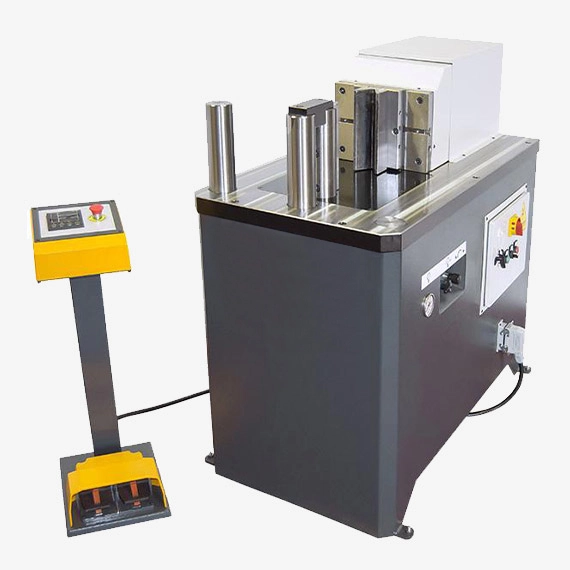
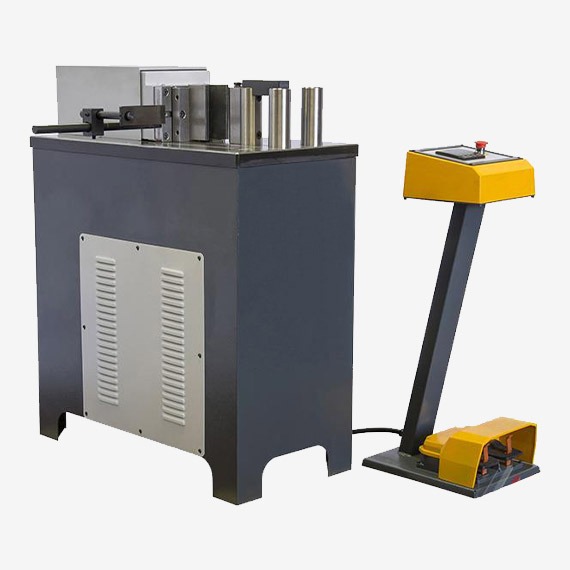
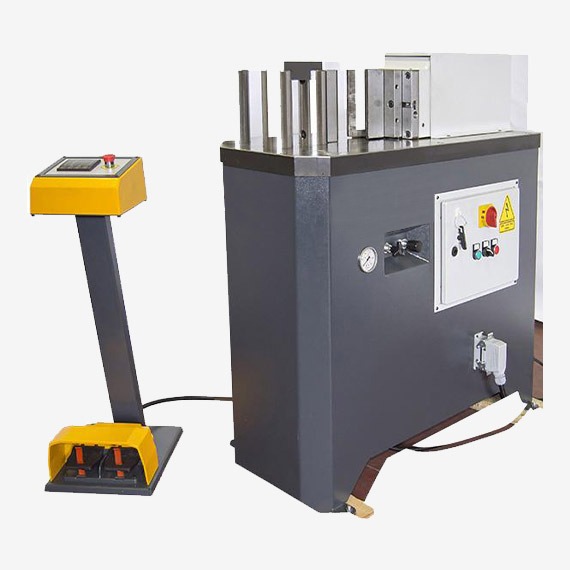
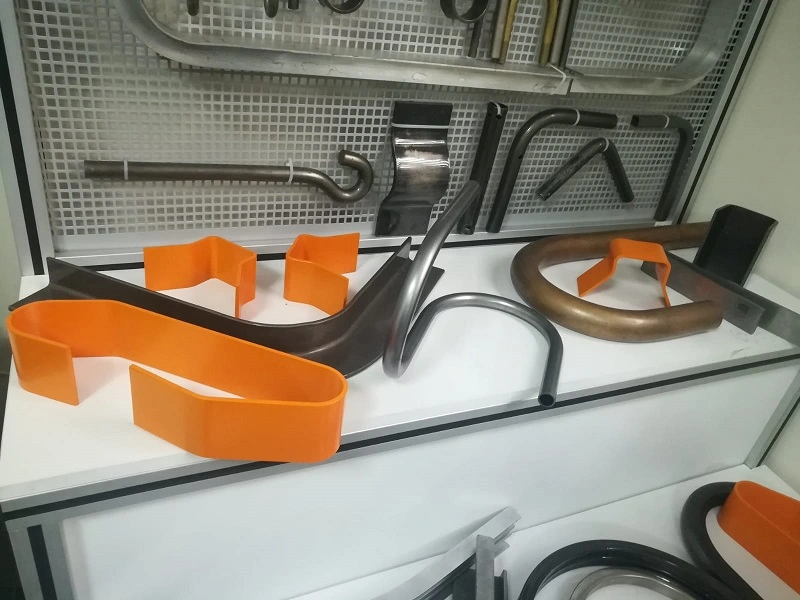
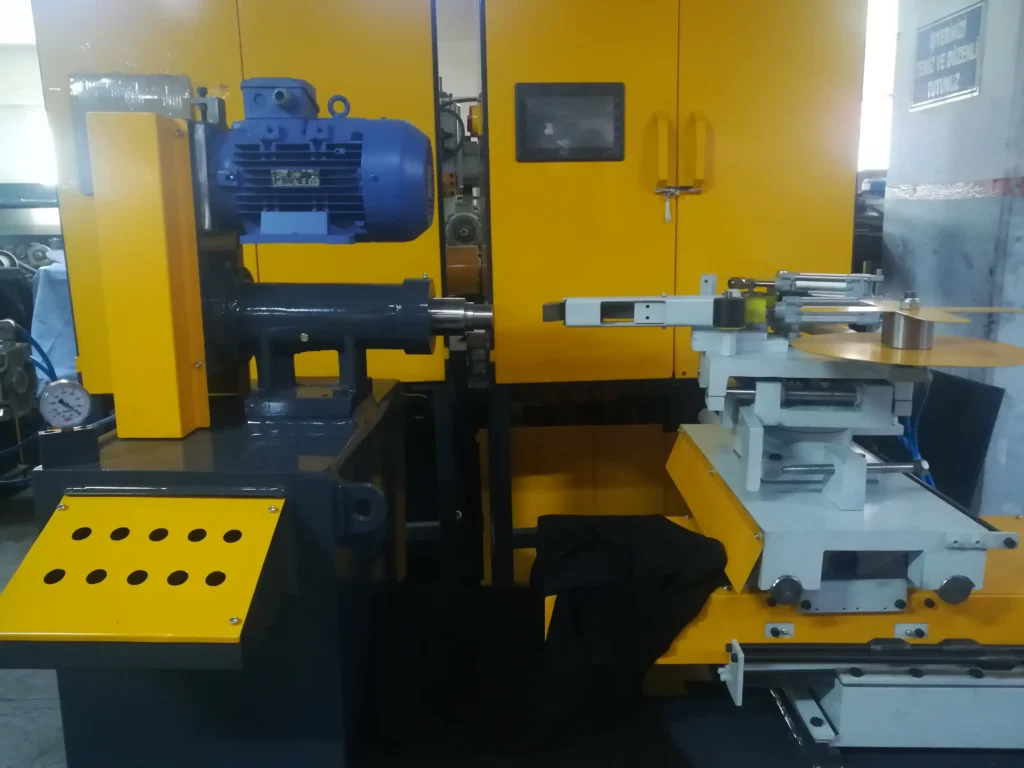
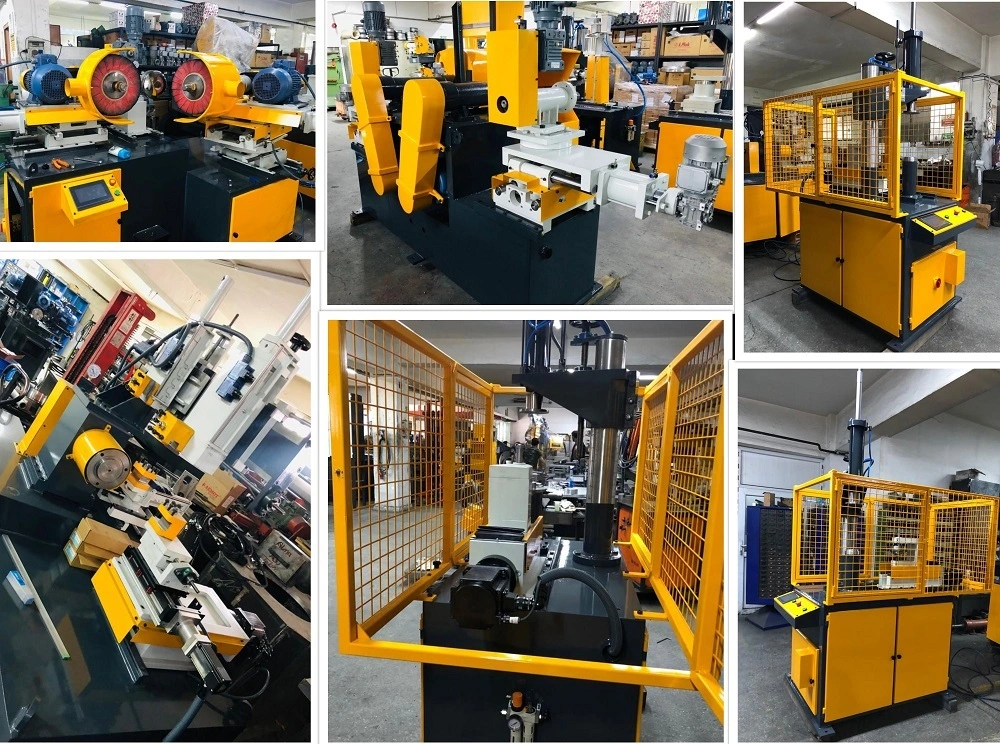
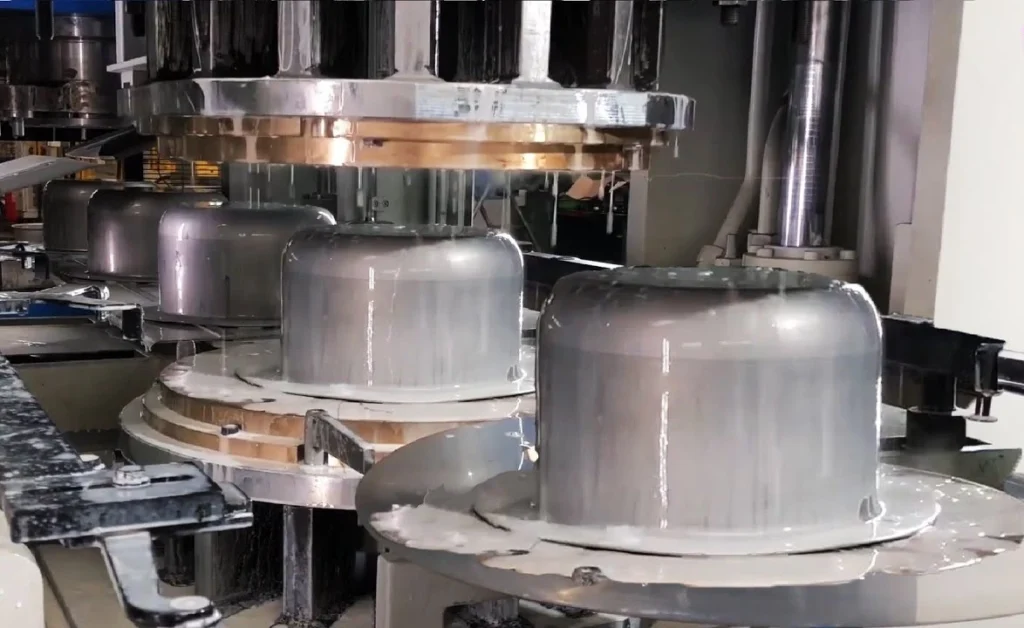
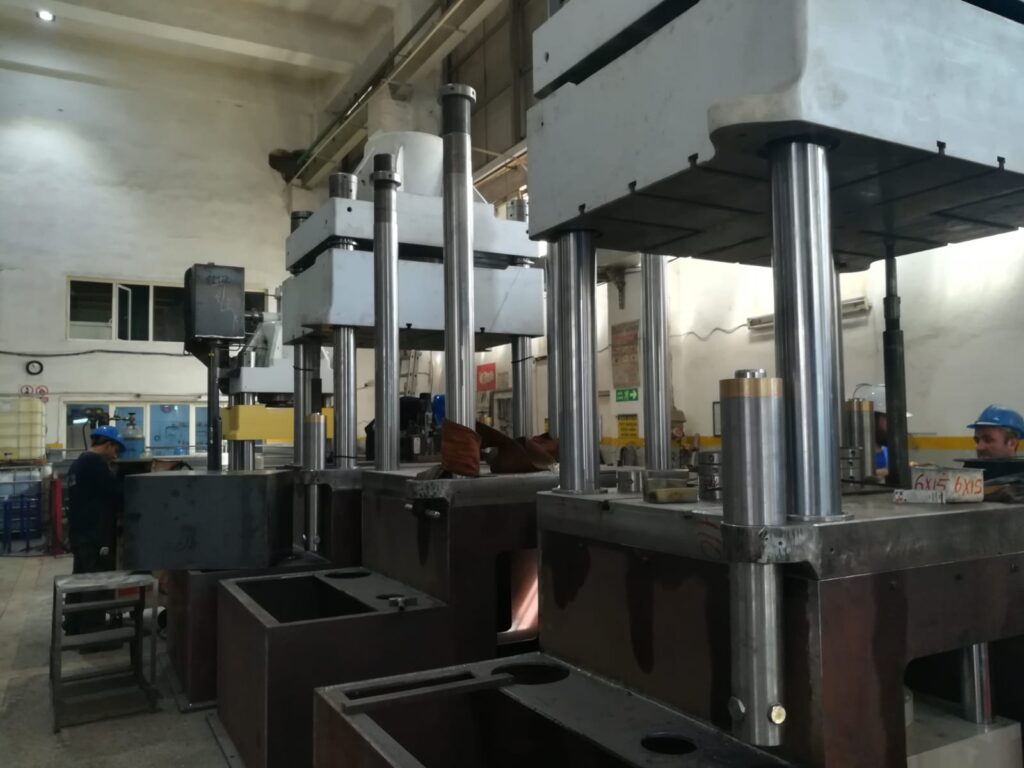
Cold forming is a high-speed metalworking process where metal wire is shaped at room temperature into various components without removing material. This process is highly efficient and produces parts with superior mechanical properties compared to traditional methods like machining or casting.

Types of Cold Forming Machines

  • Cold Heading Machines
  • Swaging Machines
  • Wire Forming Machines
  • Cold Forging Presses

Advantages of Cold Forming

  • High Production Rates
  • Improved Material Properties
  • Material Savings
  • Dimensional Accuracy
  • Good Surface Finish

Applications of Cold Formed Parts

Cold formed parts are used in a wide range of industries, including:

  • Automotive
  • Aerospace
  • Construction
  • Electronics
  • Fasteners
  • Medical

Pipe bending machine is a versatile tool used to shape pipes and tubes into various curves and angles. They are commonly used in various industries, including construction, plumbing, HVAC, and manufacturing, to create bends for piping systems, handrails, structural supports, and other applications.

Types of Pipe Bending Machines

There are various types of pipe bending machines, each with its own strengths and applications. Some of the most common types include:

  1. Rotary Draw Bending Machines: These machines use a rotating mandrel to draw the pipe through a bend die, creating a smooth, continuous bend. They are well-suited for bending thin-walled pipes and tubes.
  2. Ram Bending Machines: These machines use a hydraulic ram to push the pipe against a stationary bend die, forming a bend with greater curvature. They are suitable for bending thicker-walled pipes and tubes.
  3. Mandrel Bending Machines: These machines use an internal mandrel to support the pipe’s interior wall during bending, preventing ovalization and maintaining the pipe’s circular shape. They are ideal for bending thick-walled pipes and tubes with tight bends.
  4. Cold Bending Machines: These machines bend pipes at room temperature, using rollers or dies to form the desired curve. They are suitable for most types of pipes and tubes and offer a cost-effective bending solution.
  5. Induction Bending Machines: These machines use induction heating to soften a localized area of the pipe, allowing it to be bent more easily. They are particularly useful for bending high-strength alloys, such as stainless steel, without compromising their material properties.

Applications of Pipe Bending Machines

Pipe bending machines are used in a wide range of applications, including:

  1. Piping Systems: Bending pipes for plumbing, HVAC, and industrial piping systems.
  2. Handrails: Creating curved handrails for stairs, balconies, and walkways.
  3. Structural Supports: Bending pipes for structural supports in buildings, bridges, and other structures.
  4. Furniture and Fixtures: Shaping pipes for furniture frames, decorative elements, and fixtures.
  5. Automotive and Aerospace Components: Bending pipes for exhaust systems, roll cages, and other automotive or aerospace components.

Benefits of Using Pipe Bending Machines

Pipe bending machines offer several benefits over traditional bending methods, such as manual bending or using fittings:

  1. Precision and Consistency: Produce precise and consistent bends with repeatable accuracy.
  2. Minimize Material Waste: Reduce material waste by creating bends without the need for cutting and welding.
  3. Strength and Durability: Create bends that maintain the strength and integrity of the pipe.
  4. Versatility: Handle a wide range of pipe diameters, materials, and bend angles.
  5. Improve Efficiency: Increase productivity and reduce labor costs compared to manual bending methods.
  6. Enhanced Safety: Eliminate the risks associated with manual bending, such as muscle strain and repetitive motion injuries.

Safety Precautions for Working with Pipe Bending Machines

When working with pipe bending machines, it is crucial to follow safety precautions to prevent accidents and injuries:

  1. Wear Proper Personal Protective Equipment (PPE): Wear safety glasses, gloves, and appropriate footwear.
  2. Inspect the Machine Regularly: Inspect the machine for any damage or malfunction before each use.
  3. Secure the Pipe Properly: Ensure the pipe is securely clamped or supported in the machine before bending.
  4. Avoid Overbending: Do not overbend the pipe, as this can lead to cracking or failure.
  5. Maintain Clear Working Area: Keep the working area around the machine clear of obstructions and potential hazards.
  6. Follow Manufacturer’s Instructions: Always follow the manufacturer’s instructions for operating the specific pipe bending machine.

Pipe bending machines play a crucial role in various industries, enabling the creation of precise, durable bends for pipes and tubes. By choosing the appropriate machine type, following safety precautions, and adhering to manufacturer’s guidelines, operators can safely and effectively bend pipes to meet the requirements of their projects.

For more than 20 years, we have been manufacturing our own pipe bending machine for the metalworking industry. The pipe benders are automatic bending machines that can bend metal pipes in required angles with the bending tools. Industrial pipe bending machine can be classified as mandrel pipe bending machines and non-mandrel pipe bending machines.

Mandrel pipe bending machines use a mandrel during the bending. This mandrel is drawn into the pipe during the bending process. Non-mandrel pipe bending machines don’t have this mandrel tool. We manufacture non-mandrel pipe bending machines.

Our non-mandrel pipe bending machine models:

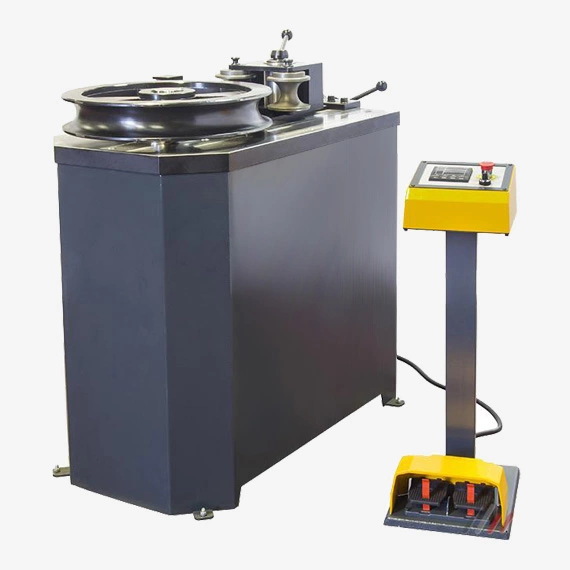
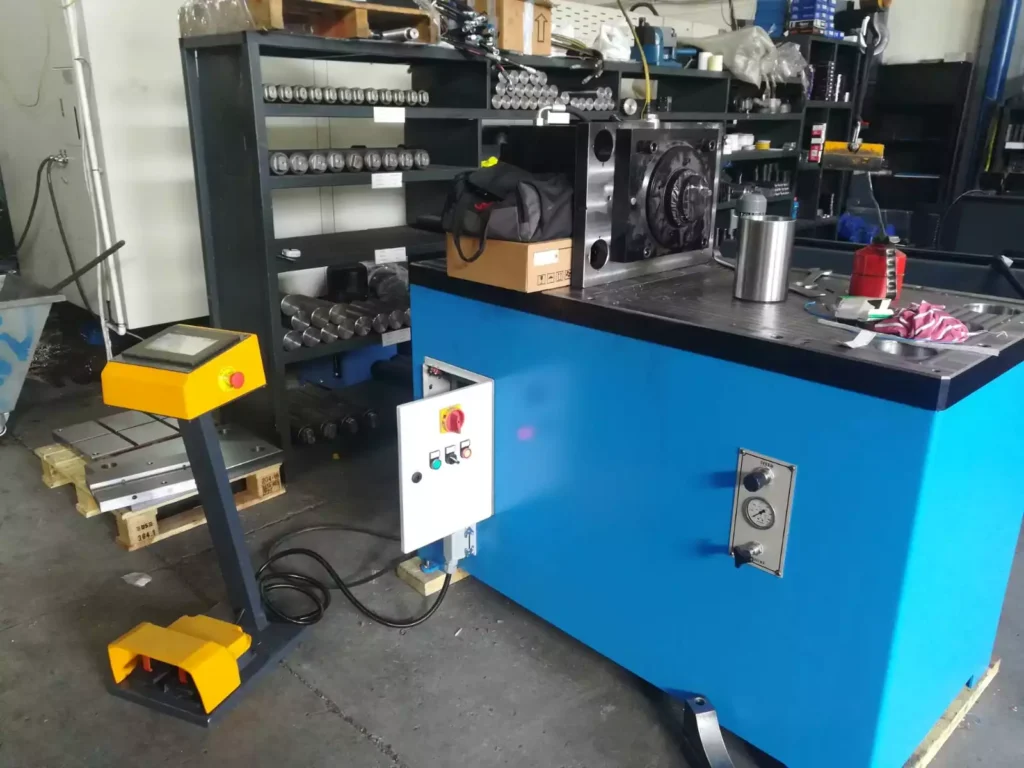
Pipe Bending Machine

Pipe Bending Machine

A pipe bending machine is a specialized tool used to shape and bend pipes and tubes into desired curves or angles. These machines are essential in various industries, including construction, manufacturing, and plumbing, where precise bending of pipes is crucial for creating functional and aesthetically pleasing structures.

Types of Pipe Bending Machines

There are several types of pipe bending machines available, each with its own strengths and applications. Some common types include:

  1. Mandrel bending machines: These machines use a mandrel, a solid rod or bar that is inserted into the pipe, to prevent the pipe from collapsing or distorting during the bending process. Mandrel bending machines are ideal for bending pipes with tight bends or small diameters.
  2. Rotational bending machines: These machines rotate the pipe around a stationary bend die, gradually forming the desired curvature. Rotational bending machines are suitable for bending pipes with large diameters and long bends.
  3. Roller bending machines: These machines use multiple rollers to apply pressure and shape the pipe as it passes through the machine. Roller bending machines are versatile and can handle various pipe diameters and bend radii.
  4. Hydraulic bending machines: These machines utilize hydraulic pressure to bend pipes, providing powerful and precise control over the bending process. Hydraulic bending machines are commonly used for bending thick-walled pipes and high-pressure applications.

Mandrel bending machines

Mandrel bending machines are specialized tools used to bend pipes and tubes into desired curves or angles without causing distortion or collapse. They are widely used in various industries, including construction, manufacturing, and plumbing, for creating functional and aesthetically pleasing structures.

Principle of Operation

Mandrel bending machines employ a mandrel, a solid rod or bar, that is inserted into the pipe or tube before bending. The mandrel provides internal support, preventing the pipe from collapsing or ovalizing during the bending process. This ensures that the bend is smooth, consistent, and free from internal defects.

Types of Mandrel Bending Machines

Mandrel bending machines can be classified into two main types based on their bending mechanism:

  1. Rotary Mandrel Bending Machines: These machines rotate the pipe around a stationary mandrel, gradually forming the desired curvature. This method is suitable for bending pipes with large diameters or long bends.
  2. Draw Mandrel Bending Machines: These machines pull the pipe through a fixed mandrel, shaping it into the desired curve. This method is particularly useful for bending pipes with small diameters or tight bends.

Advantages of Mandrel Bending Machines

Mandrel bending machines offer several advantages over other bending methods, such as roller bending or free-form bending:

  1. Precision and Accuracy: Mandrel bending machines produce highly accurate and consistent bends, ensuring the integrity and functionality of the bent pipe.
  2. Prevention of Collapse: The mandrel provides internal support, preventing the pipe from collapsing or ovalizing during the bending process, especially for thin-walled or large-diameter pipes.
  3. Reduced Springback: Mandrel bending machines minimize springback, the tendency of the bent pipe to partially straighten after bending. This ensures that the final bend matches the desired shape and angle.
  4. Suitable for Tight Bends: Mandrel bending machines are well-suited for producing tight bends or bends with small radii, which can be challenging with other bending methods.

Applications of Mandrel Bending Machines

Mandrel bending machines are widely used in various industries for a range of applications, including:

  1. Construction: Bending pipes for plumbing, HVAC systems, and electrical conduits
  2. Manufacturing: Fabricating pipes for machinery, automotive components, and industrial equipment
  3. Oil and Gas: Bending pipes for pipelines, oil wells, and refinery equipment
  4. Shipbuilding: Bending pipes for ship structures, piping systems, and marine equipment
  5. Furniture Manufacturing: Bending pipes for chair frames, lamp stands, and other furniture components

Selection and Operation of Mandrel Bending Machines

Selecting the appropriate mandrel bending machine depends on several factors, including:

  1. Pipe Diameter and Material: The machine should be capable of handling the pipe diameter and material being bent.
  2. Bend Radius and Angle: The machine should be able to achieve the desired bend radius and angle.
  3. Production Volume: The machine should have sufficient capacity to meet the production demands.
  4. Accuracy Requirements: The machine should provide the desired level of accuracy and precision for the application.
  5. Budget and Cost-Effectiveness: The machine should fit within the project budget and offer cost-effective operation.

When operating a mandrel bending machine, proper safety precautions should be followed to prevent accidents and injuries:

  1. Wear Personal Protective Equipment (PPE): Always wear appropriate PPE, including gloves, safety glasses, and proper footwear, when operating a mandrel bending machine.
  2. Securely Position the Machine: Ensure the machine is securely placed and leveled on a stable surface to prevent movement during operation.
  3. Properly Lubricate the Mandrel: Apply appropriate lubricant to the mandrel to reduce friction and ensure smooth movement during bending.
  4. Inspect the Pipe for Defects: Carefully inspect the pipe for any defects or damage before bending to prevent unexpected failures during the process.
  5. Follow Manufacturer Instructions: Strictly follow the manufacturer’s instructions and safety guidelines for the specific mandrel bending machine in use.

Mandrel bending machines play a vital role in various industries, enabling the creation of precise bends and curves in pipes and tubes without compromising their integrity. By selecting the right machine, adhering to safety protocols, and following proper operating procedures, these machines contribute to efficient, safe, and productive manufacturing processes.

Applications of Pipe Bending Machines

Pipe bending machines are used in a wide range of applications, including:

  1. Construction: Bending pipes for plumbing, HVAC systems, and electrical conduits
  2. Manufacturing: Fabricating pipes for machinery, automotive components, and industrial equipment
  3. Oil and Gas: Bending pipes for pipelines, oil wells, and refinery equipment
  4. Shipbuilding: Bending pipes for ship structures, piping systems, and marine equipment
  5. Furniture Manufacturing: Bending pipes for chair frames, lamp stands, and other furniture components

Benefits of Using Pipe Bending Machines

Pipe bending machines offer several advantages over manual bending methods, such as:

  1. Accuracy and Precision: Pipe bending machines produce consistent and precise bends, ensuring proper fit and function in various applications.
  2. Reduced Labor Costs: Pipe bending machines automate the bending process, minimizing the need for manual labor and reducing labor costs.
  3. Enhanced Safety: Pipe bending machines eliminate the risk of injuries associated with manual bending, such as muscle strain and fatigue.
  4. Versatility: Pipe bending machines can handle a wide range of pipe diameters, materials, and bend radii, making them suitable for diverse applications.
  5. Increased Productivity: Pipe bending machines accelerate the bending process, enhancing production output and project timelines.

Choosing the Right Pipe Bending Machine

The choice of the appropriate pipe bending machine depends on several factors, including:

  1. Pipe Diameter and Material: The machine should be capable of handling the pipe diameter and material being bent.
  2. Bend Radius and Angle: The machine should be able to achieve the desired bend radius and angle.
  3. Production Volume: The machine should have sufficient capacity to meet the production demands.
  4. Accuracy Requirements: The machine should provide the desired level of accuracy and precision for the application.
  5. Budget and Cost-Effectiveness: The machine should fit within the project budget and offer cost-effective operation.

Safety Considerations When Using Pipe Bending Machines

Working with pipe bending machines requires proper safety precautions to prevent accidents and injuries:

  1. Wear Personal Protective Equipment (PPE): Always wear appropriate PPE, including gloves, safety glasses, and proper footwear, when operating a pipe bending machine.
  2. Securely Position the Pipe: Ensure the pipe is securely placed and supported before bending to prevent movement during the process.
  3. Avoid Overloading the Machine: Do not exceed the machine’s capacity or overload it with excessive force, which can lead to damage or malfunctions.
  4. Maintain Proper Guarding: Keep safety guards and covers in place to protect hands and prevent accidental contact with moving parts.
  5. Follow Manufacturer Instructions: Strictly follow the manufacturer’s instructions and safety guidelines for the specific pipe bending machine in use.

Pipe bending machines play a crucial role in various industries, enabling the creation of precise bends and curves in pipes and tubes. By selecting the appropriate machine, adhering to safety protocols, and following proper operating procedures, these machines contribute to efficient, safe, and productive manufacturing processes.

(Non-Mandrel) Rotational bending machines
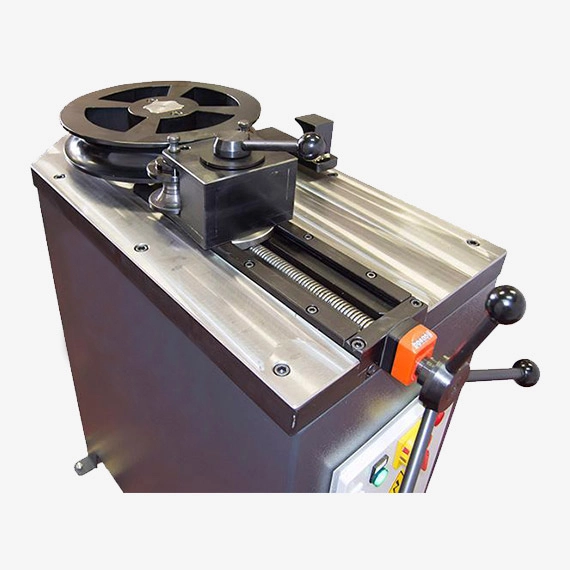
(Non-Mandrel) Rotational bending machines

Rotational bending machines, also known as rotary bending machines, are specialized tools used to shape and bend pipes and tubes into desired curves or angles by rotating the pipe around a stationary bend die. These machines are particularly well-suited for bending pipes with large diameters or long bends.

Principle of Operation

Rotational bending machines employ a stationary bend die, a curved or shaped form that the pipe is rotated around. As the pipe rotates, it is gradually forced into the shape of the bend die, creating the desired curvature. The rotation and pressure applied by the bend die ensure that the pipe bends smoothly and evenly.

Types of Rotational Bending Machines

There are two main types of rotational bending machines based on their drive mechanism:

  1. Hydraulic Rotational Bending Machines: These machines utilize hydraulic pressure to rotate the pipe and apply force against the bend die. Hydraulic rotational bending machines are commonly used for bending large-diameter pipes and heavy-duty applications.
  2. Electric Rotational Bending Machines: These machines use an electric motor to rotate the pipe and apply force against the bend die. Electric rotational bending machines are suitable for bending a wide range of pipe diameters and are often preferred for their quieter operation.

Advantages of Rotational Bending Machines

Rotational bending machines offer several advantages over other bending methods, such as mandrel bending or roller bending:

  1. Large Bend Capacity: Rotational bending machines can handle pipes with larger diameters and longer bending radii compared to mandrel bending machines.
  2. Reduced Springback: Rotational bending machines tend to produce less springback, ensuring that the final bend is closer to the desired shape and angle.
  3. Efficient Bending: Rotational bending machines can achieve consistent and precise bends in a relatively short amount of time.
  4. Suitable for Thin-Walled Pipes: Rotational bending machines can be used for bending thin-walled pipes without causing collapse or distortion.

Applications of Rotational Bending Machines

Rotational bending machines are widely used in various industries for a range of applications, including:

  1. Construction: Bending pipes for large-scale piping systems, structural supports, and infrastructure projects
  2. Shipbuilding: Bending pipes for ship structures, piping systems, and marine equipment
  3. Power Generation: Bending pipes for power plant piping systems, boilers, and heat exchangers
  4. Oil and Gas: Bending pipes for pipelines, oil wells, and refinery equipment
  5. Chemical Processing: Bending pipes for chemical processing plants, reactors, and piping systems

Selection and Operation of Rotational Bending Machines

Selecting the appropriate rotational bending machine depends on several factors, including:

  1. Pipe Diameter and Material: The machine should be capable of handling the pipe diameter and material being bent.
  2. Bend Radius and Angle: The machine should be able to achieve the desired bend radius and angle.
  3. Production Volume: The machine should have sufficient capacity to meet the production demands.
  4. Accuracy Requirements: The machine should provide the desired level of accuracy and precision for the application.
  5. Budget and Cost-Effectiveness: The machine should fit within the project budget and offer cost-effective operation.

Pipe Diameter and Material
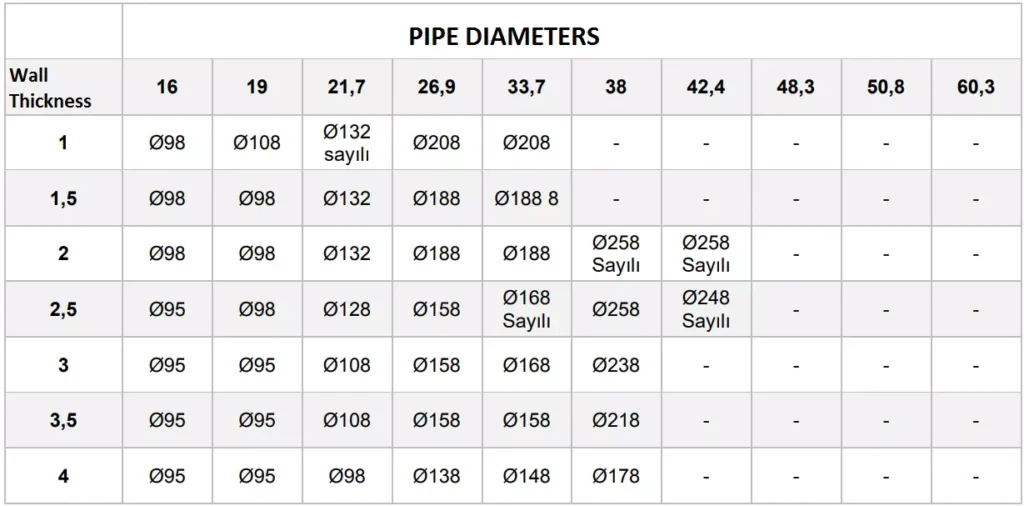
Pipe diameter and material are two crucial factors that determine the selection and performance of pipe bending machines. These parameters significantly influence the bending capacity, accuracy, and overall effectiveness of the bending process. Let’s delve into the significance of pipe diameter and material in pipe bending:

Pipe Diameter

Pipe diameter refers to the internal measurement of a pipe, typically expressed in inches or millimeters. It is a critical factor in determining the bending capacity of a pipe bending machine. The machine’s bending mechanism, whether mandrel bending, rotary bending, or roller bending, must be able to accommodate the pipe’s diameter to achieve the desired bend shape.

Larger pipe diameters generally require more powerful bending machines with larger bending capacities. Inadequate bending capacity can lead to incomplete or distorted bends, compromising the integrity and functionality of the bent pipe. Conversely, using an excessively powerful machine for smaller diameter pipes may result in over-bending or damage to the pipe material.

Pipe Material

The material of the pipe significantly impacts the bending process and the selection of an appropriate bending machine. Different pipe materials exhibit varying bending characteristics, such as ductility, strength, and springback. These properties influence the bend radius, bend angle, and overall accuracy achievable during bending.

For instance, softer and more ductile materials like aluminum or copper are easier to bend compared to harder and stronger materials like stainless steel or carbon steel. Harder materials may require higher bending forces and specialized machines to achieve the desired bends without causing cracking or distortion.

Additionally, different pipe materials have different springback tendencies, which refer to the material’s inclination to partially straighten after bending. Springback can affect the accuracy of the final bend angle, and machines with springback compensation mechanisms are often used for materials with high springback rates.

Matching Pipe Diameter and Material to Bending Machines

Selecting the appropriate pipe bending machine for a particular application necessitates careful consideration of both pipe diameter and material. By understanding the bending characteristics of the pipe material and the capacity of the bending machine, one can ensure that the bending process produces accurate, consistent, and high-quality bends.

Here are some general guidelines for matching pipe diameter and material to bending machines:

  • Pipe Diameter: Choose a bending machine with a bending capacity that exceeds the diameter of the pipe being bent. This ensures that the machine has sufficient power to achieve the desired bend without straining or damaging the pipe.
  • Pipe Material: Consult the manufacturer’s specifications of the bending machine to determine the compatible materials and their corresponding bending parameters. This information will help avoid over-bending or under-bending of the pipe material.

In summary, pipe diameter and material play essential roles in pipe bending, influencing the selection of bending machines and the effectiveness of the bending process. Understanding these factors is crucial for producing high-quality bends that meet the requirements of the application.

Safety

When operating a rotational bending machine, proper safety precautions should be followed to prevent accidents and injuries:

  1. Wear Personal Protective Equipment (PPE): Always wear appropriate PPE, including gloves, safety glasses, and proper footwear, when operating a rotational bending machine.
  2. Securely Position the Machine: Ensure the machine is securely placed and leveled on a stable surface to prevent movement during operation.
  3. Properly Align the Bend Die: Ensure the bend die is properly aligned with the pipe to prevent uneven or distorted bends.
  4. Monitor the Bending Process: Closely monitor the bending process to detect any potential issues or irregularities.
  5. Follow Manufacturer Instructions: Strictly follow the manufacturer’s instructions and safety guidelines for the specific rotational bending machine in use.

Rotational bending machines offer a versatile and efficient method for bending pipes and tubes with large diameters or long bends. By selecting the right machine, adhering to safety protocols, and following proper operating procedures, these machines contribute to efficient, safe, and productive manufacturing processes in various industries.

Roller bending machines

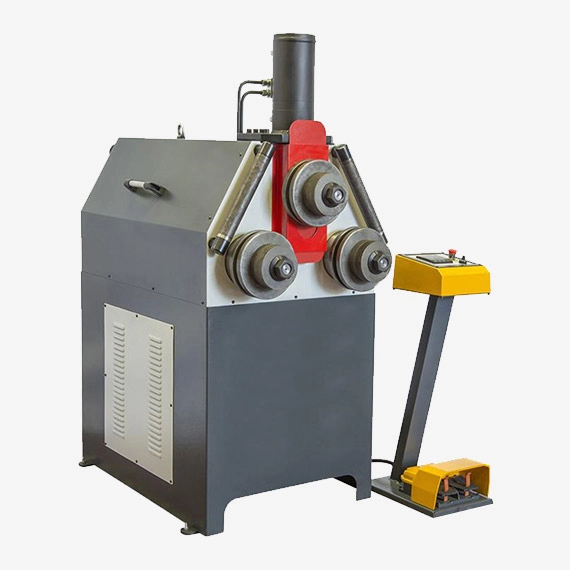
Roller bending machines, also known as profile bending machines, are specialized tools used to shape and bend pipes and tubes into desired curves or angles by applying pressure from multiple rollers. These machines are widely used in various industries, including construction, manufacturing, and plumbing, for creating functional and aesthetically pleasing structures.

Principle of Operation

Roller bending machines employ a series of rollers, typically three or more, arranged in a staggered or pyramidal configuration. The pipe or tube is passed through the rollers, which gradually apply pressure and force the material to conform to the desired shape. The rollers rotate the pipe as it passes through, ensuring a smooth, consistent bend.

Types of Roller Bending Machines

Roller bending machines can be classified into two main types based on their roller configuration:

  1. Hydraulic Roller Bending Machines: These machines utilize hydraulic pressure to apply force to the rollers, providing powerful and precise bending capabilities. Hydraulic roller bending machines are commonly used for bending large-diameter pipes or thick-walled tubes.
  2. Electric Roller Bending Machines: These machines use an electric motor to drive the rollers, offering a more energy-efficient and cost-effective alternative to hydraulic machines. Electric roller bending machines are suitable for bending a wide range of pipe diameters and materials.

Advantages of Roller Bending Machines

Roller bending machines offer several advantages over other bending methods, such as mandrel bending or rotational bending:

  1. Versatility: Roller bending machines can handle a wide range of pipe diameters, materials, and bend radii, making them suitable for various applications.
  2. Reduced Springback: Roller bending machines generally produce less springback compared to other bending methods, ensuring the final bend closely matches the desired shape.
  3. Efficient and Continuous Bending: Roller bending machines allow for continuous bending of pipes, enabling efficient and high-volume production.
  4. Suitable for Small Bends: Roller bending machines can be used for bending pipes with relatively small bend radii, making them versatile for various projects.

Applications of Roller Bending Machines

Roller bending machines are widely used in various industries for a range of applications, including:

  1. Construction: Bending pipes for railings, handrails, and structural supports
  2. Manufacturing: Fabricating pipes for machinery frames, automotive components, and industrial equipment
  3. HVAC Systems: Bending pipes for ductwork, air conditioning units, and ventilation systems
  4. Shipbuilding: Bending pipes for ship structures, piping systems, and marine equipment
  5. Furniture Manufacturing: Bending pipes for chair frames, lamp stands, and other furniture components

Selection and Operation of Roller Bending Machines

Selecting the appropriate roller bending machine depends on several factors, including:

  1. Pipe Diameter and Material: The machine should be capable of handling the pipe diameter and material being bent.
  2. Bend Radius and Angle: The machine should be able to achieve the desired bend radius and angle.
  3. Production Volume: The machine should have sufficient capacity to meet the production demands.
  4. Accuracy Requirements: The machine should provide the desired level of accuracy and precision for the application.
  5. Budget and Cost-Effectiveness: The machine should fit within the project budget and offer cost-effective operation.

When operating a roller bending machine, proper safety precautions should be followed to prevent accidents and injuries:

  1. Wear Personal Protective Equipment (PPE): Always wear appropriate PPE, including gloves, safety glasses, and proper footwear, when operating a roller bending machine.
  2. Securely Position the Machine: Ensure the machine is securely placed and leveled on a stable surface to prevent movement during operation.
  3. Properly Align the Rollers: Make sure the rollers are aligned and adjusted correctly to achieve the desired bend shape.
  4. Monitor the Bending Process: Closely monitor the bending process to detect any potential issues or irregularities.
  5. Follow Manufacturer Instructions: Strictly follow the manufacturer’s instructions and safety guidelines for the specific roller bending machine in use.

Roller bending machines provide a versatile and efficient method for bending pipes and tubes in various industries. By selecting the right machine, adhering to safety protocols, and following proper operating procedures, these machines contribute to efficient, safe, and productive manufacturing processes.

Hydraulic bending machines

Pipe Bending Machine

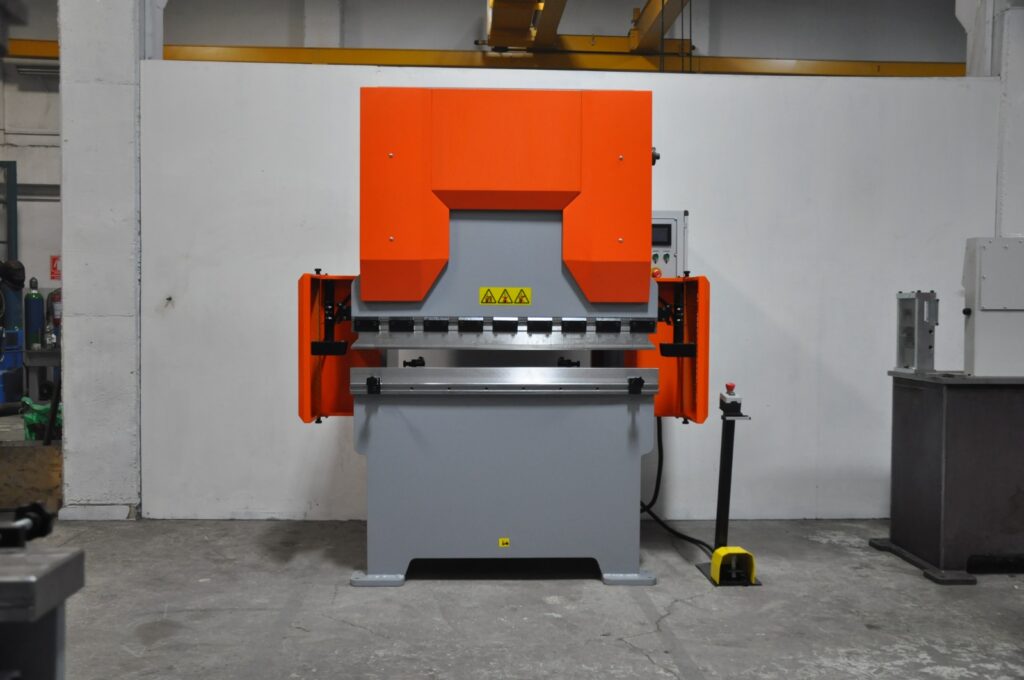
Hydraulic bending machines, also known as hydraulic press brakes, are specialized tools used to shape and bend metal sheets or plates into desired angles or curves. These machines are widely used in various industries, including metal fabrication, construction, and automotive manufacturing, for creating functional and structurally sound components.

Principle of Operation

Hydraulic bending machines employ a hydraulic cylinder, a piston-driven chamber filled with pressurized hydraulic fluid, to apply force to a bending beam or punch. The workpiece, typically a metal sheet or plate, is placed between the bending beam and the die, which is a shaped tool that determines the desired bend angle or shape. As the hydraulic cylinder extends, the bending beam forces the workpiece to conform to the shape of the die, creating the desired bend.

Types of Hydraulic Bending Machines

Hydraulic bending machines can be classified into two main types based on their frame design:

  1. Open-Throat Bending Machines: These machines have an open frame structure, allowing for bending of workpieces of varying lengths. Open-throat bending machines are commonly used for bending long metal sheets or plates.
  2. Box-Frame Bending Machines: These machines have a closed frame structure, providing greater rigidity and support for bending thicker or wider workpieces. Box-frame bending machines are often used for bending shorter metal sheets or plates that require higher bending forces.

Advantages of Hydraulic Bending Machines

Hydraulic bending machines offer several advantages over other bending methods, such as mechanical bending or manual bending:

  1. Powerful and Precise Bending: Hydraulic bending machines provide powerful bending forces, allowing for bending of thick or high-strength materials with high precision.
  2. Consistent Bend Angles: Hydraulic bending machines ensure consistent and accurate bend angles, reducing the risk of defects and ensuring the integrity of the bent workpiece.
  3. Versatility: Hydraulic bending machines can handle a wide range of workpiece thicknesses, materials, and bend angles, making them suitable for various applications.
  4. Automation Potential: Hydraulic bending machines can be automated or semi-automated, enabling efficient and high-volume production.
  5. Safety Features: Hydraulic bending machines often incorporate safety features, such as light curtains or guards, to protect operators from potential hazards.

Applications of Hydraulic Bending Machines

Hydraulic bending machines are widely used in various industries for a range of applications, including:

  1. Metal Fabrication: Bending sheets or plates for enclosures, structural components, and machine parts
  2. Construction: Bending metal sheets or plates for roofing panels, ductwork, and structural framing
  3. Automotive Manufacturing: Bending sheet metal for car bodies, panels, and structural components
  4. Appliance Manufacturing: Bending metal sheets or plates for appliance enclosures, panels, and components
  5. HVAC Systems: Bending sheet metal for ductwork, air conditioning units, and ventilation systems

Selection and Operation of Hydraulic Bending Machines

Selecting the appropriate hydraulic bending machine depends on several factors, including:

  1. Workpiece Thickness and Material: The machine should be capable of handling the thickness and material of the workpiece being bent.
  2. Bend Angle and Length: The machine should be able to achieve the desired bend angle and bend length for the application.
  3. Production Volume: The machine should have sufficient capacity to meet the production demands.
  4. Accuracy Requirements: The machine should provide the desired level of accuracy and precision for the application.
  5. Budget and Cost-Effectiveness: The machine should fit within the project budget and offer cost-effective operation.

When operating a hydraulic bending machine, proper safety precautions should be followed to prevent accidents and injuries:

  1. Wear Personal Protective Equipment (PPE): Always wear appropriate PPE, including gloves, safety glasses, and proper footwear, when operating a hydraulic bending machine.
  2. Securely Position the Workpiece: Ensure the workpiece is securely placed and properly aligned with the bending beam and the die.
  3. Clear the Bending Area: Keep the bending area clear of obstructions and maintain proper posture to avoid strain or injury.
  4. Use Proper Handling Techniques: Use appropriate lifting techniques and avoid overloading the machine.
  5. Follow Manufacturer Instructions: Strictly follow the manufacturer’s instructions and safety guidelines for the specific hydraulic bending machine in use.

Hydraulic bending machines play a crucial role in various industries, enabling the creation of precise bends and shapes in metal sheets or plates. By selecting the right machine, adhering to safety protocols, and following proper operating procedures, these machines contribute to efficient, safe, and productive manufacturing processes.

Technical characteristics of the pipe and tube benders

The technical characteristics of pipe and tube benders vary depending on the type of machine and the specific application. However, some general technical characteristics that are common to most pipe and tube benders include:

  • Bend capacity: This is the maximum diameter and wall thickness of pipe or tube that the machine can bend.
  • Bend radius: This is the minimum radius of a bend that the machine can create.
  • Bend angle: This is the maximum angle of a bend that the machine can create.
  • Bending speed: This is the rate at which the machine can bend pipe or tube.
  • Accuracy: This is the degree to which the machine can produce bends that are consistent and within the specified tolerances.
  • Power requirements: This is the amount of electrical or hydraulic power that the machine requires to operate.
  • Dimensions and weight: These are the physical dimensions and weight of the machine.

In addition to these general technical characteristics, some pipe and tube benders may also have additional features, such as:

  • Mandrel bending: This is a type of bending that uses a mandrel to support the inside of the pipe or tube as it is being bent. This can prevent the pipe or tube from ovalizing or collapsing during the bending process.
  • Rotary bending: This is a type of bending that rotates the pipe or tube around a stationary die. This can be used to create bends with large radii.
  • Computer numerical control (CNC): This is a type of control system that allows the machine to be programmed to create complex bends with high precision.
  • Hydraulic drive: This is a type of power system that uses hydraulic fluid to provide the bending force. This can be used to create bends with high power and precision.
  • Electric drive: This is a type of power system that uses an electric motor to provide the bending force. This can be used to create bends with high efficiency and cleanliness.

The specific technical characteristics of a pipe or tube bender will depend on the application for which it is being used. For example, a machine that is used to bend thin-walled pipes for plumbing applications will have different technical characteristics than a machine that is used to bend thick-walled pipes for industrial applications.

Here is a table that summarizes the key technical characteristics of some common types of pipe and tube benders:

Type of BenderBend CapacityBend RadiusBend AngleBending SpeedAccuracyPower RequirementsDimensions and Weight
Mandrel benderSmall to large diametersSmall to large radiiUp to 180 degreesSlow to moderateHighHydraulic or electricLarge to very large
Rotary benderLarge diametersLarge radiiUp to 180 degreesModerate to fastModerateHydraulic or electricLarge to very large
CNC benderSmall to large diametersSmall to large radiiUp to 180 degreesModerate to fastHighHydraulic or electricSmall to large

Pipe forming with our pipe bending machine

https://www.youtube.com/embed/rcoGToeDU5c?feature=oembedPipe bending machine

Pipe forming is the main task of our TB series Pipe benders. During the pipe forming the machine tool presses the end of the pipe around the round mold to make a radius. Companies that purchase a pipe manufacturing machine, also need a sheet metal forming tube bender.

Pipe forming with a pipe bending machine is a process of shaping and curving pipes or tubes into desired angles or shapes. This technique is widely used in various industries, including construction, manufacturing, and plumbing, to create functional and aesthetically pleasing structures.

Pipe bending machines employ various methods to achieve the desired curvature, including:

  1. Mandrel bending: This method utilizes a mandrel, a solid rod or bar, inserted into the pipe to prevent collapse or distortion during bending. Mandrel bending is particularly suitable for bending thin-walled pipes or achieving tight bends.
  2. Rotational bending: In this method, the pipe is rotated around a stationary bend die, gradually forming the desired curvature. Rotational bending is well-suited for bending pipes with large diameters or long bends.
  3. Roller bending: This method employs multiple rollers to apply pressure and shape the pipe as it passes through the machine. Roller bending is versatile and can handle various pipe diameters and bend radii.
  4. Hydraulic bending: This method utilizes hydraulic pressure to apply force to the rollers or bending beam, providing powerful and precise bending capabilities. Hydraulic bending is commonly used for bending thick-walled pipes or high-strength materials.

Pipe forming with a pipe bending machine offers several advantages over manual bending methods:

  1. Accuracy and Precision: Pipe bending machines produce consistent and accurate bends, ensuring the integrity and functionality of the bent pipe.
  2. Reduced Labor Costs: Pipe bending machines automate the bending process, minimizing the need for manual labor and reducing labor costs.
  3. Enhanced Safety: Pipe bending machines eliminate the risk of injuries associated with manual bending, such as muscle strain and fatigue.
  4. Versatility: Pipe bending machines can handle a wide range of pipe diameters, materials, and bend radii, making them suitable for diverse applications.
  5. Increased Productivity: Pipe bending machines accelerate the bending process, enhancing production output and project timelines.

To effectively form pipes using a pipe bending machine, consider the following steps:

  1. Select the Appropriate Machine: Choose the machine that can handle the pipe diameter, material, and bend requirements of the project.
  2. Prepare the Pipe: Clean and inspect the pipe for any defects or damage that could affect the bending process.
  3. Properly Align the Pipe: Ensure the pipe is securely positioned and aligned with the bending mechanism to prevent misalignment or distortion.
  4. Set the Bending Parameters: Adjust the machine settings according to the desired bend angle, radius, and speed.
  5. Monitor the Bending Process: Observe the bending process closely to detect any irregularities or deviations from the desired shape.
  6. Verify Bend Quality: Once the bending process is complete, inspect the bend for accuracy, consistency, and absence of defects.

Pipe forming with a pipe bending machine plays a crucial role in various industries, enabling the creation of precise bends and shapes in pipes and tubes. By selecting the right machine, adhering to safety protocols, and following proper operating procedures, these machines contribute to efficient, safe, and productive manufacturing processes.

Parts made with pipe bending machine
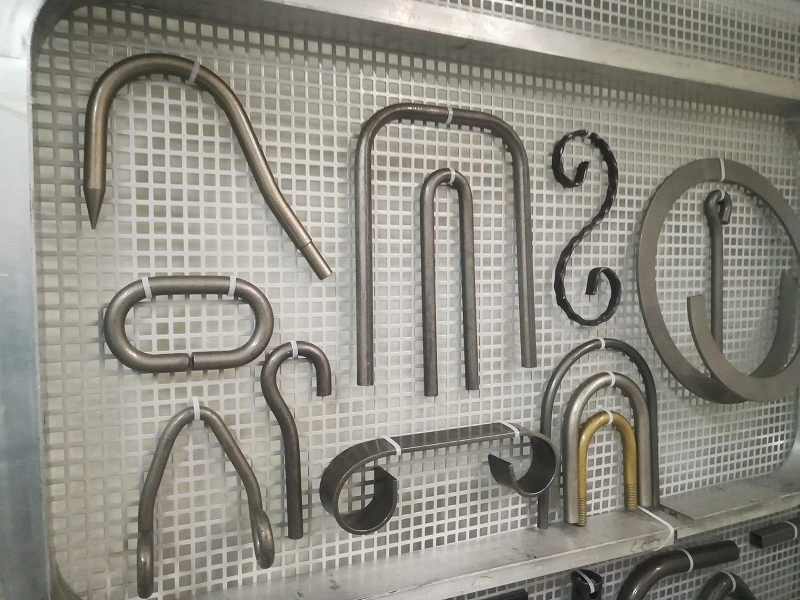
Sheet metals and Pipes made with our pipe bending machine

In our manufacturing facility, we design and manufacture every machine with our own manufacturing machines. Pipe manufacturers, tube manufacturing companies, and machine manufacturing companies are our biggest customers. In our 2500 m2 closed area, we have a 100% indoor production ability.

Pipe bending machines are used to create a wide variety of parts for various industries. Here are some examples of parts that can be made with a pipe bending machine:

Automotive industry:

  • Exhaust pipes
  • Frame components
  • Roll bars
  • Seat frames
  • Suspension parts

Construction industry:

  • Handrails
  • Guardrails
  • Piping systems
  • Structural supports
  • Tubing for electrical conduit

Manufacturing industry:

  • Appliance components
  • Chair frames
  • Furniture components
  • Hand tools
  • Medical equipment

Oil and gas industry:

  • Piping for oil and gas pipelines
  • Tubing for instrumentation and control systems
  • Valves and fittings
  • Wellbores

HVAC industry:

  • Ductwork
  • Pipe fittings
  • Tubing for refrigerant lines
  • Ventilation systems

Plumbing industry:

  • Drains
  • Pipes for water supply and waste disposal
  • Tubing for plumbing fixtures
  • Valves and fittings

In addition to these specific examples, pipe bending machines can be used to create a wide variety of other parts depending on the specific needs of the application.

Here are some additional factors that can affect the type of parts that can be made with a pipe bending machine:

  • The type of pipe bending machine: Different types of pipe bending machines have different capabilities. For example, mandrel bending machines are well-suited for bending thin-walled pipes, while rotary bending machines are better for bending pipes with large diameters.
  • The material of the pipe: Different materials have different bending characteristics. For example, stainless steel is more difficult to bend than aluminum.
  • The thickness of the pipe: Thicker pipes are more difficult to bend than thinner pipes.
  • The desired bend radius: The bend radius is the tightest bend that can be made in the pipe. Smaller bend radii require more force and specialized machines.
  • The desired bend angle: The bend angle is the angle at which the pipe is bent. Larger bend angles require more force and specialized machines.

With careful planning and the right equipment, pipe bending machines can be used to create a wide variety of parts for a wide range of applications.
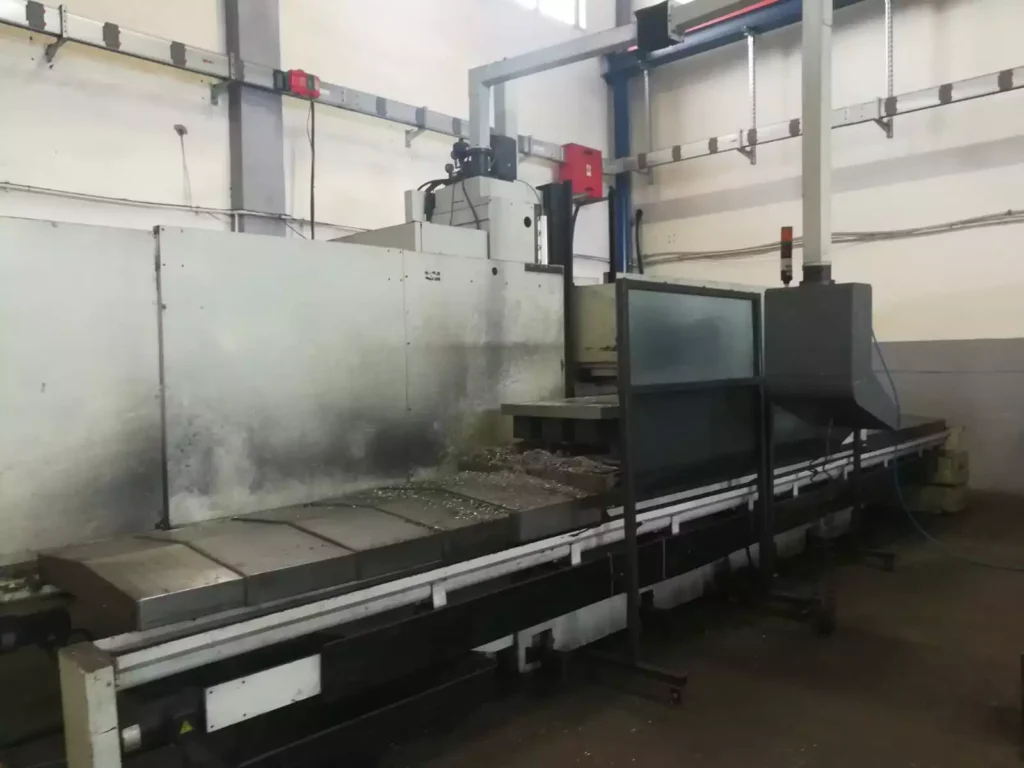
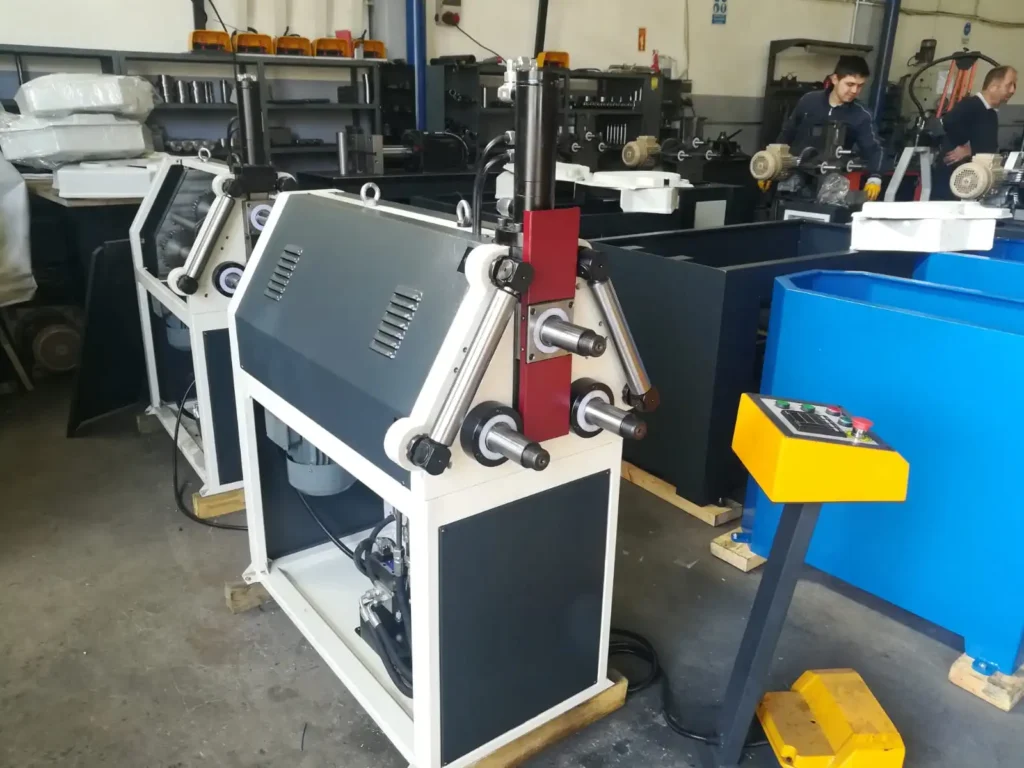
Our production facility hall
Our production facility hall where we make our bending machines

All the equipment design and equipment manufacturing are carried out in our own production facility by our production machines. In our manufacturing site, we have been manufacturing machines and equipment since 1997.

Tube Bending Machine Manufacturing

Tube bending machines are specialized equipment used to shape and curve pipes and tubes into desired angles or shapes. These machines play a crucial role in various industries, including construction, manufacturing, and plumbing, for creating functional and aesthetically pleasing structures.

The manufacturing of tube bending machines involves a complex process that encompasses several stages:

  1. Design and Engineering: The design phase entails creating detailed blueprints and specifications for the machine, considering factors such as bending capacity, bend radius, accuracy requirements, and power consumption.
  2. Material Procurement: The procurement stage involves sourcing high-quality materials that meet the structural and performance requirements of the machine. This includes selecting the appropriate metals for the frame, bending mechanism, and hydraulic or electrical components.
  3. Machining and Fabrication: The machining and fabrication stage involves transforming the procured materials into the various components of the machine. This involves precision cutting, drilling, milling, and shaping operations using advanced CNC machines.
  4. Component Assembly: Once the individual components are manufactured, they are carefully assembled according to the design specifications. This involves aligning, joining, and securing the various parts to form the complete machine structure.
  5. Hydraulic or Electrical System Installation: The hydraulic or electrical system, depending on the machine type, is installed and connected to the appropriate components. This includes pumps, motors, valves, and controls to provide the necessary power and precision for bending operations.
  6. Quality Assurance and Testing: Rigorous quality assurance procedures are implemented to ensure the machine meets the specified standards for performance, accuracy, and safety. This involves testing the bending capacity, bend radius, and consistent operation under various conditions.
  7. Documentation and Packaging: Comprehensive documentation is prepared, including user manuals, maintenance guides, and safety instructions, to ensure proper operation and maintenance of the machine. The machine is then packaged securely for shipment or storage.

Tube bending machine manufacturing is a specialized industry that requires expertise in mechanical engineering, hydraulics or electrical systems, and quality control procedures. Manufacturers continuously strive to innovate and improve their machines by incorporating new technologies, enhancing performance, and expanding bending capabilities.

Pipe bending is another way of manufacturing bending sheet metal technologies. Pipe bending is carried out by the movement of the pipe bending roller around its own axis while the fixture tool keeps the pipe fixed.

Due to the increase in globalization, it is very important to produce a good with high precision and high accuracy or reliability. pipe bending machine is mostly used in the fabrication industry generally using bending machine to produce U-shapes and V-shapes. The design of the pipe-bending machine use only two pulleys for the bending of pipe a different angle. due to the no of compost use overall cost of the machine is low. and machine portable type the weight of the machine is less than is very full portable.

Our project is to design and construct a bending machine. This machine is used to bend pipes into curves or another curvature shape. The size of the machine is very convenient for portable work. In various fabrication, works as well as in architectural work pipes are used in different ways. To bend these pipes into these artistic forms is not easy thing to be done manually. Using a particular machine specially developed for bending of pipe help.

Choosing component material is very important because it will affect the overall cost of the machine and product quality. With this consideration, we will design this machine with the maximum quality and low cost, During pipe bending operation stress concentration is occur in the bend area of pipe. the bend section may be damaged during service in the particular cases where significant validity and thickness version exist which are introduced during the menacing process and operation time.

Hence the acceptance of a pipe depends on the magnitude and shape of the pipe. in the pipe bending process, the thickness of the pipe changes. The acceptability of pipe bend is depending on magnitude and shape imperfection. Then we also study on failure analysis of pipe bend in these we assume pipe bend is a uniform thickness.

As a Pipe Bending Machine Manufacturer

The EMS Metalworking tube bending machines have a clamping die, pressure dies, mandrel, and bend head, which are all hydraulically operated. To enhance the usefulness of these EMS Metalworking machines,
Electro pneumatics has developed the EMS Metalworking Series.
These tube bending machines have a pre-settable linear and rotary indexing facility for multi-plane bends, in addition to the clamp, pressure dies, mandrel, and bend the arm.

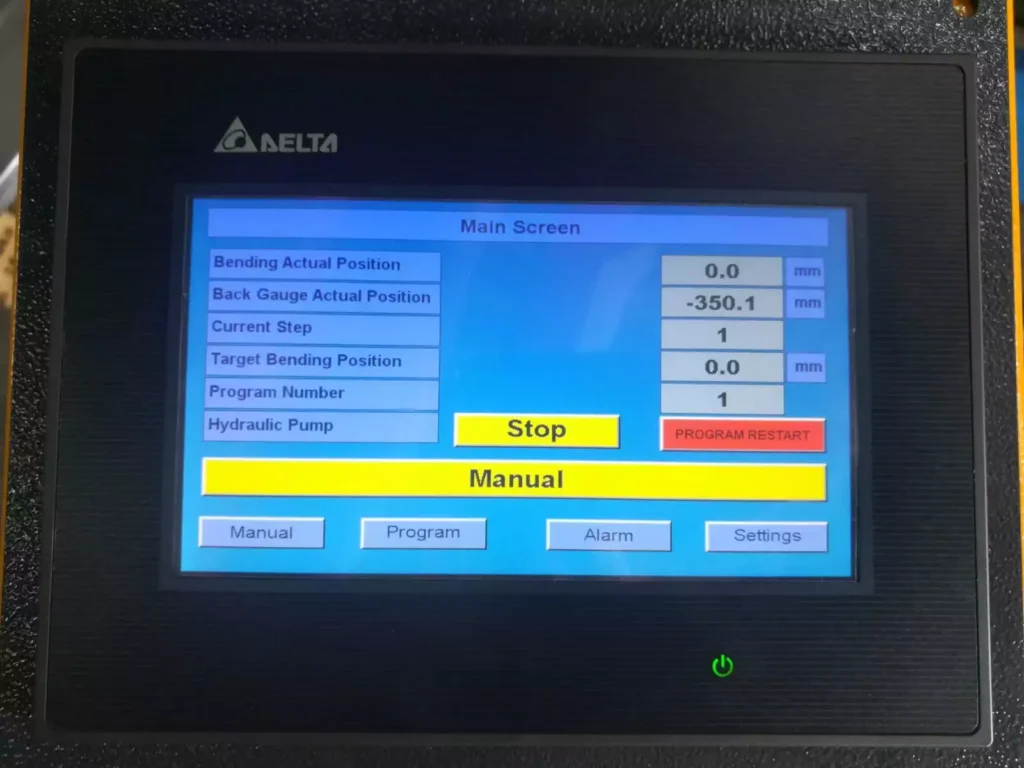
These hydraulic, semi-automatic machines can handle tubes from 6 mm to 325 mm outside diameter, ft is possible to bend tubes of a variety of materials with round, square or rectangular sections and different profiles, which eliminates the need for locating fixtures on the machine. A carriage with a manual/hydraulic chucking arrangement that is capable of traversing the length of the machine is provided.

Electro pneumatics user-friendly programmable microprocessor-based numerical ‘Smart bend 4101 series controllers are specially designed for these machines. With these machines, all operations of the bending process are done automatically, while rotation and linear orientation of the component between two bends is done manually by the operator against pre-settable stops.

Metal pipe bending machine
Metal pipe bending machine is used to bend metal pipes of different diameters

Features of Hydraulic Steel Pipe Bending Machines

Hydraulic steel pipe bending machines are powerful and versatile tools used to shape and bend steel pipes into desired angles or curves. These machines are widely used in various industries, including construction, manufacturing, and plumbing, for creating functional and aesthetically pleasing structures.

Here are some of the key features of hydraulic steel pipe bending machines:

1. High Bending Capacity: Hydraulic steel pipe bending machines utilize hydraulic pressure to apply force to the bending mechanism, providing powerful and precise bending capabilities. These machines can handle a wide range of pipe diameters and thicknesses, making them suitable for bending thick-walled steel pipes or high-strength materials.

2. Consistent and Accurate Bends: Hydraulic steel pipe bending machines produce consistent and accurate bends, ensuring the integrity and functionality of the bent pipe. The precise control of hydraulic pressure allows for precise adjustments to the bend angle and radius, resulting in bends that meet the specified tolerances.

3. Versatility: Hydraulic steel pipe bending machines can handle a wide range of pipe diameters, materials, and bend radii. They can be used for mandrel bending, rotary bending, and roller bending, providing flexibility and adaptability to various bending applications.

4. Automation Potential: Hydraulic steel pipe bending machines can be automated or semi-automated, enabling efficient and high-volume production. This automation reduces labor costs, minimizes human error, and increases production throughput.

5. Safety Features: Hydraulic steel pipe bending machines often incorporate safety features, such as light curtains or guards, to protect operators from potential hazards. These features help prevent injuries and accidents during the bending process.

In addition to these general features, specific hydraulic steel pipe bending machines may also have additional features, such as:

  • CNC control: Computer numerical control (CNC) allows for precise programming of the bending process, ensuring consistent and repeatable bends, even for complex shapes.
  • Multiple bending planes: Some machines can bend pipes in multiple planes, providing greater flexibility for creating intricate shapes and curved structures.
  • Data logging and monitoring: Advanced machines can record and monitor bending data, providing valuable insights for quality control and process optimization.

Overall, hydraulic steel pipe bending machines offer a powerful, versatile, and safe solution for shaping and bending steel pipes in various industries. Their ability to produce precise bends, handle a wide range of materials, and adapt to automated processes makes them essential tools for metal fabrication and construction applications.

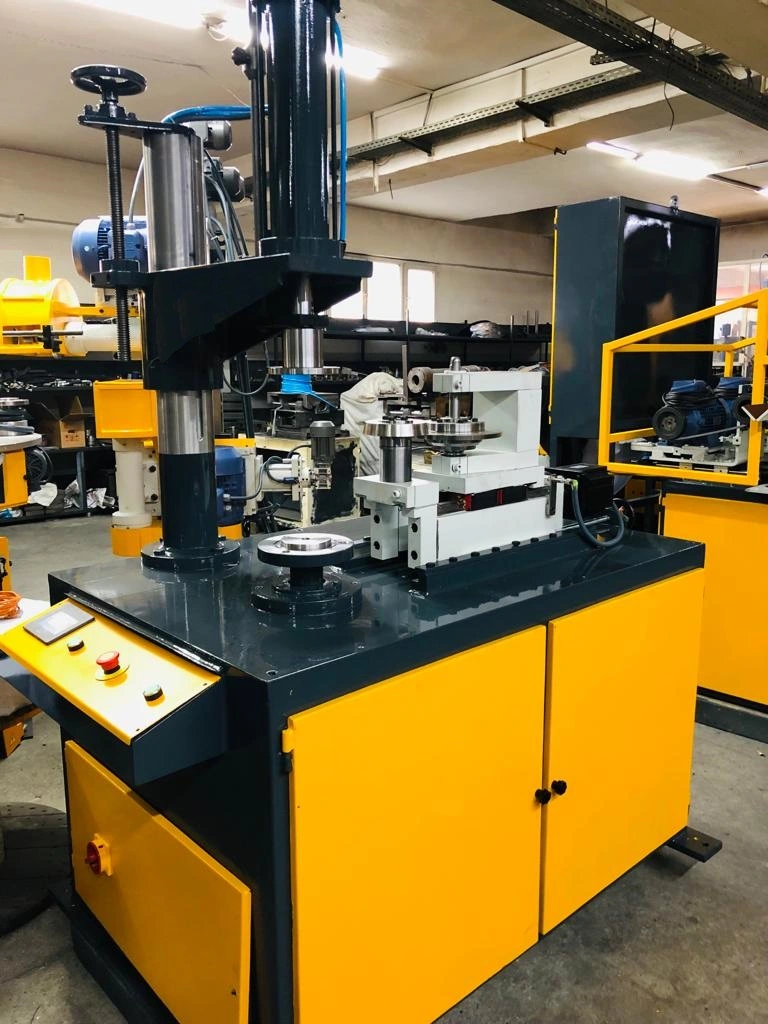
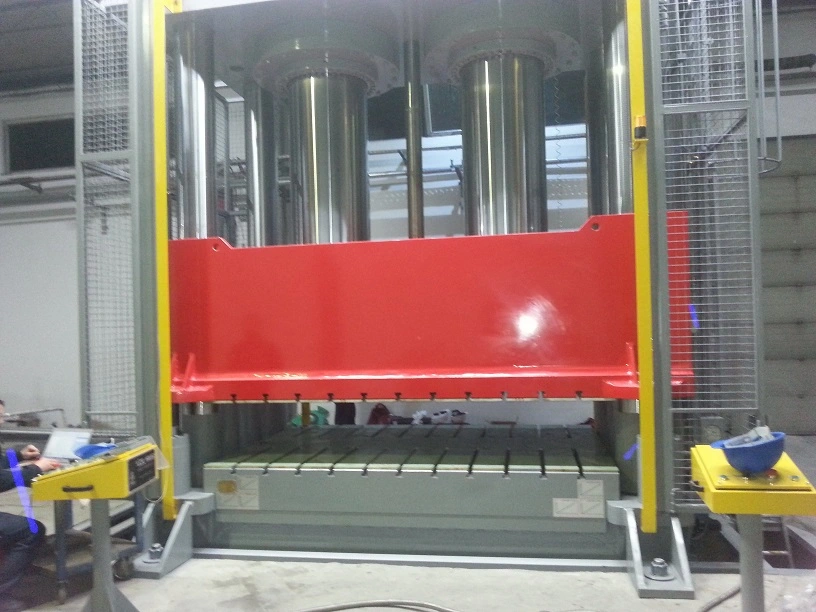
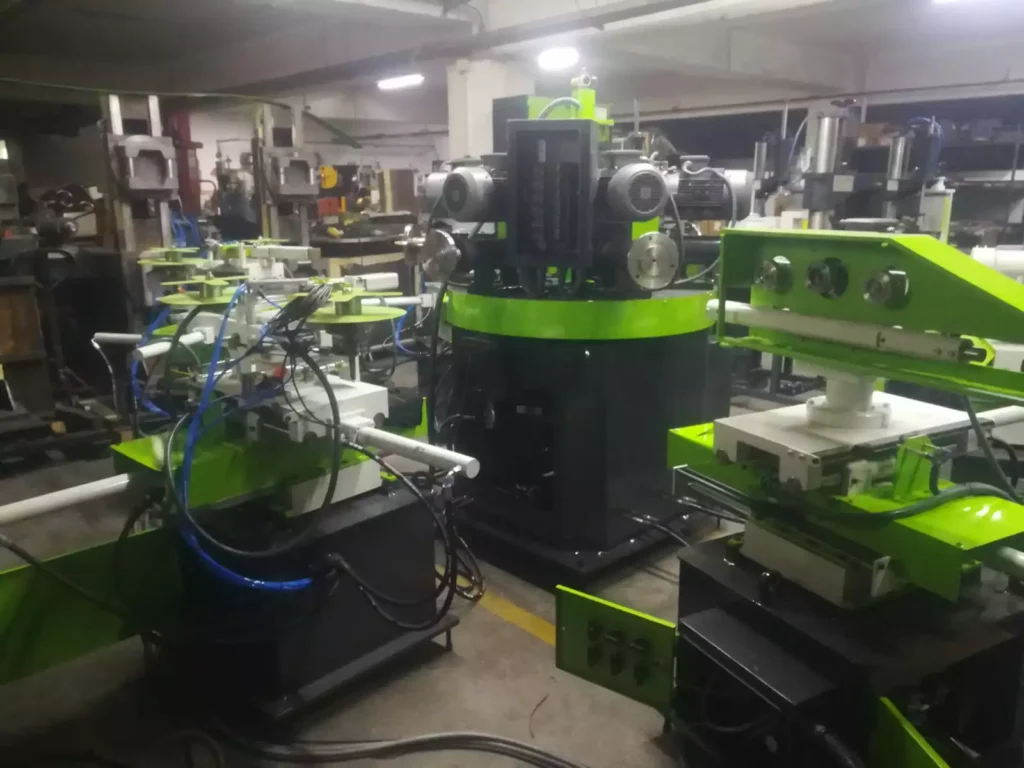
Cold forming machines are industrial machines used to shape and form metal materials at room temperature, without the application of heat. This process is typically used to produce parts with high precision and mechanical properties, including strength, hardness, and dimensional accuracy.

Here’s an overview of the key elements of cold forming machines:

Types of Cold Forming Processes:

  1. Stamping: The material is placed between dies and pressed into shape using a press machine. This is commonly used for producing flat parts.
  2. Roll Forming: The material is passed through a series of rollers to gradually form it into a desired shape. This is ideal for producing long lengths of materials, such as channels or profiles.
  3. Cold Heading: This is typically used to form fasteners such as bolts and screws. The process involves the deformation of the metal into a specific shape by compressing it in a die.
  4. Bending: Involves bending the metal to a required angle without heating it.
  5. Extrusion: In cold extrusion, the material is forced through a die to create long parts with consistent cross-sections.

Advantages of Cold Forming:

  • Improved Material Properties: Cold forming increases the strength and hardness of the material due to work hardening.
  • High Precision: The process can create parts with tight tolerances and fine detail.
  • Cost Efficiency: It is often more cost-effective than hot forming because it eliminates the need for heating and the associated energy costs.
  • Minimal Waste: Cold forming typically results in very little waste material, making it more efficient in terms of material usage.

Applications:

Cold forming is used in a wide range of industries, including automotive, aerospace, electronics, construction, and general manufacturing, to create components like gears, shafts, brackets, fasteners, and electrical connectors.

Cold forming machines are designed to shape metal materials at room temperature, utilizing pressure to mold or bend them into specific shapes. Unlike hot forming processes that require heating the material to high temperatures, cold forming relies on the metal’s ductility at ambient temperatures, which is particularly advantageous for maintaining material integrity and achieving high precision in the final products. This process is commonly used in industries where parts need to be made with high strength and durability, such as automotive, aerospace, and electronics.

In cold forming, the material is typically fed into a machine, where it undergoes various stages of deformation, such as stamping, rolling, heading, or bending. The shaping process is carried out through mechanical presses or rollers, which apply controlled force to the metal. One of the key benefits of cold forming is that it enhances the material’s mechanical properties. For example, the metal’s strength is often increased due to the work hardening that occurs during the process. Cold forming can also produce very precise and complex shapes, which is crucial for applications requiring tight tolerances or intricate details.

Additionally, cold forming can reduce material waste because it generally involves processes like stamping or extrusion, where the metal is used efficiently and little scrap is generated. It’s also a cost-effective method compared to other forming processes, as there’s no need for heating, which saves on energy and time. The resulting products tend to be highly durable, with improved surface finishes, and can be used for parts like gears, fasteners, and structural components.

The versatility of cold forming machines makes them suitable for a wide range of materials, including steel, aluminum, and other metals. Their applications are diverse, extending across different sectors, such as manufacturing parts for the automotive industry, aerospace components, electrical connectors, and hardware. The process continues to be a preferred choice for producing high-quality, high-strength metal parts in a highly efficient manner.

Cold forming machines are versatile and highly efficient, particularly in industries requiring high-volume production of complex metal parts. The machines typically use specialized dies and tooling to apply compressive force on the material, shaping it without the need for heat. This not only conserves energy but also helps maintain the metal’s original properties, such as hardness and tensile strength. For example, during cold heading, the metal is deformed in a series of dies to create components like bolts, nuts, and rivets, often with minimal waste.

One of the standout features of cold forming is its ability to produce parts with enhanced mechanical properties, particularly in terms of strength and hardness. This is because the process induces a phenomenon known as “work hardening,” where the metal becomes stronger as it is deformed, which can be beneficial for applications that require durable, high-performance components. This is especially true in industries like aerospace and automotive manufacturing, where parts must withstand high levels of stress and pressure.

The precision that cold forming offers is another key advantage. With the use of high-precision tools and equipment, cold forming can produce parts that meet tight tolerances and have intricate geometries. This is critical for applications such as electronics, where small, detailed components are often required, or for making complex fasteners used in automotive assemblies. The machines are capable of delivering consistent results over large production runs, which is essential for mass manufacturing operations.

Cold forming machines can handle a wide range of materials, from mild steel to high-strength alloys, and can be tailored to suit specific production needs. Whether using a mechanical press, a hydraulic press, or a rolling mill, manufacturers can select the type of cold forming machine that best fits the material and complexity of the part being produced. The process also allows for different variations of forming techniques, such as impact or shear forces, to achieve the desired shape and properties.

Overall, the appeal of cold forming machines lies in their ability to produce parts with high precision, enhanced material properties, and minimal waste, all while being energy efficient and cost-effective. Whether for mass production or custom parts, cold forming continues to be a fundamental process in modern manufacturing, enabling the creation of high-quality metal components used across a broad spectrum of industries.

Steel Bending Machine

A steel bending machine is a type of industrial equipment used to bend steel and other metal materials into various shapes and angles. The process is commonly employed in construction, manufacturing, and fabrication industries to create steel components that need to be formed into specific configurations, such as angles, curves, or circular shapes. Steel bending machines are designed to handle different grades and thicknesses of steel, ensuring high precision and repeatability for mass production or custom fabrication needs.

These machines typically use mechanical or hydraulic systems to apply controlled force to the steel, bending it around a die or mandrel. Depending on the design of the machine and the complexity of the bending operation, the process can either involve a single-axis bend (such as in pipe bending) or multi-axis bends for more complex shapes (as in structural beams or metal frames). Steel bending machines can also be used to create bends at precise angles, allowing for a high level of control over the final product.

One of the key features of steel bending machines is their ability to produce clean, accurate bends without causing excessive deformation or material stress. This is crucial in maintaining the structural integrity and appearance of the bent steel, particularly for applications where the steel will bear loads or be visible in the finished product. For example, in the construction of metal frames for buildings or bridges, precise bending is essential for ensuring the stability and strength of the structure.

Steel bending machines come in several different types, each suited for specific bending needs:

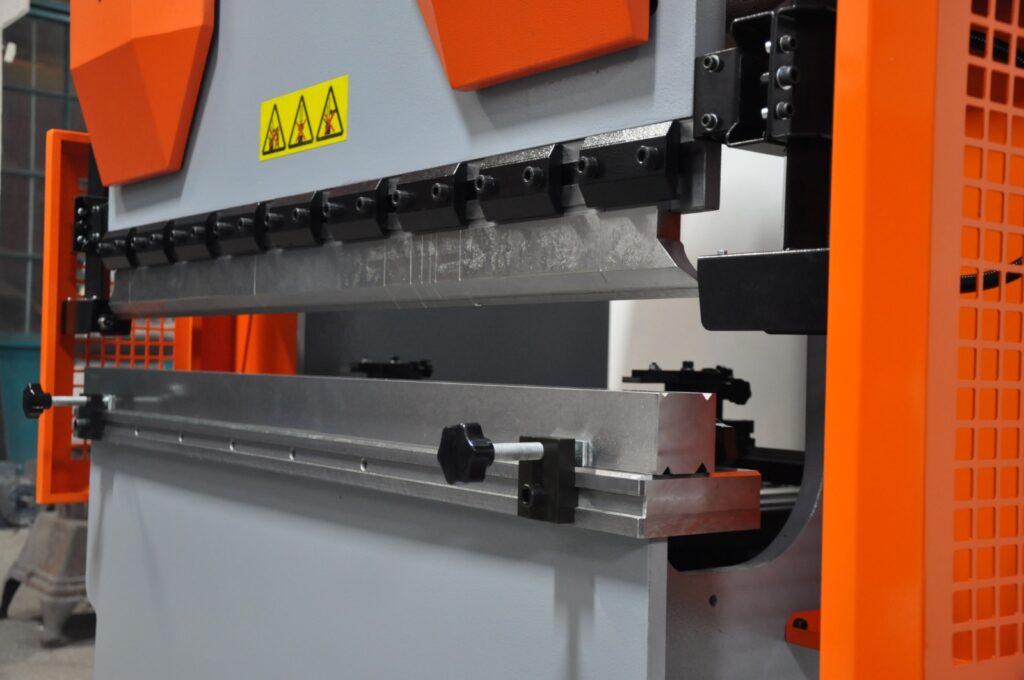
  1. Press Brake: One of the most common types, press brakes use a punch and die to apply force to the steel sheet, bending it into the desired shape. These machines are typically used for sheet metal bending and can accommodate various thicknesses and lengths of material.
  2. Roll Bending Machine: Used for bending metal plates or bars into curves, these machines have rollers that gradually shape the steel by passing it through the machine. Roll bending is commonly used for producing cylindrical shapes or large-radius bends.
  3. Pipe Bender: These machines are specialized for bending pipes and tubes, making them ideal for applications like plumbing, HVAC systems, and automotive exhaust systems. They use either rotary or rotary draw bending methods to shape the pipe into the required angles without kinking.
  4. Section Bender: Section benders are designed for bending structural steel sections, such as I-beams, H-beams, and channels. They are commonly used in the fabrication of frames and other structural components.

In addition to their versatility, steel bending machines are designed to be efficient, reducing the amount of time required for each bend and minimizing waste. Automation features in some advanced models also enable faster setups, higher production rates, and improved accuracy.

Overall, steel bending machines are crucial for the production of metal components that require precise, consistent bends. They are widely used in industries ranging from construction and infrastructure to automotive and aerospace, where structural integrity and precision are key.

Steel bending machines are essential tools in various industries that require the bending of steel and other metal materials into specific shapes and angles. These machines are designed to provide precise control over the bending process, ensuring that steel components maintain their structural integrity and meet required specifications. The bending process typically involves applying force to the material using either mechanical or hydraulic systems, allowing the metal to be shaped around a die or mandrel. This technique is widely used in construction, manufacturing, and fabrication, where steel needs to be bent for structural components, pipes, frames, and other applications.

These machines are capable of handling a range of steel types and thicknesses, allowing for versatility in the types of products they can produce. The ability to produce accurate bends without causing deformation is a key feature of steel bending machines. This ensures that the steel retains its strength and appearance after the bending process. Whether creating steel frames for buildings, bending pipes for plumbing, or forming metal components for machinery, the precision provided by these machines is crucial for the quality and safety of the final product.

Steel bending machines can perform various bending operations, depending on the type of machine and the complexity of the task. Some machines use press brakes to apply force to steel sheets, shaping them into the desired angle or form. Others, such as roll bending machines, can gradually bend metal plates or bars into curves or circular shapes. For specialized bending of pipes and tubes, pipe benders are used to create smooth, consistent bends without compromising the integrity of the material. In addition, section benders are designed to bend larger structural steel components, such as beams and channels, which are often needed for larger-scale construction projects.

The versatility of steel bending machines is enhanced by the range of automation features available on modern models. Automated controls allow for faster setups and higher production rates, making them ideal for high-volume production or complex, custom fabrication tasks. With the ability to bend a variety of materials and achieve precise results, these machines reduce waste and improve efficiency, ensuring that the steel is used effectively.

In industries like automotive, construction, and aerospace, where strength, durability, and accuracy are essential, steel bending machines play a vital role in the production of metal components. They are fundamental tools in ensuring that steel parts meet exacting standards while maintaining cost efficiency and reducing production time.

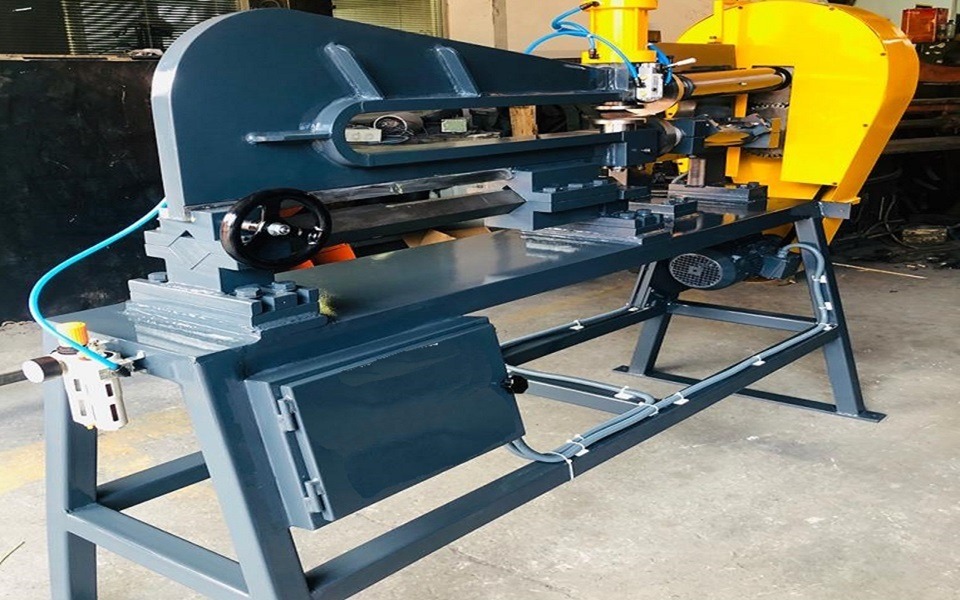
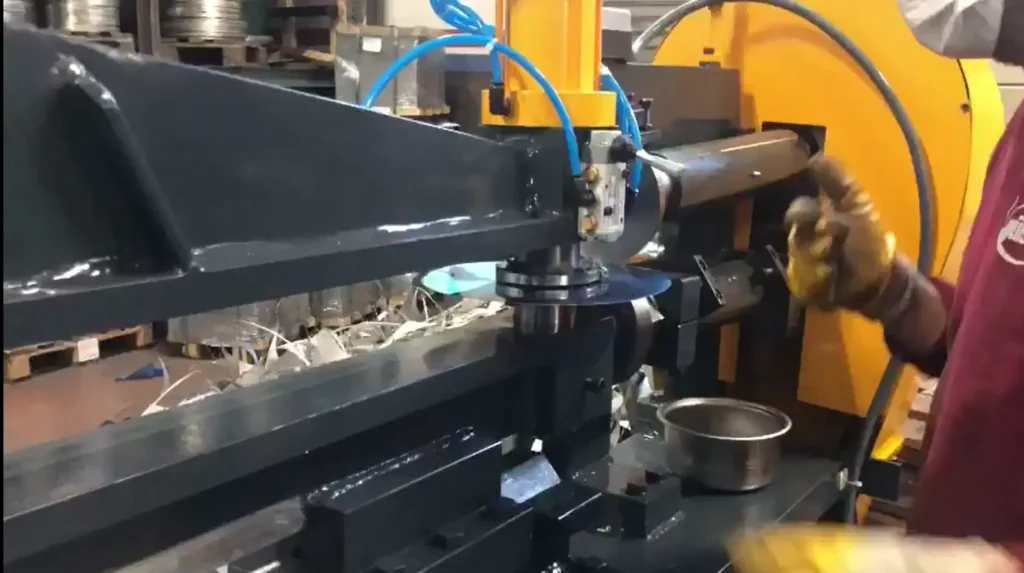
Cutting Machine for Sheet Metal
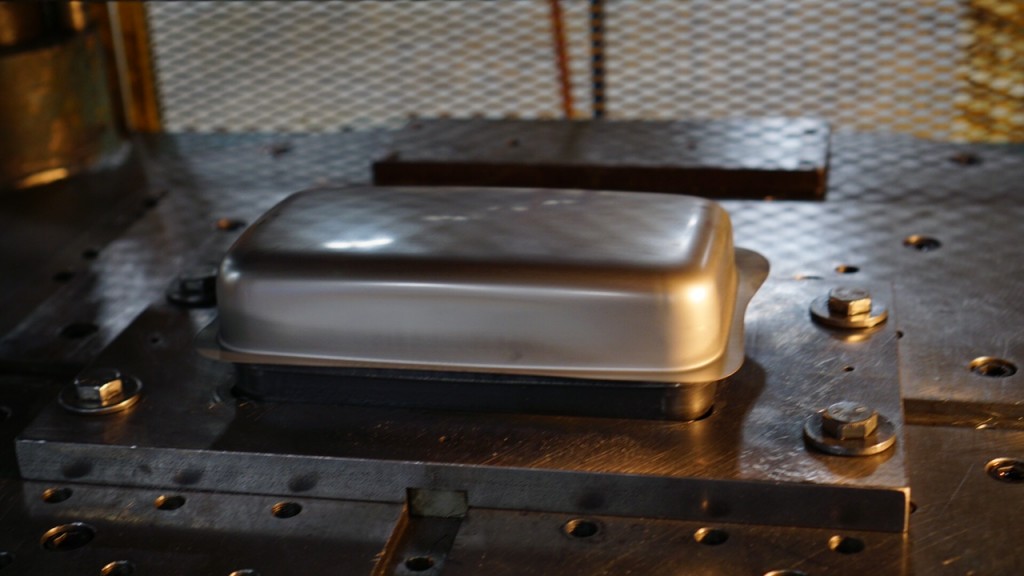
How to Smooth Sharp Metal Edges

A cutting machine for sheet metal is a vital tool in industries where metal sheets need to be cut into specific shapes and sizes for various applications. These machines are designed to efficiently and accurately cut through different types of metal sheets, including steel, aluminum, and other alloys, with minimal waste and high precision. The process involves applying mechanical force, heat, or a combination of both to separate or shape the metal sheets according to the desired specifications.

Cutting machines for sheet metal can come in various types, each suited for different cutting needs and materials. Some of the most common types of cutting machines include shears, laser cutters, plasma cutters, and water jet cutters. Shearing machines, for example, are widely used for straight-line cutting of thin metal sheets, while more advanced technologies like laser cutting offer the ability to create intricate designs with high precision, especially for thinner materials. Plasma cutting, on the other hand, is often used for thicker materials, offering high-speed cuts with a high degree of accuracy.

These machines offer significant advantages, such as high cutting speed, minimal distortion of the material, and the ability to handle complex geometries. For example, laser cutting machines use a high-powered laser to focus energy onto the metal, vaporizing it along the cutting path. Plasma cutters utilize a high-temperature plasma stream to melt and blow away the metal, while water jet cutters use a high-pressure stream of water mixed with abrasives to cut through the material without generating heat, which helps to maintain the material’s integrity.

The choice of cutting machine depends on several factors, including the type of metal, thickness, complexity of the cut, and production volume. For large production runs, automated cutting machines may be employed to increase efficiency and reduce labor costs, while custom or small-batch production may rely on more manual or semi-automated machines for greater flexibility.

In industries like automotive, construction, aerospace, and metal fabrication, sheet metal cutting machines are essential for creating a wide range of components such as car panels, structural beams, ducts, and enclosures. Their ability to deliver precise cuts quickly and consistently makes them indispensable tools in modern manufacturing.

A cutting machine for sheet metal is an essential piece of equipment used in various industries to precisely cut metal sheets into specific shapes and sizes. These machines are designed to handle a wide range of materials like steel, aluminum, and other metals, making them versatile tools in metalworking and manufacturing processes. The cutting process can be accomplished through different methods, each suited to different types of metal, thicknesses, and desired results.

Machines like shears are commonly used for straight-line cutting of thinner sheets, providing quick and clean cuts. These machines apply a mechanical force to the metal, making them ideal for mass production of simple, straight cuts. For more intricate or detailed designs, technologies like laser cutting are often used. Laser cutters employ a focused laser beam to melt or vaporize the metal along the cutting path, offering extremely high precision. This method is particularly useful for thin materials or parts that require intricate patterns and detailed shapes.

Plasma cutting is another popular technique, particularly when dealing with thicker materials. Plasma cutters use an ionized gas stream, which reaches temperatures high enough to melt the metal, allowing it to be blown away along the cutting path. This method is known for its speed and ability to cut through metals with varying thicknesses, but it may generate more heat, which can sometimes affect the surrounding material.

Water jet cutting is a process that uses a high-pressure stream of water, often mixed with abrasives, to cut through metal sheets. This method has the advantage of not generating heat, which can prevent the material from warping or losing its mechanical properties. Water jet cutting is especially effective for materials that are sensitive to heat, like aluminum and copper.

The choice of cutting machine depends on several factors such as the material to be cut, the thickness of the metal, the complexity of the cuts required, and the scale of production. Some machines are designed for high-volume, automated cutting, while others are more suitable for custom or smaller production runs, offering flexibility and adaptability for different jobs.

Cutting machines for sheet metal are crucial in industries like automotive, aerospace, construction, and general metal fabrication. They are used to create components ranging from car body panels to structural supports and ducts. The ability of these machines to produce precise, consistent cuts quickly is key to ensuring the quality and efficiency of the manufacturing process. These machines also help to reduce material waste and labor costs, making them valuable tools for improving productivity in metalworking operations.

The continued development and refinement of cutting machines for sheet metal have further enhanced their capabilities, making them more efficient, accurate, and cost-effective. With advancements in automation, modern cutting machines can integrate with computer numerical control (CNC) systems, allowing for precise control over the cutting process and reducing the need for manual intervention. CNC machines are particularly beneficial for applications that require repeated, high-precision cuts, ensuring that every part produced meets the same exacting standards.

Automation has also increased the speed of cutting operations, significantly reducing production time. This is particularly valuable in industries where time is critical, such as automotive manufacturing, where large quantities of parts must be produced quickly and with high consistency. Automated material handling systems can further optimize the process by automatically loading and unloading materials, improving throughput, and minimizing the risk of human error.

Another major advantage of modern cutting machines is their ability to minimize material waste. Laser cutting, for example, is known for its efficiency in material usage, as the narrow width of the laser beam allows for cuts that are almost as narrow as the material thickness, reducing scrap. Additionally, advanced software used in these machines can optimize the layout of the cuts to make the most of the available sheet material, further minimizing waste and maximizing material yield.

Maintenance and operational costs have also improved with newer models, thanks to advances in machine design, durability, and automation. Many cutting machines now include monitoring systems that track performance and alert operators to any issues before they lead to downtime. These systems help ensure that machines operate at peak efficiency, reducing unexpected repairs and maintenance costs.

The versatility of sheet metal cutting machines also allows them to be used in a wide range of industries beyond automotive and aerospace. For instance, in architecture and construction, they are used to cut metal panels for building facades, roofing systems, and structural reinforcements. In electronics, cutting machines help produce components like enclosures, connectors, and heat sinks, where precision is critical to the function of the final product. Even in the energy sector, these machines play a role in manufacturing components for wind turbines, solar panels, and oil rigs.

With their ability to adapt to different materials, thicknesses, and cut complexities, sheet metal cutting machines remain indispensable in modern manufacturing. As technology continues to evolve, the machines will likely become even more precise, faster, and more energy-efficient, making them even more essential to industries that rely on the creation of high-quality metal components.

Joggle Machine
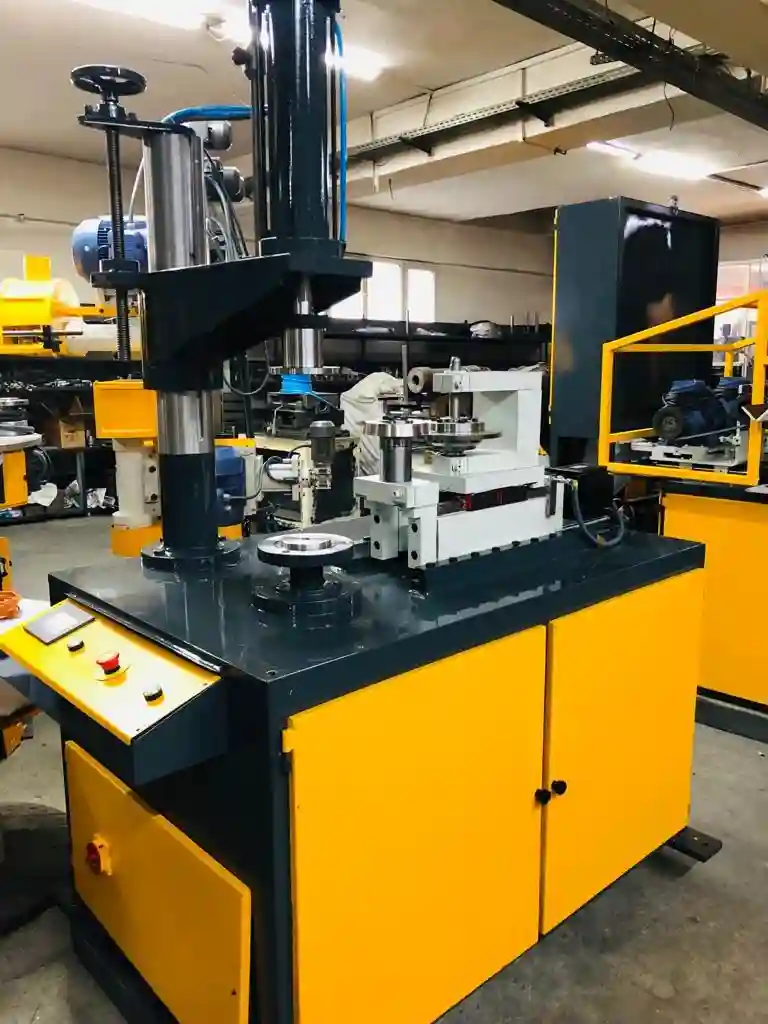
Curling Operation in Press Tool

A joggle machine is a specialized piece of equipment used in metalworking to create a joggle, which is a small, controlled offset or step in a metal sheet or part. This offset is typically used to align parts, create a more secure fit between metal pieces, or prepare components for welding. The joggle process is especially important in industries like aerospace, automotive, and construction, where precise alignment and the ability to fit components together smoothly are crucial.

The joggle machine works by applying force to a metal sheet or part, bending it in a specific way to create the desired offset or step. The process can be used to form joggles in various materials, including aluminum, steel, and other alloys, with different thicknesses. These machines are designed to provide accurate and consistent results, ensuring that the joggle is uniform and fits perfectly with the corresponding part.

In applications like sheet metal fabrication, the joggle is often used to create flanges or joining points where two metal parts need to be connected. By adding a small offset, a joggle ensures that the parts align correctly and create a tight, secure fit for welding, bolting, or riveting. This can improve the strength and stability of the joint and can also help with the assembly process, reducing the potential for misalignment or gaps.

Joggle machines are typically equipped with adjustable dies or tools that allow the operator to control the size and angle of the joggle, depending on the specific requirements of the part. These machines are often integrated into automated production lines to facilitate the mass production of metal components with joggles. In some cases, CNC-controlled joggle machines offer high precision and repeatability, ensuring that each part is consistently formed to the required specifications.

The ability to create precise joggles using a joggle machine is essential for industries that require high-quality, durable metal parts. Whether for aerospace applications, where the integrity of joints is critical, or for automotive and construction projects, the joggle machine plays a vital role in ensuring the successful assembly of metal components.

A joggle machine is an essential tool in metalworking used to create a joggle, which is a controlled offset or step in metal sheets or parts. The joggle process helps ensure precise alignment between metal components, especially in applications that require tight fits for welding, bolting, or riveting. The offset created by the joggle machine allows for smoother assembly and a more secure connection between parts, which is critical in industries such as aerospace, automotive, and construction.

These machines work by applying force to a metal piece to form a specific offset at a precise angle or distance. The result is an evenly shaped step or bend in the metal, which helps components fit together with minimal gaps or misalignment. This can be particularly important in industries where components need to fit together perfectly to maintain strength and structural integrity, such as in aircraft fuselages, automotive frames, or building structural supports.

Joggle machines are designed for accuracy and repeatability, ensuring that every joggle is made to the exact specifications required for a particular application. The process allows manufacturers to produce parts that can be easily joined together, providing both mechanical stability and ease of assembly. The machine typically uses adjustable dies or tooling to control the size and shape of the joggle, allowing operators to tailor the process to different materials, thicknesses, and part configurations.

In modern manufacturing, many joggle machines are automated or CNC-controlled, which adds a level of precision and efficiency. Automation makes it easier to produce large batches of components with consistent results, reducing the chance of errors and ensuring that each part is identical. This is particularly useful in mass production settings where high precision and high throughput are crucial.

Joggle machines are crucial in industries where parts must meet strict tolerances and fit together perfectly, whether for structural strength, ease of assembly, or both. The machine’s ability to create precise joggles ensures that components will align correctly during the assembly process, reducing the risk of defects and improving overall product quality. As technology evolves, the joggle machine continues to be an important part of the manufacturing process, especially in industries that require durable, high-quality metal parts.

As joggle machines evolve, advancements in technology have led to more sophisticated models capable of handling a wider range of materials and offering greater flexibility in production. Modern joggle machines, especially those with CNC (Computer Numerical Control) capabilities, can be programmed to perform complex joggle patterns with high precision, enabling manufacturers to meet increasingly stringent design specifications. This automation has significantly reduced the amount of manual labor required, improving both the efficiency and consistency of the production process.

The ability to create multiple joggles on a single part is another feature that modern machines offer, making them even more versatile. This capability allows for the creation of intricate, multi-step designs that would have been difficult or time-consuming to produce manually. The machines can handle various types of metal, including aluminum, steel, stainless steel, and other alloys, and are capable of producing joggles on metal sheets of different thicknesses. This broad capability makes them useful in a variety of applications, from complex aerospace parts to more routine automotive and construction components.

Furthermore, joggle machines are often integrated with other machines in a fully automated production line, which can significantly speed up the entire fabrication process. By linking the joggle machine with cutting, bending, and welding systems, manufacturers can streamline the creation of parts, reducing handling times and improving the overall flow of production. This integration helps reduce costs, minimize errors, and shorten lead times, allowing businesses to meet demand more effectively.

In industries where quality control is critical, the precision offered by modern joggle machines is invaluable. Automated systems often come with built-in inspection capabilities, ensuring that each part meets required specifications before it moves to the next stage of production. This ensures that defective or misaligned components are caught early, preventing costly mistakes further down the production line.

Joggle machines also contribute to sustainability efforts in manufacturing by minimizing material waste. The precise nature of the joggle, along with automated layout optimization, allows manufacturers to make the best use of available material, reducing scrap and enhancing overall material efficiency. This is particularly important in industries where high-cost materials like titanium or high-strength alloys are used, making the efficient use of resources a priority.

As manufacturing processes continue to advance, joggle machines will likely become even more automated, precise, and versatile, ensuring their place as essential tools for producing high-quality, reliable components in a wide range of industries. Their role in creating secure, well-aligned joints between metal parts will remain crucial for building products that meet the exacting standards of sectors like aerospace, automotive, and construction, where safety and performance are of the utmost importance.

Sheet Metal Machinery

Sheet metal machinery encompasses a range of equipment used to shape, cut, form, and finish metal sheets into specific shapes or components. These machines are crucial in industries such as automotive, aerospace, construction, and general manufacturing, where precision and efficiency are essential for producing metal parts and assemblies.

One of the most common machines in sheet metal fabrication is the shearing machine, used to cut metal sheets into straight lines. Shears can handle different materials and thicknesses, providing clean and precise cuts. Laser cutting machines are another widely used tool, which utilize a high-powered laser to cut through sheet metal with exceptional precision. Laser cutters are particularly beneficial for intricate patterns and fine details, making them suitable for applications that require detailed work.

Press brakes are used to bend sheet metal into various angles and shapes. They work by applying force through a punch and die mechanism, allowing manufacturers to create parts like metal brackets, frames, and enclosures. These machines can handle both simple and complex bends, and more advanced models use CNC controls to ensure high precision and repeatability in production.

Roll forming machines are used for producing continuous profiles from metal sheets. By passing the metal through a series of rollers, roll forming machines gradually shape the metal into specific profiles, such as channels, beams, and roofing panels. This process is often used for high-volume production of long, uniform shapes.

Punch presses are used to create holes, slots, or other forms in metal sheets by using a punch and die system. These machines can be automated to perform multiple operations in one cycle, making them ideal for mass production of components like electrical panels, ventilation ducts, and other sheet metal products that require holes or complex shapes.

CNC machines, like CNC punching machines or CNC laser cutters, offer advanced automation and control, allowing for highly precise and efficient production of complex sheet metal parts. These machines are typically controlled by computer programs, which makes them ideal for mass production or jobs requiring consistent quality across large volumes.

Flanging machines and joggle machines are also used in sheet metal fabrication. A flanging machine is designed to create a flange or lip on the edge of a sheet metal piece, which can then be used for joining or securing other parts. Joggle machines, as previously mentioned, are used to create controlled offsets or steps in the metal, ensuring perfect alignment for welding or other assembly processes.

Finally, welding machines, such as spot welders and TIG/MIG welders, play a critical role in sheet metal fabrication, allowing metal sheets to be permanently joined together. These machines are crucial for the final assembly of metal parts and ensure that components remain securely fastened, providing the necessary strength and durability.

Overall, sheet metal machinery is a diverse and essential aspect of modern manufacturing, enabling the efficient production of high-quality metal components used in a wide range of industries. Whether cutting, bending, forming, or joining, these machines offer the precision, speed, and reliability required for producing durable and accurate metal parts.

Sheet metal machinery is a vital part of modern manufacturing, enabling the production of a wide variety of metal components used in different industries. These machines handle different processes such as cutting, bending, forming, punching, and welding, allowing manufacturers to produce precise and durable parts that meet specific design requirements. The versatility of sheet metal machinery is evident in the different types of machines available, each designed for specific tasks but often capable of performing a variety of operations depending on the setup and tooling used.

Machines like shearing machines are fundamental for cutting sheet metal into manageable sizes. They provide straight cuts with high precision, ensuring that the material is ready for further processing. Laser cutting machines, on the other hand, offer higher precision and can handle intricate designs, allowing manufacturers to create complex patterns and shapes in thin to medium-thickness metals. Their ability to focus a laser beam on a precise area makes them perfect for tasks requiring fine details and clean cuts, reducing the need for post-processing.

Press brakes are integral for bending sheet metal into the desired angles or shapes. The press brake’s ability to apply force through a punch and die mechanism makes it possible to create everything from simple bends to more complex geometries, all with high repeatability. Modern press brakes, especially those with CNC controls, provide manufacturers with more flexibility and accuracy, ensuring parts are consistently bent to exact specifications across large production runs.

Roll forming machines are essential for continuous production of profiles from metal sheets. This process is especially useful for high-volume manufacturing, such as in the production of roofing materials or metal channels used in construction. The process involves passing metal through a series of rollers to shape it into the desired profile, ensuring that the final product is uniform and consistent.

Punch presses are another critical piece of sheet metal machinery. These machines create holes, slots, or other complex shapes in sheet metal by applying a punching force. With the ability to carry out multiple operations within a single cycle, punch presses are ideal for high-speed production of parts like electrical enclosures, ventilation ducts, or automotive components. The automation available in modern punch presses allows for faster production times and ensures precision even in high-volume runs.

CNC sheet metal machinery, such as CNC laser cutters or CNC punching machines, brings advanced automation and control to the process. These machines are controlled by computer programs, which means parts can be produced with a high level of accuracy and consistency. The ability to input detailed designs and quickly make adjustments via software gives manufacturers the flexibility to adapt to different orders, ensuring that even complex parts are produced efficiently.

Welding machines also play a crucial role in sheet metal fabrication, providing the means to join parts together securely. Spot welders, MIG (Metal Inert Gas) welders, and TIG (Tungsten Inert Gas) welders are commonly used for joining sheet metal parts, with each method offering specific advantages depending on the materials and joint requirements. These machines ensure that the final assembled parts are durable and capable of withstanding the forces and conditions they will face in their respective applications.

In the production of sheet metal parts, other specialized machines, such as flanging machines, which create flanges or lips for joining metal pieces, and joggle machines, which create precise offsets in metal sheets, are also essential. These machines ensure that metal components can be joined seamlessly during assembly, whether for structural applications, electrical enclosures, or automotive parts.

The development of automated and CNC-controlled sheet metal machinery has revolutionized the manufacturing process, reducing human error, increasing speed, and improving precision. This has allowed for faster turnaround times, reduced material waste, and higher-quality products. As industries demand higher levels of customization and faster production times, sheet metal machinery continues to evolve, offering greater capabilities and versatility to meet the needs of modern manufacturing.

As the demand for faster, more accurate, and cost-effective production continues to grow, sheet metal machinery is becoming more advanced and automated. Technological innovations are enhancing the performance of these machines, making them more efficient, versatile, and capable of producing increasingly complex parts with minimal waste. The integration of robotics and artificial intelligence (AI) in sheet metal fabrication is one example of how automation is transforming the industry. Automated systems can now handle material handling, loading, and unloading tasks, reducing labor costs and improving overall efficiency in production lines.

For instance, automated material handling systems are often integrated with CNC punch presses, laser cutting machines, and press brakes, allowing for seamless operation without manual intervention. These systems can automatically load metal sheets onto the machine, manage inventory, and remove finished parts from the production line. The automation of these processes ensures a continuous workflow, reducing downtime between operations and improving throughput, which is especially beneficial in high-volume production environments.

Moreover, the software used in modern sheet metal machinery has advanced significantly. CAD (Computer-Aided Design) and CAM (Computer-Aided Manufacturing) software are now commonly used to design parts and generate machine instructions. These software systems help optimize the cutting and bending process, reducing material waste and ensuring that parts are made with minimal scrap. Software also allows manufacturers to easily make changes to designs and adapt to new production requirements, providing greater flexibility and efficiency in production schedules.

In addition to enhancing production efficiency, the evolution of sheet metal machinery has also focused on improving sustainability. As manufacturers seek to reduce their environmental impact, newer machines are being designed to use less energy and generate less waste. Laser cutting machines, for example, are highly efficient in terms of material usage, producing precise cuts that minimize waste. Similarly, advancements in press brake technology have resulted in machines that can work with thinner materials, reducing energy consumption and waste generated during bending.

The flexibility of modern sheet metal machinery also allows manufacturers to produce parts with more complex geometries, enabling the creation of custom metal components for industries like aerospace, automotive, and medical device manufacturing. In aerospace, for example, sheet metal machinery is used to create lightweight and durable parts for aircraft structures, while in automotive manufacturing, it is used for precision parts like body panels and frames. The ability to produce parts with intricate designs and exact specifications is key to meeting the stringent requirements of these industries.

Maintenance and support for sheet metal machinery have also improved, with remote monitoring and diagnostic tools being increasingly integrated into machines. These tools allow manufacturers to monitor the performance of their equipment in real-time, identifying potential issues before they result in costly downtime. Predictive maintenance technology can analyze machine data and provide alerts for scheduled maintenance, helping to extend the life of the machinery and reduce the likelihood of unexpected failures.

Overall, the future of sheet metal machinery is moving toward even greater automation, precision, and sustainability. With the continuous improvement of technology, manufacturers are better equipped to meet the growing demand for high-quality, cost-effective, and customized metal parts across various industries. The integration of advanced software, automation, and energy-efficient technologies is setting the stage for a new era of sheet metal fabrication that will help drive innovation and productivity in manufacturing.

Steel Bending Machine
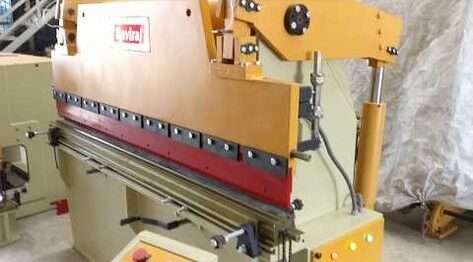
Press Brake Machine Price

A steel bending machine is a type of industrial equipment used to bend steel and other metals into various shapes and angles. These machines are essential in industries like construction, automotive, aerospace, and metal fabrication, where precise bending of steel is required to create parts such as beams, brackets, frames, and other structural components. Steel bending machines apply force to metal to deform it, creating a bend at a desired angle or radius, which is critical in producing parts that fit specific design requirements.

There are different types of steel bending machines, each suited for specific tasks and types of bending. Press brakes are the most commonly used steel bending machines in industrial settings. They work by using a punch and die system to bend steel sheets or plates. The machine applies controlled force to the metal, bending it at a specific angle. Press brakes can handle a range of steel thicknesses, and modern versions are often CNC (Computer Numerical Control) machines, which allows for highly accurate and repeatable bends.

Angle bending machines are another type of machine used specifically for bending angle steel or structural steel sections. These machines are designed to handle the bending of angles, flats, and square bars into specific shapes or curves. They are widely used in the production of metal frames, columns, and other structural components that require precise bends in specific directions.

Roll bending machines are used to create curves or arcs in steel plates or sheets. These machines feature a set of rollers that gradually bend the metal as it passes through them. Roll bending is often used to create cylindrical shapes or large, curved structures, such as pipes or tanks. The machine applies pressure evenly across the steel sheet to form the desired curve, making it an ideal choice for creating round shapes or large-radius bends.

For more complex and precise bending tasks, CNC bending machines are increasingly common in steel bending operations. These machines offer advanced control, allowing for multiple bends to be performed in a single cycle. With CNC technology, operators can input specific parameters and designs, and the machine will automatically adjust to produce parts with high precision. CNC bending machines also improve efficiency by reducing human error and speeding up production times, making them ideal for high-volume manufacturing.

The process of bending steel is highly dependent on the type of steel being used, as different grades and thicknesses of steel may require varying amounts of force or different bending techniques. Some steel bending machines are equipped with adjustable settings to accommodate these variables, allowing for more flexibility in production.

Steel bending machines are crucial for the construction of metal frames, vehicle parts, industrial machinery, and structural supports. They help manufacturers create high-quality, durable metal parts with the exact specifications needed for assembly. Modern machines are designed for high efficiency, precision, and ease of use, making them essential tools in industries where metalworking is a key component of production. Additionally, the integration of advanced technologies such as automation and CNC systems has made steel bending machines faster, more accurate, and more cost-effective, improving overall productivity in metal fabrication.

Steel bending machines play a pivotal role in the metalworking industry by ensuring the precise bending of steel into various shapes and forms. These machines are designed to work with different grades and thicknesses of steel, making them highly versatile and essential for producing a wide range of parts and components. Whether it’s bending metal sheets, creating curved shapes, or forming angles and structural elements, steel bending machines provide the accuracy and control needed for these tasks.

In addition to press brakes and angle bending machines, there are hydraulic steel bending machines, which offer greater control over the bending process. Hydraulic systems use fluid pressure to apply force, providing smooth and precise bends. These machines are especially useful for handling large or heavy materials, as the hydraulic system can generate significant bending force with minimal physical effort. They are commonly used in construction and heavy industries where large steel components need to be bent to precise specifications.

The mandrel bending machine is another type of steel bending equipment, which is used for creating tight-radius bends without compromising the integrity of the material. Mandrel bending prevents the steel from collapsing or wrinkling during the bend, making it ideal for applications that require a smooth, consistent bend without any deformation. This method is particularly useful in industries like aerospace and automotive, where the aesthetic and structural quality of the bends is critical.

Automation and digital control technologies have significantly enhanced the capabilities of steel bending machines. With CNC systems, operators can input specific bending parameters, and the machine will automatically adjust to meet the required specifications. This has not only improved the accuracy of bends but also reduced human error and increased the speed of production. CNC bending machines also allow for complex, multi-bend components to be produced in a single cycle, improving efficiency and consistency in the manufacturing process.

Steel bending machines are also designed to be highly adaptable, allowing for adjustments in parameters such as bending radius, angle, and force to suit different types of steel and desired outcomes. With the ability to bend steel at a range of angles or to create specific curves and profiles, these machines are widely used in industries where custom metal parts are required. For example, in the automotive industry, steel bending machines are used to create frames, chassis, and other structural components that must meet precise tolerances. Similarly, in construction, these machines are used to bend steel rods and bars for reinforcing concrete structures.

The ability to work with different shapes, sizes, and types of steel is what makes steel bending machines such versatile tools. Whether it’s bending flat steel sheets, hollow sections, round bars, or square bars, these machines provide manufacturers with the tools to create high-quality metal parts that are durable, functional, and fit within the required design parameters. Moreover, the machines’ ability to integrate with other equipment in automated production lines ensures that the bending process is just one part of a seamless and efficient manufacturing workflow.

As technological advancements continue, steel bending machines are becoming faster, more efficient, and more accurate. The integration of AI, machine learning, and predictive maintenance technologies ensures that the machines run at optimal performance levels, minimizing downtime and improving the overall productivity of manufacturing operations. As the demand for customized and high-quality steel components continues to grow across various industries, steel bending machines will remain an integral part of the metal fabrication process.

The continued evolution of steel bending machines is pushing the boundaries of efficiency and precision in metal fabrication. With the integration of advanced technologies such as robotics and IoT (Internet of Things), these machines are becoming more autonomous and intelligent. Robotic arms, for example, are being used to automate the loading, unloading, and handling of steel pieces, reducing labor costs and enhancing production speed. This automation allows for 24/7 operation without the need for constant manual oversight, leading to significant increases in throughput and efficiency.

IoT-enabled steel bending machines can now collect real-time data from the manufacturing process, such as the machine’s operational status, performance metrics, and maintenance needs. This data can be analyzed to optimize the bending process, detect issues early, and predict when maintenance is needed. Predictive maintenance is a particularly important development, as it helps reduce unplanned downtime and extends the lifespan of the machines. By addressing potential issues before they result in breakdowns, manufacturers can avoid costly interruptions and maintain continuous production.

Furthermore, energy efficiency is becoming an increasingly important consideration in the design of steel bending machines. Manufacturers are focusing on creating machines that consume less energy while still providing the high levels of performance required in industrial settings. Energy-efficient designs help companies reduce operating costs and meet environmental sustainability goals. For example, hydraulic systems in steel bending machines are being optimized to use less power while maintaining their bending capabilities. This is particularly important in large-scale operations, where energy consumption can significantly impact overall costs.

Another key trend is the development of flexible bending solutions that can accommodate a broader range of materials, including not just steel but also aluminum, copper, and other metals. As industries increasingly require multi-material solutions, bending machines are being designed to handle a wider variety of materials with different properties and thicknesses. This capability allows manufacturers to produce parts that meet a diverse set of specifications without needing to invest in multiple machines for each material.

In addition, advancements in software are making it easier for operators to design, program, and manage the bending process. Software solutions are becoming more intuitive, with user-friendly interfaces that allow operators to input bending specifications, simulate the bending process, and optimize machine settings for maximum efficiency and minimal waste. These software tools can also integrate with other aspects of the production line, such as cutting and welding machines, providing a seamless workflow and improving overall production planning.

One of the most significant impacts of these advancements is in customization. Steel bending machines are becoming more capable of producing complex, one-off designs with the same efficiency as large-volume production. This opens up new possibilities for industries like architecture, where bespoke, intricately bent steel components are often needed for unique designs. The ability to quickly adapt to custom designs while maintaining precision and consistency is a game-changer for industries that rely on specialized steel components.

As the manufacturing landscape continues to evolve, the role of steel bending machines will remain critical in shaping the future of metalworking. Their ability to produce high-quality, precisely bent steel parts efficiently and at scale ensures their continued importance in industries that rely on metal components. With ongoing advancements in automation, energy efficiency, and software integration, steel bending machines will continue to provide manufacturers with the tools needed to meet the growing demands for precision, customization, and sustainability in modern production processes.

EMS Metalworking Machines

We design, manufacture and assembly metalworking machinery such as:

  • Hydraulic transfer press
  • Glass mosaic press
  • Hydraulic deep drawing press
  • Casting press
  • Hydraulic cold forming press
  • Hydroforming press
  • Composite press
  • Silicone rubber moulding press
  • Brake pad press
  • Melamine press
  • SMC & BMC Press
  • Labrotaroy press
  • Edge cutting trimming machine
  • Edge curling machine
  • Trimming beading machine
  • Trimming joggling machine
  • Cookware production line
  • Pipe bending machine
  • Profile bending machine
  • Bandsaw for metal
  • Cylindrical welding machine
  • Horizontal pres and cookware
  • Kitchenware, hotelware
  • Bakeware and cuttlery production machinery

as a complete line as well as an individual machine such as:

  • Edge cutting trimming beading machines
  • Polishing and grinding machines for pot and pans
  • Hydraulic drawing presses
  • Circle blanking machines
  • Riveting machine
  • Hole punching machines
  • Press feeding machine

You can check our machinery at work at: EMS Metalworking Machinery – YouTube

Applications:

  • Beading and ribbing
  • Flanging
  • Trimming
  • Curling
  • Lock-seaming
  • Ribbing
  • Flange-punching
Categories
Machinery

Steel Bending Machine Price

Steel Bending Machine Price

Steel Bending Machine Price: Steel bending machines are industrial tools used to shape steel into various forms and angles. These machines are essential in numerous industries, including construction, automotive, and manufacturing.

Types of Steel Bending Machines

The specific type of bending machine used depends on the desired shape, material thickness, and production volume. Here are some common types:

  • Press Brakes
  • Roll Bending Machines
  • Tube Bending Machines
  • Rebar Bending Machines
  • Angle Bending Machines

Key Components of a Steel Bending Machine

  • Frame
  • Hydraulic or Mechanical System
  • Bending Dies
  • Clamping System
  • Control System

Factors to Consider When Choosing a Steel Bending Machine

  • Material thickness
  • Bend angle and radius
  • Production volume
  • Automation level
  • Budget

We manufacture a 20 ton Press Brake to bend sheet metal edges. 20 ton Press Brake is used in metalworking industries

A 20-ton press brake is a powerful and versatile machine used to bend sheet metal into various shapes and angles using hydraulic pressure. It is a common choice for small- to medium-sized metal fabrication shops due to its ability to handle a wide range of sheet metal thicknesses and produce precise bends.

Key Components of a 20-Ton Press Brake

  1. Frame: The frame provides a sturdy base for the machine and supports the bending mechanism. It is typically made from heavy-duty steel or cast iron to withstand the immense forces involved in bending sheet metal.
  2. Hydraulic System: The hydraulic system is the heart of the machine, generating and supplying pressurized hydraulic fluid to the bending mechanism. It consists of a hydraulic pump, hoses, valves, and a hydraulic cylinder. The hydraulic cylinder applies high-pressure hydraulic fluid to the ram, providing the force required to bend the sheet metal.
  3. Ram: The ram is a movable component that applies downward force onto the sheet metal. It is connected to the hydraulic cylinder and guided by rails to ensure precise movement and alignment during the bending process.
  4. Punch: The punch is a tooling component that forms the desired shape in the sheet metal. It is typically made from hardened steel or tool steel to withstand the abrasion and forces involved in bending. The punch’s profile corresponds to the desired bend shape.
  5. Die: The die is another tooling component that supports the sheet metal during bending. It is designed to match the shape of the punch to create the desired bend angle and prevent distortion. The die provides a stable surface against which the punch forces the sheet metal to bend.
  6. Work Table: The work table provides a stable and adjustable surface for positioning and securing the sheet metal during bending. It can be adjusted to accommodate different sheet metal sizes and bending angles, ensuring precise positioning.
  7. Back Gauge: The back gauge, also known as the depth stop, controls the distance between the rear edge of the sheet metal and the bending line. It ensures consistent bending positions and prevents the sheet metal from slipping during the bending process, maintaining accuracy and consistency.
  8. Controls: The control panel allows the operator to set and monitor the bending process. Modern press brakes often feature advanced computer controls for precise and automated operation. These controls enable operators to set bending angles, bending speeds, and other parameters, ensuring consistent and repeatable results.

Common Applications of 20-Ton Press Brakes

20-ton press brakes are widely used for a variety of applications in the metal fabrication industry:

  1. Bending sheet metal components for various products: These components include enclosures, brackets, ducts, structural components, and various other sheet metal parts.
  2. Manufacturing metal parts for appliances: 20-ton press brakes are used to create sheet metal components for appliances like refrigerators, washing machines, and dishwashers.
  3. Producing automotive components: These components include car body panels, brackets, frames, and other sheet metal parts used in automotive manufacturing.
  4. Creating custom-shaped sheet metal components: 20-ton press brakes can bend sheet metal into unique and custom shapes for specific applications.
  5. Prototyping sheet metal designs: These machines are used to create prototypes of sheet metal components to evaluate form, fit, and functionality before full-scale production.
  6. High-volume production of sheet metal components: 20-ton press brakes are designed for high-volume production, enabling efficient manufacturing of large quantities of sheet metal components for various industries.

Benefits of 20-Ton Press Brakes

20-ton press brakes offer several advantages over other bending methods, making them a popular choice in metal fabrication:

  1. High Bending Capacity: 20-ton press brakes can handle thicker sheet metal than manual or pneumatic bending machines, making them suitable for heavy-duty applications and bending thicker materials.
  2. Precision Bending: 20-ton press brakes provide precise control over the bending angle, ensuring consistent and accurate bends, even for complex shapes. The hydraulic system, punch, die, and back gauge contribute to precise bending results.
  3. High Production Rates: 20-ton press brakes are designed for high-volume production, enabling efficient manufacturing of large quantities of sheet metal components. Their automation capabilities further enhance production efficiency.
  4. Automation and Efficiency: Modern 20-ton press brakes can be automated, reducing labor costs and increasing production efficiency. Automated controls allow for repetitive and consistent bending operations, reducing human error and improving productivity.
  5. Durability and Reliability: 20-ton press brakes are built to withstand demanding industrial environments and provide reliable performance over extended periods. Their robust construction and components ensure long-lasting operation.

Safety Precautions for Operating 20-Ton Press Brakes

When operating 20-ton press brakes, it is crucial to adhere to strict safety

20 Ton Press Brake

20 Ton Press Brake
20 Ton Press Brake

A 20-ton horizontal press machine is a versatile and powerful piece of equipment used for a wide range of metal fabrication tasks. It utilizes hydraulic pressure to apply force to a ram, which in turn forces a punch down onto sheet metal, bending it over a die to create the desired shape or angle. Horizontal press brakes are commonly used for bending sheet metal, forming extrusions, and stamping or punching out shapes.

Key Components of a 20-Ton Horizontal Press Machine

  1. Frame: The sturdy frame provides a solid base for the machine and supports the bending mechanism. It is typically constructed from heavy-duty steel or cast iron to withstand the immense forces involved in bending sheet metal.
  2. Hydraulic System: The heart of the machine, the hydraulic system generates and supplies pressurized hydraulic fluid to the bending mechanism. It consists of a hydraulic pump, hoses, valves, and a hydraulic cylinder. The hydraulic cylinder applies high-pressure hydraulic fluid to the ram, providing the force required to bend the sheet metal.
  3. Ram: The movable ram applies downward force onto the sheet metal. Connected to the hydraulic cylinder and guided by rails, it ensures precise movement and alignment during the bending process.
  4. Punch: The punch is a tooling component that forms the desired shape in the sheet metal. Typically made from hardened steel or tool steel to withstand abrasion and bending forces, its profile corresponds to the desired bend shape.
  5. Die: The die, another tooling component, supports the sheet metal during bending. Designed to match the punch’s shape, it creates the desired bend angle and prevents distortion. The die provides a stable surface against which the punch forces the sheet metal to bend.
  6. Work Table: The adjustable work table provides a stable surface for positioning and securing the sheet metal during bending. It accommodates different sheet metal sizes and bending angles, ensuring precise positioning.
  7. Back Gauge: The back gauge, also known as the depth stop, controls the distance between the rear edge of the sheet metal and the bending line. It ensures consistent bending positions and prevents the sheet metal from slipping during the bending process, maintaining accuracy and consistency.
  8. Controls: The control panel allows the operator to set and monitor the bending process. Modern horizontal press brakes often feature advanced computer controls for precise and automated operation. These controls enable operators to set bending angles, bending speeds, and other parameters.

Common Applications of 20-Ton Horizontal Press Machines

20-ton horizontal press machines are widely used in various metal fabrication applications:

  1. Bending Sheet Metal Components: These machines are commonly used to bend sheet metal components for enclosures, brackets, ducts, structural components, and various other sheet metal parts.
  2. Forming Extrusions: Horizontal press brakes can form extrusions, which are shapes created by forcing metal through a die. This process is used to create various components, such as tubes, channels, and beams.
  3. Stamping and Punching: Horizontal press brakes can be used for stamping and punching operations, where a punch is used to cut or form shapes in sheet metal. This process is used to create components like washers, gaskets, and electrical connectors.
  4. Prototyping Sheet Metal Designs: These machines are employed to create prototypes of sheet metal components to evaluate form, fit, and functionality before full-scale production.
  5. High-Volume Production: 20-ton horizontal press brakes are designed for high-volume production, enabling efficient manufacturing of large quantities of sheet metal components.

Benefits of 20-Ton Horizontal Press Machines

20-ton horizontal press brakes offer several advantages for metal fabrication:

  1. Versatility: These machines can perform various operations, including bending, forming, stamping, and punching, making them versatile tools for metal fabrication.
  2. Precision Bending: Horizontal press brakes provide precise control over bending angles, ensuring consistent and accurate bends, even for complex shapes.
  3. High Production Rates: Designed for high-volume production, these machines enable efficient manufacturing of large quantities of sheet metal components.
  4. Automation and Efficiency: Modern horizontal press brakes can be automated, reducing labor costs and increasing production efficiency. Automated controls allow for repetitive and consistent operations.
  5. Durability and Reliability: Constructed to withstand demanding industrial environments, 20-ton horizontal press brakes offer reliable performance over extended periods.

Safety Precautions for Operating 20-Ton Horizontal Press Machines

When operating 20-ton horizontal press brakes, it is crucial to adhere to strict safety protocols:

  1. Thorough Training: Operators must receive comprehensive training on the specific machine model, its operation, and safety procedures.
  2. Personal Protective Equipment (PPE): Always wear appropriate PPE, including safety glasses, gloves, and hearing protection, to protect from flying debris, sharp edges, and noise.

Sheet metal bending is a fundamental process in manufacturing, playing a crucial role in the creation of various metal components and products. One of the most essential machines used in this process is the press brake machine. This powerful equipment is designed to bend and shape metal sheets with precision, efficiency, and consistency, making it indispensable in many industries, from automotive to aerospace.

The press brake machine’s ability to produce complex bends and shapes with high accuracy has revolutionized metal fabrication. By applying a controlled force through a punch and die, these machines can create intricate and precise metal parts that meet exact specifications. The evolution of press brake machines, from simple manual devices to sophisticated computer-controlled systems, reflects the technological advancements in the field of metalworking.

In this article, we will explore the history, types, components, working principles, and applications of press brake machines. We will also delve into the advantages of using these machines, maintenance and safety tips, and future trends in press brake technology. Whether you are an industry professional, a manufacturing enthusiast, or simply curious about this vital piece of machinery, this comprehensive guide will provide valuable insights into the world of sheet metal bending press brake machines.

History of Press Brake Machines

The origins of metal bending can be traced back to ancient civilizations, where blacksmiths used rudimentary tools to shape metal. As technology progressed, so did the methods of metal bending, leading to the development of more sophisticated machinery.

The first press brake machines emerged during the Industrial Revolution, driven by the need for more efficient and precise metalworking tools. Early press brake machines were manually operated, requiring significant physical effort and skill from the operator. Despite their limitations, these machines marked a significant advancement in the field of metal fabrication.

The 20th century witnessed substantial improvements in press brake technology. The introduction of hydraulic systems in the 1940s allowed for greater force and control, enabling the bending of thicker and tougher metals. This innovation revolutionized the industry, making hydraulic press brake machines the standard for many years.

In recent decades, the advent of computer numerical control (CNC) technology has transformed press brake machines once again. CNC press brake machines offer unparalleled precision and automation, allowing for complex bending operations to be performed with minimal human intervention. These machines are equipped with advanced software that can program and execute intricate bending sequences, ensuring consistency and accuracy.

Today, press brake machines continue to evolve, incorporating cutting-edge technologies such as robotics and artificial intelligence. These advancements are paving the way for even greater efficiency, flexibility, and precision in metal fabrication.

Types of Press Brake Machines

Horizontal Press Brake

Press brake machines come in various types, each with its own features, advantages, and applications. Understanding the different types of press brake machines is essential for selecting the right equipment for specific metal bending tasks.

Manual Press Brake Machines

Features and Uses Manual press brake machines are the simplest type of press brakes, operated entirely by human effort. They are typically used for small-scale or low-volume production tasks, where high precision is not critical.

Advantages

  • Cost-effective and affordable for small businesses
  • Easy to operate and maintain
  • Suitable for simple bending operations

Disadvantages

  • Limited bending capacity and precision
  • Labor-intensive and time-consuming
  • Not suitable for high-volume production

Hydraulic Press Brake Machines

Features and Uses Hydraulic press brake machines use hydraulic fluid to generate the necessary force for bending metal sheets. They are widely used in various industries due to their versatility and reliability.

Advantages

  • High bending capacity and precision
  • Capable of handling thicker and tougher metals
  • Smooth and consistent operation

Disadvantages

  • Higher initial cost compared to manual machines
  • Requires regular maintenance of hydraulic systems
  • Potential for hydraulic fluid leaks

Electric Press Brake Machines

Features and Uses Electric press brake machines use electric motors to drive the bending process. They are known for their energy efficiency and precision.

Advantages

  • Energy-efficient and environmentally friendly
  • High precision and repeatability
  • Lower operating costs compared to hydraulic machines

Disadvantages

  • Limited force compared to hydraulic machines
  • Higher initial cost than manual machines
  • Requires skilled operators

CNC Press Brake Machines

Features and Uses CNC (Computer Numerical Control) press brake machines represent the pinnacle of press brake technology. They are equipped with advanced computer systems that control the bending process with exceptional precision.

Advantages

  • Unmatched precision and accuracy
  • Automated and programmable operations
  • Suitable for complex and high-volume production

Disadvantages

  • High initial cost and investment
  • Requires skilled operators and programmers
  • Complex maintenance and troubleshooting

Each type of press brake machine has its unique advantages and disadvantages, making it crucial to select the appropriate type based on specific production requirements and budget constraints.

Components of a Press Brake Machine

Components of a Press Brake Machine

Press brake machines consist of several key components, each playing a vital role in the bending process. Understanding these components is essential for operating and maintaining the machine effectively.

Frame

The frame is the backbone of the press brake machine, providing structural support and stability. It is typically constructed from heavy-duty steel to withstand the forces exerted during the bending process.

Ram

The ram is a movable component that exerts force on the metal sheet, pressing it against the die to create the desired bend. The ram’s movement can be controlled manually, hydraulically, or electrically, depending on the type of press brake machine.

Die and Punch

The die and punch are the primary tools used in the bending process. The punch, attached to the ram, presses the metal sheet into the die, which is fixed to the machine’s bed. The shape and size of the die and punch determine the angle and radius of the bend.

Back Gauge

The back gauge is a positioning tool that helps in accurately aligning the metal sheet for bending. It ensures consistent bend angles and dimensions by providing a reference point for the sheet.

Control System

The control system manages the operation of the press brake machine. In manual machines, this may be a simple mechanical system, while hydraulic and electric machines use more advanced control systems. CNC press brake machines have sophisticated computer systems that program and control the entire bending process.

Safety Features

Press brake machines are equipped with various safety features to protect operators from accidents and injuries. These may include safety guards, emergency stop buttons, and light curtains that detect the presence of an operator’s hands near the bending area.

Working Principle

The basic working principle of a press brake machine involves applying a controlled force to bend metal sheets into specific shapes. Here are the key steps in the bending process:

  1. Sheet Positioning: The metal sheet is positioned on the machine’s bed, aligned against the back gauge to ensure precise placement.
  2. Tool Selection: The appropriate die and punch are selected based on the desired bend angle and radius. These tools are then installed on the machine.
  3. Bending Operation: The ram descends, pressing the punch into the metal sheet and forcing it into the die. This action creates the bend, with the angle and shape determined by the tools used and the force applied.
  4. Return Stroke: After the bend is completed, the ram ascends, releasing the pressure on the metal sheet. The sheet is then removed or repositioned for additional bends.

Precision and control are crucial in the bending process to ensure the accuracy and consistency of the bends. CNC press brake machines excel in this regard, as they use computer programming to control the ram’s movement and force, resulting in highly precise bends.

Applications of Press Brake Machines

Applications of Press Brake Machines

Press brake machines are used across various industries due to their versatility and precision. Here are some common applications:

  • Automotive Industry: Manufacturing car body panels, chassis components, and brackets.
  • Aerospace Industry: Producing aircraft parts, including wing components and fuselage sections.
  • Construction Industry: Fabricating structural components, such as beams, columns, and brackets.
  • Electronics Industry: Creating enclosures, chassis, and brackets for electronic devices.
  • Furniture Industry: Making metal frames and components for furniture.
  • HVAC Industry: Producing ductwork and ventilation components.

These machines are also used in creating custom metal parts and prototypes, showcasing their adaptability to various production needs.

Advantages of Using Press Brake Machines

Press brake machines offer several advantages that make them indispensable in metal fabrication:

  • Precision and Accuracy: These machines can produce highly precise bends, ensuring that components meet exact specifications.
  • Efficiency and Productivity: Press brake machines can perform complex bending operations quickly, increasing production efficiency.
  • Versatility: They can handle a wide range of materials and thicknesses, making them suitable for various applications.
  • Cost-effectiveness: By reducing material waste and increasing production speed, press brake machines can lower manufacturing costs.

Maintenance and Safety Tips

Proper maintenance and safety practices are essential for the efficient and safe operation of press brake machines. Here are some tips:

Routine Maintenance

  • Regularly inspect the machine for wear and tear.
  • Keep the machine clean and free from debris.
  • Lubricate moving parts as recommended by the manufacturer.
  • Check hydraulic fluid levels and replace as necessary.

Common Issues and Troubleshooting

  • Misalignment of the die and punch: Adjust the alignment to ensure precise bends.
  • Inconsistent bending angles: Check for wear on the tools and replace if needed.
  • Hydraulic system leaks: Inspect seals and hoses, and replace any damaged components.

Safety Guidelines for Operators

  • Always wear appropriate personal protective equipment (PPE).
  • Ensure that safety guards and emergency stop buttons are in place and functional.
  • Follow the manufacturer’s guidelines for safe operation.
  • Undergo proper training before operating the machine.

Future Trends in Press Brake Technology

The future of press brake technology is shaped by advancements in automation, materials, and environmental considerations:

  • Automation and Industry 4.0: The integration of robotics and IoT (Internet of Things) is enhancing the automation of press brake machines, leading to increased efficiency and reduced human intervention.
  • Advanced Materials and Designs: The development of new materials and innovative designs is expanding the capabilities of press brake machines, allowing for more complex and precise bends.
  • Environmental Considerations: Efforts to reduce energy consumption and minimize environmental impact are driving the adoption of electric press brake machines and other eco-friendly technologies.

Conclusion

Press brake machines are a cornerstone of modern metal fabrication, offering unmatched precision, efficiency, and versatility. From their historical evolution to the latest technological advancements, these machines continue to play a vital role in various industries.

Understanding the different types of press brake machines, their components, and working principles is essential for selecting the right equipment and maximizing its potential. By following proper maintenance and safety practices, operators can ensure the longevity and safe operation of these machines.

As we look to the future, advancements in automation, materials, and environmental sustainability will further enhance the capabilities of press brake machines, solidifying their place in the ever-evolving landscape of manufacturing.

Whether you are a seasoned professional or new to the field, this comprehensive guide provides valuable insights into the world of sheet metal bending press brake machines, highlighting their importance and potential in modern industry.

Components of a Press Brake Machine

Press brake machines consist of several key components, each playing a vital role in the bending process. Understanding these components is essential for operating and maintaining the machine effectively.

Frame

The frame is the backbone of the press brake machine, providing structural support and stability. Constructed from heavy-duty steel, the frame must be robust enough to withstand the significant forces exerted during the bending process. The frame’s design can vary depending on the machine type, but its primary function remains to ensure rigidity and durability.

Ram

The ram is a movable component that exerts force on the metal sheet, pressing it against the die to create the desired bend. The ram’s movement can be controlled manually, hydraulically, or electrically, depending on the type of press brake machine. In CNC press brakes, the ram’s motion is precisely controlled by computer programming, allowing for highly accurate and repeatable bends.

Die and Punch

The die and punch are the primary tools used in the bending process. The punch, attached to the ram, presses the metal sheet into the die, which is fixed to the machine’s bed. The shape and size of the die and punch determine the angle and radius of the bend. There are various types of dies and punches, each suited for different bending operations, such as V-dies, U-dies, and hemming dies.

Back Gauge

The back gauge is a positioning tool that helps in accurately aligning the metal sheet for bending. It ensures consistent bend angles and dimensions by providing a reference point for the sheet. Modern press brake machines often feature CNC-controlled back gauges, which can be programmed to automatically adjust positions for complex bending sequences, enhancing precision and efficiency.

Control System

The control system manages the operation of the press brake machine. In manual machines, this may be a simple mechanical system, while hydraulic and electric machines use more advanced control systems. CNC press brake machines have sophisticated computer systems that program and control the entire bending process. These systems can store multiple bending programs, allowing for quick setup and reduced downtime between jobs.

Safety Features

Press brake machines are equipped with various safety features to protect operators from accidents and injuries. These may include safety guards, emergency stop buttons, and light curtains that detect the presence of an operator’s hands near the bending area. Modern machines also incorporate safety sensors that halt the machine’s operation if a potential hazard is detected, ensuring a safer working environment.

Working Principle

https://www.youtube.com/embed/l8quDXXNNEg?feature=oembedWorking Principle

The basic working principle of a press brake machine involves applying a controlled force to bend metal sheets into specific shapes. Here are the key steps in the bending process:

  1. Sheet Positioning: The metal sheet is positioned on the machine’s bed, aligned against the back gauge to ensure precise placement. Proper alignment is crucial for achieving accurate and consistent bends.
  2. Tool Selection: The appropriate die and punch are selected based on the desired bend angle and radius. These tools are then installed on the machine. The selection of the correct tools is essential for achieving the desired bend geometry and avoiding damage to the metal sheet.
  3. Bending Operation: The ram descends, pressing the punch into the metal sheet and forcing it into the die. This action creates the bend, with the angle and shape determined by the tools used and the force applied. The bending process requires careful control of the ram’s speed and pressure to ensure precise and consistent results.
  4. Return Stroke: After the bend is completed, the ram ascends, releasing the pressure on the metal sheet. The sheet is then removed or repositioned for additional bends. In CNC press brakes, the return stroke and repositioning of the sheet can be automated, increasing efficiency and reducing operator fatigue.

Precision and control are crucial in the bending process to ensure the accuracy and consistency of the bends. CNC press brake machines excel in this regard, as they use computer programming to control the ram’s movement and force, resulting in highly precise bends. The ability to program complex bending sequences also allows for the efficient production of intricate parts with minimal manual intervention.

Applications of Press Brake Machines

https://www.youtube.com/embed/o1dG-pIFkTk?feature=oembedApplications of Press Brake Machines

Press brake machines are used across various industries due to their versatility and precision. Here are some common applications:

  • Automotive Industry: Press brake machines are integral to manufacturing car body panels, chassis components, and brackets. These machines can produce complex shapes and bends required for modern vehicle designs, ensuring high precision and repeatability.
  • Aerospace Industry: The aerospace industry demands high precision and stringent quality standards. Press brake machines are used to produce aircraft parts, including wing components and fuselage sections, where accuracy and consistency are paramount.
  • Construction Industry: Press brake machines are utilized to fabricate structural components such as beams, columns, and brackets. These components must meet specific strength and dimensional requirements to ensure the safety and stability of buildings and other structures.
  • Electronics Industry: In the electronics industry, press brake machines are used to create enclosures, chassis, and brackets for electronic devices. These components often require intricate bends and precise dimensions to accommodate various electronic components and assemblies.
  • Furniture Industry: The furniture industry employs press brake machines to make metal frames and components for furniture. These machines enable the production of aesthetically pleasing and structurally sound furniture parts, such as legs, supports, and brackets.
  • HVAC Industry: The HVAC industry uses press brake machines to produce ductwork and ventilation components. These machines can create complex bends and shapes needed for efficient air distribution and ventilation systems.

These machines are also used in creating custom metal parts and prototypes, showcasing their adaptability to various production needs. The ability to quickly and accurately produce custom components makes press brake machines valuable tools for manufacturers and fabricators across different industries.

Advantages of Using Press Brake Machines

Press brake machines offer several advantages that make them indispensable in metal fabrication:

  • Precision and Accuracy: Press brake machines are designed to produce highly precise bends, ensuring that components meet exact specifications. CNC press brakes, in particular, offer unmatched precision and repeatability, allowing for the production of intricate and complex parts with tight tolerances.
  • Efficiency and Productivity: These machines can perform complex bending operations quickly, increasing production efficiency. The automation capabilities of CNC press brakes reduce the need for manual intervention, leading to faster setup times and higher throughput.
  • Versatility: Press brake machines can handle a wide range of materials and thicknesses, making them suitable for various applications. From thin aluminum sheets to thick steel plates, these machines can accommodate different bending requirements, providing flexibility in manufacturing processes.
  • Cost-effectiveness: By reducing material waste and increasing production speed, press brake machines can lower manufacturing costs. The precision and efficiency of these machines minimize errors and rework, resulting in significant cost savings over time.
  • Consistency: Press brake machines ensure consistent bend quality across multiple parts, which is essential for mass production. The ability to produce uniform parts enhances the overall quality and reliability of the final products.
  • Customizability: Modern press brake machines, especially CNC models, offer high levels of customizability. Operators can program specific bending sequences and parameters, allowing for the production of custom parts tailored to unique design requirements.
  • Reduced Labor Costs: Automation in CNC press brake machines reduces the need for skilled labor, lowering labor costs. These machines can operate with minimal supervision, enabling manufacturers to allocate human resources more efficiently.
  • Enhanced Safety: Press brake machines are equipped with advanced safety features that protect operators from accidents and injuries. Safety guards, emergency stop buttons, and sensors contribute to a safer working environment, reducing the risk of workplace incidents.

These advantages highlight the critical role of press brake machines in modern metal fabrication, underscoring their value in achieving high-quality, efficient, and cost-effective manufacturing processes.

Maintenance and Safety Tips

Proper maintenance and safety practices are essential for the efficient and safe operation of press brake machines. Here are some tips:

Routine Maintenance

  • Regular Inspection: Regularly inspect the machine for wear and tear. Check for any signs of damage or misalignment in the components, especially the die and punch.
  • Cleaning: Keep the machine clean and free from debris. Accumulated dust and metal shavings can affect the machine’s performance and lead to premature wear.
  • Lubrication: Lubricate moving parts as recommended by the manufacturer. Proper lubrication reduces friction and prevents wear, extending the machine’s lifespan.
  • Hydraulic Fluid: Check hydraulic fluid levels and replace as necessary. Ensure that the hydraulic system is free from leaks and that the fluid is clean and at the proper level.
  • Tool Maintenance: Inspect the die and punch for wear and replace them if needed. Sharp and well-maintained tools are crucial for achieving precise bends.

Common Issues and Troubleshooting

  • Misalignment: Misalignment of the die and punch can result in inaccurate bends. Adjust the alignment to ensure precise bending operations.
  • Inconsistent Bending Angles: Inconsistent bending angles may be due to worn tools or incorrect settings. Check the tools for wear and verify the machine’s settings.
  • Hydraulic System Leaks: Hydraulic system leaks can affect the machine’s performance. Inspect seals and hoses regularly and replace any damaged components.
  • Control System Errors: Errors in the control system, particularly in CNC machines, can disrupt operations. Ensure that the control system software is up-to-date and that any programming issues are addressed promptly.

Safety Guidelines for Operators

  • Personal Protective Equipment (PPE): Always wear appropriate PPE, including safety glasses, gloves, and protective clothing, to prevent injuries.
  • Safety Guards and Emergency Stops: Ensure that safety guards are in place and functional. Familiarize yourself with the location and operation of emergency stop buttons.
  • Manufacturer Guidelines: Follow the manufacturer’s guidelines for safe operation. These guidelines provide crucial information on operating the machine safely and efficiently.
  • Training: Undergo proper training before operating the machine. Training should cover machine operation, maintenance, and safety procedures.
  • Awareness: Stay alert and aware of your surroundings while operating the machine. Avoid distractions and ensure that the work area is free from hazards.

By adhering to these maintenance and safety tips, operators can ensure the longevity, efficiency, and safe operation of press brake machines, minimizing downtime and reducing the risk of accidents.

Future Trends in Press Brake Technology

The future of press brake technology is shaped by advancements in automation, materials, and environmental considerations. Here are some key trends to watch:

Automation and Industry 4.0

The integration of robotics and the Internet of Things (IoT) is enhancing the automation of press brake machines. Industry 4.0 technologies enable machines to communicate and coordinate with each other, leading to increased efficiency and reduced human intervention. Automated press brake machines can perform complex bending operations with minimal oversight, improving productivity and precision.

Advanced Materials and Designs

The development of new materials and innovative designs is expanding the capabilities of press brake machines. Advanced materials, such as high-strength alloys and composites, require precise and powerful bending techniques. Modern press brake machines are being designed to handle these materials, enabling the production of more durable and lightweight components.

Environmental Considerations

Efforts to reduce energy consumption and minimize environmental impact are driving the adoption of electric press brake machines and other eco-friendly technologies. Electric press brakes are more energy-efficient than their hydraulic counterparts, producing less noise and requiring less maintenance. Additionally, manufacturers are exploring sustainable materials and processes to further reduce the environmental footprint of metal fabrication.

Smart Manufacturing

Smart manufacturing technologies, including artificial intelligence (AI) and machine learning, are being integrated into press brake machines. These technologies enable predictive maintenance, real-time monitoring, and adaptive control, enhancing machine performance and reducing downtime. AI-powered systems can optimize bending operations by analyzing data and making adjustments in real-time.

User-Friendly Interfaces

Future press brake machines are likely to feature more user-friendly interfaces, making them easier to operate and program. Touchscreen controls, intuitive software, and augmented reality (AR) training tools will simplify the operation of these machines, reducing the learning curve for operators.

These trends highlight the ongoing evolution of press brake technology, promising greater efficiency, precision, and sustainability in metal fabrication.

Conclusion

https://youtube.com/watch?v=jHSxJNynOak%3Ffeature%3DoembedConclusion

Press brake machines are a cornerstone of modern metal fabrication, offering unmatched precision, efficiency, and versatility. From their historical evolution to the latest technological advancements, these machines continue to play a vital role in various industries.

Understanding the different types of press brake machines, their components, and working principles is essential for selecting the right equipment and maximizing its potential. By following proper maintenance and safety practices, operators can ensure the longevity and safe operation of these machines.

As we look to the future, advancements in automation, materials, and environmental sustainability will further enhance the capabilities of press brake machines, solidifying their place in the ever-evolving landscape of manufacturing.

Whether you are a seasoned professional or new to the field, this comprehensive guide provides valuable insights into the world of sheet metal bending press brake machines, highlighting their importance and potential in modern industry.

Press brake machines will undoubtedly continue to evolve, driven by technological innovations and industry demands. Staying informed about these advancements and adopting best practices will enable manufacturers to leverage the full potential of press brake machines, ensuring continued success in their metal fabrication endeavors.

Cold forming machines are industrial machines used to shape and form metal materials at room temperature, without the application of heat. This process is typically used to produce parts with high precision and mechanical properties, including strength, hardness, and dimensional accuracy.

Here’s an overview of the key elements of cold forming machines:

Types of Cold Forming Processes:

  1. Stamping: The material is placed between dies and pressed into shape using a press machine. This is commonly used for producing flat parts.
  2. Roll Forming: The material is passed through a series of rollers to gradually form it into a desired shape. This is ideal for producing long lengths of materials, such as channels or profiles.
  3. Cold Heading: This is typically used to form fasteners such as bolts and screws. The process involves the deformation of the metal into a specific shape by compressing it in a die.
  4. Bending: Involves bending the metal to a required angle without heating it.
  5. Extrusion: In cold extrusion, the material is forced through a die to create long parts with consistent cross-sections.

Advantages of Cold Forming:

  • Improved Material Properties: Cold forming increases the strength and hardness of the material due to work hardening.
  • High Precision: The process can create parts with tight tolerances and fine detail.
  • Cost Efficiency: It is often more cost-effective than hot forming because it eliminates the need for heating and the associated energy costs.
  • Minimal Waste: Cold forming typically results in very little waste material, making it more efficient in terms of material usage.

Applications:

Cold forming is used in a wide range of industries, including automotive, aerospace, electronics, construction, and general manufacturing, to create components like gears, shafts, brackets, fasteners, and electrical connectors.

Cold forming machines are designed to shape metal materials at room temperature, utilizing pressure to mold or bend them into specific shapes. Unlike hot forming processes that require heating the material to high temperatures, cold forming relies on the metal’s ductility at ambient temperatures, which is particularly advantageous for maintaining material integrity and achieving high precision in the final products. This process is commonly used in industries where parts need to be made with high strength and durability, such as automotive, aerospace, and electronics.

In cold forming, the material is typically fed into a machine, where it undergoes various stages of deformation, such as stamping, rolling, heading, or bending. The shaping process is carried out through mechanical presses or rollers, which apply controlled force to the metal. One of the key benefits of cold forming is that it enhances the material’s mechanical properties. For example, the metal’s strength is often increased due to the work hardening that occurs during the process. Cold forming can also produce very precise and complex shapes, which is crucial for applications requiring tight tolerances or intricate details.

Additionally, cold forming can reduce material waste because it generally involves processes like stamping or extrusion, where the metal is used efficiently and little scrap is generated. It’s also a cost-effective method compared to other forming processes, as there’s no need for heating, which saves on energy and time. The resulting products tend to be highly durable, with improved surface finishes, and can be used for parts like gears, fasteners, and structural components.

The versatility of cold forming machines makes them suitable for a wide range of materials, including steel, aluminum, and other metals. Their applications are diverse, extending across different sectors, such as manufacturing parts for the automotive industry, aerospace components, electrical connectors, and hardware. The process continues to be a preferred choice for producing high-quality, high-strength metal parts in a highly efficient manner.

Cold forming machines are versatile and highly efficient, particularly in industries requiring high-volume production of complex metal parts. The machines typically use specialized dies and tooling to apply compressive force on the material, shaping it without the need for heat. This not only conserves energy but also helps maintain the metal’s original properties, such as hardness and tensile strength. For example, during cold heading, the metal is deformed in a series of dies to create components like bolts, nuts, and rivets, often with minimal waste.

One of the standout features of cold forming is its ability to produce parts with enhanced mechanical properties, particularly in terms of strength and hardness. This is because the process induces a phenomenon known as “work hardening,” where the metal becomes stronger as it is deformed, which can be beneficial for applications that require durable, high-performance components. This is especially true in industries like aerospace and automotive manufacturing, where parts must withstand high levels of stress and pressure.

The precision that cold forming offers is another key advantage. With the use of high-precision tools and equipment, cold forming can produce parts that meet tight tolerances and have intricate geometries. This is critical for applications such as electronics, where small, detailed components are often required, or for making complex fasteners used in automotive assemblies. The machines are capable of delivering consistent results over large production runs, which is essential for mass manufacturing operations.

Cold forming machines can handle a wide range of materials, from mild steel to high-strength alloys, and can be tailored to suit specific production needs. Whether using a mechanical press, a hydraulic press, or a rolling mill, manufacturers can select the type of cold forming machine that best fits the material and complexity of the part being produced. The process also allows for different variations of forming techniques, such as impact or shear forces, to achieve the desired shape and properties.

Overall, the appeal of cold forming machines lies in their ability to produce parts with high precision, enhanced material properties, and minimal waste, all while being energy efficient and cost-effective. Whether for mass production or custom parts, cold forming continues to be a fundamental process in modern manufacturing, enabling the creation of high-quality metal components used across a broad spectrum of industries.

Steel Bending Machine

A steel bending machine is a type of industrial equipment used to bend steel and other metal materials into various shapes and angles. The process is commonly employed in construction, manufacturing, and fabrication industries to create steel components that need to be formed into specific configurations, such as angles, curves, or circular shapes. Steel bending machines are designed to handle different grades and thicknesses of steel, ensuring high precision and repeatability for mass production or custom fabrication needs.

These machines typically use mechanical or hydraulic systems to apply controlled force to the steel, bending it around a die or mandrel. Depending on the design of the machine and the complexity of the bending operation, the process can either involve a single-axis bend (such as in pipe bending) or multi-axis bends for more complex shapes (as in structural beams or metal frames). Steel bending machines can also be used to create bends at precise angles, allowing for a high level of control over the final product.

One of the key features of steel bending machines is their ability to produce clean, accurate bends without causing excessive deformation or material stress. This is crucial in maintaining the structural integrity and appearance of the bent steel, particularly for applications where the steel will bear loads or be visible in the finished product. For example, in the construction of metal frames for buildings or bridges, precise bending is essential for ensuring the stability and strength of the structure.

Steel bending machines come in several different types, each suited for specific bending needs:

  1. Press Brake: One of the most common types, press brakes use a punch and die to apply force to the steel sheet, bending it into the desired shape. These machines are typically used for sheet metal bending and can accommodate various thicknesses and lengths of material.
  2. Roll Bending Machine: Used for bending metal plates or bars into curves, these machines have rollers that gradually shape the steel by passing it through the machine. Roll bending is commonly used for producing cylindrical shapes or large-radius bends.
  3. Pipe Bender: These machines are specialized for bending pipes and tubes, making them ideal for applications like plumbing, HVAC systems, and automotive exhaust systems. They use either rotary or rotary draw bending methods to shape the pipe into the required angles without kinking.
  4. Section Bender: Section benders are designed for bending structural steel sections, such as I-beams, H-beams, and channels. They are commonly used in the fabrication of frames and other structural components.

In addition to their versatility, steel bending machines are designed to be efficient, reducing the amount of time required for each bend and minimizing waste. Automation features in some advanced models also enable faster setups, higher production rates, and improved accuracy.

Overall, steel bending machines are crucial for the production of metal components that require precise, consistent bends. They are widely used in industries ranging from construction and infrastructure to automotive and aerospace, where structural integrity and precision are key.

Steel bending machines are essential tools in various industries that require the bending of steel and other metal materials into specific shapes and angles. These machines are designed to provide precise control over the bending process, ensuring that steel components maintain their structural integrity and meet required specifications. The bending process typically involves applying force to the material using either mechanical or hydraulic systems, allowing the metal to be shaped around a die or mandrel. This technique is widely used in construction, manufacturing, and fabrication, where steel needs to be bent for structural components, pipes, frames, and other applications.

These machines are capable of handling a range of steel types and thicknesses, allowing for versatility in the types of products they can produce. The ability to produce accurate bends without causing deformation is a key feature of steel bending machines. This ensures that the steel retains its strength and appearance after the bending process. Whether creating steel frames for buildings, bending pipes for plumbing, or forming metal components for machinery, the precision provided by these machines is crucial for the quality and safety of the final product.

Steel bending machines can perform various bending operations, depending on the type of machine and the complexity of the task. Some machines use press brakes to apply force to steel sheets, shaping them into the desired angle or form. Others, such as roll bending machines, can gradually bend metal plates or bars into curves or circular shapes. For specialized bending of pipes and tubes, pipe benders are used to create smooth, consistent bends without compromising the integrity of the material. In addition, section benders are designed to bend larger structural steel components, such as beams and channels, which are often needed for larger-scale construction projects.

The versatility of steel bending machines is enhanced by the range of automation features available on modern models. Automated controls allow for faster setups and higher production rates, making them ideal for high-volume production or complex, custom fabrication tasks. With the ability to bend a variety of materials and achieve precise results, these machines reduce waste and improve efficiency, ensuring that the steel is used effectively.

In industries like automotive, construction, and aerospace, where strength, durability, and accuracy are essential, steel bending machines play a vital role in the production of metal components. They are fundamental tools in ensuring that steel parts meet exacting standards while maintaining cost efficiency and reducing production time.

Cutting Machine for Sheet Metal

How to Smooth Sharp Metal Edges

A cutting machine for sheet metal is a vital tool in industries where metal sheets need to be cut into specific shapes and sizes for various applications. These machines are designed to efficiently and accurately cut through different types of metal sheets, including steel, aluminum, and other alloys, with minimal waste and high precision. The process involves applying mechanical force, heat, or a combination of both to separate or shape the metal sheets according to the desired specifications.

Cutting machines for sheet metal can come in various types, each suited for different cutting needs and materials. Some of the most common types of cutting machines include shears, laser cutters, plasma cutters, and water jet cutters. Shearing machines, for example, are widely used for straight-line cutting of thin metal sheets, while more advanced technologies like laser cutting offer the ability to create intricate designs with high precision, especially for thinner materials. Plasma cutting, on the other hand, is often used for thicker materials, offering high-speed cuts with a high degree of accuracy.

These machines offer significant advantages, such as high cutting speed, minimal distortion of the material, and the ability to handle complex geometries. For example, laser cutting machines use a high-powered laser to focus energy onto the metal, vaporizing it along the cutting path. Plasma cutters utilize a high-temperature plasma stream to melt and blow away the metal, while water jet cutters use a high-pressure stream of water mixed with abrasives to cut through the material without generating heat, which helps to maintain the material’s integrity.

The choice of cutting machine depends on several factors, including the type of metal, thickness, complexity of the cut, and production volume. For large production runs, automated cutting machines may be employed to increase efficiency and reduce labor costs, while custom or small-batch production may rely on more manual or semi-automated machines for greater flexibility.

In industries like automotive, construction, aerospace, and metal fabrication, sheet metal cutting machines are essential for creating a wide range of components such as car panels, structural beams, ducts, and enclosures. Their ability to deliver precise cuts quickly and consistently makes them indispensable tools in modern manufacturing.

A cutting machine for sheet metal is an essential piece of equipment used in various industries to precisely cut metal sheets into specific shapes and sizes. These machines are designed to handle a wide range of materials like steel, aluminum, and other metals, making them versatile tools in metalworking and manufacturing processes. The cutting process can be accomplished through different methods, each suited to different types of metal, thicknesses, and desired results.

Machines like shears are commonly used for straight-line cutting of thinner sheets, providing quick and clean cuts. These machines apply a mechanical force to the metal, making them ideal for mass production of simple, straight cuts. For more intricate or detailed designs, technologies like laser cutting are often used. Laser cutters employ a focused laser beam to melt or vaporize the metal along the cutting path, offering extremely high precision. This method is particularly useful for thin materials or parts that require intricate patterns and detailed shapes.

Plasma cutting is another popular technique, particularly when dealing with thicker materials. Plasma cutters use an ionized gas stream, which reaches temperatures high enough to melt the metal, allowing it to be blown away along the cutting path. This method is known for its speed and ability to cut through metals with varying thicknesses, but it may generate more heat, which can sometimes affect the surrounding material.

Water jet cutting is a process that uses a high-pressure stream of water, often mixed with abrasives, to cut through metal sheets. This method has the advantage of not generating heat, which can prevent the material from warping or losing its mechanical properties. Water jet cutting is especially effective for materials that are sensitive to heat, like aluminum and copper.

The choice of cutting machine depends on several factors such as the material to be cut, the thickness of the metal, the complexity of the cuts required, and the scale of production. Some machines are designed for high-volume, automated cutting, while others are more suitable for custom or smaller production runs, offering flexibility and adaptability for different jobs.

Cutting machines for sheet metal are crucial in industries like automotive, aerospace, construction, and general metal fabrication. They are used to create components ranging from car body panels to structural supports and ducts. The ability of these machines to produce precise, consistent cuts quickly is key to ensuring the quality and efficiency of the manufacturing process. These machines also help to reduce material waste and labor costs, making them valuable tools for improving productivity in metalworking operations.

The continued development and refinement of cutting machines for sheet metal have further enhanced their capabilities, making them more efficient, accurate, and cost-effective. With advancements in automation, modern cutting machines can integrate with computer numerical control (CNC) systems, allowing for precise control over the cutting process and reducing the need for manual intervention. CNC machines are particularly beneficial for applications that require repeated, high-precision cuts, ensuring that every part produced meets the same exacting standards.

Automation has also increased the speed of cutting operations, significantly reducing production time. This is particularly valuable in industries where time is critical, such as automotive manufacturing, where large quantities of parts must be produced quickly and with high consistency. Automated material handling systems can further optimize the process by automatically loading and unloading materials, improving throughput, and minimizing the risk of human error.

Another major advantage of modern cutting machines is their ability to minimize material waste. Laser cutting, for example, is known for its efficiency in material usage, as the narrow width of the laser beam allows for cuts that are almost as narrow as the material thickness, reducing scrap. Additionally, advanced software used in these machines can optimize the layout of the cuts to make the most of the available sheet material, further minimizing waste and maximizing material yield.

Maintenance and operational costs have also improved with newer models, thanks to advances in machine design, durability, and automation. Many cutting machines now include monitoring systems that track performance and alert operators to any issues before they lead to downtime. These systems help ensure that machines operate at peak efficiency, reducing unexpected repairs and maintenance costs.

The versatility of sheet metal cutting machines also allows them to be used in a wide range of industries beyond automotive and aerospace. For instance, in architecture and construction, they are used to cut metal panels for building facades, roofing systems, and structural reinforcements. In electronics, cutting machines help produce components like enclosures, connectors, and heat sinks, where precision is critical to the function of the final product. Even in the energy sector, these machines play a role in manufacturing components for wind turbines, solar panels, and oil rigs.

With their ability to adapt to different materials, thicknesses, and cut complexities, sheet metal cutting machines remain indispensable in modern manufacturing. As technology continues to evolve, the machines will likely become even more precise, faster, and more energy-efficient, making them even more essential to industries that rely on the creation of high-quality metal components.

Joggle Machine

Curling Operation in Press Tool

A joggle machine is a specialized piece of equipment used in metalworking to create a joggle, which is a small, controlled offset or step in a metal sheet or part. This offset is typically used to align parts, create a more secure fit between metal pieces, or prepare components for welding. The joggle process is especially important in industries like aerospace, automotive, and construction, where precise alignment and the ability to fit components together smoothly are crucial.

The joggle machine works by applying force to a metal sheet or part, bending it in a specific way to create the desired offset or step. The process can be used to form joggles in various materials, including aluminum, steel, and other alloys, with different thicknesses. These machines are designed to provide accurate and consistent results, ensuring that the joggle is uniform and fits perfectly with the corresponding part.

In applications like sheet metal fabrication, the joggle is often used to create flanges or joining points where two metal parts need to be connected. By adding a small offset, a joggle ensures that the parts align correctly and create a tight, secure fit for welding, bolting, or riveting. This can improve the strength and stability of the joint and can also help with the assembly process, reducing the potential for misalignment or gaps.

Joggle machines are typically equipped with adjustable dies or tools that allow the operator to control the size and angle of the joggle, depending on the specific requirements of the part. These machines are often integrated into automated production lines to facilitate the mass production of metal components with joggles. In some cases, CNC-controlled joggle machines offer high precision and repeatability, ensuring that each part is consistently formed to the required specifications.

The ability to create precise joggles using a joggle machine is essential for industries that require high-quality, durable metal parts. Whether for aerospace applications, where the integrity of joints is critical, or for automotive and construction projects, the joggle machine plays a vital role in ensuring the successful assembly of metal components.

A joggle machine is an essential tool in metalworking used to create a joggle, which is a controlled offset or step in metal sheets or parts. The joggle process helps ensure precise alignment between metal components, especially in applications that require tight fits for welding, bolting, or riveting. The offset created by the joggle machine allows for smoother assembly and a more secure connection between parts, which is critical in industries such as aerospace, automotive, and construction.

These machines work by applying force to a metal piece to form a specific offset at a precise angle or distance. The result is an evenly shaped step or bend in the metal, which helps components fit together with minimal gaps or misalignment. This can be particularly important in industries where components need to fit together perfectly to maintain strength and structural integrity, such as in aircraft fuselages, automotive frames, or building structural supports.

Joggle machines are designed for accuracy and repeatability, ensuring that every joggle is made to the exact specifications required for a particular application. The process allows manufacturers to produce parts that can be easily joined together, providing both mechanical stability and ease of assembly. The machine typically uses adjustable dies or tooling to control the size and shape of the joggle, allowing operators to tailor the process to different materials, thicknesses, and part configurations.

In modern manufacturing, many joggle machines are automated or CNC-controlled, which adds a level of precision and efficiency. Automation makes it easier to produce large batches of components with consistent results, reducing the chance of errors and ensuring that each part is identical. This is particularly useful in mass production settings where high precision and high throughput are crucial.

Joggle machines are crucial in industries where parts must meet strict tolerances and fit together perfectly, whether for structural strength, ease of assembly, or both. The machine’s ability to create precise joggles ensures that components will align correctly during the assembly process, reducing the risk of defects and improving overall product quality. As technology evolves, the joggle machine continues to be an important part of the manufacturing process, especially in industries that require durable, high-quality metal parts.

As joggle machines evolve, advancements in technology have led to more sophisticated models capable of handling a wider range of materials and offering greater flexibility in production. Modern joggle machines, especially those with CNC (Computer Numerical Control) capabilities, can be programmed to perform complex joggle patterns with high precision, enabling manufacturers to meet increasingly stringent design specifications. This automation has significantly reduced the amount of manual labor required, improving both the efficiency and consistency of the production process.

The ability to create multiple joggles on a single part is another feature that modern machines offer, making them even more versatile. This capability allows for the creation of intricate, multi-step designs that would have been difficult or time-consuming to produce manually. The machines can handle various types of metal, including aluminum, steel, stainless steel, and other alloys, and are capable of producing joggles on metal sheets of different thicknesses. This broad capability makes them useful in a variety of applications, from complex aerospace parts to more routine automotive and construction components.

Furthermore, joggle machines are often integrated with other machines in a fully automated production line, which can significantly speed up the entire fabrication process. By linking the joggle machine with cutting, bending, and welding systems, manufacturers can streamline the creation of parts, reducing handling times and improving the overall flow of production. This integration helps reduce costs, minimize errors, and shorten lead times, allowing businesses to meet demand more effectively.

In industries where quality control is critical, the precision offered by modern joggle machines is invaluable. Automated systems often come with built-in inspection capabilities, ensuring that each part meets required specifications before it moves to the next stage of production. This ensures that defective or misaligned components are caught early, preventing costly mistakes further down the production line.

Joggle machines also contribute to sustainability efforts in manufacturing by minimizing material waste. The precise nature of the joggle, along with automated layout optimization, allows manufacturers to make the best use of available material, reducing scrap and enhancing overall material efficiency. This is particularly important in industries where high-cost materials like titanium or high-strength alloys are used, making the efficient use of resources a priority.

As manufacturing processes continue to advance, joggle machines will likely become even more automated, precise, and versatile, ensuring their place as essential tools for producing high-quality, reliable components in a wide range of industries. Their role in creating secure, well-aligned joints between metal parts will remain crucial for building products that meet the exacting standards of sectors like aerospace, automotive, and construction, where safety and performance are of the utmost importance.

Sheet Metal Machinery

Sheet metal machinery encompasses a range of equipment used to shape, cut, form, and finish metal sheets into specific shapes or components. These machines are crucial in industries such as automotive, aerospace, construction, and general manufacturing, where precision and efficiency are essential for producing metal parts and assemblies.

One of the most common machines in sheet metal fabrication is the shearing machine, used to cut metal sheets into straight lines. Shears can handle different materials and thicknesses, providing clean and precise cuts. Laser cutting machines are another widely used tool, which utilize a high-powered laser to cut through sheet metal with exceptional precision. Laser cutters are particularly beneficial for intricate patterns and fine details, making them suitable for applications that require detailed work.

Press brakes are used to bend sheet metal into various angles and shapes. They work by applying force through a punch and die mechanism, allowing manufacturers to create parts like metal brackets, frames, and enclosures. These machines can handle both simple and complex bends, and more advanced models use CNC controls to ensure high precision and repeatability in production.

Roll forming machines are used for producing continuous profiles from metal sheets. By passing the metal through a series of rollers, roll forming machines gradually shape the metal into specific profiles, such as channels, beams, and roofing panels. This process is often used for high-volume production of long, uniform shapes.

Punch presses are used to create holes, slots, or other forms in metal sheets by using a punch and die system. These machines can be automated to perform multiple operations in one cycle, making them ideal for mass production of components like electrical panels, ventilation ducts, and other sheet metal products that require holes or complex shapes.

CNC machines, like CNC punching machines or CNC laser cutters, offer advanced automation and control, allowing for highly precise and efficient production of complex sheet metal parts. These machines are typically controlled by computer programs, which makes them ideal for mass production or jobs requiring consistent quality across large volumes.

Flanging machines and joggle machines are also used in sheet metal fabrication. A flanging machine is designed to create a flange or lip on the edge of a sheet metal piece, which can then be used for joining or securing other parts. Joggle machines, as previously mentioned, are used to create controlled offsets or steps in the metal, ensuring perfect alignment for welding or other assembly processes.

Finally, welding machines, such as spot welders and TIG/MIG welders, play a critical role in sheet metal fabrication, allowing metal sheets to be permanently joined together. These machines are crucial for the final assembly of metal parts and ensure that components remain securely fastened, providing the necessary strength and durability.

Overall, sheet metal machinery is a diverse and essential aspect of modern manufacturing, enabling the efficient production of high-quality metal components used in a wide range of industries. Whether cutting, bending, forming, or joining, these machines offer the precision, speed, and reliability required for producing durable and accurate metal parts.

Sheet metal machinery is a vital part of modern manufacturing, enabling the production of a wide variety of metal components used in different industries. These machines handle different processes such as cutting, bending, forming, punching, and welding, allowing manufacturers to produce precise and durable parts that meet specific design requirements. The versatility of sheet metal machinery is evident in the different types of machines available, each designed for specific tasks but often capable of performing a variety of operations depending on the setup and tooling used.

Machines like shearing machines are fundamental for cutting sheet metal into manageable sizes. They provide straight cuts with high precision, ensuring that the material is ready for further processing. Laser cutting machines, on the other hand, offer higher precision and can handle intricate designs, allowing manufacturers to create complex patterns and shapes in thin to medium-thickness metals. Their ability to focus a laser beam on a precise area makes them perfect for tasks requiring fine details and clean cuts, reducing the need for post-processing.

Press brakes are integral for bending sheet metal into the desired angles or shapes. The press brake’s ability to apply force through a punch and die mechanism makes it possible to create everything from simple bends to more complex geometries, all with high repeatability. Modern press brakes, especially those with CNC controls, provide manufacturers with more flexibility and accuracy, ensuring parts are consistently bent to exact specifications across large production runs.

Roll forming machines are essential for continuous production of profiles from metal sheets. This process is especially useful for high-volume manufacturing, such as in the production of roofing materials or metal channels used in construction. The process involves passing metal through a series of rollers to shape it into the desired profile, ensuring that the final product is uniform and consistent.

Punch presses are another critical piece of sheet metal machinery. These machines create holes, slots, or other complex shapes in sheet metal by applying a punching force. With the ability to carry out multiple operations within a single cycle, punch presses are ideal for high-speed production of parts like electrical enclosures, ventilation ducts, or automotive components. The automation available in modern punch presses allows for faster production times and ensures precision even in high-volume runs.

CNC sheet metal machinery, such as CNC laser cutters or CNC punching machines, brings advanced automation and control to the process. These machines are controlled by computer programs, which means parts can be produced with a high level of accuracy and consistency. The ability to input detailed designs and quickly make adjustments via software gives manufacturers the flexibility to adapt to different orders, ensuring that even complex parts are produced efficiently.

Welding machines also play a crucial role in sheet metal fabrication, providing the means to join parts together securely. Spot welders, MIG (Metal Inert Gas) welders, and TIG (Tungsten Inert Gas) welders are commonly used for joining sheet metal parts, with each method offering specific advantages depending on the materials and joint requirements. These machines ensure that the final assembled parts are durable and capable of withstanding the forces and conditions they will face in their respective applications.

In the production of sheet metal parts, other specialized machines, such as flanging machines, which create flanges or lips for joining metal pieces, and joggle machines, which create precise offsets in metal sheets, are also essential. These machines ensure that metal components can be joined seamlessly during assembly, whether for structural applications, electrical enclosures, or automotive parts.

The development of automated and CNC-controlled sheet metal machinery has revolutionized the manufacturing process, reducing human error, increasing speed, and improving precision. This has allowed for faster turnaround times, reduced material waste, and higher-quality products. As industries demand higher levels of customization and faster production times, sheet metal machinery continues to evolve, offering greater capabilities and versatility to meet the needs of modern manufacturing.

As the demand for faster, more accurate, and cost-effective production continues to grow, sheet metal machinery is becoming more advanced and automated. Technological innovations are enhancing the performance of these machines, making them more efficient, versatile, and capable of producing increasingly complex parts with minimal waste. The integration of robotics and artificial intelligence (AI) in sheet metal fabrication is one example of how automation is transforming the industry. Automated systems can now handle material handling, loading, and unloading tasks, reducing labor costs and improving overall efficiency in production lines.

For instance, automated material handling systems are often integrated with CNC punch presses, laser cutting machines, and press brakes, allowing for seamless operation without manual intervention. These systems can automatically load metal sheets onto the machine, manage inventory, and remove finished parts from the production line. The automation of these processes ensures a continuous workflow, reducing downtime between operations and improving throughput, which is especially beneficial in high-volume production environments.

Moreover, the software used in modern sheet metal machinery has advanced significantly. CAD (Computer-Aided Design) and CAM (Computer-Aided Manufacturing) software are now commonly used to design parts and generate machine instructions. These software systems help optimize the cutting and bending process, reducing material waste and ensuring that parts are made with minimal scrap. Software also allows manufacturers to easily make changes to designs and adapt to new production requirements, providing greater flexibility and efficiency in production schedules.

In addition to enhancing production efficiency, the evolution of sheet metal machinery has also focused on improving sustainability. As manufacturers seek to reduce their environmental impact, newer machines are being designed to use less energy and generate less waste. Laser cutting machines, for example, are highly efficient in terms of material usage, producing precise cuts that minimize waste. Similarly, advancements in press brake technology have resulted in machines that can work with thinner materials, reducing energy consumption and waste generated during bending.

The flexibility of modern sheet metal machinery also allows manufacturers to produce parts with more complex geometries, enabling the creation of custom metal components for industries like aerospace, automotive, and medical device manufacturing. In aerospace, for example, sheet metal machinery is used to create lightweight and durable parts for aircraft structures, while in automotive manufacturing, it is used for precision parts like body panels and frames. The ability to produce parts with intricate designs and exact specifications is key to meeting the stringent requirements of these industries.

Maintenance and support for sheet metal machinery have also improved, with remote monitoring and diagnostic tools being increasingly integrated into machines. These tools allow manufacturers to monitor the performance of their equipment in real-time, identifying potential issues before they result in costly downtime. Predictive maintenance technology can analyze machine data and provide alerts for scheduled maintenance, helping to extend the life of the machinery and reduce the likelihood of unexpected failures.

Overall, the future of sheet metal machinery is moving toward even greater automation, precision, and sustainability. With the continuous improvement of technology, manufacturers are better equipped to meet the growing demand for high-quality, cost-effective, and customized metal parts across various industries. The integration of advanced software, automation, and energy-efficient technologies is setting the stage for a new era of sheet metal fabrication that will help drive innovation and productivity in manufacturing.

Steel Bending Machine

Press Brake Machine Price

A steel bending machine is a type of industrial equipment used to bend steel and other metals into various shapes and angles. These machines are essential in industries like construction, automotive, aerospace, and metal fabrication, where precise bending of steel is required to create parts such as beams, brackets, frames, and other structural components. Steel bending machines apply force to metal to deform it, creating a bend at a desired angle or radius, which is critical in producing parts that fit specific design requirements.

There are different types of steel bending machines, each suited for specific tasks and types of bending. Press brakes are the most commonly used steel bending machines in industrial settings. They work by using a punch and die system to bend steel sheets or plates. The machine applies controlled force to the metal, bending it at a specific angle. Press brakes can handle a range of steel thicknesses, and modern versions are often CNC (Computer Numerical Control) machines, which allows for highly accurate and repeatable bends.

Angle bending machines are another type of machine used specifically for bending angle steel or structural steel sections. These machines are designed to handle the bending of angles, flats, and square bars into specific shapes or curves. They are widely used in the production of metal frames, columns, and other structural components that require precise bends in specific directions.

Roll bending machines are used to create curves or arcs in steel plates or sheets. These machines feature a set of rollers that gradually bend the metal as it passes through them. Roll bending is often used to create cylindrical shapes or large, curved structures, such as pipes or tanks. The machine applies pressure evenly across the steel sheet to form the desired curve, making it an ideal choice for creating round shapes or large-radius bends.

For more complex and precise bending tasks, CNC bending machines are increasingly common in steel bending operations. These machines offer advanced control, allowing for multiple bends to be performed in a single cycle. With CNC technology, operators can input specific parameters and designs, and the machine will automatically adjust to produce parts with high precision. CNC bending machines also improve efficiency by reducing human error and speeding up production times, making them ideal for high-volume manufacturing.

The process of bending steel is highly dependent on the type of steel being used, as different grades and thicknesses of steel may require varying amounts of force or different bending techniques. Some steel bending machines are equipped with adjustable settings to accommodate these variables, allowing for more flexibility in production.

Steel bending machines are crucial for the construction of metal frames, vehicle parts, industrial machinery, and structural supports. They help manufacturers create high-quality, durable metal parts with the exact specifications needed for assembly. Modern machines are designed for high efficiency, precision, and ease of use, making them essential tools in industries where metalworking is a key component of production. Additionally, the integration of advanced technologies such as automation and CNC systems has made steel bending machines faster, more accurate, and more cost-effective, improving overall productivity in metal fabrication.

Steel bending machines play a pivotal role in the metalworking industry by ensuring the precise bending of steel into various shapes and forms. These machines are designed to work with different grades and thicknesses of steel, making them highly versatile and essential for producing a wide range of parts and components. Whether it’s bending metal sheets, creating curved shapes, or forming angles and structural elements, steel bending machines provide the accuracy and control needed for these tasks.

In addition to press brakes and angle bending machines, there are hydraulic steel bending machines, which offer greater control over the bending process. Hydraulic systems use fluid pressure to apply force, providing smooth and precise bends. These machines are especially useful for handling large or heavy materials, as the hydraulic system can generate significant bending force with minimal physical effort. They are commonly used in construction and heavy industries where large steel components need to be bent to precise specifications.

The mandrel bending machine is another type of steel bending equipment, which is used for creating tight-radius bends without compromising the integrity of the material. Mandrel bending prevents the steel from collapsing or wrinkling during the bend, making it ideal for applications that require a smooth, consistent bend without any deformation. This method is particularly useful in industries like aerospace and automotive, where the aesthetic and structural quality of the bends is critical.

Automation and digital control technologies have significantly enhanced the capabilities of steel bending machines. With CNC systems, operators can input specific bending parameters, and the machine will automatically adjust to meet the required specifications. This has not only improved the accuracy of bends but also reduced human error and increased the speed of production. CNC bending machines also allow for complex, multi-bend components to be produced in a single cycle, improving efficiency and consistency in the manufacturing process.

Steel bending machines are also designed to be highly adaptable, allowing for adjustments in parameters such as bending radius, angle, and force to suit different types of steel and desired outcomes. With the ability to bend steel at a range of angles or to create specific curves and profiles, these machines are widely used in industries where custom metal parts are required. For example, in the automotive industry, steel bending machines are used to create frames, chassis, and other structural components that must meet precise tolerances. Similarly, in construction, these machines are used to bend steel rods and bars for reinforcing concrete structures.

The ability to work with different shapes, sizes, and types of steel is what makes steel bending machines such versatile tools. Whether it’s bending flat steel sheets, hollow sections, round bars, or square bars, these machines provide manufacturers with the tools to create high-quality metal parts that are durable, functional, and fit within the required design parameters. Moreover, the machines’ ability to integrate with other equipment in automated production lines ensures that the bending process is just one part of a seamless and efficient manufacturing workflow.

As technological advancements continue, steel bending machines are becoming faster, more efficient, and more accurate. The integration of AI, machine learning, and predictive maintenance technologies ensures that the machines run at optimal performance levels, minimizing downtime and improving the overall productivity of manufacturing operations. As the demand for customized and high-quality steel components continues to grow across various industries, steel bending machines will remain an integral part of the metal fabrication process.

The continued evolution of steel bending machines is pushing the boundaries of efficiency and precision in metal fabrication. With the integration of advanced technologies such as robotics and IoT (Internet of Things), these machines are becoming more autonomous and intelligent. Robotic arms, for example, are being used to automate the loading, unloading, and handling of steel pieces, reducing labor costs and enhancing production speed. This automation allows for 24/7 operation without the need for constant manual oversight, leading to significant increases in throughput and efficiency.

IoT-enabled steel bending machines can now collect real-time data from the manufacturing process, such as the machine’s operational status, performance metrics, and maintenance needs. This data can be analyzed to optimize the bending process, detect issues early, and predict when maintenance is needed. Predictive maintenance is a particularly important development, as it helps reduce unplanned downtime and extends the lifespan of the machines. By addressing potential issues before they result in breakdowns, manufacturers can avoid costly interruptions and maintain continuous production.

Furthermore, energy efficiency is becoming an increasingly important consideration in the design of steel bending machines. Manufacturers are focusing on creating machines that consume less energy while still providing the high levels of performance required in industrial settings. Energy-efficient designs help companies reduce operating costs and meet environmental sustainability goals. For example, hydraulic systems in steel bending machines are being optimized to use less power while maintaining their bending capabilities. This is particularly important in large-scale operations, where energy consumption can significantly impact overall costs.

Another key trend is the development of flexible bending solutions that can accommodate a broader range of materials, including not just steel but also aluminum, copper, and other metals. As industries increasingly require multi-material solutions, bending machines are being designed to handle a wider variety of materials with different properties and thicknesses. This capability allows manufacturers to produce parts that meet a diverse set of specifications without needing to invest in multiple machines for each material.

In addition, advancements in software are making it easier for operators to design, program, and manage the bending process. Software solutions are becoming more intuitive, with user-friendly interfaces that allow operators to input bending specifications, simulate the bending process, and optimize machine settings for maximum efficiency and minimal waste. These software tools can also integrate with other aspects of the production line, such as cutting and welding machines, providing a seamless workflow and improving overall production planning.

One of the most significant impacts of these advancements is in customization. Steel bending machines are becoming more capable of producing complex, one-off designs with the same efficiency as large-volume production. This opens up new possibilities for industries like architecture, where bespoke, intricately bent steel components are often needed for unique designs. The ability to quickly adapt to custom designs while maintaining precision and consistency is a game-changer for industries that rely on specialized steel components.

As the manufacturing landscape continues to evolve, the role of steel bending machines will remain critical in shaping the future of metalworking. Their ability to produce high-quality, precisely bent steel parts efficiently and at scale ensures their continued importance in industries that rely on metal components. With ongoing advancements in automation, energy efficiency, and software integration, steel bending machines will continue to provide manufacturers with the tools needed to meet the growing demands for precision, customization, and sustainability in modern production processes.

EMS Metalworking Machines

We design, manufacture and assembly metalworking machinery such as:

  • Hydraulic transfer press
  • Glass mosaic press
  • Hydraulic deep drawing press
  • Casting press
  • Hydraulic cold forming press
  • Hydroforming press
  • Composite press
  • Silicone rubber moulding press
  • Brake pad press
  • Melamine press
  • SMC & BMC Press
  • Labrotaroy press
  • Edge cutting trimming machine
  • Edge curling machine
  • Trimming beading machine
  • Trimming joggling machine
  • Cookware production line
  • Pipe bending machine
  • Profile bending machine
  • Bandsaw for metal
  • Cylindrical welding machine
  • Horizontal pres and cookware
  • Kitchenware, hotelware
  • Bakeware and cuttlery production machinery

as a complete line as well as an individual machine such as:

  • Edge cutting trimming beading machines
  • Polishing and grinding machines for pot and pans
  • Hydraulic drawing presses
  • Circle blanking machines
  • Riveting machine
  • Hole punching machines
  • Press feeding machine

You can check our machinery at work at: EMS Metalworking Machinery – YouTube

Applications:

  • Beading and ribbing
  • Flanging
  • Trimming
  • Curling
  • Lock-seaming
  • Ribbing
  • Flange-punching
Categories
Machinery

Cutting Machine for Sheet Metal

Cutting Machine
Cutting Machine

Cutting Machine for Sheet Metal: Sheet metal cutting is a crucial process in various industries. The selection of a cutting machine depends on factors such as material thickness, desired cut quality, production volume, and budget. Here are some common types:

Shear Cutting Machines

  • Manual shears: Hand-operated for small-scale cutting.
  • Power shears: Electric or hydraulically powered for increased efficiency.
  • Guillotine shears: Large industrial machines for straight-line cutting.

Punching Machines

  • Create holes and shapes in sheet metal.
  • Can be manual, mechanical, or CNC-controlled.

Plasma Cutting Machines

  • Use high-temperature plasma to cut through conductive materials.
  • Suitable for various thicknesses and materials.
  • Offers high cutting speeds.

Laser Cutting Machines

  • Employ a high-powered laser beam to cut intricate shapes.
  • Known for precision and versatility.
  • Ideal for thin to medium-thickness materials.

Water Jet Cutting Machines

  • Uses a high-pressure water jet with abrasive particles to cut various materials.
  • No heat-affected zone, making it suitable for delicate materials.

Other Cutting Methods

  • Sawing: For thicker materials or irregular shapes.
  • Grinding: For finishing and deburring edges.

Factors to Consider When Choosing a Cutting Machine

  • Material type and thickness: Different machines excel at different materials and thicknesses.
  • Cut quality: Laser and water jet cutting generally provide the highest precision.
  • Production volume: High-volume production may require automated machines like CNC-controlled ones.
  • Cost: Initial investment and operating costs vary significantly between different machine types.

circle cutting machine is a tool used to cut circular shapes out of various materials, such as metal, plastic, paper, or fabric. Here are some parts and features commonly found in circle-cutting machines:

  1. Cutting blade: The blade is the most important part of the circle cutting machine, and it can be made of different materials such as steel or tungsten carbide. The blade rotates as the machine is in use, cutting out the circular shape from the material.
  2. Cutting guide: The cutting guide holds the material in place and guides the blade along the cutting path. The guide is adjustable to accommodate different circle sizes.
  3. Cutting depth adjustment: The cutting depth adjustment allows the user to control the depth of the cut, which can be helpful when working with different materials.
  4. Base plate: The base plate is the surface on which the material is placed during cutting. It is typically made of a durable material like metal or plastic.
  5. Pivot arm: The pivot arm connects the cutting blade to the base plate and allows for precise control over the cutting angle and direction.
  6. Motor: The motor powers the blade and allows it to rotate quickly and efficiently.
  7. Safety features: Circle cutting machines may have safety features such as blade guards or automatic shut-off mechanisms to prevent injury or damage to the machine.

Circle cutting machines are used in a variety of industries, including metalworking, woodworking, and crafting. They are useful for creating circular shapes for products such as gears, wheels, and decorative items.

A circle cutting machine, also known as a circle cutter or disc cutter, is a specialized tool used to cut circular shapes from various materials, including paper, cardboard, plastic, fabric, and even thin metal sheets. These machines are commonly employed in industrial settings, craft workshops, and DIY projects.

Types of Circle Cutting Machines

Circle cutting machines come in various types, each with its own unique features and applications:

  1. Handheld Circle Cutters: These compact and portable machines are commonly used for cutting circles from paper, cardboard, and other lightweight materials. They typically feature a rotating blade or a punch-and-die mechanism to cut circles.
  2. Rotary Circle Cutters: These machines utilize a rotating blade mounted on a track or arm, allowing for precise cutting of circles in a variety of sizes. They are often used for cutting circles from fabric, leather, and other flexible materials.
  3. Hydraulic Circle Cutters: These powerful machines employ hydraulic pressure to cut circles from thicker materials, such as plastic sheets, thin metal sheets, and rubber. They offer high precision and cutting force for heavy-duty applications.
  4. CNC Circle Cutting Machines: These computer-numerically controlled (CNC) machines utilize computer programming to cut circles with exceptional precision and accuracy. They are commonly used in industrial settings for cutting circles from a wide range of materials.

Safety Precautions when using Circle Cutting Machines

When operating circle cutting machines, it is crucial to follow safety precautions to prevent injuries and ensure proper operation:

  1. Wear Personal Protective Equipment (PPE): Always wear safety glasses, gloves, and a cutting mat to protect yourself from sharp blades, flying debris, and potential cuts.
  2. Securely Clamp the Workpiece: Ensure the workpiece is firmly clamped to the machine’s work surface to prevent it from slipping or moving during cutting.
  3. Use the Correct Blade or Punch: Choose the appropriate blade or punch size and type for the material and desired circle size. Using the wrong blade or punch can damage the material or cause injury.
  4. Maintain Proper Blade or Punch Sharpness: Regularly sharpen or replace blades and punches to ensure they are sharp and maintain cutting efficiency. Dull blades can cause ragged edges and increase the risk of injury.
  5. Handle with Care: Always handle the machine with care, avoiding sudden movements or forceful actions that could lead to accidents.
  6. Never Touch the Moving Blade or Punch: Never touch the moving blade or punch while the machine is in operation.
  7. Turn Off the Machine Before Making Adjustments: Always turn off the machine before making any adjustments or changing the blade or punch.
  8. Store the Machine Properly: Store the machine in a safe, secure location when not in use, keeping it out of reach of children and unauthorized users.

By following these safety guidelines and operating the machine correctly, you can effectively utilize circle cutting machines to create precise circular shapes from various materials with minimal risk of injury.

Circle cutting machines are used in various industries, including:

  1. Metalworking: Circle cutting machines are commonly used in metalworking industries to cut circular shapes out of metals, such as steel, aluminum, and copper. They are used to make parts for machinery, automotive components, and other metal products.
  2. Woodworking: Circle cutting machines are also used in woodworking industries to cut circular shapes out of wood. They are used to make decorative wooden objects, such as clocks and signs, as well as to cut circular parts for furniture and other wooden products.
  3. Textile and apparel: Circle cutting machines are used in the textile and apparel industries to cut circular shapes out of fabric, leather, and other materials. They are used to make clothing, hats, bags, and other textile products.
  4. Craft and hobby: Circle cutting machines are popular among hobbyists and crafters, as they can be used to cut circular shapes out of a variety of materials. They are commonly used in scrapbooking, card making, and other paper crafts, as well as for creating decorative items like wreaths and ornaments.
  5. Manufacturing: Circle cutting machines are used in various manufacturing industries to cut circular shapes out of different materials. They are commonly used to make parts for machines and equipment, as well as for creating decorative and functional products.

In factories, where hydraulic presses manufacture deep drawn parts, as blank, sheet metal circles need to be prepared beforehand. These circles can either be manufactured by a mechanical press in serial production or needs to be cut as a square first, then the corners need to be trimmed by a machine to turn these square sheets into circles. This machine is called a circle cutting machine

A circle cutting machine is a machine that is used to cut a circle into a sheet of steel. Circle cutters are mainly used in metalworking to cut round steel sheets into circles. They come in two types: manual and automatic.

The first type of circle cutting machine is the manual type. This type of machine has large handles on both sides which are turned by hand to rotate the blade and produce the circular cut out from the metal sheet. The second type of circle cutting machine is automatic, which is much more efficient than its manual counterpart because it does not require any human input or labor to operate it.

For this purpose, we design and manufacture circle cutting machines, to cut the corners of sheet metals, which are later sent to hydraulic drawing presses for further operation

Circle cutting machine

The capacity of our circle cutting machines is exceptionally high where an operator can get as high as 30 pcs per minute

The main body of the circle cutting machine is solid welded steel and knives to cut the sheet are made from high carbon high chromium steel

Circle cutting machine

Circle cutting machines can easily be used with stainless steel, aluminum, copper, and tin sheets for various industrial applications. The steel circles later are used to deep draw parts with a hydraulic press. For long-duration high-quality parts you can contact us as your supplier from our main page

For a better analysis of our circle blank cutting machine, you can check our video below

Our circle cutting machines are hand-operated. Hand-operated operations are safer as the operator needs to control the machine with his hands and he will need to keep his hands on the control board to operate the machine. Circle cutter machines are essential in production facilities where there is a deep drawing press. Deep drawing presses use round sheets to form vase forms by deep drawings.

With our round corner cutting machines or sheet metal circle cutting machines you can have a capacity as high as 1 piece in 4 seconds. With this capacity, you can feed 2 hydraulic presses with one 1 circle cutting machine easily

Circle cutting machines are versatile tools used in various industries and applications for precisely cutting circular shapes from a wide range of materials. They are commonly employed in industrial settings, craft workshops, and DIY projects.

Industrial Applications

  1. Manufacturing: Circle cutting machines are used in various manufacturing processes, such as cutting circular gaskets, seals, and components from rubber, plastic, and thin metal sheets. They are also used to cut circular patterns in fabrics and textiles for clothing and industrial applications.
  2. Packaging: Circle cutting machines are essential in the packaging industry for cutting circular packaging materials, such as cardboard discs, labels, and packaging inserts. They ensure precise dimensions and consistent quality for product packaging.
  3. Graphic Design and Printing: Circle cutting machines are used in graphic design and printing studios to cut circular shapes from paper, cardboard, and other materials for creating promotional materials, signage, and decorative elements.

Craft and DIY Applications

  1. Scrapbooking and Paper Crafts: Circle cutting machines are popular among scrapbookers and paper crafters for cutting circular embellishments, decorative shapes, and photo mats. They provide a precise and efficient way to create custom elements for scrapbooking projects.
  2. Jewelry Making: Circle cutting machines are used in jewelry making to cut circular shapes from leather, felt, and other materials for creating jewelry components, such as pendants, earrings, and bracelets. They ensure consistent shapes and sizes for jewelry designs.
  3. Home Décor and DIY Projects: Circle cutting machines are versatile tools for DIY projects, such as cutting circular patterns from fabrics for quilting, sewing, and home décor accents. They can also be used to cut circular shapes from materials like felt, foam, and cork for crafting projects.
  4. Model Making and Architectural Design: Circle cutting machines are used in model making and architectural design to cut circular shapes from various materials, such as cardboard, balsa wood, and foam, for creating models and prototypes. They provide precision and accuracy for detailed work.

General Safety Guidelines

When operating circle cutting machines, safety is paramount. Always follow these general guidelines:

  1. Wear Personal Protective Equipment (PPE): Always wear safety glasses, gloves, and a cutting mat to protect yourself from sharp blades, flying debris, and potential cuts.
  2. Securely Clamp the Workpiece: Ensure the workpiece is firmly clamped to the machine’s work surface to prevent it from slipping or moving during cutting.
  3. Use the Correct Blade or Punch: Choose the appropriate blade or punch size and type for the material and desired circle size. Using the wrong blade or punch can damage the material or cause injury.
  4. Maintain Proper Blade or Punch Sharpness: Regularly sharpen or replace blades and punches to ensure they are sharp and maintain cutting efficiency. Dull blades can cause ragged edges and increase the risk of injury.
  5. Handle with Care: Always handle the machine with care, avoiding sudden movements or forceful actions that could lead to accidents.
  6. Never Touch the Moving Blade or Punch: Never touch the moving blade or punch while the machine is in operation.
  7. Turn Off the Machine Before Making Adjustments: Always turn off the machine before making any adjustments or changing the blade or punch.
  8. Store the Machine Properly: Store the machine in a safe, secure location when not in use, keeping it out of reach of children and unauthorized users.

By adhering to these safety guidelines and operating the machine responsibly, you can effectively utilize circle cutting machines for various applications while minimizing the risk of injury.

Sheet Metal Circle Cutter Machine

Circle cutting machine

How do you cut a circle in sheet metal?

Our sheet metal circle cutter machine can cut from as small as 2″ of circle blanks on sheet metal surfaces up to 12″ in diameter. The circle diameter to be cut can be arranged on the machine. The cutting tool is made from high-carbon cutting steel specially produced for metal cutting operations. The frame of the machine is complete welded steel and all the machinery goes through stress-relieving after the manufacturing is finished. Circle cutting machines are widely used in the cookware industry.

How do you cut big circles in metal?

with our sheet metal circle cutting machine, you can cut circle blanks from square metal sheets with sheet thickness starting from 0.1 mm up to 5 mm. The diameter also can be arranged from 5 cm up to 30 cm.

The circle cutting machine is a type of machine that can cut circles out of metal sheets. It is also called an automatic circle cutter or a steel circle cutter.

It is used to cut circles out of metal sheets. The machine has a circular blade that rotates around the circumference of the sheet. The operator sets the size and radius of the desired hole and then presses start to begin cutting.

The circle cutting machine is an automatic machine that cuts circles from flat steel sheets.

The circle cutting machine is a type of metalworking equipment that is used to cut circles in sheet metal. This equipment can be used for a variety of purposes, including manufacturing and construction. The round steel sheet, which is the most common material used in the process, can be cut into circles using this machine.

Adjustable Circle Cutter for Metal

An adjustable circle cutter typically consists of a central body that houses a pilot drill bit and an adjustable cutting blade.expand_more The pilot drill bit, usually made of high-speed steel (HSS) for durability, ensures the cutter stays centered while drilling into the metal. The cutting blade, also crafted from HSS for its ability to handle tough materials, is the workhorse of the tool.exclamation It can be adjusted outwards or inwards using a screw mechanism, allowing you to set the desired cutting diameter. Some models come with replaceable blades for extended use.

Operational Advantages

  • Versatility: The key benefit of an adjustable circle cutter is its ability to cut various hole sizes within its range. This eliminates the need to purchase and carry multiple hole saws for different sized holes.
  • Precision: When used correctly, adjustable circle cutters can produce clean, burr-free holes with minimal material distortion. The pilot drill bit helps maintain accuracy throughout the cutting process.
  • Cost-Effective: Compared to buying multiple hole saws, an adjustable circle cutter offers a more economical solution for creating holes in various sizes.
  • Drill Press Compatibility: Most adjustable circle cutters are designed for use with a drill press.expand_more The secure mounting of the drill press ensures stability and control while cutting, leading to cleaner cuts.exclamation

Factors to Consider When Choosing an Adjustable Circle Cutter

  • Cutting Capacity: Adjustable circle cutters come with different maximum cutting diameters. Choose one that accommodates your typical hole size requirements. Common ranges include 1 inch to 6 inches, 2 inches to 12 inches, and even larger options for heavy-duty applications.
  • Material Compatibility: While most adjustable circle cutters can handle sheet metal, brass, aluminum, and soft steel, some may not be suitable for very hard metals. Ensure the cutter you choose is rated for the type of metal you plan to work with.exclamation
  • Shank Size: The shank is the part of the cutter that fits into the drill press chuck. Make sure the shank size of the cutter matches the chuck capacity of your drill press. Common shank sizes include 3/8 inch and 1/2 inch.
  • Pilot Drill Bit Size: The pilot drill bit size should complement the cutting blade size.exclamation It ensures the cutter remains centered and prevents the metal from binding during the cutting process. Some adjustable circle cutters come with replaceable pilot drill bits.expand_more

Using an Adjustable Circle Cutter Safely and Effectively

  • Clamp Your Workpiece Securely: Always ensure your metal sheet is firmly clamped to a stable work surface to prevent movement during cutting.expand_more
  • Lubricate the Cutter: Use a cutting lubricant to reduce friction and extend the life of the blade.
  • Start with a Pilot Hole (Optional): For thicker metals, drilling a pilot hole slightly smaller than the desired cut diameter can help center the adjustable circle cutter and make the cutting process smoother.
  • Apply Moderate Pressure: Let the cutter do the work. Don’t force it through the metal, as this can cause the blade to bind or break.
  • Maintain a Steady Speed: Use a moderate and consistent drill press speed for optimal cutting performance. Refer to the manufacturer’s instructions for recommended speeds based on the material and hole diameter.

With proper selection, use, and care, an adjustable circle cutter can become a valuable tool in your metalworking arsenal, saving you time, money, and effort while delivering clean and precise holes in your projects.

Which machine is used to cut rings or circular sheet metal?

https://youtube.com/watch?v=HyJGVd2MSas%3Ffeature%3Doembed

There are two main machines used for cutting rings or circular sheet metal, each with its own advantages:

  1. Circular Shears: These machines are specifically designed for cutting out rings and discs from sheet metal. They typically have a stationary lower blade and a rotating upper blade that travels along a circular track. The metal sheet is fed between the blades, resulting in a clean, continuous cut. Circular shears can handle a wider range of metal thicknesses compared to some adjustable circle cutters.
  2. Adjustable Circle Cutters: As discussed previously, these versatile tools can be used to create circular holes in sheet metal. However, with some adjustments, they can also be used to cut out rings. This method involves making two cuts with the adjustable circle cutter: one for the inner diameter of the ring and another for the outer diameter. While less specialized than circular shears, adjustable circle cutters offer more flexibility in terms of creating holes of various sizes within their range.

Circular Shears

Circular Shears
Circular Shears

Circular shears, also known as rotary shears or ring shears, are specialized machines designed for efficiently and precisely cutting out rings and discs from sheet metal. They are ideal for high-volume production environments or applications requiring consistent, clean cuts in various ring sizes.

How They Work:

A circular shear typically has a sturdy base that houses the cutting mechanism. This mechanism consists of two key components:

  • Lower Blade: This is a stationary, sharp blade secured to the base of the machine. It’s usually made from high-quality tool steel for durability.
  • Upper Blade: This is a rotating blade mounted on an arm that travels along a circular track. The arm can be adjusted to set the desired cutting diameter for the ring. The upper blade is also crafted from tool steel for clean and efficient cutting.

Operation and Advantages:

  • Simple Operation: Circular shears are relatively straightforward to operate. Once the sheet metal is positioned and the desired cutting diameter is set, the operator engages the machine. The upper blade rotates and presses against the sheet metal, shearing it cleanly along the pre-determined circular path.
  • High Production Rate: Circular shears excel in production environments where repetitive cutting of rings is needed. They can handle a wider range of metal thicknesses compared to some adjustable circle cutters, making them suitable for heavier-duty applications.
  • Clean and Accurate Cuts: The shearing action produces clean, burr-free edges on the cut rings. Additionally, the precise adjustment mechanism ensures consistent ring diameters throughout the cutting process.
  • Versatility: While primarily used for rings, some circular shears offer the ability to make straight cuts as well. This adds to their overall functionality.

Choosing the Right Circular Shear:

When selecting a circular shear, consider the following factors:

  • Cutting Capacity: Circular shears come with different maximum cutting diameters and throat depths (the maximum width of sheet metal they can handle). Choose one that accommodates your typical ring size and sheet metal thickness requirements.
  • Material Compatibility: Ensure the shear is rated for the type of metal you plan to cut. Some models may be suitable for tougher materials like stainless steel.
  • Power Source: Circular shears can be manually operated, powered by electric motors, or hydraulically driven. Electric and hydraulic models offer greater cutting force and efficiency for thicker metals.
  • Additional Features: Some circular shears come with features like adjustable cutting speeds, digital displays for precise diameter settings, and foot pedals for hands-free operation.

Safety Considerations:

Always follow safety precautions when operating a circular shear, including wearing safety glasses, gloves, and proper clothing. Ensure the machine is properly secured and the sheet metal is firmly clamped in place before starting the cut.

In conclusion, circular shears are a powerful and efficient solution for cutting rings and discs from sheet metal. Their ability to handle high volumes, produce clean cuts, and accommodate various ring sizes makes them a valuable asset for metalworking professionals.

Adjustable Circle Cutter

Adjustable circle cutters, while not as specialized as circular shears, offer a versatile and cost-effective solution for creating holes in sheet metal. They can also be used, with a bit more work, to cut out rings.

How They Work:

An adjustable circle cutter is a more compact tool compared to a circular shear. It typically consists of:

  • Central Body: This houses the mechanism for adjusting the cutting diameter.
  • Pilot Drill Bit: Made from high-speed steel (HSS) for strength, it drills a pilot hole to center the cutter and prevent wandering.
  • Adjustable Cutting Blade: Also crafted from HSS, this blade can be moved inwards or outwards using a screw mechanism to set the desired cutting diameter.
  • Shank: This fits into the chuck of a drill press, providing stability and power for cutting.

Advantages:

  • Versatility: The key benefit is the ability to cut various hole sizes within its range, eliminating the need for multiple hole saws.
  • Cost-Effective: Compared to buying numerous hole saws, an adjustable circle cutter offers a more economical solution.
  • Drill Press Compatibility: Most models are designed for use with a drill press, which provides stability and control for cleaner cuts.
  • Can Cut Rings (with some effort): By making two cuts with the adjustable circle cutter (one for the inner and outer diameter), you can create rings from sheet metal.

Things to Consider When Choosing an Adjustable Circle Cutter:

  • Cutting Capacity: Choose a cutter that accommodates your typical hole size requirements. Common ranges include 1 inch to 6 inches, 2 inches to 12 inches, and even larger options.
  • Material Compatibility: Ensure the cutter is rated for the type of metal you plan to work with, such as sheet metal, brass, aluminum, or soft steel.
  • Shank Size: Match the shank size of the cutter to the chuck capacity of your drill press (common sizes are 3/8 inch and 1/2 inch).
  • Pilot Drill Bit Size: This should complement the cutting blade size for optimal centering and cutting performance. Some models come with replaceable pilot drill bits.

Using an Adjustable Circle Cutter Effectively:

  • Clamp Your Workpiece Securely: Ensure the metal sheet is firmly clamped to prevent movement during cutting.
  • Lubricate the Cutter: Use a cutting lubricant to reduce friction and extend blade life.
  • Pilot Hole (Optional): For thicker metals, consider drilling a pilot hole slightly smaller than the desired cut for better centering and smoother cutting.
  • Moderate Pressure: Let the cutter do the work. Don’t force it, as this can damage the blade.
  • Maintain a Steady Speed: Use a moderate and consistent drill press speed for optimal results. Refer to the manufacturer’s instructions for recommended speeds based on material and hole diameter.

While not a replacement for a dedicated circular shear for high-volume ring cutting, adjustable circle cutters offer a practical and adaptable solution for various hole-making needs in sheet metal, with the added bonus of creating rings when required.

Cold forming machines are industrial machines used to shape and form metal materials at room temperature, without the application of heat. This process is typically used to produce parts with high precision and mechanical properties, including strength, hardness, and dimensional accuracy.

Here’s an overview of the key elements of cold forming machines:

Types of Cold Forming Processes:

  1. Stamping: The material is placed between dies and pressed into shape using a press machine. This is commonly used for producing flat parts.
  2. Roll Forming: The material is passed through a series of rollers to gradually form it into a desired shape. This is ideal for producing long lengths of materials, such as channels or profiles.
  3. Cold Heading: This is typically used to form fasteners such as bolts and screws. The process involves the deformation of the metal into a specific shape by compressing it in a die.
  4. Bending: Involves bending the metal to a required angle without heating it.
  5. Extrusion: In cold extrusion, the material is forced through a die to create long parts with consistent cross-sections.

Advantages of Cold Forming:

  • Improved Material Properties: Cold forming increases the strength and hardness of the material due to work hardening.
  • High Precision: The process can create parts with tight tolerances and fine detail.
  • Cost Efficiency: It is often more cost-effective than hot forming because it eliminates the need for heating and the associated energy costs.
  • Minimal Waste: Cold forming typically results in very little waste material, making it more efficient in terms of material usage.

Applications:

Cold forming is used in a wide range of industries, including automotive, aerospace, electronics, construction, and general manufacturing, to create components like gears, shafts, brackets, fasteners, and electrical connectors.

Cold forming machines are designed to shape metal materials at room temperature, utilizing pressure to mold or bend them into specific shapes. Unlike hot forming processes that require heating the material to high temperatures, cold forming relies on the metal’s ductility at ambient temperatures, which is particularly advantageous for maintaining material integrity and achieving high precision in the final products. This process is commonly used in industries where parts need to be made with high strength and durability, such as automotive, aerospace, and electronics.

In cold forming, the material is typically fed into a machine, where it undergoes various stages of deformation, such as stamping, rolling, heading, or bending. The shaping process is carried out through mechanical presses or rollers, which apply controlled force to the metal. One of the key benefits of cold forming is that it enhances the material’s mechanical properties. For example, the metal’s strength is often increased due to the work hardening that occurs during the process. Cold forming can also produce very precise and complex shapes, which is crucial for applications requiring tight tolerances or intricate details.

Additionally, cold forming can reduce material waste because it generally involves processes like stamping or extrusion, where the metal is used efficiently and little scrap is generated. It’s also a cost-effective method compared to other forming processes, as there’s no need for heating, which saves on energy and time. The resulting products tend to be highly durable, with improved surface finishes, and can be used for parts like gears, fasteners, and structural components.

The versatility of cold forming machines makes them suitable for a wide range of materials, including steel, aluminum, and other metals. Their applications are diverse, extending across different sectors, such as manufacturing parts for the automotive industry, aerospace components, electrical connectors, and hardware. The process continues to be a preferred choice for producing high-quality, high-strength metal parts in a highly efficient manner.

Cold forming machines are versatile and highly efficient, particularly in industries requiring high-volume production of complex metal parts. The machines typically use specialized dies and tooling to apply compressive force on the material, shaping it without the need for heat. This not only conserves energy but also helps maintain the metal’s original properties, such as hardness and tensile strength. For example, during cold heading, the metal is deformed in a series of dies to create components like bolts, nuts, and rivets, often with minimal waste.

One of the standout features of cold forming is its ability to produce parts with enhanced mechanical properties, particularly in terms of strength and hardness. This is because the process induces a phenomenon known as “work hardening,” where the metal becomes stronger as it is deformed, which can be beneficial for applications that require durable, high-performance components. This is especially true in industries like aerospace and automotive manufacturing, where parts must withstand high levels of stress and pressure.

The precision that cold forming offers is another key advantage. With the use of high-precision tools and equipment, cold forming can produce parts that meet tight tolerances and have intricate geometries. This is critical for applications such as electronics, where small, detailed components are often required, or for making complex fasteners used in automotive assemblies. The machines are capable of delivering consistent results over large production runs, which is essential for mass manufacturing operations.

Cold forming machines can handle a wide range of materials, from mild steel to high-strength alloys, and can be tailored to suit specific production needs. Whether using a mechanical press, a hydraulic press, or a rolling mill, manufacturers can select the type of cold forming machine that best fits the material and complexity of the part being produced. The process also allows for different variations of forming techniques, such as impact or shear forces, to achieve the desired shape and properties.

Overall, the appeal of cold forming machines lies in their ability to produce parts with high precision, enhanced material properties, and minimal waste, all while being energy efficient and cost-effective. Whether for mass production or custom parts, cold forming continues to be a fundamental process in modern manufacturing, enabling the creation of high-quality metal components used across a broad spectrum of industries.

Steel Bending Machine

A steel bending machine is a type of industrial equipment used to bend steel and other metal materials into various shapes and angles. The process is commonly employed in construction, manufacturing, and fabrication industries to create steel components that need to be formed into specific configurations, such as angles, curves, or circular shapes. Steel bending machines are designed to handle different grades and thicknesses of steel, ensuring high precision and repeatability for mass production or custom fabrication needs.

These machines typically use mechanical or hydraulic systems to apply controlled force to the steel, bending it around a die or mandrel. Depending on the design of the machine and the complexity of the bending operation, the process can either involve a single-axis bend (such as in pipe bending) or multi-axis bends for more complex shapes (as in structural beams or metal frames). Steel bending machines can also be used to create bends at precise angles, allowing for a high level of control over the final product.

One of the key features of steel bending machines is their ability to produce clean, accurate bends without causing excessive deformation or material stress. This is crucial in maintaining the structural integrity and appearance of the bent steel, particularly for applications where the steel will bear loads or be visible in the finished product. For example, in the construction of metal frames for buildings or bridges, precise bending is essential for ensuring the stability and strength of the structure.

Steel bending machines come in several different types, each suited for specific bending needs:

  1. Press Brake: One of the most common types, press brakes use a punch and die to apply force to the steel sheet, bending it into the desired shape. These machines are typically used for sheet metal bending and can accommodate various thicknesses and lengths of material.
  2. Roll Bending Machine: Used for bending metal plates or bars into curves, these machines have rollers that gradually shape the steel by passing it through the machine. Roll bending is commonly used for producing cylindrical shapes or large-radius bends.
  3. Pipe Bender: These machines are specialized for bending pipes and tubes, making them ideal for applications like plumbing, HVAC systems, and automotive exhaust systems. They use either rotary or rotary draw bending methods to shape the pipe into the required angles without kinking.
  4. Section Bender: Section benders are designed for bending structural steel sections, such as I-beams, H-beams, and channels. They are commonly used in the fabrication of frames and other structural components.

In addition to their versatility, steel bending machines are designed to be efficient, reducing the amount of time required for each bend and minimizing waste. Automation features in some advanced models also enable faster setups, higher production rates, and improved accuracy.

Overall, steel bending machines are crucial for the production of metal components that require precise, consistent bends. They are widely used in industries ranging from construction and infrastructure to automotive and aerospace, where structural integrity and precision are key.

Steel bending machines are essential tools in various industries that require the bending of steel and other metal materials into specific shapes and angles. These machines are designed to provide precise control over the bending process, ensuring that steel components maintain their structural integrity and meet required specifications. The bending process typically involves applying force to the material using either mechanical or hydraulic systems, allowing the metal to be shaped around a die or mandrel. This technique is widely used in construction, manufacturing, and fabrication, where steel needs to be bent for structural components, pipes, frames, and other applications.

These machines are capable of handling a range of steel types and thicknesses, allowing for versatility in the types of products they can produce. The ability to produce accurate bends without causing deformation is a key feature of steel bending machines. This ensures that the steel retains its strength and appearance after the bending process. Whether creating steel frames for buildings, bending pipes for plumbing, or forming metal components for machinery, the precision provided by these machines is crucial for the quality and safety of the final product.

Steel bending machines can perform various bending operations, depending on the type of machine and the complexity of the task. Some machines use press brakes to apply force to steel sheets, shaping them into the desired angle or form. Others, such as roll bending machines, can gradually bend metal plates or bars into curves or circular shapes. For specialized bending of pipes and tubes, pipe benders are used to create smooth, consistent bends without compromising the integrity of the material. In addition, section benders are designed to bend larger structural steel components, such as beams and channels, which are often needed for larger-scale construction projects.

The versatility of steel bending machines is enhanced by the range of automation features available on modern models. Automated controls allow for faster setups and higher production rates, making them ideal for high-volume production or complex, custom fabrication tasks. With the ability to bend a variety of materials and achieve precise results, these machines reduce waste and improve efficiency, ensuring that the steel is used effectively.

In industries like automotive, construction, and aerospace, where strength, durability, and accuracy are essential, steel bending machines play a vital role in the production of metal components. They are fundamental tools in ensuring that steel parts meet exacting standards while maintaining cost efficiency and reducing production time.

Cutting Machine for Sheet Metal

How to Smooth Sharp Metal Edges

A cutting machine for sheet metal is a vital tool in industries where metal sheets need to be cut into specific shapes and sizes for various applications. These machines are designed to efficiently and accurately cut through different types of metal sheets, including steel, aluminum, and other alloys, with minimal waste and high precision. The process involves applying mechanical force, heat, or a combination of both to separate or shape the metal sheets according to the desired specifications.

Cutting machines for sheet metal can come in various types, each suited for different cutting needs and materials. Some of the most common types of cutting machines include shears, laser cutters, plasma cutters, and water jet cutters. Shearing machines, for example, are widely used for straight-line cutting of thin metal sheets, while more advanced technologies like laser cutting offer the ability to create intricate designs with high precision, especially for thinner materials. Plasma cutting, on the other hand, is often used for thicker materials, offering high-speed cuts with a high degree of accuracy.

These machines offer significant advantages, such as high cutting speed, minimal distortion of the material, and the ability to handle complex geometries. For example, laser cutting machines use a high-powered laser to focus energy onto the metal, vaporizing it along the cutting path. Plasma cutters utilize a high-temperature plasma stream to melt and blow away the metal, while water jet cutters use a high-pressure stream of water mixed with abrasives to cut through the material without generating heat, which helps to maintain the material’s integrity.

The choice of cutting machine depends on several factors, including the type of metal, thickness, complexity of the cut, and production volume. For large production runs, automated cutting machines may be employed to increase efficiency and reduce labor costs, while custom or small-batch production may rely on more manual or semi-automated machines for greater flexibility.

In industries like automotive, construction, aerospace, and metal fabrication, sheet metal cutting machines are essential for creating a wide range of components such as car panels, structural beams, ducts, and enclosures. Their ability to deliver precise cuts quickly and consistently makes them indispensable tools in modern manufacturing.

A cutting machine for sheet metal is an essential piece of equipment used in various industries to precisely cut metal sheets into specific shapes and sizes. These machines are designed to handle a wide range of materials like steel, aluminum, and other metals, making them versatile tools in metalworking and manufacturing processes. The cutting process can be accomplished through different methods, each suited to different types of metal, thicknesses, and desired results.

Machines like shears are commonly used for straight-line cutting of thinner sheets, providing quick and clean cuts. These machines apply a mechanical force to the metal, making them ideal for mass production of simple, straight cuts. For more intricate or detailed designs, technologies like laser cutting are often used. Laser cutters employ a focused laser beam to melt or vaporize the metal along the cutting path, offering extremely high precision. This method is particularly useful for thin materials or parts that require intricate patterns and detailed shapes.

Plasma cutting is another popular technique, particularly when dealing with thicker materials. Plasma cutters use an ionized gas stream, which reaches temperatures high enough to melt the metal, allowing it to be blown away along the cutting path. This method is known for its speed and ability to cut through metals with varying thicknesses, but it may generate more heat, which can sometimes affect the surrounding material.

Water jet cutting is a process that uses a high-pressure stream of water, often mixed with abrasives, to cut through metal sheets. This method has the advantage of not generating heat, which can prevent the material from warping or losing its mechanical properties. Water jet cutting is especially effective for materials that are sensitive to heat, like aluminum and copper.

The choice of cutting machine depends on several factors such as the material to be cut, the thickness of the metal, the complexity of the cuts required, and the scale of production. Some machines are designed for high-volume, automated cutting, while others are more suitable for custom or smaller production runs, offering flexibility and adaptability for different jobs.

Cutting machines for sheet metal are crucial in industries like automotive, aerospace, construction, and general metal fabrication. They are used to create components ranging from car body panels to structural supports and ducts. The ability of these machines to produce precise, consistent cuts quickly is key to ensuring the quality and efficiency of the manufacturing process. These machines also help to reduce material waste and labor costs, making them valuable tools for improving productivity in metalworking operations.

The continued development and refinement of cutting machines for sheet metal have further enhanced their capabilities, making them more efficient, accurate, and cost-effective. With advancements in automation, modern cutting machines can integrate with computer numerical control (CNC) systems, allowing for precise control over the cutting process and reducing the need for manual intervention. CNC machines are particularly beneficial for applications that require repeated, high-precision cuts, ensuring that every part produced meets the same exacting standards.

Automation has also increased the speed of cutting operations, significantly reducing production time. This is particularly valuable in industries where time is critical, such as automotive manufacturing, where large quantities of parts must be produced quickly and with high consistency. Automated material handling systems can further optimize the process by automatically loading and unloading materials, improving throughput, and minimizing the risk of human error.

Another major advantage of modern cutting machines is their ability to minimize material waste. Laser cutting, for example, is known for its efficiency in material usage, as the narrow width of the laser beam allows for cuts that are almost as narrow as the material thickness, reducing scrap. Additionally, advanced software used in these machines can optimize the layout of the cuts to make the most of the available sheet material, further minimizing waste and maximizing material yield.

Maintenance and operational costs have also improved with newer models, thanks to advances in machine design, durability, and automation. Many cutting machines now include monitoring systems that track performance and alert operators to any issues before they lead to downtime. These systems help ensure that machines operate at peak efficiency, reducing unexpected repairs and maintenance costs.

The versatility of sheet metal cutting machines also allows them to be used in a wide range of industries beyond automotive and aerospace. For instance, in architecture and construction, they are used to cut metal panels for building facades, roofing systems, and structural reinforcements. In electronics, cutting machines help produce components like enclosures, connectors, and heat sinks, where precision is critical to the function of the final product. Even in the energy sector, these machines play a role in manufacturing components for wind turbines, solar panels, and oil rigs.

With their ability to adapt to different materials, thicknesses, and cut complexities, sheet metal cutting machines remain indispensable in modern manufacturing. As technology continues to evolve, the machines will likely become even more precise, faster, and more energy-efficient, making them even more essential to industries that rely on the creation of high-quality metal components.

Joggle Machine

Curling Operation in Press Tool

A joggle machine is a specialized piece of equipment used in metalworking to create a joggle, which is a small, controlled offset or step in a metal sheet or part. This offset is typically used to align parts, create a more secure fit between metal pieces, or prepare components for welding. The joggle process is especially important in industries like aerospace, automotive, and construction, where precise alignment and the ability to fit components together smoothly are crucial.

The joggle machine works by applying force to a metal sheet or part, bending it in a specific way to create the desired offset or step. The process can be used to form joggles in various materials, including aluminum, steel, and other alloys, with different thicknesses. These machines are designed to provide accurate and consistent results, ensuring that the joggle is uniform and fits perfectly with the corresponding part.

In applications like sheet metal fabrication, the joggle is often used to create flanges or joining points where two metal parts need to be connected. By adding a small offset, a joggle ensures that the parts align correctly and create a tight, secure fit for welding, bolting, or riveting. This can improve the strength and stability of the joint and can also help with the assembly process, reducing the potential for misalignment or gaps.

Joggle machines are typically equipped with adjustable dies or tools that allow the operator to control the size and angle of the joggle, depending on the specific requirements of the part. These machines are often integrated into automated production lines to facilitate the mass production of metal components with joggles. In some cases, CNC-controlled joggle machines offer high precision and repeatability, ensuring that each part is consistently formed to the required specifications.

The ability to create precise joggles using a joggle machine is essential for industries that require high-quality, durable metal parts. Whether for aerospace applications, where the integrity of joints is critical, or for automotive and construction projects, the joggle machine plays a vital role in ensuring the successful assembly of metal components.

A joggle machine is an essential tool in metalworking used to create a joggle, which is a controlled offset or step in metal sheets or parts. The joggle process helps ensure precise alignment between metal components, especially in applications that require tight fits for welding, bolting, or riveting. The offset created by the joggle machine allows for smoother assembly and a more secure connection between parts, which is critical in industries such as aerospace, automotive, and construction.

These machines work by applying force to a metal piece to form a specific offset at a precise angle or distance. The result is an evenly shaped step or bend in the metal, which helps components fit together with minimal gaps or misalignment. This can be particularly important in industries where components need to fit together perfectly to maintain strength and structural integrity, such as in aircraft fuselages, automotive frames, or building structural supports.

Joggle machines are designed for accuracy and repeatability, ensuring that every joggle is made to the exact specifications required for a particular application. The process allows manufacturers to produce parts that can be easily joined together, providing both mechanical stability and ease of assembly. The machine typically uses adjustable dies or tooling to control the size and shape of the joggle, allowing operators to tailor the process to different materials, thicknesses, and part configurations.

In modern manufacturing, many joggle machines are automated or CNC-controlled, which adds a level of precision and efficiency. Automation makes it easier to produce large batches of components with consistent results, reducing the chance of errors and ensuring that each part is identical. This is particularly useful in mass production settings where high precision and high throughput are crucial.

Joggle machines are crucial in industries where parts must meet strict tolerances and fit together perfectly, whether for structural strength, ease of assembly, or both. The machine’s ability to create precise joggles ensures that components will align correctly during the assembly process, reducing the risk of defects and improving overall product quality. As technology evolves, the joggle machine continues to be an important part of the manufacturing process, especially in industries that require durable, high-quality metal parts.

As joggle machines evolve, advancements in technology have led to more sophisticated models capable of handling a wider range of materials and offering greater flexibility in production. Modern joggle machines, especially those with CNC (Computer Numerical Control) capabilities, can be programmed to perform complex joggle patterns with high precision, enabling manufacturers to meet increasingly stringent design specifications. This automation has significantly reduced the amount of manual labor required, improving both the efficiency and consistency of the production process.

The ability to create multiple joggles on a single part is another feature that modern machines offer, making them even more versatile. This capability allows for the creation of intricate, multi-step designs that would have been difficult or time-consuming to produce manually. The machines can handle various types of metal, including aluminum, steel, stainless steel, and other alloys, and are capable of producing joggles on metal sheets of different thicknesses. This broad capability makes them useful in a variety of applications, from complex aerospace parts to more routine automotive and construction components.

Furthermore, joggle machines are often integrated with other machines in a fully automated production line, which can significantly speed up the entire fabrication process. By linking the joggle machine with cutting, bending, and welding systems, manufacturers can streamline the creation of parts, reducing handling times and improving the overall flow of production. This integration helps reduce costs, minimize errors, and shorten lead times, allowing businesses to meet demand more effectively.

In industries where quality control is critical, the precision offered by modern joggle machines is invaluable. Automated systems often come with built-in inspection capabilities, ensuring that each part meets required specifications before it moves to the next stage of production. This ensures that defective or misaligned components are caught early, preventing costly mistakes further down the production line.

Joggle machines also contribute to sustainability efforts in manufacturing by minimizing material waste. The precise nature of the joggle, along with automated layout optimization, allows manufacturers to make the best use of available material, reducing scrap and enhancing overall material efficiency. This is particularly important in industries where high-cost materials like titanium or high-strength alloys are used, making the efficient use of resources a priority.

As manufacturing processes continue to advance, joggle machines will likely become even more automated, precise, and versatile, ensuring their place as essential tools for producing high-quality, reliable components in a wide range of industries. Their role in creating secure, well-aligned joints between metal parts will remain crucial for building products that meet the exacting standards of sectors like aerospace, automotive, and construction, where safety and performance are of the utmost importance.

Sheet Metal Machinery

Sheet metal machinery encompasses a range of equipment used to shape, cut, form, and finish metal sheets into specific shapes or components. These machines are crucial in industries such as automotive, aerospace, construction, and general manufacturing, where precision and efficiency are essential for producing metal parts and assemblies.

One of the most common machines in sheet metal fabrication is the shearing machine, used to cut metal sheets into straight lines. Shears can handle different materials and thicknesses, providing clean and precise cuts. Laser cutting machines are another widely used tool, which utilize a high-powered laser to cut through sheet metal with exceptional precision. Laser cutters are particularly beneficial for intricate patterns and fine details, making them suitable for applications that require detailed work.

Press brakes are used to bend sheet metal into various angles and shapes. They work by applying force through a punch and die mechanism, allowing manufacturers to create parts like metal brackets, frames, and enclosures. These machines can handle both simple and complex bends, and more advanced models use CNC controls to ensure high precision and repeatability in production.

Roll forming machines are used for producing continuous profiles from metal sheets. By passing the metal through a series of rollers, roll forming machines gradually shape the metal into specific profiles, such as channels, beams, and roofing panels. This process is often used for high-volume production of long, uniform shapes.

Punch presses are used to create holes, slots, or other forms in metal sheets by using a punch and die system. These machines can be automated to perform multiple operations in one cycle, making them ideal for mass production of components like electrical panels, ventilation ducts, and other sheet metal products that require holes or complex shapes.

CNC machines, like CNC punching machines or CNC laser cutters, offer advanced automation and control, allowing for highly precise and efficient production of complex sheet metal parts. These machines are typically controlled by computer programs, which makes them ideal for mass production or jobs requiring consistent quality across large volumes.

Flanging machines and joggle machines are also used in sheet metal fabrication. A flanging machine is designed to create a flange or lip on the edge of a sheet metal piece, which can then be used for joining or securing other parts. Joggle machines, as previously mentioned, are used to create controlled offsets or steps in the metal, ensuring perfect alignment for welding or other assembly processes.

Finally, welding machines, such as spot welders and TIG/MIG welders, play a critical role in sheet metal fabrication, allowing metal sheets to be permanently joined together. These machines are crucial for the final assembly of metal parts and ensure that components remain securely fastened, providing the necessary strength and durability.

Overall, sheet metal machinery is a diverse and essential aspect of modern manufacturing, enabling the efficient production of high-quality metal components used in a wide range of industries. Whether cutting, bending, forming, or joining, these machines offer the precision, speed, and reliability required for producing durable and accurate metal parts.

Sheet metal machinery is a vital part of modern manufacturing, enabling the production of a wide variety of metal components used in different industries. These machines handle different processes such as cutting, bending, forming, punching, and welding, allowing manufacturers to produce precise and durable parts that meet specific design requirements. The versatility of sheet metal machinery is evident in the different types of machines available, each designed for specific tasks but often capable of performing a variety of operations depending on the setup and tooling used.

Machines like shearing machines are fundamental for cutting sheet metal into manageable sizes. They provide straight cuts with high precision, ensuring that the material is ready for further processing. Laser cutting machines, on the other hand, offer higher precision and can handle intricate designs, allowing manufacturers to create complex patterns and shapes in thin to medium-thickness metals. Their ability to focus a laser beam on a precise area makes them perfect for tasks requiring fine details and clean cuts, reducing the need for post-processing.

Press brakes are integral for bending sheet metal into the desired angles or shapes. The press brake’s ability to apply force through a punch and die mechanism makes it possible to create everything from simple bends to more complex geometries, all with high repeatability. Modern press brakes, especially those with CNC controls, provide manufacturers with more flexibility and accuracy, ensuring parts are consistently bent to exact specifications across large production runs.

Roll forming machines are essential for continuous production of profiles from metal sheets. This process is especially useful for high-volume manufacturing, such as in the production of roofing materials or metal channels used in construction. The process involves passing metal through a series of rollers to shape it into the desired profile, ensuring that the final product is uniform and consistent.

Punch presses are another critical piece of sheet metal machinery. These machines create holes, slots, or other complex shapes in sheet metal by applying a punching force. With the ability to carry out multiple operations within a single cycle, punch presses are ideal for high-speed production of parts like electrical enclosures, ventilation ducts, or automotive components. The automation available in modern punch presses allows for faster production times and ensures precision even in high-volume runs.

CNC sheet metal machinery, such as CNC laser cutters or CNC punching machines, brings advanced automation and control to the process. These machines are controlled by computer programs, which means parts can be produced with a high level of accuracy and consistency. The ability to input detailed designs and quickly make adjustments via software gives manufacturers the flexibility to adapt to different orders, ensuring that even complex parts are produced efficiently.

Welding machines also play a crucial role in sheet metal fabrication, providing the means to join parts together securely. Spot welders, MIG (Metal Inert Gas) welders, and TIG (Tungsten Inert Gas) welders are commonly used for joining sheet metal parts, with each method offering specific advantages depending on the materials and joint requirements. These machines ensure that the final assembled parts are durable and capable of withstanding the forces and conditions they will face in their respective applications.

In the production of sheet metal parts, other specialized machines, such as flanging machines, which create flanges or lips for joining metal pieces, and joggle machines, which create precise offsets in metal sheets, are also essential. These machines ensure that metal components can be joined seamlessly during assembly, whether for structural applications, electrical enclosures, or automotive parts.

The development of automated and CNC-controlled sheet metal machinery has revolutionized the manufacturing process, reducing human error, increasing speed, and improving precision. This has allowed for faster turnaround times, reduced material waste, and higher-quality products. As industries demand higher levels of customization and faster production times, sheet metal machinery continues to evolve, offering greater capabilities and versatility to meet the needs of modern manufacturing.

As the demand for faster, more accurate, and cost-effective production continues to grow, sheet metal machinery is becoming more advanced and automated. Technological innovations are enhancing the performance of these machines, making them more efficient, versatile, and capable of producing increasingly complex parts with minimal waste. The integration of robotics and artificial intelligence (AI) in sheet metal fabrication is one example of how automation is transforming the industry. Automated systems can now handle material handling, loading, and unloading tasks, reducing labor costs and improving overall efficiency in production lines.

For instance, automated material handling systems are often integrated with CNC punch presses, laser cutting machines, and press brakes, allowing for seamless operation without manual intervention. These systems can automatically load metal sheets onto the machine, manage inventory, and remove finished parts from the production line. The automation of these processes ensures a continuous workflow, reducing downtime between operations and improving throughput, which is especially beneficial in high-volume production environments.

Moreover, the software used in modern sheet metal machinery has advanced significantly. CAD (Computer-Aided Design) and CAM (Computer-Aided Manufacturing) software are now commonly used to design parts and generate machine instructions. These software systems help optimize the cutting and bending process, reducing material waste and ensuring that parts are made with minimal scrap. Software also allows manufacturers to easily make changes to designs and adapt to new production requirements, providing greater flexibility and efficiency in production schedules.

In addition to enhancing production efficiency, the evolution of sheet metal machinery has also focused on improving sustainability. As manufacturers seek to reduce their environmental impact, newer machines are being designed to use less energy and generate less waste. Laser cutting machines, for example, are highly efficient in terms of material usage, producing precise cuts that minimize waste. Similarly, advancements in press brake technology have resulted in machines that can work with thinner materials, reducing energy consumption and waste generated during bending.

The flexibility of modern sheet metal machinery also allows manufacturers to produce parts with more complex geometries, enabling the creation of custom metal components for industries like aerospace, automotive, and medical device manufacturing. In aerospace, for example, sheet metal machinery is used to create lightweight and durable parts for aircraft structures, while in automotive manufacturing, it is used for precision parts like body panels and frames. The ability to produce parts with intricate designs and exact specifications is key to meeting the stringent requirements of these industries.

Maintenance and support for sheet metal machinery have also improved, with remote monitoring and diagnostic tools being increasingly integrated into machines. These tools allow manufacturers to monitor the performance of their equipment in real-time, identifying potential issues before they result in costly downtime. Predictive maintenance technology can analyze machine data and provide alerts for scheduled maintenance, helping to extend the life of the machinery and reduce the likelihood of unexpected failures.

Overall, the future of sheet metal machinery is moving toward even greater automation, precision, and sustainability. With the continuous improvement of technology, manufacturers are better equipped to meet the growing demand for high-quality, cost-effective, and customized metal parts across various industries. The integration of advanced software, automation, and energy-efficient technologies is setting the stage for a new era of sheet metal fabrication that will help drive innovation and productivity in manufacturing.

Steel Bending Machine

Press Brake Machine Price

A steel bending machine is a type of industrial equipment used to bend steel and other metals into various shapes and angles. These machines are essential in industries like construction, automotive, aerospace, and metal fabrication, where precise bending of steel is required to create parts such as beams, brackets, frames, and other structural components. Steel bending machines apply force to metal to deform it, creating a bend at a desired angle or radius, which is critical in producing parts that fit specific design requirements.

There are different types of steel bending machines, each suited for specific tasks and types of bending. Press brakes are the most commonly used steel bending machines in industrial settings. They work by using a punch and die system to bend steel sheets or plates. The machine applies controlled force to the metal, bending it at a specific angle. Press brakes can handle a range of steel thicknesses, and modern versions are often CNC (Computer Numerical Control) machines, which allows for highly accurate and repeatable bends.

Angle bending machines are another type of machine used specifically for bending angle steel or structural steel sections. These machines are designed to handle the bending of angles, flats, and square bars into specific shapes or curves. They are widely used in the production of metal frames, columns, and other structural components that require precise bends in specific directions.

Roll bending machines are used to create curves or arcs in steel plates or sheets. These machines feature a set of rollers that gradually bend the metal as it passes through them. Roll bending is often used to create cylindrical shapes or large, curved structures, such as pipes or tanks. The machine applies pressure evenly across the steel sheet to form the desired curve, making it an ideal choice for creating round shapes or large-radius bends.

For more complex and precise bending tasks, CNC bending machines are increasingly common in steel bending operations. These machines offer advanced control, allowing for multiple bends to be performed in a single cycle. With CNC technology, operators can input specific parameters and designs, and the machine will automatically adjust to produce parts with high precision. CNC bending machines also improve efficiency by reducing human error and speeding up production times, making them ideal for high-volume manufacturing.

The process of bending steel is highly dependent on the type of steel being used, as different grades and thicknesses of steel may require varying amounts of force or different bending techniques. Some steel bending machines are equipped with adjustable settings to accommodate these variables, allowing for more flexibility in production.

Steel bending machines are crucial for the construction of metal frames, vehicle parts, industrial machinery, and structural supports. They help manufacturers create high-quality, durable metal parts with the exact specifications needed for assembly. Modern machines are designed for high efficiency, precision, and ease of use, making them essential tools in industries where metalworking is a key component of production. Additionally, the integration of advanced technologies such as automation and CNC systems has made steel bending machines faster, more accurate, and more cost-effective, improving overall productivity in metal fabrication.

Steel bending machines play a pivotal role in the metalworking industry by ensuring the precise bending of steel into various shapes and forms. These machines are designed to work with different grades and thicknesses of steel, making them highly versatile and essential for producing a wide range of parts and components. Whether it’s bending metal sheets, creating curved shapes, or forming angles and structural elements, steel bending machines provide the accuracy and control needed for these tasks.

In addition to press brakes and angle bending machines, there are hydraulic steel bending machines, which offer greater control over the bending process. Hydraulic systems use fluid pressure to apply force, providing smooth and precise bends. These machines are especially useful for handling large or heavy materials, as the hydraulic system can generate significant bending force with minimal physical effort. They are commonly used in construction and heavy industries where large steel components need to be bent to precise specifications.

The mandrel bending machine is another type of steel bending equipment, which is used for creating tight-radius bends without compromising the integrity of the material. Mandrel bending prevents the steel from collapsing or wrinkling during the bend, making it ideal for applications that require a smooth, consistent bend without any deformation. This method is particularly useful in industries like aerospace and automotive, where the aesthetic and structural quality of the bends is critical.

Automation and digital control technologies have significantly enhanced the capabilities of steel bending machines. With CNC systems, operators can input specific bending parameters, and the machine will automatically adjust to meet the required specifications. This has not only improved the accuracy of bends but also reduced human error and increased the speed of production. CNC bending machines also allow for complex, multi-bend components to be produced in a single cycle, improving efficiency and consistency in the manufacturing process.

Steel bending machines are also designed to be highly adaptable, allowing for adjustments in parameters such as bending radius, angle, and force to suit different types of steel and desired outcomes. With the ability to bend steel at a range of angles or to create specific curves and profiles, these machines are widely used in industries where custom metal parts are required. For example, in the automotive industry, steel bending machines are used to create frames, chassis, and other structural components that must meet precise tolerances. Similarly, in construction, these machines are used to bend steel rods and bars for reinforcing concrete structures.

The ability to work with different shapes, sizes, and types of steel is what makes steel bending machines such versatile tools. Whether it’s bending flat steel sheets, hollow sections, round bars, or square bars, these machines provide manufacturers with the tools to create high-quality metal parts that are durable, functional, and fit within the required design parameters. Moreover, the machines’ ability to integrate with other equipment in automated production lines ensures that the bending process is just one part of a seamless and efficient manufacturing workflow.

As technological advancements continue, steel bending machines are becoming faster, more efficient, and more accurate. The integration of AI, machine learning, and predictive maintenance technologies ensures that the machines run at optimal performance levels, minimizing downtime and improving the overall productivity of manufacturing operations. As the demand for customized and high-quality steel components continues to grow across various industries, steel bending machines will remain an integral part of the metal fabrication process.

The continued evolution of steel bending machines is pushing the boundaries of efficiency and precision in metal fabrication. With the integration of advanced technologies such as robotics and IoT (Internet of Things), these machines are becoming more autonomous and intelligent. Robotic arms, for example, are being used to automate the loading, unloading, and handling of steel pieces, reducing labor costs and enhancing production speed. This automation allows for 24/7 operation without the need for constant manual oversight, leading to significant increases in throughput and efficiency.

IoT-enabled steel bending machines can now collect real-time data from the manufacturing process, such as the machine’s operational status, performance metrics, and maintenance needs. This data can be analyzed to optimize the bending process, detect issues early, and predict when maintenance is needed. Predictive maintenance is a particularly important development, as it helps reduce unplanned downtime and extends the lifespan of the machines. By addressing potential issues before they result in breakdowns, manufacturers can avoid costly interruptions and maintain continuous production.

Furthermore, energy efficiency is becoming an increasingly important consideration in the design of steel bending machines. Manufacturers are focusing on creating machines that consume less energy while still providing the high levels of performance required in industrial settings. Energy-efficient designs help companies reduce operating costs and meet environmental sustainability goals. For example, hydraulic systems in steel bending machines are being optimized to use less power while maintaining their bending capabilities. This is particularly important in large-scale operations, where energy consumption can significantly impact overall costs.

Another key trend is the development of flexible bending solutions that can accommodate a broader range of materials, including not just steel but also aluminum, copper, and other metals. As industries increasingly require multi-material solutions, bending machines are being designed to handle a wider variety of materials with different properties and thicknesses. This capability allows manufacturers to produce parts that meet a diverse set of specifications without needing to invest in multiple machines for each material.

In addition, advancements in software are making it easier for operators to design, program, and manage the bending process. Software solutions are becoming more intuitive, with user-friendly interfaces that allow operators to input bending specifications, simulate the bending process, and optimize machine settings for maximum efficiency and minimal waste. These software tools can also integrate with other aspects of the production line, such as cutting and welding machines, providing a seamless workflow and improving overall production planning.

One of the most significant impacts of these advancements is in customization. Steel bending machines are becoming more capable of producing complex, one-off designs with the same efficiency as large-volume production. This opens up new possibilities for industries like architecture, where bespoke, intricately bent steel components are often needed for unique designs. The ability to quickly adapt to custom designs while maintaining precision and consistency is a game-changer for industries that rely on specialized steel components.

As the manufacturing landscape continues to evolve, the role of steel bending machines will remain critical in shaping the future of metalworking. Their ability to produce high-quality, precisely bent steel parts efficiently and at scale ensures their continued importance in industries that rely on metal components. With ongoing advancements in automation, energy efficiency, and software integration, steel bending machines will continue to provide manufacturers with the tools needed to meet the growing demands for precision, customization, and sustainability in modern production processes.

EMS Metalworking Machines

We design, manufacture and assembly metalworking machinery such as:

  • Hydraulic transfer press
  • Glass mosaic press
  • Hydraulic deep drawing press
  • Casting press
  • Hydraulic cold forming press
  • Hydroforming press
  • Composite press
  • Silicone rubber moulding press
  • Brake pad press
  • Melamine press
  • SMC & BMC Press
  • Labrotaroy press
  • Edge cutting trimming machine
  • Edge curling machine
  • Trimming beading machine
  • Trimming joggling machine
  • Cookware production line
  • Pipe bending machine
  • Profile bending machine
  • Bandsaw for metal
  • Cylindrical welding machine
  • Horizontal pres and cookware
  • Kitchenware, hotelware
  • Bakeware and cuttlery production machinery

as a complete line as well as an individual machine such as:

  • Edge cutting trimming beading machines
  • Polishing and grinding machines for pot and pans
  • Hydraulic drawing presses
  • Circle blanking machines
  • Riveting machine
  • Hole punching machines
  • Press feeding machine

You can check our machinery at work at: EMS Metalworking Machinery – YouTube

Applications:

  • Beading and ribbing
  • Flanging
  • Trimming
  • Curling
  • Lock-seaming
  • Ribbing
  • Flange-punching
Categories
Machinery

Joggle Machine

Joggle Machine
Joggle Machine

A joggle machine is a specialized tool used in metalworking to create precise bends or offsets in sheet metal. This process, known as joggle forming, is essential for creating interlocking joints, improving part strength, and reducing material usage.

How Does a Joggle Machine Work?

Typically, a joggle machine consists of:

  • Upper and lower dies: These are shaped to create the desired joggle profile.
  • Clamping mechanism: Holds the sheet metal securely in place during the forming process.
  • Hydraulic or mechanical press: Applies pressure to the sheet metal, forcing it to conform to the die shape.

Applications of Joggle Forming

Joggle forming is widely used in various industries, including:

  • Automotive: Creating body panels, chassis components, and structural reinforcements.
  • Aerospace: Manufacturing aircraft components that require lightweight and strong structures.
  • Electronics: Producing enclosures for electronic devices.
  • Construction: Forming metal components for buildings and infrastructure.

Advantages of Joggle Forming

  • Increased strength: Joggle joints provide superior strength compared to traditional welds or rivets.
  • Reduced material usage: By creating interlocking joints, joggle forming minimizes material waste.
  • Improved assembly: Joggle joints simplify the assembly process, leading to increased efficiency.
  • Enhanced aesthetics: Joggle forming can create smooth and visually appealing joints.

Types of Joggle Machines

There are different types of joggle machines available, each with its own capabilities and applications:

  • Press brake with joggle tooling: This versatile machine can perform both bending and joggle forming.
  • Dedicated joggle presses: These machines are specifically designed for high-volume joggle forming and offer faster cycle times.
  • CNC joggle machines: These advanced machines provide precise control over joggle dimensions and can handle complex shapes.

A trimming joggling machine is a device that has a set of blades that rotate at high speed in order to cut and trim sheet metal. The machine is used in the production of round parts such as LPG & CNG Cylinder Production Lines.

This machine can be operated manually or automatically. The blades are adjustable to the thickness of the sheet metal being cut, so they can be set up for different thicknesses automatically.

The trimming joggling machine is used for trimming and joggling the edges of metal sheets. The machine can be used for various operations such as edge cutting, trimming, curling, beading, rim cutting, and bending.

The most common types of materials cut with this machine are sheet metal such as aluminum, copper, and brass. It can also be used on other materials such as stainless steel.

A trimming joggling machine is a specialized tool used to trim and bead the halves of cylindrical workpieces, such as LPG and CNG cylinders, before circumferential seam welding. It is a crucial step in the manufacturing process of these cylinders, ensuring a precise and uniform edge preparation for welding.

Components of a Trimming Joggling Machine

A trimming joggling machine typically consists of the following components:

  1. Base Frame: The base frame provides a stable and rigid foundation for the machine.
  2. Trimming Unit: The trimming unit houses the rotating blade or blades that trim the edges of the workpiece.
  3. Joggling Unit: The jogging unit utilizes rollers or dies to form a bead along the edge of the workpiece, ensuring a smooth transition for welding.
  4. Workpiece Clamping System: A secure clamping system firmly holds the workpiece in place during the trimming and jogging processes.
  5. Control Panel: The control panel allows the operator to adjust parameters such as blade speed, joggling pressure, and cycle duration.

Trimming and Joggling Process

The trimming and jogging process on a trimming joggling machine typically involves the following steps:

  1. Workpiece Loading: The workpiece is carefully loaded into the machine and securely clamped in place.
  2. Trimming Operation: The trimming unit is activated, and the rotating blade or blades trim the edges of the workpiece to the desired length and bevel angle.
  3. Joggling Operation: The jogging unit is engaged, and rollers or dies form a bead along the trimmed edge of the workpiece.
  4. Cycle Completion: Once the trimming and jogging operations are complete, the machine automatically cycles off, and the workpiece is ready for circumferential seam welding.

Applications of Trimming Joggling Machines

Trimming joggling machines are primarily used in the manufacturing of cylindrical workpieces, particularly LPG and CNG cylinders, for the following purposes:

  1. Edge Preparation for Welding: The trimming and jogging processes ensure a precise and uniform edge preparation for circumferential seam welding, ensuring a strong and leak-proof weld.
  2. Surface Finishing: The jogging process creates a bead along the edge of the workpiece, enhancing the surface finish and providing a smooth transition for welding.
  3. Dimensional Accuracy: Trimming joggling machines ensure that the trimmed edges and beads are consistent and within the required dimensional tolerances.
  4. Production Efficiency: These machines offer high production rates, enabling efficient manufacturing of large quantities of cylinders.

Safety Precautions

When operating a trimming joggling machine, it is essential to adhere to safety precautions to prevent injuries and ensure proper operation:

  1. Wear Personal Protective Equipment (PPE): Always wear safety glasses, gloves, and a hearing protection device to protect yourself from flying debris, sparks, and noise.
  2. Securely Clamp the Workpiece: Ensure the workpiece is firmly clamped in place and properly aligned before starting the machine.
  3. Maintain Proper Blade Condition: Regularly inspect and maintain the blades to ensure they are sharp and free of damage.
  4. Avoid Overfeeding the Workpiece: Never force the workpiece into the machine or overfeed it beyond the specified capacity.
  5. Keep Hands Clear of Moving Parts: Keep hands and other objects clear of the machine’s rotating blades and moving components.
  6. Use the Correct Operating Procedures: Follow the manufacturer’s operating procedures and guidelines for the specific machine model.
  7. Turn Off the Machine Before Adjustments: Always turn off the machine before making any adjustments or changing the blades or other components.
  8. Store the Machine Properly: Store the machine in a safe, secure location when not in use, keeping it out of reach of unauthorized users.

Trimming Joggling Machine

A trimming and jogging machine is a device used in the manufacturing process to cut and shape metal sheets. It is commonly used in the production of round parts, such as LPG and CNG cylinders. The machine can be operated manually or automatically.

How It Works

The trimming and jogging machine works by using a rotating blade to cut the metal sheet to the desired size. The blade is mounted on a carriage that moves along a track. The operator can control the speed and position of the carriage by using a foot pedal or a manual control.

The jogging feature of the machine allows the operator to bend the metal sheet at a specific angle. This is done by using a separate blade that is mounted on a pivot point. The operator can adjust the angle of the blade by using a lever.

Applications

Trimming and jogging machines are used in a variety of applications, including:

  • Manufacturing of round parts: These machines are commonly used in the production of round parts, such as LPG and CNG cylinders.
  • Sheet metal fabrication: These machines are also used in sheet metal fabrication shops to cut and bend metal sheets for a variety of projects.
  • Metalworking: Trimming and jogging machines are also used in metalworking shops to trim and bend metal sheets for a variety of applications.

Benefits

Trimming and jogging machines offer a number of benefits, including:

  • Accuracy: These machines can cut and bend metal sheets with a high degree of accuracy.
  • Efficiency: These machines can cut and bend metal sheets quickly and efficiently.
  • Versatility: These machines can be used to cut and bend a variety of metal sheets.
  • Durability: These machines are built to last and can withstand heavy use.

Safety Precautions

When operating a trimming and jogging machine, it is important to follow safety precautions to prevent injuries. These precautions include:

  • Wearing personal protective equipment (PPE): Always wear safety glasses, gloves, and a hearing protection device when operating a trimming and jogging machine.
  • Securing the workpiece: Make sure the workpiece is securely clamped to the machine before operating it.
  • Using the correct blade: Choose the appropriate blade for the material you are cutting.
  • Operating the machine at the correct speed: Do not operate the machine at an excessively high speed.
  • Never touching the moving blade: Never touch the moving blade while the machine is in operation.
  • Turning off the machine before making adjustments: Always turn off the machine before making any adjustments to it.

By following these safety precautions, you can safely operate a trimming and jogging machine and create high-quality products.

A trimming joggling machine is a specialized tool used in metalworking to trim and form the edges of sheet metal components. It is commonly used in the production of round parts such as LPG and CNG cylinders, as well as other cylindrical or conical components. The machine combines trimming and joggling operations in a single unit, allowing for efficient production of high-quality components.

Trimming Function

The trimming function of a trimming joggling machine utilizes a rotating blade or cutter to sever the excess material from the edge of the sheet metal workpiece. This process creates a clean, precise edge and ensures that the component has the desired dimensions.

Joggling Function

The joggling function of a trimming joggling machine employs a series of rollers or dies to form a bead or flange along the edge of the sheet metal workpiece. This bead or flange provides reinforcement and rigidity to the edge, enhancing the strength and durability of the component.

Machine Operation

The operation of a trimming joggling machine typically involves the following steps:

  1. Workpiece Loading: The sheet metal workpiece is securely placed on the machine’s worktable or chuck.
  2. Trimming: The trimming blade or cutter is positioned against the edge of the workpiece, and the machine is activated to rotate the blade and trim the excess material.
  3. Joggling: Once trimming is complete, the joggling rollers or dies are engaged to form the bead or flange along the edge of the workpiece.
  4. Unloading: The finished workpiece is removed from the machine.

Applications of Trimming Joggling Machines

Trimming joggling machines are widely used in various industries for a variety of applications, including:

  1. LPG and CNG Cylinder Manufacturing: Trimming joggling machines are essential in the production of LPG and CNG cylinders, ensuring accurate trimming and forming of the cylinder edges.
  2. Sheet Metal Fabrication: Trimming joggling machines are used in sheet metal fabrication to trim and form the edges of various components, such as flanges, enclosures, and ducting.
  3. Automotive Industry: Trimming joggling machines are employed in the automotive industry to trim and form the edges of car body panels, bumpers, and other sheet metal components.
  4. Appliance Manufacturing: Trimming joggling machines are used in appliance manufacturing to trim and form the edges of appliance panels, doors, and other sheet metal components.

Benefits of Trimming Joggling Machines

Trimming joggling machines offer several advantages over other methods of trimming and forming sheet metal edges, including:

  1. Accuracy: Trimming joggling machines produce precise, consistent edges with minimal burrs or imperfections.
  2. Efficiency: Trimming joggling machines combine trimming and joggling operations in a single unit, reducing production time and labor costs.
  3. Versatility: Trimming joggling machines can handle a wide range of sheet metal materials and thicknesses.
  4. Durability: Trimming joggling machines are constructed from durable materials and designed for long-term operation in industrial environments.

Safety Precautions

When operating trimming joggling machines, it is crucial to follow safety precautions to prevent injuries and ensure proper operation:

  1. Wear Personal Protective Equipment (PPE): Always wear safety glasses, gloves, and a hearing protection device to protect yourself from flying debris, sparks, and noise.
  2. Securely Clamp the Workpiece: Ensure the workpiece is firmly clamped to the machine’s worktable or chuck to prevent it from slipping or moving during operation.
  3. Use the Correct Trimming and Joggling Tools: Choose the appropriate trimming blade or cutter and joggling rollers or dies for the specific application and material being processed. Using the wrong tools can damage the workpiece or cause injury.
  4. Maintain Proper Machine Speed: Maintain a moderate speed to prevent overheating the workpiece or damaging the trimming tools and joggling dies.
  5. Avoid Overheating the Workpiece: Avoid applying excessive pressure or operating the machine for extended periods to prevent overheating the workpiece and potential damage.
  6. Regularly Clean and Maintain the Machine: Keep the machine clean and inspect it regularly for worn or loose components.
  7. Operate the Machine in a Well-ventilated Area: Use the machine in a well-ventilated area to minimize dust accumulation and protect yourself from harmful fumes.
  8. Never Touch the Moving Trimming Tools or Joggling Dies: Never touch the moving trimming tools or joggling dies while the machine is in operation.
  9. Turn Off the Machine Before Making Adjustments: Always turn off the machine before making any adjustments or changing the trimming tools or joggling dies.
  10. Store the Machine Properly: Store the machine in a safe, secure location when not in use, keeping it out of reach of children and unauthorized users.

By adhering to these safety guidelines and operating the machine responsibly, you can effectively utilize trimming joggling machines to produce high-quality, precisely

  • Wheel Production Lines
  • LPG and CNG Cylinder Production Lines
  • Fire Extinguisher Production Lines
  • Cartridge Case Production Lines for Defense Industry
  • Warhead and Projectile Production Lines
  • Gun Barrel Production Lines
  • Anti-Tank Ammunition Production Lines
  • Missile Body Production Lines

A trimming joggling machine is a specialized piece of equipment used in sheet metal fabrication and manufacturing processes. It’s designed to perform two primary operations: trimming and joggling. Let’s explore these operations and the components of a trimming joggling machine in more detail:

1. Trimming Operation:

  • Purpose: Trimming is the process of removing excess material or unwanted edges from a sheet metal component. This operation ensures that the final product has clean, precise edges.
  • Process: The sheet metal is positioned on the machine’s work surface. A cutting tool, often in the form of a blade or cutter, moves along the edges of the metal sheet to trim away excess material.
  • Components: In the trimming operation, the key components of a joggling machine include the cutting tool, which may be adjustable or interchangeable to accommodate different sheet metal thicknesses and shapes. The cutting tool is typically mounted on a reciprocating arm or a moving carriage.

2. Joggling Operation:

  • Purpose: Joggling, also known as flanging or offsetting, involves bending or forming a part of the sheet metal to create an offset or an edge that serves various purposes, such as reinforcement or joining.
  • Process: The sheet metal is placed under a forming tool or die, and the machine applies force to create the desired offset or flange. The amount of offset and the angle can be adjusted to meet specific design requirements.
  • Components: The joggling operation requires a forming tool or die, often custom-designed to produce the required offset or flange shape. The machine’s hydraulic or mechanical press mechanism provides the force necessary for forming the metal.

Components of a Trimming Joggling Machine:

  • Frame: The machine’s frame provides the structural support and stability required for precision operations.
  • Work Surface: This is where the sheet metal is placed and secured for processing.
  • Cutting Tool: For the trimming operation, the machine features a cutting tool, such as a blade, that moves along the edges of the metal sheet.
  • Forming Tool or Die: For the joggling operation, a forming tool or die is used to shape the metal.
  • Press Mechanism: The machine is equipped with a press mechanism, which can be hydraulic or mechanical, to provide the necessary force for both trimming and joggling operations.
  • Controls: Modern trimming joggling machines come with user-friendly control panels that allow operators to set parameters like cutting depth, tool speed, and press force.
  • Safety Features: Safety measures, such as emergency stop buttons and guards, are essential to ensure operator safety during machine operation.
  • Adjustability: Some machines offer adjustability to accommodate various sheet metal sizes and thicknesses.
  • Clamping System: A secure clamping system holds the sheet metal in place during trimming and joggling operations.

Trimming joggling machines are commonly used in the aerospace, automotive, and sheet metal fabrication industries for manufacturing components that require precise trimming and forming. Proper setup and adjustment of the machine are crucial to achieve accurate and consistent results.

https://www.youtube.com/embed/jXwlSb_1rbo?feature=oembedTrimming Joggling Machine

Components of the Trimming Joggling Machine

1. Frame:

  • Purpose: The frame serves as the foundation of the machine, providing structural stability and support for all other components.
  • Construction: Frames are typically made of heavy-duty materials like cast iron, welded steel, or sturdy aluminum to ensure rigidity and minimize vibrations during operation.
  • Design: The frame is designed with sufficient rigidity to withstand the forces generated during trimming and joggling processes, ensuring precision in cutting and forming.

2. Work Surface:

  • Purpose: The work surface, often referred to as the table or bed, is where the sheet metal is positioned and secured for processing.
  • Material: Work surfaces are usually made of materials like steel or cast iron, known for their durability and resistance to deformation.
  • Clamping Mechanism: The work surface may feature a clamping mechanism that holds the sheet metal securely in place during trimming and joggling operations to prevent movement or shifting.

3. Cutting Tool:

  • Purpose: In the trimming operation, the cutting tool removes excess material or unwanted edges from the sheet metal, ensuring precise dimensions.
  • Types: Cutting tools can vary in type, such as rotary blades, shearing blades, or specialized trimming dies.
  • Adjustability: Some machines allow for the adjustment of the cutting tool’s depth, angle, and position to accommodate different sheet metal thicknesses and cutting requirements.

4. Forming Tool or Die:

  • Purpose: The forming tool or die is used in the joggling operation to shape or bend the sheet metal to create offsets, flanges, or other desired features.
  • Customization: Forming tools are often customized to match the specific design requirements of the component being produced.
  • Materials: They are typically made of hardened steel or other wear-resistant materials to withstand repeated use.

5. Press Mechanism:

  • Purpose: The press mechanism provides the force required for both trimming and joggling operations.
  • Types: It can be hydraulic or mechanical, depending on the machine’s design and intended use.
  • Pressure Control: Modern machines often have pressure control systems that allow operators to adjust the force applied during the operations.

6. Controls:

  • User Interface: The machine is equipped with a control panel or interface where operators can set parameters, including cutting depth, tool speed, press force, and other variables.
  • Safety Features: Control panels may include safety features such as emergency stop buttons and status indicators to ensure safe operation.

7. Safety Features:

  • Emergency Stop: Machines are equipped with easily accessible emergency stop buttons that immediately halt machine operation in case of an emergency or safety concern.
  • Guards: Safety guards and shields are installed to protect operators from moving parts and potential hazards during operation.

8. Adjustability:

  • Sheet Metal Size and Thickness: Some machines offer adjustability to accommodate various sheet metal sizes and thicknesses, making them versatile for different applications.

9. Clamping System:

  • Purpose: The clamping system secures the sheet metal in place during trimming and joggling processes to prevent movement or shifting.
  • Types: Clamping mechanisms can include mechanical clamps, hydraulic clamps, or pneumatic clamps, depending on the machine’s design.

Trimming joggling machines are precision tools used in various industries to produce accurately trimmed and formed sheet metal components. Proper setup, calibration, and adherence to safety protocols are crucial to achieving consistent and high-quality results.

A trimming joggling machine is a specialized tool used in metalworking to trim and form the edges of sheet metal components. It is commonly used in the production of round parts such as LPG and CNG cylinders, as well as other cylindrical or conical components. The machine combines trimming and joggling operations in a single unit, allowing for efficient production of high-quality components.

Main Components of a Trimming Joggling Machine

The main components of a trimming joggling machine include:

  1. Frame: The frame provides the structural support and stability required for precision operations. It is typically made of a sturdy metal material, such as steel or cast iron, to withstand the forces involved in trimming and joggling.
  2. Work Surface: The work surface is the platform on which the sheet metal workpiece is placed and secured during processing. It is typically a flat, level surface made of a durable material that can withstand wear and tear from the trimming and joggling operations.
  3. Trimming Head: The trimming head houses the rotating trimming blade or cutter. It is positioned and aligned precisely to ensure accurate trimming of the workpiece edge. The trimming blade or cutter is typically made of a high-strength material, such as tungsten carbide, to maintain sharpness and edge retention.
  4. Joggling Mechanism: The joggling mechanism consists of a series of rollers or dies that form the bead or flange along the edge of the workpiece. The rollers or dies are typically made of a hard, wear-resistant material, such as steel or hardened plastic, to ensure long-term durability.
  5. Workpiece Clamping System: The workpiece clamping system securely holds the sheet metal workpiece in place during trimming and joggling operations. It may consist of a chuck, clamps, or other mechanical devices that provide firm grip and prevent the workpiece from moving or slipping.
  6. Drive System: The drive system provides the power to rotate the trimming blade or cutter and operate the joggling mechanism. It typically consists of an electric motor, gearbox, and transmission system that delivers the necessary torque and speed for efficient operation.
  7. Control Panel: The control panel allows the operator to control the machine’s functions, including trimming and joggling operations, speed adjustments, and safety features. It may consist of buttons, switches, or a touchscreen interface.
  8. Safety Guards: Safety guards are essential components that protect the operator from potential hazards during machine operation. They may include shields, interlocks, and emergency stop buttons to prevent accidental contact with moving components or prevent machine operation without proper safety measures in place.

In addition to these main components, trimming joggling machines may also include additional features, such as:

  1. Material Feed Systems: Automated material feed systems can be incorporated to streamline the production process and reduce manual handling of sheet metal workpieces.
  2. Dust Collection Systems: Dust collection systems can be integrated to capture and remove metal dust and debris generated during trimming and joggling operations, maintaining a clean and safe work environment.
  3. Pneumatic or Hydraulic Systems: Pneumatic or hydraulic systems may be employed to provide additional power or control for certain machine functions, such as clamping mechanisms or joggling operations.
  4. Computer Numerical Control (CNC): Advanced trimming joggling machines may incorporate CNC technology for precise control of trimming and joggling operations, allowing for automated production of complex shapes and geometries.

By understanding the various components and features of trimming joggling machines, operators and technicians can effectively utilize these specialized tools to produce high-quality, precisely trimmed and joggled sheet metal components for various industrial applications.

Application Areas

The trimming jogging machine is a versatile and essential tool in various industrial applications. Its ability to precisely trim and form the edges of sheet metal components makes it a critical component in manufacturing processes across various industries. Here are some of the key application areas of the trimming jogging machine:

1. LPG and CNG Cylinder Production:

Trimming jogging machines play a pivotal role in the production of LPG and CNG cylinders. They ensure accurate trimming of the cylinder edges and form the bead or flange that provides reinforcement and rigidity to the cylinder walls. This ensures the safety and durability of these critical pressure vessels.

2. Sheet Metal Fabrication:

Trimming jogging machines are widely used in sheet metal fabrication to trim and form the edges of various components, such as flanges, enclosures, and ducting. Their ability to handle a wide range of sheet metal materials and thicknesses makes them a versatile tool in sheet metal workshops.

3. Automotive Industry:

Trimming jogging machines are employed in the automotive industry to trim and form the edges of car body panels, bumpers, and other sheet metal components. Their precision and efficiency contribute to the production of high-quality automotive components.

4. Appliance Manufacturing:

Trimming jogging machines are used in appliance manufacturing to trim and form the edges of appliance panels, doors, and other sheet metal components. They help ensure the aesthetic appeal and functional integrity of various household appliances.

5. Electrical and Electronic Component Manufacturing:

In the production of electrical and electronic components, trimming jogging machines are used to trim and form the edges of metal casings, enclosures, and brackets. Their precision and reliability ensure the proper fit and function of these components.

6. Aerospace and Defense Industries:

Trimming jogging machines find applications in the aerospace and defense industries for trimming and forming the edges of aircraft components, missile parts, and military equipment. Their ability to handle high-strength materials and meet stringent precision requirements makes them invaluable in these sectors.

7. Medical Device Manufacturing:

In the production of medical devices, trimming jogging machines are used to trim and form the edges of surgical instruments, implant components, and medical equipment housings. Their precision and accuracy contribute to the safety and efficacy of these critical medical devices.

8. Energy and Infrastructure Industries:

Trimming jogging machines are employed in the energy and infrastructure industries to trim and form the edges of metal components used in power plants, transmission lines, and infrastructure projects. Their durability and reliability make them well-suited for these demanding applications.

9. General Metalworking Shops:

Trimming jogging machines are essential tools in general metalworking shops for handling a wide range of trimming and forming tasks. Their versatility and adaptability make them indispensable for job shops and general metalworking operations.

These examples illustrate the diverse range of applications for trimming jogging machines across various industries. Their ability to precisely trim and form sheet metal edges makes them a valuable asset in manufacturing processes that demand accuracy, efficiency, and reliability.

Cold forming machines are industrial machines used to shape and form metal materials at room temperature, without the application of heat. This process is typically used to produce parts with high precision and mechanical properties, including strength, hardness, and dimensional accuracy.

Here’s an overview of the key elements of cold forming machines:

Types of Cold Forming Processes:

  1. Stamping: The material is placed between dies and pressed into shape using a press machine. This is commonly used for producing flat parts.
  2. Roll Forming: The material is passed through a series of rollers to gradually form it into a desired shape. This is ideal for producing long lengths of materials, such as channels or profiles.
  3. Cold Heading: This is typically used to form fasteners such as bolts and screws. The process involves the deformation of the metal into a specific shape by compressing it in a die.
  4. Bending: Involves bending the metal to a required angle without heating it.
  5. Extrusion: In cold extrusion, the material is forced through a die to create long parts with consistent cross-sections.

Advantages of Cold Forming:

  • Improved Material Properties: Cold forming increases the strength and hardness of the material due to work hardening.
  • High Precision: The process can create parts with tight tolerances and fine detail.
  • Cost Efficiency: It is often more cost-effective than hot forming because it eliminates the need for heating and the associated energy costs.
  • Minimal Waste: Cold forming typically results in very little waste material, making it more efficient in terms of material usage.

Applications:

Cold forming is used in a wide range of industries, including automotive, aerospace, electronics, construction, and general manufacturing, to create components like gears, shafts, brackets, fasteners, and electrical connectors.

Cold forming machines are designed to shape metal materials at room temperature, utilizing pressure to mold or bend them into specific shapes. Unlike hot forming processes that require heating the material to high temperatures, cold forming relies on the metal’s ductility at ambient temperatures, which is particularly advantageous for maintaining material integrity and achieving high precision in the final products. This process is commonly used in industries where parts need to be made with high strength and durability, such as automotive, aerospace, and electronics.

In cold forming, the material is typically fed into a machine, where it undergoes various stages of deformation, such as stamping, rolling, heading, or bending. The shaping process is carried out through mechanical presses or rollers, which apply controlled force to the metal. One of the key benefits of cold forming is that it enhances the material’s mechanical properties. For example, the metal’s strength is often increased due to the work hardening that occurs during the process. Cold forming can also produce very precise and complex shapes, which is crucial for applications requiring tight tolerances or intricate details.

Additionally, cold forming can reduce material waste because it generally involves processes like stamping or extrusion, where the metal is used efficiently and little scrap is generated. It’s also a cost-effective method compared to other forming processes, as there’s no need for heating, which saves on energy and time. The resulting products tend to be highly durable, with improved surface finishes, and can be used for parts like gears, fasteners, and structural components.

The versatility of cold forming machines makes them suitable for a wide range of materials, including steel, aluminum, and other metals. Their applications are diverse, extending across different sectors, such as manufacturing parts for the automotive industry, aerospace components, electrical connectors, and hardware. The process continues to be a preferred choice for producing high-quality, high-strength metal parts in a highly efficient manner.

Cold forming machines are versatile and highly efficient, particularly in industries requiring high-volume production of complex metal parts. The machines typically use specialized dies and tooling to apply compressive force on the material, shaping it without the need for heat. This not only conserves energy but also helps maintain the metal’s original properties, such as hardness and tensile strength. For example, during cold heading, the metal is deformed in a series of dies to create components like bolts, nuts, and rivets, often with minimal waste.

One of the standout features of cold forming is its ability to produce parts with enhanced mechanical properties, particularly in terms of strength and hardness. This is because the process induces a phenomenon known as “work hardening,” where the metal becomes stronger as it is deformed, which can be beneficial for applications that require durable, high-performance components. This is especially true in industries like aerospace and automotive manufacturing, where parts must withstand high levels of stress and pressure.

The precision that cold forming offers is another key advantage. With the use of high-precision tools and equipment, cold forming can produce parts that meet tight tolerances and have intricate geometries. This is critical for applications such as electronics, where small, detailed components are often required, or for making complex fasteners used in automotive assemblies. The machines are capable of delivering consistent results over large production runs, which is essential for mass manufacturing operations.

Cold forming machines can handle a wide range of materials, from mild steel to high-strength alloys, and can be tailored to suit specific production needs. Whether using a mechanical press, a hydraulic press, or a rolling mill, manufacturers can select the type of cold forming machine that best fits the material and complexity of the part being produced. The process also allows for different variations of forming techniques, such as impact or shear forces, to achieve the desired shape and properties.

Overall, the appeal of cold forming machines lies in their ability to produce parts with high precision, enhanced material properties, and minimal waste, all while being energy efficient and cost-effective. Whether for mass production or custom parts, cold forming continues to be a fundamental process in modern manufacturing, enabling the creation of high-quality metal components used across a broad spectrum of industries.

Steel Bending Machine

A steel bending machine is a type of industrial equipment used to bend steel and other metal materials into various shapes and angles. The process is commonly employed in construction, manufacturing, and fabrication industries to create steel components that need to be formed into specific configurations, such as angles, curves, or circular shapes. Steel bending machines are designed to handle different grades and thicknesses of steel, ensuring high precision and repeatability for mass production or custom fabrication needs.

These machines typically use mechanical or hydraulic systems to apply controlled force to the steel, bending it around a die or mandrel. Depending on the design of the machine and the complexity of the bending operation, the process can either involve a single-axis bend (such as in pipe bending) or multi-axis bends for more complex shapes (as in structural beams or metal frames). Steel bending machines can also be used to create bends at precise angles, allowing for a high level of control over the final product.

One of the key features of steel bending machines is their ability to produce clean, accurate bends without causing excessive deformation or material stress. This is crucial in maintaining the structural integrity and appearance of the bent steel, particularly for applications where the steel will bear loads or be visible in the finished product. For example, in the construction of metal frames for buildings or bridges, precise bending is essential for ensuring the stability and strength of the structure.

Steel bending machines come in several different types, each suited for specific bending needs:

  1. Press Brake: One of the most common types, press brakes use a punch and die to apply force to the steel sheet, bending it into the desired shape. These machines are typically used for sheet metal bending and can accommodate various thicknesses and lengths of material.
  2. Roll Bending Machine: Used for bending metal plates or bars into curves, these machines have rollers that gradually shape the steel by passing it through the machine. Roll bending is commonly used for producing cylindrical shapes or large-radius bends.
  3. Pipe Bender: These machines are specialized for bending pipes and tubes, making them ideal for applications like plumbing, HVAC systems, and automotive exhaust systems. They use either rotary or rotary draw bending methods to shape the pipe into the required angles without kinking.
  4. Section Bender: Section benders are designed for bending structural steel sections, such as I-beams, H-beams, and channels. They are commonly used in the fabrication of frames and other structural components.

In addition to their versatility, steel bending machines are designed to be efficient, reducing the amount of time required for each bend and minimizing waste. Automation features in some advanced models also enable faster setups, higher production rates, and improved accuracy.

Overall, steel bending machines are crucial for the production of metal components that require precise, consistent bends. They are widely used in industries ranging from construction and infrastructure to automotive and aerospace, where structural integrity and precision are key.

Steel bending machines are essential tools in various industries that require the bending of steel and other metal materials into specific shapes and angles. These machines are designed to provide precise control over the bending process, ensuring that steel components maintain their structural integrity and meet required specifications. The bending process typically involves applying force to the material using either mechanical or hydraulic systems, allowing the metal to be shaped around a die or mandrel. This technique is widely used in construction, manufacturing, and fabrication, where steel needs to be bent for structural components, pipes, frames, and other applications.

These machines are capable of handling a range of steel types and thicknesses, allowing for versatility in the types of products they can produce. The ability to produce accurate bends without causing deformation is a key feature of steel bending machines. This ensures that the steel retains its strength and appearance after the bending process. Whether creating steel frames for buildings, bending pipes for plumbing, or forming metal components for machinery, the precision provided by these machines is crucial for the quality and safety of the final product.

Steel bending machines can perform various bending operations, depending on the type of machine and the complexity of the task. Some machines use press brakes to apply force to steel sheets, shaping them into the desired angle or form. Others, such as roll bending machines, can gradually bend metal plates or bars into curves or circular shapes. For specialized bending of pipes and tubes, pipe benders are used to create smooth, consistent bends without compromising the integrity of the material. In addition, section benders are designed to bend larger structural steel components, such as beams and channels, which are often needed for larger-scale construction projects.

The versatility of steel bending machines is enhanced by the range of automation features available on modern models. Automated controls allow for faster setups and higher production rates, making them ideal for high-volume production or complex, custom fabrication tasks. With the ability to bend a variety of materials and achieve precise results, these machines reduce waste and improve efficiency, ensuring that the steel is used effectively.

In industries like automotive, construction, and aerospace, where strength, durability, and accuracy are essential, steel bending machines play a vital role in the production of metal components. They are fundamental tools in ensuring that steel parts meet exacting standards while maintaining cost efficiency and reducing production time.

Cutting Machine for Sheet Metal

How to Smooth Sharp Metal Edges

A cutting machine for sheet metal is a vital tool in industries where metal sheets need to be cut into specific shapes and sizes for various applications. These machines are designed to efficiently and accurately cut through different types of metal sheets, including steel, aluminum, and other alloys, with minimal waste and high precision. The process involves applying mechanical force, heat, or a combination of both to separate or shape the metal sheets according to the desired specifications.

Cutting machines for sheet metal can come in various types, each suited for different cutting needs and materials. Some of the most common types of cutting machines include shears, laser cutters, plasma cutters, and water jet cutters. Shearing machines, for example, are widely used for straight-line cutting of thin metal sheets, while more advanced technologies like laser cutting offer the ability to create intricate designs with high precision, especially for thinner materials. Plasma cutting, on the other hand, is often used for thicker materials, offering high-speed cuts with a high degree of accuracy.

These machines offer significant advantages, such as high cutting speed, minimal distortion of the material, and the ability to handle complex geometries. For example, laser cutting machines use a high-powered laser to focus energy onto the metal, vaporizing it along the cutting path. Plasma cutters utilize a high-temperature plasma stream to melt and blow away the metal, while water jet cutters use a high-pressure stream of water mixed with abrasives to cut through the material without generating heat, which helps to maintain the material’s integrity.

The choice of cutting machine depends on several factors, including the type of metal, thickness, complexity of the cut, and production volume. For large production runs, automated cutting machines may be employed to increase efficiency and reduce labor costs, while custom or small-batch production may rely on more manual or semi-automated machines for greater flexibility.

In industries like automotive, construction, aerospace, and metal fabrication, sheet metal cutting machines are essential for creating a wide range of components such as car panels, structural beams, ducts, and enclosures. Their ability to deliver precise cuts quickly and consistently makes them indispensable tools in modern manufacturing.

A cutting machine for sheet metal is an essential piece of equipment used in various industries to precisely cut metal sheets into specific shapes and sizes. These machines are designed to handle a wide range of materials like steel, aluminum, and other metals, making them versatile tools in metalworking and manufacturing processes. The cutting process can be accomplished through different methods, each suited to different types of metal, thicknesses, and desired results.

Machines like shears are commonly used for straight-line cutting of thinner sheets, providing quick and clean cuts. These machines apply a mechanical force to the metal, making them ideal for mass production of simple, straight cuts. For more intricate or detailed designs, technologies like laser cutting are often used. Laser cutters employ a focused laser beam to melt or vaporize the metal along the cutting path, offering extremely high precision. This method is particularly useful for thin materials or parts that require intricate patterns and detailed shapes.

Plasma cutting is another popular technique, particularly when dealing with thicker materials. Plasma cutters use an ionized gas stream, which reaches temperatures high enough to melt the metal, allowing it to be blown away along the cutting path. This method is known for its speed and ability to cut through metals with varying thicknesses, but it may generate more heat, which can sometimes affect the surrounding material.

Water jet cutting is a process that uses a high-pressure stream of water, often mixed with abrasives, to cut through metal sheets. This method has the advantage of not generating heat, which can prevent the material from warping or losing its mechanical properties. Water jet cutting is especially effective for materials that are sensitive to heat, like aluminum and copper.

The choice of cutting machine depends on several factors such as the material to be cut, the thickness of the metal, the complexity of the cuts required, and the scale of production. Some machines are designed for high-volume, automated cutting, while others are more suitable for custom or smaller production runs, offering flexibility and adaptability for different jobs.

Cutting machines for sheet metal are crucial in industries like automotive, aerospace, construction, and general metal fabrication. They are used to create components ranging from car body panels to structural supports and ducts. The ability of these machines to produce precise, consistent cuts quickly is key to ensuring the quality and efficiency of the manufacturing process. These machines also help to reduce material waste and labor costs, making them valuable tools for improving productivity in metalworking operations.

The continued development and refinement of cutting machines for sheet metal have further enhanced their capabilities, making them more efficient, accurate, and cost-effective. With advancements in automation, modern cutting machines can integrate with computer numerical control (CNC) systems, allowing for precise control over the cutting process and reducing the need for manual intervention. CNC machines are particularly beneficial for applications that require repeated, high-precision cuts, ensuring that every part produced meets the same exacting standards.

Automation has also increased the speed of cutting operations, significantly reducing production time. This is particularly valuable in industries where time is critical, such as automotive manufacturing, where large quantities of parts must be produced quickly and with high consistency. Automated material handling systems can further optimize the process by automatically loading and unloading materials, improving throughput, and minimizing the risk of human error.

Another major advantage of modern cutting machines is their ability to minimize material waste. Laser cutting, for example, is known for its efficiency in material usage, as the narrow width of the laser beam allows for cuts that are almost as narrow as the material thickness, reducing scrap. Additionally, advanced software used in these machines can optimize the layout of the cuts to make the most of the available sheet material, further minimizing waste and maximizing material yield.

Maintenance and operational costs have also improved with newer models, thanks to advances in machine design, durability, and automation. Many cutting machines now include monitoring systems that track performance and alert operators to any issues before they lead to downtime. These systems help ensure that machines operate at peak efficiency, reducing unexpected repairs and maintenance costs.

The versatility of sheet metal cutting machines also allows them to be used in a wide range of industries beyond automotive and aerospace. For instance, in architecture and construction, they are used to cut metal panels for building facades, roofing systems, and structural reinforcements. In electronics, cutting machines help produce components like enclosures, connectors, and heat sinks, where precision is critical to the function of the final product. Even in the energy sector, these machines play a role in manufacturing components for wind turbines, solar panels, and oil rigs.

With their ability to adapt to different materials, thicknesses, and cut complexities, sheet metal cutting machines remain indispensable in modern manufacturing. As technology continues to evolve, the machines will likely become even more precise, faster, and more energy-efficient, making them even more essential to industries that rely on the creation of high-quality metal components.

Joggle Machine

Curling Operation in Press Tool

A joggle machine is a specialized piece of equipment used in metalworking to create a joggle, which is a small, controlled offset or step in a metal sheet or part. This offset is typically used to align parts, create a more secure fit between metal pieces, or prepare components for welding. The joggle process is especially important in industries like aerospace, automotive, and construction, where precise alignment and the ability to fit components together smoothly are crucial.

The joggle machine works by applying force to a metal sheet or part, bending it in a specific way to create the desired offset or step. The process can be used to form joggles in various materials, including aluminum, steel, and other alloys, with different thicknesses. These machines are designed to provide accurate and consistent results, ensuring that the joggle is uniform and fits perfectly with the corresponding part.

In applications like sheet metal fabrication, the joggle is often used to create flanges or joining points where two metal parts need to be connected. By adding a small offset, a joggle ensures that the parts align correctly and create a tight, secure fit for welding, bolting, or riveting. This can improve the strength and stability of the joint and can also help with the assembly process, reducing the potential for misalignment or gaps.

Joggle machines are typically equipped with adjustable dies or tools that allow the operator to control the size and angle of the joggle, depending on the specific requirements of the part. These machines are often integrated into automated production lines to facilitate the mass production of metal components with joggles. In some cases, CNC-controlled joggle machines offer high precision and repeatability, ensuring that each part is consistently formed to the required specifications.

The ability to create precise joggles using a joggle machine is essential for industries that require high-quality, durable metal parts. Whether for aerospace applications, where the integrity of joints is critical, or for automotive and construction projects, the joggle machine plays a vital role in ensuring the successful assembly of metal components.

A joggle machine is an essential tool in metalworking used to create a joggle, which is a controlled offset or step in metal sheets or parts. The joggle process helps ensure precise alignment between metal components, especially in applications that require tight fits for welding, bolting, or riveting. The offset created by the joggle machine allows for smoother assembly and a more secure connection between parts, which is critical in industries such as aerospace, automotive, and construction.

These machines work by applying force to a metal piece to form a specific offset at a precise angle or distance. The result is an evenly shaped step or bend in the metal, which helps components fit together with minimal gaps or misalignment. This can be particularly important in industries where components need to fit together perfectly to maintain strength and structural integrity, such as in aircraft fuselages, automotive frames, or building structural supports.

Joggle machines are designed for accuracy and repeatability, ensuring that every joggle is made to the exact specifications required for a particular application. The process allows manufacturers to produce parts that can be easily joined together, providing both mechanical stability and ease of assembly. The machine typically uses adjustable dies or tooling to control the size and shape of the joggle, allowing operators to tailor the process to different materials, thicknesses, and part configurations.

In modern manufacturing, many joggle machines are automated or CNC-controlled, which adds a level of precision and efficiency. Automation makes it easier to produce large batches of components with consistent results, reducing the chance of errors and ensuring that each part is identical. This is particularly useful in mass production settings where high precision and high throughput are crucial.

Joggle machines are crucial in industries where parts must meet strict tolerances and fit together perfectly, whether for structural strength, ease of assembly, or both. The machine’s ability to create precise joggles ensures that components will align correctly during the assembly process, reducing the risk of defects and improving overall product quality. As technology evolves, the joggle machine continues to be an important part of the manufacturing process, especially in industries that require durable, high-quality metal parts.

As joggle machines evolve, advancements in technology have led to more sophisticated models capable of handling a wider range of materials and offering greater flexibility in production. Modern joggle machines, especially those with CNC (Computer Numerical Control) capabilities, can be programmed to perform complex joggle patterns with high precision, enabling manufacturers to meet increasingly stringent design specifications. This automation has significantly reduced the amount of manual labor required, improving both the efficiency and consistency of the production process.

The ability to create multiple joggles on a single part is another feature that modern machines offer, making them even more versatile. This capability allows for the creation of intricate, multi-step designs that would have been difficult or time-consuming to produce manually. The machines can handle various types of metal, including aluminum, steel, stainless steel, and other alloys, and are capable of producing joggles on metal sheets of different thicknesses. This broad capability makes them useful in a variety of applications, from complex aerospace parts to more routine automotive and construction components.

Furthermore, joggle machines are often integrated with other machines in a fully automated production line, which can significantly speed up the entire fabrication process. By linking the joggle machine with cutting, bending, and welding systems, manufacturers can streamline the creation of parts, reducing handling times and improving the overall flow of production. This integration helps reduce costs, minimize errors, and shorten lead times, allowing businesses to meet demand more effectively.

In industries where quality control is critical, the precision offered by modern joggle machines is invaluable. Automated systems often come with built-in inspection capabilities, ensuring that each part meets required specifications before it moves to the next stage of production. This ensures that defective or misaligned components are caught early, preventing costly mistakes further down the production line.

Joggle machines also contribute to sustainability efforts in manufacturing by minimizing material waste. The precise nature of the joggle, along with automated layout optimization, allows manufacturers to make the best use of available material, reducing scrap and enhancing overall material efficiency. This is particularly important in industries where high-cost materials like titanium or high-strength alloys are used, making the efficient use of resources a priority.

As manufacturing processes continue to advance, joggle machines will likely become even more automated, precise, and versatile, ensuring their place as essential tools for producing high-quality, reliable components in a wide range of industries. Their role in creating secure, well-aligned joints between metal parts will remain crucial for building products that meet the exacting standards of sectors like aerospace, automotive, and construction, where safety and performance are of the utmost importance.

Sheet Metal Machinery

Sheet metal machinery encompasses a range of equipment used to shape, cut, form, and finish metal sheets into specific shapes or components. These machines are crucial in industries such as automotive, aerospace, construction, and general manufacturing, where precision and efficiency are essential for producing metal parts and assemblies.

One of the most common machines in sheet metal fabrication is the shearing machine, used to cut metal sheets into straight lines. Shears can handle different materials and thicknesses, providing clean and precise cuts. Laser cutting machines are another widely used tool, which utilize a high-powered laser to cut through sheet metal with exceptional precision. Laser cutters are particularly beneficial for intricate patterns and fine details, making them suitable for applications that require detailed work.

Press brakes are used to bend sheet metal into various angles and shapes. They work by applying force through a punch and die mechanism, allowing manufacturers to create parts like metal brackets, frames, and enclosures. These machines can handle both simple and complex bends, and more advanced models use CNC controls to ensure high precision and repeatability in production.

Roll forming machines are used for producing continuous profiles from metal sheets. By passing the metal through a series of rollers, roll forming machines gradually shape the metal into specific profiles, such as channels, beams, and roofing panels. This process is often used for high-volume production of long, uniform shapes.

Punch presses are used to create holes, slots, or other forms in metal sheets by using a punch and die system. These machines can be automated to perform multiple operations in one cycle, making them ideal for mass production of components like electrical panels, ventilation ducts, and other sheet metal products that require holes or complex shapes.

CNC machines, like CNC punching machines or CNC laser cutters, offer advanced automation and control, allowing for highly precise and efficient production of complex sheet metal parts. These machines are typically controlled by computer programs, which makes them ideal for mass production or jobs requiring consistent quality across large volumes.

Flanging machines and joggle machines are also used in sheet metal fabrication. A flanging machine is designed to create a flange or lip on the edge of a sheet metal piece, which can then be used for joining or securing other parts. Joggle machines, as previously mentioned, are used to create controlled offsets or steps in the metal, ensuring perfect alignment for welding or other assembly processes.

Finally, welding machines, such as spot welders and TIG/MIG welders, play a critical role in sheet metal fabrication, allowing metal sheets to be permanently joined together. These machines are crucial for the final assembly of metal parts and ensure that components remain securely fastened, providing the necessary strength and durability.

Overall, sheet metal machinery is a diverse and essential aspect of modern manufacturing, enabling the efficient production of high-quality metal components used in a wide range of industries. Whether cutting, bending, forming, or joining, these machines offer the precision, speed, and reliability required for producing durable and accurate metal parts.

Sheet metal machinery is a vital part of modern manufacturing, enabling the production of a wide variety of metal components used in different industries. These machines handle different processes such as cutting, bending, forming, punching, and welding, allowing manufacturers to produce precise and durable parts that meet specific design requirements. The versatility of sheet metal machinery is evident in the different types of machines available, each designed for specific tasks but often capable of performing a variety of operations depending on the setup and tooling used.

Machines like shearing machines are fundamental for cutting sheet metal into manageable sizes. They provide straight cuts with high precision, ensuring that the material is ready for further processing. Laser cutting machines, on the other hand, offer higher precision and can handle intricate designs, allowing manufacturers to create complex patterns and shapes in thin to medium-thickness metals. Their ability to focus a laser beam on a precise area makes them perfect for tasks requiring fine details and clean cuts, reducing the need for post-processing.

Press brakes are integral for bending sheet metal into the desired angles or shapes. The press brake’s ability to apply force through a punch and die mechanism makes it possible to create everything from simple bends to more complex geometries, all with high repeatability. Modern press brakes, especially those with CNC controls, provide manufacturers with more flexibility and accuracy, ensuring parts are consistently bent to exact specifications across large production runs.

Roll forming machines are essential for continuous production of profiles from metal sheets. This process is especially useful for high-volume manufacturing, such as in the production of roofing materials or metal channels used in construction. The process involves passing metal through a series of rollers to shape it into the desired profile, ensuring that the final product is uniform and consistent.

Punch presses are another critical piece of sheet metal machinery. These machines create holes, slots, or other complex shapes in sheet metal by applying a punching force. With the ability to carry out multiple operations within a single cycle, punch presses are ideal for high-speed production of parts like electrical enclosures, ventilation ducts, or automotive components. The automation available in modern punch presses allows for faster production times and ensures precision even in high-volume runs.

CNC sheet metal machinery, such as CNC laser cutters or CNC punching machines, brings advanced automation and control to the process. These machines are controlled by computer programs, which means parts can be produced with a high level of accuracy and consistency. The ability to input detailed designs and quickly make adjustments via software gives manufacturers the flexibility to adapt to different orders, ensuring that even complex parts are produced efficiently.

Welding machines also play a crucial role in sheet metal fabrication, providing the means to join parts together securely. Spot welders, MIG (Metal Inert Gas) welders, and TIG (Tungsten Inert Gas) welders are commonly used for joining sheet metal parts, with each method offering specific advantages depending on the materials and joint requirements. These machines ensure that the final assembled parts are durable and capable of withstanding the forces and conditions they will face in their respective applications.

In the production of sheet metal parts, other specialized machines, such as flanging machines, which create flanges or lips for joining metal pieces, and joggle machines, which create precise offsets in metal sheets, are also essential. These machines ensure that metal components can be joined seamlessly during assembly, whether for structural applications, electrical enclosures, or automotive parts.

The development of automated and CNC-controlled sheet metal machinery has revolutionized the manufacturing process, reducing human error, increasing speed, and improving precision. This has allowed for faster turnaround times, reduced material waste, and higher-quality products. As industries demand higher levels of customization and faster production times, sheet metal machinery continues to evolve, offering greater capabilities and versatility to meet the needs of modern manufacturing.

As the demand for faster, more accurate, and cost-effective production continues to grow, sheet metal machinery is becoming more advanced and automated. Technological innovations are enhancing the performance of these machines, making them more efficient, versatile, and capable of producing increasingly complex parts with minimal waste. The integration of robotics and artificial intelligence (AI) in sheet metal fabrication is one example of how automation is transforming the industry. Automated systems can now handle material handling, loading, and unloading tasks, reducing labor costs and improving overall efficiency in production lines.

For instance, automated material handling systems are often integrated with CNC punch presses, laser cutting machines, and press brakes, allowing for seamless operation without manual intervention. These systems can automatically load metal sheets onto the machine, manage inventory, and remove finished parts from the production line. The automation of these processes ensures a continuous workflow, reducing downtime between operations and improving throughput, which is especially beneficial in high-volume production environments.

Moreover, the software used in modern sheet metal machinery has advanced significantly. CAD (Computer-Aided Design) and CAM (Computer-Aided Manufacturing) software are now commonly used to design parts and generate machine instructions. These software systems help optimize the cutting and bending process, reducing material waste and ensuring that parts are made with minimal scrap. Software also allows manufacturers to easily make changes to designs and adapt to new production requirements, providing greater flexibility and efficiency in production schedules.

In addition to enhancing production efficiency, the evolution of sheet metal machinery has also focused on improving sustainability. As manufacturers seek to reduce their environmental impact, newer machines are being designed to use less energy and generate less waste. Laser cutting machines, for example, are highly efficient in terms of material usage, producing precise cuts that minimize waste. Similarly, advancements in press brake technology have resulted in machines that can work with thinner materials, reducing energy consumption and waste generated during bending.

The flexibility of modern sheet metal machinery also allows manufacturers to produce parts with more complex geometries, enabling the creation of custom metal components for industries like aerospace, automotive, and medical device manufacturing. In aerospace, for example, sheet metal machinery is used to create lightweight and durable parts for aircraft structures, while in automotive manufacturing, it is used for precision parts like body panels and frames. The ability to produce parts with intricate designs and exact specifications is key to meeting the stringent requirements of these industries.

Maintenance and support for sheet metal machinery have also improved, with remote monitoring and diagnostic tools being increasingly integrated into machines. These tools allow manufacturers to monitor the performance of their equipment in real-time, identifying potential issues before they result in costly downtime. Predictive maintenance technology can analyze machine data and provide alerts for scheduled maintenance, helping to extend the life of the machinery and reduce the likelihood of unexpected failures.

Overall, the future of sheet metal machinery is moving toward even greater automation, precision, and sustainability. With the continuous improvement of technology, manufacturers are better equipped to meet the growing demand for high-quality, cost-effective, and customized metal parts across various industries. The integration of advanced software, automation, and energy-efficient technologies is setting the stage for a new era of sheet metal fabrication that will help drive innovation and productivity in manufacturing.

Steel Bending Machine

Press Brake Machine Price

A steel bending machine is a type of industrial equipment used to bend steel and other metals into various shapes and angles. These machines are essential in industries like construction, automotive, aerospace, and metal fabrication, where precise bending of steel is required to create parts such as beams, brackets, frames, and other structural components. Steel bending machines apply force to metal to deform it, creating a bend at a desired angle or radius, which is critical in producing parts that fit specific design requirements.

There are different types of steel bending machines, each suited for specific tasks and types of bending. Press brakes are the most commonly used steel bending machines in industrial settings. They work by using a punch and die system to bend steel sheets or plates. The machine applies controlled force to the metal, bending it at a specific angle. Press brakes can handle a range of steel thicknesses, and modern versions are often CNC (Computer Numerical Control) machines, which allows for highly accurate and repeatable bends.

Angle bending machines are another type of machine used specifically for bending angle steel or structural steel sections. These machines are designed to handle the bending of angles, flats, and square bars into specific shapes or curves. They are widely used in the production of metal frames, columns, and other structural components that require precise bends in specific directions.

Roll bending machines are used to create curves or arcs in steel plates or sheets. These machines feature a set of rollers that gradually bend the metal as it passes through them. Roll bending is often used to create cylindrical shapes or large, curved structures, such as pipes or tanks. The machine applies pressure evenly across the steel sheet to form the desired curve, making it an ideal choice for creating round shapes or large-radius bends.

For more complex and precise bending tasks, CNC bending machines are increasingly common in steel bending operations. These machines offer advanced control, allowing for multiple bends to be performed in a single cycle. With CNC technology, operators can input specific parameters and designs, and the machine will automatically adjust to produce parts with high precision. CNC bending machines also improve efficiency by reducing human error and speeding up production times, making them ideal for high-volume manufacturing.

The process of bending steel is highly dependent on the type of steel being used, as different grades and thicknesses of steel may require varying amounts of force or different bending techniques. Some steel bending machines are equipped with adjustable settings to accommodate these variables, allowing for more flexibility in production.

Steel bending machines are crucial for the construction of metal frames, vehicle parts, industrial machinery, and structural supports. They help manufacturers create high-quality, durable metal parts with the exact specifications needed for assembly. Modern machines are designed for high efficiency, precision, and ease of use, making them essential tools in industries where metalworking is a key component of production. Additionally, the integration of advanced technologies such as automation and CNC systems has made steel bending machines faster, more accurate, and more cost-effective, improving overall productivity in metal fabrication.

Steel bending machines play a pivotal role in the metalworking industry by ensuring the precise bending of steel into various shapes and forms. These machines are designed to work with different grades and thicknesses of steel, making them highly versatile and essential for producing a wide range of parts and components. Whether it’s bending metal sheets, creating curved shapes, or forming angles and structural elements, steel bending machines provide the accuracy and control needed for these tasks.

In addition to press brakes and angle bending machines, there are hydraulic steel bending machines, which offer greater control over the bending process. Hydraulic systems use fluid pressure to apply force, providing smooth and precise bends. These machines are especially useful for handling large or heavy materials, as the hydraulic system can generate significant bending force with minimal physical effort. They are commonly used in construction and heavy industries where large steel components need to be bent to precise specifications.

The mandrel bending machine is another type of steel bending equipment, which is used for creating tight-radius bends without compromising the integrity of the material. Mandrel bending prevents the steel from collapsing or wrinkling during the bend, making it ideal for applications that require a smooth, consistent bend without any deformation. This method is particularly useful in industries like aerospace and automotive, where the aesthetic and structural quality of the bends is critical.

Automation and digital control technologies have significantly enhanced the capabilities of steel bending machines. With CNC systems, operators can input specific bending parameters, and the machine will automatically adjust to meet the required specifications. This has not only improved the accuracy of bends but also reduced human error and increased the speed of production. CNC bending machines also allow for complex, multi-bend components to be produced in a single cycle, improving efficiency and consistency in the manufacturing process.

Steel bending machines are also designed to be highly adaptable, allowing for adjustments in parameters such as bending radius, angle, and force to suit different types of steel and desired outcomes. With the ability to bend steel at a range of angles or to create specific curves and profiles, these machines are widely used in industries where custom metal parts are required. For example, in the automotive industry, steel bending machines are used to create frames, chassis, and other structural components that must meet precise tolerances. Similarly, in construction, these machines are used to bend steel rods and bars for reinforcing concrete structures.

The ability to work with different shapes, sizes, and types of steel is what makes steel bending machines such versatile tools. Whether it’s bending flat steel sheets, hollow sections, round bars, or square bars, these machines provide manufacturers with the tools to create high-quality metal parts that are durable, functional, and fit within the required design parameters. Moreover, the machines’ ability to integrate with other equipment in automated production lines ensures that the bending process is just one part of a seamless and efficient manufacturing workflow.

As technological advancements continue, steel bending machines are becoming faster, more efficient, and more accurate. The integration of AI, machine learning, and predictive maintenance technologies ensures that the machines run at optimal performance levels, minimizing downtime and improving the overall productivity of manufacturing operations. As the demand for customized and high-quality steel components continues to grow across various industries, steel bending machines will remain an integral part of the metal fabrication process.

The continued evolution of steel bending machines is pushing the boundaries of efficiency and precision in metal fabrication. With the integration of advanced technologies such as robotics and IoT (Internet of Things), these machines are becoming more autonomous and intelligent. Robotic arms, for example, are being used to automate the loading, unloading, and handling of steel pieces, reducing labor costs and enhancing production speed. This automation allows for 24/7 operation without the need for constant manual oversight, leading to significant increases in throughput and efficiency.

IoT-enabled steel bending machines can now collect real-time data from the manufacturing process, such as the machine’s operational status, performance metrics, and maintenance needs. This data can be analyzed to optimize the bending process, detect issues early, and predict when maintenance is needed. Predictive maintenance is a particularly important development, as it helps reduce unplanned downtime and extends the lifespan of the machines. By addressing potential issues before they result in breakdowns, manufacturers can avoid costly interruptions and maintain continuous production.

Furthermore, energy efficiency is becoming an increasingly important consideration in the design of steel bending machines. Manufacturers are focusing on creating machines that consume less energy while still providing the high levels of performance required in industrial settings. Energy-efficient designs help companies reduce operating costs and meet environmental sustainability goals. For example, hydraulic systems in steel bending machines are being optimized to use less power while maintaining their bending capabilities. This is particularly important in large-scale operations, where energy consumption can significantly impact overall costs.

Another key trend is the development of flexible bending solutions that can accommodate a broader range of materials, including not just steel but also aluminum, copper, and other metals. As industries increasingly require multi-material solutions, bending machines are being designed to handle a wider variety of materials with different properties and thicknesses. This capability allows manufacturers to produce parts that meet a diverse set of specifications without needing to invest in multiple machines for each material.

In addition, advancements in software are making it easier for operators to design, program, and manage the bending process. Software solutions are becoming more intuitive, with user-friendly interfaces that allow operators to input bending specifications, simulate the bending process, and optimize machine settings for maximum efficiency and minimal waste. These software tools can also integrate with other aspects of the production line, such as cutting and welding machines, providing a seamless workflow and improving overall production planning.

One of the most significant impacts of these advancements is in customization. Steel bending machines are becoming more capable of producing complex, one-off designs with the same efficiency as large-volume production. This opens up new possibilities for industries like architecture, where bespoke, intricately bent steel components are often needed for unique designs. The ability to quickly adapt to custom designs while maintaining precision and consistency is a game-changer for industries that rely on specialized steel components.

As the manufacturing landscape continues to evolve, the role of steel bending machines will remain critical in shaping the future of metalworking. Their ability to produce high-quality, precisely bent steel parts efficiently and at scale ensures their continued importance in industries that rely on metal components. With ongoing advancements in automation, energy efficiency, and software integration, steel bending machines will continue to provide manufacturers with the tools needed to meet the growing demands for precision, customization, and sustainability in modern production processes.

EMS Metalworking Machines

We design, manufacture and assembly metalworking machinery such as:

  • Hydraulic transfer press
  • Glass mosaic press
  • Hydraulic deep drawing press
  • Casting press
  • Hydraulic cold forming press
  • Hydroforming press
  • Composite press
  • Silicone rubber moulding press
  • Brake pad press
  • Melamine press
  • SMC & BMC Press
  • Labrotaroy press
  • Edge cutting trimming machine
  • Edge curling machine
  • Trimming beading machine
  • Trimming joggling machine
  • Cookware production line
  • Pipe bending machine
  • Profile bending machine
  • Bandsaw for metal
  • Cylindrical welding machine
  • Horizontal pres and cookware
  • Kitchenware, hotelware
  • Bakeware and cuttlery production machinery

as a complete line as well as an individual machine such as:

  • Edge cutting trimming beading machines
  • Polishing and grinding machines for pot and pans
  • Hydraulic drawing presses
  • Circle blanking machines
  • Riveting machine
  • Hole punching machines
  • Press feeding machine

You can check our machinery at work at: EMS Metalworking Machinery – YouTube

Applications:

  • Beading and ribbing
  • Flanging
  • Trimming
  • Curling
  • Lock-seaming
  • Ribbing
  • Flange-punching
Categories
Machinery

Industrial Burr Machine

Industrial Burr Machine

Industrial burr machine is an essential tool in the sheet metal manufacturing industry, designed to remove burrs and sharp edges from metal components. These machines play a crucial role in ensuring the quality and safety of metal products, improving their aesthetic appeal and functional performance. This section explores the function, applications, types, and benefits of industrial burr machines.

1. What is an Industrial Burr Machine?

Overview:

An industrial burr machine, also known as a deburring machine, is a tool used to remove burrs—unwanted raised edges or small pieces of material left on metal surfaces after machining processes. Burrs can occur during cutting, drilling, milling, or other machining operations, and they can impact the functionality and appearance of metal parts.

Function:

  • Burr Removal: The primary function of an industrial burr machine is to remove burrs and smooth the edges of metal components.
  • Edge Rounding: Burr machines often round sharp edges, improving the safety and handling of metal parts.
  • Surface Finishing: These machines can enhance the surface finish of metal parts, improving their appearance and functionality.

Importance in Manufacturing:

  • Quality Control: Burr removal is essential for maintaining product quality and meeting industry standards.
  • Safety: Deburring prevents injuries caused by sharp edges and improves the safety of metal parts.
  • Aesthetics: Burr machines enhance the visual appeal of metal components, making them suitable for consumer products.

2. Applications of Industrial Burr Machines

Industrial burr machines are used in various industries, each with specific applications and requirements. Some of the key applications include:

A. Automotive Industry

  • Component Manufacturing: Burr machines are used to deburr automotive components such as gears, shafts, and engine parts, ensuring smooth operation and longevity.
  • Safety and Performance: Deburring enhances the safety and performance of automotive parts by eliminating sharp edges and potential weak points.

B. Aerospace Industry

  • Precision Components: In aerospace manufacturing, burr machines remove burrs from precision components such as turbine blades and structural parts, ensuring high performance and reliability.
  • Surface Integrity: Deburring ensures the surface integrity of aerospace components, preventing fatigue and failure under stress.

C. Electronics Industry

  • Circuit Boards: Burr machines are used to deburr circuit boards and electronic components, ensuring proper fit and function within electronic devices.
  • Connector Assembly: Deburring improves the assembly and reliability of connectors and enclosures used in electronic products.

D. Metal Fabrication

  • Structural Components: Burr machines are used to deburr structural components, such as beams and panels, improving their fit and assembly in construction projects.
  • Custom Fabrication: In custom metal fabrication, deburring ensures the precision and quality of bespoke parts and components.

3. Types of Industrial Burr Machines

There are several types of industrial burr machines, each designed for specific deburring tasks and materials. The most common types include:

A. Manual Deburring Tools

  • Overview: Manual deburring tools, such as files and scrapers, are simple handheld devices used for small-scale or intricate deburring tasks.
  • Applications: Suitable for low-volume production, repair work, or finishing intricate components that require detailed attention.
  • Advantages: Cost-effective and easy to use, offering precise control over the deburring process.

B. Rotary Deburring Machines

  • Overview: Rotary deburring machines use rotating brushes or abrasive wheels to remove burrs from metal surfaces.
  • Applications: Widely used in high-volume production environments for deburring flat or contoured surfaces.
  • Advantages: Fast and efficient, capable of handling large batches of components with consistent results.

C. Vibratory Deburring Machines

  • Overview: Vibratory deburring machines use vibration to agitate a mixture of abrasive media and parts, effectively removing burrs and finishing surfaces.
  • Applications: Suitable for deburring complex shapes and parts with internal cavities, such as gears and castings.
  • Advantages: Provides uniform deburring and finishing, capable of processing large quantities of parts simultaneously.

D. Tumbling Deburring Machines

  • Overview: Tumbling machines use a rotating barrel to tumble parts with abrasive media, removing burrs and smoothing surfaces.
  • Applications: Ideal for deburring small parts and achieving uniform finishes on batch-processed components.
  • Advantages: Cost-effective and capable of processing a variety of materials, including metals and plastics.

E. High-Pressure Water Deburring Machines

  • Overview: High-pressure water deburring machines use jets of high-pressure water to remove burrs from metal surfaces.
  • Applications: Used for deburring parts with intricate features and internal passages, such as engine components and hydraulic parts.
  • Advantages: Provides precise and efficient deburring, environmentally friendly with minimal waste.

F. Laser Deburring Machines

  • Overview: Laser deburring machines use focused laser beams to remove burrs from metal surfaces.
  • Applications: Suitable for high-precision deburring of complex and delicate parts in industries such as aerospace and electronics.
  • Advantages: Offers high precision and control, with minimal material removal and thermal distortion.

4. Benefits of Using Industrial Burr Machines

The use of industrial burr machines offers several benefits in sheet metal manufacturing, enhancing the quality and efficiency of production processes:

A. Improved Product Quality

  • Surface Finish: Burr machines improve the surface finish of metal parts, enhancing their appearance and functionality.
  • Dimensional Accuracy: Deburring ensures dimensional accuracy by removing excess material, meeting tight tolerances and specifications.

B. Enhanced Safety

  • Edge Rounding: Deburring eliminates sharp edges, reducing the risk of injury during handling and assembly.
  • Improved Fit: Burr removal ensures proper fit and assembly of components, enhancing product safety and reliability.

C. Increased Efficiency

  • Automated Processes: Many burr machines offer automated deburring, reducing manual labor and increasing production speed.
  • Consistent Results: Automated deburring provides consistent and repeatable results, minimizing variability and rework.

D. Cost Savings

  • Reduced Rework: Deburring reduces the need for rework and repairs, saving time and costs associated with defective parts.
  • Longer Tool Life: By removing burrs and sharp edges, deburring reduces wear and tear on tools and equipment, extending their lifespan.

5. Challenges and Considerations

While industrial burr machines offer significant advantages, there are also challenges and considerations to keep in mind:

  • Material Compatibility: Different deburring methods are suited to specific materials, requiring careful selection to avoid damage or excessive material removal.
  • Complex Geometries: Deburring complex geometries and internal features can be challenging, requiring specialized equipment and techniques.
  • Cost and Investment: Some deburring machines, particularly automated or high-precision options, may require significant investment and ongoing maintenance.

Conclusion

Industrial burr machines are essential tools in the sheet metal manufacturing industry, playing a crucial role in improving product quality, safety, and efficiency. With a variety of types and applications, burr machines offer solutions for removing burrs and enhancing the finish of metal components across diverse industries. By understanding the benefits and challenges of using industrial burr machines, manufacturers can optimize their production processes and achieve superior results in their products.

The Importance of Sheet Metal Machinery

Sheet metal machinery is vital for several reasons:

  • Versatility: Sheet metal machinery can handle various types of metals, including steel, aluminum, copper, and brass, allowing manufacturers to create diverse products.
  • Precision: Advanced machinery enables precise cutting and shaping, ensuring high-quality products with minimal errors.
  • Efficiency: Automation and CNC technology have significantly improved production speed and efficiency, reducing labor costs and increasing output.
  • Customization: Modern machinery allows for customization and flexibility in design, meeting the specific needs of different industries.

The historical evolution of sheet metal machinery reflects the broader trends in industrialization and technological advancement. From the development of simple tools to the introduction of computer numerical control (CNC) systems, the journey of sheet metal machinery is a testament to human ingenuity and innovation.

Section 2: Types of Sheet Metal Machinery

Section 2: Types of Sheet Metal Machinery

Sheet metal machinery encompasses a wide range of equipment designed to perform specific tasks in the metalworking process. Understanding the different types of machinery is essential for selecting the right tools for a particular application. This section explores the various types of sheet metal machinery and their functions.

Cutting Machines

Cutting machines are designed to slice through sheet metal with precision and speed. Key types include:

  • Shearing Machines: Shearing machines use a blade to cut straight lines in metal sheets. They are ideal for producing square or rectangular shapes and are commonly used in the initial stages of metal processing.
  • Laser Cutting Machines: Utilizing a focused laser beam, laser cutting machines offer high precision and are suitable for cutting complex shapes and patterns. They are widely used in industries requiring intricate designs, such as aerospace and automotive.
  • Plasma Cutters: Plasma cutters use a jet of ionized gas to cut through electrically conductive materials. They are effective for cutting thick sheets of metal and are often used in industrial applications.
  • Waterjet Cutters: Waterjet cutters use a high-pressure stream of water mixed with abrasive materials to cut metal. They are ideal for cutting heat-sensitive materials as they do not generate heat during the process.

Bending Machines

Bending machines are used to deform metal sheets into specific angles and shapes. Key types include:

  • Press Brakes: Press brakes are versatile machines used to bend sheet metal by pressing it between a punch and a die. They are suitable for creating V-shaped, U-shaped, and custom profiles.
  • Folding Machines: Folding machines are designed to fold sheet metal along a straight line. They are commonly used in the production of panels, enclosures, and boxes.
  • Roll Bending Machines: Roll bending machines use rollers to bend metal sheets into curved shapes. They are ideal for creating cylindrical objects, such as pipes and tanks.

Forming Machines

Forming machines are used to shape metal sheets into specific forms. Key types include:

  • Stamping Machines: Stamping machines use a die to shape metal sheets into specific forms. They are commonly used in mass production and are suitable for creating components with complex shapes.
  • Punching Machines: Punching machines use a punch and die to create holes in metal sheets. They are widely used in the production of metal parts and components.
  • Deep Drawing Machines: Deep drawing machines are used to form metal sheets into deep, hollow shapes. They are commonly used in the production of containers, automotive parts, and kitchenware.

Other Specialized Equipment

  • CNC Machines: CNC machines are computer-controlled systems that automate the machining process. They offer high precision and are suitable for complex and repetitive tasks.
  • Turret Punches: Turret punches are versatile machines used to punch holes in metal sheets. They are equipped with multiple tools, allowing for quick tool changes and increased efficiency.
  • Hydraulic Presses: Hydraulic presses use hydraulic force to shape and form metal sheets. They are suitable for tasks requiring high force and precision.

Section 3: Technological Advancements in Sheet Metal Machinery

Section 3: Technological Advancements in Sheet Metal Machinery

The sheet metal machinery industry has seen significant technological advancements in recent years, driven by the need for increased efficiency, precision, and automation. This section explores some of the key technological innovations shaping the industry.

CNC Technology and Automation

Computer numerical control (CNC) technology has revolutionized sheet metal machinery by automating the machining process. CNC machines are programmed with specific instructions, allowing for precise and consistent production. The benefits of CNC technology include:

  • Increased Precision: CNC machines can achieve high levels of precision, reducing errors and improving product quality.
  • Enhanced Efficiency: Automation reduces the need for manual labor, increasing production speed and efficiency.
  • Flexibility: CNC machines can be easily reprogrammed to accommodate different tasks, making them ideal for small and large-scale production.

Integration of AI and IoT

The integration of artificial intelligence (AI) and the Internet of Things (IoT) is transforming sheet metal machinery by enabling smart manufacturing. Key benefits include:

  • Predictive Maintenance: IoT sensors can monitor machine performance and predict maintenance needs, reducing downtime and extending equipment lifespan.
  • Quality Control: AI algorithms can analyze production data to identify defects and improve quality control processes.
  • Data-Driven Decision Making: Real-time data from IoT devices can inform decision-making, optimizing production processes and resource allocation.

Energy-Efficient Machines

With increasing environmental concerns, the demand for energy-efficient sheet metal machinery is on the rise. Manufacturers are developing machines that consume less energy while maintaining high performance. Key features include:

  • Energy-Efficient Motors: Modern machines are equipped with energy-efficient motors that reduce power consumption.
  • Advanced Control Systems: Advanced control systems optimize machine operations, minimizing energy waste.

Section 4: Applications of Sheet Metal Machinery

Section 4: Applications of Sheet Metal Machinery

Sheet metal machinery is used in various industries, each with specific applications and requirements. This section explores some of the key industries and their use of sheet metal machinery.

Automotive Industry

The automotive industry relies heavily on sheet metal machinery for the production of vehicle components. Key applications include:

  • Body Panels: Sheet metal machinery is used to produce body panels, such as doors, hoods, and fenders, ensuring high precision and quality.
  • Chassis Components: Bending and forming machines create chassis components, providing structural integrity and support.

Aerospace and Defense

The aerospace and defense industries require high precision and quality in their components. Sheet metal machinery is used for:

  • Aircraft Structures: Cutting and forming machines produce aircraft structures, such as wings and fuselage components, ensuring safety and performance.
  • Defense Equipment: Sheet metal machinery is used to produce components for defense equipment, such as armored vehicles and weapons systems.

Construction and Architecture

In the construction and architecture industries, sheet metal machinery is used to produce a wide range of products, including:

  • Architectural Panels: Cutting and bending machines create architectural panels used in building facades and interiors.
  • HVAC Systems: Sheet metal machinery produces components for HVAC systems, ensuring efficient heating, ventilation, and air conditioning.

Consumer Electronics

The consumer electronics industry relies on sheet metal machinery for the production of components such as:

  • Enclosures: Cutting and forming machines create enclosures for electronic devices, providing protection and aesthetics.
  • Heat Sinks: Sheet metal machinery produces heat sinks, which dissipate heat and ensure the proper functioning of electronic components.

Section 5: Key Manufacturers and Market Leaders

The sheet metal machinery industry is highly competitive, with several key manufacturers leading the market. This section highlights some of the top companies and their contributions to the industry.

Trumpf Group

Trumpf Group is a global leader in sheet metal machinery, known for its innovative solutions and high-quality products. Key offerings include:

  • Laser Cutting Machines: Trumpf is a pioneer in laser cutting technology, providing machines with high precision and efficiency.
  • Punching Machines: Trumpf’s punching machines are known for their versatility and automation capabilities.

Amada Co., Ltd.

Amada is a leading manufacturer of sheet metal machinery, offering a wide range of equipment for various applications. Key products include:

  • Press Brakes: Amada’s press brakes are renowned for their precision and reliability, catering to the needs of diverse industries.
  • Bending Machines: Amada provides advanced bending machines with innovative features, enhancing productivity and efficiency.

Bystronic Group

Bystronic Group is a prominent player in the sheet metal machinery market, focusing on cutting and bending solutions. Key offerings include:

  • CNC Laser Cutting Machines: Bystronic’s CNC laser cutting machines are known for their precision and speed, meeting the demands of modern manufacturing.
  • Press Brakes: Bystronic’s press brakes offer advanced automation and control, improving production efficiency.

Salvagnini Group

Salvagnini Group specializes in automated sheet metal processing solutions, providing a comprehensive range of machinery. Key products include:

  • Automated Bending Machines: Salvagnini’s automated bending machines offer high precision and efficiency, reducing labor costs and increasing output.
  • Flexible Manufacturing Systems: Salvagnini’s flexible manufacturing systems integrate various processes, streamlining production and improving flexibility.

Section 6: Selecting the Right Sheet Metal Machinery

Choosing the right sheet metal machinery is crucial for ensuring optimal performance and efficiency in manufacturing processes. This section outlines key factors to consider when selecting sheet metal machinery.

Material Type

The type of material being processed is a critical consideration when selecting sheet metal machinery. Different materials have varying properties, such as thickness, hardness, and ductility, which can impact machine performance. It is essential to choose machinery that can handle the specific materials used in production.

Precision and Accuracy

Precision and accuracy are vital factors in producing high-quality products. CNC machines offer high levels of precision, making them suitable for applications requiring intricate designs and tight tolerances. Manufacturers should consider the precision requirements of their applications when selecting machinery.

Volume and Production Capacity

The production volume and capacity of the machinery should align with the manufacturing needs. High-volume production may require automated machinery with fast processing speeds, while smaller production runs may benefit from flexible and versatile machines.

Cost Analysis and Budgeting

Cost is a significant consideration when selecting sheet metal machinery. Manufacturers should conduct a cost analysis to determine the total cost of ownership, including initial investment, maintenance, and operational costs. Budgeting should account for the long-term benefits of investing in high-quality machinery.

Maintenance and Support Considerations

Regular maintenance is essential for ensuring the longevity and performance of sheet metal machinery. Manufacturers should consider the availability of maintenance services and support when selecting machinery. Choosing machines with readily available spare parts and technical support can minimize downtime and ensure smooth operations.

Section 7: Safety and Environmental Considerations

Safety and environmental considerations are paramount in the sheet metal machinery industry. This section explores the key safety standards and environmental practices manufacturers should adhere to.

Safety Standards and Best Practices

Safety is a top priority in the sheet metal machinery industry, as the equipment can pose significant risks to operators. Key safety standards and best practices include:

  • Operator Training: Operators should receive comprehensive training on machine operation, safety protocols, and emergency procedures.
  • Machine Guarding: Machines should be equipped with guards and safety features to protect operators from moving parts and potential hazards.
  • Regular Inspections: Regular inspections and maintenance can identify potential safety issues and ensure machines operate safely.

Environmental Impact and Sustainability

The sheet metal machinery industry has an impact on the environment, with energy consumption and waste generation being key concerns. Manufacturers can adopt sustainable practices to minimize their environmental footprint:

  • Energy Efficiency: Using energy-efficient machinery can reduce power consumption and lower carbon emissions.
  • Waste Reduction: Implementing recycling and waste reduction programs can minimize the environmental impact of manufacturing processes.
  • Sustainable Materials: Choosing sustainable materials and suppliers can contribute to a more environmentally friendly supply chain.

Section 8: Challenges and Future Trends

The sheet metal machinery industry faces several challenges, but it also presents opportunities for innovation and growth. This section explores the current challenges and future trends in the industry.

Current Challenges

  • Skilled Labor Shortage: The industry faces a shortage of skilled labor, with an aging workforce and a lack of new talent entering the field. Manufacturers must invest in training and development programs to address this issue.
  • Rising Material Costs: Fluctuations in material costs can impact manufacturing profitability. Manufacturers should implement cost-effective strategies to mitigate the effects of rising material costs.
  • Supply Chain Disruptions: Global supply chain disruptions can impact the availability of raw materials and components, affecting production timelines and costs.

Future Trends

  • Automation and Industry 4.0: Automation and Industry 4.0 technologies will continue to drive innovation in the sheet metal machinery industry, improving efficiency and productivity.
  • Sustainability and Green Manufacturing: The demand for sustainable and environmentally friendly manufacturing practices will increase, driving the development of energy-efficient machinery and processes.
  • Advanced Materials: The use of advanced materials, such as composites and lightweight alloys, will expand, requiring new machinery and techniques for processing.

Section 9: Conclusion

Sheet metal machinery is a vital component of modern manufacturing, enabling the production of a wide range of products across various industries. With advancements in technology and automation, sheet metal machinery continues to evolve, offering increased precision, efficiency, and flexibility.

As manufacturers face challenges such as skilled labor shortages and rising material costs, innovation and adaptation will be crucial for success. By embracing new technologies and sustainable practices, manufacturers can overcome these challenges and capitalize on emerging opportunities.

The future of sheet metal machinery is bright, with continued advancements in automation, AI, and sustainable manufacturing practices shaping the industry. As the demand for high-quality and environmentally friendly products grows, sheet metal machinery will play a key role in meeting these needs and driving the future of manufacturing.

Section 5: Top Features Comparison of Sheet Metal Machinery

Section 5: Top Features Comparison of Sheet Metal Machinery

Selecting the right sheet metal machinery is critical for optimizing production processes and achieving desired outcomes. With a variety of machinery types available, understanding their features can guide manufacturers in choosing the best equipment for their specific needs. This section compares the top features of key sheet metal machinery, focusing on cutting, bending, and forming machines, as well as specialized equipment.

Cutting Machines: Feature Comparison

Cutting machines are essential for slicing sheet metal into desired shapes and sizes. The most common types include laser cutters, plasma cutters, and waterjet cutters. Here’s how they compare:

1. Laser Cutting Machines

  • Precision: Laser cutting machines are known for their high precision, capable of achieving tight tolerances and intricate designs. They are ideal for applications requiring detailed work, such as electronics and aerospace components.
  • Speed: These machines offer fast cutting speeds, making them suitable for high-volume production.
  • Material Compatibility: Laser cutters work well with a variety of metals, including steel, aluminum, and titanium. However, they may not be suitable for thicker materials.
  • Cost: Generally more expensive than other cutting methods, but the precision and efficiency can justify the investment for specific applications.

2. Plasma Cutters

  • Thickness Handling: Plasma cutters excel at cutting through thick materials, making them ideal for heavy-duty applications like shipbuilding and construction.
  • Speed: They offer fast cutting speeds but may not match the precision of laser cutters.
  • Material Compatibility: Suitable for cutting electrically conductive metals such as steel, stainless steel, and aluminum.
  • Cost: More affordable than laser cutters, making them a popular choice for many industrial applications.

3. Waterjet Cutters

  • Versatility: Waterjet cutters can cut a wide range of materials, including metal, stone, glass, and composites, without causing thermal distortion.
  • Precision: They offer high precision and smooth edges, suitable for detailed work and sensitive materials.
  • Environmental Impact: Waterjet cutting is a clean process that does not produce hazardous waste or fumes.
  • Cost: While initial costs can be high, the versatility and environmental benefits make them an attractive option for diverse applications.

Bending Machines: Feature Comparison

Bending machines are used to deform sheet metal into specific shapes. The main types include press brakes, folding machines, and roll bending machines. Here’s a comparison of their features:

1. Press Brakes

  • Versatility: Press brakes are highly versatile, capable of producing a wide range of shapes and angles. They are used in automotive, aerospace, and construction industries.
  • Precision: Modern press brakes with CNC control offer high precision and repeatability, ensuring consistent results.
  • Material Thickness: Suitable for bending various material thicknesses, making them adaptable to different projects.
  • Automation: Many press brakes come with automated features, reducing setup time and increasing efficiency.

2. Folding Machines

  • Ease of Use: Folding machines are user-friendly, often requiring less operator expertise compared to press brakes.
  • Speed: They offer fast processing times, making them suitable for high-volume production.
  • Material Handling: Folding machines are ideal for thin and medium-thickness materials, commonly used in HVAC and sheet metal fabrication.
  • Customization: They provide flexibility in folding complex profiles, catering to specific design requirements.

3. Roll Bending Machines

  • Curved Shapes: Roll bending machines specialize in creating cylindrical and curved shapes, such as pipes and tanks.
  • Material Thickness: Suitable for handling thick materials, making them ideal for heavy-duty applications.
  • Efficiency: They offer efficient processing of long metal sheets, reducing material waste.
  • Automation: Some roll bending machines come with CNC capabilities, enhancing precision and control.

Forming Machines: Feature Comparison

Forming machines shape metal sheets into specific forms. Key types include stamping machines, punching machines, and deep drawing machines. Here’s how they compare:

1. Stamping Machines

  • Mass Production: Stamping machines are ideal for mass production, offering high-speed processing and consistency.
  • Complex Shapes: Capable of producing complex shapes with multiple operations in a single pass.
  • Tooling Costs: High initial tooling costs, but cost-effective for large production runs.
  • Automation: Highly automated, reducing labor costs and increasing efficiency.

2. Punching Machines

  • Precision: Punching machines offer high precision and accuracy, suitable for creating holes and intricate patterns.
  • Flexibility: Equipped with multiple tools, allowing for quick tool changes and diverse applications.
  • Speed: Fast processing speeds, making them ideal for high-volume production.
  • Material Handling: Suitable for various materials, including steel, aluminum, and copper.

3. Deep Drawing Machines

  • Hollow Shapes: Deep drawing machines specialize in creating deep, hollow shapes, such as containers and automotive parts.
  • Material Utilization: Efficient material utilization, minimizing waste.
  • Complex Designs: Capable of producing complex designs with smooth surfaces and high precision.
  • Automation: Many deep drawing machines offer automation features, enhancing productivity and reducing labor costs.

Specialized Equipment: Feature Comparison

Specialized sheet metal machinery includes CNC machines, turret punches, and hydraulic presses. Here’s a comparison of their features:

1. CNC Machines

  • Precision and Accuracy: CNC machines offer unparalleled precision and accuracy, suitable for complex and repetitive tasks.
  • Automation: Fully automated, reducing the need for manual labor and increasing efficiency.
  • Flexibility: Easily reprogrammable for different tasks, making them adaptable to changing production needs.
  • Cost: High initial investment, but the benefits of automation and precision can outweigh the costs for many applications.

2. Turret Punches

  • Versatility: Turret punches are versatile, equipped with multiple tools for punching, nibbling, and forming operations.
  • Speed: High-speed processing, ideal for mass production.
  • Tool Changes: Quick tool changes increase efficiency and reduce downtime.
  • Material Handling: Suitable for various materials, including thin and medium-thickness sheets.

3. Hydraulic Presses

  • Force and Power: Hydraulic presses offer high force and power, suitable for heavy-duty forming and shaping tasks.
  • Precision: Modern hydraulic presses provide high precision and control, ensuring consistent results.
  • Versatility: Adaptable to various applications, including forming, bending, and punching.
  • Automation: Many hydraulic presses offer automated features, enhancing productivity and efficiency.

Conclusion

When selecting sheet metal machinery, manufacturers must carefully evaluate the features and capabilities of each type of equipment. Key considerations include precision, speed, material compatibility, and automation. By understanding the unique features of cutting, bending, and forming machines, as well as specialized equipment, manufacturers can choose the best tools to meet their specific production needs and optimize their operations.

Section 6: Most Widely Used Sheet Metal Machines

Section 6: Most Widely Used Sheet Metal Machines

In the sheet metal industry, various machines are used for cutting, bending, forming, and shaping metal sheets into specific products and components. While the selection of machines depends on the specific needs and requirements of a manufacturing operation, certain machines stand out as being the most widely used across industries due to their versatility, efficiency, and reliability. This section explores the most popular sheet metal machines and their key features and applications.

1. Laser Cutting Machines

Overview:

Laser cutting machines are among the most widely used machines in the sheet metal industry. They use a focused laser beam to cut materials with high precision and speed. These machines are ideal for intricate designs and complex shapes.

Key Features:

  • High Precision: Laser cutters provide exceptional precision, allowing for intricate designs and tight tolerances.
  • Speed: They offer rapid cutting speeds, making them suitable for high-volume production.
  • Versatility: Laser cutting machines can work with various materials, including steel, aluminum, brass, and titanium.
  • Minimal Waste: The precision of laser cutting results in minimal material waste.

Applications:

  • Automotive Industry: Used for cutting intricate parts and components, such as gears, brackets, and panels.
  • Aerospace: Ideal for cutting complex shapes in aircraft components.
  • Electronics: Used to create precise enclosures and intricate circuit board designs.

Why Popular:

Laser cutting machines are favored for their precision, speed, and versatility. They are essential in industries requiring high accuracy and complex designs.

2. Press Brakes

Overview:

Press brakes are essential machines for bending sheet metal into specific shapes and angles. They are used across various industries due to their versatility and precision.

Key Features:

  • Versatility: Capable of bending a wide range of materials and thicknesses.
  • Precision: Modern press brakes with CNC control offer high precision and repeatability.
  • Automation: Equipped with automated features that reduce setup time and enhance productivity.
  • Customizable: Press brakes can be customized with different tools and dies to accommodate various bending tasks.

Applications:

  • Automotive: Used to bend chassis components, brackets, and other structural parts.
  • Construction: Employed in creating metal frameworks, support beams, and architectural elements.
  • HVAC: Used for forming ducts, vents, and other heating and cooling components.

Why Popular:

Press brakes are highly popular due to their versatility, precision, and ability to handle various bending tasks. They are indispensable in manufacturing operations that require custom bends and angles.

3. CNC Punching Machines

Overview:

CNC punching machines are used to create holes and shapes in sheet metal by using a punch and die. They offer high precision and speed, making them ideal for mass production.

Key Features:

  • Automation: CNC control allows for automated punching processes, reducing the need for manual labor.
  • High Precision: Capable of achieving tight tolerances and intricate designs.
  • Flexibility: Equipped with multiple tools for various punching and forming operations.
  • Efficiency: Offers fast processing speeds and quick tool changes.

Applications:

  • Appliances: Used to create precise holes and shapes in appliance components.
  • Electronics: Employed in creating enclosures and metal parts for electronic devices.
  • Automotive: Used for producing various components, such as brackets and support structures.

Why Popular:

CNC punching machines are widely used for their speed, precision, and automation capabilities. They are essential for manufacturers seeking efficiency and high-quality results in mass production.

4. Hydraulic Shearing Machines

Overview:

Hydraulic shearing machines are used to cut sheet metal into specific sizes and shapes. They offer robust performance and are suitable for cutting thick materials.

Key Features:

  • Powerful Cutting: Hydraulic shears provide strong cutting force, allowing them to handle thick and heavy materials.
  • Precision: Equipped with advanced control systems for precise cutting.
  • Versatility: Suitable for cutting various metals, including steel, aluminum, and copper.
  • Safety Features: Designed with safety mechanisms to protect operators during operation.

Applications:

  • Construction: Used for cutting metal sheets for structural components and frameworks.
  • Shipbuilding: Employed in cutting thick steel plates for ship hulls and decks.
  • Metal Fabrication: Used for producing custom-sized sheets for various applications.

Why Popular:

Hydraulic shearing machines are popular for their power, precision, and ability to handle thick materials. They are essential in industries requiring robust cutting capabilities.

5. Waterjet Cutting Machines

Overview:

Waterjet cutting machines use a high-pressure jet of water mixed with abrasive materials to cut sheet metal. They are known for their versatility and environmental benefits.

Key Features:

  • Cold Cutting: Waterjet cutting does not generate heat, preventing thermal distortion of materials.
  • Versatility: Capable of cutting a wide range of materials, including metals, stone, glass, and composites.
  • Precision: Offers high precision and smooth edges, suitable for detailed work.
  • Environmental Impact: Produces minimal waste and does not emit harmful fumes.

Applications:

  • Aerospace: Used for cutting complex shapes in aircraft components and materials.
  • Architecture: Employed in creating intricate designs and patterns for architectural elements.
  • Metal Fabrication: Used for custom cutting of metal parts and components.

Why Popular:

Waterjet cutting machines are widely used for their precision, versatility, and environmental benefits. They are ideal for applications requiring intricate designs and heat-sensitive materials.

6. Roll Forming Machines

Overview:

Roll forming machines are used to continuously shape metal sheets into specific profiles. They are widely used in industries requiring long, uniform parts.

Key Features:

  • Continuous Production: Capable of producing long, uniform profiles with consistent quality.
  • Versatility: Suitable for creating various profiles, including channels, angles, and beams.
  • Efficiency: Offers high production speeds and minimal material waste.
  • Customization: Machines can be customized to produce specific profiles and shapes.

Applications:

  • Construction: Used for producing metal roofing, siding, and structural components.
  • Automotive: Employed in creating long, uniform parts for vehicle frames and structures.
  • Appliances: Used for producing metal components with consistent profiles.

Why Popular:

Roll forming machines are popular for their ability to produce long, uniform profiles efficiently. They are essential in industries requiring high-volume production of consistent parts.

Conclusion

The most widely used sheet metal machines are integral to modern manufacturing processes, offering a range of capabilities that cater to various industries and applications. From the precision and versatility of laser cutting machines to the robust performance of hydraulic shears, each machine plays a crucial role in shaping sheet metal into desired products. By understanding the features and applications of these machines, manufacturers can select the right equipment to optimize their operations and achieve high-quality results.

Section 7: Popular Sheet Metal Operations

Sheet metal operations are the processes used to transform raw metal sheets into specific shapes and products. These operations involve a variety of techniques, each suited to different applications and materials. Understanding the most popular sheet metal operations is crucial for manufacturers seeking to optimize their production processes and achieve high-quality results. This section explores the key operations in the sheet metal industry and their significance.

1. Cutting Operations

Cutting is one of the most fundamental operations in sheet metal fabrication, involving the separation of metal sheets into desired shapes and sizes. Several cutting techniques are widely used, each with its own advantages and applications:

A. Shearing

  • Overview: Shearing involves cutting straight lines in metal sheets using a pair of sharp blades. It is commonly used for cutting flat metal sheets into rectangular or square shapes.
  • Applications: Shearing is widely used in industries such as construction, automotive, and metal fabrication for creating basic shapes and panels.
  • Advantages: This process is fast and cost-effective for producing straight cuts with minimal waste.

B. Laser Cutting

  • Overview: Laser cutting uses a focused laser beam to precisely cut metal sheets into intricate shapes and patterns. It is ideal for applications requiring high precision and complex designs.
  • Applications: Laser cutting is popular in industries like aerospace, electronics, and automotive for producing intricate components and decorative elements.
  • Advantages: This technique offers high precision, speed, and the ability to cut complex shapes with minimal material waste.

C. Plasma Cutting

  • Overview: Plasma cutting uses a jet of ionized gas to cut through electrically conductive metals. It is effective for cutting thick materials quickly.
  • Applications: Commonly used in heavy industries such as shipbuilding, construction, and automotive for cutting thick steel plates and metal structures.
  • Advantages: Plasma cutting is fast and cost-effective for thick materials, providing clean cuts with minimal finishing required.

D. Waterjet Cutting

  • Overview: Waterjet cutting uses a high-pressure stream of water mixed with abrasive materials to cut through metal sheets. It is suitable for cutting heat-sensitive materials without causing thermal distortion.
  • Applications: Used in industries such as aerospace, architecture, and metal fabrication for cutting a wide range of materials, including metals, stone, and glass.
  • Advantages: This technique offers versatility, precision, and environmental benefits, as it does not produce hazardous waste or fumes.

2. Bending Operations

Bending operations involve deforming metal sheets into specific angles and shapes. These processes are essential for creating components with complex geometries and are widely used across various industries.

A. Press Brake Bending

  • Overview: Press brake bending uses a punch and die to bend metal sheets into specific angles. It is one of the most common bending techniques in the industry.
  • Applications: Used in industries such as automotive, construction, and metal fabrication for creating components with precise bends, such as brackets, enclosures, and panels.
  • Advantages: Press brake bending offers high precision and repeatability, making it suitable for producing consistent results in high-volume production.

B. Roll Bending

  • Overview: Roll bending involves passing metal sheets through a series of rollers to create curved shapes. It is ideal for producing cylindrical and conical components.
  • Applications: Commonly used in industries such as construction, automotive, and shipbuilding for producing pipes, tanks, and structural components.
  • Advantages: Roll bending is efficient for producing long, uniform curves with minimal material waste.

C. Folding

  • Overview: Folding involves bending metal sheets along a straight line using a folding machine. It is commonly used for creating simple bends and folds.
  • Applications: Used in industries such as HVAC, metal fabrication, and appliances for producing panels, enclosures, and ducts.
  • Advantages: Folding is fast and efficient for producing simple bends with minimal setup time.

3. Forming Operations

Forming operations involve shaping metal sheets into specific forms and structures. These processes are essential for creating components with complex geometries and are widely used across various industries.

A. Stamping

  • Overview: Stamping involves using a die to shape metal sheets into specific forms. It is commonly used for mass production of components with intricate designs.
  • Applications: Used in industries such as automotive, electronics, and appliances for producing components such as brackets, connectors, and housings.
  • Advantages: Stamping is cost-effective for high-volume production, offering fast processing speeds and consistent results.

B. Punching

  • Overview: Punching involves using a punch and die to create holes and shapes in metal sheets. It is widely used for producing components with precise holes and patterns.
  • Applications: Used in industries such as electronics, automotive, and metal fabrication for creating components such as enclosures, panels, and connectors.
  • Advantages: Punching offers high precision and speed, making it ideal for mass production of components with repetitive patterns.

C. Deep Drawing

  • Overview: Deep drawing involves pulling a metal sheet into a die cavity to create deep, hollow shapes. It is commonly used for producing containers and cylindrical components.
  • Applications: Used in industries such as automotive, appliances, and packaging for producing components such as cans, fuel tanks, and kitchenware.
  • Advantages: Deep drawing offers efficient material utilization and the ability to produce complex shapes with smooth surfaces.

4. Joining Operations

Joining operations involve combining metal sheets and components to create finished products. These processes are essential for assembling complex structures and are widely used across various industries.

A. Welding

  • Overview: Welding involves joining metal components by melting and fusing them together. It is commonly used for creating strong, permanent joints.
  • Applications: Used in industries such as automotive, construction, and shipbuilding for assembling components and structures.
  • Advantages: Welding offers strong and durable joints, making it ideal for applications requiring high structural integrity.

B. Riveting

  • Overview: Riveting involves joining metal components using rivets, which are mechanical fasteners that create strong, permanent joints.
  • Applications: Used in industries such as aerospace, automotive, and construction for assembling components and structures.
  • Advantages: Riveting offers strong and reliable joints, making it suitable for applications requiring high strength and resistance to vibration.

C. Adhesive Bonding

  • Overview: Adhesive bonding involves joining metal components using adhesives. It is commonly used for applications requiring lightweight and flexible joints.
  • Applications: Used in industries such as automotive, electronics, and appliances for assembling components and structures.
  • Advantages: Adhesive bonding offers lightweight and flexible joints, making it suitable for applications requiring reduced weight and vibration damping.

Conclusion

The sheet metal industry relies on a variety of operations to transform raw metal sheets into finished products. Cutting, bending, forming, and joining operations each play a crucial role in the manufacturing process, offering unique advantages and applications. By understanding the most popular sheet metal operations, manufacturers can optimize their production processes and achieve high-quality results, meeting the demands of diverse industries and applications.

Section 8: How CNC is Used in Sheet Metal Forming

Section 8: How CNC is Used in Sheet Metal Forming

CNC (Computer Numerical Control) technology has revolutionized the sheet metal forming industry by introducing automation, precision, and efficiency into various forming processes. CNC systems control machinery using pre-programmed computer software, allowing for intricate and precise shaping of metal sheets. This section explores how CNC is utilized in sheet metal forming, detailing its applications, advantages, and impact on the industry.

CNC (Computer Numerical Control) technology has become a cornerstone in modern sheet metal forming, transforming how metal parts are manufactured. By integrating computer technology with traditional forming processes, CNC machines provide manufacturers with unparalleled precision, repeatability, and efficiency. This section delves into how CNC technology is applied in sheet metal forming, highlighting its applications, benefits, and impact on the industry.

1. CNC in Sheet Metal Forming Operations

CNC technology is used in various sheet metal forming operations, including bending, punching, and drawing. Each process benefits from the precision and automation provided by CNC systems:

A. CNC Bending

  • Overview: CNC bending involves the use of CNC-controlled press brakes to bend sheet metal into specific angles and shapes. The CNC system precisely controls the movement of the punch and die, ensuring accurate and consistent bends.
  • Applications:
    • Automotive: CNC bending is used to produce components such as brackets, chassis parts, and body panels with precise angles and dimensions.
    • Aerospace: The precision of CNC bending is crucial for manufacturing complex parts with tight tolerances, such as aircraft frames and structural components.
    • HVAC: Used to form ducts and enclosures, ensuring accurate bends for proper fit and function.
  • Advantages:
    • Precision and Consistency: CNC bending ensures accurate and repeatable results, reducing the need for manual adjustments and minimizing errors.
    • Complex Bends: CNC machines can perform complex bends and multiple angles in a single setup, enhancing productivity and flexibility.
    • Reduced Setup Time: The CNC system stores bending programs, allowing for quick setup and changeovers between different parts.

B. CNC Punching

  • Overview: CNC punching machines use a CNC-controlled turret to punch holes and shapes in sheet metal. The CNC system precisely controls the movement and operation of the punching tools, allowing for complex patterns and designs.
  • Applications:
    • Electronics: CNC punching is used to create enclosures and panels with precise cutouts for electronic components and connectors.
    • Appliances: Used to produce parts with intricate patterns and perforations, such as washing machine panels and refrigerator shelves.
    • Construction: CNC punching creates metal frameworks and structural components with precise holes for fasteners and joints.
  • Advantages:
    • High Speed and Efficiency: CNC punching offers rapid processing speeds and quick tool changes, making it ideal for high-volume production.
    • Complex Patterns: The CNC system can produce intricate patterns and designs with high precision, reducing material waste and post-processing.
    • Versatility: CNC punching machines can accommodate various tools and dies, allowing for diverse applications and material handling.

C. CNC Deep Drawing

  • Overview: CNC deep drawing involves the use of CNC-controlled hydraulic presses to form metal sheets into deep, hollow shapes. The CNC system precisely controls the press’s movement, ensuring uniform material flow and shape accuracy.
  • Applications:
    • Automotive: CNC deep drawing produces components such as fuel tanks, oil pans, and exhaust systems, requiring high precision and structural integrity.
    • Appliances: Used to form kitchenware and containers, ensuring smooth surfaces and accurate shapes.
    • Packaging: CNC deep drawing creates metal cans and containers with consistent wall thickness and dimensions.
  • Advantages:
    • Uniform Material Flow: CNC deep drawing ensures consistent material flow and thickness, reducing defects and improving product quality.
    • Complex Shapes: CNC machines can produce intricate and deep shapes with high precision, minimizing the need for additional processing.
    • Efficiency: CNC deep drawing reduces cycle times and material waste, optimizing production efficiency.

2. Advantages of CNC in Sheet Metal Forming

The integration of CNC technology in sheet metal forming offers several advantages, enhancing productivity and product quality:

A. Precision and Accuracy

  • Overview: CNC systems provide precise control over machine movements, ensuring accurate and consistent results in every operation. This precision is crucial for meeting tight tolerances and quality standards.
  • Benefits:
    • Reduced Errors: CNC machines minimize human errors, ensuring consistent product quality and reducing scrap rates.
    • Tight Tolerances: CNC technology achieves tight tolerances, essential for industries such as aerospace and automotive where precision is critical.
    • Consistent Quality: The repeatability of CNC machines ensures consistent quality across large production runs, enhancing customer satisfaction.

B. Automation and Efficiency

  • Overview: CNC machines automate various forming processes, reducing the need for manual intervention and increasing production efficiency.
  • Benefits:
    • Increased Productivity: CNC automation reduces setup times and cycle times, allowing for faster production and higher output.
    • Labor Savings: CNC machines require less manual labor, reducing labor costs and freeing up workers for other tasks.
    • Optimized Workflow: CNC systems streamline production workflows, improving overall efficiency and reducing bottlenecks.

C. Flexibility and Adaptability

  • Overview: CNC machines are highly flexible, allowing for quick changes in production without the need for extensive retooling or setup.
  • Benefits:
    • Rapid Prototyping: CNC machines facilitate rapid prototyping and testing, allowing manufacturers to quickly iterate and refine designs.
    • Custom Production: CNC technology enables custom production and small-batch manufacturing, meeting diverse customer demands and requirements.
    • Multi-Material Capability: CNC machines can handle various materials and thicknesses, providing versatility in production.

3. Impact of CNC Technology on the Sheet Metal Forming Industry

The adoption of CNC technology has significantly impacted the sheet metal forming industry, driving innovation and growth:

A. Improved Product Quality

  • Overview: CNC technology ensures high precision and consistency in production, leading to improved product quality and customer satisfaction.
  • Impact:
    • Enhanced Performance: High-quality products perform better and have longer lifespans, increasing customer loyalty and brand reputation.
    • Reduced Defects: CNC machines reduce defects and rework, minimizing waste and production costs.
    • Competitive Advantage: Manufacturers using CNC technology can offer superior products, gaining a competitive edge in the market.

B. Increased Manufacturing Efficiency

  • Overview: CNC automation streamlines production processes, reducing cycle times and increasing throughput.
  • Impact:
    • Cost Savings: Improved efficiency reduces production costs, allowing manufacturers to offer competitive pricing.
    • Faster Time-to-Market: CNC machines enable faster production and shorter lead times, accelerating time-to-market for new products.
    • Scalability: CNC technology supports scalable production, accommodating both small and large production runs with ease.

C. Innovation and Customization

  • Overview: CNC technology fosters innovation and customization in product design and manufacturing.
  • Impact:
    • Design Freedom: CNC machines support complex and intricate designs, enabling manufacturers to create innovative products.
    • Custom Solutions: CNC technology allows for custom production, meeting specific customer needs and requirements.
    • Market Expansion: The ability to produce diverse and customized products opens up new market opportunities for manufacturers.

Conclusion

CNC technology has transformed the sheet metal forming industry, offering numerous benefits such as precision, efficiency, and flexibility. By automating various forming processes, CNC machines enhance productivity and product quality, driving innovation and growth in the industry. As manufacturers continue to adopt CNC technology, the sheet metal forming industry is poised for further advancements and opportunities, meeting the evolving demands of diverse industries and applications

Section 9: CNC Setup Process for Sheet Metal Forming

Section 9: CNC Setup Process for Sheet Metal Forming

Setting up a CNC (Computer Numerical Control) machine for sheet metal forming is a detailed process that involves multiple steps to ensure the machine operates efficiently and accurately. The setup process is crucial for achieving the desired results and minimizing errors during production. Here’s a comprehensive guide to the CNC setup process in sheet metal forming.

The CNC setup process for sheet metal forming involves several critical steps to prepare the machine for operation. This setup includes programming, tooling selection, machine calibration, and testing to ensure the CNC machine operates smoothly and produces high-quality results. This section provides a step-by-step guide to setting up a CNC machine for sheet metal forming.

1. Preparing the CNC Machine

A. Understanding Machine Specifications

  • Overview: Before setting up a CNC machine, it’s essential to understand the machine’s specifications, capabilities, and limitations. This knowledge helps in selecting the appropriate tools and materials for the operation.
  • Key Considerations:
    • Machine Type: Identify the type of CNC machine being used (e.g., CNC press brake, CNC punching machine) and its specific features.
    • Material Compatibility: Ensure the machine can handle the material type and thickness required for the operation.
    • Tolerances and Precision: Understand the machine’s precision levels and tolerances to ensure accurate results.

B. Ensuring Machine Readiness

  • Overview: Before starting the setup, ensure that the CNC machine is clean, properly maintained, and ready for operation.
  • Steps:
    • Cleaning: Clean the machine’s surfaces, removing any dust, debris, or previous material remnants that could affect performance.
    • Maintenance Check: Perform a maintenance check, including lubrication of moving parts and inspection of electrical connections.
    • Power Supply: Ensure the machine is connected to a stable power supply with the correct voltage and amperage.

2. Tooling and Material Setup

A. Selecting the Right Tools

  • Overview: Selecting the appropriate tools is crucial for achieving the desired results in sheet metal forming. This involves choosing the correct punches, dies, and other tooling components.
  • Key Considerations:
    • Tool Type: Choose tools that match the specific forming operation (e.g., bending, punching) and material type.
    • Tool Material: Select tooling materials that are compatible with the sheet metal material, ensuring durability and precision.
    • Tool Size: Ensure the tools are the correct size and shape for the desired cuts, bends, or forms.

B. Installing Tools

  • Overview: Once the appropriate tools are selected, they need to be installed correctly in the CNC machine.
  • Steps:
    • Tool Mounting: Securely mount the tools in the machine’s tool holder, ensuring proper alignment and positioning.
    • Tool Calibration: Calibrate the tools to ensure they are accurately positioned for the operation. This may involve adjusting tool height, angle, and alignment.
    • Tool Testing: Perform a test run to verify tool performance and ensure they are correctly installed.

C. Material Preparation

  • Overview: Preparing the sheet metal material is an essential step in the CNC setup process, ensuring the material is ready for forming.
  • Steps:
    • Material Inspection: Inspect the sheet metal for defects, such as scratches, dents, or impurities, that could affect the final product.
    • Material Cleaning: Clean the material surface to remove any contaminants that could interfere with the forming process.
    • Material Positioning: Properly position the material in the machine, ensuring it is securely held in place and aligned with the tooling.

3. Programming the CNC Machine

A. Creating the CNC Program

  • Overview: The CNC program contains the instructions that guide the machine’s operations, specifying the movements, speeds, and tools used during the process.
  • Steps:
    • CAD/CAM Software: Use computer-aided design (CAD) software to create the part design and generate a toolpath using computer-aided manufacturing (CAM) software.
    • G-Code Generation: Convert the toolpath into G-code, the programming language used by CNC machines to execute commands.
    • Program Optimization: Optimize the CNC program to minimize machining time, reduce tool wear, and enhance efficiency.

B. Uploading the CNC Program

  • Overview: Once the CNC program is created, it needs to be uploaded to the CNC machine’s control unit.
  • Steps:
    • Data Transfer: Transfer the CNC program to the machine via USB, Ethernet, or other compatible methods.
    • Program Verification: Verify the uploaded program on the machine’s interface, ensuring it matches the intended design and specifications.
    • Program Simulation: Run a program simulation to visualize the machining process and identify potential issues before actual operation.

4. Machine Calibration and Testing

A. Calibrating the CNC Machine

  • Overview: Calibration ensures the CNC machine operates with the desired precision and accuracy, aligning its movements with the programmed instructions.
  • Steps:
    • Axis Calibration: Calibrate the machine’s axes to ensure they move accurately and consistently along the specified paths.
    • Tool Calibration: Verify tool positioning and alignment, ensuring the tools interact with the material as intended.
    • Sensor Calibration: Calibrate sensors and feedback systems to ensure accurate monitoring and control of machine operations.

B. Conducting a Test Run

  • Overview: A test run allows operators to validate the setup and identify potential issues before full-scale production.
  • Steps:
    • Material Sample: Use a sample piece of material to test the CNC setup, simulating the actual production process.
    • Process Observation: Monitor the test run closely, observing tool performance, material behavior, and machine movements.
    • Issue Identification: Identify and address any issues or discrepancies observed during the test run, making necessary adjustments to the setup or program.

5. Final Adjustments and Production

A. Making Final Adjustments

  • Overview: After testing, make any final adjustments to the CNC setup to ensure optimal performance during production.
  • Steps:
    • Program Refinement: Refine the CNC program based on test run observations, making adjustments to toolpaths, speeds, or feeds as needed.
    • Tool Adjustment: Make any necessary adjustments to tool positioning or alignment, ensuring they are correctly configured for production.
    • Material Handling: Ensure material handling systems are properly set up to support efficient production flow.

B. Starting Production

  • Overview: Once the setup is finalized, the CNC machine is ready for full-scale production.
  • Steps:
    • Production Initiation: Start the CNC machine and begin the production process, ensuring continuous monitoring of operations.
    • Quality Control: Implement quality control measures to monitor product quality, ensuring that parts meet design specifications and standards.
    • Ongoing Maintenance: Perform regular maintenance and inspections to keep the CNC machine in optimal working condition, minimizing downtime and maximizing efficiency.

Conclusion

The CNC setup process for sheet metal forming is a comprehensive and detailed procedure that requires careful planning, execution, and testing. By following the steps outlined in this guide, manufacturers can ensure their CNC machines are properly set up for efficient and accurate production, minimizing errors and maximizing productivity. As CNC technology continues to evolve, the setup process will become even more streamlined and efficient, enabling manufacturers to meet the demands of increasingly complex and precise manufacturing tasks.

Metal polishing machines are used to smooth and shine metal surfaces, enhancing both their appearance and performance. These machines are crucial in various industries such as automotive, aerospace, jewelry, and manufacturing, where the finish of metal components is important.

Here are some common types of metal polishing machines:

  1. Belt Polishing Machines:
    • These machines use abrasive belts to polish and smooth metal surfaces. They’re often used for larger items like pipes or profiles.
    • Common in industries like automotive, where consistent finishes are required on metal parts.
  2. Disc Polishing Machines:
    • These machines utilize rotating discs with abrasive materials to polish metal surfaces. The disc can be fitted with various polishing compounds depending on the desired finish.
    • Ideal for flat surfaces and for finishing smaller metal items.
  3. Rotary Polishing Machines:
    • These machines use rotating brushes or wheels for polishing. The workpiece is usually held stationary while the polishing tool rotates around it.
    • They are used for intricate and smaller parts that need a high gloss finish.
  4. Vibratory Tumblers:
    • These machines are used for polishing small metal parts. The workpieces are placed in a vibrating bowl with abrasive media. The tumbling action smooths and polishes the metal surfaces.
    • This method is suitable for polishing a large volume of small metal items like screws, bolts, and jewelry pieces.
  5. Cylindrical Polishing Machines:
    • These are designed to polish cylindrical metal parts. The part rotates on its axis while it is polished with abrasives or compounds.
    • Often used in industries requiring precision on parts like shafts or rollers.
  6. Automated Polishing Systems:
    • These are fully automated systems that can perform high-volume polishing with minimal human intervention. They’re typically used in mass production environments.

Polishing machines are typically paired with a range of abrasives or polishing compounds (e.g., rouge, silicon carbide, or aluminum oxide) depending on the metal being polished (stainless steel, aluminum, brass, etc.).

Metal polishing machines are designed to smooth and shine metal surfaces, improving both their appearance and functionality. These machines are widely used across industries such as automotive, aerospace, jewelry, and general manufacturing. The polishing process is essential for achieving a high-quality finish on metal components, which can enhance corrosion resistance, reduce friction, and provide a more aesthetic appearance. Various types of metal polishing machines exist, each suited to different needs.

Belt polishing machines use abrasive belts to smooth metal surfaces, and are particularly effective for larger or irregularly shaped items like pipes and profiles. Disc polishing machines use rotating abrasive discs to polish metal surfaces, typically ideal for flatter pieces or smaller parts that require a precise finish. For more intricate or detailed work, rotary polishing machines use rotating brushes or wheels to apply a finer finish, offering flexibility when dealing with complex shapes.

In cases where large numbers of small metal parts need polishing, vibratory tumblers are often used. These machines place the parts in a bowl with abrasive media, and the tumbling action gradually smooths the surfaces. This process is highly effective for smaller components like screws, bolts, or jewelry items. Cylindrical polishing machines are specifically designed for parts with a cylindrical shape, such as shafts or rollers, where the part rotates on its axis while polishing tools move over it.

For industries with high-volume needs, automated polishing systems are often the go-to choice. These fully automated machines streamline the polishing process, reducing the need for manual labor and ensuring consistency across large batches of parts. The choice of abrasives or polishing compounds is critical in metal polishing, with materials like rouge, silicon carbide, or aluminum oxide selected based on the type of metal being worked on and the desired finish.

Overall, metal polishing machines are an integral part of modern manufacturing, providing precision and efficiency in achieving high-quality metal finishes. Let me know if you need further details about a particular type or process!

Metal polishing machines are highly specialized equipment that cater to a wide range of applications in industries where the finish of metal surfaces is crucial. The polishing process, depending on the type of machine and the material, can be performed using abrasive materials, polishing compounds, or a combination of both. The aim is to smooth, clean, and brighten metal surfaces to achieve the desired finish—whether that’s a high-gloss, satin, or matte look.

In the case of belt polishing machines, the abrasive belts are usually made of materials like cloth or rubber, and they are designed to progressively refine the surface of the metal. As the belt moves over the metal, it removes imperfections, scratches, and oxidation, leaving behind a smoother and shinier surface. These machines are popular for polishing larger, bulkier metal pieces or pipes, as they can accommodate the continuous feed of long items.

Disc polishing machines rely on abrasive discs, which are mounted onto rotating spindles. These machines allow for a more controlled application of abrasives to the metal, which is particularly useful for smaller, flat parts. The abrasives are selected based on the metal type, with different compounds like tripoli or pumice used for specific results. The speed and pressure of the rotating discs help refine the metal’s surface, improving both the aesthetics and performance of the metal part.

For rotary polishing machines, the tool itself is usually a rotating brush or wheel that comes into contact with the metal surface. These machines are designed for more detailed or intricate parts that require a finer, more even finish. They can be used to polish parts with complex geometries or delicate surfaces that cannot withstand too much pressure. The rotation of the tool ensures a uniform finish, which is essential for components like decorative pieces, small mechanical parts, or instruments.

Vibratory tumblers take a different approach by using a vibrational motion. These machines use an abrasive medium, such as small ceramic or plastic beads, combined with a polishing compound. The workpieces are placed inside the tumbling bowl, where the vibration gently polishes the surface of the metal parts. This method is very efficient for polishing large quantities of small parts simultaneously. It’s common in industries that deal with jewelry, fasteners, or any application where uniform polishing is required across many items at once.

For cylindrical polishing, the machine is tailored to handle cylindrical or round parts. These machines rotate the workpiece along its axis while abrasive tools, such as polishing belts or wheels, are applied. This ensures a consistent finish along the length of the cylinder, which is vital for components like shafts, rods, or rollers. The process may include several stages of polishing, starting from a rough grind to a fine polish, depending on the finish required.

Automated polishing systems are the most advanced type of polishing machines, often used in high-volume production environments. These systems can be programmed to handle various parts and can adjust speed, pressure, and polishing compound based on the specific needs of each batch of metal components. These systems are capable of operating continuously without human intervention, making them highly efficient for mass production applications where consistent quality is essential.

In addition to the machine types, the abrasives and polishing compounds play a significant role in achieving the desired result. Common abrasives include aluminum oxide, silicon carbide, and diamond abrasives. Polishing compounds like rouge, tripoli, and others are used to fine-tune the surface finish. Different compounds are used for different metals (e.g., rouge for stainless steel, tripoli for brass) to achieve various levels of gloss, smoothness, and scratch reduction.

The choice of machine and abrasive depends on several factors, including the material being polished, the desired finish, the size and shape of the parts, and the speed of production. Metal polishing machines are versatile tools that can significantly enhance the quality and appearance of metal parts across a variety of industries, from heavy machinery to fine jewelry.

Industrial Burr Machine

Advantages of Using CNC and NC Machines

An industrial burr machine, also known as a deburring machine, is a specialized piece of equipment used to remove burrs, sharp edges, or other imperfections from metal parts that are created during manufacturing processes such as machining, casting, or stamping. Burrs are small, unwanted projections of material that remain on the surface after the cutting or shaping process. If left untreated, these burrs can cause problems like reduced product quality, interference with assembly, or safety hazards.

Industrial burr machines come in various configurations, depending on the type of deburring required, the material being worked on, and the size and shape of the workpieces. The main goal of these machines is to improve the finish of the part, ensuring it is smooth, free of sharp edges, and ready for further processing or use.

There are several types of industrial burr machines, each suited for different deburring needs:

  1. Rotary Deburring Machines: These machines use rotating brushes, belts, or discs to remove burrs from the edges of metal parts. The workpieces are usually held stationary while the deburring tool rotates around them. These machines are commonly used for parts that have sharp or jagged edges and require a quick, consistent finish.
  2. Vibratory Deburring Machines: These machines use a vibrating bowl or tub filled with abrasive media (like ceramic or plastic beads) and a deburring compound. The parts are placed in the bowl, and the vibration causes the media to rub against the metal surfaces, removing burrs and smoothing edges. This method is ideal for small parts or parts with complex geometries, such as screws, fasteners, and intricate components.
  3. Brush Deburring Machines: These use rotating brushes with abrasive bristles to remove burrs. The brushes can be made from various materials, including nylon, steel, or synthetic fibers, and they work by gently brushing the burrs off the edges of the parts. Brush deburring machines are versatile and can be used on a wide range of materials, including aluminum, steel, and plastic.
  4. Abrasive Belt Deburring Machines: These machines use abrasive belts to remove burrs from flat or cylindrical parts. The abrasive belt moves over the workpiece while it is guided along a specific path. This method is commonly used for larger parts or those that require a uniform finish across a larger surface area. Abrasive belt deburring machines can be used for both rough and fine finishes.
  5. High-Pressure Deburring Machines: These machines use high-pressure water or air jets to remove burrs from the parts. The high-pressure stream helps to dislodge any material left behind during the cutting process. This method is commonly used in industries where parts need to be thoroughly cleaned and deburred without damaging delicate surfaces.
  6. Laser Deburring Machines: Laser deburring is a relatively newer technique that uses a laser beam to selectively remove burrs from metal surfaces. The laser’s high precision and heat energy vaporize the burrs without touching the part, which is especially useful for very delicate or intricate components that could be damaged by mechanical methods.

In addition to the different types of machines, industrial burr machines come with various features like adjustable speed settings, automated feeding systems, and programmable controls to optimize the deburring process. The machines are often customized based on the specific requirements of the operation, such as the size of the parts, material type, and the level of burr removal needed.

The choice of deburring machine depends on several factors, including the complexity of the workpiece, production volume, material hardness, and the desired finish. In addition, burr removal is often followed by further surface treatment processes, such as polishing, coating, or cleaning, to ensure the parts meet the necessary quality standards.

An industrial burr machine, or deburring machine, is essential for removing burrs, sharp edges, or other imperfections from metal parts that are produced during processes like machining, casting, or stamping. Burrs are small projections of material left on a part after it’s been cut or shaped. If these burrs are not removed, they can interfere with further processes, cause assembly issues, or even create safety hazards. Industrial burr machines are designed to ensure that metal parts have smooth, clean edges before they go to the next stage of production or are sent out for use.

These machines come in different configurations depending on the type of burr removal required, the material being worked on, and the size and shape of the workpieces. Some machines use rotating brushes, belts, or discs to smooth the edges, while others might rely on vibrating bowls or high-pressure air or water jets to remove the burrs. Each machine type has its specific use case. For instance, rotary deburring machines are equipped with rotating tools like brushes or abrasive discs that contact the workpiece and remove the burrs effectively. This setup is often used when the parts have jagged or sharp edges that need to be quickly smoothed.

Vibratory deburring machines work by placing the parts in a vibrating bowl filled with abrasive media like ceramic or plastic beads. The vibration causes the media to gently rub against the metal parts, removing the burrs and smoothing the edges. This method is particularly effective for small parts or items with intricate shapes, like screws or small mechanical components. On the other hand, brush deburring machines use rotating brushes made from materials like steel, nylon, or synthetic fibers to sweep the burrs off the edges of the parts. These machines are versatile and can handle a range of materials, from aluminum to steel to plastic.

Abrasive belt deburring machines use rotating abrasive belts that move over the workpiece to remove burrs from flat or cylindrical surfaces. The belt can be adjusted to provide different levels of abrasion depending on the finish needed. These machines are commonly used for larger parts or those that need uniform finishing over a broader surface area. High-pressure deburring machines, which use streams of air or water to blast away burrs, are ideal for parts that need thorough cleaning or deburring without damaging the surface. These machines are often used when high precision and delicate handling are required.

Laser deburring machines, a more advanced method, use laser beams to selectively vaporize burrs from a part’s surface. This method doesn’t physically touch the workpiece, making it perfect for delicate parts that might be damaged by mechanical contact. The laser provides an extremely precise way to remove burrs without leaving marks or altering the part’s integrity.

Burr machines often come with advanced features, such as adjustable speeds, automated feeding systems, and programmable controls that optimize the deburring process based on the specific needs of each part. These features allow for customization depending on the size of the parts, material types, and burr removal requirements, ensuring that each part receives the correct treatment. After the deburring process, parts are often further processed through polishing, cleaning, or coating to meet the final quality standards.

Choosing the right industrial burr machine is crucial and depends on the complexity of the part, the material it’s made from, and the desired level of burr removal. These machines play a key role in industries where precision and safety are paramount, such as automotive manufacturing, aerospace, and precision engineering. Would you like to dive into a particular machine type or its specific applications?

Industrial burr machines are critical for ensuring that metal parts are free of unwanted projections, which could interfere with both their function and safety. The burrs formed during manufacturing are usually sharp, which can cause parts to become difficult to handle, prone to corrosion, or fail to fit properly in assembly. Removing these imperfections not only improves the aesthetic quality of the part but also enhances its performance by preventing wear and tear, ensuring smoother operation, and prolonging its life.

The variety of burr machines available allows manufacturers to tailor their approach depending on the specific requirements of their parts. For example, rotary deburring machines offer flexibility when dealing with irregular shapes. The rotating abrasive tools effectively smooth edges, ensuring that even hard-to-reach burrs are removed. These are typically used when a part has substantial burrs or when a uniform edge finish is needed on parts with complex geometries.

Vibratory deburring machines are particularly useful when processing smaller metal parts. The gentle motion of the abrasive media within a vibratory bowl or tub gradually wears down the burrs, leaving the parts with smooth, clean edges. This method is widely used for small components like fasteners, washers, and electronic parts, where consistency is important, and parts need to be handled in bulk.

For larger or flatter parts, abrasive belt deburring machines are often the best option. These machines provide a consistent finish over large surface areas, making them ideal for industrial components like beams, plates, and housings that need to have burrs removed quickly and uniformly. The speed and pressure of the belt can be adjusted depending on the material and desired finish, offering flexibility in terms of deburring results.

In high-precision environments, laser deburring machines offer a very controlled method of removing burrs, especially in parts with intricate designs or materials that might be damaged by mechanical processes. This non-contact approach ensures minimal distortion of the part and is highly effective for parts that require a delicate touch, such as medical devices or small electronics.

High-pressure water or air jet deburring is a process that uses the force of a high-pressure stream to dislodge burrs from metal surfaces. This method is beneficial when burrs are located in hard-to-reach areas or when parts cannot tolerate the abrasives of traditional methods. It’s particularly useful for delicate or fragile parts where physical contact with abrasive media might cause damage.

As industries push for higher efficiency, automated deburring systems have become more common. These systems can be integrated with other automated production lines, allowing for continuous processing of parts with minimal human intervention. Automated deburring machines are often programmed to handle different part sizes, materials, and burr types, making them adaptable for a variety of applications. These machines can also feature sensors or cameras to ensure consistent quality control, automatically adjusting for inconsistencies during the process.

The key to selecting the right deburring machine lies in understanding the material properties of the parts being processed, the complexity of the burrs, and the final finish required. While mechanical deburring machines like rotary, brush, or belt systems are generally more versatile, methods like vibratory tumbling, high-pressure systems, or lasers can be better suited for specific situations, depending on the product’s shape, size, or the nature of the burrs.

Industrial burr machines, regardless of the type, play a vital role in maintaining the integrity and precision of metal parts. Whether it’s for high-volume manufacturing or for precision engineering, these machines ensure that the products are not only safer and easier to handle but also meet the stringent quality standards required in modern industrial applications.

EMS Metalworking Machines

We design, manufacture and assembly metalworking machinery such as:

  • Hydraulic transfer press
  • Glass mosaic press
  • Hydraulic deep drawing press
  • Casting press
  • Hydraulic cold forming press
  • Hydroforming press
  • Composite press
  • Silicone rubber moulding press
  • Brake pad press
  • Melamine press
  • SMC & BMC Press
  • Labrotaroy press
  • Edge cutting trimming machine
  • Edge curling machine
  • Trimming beading machine
  • Trimming joggling machine
  • Cookware production line
  • Pipe bending machine
  • Profile bending machine
  • Bandsaw for metal
  • Cylindrical welding machine
  • Horizontal pres and cookware
  • Kitchenware, hotelware
  • Bakeware and cuttlery production machinery

as a complete line as well as an individual machine such as:

  • Edge cutting trimming beading machines
  • Polishing and grinding machines for pot and pans
  • Hydraulic drawing presses
  • Circle blanking machines
  • Riveting machine
  • Hole punching machines
  • Press feeding machine

You can check our machinery at work at: EMS Metalworking Machinery – YouTube

Applications:

  • Flange-punching
  • Beading and ribbing
  • Flanging
  • Trimming
  • Curling
  • Lock-seaming
  • Ribbing
Categories
Machinery

Sheet Metal Machinery

Sheet Metal Machinery

Sheet metal machinery plays a pivotal role in the manufacturing industry, providing the tools necessary to shape, cut, and form metal sheets into various products and components. From automotive parts to intricate electronics, sheet metal machinery is essential in producing a wide range of products we use in our everyday lives.

The evolution of sheet metal machinery dates back centuries, with early machines being manually operated and requiring significant labor. Over time, technological advancements have transformed these machines into highly sophisticated and automated systems that enhance productivity, precision, and efficiency. Today, sheet metal machinery is an integral part of modern manufacturing processes, with continuous innovations pushing the boundaries of what is possible.

The Importance of Sheet Metal Machinery

Sheet metal machinery is vital for several reasons:

  • Versatility: Sheet metal machinery can handle various types of metals, including steel, aluminum, copper, and brass, allowing manufacturers to create diverse products.
  • Precision: Advanced machinery enables precise cutting and shaping, ensuring high-quality products with minimal errors.
  • Efficiency: Automation and CNC technology have significantly improved production speed and efficiency, reducing labor costs and increasing output.
  • Customization: Modern machinery allows for customization and flexibility in design, meeting the specific needs of different industries.

The historical evolution of sheet metal machinery reflects the broader trends in industrialization and technological advancement. From the development of simple tools to the introduction of computer numerical control (CNC) systems, the journey of sheet metal machinery is a testament to human ingenuity and innovation.

Section 2: Types of Sheet Metal Machinery

Section 2: Types of Sheet Metal Machinery

Sheet metal machinery encompasses a wide range of equipment designed to perform specific tasks in the metalworking process. Understanding the different types of machinery is essential for selecting the right tools for a particular application. This section explores the various types of sheet metal machinery and their functions.

Cutting Machines

Cutting machines are designed to slice through sheet metal with precision and speed. Key types include:

  • Shearing Machines: Shearing machines use a blade to cut straight lines in metal sheets. They are ideal for producing square or rectangular shapes and are commonly used in the initial stages of metal processing.
  • Laser Cutting Machines: Utilizing a focused laser beam, laser cutting machines offer high precision and are suitable for cutting complex shapes and patterns. They are widely used in industries requiring intricate designs, such as aerospace and automotive.
  • Plasma Cutters: Plasma cutters use a jet of ionized gas to cut through electrically conductive materials. They are effective for cutting thick sheets of metal and are often used in industrial applications.
  • Waterjet Cutters: Waterjet cutters use a high-pressure stream of water mixed with abrasive materials to cut metal. They are ideal for cutting heat-sensitive materials as they do not generate heat during the process.

Bending Machines

Bending machines are used to deform metal sheets into specific angles and shapes. Key types include:

  • Press Brakes: Press brakes are versatile machines used to bend sheet metal by pressing it between a punch and a die. They are suitable for creating V-shaped, U-shaped, and custom profiles.
  • Folding Machines: Folding machines are designed to fold sheet metal along a straight line. They are commonly used in the production of panels, enclosures, and boxes.
  • Roll Bending Machines: Roll bending machines use rollers to bend metal sheets into curved shapes. They are ideal for creating cylindrical objects, such as pipes and tanks.

Forming Machines

Forming machines are used to shape metal sheets into specific forms. Key types include:

  • Stamping Machines: Stamping machines use a die to shape metal sheets into specific forms. They are commonly used in mass production and are suitable for creating components with complex shapes.
  • Punching Machines: Punching machines use a punch and die to create holes in metal sheets. They are widely used in the production of metal parts and components.
  • Deep Drawing Machines: Deep drawing machines are used to form metal sheets into deep, hollow shapes. They are commonly used in the production of containers, automotive parts, and kitchenware.

Other Specialized Equipment

  • CNC Machines: CNC machines are computer-controlled systems that automate the machining process. They offer high precision and are suitable for complex and repetitive tasks.
  • Turret Punches: Turret punches are versatile machines used to punch holes in metal sheets. They are equipped with multiple tools, allowing for quick tool changes and increased efficiency.
  • Hydraulic Presses: Hydraulic presses use hydraulic force to shape and form metal sheets. They are suitable for tasks requiring high force and precision.

Section 3: Technological Advancements in Sheet Metal Machinery

Section 3: Technological Advancements in Sheet Metal Machinery

The sheet metal machinery industry has seen significant technological advancements in recent years, driven by the need for increased efficiency, precision, and automation. This section explores some of the key technological innovations shaping the industry.

CNC Technology and Automation

Computer numerical control (CNC) technology has revolutionized sheet metal machinery by automating the machining process. CNC machines are programmed with specific instructions, allowing for precise and consistent production. The benefits of CNC technology include:

  • Increased Precision: CNC machines can achieve high levels of precision, reducing errors and improving product quality.
  • Enhanced Efficiency: Automation reduces the need for manual labor, increasing production speed and efficiency.
  • Flexibility: CNC machines can be easily reprogrammed to accommodate different tasks, making them ideal for small and large-scale production.

Integration of AI and IoT

The integration of artificial intelligence (AI) and the Internet of Things (IoT) is transforming sheet metal machinery by enabling smart manufacturing. Key benefits include:

  • Predictive Maintenance: IoT sensors can monitor machine performance and predict maintenance needs, reducing downtime and extending equipment lifespan.
  • Quality Control: AI algorithms can analyze production data to identify defects and improve quality control processes.
  • Data-Driven Decision Making: Real-time data from IoT devices can inform decision-making, optimizing production processes and resource allocation.

Energy-Efficient Machines

With increasing environmental concerns, the demand for energy-efficient sheet metal machinery is on the rise. Manufacturers are developing machines that consume less energy while maintaining high performance. Key features include:

  • Energy-Efficient Motors: Modern machines are equipped with energy-efficient motors that reduce power consumption.
  • Advanced Control Systems: Advanced control systems optimize machine operations, minimizing energy waste.

Section 4: Applications of Sheet Metal Machinery

Section 4: Applications of Sheet Metal Machinery

Sheet metal machinery is used in various industries, each with specific applications and requirements. This section explores some of the key industries and their use of sheet metal machinery.

Automotive Industry

The automotive industry relies heavily on sheet metal machinery for the production of vehicle components. Key applications include:

  • Body Panels: Sheet metal machinery is used to produce body panels, such as doors, hoods, and fenders, ensuring high precision and quality.
  • Chassis Components: Bending and forming machines create chassis components, providing structural integrity and support.

Aerospace and Defense

The aerospace and defense industries require high precision and quality in their components. Sheet metal machinery is used for:

  • Aircraft Structures: Cutting and forming machines produce aircraft structures, such as wings and fuselage components, ensuring safety and performance.
  • Defense Equipment: Sheet metal machinery is used to produce components for defense equipment, such as armored vehicles and weapons systems.

Construction and Architecture

In the construction and architecture industries, sheet metal machinery is used to produce a wide range of products, including:

  • Architectural Panels: Cutting and bending machines create architectural panels used in building facades and interiors.
  • HVAC Systems: Sheet metal machinery produces components for HVAC systems, ensuring efficient heating, ventilation, and air conditioning.

Consumer Electronics

The consumer electronics industry relies on sheet metal machinery for the production of components such as:

  • Enclosures: Cutting and forming machines create enclosures for electronic devices, providing protection and aesthetics.
  • Heat Sinks: Sheet metal machinery produces heat sinks, which dissipate heat and ensure the proper functioning of electronic components.

Section 5: Key Manufacturers and Market Leaders

The sheet metal machinery industry is highly competitive, with several key manufacturers leading the market. This section highlights some of the top companies and their contributions to the industry.

Trumpf Group

Trumpf Group is a global leader in sheet metal machinery, known for its innovative solutions and high-quality products. Key offerings include:

  • Laser Cutting Machines: Trumpf is a pioneer in laser cutting technology, providing machines with high precision and efficiency.
  • Punching Machines: Trumpf’s punching machines are known for their versatility and automation capabilities.

Amada Co., Ltd.

Amada is a leading manufacturer of sheet metal machinery, offering a wide range of equipment for various applications. Key products include:

  • Press Brakes: Amada’s press brakes are renowned for their precision and reliability, catering to the needs of diverse industries.
  • Bending Machines: Amada provides advanced bending machines with innovative features, enhancing productivity and efficiency.

Bystronic Group

Bystronic Group is a prominent player in the sheet metal machinery market, focusing on cutting and bending solutions. Key offerings include:

  • CNC Laser Cutting Machines: Bystronic’s CNC laser cutting machines are known for their precision and speed, meeting the demands of modern manufacturing.
  • Press Brakes: Bystronic’s press brakes offer advanced automation and control, improving production efficiency.

Salvagnini Group

Salvagnini Group specializes in automated sheet metal processing solutions, providing a comprehensive range of machinery. Key products include:

  • Automated Bending Machines: Salvagnini’s automated bending machines offer high precision and efficiency, reducing labor costs and increasing output.
  • Flexible Manufacturing Systems: Salvagnini’s flexible manufacturing systems integrate various processes, streamlining production and improving flexibility.

Section 6: Selecting the Right Sheet Metal Machinery

Choosing the right sheet metal machinery is crucial for ensuring optimal performance and efficiency in manufacturing processes. This section outlines key factors to consider when selecting sheet metal machinery.

Material Type

The type of material being processed is a critical consideration when selecting sheet metal machinery. Different materials have varying properties, such as thickness, hardness, and ductility, which can impact machine performance. It is essential to choose machinery that can handle the specific materials used in production.

Precision and Accuracy

Precision and accuracy are vital factors in producing high-quality products. CNC machines offer high levels of precision, making them suitable for applications requiring intricate designs and tight tolerances. Manufacturers should consider the precision requirements of their applications when selecting machinery.

Volume and Production Capacity

The production volume and capacity of the machinery should align with the manufacturing needs. High-volume production may require automated machinery with fast processing speeds, while smaller production runs may benefit from flexible and versatile machines.

Cost Analysis and Budgeting

Cost is a significant consideration when selecting sheet metal machinery. Manufacturers should conduct a cost analysis to determine the total cost of ownership, including initial investment, maintenance, and operational costs. Budgeting should account for the long-term benefits of investing in high-quality machinery.

Maintenance and Support Considerations

Regular maintenance is essential for ensuring the longevity and performance of sheet metal machinery. Manufacturers should consider the availability of maintenance services and support when selecting machinery. Choosing machines with readily available spare parts and technical support can minimize downtime and ensure smooth operations.

Section 7: Safety and Environmental Considerations

Safety and environmental considerations are paramount in the sheet metal machinery industry. This section explores the key safety standards and environmental practices manufacturers should adhere to.

Safety Standards and Best Practices

Safety is a top priority in the sheet metal machinery industry, as the equipment can pose significant risks to operators. Key safety standards and best practices include:

  • Operator Training: Operators should receive comprehensive training on machine operation, safety protocols, and emergency procedures.
  • Machine Guarding: Machines should be equipped with guards and safety features to protect operators from moving parts and potential hazards.
  • Regular Inspections: Regular inspections and maintenance can identify potential safety issues and ensure machines operate safely.

Environmental Impact and Sustainability

The sheet metal machinery industry has an impact on the environment, with energy consumption and waste generation being key concerns. Manufacturers can adopt sustainable practices to minimize their environmental footprint:

  • Energy Efficiency: Using energy-efficient machinery can reduce power consumption and lower carbon emissions.
  • Waste Reduction: Implementing recycling and waste reduction programs can minimize the environmental impact of manufacturing processes.
  • Sustainable Materials: Choosing sustainable materials and suppliers can contribute to a more environmentally friendly supply chain.

Section 8: Challenges and Future Trends

The sheet metal machinery industry faces several challenges, but it also presents opportunities for innovation and growth. This section explores the current challenges and future trends in the industry.

Current Challenges

  • Skilled Labor Shortage: The industry faces a shortage of skilled labor, with an aging workforce and a lack of new talent entering the field. Manufacturers must invest in training and development programs to address this issue.
  • Rising Material Costs: Fluctuations in material costs can impact manufacturing profitability. Manufacturers should implement cost-effective strategies to mitigate the effects of rising material costs.
  • Supply Chain Disruptions: Global supply chain disruptions can impact the availability of raw materials and components, affecting production timelines and costs.

Future Trends

  • Automation and Industry 4.0: Automation and Industry 4.0 technologies will continue to drive innovation in the sheet metal machinery industry, improving efficiency and productivity.
  • Sustainability and Green Manufacturing: The demand for sustainable and environmentally friendly manufacturing practices will increase, driving the development of energy-efficient machinery and processes.
  • Advanced Materials: The use of advanced materials, such as composites and lightweight alloys, will expand, requiring new machinery and techniques for processing.

Section 9: Conclusion

Sheet metal machinery is a vital component of modern manufacturing, enabling the production of a wide range of products across various industries. With advancements in technology and automation, sheet metal machinery continues to evolve, offering increased precision, efficiency, and flexibility.

As manufacturers face challenges such as skilled labor shortages and rising material costs, innovation and adaptation will be crucial for success. By embracing new technologies and sustainable practices, manufacturers can overcome these challenges and capitalize on emerging opportunities.

The future of sheet metal machinery is bright, with continued advancements in automation, AI, and sustainable manufacturing practices shaping the industry. As the demand for high-quality and environmentally friendly products grows, sheet metal machinery will play a key role in meeting these needs and driving the future of manufacturing.

Section 5: Top Features Comparison of Sheet Metal Machinery

Section 5: Top Features Comparison of Sheet Metal Machinery

Selecting the right sheet metal machinery is critical for optimizing production processes and achieving desired outcomes. With a variety of machinery types available, understanding their features can guide manufacturers in choosing the best equipment for their specific needs. This section compares the top features of key sheet metal machinery, focusing on cutting, bending, and forming machines, as well as specialized equipment.

Cutting Machines: Feature Comparison

Cutting machines are essential for slicing sheet metal into desired shapes and sizes. The most common types include laser cutters, plasma cutters, and waterjet cutters. Here’s how they compare:

1. Laser Cutting Machines

  • Precision: Laser cutting machines are known for their high precision, capable of achieving tight tolerances and intricate designs. They are ideal for applications requiring detailed work, such as electronics and aerospace components.
  • Speed: These machines offer fast cutting speeds, making them suitable for high-volume production.
  • Material Compatibility: Laser cutters work well with a variety of metals, including steel, aluminum, and titanium. However, they may not be suitable for thicker materials.
  • Cost: Generally more expensive than other cutting methods, but the precision and efficiency can justify the investment for specific applications.

2. Plasma Cutters

  • Thickness Handling: Plasma cutters excel at cutting through thick materials, making them ideal for heavy-duty applications like shipbuilding and construction.
  • Speed: They offer fast cutting speeds but may not match the precision of laser cutters.
  • Material Compatibility: Suitable for cutting electrically conductive metals such as steel, stainless steel, and aluminum.
  • Cost: More affordable than laser cutters, making them a popular choice for many industrial applications.

3. Waterjet Cutters

  • Versatility: Waterjet cutters can cut a wide range of materials, including metal, stone, glass, and composites, without causing thermal distortion.
  • Precision: They offer high precision and smooth edges, suitable for detailed work and sensitive materials.
  • Environmental Impact: Waterjet cutting is a clean process that does not produce hazardous waste or fumes.
  • Cost: While initial costs can be high, the versatility and environmental benefits make them an attractive option for diverse applications.

Bending Machines: Feature Comparison

Bending machines are used to deform sheet metal into specific shapes. The main types include press brakes, folding machines, and roll bending machines. Here’s a comparison of their features:

1. Press Brakes

  • Versatility: Press brakes are highly versatile, capable of producing a wide range of shapes and angles. They are used in automotive, aerospace, and construction industries.
  • Precision: Modern press brakes with CNC control offer high precision and repeatability, ensuring consistent results.
  • Material Thickness: Suitable for bending various material thicknesses, making them adaptable to different projects.
  • Automation: Many press brakes come with automated features, reducing setup time and increasing efficiency.

2. Folding Machines

  • Ease of Use: Folding machines are user-friendly, often requiring less operator expertise compared to press brakes.
  • Speed: They offer fast processing times, making them suitable for high-volume production.
  • Material Handling: Folding machines are ideal for thin and medium-thickness materials, commonly used in HVAC and sheet metal fabrication.
  • Customization: They provide flexibility in folding complex profiles, catering to specific design requirements.

3. Roll Bending Machines

  • Curved Shapes: Roll bending machines specialize in creating cylindrical and curved shapes, such as pipes and tanks.
  • Material Thickness: Suitable for handling thick materials, making them ideal for heavy-duty applications.
  • Efficiency: They offer efficient processing of long metal sheets, reducing material waste.
  • Automation: Some roll bending machines come with CNC capabilities, enhancing precision and control.

Forming Machines: Feature Comparison

Forming machines shape metal sheets into specific forms. Key types include stamping machines, punching machines, and deep drawing machines. Here’s how they compare:

1. Stamping Machines

  • Mass Production: Stamping machines are ideal for mass production, offering high-speed processing and consistency.
  • Complex Shapes: Capable of producing complex shapes with multiple operations in a single pass.
  • Tooling Costs: High initial tooling costs, but cost-effective for large production runs.
  • Automation: Highly automated, reducing labor costs and increasing efficiency.

2. Punching Machines

  • Precision: Punching machines offer high precision and accuracy, suitable for creating holes and intricate patterns.
  • Flexibility: Equipped with multiple tools, allowing for quick tool changes and diverse applications.
  • Speed: Fast processing speeds, making them ideal for high-volume production.
  • Material Handling: Suitable for various materials, including steel, aluminum, and copper.

3. Deep Drawing Machines

  • Hollow Shapes: Deep drawing machines specialize in creating deep, hollow shapes, such as containers and automotive parts.
  • Material Utilization: Efficient material utilization, minimizing waste.
  • Complex Designs: Capable of producing complex designs with smooth surfaces and high precision.
  • Automation: Many deep drawing machines offer automation features, enhancing productivity and reducing labor costs.

Specialized Equipment: Feature Comparison

Specialized sheet metal machinery includes CNC machines, turret punches, and hydraulic presses. Here’s a comparison of their features:

1. CNC Machines

  • Precision and Accuracy: CNC machines offer unparalleled precision and accuracy, suitable for complex and repetitive tasks.
  • Automation: Fully automated, reducing the need for manual labor and increasing efficiency.
  • Flexibility: Easily reprogrammable for different tasks, making them adaptable to changing production needs.
  • Cost: High initial investment, but the benefits of automation and precision can outweigh the costs for many applications.

2. Turret Punches

  • Versatility: Turret punches are versatile, equipped with multiple tools for punching, nibbling, and forming operations.
  • Speed: High-speed processing, ideal for mass production.
  • Tool Changes: Quick tool changes increase efficiency and reduce downtime.
  • Material Handling: Suitable for various materials, including thin and medium-thickness sheets.

3. Hydraulic Presses

  • Force and Power: Hydraulic presses offer high force and power, suitable for heavy-duty forming and shaping tasks.
  • Precision: Modern hydraulic presses provide high precision and control, ensuring consistent results.
  • Versatility: Adaptable to various applications, including forming, bending, and punching.
  • Automation: Many hydraulic presses offer automated features, enhancing productivity and efficiency.

Conclusion

When selecting sheet metal machinery, manufacturers must carefully evaluate the features and capabilities of each type of equipment. Key considerations include precision, speed, material compatibility, and automation. By understanding the unique features of cutting, bending, and forming machines, as well as specialized equipment, manufacturers can choose the best tools to meet their specific production needs and optimize their operations.

Section 6: Most Widely Used Sheet Metal Machines

Section 6: Most Widely Used Sheet Metal Machines

In the sheet metal industry, various machines are used for cutting, bending, forming, and shaping metal sheets into specific products and components. While the selection of machines depends on the specific needs and requirements of a manufacturing operation, certain machines stand out as being the most widely used across industries due to their versatility, efficiency, and reliability. This section explores the most popular sheet metal machines and their key features and applications.

1. Laser Cutting Machines

Overview:

Laser cutting machines are among the most widely used machines in the sheet metal industry. They use a focused laser beam to cut materials with high precision and speed. These machines are ideal for intricate designs and complex shapes.

Key Features:

  • High Precision: Laser cutters provide exceptional precision, allowing for intricate designs and tight tolerances.
  • Speed: They offer rapid cutting speeds, making them suitable for high-volume production.
  • Versatility: Laser cutting machines can work with various materials, including steel, aluminum, brass, and titanium.
  • Minimal Waste: The precision of laser cutting results in minimal material waste.

Applications:

  • Automotive Industry: Used for cutting intricate parts and components, such as gears, brackets, and panels.
  • Aerospace: Ideal for cutting complex shapes in aircraft components.
  • Electronics: Used to create precise enclosures and intricate circuit board designs.

Why Popular:

Laser cutting machines are favored for their precision, speed, and versatility. They are essential in industries requiring high accuracy and complex designs.

2. Press Brakes

Overview:

Press brakes are essential machines for bending sheet metal into specific shapes and angles. They are used across various industries due to their versatility and precision.

Key Features:

  • Versatility: Capable of bending a wide range of materials and thicknesses.
  • Precision: Modern press brakes with CNC control offer high precision and repeatability.
  • Automation: Equipped with automated features that reduce setup time and enhance productivity.
  • Customizable: Press brakes can be customized with different tools and dies to accommodate various bending tasks.

Applications:

  • Automotive: Used to bend chassis components, brackets, and other structural parts.
  • Construction: Employed in creating metal frameworks, support beams, and architectural elements.
  • HVAC: Used for forming ducts, vents, and other heating and cooling components.

Why Popular:

Press brakes are highly popular due to their versatility, precision, and ability to handle various bending tasks. They are indispensable in manufacturing operations that require custom bends and angles.

3. CNC Punching Machines

Overview:

CNC punching machines are used to create holes and shapes in sheet metal by using a punch and die. They offer high precision and speed, making them ideal for mass production.

Key Features:

  • Automation: CNC control allows for automated punching processes, reducing the need for manual labor.
  • High Precision: Capable of achieving tight tolerances and intricate designs.
  • Flexibility: Equipped with multiple tools for various punching and forming operations.
  • Efficiency: Offers fast processing speeds and quick tool changes.

Applications:

  • Appliances: Used to create precise holes and shapes in appliance components.
  • Electronics: Employed in creating enclosures and metal parts for electronic devices.
  • Automotive: Used for producing various components, such as brackets and support structures.

Why Popular:

CNC punching machines are widely used for their speed, precision, and automation capabilities. They are essential for manufacturers seeking efficiency and high-quality results in mass production.

4. Hydraulic Shearing Machines

Overview:

Hydraulic shearing machines are used to cut sheet metal into specific sizes and shapes. They offer robust performance and are suitable for cutting thick materials.

Key Features:

  • Powerful Cutting: Hydraulic shears provide strong cutting force, allowing them to handle thick and heavy materials.
  • Precision: Equipped with advanced control systems for precise cutting.
  • Versatility: Suitable for cutting various metals, including steel, aluminum, and copper.
  • Safety Features: Designed with safety mechanisms to protect operators during operation.

Applications:

  • Construction: Used for cutting metal sheets for structural components and frameworks.
  • Shipbuilding: Employed in cutting thick steel plates for ship hulls and decks.
  • Metal Fabrication: Used for producing custom-sized sheets for various applications.

Why Popular:

Hydraulic shearing machines are popular for their power, precision, and ability to handle thick materials. They are essential in industries requiring robust cutting capabilities.

5. Waterjet Cutting Machines

Overview:

Waterjet cutting machines use a high-pressure jet of water mixed with abrasive materials to cut sheet metal. They are known for their versatility and environmental benefits.

Key Features:

  • Cold Cutting: Waterjet cutting does not generate heat, preventing thermal distortion of materials.
  • Versatility: Capable of cutting a wide range of materials, including metals, stone, glass, and composites.
  • Precision: Offers high precision and smooth edges, suitable for detailed work.
  • Environmental Impact: Produces minimal waste and does not emit harmful fumes.

Applications:

  • Aerospace: Used for cutting complex shapes in aircraft components and materials.
  • Architecture: Employed in creating intricate designs and patterns for architectural elements.
  • Metal Fabrication: Used for custom cutting of metal parts and components.

Why Popular:

Waterjet cutting machines are widely used for their precision, versatility, and environmental benefits. They are ideal for applications requiring intricate designs and heat-sensitive materials.

6. Roll Forming Machines

Overview:

Roll forming machines are used to continuously shape metal sheets into specific profiles. They are widely used in industries requiring long, uniform parts.

Key Features:

  • Continuous Production: Capable of producing long, uniform profiles with consistent quality.
  • Versatility: Suitable for creating various profiles, including channels, angles, and beams.
  • Efficiency: Offers high production speeds and minimal material waste.
  • Customization: Machines can be customized to produce specific profiles and shapes.

Applications:

  • Construction: Used for producing metal roofing, siding, and structural components.
  • Automotive: Employed in creating long, uniform parts for vehicle frames and structures.
  • Appliances: Used for producing metal components with consistent profiles.

Why Popular:

Roll forming machines are popular for their ability to produce long, uniform profiles efficiently. They are essential in industries requiring high-volume production of consistent parts.

Conclusion

The most widely used sheet metal machines are integral to modern manufacturing processes, offering a range of capabilities that cater to various industries and applications. From the precision and versatility of laser cutting machines to the robust performance of hydraulic shears, each machine plays a crucial role in shaping sheet metal into desired products. By understanding the features and applications of these machines, manufacturers can select the right equipment to optimize their operations and achieve high-quality results.

Section 7: Popular Sheet Metal Operations

Sheet metal operations are the processes used to transform raw metal sheets into specific shapes and products. These operations involve a variety of techniques, each suited to different applications and materials. Understanding the most popular sheet metal operations is crucial for manufacturers seeking to optimize their production processes and achieve high-quality results. This section explores the key operations in the sheet metal industry and their significance.

1. Cutting Operations

Cutting is one of the most fundamental operations in sheet metal fabrication, involving the separation of metal sheets into desired shapes and sizes. Several cutting techniques are widely used, each with its own advantages and applications:

A. Shearing

  • Overview: Shearing involves cutting straight lines in metal sheets using a pair of sharp blades. It is commonly used for cutting flat metal sheets into rectangular or square shapes.
  • Applications: Shearing is widely used in industries such as construction, automotive, and metal fabrication for creating basic shapes and panels.
  • Advantages: This process is fast and cost-effective for producing straight cuts with minimal waste.

B. Laser Cutting

  • Overview: Laser cutting uses a focused laser beam to precisely cut metal sheets into intricate shapes and patterns. It is ideal for applications requiring high precision and complex designs.
  • Applications: Laser cutting is popular in industries like aerospace, electronics, and automotive for producing intricate components and decorative elements.
  • Advantages: This technique offers high precision, speed, and the ability to cut complex shapes with minimal material waste.

C. Plasma Cutting

  • Overview: Plasma cutting uses a jet of ionized gas to cut through electrically conductive metals. It is effective for cutting thick materials quickly.
  • Applications: Commonly used in heavy industries such as shipbuilding, construction, and automotive for cutting thick steel plates and metal structures.
  • Advantages: Plasma cutting is fast and cost-effective for thick materials, providing clean cuts with minimal finishing required.

D. Waterjet Cutting

  • Overview: Waterjet cutting uses a high-pressure stream of water mixed with abrasive materials to cut through metal sheets. It is suitable for cutting heat-sensitive materials without causing thermal distortion.
  • Applications: Used in industries such as aerospace, architecture, and metal fabrication for cutting a wide range of materials, including metals, stone, and glass.
  • Advantages: This technique offers versatility, precision, and environmental benefits, as it does not produce hazardous waste or fumes.

2. Bending Operations

Bending operations involve deforming metal sheets into specific angles and shapes. These processes are essential for creating components with complex geometries and are widely used across various industries.

A. Press Brake Bending

  • Overview: Press brake bending uses a punch and die to bend metal sheets into specific angles. It is one of the most common bending techniques in the industry.
  • Applications: Used in industries such as automotive, construction, and metal fabrication for creating components with precise bends, such as brackets, enclosures, and panels.
  • Advantages: Press brake bending offers high precision and repeatability, making it suitable for producing consistent results in high-volume production.

B. Roll Bending

  • Overview: Roll bending involves passing metal sheets through a series of rollers to create curved shapes. It is ideal for producing cylindrical and conical components.
  • Applications: Commonly used in industries such as construction, automotive, and shipbuilding for producing pipes, tanks, and structural components.
  • Advantages: Roll bending is efficient for producing long, uniform curves with minimal material waste.

C. Folding

  • Overview: Folding involves bending metal sheets along a straight line using a folding machine. It is commonly used for creating simple bends and folds.
  • Applications: Used in industries such as HVAC, metal fabrication, and appliances for producing panels, enclosures, and ducts.
  • Advantages: Folding is fast and efficient for producing simple bends with minimal setup time.

3. Forming Operations

Forming operations involve shaping metal sheets into specific forms and structures. These processes are essential for creating components with complex geometries and are widely used across various industries.

A. Stamping

  • Overview: Stamping involves using a die to shape metal sheets into specific forms. It is commonly used for mass production of components with intricate designs.
  • Applications: Used in industries such as automotive, electronics, and appliances for producing components such as brackets, connectors, and housings.
  • Advantages: Stamping is cost-effective for high-volume production, offering fast processing speeds and consistent results.

B. Punching

  • Overview: Punching involves using a punch and die to create holes and shapes in metal sheets. It is widely used for producing components with precise holes and patterns.
  • Applications: Used in industries such as electronics, automotive, and metal fabrication for creating components such as enclosures, panels, and connectors.
  • Advantages: Punching offers high precision and speed, making it ideal for mass production of components with repetitive patterns.

C. Deep Drawing

  • Overview: Deep drawing involves pulling a metal sheet into a die cavity to create deep, hollow shapes. It is commonly used for producing containers and cylindrical components.
  • Applications: Used in industries such as automotive, appliances, and packaging for producing components such as cans, fuel tanks, and kitchenware.
  • Advantages: Deep drawing offers efficient material utilization and the ability to produce complex shapes with smooth surfaces.

4. Joining Operations

Joining operations involve combining metal sheets and components to create finished products. These processes are essential for assembling complex structures and are widely used across various industries.

A. Welding

  • Overview: Welding involves joining metal components by melting and fusing them together. It is commonly used for creating strong, permanent joints.
  • Applications: Used in industries such as automotive, construction, and shipbuilding for assembling components and structures.
  • Advantages: Welding offers strong and durable joints, making it ideal for applications requiring high structural integrity.

B. Riveting

  • Overview: Riveting involves joining metal components using rivets, which are mechanical fasteners that create strong, permanent joints.
  • Applications: Used in industries such as aerospace, automotive, and construction for assembling components and structures.
  • Advantages: Riveting offers strong and reliable joints, making it suitable for applications requiring high strength and resistance to vibration.

C. Adhesive Bonding

  • Overview: Adhesive bonding involves joining metal components using adhesives. It is commonly used for applications requiring lightweight and flexible joints.
  • Applications: Used in industries such as automotive, electronics, and appliances for assembling components and structures.
  • Advantages: Adhesive bonding offers lightweight and flexible joints, making it suitable for applications requiring reduced weight and vibration damping.

Conclusion

The sheet metal industry relies on a variety of operations to transform raw metal sheets into finished products. Cutting, bending, forming, and joining operations each play a crucial role in the manufacturing process, offering unique advantages and applications. By understanding the most popular sheet metal operations, manufacturers can optimize their production processes and achieve high-quality results, meeting the demands of diverse industries and applications.

Section 8: How CNC is Used in Sheet Metal Forming

Section 8: How CNC is Used in Sheet Metal Forming

CNC (Computer Numerical Control) technology has revolutionized the sheet metal forming industry by introducing automation, precision, and efficiency into various forming processes. CNC systems control machinery using pre-programmed computer software, allowing for intricate and precise shaping of metal sheets. This section explores how CNC is utilized in sheet metal forming, detailing its applications, advantages, and impact on the industry.

CNC (Computer Numerical Control) technology has become a cornerstone in modern sheet metal forming, transforming how metal parts are manufactured. By integrating computer technology with traditional forming processes, CNC machines provide manufacturers with unparalleled precision, repeatability, and efficiency. This section delves into how CNC technology is applied in sheet metal forming, highlighting its applications, benefits, and impact on the industry.

1. CNC in Sheet Metal Forming Operations

CNC technology is used in various sheet metal forming operations, including bending, punching, and drawing. Each process benefits from the precision and automation provided by CNC systems:

A. CNC Bending

  • Overview: CNC bending involves the use of CNC-controlled press brakes to bend sheet metal into specific angles and shapes. The CNC system precisely controls the movement of the punch and die, ensuring accurate and consistent bends.
  • Applications:
    • Automotive: CNC bending is used to produce components such as brackets, chassis parts, and body panels with precise angles and dimensions.
    • Aerospace: The precision of CNC bending is crucial for manufacturing complex parts with tight tolerances, such as aircraft frames and structural components.
    • HVAC: Used to form ducts and enclosures, ensuring accurate bends for proper fit and function.
  • Advantages:
    • Precision and Consistency: CNC bending ensures accurate and repeatable results, reducing the need for manual adjustments and minimizing errors.
    • Complex Bends: CNC machines can perform complex bends and multiple angles in a single setup, enhancing productivity and flexibility.
    • Reduced Setup Time: The CNC system stores bending programs, allowing for quick setup and changeovers between different parts.

B. CNC Punching

  • Overview: CNC punching machines use a CNC-controlled turret to punch holes and shapes in sheet metal. The CNC system precisely controls the movement and operation of the punching tools, allowing for complex patterns and designs.
  • Applications:
    • Electronics: CNC punching is used to create enclosures and panels with precise cutouts for electronic components and connectors.
    • Appliances: Used to produce parts with intricate patterns and perforations, such as washing machine panels and refrigerator shelves.
    • Construction: CNC punching creates metal frameworks and structural components with precise holes for fasteners and joints.
  • Advantages:
    • High Speed and Efficiency: CNC punching offers rapid processing speeds and quick tool changes, making it ideal for high-volume production.
    • Complex Patterns: The CNC system can produce intricate patterns and designs with high precision, reducing material waste and post-processing.
    • Versatility: CNC punching machines can accommodate various tools and dies, allowing for diverse applications and material handling.

C. CNC Deep Drawing

  • Overview: CNC deep drawing involves the use of CNC-controlled hydraulic presses to form metal sheets into deep, hollow shapes. The CNC system precisely controls the press’s movement, ensuring uniform material flow and shape accuracy.
  • Applications:
    • Automotive: CNC deep drawing produces components such as fuel tanks, oil pans, and exhaust systems, requiring high precision and structural integrity.
    • Appliances: Used to form kitchenware and containers, ensuring smooth surfaces and accurate shapes.
    • Packaging: CNC deep drawing creates metal cans and containers with consistent wall thickness and dimensions.
  • Advantages:
    • Uniform Material Flow: CNC deep drawing ensures consistent material flow and thickness, reducing defects and improving product quality.
    • Complex Shapes: CNC machines can produce intricate and deep shapes with high precision, minimizing the need for additional processing.
    • Efficiency: CNC deep drawing reduces cycle times and material waste, optimizing production efficiency.

2. Advantages of CNC in Sheet Metal Forming

The integration of CNC technology in sheet metal forming offers several advantages, enhancing productivity and product quality:

A. Precision and Accuracy

  • Overview: CNC systems provide precise control over machine movements, ensuring accurate and consistent results in every operation. This precision is crucial for meeting tight tolerances and quality standards.
  • Benefits:
    • Reduced Errors: CNC machines minimize human errors, ensuring consistent product quality and reducing scrap rates.
    • Tight Tolerances: CNC technology achieves tight tolerances, essential for industries such as aerospace and automotive where precision is critical.
    • Consistent Quality: The repeatability of CNC machines ensures consistent quality across large production runs, enhancing customer satisfaction.

B. Automation and Efficiency

  • Overview: CNC machines automate various forming processes, reducing the need for manual intervention and increasing production efficiency.
  • Benefits:
    • Increased Productivity: CNC automation reduces setup times and cycle times, allowing for faster production and higher output.
    • Labor Savings: CNC machines require less manual labor, reducing labor costs and freeing up workers for other tasks.
    • Optimized Workflow: CNC systems streamline production workflows, improving overall efficiency and reducing bottlenecks.

C. Flexibility and Adaptability

  • Overview: CNC machines are highly flexible, allowing for quick changes in production without the need for extensive retooling or setup.
  • Benefits:
    • Rapid Prototyping: CNC machines facilitate rapid prototyping and testing, allowing manufacturers to quickly iterate and refine designs.
    • Custom Production: CNC technology enables custom production and small-batch manufacturing, meeting diverse customer demands and requirements.
    • Multi-Material Capability: CNC machines can handle various materials and thicknesses, providing versatility in production.

3. Impact of CNC Technology on the Sheet Metal Forming Industry

The adoption of CNC technology has significantly impacted the sheet metal forming industry, driving innovation and growth:

A. Improved Product Quality

  • Overview: CNC technology ensures high precision and consistency in production, leading to improved product quality and customer satisfaction.
  • Impact:
    • Enhanced Performance: High-quality products perform better and have longer lifespans, increasing customer loyalty and brand reputation.
    • Reduced Defects: CNC machines reduce defects and rework, minimizing waste and production costs.
    • Competitive Advantage: Manufacturers using CNC technology can offer superior products, gaining a competitive edge in the market.

B. Increased Manufacturing Efficiency

  • Overview: CNC automation streamlines production processes, reducing cycle times and increasing throughput.
  • Impact:
    • Cost Savings: Improved efficiency reduces production costs, allowing manufacturers to offer competitive pricing.
    • Faster Time-to-Market: CNC machines enable faster production and shorter lead times, accelerating time-to-market for new products.
    • Scalability: CNC technology supports scalable production, accommodating both small and large production runs with ease.

C. Innovation and Customization

  • Overview: CNC technology fosters innovation and customization in product design and manufacturing.
  • Impact:
    • Design Freedom: CNC machines support complex and intricate designs, enabling manufacturers to create innovative products.
    • Custom Solutions: CNC technology allows for custom production, meeting specific customer needs and requirements.
    • Market Expansion: The ability to produce diverse and customized products opens up new market opportunities for manufacturers.

Conclusion

CNC technology has transformed the sheet metal forming industry, offering numerous benefits such as precision, efficiency, and flexibility. By automating various forming processes, CNC machines enhance productivity and product quality, driving innovation and growth in the industry. As manufacturers continue to adopt CNC technology, the sheet metal forming industry is poised for further advancements and opportunities, meeting the evolving demands of diverse industries and applications

Section 9: CNC Setup Process for Sheet Metal Forming

Section 9: CNC Setup Process for Sheet Metal Forming

Setting up a CNC (Computer Numerical Control) machine for sheet metal forming is a detailed process that involves multiple steps to ensure the machine operates efficiently and accurately. The setup process is crucial for achieving the desired results and minimizing errors during production. Here’s a comprehensive guide to the CNC setup process in sheet metal forming.

The CNC setup process for sheet metal forming involves several critical steps to prepare the machine for operation. This setup includes programming, tooling selection, machine calibration, and testing to ensure the CNC machine operates smoothly and produces high-quality results. This section provides a step-by-step guide to setting up a CNC machine for sheet metal forming.

1. Preparing the CNC Machine

A. Understanding Machine Specifications

  • Overview: Before setting up a CNC machine, it’s essential to understand the machine’s specifications, capabilities, and limitations. This knowledge helps in selecting the appropriate tools and materials for the operation.
  • Key Considerations:
    • Machine Type: Identify the type of CNC machine being used (e.g., CNC press brake, CNC punching machine) and its specific features.
    • Material Compatibility: Ensure the machine can handle the material type and thickness required for the operation.
    • Tolerances and Precision: Understand the machine’s precision levels and tolerances to ensure accurate results.

B. Ensuring Machine Readiness

  • Overview: Before starting the setup, ensure that the CNC machine is clean, properly maintained, and ready for operation.
  • Steps:
    • Cleaning: Clean the machine’s surfaces, removing any dust, debris, or previous material remnants that could affect performance.
    • Maintenance Check: Perform a maintenance check, including lubrication of moving parts and inspection of electrical connections.
    • Power Supply: Ensure the machine is connected to a stable power supply with the correct voltage and amperage.

2. Tooling and Material Setup

A. Selecting the Right Tools

  • Overview: Selecting the appropriate tools is crucial for achieving the desired results in sheet metal forming. This involves choosing the correct punches, dies, and other tooling components.
  • Key Considerations:
    • Tool Type: Choose tools that match the specific forming operation (e.g., bending, punching) and material type.
    • Tool Material: Select tooling materials that are compatible with the sheet metal material, ensuring durability and precision.
    • Tool Size: Ensure the tools are the correct size and shape for the desired cuts, bends, or forms.

B. Installing Tools

  • Overview: Once the appropriate tools are selected, they need to be installed correctly in the CNC machine.
  • Steps:
    • Tool Mounting: Securely mount the tools in the machine’s tool holder, ensuring proper alignment and positioning.
    • Tool Calibration: Calibrate the tools to ensure they are accurately positioned for the operation. This may involve adjusting tool height, angle, and alignment.
    • Tool Testing: Perform a test run to verify tool performance and ensure they are correctly installed.

C. Material Preparation

  • Overview: Preparing the sheet metal material is an essential step in the CNC setup process, ensuring the material is ready for forming.
  • Steps:
    • Material Inspection: Inspect the sheet metal for defects, such as scratches, dents, or impurities, that could affect the final product.
    • Material Cleaning: Clean the material surface to remove any contaminants that could interfere with the forming process.
    • Material Positioning: Properly position the material in the machine, ensuring it is securely held in place and aligned with the tooling.

3. Programming the CNC Machine

A. Creating the CNC Program

  • Overview: The CNC program contains the instructions that guide the machine’s operations, specifying the movements, speeds, and tools used during the process.
  • Steps:
    • CAD/CAM Software: Use computer-aided design (CAD) software to create the part design and generate a toolpath using computer-aided manufacturing (CAM) software.
    • G-Code Generation: Convert the toolpath into G-code, the programming language used by CNC machines to execute commands.
    • Program Optimization: Optimize the CNC program to minimize machining time, reduce tool wear, and enhance efficiency.

B. Uploading the CNC Program

  • Overview: Once the CNC program is created, it needs to be uploaded to the CNC machine’s control unit.
  • Steps:
    • Data Transfer: Transfer the CNC program to the machine via USB, Ethernet, or other compatible methods.
    • Program Verification: Verify the uploaded program on the machine’s interface, ensuring it matches the intended design and specifications.
    • Program Simulation: Run a program simulation to visualize the machining process and identify potential issues before actual operation.

4. Machine Calibration and Testing

A. Calibrating the CNC Machine

  • Overview: Calibration ensures the CNC machine operates with the desired precision and accuracy, aligning its movements with the programmed instructions.
  • Steps:
    • Axis Calibration: Calibrate the machine’s axes to ensure they move accurately and consistently along the specified paths.
    • Tool Calibration: Verify tool positioning and alignment, ensuring the tools interact with the material as intended.
    • Sensor Calibration: Calibrate sensors and feedback systems to ensure accurate monitoring and control of machine operations.

B. Conducting a Test Run

  • Overview: A test run allows operators to validate the setup and identify potential issues before full-scale production.
  • Steps:
    • Material Sample: Use a sample piece of material to test the CNC setup, simulating the actual production process.
    • Process Observation: Monitor the test run closely, observing tool performance, material behavior, and machine movements.
    • Issue Identification: Identify and address any issues or discrepancies observed during the test run, making necessary adjustments to the setup or program.

5. Final Adjustments and Production

A. Making Final Adjustments

  • Overview: After testing, make any final adjustments to the CNC setup to ensure optimal performance during production.
  • Steps:
    • Program Refinement: Refine the CNC program based on test run observations, making adjustments to toolpaths, speeds, or feeds as needed.
    • Tool Adjustment: Make any necessary adjustments to tool positioning or alignment, ensuring they are correctly configured for production.
    • Material Handling: Ensure material handling systems are properly set up to support efficient production flow.

B. Starting Production

  • Overview: Once the setup is finalized, the CNC machine is ready for full-scale production.
  • Steps:
    • Production Initiation: Start the CNC machine and begin the production process, ensuring continuous monitoring of operations.
    • Quality Control: Implement quality control measures to monitor product quality, ensuring that parts meet design specifications and standards.
    • Ongoing Maintenance: Perform regular maintenance and inspections to keep the CNC machine in optimal working condition, minimizing downtime and maximizing efficiency.

Conclusion

The CNC setup process for sheet metal forming is a comprehensive and detailed procedure that requires careful planning, execution, and testing. By following the steps outlined in this guide, manufacturers can ensure their CNC machines are properly set up for efficient and accurate production, minimizing errors and maximizing productivity. As CNC technology continues to evolve, the setup process will become even more streamlined and efficient, enabling manufacturers to meet the demands of increasingly complex and precise manufacturing tasks.

Cold forming machines are industrial machines used to shape and form metal materials at room temperature, without the application of heat. This process is typically used to produce parts with high precision and mechanical properties, including strength, hardness, and dimensional accuracy.

Here’s an overview of the key elements of cold forming machines:

Types of Cold Forming Processes:

  1. Stamping: The material is placed between dies and pressed into shape using a press machine. This is commonly used for producing flat parts.
  2. Roll Forming: The material is passed through a series of rollers to gradually form it into a desired shape. This is ideal for producing long lengths of materials, such as channels or profiles.
  3. Cold Heading: This is typically used to form fasteners such as bolts and screws. The process involves the deformation of the metal into a specific shape by compressing it in a die.
  4. Bending: Involves bending the metal to a required angle without heating it.
  5. Extrusion: In cold extrusion, the material is forced through a die to create long parts with consistent cross-sections.

Advantages of Cold Forming:

  • Improved Material Properties: Cold forming increases the strength and hardness of the material due to work hardening.
  • High Precision: The process can create parts with tight tolerances and fine detail.
  • Cost Efficiency: It is often more cost-effective than hot forming because it eliminates the need for heating and the associated energy costs.
  • Minimal Waste: Cold forming typically results in very little waste material, making it more efficient in terms of material usage.

Applications:

Cold forming is used in a wide range of industries, including automotive, aerospace, electronics, construction, and general manufacturing, to create components like gears, shafts, brackets, fasteners, and electrical connectors.

Cold forming machines are designed to shape metal materials at room temperature, utilizing pressure to mold or bend them into specific shapes. Unlike hot forming processes that require heating the material to high temperatures, cold forming relies on the metal’s ductility at ambient temperatures, which is particularly advantageous for maintaining material integrity and achieving high precision in the final products. This process is commonly used in industries where parts need to be made with high strength and durability, such as automotive, aerospace, and electronics.

In cold forming, the material is typically fed into a machine, where it undergoes various stages of deformation, such as stamping, rolling, heading, or bending. The shaping process is carried out through mechanical presses or rollers, which apply controlled force to the metal. One of the key benefits of cold forming is that it enhances the material’s mechanical properties. For example, the metal’s strength is often increased due to the work hardening that occurs during the process. Cold forming can also produce very precise and complex shapes, which is crucial for applications requiring tight tolerances or intricate details.

Additionally, cold forming can reduce material waste because it generally involves processes like stamping or extrusion, where the metal is used efficiently and little scrap is generated. It’s also a cost-effective method compared to other forming processes, as there’s no need for heating, which saves on energy and time. The resulting products tend to be highly durable, with improved surface finishes, and can be used for parts like gears, fasteners, and structural components.

The versatility of cold forming machines makes them suitable for a wide range of materials, including steel, aluminum, and other metals. Their applications are diverse, extending across different sectors, such as manufacturing parts for the automotive industry, aerospace components, electrical connectors, and hardware. The process continues to be a preferred choice for producing high-quality, high-strength metal parts in a highly efficient manner.

Cold forming machines are versatile and highly efficient, particularly in industries requiring high-volume production of complex metal parts. The machines typically use specialized dies and tooling to apply compressive force on the material, shaping it without the need for heat. This not only conserves energy but also helps maintain the metal’s original properties, such as hardness and tensile strength. For example, during cold heading, the metal is deformed in a series of dies to create components like bolts, nuts, and rivets, often with minimal waste.

One of the standout features of cold forming is its ability to produce parts with enhanced mechanical properties, particularly in terms of strength and hardness. This is because the process induces a phenomenon known as “work hardening,” where the metal becomes stronger as it is deformed, which can be beneficial for applications that require durable, high-performance components. This is especially true in industries like aerospace and automotive manufacturing, where parts must withstand high levels of stress and pressure.

The precision that cold forming offers is another key advantage. With the use of high-precision tools and equipment, cold forming can produce parts that meet tight tolerances and have intricate geometries. This is critical for applications such as electronics, where small, detailed components are often required, or for making complex fasteners used in automotive assemblies. The machines are capable of delivering consistent results over large production runs, which is essential for mass manufacturing operations.

Cold forming machines can handle a wide range of materials, from mild steel to high-strength alloys, and can be tailored to suit specific production needs. Whether using a mechanical press, a hydraulic press, or a rolling mill, manufacturers can select the type of cold forming machine that best fits the material and complexity of the part being produced. The process also allows for different variations of forming techniques, such as impact or shear forces, to achieve the desired shape and properties.

Overall, the appeal of cold forming machines lies in their ability to produce parts with high precision, enhanced material properties, and minimal waste, all while being energy efficient and cost-effective. Whether for mass production or custom parts, cold forming continues to be a fundamental process in modern manufacturing, enabling the creation of high-quality metal components used across a broad spectrum of industries.

Steel Bending Machine

A steel bending machine is a type of industrial equipment used to bend steel and other metal materials into various shapes and angles. The process is commonly employed in construction, manufacturing, and fabrication industries to create steel components that need to be formed into specific configurations, such as angles, curves, or circular shapes. Steel bending machines are designed to handle different grades and thicknesses of steel, ensuring high precision and repeatability for mass production or custom fabrication needs.

These machines typically use mechanical or hydraulic systems to apply controlled force to the steel, bending it around a die or mandrel. Depending on the design of the machine and the complexity of the bending operation, the process can either involve a single-axis bend (such as in pipe bending) or multi-axis bends for more complex shapes (as in structural beams or metal frames). Steel bending machines can also be used to create bends at precise angles, allowing for a high level of control over the final product.

One of the key features of steel bending machines is their ability to produce clean, accurate bends without causing excessive deformation or material stress. This is crucial in maintaining the structural integrity and appearance of the bent steel, particularly for applications where the steel will bear loads or be visible in the finished product. For example, in the construction of metal frames for buildings or bridges, precise bending is essential for ensuring the stability and strength of the structure.

Steel bending machines come in several different types, each suited for specific bending needs:

  1. Press Brake: One of the most common types, press brakes use a punch and die to apply force to the steel sheet, bending it into the desired shape. These machines are typically used for sheet metal bending and can accommodate various thicknesses and lengths of material.
  2. Roll Bending Machine: Used for bending metal plates or bars into curves, these machines have rollers that gradually shape the steel by passing it through the machine. Roll bending is commonly used for producing cylindrical shapes or large-radius bends.
  3. Pipe Bender: These machines are specialized for bending pipes and tubes, making them ideal for applications like plumbing, HVAC systems, and automotive exhaust systems. They use either rotary or rotary draw bending methods to shape the pipe into the required angles without kinking.
  4. Section Bender: Section benders are designed for bending structural steel sections, such as I-beams, H-beams, and channels. They are commonly used in the fabrication of frames and other structural components.

In addition to their versatility, steel bending machines are designed to be efficient, reducing the amount of time required for each bend and minimizing waste. Automation features in some advanced models also enable faster setups, higher production rates, and improved accuracy.

Overall, steel bending machines are crucial for the production of metal components that require precise, consistent bends. They are widely used in industries ranging from construction and infrastructure to automotive and aerospace, where structural integrity and precision are key.

Steel bending machines are essential tools in various industries that require the bending of steel and other metal materials into specific shapes and angles. These machines are designed to provide precise control over the bending process, ensuring that steel components maintain their structural integrity and meet required specifications. The bending process typically involves applying force to the material using either mechanical or hydraulic systems, allowing the metal to be shaped around a die or mandrel. This technique is widely used in construction, manufacturing, and fabrication, where steel needs to be bent for structural components, pipes, frames, and other applications.

These machines are capable of handling a range of steel types and thicknesses, allowing for versatility in the types of products they can produce. The ability to produce accurate bends without causing deformation is a key feature of steel bending machines. This ensures that the steel retains its strength and appearance after the bending process. Whether creating steel frames for buildings, bending pipes for plumbing, or forming metal components for machinery, the precision provided by these machines is crucial for the quality and safety of the final product.

Steel bending machines can perform various bending operations, depending on the type of machine and the complexity of the task. Some machines use press brakes to apply force to steel sheets, shaping them into the desired angle or form. Others, such as roll bending machines, can gradually bend metal plates or bars into curves or circular shapes. For specialized bending of pipes and tubes, pipe benders are used to create smooth, consistent bends without compromising the integrity of the material. In addition, section benders are designed to bend larger structural steel components, such as beams and channels, which are often needed for larger-scale construction projects.

The versatility of steel bending machines is enhanced by the range of automation features available on modern models. Automated controls allow for faster setups and higher production rates, making them ideal for high-volume production or complex, custom fabrication tasks. With the ability to bend a variety of materials and achieve precise results, these machines reduce waste and improve efficiency, ensuring that the steel is used effectively.

In industries like automotive, construction, and aerospace, where strength, durability, and accuracy are essential, steel bending machines play a vital role in the production of metal components. They are fundamental tools in ensuring that steel parts meet exacting standards while maintaining cost efficiency and reducing production time.

Cutting Machine for Sheet Metal

How to Smooth Sharp Metal Edges

A cutting machine for sheet metal is a vital tool in industries where metal sheets need to be cut into specific shapes and sizes for various applications. These machines are designed to efficiently and accurately cut through different types of metal sheets, including steel, aluminum, and other alloys, with minimal waste and high precision. The process involves applying mechanical force, heat, or a combination of both to separate or shape the metal sheets according to the desired specifications.

Cutting machines for sheet metal can come in various types, each suited for different cutting needs and materials. Some of the most common types of cutting machines include shears, laser cutters, plasma cutters, and water jet cutters. Shearing machines, for example, are widely used for straight-line cutting of thin metal sheets, while more advanced technologies like laser cutting offer the ability to create intricate designs with high precision, especially for thinner materials. Plasma cutting, on the other hand, is often used for thicker materials, offering high-speed cuts with a high degree of accuracy.

These machines offer significant advantages, such as high cutting speed, minimal distortion of the material, and the ability to handle complex geometries. For example, laser cutting machines use a high-powered laser to focus energy onto the metal, vaporizing it along the cutting path. Plasma cutters utilize a high-temperature plasma stream to melt and blow away the metal, while water jet cutters use a high-pressure stream of water mixed with abrasives to cut through the material without generating heat, which helps to maintain the material’s integrity.

The choice of cutting machine depends on several factors, including the type of metal, thickness, complexity of the cut, and production volume. For large production runs, automated cutting machines may be employed to increase efficiency and reduce labor costs, while custom or small-batch production may rely on more manual or semi-automated machines for greater flexibility.

In industries like automotive, construction, aerospace, and metal fabrication, sheet metal cutting machines are essential for creating a wide range of components such as car panels, structural beams, ducts, and enclosures. Their ability to deliver precise cuts quickly and consistently makes them indispensable tools in modern manufacturing.

A cutting machine for sheet metal is an essential piece of equipment used in various industries to precisely cut metal sheets into specific shapes and sizes. These machines are designed to handle a wide range of materials like steel, aluminum, and other metals, making them versatile tools in metalworking and manufacturing processes. The cutting process can be accomplished through different methods, each suited to different types of metal, thicknesses, and desired results.

Machines like shears are commonly used for straight-line cutting of thinner sheets, providing quick and clean cuts. These machines apply a mechanical force to the metal, making them ideal for mass production of simple, straight cuts. For more intricate or detailed designs, technologies like laser cutting are often used. Laser cutters employ a focused laser beam to melt or vaporize the metal along the cutting path, offering extremely high precision. This method is particularly useful for thin materials or parts that require intricate patterns and detailed shapes.

Plasma cutting is another popular technique, particularly when dealing with thicker materials. Plasma cutters use an ionized gas stream, which reaches temperatures high enough to melt the metal, allowing it to be blown away along the cutting path. This method is known for its speed and ability to cut through metals with varying thicknesses, but it may generate more heat, which can sometimes affect the surrounding material.

Water jet cutting is a process that uses a high-pressure stream of water, often mixed with abrasives, to cut through metal sheets. This method has the advantage of not generating heat, which can prevent the material from warping or losing its mechanical properties. Water jet cutting is especially effective for materials that are sensitive to heat, like aluminum and copper.

The choice of cutting machine depends on several factors such as the material to be cut, the thickness of the metal, the complexity of the cuts required, and the scale of production. Some machines are designed for high-volume, automated cutting, while others are more suitable for custom or smaller production runs, offering flexibility and adaptability for different jobs.

Cutting machines for sheet metal are crucial in industries like automotive, aerospace, construction, and general metal fabrication. They are used to create components ranging from car body panels to structural supports and ducts. The ability of these machines to produce precise, consistent cuts quickly is key to ensuring the quality and efficiency of the manufacturing process. These machines also help to reduce material waste and labor costs, making them valuable tools for improving productivity in metalworking operations.

The continued development and refinement of cutting machines for sheet metal have further enhanced their capabilities, making them more efficient, accurate, and cost-effective. With advancements in automation, modern cutting machines can integrate with computer numerical control (CNC) systems, allowing for precise control over the cutting process and reducing the need for manual intervention. CNC machines are particularly beneficial for applications that require repeated, high-precision cuts, ensuring that every part produced meets the same exacting standards.

Automation has also increased the speed of cutting operations, significantly reducing production time. This is particularly valuable in industries where time is critical, such as automotive manufacturing, where large quantities of parts must be produced quickly and with high consistency. Automated material handling systems can further optimize the process by automatically loading and unloading materials, improving throughput, and minimizing the risk of human error.

Another major advantage of modern cutting machines is their ability to minimize material waste. Laser cutting, for example, is known for its efficiency in material usage, as the narrow width of the laser beam allows for cuts that are almost as narrow as the material thickness, reducing scrap. Additionally, advanced software used in these machines can optimize the layout of the cuts to make the most of the available sheet material, further minimizing waste and maximizing material yield.

Maintenance and operational costs have also improved with newer models, thanks to advances in machine design, durability, and automation. Many cutting machines now include monitoring systems that track performance and alert operators to any issues before they lead to downtime. These systems help ensure that machines operate at peak efficiency, reducing unexpected repairs and maintenance costs.

The versatility of sheet metal cutting machines also allows them to be used in a wide range of industries beyond automotive and aerospace. For instance, in architecture and construction, they are used to cut metal panels for building facades, roofing systems, and structural reinforcements. In electronics, cutting machines help produce components like enclosures, connectors, and heat sinks, where precision is critical to the function of the final product. Even in the energy sector, these machines play a role in manufacturing components for wind turbines, solar panels, and oil rigs.

With their ability to adapt to different materials, thicknesses, and cut complexities, sheet metal cutting machines remain indispensable in modern manufacturing. As technology continues to evolve, the machines will likely become even more precise, faster, and more energy-efficient, making them even more essential to industries that rely on the creation of high-quality metal components.

Joggle Machine

Curling Operation in Press Tool

A joggle machine is a specialized piece of equipment used in metalworking to create a joggle, which is a small, controlled offset or step in a metal sheet or part. This offset is typically used to align parts, create a more secure fit between metal pieces, or prepare components for welding. The joggle process is especially important in industries like aerospace, automotive, and construction, where precise alignment and the ability to fit components together smoothly are crucial.

The joggle machine works by applying force to a metal sheet or part, bending it in a specific way to create the desired offset or step. The process can be used to form joggles in various materials, including aluminum, steel, and other alloys, with different thicknesses. These machines are designed to provide accurate and consistent results, ensuring that the joggle is uniform and fits perfectly with the corresponding part.

In applications like sheet metal fabrication, the joggle is often used to create flanges or joining points where two metal parts need to be connected. By adding a small offset, a joggle ensures that the parts align correctly and create a tight, secure fit for welding, bolting, or riveting. This can improve the strength and stability of the joint and can also help with the assembly process, reducing the potential for misalignment or gaps.

Joggle machines are typically equipped with adjustable dies or tools that allow the operator to control the size and angle of the joggle, depending on the specific requirements of the part. These machines are often integrated into automated production lines to facilitate the mass production of metal components with joggles. In some cases, CNC-controlled joggle machines offer high precision and repeatability, ensuring that each part is consistently formed to the required specifications.

The ability to create precise joggles using a joggle machine is essential for industries that require high-quality, durable metal parts. Whether for aerospace applications, where the integrity of joints is critical, or for automotive and construction projects, the joggle machine plays a vital role in ensuring the successful assembly of metal components.

A joggle machine is an essential tool in metalworking used to create a joggle, which is a controlled offset or step in metal sheets or parts. The joggle process helps ensure precise alignment between metal components, especially in applications that require tight fits for welding, bolting, or riveting. The offset created by the joggle machine allows for smoother assembly and a more secure connection between parts, which is critical in industries such as aerospace, automotive, and construction.

These machines work by applying force to a metal piece to form a specific offset at a precise angle or distance. The result is an evenly shaped step or bend in the metal, which helps components fit together with minimal gaps or misalignment. This can be particularly important in industries where components need to fit together perfectly to maintain strength and structural integrity, such as in aircraft fuselages, automotive frames, or building structural supports.

Joggle machines are designed for accuracy and repeatability, ensuring that every joggle is made to the exact specifications required for a particular application. The process allows manufacturers to produce parts that can be easily joined together, providing both mechanical stability and ease of assembly. The machine typically uses adjustable dies or tooling to control the size and shape of the joggle, allowing operators to tailor the process to different materials, thicknesses, and part configurations.

In modern manufacturing, many joggle machines are automated or CNC-controlled, which adds a level of precision and efficiency. Automation makes it easier to produce large batches of components with consistent results, reducing the chance of errors and ensuring that each part is identical. This is particularly useful in mass production settings where high precision and high throughput are crucial.

Joggle machines are crucial in industries where parts must meet strict tolerances and fit together perfectly, whether for structural strength, ease of assembly, or both. The machine’s ability to create precise joggles ensures that components will align correctly during the assembly process, reducing the risk of defects and improving overall product quality. As technology evolves, the joggle machine continues to be an important part of the manufacturing process, especially in industries that require durable, high-quality metal parts.

As joggle machines evolve, advancements in technology have led to more sophisticated models capable of handling a wider range of materials and offering greater flexibility in production. Modern joggle machines, especially those with CNC (Computer Numerical Control) capabilities, can be programmed to perform complex joggle patterns with high precision, enabling manufacturers to meet increasingly stringent design specifications. This automation has significantly reduced the amount of manual labor required, improving both the efficiency and consistency of the production process.

The ability to create multiple joggles on a single part is another feature that modern machines offer, making them even more versatile. This capability allows for the creation of intricate, multi-step designs that would have been difficult or time-consuming to produce manually. The machines can handle various types of metal, including aluminum, steel, stainless steel, and other alloys, and are capable of producing joggles on metal sheets of different thicknesses. This broad capability makes them useful in a variety of applications, from complex aerospace parts to more routine automotive and construction components.

Furthermore, joggle machines are often integrated with other machines in a fully automated production line, which can significantly speed up the entire fabrication process. By linking the joggle machine with cutting, bending, and welding systems, manufacturers can streamline the creation of parts, reducing handling times and improving the overall flow of production. This integration helps reduce costs, minimize errors, and shorten lead times, allowing businesses to meet demand more effectively.

In industries where quality control is critical, the precision offered by modern joggle machines is invaluable. Automated systems often come with built-in inspection capabilities, ensuring that each part meets required specifications before it moves to the next stage of production. This ensures that defective or misaligned components are caught early, preventing costly mistakes further down the production line.

Joggle machines also contribute to sustainability efforts in manufacturing by minimizing material waste. The precise nature of the joggle, along with automated layout optimization, allows manufacturers to make the best use of available material, reducing scrap and enhancing overall material efficiency. This is particularly important in industries where high-cost materials like titanium or high-strength alloys are used, making the efficient use of resources a priority.

As manufacturing processes continue to advance, joggle machines will likely become even more automated, precise, and versatile, ensuring their place as essential tools for producing high-quality, reliable components in a wide range of industries. Their role in creating secure, well-aligned joints between metal parts will remain crucial for building products that meet the exacting standards of sectors like aerospace, automotive, and construction, where safety and performance are of the utmost importance.

Sheet Metal Machinery

Sheet metal machinery encompasses a range of equipment used to shape, cut, form, and finish metal sheets into specific shapes or components. These machines are crucial in industries such as automotive, aerospace, construction, and general manufacturing, where precision and efficiency are essential for producing metal parts and assemblies.

One of the most common machines in sheet metal fabrication is the shearing machine, used to cut metal sheets into straight lines. Shears can handle different materials and thicknesses, providing clean and precise cuts. Laser cutting machines are another widely used tool, which utilize a high-powered laser to cut through sheet metal with exceptional precision. Laser cutters are particularly beneficial for intricate patterns and fine details, making them suitable for applications that require detailed work.

Press brakes are used to bend sheet metal into various angles and shapes. They work by applying force through a punch and die mechanism, allowing manufacturers to create parts like metal brackets, frames, and enclosures. These machines can handle both simple and complex bends, and more advanced models use CNC controls to ensure high precision and repeatability in production.

Roll forming machines are used for producing continuous profiles from metal sheets. By passing the metal through a series of rollers, roll forming machines gradually shape the metal into specific profiles, such as channels, beams, and roofing panels. This process is often used for high-volume production of long, uniform shapes.

Punch presses are used to create holes, slots, or other forms in metal sheets by using a punch and die system. These machines can be automated to perform multiple operations in one cycle, making them ideal for mass production of components like electrical panels, ventilation ducts, and other sheet metal products that require holes or complex shapes.

CNC machines, like CNC punching machines or CNC laser cutters, offer advanced automation and control, allowing for highly precise and efficient production of complex sheet metal parts. These machines are typically controlled by computer programs, which makes them ideal for mass production or jobs requiring consistent quality across large volumes.

Flanging machines and joggle machines are also used in sheet metal fabrication. A flanging machine is designed to create a flange or lip on the edge of a sheet metal piece, which can then be used for joining or securing other parts. Joggle machines, as previously mentioned, are used to create controlled offsets or steps in the metal, ensuring perfect alignment for welding or other assembly processes.

Finally, welding machines, such as spot welders and TIG/MIG welders, play a critical role in sheet metal fabrication, allowing metal sheets to be permanently joined together. These machines are crucial for the final assembly of metal parts and ensure that components remain securely fastened, providing the necessary strength and durability.

Overall, sheet metal machinery is a diverse and essential aspect of modern manufacturing, enabling the efficient production of high-quality metal components used in a wide range of industries. Whether cutting, bending, forming, or joining, these machines offer the precision, speed, and reliability required for producing durable and accurate metal parts.

Sheet metal machinery is a vital part of modern manufacturing, enabling the production of a wide variety of metal components used in different industries. These machines handle different processes such as cutting, bending, forming, punching, and welding, allowing manufacturers to produce precise and durable parts that meet specific design requirements. The versatility of sheet metal machinery is evident in the different types of machines available, each designed for specific tasks but often capable of performing a variety of operations depending on the setup and tooling used.

Machines like shearing machines are fundamental for cutting sheet metal into manageable sizes. They provide straight cuts with high precision, ensuring that the material is ready for further processing. Laser cutting machines, on the other hand, offer higher precision and can handle intricate designs, allowing manufacturers to create complex patterns and shapes in thin to medium-thickness metals. Their ability to focus a laser beam on a precise area makes them perfect for tasks requiring fine details and clean cuts, reducing the need for post-processing.

Press brakes are integral for bending sheet metal into the desired angles or shapes. The press brake’s ability to apply force through a punch and die mechanism makes it possible to create everything from simple bends to more complex geometries, all with high repeatability. Modern press brakes, especially those with CNC controls, provide manufacturers with more flexibility and accuracy, ensuring parts are consistently bent to exact specifications across large production runs.

Roll forming machines are essential for continuous production of profiles from metal sheets. This process is especially useful for high-volume manufacturing, such as in the production of roofing materials or metal channels used in construction. The process involves passing metal through a series of rollers to shape it into the desired profile, ensuring that the final product is uniform and consistent.

Punch presses are another critical piece of sheet metal machinery. These machines create holes, slots, or other complex shapes in sheet metal by applying a punching force. With the ability to carry out multiple operations within a single cycle, punch presses are ideal for high-speed production of parts like electrical enclosures, ventilation ducts, or automotive components. The automation available in modern punch presses allows for faster production times and ensures precision even in high-volume runs.

CNC sheet metal machinery, such as CNC laser cutters or CNC punching machines, brings advanced automation and control to the process. These machines are controlled by computer programs, which means parts can be produced with a high level of accuracy and consistency. The ability to input detailed designs and quickly make adjustments via software gives manufacturers the flexibility to adapt to different orders, ensuring that even complex parts are produced efficiently.

Welding machines also play a crucial role in sheet metal fabrication, providing the means to join parts together securely. Spot welders, MIG (Metal Inert Gas) welders, and TIG (Tungsten Inert Gas) welders are commonly used for joining sheet metal parts, with each method offering specific advantages depending on the materials and joint requirements. These machines ensure that the final assembled parts are durable and capable of withstanding the forces and conditions they will face in their respective applications.

In the production of sheet metal parts, other specialized machines, such as flanging machines, which create flanges or lips for joining metal pieces, and joggle machines, which create precise offsets in metal sheets, are also essential. These machines ensure that metal components can be joined seamlessly during assembly, whether for structural applications, electrical enclosures, or automotive parts.

The development of automated and CNC-controlled sheet metal machinery has revolutionized the manufacturing process, reducing human error, increasing speed, and improving precision. This has allowed for faster turnaround times, reduced material waste, and higher-quality products. As industries demand higher levels of customization and faster production times, sheet metal machinery continues to evolve, offering greater capabilities and versatility to meet the needs of modern manufacturing.

As the demand for faster, more accurate, and cost-effective production continues to grow, sheet metal machinery is becoming more advanced and automated. Technological innovations are enhancing the performance of these machines, making them more efficient, versatile, and capable of producing increasingly complex parts with minimal waste. The integration of robotics and artificial intelligence (AI) in sheet metal fabrication is one example of how automation is transforming the industry. Automated systems can now handle material handling, loading, and unloading tasks, reducing labor costs and improving overall efficiency in production lines.

For instance, automated material handling systems are often integrated with CNC punch presses, laser cutting machines, and press brakes, allowing for seamless operation without manual intervention. These systems can automatically load metal sheets onto the machine, manage inventory, and remove finished parts from the production line. The automation of these processes ensures a continuous workflow, reducing downtime between operations and improving throughput, which is especially beneficial in high-volume production environments.

Moreover, the software used in modern sheet metal machinery has advanced significantly. CAD (Computer-Aided Design) and CAM (Computer-Aided Manufacturing) software are now commonly used to design parts and generate machine instructions. These software systems help optimize the cutting and bending process, reducing material waste and ensuring that parts are made with minimal scrap. Software also allows manufacturers to easily make changes to designs and adapt to new production requirements, providing greater flexibility and efficiency in production schedules.

In addition to enhancing production efficiency, the evolution of sheet metal machinery has also focused on improving sustainability. As manufacturers seek to reduce their environmental impact, newer machines are being designed to use less energy and generate less waste. Laser cutting machines, for example, are highly efficient in terms of material usage, producing precise cuts that minimize waste. Similarly, advancements in press brake technology have resulted in machines that can work with thinner materials, reducing energy consumption and waste generated during bending.

The flexibility of modern sheet metal machinery also allows manufacturers to produce parts with more complex geometries, enabling the creation of custom metal components for industries like aerospace, automotive, and medical device manufacturing. In aerospace, for example, sheet metal machinery is used to create lightweight and durable parts for aircraft structures, while in automotive manufacturing, it is used for precision parts like body panels and frames. The ability to produce parts with intricate designs and exact specifications is key to meeting the stringent requirements of these industries.

Maintenance and support for sheet metal machinery have also improved, with remote monitoring and diagnostic tools being increasingly integrated into machines. These tools allow manufacturers to monitor the performance of their equipment in real-time, identifying potential issues before they result in costly downtime. Predictive maintenance technology can analyze machine data and provide alerts for scheduled maintenance, helping to extend the life of the machinery and reduce the likelihood of unexpected failures.

Overall, the future of sheet metal machinery is moving toward even greater automation, precision, and sustainability. With the continuous improvement of technology, manufacturers are better equipped to meet the growing demand for high-quality, cost-effective, and customized metal parts across various industries. The integration of advanced software, automation, and energy-efficient technologies is setting the stage for a new era of sheet metal fabrication that will help drive innovation and productivity in manufacturing.

Steel Bending Machine

Press Brake Machine Price

A steel bending machine is a type of industrial equipment used to bend steel and other metals into various shapes and angles. These machines are essential in industries like construction, automotive, aerospace, and metal fabrication, where precise bending of steel is required to create parts such as beams, brackets, frames, and other structural components. Steel bending machines apply force to metal to deform it, creating a bend at a desired angle or radius, which is critical in producing parts that fit specific design requirements.

There are different types of steel bending machines, each suited for specific tasks and types of bending. Press brakes are the most commonly used steel bending machines in industrial settings. They work by using a punch and die system to bend steel sheets or plates. The machine applies controlled force to the metal, bending it at a specific angle. Press brakes can handle a range of steel thicknesses, and modern versions are often CNC (Computer Numerical Control) machines, which allows for highly accurate and repeatable bends.

Angle bending machines are another type of machine used specifically for bending angle steel or structural steel sections. These machines are designed to handle the bending of angles, flats, and square bars into specific shapes or curves. They are widely used in the production of metal frames, columns, and other structural components that require precise bends in specific directions.

Roll bending machines are used to create curves or arcs in steel plates or sheets. These machines feature a set of rollers that gradually bend the metal as it passes through them. Roll bending is often used to create cylindrical shapes or large, curved structures, such as pipes or tanks. The machine applies pressure evenly across the steel sheet to form the desired curve, making it an ideal choice for creating round shapes or large-radius bends.

For more complex and precise bending tasks, CNC bending machines are increasingly common in steel bending operations. These machines offer advanced control, allowing for multiple bends to be performed in a single cycle. With CNC technology, operators can input specific parameters and designs, and the machine will automatically adjust to produce parts with high precision. CNC bending machines also improve efficiency by reducing human error and speeding up production times, making them ideal for high-volume manufacturing.

The process of bending steel is highly dependent on the type of steel being used, as different grades and thicknesses of steel may require varying amounts of force or different bending techniques. Some steel bending machines are equipped with adjustable settings to accommodate these variables, allowing for more flexibility in production.

Steel bending machines are crucial for the construction of metal frames, vehicle parts, industrial machinery, and structural supports. They help manufacturers create high-quality, durable metal parts with the exact specifications needed for assembly. Modern machines are designed for high efficiency, precision, and ease of use, making them essential tools in industries where metalworking is a key component of production. Additionally, the integration of advanced technologies such as automation and CNC systems has made steel bending machines faster, more accurate, and more cost-effective, improving overall productivity in metal fabrication.

Steel bending machines play a pivotal role in the metalworking industry by ensuring the precise bending of steel into various shapes and forms. These machines are designed to work with different grades and thicknesses of steel, making them highly versatile and essential for producing a wide range of parts and components. Whether it’s bending metal sheets, creating curved shapes, or forming angles and structural elements, steel bending machines provide the accuracy and control needed for these tasks.

In addition to press brakes and angle bending machines, there are hydraulic steel bending machines, which offer greater control over the bending process. Hydraulic systems use fluid pressure to apply force, providing smooth and precise bends. These machines are especially useful for handling large or heavy materials, as the hydraulic system can generate significant bending force with minimal physical effort. They are commonly used in construction and heavy industries where large steel components need to be bent to precise specifications.

The mandrel bending machine is another type of steel bending equipment, which is used for creating tight-radius bends without compromising the integrity of the material. Mandrel bending prevents the steel from collapsing or wrinkling during the bend, making it ideal for applications that require a smooth, consistent bend without any deformation. This method is particularly useful in industries like aerospace and automotive, where the aesthetic and structural quality of the bends is critical.

Automation and digital control technologies have significantly enhanced the capabilities of steel bending machines. With CNC systems, operators can input specific bending parameters, and the machine will automatically adjust to meet the required specifications. This has not only improved the accuracy of bends but also reduced human error and increased the speed of production. CNC bending machines also allow for complex, multi-bend components to be produced in a single cycle, improving efficiency and consistency in the manufacturing process.

Steel bending machines are also designed to be highly adaptable, allowing for adjustments in parameters such as bending radius, angle, and force to suit different types of steel and desired outcomes. With the ability to bend steel at a range of angles or to create specific curves and profiles, these machines are widely used in industries where custom metal parts are required. For example, in the automotive industry, steel bending machines are used to create frames, chassis, and other structural components that must meet precise tolerances. Similarly, in construction, these machines are used to bend steel rods and bars for reinforcing concrete structures.

The ability to work with different shapes, sizes, and types of steel is what makes steel bending machines such versatile tools. Whether it’s bending flat steel sheets, hollow sections, round bars, or square bars, these machines provide manufacturers with the tools to create high-quality metal parts that are durable, functional, and fit within the required design parameters. Moreover, the machines’ ability to integrate with other equipment in automated production lines ensures that the bending process is just one part of a seamless and efficient manufacturing workflow.

As technological advancements continue, steel bending machines are becoming faster, more efficient, and more accurate. The integration of AI, machine learning, and predictive maintenance technologies ensures that the machines run at optimal performance levels, minimizing downtime and improving the overall productivity of manufacturing operations. As the demand for customized and high-quality steel components continues to grow across various industries, steel bending machines will remain an integral part of the metal fabrication process.

The continued evolution of steel bending machines is pushing the boundaries of efficiency and precision in metal fabrication. With the integration of advanced technologies such as robotics and IoT (Internet of Things), these machines are becoming more autonomous and intelligent. Robotic arms, for example, are being used to automate the loading, unloading, and handling of steel pieces, reducing labor costs and enhancing production speed. This automation allows for 24/7 operation without the need for constant manual oversight, leading to significant increases in throughput and efficiency.

IoT-enabled steel bending machines can now collect real-time data from the manufacturing process, such as the machine’s operational status, performance metrics, and maintenance needs. This data can be analyzed to optimize the bending process, detect issues early, and predict when maintenance is needed. Predictive maintenance is a particularly important development, as it helps reduce unplanned downtime and extends the lifespan of the machines. By addressing potential issues before they result in breakdowns, manufacturers can avoid costly interruptions and maintain continuous production.

Furthermore, energy efficiency is becoming an increasingly important consideration in the design of steel bending machines. Manufacturers are focusing on creating machines that consume less energy while still providing the high levels of performance required in industrial settings. Energy-efficient designs help companies reduce operating costs and meet environmental sustainability goals. For example, hydraulic systems in steel bending machines are being optimized to use less power while maintaining their bending capabilities. This is particularly important in large-scale operations, where energy consumption can significantly impact overall costs.

Another key trend is the development of flexible bending solutions that can accommodate a broader range of materials, including not just steel but also aluminum, copper, and other metals. As industries increasingly require multi-material solutions, bending machines are being designed to handle a wider variety of materials with different properties and thicknesses. This capability allows manufacturers to produce parts that meet a diverse set of specifications without needing to invest in multiple machines for each material.

In addition, advancements in software are making it easier for operators to design, program, and manage the bending process. Software solutions are becoming more intuitive, with user-friendly interfaces that allow operators to input bending specifications, simulate the bending process, and optimize machine settings for maximum efficiency and minimal waste. These software tools can also integrate with other aspects of the production line, such as cutting and welding machines, providing a seamless workflow and improving overall production planning.

One of the most significant impacts of these advancements is in customization. Steel bending machines are becoming more capable of producing complex, one-off designs with the same efficiency as large-volume production. This opens up new possibilities for industries like architecture, where bespoke, intricately bent steel components are often needed for unique designs. The ability to quickly adapt to custom designs while maintaining precision and consistency is a game-changer for industries that rely on specialized steel components.

As the manufacturing landscape continues to evolve, the role of steel bending machines will remain critical in shaping the future of metalworking. Their ability to produce high-quality, precisely bent steel parts efficiently and at scale ensures their continued importance in industries that rely on metal components. With ongoing advancements in automation, energy efficiency, and software integration, steel bending machines will continue to provide manufacturers with the tools needed to meet the growing demands for precision, customization, and sustainability in modern production processes.

EMS Metalworking Machines

We design, manufacture and assembly metalworking machinery such as:

  • Hydraulic transfer press
  • Glass mosaic press
  • Hydraulic deep drawing press
  • Casting press
  • Hydraulic cold forming press
  • Hydroforming press
  • Composite press
  • Silicone rubber moulding press
  • Brake pad press
  • Melamine press
  • SMC & BMC Press
  • Labrotaroy press
  • Edge cutting trimming machine
  • Edge curling machine
  • Trimming beading machine
  • Trimming joggling machine
  • Cookware production line
  • Pipe bending machine
  • Profile bending machine
  • Bandsaw for metal
  • Cylindrical welding machine
  • Horizontal pres and cookware
  • Kitchenware, hotelware
  • Bakeware and cuttlery production machinery

as a complete line as well as an individual machine such as:

  • Edge cutting trimming beading machines
  • Polishing and grinding machines for pot and pans
  • Hydraulic drawing presses
  • Circle blanking machines
  • Riveting machine
  • Hole punching machines
  • Press feeding machine

You can check our machinery at work at: EMS Metalworking Machinery – YouTube

Applications:

  • Flange-punching
  • Beading and ribbing
  • Flanging
  • Trimming
  • Curling
  • Lock-seaming
  • Ribbing
Categories
Machinery

Bend Pipe Machine

Bend Pipe Machine
Bend Pipe Machine

A bend pipe machine, also known as a pipe bending machine, is industrial equipment used to shape pipes and tubes into various curved forms. It’s essential in numerous industries such as construction, automotive, manufacturing, and oil and gas.

Types of Bend Pipe Machines

There are several types of pipe bending machines, each suited for different pipe diameters, materials, and desired bend shapes:

  • Three-roll bending machines: Utilize three rollers to bend the pipe. Offer flexibility in terms of bending radius and angle.
  • Mandrel bending machines: Employ a mandrel inserted into the pipe during the bending process to prevent collapsing or wrinkling. Suitable for tight radius bends.
  • Hydraulic bending machines: Use hydraulic power to bend pipes. Offer precise control over the bending process.
  • Electric bending machines: Similar to hydraulic but use electric motors for power.
  • CNC pipe bending machines: Computer-controlled for high precision and repeatability.

Key Components of a Bend Pipe Machine

  • Rollers: The core components that shape the pipe.
  • Hydraulic or electric system: Provides power for bending.
  • Control panel: Operates the machine’s functions.
  • Mandrel (optional): Used in mandrel bending machines to support the inner pipe wall.

Factors Affecting Pipe Bending

  • Pipe material and thickness: Different materials and wall thicknesses require varying bending parameters.
  • Bend radius: The desired curvature of the pipe.
  • Bend angle: The desired angle of the bend.
  • Springback: The tendency of the pipe to partially return to its original shape after bending.

Applications of Pipe Bending

  • Construction: Creating curved pipes for plumbing, heating, and ventilation systems.
  • Automotive: Manufacturing exhaust systems, fuel lines, and structural components.
  • Furniture: Producing curved metal components for chairs, tables, and other furniture.
  • Machinery: Creating bent pipes for various industrial machinery.
  • Oil and gas: Bending pipes for pipelines and offshore platforms.

EMS Metalworking Machinery

We design, manufacture and assembly hydraulic transfer press, glass mosaic press, hydraulic deep drawing press, casting press, hydraulic cold forming press, hydroforming press, composite press, silicone rubber moulding press, brake pad press, melamine press, SMC & BMC Press, Labrotaroy press,  edge cutting trimming machine, edge curling machine, trimming beading machine, trimming joggling machine, cookware production line, pipe bending machine, profile bending machine, bandsaw for metal, cylindrical welding machine, horizontal pres and cookware, kitchenware, hotelware, bakeware and cuttlery production machinery as a complete line as well as an individual machine such as edge cutting trimming beading machines, polishing and grinding machines for pot and pans, hydraulic drawing presses, circle blanking machines, riveting machine, hole punching machines and press feeding machine,

Metal pipe and square profile bending machines are essential tools in the metal fabrication industry, designed to bend pipes and square profiles into various shapes and angles. These machines are used across a wide range of industries to create components for construction, automotive, aerospace, and more. This section explores the types, applications, advantages, and key considerations for metal pipe and square profile bending machines.

1. Overview of Bending Machines

Purpose:

Metal pipe and square profile bending machines are used to deform metal pipes, tubes, and profiles into specific shapes without compromising the structural integrity of the material. These machines apply force to bend the metal, creating curves and angles needed for various applications.

Importance in Manufacturing:

  • Versatility: Bending machines can handle various materials and shapes, making them essential for diverse manufacturing needs.
  • Precision: Advanced bending machines offer high precision and repeatability, ensuring consistent and accurate bends.
  • Efficiency: Automation and CNC control enhance the efficiency of bending processes, reducing manual labor and increasing production speed.

2. Types of Bending Machines

There are several types of metal pipe and square profile bending machines, each designed for specific bending tasks and materials. The most common types include:

A. Rotary Draw Bending Machines

  • Overview: Rotary draw bending machines use a rotating die to bend metal pipes and profiles around a fixed radius. This method is ideal for creating precise bends with tight radii.
  • Applications:
    • Automotive: Used to bend exhaust pipes, roll cages, and chassis components.
    • Aerospace: Employed in bending structural components and hydraulic tubes.
    • Furniture: Ideal for creating curved frames and supports.
  • Advantages:
    • Precision: Offers high precision and control over the bending process, achieving tight radii and complex shapes.
    • Versatility: Suitable for various materials, including steel, aluminum, and copper.
    • Repeatability: Ensures consistent results in high-volume production.

B. Mandrel Bending Machines

  • Overview: Mandrel bending machines use a mandrel inserted into the pipe to support the interior during bending, preventing deformation and wrinkling.
  • Applications:
    • Plumbing: Used to create precise bends in pipes and tubing for plumbing systems.
    • Exhaust Systems: Ideal for bending exhaust pipes with tight radii without compromising flow.
    • Aerospace: Employed in bending tubes for hydraulic and fuel systems.
  • Advantages:
    • Smooth Bends: Ensures smooth and wrinkle-free bends, maintaining the pipe’s cross-sectional integrity.
    • Tight Radii: Capable of achieving tight bend radii without deformation.
    • Material Handling: Suitable for thin-walled pipes and tubes, preventing collapse during bending.

C. Roll Bending Machines

  • Overview: Roll bending machines use three rollers to bend metal pipes and profiles into large arcs and curves. The material passes through the rollers, which apply pressure to achieve the desired shape.
  • Applications:
    • Construction: Used to create curved beams, arches, and structural components.
    • Shipbuilding: Employed in bending large pipes and profiles for ship hulls and frameworks.
    • Architecture: Ideal for producing curved elements for architectural designs.
  • Advantages:
    • Large Arcs: Capable of producing large-radius bends and curves, suitable for structural applications.
    • Material Versatility: Handles various materials, including steel, aluminum, and stainless steel.
    • Cost-Effective: Efficient for bending long sections of material with minimal waste.

D. Press Bending Machines

  • Overview: Press bending machines use a press to apply force to a pipe or profile, bending it around a fixed die. This method is suitable for creating simple bends and angles.
  • Applications:
    • Automotive: Used to bend chassis components and brackets.
    • HVAC: Employed in bending pipes and ducts for heating and cooling systems.
    • Metal Fabrication: Ideal for creating custom bends and angles in various components.
  • Advantages:
    • Simplicity: Simple and straightforward bending method, suitable for basic bending tasks.
    • Cost-Effective: Lower initial investment compared to more complex bending machines.
    • Versatile: Suitable for various materials and thicknesses.

E. CNC Bending Machines

  • Overview: CNC bending machines use computer numerical control to automate the bending process, offering high precision and repeatability.
  • Applications:
    • Automotive: Used to bend complex components with precise angles and dimensions.
    • Aerospace: Employed in bending critical components with tight tolerances.
    • Furniture: Ideal for producing intricate designs and custom shapes.
  • Advantages:
    • Automation: Reduces manual labor and increases production efficiency.
    • Precision: Achieves high precision and repeatability, ensuring consistent results.
    • Flexibility: Easily programmable for various bending tasks and materials.

3. Applications of Bending Machines

Metal pipe and square profile bending machines are used in various industries, each with specific applications and requirements:

A. Construction and Architecture

  • Structural Components: Bending machines create curved beams, arches, and structural elements used in buildings and infrastructure projects.
  • Architectural Designs: Used to produce aesthetically pleasing curved elements for architectural facades and features.

B. Automotive Industry

  • Exhaust Systems: Bending machines are used to produce exhaust pipes and components with precise bends for optimal performance.
  • Chassis Components: Employed in bending chassis parts and structural elements for vehicles.

C. Aerospace Industry

  • Hydraulic Systems: Bending machines produce precise bends in hydraulic tubes and components for aircraft systems.
  • Structural Parts: Used in bending structural components for aircraft frames and assemblies.

D. Furniture Manufacturing

  • Frames and Supports: Bending machines create curved frames and supports for furniture, enhancing aesthetics and functionality.
  • Custom Designs: Used to produce custom shapes and designs for unique furniture pieces.

E. Shipbuilding Industry

  • Hull Components: Bending machines are used to bend large pipes and profiles for ship hulls and frameworks.
  • Structural Elements: Employed in bending structural components for ships and marine structures.

4. Benefits of Metal Pipe and Square Profile Bending Machines

The use of metal pipe and square profile bending machines offers several benefits in manufacturing, enhancing efficiency and product quality:

A. Precision and Accuracy

  • Overview: Advanced bending machines offer high precision and accuracy, ensuring consistent and repeatable results.
  • Benefits:
    • Tight Tolerances: Achieves tight tolerances, essential for industries like aerospace and automotive.
    • Consistent Quality: Ensures consistent quality across large production runs, reducing scrap and rework.

B. Versatility and Flexibility

  • Overview: Bending machines can handle various materials and shapes, offering versatility in production.
  • Benefits:
    • Material Compatibility: Suitable for bending different materials, including steel, aluminum, and copper.
    • Custom Shapes: Capable of producing custom shapes and designs, meeting diverse customer requirements.

C. Efficiency and Productivity

  • Overview: Automation and CNC control enhance the efficiency and productivity of bending processes.
  • Benefits:
    • Reduced Labor: Automation reduces the need for manual labor, lowering production costs.
    • Increased Throughput: Faster bending processes increase throughput and shorten lead times.

D. Cost Savings

  • Overview: Bending machines offer cost savings through efficient material utilization and reduced waste.
  • Benefits:
    • Material Savings: Precision bending reduces material waste, optimizing material usage.
    • Lower Maintenance: Automated machines require less maintenance, reducing downtime and costs.

5. Factors to Consider When Choosing a Bending Machine

When selecting a metal pipe or square profile bending machine, consider the following factors to ensure it meets your specific needs:

A. Material Type and Thickness

  • Overview: Consider the type and thickness of the material you will be bending, as different machines handle different materials and thicknesses.
  • Considerations:
    • Machine Capability: Ensure the machine can handle the specific materials and thicknesses required for your applications.
    • Tooling Requirements: Select the appropriate tooling for the material type and thickness, ensuring optimal performance.

B. Bend Radius and Complexity

  • Overview: Consider the desired bend radius and complexity of the bends, as different machines offer varying capabilities.
  • Considerations:
    • Machine Precision: Choose a machine capable of achieving the desired bend radius and complexity with precision.
    • Tooling Flexibility: Ensure the machine offers flexible tooling options to accommodate complex bends.

C. Production Volume

  • Overview: Consider the volume of production you require, as different machines offer varying production capacities.
  • Considerations:
    • Machine Efficiency: Choose a machine that can handle your production volume efficiently, ensuring high throughput and productivity.
    • Automation Features: Consider machines with automation features for high-volume production, reducing manual labor and increasing efficiency.

D. Budget and Investment

  • Overview: Consider your budget and investment capacity, as different machines come with varying costs and features.
  • Considerations:
    • Cost-Benefit Analysis: Conduct a cost-benefit analysis to determine the best machine for your needs, balancing cost with capabilities and benefits.
    • Long-Term ROI: Consider the long-term return on investment, including potential cost savings and increased productivity.

Conclusion

Metal pipe and square profile bending machines are essential tools in the metal fabrication industry, offering precision, versatility, and efficiency in bending processes. With various types and applications, these machines provide solutions for creating components used across diverse industries. By understanding the benefits and considerations of bending machines, manufacturers can select the right equipment to optimize their production processes and achieve high-quality results.

Metalworking Machinery

Pipe bending machine

Profile bending machine

Bandsaw for metal

Circular welding machine

Horizontal Press

Metal forming is a process of shaping metal into a desired shape and size using various techniques. It is a crucial process in the manufacturing industry as it enables the production of different products such as automotive parts, aircraft components, household appliances, and many more.

The process of metal forming involves applying a force on the metal to change its shape without removing any material. The force can be applied through various methods such as forging, rolling, extrusion, drawing, and stamping. Each method has its own advantages and disadvantages, and the choice of method depends on the material being formed and the desired shape.

Forging is one of the oldest metal forming techniques. It involves heating the metal to a high temperature and then applying a compressive force using a hammer or press to shape the metal into the desired form. Forging is commonly used for producing large parts such as gears, axles, and connecting rods.

Rolling is another metal forming technique that involves passing the metal through a pair of rollers to reduce its thickness or change its shape. The rollers can be smooth or textured depending on the desired finish. Rolling is commonly used for producing flat sheets, plates, and bars.

Extrusion is a metal forming technique that involves pushing a metal billet or rod through a die to create a specific shape. Extrusion can be used to produce complex shapes such as tubes, channels, and angles.

Drawing is a metal forming technique used to produce parts with a cylindrical shape, such as tubes or pipes. The process involves pulling the metal through a die to reduce its diameter and increase its length. Drawing is commonly used in the production of wires, rods, and tubing.

Stamping is a metal forming technique that involves cutting, punching, or bending the metal into a specific shape using a die. The process can be used to produce parts with high accuracy and repeatability. Stamping is commonly used in the production of automotive parts, appliances, and electronic devices.

In addition to these techniques, there are many other metal forming methods such as spinning, deep drawing, and hydroforming. Each method has its own unique advantages and disadvantages, and the choice of method depends on the specific requirements of the product being produced.

Metal forming is a complex process that requires a high level of skill and expertise. The success of the process depends on many factors such as the type of material being formed, the equipment being used, and the experience of the operator. By understanding the various metal forming techniques and choosing the right method for the job, manufacturers can produce high-quality parts that meet the specific needs of their customers.

The Importance of Sheet Metal Machinery

Sheet metal machinery is vital for several reasons:

  • Versatility: Sheet metal machinery can handle various types of metals, including steel, aluminum, copper, and brass, allowing manufacturers to create diverse products.
  • Precision: Advanced machinery enables precise cutting and shaping, ensuring high-quality products with minimal errors.
  • Efficiency: Automation and CNC technology have significantly improved production speed and efficiency, reducing labor costs and increasing output.
  • Customization: Modern machinery allows for customization and flexibility in design, meeting the specific needs of different industries.

The historical evolution of sheet metal machinery reflects the broader trends in industrialization and technological advancement. From the development of simple tools to the introduction of computer numerical control (CNC) systems, the journey of sheet metal machinery is a testament to human ingenuity and innovation.

Section 2: Types of Sheet Metal Machinery

Section 2: Types of Sheet Metal Machinery

Sheet metal machinery encompasses a wide range of equipment designed to perform specific tasks in the metalworking process. Understanding the different types of machinery is essential for selecting the right tools for a particular application. This section explores the various types of sheet metal machinery and their functions.

Cutting Machines

Cutting machines are designed to slice through sheet metal with precision and speed. Key types include:

  • Shearing Machines: Shearing machines use a blade to cut straight lines in metal sheets. They are ideal for producing square or rectangular shapes and are commonly used in the initial stages of metal processing.
  • Laser Cutting Machines: Utilizing a focused laser beam, laser cutting machines offer high precision and are suitable for cutting complex shapes and patterns. They are widely used in industries requiring intricate designs, such as aerospace and automotive.
  • Plasma Cutters: Plasma cutters use a jet of ionized gas to cut through electrically conductive materials. They are effective for cutting thick sheets of metal and are often used in industrial applications.
  • Waterjet Cutters: Waterjet cutters use a high-pressure stream of water mixed with abrasive materials to cut metal. They are ideal for cutting heat-sensitive materials as they do not generate heat during the process.

Bending Machines

Bending machines are used to deform metal sheets into specific angles and shapes. Key types include:

  • Press Brakes: Press brakes are versatile machines used to bend sheet metal by pressing it between a punch and a die. They are suitable for creating V-shaped, U-shaped, and custom profiles.
  • Folding Machines: Folding machines are designed to fold sheet metal along a straight line. They are commonly used in the production of panels, enclosures, and boxes.
  • Roll Bending Machines: Roll bending machines use rollers to bend metal sheets into curved shapes. They are ideal for creating cylindrical objects, such as pipes and tanks.

Forming Machines

Forming machines are used to shape metal sheets into specific forms. Key types include:

  • Stamping Machines: Stamping machines use a die to shape metal sheets into specific forms. They are commonly used in mass production and are suitable for creating components with complex shapes.
  • Punching Machines: Punching machines use a punch and die to create holes in metal sheets. They are widely used in the production of metal parts and components.
  • Deep Drawing Machines: Deep drawing machines are used to form metal sheets into deep, hollow shapes. They are commonly used in the production of containers, automotive parts, and kitchenware.

Other Specialized Equipment

  • CNC Machines: CNC machines are computer-controlled systems that automate the machining process. They offer high precision and are suitable for complex and repetitive tasks.
  • Turret Punches: Turret punches are versatile machines used to punch holes in metal sheets. They are equipped with multiple tools, allowing for quick tool changes and increased efficiency.
  • Hydraulic Presses: Hydraulic presses use hydraulic force to shape and form metal sheets. They are suitable for tasks requiring high force and precision.

Section 3: Technological Advancements in Sheet Metal Machinery

Section 3: Technological Advancements in Sheet Metal Machinery

The sheet metal machinery industry has seen significant technological advancements in recent years, driven by the need for increased efficiency, precision, and automation. This section explores some of the key technological innovations shaping the industry.

CNC Technology and Automation

Computer numerical control (CNC) technology has revolutionized sheet metal machinery by automating the machining process. CNC machines are programmed with specific instructions, allowing for precise and consistent production. The benefits of CNC technology include:

  • Increased Precision: CNC machines can achieve high levels of precision, reducing errors and improving product quality.
  • Enhanced Efficiency: Automation reduces the need for manual labor, increasing production speed and efficiency.
  • Flexibility: CNC machines can be easily reprogrammed to accommodate different tasks, making them ideal for small and large-scale production.

Integration of AI and IoT

The integration of artificial intelligence (AI) and the Internet of Things (IoT) is transforming sheet metal machinery by enabling smart manufacturing. Key benefits include:

  • Predictive Maintenance: IoT sensors can monitor machine performance and predict maintenance needs, reducing downtime and extending equipment lifespan.
  • Quality Control: AI algorithms can analyze production data to identify defects and improve quality control processes.
  • Data-Driven Decision Making: Real-time data from IoT devices can inform decision-making, optimizing production processes and resource allocation.

Energy-Efficient Machines

With increasing environmental concerns, the demand for energy-efficient sheet metal machinery is on the rise. Manufacturers are developing machines that consume less energy while maintaining high performance. Key features include:

  • Energy-Efficient Motors: Modern machines are equipped with energy-efficient motors that reduce power consumption.
  • Advanced Control Systems: Advanced control systems optimize machine operations, minimizing energy waste.

Section 4: Applications of Sheet Metal Machinery

Section 4: Applications of Sheet Metal Machinery

Sheet metal machinery is used in various industries, each with specific applications and requirements. This section explores some of the key industries and their use of sheet metal machinery.

Automotive Industry

The automotive industry relies heavily on sheet metal machinery for the production of vehicle components. Key applications include:

  • Body Panels: Sheet metal machinery is used to produce body panels, such as doors, hoods, and fenders, ensuring high precision and quality.
  • Chassis Components: Bending and forming machines create chassis components, providing structural integrity and support.

Aerospace and Defense

The aerospace and defense industries require high precision and quality in their components. Sheet metal machinery is used for:

  • Aircraft Structures: Cutting and forming machines produce aircraft structures, such as wings and fuselage components, ensuring safety and performance.
  • Defense Equipment: Sheet metal machinery is used to produce components for defense equipment, such as armored vehicles and weapons systems.

Construction and Architecture

In the construction and architecture industries, sheet metal machinery is used to produce a wide range of products, including:

  • Architectural Panels: Cutting and bending machines create architectural panels used in building facades and interiors.
  • HVAC Systems: Sheet metal machinery produces components for HVAC systems, ensuring efficient heating, ventilation, and air conditioning.

Consumer Electronics

The consumer electronics industry relies on sheet metal machinery for the production of components such as:

  • Enclosures: Cutting and forming machines create enclosures for electronic devices, providing protection and aesthetics.
  • Heat Sinks: Sheet metal machinery produces heat sinks, which dissipate heat and ensure the proper functioning of electronic components.

Section 5: Key Manufacturers and Market Leaders

The sheet metal machinery industry is highly competitive, with several key manufacturers leading the market. This section highlights some of the top companies and their contributions to the industry.

Trumpf Group

Trumpf Group is a global leader in sheet metal machinery, known for its innovative solutions and high-quality products. Key offerings include:

  • Laser Cutting Machines: Trumpf is a pioneer in laser cutting technology, providing machines with high precision and efficiency.
  • Punching Machines: Trumpf’s punching machines are known for their versatility and automation capabilities.

Amada Co., Ltd.

Amada is a leading manufacturer of sheet metal machinery, offering a wide range of equipment for various applications. Key products include:

  • Press Brakes: Amada’s press brakes are renowned for their precision and reliability, catering to the needs of diverse industries.
  • Bending Machines: Amada provides advanced bending machines with innovative features, enhancing productivity and efficiency.

Bystronic Group

Bystronic Group is a prominent player in the sheet metal machinery market, focusing on cutting and bending solutions. Key offerings include:

  • CNC Laser Cutting Machines: Bystronic’s CNC laser cutting machines are known for their precision and speed, meeting the demands of modern manufacturing.
  • Press Brakes: Bystronic’s press brakes offer advanced automation and control, improving production efficiency.

Salvagnini Group

Salvagnini Group specializes in automated sheet metal processing solutions, providing a comprehensive range of machinery. Key products include:

  • Automated Bending Machines: Salvagnini’s automated bending machines offer high precision and efficiency, reducing labor costs and increasing output.
  • Flexible Manufacturing Systems: Salvagnini’s flexible manufacturing systems integrate various processes, streamlining production and improving flexibility.

Section 6: Selecting the Right Sheet Metal Machinery

Choosing the right sheet metal machinery is crucial for ensuring optimal performance and efficiency in manufacturing processes. This section outlines key factors to consider when selecting sheet metal machinery.

Material Type

The type of material being processed is a critical consideration when selecting sheet metal machinery. Different materials have varying properties, such as thickness, hardness, and ductility, which can impact machine performance. It is essential to choose machinery that can handle the specific materials used in production.

Precision and Accuracy

Precision and accuracy are vital factors in producing high-quality products. CNC machines offer high levels of precision, making them suitable for applications requiring intricate designs and tight tolerances. Manufacturers should consider the precision requirements of their applications when selecting machinery.

Volume and Production Capacity

The production volume and capacity of the machinery should align with the manufacturing needs. High-volume production may require automated machinery with fast processing speeds, while smaller production runs may benefit from flexible and versatile machines.

Cost Analysis and Budgeting

Cost is a significant consideration when selecting sheet metal machinery. Manufacturers should conduct a cost analysis to determine the total cost of ownership, including initial investment, maintenance, and operational costs. Budgeting should account for the long-term benefits of investing in high-quality machinery.

Maintenance and Support Considerations

Regular maintenance is essential for ensuring the longevity and performance of sheet metal machinery. Manufacturers should consider the availability of maintenance services and support when selecting machinery. Choosing machines with readily available spare parts and technical support can minimize downtime and ensure smooth operations.

Section 7: Safety and Environmental Considerations

Safety and environmental considerations are paramount in the sheet metal machinery industry. This section explores the key safety standards and environmental practices manufacturers should adhere to.

Safety Standards and Best Practices

Safety is a top priority in the sheet metal machinery industry, as the equipment can pose significant risks to operators. Key safety standards and best practices include:

  • Operator Training: Operators should receive comprehensive training on machine operation, safety protocols, and emergency procedures.
  • Machine Guarding: Machines should be equipped with guards and safety features to protect operators from moving parts and potential hazards.
  • Regular Inspections: Regular inspections and maintenance can identify potential safety issues and ensure machines operate safely.

Environmental Impact and Sustainability

The sheet metal machinery industry has an impact on the environment, with energy consumption and waste generation being key concerns. Manufacturers can adopt sustainable practices to minimize their environmental footprint:

  • Energy Efficiency: Using energy-efficient machinery can reduce power consumption and lower carbon emissions.
  • Waste Reduction: Implementing recycling and waste reduction programs can minimize the environmental impact of manufacturing processes.
  • Sustainable Materials: Choosing sustainable materials and suppliers can contribute to a more environmentally friendly supply chain.

Section 8: Challenges and Future Trends

The sheet metal machinery industry faces several challenges, but it also presents opportunities for innovation and growth. This section explores the current challenges and future trends in the industry.

Current Challenges

  • Skilled Labor Shortage: The industry faces a shortage of skilled labor, with an aging workforce and a lack of new talent entering the field. Manufacturers must invest in training and development programs to address this issue.
  • Rising Material Costs: Fluctuations in material costs can impact manufacturing profitability. Manufacturers should implement cost-effective strategies to mitigate the effects of rising material costs.
  • Supply Chain Disruptions: Global supply chain disruptions can impact the availability of raw materials and components, affecting production timelines and costs.

Future Trends

  • Automation and Industry 4.0: Automation and Industry 4.0 technologies will continue to drive innovation in the sheet metal machinery industry, improving efficiency and productivity.
  • Sustainability and Green Manufacturing: The demand for sustainable and environmentally friendly manufacturing practices will increase, driving the development of energy-efficient machinery and processes.
  • Advanced Materials: The use of advanced materials, such as composites and lightweight alloys, will expand, requiring new machinery and techniques for processing.

Section 9: Conclusion

Sheet metal machinery is a vital component of modern manufacturing, enabling the production of a wide range of products across various industries. With advancements in technology and automation, sheet metal machinery continues to evolve, offering increased precision, efficiency, and flexibility.

As manufacturers face challenges such as skilled labor shortages and rising material costs, innovation and adaptation will be crucial for success. By embracing new technologies and sustainable practices, manufacturers can overcome these challenges and capitalize on emerging opportunities.

The future of sheet metal machinery is bright, with continued advancements in automation, AI, and sustainable manufacturing practices shaping the industry. As the demand for high-quality and environmentally friendly products grows, sheet metal machinery will play a key role in meeting these needs and driving the future of manufacturing.

Section 5: Top Features Comparison of Sheet Metal Machinery

Section 5: Top Features Comparison of Sheet Metal Machinery

Selecting the right sheet metal machinery is critical for optimizing production processes and achieving desired outcomes. With a variety of machinery types available, understanding their features can guide manufacturers in choosing the best equipment for their specific needs. This section compares the top features of key sheet metal machinery, focusing on cutting, bending, and forming machines, as well as specialized equipment.

Cutting Machines: Feature Comparison

Cutting machines are essential for slicing sheet metal into desired shapes and sizes. The most common types include laser cutters, plasma cutters, and waterjet cutters. Here’s how they compare:

1. Laser Cutting Machines

  • Precision: Laser cutting machines are known for their high precision, capable of achieving tight tolerances and intricate designs. They are ideal for applications requiring detailed work, such as electronics and aerospace components.
  • Speed: These machines offer fast cutting speeds, making them suitable for high-volume production.
  • Material Compatibility: Laser cutters work well with a variety of metals, including steel, aluminum, and titanium. However, they may not be suitable for thicker materials.
  • Cost: Generally more expensive than other cutting methods, but the precision and efficiency can justify the investment for specific applications.

2. Plasma Cutters

  • Thickness Handling: Plasma cutters excel at cutting through thick materials, making them ideal for heavy-duty applications like shipbuilding and construction.
  • Speed: They offer fast cutting speeds but may not match the precision of laser cutters.
  • Material Compatibility: Suitable for cutting electrically conductive metals such as steel, stainless steel, and aluminum.
  • Cost: More affordable than laser cutters, making them a popular choice for many industrial applications.

3. Waterjet Cutters

  • Versatility: Waterjet cutters can cut a wide range of materials, including metal, stone, glass, and composites, without causing thermal distortion.
  • Precision: They offer high precision and smooth edges, suitable for detailed work and sensitive materials.
  • Environmental Impact: Waterjet cutting is a clean process that does not produce hazardous waste or fumes.
  • Cost: While initial costs can be high, the versatility and environmental benefits make them an attractive option for diverse applications.

Bending Machines: Feature Comparison

Bending machines are used to deform sheet metal into specific shapes. The main types include press brakes, folding machines, and roll bending machines. Here’s a comparison of their features:

1. Press Brakes

  • Versatility: Press brakes are highly versatile, capable of producing a wide range of shapes and angles. They are used in automotive, aerospace, and construction industries.
  • Precision: Modern press brakes with CNC control offer high precision and repeatability, ensuring consistent results.
  • Material Thickness: Suitable for bending various material thicknesses, making them adaptable to different projects.
  • Automation: Many press brakes come with automated features, reducing setup time and increasing efficiency.

2. Folding Machines

  • Ease of Use: Folding machines are user-friendly, often requiring less operator expertise compared to press brakes.
  • Speed: They offer fast processing times, making them suitable for high-volume production.
  • Material Handling: Folding machines are ideal for thin and medium-thickness materials, commonly used in HVAC and sheet metal fabrication.
  • Customization: They provide flexibility in folding complex profiles, catering to specific design requirements.

3. Roll Bending Machines

  • Curved Shapes: Roll bending machines specialize in creating cylindrical and curved shapes, such as pipes and tanks.
  • Material Thickness: Suitable for handling thick materials, making them ideal for heavy-duty applications.
  • Efficiency: They offer efficient processing of long metal sheets, reducing material waste.
  • Automation: Some roll bending machines come with CNC capabilities, enhancing precision and control.

Forming Machines: Feature Comparison

Forming machines shape metal sheets into specific forms. Key types include stamping machines, punching machines, and deep drawing machines. Here’s how they compare:

1. Stamping Machines

  • Mass Production: Stamping machines are ideal for mass production, offering high-speed processing and consistency.
  • Complex Shapes: Capable of producing complex shapes with multiple operations in a single pass.
  • Tooling Costs: High initial tooling costs, but cost-effective for large production runs.
  • Automation: Highly automated, reducing labor costs and increasing efficiency.

2. Punching Machines

  • Precision: Punching machines offer high precision and accuracy, suitable for creating holes and intricate patterns.
  • Flexibility: Equipped with multiple tools, allowing for quick tool changes and diverse applications.
  • Speed: Fast processing speeds, making them ideal for high-volume production.
  • Material Handling: Suitable for various materials, including steel, aluminum, and copper.

3. Deep Drawing Machines

  • Hollow Shapes: Deep drawing machines specialize in creating deep, hollow shapes, such as containers and automotive parts.
  • Material Utilization: Efficient material utilization, minimizing waste.
  • Complex Designs: Capable of producing complex designs with smooth surfaces and high precision.
  • Automation: Many deep drawing machines offer automation features, enhancing productivity and reducing labor costs.

Specialized Equipment: Feature Comparison

Specialized sheet metal machinery includes CNC machines, turret punches, and hydraulic presses. Here’s a comparison of their features:

1. CNC Machines

  • Precision and Accuracy: CNC machines offer unparalleled precision and accuracy, suitable for complex and repetitive tasks.
  • Automation: Fully automated, reducing the need for manual labor and increasing efficiency.
  • Flexibility: Easily reprogrammable for different tasks, making them adaptable to changing production needs.
  • Cost: High initial investment, but the benefits of automation and precision can outweigh the costs for many applications.

2. Turret Punches

  • Versatility: Turret punches are versatile, equipped with multiple tools for punching, nibbling, and forming operations.
  • Speed: High-speed processing, ideal for mass production.
  • Tool Changes: Quick tool changes increase efficiency and reduce downtime.
  • Material Handling: Suitable for various materials, including thin and medium-thickness sheets.

3. Hydraulic Presses

  • Force and Power: Hydraulic presses offer high force and power, suitable for heavy-duty forming and shaping tasks.
  • Precision: Modern hydraulic presses provide high precision and control, ensuring consistent results.
  • Versatility: Adaptable to various applications, including forming, bending, and punching.
  • Automation: Many hydraulic presses offer automated features, enhancing productivity and efficiency.

Conclusion

When selecting sheet metal machinery, manufacturers must carefully evaluate the features and capabilities of each type of equipment. Key considerations include precision, speed, material compatibility, and automation. By understanding the unique features of cutting, bending, and forming machines, as well as specialized equipment, manufacturers can choose the best tools to meet their specific production needs and optimize their operations.

Section 6: Most Widely Used Sheet Metal Machines

Section 6: Most Widely Used Sheet Metal Machines

In the sheet metal industry, various machines are used for cutting, bending, forming, and shaping metal sheets into specific products and components. While the selection of machines depends on the specific needs and requirements of a manufacturing operation, certain machines stand out as being the most widely used across industries due to their versatility, efficiency, and reliability. This section explores the most popular sheet metal machines and their key features and applications.

1. Laser Cutting Machines

Overview:

Laser cutting machines are among the most widely used machines in the sheet metal industry. They use a focused laser beam to cut materials with high precision and speed. These machines are ideal for intricate designs and complex shapes.

Key Features:

  • High Precision: Laser cutters provide exceptional precision, allowing for intricate designs and tight tolerances.
  • Speed: They offer rapid cutting speeds, making them suitable for high-volume production.
  • Versatility: Laser cutting machines can work with various materials, including steel, aluminum, brass, and titanium.
  • Minimal Waste: The precision of laser cutting results in minimal material waste.

Applications:

  • Automotive Industry: Used for cutting intricate parts and components, such as gears, brackets, and panels.
  • Aerospace: Ideal for cutting complex shapes in aircraft components.
  • Electronics: Used to create precise enclosures and intricate circuit board designs.

Why Popular:

Laser cutting machines are favored for their precision, speed, and versatility. They are essential in industries requiring high accuracy and complex designs.

2. Press Brakes

Overview:

Press brakes are essential machines for bending sheet metal into specific shapes and angles. They are used across various industries due to their versatility and precision.

Key Features:

  • Versatility: Capable of bending a wide range of materials and thicknesses.
  • Precision: Modern press brakes with CNC control offer high precision and repeatability.
  • Automation: Equipped with automated features that reduce setup time and enhance productivity.
  • Customizable: Press brakes can be customized with different tools and dies to accommodate various bending tasks.

Applications:

  • Automotive: Used to bend chassis components, brackets, and other structural parts.
  • Construction: Employed in creating metal frameworks, support beams, and architectural elements.
  • HVAC: Used for forming ducts, vents, and other heating and cooling components.

Why Popular:

Press brakes are highly popular due to their versatility, precision, and ability to handle various bending tasks. They are indispensable in manufacturing operations that require custom bends and angles.

3. CNC Punching Machines

Overview:

CNC punching machines are used to create holes and shapes in sheet metal by using a punch and die. They offer high precision and speed, making them ideal for mass production.

Key Features:

  • Automation: CNC control allows for automated punching processes, reducing the need for manual labor.
  • High Precision: Capable of achieving tight tolerances and intricate designs.
  • Flexibility: Equipped with multiple tools for various punching and forming operations.
  • Efficiency: Offers fast processing speeds and quick tool changes.

Applications:

  • Appliances: Used to create precise holes and shapes in appliance components.
  • Electronics: Employed in creating enclosures and metal parts for electronic devices.
  • Automotive: Used for producing various components, such as brackets and support structures.

Why Popular:

CNC punching machines are widely used for their speed, precision, and automation capabilities. They are essential for manufacturers seeking efficiency and high-quality results in mass production.

4. Hydraulic Shearing Machines

Overview:

Hydraulic shearing machines are used to cut sheet metal into specific sizes and shapes. They offer robust performance and are suitable for cutting thick materials.

Key Features:

  • Powerful Cutting: Hydraulic shears provide strong cutting force, allowing them to handle thick and heavy materials.
  • Precision: Equipped with advanced control systems for precise cutting.
  • Versatility: Suitable for cutting various metals, including steel, aluminum, and copper.
  • Safety Features: Designed with safety mechanisms to protect operators during operation.

Applications:

  • Construction: Used for cutting metal sheets for structural components and frameworks.
  • Shipbuilding: Employed in cutting thick steel plates for ship hulls and decks.
  • Metal Fabrication: Used for producing custom-sized sheets for various applications.

Why Popular:

Hydraulic shearing machines are popular for their power, precision, and ability to handle thick materials. They are essential in industries requiring robust cutting capabilities.

5. Waterjet Cutting Machines

Overview:

Waterjet cutting machines use a high-pressure jet of water mixed with abrasive materials to cut sheet metal. They are known for their versatility and environmental benefits.

Key Features:

  • Cold Cutting: Waterjet cutting does not generate heat, preventing thermal distortion of materials.
  • Versatility: Capable of cutting a wide range of materials, including metals, stone, glass, and composites.
  • Precision: Offers high precision and smooth edges, suitable for detailed work.
  • Environmental Impact: Produces minimal waste and does not emit harmful fumes.

Applications:

  • Aerospace: Used for cutting complex shapes in aircraft components and materials.
  • Architecture: Employed in creating intricate designs and patterns for architectural elements.
  • Metal Fabrication: Used for custom cutting of metal parts and components.

Why Popular:

Waterjet cutting machines are widely used for their precision, versatility, and environmental benefits. They are ideal for applications requiring intricate designs and heat-sensitive materials.

6. Roll Forming Machines

Overview:

Roll forming machines are used to continuously shape metal sheets into specific profiles. They are widely used in industries requiring long, uniform parts.

Key Features:

  • Continuous Production: Capable of producing long, uniform profiles with consistent quality.
  • Versatility: Suitable for creating various profiles, including channels, angles, and beams.
  • Efficiency: Offers high production speeds and minimal material waste.
  • Customization: Machines can be customized to produce specific profiles and shapes.

Applications:

  • Construction: Used for producing metal roofing, siding, and structural components.
  • Automotive: Employed in creating long, uniform parts for vehicle frames and structures.
  • Appliances: Used for producing metal components with consistent profiles.

Why Popular:

Roll forming machines are popular for their ability to produce long, uniform profiles efficiently. They are essential in industries requiring high-volume production of consistent parts.

Conclusion

The most widely used sheet metal machines are integral to modern manufacturing processes, offering a range of capabilities that cater to various industries and applications. From the precision and versatility of laser cutting machines to the robust performance of hydraulic shears, each machine plays a crucial role in shaping sheet metal into desired products. By understanding the features and applications of these machines, manufacturers can select the right equipment to optimize their operations and achieve high-quality results.

Section 7: Popular Sheet Metal Operations

Sheet metal operations are the processes used to transform raw metal sheets into specific shapes and products. These operations involve a variety of techniques, each suited to different applications and materials. Understanding the most popular sheet metal operations is crucial for manufacturers seeking to optimize their production processes and achieve high-quality results. This section explores the key operations in the sheet metal industry and their significance.

1. Cutting Operations

Cutting is one of the most fundamental operations in sheet metal fabrication, involving the separation of metal sheets into desired shapes and sizes. Several cutting techniques are widely used, each with its own advantages and applications:

A. Shearing

  • Overview: Shearing involves cutting straight lines in metal sheets using a pair of sharp blades. It is commonly used for cutting flat metal sheets into rectangular or square shapes.
  • Applications: Shearing is widely used in industries such as construction, automotive, and metal fabrication for creating basic shapes and panels.
  • Advantages: This process is fast and cost-effective for producing straight cuts with minimal waste.

B. Laser Cutting

  • Overview: Laser cutting uses a focused laser beam to precisely cut metal sheets into intricate shapes and patterns. It is ideal for applications requiring high precision and complex designs.
  • Applications: Laser cutting is popular in industries like aerospace, electronics, and automotive for producing intricate components and decorative elements.
  • Advantages: This technique offers high precision, speed, and the ability to cut complex shapes with minimal material waste.

C. Plasma Cutting

  • Overview: Plasma cutting uses a jet of ionized gas to cut through electrically conductive metals. It is effective for cutting thick materials quickly.
  • Applications: Commonly used in heavy industries such as shipbuilding, construction, and automotive for cutting thick steel plates and metal structures.
  • Advantages: Plasma cutting is fast and cost-effective for thick materials, providing clean cuts with minimal finishing required.

D. Waterjet Cutting

  • Overview: Waterjet cutting uses a high-pressure stream of water mixed with abrasive materials to cut through metal sheets. It is suitable for cutting heat-sensitive materials without causing thermal distortion.
  • Applications: Used in industries such as aerospace, architecture, and metal fabrication for cutting a wide range of materials, including metals, stone, and glass.
  • Advantages: This technique offers versatility, precision, and environmental benefits, as it does not produce hazardous waste or fumes.

2. Bending Operations

Bending operations involve deforming metal sheets into specific angles and shapes. These processes are essential for creating components with complex geometries and are widely used across various industries.

A. Press Brake Bending

  • Overview: Press brake bending uses a punch and die to bend metal sheets into specific angles. It is one of the most common bending techniques in the industry.
  • Applications: Used in industries such as automotive, construction, and metal fabrication for creating components with precise bends, such as brackets, enclosures, and panels.
  • Advantages: Press brake bending offers high precision and repeatability, making it suitable for producing consistent results in high-volume production.

B. Roll Bending

  • Overview: Roll bending involves passing metal sheets through a series of rollers to create curved shapes. It is ideal for producing cylindrical and conical components.
  • Applications: Commonly used in industries such as construction, automotive, and shipbuilding for producing pipes, tanks, and structural components.
  • Advantages: Roll bending is efficient for producing long, uniform curves with minimal material waste.

C. Folding

  • Overview: Folding involves bending metal sheets along a straight line using a folding machine. It is commonly used for creating simple bends and folds.
  • Applications: Used in industries such as HVAC, metal fabrication, and appliances for producing panels, enclosures, and ducts.
  • Advantages: Folding is fast and efficient for producing simple bends with minimal setup time.

3. Forming Operations

Forming operations involve shaping metal sheets into specific forms and structures. These processes are essential for creating components with complex geometries and are widely used across various industries.

A. Stamping

  • Overview: Stamping involves using a die to shape metal sheets into specific forms. It is commonly used for mass production of components with intricate designs.
  • Applications: Used in industries such as automotive, electronics, and appliances for producing components such as brackets, connectors, and housings.
  • Advantages: Stamping is cost-effective for high-volume production, offering fast processing speeds and consistent results.

B. Punching

  • Overview: Punching involves using a punch and die to create holes and shapes in metal sheets. It is widely used for producing components with precise holes and patterns.
  • Applications: Used in industries such as electronics, automotive, and metal fabrication for creating components such as enclosures, panels, and connectors.
  • Advantages: Punching offers high precision and speed, making it ideal for mass production of components with repetitive patterns.

C. Deep Drawing

  • Overview: Deep drawing involves pulling a metal sheet into a die cavity to create deep, hollow shapes. It is commonly used for producing containers and cylindrical components.
  • Applications: Used in industries such as automotive, appliances, and packaging for producing components such as cans, fuel tanks, and kitchenware.
  • Advantages: Deep drawing offers efficient material utilization and the ability to produce complex shapes with smooth surfaces.

4. Joining Operations

Joining operations involve combining metal sheets and components to create finished products. These processes are essential for assembling complex structures and are widely used across various industries.

A. Welding

  • Overview: Welding involves joining metal components by melting and fusing them together. It is commonly used for creating strong, permanent joints.
  • Applications: Used in industries such as automotive, construction, and shipbuilding for assembling components and structures.
  • Advantages: Welding offers strong and durable joints, making it ideal for applications requiring high structural integrity.

B. Riveting

  • Overview: Riveting involves joining metal components using rivets, which are mechanical fasteners that create strong, permanent joints.
  • Applications: Used in industries such as aerospace, automotive, and construction for assembling components and structures.
  • Advantages: Riveting offers strong and reliable joints, making it suitable for applications requiring high strength and resistance to vibration.

C. Adhesive Bonding

  • Overview: Adhesive bonding involves joining metal components using adhesives. It is commonly used for applications requiring lightweight and flexible joints.
  • Applications: Used in industries such as automotive, electronics, and appliances for assembling components and structures.
  • Advantages: Adhesive bonding offers lightweight and flexible joints, making it suitable for applications requiring reduced weight and vibration damping.

Conclusion

The sheet metal industry relies on a variety of operations to transform raw metal sheets into finished products. Cutting, bending, forming, and joining operations each play a crucial role in the manufacturing process, offering unique advantages and applications. By understanding the most popular sheet metal operations, manufacturers can optimize their production processes and achieve high-quality results, meeting the demands of diverse industries and applications.

Section 8: How CNC is Used in Sheet Metal Forming

Section 8: How CNC is Used in Sheet Metal Forming

CNC (Computer Numerical Control) technology has revolutionized the sheet metal forming industry by introducing automation, precision, and efficiency into various forming processes. CNC systems control machinery using pre-programmed computer software, allowing for intricate and precise shaping of metal sheets. This section explores how CNC is utilized in sheet metal forming, detailing its applications, advantages, and impact on the industry.

CNC (Computer Numerical Control) technology has become a cornerstone in modern sheet metal forming, transforming how metal parts are manufactured. By integrating computer technology with traditional forming processes, CNC machines provide manufacturers with unparalleled precision, repeatability, and efficiency. This section delves into how CNC technology is applied in sheet metal forming, highlighting its applications, benefits, and impact on the industry.

1. CNC in Sheet Metal Forming Operations

CNC technology is used in various sheet metal forming operations, including bending, punching, and drawing. Each process benefits from the precision and automation provided by CNC systems:

A. CNC Bending

  • Overview: CNC bending involves the use of CNC-controlled press brakes to bend sheet metal into specific angles and shapes. The CNC system precisely controls the movement of the punch and die, ensuring accurate and consistent bends.
  • Applications:
    • Automotive: CNC bending is used to produce components such as brackets, chassis parts, and body panels with precise angles and dimensions.
    • Aerospace: The precision of CNC bending is crucial for manufacturing complex parts with tight tolerances, such as aircraft frames and structural components.
    • HVAC: Used to form ducts and enclosures, ensuring accurate bends for proper fit and function.
  • Advantages:
    • Precision and Consistency: CNC bending ensures accurate and repeatable results, reducing the need for manual adjustments and minimizing errors.
    • Complex Bends: CNC machines can perform complex bends and multiple angles in a single setup, enhancing productivity and flexibility.
    • Reduced Setup Time: The CNC system stores bending programs, allowing for quick setup and changeovers between different parts.

B. CNC Punching

  • Overview: CNC punching machines use a CNC-controlled turret to punch holes and shapes in sheet metal. The CNC system precisely controls the movement and operation of the punching tools, allowing for complex patterns and designs.
  • Applications:
    • Electronics: CNC punching is used to create enclosures and panels with precise cutouts for electronic components and connectors.
    • Appliances: Used to produce parts with intricate patterns and perforations, such as washing machine panels and refrigerator shelves.
    • Construction: CNC punching creates metal frameworks and structural components with precise holes for fasteners and joints.
  • Advantages:
    • High Speed and Efficiency: CNC punching offers rapid processing speeds and quick tool changes, making it ideal for high-volume production.
    • Complex Patterns: The CNC system can produce intricate patterns and designs with high precision, reducing material waste and post-processing.
    • Versatility: CNC punching machines can accommodate various tools and dies, allowing for diverse applications and material handling.

C. CNC Deep Drawing

  • Overview: CNC deep drawing involves the use of CNC-controlled hydraulic presses to form metal sheets into deep, hollow shapes. The CNC system precisely controls the press’s movement, ensuring uniform material flow and shape accuracy.
  • Applications:
    • Automotive: CNC deep drawing produces components such as fuel tanks, oil pans, and exhaust systems, requiring high precision and structural integrity.
    • Appliances: Used to form kitchenware and containers, ensuring smooth surfaces and accurate shapes.
    • Packaging: CNC deep drawing creates metal cans and containers with consistent wall thickness and dimensions.
  • Advantages:
    • Uniform Material Flow: CNC deep drawing ensures consistent material flow and thickness, reducing defects and improving product quality.
    • Complex Shapes: CNC machines can produce intricate and deep shapes with high precision, minimizing the need for additional processing.
    • Efficiency: CNC deep drawing reduces cycle times and material waste, optimizing production efficiency.

2. Advantages of CNC in Sheet Metal Forming

The integration of CNC technology in sheet metal forming offers several advantages, enhancing productivity and product quality:

A. Precision and Accuracy

  • Overview: CNC systems provide precise control over machine movements, ensuring accurate and consistent results in every operation. This precision is crucial for meeting tight tolerances and quality standards.
  • Benefits:
    • Reduced Errors: CNC machines minimize human errors, ensuring consistent product quality and reducing scrap rates.
    • Tight Tolerances: CNC technology achieves tight tolerances, essential for industries such as aerospace and automotive where precision is critical.
    • Consistent Quality: The repeatability of CNC machines ensures consistent quality across large production runs, enhancing customer satisfaction.

B. Automation and Efficiency

  • Overview: CNC machines automate various forming processes, reducing the need for manual intervention and increasing production efficiency.
  • Benefits:
    • Increased Productivity: CNC automation reduces setup times and cycle times, allowing for faster production and higher output.
    • Labor Savings: CNC machines require less manual labor, reducing labor costs and freeing up workers for other tasks.
    • Optimized Workflow: CNC systems streamline production workflows, improving overall efficiency and reducing bottlenecks.

C. Flexibility and Adaptability

  • Overview: CNC machines are highly flexible, allowing for quick changes in production without the need for extensive retooling or setup.
  • Benefits:
    • Rapid Prototyping: CNC machines facilitate rapid prototyping and testing, allowing manufacturers to quickly iterate and refine designs.
    • Custom Production: CNC technology enables custom production and small-batch manufacturing, meeting diverse customer demands and requirements.
    • Multi-Material Capability: CNC machines can handle various materials and thicknesses, providing versatility in production.

3. Impact of CNC Technology on the Sheet Metal Forming Industry

The adoption of CNC technology has significantly impacted the sheet metal forming industry, driving innovation and growth:

A. Improved Product Quality

  • Overview: CNC technology ensures high precision and consistency in production, leading to improved product quality and customer satisfaction.
  • Impact:
    • Enhanced Performance: High-quality products perform better and have longer lifespans, increasing customer loyalty and brand reputation.
    • Reduced Defects: CNC machines reduce defects and rework, minimizing waste and production costs.
    • Competitive Advantage: Manufacturers using CNC technology can offer superior products, gaining a competitive edge in the market.

B. Increased Manufacturing Efficiency

  • Overview: CNC automation streamlines production processes, reducing cycle times and increasing throughput.
  • Impact:
    • Cost Savings: Improved efficiency reduces production costs, allowing manufacturers to offer competitive pricing.
    • Faster Time-to-Market: CNC machines enable faster production and shorter lead times, accelerating time-to-market for new products.
    • Scalability: CNC technology supports scalable production, accommodating both small and large production runs with ease.

C. Innovation and Customization

  • Overview: CNC technology fosters innovation and customization in product design and manufacturing.
  • Impact:
    • Design Freedom: CNC machines support complex and intricate designs, enabling manufacturers to create innovative products.
    • Custom Solutions: CNC technology allows for custom production, meeting specific customer needs and requirements.
    • Market Expansion: The ability to produce diverse and customized products opens up new market opportunities for manufacturers.

Conclusion

CNC technology has transformed the sheet metal forming industry, offering numerous benefits such as precision, efficiency, and flexibility. By automating various forming processes, CNC machines enhance productivity and product quality, driving innovation and growth in the industry. As manufacturers continue to adopt CNC technology, the sheet metal forming industry is poised for further advancements and opportunities, meeting the evolving demands of diverse industries and applications

Section 9: CNC Setup Process for Sheet Metal Forming

Section 9: CNC Setup Process for Sheet Metal Forming

Setting up a CNC (Computer Numerical Control) machine for sheet metal forming is a detailed process that involves multiple steps to ensure the machine operates efficiently and accurately. The setup process is crucial for achieving the desired results and minimizing errors during production. Here’s a comprehensive guide to the CNC setup process in sheet metal forming.

The CNC setup process for sheet metal forming involves several critical steps to prepare the machine for operation. This setup includes programming, tooling selection, machine calibration, and testing to ensure the CNC machine operates smoothly and produces high-quality results. This section provides a step-by-step guide to setting up a CNC machine for sheet metal forming.

1. Preparing the CNC Machine

A. Understanding Machine Specifications

  • Overview: Before setting up a CNC machine, it’s essential to understand the machine’s specifications, capabilities, and limitations. This knowledge helps in selecting the appropriate tools and materials for the operation.
  • Key Considerations:
    • Machine Type: Identify the type of CNC machine being used (e.g., CNC press brake, CNC punching machine) and its specific features.
    • Material Compatibility: Ensure the machine can handle the material type and thickness required for the operation.
    • Tolerances and Precision: Understand the machine’s precision levels and tolerances to ensure accurate results.

B. Ensuring Machine Readiness

  • Overview: Before starting the setup, ensure that the CNC machine is clean, properly maintained, and ready for operation.
  • Steps:
    • Cleaning: Clean the machine’s surfaces, removing any dust, debris, or previous material remnants that could affect performance.
    • Maintenance Check: Perform a maintenance check, including lubrication of moving parts and inspection of electrical connections.
    • Power Supply: Ensure the machine is connected to a stable power supply with the correct voltage and amperage.

2. Tooling and Material Setup

A. Selecting the Right Tools

  • Overview: Selecting the appropriate tools is crucial for achieving the desired results in sheet metal forming. This involves choosing the correct punches, dies, and other tooling components.
  • Key Considerations:
    • Tool Type: Choose tools that match the specific forming operation (e.g., bending, punching) and material type.
    • Tool Material: Select tooling materials that are compatible with the sheet metal material, ensuring durability and precision.
    • Tool Size: Ensure the tools are the correct size and shape for the desired cuts, bends, or forms.

B. Installing Tools

  • Overview: Once the appropriate tools are selected, they need to be installed correctly in the CNC machine.
  • Steps:
    • Tool Mounting: Securely mount the tools in the machine’s tool holder, ensuring proper alignment and positioning.
    • Tool Calibration: Calibrate the tools to ensure they are accurately positioned for the operation. This may involve adjusting tool height, angle, and alignment.
    • Tool Testing: Perform a test run to verify tool performance and ensure they are correctly installed.

C. Material Preparation

  • Overview: Preparing the sheet metal material is an essential step in the CNC setup process, ensuring the material is ready for forming.
  • Steps:
    • Material Inspection: Inspect the sheet metal for defects, such as scratches, dents, or impurities, that could affect the final product.
    • Material Cleaning: Clean the material surface to remove any contaminants that could interfere with the forming process.
    • Material Positioning: Properly position the material in the machine, ensuring it is securely held in place and aligned with the tooling.

3. Programming the CNC Machine

A. Creating the CNC Program

  • Overview: The CNC program contains the instructions that guide the machine’s operations, specifying the movements, speeds, and tools used during the process.
  • Steps:
    • CAD/CAM Software: Use computer-aided design (CAD) software to create the part design and generate a toolpath using computer-aided manufacturing (CAM) software.
    • G-Code Generation: Convert the toolpath into G-code, the programming language used by CNC machines to execute commands.
    • Program Optimization: Optimize the CNC program to minimize machining time, reduce tool wear, and enhance efficiency.

B. Uploading the CNC Program

  • Overview: Once the CNC program is created, it needs to be uploaded to the CNC machine’s control unit.
  • Steps:
    • Data Transfer: Transfer the CNC program to the machine via USB, Ethernet, or other compatible methods.
    • Program Verification: Verify the uploaded program on the machine’s interface, ensuring it matches the intended design and specifications.
    • Program Simulation: Run a program simulation to visualize the machining process and identify potential issues before actual operation.

4. Machine Calibration and Testing

A. Calibrating the CNC Machine

  • Overview: Calibration ensures the CNC machine operates with the desired precision and accuracy, aligning its movements with the programmed instructions.
  • Steps:
    • Axis Calibration: Calibrate the machine’s axes to ensure they move accurately and consistently along the specified paths.
    • Tool Calibration: Verify tool positioning and alignment, ensuring the tools interact with the material as intended.
    • Sensor Calibration: Calibrate sensors and feedback systems to ensure accurate monitoring and control of machine operations.

B. Conducting a Test Run

  • Overview: A test run allows operators to validate the setup and identify potential issues before full-scale production.
  • Steps:
    • Material Sample: Use a sample piece of material to test the CNC setup, simulating the actual production process.
    • Process Observation: Monitor the test run closely, observing tool performance, material behavior, and machine movements.
    • Issue Identification: Identify and address any issues or discrepancies observed during the test run, making necessary adjustments to the setup or program.

5. Final Adjustments and Production

A. Making Final Adjustments

  • Overview: After testing, make any final adjustments to the CNC setup to ensure optimal performance during production.
  • Steps:
    • Program Refinement: Refine the CNC program based on test run observations, making adjustments to toolpaths, speeds, or feeds as needed.
    • Tool Adjustment: Make any necessary adjustments to tool positioning or alignment, ensuring they are correctly configured for production.
    • Material Handling: Ensure material handling systems are properly set up to support efficient production flow.

B. Starting Production

  • Overview: Once the setup is finalized, the CNC machine is ready for full-scale production.
  • Steps:
    • Production Initiation: Start the CNC machine and begin the production process, ensuring continuous monitoring of operations.
    • Quality Control: Implement quality control measures to monitor product quality, ensuring that parts meet design specifications and standards.
    • Ongoing Maintenance: Perform regular maintenance and inspections to keep the CNC machine in optimal working condition, minimizing downtime and maximizing efficiency.

Conclusion

The CNC setup process for sheet metal forming is a comprehensive and detailed procedure that requires careful planning, execution, and testing. By following the steps outlined in this guide, manufacturers can ensure their CNC machines are properly set up for efficient and accurate production, minimizing errors and maximizing productivity. As CNC technology continues to evolve, the setup process will become even more streamlined and efficient, enabling manufacturers to meet the demands of increasingly complex and precise manufacturing tasks.

EMS Metalworking Machines

We design, manufacture and assembly metalworking machinery such as:

  • Hydraulic transfer press
  • Glass mosaic press
  • Hydraulic deep drawing press
  • Casting press
  • Hydraulic cold forming press
  • Hydroforming press
  • Composite press
  • Silicone rubber moulding press
  • Brake pad press
  • Melamine press
  • SMC & BMC Press
  • Labrotaroy press
  • Edge cutting trimming machine
  • Edge curling machine
  • Trimming beading machine
  • Trimming joggling machine
  • Cookware production line
  • Pipe bending machine
  • Profile bending machine
  • Bandsaw for metal
  • Cylindrical welding machine
  • Horizontal pres and cookware
  • Kitchenware, hotelware
  • Bakeware and cuttlery production machinery

as a complete line as well as an individual machine such as:

  • Edge cutting trimming beading machines
  • Polishing and grinding machines for pot and pans
  • Hydraulic drawing presses
  • Circle blanking machines
  • Riveting machine
  • Hole punching machines
  • Press feeding machine

You can check our machinery at work at: EMS Metalworking Machinery – YouTube

Applications:

  • Flange-punching
  • Beading and ribbing
  • Flanging
  • Trimming
  • Curling
  • Lock-seaming
  • Ribbing
Categories
Machinery

Metal Polishing Machines

Metal Polishing Machines

Metal polishing machines are essential tools for achieving smooth, shiny finishes on metal surfaces. They are used in various industries, from automotive and aerospace to jewelry making and metal fabrication.

Types of Metal Polishing Machines:

There are several types of metal polishing machines, each suited for different applications and desired finishes:

  • Bench Polisher: A compact machine ideal for smaller metal parts and jewelry. It typically uses buffing wheels and abrasive compounds.
  • Floor Model Polisher: A larger, standalone machine with more power for handling larger metal components.
  • Belt Grinder/Polisher: Combines grinding and polishing functions, using abrasive belts for rough removal and polishing wheels for finishing.
  • Vibratory Tumbler: Uses a rotating container filled with abrasive media to polish small metal parts.
  • Centrifugal Disc Finishing Machine: Uses centrifugal force to propel abrasive media against metal parts for rapid finishing.

Key Components of a Polishing Machine:

  • Motor: Provides the power for the machine’s operation.
  • Spindle: Rotates the polishing wheels or belts.
  • Polishing Wheels/Belts: Apply abrasive compounds to the metal surface.
  • Abrasive Compounds: Remove material and create the desired finish.

Polishing Process:

The polishing process typically involves multiple stages:

  1. Grinding: Removing heavy imperfections and material using coarse abrasives.
  2. Intermediate Polishing: Smoothing the surface with finer abrasives.
  3. Finishing: Achieving the desired shine using polishing compounds and soft buffing wheels.

Factors Affecting Polishing:

  • Metal Type: Different metals require specific polishing techniques and abrasives.
  • Desired Finish: The desired level of shine and smoothness will determine the equipment and process.
  • Part Size and Shape: The size and shape of the metal parts will influence the choice of machine.
  • Production Volume: The amount of polishing required will determine the necessary machine capacity.

Safety Considerations:

Metal polishing can generate harmful dust and fumes. It’s essential to use proper ventilation, personal protective equipment, and follow safety guidelines to protect operators and the environment.

By understanding the different types of metal polishing machines and the polishing process, you can select the right equipment and techniques to achieve the desired finish for your metal parts.

EMS Metalworking Machinery

We design, manufacture and assembly hydraulic transfer press, glass mosaic press, hydraulic deep drawing press, casting press, hydraulic cold forming press, hydroforming press, composite press, silicone rubber moulding press, brake pad press, melamine press, SMC & BMC Press, Labrotaroy press,  edge cutting trimming machine, edge curling machine, trimming beading machine, trimming joggling machine, cookware production line, pipe bending machine, profile bending machine, bandsaw for metal, cylindrical welding machine, horizontal pres and cookware, kitchenware, hotelware, bakeware and cuttlery production machinery as a complete line as well as an individual machine such as edge cutting trimming beading machines, polishing and grinding machines for pot and pans, hydraulic drawing presses, circle blanking machines, riveting machine, hole punching machines and press feeding machine,

Metalworking Machinery

Pipe bending machine

Profile bending machine

Bandsaw for metal

Circular welding machine

Horizontal Press

Metal forming is a process of shaping metal into a desired shape and size using various techniques. It is a crucial process in the manufacturing industry as it enables the production of different products such as automotive parts, aircraft components, household appliances, and many more.

The process of metal forming involves applying a force on the metal to change its shape without removing any material. The force can be applied through various methods such as forging, rolling, extrusion, drawing, and stamping. Each method has its own advantages and disadvantages, and the choice of method depends on the material being formed and the desired shape.

Forging is one of the oldest metal forming techniques. It involves heating the metal to a high temperature and then applying a compressive force using a hammer or press to shape the metal into the desired form. Forging is commonly used for producing large parts such as gears, axles, and connecting rods.

Rolling is another metal forming technique that involves passing the metal through a pair of rollers to reduce its thickness or change its shape. The rollers can be smooth or textured depending on the desired finish. Rolling is commonly used for producing flat sheets, plates, and bars.

Extrusion is a metal forming technique that involves pushing a metal billet or rod through a die to create a specific shape. Extrusion can be used to produce complex shapes such as tubes, channels, and angles.

Drawing is a metal forming technique used to produce parts with a cylindrical shape, such as tubes or pipes. The process involves pulling the metal through a die to reduce its diameter and increase its length. Drawing is commonly used in the production of wires, rods, and tubing.

Stamping is a metal forming technique that involves cutting, punching, or bending the metal into a specific shape using a die. The process can be used to produce parts with high accuracy and repeatability. Stamping is commonly used in the production of automotive parts, appliances, and electronic devices.

In addition to these techniques, there are many other metal forming methods such as spinning, deep drawing, and hydroforming. Each method has its own unique advantages and disadvantages, and the choice of method depends on the specific requirements of the product being produced.

Metal forming is a complex process that requires a high level of skill and expertise. The success of the process depends on many factors such as the type of material being formed, the equipment being used, and the experience of the operator. By understanding the various metal forming techniques and choosing the right method for the job, manufacturers can produce high-quality parts that meet the specific needs of their customers.

The Importance of Sheet Metal Machinery

Sheet metal machinery is vital for several reasons:

  • Versatility: Sheet metal machinery can handle various types of metals, including steel, aluminum, copper, and brass, allowing manufacturers to create diverse products.
  • Precision: Advanced machinery enables precise cutting and shaping, ensuring high-quality products with minimal errors.
  • Efficiency: Automation and CNC technology have significantly improved production speed and efficiency, reducing labor costs and increasing output.
  • Customization: Modern machinery allows for customization and flexibility in design, meeting the specific needs of different industries.

The historical evolution of sheet metal machinery reflects the broader trends in industrialization and technological advancement. From the development of simple tools to the introduction of computer numerical control (CNC) systems, the journey of sheet metal machinery is a testament to human ingenuity and innovation.

Section 2: Types of Sheet Metal Machinery

Section 2: Types of Sheet Metal Machinery

Sheet metal machinery encompasses a wide range of equipment designed to perform specific tasks in the metalworking process. Understanding the different types of machinery is essential for selecting the right tools for a particular application. This section explores the various types of sheet metal machinery and their functions.

Cutting Machines

Cutting machines are designed to slice through sheet metal with precision and speed. Key types include:

  • Shearing Machines: Shearing machines use a blade to cut straight lines in metal sheets. They are ideal for producing square or rectangular shapes and are commonly used in the initial stages of metal processing.
  • Laser Cutting Machines: Utilizing a focused laser beam, laser cutting machines offer high precision and are suitable for cutting complex shapes and patterns. They are widely used in industries requiring intricate designs, such as aerospace and automotive.
  • Plasma Cutters: Plasma cutters use a jet of ionized gas to cut through electrically conductive materials. They are effective for cutting thick sheets of metal and are often used in industrial applications.
  • Waterjet Cutters: Waterjet cutters use a high-pressure stream of water mixed with abrasive materials to cut metal. They are ideal for cutting heat-sensitive materials as they do not generate heat during the process.

Bending Machines

Bending machines are used to deform metal sheets into specific angles and shapes. Key types include:

  • Press Brakes: Press brakes are versatile machines used to bend sheet metal by pressing it between a punch and a die. They are suitable for creating V-shaped, U-shaped, and custom profiles.
  • Folding Machines: Folding machines are designed to fold sheet metal along a straight line. They are commonly used in the production of panels, enclosures, and boxes.
  • Roll Bending Machines: Roll bending machines use rollers to bend metal sheets into curved shapes. They are ideal for creating cylindrical objects, such as pipes and tanks.

Forming Machines

Forming machines are used to shape metal sheets into specific forms. Key types include:

  • Stamping Machines: Stamping machines use a die to shape metal sheets into specific forms. They are commonly used in mass production and are suitable for creating components with complex shapes.
  • Punching Machines: Punching machines use a punch and die to create holes in metal sheets. They are widely used in the production of metal parts and components.
  • Deep Drawing Machines: Deep drawing machines are used to form metal sheets into deep, hollow shapes. They are commonly used in the production of containers, automotive parts, and kitchenware.

Other Specialized Equipment

  • CNC Machines: CNC machines are computer-controlled systems that automate the machining process. They offer high precision and are suitable for complex and repetitive tasks.
  • Turret Punches: Turret punches are versatile machines used to punch holes in metal sheets. They are equipped with multiple tools, allowing for quick tool changes and increased efficiency.
  • Hydraulic Presses: Hydraulic presses use hydraulic force to shape and form metal sheets. They are suitable for tasks requiring high force and precision.

Section 3: Technological Advancements in Sheet Metal Machinery

Section 3: Technological Advancements in Sheet Metal Machinery

The sheet metal machinery industry has seen significant technological advancements in recent years, driven by the need for increased efficiency, precision, and automation. This section explores some of the key technological innovations shaping the industry.

CNC Technology and Automation

Computer numerical control (CNC) technology has revolutionized sheet metal machinery by automating the machining process. CNC machines are programmed with specific instructions, allowing for precise and consistent production. The benefits of CNC technology include:

  • Increased Precision: CNC machines can achieve high levels of precision, reducing errors and improving product quality.
  • Enhanced Efficiency: Automation reduces the need for manual labor, increasing production speed and efficiency.
  • Flexibility: CNC machines can be easily reprogrammed to accommodate different tasks, making them ideal for small and large-scale production.

Integration of AI and IoT

The integration of artificial intelligence (AI) and the Internet of Things (IoT) is transforming sheet metal machinery by enabling smart manufacturing. Key benefits include:

  • Predictive Maintenance: IoT sensors can monitor machine performance and predict maintenance needs, reducing downtime and extending equipment lifespan.
  • Quality Control: AI algorithms can analyze production data to identify defects and improve quality control processes.
  • Data-Driven Decision Making: Real-time data from IoT devices can inform decision-making, optimizing production processes and resource allocation.

Energy-Efficient Machines

With increasing environmental concerns, the demand for energy-efficient sheet metal machinery is on the rise. Manufacturers are developing machines that consume less energy while maintaining high performance. Key features include:

  • Energy-Efficient Motors: Modern machines are equipped with energy-efficient motors that reduce power consumption.
  • Advanced Control Systems: Advanced control systems optimize machine operations, minimizing energy waste.

Section 4: Applications of Sheet Metal Machinery

Section 4: Applications of Sheet Metal Machinery

Sheet metal machinery is used in various industries, each with specific applications and requirements. This section explores some of the key industries and their use of sheet metal machinery.

Automotive Industry

The automotive industry relies heavily on sheet metal machinery for the production of vehicle components. Key applications include:

  • Body Panels: Sheet metal machinery is used to produce body panels, such as doors, hoods, and fenders, ensuring high precision and quality.
  • Chassis Components: Bending and forming machines create chassis components, providing structural integrity and support.

Aerospace and Defense

The aerospace and defense industries require high precision and quality in their components. Sheet metal machinery is used for:

  • Aircraft Structures: Cutting and forming machines produce aircraft structures, such as wings and fuselage components, ensuring safety and performance.
  • Defense Equipment: Sheet metal machinery is used to produce components for defense equipment, such as armored vehicles and weapons systems.

Construction and Architecture

In the construction and architecture industries, sheet metal machinery is used to produce a wide range of products, including:

  • Architectural Panels: Cutting and bending machines create architectural panels used in building facades and interiors.
  • HVAC Systems: Sheet metal machinery produces components for HVAC systems, ensuring efficient heating, ventilation, and air conditioning.

Consumer Electronics

The consumer electronics industry relies on sheet metal machinery for the production of components such as:

  • Enclosures: Cutting and forming machines create enclosures for electronic devices, providing protection and aesthetics.
  • Heat Sinks: Sheet metal machinery produces heat sinks, which dissipate heat and ensure the proper functioning of electronic components.

Section 5: Key Manufacturers and Market Leaders

The sheet metal machinery industry is highly competitive, with several key manufacturers leading the market. This section highlights some of the top companies and their contributions to the industry.

Trumpf Group

Trumpf Group is a global leader in sheet metal machinery, known for its innovative solutions and high-quality products. Key offerings include:

  • Laser Cutting Machines: Trumpf is a pioneer in laser cutting technology, providing machines with high precision and efficiency.
  • Punching Machines: Trumpf’s punching machines are known for their versatility and automation capabilities.

Amada Co., Ltd.

Amada is a leading manufacturer of sheet metal machinery, offering a wide range of equipment for various applications. Key products include:

  • Press Brakes: Amada’s press brakes are renowned for their precision and reliability, catering to the needs of diverse industries.
  • Bending Machines: Amada provides advanced bending machines with innovative features, enhancing productivity and efficiency.

Bystronic Group

Bystronic Group is a prominent player in the sheet metal machinery market, focusing on cutting and bending solutions. Key offerings include:

  • CNC Laser Cutting Machines: Bystronic’s CNC laser cutting machines are known for their precision and speed, meeting the demands of modern manufacturing.
  • Press Brakes: Bystronic’s press brakes offer advanced automation and control, improving production efficiency.

Salvagnini Group

Salvagnini Group specializes in automated sheet metal processing solutions, providing a comprehensive range of machinery. Key products include:

  • Automated Bending Machines: Salvagnini’s automated bending machines offer high precision and efficiency, reducing labor costs and increasing output.
  • Flexible Manufacturing Systems: Salvagnini’s flexible manufacturing systems integrate various processes, streamlining production and improving flexibility.

Section 6: Selecting the Right Sheet Metal Machinery

Choosing the right sheet metal machinery is crucial for ensuring optimal performance and efficiency in manufacturing processes. This section outlines key factors to consider when selecting sheet metal machinery.

Material Type

The type of material being processed is a critical consideration when selecting sheet metal machinery. Different materials have varying properties, such as thickness, hardness, and ductility, which can impact machine performance. It is essential to choose machinery that can handle the specific materials used in production.

Precision and Accuracy

Precision and accuracy are vital factors in producing high-quality products. CNC machines offer high levels of precision, making them suitable for applications requiring intricate designs and tight tolerances. Manufacturers should consider the precision requirements of their applications when selecting machinery.

Volume and Production Capacity

The production volume and capacity of the machinery should align with the manufacturing needs. High-volume production may require automated machinery with fast processing speeds, while smaller production runs may benefit from flexible and versatile machines.

Cost Analysis and Budgeting

Cost is a significant consideration when selecting sheet metal machinery. Manufacturers should conduct a cost analysis to determine the total cost of ownership, including initial investment, maintenance, and operational costs. Budgeting should account for the long-term benefits of investing in high-quality machinery.

Maintenance and Support Considerations

Regular maintenance is essential for ensuring the longevity and performance of sheet metal machinery. Manufacturers should consider the availability of maintenance services and support when selecting machinery. Choosing machines with readily available spare parts and technical support can minimize downtime and ensure smooth operations.

Section 7: Safety and Environmental Considerations

Safety and environmental considerations are paramount in the sheet metal machinery industry. This section explores the key safety standards and environmental practices manufacturers should adhere to.

Safety Standards and Best Practices

Safety is a top priority in the sheet metal machinery industry, as the equipment can pose significant risks to operators. Key safety standards and best practices include:

  • Operator Training: Operators should receive comprehensive training on machine operation, safety protocols, and emergency procedures.
  • Machine Guarding: Machines should be equipped with guards and safety features to protect operators from moving parts and potential hazards.
  • Regular Inspections: Regular inspections and maintenance can identify potential safety issues and ensure machines operate safely.

Environmental Impact and Sustainability

The sheet metal machinery industry has an impact on the environment, with energy consumption and waste generation being key concerns. Manufacturers can adopt sustainable practices to minimize their environmental footprint:

  • Energy Efficiency: Using energy-efficient machinery can reduce power consumption and lower carbon emissions.
  • Waste Reduction: Implementing recycling and waste reduction programs can minimize the environmental impact of manufacturing processes.
  • Sustainable Materials: Choosing sustainable materials and suppliers can contribute to a more environmentally friendly supply chain.

Section 8: Challenges and Future Trends

The sheet metal machinery industry faces several challenges, but it also presents opportunities for innovation and growth. This section explores the current challenges and future trends in the industry.

Current Challenges

  • Skilled Labor Shortage: The industry faces a shortage of skilled labor, with an aging workforce and a lack of new talent entering the field. Manufacturers must invest in training and development programs to address this issue.
  • Rising Material Costs: Fluctuations in material costs can impact manufacturing profitability. Manufacturers should implement cost-effective strategies to mitigate the effects of rising material costs.
  • Supply Chain Disruptions: Global supply chain disruptions can impact the availability of raw materials and components, affecting production timelines and costs.

Future Trends

  • Automation and Industry 4.0: Automation and Industry 4.0 technologies will continue to drive innovation in the sheet metal machinery industry, improving efficiency and productivity.
  • Sustainability and Green Manufacturing: The demand for sustainable and environmentally friendly manufacturing practices will increase, driving the development of energy-efficient machinery and processes.
  • Advanced Materials: The use of advanced materials, such as composites and lightweight alloys, will expand, requiring new machinery and techniques for processing.

Section 9: Conclusion

Sheet metal machinery is a vital component of modern manufacturing, enabling the production of a wide range of products across various industries. With advancements in technology and automation, sheet metal machinery continues to evolve, offering increased precision, efficiency, and flexibility.

As manufacturers face challenges such as skilled labor shortages and rising material costs, innovation and adaptation will be crucial for success. By embracing new technologies and sustainable practices, manufacturers can overcome these challenges and capitalize on emerging opportunities.

The future of sheet metal machinery is bright, with continued advancements in automation, AI, and sustainable manufacturing practices shaping the industry. As the demand for high-quality and environmentally friendly products grows, sheet metal machinery will play a key role in meeting these needs and driving the future of manufacturing.

Section 5: Top Features Comparison of Sheet Metal Machinery

Section 5: Top Features Comparison of Sheet Metal Machinery

Selecting the right sheet metal machinery is critical for optimizing production processes and achieving desired outcomes. With a variety of machinery types available, understanding their features can guide manufacturers in choosing the best equipment for their specific needs. This section compares the top features of key sheet metal machinery, focusing on cutting, bending, and forming machines, as well as specialized equipment.

Cutting Machines: Feature Comparison

Cutting machines are essential for slicing sheet metal into desired shapes and sizes. The most common types include laser cutters, plasma cutters, and waterjet cutters. Here’s how they compare:

1. Laser Cutting Machines

  • Precision: Laser cutting machines are known for their high precision, capable of achieving tight tolerances and intricate designs. They are ideal for applications requiring detailed work, such as electronics and aerospace components.
  • Speed: These machines offer fast cutting speeds, making them suitable for high-volume production.
  • Material Compatibility: Laser cutters work well with a variety of metals, including steel, aluminum, and titanium. However, they may not be suitable for thicker materials.
  • Cost: Generally more expensive than other cutting methods, but the precision and efficiency can justify the investment for specific applications.

2. Plasma Cutters

  • Thickness Handling: Plasma cutters excel at cutting through thick materials, making them ideal for heavy-duty applications like shipbuilding and construction.
  • Speed: They offer fast cutting speeds but may not match the precision of laser cutters.
  • Material Compatibility: Suitable for cutting electrically conductive metals such as steel, stainless steel, and aluminum.
  • Cost: More affordable than laser cutters, making them a popular choice for many industrial applications.

3. Waterjet Cutters

  • Versatility: Waterjet cutters can cut a wide range of materials, including metal, stone, glass, and composites, without causing thermal distortion.
  • Precision: They offer high precision and smooth edges, suitable for detailed work and sensitive materials.
  • Environmental Impact: Waterjet cutting is a clean process that does not produce hazardous waste or fumes.
  • Cost: While initial costs can be high, the versatility and environmental benefits make them an attractive option for diverse applications.

Bending Machines: Feature Comparison

Bending machines are used to deform sheet metal into specific shapes. The main types include press brakes, folding machines, and roll bending machines. Here’s a comparison of their features:

1. Press Brakes

  • Versatility: Press brakes are highly versatile, capable of producing a wide range of shapes and angles. They are used in automotive, aerospace, and construction industries.
  • Precision: Modern press brakes with CNC control offer high precision and repeatability, ensuring consistent results.
  • Material Thickness: Suitable for bending various material thicknesses, making them adaptable to different projects.
  • Automation: Many press brakes come with automated features, reducing setup time and increasing efficiency.

2. Folding Machines

  • Ease of Use: Folding machines are user-friendly, often requiring less operator expertise compared to press brakes.
  • Speed: They offer fast processing times, making them suitable for high-volume production.
  • Material Handling: Folding machines are ideal for thin and medium-thickness materials, commonly used in HVAC and sheet metal fabrication.
  • Customization: They provide flexibility in folding complex profiles, catering to specific design requirements.

3. Roll Bending Machines

  • Curved Shapes: Roll bending machines specialize in creating cylindrical and curved shapes, such as pipes and tanks.
  • Material Thickness: Suitable for handling thick materials, making them ideal for heavy-duty applications.
  • Efficiency: They offer efficient processing of long metal sheets, reducing material waste.
  • Automation: Some roll bending machines come with CNC capabilities, enhancing precision and control.

Forming Machines: Feature Comparison

Forming machines shape metal sheets into specific forms. Key types include stamping machines, punching machines, and deep drawing machines. Here’s how they compare:

1. Stamping Machines

  • Mass Production: Stamping machines are ideal for mass production, offering high-speed processing and consistency.
  • Complex Shapes: Capable of producing complex shapes with multiple operations in a single pass.
  • Tooling Costs: High initial tooling costs, but cost-effective for large production runs.
  • Automation: Highly automated, reducing labor costs and increasing efficiency.

2. Punching Machines

  • Precision: Punching machines offer high precision and accuracy, suitable for creating holes and intricate patterns.
  • Flexibility: Equipped with multiple tools, allowing for quick tool changes and diverse applications.
  • Speed: Fast processing speeds, making them ideal for high-volume production.
  • Material Handling: Suitable for various materials, including steel, aluminum, and copper.

3. Deep Drawing Machines

  • Hollow Shapes: Deep drawing machines specialize in creating deep, hollow shapes, such as containers and automotive parts.
  • Material Utilization: Efficient material utilization, minimizing waste.
  • Complex Designs: Capable of producing complex designs with smooth surfaces and high precision.
  • Automation: Many deep drawing machines offer automation features, enhancing productivity and reducing labor costs.

Specialized Equipment: Feature Comparison

Specialized sheet metal machinery includes CNC machines, turret punches, and hydraulic presses. Here’s a comparison of their features:

1. CNC Machines

  • Precision and Accuracy: CNC machines offer unparalleled precision and accuracy, suitable for complex and repetitive tasks.
  • Automation: Fully automated, reducing the need for manual labor and increasing efficiency.
  • Flexibility: Easily reprogrammable for different tasks, making them adaptable to changing production needs.
  • Cost: High initial investment, but the benefits of automation and precision can outweigh the costs for many applications.

2. Turret Punches

  • Versatility: Turret punches are versatile, equipped with multiple tools for punching, nibbling, and forming operations.
  • Speed: High-speed processing, ideal for mass production.
  • Tool Changes: Quick tool changes increase efficiency and reduce downtime.
  • Material Handling: Suitable for various materials, including thin and medium-thickness sheets.

3. Hydraulic Presses

  • Force and Power: Hydraulic presses offer high force and power, suitable for heavy-duty forming and shaping tasks.
  • Precision: Modern hydraulic presses provide high precision and control, ensuring consistent results.
  • Versatility: Adaptable to various applications, including forming, bending, and punching.
  • Automation: Many hydraulic presses offer automated features, enhancing productivity and efficiency.

Conclusion

When selecting sheet metal machinery, manufacturers must carefully evaluate the features and capabilities of each type of equipment. Key considerations include precision, speed, material compatibility, and automation. By understanding the unique features of cutting, bending, and forming machines, as well as specialized equipment, manufacturers can choose the best tools to meet their specific production needs and optimize their operations.

Section 6: Most Widely Used Sheet Metal Machines

Section 6: Most Widely Used Sheet Metal Machines

In the sheet metal industry, various machines are used for cutting, bending, forming, and shaping metal sheets into specific products and components. While the selection of machines depends on the specific needs and requirements of a manufacturing operation, certain machines stand out as being the most widely used across industries due to their versatility, efficiency, and reliability. This section explores the most popular sheet metal machines and their key features and applications.

1. Laser Cutting Machines

Overview:

Laser cutting machines are among the most widely used machines in the sheet metal industry. They use a focused laser beam to cut materials with high precision and speed. These machines are ideal for intricate designs and complex shapes.

Key Features:

  • High Precision: Laser cutters provide exceptional precision, allowing for intricate designs and tight tolerances.
  • Speed: They offer rapid cutting speeds, making them suitable for high-volume production.
  • Versatility: Laser cutting machines can work with various materials, including steel, aluminum, brass, and titanium.
  • Minimal Waste: The precision of laser cutting results in minimal material waste.

Applications:

  • Automotive Industry: Used for cutting intricate parts and components, such as gears, brackets, and panels.
  • Aerospace: Ideal for cutting complex shapes in aircraft components.
  • Electronics: Used to create precise enclosures and intricate circuit board designs.

Why Popular:

Laser cutting machines are favored for their precision, speed, and versatility. They are essential in industries requiring high accuracy and complex designs.

2. Press Brakes

Overview:

Press brakes are essential machines for bending sheet metal into specific shapes and angles. They are used across various industries due to their versatility and precision.

Key Features:

  • Versatility: Capable of bending a wide range of materials and thicknesses.
  • Precision: Modern press brakes with CNC control offer high precision and repeatability.
  • Automation: Equipped with automated features that reduce setup time and enhance productivity.
  • Customizable: Press brakes can be customized with different tools and dies to accommodate various bending tasks.

Applications:

  • Automotive: Used to bend chassis components, brackets, and other structural parts.
  • Construction: Employed in creating metal frameworks, support beams, and architectural elements.
  • HVAC: Used for forming ducts, vents, and other heating and cooling components.

Why Popular:

Press brakes are highly popular due to their versatility, precision, and ability to handle various bending tasks. They are indispensable in manufacturing operations that require custom bends and angles.

3. CNC Punching Machines

Overview:

CNC punching machines are used to create holes and shapes in sheet metal by using a punch and die. They offer high precision and speed, making them ideal for mass production.

Key Features:

  • Automation: CNC control allows for automated punching processes, reducing the need for manual labor.
  • High Precision: Capable of achieving tight tolerances and intricate designs.
  • Flexibility: Equipped with multiple tools for various punching and forming operations.
  • Efficiency: Offers fast processing speeds and quick tool changes.

Applications:

  • Appliances: Used to create precise holes and shapes in appliance components.
  • Electronics: Employed in creating enclosures and metal parts for electronic devices.
  • Automotive: Used for producing various components, such as brackets and support structures.

Why Popular:

CNC punching machines are widely used for their speed, precision, and automation capabilities. They are essential for manufacturers seeking efficiency and high-quality results in mass production.

4. Hydraulic Shearing Machines

Overview:

Hydraulic shearing machines are used to cut sheet metal into specific sizes and shapes. They offer robust performance and are suitable for cutting thick materials.

Key Features:

  • Powerful Cutting: Hydraulic shears provide strong cutting force, allowing them to handle thick and heavy materials.
  • Precision: Equipped with advanced control systems for precise cutting.
  • Versatility: Suitable for cutting various metals, including steel, aluminum, and copper.
  • Safety Features: Designed with safety mechanisms to protect operators during operation.

Applications:

  • Construction: Used for cutting metal sheets for structural components and frameworks.
  • Shipbuilding: Employed in cutting thick steel plates for ship hulls and decks.
  • Metal Fabrication: Used for producing custom-sized sheets for various applications.

Why Popular:

Hydraulic shearing machines are popular for their power, precision, and ability to handle thick materials. They are essential in industries requiring robust cutting capabilities.

5. Waterjet Cutting Machines

Overview:

Waterjet cutting machines use a high-pressure jet of water mixed with abrasive materials to cut sheet metal. They are known for their versatility and environmental benefits.

Key Features:

  • Cold Cutting: Waterjet cutting does not generate heat, preventing thermal distortion of materials.
  • Versatility: Capable of cutting a wide range of materials, including metals, stone, glass, and composites.
  • Precision: Offers high precision and smooth edges, suitable for detailed work.
  • Environmental Impact: Produces minimal waste and does not emit harmful fumes.

Applications:

  • Aerospace: Used for cutting complex shapes in aircraft components and materials.
  • Architecture: Employed in creating intricate designs and patterns for architectural elements.
  • Metal Fabrication: Used for custom cutting of metal parts and components.

Why Popular:

Waterjet cutting machines are widely used for their precision, versatility, and environmental benefits. They are ideal for applications requiring intricate designs and heat-sensitive materials.

6. Roll Forming Machines

Overview:

Roll forming machines are used to continuously shape metal sheets into specific profiles. They are widely used in industries requiring long, uniform parts.

Key Features:

  • Continuous Production: Capable of producing long, uniform profiles with consistent quality.
  • Versatility: Suitable for creating various profiles, including channels, angles, and beams.
  • Efficiency: Offers high production speeds and minimal material waste.
  • Customization: Machines can be customized to produce specific profiles and shapes.

Applications:

  • Construction: Used for producing metal roofing, siding, and structural components.
  • Automotive: Employed in creating long, uniform parts for vehicle frames and structures.
  • Appliances: Used for producing metal components with consistent profiles.

Why Popular:

Roll forming machines are popular for their ability to produce long, uniform profiles efficiently. They are essential in industries requiring high-volume production of consistent parts.

Conclusion

The most widely used sheet metal machines are integral to modern manufacturing processes, offering a range of capabilities that cater to various industries and applications. From the precision and versatility of laser cutting machines to the robust performance of hydraulic shears, each machine plays a crucial role in shaping sheet metal into desired products. By understanding the features and applications of these machines, manufacturers can select the right equipment to optimize their operations and achieve high-quality results.

Section 7: Popular Sheet Metal Operations

Sheet metal operations are the processes used to transform raw metal sheets into specific shapes and products. These operations involve a variety of techniques, each suited to different applications and materials. Understanding the most popular sheet metal operations is crucial for manufacturers seeking to optimize their production processes and achieve high-quality results. This section explores the key operations in the sheet metal industry and their significance.

1. Cutting Operations

Cutting is one of the most fundamental operations in sheet metal fabrication, involving the separation of metal sheets into desired shapes and sizes. Several cutting techniques are widely used, each with its own advantages and applications:

A. Shearing

  • Overview: Shearing involves cutting straight lines in metal sheets using a pair of sharp blades. It is commonly used for cutting flat metal sheets into rectangular or square shapes.
  • Applications: Shearing is widely used in industries such as construction, automotive, and metal fabrication for creating basic shapes and panels.
  • Advantages: This process is fast and cost-effective for producing straight cuts with minimal waste.

B. Laser Cutting

  • Overview: Laser cutting uses a focused laser beam to precisely cut metal sheets into intricate shapes and patterns. It is ideal for applications requiring high precision and complex designs.
  • Applications: Laser cutting is popular in industries like aerospace, electronics, and automotive for producing intricate components and decorative elements.
  • Advantages: This technique offers high precision, speed, and the ability to cut complex shapes with minimal material waste.

C. Plasma Cutting

  • Overview: Plasma cutting uses a jet of ionized gas to cut through electrically conductive metals. It is effective for cutting thick materials quickly.
  • Applications: Commonly used in heavy industries such as shipbuilding, construction, and automotive for cutting thick steel plates and metal structures.
  • Advantages: Plasma cutting is fast and cost-effective for thick materials, providing clean cuts with minimal finishing required.

D. Waterjet Cutting

  • Overview: Waterjet cutting uses a high-pressure stream of water mixed with abrasive materials to cut through metal sheets. It is suitable for cutting heat-sensitive materials without causing thermal distortion.
  • Applications: Used in industries such as aerospace, architecture, and metal fabrication for cutting a wide range of materials, including metals, stone, and glass.
  • Advantages: This technique offers versatility, precision, and environmental benefits, as it does not produce hazardous waste or fumes.

2. Bending Operations

Bending operations involve deforming metal sheets into specific angles and shapes. These processes are essential for creating components with complex geometries and are widely used across various industries.

A. Press Brake Bending

  • Overview: Press brake bending uses a punch and die to bend metal sheets into specific angles. It is one of the most common bending techniques in the industry.
  • Applications: Used in industries such as automotive, construction, and metal fabrication for creating components with precise bends, such as brackets, enclosures, and panels.
  • Advantages: Press brake bending offers high precision and repeatability, making it suitable for producing consistent results in high-volume production.

B. Roll Bending

  • Overview: Roll bending involves passing metal sheets through a series of rollers to create curved shapes. It is ideal for producing cylindrical and conical components.
  • Applications: Commonly used in industries such as construction, automotive, and shipbuilding for producing pipes, tanks, and structural components.
  • Advantages: Roll bending is efficient for producing long, uniform curves with minimal material waste.

C. Folding

  • Overview: Folding involves bending metal sheets along a straight line using a folding machine. It is commonly used for creating simple bends and folds.
  • Applications: Used in industries such as HVAC, metal fabrication, and appliances for producing panels, enclosures, and ducts.
  • Advantages: Folding is fast and efficient for producing simple bends with minimal setup time.

3. Forming Operations

Forming operations involve shaping metal sheets into specific forms and structures. These processes are essential for creating components with complex geometries and are widely used across various industries.

A. Stamping

  • Overview: Stamping involves using a die to shape metal sheets into specific forms. It is commonly used for mass production of components with intricate designs.
  • Applications: Used in industries such as automotive, electronics, and appliances for producing components such as brackets, connectors, and housings.
  • Advantages: Stamping is cost-effective for high-volume production, offering fast processing speeds and consistent results.

B. Punching

  • Overview: Punching involves using a punch and die to create holes and shapes in metal sheets. It is widely used for producing components with precise holes and patterns.
  • Applications: Used in industries such as electronics, automotive, and metal fabrication for creating components such as enclosures, panels, and connectors.
  • Advantages: Punching offers high precision and speed, making it ideal for mass production of components with repetitive patterns.

C. Deep Drawing

  • Overview: Deep drawing involves pulling a metal sheet into a die cavity to create deep, hollow shapes. It is commonly used for producing containers and cylindrical components.
  • Applications: Used in industries such as automotive, appliances, and packaging for producing components such as cans, fuel tanks, and kitchenware.
  • Advantages: Deep drawing offers efficient material utilization and the ability to produce complex shapes with smooth surfaces.

4. Joining Operations

Joining operations involve combining metal sheets and components to create finished products. These processes are essential for assembling complex structures and are widely used across various industries.

A. Welding

  • Overview: Welding involves joining metal components by melting and fusing them together. It is commonly used for creating strong, permanent joints.
  • Applications: Used in industries such as automotive, construction, and shipbuilding for assembling components and structures.
  • Advantages: Welding offers strong and durable joints, making it ideal for applications requiring high structural integrity.

B. Riveting

  • Overview: Riveting involves joining metal components using rivets, which are mechanical fasteners that create strong, permanent joints.
  • Applications: Used in industries such as aerospace, automotive, and construction for assembling components and structures.
  • Advantages: Riveting offers strong and reliable joints, making it suitable for applications requiring high strength and resistance to vibration.

C. Adhesive Bonding

  • Overview: Adhesive bonding involves joining metal components using adhesives. It is commonly used for applications requiring lightweight and flexible joints.
  • Applications: Used in industries such as automotive, electronics, and appliances for assembling components and structures.
  • Advantages: Adhesive bonding offers lightweight and flexible joints, making it suitable for applications requiring reduced weight and vibration damping.

Conclusion

The sheet metal industry relies on a variety of operations to transform raw metal sheets into finished products. Cutting, bending, forming, and joining operations each play a crucial role in the manufacturing process, offering unique advantages and applications. By understanding the most popular sheet metal operations, manufacturers can optimize their production processes and achieve high-quality results, meeting the demands of diverse industries and applications.

Section 8: How CNC is Used in Sheet Metal Forming

Section 8: How CNC is Used in Sheet Metal Forming

CNC (Computer Numerical Control) technology has revolutionized the sheet metal forming industry by introducing automation, precision, and efficiency into various forming processes. CNC systems control machinery using pre-programmed computer software, allowing for intricate and precise shaping of metal sheets. This section explores how CNC is utilized in sheet metal forming, detailing its applications, advantages, and impact on the industry.

CNC (Computer Numerical Control) technology has become a cornerstone in modern sheet metal forming, transforming how metal parts are manufactured. By integrating computer technology with traditional forming processes, CNC machines provide manufacturers with unparalleled precision, repeatability, and efficiency. This section delves into how CNC technology is applied in sheet metal forming, highlighting its applications, benefits, and impact on the industry.

1. CNC in Sheet Metal Forming Operations

CNC technology is used in various sheet metal forming operations, including bending, punching, and drawing. Each process benefits from the precision and automation provided by CNC systems:

A. CNC Bending

  • Overview: CNC bending involves the use of CNC-controlled press brakes to bend sheet metal into specific angles and shapes. The CNC system precisely controls the movement of the punch and die, ensuring accurate and consistent bends.
  • Applications:
    • Automotive: CNC bending is used to produce components such as brackets, chassis parts, and body panels with precise angles and dimensions.
    • Aerospace: The precision of CNC bending is crucial for manufacturing complex parts with tight tolerances, such as aircraft frames and structural components.
    • HVAC: Used to form ducts and enclosures, ensuring accurate bends for proper fit and function.
  • Advantages:
    • Precision and Consistency: CNC bending ensures accurate and repeatable results, reducing the need for manual adjustments and minimizing errors.
    • Complex Bends: CNC machines can perform complex bends and multiple angles in a single setup, enhancing productivity and flexibility.
    • Reduced Setup Time: The CNC system stores bending programs, allowing for quick setup and changeovers between different parts.

B. CNC Punching

  • Overview: CNC punching machines use a CNC-controlled turret to punch holes and shapes in sheet metal. The CNC system precisely controls the movement and operation of the punching tools, allowing for complex patterns and designs.
  • Applications:
    • Electronics: CNC punching is used to create enclosures and panels with precise cutouts for electronic components and connectors.
    • Appliances: Used to produce parts with intricate patterns and perforations, such as washing machine panels and refrigerator shelves.
    • Construction: CNC punching creates metal frameworks and structural components with precise holes for fasteners and joints.
  • Advantages:
    • High Speed and Efficiency: CNC punching offers rapid processing speeds and quick tool changes, making it ideal for high-volume production.
    • Complex Patterns: The CNC system can produce intricate patterns and designs with high precision, reducing material waste and post-processing.
    • Versatility: CNC punching machines can accommodate various tools and dies, allowing for diverse applications and material handling.

C. CNC Deep Drawing

  • Overview: CNC deep drawing involves the use of CNC-controlled hydraulic presses to form metal sheets into deep, hollow shapes. The CNC system precisely controls the press’s movement, ensuring uniform material flow and shape accuracy.
  • Applications:
    • Automotive: CNC deep drawing produces components such as fuel tanks, oil pans, and exhaust systems, requiring high precision and structural integrity.
    • Appliances: Used to form kitchenware and containers, ensuring smooth surfaces and accurate shapes.
    • Packaging: CNC deep drawing creates metal cans and containers with consistent wall thickness and dimensions.
  • Advantages:
    • Uniform Material Flow: CNC deep drawing ensures consistent material flow and thickness, reducing defects and improving product quality.
    • Complex Shapes: CNC machines can produce intricate and deep shapes with high precision, minimizing the need for additional processing.
    • Efficiency: CNC deep drawing reduces cycle times and material waste, optimizing production efficiency.

2. Advantages of CNC in Sheet Metal Forming

The integration of CNC technology in sheet metal forming offers several advantages, enhancing productivity and product quality:

A. Precision and Accuracy

  • Overview: CNC systems provide precise control over machine movements, ensuring accurate and consistent results in every operation. This precision is crucial for meeting tight tolerances and quality standards.
  • Benefits:
    • Reduced Errors: CNC machines minimize human errors, ensuring consistent product quality and reducing scrap rates.
    • Tight Tolerances: CNC technology achieves tight tolerances, essential for industries such as aerospace and automotive where precision is critical.
    • Consistent Quality: The repeatability of CNC machines ensures consistent quality across large production runs, enhancing customer satisfaction.

B. Automation and Efficiency

  • Overview: CNC machines automate various forming processes, reducing the need for manual intervention and increasing production efficiency.
  • Benefits:
    • Increased Productivity: CNC automation reduces setup times and cycle times, allowing for faster production and higher output.
    • Labor Savings: CNC machines require less manual labor, reducing labor costs and freeing up workers for other tasks.
    • Optimized Workflow: CNC systems streamline production workflows, improving overall efficiency and reducing bottlenecks.

C. Flexibility and Adaptability

  • Overview: CNC machines are highly flexible, allowing for quick changes in production without the need for extensive retooling or setup.
  • Benefits:
    • Rapid Prototyping: CNC machines facilitate rapid prototyping and testing, allowing manufacturers to quickly iterate and refine designs.
    • Custom Production: CNC technology enables custom production and small-batch manufacturing, meeting diverse customer demands and requirements.
    • Multi-Material Capability: CNC machines can handle various materials and thicknesses, providing versatility in production.

3. Impact of CNC Technology on the Sheet Metal Forming Industry

The adoption of CNC technology has significantly impacted the sheet metal forming industry, driving innovation and growth:

A. Improved Product Quality

  • Overview: CNC technology ensures high precision and consistency in production, leading to improved product quality and customer satisfaction.
  • Impact:
    • Enhanced Performance: High-quality products perform better and have longer lifespans, increasing customer loyalty and brand reputation.
    • Reduced Defects: CNC machines reduce defects and rework, minimizing waste and production costs.
    • Competitive Advantage: Manufacturers using CNC technology can offer superior products, gaining a competitive edge in the market.

B. Increased Manufacturing Efficiency

  • Overview: CNC automation streamlines production processes, reducing cycle times and increasing throughput.
  • Impact:
    • Cost Savings: Improved efficiency reduces production costs, allowing manufacturers to offer competitive pricing.
    • Faster Time-to-Market: CNC machines enable faster production and shorter lead times, accelerating time-to-market for new products.
    • Scalability: CNC technology supports scalable production, accommodating both small and large production runs with ease.

C. Innovation and Customization

  • Overview: CNC technology fosters innovation and customization in product design and manufacturing.
  • Impact:
    • Design Freedom: CNC machines support complex and intricate designs, enabling manufacturers to create innovative products.
    • Custom Solutions: CNC technology allows for custom production, meeting specific customer needs and requirements.
    • Market Expansion: The ability to produce diverse and customized products opens up new market opportunities for manufacturers.

Conclusion

CNC technology has transformed the sheet metal forming industry, offering numerous benefits such as precision, efficiency, and flexibility. By automating various forming processes, CNC machines enhance productivity and product quality, driving innovation and growth in the industry. As manufacturers continue to adopt CNC technology, the sheet metal forming industry is poised for further advancements and opportunities, meeting the evolving demands of diverse industries and applications

Section 9: CNC Setup Process for Sheet Metal Forming

Section 9: CNC Setup Process for Sheet Metal Forming

Setting up a CNC (Computer Numerical Control) machine for sheet metal forming is a detailed process that involves multiple steps to ensure the machine operates efficiently and accurately. The setup process is crucial for achieving the desired results and minimizing errors during production. Here’s a comprehensive guide to the CNC setup process in sheet metal forming.

The CNC setup process for sheet metal forming involves several critical steps to prepare the machine for operation. This setup includes programming, tooling selection, machine calibration, and testing to ensure the CNC machine operates smoothly and produces high-quality results. This section provides a step-by-step guide to setting up a CNC machine for sheet metal forming.

1. Preparing the CNC Machine

A. Understanding Machine Specifications

  • Overview: Before setting up a CNC machine, it’s essential to understand the machine’s specifications, capabilities, and limitations. This knowledge helps in selecting the appropriate tools and materials for the operation.
  • Key Considerations:
    • Machine Type: Identify the type of CNC machine being used (e.g., CNC press brake, CNC punching machine) and its specific features.
    • Material Compatibility: Ensure the machine can handle the material type and thickness required for the operation.
    • Tolerances and Precision: Understand the machine’s precision levels and tolerances to ensure accurate results.

B. Ensuring Machine Readiness

  • Overview: Before starting the setup, ensure that the CNC machine is clean, properly maintained, and ready for operation.
  • Steps:
    • Cleaning: Clean the machine’s surfaces, removing any dust, debris, or previous material remnants that could affect performance.
    • Maintenance Check: Perform a maintenance check, including lubrication of moving parts and inspection of electrical connections.
    • Power Supply: Ensure the machine is connected to a stable power supply with the correct voltage and amperage.

2. Tooling and Material Setup

A. Selecting the Right Tools

  • Overview: Selecting the appropriate tools is crucial for achieving the desired results in sheet metal forming. This involves choosing the correct punches, dies, and other tooling components.
  • Key Considerations:
    • Tool Type: Choose tools that match the specific forming operation (e.g., bending, punching) and material type.
    • Tool Material: Select tooling materials that are compatible with the sheet metal material, ensuring durability and precision.
    • Tool Size: Ensure the tools are the correct size and shape for the desired cuts, bends, or forms.

B. Installing Tools

  • Overview: Once the appropriate tools are selected, they need to be installed correctly in the CNC machine.
  • Steps:
    • Tool Mounting: Securely mount the tools in the machine’s tool holder, ensuring proper alignment and positioning.
    • Tool Calibration: Calibrate the tools to ensure they are accurately positioned for the operation. This may involve adjusting tool height, angle, and alignment.
    • Tool Testing: Perform a test run to verify tool performance and ensure they are correctly installed.

C. Material Preparation

  • Overview: Preparing the sheet metal material is an essential step in the CNC setup process, ensuring the material is ready for forming.
  • Steps:
    • Material Inspection: Inspect the sheet metal for defects, such as scratches, dents, or impurities, that could affect the final product.
    • Material Cleaning: Clean the material surface to remove any contaminants that could interfere with the forming process.
    • Material Positioning: Properly position the material in the machine, ensuring it is securely held in place and aligned with the tooling.

3. Programming the CNC Machine

A. Creating the CNC Program

  • Overview: The CNC program contains the instructions that guide the machine’s operations, specifying the movements, speeds, and tools used during the process.
  • Steps:
    • CAD/CAM Software: Use computer-aided design (CAD) software to create the part design and generate a toolpath using computer-aided manufacturing (CAM) software.
    • G-Code Generation: Convert the toolpath into G-code, the programming language used by CNC machines to execute commands.
    • Program Optimization: Optimize the CNC program to minimize machining time, reduce tool wear, and enhance efficiency.

B. Uploading the CNC Program

  • Overview: Once the CNC program is created, it needs to be uploaded to the CNC machine’s control unit.
  • Steps:
    • Data Transfer: Transfer the CNC program to the machine via USB, Ethernet, or other compatible methods.
    • Program Verification: Verify the uploaded program on the machine’s interface, ensuring it matches the intended design and specifications.
    • Program Simulation: Run a program simulation to visualize the machining process and identify potential issues before actual operation.

4. Machine Calibration and Testing

A. Calibrating the CNC Machine

  • Overview: Calibration ensures the CNC machine operates with the desired precision and accuracy, aligning its movements with the programmed instructions.
  • Steps:
    • Axis Calibration: Calibrate the machine’s axes to ensure they move accurately and consistently along the specified paths.
    • Tool Calibration: Verify tool positioning and alignment, ensuring the tools interact with the material as intended.
    • Sensor Calibration: Calibrate sensors and feedback systems to ensure accurate monitoring and control of machine operations.

B. Conducting a Test Run

  • Overview: A test run allows operators to validate the setup and identify potential issues before full-scale production.
  • Steps:
    • Material Sample: Use a sample piece of material to test the CNC setup, simulating the actual production process.
    • Process Observation: Monitor the test run closely, observing tool performance, material behavior, and machine movements.
    • Issue Identification: Identify and address any issues or discrepancies observed during the test run, making necessary adjustments to the setup or program.

5. Final Adjustments and Production

A. Making Final Adjustments

  • Overview: After testing, make any final adjustments to the CNC setup to ensure optimal performance during production.
  • Steps:
    • Program Refinement: Refine the CNC program based on test run observations, making adjustments to toolpaths, speeds, or feeds as needed.
    • Tool Adjustment: Make any necessary adjustments to tool positioning or alignment, ensuring they are correctly configured for production.
    • Material Handling: Ensure material handling systems are properly set up to support efficient production flow.

B. Starting Production

  • Overview: Once the setup is finalized, the CNC machine is ready for full-scale production.
  • Steps:
    • Production Initiation: Start the CNC machine and begin the production process, ensuring continuous monitoring of operations.
    • Quality Control: Implement quality control measures to monitor product quality, ensuring that parts meet design specifications and standards.
    • Ongoing Maintenance: Perform regular maintenance and inspections to keep the CNC machine in optimal working condition, minimizing downtime and maximizing efficiency.

Conclusion

The CNC setup process for sheet metal forming is a comprehensive and detailed procedure that requires careful planning, execution, and testing. By following the steps outlined in this guide, manufacturers can ensure their CNC machines are properly set up for efficient and accurate production, minimizing errors and maximizing productivity. As CNC technology continues to evolve, the setup process will become even more streamlined and efficient, enabling manufacturers to meet the demands of increasingly complex and precise manufacturing tasks.

Metal polishing machines are used to smooth and shine metal surfaces, enhancing both their appearance and performance. These machines are crucial in various industries such as automotive, aerospace, jewelry, and manufacturing, where the finish of metal components is important.

Here are some common types of metal polishing machines:

  1. Belt Polishing Machines:
    • These machines use abrasive belts to polish and smooth metal surfaces. They’re often used for larger items like pipes or profiles.
    • Common in industries like automotive, where consistent finishes are required on metal parts.
  2. Disc Polishing Machines:
    • These machines utilize rotating discs with abrasive materials to polish metal surfaces. The disc can be fitted with various polishing compounds depending on the desired finish.
    • Ideal for flat surfaces and for finishing smaller metal items.
  3. Rotary Polishing Machines:
    • These machines use rotating brushes or wheels for polishing. The workpiece is usually held stationary while the polishing tool rotates around it.
    • They are used for intricate and smaller parts that need a high gloss finish.
  4. Vibratory Tumblers:
    • These machines are used for polishing small metal parts. The workpieces are placed in a vibrating bowl with abrasive media. The tumbling action smooths and polishes the metal surfaces.
    • This method is suitable for polishing a large volume of small metal items like screws, bolts, and jewelry pieces.
  5. Cylindrical Polishing Machines:
    • These are designed to polish cylindrical metal parts. The part rotates on its axis while it is polished with abrasives or compounds.
    • Often used in industries requiring precision on parts like shafts or rollers.
  6. Automated Polishing Systems:
    • These are fully automated systems that can perform high-volume polishing with minimal human intervention. They’re typically used in mass production environments.

Polishing machines are typically paired with a range of abrasives or polishing compounds (e.g., rouge, silicon carbide, or aluminum oxide) depending on the metal being polished (stainless steel, aluminum, brass, etc.).

Metal polishing machines are designed to smooth and shine metal surfaces, improving both their appearance and functionality. These machines are widely used across industries such as automotive, aerospace, jewelry, and general manufacturing. The polishing process is essential for achieving a high-quality finish on metal components, which can enhance corrosion resistance, reduce friction, and provide a more aesthetic appearance. Various types of metal polishing machines exist, each suited to different needs.

Belt polishing machines use abrasive belts to smooth metal surfaces, and are particularly effective for larger or irregularly shaped items like pipes and profiles. Disc polishing machines use rotating abrasive discs to polish metal surfaces, typically ideal for flatter pieces or smaller parts that require a precise finish. For more intricate or detailed work, rotary polishing machines use rotating brushes or wheels to apply a finer finish, offering flexibility when dealing with complex shapes.

In cases where large numbers of small metal parts need polishing, vibratory tumblers are often used. These machines place the parts in a bowl with abrasive media, and the tumbling action gradually smooths the surfaces. This process is highly effective for smaller components like screws, bolts, or jewelry items. Cylindrical polishing machines are specifically designed for parts with a cylindrical shape, such as shafts or rollers, where the part rotates on its axis while polishing tools move over it.

For industries with high-volume needs, automated polishing systems are often the go-to choice. These fully automated machines streamline the polishing process, reducing the need for manual labor and ensuring consistency across large batches of parts. The choice of abrasives or polishing compounds is critical in metal polishing, with materials like rouge, silicon carbide, or aluminum oxide selected based on the type of metal being worked on and the desired finish.

Overall, metal polishing machines are an integral part of modern manufacturing, providing precision and efficiency in achieving high-quality metal finishes. Let me know if you need further details about a particular type or process!

Metal polishing machines are highly specialized equipment that cater to a wide range of applications in industries where the finish of metal surfaces is crucial. The polishing process, depending on the type of machine and the material, can be performed using abrasive materials, polishing compounds, or a combination of both. The aim is to smooth, clean, and brighten metal surfaces to achieve the desired finish—whether that’s a high-gloss, satin, or matte look.

In the case of belt polishing machines, the abrasive belts are usually made of materials like cloth or rubber, and they are designed to progressively refine the surface of the metal. As the belt moves over the metal, it removes imperfections, scratches, and oxidation, leaving behind a smoother and shinier surface. These machines are popular for polishing larger, bulkier metal pieces or pipes, as they can accommodate the continuous feed of long items.

Disc polishing machines rely on abrasive discs, which are mounted onto rotating spindles. These machines allow for a more controlled application of abrasives to the metal, which is particularly useful for smaller, flat parts. The abrasives are selected based on the metal type, with different compounds like tripoli or pumice used for specific results. The speed and pressure of the rotating discs help refine the metal’s surface, improving both the aesthetics and performance of the metal part.

For rotary polishing machines, the tool itself is usually a rotating brush or wheel that comes into contact with the metal surface. These machines are designed for more detailed or intricate parts that require a finer, more even finish. They can be used to polish parts with complex geometries or delicate surfaces that cannot withstand too much pressure. The rotation of the tool ensures a uniform finish, which is essential for components like decorative pieces, small mechanical parts, or instruments.

Vibratory tumblers take a different approach by using a vibrational motion. These machines use an abrasive medium, such as small ceramic or plastic beads, combined with a polishing compound. The workpieces are placed inside the tumbling bowl, where the vibration gently polishes the surface of the metal parts. This method is very efficient for polishing large quantities of small parts simultaneously. It’s common in industries that deal with jewelry, fasteners, or any application where uniform polishing is required across many items at once.

For cylindrical polishing, the machine is tailored to handle cylindrical or round parts. These machines rotate the workpiece along its axis while abrasive tools, such as polishing belts or wheels, are applied. This ensures a consistent finish along the length of the cylinder, which is vital for components like shafts, rods, or rollers. The process may include several stages of polishing, starting from a rough grind to a fine polish, depending on the finish required.

Automated polishing systems are the most advanced type of polishing machines, often used in high-volume production environments. These systems can be programmed to handle various parts and can adjust speed, pressure, and polishing compound based on the specific needs of each batch of metal components. These systems are capable of operating continuously without human intervention, making them highly efficient for mass production applications where consistent quality is essential.

In addition to the machine types, the abrasives and polishing compounds play a significant role in achieving the desired result. Common abrasives include aluminum oxide, silicon carbide, and diamond abrasives. Polishing compounds like rouge, tripoli, and others are used to fine-tune the surface finish. Different compounds are used for different metals (e.g., rouge for stainless steel, tripoli for brass) to achieve various levels of gloss, smoothness, and scratch reduction.

The choice of machine and abrasive depends on several factors, including the material being polished, the desired finish, the size and shape of the parts, and the speed of production. Metal polishing machines are versatile tools that can significantly enhance the quality and appearance of metal parts across a variety of industries, from heavy machinery to fine jewelry.

Industrial Burr Machine

Advantages of Using CNC and NC Machines

An industrial burr machine, also known as a deburring machine, is a specialized piece of equipment used to remove burrs, sharp edges, or other imperfections from metal parts that are created during manufacturing processes such as machining, casting, or stamping. Burrs are small, unwanted projections of material that remain on the surface after the cutting or shaping process. If left untreated, these burrs can cause problems like reduced product quality, interference with assembly, or safety hazards.

Industrial burr machines come in various configurations, depending on the type of deburring required, the material being worked on, and the size and shape of the workpieces. The main goal of these machines is to improve the finish of the part, ensuring it is smooth, free of sharp edges, and ready for further processing or use.

There are several types of industrial burr machines, each suited for different deburring needs:

  1. Rotary Deburring Machines: These machines use rotating brushes, belts, or discs to remove burrs from the edges of metal parts. The workpieces are usually held stationary while the deburring tool rotates around them. These machines are commonly used for parts that have sharp or jagged edges and require a quick, consistent finish.
  2. Vibratory Deburring Machines: These machines use a vibrating bowl or tub filled with abrasive media (like ceramic or plastic beads) and a deburring compound. The parts are placed in the bowl, and the vibration causes the media to rub against the metal surfaces, removing burrs and smoothing edges. This method is ideal for small parts or parts with complex geometries, such as screws, fasteners, and intricate components.
  3. Brush Deburring Machines: These use rotating brushes with abrasive bristles to remove burrs. The brushes can be made from various materials, including nylon, steel, or synthetic fibers, and they work by gently brushing the burrs off the edges of the parts. Brush deburring machines are versatile and can be used on a wide range of materials, including aluminum, steel, and plastic.
  4. Abrasive Belt Deburring Machines: These machines use abrasive belts to remove burrs from flat or cylindrical parts. The abrasive belt moves over the workpiece while it is guided along a specific path. This method is commonly used for larger parts or those that require a uniform finish across a larger surface area. Abrasive belt deburring machines can be used for both rough and fine finishes.
  5. High-Pressure Deburring Machines: These machines use high-pressure water or air jets to remove burrs from the parts. The high-pressure stream helps to dislodge any material left behind during the cutting process. This method is commonly used in industries where parts need to be thoroughly cleaned and deburred without damaging delicate surfaces.
  6. Laser Deburring Machines: Laser deburring is a relatively newer technique that uses a laser beam to selectively remove burrs from metal surfaces. The laser’s high precision and heat energy vaporize the burrs without touching the part, which is especially useful for very delicate or intricate components that could be damaged by mechanical methods.

In addition to the different types of machines, industrial burr machines come with various features like adjustable speed settings, automated feeding systems, and programmable controls to optimize the deburring process. The machines are often customized based on the specific requirements of the operation, such as the size of the parts, material type, and the level of burr removal needed.

The choice of deburring machine depends on several factors, including the complexity of the workpiece, production volume, material hardness, and the desired finish. In addition, burr removal is often followed by further surface treatment processes, such as polishing, coating, or cleaning, to ensure the parts meet the necessary quality standards.

An industrial burr machine, or deburring machine, is essential for removing burrs, sharp edges, or other imperfections from metal parts that are produced during processes like machining, casting, or stamping. Burrs are small projections of material left on a part after it’s been cut or shaped. If these burrs are not removed, they can interfere with further processes, cause assembly issues, or even create safety hazards. Industrial burr machines are designed to ensure that metal parts have smooth, clean edges before they go to the next stage of production or are sent out for use.

These machines come in different configurations depending on the type of burr removal required, the material being worked on, and the size and shape of the workpieces. Some machines use rotating brushes, belts, or discs to smooth the edges, while others might rely on vibrating bowls or high-pressure air or water jets to remove the burrs. Each machine type has its specific use case. For instance, rotary deburring machines are equipped with rotating tools like brushes or abrasive discs that contact the workpiece and remove the burrs effectively. This setup is often used when the parts have jagged or sharp edges that need to be quickly smoothed.

Vibratory deburring machines work by placing the parts in a vibrating bowl filled with abrasive media like ceramic or plastic beads. The vibration causes the media to gently rub against the metal parts, removing the burrs and smoothing the edges. This method is particularly effective for small parts or items with intricate shapes, like screws or small mechanical components. On the other hand, brush deburring machines use rotating brushes made from materials like steel, nylon, or synthetic fibers to sweep the burrs off the edges of the parts. These machines are versatile and can handle a range of materials, from aluminum to steel to plastic.

Abrasive belt deburring machines use rotating abrasive belts that move over the workpiece to remove burrs from flat or cylindrical surfaces. The belt can be adjusted to provide different levels of abrasion depending on the finish needed. These machines are commonly used for larger parts or those that need uniform finishing over a broader surface area. High-pressure deburring machines, which use streams of air or water to blast away burrs, are ideal for parts that need thorough cleaning or deburring without damaging the surface. These machines are often used when high precision and delicate handling are required.

Laser deburring machines, a more advanced method, use laser beams to selectively vaporize burrs from a part’s surface. This method doesn’t physically touch the workpiece, making it perfect for delicate parts that might be damaged by mechanical contact. The laser provides an extremely precise way to remove burrs without leaving marks or altering the part’s integrity.

Burr machines often come with advanced features, such as adjustable speeds, automated feeding systems, and programmable controls that optimize the deburring process based on the specific needs of each part. These features allow for customization depending on the size of the parts, material types, and burr removal requirements, ensuring that each part receives the correct treatment. After the deburring process, parts are often further processed through polishing, cleaning, or coating to meet the final quality standards.

Choosing the right industrial burr machine is crucial and depends on the complexity of the part, the material it’s made from, and the desired level of burr removal. These machines play a key role in industries where precision and safety are paramount, such as automotive manufacturing, aerospace, and precision engineering. Would you like to dive into a particular machine type or its specific applications?

Industrial burr machines are critical for ensuring that metal parts are free of unwanted projections, which could interfere with both their function and safety. The burrs formed during manufacturing are usually sharp, which can cause parts to become difficult to handle, prone to corrosion, or fail to fit properly in assembly. Removing these imperfections not only improves the aesthetic quality of the part but also enhances its performance by preventing wear and tear, ensuring smoother operation, and prolonging its life.

The variety of burr machines available allows manufacturers to tailor their approach depending on the specific requirements of their parts. For example, rotary deburring machines offer flexibility when dealing with irregular shapes. The rotating abrasive tools effectively smooth edges, ensuring that even hard-to-reach burrs are removed. These are typically used when a part has substantial burrs or when a uniform edge finish is needed on parts with complex geometries.

Vibratory deburring machines are particularly useful when processing smaller metal parts. The gentle motion of the abrasive media within a vibratory bowl or tub gradually wears down the burrs, leaving the parts with smooth, clean edges. This method is widely used for small components like fasteners, washers, and electronic parts, where consistency is important, and parts need to be handled in bulk.

For larger or flatter parts, abrasive belt deburring machines are often the best option. These machines provide a consistent finish over large surface areas, making them ideal for industrial components like beams, plates, and housings that need to have burrs removed quickly and uniformly. The speed and pressure of the belt can be adjusted depending on the material and desired finish, offering flexibility in terms of deburring results.

In high-precision environments, laser deburring machines offer a very controlled method of removing burrs, especially in parts with intricate designs or materials that might be damaged by mechanical processes. This non-contact approach ensures minimal distortion of the part and is highly effective for parts that require a delicate touch, such as medical devices or small electronics.

High-pressure water or air jet deburring is a process that uses the force of a high-pressure stream to dislodge burrs from metal surfaces. This method is beneficial when burrs are located in hard-to-reach areas or when parts cannot tolerate the abrasives of traditional methods. It’s particularly useful for delicate or fragile parts where physical contact with abrasive media might cause damage.

As industries push for higher efficiency, automated deburring systems have become more common. These systems can be integrated with other automated production lines, allowing for continuous processing of parts with minimal human intervention. Automated deburring machines are often programmed to handle different part sizes, materials, and burr types, making them adaptable for a variety of applications. These machines can also feature sensors or cameras to ensure consistent quality control, automatically adjusting for inconsistencies during the process.

The key to selecting the right deburring machine lies in understanding the material properties of the parts being processed, the complexity of the burrs, and the final finish required. While mechanical deburring machines like rotary, brush, or belt systems are generally more versatile, methods like vibratory tumbling, high-pressure systems, or lasers can be better suited for specific situations, depending on the product’s shape, size, or the nature of the burrs.

Industrial burr machines, regardless of the type, play a vital role in maintaining the integrity and precision of metal parts. Whether it’s for high-volume manufacturing or for precision engineering, these machines ensure that the products are not only safer and easier to handle but also meet the stringent quality standards required in modern industrial applications.

EMS Metalworking Machines

We design, manufacture and assembly metalworking machinery such as:

  • Hydraulic transfer press
  • Glass mosaic press
  • Hydraulic deep drawing press
  • Casting press
  • Hydraulic cold forming press
  • Hydroforming press
  • Composite press
  • Silicone rubber moulding press
  • Brake pad press
  • Melamine press
  • SMC & BMC Press
  • Labrotaroy press
  • Edge cutting trimming machine
  • Edge curling machine
  • Trimming beading machine
  • Trimming joggling machine
  • Cookware production line
  • Pipe bending machine
  • Profile bending machine
  • Bandsaw for metal
  • Cylindrical welding machine
  • Horizontal pres and cookware
  • Kitchenware, hotelware
  • Bakeware and cuttlery production machinery

as a complete line as well as an individual machine such as:

  • Edge cutting trimming beading machines
  • Polishing and grinding machines for pot and pans
  • Hydraulic drawing presses
  • Circle blanking machines
  • Riveting machine
  • Hole punching machines
  • Press feeding machine

You can check our machinery at work at: EMS Metalworking Machinery – YouTube

Applications:

  • Flange-punching
  • Beading and ribbing
  • Flanging
  • Trimming
  • Curling
  • Lock-seaming
  • Ribbing
Categories
Machinery

Angle Profile Bending Machine

Angle Profile Bending Machine

Angle profile bending machine is a metalworking tool that involves shaping angle irons or other similar profiles into curved forms. This process is commonly employed in various industries, including construction, automotive, and manufacturing.

Methods of Angle Profile Bending

The most common method for bending angle profiles is through the use of three-roll bending machines. These machines consist of two lower horizontal rollers and an upper adjustable roller. The angle profile is placed between the lower rollers, and the upper roller is pressed down to create the desired bend.

Key factors influencing the bending process:

  • Angle profile dimensions: The thickness, width, and length of the angle profile will determine the machine’s capacity and bending parameters.
  • Bend radius: The desired curvature of the angle profile.
  • Bend angle: The desired angle of the bend.
  • Material properties: The type of steel used will affect the bending process and the final product.

Challenges in Angle Profile Bending

  • Springback: The tendency of the angle profile to partially return to its original shape after bending.
  • Wrinkling: The formation of wrinkles on the inner radius of the bend, especially for thicker profiles.
  • Material stress: Excessive bending can cause stress fractures in the material.

Applications of Angle Profile Bending

Angle profile bending is used in a wide range of applications, including:

  • Construction: Creating curved handrails, fences, and structural components.
  • Automotive: Manufacturing car frames, chassis, and body components.
  • Machinery: Producing machine frames and components.
  • Furniture: Bending angle profiles for chairs, tables, and other furniture items.

1. Overview of Bending Machines

Purpose:

Metal pipe and square profile bending machines are used to deform metal pipes, tubes, and profiles into specific shapes without compromising the structural integrity of the material. These machines apply force to bend the metal, creating curves and angles needed for various applications.

Importance in Manufacturing:

  • Versatility: Bending machines can handle various materials and shapes, making them essential for diverse manufacturing needs.
  • Precision: Advanced bending machines offer high precision and repeatability, ensuring consistent and accurate bends.
  • Efficiency: Automation and CNC control enhance the efficiency of bending processes, reducing manual labor and increasing production speed.

2. Types of Bending Machines

There are several types of metal pipe and square profile bending machines, each designed for specific bending tasks and materials. The most common types include:

A. Rotary Draw Bending Machines

  • Overview: Rotary draw bending machines use a rotating die to bend metal pipes and profiles around a fixed radius. This method is ideal for creating precise bends with tight radii.
  • Applications:
    • Automotive: Used to bend exhaust pipes, roll cages, and chassis components.
    • Aerospace: Employed in bending structural components and hydraulic tubes.
    • Furniture: Ideal for creating curved frames and supports.
  • Advantages:
    • Precision: Offers high precision and control over the bending process, achieving tight radii and complex shapes.
    • Versatility: Suitable for various materials, including steel, aluminum, and copper.
    • Repeatability: Ensures consistent results in high-volume production.

B. Mandrel Bending Machines

  • Overview: Mandrel bending machines use a mandrel inserted into the pipe to support the interior during bending, preventing deformation and wrinkling.
  • Applications:
    • Plumbing: Used to create precise bends in pipes and tubing for plumbing systems.
    • Exhaust Systems: Ideal for bending exhaust pipes with tight radii without compromising flow.
    • Aerospace: Employed in bending tubes for hydraulic and fuel systems.
  • Advantages:
    • Smooth Bends: Ensures smooth and wrinkle-free bends, maintaining the pipe’s cross-sectional integrity.
    • Tight Radii: Capable of achieving tight bend radii without deformation.
    • Material Handling: Suitable for thin-walled pipes and tubes, preventing collapse during bending.

C. Roll Bending Machines

  • Overview: Roll bending machines use three rollers to bend metal pipes and profiles into large arcs and curves. The material passes through the rollers, which apply pressure to achieve the desired shape.
  • Applications:
    • Construction: Used to create curved beams, arches, and structural components.
    • Shipbuilding: Employed in bending large pipes and profiles for ship hulls and frameworks.
    • Architecture: Ideal for producing curved elements for architectural designs.
  • Advantages:
    • Large Arcs: Capable of producing large-radius bends and curves, suitable for structural applications.
    • Material Versatility: Handles various materials, including steel, aluminum, and stainless steel.
    • Cost-Effective: Efficient for bending long sections of material with minimal waste.

D. Press Bending Machines

  • Overview: Press bending machines use a press to apply force to a pipe or profile, bending it around a fixed die. This method is suitable for creating simple bends and angles.
  • Applications:
    • Automotive: Used to bend chassis components and brackets.
    • HVAC: Employed in bending pipes and ducts for heating and cooling systems.
    • Metal Fabrication: Ideal for creating custom bends and angles in various components.
  • Advantages:
    • Simplicity: Simple and straightforward bending method, suitable for basic bending tasks.
    • Cost-Effective: Lower initial investment compared to more complex bending machines.
    • Versatile: Suitable for various materials and thicknesses.

E. CNC Bending Machines

  • Overview: CNC bending machines use computer numerical control to automate the bending process, offering high precision and repeatability.
  • Applications:
    • Automotive: Used to bend complex components with precise angles and dimensions.
    • Aerospace: Employed in bending critical components with tight tolerances.
    • Furniture: Ideal for producing intricate designs and custom shapes.
  • Advantages:
    • Automation: Reduces manual labor and increases production efficiency.
    • Precision: Achieves high precision and repeatability, ensuring consistent results.
    • Flexibility: Easily programmable for various bending tasks and materials.

3. Applications of Bending Machines

Metal pipe and square profile bending machines are used in various industries, each with specific applications and requirements:

A. Construction and Architecture

  • Structural Components: Bending machines create curved beams, arches, and structural elements used in buildings and infrastructure projects.
  • Architectural Designs: Used to produce aesthetically pleasing curved elements for architectural facades and features.

B. Automotive Industry

  • Exhaust Systems: Bending machines are used to produce exhaust pipes and components with precise bends for optimal performance.
  • Chassis Components: Employed in bending chassis parts and structural elements for vehicles.

C. Aerospace Industry

  • Hydraulic Systems: Bending machines produce precise bends in hydraulic tubes and components for aircraft systems.
  • Structural Parts: Used in bending structural components for aircraft frames and assemblies.

D. Furniture Manufacturing

  • Frames and Supports: Bending machines create curved frames and supports for furniture, enhancing aesthetics and functionality.
  • Custom Designs: Used to produce custom shapes and designs for unique furniture pieces.

E. Shipbuilding Industry

  • Hull Components: Bending machines are used to bend large pipes and profiles for ship hulls and frameworks.
  • Structural Elements: Employed in bending structural components for ships and marine structures.

4. Benefits of Metal Pipe and Square Profile Bending Machines

The use of metal pipe and square profile bending machines offers several benefits in manufacturing, enhancing efficiency and product quality:

A. Precision and Accuracy

  • Overview: Advanced bending machines offer high precision and accuracy, ensuring consistent and repeatable results.
  • Benefits:
    • Tight Tolerances: Achieves tight tolerances, essential for industries like aerospace and automotive.
    • Consistent Quality: Ensures consistent quality across large production runs, reducing scrap and rework.

B. Versatility and Flexibility

  • Overview: Bending machines can handle various materials and shapes, offering versatility in production.
  • Benefits:
    • Material Compatibility: Suitable for bending different materials, including steel, aluminum, and copper.
    • Custom Shapes: Capable of producing custom shapes and designs, meeting diverse customer requirements.

C. Efficiency and Productivity

  • Overview: Automation and CNC control enhance the efficiency and productivity of bending processes.
  • Benefits:
    • Reduced Labor: Automation reduces the need for manual labor, lowering production costs.
    • Increased Throughput: Faster bending processes increase throughput and shorten lead times.

D. Cost Savings

  • Overview: Bending machines offer cost savings through efficient material utilization and reduced waste.
  • Benefits:
    • Material Savings: Precision bending reduces material waste, optimizing material usage.
    • Lower Maintenance: Automated machines require less maintenance, reducing downtime and costs.

5. Factors to Consider When Choosing a Bending Machine

When selecting a metal pipe or square profile bending machine, consider the following factors to ensure it meets your specific needs:

A. Material Type and Thickness

  • Overview: Consider the type and thickness of the material you will be bending, as different machines handle different materials and thicknesses.
  • Considerations:
    • Machine Capability: Ensure the machine can handle the specific materials and thicknesses required for your applications.
    • Tooling Requirements: Select the appropriate tooling for the material type and thickness, ensuring optimal performance.

B. Bend Radius and Complexity

  • Overview: Consider the desired bend radius and complexity of the bends, as different machines offer varying capabilities.
  • Considerations:
    • Machine Precision: Choose a machine capable of achieving the desired bend radius and complexity with precision.
    • Tooling Flexibility: Ensure the machine offers flexible tooling options to accommodate complex bends.

C. Production Volume

  • Overview: Consider the volume of production you require, as different machines offer varying production capacities.
  • Considerations:
    • Machine Efficiency: Choose a machine that can handle your production volume efficiently, ensuring high throughput and productivity.
    • Automation Features: Consider machines with automation features for high-volume production, reducing manual labor and increasing efficiency.

D. Budget and Investment

  • Overview: Consider your budget and investment capacity, as different machines come with varying costs and features.
  • Considerations:
    • Cost-Benefit Analysis: Conduct a cost-benefit analysis to determine the best machine for your needs, balancing cost with capabilities and benefits.
    • Long-Term ROI: Consider the long-term return on investment, including potential cost savings and increased productivity.

Conclusion

Metal pipe and square profile bending machines are essential tools in the metal fabrication industry, offering precision, versatility, and efficiency in bending processes. With various types and applications, these machines provide solutions for creating components used across diverse industries. By understanding the benefits and considerations of bending machines, manufacturers can select the right equipment to optimize their production processes and achieve high-quality results.

EMS Metalworking Machinery

We design, manufacture and assembly hydraulic transfer press, glass mosaic press, hydraulic deep drawing press, casting press, hydraulic cold forming press, hydroforming press, composite press, silicone rubber moulding press, brake pad press, melamine press, SMC & BMC Press, Labrotaroy press,  edge cutting trimming machine, edge curling machine, trimming beading machine, trimming joggling machine, cookware production line, pipe bending machine, profile bending machine, bandsaw for metal, cylindrical welding machine, horizontal pres and cookware, kitchenware, hotelware, bakeware and cuttlery production machinery as a complete line as well as an individual machine such as edge cutting trimming beading machines, polishing and grinding machines for pot and pans, hydraulic drawing presses, circle blanking machines, riveting machine, hole punching machines and press feeding machine,

Metalworking Machinery

Pipe bending machine

Profile bending machine

Bandsaw for metal

Circular welding machine

Horizontal Press

Metal forming is a process of shaping metal into a desired shape and size using various techniques. It is a crucial process in the manufacturing industry as it enables the production of different products such as automotive parts, aircraft components, household appliances, and many more.

The process of metal forming involves applying a force on the metal to change its shape without removing any material. The force can be applied through various methods such as forging, rolling, extrusion, drawing, and stamping. Each method has its own advantages and disadvantages, and the choice of method depends on the material being formed and the desired shape.

Forging is one of the oldest metal forming techniques. It involves heating the metal to a high temperature and then applying a compressive force using a hammer or press to shape the metal into the desired form. Forging is commonly used for producing large parts such as gears, axles, and connecting rods.

Rolling is another metal forming technique that involves passing the metal through a pair of rollers to reduce its thickness or change its shape. The rollers can be smooth or textured depending on the desired finish. Rolling is commonly used for producing flat sheets, plates, and bars.

Extrusion is a metal forming technique that involves pushing a metal billet or rod through a die to create a specific shape. Extrusion can be used to produce complex shapes such as tubes, channels, and angles.

Drawing is a metal forming technique used to produce parts with a cylindrical shape, such as tubes or pipes. The process involves pulling the metal through a die to reduce its diameter and increase its length. Drawing is commonly used in the production of wires, rods, and tubing.

Stamping is a metal forming technique that involves cutting, punching, or bending the metal into a specific shape using a die. The process can be used to produce parts with high accuracy and repeatability. Stamping is commonly used in the production of automotive parts, appliances, and electronic devices.

In addition to these techniques, there are many other metal forming methods such as spinning, deep drawing, and hydroforming. Each method has its own unique advantages and disadvantages, and the choice of method depends on the specific requirements of the product being produced.

Metal forming is a complex process that requires a high level of skill and expertise. The success of the process depends on many factors such as the type of material being formed, the equipment being used, and the experience of the operator. By understanding the various metal forming techniques and choosing the right method for the job, manufacturers can produce high-quality parts that meet the specific needs of their customers.

The Importance of Sheet Metal Machinery

Sheet metal machinery is vital for several reasons:

  • Versatility: Sheet metal machinery can handle various types of metals, including steel, aluminum, copper, and brass, allowing manufacturers to create diverse products.
  • Precision: Advanced machinery enables precise cutting and shaping, ensuring high-quality products with minimal errors.
  • Efficiency: Automation and CNC technology have significantly improved production speed and efficiency, reducing labor costs and increasing output.
  • Customization: Modern machinery allows for customization and flexibility in design, meeting the specific needs of different industries.

The historical evolution of sheet metal machinery reflects the broader trends in industrialization and technological advancement. From the development of simple tools to the introduction of computer numerical control (CNC) systems, the journey of sheet metal machinery is a testament to human ingenuity and innovation.

Section 2: Types of Sheet Metal Machinery

Section 2: Types of Sheet Metal Machinery

Sheet metal machinery encompasses a wide range of equipment designed to perform specific tasks in the metalworking process. Understanding the different types of machinery is essential for selecting the right tools for a particular application. This section explores the various types of sheet metal machinery and their functions.

Cutting Machines

Cutting machines are designed to slice through sheet metal with precision and speed. Key types include:

  • Shearing Machines: Shearing machines use a blade to cut straight lines in metal sheets. They are ideal for producing square or rectangular shapes and are commonly used in the initial stages of metal processing.
  • Laser Cutting Machines: Utilizing a focused laser beam, laser cutting machines offer high precision and are suitable for cutting complex shapes and patterns. They are widely used in industries requiring intricate designs, such as aerospace and automotive.
  • Plasma Cutters: Plasma cutters use a jet of ionized gas to cut through electrically conductive materials. They are effective for cutting thick sheets of metal and are often used in industrial applications.
  • Waterjet Cutters: Waterjet cutters use a high-pressure stream of water mixed with abrasive materials to cut metal. They are ideal for cutting heat-sensitive materials as they do not generate heat during the process.

Bending Machines

Bending machines are used to deform metal sheets into specific angles and shapes. Key types include:

  • Press Brakes: Press brakes are versatile machines used to bend sheet metal by pressing it between a punch and a die. They are suitable for creating V-shaped, U-shaped, and custom profiles.
  • Folding Machines: Folding machines are designed to fold sheet metal along a straight line. They are commonly used in the production of panels, enclosures, and boxes.
  • Roll Bending Machines: Roll bending machines use rollers to bend metal sheets into curved shapes. They are ideal for creating cylindrical objects, such as pipes and tanks.

Forming Machines

Forming machines are used to shape metal sheets into specific forms. Key types include:

  • Stamping Machines: Stamping machines use a die to shape metal sheets into specific forms. They are commonly used in mass production and are suitable for creating components with complex shapes.
  • Punching Machines: Punching machines use a punch and die to create holes in metal sheets. They are widely used in the production of metal parts and components.
  • Deep Drawing Machines: Deep drawing machines are used to form metal sheets into deep, hollow shapes. They are commonly used in the production of containers, automotive parts, and kitchenware.

Other Specialized Equipment

  • CNC Machines: CNC machines are computer-controlled systems that automate the machining process. They offer high precision and are suitable for complex and repetitive tasks.
  • Turret Punches: Turret punches are versatile machines used to punch holes in metal sheets. They are equipped with multiple tools, allowing for quick tool changes and increased efficiency.
  • Hydraulic Presses: Hydraulic presses use hydraulic force to shape and form metal sheets. They are suitable for tasks requiring high force and precision.

Section 3: Technological Advancements in Sheet Metal Machinery

Section 3: Technological Advancements in Sheet Metal Machinery

The sheet metal machinery industry has seen significant technological advancements in recent years, driven by the need for increased efficiency, precision, and automation. This section explores some of the key technological innovations shaping the industry.

CNC Technology and Automation

Computer numerical control (CNC) technology has revolutionized sheet metal machinery by automating the machining process. CNC machines are programmed with specific instructions, allowing for precise and consistent production. The benefits of CNC technology include:

  • Increased Precision: CNC machines can achieve high levels of precision, reducing errors and improving product quality.
  • Enhanced Efficiency: Automation reduces the need for manual labor, increasing production speed and efficiency.
  • Flexibility: CNC machines can be easily reprogrammed to accommodate different tasks, making them ideal for small and large-scale production.

Integration of AI and IoT

The integration of artificial intelligence (AI) and the Internet of Things (IoT) is transforming sheet metal machinery by enabling smart manufacturing. Key benefits include:

  • Predictive Maintenance: IoT sensors can monitor machine performance and predict maintenance needs, reducing downtime and extending equipment lifespan.
  • Quality Control: AI algorithms can analyze production data to identify defects and improve quality control processes.
  • Data-Driven Decision Making: Real-time data from IoT devices can inform decision-making, optimizing production processes and resource allocation.

Energy-Efficient Machines

With increasing environmental concerns, the demand for energy-efficient sheet metal machinery is on the rise. Manufacturers are developing machines that consume less energy while maintaining high performance. Key features include:

  • Energy-Efficient Motors: Modern machines are equipped with energy-efficient motors that reduce power consumption.
  • Advanced Control Systems: Advanced control systems optimize machine operations, minimizing energy waste.

Section 4: Applications of Sheet Metal Machinery

Section 4: Applications of Sheet Metal Machinery

Sheet metal machinery is used in various industries, each with specific applications and requirements. This section explores some of the key industries and their use of sheet metal machinery.

Automotive Industry

The automotive industry relies heavily on sheet metal machinery for the production of vehicle components. Key applications include:

  • Body Panels: Sheet metal machinery is used to produce body panels, such as doors, hoods, and fenders, ensuring high precision and quality.
  • Chassis Components: Bending and forming machines create chassis components, providing structural integrity and support.

Aerospace and Defense

The aerospace and defense industries require high precision and quality in their components. Sheet metal machinery is used for:

  • Aircraft Structures: Cutting and forming machines produce aircraft structures, such as wings and fuselage components, ensuring safety and performance.
  • Defense Equipment: Sheet metal machinery is used to produce components for defense equipment, such as armored vehicles and weapons systems.

Construction and Architecture

In the construction and architecture industries, sheet metal machinery is used to produce a wide range of products, including:

  • Architectural Panels: Cutting and bending machines create architectural panels used in building facades and interiors.
  • HVAC Systems: Sheet metal machinery produces components for HVAC systems, ensuring efficient heating, ventilation, and air conditioning.

Consumer Electronics

The consumer electronics industry relies on sheet metal machinery for the production of components such as:

  • Enclosures: Cutting and forming machines create enclosures for electronic devices, providing protection and aesthetics.
  • Heat Sinks: Sheet metal machinery produces heat sinks, which dissipate heat and ensure the proper functioning of electronic components.

Section 5: Key Manufacturers and Market Leaders

The sheet metal machinery industry is highly competitive, with several key manufacturers leading the market. This section highlights some of the top companies and their contributions to the industry.

Trumpf Group

Trumpf Group is a global leader in sheet metal machinery, known for its innovative solutions and high-quality products. Key offerings include:

  • Laser Cutting Machines: Trumpf is a pioneer in laser cutting technology, providing machines with high precision and efficiency.
  • Punching Machines: Trumpf’s punching machines are known for their versatility and automation capabilities.

Amada Co., Ltd.

Amada is a leading manufacturer of sheet metal machinery, offering a wide range of equipment for various applications. Key products include:

  • Press Brakes: Amada’s press brakes are renowned for their precision and reliability, catering to the needs of diverse industries.
  • Bending Machines: Amada provides advanced bending machines with innovative features, enhancing productivity and efficiency.

Bystronic Group

Bystronic Group is a prominent player in the sheet metal machinery market, focusing on cutting and bending solutions. Key offerings include:

  • CNC Laser Cutting Machines: Bystronic’s CNC laser cutting machines are known for their precision and speed, meeting the demands of modern manufacturing.
  • Press Brakes: Bystronic’s press brakes offer advanced automation and control, improving production efficiency.

Salvagnini Group

Salvagnini Group specializes in automated sheet metal processing solutions, providing a comprehensive range of machinery. Key products include:

  • Automated Bending Machines: Salvagnini’s automated bending machines offer high precision and efficiency, reducing labor costs and increasing output.
  • Flexible Manufacturing Systems: Salvagnini’s flexible manufacturing systems integrate various processes, streamlining production and improving flexibility.

Section 6: Selecting the Right Sheet Metal Machinery

Choosing the right sheet metal machinery is crucial for ensuring optimal performance and efficiency in manufacturing processes. This section outlines key factors to consider when selecting sheet metal machinery.

Material Type

The type of material being processed is a critical consideration when selecting sheet metal machinery. Different materials have varying properties, such as thickness, hardness, and ductility, which can impact machine performance. It is essential to choose machinery that can handle the specific materials used in production.

Precision and Accuracy

Precision and accuracy are vital factors in producing high-quality products. CNC machines offer high levels of precision, making them suitable for applications requiring intricate designs and tight tolerances. Manufacturers should consider the precision requirements of their applications when selecting machinery.

Volume and Production Capacity

The production volume and capacity of the machinery should align with the manufacturing needs. High-volume production may require automated machinery with fast processing speeds, while smaller production runs may benefit from flexible and versatile machines.

Cost Analysis and Budgeting

Cost is a significant consideration when selecting sheet metal machinery. Manufacturers should conduct a cost analysis to determine the total cost of ownership, including initial investment, maintenance, and operational costs. Budgeting should account for the long-term benefits of investing in high-quality machinery.

Maintenance and Support Considerations

Regular maintenance is essential for ensuring the longevity and performance of sheet metal machinery. Manufacturers should consider the availability of maintenance services and support when selecting machinery. Choosing machines with readily available spare parts and technical support can minimize downtime and ensure smooth operations.

Section 7: Safety and Environmental Considerations

Safety and environmental considerations are paramount in the sheet metal machinery industry. This section explores the key safety standards and environmental practices manufacturers should adhere to.

Safety Standards and Best Practices

Safety is a top priority in the sheet metal machinery industry, as the equipment can pose significant risks to operators. Key safety standards and best practices include:

  • Operator Training: Operators should receive comprehensive training on machine operation, safety protocols, and emergency procedures.
  • Machine Guarding: Machines should be equipped with guards and safety features to protect operators from moving parts and potential hazards.
  • Regular Inspections: Regular inspections and maintenance can identify potential safety issues and ensure machines operate safely.

Environmental Impact and Sustainability

The sheet metal machinery industry has an impact on the environment, with energy consumption and waste generation being key concerns. Manufacturers can adopt sustainable practices to minimize their environmental footprint:

  • Energy Efficiency: Using energy-efficient machinery can reduce power consumption and lower carbon emissions.
  • Waste Reduction: Implementing recycling and waste reduction programs can minimize the environmental impact of manufacturing processes.
  • Sustainable Materials: Choosing sustainable materials and suppliers can contribute to a more environmentally friendly supply chain.

Section 8: Challenges and Future Trends

The sheet metal machinery industry faces several challenges, but it also presents opportunities for innovation and growth. This section explores the current challenges and future trends in the industry.

Current Challenges

  • Skilled Labor Shortage: The industry faces a shortage of skilled labor, with an aging workforce and a lack of new talent entering the field. Manufacturers must invest in training and development programs to address this issue.
  • Rising Material Costs: Fluctuations in material costs can impact manufacturing profitability. Manufacturers should implement cost-effective strategies to mitigate the effects of rising material costs.
  • Supply Chain Disruptions: Global supply chain disruptions can impact the availability of raw materials and components, affecting production timelines and costs.

Future Trends

  • Automation and Industry 4.0: Automation and Industry 4.0 technologies will continue to drive innovation in the sheet metal machinery industry, improving efficiency and productivity.
  • Sustainability and Green Manufacturing: The demand for sustainable and environmentally friendly manufacturing practices will increase, driving the development of energy-efficient machinery and processes.
  • Advanced Materials: The use of advanced materials, such as composites and lightweight alloys, will expand, requiring new machinery and techniques for processing.

Section 9: Conclusion

Sheet metal machinery is a vital component of modern manufacturing, enabling the production of a wide range of products across various industries. With advancements in technology and automation, sheet metal machinery continues to evolve, offering increased precision, efficiency, and flexibility.

As manufacturers face challenges such as skilled labor shortages and rising material costs, innovation and adaptation will be crucial for success. By embracing new technologies and sustainable practices, manufacturers can overcome these challenges and capitalize on emerging opportunities.

The future of sheet metal machinery is bright, with continued advancements in automation, AI, and sustainable manufacturing practices shaping the industry. As the demand for high-quality and environmentally friendly products grows, sheet metal machinery will play a key role in meeting these needs and driving the future of manufacturing.

Section 5: Top Features Comparison of Sheet Metal Machinery

Section 5: Top Features Comparison of Sheet Metal Machinery

Selecting the right sheet metal machinery is critical for optimizing production processes and achieving desired outcomes. With a variety of machinery types available, understanding their features can guide manufacturers in choosing the best equipment for their specific needs. This section compares the top features of key sheet metal machinery, focusing on cutting, bending, and forming machines, as well as specialized equipment.

Cutting Machines: Feature Comparison

Cutting machines are essential for slicing sheet metal into desired shapes and sizes. The most common types include laser cutters, plasma cutters, and waterjet cutters. Here’s how they compare:

1. Laser Cutting Machines

  • Precision: Laser cutting machines are known for their high precision, capable of achieving tight tolerances and intricate designs. They are ideal for applications requiring detailed work, such as electronics and aerospace components.
  • Speed: These machines offer fast cutting speeds, making them suitable for high-volume production.
  • Material Compatibility: Laser cutters work well with a variety of metals, including steel, aluminum, and titanium. However, they may not be suitable for thicker materials.
  • Cost: Generally more expensive than other cutting methods, but the precision and efficiency can justify the investment for specific applications.

2. Plasma Cutters

  • Thickness Handling: Plasma cutters excel at cutting through thick materials, making them ideal for heavy-duty applications like shipbuilding and construction.
  • Speed: They offer fast cutting speeds but may not match the precision of laser cutters.
  • Material Compatibility: Suitable for cutting electrically conductive metals such as steel, stainless steel, and aluminum.
  • Cost: More affordable than laser cutters, making them a popular choice for many industrial applications.

3. Waterjet Cutters

  • Versatility: Waterjet cutters can cut a wide range of materials, including metal, stone, glass, and composites, without causing thermal distortion.
  • Precision: They offer high precision and smooth edges, suitable for detailed work and sensitive materials.
  • Environmental Impact: Waterjet cutting is a clean process that does not produce hazardous waste or fumes.
  • Cost: While initial costs can be high, the versatility and environmental benefits make them an attractive option for diverse applications.

Bending Machines: Feature Comparison

Bending machines are used to deform sheet metal into specific shapes. The main types include press brakes, folding machines, and roll bending machines. Here’s a comparison of their features:

1. Press Brakes

  • Versatility: Press brakes are highly versatile, capable of producing a wide range of shapes and angles. They are used in automotive, aerospace, and construction industries.
  • Precision: Modern press brakes with CNC control offer high precision and repeatability, ensuring consistent results.
  • Material Thickness: Suitable for bending various material thicknesses, making them adaptable to different projects.
  • Automation: Many press brakes come with automated features, reducing setup time and increasing efficiency.

2. Folding Machines

  • Ease of Use: Folding machines are user-friendly, often requiring less operator expertise compared to press brakes.
  • Speed: They offer fast processing times, making them suitable for high-volume production.
  • Material Handling: Folding machines are ideal for thin and medium-thickness materials, commonly used in HVAC and sheet metal fabrication.
  • Customization: They provide flexibility in folding complex profiles, catering to specific design requirements.

3. Roll Bending Machines

  • Curved Shapes: Roll bending machines specialize in creating cylindrical and curved shapes, such as pipes and tanks.
  • Material Thickness: Suitable for handling thick materials, making them ideal for heavy-duty applications.
  • Efficiency: They offer efficient processing of long metal sheets, reducing material waste.
  • Automation: Some roll bending machines come with CNC capabilities, enhancing precision and control.

Forming Machines: Feature Comparison

Forming machines shape metal sheets into specific forms. Key types include stamping machines, punching machines, and deep drawing machines. Here’s how they compare:

1. Stamping Machines

  • Mass Production: Stamping machines are ideal for mass production, offering high-speed processing and consistency.
  • Complex Shapes: Capable of producing complex shapes with multiple operations in a single pass.
  • Tooling Costs: High initial tooling costs, but cost-effective for large production runs.
  • Automation: Highly automated, reducing labor costs and increasing efficiency.

2. Punching Machines

  • Precision: Punching machines offer high precision and accuracy, suitable for creating holes and intricate patterns.
  • Flexibility: Equipped with multiple tools, allowing for quick tool changes and diverse applications.
  • Speed: Fast processing speeds, making them ideal for high-volume production.
  • Material Handling: Suitable for various materials, including steel, aluminum, and copper.

3. Deep Drawing Machines

  • Hollow Shapes: Deep drawing machines specialize in creating deep, hollow shapes, such as containers and automotive parts.
  • Material Utilization: Efficient material utilization, minimizing waste.
  • Complex Designs: Capable of producing complex designs with smooth surfaces and high precision.
  • Automation: Many deep drawing machines offer automation features, enhancing productivity and reducing labor costs.

Specialized Equipment: Feature Comparison

Specialized sheet metal machinery includes CNC machines, turret punches, and hydraulic presses. Here’s a comparison of their features:

1. CNC Machines

  • Precision and Accuracy: CNC machines offer unparalleled precision and accuracy, suitable for complex and repetitive tasks.
  • Automation: Fully automated, reducing the need for manual labor and increasing efficiency.
  • Flexibility: Easily reprogrammable for different tasks, making them adaptable to changing production needs.
  • Cost: High initial investment, but the benefits of automation and precision can outweigh the costs for many applications.

2. Turret Punches

  • Versatility: Turret punches are versatile, equipped with multiple tools for punching, nibbling, and forming operations.
  • Speed: High-speed processing, ideal for mass production.
  • Tool Changes: Quick tool changes increase efficiency and reduce downtime.
  • Material Handling: Suitable for various materials, including thin and medium-thickness sheets.

3. Hydraulic Presses

  • Force and Power: Hydraulic presses offer high force and power, suitable for heavy-duty forming and shaping tasks.
  • Precision: Modern hydraulic presses provide high precision and control, ensuring consistent results.
  • Versatility: Adaptable to various applications, including forming, bending, and punching.
  • Automation: Many hydraulic presses offer automated features, enhancing productivity and efficiency.

Conclusion

When selecting sheet metal machinery, manufacturers must carefully evaluate the features and capabilities of each type of equipment. Key considerations include precision, speed, material compatibility, and automation. By understanding the unique features of cutting, bending, and forming machines, as well as specialized equipment, manufacturers can choose the best tools to meet their specific production needs and optimize their operations.

Section 6: Most Widely Used Sheet Metal Machines

Section 6: Most Widely Used Sheet Metal Machines

In the sheet metal industry, various machines are used for cutting, bending, forming, and shaping metal sheets into specific products and components. While the selection of machines depends on the specific needs and requirements of a manufacturing operation, certain machines stand out as being the most widely used across industries due to their versatility, efficiency, and reliability. This section explores the most popular sheet metal machines and their key features and applications.

1. Laser Cutting Machines

Overview:

Laser cutting machines are among the most widely used machines in the sheet metal industry. They use a focused laser beam to cut materials with high precision and speed. These machines are ideal for intricate designs and complex shapes.

Key Features:

  • High Precision: Laser cutters provide exceptional precision, allowing for intricate designs and tight tolerances.
  • Speed: They offer rapid cutting speeds, making them suitable for high-volume production.
  • Versatility: Laser cutting machines can work with various materials, including steel, aluminum, brass, and titanium.
  • Minimal Waste: The precision of laser cutting results in minimal material waste.

Applications:

  • Automotive Industry: Used for cutting intricate parts and components, such as gears, brackets, and panels.
  • Aerospace: Ideal for cutting complex shapes in aircraft components.
  • Electronics: Used to create precise enclosures and intricate circuit board designs.

Why Popular:

Laser cutting machines are favored for their precision, speed, and versatility. They are essential in industries requiring high accuracy and complex designs.

2. Press Brakes

Overview:

Press brakes are essential machines for bending sheet metal into specific shapes and angles. They are used across various industries due to their versatility and precision.

Key Features:

  • Versatility: Capable of bending a wide range of materials and thicknesses.
  • Precision: Modern press brakes with CNC control offer high precision and repeatability.
  • Automation: Equipped with automated features that reduce setup time and enhance productivity.
  • Customizable: Press brakes can be customized with different tools and dies to accommodate various bending tasks.

Applications:

  • Automotive: Used to bend chassis components, brackets, and other structural parts.
  • Construction: Employed in creating metal frameworks, support beams, and architectural elements.
  • HVAC: Used for forming ducts, vents, and other heating and cooling components.

Why Popular:

Press brakes are highly popular due to their versatility, precision, and ability to handle various bending tasks. They are indispensable in manufacturing operations that require custom bends and angles.

3. CNC Punching Machines

Overview:

CNC punching machines are used to create holes and shapes in sheet metal by using a punch and die. They offer high precision and speed, making them ideal for mass production.

Key Features:

  • Automation: CNC control allows for automated punching processes, reducing the need for manual labor.
  • High Precision: Capable of achieving tight tolerances and intricate designs.
  • Flexibility: Equipped with multiple tools for various punching and forming operations.
  • Efficiency: Offers fast processing speeds and quick tool changes.

Applications:

  • Appliances: Used to create precise holes and shapes in appliance components.
  • Electronics: Employed in creating enclosures and metal parts for electronic devices.
  • Automotive: Used for producing various components, such as brackets and support structures.

Why Popular:

CNC punching machines are widely used for their speed, precision, and automation capabilities. They are essential for manufacturers seeking efficiency and high-quality results in mass production.

4. Hydraulic Shearing Machines

Overview:

Hydraulic shearing machines are used to cut sheet metal into specific sizes and shapes. They offer robust performance and are suitable for cutting thick materials.

Key Features:

  • Powerful Cutting: Hydraulic shears provide strong cutting force, allowing them to handle thick and heavy materials.
  • Precision: Equipped with advanced control systems for precise cutting.
  • Versatility: Suitable for cutting various metals, including steel, aluminum, and copper.
  • Safety Features: Designed with safety mechanisms to protect operators during operation.

Applications:

  • Construction: Used for cutting metal sheets for structural components and frameworks.
  • Shipbuilding: Employed in cutting thick steel plates for ship hulls and decks.
  • Metal Fabrication: Used for producing custom-sized sheets for various applications.

Why Popular:

Hydraulic shearing machines are popular for their power, precision, and ability to handle thick materials. They are essential in industries requiring robust cutting capabilities.

5. Waterjet Cutting Machines

Overview:

Waterjet cutting machines use a high-pressure jet of water mixed with abrasive materials to cut sheet metal. They are known for their versatility and environmental benefits.

Key Features:

  • Cold Cutting: Waterjet cutting does not generate heat, preventing thermal distortion of materials.
  • Versatility: Capable of cutting a wide range of materials, including metals, stone, glass, and composites.
  • Precision: Offers high precision and smooth edges, suitable for detailed work.
  • Environmental Impact: Produces minimal waste and does not emit harmful fumes.

Applications:

  • Aerospace: Used for cutting complex shapes in aircraft components and materials.
  • Architecture: Employed in creating intricate designs and patterns for architectural elements.
  • Metal Fabrication: Used for custom cutting of metal parts and components.

Why Popular:

Waterjet cutting machines are widely used for their precision, versatility, and environmental benefits. They are ideal for applications requiring intricate designs and heat-sensitive materials.

6. Roll Forming Machines

Overview:

Roll forming machines are used to continuously shape metal sheets into specific profiles. They are widely used in industries requiring long, uniform parts.

Key Features:

  • Continuous Production: Capable of producing long, uniform profiles with consistent quality.
  • Versatility: Suitable for creating various profiles, including channels, angles, and beams.
  • Efficiency: Offers high production speeds and minimal material waste.
  • Customization: Machines can be customized to produce specific profiles and shapes.

Applications:

  • Construction: Used for producing metal roofing, siding, and structural components.
  • Automotive: Employed in creating long, uniform parts for vehicle frames and structures.
  • Appliances: Used for producing metal components with consistent profiles.

Why Popular:

Roll forming machines are popular for their ability to produce long, uniform profiles efficiently. They are essential in industries requiring high-volume production of consistent parts.

Conclusion

The most widely used sheet metal machines are integral to modern manufacturing processes, offering a range of capabilities that cater to various industries and applications. From the precision and versatility of laser cutting machines to the robust performance of hydraulic shears, each machine plays a crucial role in shaping sheet metal into desired products. By understanding the features and applications of these machines, manufacturers can select the right equipment to optimize their operations and achieve high-quality results.

Section 7: Popular Sheet Metal Operations

Sheet metal operations are the processes used to transform raw metal sheets into specific shapes and products. These operations involve a variety of techniques, each suited to different applications and materials. Understanding the most popular sheet metal operations is crucial for manufacturers seeking to optimize their production processes and achieve high-quality results. This section explores the key operations in the sheet metal industry and their significance.

1. Cutting Operations

Cutting is one of the most fundamental operations in sheet metal fabrication, involving the separation of metal sheets into desired shapes and sizes. Several cutting techniques are widely used, each with its own advantages and applications:

A. Shearing

  • Overview: Shearing involves cutting straight lines in metal sheets using a pair of sharp blades. It is commonly used for cutting flat metal sheets into rectangular or square shapes.
  • Applications: Shearing is widely used in industries such as construction, automotive, and metal fabrication for creating basic shapes and panels.
  • Advantages: This process is fast and cost-effective for producing straight cuts with minimal waste.

B. Laser Cutting

  • Overview: Laser cutting uses a focused laser beam to precisely cut metal sheets into intricate shapes and patterns. It is ideal for applications requiring high precision and complex designs.
  • Applications: Laser cutting is popular in industries like aerospace, electronics, and automotive for producing intricate components and decorative elements.
  • Advantages: This technique offers high precision, speed, and the ability to cut complex shapes with minimal material waste.

C. Plasma Cutting

  • Overview: Plasma cutting uses a jet of ionized gas to cut through electrically conductive metals. It is effective for cutting thick materials quickly.
  • Applications: Commonly used in heavy industries such as shipbuilding, construction, and automotive for cutting thick steel plates and metal structures.
  • Advantages: Plasma cutting is fast and cost-effective for thick materials, providing clean cuts with minimal finishing required.

D. Waterjet Cutting

  • Overview: Waterjet cutting uses a high-pressure stream of water mixed with abrasive materials to cut through metal sheets. It is suitable for cutting heat-sensitive materials without causing thermal distortion.
  • Applications: Used in industries such as aerospace, architecture, and metal fabrication for cutting a wide range of materials, including metals, stone, and glass.
  • Advantages: This technique offers versatility, precision, and environmental benefits, as it does not produce hazardous waste or fumes.

2. Bending Operations

Bending operations involve deforming metal sheets into specific angles and shapes. These processes are essential for creating components with complex geometries and are widely used across various industries.

A. Press Brake Bending

  • Overview: Press brake bending uses a punch and die to bend metal sheets into specific angles. It is one of the most common bending techniques in the industry.
  • Applications: Used in industries such as automotive, construction, and metal fabrication for creating components with precise bends, such as brackets, enclosures, and panels.
  • Advantages: Press brake bending offers high precision and repeatability, making it suitable for producing consistent results in high-volume production.

B. Roll Bending

  • Overview: Roll bending involves passing metal sheets through a series of rollers to create curved shapes. It is ideal for producing cylindrical and conical components.
  • Applications: Commonly used in industries such as construction, automotive, and shipbuilding for producing pipes, tanks, and structural components.
  • Advantages: Roll bending is efficient for producing long, uniform curves with minimal material waste.

C. Folding

  • Overview: Folding involves bending metal sheets along a straight line using a folding machine. It is commonly used for creating simple bends and folds.
  • Applications: Used in industries such as HVAC, metal fabrication, and appliances for producing panels, enclosures, and ducts.
  • Advantages: Folding is fast and efficient for producing simple bends with minimal setup time.

3. Forming Operations

Forming operations involve shaping metal sheets into specific forms and structures. These processes are essential for creating components with complex geometries and are widely used across various industries.

A. Stamping

  • Overview: Stamping involves using a die to shape metal sheets into specific forms. It is commonly used for mass production of components with intricate designs.
  • Applications: Used in industries such as automotive, electronics, and appliances for producing components such as brackets, connectors, and housings.
  • Advantages: Stamping is cost-effective for high-volume production, offering fast processing speeds and consistent results.

B. Punching

  • Overview: Punching involves using a punch and die to create holes and shapes in metal sheets. It is widely used for producing components with precise holes and patterns.
  • Applications: Used in industries such as electronics, automotive, and metal fabrication for creating components such as enclosures, panels, and connectors.
  • Advantages: Punching offers high precision and speed, making it ideal for mass production of components with repetitive patterns.

C. Deep Drawing

  • Overview: Deep drawing involves pulling a metal sheet into a die cavity to create deep, hollow shapes. It is commonly used for producing containers and cylindrical components.
  • Applications: Used in industries such as automotive, appliances, and packaging for producing components such as cans, fuel tanks, and kitchenware.
  • Advantages: Deep drawing offers efficient material utilization and the ability to produce complex shapes with smooth surfaces.

4. Joining Operations

Joining operations involve combining metal sheets and components to create finished products. These processes are essential for assembling complex structures and are widely used across various industries.

A. Welding

  • Overview: Welding involves joining metal components by melting and fusing them together. It is commonly used for creating strong, permanent joints.
  • Applications: Used in industries such as automotive, construction, and shipbuilding for assembling components and structures.
  • Advantages: Welding offers strong and durable joints, making it ideal for applications requiring high structural integrity.

B. Riveting

  • Overview: Riveting involves joining metal components using rivets, which are mechanical fasteners that create strong, permanent joints.
  • Applications: Used in industries such as aerospace, automotive, and construction for assembling components and structures.
  • Advantages: Riveting offers strong and reliable joints, making it suitable for applications requiring high strength and resistance to vibration.

C. Adhesive Bonding

  • Overview: Adhesive bonding involves joining metal components using adhesives. It is commonly used for applications requiring lightweight and flexible joints.
  • Applications: Used in industries such as automotive, electronics, and appliances for assembling components and structures.
  • Advantages: Adhesive bonding offers lightweight and flexible joints, making it suitable for applications requiring reduced weight and vibration damping.

Conclusion

The sheet metal industry relies on a variety of operations to transform raw metal sheets into finished products. Cutting, bending, forming, and joining operations each play a crucial role in the manufacturing process, offering unique advantages and applications. By understanding the most popular sheet metal operations, manufacturers can optimize their production processes and achieve high-quality results, meeting the demands of diverse industries and applications.

Section 8: How CNC is Used in Sheet Metal Forming

Section 8: How CNC is Used in Sheet Metal Forming

CNC (Computer Numerical Control) technology has revolutionized the sheet metal forming industry by introducing automation, precision, and efficiency into various forming processes. CNC systems control machinery using pre-programmed computer software, allowing for intricate and precise shaping of metal sheets. This section explores how CNC is utilized in sheet metal forming, detailing its applications, advantages, and impact on the industry.

CNC (Computer Numerical Control) technology has become a cornerstone in modern sheet metal forming, transforming how metal parts are manufactured. By integrating computer technology with traditional forming processes, CNC machines provide manufacturers with unparalleled precision, repeatability, and efficiency. This section delves into how CNC technology is applied in sheet metal forming, highlighting its applications, benefits, and impact on the industry.

1. CNC in Sheet Metal Forming Operations

CNC technology is used in various sheet metal forming operations, including bending, punching, and drawing. Each process benefits from the precision and automation provided by CNC systems:

A. CNC Bending

  • Overview: CNC bending involves the use of CNC-controlled press brakes to bend sheet metal into specific angles and shapes. The CNC system precisely controls the movement of the punch and die, ensuring accurate and consistent bends.
  • Applications:
    • Automotive: CNC bending is used to produce components such as brackets, chassis parts, and body panels with precise angles and dimensions.
    • Aerospace: The precision of CNC bending is crucial for manufacturing complex parts with tight tolerances, such as aircraft frames and structural components.
    • HVAC: Used to form ducts and enclosures, ensuring accurate bends for proper fit and function.
  • Advantages:
    • Precision and Consistency: CNC bending ensures accurate and repeatable results, reducing the need for manual adjustments and minimizing errors.
    • Complex Bends: CNC machines can perform complex bends and multiple angles in a single setup, enhancing productivity and flexibility.
    • Reduced Setup Time: The CNC system stores bending programs, allowing for quick setup and changeovers between different parts.

B. CNC Punching

  • Overview: CNC punching machines use a CNC-controlled turret to punch holes and shapes in sheet metal. The CNC system precisely controls the movement and operation of the punching tools, allowing for complex patterns and designs.
  • Applications:
    • Electronics: CNC punching is used to create enclosures and panels with precise cutouts for electronic components and connectors.
    • Appliances: Used to produce parts with intricate patterns and perforations, such as washing machine panels and refrigerator shelves.
    • Construction: CNC punching creates metal frameworks and structural components with precise holes for fasteners and joints.
  • Advantages:
    • High Speed and Efficiency: CNC punching offers rapid processing speeds and quick tool changes, making it ideal for high-volume production.
    • Complex Patterns: The CNC system can produce intricate patterns and designs with high precision, reducing material waste and post-processing.
    • Versatility: CNC punching machines can accommodate various tools and dies, allowing for diverse applications and material handling.

C. CNC Deep Drawing

  • Overview: CNC deep drawing involves the use of CNC-controlled hydraulic presses to form metal sheets into deep, hollow shapes. The CNC system precisely controls the press’s movement, ensuring uniform material flow and shape accuracy.
  • Applications:
    • Automotive: CNC deep drawing produces components such as fuel tanks, oil pans, and exhaust systems, requiring high precision and structural integrity.
    • Appliances: Used to form kitchenware and containers, ensuring smooth surfaces and accurate shapes.
    • Packaging: CNC deep drawing creates metal cans and containers with consistent wall thickness and dimensions.
  • Advantages:
    • Uniform Material Flow: CNC deep drawing ensures consistent material flow and thickness, reducing defects and improving product quality.
    • Complex Shapes: CNC machines can produce intricate and deep shapes with high precision, minimizing the need for additional processing.
    • Efficiency: CNC deep drawing reduces cycle times and material waste, optimizing production efficiency.

2. Advantages of CNC in Sheet Metal Forming

The integration of CNC technology in sheet metal forming offers several advantages, enhancing productivity and product quality:

A. Precision and Accuracy

  • Overview: CNC systems provide precise control over machine movements, ensuring accurate and consistent results in every operation. This precision is crucial for meeting tight tolerances and quality standards.
  • Benefits:
    • Reduced Errors: CNC machines minimize human errors, ensuring consistent product quality and reducing scrap rates.
    • Tight Tolerances: CNC technology achieves tight tolerances, essential for industries such as aerospace and automotive where precision is critical.
    • Consistent Quality: The repeatability of CNC machines ensures consistent quality across large production runs, enhancing customer satisfaction.

B. Automation and Efficiency

  • Overview: CNC machines automate various forming processes, reducing the need for manual intervention and increasing production efficiency.
  • Benefits:
    • Increased Productivity: CNC automation reduces setup times and cycle times, allowing for faster production and higher output.
    • Labor Savings: CNC machines require less manual labor, reducing labor costs and freeing up workers for other tasks.
    • Optimized Workflow: CNC systems streamline production workflows, improving overall efficiency and reducing bottlenecks.

C. Flexibility and Adaptability

  • Overview: CNC machines are highly flexible, allowing for quick changes in production without the need for extensive retooling or setup.
  • Benefits:
    • Rapid Prototyping: CNC machines facilitate rapid prototyping and testing, allowing manufacturers to quickly iterate and refine designs.
    • Custom Production: CNC technology enables custom production and small-batch manufacturing, meeting diverse customer demands and requirements.
    • Multi-Material Capability: CNC machines can handle various materials and thicknesses, providing versatility in production.

3. Impact of CNC Technology on the Sheet Metal Forming Industry

The adoption of CNC technology has significantly impacted the sheet metal forming industry, driving innovation and growth:

A. Improved Product Quality

  • Overview: CNC technology ensures high precision and consistency in production, leading to improved product quality and customer satisfaction.
  • Impact:
    • Enhanced Performance: High-quality products perform better and have longer lifespans, increasing customer loyalty and brand reputation.
    • Reduced Defects: CNC machines reduce defects and rework, minimizing waste and production costs.
    • Competitive Advantage: Manufacturers using CNC technology can offer superior products, gaining a competitive edge in the market.

B. Increased Manufacturing Efficiency

  • Overview: CNC automation streamlines production processes, reducing cycle times and increasing throughput.
  • Impact:
    • Cost Savings: Improved efficiency reduces production costs, allowing manufacturers to offer competitive pricing.
    • Faster Time-to-Market: CNC machines enable faster production and shorter lead times, accelerating time-to-market for new products.
    • Scalability: CNC technology supports scalable production, accommodating both small and large production runs with ease.

C. Innovation and Customization

  • Overview: CNC technology fosters innovation and customization in product design and manufacturing.
  • Impact:
    • Design Freedom: CNC machines support complex and intricate designs, enabling manufacturers to create innovative products.
    • Custom Solutions: CNC technology allows for custom production, meeting specific customer needs and requirements.
    • Market Expansion: The ability to produce diverse and customized products opens up new market opportunities for manufacturers.

Conclusion

CNC technology has transformed the sheet metal forming industry, offering numerous benefits such as precision, efficiency, and flexibility. By automating various forming processes, CNC machines enhance productivity and product quality, driving innovation and growth in the industry. As manufacturers continue to adopt CNC technology, the sheet metal forming industry is poised for further advancements and opportunities, meeting the evolving demands of diverse industries and applications

Section 9: CNC Setup Process for Sheet Metal Forming

Section 9: CNC Setup Process for Sheet Metal Forming

Setting up a CNC (Computer Numerical Control) machine for sheet metal forming is a detailed process that involves multiple steps to ensure the machine operates efficiently and accurately. The setup process is crucial for achieving the desired results and minimizing errors during production. Here’s a comprehensive guide to the CNC setup process in sheet metal forming.

The CNC setup process for sheet metal forming involves several critical steps to prepare the machine for operation. This setup includes programming, tooling selection, machine calibration, and testing to ensure the CNC machine operates smoothly and produces high-quality results. This section provides a step-by-step guide to setting up a CNC machine for sheet metal forming.

1. Preparing the CNC Machine

A. Understanding Machine Specifications

  • Overview: Before setting up a CNC machine, it’s essential to understand the machine’s specifications, capabilities, and limitations. This knowledge helps in selecting the appropriate tools and materials for the operation.
  • Key Considerations:
    • Machine Type: Identify the type of CNC machine being used (e.g., CNC press brake, CNC punching machine) and its specific features.
    • Material Compatibility: Ensure the machine can handle the material type and thickness required for the operation.
    • Tolerances and Precision: Understand the machine’s precision levels and tolerances to ensure accurate results.

B. Ensuring Machine Readiness

  • Overview: Before starting the setup, ensure that the CNC machine is clean, properly maintained, and ready for operation.
  • Steps:
    • Cleaning: Clean the machine’s surfaces, removing any dust, debris, or previous material remnants that could affect performance.
    • Maintenance Check: Perform a maintenance check, including lubrication of moving parts and inspection of electrical connections.
    • Power Supply: Ensure the machine is connected to a stable power supply with the correct voltage and amperage.

2. Tooling and Material Setup

A. Selecting the Right Tools

  • Overview: Selecting the appropriate tools is crucial for achieving the desired results in sheet metal forming. This involves choosing the correct punches, dies, and other tooling components.
  • Key Considerations:
    • Tool Type: Choose tools that match the specific forming operation (e.g., bending, punching) and material type.
    • Tool Material: Select tooling materials that are compatible with the sheet metal material, ensuring durability and precision.
    • Tool Size: Ensure the tools are the correct size and shape for the desired cuts, bends, or forms.

B. Installing Tools

  • Overview: Once the appropriate tools are selected, they need to be installed correctly in the CNC machine.
  • Steps:
    • Tool Mounting: Securely mount the tools in the machine’s tool holder, ensuring proper alignment and positioning.
    • Tool Calibration: Calibrate the tools to ensure they are accurately positioned for the operation. This may involve adjusting tool height, angle, and alignment.
    • Tool Testing: Perform a test run to verify tool performance and ensure they are correctly installed.

C. Material Preparation

  • Overview: Preparing the sheet metal material is an essential step in the CNC setup process, ensuring the material is ready for forming.
  • Steps:
    • Material Inspection: Inspect the sheet metal for defects, such as scratches, dents, or impurities, that could affect the final product.
    • Material Cleaning: Clean the material surface to remove any contaminants that could interfere with the forming process.
    • Material Positioning: Properly position the material in the machine, ensuring it is securely held in place and aligned with the tooling.

3. Programming the CNC Machine

A. Creating the CNC Program

  • Overview: The CNC program contains the instructions that guide the machine’s operations, specifying the movements, speeds, and tools used during the process.
  • Steps:
    • CAD/CAM Software: Use computer-aided design (CAD) software to create the part design and generate a toolpath using computer-aided manufacturing (CAM) software.
    • G-Code Generation: Convert the toolpath into G-code, the programming language used by CNC machines to execute commands.
    • Program Optimization: Optimize the CNC program to minimize machining time, reduce tool wear, and enhance efficiency.

B. Uploading the CNC Program

  • Overview: Once the CNC program is created, it needs to be uploaded to the CNC machine’s control unit.
  • Steps:
    • Data Transfer: Transfer the CNC program to the machine via USB, Ethernet, or other compatible methods.
    • Program Verification: Verify the uploaded program on the machine’s interface, ensuring it matches the intended design and specifications.
    • Program Simulation: Run a program simulation to visualize the machining process and identify potential issues before actual operation.

4. Machine Calibration and Testing

A. Calibrating the CNC Machine

  • Overview: Calibration ensures the CNC machine operates with the desired precision and accuracy, aligning its movements with the programmed instructions.
  • Steps:
    • Axis Calibration: Calibrate the machine’s axes to ensure they move accurately and consistently along the specified paths.
    • Tool Calibration: Verify tool positioning and alignment, ensuring the tools interact with the material as intended.
    • Sensor Calibration: Calibrate sensors and feedback systems to ensure accurate monitoring and control of machine operations.

B. Conducting a Test Run

  • Overview: A test run allows operators to validate the setup and identify potential issues before full-scale production.
  • Steps:
    • Material Sample: Use a sample piece of material to test the CNC setup, simulating the actual production process.
    • Process Observation: Monitor the test run closely, observing tool performance, material behavior, and machine movements.
    • Issue Identification: Identify and address any issues or discrepancies observed during the test run, making necessary adjustments to the setup or program.

5. Final Adjustments and Production

A. Making Final Adjustments

  • Overview: After testing, make any final adjustments to the CNC setup to ensure optimal performance during production.
  • Steps:
    • Program Refinement: Refine the CNC program based on test run observations, making adjustments to toolpaths, speeds, or feeds as needed.
    • Tool Adjustment: Make any necessary adjustments to tool positioning or alignment, ensuring they are correctly configured for production.
    • Material Handling: Ensure material handling systems are properly set up to support efficient production flow.

B. Starting Production

  • Overview: Once the setup is finalized, the CNC machine is ready for full-scale production.
  • Steps:
    • Production Initiation: Start the CNC machine and begin the production process, ensuring continuous monitoring of operations.
    • Quality Control: Implement quality control measures to monitor product quality, ensuring that parts meet design specifications and standards.
    • Ongoing Maintenance: Perform regular maintenance and inspections to keep the CNC machine in optimal working condition, minimizing downtime and maximizing efficiency.

Conclusion

The CNC setup process for sheet metal forming is a comprehensive and detailed procedure that requires careful planning, execution, and testing. By following the steps outlined in this guide, manufacturers can ensure their CNC machines are properly set up for efficient and accurate production, minimizing errors and maximizing productivity. As CNC technology continues to evolve, the setup process will become even more streamlined and efficient, enabling manufacturers to meet the demands of increasingly complex and precise manufacturing tasks.

EMS Metalworking Machines

We design, manufacture and assembly metalworking machinery such as:

  • Hydraulic transfer press
  • Glass mosaic press
  • Hydraulic deep drawing press
  • Casting press
  • Hydraulic cold forming press
  • Hydroforming press
  • Composite press
  • Silicone rubber moulding press
  • Brake pad press
  • Melamine press
  • SMC & BMC Press
  • Labrotaroy press
  • Edge cutting trimming machine
  • Edge curling machine
  • Trimming beading machine
  • Trimming joggling machine
  • Cookware production line
  • Pipe bending machine
  • Profile bending machine
  • Bandsaw for metal
  • Cylindrical welding machine
  • Horizontal pres and cookware
  • Kitchenware, hotelware
  • Bakeware and cuttlery production machinery

as a complete line as well as an individual machine such as:

  • Edge cutting trimming beading machines
  • Polishing and grinding machines for pot and pans
  • Hydraulic drawing presses
  • Circle blanking machines
  • Riveting machine
  • Hole punching machines
  • Press feeding machine

You can check our machinery at work at: EMS Metalworking Machinery – YouTube

Applications:

  • Flange-punching
  • Beading and ribbing
  • Flanging
  • Trimming
  • Curling
  • Lock-seaming
  • Ribbing
Categories
Machinery

Polishing Machine for Metal

Polishing Machine for Metal

A metal polishing machine is a piece of industrial equipment used to remove imperfections, scratches, and oxidation from metal surfaces, leaving them with a smooth and shiny finish. These machines are essential in various industries, including automotive, aerospace, jewelry making, and metal fabrication.

Types of Metal Polishing Machines

There are several types of metal polishing machines, each suited for different applications and levels of finish:

  • Bench Polisher: A smaller, desktop machine ideal for smaller metal parts and jewelry. It typically uses buffing wheels and abrasive compounds.
  • Floor Model Polisher: A larger, standalone machine with more power and capacity for handling larger metal components.
  • Belt Grinder/Polisher: Combines grinding and polishing functions, using abrasive belts for rough removal and polishing wheels for finishing.
  • Vibratory Tumbler: Uses a rotating container filled with abrasive media to polish small metal parts.

Polishing Process

The polishing process typically involves multiple stages:

  1. Grinding: Removing heavy imperfections and material using coarse abrasives.
  2. Intermediate Polishing: Smoothing the surface with finer abrasives.
  3. Finishing: Achieving the desired shine using polishing compounds and soft buffing wheels.

Factors to Consider

  • Metal Type: Different metals require specific polishing techniques and abrasives.
  • Desired Finish: The desired level of shine and smoothness will determine the equipment and process.
  • Part Size and Shape: The size and shape of the metal parts will influence the choice of machine.
  • Production Volume: The amount of polishing required will determine the necessary machine capacity.

Safety Precautions

Metal polishing can generate harmful dust and fumes. It’s essential to use proper ventilation, personal protective equipment, and follow safety guidelines to protect operators and the environment.

EMS Metalworking Machinery

We design, manufacture and assembly hydraulic transfer press, glass mosaic press, hydraulic deep drawing press, casting press, hydraulic cold forming press, hydroforming press, composite press, silicone rubber moulding press, brake pad press, melamine press, SMC & BMC Press, Labrotaroy press,  edge cutting trimming machine, edge curling machine, trimming beading machine, trimming joggling machine, cookware production line, pipe bending machine, profile bending machine, bandsaw for metal, cylindrical welding machine, horizontal pres and cookware, kitchenware, hotelware, bakeware and cuttlery production machinery as a complete line as well as an individual machine such as edge cutting trimming beading machines, polishing and grinding machines for pot and pans, hydraulic drawing presses, circle blanking machines, riveting machine, hole punching machines and press feeding machine,

Metalworking Machinery

Pipe bending machine

Profile bending machine

Bandsaw for metal

Circular welding machine

Horizontal Press

Metal forming is a process of shaping metal into a desired shape and size using various techniques. It is a crucial process in the manufacturing industry as it enables the production of different products such as automotive parts, aircraft components, household appliances, and many more.

The process of metal forming involves applying a force on the metal to change its shape without removing any material. The force can be applied through various methods such as forging, rolling, extrusion, drawing, and stamping. Each method has its own advantages and disadvantages, and the choice of method depends on the material being formed and the desired shape.

Forging is one of the oldest metal forming techniques. It involves heating the metal to a high temperature and then applying a compressive force using a hammer or press to shape the metal into the desired form. Forging is commonly used for producing large parts such as gears, axles, and connecting rods.

Rolling is another metal forming technique that involves passing the metal through a pair of rollers to reduce its thickness or change its shape. The rollers can be smooth or textured depending on the desired finish. Rolling is commonly used for producing flat sheets, plates, and bars.

Extrusion is a metal forming technique that involves pushing a metal billet or rod through a die to create a specific shape. Extrusion can be used to produce complex shapes such as tubes, channels, and angles.

Drawing is a metal forming technique used to produce parts with a cylindrical shape, such as tubes or pipes. The process involves pulling the metal through a die to reduce its diameter and increase its length. Drawing is commonly used in the production of wires, rods, and tubing.

Stamping is a metal forming technique that involves cutting, punching, or bending the metal into a specific shape using a die. The process can be used to produce parts with high accuracy and repeatability. Stamping is commonly used in the production of automotive parts, appliances, and electronic devices.

In addition to these techniques, there are many other metal forming methods such as spinning, deep drawing, and hydroforming. Each method has its own unique advantages and disadvantages, and the choice of method depends on the specific requirements of the product being produced.

Metal forming is a complex process that requires a high level of skill and expertise. The success of the process depends on many factors such as the type of material being formed, the equipment being used, and the experience of the operator. By understanding the various metal forming techniques and choosing the right method for the job, manufacturers can produce high-quality parts that meet the specific needs of their customers.

The Importance of Sheet Metal Machinery

Sheet metal machinery is vital for several reasons:

  • Versatility: Sheet metal machinery can handle various types of metals, including steel, aluminum, copper, and brass, allowing manufacturers to create diverse products.
  • Precision: Advanced machinery enables precise cutting and shaping, ensuring high-quality products with minimal errors.
  • Efficiency: Automation and CNC technology have significantly improved production speed and efficiency, reducing labor costs and increasing output.
  • Customization: Modern machinery allows for customization and flexibility in design, meeting the specific needs of different industries.

The historical evolution of sheet metal machinery reflects the broader trends in industrialization and technological advancement. From the development of simple tools to the introduction of computer numerical control (CNC) systems, the journey of sheet metal machinery is a testament to human ingenuity and innovation.

Section 2: Types of Sheet Metal Machinery

Section 2: Types of Sheet Metal Machinery

Sheet metal machinery encompasses a wide range of equipment designed to perform specific tasks in the metalworking process. Understanding the different types of machinery is essential for selecting the right tools for a particular application. This section explores the various types of sheet metal machinery and their functions.

Cutting Machines

Cutting machines are designed to slice through sheet metal with precision and speed. Key types include:

  • Shearing Machines: Shearing machines use a blade to cut straight lines in metal sheets. They are ideal for producing square or rectangular shapes and are commonly used in the initial stages of metal processing.
  • Laser Cutting Machines: Utilizing a focused laser beam, laser cutting machines offer high precision and are suitable for cutting complex shapes and patterns. They are widely used in industries requiring intricate designs, such as aerospace and automotive.
  • Plasma Cutters: Plasma cutters use a jet of ionized gas to cut through electrically conductive materials. They are effective for cutting thick sheets of metal and are often used in industrial applications.
  • Waterjet Cutters: Waterjet cutters use a high-pressure stream of water mixed with abrasive materials to cut metal. They are ideal for cutting heat-sensitive materials as they do not generate heat during the process.

Bending Machines

Bending machines are used to deform metal sheets into specific angles and shapes. Key types include:

  • Press Brakes: Press brakes are versatile machines used to bend sheet metal by pressing it between a punch and a die. They are suitable for creating V-shaped, U-shaped, and custom profiles.
  • Folding Machines: Folding machines are designed to fold sheet metal along a straight line. They are commonly used in the production of panels, enclosures, and boxes.
  • Roll Bending Machines: Roll bending machines use rollers to bend metal sheets into curved shapes. They are ideal for creating cylindrical objects, such as pipes and tanks.

Forming Machines

Forming machines are used to shape metal sheets into specific forms. Key types include:

  • Stamping Machines: Stamping machines use a die to shape metal sheets into specific forms. They are commonly used in mass production and are suitable for creating components with complex shapes.
  • Punching Machines: Punching machines use a punch and die to create holes in metal sheets. They are widely used in the production of metal parts and components.
  • Deep Drawing Machines: Deep drawing machines are used to form metal sheets into deep, hollow shapes. They are commonly used in the production of containers, automotive parts, and kitchenware.

Other Specialized Equipment

  • CNC Machines: CNC machines are computer-controlled systems that automate the machining process. They offer high precision and are suitable for complex and repetitive tasks.
  • Turret Punches: Turret punches are versatile machines used to punch holes in metal sheets. They are equipped with multiple tools, allowing for quick tool changes and increased efficiency.
  • Hydraulic Presses: Hydraulic presses use hydraulic force to shape and form metal sheets. They are suitable for tasks requiring high force and precision.

Section 3: Technological Advancements in Sheet Metal Machinery

Section 3: Technological Advancements in Sheet Metal Machinery

The sheet metal machinery industry has seen significant technological advancements in recent years, driven by the need for increased efficiency, precision, and automation. This section explores some of the key technological innovations shaping the industry.

CNC Technology and Automation

Computer numerical control (CNC) technology has revolutionized sheet metal machinery by automating the machining process. CNC machines are programmed with specific instructions, allowing for precise and consistent production. The benefits of CNC technology include:

  • Increased Precision: CNC machines can achieve high levels of precision, reducing errors and improving product quality.
  • Enhanced Efficiency: Automation reduces the need for manual labor, increasing production speed and efficiency.
  • Flexibility: CNC machines can be easily reprogrammed to accommodate different tasks, making them ideal for small and large-scale production.

Integration of AI and IoT

The integration of artificial intelligence (AI) and the Internet of Things (IoT) is transforming sheet metal machinery by enabling smart manufacturing. Key benefits include:

  • Predictive Maintenance: IoT sensors can monitor machine performance and predict maintenance needs, reducing downtime and extending equipment lifespan.
  • Quality Control: AI algorithms can analyze production data to identify defects and improve quality control processes.
  • Data-Driven Decision Making: Real-time data from IoT devices can inform decision-making, optimizing production processes and resource allocation.

Energy-Efficient Machines

With increasing environmental concerns, the demand for energy-efficient sheet metal machinery is on the rise. Manufacturers are developing machines that consume less energy while maintaining high performance. Key features include:

  • Energy-Efficient Motors: Modern machines are equipped with energy-efficient motors that reduce power consumption.
  • Advanced Control Systems: Advanced control systems optimize machine operations, minimizing energy waste.

Section 4: Applications of Sheet Metal Machinery

Section 4: Applications of Sheet Metal Machinery

Sheet metal machinery is used in various industries, each with specific applications and requirements. This section explores some of the key industries and their use of sheet metal machinery.

Automotive Industry

The automotive industry relies heavily on sheet metal machinery for the production of vehicle components. Key applications include:

  • Body Panels: Sheet metal machinery is used to produce body panels, such as doors, hoods, and fenders, ensuring high precision and quality.
  • Chassis Components: Bending and forming machines create chassis components, providing structural integrity and support.

Aerospace and Defense

The aerospace and defense industries require high precision and quality in their components. Sheet metal machinery is used for:

  • Aircraft Structures: Cutting and forming machines produce aircraft structures, such as wings and fuselage components, ensuring safety and performance.
  • Defense Equipment: Sheet metal machinery is used to produce components for defense equipment, such as armored vehicles and weapons systems.

Construction and Architecture

In the construction and architecture industries, sheet metal machinery is used to produce a wide range of products, including:

  • Architectural Panels: Cutting and bending machines create architectural panels used in building facades and interiors.
  • HVAC Systems: Sheet metal machinery produces components for HVAC systems, ensuring efficient heating, ventilation, and air conditioning.

Consumer Electronics

The consumer electronics industry relies on sheet metal machinery for the production of components such as:

  • Enclosures: Cutting and forming machines create enclosures for electronic devices, providing protection and aesthetics.
  • Heat Sinks: Sheet metal machinery produces heat sinks, which dissipate heat and ensure the proper functioning of electronic components.

Section 5: Key Manufacturers and Market Leaders

The sheet metal machinery industry is highly competitive, with several key manufacturers leading the market. This section highlights some of the top companies and their contributions to the industry.

Trumpf Group

Trumpf Group is a global leader in sheet metal machinery, known for its innovative solutions and high-quality products. Key offerings include:

  • Laser Cutting Machines: Trumpf is a pioneer in laser cutting technology, providing machines with high precision and efficiency.
  • Punching Machines: Trumpf’s punching machines are known for their versatility and automation capabilities.

Amada Co., Ltd.

Amada is a leading manufacturer of sheet metal machinery, offering a wide range of equipment for various applications. Key products include:

  • Press Brakes: Amada’s press brakes are renowned for their precision and reliability, catering to the needs of diverse industries.
  • Bending Machines: Amada provides advanced bending machines with innovative features, enhancing productivity and efficiency.

Bystronic Group

Bystronic Group is a prominent player in the sheet metal machinery market, focusing on cutting and bending solutions. Key offerings include:

  • CNC Laser Cutting Machines: Bystronic’s CNC laser cutting machines are known for their precision and speed, meeting the demands of modern manufacturing.
  • Press Brakes: Bystronic’s press brakes offer advanced automation and control, improving production efficiency.

Salvagnini Group

Salvagnini Group specializes in automated sheet metal processing solutions, providing a comprehensive range of machinery. Key products include:

  • Automated Bending Machines: Salvagnini’s automated bending machines offer high precision and efficiency, reducing labor costs and increasing output.
  • Flexible Manufacturing Systems: Salvagnini’s flexible manufacturing systems integrate various processes, streamlining production and improving flexibility.

Section 6: Selecting the Right Sheet Metal Machinery

Choosing the right sheet metal machinery is crucial for ensuring optimal performance and efficiency in manufacturing processes. This section outlines key factors to consider when selecting sheet metal machinery.

Material Type

The type of material being processed is a critical consideration when selecting sheet metal machinery. Different materials have varying properties, such as thickness, hardness, and ductility, which can impact machine performance. It is essential to choose machinery that can handle the specific materials used in production.

Precision and Accuracy

Precision and accuracy are vital factors in producing high-quality products. CNC machines offer high levels of precision, making them suitable for applications requiring intricate designs and tight tolerances. Manufacturers should consider the precision requirements of their applications when selecting machinery.

Volume and Production Capacity

The production volume and capacity of the machinery should align with the manufacturing needs. High-volume production may require automated machinery with fast processing speeds, while smaller production runs may benefit from flexible and versatile machines.

Cost Analysis and Budgeting

Cost is a significant consideration when selecting sheet metal machinery. Manufacturers should conduct a cost analysis to determine the total cost of ownership, including initial investment, maintenance, and operational costs. Budgeting should account for the long-term benefits of investing in high-quality machinery.

Maintenance and Support Considerations

Regular maintenance is essential for ensuring the longevity and performance of sheet metal machinery. Manufacturers should consider the availability of maintenance services and support when selecting machinery. Choosing machines with readily available spare parts and technical support can minimize downtime and ensure smooth operations.

Section 7: Safety and Environmental Considerations

Safety and environmental considerations are paramount in the sheet metal machinery industry. This section explores the key safety standards and environmental practices manufacturers should adhere to.

Safety Standards and Best Practices

Safety is a top priority in the sheet metal machinery industry, as the equipment can pose significant risks to operators. Key safety standards and best practices include:

  • Operator Training: Operators should receive comprehensive training on machine operation, safety protocols, and emergency procedures.
  • Machine Guarding: Machines should be equipped with guards and safety features to protect operators from moving parts and potential hazards.
  • Regular Inspections: Regular inspections and maintenance can identify potential safety issues and ensure machines operate safely.

Environmental Impact and Sustainability

The sheet metal machinery industry has an impact on the environment, with energy consumption and waste generation being key concerns. Manufacturers can adopt sustainable practices to minimize their environmental footprint:

  • Energy Efficiency: Using energy-efficient machinery can reduce power consumption and lower carbon emissions.
  • Waste Reduction: Implementing recycling and waste reduction programs can minimize the environmental impact of manufacturing processes.
  • Sustainable Materials: Choosing sustainable materials and suppliers can contribute to a more environmentally friendly supply chain.

Section 8: Challenges and Future Trends

The sheet metal machinery industry faces several challenges, but it also presents opportunities for innovation and growth. This section explores the current challenges and future trends in the industry.

Current Challenges

  • Skilled Labor Shortage: The industry faces a shortage of skilled labor, with an aging workforce and a lack of new talent entering the field. Manufacturers must invest in training and development programs to address this issue.
  • Rising Material Costs: Fluctuations in material costs can impact manufacturing profitability. Manufacturers should implement cost-effective strategies to mitigate the effects of rising material costs.
  • Supply Chain Disruptions: Global supply chain disruptions can impact the availability of raw materials and components, affecting production timelines and costs.

Future Trends

  • Automation and Industry 4.0: Automation and Industry 4.0 technologies will continue to drive innovation in the sheet metal machinery industry, improving efficiency and productivity.
  • Sustainability and Green Manufacturing: The demand for sustainable and environmentally friendly manufacturing practices will increase, driving the development of energy-efficient machinery and processes.
  • Advanced Materials: The use of advanced materials, such as composites and lightweight alloys, will expand, requiring new machinery and techniques for processing.

Section 9: Conclusion

Sheet metal machinery is a vital component of modern manufacturing, enabling the production of a wide range of products across various industries. With advancements in technology and automation, sheet metal machinery continues to evolve, offering increased precision, efficiency, and flexibility.

As manufacturers face challenges such as skilled labor shortages and rising material costs, innovation and adaptation will be crucial for success. By embracing new technologies and sustainable practices, manufacturers can overcome these challenges and capitalize on emerging opportunities.

The future of sheet metal machinery is bright, with continued advancements in automation, AI, and sustainable manufacturing practices shaping the industry. As the demand for high-quality and environmentally friendly products grows, sheet metal machinery will play a key role in meeting these needs and driving the future of manufacturing.

Section 5: Top Features Comparison of Sheet Metal Machinery

Section 5: Top Features Comparison of Sheet Metal Machinery

Selecting the right sheet metal machinery is critical for optimizing production processes and achieving desired outcomes. With a variety of machinery types available, understanding their features can guide manufacturers in choosing the best equipment for their specific needs. This section compares the top features of key sheet metal machinery, focusing on cutting, bending, and forming machines, as well as specialized equipment.

Cutting Machines: Feature Comparison

Cutting machines are essential for slicing sheet metal into desired shapes and sizes. The most common types include laser cutters, plasma cutters, and waterjet cutters. Here’s how they compare:

1. Laser Cutting Machines

  • Precision: Laser cutting machines are known for their high precision, capable of achieving tight tolerances and intricate designs. They are ideal for applications requiring detailed work, such as electronics and aerospace components.
  • Speed: These machines offer fast cutting speeds, making them suitable for high-volume production.
  • Material Compatibility: Laser cutters work well with a variety of metals, including steel, aluminum, and titanium. However, they may not be suitable for thicker materials.
  • Cost: Generally more expensive than other cutting methods, but the precision and efficiency can justify the investment for specific applications.

2. Plasma Cutters

  • Thickness Handling: Plasma cutters excel at cutting through thick materials, making them ideal for heavy-duty applications like shipbuilding and construction.
  • Speed: They offer fast cutting speeds but may not match the precision of laser cutters.
  • Material Compatibility: Suitable for cutting electrically conductive metals such as steel, stainless steel, and aluminum.
  • Cost: More affordable than laser cutters, making them a popular choice for many industrial applications.

3. Waterjet Cutters

  • Versatility: Waterjet cutters can cut a wide range of materials, including metal, stone, glass, and composites, without causing thermal distortion.
  • Precision: They offer high precision and smooth edges, suitable for detailed work and sensitive materials.
  • Environmental Impact: Waterjet cutting is a clean process that does not produce hazardous waste or fumes.
  • Cost: While initial costs can be high, the versatility and environmental benefits make them an attractive option for diverse applications.

Bending Machines: Feature Comparison

Bending machines are used to deform sheet metal into specific shapes. The main types include press brakes, folding machines, and roll bending machines. Here’s a comparison of their features:

1. Press Brakes

  • Versatility: Press brakes are highly versatile, capable of producing a wide range of shapes and angles. They are used in automotive, aerospace, and construction industries.
  • Precision: Modern press brakes with CNC control offer high precision and repeatability, ensuring consistent results.
  • Material Thickness: Suitable for bending various material thicknesses, making them adaptable to different projects.
  • Automation: Many press brakes come with automated features, reducing setup time and increasing efficiency.

2. Folding Machines

  • Ease of Use: Folding machines are user-friendly, often requiring less operator expertise compared to press brakes.
  • Speed: They offer fast processing times, making them suitable for high-volume production.
  • Material Handling: Folding machines are ideal for thin and medium-thickness materials, commonly used in HVAC and sheet metal fabrication.
  • Customization: They provide flexibility in folding complex profiles, catering to specific design requirements.

3. Roll Bending Machines

  • Curved Shapes: Roll bending machines specialize in creating cylindrical and curved shapes, such as pipes and tanks.
  • Material Thickness: Suitable for handling thick materials, making them ideal for heavy-duty applications.
  • Efficiency: They offer efficient processing of long metal sheets, reducing material waste.
  • Automation: Some roll bending machines come with CNC capabilities, enhancing precision and control.

Forming Machines: Feature Comparison

Forming machines shape metal sheets into specific forms. Key types include stamping machines, punching machines, and deep drawing machines. Here’s how they compare:

1. Stamping Machines

  • Mass Production: Stamping machines are ideal for mass production, offering high-speed processing and consistency.
  • Complex Shapes: Capable of producing complex shapes with multiple operations in a single pass.
  • Tooling Costs: High initial tooling costs, but cost-effective for large production runs.
  • Automation: Highly automated, reducing labor costs and increasing efficiency.

2. Punching Machines

  • Precision: Punching machines offer high precision and accuracy, suitable for creating holes and intricate patterns.
  • Flexibility: Equipped with multiple tools, allowing for quick tool changes and diverse applications.
  • Speed: Fast processing speeds, making them ideal for high-volume production.
  • Material Handling: Suitable for various materials, including steel, aluminum, and copper.

3. Deep Drawing Machines

  • Hollow Shapes: Deep drawing machines specialize in creating deep, hollow shapes, such as containers and automotive parts.
  • Material Utilization: Efficient material utilization, minimizing waste.
  • Complex Designs: Capable of producing complex designs with smooth surfaces and high precision.
  • Automation: Many deep drawing machines offer automation features, enhancing productivity and reducing labor costs.

Specialized Equipment: Feature Comparison

Specialized sheet metal machinery includes CNC machines, turret punches, and hydraulic presses. Here’s a comparison of their features:

1. CNC Machines

  • Precision and Accuracy: CNC machines offer unparalleled precision and accuracy, suitable for complex and repetitive tasks.
  • Automation: Fully automated, reducing the need for manual labor and increasing efficiency.
  • Flexibility: Easily reprogrammable for different tasks, making them adaptable to changing production needs.
  • Cost: High initial investment, but the benefits of automation and precision can outweigh the costs for many applications.

2. Turret Punches

  • Versatility: Turret punches are versatile, equipped with multiple tools for punching, nibbling, and forming operations.
  • Speed: High-speed processing, ideal for mass production.
  • Tool Changes: Quick tool changes increase efficiency and reduce downtime.
  • Material Handling: Suitable for various materials, including thin and medium-thickness sheets.

3. Hydraulic Presses

  • Force and Power: Hydraulic presses offer high force and power, suitable for heavy-duty forming and shaping tasks.
  • Precision: Modern hydraulic presses provide high precision and control, ensuring consistent results.
  • Versatility: Adaptable to various applications, including forming, bending, and punching.
  • Automation: Many hydraulic presses offer automated features, enhancing productivity and efficiency.

Conclusion

When selecting sheet metal machinery, manufacturers must carefully evaluate the features and capabilities of each type of equipment. Key considerations include precision, speed, material compatibility, and automation. By understanding the unique features of cutting, bending, and forming machines, as well as specialized equipment, manufacturers can choose the best tools to meet their specific production needs and optimize their operations.

Section 6: Most Widely Used Sheet Metal Machines

Section 6: Most Widely Used Sheet Metal Machines

In the sheet metal industry, various machines are used for cutting, bending, forming, and shaping metal sheets into specific products and components. While the selection of machines depends on the specific needs and requirements of a manufacturing operation, certain machines stand out as being the most widely used across industries due to their versatility, efficiency, and reliability. This section explores the most popular sheet metal machines and their key features and applications.

1. Laser Cutting Machines

Overview:

Laser cutting machines are among the most widely used machines in the sheet metal industry. They use a focused laser beam to cut materials with high precision and speed. These machines are ideal for intricate designs and complex shapes.

Key Features:

  • High Precision: Laser cutters provide exceptional precision, allowing for intricate designs and tight tolerances.
  • Speed: They offer rapid cutting speeds, making them suitable for high-volume production.
  • Versatility: Laser cutting machines can work with various materials, including steel, aluminum, brass, and titanium.
  • Minimal Waste: The precision of laser cutting results in minimal material waste.

Applications:

  • Automotive Industry: Used for cutting intricate parts and components, such as gears, brackets, and panels.
  • Aerospace: Ideal for cutting complex shapes in aircraft components.
  • Electronics: Used to create precise enclosures and intricate circuit board designs.

Why Popular:

Laser cutting machines are favored for their precision, speed, and versatility. They are essential in industries requiring high accuracy and complex designs.

2. Press Brakes

Overview:

Press brakes are essential machines for bending sheet metal into specific shapes and angles. They are used across various industries due to their versatility and precision.

Key Features:

  • Versatility: Capable of bending a wide range of materials and thicknesses.
  • Precision: Modern press brakes with CNC control offer high precision and repeatability.
  • Automation: Equipped with automated features that reduce setup time and enhance productivity.
  • Customizable: Press brakes can be customized with different tools and dies to accommodate various bending tasks.

Applications:

  • Automotive: Used to bend chassis components, brackets, and other structural parts.
  • Construction: Employed in creating metal frameworks, support beams, and architectural elements.
  • HVAC: Used for forming ducts, vents, and other heating and cooling components.

Why Popular:

Press brakes are highly popular due to their versatility, precision, and ability to handle various bending tasks. They are indispensable in manufacturing operations that require custom bends and angles.

3. CNC Punching Machines

Overview:

CNC punching machines are used to create holes and shapes in sheet metal by using a punch and die. They offer high precision and speed, making them ideal for mass production.

Key Features:

  • Automation: CNC control allows for automated punching processes, reducing the need for manual labor.
  • High Precision: Capable of achieving tight tolerances and intricate designs.
  • Flexibility: Equipped with multiple tools for various punching and forming operations.
  • Efficiency: Offers fast processing speeds and quick tool changes.

Applications:

  • Appliances: Used to create precise holes and shapes in appliance components.
  • Electronics: Employed in creating enclosures and metal parts for electronic devices.
  • Automotive: Used for producing various components, such as brackets and support structures.

Why Popular:

CNC punching machines are widely used for their speed, precision, and automation capabilities. They are essential for manufacturers seeking efficiency and high-quality results in mass production.

4. Hydraulic Shearing Machines

Overview:

Hydraulic shearing machines are used to cut sheet metal into specific sizes and shapes. They offer robust performance and are suitable for cutting thick materials.

Key Features:

  • Powerful Cutting: Hydraulic shears provide strong cutting force, allowing them to handle thick and heavy materials.
  • Precision: Equipped with advanced control systems for precise cutting.
  • Versatility: Suitable for cutting various metals, including steel, aluminum, and copper.
  • Safety Features: Designed with safety mechanisms to protect operators during operation.

Applications:

  • Construction: Used for cutting metal sheets for structural components and frameworks.
  • Shipbuilding: Employed in cutting thick steel plates for ship hulls and decks.
  • Metal Fabrication: Used for producing custom-sized sheets for various applications.

Why Popular:

Hydraulic shearing machines are popular for their power, precision, and ability to handle thick materials. They are essential in industries requiring robust cutting capabilities.

5. Waterjet Cutting Machines

Overview:

Waterjet cutting machines use a high-pressure jet of water mixed with abrasive materials to cut sheet metal. They are known for their versatility and environmental benefits.

Key Features:

  • Cold Cutting: Waterjet cutting does not generate heat, preventing thermal distortion of materials.
  • Versatility: Capable of cutting a wide range of materials, including metals, stone, glass, and composites.
  • Precision: Offers high precision and smooth edges, suitable for detailed work.
  • Environmental Impact: Produces minimal waste and does not emit harmful fumes.

Applications:

  • Aerospace: Used for cutting complex shapes in aircraft components and materials.
  • Architecture: Employed in creating intricate designs and patterns for architectural elements.
  • Metal Fabrication: Used for custom cutting of metal parts and components.

Why Popular:

Waterjet cutting machines are widely used for their precision, versatility, and environmental benefits. They are ideal for applications requiring intricate designs and heat-sensitive materials.

6. Roll Forming Machines

Overview:

Roll forming machines are used to continuously shape metal sheets into specific profiles. They are widely used in industries requiring long, uniform parts.

Key Features:

  • Continuous Production: Capable of producing long, uniform profiles with consistent quality.
  • Versatility: Suitable for creating various profiles, including channels, angles, and beams.
  • Efficiency: Offers high production speeds and minimal material waste.
  • Customization: Machines can be customized to produce specific profiles and shapes.

Applications:

  • Construction: Used for producing metal roofing, siding, and structural components.
  • Automotive: Employed in creating long, uniform parts for vehicle frames and structures.
  • Appliances: Used for producing metal components with consistent profiles.

Why Popular:

Roll forming machines are popular for their ability to produce long, uniform profiles efficiently. They are essential in industries requiring high-volume production of consistent parts.

Conclusion

The most widely used sheet metal machines are integral to modern manufacturing processes, offering a range of capabilities that cater to various industries and applications. From the precision and versatility of laser cutting machines to the robust performance of hydraulic shears, each machine plays a crucial role in shaping sheet metal into desired products. By understanding the features and applications of these machines, manufacturers can select the right equipment to optimize their operations and achieve high-quality results.

Section 7: Popular Sheet Metal Operations

Sheet metal operations are the processes used to transform raw metal sheets into specific shapes and products. These operations involve a variety of techniques, each suited to different applications and materials. Understanding the most popular sheet metal operations is crucial for manufacturers seeking to optimize their production processes and achieve high-quality results. This section explores the key operations in the sheet metal industry and their significance.

1. Cutting Operations

Cutting is one of the most fundamental operations in sheet metal fabrication, involving the separation of metal sheets into desired shapes and sizes. Several cutting techniques are widely used, each with its own advantages and applications:

A. Shearing

  • Overview: Shearing involves cutting straight lines in metal sheets using a pair of sharp blades. It is commonly used for cutting flat metal sheets into rectangular or square shapes.
  • Applications: Shearing is widely used in industries such as construction, automotive, and metal fabrication for creating basic shapes and panels.
  • Advantages: This process is fast and cost-effective for producing straight cuts with minimal waste.

B. Laser Cutting

  • Overview: Laser cutting uses a focused laser beam to precisely cut metal sheets into intricate shapes and patterns. It is ideal for applications requiring high precision and complex designs.
  • Applications: Laser cutting is popular in industries like aerospace, electronics, and automotive for producing intricate components and decorative elements.
  • Advantages: This technique offers high precision, speed, and the ability to cut complex shapes with minimal material waste.

C. Plasma Cutting

  • Overview: Plasma cutting uses a jet of ionized gas to cut through electrically conductive metals. It is effective for cutting thick materials quickly.
  • Applications: Commonly used in heavy industries such as shipbuilding, construction, and automotive for cutting thick steel plates and metal structures.
  • Advantages: Plasma cutting is fast and cost-effective for thick materials, providing clean cuts with minimal finishing required.

D. Waterjet Cutting

  • Overview: Waterjet cutting uses a high-pressure stream of water mixed with abrasive materials to cut through metal sheets. It is suitable for cutting heat-sensitive materials without causing thermal distortion.
  • Applications: Used in industries such as aerospace, architecture, and metal fabrication for cutting a wide range of materials, including metals, stone, and glass.
  • Advantages: This technique offers versatility, precision, and environmental benefits, as it does not produce hazardous waste or fumes.

2. Bending Operations

Bending operations involve deforming metal sheets into specific angles and shapes. These processes are essential for creating components with complex geometries and are widely used across various industries.

A. Press Brake Bending

  • Overview: Press brake bending uses a punch and die to bend metal sheets into specific angles. It is one of the most common bending techniques in the industry.
  • Applications: Used in industries such as automotive, construction, and metal fabrication for creating components with precise bends, such as brackets, enclosures, and panels.
  • Advantages: Press brake bending offers high precision and repeatability, making it suitable for producing consistent results in high-volume production.

B. Roll Bending

  • Overview: Roll bending involves passing metal sheets through a series of rollers to create curved shapes. It is ideal for producing cylindrical and conical components.
  • Applications: Commonly used in industries such as construction, automotive, and shipbuilding for producing pipes, tanks, and structural components.
  • Advantages: Roll bending is efficient for producing long, uniform curves with minimal material waste.

C. Folding

  • Overview: Folding involves bending metal sheets along a straight line using a folding machine. It is commonly used for creating simple bends and folds.
  • Applications: Used in industries such as HVAC, metal fabrication, and appliances for producing panels, enclosures, and ducts.
  • Advantages: Folding is fast and efficient for producing simple bends with minimal setup time.

3. Forming Operations

Forming operations involve shaping metal sheets into specific forms and structures. These processes are essential for creating components with complex geometries and are widely used across various industries.

A. Stamping

  • Overview: Stamping involves using a die to shape metal sheets into specific forms. It is commonly used for mass production of components with intricate designs.
  • Applications: Used in industries such as automotive, electronics, and appliances for producing components such as brackets, connectors, and housings.
  • Advantages: Stamping is cost-effective for high-volume production, offering fast processing speeds and consistent results.

B. Punching

  • Overview: Punching involves using a punch and die to create holes and shapes in metal sheets. It is widely used for producing components with precise holes and patterns.
  • Applications: Used in industries such as electronics, automotive, and metal fabrication for creating components such as enclosures, panels, and connectors.
  • Advantages: Punching offers high precision and speed, making it ideal for mass production of components with repetitive patterns.

C. Deep Drawing

  • Overview: Deep drawing involves pulling a metal sheet into a die cavity to create deep, hollow shapes. It is commonly used for producing containers and cylindrical components.
  • Applications: Used in industries such as automotive, appliances, and packaging for producing components such as cans, fuel tanks, and kitchenware.
  • Advantages: Deep drawing offers efficient material utilization and the ability to produce complex shapes with smooth surfaces.

4. Joining Operations

Joining operations involve combining metal sheets and components to create finished products. These processes are essential for assembling complex structures and are widely used across various industries.

A. Welding

  • Overview: Welding involves joining metal components by melting and fusing them together. It is commonly used for creating strong, permanent joints.
  • Applications: Used in industries such as automotive, construction, and shipbuilding for assembling components and structures.
  • Advantages: Welding offers strong and durable joints, making it ideal for applications requiring high structural integrity.

B. Riveting

  • Overview: Riveting involves joining metal components using rivets, which are mechanical fasteners that create strong, permanent joints.
  • Applications: Used in industries such as aerospace, automotive, and construction for assembling components and structures.
  • Advantages: Riveting offers strong and reliable joints, making it suitable for applications requiring high strength and resistance to vibration.

C. Adhesive Bonding

  • Overview: Adhesive bonding involves joining metal components using adhesives. It is commonly used for applications requiring lightweight and flexible joints.
  • Applications: Used in industries such as automotive, electronics, and appliances for assembling components and structures.
  • Advantages: Adhesive bonding offers lightweight and flexible joints, making it suitable for applications requiring reduced weight and vibration damping.

Conclusion

The sheet metal industry relies on a variety of operations to transform raw metal sheets into finished products. Cutting, bending, forming, and joining operations each play a crucial role in the manufacturing process, offering unique advantages and applications. By understanding the most popular sheet metal operations, manufacturers can optimize their production processes and achieve high-quality results, meeting the demands of diverse industries and applications.

Section 8: How CNC is Used in Sheet Metal Forming

Section 8: How CNC is Used in Sheet Metal Forming

CNC (Computer Numerical Control) technology has revolutionized the sheet metal forming industry by introducing automation, precision, and efficiency into various forming processes. CNC systems control machinery using pre-programmed computer software, allowing for intricate and precise shaping of metal sheets. This section explores how CNC is utilized in sheet metal forming, detailing its applications, advantages, and impact on the industry.

CNC (Computer Numerical Control) technology has become a cornerstone in modern sheet metal forming, transforming how metal parts are manufactured. By integrating computer technology with traditional forming processes, CNC machines provide manufacturers with unparalleled precision, repeatability, and efficiency. This section delves into how CNC technology is applied in sheet metal forming, highlighting its applications, benefits, and impact on the industry.

1. CNC in Sheet Metal Forming Operations

CNC technology is used in various sheet metal forming operations, including bending, punching, and drawing. Each process benefits from the precision and automation provided by CNC systems:

A. CNC Bending

  • Overview: CNC bending involves the use of CNC-controlled press brakes to bend sheet metal into specific angles and shapes. The CNC system precisely controls the movement of the punch and die, ensuring accurate and consistent bends.
  • Applications:
    • Automotive: CNC bending is used to produce components such as brackets, chassis parts, and body panels with precise angles and dimensions.
    • Aerospace: The precision of CNC bending is crucial for manufacturing complex parts with tight tolerances, such as aircraft frames and structural components.
    • HVAC: Used to form ducts and enclosures, ensuring accurate bends for proper fit and function.
  • Advantages:
    • Precision and Consistency: CNC bending ensures accurate and repeatable results, reducing the need for manual adjustments and minimizing errors.
    • Complex Bends: CNC machines can perform complex bends and multiple angles in a single setup, enhancing productivity and flexibility.
    • Reduced Setup Time: The CNC system stores bending programs, allowing for quick setup and changeovers between different parts.

B. CNC Punching

  • Overview: CNC punching machines use a CNC-controlled turret to punch holes and shapes in sheet metal. The CNC system precisely controls the movement and operation of the punching tools, allowing for complex patterns and designs.
  • Applications:
    • Electronics: CNC punching is used to create enclosures and panels with precise cutouts for electronic components and connectors.
    • Appliances: Used to produce parts with intricate patterns and perforations, such as washing machine panels and refrigerator shelves.
    • Construction: CNC punching creates metal frameworks and structural components with precise holes for fasteners and joints.
  • Advantages:
    • High Speed and Efficiency: CNC punching offers rapid processing speeds and quick tool changes, making it ideal for high-volume production.
    • Complex Patterns: The CNC system can produce intricate patterns and designs with high precision, reducing material waste and post-processing.
    • Versatility: CNC punching machines can accommodate various tools and dies, allowing for diverse applications and material handling.

C. CNC Deep Drawing

  • Overview: CNC deep drawing involves the use of CNC-controlled hydraulic presses to form metal sheets into deep, hollow shapes. The CNC system precisely controls the press’s movement, ensuring uniform material flow and shape accuracy.
  • Applications:
    • Automotive: CNC deep drawing produces components such as fuel tanks, oil pans, and exhaust systems, requiring high precision and structural integrity.
    • Appliances: Used to form kitchenware and containers, ensuring smooth surfaces and accurate shapes.
    • Packaging: CNC deep drawing creates metal cans and containers with consistent wall thickness and dimensions.
  • Advantages:
    • Uniform Material Flow: CNC deep drawing ensures consistent material flow and thickness, reducing defects and improving product quality.
    • Complex Shapes: CNC machines can produce intricate and deep shapes with high precision, minimizing the need for additional processing.
    • Efficiency: CNC deep drawing reduces cycle times and material waste, optimizing production efficiency.

2. Advantages of CNC in Sheet Metal Forming

The integration of CNC technology in sheet metal forming offers several advantages, enhancing productivity and product quality:

A. Precision and Accuracy

  • Overview: CNC systems provide precise control over machine movements, ensuring accurate and consistent results in every operation. This precision is crucial for meeting tight tolerances and quality standards.
  • Benefits:
    • Reduced Errors: CNC machines minimize human errors, ensuring consistent product quality and reducing scrap rates.
    • Tight Tolerances: CNC technology achieves tight tolerances, essential for industries such as aerospace and automotive where precision is critical.
    • Consistent Quality: The repeatability of CNC machines ensures consistent quality across large production runs, enhancing customer satisfaction.

B. Automation and Efficiency

  • Overview: CNC machines automate various forming processes, reducing the need for manual intervention and increasing production efficiency.
  • Benefits:
    • Increased Productivity: CNC automation reduces setup times and cycle times, allowing for faster production and higher output.
    • Labor Savings: CNC machines require less manual labor, reducing labor costs and freeing up workers for other tasks.
    • Optimized Workflow: CNC systems streamline production workflows, improving overall efficiency and reducing bottlenecks.

C. Flexibility and Adaptability

  • Overview: CNC machines are highly flexible, allowing for quick changes in production without the need for extensive retooling or setup.
  • Benefits:
    • Rapid Prototyping: CNC machines facilitate rapid prototyping and testing, allowing manufacturers to quickly iterate and refine designs.
    • Custom Production: CNC technology enables custom production and small-batch manufacturing, meeting diverse customer demands and requirements.
    • Multi-Material Capability: CNC machines can handle various materials and thicknesses, providing versatility in production.

3. Impact of CNC Technology on the Sheet Metal Forming Industry

The adoption of CNC technology has significantly impacted the sheet metal forming industry, driving innovation and growth:

A. Improved Product Quality

  • Overview: CNC technology ensures high precision and consistency in production, leading to improved product quality and customer satisfaction.
  • Impact:
    • Enhanced Performance: High-quality products perform better and have longer lifespans, increasing customer loyalty and brand reputation.
    • Reduced Defects: CNC machines reduce defects and rework, minimizing waste and production costs.
    • Competitive Advantage: Manufacturers using CNC technology can offer superior products, gaining a competitive edge in the market.

B. Increased Manufacturing Efficiency

  • Overview: CNC automation streamlines production processes, reducing cycle times and increasing throughput.
  • Impact:
    • Cost Savings: Improved efficiency reduces production costs, allowing manufacturers to offer competitive pricing.
    • Faster Time-to-Market: CNC machines enable faster production and shorter lead times, accelerating time-to-market for new products.
    • Scalability: CNC technology supports scalable production, accommodating both small and large production runs with ease.

C. Innovation and Customization

  • Overview: CNC technology fosters innovation and customization in product design and manufacturing.
  • Impact:
    • Design Freedom: CNC machines support complex and intricate designs, enabling manufacturers to create innovative products.
    • Custom Solutions: CNC technology allows for custom production, meeting specific customer needs and requirements.
    • Market Expansion: The ability to produce diverse and customized products opens up new market opportunities for manufacturers.

Conclusion

CNC technology has transformed the sheet metal forming industry, offering numerous benefits such as precision, efficiency, and flexibility. By automating various forming processes, CNC machines enhance productivity and product quality, driving innovation and growth in the industry. As manufacturers continue to adopt CNC technology, the sheet metal forming industry is poised for further advancements and opportunities, meeting the evolving demands of diverse industries and applications

Section 9: CNC Setup Process for Sheet Metal Forming

Section 9: CNC Setup Process for Sheet Metal Forming

Setting up a CNC (Computer Numerical Control) machine for sheet metal forming is a detailed process that involves multiple steps to ensure the machine operates efficiently and accurately. The setup process is crucial for achieving the desired results and minimizing errors during production. Here’s a comprehensive guide to the CNC setup process in sheet metal forming.

The CNC setup process for sheet metal forming involves several critical steps to prepare the machine for operation. This setup includes programming, tooling selection, machine calibration, and testing to ensure the CNC machine operates smoothly and produces high-quality results. This section provides a step-by-step guide to setting up a CNC machine for sheet metal forming.

1. Preparing the CNC Machine

A. Understanding Machine Specifications

  • Overview: Before setting up a CNC machine, it’s essential to understand the machine’s specifications, capabilities, and limitations. This knowledge helps in selecting the appropriate tools and materials for the operation.
  • Key Considerations:
    • Machine Type: Identify the type of CNC machine being used (e.g., CNC press brake, CNC punching machine) and its specific features.
    • Material Compatibility: Ensure the machine can handle the material type and thickness required for the operation.
    • Tolerances and Precision: Understand the machine’s precision levels and tolerances to ensure accurate results.

B. Ensuring Machine Readiness

  • Overview: Before starting the setup, ensure that the CNC machine is clean, properly maintained, and ready for operation.
  • Steps:
    • Cleaning: Clean the machine’s surfaces, removing any dust, debris, or previous material remnants that could affect performance.
    • Maintenance Check: Perform a maintenance check, including lubrication of moving parts and inspection of electrical connections.
    • Power Supply: Ensure the machine is connected to a stable power supply with the correct voltage and amperage.

2. Tooling and Material Setup

A. Selecting the Right Tools

  • Overview: Selecting the appropriate tools is crucial for achieving the desired results in sheet metal forming. This involves choosing the correct punches, dies, and other tooling components.
  • Key Considerations:
    • Tool Type: Choose tools that match the specific forming operation (e.g., bending, punching) and material type.
    • Tool Material: Select tooling materials that are compatible with the sheet metal material, ensuring durability and precision.
    • Tool Size: Ensure the tools are the correct size and shape for the desired cuts, bends, or forms.

B. Installing Tools

  • Overview: Once the appropriate tools are selected, they need to be installed correctly in the CNC machine.
  • Steps:
    • Tool Mounting: Securely mount the tools in the machine’s tool holder, ensuring proper alignment and positioning.
    • Tool Calibration: Calibrate the tools to ensure they are accurately positioned for the operation. This may involve adjusting tool height, angle, and alignment.
    • Tool Testing: Perform a test run to verify tool performance and ensure they are correctly installed.

C. Material Preparation

  • Overview: Preparing the sheet metal material is an essential step in the CNC setup process, ensuring the material is ready for forming.
  • Steps:
    • Material Inspection: Inspect the sheet metal for defects, such as scratches, dents, or impurities, that could affect the final product.
    • Material Cleaning: Clean the material surface to remove any contaminants that could interfere with the forming process.
    • Material Positioning: Properly position the material in the machine, ensuring it is securely held in place and aligned with the tooling.

3. Programming the CNC Machine

A. Creating the CNC Program

  • Overview: The CNC program contains the instructions that guide the machine’s operations, specifying the movements, speeds, and tools used during the process.
  • Steps:
    • CAD/CAM Software: Use computer-aided design (CAD) software to create the part design and generate a toolpath using computer-aided manufacturing (CAM) software.
    • G-Code Generation: Convert the toolpath into G-code, the programming language used by CNC machines to execute commands.
    • Program Optimization: Optimize the CNC program to minimize machining time, reduce tool wear, and enhance efficiency.

B. Uploading the CNC Program

  • Overview: Once the CNC program is created, it needs to be uploaded to the CNC machine’s control unit.
  • Steps:
    • Data Transfer: Transfer the CNC program to the machine via USB, Ethernet, or other compatible methods.
    • Program Verification: Verify the uploaded program on the machine’s interface, ensuring it matches the intended design and specifications.
    • Program Simulation: Run a program simulation to visualize the machining process and identify potential issues before actual operation.

4. Machine Calibration and Testing

A. Calibrating the CNC Machine

  • Overview: Calibration ensures the CNC machine operates with the desired precision and accuracy, aligning its movements with the programmed instructions.
  • Steps:
    • Axis Calibration: Calibrate the machine’s axes to ensure they move accurately and consistently along the specified paths.
    • Tool Calibration: Verify tool positioning and alignment, ensuring the tools interact with the material as intended.
    • Sensor Calibration: Calibrate sensors and feedback systems to ensure accurate monitoring and control of machine operations.

B. Conducting a Test Run

  • Overview: A test run allows operators to validate the setup and identify potential issues before full-scale production.
  • Steps:
    • Material Sample: Use a sample piece of material to test the CNC setup, simulating the actual production process.
    • Process Observation: Monitor the test run closely, observing tool performance, material behavior, and machine movements.
    • Issue Identification: Identify and address any issues or discrepancies observed during the test run, making necessary adjustments to the setup or program.

5. Final Adjustments and Production

A. Making Final Adjustments

  • Overview: After testing, make any final adjustments to the CNC setup to ensure optimal performance during production.
  • Steps:
    • Program Refinement: Refine the CNC program based on test run observations, making adjustments to toolpaths, speeds, or feeds as needed.
    • Tool Adjustment: Make any necessary adjustments to tool positioning or alignment, ensuring they are correctly configured for production.
    • Material Handling: Ensure material handling systems are properly set up to support efficient production flow.

B. Starting Production

  • Overview: Once the setup is finalized, the CNC machine is ready for full-scale production.
  • Steps:
    • Production Initiation: Start the CNC machine and begin the production process, ensuring continuous monitoring of operations.
    • Quality Control: Implement quality control measures to monitor product quality, ensuring that parts meet design specifications and standards.
    • Ongoing Maintenance: Perform regular maintenance and inspections to keep the CNC machine in optimal working condition, minimizing downtime and maximizing efficiency.

Conclusion

The CNC setup process for sheet metal forming is a comprehensive and detailed procedure that requires careful planning, execution, and testing. By following the steps outlined in this guide, manufacturers can ensure their CNC machines are properly set up for efficient and accurate production, minimizing errors and maximizing productivity. As CNC technology continues to evolve, the setup process will become even more streamlined and efficient, enabling manufacturers to meet the demands of increasingly complex and precise manufacturing tasks.

Metal polishing machines are used to smooth and shine metal surfaces, enhancing both their appearance and performance. These machines are crucial in various industries such as automotive, aerospace, jewelry, and manufacturing, where the finish of metal components is important.

Here are some common types of metal polishing machines:

  1. Belt Polishing Machines:
    • These machines use abrasive belts to polish and smooth metal surfaces. They’re often used for larger items like pipes or profiles.
    • Common in industries like automotive, where consistent finishes are required on metal parts.
  2. Disc Polishing Machines:
    • These machines utilize rotating discs with abrasive materials to polish metal surfaces. The disc can be fitted with various polishing compounds depending on the desired finish.
    • Ideal for flat surfaces and for finishing smaller metal items.
  3. Rotary Polishing Machines:
    • These machines use rotating brushes or wheels for polishing. The workpiece is usually held stationary while the polishing tool rotates around it.
    • They are used for intricate and smaller parts that need a high gloss finish.
  4. Vibratory Tumblers:
    • These machines are used for polishing small metal parts. The workpieces are placed in a vibrating bowl with abrasive media. The tumbling action smooths and polishes the metal surfaces.
    • This method is suitable for polishing a large volume of small metal items like screws, bolts, and jewelry pieces.
  5. Cylindrical Polishing Machines:
    • These are designed to polish cylindrical metal parts. The part rotates on its axis while it is polished with abrasives or compounds.
    • Often used in industries requiring precision on parts like shafts or rollers.
  6. Automated Polishing Systems:
    • These are fully automated systems that can perform high-volume polishing with minimal human intervention. They’re typically used in mass production environments.

Polishing machines are typically paired with a range of abrasives or polishing compounds (e.g., rouge, silicon carbide, or aluminum oxide) depending on the metal being polished (stainless steel, aluminum, brass, etc.).

Metal polishing machines are designed to smooth and shine metal surfaces, improving both their appearance and functionality. These machines are widely used across industries such as automotive, aerospace, jewelry, and general manufacturing. The polishing process is essential for achieving a high-quality finish on metal components, which can enhance corrosion resistance, reduce friction, and provide a more aesthetic appearance. Various types of metal polishing machines exist, each suited to different needs.

Belt polishing machines use abrasive belts to smooth metal surfaces, and are particularly effective for larger or irregularly shaped items like pipes and profiles. Disc polishing machines use rotating abrasive discs to polish metal surfaces, typically ideal for flatter pieces or smaller parts that require a precise finish. For more intricate or detailed work, rotary polishing machines use rotating brushes or wheels to apply a finer finish, offering flexibility when dealing with complex shapes.

In cases where large numbers of small metal parts need polishing, vibratory tumblers are often used. These machines place the parts in a bowl with abrasive media, and the tumbling action gradually smooths the surfaces. This process is highly effective for smaller components like screws, bolts, or jewelry items. Cylindrical polishing machines are specifically designed for parts with a cylindrical shape, such as shafts or rollers, where the part rotates on its axis while polishing tools move over it.

For industries with high-volume needs, automated polishing systems are often the go-to choice. These fully automated machines streamline the polishing process, reducing the need for manual labor and ensuring consistency across large batches of parts. The choice of abrasives or polishing compounds is critical in metal polishing, with materials like rouge, silicon carbide, or aluminum oxide selected based on the type of metal being worked on and the desired finish.

Overall, metal polishing machines are an integral part of modern manufacturing, providing precision and efficiency in achieving high-quality metal finishes. Let me know if you need further details about a particular type or process!

Metal polishing machines are highly specialized equipment that cater to a wide range of applications in industries where the finish of metal surfaces is crucial. The polishing process, depending on the type of machine and the material, can be performed using abrasive materials, polishing compounds, or a combination of both. The aim is to smooth, clean, and brighten metal surfaces to achieve the desired finish—whether that’s a high-gloss, satin, or matte look.

In the case of belt polishing machines, the abrasive belts are usually made of materials like cloth or rubber, and they are designed to progressively refine the surface of the metal. As the belt moves over the metal, it removes imperfections, scratches, and oxidation, leaving behind a smoother and shinier surface. These machines are popular for polishing larger, bulkier metal pieces or pipes, as they can accommodate the continuous feed of long items.

Disc polishing machines rely on abrasive discs, which are mounted onto rotating spindles. These machines allow for a more controlled application of abrasives to the metal, which is particularly useful for smaller, flat parts. The abrasives are selected based on the metal type, with different compounds like tripoli or pumice used for specific results. The speed and pressure of the rotating discs help refine the metal’s surface, improving both the aesthetics and performance of the metal part.

For rotary polishing machines, the tool itself is usually a rotating brush or wheel that comes into contact with the metal surface. These machines are designed for more detailed or intricate parts that require a finer, more even finish. They can be used to polish parts with complex geometries or delicate surfaces that cannot withstand too much pressure. The rotation of the tool ensures a uniform finish, which is essential for components like decorative pieces, small mechanical parts, or instruments.

Vibratory tumblers take a different approach by using a vibrational motion. These machines use an abrasive medium, such as small ceramic or plastic beads, combined with a polishing compound. The workpieces are placed inside the tumbling bowl, where the vibration gently polishes the surface of the metal parts. This method is very efficient for polishing large quantities of small parts simultaneously. It’s common in industries that deal with jewelry, fasteners, or any application where uniform polishing is required across many items at once.

For cylindrical polishing, the machine is tailored to handle cylindrical or round parts. These machines rotate the workpiece along its axis while abrasive tools, such as polishing belts or wheels, are applied. This ensures a consistent finish along the length of the cylinder, which is vital for components like shafts, rods, or rollers. The process may include several stages of polishing, starting from a rough grind to a fine polish, depending on the finish required.

Automated polishing systems are the most advanced type of polishing machines, often used in high-volume production environments. These systems can be programmed to handle various parts and can adjust speed, pressure, and polishing compound based on the specific needs of each batch of metal components. These systems are capable of operating continuously without human intervention, making them highly efficient for mass production applications where consistent quality is essential.

In addition to the machine types, the abrasives and polishing compounds play a significant role in achieving the desired result. Common abrasives include aluminum oxide, silicon carbide, and diamond abrasives. Polishing compounds like rouge, tripoli, and others are used to fine-tune the surface finish. Different compounds are used for different metals (e.g., rouge for stainless steel, tripoli for brass) to achieve various levels of gloss, smoothness, and scratch reduction.

The choice of machine and abrasive depends on several factors, including the material being polished, the desired finish, the size and shape of the parts, and the speed of production. Metal polishing machines are versatile tools that can significantly enhance the quality and appearance of metal parts across a variety of industries, from heavy machinery to fine jewelry.

Industrial Burr Machine

Advantages of Using CNC and NC Machines

An industrial burr machine, also known as a deburring machine, is a specialized piece of equipment used to remove burrs, sharp edges, or other imperfections from metal parts that are created during manufacturing processes such as machining, casting, or stamping. Burrs are small, unwanted projections of material that remain on the surface after the cutting or shaping process. If left untreated, these burrs can cause problems like reduced product quality, interference with assembly, or safety hazards.

Industrial burr machines come in various configurations, depending on the type of deburring required, the material being worked on, and the size and shape of the workpieces. The main goal of these machines is to improve the finish of the part, ensuring it is smooth, free of sharp edges, and ready for further processing or use.

There are several types of industrial burr machines, each suited for different deburring needs:

  1. Rotary Deburring Machines: These machines use rotating brushes, belts, or discs to remove burrs from the edges of metal parts. The workpieces are usually held stationary while the deburring tool rotates around them. These machines are commonly used for parts that have sharp or jagged edges and require a quick, consistent finish.
  2. Vibratory Deburring Machines: These machines use a vibrating bowl or tub filled with abrasive media (like ceramic or plastic beads) and a deburring compound. The parts are placed in the bowl, and the vibration causes the media to rub against the metal surfaces, removing burrs and smoothing edges. This method is ideal for small parts or parts with complex geometries, such as screws, fasteners, and intricate components.
  3. Brush Deburring Machines: These use rotating brushes with abrasive bristles to remove burrs. The brushes can be made from various materials, including nylon, steel, or synthetic fibers, and they work by gently brushing the burrs off the edges of the parts. Brush deburring machines are versatile and can be used on a wide range of materials, including aluminum, steel, and plastic.
  4. Abrasive Belt Deburring Machines: These machines use abrasive belts to remove burrs from flat or cylindrical parts. The abrasive belt moves over the workpiece while it is guided along a specific path. This method is commonly used for larger parts or those that require a uniform finish across a larger surface area. Abrasive belt deburring machines can be used for both rough and fine finishes.
  5. High-Pressure Deburring Machines: These machines use high-pressure water or air jets to remove burrs from the parts. The high-pressure stream helps to dislodge any material left behind during the cutting process. This method is commonly used in industries where parts need to be thoroughly cleaned and deburred without damaging delicate surfaces.
  6. Laser Deburring Machines: Laser deburring is a relatively newer technique that uses a laser beam to selectively remove burrs from metal surfaces. The laser’s high precision and heat energy vaporize the burrs without touching the part, which is especially useful for very delicate or intricate components that could be damaged by mechanical methods.

In addition to the different types of machines, industrial burr machines come with various features like adjustable speed settings, automated feeding systems, and programmable controls to optimize the deburring process. The machines are often customized based on the specific requirements of the operation, such as the size of the parts, material type, and the level of burr removal needed.

The choice of deburring machine depends on several factors, including the complexity of the workpiece, production volume, material hardness, and the desired finish. In addition, burr removal is often followed by further surface treatment processes, such as polishing, coating, or cleaning, to ensure the parts meet the necessary quality standards.

An industrial burr machine, or deburring machine, is essential for removing burrs, sharp edges, or other imperfections from metal parts that are produced during processes like machining, casting, or stamping. Burrs are small projections of material left on a part after it’s been cut or shaped. If these burrs are not removed, they can interfere with further processes, cause assembly issues, or even create safety hazards. Industrial burr machines are designed to ensure that metal parts have smooth, clean edges before they go to the next stage of production or are sent out for use.

These machines come in different configurations depending on the type of burr removal required, the material being worked on, and the size and shape of the workpieces. Some machines use rotating brushes, belts, or discs to smooth the edges, while others might rely on vibrating bowls or high-pressure air or water jets to remove the burrs. Each machine type has its specific use case. For instance, rotary deburring machines are equipped with rotating tools like brushes or abrasive discs that contact the workpiece and remove the burrs effectively. This setup is often used when the parts have jagged or sharp edges that need to be quickly smoothed.

Vibratory deburring machines work by placing the parts in a vibrating bowl filled with abrasive media like ceramic or plastic beads. The vibration causes the media to gently rub against the metal parts, removing the burrs and smoothing the edges. This method is particularly effective for small parts or items with intricate shapes, like screws or small mechanical components. On the other hand, brush deburring machines use rotating brushes made from materials like steel, nylon, or synthetic fibers to sweep the burrs off the edges of the parts. These machines are versatile and can handle a range of materials, from aluminum to steel to plastic.

Abrasive belt deburring machines use rotating abrasive belts that move over the workpiece to remove burrs from flat or cylindrical surfaces. The belt can be adjusted to provide different levels of abrasion depending on the finish needed. These machines are commonly used for larger parts or those that need uniform finishing over a broader surface area. High-pressure deburring machines, which use streams of air or water to blast away burrs, are ideal for parts that need thorough cleaning or deburring without damaging the surface. These machines are often used when high precision and delicate handling are required.

Laser deburring machines, a more advanced method, use laser beams to selectively vaporize burrs from a part’s surface. This method doesn’t physically touch the workpiece, making it perfect for delicate parts that might be damaged by mechanical contact. The laser provides an extremely precise way to remove burrs without leaving marks or altering the part’s integrity.

Burr machines often come with advanced features, such as adjustable speeds, automated feeding systems, and programmable controls that optimize the deburring process based on the specific needs of each part. These features allow for customization depending on the size of the parts, material types, and burr removal requirements, ensuring that each part receives the correct treatment. After the deburring process, parts are often further processed through polishing, cleaning, or coating to meet the final quality standards.

Choosing the right industrial burr machine is crucial and depends on the complexity of the part, the material it’s made from, and the desired level of burr removal. These machines play a key role in industries where precision and safety are paramount, such as automotive manufacturing, aerospace, and precision engineering. Would you like to dive into a particular machine type or its specific applications?

Industrial burr machines are critical for ensuring that metal parts are free of unwanted projections, which could interfere with both their function and safety. The burrs formed during manufacturing are usually sharp, which can cause parts to become difficult to handle, prone to corrosion, or fail to fit properly in assembly. Removing these imperfections not only improves the aesthetic quality of the part but also enhances its performance by preventing wear and tear, ensuring smoother operation, and prolonging its life.

The variety of burr machines available allows manufacturers to tailor their approach depending on the specific requirements of their parts. For example, rotary deburring machines offer flexibility when dealing with irregular shapes. The rotating abrasive tools effectively smooth edges, ensuring that even hard-to-reach burrs are removed. These are typically used when a part has substantial burrs or when a uniform edge finish is needed on parts with complex geometries.

Vibratory deburring machines are particularly useful when processing smaller metal parts. The gentle motion of the abrasive media within a vibratory bowl or tub gradually wears down the burrs, leaving the parts with smooth, clean edges. This method is widely used for small components like fasteners, washers, and electronic parts, where consistency is important, and parts need to be handled in bulk.

For larger or flatter parts, abrasive belt deburring machines are often the best option. These machines provide a consistent finish over large surface areas, making them ideal for industrial components like beams, plates, and housings that need to have burrs removed quickly and uniformly. The speed and pressure of the belt can be adjusted depending on the material and desired finish, offering flexibility in terms of deburring results.

In high-precision environments, laser deburring machines offer a very controlled method of removing burrs, especially in parts with intricate designs or materials that might be damaged by mechanical processes. This non-contact approach ensures minimal distortion of the part and is highly effective for parts that require a delicate touch, such as medical devices or small electronics.

High-pressure water or air jet deburring is a process that uses the force of a high-pressure stream to dislodge burrs from metal surfaces. This method is beneficial when burrs are located in hard-to-reach areas or when parts cannot tolerate the abrasives of traditional methods. It’s particularly useful for delicate or fragile parts where physical contact with abrasive media might cause damage.

As industries push for higher efficiency, automated deburring systems have become more common. These systems can be integrated with other automated production lines, allowing for continuous processing of parts with minimal human intervention. Automated deburring machines are often programmed to handle different part sizes, materials, and burr types, making them adaptable for a variety of applications. These machines can also feature sensors or cameras to ensure consistent quality control, automatically adjusting for inconsistencies during the process.

The key to selecting the right deburring machine lies in understanding the material properties of the parts being processed, the complexity of the burrs, and the final finish required. While mechanical deburring machines like rotary, brush, or belt systems are generally more versatile, methods like vibratory tumbling, high-pressure systems, or lasers can be better suited for specific situations, depending on the product’s shape, size, or the nature of the burrs.

Industrial burr machines, regardless of the type, play a vital role in maintaining the integrity and precision of metal parts. Whether it’s for high-volume manufacturing or for precision engineering, these machines ensure that the products are not only safer and easier to handle but also meet the stringent quality standards required in modern industrial applications.

EMS Metalworking Machines

We design, manufacture and assembly metalworking machinery such as:

  • Hydraulic transfer press
  • Glass mosaic press
  • Hydraulic deep drawing press
  • Casting press
  • Hydraulic cold forming press
  • Hydroforming press
  • Composite press
  • Silicone rubber moulding press
  • Brake pad press
  • Melamine press
  • SMC & BMC Press
  • Labrotaroy press
  • Edge cutting trimming machine
  • Edge curling machine
  • Trimming beading machine
  • Trimming joggling machine
  • Cookware production line
  • Pipe bending machine
  • Profile bending machine
  • Bandsaw for metal
  • Cylindrical welding machine
  • Horizontal pres and cookware
  • Kitchenware, hotelware
  • Bakeware and cuttlery production machinery

as a complete line as well as an individual machine such as:

  • Edge cutting trimming beading machines
  • Polishing and grinding machines for pot and pans
  • Hydraulic drawing presses
  • Circle blanking machines
  • Riveting machine
  • Hole punching machines
  • Press feeding machine

You can check our machinery at work at: EMS Metalworking Machinery – YouTube

Applications:

  • Flange-punching
  • Beading and ribbing
  • Flanging
  • Trimming
  • Curling
  • Lock-seaming
  • Ribbing