
Categories
Machinery

Plain Cylindrical Grinding Machine

Plain Cylindrical Grinding Machine

Plain Cylindrical Grinding Machine: A Grinding, Polishing, and Buffing Machine for Metal Surfaces is a specialized piece of equipment designed to improve the surface finish, shape, and appearance of metal workpieces. Here’s a concise breakdown of its functions and key components:

Grinding, Polishing, and Buffing Machine for Metal Surfaces

  • Grinding: Removes material and surface imperfections (e.g., burrs, welds, rust).
  • Polishing: Refines the surface, reducing roughness for a smoother finish.
  • Buffing: Gives the final high-gloss or mirror-like finish.

Applications

  • Stainless steel fabrication
  • Automotive and aerospace parts
  • Metal furniture and fittings
  • Industrial machinery components
  • Jewelry and decorative metal items

Key Components

  1. Motor – Drives the abrasive or polishing wheels.
  2. Abrasive Wheels – For grinding; includes flap wheels, belts, or discs.
  3. Polishing Wheels – Cloth or sisal wheels with compound for smoothing.
  4. Buffing Wheels – Cotton or muslin wheels for high-shine finish.
  5. Speed Control – Variable speed for different materials and operations.
  6. Workrest/Fixture – To stabilize workpieces during processing.
  7. Dust Collector – Removes airborne particles for cleaner operation.
  8. Safety Guards & Emergency Stops – Essential for operator safety.

Types

  • Bench-top Machines: Compact for small parts and light work.
  • Pedestal Machines: Sturdier, used for medium-to-heavy tasks.
  • Automated/Robotic Systems: For high-volume production lines.

Selection Criteria

  • Type and size of metal parts
  • Desired finish (rough grind vs. mirror buff)
  • Throughput or production rate
  • Safety and environmental controls

A grinding, polishing, and buffing machine for metal surfaces is a versatile industrial tool used to enhance the quality, appearance, and dimensional accuracy of metal parts. It performs three main operations: grinding removes surface imperfections, welds, and oxidation layers using abrasive wheels or belts; polishing smooths the metal surface by removing fine scratches and reducing surface roughness using medium- to fine-grit abrasives; and buffing provides a high-gloss or mirror finish by applying compounds to soft cloth wheels.

These machines are widely used in industries such as automotive, aerospace, metal fabrication, and decorative metalworking. They can be bench-mounted for smaller tasks, pedestal-mounted for medium-duty work, or fully automated for high-volume production. A typical machine includes a powerful motor, interchangeable abrasive and polishing wheels, speed controls for different materials and finishes, a workrest to support the metal parts, and safety features like guards and emergency stops. Advanced models may also include dust extraction systems to improve workplace cleanliness and safety.

When selecting a machine, factors to consider include the size and shape of the metal parts, the level of finish required, production speed, and the type of material being processed. Proper use of the machine with appropriate abrasives and polishing compounds can dramatically improve product appearance, reduce surface defects, and prepare parts for coating, welding, or assembly.

To ensure consistent results, operators must choose the right abrasive grades and wheel types for each stage. Coarse abrasives are ideal for initial grinding to quickly remove material or imperfections, while medium and fine abrasives are used during the polishing phase to gradually smooth the surface. Buffing typically involves the use of softer wheels combined with polishing compounds like rouge, tripoli, or aluminum oxide depending on the desired shine and the type of metal being treated.

Most machines are designed to accommodate a range of accessories, such as wire brushes for rust removal or felt wheels for precision finishing. In high-end manufacturing environments, CNC-controlled or robotic grinding and polishing cells are used to automate repetitive work and achieve highly consistent finishes with minimal operator intervention. These systems can be programmed to handle complex geometries and apply variable pressure and speed across different surface areas, which is critical in industries such as aerospace where surface finish can affect aerodynamic performance.

Maintenance of these machines is also important. Worn wheels should be replaced regularly, and dust collection systems must be emptied and cleaned to prevent fire hazards and ensure optimal visibility and air quality. Lubrication of moving parts and periodic inspection of electrical systems and safety features ensure long-term reliability and safe operation.

Training is crucial for operators to understand how to adjust speeds, apply the correct pressure, and avoid overheating or damaging the workpiece. Improper use, such as pressing too hard or using a contaminated wheel, can result in uneven surfaces, discoloration, or even injury. Therefore, adherence to safety protocols and equipment guidelines is essential.

Overall, grinding, polishing, and buffing machines are indispensable tools in metalworking that not only enhance the appearance of parts but also improve their performance, longevity, and suitability for further processing like painting, anodizing, or plating. These machines bridge the gap between raw fabrication and final product, ensuring that metal components meet stringent visual and functional standards.

Plain Cylindrical Grinding Machine

Plain Cylindrical Grinding Machine

A plain cylindrical grinding machine is a precision machine tool used to grind the outer cylindrical surfaces of workpieces. It is primarily designed for producing accurate, smooth, and high-quality cylindrical surfaces on round metal parts. The grinding process removes small amounts of material to achieve precise dimensions, fine surface finishes, and tight tolerances, making it essential in industries such as automotive, aerospace, manufacturing, and toolmaking.

The machine consists of several key components: a bed that provides the foundation and support; a headstock that holds and rotates the workpiece; a tailstock that supports the opposite end of the workpiece; and a grinding wheel mounted on a wheel head that moves towards or along the workpiece. The workpiece is usually mounted between centers or in a chuck, and it rotates as the grinding wheel contacts it.

In a plain cylindrical grinder, both the grinding wheel and the workpiece rotate, but the wheel does not follow the contour of the workpiece—making it ideal for straight cylindrical surfaces rather than tapered or irregular shapes. The movement of the wheel head can be manual or automatic, allowing for precision control of depth and feed rate. The table carrying the workpiece can move longitudinally, enabling the grinding wheel to traverse along the length of the part.

These machines are especially useful for grinding shafts, rods, bearings, and similar components. They can achieve excellent concentricity and parallelism and are often used as a finishing process after turning or milling. Advanced models may include automatic infeed mechanisms, digital readouts, coolant systems for heat management, and programmable features for repeatable results.

The selection of grinding wheels is critical and depends on the material being machined, desired surface finish, and required tolerance. Proper alignment, dressing of the grinding wheel, and steady support of the workpiece are all crucial to achieving optimal results. With precise setup and operation, a plain cylindrical grinding machine is a powerful tool for achieving high dimensional accuracy and fine finishes in cylindrical components.

In operation, the grinding wheel rotates at high speed while the workpiece turns slowly in the opposite direction, allowing the abrasive action to shear off material in a controlled manner. The grinding wheel itself must be regularly dressed using a dressing tool to maintain its shape, sharpness, and cutting ability. This process ensures the wheel does not become loaded with debris or lose its geometry, which would compromise the accuracy of the grind. Depending on the work, the machine can be set for plunge grinding, where the wheel is fed radially into the workpiece, or traverse grinding, where the wheel moves longitudinally along the part’s surface. Coolant is often applied during grinding to dissipate heat, reduce thermal distortion, and prolong the life of both the grinding wheel and the workpiece.

The precision of plain cylindrical grinding machines allows for the correction of roundness errors and surface imperfections that might result from earlier machining operations. Modern versions of these machines often include computer numerical control (CNC), enabling automated, programmable operation and complex grinding cycles that enhance productivity and repeatability.

CNC systems can control wheel positioning, infeed rate, table movement, and spark-out cycles, all while minimizing human error. The rigidity of the machine’s structure and the smoothness of its movement are crucial in maintaining the precision necessary for fine-tolerance work. Materials commonly ground on plain cylindrical machines include hardened steels, tool steels, high-speed steels, and sometimes softer metals when extremely fine surface finishes are required. As the demand for tight tolerances and flawless finishes increases in manufacturing, the importance of precision cylindrical grinding continues to grow, reinforcing its role as a fundamental process in the production of shafts, spindles, bushings, bearing races, and many other round components that must meet strict dimensional standards.

Universal Cylindrical Grinding Machine
High-Speed Buffing Machine

A universal cylindrical grinding machine is a highly versatile and precision-engineered machine tool used to grind the external and, in some configurations, internal cylindrical surfaces of various workpieces. Unlike a plain cylindrical grinder, the universal version is capable of handling more complex geometries and multi-step grinding tasks due to the swiveling capabilities of both the wheel head and the work head. This allows it to grind straight, tapered, or even contoured surfaces with high accuracy. The machine is equipped with a bed that supports all other components, a headstock that holds and rotates the workpiece, and a tailstock that supports the other end for long or slender parts. The wheel head, which carries the grinding wheel, can be swiveled to grind tapers or angles, and in advanced machines, the wheel head can also be mounted on a turret for automatic repositioning. The table on which the headstock and tailstock are mounted can also be swiveled in some models, enabling the grinding of complex angles.

Universal cylindrical grinders can perform a variety of grinding operations including external cylindrical grinding, internal cylindrical grinding (with additional attachments), plunge grinding, and face grinding. Some machines come equipped with internal grinding spindles that can be mounted within the wheel head, allowing internal surfaces to be ground without removing the part. This makes the universal cylindrical grinding machine suitable for tooling, die work, and maintenance operations as well as production runs of precision components like transmission shafts, bearing housings, hydraulic spools, and precision bushings.

The integration of CNC technology into modern universal cylindrical grinders enhances their capability further. CNC control allows for automatic sequencing of multiple grinding operations, improved repeatability, and the ability to store part programs for future use. These machines can also monitor wheel wear, automatically compensate for material removal, and optimize grinding parameters for performance and surface finish. Coolant systems are typically integrated to manage heat generation during grinding and preserve the integrity of both the workpiece and the wheel. The machine’s accuracy relies heavily on the rigidity of its construction, the precision of its slideways, and the resolution of its control systems. Regular wheel dressing is also necessary to maintain the grinding wheel’s profile and ensure consistent performance. Because of its adaptability and precision, the universal cylindrical grinding machine is considered an essential tool in many high-precision manufacturing environments, offering the flexibility to handle a wide range of components with varied geometries and material requirements.

The universal cylindrical grinding machine’s flexibility makes it particularly valuable in toolrooms and production environments where components vary in shape and size and where quick setup changes are necessary. The machine’s ability to grind both external and internal surfaces, often in a single setup, reduces handling time and increases overall efficiency. When grinding tapered surfaces, the swiveling headstock or worktable allows the angle to be precisely set, and CNC models can do this automatically based on programmed instructions. In complex parts, such as stepped shafts or those with interrupted surfaces, the universal cylindrical grinder can switch between plunge and traverse grinding modes seamlessly, with the control system adjusting feed rates and infeed depths to suit each section. In manual machines, skilled operators rely on micrometers, dial indicators, and hand adjustments to achieve precision, while in CNC machines, these processes are digitized and automated.

Grinding wheel selection is also critical—abrasive type, grit size, bond, and hardness all influence surface finish, dimensional accuracy, and wheel life. For harder materials like hardened steel or carbide, vitrified bonded wheels with aluminum oxide or cubic boron nitride (CBN) abrasives are commonly used. Internal grinding, often more demanding than external grinding due to access limitations and heat buildup, requires specialized spindles and smaller wheels that can still maintain rigidity and balance at high rotational speeds. Maintaining concentricity between internal and external diameters during multi-operation grinding is one of the universal grinder’s strengths, particularly when the workpiece remains mounted throughout.

The coolant system plays a vital role not just in temperature control but also in flushing away swarf, reducing wheel loading, and extending tool life. Modern machines may include filtration units to keep the coolant clean and high-pressure pumps to improve penetration at the grinding zone. For quality assurance, many setups include in-process gauging systems that measure diameters in real time and provide feedback to adjust infeed automatically, ensuring consistent part dimensions even with wheel wear. Proper machine alignment, consistent wheel dressing, and careful attention to workholding and support all contribute to achieving micron-level tolerances and mirror-like surface finishes. As industries demand more complex parts with tighter tolerances and faster production times, the universal cylindrical grinding machine remains a cornerstone of precision machining, capable of adapting to new materials, geometries, and automation requirements without compromising on quality or repeatability.

Surface Grinding Machine with Digital Readout
Rotary Lapping Machine

A surface grinding machine with a digital readout (DRO) is a precision tool used to produce flat, smooth, and accurate surfaces on metal or non-metallic workpieces, with the added benefit of real-time position tracking through a digital display. The machine uses a rotating abrasive wheel to remove small amounts of material from the surface of a workpiece held firmly on a magnetic chuck or other fixture. The inclusion of a DRO greatly enhances the operator’s ability to control and monitor the movement of the grinding wheel or table with high precision, typically down to microns or even sub-micron resolution, depending on the scale and quality of the readout system.

In a standard surface grinder setup, the machine consists of a base, vertical column, saddle, table, grinding wheel, and spindle. The worktable moves longitudinally and laterally beneath the rotating grinding wheel, allowing the operator to grind an entire surface evenly. The vertical movement of the wheel head, which determines the depth of cut, is where the DRO system often has the most impact, allowing fine incremental adjustments and reducing reliance on manual dial gauges. Some machines feature DROs on all three axes (X, Y, and Z), offering complete digital control over the grinding path.

The DRO system typically uses linear encoders mounted along the machine’s axes to detect position and display it on a digital screen. This ensures accurate readings even in high-vibration environments and during long working hours. The interface usually includes features like zero setting, incremental measurement, absolute positioning, and data storage, which streamline repetitive tasks and minimize human error. This is particularly useful when grinding multiple identical components or when matching a surface height to other machining operations.

The benefits of combining a surface grinder with a DRO include improved accuracy, faster setup, easier repeatability, and better documentation of processes, especially for quality control or inspection purposes. The operator can achieve flatter surfaces and more consistent dimensions across batches. In toolrooms and precision engineering shops, this capability is vital when producing gauge blocks, machine bases, tool fixtures, and die components.

The grinding wheel used can vary based on the material being worked on—aluminum oxide for general steel grinding, silicon carbide for non-ferrous metals, or diamond and CBN for hardened steels or ceramics. Coolant systems are often integrated to manage heat and prevent thermal distortion, especially important when working at tight tolerances. Regular dressing of the wheel is necessary to maintain its cutting efficiency and profile, and the DRO helps ensure consistent positioning when redressing is required.

Overall, a surface grinding machine with a digital readout is a reliable, high-precision solution that enhances operator control, reduces scrap rates, and increases productivity in applications where flatness, surface finish, and dimensional accuracy are critical. Its use spans industries from mold and die making to aerospace, medical device manufacturing, and precision tooling, where every micron counts.

The integration of a digital readout on a surface grinding machine transforms what is traditionally a highly manual process into a more precise and efficient operation. Operators no longer need to rely solely on analog handwheels and vernier scales to determine table position or grinding depth. Instead, the DRO displays real-time movement, allowing even minute adjustments with confidence, which is particularly important in operations where material removal needs to be controlled within microns. In practical use, this means achieving flatter surfaces, tighter thickness tolerances, and more repeatable part quality across a batch. The ability to set zero references at any point gives the operator greater control when working on stepped parts, shallow pockets, or multiple pass operations. Many DRO systems also allow toggling between metric and imperial units, setting incremental targets, and storing part coordinates, which helps streamline workflow and reduce cumulative error. For example, when grinding tooling plates or fixture blocks, operators can precisely dial in each depth pass and transverse position without overcutting or leaving ridges.

In a production environment, this reduces setup time and increases throughput, especially when multiple parts require identical specifications. Even on older manual machines, retrofitting with a DRO can bring the performance closer to modern CNC-level consistency. The precision of the DRO does not eliminate the need for careful fixturing or skilled operation, but it significantly reduces the margin for error and fatigue associated with manual readings. Additionally, it allows operators to focus on optimizing feed rates, dressing cycles, and coolant delivery, knowing that positional accuracy is constantly monitored.

For parts requiring uniform surface finishes, such as hydraulic valve plates, mold bases, or EDM blocks, this consistency ensures that post-processing steps like coating, assembly, or lapping are minimized or eliminated. Maintenance of the DRO system is typically minimal, involving periodic cleaning of the encoder scales and ensuring no coolant ingress interferes with the sensors. As more shops aim to bridge the gap between manual craftsmanship and digital manufacturing precision, surface grinding machines with DROs provide an ideal middle ground—retaining the tactile control of a manual machine while integrating the precision and repeatability expected in modern production environments.

Angle Surface Grinding Machine
Belt Polishing Machine

An angle surface grinding machine is a specialized type of surface grinder designed to grind flat or contoured surfaces that are oriented at specific angles rather than parallel or perpendicular to the machine’s primary axes. This capability is particularly useful for components that require bevels, chamfers, angled surfaces, or intersecting planes with tight angular tolerances. The machine achieves this by allowing the grinding head, worktable, or both to be swiveled or tilted, enabling precise angular positioning during the grinding process.

Typically, the workpiece is clamped to a magnetic chuck or mechanical fixture on the table, and the grinding wheel is mounted on a spindle that can be adjusted to the required angle either manually or through automated settings, depending on the machine design. In some models, the wheel head can swivel in the vertical or horizontal plane, allowing for angular approach to the workpiece. Alternatively, the table itself may rotate or tilt to achieve the necessary alignment between the work surface and the grinding wheel. The setup requires careful calibration using sine bars, angle plates, or digital inclinometers to ensure that the correct angle is achieved and maintained throughout the grinding cycle.

These machines are essential in toolrooms, die and mold making, aerospace, and precision engineering sectors, where precise angular surfaces are required for mating parts, locating features, or geometric alignment. Angle surface grinding is also frequently used for sharpening cutting tools, creating cutting edges with specific angles, or producing precision fixtures and machine components that rely on angular geometry. Surface finish and dimensional accuracy remain high, provided the machine is rigid, the wheel is properly dressed, and the setup is correctly aligned.

Coolant systems are typically included to manage heat buildup and ensure surface integrity, especially important when grinding hardened materials or working at acute angles where the contact area is smaller but pressure may be higher. The abrasive wheel selection also plays a critical role, as wheels must match the material and be able to maintain shape under angled loads. For tight angular tolerances, diamond or CBN wheels may be used, especially in the grinding of carbides or hardened tool steels. Like other grinders, angle surface grinders may also feature digital readouts or CNC controls, enhancing accuracy and repeatability, especially when complex or multi-angle parts are involved.

Overall, an angle surface grinding machine is a powerful and precise solution for applications requiring angled surfaces with smooth finishes and tight tolerances, combining the fundamental principles of surface grinding with the additional versatility of angular control.

Because angle surface grinding involves grinding at non-orthogonal orientations, the stability and rigidity of the setup are crucial to maintaining accuracy and surface quality. Even small deflections or vibrations can lead to angular errors or surface waviness, particularly when grinding narrow or pointed features at steep angles. To address this, angle surface grinding machines are built with robust cast iron frames and precision slideways, often incorporating anti-friction coatings or hydrostatic bearings to ensure smooth and controlled movement. Operators often use precision angle blocks, sine plates, or rotary tables in combination with magnetic chucks to fixture the workpiece securely and align it accurately relative to the grinding wheel. In advanced machines, the table or wheel head may include vernier scales or electronic angle indicators to assist with precise angular adjustments. When multiple angles must be ground on a single component, CNC angle grinders are especially advantageous as they can automatically reposition the grinding head or worktable between operations, reducing setup time and improving repeatability.

Grinding at an angle also affects the contact dynamics between the wheel and the workpiece. Because the effective contact area changes, there may be increased localized pressure or heat generation, making coolant delivery even more critical. Proper nozzle positioning ensures that coolant reaches the grinding zone effectively, flushing out chips and minimizing thermal expansion that could distort part geometry. Additionally, the choice of grinding wheel is influenced by the nature of the angle—sharp corners or intersecting planes may require wheels with dressed profiles or special shapes to reach into narrow spaces or to maintain edge definition. In tool sharpening applications, angle grinders are often used to restore precise rake and relief angles, ensuring optimal cutting performance.

In industries where high-precision angled surfaces are required—such as the mating faces of aerospace components, wedge-shaped tool inserts, or complex mold cavities—angle surface grinders provide unmatched accuracy. Regular maintenance of the machine, including lubrication of moving parts, dressing of the grinding wheel, and inspection of angle-setting devices, is essential for consistent performance. Operators must also take care when measuring angled parts, often using bevel protractors, coordinate measuring machines, or digital height gauges in conjunction with sine calculations to verify the angle and surface flatness. As with other types of precision grinding, surface integrity is paramount; poor technique or worn equipment can lead to micro-cracks, surface burns, or dimensional inaccuracies that compromise the functionality of the final part. Despite these challenges, the angle surface grinding machine remains indispensable for jobs requiring tight angular control, combining the core benefits of flat grinding with enhanced spatial flexibility to handle geometrically complex components.

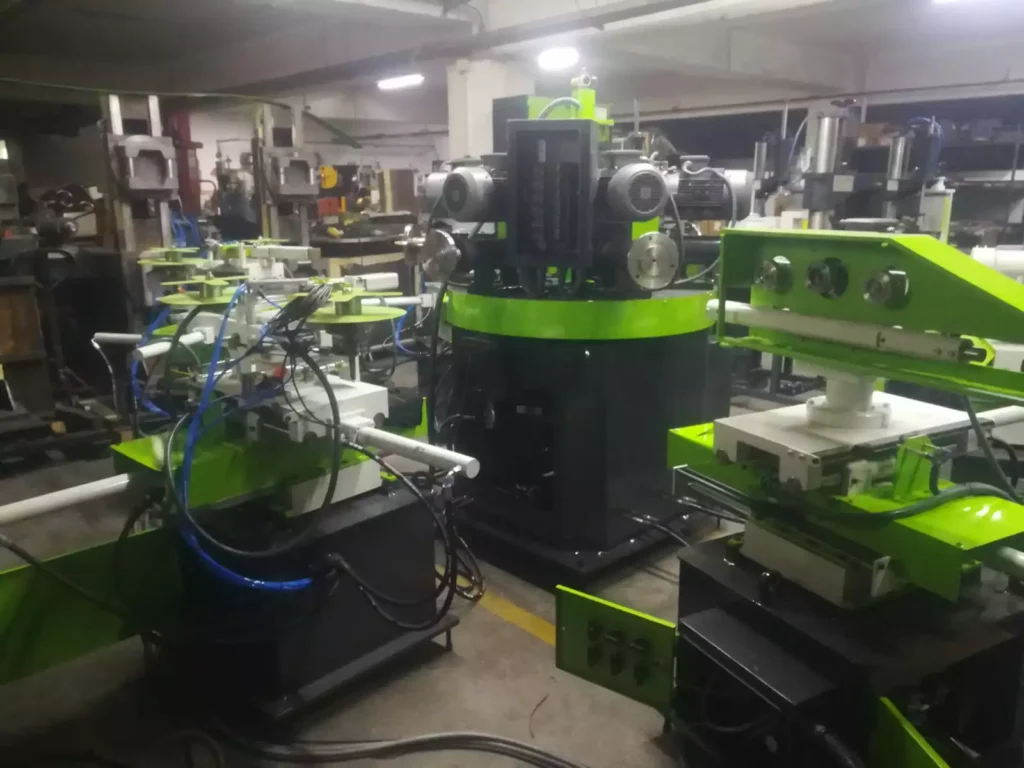
Rotary Table Surface Grinding Machine
Rotary Table Lapping Machine

A rotary table surface grinding machine is a precision grinding tool designed to produce exceptionally flat, smooth surfaces on a wide range of workpieces, using a circular table that rotates beneath a stationary or vertically adjustable grinding wheel. Unlike standard surface grinders with linear table movement, the rotary table design enables continuous circular motion of the workpiece during grinding, which provides highly uniform contact with the grinding wheel and results in superior surface finishes and tight flatness tolerances. This type of machine is especially suited for grinding round, ring-shaped, or symmetrical parts such as bearing races, circular dies, valve plates, and gear blanks.

The rotary table is typically mounted horizontally and driven by a motor with a highly stable and consistent rotational speed. Workpieces are held firmly in place on the rotary table using a magnetic chuck or specialized fixtures, depending on the material and geometry. As the table spins, the vertical spindle grinding wheel is fed down incrementally, removing material with each pass. The grinding wheel itself can be a standard abrasive type or a more specialized option such as CBN or diamond, depending on the material and the required surface finish. The vertical feed is usually controlled manually in conventional machines or automatically in CNC-equipped models, allowing for precise control of depth and material removal rates.

The continuous rotation of the table provides two major advantages: improved heat distribution and more consistent wheel wear. These factors contribute to excellent surface integrity and minimal thermal distortion, which are critical in applications where flatness and finish directly affect performance and assembly. For instance, when grinding precision hydraulic components or sealing surfaces, any deviation in flatness can result in leakage or poor fit. Moreover, the circular motion allows for efficient stock removal and faster cycle times when working with multiple identical parts arranged symmetrically on the table.

Modern rotary table surface grinders often incorporate digital readouts or CNC controls to automate grinding cycles, adjust infeed rates, and program multi-step grinding sequences. Some machines also feature dual-wheel heads, allowing simultaneous roughing and finishing operations, or swivel heads that can perform grinding at various angles for more complex geometries. Coolant systems are essential in these machines, providing both lubrication and heat dissipation to maintain surface quality and prevent thermal damage. Wheel dressing devices are typically integrated to reshape and refresh the grinding surface, ensuring continuous accuracy and surface consistency throughout long runs.

In addition to their use in high-precision industries such as aerospace, defense, toolmaking, and automotive manufacturing, rotary table surface grinders are also favored for batch production due to their repeatability and ability to hold tight tolerances across multiple parts. The combination of a stable rotating table, consistent wheel engagement, and the potential for full automation makes rotary table surface grinding machines an indispensable part of any precision machining setup where circular or symmetrical components demand high-accuracy flat grinding.

The rotary table surface grinding machine’s design offers significant advantages in terms of efficiency and consistency when compared to traditional surface grinders with linear movement. The rotating table helps to evenly distribute the grinding force across the entire surface of the workpiece, minimizing localized wear on the grinding wheel and allowing for a smoother, more uniform finish. This is particularly beneficial when working with large batches of parts that require identical specifications, as the rotation ensures that each workpiece receives the same amount of material removal.

Additionally, the ability to grind both large and small parts with high precision is a key benefit of these machines. The flexibility to handle different workpiece sizes and shapes, while still maintaining tight tolerances, makes rotary table grinders highly versatile and efficient for various manufacturing environments. The inclusion of automation, either through CNC or automatic infeed mechanisms, further enhances productivity by reducing manual intervention and increasing throughput. By programming different parameters such as grinding speed, depth of cut, and table rotation speed, operators can achieve consistent results with minimal setup time, which is especially important in industries where high-volume production is essential.

As with any precision machine, regular maintenance is crucial to ensure the longevity and continued accuracy of the rotary table surface grinder. This includes checking the alignment of the table, maintaining the coolant system, and ensuring that the grinding wheels are properly dressed and replaced when necessary. Over time, these machines can handle substantial wear and tear, but their robust construction and reliable performance make them a staple in high-precision grinding tasks, where surface quality and dimensional accuracy are paramount. With the ability to tackle complex geometries and deliver superior finishes, rotary table surface grinding machines remain an essential tool in industries requiring high-precision components.

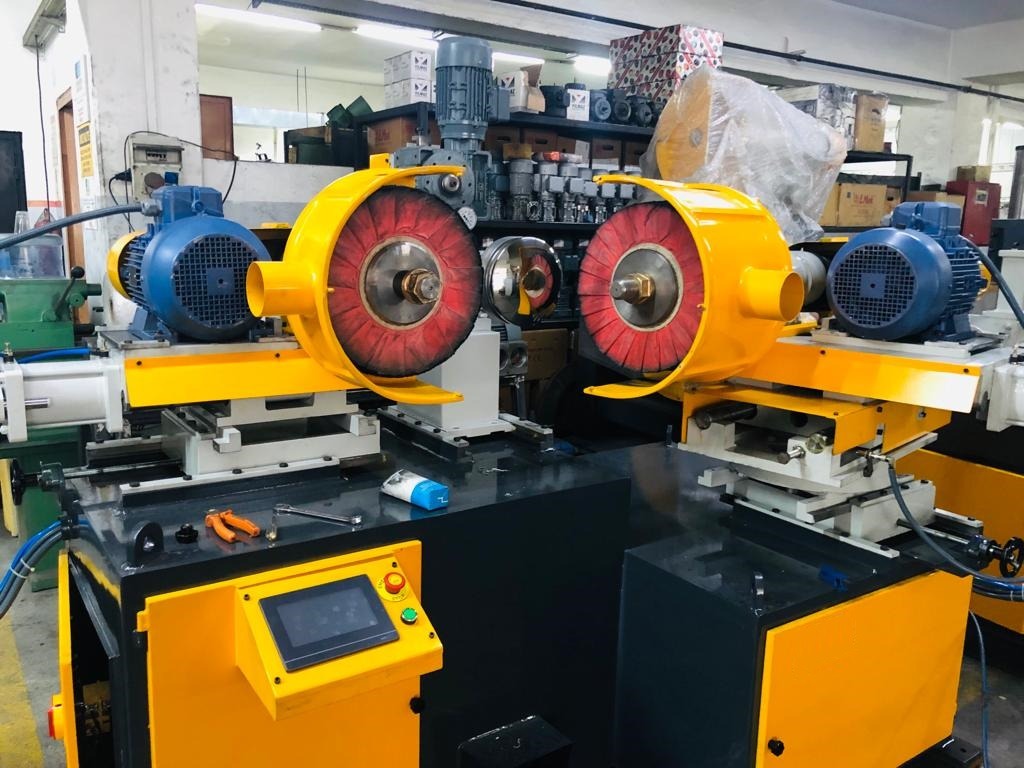
Double Disc Surface Grinding Machine
Rotary Chemical Polishing Machine

A double disc surface grinding machine is a specialized grinding machine that utilizes two abrasive grinding wheels, typically mounted on opposite sides of a workpiece. This machine is designed to simultaneously grind both sides of a part, offering high-efficiency processing with excellent precision and uniformity. The process is particularly advantageous for parts that require parallel surfaces or have specific thickness requirements, as it ensures a uniform material removal rate on both sides, resulting in minimal warpage or distortion.

In a typical double disc grinder, the workpiece is fed between the two rotating grinding discs, which are often positioned horizontally or vertically, depending on the design of the machine. The workpiece may be placed on a conveyor, which feeds it into the grinding zone, or it may be held in place on a fixture or chuck. As the two grinding wheels come into contact with the workpiece, material is removed from both sides simultaneously, making it possible to achieve tight tolerance finishes in a single pass.

This type of grinding machine is particularly useful in industries where high production rates and precision are required, such as in the automotive, aerospace, and bearing manufacturing sectors. Common components processed by double disc surface grinders include washers, seals, bushings, gears, and various small precision parts. The ability to grind both sides at once significantly reduces cycle times, leading to greater throughput and cost savings in high-volume production environments.

Double disc grinders typically feature adjustable wheel heads that allow for fine-tuning the gap between the grinding wheels, ensuring that the workpiece is consistently held at the optimal height and angle for efficient grinding. Many machines also feature automatic infeed mechanisms, allowing for precise control of the depth of cut and ensuring that the material removal is evenly distributed across both surfaces. Advanced machines may incorporate CNC control, which offers further automation and programming flexibility, enabling more complex grinding tasks to be performed with high repeatability.

The cooling system in a double disc grinder plays an essential role in maintaining the integrity of both the workpiece and the grinding wheels. Coolant is delivered to the grinding zone to reduce heat generation, minimize thermal distortion, and extend the life of the grinding wheels. The use of high-pressure coolant systems can also help in clearing the grinding zone of debris and fine particles that can interfere with the grinding process and affect the finish quality.

Double disc surface grinders are known for their ability to achieve high-quality surface finishes with tight tolerances, often in the range of microns, while simultaneously removing large amounts of material efficiently. They are particularly suitable for mass production where consistency, speed, and minimal post-processing are important. The combination of simultaneous double-sided grinding, minimal thermal buildup, and the ability to handle a variety of materials, including hardened steel, ceramics, and composites, makes double disc surface grinders a valuable tool in the precision machining industry.

The efficiency of double disc surface grinding machines lies in their ability to process parts at high speeds while maintaining a consistent finish across both surfaces. Because both sides are ground simultaneously, there is a significant reduction in processing time compared to traditional single-side grinding methods. This feature is particularly beneficial in high-volume production environments where rapid part turnaround is essential. The machine’s ability to maintain dimensional accuracy and parallelism between the two surfaces helps minimize the need for additional processing steps, such as lapping or polishing, which would otherwise be necessary to correct inconsistencies in thickness or surface flatness.

Another important feature of double disc grinders is their adaptability to various workpiece sizes and shapes. Depending on the machine design, parts can range from small, thin washers to larger, more complex components. The machine’s versatility allows it to handle different types of material as well, including ferrous and non-ferrous metals, ceramics, and plastics, making it a valuable asset in industries with diverse material requirements. In the automotive industry, for example, double disc grinders are commonly used to process parts like valve seats, clutch components, and transmission components, all of which require tight tolerances and smooth finishes for proper performance.

Double disc grinders also offer the advantage of minimal material distortion during the grinding process. Since both sides of the part are ground simultaneously, the forces applied to the workpiece are balanced, which helps to reduce the likelihood of bowing or warping, a common issue with single-side grinding. Additionally, the machine’s grinding process helps improve flatness, which is especially important in applications where components must fit together with high precision or where flatness is critical for functionality, such as in bearing races or spacers.

Modern double disc surface grinders may come equipped with advanced features, including in-process gauging systems that monitor the thickness of the workpiece during grinding. These systems provide real-time feedback, adjusting the grinding parameters to ensure that the desired thickness and flatness are achieved throughout the grinding cycle. Such automation minimizes operator intervention, reduces the chances of errors, and improves overall production efficiency.

Maintenance of a double disc surface grinding machine is essential to its long-term performance. Regular checks on wheel alignment, coolant system functionality, and the condition of the grinding wheels ensure that the machine operates optimally. Wheel dressing and replacement also play a key role in maintaining grinding performance, as dull or improperly dressed wheels can lead to inconsistent finishes or dimensional inaccuracies.

Overall, the double disc surface grinding machine stands out as a highly efficient and versatile tool for industries where precision, speed, and surface quality are paramount. Its ability to handle both sides of a workpiece simultaneously, while maintaining tight tolerances and high throughput, makes it an indispensable machine for mass production of precision components.

The double disc surface grinding machine’s precision and efficiency are especially valuable in industries that demand high-quality parts with minimal variation between pieces. This capability significantly reduces the need for secondary operations, such as reworking or finishing, which can add time and cost to the production process. With its simultaneous grinding of both surfaces, the machine ensures that each part is consistently produced to the same specifications, making it ideal for manufacturing components that require high repeatability.

In addition to its ability to grind both sides simultaneously, the double disc grinder can also accommodate a variety of different grinding configurations. Some machines feature horizontal spindles, which are ideal for grinding flat and parallel surfaces, while others may incorporate vertical spindles that are better suited for complex shapes or when space constraints are a factor. The flexibility in spindle configuration and the ability to adjust grinding parameters like speed, pressure, and wheel alignment means that these machines can be tailored to specific production needs, whether it’s high-volume batch production or more custom, low-volume runs.

The ability to grind different materials is another strong suit of double disc grinding machines. While they are commonly used for metalworking, they are also capable of processing non-ferrous metals, ceramics, glass, and composites. This versatility expands their application beyond traditional industries like automotive and aerospace, making them useful in medical device manufacturing, electronics, and other sectors where precise material removal and surface quality are critical.

In some configurations, double disc grinders can also incorporate advanced features such as automation, robotic handling systems, and in-line monitoring, which allow for continuous, unattended operation. These features are particularly beneficial for industries that require a high degree of automation to meet tight deadlines or produce large quantities of parts. With integrated robotics, parts can be loaded and unloaded automatically, and the grinder can be programmed to adjust its parameters based on real-time feedback from sensors or in-process gauging systems.

The integration of smart technology and the push toward Industry 4.0 has also influenced the development of modern double disc grinders. These machines can be connected to centralized data systems, allowing for predictive maintenance, performance monitoring, and real-time adjustments to optimize the grinding process. This connectivity allows manufacturers to track machine performance, detect issues before they become problems, and maximize machine uptime, which leads to increased efficiency and reduced operational costs.

In summary, the double disc surface grinding machine offers unparalleled precision and efficiency for high-volume, high-accuracy grinding applications. Its ability to grind both sides of a workpiece simultaneously, along with its adaptability to different materials, shapes, and production environments, makes it a cornerstone of modern precision machining. As manufacturing processes continue to demand faster production cycles, better consistency, and more advanced capabilities, double disc grinders will remain an essential tool for producing high-quality components in a variety of industries.

CNC Surface Grinding Machine
Hydraulic Buffing Machine

A CNC (Computer Numerical Control) surface grinding machine represents a significant advancement over traditional manual surface grinding, offering enhanced precision, automation, and repeatability. These machines use a computer-controlled system to automate the movements of the grinding wheel and workpiece, enabling highly accurate and consistent results, even for complex or multi-step grinding operations. This makes CNC surface grinders ideal for industries requiring high-quality finishes and tight tolerances, such as aerospace, automotive, toolmaking, and medical device manufacturing.

In a CNC surface grinding machine, the key components are similar to those in traditional surface grinders, including the base, column, grinding wheel, and worktable. However, the major difference lies in the addition of a CNC system, which controls the movements of the table (often in multiple axes) and the vertical positioning of the grinding wheel. The machine typically operates along three axes: X (longitudinal), Y (cross), and Z (vertical), though some advanced models may include additional axes (like the C axis for rotary grinding or the U axis for tilting) to provide more flexibility in processing.

CNC surface grinders are capable of executing highly complex grinding operations, such as step grinding, contour grinding, and plunge grinding, with far greater precision than manual systems. The operator programs the grinding sequence through a computer interface, inputting parameters such as feed rates, grinding depth, and wheel speed. This automation ensures that each part is ground to the same specifications, reducing variability and eliminating the human errors inherent in manual operations.

One of the key advantages of CNC surface grinding is its ability to perform automated, repeatable tasks, which significantly reduces setup time and enhances overall productivity. Once the machine is set up for a specific part or job, it can run multiple cycles with minimal intervention. This is especially valuable in high-volume production environments, where consistency and efficiency are critical.

Advanced CNC surface grinders may also feature in-process gauging, which allows the machine to automatically measure the workpiece during the grinding process to ensure that it is within tolerance. If the machine detects that the part is out of spec, it can adjust grinding parameters on-the-fly, ensuring that the part meets the required dimensions without the need for manual checks or adjustments.

Additionally, CNC surface grinders often incorporate automatic wheel dressing systems, which are essential for maintaining optimal wheel performance throughout long grinding sessions. Wheel dressing ensures that the abrasive surface of the grinding wheel remains sharp and efficient, preventing the wheel from becoming dull or clogged with material. This not only helps maintain surface quality but also extends the life of the grinding wheel.

The coolant system in CNC surface grinders is another critical aspect. Coolant is typically delivered to the grinding zone through nozzles or mist systems, helping to keep the workpiece and wheel cool, flush away debris, and reduce thermal damage that can affect surface integrity. Some machines feature integrated filtration systems to clean the coolant, allowing for reuse and reducing the environmental impact of coolant disposal.

In terms of precision, CNC surface grinding machines can achieve micron-level accuracy, which is essential when producing parts with high tolerances or intricate features. The computer control allows for precise, incremental movements, reducing the risk of over-grinding or under-grinding, both of which could compromise part quality. Furthermore, CNC grinding eliminates the need for constant manual monitoring, enabling operators to focus on overseeing multiple machines or tasks.

In summary, the CNC surface grinding machine offers significant advantages over manual surface grinders in terms of precision, automation, and repeatability. Its ability to execute complex grinding operations with high accuracy makes it indispensable in modern manufacturing, particularly in industries that demand superior surface finishes and tight tolerances. With features like in-process gauging, automatic wheel dressing, and integrated coolant systems, CNC surface grinders are a powerful tool for producing high-quality components with minimal operator intervention.

The integration of CNC surface grinding machines into modern manufacturing workflows has also contributed significantly to process optimization and lean manufacturing initiatives. Because these machines can be programmed to perform multi-pass grinding operations in a single setup, they reduce the need for multiple machines or repeated setups, which in turn minimizes material handling, setup errors, and downtime. In applications such as die and mold making, where surface finish and dimensional accuracy are critical, the CNC surface grinder allows for extremely fine tolerances and mirror-like surface finishes that would be difficult or impossible to achieve consistently with manual grinding.

Another notable benefit is the ability to store and recall part programs. Once a grinding program is created for a specific component, it can be saved and reused for future production runs, drastically shortening the setup time for repeat jobs. This feature supports just-in-time manufacturing strategies, where small batch sizes and frequent changeovers are common. It also supports the implementation of closed-loop manufacturing systems, where measurement data collected from finished parts is fed back into the CNC control to fine-tune future operations, further enhancing accuracy and efficiency.

Moreover, the versatility of CNC surface grinders allows them to process a wide range of materials and part geometries. From hardened steel to titanium alloys and from flat plates to complex stepped components, the precision control offered by the CNC system allows operators to tailor grinding parameters to match the material’s properties and the desired finish. This adaptability makes the machine suitable not only for finishing operations but also for light stock removal or semi-finishing, depending on the production requirements.

CNC surface grinders are also designed with ergonomics and safety in mind. Enclosed work zones, automatic shutdown features, and real-time monitoring systems protect both the operator and the machine. The enclosure helps contain sparks, dust, and coolant mist, improving the working environment and reducing cleanup time. Safety interlocks ensure that access doors cannot be opened while the wheel is in motion, and emergency stop buttons are positioned within easy reach.

In terms of diagnostics and maintenance, modern CNC surface grinding machines often come equipped with built-in diagnostic software that alerts operators to wear in components such as guideways, ball screws, or spindle bearings. Predictive maintenance algorithms based on sensor data can detect subtle performance shifts and schedule maintenance before problems lead to part defects or unplanned downtime. This proactive approach to machine upkeep enhances overall equipment effectiveness and contributes to more consistent production output.

As technology continues to evolve, CNC surface grinding machines are increasingly integrated with smart factory systems through industrial networks and IoT platforms. This connectivity allows for real-time monitoring of machine health, power usage, spindle load, coolant temperature, and part quality metrics. Data from these machines can be used to improve workflow efficiency, traceability, and quality control, making CNC grinders an essential component in the push toward Industry 4.0.

Ultimately, the CNC surface grinding machine is a cornerstone of precision manufacturing. It combines the fine material control of traditional grinding with the accuracy, automation, and repeatability of digital technology. Its ability to streamline production, improve part quality, and reduce manual intervention makes it a preferred solution for manufacturers striving for higher standards in component consistency, throughput, and operational efficiency.

Automatic Surface Grinding Machine
Horizontal Lapping Machine

An automatic surface grinding machine is designed to carry out precision grinding operations on flat surfaces with minimal human intervention. These machines automate the movement of the worktable, grinding wheel, and in some cases, wheel dressing and coolant delivery, to produce high-quality, consistent surface finishes with improved efficiency. The term “automatic” typically refers to the machine’s ability to perform repetitive grinding cycles without manual control of each axis or step, allowing for continuous operation and reduced operator fatigue.

These machines are especially beneficial in production environments where the same grinding task must be performed repeatedly on batches of identical or similar parts. The automatic functionality is commonly implemented through a combination of hydraulic, mechanical, or electronic systems, depending on the level of sophistication. At the core of most automatic surface grinders is an electrically or hydraulically powered table that moves longitudinally and crosswise under the grinding head, while the wheel head moves vertically to achieve the desired depth of cut. In more advanced models, these motions are controlled by servo motors and guided by electronic controls that allow for precision adjustments.

The grinding cycle in an automatic surface grinder typically includes automatic infeed, spark-out passes, and retraction of the wheel after completion. Operators set the desired parameters, such as grinding depth, number of passes, table speed, and feed rate, using a control panel. Once initiated, the machine performs the complete cycle autonomously. This ensures a consistent grinding depth across the entire surface of the workpiece, making it possible to achieve fine finishes and flatness tolerances that are difficult to replicate manually.

One of the primary advantages of automatic surface grinding machines is increased productivity. By reducing the need for constant operator input, these machines can work faster and more reliably over extended periods, allowing skilled labor to be redirected to other tasks. This is particularly useful in high-volume manufacturing settings such as automotive, tool and die, and electronics industries, where speed and consistency are crucial. Parts like mold plates, spacers, gage blocks, and metal shims benefit greatly from automatic grinding due to the need for tight thickness control and surface finish.

Another key benefit is repeatability. Once a grinding cycle has been established and optimized, the same settings can be reused to ensure uniform results across multiple workpieces. This level of consistency is essential in quality-critical applications, especially when parts must fit precisely with others in an assembly. Automatic grinders also reduce the chances of operator error, such as overshooting the depth of cut or applying inconsistent pressure, which can affect both surface finish and dimensional accuracy.

Safety and ergonomics are improved as well. Automatic surface grinders minimize direct operator contact with the grinding process, reducing exposure to noise, debris, and coolant mist. Many models are enclosed or feature built-in guarding systems that help contain dust and coolant splatter, maintaining a cleaner and safer work environment. Additionally, modern machines are often equipped with overload protection and emergency stop systems, ensuring a higher level of operational safety.

Some automatic surface grinding machines include optional features such as digital readouts (DROs), programmable logic controllers (PLCs), automatic wheel dressing units, and coolant filtration systems. These additions enhance the machine’s precision and ease of use. For instance, a DRO provides real-time position feedback to the operator, while a PLC allows for more complex grinding cycles and automation routines. Automatic wheel dressing maintains the wheel’s sharpness and profile, ensuring consistent grinding performance over long production runs.

In conclusion, an automatic surface grinding machine delivers significant advantages in terms of speed, accuracy, and labor efficiency. By automating repetitive grinding cycles, these machines increase output, reduce operator involvement, and ensure consistent part quality. Whether used for toolroom applications or mass production of flat parts, automatic surface grinders are an essential tool in any facility where precision surface finishing is required.

The integration of automatic surface grinding machines into modern manufacturing environments has also played a crucial role in reducing production costs and improving process reliability. With the ability to handle long, uninterrupted grinding cycles, these machines reduce idle time and optimize the use of machine hours, making them highly cost-effective over the long term. They can be set up to run during off-hours or unattended shifts, significantly increasing overall shop floor productivity without requiring a proportional increase in labor.

Many automatic surface grinding machines are also designed with modularity and flexibility in mind, allowing them to accommodate a wide range of workpiece sizes, materials, and production requirements. Some machines feature magnetic chucks, vacuum fixtures, or custom fixturing systems to hold ferrous and non-ferrous materials securely during grinding. This versatility enables manufacturers to process a diverse array of components using a single grinding platform, reducing the need for multiple dedicated machines.

Modern versions of automatic surface grinders often include touchscreen interfaces or control panels with user-friendly layouts that make it easy to set up grinding parameters, recall stored programs, and monitor cycle progress. These intuitive interfaces lower the learning curve for new operators and allow experienced users to fine-tune operations quickly. The ability to store multiple part programs in memory allows quick changeovers between jobs, which is especially valuable in environments handling a variety of components or batch sizes.

Thermal stability and structural rigidity are also key design considerations in high-performance automatic surface grinders. Machine frames are typically made from heavy-duty cast iron or composite materials to dampen vibrations and maintain alignment over time. Precision linear guideways or hydrostatic slideways ensure smooth, controlled movement of the table and grinding head, which is critical for maintaining consistent surface finishes and dimensional accuracy across large or complex parts.

Coolant management is another critical aspect of automatic surface grinding machines. Efficient coolant delivery and filtration systems help to control heat buildup at the grinding interface, reduce wheel loading, and wash away swarf (fine metal particles). This not only improves the quality of the surface finish but also extends the life of the grinding wheel and reduces maintenance intervals. Some advanced systems even monitor coolant temperature and flow rate in real-time to ensure optimal grinding conditions throughout the cycle.

Automatic surface grinders are increasingly being connected to broader production monitoring and quality control systems. In Industry 4.0-enabled facilities, grinding machines are networked with factory management software to allow real-time tracking of machine status, job progress, and part quality data. This digital integration facilitates predictive maintenance, better scheduling, and more informed decision-making based on actual machine performance and utilization.

Furthermore, energy efficiency has become an important consideration in the design of newer automatic surface grinding machines. Many machines now feature energy-saving modes, regenerative braking systems, or variable-speed drives that adjust power consumption based on load. This not only reduces operational costs but also supports sustainability initiatives in environmentally conscious manufacturing operations.

In essence, automatic surface grinding machines combine the precision and finish quality of traditional surface grinders with the speed, consistency, and reduced labor demands of automated operation. They are a critical tool in any manufacturing process where high-volume, high-accuracy grinding of flat surfaces is required. As the technology continues to evolve, these machines will become even more intelligent, efficient, and tightly integrated into the broader digital manufacturing ecosystem, ensuring they remain a key part of the precision machining landscape for years to come.

Cylindrical Surface Grinding Machine
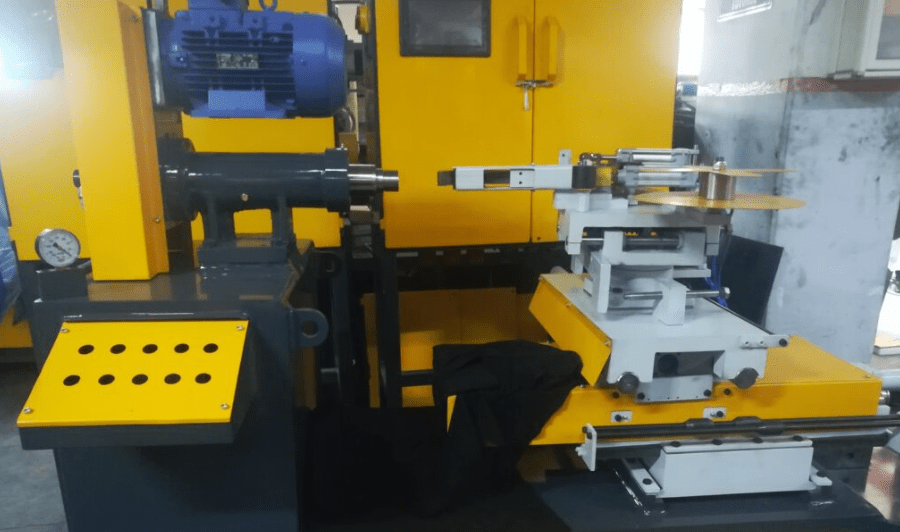
Horizontal Buffing Machine

A cylindrical surface grinding machine is a type of precision grinding equipment specifically designed for shaping the outer surface of cylindrical workpieces. Unlike flat surface grinders that focus on creating planar finishes, cylindrical grinders are built to accurately grind round or cylindrical parts, such as shafts, rods, bushings, pins, rollers, and other components requiring concentricity, roundness, and a fine surface finish. These machines play a vital role in industries such as automotive, aerospace, manufacturing, and toolmaking, where the exactness of rotational components is crucial to performance and durability.

The basic working principle involves a rotating grinding wheel that comes into contact with a similarly rotating workpiece. The workpiece is typically mounted between centers or held in a chuck, and it rotates about its own axis while the grinding wheel traverses along its length or moves radially inward to perform the material removal. The motion of the grinding wheel can be controlled longitudinally (along the length of the workpiece) and transversely (into the diameter), depending on the machine’s design and level of automation.

There are two main types of cylindrical surface grinding machines: external and internal. External cylindrical grinding machines work on the outside diameter (OD) of the workpiece, while internal cylindrical grinders are used to finish internal bores. Some machines are universal and can handle both OD and ID grinding with changeover. Additionally, plunge grinding and traverse grinding are two common methods applied, with plunge grinding used for quickly removing material on short, narrow features and traverse grinding better suited for longer cylindrical surfaces.

The key advantage of cylindrical surface grinding is its ability to produce extremely accurate and smooth finishes with tight tolerances, often in the range of microns. Concentricity between features, parallelism, and roundness can be controlled to very high standards, making the process suitable for finishing parts that rotate at high speeds or interface with mating components. Typical applications include crankshafts, camshafts, motor shafts, bearing journals, hydraulic cylinders, and tooling components, all of which demand high geometric precision.

Cylindrical surface grinding machines can be either manual, semi-automatic, or fully CNC-controlled. Manual grinders are often used in toolrooms and low-volume environments where flexibility is prioritized, while CNC cylindrical grinders dominate high-precision, high-volume production due to their ability to automate complex grinding sequences. CNC machines allow for programmable movements and parameters, such as wheel speed, infeed rate, and dressing intervals, and they can store part programs for consistent production quality.

These machines often include features such as automatic wheel dressing systems to maintain optimal grinding performance and in-process gauging systems that measure the workpiece during grinding and make automatic corrections. Coolant systems are essential for controlling heat and flushing away debris, helping to maintain part integrity and extend wheel life. The rigidity of the machine base, precision of spindle bearings, and alignment of guideways all play critical roles in ensuring grinding accuracy and repeatability.

Cylindrical grinders can also be customized with attachments like steadies for supporting long or slender workpieces, tailstocks for centering, and various types of grinding wheels based on material requirements. The versatility of these machines extends to different materials, including hardened steels, non-ferrous metals, composites, and ceramics, making them suitable across a wide range of industries and applications.

As with many modern machine tools, cylindrical surface grinding machines are increasingly integrated into automated manufacturing environments. They can be equipped with robotic part loaders and unloaders, linked with production management systems, and monitored remotely to track efficiency, maintenance needs, and quality assurance data. These advancements reduce operator workload, shorten setup times, and ensure traceable, repeatable output even for the most demanding applications.

In conclusion, the cylindrical surface grinding machine is a highly precise and indispensable tool for machining the outer or inner surfaces of cylindrical components. It provides the accuracy, surface finish, and consistency required for critical parts across many high-performance engineering sectors. Whether in a manual setup for custom tooling or a CNC line for mass production, cylindrical grinding remains a core process for ensuring component roundness, alignment, and surface quality.

Cylindrical surface grinding machines continue to evolve with advancements in machine design, materials, and control systems, making them increasingly capable of meeting the growing demands of precision engineering. One significant trend is the improvement in machine rigidity and damping, which directly impacts grinding stability and surface finish quality. Modern machines are often constructed with heavy-duty cast iron or composite materials engineered to absorb vibration and resist thermal deformation, ensuring consistent results even under heavy grinding loads or long-duration operations.

Precision in cylindrical grinding is not only dependent on the machine structure but also on the quality of the spindle system. High-speed, hydrostatic, or hybrid ceramic-bearing spindles are now common in high-performance grinders, providing excellent rotational accuracy and minimal thermal expansion. These spindles allow grinding wheels to operate at higher surface speeds, which improves material removal rates and surface finish without sacrificing dimensional control.

The automation capabilities of cylindrical grinders have also expanded significantly. CNC models can perform multi-diameter, taper, and contour grinding operations in a single setup. This is achieved by programming different profiles along the Z-axis (length of the part) and X-axis (depth of cut), and in some advanced systems, B-axis control allows for angular positioning of the grinding wheel to match complex geometries. With a single chucking, multiple features can be ground with perfect relative positioning, which reduces setup times, part handling, and cumulative errors, and increases throughput.

Another major advancement is in software and digital integration. User-friendly CNC interfaces with touchscreen control panels, graphical programming aids, and automatic cycle calculation make the setup and operation more intuitive even for less experienced operators. Machines can simulate grinding paths, detect potential collisions, and optimize the grinding sequence before physical execution. Some systems offer adaptive grinding algorithms that dynamically adjust parameters based on real-time feedback, helping to maintain process stability despite tool wear or minor changes in part dimensions.

Wheel technology has also improved, with modern superabrasive wheels—such as those made from CBN (cubic boron nitride) or diamond—offering much longer life and better cutting performance than traditional aluminum oxide or silicon carbide wheels. These advanced wheels can maintain form and sharpness over extended cycles, reducing the frequency of dressing and improving surface quality on difficult-to-grind materials like hardened steel, high-speed steel, or exotic alloys.

Wheel dressing itself is now commonly automated, with programmable dressing cycles and rotary diamond dressers capable of forming complex wheel profiles with high precision. The integration of automatic dressing into the grinding cycle ensures consistent wheel condition, minimizes downtime, and allows continuous production with predictable performance. In-process measuring systems further enhance the machine’s ability to maintain dimensional control by measuring critical part features during grinding and automatically adjusting the grinding depth to compensate for any deviation.

Environmental control is another area of focus, with modern cylindrical surface grinders incorporating enclosed work zones, mist collectors, and coolant filtration systems to improve shop cleanliness and reduce operator exposure to hazardous particles or fluids. Coolant systems are now more efficient and often include chillers, flow controls, and delivery optimization to ensure consistent cooling at the grinding interface, which reduces thermal damage and contributes to better surface integrity.

These improvements have extended the application range of cylindrical surface grinders beyond traditional steel parts to include ceramics, carbides, and non-metallic materials. Industries such as aerospace, medical, defense, energy, and electronics increasingly rely on high-precision cylindrical grinding for components like turbine shafts, orthopedic implants, fuel injectors, valve stems, and sensor housings, all of which demand not only geometric precision but also high-quality surface finishes and structural integrity.

Overall, the cylindrical surface grinding machine has become a highly advanced and capable platform for producing round parts with exceptional accuracy, repeatability, and efficiency. As automation, digital control, and materials technology continue to evolve, these machines are expected to play an even greater role in the precision manufacturing landscape, ensuring that critical components meet the ever-tightening tolerances and performance requirements of modern engineering systems.

Reciprocating Surface Grinding Machine

Horizontal Lapping Machine

A reciprocating surface grinding machine is a type of precision grinder designed specifically to produce flat surfaces with high accuracy and fine finishes. It operates by moving a workpiece back and forth (reciprocating) under a rotating grinding wheel. This motion is typically linear along the machine’s table, which supports the workpiece and moves it in a precise, controlled fashion. The grinding wheel, usually mounted on a vertical spindle, rotates at high speed and is incrementally fed down toward the workpiece to remove small amounts of material with each pass. This method is widely used in toolrooms, manufacturing facilities, and repair shops for its reliability in achieving tight tolerances on flat parts.

The reciprocating motion of the machine’s table is driven either mechanically, hydraulically, or by servo motors in more advanced models. As the table moves back and forth, the grinding wheel contacts the workpiece surface, gradually reducing its height and improving flatness. Depending on the machine’s setup, the wheel may also move incrementally in the cross-feed direction (side to side) after each pass, allowing for complete surface coverage over larger workpieces. The vertical infeed of the grinding wheel can be controlled manually in basic machines or automatically in semi-automatic and CNC models.

One of the defining advantages of the reciprocating surface grinder is its ability to create very flat surfaces with consistent surface texture. This makes it ideal for finishing metal plates, blocks, tool components, spacers, precision gages, die sets, and fixtures. The machines are commonly used with magnetic chucks that securely hold ferrous workpieces in place during grinding, allowing for fast setups and minimal movement. For non-ferrous or delicate materials, mechanical or vacuum fixtures may be used.

Reciprocating surface grinders are known for producing smooth finishes with excellent parallelism and dimensional accuracy. By using appropriate grinding wheels—such as aluminum oxide for steels, silicon carbide for non-ferrous metals, or diamond for hard materials like ceramics—a wide range of materials can be ground effectively. The finish quality is influenced by factors such as wheel grit size, feed rate, table speed, and coolant application.

Advanced reciprocating surface grinding machines are often equipped with digital readouts (DROs), automatic cross-feed systems, and programmable infeed depth controls. These features reduce the operator’s workload, ensure consistent part quality, and minimize the chances of human error. In CNC versions, entire grinding cycles can be automated and stored as programs for repeat production runs. This allows for tight control of grinding parameters and repeatability over multiple parts.

Coolant systems play an important role in reciprocating surface grinding operations by reducing heat at the contact point between the wheel and the workpiece. Proper cooling prevents thermal distortion of the part, preserves the wheel’s sharpness, and helps to flush away fine grinding debris. Machines are often equipped with coolant filtration and recirculation systems to maintain clean, efficient coolant flow throughout extended production cycles.

Machine construction is critical in ensuring performance and accuracy. High-quality reciprocating surface grinders feature rigid bases, precise guideways, and vibration-damping materials that ensure stable grinding and extend machine life. The guideways are typically coated or lubricated to reduce friction and wear, and in some designs, linear ball-bearing or hydrostatic systems are used to enhance smoothness and positioning accuracy.

Safety and ergonomics are also integrated into modern reciprocating surface grinding machines. Protective enclosures, guards, and emergency stop features help prevent operator injury, while well-designed control panels and accessible components make operation and maintenance more intuitive. Machines with automatic wheel dressing units and spark-out cycles further improve process control and finish consistency.

Overall, the reciprocating surface grinding machine remains a cornerstone of precision surface finishing in many industries. Its straightforward yet effective grinding method, combined with modern enhancements like automation and digital control, makes it indispensable for tasks that require extreme flatness, parallelism, and smooth surface texture. Whether used in one-off toolmaking or high-volume production, these machines deliver the performance and reliability necessary for maintaining tight dimensional control and ensuring the long-term functionality of critical components.

The versatility of reciprocating surface grinding machines makes them well-suited for a broad range of workpieces and production environments, from small-scale toolrooms to larger industrial settings where flatness and accuracy are essential. One of the key factors contributing to their adaptability is the range of sizes and configurations in which these machines are available. Smaller models are ideal for fine, precision work on tools and components, while larger floor-mounted units can handle heavy, oversized plates and parts with ease. This scalability allows manufacturers to select machines that match their specific size requirements, space constraints, and productivity goals.

In high-volume applications, such as automotive or die and mold production, reciprocating surface grinders are frequently integrated into production lines or automated cells. When equipped with robotic part loading systems, automatic indexing tables, and CNC control, they can produce hundreds or thousands of identical parts with minimal operator supervision. These machines offer not only consistency but also reduced downtime, since once a cycle is set up and proven, it can be run repeatedly with minimal need for adjustment. Automatic wheel dressing ensures the grinding surface remains sharp and properly profiled, reducing part-to-part variation and extending the usable life of the grinding wheel.

Precision grinding in the reciprocating style is also essential in applications where parts must mate tightly with other components or serve as reference surfaces for further machining. In these contexts, even a small deviation in flatness or parallelism can compromise performance. For example, in the manufacture of gauge blocks, optical flats, and die plates, the surface grinder ensures that the parts meet exacting standards. Similarly, in electronics or aerospace sectors, where lightweight and non-magnetic materials are often used, the ability to fixture parts with vacuum systems or custom clamping setups ensures compatibility with the machine’s grinding operations.

Despite their straightforward operating principle, reciprocating surface grinders demand careful attention to process parameters to achieve optimal results. The balance between table speed, crossfeed rate, and wheel infeed depth must be carefully controlled to avoid overloading the grinding wheel, overheating the workpiece, or creating unwanted surface irregularities. Skilled operators know how to fine-tune these variables to meet specific surface finish requirements, especially on materials that are heat-sensitive or prone to hardening under pressure.

Modern developments in abrasive technology have significantly expanded the capabilities of reciprocating grinders. With the introduction of high-performance wheels using advanced bonding systems and abrasive materials like CBN and diamond, these machines can now handle tougher and harder materials with improved speed and surface integrity. These wheels maintain their shape longer, cut more efficiently, and minimize the need for frequent dressing, all of which contribute to higher productivity and lower long-term operating costs.

Thermal control within the grinding environment is another critical element, especially in high-precision applications. Thermal expansion of the workpiece or the machine itself can lead to slight variations in part thickness, which can be problematic when tolerances are extremely tight. To mitigate this, many machines are equipped with cooled spindle systems, thermally stable base materials, and enclosures that help maintain a consistent grinding environment. Some systems even include compensation algorithms within the CNC software that dynamically adjust for thermal drift.

The use of reciprocating surface grinding machines in combination with inspection tools—such as coordinate measuring machines (CMMs), surface roughness testers, and optical comparators—ensures that the finished parts meet all required specifications. This makes the grinding machine not just a standalone piece of equipment, but an integral part of the broader quality control process. By delivering high-precision surfaces that require little or no further machining, surface grinders contribute to shorter lead times, reduced scrap, and improved assembly performance.

In summary, the reciprocating surface grinding machine remains one of the most effective and reliable tools for producing flat, smooth, and precisely dimensioned surfaces. It is highly adaptable, whether used for single-part precision finishing or integrated into automated production systems. As machine tool technology continues to advance, these grinders benefit from improvements in automation, materials, and digital control, ensuring their continued relevance and importance across a wide spectrum of industries where precision and repeatability are paramount.

Vertical Surface Grinding Machine
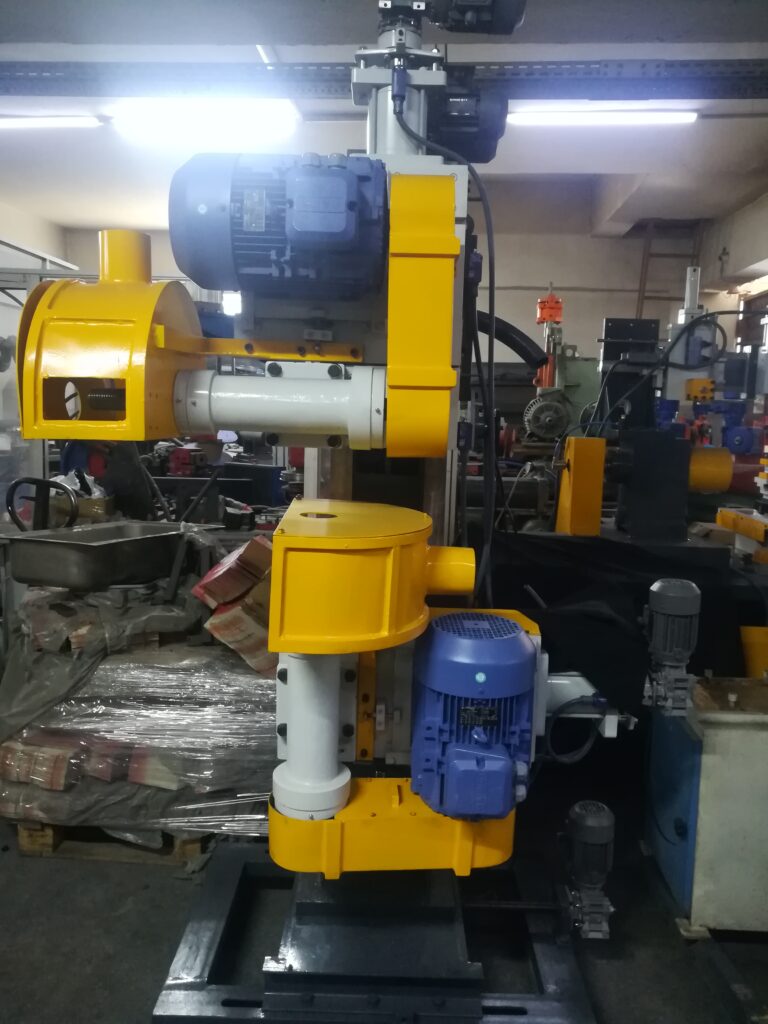
Vertical Lapping Machine

A vertical surface grinding machine is a type of precision grinding equipment in which the grinding spindle is oriented vertically, allowing the grinding wheel to contact the surface of the workpiece from above. This configuration contrasts with horizontal surface grinders, where the wheel is mounted on a horizontal spindle. Vertical surface grinders are primarily used for applications requiring the machining of flat surfaces on large, heavy, or tall workpieces that are difficult to fixture horizontally. These machines are particularly effective for removing material quickly and evenly from broad, flat surfaces while achieving high degrees of accuracy and surface finish.

The workpiece is typically secured on a rotating or fixed table beneath the vertical grinding wheel. The grinding head, mounted on a vertically movable column or ram, descends toward the workpiece to perform the grinding operation. Some models allow movement in multiple axes—vertical, cross, and rotary—depending on the complexity and precision of the task. The grinding wheel itself may be segmented or continuous, depending on the application and material being machined.

Vertical surface grinding machines are often used in industries such as aerospace, automotive, die and mold making, energy, and heavy equipment manufacturing. They are ideal for machining large plates, die blocks, rings, engine components, and base plates—parts that are difficult to hold flat or parallel on traditional horizontal grinders. Due to the vertical orientation of the wheel and the sturdy design of the machines, they can remove significant amounts of material in a single pass while maintaining tight tolerances.

The rigidity and mass of vertical grinders are key advantages, particularly when working with heavy or large parts. The vertical column supports a robust grinding spindle that can handle high cutting forces without deflection, ensuring consistent contact between the wheel and the workpiece. This setup not only promotes flatness and surface finish but also extends the life of both the grinding wheel and the machine components.

Another notable feature of many vertical surface grinders is the use of a rotary table. This rotating work surface allows for even wear of the grinding wheel and uniform material removal from circular or symmetrical parts. Rotary tables may be manually operated, hydraulic, or servo-driven, and some models feature CNC rotary indexing for programmable precision grinding patterns.

Advanced vertical surface grinding machines come equipped with digital controls, CNC systems, and user-friendly interfaces that enable precise programming of grinding cycles. These controls allow for automated feeds, positioning, and spark-out cycles, reducing operator intervention and improving repeatability. High-precision machines may also include features such as automatic wheel dressing units, in-process gauging, and adaptive control systems that monitor grinding conditions and adjust parameters in real time.

The vertical orientation also simplifies chip and coolant management. Gravity assists in the removal of swarf and coolant from the grinding area, which can be collected and filtered more efficiently. Integrated coolant systems ensure optimal wheel cooling and surface quality, especially important when working with heat-sensitive materials or when maintaining strict dimensional tolerances.

Wheel selection is critical in vertical surface grinding. Depending on the material, applications may call for conventional abrasive wheels (aluminum oxide or silicon carbide) or superabrasive wheels (CBN or diamond). The right wheel, combined with proper dressing and coolant application, determines the success of the grinding process in terms of surface roughness, flatness, and cycle time.

In summary, vertical surface grinding machines provide a powerful, accurate, and efficient means of machining flat surfaces on large or awkwardly shaped workpieces. Their vertical spindle configuration offers several mechanical and practical advantages, particularly in high-volume and heavy-duty applications. As with other precision grinding technologies, the vertical surface grinder continues to evolve with improvements in digital control, automation, and material handling, ensuring its ongoing utility in precision manufacturing environments that demand accuracy, durability, and surface integrity.

The continued development of vertical surface grinding machines reflects broader advancements in precision machining, automation, and intelligent manufacturing systems. As production demands shift toward greater complexity and tighter tolerances, vertical grinders have kept pace by incorporating more sophisticated control systems and enhanced mechanical features. One of the most impactful developments is the integration of CNC (Computer Numerical Control), which allows the machine to execute intricate grinding cycles with minimal human intervention. CNC-equipped vertical surface grinders can perform multi-step operations, adjust parameters automatically based on tool wear or part feedback, and store grinding programs for repeatability across production batches. This not only enhances precision but also reduces setup time, making the machine more productive in both low- and high-volume environments.

Another significant evolution lies in the adoption of high-performance spindle technology. Modern vertical grinders often employ hydrostatic, hybrid ceramic, or air-bearing spindles that allow extremely smooth, high-speed rotation with minimal vibration and thermal expansion. These spindles contribute directly to achieving superior surface finishes and holding micron-level tolerances, even on hard-to-machine materials like hardened steels, nickel alloys, and advanced ceramics. The increased spindle rigidity and speed capacity also enable the use of superabrasive wheels, such as CBN and diamond, which cut more efficiently and maintain their shape far longer than traditional abrasives. These wheels can handle extreme loads and deliver exceptional flatness, making them ideal for grinding die blocks, large press plates, or high-performance tooling components.

Automation and robotic integration further enhance the productivity and consistency of vertical surface grinding. In high-throughput facilities, robotic arms or gantry systems load and unload workpieces automatically, often in combination with vision systems or RFID tracking to identify part orientation and match it to preloaded grinding routines. Automated systems can also monitor tool life, conduct in-process gauging, and perform automatic wheel dressing based on preprogrammed intervals or sensor feedback. These integrations enable continuous, lights-out operation—reducing labor costs, improving consistency, and minimizing human error in critical machining operations.

Thermal stability remains a central concern in high-precision grinding. Advanced vertical grinders address this by using granite bases or polymer concrete frames, which are highly resistant to thermal deformation and vibration. These materials enhance machine accuracy by maintaining consistent alignment over long grinding cycles and under varying load conditions. Additionally, many machines feature temperature compensation systems, internal cooling channels, and thermal isolation for critical components, ensuring that even during prolonged use, thermal drift does not compromise dimensional integrity.

Environmental and operator safety considerations are also integrated into modern vertical surface grinders. Enclosed work areas, mist collectors, and coolant filtration systems maintain a clean and safe working environment. Machines may feature noise insulation, automatic fire suppression, and advanced guarding systems that prevent contact with moving parts. Ergonomic interfaces—touchscreen HMIs (Human-Machine Interfaces), swiveling control panels, and real-time diagnostic displays—make operation intuitive and efficient for users of varying skill levels.

Vertical surface grinding machines are particularly valuable in industries where part size, geometry, or tolerances preclude the use of horizontal configurations. In the aerospace sector, for example, critical structural components such as turbine casings, mounting plates, or sealing rings often require extensive surface grinding to ensure proper fit and function. In automotive manufacturing, cylinder heads, transmission plates, and brake components benefit from the flatness and consistency delivered by vertical grinders. Even in mold and die production, the ability to accurately grind large plates and blocks improves mold accuracy and extends tool life, ultimately benefiting the end product’s quality and dimensional stability.

As manufacturers increasingly adopt Industry 4.0 principles, vertical surface grinding machines are being networked into digital manufacturing ecosystems. Through IoT (Internet of Things) connectivity, machines can send performance data, cycle logs, and maintenance alerts to centralized monitoring systems. This allows predictive maintenance scheduling, remote troubleshooting, and continuous improvement initiatives based on actual usage data. Operators and managers can access performance dashboards in real time, optimize machine utilization, and identify inefficiencies before they impact production.

Looking ahead, vertical surface grinding will continue to benefit from materials research, automation enhancements, and digital integration. As industries demand even tighter tolerances, improved surface integrity, and greater production efficiency, vertical grinders will remain a vital part of the precision manufacturing toolkit. With their unique combination of rigidity, accuracy, and adaptability, they offer unmatched performance for flat grinding operations on large or complex components. Their evolution reflects the ongoing convergence of mechanical precision and digital intelligence in modern manufacturing.

Horizontal Surface Grinding Machine

Horizontal Lapping Machine

A horizontal surface grinding machine is a type of grinder designed for finishing flat surfaces on workpieces. It operates with the grinding wheel mounted horizontally on the machine’s spindle, and the workpiece is typically held on a magnetic chuck or clamped to a flat surface on the machine table. The machine’s table moves back and forth under the rotating grinding wheel, removing material from the surface of the workpiece in a precise, controlled manner. Horizontal surface grinders are commonly used in metalworking industries, including tool manufacturing, automotive, aerospace, and mold making, where high precision, flatness, and surface finishes are crucial.

The primary difference between horizontal and vertical surface grinders lies in the orientation of the grinding wheel. In horizontal grinders, the wheel’s axis is parallel to the workpiece’s surface, whereas, in vertical grinders, the wheel is positioned vertically. The horizontal orientation allows for more efficient material removal when working on large, flat, or bulk parts, as the grinding wheel is better suited for these larger-scale grinding operations. Horizontal grinders are often employed when the size of the workpiece exceeds the capacity of a vertical surface grinder or when high material removal rates are needed.

In a horizontal surface grinding machine, the workpiece is typically mounted on a magnetic chuck or clamped to the table. Magnetic chucks are especially useful for holding ferrous materials, as they provide a strong, even grip that allows for quick setup and reliable positioning. For non-ferrous materials or delicate workpieces, other clamping methods, such as mechanical fixtures or vacuum systems, may be used.

One of the main advantages of horizontal surface grinding is its ability to produce high-quality surface finishes and precise dimensional control. The grinding wheel is rotated at high speeds, and through a combination of table feed and wheel infeed, material is gradually removed from the surface to achieve the desired flatness, smoothness, and surface texture. The horizontal configuration provides excellent chip removal, which is essential for preventing heat buildup and ensuring consistent grinding performance. This is especially important in high-speed grinding applications where heat management is critical to both tool life and workpiece integrity.

Horizontal surface grinders are equipped with a range of features to improve their performance and versatility. Many machines have a reciprocating table that moves back and forth, allowing for consistent material removal across the entire workpiece. Additionally, some models are equipped with automatic or programmable crossfeeds, enabling more precise control of the grinding process and reducing the likelihood of overloading the grinding wheel.

Advanced models may also include CNC controls for full automation and higher precision. CNC horizontal surface grinders offer programmable grinding cycles, automated infeed and crossfeed, and the ability to store grinding programs for repeat operations. These machines can be equipped with in-process measuring systems, such as probe sensors or laser gauges, that automatically measure part dimensions and adjust the grinding cycle to ensure high accuracy throughout the process. This capability is especially useful in industries that require tight tolerances and high-quality surface finishes, such as aerospace and medical device manufacturing.

Another key feature of horizontal surface grinders is the use of cooling systems. High-performance grinders are often equipped with coolant delivery systems that help maintain the temperature of the workpiece and grinding wheel during operation. Coolants also serve to flush away grinding debris, reducing the risk of workpiece contamination and ensuring a cleaner grinding environment. In some machines, a filtration system is incorporated to continuously filter and recirculate the coolant, ensuring optimal performance and extending the life of both the coolant and the grinding wheel.

The versatility of horizontal surface grinders also extends to their ability to perform various types of grinding, such as fine grinding, heavy-duty grinding, and polishing. These machines can be fitted with different types of grinding wheels—ranging from coarse to fine grit—depending on the material and the required surface finish. Specialized wheels, such as diamond or CBN (cubic boron nitride), can be used for grinding hard materials like ceramics, carbide, or hardened steels, ensuring that the machine can handle a wide range of applications.

Horizontal surface grinders are also known for their ability to grind a variety of workpiece shapes, from simple flat surfaces to complex contours or profiles. While most horizontal grinders are designed for flat grinding, some models are equipped with rotary tables or universal heads that allow for more complex workpiece geometries, including angled surfaces and curved profiles. The adaptability of these machines makes them an essential tool in toolmaking, mold making, and other industries requiring high precision and surface quality.

In addition to traditional horizontal surface grinders, there are specialized variations designed for specific tasks. For example, rotary surface grinders feature a rotary table that continuously rotates the workpiece beneath the grinding wheel, enabling faster processing of circular parts. These machines are ideal for applications like grinding seals, gaskets, and other round components. Additionally, some horizontal grinders come with automatic tool changers or automated dressing systems to improve productivity and reduce downtime between cycles.

Safety features in horizontal surface grinders are an essential part of their design. These machines are typically equipped with full enclosures or guards to protect the operator from flying debris and coolant splashes. Emergency stop buttons, safety interlocks, and well-positioned controls ensure that the machine can be quickly and safely halted if necessary.

Overall, the horizontal surface grinding machine is a highly effective tool for producing high-quality, flat surfaces on a variety of materials. Its efficient chip removal, consistent grinding performance, and versatility make it a valuable asset in precision manufacturing. With advancements in automation, control systems, and materials, horizontal surface grinders continue to evolve, offering even greater precision, faster cycle times, and improved cost-effectiveness in a wide range of industrial applications.

The horizontal surface grinding machine is an essential tool in precision manufacturing due to its ability to handle large, flat, and complex workpieces with high efficiency. The horizontal configuration of the grinding wheel provides superior chip removal, which is crucial for preventing heat buildup that could distort the workpiece or wear out the grinding wheel prematurely. This allows for smoother grinding processes and ensures consistent, high-quality results across multiple cycles. With the ability to handle large and heavy components, horizontal grinders are commonly found in industries such as automotive, aerospace, mold making, and heavy machinery production, where precision and reliability are critical.

The ability to quickly set up and change between different grinding wheels makes horizontal surface grinders highly versatile. Depending on the material being ground, operators can switch between coarse and fine-grit wheels, or even specialized superabrasive wheels like diamond or CBN, to accommodate different material hardness and surface finish requirements. Superabrasive wheels are particularly effective in grinding hard materials such as carbide, ceramic, and hardened steel, ensuring excellent surface finishes and dimensional accuracy even on the toughest workpieces. This adaptability to different grinding conditions and materials makes horizontal grinders highly cost-effective in diverse manufacturing environments.

One of the strengths of horizontal surface grinding machines lies in their ability to maintain consistent surface finishes and tight tolerances across large batches. In high-volume production, these machines can operate continuously, with minimal manual intervention, to produce parts that require uniformity and precise flatness. CNC control further enhances the machine’s capability by automating grinding cycles, adjusting feed rates and wheel infeed based on the workpiece’s requirements, and providing real-time monitoring for part inspection and cycle completion. This level of automation reduces the likelihood of human error, lowers setup time, and increases throughput, making horizontal surface grinders highly valuable in manufacturing environments with strict quality control standards.

Additionally, horizontal grinders are designed with user safety and convenience in mind. The workpiece is securely held in place with magnetic chucks or other clamping systems, reducing the need for complex fixturing and improving part consistency. The machine’s layout typically includes safety guards, coolant delivery systems, and easy-to-operate interfaces to ensure smooth operation. These grinders are also equipped with advanced coolant systems that not only help maintain optimal temperatures during grinding but also clear away abrasive particles and swarf, ensuring a clean working environment and prolonging the life of both the wheel and the workpiece.

Horizontal surface grinding machines have evolved with the integration of modern technologies, including digital readouts, automatic wheel dressing systems, and integrated measurement systems. Digital readouts (DROs) provide precise feedback on the position of the grinding wheel and the worktable, ensuring that dimensional tolerances are maintained consistently. Automated wheel dressing systems, which are critical for maintaining the performance of the grinding wheel, ensure that the wheel maintains its optimal shape and cutting ability throughout extended operations, reducing the need for frequent manual intervention. Some models even incorporate in-process measurement systems, such as probes or laser sensors, that measure the workpiece dimensions during grinding and adjust the process in real time to account for any deviations, resulting in even higher levels of accuracy and efficiency.

The durability of horizontal surface grinding machines is another key factor that contributes to their effectiveness in demanding environments. These machines are built to withstand the harsh conditions of heavy-duty grinding, including vibration, high cutting forces, and thermal expansion. The rigid structure of the machine, coupled with precise guideways and high-quality components, ensures long-term performance and minimal wear over time. Machines are often designed with easy maintenance in mind, providing access to key parts for cleaning, inspection, and replacement of consumables such as grinding wheels and bearings.

In the context of quality control, horizontal surface grinders provide the ability to produce parts with exceptionally smooth surfaces and tight flatness tolerances, essential in applications like tool making, mold production, and precision mechanical assemblies. This makes them indispensable in industries where even the smallest surface irregularities can affect the performance and longevity of the part. Parts like molds and dies that require perfect flatness and surface texture benefit immensely from the high precision that these grinders offer, contributing to the production of more reliable, high-performance end products.

With the continued development of automation and digital controls, the efficiency and capabilities of horizontal surface grinding machines are only expected to grow. Advanced monitoring systems, predictive maintenance, and machine learning are increasingly integrated into modern machines, allowing for more intelligent grinding cycles and enhanced machine diagnostics. These innovations further reduce the likelihood of part defects and downtime, ultimately increasing the reliability and output of grinding operations. As industries continue to push for higher precision, faster production times, and reduced costs, horizontal surface grinders remain a critical tool for achieving these goals in a wide array of manufacturing sectors.

Lapping Machine with Multi-Station
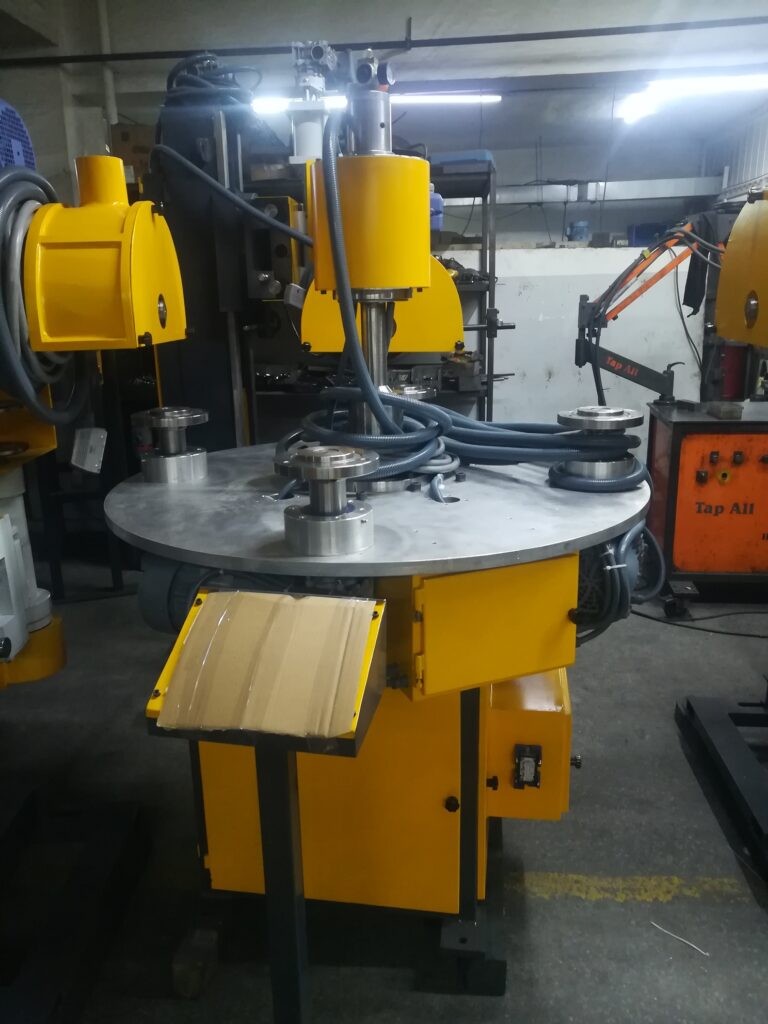
Lapping Machine with Multi-Station

A lapping machine with a multi-station setup is designed for high-precision finishing processes that involve rubbing or polishing materials to achieve a very smooth and flat surface. Lapping is a machining process that uses abrasive slurry to remove small amounts of material from a workpiece, typically to create a mirror-like surface finish or to achieve extremely tight dimensional tolerances. The multi-station feature of these machines refers to the incorporation of multiple lapping stations or work surfaces, allowing for simultaneous processing of several parts in one cycle. This design significantly increases throughput and enhances productivity, making multi-station lapping machines ideal for industries that require high volumes of precision parts with consistent surface finishes.

In a multi-station lapping machine, several workpieces are mounted on different stations or fixtures that rotate or move in conjunction with a rotating lap plate or tool. Each station typically has its own set of abrasives or slurries, and the workpieces are polished and refined as they move across the lap plate. The workpieces are usually held in place using a fixture or vacuum chuck that keeps them stable during the lapping process.

These machines are often used in precision industries such as semiconductor manufacturing, optics, aerospace, and automotive production, where parts must meet strict tolerances for surface finish and flatness. Common applications for multi-station lapping machines include polishing optical lenses, flat polishing of metal surfaces, finishing semiconductor wafers, and even creating precise sealing surfaces for mechanical components. The use of multiple stations helps to speed up the process, as several parts can be processed simultaneously, which is especially beneficial in high-volume production settings.

One of the key advantages of multi-station lapping machines is the ability to process multiple parts at the same time, which helps to reduce cycle times and increase efficiency. This is especially important in industries that require high-volume production of precision components. Additionally, the multi-station setup ensures consistency across parts, as each station operates under the same conditions, helping to maintain uniformity in surface finish and dimensional accuracy. This makes these machines ideal for applications where tight tolerance control and high-quality finishes are essential.

Multi-station lapping machines can be equipped with various features to improve the precision and efficiency of the lapping process. For instance, some models include programmable controls that allow operators to adjust the speed, pressure, and duration of the lapping process for each station, tailoring the finishing process to the specific requirements of the workpieces. Others include automatic slurry delivery systems that ensure a consistent supply of abrasive slurry to each station, optimizing the performance and longevity of the lap plate and abrasives.

The lap plates in multi-station lapping machines are typically made of highly durable materials such as cast iron, copper, or composite materials. These plates are designed to rotate at precise speeds, and the abrasives or slurries used in the process are typically made from a fine powder that is suspended in a liquid carrier, such as water or oil. The abrasives are selected based on the material being lapped and the desired surface finish. For example, fine alumina or diamond abrasives may be used for the most demanding polishing applications, such as in optics or semiconductor manufacturing.

The use of multi-station lapping machines also helps to improve consistency in part-to-part quality. Since the same process is applied to each workpiece at the same time, variations in surface finish, texture, and dimensional tolerances are minimized. This is especially important in industries like optics, where the precision of lenses, mirrors, and other components is critical to the performance of optical systems. In semiconductor manufacturing, the need for consistent wafer thickness and flatness is equally critical, as any deviations can lead to defects in the final product.

The versatility of multi-station lapping machines makes them suitable for a wide range of materials, including metals, ceramics, glass, and composites. The ability to use different abrasives and polishing techniques allows operators to tailor the machine to the specific material and surface finish requirements of the workpiece. Furthermore, the incorporation of multi-station technology enables manufacturers to achieve high precision while maintaining high production rates, making it an invaluable tool in industries where both quality and efficiency are crucial.

In summary, a lapping machine with a multi-station setup offers significant advantages in terms of throughput, efficiency, and consistency in high-precision surface finishing applications. Its ability to simultaneously process multiple parts makes it an ideal solution for industries that require large quantities of components with exacting surface finish requirements. With its versatility, high productivity, and capability to handle a wide range of materials and applications, multi-station lapping machines continue to play a crucial role in precision manufacturing.

Multi-station lapping machines are often integrated into fully automated production lines where parts are loaded, lapped, and unloaded without manual intervention. This automation not only improves efficiency and repeatability but also minimizes human error and operator fatigue, especially in long production runs. Machines with robotic arms or conveyors can handle workpiece movement between stations, while PLC or CNC-based controls manage the process parameters such as pressure, lap plate speed, slurry flow, and timing for each cycle. These control systems allow operators to store and recall recipes for specific parts, ensuring consistency across batches and simplifying changeovers when shifting between different product types. Additionally, advanced machines may incorporate feedback systems using sensors to monitor part flatness, surface roughness, or thickness in real time, adjusting the process automatically to maintain tight tolerances without operator intervention.

To enhance material removal efficiency and prolong the life of consumables, multi-station lapping machines often include features such as automatic conditioning rings or dressing systems that maintain the lap plate’s flatness and surface texture. Over time, the lap plate can wear unevenly, affecting the uniformity of the surface finish. Conditioning systems counteract this by periodically reconditioning the plate to restore its original profile, which is especially important in high-precision environments. The use of high-quality slurries with consistent particle size distribution further ensures uniform results and reduces the risk of surface defects. Some machines are designed for use with specific types of abrasive materials, such as diamond or boron carbide, depending on the hardness of the workpiece material. For very hard or brittle materials, such as sapphire, ceramic, or silicon wafers, diamond-based slurries are often used due to their superior cutting ability and minimal subsurface damage.

Noise reduction and cleanliness are other important considerations in modern lapping machine design, particularly in industries like optics and semiconductors where contamination control is critical. Multi-station lapping machines are often enclosed or equipped with protective covers and sealed systems to contain the slurry and reduce the spread of debris. Integrated filtration systems are used to clean and recirculate the slurry or coolant, which not only maintains process stability but also reduces operating costs and environmental impact. Machines may include vacuum or mist extraction systems to remove fine airborne particles generated during lapping, contributing to a cleaner work environment and better health and safety conditions for operators.

The construction of a multi-station lapping machine emphasizes rigidity and stability, as even small vibrations or thermal variations can affect surface finish and dimensional accuracy. Heavy-duty frames, precision-ground components, and thermally stable materials are used to minimize deflection and ensure uniform contact between the workpiece and the lap plate. The drive systems are designed to provide smooth, consistent rotation without jerks or fluctuations, which could lead to chatter marks or surface imperfections. Torque-limiting features are often included to prevent overloading of the lap plate or damage to delicate workpieces, adding an extra layer of protection during high-speed or high-pressure operations.

In terms of operational training, while modern multi-station lapping machines are designed to be user-friendly, they still require skilled operators or technicians who understand the nuances of the lapping process. Operators need to be familiar with factors such as abrasive selection, slurry concentration, pressure control, and cycle timing to optimize performance and maintain high-quality output. Some manufacturers offer training and support services to help users maximize the machine’s capabilities, including guidance on maintenance schedules, troubleshooting, and process optimization.

From a cost-efficiency standpoint, the investment in a multi-station lapping machine pays off through reduced cycle times, increased part throughput, and minimized waste or rework due to inconsistent surface finishes. With the right setup, a single multi-station machine can replace multiple single-station units, consolidating floor space and simplifying maintenance. In highly competitive industries where precision, repeatability, and speed are essential, this consolidation leads to significant advantages in production flow, quality assurance, and overall profitability. The scalability of such machines, with options to expand or upgrade to additional stations or more advanced control systems, also allows businesses to adapt to changing production needs without the need for complete equipment replacement.

Overall, the lapping machine with multi-station functionality represents a critical advancement in finishing technology, offering unmatched precision, throughput, and process control in applications where even the smallest imperfections can compromise product performance. Whether it’s producing flatness on valve components, achieving mirror finishes on optical lenses, or thinning silicon wafers for electronic devices, the multi-station lapping machine delivers the consistent, high-quality results demanded by modern precision manufacturing.

Rotary Table Lapping Machine

Rotary Lapping Machine

A rotary table lapping machine is a precision finishing system that utilizes a rotating flat plate—called a lap plate—to perform lapping operations on multiple workpieces simultaneously. The rotary motion of the table allows continuous and uniform abrasion of the workpieces, which are held against the lap plate with controlled pressure. This configuration is particularly effective for achieving ultra-flat surfaces, fine finishes, and extremely tight tolerances on components made of metals, ceramics, glass, and semiconductors. Unlike reciprocating lapping machines, rotary table systems offer consistent motion and contact between the abrasive medium and the workpiece, which enhances surface uniformity and reduces the risk of scratches or waviness.

In a typical rotary table lapping machine, the lap plate rotates horizontally while workpieces are held in carriers that are either free-floating or driven in a planetary motion. The planetary configuration, often found in double-sided rotary lapping machines, ensures that each workpiece traverses multiple zones on the lap plate, averaging out any wear patterns and improving flatness. On single-sided machines, parts are lapped on one face at a time, whereas double-sided machines process both surfaces simultaneously, which significantly reduces cycle time and improves parallelism. The use of conditioning rings or serrated lap plates helps maintain plate flatness and enhances slurry distribution, further improving process consistency.

Abrasive slurry, typically containing aluminum oxide, silicon carbide, diamond, or other fine particles suspended in a liquid carrier, is distributed across the lap plate either manually or through automated slurry delivery systems. The type and size of abrasive are selected based on the material and desired finish, with finer particles used for polishing and coarser ones for material removal. Some advanced systems include automatic slurry mixing and recycling units that maintain the correct concentration and particle size throughout the process, ensuring optimal efficiency and repeatability while reducing waste and operational cost.

Rotary table lapping machines are used in high-precision industries such as aerospace, medical device manufacturing, electronics, and optics, where components must meet strict flatness and surface finish specifications. Typical applications include valve components, pump seals, ceramic substrates, lens elements, and mechanical spacers. These machines are also commonly used in research labs and tool rooms for producing calibration surfaces, gauge blocks, and master parts. Their ability to produce mirror-like finishes with sub-micron flatness makes them indispensable wherever mechanical fit or optical clarity is essential.

Modern rotary lapping machines often feature digital control systems for monitoring and adjusting parameters such as table speed, pressure, cycle time, and slurry flow. These systems help maintain process stability and allow the operator to fine-tune the lapping cycle for different materials or specifications. Some models include touch-screen interfaces with recipe management for easy setup and repeatability across production runs. High-end machines may also incorporate in-process metrology, allowing automatic feedback on thickness, flatness, or surface roughness, and adjusting the process in real-time to maintain consistency without operator intervention.

The structural design of rotary table lapping machines emphasizes rigidity and thermal stability to avoid deflections and variations during operation. The lap plates are typically made from durable materials like cast iron, ceramic composite, or copper alloys, chosen for their wear resistance and compatibility with the abrasive being used. To ensure long-term accuracy, many systems include automatic plate conditioning mechanisms that resurface or dress the lap plate to restore flatness after prolonged use. This feature is critical in high-volume production environments, where consistent part quality must be maintained over extended operating periods.

Ease of maintenance and operator safety are also built into the design of rotary lapping machines. Safety enclosures, coolant mist containment, and ergonomic controls are standard in most industrial-grade machines. Components such as the slurry pump, bearings, and seals are designed for easy access and replacement, minimizing downtime. Some machines are also compatible with cleanroom environments, particularly those used in semiconductor and optics applications, where contamination control is vital.

Rotary table lapping machines provide an efficient, precise, and scalable solution for manufacturers seeking the highest quality surface finishing. Their ability to handle a wide variety of part sizes and shapes, coupled with automation and process control features, makes them suitable for both low-volume prototyping and high-volume production. As demands for tighter tolerances and better finishes continue to grow in advanced manufacturing, rotary lapping machines remain a critical technology for delivering performance, reliability, and repeatability.

The operational advantage of a rotary table lapping machine lies in its ability to maintain consistent contact pressure and uniform motion across the entire surface of each workpiece, regardless of its size or material. This is achieved through a combination of the lap plate’s rotation and the movement of carriers or conditioning rings, which guide the workpieces over varying paths. This multi-axis interaction significantly reduces localized wear on the lap plate and helps prevent uneven lapping or tapering of the parts. The uniform motion also ensures that the abrasive slurry is evenly distributed and constantly replenished at the point of contact, which is critical for achieving repeatable finishes and accurate material removal.

In production environments, where output, quality, and repeatability must be tightly controlled, rotary lapping machines provide clear benefits. The machines can be customized with different lap plate diameters and configurations to handle small precision parts like watch components or large industrial pieces such as turbine seals and hydraulic components. This flexibility in size and setup allows manufacturers to use the same platform for different product lines simply by changing tooling and adjusting the process parameters. Additionally, machines can be equipped with multiple stations, allowing for overlapping cycles where loading and unloading occur simultaneously with the lapping operation, further increasing throughput.

The control systems on modern rotary lapping machines have advanced significantly, often featuring closed-loop feedback mechanisms and user-friendly interfaces. These systems can automatically adjust pressure, speed, and slurry dosing to compensate for changes in the process, such as tool wear or heat buildup. This automation not only improves consistency but also reduces the reliance on operator experience, allowing less-skilled personnel to operate the equipment with confidence. In high-precision applications, optional features such as real-time flatness measurement or integrated surface roughness analysis allow the machine to make corrective adjustments mid-cycle, ensuring parts remain within tolerance without requiring post-process inspection or rework.

Energy efficiency and sustainable operation are additional considerations in contemporary machine design. Rotary lapping machines are often designed with variable-frequency drives that optimize motor performance and reduce energy consumption during lighter loads or idle periods. Slurry recycling systems filter and reuse abrasive mixtures, significantly reducing material waste and operating costs, while advanced filtration helps maintain the integrity of both the slurry and the part surface, especially important in clean manufacturing environments. Many systems also offer programmable maintenance alerts and diagnostic functions to ensure preventive care is conducted on schedule, thus avoiding unexpected downtime and extending machine life.

Another aspect that enhances productivity is the compatibility of rotary lapping machines with automation systems. Parts can be loaded and unloaded using robotic arms or conveyor-driven pallets, which synchronize with the lapping cycles to streamline the production process. This setup is particularly beneficial in industries with high-volume production requirements and limited tolerance for handling errors or variability, such as medical devices and precision optics. Automated handling reduces the risk of part damage and operator fatigue, while also enabling longer unattended run times—critical for maximizing machine utilization across multiple shifts or during lights-out operations.

As materials continue to evolve with the introduction of harder, more brittle, or temperature-sensitive alloys and composites, rotary lapping machines are being designed to handle increasingly diverse and challenging surfaces. This has led to the adoption of specialized abrasives such as monocrystalline or polycrystalline diamond, as well as customized lap plate coatings that improve cutting performance while reducing friction and thermal loading. Some systems even use advanced ultrasonic or vibratory assistance to enhance the abrasive action on particularly hard or resistant materials, making the lapping process more efficient and expanding its application to areas that were previously difficult or time-consuming to address.

The continued development and refinement of rotary lapping technology have positioned it as a critical process in modern precision manufacturing. From small-scale applications in research and development laboratories to large-scale deployment in industrial production lines, rotary lapping machines provide the balance of precision, efficiency, and adaptability that modern industries demand. Their ability to deliver sub-micron flatness and mirror-grade finishes across a wide variety of materials and geometries makes them indispensable in the production of components where surface integrity, dimensional control, and visual appearance are paramount. As manufacturers continue to push the boundaries of precision engineering, the role of rotary table lapping machines is expected to grow even more prominent in the pursuit of tighter tolerances and higher-quality finishes.

Lapping Machine with Pneumatic Pressure

Rotary Chemical Polishing Machine

A lapping machine with pneumatic pressure uses compressed air to apply consistent, controllable pressure to the workpieces during the lapping process. This system replaces or augments traditional mechanical weight-based or hydraulic pressure mechanisms, offering a higher degree of precision and responsiveness. Pneumatic pressure provides smoother and more uniform force distribution across the surface of the workpieces, which is especially beneficial when lapping delicate, thin, or high-precision components that are sensitive to mechanical distortion or uneven contact.

The core of a pneumatic lapping system is its pressure-regulating unit, which allows the operator to finely tune the applied force in real time. Compressed air is directed into pressure chambers or actuators that push down on the carriers or conditioning rings holding the workpieces against the rotating lap plate. This pressure can be individually adjusted for each station or workpiece holder, making it possible to accommodate parts of varying sizes, shapes, or material characteristics within the same setup. In high-precision environments, this flexibility ensures that all components receive optimal contact pressure, regardless of their individual geometry or fragility.

One of the key benefits of pneumatic pressure systems is their ability to maintain consistent force throughout the lapping cycle, even if the thickness or surface condition of the workpiece changes. Mechanical weight systems, in contrast, can lose effectiveness when parts wear down or deform slightly during processing. Pneumatic controls, especially when integrated with digital feedback loops, can detect these changes and adjust pressure dynamically, maintaining stable process conditions and improving repeatability. Additionally, pneumatic actuation allows for rapid start and stop cycles, making the machine more responsive and reducing unnecessary wear or over-processing.

Pneumatic lapping machines are ideal for applications in which precise control over contact pressure is critical, such as polishing optical components, lapping mechanical seals, or producing flat and parallel surfaces on semiconductors or thin metal foils. Their gentle yet controlled pressure also makes them suitable for fragile materials like ceramics, glass, sapphire, or advanced composites, which might crack or chip under traditional weight-based systems. The gradual, air-controlled engagement and disengagement of pressure reduce the risk of part damage during loading and unloading as well.

The integration of pneumatic pressure into the lapping machine’s design also enables automation and recipe-driven operation. Modern systems often include programmable logic controllers (PLCs) or human-machine interfaces (HMIs) that allow users to set and store pressure profiles for different parts or materials. This is especially useful in production environments where parts must be processed consistently across multiple shifts or operators. Recipes can include parameters such as pressure levels, pressure ramp rates, lap plate speed, slurry flow rate, and cycle time. When recalled, the machine automatically configures itself, minimizing setup time and operator error.

Maintenance and safety are other areas where pneumatic lapping machines offer advantages. Compressed air systems are generally cleaner and require less maintenance than hydraulic alternatives, which can leak fluid or suffer from thermal drift. Pneumatic systems also react quickly to emergency stop conditions and are easy to isolate, depressurize, and reset. The components—air lines, actuators, regulators, and valves—are relatively simple to inspect and replace, contributing to lower long-term operational costs and less downtime.

In high-precision production environments such as aerospace, medical implants, and optical manufacturing, the combination of fine pressure control, clean operation, and automation makes pneumatic pressure lapping machines a preferred solution. These machines help achieve high repeatability and superior surface quality with minimal operator intervention, ensuring both performance and productivity in demanding applications. As quality standards become more stringent across industries, the demand for lapping machines equipped with pneumatic pressure systems is likely to continue growing, offering manufacturers a reliable, scalable solution for producing consistent, high-precision finishes.

Another significant advantage of using pneumatic pressure in lapping machines is the ease with which pressure gradients can be controlled and varied during the lapping cycle. Unlike mechanical systems that apply a static force, pneumatic systems can be programmed to ramp up pressure gradually at the start of the cycle, hold a specific value during the main phase of material removal, and then reduce pressure toward the end for fine finishing or polishing. This dynamic pressure profiling is especially valuable when working with multi-material assemblies or layered structures, where different layers might require varying degrees of pressure to avoid delamination, warping, or over-removal. The ability to apply such refined control helps to minimize subsurface damage and improves the final dimensional and visual quality of the part.

The precision of pneumatic systems also enhances consistency across multiple parts and production runs. Because compressed air can be regulated to within a fraction of a PSI, parts receive the same amount of force regardless of operator skill or external conditions such as temperature or humidity. This is crucial in industries like semiconductors or optics, where even small variations in pressure can translate into measurable differences in flatness or surface integrity. Furthermore, in cleanroom environments, pneumatic actuation is particularly advantageous as it generates no hydraulic fluid contamination and has minimal moving parts, making it inherently cleaner and more reliable over time.

Lapping machines with pneumatic pressure are also well-suited for double-sided lapping operations, where workpieces are simultaneously processed on both faces between two rotating plates. Pneumatic actuators can evenly distribute force across the entire carrier, ensuring that both surfaces of the part experience identical contact pressure. This symmetry results in superior parallelism and flatness and reduces the need for secondary operations. In high-volume environments, such as the production of mechanical seals, gauge blocks, or silicon wafers, the time savings and quality improvements from this level of control can significantly improve throughput and yield.

The compact and modular nature of pneumatic components makes it easier to retrofit existing lapping machines or integrate pneumatic pressure into custom-built solutions. Many manufacturers offer upgrade kits that include air regulators, control valves, pressure sensors, and actuator assemblies that can be adapted to different machine sizes and configurations. This scalability allows companies to improve process control without needing to invest in completely new equipment, making it a cost-effective path to enhancing product quality. Additionally, because pneumatic systems can be easily integrated with digital control systems, the upgrade can also bring an older manual machine into compliance with Industry 4.0 standards by enabling data logging, remote monitoring, and process analytics.

Beyond pressure control, the use of compressed air opens up opportunities for incorporating other pneumatic-driven functions into the lapping process. For example, workpiece clamping, slurry agitation, or part indexing mechanisms can all be operated pneumatically, reducing the complexity and cost of using multiple power sources. In fully automated production lines, this unified actuation approach simplifies system design and enhances reliability by eliminating the need for separate hydraulic or electric actuation for different subsystems. The result is a streamlined and efficient machine that can perform multiple tasks with high repeatability and minimal maintenance overhead.

In terms of operator ergonomics and usability, pneumatic pressure systems also provide a more intuitive and responsive interface. Manual adjustments can be made quickly via pressure regulators or touchscreen controls, and visual indicators such as pressure gauges or digital readouts give immediate feedback on system performance. Operators can react quickly to changing conditions, and alarms or automatic shutdowns can be triggered if pressures move outside acceptable tolerances, preventing damage to expensive parts or tooling. This real-time responsiveness helps to maintain quality standards and reduces scrap and rework rates.

Ultimately, the implementation of pneumatic pressure in lapping machines enhances nearly every aspect of the process—from pressure uniformity and surface quality to automation, maintenance, and flexibility. It allows manufacturers to confidently process high-precision components with minimal variability and supports advanced manufacturing strategies where data-driven quality control and adaptive processing are becoming the norm. As materials become more advanced and design tolerances more demanding, pneumatic pressure lapping machines will continue to play a vital role in delivering the consistency, performance, and scalability that modern industries require.

Lapping and Polishing Machine
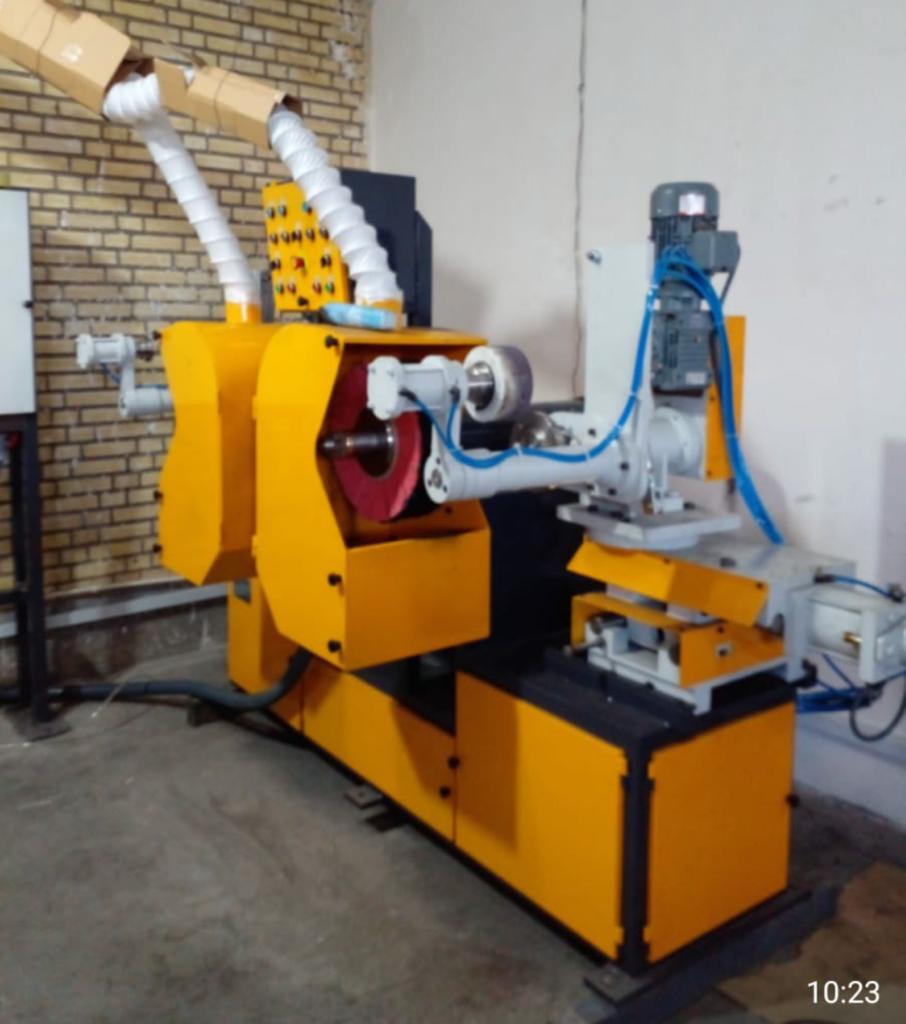
Universal Cylindrical Grinding Machine

A lapping and polishing machine is a precision finishing tool designed to achieve extremely flat, smooth, and defect-free surfaces on a wide range of materials through a combination of abrasive lapping and fine polishing processes. These machines use a rotating plate—commonly referred to as a lap plate—onto which abrasive slurry is applied. The workpieces are held against the plate using carriers or conditioning rings, and the relative motion between the abrasive particles and the surface gradually removes material, levels high points, and reduces surface roughness to microscopic levels. Polishing typically follows the lapping stage, using finer abrasives and softer pads to eliminate scratches and impart a mirror-like finish.

The design of a lapping and polishing machine allows for flexibility in processing both flat and irregularly shaped parts, depending on the fixture used. Single-sided machines work on one face of the part at a time, while double-sided machines can simultaneously process both faces, significantly improving efficiency and part parallelism. Machines can be operated manually for lab or prototype work, or fully automated for high-volume industrial production. Automated systems often include digital controllers that regulate pressure, cycle time, rotation speed, and slurry flow, ensuring high consistency and repeatability.

Abrasive materials used in these machines vary depending on the material being processed and the required surface finish. Common abrasives include aluminum oxide, silicon carbide, cerium oxide, and diamond in slurry or paste form. Lapping is typically performed with coarser abrasives, while polishing uses finer grades, sometimes down to sub-micron sizes. Polishing pads are made of materials like polyurethane, felt, or pitch to support gentle abrasion and effective slurry distribution. The goal is to remove any residual surface damage from lapping while achieving high reflectivity and ultra-low roughness.

Applications of lapping and polishing machines span across many high-precision industries. In the semiconductor industry, they are used for wafer thinning and mirror polishing. In optics, they are essential for finishing lenses, prisms, and mirrors. Medical devices, aerospace components, hard disk platters, and mechanical seals are also commonly processed using these machines. The need for flatness in the range of a few microns—or even nanometers—makes this equipment indispensable in any application requiring strict surface integrity and dimensional control.

Advanced lapping and polishing machines often incorporate in-situ metrology to monitor surface flatness, thickness, or roughness during processing. This allows real-time feedback and automatic adjustments, which reduce the risk of over-processing and increase overall efficiency. Some systems include temperature control features to prevent thermal expansion of parts or plates during long runs. Others use multi-zone pressure control to accommodate varying part geometries or material hardness across a single batch.

The transition between lapping and polishing can often be achieved without switching machines, thanks to modular plate designs that allow for quick changeovers between hard lapping plates and soft polishing pads. This versatility reduces downtime and increases throughput, making the machines suitable for both R&D environments and high-mix production lines. As industry demands for sub-micron surface finishes and tighter tolerances continue to grow, the role of lapping and polishing machines in delivering ultra-flat, contamination-free, and dimensionally precise parts becomes even more central to advanced manufacturing workflows.

These machines are also critical in achieving not just flatness and smoothness, but also in eliminating subsurface damage that can occur during prior machining or grinding operations. Subsurface damage, such as micro-cracks or residual stress layers, may not be visible to the naked eye but can drastically affect the performance, strength, or optical properties of a component. Through controlled material removal at a microscopic level, lapping and polishing help ensure that the final surface is not only visually flawless but also structurally sound and ready for its end-use application, whether it be in vacuum environments, high-stress mechanical assemblies, or optical systems requiring precise light transmission or reflection.

A major strength of lapping and polishing machines lies in their adaptability to an enormous range of materials. Metals like stainless steel, tungsten carbide, aluminum, and titanium, as well as non-metals like glass, sapphire, ceramics, silicon, and gallium arsenide, can all be processed on the same platform with minor adjustments in consumables and settings. This broad compatibility makes these machines a go-to solution in industries where multiple materials need to be finished under a common process flow. Furthermore, the ability to tune parameters such as pressure, speed, slurry concentration, and dwell time allows manufacturers to dial in the exact surface quality required for each unique part, ensuring performance while optimizing cycle time.

Operators and engineers benefit from the increasingly advanced user interfaces now common on modern lapping and polishing machines. Touchscreen HMIs with recipe management allow for easy storage and recall of process settings, which is particularly useful in high-mix production environments or when manufacturing to tight specifications under ISO or aerospace quality standards. Data from these machines can often be exported or connected to manufacturing execution systems (MES), enabling traceability, statistical process control, and integration with larger smart manufacturing initiatives. These digital capabilities enhance repeatability, reduce setup times, and minimize the risk of human error.

Tooling and consumables also play a crucial role in the effectiveness of a lapping and polishing machine. Conditioning rings must be carefully selected based on material hardness and size to ensure uniform pressure distribution and efficient motion. Similarly, lap plates must be regularly reconditioned to maintain their flatness and surface texture, as any wear can directly impact the quality of the workpieces. In polishing applications, the pad condition becomes equally critical—pads can load up with debris or lose their texture, reducing their ability to hold and distribute slurry uniformly. Regular maintenance and process audits are therefore essential to maintaining optimal performance.

Environmental considerations are becoming increasingly relevant in lapping and polishing operations as well. Closed-loop slurry systems are now commonly employed to filter, recycle, and reuse abrasive slurry, minimizing waste and reducing costs. Machines designed with minimal slurry consumption and efficient filtration systems help companies meet environmental compliance standards and reduce water usage. Additionally, the enclosed designs of many modern machines reduce aerosol dispersion and contain contaminants, improving workplace safety and cleanliness—an essential requirement for industries like microelectronics, optics, and medical device manufacturing.

Despite their apparent complexity, well-designed lapping and polishing machines are intuitive to operate and require minimal manual intervention during steady-state production. They are engineered for reliability, often running unattended for hours or even overnight in cleanroom or temperature-controlled environments. When integrated into a broader automated workflow that includes robotic part loading, in-line metrology, and automated cleaning stations, they form the backbone of ultra-precision surface finishing lines that meet the highest global manufacturing standards.

As demands for tighter tolerances, lower surface roughness, and defect-free finishes continue to rise, lapping and polishing machines will remain essential tools in precision manufacturing. Their ability to adapt to changing materials, accommodate evolving process requirements, and integrate seamlessly into digital manufacturing environments ensures that they will continue to evolve and support the advancement of technology in virtually every sector requiring ultra-flat and smooth surfaces.

Automatic Lapping Machine

Lapping Machine with Multi-Station

An automatic lapping machine is a high-precision finishing system designed to perform the lapping process with minimal manual intervention, offering enhanced consistency, efficiency, and repeatability in surface finishing operations. These machines utilize programmable controls to automate critical process parameters such as pressure application, plate speed, slurry flow rate, lapping time, and part movement. By removing the variability associated with manual operation, automatic lapping machines are ideal for applications requiring tight tolerances, mirror finishes, and high-throughput production.

The core of an automatic lapping machine is its lap plate—a flat, hard surface (usually made of cast iron, ceramic, or composite materials) that rotates beneath carriers or conditioning rings holding the workpieces. Abrasive slurry is dispensed either continuously or intermittently between the plate and the parts. The system controls how much pressure is applied to each part, how fast the plate rotates, and how long the process runs. These parameters are managed by a PLC (programmable logic controller) or a touch-screen human-machine interface (HMI), allowing for recipe-based control and minimal operator involvement once the process starts.

Automatic lapping machines are typically equipped with sensors and feedback systems to monitor real-time data such as temperature, pressure, plate wear, and slurry concentration. These sensors enable adaptive control, where the machine can make fine adjustments during the cycle to ensure process stability and surface quality. For instance, if a sensor detects a drop in slurry flow rate or uneven load distribution, the system can adjust pump speeds or rebalance forces automatically. This level of control significantly improves product yield and reduces the risk of defects, especially when processing expensive or delicate components.

In terms of configuration, automatic lapping machines can be single-sided or double-sided. In single-sided machines, the lapping action occurs only on one face of the part, while in double-sided systems, both surfaces are processed simultaneously between two rotating plates. Double-sided machines are preferred for parts that must meet strict parallelism and flatness specifications, such as mechanical seals, optical wafers, or valve plates. In both designs, automatic features such as part loading/unloading, carrier rotation, and plate conditioning can be integrated to form fully autonomous finishing cells.

These machines are widely used across industries where surface precision is critical. In electronics manufacturing, automatic lapping ensures uniform wafer thickness and mirror-like finishes on semiconductors. In the aerospace and automotive sectors, it is used to achieve tight sealing surfaces on engine components, gear faces, and hydraulic parts. In the medical device industry, lapping is applied to surgical instruments, implants, and prosthetic components where surface finish and biocompatibility are key. Even in optics and photonics, these machines deliver the fine surface integrity needed for high-performance lenses, filters, and mirrors.

One of the main benefits of automation in lapping is reduced cycle time and operator fatigue. Traditional manual lapping requires constant attention and frequent adjustment, making it labor-intensive and prone to inconsistency. Automatic lapping machines, by contrast, can run unattended for extended periods and are capable of handling complex geometries and fragile components with precision. They also allow for faster process development, as multiple variables can be programmed and adjusted without manual intervention. This leads to greater flexibility in responding to new part designs or material changes.

Additionally, automatic lapping systems contribute to improved environmental control and cost efficiency. Many systems feature closed-loop slurry management, reclaiming and filtering used slurry for reuse. This not only reduces material waste but also minimizes environmental impact and disposal costs. Enclosed machine designs with integrated mist collection and fluid management systems enhance operator safety and cleanliness, supporting compliance with workplace health and safety standards.

As manufacturers continue to demand higher productivity and tighter process control, automatic lapping machines provide the ideal balance of precision, scalability, and operational efficiency. Their ability to consistently deliver ultra-flat, smooth surfaces with minimal human intervention makes them a foundational element in modern precision finishing operations.

The flexibility offered by automatic lapping machines extends beyond just the materials and applications—they are also highly customizable to meet unique production requirements. For instance, different machine models can be equipped with various lap plate diameters, from compact units for small components to large-diameter plates capable of processing multiple parts or large workpieces simultaneously. The number of workstations can be tailored as well, allowing manufacturers to scale output based on volume demands. This modularity ensures that the same core machine design can serve both low-volume, high-mix production environments and high-volume, standardized operations with equal effectiveness.

Control over process repeatability is another key advantage of automation. Operators can create and store specific process recipes that govern every variable in the lapping cycle—pressure, speed, slurry feed rate, duration, and even polishing pad type or conditioning sequence. These recipes can be recalled with precision, ensuring that each batch of parts receives identical treatment regardless of shift or operator. This is especially important in regulated industries such as aerospace, medical devices, and defense, where traceability and consistency are essential for compliance and certification.

Automation also allows integration with broader manufacturing systems. In advanced facilities, automatic lapping machines are linked via networks to production planning software, enterprise resource planning (ERP) systems, or manufacturing execution systems (MES). This connectivity enables real-time monitoring of machine performance, predictive maintenance alerts, and streamlined workflow coordination with upstream and downstream processes. For example, when connected to a robotic loading station and a post-process cleaning or inspection module, the lapping machine becomes part of a fully automated finishing cell, dramatically increasing overall productivity and reducing handling damage or bottlenecks.

Another notable advantage is how automatic lapping machines support a wide range of abrasive types and delivery systems. The machines can switch between different slurry compositions depending on the application—such as diamond for extremely hard materials, or cerium oxide for delicate optical components. Slurry flow can be precisely metered and recirculated using pumps, valves, and filtration units integrated into the system. This level of control ensures optimal abrasive concentration and fluid dynamics throughout the lapping cycle, resulting in uniform material removal and minimized defects. Furthermore, automated slurry management reduces operator exposure to chemicals and fine particulates, enhancing workplace safety.

Modern automatic lapping systems are also designed with ergonomics and operator convenience in mind. Touchscreen interfaces, intuitive menu structures, and real-time visual feedback simplify setup, troubleshooting, and monitoring. Visual indicators and alarms notify users of anomalies such as low slurry levels, plate temperature variations, or abnormal pressure readings. These alerts allow corrective action before they affect part quality, reducing scrap and downtime. In many cases, remote diagnostics and software updates can be conducted via internet connection, facilitating technical support and process optimization without requiring on-site service visits.

In terms of maintenance, automated machines are often more reliable over time due to consistent operation and self-monitoring capabilities. Components like slurry pumps, filters, seals, and lap plates are wear parts, but the machine can track usage and notify technicians when preventive maintenance is needed. This predictive approach reduces unexpected breakdowns and extends the machine’s service life, which is particularly important when downtime can affect production schedules and delivery commitments.

The growing importance of sustainability in manufacturing also positions automatic lapping machines favorably. Their precision ensures minimal over-processing and waste, while slurry recycling systems help conserve abrasive materials and water. Many newer machines are built with energy-efficient motors and low-friction bearings to reduce power consumption. As environmental regulations become stricter, the ability to operate cleanly and efficiently without compromising performance will be a major advantage for companies looking to stay competitive and compliant.

Ultimately, automatic lapping machines represent a fusion of mechanical precision, digital intelligence, and operational efficiency. Their ability to achieve superior surface quality, flatness, and dimensional control—combined with their adaptability and low dependence on manual labor—makes them essential tools in any advanced manufacturing setting. Whether used for aerospace valves, silicon wafers, ceramic substrates, or medical implants, these machines deliver the reliability and surface integrity that today’s industries demand.

Rotary Lapping Machine

Lapping Machine with Multi-Station

A rotary lapping machine is a precision surface finishing system designed to produce extremely flat and smooth surfaces through a controlled rotational lapping process. The core principle involves one or more workpieces held in carriers or conditioning rings and moved across a rotating lap plate, which is charged with abrasive slurry. This continuous rotational motion, combined with the abrasive action between the lap plate and the workpiece, gradually removes microscopic amounts of material to achieve tight tolerances, flatness, and fine surface finishes. Rotary lapping machines are highly effective for achieving uniform surface quality across a wide range of part shapes and materials.

The lap plate itself is the heart of the rotary lapping machine, typically made of materials like cast iron, copper, or composite alloys, depending on the type of abrasive and the material of the workpiece. The plate rotates horizontally while the parts, confined within carriers, orbit around a central axis, creating a double-rotation pattern that enhances surface uniformity and minimizes directional marks. The rotational speed, pressure applied to the workpieces, abrasive type, and slurry flow rate are all tightly controlled, either manually or through programmable logic controllers (PLCs), to deliver consistent and repeatable results.

Rotary lapping machines can be configured as single- or double-sided systems. In single-sided machines, the part is lapped on one face, while in double-sided rotary lapping, both surfaces of the workpiece are processed simultaneously between two rotating plates—one on the top and one on the bottom. Double-sided machines are especially useful for parts requiring parallelism and tight thickness control, such as optical components, semiconductor wafers, precision bearings, and ceramic seals. The use of dual-rotation ensures not only speed and efficiency but also eliminates localized wear or uneven removal that might result from manual or unidirectional systems.

Automation is frequently integrated into rotary lapping machines to improve process efficiency and reduce operator involvement. Automatic pressure regulation, timed slurry delivery, and programmable cycle parameters ensure precision even during long or complex processing runs. Some systems include in-line metrology tools to measure surface roughness or flatness mid-process, allowing for adaptive control. Advanced models also feature auto-loading and unloading systems, robotic part handling, and centralized slurry management units to facilitate high-volume, high-consistency production.

Rotary lapping machines are commonly used in industries where ultra-precision surfaces are essential. In electronics, they help achieve the flatness required for proper wafer bonding or microfabrication. In optics, they create the precise geometries needed for lenses and mirrors. In aerospace and automotive sectors, they are used to produce sealing surfaces, hydraulic components, and engine parts where even slight imperfections can compromise performance. Their ability to work with both metallic and non-metallic materials makes them suitable for a broad range of applications, from hardened tool steels to brittle ceramics and glass.

The choice of abrasives in rotary lapping is critical and depends on the workpiece material and required finish. Common abrasives include aluminum oxide, silicon carbide, boron carbide, and diamond. These are suspended in a carrier fluid (water- or oil-based), forming a slurry that facilitates uniform material removal. The abrasive and slurry delivery system in rotary machines is carefully designed to ensure even distribution across the lap plate and prevent loading or glazing, which can reduce process effectiveness. Maintenance of the lap plate is also essential—it must be regularly conditioned to maintain flatness and the right surface texture for optimal abrasive action.

Rotary lapping machines provide several advantages over other finishing methods, including higher precision, better surface consistency, and the ability to process multiple parts simultaneously. The rotational motion minimizes edge rounding and improves control over geometry, making the process suitable even for high-precision calibration parts. As precision manufacturing continues to demand tighter tolerances and smoother surfaces, rotary lapping machines remain a vital tool in delivering high-performance components across a diverse range of advanced industries.

In addition to their precision, rotary lapping machines are also appreciated for their versatility and adaptability in handling various part geometries. They can process both simple and complex shapes, including flat, cylindrical, or even irregularly shaped parts, by adjusting the carriers or fixtures that hold the workpieces. The ability to work with a broad range of materials—from metals like stainless steel and titanium to ceramics, composites, and even glass—further broadens their application in industries that require diverse material handling and surface finishing capabilities.

The integration of automation features, such as programmable control systems and real-time monitoring, allows rotary lapping machines to be seamlessly incorporated into automated production lines. This automation reduces human error, enhances productivity, and improves consistency across high-volume runs. For example, in semiconductor manufacturing, where wafer flatness and surface integrity are critical, rotary lapping machines can be set up to automatically adjust parameters to ensure that each wafer undergoes consistent, precise lapping, thereby minimizing variation between parts. The real-time monitoring capabilities of modern machines can further contribute to minimizing defects, ensuring that process parameters stay within specified limits, and providing valuable data for quality control and process optimization.

Another advantage of rotary lapping machines is their ability to achieve high surface finishes in a relatively short amount of time compared to manual polishing or other traditional methods. Their controlled abrasive action ensures that surface defects such as scratches, pits, or tool marks are removed in a predictable manner, yielding smooth, mirror-like finishes on parts with tight geometric tolerances. This makes rotary lapping a preferred method for industries where surface aesthetics, functionality, and precision are non-negotiable, such as the optics industry, where lenses and mirrors require flawless, distortion-free surfaces.

The use of rotary lapping machines also helps in reducing the overall production costs by increasing throughput and reducing the need for secondary operations. Since these machines are capable of handling multiple parts at once, especially in the case of double-sided lapping, they maximize the use of abrasive material, slurry, and machine time. Additionally, the automated features in some machines, such as automatic loading/unloading and slurry recirculation, further enhance the cost-efficiency of the process, making it more feasible for manufacturers to maintain high-quality production standards without incurring significant material waste or labor costs.

Despite their advantages, rotary lapping machines do require periodic maintenance and calibration to ensure continued performance. The lap plates, for example, can wear over time, requiring conditioning or resurfacing to maintain flatness. Abrasive materials can also degrade with use, which necessitates periodic changes or adjustments to ensure the abrasives continue to perform optimally. Slurry management systems, which are critical for maintaining consistent flow and coverage of the abrasive material, also require regular maintenance to prevent clogging or contamination that could affect surface quality. However, these maintenance requirements are typically well-documented and manageable, especially with the integration of predictive maintenance tools that alert operators when components are nearing the end of their useful life.

Overall, rotary lapping machines represent a sophisticated, reliable, and efficient solution for achieving high-quality surface finishes in a wide array of industries. Their adaptability, precision, and scalability make them indispensable in the production of parts that demand the highest levels of surface flatness, smoothness, and dimensional accuracy. Whether used for high-precision components in electronics, optics, or aerospace, these machines provide the necessary capabilities to meet the ever-growing demands for tighter tolerances and better surface integrity in advanced manufacturing.

Double-Sided Lapping Machine

Rotary Chemical Polishing Machine

A double-sided lapping machine is a highly specialized surface finishing tool used to achieve precise flatness, parallelism, and smooth surface finishes on both sides of a workpiece simultaneously. Unlike single-sided lapping machines, which process only one face of a part at a time, double-sided lapping machines use two rotating lap plates to abrade both sides of the workpiece simultaneously. This design enables faster material removal, higher efficiency, and the ability to maintain tight dimensional control, making them ideal for high-volume production of parts with strict tolerance requirements.

The fundamental operation of a double-sided lapping machine involves the workpiece being placed between two rotating lap plates, each charged with abrasive slurry. The workpiece is typically held in a carrier or conditioning ring that allows it to float slightly above the lap plates, ensuring even pressure and motion across the surfaces being processed. The lap plates rotate in opposite directions, creating a dual-rotation effect, which not only speeds up the lapping process but also ensures that the surfaces are uniformly polished. The machine’s controls can adjust various parameters, such as the speed of rotation, pressure on the workpiece, slurry delivery, and processing time, to optimize the finish for different materials and applications.

Double-sided lapping machines are particularly valuable in applications where both surfaces of a part need to be processed to achieve parallelism and flatness within very tight tolerances. These machines are commonly used in industries such as aerospace, automotive, optics, semiconductor manufacturing, and precision engineering. Components like ceramic substrates, mechanical seals, optical lenses, semiconductor wafers, and valve plates often require double-sided lapping to meet the stringent requirements for thickness uniformity, surface finish, and dimensional accuracy.

The primary benefit of a double-sided lapping machine is its ability to process multiple parts simultaneously, making it highly efficient for mass production. The workpieces are typically placed on a carrier plate, and depending on the design of the machine, the number of parts that can be processed at once varies. This increased throughput is especially advantageous when working with high-demand components or parts that need to be processed in large quantities, such as in semiconductor or optical industries.

Double-sided lapping machines also excel in achieving high-quality surface finishes. By applying uniform pressure on both sides of the workpiece, they minimize warping or bending that can occur with single-sided lapping systems, resulting in parts that exhibit superior flatness and parallelism. This is particularly crucial in applications where the precision of the part’s surface affects its functionality, such as in optical devices where light transmission quality depends on the surface flatness of lenses or mirrors.

In terms of automation, modern double-sided lapping machines often come equipped with advanced features such as programmable logic controllers (PLCs) and human-machine interfaces (HMIs). These features allow operators to store and recall process recipes for different materials, part sizes, and required finishes, simplifying the setup and minimizing the risk of human error. Some machines also integrate in-line metrology tools that measure part dimensions or surface roughness during the lapping process. This real-time data allows the machine to make fine adjustments automatically to ensure that each part meets the desired specifications without requiring manual intervention.

The slurry delivery system in double-sided lapping machines is another critical component, as the abrasive material suspended in fluid plays a crucial role in achieving a fine surface finish. The slurry, typically a mixture of water or oil with abrasives such as aluminum oxide, silicon carbide, or diamond, is carefully dispensed onto the rotating plates. The consistency of the slurry and its even distribution are vital for maintaining consistent abrasive action and achieving a uniform finish on the workpieces. The slurry management system often includes features for recycling and filtering the slurry, helping to reduce waste and maintain the cleanliness of the process.

One of the key challenges in operating double-sided lapping machines is the maintenance of the lap plates themselves. Over time, the lap plates can wear unevenly due to the abrasive action, which can affect the consistency of the lapping process. Regular conditioning or resurfacing of the plates is necessary to maintain the desired flatness and texture. Additionally, wear on the lap plates can affect the accuracy of the lapping process, so many modern machines incorporate automatic conditioning systems that help maintain optimal performance.

Despite the complexity of the machinery, double-sided lapping machines are relatively easy to operate once set up, particularly with automated features that reduce manual intervention. They are designed for long-lasting performance, requiring only periodic maintenance and monitoring. Proper training and periodic inspection are key to ensuring that the machine continues to operate efficiently, with minimal downtime and consistent results.

In summary, double-sided lapping machines are essential tools in industries where high precision, surface integrity, and volume production are required. Their ability to process both sides of a workpiece simultaneously not only speeds up production but also ensures that parts meet strict flatness, parallelism, and surface finish specifications. Whether for aerospace components, optical lenses, or semiconductor substrates, these machines offer a reliable and efficient solution for achieving the highest standards of surface finishing in demanding manufacturing environments.

Double-sided lapping machines are known for their ability to enhance throughput and productivity in precision manufacturing. The simultaneous processing of both surfaces reduces cycle times significantly when compared to single-sided methods. This efficiency is particularly advantageous in industries where high-volume production and fast turnaround times are critical, such as in semiconductor and optical industries. These machines can easily process hundreds or thousands of parts in a single cycle, making them well-suited for applications where consistent quality and quick processing are essential. Moreover, because they require less manual intervention, they help reduce labor costs while maintaining high precision.

The precision these machines offer is essential in high-tech applications where even the smallest deviation in surface flatness or thickness can compromise the function of the part. For example, in the aerospace industry, where component reliability is paramount, double-sided lapping is used to ensure sealing surfaces, mechanical seals, and other parts maintain the tightest tolerances. Similarly, in optics, the precise flatness achieved by double-sided lapping ensures that lenses, mirrors, and other optical components provide the necessary performance without distortions or defects.

While double-sided lapping machines offer numerous advantages, they also come with some operational considerations. The primary concern is ensuring that the machine’s lap plates remain flat and consistent throughout the operation. As the plates wear over time, they can develop uneven surfaces that might result in inconsistent material removal. To counteract this, manufacturers often employ automatic conditioning systems that help maintain the flatness of the lap plates during the lapping process. These conditioning systems continuously dress the plates to ensure that abrasive action remains uniform, which is crucial for maintaining high-quality results.

The versatility of double-sided lapping machines also plays a significant role in their widespread use. These machines can handle a variety of materials, including metals, ceramics, glass, and plastics, which makes them highly adaptable to a range of industries and applications. The ability to adjust the abrasive materials, slurry formulations, and processing parameters allows manufacturers to fine-tune the process to meet the specific needs of different materials and part geometries. This adaptability is further supported by the programmable controls that allow operators to store and retrieve multiple process recipes, which streamlines setup time when switching between different parts or materials.

In addition to precision, double-sided lapping machines also contribute to sustainability in manufacturing. Many modern machines are designed with closed-loop slurry management systems that filter and recycle used slurry, minimizing waste and reducing the overall consumption of abrasive materials. These systems help to maintain a cleaner working environment by preventing slurry contamination and making the lapping process more environmentally friendly. Some machines also feature energy-efficient motors and other technologies that reduce power consumption, contributing to lower operational costs and supporting green manufacturing initiatives.

Overall, double-sided lapping machines are an integral part of precision manufacturing, offering a blend of efficiency, precision, and versatility. They are essential for industries where surface flatness, thickness control, and high-quality finishes are critical to the performance of the final product. Whether used for aerospace components, optical lenses, or semiconductor substrates, these machines provide a reliable and cost-effective solution to meet the ever-increasing demands for precision in modern manufacturing.

Single-Sided Lapping Machine
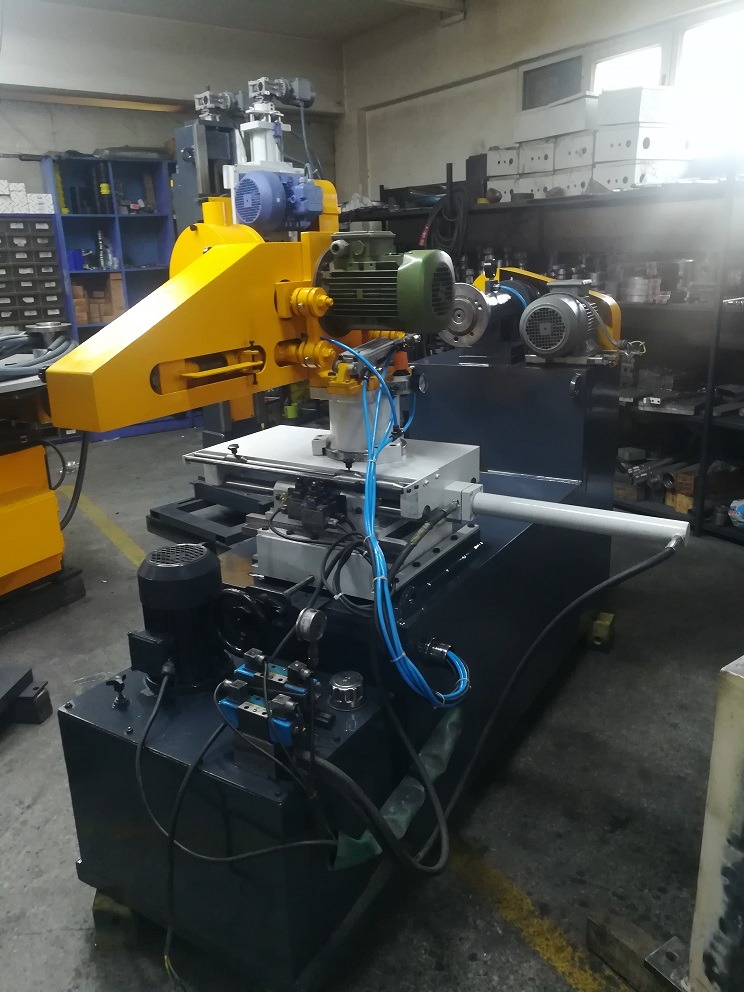
Hydraulic Buffing Machine

A single-sided lapping machine is a surface finishing tool used to achieve smooth, flat, and precisely finished surfaces on a workpiece by abrading one side at a time. Unlike double-sided lapping machines, which process both surfaces simultaneously, single-sided lapping machines use a single rotating lap plate to remove material from the surface of the part. The workpiece is typically held in a carrier or fixture, which may rotate or move in a controlled pattern across the lap plate, which is charged with an abrasive slurry. The abrasive action between the lap plate and the workpiece produces a uniform, high-quality finish while maintaining tight tolerances.

Single-sided lapping machines are often used in applications where only one side of the workpiece needs to be processed or where the part’s geometry requires that only one face is exposed to the lap plate. This includes industries like semiconductor manufacturing, optics, aerospace, automotive, and precision engineering. Common components processed on single-sided lapping machines include optical lenses, mechanical seals, metal substrates, and other flat or cylindrical parts that require high precision and surface integrity.

One of the primary advantages of single-sided lapping machines is their ability to produce a very fine surface finish. The rotation of the lap plate combined with the application of abrasive slurry ensures that surface imperfections, such as roughness, tool marks, and micro-variations, are smoothed out, resulting in a mirror-like finish in some cases. The precision achieved by single-sided lapping is especially beneficial in applications that require flawless surfaces, such as in optics, where even a slight imperfection can distort the transmitted light.

These machines can be customized to handle various workpiece sizes and materials. The lap plate is typically made from durable materials like cast iron, copper, or composite alloys, depending on the specific application and the material being processed. The abrasive slurry used in single-sided lapping can vary widely, with common abrasives including aluminum oxide, silicon carbide, diamond powder, and cerium oxide. The slurry is often delivered in a continuous or metered flow to ensure even distribution and effective abrasive action throughout the lapping process.

In terms of automation, modern single-sided lapping machines often feature programmable controls that allow operators to fine-tune the process. These systems can control parameters like the speed of rotation, pressure applied to the workpiece, slurry flow rate, and lapping time. Some machines also include in-line metrology systems that measure surface roughness or flatness during the process, providing real-time feedback to ensure that parts meet specifications. This allows for high levels of precision and repeatability, even during long production runs.

Maintenance of a single-sided lapping machine is crucial to ensure consistent performance. Regular conditioning of the lap plate is necessary to maintain its flatness and texture, which directly affects the quality of the finish. Over time, the abrasive slurry may become contaminated or lose effectiveness, requiring replenishment or filtration. Additionally, wear on the lap plate and carrier system must be monitored to prevent uneven material removal or surface defects. Many modern machines incorporate automatic conditioning systems that dress the lap plate periodically to keep it in optimal working condition.

The primary disadvantage of single-sided lapping machines compared to their double-sided counterparts is the longer processing time when parts require flatness or parallelism on both sides. Since only one side is processed at a time, it can take longer to achieve the desired results, especially for high-volume applications. However, single-sided lapping remains ideal for certain parts that only need to be worked on one face, or when the part geometry does not lend itself to double-sided processing.

Single-sided lapping machines are also relatively simple to operate compared to more complex double-sided systems. Their design and operation are typically straightforward, with fewer moving parts and simpler automation systems. This makes them a cost-effective choice for small- to medium-sized batches, particularly in environments where high precision is required, but throughput is less of a concern.

In conclusion, single-sided lapping machines are vital tools for precision surface finishing. They provide an effective means of producing high-quality, flat, and smooth surfaces on a wide range of materials and part geometries. While they may require more time for processing compared to double-sided systems, their ability to produce fine finishes with high precision makes them indispensable in industries like optics, semiconductor manufacturing, and precision engineering. With advancements in automation, monitoring, and maintenance, these machines continue to be a reliable choice for applications demanding exceptional surface quality.

Single-sided lapping machines are particularly valuable for industries where the part geometry and surface finish of a single face are critical, such as in the production of semiconductor wafers, optical lenses, and other precision components. The ability to control the lapping process with high accuracy allows manufacturers to meet stringent quality requirements, ensuring that each workpiece is processed to the exact specifications. While the primary advantage lies in achieving smooth, flat surfaces, the level of control over process parameters—like the abrasive type, slurry composition, and pressure—can be adjusted to suit different materials and surface finish needs.

These machines also offer flexibility in handling a wide range of materials, from soft metals to hard ceramics and glass. For example, in the optical industry, where flatness and surface quality are essential for proper light transmission, single-sided lapping machines can be used to polish lenses or mirrors to a mirror-like finish. In the semiconductor industry, where precision and flatness are critical for the integrity of integrated circuits, the ability to control surface roughness at the nanometer scale is of great importance, making single-sided lapping machines an indispensable part of the production line.

Another advantage of single-sided lapping machines is the relatively low maintenance required compared to more complex multi-station or double-sided systems. While they do need periodic conditioning of the lap plate to ensure optimal performance, the simpler design and fewer moving parts generally mean lower operational costs and easier maintenance procedures. For example, operators can easily monitor the condition of the lap plate, and if needed, it can be reconditioned with minimal downtime. Likewise, the slurry delivery system can be regularly checked and replenished, ensuring that the abrasive material maintains its effectiveness throughout the lapping process.

Despite the simplicity and efficiency of single-sided lapping, one of the challenges is achieving consistent results over extended production runs, especially when processing large batches. As parts are processed one at a time, variations can sometimes occur due to factors such as pressure inconsistencies or wear on the lap plate. To mitigate this, modern machines often incorporate feedback loops, where sensors and metrology systems constantly monitor the process, making real-time adjustments to maintain consistency. These features reduce the risk of defects and ensure that the final parts meet the required specifications.

In some cases, single-sided lapping is preferred over double-sided lapping when dealing with parts that do not require equal processing on both sides, or when part sizes and shapes make double-sided lapping difficult or inefficient. For example, certain irregularly shaped or thin parts that cannot be easily held between two rotating plates might be better suited to a single-sided lapping approach. Additionally, for materials that are softer or more fragile, single-sided lapping allows for more controlled processing, minimizing the risk of damage during the lapping process.

For small to medium-sized manufacturers or those working in niche markets, single-sided lapping machines offer a cost-effective solution for achieving precision finishes without the need for more expensive, high-throughput double-sided machines. Their relatively compact design and straightforward operation make them a good choice for companies looking to balance precision with affordability.

The advent of digital controls and automation has also enhanced the capabilities of single-sided lapping machines. Features such as programmable settings for different lapping recipes, automated slurry delivery, and even robotic part handling have made it easier to integrate these machines into modern production environments. With increased automation, manufacturers can achieve consistent, high-quality finishes with reduced human intervention, which improves productivity and reduces the likelihood of operator error.

In summary, single-sided lapping machines continue to play an essential role in precision surface finishing for a wide range of industries. Their ability to achieve smooth, flat, and high-quality surfaces on a single face of a workpiece makes them invaluable for applications where fine surface finishes are crucial. With advancements in technology, these machines offer increased flexibility, automation, and ease of use, making them a reliable solution for both high-precision and cost-effective manufacturing.

Cylindrical Lapping Machine

Rotary Chemical Polishing Machine

A cylindrical lapping machine is a specialized tool used to achieve smooth, precise, and high-quality finishes on the cylindrical surfaces of workpieces. This type of machine is particularly suited for parts that require cylindrical geometry and tight dimensional tolerances. Cylindrical lapping is commonly used to refine the outer or inner diameters of components like shafts, sleeves, bearings, and valve stems, where both surface finish and dimensional accuracy are crucial. Unlike surface lapping, which deals with flat or planar surfaces, cylindrical lapping machines are specifically designed to process the cylindrical features of parts, providing uniform material removal around the entire circumference.

The basic operation of a cylindrical lapping machine involves the workpiece being held between two rotating surfaces: the lap plate and a rotating carrier or fixture that supports the workpiece. The lap plate, which is typically charged with an abrasive slurry, rotates at a controlled speed, while the workpiece is also rotated in the opposite direction. This dual-rotation mechanism helps to distribute the abrasive material evenly and ensures that the workpiece is lapped uniformly around its circumference. The abrasive slurry, which can consist of various types of abrasives such as aluminum oxide, silicon carbide, or diamond powder, is applied to the lap plate and serves to gradually remove material from the workpiece’s surface, resulting in a smooth and finely finished cylindrical surface.

Cylindrical lapping machines are particularly useful for high-precision applications where tight tolerances are required, such as in the manufacturing of hydraulic and pneumatic components, automotive parts, and aerospace components. For instance, in the production of cylindrical parts like piston rods or valve stems, the cylindrical lapping process can provide the required smoothness and accuracy to ensure proper sealing and functionality in their final application. These machines are also commonly used in industries such as electronics, where components like precision shafts and bearings must meet strict specifications.

One of the advantages of cylindrical lapping machines is their ability to achieve both high surface finish and dimensional accuracy in a single operation. Since the abrasive material is distributed evenly around the workpiece’s circumference, cylindrical lapping ensures that the surface is finished uniformly, with minimal risk of defects like scratches, tool marks, or uneven wear. This results in a consistent surface roughness across the entire circumference of the part, which is essential in industries where surface quality directly impacts the performance of the part.

In addition to providing fine surface finishes, cylindrical lapping machines can also help achieve excellent roundness and concentricity. These features are critical for components that need to fit together precisely or operate smoothly within tight tolerances. For example, in applications where cylindrical parts need to fit into bearings or other mating components, achieving a high level of concentricity is crucial for ensuring proper function, reducing wear, and preventing issues like vibration or misalignment.

The precision of cylindrical lapping machines is enhanced by their ability to adjust key process parameters such as the rotation speed of the lap plate, pressure applied to the workpiece, and the flow rate of the abrasive slurry. These adjustments allow the operator to fine-tune the process for different materials, part sizes, and surface finish requirements. Modern cylindrical lapping machines often come equipped with programmable control systems that allow for easy setup and automation, reducing the need for manual intervention and ensuring repeatable, consistent results across multiple runs.

In terms of material compatibility, cylindrical lapping machines can handle a wide range of materials, from metals like stainless steel, aluminum, and titanium to harder materials such as ceramics, glass, and composites. The ability to process such diverse materials makes cylindrical lapping machines versatile tools in various manufacturing environments. The choice of abrasive material and slurry composition is crucial for optimizing the lapping process based on the material being worked on. For example, softer materials may require finer abrasives to achieve a smooth surface, while harder materials might need coarser abrasives for effective material removal.

Despite their many advantages, cylindrical lapping machines also require regular maintenance to ensure consistent performance. The lap plates can wear over time, particularly when processing hard materials, and may need to be conditioned or resurfaced to maintain flatness and effectiveness. Similarly, the abrasive slurry may become contaminated with fine particles or lose its abrasive properties over time, necessitating periodic changes or replenishment. Regular monitoring of these components, as well as keeping the machine clean and free from debris, is essential for maintaining the machine’s optimal performance and ensuring high-quality results.

In summary, cylindrical lapping machines are highly specialized tools that play a vital role in achieving precise cylindrical surfaces with high-quality finishes. They are ideal for processing parts that require fine surface finish, roundness, and dimensional accuracy, and are widely used in industries like automotive, aerospace, electronics, and manufacturing. With advancements in automation, programmable controls, and materials, these machines continue to provide efficient and reliable solutions for producing parts that meet the stringent demands of modern engineering and manufacturing.

Cylindrical lapping machines offer a unique solution for achieving high precision in cylindrical components where surface finish and dimensional accuracy are paramount. The primary advantage lies in their ability to work on parts that are cylindrical in shape, providing uniform material removal and precise surface refinement. This makes them ideal for parts like shafts, spindles, piston rods, and valve components, which need to meet exacting standards in industries such as aerospace, automotive, and electronics.

One of the key benefits of cylindrical lapping machines is their ability to handle both internal and external cylindrical surfaces. For internal cylindrical surfaces, a special fixture or mandrel is used to secure the workpiece while the abrasive slurry is applied to the rotating lap plate. This flexibility makes cylindrical lapping machines versatile and capable of processing a wide range of geometries, whether it’s the external surface of a long shaft or the inner bore of a cylindrical housing.

The smoothness and finish achieved through cylindrical lapping are essential not just for aesthetics but also for the functionality of the part. Components like hydraulic cylinders, bearings, and gears benefit from the even, high-quality finish produced by the lapping process. In precision systems, such as those found in engines or machinery, an exceptionally smooth cylindrical surface reduces friction and wear, which enhances performance, longevity, and overall reliability.

Moreover, cylindrical lapping machines are capable of producing parts with excellent concentricity. This is particularly crucial when parts are required to fit within other mechanical assemblies where misalignment could lead to operational issues. The even pressure applied across the cylindrical surface during the lapping process ensures that the workpiece remains centered, which is vital for maintaining the part’s geometry during subsequent manufacturing stages.

Cylindrical lapping machines are designed with a variety of process controls that help ensure consistent results. Variables like the speed of rotation of the lap plate, the pressure exerted on the workpiece, and the concentration of abrasive slurry can be adjusted to suit different materials, surface roughness requirements, and part specifications. By fine-tuning these parameters, operators can optimize the lapping process to achieve the desired surface finish and dimensional precision without excessive wear on the machine or the workpiece.

While cylindrical lapping machines are versatile and efficient, they do require proper maintenance to keep them operating at peak performance. As with other types of lapping equipment, the lap plates can wear out over time and require conditioning to maintain their flatness and abrasive properties. If not properly maintained, wear can cause uneven lapping, leading to defects such as inconsistent surface finishes or dimensional inaccuracies. The abrasive slurry also needs to be regularly checked and replenished, as contaminants can accumulate during the process, reducing the effectiveness of the lapping action. Machine components like drive motors, bearings, and controls also need to be periodically inspected to ensure smooth operation.

Despite the maintenance needs, cylindrical lapping machines offer a significant advantage in industries that require extremely tight tolerances and high-quality finishes. Their ability to process various materials, from metals to ceramics, means they can be applied across a broad spectrum of manufacturing processes. Furthermore, with advancements in automation and digital controls, these machines can be integrated into high-volume production environments, providing repeatability and reducing the potential for human error. Operators can store specific lapping recipes and configurations in the machine’s control system, making it easy to switch between different part types and materials without a complete reconfiguration.

In high-demand industries such as aerospace, where components must undergo rigorous testing for precision and durability, cylindrical lapping machines are invaluable. The smooth, precise finishes they produce contribute to the overall performance and reliability of critical parts that must withstand extreme conditions. In automotive manufacturing, where the quality of engine components like crankshafts and camshafts is crucial, cylindrical lapping provides the required surface quality for parts that will face high friction and stress during operation. In electronics, components like bearings, spindles, and other moving parts benefit from the fine surface finishes achieved by cylindrical lapping, which contribute to the performance of devices such as hard drives and sensors.

Overall, cylindrical lapping machines are indispensable tools for achieving the level of precision required in the manufacturing of high-performance components. Whether used in small, high-precision batches or integrated into larger production lines, these machines provide a reliable solution for producing cylindrical surfaces with tight tolerances, smooth finishes, and excellent dimensional accuracy.

Vertical Lapping Machine

Vertical Lapping Machine

A vertical lapping machine is a specialized piece of equipment used to achieve high-precision finishes on flat and cylindrical surfaces, particularly in applications where uniformity, smoothness, and dimensional accuracy are critical. Unlike traditional horizontal lapping machines, vertical lapping machines use a vertically oriented lap plate, which rotates while the workpieces are held against it, either in a stationary or rotating carrier. The vertical design helps to maximize the efficiency of the lapping process, particularly in high-volume production settings.

The vertical lapping process is primarily used for materials that need a high-quality, fine finish or to maintain exacting tolerances. Common industries using vertical lapping machines include automotive, aerospace, electronics, optics, and precision engineering. Parts like optical lenses, semiconductor wafers, mechanical seals, and metal components often undergo vertical lapping to meet strict surface finish and flatness requirements.

In a vertical lapping machine, the lap plate (which may be made of a variety of materials such as cast iron or composite materials) rotates vertically, and the workpieces are held in a carrier or fixture that presses the parts against the rotating lap plate. The abrasive slurry is applied to the lap plate, which is typically made of a material that can hold and distribute abrasives effectively. This abrasive slurry helps to smooth the surface of the workpieces by wearing away the material uniformly.

One of the significant advantages of the vertical lapping machine is its efficient use of space and the ability to process parts that may be difficult to handle in a horizontal setup. The vertical configuration often allows for better control over the pressure and speed of the lapping process, leading to more consistent surface finishes. Additionally, vertical lapping machines can process parts with greater precision in terms of flatness, parallelism, and overall dimensional accuracy, which is crucial for parts used in high-precision applications.

The vertical design also helps to facilitate better slurry flow management, ensuring that the abrasive slurry remains in contact with the part for an optimal amount of time, without excessive buildup or waste. This helps to maintain consistent abrasive action, contributing to more uniform surface finishes. The slurry can be continuously recirculated, making the process more efficient and reducing waste.

Another key benefit of vertical lapping machines is their ease of automation. Modern machines often come equipped with programmable controls that allow for precise control over process parameters such as lap plate speed, pressure, slurry delivery, and processing time. This level of automation not only helps to improve efficiency but also ensures repeatability and consistency, especially when dealing with large production runs or parts that require high levels of precision.

Vertical lapping machines can process a variety of materials, including metals, ceramics, glass, and composites, making them versatile tools for different manufacturing needs. The machine’s ability to handle both soft and hard materials with precision makes it adaptable to a wide range of industries and applications. For instance, in the production of optical components, such as lenses or mirrors, a vertical lapping machine can provide the required smooth finish without introducing distortions, which is essential for the optical performance of the parts.

In aerospace and automotive industries, vertical lapping machines are used to process components that require high-precision finishes for proper fit and function. Parts like gaskets, seals, and bearing surfaces often undergo vertical lapping to achieve the flatness and smoothness necessary for optimal performance. The machines are also used for honing or refining cylindrical parts such as shafts, spindles, and other engine components.

Maintenance of vertical lapping machines is essential to ensure long-term consistent performance. Over time, the lap plate will wear and require periodic conditioning to maintain flatness and effective abrasive action. The slurry also needs to be monitored and replaced regularly to avoid contamination or loss of abrasiveness, which can compromise the lapping results. Furthermore, machine components such as motors, bearings, and control systems should be inspected and maintained to avoid downtime and ensure optimal efficiency.

Vertical lapping machines also offer advantages in terms of ease of use and flexibility. Their compact design allows for efficient use of floor space, and they can be adjusted to handle different sizes and shapes of workpieces, from small optical components to larger automotive parts. The machine’s simple setup and adjustment processes make it easier for operators to switch between different parts or adjust parameters to meet specific requirements.

In conclusion, vertical lapping machines are highly effective tools for achieving high-precision finishes in a variety of industries. Their vertical design offers several advantages, including improved space utilization, better slurry management, and the ability to achieve fine surface finishes with excellent consistency and precision. Whether used for optical, automotive, or semiconductor components, vertical lapping machines provide a reliable solution for manufacturers requiring the highest quality and performance in their finished parts.

Vertical lapping machines are increasingly popular in industries that demand both high precision and efficient production processes. The vertical orientation of the lap plate allows for optimal use of gravity, ensuring that the abrasive slurry remains evenly distributed throughout the lapping process. This reduces the likelihood of uneven material removal, ensuring that the surface finish is consistent across the entire workpiece. As the workpieces are pressed against the rotating lap plate, the combination of rotation and pressure leads to a highly controlled material removal process, which is crucial for achieving the desired surface finish and flatness.

The adaptability of vertical lapping machines is another key feature that makes them highly valued in various sectors. With the ability to process a broad range of materials, these machines are used in industries that require parts with varying degrees of hardness, from soft metals to brittle ceramics. This flexibility ensures that manufacturers can use the same machine for multiple applications without compromising on the quality of the finish. For example, in the production of automotive components, parts like valve seats, gaskets, and bearings require extremely smooth surfaces for proper function, and the vertical lapping machine is well-suited for these applications.

In addition to improving the surface finish, vertical lapping can also help with dimensional control. Parts processed with this method often exhibit high levels of flatness, parallelism, and concentricity. In applications where even minor deviations can cause significant issues, such as in precision assemblies or high-speed machinery, the accuracy provided by vertical lapping is critical. This is especially true in industries such as aerospace and optics, where even the smallest surface imperfection can affect performance and reliability.

Furthermore, vertical lapping machines can be equipped with advanced features like automated part handling systems, programmable controls, and real-time process monitoring. These technologies enhance both the efficiency and repeatability of the process, allowing manufacturers to maintain high standards of quality with minimal manual intervention. Automated systems, for instance, can handle large batches of parts, reducing the time and labor required while improving consistency across all pieces. Programmable controls allow for precise adjustments of lapping parameters, such as the rotation speed, pressure, and slurry flow, enabling manufacturers to fine-tune the process to suit the specific needs of each part.

In addition to the main advantage of producing high-quality finishes, vertical lapping machines are also valued for their space-saving design. In many manufacturing environments, particularly those in industries like electronics or optics, space is often limited, and the compact nature of vertical lapping machines makes them ideal for smaller production floors. The vertical layout allows for efficient use of available space while still providing the precision and throughput required for production runs. This makes them an attractive option for businesses that need to balance production volume with precision but cannot afford large or complex equipment.

Maintenance, while necessary, is straightforward for vertical lapping machines compared to more complex systems. The lap plate, which is subjected to wear during the lapping process, can be conditioned periodically to ensure that it remains effective for material removal. The slurry system can be flushed and replenished to maintain the abrasive properties, and machine parts such as bearings and motors are relatively simple to inspect and maintain. Regular upkeep helps to extend the lifespan of the equipment, ensuring that it continues to deliver consistent and reliable results.

Vertical lapping machines also offer environmental and operational benefits. By continuously recirculating the abrasive slurry, these machines reduce the amount of waste generated during the lapping process. Moreover, the efficiency of the process minimizes the need for excessive raw materials, making it a more sustainable option compared to other finishing methods. Additionally, with advancements in machine design, noise and vibration levels have been minimized, leading to a quieter and more comfortable working environment for operators.

In conclusion, vertical lapping machines play a vital role in precision manufacturing, offering advantages in terms of surface finish quality, dimensional control, and operational efficiency. Their versatility across a wide range of materials, ease of maintenance, and ability to integrate advanced automation features make them a valuable asset for industries that require high-quality, high-precision components. Whether used in aerospace, automotive, optics, or electronics, these machines continue to be an essential tool for achieving consistent, high-performance finishes on critical parts.

Horizontal Lapping Machine

Horizontal Lapping Machine

A horizontal lapping machine is a type of surface finishing equipment primarily used to achieve precise, high-quality finishes on flat or cylindrical surfaces of workpieces. The key distinguishing feature of a horizontal lapping machine is its horizontal lap plate, which rotates while the workpieces are held against it. The machine is typically used for finishing parts that require tight tolerances and exceptional surface smoothness. This process is particularly effective in industries such as automotive, aerospace, electronics, and optics, where parts like mechanical seals, gears, bearings, optical components, and semiconductor wafers must meet stringent surface finish requirements.

In a horizontal lapping machine, the lap plate (often made from a material such as cast iron or a composite material) rotates horizontally, while the workpieces are typically placed on a carrier or fixture. The abrasive slurry, composed of a mixture of abrasive particles and liquid, is applied to the rotating lap plate, where it interacts with the workpieces. The pressure exerted on the workpieces, along with the rotational motion of the lap plate, results in material removal from the surfaces, smoothing and refining them.

The primary advantage of horizontal lapping machines is their ability to provide a consistent and uniform finish across a broad surface area. The rotation of the lap plate combined with the application of slurry allows for even material removal, helping to achieve a high degree of surface flatness and smoothness. This is especially important in applications where tight tolerances are required, such as in the manufacturing of mechanical components, optical lenses, or precision bearings.

In horizontal lapping, the pressure between the lap plate and the workpiece can be adjusted to control the material removal rate and finish. A higher pressure will typically result in faster material removal, but it can also lead to a rougher finish. Conversely, lower pressure will slow down material removal but result in a finer, smoother finish. The abrasive slurry plays a critical role in determining the quality of the surface finish, with different types of abrasives chosen based on the material being processed and the desired finish. Common abrasive materials include aluminum oxide, silicon carbide, and diamond powder.

Horizontal lapping machines are particularly suited for larger, flatter parts or those requiring a uniform surface finish across the entire piece. For instance, in the automotive industry, components like brake rotors, clutches, and gaskets are often processed using horizontal lapping machines to achieve the flatness and smooth surface finish needed for proper functioning. Similarly, in the electronics industry, substrates for semiconductor devices may undergo horizontal lapping to ensure smoothness and uniformity before further processing.

The design of horizontal lapping machines typically allows for multiple workpieces to be processed simultaneously, making them well-suited for high-volume production. The machines can be equipped with features like automated part handling, programmable controls, and adjustable lapping speeds to enhance their versatility and throughput. These features make horizontal lapping machines suitable for both batch production and continuous production lines, offering flexibility in a wide range of manufacturing scenarios.

One of the key benefits of horizontal lapping machines is their efficiency in processing large or heavy workpieces. The horizontal layout makes it easier to handle and support larger parts, and the machine’s ability to process multiple parts at once can significantly increase production speed. This makes horizontal lapping machines highly valuable in industries where large quantities of parts must be processed with consistent quality and within tight production timelines.

However, like all lapping machines, horizontal lapping machines require proper maintenance to ensure they continue to deliver high-quality results. Over time, the lap plate will wear, and it may require conditioning to maintain its effectiveness. The abrasive slurry will also need to be replaced or replenished regularly to ensure that the abrasive properties are maintained. The overall machine components, such as motors, bearings, and control systems, must be periodically inspected to prevent issues that could impact machine performance and reliability.

Horizontal lapping machines are versatile, and their applications are not limited to specific materials. These machines are capable of processing a wide range of materials, including metals, ceramics, glass, and composites. This versatility makes them suitable for a broad spectrum of industries, from precision engineering to optics and electronics. For instance, in optics, horizontal lapping is used to finish lenses and mirrors, providing the smooth, scratch-free surface required for high-quality optical performance. In semiconductor manufacturing, it helps to achieve the precise flatness and smoothness needed for wafer production.

Overall, horizontal lapping machines offer a reliable and efficient solution for achieving high-precision finishes on a variety of materials. Their ability to handle larger, flatter parts, combined with the ability to produce uniform surface finishes and tight tolerances, makes them a crucial tool in many industries that require high-quality surface preparation. With advancements in automation and process control, modern horizontal lapping machines offer even greater efficiency and flexibility, making them indispensable in today’s competitive manufacturing environment.

Horizontal lapping machines are particularly effective in industries where uniform surface finish, high precision, and consistency are paramount. One of their greatest strengths is their ability to handle parts of varying sizes and materials while still maintaining high levels of accuracy. The horizontal orientation of the lap plate ensures that the abrasive slurry is evenly distributed across the surface of the workpieces, promoting uniform material removal and a consistent finish. This is especially important in industries where even slight imperfections can lead to significant operational issues, such as in the production of high-precision bearings or optical components.

In addition to their use in traditional industries like automotive and aerospace, horizontal lapping machines have found applications in more specialized fields. For example, in the production of semiconductor wafers, the flatness and smoothness achieved through horizontal lapping are critical for ensuring the integrity of the final product. Similarly, in the optics industry, lenses, mirrors, and other components undergo horizontal lapping to achieve the fine surface quality required for optimal light transmission and clarity. The ability of horizontal lapping machines to deliver such precise finishes makes them indispensable for producing parts that must meet strict quality standards.

Another advantage of horizontal lapping machines is their capacity for high-volume production. The ability to process multiple workpieces simultaneously increases throughput, making them highly efficient in production environments that require large quantities of finished parts. In industries where time is a critical factor, horizontal lapping machines can help reduce production time while maintaining the high standards of precision and surface quality required. The addition of programmable controls and automated systems further enhances their ability to produce consistent results across large batches, allowing operators to adjust parameters like lap plate speed, pressure, and slurry flow to suit different materials and part specifications.

While horizontal lapping machines are well-suited for high-volume production, they also offer flexibility for smaller production runs or custom jobs. With the ability to adjust processing parameters, these machines can be used for parts with different geometries or materials without requiring significant reconfiguration. This versatility makes them ideal for manufacturers who need to produce both large quantities of standard components and smaller, specialized parts. Additionally, modern machines often feature quick-change tooling and adjustable carriers, allowing operators to quickly switch between different types of workpieces without compromising efficiency or finish quality.

Despite their many benefits, horizontal lapping machines also require regular maintenance to keep them operating at peak efficiency. The lap plate, which wears down over time due to its contact with the abrasive slurry and workpieces, must be periodically conditioned to ensure that it remains flat and effective at removing material. Likewise, the slurry needs to be monitored for contamination, as debris can affect the abrasive quality, leading to inconsistent finishes. Regular inspections of the machine’s mechanical components, such as motors, bearings, and belts, are also essential to prevent downtime and ensure smooth operation.

In terms of environmental and operational considerations, horizontal lapping machines also offer advantages. By recirculating the abrasive slurry, they help minimize waste and reduce the need for frequent slurry replacement. Additionally, modern machines are designed with noise and vibration reduction features, creating a more comfortable and less disruptive working environment for operators. These improvements in machine design contribute to both the efficiency and sustainability of the lapping process, making horizontal lapping an attractive option for manufacturers looking to improve their production methods while maintaining high standards of quality.

Overall, horizontal lapping machines are crucial tools for achieving high-quality surface finishes in a wide range of industries. Their ability to produce uniform, precise finishes on flat or cylindrical parts makes them invaluable in fields that require strict surface finish requirements, such as in automotive, aerospace, optics, and semiconductor manufacturing. Their efficiency, versatility, and ability to handle large volumes of workpieces make them indispensable for high-throughput production lines. As technology advances, horizontal lapping machines continue to improve in terms of automation, precision, and efficiency, offering manufacturers the tools they need to meet the growing demand for high-performance components.

Spindle Polishing Machine

Horizontal Buffing Machine

A spindle polishing machine is a specialized piece of equipment designed to polish the surfaces of cylindrical or rotary parts, often using a spindle mechanism to drive the polishing process. This type of machine is commonly used in industries where high-precision polishing is required, such as in the manufacturing of components for the automotive, aerospace, and electronics industries. Spindle polishing machines are often used to achieve smooth, reflective finishes on parts like shafts, spindles, tubes, and other cylindrical components.

The machine typically operates by rotating the workpiece on a spindle while an abrasive or polishing compound is applied to the surface. The combination of rotational motion and polishing materials allows the machine to remove surface imperfections, scratches, and oxidation, resulting in a smooth, shiny surface. Spindle polishing is particularly effective for achieving high-quality finishes on parts that require both fine surface quality and dimensional accuracy.

In a spindle polishing machine, the workpiece is mounted onto a spindle that rotates at a controlled speed. The polishing tool, which can be a cloth, brush, or abrasive pad, is typically applied to the rotating surface under pressure. The pressure applied, the speed of rotation, and the type of abrasive used all influence the quality of the final finish. The polishing compound or slurry is usually applied to the surface to facilitate the polishing process, and it may contain a variety of abrasive particles, such as aluminum oxide or diamond dust, depending on the material and the desired finish.

One of the main advantages of spindle polishing machines is their ability to provide consistent and repeatable results. The rotation of the spindle ensures that the workpiece is polished uniformly, and by controlling factors such as speed, pressure, and polishing time, operators can achieve the desired surface finish with high precision. Additionally, the machine is highly versatile, as it can be used to polish a wide range of materials, including metals, ceramics, and plastics, making it suitable for various applications across multiple industries.

Spindle polishing machines are typically designed to be user-friendly, with controls that allow operators to adjust the speed, pressure, and other parameters to suit different workpieces and polishing needs. Some advanced machines feature programmable controls, which enable automated adjustments based on the type of material being processed or the required finish, further enhancing efficiency and consistency. These programmable systems also allow for more precise control of the polishing process, ensuring that parts are polished to the exact specifications required.

In addition to their use in polishing cylindrical parts, spindle polishing machines can also be used for other applications such as deburring, surface cleaning, and finishing. For example, in the production of automotive or aerospace components, the machine can remove burrs or rough edges from machined parts, improving their appearance and functionality. Similarly, in the electronics industry, spindle polishing machines can be used to clean and polish components like connectors and housings to ensure that they meet the required standards for quality and performance.

Maintenance of spindle polishing machines is essential to ensure they continue to operate efficiently. Over time, the polishing tools may wear down and need to be replaced or reconditioned to maintain their effectiveness. Similarly, the machine’s spindle and motor should be inspected regularly for wear or damage, and the polishing compounds should be monitored and replenished to ensure they maintain their abrasive properties.

Overall, spindle polishing machines provide a highly effective solution for achieving high-quality, precision finishes on a variety of cylindrical and rotary parts. With their ability to handle different materials, provide uniform surface polishing, and offer customizable settings, they are a valuable tool in many manufacturing environments. Whether used for polishing automotive components, aerospace parts, or electronics, spindle polishing machines play a critical role in ensuring that parts meet the demanding standards for both surface finish and dimensional accuracy.

Spindle polishing machines are essential tools for industries that require precise surface finishes on cylindrical parts. Their versatility allows them to process a variety of materials, ranging from metals and ceramics to plastics, making them a go-to option for applications in automotive, aerospace, and electronics manufacturing. These machines are designed to achieve uniform polishing across the entire surface of the workpiece, helping eliminate imperfections, reduce roughness, and enhance the aesthetic and functional qualities of parts.

The spindle mechanism, which rotates the workpiece at a controlled speed, ensures that the polishing is evenly applied. By adjusting parameters such as spindle speed, pressure, and the type of abrasive compound used, operators can fine-tune the process to meet specific requirements. This level of control makes spindle polishing machines ideal for industries where consistency and high-quality surface finishes are critical. For example, in the automotive industry, parts such as shafts, gears, and pistons often undergo polishing to improve their performance, reduce friction, and prevent wear. Similarly, aerospace components like turbine blades, shafts, and other rotating parts benefit from spindle polishing, which ensures that they maintain high levels of precision and durability.

One of the key benefits of spindle polishing machines is their ability to handle high volumes of parts while maintaining consistent quality. In high-production environments, these machines can process multiple parts in a relatively short amount of time, increasing throughput while ensuring that each piece meets the necessary specifications. This capability makes spindle polishing machines particularly valuable in industries where mass production is required without sacrificing precision or finish quality. Automation in these machines has also improved efficiency, with programmable controls that adjust various parameters such as speed, pressure, and polishing time, further enhancing the repeatability and accuracy of the polishing process.

Another advantage is the machine’s ability to tackle various surface defects. Beyond just polishing, spindle polishing machines are capable of deburring, cleaning, and finishing parts, improving their overall functionality. In many applications, the removal of burrs and rough edges is just as important as achieving a smooth surface. For instance, in the production of connectors, housings, or mechanical seals, any burrs or irregularities left on the surface can interfere with the assembly or operation of the parts. Spindle polishing machines provide an effective way to eliminate these defects, ensuring that parts are not only aesthetically polished but also meet the functional requirements needed for their specific applications.

Despite their many advantages, proper maintenance of spindle polishing machines is crucial to their performance and longevity. Regular maintenance helps prevent wear on critical components like the spindle, polishing tools, and motors. Polishing pads and cloths, which are used to apply the abrasive compound, wear out over time and need to be replaced to maintain the effectiveness of the machine. Additionally, the polishing slurry must be checked and replenished regularly, as it can lose its abrasive properties due to contamination or wear. Keeping the machine’s components in good condition ensures that the polishing process remains efficient and effective.

Spindle polishing machines also contribute to the overall sustainability of the manufacturing process. By recycling the polishing slurry, manufacturers can reduce waste and minimize the environmental impact of the polishing operation. Many machines now feature systems designed to recirculate the slurry, which reduces the frequency with which it needs to be replaced and ensures a more environmentally friendly process. Additionally, modern machines are designed to minimize noise and vibration, improving the working environment for operators and reducing the machine’s overall environmental footprint.

The demand for spindle polishing machines is expected to continue growing as industries that require high-quality surface finishes expand. Their ability to deliver precision, consistency, and efficiency makes them indispensable in modern manufacturing. As new materials and advanced manufacturing techniques emerge, the flexibility of spindle polishing machines ensures that they will continue to be adaptable and valuable tools in a wide range of applications. With ongoing advancements in automation and machine controls, these machines are likely to become even more efficient, providing manufacturers with even greater control over the polishing process and allowing them to meet the ever-evolving demands of precision manufacturing.

Surface Grinding and Polishing Machine

Belt Polishing Machine

A surface grinding and polishing machine is a versatile tool used in the manufacturing and finishing industries to smooth, flat, and polish a wide range of materials. These machines are particularly valuable when it comes to achieving high-quality surface finishes with tight tolerances, which are required in industries such as automotive, aerospace, electronics, and metalworking.

The machine typically works by employing a rotating abrasive wheel or disk to grind away imperfections and create a smooth, even surface. Once the grinding process has removed the majority of material and brought the part to the desired thickness, the machine can then switch to a polishing mode where a finer abrasive or polishing compound is used to create a shiny, smooth finish. This makes surface grinding and polishing machines ideal for parts that require both material removal and surface aesthetics, such as metal plates, gears, shafts, and optical components.

Surface grinding and polishing machines are designed with a flat or rotating surface to accommodate various workpieces. The grinding process involves the removal of material through the interaction between the rotating abrasive and the workpiece, which is typically held firmly in place by a fixture or magnetic chuck. The grinding wheel’s grit and pressure can be adjusted to control the material removal rate, depending on the material being worked on and the desired finish.

For polishing, a different set of tools is typically used, such as felt or cloth polishing wheels, along with polishing pastes or compounds. The polishing process is finer and aims to achieve a high gloss or mirror finish, reducing surface roughness to meet specific standards for visual appeal, functionality, or part assembly. Polishing is essential in industries where appearance and smoothness matter, such as in the production of decorative parts or high-performance components like turbine blades, bearings, or even optical lenses.

One of the key advantages of surface grinding and polishing machines is their ability to handle both the rough and fine finishing stages in one machine. In traditional manufacturing setups, separate machines for grinding and polishing might be required, leading to more complex workflows and higher costs. However, a combined surface grinding and polishing machine allows manufacturers to streamline their processes, improving efficiency and reducing the need for additional equipment. This integration makes these machines ideal for high-volume production environments.

Many modern surface grinding and polishing machines come with advanced features such as programmable controls, adjustable grinding speeds, and automated feeding systems. These features improve both precision and repeatability, ensuring that every part is processed to the same high standards, even in large-scale production runs. Automated systems also help reduce labor costs and human error, as they allow the machine to operate with minimal intervention. Operators can input specific parameters, such as pressure, speed, and abrasive choice, to achieve the desired finish on different materials.

The ability to handle a variety of materials, including metals, plastics, ceramics, and composites, adds to the versatility of surface grinding and polishing machines. For example, in the automotive industry, these machines are used for finishing components like engine blocks, transmission parts, and gears, which require both precision and durability. In the aerospace industry, they are used to finish turbine blades and other high-performance components that must meet strict tolerances and surface finish standards to function effectively.

Another advantage of these machines is their capacity for high throughput. Surface grinding and polishing machines are often capable of processing multiple workpieces simultaneously, particularly when equipped with rotary tables or multiple spindles. This helps manufacturers increase their production rates while maintaining consistency and quality. For example, in the production of semiconductor wafers or optical lenses, surface grinding and polishing machines can achieve the necessary smoothness and flatness required for optimal performance in a relatively short amount of time.

Despite the many benefits, surface grinding and polishing machines also require proper maintenance to ensure optimal performance. The grinding wheels and polishing pads need regular inspection, cleaning, and replacement to maintain their effectiveness. Additionally, the machine’s components, such as the motor, feed systems, and controls, should be periodically checked for wear and tear. Proper maintenance helps prevent downtime and ensures that the machine operates at its highest efficiency, reducing the risk of defects in finished parts.

In conclusion, surface grinding and polishing machines are crucial tools for achieving high-precision finishes on a variety of materials. Their ability to handle both grinding and polishing in one machine allows manufacturers to improve workflow efficiency and reduce equipment costs. With advanced features such as programmable controls and automated systems, these machines offer flexibility, precision, and consistency, making them indispensable in industries that require tight tolerances and high-quality finishes. Whether used in automotive, aerospace, electronics, or other precision manufacturing sectors, surface grinding and polishing machines help deliver parts that meet both functional and aesthetic requirements.

Surface grinding and polishing machines are integral in modern manufacturing because they offer precise control over both material removal and surface finish quality. The grinding process focuses on flattening the workpiece, removing significant amounts of material, and achieving a smooth surface by using an abrasive wheel. Once the grinding stage is complete, polishing compounds or finer abrasive tools are used to smooth out any residual imperfections and create a shiny, polished finish that is often required for high-performance parts. The ability to switch seamlessly between grinding and polishing within a single machine eliminates the need for separate systems, reducing costs and space requirements while improving operational efficiency.

These machines are often employed in various industries that demand high-precision finishes, such as in the manufacturing of metal parts, gears, bearings, and electronic components. The high degree of accuracy provided by surface grinding and polishing ensures that these parts meet stringent requirements for functionality, durability, and aesthetic quality. In automotive manufacturing, for example, surface grinding and polishing machines are used to refine the surfaces of parts like crankshafts and pistons, which must be both smooth and resistant to wear. Similarly, in the aerospace sector, turbine blades and other critical components undergo this type of finishing to ensure smoothness and reduce friction, improving performance and longevity.

One of the most significant advantages of these machines is their ability to handle a wide range of materials. The grinding process can be adapted to various metal alloys, plastics, ceramics, and composite materials, while polishing can provide the smooth finish necessary for optical or decorative components. This versatility makes surface grinding and polishing machines a staple in diverse industries. The combination of grinding and polishing capabilities within one machine streamlines production lines, allowing for faster turnaround times and more uniform results across multiple parts.

Surface grinding and polishing machines are often equipped with features that enhance their performance and ease of use. Digital controls and automated settings allow operators to fine-tune parameters like pressure, speed, and abrasive selection, ensuring consistent quality and repeatability. These machines can also be programmed to perform specific tasks automatically, reducing the need for manual adjustments and improving overall efficiency. In high-volume manufacturing environments, automation is particularly valuable because it ensures that parts are processed uniformly without requiring constant monitoring by operators. This improves productivity, reduces labor costs, and lowers the likelihood of human error.

While these machines are highly effective, maintaining them is essential to ensuring their continued success in production environments. Over time, grinding wheels and polishing pads will wear down, so regular maintenance is required to prevent a decline in the machine’s performance. Abrasive tools need to be replaced or reconditioned, and polishing compounds should be replenished as needed to ensure that the surfaces continue to achieve the desired finish. Additionally, keeping the machine’s components clean and lubricated helps prevent mechanical failures and ensures consistent results.

The continued evolution of surface grinding and polishing technology has led to innovations that improve both the machines’ capabilities and their environmental impact. Advanced cooling systems, for example, are often integrated to reduce the heat generated during grinding, preventing workpiece warping or damage. Moreover, many modern machines include filtration systems that help to remove dust, debris, and pollutants from the workspace, creating a cleaner environment for operators and improving the overall health and safety of the facility.

As industries increasingly focus on producing high-quality parts with minimal waste and greater sustainability, surface grinding and polishing machines are evolving to meet these demands. Features like energy-efficient motors, waste-reducing grinding processes, and recycling systems for polishing compounds are becoming more common, allowing manufacturers to achieve their production goals while reducing their environmental footprint. These innovations also contribute to lower operational costs, making surface grinding and polishing machines more attractive to manufacturers looking to stay competitive in a rapidly changing market.

In conclusion, surface grinding and polishing machines play a crucial role in ensuring the production of high-quality parts across various industries. Their ability to perform both grinding and polishing in a single machine streamlines production processes, increases efficiency, and reduces operational costs. With features like automation, digital controls, and improved materials handling, these machines offer precision, consistency, and flexibility. As demand for higher-quality, environmentally sustainable manufacturing grows, surface grinding and polishing machines will continue to be at the forefront of modern manufacturing techniques.

Disc Polishing Machine

Rotary Chemical Polishing Machine

A disc polishing machine is a specialized piece of equipment used to polish flat surfaces of various materials, including metals, plastics, ceramics, and composites. These machines typically feature one or more rotating discs that hold the polishing materials or abrasives, such as felt pads, cloths, or specialized abrasive compounds. The workpieces, which can vary in size and shape, are either held against the rotating polishing disc by a fixture or placed on the machine bed, depending on the design.

The basic function of a disc polishing machine is to achieve a high-quality, smooth, and shiny finish on the surface of the workpiece. The polishing process helps to remove scratches, oxidation, and other imperfections that may be present after previous stages of manufacturing, such as machining, grinding, or casting. Disc polishing machines are commonly used in industries where precision and surface quality are critical, including automotive, aerospace, electronics, and the production of decorative or optical components.

One of the key advantages of disc polishing machines is their ability to produce uniform results across multiple workpieces. The rotating discs apply consistent pressure and abrasive action on the surfaces of the parts, ensuring an even finish. This makes them ideal for high-volume production environments where maintaining a consistent finish across many parts is essential. Some disc polishing machines can accommodate several workpieces at once, improving throughput and efficiency, particularly when parts are of similar size or geometry.

In operation, a disc polishing machine uses a combination of rotation speed, pressure, and abrasive material to achieve the desired surface finish. The rotation speed of the disc plays a significant role in determining how much material is removed during the polishing process. Higher speeds may be used for rougher polishing stages, while lower speeds are generally more appropriate for fine polishing to achieve a mirror-like finish. The pressure applied to the workpiece also impacts the final finish. Too much pressure can cause damage or uneven polishing, while too little pressure may not remove enough material. Choosing the correct abrasive compound or polishing cloth is crucial to achieving the desired result as well, as different materials require different types of abrasives to produce the best finish.

Modern disc polishing machines often feature programmable controls that allow operators to adjust key parameters, such as disc speed, pressure, and polishing time, for specific materials and parts. Some machines are equipped with digital readouts or touchscreens that make it easier for operators to fine-tune the settings and monitor the polishing process in real-time. Automation features, such as automatic loading and unloading of parts or robotic arms for material handling, can further increase productivity and reduce labor costs in high-volume manufacturing environments.

A notable benefit of disc polishing machines is their versatility. They can be used to polish a wide range of materials and part geometries, from small electronic components to large metal plates. In industries like electronics, disc polishing machines are frequently used to polish connectors, housings, and other components that require smooth, non-reflective surfaces. In the automotive and aerospace industries, they are used to polish metal parts like engine components, trim pieces, and structural elements, ensuring that they meet both functional and aesthetic standards.

In addition to their polishing capabilities, disc polishing machines can also be used for deburring, which involves removing sharp edges and burrs from metal parts after machining or casting. Deburring helps to prevent damage during assembly, reduces the risk of injury during handling, and improves the overall quality of the finished part. Some machines are specifically designed to perform both deburring and polishing in one operation, providing a cost-effective solution for parts that require both.

Maintaining a disc polishing machine is critical to its performance and longevity. Regular maintenance tasks include checking the condition of the polishing discs or pads, ensuring the motor and drive systems are functioning correctly, and cleaning or replacing filters that may capture dust or debris generated during the polishing process. Proper maintenance helps to ensure that the machine operates efficiently and provides consistent results.

In conclusion, disc polishing machines are essential tools in industries that require high-quality surface finishes. Their ability to provide uniform, smooth, and shiny finishes on a variety of materials makes them invaluable in manufacturing environments where precision and aesthetic quality are important. The versatility of these machines allows them to handle a wide range of part sizes and shapes, and modern automation features make them ideal for high-volume production lines. By combining grinding, polishing, and sometimes deburring capabilities, disc polishing machines contribute to improving the quality and functionality of a wide variety of components used across multiple industries.

Disc polishing machines are indispensable in a wide range of manufacturing processes due to their precision and versatility. They offer the ability to refine surfaces to a high degree of smoothness and shine, which is essential for parts that require both aesthetic quality and functional performance. The machines are designed to handle a variety of materials, including metals, plastics, ceramics, and composites, providing flexibility for different industries. In industries such as automotive, aerospace, electronics, and jewelry, where both functional and visual characteristics matter, disc polishing machines ensure that parts are polished to meet strict standards.

The operation of a disc polishing machine typically revolves around a rotating disc that holds the polishing material, which is either an abrasive compound, felt pad, or cloth. As the disc rotates, it applies controlled pressure and abrasive action on the workpiece, gradually removing imperfections and enhancing the surface finish. This process allows for consistent and repeatable results, which is particularly important in high-volume production settings where uniformity is essential. The machine can handle multiple pieces simultaneously, making it ideal for mass production while maintaining a consistent finish across all parts.

In terms of the polishing process itself, disc polishing machines can be adjusted to suit different stages of polishing. For rough polishing, coarser abrasives and higher speeds are typically used to remove larger imperfections or surface damage. As the polishing progresses, finer abrasives and slower speeds are often employed to achieve a smooth, high-gloss finish. The ability to control variables such as speed, pressure, and the type of abrasive material used allows operators to fine-tune the process to match the specific requirements of each workpiece.

Some modern disc polishing machines feature automation options such as robotic arms for part loading and unloading, as well as programmable controls for adjusting polishing parameters. These features help optimize production efficiency and reduce the need for manual labor, leading to cost savings and increased throughput. In addition, some machines incorporate advanced features like coolant systems to prevent overheating and improve the finish quality by reducing friction during the polishing process. By minimizing heat buildup, these machines help ensure that the workpieces retain their structural integrity while being polished.

Another major advantage of disc polishing machines is their ability to be used in conjunction with various materials. For instance, in electronics manufacturing, these machines are essential for polishing connectors, casings, and other components that must meet exacting standards for smoothness and functionality. In the automotive industry, parts such as gears, shafts, and engine components benefit from the precise polishing that these machines provide, ensuring reduced friction and better performance. Likewise, in the aerospace sector, disc polishing machines are used to enhance the surface finish of critical components, like turbine blades, which require high levels of precision to maintain performance at high speeds.

Additionally, disc polishing machines also perform deburring tasks, which involve removing burrs and sharp edges from workpieces that result from machining or casting processes. The ability to polish and deburr simultaneously in some machines makes them highly efficient, particularly in industries where both processes are needed. For example, when manufacturing metal parts that will undergo assembly, deburring is crucial to prevent parts from damaging each other or being difficult to handle during the assembly process.

To keep a disc polishing machine running efficiently, it is essential to maintain it regularly. The polishing pads or discs can wear down over time and may need to be replaced to ensure that the machine continues to produce high-quality finishes. Dust and debris generated during the polishing process can also accumulate, which can affect the machine’s performance. Regular cleaning and maintenance of the machine’s components, such as its drive systems and motors, are necessary to extend the machine’s operational life and prevent costly breakdowns.

Furthermore, the environmental impact of disc polishing machines is being increasingly addressed. Many newer machines come equipped with systems that help minimize waste, such as recycling polishing compounds or using closed-loop systems to capture and filter debris. These features help manufacturers reduce their environmental footprint, comply with sustainability regulations, and lower operational costs by reusing materials where possible. Additionally, noise and vibration reduction measures are often incorporated into the design of the machines to improve operator comfort and reduce the overall impact on the working environment.

In summary, disc polishing machines are crucial for achieving high-quality surface finishes on a variety of materials. They provide the precision and consistency required for industries that demand both functional and aesthetic standards. Their ability to handle multiple parts simultaneously, adjust for different polishing stages, and integrate with automated production lines makes them indispensable tools in modern manufacturing. With advancements in technology and sustainability, disc polishing machines continue to evolve, offering manufacturers improved performance, efficiency, and environmental friendliness, while ensuring the high-quality finishes required for precision parts across various industries.

Belt Polishing Machine

Belt Polishing Machine

A belt polishing machine is a type of finishing tool used primarily for polishing and smoothing the surfaces of materials such as metals, plastics, and wood. It employs an abrasive belt, which moves over the surface of the workpiece to remove imperfections, scratches, and other surface irregularities. This machine is widely used in manufacturing environments where consistent surface finishes are required, such as in the production of automotive parts, consumer electronics, furniture, and decorative items.

The fundamental working principle of a belt polishing machine involves a continuously rotating abrasive belt that is powered by a motor. The belt is typically made from a durable material like cloth or paper and coated with an abrasive material, such as aluminum oxide or silicon carbide, depending on the required finish. The workpiece is moved across the belt at a controlled speed and pressure to ensure uniform polishing. The abrasive action of the belt removes material from the surface, smoothing out any rough patches and achieving a finer finish.

Belt polishing machines are especially effective in handling larger workpieces and can be used for both fine polishing and rough polishing, depending on the type of abrasive belt used and the specific needs of the workpiece. They are also capable of polishing curved or contoured surfaces, which is a major advantage over other polishing methods that may require flat surfaces. As the belt moves across the material, it helps to eliminate scratches, oxidation, and other imperfections, leaving behind a smooth, reflective surface.

One of the key benefits of belt polishing machines is their versatility. The machines can be equipped with different grades of abrasive belts, allowing for a range of finishes from coarse grinding to fine polishing. For example, a coarse abrasive belt might be used in the initial stages of polishing to remove larger imperfections or to shape a workpiece. As the process progresses, finer belts are used to achieve smoother surfaces and ultimately a mirror-like finish. This gradual transition in abrasiveness helps to ensure that the surface finish is uniform and free of defects.

Another notable feature of belt polishing machines is their ability to handle high volumes of workpieces. Because they can accommodate larger parts or multiple smaller parts at once, they are ideal for industries with high production rates. Some machines are equipped with adjustable speed settings that allow operators to fine-tune the polishing process based on the material and the desired finish. This flexibility makes belt polishing machines useful in a wide variety of industries, including automotive manufacturing, metalworking, furniture production, and even jewelry making.

Belt polishing machines are also designed to be efficient in terms of their operation. The abrasive belts are typically easy to replace, reducing downtime during production. Depending on the material being polished, belts can be changed quickly, and operators can continue their work with minimal interruption. Additionally, many machines feature dust collection systems that help keep the work area clean and safe. These systems capture the dust and debris created during the polishing process, improving air quality and reducing the risk of contamination on the workpieces.

Maintenance is an important aspect of ensuring optimal performance from a belt polishing machine. Regular checks should be made to ensure that the belt is properly tensioned, as an improperly tensioned belt can lead to uneven polishing or excessive wear. The motor and other moving parts should also be inspected regularly for signs of wear or malfunction. Keeping the machine clean and free from dust and debris will also help maintain its efficiency and extend its lifespan.

In conclusion, belt polishing machines are essential tools in industries where high-quality surface finishes are critical. Their ability to polish a wide range of materials, handle large or multiple parts, and provide consistent, repeatable results makes them invaluable in many manufacturing processes. Whether used for rough polishing or for achieving fine, mirror-like finishes, belt polishing machines provide the versatility and efficiency needed for modern production lines. Proper maintenance and the use of the right abrasive belts ensure that these machines deliver the high standards of quality required by manufacturers.

Belt polishing machines play a vital role in industries that require high-quality surface finishes for a wide range of materials. These machines are designed for efficiency and versatility, making them suitable for various applications, from rough deburring to fine, mirror-like polishing. The abrasive belts they use are a key factor in their functionality, as they allow for consistent material removal and the achievement of the desired finish. Depending on the belt’s grade, the machine can be used to tackle different levels of imperfections, from heavy scratches and oxidation to fine surface finishing that enhances the appearance and functionality of the workpiece.

One of the standout features of belt polishing machines is their adaptability. They can be used to process not only flat surfaces but also curved or irregularly shaped parts. This is particularly valuable in industries such as automotive manufacturing, where components often require polishing along edges or contours. Additionally, the ability to work on multiple parts at once or large workpieces significantly improves production efficiency, making these machines ideal for mass production environments.

The continuous operation of the abrasive belt, which is powered by a motor, ensures that the polishing process is consistent, providing uniform results across different pieces or batches. This level of consistency is crucial in industries where precision and repeatability are key, such as in the production of electronic components, where even small surface defects can affect functionality. By applying controlled pressure and speed, operators can fine-tune the machine to suit specific polishing needs, whether it’s achieving a high-gloss finish or simply removing surface imperfections.

Belt polishing machines are also highly effective at maintaining a clean and safe work environment. The dust and debris created during the polishing process can be hazardous if not managed properly. Many machines are equipped with integrated dust collection systems that capture particulate matter, improving air quality in the workspace and reducing the risk of contamination. This feature is particularly important in industries with strict health and safety regulations, ensuring that the production environment remains clean and safe for workers while preventing pollutants from settling on the polished surfaces.

Ease of maintenance is another key benefit of belt polishing machines. Operators can quickly replace the abrasive belts as needed, ensuring minimal downtime during production. Regular inspection and maintenance of components such as the motor, drive system, and tensioning mechanism are essential to keep the machine running smoothly and to prevent premature wear or failure. Proper upkeep ensures that the machine remains reliable and continues to produce high-quality finishes, even after prolonged use.

The flexibility of these machines also extends to the range of materials they can handle. Whether working with metals, plastics, wood, or even composites, belt polishing machines can be equipped with appropriate abrasive belts for each material type. This adaptability makes them valuable tools for a broad array of industries, from metalworking shops that require precise finishing on metal components to woodworking shops that need to achieve a smooth finish on wooden surfaces.

In modern production environments, automation is increasingly being incorporated into belt polishing machines. Automated loading and unloading systems can further streamline operations, reducing the need for manual intervention and improving throughput. Some machines also offer programmable controls, allowing operators to save and recall specific polishing settings for different materials or workpieces. These advancements make belt polishing machines even more efficient, enabling manufacturers to meet higher production demands while maintaining high standards of quality.

Overall, belt polishing machines are an indispensable tool for industries that require high-quality surface finishes. Their ability to handle a wide range of materials and workpieces, their efficiency in large-scale production environments, and their adaptability to different polishing requirements make them essential in modern manufacturing. With proper maintenance and the right abrasives, these machines continue to offer reliable, consistent, and high-performance results, making them a critical part of many manufacturing processes.

Rotary Chemical Polishing Machine

Rotary Chemical Polishing Machine

A rotary chemical polishing machine is a specialized equipment used for polishing and finishing the surfaces of materials using a combination of chemical agents and mechanical rotation. This process is particularly beneficial for achieving high-quality, smooth, and shiny finishes on delicate or intricate parts that require precision without compromising their structural integrity. Rotary chemical polishing machines are commonly employed in industries such as metalworking, electronics, jewelry making, and optics, where the surface finish is critical for both functionality and aesthetic appearance.

The core function of a rotary chemical polishing machine is to combine chemical polishing agents, typically acidic or alkaline solutions, with mechanical action provided by the rotary motion of the workpiece or polishing pads. The workpieces are submerged in or exposed to the chemical agents, which interact with the surface to remove oxidation, burrs, scratches, and other surface defects. Simultaneously, the rotary motion of the machine ensures that the polishing action is uniform across the surface, allowing for consistent results and high-quality finishes.

The process usually begins with the application of a chemical solution that is carefully formulated for the material being polished. These solutions can include compounds like acids, bases, or proprietary mixtures designed to react with the material’s surface and dissolve contaminants, oxidation layers, or micro-scratches. The chemical polishing agents gently break down these imperfections, allowing the mechanical action of the machine to smooth and refine the surface.

Rotary chemical polishing machines are often equipped with rotating drums or platens that hold the polishing pads or the workpieces themselves. In some designs, the workpieces are held stationary while the polishing pads rotate, and in others, the workpieces themselves rotate or oscillate while the polishing pad remains fixed. The combination of the abrasive action from the polishing pads and the chemical interaction with the material creates a synergistic effect that results in a high-quality finish.

One of the main advantages of rotary chemical polishing machines is their ability to handle complex geometries and intricate parts. This makes them ideal for polishing components with tight tolerances, such as medical devices, precision-engineered metal parts, and electronic components like connectors or circuit boards. The process is often gentle enough to avoid damaging delicate parts while still achieving a significant improvement in surface smoothness and clarity.

Another benefit of using a rotary chemical polishing machine is the reduction of the labor and time required compared to traditional polishing methods. Manual polishing can be labor-intensive, requiring operators to apply pressure and control the polishing motion by hand, which can lead to inconsistencies in the final finish. The automated process in a rotary chemical polishing machine eliminates these variables, ensuring uniformity and precision in the finish. Moreover, the use of chemical agents can reduce the need for aggressive mechanical abrasion, extending the lifespan of the polishing pads and improving efficiency.

Rotary chemical polishing machines are highly versatile and can be used to polish a wide range of materials, including metals such as aluminum, stainless steel, and titanium, as well as plastics, ceramics, and even glass. This versatility makes them suitable for a variety of industries, including automotive, aerospace, electronics, and jewelry manufacturing. For example, in the automotive industry, rotary chemical polishing machines are used to refine the surfaces of components like car trim, exhaust systems, and engine parts, ensuring a shiny, durable finish that resists corrosion.

In the jewelry industry, these machines are used to polish precious metals and gemstones, removing oxidation or tarnish while maintaining the integrity of the material. Similarly, in the electronics industry, components such as connectors, housings, and microelectronic parts benefit from the precise, consistent finishes provided by rotary chemical polishing, ensuring that they meet the stringent standards required for performance and appearance.

Safety is an important consideration when using rotary chemical polishing machines, as the chemical agents involved can be hazardous. Operators must be trained to handle these chemicals safely and wear appropriate protective equipment, including gloves, goggles, and aprons. Additionally, many machines are designed with safety features such as sealed chambers and ventilation systems to minimize exposure to chemicals and fumes. Proper maintenance of the equipment, including the regular cleaning of chemical chambers and pads, is also necessary to ensure that the machine continues to operate effectively and safely.

In conclusion, rotary chemical polishing machines are a highly effective solution for achieving high-quality surface finishes on a variety of materials. By combining chemical agents with mechanical rotation, these machines provide a precise, efficient, and consistent method for polishing delicate and intricate parts. Their ability to handle complex geometries, reduce labor, and deliver high-quality results makes them invaluable in industries where surface quality and precision are critical. With proper maintenance and handling, rotary chemical polishing machines can enhance productivity and produce superior finishes across a wide range of manufacturing applications.

Rotary chemical polishing machines offer a unique advantage over traditional polishing methods by combining chemical and mechanical processes. This synergy allows them to deliver superior finishes with greater precision and efficiency, especially for parts with complex shapes and tight tolerances. The machine’s rotating action ensures uniform coverage of the polishing surface, eliminating the inconsistencies that can arise from manual polishing or simpler automated systems. The use of chemical agents in conjunction with the mechanical polishing action helps remove micro-scratches, oxidation, and other surface contaminants without causing damage to the workpiece. This is particularly useful for industries that require high-quality finishes on delicate components, such as medical devices, precision metal parts, and electronics.

These machines are also incredibly versatile, as they can be adapted to polish a wide variety of materials, including metals, plastics, ceramics, and even glass. The ability to adjust the chemical solution and abrasive pads based on the material being polished ensures that manufacturers can achieve the desired finish without risking damage to the surface or material properties. This makes rotary chemical polishing machines highly sought after in sectors like automotive manufacturing, where components require both durability and visual appeal, and in the aerospace industry, where parts must meet stringent performance and aesthetic standards. In the jewelry industry, these machines help achieve the brilliant shine that is characteristic of high-end pieces without risking the integrity of delicate stones or metals.

Furthermore, rotary chemical polishing machines provide a significant boost in production efficiency. Unlike manual polishing, which can be time-consuming and labor-intensive, these machines automate much of the process, reducing both the time required for each piece and the labor costs associated with polishing. The consistent and repeatable results that rotary chemical polishing machines deliver also help ensure high standards of quality across large batches of parts. As a result, manufacturers can increase throughput while maintaining tight control over the quality of the surface finish.

Another advantage is the reduced wear on polishing pads and abrasives. The chemical agents used in these machines often perform tasks that would otherwise require aggressive mechanical abrasion. This reduces the wear on pads and abrasive materials, allowing for longer intervals between replacements and improving overall cost efficiency. Furthermore, the chemical polishing agents themselves can often be recycled or reused, adding an additional layer of cost savings and sustainability to the process.

Rotary chemical polishing machines also contribute to a safer work environment. With the proper dust extraction and ventilation systems in place, these machines help minimize exposure to harmful chemicals and particles. This is essential in ensuring the safety and health of operators, especially in industries where chemical agents might be hazardous if not handled correctly. In addition, many of these machines feature enclosed chambers or sealed areas where chemicals are contained, reducing the risk of accidental spills or leaks and helping to meet safety and environmental regulations.

The growing trend toward automation and integration in modern manufacturing means that rotary chemical polishing machines are often part of more extensive, fully automated production lines. Advanced models offer features such as programmable controls, which allow operators to customize the polishing parameters for different workpieces or materials. These machines can be integrated with robotic arms for loading and unloading parts, creating a fully automated polishing solution that further increases efficiency while reducing the potential for human error.

In conclusion, rotary chemical polishing machines represent a highly effective solution for achieving precise, consistent, and high-quality surface finishes on a wide range of materials. The combination of chemical agents and mechanical rotation allows these machines to polish even the most delicate parts without damaging them, making them invaluable in industries where both aesthetics and functionality are critical. Their versatility, efficiency, and ability to reduce labor costs make them an essential tool in modern manufacturing processes. As manufacturing demands continue to evolve, rotary chemical polishing machines will remain at the forefront of surface finishing technology, helping industries meet the ever-growing expectations for quality and precision.

Centrifugal Chemical Polishing Machine

Rotary Chemical Polishing Machine

A centrifugal chemical polishing machine is an advanced piece of equipment used for polishing and finishing materials by combining centrifugal force with chemical polishing agents. This type of machine is commonly employed in industries where high-quality surface finishes are essential, such as in metalworking, electronics, automotive, aerospace, and jewelry manufacturing. The centrifugal force helps to achieve a uniform and efficient polishing action, while the chemical agents interact with the workpiece’s surface to remove oxidation, burrs, scratches, and other surface defects.

The machine typically consists of a rotating drum or bowl where the workpieces are placed. Inside the drum, chemical polishing solutions are added, which are often acidic or alkaline depending on the material being polished. The workpieces are then subjected to centrifugal forces generated by the high-speed rotation of the drum. As the drum rotates, the centrifugal force pushes the workpieces against the walls of the drum, where the polishing action occurs. This action allows the workpieces to be polished evenly, as they are continually moved and exposed to both the chemical agents and mechanical friction.

One of the primary benefits of centrifugal chemical polishing machines is the uniformity of the finish. The high-speed rotation ensures that all areas of the workpiece are polished consistently, which is crucial in achieving a high-quality surface finish. This is particularly important for intricate parts or components with complex geometries, where manual polishing or other traditional methods might not provide uniform results. The centrifugal force ensures that the chemical agents are distributed evenly, allowing the polishing process to occur uniformly across the entire surface.

Another key advantage of centrifugal chemical polishing is its efficiency. The combination of centrifugal force and chemical agents allows for faster material removal compared to traditional polishing methods, such as abrasive polishing or manual hand polishing. The workpieces are subject to both chemical and mechanical polishing at the same time, which reduces the overall time required for finishing. This makes centrifugal chemical polishing machines ideal for high-volume production environments, where large quantities of parts need to be polished quickly and efficiently.

The process is also highly adaptable to different materials. Centrifugal chemical polishing machines can be used to polish a variety of materials, including metals (such as aluminum, stainless steel, and titanium), plastics, ceramics, and even glass. The chemical polishing agents are selected based on the specific material to ensure that they effectively remove surface imperfections without damaging the workpiece. For example, in metal polishing, chemical agents might be used to remove oxide layers or rust, while in plastic or ceramic polishing, the agents may be designed to smooth out micro-scratches or blemishes on the surface.

One of the distinct advantages of centrifugal chemical polishing over other methods is its ability to polish parts with complex shapes or fine details. The high-speed rotation of the workpieces in the drum ensures that even parts with intricate contours, holes, or grooves are polished evenly. This capability is especially valuable in industries such as the aerospace and electronics sectors, where parts often have complex geometries and must meet strict performance and aesthetic standards.

In addition to its polishing capabilities, centrifugal chemical polishing machines offer several benefits for operational efficiency. The machines typically operate in a closed system, which means that the chemical agents can be reused or recycled. This reduces the consumption of chemicals and minimizes the environmental impact of the process. Moreover, the enclosed system helps contain chemical fumes and vapors, providing a safer working environment for operators. Many machines are also equipped with filtration and dust collection systems that help maintain air quality in the workplace, further enhancing safety and compliance with health regulations.

Maintenance of centrifugal chemical polishing machines is relatively straightforward, but it is important to regularly check the motor, drum, and bearings to ensure smooth operation. The chemical agents used in the process may also need to be replaced or replenished periodically, depending on the amount of use the machine undergoes. Proper maintenance of the machine and the chemical solutions ensures that the polishing process remains effective and that the quality of the surface finish is consistently high.

In conclusion, centrifugal chemical polishing machines provide an efficient, effective, and versatile solution for polishing a wide range of materials. By combining centrifugal force with chemical polishing agents, these machines deliver consistent and high-quality surface finishes, making them indispensable in industries requiring precision and aesthetic appeal. Their ability to handle complex geometries, reduce polishing time, and improve operational efficiency makes them a valuable asset in high-volume manufacturing environments. As the demand for high-quality finishes continues to grow across industries, centrifugal chemical polishing machines will remain an essential tool for achieving the desired surface quality with minimal effort and maximum productivity.

Centrifugal chemical polishing machines are designed to offer a high level of precision and efficiency in the polishing process, especially when dealing with delicate and complex workpieces. The combination of centrifugal force and chemical agents ensures that even the most intricate parts are polished uniformly, achieving the desired surface finish without compromising the material’s structural integrity. The machines can be particularly effective in industries where surface aesthetics and smoothness are crucial, such as in the production of jewelry, high-end automotive components, or precision electronics.

One of the key strengths of these machines is their ability to work on parts that may be challenging for traditional polishing techniques. For example, components with small or detailed features—such as holes, grooves, and sharp edges—are difficult to polish consistently using manual methods. The centrifugal force helps to ensure that the workpieces are polished from all angles, including hard-to-reach areas, delivering a consistent and smooth finish. This feature is particularly valuable in industries like aerospace and medical device manufacturing, where precision and surface quality are of utmost importance for both performance and safety.

Additionally, centrifugal chemical polishing machines are efficient at handling large volumes of workpieces in a relatively short amount of time. The continuous action of the machine, with workpieces moving and interacting with the chemical agents, allows for faster polishing compared to manual processes. This makes the machines ideal for high-volume production environments where throughput is a priority. The time savings provided by these machines can significantly increase productivity while reducing labor costs, as operators do not need to spend as much time manually polishing individual pieces.

Another important aspect of centrifugal chemical polishing is the ability to control the polishing environment. The machine’s design, which often includes a closed system for both the workpieces and the chemical agents, allows for better control over factors like temperature, chemical concentration, and exposure time. This level of control ensures that the polishing process is repeatable and that each workpiece receives the same level of treatment. This consistency is particularly important in industries that require tight tolerances and high-quality finishes across large batches of parts.

Furthermore, the ability to recycle and reuse chemical agents used in centrifugal chemical polishing machines is another cost-saving advantage. As the workpieces are polished, the chemical agents can be filtered and recycled, reducing the need for constant replenishment. This not only lowers the overall cost of consumables but also helps minimize environmental impact by reducing chemical waste. The enclosed design of many of these machines also reduces exposure to potentially harmful chemicals, ensuring a safer working environment for operators and helping companies comply with strict environmental regulations.

The flexibility of centrifugal chemical polishing machines also extends to the wide range of materials they can process. Whether polishing metals, plastics, ceramics, or glass, these machines can be easily adapted to accommodate different materials by simply adjusting the chemical agents and abrasive media used. This versatility makes them valuable in diverse industries, from the automotive and aerospace sectors to electronics and medical devices. The machines can be customized to meet the specific needs of each application, ensuring that the right combination of chemical agents and mechanical action is applied to achieve the desired surface finish.

Despite their many advantages, centrifugal chemical polishing machines do require regular maintenance to ensure they continue to operate efficiently. Routine checks of the machine’s motor, bearings, and drum are necessary to prevent downtime and maintain smooth operation. The chemical agents used in the process may also degrade over time, so it’s important to monitor their effectiveness and replace them as needed. Additionally, the filtration and dust collection systems must be kept clean to ensure proper air quality and safe operation.

In summary, centrifugal chemical polishing machines offer a powerful and efficient solution for achieving high-quality surface finishes on a variety of materials. Their ability to combine centrifugal force with chemical agents allows them to polish intricate parts consistently and uniformly, making them ideal for industries where precision and surface aesthetics are crucial. By improving efficiency, reducing labor costs, and ensuring consistent results, these machines are an invaluable tool for manufacturers looking to enhance their production processes and meet the growing demand for high-quality finishes. With proper maintenance and the right chemical agents, centrifugal chemical polishing machines can help companies achieve superior results in a wide range of manufacturing applications.

Electrochemical Polishing Machine

High-Speed Buffing Machine

An electrochemical polishing machine is a specialized piece of equipment used to achieve smooth, glossy, and precise surface finishes on metal parts. It utilizes an electrochemical process, where a metal workpiece is immersed in a chemical electrolyte solution and subjected to an electric current. This process removes the high points on the metal surface, leaving behind a smooth and polished finish. Electrochemical polishing is particularly effective for materials such as stainless steel, titanium, aluminum, and copper, and is commonly used in industries like aerospace, medical device manufacturing, automotive, and food processing, where high-quality surface finishes are essential.

The working principle behind electrochemical polishing is based on the idea of electrolytic anodic dissolution. During the process, the workpiece is connected to the positive terminal of a power supply, while a cathode (typically made of a conductive material like stainless steel) is placed in the electrolyte solution and connected to the negative terminal. When the current flows between the workpiece and the cathode, the electrolyte solution reacts with the workpiece’s surface, selectively dissolving the high points or imperfections while leaving the low points largely unaffected. This results in a smoother, more reflective surface, as the process tends to reduce roughness and improve surface clarity.

One of the major benefits of electrochemical polishing is that it can be performed without aggressive mechanical abrasion, which makes it ideal for parts with delicate or intricate geometries that could be damaged by traditional polishing methods. The process is highly effective in removing small burrs, oxidation, weld discoloration, and other surface defects that may be difficult to eliminate using manual polishing techniques. Electrochemical polishing is particularly valued for its ability to achieve very fine finishes on complex parts or parts with internal passages, such as those used in the medical, aerospace, and automotive industries.

Another significant advantage of electrochemical polishing is that it offers a high degree of control over the polishing process. The surface finish can be fine-tuned by adjusting parameters such as voltage, current density, electrolyte concentration, and temperature. These adjustments allow for precise control of the polishing action, ensuring that the desired finish is achieved without damaging the workpiece. Additionally, the process is capable of polishing hard-to-reach areas and internal surfaces of complex geometries, which may be challenging for traditional polishing methods.

The electrochemical polishing machine itself typically consists of several key components: a power supply to generate the necessary electric current, an electrolyte bath or tank where the workpiece is submerged, a cathode (usually a stainless steel electrode), and a pump or filtration system to circulate and maintain the electrolyte solution. The electrolyte solution is usually a mixture of acids like phosphoric acid or sulfuric acid, though specific formulations may vary depending on the material being polished. The workpiece is placed in the electrolyte solution, and the machine’s controls allow the operator to set the appropriate parameters for the electrochemical process.

In terms of applications, electrochemical polishing is particularly advantageous for industries where corrosion resistance, cleanliness, and high surface quality are critical. In the medical device industry, for example, electrochemical polishing is used to finish surgical instruments, implants, and medical devices, ensuring that they meet stringent hygiene and performance standards. The smooth surface finish achieved by electrochemical polishing reduces the likelihood of bacterial growth, improves corrosion resistance, and enhances the overall durability of the product.

In the aerospace industry, electrochemical polishing is used to finish parts such as turbine blades, aircraft components, and precision-engineered metal parts. These parts require both high mechanical properties and aesthetic appeal, which electrochemical polishing provides by removing microscopic surface imperfections that could lead to fatigue or stress corrosion cracking.

In the food processing industry, electrochemical polishing is employed to polish stainless steel components used in contact with food or beverages, such as tanks, pipes, valves, and pumps. A smooth, non-porous surface helps prevent bacterial buildup, reduces maintenance requirements, and ensures sanitary conditions.

Electrochemical polishing also offers environmental advantages over traditional polishing methods. Unlike abrasive polishing, which generates dust, debris, and waste materials, electrochemical polishing produces little to no particulate matter. Furthermore, the electrolyte solutions can often be reused after filtration and proper treatment, making the process more sustainable and cost-effective.

While electrochemical polishing offers numerous benefits, it does have some limitations. The process is typically limited to metals that can undergo electrolytic dissolution, such as stainless steel and titanium. Additionally, the workpieces must be conductive for the process to work, so non-metallic parts cannot be polished using this method. The electrolyte solution can also be corrosive, requiring careful handling, and the machine setup can be more complex compared to traditional polishing equipment. Operators must be trained to manage the equipment and handle the chemicals safely, as improper handling could result in safety hazards.

In conclusion, electrochemical polishing machines provide an efficient, precise, and versatile solution for achieving high-quality surface finishes on a variety of metal components. The process removes surface imperfections, improves corrosion resistance, and enhances the appearance of parts without aggressive mechanical abrasion. Electrochemical polishing is ideal for industries requiring fine finishes on delicate, intricate, or hard-to-reach surfaces, such as medical, aerospace, and food processing sectors. Despite some operational complexities, the benefits of electrochemical polishing, including better control over the process, minimal waste generation, and superior surface finishes, make it an essential tool in modern manufacturing.

Electrochemical polishing is also highly valued for its ability to remove surface irregularities such as oxidation, heat discoloration from welding, and other contaminants that could affect the performance of the part. This is particularly important in applications where the parts are exposed to harsh environments, such as in marine or chemical processing industries. The polishing process improves the overall performance of the material by enhancing its resistance to corrosion and wear, making it suitable for long-term use in demanding conditions.

In addition to its technical benefits, electrochemical polishing helps improve the aesthetic qualities of metal parts. The process produces a bright, reflective finish that enhances the visual appeal of components, which is often required for high-end consumer products, such as jewelry or precision decorative parts. In industries like automotive manufacturing, where both function and appearance are important, the ability to achieve a glossy and uniform finish is a key selling point. This high level of finish is achieved with minimal material removal, which helps preserve the dimensions of the workpiece.

Another significant advantage of electrochemical polishing is its ability to be automated. Many modern electrochemical polishing machines come equipped with programmable controls, which can optimize the polishing process and ensure consistency in the finished product. This automation capability is particularly useful in high-volume manufacturing environments where uniformity and repeatability are essential. With automated systems, operators can program the machine to adjust variables like voltage, current density, and electrolyte flow, ensuring that each part receives the same level of treatment and that the desired surface quality is consistently achieved across large batches of parts.

The ability to polish internal surfaces, blind holes, and intricate geometries is another key strength of electrochemical polishing. Traditional methods, such as mechanical polishing or abrasive blasting, may struggle to reach these areas effectively, but electrochemical polishing can treat the entire surface of a part evenly, regardless of its shape or complexity. This makes it particularly valuable for industries that require components with internal passages or intricate shapes, such as the medical, aerospace, and automotive industries, where high precision and uniformity are critical.

Despite its numerous advantages, there are some considerations to keep in mind when using electrochemical polishing. The process is not suitable for every material—only conductive metals like stainless steel, aluminum, and titanium can be polished using this method. Moreover, the workpiece material must have the right composition to ensure a successful polishing result. If the composition is not compatible with the electrolyte solution, the polishing may be uneven or ineffective.

The initial setup cost for an electrochemical polishing system can also be higher compared to traditional polishing machines, as these systems often require specialized equipment, including power supplies, electrolyte tanks, and filtration systems. However, over time, the benefits of reduced labor costs, faster production times, and higher-quality finishes can offset these initial investments.

In addition, proper maintenance of the electrolyte solution is essential to ensure optimal results. Over time, the chemicals in the solution can degrade, and impurities can accumulate, reducing the effectiveness of the polishing process. Regular monitoring and cleaning of the system, as well as replacing or replenishing the electrolyte solution as needed, are important to maintain consistent polishing quality.

The environmental impact of electrochemical polishing is another consideration. Although the process generates minimal waste compared to mechanical polishing, it still involves the use of chemicals that can be hazardous. Proper disposal of used electrolytes and the implementation of effective recycling and filtration systems are necessary to minimize environmental impact and comply with local regulations. Many electrochemical polishing systems are designed with closed-loop filtration systems that help recycle the electrolyte solution, which reduces waste and can be more environmentally friendly than traditional methods.

In conclusion, electrochemical polishing machines are a powerful tool for achieving high-quality, precise, and consistent surface finishes on a variety of metal parts. The process is ideal for industries that require both aesthetic appeal and functional performance, such as medical devices, aerospace, automotive, and food processing. By using an electrochemical process that selectively removes high points on a metal surface, these machines can produce smooth, reflective finishes without causing damage to the workpiece. Electrochemical polishing also offers several benefits, including automation, improved corrosion resistance, and the ability to polish intricate and internal surfaces, making it an essential technology for modern manufacturing.

Polishing Wheel Buffing Machine

Rotary Chemical Polishing Machine

A polishing wheel buffing machine is a versatile and widely used tool in metal finishing processes, designed to improve the appearance, smoothness, and overall surface quality of metal components. The machine utilizes a high-speed rotating polishing or buffing wheel—often made of cloth, felt, or sisal and impregnated with abrasive compounds—to remove fine scratches, oxidation, and other surface imperfections from the metal. This results in a highly reflective, glossy finish that enhances both the aesthetic appeal and the functional performance of the workpiece.

These machines are commonly used in industries such as automotive, aerospace, metal fabrication, and jewelry making, where visual presentation and surface integrity are critical. Polishing wheel buffing machines come in various configurations, including bench-mounted, pedestal-mounted, and automated systems, depending on the scale and nature of the operation. Manual versions are ideal for small workshops and fine finishing tasks, while automated or CNC-controlled systems are employed in mass production settings for consistent and uniform results across multiple parts.

One of the key advantages of the polishing wheel buffing machine is its simplicity and adaptability. Operators can easily change the type of wheel or polishing compound based on the material and the desired finish—ranging from a satin sheen to a mirror-like gloss. Different abrasive compounds, such as rouge, tripoli, or aluminum oxide, are used in conjunction with the wheel to achieve various levels of surface refinement. The ability to tailor the polishing process to specific metals—like stainless steel, brass, aluminum, or even plastics—makes this machine a go-to choice for surface finishing.

The process itself involves bringing the metal workpiece into contact with the rotating wheel, typically while applying consistent pressure and movement to ensure even coverage. Safety is a primary consideration when using these machines, as the high-speed wheels can generate heat and cause the workpiece to be pulled from the operator’s hands if not held securely. Therefore, most machines are equipped with safety guards, work rests, and dust collection systems to minimize risks and improve the working environment.

Polishing wheel buffing machines also play an important role in preparing surfaces for additional treatments such as electroplating, anodizing, or coating. A smooth and defect-free surface is essential for these secondary processes to adhere properly and perform as expected. By eliminating surface contaminants and achieving a uniform finish, the buffing process helps enhance the quality and durability of the final product.

In high-volume manufacturing environments, automated polishing wheel buffing machines can be integrated with robotic arms and conveyor systems, allowing for continuous processing and consistent finish quality. These systems are particularly beneficial when handling complex or repetitive tasks, reducing labor intensity and increasing overall productivity. The use of automation also ensures that each component receives the same level of treatment, reducing variability and rework.

Maintenance of a polishing wheel buffing machine is relatively straightforward but essential for optimal performance. The wheels wear down over time and must be replaced or reconditioned regularly. Operators must also monitor and replenish the abrasive compounds and keep the machine clean from metal dust and debris to prevent contamination and mechanical wear. A well-maintained machine delivers better results and has a longer service life, ultimately reducing operating costs.

In summary, the polishing wheel buffing machine is an indispensable tool in modern metal finishing applications, combining ease of use, adaptability, and effectiveness in achieving high-quality surface finishes. Whether used manually for precision work or as part of an automated production line, this machine enhances both the appearance and performance of metal parts. With proper selection of wheels, compounds, and settings, the polishing wheel buffing machine continues to be a reliable and efficient solution for surface treatment across a wide range of industries.

Polishing wheel buffing machines are also essential for refining surfaces after machining, casting, or welding, where rough textures, burrs, and marks are common. These machines bring a raw metal surface to a visually and tactically refined state, contributing to both cosmetic appeal and improved functionality. A smooth surface reduces friction, minimizes wear, and in some cases, enhances resistance to corrosion by eliminating crevices where moisture or contaminants might accumulate. In sectors like medical equipment or food processing, where cleanliness and hygiene are critical, the polishing wheel buffing machine ensures surfaces are non-porous and easy to sanitize. The selection of buffing wheels varies widely to meet specific surface needs—soft cotton or flannel wheels are used for delicate, high-gloss finishing, while harder sisal or treated cloth wheels are chosen for initial heavy-duty cutting or deoxidizing.

These wheels often work in stages, with coarse abrasives used first to remove deeper imperfections, followed by finer compounds to produce a mirror finish. Advanced users often create multi-stage buffing setups with different wheels mounted on separate spindles, allowing sequential treatment without changing attachments. Motor power and spindle speed are other critical aspects of machine performance. High-torque motors allow the machine to maintain consistent speed under load, which is important for achieving even finishes, particularly on harder metals. Variable speed controls add further flexibility, letting the operator adjust wheel rotation speed to suit the material or finish level required. For example, lower speeds may be preferable when working on softer metals to prevent heat buildup and material distortion. In precision industries, tolerances are tight, and surface finish quality directly impacts part performance.

A polished bearing surface, for instance, must be exceptionally smooth to reduce friction and extend component life. The polishing wheel buffing machine, with the right wheel and technique, can meet such critical requirements. It also plays a vital role in prototyping and custom manufacturing, where fine finishes are expected as part of high-end craftsmanship or experimental product development. In the jewelry and watchmaking sectors, this machine is essential to achieve the characteristic gleam of precious metals like gold, silver, or platinum. In these cases, polishing not only improves appearance but also reveals any flaws in casting or fabrication that might need correction. While the process may appear simple, skill and experience are essential to master pressure, angle, movement, and compound application, all of which influence the final outcome.

Operators must also follow strict safety protocols, including wearing eye protection, respiratory masks, and gloves, especially when working with aggressive compounds or fine metal particles. Many polishing wheel buffing machines are designed with built-in ventilation or dust extraction systems, helping maintain a clean, safe workspace and preventing airborne contaminants from affecting both the finish and worker health. The machine’s versatility extends beyond metals—plastics, composites, and even wood can be polished using appropriate wheels and compounds. This makes the tool valuable in mixed-material assemblies or finishing operations across industries such as electronics, consumer products, and furniture manufacturing. Whether enhancing the visual quality of a product, preparing surfaces for coating or bonding, or improving mechanical performance, the polishing wheel buffing machine remains a foundational asset in industrial and artisanal settings alike, trusted for its reliability, adaptability, and capability to deliver superior surface finishes with precision and efficiency.

Centerless Buffing Machine

Rotary Chemical Polishing Machine

A centerless buffing machine is a specialized polishing system designed to finish cylindrical workpieces without the need for centers or chucks to hold the part in place. Instead, the workpiece is supported between a set of rollers and a buffing wheel, allowing it to be rotated and polished simultaneously as it passes through the machine. This continuous-feed mechanism makes centerless buffing ideal for high-volume production of uniform parts, such as metal rods, pipes, shafts, and tubes. Unlike traditional polishing methods that require individual handling, centerless buffing provides a faster and more consistent approach, reducing labor intensity and minimizing human error.

The process works by feeding the cylindrical workpiece between a regulating roller and a contact buffing wheel. The regulating roller controls the speed and orientation of the workpiece, while the buffing wheel, often impregnated with abrasive compounds, performs the actual surface polishing. Depending on the configuration, multiple buffing wheels can be used in sequence for progressive finishing, starting from rough polishing to high-gloss finishing. This arrangement ensures that every surface of the cylindrical part is treated evenly, making the process highly suitable for applications where 360-degree uniformity is critical.

Centerless buffing machines are particularly valuable in industries like automotive, aerospace, plumbing, construction hardware, and decorative metal fabrication, where long, uniform components are needed with precise and clean surface finishes. The absence of clamps or holding fixtures reduces setup time and eliminates the risk of distortion or marking from gripping mechanisms. This makes the process especially suitable for soft metals or delicate finishes. Additionally, the machine can be adjusted to accommodate various diameters and lengths of workpieces, making it versatile for a range of part sizes and materials.

Another advantage of centerless buffing is the ability to automate the entire operation. With the integration of loading and unloading systems, parts can be continuously fed through the machine without operator intervention, significantly improving throughput and efficiency. This is especially beneficial in production environments where thousands of identical parts need to be finished daily. Automated control systems also allow precise adjustments to be made to pressure, speed, and wheel angle, ensuring consistent quality from part to part.

The quality of the finish depends on several variables, including the type of buffing wheel, the abrasive compound used, the speed of rotation, and the feed rate of the workpiece. Operators can fine-tune these parameters to achieve specific finishes, from matte to mirror-like. For stainless steel rods, for example, a series of progressively finer compounds can be applied to achieve a bright, corrosion-resistant surface suitable for architectural or medical applications.

Despite its advantages, centerless buffing does have limitations. The method is primarily suited for straight, round parts, and cannot accommodate parts with complex shapes, steps, or irregular geometries. In such cases, other types of buffing machines may be more appropriate. Also, the initial setup and alignment of rollers and buffing wheels require precision to ensure concentricity and avoid tapered or uneven finishes. Proper maintenance of the rollers, wheels, and feed systems is essential to avoid surface defects and ensure long-term performance.

In conclusion, a centerless buffing machine offers an efficient, reliable, and high-speed solution for polishing cylindrical components with uniformity and precision. It combines the benefits of automation, consistent quality, and versatility, making it a cornerstone in manufacturing processes that demand high surface finish standards for round parts. Its application across various industries, from precision engineering to decorative finishing, highlights its importance as a time-saving and quality-enhancing tool in modern metalworking.

The integration of centerless buffing machines into automated production lines further enhances their value, particularly in facilities focused on lean manufacturing and just-in-time delivery. These machines can be synchronized with upstream and downstream processes, such as cutting, straightening, or coating, to create a seamless and efficient workflow that minimizes handling and material movement. As a result, not only is surface finishing improved, but overall production times are reduced, and labor costs are lowered. This makes centerless buffing particularly attractive in competitive manufacturing sectors where throughput, consistency, and cost-efficiency are key drivers of success.

Another important aspect is the repeatability and consistency of finish that centerless buffing ensures. Because the workpieces are processed uniformly without interruption, the machine can produce thousands of identical parts without variations in finish quality. This level of precision is critical in applications such as hydraulic rods, shock absorber shafts, and precision tubing, where surface integrity directly affects performance. A perfectly polished shaft, for example, can ensure smoother movement and reduced wear when integrated into mechanical systems.

The machine’s flexibility also extends to a wide variety of materials. While commonly used for metals such as stainless steel, brass, aluminum, and carbon steel, centerless buffing machines can also be adapted for use with composites, plastics, or coated materials, provided the right wheel and compound are selected. The ability to adjust pressure and rotation speeds ensures that even softer or more delicate materials can be polished effectively without deformation or surface damage. This adaptability supports manufacturers working with diverse product lines or materials requiring specialized surface treatments.

Tooling options for centerless buffing machines continue to evolve, with a wide selection of buffing wheels available for different tasks. These include cotton wheels, treated cloth wheels, and convolute wheels, which may be paired with various compounds such as white rouge for fine polishing or gray and brown compounds for initial cutting. The development of newer, long-life buffing materials and synthetic abrasives has also increased the durability and performance of these machines, reducing downtime and the frequency of wheel changes.

Noise reduction and safety considerations are becoming more prevalent in the design of modern centerless buffing machines. Enclosed housings, sound-dampening materials, and improved dust collection systems are now standard in many models. These features not only protect operators from airborne particles and high noise levels but also contribute to a cleaner and more compliant working environment. Compliance with occupational health and safety standards is an increasingly important factor for industrial buyers, especially in regulated sectors such as aerospace, pharmaceuticals, and food processing equipment manufacturing.

In terms of maintenance, centerless buffing machines require routine inspection and adjustment to maintain their performance. Buffing wheels need to be checked for wear and balance, while feed rollers and guides must be aligned precisely to avoid runout or part slippage. Regular lubrication and cleaning help extend the life of moving parts, and periodic calibration ensures that polishing quality remains within tight tolerances. Well-maintained machines can operate reliably for many years, offering a high return on investment in both small-scale operations and high-volume production facilities.

From a sustainability perspective, advancements in buffing compound formulations and wheel design are helping reduce environmental impact. Water-based and low-residue compounds generate less waste and are easier to clean, while efficient dust extraction systems minimize airborne particles and contamination. Recyclability of worn buffing wheels and the use of eco-friendly materials further contribute to the greening of industrial finishing processes. Manufacturers are also increasingly seeking to integrate energy-efficient motors and variable frequency drives that reduce power consumption during non-peak operating times.

Overall, the centerless buffing machine represents a robust, scalable, and highly adaptable solution for achieving superior surface finishes on cylindrical workpieces. Its continuous-feed design, minimal handling requirements, and ability to produce high-quality finishes with excellent repeatability make it a critical asset across a wide range of industries. Whether in automotive component production, architectural metal fabrication, or medical device manufacturing, the centerless buffing machine continues to serve as a benchmark for precision, efficiency, and finishing excellence.

Horizontal Buffing Machine

Horizontal Lapping Machine

A horizontal buffing machine is a surface finishing tool designed to polish and buff workpieces along a horizontal axis. Unlike vertical buffing machines, where the buffing wheel is mounted upright, the horizontal configuration places the wheel parallel to the work surface, making it ideal for longer, heavier, or awkwardly shaped items that benefit from support across their full length during the polishing process. The workpiece is usually supported on a flat bed or guide rail, allowing the operator to move it steadily across the rotating buffing wheel to achieve a uniform finish.

These machines are commonly used in industries such as automotive, aerospace, metal furniture manufacturing, and general fabrication, where parts like bumpers, panels, rails, and housings require high-quality surface finishing. The horizontal orientation allows for better control over the angle and pressure applied during the polishing process, which is especially important for achieving consistent results on large or elongated components. It also enables the use of multiple buffing wheels mounted on a single spindle for multi-stage polishing without changing setups.

The buffing wheels themselves can vary widely in material and grit depending on the desired finish. Coarser wheels are used for initial polishing or deburring, while finer cloth wheels combined with rouge or other polishing compounds are employed for mirror finishes. The speed of the wheel and the type of compound used are critical to the final result, with softer metals requiring lower speeds and gentler abrasives to avoid damage or overheating.

Horizontal buffing machines may be manually operated or semi-automated, with features like adjustable beds, powered feeds, and digital controls that allow precise settings for wheel speed and pressure. In high-production environments, these machines may also be equipped with programmable logic controllers (PLCs) or robotic arms to automate the buffing cycle for consistent, repeatable results.

One key benefit of the horizontal setup is the ability to maintain better stability of the workpiece during polishing, which reduces vibration and user fatigue and allows more precise and uniform surface treatment. It also enhances safety by allowing the operator to apply force downward rather than vertically, which provides more natural control and reduces the chance of the part being pulled by the wheel.

Maintenance of horizontal buffing machines includes regular inspection and replacement of wheels, lubrication of moving parts, and cleaning of compound buildup. Proper alignment of the spindle and consistent balancing of the wheels are essential to avoid uneven wear and ensure smooth operation. Dust extraction systems are also critical, especially when working with fine abrasive compounds or metal dust, to maintain a clean and safe working environment.

In summary, a horizontal buffing machine is a highly effective and adaptable tool for achieving high-quality surface finishes on a wide range of metal parts. Its ergonomic layout, support for large or heavy components, and compatibility with various polishing compounds make it an indispensable asset in both manual and automated metal finishing operations.

The versatility of the horizontal buffing machine extends to a wide variety of materials beyond metals, including plastics, composites, and even certain types of wood, provided that appropriate buffing wheels and compounds are selected. This flexibility makes the machine valuable not only in heavy industrial settings but also in precision workshops and artisan environments where quality finishes and surface integrity are paramount. For example, in custom automotive restoration, the horizontal buffing machine is often used to polish body panels, trim pieces, and bumpers to a show-quality shine, ensuring uniformity across large surface areas that are difficult to manage on vertical or handheld systems.

Advanced models may feature variable speed drives that allow precise control over the wheel’s rotation, which is critical for adjusting to the material being worked on. A softer material like aluminum, for instance, may require a slower speed and a lighter touch to prevent smearing or excessive heat buildup, while harder metals like stainless steel benefit from higher speeds and more aggressive compounds to achieve a reflective finish. This level of control not only enhances surface quality but also improves tool life and reduces the consumption of polishing compounds, making the process more economical over time.

Ergonomically, the horizontal configuration reduces strain on operators, especially during prolonged polishing sessions. Because the parts lie flat and are supported across their length, there’s less need for constant repositioning or awkward hand movements, which helps maintain steady, even contact with the buffing wheel. This promotes a consistent finish and also contributes to operator safety, as parts are less likely to catch or deflect under pressure. Many machines are equipped with adjustable work tables, guards, and part-holding fixtures to further stabilize the operation and accommodate workpieces of different shapes and sizes.

Noise reduction and workplace cleanliness are increasingly important considerations, and horizontal buffing machines are often fitted with shrouds or enclosures to contain debris and compound spray. Integrated dust extraction ports allow connection to vacuum or filtration systems that help remove airborne particles and residue, especially when using wax-based or high-residue compounds. This not only protects the operator’s health but also prevents contamination of finished surfaces, which is vital in industries like food equipment manufacturing or medical device production.

In mass production environments, horizontal buffing machines are frequently integrated into production cells or used in conjunction with CNC-controlled manipulators or gantry systems to automate the polishing of identical parts. The repeatability offered by automation ensures a consistent level of finish, reduces reliance on manual labor, and allows production rates to scale without compromising on quality. These automated setups are often equipped with sensors and feedback systems to monitor wheel pressure, compound application, and workpiece alignment, ensuring optimal performance and minimal rework.

Material throughput can be enhanced further by the use of twin-head or multi-head configurations, where several buffing wheels are arranged along the axis of a single machine. This allows parts to pass through multiple finishing stages—such as deburring, smoothing, and final polishing—in one continuous operation. This reduces handling time and simplifies logistics, making the process more efficient and cost-effective. Such machines are common in the production of stainless steel tubing, architectural profiles, and chrome-plated parts, where appearance and surface finish are key selling points.

While the fundamental principle of horizontal buffing remains simple—rotating a polishing wheel against a supported workpiece—the precision and control offered by modern machines have elevated the process to an essential element of quality manufacturing. Whether preparing components for electroplating, improving cosmetic appeal, or achieving specific surface roughness standards for technical applications, horizontal buffing machines provide the reliability and adaptability needed to meet the diverse demands of contemporary metal finishing. Their role continues to grow as manufacturers seek to streamline operations while delivering high-performance parts that meet stringent aesthetic and functional standards.

High-Speed Buffing Machine

Hydraulic Buffing Machine

A high-speed buffing machine is designed to achieve faster surface polishing and buffing of workpieces by increasing the speed of the buffing wheel. These machines are commonly used in high-volume production environments where rapid processing of parts is required without compromising finish quality. The higher rotation speed of the buffing wheel enhances material removal rates and allows for smoother finishes in less time. This makes high-speed buffing machines ideal for industries such as automotive, aerospace, metalworking, and decorative metal fabrication, where large quantities of parts need to be polished efficiently and consistently.

High-speed buffing machines typically use powerful motors and robust spindles that can handle the increased rotational speeds. These machines often feature adjustable speed controls, allowing operators to fine-tune the wheel’s speed to suit the material being worked on. For example, softer metals like aluminum or brass may be polished at slightly lower speeds to avoid surface deformation or heat buildup, while harder materials like stainless steel benefit from higher speeds to achieve a smooth, reflective finish more quickly. Buffing wheels themselves are designed to withstand these speeds, with materials and construction techniques specifically chosen to prevent excessive wear or failure at high RPMs.

One of the key benefits of high-speed buffing machines is their ability to reduce cycle time, making them a valuable asset in high-production environments where time efficiency is crucial. The faster the wheel rotates, the quicker the material is smoothed or polished, allowing for higher throughput. In some settings, these machines are fully automated with robotic arms or conveyors that feed parts into the machine, further increasing efficiency by eliminating manual handling. Automated loading and unloading systems help streamline operations, further enhancing the speed of the overall process.

In terms of finish quality, high-speed buffing machines can produce excellent results when paired with the appropriate polishing compounds and buffing wheels. While faster polishing reduces time per part, it’s important to carefully select the correct abrasives and adjust the machine’s speed accordingly to avoid sacrificing surface integrity. For example, when working with a sensitive material or delicate surface finish, the machine’s speed might be lowered to allow more controlled polishing and to prevent heat buildup, which can lead to discoloration or distortion.

Another advantage of high-speed buffing machines is their ability to handle large volumes of parts with consistent results. The uniformity of the finish is ensured because the machine operates at high speed with constant pressure and speed control. This consistency is essential when producing thousands of identical parts, such as automotive trim pieces, lighting fixtures, or architectural metal elements, where appearance and uniformity are critical.

Maintenance of high-speed buffing machines is an important consideration due to the stresses placed on both the buffing wheels and the machine itself at elevated speeds. Regular inspection of wheel condition, motor components, and bearings is necessary to prevent breakdowns and ensure smooth operation. It’s also essential to monitor and maintain the balance of the buffing wheel, as any wobble or imbalance at high speeds can lead to uneven finishes, vibrations, or damage to the workpiece. Dust and residue buildup can affect performance as well, so efficient dust extraction systems are often integrated to keep the work area clean and reduce the amount of airborne particulate matter.

Safety is another crucial consideration when operating high-speed buffing machines. Due to the high rotation speeds, there is an increased risk of injury if proper precautions are not followed. Machines typically come with protective guards, safety switches, and emergency stops to minimize the risks associated with high-speed operations. Operators are often required to wear personal protective equipment such as gloves, goggles, and hearing protection to ensure safety during machine operation. Additionally, training in proper handling and maintenance is essential for preventing accidents and ensuring that the machine performs optimally.

In conclusion, high-speed buffing machines are an essential tool for industries that require fast and consistent surface finishes on large quantities of parts. By increasing wheel rotation speed, these machines reduce cycle time and improve efficiency while maintaining high-quality results. Whether used for fine polishing or rapid deburring, high-speed buffing machines play a crucial role in modern manufacturing, delivering precision, consistency, and cost-effectiveness in high-volume production processes. With their ability to be automated and optimized for various materials and applications, they continue to be a vital asset in achieving superior finishes quickly and efficiently.

High-speed buffing machines also contribute to significant cost savings over time. By reducing the time it takes to process each part, manufacturers can improve overall throughput, allowing for more parts to be polished within a given timeframe. This increased productivity is especially beneficial in industries where demand for parts is high and tight production schedules are the norm. Additionally, the ability to operate continuously or at high speeds with minimal supervision means that fewer operators are needed, further reducing labor costs. High-speed buffing machines are designed to run for extended periods, often with minimal intervention, making them suitable for 24/7 operations in large-scale manufacturing environments.

The precision and consistency offered by high-speed buffing machines are invaluable when it comes to ensuring that finished products meet stringent quality standards. Whether polishing metal to a high gloss for aesthetic appeal or achieving a specific surface roughness for functional purposes, these machines allow for tight control over the buffing process. The ability to adjust speed, pressure, and even the type of buffing wheel used ensures that manufacturers can fine-tune the process to meet exacting specifications. This level of precision is critical in industries such as aerospace and medical device manufacturing, where surface integrity directly impacts performance and safety.

Environmental considerations are also becoming increasingly important in manufacturing processes, and high-speed buffing machines are adapting to meet these needs. Newer models are often designed with energy efficiency in mind, incorporating features like variable speed drives that optimize power usage depending on the material and workload. Additionally, dust extraction systems are essential for ensuring that harmful polishing residues, including metal particles and compounds, are effectively captured and removed from the work area. This not only helps create a safer working environment but also ensures compliance with environmental regulations regarding air quality and waste disposal.

The versatility of high-speed buffing machines makes them adaptable to a wide range of applications. They can be used for polishing a variety of materials, from metals like stainless steel, brass, and aluminum to plastics, composites, and even ceramics. As new materials and alloys are introduced into manufacturing, high-speed buffing machines are continually updated with new wheels, compounds, and settings to accommodate these changes. For example, polishing hard metals or specialized alloys may require buffing compounds with higher abrasive qualities or specific wheel configurations that can handle the increased hardness and resist wear over time.

While high-speed buffing machines are designed for maximum efficiency, it’s important to balance speed with the quality of the finish. As the machine speed increases, there can be a higher risk of generating heat and pressure on the workpiece, which could lead to issues like warping, discoloration, or burning of certain materials. Operators need to ensure that the correct balance of speed, abrasive compound, and wheel type is maintained for the material in use. This is where advanced features such as variable speed control and automated feedback systems come into play, allowing operators to monitor and adjust the buffing process in real-time for optimal results.

Furthermore, the integration of robotic automation into high-speed buffing systems has become a common practice in industries that require both speed and precision. Robots can be programmed to load and unload parts into the machine, move parts through different polishing stages, or perform fine-tuning adjustments on the fly. This automation reduces human error, increases throughput, and ensures that every part receives the same level of attention, which is especially important in quality-sensitive applications like aerospace and medical industries.

Ultimately, the high-speed buffing machine represents a sophisticated solution for achieving rapid, consistent, and high-quality surface finishes in a variety of materials. Its ability to handle large volumes of workpieces efficiently while maintaining precise control over the polishing process makes it an indispensable tool in modern manufacturing. With advancements in automation, energy efficiency, and precision, high-speed buffing machines continue to evolve, providing manufacturers with the means to meet the growing demands of production while maintaining the high standards of surface quality required across industries.

Hydraulic Buffing Machine

Hydraulic Buffing Machine

A hydraulic buffing machine uses hydraulic power to control the movement of the workpiece or buffing wheel, allowing for precise and controlled polishing and finishing. These machines are especially useful in applications where heavy or large parts need to be buffed with high pressure or controlled force. The hydraulic system provides smooth and adjustable motion, making it ideal for polishing parts that require consistent pressure or delicate handling to achieve a high-quality finish.

The hydraulic mechanism typically controls the feed rate, pressure, or both, enabling operators to fine-tune the polishing process based on the material and desired surface finish. For instance, in applications where a uniform and smooth finish is crucial, such as in the automotive, aerospace, and metalworking industries, hydraulic buffing machines ensure that even delicate parts or complex shapes are polished evenly without overloading the buffing wheel or damaging the part. The hydraulic system can be adjusted for different materials, from softer metals like aluminum to tougher alloys like stainless steel.

These machines often come with a set of specialized buffing wheels and polishing compounds designed to work effectively under hydraulic control. The buffing wheels are typically mounted on a spindle driven by the machine’s motor, and the pressure applied to the wheel is adjusted by the hydraulic system. The operator can control how much pressure is applied to the workpiece to avoid over-polishing or damaging sensitive surfaces. This makes hydraulic buffing machines particularly valuable in operations where high-quality finishes are essential, but the material being worked on requires gentle handling.

Hydraulic buffing machines are also useful in applications where parts need to be polished while being held in place under a set of precise conditions. For example, the hydraulic system may be used to automatically feed workpieces into the machine, applying consistent pressure while the buffing wheel moves over the surface. This reduces the risk of uneven finishes that can result from manual handling. Additionally, the use of hydraulics to control the feed rate and pressure ensures that there is minimal wear on the buffing wheel, extending its life and improving the overall efficiency of the process.

The hydraulic system in these machines allows for better control over the polishing process, ensuring consistent results across a large batch of parts. The ability to apply constant force also reduces the likelihood of operator fatigue and increases safety, as the hydraulic operation can reduce the need for manual handling of parts that may be heavy or difficult to manage otherwise. Hydraulic buffing machines are often used in high-volume production settings, where large numbers of parts need to be polished to a high standard without sacrificing speed or consistency.

In terms of maintenance, hydraulic buffing machines require regular inspection of the hydraulic fluid levels, hoses, and pumps to ensure proper functioning. Any leaks in the hydraulic system must be addressed immediately to avoid potential damage to the machine and prevent loss of pressure. Regular maintenance also involves checking the buffing wheels for wear and tear, cleaning the compound reservoirs, and inspecting the motor and drive components for smooth operation.

The versatility of hydraulic buffing machines makes them ideal for polishing a variety of materials, including metals, plastics, ceramics, and even composites. As industries demand more specialized finishes and quicker turnaround times, hydraulic buffing machines continue to be a reliable solution for achieving high-quality, precise surface treatments across a range of applications. Whether used for deburring, polishing, or achieving mirror finishes, these machines provide the control and efficiency needed for complex or high-volume polishing tasks.

Hydraulic buffing machines are particularly advantageous in industries that require both high precision and heavy-duty performance. They are capable of polishing large and heavy parts with ease, making them suitable for applications such as metalworking, automotive manufacturing, and the production of industrial equipment. For instance, in the automotive industry, hydraulic buffing machines are often used to polish bumpers, grilles, and other metal parts, where the need for a consistent and flawless finish is paramount. The hydraulic system ensures that the buffing pressure remains constant across different parts, which is essential when dealing with variations in part shape or material.

Another key benefit of hydraulic buffing machines is their ability to handle high-load applications. Since the hydraulic system can generate significant force without requiring high-speed motors, these machines can efficiently polish large or heavy parts that would otherwise be difficult to handle with traditional buffing machines. The constant pressure provided by the hydraulic system ensures that even complex or intricate parts are polished evenly without the risk of uneven force or over-polishing, which can damage the part’s surface or finish.

The hydraulic mechanism can also provide variable control over the pressure applied during polishing, allowing operators to switch between different levels of force based on the specific requirements of the workpiece. For instance, delicate components may require a light touch with minimal pressure, while tougher materials or larger workpieces might need more force to achieve the desired finish. This adaptability makes hydraulic buffing machines highly versatile, capable of accommodating a wide range of materials and finishing processes. Moreover, the hydraulic system ensures that pressure is applied evenly and consistently, which improves the overall quality of the finish and reduces the chances of defects or inconsistencies across a batch of parts.

In terms of ergonomics, hydraulic buffing machines provide a significant advantage over manual buffing methods. By automating the pressure application through hydraulic control, these machines reduce the physical strain on operators, particularly when working with larger or heavier parts. This results in a safer and more comfortable working environment, as operators do not need to manually adjust or control the pressure as frequently. Additionally, the reduced manual handling improves both speed and efficiency, as the need for constant supervision is minimized once the machine is set up.

While the initial cost of hydraulic buffing machines may be higher than traditional mechanical buffing systems, their ability to handle large volumes of work with greater consistency, efficiency, and precision makes them a cost-effective choice for high-production environments. They also contribute to lower operational costs in the long term by reducing wear and tear on buffing wheels and decreasing the need for frequent part handling.

Furthermore, these machines are designed to operate with various types of buffing wheels, such as cloth, sisal, or cotton wheels, which can be paired with different polishing compounds based on the workpiece material. The flexibility in wheel and compound selection enables users to fine-tune their finishing process for a variety of applications. For example, softer materials like aluminum may require a different buffing wheel and compound than harder metals like stainless steel. The hydraulic control of the system helps maintain optimal conditions for the selected wheel and compound, ensuring that the polishing process is both effective and efficient.

The durability and longevity of hydraulic buffing machines are also notable. Given that hydraulic components are typically more robust and less prone to wear than mechanical alternatives, these machines can maintain a high level of performance over extended periods. Regular maintenance is essential to ensure that the hydraulic system remains in good condition, particularly in terms of fluid levels, seals, and pumps. However, when properly maintained, hydraulic buffing machines can provide years of reliable service, contributing to a solid return on investment for manufacturers.

As industries continue to demand higher production rates and more sophisticated finishes, hydraulic buffing machines will play an increasingly important role in meeting these needs. Whether it’s for achieving a high-gloss finish on automotive parts, polishing industrial components, or enhancing the appearance of decorative metalwork, these machines offer a level of control and consistency that is difficult to match with manual or mechanical systems. Their ability to handle large, heavy parts while providing a high-quality finish makes them a cornerstone of modern surface finishing operations.

EMS Metalworking Machines

We design, manufacture and assembly metalworking machinery such as:

  • Hydraulic transfer press
  • Glass mosaic press
  • Hydraulic deep drawing press
  • Casting press
  • Hydraulic cold forming press
  • Hydroforming press
  • Composite press
  • Silicone rubber moulding press
  • Brake pad press
  • Melamine press
  • SMC & BMC Press
  • Labrotaroy press
  • Edge cutting trimming machine
  • Edge curling machine
  • Trimming beading machine
  • Trimming joggling machine
  • Cookware production line
  • Pipe bending machine
  • Profile bending machine
  • Bandsaw for metal
  • Cylindrical welding machine
  • Horizontal pres and cookware
  • Kitchenware, hotelware
  • Bakeware and cuttlery production machinery

as a complete line as well as an individual machine such as:

  • Edge cutting trimming beading machines
  • Polishing and grinding machines for pot and pans
  • Hydraulic drawing presses
  • Circle blanking machines
  • Riveting machine
  • Hole punching machines
  • Press feeding machine

You can check our machinery at work at: EMS Metalworking Machinery – YouTube

Applications:

Flange-punching

Beading and ribbing

Flanging

Trimming

Curling

Lock-seaming

Ribbing
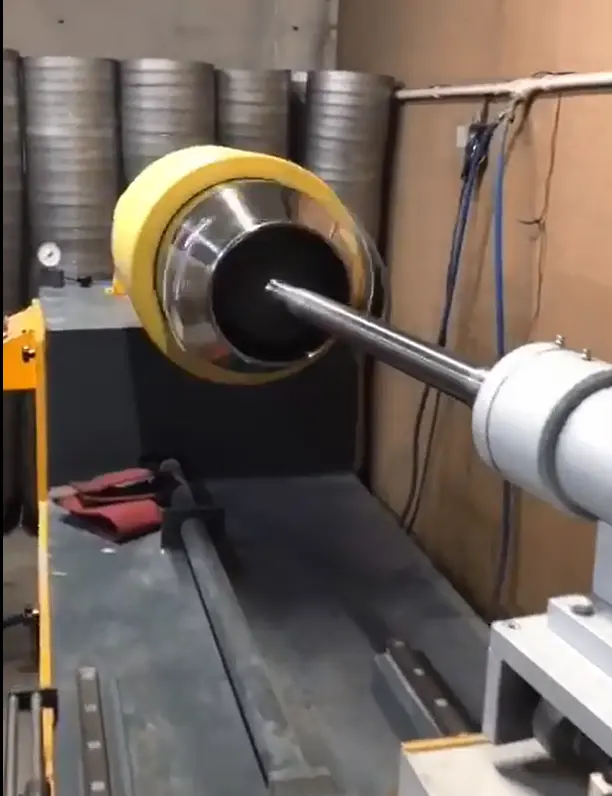
Categories
Machinery

Bench Buffing Machine

Bench Buffing Machine

Bench Buffing Machine: A Polishing and Buffing Combo Machine combines two surface-finishing functions—polishing (removing surface imperfections and achieving a smooth texture) and buffing (enhancing surface gloss and shine)—into a single machine.

Key Components of Polishing and Buffing Machine

  1. Motor – Powers the rotating wheels, typically ranging from 0.5 to 2 HP depending on application.
  2. Polishing Wheel – Often made of abrasive materials like emery or silicon carbide, used for initial surface refinement.
  3. Buffing Wheel – Softer wheels made of cloth, felt, or other flexible materials, used with buffing compounds for shine.
  4. Work Rest/Support – Provides a platform to steady the workpiece.
  5. Speed Control (optional) – Allows for variable RPM to suit different materials and finishing stages.
  6. Dust Collector or Ports (optional) – Helps manage debris and metal dust during operation.

Applications

  • Metalworking: Removing rust, smoothing welds, and bright finishing on stainless steel, brass, aluminum, etc.
  • Woodworking: Polishing lacquered or painted wood surfaces.
  • Jewelry Making: Precision polishing of fine metal items.
  • Automotive: Chrome and aluminum trim restoration.
  • Plastics and Composites: Edge polishing and surface refinishing.

Advantages

  • Space Saving: One unit handles both polishing and buffing.
  • Cost-Effective: Eliminates the need to purchase two separate machines.
  • Increased Productivity: Enables quick change between operations.

A polishing and buffing combo machine is designed to handle both the initial surface smoothing (polishing) and the final high-gloss finishing (buffing) in a single unit. This type of machine typically features two spindles or shafts, each mounted with a different wheel—one abrasive polishing wheel and one softer buffing wheel made of cloth or felt. The machine is powered by an electric motor, often in the range of 0.5 to 2 horsepower, and may operate at fixed or variable speeds depending on the model. Operators use the polishing wheel to remove oxidation, scratches, or casting marks from metal, plastic, or wood surfaces. Once the desired smoothness is achieved, the workpiece is moved to the buffing wheel, often with an applied buffing compound, to bring out a mirror-like finish. These machines are commonly used in metal fabrication, automotive detailing, woodworking, jewelry making, and plastic finishing. Some models are equipped with safety features like spark guards, adjustable tool rests, and dust collection ports to enhance usability and maintain a clean workspace. Combo units are favored for their efficiency, cost-effectiveness, and the convenience of switching between two essential finishing operations without changing equipment.

Many polishing and buffing combo machines are bench-mounted, making them compact and suitable for workshops with limited space. Industrial-grade models may also be floor-mounted for handling larger or heavier workpieces. The choice of wheel materials and compounds plays a crucial role in achieving specific results—coarse abrasives for heavy material removal during polishing, and finer compounds like rouge or tripoli for delicate buffing tasks. Some machines allow quick wheel changes, which adds flexibility when working on different materials such as aluminum, stainless steel, brass, or even acrylics. Consistent maintenance, such as checking wheel wear and ensuring proper alignment, extends the machine’s life and ensures uniform surface finishes. Proper operator training is essential to avoid issues like over-polishing, which can deform soft metals, or under-buffing, which leaves dull surfaces. Overall, these combo machines provide a streamlined, dual-function approach to surface finishing that saves time and improves productivity across a variety of industries.

In practical use, the polishing and buffing combo machine becomes an integral part of any workshop that deals with surface refinement, whether in fabrication, restoration, or decorative finishing. When a raw or semi-finished part is introduced to the machine, it often carries imperfections such as tool marks, scale, oxidation, or general roughness from casting or machining. The first step is polishing—this is not just about aesthetics but also about preparing the surface for coating, plating, or further mechanical processing. The polishing wheel, usually embedded with abrasive particles or paired with an abrasive compound, cuts into the surface lightly to smooth out these defects. Depending on the material being worked on, wheels may vary from hard rubberized abrasives to cloth-based flaps loaded with cutting compounds.

Once the surface is polished to a uniform level of smoothness, the operator transitions to the buffing side of the machine. Buffing is a more delicate, finishing process aimed at producing a high-gloss, mirror-like shine. It uses soft, pliable wheels—often made from cotton, muslin, or felt—and relies on fine buffing compounds, which can range from brown tripoli for pre-polishing to white rouge or green chrome oxide for final finishing. The operator must be skilled in applying the right amount of pressure and compound to avoid burn marks, streaks, or surface inconsistencies. In many industries, this high-quality finish is not just for appearance—it reduces friction, enhances corrosion resistance, and in some cases, meets critical tolerance requirements for high-performance components.

The machine’s design often includes a solid base to minimize vibration, ensuring steady and safe operation. Some higher-end models come with variable speed controls, allowing the user to adjust the RPM to match the specific task. Lower speeds are ideal for buffing delicate materials, while higher speeds can be used during the polishing stage for quicker material removal. Safety considerations are also crucial—spark guards, eye shields, and even integrated vacuum ports for dust and particulate extraction are common in industrial setups. Metal polishing and buffing generate fine particles and heat, so proper ventilation and personal protective equipment (PPE) are essential for long-term use.

What truly sets the polishing and buffing combo machine apart from separate tools is its ability to streamline workflow. In production settings where throughput and finish quality must be balanced, having both functions integrated into a single station allows operators to move seamlessly from surface preparation to final finishing. This not only reduces equipment cost and space requirements but also cuts down on handling time, which in turn improves consistency and productivity. For small workshops, artisans, or businesses that work with metals, plastics, wood, or composite materials, this machine becomes a core asset—capable of delivering professional-grade finishes on everything from industrial parts to custom-crafted jewelry or automotive components.

Polishing and Buffing Combo Machine

Polishing and Buffing Combo Machine is a dual-purpose finishing tool designed to perform both polishing and buffing tasks using a single unit. It is widely used in workshops, manufacturing plants, fabrication facilities, automotive garages, and artisan studios where surface treatment is essential. The machine typically features two opposing spindles mounted on a shared motorized base—one side dedicated to polishing, and the other for buffing. This allows the user to transition quickly between the two processes without changing tools or workstations, significantly increasing efficiency and convenience.

In polishing, the goal is to remove surface imperfections such as scratches, oxidation, or tool marks by using an abrasive wheel or polishing compound. This process is aggressive compared to buffing and is usually the first step in surface preparation. Polishing wheels are typically made from harder materials like sisal, impregnated cloth, or synthetic abrasives. They can be combined with various grits of abrasive paste depending on the material being worked—whether it’s steel, aluminum, brass, plastic, or even wood.

Buffing follows polishing and serves as a finishing process. It’s more refined and aims to produce a high-gloss, reflective surface. Buffing wheels are softer, usually constructed from multiple layers of muslin, cotton, or felt. They’re used with buffing compounds—fine, wax-like substances that smooth and brighten the surface without removing significant material. Popular buffing compounds include white rouge (for light metals), green compound (for stainless steel), and red jeweler’s rouge (for soft, precious metals). Proper buffing not only enhances the visual appeal of a component but also improves surface characteristics such as corrosion resistance and cleanliness.

The motor driving the machine typically ranges from 0.5 HP to 2 HP depending on application requirements. Some models are single-speed, while more advanced machines offer variable speed control, which is crucial when switching between materials that require different surface treatments. High RPMs are ideal for aggressive polishing, while lower speeds are safer and more effective for delicate buffing operations.

Modern combo machines often include safety features such as spark guards, eye shields, and non-slip bases. Dust extraction ports or attachments for vacuum systems may also be present, especially in industrial models, as both polishing and buffing generate fine dust and debris that must be controlled to protect both the operator and nearby equipment. Additionally, adjustable tool rests are usually provided to support the workpiece during operation and reduce operator fatigue during extended use.

From a functional perspective, the polishing and buffing combo machine is a highly efficient solution for anyone needing to process metal, plastic, or wood components to a refined finish. It is valued not just for its space-saving design but for its ability to provide consistent and high-quality results. Industries that benefit from this machine include metal fabrication, automotive restoration, aerospace, woodworking, jewelry production, and even consumer electronics repair. Its versatility makes it one of the most practical finishing machines in any multi-material workshop.

The polishing and buffing combo machine continues to stand out in industrial and artisan settings due to its adaptability, ease of use, and the quality of surface finish it can provide. In a typical workflow, operators appreciate the seamless transition from polishing to buffing without the need to interrupt their process or reposition the workpiece between machines. This uninterrupted workflow not only saves time but also helps maintain uniformity in finish, especially on pieces that require consistent surface characteristics across multiple faces or parts. For example, in automotive restoration, chrome parts like bumpers or trim are often polished to remove pitting or discoloration before being buffed to a mirror-like shine. Similarly, in metal fabrication shops, welders and machinists use combo machines to clean up weld seams or machined surfaces before final finishing, enhancing both appearance and performance of the component.

The machine’s effectiveness depends heavily on the choice of wheel and compound combinations. For instance, a coarse polishing wheel combined with a heavy-cut compound is ideal for removing deep scratches or oxidation on hard metals like stainless steel, while a soft buffing wheel with a fine rouge compound is better suited for bringing out a reflective finish on softer materials such as aluminum or gold. Knowing how to match the right wheel, compound, and speed to the material is essential for achieving professional results. This level of control becomes especially valuable in fields like jewelry making or precision engineering, where surface quality has both aesthetic and functional importance.

Beyond its operational features, the polishing and buffing combo machine also contributes to workplace efficiency by consolidating two essential finishing functions into one compact footprint. This is particularly beneficial in smaller workshops where space and budget may not allow for multiple standalone machines. It reduces setup time, minimizes movement between tools, and simplifies maintenance routines, as the user only has to service one motor and one frame. In terms of durability, most commercial-grade combo machines are built with heavy-duty cast iron or steel housings, sealed bearings, and industrial-grade motors to withstand long hours of continuous use. These rugged designs are crucial in production environments where downtime can be costly.

Operator safety and ergonomics are also important considerations in the design and use of these machines. Since both polishing and buffing produce dust, heat, and sometimes sparks, machines are often equipped with shrouds or guards to contain debris, and many allow connection to external dust collection systems. Proper lighting, workpiece support, and non-slip bases also contribute to safer operation. Users are typically trained to wear protective gear, including safety glasses, gloves, and sometimes respirators, particularly when working with fine powders or toxic materials.

Overall, the polishing and buffing combo machine represents a balance of power, precision, and practicality. Whether used for industrial part finishing, fine metalwork, or decorative surface treatment, it provides a reliable and versatile solution that meets the needs of both high-volume operations and custom fabrication shops. Its dual-functionality not only enhances workflow and finish quality but also offers a smart investment for those seeking long-term value and consistent performance in surface finishing tasks.

In continuous operation, the polishing and buffing combo machine plays a critical role in quality assurance, especially where visual appeal and surface integrity are directly tied to product value. This is particularly evident in industries such as aerospace, medical device manufacturing, and high-end consumer goods, where even minor surface flaws can disqualify a part from being accepted. The machine allows for close control over the finishing process, which is vital in environments that demand tight tolerances and repeatable results. By adjusting variables like wheel hardness, compound abrasiveness, motor speed, and pressure applied, skilled operators can fine-tune the outcome to meet highly specific standards. The versatility of the machine extends further when additional accessories are introduced—such as tapered spindles for quick wheel changes, flexible shaft attachments for precision detailing, or specialized jigs for handling complex geometries and delicate parts.

From an economic standpoint, this machine offers both direct and indirect benefits. Directly, it reduces capital expenditure since a single unit performs two processes. Indirectly, it enhances labor productivity by reducing idle time between stages of surface preparation. A worker using a combo machine can complete more parts per hour compared to setups that require moving between separate stations or waiting for other machines to become available. Furthermore, as this tool becomes a central part of production flow, it can be easily incorporated into lean manufacturing systems or continuous improvement programs. The consistency it delivers allows for more accurate scheduling, fewer reworks, and higher customer satisfaction due to the improved finish quality of the end product.

The machine’s relevance also extends into educational and training environments. In technical schools, vocational programs, and maker spaces, combo machines are often used to teach students the fundamentals of surface finishing. Because they combine two essential techniques, they allow learners to understand the complete process flow—from material preparation to final polish—without needing a suite of equipment. This helps build foundational skills while encouraging safe and efficient work habits. Students can experiment with different materials and finishes, gaining insight into how small adjustments in speed, pressure, or compound can lead to dramatically different results. These lessons are invaluable for future careers in machining, fabrication, restoration, and design.

In artisan and craft settings, particularly among metal sculptors, custom knife makers, or furniture builders, the polishing and buffing combo machine becomes a creative tool as much as a technical one. Here, surface finish is not just about function or standardization—it’s part of the product’s identity. Whether aiming for a soft satin sheen on a wooden edge, a deep reflective polish on a custom blade, or a subtly aged patina on a brass fixture, this machine supports a wide range of artistic expressions. The ability to switch quickly between aggressive material removal and delicate final touches allows artisans to bring their visions to life with both efficiency and craftsmanship.

Over time, the durability of the combo machine pays off. With proper maintenance—such as regular cleaning, lubrication of moving parts, replacement of worn wheels, and occasional motor servicing—it can last for decades, becoming a reliable fixture in the workshop. Many users even customize or upgrade their machines with aftermarket parts like extended shafts, upgraded motors, or precision rests to better suit their specific workflow. This adaptability, combined with its dual-purpose design, cements the polishing and buffing combo machine as an enduring staple in both industrial and creative environments.

Angle Buffing Machine

Buffing Grinder Machine

An Angle Buffing Machine is a specialized power tool designed for polishing and buffing surfaces using a rotating abrasive or soft wheel mounted at a right angle to the motor shaft. Unlike standard bench-top or straight-shaft polishing tools, the angle buffing machine features a compact, angled head that allows operators to work on vertical, contoured, or hard-to-reach surfaces with greater control and flexibility. It’s widely used in automotive detailing, metal fabrication, construction, shipbuilding, and maintenance work where surface refinement must be performed in tight or awkward spaces.

The tool resembles an angle grinder in form and function but is optimized for polishing and buffing rather than cutting or grinding. Most models are handheld and powered either electrically or pneumatically. The head, usually set at 90 degrees to the body, holds a spindle or arbor onto which various buffing pads, wool bonnets, foam discs, or abrasive flap wheels can be attached using quick-change systems or threaded mounts. The rotation of the head combined with the angled configuration allows the user to apply consistent pressure across uneven or vertical surfaces such as car panels, stainless steel tanks, pipes, weld seams, and even interior corners of fabricated structures.

The motor in an angle buffing machine typically operates between 1,000 and 3,000 RPM, and many models offer variable speed control to suit different materials and compounds. Lower speeds are essential when working with heat-sensitive surfaces like plastics or paint, while higher speeds may be used for tougher polishing jobs on metal. The tool is often equipped with ergonomic handles, trigger locks, and soft starts for safety and comfort during prolonged use.

Angle buffing machines can be paired with a variety of buffing compounds depending on the material and desired finish—coarse compounds for initial polishing, and finer rouges for high-gloss buffing. In automotive use, for example, detailers use these machines with foam pads and polishing compounds to remove swirl marks, oxidation, and light scratches from painted surfaces. In marine and industrial environments, they are essential for cleaning and restoring stainless steel, aluminum, or coated surfaces subjected to harsh weather and chemicals.

Their portability and versatility make angle buffing machines ideal for on-site work, touch-ups, or maintenance tasks where bench machines are impractical. With proper training and care, they deliver professional-level finishes and are a key tool for anyone working in surface restoration or finishing.

The angle buffing machine continues to be a crucial tool in both professional and hobbyist settings where precision surface finishing is required in challenging or confined spaces. Its right-angle head configuration makes it especially useful for working on irregular geometries, edges, vertical planes, and interiors of structural components where straight or bench-mounted machines cannot reach effectively. For instance, in automotive refinishing, the angle buffing machine is commonly used on contoured body panels, bumpers, and tight areas around mirrors or trim, providing smooth transitions and high-gloss finishes without risking damage to surrounding parts. The angled design also makes it easier to maintain a steady polishing line across vertical surfaces, which is difficult to achieve with flat tools or orbital polishers.

Because it is a handheld tool, operator skill plays a significant role in the final finish quality. Users must learn to apply consistent pressure and maintain the correct angle and movement pattern to avoid issues such as holograms, swirl marks, or overheating of the surface. Variable speed control is an important feature in this context, as it allows the operator to tailor the machine’s performance to the material and stage of the buffing process. Lower speeds may be used to spread compound evenly or to perform finishing passes, while higher speeds are more appropriate for cutting back oxidation or leveling minor scratches. The use of speed-adjustable machines also minimizes the risk of burning through paint or soft coatings, which is a common concern with fixed-speed tools.

The range of attachments available for angle buffing machines adds to their versatility. Depending on the application, users can switch between wool pads for aggressive compounding, foam pads for fine polishing, or microfiber heads for ultra-fine finishing. In metalwork, users might employ abrasive non-woven discs to clean welds or remove oxidation before switching to cloth buffing wheels for a polished shine. The ability to swap out heads quickly means that a single tool can handle multiple stages of finishing without interruption. This modularity makes it highly efficient for professionals who need to maintain productivity while achieving superior surface quality.

In industrial environments such as shipbuilding, railcar fabrication, or pipeline maintenance, angle buffing machines are used to prepare metal surfaces for coating or inspection. Surfaces like aluminum bulkheads, steel hulls, or stainless steel piping require a specific degree of smoothness and cleanliness to meet technical and safety standards. The portability of the angle buffing machine allows technicians to move easily across large structures and perform work directly on-site, reducing the need for disassembly or transport of heavy components. This mobility is also valuable in maintenance settings, where equipment may need to be refurbished or retouched in place, such as in HVAC systems, tanks, or heavy machinery frames.

In more delicate or artistic applications, like musical instrument restoration or architectural metalwork, the angle buffing machine enables highly controlled work on complex or ornamental surfaces. The operator can carefully maneuver the tool around curves, ridges, or recesses to remove tarnish, smooth seams, or enhance luster without flattening detail or causing damage. Artists, conservators, and custom fabricators often rely on the angle buffing machine for this level of tactile precision, as it bridges the gap between coarse grinding tools and fine hand polishing.

Durability and ergonomics are key to long-term use, especially in professional settings where the tool might run for hours at a time. High-quality angle buffing machines are built with reinforced gear housings, sealed bearings to resist dust and moisture, and insulated motors that can handle continuous duty without overheating. Ergonomic design features such as vibration-dampening handles, compact head profiles, and lightweight body construction contribute to reduced user fatigue and more stable handling. Safety features, including soft-start mechanisms, electronic overload protection, and adjustable guard systems, are becoming standard in modern models, enhancing both usability and operator protection.

Ultimately, the angle buffing machine is not just a convenience but a necessity for any work environment that demands consistent, high-quality finishes in complex or confined spaces. Its combination of power, portability, and precision makes it a go-to solution across industries—from car detailing and metalworking to marine maintenance and fine craftsmanship. With proper technique, maintenance, and selection of accessories, it delivers professional-level results that rival more stationary equipment, while offering unmatched flexibility and control. Would you like recommendations on specific models or guidance for selecting pads and compounds for a certain type of material or finish?

As the demand for surface perfection continues to rise across industries, the angle buffing machine is becoming increasingly refined in terms of technology, materials, and performance features. Manufacturers now offer machines with digital speed displays, programmable settings, and intelligent load sensors that adjust torque output based on the resistance encountered during use. These features enhance both the precision and safety of the tool, especially in environments where surface finish standards are tightly regulated, such as aerospace or medical manufacturing. Digital control also allows more consistent performance over extended polishing sessions, reducing the variability that can occur due to operator fatigue or changing surface conditions.

Cordless versions of angle buffing machines have also emerged, thanks to advancements in lithium-ion battery technology. These portable units give users full freedom of movement without sacrificing much in terms of power or run time. In field maintenance, such as on wind turbines, large vehicles, or outdoor pipelines, this mobility can be crucial. While corded machines still dominate in terms of continuous heavy-duty use, cordless versions are gaining ground rapidly, especially in situations where convenience, accessibility, or safety (e.g., avoiding tripping hazards) are primary concerns.

The environmental and workplace health aspects of buffing and polishing are also gaining attention. Angle buffing machines often operate in environments where dust, metal particles, or compound residue are released into the air. These fine particulates pose both respiratory and cleanliness challenges. As a result, many industrial users now integrate dust shrouds, attach vacuum hoses, or work within ventilated booths. Proper personal protective equipment—including respirators, eye protection, gloves, and hearing protection—becomes essential, especially during extended use. Additionally, the compounds used with these machines have evolved to include water-based or low-residue formulas that are safer for the operator and easier to clean from the finished surface.

From a training perspective, the angle buffing machine is relatively easy to learn, but mastering it takes time. Novices often start with practice panels or scrap pieces to develop a feel for the right pressure and motion. Over time, skilled users learn to “read” the sound, vibration, and visual cues from the tool and the workpiece, adjusting their technique instinctively. For companies training multiple employees, this consistency in results becomes critical to maintaining product quality. Some manufacturers now offer training programs, demo units, and even simulator-based systems to accelerate the learning curve and improve safety.

Repair and maintenance of angle buffing machines are generally straightforward. Most models are designed with accessible brush housings, gearboxes, and motor components, making it possible to replace worn parts like carbon brushes, bearings, or power cords without sending the unit out for service. Keeping the machine clean—especially the spindle and venting system—is essential to maintaining its lifespan. If the machine becomes unbalanced due to uneven pad wear or misalignment, it can cause excessive vibration and reduced control, so regular inspection is a good practice. For industrial users, establishing a preventative maintenance routine helps ensure uptime and extends the life of both the machine and consumables.

In terms of innovation, some angle buffing machines are now incorporating orbital motion in addition to rotary action, blending the benefits of rotary and dual-action polishers. This hybrid movement reduces the risk of heat buildup and surface swirl, making the tool more forgiving for users and safer for delicate finishes like clear coats or polished plastics. These tools are especially popular in detailing and finishing work where surface perfection is critical but the risk of overworking an area must be minimized. They represent a natural evolution of the traditional angle buffing machine, pushing the limits of what’s possible with a handheld surface finishing tool.

The longevity and relevance of the angle buffing machine ultimately stem from its ability to adapt to new materials, new processes, and evolving user needs. Whether in the hands of a seasoned professional restoring a classic car, a technician polishing a turbine blade, or an artist finishing a hand-crafted sculpture, this tool continues to offer a blend of control, power, and versatility that few others can match. It remains a bridge between raw fabrication and final presentation, turning unfinished surfaces into polished, functional, and often beautiful results. Would you like to go into detail about compound selection for specific finishes or how to adapt the machine for curved or textured surfaces?

Polishing Cabinet Buffing Machine

Mirror Finish Polishing

Polishing Cabinet Buffing Machine is a specialized equipment designed to facilitate safe, controlled, and efficient polishing and buffing operations within an enclosed space. These machines typically consist of a cabinet or booth where the polishing and buffing processes take place, often equipped with one or more buffing wheels, abrasive pads, or brushes, a motor, and integrated systems for dust collection. They are commonly used in industries that require precise surface finishing of small to medium-sized components, such as jewelry manufacturing, electronics, metalworking, and automotive detailing. The primary advantage of a polishing cabinet buffing machine lies in its enclosed design, which helps contain debris, reduces exposure to hazardous materials, and minimizes environmental contamination.

The cabinet typically features transparent viewing panels made from durable acrylic or tempered glass, allowing the operator to monitor the workpiece while maintaining a safe distance from the moving parts. The interior of the cabinet is equipped with buffing wheels or abrasive pads mounted on motor-driven spindles, which rotate at varying speeds depending on the model. These spindles can accommodate different sizes and types of buffing wheels, ranging from coarse to fine materials such as wool, cotton, or felt, which are ideal for different stages of the polishing process. In many cases, the user can switch between polishing and buffing wheels to progressively refine the surface finish, from initial material removal to high-gloss final polish.

A key feature of the polishing cabinet buffing machine is its integrated dust and fume extraction system. Polishing and buffing generate fine dust and debris, particularly when working with metals like aluminum or stainless steel, or with certain composites. These particles can pose health risks when inhaled or cause a mess in the workplace. To mitigate this, polishing cabinet machines are equipped with powerful suction fans or vacuum systems that remove airborne particles from the cabinet, funneling them into filters or external collection bins. This feature is essential for maintaining a clean, safe working environment, especially in compliance with workplace health and safety standards.

These machines are typically designed for ease of use, with access doors or glove ports allowing the operator to insert their hands into the cabinet without opening it, thus maintaining a sealed environment. Glove ports enable precise control over the workpiece, and the compact design of the machine helps in controlling the work area’s lighting and dust levels. The interior often includes adjustable shelves or tool supports, providing convenience for setting the workpiece at the ideal height and angle for the operator.

The buffing cabinet is typically made of sturdy metal, such as steel or aluminum, to provide durability and stability during operation. Some higher-end models also include advanced features like built-in lighting, vibration-dampening components, and optional accessories such as polishing compounds or sprays, which can be applied directly to the workpiece while it is being buffed. These compounds can further enhance the polishing process, especially when working with materials that require a high-gloss finish, such as precious metals, glass, or acrylics.

The polishing cabinet buffing machine is especially valuable in high-precision fields where surface finish quality is critical. In jewelry manufacturing, for example, these machines allow for a meticulous, controlled polishing process that produces a flawless shine on rings, necklaces, bracelets, and other pieces without damaging the delicate details. In automotive applications, such as buffing chrome trim or headlight lenses, the cabinet helps achieve an even, smooth finish that enhances the appearance of the part while also providing a layer of protection against oxidation.

Overall, a polishing cabinet buffing machine provides a controlled, efficient, and safe solution for precision polishing and buffing tasks. The enclosed design ensures both safety and cleanliness, while the versatility in buffing wheel and compound options allows the user to adapt the machine for different materials and finishes. Its application spans a wide range of industries, making it an essential tool for professionals seeking high-quality surface finishes in a secure, effective manner.

The polishing cabinet buffing machine remains an essential tool in environments where precise, high-quality finishes are required. Its enclosed nature offers distinct advantages, not only for the operator’s safety but also for maintaining consistency and cleanliness in the workspace. The ability to control the working environment inside the cabinet makes it easier to handle intricate parts and delicate materials without worrying about contaminants or exposure to harmful polishing compounds and dust. This makes it particularly beneficial in fields like jewelry design and restoration, where intricate detailing and high-shine finishes are a hallmark of quality. The dust and debris removal system ensures that any fine particles produced during the process are efficiently extracted, improving air quality and reducing the risk of cross-contamination or scratches on the workpiece. The machine’s ability to maintain a stable, clean environment also extends the life of polishing wheels and reduces the need for frequent tool changes, as the buildup of abrasive material is minimized.

Another key aspect of these machines is the ability to easily adjust the polishing parameters. Many models come with variable-speed motors, allowing users to tailor the speed of the buffing wheels to suit the material being worked on. Softer materials, like aluminum or plastics, require slower speeds to avoid overheating or gouging, while harder metals like stainless steel might benefit from faster rotation to remove oxidation or achieve a mirror-like finish. These adjustments allow for greater control over the polishing process, ensuring that the finish meets the required standards without risking damage to the workpiece. The variety of polishing pads and wheels that can be used in these machines also makes them versatile, catering to different stages of the polishing process, from coarse grinding to fine polishing and buffing.

The compact and efficient nature of the polishing cabinet buffing machine also makes it ideal for shops or operations with limited space. Instead of needing multiple stations for different polishing tasks, a single polishing cabinet can handle a variety of materials and finishes, making it both a space-saver and a cost-effective solution. Operators can easily switch between tasks without needing to move the workpiece to different machines or setups. This efficiency is particularly valuable in high-volume production environments, where time and workflow are critical.

In addition to its functionality, the ergonomic design of the cabinet makes it easier for operators to perform long hours of buffing and polishing without experiencing undue strain. The ability to perform tasks through glove ports or from an upright position, with the workpiece secured at an optimal height, minimizes operator fatigue and increases overall comfort. This is an important consideration for environments where the operator’s well-being is a priority, such as in workshops with heavy or continuous polishing work.

From a safety perspective, the polishing cabinet buffing machine reduces the risk of accidents that can occur when using traditional open-bench polishing tools. With the operator enclosed within the cabinet, the likelihood of contact with moving parts is minimized. Additionally, the design often includes built-in safety features such as automatic shutoff mechanisms in case of overloads or unexpected malfunctions.

With regular maintenance, a polishing cabinet buffing machine can provide years of reliable service. Routine tasks like cleaning dust filters, inspecting buffing wheels for wear, and ensuring proper lubrication of moving parts keep the machine running smoothly. Many models also allow for easy replacement of worn-out components, such as brushes or wheels, helping to keep downtime to a minimum. This focus on durability and longevity is a significant benefit for businesses that rely on these machines for high-quality finishes on a daily basis.

In terms of application, polishing cabinet buffing machines are not limited to just one sector. Whether it’s polishing automotive parts, fine metal products, glassware, or even medical devices, these machines can adapt to a variety of materials and finishes. The precision offered by the enclosed, controlled environment allows for fine adjustments to the polishing process, ensuring that every part that leaves the machine meets the high standards required by the industry.

As industries continue to prioritize safety, efficiency, and quality, the polishing cabinet buffing machine remains a cornerstone tool for achieving professional finishes. Its ability to handle multiple polishing and buffing tasks while ensuring a safe, clean, and ergonomic workspace makes it a valuable asset in both small workshops and large-scale production facilities. Would you like more insights into choosing the right cabinet buffing machine for specific tasks or comparing models with unique features?

The versatility of polishing cabinet buffing machines extends to various industries, each benefiting from the machine’s ability to handle complex finishing tasks with precision and control. In industries such as aerospace, automotive manufacturing, and metalworking, where component appearance, durability, and surface integrity are paramount, polishing cabinet machines provide consistent, high-quality results. For example, in aerospace, precision-polished metal parts must meet stringent quality standards for both aesthetic and functional reasons, such as ensuring resistance to corrosion or minimizing drag. Polishing cabinet buffing machines allow technicians to fine-tune their processes to meet these exacting specifications, ensuring that even the smallest components, such as turbine blades or fuel fittings, are polished to perfection.

In automotive production, these machines are invaluable for detailing car parts, especially chrome and metal trim, which often require an immaculate finish to meet customer expectations and industry standards. The ability to maintain a controlled environment while polishing intricate surfaces, like grills, rims, or emblems, allows for a high-gloss finish without the risk of contamination from dust or compound residues. Polishing cabinet buffing machines help achieve the signature gleam that’s so important in vehicle aesthetics, from luxury cars to motorcycles.

In the field of medical devices, the quality of the finish on surgical instruments, implants, and prosthetics is crucial not only for the appearance but also for hygiene and functionality. Polishing cabinet buffing machines ensure that these parts are free from imperfections that could harbor bacteria or cause mechanical failure. For example, the smooth, polished finish on stainless steel surgical tools is not just about looks; it’s also essential for reducing the risk of infection and facilitating easier cleaning and sterilization. The precision of these machines makes them ideal for achieving such results.

Another major benefit of polishing cabinet buffing machines is their ability to handle delicate or highly specialized materials, such as gemstones, ceramics, and glass. In industries like jewelry design or glass manufacturing, where the material is often fragile or prone to scratching, the controlled environment inside a polishing cabinet helps prevent unintended damage. The ability to apply a controlled, even buffing action to such materials is essential for creating stunning finishes without compromising their integrity. In jewelry making, for instance, polishing cabinets are used to bring out the brilliance in metals like gold, platinum, and silver, as well as to perfect the clarity and shine of diamonds or other gemstones.

The adoption of polishing cabinet buffing machines in small-scale and artisan settings is also on the rise. Artists and small manufacturers who focus on custom or high-end products often rely on these machines for their precise control and ability to produce professional-grade finishes. Whether creating custom furniture, restoring antiques, or designing bespoke jewelry, the cabinet buffing machine offers a way to ensure consistent, high-quality results. It’s particularly useful in small shops where a single machine can handle multiple materials and finishes, providing versatility without requiring an array of separate machines.

As technology advances, polishing cabinet buffing machines are becoming more integrated with digital systems that allow for greater automation and efficiency. Some high-end models are now equipped with programmable controls, allowing users to input specific parameters such as speed, pressure, and compound type, creating a more automated process that can be repeated consistently. This reduces the potential for human error and ensures that each workpiece receives the exact same level of attention, making the polishing process both more reliable and efficient. This shift towards automation is especially beneficial in high-volume production settings, where consistency is crucial and reducing manual labor can lead to significant time and cost savings.

The environmental impact of polishing operations is another important consideration, and polishing cabinet buffing machines are increasingly designed with eco-friendly features. Many modern models incorporate filtration systems that reduce the amount of waste and pollutants released into the environment. For instance, some units use water-based or biodegradable compounds instead of traditional petrochemical-based polishing pastes, reducing the environmental footprint of the polishing process. Additionally, advancements in energy efficiency are helping to minimize power consumption, making these machines more sustainable for long-term use.

For businesses looking to optimize their operations, integrating polishing cabinet buffing machines with existing workflows is relatively straightforward. These machines can often be incorporated into automated production lines, where multiple parts need to be polished in a consistent and repeatable manner. The compact, enclosed design of the polishing cabinet makes it easy to fit into tight spaces or alongside other finishing equipment. Integration with dust extraction and filtration systems ensures that the entire polishing process remains clean and compliant with workplace health and safety regulations.

In terms of future trends, polishing cabinet buffing machines will continue to evolve, incorporating even more advanced technology such as touch-screen interfaces, real-time monitoring systems, and the ability to work with an even broader range of materials. These machines will continue to support industries that require precision and high-quality finishing, all while enhancing the overall safety, ergonomics, and environmental sustainability of the polishing process.

Whether for industrial, commercial, or artisanal use, polishing cabinet buffing machines represent a perfect balance of safety, efficiency, and high-performance. They provide a secure and controlled environment for achieving flawless finishes, protecting both the operator and the environment. With the right model, maintenance practices, and polishing compounds, businesses can ensure that they achieve the best possible surface finishes on a variety of materials, from metals to plastics and ceramics.

Would you like to explore more about specific polishing compounds or materials suitable for these machines, or perhaps recommendations on optimizing a polishing cabinet for your particular needs?

Industrial Buffing Machine

Dual-Station Polishing Machine

An industrial buffing machine is a high-powered tool used in commercial and industrial settings for polishing and finishing surfaces of various materials, such as metal, wood, plastic, and stone. These machines are designed to perform heavy-duty buffing tasks that require consistent, high-quality results across large quantities of parts or products. Industrial buffing machines are essential in sectors such as metalworking, automotive manufacturing, aerospace, and woodworking, where surface finishing is a critical step in ensuring the quality and appearance of the final product.

Industrial buffing machines come in a wide variety of configurations, from standalone bench-mounted models to larger, more complex systems that integrate multiple stages of polishing or are part of automated production lines. The main components typically include buffing wheels or pads, a powerful motor that drives the rotation of these wheels, and often an adjustable stand or frame to hold the workpiece at the correct angle for polishing. Many models are also equipped with speed controls, allowing operators to adjust the machine’s rotation speed based on the material being worked on and the stage of the buffing process.

The design of industrial buffing machines varies depending on the specific requirements of the task. For example, machines used for polishing large metal parts might feature larger buffing wheels, while those for finer detailing or finishing work might use smaller, more precise wheels. Some models are designed for specific applications, such as polishing automotive parts like chrome trim or buffing metal molds used in manufacturing, while others are more versatile and can handle a range of materials and finishes.

One of the key features of an industrial buffing machine is its motor, which is typically much more powerful than that found in smaller, consumer-grade polishers. These motors can be variable-speed to allow greater control over the polishing process. High RPMs (revolutions per minute) are ideal for quickly removing material or for aggressive polishing, while lower RPMs allow for finer finishing and a smoother, more reflective finish. For example, in metalworking, high speeds are used to cut back oxidation or remove rust, while slower speeds are ideal for fine polishing or creating a mirror-like finish.

Buffing wheels or pads are the heart of the industrial buffing process. These wheels come in a variety of materials such as cotton, felt, wool, and synthetic fibers, and are often treated with polishing compounds or abrasives to enhance their performance. For heavy-duty work, a stiff wheel might be used to remove oxidation or scratches, while softer, more delicate wheels are employed for final finishing. In some cases, the type of buffing compound used will depend on the material being polished. For example, a metal polish or abrasive compound might be used for polishing steel, while a gentler compound might be employed for polishing plastics or softer metals like aluminum or brass.

Industrial buffing machines also tend to feature built-in dust collection systems to manage the debris created during the buffing process. These systems help maintain a cleaner workspace and improve air quality by collecting the dust, metal filings, and polishing compound particles that are generated. This is particularly important in industries where worker health and cleanliness are a priority. In addition, the dust collection systems can improve the longevity of the buffing wheels and other components, as excessive dust buildup can lead to overheating or clogging of parts.

In larger-scale industrial operations, buffing machines may be integrated into automated production lines. These systems allow for consistent and repeatable polishing of high volumes of parts. In these setups, the buffing machine may be programmed to work with robotic arms or conveyors that feed parts into the polishing station, minimizing the need for manual handling and significantly improving efficiency. Such systems can be customized for specific products, enabling companies to meet high throughput requirements without sacrificing quality.

Safety is a major consideration with industrial buffing machines due to their high-speed rotation and potential hazards associated with polishing compounds and airborne debris. Machines are often equipped with safety guards or covers to prevent accidental contact with the buffing wheels. Operators are usually required to wear personal protective equipment (PPE), such as safety goggles, gloves, ear protection, and respiratory masks, especially in environments where fine dust or fumes may be present. Many machines also have emergency stop features and automatic shut-off mechanisms in case of overloads or malfunctions.

In terms of maintenance, industrial buffing machines require regular care to ensure that they continue to operate efficiently and effectively. This includes checking the motor and electrical components for wear, ensuring the buffing wheels are properly balanced, and cleaning or replacing the dust collection filters. Buffing wheels should be inspected for damage or wear, as a worn-out wheel can lead to uneven polishing or potential damage to the workpiece.

Given their durability, power, and ability to handle large-scale tasks, industrial buffing machines are a fundamental tool in many sectors. They ensure that products are finished to a high standard, improving both their appearance and functionality. In industries such as automotive, aerospace, metalworking, and manufacturing, these machines are vital for achieving the precision and surface finishes required for both aesthetic and practical purposes

Industrial buffing machines are designed to tackle demanding polishing tasks that require both power and precision. They are ideal for finishing large quantities of parts or high-volume production environments, where consistency and quality are essential. These machines can be used on a variety of materials, including metals, plastics, ceramics, glass, and composites, making them highly versatile in industries ranging from automotive and aerospace to metalworking, electronics, and manufacturing. The ability to perform both heavy-duty polishing and fine detailing allows these machines to meet the needs of a wide array of applications, such as restoring the shine to automotive parts, polishing turbine blades, buffing metal fixtures, or refining jewelry components.

What sets industrial buffing machines apart from consumer-grade tools is their robustness and ability to handle continuous operation without compromising on performance. High-speed motors, ranging from 1 horsepower (HP) to upwards of 10 HP or more, provide the necessary power for large-scale polishing tasks. This ensures that operators can maintain optimal production speeds while achieving a high-quality surface finish on parts of various sizes and shapes. In some cases, the motor’s power is supplemented by advanced speed control systems, allowing operators to dial in the perfect RPM for each task.

A key component of an industrial buffing machine is its buffing wheel, which can be tailored to specific applications based on the type of material and the level of finish required. Buffing wheels are available in different materials, such as cotton, wool, felt, or synthetic fibers, and they can be impregnated with various polishing compounds to enhance their cutting or finishing ability. For example, a wool wheel might be used for aggressive polishing tasks that involve removing oxidation or rust from metal parts, while a cotton wheel might be used for finer finishing or creating a mirror-like finish on softer metals or plastics.

Many industrial buffing machines come equipped with additional features such as oscillating or dual-action buffing motions. These motions are designed to reduce the risk of swirl marks or uneven finishes, especially when working with delicate or highly reflective surfaces. The oscillating motion helps to distribute the polishing compound more evenly and ensures that the surface being worked on receives consistent attention, which is especially important in industries that require a flawless finish, such as the luxury automotive or jewelry sectors.

Dust extraction and fume control systems are integral to industrial buffing machines, especially in environments where harmful particles or fumes might be released during the buffing process. These systems help capture and remove the fine dust, metal shavings, or polishing compound residues generated, which could otherwise contaminate the work area or pose a health risk to operators. Many machines feature integrated vacuum ports or separate dust collection units that help keep the workspace clean and safe. These systems are particularly important in industrial settings where maintaining air quality is essential for compliance with safety regulations.

Given the heavy-duty nature of these machines, maintenance is crucial to ensure their long-term reliability and performance. Regular inspection and replacement of buffing wheels, motor brushes, and polishing compounds are necessary to keep the machine running smoothly. Additionally, ensuring that the dust collection system is functioning properly, and that no debris or particles are clogging the system, helps prevent overheating and ensures efficient operation.

The integration of industrial buffing machines into production lines can further optimize efficiency in large-scale manufacturing environments. These machines can be automated to feed parts through buffing stations via conveyor belts or robotic arms, reducing manual labor and increasing throughput. In automated setups, buffing machines can be programmed to execute precise polishing sequences, ensuring consistency across large batches of parts. This level of automation not only speeds up production but also enhances product quality by reducing the risk of human error during the polishing process.

As industries continue to prioritize automation, sustainability, and efficiency, industrial buffing machines are also evolving to meet these needs. Many modern machines are designed to be energy-efficient, reducing power consumption and operational costs. Furthermore, advancements in buffing compounds, such as the development of water-based or eco-friendly formulas, help minimize the environmental impact of polishing tasks.

In conclusion, industrial buffing machines are indispensable in industries where high-quality, consistent surface finishes are a must. They are powerful, versatile, and designed for continuous operation, making them an essential part of many manufacturing and finishing processes. With the right maintenance, proper use of buffing compounds, and regular inspection, these machines can deliver exceptional results for a wide range of applications, from metal polishing to automotive detailing and beyond. Whether used in high-volume production environments or for specialized tasks, industrial buffing machines ensure that every part is finished to the highest standards. Would you like to explore specific manufacturers or features of these machines?

The industrial buffing machine’s ability to deliver consistent results in high-demand environments is one of the key reasons it remains indispensable across various sectors. As industries continue to evolve and the need for precision and efficiency grows, the role of buffing machines will likely expand, with advanced technologies integrating seamlessly into automated processes. One area of development is the incorporation of smart technology and sensors into buffing machines. These features can monitor the condition of the buffing wheels, track the pressure applied to the surface, or even detect anomalies in the polishing process. Real-time feedback allows operators to adjust settings or perform maintenance before issues arise, improving uptime and reducing the risk of defects in the final product.

For example, certain modern industrial buffing machines are now equipped with vibration sensors or load monitoring capabilities that can detect when a buffing wheel is out of balance or when the motor is under strain. This early detection can help prevent damage to the machine and the workpieces, ensuring that any issues are addressed before they result in costly downtime or quality control problems. Such advancements in machine diagnostics not only improve the efficiency of polishing operations but also help with predictive maintenance, which can be crucial for operations with high output demands.

Moreover, the flexibility of industrial buffing machines in accommodating a range of materials continues to make them invaluable. From polishing steel and aluminum to working on more delicate materials like plastics, ceramics, or glass, these machines can be tailored with various buffing compounds, pads, and wheels designed to suit the specific requirements of each material. This adaptability allows businesses to handle a wide array of products, from heavy machinery parts to intricate jewelry pieces, all while maintaining the high standards of finish that are expected in industries like automotive, aerospace, medical device manufacturing, and even art restoration.

With advancements in automation, the integration of buffing machines into larger manufacturing lines becomes increasingly seamless. Automated systems allow for continuous, high-speed polishing of parts, reducing manual labor and increasing throughput. This integration often includes conveyor belts or robotic arms that move parts into position for polishing, and some machines can even be programmed to apply specific pressure and speed settings to different parts of the product, ensuring a customized finish for each piece. Such systems are essential for industries like automotive manufacturing, where large quantities of parts need to be polished to the same high standard, or in industries where precision is paramount, such as the aerospace sector.

Environmental concerns and sustainability continue to be important factors in industrial manufacturing, and the development of more eco-friendly buffing systems is becoming increasingly relevant. For instance, using biodegradable or water-based polishing compounds helps reduce the environmental impact of the buffing process. Additionally, dust extraction and air filtration systems are being improved to capture even finer particles, further minimizing environmental exposure to harmful chemicals or metal dust. Some companies are also developing machines that use less energy and produce less noise, addressing both environmental and workplace safety concerns.

Another factor that makes industrial buffing machines essential is their role in quality control. In industries like metalworking, where the aesthetics and functionality of the parts are critical, the buffing process plays a key role in eliminating imperfections such as scratches, rust, or oxidation. Buffing ensures that the finished products have a smooth, even surface, free from defects that could compromise their performance or appearance. High-quality surface finishes can also improve the durability and longevity of products, particularly in industries that require resistance to corrosion or wear, such as the marine or oil and gas sectors.

In woodworking, where polishing and buffing are often done to enhance the natural appearance of the wood and provide a protective finish, industrial buffing machines play an essential role in producing furniture, cabinetry, or decorative items. The buffing process ensures that the wood surfaces are smooth and polished, free from marks or imperfections, and properly sealed. Similarly, in the electronics industry, where components need to have smooth, contaminant-free surfaces for optimal performance, buffing machines are used to polish parts like circuit boards, casings, and connectors, ensuring they meet industry standards for both function and appearance.

As industries move towards more precision-driven and technology-enhanced manufacturing, the role of industrial buffing machines will likely become even more integral. Machines with integrated software and advanced control systems could further reduce human error and improve efficiency, allowing for more complex and intricate finishes. In addition, the incorporation of artificial intelligence and machine learning could help optimize polishing processes by learning from past operations and adjusting settings automatically for the best results.

In summary, industrial buffing machines are continually evolving to meet the increasing demands for precision, efficiency, and sustainability. These machines are critical in industries where surface finish plays an important role in both aesthetics and functionality. From high-volume production settings to specialized craftsmanship, industrial buffing machines ensure that products meet the highest standards of quality and finish. As technology advances, these machines will only become more sophisticated, offering even more benefits in terms of automation, customization, and eco-friendliness. Would you like further details on any specific models or recommendations based on particular industrial needs?

Dust Collection Buffing Machine

Automatic Load/Unload Polishing Machine

dust collection buffing machine is a specialized tool designed for polishing and buffing tasks that includes an integrated dust extraction system to capture the debris generated during the buffing process. These machines are widely used in industrial settings, particularly in woodworking, metalworking, automotive manufacturing, and other industries where the polishing process can produce a significant amount of dust, shavings, or particulate matter.

The primary function of a dust collection buffing machine is to ensure a cleaner, safer work environment by capturing and removing harmful dust, polishing compounds, and metal shavings as they are created. This is especially important in environments where dust particles can pose health hazards to workers, create safety risks (e.g., explosions from flammable dust), or interfere with the quality of the finished product.

In a typical dust collection buffing machine setup, the machine is equipped with a high-efficiency dust collection system that either integrates directly with the buffing tool or operates as a standalone component. The dust extraction system usually consists of several key elements:

  1. Dust Hood or Shroud: A collection hood or shroud is positioned around the buffing wheel to capture the dust and particles generated during the polishing process. These hoods are strategically designed to enclose the work area around the wheel, minimizing the release of dust into the surrounding workspace.
  2. Vacuum System: The dust captured by the hood is then directed through a vacuum system. This system can be built into the buffing machine itself or connected to an external dust collector via flexible hoses. The vacuum system pulls the dust from the work area and transports it to a filtration unit, where it is safely contained.
  3. Filtration System: After the dust and debris are sucked into the vacuum system, they are passed through a filtration unit. Depending on the machine’s design, this filtration unit can include multi-stage filters to remove even fine particles. Common filter types include HEPA filters (high-efficiency particulate air filters), carbon filters for capturing fumes, or cyclone separators that remove larger debris before the air enters finer filters.
  4. Dust Collector or Hopper: The cleaned air is released back into the room, and the dust and debris are collected in a dust collector or hopper. The hopper or dust bin needs to be emptied regularly to prevent it from becoming clogged, and it may be equipped with a system to alert operators when it’s full.
  5. Workpiece Area or Booth: In some machines, especially those used in high-precision or sensitive applications, the dust collection system is integrated into an enclosed booth or workpiece area. This setup isolates the polishing process from the surrounding environment, providing an even cleaner working atmosphere and better control over the dust.

The inclusion of a dust collection system in a buffing machine offers several benefits:

  • Improved Air Quality: By removing harmful dust particles from the air, these machines help maintain a healthier work environment. In industries like woodworking, metalworking, and automotive, where the polishing process can release fine particulate matter, keeping the air clean is crucial for protecting workers’ respiratory health.
  • Enhanced Workplace Safety: Dust accumulation can create fire hazards, particularly when flammable polishing compounds or metals are involved. A dust collection buffing machine minimizes this risk by preventing the buildup of dust, which can otherwise become a source of ignition.
  • Better Product Quality: Dust and debris in the environment can contaminate the polishing process and lead to imperfections in the finished surface. A dust collection system helps prevent these contaminants from interfering with the finish, ensuring that parts and products are polished to a high standard without the risk of dust marks or scratches.
  • Cleaner Workspace: A cleaner work environment not only improves health and safety but also boosts productivity. Operators can work in a more organized and less cluttered environment, which reduces the time spent cleaning up after each task and keeps the workspace more efficient.
  • Compliance with Regulations: In many industries, dust collection is not just a best practice; it’s often a legal requirement. For example, in the woodworking industry, dust is considered a significant health hazard, and businesses must comply with OSHA (Occupational Safety and Health Administration) standards or similar regulations. Using a dust collection buffing machine ensures compliance with these regulations and minimizes the risk of penalties.

In industries like metalworking and automotive production, buffing machines with integrated dust collection systems help to keep surfaces free of contaminants that could affect the quality of polished parts. In metalworking, buffing processes often involve the use of abrasives, which can create fine metal dust. This dust, if not controlled, can result in contamination or affect the surface quality of the finished product. Similarly, in automotive production, using a dust collection system ensures that polishing compounds and fine particles are safely contained, preventing damage to delicate components like mirrors, trim, and bodywork.

In woodworking, dust collection is crucial because the fine dust from sanding, buffing, and polishing wooden surfaces can contain wood fibers that are harmful when inhaled. A dust collection buffing machine helps mitigate the health risks associated with these fine particulates, ensuring that the workspace remains clean and the air quality is improved.

Moreover, the integration of eco-friendly features into modern dust collection systems is becoming more prevalent. Newer systems are designed to be more energy-efficient, reducing the overall environmental impact of polishing operations. This can include optimized vacuum motors that consume less electricity or using sustainable materials for filters that are both effective and biodegradable.

The incorporation of smart technology into dust collection buffing machines is also on the rise. Some machines now feature real-time monitoring and diagnostics, where sensors can detect the level of dust buildup in the filtration system, alerting operators when maintenance is needed or when the filters need to be changed. This ensures that the dust collection system operates at peak efficiency, reducing the chances of downtime and maintaining the cleanliness of the work environment.

In conclusion, a dust collection buffing machine offers a comprehensive solution for industries that require high-quality surface finishes while ensuring that the work environment remains safe, clean, and efficient. The integration of powerful vacuum systems, efficient filtration, and dust collection technologies not only helps protect workers’ health but also ensures the smooth and flawless results that are expected in precision industries. Would you like more details on specific models or features of dust collection systems for buffing machines?

Dust collection buffing machines are a critical advancement in industrial polishing, combining the functions of polishing and dust management into a single, cohesive system. These machines are engineered to perform high-quality buffing while effectively capturing the dust and debris generated during the process, which is essential for maintaining both the quality of the finished product and the safety of the workspace. In industries where dust and particulate matter can negatively impact both product quality and worker health, having an integrated dust collection system helps to address these concerns while boosting operational efficiency.

The dust collection system works by drawing in the airborne particles that are created as the buffing wheel makes contact with the workpiece. This debris can range from polishing compounds to metal shavings, wood dust, or plastic particles, depending on the material being worked on. Without a dust collection system, these particles can scatter into the air and the surrounding environment, potentially contaminating the work area, affecting air quality, and increasing the risk of fire or health issues. In industries like woodworking, metalworking, and automotive, these particles are not only an inconvenience but also a serious safety hazard.

A properly designed dust collection system in a buffing machine includes a powerful suction system that pulls in dust from the immediate work area. This is often achieved by using a combination of collection hoods or shrouds that surround the buffing wheels and vacuum suction hoses that connect to a central dust collector. The dust is pulled through the system, where it passes through various filters designed to trap fine particles, ensuring that only clean air is returned to the workspace. In addition to improving air quality, this system reduces the need for manual cleaning, making the workspace less cluttered and more productive. Moreover, the collection of dust is especially important in environments with high-speed buffing operations, where large amounts of dust are generated quickly.

These machines are also crucial for maintaining the quality of the finish on the workpieces. When dust and other debris are allowed to remain in the environment, they can settle back onto the workpieces and cause imperfections in the final polished surface. Even small particles can lead to scratches, streaks, or uneven finishes. By collecting dust at the source, a dust collection buffing machine helps to preserve the integrity of the surface finish, ensuring that parts remain free from contaminants. This is particularly important in industries such as automotive manufacturing, where high-quality finishes are essential for both aesthetic appeal and functional performance.

Beyond improving air quality and product finishes, dust collection systems in buffing machines also play a significant role in ensuring workplace safety. In industries like woodworking, where wood dust is produced, the dust can be highly combustible, posing a fire risk. Similarly, metal dust, especially from materials like aluminum or steel, can present an explosion hazard if not properly controlled. A dust collection buffing machine helps mitigate these risks by capturing potentially hazardous dust and preventing it from accumulating in the workspace. In doing so, it also helps businesses comply with safety regulations and health standards, which may require the installation of dust extraction systems in certain industries to prevent harmful exposure.

Maintenance of dust collection buffing machines is an essential aspect of keeping them functioning efficiently. Over time, dust can build up in the system, especially in the filters and collection hoppers, so routine cleaning and maintenance are required to keep the system running at peak performance. Regularly checking and replacing filters, ensuring that the vacuum system is not clogged, and keeping the buffing wheels in good condition are all part of maintaining the machine and ensuring optimal dust collection. Many modern dust collection systems are equipped with sensors and monitoring systems that notify operators when the system is nearing full capacity or when the filters need to be replaced, making maintenance easier and reducing downtime.

Another advantage of these machines is their ability to help businesses reduce their environmental footprint. By capturing and containing dust, companies can reduce the amount of airborne particulate matter that is released into the environment. This is particularly relevant in industries where regulations surrounding air quality are stringent, such as woodworking or metalworking. Dust collection buffing machines contribute to a cleaner and more sustainable manufacturing process by preventing the release of harmful pollutants and minimizing waste.

The design and technology of dust collection systems are also evolving to be more energy-efficient and user-friendly. Modern machines often feature adjustable suction power, allowing operators to fine-tune the level of dust extraction based on the material and type of buffing work being done. This helps optimize energy consumption and ensure that the dust collection system is working as efficiently as possible. Additionally, quieter models are available, reducing the noise level in the workspace, which can improve the working conditions for operators and comply with noise reduction regulations.

The incorporation of smart technologies in dust collection buffing machines is also an emerging trend. Some machines now include digital controls, allowing for more precise operation and real-time monitoring of the dust collection process. These systems can track the efficiency of the dust extraction, alerting operators to any potential issues such as blockages or system malfunctions. This real-time data helps ensure that the dust collection system is always functioning optimally, improving both the quality of the work and the safety of the environment.

Overall, a dust collection buffing machine is an essential piece of equipment for many industries that rely on polishing and buffing processes. Whether it is a standalone unit or part of a larger automated production system, the inclusion of a dust collection system enhances safety, improves air quality, and ensures that finished products meet the highest standards of quality. By reducing the environmental impact, increasing workplace safety, and ensuring that the buffing process is efficient and precise, these machines provide a comprehensive solution for a wide range of industrial applications.

The continued development of dust collection buffing machines is driven by the increasing demand for higher productivity, enhanced worker safety, and improved environmental standards. As industries strive to streamline operations, reduce costs, and meet sustainability goals, the role of these machines has evolved beyond simple dust extraction. Modern dust collection buffing machines are now integrating sophisticated features that increase their effectiveness in a variety of applications.

For instance, advancements in filter technology have significantly improved the efficiency of dust extraction. High-efficiency particulate air (HEPA) filters, commonly used in these machines, can capture even the finest dust particles, which are often invisible to the naked eye but can still cause serious health risks if inhaled over time. Additionally, multi-stage filtration systems are now commonly used to enhance dust collection by first removing larger particles and then capturing the finer, more hazardous dust. This progression has made dust collection systems more reliable and effective, ensuring a cleaner and healthier work environment for operators.

The automation of dust collection systems is another notable trend. Many modern machines are designed to integrate seamlessly with automated production lines. For example, buffing machines with dust collection systems are increasingly being equipped with sensors that automatically adjust the suction power depending on the type of material being polished or the volume of dust being generated. This smart functionality helps to ensure optimal dust removal without wasting energy or resources. Automated monitoring systems can also track the condition of the filters, alerting operators when maintenance is needed or when filters should be replaced, thus reducing manual intervention and preventing system failures.

In addition to these technological advancements, compact and modular designs have made dust collection buffing machines more versatile and adaptable. Compact models are especially beneficial for businesses with limited space or smaller production setups, while modular designs allow for greater flexibility. These systems can be customized to meet specific production needs by adding or removing components like extra filtration stages, larger collection hoppers, or additional suction points. This flexibility ensures that businesses can tailor the machines to their operations, whether they are working with large-scale, high-volume manufacturing or smaller, more specialized tasks.

As sustainability becomes a growing concern across all industries, dust collection systems are being designed to reduce their environmental footprint. One such development is the integration of energy-efficient motors and components that reduce electricity consumption while maintaining high performance. Some dust collection buffing machines now use variable speed drives that adjust the motor’s power depending on the workload, further optimizing energy usage. By reducing the machine’s overall energy demand, companies can lower operational costs and contribute to their sustainability goals.

In the automotive industry, the integration of robotic arms with dust collection buffing machines is becoming more common. These robotic systems can be programmed to automatically position parts for buffing and polishing, while the dust collection system ensures that the area around the robot stays clean. This combination of robotics and dust collection enhances the precision and consistency of the buffing process, reduces the need for manual labor, and ensures that parts are finished to a high standard without contamination. This automated setup can be particularly useful for mass production of automotive components, where consistency is key and high-quality surface finishes are essential.

For industries involved in aerospace manufacturing, where polishing and buffing are critical for both the aesthetics and functionality of parts, dust collection systems play an integral role in maintaining a pristine work environment. Aerospace components require precise surface finishes to ensure both performance and safety. A dust collection buffing machine designed for this purpose helps ensure that the surfaces of critical components, such as turbine blades, wing parts, and fuselage sections, remain free from contamination or defects caused by dust particles. By capturing these particles before they settle onto the workpieces, the dust collection system plays a vital role in meeting the stringent standards set for aerospace components.

Woodworking is another industry where dust collection buffing machines are essential. Wood dust, if left uncontrolled, can create a host of problems, including respiratory issues for workers, increased risk of fire, and environmental contamination. By integrating dust collection into the buffing process, these machines not only improve the quality of the wood finish but also ensure compliance with health and safety regulations. In high-end woodworking, such as furniture making or musical instrument crafting, where fine surface finishes are necessary, dust collection buffing machines help create a pristine surface that is free from wood fibers and other contaminants.

In industries that work with metal finishes, such as precision machining or jewelry manufacturing, dust collection buffing machines are indispensable for both quality control and safety. Metals like aluminum, steel, and brass can produce fine dust particles during the buffing process, and the presence of this dust in the air can pose a health risk if not properly managed. By using an effective dust collection system, businesses can ensure that workers are not exposed to harmful metal particles while also maintaining a high standard of finish on the metal surfaces.

Furthermore, in industries like electronics manufacturing, where the cleanliness of the parts is critical for functionality, dust collection buffing machines are often used to polish and buff components such as circuit boards, connectors, and housings. Even a small amount of dust or debris can interfere with the performance of electronic devices, so it is essential to keep the work environment free of dust. These machines help ensure that all parts are polished to the highest standard and free from contaminants that could compromise their performance.

As companies continue to prioritize operational efficiencyworker safety, and environmental responsibility, the demand for dust collection buffing machines that offer both high-performance polishing and effective dust extraction will only continue to grow. Whether for large-scale industrial applications or specialized craftwork, these machines provide a versatile, efficient solution that meets the needs of modern manufacturing and finishing operations. With ongoing advancements in technology, design, and sustainability, dust collection buffing machines will remain an essential tool in a wide range of industries, ensuring cleaner environments, safer workplaces, and higher-quality finished products.

Wet Buffing Machine

Dual-Station Polishing Machine

wet buffing machine is a specialized type of polishing equipment that uses water or a liquid coolant during the buffing or polishing process to reduce friction, manage heat, and enhance the finish of the workpiece. Unlike dry buffing, which generates a lot of heat and can create airborne dust, wet buffing incorporates water or an oil-based compound that cools the surface and collects dust and debris, creating a cleaner and safer environment for both the operator and the workpiece.

Wet buffing machines are used in various industries, including metalworking, automotive, jewelry, and woodworking, and are ideal for applications where heat buildup can damage the material or when a smoother, more refined surface finish is required. These machines are especially useful in processes such as polishing metal, plastics, ceramics, or composites, where the material needs to retain its integrity without being overheated.

The key benefits of wet buffing machines include:

  1. Reduced Heat Generation: When buffing a surface, the friction between the buffing wheel and the material can generate significant amounts of heat. This heat can cause problems like discoloration, warping, or even material damage. Wet buffing minimizes heat buildup by cooling the surface as it is being polished, preventing heat-related damage and ensuring that the material stays in optimal condition.
  2. Improved Surface Finish: The presence of a liquid coolant during the buffing process helps to achieve a finer, more polished surface. The liquid helps to lubricate the surface and the buffing wheel, reducing friction and minimizing the chances of scratching or marring the workpiece. As a result, the surface finishes produced by wet buffing are typically smoother and more even, which is particularly important in industries like jewelry and precision machining.
  3. Dust Control: One of the primary concerns with dry buffing is the creation of fine dust and debris that can contaminate the work environment. Wet buffing helps control this issue by trapping the dust in the liquid, reducing the amount of airborne particulates. This is particularly advantageous in industries where dust can be hazardous to health or affect the quality of the finished product. By capturing the dust, wet buffing machines help maintain a cleaner workspace and improve air quality, contributing to a safer work environment.
  4. Extended Tool Life: The use of liquid coolant in wet buffing helps extend the life of both the buffing wheel and the workpiece. The liquid prevents excessive wear on the wheel and minimizes the chance of the material becoming overheated or damaged. The lubrication provided by the liquid can also prevent excessive friction, which can cause the wheel to wear down prematurely.
  5. Enhanced Material Protection: Wet buffing is particularly beneficial for sensitive or delicate materials that could be easily damaged by heat or excessive friction. For example, in industries like jewelry making, where precious metals and stones need to be polished, wet buffing helps preserve the material’s integrity while achieving a brilliant finish. The controlled environment created by the liquid coolant ensures that the materials are polished effectively without risking damage.
  6. Better Control Over Buffing Process: Wet buffing allows operators to have more control over the polishing process. By adjusting the flow of coolant, operators can manage the speed and temperature of the buffing wheel more precisely, ensuring that the material is polished to the desired specifications. This level of control is crucial in industries that require high precision and quality, such as aerospace or medical device manufacturing.

Wet buffing machines typically consist of several core components:

  1. Buffing Wheel: This is the main tool for polishing the surface of the material. It is usually made from cloth, felt, or a similar soft material and is designed to spin at high speeds. During the buffing process, the wheel is coated with polishing compounds or treated with the liquid coolant to achieve the desired finish.
  2. Liquid Coolant Reservoir: Wet buffing machines are equipped with a tank or reservoir that holds the liquid coolant, which can be water or a water-based solution. The liquid is directed to the buffing wheel and the workpiece, where it helps cool the material and carry away any debris or dust generated during the process.
  3. Pump and Delivery System: A pump circulates the liquid coolant from the reservoir to the buffing wheel. This system is typically designed to ensure that a consistent flow of liquid is delivered to the wheel, maintaining an even cooling effect during the buffing process.
  4. Suction or Filtration System: In many wet buffing machines, a suction or filtration system is included to capture the liquid and any debris created during the polishing process. This helps to maintain a clean work environment and ensures that the liquid coolant can be reused or filtered for efficiency.
  5. Workpiece Holding System: Wet buffing machines often include a system for holding or positioning the workpiece securely while it is being polished. Depending on the machine’s design, this can be a manual or automatic setup, ensuring that the workpiece is properly aligned with the buffing wheel for optimal results.
  6. Control Panel: Modern wet buffing machines typically include a control panel that allows operators to adjust settings such as wheel speed, coolant flow rate, and pressure. Some machines also have built-in monitoring systems that can provide real-time data on the buffing process, ensuring consistency and quality in the finish.

While wet buffing machines provide many advantages, there are some considerations to keep in mind:

  1. Maintenance: The liquid coolant used in wet buffing systems can become contaminated over time with debris and polishing compounds. This requires regular maintenance, including draining and replacing the coolant, as well as cleaning the filtration and suction systems to ensure that the machine operates efficiently.
  2. Slipperiness: The use of liquid coolant can create a slippery work environment. Operators should take care to ensure that the floor around the wet buffing machine is properly cleaned and maintained to reduce the risk of accidents.
  3. Water Quality: In some cases, the quality of the water used in the coolant can impact the effectiveness of the buffing process. Impurities in the water can cause streaks, spots, or residue to be left on the workpiece, requiring additional cleaning after polishing.
  4. Cost: Wet buffing machines are generally more expensive than their dry counterparts due to the added components like the coolant reservoir, pumps, and filtration systems. However, the additional cost is often justified by the superior finish and increased safety they offer.

Wet buffing machines are an essential tool in industries that require precise, high-quality surface finishes. From polishing metal to fine-tuning the appearance of delicate materials, these machines provide enhanced control, improved safety, and better environmental conditions for operators. Whether in manufacturing, jewelry making, or precision machining, wet buffing machines offer a versatile and effective solution for a wide range of polishing needs.

Wet buffing machines are widely used in industries that require a smooth, polished finish on their workpieces, while also ensuring that the materials remain free from contaminants like dust and debris. These machines are designed to incorporate water or liquid-based coolants into the buffing process, providing several significant advantages over traditional dry buffing methods. The liquid helps manage the heat generated during polishing, which can be crucial when working with sensitive materials that could be damaged by excessive friction. Additionally, it serves as a dust control mechanism, capturing particles and preventing them from becoming airborne, which reduces environmental and health risks. This is particularly important in environments where the dust could be hazardous, such as in woodworking or metalworking operations.

One of the key features of wet buffing machines is their ability to maintain a cool surface temperature during polishing. Buffing generates heat, which, if uncontrolled, can lead to a variety of problems, such as surface deformation, discoloration, or even material distortion. Wet buffing mitigates this risk by using coolants that are applied directly to the workpiece and the buffing wheel. This cooling action ensures that the surface temperature remains stable, allowing for high-quality finishes without the worry of heat-related damage.

Another important benefit of wet buffing is the superior surface finish it provides. The presence of liquid lubricants during the buffing process reduces friction between the buffing wheel and the material, allowing for a smoother, more refined finish. This makes wet buffing especially useful for materials that require a high level of surface precision, such as in the production of jewelry, fine metalworking, and the aerospace industry. The liquid also helps prevent scratches, streaks, or other imperfections that may arise from dry buffing, delivering a flawless, mirror-like finish.

Furthermore, wet buffing machines contribute to a cleaner and healthier work environment. The liquid coolant captures dust and debris that are generated during the polishing process, preventing them from becoming airborne. This eliminates the need for constant cleaning and reduces the risk of respiratory issues for workers who are exposed to dust on a regular basis. It also minimizes the potential for contaminants to settle back onto the workpiece, which could negatively affect the final finish. The built-in dust control system helps ensure that the work area remains clean and safe, and it can improve air quality in the workplace, leading to fewer health concerns for employees.

Wet buffing is particularly advantageous when working with softer or more sensitive materials. For example, materials such as aluminum, brass, or certain plastics are prone to heat buildup and can become damaged or discolored if subjected to excessive friction. By using a wet buffing machine, manufacturers can achieve a high-quality polish while preserving the integrity of these materials. This is especially crucial in industries like automotive or electronics manufacturing, where precision and surface integrity are key.

These machines also offer the benefit of extended tool life. Buffing wheels can wear down more quickly when used for dry buffing due to the increased friction and heat. Wet buffing reduces the wear and tear on the wheel, extending its lifespan and making the process more cost-effective in the long run. Additionally, the coolant helps to prevent the buffing wheel from clogging with polishing compounds, which can compromise its effectiveness and require more frequent maintenance.

A critical component of wet buffing systems is the filtration and recirculation of the coolant. Since the coolant often becomes contaminated with debris and polishing compounds during use, many wet buffing machines are equipped with filtration systems that remove impurities from the liquid. This ensures that the coolant remains effective throughout the process and can be reused, reducing waste and operational costs. Some machines even feature automated systems that monitor the condition of the coolant and alert operators when it’s time for a change. This can help streamline maintenance and prevent disruptions to production.

Another consideration when using wet buffing machines is the potential for water-related issues, such as rust or corrosion on non-stainless steel components. Therefore, manufacturers often design wet buffing machines with materials that resist rust and corrosion to ensure durability and longevity. In some cases, machines may feature additional drainage systems to prevent the accumulation of stagnant water, which can also help minimize the risk of corrosion.

While wet buffing machines are generally more complex than dry buffing machines due to their added components—such as the coolant reservoir, pumps, and filtration systems—the benefits they offer in terms of finish quality, safety, and efficiency often outweigh the added complexity. Moreover, technological advancements in the design of wet buffing machines have made them more user-friendly, with features like digital control panels, automated coolant monitoring, and easy-to-access maintenance points. These features not only improve the machine’s performance but also reduce the operational effort required to keep the system running smoothly.

For businesses that are highly concerned with sustainability, wet buffing machines can be a great asset. By minimizing airborne pollutants and reducing the wear and tear on tools, these machines contribute to both a cleaner work environment and lower operational costs over time. Furthermore, because they often recycle the coolant, these systems reduce water usage and waste, making them an eco-friendly choice for businesses seeking to reduce their environmental footprint.

In summary, wet buffing machines are essential tools for industries that require high-quality, precise, and clean polishing processes. Whether for metalworking, woodworking, or other applications, these machines provide several distinct advantages, such as reducing heat generation, improving surface finish, controlling dust, and extending tool life. The incorporation of advanced filtration and recirculation systems ensures that wet buffing machines operate efficiently, while also maintaining a safe and clean working environment for operators. As technology continues to evolve, wet buffing machines are becoming even more effective, versatile, and user-friendly, making them an invaluable part of many modern manufacturing processes.

Wet buffing machines continue to evolve as advancements in materials, design, and automation reshape the manufacturing and finishing industries. With a growing emphasis on sustainability, efficiency, and the increasing demand for high-quality surface finishes, these machines are integrating even more sophisticated features that make them indispensable in many sectors.

One of the notable developments is the integration of advanced monitoring systems that provide real-time feedback on the performance of the buffing process. These systems can track parameters such as coolant flowwheel speedpressure applied, and surface temperature to ensure that the machine operates at optimal conditions. For example, if the coolant flow is too low or the temperature rises above a certain threshold, the system can alert operators and automatically adjust the settings to prevent potential issues. This level of automation not only improves the consistency and quality of the finished product but also reduces the chances of human error.

Another significant trend is the adoption of multi-functional buffing systems that combine various processes, such as wet polishingdry buffing, and abrasive finishing, into a single machine. These all-in-one systems are designed to streamline production by reducing the number of machines required for different stages of the buffing or polishing process. For instance, a wet buffing machine may have interchangeable wheels or pads that can be used for different materials or finishes, allowing the operator to switch between processes without the need for a full equipment changeover. This versatility can significantly reduce downtime and increase production efficiency.

Moreover, robotic automation is making its way into wet buffing systems, particularly in high-volume industries such as automotive manufacturing or electronics production. Robotic arms equipped with buffing wheels and integrated with wet buffing systems can automatically handle the polishing and buffing tasks. These robotic systems can precisely position the workpieces, ensuring uniform polishing, while the integrated dust and coolant management systems ensure a clean and safe working environment. In addition to improving consistency, automation also frees up human operators to focus on more complex or strategic tasks, increasing overall productivity.

The rise of customizable buffing solutions is another development that has enhanced the utility of wet buffing machines. For instance, some manufacturers now offer machines that can be tailored to specific needs, such as buffing delicate materials or working with specialized polishing compounds. Customization options might include adjustable wheel speeds, specialized buffing pads, or even specialized coolant solutions designed for certain materials or finishes. These machines allow businesses to achieve the highest level of precision and efficiency, while also accommodating the diverse demands of various industries.

In sectors where cleanliness and contamination control are paramount, such as in pharmaceuticalsfood production, and biotechnology, wet buffing machines are being designed to meet stricter sanitary standards. These machines are made from materials that are resistant to corrosion and easy to clean, while their coolant systems are equipped with filtration systems that ensure no contaminants affect the workpieces. Additionally, some machines feature closed-loop systems that circulate coolant and prevent exposure to external contaminants, further improving the cleanliness of the process.

The integration of eco-friendly coolant options is also becoming more prevalent. Many manufacturers are moving away from traditional chemical-based coolants, which can be harmful to both the environment and human health, in favor of more sustainable alternatives. Water-based coolants that are biodegradable and less toxic to the environment are being increasingly used in wet buffing systems. Additionally, some machines are designed to handle the disposal or recycling of used coolants in an environmentally responsible manner, reducing waste and the overall environmental impact of the buffing process.

As industries increasingly focus on productivity and cost efficiency, manufacturers are developing wet buffing machines with higher throughput capabilities. These machines are designed to handle larger volumes of workpieces, while still maintaining the high-quality finishes that wet buffing is known for. Features like automated part handlingadjustable buffing speeds, and multi-stage polishing processes enable wet buffing machines to meet the demands of large-scale production runs without compromising on quality.

Furthermore, the importance of ergonomics in wet buffing machines cannot be overlooked. Many modern machines are being designed with operator comfort and safety in mind. Adjustable workstations, user-friendly interfaces, and noise reduction technologies are all integrated into the design to ensure that the buffing process is as comfortable and safe as possible for operators. Reducing the physical strain on workers and minimizing exposure to hazardous dust and debris not only improves the well-being of employees but also leads to better overall productivity.

In industries where high-precision finishes are required, such as aerospacemedical devices, and precision optics, wet buffing machines are essential for ensuring that each part meets the required specifications. The machines’ ability to control temperature and surface smoothness makes them invaluable in maintaining the structural integrity and aesthetic quality of highly detailed components. Additionally, the low-friction, controlled environment offered by wet buffing reduces the risk of introducing surface defects or imperfections, which is critical in these fields.

Lastly, maintenance and cost-effectiveness are always key considerations for businesses. With modern wet buffing machines, maintenance has become easier and more cost-effective due to the development of automated monitoring systems that can predict when maintenance is needed and alert operators in advance. This predictive maintenance minimizes downtime and reduces repair costs, leading to increased efficiency and longer machine lifespans. Additionally, by using recyclable coolants and integrating features that extend the life of consumables like buffing wheels, these machines can help businesses reduce operational costs over time.

In conclusion, wet buffing machines are crucial tools for industries that demand high-quality finishes, a clean working environment, and efficient production. With ongoing advancements in automation, customization, energy efficiency, and sustainability, these machines continue to evolve and meet the increasingly complex needs of modern manufacturing. Whether it’s for polishing delicate materials, achieving precise surface finishes, or improving worker safety, wet buffing machines offer significant advantages that make them indispensable in many industries.

Double Ended Buffing Machine

Dual-Station Polishing Machine

double-ended buffing machine is a type of polishing or buffing equipment that features two buffing wheels or heads, one at each end of the machine. This design allows operators to buff or polish multiple surfaces of a workpiece simultaneously or switch between different tasks without the need to reposition the workpiece. Double-ended buffing machines are often used in industries where high productivity, efficiency, and precision are required, such as in metalworking, automotive, jewelry, and woodworking.

These machines are versatile and can be used for a wide range of applications, from polishing metal parts to applying fine finishes to delicate materials. The double-ended design allows operators to complete a variety of tasks more efficiently compared to single-ended machines. For example, one end of the machine may be used for rough buffing with a coarser wheel or abrasive, while the other end may be set up with a finer wheel for final polishing. This enables quicker transitions between different polishing stages without having to switch out buffing wheels or adjust the machine.

Key Features and Benefits

  1. Increased Productivity: With two buffing wheels or heads, a double-ended buffing machine allows operators to work on two parts at once or use different types of wheels for various polishing processes. This helps save time and increases throughput in high-demand production environments, such as in manufacturing or large-scale metalworking operations.
  2. Dual Tasking: The ability to work with two different types of wheels (e.g., a coarse wheel and a fine wheel) on separate ends of the machine makes it possible to perform multiple polishing steps in a single pass. This versatility reduces the need for additional equipment and streamlines the polishing process, making it more efficient.
  3. Flexible Operation: Double-ended buffing machines can be equipped with different types of buffing wheels, pads, or brushes depending on the material being polished. This flexibility allows the same machine to be used for a wide range of applications, from heavy-duty metal polishing to fine finishes on delicate materials like wood, plastic, or glass.
  4. Reduced Downtime: Since operators can change between buffing heads without needing to stop the machine, downtime is minimized. The quick transitions between rough and fine polishing stages enhance the efficiency of the overall operation, particularly in industries where time is critical.
  5. Space Efficiency: Double-ended buffing machines are designed to accommodate two buffing heads within the same frame, making them space-efficient compared to having separate single-ended machines. This is especially useful in smaller workshops or manufacturing environments with limited space.
  6. Enhanced Safety: Many double-ended buffing machines come with safety features such as protective shields, dust collection systems, and adjustable speed controls. These features help protect the operator from flying debris, excessive dust, or overheating, making the work environment safer.
  7. Customization: The machine can be customized to fit the specific requirements of the operation. Buffing wheels of various sizes, materials, and hardness can be used, allowing for tailored results depending on the job. For instance, one wheel could be used for rough grinding, while the other is used for polishing with a finer compound.

Applications

  1. Metal Polishing: In industries like metalworkingautomotive, and aerospace, double-ended buffing machines are commonly used to polish metal parts such as automotive body panels, engine components, and industrial machinery. They are equipped with different buffing wheels or compounds to achieve both coarse and fine finishes on the same machine.
  2. Jewelry Making: For jewelers, these machines are ideal for achieving fine, mirror-like finishes on metal jewelry pieces. One end may use a coarse wheel to remove imperfections, while the other is used to apply a high-gloss finish, giving the jewelry its final, polished appearance.
  3. Woodworking: In the woodworking industry, double-ended buffing machines can be used to apply smooth, shiny finishes to wood products. Different buffing wheels can be used for rough sanding, polishing, and buffing, achieving smooth, glossy surfaces on furniture, cabinetry, and decorative wood pieces.
  4. Plastic PolishingPlastic manufacturers use double-ended buffing machines to achieve high-gloss finishes on plastic parts or components. The ability to use different types of buffing wheels helps prevent damage to softer materials like plastic while still providing a smooth, polished surface.
  5. Automotive Detailing: Double-ended buffing machines are frequently used in automotive detailing to polish vehicle surfaces. One end may be used for applying a rough compound to remove scratches and imperfections, while the other end is used for applying a finer compound to achieve a high-gloss, showroom finish.
  6. Glass and Ceramics: In industries working with glass or ceramics, double-ended buffing machines are used to polish the surface of glassware or ceramic tiles. The fine polishing process enhances the clarity and appearance of glass items, such as mirrors, windows, or glass sculptures.

Types of Buffing Wheels

Double-ended buffing machines can be fitted with a variety of buffing wheels to suit different materials and polishing requirements. Some common types of buffing wheels include:

  • Cloth Buffing Wheels: Typically used for general polishing and finishing, cloth wheels are soft and ideal for achieving a smooth, high-gloss finish.
  • Felt Buffing Wheels: Felt wheels are more rigid than cloth wheels and are often used for finer polishing or when applying compounds.
  • Abrasive Buffing Wheels: These wheels are used for more aggressive polishing and are typically used on harder materials or for removing surface imperfections.
  • Wire Brush Buffing Wheels: Wire brush wheels are used for cleaning and deburring surfaces, often in metalworking applications.

Considerations

  1. Power Requirements: Double-ended buffing machines typically require more power than single-ended models due to the dual motor setup. It’s important to ensure that the machine is compatible with the power supply of the workshop.
  2. Space and Footprint: While the double-ended design is space-efficient compared to having two separate machines, it still requires adequate workspace for proper operation, particularly if the machine is being used in a high-production setting with multiple operators.
  3. Dust and Debris: Buffing generates a significant amount of dust and debris, especially when working with abrasive wheels or polishing compounds. Ensuring that the machine has an effective dust collection system is essential for maintaining a clean and safe work environment. Some machines come with built-in dust collectors or can be connected to external dust extraction systems.
  4. Maintenance: Like any machinery, regular maintenance is essential to keep a double-ended buffing machine running smoothly. This includes checking the buffing wheels for wear, ensuring the motors are functioning correctly, and maintaining the coolant or lubrication systems.

In conclusion, double-ended buffing machines are powerful and efficient tools used across various industries for polishing, finishing, and refining the surfaces of materials. Their dual-wheel design increases productivity by allowing operators to perform multiple polishing steps simultaneously or use different types of wheels for different stages of polishing. Whether for metal, wood, plastic, or other materials, double-ended buffing machines provide a versatile and high-performing solution for a wide range of polishing applications.

Double-ended buffing machines continue to be a cornerstone in many industrial settings due to their efficiency and versatility. The ability to simultaneously operate two buffing heads or wheels allows for faster and more streamlined production, especially when dealing with high volumes of workpieces. These machines are particularly valuable in environments that require rapid transitions between different stages of the polishing process, reducing the time spent switching between machines or tools. As industries become more focused on optimizing productivity and reducing costs, double-ended buffing machines provide a significant advantage by allowing workers to handle multiple tasks in a single setup.

In addition to improving productivity, double-ended buffing machines also help maintain a high level of consistency and quality across a wide range of products. By using different buffing wheels or compounds on each end of the machine, operators can fine-tune the polishing process to achieve the desired finish for each type of material or workpiece. This level of customization is essential in sectors such as metalworking, jewelry making, or automotive detailing, where even the smallest imperfections can affect the final product’s appearance and performance. The flexibility to adjust the polishing stages and compounds on both ends of the machine ensures that each workpiece is polished with the right amount of pressure, speed, and consistency.

Another important benefit is the ergonomic design that many modern double-ended buffing machines offer. These machines often feature adjustable workstations, allowing operators to position the workpiece comfortably without unnecessary strain. The ability to customize the height or angle of the machine ensures that operators can work efficiently while reducing the risk of injury or fatigue. This is especially beneficial in high-volume environments where workers may spend long hours using the machine. The ergonomic setup, combined with the dual heads, ensures that workers can perform tasks without needing to constantly adjust their positions or the workpieces, leading to a more efficient and comfortable workday.

Furthermore, double-ended buffing machines can also incorporate advanced coolant systems or lubrication systems that enhance the polishing process. These systems not only help reduce heat buildup during polishing but also minimize friction, ensuring that the material being polished does not suffer from thermal damage or unwanted scratches. By keeping the surface cool and lubricated, these systems also help to extend the lifespan of both the buffing wheels and the workpieces themselves. The inclusion of coolant systems is particularly important when working with materials that are prone to overheating or warping, such as plastics or softer metals.

In terms of maintenance, double-ended buffing machines often have relatively low upkeep costs, especially when compared to other types of industrial equipment. With proper care, the buffing wheels can last for extended periods, and the machines themselves are built to endure the wear and tear associated with constant use. Regular cleaning and the replacement of worn-out components, such as buffing wheels or belts, are usually sufficient to keep the machine operating at peak performance. Additionally, many modern double-ended buffing machines come with built-in monitoring systems that track performance and alert operators to any issues before they lead to costly breakdowns. This predictive maintenance capability helps reduce downtime and ensures that production schedules are met without interruption.

From an environmental standpoint, double-ended buffing machines can contribute to more sustainable manufacturing processes. Many of these machines now feature energy-efficient motors and closed-loop coolant systems, which reduce the overall environmental footprint of the buffing process. By recycling coolant and using energy-efficient components, these machines help conserve resources and minimize waste, making them a more eco-friendly option for businesses looking to reduce their environmental impact. The dust collection systems, which capture debris and prevent it from becoming airborne, also contribute to cleaner air quality in the workplace, further promoting a safe and healthy environment for workers.

In industries that require precision finishes, such as aerospace or medical device manufacturing, double-ended buffing machines provide the necessary control to achieve exacting standards. The ability to use different wheel types and compounds for various stages of the process ensures that the final surface is smooth, uniform, and free of defects. In these applications, where the tolerance for imperfections is minimal, the versatility of a double-ended machine is essential in maintaining high standards of quality. The precise control over pressure, speed, and polishing compounds ensures that even the most intricate parts or delicate materials can be polished without compromising their structural integrity.

As technology continues to evolve, the integration of smart features into double-ended buffing machines is becoming increasingly common. These smart systems allow for enhanced control and monitoring of the buffing process. For instance, some machines now come equipped with digital displays that show real-time data about the polishing process, such as the speed of the wheels, the temperature of the workpiece, and the pressure applied. This data can be used to adjust settings dynamically, ensuring that each workpiece is polished to the highest standard. Additionally, some machines are now compatible with Internet of Things (IoT) technology, allowing operators to remotely monitor and control the machine via mobile apps or computers, which is especially useful in large production facilities with multiple machines in operation.

The continued development of robotic automation in buffing processes also plays a role in enhancing the capabilities of double-ended buffing machines. Robotic arms or automated systems can be integrated with the machine to handle workpieces, ensuring that each part is positioned and polished with the utmost precision. This automation not only increases the speed of the buffing process but also reduces the risk of human error, ensuring consistent and repeatable results with minimal intervention. For industries with large-scale production needs, robotic automation can drastically increase output while maintaining the quality of the finish.

In conclusion, double-ended buffing machines are an indispensable tool in various industries, offering a combination of productivity, precision, and versatility. Their ability to handle multiple polishing tasks simultaneously, coupled with advancements in automation and sustainability, makes them ideal for modern manufacturing environments. As industries continue to demand higher-quality finishes and more efficient processes, the role of double-ended buffing machines will only continue to grow, providing essential solutions for a wide range of applications. Whether it’s for metal, wood, plastic, or delicate materials, these machines provide the necessary features to achieve flawless surfaces while improving efficiency and reducing operational costs.

As the demand for high-quality finishes increases across a wide range of industries, double-ended buffing machines are likely to evolve further with more advanced features. One key area of development is the integration of artificial intelligence (AI) and machine learning to optimize the buffing process. With AI-powered systems, the machine could learn from the data it gathers during operation and adjust settings automatically to improve efficiency, reduce material waste, and enhance the quality of the final product. These systems could predict when a buffing wheel is becoming less effective and recommend maintenance or adjustments before a decline in performance occurs. This predictive capability could also extend to identifying when the polishing compound needs to be replenished or changed, helping to maintain a consistent finish throughout the production run.

Another trend is the use of advanced materials for buffing wheels and machine components. Manufacturers are experimenting with composite materialscarbon fiber, and diamond-coated wheels to extend the lifespan of the buffing heads and improve their effectiveness on harder or more delicate materials. For example, diamond-coated buffing wheels are particularly effective for polishing very hard surfaces, such as ceramicsstones, or titanium alloys, which are used in aerospace and medical devices. The use of these advanced materials enhances the overall precision and longevity of the machine, which is especially important in industries where quality control and performance are critical.

Additionally, energy efficiency continues to be a driving force in the design of double-ended buffing machines. As sustainability becomes a priority for many manufacturers, the need for energy-efficient equipment that consumes less power while maintaining high performance is more crucial than ever. Modern machines are incorporating features such as variable-speed motorsenergy-saving drives, and automatic shutdown systems that reduce power consumption when the machine is not in use. These improvements help companies meet both their production goals and environmental sustainability targets by lowering energy costs and reducing their carbon footprint.

As the industry moves toward greater automation, collaborative robots (cobots) are expected to play an increasingly important role in buffing operations. These cobots can work alongside human operators, taking on repetitive or physically demanding tasks, while still allowing humans to oversee the process and make adjustments as needed. Cobots equipped with buffing tools can work on one side of a workpiece, while the operator can focus on the other side, effectively increasing throughput without sacrificing quality. Moreover, since cobots are often designed to be easily programmable and flexible, they can be adapted for use in various stages of the polishing process, from rough buffing to final finishing.

Furthermore, the globalization of the manufacturing industry and the increased reliance on offshore production have prompted many companies to seek buffing machines that are adaptable to different types of workpieces and materials. Double-ended buffing machines, being versatile, are highly valued in these contexts because they can be used to handle multiple product types in a single production line. Whether it’s polishing automotive parts, consumer electronics, or industrial machinery components, double-ended machines offer manufacturers the ability to process diverse materials while maintaining high-quality finishes. This versatility is a key reason why they are commonly used in contract manufacturing and OEM production.

In line with the growing importance of precision engineering, future developments in double-ended buffing machines will likely focus on further enhancing the machine’s ability to deliver highly consistent results across a variety of material types and geometries. Advances in feedback systems such as force sensors or laser measurement technologies will enable the machine to adjust in real-time to subtle changes in the surface being polished. For example, sensors could detect changes in surface roughness or material hardness and automatically adjust the buffing speed, pressure, and wheel type to compensate for these variations. This would ensure that every workpiece, regardless of its size or complexity, receives the same level of attention and polish.

Moreover, digitalization in the form of cloud-based solutions could become an important feature of double-ended buffing machines in the future. By connecting the machines to cloud-based platforms, manufacturers could monitor the performance of the machines remotely, track maintenance schedules, and analyze production data in real time. This could lead to more efficient scheduling and resource management, as well as better decision-making regarding machine performance and product quality. It also offers the potential for predictive analytics, allowing companies to foresee issues and implement proactive measures to minimize downtime.

The continued evolution of integrated cleaning systems in buffing machines is another area where double-ended machines are expected to see significant improvements. In industries like aerospace and pharmaceuticals, cleanliness is paramount, and buffing machines must be able to handle sensitive materials without introducing contaminants. Future double-ended machines may feature even more advanced in-line cleaning mechanisms that can remove debris and dust from the workpieces automatically during the polishing process. These cleaning systems would integrate seamlessly with the buffing process, ensuring that finished products remain free from dirt, oil, or particles that could compromise their quality or functionality.

Furthermore, the emphasis on worker safety is likely to lead to continued improvements in the design of double-ended buffing machines. Safety standards and regulations are becoming stricter, particularly in industries where hazardous materials are used. Future machines will likely include enhanced safety features such as automated shutdown protocols in case of an emergency, more advanced dust extraction to protect against harmful airborne particles, and safety guards designed to prevent accidental contact with moving parts. These safety features will not only protect workers but will also help companies comply with evolving workplace safety regulations.

Finally, user interfaces will continue to evolve, with many double-ended buffing machines incorporating touchscreen controls and advanced software that allow operators to easily adjust machine settings, monitor progress, and optimize the buffing process. This makes machines more intuitive and user-friendly, reducing the learning curve for new operators and ensuring that the machine operates at its highest efficiency. Operators can also store and recall settings for specific processes or materials, which can further improve productivity and consistency.

In conclusion, double-ended buffing machines are poised to undergo further advancements, particularly in automation, energy efficiency, precision, and safety. As industries increasingly demand high-quality finishes, consistent results, and operational efficiency, the development of these machines will continue to reflect those needs. With advancements in AI, automation, and smart features, these machines will remain essential in industries ranging from automotive and aerospace to consumer goods and electronics. Whether for polishing metal, wood, plastic, or delicate materials, double-ended buffing machines will continue to be indispensable tools in manufacturing environments, providing superior surface finishes with precision, speed, and versatility.

Polishing Lathe Buffing Machine

Bench Buffing Machine

polishing lathe buffing machine is a specialized piece of equipment designed to polish or buff a variety of materials by rotating the workpiece on a lathe while a buffing wheel or pad is applied to it. This type of machine is often used in industries that require precise, high-quality finishes, such as in metalworking, jewelry making, woodworking, and plastics manufacturing.

The polishing lathe buffing machine typically consists of a rotating spindle where the workpiece is mounted, a motor that drives the spindle, and a buffing wheel or pad attached to another spindle or motor. The workpiece is rotated at high speed, and the buffing wheel or pad is applied to the surface of the piece to remove imperfections, smooth out rough surfaces, and give the workpiece a glossy finish.

Key Features of a Polishing Lathe Buffing Machine

  1. Precision and Control: One of the primary advantages of a polishing lathe buffing machine is the level of precision it offers. The lathe allows for uniform rotation of the workpiece, ensuring consistent application of the buffing process. This is particularly important in industries where surface quality is critical, such as in jewelry or aerospace applications.
  2. Versatility: The polishing lathe can be used for a wide range of materials, including metals, plastics, wood, and composites. By changing the type of buffing wheel or pad, operators can adjust the machine for different polishing tasks, from heavy-duty material removal to fine, high-gloss finishes.
  3. Multiple Buffing Stages: Often, polishing lathe buffing machines allow for different stages of polishing. For example, a rough buffing wheel may be used in the initial stages to remove material and smooth the surface, while a finer buffing wheel is used in later stages to achieve a mirror-like finish. This versatility ensures that the machine can handle multiple polishing processes on the same workpiece.
  4. Adjustable Speed: Many polishing lathe buffing machines come with adjustable speed controls that allow operators to fine-tune the rotation speed of the spindle and the buffing wheel. This is essential for controlling the level of polishing and ensuring that the workpiece is not overheated or damaged during the process.
  5. Motorized or Manual Operation: Some polishing lathes are fully motorized, with automated controls that make it easier to operate, while others may offer manual operation for more hands-on control. In industrial settings, motorized versions are typically preferred because they offer consistent speed and less operator fatigue.
  6. Dust Collection: Since buffing can generate a lot of dust and debris, many polishing lathe buffing machines are equipped with built-in dust collection systems. These systems help to maintain a clean work environment and protect the operator from inhaling harmful particles that can be created during the polishing process.
  7. Customization Options: Depending on the application, polishing lathes can be fitted with a variety of buffing tools and attachments, such as different sizes of buffing wheels, belts, or pads, as well as accessories like tool rests, adjustable tool holders, and more. This allows the machine to be adapted for specific tasks and materials.
  8. Safety Features: Modern polishing lathe buffing machines often include safety features like guards around the spinning parts, emergency shut-off switches, and protective covers for the buffing wheel to prevent accidents during operation. These features are particularly important when working with high-speed rotating equipment.

Applications of Polishing Lathe Buffing Machines

  1. Jewelry Making: Polishing lathes are widely used in the jewelry industry to achieve high-gloss finishes on metal rings, necklaces, bracelets, and other pieces. The controlled rotation of the workpiece on the lathe allows jewelers to achieve a consistent, smooth finish on delicate designs without damaging the material.
  2. Metalworking: In metalworking, polishing lathe buffing machines are used to give metal parts, such as automotive components, engine parts, or decorative metal items, a smooth, polished surface. These machines are ideal for removing oxidation, scale, and other imperfections from the metal’s surface.
  3. Woodworking: Woodworkers use polishing lathe buffing machines to polish and buff wooden objects, such as furniture, bowls, and ornamental pieces. These machines help to bring out the natural grain of the wood and give it a high-quality, glossy finish.
  4. Plastic Polishing: In the plastics industry, polishing lathes are used to give plastic components a smooth and shiny surface. This is often important in the production of high-end consumer products, such as acrylic displays or clear plastic covers, where clarity and smoothness are critical.
  5. Aerospace and Automotive: Polishing lathes are used in both the aerospace and automotive industries to refine metal and composite parts. Polishing machine components to a high level of precision is essential in these industries, where even small imperfections can affect performance and aesthetics.

Advantages of Polishing Lathe Buffing Machines

  1. High Precision: The lathe allows for controlled rotation of the workpiece, ensuring that the buffing process is precise and even. This level of precision is especially important in industries like jewelry making, where surface finish quality is paramount.
  2. Enhanced Surface Finish: By using multiple stages of buffing with different wheels or pads, polishing lathes can achieve a high-quality surface finish. This is especially useful in applications where a mirror-like shine or fine detail is required.
  3. Increased Efficiency: The ability to adjust the speed and pressure during the buffing process allows operators to optimize their workflow. Since polishing lathes can handle a range of materials and polishing tasks, they offer a highly efficient solution for manufacturers who need to process a variety of parts.
  4. Reduced Operator Fatigue: The motorized operation of many polishing lathes reduces the physical strain on the operator, making the process less tiring and more productive. The ease of use and ability to adjust settings also make it more accessible for workers.
  5. Dust and Debris Control: Integrated dust collection systems help to keep the work area clean and reduce the risks associated with airborne particles. This not only improves the work environment but also ensures that the finished products are free of contamination.

Considerations

  1. Initial Investment: Polishing lathe buffing machines can be a significant investment, especially when they come with advanced features like dust collection systems, adjustable speed controls, or custom attachments. However, their ability to improve efficiency and quality often justifies the cost.
  2. Maintenance: Regular maintenance is necessary to ensure that the polishing lathe functions smoothly. This includes checking the buffing wheels for wear, cleaning dust collection systems, and ensuring the lathe’s motor is in good working condition.
  3. Skill Requirement: While polishing lathes can be easier to operate than some other types of polishing machines, they still require a skilled operator to achieve the desired results. Knowledge of different polishing materials, wheel types, and polishing techniques is crucial for achieving a high-quality finish.
  4. Space Requirements: Polishing lathe buffing machines tend to have a larger footprint than some other polishing machines. Manufacturers need to ensure they have adequate space in their workshop or production area to accommodate these machines.

Conclusion

Polishing lathe buffing machines offer a precise and versatile solution for polishing a wide variety of materials. Their ability to handle different types of polishing tasks, from rough buffing to fine finishes, makes them an essential tool in industries like jewelry making, metalworking, woodworking, and plastic manufacturing. With their high precision, ease of use, and the ability to adjust for different materials and tasks, polishing lathe buffing machines continue to be a popular choice for those seeking high-quality, polished finishes.

Polishing lathe buffing machines are widely recognized for their ability to deliver high-quality finishes with precision and versatility. The ability to control the rotation speed and apply different buffing stages ensures that workpieces are polished uniformly, whether the task is to achieve a high-gloss shine or to smooth rough surfaces. This makes them a valuable tool in many industries that require delicate and detailed work. In addition to the precision they offer, these machines can handle a variety of materials, from metals and plastics to wood and composites, by simply switching out the buffing wheels or pads, allowing operators to easily adjust for different tasks and surface requirements.

As manufacturing processes become more automated and demand for consistent, high-quality products increases, polishing lathe buffing machines continue to evolve. In some cases, they are integrated with more advanced technologies, such as sensors that monitor the temperature of the workpiece or the pressure applied by the buffing wheels. These sensors can automatically adjust settings to optimize the process, preventing overheating or damaging the surface. The use of automated systems also helps reduce the need for manual intervention, ensuring more consistent results, even in high-volume production settings.

Another area of improvement is the integration of advanced dust collection and filtration systems, which are becoming increasingly important in ensuring cleaner, healthier working environments. As buffing can generate a significant amount of fine dust, these systems help reduce the amount of airborne particles that may be harmful to workers. The ability to manage this dust more efficiently also contributes to cleaner final products, as contaminants from dust or debris can compromise the finish.

Polishing lathe buffing machines are also benefiting from innovations in smart technology. The implementation of IoT (Internet of Things) capabilities in some machines allows operators to monitor real-time data on performance, including variables such as speed, temperature, and pressure. This data can be accessed remotely, enabling operators or maintenance teams to spot potential issues before they lead to machine failure or production delays. These advancements further enhance the machine’s efficiency, reducing downtime and allowing for more predictive maintenance schedules.

Additionally, improvements in the materials used for the buffing wheels themselves are contributing to the performance of these machines. The development of longer-lasting, more durable materials helps extend the lifespan of the buffing heads, reducing the frequency of wheel replacements and improving the consistency of the polishing results. Innovations such as diamond-coated or ceramic wheels are particularly useful for polishing harder materials, providing even finer finishes while maintaining their durability.

With the continuous improvements in energy efficiency, many polishing lathe buffing machines are now designed to use less power, reducing operational costs while still delivering optimal performance. The integration of variable-speed motors and energy-efficient components ensures that these machines can operate with minimal energy consumption, even during long hours of operation. This focus on sustainability is an essential consideration for manufacturers looking to reduce their environmental impact.

As industries increasingly seek automation and precision in polishing, the future of polishing lathe buffing machines lies in further integration of robotic systems. Robotic arms or collaborative robots (cobots) could work alongside human operators to load and unload workpieces, ensuring that the polishing process remains consistent and efficient. These robots could also handle repetitive tasks, freeing up human operators to focus on more complex aspects of the production process.

In conclusion, polishing lathe buffing machines are a critical tool for industries that require high-quality, precise finishes on a wide range of materials. With continuous advancements in technology, automation, and energy efficiency, these machines will continue to play an essential role in manufacturing, delivering both speed and precision while maintaining high standards of quality. Their versatility, adaptability, and the potential for further innovation make them indispensable in modern production lines, from jewelry manufacturing to automotive and aerospace applications.

The future of polishing lathe buffing machines looks promising with continuous advancements in several key areas. One of the major trends is the increased automation of polishing processes. As industries continue to push for higher levels of efficiency, more polishing lathe buffing machines are being integrated into automated production lines, reducing the need for manual intervention. Automation allows these machines to run continuously, improving output and minimizing human error. Automated loading and unloading systems, for example, ensure that workpieces are handled efficiently and consistently, leading to faster processing times and reduced labor costs.

Additionally, robotic integration is becoming more prevalent. Collaborative robots (cobots) are being used to assist with the polishing process by working alongside human operators. Cobots can take over repetitive and physically demanding tasks, such as loading parts into the lathe or applying a consistent level of pressure to the polishing wheel. These robots are designed to be easily programmable and flexible, allowing them to adapt to different polishing tasks and work seamlessly with other machines on the production line. The use of cobots not only increases efficiency but also enhances the quality of the finished products by maintaining consistent polishing results.

As the demand for smart manufacturing continues to grow, polishing lathe buffing machines are being equipped with advanced sensors and data analytics capabilities. These systems can monitor key variables such as speed, pressure, temperature, and vibration in real time, allowing operators to track the machine’s performance and make adjustments when necessary. The integration of artificial intelligence (AI) is also enhancing the machine’s ability to learn from past operations and optimize its settings for different types of materials and workpieces. For example, AI algorithms can analyze the data from previous polishing sessions to automatically adjust the machine’s speed, pressure, and polishing wheel type, ensuring optimal results every time.

In addition to performance monitoring, the development of predictive maintenance systems is improving the reliability and uptime of polishing lathe buffing machines. By analyzing the machine’s operating data, predictive maintenance software can identify potential issues before they become major problems, allowing for timely repairs or adjustments. This reduces the risk of unexpected downtime and ensures that the machine remains in peak operating condition, leading to greater productivity and reduced maintenance costs.

The evolution of material science is also playing a significant role in the future of polishing lathe buffing machines. Buffing wheels are being made from more advanced, durable materials that can handle higher speeds and provide finer finishes. For example, diamond-coated wheels are becoming increasingly popular for polishing hard metals and ceramics, providing longer life and a superior finish. The development of new abrasive materials also enables polishing machines to work more efficiently with a wider range of materials, including difficult-to-polish alloys and composites used in high-tech industries such as aerospace and electronics.

As environmental concerns grow, there is an increasing push towards sustainable manufacturing practices. Polishing lathe buffing machines are being designed with more eco-friendly features, such as energy-efficient motors, low-emission dust collection systems, and the use of biodegradable polishing compounds. Additionally, the increased use of closed-loop systems that recycle and reuse polishing fluids is helping to reduce waste and improve the environmental footprint of polishing operations. Manufacturers are also focusing on reducing the use of hazardous chemicals in the buffing process, opting for safer alternatives that meet environmental and safety regulations.

The future of polishing lathe buffing machines will also see a continued focus on ergonomics and operator safety. As the machines become more advanced, manufacturers are incorporating features that enhance user comfort and reduce the risk of accidents. For example, machines are now equipped with more user-friendly interfaces, including touchscreen controls and intuitive software, making it easier for operators to set up and monitor the machine. Safety features such as automatic emergency shutdown, dust and noise reduction, and protective barriers around the buffing wheels are becoming standard in many models to ensure a safer working environment.

Moreover, the rise of digitalization in manufacturing is transforming the way polishing lathe buffing machines are operated. Cloud-based platforms are being used to connect polishing machines to centralized control systems, allowing for remote monitoring and control of multiple machines from a single location. This connectivity also enables real-time collaboration between operators, engineers, and maintenance teams, improving communication and efficiency across the production floor. By having access to real-time data on machine performance and output, manufacturers can make more informed decisions, streamline operations, and improve product quality.

In specialized industries such as aerospacemedical device manufacturing, and luxury goods production, polishing lathe buffing machines will continue to play a crucial role in achieving the exacting standards required for highly finished, high-performance parts. For instance, in the aerospace industry, where components must meet stringent requirements for both aesthetics and functionality, polishing lathe buffing machines are essential for ensuring that parts are free of defects and have a flawless surface finish. Similarly, in medical device manufacturing, where precision is critical for the safety and performance of devices, polishing machines will remain indispensable for creating smooth, contamination-free surfaces on implants, surgical instruments, and other critical components.

As these industries evolve, polishing lathe buffing machines will continue to advance to meet new challenges, providing the flexibility, precision, and speed required to keep up with the increasing demands for high-quality finishes. In this context, manufacturers are likely to see more customizable machines that can handle a wider range of materials, sizes, and shapes, as well as advanced technologies that help optimize the polishing process for maximum productivity and minimum waste.

In conclusion, the future of polishing lathe buffing machines is marked by ongoing advancements in automation, smart technology, material science, and sustainability. As industries demand higher levels of precision, efficiency, and sustainability, polishing lathe buffing machines are poised to evolve into even more powerful, versatile, and eco-friendly tools. With the integration of AI, robotics, predictive maintenance, and eco-conscious design, these machines will continue to be a critical part of modern manufacturing, providing the quality and consistency needed for a wide variety of applications.

Vertical Buffing Machine

Automatic Cookware Polishing Machine

vertical buffing machine is a type of buffing equipment commonly used in manufacturing and finishing processes to polish and buff surfaces of various materials. The key distinguishing feature of this machine is its vertical spindle orientation, meaning that the buffing wheel or pad is mounted vertically rather than horizontally. This design allows for more precise control over the polishing process, making it ideal for polishing tall or intricate parts that may be difficult to process with a horizontal machine.

The vertical buffing machine typically consists of a vertically mounted spindle driven by a motor, with the buffing wheel or pad attached to the spindle. The workpiece is usually held stationary or rotated by a fixture or support platform. As the buffing wheel makes contact with the workpiece, it spins at high speeds, removing imperfections, smoothing rough surfaces, and giving the material a high-gloss finish.

Key Features of a Vertical Buffing Machine

  1. Vertical Spindle Configuration: The vertical orientation of the spindle allows for better access to parts that might be difficult to polish using a horizontal machine. This is particularly beneficial for polishing long, thin, or complex shapes, such as rods, bars, tubes, or other vertical components.
  2. Precision Buffing: The vertical setup provides a stable environment for controlled buffing, ensuring that the polishing process is even across the surface of the workpiece. This precision is essential in industries where high-quality finishes are required, such as in automotive parts, jewelry, and metalworking.
  3. Variable Speed Control: Many vertical buffing machines come equipped with adjustable speed controls, allowing operators to tailor the polishing process to different materials and workpieces. For instance, lower speeds may be used for more delicate materials, while higher speeds are suited for tougher surfaces that require more aggressive polishing.
  4. Dust Collection Systems: Buffing generates a significant amount of dust and debris, which can be harmful to both the operator and the environment. Many vertical buffing machines are equipped with dust collection systems to capture these particles and maintain a clean and safe workspace.
  5. Ergonomic Design: The vertical configuration of the machine can also contribute to a more ergonomic work setup. Operators can work at a comfortable height without having to bend over or exert unnecessary physical strain, especially when polishing large or heavy workpieces.
  6. Rotary and Stationary Buffing: Depending on the specific model, vertical buffing machines may either rotate the workpiece while the buffing wheel remains stationary, or both the workpiece and the buffing wheel may rotate. This flexibility allows the machine to be adapted to various types of polishing operations.
  7. Adjustable Workholding: Vertical buffing machines often feature adjustable clamps, chucks, or fixtures that can securely hold the workpiece in place. This ensures that the workpiece remains steady during the polishing process, improving the consistency and quality of the finish.
  8. High Precision Buffing Heads: Many vertical buffing machines are equipped with high-precision buffing heads that can be easily swapped out to suit different materials, finishes, or polishing stages. This versatility allows operators to use the machine for various polishing applications without needing multiple machines.

Applications of Vertical Buffing Machines

  1. Metal Finishing: Vertical buffing machines are commonly used in metalworking applications to achieve a polished, smooth surface on metal parts. Industries like automotive, aerospace, and construction use vertical buffing machines to polish components such as engine parts, decorative trim, or structural metal pieces.
  2. Jewelry Polishing: In the jewelry industry, vertical buffing machines are used to create a mirror-like finish on rings, necklaces, bracelets, and other metal jewelry. The ability to control the speed and pressure of the buffing process is critical in achieving high-quality finishes without damaging the delicate components.
  3. Plastic Polishing: Vertical buffing machines are also used to polish plastic parts, especially in applications where clarity and smoothness are important, such as in the production of clear acrylic displays, lenses, or automotive parts.
  4. Woodworking: Vertical buffing machines can be used in woodworking to polish and finish wooden items, such as furniture, cabinetry, or carved objects. These machines are ideal for achieving a glossy surface finish on wooden pieces without causing damage.
  5. Aerospace and Medical: In specialized industries such as aerospace and medical device manufacturing, vertical buffing machines are essential for polishing critical components. For instance, aerospace components such as turbine blades or medical implants require a flawless finish to meet regulatory standards.

Advantages of Vertical Buffing Machines

  1. Improved Access to Workpieces: The vertical orientation allows for easier access to certain types of workpieces, especially those that are tall, cylindrical, or awkwardly shaped. This makes the machine highly versatile in polishing parts that would otherwise be challenging to process with other types of buffing machines.
  2. Consistent Finishes: The vertical design of the machine helps ensure a uniform polishing process. With a stable and controlled approach, operators can achieve more consistent results, which is important in industries that demand high-quality surface finishes.
  3. Space Efficiency: Vertical buffing machines often have a smaller footprint than horizontal models, which can be beneficial in shops or production lines where space is limited. The vertical design can be integrated into tighter workspaces while still providing efficient polishing capabilities.
  4. Increased Flexibility: The ability to adjust speed, pressure, and the type of buffing wheel allows for greater flexibility in the polishing process. Operators can fine-tune the settings to suit different materials and desired finishes, making the machine adaptable to various tasks.
  5. Ergonomics and Operator Comfort: The vertical configuration can improve operator comfort by reducing the need to bend or strain during operation. This can help reduce fatigue, improve safety, and make it easier for workers to operate the machine for extended periods.
  6. Enhanced Productivity: Vertical buffing machines are designed for high-speed operation, which can improve throughput and productivity. By offering fast polishing speeds while maintaining high precision, these machines help streamline the finishing process and reduce turnaround times.

Considerations for Vertical Buffing Machines

  1. Initial Cost: Vertical buffing machines can be a significant investment, especially those with advanced features such as variable speed control, high-precision buffing heads, and integrated dust collection systems. However, the long-term benefits in terms of precision, productivity, and finish quality often justify the initial expense.
  2. Maintenance: Like all machinery, vertical buffing machines require regular maintenance to keep them in optimal working condition. This includes routine checks on the buffing wheels, cleaning of dust collection systems, and ensuring the motor and spindles are functioning properly.
  3. Operator Skill: Although vertical buffing machines are designed for efficiency and ease of use, operators still need a certain level of skill and experience to achieve the best results. Proper training is essential to ensure that the machine is used correctly and safely.
  4. Workpiece Compatibility: While vertical buffing machines are versatile, some workpieces may require specific adjustments or fixtures to be properly polished. Operators need to ensure that the workpiece is securely held in place and that the right buffing wheel or pad is used for the material.
  5. Space Considerations: While the vertical design can save space compared to horizontal buffing machines, it’s still important to ensure that there is sufficient clearance around the machine for both operation and maintenance.

Conclusion

Vertical buffing machines are a powerful and versatile tool used in a variety of industries to achieve high-quality, precise surface finishes. Their ability to handle tall, cylindrical, and irregularly shaped parts makes them ideal for polishing a wide range of materials, including metals, plastics, wood, and more. With features such as variable speed control, dust collection, and ergonomic design, vertical buffing machines offer both efficiency and ease of use. While they require a significant initial investment and regular maintenance, their precision, consistency, and flexibility make them an invaluable asset in any manufacturing or finishing operation.

Vertical buffing machines are highly valued in various industries due to their unique ability to handle workpieces that require precise polishing and finishing. Their vertical spindle configuration allows for more controlled and efficient polishing, especially when working with tall, cylindrical, or intricately shaped components. The versatility of these machines makes them suitable for a wide range of materials, including metals, plastics, wood, and composites. This adaptability enables manufacturers to achieve the desired surface finish without the need for multiple types of machines.

One of the standout features of vertical buffing machines is their ability to adjust to different polishing requirements. The machines often come equipped with variable speed controls, allowing operators to tailor the process to the specific material being polished. This capability is essential, especially in industries like automotive, aerospace, and medical device manufacturing, where the finish quality must meet stringent standards. By adjusting the speed, pressure, and buffing wheel type, operators can achieve a wide range of finishes, from satin to high-gloss, depending on the specific needs of the workpiece.

Another advantage of vertical buffing machines is the dust collection system that is often integrated into the design. Buffing and polishing processes can generate fine dust and debris, which can be harmful to both the environment and the health of workers. The dust collection system ensures that these particles are captured efficiently, maintaining a cleaner and safer workspace. This feature is especially important in industries that handle materials like metal, plastic, or composite, where fine particles can create health hazards if not properly managed.

Moreover, vertical buffing machines can improve operator ergonomics. The vertical design of the machine allows for a more natural and comfortable working posture, reducing the strain on workers during long hours of operation. This ergonomic design can help to improve productivity and reduce the likelihood of work-related injuries. The ability to access the workpiece from different angles, combined with an adjustable workholding system, further enhances the flexibility of these machines.

The productivity benefits of vertical buffing machines are also significant. By offering high-speed operation and the ability to fine-tune polishing parameters, these machines help reduce production times while maintaining excellent finish quality. This makes them an essential part of high-volume production environments, where time and efficiency are critical. In addition, the consistent quality of the finishes achieved by vertical buffing machines leads to fewer rework cycles, which can further improve overall manufacturing efficiency.

Vertical buffing machines are often equipped with specialized features designed to accommodate different types of workpieces. For instance, they may have adjustable workholding devices, such as clamps or chucks, that securely hold the workpiece in place during the polishing process. This ensures that the workpiece remains stable, allowing for even and uniform polishing across its surface. The flexibility to adjust the workholding system also enables these machines to accommodate various sizes and shapes, making them highly versatile tools in a wide range of industries.

Another benefit is the energy efficiency that modern vertical buffing machines offer. Many newer models are designed with energy-saving features, such as variable-speed motors that adjust power consumption based on the task at hand. This reduces the overall energy usage, making these machines more cost-effective to operate over the long term. With an increased emphasis on sustainability in manufacturing, energy-efficient machines that minimize waste and reduce operational costs are becoming more desirable.

In terms of maintenance, vertical buffing machines are generally designed to be low-maintenance, but regular care is still essential for ensuring long-term performance. Regular checks on the buffing wheels, spindles, and motor components are necessary to prevent breakdowns. In addition, operators should clean the dust collection system and inspect it for any blockages to ensure optimal air quality and machine performance. By adhering to a maintenance schedule, manufacturers can ensure that the machine operates at peak efficiency and that production is not interrupted due to unexpected downtime.

The market for vertical buffing machines continues to grow as industries demand higher-quality finishes and more efficient manufacturing processes. With the advancement of technology, these machines are becoming even more sophisticated, integrating features such as sensor technologyreal-time data monitoring, and AI-driven adjustments. These innovations allow for greater precision, improved control over the polishing process, and better overall results, especially when working with complex or delicate parts.

Vertical buffing machines are also becoming more adaptable to a wide range of industries. For example, in the aerospace sector, where components must meet exacting tolerances and surface finishes for both performance and aesthetics, vertical buffing machines play a crucial role. Similarly, in the automotive industry, these machines are used to polish engine components, trim parts, and other elements where surface quality is a critical factor in both function and appearance. Medical device manufacturers rely on vertical buffing machines for polishing implants and surgical instruments, ensuring that the surfaces are smooth and free from imperfections that could compromise functionality or safety.

The future of vertical buffing machines lies in further innovation aimed at improving efficiency, sustainability, and quality. With ongoing advancements in automation and robotics, future vertical buffing machines may be able to operate with minimal human intervention. Collaborative robots (cobots) may assist in tasks like loading and unloading parts, while sensors could monitor and adjust the polishing process in real-time to ensure the optimal finish is achieved. The integration of smart technology will enable manufacturers to remotely monitor and control machine performance, allowing for more efficient management of production schedules and quality control.

As industries continue to demand faster, more precise, and more cost-effective manufacturing processes, vertical buffing machines will remain a key component in achieving high-quality finishes on a wide range of materials. The combination of precision engineering, ergonomic design, and the flexibility to handle different materials and workpieces makes them a valuable asset for manufacturers aiming to meet the demands of modern production. The continued evolution of these machines, driven by technological advancements and a focus on sustainability, will further cement their role as essential tools in the manufacturing landscape.

As vertical buffing machines evolve, several trends are likely to shape their future. One such trend is the integration of smart manufacturing and Industry 4.0 technologies. With the growing adoption of the Internet of Things (IoT), vertical buffing machines are becoming increasingly interconnected with other machines and systems on the shop floor. This interconnectivity allows for real-time data sharing, enabling operators and managers to monitor machine performance, track production progress, and detect potential issues before they lead to downtime. For instance, sensors can continuously monitor key parameters like wheel speed, pressure, and temperature, and send alerts when maintenance is needed or when the polishing process is deviating from the optimal conditions.

Moreover, the use of artificial intelligence (AI) is becoming more prevalent in the operation of vertical buffing machines. AI algorithms can analyze historical data to identify patterns in the polishing process, optimize settings for specific materials or components, and even predict when maintenance or repairs will be needed. This predictive capability reduces the likelihood of unexpected machine failures and helps to streamline operations by ensuring that machines are always running at their best. AI-driven systems can also help operators adjust polishing techniques on the fly, adapting to variations in material properties or changes in environmental conditions, thereby ensuring consistent results across large production runs.

The growing demand for sustainability in manufacturing is another factor that will influence the future of vertical buffing machines. With increasing environmental regulations and a push for more eco-friendly practices, manufacturers are seeking ways to reduce the environmental impact of their polishing operations. In response, vertical buffing machines are being designed with greater energy efficiency, reduced waste generation, and improved material recycling systems. For example, closed-loop water and fluid recycling systems are being incorporated into buffing machines to minimize the amount of polishing fluid consumed and reduce wastewater production. Similarly, dust collection systems are becoming more efficient, capturing a greater percentage of particles and improving the air quality in production facilities.

The materials used in buffing wheels and pads are also advancing. Manufacturers are increasingly using high-performance materials that last longer, provide better polishing results, and are less prone to wear. These advanced materials improve the overall efficiency of vertical buffing machines by reducing the need for frequent wheel replacements, lowering maintenance costs, and enhancing the consistency of the polished finish. For example, the use of diamond-impregnated buffing wheels allows for finer and more precise finishes, especially when working with hard metals or ceramics. These wheels not only offer superior polishing performance but also have a longer lifespan, reducing downtime and material waste.

The rise of customization in manufacturing is also influencing the design and capabilities of vertical buffing machines. As industries move toward more specialized and bespoke products, buffing machines are being designed with greater flexibility. Manufacturers are increasingly looking for machines that can be easily adapted to different workpieces, finishes, and materials. This has led to the development of vertical buffing machines with customizable features, such as adjustable spindle speeds, interchangeable buffing heads, and programmable polishing cycles. This level of flexibility enables manufacturers to handle a wide variety of polishing tasks, from mass production runs to low-volume, high-precision work.

Additionally, the integration of robotics in polishing and buffing operations is expected to continue to grow. Robotic arms can be used to automate the process of loading and unloading parts, ensuring that the workpieces are handled precisely and without manual intervention. This automation reduces the risk of human error, speeds up the production process, and enhances the overall consistency of the finished product. In some cases, robots may also be used to perform the polishing itself, particularly in applications that require high precision and a high degree of repeatability. This shift towards automation allows manufacturers to increase their productivity while reducing labor costs and minimizing the risk of injuries associated with manual polishing tasks.

Safety will continue to be a key consideration in the design of vertical buffing machines. As manufacturing environments become more automated, ensuring that machines operate safely and do not pose a risk to workers will be a priority. Modern vertical buffing machines are likely to come equipped with a variety of safety features, such as automatic shut-off mechanismsemergency stop buttons, and protective enclosures that prevent operators from coming into direct contact with the spinning buffing wheels. Additionally, there will be a continued emphasis on minimizing noise and vibration during operation, both of which can contribute to worker fatigue and potential hearing loss over time.

The trend towards integration with enterprise resource planning (ERP) systems is another factor that will shape the future of vertical buffing machines. By connecting polishing equipment to the broader production management system, manufacturers will be able to track production metrics, manage inventory, and plan maintenance schedules more effectively. This integration improves the overall efficiency of the manufacturing process, as it allows for better coordination between polishing operations and other stages of production. For instance, real-time data from the buffing machine can be used to adjust scheduling, ensuring that parts are polished at the optimal time in the production process.

In the aerospacemedical, and automotive industries, where precision is paramount, vertical buffing machines will continue to evolve to meet the increasingly demanding requirements of these sectors. 3D polishing technologies and advanced simulation tools are expected to be integrated into vertical buffing machines, enabling manufacturers to virtually simulate the polishing process before it is executed. This will help identify potential issues early on, reduce trial and error, and ensure that the final product meets the desired specifications. In addition, precision polishing capabilities are likely to advance further, allowing manufacturers to achieve even finer and more uniform finishes on critical components.

Training and skill development for operators will also play a crucial role in the future of vertical buffing machines. As these machines become more advanced, operators will need to be skilled in working with high-tech features such as automation, robotics, and AI-driven systems. Manufacturers are likely to invest in specialized training programs to ensure that their workforce can effectively manage and maintain these sophisticated machines. Moreover, as the technology continues to evolve, operators will need to stay updated on the latest features and techniques to maximize the performance of their buffing machines.

In conclusion, the future of vertical buffing machines is shaped by advancements in automation, robotics, AI, and sustainability. These machines are becoming more efficient, precise, and flexible, allowing manufacturers to meet the growing demands for high-quality finishes across a wide range of materials and industries. With the integration of smart technologies, predictive maintenance, and eco-friendly features, vertical buffing machines will continue to play a crucial role in modern manufacturing. By adapting to these trends, manufacturers can improve productivity, reduce costs, and maintain the high standards required for a variety of demanding applications. As the technology continues to evolve, vertical buffing machines will remain at the forefront of the finishing process, enabling industries to produce high-quality, polished products with greater efficiency and consistency.

Swing Arm Buffing Machine

Pipe End Flaring Machine

swing arm buffing machine is a specialized polishing tool used in various manufacturing industries to achieve high-quality surface finishes on workpieces. The machine features a distinctive design that includes a swing arm mechanism, which allows the buffing wheel or polishing pad to move in a circular or sweeping motion. This setup makes it easier for operators to handle workpieces of varying shapes and sizes while maintaining a consistent and smooth finish. Swing arm buffing machines are widely used for polishing metal, wood, plastic, and other materials.

Key Features of a Swing Arm Buffing Machine

  1. Swing Arm Mechanism: The most distinctive feature of this machine is the swing arm, which holds the buffing wheel or pad and allows it to move in a sweeping motion. This feature offers flexibility, as the operator can maneuver the buffing wheel around the workpiece to achieve a uniform polish. The swing arm is typically mounted on a rotating base, enabling the buffing wheel to reach multiple angles of the workpiece without requiring it to be moved manually.
  2. Adjustable Arm Length and Angle: Most swing arm buffing machines allow for adjustable arm lengths and angles, providing greater control over the buffing process. This adjustability enables operators to work with various workpiece sizes and shapes, whether they are polishing small intricate parts or larger components. The ability to adjust the arm length also helps when dealing with awkwardly shaped items that may require more precise polishing.
  3. Variable Speed Control: Many swing arm buffing machines come equipped with variable speed controls, allowing operators to adjust the speed of the buffing wheel. This feature is essential for achieving different types of finishes, from light polishing to aggressive buffing. By controlling the speed, operators can optimize the process for different materials, ensuring a smooth and even finish without damaging the workpiece.
  4. Heavy-Duty Construction: These machines are built to handle tough polishing tasks and typically feature robust, heavy-duty construction to ensure long-term durability. The frame is usually made from high-quality steel or other strong materials, providing stability and reducing vibrations during operation. The solid build allows the machine to handle both light and heavy-duty polishing tasks with ease.
  5. Dust Collection Systems: Buffing and polishing processes generate significant amounts of dust and debris, which can pose health risks to operators and contribute to a dirty work environment. Many swing arm buffing machines are equipped with dust collection systems that capture the fine particles produced during polishing. These systems help maintain a clean and safe workspace, prevent clogging of the buffing wheels, and improve air quality.
  6. Ergonomic Design: Swing arm buffing machines are often designed with ergonomics in mind. The swing arm design allows operators to adjust the height and angle of the buffing wheel, reducing strain on the operator’s body. The ability to work at different angles also reduces fatigue, as the operator doesn’t need to constantly reposition the workpiece or buffing wheel.
  7. Easy Workpiece Handling: The swing arm mechanism simplifies the process of handling workpieces. Rather than manually repositioning the part, the operator can move the buffing wheel around the part, which is particularly helpful for large, bulky, or oddly shaped items. The setup also helps in achieving a uniform and consistent finish across all surfaces of the workpiece.
  8. Interchangeable Buffing Wheels: Swing arm buffing machines typically offer interchangeable buffing wheels or pads, which allow operators to choose the best type of wheel for the job. This makes it easy to adapt the machine to different materials and polishing stages, such as rough buffing, fine polishing, or achieving a mirror-like finish.

Applications of Swing Arm Buffing Machines

  1. Metal Polishing: Swing arm buffing machines are commonly used in the metalworking industry for polishing metal parts like automotive components, engine parts, jewelry, and decorative pieces. The ability to adjust the buffing wheel’s angle and speed makes these machines ideal for achieving high-quality metal finishes without damaging delicate surfaces.
  2. Plastic Polishing: These machines are also used for polishing plastics, especially in the automotive and consumer electronics industries. Whether it’s achieving a glossy finish on car trim or polishing acrylic or polycarbonate parts for electronics, the swing arm buffing machine provides the precision needed for these delicate materials.
  3. Woodworking: In the woodworking industry, swing arm buffing machines can be used to polish and finish wood surfaces, ensuring a smooth and glossy finish on furniture, cabinets, and decorative items. The adjustable arm length and angle help to efficiently buff large wooden pieces or intricate carvings, reducing manual labor and improving finish consistency.
  4. Glass Polishing: Swing arm buffing machines are also used in glass polishing applications, such as polishing glass edges, mirrors, and other glass components. The precise control over the buffing wheel helps prevent damage to glass surfaces while achieving a smooth, shiny finish.
  5. Jewelry Polishing: In the jewelry industry, swing arm buffing machines are used to achieve highly polished, mirror-like finishes on rings, necklaces, bracelets, and other fine jewelry items. The precision and flexibility of the swing arm mechanism are ideal for working with delicate and intricate pieces that require a high-quality finish.
  6. Aerospace and Automotive: Swing arm buffing machines are used in the aerospace and automotive industries to polish various parts, including turbine blades, car body parts, and other components that need a precise finish to meet aesthetic and functional requirements. The machine’s versatility makes it ideal for polishing both small and large parts with high precision.

Advantages of Swing Arm Buffing Machines

  1. Flexibility and Versatility: The ability to adjust the swing arm’s angle and length allows for greater versatility in polishing a wide range of workpieces. Whether the task requires polishing flat, cylindrical, or intricate surfaces, the swing arm mechanism makes it easier to achieve the desired finish without having to reposition the part.
  2. Consistency of Finish: The swing arm buffing machine provides consistent results by enabling the operator to maintain uniform pressure and speed across the workpiece. This results in a high-quality, consistent finish, which is critical in industries where precision and appearance are important.
  3. Increased Productivity: The ease of handling workpieces and the ability to achieve a smooth, even finish quickly can help improve productivity. Operators can polish more items in less time, which is particularly important in high-volume manufacturing environments.
  4. Reduced Operator Fatigue: The ergonomic design and adjustable features of swing arm buffing machines help reduce strain and fatigue on operators. By allowing for better access to workpieces and minimizing the need for constant repositioning, operators can work more efficiently and comfortably for extended periods.
  5. Cost-Effective: Swing arm buffing machines are relatively cost-effective when compared to other types of polishing equipment. They are designed for durability, and their ability to handle a wide variety of tasks makes them a good investment for businesses that require versatile polishing machines without a significant upfront cost.
  6. Improved Safety: With built-in dust collection systems and the ability to control the speed and pressure of the buffing process, swing arm buffing machines help improve safety in the workplace. Dust and debris are minimized, reducing the risk of inhalation or contamination. Furthermore, the ergonomic design helps prevent repetitive strain injuries, which are common in industries that require extended polishing sessions.
  7. Easy to Operate and Maintain: Swing arm buffing machines are typically easy to operate, with simple controls for adjusting speed and arm positioning. Additionally, maintaining these machines is straightforward, as many models have replaceable components such as buffing wheels and dust filters, which can be easily swapped out as needed.

Considerations for Swing Arm Buffing Machines

  1. Initial Investment: While swing arm buffing machines are generally affordable, higher-end models with advanced features (such as variable speed control and precision dust collection systems) can have a higher initial cost. However, the long-term benefits in terms of efficiency and finish quality often justify this investment.
  2. Space Requirements: Swing arm buffing machines typically require more space than other types of buffing equipment due to the swing arm’s extended reach. It’s important to ensure that the workspace is large enough to accommodate the machine and allow for easy movement of both the workpiece and the buffing wheel.
  3. Skill and Training: Although swing arm buffing machines are relatively easy to operate, they still require a certain level of skill to achieve the best results. Operators need to be trained in the proper handling techniques to ensure that the workpiece is polished uniformly without damage.
  4. Maintenance: Regular maintenance, such as checking the buffing wheel for wear and tear and ensuring the dust collection system is functioning properly, is necessary to keep the machine running efficiently. Neglecting maintenance can lead to reduced performance and potentially costly repairs down the line.

Conclusion

Swing arm buffing machines are versatile and efficient tools that play a vital role in achieving high-quality surface finishes across a wide range of industries. With their adjustable swing arm, variable speed control, and ergonomic design, these machines provide operators with flexibility and precision in polishing various materials. Whether used for metal, plastic, wood, or other materials, swing arm buffing machines help improve productivity, consistency, and safety in manufacturing environments. By providing a cost-effective and adaptable solution for polishing tasks, they remain an essential part of the finishing process in many industries.

The ongoing development of swing arm buffing machines reflects a broader movement in industrial finishing technology toward automation, precision, and efficiency. As manufacturers seek to increase throughput while maintaining high standards of quality, swing arm machines are becoming increasingly integrated with smart features that enhance both control and consistency. Modern models now incorporate digital controls that allow for precise setting of parameters such as speed, pressure, and cycle time. This level of precision not only improves finish quality but also reduces material waste and operator error. Operators can now program polishing routines that the machine follows consistently, making it possible to achieve uniform results across large production batches without constant supervision or adjustment.

Another major trend in swing arm buffing machine development is the adoption of servo motors and programmable logic controllers (PLCs). These technologies enable more nuanced and automated movement of the buffing arm, ensuring that complex geometries and surfaces are polished with uniform contact and pressure. With servo-driven motion, the arm can be made to follow intricate paths, adapting to workpiece contours with a level of precision that manual systems cannot match. In applications such as aerospace or medical device manufacturing, where surface perfection is critical, this capability is essential. It ensures that each component is finished to exact specifications, thereby reducing post-processing and quality control rework.

Manufacturers are also increasingly focused on reducing the physical strain on operators. Traditional buffing tasks can be physically demanding, often involving repetitive motion and extended periods of manual handling. Swing arm machines, particularly those with motorized arm movement and height-adjustable features, alleviate this strain by allowing the operator to bring the tool to the workpiece, rather than the reverse. This ergonomic benefit not only improves worker comfort but also reduces the risk of repetitive strain injuries, a concern in many industrial settings. Furthermore, with the integration of foot pedals and hands-free operation modes, productivity increases as workers can maintain steady control while keeping their hands free to position the workpiece or make adjustments.

In terms of sustainability, the push for greener manufacturing has also influenced the design of swing arm buffing machines. Energy-efficient motors are now standard in many models, reducing power consumption without sacrificing performance. Additionally, advanced dust and particle collection systems are being refined to better capture airborne debris generated during the polishing process. These systems not only improve air quality in the workspace, creating a safer environment for workers, but also allow for the reclamation and recycling of valuable materials such as metal dust. Some machines are even equipped with filters that separate and store different particle types for reuse or proper disposal, aligning with modern environmental and health standards.

The rise of hybrid materials and composites in manufacturing has further driven innovation in buffing equipment. Swing arm buffing machines must now accommodate a wide array of surface types, each with distinct hardness, thermal properties, and abrasion responses. To meet this challenge, manufacturers are developing machines with interchangeable buffing heads and materials that can be quickly swapped out to match the specific requirements of each job. Whether working with delicate plastics that can be easily marred, or hard metals that require aggressive polishing, the swing arm machine offers the versatility needed to adapt to each situation without requiring a complete equipment changeover.

Another noteworthy evolution is the use of real-time monitoring and feedback systems. Sensors embedded within the machine can now monitor pressure applied to the workpiece, temperature at the point of contact, and the condition of the buffing wheel. When certain thresholds are exceeded or components show signs of wear, the system can alert the operator or automatically adjust parameters to compensate. This minimizes the risk of surface damage due to overheating or over-polishing and extends the life of consumables like wheels and pads. In high-volume or precision-critical applications, this smart feedback loop adds a layer of quality assurance that manual inspection cannot match.

Looking to the future, swing arm buffing machines are likely to become even more connected through integration with broader factory systems. As part of a smart manufacturing environment, these machines can communicate with other equipment, feed data into enterprise systems, and even be monitored remotely. This connectivity allows managers to track machine performance, diagnose issues in real time, and schedule maintenance based on actual usage rather than fixed intervals. In large production environments, this contributes to more predictable operations, fewer breakdowns, and lower overall cost of ownership.

Customizability is another area where swing arm buffing machines excel and will continue to evolve. Depending on the production context, machines can be tailored with features like dual-head setups for simultaneous buffing, retractable arms for space-saving configurations, or modular designs that allow for easy upgrading as production needs change. These options enable businesses to start with a base model and scale capabilities over time, making swing arm machines a flexible investment that grows with the operation. Combined with improvements in software and user interfaces, even operators with limited experience can quickly become proficient, reducing training time and allowing for more fluid workforce deployment.

All of these developments underscore the continued importance of swing arm buffing machines in modern manufacturing. Whether used for mass production, precision finishing, or highly customized projects, they provide a unique blend of flexibility, control, and reliability that few other systems can match. As industries from automotive to aerospace continue to demand higher performance from their surface finishing processes, the swing arm buffing machine is poised to remain a vital part of the production landscape, evolving alongside advancements in materials, automation, and sustainability.

In addition to technical advancements, the role of swing arm buffing machines in optimizing workflow efficiency cannot be overstated. In many production facilities, particularly those engaged in small-batch or custom manufacturing, minimizing downtime between setup changes is crucial. Swing arm buffing machines support this requirement by allowing for rapid tool changes, intuitive repositioning of the buffing head, and fast adjustment of operational parameters. This adaptability means that operators can transition between tasks with minimal interruption, maintaining a smooth and continuous production cycle even when dealing with diverse components or short production runs. The reduction in changeover time directly impacts overall throughput, enabling businesses to meet tighter deadlines without compromising on finish quality.

Moreover, these machines provide a distinct advantage when it comes to handling components that have irregular geometries or complex contours. Traditional fixed-head polishing machines often struggle to maintain consistent contact pressure across varying surfaces, resulting in uneven finishes or the need for additional post-processing steps. The articulated nature of the swing arm allows for more natural movement around curved, concave, or angular parts, ensuring that the buffing wheel conforms better to the surface. This capability is especially beneficial in industries such as automotive restoration, musical instrument production, and high-end furniture finishing, where aesthetic details are as critical as structural integrity.

Another benefit is the ability to integrate these machines into semi-automated production cells. In such configurations, a swing arm buffing station might work in concert with robotic part loaders, conveyors, or inspection systems. The machine’s buffing cycle can be triggered automatically, and polishing routines can be synchronized with other stages of the manufacturing process. While fully robotic polishing systems are available, swing arm machines offer a more economical and modular step toward automation. They strike a balance between hands-on craftsmanship and programmable control, preserving the tactile quality of manual work while streamlining repetitive tasks.

In workshops focused on craftsmanship, such as those in the musical instrument, jewelry, or luxury goods sectors, swing arm buffing machines continue to serve as invaluable tools for artisans. Unlike rigid, fully automated systems, these machines allow operators to exercise nuanced control over the polishing process, making minute adjustments in real-time based on the material’s response and the visual feedback they receive. This human-guided flexibility ensures that each piece meets a high aesthetic standard—something that’s difficult to replicate with automation alone. The swing arm mechanism provides just enough mechanical support to reduce fatigue and increase consistency, while still giving the user the freedom to apply their expertise and finesse.

Even in high-volume settings, such as appliance manufacturing or architectural metalwork production, the durability and repeatability of swing arm buffing machines contribute to leaner and more cost-effective operations. These machines are designed for extended use under rigorous conditions, and many come with built-in safeguards to prevent overheating, excessive wheel wear, or operator misuse. Some models also include digital counters and timers that assist in production logging, helping supervisors keep track of cycle times and maintenance intervals. This data can be used to analyze performance trends, reduce waste, and implement continuous improvement initiatives within the production line.

Furthermore, as global supply chains become more decentralized and demand shifts toward more regional, responsive manufacturing, the versatility of swing arm buffing machines becomes even more relevant. These machines can be deployed effectively in both large-scale industrial plants and smaller, agile workshops. Their relatively compact footprint and low infrastructure requirements make them suitable for operations with limited space or resources, while still delivering professional-grade polishing results. This scalability allows manufacturers of all sizes to maintain competitive quality standards without making prohibitive capital investments.

In terms of consumables, the range of compatible buffing wheels and polishing compounds available for swing arm machines continues to expand. From sisal and cotton wheels to non-woven abrasives and diamond-impregnated pads, users can select the ideal medium for each material type and finish requirement. This compatibility with modern abrasive technology ensures that the machines remain relevant across a broad spectrum of applications. It also allows for experimentation and process refinement, as operators can fine-tune the combination of speed, pressure, and media to achieve custom finishes—whether matte, brushed, satin, or mirror-polished.

Lastly, the training and skill development associated with swing arm buffing machines should not be overlooked. These machines are ideal platforms for teaching new operators the principles of surface finishing, such as correct buffing angles, pressure control, and compound selection. Their manual interaction allows learners to develop a deeper understanding of how materials respond to polishing, which is knowledge that can be applied even when working with automated systems later on. For companies investing in workforce development, swing arm machines represent a practical tool for cultivating craftsmanship while supporting production needs.

In sum, the swing arm buffing machine embodies a unique intersection of tradition and innovation. It honors the hands-on precision of skilled labor while embracing technological enhancements that make polishing processes faster, safer, and more consistent. As industries continue to prioritize quality, adaptability, and efficiency, the swing arm buffing machine will remain a cornerstone of surface finishing operations—reliable, flexible, and ready to evolve with the demands of modern manufacturing. Would you like to continue with another machine type or expand on any specific use case?

Dual Spindle Buffing Machine

Bench Buffing Machine

The dual spindle buffing machine represents a significant evolution in surface finishing equipment, offering enhanced productivity, versatility, and operational efficiency. Designed with two independent or synchronized buffing spindles, this machine is particularly well-suited for medium to high-volume manufacturing environments where speed and consistency are critical. Each spindle can be outfitted with a different buffing wheel—varying in size, material, or abrasive level—allowing operators to perform sequential polishing operations without switching tools or setups. This setup streamlines the workflow, making it possible to move from a coarse to a fine finish in a single pass, significantly reducing process time and manual handling.

One of the key advantages of the dual spindle configuration is its ability to support either simultaneous or independent operation. In simultaneous mode, both spindles can be used by a single operator working on larger or more complex workpieces, or by two operators working on separate tasks at the same time, effectively doubling output capacity. This flexibility is invaluable in environments where a variety of product sizes and finishing requirements are present. For instance, in automotive component polishing or metal hardware manufacturing, operators can adapt the machine on the fly to different part geometries or finishing specifications without needing to reconfigure the system extensively.

Precision control is another hallmark of modern dual spindle buffing machines. Many models now come equipped with variable speed drives for each spindle, allowing the operator to fine-tune rotation speed to match the workpiece material and desired surface finish. Some machines even incorporate digital controllers and user interfaces that store preset configurations for different jobs, further improving repeatability and reducing operator error. The ability to independently set each spindle’s speed and direction also opens up opportunities for more specialized applications, such as cross-polishing or compound layering, where different abrasives are used in sequence to achieve a superior finish.

From an ergonomic and safety standpoint, dual spindle machines are designed to minimize operator fatigue and ensure a safer working environment. Features such as adjustable working heights, built-in lighting, and accessible emergency stop controls contribute to a more user-friendly experience. Additionally, integrated dust extraction systems can be installed between the spindles or externally to remove fine particulates generated during polishing. This not only helps maintain air quality in the workshop but also extends the life of buffing wheels and compounds by keeping them free from contamination.

Durability is a major design focus in dual spindle buffing machines, as they are often used in continuous-duty applications. Heavy-duty motors, reinforced spindle shafts, and vibration-resistant frames ensure stable, long-lasting performance even under rigorous operating conditions. These machines are typically constructed from high-grade steel or cast iron to minimize deflection and provide a solid platform for precision polishing. Many models are also designed for easy maintenance, with quick-access panels and modular components that simplify part replacement or service tasks.

In specialized industries, dual spindle buffing machines can be customized to meet highly specific needs. For example, in the aerospace or medical device sectors, where ultra-smooth finishes and contamination control are paramount, machines can be equipped with cleanroom-compatible enclosures and precision-tuned spindles. Alternatively, in woodworking or decorative metalwork, dual spindle units may be configured with larger diameter wheels and slower speeds to accommodate softer materials that are prone to burning or deformation. This adaptability makes the machine a valuable asset across a wide range of production environments.

As automation continues to advance, dual spindle machines are increasingly integrated into semi-automated and fully automated finishing lines. Robots or mechanical arms can be tasked with feeding parts into the machine, rotating workpieces for uniform coverage, or applying consistent pressure during buffing. Sensors and feedback systems monitor variables such as torque, vibration, and temperature, automatically adjusting machine settings or alerting operators to potential issues. These capabilities ensure not only consistent results but also prolonged equipment life and reduced downtime due to premature wear or operator oversight.

In conclusion, the dual spindle buffing machine offers a powerful combination of speed, versatility, and control, making it an ideal solution for high-precision, high-volume polishing applications. Its ability to perform multi-stage finishing processes in a compact footprint significantly enhances productivity while maintaining superior finish quality. Whether in metal fabrication, plastic polishing, or composite finishing, this machine provides a scalable, customizable, and efficient polishing solution that meets the evolving demands of modern manufacturing. Would you like to explore the next machine type or focus more deeply on a particular industry application?

As manufacturing demands continue to evolve toward higher throughput and increasingly diverse product ranges, the dual spindle buffing machine becomes even more indispensable. Its ability to handle two different buffing configurations at once not only saves time but also enhances finish quality by eliminating the need to move the workpiece between separate stations. This reduces the risk of handling damage, maintains alignment accuracy, and allows for smoother transitions between abrasive stages. In facilities where precision and cycle time are critical—such as in stainless steel appliance production or aerospace part finishing—the dual spindle setup streamlines operations while minimizing variability between parts. Operators can easily tailor each spindle for specific roles: one for heavy material removal and one for polishing, or one set up for hard metals and the other for softer or coated materials.

Beyond the sheer efficiency, this machine type offers an ideal balance between automation potential and human oversight. Unlike fully automated systems that often require extensive programming and rigid tooling, the dual spindle buffing machine gives operators control over the tactile elements of polishing while still benefiting from mechanical precision. This is particularly useful for jobs that involve slight variations in part geometry or surface condition—where operator judgment adds value but repetitive tasks need to be completed consistently. Additionally, the machine’s design supports both right-handed and left-handed operators with symmetric layout options and adjustable working positions, which is valuable in multi-operator settings where shift handovers are frequent.

The expanding role of Industry 4.0 technologies has also impacted the development of dual spindle machines. Newer models are now equipped with sensor arrays and digital integration features that allow them to collect and transmit performance data in real time. Operators and supervisors can monitor usage trends, identify inefficiencies, and plan preventive maintenance based on actual operating hours and stress loads rather than estimates. These smart capabilities make the dual spindle buffing machine not only a production tool but also a data-generating asset within the larger ecosystem of modern digital manufacturing. With integration into ERP and MES systems, machine usage can be tracked against production targets, material costs, and quality control metrics, offering insights that lead to better planning and resource management.

Another emerging feature in some advanced models is spindle synchronization, which allows both spindles to mirror each other’s movement or work in precisely timed opposition. This function is especially useful when symmetrical parts need to be polished simultaneously, such as in the production of pairs or mirrored assemblies. The coordination reduces human error and ensures uniform surface treatment, contributing to better part matching and improved visual aesthetics. In industries where symmetry and consistency matter—such as in consumer electronics casings, decorative fixtures, or automotive trim—this capability adds measurable value.

Consumable management is also more efficient with a dual spindle system. Since operators can dedicate one spindle to high-abrasion wheels and the other to finishing pads, each type of media experiences wear at a consistent and predictable rate. This separation reduces cross-contamination between abrasives and finishing compounds, ensuring cleaner finishes and extending the life of each wheel. Moreover, tool life can be monitored independently on each spindle, and digital prompts or visual alerts can notify users when a change is due, ensuring that the quality of work doesn’t degrade unnoticed.

Noise and vibration control are further considerations in machine design, particularly in installations where environmental comfort or safety regulations are paramount. Dual spindle buffing machines are often built with isolation mounts, sound-dampening enclosures, and precision-balanced spindles that minimize vibrations even at high RPMs. This not only protects the integrity of the surface finish but also reduces fatigue and long-term strain on operators working nearby. Some installations take this a step further with integrated soundproof booths or fully enclosed cells that contain dust and sound while allowing for visual monitoring through transparent panels.

Portability and modularity are also increasingly sought-after features, especially for workshops or production environments that deal with frequent layout changes. Some dual spindle machines are available in semi-mobile versions with lockable casters or modular bases that allow them to be repositioned easily. Others can be configured with interchangeable spindles, mounts, or attachments to serve as combination buffing, deburring, and sanding stations. This adaptability makes them especially valuable in prototyping labs, contract manufacturing shops, or mixed-use fabrication areas where versatility is key.

Ultimately, the dual spindle buffing machine represents not just a step up in capacity but a strategic advantage in achieving better throughput, improved quality control, and operational flexibility. Its dual-head configuration introduces a level of process efficiency that helps meet increasing market demands without sacrificing the craftsmanship and attention to detail required for high-quality finishes. As materials and manufacturing techniques continue to advance, the dual spindle buffing machine is well-positioned to remain a critical piece of finishing equipment, bridging the gap between manual dexterity and industrial-scale performance.

In expanding the capabilities of the dual spindle buffing machine even further, manufacturers have begun integrating programmable logic controllers (PLCs) and human-machine interfaces (HMIs) to streamline operation and enhance repeatability. These digital enhancements allow for the programming of precise operating sequences, including speed ramp-up, dwell times, and shutdown cycles, which can be repeated with high fidelity across multiple production runs. This is especially advantageous in sectors where finish consistency is not only aesthetic but also functional—such as in sealing surfaces for valves or aerospace components that require extremely tight tolerances. With PLC-based control, even relatively unskilled operators can manage sophisticated processes reliably, reducing training overhead and minimizing operator-dependent variation in output.

The use of robotic assistance in conjunction with dual spindle buffing machines is also increasing, especially in high-throughput operations. Collaborative robots, or cobots, can be deployed to hold, rotate, and manipulate parts against the buffing wheels, allowing for highly repeatable polishing of parts that would otherwise require considerable manual dexterity. These robotic integrations are often designed to work safely alongside human operators, using force sensors and adaptive feedback loops to maintain safe working conditions. The result is a hybrid workflow where robots handle repetitive or ergonomically challenging tasks, while humans focus on quality assurance and oversight, optimizing labor efficiency and reducing injury risk from prolonged exposure to vibration or dust.

Another area of advancement is the customization of spindle heads and arbor configurations. Depending on the specific application, dual spindle machines can be fitted with extended shafts for deep or recessed polishing, tapered spindles for quick wheel changes, or multi-mount hubs for compound wheel assemblies. This allows for further specialization, making it possible to polish both internal and external surfaces of complex assemblies within a single workstation. In industries such as tool and die making or medical device manufacturing, where intricate geometries and critical surface properties are standard, these custom spindle configurations provide both the flexibility and precision necessary to maintain competitive quality standards.

Thermal control also plays a crucial role in advanced applications. Excessive heat generated during buffing can degrade surface finishes, warp delicate materials, or cause compounds to break down prematurely. High-end dual spindle buffing machines often incorporate active cooling systems, such as forced air, misting nozzles, or temperature monitoring at the spindle hub, to manage thermal buildup during prolonged polishing cycles. These systems not only preserve material integrity but also extend the life of both the machine and its consumables, contributing to lower total cost of ownership over the long term.

Training and process documentation have likewise evolved alongside machine capabilities. Operators using dual spindle buffing machines are now frequently equipped with digital tablets or touchscreens that display real-time operating instructions, standard operating procedures (SOPs), and visual quality benchmarks. This ensures a consistent process across shifts and locations, particularly important for multi-site operations or when onboarding new staff. Many manufacturers even include video-based training modules or augmented reality (AR) overlays as part of their training systems, offering intuitive, on-the-job guidance that shortens the learning curve without compromising safety or productivity.

Environmental compliance and sustainability are also shaping how these machines are designed and used. With stricter regulations on particulate emissions, volatile compounds, and energy usage, modern dual spindle machines often feature closed-loop dust collection systems, low-emission motor technology, and energy-efficient inverters. Some models are equipped with monitoring systems that track consumable use and energy consumption, generating sustainability reports or alerts when thresholds are exceeded. This not only ensures compliance with regulations such as OSHA, EPA, or REACH, but also helps companies meet internal ESG (Environmental, Social, and Governance) targets without sacrificing operational capability.

As surface finishing continues to evolve beyond purely functional polishing into realms of decorative and branding differentiation, the dual spindle buffing machine’s ability to deliver customizable, high-quality finishes becomes increasingly important. From mirror-polished stainless steel architectural panels to intricately detailed brass fittings, the level of finish achievable with this machine can significantly influence a product’s perceived value and brand appeal. Its dual setup enables multi-step finishing sequences that would otherwise require separate machines, helping companies shorten lead times while delivering premium results that stand out in competitive markets.

In essence, the dual spindle buffing machine is more than just a polishing tool—it is a production enabler. Its dual-head configuration, digital integration, robotic compatibility, and adaptability to industry-specific requirements make it a cornerstone of modern finishing operations. Whether used in manual workflows or integrated into smart manufacturing systems, it delivers unmatched efficiency, consistency, and precision. As production demands continue to push the boundaries of quality and scalability, the dual spindle buffing machine is poised to remain an essential asset for any organization focused on high-quality surface finishing. Would you like to continue to the next machine type or further expand this one with diagrams, technical specs, or use-case examples?

Rotary Buffing Machine

Dual-Station Polishing Machine

The rotary buffing machine stands as a cornerstone in the surface finishing industry, known for its circular motion that delivers uniform, high-quality finishes across a variety of materials and part geometries. Unlike linear or belt-based polishing systems, the rotary action facilitates even distribution of pressure and compound, resulting in consistent polishing without streaks, burn marks, or uneven gloss. This makes rotary buffing machines particularly suited for applications where aesthetic appearance is critical, such as in the production of kitchen appliances, automobile parts, musical instruments, and architectural hardware.

At the heart of the rotary buffing machine is a rotating table or disc—often motorized and controlled for speed and torque—that holds the workpiece while one or more buffing heads move into position. These heads may be fixed, articulating, or robotically actuated, depending on the machine’s level of sophistication. The rotational movement of the workpiece, in conjunction with the spinning buffing wheels, ensures that every surface contour receives uniform exposure to the abrasive media. This dual motion is especially valuable for components with rounded, convex, or cylindrical profiles, such as cookware bottoms, faucet handles, or metal bowls, which are notoriously difficult to polish using linear methods.

One of the primary advantages of rotary buffing machines is their ability to be configured for both manual and automated operations. In manual setups, an operator positions and holds the workpiece while the rotary table and buffing head perform the polishing. In automated or semi-automated systems, parts are loaded onto fixtures or jigs mounted on the rotating disc, allowing for unattended or lightly supervised operation. The flexibility to move between manual craftsmanship and high-volume production makes the rotary buffing machine highly attractive to small workshops and large factories alike. Moreover, modern systems often incorporate quick-change fixtures and programmable buffing sequences, reducing setup times and increasing productivity across varied product lines.

The ability to control rotational speed independently for both the table and the buffing wheel is a defining characteristic of advanced rotary buffing systems. This feature enables operators to fine-tune the contact dynamics between wheel and surface, optimizing results for different material types and finish requirements. Softer materials like aluminum, brass, or plastics require gentler pressure and slower speeds to prevent distortion or melting, while harder materials like stainless steel or titanium benefit from higher surface speeds and more aggressive compound applications. Variable-speed drives and digital feedback systems ensure these parameters remain stable throughout the polishing cycle, regardless of load variations or environmental conditions.

Another key strength of the rotary buffing machine is its modularity. Machines can be outfitted with a variety of buffing heads—ranging from standard cotton or sisal wheels to more specialized nylon or flap wheels—depending on the level of aggressiveness or finish desired. Multiple heads can be arranged at various angles around the rotating work surface to simultaneously address different areas of the part, significantly reducing cycle times. This 360-degree coverage is ideal for symmetrical parts or assemblies where a uniform finish is critical. Some systems even include compound dispensing nozzles that apply polishing agents in a controlled manner, ensuring consistent application and minimizing waste or overspray.

Dust collection and workplace cleanliness are also thoughtfully addressed in many rotary buffing machine designs. Enclosed or semi-enclosed units often include integrated suction ports, downdraft tables, or peripheral dust skirts that capture airborne particulates at the source. This not only keeps the work area clean and safe but also preserves the clarity and effectiveness of the buffing compound on the wheel. Proper dust management is essential in industries such as food equipment manufacturing or medical device polishing, where surface contamination can lead to product rejection or failure.

The rotary buffing machine is especially effective when integrated into robotic polishing cells or CNC-controlled systems. In such setups, robotic arms handle the loading, unloading, and positioning of parts with exact precision, while the rotary table presents the part to multiple buffing wheels arranged in a predefined pattern. This orchestration allows for highly repeatable and consistent results, even on complex shapes or in tight tolerance applications. In addition, sensors can be used to monitor wheel wear, detect excessive vibration, or verify surface finish via optical scanning, enabling real-time quality control and proactive maintenance.

In summary, the rotary buffing machine is a versatile and highly efficient polishing solution that adapts to a wide range of materials, finishes, and production volumes. Its circular motion ensures even treatment of curved surfaces, while its compatibility with both manual and automated workflows makes it ideal for shops seeking a balance between precision and scalability. As finishing requirements become more demanding across industries, the rotary buffing machine continues to be an essential tool for achieving consistent, high-quality surface finishes. Would you like to expand further into applications or move on to another type of machine?

The rotary buffing machine’s capability to deliver continuous and smooth surface finishing without interruptions also lends itself well to high-volume production environments where part consistency is non-negotiable. Manufacturers dealing with components that must meet strict cosmetic standards, such as luxury goods or consumer electronics housings, often rely on the rotary motion to eliminate visible polish lines and achieve a mirror-like gloss across every unit. This consistency, combined with the machine’s ability to operate in a cyclical manner, makes it highly suitable for batch processing where identical results are required across thousands of parts. Operators or robotic arms can place multiple pieces on a rotating fixture, allowing the system to work on several units simultaneously in timed cycles, thereby multiplying output without increasing floor space.

Because the rotating motion naturally reduces the chance of overheating a specific section of the workpiece, the rotary buffing process is particularly gentle on delicate surfaces or coatings. This is critical when polishing plated parts, composite materials, or parts with thin-wall geometries, which could otherwise be compromised by localized friction or excessive contact pressure. The movement helps dissipate heat more evenly, extending the lifespan of both the polishing wheel and the part being finished. For this reason, rotary buffing machines are frequently used in industries where fine detail and surface preservation are paramount, such as jewelry, optical components, or musical instruments.

Another advantage lies in the ergonomic and operational benefits offered by the rotary configuration. Since the part is rotated under a stationary or adjustable buffing head, the operator does not need to reposition the component repeatedly to access various surfaces. This reduction in manual handling minimizes fatigue, improves safety, and ensures that even hard-to-reach areas receive equal polishing attention. Machines equipped with tilting tables or adjustable axes further expand this accessibility, allowing for compound angles or stepped contours to be polished in one uninterrupted cycle. This is especially useful in tool and die shops, where molds and complex dies must be finished to extremely tight tolerances with uniform texture and reflectivity.

The rotary buffing machine is also a favorite in rework and repair environments, particularly where parts need to be resurfaced or restored to their original shine after use. Automotive body shops, for instance, use rotary polishers to bring back the luster of aluminum wheels, stainless trim, or vintage chrome parts without damaging the underlying structure. The circular motion, when paired with the right compound and wheel combination, can gently remove oxidation, scratches, and blemishes while preserving sharp lines and details. This makes it an invaluable tool for restoration professionals working with both metals and plastics, where too much pressure or inconsistent buffing can lead to surface distortion or color change.

In advanced production settings, rotary buffing machines can be fitted with closed-loop control systems that monitor parameters such as torque resistance, surface pressure, and wheel RPM in real time. These systems adjust performance automatically to ensure that the polish quality remains constant, even as buffing wheels wear down or slight variances in part geometry occur. Integration with plant-wide data systems allows supervisors to track machine efficiency, identify bottlenecks, and schedule maintenance based on usage data rather than fixed intervals, increasing uptime and reducing the likelihood of unexpected breakdowns.

Moreover, many rotary buffing machines are now being designed with modular footprints and scalable configurations. A basic single-head, single-table system can later be upgraded with additional polishing heads, automated part changers, or compound feeding systems as production needs grow. This allows businesses to invest incrementally without having to replace their core machinery entirely. For contract manufacturers or small-to-midsize shops, this flexibility helps balance capital expenditure with operational growth, making the rotary buffing machine a future-ready platform that evolves alongside the business.

From a material standpoint, rotary buffing machines can handle a wide spectrum of substrates, including ferrous and non-ferrous metals, hard plastics, glass, and composites. This makes them ideal for operations that serve diverse industries or produce varied product lines. A single machine, with the right combination of wheels and compounds, can be used to polish stainless steel medical equipment in the morning, aluminum lighting fixtures in the afternoon, and acrylic display panels by evening, all with minimal changeover time. This adaptability maximizes machine utilization and reduces downtime associated with frequent setup adjustments.

In practice, the machine’s reliability and versatility often become central to a plant’s finishing operations. The repeatability of results and ease of operator training make it possible to maintain high quality without an overreliance on skilled labor. Because the motion and pressure dynamics are built into the machine’s design, the risk of human error is greatly minimized. Operators can be quickly trained to manage settings, load parts, monitor wheel wear, and apply compounds without needing years of experience, accelerating onboarding and cross-training processes in dynamic production environments.

As a cornerstone of both traditional and advanced manufacturing processes, the rotary buffing machine continues to play an essential role in achieving precise, consistent, and high-quality surface finishes. Its circular action, compatibility with automation, and scalability make it a powerful tool for industries that demand both beauty and function from their finished parts. Whether used in artisanal workshops or high-speed production lines, the machine delivers a level of polish and professionalism that meets the standards of even the most demanding applications.

The ongoing innovation in rotary buffing machines highlights their expanding role in modern manufacturing environments, particularly in industries where precision and aesthetic quality are equally important. One notable advancement is the incorporation of adaptive control systems that allow the machine to respond in real-time to changes in the workpiece or polishing conditions. These systems continuously monitor variables like wheel speed, pressure, and temperature, adjusting the machine’s behavior automatically to maintain optimal polishing conditions. For example, if the workpiece material is found to be slightly harder or softer than expected, the system will reduce or increase the speed of the buffing wheel accordingly, ensuring that the quality of the finish remains consistent regardless of material variation.

Furthermore, as manufacturing processes become more automated, rotary buffing machines are being integrated into fully automated production lines that handle the entire finishing process from start to finish without the need for human intervention. These systems often use robotic arms to load and unload parts onto rotating tables, while the rotary buffing machine performs the necessary surface treatments. Sensors and cameras positioned around the work area can monitor part positioning and wheel wear, while real-time feedback ensures the system is always operating at peak performance. Such fully automated cells are beneficial in environments where high production volumes, tight tolerances, and uniform finishes are crucial, such as in automotive parts manufacturing or electronics assembly.

In addition, rotary buffing machines are seeing increased use in specialized applications, such as the polishing of delicate or intricate parts that require a fine touch. For instance, in the production of high-end watch components, jewelry, and luxury products, the rotary action allows for an even and gentle polishing process that enhances the natural luster of the materials without damaging the intricate designs. In these sectors, where a flawless surface finish is a key selling point, rotary buffing machines are often chosen for their ability to produce results that meet both aesthetic and functional standards.

Another area of development is the application of rotary buffing machines in eco-friendly or sustainable manufacturing practices. Many modern systems incorporate energy-efficient motors, low-emission dust collection systems, and environmentally friendly polishing compounds to reduce the environmental impact of the polishing process. The integration of renewable energy sources, such as solar or wind power, into the operation of rotary buffing machines is also being explored, as companies seek to meet increasingly strict environmental regulations while maintaining high production standards. Additionally, innovations in compound recycling and waste reduction are helping to minimize the consumption of raw materials and reduce the overall ecological footprint of the buffing process.

The rotary buffing machine’s potential is also expanding in the realm of additive manufacturing, or 3D printing. As more industries adopt 3D printing technologies to create complex, customized components, the need for post-processing solutions, including polishing, becomes more significant. Rotary buffing machines are being used to smooth and finish 3D-printed parts, particularly those made from metals or plastic materials. In these applications, rotary buffing machines help to eliminate layer lines, enhance surface smoothness, and prepare the parts for coating or further assembly. The adaptability of rotary buffing machines to handle a wide variety of materials makes them ideal for these emerging applications, where the precision of the surface finish is critical to the part’s performance.

The versatility and reliability of rotary buffing machines also position them as crucial tools in industries where parts undergo multiple stages of surface treatment. For example, in the aerospace industry, components often undergo a series of processes, including deburring, grinding, polishing, and final buffing, to ensure that they meet the stringent standards required for safety and performance. The rotary buffing machine plays a key role in the final stages of this process, helping to achieve a smooth, reflective surface that reduces friction and enhances the part’s resistance to wear and corrosion. Similarly, in the medical device industry, rotary buffing machines are used to polish and finish surgical instruments, ensuring that they not only meet functional requirements but also have an aesthetically pleasing finish that meets regulatory standards.

As technology continues to evolve, the rotary buffing machine will likely continue to incorporate features that improve precision, efficiency, and adaptability. Future innovations may include even more advanced robotic integrations, AI-driven diagnostics, and smart machine learning systems that can predict when maintenance is required or suggest process adjustments based on historical data. Additionally, advancements in materials science may lead to new types of buffing compounds and wheels that offer superior performance while reducing wear and tear on both the machine and the parts being polished.

Ultimately, the rotary buffing machine’s enduring presence in the manufacturing world is a testament to its ability to adapt to changing production needs and technological advancements. Its simple yet effective rotational motion, combined with continuous improvements in automation, precision, and sustainability, ensures that the rotary buffing machine will remain an essential piece of equipment for achieving high-quality surface finishes across a wide range of industries. Whether used in high-volume production or specialized, small-batch applications, the rotary buffing machine provides the flexibility, consistency, and quality needed to meet the demands of modern manufacturing.

Cylindrical Buffing Machine

Automated Machining and Grinding Line

The cylindrical buffing machine is specifically designed for polishing cylindrical, tubular, or round parts, making it a critical tool in industries that require the finishing of pipes, rods, shafts, or other similar components. These machines provide an efficient method of achieving a uniform surface finish, removing imperfections, scratches, and oxidation, while improving both the aesthetic appeal and functional characteristics of the workpieces.

At its core, the cylindrical buffing machine operates by rotating the workpiece along its axis, while one or more buffing wheels or brushes, often mounted on adjustable spindles, move in a parallel or perpendicular motion to the cylinder’s surface. This allows for consistent pressure distribution over the full length of the cylinder, ensuring an even polish across the entire surface. Depending on the setup, multiple buffing heads may be used simultaneously to cover large surface areas quickly, making these machines well-suited for mass production environments or high-volume polishing of cylindrical parts.

One of the key advantages of the cylindrical buffing machine is its ability to handle both small and large diameter components with precision. Whether polishing a thin tube or a large pipe, the machine can be adjusted to accommodate varying sizes. The workpieces are typically secured in a fixture or held by specialized clamping systems, which can either rotate the part or move it along a linear path while the buffing wheels maintain contact with the surface. The precision of this system ensures a consistent finish on the cylindrical surface, which is particularly important in industries such as automotive, aerospace, and plumbing, where surface integrity and appearance are critical.

Cylindrical buffing machines are often equipped with features that optimize both the quality of the finish and the speed of the operation. These include adjustable speed controls for the rotation of the workpiece and the buffing wheels, as well as the ability to regulate pressure and the application of polishing compounds. In high-precision environments, where even minor surface imperfections can impact product quality, these adjustments allow operators to fine-tune the process to meet exact specifications.

Additionally, many modern cylindrical buffing machines integrate automatic compound feeding systems that apply polishing agents directly to the buffing wheel or workpiece. This ensures consistent and efficient compound application, helping to reduce waste while achieving optimal polishing results. For companies focused on sustainability, some systems are designed with closed-loop or filtration systems that capture and recycle excess compounds, further reducing environmental impact and operational costs.

The construction of the cylindrical buffing machine is typically robust, with heavy-duty frames and components designed to withstand continuous operation. These machines are built to provide long-lasting performance, even under the demands of high-production environments. In some cases, the machine may also include a cooling system to prevent excessive heat buildup during prolonged buffing, especially when working with harder materials like stainless steel, titanium, or hardened alloys.

The adaptability of the cylindrical buffing machine also allows it to be integrated into automated production lines. For example, robotic arms can be used to load and unload parts, while the cylindrical buffing machine performs its polishing function automatically. Such integration streamlines the production process, reduces labor costs, and minimizes human error, while increasing throughput and consistency. These automated systems are particularly valuable in industries where large quantities of similar cylindrical parts are produced, such as in the manufacturing of automotive components like drive shafts, exhaust pipes, or shock absorbers.

In industries such as food processing or pharmaceuticals, where hygiene is paramount, cylindrical buffing machines are sometimes used to polish pipes or tubes to a smooth finish, minimizing areas where bacteria or contaminants could accumulate. By achieving a mirror-like finish, these machines help to reduce the risk of contamination and ensure compliance with health and safety regulations.

Another emerging trend is the use of cylindrical buffing machines in the finishing of 3D-printed or additive-manufactured parts, especially those created from metal or composite materials. These parts often exhibit rough surfaces due to the layering process of 3D printing, and cylindrical buffing machines offer a reliable way to smooth out these surfaces. With the ability to polish both the interior and exterior surfaces of cylindrical 3D-printed components, the cylindrical buffing machine plays a crucial role in bridging the gap between additive manufacturing and traditional finishing processes.

Cylindrical buffing machines are also designed with flexibility in mind, able to handle a range of different materials, including ferrous and non-ferrous metals, plastics, and composites. The choice of buffing wheel material—cotton, wool, sisal, or specialized compounds—can be tailored to suit the specific hardness and texture of the workpiece, ensuring optimal results without causing damage to the surface.

In terms of maintenance, cylindrical buffing machines typically feature systems that allow for easy access to key components such as the buffing wheels, spindles, and motors. Regular maintenance of these parts ensures optimal performance and helps prevent unexpected downtime. Many machines are also designed to allow for quick wheel changes, which is especially beneficial when switching between different materials or finish types. Preventative maintenance programs, combined with easy access to machine components, help maintain operational efficiency and extend the lifespan of the machine.

In conclusion, cylindrical buffing machines are indispensable in the finishing process of cylindrical parts across various industries. Their ability to produce high-quality, consistent surface finishes with minimal operator intervention makes them a versatile and efficient solution for high-volume production environments. Whether used in automated systems, small-scale operations, or specialized sectors such as aerospace, automotive, or food processing, cylindrical buffing machines ensure that components meet both functional and aesthetic standards. Their ongoing evolution, particularly in terms of automation, sustainability, and material adaptability, guarantees that they will remain a crucial tool in the surface finishing industry for years to come.

The cylindrical buffing machine continues to evolve in terms of technology and design, adapting to the ever-growing demands of industries seeking higher precision and greater efficiency. As manufacturing processes become more automated, the integration of advanced technologies such as artificial intelligence, machine learning, and robotics into cylindrical buffing machines has become more common. These technological innovations allow for predictive maintenance, automatic adjustments to polishing parameters based on real-time data, and even the detection of defects during the buffing process. For instance, with AI-powered vision systems, cylindrical buffing machines can now scan parts in real time to identify surface defects or imperfections, automatically adjusting the buffing process to correct them before they become an issue, ensuring a higher level of consistency and quality control.

Furthermore, advancements in user interface design and digital control systems have made cylindrical buffing machines more intuitive and easier to operate. Operators can now use touchscreen panels or computer interfaces to set specific parameters, monitor machine performance, and receive real-time feedback on key metrics like wheel speed, pressure, and compound application. This level of automation not only improves efficiency but also reduces the likelihood of operator error, leading to more reliable and repeatable results. In high-volume environments, this digital integration streamlines operations by making it easier to set up, operate, and adjust the machine according to the specific needs of the job.

Another notable trend is the increasing use of cylindrical buffing machines in industries where material integrity and surface finish are crucial. For example, the oil and gas sector often requires the polishing of large cylindrical pipes and valves to ensure they meet industry standards for pressure resistance and corrosion resistance. In these cases, a cylindrical buffing machine not only improves the surface appearance but also ensures that critical surface imperfections that could lead to failure in high-stress environments are removed. Similarly, in industries like aerospace and automotive manufacturing, the machine plays a key role in polishing parts that need to meet strict dimensional tolerances and surface finish specifications to ensure performance, durability, and safety.

In sectors such as medical device manufacturing, cylindrical buffing machines are used to polish and finish components like surgical tools, dental implants, and other medical instruments. The ability to achieve smooth, precise finishes on these small but critical components is vital for both functional performance and patient safety. A well-polished surface can reduce the risk of bacterial growth, prevent damage to delicate tissues during use, and ensure that the device performs as intended over its entire lifecycle. The precision and adaptability of cylindrical buffing machines make them essential tools in these high-stakes industries, where any defect in surface quality could have significant consequences.

Cylindrical buffing machines also contribute to advancements in sustainable manufacturing practices. Many of these machines are being designed with more energy-efficient motors and processes that reduce waste and energy consumption during operation. Additionally, some models incorporate closed-loop filtration and recycling systems for polishing compounds, reducing the environmental impact of the buffing process. These systems help manufacturers comply with environmental regulations and reduce costs by minimizing the consumption of compounds, while also improving safety by ensuring that hazardous materials are properly contained and disposed of.

The versatility of cylindrical buffing machines extends beyond traditional materials like metals and plastics. As additive manufacturing (3D printing) continues to gain traction, cylindrical buffing machines are becoming an essential tool in post-processing 3D-printed parts. Additive manufacturing often results in rough surfaces, particularly in metal parts produced through techniques like powder bed fusion. Cylindrical buffing machines can help smooth these surfaces, giving 3D-printed components the desired finish and dimensional accuracy necessary for use in high-performance applications. This ability to process both traditional and 3D-printed materials makes cylindrical buffing machines an increasingly valuable asset in industries that utilize additive manufacturing for producing complex, customized components.

With all these advancements, cylindrical buffing machines are poised to continue their evolution in both functionality and application. The combination of automation, precision, and sustainability is shaping the future of surface finishing across a wide range of industries. The ability to seamlessly integrate these machines into broader production systems, reduce operator involvement, and improve the quality and consistency of finishes is driving their increasing adoption. Whether in high-volume manufacturing, precision industries, or specialized sectors like aerospace or medical devices, cylindrical buffing machines are essential tools for achieving the high-quality surface finishes that modern manufacturing demands.

As the demands of modern manufacturing continue to evolve, cylindrical buffing machines are increasingly being equipped with features that enhance not only their precision but also their versatility and adaptability. One area of focus is the integration of smart technologies, including the Internet of Things (IoT), into cylindrical buffing machines. This connectivity allows for real-time monitoring and diagnostics, which can help prevent unplanned downtime, improve maintenance schedules, and optimize machine performance. With IoT-enabled systems, manufacturers can track the health of the machine, monitor usage patterns, and even receive alerts when specific components need attention, ensuring a more proactive approach to machine care.

Additionally, the role of machine learning in the operation of cylindrical buffing machines is becoming more prominent. By utilizing historical data and predictive algorithms, these machines can anticipate the ideal settings for polishing, adjusting parameters like wheel speed, pressure, and compound application automatically based on the material type, part geometry, and desired finish. This level of sophistication reduces the need for manual adjustments and ensures that the polishing process remains consistent, even when parts vary slightly from one another. This is particularly valuable in industries where parts need to meet tight tolerances and any deviation in surface finish can affect overall performance or quality.

The growing demand for customizable and flexible manufacturing processes has led to further advancements in the design of cylindrical buffing machines. Modular designs now allow for the easy addition or removal of buffing heads, compound dispensers, or automated loading/unloading systems, allowing businesses to tailor the machine to specific production needs. For example, a company that specializes in polishing parts for multiple industries, from automotive to medical devices, can adjust the machine to handle a wide variety of part sizes, shapes, and materials without significant downtime or reconfiguration. This modularity is especially beneficial for smaller manufacturers or job shops that require the flexibility to handle both large-volume production runs and smaller, more specialized orders.

Another significant development is the enhancement of the buffing wheels and polishing compounds used in cylindrical buffing machines. Advances in materials science have led to the creation of more durable, efficient, and specialized buffing wheels that can work on a broader range of materials with greater precision. For instance, composite buffing wheels with enhanced resilience are being used to polish harder materials, like titanium or ceramics, while also extending the lifespan of the wheels themselves. New polishing compounds that are more effective at removing surface imperfections while being gentler on the material are also becoming more widely available. These improvements not only enhance the quality of the finish but also reduce the environmental impact by decreasing the amount of compound needed and minimizing waste.

In response to environmental concerns, manufacturers are also exploring ways to reduce the overall energy consumption of cylindrical buffing machines. Energy-efficient drive systems, as well as optimized motor control systems, are helping reduce the electrical consumption of the machines. Some newer models are designed to use less power while still maintaining high output and finishing quality, which is especially important as companies strive to meet sustainability goals and reduce operational costs. The incorporation of regenerative braking systems, where energy is captured and reused during certain parts of the buffing cycle, is also being explored as a way to further enhance energy efficiency.

The use of cylindrical buffing machines is also being expanded in sectors that were previously not associated with traditional polishing operations. For example, in the rapidly growing electric vehicle (EV) market, cylindrical buffing machines are used to finish components like electric motor housings, battery enclosures, and aluminum frames. These parts often require precise surface finishes to ensure they meet both functional and aesthetic standards. The ability to handle a variety of materials, including aluminum alloys and composite materials, positions cylindrical buffing machines as essential tools in the EV manufacturing process.

In the field of renewable energy, cylindrical buffing machines are being used to finish components for wind turbines and solar panels. These large-scale components require smooth, durable finishes to optimize performance and ensure long-term reliability, making the cylindrical buffing machine ideal for polishing critical parts like turbine blades, rotors, and frames. As the demand for renewable energy sources continues to rise, the ability to maintain high-quality surface finishes on these large parts becomes increasingly important, further driving the need for advanced cylindrical buffing technologies.

The customization options available in cylindrical buffing machines also open the door for their use in highly specialized fields, such as jewelry and luxury goods manufacturing. Polishing jewelry, watches, and other luxury items requires not only a flawless finish but also delicate handling to ensure that intricate designs and fine details are not damaged during the buffing process. Cylindrical buffing machines with fine-tuned controls allow for the precision required to polish these small, complex components without compromising their integrity.

Moreover, as global supply chains become increasingly interconnected, cylindrical buffing machines are being designed for easy integration into international manufacturing processes. With the ability to communicate with other machines, track parts throughout the manufacturing process, and share data with global production systems, these machines can seamlessly become part of larger, networked production lines. This connectivity enables manufacturers to achieve higher levels of productivity, better coordination across different stages of production, and more transparent tracking of part quality across global facilities.

As cylindrical buffing machines continue to evolve, the focus on adaptability, automation, and precision will likely drive their future development. The need for machines that can handle a broader range of materials, parts, and production volumes, while also improving energy efficiency and sustainability, will continue to shape the industry. Whether in traditional manufacturing, advanced industries like 3D printing, or emerging fields like renewable energy and electric vehicles, cylindrical buffing machines will remain integral to producing high-quality, consistent surface finishes that meet the demands of modern manufacturing.

Floor Buffing Machine

Automatic Cookware Polishing Machine

A floor buffing machine is an essential tool used in commercial and industrial settings to maintain clean, polished, and well-maintained floors. These machines are specifically designed for buffing, polishing, and maintaining the shine of various flooring types, including hardwood, vinyl, tile, concrete, marble, and more. Floor buffing machines are commonly used in environments such as schools, hospitals, shopping malls, office buildings, hotels, and factories to keep high-traffic areas looking clean and professional.

Floor buffing machines typically consist of a motorized base unit with a rotating pad or brush that moves across the floor’s surface. The machine uses rotational motion to apply pressure on the floor surface while also distributing polishing compounds, waxes, or cleaning solutions to enhance the floor’s appearance. The rotational speed of the buffer can be adjusted, depending on the type of floor and the desired finish.

These machines are designed to offer several key functions, including cleaning, polishing, and restoring the floor’s luster. Buffing works by smoothing out imperfections, scratches, and dull spots, and it is ideal for floors that have been stripped or waxed. Depending on the floor’s condition, buffing can remove surface-level dirt, stains, and scuffs, leaving behind a polished, glossy finish.

There are different types of floor buffing machines available, each tailored for specific purposes and types of flooring. The two most common types are:

  1. Single Disc Buffing Machines: These machines feature a single rotating disc that moves in a circular pattern across the floor. Single disc buffers are versatile, lightweight, and typically easier to maneuver, making them ideal for smaller areas or areas with limited access, such as corners. They can be used for both wet and dry polishing and can handle a variety of floor types.
  2. Dual-Disc Buffing Machines: Dual-disc machines feature two rotating pads, providing more power and coverage than single-disc models. These machines are more efficient in larger spaces and are better suited for commercial or industrial use. They are particularly useful when there is a need for a high level of polishing or restoration on floors that have been heavily used or are more worn down.

The most important feature of a floor buffing machine is its ability to apply even pressure to the floor surface, preventing damage while still achieving an effective clean. Buffing machines can be equipped with a variety of pads or brushes, depending on the task at hand. For instance, soft pads are ideal for polishing, while more aggressive brushes or pads are used for scrubbing or cleaning floors.

In addition to their basic functionality, modern floor buffing machines often come with various enhancements to improve performance and ease of use. Some advanced models come with features such as:

  • Variable Speed Control: This allows the operator to adjust the machine’s speed depending on the floor type, the condition of the surface, or the desired level of polishing.
  • Dust Collection Systems: These systems capture dust and debris generated during the buffing process, improving the air quality and reducing the need for post-cleaning of the floor.
  • Ergonomic Handles: Adjustable and comfortable handles help operators work for extended periods without fatigue, improving both the efficiency and safety of the job.
  • Heavy-Duty Construction: Many floor buffing machines are built with durable, industrial-grade materials that can withstand continuous use in commercial or industrial settings. This includes strong motors, heavy-duty frames, and long-lasting pads.
  • Automatic Solution Dispensing: Some models come with automatic solution dispensers that release floor cleaner or polish as the machine operates, improving efficiency and ensuring consistent coverage.

For floor buffing to be most effective, it should be performed regularly as part of an ongoing floor maintenance program. Buffing helps to preserve the integrity of the floor, extending its lifespan while maintaining its aesthetic appeal. Additionally, it enhances the safety of the floor by reducing the accumulation of dirt, grime, and debris that could lead to slips or falls.

Floor buffing machines are also used as part of the broader process of floor care, which often includes stripping, waxing, and sealing. Stripping involves the removal of old wax or polish buildup, followed by the application of fresh wax or polish. After waxing, a floor buffing machine is used to bring out the shine and provide a smooth, glossy finish. In some cases, floor buffers are used to maintain floors between more intensive waxing cycles.

In conclusion, a floor buffing machine is an essential tool for maintaining high-quality floors in environments where appearance and cleanliness are priorities. Whether you are looking to maintain a pristine shine in a luxury hotel lobby, keep a retail space looking polished, or ensure a safe, clean environment in a hospital, floor buffing machines offer a reliable and efficient solution for floor care. With technological advancements making them more user-friendly, effective, and adaptable to different surfaces, floor buffing machines remain a key piece of equipment in the world of commercial and industrial cleaning.

Floor buffing machines continue to evolve with new technologies and innovations designed to enhance performance, ease of use, and sustainability. As the demand for higher-quality finishes and more efficient cleaning processes grows, manufacturers are developing more advanced features that cater to specific needs, particularly in industries where cleanliness and floor aesthetics are paramount.

One of the latest trends in floor buffing machines is the increasing emphasis on environmentally friendly cleaning solutions. Manufacturers are focusing on creating buffers that minimize water and chemical usage, making them more eco-conscious. Some models feature a “dry” buffing process, which uses minimal or no liquid, reducing water waste and the need for cleaning chemicals. Additionally, floor buffing machines are now being designed with biodegradable polishing pads and eco-friendly compounds that are safer for both the environment and the user.

The incorporation of advanced motor technologies is another significant advancement. Many modern machines are equipped with brushless motors, which are not only more energy-efficient but also require less maintenance. Brushless motors reduce wear and tear on the machine, extending its lifespan and ensuring quieter, smoother operation. These motors also reduce the amount of carbon emissions generated by the machine, aligning with the growing trend of green technologies in cleaning equipment.

Another key innovation is the integration of robotic automation in floor buffing machines. Robotic floor buffers are beginning to gain popularity, especially in large facilities such as airports, shopping centers, and warehouses. These autonomous machines are equipped with sensors and cameras that allow them to navigate the environment, avoiding obstacles and adjusting their cleaning paths accordingly. Robotic floor buffing machines can operate autonomously for long hours, reducing the need for manual labor while maintaining consistent cleaning standards. This automation also allows operators to focus on other tasks, improving overall efficiency in large-scale cleaning operations.

The digitalization of floor buffing machines has also brought about significant improvements. Modern machines are now equipped with smart technology, allowing users to monitor performance, track maintenance schedules, and even troubleshoot potential issues remotely through mobile apps or cloud-based systems. Some machines are equipped with data analytics tools that provide detailed reports on machine performance, floor conditions, and usage patterns, helping facilities better manage their maintenance and cleaning schedules. This level of connectivity enhances operational efficiency, reduces downtime, and ensures that machines are functioning at their optimal capacity.

Ergonomics and operator comfort are becoming a higher priority in the design of floor buffing machines. Many newer models feature adjustable, padded handles that allow operators to adjust the height and angle of the machine for greater comfort during use. Some machines also incorporate vibration-reducing technology, which helps minimize hand and arm fatigue, especially when operators are using the machine for extended periods. These ergonomic improvements are especially important in environments where staff must operate the machines for long shifts, ensuring that their health and well-being are prioritized.

The mobility and maneuverability of floor buffing machines have also improved significantly. For example, lighter models with more compact designs are available, making it easier to transport and store the equipment. Additionally, some machines are designed with swivel casters and low-profile bodies, allowing them to navigate tight spaces, corners, and under furniture more easily. This flexibility is valuable in environments where space is limited, and it allows operators to reach areas that would be difficult for larger, bulkier machines to access.

As businesses continue to embrace smart cleaning solutions, floor buffing machines are becoming an integral part of a larger ecosystem of connected equipment. Many businesses are opting for integrated cleaning systems that connect floor buffing machines with other cleaning tools like vacuums, mops, and scrubbers. This integration ensures a holistic cleaning approach that enhances both efficiency and the overall cleanliness of facilities. For instance, floor buffing machines in these integrated systems can automatically adjust their cleaning parameters based on the specific floor type or area being cleaned, ensuring optimal results every time.

In addition to these technological advancements, training and safety features are also gaining attention. Manufacturers are developing machines that include safety sensors to prevent accidents, particularly when operators are working in busy, crowded environments. Some machines include automatic shutoff mechanisms or warning systems that alert operators to potential hazards, such as a blocked pad or an improperly secured floor. Training programs and online resources are also becoming more widespread, helping operators get the most out of their machines and stay up-to-date with the latest cleaning techniques and best practices.

The need for customization in floor buffing machines is also becoming more apparent. Different types of flooring require different care, and facilities are looking for machines that can be adjusted to meet specific cleaning needs. For example, certain buffing machines are designed specifically for hardwood floors, with gentler pads and specific pressure settings that preserve the floor’s integrity while still providing a polished finish. On the other hand, concrete or terrazzo floors may require more aggressive cleaning and polishing techniques, which can be accommodated with different pad options and higher-speed settings.

In industries like healthcare and foodservice, where cleanliness is critical, floor buffing machines can also be designed to meet specific health and safety standards. Hygienic design principles are being incorporated into the machines to minimize bacterial buildup and ensure that cleaning procedures adhere to industry regulations. For example, machines may feature sealed, non-porous components that are easy to disinfect, preventing contaminants from hiding in crevices.

The future of floor buffing machines lies in continued innovation that meets the growing demands for sustainability, efficiency, and safety. Whether it’s through the integration of AI, automation, or enhanced ergonomic designs, the evolution of floor buffing machines will continue to play a key role in the cleaning industry. As businesses strive for cleaner, greener, and more cost-effective solutions, these machines will adapt to meet these challenges, ensuring that floors remain spotless, safe, and polished for years to come.

Bench Buffing Machine

Bench Buffing Machine

bench buffing machine is a type of polishing and finishing tool that is commonly used in small to medium-sized workshops for polishing, buffing, and cleaning metal, plastic, and other materials. These machines are typically mounted on a workbench or table, providing stability and precision for various tasks such as polishing jewelry, automotive parts, tools, and small machinery components. Bench buffing machines are known for their compact size, ease of use, and versatility, making them a popular choice for businesses and hobbyists alike who need a high-quality finish on smaller parts.

Key Features of Bench Buffing Machines:

  1. Compact Design: As the name suggests, bench buffing machines are designed to be mounted on a workbench or placed on a solid surface. Their compact size allows them to fit into smaller workshops or spaces where larger floor-standing machines may not be practical.
  2. Rotating Buffing Wheels: The primary feature of a bench buffing machine is its rotating buffing wheels or polishing pads. These wheels spin at high speeds, applying pressure to the surface of a material to smooth it out, remove imperfections, and create a glossy finish. The wheels can vary in size and texture depending on the job at hand. Common materials for buffing wheels include cotton, wool, and synthetic fibers, which can be fitted with different compounds or abrasives to achieve the desired finish.
  3. Motorized Operation: Bench buffing machines are powered by electric motors that drive the rotation of the buffing wheels. These motors vary in power depending on the size of the machine and the type of work it’s designed for. More powerful motors are typically used for buffing harder materials or larger components, while smaller machines may have lower-powered motors for lighter polishing tasks.
  4. Adjustable Speed: Many bench buffing machines offer adjustable speed controls, allowing users to customize the rotation speed of the wheels based on the type of work they are doing. For example, lower speeds are typically used for finer polishing, while higher speeds are often required for heavy-duty buffing or removing scratches and imperfections from hard materials.
  5. Versatility: Bench buffing machines can be used for a wide range of polishing tasks, including:
    • Metal polishing: Commonly used in the automotive, jewelry, and manufacturing industries to give metals like aluminum, brass, and steel a mirror-like finish.
    • Wood polishing: Although primarily used for metal, some bench buffing machines can also be used with softer materials like wood, often for finishing or detailing.
    • Plastic and acrylic buffing: Bench buffing machines are often used to buff plastic or acrylic surfaces to achieve a smooth, high-gloss finish.
    • Small tools and equipment polishing: Polishing small tools, knives, and other handheld devices to remove scratches and restore their shine.
  6. Safety Features: Since buffing machines involve high-speed rotating parts, safety is an important consideration. Many bench buffing machines come equipped with safety guards that shield the user from flying debris or sparks. Additionally, some models feature dust collection systems to capture debris, preventing buildup on the workbench and reducing the amount of airborne dust and contaminants.
  7. Dust Collection: Some advanced bench buffing machines are equipped with integrated dust collection systems that help to keep the workspace clean and minimize exposure to harmful particles. These systems are particularly useful when buffing metals and plastics that can produce a fine dust that may be hazardous if inhaled over time.
  8. Compatibility with Buffing Compounds: Bench buffing machines are often used in conjunction with a variety of polishing compounds. These compounds help to improve the polishing process and achieve the desired finish. For instance, abrasive compounds can be used to remove scratches, while polishing compounds can provide a shiny, reflective finish. The type of compound used depends on the material being buffed and the desired result.

Types of Bench Buffing Machines:

  1. Single-Wheel Bench Buffing Machines: These are the simplest type of bench buffing machines, featuring a single rotating wheel for polishing. They are ideal for smaller jobs or when only one polishing surface is needed at a time.
  2. Dual-Wheel Bench Buffing Machines: Dual-wheel machines have two buffing wheels that allow for more efficient polishing by enabling the user to use two different compounds or materials at once. One wheel might be used for coarse polishing, while the other can be reserved for fine polishing or finishing work. This configuration is ideal for more versatile and complex tasks.
  3. High-Speed Bench Buffing Machines: These machines are designed for high-speed applications, often used for polishing harder materials or for tasks that require more power and precision. They are typically equipped with stronger motors and faster rotation speeds.
  4. Variable-Speed Bench Buffing Machines: Some bench buffing machines offer variable speed control, which allows the user to adjust the speed of the buffing wheels for different tasks. This feature is especially useful when working with delicate materials that require slower speeds for a finer finish or when faster speeds are needed to remove heavier imperfections.

Applications of Bench Buffing Machines:

  1. Jewelry Polishing: Bench buffing machines are commonly used in the jewelry industry to give jewelry pieces a high-quality finish. Polishing gold, silver, and precious stones can be done with a bench buffing machine to achieve a mirror-like shine.
  2. Automotive Detailing: Automotive detailers use bench buffing machines to restore the finish on car parts like wheels, bumpers, and chrome fixtures. The precision of a bench buffing machine allows for detailed work, such as buffing small areas of the car’s exterior or polishing metal components.
  3. Tool Restoration: Bench buffing machines are frequently used to polish and restore the edges of tools, such as chisels, knives, and saw blades. The high-speed rotation of the buffing wheel can help to remove rust and imperfections, restoring the tools to their original condition.
  4. Restoring Antique Objects: Antique collectors and restorers often use bench buffing machines to restore and polish antique metal objects, like old coins, brass fixtures, and other collectibles, without causing damage to delicate surfaces.

Conclusion:

In summary, a bench buffing machine is an indispensable tool for small to medium-sized polishing and finishing jobs, offering both precision and versatility in various industries. From jewelry polishing to tool restoration, these machines provide a high-quality finish with minimal effort. Whether you’re working in a workshop or a larger production facility, a bench buffing machine can help maintain the appearance and performance of metal, wood, plastic, and other materials, providing the ideal solution for achieving smooth, glossy, and professional-quality surfaces.

Bench buffing machines are versatile and efficient tools that play a crucial role in many industries by offering precise polishing and buffing capabilities. Their compact and user-friendly design makes them perfect for smaller spaces, such as workshops, jewelry studios, and automotive detail shops, where a high-quality finish is necessary. These machines can handle a wide variety of materials, including metals, plastics, wood, and acrylics, making them an essential piece of equipment for polishing, restoring, and enhancing the appearance of various components.

The core functionality of a bench buffing machine lies in its ability to rotate buffing wheels at high speeds, applying pressure to the surface of materials. The machine’s motor drives the rotation, allowing for a smooth and glossy finish on the workpiece. Users can customize the process by choosing different types of buffing wheels, each designed for specific tasks, such as coarse buffing for removing surface imperfections or finer wheels for achieving a polished, reflective surface. The ability to switch between various buffing compounds, such as abrasives for cleaning or polishing compounds for shine, further enhances the flexibility of these machines.

Safety features are also critical, given the fast-moving components of the machine. Bench buffing machines are designed with guards that protect the operator from debris or sparks. In many cases, dust collection systems are integrated to reduce airborne dust, which is especially important when buffing metals or plastics that can produce fine particles. These features not only ensure the safety of the user but also contribute to maintaining a clean and safe work environment.

The design and construction of a bench buffing machine make it adaptable to various polishing needs. Many machines are built with heavy-duty components that allow them to withstand continuous operation, especially in commercial settings where high levels of efficiency are necessary. At the same time, their relatively small size means they can be easily stored and transported, making them suitable for workshops that may be limited on space.

As technology advances, modern bench buffing machines incorporate more sophisticated features. Variable speed control is one such feature that gives users greater control over the buffing process. This control allows for a more tailored approach, adjusting the machine’s speed depending on the material being worked on or the desired level of finish. Additionally, ergonomic improvements in machine handles and controls make these tools more comfortable to operate for extended periods.

For industries that require highly specialized polishing, such as jewelry making or tool restoration, bench buffing machines offer an unparalleled combination of precision and power. Whether used for fine detailing on small, intricate pieces or for more robust buffing tasks, these machines remain indispensable tools in any workshop. As a result, they are integral in maintaining and enhancing the appearance, functionality, and lifespan of a wide range of materials and components.

Overall, the bench buffing machine is a versatile and indispensable tool for professionals in various fields. It continues to be an essential piece of equipment for anyone looking to achieve a high-quality, polished finish with precision and efficiency.

In addition to the core features of a bench buffing machine, one of its greatest advantages is its adaptability. The ability to interchange buffing wheels and compounds allows users to fine-tune their approach depending on the material they are working with. For example, a softer buffing wheel might be used for delicate items like jewelry, while a stiffer, more abrasive wheel could be employed for heavy-duty tasks like polishing metal components or removing rust from tools. The versatility in wheel choice ensures that users can achieve the right balance between aggressiveness and finesse in the polishing process.

Furthermore, bench buffing machines are increasingly becoming part of integrated workshop systems. These systems allow for greater efficiency by connecting the buffing machine with other machinery, such as grinders, drills, or sanders. This integration enables a smoother workflow, allowing operators to move from one task to the next without needing to switch equipment. This is particularly useful in environments where time is critical, such as in industrial settings or production lines.

When it comes to materials, bench buffing machines are used to enhance the appearance of a wide range of substrates. Metals, especially, benefit from the buffing process, as it removes oxidation, scratches, and imperfections, creating a smooth and shiny surface. In industries like automotive manufacturing and repair, this is essential for ensuring the parts are not only functional but aesthetically pleasing. Polishing automotive parts like bumpers, rims, and chrome trim is commonly done with bench buffing machines, allowing them to achieve a near-mirror finish that adds to the vehicle’s overall appeal.

For jewelry making, bench buffing machines are indispensable in creating high-quality, fine finishes on rings, necklaces, bracelets, and other pieces. The ability to polish precious metals such as gold, silver, platinum, and even softer metals like brass and copper is a key application of these machines. By using specialized polishing compounds, jewelers can restore the original luster of pieces or add a reflective shine to newly created items, giving them a professional, pristine look.

Another area where bench buffing machines shine is in tool restoration and maintenance. Over time, tools like knives, chisels, and other cutting instruments accumulate wear, scratches, and rust. The buffing process can help restore the tool to its original state, not only improving its appearance but also ensuring its functionality. Polishing edges helps to refine their sharpness, which can enhance the tool’s performance and prolong its lifespan. In addition, buffing is useful for the final step of tool manufacturing, providing a clean and polished finish that improves both appearance and durability.

The compact nature of the bench buffing machine also means that it can be used for small-scale production or for occasional polishing tasks without taking up too much space. For hobbyists or small businesses, this is a major advantage, as it allows for high-quality finishes without needing a large and expensive setup. The ability to fine-tune the polishing process based on individual projects is particularly beneficial for those working on unique, custom pieces that require extra attention to detail.

As workplace safety remains a key consideration, the design of modern bench buffing machines increasingly incorporates advanced safety features. Some machines come equipped with automatic shutoff mechanisms that engage if the machine overheats or if an obstruction is detected. Additionally, enhanced vibration control systems are being built into newer models to reduce operator fatigue, making the machines easier to handle during extended use. Protective eye shields, noise reduction features, and better dust collection systems also contribute to a safer and more comfortable working environment.

In terms of maintenance, bench buffing machines are relatively easy to maintain compared to more complex machinery. Regular cleaning of the buffing wheels, checking for wear, and ensuring the motor remains in good working condition can extend the life of the machine and maintain optimal performance. Many models also allow for quick wheel replacement, enabling the user to switch between different types of buffing materials as needed without significant downtime.

The ongoing evolution of bench buffing machines also reflects broader trends in the manufacturing and crafting industries, where precision, efficiency, and quality are paramount. With continued advancements in automationenergy efficiency, and smart technologies, the future of bench buffing machines holds exciting possibilities. Some models may soon integrate with cloud-based systems, offering users the ability to track machine performance, manage maintenance schedules, and even optimize polishing routines based on real-time feedback.

Ultimately, the bench buffing machine is not just a tool for polishing—it is an investment in achieving superior finishes, extending the life of materials, and enhancing the overall quality of products. Whether for small-scale craftsmanship or larger production runs, its ability to deliver consistent, high-quality results makes it an indispensable part of many industries. As technology continues to improve, these machines will only become more powerful, efficient, and user-friendly, providing even greater capabilities to those who rely on them for their work.

EMS Metalworking Machines

We design, manufacture and assembly metalworking machinery such as:

  • Hydraulic transfer press
  • Glass mosaic press
  • Hydraulic deep drawing press
  • Casting press
  • Hydraulic cold forming press
  • Hydroforming press
  • Composite press
  • Silicone rubber moulding press
  • Brake pad press
  • Melamine press
  • SMC & BMC Press
  • Labrotaroy press
  • Edge cutting trimming machine
  • Edge curling machine
  • Trimming beading machine
  • Trimming joggling machine
  • Cookware production line
  • Pipe bending machine
  • Profile bending machine
  • Bandsaw for metal
  • Cylindrical welding machine
  • Horizontal pres and cookware
  • Kitchenware, hotelware
  • Bakeware and cuttlery production machinery

as a complete line as well as an individual machine such as:

  • Edge cutting trimming beading machines
  • Polishing and grinding machines for pot and pans
  • Hydraulic drawing presses
  • Circle blanking machines
  • Riveting machine
  • Hole punching machines
  • Press feeding machine

You can check our machinery at work at: EMS Metalworking Machinery – YouTube

Applications:

Flange-punching

Beading and ribbing

Flanging

Trimming

Curling

Lock-seaming

Ribbing
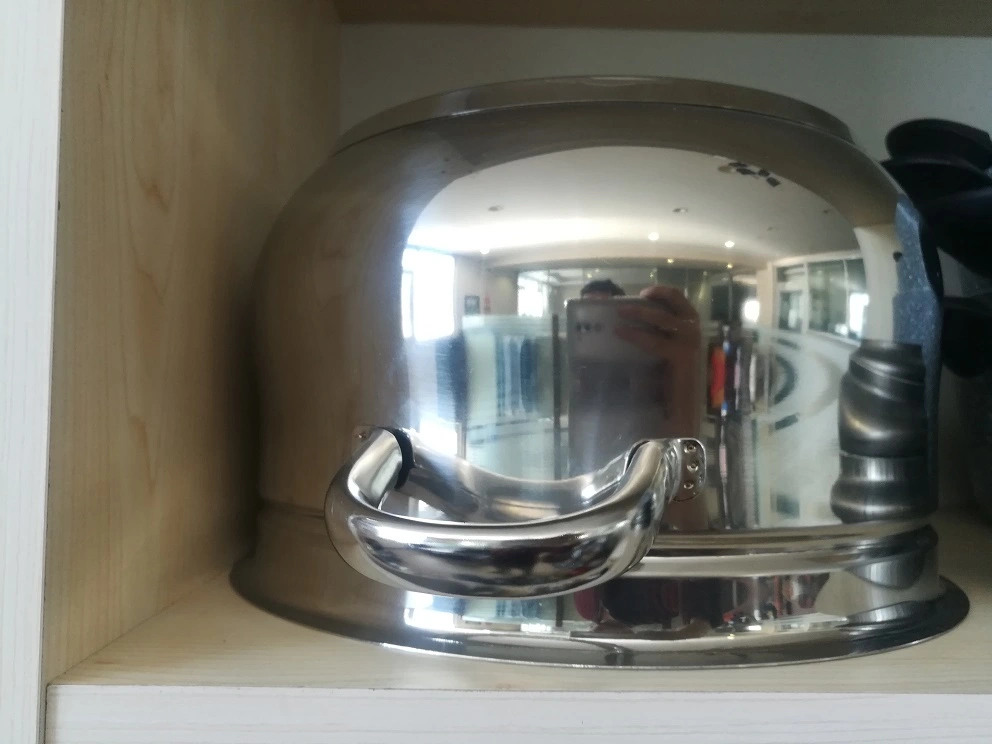
Categories
Machinery

Cylindrical Buffing Machine

Cylindrical Buffing Machine

Cylindrical Buffing Machine: A Polishing and Buffing Combo Machine combines two surface-finishing functions—polishing (removing surface imperfections and achieving a smooth texture) and buffing (enhancing surface gloss and shine)—into a single machine.

Key Components of Polishing and Buffing Machine

  1. Motor – Powers the rotating wheels, typically ranging from 0.5 to 2 HP depending on application.
  2. Polishing Wheel – Often made of abrasive materials like emery or silicon carbide, used for initial surface refinement.
  3. Buffing Wheel – Softer wheels made of cloth, felt, or other flexible materials, used with buffing compounds for shine.
  4. Work Rest/Support – Provides a platform to steady the workpiece.
  5. Speed Control (optional) – Allows for variable RPM to suit different materials and finishing stages.
  6. Dust Collector or Ports (optional) – Helps manage debris and metal dust during operation.

Applications

  • Metalworking: Removing rust, smoothing welds, and bright finishing on stainless steel, brass, aluminum, etc.
  • Woodworking: Polishing lacquered or painted wood surfaces.
  • Jewelry Making: Precision polishing of fine metal items.
  • Automotive: Chrome and aluminum trim restoration.
  • Plastics and Composites: Edge polishing and surface refinishing.

Advantages

  • Space Saving: One unit handles both polishing and buffing.
  • Cost-Effective: Eliminates the need to purchase two separate machines.
  • Increased Productivity: Enables quick change between operations.

A polishing and buffing combo machine is designed to handle both the initial surface smoothing (polishing) and the final high-gloss finishing (buffing) in a single unit. This type of machine typically features two spindles or shafts, each mounted with a different wheel—one abrasive polishing wheel and one softer buffing wheel made of cloth or felt. The machine is powered by an electric motor, often in the range of 0.5 to 2 horsepower, and may operate at fixed or variable speeds depending on the model. Operators use the polishing wheel to remove oxidation, scratches, or casting marks from metal, plastic, or wood surfaces. Once the desired smoothness is achieved, the workpiece is moved to the buffing wheel, often with an applied buffing compound, to bring out a mirror-like finish. These machines are commonly used in metal fabrication, automotive detailing, woodworking, jewelry making, and plastic finishing. Some models are equipped with safety features like spark guards, adjustable tool rests, and dust collection ports to enhance usability and maintain a clean workspace. Combo units are favored for their efficiency, cost-effectiveness, and the convenience of switching between two essential finishing operations without changing equipment.

Many polishing and buffing combo machines are bench-mounted, making them compact and suitable for workshops with limited space. Industrial-grade models may also be floor-mounted for handling larger or heavier workpieces. The choice of wheel materials and compounds plays a crucial role in achieving specific results—coarse abrasives for heavy material removal during polishing, and finer compounds like rouge or tripoli for delicate buffing tasks. Some machines allow quick wheel changes, which adds flexibility when working on different materials such as aluminum, stainless steel, brass, or even acrylics. Consistent maintenance, such as checking wheel wear and ensuring proper alignment, extends the machine’s life and ensures uniform surface finishes. Proper operator training is essential to avoid issues like over-polishing, which can deform soft metals, or under-buffing, which leaves dull surfaces. Overall, these combo machines provide a streamlined, dual-function approach to surface finishing that saves time and improves productivity across a variety of industries.

In practical use, the polishing and buffing combo machine becomes an integral part of any workshop that deals with surface refinement, whether in fabrication, restoration, or decorative finishing. When a raw or semi-finished part is introduced to the machine, it often carries imperfections such as tool marks, scale, oxidation, or general roughness from casting or machining. The first step is polishing—this is not just about aesthetics but also about preparing the surface for coating, plating, or further mechanical processing. The polishing wheel, usually embedded with abrasive particles or paired with an abrasive compound, cuts into the surface lightly to smooth out these defects. Depending on the material being worked on, wheels may vary from hard rubberized abrasives to cloth-based flaps loaded with cutting compounds.

Once the surface is polished to a uniform level of smoothness, the operator transitions to the buffing side of the machine. Buffing is a more delicate, finishing process aimed at producing a high-gloss, mirror-like shine. It uses soft, pliable wheels—often made from cotton, muslin, or felt—and relies on fine buffing compounds, which can range from brown tripoli for pre-polishing to white rouge or green chrome oxide for final finishing. The operator must be skilled in applying the right amount of pressure and compound to avoid burn marks, streaks, or surface inconsistencies. In many industries, this high-quality finish is not just for appearance—it reduces friction, enhances corrosion resistance, and in some cases, meets critical tolerance requirements for high-performance components.

The machine’s design often includes a solid base to minimize vibration, ensuring steady and safe operation. Some higher-end models come with variable speed controls, allowing the user to adjust the RPM to match the specific task. Lower speeds are ideal for buffing delicate materials, while higher speeds can be used during the polishing stage for quicker material removal. Safety considerations are also crucial—spark guards, eye shields, and even integrated vacuum ports for dust and particulate extraction are common in industrial setups. Metal polishing and buffing generate fine particles and heat, so proper ventilation and personal protective equipment (PPE) are essential for long-term use.

What truly sets the polishing and buffing combo machine apart from separate tools is its ability to streamline workflow. In production settings where throughput and finish quality must be balanced, having both functions integrated into a single station allows operators to move seamlessly from surface preparation to final finishing. This not only reduces equipment cost and space requirements but also cuts down on handling time, which in turn improves consistency and productivity. For small workshops, artisans, or businesses that work with metals, plastics, wood, or composite materials, this machine becomes a core asset—capable of delivering professional-grade finishes on everything from industrial parts to custom-crafted jewelry or automotive components.

Polishing and Buffing Combo Machine

Polishing and Buffing Combo Machine is a dual-purpose finishing tool designed to perform both polishing and buffing tasks using a single unit. It is widely used in workshops, manufacturing plants, fabrication facilities, automotive garages, and artisan studios where surface treatment is essential. The machine typically features two opposing spindles mounted on a shared motorized base—one side dedicated to polishing, and the other for buffing. This allows the user to transition quickly between the two processes without changing tools or workstations, significantly increasing efficiency and convenience.

In polishing, the goal is to remove surface imperfections such as scratches, oxidation, or tool marks by using an abrasive wheel or polishing compound. This process is aggressive compared to buffing and is usually the first step in surface preparation. Polishing wheels are typically made from harder materials like sisal, impregnated cloth, or synthetic abrasives. They can be combined with various grits of abrasive paste depending on the material being worked—whether it’s steel, aluminum, brass, plastic, or even wood.

Buffing follows polishing and serves as a finishing process. It’s more refined and aims to produce a high-gloss, reflective surface. Buffing wheels are softer, usually constructed from multiple layers of muslin, cotton, or felt. They’re used with buffing compounds—fine, wax-like substances that smooth and brighten the surface without removing significant material. Popular buffing compounds include white rouge (for light metals), green compound (for stainless steel), and red jeweler’s rouge (for soft, precious metals). Proper buffing not only enhances the visual appeal of a component but also improves surface characteristics such as corrosion resistance and cleanliness.

The motor driving the machine typically ranges from 0.5 HP to 2 HP depending on application requirements. Some models are single-speed, while more advanced machines offer variable speed control, which is crucial when switching between materials that require different surface treatments. High RPMs are ideal for aggressive polishing, while lower speeds are safer and more effective for delicate buffing operations.

Modern combo machines often include safety features such as spark guards, eye shields, and non-slip bases. Dust extraction ports or attachments for vacuum systems may also be present, especially in industrial models, as both polishing and buffing generate fine dust and debris that must be controlled to protect both the operator and nearby equipment. Additionally, adjustable tool rests are usually provided to support the workpiece during operation and reduce operator fatigue during extended use.

From a functional perspective, the polishing and buffing combo machine is a highly efficient solution for anyone needing to process metal, plastic, or wood components to a refined finish. It is valued not just for its space-saving design but for its ability to provide consistent and high-quality results. Industries that benefit from this machine include metal fabrication, automotive restoration, aerospace, woodworking, jewelry production, and even consumer electronics repair. Its versatility makes it one of the most practical finishing machines in any multi-material workshop.

The polishing and buffing combo machine continues to stand out in industrial and artisan settings due to its adaptability, ease of use, and the quality of surface finish it can provide. In a typical workflow, operators appreciate the seamless transition from polishing to buffing without the need to interrupt their process or reposition the workpiece between machines. This uninterrupted workflow not only saves time but also helps maintain uniformity in finish, especially on pieces that require consistent surface characteristics across multiple faces or parts. For example, in automotive restoration, chrome parts like bumpers or trim are often polished to remove pitting or discoloration before being buffed to a mirror-like shine. Similarly, in metal fabrication shops, welders and machinists use combo machines to clean up weld seams or machined surfaces before final finishing, enhancing both appearance and performance of the component.

The machine’s effectiveness depends heavily on the choice of wheel and compound combinations. For instance, a coarse polishing wheel combined with a heavy-cut compound is ideal for removing deep scratches or oxidation on hard metals like stainless steel, while a soft buffing wheel with a fine rouge compound is better suited for bringing out a reflective finish on softer materials such as aluminum or gold. Knowing how to match the right wheel, compound, and speed to the material is essential for achieving professional results. This level of control becomes especially valuable in fields like jewelry making or precision engineering, where surface quality has both aesthetic and functional importance.

Beyond its operational features, the polishing and buffing combo machine also contributes to workplace efficiency by consolidating two essential finishing functions into one compact footprint. This is particularly beneficial in smaller workshops where space and budget may not allow for multiple standalone machines. It reduces setup time, minimizes movement between tools, and simplifies maintenance routines, as the user only has to service one motor and one frame. In terms of durability, most commercial-grade combo machines are built with heavy-duty cast iron or steel housings, sealed bearings, and industrial-grade motors to withstand long hours of continuous use. These rugged designs are crucial in production environments where downtime can be costly.

Operator safety and ergonomics are also important considerations in the design and use of these machines. Since both polishing and buffing produce dust, heat, and sometimes sparks, machines are often equipped with shrouds or guards to contain debris, and many allow connection to external dust collection systems. Proper lighting, workpiece support, and non-slip bases also contribute to safer operation. Users are typically trained to wear protective gear, including safety glasses, gloves, and sometimes respirators, particularly when working with fine powders or toxic materials.

Overall, the polishing and buffing combo machine represents a balance of power, precision, and practicality. Whether used for industrial part finishing, fine metalwork, or decorative surface treatment, it provides a reliable and versatile solution that meets the needs of both high-volume operations and custom fabrication shops. Its dual-functionality not only enhances workflow and finish quality but also offers a smart investment for those seeking long-term value and consistent performance in surface finishing tasks.

In continuous operation, the polishing and buffing combo machine plays a critical role in quality assurance, especially where visual appeal and surface integrity are directly tied to product value. This is particularly evident in industries such as aerospace, medical device manufacturing, and high-end consumer goods, where even minor surface flaws can disqualify a part from being accepted. The machine allows for close control over the finishing process, which is vital in environments that demand tight tolerances and repeatable results. By adjusting variables like wheel hardness, compound abrasiveness, motor speed, and pressure applied, skilled operators can fine-tune the outcome to meet highly specific standards. The versatility of the machine extends further when additional accessories are introduced—such as tapered spindles for quick wheel changes, flexible shaft attachments for precision detailing, or specialized jigs for handling complex geometries and delicate parts.

From an economic standpoint, this machine offers both direct and indirect benefits. Directly, it reduces capital expenditure since a single unit performs two processes. Indirectly, it enhances labor productivity by reducing idle time between stages of surface preparation. A worker using a combo machine can complete more parts per hour compared to setups that require moving between separate stations or waiting for other machines to become available. Furthermore, as this tool becomes a central part of production flow, it can be easily incorporated into lean manufacturing systems or continuous improvement programs. The consistency it delivers allows for more accurate scheduling, fewer reworks, and higher customer satisfaction due to the improved finish quality of the end product.

The machine’s relevance also extends into educational and training environments. In technical schools, vocational programs, and maker spaces, combo machines are often used to teach students the fundamentals of surface finishing. Because they combine two essential techniques, they allow learners to understand the complete process flow—from material preparation to final polish—without needing a suite of equipment. This helps build foundational skills while encouraging safe and efficient work habits. Students can experiment with different materials and finishes, gaining insight into how small adjustments in speed, pressure, or compound can lead to dramatically different results. These lessons are invaluable for future careers in machining, fabrication, restoration, and design.

In artisan and craft settings, particularly among metal sculptors, custom knife makers, or furniture builders, the polishing and buffing combo machine becomes a creative tool as much as a technical one. Here, surface finish is not just about function or standardization—it’s part of the product’s identity. Whether aiming for a soft satin sheen on a wooden edge, a deep reflective polish on a custom blade, or a subtly aged patina on a brass fixture, this machine supports a wide range of artistic expressions. The ability to switch quickly between aggressive material removal and delicate final touches allows artisans to bring their visions to life with both efficiency and craftsmanship.

Over time, the durability of the combo machine pays off. With proper maintenance—such as regular cleaning, lubrication of moving parts, replacement of worn wheels, and occasional motor servicing—it can last for decades, becoming a reliable fixture in the workshop. Many users even customize or upgrade their machines with aftermarket parts like extended shafts, upgraded motors, or precision rests to better suit their specific workflow. This adaptability, combined with its dual-purpose design, cements the polishing and buffing combo machine as an enduring staple in both industrial and creative environments.

Angle Buffing Machine

Buffing Grinder Machine

An Angle Buffing Machine is a specialized power tool designed for polishing and buffing surfaces using a rotating abrasive or soft wheel mounted at a right angle to the motor shaft. Unlike standard bench-top or straight-shaft polishing tools, the angle buffing machine features a compact, angled head that allows operators to work on vertical, contoured, or hard-to-reach surfaces with greater control and flexibility. It’s widely used in automotive detailing, metal fabrication, construction, shipbuilding, and maintenance work where surface refinement must be performed in tight or awkward spaces.

The tool resembles an angle grinder in form and function but is optimized for polishing and buffing rather than cutting or grinding. Most models are handheld and powered either electrically or pneumatically. The head, usually set at 90 degrees to the body, holds a spindle or arbor onto which various buffing pads, wool bonnets, foam discs, or abrasive flap wheels can be attached using quick-change systems or threaded mounts. The rotation of the head combined with the angled configuration allows the user to apply consistent pressure across uneven or vertical surfaces such as car panels, stainless steel tanks, pipes, weld seams, and even interior corners of fabricated structures.

The motor in an angle buffing machine typically operates between 1,000 and 3,000 RPM, and many models offer variable speed control to suit different materials and compounds. Lower speeds are essential when working with heat-sensitive surfaces like plastics or paint, while higher speeds may be used for tougher polishing jobs on metal. The tool is often equipped with ergonomic handles, trigger locks, and soft starts for safety and comfort during prolonged use.

Angle buffing machines can be paired with a variety of buffing compounds depending on the material and desired finish—coarse compounds for initial polishing, and finer rouges for high-gloss buffing. In automotive use, for example, detailers use these machines with foam pads and polishing compounds to remove swirl marks, oxidation, and light scratches from painted surfaces. In marine and industrial environments, they are essential for cleaning and restoring stainless steel, aluminum, or coated surfaces subjected to harsh weather and chemicals.

Their portability and versatility make angle buffing machines ideal for on-site work, touch-ups, or maintenance tasks where bench machines are impractical. With proper training and care, they deliver professional-level finishes and are a key tool for anyone working in surface restoration or finishing.

The angle buffing machine continues to be a crucial tool in both professional and hobbyist settings where precision surface finishing is required in challenging or confined spaces. Its right-angle head configuration makes it especially useful for working on irregular geometries, edges, vertical planes, and interiors of structural components where straight or bench-mounted machines cannot reach effectively. For instance, in automotive refinishing, the angle buffing machine is commonly used on contoured body panels, bumpers, and tight areas around mirrors or trim, providing smooth transitions and high-gloss finishes without risking damage to surrounding parts. The angled design also makes it easier to maintain a steady polishing line across vertical surfaces, which is difficult to achieve with flat tools or orbital polishers.

Because it is a handheld tool, operator skill plays a significant role in the final finish quality. Users must learn to apply consistent pressure and maintain the correct angle and movement pattern to avoid issues such as holograms, swirl marks, or overheating of the surface. Variable speed control is an important feature in this context, as it allows the operator to tailor the machine’s performance to the material and stage of the buffing process. Lower speeds may be used to spread compound evenly or to perform finishing passes, while higher speeds are more appropriate for cutting back oxidation or leveling minor scratches. The use of speed-adjustable machines also minimizes the risk of burning through paint or soft coatings, which is a common concern with fixed-speed tools.

The range of attachments available for angle buffing machines adds to their versatility. Depending on the application, users can switch between wool pads for aggressive compounding, foam pads for fine polishing, or microfiber heads for ultra-fine finishing. In metalwork, users might employ abrasive non-woven discs to clean welds or remove oxidation before switching to cloth buffing wheels for a polished shine. The ability to swap out heads quickly means that a single tool can handle multiple stages of finishing without interruption. This modularity makes it highly efficient for professionals who need to maintain productivity while achieving superior surface quality.

In industrial environments such as shipbuilding, railcar fabrication, or pipeline maintenance, angle buffing machines are used to prepare metal surfaces for coating or inspection. Surfaces like aluminum bulkheads, steel hulls, or stainless steel piping require a specific degree of smoothness and cleanliness to meet technical and safety standards. The portability of the angle buffing machine allows technicians to move easily across large structures and perform work directly on-site, reducing the need for disassembly or transport of heavy components. This mobility is also valuable in maintenance settings, where equipment may need to be refurbished or retouched in place, such as in HVAC systems, tanks, or heavy machinery frames.

In more delicate or artistic applications, like musical instrument restoration or architectural metalwork, the angle buffing machine enables highly controlled work on complex or ornamental surfaces. The operator can carefully maneuver the tool around curves, ridges, or recesses to remove tarnish, smooth seams, or enhance luster without flattening detail or causing damage. Artists, conservators, and custom fabricators often rely on the angle buffing machine for this level of tactile precision, as it bridges the gap between coarse grinding tools and fine hand polishing.

Durability and ergonomics are key to long-term use, especially in professional settings where the tool might run for hours at a time. High-quality angle buffing machines are built with reinforced gear housings, sealed bearings to resist dust and moisture, and insulated motors that can handle continuous duty without overheating. Ergonomic design features such as vibration-dampening handles, compact head profiles, and lightweight body construction contribute to reduced user fatigue and more stable handling. Safety features, including soft-start mechanisms, electronic overload protection, and adjustable guard systems, are becoming standard in modern models, enhancing both usability and operator protection.

Ultimately, the angle buffing machine is not just a convenience but a necessity for any work environment that demands consistent, high-quality finishes in complex or confined spaces. Its combination of power, portability, and precision makes it a go-to solution across industries—from car detailing and metalworking to marine maintenance and fine craftsmanship. With proper technique, maintenance, and selection of accessories, it delivers professional-level results that rival more stationary equipment, while offering unmatched flexibility and control. Would you like recommendations on specific models or guidance for selecting pads and compounds for a certain type of material or finish?

As the demand for surface perfection continues to rise across industries, the angle buffing machine is becoming increasingly refined in terms of technology, materials, and performance features. Manufacturers now offer machines with digital speed displays, programmable settings, and intelligent load sensors that adjust torque output based on the resistance encountered during use. These features enhance both the precision and safety of the tool, especially in environments where surface finish standards are tightly regulated, such as aerospace or medical manufacturing. Digital control also allows more consistent performance over extended polishing sessions, reducing the variability that can occur due to operator fatigue or changing surface conditions.

Cordless versions of angle buffing machines have also emerged, thanks to advancements in lithium-ion battery technology. These portable units give users full freedom of movement without sacrificing much in terms of power or run time. In field maintenance, such as on wind turbines, large vehicles, or outdoor pipelines, this mobility can be crucial. While corded machines still dominate in terms of continuous heavy-duty use, cordless versions are gaining ground rapidly, especially in situations where convenience, accessibility, or safety (e.g., avoiding tripping hazards) are primary concerns.

The environmental and workplace health aspects of buffing and polishing are also gaining attention. Angle buffing machines often operate in environments where dust, metal particles, or compound residue are released into the air. These fine particulates pose both respiratory and cleanliness challenges. As a result, many industrial users now integrate dust shrouds, attach vacuum hoses, or work within ventilated booths. Proper personal protective equipment—including respirators, eye protection, gloves, and hearing protection—becomes essential, especially during extended use. Additionally, the compounds used with these machines have evolved to include water-based or low-residue formulas that are safer for the operator and easier to clean from the finished surface.

From a training perspective, the angle buffing machine is relatively easy to learn, but mastering it takes time. Novices often start with practice panels or scrap pieces to develop a feel for the right pressure and motion. Over time, skilled users learn to “read” the sound, vibration, and visual cues from the tool and the workpiece, adjusting their technique instinctively. For companies training multiple employees, this consistency in results becomes critical to maintaining product quality. Some manufacturers now offer training programs, demo units, and even simulator-based systems to accelerate the learning curve and improve safety.

Repair and maintenance of angle buffing machines are generally straightforward. Most models are designed with accessible brush housings, gearboxes, and motor components, making it possible to replace worn parts like carbon brushes, bearings, or power cords without sending the unit out for service. Keeping the machine clean—especially the spindle and venting system—is essential to maintaining its lifespan. If the machine becomes unbalanced due to uneven pad wear or misalignment, it can cause excessive vibration and reduced control, so regular inspection is a good practice. For industrial users, establishing a preventative maintenance routine helps ensure uptime and extends the life of both the machine and consumables.

In terms of innovation, some angle buffing machines are now incorporating orbital motion in addition to rotary action, blending the benefits of rotary and dual-action polishers. This hybrid movement reduces the risk of heat buildup and surface swirl, making the tool more forgiving for users and safer for delicate finishes like clear coats or polished plastics. These tools are especially popular in detailing and finishing work where surface perfection is critical but the risk of overworking an area must be minimized. They represent a natural evolution of the traditional angle buffing machine, pushing the limits of what’s possible with a handheld surface finishing tool.

The longevity and relevance of the angle buffing machine ultimately stem from its ability to adapt to new materials, new processes, and evolving user needs. Whether in the hands of a seasoned professional restoring a classic car, a technician polishing a turbine blade, or an artist finishing a hand-crafted sculpture, this tool continues to offer a blend of control, power, and versatility that few others can match. It remains a bridge between raw fabrication and final presentation, turning unfinished surfaces into polished, functional, and often beautiful results. Would you like to go into detail about compound selection for specific finishes or how to adapt the machine for curved or textured surfaces?

Polishing Cabinet Buffing Machine

Mirror Finish Polishing

Polishing Cabinet Buffing Machine is a specialized equipment designed to facilitate safe, controlled, and efficient polishing and buffing operations within an enclosed space. These machines typically consist of a cabinet or booth where the polishing and buffing processes take place, often equipped with one or more buffing wheels, abrasive pads, or brushes, a motor, and integrated systems for dust collection. They are commonly used in industries that require precise surface finishing of small to medium-sized components, such as jewelry manufacturing, electronics, metalworking, and automotive detailing. The primary advantage of a polishing cabinet buffing machine lies in its enclosed design, which helps contain debris, reduces exposure to hazardous materials, and minimizes environmental contamination.

The cabinet typically features transparent viewing panels made from durable acrylic or tempered glass, allowing the operator to monitor the workpiece while maintaining a safe distance from the moving parts. The interior of the cabinet is equipped with buffing wheels or abrasive pads mounted on motor-driven spindles, which rotate at varying speeds depending on the model. These spindles can accommodate different sizes and types of buffing wheels, ranging from coarse to fine materials such as wool, cotton, or felt, which are ideal for different stages of the polishing process. In many cases, the user can switch between polishing and buffing wheels to progressively refine the surface finish, from initial material removal to high-gloss final polish.

A key feature of the polishing cabinet buffing machine is its integrated dust and fume extraction system. Polishing and buffing generate fine dust and debris, particularly when working with metals like aluminum or stainless steel, or with certain composites. These particles can pose health risks when inhaled or cause a mess in the workplace. To mitigate this, polishing cabinet machines are equipped with powerful suction fans or vacuum systems that remove airborne particles from the cabinet, funneling them into filters or external collection bins. This feature is essential for maintaining a clean, safe working environment, especially in compliance with workplace health and safety standards.

These machines are typically designed for ease of use, with access doors or glove ports allowing the operator to insert their hands into the cabinet without opening it, thus maintaining a sealed environment. Glove ports enable precise control over the workpiece, and the compact design of the machine helps in controlling the work area’s lighting and dust levels. The interior often includes adjustable shelves or tool supports, providing convenience for setting the workpiece at the ideal height and angle for the operator.

The buffing cabinet is typically made of sturdy metal, such as steel or aluminum, to provide durability and stability during operation. Some higher-end models also include advanced features like built-in lighting, vibration-dampening components, and optional accessories such as polishing compounds or sprays, which can be applied directly to the workpiece while it is being buffed. These compounds can further enhance the polishing process, especially when working with materials that require a high-gloss finish, such as precious metals, glass, or acrylics.

The polishing cabinet buffing machine is especially valuable in high-precision fields where surface finish quality is critical. In jewelry manufacturing, for example, these machines allow for a meticulous, controlled polishing process that produces a flawless shine on rings, necklaces, bracelets, and other pieces without damaging the delicate details. In automotive applications, such as buffing chrome trim or headlight lenses, the cabinet helps achieve an even, smooth finish that enhances the appearance of the part while also providing a layer of protection against oxidation.

Overall, a polishing cabinet buffing machine provides a controlled, efficient, and safe solution for precision polishing and buffing tasks. The enclosed design ensures both safety and cleanliness, while the versatility in buffing wheel and compound options allows the user to adapt the machine for different materials and finishes. Its application spans a wide range of industries, making it an essential tool for professionals seeking high-quality surface finishes in a secure, effective manner.

The polishing cabinet buffing machine remains an essential tool in environments where precise, high-quality finishes are required. Its enclosed nature offers distinct advantages, not only for the operator’s safety but also for maintaining consistency and cleanliness in the workspace. The ability to control the working environment inside the cabinet makes it easier to handle intricate parts and delicate materials without worrying about contaminants or exposure to harmful polishing compounds and dust. This makes it particularly beneficial in fields like jewelry design and restoration, where intricate detailing and high-shine finishes are a hallmark of quality. The dust and debris removal system ensures that any fine particles produced during the process are efficiently extracted, improving air quality and reducing the risk of cross-contamination or scratches on the workpiece. The machine’s ability to maintain a stable, clean environment also extends the life of polishing wheels and reduces the need for frequent tool changes, as the buildup of abrasive material is minimized.

Another key aspect of these machines is the ability to easily adjust the polishing parameters. Many models come with variable-speed motors, allowing users to tailor the speed of the buffing wheels to suit the material being worked on. Softer materials, like aluminum or plastics, require slower speeds to avoid overheating or gouging, while harder metals like stainless steel might benefit from faster rotation to remove oxidation or achieve a mirror-like finish. These adjustments allow for greater control over the polishing process, ensuring that the finish meets the required standards without risking damage to the workpiece. The variety of polishing pads and wheels that can be used in these machines also makes them versatile, catering to different stages of the polishing process, from coarse grinding to fine polishing and buffing.

The compact and efficient nature of the polishing cabinet buffing machine also makes it ideal for shops or operations with limited space. Instead of needing multiple stations for different polishing tasks, a single polishing cabinet can handle a variety of materials and finishes, making it both a space-saver and a cost-effective solution. Operators can easily switch between tasks without needing to move the workpiece to different machines or setups. This efficiency is particularly valuable in high-volume production environments, where time and workflow are critical.

In addition to its functionality, the ergonomic design of the cabinet makes it easier for operators to perform long hours of buffing and polishing without experiencing undue strain. The ability to perform tasks through glove ports or from an upright position, with the workpiece secured at an optimal height, minimizes operator fatigue and increases overall comfort. This is an important consideration for environments where the operator’s well-being is a priority, such as in workshops with heavy or continuous polishing work.

From a safety perspective, the polishing cabinet buffing machine reduces the risk of accidents that can occur when using traditional open-bench polishing tools. With the operator enclosed within the cabinet, the likelihood of contact with moving parts is minimized. Additionally, the design often includes built-in safety features such as automatic shutoff mechanisms in case of overloads or unexpected malfunctions.

With regular maintenance, a polishing cabinet buffing machine can provide years of reliable service. Routine tasks like cleaning dust filters, inspecting buffing wheels for wear, and ensuring proper lubrication of moving parts keep the machine running smoothly. Many models also allow for easy replacement of worn-out components, such as brushes or wheels, helping to keep downtime to a minimum. This focus on durability and longevity is a significant benefit for businesses that rely on these machines for high-quality finishes on a daily basis.

In terms of application, polishing cabinet buffing machines are not limited to just one sector. Whether it’s polishing automotive parts, fine metal products, glassware, or even medical devices, these machines can adapt to a variety of materials and finishes. The precision offered by the enclosed, controlled environment allows for fine adjustments to the polishing process, ensuring that every part that leaves the machine meets the high standards required by the industry.

As industries continue to prioritize safety, efficiency, and quality, the polishing cabinet buffing machine remains a cornerstone tool for achieving professional finishes. Its ability to handle multiple polishing and buffing tasks while ensuring a safe, clean, and ergonomic workspace makes it a valuable asset in both small workshops and large-scale production facilities. Would you like more insights into choosing the right cabinet buffing machine for specific tasks or comparing models with unique features?

The versatility of polishing cabinet buffing machines extends to various industries, each benefiting from the machine’s ability to handle complex finishing tasks with precision and control. In industries such as aerospace, automotive manufacturing, and metalworking, where component appearance, durability, and surface integrity are paramount, polishing cabinet machines provide consistent, high-quality results. For example, in aerospace, precision-polished metal parts must meet stringent quality standards for both aesthetic and functional reasons, such as ensuring resistance to corrosion or minimizing drag. Polishing cabinet buffing machines allow technicians to fine-tune their processes to meet these exacting specifications, ensuring that even the smallest components, such as turbine blades or fuel fittings, are polished to perfection.

In automotive production, these machines are invaluable for detailing car parts, especially chrome and metal trim, which often require an immaculate finish to meet customer expectations and industry standards. The ability to maintain a controlled environment while polishing intricate surfaces, like grills, rims, or emblems, allows for a high-gloss finish without the risk of contamination from dust or compound residues. Polishing cabinet buffing machines help achieve the signature gleam that’s so important in vehicle aesthetics, from luxury cars to motorcycles.

In the field of medical devices, the quality of the finish on surgical instruments, implants, and prosthetics is crucial not only for the appearance but also for hygiene and functionality. Polishing cabinet buffing machines ensure that these parts are free from imperfections that could harbor bacteria or cause mechanical failure. For example, the smooth, polished finish on stainless steel surgical tools is not just about looks; it’s also essential for reducing the risk of infection and facilitating easier cleaning and sterilization. The precision of these machines makes them ideal for achieving such results.

Another major benefit of polishing cabinet buffing machines is their ability to handle delicate or highly specialized materials, such as gemstones, ceramics, and glass. In industries like jewelry design or glass manufacturing, where the material is often fragile or prone to scratching, the controlled environment inside a polishing cabinet helps prevent unintended damage. The ability to apply a controlled, even buffing action to such materials is essential for creating stunning finishes without compromising their integrity. In jewelry making, for instance, polishing cabinets are used to bring out the brilliance in metals like gold, platinum, and silver, as well as to perfect the clarity and shine of diamonds or other gemstones.

The adoption of polishing cabinet buffing machines in small-scale and artisan settings is also on the rise. Artists and small manufacturers who focus on custom or high-end products often rely on these machines for their precise control and ability to produce professional-grade finishes. Whether creating custom furniture, restoring antiques, or designing bespoke jewelry, the cabinet buffing machine offers a way to ensure consistent, high-quality results. It’s particularly useful in small shops where a single machine can handle multiple materials and finishes, providing versatility without requiring an array of separate machines.

As technology advances, polishing cabinet buffing machines are becoming more integrated with digital systems that allow for greater automation and efficiency. Some high-end models are now equipped with programmable controls, allowing users to input specific parameters such as speed, pressure, and compound type, creating a more automated process that can be repeated consistently. This reduces the potential for human error and ensures that each workpiece receives the exact same level of attention, making the polishing process both more reliable and efficient. This shift towards automation is especially beneficial in high-volume production settings, where consistency is crucial and reducing manual labor can lead to significant time and cost savings.

The environmental impact of polishing operations is another important consideration, and polishing cabinet buffing machines are increasingly designed with eco-friendly features. Many modern models incorporate filtration systems that reduce the amount of waste and pollutants released into the environment. For instance, some units use water-based or biodegradable compounds instead of traditional petrochemical-based polishing pastes, reducing the environmental footprint of the polishing process. Additionally, advancements in energy efficiency are helping to minimize power consumption, making these machines more sustainable for long-term use.

For businesses looking to optimize their operations, integrating polishing cabinet buffing machines with existing workflows is relatively straightforward. These machines can often be incorporated into automated production lines, where multiple parts need to be polished in a consistent and repeatable manner. The compact, enclosed design of the polishing cabinet makes it easy to fit into tight spaces or alongside other finishing equipment. Integration with dust extraction and filtration systems ensures that the entire polishing process remains clean and compliant with workplace health and safety regulations.

In terms of future trends, polishing cabinet buffing machines will continue to evolve, incorporating even more advanced technology such as touch-screen interfaces, real-time monitoring systems, and the ability to work with an even broader range of materials. These machines will continue to support industries that require precision and high-quality finishing, all while enhancing the overall safety, ergonomics, and environmental sustainability of the polishing process.

Whether for industrial, commercial, or artisanal use, polishing cabinet buffing machines represent a perfect balance of safety, efficiency, and high-performance. They provide a secure and controlled environment for achieving flawless finishes, protecting both the operator and the environment. With the right model, maintenance practices, and polishing compounds, businesses can ensure that they achieve the best possible surface finishes on a variety of materials, from metals to plastics and ceramics.

Would you like to explore more about specific polishing compounds or materials suitable for these machines, or perhaps recommendations on optimizing a polishing cabinet for your particular needs?

Industrial Buffing Machine

Dual-Station Polishing Machine

An industrial buffing machine is a high-powered tool used in commercial and industrial settings for polishing and finishing surfaces of various materials, such as metal, wood, plastic, and stone. These machines are designed to perform heavy-duty buffing tasks that require consistent, high-quality results across large quantities of parts or products. Industrial buffing machines are essential in sectors such as metalworking, automotive manufacturing, aerospace, and woodworking, where surface finishing is a critical step in ensuring the quality and appearance of the final product.

Industrial buffing machines come in a wide variety of configurations, from standalone bench-mounted models to larger, more complex systems that integrate multiple stages of polishing or are part of automated production lines. The main components typically include buffing wheels or pads, a powerful motor that drives the rotation of these wheels, and often an adjustable stand or frame to hold the workpiece at the correct angle for polishing. Many models are also equipped with speed controls, allowing operators to adjust the machine’s rotation speed based on the material being worked on and the stage of the buffing process.

The design of industrial buffing machines varies depending on the specific requirements of the task. For example, machines used for polishing large metal parts might feature larger buffing wheels, while those for finer detailing or finishing work might use smaller, more precise wheels. Some models are designed for specific applications, such as polishing automotive parts like chrome trim or buffing metal molds used in manufacturing, while others are more versatile and can handle a range of materials and finishes.

One of the key features of an industrial buffing machine is its motor, which is typically much more powerful than that found in smaller, consumer-grade polishers. These motors can be variable-speed to allow greater control over the polishing process. High RPMs (revolutions per minute) are ideal for quickly removing material or for aggressive polishing, while lower RPMs allow for finer finishing and a smoother, more reflective finish. For example, in metalworking, high speeds are used to cut back oxidation or remove rust, while slower speeds are ideal for fine polishing or creating a mirror-like finish.

Buffing wheels or pads are the heart of the industrial buffing process. These wheels come in a variety of materials such as cotton, felt, wool, and synthetic fibers, and are often treated with polishing compounds or abrasives to enhance their performance. For heavy-duty work, a stiff wheel might be used to remove oxidation or scratches, while softer, more delicate wheels are employed for final finishing. In some cases, the type of buffing compound used will depend on the material being polished. For example, a metal polish or abrasive compound might be used for polishing steel, while a gentler compound might be employed for polishing plastics or softer metals like aluminum or brass.

Industrial buffing machines also tend to feature built-in dust collection systems to manage the debris created during the buffing process. These systems help maintain a cleaner workspace and improve air quality by collecting the dust, metal filings, and polishing compound particles that are generated. This is particularly important in industries where worker health and cleanliness are a priority. In addition, the dust collection systems can improve the longevity of the buffing wheels and other components, as excessive dust buildup can lead to overheating or clogging of parts.

In larger-scale industrial operations, buffing machines may be integrated into automated production lines. These systems allow for consistent and repeatable polishing of high volumes of parts. In these setups, the buffing machine may be programmed to work with robotic arms or conveyors that feed parts into the polishing station, minimizing the need for manual handling and significantly improving efficiency. Such systems can be customized for specific products, enabling companies to meet high throughput requirements without sacrificing quality.

Safety is a major consideration with industrial buffing machines due to their high-speed rotation and potential hazards associated with polishing compounds and airborne debris. Machines are often equipped with safety guards or covers to prevent accidental contact with the buffing wheels. Operators are usually required to wear personal protective equipment (PPE), such as safety goggles, gloves, ear protection, and respiratory masks, especially in environments where fine dust or fumes may be present. Many machines also have emergency stop features and automatic shut-off mechanisms in case of overloads or malfunctions.

In terms of maintenance, industrial buffing machines require regular care to ensure that they continue to operate efficiently and effectively. This includes checking the motor and electrical components for wear, ensuring the buffing wheels are properly balanced, and cleaning or replacing the dust collection filters. Buffing wheels should be inspected for damage or wear, as a worn-out wheel can lead to uneven polishing or potential damage to the workpiece.

Given their durability, power, and ability to handle large-scale tasks, industrial buffing machines are a fundamental tool in many sectors. They ensure that products are finished to a high standard, improving both their appearance and functionality. In industries such as automotive, aerospace, metalworking, and manufacturing, these machines are vital for achieving the precision and surface finishes required for both aesthetic and practical purposes

Industrial buffing machines are designed to tackle demanding polishing tasks that require both power and precision. They are ideal for finishing large quantities of parts or high-volume production environments, where consistency and quality are essential. These machines can be used on a variety of materials, including metals, plastics, ceramics, glass, and composites, making them highly versatile in industries ranging from automotive and aerospace to metalworking, electronics, and manufacturing. The ability to perform both heavy-duty polishing and fine detailing allows these machines to meet the needs of a wide array of applications, such as restoring the shine to automotive parts, polishing turbine blades, buffing metal fixtures, or refining jewelry components.

What sets industrial buffing machines apart from consumer-grade tools is their robustness and ability to handle continuous operation without compromising on performance. High-speed motors, ranging from 1 horsepower (HP) to upwards of 10 HP or more, provide the necessary power for large-scale polishing tasks. This ensures that operators can maintain optimal production speeds while achieving a high-quality surface finish on parts of various sizes and shapes. In some cases, the motor’s power is supplemented by advanced speed control systems, allowing operators to dial in the perfect RPM for each task.

A key component of an industrial buffing machine is its buffing wheel, which can be tailored to specific applications based on the type of material and the level of finish required. Buffing wheels are available in different materials, such as cotton, wool, felt, or synthetic fibers, and they can be impregnated with various polishing compounds to enhance their cutting or finishing ability. For example, a wool wheel might be used for aggressive polishing tasks that involve removing oxidation or rust from metal parts, while a cotton wheel might be used for finer finishing or creating a mirror-like finish on softer metals or plastics.

Many industrial buffing machines come equipped with additional features such as oscillating or dual-action buffing motions. These motions are designed to reduce the risk of swirl marks or uneven finishes, especially when working with delicate or highly reflective surfaces. The oscillating motion helps to distribute the polishing compound more evenly and ensures that the surface being worked on receives consistent attention, which is especially important in industries that require a flawless finish, such as the luxury automotive or jewelry sectors.

Dust extraction and fume control systems are integral to industrial buffing machines, especially in environments where harmful particles or fumes might be released during the buffing process. These systems help capture and remove the fine dust, metal shavings, or polishing compound residues generated, which could otherwise contaminate the work area or pose a health risk to operators. Many machines feature integrated vacuum ports or separate dust collection units that help keep the workspace clean and safe. These systems are particularly important in industrial settings where maintaining air quality is essential for compliance with safety regulations.

Given the heavy-duty nature of these machines, maintenance is crucial to ensure their long-term reliability and performance. Regular inspection and replacement of buffing wheels, motor brushes, and polishing compounds are necessary to keep the machine running smoothly. Additionally, ensuring that the dust collection system is functioning properly, and that no debris or particles are clogging the system, helps prevent overheating and ensures efficient operation.

The integration of industrial buffing machines into production lines can further optimize efficiency in large-scale manufacturing environments. These machines can be automated to feed parts through buffing stations via conveyor belts or robotic arms, reducing manual labor and increasing throughput. In automated setups, buffing machines can be programmed to execute precise polishing sequences, ensuring consistency across large batches of parts. This level of automation not only speeds up production but also enhances product quality by reducing the risk of human error during the polishing process.

As industries continue to prioritize automation, sustainability, and efficiency, industrial buffing machines are also evolving to meet these needs. Many modern machines are designed to be energy-efficient, reducing power consumption and operational costs. Furthermore, advancements in buffing compounds, such as the development of water-based or eco-friendly formulas, help minimize the environmental impact of polishing tasks.

In conclusion, industrial buffing machines are indispensable in industries where high-quality, consistent surface finishes are a must. They are powerful, versatile, and designed for continuous operation, making them an essential part of many manufacturing and finishing processes. With the right maintenance, proper use of buffing compounds, and regular inspection, these machines can deliver exceptional results for a wide range of applications, from metal polishing to automotive detailing and beyond. Whether used in high-volume production environments or for specialized tasks, industrial buffing machines ensure that every part is finished to the highest standards. Would you like to explore specific manufacturers or features of these machines?

The industrial buffing machine’s ability to deliver consistent results in high-demand environments is one of the key reasons it remains indispensable across various sectors. As industries continue to evolve and the need for precision and efficiency grows, the role of buffing machines will likely expand, with advanced technologies integrating seamlessly into automated processes. One area of development is the incorporation of smart technology and sensors into buffing machines. These features can monitor the condition of the buffing wheels, track the pressure applied to the surface, or even detect anomalies in the polishing process. Real-time feedback allows operators to adjust settings or perform maintenance before issues arise, improving uptime and reducing the risk of defects in the final product.

For example, certain modern industrial buffing machines are now equipped with vibration sensors or load monitoring capabilities that can detect when a buffing wheel is out of balance or when the motor is under strain. This early detection can help prevent damage to the machine and the workpieces, ensuring that any issues are addressed before they result in costly downtime or quality control problems. Such advancements in machine diagnostics not only improve the efficiency of polishing operations but also help with predictive maintenance, which can be crucial for operations with high output demands.

Moreover, the flexibility of industrial buffing machines in accommodating a range of materials continues to make them invaluable. From polishing steel and aluminum to working on more delicate materials like plastics, ceramics, or glass, these machines can be tailored with various buffing compounds, pads, and wheels designed to suit the specific requirements of each material. This adaptability allows businesses to handle a wide array of products, from heavy machinery parts to intricate jewelry pieces, all while maintaining the high standards of finish that are expected in industries like automotive, aerospace, medical device manufacturing, and even art restoration.

With advancements in automation, the integration of buffing machines into larger manufacturing lines becomes increasingly seamless. Automated systems allow for continuous, high-speed polishing of parts, reducing manual labor and increasing throughput. This integration often includes conveyor belts or robotic arms that move parts into position for polishing, and some machines can even be programmed to apply specific pressure and speed settings to different parts of the product, ensuring a customized finish for each piece. Such systems are essential for industries like automotive manufacturing, where large quantities of parts need to be polished to the same high standard, or in industries where precision is paramount, such as the aerospace sector.

Environmental concerns and sustainability continue to be important factors in industrial manufacturing, and the development of more eco-friendly buffing systems is becoming increasingly relevant. For instance, using biodegradable or water-based polishing compounds helps reduce the environmental impact of the buffing process. Additionally, dust extraction and air filtration systems are being improved to capture even finer particles, further minimizing environmental exposure to harmful chemicals or metal dust. Some companies are also developing machines that use less energy and produce less noise, addressing both environmental and workplace safety concerns.

Another factor that makes industrial buffing machines essential is their role in quality control. In industries like metalworking, where the aesthetics and functionality of the parts are critical, the buffing process plays a key role in eliminating imperfections such as scratches, rust, or oxidation. Buffing ensures that the finished products have a smooth, even surface, free from defects that could compromise their performance or appearance. High-quality surface finishes can also improve the durability and longevity of products, particularly in industries that require resistance to corrosion or wear, such as the marine or oil and gas sectors.

In woodworking, where polishing and buffing are often done to enhance the natural appearance of the wood and provide a protective finish, industrial buffing machines play an essential role in producing furniture, cabinetry, or decorative items. The buffing process ensures that the wood surfaces are smooth and polished, free from marks or imperfections, and properly sealed. Similarly, in the electronics industry, where components need to have smooth, contaminant-free surfaces for optimal performance, buffing machines are used to polish parts like circuit boards, casings, and connectors, ensuring they meet industry standards for both function and appearance.

As industries move towards more precision-driven and technology-enhanced manufacturing, the role of industrial buffing machines will likely become even more integral. Machines with integrated software and advanced control systems could further reduce human error and improve efficiency, allowing for more complex and intricate finishes. In addition, the incorporation of artificial intelligence and machine learning could help optimize polishing processes by learning from past operations and adjusting settings automatically for the best results.

In summary, industrial buffing machines are continually evolving to meet the increasing demands for precision, efficiency, and sustainability. These machines are critical in industries where surface finish plays an important role in both aesthetics and functionality. From high-volume production settings to specialized craftsmanship, industrial buffing machines ensure that products meet the highest standards of quality and finish. As technology advances, these machines will only become more sophisticated, offering even more benefits in terms of automation, customization, and eco-friendliness. Would you like further details on any specific models or recommendations based on particular industrial needs?

Dust Collection Buffing Machine

Automatic Load/Unload Polishing Machine

dust collection buffing machine is a specialized tool designed for polishing and buffing tasks that includes an integrated dust extraction system to capture the debris generated during the buffing process. These machines are widely used in industrial settings, particularly in woodworking, metalworking, automotive manufacturing, and other industries where the polishing process can produce a significant amount of dust, shavings, or particulate matter.

The primary function of a dust collection buffing machine is to ensure a cleaner, safer work environment by capturing and removing harmful dust, polishing compounds, and metal shavings as they are created. This is especially important in environments where dust particles can pose health hazards to workers, create safety risks (e.g., explosions from flammable dust), or interfere with the quality of the finished product.

In a typical dust collection buffing machine setup, the machine is equipped with a high-efficiency dust collection system that either integrates directly with the buffing tool or operates as a standalone component. The dust extraction system usually consists of several key elements:

  1. Dust Hood or Shroud: A collection hood or shroud is positioned around the buffing wheel to capture the dust and particles generated during the polishing process. These hoods are strategically designed to enclose the work area around the wheel, minimizing the release of dust into the surrounding workspace.
  2. Vacuum System: The dust captured by the hood is then directed through a vacuum system. This system can be built into the buffing machine itself or connected to an external dust collector via flexible hoses. The vacuum system pulls the dust from the work area and transports it to a filtration unit, where it is safely contained.
  3. Filtration System: After the dust and debris are sucked into the vacuum system, they are passed through a filtration unit. Depending on the machine’s design, this filtration unit can include multi-stage filters to remove even fine particles. Common filter types include HEPA filters (high-efficiency particulate air filters), carbon filters for capturing fumes, or cyclone separators that remove larger debris before the air enters finer filters.
  4. Dust Collector or Hopper: The cleaned air is released back into the room, and the dust and debris are collected in a dust collector or hopper. The hopper or dust bin needs to be emptied regularly to prevent it from becoming clogged, and it may be equipped with a system to alert operators when it’s full.
  5. Workpiece Area or Booth: In some machines, especially those used in high-precision or sensitive applications, the dust collection system is integrated into an enclosed booth or workpiece area. This setup isolates the polishing process from the surrounding environment, providing an even cleaner working atmosphere and better control over the dust.

The inclusion of a dust collection system in a buffing machine offers several benefits:

  • Improved Air Quality: By removing harmful dust particles from the air, these machines help maintain a healthier work environment. In industries like woodworking, metalworking, and automotive, where the polishing process can release fine particulate matter, keeping the air clean is crucial for protecting workers’ respiratory health.
  • Enhanced Workplace Safety: Dust accumulation can create fire hazards, particularly when flammable polishing compounds or metals are involved. A dust collection buffing machine minimizes this risk by preventing the buildup of dust, which can otherwise become a source of ignition.
  • Better Product Quality: Dust and debris in the environment can contaminate the polishing process and lead to imperfections in the finished surface. A dust collection system helps prevent these contaminants from interfering with the finish, ensuring that parts and products are polished to a high standard without the risk of dust marks or scratches.
  • Cleaner Workspace: A cleaner work environment not only improves health and safety but also boosts productivity. Operators can work in a more organized and less cluttered environment, which reduces the time spent cleaning up after each task and keeps the workspace more efficient.
  • Compliance with Regulations: In many industries, dust collection is not just a best practice; it’s often a legal requirement. For example, in the woodworking industry, dust is considered a significant health hazard, and businesses must comply with OSHA (Occupational Safety and Health Administration) standards or similar regulations. Using a dust collection buffing machine ensures compliance with these regulations and minimizes the risk of penalties.

In industries like metalworking and automotive production, buffing machines with integrated dust collection systems help to keep surfaces free of contaminants that could affect the quality of polished parts. In metalworking, buffing processes often involve the use of abrasives, which can create fine metal dust. This dust, if not controlled, can result in contamination or affect the surface quality of the finished product. Similarly, in automotive production, using a dust collection system ensures that polishing compounds and fine particles are safely contained, preventing damage to delicate components like mirrors, trim, and bodywork.

In woodworking, dust collection is crucial because the fine dust from sanding, buffing, and polishing wooden surfaces can contain wood fibers that are harmful when inhaled. A dust collection buffing machine helps mitigate the health risks associated with these fine particulates, ensuring that the workspace remains clean and the air quality is improved.

Moreover, the integration of eco-friendly features into modern dust collection systems is becoming more prevalent. Newer systems are designed to be more energy-efficient, reducing the overall environmental impact of polishing operations. This can include optimized vacuum motors that consume less electricity or using sustainable materials for filters that are both effective and biodegradable.

The incorporation of smart technology into dust collection buffing machines is also on the rise. Some machines now feature real-time monitoring and diagnostics, where sensors can detect the level of dust buildup in the filtration system, alerting operators when maintenance is needed or when the filters need to be changed. This ensures that the dust collection system operates at peak efficiency, reducing the chances of downtime and maintaining the cleanliness of the work environment.

In conclusion, a dust collection buffing machine offers a comprehensive solution for industries that require high-quality surface finishes while ensuring that the work environment remains safe, clean, and efficient. The integration of powerful vacuum systems, efficient filtration, and dust collection technologies not only helps protect workers’ health but also ensures the smooth and flawless results that are expected in precision industries. Would you like more details on specific models or features of dust collection systems for buffing machines?

Dust collection buffing machines are a critical advancement in industrial polishing, combining the functions of polishing and dust management into a single, cohesive system. These machines are engineered to perform high-quality buffing while effectively capturing the dust and debris generated during the process, which is essential for maintaining both the quality of the finished product and the safety of the workspace. In industries where dust and particulate matter can negatively impact both product quality and worker health, having an integrated dust collection system helps to address these concerns while boosting operational efficiency.

The dust collection system works by drawing in the airborne particles that are created as the buffing wheel makes contact with the workpiece. This debris can range from polishing compounds to metal shavings, wood dust, or plastic particles, depending on the material being worked on. Without a dust collection system, these particles can scatter into the air and the surrounding environment, potentially contaminating the work area, affecting air quality, and increasing the risk of fire or health issues. In industries like woodworking, metalworking, and automotive, these particles are not only an inconvenience but also a serious safety hazard.

A properly designed dust collection system in a buffing machine includes a powerful suction system that pulls in dust from the immediate work area. This is often achieved by using a combination of collection hoods or shrouds that surround the buffing wheels and vacuum suction hoses that connect to a central dust collector. The dust is pulled through the system, where it passes through various filters designed to trap fine particles, ensuring that only clean air is returned to the workspace. In addition to improving air quality, this system reduces the need for manual cleaning, making the workspace less cluttered and more productive. Moreover, the collection of dust is especially important in environments with high-speed buffing operations, where large amounts of dust are generated quickly.

These machines are also crucial for maintaining the quality of the finish on the workpieces. When dust and other debris are allowed to remain in the environment, they can settle back onto the workpieces and cause imperfections in the final polished surface. Even small particles can lead to scratches, streaks, or uneven finishes. By collecting dust at the source, a dust collection buffing machine helps to preserve the integrity of the surface finish, ensuring that parts remain free from contaminants. This is particularly important in industries such as automotive manufacturing, where high-quality finishes are essential for both aesthetic appeal and functional performance.

Beyond improving air quality and product finishes, dust collection systems in buffing machines also play a significant role in ensuring workplace safety. In industries like woodworking, where wood dust is produced, the dust can be highly combustible, posing a fire risk. Similarly, metal dust, especially from materials like aluminum or steel, can present an explosion hazard if not properly controlled. A dust collection buffing machine helps mitigate these risks by capturing potentially hazardous dust and preventing it from accumulating in the workspace. In doing so, it also helps businesses comply with safety regulations and health standards, which may require the installation of dust extraction systems in certain industries to prevent harmful exposure.

Maintenance of dust collection buffing machines is an essential aspect of keeping them functioning efficiently. Over time, dust can build up in the system, especially in the filters and collection hoppers, so routine cleaning and maintenance are required to keep the system running at peak performance. Regularly checking and replacing filters, ensuring that the vacuum system is not clogged, and keeping the buffing wheels in good condition are all part of maintaining the machine and ensuring optimal dust collection. Many modern dust collection systems are equipped with sensors and monitoring systems that notify operators when the system is nearing full capacity or when the filters need to be replaced, making maintenance easier and reducing downtime.

Another advantage of these machines is their ability to help businesses reduce their environmental footprint. By capturing and containing dust, companies can reduce the amount of airborne particulate matter that is released into the environment. This is particularly relevant in industries where regulations surrounding air quality are stringent, such as woodworking or metalworking. Dust collection buffing machines contribute to a cleaner and more sustainable manufacturing process by preventing the release of harmful pollutants and minimizing waste.

The design and technology of dust collection systems are also evolving to be more energy-efficient and user-friendly. Modern machines often feature adjustable suction power, allowing operators to fine-tune the level of dust extraction based on the material and type of buffing work being done. This helps optimize energy consumption and ensure that the dust collection system is working as efficiently as possible. Additionally, quieter models are available, reducing the noise level in the workspace, which can improve the working conditions for operators and comply with noise reduction regulations.

The incorporation of smart technologies in dust collection buffing machines is also an emerging trend. Some machines now include digital controls, allowing for more precise operation and real-time monitoring of the dust collection process. These systems can track the efficiency of the dust extraction, alerting operators to any potential issues such as blockages or system malfunctions. This real-time data helps ensure that the dust collection system is always functioning optimally, improving both the quality of the work and the safety of the environment.

Overall, a dust collection buffing machine is an essential piece of equipment for many industries that rely on polishing and buffing processes. Whether it is a standalone unit or part of a larger automated production system, the inclusion of a dust collection system enhances safety, improves air quality, and ensures that finished products meet the highest standards of quality. By reducing the environmental impact, increasing workplace safety, and ensuring that the buffing process is efficient and precise, these machines provide a comprehensive solution for a wide range of industrial applications.

The continued development of dust collection buffing machines is driven by the increasing demand for higher productivity, enhanced worker safety, and improved environmental standards. As industries strive to streamline operations, reduce costs, and meet sustainability goals, the role of these machines has evolved beyond simple dust extraction. Modern dust collection buffing machines are now integrating sophisticated features that increase their effectiveness in a variety of applications.

For instance, advancements in filter technology have significantly improved the efficiency of dust extraction. High-efficiency particulate air (HEPA) filters, commonly used in these machines, can capture even the finest dust particles, which are often invisible to the naked eye but can still cause serious health risks if inhaled over time. Additionally, multi-stage filtration systems are now commonly used to enhance dust collection by first removing larger particles and then capturing the finer, more hazardous dust. This progression has made dust collection systems more reliable and effective, ensuring a cleaner and healthier work environment for operators.

The automation of dust collection systems is another notable trend. Many modern machines are designed to integrate seamlessly with automated production lines. For example, buffing machines with dust collection systems are increasingly being equipped with sensors that automatically adjust the suction power depending on the type of material being polished or the volume of dust being generated. This smart functionality helps to ensure optimal dust removal without wasting energy or resources. Automated monitoring systems can also track the condition of the filters, alerting operators when maintenance is needed or when filters should be replaced, thus reducing manual intervention and preventing system failures.

In addition to these technological advancements, compact and modular designs have made dust collection buffing machines more versatile and adaptable. Compact models are especially beneficial for businesses with limited space or smaller production setups, while modular designs allow for greater flexibility. These systems can be customized to meet specific production needs by adding or removing components like extra filtration stages, larger collection hoppers, or additional suction points. This flexibility ensures that businesses can tailor the machines to their operations, whether they are working with large-scale, high-volume manufacturing or smaller, more specialized tasks.

As sustainability becomes a growing concern across all industries, dust collection systems are being designed to reduce their environmental footprint. One such development is the integration of energy-efficient motors and components that reduce electricity consumption while maintaining high performance. Some dust collection buffing machines now use variable speed drives that adjust the motor’s power depending on the workload, further optimizing energy usage. By reducing the machine’s overall energy demand, companies can lower operational costs and contribute to their sustainability goals.

In the automotive industry, the integration of robotic arms with dust collection buffing machines is becoming more common. These robotic systems can be programmed to automatically position parts for buffing and polishing, while the dust collection system ensures that the area around the robot stays clean. This combination of robotics and dust collection enhances the precision and consistency of the buffing process, reduces the need for manual labor, and ensures that parts are finished to a high standard without contamination. This automated setup can be particularly useful for mass production of automotive components, where consistency is key and high-quality surface finishes are essential.

For industries involved in aerospace manufacturing, where polishing and buffing are critical for both the aesthetics and functionality of parts, dust collection systems play an integral role in maintaining a pristine work environment. Aerospace components require precise surface finishes to ensure both performance and safety. A dust collection buffing machine designed for this purpose helps ensure that the surfaces of critical components, such as turbine blades, wing parts, and fuselage sections, remain free from contamination or defects caused by dust particles. By capturing these particles before they settle onto the workpieces, the dust collection system plays a vital role in meeting the stringent standards set for aerospace components.

Woodworking is another industry where dust collection buffing machines are essential. Wood dust, if left uncontrolled, can create a host of problems, including respiratory issues for workers, increased risk of fire, and environmental contamination. By integrating dust collection into the buffing process, these machines not only improve the quality of the wood finish but also ensure compliance with health and safety regulations. In high-end woodworking, such as furniture making or musical instrument crafting, where fine surface finishes are necessary, dust collection buffing machines help create a pristine surface that is free from wood fibers and other contaminants.

In industries that work with metal finishes, such as precision machining or jewelry manufacturing, dust collection buffing machines are indispensable for both quality control and safety. Metals like aluminum, steel, and brass can produce fine dust particles during the buffing process, and the presence of this dust in the air can pose a health risk if not properly managed. By using an effective dust collection system, businesses can ensure that workers are not exposed to harmful metal particles while also maintaining a high standard of finish on the metal surfaces.

Furthermore, in industries like electronics manufacturing, where the cleanliness of the parts is critical for functionality, dust collection buffing machines are often used to polish and buff components such as circuit boards, connectors, and housings. Even a small amount of dust or debris can interfere with the performance of electronic devices, so it is essential to keep the work environment free of dust. These machines help ensure that all parts are polished to the highest standard and free from contaminants that could compromise their performance.

As companies continue to prioritize operational efficiencyworker safety, and environmental responsibility, the demand for dust collection buffing machines that offer both high-performance polishing and effective dust extraction will only continue to grow. Whether for large-scale industrial applications or specialized craftwork, these machines provide a versatile, efficient solution that meets the needs of modern manufacturing and finishing operations. With ongoing advancements in technology, design, and sustainability, dust collection buffing machines will remain an essential tool in a wide range of industries, ensuring cleaner environments, safer workplaces, and higher-quality finished products.

Wet Buffing Machine

Dual-Station Polishing Machine

wet buffing machine is a specialized type of polishing equipment that uses water or a liquid coolant during the buffing or polishing process to reduce friction, manage heat, and enhance the finish of the workpiece. Unlike dry buffing, which generates a lot of heat and can create airborne dust, wet buffing incorporates water or an oil-based compound that cools the surface and collects dust and debris, creating a cleaner and safer environment for both the operator and the workpiece.

Wet buffing machines are used in various industries, including metalworking, automotive, jewelry, and woodworking, and are ideal for applications where heat buildup can damage the material or when a smoother, more refined surface finish is required. These machines are especially useful in processes such as polishing metal, plastics, ceramics, or composites, where the material needs to retain its integrity without being overheated.

The key benefits of wet buffing machines include:

  1. Reduced Heat Generation: When buffing a surface, the friction between the buffing wheel and the material can generate significant amounts of heat. This heat can cause problems like discoloration, warping, or even material damage. Wet buffing minimizes heat buildup by cooling the surface as it is being polished, preventing heat-related damage and ensuring that the material stays in optimal condition.
  2. Improved Surface Finish: The presence of a liquid coolant during the buffing process helps to achieve a finer, more polished surface. The liquid helps to lubricate the surface and the buffing wheel, reducing friction and minimizing the chances of scratching or marring the workpiece. As a result, the surface finishes produced by wet buffing are typically smoother and more even, which is particularly important in industries like jewelry and precision machining.
  3. Dust Control: One of the primary concerns with dry buffing is the creation of fine dust and debris that can contaminate the work environment. Wet buffing helps control this issue by trapping the dust in the liquid, reducing the amount of airborne particulates. This is particularly advantageous in industries where dust can be hazardous to health or affect the quality of the finished product. By capturing the dust, wet buffing machines help maintain a cleaner workspace and improve air quality, contributing to a safer work environment.
  4. Extended Tool Life: The use of liquid coolant in wet buffing helps extend the life of both the buffing wheel and the workpiece. The liquid prevents excessive wear on the wheel and minimizes the chance of the material becoming overheated or damaged. The lubrication provided by the liquid can also prevent excessive friction, which can cause the wheel to wear down prematurely.
  5. Enhanced Material Protection: Wet buffing is particularly beneficial for sensitive or delicate materials that could be easily damaged by heat or excessive friction. For example, in industries like jewelry making, where precious metals and stones need to be polished, wet buffing helps preserve the material’s integrity while achieving a brilliant finish. The controlled environment created by the liquid coolant ensures that the materials are polished effectively without risking damage.
  6. Better Control Over Buffing Process: Wet buffing allows operators to have more control over the polishing process. By adjusting the flow of coolant, operators can manage the speed and temperature of the buffing wheel more precisely, ensuring that the material is polished to the desired specifications. This level of control is crucial in industries that require high precision and quality, such as aerospace or medical device manufacturing.

Wet buffing machines typically consist of several core components:

  1. Buffing Wheel: This is the main tool for polishing the surface of the material. It is usually made from cloth, felt, or a similar soft material and is designed to spin at high speeds. During the buffing process, the wheel is coated with polishing compounds or treated with the liquid coolant to achieve the desired finish.
  2. Liquid Coolant Reservoir: Wet buffing machines are equipped with a tank or reservoir that holds the liquid coolant, which can be water or a water-based solution. The liquid is directed to the buffing wheel and the workpiece, where it helps cool the material and carry away any debris or dust generated during the process.
  3. Pump and Delivery System: A pump circulates the liquid coolant from the reservoir to the buffing wheel. This system is typically designed to ensure that a consistent flow of liquid is delivered to the wheel, maintaining an even cooling effect during the buffing process.
  4. Suction or Filtration System: In many wet buffing machines, a suction or filtration system is included to capture the liquid and any debris created during the polishing process. This helps to maintain a clean work environment and ensures that the liquid coolant can be reused or filtered for efficiency.
  5. Workpiece Holding System: Wet buffing machines often include a system for holding or positioning the workpiece securely while it is being polished. Depending on the machine’s design, this can be a manual or automatic setup, ensuring that the workpiece is properly aligned with the buffing wheel for optimal results.
  6. Control Panel: Modern wet buffing machines typically include a control panel that allows operators to adjust settings such as wheel speed, coolant flow rate, and pressure. Some machines also have built-in monitoring systems that can provide real-time data on the buffing process, ensuring consistency and quality in the finish.

While wet buffing machines provide many advantages, there are some considerations to keep in mind:

  1. Maintenance: The liquid coolant used in wet buffing systems can become contaminated over time with debris and polishing compounds. This requires regular maintenance, including draining and replacing the coolant, as well as cleaning the filtration and suction systems to ensure that the machine operates efficiently.
  2. Slipperiness: The use of liquid coolant can create a slippery work environment. Operators should take care to ensure that the floor around the wet buffing machine is properly cleaned and maintained to reduce the risk of accidents.
  3. Water Quality: In some cases, the quality of the water used in the coolant can impact the effectiveness of the buffing process. Impurities in the water can cause streaks, spots, or residue to be left on the workpiece, requiring additional cleaning after polishing.
  4. Cost: Wet buffing machines are generally more expensive than their dry counterparts due to the added components like the coolant reservoir, pumps, and filtration systems. However, the additional cost is often justified by the superior finish and increased safety they offer.

Wet buffing machines are an essential tool in industries that require precise, high-quality surface finishes. From polishing metal to fine-tuning the appearance of delicate materials, these machines provide enhanced control, improved safety, and better environmental conditions for operators. Whether in manufacturing, jewelry making, or precision machining, wet buffing machines offer a versatile and effective solution for a wide range of polishing needs.

Wet buffing machines are widely used in industries that require a smooth, polished finish on their workpieces, while also ensuring that the materials remain free from contaminants like dust and debris. These machines are designed to incorporate water or liquid-based coolants into the buffing process, providing several significant advantages over traditional dry buffing methods. The liquid helps manage the heat generated during polishing, which can be crucial when working with sensitive materials that could be damaged by excessive friction. Additionally, it serves as a dust control mechanism, capturing particles and preventing them from becoming airborne, which reduces environmental and health risks. This is particularly important in environments where the dust could be hazardous, such as in woodworking or metalworking operations.

One of the key features of wet buffing machines is their ability to maintain a cool surface temperature during polishing. Buffing generates heat, which, if uncontrolled, can lead to a variety of problems, such as surface deformation, discoloration, or even material distortion. Wet buffing mitigates this risk by using coolants that are applied directly to the workpiece and the buffing wheel. This cooling action ensures that the surface temperature remains stable, allowing for high-quality finishes without the worry of heat-related damage.

Another important benefit of wet buffing is the superior surface finish it provides. The presence of liquid lubricants during the buffing process reduces friction between the buffing wheel and the material, allowing for a smoother, more refined finish. This makes wet buffing especially useful for materials that require a high level of surface precision, such as in the production of jewelry, fine metalworking, and the aerospace industry. The liquid also helps prevent scratches, streaks, or other imperfections that may arise from dry buffing, delivering a flawless, mirror-like finish.

Furthermore, wet buffing machines contribute to a cleaner and healthier work environment. The liquid coolant captures dust and debris that are generated during the polishing process, preventing them from becoming airborne. This eliminates the need for constant cleaning and reduces the risk of respiratory issues for workers who are exposed to dust on a regular basis. It also minimizes the potential for contaminants to settle back onto the workpiece, which could negatively affect the final finish. The built-in dust control system helps ensure that the work area remains clean and safe, and it can improve air quality in the workplace, leading to fewer health concerns for employees.

Wet buffing is particularly advantageous when working with softer or more sensitive materials. For example, materials such as aluminum, brass, or certain plastics are prone to heat buildup and can become damaged or discolored if subjected to excessive friction. By using a wet buffing machine, manufacturers can achieve a high-quality polish while preserving the integrity of these materials. This is especially crucial in industries like automotive or electronics manufacturing, where precision and surface integrity are key.

These machines also offer the benefit of extended tool life. Buffing wheels can wear down more quickly when used for dry buffing due to the increased friction and heat. Wet buffing reduces the wear and tear on the wheel, extending its lifespan and making the process more cost-effective in the long run. Additionally, the coolant helps to prevent the buffing wheel from clogging with polishing compounds, which can compromise its effectiveness and require more frequent maintenance.

A critical component of wet buffing systems is the filtration and recirculation of the coolant. Since the coolant often becomes contaminated with debris and polishing compounds during use, many wet buffing machines are equipped with filtration systems that remove impurities from the liquid. This ensures that the coolant remains effective throughout the process and can be reused, reducing waste and operational costs. Some machines even feature automated systems that monitor the condition of the coolant and alert operators when it’s time for a change. This can help streamline maintenance and prevent disruptions to production.

Another consideration when using wet buffing machines is the potential for water-related issues, such as rust or corrosion on non-stainless steel components. Therefore, manufacturers often design wet buffing machines with materials that resist rust and corrosion to ensure durability and longevity. In some cases, machines may feature additional drainage systems to prevent the accumulation of stagnant water, which can also help minimize the risk of corrosion.

While wet buffing machines are generally more complex than dry buffing machines due to their added components—such as the coolant reservoir, pumps, and filtration systems—the benefits they offer in terms of finish quality, safety, and efficiency often outweigh the added complexity. Moreover, technological advancements in the design of wet buffing machines have made them more user-friendly, with features like digital control panels, automated coolant monitoring, and easy-to-access maintenance points. These features not only improve the machine’s performance but also reduce the operational effort required to keep the system running smoothly.

For businesses that are highly concerned with sustainability, wet buffing machines can be a great asset. By minimizing airborne pollutants and reducing the wear and tear on tools, these machines contribute to both a cleaner work environment and lower operational costs over time. Furthermore, because they often recycle the coolant, these systems reduce water usage and waste, making them an eco-friendly choice for businesses seeking to reduce their environmental footprint.

In summary, wet buffing machines are essential tools for industries that require high-quality, precise, and clean polishing processes. Whether for metalworking, woodworking, or other applications, these machines provide several distinct advantages, such as reducing heat generation, improving surface finish, controlling dust, and extending tool life. The incorporation of advanced filtration and recirculation systems ensures that wet buffing machines operate efficiently, while also maintaining a safe and clean working environment for operators. As technology continues to evolve, wet buffing machines are becoming even more effective, versatile, and user-friendly, making them an invaluable part of many modern manufacturing processes.

Wet buffing machines continue to evolve as advancements in materials, design, and automation reshape the manufacturing and finishing industries. With a growing emphasis on sustainability, efficiency, and the increasing demand for high-quality surface finishes, these machines are integrating even more sophisticated features that make them indispensable in many sectors.

One of the notable developments is the integration of advanced monitoring systems that provide real-time feedback on the performance of the buffing process. These systems can track parameters such as coolant flowwheel speedpressure applied, and surface temperature to ensure that the machine operates at optimal conditions. For example, if the coolant flow is too low or the temperature rises above a certain threshold, the system can alert operators and automatically adjust the settings to prevent potential issues. This level of automation not only improves the consistency and quality of the finished product but also reduces the chances of human error.

Another significant trend is the adoption of multi-functional buffing systems that combine various processes, such as wet polishingdry buffing, and abrasive finishing, into a single machine. These all-in-one systems are designed to streamline production by reducing the number of machines required for different stages of the buffing or polishing process. For instance, a wet buffing machine may have interchangeable wheels or pads that can be used for different materials or finishes, allowing the operator to switch between processes without the need for a full equipment changeover. This versatility can significantly reduce downtime and increase production efficiency.

Moreover, robotic automation is making its way into wet buffing systems, particularly in high-volume industries such as automotive manufacturing or electronics production. Robotic arms equipped with buffing wheels and integrated with wet buffing systems can automatically handle the polishing and buffing tasks. These robotic systems can precisely position the workpieces, ensuring uniform polishing, while the integrated dust and coolant management systems ensure a clean and safe working environment. In addition to improving consistency, automation also frees up human operators to focus on more complex or strategic tasks, increasing overall productivity.

The rise of customizable buffing solutions is another development that has enhanced the utility of wet buffing machines. For instance, some manufacturers now offer machines that can be tailored to specific needs, such as buffing delicate materials or working with specialized polishing compounds. Customization options might include adjustable wheel speeds, specialized buffing pads, or even specialized coolant solutions designed for certain materials or finishes. These machines allow businesses to achieve the highest level of precision and efficiency, while also accommodating the diverse demands of various industries.

In sectors where cleanliness and contamination control are paramount, such as in pharmaceuticalsfood production, and biotechnology, wet buffing machines are being designed to meet stricter sanitary standards. These machines are made from materials that are resistant to corrosion and easy to clean, while their coolant systems are equipped with filtration systems that ensure no contaminants affect the workpieces. Additionally, some machines feature closed-loop systems that circulate coolant and prevent exposure to external contaminants, further improving the cleanliness of the process.

The integration of eco-friendly coolant options is also becoming more prevalent. Many manufacturers are moving away from traditional chemical-based coolants, which can be harmful to both the environment and human health, in favor of more sustainable alternatives. Water-based coolants that are biodegradable and less toxic to the environment are being increasingly used in wet buffing systems. Additionally, some machines are designed to handle the disposal or recycling of used coolants in an environmentally responsible manner, reducing waste and the overall environmental impact of the buffing process.

As industries increasingly focus on productivity and cost efficiency, manufacturers are developing wet buffing machines with higher throughput capabilities. These machines are designed to handle larger volumes of workpieces, while still maintaining the high-quality finishes that wet buffing is known for. Features like automated part handlingadjustable buffing speeds, and multi-stage polishing processes enable wet buffing machines to meet the demands of large-scale production runs without compromising on quality.

Furthermore, the importance of ergonomics in wet buffing machines cannot be overlooked. Many modern machines are being designed with operator comfort and safety in mind. Adjustable workstations, user-friendly interfaces, and noise reduction technologies are all integrated into the design to ensure that the buffing process is as comfortable and safe as possible for operators. Reducing the physical strain on workers and minimizing exposure to hazardous dust and debris not only improves the well-being of employees but also leads to better overall productivity.

In industries where high-precision finishes are required, such as aerospacemedical devices, and precision optics, wet buffing machines are essential for ensuring that each part meets the required specifications. The machines’ ability to control temperature and surface smoothness makes them invaluable in maintaining the structural integrity and aesthetic quality of highly detailed components. Additionally, the low-friction, controlled environment offered by wet buffing reduces the risk of introducing surface defects or imperfections, which is critical in these fields.

Lastly, maintenance and cost-effectiveness are always key considerations for businesses. With modern wet buffing machines, maintenance has become easier and more cost-effective due to the development of automated monitoring systems that can predict when maintenance is needed and alert operators in advance. This predictive maintenance minimizes downtime and reduces repair costs, leading to increased efficiency and longer machine lifespans. Additionally, by using recyclable coolants and integrating features that extend the life of consumables like buffing wheels, these machines can help businesses reduce operational costs over time.

In conclusion, wet buffing machines are crucial tools for industries that demand high-quality finishes, a clean working environment, and efficient production. With ongoing advancements in automation, customization, energy efficiency, and sustainability, these machines continue to evolve and meet the increasingly complex needs of modern manufacturing. Whether it’s for polishing delicate materials, achieving precise surface finishes, or improving worker safety, wet buffing machines offer significant advantages that make them indispensable in many industries.

Double Ended Buffing Machine

Dual-Station Polishing Machine

double-ended buffing machine is a type of polishing or buffing equipment that features two buffing wheels or heads, one at each end of the machine. This design allows operators to buff or polish multiple surfaces of a workpiece simultaneously or switch between different tasks without the need to reposition the workpiece. Double-ended buffing machines are often used in industries where high productivity, efficiency, and precision are required, such as in metalworking, automotive, jewelry, and woodworking.

These machines are versatile and can be used for a wide range of applications, from polishing metal parts to applying fine finishes to delicate materials. The double-ended design allows operators to complete a variety of tasks more efficiently compared to single-ended machines. For example, one end of the machine may be used for rough buffing with a coarser wheel or abrasive, while the other end may be set up with a finer wheel for final polishing. This enables quicker transitions between different polishing stages without having to switch out buffing wheels or adjust the machine.

Key Features and Benefits

  1. Increased Productivity: With two buffing wheels or heads, a double-ended buffing machine allows operators to work on two parts at once or use different types of wheels for various polishing processes. This helps save time and increases throughput in high-demand production environments, such as in manufacturing or large-scale metalworking operations.
  2. Dual Tasking: The ability to work with two different types of wheels (e.g., a coarse wheel and a fine wheel) on separate ends of the machine makes it possible to perform multiple polishing steps in a single pass. This versatility reduces the need for additional equipment and streamlines the polishing process, making it more efficient.
  3. Flexible Operation: Double-ended buffing machines can be equipped with different types of buffing wheels, pads, or brushes depending on the material being polished. This flexibility allows the same machine to be used for a wide range of applications, from heavy-duty metal polishing to fine finishes on delicate materials like wood, plastic, or glass.
  4. Reduced Downtime: Since operators can change between buffing heads without needing to stop the machine, downtime is minimized. The quick transitions between rough and fine polishing stages enhance the efficiency of the overall operation, particularly in industries where time is critical.
  5. Space Efficiency: Double-ended buffing machines are designed to accommodate two buffing heads within the same frame, making them space-efficient compared to having separate single-ended machines. This is especially useful in smaller workshops or manufacturing environments with limited space.
  6. Enhanced Safety: Many double-ended buffing machines come with safety features such as protective shields, dust collection systems, and adjustable speed controls. These features help protect the operator from flying debris, excessive dust, or overheating, making the work environment safer.
  7. Customization: The machine can be customized to fit the specific requirements of the operation. Buffing wheels of various sizes, materials, and hardness can be used, allowing for tailored results depending on the job. For instance, one wheel could be used for rough grinding, while the other is used for polishing with a finer compound.

Applications

  1. Metal Polishing: In industries like metalworkingautomotive, and aerospace, double-ended buffing machines are commonly used to polish metal parts such as automotive body panels, engine components, and industrial machinery. They are equipped with different buffing wheels or compounds to achieve both coarse and fine finishes on the same machine.
  2. Jewelry Making: For jewelers, these machines are ideal for achieving fine, mirror-like finishes on metal jewelry pieces. One end may use a coarse wheel to remove imperfections, while the other is used to apply a high-gloss finish, giving the jewelry its final, polished appearance.
  3. Woodworking: In the woodworking industry, double-ended buffing machines can be used to apply smooth, shiny finishes to wood products. Different buffing wheels can be used for rough sanding, polishing, and buffing, achieving smooth, glossy surfaces on furniture, cabinetry, and decorative wood pieces.
  4. Plastic PolishingPlastic manufacturers use double-ended buffing machines to achieve high-gloss finishes on plastic parts or components. The ability to use different types of buffing wheels helps prevent damage to softer materials like plastic while still providing a smooth, polished surface.
  5. Automotive Detailing: Double-ended buffing machines are frequently used in automotive detailing to polish vehicle surfaces. One end may be used for applying a rough compound to remove scratches and imperfections, while the other end is used for applying a finer compound to achieve a high-gloss, showroom finish.
  6. Glass and Ceramics: In industries working with glass or ceramics, double-ended buffing machines are used to polish the surface of glassware or ceramic tiles. The fine polishing process enhances the clarity and appearance of glass items, such as mirrors, windows, or glass sculptures.

Types of Buffing Wheels

Double-ended buffing machines can be fitted with a variety of buffing wheels to suit different materials and polishing requirements. Some common types of buffing wheels include:

  • Cloth Buffing Wheels: Typically used for general polishing and finishing, cloth wheels are soft and ideal for achieving a smooth, high-gloss finish.
  • Felt Buffing Wheels: Felt wheels are more rigid than cloth wheels and are often used for finer polishing or when applying compounds.
  • Abrasive Buffing Wheels: These wheels are used for more aggressive polishing and are typically used on harder materials or for removing surface imperfections.
  • Wire Brush Buffing Wheels: Wire brush wheels are used for cleaning and deburring surfaces, often in metalworking applications.

Considerations

  1. Power Requirements: Double-ended buffing machines typically require more power than single-ended models due to the dual motor setup. It’s important to ensure that the machine is compatible with the power supply of the workshop.
  2. Space and Footprint: While the double-ended design is space-efficient compared to having two separate machines, it still requires adequate workspace for proper operation, particularly if the machine is being used in a high-production setting with multiple operators.
  3. Dust and Debris: Buffing generates a significant amount of dust and debris, especially when working with abrasive wheels or polishing compounds. Ensuring that the machine has an effective dust collection system is essential for maintaining a clean and safe work environment. Some machines come with built-in dust collectors or can be connected to external dust extraction systems.
  4. Maintenance: Like any machinery, regular maintenance is essential to keep a double-ended buffing machine running smoothly. This includes checking the buffing wheels for wear, ensuring the motors are functioning correctly, and maintaining the coolant or lubrication systems.

In conclusion, double-ended buffing machines are powerful and efficient tools used across various industries for polishing, finishing, and refining the surfaces of materials. Their dual-wheel design increases productivity by allowing operators to perform multiple polishing steps simultaneously or use different types of wheels for different stages of polishing. Whether for metal, wood, plastic, or other materials, double-ended buffing machines provide a versatile and high-performing solution for a wide range of polishing applications.

Double-ended buffing machines continue to be a cornerstone in many industrial settings due to their efficiency and versatility. The ability to simultaneously operate two buffing heads or wheels allows for faster and more streamlined production, especially when dealing with high volumes of workpieces. These machines are particularly valuable in environments that require rapid transitions between different stages of the polishing process, reducing the time spent switching between machines or tools. As industries become more focused on optimizing productivity and reducing costs, double-ended buffing machines provide a significant advantage by allowing workers to handle multiple tasks in a single setup.

In addition to improving productivity, double-ended buffing machines also help maintain a high level of consistency and quality across a wide range of products. By using different buffing wheels or compounds on each end of the machine, operators can fine-tune the polishing process to achieve the desired finish for each type of material or workpiece. This level of customization is essential in sectors such as metalworking, jewelry making, or automotive detailing, where even the smallest imperfections can affect the final product’s appearance and performance. The flexibility to adjust the polishing stages and compounds on both ends of the machine ensures that each workpiece is polished with the right amount of pressure, speed, and consistency.

Another important benefit is the ergonomic design that many modern double-ended buffing machines offer. These machines often feature adjustable workstations, allowing operators to position the workpiece comfortably without unnecessary strain. The ability to customize the height or angle of the machine ensures that operators can work efficiently while reducing the risk of injury or fatigue. This is especially beneficial in high-volume environments where workers may spend long hours using the machine. The ergonomic setup, combined with the dual heads, ensures that workers can perform tasks without needing to constantly adjust their positions or the workpieces, leading to a more efficient and comfortable workday.

Furthermore, double-ended buffing machines can also incorporate advanced coolant systems or lubrication systems that enhance the polishing process. These systems not only help reduce heat buildup during polishing but also minimize friction, ensuring that the material being polished does not suffer from thermal damage or unwanted scratches. By keeping the surface cool and lubricated, these systems also help to extend the lifespan of both the buffing wheels and the workpieces themselves. The inclusion of coolant systems is particularly important when working with materials that are prone to overheating or warping, such as plastics or softer metals.

In terms of maintenance, double-ended buffing machines often have relatively low upkeep costs, especially when compared to other types of industrial equipment. With proper care, the buffing wheels can last for extended periods, and the machines themselves are built to endure the wear and tear associated with constant use. Regular cleaning and the replacement of worn-out components, such as buffing wheels or belts, are usually sufficient to keep the machine operating at peak performance. Additionally, many modern double-ended buffing machines come with built-in monitoring systems that track performance and alert operators to any issues before they lead to costly breakdowns. This predictive maintenance capability helps reduce downtime and ensures that production schedules are met without interruption.

From an environmental standpoint, double-ended buffing machines can contribute to more sustainable manufacturing processes. Many of these machines now feature energy-efficient motors and closed-loop coolant systems, which reduce the overall environmental footprint of the buffing process. By recycling coolant and using energy-efficient components, these machines help conserve resources and minimize waste, making them a more eco-friendly option for businesses looking to reduce their environmental impact. The dust collection systems, which capture debris and prevent it from becoming airborne, also contribute to cleaner air quality in the workplace, further promoting a safe and healthy environment for workers.

In industries that require precision finishes, such as aerospace or medical device manufacturing, double-ended buffing machines provide the necessary control to achieve exacting standards. The ability to use different wheel types and compounds for various stages of the process ensures that the final surface is smooth, uniform, and free of defects. In these applications, where the tolerance for imperfections is minimal, the versatility of a double-ended machine is essential in maintaining high standards of quality. The precise control over pressure, speed, and polishing compounds ensures that even the most intricate parts or delicate materials can be polished without compromising their structural integrity.

As technology continues to evolve, the integration of smart features into double-ended buffing machines is becoming increasingly common. These smart systems allow for enhanced control and monitoring of the buffing process. For instance, some machines now come equipped with digital displays that show real-time data about the polishing process, such as the speed of the wheels, the temperature of the workpiece, and the pressure applied. This data can be used to adjust settings dynamically, ensuring that each workpiece is polished to the highest standard. Additionally, some machines are now compatible with Internet of Things (IoT) technology, allowing operators to remotely monitor and control the machine via mobile apps or computers, which is especially useful in large production facilities with multiple machines in operation.

The continued development of robotic automation in buffing processes also plays a role in enhancing the capabilities of double-ended buffing machines. Robotic arms or automated systems can be integrated with the machine to handle workpieces, ensuring that each part is positioned and polished with the utmost precision. This automation not only increases the speed of the buffing process but also reduces the risk of human error, ensuring consistent and repeatable results with minimal intervention. For industries with large-scale production needs, robotic automation can drastically increase output while maintaining the quality of the finish.

In conclusion, double-ended buffing machines are an indispensable tool in various industries, offering a combination of productivity, precision, and versatility. Their ability to handle multiple polishing tasks simultaneously, coupled with advancements in automation and sustainability, makes them ideal for modern manufacturing environments. As industries continue to demand higher-quality finishes and more efficient processes, the role of double-ended buffing machines will only continue to grow, providing essential solutions for a wide range of applications. Whether it’s for metal, wood, plastic, or delicate materials, these machines provide the necessary features to achieve flawless surfaces while improving efficiency and reducing operational costs.

As the demand for high-quality finishes increases across a wide range of industries, double-ended buffing machines are likely to evolve further with more advanced features. One key area of development is the integration of artificial intelligence (AI) and machine learning to optimize the buffing process. With AI-powered systems, the machine could learn from the data it gathers during operation and adjust settings automatically to improve efficiency, reduce material waste, and enhance the quality of the final product. These systems could predict when a buffing wheel is becoming less effective and recommend maintenance or adjustments before a decline in performance occurs. This predictive capability could also extend to identifying when the polishing compound needs to be replenished or changed, helping to maintain a consistent finish throughout the production run.

Another trend is the use of advanced materials for buffing wheels and machine components. Manufacturers are experimenting with composite materialscarbon fiber, and diamond-coated wheels to extend the lifespan of the buffing heads and improve their effectiveness on harder or more delicate materials. For example, diamond-coated buffing wheels are particularly effective for polishing very hard surfaces, such as ceramicsstones, or titanium alloys, which are used in aerospace and medical devices. The use of these advanced materials enhances the overall precision and longevity of the machine, which is especially important in industries where quality control and performance are critical.

Additionally, energy efficiency continues to be a driving force in the design of double-ended buffing machines. As sustainability becomes a priority for many manufacturers, the need for energy-efficient equipment that consumes less power while maintaining high performance is more crucial than ever. Modern machines are incorporating features such as variable-speed motorsenergy-saving drives, and automatic shutdown systems that reduce power consumption when the machine is not in use. These improvements help companies meet both their production goals and environmental sustainability targets by lowering energy costs and reducing their carbon footprint.

As the industry moves toward greater automation, collaborative robots (cobots) are expected to play an increasingly important role in buffing operations. These cobots can work alongside human operators, taking on repetitive or physically demanding tasks, while still allowing humans to oversee the process and make adjustments as needed. Cobots equipped with buffing tools can work on one side of a workpiece, while the operator can focus on the other side, effectively increasing throughput without sacrificing quality. Moreover, since cobots are often designed to be easily programmable and flexible, they can be adapted for use in various stages of the polishing process, from rough buffing to final finishing.

Furthermore, the globalization of the manufacturing industry and the increased reliance on offshore production have prompted many companies to seek buffing machines that are adaptable to different types of workpieces and materials. Double-ended buffing machines, being versatile, are highly valued in these contexts because they can be used to handle multiple product types in a single production line. Whether it’s polishing automotive parts, consumer electronics, or industrial machinery components, double-ended machines offer manufacturers the ability to process diverse materials while maintaining high-quality finishes. This versatility is a key reason why they are commonly used in contract manufacturing and OEM production.

In line with the growing importance of precision engineering, future developments in double-ended buffing machines will likely focus on further enhancing the machine’s ability to deliver highly consistent results across a variety of material types and geometries. Advances in feedback systems such as force sensors or laser measurement technologies will enable the machine to adjust in real-time to subtle changes in the surface being polished. For example, sensors could detect changes in surface roughness or material hardness and automatically adjust the buffing speed, pressure, and wheel type to compensate for these variations. This would ensure that every workpiece, regardless of its size or complexity, receives the same level of attention and polish.

Moreover, digitalization in the form of cloud-based solutions could become an important feature of double-ended buffing machines in the future. By connecting the machines to cloud-based platforms, manufacturers could monitor the performance of the machines remotely, track maintenance schedules, and analyze production data in real time. This could lead to more efficient scheduling and resource management, as well as better decision-making regarding machine performance and product quality. It also offers the potential for predictive analytics, allowing companies to foresee issues and implement proactive measures to minimize downtime.

The continued evolution of integrated cleaning systems in buffing machines is another area where double-ended machines are expected to see significant improvements. In industries like aerospace and pharmaceuticals, cleanliness is paramount, and buffing machines must be able to handle sensitive materials without introducing contaminants. Future double-ended machines may feature even more advanced in-line cleaning mechanisms that can remove debris and dust from the workpieces automatically during the polishing process. These cleaning systems would integrate seamlessly with the buffing process, ensuring that finished products remain free from dirt, oil, or particles that could compromise their quality or functionality.

Furthermore, the emphasis on worker safety is likely to lead to continued improvements in the design of double-ended buffing machines. Safety standards and regulations are becoming stricter, particularly in industries where hazardous materials are used. Future machines will likely include enhanced safety features such as automated shutdown protocols in case of an emergency, more advanced dust extraction to protect against harmful airborne particles, and safety guards designed to prevent accidental contact with moving parts. These safety features will not only protect workers but will also help companies comply with evolving workplace safety regulations.

Finally, user interfaces will continue to evolve, with many double-ended buffing machines incorporating touchscreen controls and advanced software that allow operators to easily adjust machine settings, monitor progress, and optimize the buffing process. This makes machines more intuitive and user-friendly, reducing the learning curve for new operators and ensuring that the machine operates at its highest efficiency. Operators can also store and recall settings for specific processes or materials, which can further improve productivity and consistency.

In conclusion, double-ended buffing machines are poised to undergo further advancements, particularly in automation, energy efficiency, precision, and safety. As industries increasingly demand high-quality finishes, consistent results, and operational efficiency, the development of these machines will continue to reflect those needs. With advancements in AI, automation, and smart features, these machines will remain essential in industries ranging from automotive and aerospace to consumer goods and electronics. Whether for polishing metal, wood, plastic, or delicate materials, double-ended buffing machines will continue to be indispensable tools in manufacturing environments, providing superior surface finishes with precision, speed, and versatility.

Polishing Lathe Buffing Machine

Bench Buffing Machine

polishing lathe buffing machine is a specialized piece of equipment designed to polish or buff a variety of materials by rotating the workpiece on a lathe while a buffing wheel or pad is applied to it. This type of machine is often used in industries that require precise, high-quality finishes, such as in metalworking, jewelry making, woodworking, and plastics manufacturing.

The polishing lathe buffing machine typically consists of a rotating spindle where the workpiece is mounted, a motor that drives the spindle, and a buffing wheel or pad attached to another spindle or motor. The workpiece is rotated at high speed, and the buffing wheel or pad is applied to the surface of the piece to remove imperfections, smooth out rough surfaces, and give the workpiece a glossy finish.

Key Features of a Polishing Lathe Buffing Machine

  1. Precision and Control: One of the primary advantages of a polishing lathe buffing machine is the level of precision it offers. The lathe allows for uniform rotation of the workpiece, ensuring consistent application of the buffing process. This is particularly important in industries where surface quality is critical, such as in jewelry or aerospace applications.
  2. Versatility: The polishing lathe can be used for a wide range of materials, including metals, plastics, wood, and composites. By changing the type of buffing wheel or pad, operators can adjust the machine for different polishing tasks, from heavy-duty material removal to fine, high-gloss finishes.
  3. Multiple Buffing Stages: Often, polishing lathe buffing machines allow for different stages of polishing. For example, a rough buffing wheel may be used in the initial stages to remove material and smooth the surface, while a finer buffing wheel is used in later stages to achieve a mirror-like finish. This versatility ensures that the machine can handle multiple polishing processes on the same workpiece.
  4. Adjustable Speed: Many polishing lathe buffing machines come with adjustable speed controls that allow operators to fine-tune the rotation speed of the spindle and the buffing wheel. This is essential for controlling the level of polishing and ensuring that the workpiece is not overheated or damaged during the process.
  5. Motorized or Manual Operation: Some polishing lathes are fully motorized, with automated controls that make it easier to operate, while others may offer manual operation for more hands-on control. In industrial settings, motorized versions are typically preferred because they offer consistent speed and less operator fatigue.
  6. Dust Collection: Since buffing can generate a lot of dust and debris, many polishing lathe buffing machines are equipped with built-in dust collection systems. These systems help to maintain a clean work environment and protect the operator from inhaling harmful particles that can be created during the polishing process.
  7. Customization Options: Depending on the application, polishing lathes can be fitted with a variety of buffing tools and attachments, such as different sizes of buffing wheels, belts, or pads, as well as accessories like tool rests, adjustable tool holders, and more. This allows the machine to be adapted for specific tasks and materials.
  8. Safety Features: Modern polishing lathe buffing machines often include safety features like guards around the spinning parts, emergency shut-off switches, and protective covers for the buffing wheel to prevent accidents during operation. These features are particularly important when working with high-speed rotating equipment.

Applications of Polishing Lathe Buffing Machines

  1. Jewelry Making: Polishing lathes are widely used in the jewelry industry to achieve high-gloss finishes on metal rings, necklaces, bracelets, and other pieces. The controlled rotation of the workpiece on the lathe allows jewelers to achieve a consistent, smooth finish on delicate designs without damaging the material.
  2. Metalworking: In metalworking, polishing lathe buffing machines are used to give metal parts, such as automotive components, engine parts, or decorative metal items, a smooth, polished surface. These machines are ideal for removing oxidation, scale, and other imperfections from the metal’s surface.
  3. Woodworking: Woodworkers use polishing lathe buffing machines to polish and buff wooden objects, such as furniture, bowls, and ornamental pieces. These machines help to bring out the natural grain of the wood and give it a high-quality, glossy finish.
  4. Plastic Polishing: In the plastics industry, polishing lathes are used to give plastic components a smooth and shiny surface. This is often important in the production of high-end consumer products, such as acrylic displays or clear plastic covers, where clarity and smoothness are critical.
  5. Aerospace and Automotive: Polishing lathes are used in both the aerospace and automotive industries to refine metal and composite parts. Polishing machine components to a high level of precision is essential in these industries, where even small imperfections can affect performance and aesthetics.

Advantages of Polishing Lathe Buffing Machines

  1. High Precision: The lathe allows for controlled rotation of the workpiece, ensuring that the buffing process is precise and even. This level of precision is especially important in industries like jewelry making, where surface finish quality is paramount.
  2. Enhanced Surface Finish: By using multiple stages of buffing with different wheels or pads, polishing lathes can achieve a high-quality surface finish. This is especially useful in applications where a mirror-like shine or fine detail is required.
  3. Increased Efficiency: The ability to adjust the speed and pressure during the buffing process allows operators to optimize their workflow. Since polishing lathes can handle a range of materials and polishing tasks, they offer a highly efficient solution for manufacturers who need to process a variety of parts.
  4. Reduced Operator Fatigue: The motorized operation of many polishing lathes reduces the physical strain on the operator, making the process less tiring and more productive. The ease of use and ability to adjust settings also make it more accessible for workers.
  5. Dust and Debris Control: Integrated dust collection systems help to keep the work area clean and reduce the risks associated with airborne particles. This not only improves the work environment but also ensures that the finished products are free of contamination.

Considerations

  1. Initial Investment: Polishing lathe buffing machines can be a significant investment, especially when they come with advanced features like dust collection systems, adjustable speed controls, or custom attachments. However, their ability to improve efficiency and quality often justifies the cost.
  2. Maintenance: Regular maintenance is necessary to ensure that the polishing lathe functions smoothly. This includes checking the buffing wheels for wear, cleaning dust collection systems, and ensuring the lathe’s motor is in good working condition.
  3. Skill Requirement: While polishing lathes can be easier to operate than some other types of polishing machines, they still require a skilled operator to achieve the desired results. Knowledge of different polishing materials, wheel types, and polishing techniques is crucial for achieving a high-quality finish.
  4. Space Requirements: Polishing lathe buffing machines tend to have a larger footprint than some other polishing machines. Manufacturers need to ensure they have adequate space in their workshop or production area to accommodate these machines.

Conclusion

Polishing lathe buffing machines offer a precise and versatile solution for polishing a wide variety of materials. Their ability to handle different types of polishing tasks, from rough buffing to fine finishes, makes them an essential tool in industries like jewelry making, metalworking, woodworking, and plastic manufacturing. With their high precision, ease of use, and the ability to adjust for different materials and tasks, polishing lathe buffing machines continue to be a popular choice for those seeking high-quality, polished finishes.

Polishing lathe buffing machines are widely recognized for their ability to deliver high-quality finishes with precision and versatility. The ability to control the rotation speed and apply different buffing stages ensures that workpieces are polished uniformly, whether the task is to achieve a high-gloss shine or to smooth rough surfaces. This makes them a valuable tool in many industries that require delicate and detailed work. In addition to the precision they offer, these machines can handle a variety of materials, from metals and plastics to wood and composites, by simply switching out the buffing wheels or pads, allowing operators to easily adjust for different tasks and surface requirements.

As manufacturing processes become more automated and demand for consistent, high-quality products increases, polishing lathe buffing machines continue to evolve. In some cases, they are integrated with more advanced technologies, such as sensors that monitor the temperature of the workpiece or the pressure applied by the buffing wheels. These sensors can automatically adjust settings to optimize the process, preventing overheating or damaging the surface. The use of automated systems also helps reduce the need for manual intervention, ensuring more consistent results, even in high-volume production settings.

Another area of improvement is the integration of advanced dust collection and filtration systems, which are becoming increasingly important in ensuring cleaner, healthier working environments. As buffing can generate a significant amount of fine dust, these systems help reduce the amount of airborne particles that may be harmful to workers. The ability to manage this dust more efficiently also contributes to cleaner final products, as contaminants from dust or debris can compromise the finish.

Polishing lathe buffing machines are also benefiting from innovations in smart technology. The implementation of IoT (Internet of Things) capabilities in some machines allows operators to monitor real-time data on performance, including variables such as speed, temperature, and pressure. This data can be accessed remotely, enabling operators or maintenance teams to spot potential issues before they lead to machine failure or production delays. These advancements further enhance the machine’s efficiency, reducing downtime and allowing for more predictive maintenance schedules.

Additionally, improvements in the materials used for the buffing wheels themselves are contributing to the performance of these machines. The development of longer-lasting, more durable materials helps extend the lifespan of the buffing heads, reducing the frequency of wheel replacements and improving the consistency of the polishing results. Innovations such as diamond-coated or ceramic wheels are particularly useful for polishing harder materials, providing even finer finishes while maintaining their durability.

With the continuous improvements in energy efficiency, many polishing lathe buffing machines are now designed to use less power, reducing operational costs while still delivering optimal performance. The integration of variable-speed motors and energy-efficient components ensures that these machines can operate with minimal energy consumption, even during long hours of operation. This focus on sustainability is an essential consideration for manufacturers looking to reduce their environmental impact.

As industries increasingly seek automation and precision in polishing, the future of polishing lathe buffing machines lies in further integration of robotic systems. Robotic arms or collaborative robots (cobots) could work alongside human operators to load and unload workpieces, ensuring that the polishing process remains consistent and efficient. These robots could also handle repetitive tasks, freeing up human operators to focus on more complex aspects of the production process.

In conclusion, polishing lathe buffing machines are a critical tool for industries that require high-quality, precise finishes on a wide range of materials. With continuous advancements in technology, automation, and energy efficiency, these machines will continue to play an essential role in manufacturing, delivering both speed and precision while maintaining high standards of quality. Their versatility, adaptability, and the potential for further innovation make them indispensable in modern production lines, from jewelry manufacturing to automotive and aerospace applications.

The future of polishing lathe buffing machines looks promising with continuous advancements in several key areas. One of the major trends is the increased automation of polishing processes. As industries continue to push for higher levels of efficiency, more polishing lathe buffing machines are being integrated into automated production lines, reducing the need for manual intervention. Automation allows these machines to run continuously, improving output and minimizing human error. Automated loading and unloading systems, for example, ensure that workpieces are handled efficiently and consistently, leading to faster processing times and reduced labor costs.

Additionally, robotic integration is becoming more prevalent. Collaborative robots (cobots) are being used to assist with the polishing process by working alongside human operators. Cobots can take over repetitive and physically demanding tasks, such as loading parts into the lathe or applying a consistent level of pressure to the polishing wheel. These robots are designed to be easily programmable and flexible, allowing them to adapt to different polishing tasks and work seamlessly with other machines on the production line. The use of cobots not only increases efficiency but also enhances the quality of the finished products by maintaining consistent polishing results.

As the demand for smart manufacturing continues to grow, polishing lathe buffing machines are being equipped with advanced sensors and data analytics capabilities. These systems can monitor key variables such as speed, pressure, temperature, and vibration in real time, allowing operators to track the machine’s performance and make adjustments when necessary. The integration of artificial intelligence (AI) is also enhancing the machine’s ability to learn from past operations and optimize its settings for different types of materials and workpieces. For example, AI algorithms can analyze the data from previous polishing sessions to automatically adjust the machine’s speed, pressure, and polishing wheel type, ensuring optimal results every time.

In addition to performance monitoring, the development of predictive maintenance systems is improving the reliability and uptime of polishing lathe buffing machines. By analyzing the machine’s operating data, predictive maintenance software can identify potential issues before they become major problems, allowing for timely repairs or adjustments. This reduces the risk of unexpected downtime and ensures that the machine remains in peak operating condition, leading to greater productivity and reduced maintenance costs.

The evolution of material science is also playing a significant role in the future of polishing lathe buffing machines. Buffing wheels are being made from more advanced, durable materials that can handle higher speeds and provide finer finishes. For example, diamond-coated wheels are becoming increasingly popular for polishing hard metals and ceramics, providing longer life and a superior finish. The development of new abrasive materials also enables polishing machines to work more efficiently with a wider range of materials, including difficult-to-polish alloys and composites used in high-tech industries such as aerospace and electronics.

As environmental concerns grow, there is an increasing push towards sustainable manufacturing practices. Polishing lathe buffing machines are being designed with more eco-friendly features, such as energy-efficient motors, low-emission dust collection systems, and the use of biodegradable polishing compounds. Additionally, the increased use of closed-loop systems that recycle and reuse polishing fluids is helping to reduce waste and improve the environmental footprint of polishing operations. Manufacturers are also focusing on reducing the use of hazardous chemicals in the buffing process, opting for safer alternatives that meet environmental and safety regulations.

The future of polishing lathe buffing machines will also see a continued focus on ergonomics and operator safety. As the machines become more advanced, manufacturers are incorporating features that enhance user comfort and reduce the risk of accidents. For example, machines are now equipped with more user-friendly interfaces, including touchscreen controls and intuitive software, making it easier for operators to set up and monitor the machine. Safety features such as automatic emergency shutdown, dust and noise reduction, and protective barriers around the buffing wheels are becoming standard in many models to ensure a safer working environment.

Moreover, the rise of digitalization in manufacturing is transforming the way polishing lathe buffing machines are operated. Cloud-based platforms are being used to connect polishing machines to centralized control systems, allowing for remote monitoring and control of multiple machines from a single location. This connectivity also enables real-time collaboration between operators, engineers, and maintenance teams, improving communication and efficiency across the production floor. By having access to real-time data on machine performance and output, manufacturers can make more informed decisions, streamline operations, and improve product quality.

In specialized industries such as aerospacemedical device manufacturing, and luxury goods production, polishing lathe buffing machines will continue to play a crucial role in achieving the exacting standards required for highly finished, high-performance parts. For instance, in the aerospace industry, where components must meet stringent requirements for both aesthetics and functionality, polishing lathe buffing machines are essential for ensuring that parts are free of defects and have a flawless surface finish. Similarly, in medical device manufacturing, where precision is critical for the safety and performance of devices, polishing machines will remain indispensable for creating smooth, contamination-free surfaces on implants, surgical instruments, and other critical components.

As these industries evolve, polishing lathe buffing machines will continue to advance to meet new challenges, providing the flexibility, precision, and speed required to keep up with the increasing demands for high-quality finishes. In this context, manufacturers are likely to see more customizable machines that can handle a wider range of materials, sizes, and shapes, as well as advanced technologies that help optimize the polishing process for maximum productivity and minimum waste.

In conclusion, the future of polishing lathe buffing machines is marked by ongoing advancements in automation, smart technology, material science, and sustainability. As industries demand higher levels of precision, efficiency, and sustainability, polishing lathe buffing machines are poised to evolve into even more powerful, versatile, and eco-friendly tools. With the integration of AI, robotics, predictive maintenance, and eco-conscious design, these machines will continue to be a critical part of modern manufacturing, providing the quality and consistency needed for a wide variety of applications.

Vertical Buffing Machine

Automatic Cookware Polishing Machine

vertical buffing machine is a type of buffing equipment commonly used in manufacturing and finishing processes to polish and buff surfaces of various materials. The key distinguishing feature of this machine is its vertical spindle orientation, meaning that the buffing wheel or pad is mounted vertically rather than horizontally. This design allows for more precise control over the polishing process, making it ideal for polishing tall or intricate parts that may be difficult to process with a horizontal machine.

The vertical buffing machine typically consists of a vertically mounted spindle driven by a motor, with the buffing wheel or pad attached to the spindle. The workpiece is usually held stationary or rotated by a fixture or support platform. As the buffing wheel makes contact with the workpiece, it spins at high speeds, removing imperfections, smoothing rough surfaces, and giving the material a high-gloss finish.

Key Features of a Vertical Buffing Machine

  1. Vertical Spindle Configuration: The vertical orientation of the spindle allows for better access to parts that might be difficult to polish using a horizontal machine. This is particularly beneficial for polishing long, thin, or complex shapes, such as rods, bars, tubes, or other vertical components.
  2. Precision Buffing: The vertical setup provides a stable environment for controlled buffing, ensuring that the polishing process is even across the surface of the workpiece. This precision is essential in industries where high-quality finishes are required, such as in automotive parts, jewelry, and metalworking.
  3. Variable Speed Control: Many vertical buffing machines come equipped with adjustable speed controls, allowing operators to tailor the polishing process to different materials and workpieces. For instance, lower speeds may be used for more delicate materials, while higher speeds are suited for tougher surfaces that require more aggressive polishing.
  4. Dust Collection Systems: Buffing generates a significant amount of dust and debris, which can be harmful to both the operator and the environment. Many vertical buffing machines are equipped with dust collection systems to capture these particles and maintain a clean and safe workspace.
  5. Ergonomic Design: The vertical configuration of the machine can also contribute to a more ergonomic work setup. Operators can work at a comfortable height without having to bend over or exert unnecessary physical strain, especially when polishing large or heavy workpieces.
  6. Rotary and Stationary Buffing: Depending on the specific model, vertical buffing machines may either rotate the workpiece while the buffing wheel remains stationary, or both the workpiece and the buffing wheel may rotate. This flexibility allows the machine to be adapted to various types of polishing operations.
  7. Adjustable Workholding: Vertical buffing machines often feature adjustable clamps, chucks, or fixtures that can securely hold the workpiece in place. This ensures that the workpiece remains steady during the polishing process, improving the consistency and quality of the finish.
  8. High Precision Buffing Heads: Many vertical buffing machines are equipped with high-precision buffing heads that can be easily swapped out to suit different materials, finishes, or polishing stages. This versatility allows operators to use the machine for various polishing applications without needing multiple machines.

Applications of Vertical Buffing Machines

  1. Metal Finishing: Vertical buffing machines are commonly used in metalworking applications to achieve a polished, smooth surface on metal parts. Industries like automotive, aerospace, and construction use vertical buffing machines to polish components such as engine parts, decorative trim, or structural metal pieces.
  2. Jewelry Polishing: In the jewelry industry, vertical buffing machines are used to create a mirror-like finish on rings, necklaces, bracelets, and other metal jewelry. The ability to control the speed and pressure of the buffing process is critical in achieving high-quality finishes without damaging the delicate components.
  3. Plastic Polishing: Vertical buffing machines are also used to polish plastic parts, especially in applications where clarity and smoothness are important, such as in the production of clear acrylic displays, lenses, or automotive parts.
  4. Woodworking: Vertical buffing machines can be used in woodworking to polish and finish wooden items, such as furniture, cabinetry, or carved objects. These machines are ideal for achieving a glossy surface finish on wooden pieces without causing damage.
  5. Aerospace and Medical: In specialized industries such as aerospace and medical device manufacturing, vertical buffing machines are essential for polishing critical components. For instance, aerospace components such as turbine blades or medical implants require a flawless finish to meet regulatory standards.

Advantages of Vertical Buffing Machines

  1. Improved Access to Workpieces: The vertical orientation allows for easier access to certain types of workpieces, especially those that are tall, cylindrical, or awkwardly shaped. This makes the machine highly versatile in polishing parts that would otherwise be challenging to process with other types of buffing machines.
  2. Consistent Finishes: The vertical design of the machine helps ensure a uniform polishing process. With a stable and controlled approach, operators can achieve more consistent results, which is important in industries that demand high-quality surface finishes.
  3. Space Efficiency: Vertical buffing machines often have a smaller footprint than horizontal models, which can be beneficial in shops or production lines where space is limited. The vertical design can be integrated into tighter workspaces while still providing efficient polishing capabilities.
  4. Increased Flexibility: The ability to adjust speed, pressure, and the type of buffing wheel allows for greater flexibility in the polishing process. Operators can fine-tune the settings to suit different materials and desired finishes, making the machine adaptable to various tasks.
  5. Ergonomics and Operator Comfort: The vertical configuration can improve operator comfort by reducing the need to bend or strain during operation. This can help reduce fatigue, improve safety, and make it easier for workers to operate the machine for extended periods.
  6. Enhanced Productivity: Vertical buffing machines are designed for high-speed operation, which can improve throughput and productivity. By offering fast polishing speeds while maintaining high precision, these machines help streamline the finishing process and reduce turnaround times.

Considerations for Vertical Buffing Machines

  1. Initial Cost: Vertical buffing machines can be a significant investment, especially those with advanced features such as variable speed control, high-precision buffing heads, and integrated dust collection systems. However, the long-term benefits in terms of precision, productivity, and finish quality often justify the initial expense.
  2. Maintenance: Like all machinery, vertical buffing machines require regular maintenance to keep them in optimal working condition. This includes routine checks on the buffing wheels, cleaning of dust collection systems, and ensuring the motor and spindles are functioning properly.
  3. Operator Skill: Although vertical buffing machines are designed for efficiency and ease of use, operators still need a certain level of skill and experience to achieve the best results. Proper training is essential to ensure that the machine is used correctly and safely.
  4. Workpiece Compatibility: While vertical buffing machines are versatile, some workpieces may require specific adjustments or fixtures to be properly polished. Operators need to ensure that the workpiece is securely held in place and that the right buffing wheel or pad is used for the material.
  5. Space Considerations: While the vertical design can save space compared to horizontal buffing machines, it’s still important to ensure that there is sufficient clearance around the machine for both operation and maintenance.

Conclusion

Vertical buffing machines are a powerful and versatile tool used in a variety of industries to achieve high-quality, precise surface finishes. Their ability to handle tall, cylindrical, and irregularly shaped parts makes them ideal for polishing a wide range of materials, including metals, plastics, wood, and more. With features such as variable speed control, dust collection, and ergonomic design, vertical buffing machines offer both efficiency and ease of use. While they require a significant initial investment and regular maintenance, their precision, consistency, and flexibility make them an invaluable asset in any manufacturing or finishing operation.

Vertical buffing machines are highly valued in various industries due to their unique ability to handle workpieces that require precise polishing and finishing. Their vertical spindle configuration allows for more controlled and efficient polishing, especially when working with tall, cylindrical, or intricately shaped components. The versatility of these machines makes them suitable for a wide range of materials, including metals, plastics, wood, and composites. This adaptability enables manufacturers to achieve the desired surface finish without the need for multiple types of machines.

One of the standout features of vertical buffing machines is their ability to adjust to different polishing requirements. The machines often come equipped with variable speed controls, allowing operators to tailor the process to the specific material being polished. This capability is essential, especially in industries like automotive, aerospace, and medical device manufacturing, where the finish quality must meet stringent standards. By adjusting the speed, pressure, and buffing wheel type, operators can achieve a wide range of finishes, from satin to high-gloss, depending on the specific needs of the workpiece.

Another advantage of vertical buffing machines is the dust collection system that is often integrated into the design. Buffing and polishing processes can generate fine dust and debris, which can be harmful to both the environment and the health of workers. The dust collection system ensures that these particles are captured efficiently, maintaining a cleaner and safer workspace. This feature is especially important in industries that handle materials like metal, plastic, or composite, where fine particles can create health hazards if not properly managed.

Moreover, vertical buffing machines can improve operator ergonomics. The vertical design of the machine allows for a more natural and comfortable working posture, reducing the strain on workers during long hours of operation. This ergonomic design can help to improve productivity and reduce the likelihood of work-related injuries. The ability to access the workpiece from different angles, combined with an adjustable workholding system, further enhances the flexibility of these machines.

The productivity benefits of vertical buffing machines are also significant. By offering high-speed operation and the ability to fine-tune polishing parameters, these machines help reduce production times while maintaining excellent finish quality. This makes them an essential part of high-volume production environments, where time and efficiency are critical. In addition, the consistent quality of the finishes achieved by vertical buffing machines leads to fewer rework cycles, which can further improve overall manufacturing efficiency.

Vertical buffing machines are often equipped with specialized features designed to accommodate different types of workpieces. For instance, they may have adjustable workholding devices, such as clamps or chucks, that securely hold the workpiece in place during the polishing process. This ensures that the workpiece remains stable, allowing for even and uniform polishing across its surface. The flexibility to adjust the workholding system also enables these machines to accommodate various sizes and shapes, making them highly versatile tools in a wide range of industries.

Another benefit is the energy efficiency that modern vertical buffing machines offer. Many newer models are designed with energy-saving features, such as variable-speed motors that adjust power consumption based on the task at hand. This reduces the overall energy usage, making these machines more cost-effective to operate over the long term. With an increased emphasis on sustainability in manufacturing, energy-efficient machines that minimize waste and reduce operational costs are becoming more desirable.

In terms of maintenance, vertical buffing machines are generally designed to be low-maintenance, but regular care is still essential for ensuring long-term performance. Regular checks on the buffing wheels, spindles, and motor components are necessary to prevent breakdowns. In addition, operators should clean the dust collection system and inspect it for any blockages to ensure optimal air quality and machine performance. By adhering to a maintenance schedule, manufacturers can ensure that the machine operates at peak efficiency and that production is not interrupted due to unexpected downtime.

The market for vertical buffing machines continues to grow as industries demand higher-quality finishes and more efficient manufacturing processes. With the advancement of technology, these machines are becoming even more sophisticated, integrating features such as sensor technologyreal-time data monitoring, and AI-driven adjustments. These innovations allow for greater precision, improved control over the polishing process, and better overall results, especially when working with complex or delicate parts.

Vertical buffing machines are also becoming more adaptable to a wide range of industries. For example, in the aerospace sector, where components must meet exacting tolerances and surface finishes for both performance and aesthetics, vertical buffing machines play a crucial role. Similarly, in the automotive industry, these machines are used to polish engine components, trim parts, and other elements where surface quality is a critical factor in both function and appearance. Medical device manufacturers rely on vertical buffing machines for polishing implants and surgical instruments, ensuring that the surfaces are smooth and free from imperfections that could compromise functionality or safety.

The future of vertical buffing machines lies in further innovation aimed at improving efficiency, sustainability, and quality. With ongoing advancements in automation and robotics, future vertical buffing machines may be able to operate with minimal human intervention. Collaborative robots (cobots) may assist in tasks like loading and unloading parts, while sensors could monitor and adjust the polishing process in real-time to ensure the optimal finish is achieved. The integration of smart technology will enable manufacturers to remotely monitor and control machine performance, allowing for more efficient management of production schedules and quality control.

As industries continue to demand faster, more precise, and more cost-effective manufacturing processes, vertical buffing machines will remain a key component in achieving high-quality finishes on a wide range of materials. The combination of precision engineering, ergonomic design, and the flexibility to handle different materials and workpieces makes them a valuable asset for manufacturers aiming to meet the demands of modern production. The continued evolution of these machines, driven by technological advancements and a focus on sustainability, will further cement their role as essential tools in the manufacturing landscape.

As vertical buffing machines evolve, several trends are likely to shape their future. One such trend is the integration of smart manufacturing and Industry 4.0 technologies. With the growing adoption of the Internet of Things (IoT), vertical buffing machines are becoming increasingly interconnected with other machines and systems on the shop floor. This interconnectivity allows for real-time data sharing, enabling operators and managers to monitor machine performance, track production progress, and detect potential issues before they lead to downtime. For instance, sensors can continuously monitor key parameters like wheel speed, pressure, and temperature, and send alerts when maintenance is needed or when the polishing process is deviating from the optimal conditions.

Moreover, the use of artificial intelligence (AI) is becoming more prevalent in the operation of vertical buffing machines. AI algorithms can analyze historical data to identify patterns in the polishing process, optimize settings for specific materials or components, and even predict when maintenance or repairs will be needed. This predictive capability reduces the likelihood of unexpected machine failures and helps to streamline operations by ensuring that machines are always running at their best. AI-driven systems can also help operators adjust polishing techniques on the fly, adapting to variations in material properties or changes in environmental conditions, thereby ensuring consistent results across large production runs.

The growing demand for sustainability in manufacturing is another factor that will influence the future of vertical buffing machines. With increasing environmental regulations and a push for more eco-friendly practices, manufacturers are seeking ways to reduce the environmental impact of their polishing operations. In response, vertical buffing machines are being designed with greater energy efficiency, reduced waste generation, and improved material recycling systems. For example, closed-loop water and fluid recycling systems are being incorporated into buffing machines to minimize the amount of polishing fluid consumed and reduce wastewater production. Similarly, dust collection systems are becoming more efficient, capturing a greater percentage of particles and improving the air quality in production facilities.

The materials used in buffing wheels and pads are also advancing. Manufacturers are increasingly using high-performance materials that last longer, provide better polishing results, and are less prone to wear. These advanced materials improve the overall efficiency of vertical buffing machines by reducing the need for frequent wheel replacements, lowering maintenance costs, and enhancing the consistency of the polished finish. For example, the use of diamond-impregnated buffing wheels allows for finer and more precise finishes, especially when working with hard metals or ceramics. These wheels not only offer superior polishing performance but also have a longer lifespan, reducing downtime and material waste.

The rise of customization in manufacturing is also influencing the design and capabilities of vertical buffing machines. As industries move toward more specialized and bespoke products, buffing machines are being designed with greater flexibility. Manufacturers are increasingly looking for machines that can be easily adapted to different workpieces, finishes, and materials. This has led to the development of vertical buffing machines with customizable features, such as adjustable spindle speeds, interchangeable buffing heads, and programmable polishing cycles. This level of flexibility enables manufacturers to handle a wide variety of polishing tasks, from mass production runs to low-volume, high-precision work.

Additionally, the integration of robotics in polishing and buffing operations is expected to continue to grow. Robotic arms can be used to automate the process of loading and unloading parts, ensuring that the workpieces are handled precisely and without manual intervention. This automation reduces the risk of human error, speeds up the production process, and enhances the overall consistency of the finished product. In some cases, robots may also be used to perform the polishing itself, particularly in applications that require high precision and a high degree of repeatability. This shift towards automation allows manufacturers to increase their productivity while reducing labor costs and minimizing the risk of injuries associated with manual polishing tasks.

Safety will continue to be a key consideration in the design of vertical buffing machines. As manufacturing environments become more automated, ensuring that machines operate safely and do not pose a risk to workers will be a priority. Modern vertical buffing machines are likely to come equipped with a variety of safety features, such as automatic shut-off mechanismsemergency stop buttons, and protective enclosures that prevent operators from coming into direct contact with the spinning buffing wheels. Additionally, there will be a continued emphasis on minimizing noise and vibration during operation, both of which can contribute to worker fatigue and potential hearing loss over time.

The trend towards integration with enterprise resource planning (ERP) systems is another factor that will shape the future of vertical buffing machines. By connecting polishing equipment to the broader production management system, manufacturers will be able to track production metrics, manage inventory, and plan maintenance schedules more effectively. This integration improves the overall efficiency of the manufacturing process, as it allows for better coordination between polishing operations and other stages of production. For instance, real-time data from the buffing machine can be used to adjust scheduling, ensuring that parts are polished at the optimal time in the production process.

In the aerospacemedical, and automotive industries, where precision is paramount, vertical buffing machines will continue to evolve to meet the increasingly demanding requirements of these sectors. 3D polishing technologies and advanced simulation tools are expected to be integrated into vertical buffing machines, enabling manufacturers to virtually simulate the polishing process before it is executed. This will help identify potential issues early on, reduce trial and error, and ensure that the final product meets the desired specifications. In addition, precision polishing capabilities are likely to advance further, allowing manufacturers to achieve even finer and more uniform finishes on critical components.

Training and skill development for operators will also play a crucial role in the future of vertical buffing machines. As these machines become more advanced, operators will need to be skilled in working with high-tech features such as automation, robotics, and AI-driven systems. Manufacturers are likely to invest in specialized training programs to ensure that their workforce can effectively manage and maintain these sophisticated machines. Moreover, as the technology continues to evolve, operators will need to stay updated on the latest features and techniques to maximize the performance of their buffing machines.

In conclusion, the future of vertical buffing machines is shaped by advancements in automation, robotics, AI, and sustainability. These machines are becoming more efficient, precise, and flexible, allowing manufacturers to meet the growing demands for high-quality finishes across a wide range of materials and industries. With the integration of smart technologies, predictive maintenance, and eco-friendly features, vertical buffing machines will continue to play a crucial role in modern manufacturing. By adapting to these trends, manufacturers can improve productivity, reduce costs, and maintain the high standards required for a variety of demanding applications. As the technology continues to evolve, vertical buffing machines will remain at the forefront of the finishing process, enabling industries to produce high-quality, polished products with greater efficiency and consistency.

Swing Arm Buffing Machine

Pipe End Flaring Machine

swing arm buffing machine is a specialized polishing tool used in various manufacturing industries to achieve high-quality surface finishes on workpieces. The machine features a distinctive design that includes a swing arm mechanism, which allows the buffing wheel or polishing pad to move in a circular or sweeping motion. This setup makes it easier for operators to handle workpieces of varying shapes and sizes while maintaining a consistent and smooth finish. Swing arm buffing machines are widely used for polishing metal, wood, plastic, and other materials.

Key Features of a Swing Arm Buffing Machine

  1. Swing Arm Mechanism: The most distinctive feature of this machine is the swing arm, which holds the buffing wheel or pad and allows it to move in a sweeping motion. This feature offers flexibility, as the operator can maneuver the buffing wheel around the workpiece to achieve a uniform polish. The swing arm is typically mounted on a rotating base, enabling the buffing wheel to reach multiple angles of the workpiece without requiring it to be moved manually.
  2. Adjustable Arm Length and Angle: Most swing arm buffing machines allow for adjustable arm lengths and angles, providing greater control over the buffing process. This adjustability enables operators to work with various workpiece sizes and shapes, whether they are polishing small intricate parts or larger components. The ability to adjust the arm length also helps when dealing with awkwardly shaped items that may require more precise polishing.
  3. Variable Speed Control: Many swing arm buffing machines come equipped with variable speed controls, allowing operators to adjust the speed of the buffing wheel. This feature is essential for achieving different types of finishes, from light polishing to aggressive buffing. By controlling the speed, operators can optimize the process for different materials, ensuring a smooth and even finish without damaging the workpiece.
  4. Heavy-Duty Construction: These machines are built to handle tough polishing tasks and typically feature robust, heavy-duty construction to ensure long-term durability. The frame is usually made from high-quality steel or other strong materials, providing stability and reducing vibrations during operation. The solid build allows the machine to handle both light and heavy-duty polishing tasks with ease.
  5. Dust Collection Systems: Buffing and polishing processes generate significant amounts of dust and debris, which can pose health risks to operators and contribute to a dirty work environment. Many swing arm buffing machines are equipped with dust collection systems that capture the fine particles produced during polishing. These systems help maintain a clean and safe workspace, prevent clogging of the buffing wheels, and improve air quality.
  6. Ergonomic Design: Swing arm buffing machines are often designed with ergonomics in mind. The swing arm design allows operators to adjust the height and angle of the buffing wheel, reducing strain on the operator’s body. The ability to work at different angles also reduces fatigue, as the operator doesn’t need to constantly reposition the workpiece or buffing wheel.
  7. Easy Workpiece Handling: The swing arm mechanism simplifies the process of handling workpieces. Rather than manually repositioning the part, the operator can move the buffing wheel around the part, which is particularly helpful for large, bulky, or oddly shaped items. The setup also helps in achieving a uniform and consistent finish across all surfaces of the workpiece.
  8. Interchangeable Buffing Wheels: Swing arm buffing machines typically offer interchangeable buffing wheels or pads, which allow operators to choose the best type of wheel for the job. This makes it easy to adapt the machine to different materials and polishing stages, such as rough buffing, fine polishing, or achieving a mirror-like finish.

Applications of Swing Arm Buffing Machines

  1. Metal Polishing: Swing arm buffing machines are commonly used in the metalworking industry for polishing metal parts like automotive components, engine parts, jewelry, and decorative pieces. The ability to adjust the buffing wheel’s angle and speed makes these machines ideal for achieving high-quality metal finishes without damaging delicate surfaces.
  2. Plastic Polishing: These machines are also used for polishing plastics, especially in the automotive and consumer electronics industries. Whether it’s achieving a glossy finish on car trim or polishing acrylic or polycarbonate parts for electronics, the swing arm buffing machine provides the precision needed for these delicate materials.
  3. Woodworking: In the woodworking industry, swing arm buffing machines can be used to polish and finish wood surfaces, ensuring a smooth and glossy finish on furniture, cabinets, and decorative items. The adjustable arm length and angle help to efficiently buff large wooden pieces or intricate carvings, reducing manual labor and improving finish consistency.
  4. Glass Polishing: Swing arm buffing machines are also used in glass polishing applications, such as polishing glass edges, mirrors, and other glass components. The precise control over the buffing wheel helps prevent damage to glass surfaces while achieving a smooth, shiny finish.
  5. Jewelry Polishing: In the jewelry industry, swing arm buffing machines are used to achieve highly polished, mirror-like finishes on rings, necklaces, bracelets, and other fine jewelry items. The precision and flexibility of the swing arm mechanism are ideal for working with delicate and intricate pieces that require a high-quality finish.
  6. Aerospace and Automotive: Swing arm buffing machines are used in the aerospace and automotive industries to polish various parts, including turbine blades, car body parts, and other components that need a precise finish to meet aesthetic and functional requirements. The machine’s versatility makes it ideal for polishing both small and large parts with high precision.

Advantages of Swing Arm Buffing Machines

  1. Flexibility and Versatility: The ability to adjust the swing arm’s angle and length allows for greater versatility in polishing a wide range of workpieces. Whether the task requires polishing flat, cylindrical, or intricate surfaces, the swing arm mechanism makes it easier to achieve the desired finish without having to reposition the part.
  2. Consistency of Finish: The swing arm buffing machine provides consistent results by enabling the operator to maintain uniform pressure and speed across the workpiece. This results in a high-quality, consistent finish, which is critical in industries where precision and appearance are important.
  3. Increased Productivity: The ease of handling workpieces and the ability to achieve a smooth, even finish quickly can help improve productivity. Operators can polish more items in less time, which is particularly important in high-volume manufacturing environments.
  4. Reduced Operator Fatigue: The ergonomic design and adjustable features of swing arm buffing machines help reduce strain and fatigue on operators. By allowing for better access to workpieces and minimizing the need for constant repositioning, operators can work more efficiently and comfortably for extended periods.
  5. Cost-Effective: Swing arm buffing machines are relatively cost-effective when compared to other types of polishing equipment. They are designed for durability, and their ability to handle a wide variety of tasks makes them a good investment for businesses that require versatile polishing machines without a significant upfront cost.
  6. Improved Safety: With built-in dust collection systems and the ability to control the speed and pressure of the buffing process, swing arm buffing machines help improve safety in the workplace. Dust and debris are minimized, reducing the risk of inhalation or contamination. Furthermore, the ergonomic design helps prevent repetitive strain injuries, which are common in industries that require extended polishing sessions.
  7. Easy to Operate and Maintain: Swing arm buffing machines are typically easy to operate, with simple controls for adjusting speed and arm positioning. Additionally, maintaining these machines is straightforward, as many models have replaceable components such as buffing wheels and dust filters, which can be easily swapped out as needed.

Considerations for Swing Arm Buffing Machines

  1. Initial Investment: While swing arm buffing machines are generally affordable, higher-end models with advanced features (such as variable speed control and precision dust collection systems) can have a higher initial cost. However, the long-term benefits in terms of efficiency and finish quality often justify this investment.
  2. Space Requirements: Swing arm buffing machines typically require more space than other types of buffing equipment due to the swing arm’s extended reach. It’s important to ensure that the workspace is large enough to accommodate the machine and allow for easy movement of both the workpiece and the buffing wheel.
  3. Skill and Training: Although swing arm buffing machines are relatively easy to operate, they still require a certain level of skill to achieve the best results. Operators need to be trained in the proper handling techniques to ensure that the workpiece is polished uniformly without damage.
  4. Maintenance: Regular maintenance, such as checking the buffing wheel for wear and tear and ensuring the dust collection system is functioning properly, is necessary to keep the machine running efficiently. Neglecting maintenance can lead to reduced performance and potentially costly repairs down the line.

Conclusion

Swing arm buffing machines are versatile and efficient tools that play a vital role in achieving high-quality surface finishes across a wide range of industries. With their adjustable swing arm, variable speed control, and ergonomic design, these machines provide operators with flexibility and precision in polishing various materials. Whether used for metal, plastic, wood, or other materials, swing arm buffing machines help improve productivity, consistency, and safety in manufacturing environments. By providing a cost-effective and adaptable solution for polishing tasks, they remain an essential part of the finishing process in many industries.

The ongoing development of swing arm buffing machines reflects a broader movement in industrial finishing technology toward automation, precision, and efficiency. As manufacturers seek to increase throughput while maintaining high standards of quality, swing arm machines are becoming increasingly integrated with smart features that enhance both control and consistency. Modern models now incorporate digital controls that allow for precise setting of parameters such as speed, pressure, and cycle time. This level of precision not only improves finish quality but also reduces material waste and operator error. Operators can now program polishing routines that the machine follows consistently, making it possible to achieve uniform results across large production batches without constant supervision or adjustment.

Another major trend in swing arm buffing machine development is the adoption of servo motors and programmable logic controllers (PLCs). These technologies enable more nuanced and automated movement of the buffing arm, ensuring that complex geometries and surfaces are polished with uniform contact and pressure. With servo-driven motion, the arm can be made to follow intricate paths, adapting to workpiece contours with a level of precision that manual systems cannot match. In applications such as aerospace or medical device manufacturing, where surface perfection is critical, this capability is essential. It ensures that each component is finished to exact specifications, thereby reducing post-processing and quality control rework.

Manufacturers are also increasingly focused on reducing the physical strain on operators. Traditional buffing tasks can be physically demanding, often involving repetitive motion and extended periods of manual handling. Swing arm machines, particularly those with motorized arm movement and height-adjustable features, alleviate this strain by allowing the operator to bring the tool to the workpiece, rather than the reverse. This ergonomic benefit not only improves worker comfort but also reduces the risk of repetitive strain injuries, a concern in many industrial settings. Furthermore, with the integration of foot pedals and hands-free operation modes, productivity increases as workers can maintain steady control while keeping their hands free to position the workpiece or make adjustments.

In terms of sustainability, the push for greener manufacturing has also influenced the design of swing arm buffing machines. Energy-efficient motors are now standard in many models, reducing power consumption without sacrificing performance. Additionally, advanced dust and particle collection systems are being refined to better capture airborne debris generated during the polishing process. These systems not only improve air quality in the workspace, creating a safer environment for workers, but also allow for the reclamation and recycling of valuable materials such as metal dust. Some machines are even equipped with filters that separate and store different particle types for reuse or proper disposal, aligning with modern environmental and health standards.

The rise of hybrid materials and composites in manufacturing has further driven innovation in buffing equipment. Swing arm buffing machines must now accommodate a wide array of surface types, each with distinct hardness, thermal properties, and abrasion responses. To meet this challenge, manufacturers are developing machines with interchangeable buffing heads and materials that can be quickly swapped out to match the specific requirements of each job. Whether working with delicate plastics that can be easily marred, or hard metals that require aggressive polishing, the swing arm machine offers the versatility needed to adapt to each situation without requiring a complete equipment changeover.

Another noteworthy evolution is the use of real-time monitoring and feedback systems. Sensors embedded within the machine can now monitor pressure applied to the workpiece, temperature at the point of contact, and the condition of the buffing wheel. When certain thresholds are exceeded or components show signs of wear, the system can alert the operator or automatically adjust parameters to compensate. This minimizes the risk of surface damage due to overheating or over-polishing and extends the life of consumables like wheels and pads. In high-volume or precision-critical applications, this smart feedback loop adds a layer of quality assurance that manual inspection cannot match.

Looking to the future, swing arm buffing machines are likely to become even more connected through integration with broader factory systems. As part of a smart manufacturing environment, these machines can communicate with other equipment, feed data into enterprise systems, and even be monitored remotely. This connectivity allows managers to track machine performance, diagnose issues in real time, and schedule maintenance based on actual usage rather than fixed intervals. In large production environments, this contributes to more predictable operations, fewer breakdowns, and lower overall cost of ownership.

Customizability is another area where swing arm buffing machines excel and will continue to evolve. Depending on the production context, machines can be tailored with features like dual-head setups for simultaneous buffing, retractable arms for space-saving configurations, or modular designs that allow for easy upgrading as production needs change. These options enable businesses to start with a base model and scale capabilities over time, making swing arm machines a flexible investment that grows with the operation. Combined with improvements in software and user interfaces, even operators with limited experience can quickly become proficient, reducing training time and allowing for more fluid workforce deployment.

All of these developments underscore the continued importance of swing arm buffing machines in modern manufacturing. Whether used for mass production, precision finishing, or highly customized projects, they provide a unique blend of flexibility, control, and reliability that few other systems can match. As industries from automotive to aerospace continue to demand higher performance from their surface finishing processes, the swing arm buffing machine is poised to remain a vital part of the production landscape, evolving alongside advancements in materials, automation, and sustainability.

In addition to technical advancements, the role of swing arm buffing machines in optimizing workflow efficiency cannot be overstated. In many production facilities, particularly those engaged in small-batch or custom manufacturing, minimizing downtime between setup changes is crucial. Swing arm buffing machines support this requirement by allowing for rapid tool changes, intuitive repositioning of the buffing head, and fast adjustment of operational parameters. This adaptability means that operators can transition between tasks with minimal interruption, maintaining a smooth and continuous production cycle even when dealing with diverse components or short production runs. The reduction in changeover time directly impacts overall throughput, enabling businesses to meet tighter deadlines without compromising on finish quality.

Moreover, these machines provide a distinct advantage when it comes to handling components that have irregular geometries or complex contours. Traditional fixed-head polishing machines often struggle to maintain consistent contact pressure across varying surfaces, resulting in uneven finishes or the need for additional post-processing steps. The articulated nature of the swing arm allows for more natural movement around curved, concave, or angular parts, ensuring that the buffing wheel conforms better to the surface. This capability is especially beneficial in industries such as automotive restoration, musical instrument production, and high-end furniture finishing, where aesthetic details are as critical as structural integrity.

Another benefit is the ability to integrate these machines into semi-automated production cells. In such configurations, a swing arm buffing station might work in concert with robotic part loaders, conveyors, or inspection systems. The machine’s buffing cycle can be triggered automatically, and polishing routines can be synchronized with other stages of the manufacturing process. While fully robotic polishing systems are available, swing arm machines offer a more economical and modular step toward automation. They strike a balance between hands-on craftsmanship and programmable control, preserving the tactile quality of manual work while streamlining repetitive tasks.

In workshops focused on craftsmanship, such as those in the musical instrument, jewelry, or luxury goods sectors, swing arm buffing machines continue to serve as invaluable tools for artisans. Unlike rigid, fully automated systems, these machines allow operators to exercise nuanced control over the polishing process, making minute adjustments in real-time based on the material’s response and the visual feedback they receive. This human-guided flexibility ensures that each piece meets a high aesthetic standard—something that’s difficult to replicate with automation alone. The swing arm mechanism provides just enough mechanical support to reduce fatigue and increase consistency, while still giving the user the freedom to apply their expertise and finesse.

Even in high-volume settings, such as appliance manufacturing or architectural metalwork production, the durability and repeatability of swing arm buffing machines contribute to leaner and more cost-effective operations. These machines are designed for extended use under rigorous conditions, and many come with built-in safeguards to prevent overheating, excessive wheel wear, or operator misuse. Some models also include digital counters and timers that assist in production logging, helping supervisors keep track of cycle times and maintenance intervals. This data can be used to analyze performance trends, reduce waste, and implement continuous improvement initiatives within the production line.

Furthermore, as global supply chains become more decentralized and demand shifts toward more regional, responsive manufacturing, the versatility of swing arm buffing machines becomes even more relevant. These machines can be deployed effectively in both large-scale industrial plants and smaller, agile workshops. Their relatively compact footprint and low infrastructure requirements make them suitable for operations with limited space or resources, while still delivering professional-grade polishing results. This scalability allows manufacturers of all sizes to maintain competitive quality standards without making prohibitive capital investments.

In terms of consumables, the range of compatible buffing wheels and polishing compounds available for swing arm machines continues to expand. From sisal and cotton wheels to non-woven abrasives and diamond-impregnated pads, users can select the ideal medium for each material type and finish requirement. This compatibility with modern abrasive technology ensures that the machines remain relevant across a broad spectrum of applications. It also allows for experimentation and process refinement, as operators can fine-tune the combination of speed, pressure, and media to achieve custom finishes—whether matte, brushed, satin, or mirror-polished.

Lastly, the training and skill development associated with swing arm buffing machines should not be overlooked. These machines are ideal platforms for teaching new operators the principles of surface finishing, such as correct buffing angles, pressure control, and compound selection. Their manual interaction allows learners to develop a deeper understanding of how materials respond to polishing, which is knowledge that can be applied even when working with automated systems later on. For companies investing in workforce development, swing arm machines represent a practical tool for cultivating craftsmanship while supporting production needs.

In sum, the swing arm buffing machine embodies a unique intersection of tradition and innovation. It honors the hands-on precision of skilled labor while embracing technological enhancements that make polishing processes faster, safer, and more consistent. As industries continue to prioritize quality, adaptability, and efficiency, the swing arm buffing machine will remain a cornerstone of surface finishing operations—reliable, flexible, and ready to evolve with the demands of modern manufacturing. Would you like to continue with another machine type or expand on any specific use case?

Dual Spindle Buffing Machine

Bench Buffing Machine

The dual spindle buffing machine represents a significant evolution in surface finishing equipment, offering enhanced productivity, versatility, and operational efficiency. Designed with two independent or synchronized buffing spindles, this machine is particularly well-suited for medium to high-volume manufacturing environments where speed and consistency are critical. Each spindle can be outfitted with a different buffing wheel—varying in size, material, or abrasive level—allowing operators to perform sequential polishing operations without switching tools or setups. This setup streamlines the workflow, making it possible to move from a coarse to a fine finish in a single pass, significantly reducing process time and manual handling.

One of the key advantages of the dual spindle configuration is its ability to support either simultaneous or independent operation. In simultaneous mode, both spindles can be used by a single operator working on larger or more complex workpieces, or by two operators working on separate tasks at the same time, effectively doubling output capacity. This flexibility is invaluable in environments where a variety of product sizes and finishing requirements are present. For instance, in automotive component polishing or metal hardware manufacturing, operators can adapt the machine on the fly to different part geometries or finishing specifications without needing to reconfigure the system extensively.

Precision control is another hallmark of modern dual spindle buffing machines. Many models now come equipped with variable speed drives for each spindle, allowing the operator to fine-tune rotation speed to match the workpiece material and desired surface finish. Some machines even incorporate digital controllers and user interfaces that store preset configurations for different jobs, further improving repeatability and reducing operator error. The ability to independently set each spindle’s speed and direction also opens up opportunities for more specialized applications, such as cross-polishing or compound layering, where different abrasives are used in sequence to achieve a superior finish.

From an ergonomic and safety standpoint, dual spindle machines are designed to minimize operator fatigue and ensure a safer working environment. Features such as adjustable working heights, built-in lighting, and accessible emergency stop controls contribute to a more user-friendly experience. Additionally, integrated dust extraction systems can be installed between the spindles or externally to remove fine particulates generated during polishing. This not only helps maintain air quality in the workshop but also extends the life of buffing wheels and compounds by keeping them free from contamination.

Durability is a major design focus in dual spindle buffing machines, as they are often used in continuous-duty applications. Heavy-duty motors, reinforced spindle shafts, and vibration-resistant frames ensure stable, long-lasting performance even under rigorous operating conditions. These machines are typically constructed from high-grade steel or cast iron to minimize deflection and provide a solid platform for precision polishing. Many models are also designed for easy maintenance, with quick-access panels and modular components that simplify part replacement or service tasks.

In specialized industries, dual spindle buffing machines can be customized to meet highly specific needs. For example, in the aerospace or medical device sectors, where ultra-smooth finishes and contamination control are paramount, machines can be equipped with cleanroom-compatible enclosures and precision-tuned spindles. Alternatively, in woodworking or decorative metalwork, dual spindle units may be configured with larger diameter wheels and slower speeds to accommodate softer materials that are prone to burning or deformation. This adaptability makes the machine a valuable asset across a wide range of production environments.

As automation continues to advance, dual spindle machines are increasingly integrated into semi-automated and fully automated finishing lines. Robots or mechanical arms can be tasked with feeding parts into the machine, rotating workpieces for uniform coverage, or applying consistent pressure during buffing. Sensors and feedback systems monitor variables such as torque, vibration, and temperature, automatically adjusting machine settings or alerting operators to potential issues. These capabilities ensure not only consistent results but also prolonged equipment life and reduced downtime due to premature wear or operator oversight.

In conclusion, the dual spindle buffing machine offers a powerful combination of speed, versatility, and control, making it an ideal solution for high-precision, high-volume polishing applications. Its ability to perform multi-stage finishing processes in a compact footprint significantly enhances productivity while maintaining superior finish quality. Whether in metal fabrication, plastic polishing, or composite finishing, this machine provides a scalable, customizable, and efficient polishing solution that meets the evolving demands of modern manufacturing. Would you like to explore the next machine type or focus more deeply on a particular industry application?

As manufacturing demands continue to evolve toward higher throughput and increasingly diverse product ranges, the dual spindle buffing machine becomes even more indispensable. Its ability to handle two different buffing configurations at once not only saves time but also enhances finish quality by eliminating the need to move the workpiece between separate stations. This reduces the risk of handling damage, maintains alignment accuracy, and allows for smoother transitions between abrasive stages. In facilities where precision and cycle time are critical—such as in stainless steel appliance production or aerospace part finishing—the dual spindle setup streamlines operations while minimizing variability between parts. Operators can easily tailor each spindle for specific roles: one for heavy material removal and one for polishing, or one set up for hard metals and the other for softer or coated materials.

Beyond the sheer efficiency, this machine type offers an ideal balance between automation potential and human oversight. Unlike fully automated systems that often require extensive programming and rigid tooling, the dual spindle buffing machine gives operators control over the tactile elements of polishing while still benefiting from mechanical precision. This is particularly useful for jobs that involve slight variations in part geometry or surface condition—where operator judgment adds value but repetitive tasks need to be completed consistently. Additionally, the machine’s design supports both right-handed and left-handed operators with symmetric layout options and adjustable working positions, which is valuable in multi-operator settings where shift handovers are frequent.

The expanding role of Industry 4.0 technologies has also impacted the development of dual spindle machines. Newer models are now equipped with sensor arrays and digital integration features that allow them to collect and transmit performance data in real time. Operators and supervisors can monitor usage trends, identify inefficiencies, and plan preventive maintenance based on actual operating hours and stress loads rather than estimates. These smart capabilities make the dual spindle buffing machine not only a production tool but also a data-generating asset within the larger ecosystem of modern digital manufacturing. With integration into ERP and MES systems, machine usage can be tracked against production targets, material costs, and quality control metrics, offering insights that lead to better planning and resource management.

Another emerging feature in some advanced models is spindle synchronization, which allows both spindles to mirror each other’s movement or work in precisely timed opposition. This function is especially useful when symmetrical parts need to be polished simultaneously, such as in the production of pairs or mirrored assemblies. The coordination reduces human error and ensures uniform surface treatment, contributing to better part matching and improved visual aesthetics. In industries where symmetry and consistency matter—such as in consumer electronics casings, decorative fixtures, or automotive trim—this capability adds measurable value.

Consumable management is also more efficient with a dual spindle system. Since operators can dedicate one spindle to high-abrasion wheels and the other to finishing pads, each type of media experiences wear at a consistent and predictable rate. This separation reduces cross-contamination between abrasives and finishing compounds, ensuring cleaner finishes and extending the life of each wheel. Moreover, tool life can be monitored independently on each spindle, and digital prompts or visual alerts can notify users when a change is due, ensuring that the quality of work doesn’t degrade unnoticed.

Noise and vibration control are further considerations in machine design, particularly in installations where environmental comfort or safety regulations are paramount. Dual spindle buffing machines are often built with isolation mounts, sound-dampening enclosures, and precision-balanced spindles that minimize vibrations even at high RPMs. This not only protects the integrity of the surface finish but also reduces fatigue and long-term strain on operators working nearby. Some installations take this a step further with integrated soundproof booths or fully enclosed cells that contain dust and sound while allowing for visual monitoring through transparent panels.

Portability and modularity are also increasingly sought-after features, especially for workshops or production environments that deal with frequent layout changes. Some dual spindle machines are available in semi-mobile versions with lockable casters or modular bases that allow them to be repositioned easily. Others can be configured with interchangeable spindles, mounts, or attachments to serve as combination buffing, deburring, and sanding stations. This adaptability makes them especially valuable in prototyping labs, contract manufacturing shops, or mixed-use fabrication areas where versatility is key.

Ultimately, the dual spindle buffing machine represents not just a step up in capacity but a strategic advantage in achieving better throughput, improved quality control, and operational flexibility. Its dual-head configuration introduces a level of process efficiency that helps meet increasing market demands without sacrificing the craftsmanship and attention to detail required for high-quality finishes. As materials and manufacturing techniques continue to advance, the dual spindle buffing machine is well-positioned to remain a critical piece of finishing equipment, bridging the gap between manual dexterity and industrial-scale performance.

In expanding the capabilities of the dual spindle buffing machine even further, manufacturers have begun integrating programmable logic controllers (PLCs) and human-machine interfaces (HMIs) to streamline operation and enhance repeatability. These digital enhancements allow for the programming of precise operating sequences, including speed ramp-up, dwell times, and shutdown cycles, which can be repeated with high fidelity across multiple production runs. This is especially advantageous in sectors where finish consistency is not only aesthetic but also functional—such as in sealing surfaces for valves or aerospace components that require extremely tight tolerances. With PLC-based control, even relatively unskilled operators can manage sophisticated processes reliably, reducing training overhead and minimizing operator-dependent variation in output.

The use of robotic assistance in conjunction with dual spindle buffing machines is also increasing, especially in high-throughput operations. Collaborative robots, or cobots, can be deployed to hold, rotate, and manipulate parts against the buffing wheels, allowing for highly repeatable polishing of parts that would otherwise require considerable manual dexterity. These robotic integrations are often designed to work safely alongside human operators, using force sensors and adaptive feedback loops to maintain safe working conditions. The result is a hybrid workflow where robots handle repetitive or ergonomically challenging tasks, while humans focus on quality assurance and oversight, optimizing labor efficiency and reducing injury risk from prolonged exposure to vibration or dust.

Another area of advancement is the customization of spindle heads and arbor configurations. Depending on the specific application, dual spindle machines can be fitted with extended shafts for deep or recessed polishing, tapered spindles for quick wheel changes, or multi-mount hubs for compound wheel assemblies. This allows for further specialization, making it possible to polish both internal and external surfaces of complex assemblies within a single workstation. In industries such as tool and die making or medical device manufacturing, where intricate geometries and critical surface properties are standard, these custom spindle configurations provide both the flexibility and precision necessary to maintain competitive quality standards.

Thermal control also plays a crucial role in advanced applications. Excessive heat generated during buffing can degrade surface finishes, warp delicate materials, or cause compounds to break down prematurely. High-end dual spindle buffing machines often incorporate active cooling systems, such as forced air, misting nozzles, or temperature monitoring at the spindle hub, to manage thermal buildup during prolonged polishing cycles. These systems not only preserve material integrity but also extend the life of both the machine and its consumables, contributing to lower total cost of ownership over the long term.

Training and process documentation have likewise evolved alongside machine capabilities. Operators using dual spindle buffing machines are now frequently equipped with digital tablets or touchscreens that display real-time operating instructions, standard operating procedures (SOPs), and visual quality benchmarks. This ensures a consistent process across shifts and locations, particularly important for multi-site operations or when onboarding new staff. Many manufacturers even include video-based training modules or augmented reality (AR) overlays as part of their training systems, offering intuitive, on-the-job guidance that shortens the learning curve without compromising safety or productivity.

Environmental compliance and sustainability are also shaping how these machines are designed and used. With stricter regulations on particulate emissions, volatile compounds, and energy usage, modern dual spindle machines often feature closed-loop dust collection systems, low-emission motor technology, and energy-efficient inverters. Some models are equipped with monitoring systems that track consumable use and energy consumption, generating sustainability reports or alerts when thresholds are exceeded. This not only ensures compliance with regulations such as OSHA, EPA, or REACH, but also helps companies meet internal ESG (Environmental, Social, and Governance) targets without sacrificing operational capability.

As surface finishing continues to evolve beyond purely functional polishing into realms of decorative and branding differentiation, the dual spindle buffing machine’s ability to deliver customizable, high-quality finishes becomes increasingly important. From mirror-polished stainless steel architectural panels to intricately detailed brass fittings, the level of finish achievable with this machine can significantly influence a product’s perceived value and brand appeal. Its dual setup enables multi-step finishing sequences that would otherwise require separate machines, helping companies shorten lead times while delivering premium results that stand out in competitive markets.

In essence, the dual spindle buffing machine is more than just a polishing tool—it is a production enabler. Its dual-head configuration, digital integration, robotic compatibility, and adaptability to industry-specific requirements make it a cornerstone of modern finishing operations. Whether used in manual workflows or integrated into smart manufacturing systems, it delivers unmatched efficiency, consistency, and precision. As production demands continue to push the boundaries of quality and scalability, the dual spindle buffing machine is poised to remain an essential asset for any organization focused on high-quality surface finishing. Would you like to continue to the next machine type or further expand this one with diagrams, technical specs, or use-case examples?

Rotary Buffing Machine

Dual-Station Polishing Machine

The rotary buffing machine stands as a cornerstone in the surface finishing industry, known for its circular motion that delivers uniform, high-quality finishes across a variety of materials and part geometries. Unlike linear or belt-based polishing systems, the rotary action facilitates even distribution of pressure and compound, resulting in consistent polishing without streaks, burn marks, or uneven gloss. This makes rotary buffing machines particularly suited for applications where aesthetic appearance is critical, such as in the production of kitchen appliances, automobile parts, musical instruments, and architectural hardware.

At the heart of the rotary buffing machine is a rotating table or disc—often motorized and controlled for speed and torque—that holds the workpiece while one or more buffing heads move into position. These heads may be fixed, articulating, or robotically actuated, depending on the machine’s level of sophistication. The rotational movement of the workpiece, in conjunction with the spinning buffing wheels, ensures that every surface contour receives uniform exposure to the abrasive media. This dual motion is especially valuable for components with rounded, convex, or cylindrical profiles, such as cookware bottoms, faucet handles, or metal bowls, which are notoriously difficult to polish using linear methods.

One of the primary advantages of rotary buffing machines is their ability to be configured for both manual and automated operations. In manual setups, an operator positions and holds the workpiece while the rotary table and buffing head perform the polishing. In automated or semi-automated systems, parts are loaded onto fixtures or jigs mounted on the rotating disc, allowing for unattended or lightly supervised operation. The flexibility to move between manual craftsmanship and high-volume production makes the rotary buffing machine highly attractive to small workshops and large factories alike. Moreover, modern systems often incorporate quick-change fixtures and programmable buffing sequences, reducing setup times and increasing productivity across varied product lines.

The ability to control rotational speed independently for both the table and the buffing wheel is a defining characteristic of advanced rotary buffing systems. This feature enables operators to fine-tune the contact dynamics between wheel and surface, optimizing results for different material types and finish requirements. Softer materials like aluminum, brass, or plastics require gentler pressure and slower speeds to prevent distortion or melting, while harder materials like stainless steel or titanium benefit from higher surface speeds and more aggressive compound applications. Variable-speed drives and digital feedback systems ensure these parameters remain stable throughout the polishing cycle, regardless of load variations or environmental conditions.

Another key strength of the rotary buffing machine is its modularity. Machines can be outfitted with a variety of buffing heads—ranging from standard cotton or sisal wheels to more specialized nylon or flap wheels—depending on the level of aggressiveness or finish desired. Multiple heads can be arranged at various angles around the rotating work surface to simultaneously address different areas of the part, significantly reducing cycle times. This 360-degree coverage is ideal for symmetrical parts or assemblies where a uniform finish is critical. Some systems even include compound dispensing nozzles that apply polishing agents in a controlled manner, ensuring consistent application and minimizing waste or overspray.

Dust collection and workplace cleanliness are also thoughtfully addressed in many rotary buffing machine designs. Enclosed or semi-enclosed units often include integrated suction ports, downdraft tables, or peripheral dust skirts that capture airborne particulates at the source. This not only keeps the work area clean and safe but also preserves the clarity and effectiveness of the buffing compound on the wheel. Proper dust management is essential in industries such as food equipment manufacturing or medical device polishing, where surface contamination can lead to product rejection or failure.

The rotary buffing machine is especially effective when integrated into robotic polishing cells or CNC-controlled systems. In such setups, robotic arms handle the loading, unloading, and positioning of parts with exact precision, while the rotary table presents the part to multiple buffing wheels arranged in a predefined pattern. This orchestration allows for highly repeatable and consistent results, even on complex shapes or in tight tolerance applications. In addition, sensors can be used to monitor wheel wear, detect excessive vibration, or verify surface finish via optical scanning, enabling real-time quality control and proactive maintenance.

In summary, the rotary buffing machine is a versatile and highly efficient polishing solution that adapts to a wide range of materials, finishes, and production volumes. Its circular motion ensures even treatment of curved surfaces, while its compatibility with both manual and automated workflows makes it ideal for shops seeking a balance between precision and scalability. As finishing requirements become more demanding across industries, the rotary buffing machine continues to be an essential tool for achieving consistent, high-quality surface finishes. Would you like to expand further into applications or move on to another type of machine?

The rotary buffing machine’s capability to deliver continuous and smooth surface finishing without interruptions also lends itself well to high-volume production environments where part consistency is non-negotiable. Manufacturers dealing with components that must meet strict cosmetic standards, such as luxury goods or consumer electronics housings, often rely on the rotary motion to eliminate visible polish lines and achieve a mirror-like gloss across every unit. This consistency, combined with the machine’s ability to operate in a cyclical manner, makes it highly suitable for batch processing where identical results are required across thousands of parts. Operators or robotic arms can place multiple pieces on a rotating fixture, allowing the system to work on several units simultaneously in timed cycles, thereby multiplying output without increasing floor space.

Because the rotating motion naturally reduces the chance of overheating a specific section of the workpiece, the rotary buffing process is particularly gentle on delicate surfaces or coatings. This is critical when polishing plated parts, composite materials, or parts with thin-wall geometries, which could otherwise be compromised by localized friction or excessive contact pressure. The movement helps dissipate heat more evenly, extending the lifespan of both the polishing wheel and the part being finished. For this reason, rotary buffing machines are frequently used in industries where fine detail and surface preservation are paramount, such as jewelry, optical components, or musical instruments.

Another advantage lies in the ergonomic and operational benefits offered by the rotary configuration. Since the part is rotated under a stationary or adjustable buffing head, the operator does not need to reposition the component repeatedly to access various surfaces. This reduction in manual handling minimizes fatigue, improves safety, and ensures that even hard-to-reach areas receive equal polishing attention. Machines equipped with tilting tables or adjustable axes further expand this accessibility, allowing for compound angles or stepped contours to be polished in one uninterrupted cycle. This is especially useful in tool and die shops, where molds and complex dies must be finished to extremely tight tolerances with uniform texture and reflectivity.

The rotary buffing machine is also a favorite in rework and repair environments, particularly where parts need to be resurfaced or restored to their original shine after use. Automotive body shops, for instance, use rotary polishers to bring back the luster of aluminum wheels, stainless trim, or vintage chrome parts without damaging the underlying structure. The circular motion, when paired with the right compound and wheel combination, can gently remove oxidation, scratches, and blemishes while preserving sharp lines and details. This makes it an invaluable tool for restoration professionals working with both metals and plastics, where too much pressure or inconsistent buffing can lead to surface distortion or color change.

In advanced production settings, rotary buffing machines can be fitted with closed-loop control systems that monitor parameters such as torque resistance, surface pressure, and wheel RPM in real time. These systems adjust performance automatically to ensure that the polish quality remains constant, even as buffing wheels wear down or slight variances in part geometry occur. Integration with plant-wide data systems allows supervisors to track machine efficiency, identify bottlenecks, and schedule maintenance based on usage data rather than fixed intervals, increasing uptime and reducing the likelihood of unexpected breakdowns.

Moreover, many rotary buffing machines are now being designed with modular footprints and scalable configurations. A basic single-head, single-table system can later be upgraded with additional polishing heads, automated part changers, or compound feeding systems as production needs grow. This allows businesses to invest incrementally without having to replace their core machinery entirely. For contract manufacturers or small-to-midsize shops, this flexibility helps balance capital expenditure with operational growth, making the rotary buffing machine a future-ready platform that evolves alongside the business.

From a material standpoint, rotary buffing machines can handle a wide spectrum of substrates, including ferrous and non-ferrous metals, hard plastics, glass, and composites. This makes them ideal for operations that serve diverse industries or produce varied product lines. A single machine, with the right combination of wheels and compounds, can be used to polish stainless steel medical equipment in the morning, aluminum lighting fixtures in the afternoon, and acrylic display panels by evening, all with minimal changeover time. This adaptability maximizes machine utilization and reduces downtime associated with frequent setup adjustments.

In practice, the machine’s reliability and versatility often become central to a plant’s finishing operations. The repeatability of results and ease of operator training make it possible to maintain high quality without an overreliance on skilled labor. Because the motion and pressure dynamics are built into the machine’s design, the risk of human error is greatly minimized. Operators can be quickly trained to manage settings, load parts, monitor wheel wear, and apply compounds without needing years of experience, accelerating onboarding and cross-training processes in dynamic production environments.

As a cornerstone of both traditional and advanced manufacturing processes, the rotary buffing machine continues to play an essential role in achieving precise, consistent, and high-quality surface finishes. Its circular action, compatibility with automation, and scalability make it a powerful tool for industries that demand both beauty and function from their finished parts. Whether used in artisanal workshops or high-speed production lines, the machine delivers a level of polish and professionalism that meets the standards of even the most demanding applications.

The ongoing innovation in rotary buffing machines highlights their expanding role in modern manufacturing environments, particularly in industries where precision and aesthetic quality are equally important. One notable advancement is the incorporation of adaptive control systems that allow the machine to respond in real-time to changes in the workpiece or polishing conditions. These systems continuously monitor variables like wheel speed, pressure, and temperature, adjusting the machine’s behavior automatically to maintain optimal polishing conditions. For example, if the workpiece material is found to be slightly harder or softer than expected, the system will reduce or increase the speed of the buffing wheel accordingly, ensuring that the quality of the finish remains consistent regardless of material variation.

Furthermore, as manufacturing processes become more automated, rotary buffing machines are being integrated into fully automated production lines that handle the entire finishing process from start to finish without the need for human intervention. These systems often use robotic arms to load and unload parts onto rotating tables, while the rotary buffing machine performs the necessary surface treatments. Sensors and cameras positioned around the work area can monitor part positioning and wheel wear, while real-time feedback ensures the system is always operating at peak performance. Such fully automated cells are beneficial in environments where high production volumes, tight tolerances, and uniform finishes are crucial, such as in automotive parts manufacturing or electronics assembly.

In addition, rotary buffing machines are seeing increased use in specialized applications, such as the polishing of delicate or intricate parts that require a fine touch. For instance, in the production of high-end watch components, jewelry, and luxury products, the rotary action allows for an even and gentle polishing process that enhances the natural luster of the materials without damaging the intricate designs. In these sectors, where a flawless surface finish is a key selling point, rotary buffing machines are often chosen for their ability to produce results that meet both aesthetic and functional standards.

Another area of development is the application of rotary buffing machines in eco-friendly or sustainable manufacturing practices. Many modern systems incorporate energy-efficient motors, low-emission dust collection systems, and environmentally friendly polishing compounds to reduce the environmental impact of the polishing process. The integration of renewable energy sources, such as solar or wind power, into the operation of rotary buffing machines is also being explored, as companies seek to meet increasingly strict environmental regulations while maintaining high production standards. Additionally, innovations in compound recycling and waste reduction are helping to minimize the consumption of raw materials and reduce the overall ecological footprint of the buffing process.

The rotary buffing machine’s potential is also expanding in the realm of additive manufacturing, or 3D printing. As more industries adopt 3D printing technologies to create complex, customized components, the need for post-processing solutions, including polishing, becomes more significant. Rotary buffing machines are being used to smooth and finish 3D-printed parts, particularly those made from metals or plastic materials. In these applications, rotary buffing machines help to eliminate layer lines, enhance surface smoothness, and prepare the parts for coating or further assembly. The adaptability of rotary buffing machines to handle a wide variety of materials makes them ideal for these emerging applications, where the precision of the surface finish is critical to the part’s performance.

The versatility and reliability of rotary buffing machines also position them as crucial tools in industries where parts undergo multiple stages of surface treatment. For example, in the aerospace industry, components often undergo a series of processes, including deburring, grinding, polishing, and final buffing, to ensure that they meet the stringent standards required for safety and performance. The rotary buffing machine plays a key role in the final stages of this process, helping to achieve a smooth, reflective surface that reduces friction and enhances the part’s resistance to wear and corrosion. Similarly, in the medical device industry, rotary buffing machines are used to polish and finish surgical instruments, ensuring that they not only meet functional requirements but also have an aesthetically pleasing finish that meets regulatory standards.

As technology continues to evolve, the rotary buffing machine will likely continue to incorporate features that improve precision, efficiency, and adaptability. Future innovations may include even more advanced robotic integrations, AI-driven diagnostics, and smart machine learning systems that can predict when maintenance is required or suggest process adjustments based on historical data. Additionally, advancements in materials science may lead to new types of buffing compounds and wheels that offer superior performance while reducing wear and tear on both the machine and the parts being polished.

Ultimately, the rotary buffing machine’s enduring presence in the manufacturing world is a testament to its ability to adapt to changing production needs and technological advancements. Its simple yet effective rotational motion, combined with continuous improvements in automation, precision, and sustainability, ensures that the rotary buffing machine will remain an essential piece of equipment for achieving high-quality surface finishes across a wide range of industries. Whether used in high-volume production or specialized, small-batch applications, the rotary buffing machine provides the flexibility, consistency, and quality needed to meet the demands of modern manufacturing.

Cylindrical Buffing Machine

Automated Machining and Grinding Line

The cylindrical buffing machine is specifically designed for polishing cylindrical, tubular, or round parts, making it a critical tool in industries that require the finishing of pipes, rods, shafts, or other similar components. These machines provide an efficient method of achieving a uniform surface finish, removing imperfections, scratches, and oxidation, while improving both the aesthetic appeal and functional characteristics of the workpieces.

At its core, the cylindrical buffing machine operates by rotating the workpiece along its axis, while one or more buffing wheels or brushes, often mounted on adjustable spindles, move in a parallel or perpendicular motion to the cylinder’s surface. This allows for consistent pressure distribution over the full length of the cylinder, ensuring an even polish across the entire surface. Depending on the setup, multiple buffing heads may be used simultaneously to cover large surface areas quickly, making these machines well-suited for mass production environments or high-volume polishing of cylindrical parts.

One of the key advantages of the cylindrical buffing machine is its ability to handle both small and large diameter components with precision. Whether polishing a thin tube or a large pipe, the machine can be adjusted to accommodate varying sizes. The workpieces are typically secured in a fixture or held by specialized clamping systems, which can either rotate the part or move it along a linear path while the buffing wheels maintain contact with the surface. The precision of this system ensures a consistent finish on the cylindrical surface, which is particularly important in industries such as automotive, aerospace, and plumbing, where surface integrity and appearance are critical.

Cylindrical buffing machines are often equipped with features that optimize both the quality of the finish and the speed of the operation. These include adjustable speed controls for the rotation of the workpiece and the buffing wheels, as well as the ability to regulate pressure and the application of polishing compounds. In high-precision environments, where even minor surface imperfections can impact product quality, these adjustments allow operators to fine-tune the process to meet exact specifications.

Additionally, many modern cylindrical buffing machines integrate automatic compound feeding systems that apply polishing agents directly to the buffing wheel or workpiece. This ensures consistent and efficient compound application, helping to reduce waste while achieving optimal polishing results. For companies focused on sustainability, some systems are designed with closed-loop or filtration systems that capture and recycle excess compounds, further reducing environmental impact and operational costs.

The construction of the cylindrical buffing machine is typically robust, with heavy-duty frames and components designed to withstand continuous operation. These machines are built to provide long-lasting performance, even under the demands of high-production environments. In some cases, the machine may also include a cooling system to prevent excessive heat buildup during prolonged buffing, especially when working with harder materials like stainless steel, titanium, or hardened alloys.

The adaptability of the cylindrical buffing machine also allows it to be integrated into automated production lines. For example, robotic arms can be used to load and unload parts, while the cylindrical buffing machine performs its polishing function automatically. Such integration streamlines the production process, reduces labor costs, and minimizes human error, while increasing throughput and consistency. These automated systems are particularly valuable in industries where large quantities of similar cylindrical parts are produced, such as in the manufacturing of automotive components like drive shafts, exhaust pipes, or shock absorbers.

In industries such as food processing or pharmaceuticals, where hygiene is paramount, cylindrical buffing machines are sometimes used to polish pipes or tubes to a smooth finish, minimizing areas where bacteria or contaminants could accumulate. By achieving a mirror-like finish, these machines help to reduce the risk of contamination and ensure compliance with health and safety regulations.

Another emerging trend is the use of cylindrical buffing machines in the finishing of 3D-printed or additive-manufactured parts, especially those created from metal or composite materials. These parts often exhibit rough surfaces due to the layering process of 3D printing, and cylindrical buffing machines offer a reliable way to smooth out these surfaces. With the ability to polish both the interior and exterior surfaces of cylindrical 3D-printed components, the cylindrical buffing machine plays a crucial role in bridging the gap between additive manufacturing and traditional finishing processes.

Cylindrical buffing machines are also designed with flexibility in mind, able to handle a range of different materials, including ferrous and non-ferrous metals, plastics, and composites. The choice of buffing wheel material—cotton, wool, sisal, or specialized compounds—can be tailored to suit the specific hardness and texture of the workpiece, ensuring optimal results without causing damage to the surface.

In terms of maintenance, cylindrical buffing machines typically feature systems that allow for easy access to key components such as the buffing wheels, spindles, and motors. Regular maintenance of these parts ensures optimal performance and helps prevent unexpected downtime. Many machines are also designed to allow for quick wheel changes, which is especially beneficial when switching between different materials or finish types. Preventative maintenance programs, combined with easy access to machine components, help maintain operational efficiency and extend the lifespan of the machine.

In conclusion, cylindrical buffing machines are indispensable in the finishing process of cylindrical parts across various industries. Their ability to produce high-quality, consistent surface finishes with minimal operator intervention makes them a versatile and efficient solution for high-volume production environments. Whether used in automated systems, small-scale operations, or specialized sectors such as aerospace, automotive, or food processing, cylindrical buffing machines ensure that components meet both functional and aesthetic standards. Their ongoing evolution, particularly in terms of automation, sustainability, and material adaptability, guarantees that they will remain a crucial tool in the surface finishing industry for years to come.

The cylindrical buffing machine continues to evolve in terms of technology and design, adapting to the ever-growing demands of industries seeking higher precision and greater efficiency. As manufacturing processes become more automated, the integration of advanced technologies such as artificial intelligence, machine learning, and robotics into cylindrical buffing machines has become more common. These technological innovations allow for predictive maintenance, automatic adjustments to polishing parameters based on real-time data, and even the detection of defects during the buffing process. For instance, with AI-powered vision systems, cylindrical buffing machines can now scan parts in real time to identify surface defects or imperfections, automatically adjusting the buffing process to correct them before they become an issue, ensuring a higher level of consistency and quality control.

Furthermore, advancements in user interface design and digital control systems have made cylindrical buffing machines more intuitive and easier to operate. Operators can now use touchscreen panels or computer interfaces to set specific parameters, monitor machine performance, and receive real-time feedback on key metrics like wheel speed, pressure, and compound application. This level of automation not only improves efficiency but also reduces the likelihood of operator error, leading to more reliable and repeatable results. In high-volume environments, this digital integration streamlines operations by making it easier to set up, operate, and adjust the machine according to the specific needs of the job.

Another notable trend is the increasing use of cylindrical buffing machines in industries where material integrity and surface finish are crucial. For example, the oil and gas sector often requires the polishing of large cylindrical pipes and valves to ensure they meet industry standards for pressure resistance and corrosion resistance. In these cases, a cylindrical buffing machine not only improves the surface appearance but also ensures that critical surface imperfections that could lead to failure in high-stress environments are removed. Similarly, in industries like aerospace and automotive manufacturing, the machine plays a key role in polishing parts that need to meet strict dimensional tolerances and surface finish specifications to ensure performance, durability, and safety.

In sectors such as medical device manufacturing, cylindrical buffing machines are used to polish and finish components like surgical tools, dental implants, and other medical instruments. The ability to achieve smooth, precise finishes on these small but critical components is vital for both functional performance and patient safety. A well-polished surface can reduce the risk of bacterial growth, prevent damage to delicate tissues during use, and ensure that the device performs as intended over its entire lifecycle. The precision and adaptability of cylindrical buffing machines make them essential tools in these high-stakes industries, where any defect in surface quality could have significant consequences.

Cylindrical buffing machines also contribute to advancements in sustainable manufacturing practices. Many of these machines are being designed with more energy-efficient motors and processes that reduce waste and energy consumption during operation. Additionally, some models incorporate closed-loop filtration and recycling systems for polishing compounds, reducing the environmental impact of the buffing process. These systems help manufacturers comply with environmental regulations and reduce costs by minimizing the consumption of compounds, while also improving safety by ensuring that hazardous materials are properly contained and disposed of.

The versatility of cylindrical buffing machines extends beyond traditional materials like metals and plastics. As additive manufacturing (3D printing) continues to gain traction, cylindrical buffing machines are becoming an essential tool in post-processing 3D-printed parts. Additive manufacturing often results in rough surfaces, particularly in metal parts produced through techniques like powder bed fusion. Cylindrical buffing machines can help smooth these surfaces, giving 3D-printed components the desired finish and dimensional accuracy necessary for use in high-performance applications. This ability to process both traditional and 3D-printed materials makes cylindrical buffing machines an increasingly valuable asset in industries that utilize additive manufacturing for producing complex, customized components.

With all these advancements, cylindrical buffing machines are poised to continue their evolution in both functionality and application. The combination of automation, precision, and sustainability is shaping the future of surface finishing across a wide range of industries. The ability to seamlessly integrate these machines into broader production systems, reduce operator involvement, and improve the quality and consistency of finishes is driving their increasing adoption. Whether in high-volume manufacturing, precision industries, or specialized sectors like aerospace or medical devices, cylindrical buffing machines are essential tools for achieving the high-quality surface finishes that modern manufacturing demands.

As the demands of modern manufacturing continue to evolve, cylindrical buffing machines are increasingly being equipped with features that enhance not only their precision but also their versatility and adaptability. One area of focus is the integration of smart technologies, including the Internet of Things (IoT), into cylindrical buffing machines. This connectivity allows for real-time monitoring and diagnostics, which can help prevent unplanned downtime, improve maintenance schedules, and optimize machine performance. With IoT-enabled systems, manufacturers can track the health of the machine, monitor usage patterns, and even receive alerts when specific components need attention, ensuring a more proactive approach to machine care.

Additionally, the role of machine learning in the operation of cylindrical buffing machines is becoming more prominent. By utilizing historical data and predictive algorithms, these machines can anticipate the ideal settings for polishing, adjusting parameters like wheel speed, pressure, and compound application automatically based on the material type, part geometry, and desired finish. This level of sophistication reduces the need for manual adjustments and ensures that the polishing process remains consistent, even when parts vary slightly from one another. This is particularly valuable in industries where parts need to meet tight tolerances and any deviation in surface finish can affect overall performance or quality.

The growing demand for customizable and flexible manufacturing processes has led to further advancements in the design of cylindrical buffing machines. Modular designs now allow for the easy addition or removal of buffing heads, compound dispensers, or automated loading/unloading systems, allowing businesses to tailor the machine to specific production needs. For example, a company that specializes in polishing parts for multiple industries, from automotive to medical devices, can adjust the machine to handle a wide variety of part sizes, shapes, and materials without significant downtime or reconfiguration. This modularity is especially beneficial for smaller manufacturers or job shops that require the flexibility to handle both large-volume production runs and smaller, more specialized orders.

Another significant development is the enhancement of the buffing wheels and polishing compounds used in cylindrical buffing machines. Advances in materials science have led to the creation of more durable, efficient, and specialized buffing wheels that can work on a broader range of materials with greater precision. For instance, composite buffing wheels with enhanced resilience are being used to polish harder materials, like titanium or ceramics, while also extending the lifespan of the wheels themselves. New polishing compounds that are more effective at removing surface imperfections while being gentler on the material are also becoming more widely available. These improvements not only enhance the quality of the finish but also reduce the environmental impact by decreasing the amount of compound needed and minimizing waste.

In response to environmental concerns, manufacturers are also exploring ways to reduce the overall energy consumption of cylindrical buffing machines. Energy-efficient drive systems, as well as optimized motor control systems, are helping reduce the electrical consumption of the machines. Some newer models are designed to use less power while still maintaining high output and finishing quality, which is especially important as companies strive to meet sustainability goals and reduce operational costs. The incorporation of regenerative braking systems, where energy is captured and reused during certain parts of the buffing cycle, is also being explored as a way to further enhance energy efficiency.

The use of cylindrical buffing machines is also being expanded in sectors that were previously not associated with traditional polishing operations. For example, in the rapidly growing electric vehicle (EV) market, cylindrical buffing machines are used to finish components like electric motor housings, battery enclosures, and aluminum frames. These parts often require precise surface finishes to ensure they meet both functional and aesthetic standards. The ability to handle a variety of materials, including aluminum alloys and composite materials, positions cylindrical buffing machines as essential tools in the EV manufacturing process.

In the field of renewable energy, cylindrical buffing machines are being used to finish components for wind turbines and solar panels. These large-scale components require smooth, durable finishes to optimize performance and ensure long-term reliability, making the cylindrical buffing machine ideal for polishing critical parts like turbine blades, rotors, and frames. As the demand for renewable energy sources continues to rise, the ability to maintain high-quality surface finishes on these large parts becomes increasingly important, further driving the need for advanced cylindrical buffing technologies.

The customization options available in cylindrical buffing machines also open the door for their use in highly specialized fields, such as jewelry and luxury goods manufacturing. Polishing jewelry, watches, and other luxury items requires not only a flawless finish but also delicate handling to ensure that intricate designs and fine details are not damaged during the buffing process. Cylindrical buffing machines with fine-tuned controls allow for the precision required to polish these small, complex components without compromising their integrity.

Moreover, as global supply chains become increasingly interconnected, cylindrical buffing machines are being designed for easy integration into international manufacturing processes. With the ability to communicate with other machines, track parts throughout the manufacturing process, and share data with global production systems, these machines can seamlessly become part of larger, networked production lines. This connectivity enables manufacturers to achieve higher levels of productivity, better coordination across different stages of production, and more transparent tracking of part quality across global facilities.

As cylindrical buffing machines continue to evolve, the focus on adaptability, automation, and precision will likely drive their future development. The need for machines that can handle a broader range of materials, parts, and production volumes, while also improving energy efficiency and sustainability, will continue to shape the industry. Whether in traditional manufacturing, advanced industries like 3D printing, or emerging fields like renewable energy and electric vehicles, cylindrical buffing machines will remain integral to producing high-quality, consistent surface finishes that meet the demands of modern manufacturing.

Floor Buffing Machine

Automatic Cookware Polishing Machine

A floor buffing machine is an essential tool used in commercial and industrial settings to maintain clean, polished, and well-maintained floors. These machines are specifically designed for buffing, polishing, and maintaining the shine of various flooring types, including hardwood, vinyl, tile, concrete, marble, and more. Floor buffing machines are commonly used in environments such as schools, hospitals, shopping malls, office buildings, hotels, and factories to keep high-traffic areas looking clean and professional.

Floor buffing machines typically consist of a motorized base unit with a rotating pad or brush that moves across the floor’s surface. The machine uses rotational motion to apply pressure on the floor surface while also distributing polishing compounds, waxes, or cleaning solutions to enhance the floor’s appearance. The rotational speed of the buffer can be adjusted, depending on the type of floor and the desired finish.

These machines are designed to offer several key functions, including cleaning, polishing, and restoring the floor’s luster. Buffing works by smoothing out imperfections, scratches, and dull spots, and it is ideal for floors that have been stripped or waxed. Depending on the floor’s condition, buffing can remove surface-level dirt, stains, and scuffs, leaving behind a polished, glossy finish.

There are different types of floor buffing machines available, each tailored for specific purposes and types of flooring. The two most common types are:

  1. Single Disc Buffing Machines: These machines feature a single rotating disc that moves in a circular pattern across the floor. Single disc buffers are versatile, lightweight, and typically easier to maneuver, making them ideal for smaller areas or areas with limited access, such as corners. They can be used for both wet and dry polishing and can handle a variety of floor types.
  2. Dual-Disc Buffing Machines: Dual-disc machines feature two rotating pads, providing more power and coverage than single-disc models. These machines are more efficient in larger spaces and are better suited for commercial or industrial use. They are particularly useful when there is a need for a high level of polishing or restoration on floors that have been heavily used or are more worn down.

The most important feature of a floor buffing machine is its ability to apply even pressure to the floor surface, preventing damage while still achieving an effective clean. Buffing machines can be equipped with a variety of pads or brushes, depending on the task at hand. For instance, soft pads are ideal for polishing, while more aggressive brushes or pads are used for scrubbing or cleaning floors.

In addition to their basic functionality, modern floor buffing machines often come with various enhancements to improve performance and ease of use. Some advanced models come with features such as:

  • Variable Speed Control: This allows the operator to adjust the machine’s speed depending on the floor type, the condition of the surface, or the desired level of polishing.
  • Dust Collection Systems: These systems capture dust and debris generated during the buffing process, improving the air quality and reducing the need for post-cleaning of the floor.
  • Ergonomic Handles: Adjustable and comfortable handles help operators work for extended periods without fatigue, improving both the efficiency and safety of the job.
  • Heavy-Duty Construction: Many floor buffing machines are built with durable, industrial-grade materials that can withstand continuous use in commercial or industrial settings. This includes strong motors, heavy-duty frames, and long-lasting pads.
  • Automatic Solution Dispensing: Some models come with automatic solution dispensers that release floor cleaner or polish as the machine operates, improving efficiency and ensuring consistent coverage.

For floor buffing to be most effective, it should be performed regularly as part of an ongoing floor maintenance program. Buffing helps to preserve the integrity of the floor, extending its lifespan while maintaining its aesthetic appeal. Additionally, it enhances the safety of the floor by reducing the accumulation of dirt, grime, and debris that could lead to slips or falls.

Floor buffing machines are also used as part of the broader process of floor care, which often includes stripping, waxing, and sealing. Stripping involves the removal of old wax or polish buildup, followed by the application of fresh wax or polish. After waxing, a floor buffing machine is used to bring out the shine and provide a smooth, glossy finish. In some cases, floor buffers are used to maintain floors between more intensive waxing cycles.

In conclusion, a floor buffing machine is an essential tool for maintaining high-quality floors in environments where appearance and cleanliness are priorities. Whether you are looking to maintain a pristine shine in a luxury hotel lobby, keep a retail space looking polished, or ensure a safe, clean environment in a hospital, floor buffing machines offer a reliable and efficient solution for floor care. With technological advancements making them more user-friendly, effective, and adaptable to different surfaces, floor buffing machines remain a key piece of equipment in the world of commercial and industrial cleaning.

Floor buffing machines continue to evolve with new technologies and innovations designed to enhance performance, ease of use, and sustainability. As the demand for higher-quality finishes and more efficient cleaning processes grows, manufacturers are developing more advanced features that cater to specific needs, particularly in industries where cleanliness and floor aesthetics are paramount.

One of the latest trends in floor buffing machines is the increasing emphasis on environmentally friendly cleaning solutions. Manufacturers are focusing on creating buffers that minimize water and chemical usage, making them more eco-conscious. Some models feature a “dry” buffing process, which uses minimal or no liquid, reducing water waste and the need for cleaning chemicals. Additionally, floor buffing machines are now being designed with biodegradable polishing pads and eco-friendly compounds that are safer for both the environment and the user.

The incorporation of advanced motor technologies is another significant advancement. Many modern machines are equipped with brushless motors, which are not only more energy-efficient but also require less maintenance. Brushless motors reduce wear and tear on the machine, extending its lifespan and ensuring quieter, smoother operation. These motors also reduce the amount of carbon emissions generated by the machine, aligning with the growing trend of green technologies in cleaning equipment.

Another key innovation is the integration of robotic automation in floor buffing machines. Robotic floor buffers are beginning to gain popularity, especially in large facilities such as airports, shopping centers, and warehouses. These autonomous machines are equipped with sensors and cameras that allow them to navigate the environment, avoiding obstacles and adjusting their cleaning paths accordingly. Robotic floor buffing machines can operate autonomously for long hours, reducing the need for manual labor while maintaining consistent cleaning standards. This automation also allows operators to focus on other tasks, improving overall efficiency in large-scale cleaning operations.

The digitalization of floor buffing machines has also brought about significant improvements. Modern machines are now equipped with smart technology, allowing users to monitor performance, track maintenance schedules, and even troubleshoot potential issues remotely through mobile apps or cloud-based systems. Some machines are equipped with data analytics tools that provide detailed reports on machine performance, floor conditions, and usage patterns, helping facilities better manage their maintenance and cleaning schedules. This level of connectivity enhances operational efficiency, reduces downtime, and ensures that machines are functioning at their optimal capacity.

Ergonomics and operator comfort are becoming a higher priority in the design of floor buffing machines. Many newer models feature adjustable, padded handles that allow operators to adjust the height and angle of the machine for greater comfort during use. Some machines also incorporate vibration-reducing technology, which helps minimize hand and arm fatigue, especially when operators are using the machine for extended periods. These ergonomic improvements are especially important in environments where staff must operate the machines for long shifts, ensuring that their health and well-being are prioritized.

The mobility and maneuverability of floor buffing machines have also improved significantly. For example, lighter models with more compact designs are available, making it easier to transport and store the equipment. Additionally, some machines are designed with swivel casters and low-profile bodies, allowing them to navigate tight spaces, corners, and under furniture more easily. This flexibility is valuable in environments where space is limited, and it allows operators to reach areas that would be difficult for larger, bulkier machines to access.

As businesses continue to embrace smart cleaning solutions, floor buffing machines are becoming an integral part of a larger ecosystem of connected equipment. Many businesses are opting for integrated cleaning systems that connect floor buffing machines with other cleaning tools like vacuums, mops, and scrubbers. This integration ensures a holistic cleaning approach that enhances both efficiency and the overall cleanliness of facilities. For instance, floor buffing machines in these integrated systems can automatically adjust their cleaning parameters based on the specific floor type or area being cleaned, ensuring optimal results every time.

In addition to these technological advancements, training and safety features are also gaining attention. Manufacturers are developing machines that include safety sensors to prevent accidents, particularly when operators are working in busy, crowded environments. Some machines include automatic shutoff mechanisms or warning systems that alert operators to potential hazards, such as a blocked pad or an improperly secured floor. Training programs and online resources are also becoming more widespread, helping operators get the most out of their machines and stay up-to-date with the latest cleaning techniques and best practices.

The need for customization in floor buffing machines is also becoming more apparent. Different types of flooring require different care, and facilities are looking for machines that can be adjusted to meet specific cleaning needs. For example, certain buffing machines are designed specifically for hardwood floors, with gentler pads and specific pressure settings that preserve the floor’s integrity while still providing a polished finish. On the other hand, concrete or terrazzo floors may require more aggressive cleaning and polishing techniques, which can be accommodated with different pad options and higher-speed settings.

In industries like healthcare and foodservice, where cleanliness is critical, floor buffing machines can also be designed to meet specific health and safety standards. Hygienic design principles are being incorporated into the machines to minimize bacterial buildup and ensure that cleaning procedures adhere to industry regulations. For example, machines may feature sealed, non-porous components that are easy to disinfect, preventing contaminants from hiding in crevices.

The future of floor buffing machines lies in continued innovation that meets the growing demands for sustainability, efficiency, and safety. Whether it’s through the integration of AI, automation, or enhanced ergonomic designs, the evolution of floor buffing machines will continue to play a key role in the cleaning industry. As businesses strive for cleaner, greener, and more cost-effective solutions, these machines will adapt to meet these challenges, ensuring that floors remain spotless, safe, and polished for years to come.

Bench Buffing Machine

Bench Buffing Machine

bench buffing machine is a type of polishing and finishing tool that is commonly used in small to medium-sized workshops for polishing, buffing, and cleaning metal, plastic, and other materials. These machines are typically mounted on a workbench or table, providing stability and precision for various tasks such as polishing jewelry, automotive parts, tools, and small machinery components. Bench buffing machines are known for their compact size, ease of use, and versatility, making them a popular choice for businesses and hobbyists alike who need a high-quality finish on smaller parts.

Key Features of Bench Buffing Machines:

  1. Compact Design: As the name suggests, bench buffing machines are designed to be mounted on a workbench or placed on a solid surface. Their compact size allows them to fit into smaller workshops or spaces where larger floor-standing machines may not be practical.
  2. Rotating Buffing Wheels: The primary feature of a bench buffing machine is its rotating buffing wheels or polishing pads. These wheels spin at high speeds, applying pressure to the surface of a material to smooth it out, remove imperfections, and create a glossy finish. The wheels can vary in size and texture depending on the job at hand. Common materials for buffing wheels include cotton, wool, and synthetic fibers, which can be fitted with different compounds or abrasives to achieve the desired finish.
  3. Motorized Operation: Bench buffing machines are powered by electric motors that drive the rotation of the buffing wheels. These motors vary in power depending on the size of the machine and the type of work it’s designed for. More powerful motors are typically used for buffing harder materials or larger components, while smaller machines may have lower-powered motors for lighter polishing tasks.
  4. Adjustable Speed: Many bench buffing machines offer adjustable speed controls, allowing users to customize the rotation speed of the wheels based on the type of work they are doing. For example, lower speeds are typically used for finer polishing, while higher speeds are often required for heavy-duty buffing or removing scratches and imperfections from hard materials.
  5. Versatility: Bench buffing machines can be used for a wide range of polishing tasks, including:
    • Metal polishing: Commonly used in the automotive, jewelry, and manufacturing industries to give metals like aluminum, brass, and steel a mirror-like finish.
    • Wood polishing: Although primarily used for metal, some bench buffing machines can also be used with softer materials like wood, often for finishing or detailing.
    • Plastic and acrylic buffing: Bench buffing machines are often used to buff plastic or acrylic surfaces to achieve a smooth, high-gloss finish.
    • Small tools and equipment polishing: Polishing small tools, knives, and other handheld devices to remove scratches and restore their shine.
  6. Safety Features: Since buffing machines involve high-speed rotating parts, safety is an important consideration. Many bench buffing machines come equipped with safety guards that shield the user from flying debris or sparks. Additionally, some models feature dust collection systems to capture debris, preventing buildup on the workbench and reducing the amount of airborne dust and contaminants.
  7. Dust Collection: Some advanced bench buffing machines are equipped with integrated dust collection systems that help to keep the workspace clean and minimize exposure to harmful particles. These systems are particularly useful when buffing metals and plastics that can produce a fine dust that may be hazardous if inhaled over time.
  8. Compatibility with Buffing Compounds: Bench buffing machines are often used in conjunction with a variety of polishing compounds. These compounds help to improve the polishing process and achieve the desired finish. For instance, abrasive compounds can be used to remove scratches, while polishing compounds can provide a shiny, reflective finish. The type of compound used depends on the material being buffed and the desired result.

Types of Bench Buffing Machines:

  1. Single-Wheel Bench Buffing Machines: These are the simplest type of bench buffing machines, featuring a single rotating wheel for polishing. They are ideal for smaller jobs or when only one polishing surface is needed at a time.
  2. Dual-Wheel Bench Buffing Machines: Dual-wheel machines have two buffing wheels that allow for more efficient polishing by enabling the user to use two different compounds or materials at once. One wheel might be used for coarse polishing, while the other can be reserved for fine polishing or finishing work. This configuration is ideal for more versatile and complex tasks.
  3. High-Speed Bench Buffing Machines: These machines are designed for high-speed applications, often used for polishing harder materials or for tasks that require more power and precision. They are typically equipped with stronger motors and faster rotation speeds.
  4. Variable-Speed Bench Buffing Machines: Some bench buffing machines offer variable speed control, which allows the user to adjust the speed of the buffing wheels for different tasks. This feature is especially useful when working with delicate materials that require slower speeds for a finer finish or when faster speeds are needed to remove heavier imperfections.

Applications of Bench Buffing Machines:

  1. Jewelry Polishing: Bench buffing machines are commonly used in the jewelry industry to give jewelry pieces a high-quality finish. Polishing gold, silver, and precious stones can be done with a bench buffing machine to achieve a mirror-like shine.
  2. Automotive Detailing: Automotive detailers use bench buffing machines to restore the finish on car parts like wheels, bumpers, and chrome fixtures. The precision of a bench buffing machine allows for detailed work, such as buffing small areas of the car’s exterior or polishing metal components.
  3. Tool Restoration: Bench buffing machines are frequently used to polish and restore the edges of tools, such as chisels, knives, and saw blades. The high-speed rotation of the buffing wheel can help to remove rust and imperfections, restoring the tools to their original condition.
  4. Restoring Antique Objects: Antique collectors and restorers often use bench buffing machines to restore and polish antique metal objects, like old coins, brass fixtures, and other collectibles, without causing damage to delicate surfaces.

Conclusion:

In summary, a bench buffing machine is an indispensable tool for small to medium-sized polishing and finishing jobs, offering both precision and versatility in various industries. From jewelry polishing to tool restoration, these machines provide a high-quality finish with minimal effort. Whether you’re working in a workshop or a larger production facility, a bench buffing machine can help maintain the appearance and performance of metal, wood, plastic, and other materials, providing the ideal solution for achieving smooth, glossy, and professional-quality surfaces.

Bench buffing machines are versatile and efficient tools that play a crucial role in many industries by offering precise polishing and buffing capabilities. Their compact and user-friendly design makes them perfect for smaller spaces, such as workshops, jewelry studios, and automotive detail shops, where a high-quality finish is necessary. These machines can handle a wide variety of materials, including metals, plastics, wood, and acrylics, making them an essential piece of equipment for polishing, restoring, and enhancing the appearance of various components.

The core functionality of a bench buffing machine lies in its ability to rotate buffing wheels at high speeds, applying pressure to the surface of materials. The machine’s motor drives the rotation, allowing for a smooth and glossy finish on the workpiece. Users can customize the process by choosing different types of buffing wheels, each designed for specific tasks, such as coarse buffing for removing surface imperfections or finer wheels for achieving a polished, reflective surface. The ability to switch between various buffing compounds, such as abrasives for cleaning or polishing compounds for shine, further enhances the flexibility of these machines.

Safety features are also critical, given the fast-moving components of the machine. Bench buffing machines are designed with guards that protect the operator from debris or sparks. In many cases, dust collection systems are integrated to reduce airborne dust, which is especially important when buffing metals or plastics that can produce fine particles. These features not only ensure the safety of the user but also contribute to maintaining a clean and safe work environment.

The design and construction of a bench buffing machine make it adaptable to various polishing needs. Many machines are built with heavy-duty components that allow them to withstand continuous operation, especially in commercial settings where high levels of efficiency are necessary. At the same time, their relatively small size means they can be easily stored and transported, making them suitable for workshops that may be limited on space.

As technology advances, modern bench buffing machines incorporate more sophisticated features. Variable speed control is one such feature that gives users greater control over the buffing process. This control allows for a more tailored approach, adjusting the machine’s speed depending on the material being worked on or the desired level of finish. Additionally, ergonomic improvements in machine handles and controls make these tools more comfortable to operate for extended periods.

For industries that require highly specialized polishing, such as jewelry making or tool restoration, bench buffing machines offer an unparalleled combination of precision and power. Whether used for fine detailing on small, intricate pieces or for more robust buffing tasks, these machines remain indispensable tools in any workshop. As a result, they are integral in maintaining and enhancing the appearance, functionality, and lifespan of a wide range of materials and components.

Overall, the bench buffing machine is a versatile and indispensable tool for professionals in various fields. It continues to be an essential piece of equipment for anyone looking to achieve a high-quality, polished finish with precision and efficiency.

In addition to the core features of a bench buffing machine, one of its greatest advantages is its adaptability. The ability to interchange buffing wheels and compounds allows users to fine-tune their approach depending on the material they are working with. For example, a softer buffing wheel might be used for delicate items like jewelry, while a stiffer, more abrasive wheel could be employed for heavy-duty tasks like polishing metal components or removing rust from tools. The versatility in wheel choice ensures that users can achieve the right balance between aggressiveness and finesse in the polishing process.

Furthermore, bench buffing machines are increasingly becoming part of integrated workshop systems. These systems allow for greater efficiency by connecting the buffing machine with other machinery, such as grinders, drills, or sanders. This integration enables a smoother workflow, allowing operators to move from one task to the next without needing to switch equipment. This is particularly useful in environments where time is critical, such as in industrial settings or production lines.

When it comes to materials, bench buffing machines are used to enhance the appearance of a wide range of substrates. Metals, especially, benefit from the buffing process, as it removes oxidation, scratches, and imperfections, creating a smooth and shiny surface. In industries like automotive manufacturing and repair, this is essential for ensuring the parts are not only functional but aesthetically pleasing. Polishing automotive parts like bumpers, rims, and chrome trim is commonly done with bench buffing machines, allowing them to achieve a near-mirror finish that adds to the vehicle’s overall appeal.

For jewelry making, bench buffing machines are indispensable in creating high-quality, fine finishes on rings, necklaces, bracelets, and other pieces. The ability to polish precious metals such as gold, silver, platinum, and even softer metals like brass and copper is a key application of these machines. By using specialized polishing compounds, jewelers can restore the original luster of pieces or add a reflective shine to newly created items, giving them a professional, pristine look.

Another area where bench buffing machines shine is in tool restoration and maintenance. Over time, tools like knives, chisels, and other cutting instruments accumulate wear, scratches, and rust. The buffing process can help restore the tool to its original state, not only improving its appearance but also ensuring its functionality. Polishing edges helps to refine their sharpness, which can enhance the tool’s performance and prolong its lifespan. In addition, buffing is useful for the final step of tool manufacturing, providing a clean and polished finish that improves both appearance and durability.

The compact nature of the bench buffing machine also means that it can be used for small-scale production or for occasional polishing tasks without taking up too much space. For hobbyists or small businesses, this is a major advantage, as it allows for high-quality finishes without needing a large and expensive setup. The ability to fine-tune the polishing process based on individual projects is particularly beneficial for those working on unique, custom pieces that require extra attention to detail.

As workplace safety remains a key consideration, the design of modern bench buffing machines increasingly incorporates advanced safety features. Some machines come equipped with automatic shutoff mechanisms that engage if the machine overheats or if an obstruction is detected. Additionally, enhanced vibration control systems are being built into newer models to reduce operator fatigue, making the machines easier to handle during extended use. Protective eye shields, noise reduction features, and better dust collection systems also contribute to a safer and more comfortable working environment.

In terms of maintenance, bench buffing machines are relatively easy to maintain compared to more complex machinery. Regular cleaning of the buffing wheels, checking for wear, and ensuring the motor remains in good working condition can extend the life of the machine and maintain optimal performance. Many models also allow for quick wheel replacement, enabling the user to switch between different types of buffing materials as needed without significant downtime.

The ongoing evolution of bench buffing machines also reflects broader trends in the manufacturing and crafting industries, where precision, efficiency, and quality are paramount. With continued advancements in automationenergy efficiency, and smart technologies, the future of bench buffing machines holds exciting possibilities. Some models may soon integrate with cloud-based systems, offering users the ability to track machine performance, manage maintenance schedules, and even optimize polishing routines based on real-time feedback.

Ultimately, the bench buffing machine is not just a tool for polishing—it is an investment in achieving superior finishes, extending the life of materials, and enhancing the overall quality of products. Whether for small-scale craftsmanship or larger production runs, its ability to deliver consistent, high-quality results makes it an indispensable part of many industries. As technology continues to improve, these machines will only become more powerful, efficient, and user-friendly, providing even greater capabilities to those who rely on them for their work.

EMS Metalworking Machines

We design, manufacture and assembly metalworking machinery such as:

  • Hydraulic transfer press
  • Glass mosaic press
  • Hydraulic deep drawing press
  • Casting press
  • Hydraulic cold forming press
  • Hydroforming press
  • Composite press
  • Silicone rubber moulding press
  • Brake pad press
  • Melamine press
  • SMC & BMC Press
  • Labrotaroy press
  • Edge cutting trimming machine
  • Edge curling machine
  • Trimming beading machine
  • Trimming joggling machine
  • Cookware production line
  • Pipe bending machine
  • Profile bending machine
  • Bandsaw for metal
  • Cylindrical welding machine
  • Horizontal pres and cookware
  • Kitchenware, hotelware
  • Bakeware and cuttlery production machinery

as a complete line as well as an individual machine such as:

  • Edge cutting trimming beading machines
  • Polishing and grinding machines for pot and pans
  • Hydraulic drawing presses
  • Circle blanking machines
  • Riveting machine
  • Hole punching machines
  • Press feeding machine

You can check our machinery at work at: EMS Metalworking Machinery – YouTube

Applications:

Flange-punching

Beading and ribbing

Flanging

Trimming

Curling

Lock-seaming

Ribbing
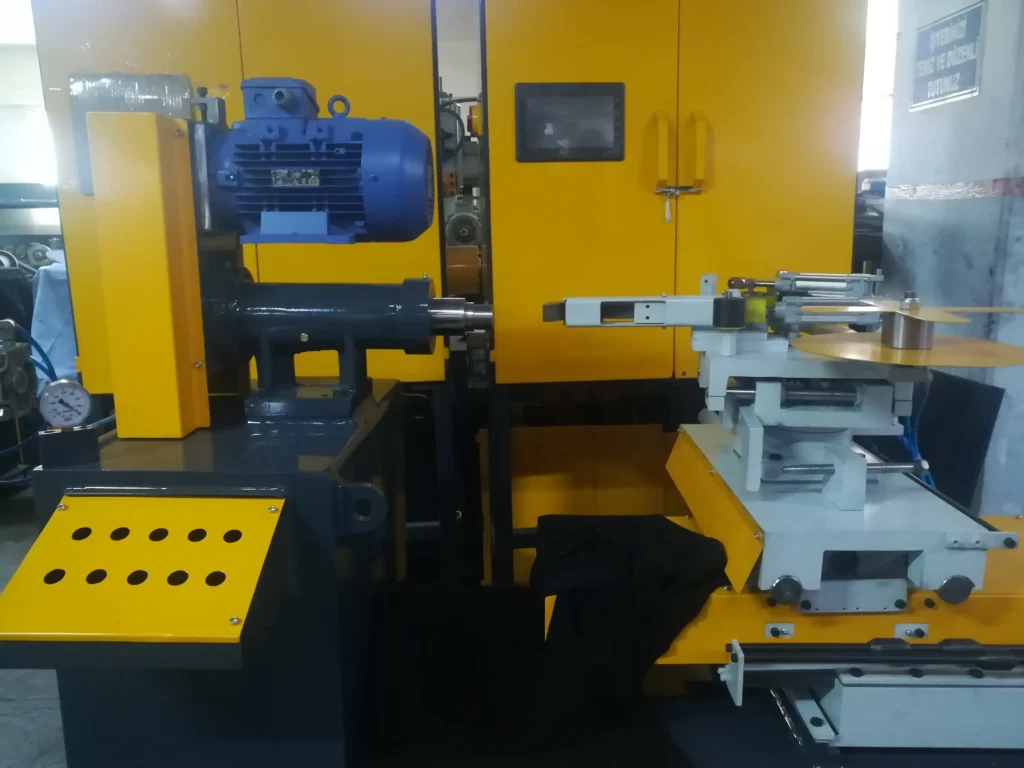
Categories
Machinery

Rotary Buffing Machine

Rotary Buffing Machine

Rotary Buffing Machine: A Polishing and Buffing Combo Machine combines two surface-finishing functions—polishing (removing surface imperfections and achieving a smooth texture) and buffing (enhancing surface gloss and shine)—into a single machine.

Key Components of Polishing and Buffing Machine

  1. Motor – Powers the rotating wheels, typically ranging from 0.5 to 2 HP depending on application.
  2. Polishing Wheel – Often made of abrasive materials like emery or silicon carbide, used for initial surface refinement.
  3. Buffing Wheel – Softer wheels made of cloth, felt, or other flexible materials, used with buffing compounds for shine.
  4. Work Rest/Support – Provides a platform to steady the workpiece.
  5. Speed Control (optional) – Allows for variable RPM to suit different materials and finishing stages.
  6. Dust Collector or Ports (optional) – Helps manage debris and metal dust during operation.

Applications

  • Metalworking: Removing rust, smoothing welds, and bright finishing on stainless steel, brass, aluminum, etc.
  • Woodworking: Polishing lacquered or painted wood surfaces.
  • Jewelry Making: Precision polishing of fine metal items.
  • Automotive: Chrome and aluminum trim restoration.
  • Plastics and Composites: Edge polishing and surface refinishing.

Advantages

  • Space Saving: One unit handles both polishing and buffing.
  • Cost-Effective: Eliminates the need to purchase two separate machines.
  • Increased Productivity: Enables quick change between operations.

A polishing and buffing combo machine is designed to handle both the initial surface smoothing (polishing) and the final high-gloss finishing (buffing) in a single unit. This type of machine typically features two spindles or shafts, each mounted with a different wheel—one abrasive polishing wheel and one softer buffing wheel made of cloth or felt. The machine is powered by an electric motor, often in the range of 0.5 to 2 horsepower, and may operate at fixed or variable speeds depending on the model. Operators use the polishing wheel to remove oxidation, scratches, or casting marks from metal, plastic, or wood surfaces. Once the desired smoothness is achieved, the workpiece is moved to the buffing wheel, often with an applied buffing compound, to bring out a mirror-like finish. These machines are commonly used in metal fabrication, automotive detailing, woodworking, jewelry making, and plastic finishing. Some models are equipped with safety features like spark guards, adjustable tool rests, and dust collection ports to enhance usability and maintain a clean workspace. Combo units are favored for their efficiency, cost-effectiveness, and the convenience of switching between two essential finishing operations without changing equipment.

Many polishing and buffing combo machines are bench-mounted, making them compact and suitable for workshops with limited space. Industrial-grade models may also be floor-mounted for handling larger or heavier workpieces. The choice of wheel materials and compounds plays a crucial role in achieving specific results—coarse abrasives for heavy material removal during polishing, and finer compounds like rouge or tripoli for delicate buffing tasks. Some machines allow quick wheel changes, which adds flexibility when working on different materials such as aluminum, stainless steel, brass, or even acrylics. Consistent maintenance, such as checking wheel wear and ensuring proper alignment, extends the machine’s life and ensures uniform surface finishes. Proper operator training is essential to avoid issues like over-polishing, which can deform soft metals, or under-buffing, which leaves dull surfaces. Overall, these combo machines provide a streamlined, dual-function approach to surface finishing that saves time and improves productivity across a variety of industries.

In practical use, the polishing and buffing combo machine becomes an integral part of any workshop that deals with surface refinement, whether in fabrication, restoration, or decorative finishing. When a raw or semi-finished part is introduced to the machine, it often carries imperfections such as tool marks, scale, oxidation, or general roughness from casting or machining. The first step is polishing—this is not just about aesthetics but also about preparing the surface for coating, plating, or further mechanical processing. The polishing wheel, usually embedded with abrasive particles or paired with an abrasive compound, cuts into the surface lightly to smooth out these defects. Depending on the material being worked on, wheels may vary from hard rubberized abrasives to cloth-based flaps loaded with cutting compounds.

Once the surface is polished to a uniform level of smoothness, the operator transitions to the buffing side of the machine. Buffing is a more delicate, finishing process aimed at producing a high-gloss, mirror-like shine. It uses soft, pliable wheels—often made from cotton, muslin, or felt—and relies on fine buffing compounds, which can range from brown tripoli for pre-polishing to white rouge or green chrome oxide for final finishing. The operator must be skilled in applying the right amount of pressure and compound to avoid burn marks, streaks, or surface inconsistencies. In many industries, this high-quality finish is not just for appearance—it reduces friction, enhances corrosion resistance, and in some cases, meets critical tolerance requirements for high-performance components.

The machine’s design often includes a solid base to minimize vibration, ensuring steady and safe operation. Some higher-end models come with variable speed controls, allowing the user to adjust the RPM to match the specific task. Lower speeds are ideal for buffing delicate materials, while higher speeds can be used during the polishing stage for quicker material removal. Safety considerations are also crucial—spark guards, eye shields, and even integrated vacuum ports for dust and particulate extraction are common in industrial setups. Metal polishing and buffing generate fine particles and heat, so proper ventilation and personal protective equipment (PPE) are essential for long-term use.

What truly sets the polishing and buffing combo machine apart from separate tools is its ability to streamline workflow. In production settings where throughput and finish quality must be balanced, having both functions integrated into a single station allows operators to move seamlessly from surface preparation to final finishing. This not only reduces equipment cost and space requirements but also cuts down on handling time, which in turn improves consistency and productivity. For small workshops, artisans, or businesses that work with metals, plastics, wood, or composite materials, this machine becomes a core asset—capable of delivering professional-grade finishes on everything from industrial parts to custom-crafted jewelry or automotive components.

Polishing and Buffing Combo Machine

Polishing and Buffing Combo Machine is a dual-purpose finishing tool designed to perform both polishing and buffing tasks using a single unit. It is widely used in workshops, manufacturing plants, fabrication facilities, automotive garages, and artisan studios where surface treatment is essential. The machine typically features two opposing spindles mounted on a shared motorized base—one side dedicated to polishing, and the other for buffing. This allows the user to transition quickly between the two processes without changing tools or workstations, significantly increasing efficiency and convenience.

In polishing, the goal is to remove surface imperfections such as scratches, oxidation, or tool marks by using an abrasive wheel or polishing compound. This process is aggressive compared to buffing and is usually the first step in surface preparation. Polishing wheels are typically made from harder materials like sisal, impregnated cloth, or synthetic abrasives. They can be combined with various grits of abrasive paste depending on the material being worked—whether it’s steel, aluminum, brass, plastic, or even wood.

Buffing follows polishing and serves as a finishing process. It’s more refined and aims to produce a high-gloss, reflective surface. Buffing wheels are softer, usually constructed from multiple layers of muslin, cotton, or felt. They’re used with buffing compounds—fine, wax-like substances that smooth and brighten the surface without removing significant material. Popular buffing compounds include white rouge (for light metals), green compound (for stainless steel), and red jeweler’s rouge (for soft, precious metals). Proper buffing not only enhances the visual appeal of a component but also improves surface characteristics such as corrosion resistance and cleanliness.

The motor driving the machine typically ranges from 0.5 HP to 2 HP depending on application requirements. Some models are single-speed, while more advanced machines offer variable speed control, which is crucial when switching between materials that require different surface treatments. High RPMs are ideal for aggressive polishing, while lower speeds are safer and more effective for delicate buffing operations.

Modern combo machines often include safety features such as spark guards, eye shields, and non-slip bases. Dust extraction ports or attachments for vacuum systems may also be present, especially in industrial models, as both polishing and buffing generate fine dust and debris that must be controlled to protect both the operator and nearby equipment. Additionally, adjustable tool rests are usually provided to support the workpiece during operation and reduce operator fatigue during extended use.

From a functional perspective, the polishing and buffing combo machine is a highly efficient solution for anyone needing to process metal, plastic, or wood components to a refined finish. It is valued not just for its space-saving design but for its ability to provide consistent and high-quality results. Industries that benefit from this machine include metal fabrication, automotive restoration, aerospace, woodworking, jewelry production, and even consumer electronics repair. Its versatility makes it one of the most practical finishing machines in any multi-material workshop.

The polishing and buffing combo machine continues to stand out in industrial and artisan settings due to its adaptability, ease of use, and the quality of surface finish it can provide. In a typical workflow, operators appreciate the seamless transition from polishing to buffing without the need to interrupt their process or reposition the workpiece between machines. This uninterrupted workflow not only saves time but also helps maintain uniformity in finish, especially on pieces that require consistent surface characteristics across multiple faces or parts. For example, in automotive restoration, chrome parts like bumpers or trim are often polished to remove pitting or discoloration before being buffed to a mirror-like shine. Similarly, in metal fabrication shops, welders and machinists use combo machines to clean up weld seams or machined surfaces before final finishing, enhancing both appearance and performance of the component.

The machine’s effectiveness depends heavily on the choice of wheel and compound combinations. For instance, a coarse polishing wheel combined with a heavy-cut compound is ideal for removing deep scratches or oxidation on hard metals like stainless steel, while a soft buffing wheel with a fine rouge compound is better suited for bringing out a reflective finish on softer materials such as aluminum or gold. Knowing how to match the right wheel, compound, and speed to the material is essential for achieving professional results. This level of control becomes especially valuable in fields like jewelry making or precision engineering, where surface quality has both aesthetic and functional importance.

Beyond its operational features, the polishing and buffing combo machine also contributes to workplace efficiency by consolidating two essential finishing functions into one compact footprint. This is particularly beneficial in smaller workshops where space and budget may not allow for multiple standalone machines. It reduces setup time, minimizes movement between tools, and simplifies maintenance routines, as the user only has to service one motor and one frame. In terms of durability, most commercial-grade combo machines are built with heavy-duty cast iron or steel housings, sealed bearings, and industrial-grade motors to withstand long hours of continuous use. These rugged designs are crucial in production environments where downtime can be costly.

Operator safety and ergonomics are also important considerations in the design and use of these machines. Since both polishing and buffing produce dust, heat, and sometimes sparks, machines are often equipped with shrouds or guards to contain debris, and many allow connection to external dust collection systems. Proper lighting, workpiece support, and non-slip bases also contribute to safer operation. Users are typically trained to wear protective gear, including safety glasses, gloves, and sometimes respirators, particularly when working with fine powders or toxic materials.

Overall, the polishing and buffing combo machine represents a balance of power, precision, and practicality. Whether used for industrial part finishing, fine metalwork, or decorative surface treatment, it provides a reliable and versatile solution that meets the needs of both high-volume operations and custom fabrication shops. Its dual-functionality not only enhances workflow and finish quality but also offers a smart investment for those seeking long-term value and consistent performance in surface finishing tasks.

In continuous operation, the polishing and buffing combo machine plays a critical role in quality assurance, especially where visual appeal and surface integrity are directly tied to product value. This is particularly evident in industries such as aerospace, medical device manufacturing, and high-end consumer goods, where even minor surface flaws can disqualify a part from being accepted. The machine allows for close control over the finishing process, which is vital in environments that demand tight tolerances and repeatable results. By adjusting variables like wheel hardness, compound abrasiveness, motor speed, and pressure applied, skilled operators can fine-tune the outcome to meet highly specific standards. The versatility of the machine extends further when additional accessories are introduced—such as tapered spindles for quick wheel changes, flexible shaft attachments for precision detailing, or specialized jigs for handling complex geometries and delicate parts.

From an economic standpoint, this machine offers both direct and indirect benefits. Directly, it reduces capital expenditure since a single unit performs two processes. Indirectly, it enhances labor productivity by reducing idle time between stages of surface preparation. A worker using a combo machine can complete more parts per hour compared to setups that require moving between separate stations or waiting for other machines to become available. Furthermore, as this tool becomes a central part of production flow, it can be easily incorporated into lean manufacturing systems or continuous improvement programs. The consistency it delivers allows for more accurate scheduling, fewer reworks, and higher customer satisfaction due to the improved finish quality of the end product.

The machine’s relevance also extends into educational and training environments. In technical schools, vocational programs, and maker spaces, combo machines are often used to teach students the fundamentals of surface finishing. Because they combine two essential techniques, they allow learners to understand the complete process flow—from material preparation to final polish—without needing a suite of equipment. This helps build foundational skills while encouraging safe and efficient work habits. Students can experiment with different materials and finishes, gaining insight into how small adjustments in speed, pressure, or compound can lead to dramatically different results. These lessons are invaluable for future careers in machining, fabrication, restoration, and design.

In artisan and craft settings, particularly among metal sculptors, custom knife makers, or furniture builders, the polishing and buffing combo machine becomes a creative tool as much as a technical one. Here, surface finish is not just about function or standardization—it’s part of the product’s identity. Whether aiming for a soft satin sheen on a wooden edge, a deep reflective polish on a custom blade, or a subtly aged patina on a brass fixture, this machine supports a wide range of artistic expressions. The ability to switch quickly between aggressive material removal and delicate final touches allows artisans to bring their visions to life with both efficiency and craftsmanship.

Over time, the durability of the combo machine pays off. With proper maintenance—such as regular cleaning, lubrication of moving parts, replacement of worn wheels, and occasional motor servicing—it can last for decades, becoming a reliable fixture in the workshop. Many users even customize or upgrade their machines with aftermarket parts like extended shafts, upgraded motors, or precision rests to better suit their specific workflow. This adaptability, combined with its dual-purpose design, cements the polishing and buffing combo machine as an enduring staple in both industrial and creative environments.

Angle Buffing Machine

Buffing Grinder Machine

An Angle Buffing Machine is a specialized power tool designed for polishing and buffing surfaces using a rotating abrasive or soft wheel mounted at a right angle to the motor shaft. Unlike standard bench-top or straight-shaft polishing tools, the angle buffing machine features a compact, angled head that allows operators to work on vertical, contoured, or hard-to-reach surfaces with greater control and flexibility. It’s widely used in automotive detailing, metal fabrication, construction, shipbuilding, and maintenance work where surface refinement must be performed in tight or awkward spaces.

The tool resembles an angle grinder in form and function but is optimized for polishing and buffing rather than cutting or grinding. Most models are handheld and powered either electrically or pneumatically. The head, usually set at 90 degrees to the body, holds a spindle or arbor onto which various buffing pads, wool bonnets, foam discs, or abrasive flap wheels can be attached using quick-change systems or threaded mounts. The rotation of the head combined with the angled configuration allows the user to apply consistent pressure across uneven or vertical surfaces such as car panels, stainless steel tanks, pipes, weld seams, and even interior corners of fabricated structures.

The motor in an angle buffing machine typically operates between 1,000 and 3,000 RPM, and many models offer variable speed control to suit different materials and compounds. Lower speeds are essential when working with heat-sensitive surfaces like plastics or paint, while higher speeds may be used for tougher polishing jobs on metal. The tool is often equipped with ergonomic handles, trigger locks, and soft starts for safety and comfort during prolonged use.

Angle buffing machines can be paired with a variety of buffing compounds depending on the material and desired finish—coarse compounds for initial polishing, and finer rouges for high-gloss buffing. In automotive use, for example, detailers use these machines with foam pads and polishing compounds to remove swirl marks, oxidation, and light scratches from painted surfaces. In marine and industrial environments, they are essential for cleaning and restoring stainless steel, aluminum, or coated surfaces subjected to harsh weather and chemicals.

Their portability and versatility make angle buffing machines ideal for on-site work, touch-ups, or maintenance tasks where bench machines are impractical. With proper training and care, they deliver professional-level finishes and are a key tool for anyone working in surface restoration or finishing.

The angle buffing machine continues to be a crucial tool in both professional and hobbyist settings where precision surface finishing is required in challenging or confined spaces. Its right-angle head configuration makes it especially useful for working on irregular geometries, edges, vertical planes, and interiors of structural components where straight or bench-mounted machines cannot reach effectively. For instance, in automotive refinishing, the angle buffing machine is commonly used on contoured body panels, bumpers, and tight areas around mirrors or trim, providing smooth transitions and high-gloss finishes without risking damage to surrounding parts. The angled design also makes it easier to maintain a steady polishing line across vertical surfaces, which is difficult to achieve with flat tools or orbital polishers.

Because it is a handheld tool, operator skill plays a significant role in the final finish quality. Users must learn to apply consistent pressure and maintain the correct angle and movement pattern to avoid issues such as holograms, swirl marks, or overheating of the surface. Variable speed control is an important feature in this context, as it allows the operator to tailor the machine’s performance to the material and stage of the buffing process. Lower speeds may be used to spread compound evenly or to perform finishing passes, while higher speeds are more appropriate for cutting back oxidation or leveling minor scratches. The use of speed-adjustable machines also minimizes the risk of burning through paint or soft coatings, which is a common concern with fixed-speed tools.

The range of attachments available for angle buffing machines adds to their versatility. Depending on the application, users can switch between wool pads for aggressive compounding, foam pads for fine polishing, or microfiber heads for ultra-fine finishing. In metalwork, users might employ abrasive non-woven discs to clean welds or remove oxidation before switching to cloth buffing wheels for a polished shine. The ability to swap out heads quickly means that a single tool can handle multiple stages of finishing without interruption. This modularity makes it highly efficient for professionals who need to maintain productivity while achieving superior surface quality.

In industrial environments such as shipbuilding, railcar fabrication, or pipeline maintenance, angle buffing machines are used to prepare metal surfaces for coating or inspection. Surfaces like aluminum bulkheads, steel hulls, or stainless steel piping require a specific degree of smoothness and cleanliness to meet technical and safety standards. The portability of the angle buffing machine allows technicians to move easily across large structures and perform work directly on-site, reducing the need for disassembly or transport of heavy components. This mobility is also valuable in maintenance settings, where equipment may need to be refurbished or retouched in place, such as in HVAC systems, tanks, or heavy machinery frames.

In more delicate or artistic applications, like musical instrument restoration or architectural metalwork, the angle buffing machine enables highly controlled work on complex or ornamental surfaces. The operator can carefully maneuver the tool around curves, ridges, or recesses to remove tarnish, smooth seams, or enhance luster without flattening detail or causing damage. Artists, conservators, and custom fabricators often rely on the angle buffing machine for this level of tactile precision, as it bridges the gap between coarse grinding tools and fine hand polishing.

Durability and ergonomics are key to long-term use, especially in professional settings where the tool might run for hours at a time. High-quality angle buffing machines are built with reinforced gear housings, sealed bearings to resist dust and moisture, and insulated motors that can handle continuous duty without overheating. Ergonomic design features such as vibration-dampening handles, compact head profiles, and lightweight body construction contribute to reduced user fatigue and more stable handling. Safety features, including soft-start mechanisms, electronic overload protection, and adjustable guard systems, are becoming standard in modern models, enhancing both usability and operator protection.

Ultimately, the angle buffing machine is not just a convenience but a necessity for any work environment that demands consistent, high-quality finishes in complex or confined spaces. Its combination of power, portability, and precision makes it a go-to solution across industries—from car detailing and metalworking to marine maintenance and fine craftsmanship. With proper technique, maintenance, and selection of accessories, it delivers professional-level results that rival more stationary equipment, while offering unmatched flexibility and control. Would you like recommendations on specific models or guidance for selecting pads and compounds for a certain type of material or finish?

As the demand for surface perfection continues to rise across industries, the angle buffing machine is becoming increasingly refined in terms of technology, materials, and performance features. Manufacturers now offer machines with digital speed displays, programmable settings, and intelligent load sensors that adjust torque output based on the resistance encountered during use. These features enhance both the precision and safety of the tool, especially in environments where surface finish standards are tightly regulated, such as aerospace or medical manufacturing. Digital control also allows more consistent performance over extended polishing sessions, reducing the variability that can occur due to operator fatigue or changing surface conditions.

Cordless versions of angle buffing machines have also emerged, thanks to advancements in lithium-ion battery technology. These portable units give users full freedom of movement without sacrificing much in terms of power or run time. In field maintenance, such as on wind turbines, large vehicles, or outdoor pipelines, this mobility can be crucial. While corded machines still dominate in terms of continuous heavy-duty use, cordless versions are gaining ground rapidly, especially in situations where convenience, accessibility, or safety (e.g., avoiding tripping hazards) are primary concerns.

The environmental and workplace health aspects of buffing and polishing are also gaining attention. Angle buffing machines often operate in environments where dust, metal particles, or compound residue are released into the air. These fine particulates pose both respiratory and cleanliness challenges. As a result, many industrial users now integrate dust shrouds, attach vacuum hoses, or work within ventilated booths. Proper personal protective equipment—including respirators, eye protection, gloves, and hearing protection—becomes essential, especially during extended use. Additionally, the compounds used with these machines have evolved to include water-based or low-residue formulas that are safer for the operator and easier to clean from the finished surface.

From a training perspective, the angle buffing machine is relatively easy to learn, but mastering it takes time. Novices often start with practice panels or scrap pieces to develop a feel for the right pressure and motion. Over time, skilled users learn to “read” the sound, vibration, and visual cues from the tool and the workpiece, adjusting their technique instinctively. For companies training multiple employees, this consistency in results becomes critical to maintaining product quality. Some manufacturers now offer training programs, demo units, and even simulator-based systems to accelerate the learning curve and improve safety.

Repair and maintenance of angle buffing machines are generally straightforward. Most models are designed with accessible brush housings, gearboxes, and motor components, making it possible to replace worn parts like carbon brushes, bearings, or power cords without sending the unit out for service. Keeping the machine clean—especially the spindle and venting system—is essential to maintaining its lifespan. If the machine becomes unbalanced due to uneven pad wear or misalignment, it can cause excessive vibration and reduced control, so regular inspection is a good practice. For industrial users, establishing a preventative maintenance routine helps ensure uptime and extends the life of both the machine and consumables.

In terms of innovation, some angle buffing machines are now incorporating orbital motion in addition to rotary action, blending the benefits of rotary and dual-action polishers. This hybrid movement reduces the risk of heat buildup and surface swirl, making the tool more forgiving for users and safer for delicate finishes like clear coats or polished plastics. These tools are especially popular in detailing and finishing work where surface perfection is critical but the risk of overworking an area must be minimized. They represent a natural evolution of the traditional angle buffing machine, pushing the limits of what’s possible with a handheld surface finishing tool.

The longevity and relevance of the angle buffing machine ultimately stem from its ability to adapt to new materials, new processes, and evolving user needs. Whether in the hands of a seasoned professional restoring a classic car, a technician polishing a turbine blade, or an artist finishing a hand-crafted sculpture, this tool continues to offer a blend of control, power, and versatility that few others can match. It remains a bridge between raw fabrication and final presentation, turning unfinished surfaces into polished, functional, and often beautiful results. Would you like to go into detail about compound selection for specific finishes or how to adapt the machine for curved or textured surfaces?

Polishing Cabinet Buffing Machine

Mirror Finish Polishing

Polishing Cabinet Buffing Machine is a specialized equipment designed to facilitate safe, controlled, and efficient polishing and buffing operations within an enclosed space. These machines typically consist of a cabinet or booth where the polishing and buffing processes take place, often equipped with one or more buffing wheels, abrasive pads, or brushes, a motor, and integrated systems for dust collection. They are commonly used in industries that require precise surface finishing of small to medium-sized components, such as jewelry manufacturing, electronics, metalworking, and automotive detailing. The primary advantage of a polishing cabinet buffing machine lies in its enclosed design, which helps contain debris, reduces exposure to hazardous materials, and minimizes environmental contamination.

The cabinet typically features transparent viewing panels made from durable acrylic or tempered glass, allowing the operator to monitor the workpiece while maintaining a safe distance from the moving parts. The interior of the cabinet is equipped with buffing wheels or abrasive pads mounted on motor-driven spindles, which rotate at varying speeds depending on the model. These spindles can accommodate different sizes and types of buffing wheels, ranging from coarse to fine materials such as wool, cotton, or felt, which are ideal for different stages of the polishing process. In many cases, the user can switch between polishing and buffing wheels to progressively refine the surface finish, from initial material removal to high-gloss final polish.

A key feature of the polishing cabinet buffing machine is its integrated dust and fume extraction system. Polishing and buffing generate fine dust and debris, particularly when working with metals like aluminum or stainless steel, or with certain composites. These particles can pose health risks when inhaled or cause a mess in the workplace. To mitigate this, polishing cabinet machines are equipped with powerful suction fans or vacuum systems that remove airborne particles from the cabinet, funneling them into filters or external collection bins. This feature is essential for maintaining a clean, safe working environment, especially in compliance with workplace health and safety standards.

These machines are typically designed for ease of use, with access doors or glove ports allowing the operator to insert their hands into the cabinet without opening it, thus maintaining a sealed environment. Glove ports enable precise control over the workpiece, and the compact design of the machine helps in controlling the work area’s lighting and dust levels. The interior often includes adjustable shelves or tool supports, providing convenience for setting the workpiece at the ideal height and angle for the operator.

The buffing cabinet is typically made of sturdy metal, such as steel or aluminum, to provide durability and stability during operation. Some higher-end models also include advanced features like built-in lighting, vibration-dampening components, and optional accessories such as polishing compounds or sprays, which can be applied directly to the workpiece while it is being buffed. These compounds can further enhance the polishing process, especially when working with materials that require a high-gloss finish, such as precious metals, glass, or acrylics.

The polishing cabinet buffing machine is especially valuable in high-precision fields where surface finish quality is critical. In jewelry manufacturing, for example, these machines allow for a meticulous, controlled polishing process that produces a flawless shine on rings, necklaces, bracelets, and other pieces without damaging the delicate details. In automotive applications, such as buffing chrome trim or headlight lenses, the cabinet helps achieve an even, smooth finish that enhances the appearance of the part while also providing a layer of protection against oxidation.

Overall, a polishing cabinet buffing machine provides a controlled, efficient, and safe solution for precision polishing and buffing tasks. The enclosed design ensures both safety and cleanliness, while the versatility in buffing wheel and compound options allows the user to adapt the machine for different materials and finishes. Its application spans a wide range of industries, making it an essential tool for professionals seeking high-quality surface finishes in a secure, effective manner.

The polishing cabinet buffing machine remains an essential tool in environments where precise, high-quality finishes are required. Its enclosed nature offers distinct advantages, not only for the operator’s safety but also for maintaining consistency and cleanliness in the workspace. The ability to control the working environment inside the cabinet makes it easier to handle intricate parts and delicate materials without worrying about contaminants or exposure to harmful polishing compounds and dust. This makes it particularly beneficial in fields like jewelry design and restoration, where intricate detailing and high-shine finishes are a hallmark of quality. The dust and debris removal system ensures that any fine particles produced during the process are efficiently extracted, improving air quality and reducing the risk of cross-contamination or scratches on the workpiece. The machine’s ability to maintain a stable, clean environment also extends the life of polishing wheels and reduces the need for frequent tool changes, as the buildup of abrasive material is minimized.

Another key aspect of these machines is the ability to easily adjust the polishing parameters. Many models come with variable-speed motors, allowing users to tailor the speed of the buffing wheels to suit the material being worked on. Softer materials, like aluminum or plastics, require slower speeds to avoid overheating or gouging, while harder metals like stainless steel might benefit from faster rotation to remove oxidation or achieve a mirror-like finish. These adjustments allow for greater control over the polishing process, ensuring that the finish meets the required standards without risking damage to the workpiece. The variety of polishing pads and wheels that can be used in these machines also makes them versatile, catering to different stages of the polishing process, from coarse grinding to fine polishing and buffing.

The compact and efficient nature of the polishing cabinet buffing machine also makes it ideal for shops or operations with limited space. Instead of needing multiple stations for different polishing tasks, a single polishing cabinet can handle a variety of materials and finishes, making it both a space-saver and a cost-effective solution. Operators can easily switch between tasks without needing to move the workpiece to different machines or setups. This efficiency is particularly valuable in high-volume production environments, where time and workflow are critical.

In addition to its functionality, the ergonomic design of the cabinet makes it easier for operators to perform long hours of buffing and polishing without experiencing undue strain. The ability to perform tasks through glove ports or from an upright position, with the workpiece secured at an optimal height, minimizes operator fatigue and increases overall comfort. This is an important consideration for environments where the operator’s well-being is a priority, such as in workshops with heavy or continuous polishing work.

From a safety perspective, the polishing cabinet buffing machine reduces the risk of accidents that can occur when using traditional open-bench polishing tools. With the operator enclosed within the cabinet, the likelihood of contact with moving parts is minimized. Additionally, the design often includes built-in safety features such as automatic shutoff mechanisms in case of overloads or unexpected malfunctions.

With regular maintenance, a polishing cabinet buffing machine can provide years of reliable service. Routine tasks like cleaning dust filters, inspecting buffing wheels for wear, and ensuring proper lubrication of moving parts keep the machine running smoothly. Many models also allow for easy replacement of worn-out components, such as brushes or wheels, helping to keep downtime to a minimum. This focus on durability and longevity is a significant benefit for businesses that rely on these machines for high-quality finishes on a daily basis.

In terms of application, polishing cabinet buffing machines are not limited to just one sector. Whether it’s polishing automotive parts, fine metal products, glassware, or even medical devices, these machines can adapt to a variety of materials and finishes. The precision offered by the enclosed, controlled environment allows for fine adjustments to the polishing process, ensuring that every part that leaves the machine meets the high standards required by the industry.

As industries continue to prioritize safety, efficiency, and quality, the polishing cabinet buffing machine remains a cornerstone tool for achieving professional finishes. Its ability to handle multiple polishing and buffing tasks while ensuring a safe, clean, and ergonomic workspace makes it a valuable asset in both small workshops and large-scale production facilities. Would you like more insights into choosing the right cabinet buffing machine for specific tasks or comparing models with unique features?

The versatility of polishing cabinet buffing machines extends to various industries, each benefiting from the machine’s ability to handle complex finishing tasks with precision and control. In industries such as aerospace, automotive manufacturing, and metalworking, where component appearance, durability, and surface integrity are paramount, polishing cabinet machines provide consistent, high-quality results. For example, in aerospace, precision-polished metal parts must meet stringent quality standards for both aesthetic and functional reasons, such as ensuring resistance to corrosion or minimizing drag. Polishing cabinet buffing machines allow technicians to fine-tune their processes to meet these exacting specifications, ensuring that even the smallest components, such as turbine blades or fuel fittings, are polished to perfection.

In automotive production, these machines are invaluable for detailing car parts, especially chrome and metal trim, which often require an immaculate finish to meet customer expectations and industry standards. The ability to maintain a controlled environment while polishing intricate surfaces, like grills, rims, or emblems, allows for a high-gloss finish without the risk of contamination from dust or compound residues. Polishing cabinet buffing machines help achieve the signature gleam that’s so important in vehicle aesthetics, from luxury cars to motorcycles.

In the field of medical devices, the quality of the finish on surgical instruments, implants, and prosthetics is crucial not only for the appearance but also for hygiene and functionality. Polishing cabinet buffing machines ensure that these parts are free from imperfections that could harbor bacteria or cause mechanical failure. For example, the smooth, polished finish on stainless steel surgical tools is not just about looks; it’s also essential for reducing the risk of infection and facilitating easier cleaning and sterilization. The precision of these machines makes them ideal for achieving such results.

Another major benefit of polishing cabinet buffing machines is their ability to handle delicate or highly specialized materials, such as gemstones, ceramics, and glass. In industries like jewelry design or glass manufacturing, where the material is often fragile or prone to scratching, the controlled environment inside a polishing cabinet helps prevent unintended damage. The ability to apply a controlled, even buffing action to such materials is essential for creating stunning finishes without compromising their integrity. In jewelry making, for instance, polishing cabinets are used to bring out the brilliance in metals like gold, platinum, and silver, as well as to perfect the clarity and shine of diamonds or other gemstones.

The adoption of polishing cabinet buffing machines in small-scale and artisan settings is also on the rise. Artists and small manufacturers who focus on custom or high-end products often rely on these machines for their precise control and ability to produce professional-grade finishes. Whether creating custom furniture, restoring antiques, or designing bespoke jewelry, the cabinet buffing machine offers a way to ensure consistent, high-quality results. It’s particularly useful in small shops where a single machine can handle multiple materials and finishes, providing versatility without requiring an array of separate machines.

As technology advances, polishing cabinet buffing machines are becoming more integrated with digital systems that allow for greater automation and efficiency. Some high-end models are now equipped with programmable controls, allowing users to input specific parameters such as speed, pressure, and compound type, creating a more automated process that can be repeated consistently. This reduces the potential for human error and ensures that each workpiece receives the exact same level of attention, making the polishing process both more reliable and efficient. This shift towards automation is especially beneficial in high-volume production settings, where consistency is crucial and reducing manual labor can lead to significant time and cost savings.

The environmental impact of polishing operations is another important consideration, and polishing cabinet buffing machines are increasingly designed with eco-friendly features. Many modern models incorporate filtration systems that reduce the amount of waste and pollutants released into the environment. For instance, some units use water-based or biodegradable compounds instead of traditional petrochemical-based polishing pastes, reducing the environmental footprint of the polishing process. Additionally, advancements in energy efficiency are helping to minimize power consumption, making these machines more sustainable for long-term use.

For businesses looking to optimize their operations, integrating polishing cabinet buffing machines with existing workflows is relatively straightforward. These machines can often be incorporated into automated production lines, where multiple parts need to be polished in a consistent and repeatable manner. The compact, enclosed design of the polishing cabinet makes it easy to fit into tight spaces or alongside other finishing equipment. Integration with dust extraction and filtration systems ensures that the entire polishing process remains clean and compliant with workplace health and safety regulations.

In terms of future trends, polishing cabinet buffing machines will continue to evolve, incorporating even more advanced technology such as touch-screen interfaces, real-time monitoring systems, and the ability to work with an even broader range of materials. These machines will continue to support industries that require precision and high-quality finishing, all while enhancing the overall safety, ergonomics, and environmental sustainability of the polishing process.

Whether for industrial, commercial, or artisanal use, polishing cabinet buffing machines represent a perfect balance of safety, efficiency, and high-performance. They provide a secure and controlled environment for achieving flawless finishes, protecting both the operator and the environment. With the right model, maintenance practices, and polishing compounds, businesses can ensure that they achieve the best possible surface finishes on a variety of materials, from metals to plastics and ceramics.

Would you like to explore more about specific polishing compounds or materials suitable for these machines, or perhaps recommendations on optimizing a polishing cabinet for your particular needs?

Industrial Buffing Machine

Dual-Station Polishing Machine

An industrial buffing machine is a high-powered tool used in commercial and industrial settings for polishing and finishing surfaces of various materials, such as metal, wood, plastic, and stone. These machines are designed to perform heavy-duty buffing tasks that require consistent, high-quality results across large quantities of parts or products. Industrial buffing machines are essential in sectors such as metalworking, automotive manufacturing, aerospace, and woodworking, where surface finishing is a critical step in ensuring the quality and appearance of the final product.

Industrial buffing machines come in a wide variety of configurations, from standalone bench-mounted models to larger, more complex systems that integrate multiple stages of polishing or are part of automated production lines. The main components typically include buffing wheels or pads, a powerful motor that drives the rotation of these wheels, and often an adjustable stand or frame to hold the workpiece at the correct angle for polishing. Many models are also equipped with speed controls, allowing operators to adjust the machine’s rotation speed based on the material being worked on and the stage of the buffing process.

The design of industrial buffing machines varies depending on the specific requirements of the task. For example, machines used for polishing large metal parts might feature larger buffing wheels, while those for finer detailing or finishing work might use smaller, more precise wheels. Some models are designed for specific applications, such as polishing automotive parts like chrome trim or buffing metal molds used in manufacturing, while others are more versatile and can handle a range of materials and finishes.

One of the key features of an industrial buffing machine is its motor, which is typically much more powerful than that found in smaller, consumer-grade polishers. These motors can be variable-speed to allow greater control over the polishing process. High RPMs (revolutions per minute) are ideal for quickly removing material or for aggressive polishing, while lower RPMs allow for finer finishing and a smoother, more reflective finish. For example, in metalworking, high speeds are used to cut back oxidation or remove rust, while slower speeds are ideal for fine polishing or creating a mirror-like finish.

Buffing wheels or pads are the heart of the industrial buffing process. These wheels come in a variety of materials such as cotton, felt, wool, and synthetic fibers, and are often treated with polishing compounds or abrasives to enhance their performance. For heavy-duty work, a stiff wheel might be used to remove oxidation or scratches, while softer, more delicate wheels are employed for final finishing. In some cases, the type of buffing compound used will depend on the material being polished. For example, a metal polish or abrasive compound might be used for polishing steel, while a gentler compound might be employed for polishing plastics or softer metals like aluminum or brass.

Industrial buffing machines also tend to feature built-in dust collection systems to manage the debris created during the buffing process. These systems help maintain a cleaner workspace and improve air quality by collecting the dust, metal filings, and polishing compound particles that are generated. This is particularly important in industries where worker health and cleanliness are a priority. In addition, the dust collection systems can improve the longevity of the buffing wheels and other components, as excessive dust buildup can lead to overheating or clogging of parts.

In larger-scale industrial operations, buffing machines may be integrated into automated production lines. These systems allow for consistent and repeatable polishing of high volumes of parts. In these setups, the buffing machine may be programmed to work with robotic arms or conveyors that feed parts into the polishing station, minimizing the need for manual handling and significantly improving efficiency. Such systems can be customized for specific products, enabling companies to meet high throughput requirements without sacrificing quality.

Safety is a major consideration with industrial buffing machines due to their high-speed rotation and potential hazards associated with polishing compounds and airborne debris. Machines are often equipped with safety guards or covers to prevent accidental contact with the buffing wheels. Operators are usually required to wear personal protective equipment (PPE), such as safety goggles, gloves, ear protection, and respiratory masks, especially in environments where fine dust or fumes may be present. Many machines also have emergency stop features and automatic shut-off mechanisms in case of overloads or malfunctions.

In terms of maintenance, industrial buffing machines require regular care to ensure that they continue to operate efficiently and effectively. This includes checking the motor and electrical components for wear, ensuring the buffing wheels are properly balanced, and cleaning or replacing the dust collection filters. Buffing wheels should be inspected for damage or wear, as a worn-out wheel can lead to uneven polishing or potential damage to the workpiece.

Given their durability, power, and ability to handle large-scale tasks, industrial buffing machines are a fundamental tool in many sectors. They ensure that products are finished to a high standard, improving both their appearance and functionality. In industries such as automotive, aerospace, metalworking, and manufacturing, these machines are vital for achieving the precision and surface finishes required for both aesthetic and practical purposes

Industrial buffing machines are designed to tackle demanding polishing tasks that require both power and precision. They are ideal for finishing large quantities of parts or high-volume production environments, where consistency and quality are essential. These machines can be used on a variety of materials, including metals, plastics, ceramics, glass, and composites, making them highly versatile in industries ranging from automotive and aerospace to metalworking, electronics, and manufacturing. The ability to perform both heavy-duty polishing and fine detailing allows these machines to meet the needs of a wide array of applications, such as restoring the shine to automotive parts, polishing turbine blades, buffing metal fixtures, or refining jewelry components.

What sets industrial buffing machines apart from consumer-grade tools is their robustness and ability to handle continuous operation without compromising on performance. High-speed motors, ranging from 1 horsepower (HP) to upwards of 10 HP or more, provide the necessary power for large-scale polishing tasks. This ensures that operators can maintain optimal production speeds while achieving a high-quality surface finish on parts of various sizes and shapes. In some cases, the motor’s power is supplemented by advanced speed control systems, allowing operators to dial in the perfect RPM for each task.

A key component of an industrial buffing machine is its buffing wheel, which can be tailored to specific applications based on the type of material and the level of finish required. Buffing wheels are available in different materials, such as cotton, wool, felt, or synthetic fibers, and they can be impregnated with various polishing compounds to enhance their cutting or finishing ability. For example, a wool wheel might be used for aggressive polishing tasks that involve removing oxidation or rust from metal parts, while a cotton wheel might be used for finer finishing or creating a mirror-like finish on softer metals or plastics.

Many industrial buffing machines come equipped with additional features such as oscillating or dual-action buffing motions. These motions are designed to reduce the risk of swirl marks or uneven finishes, especially when working with delicate or highly reflective surfaces. The oscillating motion helps to distribute the polishing compound more evenly and ensures that the surface being worked on receives consistent attention, which is especially important in industries that require a flawless finish, such as the luxury automotive or jewelry sectors.

Dust extraction and fume control systems are integral to industrial buffing machines, especially in environments where harmful particles or fumes might be released during the buffing process. These systems help capture and remove the fine dust, metal shavings, or polishing compound residues generated, which could otherwise contaminate the work area or pose a health risk to operators. Many machines feature integrated vacuum ports or separate dust collection units that help keep the workspace clean and safe. These systems are particularly important in industrial settings where maintaining air quality is essential for compliance with safety regulations.

Given the heavy-duty nature of these machines, maintenance is crucial to ensure their long-term reliability and performance. Regular inspection and replacement of buffing wheels, motor brushes, and polishing compounds are necessary to keep the machine running smoothly. Additionally, ensuring that the dust collection system is functioning properly, and that no debris or particles are clogging the system, helps prevent overheating and ensures efficient operation.

The integration of industrial buffing machines into production lines can further optimize efficiency in large-scale manufacturing environments. These machines can be automated to feed parts through buffing stations via conveyor belts or robotic arms, reducing manual labor and increasing throughput. In automated setups, buffing machines can be programmed to execute precise polishing sequences, ensuring consistency across large batches of parts. This level of automation not only speeds up production but also enhances product quality by reducing the risk of human error during the polishing process.

As industries continue to prioritize automation, sustainability, and efficiency, industrial buffing machines are also evolving to meet these needs. Many modern machines are designed to be energy-efficient, reducing power consumption and operational costs. Furthermore, advancements in buffing compounds, such as the development of water-based or eco-friendly formulas, help minimize the environmental impact of polishing tasks.

In conclusion, industrial buffing machines are indispensable in industries where high-quality, consistent surface finishes are a must. They are powerful, versatile, and designed for continuous operation, making them an essential part of many manufacturing and finishing processes. With the right maintenance, proper use of buffing compounds, and regular inspection, these machines can deliver exceptional results for a wide range of applications, from metal polishing to automotive detailing and beyond. Whether used in high-volume production environments or for specialized tasks, industrial buffing machines ensure that every part is finished to the highest standards. Would you like to explore specific manufacturers or features of these machines?

The industrial buffing machine’s ability to deliver consistent results in high-demand environments is one of the key reasons it remains indispensable across various sectors. As industries continue to evolve and the need for precision and efficiency grows, the role of buffing machines will likely expand, with advanced technologies integrating seamlessly into automated processes. One area of development is the incorporation of smart technology and sensors into buffing machines. These features can monitor the condition of the buffing wheels, track the pressure applied to the surface, or even detect anomalies in the polishing process. Real-time feedback allows operators to adjust settings or perform maintenance before issues arise, improving uptime and reducing the risk of defects in the final product.

For example, certain modern industrial buffing machines are now equipped with vibration sensors or load monitoring capabilities that can detect when a buffing wheel is out of balance or when the motor is under strain. This early detection can help prevent damage to the machine and the workpieces, ensuring that any issues are addressed before they result in costly downtime or quality control problems. Such advancements in machine diagnostics not only improve the efficiency of polishing operations but also help with predictive maintenance, which can be crucial for operations with high output demands.

Moreover, the flexibility of industrial buffing machines in accommodating a range of materials continues to make them invaluable. From polishing steel and aluminum to working on more delicate materials like plastics, ceramics, or glass, these machines can be tailored with various buffing compounds, pads, and wheels designed to suit the specific requirements of each material. This adaptability allows businesses to handle a wide array of products, from heavy machinery parts to intricate jewelry pieces, all while maintaining the high standards of finish that are expected in industries like automotive, aerospace, medical device manufacturing, and even art restoration.

With advancements in automation, the integration of buffing machines into larger manufacturing lines becomes increasingly seamless. Automated systems allow for continuous, high-speed polishing of parts, reducing manual labor and increasing throughput. This integration often includes conveyor belts or robotic arms that move parts into position for polishing, and some machines can even be programmed to apply specific pressure and speed settings to different parts of the product, ensuring a customized finish for each piece. Such systems are essential for industries like automotive manufacturing, where large quantities of parts need to be polished to the same high standard, or in industries where precision is paramount, such as the aerospace sector.

Environmental concerns and sustainability continue to be important factors in industrial manufacturing, and the development of more eco-friendly buffing systems is becoming increasingly relevant. For instance, using biodegradable or water-based polishing compounds helps reduce the environmental impact of the buffing process. Additionally, dust extraction and air filtration systems are being improved to capture even finer particles, further minimizing environmental exposure to harmful chemicals or metal dust. Some companies are also developing machines that use less energy and produce less noise, addressing both environmental and workplace safety concerns.

Another factor that makes industrial buffing machines essential is their role in quality control. In industries like metalworking, where the aesthetics and functionality of the parts are critical, the buffing process plays a key role in eliminating imperfections such as scratches, rust, or oxidation. Buffing ensures that the finished products have a smooth, even surface, free from defects that could compromise their performance or appearance. High-quality surface finishes can also improve the durability and longevity of products, particularly in industries that require resistance to corrosion or wear, such as the marine or oil and gas sectors.

In woodworking, where polishing and buffing are often done to enhance the natural appearance of the wood and provide a protective finish, industrial buffing machines play an essential role in producing furniture, cabinetry, or decorative items. The buffing process ensures that the wood surfaces are smooth and polished, free from marks or imperfections, and properly sealed. Similarly, in the electronics industry, where components need to have smooth, contaminant-free surfaces for optimal performance, buffing machines are used to polish parts like circuit boards, casings, and connectors, ensuring they meet industry standards for both function and appearance.

As industries move towards more precision-driven and technology-enhanced manufacturing, the role of industrial buffing machines will likely become even more integral. Machines with integrated software and advanced control systems could further reduce human error and improve efficiency, allowing for more complex and intricate finishes. In addition, the incorporation of artificial intelligence and machine learning could help optimize polishing processes by learning from past operations and adjusting settings automatically for the best results.

In summary, industrial buffing machines are continually evolving to meet the increasing demands for precision, efficiency, and sustainability. These machines are critical in industries where surface finish plays an important role in both aesthetics and functionality. From high-volume production settings to specialized craftsmanship, industrial buffing machines ensure that products meet the highest standards of quality and finish. As technology advances, these machines will only become more sophisticated, offering even more benefits in terms of automation, customization, and eco-friendliness. Would you like further details on any specific models or recommendations based on particular industrial needs?

Dust Collection Buffing Machine

Automatic Load/Unload Polishing Machine

dust collection buffing machine is a specialized tool designed for polishing and buffing tasks that includes an integrated dust extraction system to capture the debris generated during the buffing process. These machines are widely used in industrial settings, particularly in woodworking, metalworking, automotive manufacturing, and other industries where the polishing process can produce a significant amount of dust, shavings, or particulate matter.

The primary function of a dust collection buffing machine is to ensure a cleaner, safer work environment by capturing and removing harmful dust, polishing compounds, and metal shavings as they are created. This is especially important in environments where dust particles can pose health hazards to workers, create safety risks (e.g., explosions from flammable dust), or interfere with the quality of the finished product.

In a typical dust collection buffing machine setup, the machine is equipped with a high-efficiency dust collection system that either integrates directly with the buffing tool or operates as a standalone component. The dust extraction system usually consists of several key elements:

  1. Dust Hood or Shroud: A collection hood or shroud is positioned around the buffing wheel to capture the dust and particles generated during the polishing process. These hoods are strategically designed to enclose the work area around the wheel, minimizing the release of dust into the surrounding workspace.
  2. Vacuum System: The dust captured by the hood is then directed through a vacuum system. This system can be built into the buffing machine itself or connected to an external dust collector via flexible hoses. The vacuum system pulls the dust from the work area and transports it to a filtration unit, where it is safely contained.
  3. Filtration System: After the dust and debris are sucked into the vacuum system, they are passed through a filtration unit. Depending on the machine’s design, this filtration unit can include multi-stage filters to remove even fine particles. Common filter types include HEPA filters (high-efficiency particulate air filters), carbon filters for capturing fumes, or cyclone separators that remove larger debris before the air enters finer filters.
  4. Dust Collector or Hopper: The cleaned air is released back into the room, and the dust and debris are collected in a dust collector or hopper. The hopper or dust bin needs to be emptied regularly to prevent it from becoming clogged, and it may be equipped with a system to alert operators when it’s full.
  5. Workpiece Area or Booth: In some machines, especially those used in high-precision or sensitive applications, the dust collection system is integrated into an enclosed booth or workpiece area. This setup isolates the polishing process from the surrounding environment, providing an even cleaner working atmosphere and better control over the dust.

The inclusion of a dust collection system in a buffing machine offers several benefits:

  • Improved Air Quality: By removing harmful dust particles from the air, these machines help maintain a healthier work environment. In industries like woodworking, metalworking, and automotive, where the polishing process can release fine particulate matter, keeping the air clean is crucial for protecting workers’ respiratory health.
  • Enhanced Workplace Safety: Dust accumulation can create fire hazards, particularly when flammable polishing compounds or metals are involved. A dust collection buffing machine minimizes this risk by preventing the buildup of dust, which can otherwise become a source of ignition.
  • Better Product Quality: Dust and debris in the environment can contaminate the polishing process and lead to imperfections in the finished surface. A dust collection system helps prevent these contaminants from interfering with the finish, ensuring that parts and products are polished to a high standard without the risk of dust marks or scratches.
  • Cleaner Workspace: A cleaner work environment not only improves health and safety but also boosts productivity. Operators can work in a more organized and less cluttered environment, which reduces the time spent cleaning up after each task and keeps the workspace more efficient.
  • Compliance with Regulations: In many industries, dust collection is not just a best practice; it’s often a legal requirement. For example, in the woodworking industry, dust is considered a significant health hazard, and businesses must comply with OSHA (Occupational Safety and Health Administration) standards or similar regulations. Using a dust collection buffing machine ensures compliance with these regulations and minimizes the risk of penalties.

In industries like metalworking and automotive production, buffing machines with integrated dust collection systems help to keep surfaces free of contaminants that could affect the quality of polished parts. In metalworking, buffing processes often involve the use of abrasives, which can create fine metal dust. This dust, if not controlled, can result in contamination or affect the surface quality of the finished product. Similarly, in automotive production, using a dust collection system ensures that polishing compounds and fine particles are safely contained, preventing damage to delicate components like mirrors, trim, and bodywork.

In woodworking, dust collection is crucial because the fine dust from sanding, buffing, and polishing wooden surfaces can contain wood fibers that are harmful when inhaled. A dust collection buffing machine helps mitigate the health risks associated with these fine particulates, ensuring that the workspace remains clean and the air quality is improved.

Moreover, the integration of eco-friendly features into modern dust collection systems is becoming more prevalent. Newer systems are designed to be more energy-efficient, reducing the overall environmental impact of polishing operations. This can include optimized vacuum motors that consume less electricity or using sustainable materials for filters that are both effective and biodegradable.

The incorporation of smart technology into dust collection buffing machines is also on the rise. Some machines now feature real-time monitoring and diagnostics, where sensors can detect the level of dust buildup in the filtration system, alerting operators when maintenance is needed or when the filters need to be changed. This ensures that the dust collection system operates at peak efficiency, reducing the chances of downtime and maintaining the cleanliness of the work environment.

In conclusion, a dust collection buffing machine offers a comprehensive solution for industries that require high-quality surface finishes while ensuring that the work environment remains safe, clean, and efficient. The integration of powerful vacuum systems, efficient filtration, and dust collection technologies not only helps protect workers’ health but also ensures the smooth and flawless results that are expected in precision industries. Would you like more details on specific models or features of dust collection systems for buffing machines?

Dust collection buffing machines are a critical advancement in industrial polishing, combining the functions of polishing and dust management into a single, cohesive system. These machines are engineered to perform high-quality buffing while effectively capturing the dust and debris generated during the process, which is essential for maintaining both the quality of the finished product and the safety of the workspace. In industries where dust and particulate matter can negatively impact both product quality and worker health, having an integrated dust collection system helps to address these concerns while boosting operational efficiency.

The dust collection system works by drawing in the airborne particles that are created as the buffing wheel makes contact with the workpiece. This debris can range from polishing compounds to metal shavings, wood dust, or plastic particles, depending on the material being worked on. Without a dust collection system, these particles can scatter into the air and the surrounding environment, potentially contaminating the work area, affecting air quality, and increasing the risk of fire or health issues. In industries like woodworking, metalworking, and automotive, these particles are not only an inconvenience but also a serious safety hazard.

A properly designed dust collection system in a buffing machine includes a powerful suction system that pulls in dust from the immediate work area. This is often achieved by using a combination of collection hoods or shrouds that surround the buffing wheels and vacuum suction hoses that connect to a central dust collector. The dust is pulled through the system, where it passes through various filters designed to trap fine particles, ensuring that only clean air is returned to the workspace. In addition to improving air quality, this system reduces the need for manual cleaning, making the workspace less cluttered and more productive. Moreover, the collection of dust is especially important in environments with high-speed buffing operations, where large amounts of dust are generated quickly.

These machines are also crucial for maintaining the quality of the finish on the workpieces. When dust and other debris are allowed to remain in the environment, they can settle back onto the workpieces and cause imperfections in the final polished surface. Even small particles can lead to scratches, streaks, or uneven finishes. By collecting dust at the source, a dust collection buffing machine helps to preserve the integrity of the surface finish, ensuring that parts remain free from contaminants. This is particularly important in industries such as automotive manufacturing, where high-quality finishes are essential for both aesthetic appeal and functional performance.

Beyond improving air quality and product finishes, dust collection systems in buffing machines also play a significant role in ensuring workplace safety. In industries like woodworking, where wood dust is produced, the dust can be highly combustible, posing a fire risk. Similarly, metal dust, especially from materials like aluminum or steel, can present an explosion hazard if not properly controlled. A dust collection buffing machine helps mitigate these risks by capturing potentially hazardous dust and preventing it from accumulating in the workspace. In doing so, it also helps businesses comply with safety regulations and health standards, which may require the installation of dust extraction systems in certain industries to prevent harmful exposure.

Maintenance of dust collection buffing machines is an essential aspect of keeping them functioning efficiently. Over time, dust can build up in the system, especially in the filters and collection hoppers, so routine cleaning and maintenance are required to keep the system running at peak performance. Regularly checking and replacing filters, ensuring that the vacuum system is not clogged, and keeping the buffing wheels in good condition are all part of maintaining the machine and ensuring optimal dust collection. Many modern dust collection systems are equipped with sensors and monitoring systems that notify operators when the system is nearing full capacity or when the filters need to be replaced, making maintenance easier and reducing downtime.

Another advantage of these machines is their ability to help businesses reduce their environmental footprint. By capturing and containing dust, companies can reduce the amount of airborne particulate matter that is released into the environment. This is particularly relevant in industries where regulations surrounding air quality are stringent, such as woodworking or metalworking. Dust collection buffing machines contribute to a cleaner and more sustainable manufacturing process by preventing the release of harmful pollutants and minimizing waste.

The design and technology of dust collection systems are also evolving to be more energy-efficient and user-friendly. Modern machines often feature adjustable suction power, allowing operators to fine-tune the level of dust extraction based on the material and type of buffing work being done. This helps optimize energy consumption and ensure that the dust collection system is working as efficiently as possible. Additionally, quieter models are available, reducing the noise level in the workspace, which can improve the working conditions for operators and comply with noise reduction regulations.

The incorporation of smart technologies in dust collection buffing machines is also an emerging trend. Some machines now include digital controls, allowing for more precise operation and real-time monitoring of the dust collection process. These systems can track the efficiency of the dust extraction, alerting operators to any potential issues such as blockages or system malfunctions. This real-time data helps ensure that the dust collection system is always functioning optimally, improving both the quality of the work and the safety of the environment.

Overall, a dust collection buffing machine is an essential piece of equipment for many industries that rely on polishing and buffing processes. Whether it is a standalone unit or part of a larger automated production system, the inclusion of a dust collection system enhances safety, improves air quality, and ensures that finished products meet the highest standards of quality. By reducing the environmental impact, increasing workplace safety, and ensuring that the buffing process is efficient and precise, these machines provide a comprehensive solution for a wide range of industrial applications.

The continued development of dust collection buffing machines is driven by the increasing demand for higher productivity, enhanced worker safety, and improved environmental standards. As industries strive to streamline operations, reduce costs, and meet sustainability goals, the role of these machines has evolved beyond simple dust extraction. Modern dust collection buffing machines are now integrating sophisticated features that increase their effectiveness in a variety of applications.

For instance, advancements in filter technology have significantly improved the efficiency of dust extraction. High-efficiency particulate air (HEPA) filters, commonly used in these machines, can capture even the finest dust particles, which are often invisible to the naked eye but can still cause serious health risks if inhaled over time. Additionally, multi-stage filtration systems are now commonly used to enhance dust collection by first removing larger particles and then capturing the finer, more hazardous dust. This progression has made dust collection systems more reliable and effective, ensuring a cleaner and healthier work environment for operators.

The automation of dust collection systems is another notable trend. Many modern machines are designed to integrate seamlessly with automated production lines. For example, buffing machines with dust collection systems are increasingly being equipped with sensors that automatically adjust the suction power depending on the type of material being polished or the volume of dust being generated. This smart functionality helps to ensure optimal dust removal without wasting energy or resources. Automated monitoring systems can also track the condition of the filters, alerting operators when maintenance is needed or when filters should be replaced, thus reducing manual intervention and preventing system failures.

In addition to these technological advancements, compact and modular designs have made dust collection buffing machines more versatile and adaptable. Compact models are especially beneficial for businesses with limited space or smaller production setups, while modular designs allow for greater flexibility. These systems can be customized to meet specific production needs by adding or removing components like extra filtration stages, larger collection hoppers, or additional suction points. This flexibility ensures that businesses can tailor the machines to their operations, whether they are working with large-scale, high-volume manufacturing or smaller, more specialized tasks.

As sustainability becomes a growing concern across all industries, dust collection systems are being designed to reduce their environmental footprint. One such development is the integration of energy-efficient motors and components that reduce electricity consumption while maintaining high performance. Some dust collection buffing machines now use variable speed drives that adjust the motor’s power depending on the workload, further optimizing energy usage. By reducing the machine’s overall energy demand, companies can lower operational costs and contribute to their sustainability goals.

In the automotive industry, the integration of robotic arms with dust collection buffing machines is becoming more common. These robotic systems can be programmed to automatically position parts for buffing and polishing, while the dust collection system ensures that the area around the robot stays clean. This combination of robotics and dust collection enhances the precision and consistency of the buffing process, reduces the need for manual labor, and ensures that parts are finished to a high standard without contamination. This automated setup can be particularly useful for mass production of automotive components, where consistency is key and high-quality surface finishes are essential.

For industries involved in aerospace manufacturing, where polishing and buffing are critical for both the aesthetics and functionality of parts, dust collection systems play an integral role in maintaining a pristine work environment. Aerospace components require precise surface finishes to ensure both performance and safety. A dust collection buffing machine designed for this purpose helps ensure that the surfaces of critical components, such as turbine blades, wing parts, and fuselage sections, remain free from contamination or defects caused by dust particles. By capturing these particles before they settle onto the workpieces, the dust collection system plays a vital role in meeting the stringent standards set for aerospace components.

Woodworking is another industry where dust collection buffing machines are essential. Wood dust, if left uncontrolled, can create a host of problems, including respiratory issues for workers, increased risk of fire, and environmental contamination. By integrating dust collection into the buffing process, these machines not only improve the quality of the wood finish but also ensure compliance with health and safety regulations. In high-end woodworking, such as furniture making or musical instrument crafting, where fine surface finishes are necessary, dust collection buffing machines help create a pristine surface that is free from wood fibers and other contaminants.

In industries that work with metal finishes, such as precision machining or jewelry manufacturing, dust collection buffing machines are indispensable for both quality control and safety. Metals like aluminum, steel, and brass can produce fine dust particles during the buffing process, and the presence of this dust in the air can pose a health risk if not properly managed. By using an effective dust collection system, businesses can ensure that workers are not exposed to harmful metal particles while also maintaining a high standard of finish on the metal surfaces.

Furthermore, in industries like electronics manufacturing, where the cleanliness of the parts is critical for functionality, dust collection buffing machines are often used to polish and buff components such as circuit boards, connectors, and housings. Even a small amount of dust or debris can interfere with the performance of electronic devices, so it is essential to keep the work environment free of dust. These machines help ensure that all parts are polished to the highest standard and free from contaminants that could compromise their performance.

As companies continue to prioritize operational efficiencyworker safety, and environmental responsibility, the demand for dust collection buffing machines that offer both high-performance polishing and effective dust extraction will only continue to grow. Whether for large-scale industrial applications or specialized craftwork, these machines provide a versatile, efficient solution that meets the needs of modern manufacturing and finishing operations. With ongoing advancements in technology, design, and sustainability, dust collection buffing machines will remain an essential tool in a wide range of industries, ensuring cleaner environments, safer workplaces, and higher-quality finished products.

Wet Buffing Machine

Dual-Station Polishing Machine

wet buffing machine is a specialized type of polishing equipment that uses water or a liquid coolant during the buffing or polishing process to reduce friction, manage heat, and enhance the finish of the workpiece. Unlike dry buffing, which generates a lot of heat and can create airborne dust, wet buffing incorporates water or an oil-based compound that cools the surface and collects dust and debris, creating a cleaner and safer environment for both the operator and the workpiece.

Wet buffing machines are used in various industries, including metalworking, automotive, jewelry, and woodworking, and are ideal for applications where heat buildup can damage the material or when a smoother, more refined surface finish is required. These machines are especially useful in processes such as polishing metal, plastics, ceramics, or composites, where the material needs to retain its integrity without being overheated.

The key benefits of wet buffing machines include:

  1. Reduced Heat Generation: When buffing a surface, the friction between the buffing wheel and the material can generate significant amounts of heat. This heat can cause problems like discoloration, warping, or even material damage. Wet buffing minimizes heat buildup by cooling the surface as it is being polished, preventing heat-related damage and ensuring that the material stays in optimal condition.
  2. Improved Surface Finish: The presence of a liquid coolant during the buffing process helps to achieve a finer, more polished surface. The liquid helps to lubricate the surface and the buffing wheel, reducing friction and minimizing the chances of scratching or marring the workpiece. As a result, the surface finishes produced by wet buffing are typically smoother and more even, which is particularly important in industries like jewelry and precision machining.
  3. Dust Control: One of the primary concerns with dry buffing is the creation of fine dust and debris that can contaminate the work environment. Wet buffing helps control this issue by trapping the dust in the liquid, reducing the amount of airborne particulates. This is particularly advantageous in industries where dust can be hazardous to health or affect the quality of the finished product. By capturing the dust, wet buffing machines help maintain a cleaner workspace and improve air quality, contributing to a safer work environment.
  4. Extended Tool Life: The use of liquid coolant in wet buffing helps extend the life of both the buffing wheel and the workpiece. The liquid prevents excessive wear on the wheel and minimizes the chance of the material becoming overheated or damaged. The lubrication provided by the liquid can also prevent excessive friction, which can cause the wheel to wear down prematurely.
  5. Enhanced Material Protection: Wet buffing is particularly beneficial for sensitive or delicate materials that could be easily damaged by heat or excessive friction. For example, in industries like jewelry making, where precious metals and stones need to be polished, wet buffing helps preserve the material’s integrity while achieving a brilliant finish. The controlled environment created by the liquid coolant ensures that the materials are polished effectively without risking damage.
  6. Better Control Over Buffing Process: Wet buffing allows operators to have more control over the polishing process. By adjusting the flow of coolant, operators can manage the speed and temperature of the buffing wheel more precisely, ensuring that the material is polished to the desired specifications. This level of control is crucial in industries that require high precision and quality, such as aerospace or medical device manufacturing.

Wet buffing machines typically consist of several core components:

  1. Buffing Wheel: This is the main tool for polishing the surface of the material. It is usually made from cloth, felt, or a similar soft material and is designed to spin at high speeds. During the buffing process, the wheel is coated with polishing compounds or treated with the liquid coolant to achieve the desired finish.
  2. Liquid Coolant Reservoir: Wet buffing machines are equipped with a tank or reservoir that holds the liquid coolant, which can be water or a water-based solution. The liquid is directed to the buffing wheel and the workpiece, where it helps cool the material and carry away any debris or dust generated during the process.
  3. Pump and Delivery System: A pump circulates the liquid coolant from the reservoir to the buffing wheel. This system is typically designed to ensure that a consistent flow of liquid is delivered to the wheel, maintaining an even cooling effect during the buffing process.
  4. Suction or Filtration System: In many wet buffing machines, a suction or filtration system is included to capture the liquid and any debris created during the polishing process. This helps to maintain a clean work environment and ensures that the liquid coolant can be reused or filtered for efficiency.
  5. Workpiece Holding System: Wet buffing machines often include a system for holding or positioning the workpiece securely while it is being polished. Depending on the machine’s design, this can be a manual or automatic setup, ensuring that the workpiece is properly aligned with the buffing wheel for optimal results.
  6. Control Panel: Modern wet buffing machines typically include a control panel that allows operators to adjust settings such as wheel speed, coolant flow rate, and pressure. Some machines also have built-in monitoring systems that can provide real-time data on the buffing process, ensuring consistency and quality in the finish.

While wet buffing machines provide many advantages, there are some considerations to keep in mind:

  1. Maintenance: The liquid coolant used in wet buffing systems can become contaminated over time with debris and polishing compounds. This requires regular maintenance, including draining and replacing the coolant, as well as cleaning the filtration and suction systems to ensure that the machine operates efficiently.
  2. Slipperiness: The use of liquid coolant can create a slippery work environment. Operators should take care to ensure that the floor around the wet buffing machine is properly cleaned and maintained to reduce the risk of accidents.
  3. Water Quality: In some cases, the quality of the water used in the coolant can impact the effectiveness of the buffing process. Impurities in the water can cause streaks, spots, or residue to be left on the workpiece, requiring additional cleaning after polishing.
  4. Cost: Wet buffing machines are generally more expensive than their dry counterparts due to the added components like the coolant reservoir, pumps, and filtration systems. However, the additional cost is often justified by the superior finish and increased safety they offer.

Wet buffing machines are an essential tool in industries that require precise, high-quality surface finishes. From polishing metal to fine-tuning the appearance of delicate materials, these machines provide enhanced control, improved safety, and better environmental conditions for operators. Whether in manufacturing, jewelry making, or precision machining, wet buffing machines offer a versatile and effective solution for a wide range of polishing needs.

Wet buffing machines are widely used in industries that require a smooth, polished finish on their workpieces, while also ensuring that the materials remain free from contaminants like dust and debris. These machines are designed to incorporate water or liquid-based coolants into the buffing process, providing several significant advantages over traditional dry buffing methods. The liquid helps manage the heat generated during polishing, which can be crucial when working with sensitive materials that could be damaged by excessive friction. Additionally, it serves as a dust control mechanism, capturing particles and preventing them from becoming airborne, which reduces environmental and health risks. This is particularly important in environments where the dust could be hazardous, such as in woodworking or metalworking operations.

One of the key features of wet buffing machines is their ability to maintain a cool surface temperature during polishing. Buffing generates heat, which, if uncontrolled, can lead to a variety of problems, such as surface deformation, discoloration, or even material distortion. Wet buffing mitigates this risk by using coolants that are applied directly to the workpiece and the buffing wheel. This cooling action ensures that the surface temperature remains stable, allowing for high-quality finishes without the worry of heat-related damage.

Another important benefit of wet buffing is the superior surface finish it provides. The presence of liquid lubricants during the buffing process reduces friction between the buffing wheel and the material, allowing for a smoother, more refined finish. This makes wet buffing especially useful for materials that require a high level of surface precision, such as in the production of jewelry, fine metalworking, and the aerospace industry. The liquid also helps prevent scratches, streaks, or other imperfections that may arise from dry buffing, delivering a flawless, mirror-like finish.

Furthermore, wet buffing machines contribute to a cleaner and healthier work environment. The liquid coolant captures dust and debris that are generated during the polishing process, preventing them from becoming airborne. This eliminates the need for constant cleaning and reduces the risk of respiratory issues for workers who are exposed to dust on a regular basis. It also minimizes the potential for contaminants to settle back onto the workpiece, which could negatively affect the final finish. The built-in dust control system helps ensure that the work area remains clean and safe, and it can improve air quality in the workplace, leading to fewer health concerns for employees.

Wet buffing is particularly advantageous when working with softer or more sensitive materials. For example, materials such as aluminum, brass, or certain plastics are prone to heat buildup and can become damaged or discolored if subjected to excessive friction. By using a wet buffing machine, manufacturers can achieve a high-quality polish while preserving the integrity of these materials. This is especially crucial in industries like automotive or electronics manufacturing, where precision and surface integrity are key.

These machines also offer the benefit of extended tool life. Buffing wheels can wear down more quickly when used for dry buffing due to the increased friction and heat. Wet buffing reduces the wear and tear on the wheel, extending its lifespan and making the process more cost-effective in the long run. Additionally, the coolant helps to prevent the buffing wheel from clogging with polishing compounds, which can compromise its effectiveness and require more frequent maintenance.

A critical component of wet buffing systems is the filtration and recirculation of the coolant. Since the coolant often becomes contaminated with debris and polishing compounds during use, many wet buffing machines are equipped with filtration systems that remove impurities from the liquid. This ensures that the coolant remains effective throughout the process and can be reused, reducing waste and operational costs. Some machines even feature automated systems that monitor the condition of the coolant and alert operators when it’s time for a change. This can help streamline maintenance and prevent disruptions to production.

Another consideration when using wet buffing machines is the potential for water-related issues, such as rust or corrosion on non-stainless steel components. Therefore, manufacturers often design wet buffing machines with materials that resist rust and corrosion to ensure durability and longevity. In some cases, machines may feature additional drainage systems to prevent the accumulation of stagnant water, which can also help minimize the risk of corrosion.

While wet buffing machines are generally more complex than dry buffing machines due to their added components—such as the coolant reservoir, pumps, and filtration systems—the benefits they offer in terms of finish quality, safety, and efficiency often outweigh the added complexity. Moreover, technological advancements in the design of wet buffing machines have made them more user-friendly, with features like digital control panels, automated coolant monitoring, and easy-to-access maintenance points. These features not only improve the machine’s performance but also reduce the operational effort required to keep the system running smoothly.

For businesses that are highly concerned with sustainability, wet buffing machines can be a great asset. By minimizing airborne pollutants and reducing the wear and tear on tools, these machines contribute to both a cleaner work environment and lower operational costs over time. Furthermore, because they often recycle the coolant, these systems reduce water usage and waste, making them an eco-friendly choice for businesses seeking to reduce their environmental footprint.

In summary, wet buffing machines are essential tools for industries that require high-quality, precise, and clean polishing processes. Whether for metalworking, woodworking, or other applications, these machines provide several distinct advantages, such as reducing heat generation, improving surface finish, controlling dust, and extending tool life. The incorporation of advanced filtration and recirculation systems ensures that wet buffing machines operate efficiently, while also maintaining a safe and clean working environment for operators. As technology continues to evolve, wet buffing machines are becoming even more effective, versatile, and user-friendly, making them an invaluable part of many modern manufacturing processes.

Wet buffing machines continue to evolve as advancements in materials, design, and automation reshape the manufacturing and finishing industries. With a growing emphasis on sustainability, efficiency, and the increasing demand for high-quality surface finishes, these machines are integrating even more sophisticated features that make them indispensable in many sectors.

One of the notable developments is the integration of advanced monitoring systems that provide real-time feedback on the performance of the buffing process. These systems can track parameters such as coolant flowwheel speedpressure applied, and surface temperature to ensure that the machine operates at optimal conditions. For example, if the coolant flow is too low or the temperature rises above a certain threshold, the system can alert operators and automatically adjust the settings to prevent potential issues. This level of automation not only improves the consistency and quality of the finished product but also reduces the chances of human error.

Another significant trend is the adoption of multi-functional buffing systems that combine various processes, such as wet polishingdry buffing, and abrasive finishing, into a single machine. These all-in-one systems are designed to streamline production by reducing the number of machines required for different stages of the buffing or polishing process. For instance, a wet buffing machine may have interchangeable wheels or pads that can be used for different materials or finishes, allowing the operator to switch between processes without the need for a full equipment changeover. This versatility can significantly reduce downtime and increase production efficiency.

Moreover, robotic automation is making its way into wet buffing systems, particularly in high-volume industries such as automotive manufacturing or electronics production. Robotic arms equipped with buffing wheels and integrated with wet buffing systems can automatically handle the polishing and buffing tasks. These robotic systems can precisely position the workpieces, ensuring uniform polishing, while the integrated dust and coolant management systems ensure a clean and safe working environment. In addition to improving consistency, automation also frees up human operators to focus on more complex or strategic tasks, increasing overall productivity.

The rise of customizable buffing solutions is another development that has enhanced the utility of wet buffing machines. For instance, some manufacturers now offer machines that can be tailored to specific needs, such as buffing delicate materials or working with specialized polishing compounds. Customization options might include adjustable wheel speeds, specialized buffing pads, or even specialized coolant solutions designed for certain materials or finishes. These machines allow businesses to achieve the highest level of precision and efficiency, while also accommodating the diverse demands of various industries.

In sectors where cleanliness and contamination control are paramount, such as in pharmaceuticalsfood production, and biotechnology, wet buffing machines are being designed to meet stricter sanitary standards. These machines are made from materials that are resistant to corrosion and easy to clean, while their coolant systems are equipped with filtration systems that ensure no contaminants affect the workpieces. Additionally, some machines feature closed-loop systems that circulate coolant and prevent exposure to external contaminants, further improving the cleanliness of the process.

The integration of eco-friendly coolant options is also becoming more prevalent. Many manufacturers are moving away from traditional chemical-based coolants, which can be harmful to both the environment and human health, in favor of more sustainable alternatives. Water-based coolants that are biodegradable and less toxic to the environment are being increasingly used in wet buffing systems. Additionally, some machines are designed to handle the disposal or recycling of used coolants in an environmentally responsible manner, reducing waste and the overall environmental impact of the buffing process.

As industries increasingly focus on productivity and cost efficiency, manufacturers are developing wet buffing machines with higher throughput capabilities. These machines are designed to handle larger volumes of workpieces, while still maintaining the high-quality finishes that wet buffing is known for. Features like automated part handlingadjustable buffing speeds, and multi-stage polishing processes enable wet buffing machines to meet the demands of large-scale production runs without compromising on quality.

Furthermore, the importance of ergonomics in wet buffing machines cannot be overlooked. Many modern machines are being designed with operator comfort and safety in mind. Adjustable workstations, user-friendly interfaces, and noise reduction technologies are all integrated into the design to ensure that the buffing process is as comfortable and safe as possible for operators. Reducing the physical strain on workers and minimizing exposure to hazardous dust and debris not only improves the well-being of employees but also leads to better overall productivity.

In industries where high-precision finishes are required, such as aerospacemedical devices, and precision optics, wet buffing machines are essential for ensuring that each part meets the required specifications. The machines’ ability to control temperature and surface smoothness makes them invaluable in maintaining the structural integrity and aesthetic quality of highly detailed components. Additionally, the low-friction, controlled environment offered by wet buffing reduces the risk of introducing surface defects or imperfections, which is critical in these fields.

Lastly, maintenance and cost-effectiveness are always key considerations for businesses. With modern wet buffing machines, maintenance has become easier and more cost-effective due to the development of automated monitoring systems that can predict when maintenance is needed and alert operators in advance. This predictive maintenance minimizes downtime and reduces repair costs, leading to increased efficiency and longer machine lifespans. Additionally, by using recyclable coolants and integrating features that extend the life of consumables like buffing wheels, these machines can help businesses reduce operational costs over time.

In conclusion, wet buffing machines are crucial tools for industries that demand high-quality finishes, a clean working environment, and efficient production. With ongoing advancements in automation, customization, energy efficiency, and sustainability, these machines continue to evolve and meet the increasingly complex needs of modern manufacturing. Whether it’s for polishing delicate materials, achieving precise surface finishes, or improving worker safety, wet buffing machines offer significant advantages that make them indispensable in many industries.

Double Ended Buffing Machine

Dual-Station Polishing Machine

double-ended buffing machine is a type of polishing or buffing equipment that features two buffing wheels or heads, one at each end of the machine. This design allows operators to buff or polish multiple surfaces of a workpiece simultaneously or switch between different tasks without the need to reposition the workpiece. Double-ended buffing machines are often used in industries where high productivity, efficiency, and precision are required, such as in metalworking, automotive, jewelry, and woodworking.

These machines are versatile and can be used for a wide range of applications, from polishing metal parts to applying fine finishes to delicate materials. The double-ended design allows operators to complete a variety of tasks more efficiently compared to single-ended machines. For example, one end of the machine may be used for rough buffing with a coarser wheel or abrasive, while the other end may be set up with a finer wheel for final polishing. This enables quicker transitions between different polishing stages without having to switch out buffing wheels or adjust the machine.

Key Features and Benefits

  1. Increased Productivity: With two buffing wheels or heads, a double-ended buffing machine allows operators to work on two parts at once or use different types of wheels for various polishing processes. This helps save time and increases throughput in high-demand production environments, such as in manufacturing or large-scale metalworking operations.
  2. Dual Tasking: The ability to work with two different types of wheels (e.g., a coarse wheel and a fine wheel) on separate ends of the machine makes it possible to perform multiple polishing steps in a single pass. This versatility reduces the need for additional equipment and streamlines the polishing process, making it more efficient.
  3. Flexible Operation: Double-ended buffing machines can be equipped with different types of buffing wheels, pads, or brushes depending on the material being polished. This flexibility allows the same machine to be used for a wide range of applications, from heavy-duty metal polishing to fine finishes on delicate materials like wood, plastic, or glass.
  4. Reduced Downtime: Since operators can change between buffing heads without needing to stop the machine, downtime is minimized. The quick transitions between rough and fine polishing stages enhance the efficiency of the overall operation, particularly in industries where time is critical.
  5. Space Efficiency: Double-ended buffing machines are designed to accommodate two buffing heads within the same frame, making them space-efficient compared to having separate single-ended machines. This is especially useful in smaller workshops or manufacturing environments with limited space.
  6. Enhanced Safety: Many double-ended buffing machines come with safety features such as protective shields, dust collection systems, and adjustable speed controls. These features help protect the operator from flying debris, excessive dust, or overheating, making the work environment safer.
  7. Customization: The machine can be customized to fit the specific requirements of the operation. Buffing wheels of various sizes, materials, and hardness can be used, allowing for tailored results depending on the job. For instance, one wheel could be used for rough grinding, while the other is used for polishing with a finer compound.

Applications

  1. Metal Polishing: In industries like metalworkingautomotive, and aerospace, double-ended buffing machines are commonly used to polish metal parts such as automotive body panels, engine components, and industrial machinery. They are equipped with different buffing wheels or compounds to achieve both coarse and fine finishes on the same machine.
  2. Jewelry Making: For jewelers, these machines are ideal for achieving fine, mirror-like finishes on metal jewelry pieces. One end may use a coarse wheel to remove imperfections, while the other is used to apply a high-gloss finish, giving the jewelry its final, polished appearance.
  3. Woodworking: In the woodworking industry, double-ended buffing machines can be used to apply smooth, shiny finishes to wood products. Different buffing wheels can be used for rough sanding, polishing, and buffing, achieving smooth, glossy surfaces on furniture, cabinetry, and decorative wood pieces.
  4. Plastic PolishingPlastic manufacturers use double-ended buffing machines to achieve high-gloss finishes on plastic parts or components. The ability to use different types of buffing wheels helps prevent damage to softer materials like plastic while still providing a smooth, polished surface.
  5. Automotive Detailing: Double-ended buffing machines are frequently used in automotive detailing to polish vehicle surfaces. One end may be used for applying a rough compound to remove scratches and imperfections, while the other end is used for applying a finer compound to achieve a high-gloss, showroom finish.
  6. Glass and Ceramics: In industries working with glass or ceramics, double-ended buffing machines are used to polish the surface of glassware or ceramic tiles. The fine polishing process enhances the clarity and appearance of glass items, such as mirrors, windows, or glass sculptures.

Types of Buffing Wheels

Double-ended buffing machines can be fitted with a variety of buffing wheels to suit different materials and polishing requirements. Some common types of buffing wheels include:

  • Cloth Buffing Wheels: Typically used for general polishing and finishing, cloth wheels are soft and ideal for achieving a smooth, high-gloss finish.
  • Felt Buffing Wheels: Felt wheels are more rigid than cloth wheels and are often used for finer polishing or when applying compounds.
  • Abrasive Buffing Wheels: These wheels are used for more aggressive polishing and are typically used on harder materials or for removing surface imperfections.
  • Wire Brush Buffing Wheels: Wire brush wheels are used for cleaning and deburring surfaces, often in metalworking applications.

Considerations

  1. Power Requirements: Double-ended buffing machines typically require more power than single-ended models due to the dual motor setup. It’s important to ensure that the machine is compatible with the power supply of the workshop.
  2. Space and Footprint: While the double-ended design is space-efficient compared to having two separate machines, it still requires adequate workspace for proper operation, particularly if the machine is being used in a high-production setting with multiple operators.
  3. Dust and Debris: Buffing generates a significant amount of dust and debris, especially when working with abrasive wheels or polishing compounds. Ensuring that the machine has an effective dust collection system is essential for maintaining a clean and safe work environment. Some machines come with built-in dust collectors or can be connected to external dust extraction systems.
  4. Maintenance: Like any machinery, regular maintenance is essential to keep a double-ended buffing machine running smoothly. This includes checking the buffing wheels for wear, ensuring the motors are functioning correctly, and maintaining the coolant or lubrication systems.

In conclusion, double-ended buffing machines are powerful and efficient tools used across various industries for polishing, finishing, and refining the surfaces of materials. Their dual-wheel design increases productivity by allowing operators to perform multiple polishing steps simultaneously or use different types of wheels for different stages of polishing. Whether for metal, wood, plastic, or other materials, double-ended buffing machines provide a versatile and high-performing solution for a wide range of polishing applications.

Double-ended buffing machines continue to be a cornerstone in many industrial settings due to their efficiency and versatility. The ability to simultaneously operate two buffing heads or wheels allows for faster and more streamlined production, especially when dealing with high volumes of workpieces. These machines are particularly valuable in environments that require rapid transitions between different stages of the polishing process, reducing the time spent switching between machines or tools. As industries become more focused on optimizing productivity and reducing costs, double-ended buffing machines provide a significant advantage by allowing workers to handle multiple tasks in a single setup.

In addition to improving productivity, double-ended buffing machines also help maintain a high level of consistency and quality across a wide range of products. By using different buffing wheels or compounds on each end of the machine, operators can fine-tune the polishing process to achieve the desired finish for each type of material or workpiece. This level of customization is essential in sectors such as metalworking, jewelry making, or automotive detailing, where even the smallest imperfections can affect the final product’s appearance and performance. The flexibility to adjust the polishing stages and compounds on both ends of the machine ensures that each workpiece is polished with the right amount of pressure, speed, and consistency.

Another important benefit is the ergonomic design that many modern double-ended buffing machines offer. These machines often feature adjustable workstations, allowing operators to position the workpiece comfortably without unnecessary strain. The ability to customize the height or angle of the machine ensures that operators can work efficiently while reducing the risk of injury or fatigue. This is especially beneficial in high-volume environments where workers may spend long hours using the machine. The ergonomic setup, combined with the dual heads, ensures that workers can perform tasks without needing to constantly adjust their positions or the workpieces, leading to a more efficient and comfortable workday.

Furthermore, double-ended buffing machines can also incorporate advanced coolant systems or lubrication systems that enhance the polishing process. These systems not only help reduce heat buildup during polishing but also minimize friction, ensuring that the material being polished does not suffer from thermal damage or unwanted scratches. By keeping the surface cool and lubricated, these systems also help to extend the lifespan of both the buffing wheels and the workpieces themselves. The inclusion of coolant systems is particularly important when working with materials that are prone to overheating or warping, such as plastics or softer metals.

In terms of maintenance, double-ended buffing machines often have relatively low upkeep costs, especially when compared to other types of industrial equipment. With proper care, the buffing wheels can last for extended periods, and the machines themselves are built to endure the wear and tear associated with constant use. Regular cleaning and the replacement of worn-out components, such as buffing wheels or belts, are usually sufficient to keep the machine operating at peak performance. Additionally, many modern double-ended buffing machines come with built-in monitoring systems that track performance and alert operators to any issues before they lead to costly breakdowns. This predictive maintenance capability helps reduce downtime and ensures that production schedules are met without interruption.

From an environmental standpoint, double-ended buffing machines can contribute to more sustainable manufacturing processes. Many of these machines now feature energy-efficient motors and closed-loop coolant systems, which reduce the overall environmental footprint of the buffing process. By recycling coolant and using energy-efficient components, these machines help conserve resources and minimize waste, making them a more eco-friendly option for businesses looking to reduce their environmental impact. The dust collection systems, which capture debris and prevent it from becoming airborne, also contribute to cleaner air quality in the workplace, further promoting a safe and healthy environment for workers.

In industries that require precision finishes, such as aerospace or medical device manufacturing, double-ended buffing machines provide the necessary control to achieve exacting standards. The ability to use different wheel types and compounds for various stages of the process ensures that the final surface is smooth, uniform, and free of defects. In these applications, where the tolerance for imperfections is minimal, the versatility of a double-ended machine is essential in maintaining high standards of quality. The precise control over pressure, speed, and polishing compounds ensures that even the most intricate parts or delicate materials can be polished without compromising their structural integrity.

As technology continues to evolve, the integration of smart features into double-ended buffing machines is becoming increasingly common. These smart systems allow for enhanced control and monitoring of the buffing process. For instance, some machines now come equipped with digital displays that show real-time data about the polishing process, such as the speed of the wheels, the temperature of the workpiece, and the pressure applied. This data can be used to adjust settings dynamically, ensuring that each workpiece is polished to the highest standard. Additionally, some machines are now compatible with Internet of Things (IoT) technology, allowing operators to remotely monitor and control the machine via mobile apps or computers, which is especially useful in large production facilities with multiple machines in operation.

The continued development of robotic automation in buffing processes also plays a role in enhancing the capabilities of double-ended buffing machines. Robotic arms or automated systems can be integrated with the machine to handle workpieces, ensuring that each part is positioned and polished with the utmost precision. This automation not only increases the speed of the buffing process but also reduces the risk of human error, ensuring consistent and repeatable results with minimal intervention. For industries with large-scale production needs, robotic automation can drastically increase output while maintaining the quality of the finish.

In conclusion, double-ended buffing machines are an indispensable tool in various industries, offering a combination of productivity, precision, and versatility. Their ability to handle multiple polishing tasks simultaneously, coupled with advancements in automation and sustainability, makes them ideal for modern manufacturing environments. As industries continue to demand higher-quality finishes and more efficient processes, the role of double-ended buffing machines will only continue to grow, providing essential solutions for a wide range of applications. Whether it’s for metal, wood, plastic, or delicate materials, these machines provide the necessary features to achieve flawless surfaces while improving efficiency and reducing operational costs.

As the demand for high-quality finishes increases across a wide range of industries, double-ended buffing machines are likely to evolve further with more advanced features. One key area of development is the integration of artificial intelligence (AI) and machine learning to optimize the buffing process. With AI-powered systems, the machine could learn from the data it gathers during operation and adjust settings automatically to improve efficiency, reduce material waste, and enhance the quality of the final product. These systems could predict when a buffing wheel is becoming less effective and recommend maintenance or adjustments before a decline in performance occurs. This predictive capability could also extend to identifying when the polishing compound needs to be replenished or changed, helping to maintain a consistent finish throughout the production run.

Another trend is the use of advanced materials for buffing wheels and machine components. Manufacturers are experimenting with composite materialscarbon fiber, and diamond-coated wheels to extend the lifespan of the buffing heads and improve their effectiveness on harder or more delicate materials. For example, diamond-coated buffing wheels are particularly effective for polishing very hard surfaces, such as ceramicsstones, or titanium alloys, which are used in aerospace and medical devices. The use of these advanced materials enhances the overall precision and longevity of the machine, which is especially important in industries where quality control and performance are critical.

Additionally, energy efficiency continues to be a driving force in the design of double-ended buffing machines. As sustainability becomes a priority for many manufacturers, the need for energy-efficient equipment that consumes less power while maintaining high performance is more crucial than ever. Modern machines are incorporating features such as variable-speed motorsenergy-saving drives, and automatic shutdown systems that reduce power consumption when the machine is not in use. These improvements help companies meet both their production goals and environmental sustainability targets by lowering energy costs and reducing their carbon footprint.

As the industry moves toward greater automation, collaborative robots (cobots) are expected to play an increasingly important role in buffing operations. These cobots can work alongside human operators, taking on repetitive or physically demanding tasks, while still allowing humans to oversee the process and make adjustments as needed. Cobots equipped with buffing tools can work on one side of a workpiece, while the operator can focus on the other side, effectively increasing throughput without sacrificing quality. Moreover, since cobots are often designed to be easily programmable and flexible, they can be adapted for use in various stages of the polishing process, from rough buffing to final finishing.

Furthermore, the globalization of the manufacturing industry and the increased reliance on offshore production have prompted many companies to seek buffing machines that are adaptable to different types of workpieces and materials. Double-ended buffing machines, being versatile, are highly valued in these contexts because they can be used to handle multiple product types in a single production line. Whether it’s polishing automotive parts, consumer electronics, or industrial machinery components, double-ended machines offer manufacturers the ability to process diverse materials while maintaining high-quality finishes. This versatility is a key reason why they are commonly used in contract manufacturing and OEM production.

In line with the growing importance of precision engineering, future developments in double-ended buffing machines will likely focus on further enhancing the machine’s ability to deliver highly consistent results across a variety of material types and geometries. Advances in feedback systems such as force sensors or laser measurement technologies will enable the machine to adjust in real-time to subtle changes in the surface being polished. For example, sensors could detect changes in surface roughness or material hardness and automatically adjust the buffing speed, pressure, and wheel type to compensate for these variations. This would ensure that every workpiece, regardless of its size or complexity, receives the same level of attention and polish.

Moreover, digitalization in the form of cloud-based solutions could become an important feature of double-ended buffing machines in the future. By connecting the machines to cloud-based platforms, manufacturers could monitor the performance of the machines remotely, track maintenance schedules, and analyze production data in real time. This could lead to more efficient scheduling and resource management, as well as better decision-making regarding machine performance and product quality. It also offers the potential for predictive analytics, allowing companies to foresee issues and implement proactive measures to minimize downtime.

The continued evolution of integrated cleaning systems in buffing machines is another area where double-ended machines are expected to see significant improvements. In industries like aerospace and pharmaceuticals, cleanliness is paramount, and buffing machines must be able to handle sensitive materials without introducing contaminants. Future double-ended machines may feature even more advanced in-line cleaning mechanisms that can remove debris and dust from the workpieces automatically during the polishing process. These cleaning systems would integrate seamlessly with the buffing process, ensuring that finished products remain free from dirt, oil, or particles that could compromise their quality or functionality.

Furthermore, the emphasis on worker safety is likely to lead to continued improvements in the design of double-ended buffing machines. Safety standards and regulations are becoming stricter, particularly in industries where hazardous materials are used. Future machines will likely include enhanced safety features such as automated shutdown protocols in case of an emergency, more advanced dust extraction to protect against harmful airborne particles, and safety guards designed to prevent accidental contact with moving parts. These safety features will not only protect workers but will also help companies comply with evolving workplace safety regulations.

Finally, user interfaces will continue to evolve, with many double-ended buffing machines incorporating touchscreen controls and advanced software that allow operators to easily adjust machine settings, monitor progress, and optimize the buffing process. This makes machines more intuitive and user-friendly, reducing the learning curve for new operators and ensuring that the machine operates at its highest efficiency. Operators can also store and recall settings for specific processes or materials, which can further improve productivity and consistency.

In conclusion, double-ended buffing machines are poised to undergo further advancements, particularly in automation, energy efficiency, precision, and safety. As industries increasingly demand high-quality finishes, consistent results, and operational efficiency, the development of these machines will continue to reflect those needs. With advancements in AI, automation, and smart features, these machines will remain essential in industries ranging from automotive and aerospace to consumer goods and electronics. Whether for polishing metal, wood, plastic, or delicate materials, double-ended buffing machines will continue to be indispensable tools in manufacturing environments, providing superior surface finishes with precision, speed, and versatility.

Polishing Lathe Buffing Machine

Bench Buffing Machine

polishing lathe buffing machine is a specialized piece of equipment designed to polish or buff a variety of materials by rotating the workpiece on a lathe while a buffing wheel or pad is applied to it. This type of machine is often used in industries that require precise, high-quality finishes, such as in metalworking, jewelry making, woodworking, and plastics manufacturing.

The polishing lathe buffing machine typically consists of a rotating spindle where the workpiece is mounted, a motor that drives the spindle, and a buffing wheel or pad attached to another spindle or motor. The workpiece is rotated at high speed, and the buffing wheel or pad is applied to the surface of the piece to remove imperfections, smooth out rough surfaces, and give the workpiece a glossy finish.

Key Features of a Polishing Lathe Buffing Machine

  1. Precision and Control: One of the primary advantages of a polishing lathe buffing machine is the level of precision it offers. The lathe allows for uniform rotation of the workpiece, ensuring consistent application of the buffing process. This is particularly important in industries where surface quality is critical, such as in jewelry or aerospace applications.
  2. Versatility: The polishing lathe can be used for a wide range of materials, including metals, plastics, wood, and composites. By changing the type of buffing wheel or pad, operators can adjust the machine for different polishing tasks, from heavy-duty material removal to fine, high-gloss finishes.
  3. Multiple Buffing Stages: Often, polishing lathe buffing machines allow for different stages of polishing. For example, a rough buffing wheel may be used in the initial stages to remove material and smooth the surface, while a finer buffing wheel is used in later stages to achieve a mirror-like finish. This versatility ensures that the machine can handle multiple polishing processes on the same workpiece.
  4. Adjustable Speed: Many polishing lathe buffing machines come with adjustable speed controls that allow operators to fine-tune the rotation speed of the spindle and the buffing wheel. This is essential for controlling the level of polishing and ensuring that the workpiece is not overheated or damaged during the process.
  5. Motorized or Manual Operation: Some polishing lathes are fully motorized, with automated controls that make it easier to operate, while others may offer manual operation for more hands-on control. In industrial settings, motorized versions are typically preferred because they offer consistent speed and less operator fatigue.
  6. Dust Collection: Since buffing can generate a lot of dust and debris, many polishing lathe buffing machines are equipped with built-in dust collection systems. These systems help to maintain a clean work environment and protect the operator from inhaling harmful particles that can be created during the polishing process.
  7. Customization Options: Depending on the application, polishing lathes can be fitted with a variety of buffing tools and attachments, such as different sizes of buffing wheels, belts, or pads, as well as accessories like tool rests, adjustable tool holders, and more. This allows the machine to be adapted for specific tasks and materials.
  8. Safety Features: Modern polishing lathe buffing machines often include safety features like guards around the spinning parts, emergency shut-off switches, and protective covers for the buffing wheel to prevent accidents during operation. These features are particularly important when working with high-speed rotating equipment.

Applications of Polishing Lathe Buffing Machines

  1. Jewelry Making: Polishing lathes are widely used in the jewelry industry to achieve high-gloss finishes on metal rings, necklaces, bracelets, and other pieces. The controlled rotation of the workpiece on the lathe allows jewelers to achieve a consistent, smooth finish on delicate designs without damaging the material.
  2. Metalworking: In metalworking, polishing lathe buffing machines are used to give metal parts, such as automotive components, engine parts, or decorative metal items, a smooth, polished surface. These machines are ideal for removing oxidation, scale, and other imperfections from the metal’s surface.
  3. Woodworking: Woodworkers use polishing lathe buffing machines to polish and buff wooden objects, such as furniture, bowls, and ornamental pieces. These machines help to bring out the natural grain of the wood and give it a high-quality, glossy finish.
  4. Plastic Polishing: In the plastics industry, polishing lathes are used to give plastic components a smooth and shiny surface. This is often important in the production of high-end consumer products, such as acrylic displays or clear plastic covers, where clarity and smoothness are critical.
  5. Aerospace and Automotive: Polishing lathes are used in both the aerospace and automotive industries to refine metal and composite parts. Polishing machine components to a high level of precision is essential in these industries, where even small imperfections can affect performance and aesthetics.

Advantages of Polishing Lathe Buffing Machines

  1. High Precision: The lathe allows for controlled rotation of the workpiece, ensuring that the buffing process is precise and even. This level of precision is especially important in industries like jewelry making, where surface finish quality is paramount.
  2. Enhanced Surface Finish: By using multiple stages of buffing with different wheels or pads, polishing lathes can achieve a high-quality surface finish. This is especially useful in applications where a mirror-like shine or fine detail is required.
  3. Increased Efficiency: The ability to adjust the speed and pressure during the buffing process allows operators to optimize their workflow. Since polishing lathes can handle a range of materials and polishing tasks, they offer a highly efficient solution for manufacturers who need to process a variety of parts.
  4. Reduced Operator Fatigue: The motorized operation of many polishing lathes reduces the physical strain on the operator, making the process less tiring and more productive. The ease of use and ability to adjust settings also make it more accessible for workers.
  5. Dust and Debris Control: Integrated dust collection systems help to keep the work area clean and reduce the risks associated with airborne particles. This not only improves the work environment but also ensures that the finished products are free of contamination.

Considerations

  1. Initial Investment: Polishing lathe buffing machines can be a significant investment, especially when they come with advanced features like dust collection systems, adjustable speed controls, or custom attachments. However, their ability to improve efficiency and quality often justifies the cost.
  2. Maintenance: Regular maintenance is necessary to ensure that the polishing lathe functions smoothly. This includes checking the buffing wheels for wear, cleaning dust collection systems, and ensuring the lathe’s motor is in good working condition.
  3. Skill Requirement: While polishing lathes can be easier to operate than some other types of polishing machines, they still require a skilled operator to achieve the desired results. Knowledge of different polishing materials, wheel types, and polishing techniques is crucial for achieving a high-quality finish.
  4. Space Requirements: Polishing lathe buffing machines tend to have a larger footprint than some other polishing machines. Manufacturers need to ensure they have adequate space in their workshop or production area to accommodate these machines.

Conclusion

Polishing lathe buffing machines offer a precise and versatile solution for polishing a wide variety of materials. Their ability to handle different types of polishing tasks, from rough buffing to fine finishes, makes them an essential tool in industries like jewelry making, metalworking, woodworking, and plastic manufacturing. With their high precision, ease of use, and the ability to adjust for different materials and tasks, polishing lathe buffing machines continue to be a popular choice for those seeking high-quality, polished finishes.

Polishing lathe buffing machines are widely recognized for their ability to deliver high-quality finishes with precision and versatility. The ability to control the rotation speed and apply different buffing stages ensures that workpieces are polished uniformly, whether the task is to achieve a high-gloss shine or to smooth rough surfaces. This makes them a valuable tool in many industries that require delicate and detailed work. In addition to the precision they offer, these machines can handle a variety of materials, from metals and plastics to wood and composites, by simply switching out the buffing wheels or pads, allowing operators to easily adjust for different tasks and surface requirements.

As manufacturing processes become more automated and demand for consistent, high-quality products increases, polishing lathe buffing machines continue to evolve. In some cases, they are integrated with more advanced technologies, such as sensors that monitor the temperature of the workpiece or the pressure applied by the buffing wheels. These sensors can automatically adjust settings to optimize the process, preventing overheating or damaging the surface. The use of automated systems also helps reduce the need for manual intervention, ensuring more consistent results, even in high-volume production settings.

Another area of improvement is the integration of advanced dust collection and filtration systems, which are becoming increasingly important in ensuring cleaner, healthier working environments. As buffing can generate a significant amount of fine dust, these systems help reduce the amount of airborne particles that may be harmful to workers. The ability to manage this dust more efficiently also contributes to cleaner final products, as contaminants from dust or debris can compromise the finish.

Polishing lathe buffing machines are also benefiting from innovations in smart technology. The implementation of IoT (Internet of Things) capabilities in some machines allows operators to monitor real-time data on performance, including variables such as speed, temperature, and pressure. This data can be accessed remotely, enabling operators or maintenance teams to spot potential issues before they lead to machine failure or production delays. These advancements further enhance the machine’s efficiency, reducing downtime and allowing for more predictive maintenance schedules.

Additionally, improvements in the materials used for the buffing wheels themselves are contributing to the performance of these machines. The development of longer-lasting, more durable materials helps extend the lifespan of the buffing heads, reducing the frequency of wheel replacements and improving the consistency of the polishing results. Innovations such as diamond-coated or ceramic wheels are particularly useful for polishing harder materials, providing even finer finishes while maintaining their durability.

With the continuous improvements in energy efficiency, many polishing lathe buffing machines are now designed to use less power, reducing operational costs while still delivering optimal performance. The integration of variable-speed motors and energy-efficient components ensures that these machines can operate with minimal energy consumption, even during long hours of operation. This focus on sustainability is an essential consideration for manufacturers looking to reduce their environmental impact.

As industries increasingly seek automation and precision in polishing, the future of polishing lathe buffing machines lies in further integration of robotic systems. Robotic arms or collaborative robots (cobots) could work alongside human operators to load and unload workpieces, ensuring that the polishing process remains consistent and efficient. These robots could also handle repetitive tasks, freeing up human operators to focus on more complex aspects of the production process.

In conclusion, polishing lathe buffing machines are a critical tool for industries that require high-quality, precise finishes on a wide range of materials. With continuous advancements in technology, automation, and energy efficiency, these machines will continue to play an essential role in manufacturing, delivering both speed and precision while maintaining high standards of quality. Their versatility, adaptability, and the potential for further innovation make them indispensable in modern production lines, from jewelry manufacturing to automotive and aerospace applications.

The future of polishing lathe buffing machines looks promising with continuous advancements in several key areas. One of the major trends is the increased automation of polishing processes. As industries continue to push for higher levels of efficiency, more polishing lathe buffing machines are being integrated into automated production lines, reducing the need for manual intervention. Automation allows these machines to run continuously, improving output and minimizing human error. Automated loading and unloading systems, for example, ensure that workpieces are handled efficiently and consistently, leading to faster processing times and reduced labor costs.

Additionally, robotic integration is becoming more prevalent. Collaborative robots (cobots) are being used to assist with the polishing process by working alongside human operators. Cobots can take over repetitive and physically demanding tasks, such as loading parts into the lathe or applying a consistent level of pressure to the polishing wheel. These robots are designed to be easily programmable and flexible, allowing them to adapt to different polishing tasks and work seamlessly with other machines on the production line. The use of cobots not only increases efficiency but also enhances the quality of the finished products by maintaining consistent polishing results.

As the demand for smart manufacturing continues to grow, polishing lathe buffing machines are being equipped with advanced sensors and data analytics capabilities. These systems can monitor key variables such as speed, pressure, temperature, and vibration in real time, allowing operators to track the machine’s performance and make adjustments when necessary. The integration of artificial intelligence (AI) is also enhancing the machine’s ability to learn from past operations and optimize its settings for different types of materials and workpieces. For example, AI algorithms can analyze the data from previous polishing sessions to automatically adjust the machine’s speed, pressure, and polishing wheel type, ensuring optimal results every time.

In addition to performance monitoring, the development of predictive maintenance systems is improving the reliability and uptime of polishing lathe buffing machines. By analyzing the machine’s operating data, predictive maintenance software can identify potential issues before they become major problems, allowing for timely repairs or adjustments. This reduces the risk of unexpected downtime and ensures that the machine remains in peak operating condition, leading to greater productivity and reduced maintenance costs.

The evolution of material science is also playing a significant role in the future of polishing lathe buffing machines. Buffing wheels are being made from more advanced, durable materials that can handle higher speeds and provide finer finishes. For example, diamond-coated wheels are becoming increasingly popular for polishing hard metals and ceramics, providing longer life and a superior finish. The development of new abrasive materials also enables polishing machines to work more efficiently with a wider range of materials, including difficult-to-polish alloys and composites used in high-tech industries such as aerospace and electronics.

As environmental concerns grow, there is an increasing push towards sustainable manufacturing practices. Polishing lathe buffing machines are being designed with more eco-friendly features, such as energy-efficient motors, low-emission dust collection systems, and the use of biodegradable polishing compounds. Additionally, the increased use of closed-loop systems that recycle and reuse polishing fluids is helping to reduce waste and improve the environmental footprint of polishing operations. Manufacturers are also focusing on reducing the use of hazardous chemicals in the buffing process, opting for safer alternatives that meet environmental and safety regulations.

The future of polishing lathe buffing machines will also see a continued focus on ergonomics and operator safety. As the machines become more advanced, manufacturers are incorporating features that enhance user comfort and reduce the risk of accidents. For example, machines are now equipped with more user-friendly interfaces, including touchscreen controls and intuitive software, making it easier for operators to set up and monitor the machine. Safety features such as automatic emergency shutdown, dust and noise reduction, and protective barriers around the buffing wheels are becoming standard in many models to ensure a safer working environment.

Moreover, the rise of digitalization in manufacturing is transforming the way polishing lathe buffing machines are operated. Cloud-based platforms are being used to connect polishing machines to centralized control systems, allowing for remote monitoring and control of multiple machines from a single location. This connectivity also enables real-time collaboration between operators, engineers, and maintenance teams, improving communication and efficiency across the production floor. By having access to real-time data on machine performance and output, manufacturers can make more informed decisions, streamline operations, and improve product quality.

In specialized industries such as aerospacemedical device manufacturing, and luxury goods production, polishing lathe buffing machines will continue to play a crucial role in achieving the exacting standards required for highly finished, high-performance parts. For instance, in the aerospace industry, where components must meet stringent requirements for both aesthetics and functionality, polishing lathe buffing machines are essential for ensuring that parts are free of defects and have a flawless surface finish. Similarly, in medical device manufacturing, where precision is critical for the safety and performance of devices, polishing machines will remain indispensable for creating smooth, contamination-free surfaces on implants, surgical instruments, and other critical components.

As these industries evolve, polishing lathe buffing machines will continue to advance to meet new challenges, providing the flexibility, precision, and speed required to keep up with the increasing demands for high-quality finishes. In this context, manufacturers are likely to see more customizable machines that can handle a wider range of materials, sizes, and shapes, as well as advanced technologies that help optimize the polishing process for maximum productivity and minimum waste.

In conclusion, the future of polishing lathe buffing machines is marked by ongoing advancements in automation, smart technology, material science, and sustainability. As industries demand higher levels of precision, efficiency, and sustainability, polishing lathe buffing machines are poised to evolve into even more powerful, versatile, and eco-friendly tools. With the integration of AI, robotics, predictive maintenance, and eco-conscious design, these machines will continue to be a critical part of modern manufacturing, providing the quality and consistency needed for a wide variety of applications.

Vertical Buffing Machine

Automatic Cookware Polishing Machine

vertical buffing machine is a type of buffing equipment commonly used in manufacturing and finishing processes to polish and buff surfaces of various materials. The key distinguishing feature of this machine is its vertical spindle orientation, meaning that the buffing wheel or pad is mounted vertically rather than horizontally. This design allows for more precise control over the polishing process, making it ideal for polishing tall or intricate parts that may be difficult to process with a horizontal machine.

The vertical buffing machine typically consists of a vertically mounted spindle driven by a motor, with the buffing wheel or pad attached to the spindle. The workpiece is usually held stationary or rotated by a fixture or support platform. As the buffing wheel makes contact with the workpiece, it spins at high speeds, removing imperfections, smoothing rough surfaces, and giving the material a high-gloss finish.

Key Features of a Vertical Buffing Machine

  1. Vertical Spindle Configuration: The vertical orientation of the spindle allows for better access to parts that might be difficult to polish using a horizontal machine. This is particularly beneficial for polishing long, thin, or complex shapes, such as rods, bars, tubes, or other vertical components.
  2. Precision Buffing: The vertical setup provides a stable environment for controlled buffing, ensuring that the polishing process is even across the surface of the workpiece. This precision is essential in industries where high-quality finishes are required, such as in automotive parts, jewelry, and metalworking.
  3. Variable Speed Control: Many vertical buffing machines come equipped with adjustable speed controls, allowing operators to tailor the polishing process to different materials and workpieces. For instance, lower speeds may be used for more delicate materials, while higher speeds are suited for tougher surfaces that require more aggressive polishing.
  4. Dust Collection Systems: Buffing generates a significant amount of dust and debris, which can be harmful to both the operator and the environment. Many vertical buffing machines are equipped with dust collection systems to capture these particles and maintain a clean and safe workspace.
  5. Ergonomic Design: The vertical configuration of the machine can also contribute to a more ergonomic work setup. Operators can work at a comfortable height without having to bend over or exert unnecessary physical strain, especially when polishing large or heavy workpieces.
  6. Rotary and Stationary Buffing: Depending on the specific model, vertical buffing machines may either rotate the workpiece while the buffing wheel remains stationary, or both the workpiece and the buffing wheel may rotate. This flexibility allows the machine to be adapted to various types of polishing operations.
  7. Adjustable Workholding: Vertical buffing machines often feature adjustable clamps, chucks, or fixtures that can securely hold the workpiece in place. This ensures that the workpiece remains steady during the polishing process, improving the consistency and quality of the finish.
  8. High Precision Buffing Heads: Many vertical buffing machines are equipped with high-precision buffing heads that can be easily swapped out to suit different materials, finishes, or polishing stages. This versatility allows operators to use the machine for various polishing applications without needing multiple machines.

Applications of Vertical Buffing Machines

  1. Metal Finishing: Vertical buffing machines are commonly used in metalworking applications to achieve a polished, smooth surface on metal parts. Industries like automotive, aerospace, and construction use vertical buffing machines to polish components such as engine parts, decorative trim, or structural metal pieces.
  2. Jewelry Polishing: In the jewelry industry, vertical buffing machines are used to create a mirror-like finish on rings, necklaces, bracelets, and other metal jewelry. The ability to control the speed and pressure of the buffing process is critical in achieving high-quality finishes without damaging the delicate components.
  3. Plastic Polishing: Vertical buffing machines are also used to polish plastic parts, especially in applications where clarity and smoothness are important, such as in the production of clear acrylic displays, lenses, or automotive parts.
  4. Woodworking: Vertical buffing machines can be used in woodworking to polish and finish wooden items, such as furniture, cabinetry, or carved objects. These machines are ideal for achieving a glossy surface finish on wooden pieces without causing damage.
  5. Aerospace and Medical: In specialized industries such as aerospace and medical device manufacturing, vertical buffing machines are essential for polishing critical components. For instance, aerospace components such as turbine blades or medical implants require a flawless finish to meet regulatory standards.

Advantages of Vertical Buffing Machines

  1. Improved Access to Workpieces: The vertical orientation allows for easier access to certain types of workpieces, especially those that are tall, cylindrical, or awkwardly shaped. This makes the machine highly versatile in polishing parts that would otherwise be challenging to process with other types of buffing machines.
  2. Consistent Finishes: The vertical design of the machine helps ensure a uniform polishing process. With a stable and controlled approach, operators can achieve more consistent results, which is important in industries that demand high-quality surface finishes.
  3. Space Efficiency: Vertical buffing machines often have a smaller footprint than horizontal models, which can be beneficial in shops or production lines where space is limited. The vertical design can be integrated into tighter workspaces while still providing efficient polishing capabilities.
  4. Increased Flexibility: The ability to adjust speed, pressure, and the type of buffing wheel allows for greater flexibility in the polishing process. Operators can fine-tune the settings to suit different materials and desired finishes, making the machine adaptable to various tasks.
  5. Ergonomics and Operator Comfort: The vertical configuration can improve operator comfort by reducing the need to bend or strain during operation. This can help reduce fatigue, improve safety, and make it easier for workers to operate the machine for extended periods.
  6. Enhanced Productivity: Vertical buffing machines are designed for high-speed operation, which can improve throughput and productivity. By offering fast polishing speeds while maintaining high precision, these machines help streamline the finishing process and reduce turnaround times.

Considerations for Vertical Buffing Machines

  1. Initial Cost: Vertical buffing machines can be a significant investment, especially those with advanced features such as variable speed control, high-precision buffing heads, and integrated dust collection systems. However, the long-term benefits in terms of precision, productivity, and finish quality often justify the initial expense.
  2. Maintenance: Like all machinery, vertical buffing machines require regular maintenance to keep them in optimal working condition. This includes routine checks on the buffing wheels, cleaning of dust collection systems, and ensuring the motor and spindles are functioning properly.
  3. Operator Skill: Although vertical buffing machines are designed for efficiency and ease of use, operators still need a certain level of skill and experience to achieve the best results. Proper training is essential to ensure that the machine is used correctly and safely.
  4. Workpiece Compatibility: While vertical buffing machines are versatile, some workpieces may require specific adjustments or fixtures to be properly polished. Operators need to ensure that the workpiece is securely held in place and that the right buffing wheel or pad is used for the material.
  5. Space Considerations: While the vertical design can save space compared to horizontal buffing machines, it’s still important to ensure that there is sufficient clearance around the machine for both operation and maintenance.

Conclusion

Vertical buffing machines are a powerful and versatile tool used in a variety of industries to achieve high-quality, precise surface finishes. Their ability to handle tall, cylindrical, and irregularly shaped parts makes them ideal for polishing a wide range of materials, including metals, plastics, wood, and more. With features such as variable speed control, dust collection, and ergonomic design, vertical buffing machines offer both efficiency and ease of use. While they require a significant initial investment and regular maintenance, their precision, consistency, and flexibility make them an invaluable asset in any manufacturing or finishing operation.

Vertical buffing machines are highly valued in various industries due to their unique ability to handle workpieces that require precise polishing and finishing. Their vertical spindle configuration allows for more controlled and efficient polishing, especially when working with tall, cylindrical, or intricately shaped components. The versatility of these machines makes them suitable for a wide range of materials, including metals, plastics, wood, and composites. This adaptability enables manufacturers to achieve the desired surface finish without the need for multiple types of machines.

One of the standout features of vertical buffing machines is their ability to adjust to different polishing requirements. The machines often come equipped with variable speed controls, allowing operators to tailor the process to the specific material being polished. This capability is essential, especially in industries like automotive, aerospace, and medical device manufacturing, where the finish quality must meet stringent standards. By adjusting the speed, pressure, and buffing wheel type, operators can achieve a wide range of finishes, from satin to high-gloss, depending on the specific needs of the workpiece.

Another advantage of vertical buffing machines is the dust collection system that is often integrated into the design. Buffing and polishing processes can generate fine dust and debris, which can be harmful to both the environment and the health of workers. The dust collection system ensures that these particles are captured efficiently, maintaining a cleaner and safer workspace. This feature is especially important in industries that handle materials like metal, plastic, or composite, where fine particles can create health hazards if not properly managed.

Moreover, vertical buffing machines can improve operator ergonomics. The vertical design of the machine allows for a more natural and comfortable working posture, reducing the strain on workers during long hours of operation. This ergonomic design can help to improve productivity and reduce the likelihood of work-related injuries. The ability to access the workpiece from different angles, combined with an adjustable workholding system, further enhances the flexibility of these machines.

The productivity benefits of vertical buffing machines are also significant. By offering high-speed operation and the ability to fine-tune polishing parameters, these machines help reduce production times while maintaining excellent finish quality. This makes them an essential part of high-volume production environments, where time and efficiency are critical. In addition, the consistent quality of the finishes achieved by vertical buffing machines leads to fewer rework cycles, which can further improve overall manufacturing efficiency.

Vertical buffing machines are often equipped with specialized features designed to accommodate different types of workpieces. For instance, they may have adjustable workholding devices, such as clamps or chucks, that securely hold the workpiece in place during the polishing process. This ensures that the workpiece remains stable, allowing for even and uniform polishing across its surface. The flexibility to adjust the workholding system also enables these machines to accommodate various sizes and shapes, making them highly versatile tools in a wide range of industries.

Another benefit is the energy efficiency that modern vertical buffing machines offer. Many newer models are designed with energy-saving features, such as variable-speed motors that adjust power consumption based on the task at hand. This reduces the overall energy usage, making these machines more cost-effective to operate over the long term. With an increased emphasis on sustainability in manufacturing, energy-efficient machines that minimize waste and reduce operational costs are becoming more desirable.

In terms of maintenance, vertical buffing machines are generally designed to be low-maintenance, but regular care is still essential for ensuring long-term performance. Regular checks on the buffing wheels, spindles, and motor components are necessary to prevent breakdowns. In addition, operators should clean the dust collection system and inspect it for any blockages to ensure optimal air quality and machine performance. By adhering to a maintenance schedule, manufacturers can ensure that the machine operates at peak efficiency and that production is not interrupted due to unexpected downtime.

The market for vertical buffing machines continues to grow as industries demand higher-quality finishes and more efficient manufacturing processes. With the advancement of technology, these machines are becoming even more sophisticated, integrating features such as sensor technologyreal-time data monitoring, and AI-driven adjustments. These innovations allow for greater precision, improved control over the polishing process, and better overall results, especially when working with complex or delicate parts.

Vertical buffing machines are also becoming more adaptable to a wide range of industries. For example, in the aerospace sector, where components must meet exacting tolerances and surface finishes for both performance and aesthetics, vertical buffing machines play a crucial role. Similarly, in the automotive industry, these machines are used to polish engine components, trim parts, and other elements where surface quality is a critical factor in both function and appearance. Medical device manufacturers rely on vertical buffing machines for polishing implants and surgical instruments, ensuring that the surfaces are smooth and free from imperfections that could compromise functionality or safety.

The future of vertical buffing machines lies in further innovation aimed at improving efficiency, sustainability, and quality. With ongoing advancements in automation and robotics, future vertical buffing machines may be able to operate with minimal human intervention. Collaborative robots (cobots) may assist in tasks like loading and unloading parts, while sensors could monitor and adjust the polishing process in real-time to ensure the optimal finish is achieved. The integration of smart technology will enable manufacturers to remotely monitor and control machine performance, allowing for more efficient management of production schedules and quality control.

As industries continue to demand faster, more precise, and more cost-effective manufacturing processes, vertical buffing machines will remain a key component in achieving high-quality finishes on a wide range of materials. The combination of precision engineering, ergonomic design, and the flexibility to handle different materials and workpieces makes them a valuable asset for manufacturers aiming to meet the demands of modern production. The continued evolution of these machines, driven by technological advancements and a focus on sustainability, will further cement their role as essential tools in the manufacturing landscape.

As vertical buffing machines evolve, several trends are likely to shape their future. One such trend is the integration of smart manufacturing and Industry 4.0 technologies. With the growing adoption of the Internet of Things (IoT), vertical buffing machines are becoming increasingly interconnected with other machines and systems on the shop floor. This interconnectivity allows for real-time data sharing, enabling operators and managers to monitor machine performance, track production progress, and detect potential issues before they lead to downtime. For instance, sensors can continuously monitor key parameters like wheel speed, pressure, and temperature, and send alerts when maintenance is needed or when the polishing process is deviating from the optimal conditions.

Moreover, the use of artificial intelligence (AI) is becoming more prevalent in the operation of vertical buffing machines. AI algorithms can analyze historical data to identify patterns in the polishing process, optimize settings for specific materials or components, and even predict when maintenance or repairs will be needed. This predictive capability reduces the likelihood of unexpected machine failures and helps to streamline operations by ensuring that machines are always running at their best. AI-driven systems can also help operators adjust polishing techniques on the fly, adapting to variations in material properties or changes in environmental conditions, thereby ensuring consistent results across large production runs.

The growing demand for sustainability in manufacturing is another factor that will influence the future of vertical buffing machines. With increasing environmental regulations and a push for more eco-friendly practices, manufacturers are seeking ways to reduce the environmental impact of their polishing operations. In response, vertical buffing machines are being designed with greater energy efficiency, reduced waste generation, and improved material recycling systems. For example, closed-loop water and fluid recycling systems are being incorporated into buffing machines to minimize the amount of polishing fluid consumed and reduce wastewater production. Similarly, dust collection systems are becoming more efficient, capturing a greater percentage of particles and improving the air quality in production facilities.

The materials used in buffing wheels and pads are also advancing. Manufacturers are increasingly using high-performance materials that last longer, provide better polishing results, and are less prone to wear. These advanced materials improve the overall efficiency of vertical buffing machines by reducing the need for frequent wheel replacements, lowering maintenance costs, and enhancing the consistency of the polished finish. For example, the use of diamond-impregnated buffing wheels allows for finer and more precise finishes, especially when working with hard metals or ceramics. These wheels not only offer superior polishing performance but also have a longer lifespan, reducing downtime and material waste.

The rise of customization in manufacturing is also influencing the design and capabilities of vertical buffing machines. As industries move toward more specialized and bespoke products, buffing machines are being designed with greater flexibility. Manufacturers are increasingly looking for machines that can be easily adapted to different workpieces, finishes, and materials. This has led to the development of vertical buffing machines with customizable features, such as adjustable spindle speeds, interchangeable buffing heads, and programmable polishing cycles. This level of flexibility enables manufacturers to handle a wide variety of polishing tasks, from mass production runs to low-volume, high-precision work.

Additionally, the integration of robotics in polishing and buffing operations is expected to continue to grow. Robotic arms can be used to automate the process of loading and unloading parts, ensuring that the workpieces are handled precisely and without manual intervention. This automation reduces the risk of human error, speeds up the production process, and enhances the overall consistency of the finished product. In some cases, robots may also be used to perform the polishing itself, particularly in applications that require high precision and a high degree of repeatability. This shift towards automation allows manufacturers to increase their productivity while reducing labor costs and minimizing the risk of injuries associated with manual polishing tasks.

Safety will continue to be a key consideration in the design of vertical buffing machines. As manufacturing environments become more automated, ensuring that machines operate safely and do not pose a risk to workers will be a priority. Modern vertical buffing machines are likely to come equipped with a variety of safety features, such as automatic shut-off mechanismsemergency stop buttons, and protective enclosures that prevent operators from coming into direct contact with the spinning buffing wheels. Additionally, there will be a continued emphasis on minimizing noise and vibration during operation, both of which can contribute to worker fatigue and potential hearing loss over time.

The trend towards integration with enterprise resource planning (ERP) systems is another factor that will shape the future of vertical buffing machines. By connecting polishing equipment to the broader production management system, manufacturers will be able to track production metrics, manage inventory, and plan maintenance schedules more effectively. This integration improves the overall efficiency of the manufacturing process, as it allows for better coordination between polishing operations and other stages of production. For instance, real-time data from the buffing machine can be used to adjust scheduling, ensuring that parts are polished at the optimal time in the production process.

In the aerospacemedical, and automotive industries, where precision is paramount, vertical buffing machines will continue to evolve to meet the increasingly demanding requirements of these sectors. 3D polishing technologies and advanced simulation tools are expected to be integrated into vertical buffing machines, enabling manufacturers to virtually simulate the polishing process before it is executed. This will help identify potential issues early on, reduce trial and error, and ensure that the final product meets the desired specifications. In addition, precision polishing capabilities are likely to advance further, allowing manufacturers to achieve even finer and more uniform finishes on critical components.

Training and skill development for operators will also play a crucial role in the future of vertical buffing machines. As these machines become more advanced, operators will need to be skilled in working with high-tech features such as automation, robotics, and AI-driven systems. Manufacturers are likely to invest in specialized training programs to ensure that their workforce can effectively manage and maintain these sophisticated machines. Moreover, as the technology continues to evolve, operators will need to stay updated on the latest features and techniques to maximize the performance of their buffing machines.

In conclusion, the future of vertical buffing machines is shaped by advancements in automation, robotics, AI, and sustainability. These machines are becoming more efficient, precise, and flexible, allowing manufacturers to meet the growing demands for high-quality finishes across a wide range of materials and industries. With the integration of smart technologies, predictive maintenance, and eco-friendly features, vertical buffing machines will continue to play a crucial role in modern manufacturing. By adapting to these trends, manufacturers can improve productivity, reduce costs, and maintain the high standards required for a variety of demanding applications. As the technology continues to evolve, vertical buffing machines will remain at the forefront of the finishing process, enabling industries to produce high-quality, polished products with greater efficiency and consistency.

Swing Arm Buffing Machine

Pipe End Flaring Machine

swing arm buffing machine is a specialized polishing tool used in various manufacturing industries to achieve high-quality surface finishes on workpieces. The machine features a distinctive design that includes a swing arm mechanism, which allows the buffing wheel or polishing pad to move in a circular or sweeping motion. This setup makes it easier for operators to handle workpieces of varying shapes and sizes while maintaining a consistent and smooth finish. Swing arm buffing machines are widely used for polishing metal, wood, plastic, and other materials.

Key Features of a Swing Arm Buffing Machine

  1. Swing Arm Mechanism: The most distinctive feature of this machine is the swing arm, which holds the buffing wheel or pad and allows it to move in a sweeping motion. This feature offers flexibility, as the operator can maneuver the buffing wheel around the workpiece to achieve a uniform polish. The swing arm is typically mounted on a rotating base, enabling the buffing wheel to reach multiple angles of the workpiece without requiring it to be moved manually.
  2. Adjustable Arm Length and Angle: Most swing arm buffing machines allow for adjustable arm lengths and angles, providing greater control over the buffing process. This adjustability enables operators to work with various workpiece sizes and shapes, whether they are polishing small intricate parts or larger components. The ability to adjust the arm length also helps when dealing with awkwardly shaped items that may require more precise polishing.
  3. Variable Speed Control: Many swing arm buffing machines come equipped with variable speed controls, allowing operators to adjust the speed of the buffing wheel. This feature is essential for achieving different types of finishes, from light polishing to aggressive buffing. By controlling the speed, operators can optimize the process for different materials, ensuring a smooth and even finish without damaging the workpiece.
  4. Heavy-Duty Construction: These machines are built to handle tough polishing tasks and typically feature robust, heavy-duty construction to ensure long-term durability. The frame is usually made from high-quality steel or other strong materials, providing stability and reducing vibrations during operation. The solid build allows the machine to handle both light and heavy-duty polishing tasks with ease.
  5. Dust Collection Systems: Buffing and polishing processes generate significant amounts of dust and debris, which can pose health risks to operators and contribute to a dirty work environment. Many swing arm buffing machines are equipped with dust collection systems that capture the fine particles produced during polishing. These systems help maintain a clean and safe workspace, prevent clogging of the buffing wheels, and improve air quality.
  6. Ergonomic Design: Swing arm buffing machines are often designed with ergonomics in mind. The swing arm design allows operators to adjust the height and angle of the buffing wheel, reducing strain on the operator’s body. The ability to work at different angles also reduces fatigue, as the operator doesn’t need to constantly reposition the workpiece or buffing wheel.
  7. Easy Workpiece Handling: The swing arm mechanism simplifies the process of handling workpieces. Rather than manually repositioning the part, the operator can move the buffing wheel around the part, which is particularly helpful for large, bulky, or oddly shaped items. The setup also helps in achieving a uniform and consistent finish across all surfaces of the workpiece.
  8. Interchangeable Buffing Wheels: Swing arm buffing machines typically offer interchangeable buffing wheels or pads, which allow operators to choose the best type of wheel for the job. This makes it easy to adapt the machine to different materials and polishing stages, such as rough buffing, fine polishing, or achieving a mirror-like finish.

Applications of Swing Arm Buffing Machines

  1. Metal Polishing: Swing arm buffing machines are commonly used in the metalworking industry for polishing metal parts like automotive components, engine parts, jewelry, and decorative pieces. The ability to adjust the buffing wheel’s angle and speed makes these machines ideal for achieving high-quality metal finishes without damaging delicate surfaces.
  2. Plastic Polishing: These machines are also used for polishing plastics, especially in the automotive and consumer electronics industries. Whether it’s achieving a glossy finish on car trim or polishing acrylic or polycarbonate parts for electronics, the swing arm buffing machine provides the precision needed for these delicate materials.
  3. Woodworking: In the woodworking industry, swing arm buffing machines can be used to polish and finish wood surfaces, ensuring a smooth and glossy finish on furniture, cabinets, and decorative items. The adjustable arm length and angle help to efficiently buff large wooden pieces or intricate carvings, reducing manual labor and improving finish consistency.
  4. Glass Polishing: Swing arm buffing machines are also used in glass polishing applications, such as polishing glass edges, mirrors, and other glass components. The precise control over the buffing wheel helps prevent damage to glass surfaces while achieving a smooth, shiny finish.
  5. Jewelry Polishing: In the jewelry industry, swing arm buffing machines are used to achieve highly polished, mirror-like finishes on rings, necklaces, bracelets, and other fine jewelry items. The precision and flexibility of the swing arm mechanism are ideal for working with delicate and intricate pieces that require a high-quality finish.
  6. Aerospace and Automotive: Swing arm buffing machines are used in the aerospace and automotive industries to polish various parts, including turbine blades, car body parts, and other components that need a precise finish to meet aesthetic and functional requirements. The machine’s versatility makes it ideal for polishing both small and large parts with high precision.

Advantages of Swing Arm Buffing Machines

  1. Flexibility and Versatility: The ability to adjust the swing arm’s angle and length allows for greater versatility in polishing a wide range of workpieces. Whether the task requires polishing flat, cylindrical, or intricate surfaces, the swing arm mechanism makes it easier to achieve the desired finish without having to reposition the part.
  2. Consistency of Finish: The swing arm buffing machine provides consistent results by enabling the operator to maintain uniform pressure and speed across the workpiece. This results in a high-quality, consistent finish, which is critical in industries where precision and appearance are important.
  3. Increased Productivity: The ease of handling workpieces and the ability to achieve a smooth, even finish quickly can help improve productivity. Operators can polish more items in less time, which is particularly important in high-volume manufacturing environments.
  4. Reduced Operator Fatigue: The ergonomic design and adjustable features of swing arm buffing machines help reduce strain and fatigue on operators. By allowing for better access to workpieces and minimizing the need for constant repositioning, operators can work more efficiently and comfortably for extended periods.
  5. Cost-Effective: Swing arm buffing machines are relatively cost-effective when compared to other types of polishing equipment. They are designed for durability, and their ability to handle a wide variety of tasks makes them a good investment for businesses that require versatile polishing machines without a significant upfront cost.
  6. Improved Safety: With built-in dust collection systems and the ability to control the speed and pressure of the buffing process, swing arm buffing machines help improve safety in the workplace. Dust and debris are minimized, reducing the risk of inhalation or contamination. Furthermore, the ergonomic design helps prevent repetitive strain injuries, which are common in industries that require extended polishing sessions.
  7. Easy to Operate and Maintain: Swing arm buffing machines are typically easy to operate, with simple controls for adjusting speed and arm positioning. Additionally, maintaining these machines is straightforward, as many models have replaceable components such as buffing wheels and dust filters, which can be easily swapped out as needed.

Considerations for Swing Arm Buffing Machines

  1. Initial Investment: While swing arm buffing machines are generally affordable, higher-end models with advanced features (such as variable speed control and precision dust collection systems) can have a higher initial cost. However, the long-term benefits in terms of efficiency and finish quality often justify this investment.
  2. Space Requirements: Swing arm buffing machines typically require more space than other types of buffing equipment due to the swing arm’s extended reach. It’s important to ensure that the workspace is large enough to accommodate the machine and allow for easy movement of both the workpiece and the buffing wheel.
  3. Skill and Training: Although swing arm buffing machines are relatively easy to operate, they still require a certain level of skill to achieve the best results. Operators need to be trained in the proper handling techniques to ensure that the workpiece is polished uniformly without damage.
  4. Maintenance: Regular maintenance, such as checking the buffing wheel for wear and tear and ensuring the dust collection system is functioning properly, is necessary to keep the machine running efficiently. Neglecting maintenance can lead to reduced performance and potentially costly repairs down the line.

Conclusion

Swing arm buffing machines are versatile and efficient tools that play a vital role in achieving high-quality surface finishes across a wide range of industries. With their adjustable swing arm, variable speed control, and ergonomic design, these machines provide operators with flexibility and precision in polishing various materials. Whether used for metal, plastic, wood, or other materials, swing arm buffing machines help improve productivity, consistency, and safety in manufacturing environments. By providing a cost-effective and adaptable solution for polishing tasks, they remain an essential part of the finishing process in many industries.

The ongoing development of swing arm buffing machines reflects a broader movement in industrial finishing technology toward automation, precision, and efficiency. As manufacturers seek to increase throughput while maintaining high standards of quality, swing arm machines are becoming increasingly integrated with smart features that enhance both control and consistency. Modern models now incorporate digital controls that allow for precise setting of parameters such as speed, pressure, and cycle time. This level of precision not only improves finish quality but also reduces material waste and operator error. Operators can now program polishing routines that the machine follows consistently, making it possible to achieve uniform results across large production batches without constant supervision or adjustment.

Another major trend in swing arm buffing machine development is the adoption of servo motors and programmable logic controllers (PLCs). These technologies enable more nuanced and automated movement of the buffing arm, ensuring that complex geometries and surfaces are polished with uniform contact and pressure. With servo-driven motion, the arm can be made to follow intricate paths, adapting to workpiece contours with a level of precision that manual systems cannot match. In applications such as aerospace or medical device manufacturing, where surface perfection is critical, this capability is essential. It ensures that each component is finished to exact specifications, thereby reducing post-processing and quality control rework.

Manufacturers are also increasingly focused on reducing the physical strain on operators. Traditional buffing tasks can be physically demanding, often involving repetitive motion and extended periods of manual handling. Swing arm machines, particularly those with motorized arm movement and height-adjustable features, alleviate this strain by allowing the operator to bring the tool to the workpiece, rather than the reverse. This ergonomic benefit not only improves worker comfort but also reduces the risk of repetitive strain injuries, a concern in many industrial settings. Furthermore, with the integration of foot pedals and hands-free operation modes, productivity increases as workers can maintain steady control while keeping their hands free to position the workpiece or make adjustments.

In terms of sustainability, the push for greener manufacturing has also influenced the design of swing arm buffing machines. Energy-efficient motors are now standard in many models, reducing power consumption without sacrificing performance. Additionally, advanced dust and particle collection systems are being refined to better capture airborne debris generated during the polishing process. These systems not only improve air quality in the workspace, creating a safer environment for workers, but also allow for the reclamation and recycling of valuable materials such as metal dust. Some machines are even equipped with filters that separate and store different particle types for reuse or proper disposal, aligning with modern environmental and health standards.

The rise of hybrid materials and composites in manufacturing has further driven innovation in buffing equipment. Swing arm buffing machines must now accommodate a wide array of surface types, each with distinct hardness, thermal properties, and abrasion responses. To meet this challenge, manufacturers are developing machines with interchangeable buffing heads and materials that can be quickly swapped out to match the specific requirements of each job. Whether working with delicate plastics that can be easily marred, or hard metals that require aggressive polishing, the swing arm machine offers the versatility needed to adapt to each situation without requiring a complete equipment changeover.

Another noteworthy evolution is the use of real-time monitoring and feedback systems. Sensors embedded within the machine can now monitor pressure applied to the workpiece, temperature at the point of contact, and the condition of the buffing wheel. When certain thresholds are exceeded or components show signs of wear, the system can alert the operator or automatically adjust parameters to compensate. This minimizes the risk of surface damage due to overheating or over-polishing and extends the life of consumables like wheels and pads. In high-volume or precision-critical applications, this smart feedback loop adds a layer of quality assurance that manual inspection cannot match.

Looking to the future, swing arm buffing machines are likely to become even more connected through integration with broader factory systems. As part of a smart manufacturing environment, these machines can communicate with other equipment, feed data into enterprise systems, and even be monitored remotely. This connectivity allows managers to track machine performance, diagnose issues in real time, and schedule maintenance based on actual usage rather than fixed intervals. In large production environments, this contributes to more predictable operations, fewer breakdowns, and lower overall cost of ownership.

Customizability is another area where swing arm buffing machines excel and will continue to evolve. Depending on the production context, machines can be tailored with features like dual-head setups for simultaneous buffing, retractable arms for space-saving configurations, or modular designs that allow for easy upgrading as production needs change. These options enable businesses to start with a base model and scale capabilities over time, making swing arm machines a flexible investment that grows with the operation. Combined with improvements in software and user interfaces, even operators with limited experience can quickly become proficient, reducing training time and allowing for more fluid workforce deployment.

All of these developments underscore the continued importance of swing arm buffing machines in modern manufacturing. Whether used for mass production, precision finishing, or highly customized projects, they provide a unique blend of flexibility, control, and reliability that few other systems can match. As industries from automotive to aerospace continue to demand higher performance from their surface finishing processes, the swing arm buffing machine is poised to remain a vital part of the production landscape, evolving alongside advancements in materials, automation, and sustainability.

In addition to technical advancements, the role of swing arm buffing machines in optimizing workflow efficiency cannot be overstated. In many production facilities, particularly those engaged in small-batch or custom manufacturing, minimizing downtime between setup changes is crucial. Swing arm buffing machines support this requirement by allowing for rapid tool changes, intuitive repositioning of the buffing head, and fast adjustment of operational parameters. This adaptability means that operators can transition between tasks with minimal interruption, maintaining a smooth and continuous production cycle even when dealing with diverse components or short production runs. The reduction in changeover time directly impacts overall throughput, enabling businesses to meet tighter deadlines without compromising on finish quality.

Moreover, these machines provide a distinct advantage when it comes to handling components that have irregular geometries or complex contours. Traditional fixed-head polishing machines often struggle to maintain consistent contact pressure across varying surfaces, resulting in uneven finishes or the need for additional post-processing steps. The articulated nature of the swing arm allows for more natural movement around curved, concave, or angular parts, ensuring that the buffing wheel conforms better to the surface. This capability is especially beneficial in industries such as automotive restoration, musical instrument production, and high-end furniture finishing, where aesthetic details are as critical as structural integrity.

Another benefit is the ability to integrate these machines into semi-automated production cells. In such configurations, a swing arm buffing station might work in concert with robotic part loaders, conveyors, or inspection systems. The machine’s buffing cycle can be triggered automatically, and polishing routines can be synchronized with other stages of the manufacturing process. While fully robotic polishing systems are available, swing arm machines offer a more economical and modular step toward automation. They strike a balance between hands-on craftsmanship and programmable control, preserving the tactile quality of manual work while streamlining repetitive tasks.

In workshops focused on craftsmanship, such as those in the musical instrument, jewelry, or luxury goods sectors, swing arm buffing machines continue to serve as invaluable tools for artisans. Unlike rigid, fully automated systems, these machines allow operators to exercise nuanced control over the polishing process, making minute adjustments in real-time based on the material’s response and the visual feedback they receive. This human-guided flexibility ensures that each piece meets a high aesthetic standard—something that’s difficult to replicate with automation alone. The swing arm mechanism provides just enough mechanical support to reduce fatigue and increase consistency, while still giving the user the freedom to apply their expertise and finesse.

Even in high-volume settings, such as appliance manufacturing or architectural metalwork production, the durability and repeatability of swing arm buffing machines contribute to leaner and more cost-effective operations. These machines are designed for extended use under rigorous conditions, and many come with built-in safeguards to prevent overheating, excessive wheel wear, or operator misuse. Some models also include digital counters and timers that assist in production logging, helping supervisors keep track of cycle times and maintenance intervals. This data can be used to analyze performance trends, reduce waste, and implement continuous improvement initiatives within the production line.

Furthermore, as global supply chains become more decentralized and demand shifts toward more regional, responsive manufacturing, the versatility of swing arm buffing machines becomes even more relevant. These machines can be deployed effectively in both large-scale industrial plants and smaller, agile workshops. Their relatively compact footprint and low infrastructure requirements make them suitable for operations with limited space or resources, while still delivering professional-grade polishing results. This scalability allows manufacturers of all sizes to maintain competitive quality standards without making prohibitive capital investments.

In terms of consumables, the range of compatible buffing wheels and polishing compounds available for swing arm machines continues to expand. From sisal and cotton wheels to non-woven abrasives and diamond-impregnated pads, users can select the ideal medium for each material type and finish requirement. This compatibility with modern abrasive technology ensures that the machines remain relevant across a broad spectrum of applications. It also allows for experimentation and process refinement, as operators can fine-tune the combination of speed, pressure, and media to achieve custom finishes—whether matte, brushed, satin, or mirror-polished.

Lastly, the training and skill development associated with swing arm buffing machines should not be overlooked. These machines are ideal platforms for teaching new operators the principles of surface finishing, such as correct buffing angles, pressure control, and compound selection. Their manual interaction allows learners to develop a deeper understanding of how materials respond to polishing, which is knowledge that can be applied even when working with automated systems later on. For companies investing in workforce development, swing arm machines represent a practical tool for cultivating craftsmanship while supporting production needs.

In sum, the swing arm buffing machine embodies a unique intersection of tradition and innovation. It honors the hands-on precision of skilled labor while embracing technological enhancements that make polishing processes faster, safer, and more consistent. As industries continue to prioritize quality, adaptability, and efficiency, the swing arm buffing machine will remain a cornerstone of surface finishing operations—reliable, flexible, and ready to evolve with the demands of modern manufacturing. Would you like to continue with another machine type or expand on any specific use case?

Dual Spindle Buffing Machine

Bench Buffing Machine

The dual spindle buffing machine represents a significant evolution in surface finishing equipment, offering enhanced productivity, versatility, and operational efficiency. Designed with two independent or synchronized buffing spindles, this machine is particularly well-suited for medium to high-volume manufacturing environments where speed and consistency are critical. Each spindle can be outfitted with a different buffing wheel—varying in size, material, or abrasive level—allowing operators to perform sequential polishing operations without switching tools or setups. This setup streamlines the workflow, making it possible to move from a coarse to a fine finish in a single pass, significantly reducing process time and manual handling.

One of the key advantages of the dual spindle configuration is its ability to support either simultaneous or independent operation. In simultaneous mode, both spindles can be used by a single operator working on larger or more complex workpieces, or by two operators working on separate tasks at the same time, effectively doubling output capacity. This flexibility is invaluable in environments where a variety of product sizes and finishing requirements are present. For instance, in automotive component polishing or metal hardware manufacturing, operators can adapt the machine on the fly to different part geometries or finishing specifications without needing to reconfigure the system extensively.

Precision control is another hallmark of modern dual spindle buffing machines. Many models now come equipped with variable speed drives for each spindle, allowing the operator to fine-tune rotation speed to match the workpiece material and desired surface finish. Some machines even incorporate digital controllers and user interfaces that store preset configurations for different jobs, further improving repeatability and reducing operator error. The ability to independently set each spindle’s speed and direction also opens up opportunities for more specialized applications, such as cross-polishing or compound layering, where different abrasives are used in sequence to achieve a superior finish.

From an ergonomic and safety standpoint, dual spindle machines are designed to minimize operator fatigue and ensure a safer working environment. Features such as adjustable working heights, built-in lighting, and accessible emergency stop controls contribute to a more user-friendly experience. Additionally, integrated dust extraction systems can be installed between the spindles or externally to remove fine particulates generated during polishing. This not only helps maintain air quality in the workshop but also extends the life of buffing wheels and compounds by keeping them free from contamination.

Durability is a major design focus in dual spindle buffing machines, as they are often used in continuous-duty applications. Heavy-duty motors, reinforced spindle shafts, and vibration-resistant frames ensure stable, long-lasting performance even under rigorous operating conditions. These machines are typically constructed from high-grade steel or cast iron to minimize deflection and provide a solid platform for precision polishing. Many models are also designed for easy maintenance, with quick-access panels and modular components that simplify part replacement or service tasks.

In specialized industries, dual spindle buffing machines can be customized to meet highly specific needs. For example, in the aerospace or medical device sectors, where ultra-smooth finishes and contamination control are paramount, machines can be equipped with cleanroom-compatible enclosures and precision-tuned spindles. Alternatively, in woodworking or decorative metalwork, dual spindle units may be configured with larger diameter wheels and slower speeds to accommodate softer materials that are prone to burning or deformation. This adaptability makes the machine a valuable asset across a wide range of production environments.

As automation continues to advance, dual spindle machines are increasingly integrated into semi-automated and fully automated finishing lines. Robots or mechanical arms can be tasked with feeding parts into the machine, rotating workpieces for uniform coverage, or applying consistent pressure during buffing. Sensors and feedback systems monitor variables such as torque, vibration, and temperature, automatically adjusting machine settings or alerting operators to potential issues. These capabilities ensure not only consistent results but also prolonged equipment life and reduced downtime due to premature wear or operator oversight.

In conclusion, the dual spindle buffing machine offers a powerful combination of speed, versatility, and control, making it an ideal solution for high-precision, high-volume polishing applications. Its ability to perform multi-stage finishing processes in a compact footprint significantly enhances productivity while maintaining superior finish quality. Whether in metal fabrication, plastic polishing, or composite finishing, this machine provides a scalable, customizable, and efficient polishing solution that meets the evolving demands of modern manufacturing. Would you like to explore the next machine type or focus more deeply on a particular industry application?

As manufacturing demands continue to evolve toward higher throughput and increasingly diverse product ranges, the dual spindle buffing machine becomes even more indispensable. Its ability to handle two different buffing configurations at once not only saves time but also enhances finish quality by eliminating the need to move the workpiece between separate stations. This reduces the risk of handling damage, maintains alignment accuracy, and allows for smoother transitions between abrasive stages. In facilities where precision and cycle time are critical—such as in stainless steel appliance production or aerospace part finishing—the dual spindle setup streamlines operations while minimizing variability between parts. Operators can easily tailor each spindle for specific roles: one for heavy material removal and one for polishing, or one set up for hard metals and the other for softer or coated materials.

Beyond the sheer efficiency, this machine type offers an ideal balance between automation potential and human oversight. Unlike fully automated systems that often require extensive programming and rigid tooling, the dual spindle buffing machine gives operators control over the tactile elements of polishing while still benefiting from mechanical precision. This is particularly useful for jobs that involve slight variations in part geometry or surface condition—where operator judgment adds value but repetitive tasks need to be completed consistently. Additionally, the machine’s design supports both right-handed and left-handed operators with symmetric layout options and adjustable working positions, which is valuable in multi-operator settings where shift handovers are frequent.

The expanding role of Industry 4.0 technologies has also impacted the development of dual spindle machines. Newer models are now equipped with sensor arrays and digital integration features that allow them to collect and transmit performance data in real time. Operators and supervisors can monitor usage trends, identify inefficiencies, and plan preventive maintenance based on actual operating hours and stress loads rather than estimates. These smart capabilities make the dual spindle buffing machine not only a production tool but also a data-generating asset within the larger ecosystem of modern digital manufacturing. With integration into ERP and MES systems, machine usage can be tracked against production targets, material costs, and quality control metrics, offering insights that lead to better planning and resource management.

Another emerging feature in some advanced models is spindle synchronization, which allows both spindles to mirror each other’s movement or work in precisely timed opposition. This function is especially useful when symmetrical parts need to be polished simultaneously, such as in the production of pairs or mirrored assemblies. The coordination reduces human error and ensures uniform surface treatment, contributing to better part matching and improved visual aesthetics. In industries where symmetry and consistency matter—such as in consumer electronics casings, decorative fixtures, or automotive trim—this capability adds measurable value.

Consumable management is also more efficient with a dual spindle system. Since operators can dedicate one spindle to high-abrasion wheels and the other to finishing pads, each type of media experiences wear at a consistent and predictable rate. This separation reduces cross-contamination between abrasives and finishing compounds, ensuring cleaner finishes and extending the life of each wheel. Moreover, tool life can be monitored independently on each spindle, and digital prompts or visual alerts can notify users when a change is due, ensuring that the quality of work doesn’t degrade unnoticed.

Noise and vibration control are further considerations in machine design, particularly in installations where environmental comfort or safety regulations are paramount. Dual spindle buffing machines are often built with isolation mounts, sound-dampening enclosures, and precision-balanced spindles that minimize vibrations even at high RPMs. This not only protects the integrity of the surface finish but also reduces fatigue and long-term strain on operators working nearby. Some installations take this a step further with integrated soundproof booths or fully enclosed cells that contain dust and sound while allowing for visual monitoring through transparent panels.

Portability and modularity are also increasingly sought-after features, especially for workshops or production environments that deal with frequent layout changes. Some dual spindle machines are available in semi-mobile versions with lockable casters or modular bases that allow them to be repositioned easily. Others can be configured with interchangeable spindles, mounts, or attachments to serve as combination buffing, deburring, and sanding stations. This adaptability makes them especially valuable in prototyping labs, contract manufacturing shops, or mixed-use fabrication areas where versatility is key.

Ultimately, the dual spindle buffing machine represents not just a step up in capacity but a strategic advantage in achieving better throughput, improved quality control, and operational flexibility. Its dual-head configuration introduces a level of process efficiency that helps meet increasing market demands without sacrificing the craftsmanship and attention to detail required for high-quality finishes. As materials and manufacturing techniques continue to advance, the dual spindle buffing machine is well-positioned to remain a critical piece of finishing equipment, bridging the gap between manual dexterity and industrial-scale performance.

In expanding the capabilities of the dual spindle buffing machine even further, manufacturers have begun integrating programmable logic controllers (PLCs) and human-machine interfaces (HMIs) to streamline operation and enhance repeatability. These digital enhancements allow for the programming of precise operating sequences, including speed ramp-up, dwell times, and shutdown cycles, which can be repeated with high fidelity across multiple production runs. This is especially advantageous in sectors where finish consistency is not only aesthetic but also functional—such as in sealing surfaces for valves or aerospace components that require extremely tight tolerances. With PLC-based control, even relatively unskilled operators can manage sophisticated processes reliably, reducing training overhead and minimizing operator-dependent variation in output.

The use of robotic assistance in conjunction with dual spindle buffing machines is also increasing, especially in high-throughput operations. Collaborative robots, or cobots, can be deployed to hold, rotate, and manipulate parts against the buffing wheels, allowing for highly repeatable polishing of parts that would otherwise require considerable manual dexterity. These robotic integrations are often designed to work safely alongside human operators, using force sensors and adaptive feedback loops to maintain safe working conditions. The result is a hybrid workflow where robots handle repetitive or ergonomically challenging tasks, while humans focus on quality assurance and oversight, optimizing labor efficiency and reducing injury risk from prolonged exposure to vibration or dust.

Another area of advancement is the customization of spindle heads and arbor configurations. Depending on the specific application, dual spindle machines can be fitted with extended shafts for deep or recessed polishing, tapered spindles for quick wheel changes, or multi-mount hubs for compound wheel assemblies. This allows for further specialization, making it possible to polish both internal and external surfaces of complex assemblies within a single workstation. In industries such as tool and die making or medical device manufacturing, where intricate geometries and critical surface properties are standard, these custom spindle configurations provide both the flexibility and precision necessary to maintain competitive quality standards.

Thermal control also plays a crucial role in advanced applications. Excessive heat generated during buffing can degrade surface finishes, warp delicate materials, or cause compounds to break down prematurely. High-end dual spindle buffing machines often incorporate active cooling systems, such as forced air, misting nozzles, or temperature monitoring at the spindle hub, to manage thermal buildup during prolonged polishing cycles. These systems not only preserve material integrity but also extend the life of both the machine and its consumables, contributing to lower total cost of ownership over the long term.

Training and process documentation have likewise evolved alongside machine capabilities. Operators using dual spindle buffing machines are now frequently equipped with digital tablets or touchscreens that display real-time operating instructions, standard operating procedures (SOPs), and visual quality benchmarks. This ensures a consistent process across shifts and locations, particularly important for multi-site operations or when onboarding new staff. Many manufacturers even include video-based training modules or augmented reality (AR) overlays as part of their training systems, offering intuitive, on-the-job guidance that shortens the learning curve without compromising safety or productivity.

Environmental compliance and sustainability are also shaping how these machines are designed and used. With stricter regulations on particulate emissions, volatile compounds, and energy usage, modern dual spindle machines often feature closed-loop dust collection systems, low-emission motor technology, and energy-efficient inverters. Some models are equipped with monitoring systems that track consumable use and energy consumption, generating sustainability reports or alerts when thresholds are exceeded. This not only ensures compliance with regulations such as OSHA, EPA, or REACH, but also helps companies meet internal ESG (Environmental, Social, and Governance) targets without sacrificing operational capability.

As surface finishing continues to evolve beyond purely functional polishing into realms of decorative and branding differentiation, the dual spindle buffing machine’s ability to deliver customizable, high-quality finishes becomes increasingly important. From mirror-polished stainless steel architectural panels to intricately detailed brass fittings, the level of finish achievable with this machine can significantly influence a product’s perceived value and brand appeal. Its dual setup enables multi-step finishing sequences that would otherwise require separate machines, helping companies shorten lead times while delivering premium results that stand out in competitive markets.

In essence, the dual spindle buffing machine is more than just a polishing tool—it is a production enabler. Its dual-head configuration, digital integration, robotic compatibility, and adaptability to industry-specific requirements make it a cornerstone of modern finishing operations. Whether used in manual workflows or integrated into smart manufacturing systems, it delivers unmatched efficiency, consistency, and precision. As production demands continue to push the boundaries of quality and scalability, the dual spindle buffing machine is poised to remain an essential asset for any organization focused on high-quality surface finishing. Would you like to continue to the next machine type or further expand this one with diagrams, technical specs, or use-case examples?

Rotary Buffing Machine

Dual-Station Polishing Machine

The rotary buffing machine stands as a cornerstone in the surface finishing industry, known for its circular motion that delivers uniform, high-quality finishes across a variety of materials and part geometries. Unlike linear or belt-based polishing systems, the rotary action facilitates even distribution of pressure and compound, resulting in consistent polishing without streaks, burn marks, or uneven gloss. This makes rotary buffing machines particularly suited for applications where aesthetic appearance is critical, such as in the production of kitchen appliances, automobile parts, musical instruments, and architectural hardware.

At the heart of the rotary buffing machine is a rotating table or disc—often motorized and controlled for speed and torque—that holds the workpiece while one or more buffing heads move into position. These heads may be fixed, articulating, or robotically actuated, depending on the machine’s level of sophistication. The rotational movement of the workpiece, in conjunction with the spinning buffing wheels, ensures that every surface contour receives uniform exposure to the abrasive media. This dual motion is especially valuable for components with rounded, convex, or cylindrical profiles, such as cookware bottoms, faucet handles, or metal bowls, which are notoriously difficult to polish using linear methods.

One of the primary advantages of rotary buffing machines is their ability to be configured for both manual and automated operations. In manual setups, an operator positions and holds the workpiece while the rotary table and buffing head perform the polishing. In automated or semi-automated systems, parts are loaded onto fixtures or jigs mounted on the rotating disc, allowing for unattended or lightly supervised operation. The flexibility to move between manual craftsmanship and high-volume production makes the rotary buffing machine highly attractive to small workshops and large factories alike. Moreover, modern systems often incorporate quick-change fixtures and programmable buffing sequences, reducing setup times and increasing productivity across varied product lines.

The ability to control rotational speed independently for both the table and the buffing wheel is a defining characteristic of advanced rotary buffing systems. This feature enables operators to fine-tune the contact dynamics between wheel and surface, optimizing results for different material types and finish requirements. Softer materials like aluminum, brass, or plastics require gentler pressure and slower speeds to prevent distortion or melting, while harder materials like stainless steel or titanium benefit from higher surface speeds and more aggressive compound applications. Variable-speed drives and digital feedback systems ensure these parameters remain stable throughout the polishing cycle, regardless of load variations or environmental conditions.

Another key strength of the rotary buffing machine is its modularity. Machines can be outfitted with a variety of buffing heads—ranging from standard cotton or sisal wheels to more specialized nylon or flap wheels—depending on the level of aggressiveness or finish desired. Multiple heads can be arranged at various angles around the rotating work surface to simultaneously address different areas of the part, significantly reducing cycle times. This 360-degree coverage is ideal for symmetrical parts or assemblies where a uniform finish is critical. Some systems even include compound dispensing nozzles that apply polishing agents in a controlled manner, ensuring consistent application and minimizing waste or overspray.

Dust collection and workplace cleanliness are also thoughtfully addressed in many rotary buffing machine designs. Enclosed or semi-enclosed units often include integrated suction ports, downdraft tables, or peripheral dust skirts that capture airborne particulates at the source. This not only keeps the work area clean and safe but also preserves the clarity and effectiveness of the buffing compound on the wheel. Proper dust management is essential in industries such as food equipment manufacturing or medical device polishing, where surface contamination can lead to product rejection or failure.

The rotary buffing machine is especially effective when integrated into robotic polishing cells or CNC-controlled systems. In such setups, robotic arms handle the loading, unloading, and positioning of parts with exact precision, while the rotary table presents the part to multiple buffing wheels arranged in a predefined pattern. This orchestration allows for highly repeatable and consistent results, even on complex shapes or in tight tolerance applications. In addition, sensors can be used to monitor wheel wear, detect excessive vibration, or verify surface finish via optical scanning, enabling real-time quality control and proactive maintenance.

In summary, the rotary buffing machine is a versatile and highly efficient polishing solution that adapts to a wide range of materials, finishes, and production volumes. Its circular motion ensures even treatment of curved surfaces, while its compatibility with both manual and automated workflows makes it ideal for shops seeking a balance between precision and scalability. As finishing requirements become more demanding across industries, the rotary buffing machine continues to be an essential tool for achieving consistent, high-quality surface finishes. Would you like to expand further into applications or move on to another type of machine?

The rotary buffing machine’s capability to deliver continuous and smooth surface finishing without interruptions also lends itself well to high-volume production environments where part consistency is non-negotiable. Manufacturers dealing with components that must meet strict cosmetic standards, such as luxury goods or consumer electronics housings, often rely on the rotary motion to eliminate visible polish lines and achieve a mirror-like gloss across every unit. This consistency, combined with the machine’s ability to operate in a cyclical manner, makes it highly suitable for batch processing where identical results are required across thousands of parts. Operators or robotic arms can place multiple pieces on a rotating fixture, allowing the system to work on several units simultaneously in timed cycles, thereby multiplying output without increasing floor space.

Because the rotating motion naturally reduces the chance of overheating a specific section of the workpiece, the rotary buffing process is particularly gentle on delicate surfaces or coatings. This is critical when polishing plated parts, composite materials, or parts with thin-wall geometries, which could otherwise be compromised by localized friction or excessive contact pressure. The movement helps dissipate heat more evenly, extending the lifespan of both the polishing wheel and the part being finished. For this reason, rotary buffing machines are frequently used in industries where fine detail and surface preservation are paramount, such as jewelry, optical components, or musical instruments.

Another advantage lies in the ergonomic and operational benefits offered by the rotary configuration. Since the part is rotated under a stationary or adjustable buffing head, the operator does not need to reposition the component repeatedly to access various surfaces. This reduction in manual handling minimizes fatigue, improves safety, and ensures that even hard-to-reach areas receive equal polishing attention. Machines equipped with tilting tables or adjustable axes further expand this accessibility, allowing for compound angles or stepped contours to be polished in one uninterrupted cycle. This is especially useful in tool and die shops, where molds and complex dies must be finished to extremely tight tolerances with uniform texture and reflectivity.

The rotary buffing machine is also a favorite in rework and repair environments, particularly where parts need to be resurfaced or restored to their original shine after use. Automotive body shops, for instance, use rotary polishers to bring back the luster of aluminum wheels, stainless trim, or vintage chrome parts without damaging the underlying structure. The circular motion, when paired with the right compound and wheel combination, can gently remove oxidation, scratches, and blemishes while preserving sharp lines and details. This makes it an invaluable tool for restoration professionals working with both metals and plastics, where too much pressure or inconsistent buffing can lead to surface distortion or color change.

In advanced production settings, rotary buffing machines can be fitted with closed-loop control systems that monitor parameters such as torque resistance, surface pressure, and wheel RPM in real time. These systems adjust performance automatically to ensure that the polish quality remains constant, even as buffing wheels wear down or slight variances in part geometry occur. Integration with plant-wide data systems allows supervisors to track machine efficiency, identify bottlenecks, and schedule maintenance based on usage data rather than fixed intervals, increasing uptime and reducing the likelihood of unexpected breakdowns.

Moreover, many rotary buffing machines are now being designed with modular footprints and scalable configurations. A basic single-head, single-table system can later be upgraded with additional polishing heads, automated part changers, or compound feeding systems as production needs grow. This allows businesses to invest incrementally without having to replace their core machinery entirely. For contract manufacturers or small-to-midsize shops, this flexibility helps balance capital expenditure with operational growth, making the rotary buffing machine a future-ready platform that evolves alongside the business.

From a material standpoint, rotary buffing machines can handle a wide spectrum of substrates, including ferrous and non-ferrous metals, hard plastics, glass, and composites. This makes them ideal for operations that serve diverse industries or produce varied product lines. A single machine, with the right combination of wheels and compounds, can be used to polish stainless steel medical equipment in the morning, aluminum lighting fixtures in the afternoon, and acrylic display panels by evening, all with minimal changeover time. This adaptability maximizes machine utilization and reduces downtime associated with frequent setup adjustments.

In practice, the machine’s reliability and versatility often become central to a plant’s finishing operations. The repeatability of results and ease of operator training make it possible to maintain high quality without an overreliance on skilled labor. Because the motion and pressure dynamics are built into the machine’s design, the risk of human error is greatly minimized. Operators can be quickly trained to manage settings, load parts, monitor wheel wear, and apply compounds without needing years of experience, accelerating onboarding and cross-training processes in dynamic production environments.

As a cornerstone of both traditional and advanced manufacturing processes, the rotary buffing machine continues to play an essential role in achieving precise, consistent, and high-quality surface finishes. Its circular action, compatibility with automation, and scalability make it a powerful tool for industries that demand both beauty and function from their finished parts. Whether used in artisanal workshops or high-speed production lines, the machine delivers a level of polish and professionalism that meets the standards of even the most demanding applications.

The ongoing innovation in rotary buffing machines highlights their expanding role in modern manufacturing environments, particularly in industries where precision and aesthetic quality are equally important. One notable advancement is the incorporation of adaptive control systems that allow the machine to respond in real-time to changes in the workpiece or polishing conditions. These systems continuously monitor variables like wheel speed, pressure, and temperature, adjusting the machine’s behavior automatically to maintain optimal polishing conditions. For example, if the workpiece material is found to be slightly harder or softer than expected, the system will reduce or increase the speed of the buffing wheel accordingly, ensuring that the quality of the finish remains consistent regardless of material variation.

Furthermore, as manufacturing processes become more automated, rotary buffing machines are being integrated into fully automated production lines that handle the entire finishing process from start to finish without the need for human intervention. These systems often use robotic arms to load and unload parts onto rotating tables, while the rotary buffing machine performs the necessary surface treatments. Sensors and cameras positioned around the work area can monitor part positioning and wheel wear, while real-time feedback ensures the system is always operating at peak performance. Such fully automated cells are beneficial in environments where high production volumes, tight tolerances, and uniform finishes are crucial, such as in automotive parts manufacturing or electronics assembly.

In addition, rotary buffing machines are seeing increased use in specialized applications, such as the polishing of delicate or intricate parts that require a fine touch. For instance, in the production of high-end watch components, jewelry, and luxury products, the rotary action allows for an even and gentle polishing process that enhances the natural luster of the materials without damaging the intricate designs. In these sectors, where a flawless surface finish is a key selling point, rotary buffing machines are often chosen for their ability to produce results that meet both aesthetic and functional standards.

Another area of development is the application of rotary buffing machines in eco-friendly or sustainable manufacturing practices. Many modern systems incorporate energy-efficient motors, low-emission dust collection systems, and environmentally friendly polishing compounds to reduce the environmental impact of the polishing process. The integration of renewable energy sources, such as solar or wind power, into the operation of rotary buffing machines is also being explored, as companies seek to meet increasingly strict environmental regulations while maintaining high production standards. Additionally, innovations in compound recycling and waste reduction are helping to minimize the consumption of raw materials and reduce the overall ecological footprint of the buffing process.

The rotary buffing machine’s potential is also expanding in the realm of additive manufacturing, or 3D printing. As more industries adopt 3D printing technologies to create complex, customized components, the need for post-processing solutions, including polishing, becomes more significant. Rotary buffing machines are being used to smooth and finish 3D-printed parts, particularly those made from metals or plastic materials. In these applications, rotary buffing machines help to eliminate layer lines, enhance surface smoothness, and prepare the parts for coating or further assembly. The adaptability of rotary buffing machines to handle a wide variety of materials makes them ideal for these emerging applications, where the precision of the surface finish is critical to the part’s performance.

The versatility and reliability of rotary buffing machines also position them as crucial tools in industries where parts undergo multiple stages of surface treatment. For example, in the aerospace industry, components often undergo a series of processes, including deburring, grinding, polishing, and final buffing, to ensure that they meet the stringent standards required for safety and performance. The rotary buffing machine plays a key role in the final stages of this process, helping to achieve a smooth, reflective surface that reduces friction and enhances the part’s resistance to wear and corrosion. Similarly, in the medical device industry, rotary buffing machines are used to polish and finish surgical instruments, ensuring that they not only meet functional requirements but also have an aesthetically pleasing finish that meets regulatory standards.

As technology continues to evolve, the rotary buffing machine will likely continue to incorporate features that improve precision, efficiency, and adaptability. Future innovations may include even more advanced robotic integrations, AI-driven diagnostics, and smart machine learning systems that can predict when maintenance is required or suggest process adjustments based on historical data. Additionally, advancements in materials science may lead to new types of buffing compounds and wheels that offer superior performance while reducing wear and tear on both the machine and the parts being polished.

Ultimately, the rotary buffing machine’s enduring presence in the manufacturing world is a testament to its ability to adapt to changing production needs and technological advancements. Its simple yet effective rotational motion, combined with continuous improvements in automation, precision, and sustainability, ensures that the rotary buffing machine will remain an essential piece of equipment for achieving high-quality surface finishes across a wide range of industries. Whether used in high-volume production or specialized, small-batch applications, the rotary buffing machine provides the flexibility, consistency, and quality needed to meet the demands of modern manufacturing.

Cylindrical Buffing Machine

Automated Machining and Grinding Line

The cylindrical buffing machine is specifically designed for polishing cylindrical, tubular, or round parts, making it a critical tool in industries that require the finishing of pipes, rods, shafts, or other similar components. These machines provide an efficient method of achieving a uniform surface finish, removing imperfections, scratches, and oxidation, while improving both the aesthetic appeal and functional characteristics of the workpieces.

At its core, the cylindrical buffing machine operates by rotating the workpiece along its axis, while one or more buffing wheels or brushes, often mounted on adjustable spindles, move in a parallel or perpendicular motion to the cylinder’s surface. This allows for consistent pressure distribution over the full length of the cylinder, ensuring an even polish across the entire surface. Depending on the setup, multiple buffing heads may be used simultaneously to cover large surface areas quickly, making these machines well-suited for mass production environments or high-volume polishing of cylindrical parts.

One of the key advantages of the cylindrical buffing machine is its ability to handle both small and large diameter components with precision. Whether polishing a thin tube or a large pipe, the machine can be adjusted to accommodate varying sizes. The workpieces are typically secured in a fixture or held by specialized clamping systems, which can either rotate the part or move it along a linear path while the buffing wheels maintain contact with the surface. The precision of this system ensures a consistent finish on the cylindrical surface, which is particularly important in industries such as automotive, aerospace, and plumbing, where surface integrity and appearance are critical.

Cylindrical buffing machines are often equipped with features that optimize both the quality of the finish and the speed of the operation. These include adjustable speed controls for the rotation of the workpiece and the buffing wheels, as well as the ability to regulate pressure and the application of polishing compounds. In high-precision environments, where even minor surface imperfections can impact product quality, these adjustments allow operators to fine-tune the process to meet exact specifications.

Additionally, many modern cylindrical buffing machines integrate automatic compound feeding systems that apply polishing agents directly to the buffing wheel or workpiece. This ensures consistent and efficient compound application, helping to reduce waste while achieving optimal polishing results. For companies focused on sustainability, some systems are designed with closed-loop or filtration systems that capture and recycle excess compounds, further reducing environmental impact and operational costs.

The construction of the cylindrical buffing machine is typically robust, with heavy-duty frames and components designed to withstand continuous operation. These machines are built to provide long-lasting performance, even under the demands of high-production environments. In some cases, the machine may also include a cooling system to prevent excessive heat buildup during prolonged buffing, especially when working with harder materials like stainless steel, titanium, or hardened alloys.

The adaptability of the cylindrical buffing machine also allows it to be integrated into automated production lines. For example, robotic arms can be used to load and unload parts, while the cylindrical buffing machine performs its polishing function automatically. Such integration streamlines the production process, reduces labor costs, and minimizes human error, while increasing throughput and consistency. These automated systems are particularly valuable in industries where large quantities of similar cylindrical parts are produced, such as in the manufacturing of automotive components like drive shafts, exhaust pipes, or shock absorbers.

In industries such as food processing or pharmaceuticals, where hygiene is paramount, cylindrical buffing machines are sometimes used to polish pipes or tubes to a smooth finish, minimizing areas where bacteria or contaminants could accumulate. By achieving a mirror-like finish, these machines help to reduce the risk of contamination and ensure compliance with health and safety regulations.

Another emerging trend is the use of cylindrical buffing machines in the finishing of 3D-printed or additive-manufactured parts, especially those created from metal or composite materials. These parts often exhibit rough surfaces due to the layering process of 3D printing, and cylindrical buffing machines offer a reliable way to smooth out these surfaces. With the ability to polish both the interior and exterior surfaces of cylindrical 3D-printed components, the cylindrical buffing machine plays a crucial role in bridging the gap between additive manufacturing and traditional finishing processes.

Cylindrical buffing machines are also designed with flexibility in mind, able to handle a range of different materials, including ferrous and non-ferrous metals, plastics, and composites. The choice of buffing wheel material—cotton, wool, sisal, or specialized compounds—can be tailored to suit the specific hardness and texture of the workpiece, ensuring optimal results without causing damage to the surface.

In terms of maintenance, cylindrical buffing machines typically feature systems that allow for easy access to key components such as the buffing wheels, spindles, and motors. Regular maintenance of these parts ensures optimal performance and helps prevent unexpected downtime. Many machines are also designed to allow for quick wheel changes, which is especially beneficial when switching between different materials or finish types. Preventative maintenance programs, combined with easy access to machine components, help maintain operational efficiency and extend the lifespan of the machine.

In conclusion, cylindrical buffing machines are indispensable in the finishing process of cylindrical parts across various industries. Their ability to produce high-quality, consistent surface finishes with minimal operator intervention makes them a versatile and efficient solution for high-volume production environments. Whether used in automated systems, small-scale operations, or specialized sectors such as aerospace, automotive, or food processing, cylindrical buffing machines ensure that components meet both functional and aesthetic standards. Their ongoing evolution, particularly in terms of automation, sustainability, and material adaptability, guarantees that they will remain a crucial tool in the surface finishing industry for years to come.

The cylindrical buffing machine continues to evolve in terms of technology and design, adapting to the ever-growing demands of industries seeking higher precision and greater efficiency. As manufacturing processes become more automated, the integration of advanced technologies such as artificial intelligence, machine learning, and robotics into cylindrical buffing machines has become more common. These technological innovations allow for predictive maintenance, automatic adjustments to polishing parameters based on real-time data, and even the detection of defects during the buffing process. For instance, with AI-powered vision systems, cylindrical buffing machines can now scan parts in real time to identify surface defects or imperfections, automatically adjusting the buffing process to correct them before they become an issue, ensuring a higher level of consistency and quality control.

Furthermore, advancements in user interface design and digital control systems have made cylindrical buffing machines more intuitive and easier to operate. Operators can now use touchscreen panels or computer interfaces to set specific parameters, monitor machine performance, and receive real-time feedback on key metrics like wheel speed, pressure, and compound application. This level of automation not only improves efficiency but also reduces the likelihood of operator error, leading to more reliable and repeatable results. In high-volume environments, this digital integration streamlines operations by making it easier to set up, operate, and adjust the machine according to the specific needs of the job.

Another notable trend is the increasing use of cylindrical buffing machines in industries where material integrity and surface finish are crucial. For example, the oil and gas sector often requires the polishing of large cylindrical pipes and valves to ensure they meet industry standards for pressure resistance and corrosion resistance. In these cases, a cylindrical buffing machine not only improves the surface appearance but also ensures that critical surface imperfections that could lead to failure in high-stress environments are removed. Similarly, in industries like aerospace and automotive manufacturing, the machine plays a key role in polishing parts that need to meet strict dimensional tolerances and surface finish specifications to ensure performance, durability, and safety.

In sectors such as medical device manufacturing, cylindrical buffing machines are used to polish and finish components like surgical tools, dental implants, and other medical instruments. The ability to achieve smooth, precise finishes on these small but critical components is vital for both functional performance and patient safety. A well-polished surface can reduce the risk of bacterial growth, prevent damage to delicate tissues during use, and ensure that the device performs as intended over its entire lifecycle. The precision and adaptability of cylindrical buffing machines make them essential tools in these high-stakes industries, where any defect in surface quality could have significant consequences.

Cylindrical buffing machines also contribute to advancements in sustainable manufacturing practices. Many of these machines are being designed with more energy-efficient motors and processes that reduce waste and energy consumption during operation. Additionally, some models incorporate closed-loop filtration and recycling systems for polishing compounds, reducing the environmental impact of the buffing process. These systems help manufacturers comply with environmental regulations and reduce costs by minimizing the consumption of compounds, while also improving safety by ensuring that hazardous materials are properly contained and disposed of.

The versatility of cylindrical buffing machines extends beyond traditional materials like metals and plastics. As additive manufacturing (3D printing) continues to gain traction, cylindrical buffing machines are becoming an essential tool in post-processing 3D-printed parts. Additive manufacturing often results in rough surfaces, particularly in metal parts produced through techniques like powder bed fusion. Cylindrical buffing machines can help smooth these surfaces, giving 3D-printed components the desired finish and dimensional accuracy necessary for use in high-performance applications. This ability to process both traditional and 3D-printed materials makes cylindrical buffing machines an increasingly valuable asset in industries that utilize additive manufacturing for producing complex, customized components.

With all these advancements, cylindrical buffing machines are poised to continue their evolution in both functionality and application. The combination of automation, precision, and sustainability is shaping the future of surface finishing across a wide range of industries. The ability to seamlessly integrate these machines into broader production systems, reduce operator involvement, and improve the quality and consistency of finishes is driving their increasing adoption. Whether in high-volume manufacturing, precision industries, or specialized sectors like aerospace or medical devices, cylindrical buffing machines are essential tools for achieving the high-quality surface finishes that modern manufacturing demands.

As the demands of modern manufacturing continue to evolve, cylindrical buffing machines are increasingly being equipped with features that enhance not only their precision but also their versatility and adaptability. One area of focus is the integration of smart technologies, including the Internet of Things (IoT), into cylindrical buffing machines. This connectivity allows for real-time monitoring and diagnostics, which can help prevent unplanned downtime, improve maintenance schedules, and optimize machine performance. With IoT-enabled systems, manufacturers can track the health of the machine, monitor usage patterns, and even receive alerts when specific components need attention, ensuring a more proactive approach to machine care.

Additionally, the role of machine learning in the operation of cylindrical buffing machines is becoming more prominent. By utilizing historical data and predictive algorithms, these machines can anticipate the ideal settings for polishing, adjusting parameters like wheel speed, pressure, and compound application automatically based on the material type, part geometry, and desired finish. This level of sophistication reduces the need for manual adjustments and ensures that the polishing process remains consistent, even when parts vary slightly from one another. This is particularly valuable in industries where parts need to meet tight tolerances and any deviation in surface finish can affect overall performance or quality.

The growing demand for customizable and flexible manufacturing processes has led to further advancements in the design of cylindrical buffing machines. Modular designs now allow for the easy addition or removal of buffing heads, compound dispensers, or automated loading/unloading systems, allowing businesses to tailor the machine to specific production needs. For example, a company that specializes in polishing parts for multiple industries, from automotive to medical devices, can adjust the machine to handle a wide variety of part sizes, shapes, and materials without significant downtime or reconfiguration. This modularity is especially beneficial for smaller manufacturers or job shops that require the flexibility to handle both large-volume production runs and smaller, more specialized orders.

Another significant development is the enhancement of the buffing wheels and polishing compounds used in cylindrical buffing machines. Advances in materials science have led to the creation of more durable, efficient, and specialized buffing wheels that can work on a broader range of materials with greater precision. For instance, composite buffing wheels with enhanced resilience are being used to polish harder materials, like titanium or ceramics, while also extending the lifespan of the wheels themselves. New polishing compounds that are more effective at removing surface imperfections while being gentler on the material are also becoming more widely available. These improvements not only enhance the quality of the finish but also reduce the environmental impact by decreasing the amount of compound needed and minimizing waste.

In response to environmental concerns, manufacturers are also exploring ways to reduce the overall energy consumption of cylindrical buffing machines. Energy-efficient drive systems, as well as optimized motor control systems, are helping reduce the electrical consumption of the machines. Some newer models are designed to use less power while still maintaining high output and finishing quality, which is especially important as companies strive to meet sustainability goals and reduce operational costs. The incorporation of regenerative braking systems, where energy is captured and reused during certain parts of the buffing cycle, is also being explored as a way to further enhance energy efficiency.

The use of cylindrical buffing machines is also being expanded in sectors that were previously not associated with traditional polishing operations. For example, in the rapidly growing electric vehicle (EV) market, cylindrical buffing machines are used to finish components like electric motor housings, battery enclosures, and aluminum frames. These parts often require precise surface finishes to ensure they meet both functional and aesthetic standards. The ability to handle a variety of materials, including aluminum alloys and composite materials, positions cylindrical buffing machines as essential tools in the EV manufacturing process.

In the field of renewable energy, cylindrical buffing machines are being used to finish components for wind turbines and solar panels. These large-scale components require smooth, durable finishes to optimize performance and ensure long-term reliability, making the cylindrical buffing machine ideal for polishing critical parts like turbine blades, rotors, and frames. As the demand for renewable energy sources continues to rise, the ability to maintain high-quality surface finishes on these large parts becomes increasingly important, further driving the need for advanced cylindrical buffing technologies.

The customization options available in cylindrical buffing machines also open the door for their use in highly specialized fields, such as jewelry and luxury goods manufacturing. Polishing jewelry, watches, and other luxury items requires not only a flawless finish but also delicate handling to ensure that intricate designs and fine details are not damaged during the buffing process. Cylindrical buffing machines with fine-tuned controls allow for the precision required to polish these small, complex components without compromising their integrity.

Moreover, as global supply chains become increasingly interconnected, cylindrical buffing machines are being designed for easy integration into international manufacturing processes. With the ability to communicate with other machines, track parts throughout the manufacturing process, and share data with global production systems, these machines can seamlessly become part of larger, networked production lines. This connectivity enables manufacturers to achieve higher levels of productivity, better coordination across different stages of production, and more transparent tracking of part quality across global facilities.

As cylindrical buffing machines continue to evolve, the focus on adaptability, automation, and precision will likely drive their future development. The need for machines that can handle a broader range of materials, parts, and production volumes, while also improving energy efficiency and sustainability, will continue to shape the industry. Whether in traditional manufacturing, advanced industries like 3D printing, or emerging fields like renewable energy and electric vehicles, cylindrical buffing machines will remain integral to producing high-quality, consistent surface finishes that meet the demands of modern manufacturing.

Floor Buffing Machine

Automatic Cookware Polishing Machine

A floor buffing machine is an essential tool used in commercial and industrial settings to maintain clean, polished, and well-maintained floors. These machines are specifically designed for buffing, polishing, and maintaining the shine of various flooring types, including hardwood, vinyl, tile, concrete, marble, and more. Floor buffing machines are commonly used in environments such as schools, hospitals, shopping malls, office buildings, hotels, and factories to keep high-traffic areas looking clean and professional.

Floor buffing machines typically consist of a motorized base unit with a rotating pad or brush that moves across the floor’s surface. The machine uses rotational motion to apply pressure on the floor surface while also distributing polishing compounds, waxes, or cleaning solutions to enhance the floor’s appearance. The rotational speed of the buffer can be adjusted, depending on the type of floor and the desired finish.

These machines are designed to offer several key functions, including cleaning, polishing, and restoring the floor’s luster. Buffing works by smoothing out imperfections, scratches, and dull spots, and it is ideal for floors that have been stripped or waxed. Depending on the floor’s condition, buffing can remove surface-level dirt, stains, and scuffs, leaving behind a polished, glossy finish.

There are different types of floor buffing machines available, each tailored for specific purposes and types of flooring. The two most common types are:

  1. Single Disc Buffing Machines: These machines feature a single rotating disc that moves in a circular pattern across the floor. Single disc buffers are versatile, lightweight, and typically easier to maneuver, making them ideal for smaller areas or areas with limited access, such as corners. They can be used for both wet and dry polishing and can handle a variety of floor types.
  2. Dual-Disc Buffing Machines: Dual-disc machines feature two rotating pads, providing more power and coverage than single-disc models. These machines are more efficient in larger spaces and are better suited for commercial or industrial use. They are particularly useful when there is a need for a high level of polishing or restoration on floors that have been heavily used or are more worn down.

The most important feature of a floor buffing machine is its ability to apply even pressure to the floor surface, preventing damage while still achieving an effective clean. Buffing machines can be equipped with a variety of pads or brushes, depending on the task at hand. For instance, soft pads are ideal for polishing, while more aggressive brushes or pads are used for scrubbing or cleaning floors.

In addition to their basic functionality, modern floor buffing machines often come with various enhancements to improve performance and ease of use. Some advanced models come with features such as:

  • Variable Speed Control: This allows the operator to adjust the machine’s speed depending on the floor type, the condition of the surface, or the desired level of polishing.
  • Dust Collection Systems: These systems capture dust and debris generated during the buffing process, improving the air quality and reducing the need for post-cleaning of the floor.
  • Ergonomic Handles: Adjustable and comfortable handles help operators work for extended periods without fatigue, improving both the efficiency and safety of the job.
  • Heavy-Duty Construction: Many floor buffing machines are built with durable, industrial-grade materials that can withstand continuous use in commercial or industrial settings. This includes strong motors, heavy-duty frames, and long-lasting pads.
  • Automatic Solution Dispensing: Some models come with automatic solution dispensers that release floor cleaner or polish as the machine operates, improving efficiency and ensuring consistent coverage.

For floor buffing to be most effective, it should be performed regularly as part of an ongoing floor maintenance program. Buffing helps to preserve the integrity of the floor, extending its lifespan while maintaining its aesthetic appeal. Additionally, it enhances the safety of the floor by reducing the accumulation of dirt, grime, and debris that could lead to slips or falls.

Floor buffing machines are also used as part of the broader process of floor care, which often includes stripping, waxing, and sealing. Stripping involves the removal of old wax or polish buildup, followed by the application of fresh wax or polish. After waxing, a floor buffing machine is used to bring out the shine and provide a smooth, glossy finish. In some cases, floor buffers are used to maintain floors between more intensive waxing cycles.

In conclusion, a floor buffing machine is an essential tool for maintaining high-quality floors in environments where appearance and cleanliness are priorities. Whether you are looking to maintain a pristine shine in a luxury hotel lobby, keep a retail space looking polished, or ensure a safe, clean environment in a hospital, floor buffing machines offer a reliable and efficient solution for floor care. With technological advancements making them more user-friendly, effective, and adaptable to different surfaces, floor buffing machines remain a key piece of equipment in the world of commercial and industrial cleaning.

Floor buffing machines continue to evolve with new technologies and innovations designed to enhance performance, ease of use, and sustainability. As the demand for higher-quality finishes and more efficient cleaning processes grows, manufacturers are developing more advanced features that cater to specific needs, particularly in industries where cleanliness and floor aesthetics are paramount.

One of the latest trends in floor buffing machines is the increasing emphasis on environmentally friendly cleaning solutions. Manufacturers are focusing on creating buffers that minimize water and chemical usage, making them more eco-conscious. Some models feature a “dry” buffing process, which uses minimal or no liquid, reducing water waste and the need for cleaning chemicals. Additionally, floor buffing machines are now being designed with biodegradable polishing pads and eco-friendly compounds that are safer for both the environment and the user.

The incorporation of advanced motor technologies is another significant advancement. Many modern machines are equipped with brushless motors, which are not only more energy-efficient but also require less maintenance. Brushless motors reduce wear and tear on the machine, extending its lifespan and ensuring quieter, smoother operation. These motors also reduce the amount of carbon emissions generated by the machine, aligning with the growing trend of green technologies in cleaning equipment.

Another key innovation is the integration of robotic automation in floor buffing machines. Robotic floor buffers are beginning to gain popularity, especially in large facilities such as airports, shopping centers, and warehouses. These autonomous machines are equipped with sensors and cameras that allow them to navigate the environment, avoiding obstacles and adjusting their cleaning paths accordingly. Robotic floor buffing machines can operate autonomously for long hours, reducing the need for manual labor while maintaining consistent cleaning standards. This automation also allows operators to focus on other tasks, improving overall efficiency in large-scale cleaning operations.

The digitalization of floor buffing machines has also brought about significant improvements. Modern machines are now equipped with smart technology, allowing users to monitor performance, track maintenance schedules, and even troubleshoot potential issues remotely through mobile apps or cloud-based systems. Some machines are equipped with data analytics tools that provide detailed reports on machine performance, floor conditions, and usage patterns, helping facilities better manage their maintenance and cleaning schedules. This level of connectivity enhances operational efficiency, reduces downtime, and ensures that machines are functioning at their optimal capacity.

Ergonomics and operator comfort are becoming a higher priority in the design of floor buffing machines. Many newer models feature adjustable, padded handles that allow operators to adjust the height and angle of the machine for greater comfort during use. Some machines also incorporate vibration-reducing technology, which helps minimize hand and arm fatigue, especially when operators are using the machine for extended periods. These ergonomic improvements are especially important in environments where staff must operate the machines for long shifts, ensuring that their health and well-being are prioritized.

The mobility and maneuverability of floor buffing machines have also improved significantly. For example, lighter models with more compact designs are available, making it easier to transport and store the equipment. Additionally, some machines are designed with swivel casters and low-profile bodies, allowing them to navigate tight spaces, corners, and under furniture more easily. This flexibility is valuable in environments where space is limited, and it allows operators to reach areas that would be difficult for larger, bulkier machines to access.

As businesses continue to embrace smart cleaning solutions, floor buffing machines are becoming an integral part of a larger ecosystem of connected equipment. Many businesses are opting for integrated cleaning systems that connect floor buffing machines with other cleaning tools like vacuums, mops, and scrubbers. This integration ensures a holistic cleaning approach that enhances both efficiency and the overall cleanliness of facilities. For instance, floor buffing machines in these integrated systems can automatically adjust their cleaning parameters based on the specific floor type or area being cleaned, ensuring optimal results every time.

In addition to these technological advancements, training and safety features are also gaining attention. Manufacturers are developing machines that include safety sensors to prevent accidents, particularly when operators are working in busy, crowded environments. Some machines include automatic shutoff mechanisms or warning systems that alert operators to potential hazards, such as a blocked pad or an improperly secured floor. Training programs and online resources are also becoming more widespread, helping operators get the most out of their machines and stay up-to-date with the latest cleaning techniques and best practices.

The need for customization in floor buffing machines is also becoming more apparent. Different types of flooring require different care, and facilities are looking for machines that can be adjusted to meet specific cleaning needs. For example, certain buffing machines are designed specifically for hardwood floors, with gentler pads and specific pressure settings that preserve the floor’s integrity while still providing a polished finish. On the other hand, concrete or terrazzo floors may require more aggressive cleaning and polishing techniques, which can be accommodated with different pad options and higher-speed settings.

In industries like healthcare and foodservice, where cleanliness is critical, floor buffing machines can also be designed to meet specific health and safety standards. Hygienic design principles are being incorporated into the machines to minimize bacterial buildup and ensure that cleaning procedures adhere to industry regulations. For example, machines may feature sealed, non-porous components that are easy to disinfect, preventing contaminants from hiding in crevices.

The future of floor buffing machines lies in continued innovation that meets the growing demands for sustainability, efficiency, and safety. Whether it’s through the integration of AI, automation, or enhanced ergonomic designs, the evolution of floor buffing machines will continue to play a key role in the cleaning industry. As businesses strive for cleaner, greener, and more cost-effective solutions, these machines will adapt to meet these challenges, ensuring that floors remain spotless, safe, and polished for years to come.

Bench Buffing Machine

Bench Buffing Machine

bench buffing machine is a type of polishing and finishing tool that is commonly used in small to medium-sized workshops for polishing, buffing, and cleaning metal, plastic, and other materials. These machines are typically mounted on a workbench or table, providing stability and precision for various tasks such as polishing jewelry, automotive parts, tools, and small machinery components. Bench buffing machines are known for their compact size, ease of use, and versatility, making them a popular choice for businesses and hobbyists alike who need a high-quality finish on smaller parts.

Key Features of Bench Buffing Machines:

  1. Compact Design: As the name suggests, bench buffing machines are designed to be mounted on a workbench or placed on a solid surface. Their compact size allows them to fit into smaller workshops or spaces where larger floor-standing machines may not be practical.
  2. Rotating Buffing Wheels: The primary feature of a bench buffing machine is its rotating buffing wheels or polishing pads. These wheels spin at high speeds, applying pressure to the surface of a material to smooth it out, remove imperfections, and create a glossy finish. The wheels can vary in size and texture depending on the job at hand. Common materials for buffing wheels include cotton, wool, and synthetic fibers, which can be fitted with different compounds or abrasives to achieve the desired finish.
  3. Motorized Operation: Bench buffing machines are powered by electric motors that drive the rotation of the buffing wheels. These motors vary in power depending on the size of the machine and the type of work it’s designed for. More powerful motors are typically used for buffing harder materials or larger components, while smaller machines may have lower-powered motors for lighter polishing tasks.
  4. Adjustable Speed: Many bench buffing machines offer adjustable speed controls, allowing users to customize the rotation speed of the wheels based on the type of work they are doing. For example, lower speeds are typically used for finer polishing, while higher speeds are often required for heavy-duty buffing or removing scratches and imperfections from hard materials.
  5. Versatility: Bench buffing machines can be used for a wide range of polishing tasks, including:
    • Metal polishing: Commonly used in the automotive, jewelry, and manufacturing industries to give metals like aluminum, brass, and steel a mirror-like finish.
    • Wood polishing: Although primarily used for metal, some bench buffing machines can also be used with softer materials like wood, often for finishing or detailing.
    • Plastic and acrylic buffing: Bench buffing machines are often used to buff plastic or acrylic surfaces to achieve a smooth, high-gloss finish.
    • Small tools and equipment polishing: Polishing small tools, knives, and other handheld devices to remove scratches and restore their shine.
  6. Safety Features: Since buffing machines involve high-speed rotating parts, safety is an important consideration. Many bench buffing machines come equipped with safety guards that shield the user from flying debris or sparks. Additionally, some models feature dust collection systems to capture debris, preventing buildup on the workbench and reducing the amount of airborne dust and contaminants.
  7. Dust Collection: Some advanced bench buffing machines are equipped with integrated dust collection systems that help to keep the workspace clean and minimize exposure to harmful particles. These systems are particularly useful when buffing metals and plastics that can produce a fine dust that may be hazardous if inhaled over time.
  8. Compatibility with Buffing Compounds: Bench buffing machines are often used in conjunction with a variety of polishing compounds. These compounds help to improve the polishing process and achieve the desired finish. For instance, abrasive compounds can be used to remove scratches, while polishing compounds can provide a shiny, reflective finish. The type of compound used depends on the material being buffed and the desired result.

Types of Bench Buffing Machines:

  1. Single-Wheel Bench Buffing Machines: These are the simplest type of bench buffing machines, featuring a single rotating wheel for polishing. They are ideal for smaller jobs or when only one polishing surface is needed at a time.
  2. Dual-Wheel Bench Buffing Machines: Dual-wheel machines have two buffing wheels that allow for more efficient polishing by enabling the user to use two different compounds or materials at once. One wheel might be used for coarse polishing, while the other can be reserved for fine polishing or finishing work. This configuration is ideal for more versatile and complex tasks.
  3. High-Speed Bench Buffing Machines: These machines are designed for high-speed applications, often used for polishing harder materials or for tasks that require more power and precision. They are typically equipped with stronger motors and faster rotation speeds.
  4. Variable-Speed Bench Buffing Machines: Some bench buffing machines offer variable speed control, which allows the user to adjust the speed of the buffing wheels for different tasks. This feature is especially useful when working with delicate materials that require slower speeds for a finer finish or when faster speeds are needed to remove heavier imperfections.

Applications of Bench Buffing Machines:

  1. Jewelry Polishing: Bench buffing machines are commonly used in the jewelry industry to give jewelry pieces a high-quality finish. Polishing gold, silver, and precious stones can be done with a bench buffing machine to achieve a mirror-like shine.
  2. Automotive Detailing: Automotive detailers use bench buffing machines to restore the finish on car parts like wheels, bumpers, and chrome fixtures. The precision of a bench buffing machine allows for detailed work, such as buffing small areas of the car’s exterior or polishing metal components.
  3. Tool Restoration: Bench buffing machines are frequently used to polish and restore the edges of tools, such as chisels, knives, and saw blades. The high-speed rotation of the buffing wheel can help to remove rust and imperfections, restoring the tools to their original condition.
  4. Restoring Antique Objects: Antique collectors and restorers often use bench buffing machines to restore and polish antique metal objects, like old coins, brass fixtures, and other collectibles, without causing damage to delicate surfaces.

Conclusion:

In summary, a bench buffing machine is an indispensable tool for small to medium-sized polishing and finishing jobs, offering both precision and versatility in various industries. From jewelry polishing to tool restoration, these machines provide a high-quality finish with minimal effort. Whether you’re working in a workshop or a larger production facility, a bench buffing machine can help maintain the appearance and performance of metal, wood, plastic, and other materials, providing the ideal solution for achieving smooth, glossy, and professional-quality surfaces.

Bench buffing machines are versatile and efficient tools that play a crucial role in many industries by offering precise polishing and buffing capabilities. Their compact and user-friendly design makes them perfect for smaller spaces, such as workshops, jewelry studios, and automotive detail shops, where a high-quality finish is necessary. These machines can handle a wide variety of materials, including metals, plastics, wood, and acrylics, making them an essential piece of equipment for polishing, restoring, and enhancing the appearance of various components.

The core functionality of a bench buffing machine lies in its ability to rotate buffing wheels at high speeds, applying pressure to the surface of materials. The machine’s motor drives the rotation, allowing for a smooth and glossy finish on the workpiece. Users can customize the process by choosing different types of buffing wheels, each designed for specific tasks, such as coarse buffing for removing surface imperfections or finer wheels for achieving a polished, reflective surface. The ability to switch between various buffing compounds, such as abrasives for cleaning or polishing compounds for shine, further enhances the flexibility of these machines.

Safety features are also critical, given the fast-moving components of the machine. Bench buffing machines are designed with guards that protect the operator from debris or sparks. In many cases, dust collection systems are integrated to reduce airborne dust, which is especially important when buffing metals or plastics that can produce fine particles. These features not only ensure the safety of the user but also contribute to maintaining a clean and safe work environment.

The design and construction of a bench buffing machine make it adaptable to various polishing needs. Many machines are built with heavy-duty components that allow them to withstand continuous operation, especially in commercial settings where high levels of efficiency are necessary. At the same time, their relatively small size means they can be easily stored and transported, making them suitable for workshops that may be limited on space.

As technology advances, modern bench buffing machines incorporate more sophisticated features. Variable speed control is one such feature that gives users greater control over the buffing process. This control allows for a more tailored approach, adjusting the machine’s speed depending on the material being worked on or the desired level of finish. Additionally, ergonomic improvements in machine handles and controls make these tools more comfortable to operate for extended periods.

For industries that require highly specialized polishing, such as jewelry making or tool restoration, bench buffing machines offer an unparalleled combination of precision and power. Whether used for fine detailing on small, intricate pieces or for more robust buffing tasks, these machines remain indispensable tools in any workshop. As a result, they are integral in maintaining and enhancing the appearance, functionality, and lifespan of a wide range of materials and components.

Overall, the bench buffing machine is a versatile and indispensable tool for professionals in various fields. It continues to be an essential piece of equipment for anyone looking to achieve a high-quality, polished finish with precision and efficiency.

In addition to the core features of a bench buffing machine, one of its greatest advantages is its adaptability. The ability to interchange buffing wheels and compounds allows users to fine-tune their approach depending on the material they are working with. For example, a softer buffing wheel might be used for delicate items like jewelry, while a stiffer, more abrasive wheel could be employed for heavy-duty tasks like polishing metal components or removing rust from tools. The versatility in wheel choice ensures that users can achieve the right balance between aggressiveness and finesse in the polishing process.

Furthermore, bench buffing machines are increasingly becoming part of integrated workshop systems. These systems allow for greater efficiency by connecting the buffing machine with other machinery, such as grinders, drills, or sanders. This integration enables a smoother workflow, allowing operators to move from one task to the next without needing to switch equipment. This is particularly useful in environments where time is critical, such as in industrial settings or production lines.

When it comes to materials, bench buffing machines are used to enhance the appearance of a wide range of substrates. Metals, especially, benefit from the buffing process, as it removes oxidation, scratches, and imperfections, creating a smooth and shiny surface. In industries like automotive manufacturing and repair, this is essential for ensuring the parts are not only functional but aesthetically pleasing. Polishing automotive parts like bumpers, rims, and chrome trim is commonly done with bench buffing machines, allowing them to achieve a near-mirror finish that adds to the vehicle’s overall appeal.

For jewelry making, bench buffing machines are indispensable in creating high-quality, fine finishes on rings, necklaces, bracelets, and other pieces. The ability to polish precious metals such as gold, silver, platinum, and even softer metals like brass and copper is a key application of these machines. By using specialized polishing compounds, jewelers can restore the original luster of pieces or add a reflective shine to newly created items, giving them a professional, pristine look.

Another area where bench buffing machines shine is in tool restoration and maintenance. Over time, tools like knives, chisels, and other cutting instruments accumulate wear, scratches, and rust. The buffing process can help restore the tool to its original state, not only improving its appearance but also ensuring its functionality. Polishing edges helps to refine their sharpness, which can enhance the tool’s performance and prolong its lifespan. In addition, buffing is useful for the final step of tool manufacturing, providing a clean and polished finish that improves both appearance and durability.

The compact nature of the bench buffing machine also means that it can be used for small-scale production or for occasional polishing tasks without taking up too much space. For hobbyists or small businesses, this is a major advantage, as it allows for high-quality finishes without needing a large and expensive setup. The ability to fine-tune the polishing process based on individual projects is particularly beneficial for those working on unique, custom pieces that require extra attention to detail.

As workplace safety remains a key consideration, the design of modern bench buffing machines increasingly incorporates advanced safety features. Some machines come equipped with automatic shutoff mechanisms that engage if the machine overheats or if an obstruction is detected. Additionally, enhanced vibration control systems are being built into newer models to reduce operator fatigue, making the machines easier to handle during extended use. Protective eye shields, noise reduction features, and better dust collection systems also contribute to a safer and more comfortable working environment.

In terms of maintenance, bench buffing machines are relatively easy to maintain compared to more complex machinery. Regular cleaning of the buffing wheels, checking for wear, and ensuring the motor remains in good working condition can extend the life of the machine and maintain optimal performance. Many models also allow for quick wheel replacement, enabling the user to switch between different types of buffing materials as needed without significant downtime.

The ongoing evolution of bench buffing machines also reflects broader trends in the manufacturing and crafting industries, where precision, efficiency, and quality are paramount. With continued advancements in automationenergy efficiency, and smart technologies, the future of bench buffing machines holds exciting possibilities. Some models may soon integrate with cloud-based systems, offering users the ability to track machine performance, manage maintenance schedules, and even optimize polishing routines based on real-time feedback.

Ultimately, the bench buffing machine is not just a tool for polishing—it is an investment in achieving superior finishes, extending the life of materials, and enhancing the overall quality of products. Whether for small-scale craftsmanship or larger production runs, its ability to deliver consistent, high-quality results makes it an indispensable part of many industries. As technology continues to improve, these machines will only become more powerful, efficient, and user-friendly, providing even greater capabilities to those who rely on them for their work.

EMS Metalworking Machines

We design, manufacture and assembly metalworking machinery such as:

  • Hydraulic transfer press
  • Glass mosaic press
  • Hydraulic deep drawing press
  • Casting press
  • Hydraulic cold forming press
  • Hydroforming press
  • Composite press
  • Silicone rubber moulding press
  • Brake pad press
  • Melamine press
  • SMC & BMC Press
  • Labrotaroy press
  • Edge cutting trimming machine
  • Edge curling machine
  • Trimming beading machine
  • Trimming joggling machine
  • Cookware production line
  • Pipe bending machine
  • Profile bending machine
  • Bandsaw for metal
  • Cylindrical welding machine
  • Horizontal pres and cookware
  • Kitchenware, hotelware
  • Bakeware and cuttlery production machinery

as a complete line as well as an individual machine such as:

  • Edge cutting trimming beading machines
  • Polishing and grinding machines for pot and pans
  • Hydraulic drawing presses
  • Circle blanking machines
  • Riveting machine
  • Hole punching machines
  • Press feeding machine

You can check our machinery at work at: EMS Metalworking Machinery – YouTube

Applications:

Flange-punching

Beading and ribbing

Flanging

Trimming

Curling

Lock-seaming

Ribbing
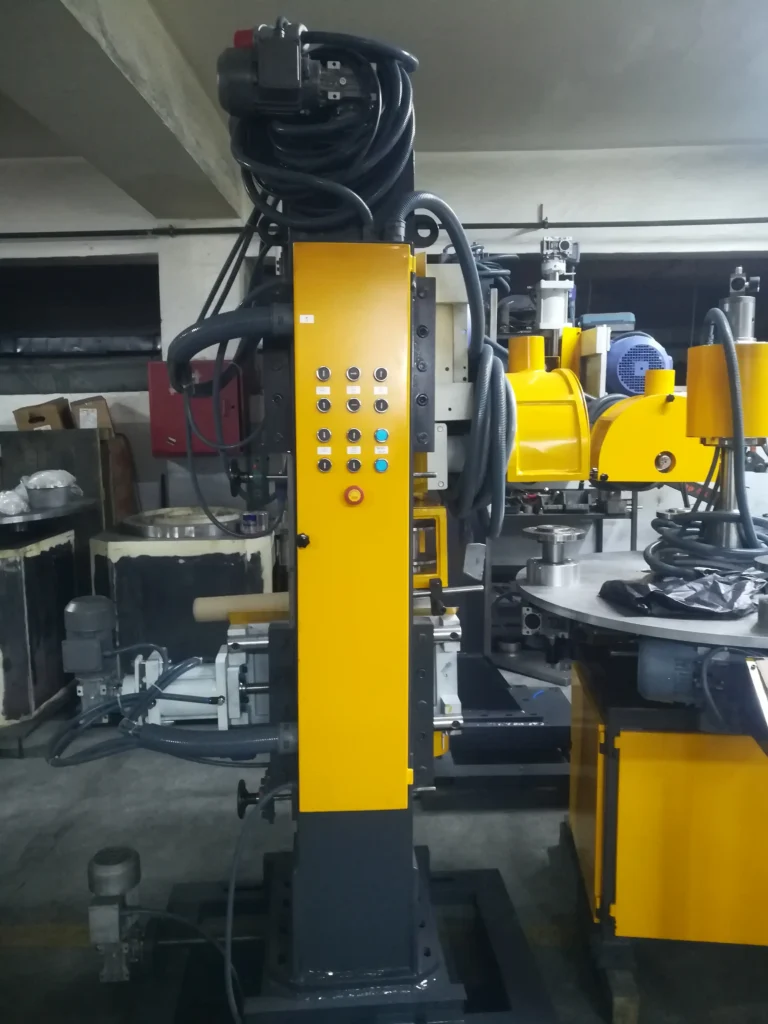
Categories
Machinery

Dual Spindle Buffing Machine

Dual Spindle Buffing Machine

Dual Spindle Buffing Machine: A Polishing and Buffing Combo Machine combines two surface-finishing functions—polishing (removing surface imperfections and achieving a smooth texture) and buffing (enhancing surface gloss and shine)—into a single machine.

Key Components of Polishing and Buffing Machine

  1. Motor – Powers the rotating wheels, typically ranging from 0.5 to 2 HP depending on application.
  2. Polishing Wheel – Often made of abrasive materials like emery or silicon carbide, used for initial surface refinement.
  3. Buffing Wheel – Softer wheels made of cloth, felt, or other flexible materials, used with buffing compounds for shine.
  4. Work Rest/Support – Provides a platform to steady the workpiece.
  5. Speed Control (optional) – Allows for variable RPM to suit different materials and finishing stages.
  6. Dust Collector or Ports (optional) – Helps manage debris and metal dust during operation.

Applications

  • Metalworking: Removing rust, smoothing welds, and bright finishing on stainless steel, brass, aluminum, etc.
  • Woodworking: Polishing lacquered or painted wood surfaces.
  • Jewelry Making: Precision polishing of fine metal items.
  • Automotive: Chrome and aluminum trim restoration.
  • Plastics and Composites: Edge polishing and surface refinishing.

Advantages

  • Space Saving: One unit handles both polishing and buffing.
  • Cost-Effective: Eliminates the need to purchase two separate machines.
  • Increased Productivity: Enables quick change between operations.

A polishing and buffing combo machine is designed to handle both the initial surface smoothing (polishing) and the final high-gloss finishing (buffing) in a single unit. This type of machine typically features two spindles or shafts, each mounted with a different wheel—one abrasive polishing wheel and one softer buffing wheel made of cloth or felt. The machine is powered by an electric motor, often in the range of 0.5 to 2 horsepower, and may operate at fixed or variable speeds depending on the model. Operators use the polishing wheel to remove oxidation, scratches, or casting marks from metal, plastic, or wood surfaces. Once the desired smoothness is achieved, the workpiece is moved to the buffing wheel, often with an applied buffing compound, to bring out a mirror-like finish. These machines are commonly used in metal fabrication, automotive detailing, woodworking, jewelry making, and plastic finishing. Some models are equipped with safety features like spark guards, adjustable tool rests, and dust collection ports to enhance usability and maintain a clean workspace. Combo units are favored for their efficiency, cost-effectiveness, and the convenience of switching between two essential finishing operations without changing equipment.

Many polishing and buffing combo machines are bench-mounted, making them compact and suitable for workshops with limited space. Industrial-grade models may also be floor-mounted for handling larger or heavier workpieces. The choice of wheel materials and compounds plays a crucial role in achieving specific results—coarse abrasives for heavy material removal during polishing, and finer compounds like rouge or tripoli for delicate buffing tasks. Some machines allow quick wheel changes, which adds flexibility when working on different materials such as aluminum, stainless steel, brass, or even acrylics. Consistent maintenance, such as checking wheel wear and ensuring proper alignment, extends the machine’s life and ensures uniform surface finishes. Proper operator training is essential to avoid issues like over-polishing, which can deform soft metals, or under-buffing, which leaves dull surfaces. Overall, these combo machines provide a streamlined, dual-function approach to surface finishing that saves time and improves productivity across a variety of industries.

In practical use, the polishing and buffing combo machine becomes an integral part of any workshop that deals with surface refinement, whether in fabrication, restoration, or decorative finishing. When a raw or semi-finished part is introduced to the machine, it often carries imperfections such as tool marks, scale, oxidation, or general roughness from casting or machining. The first step is polishing—this is not just about aesthetics but also about preparing the surface for coating, plating, or further mechanical processing. The polishing wheel, usually embedded with abrasive particles or paired with an abrasive compound, cuts into the surface lightly to smooth out these defects. Depending on the material being worked on, wheels may vary from hard rubberized abrasives to cloth-based flaps loaded with cutting compounds.

Once the surface is polished to a uniform level of smoothness, the operator transitions to the buffing side of the machine. Buffing is a more delicate, finishing process aimed at producing a high-gloss, mirror-like shine. It uses soft, pliable wheels—often made from cotton, muslin, or felt—and relies on fine buffing compounds, which can range from brown tripoli for pre-polishing to white rouge or green chrome oxide for final finishing. The operator must be skilled in applying the right amount of pressure and compound to avoid burn marks, streaks, or surface inconsistencies. In many industries, this high-quality finish is not just for appearance—it reduces friction, enhances corrosion resistance, and in some cases, meets critical tolerance requirements for high-performance components.

The machine’s design often includes a solid base to minimize vibration, ensuring steady and safe operation. Some higher-end models come with variable speed controls, allowing the user to adjust the RPM to match the specific task. Lower speeds are ideal for buffing delicate materials, while higher speeds can be used during the polishing stage for quicker material removal. Safety considerations are also crucial—spark guards, eye shields, and even integrated vacuum ports for dust and particulate extraction are common in industrial setups. Metal polishing and buffing generate fine particles and heat, so proper ventilation and personal protective equipment (PPE) are essential for long-term use.

What truly sets the polishing and buffing combo machine apart from separate tools is its ability to streamline workflow. In production settings where throughput and finish quality must be balanced, having both functions integrated into a single station allows operators to move seamlessly from surface preparation to final finishing. This not only reduces equipment cost and space requirements but also cuts down on handling time, which in turn improves consistency and productivity. For small workshops, artisans, or businesses that work with metals, plastics, wood, or composite materials, this machine becomes a core asset—capable of delivering professional-grade finishes on everything from industrial parts to custom-crafted jewelry or automotive components.

Polishing and Buffing Combo Machine

Polishing and Buffing Combo Machine is a dual-purpose finishing tool designed to perform both polishing and buffing tasks using a single unit. It is widely used in workshops, manufacturing plants, fabrication facilities, automotive garages, and artisan studios where surface treatment is essential. The machine typically features two opposing spindles mounted on a shared motorized base—one side dedicated to polishing, and the other for buffing. This allows the user to transition quickly between the two processes without changing tools or workstations, significantly increasing efficiency and convenience.

In polishing, the goal is to remove surface imperfections such as scratches, oxidation, or tool marks by using an abrasive wheel or polishing compound. This process is aggressive compared to buffing and is usually the first step in surface preparation. Polishing wheels are typically made from harder materials like sisal, impregnated cloth, or synthetic abrasives. They can be combined with various grits of abrasive paste depending on the material being worked—whether it’s steel, aluminum, brass, plastic, or even wood.

Buffing follows polishing and serves as a finishing process. It’s more refined and aims to produce a high-gloss, reflective surface. Buffing wheels are softer, usually constructed from multiple layers of muslin, cotton, or felt. They’re used with buffing compounds—fine, wax-like substances that smooth and brighten the surface without removing significant material. Popular buffing compounds include white rouge (for light metals), green compound (for stainless steel), and red jeweler’s rouge (for soft, precious metals). Proper buffing not only enhances the visual appeal of a component but also improves surface characteristics such as corrosion resistance and cleanliness.

The motor driving the machine typically ranges from 0.5 HP to 2 HP depending on application requirements. Some models are single-speed, while more advanced machines offer variable speed control, which is crucial when switching between materials that require different surface treatments. High RPMs are ideal for aggressive polishing, while lower speeds are safer and more effective for delicate buffing operations.

Modern combo machines often include safety features such as spark guards, eye shields, and non-slip bases. Dust extraction ports or attachments for vacuum systems may also be present, especially in industrial models, as both polishing and buffing generate fine dust and debris that must be controlled to protect both the operator and nearby equipment. Additionally, adjustable tool rests are usually provided to support the workpiece during operation and reduce operator fatigue during extended use.

From a functional perspective, the polishing and buffing combo machine is a highly efficient solution for anyone needing to process metal, plastic, or wood components to a refined finish. It is valued not just for its space-saving design but for its ability to provide consistent and high-quality results. Industries that benefit from this machine include metal fabrication, automotive restoration, aerospace, woodworking, jewelry production, and even consumer electronics repair. Its versatility makes it one of the most practical finishing machines in any multi-material workshop.

The polishing and buffing combo machine continues to stand out in industrial and artisan settings due to its adaptability, ease of use, and the quality of surface finish it can provide. In a typical workflow, operators appreciate the seamless transition from polishing to buffing without the need to interrupt their process or reposition the workpiece between machines. This uninterrupted workflow not only saves time but also helps maintain uniformity in finish, especially on pieces that require consistent surface characteristics across multiple faces or parts. For example, in automotive restoration, chrome parts like bumpers or trim are often polished to remove pitting or discoloration before being buffed to a mirror-like shine. Similarly, in metal fabrication shops, welders and machinists use combo machines to clean up weld seams or machined surfaces before final finishing, enhancing both appearance and performance of the component.

The machine’s effectiveness depends heavily on the choice of wheel and compound combinations. For instance, a coarse polishing wheel combined with a heavy-cut compound is ideal for removing deep scratches or oxidation on hard metals like stainless steel, while a soft buffing wheel with a fine rouge compound is better suited for bringing out a reflective finish on softer materials such as aluminum or gold. Knowing how to match the right wheel, compound, and speed to the material is essential for achieving professional results. This level of control becomes especially valuable in fields like jewelry making or precision engineering, where surface quality has both aesthetic and functional importance.

Beyond its operational features, the polishing and buffing combo machine also contributes to workplace efficiency by consolidating two essential finishing functions into one compact footprint. This is particularly beneficial in smaller workshops where space and budget may not allow for multiple standalone machines. It reduces setup time, minimizes movement between tools, and simplifies maintenance routines, as the user only has to service one motor and one frame. In terms of durability, most commercial-grade combo machines are built with heavy-duty cast iron or steel housings, sealed bearings, and industrial-grade motors to withstand long hours of continuous use. These rugged designs are crucial in production environments where downtime can be costly.

Operator safety and ergonomics are also important considerations in the design and use of these machines. Since both polishing and buffing produce dust, heat, and sometimes sparks, machines are often equipped with shrouds or guards to contain debris, and many allow connection to external dust collection systems. Proper lighting, workpiece support, and non-slip bases also contribute to safer operation. Users are typically trained to wear protective gear, including safety glasses, gloves, and sometimes respirators, particularly when working with fine powders or toxic materials.

Overall, the polishing and buffing combo machine represents a balance of power, precision, and practicality. Whether used for industrial part finishing, fine metalwork, or decorative surface treatment, it provides a reliable and versatile solution that meets the needs of both high-volume operations and custom fabrication shops. Its dual-functionality not only enhances workflow and finish quality but also offers a smart investment for those seeking long-term value and consistent performance in surface finishing tasks.

In continuous operation, the polishing and buffing combo machine plays a critical role in quality assurance, especially where visual appeal and surface integrity are directly tied to product value. This is particularly evident in industries such as aerospace, medical device manufacturing, and high-end consumer goods, where even minor surface flaws can disqualify a part from being accepted. The machine allows for close control over the finishing process, which is vital in environments that demand tight tolerances and repeatable results. By adjusting variables like wheel hardness, compound abrasiveness, motor speed, and pressure applied, skilled operators can fine-tune the outcome to meet highly specific standards. The versatility of the machine extends further when additional accessories are introduced—such as tapered spindles for quick wheel changes, flexible shaft attachments for precision detailing, or specialized jigs for handling complex geometries and delicate parts.

From an economic standpoint, this machine offers both direct and indirect benefits. Directly, it reduces capital expenditure since a single unit performs two processes. Indirectly, it enhances labor productivity by reducing idle time between stages of surface preparation. A worker using a combo machine can complete more parts per hour compared to setups that require moving between separate stations or waiting for other machines to become available. Furthermore, as this tool becomes a central part of production flow, it can be easily incorporated into lean manufacturing systems or continuous improvement programs. The consistency it delivers allows for more accurate scheduling, fewer reworks, and higher customer satisfaction due to the improved finish quality of the end product.

The machine’s relevance also extends into educational and training environments. In technical schools, vocational programs, and maker spaces, combo machines are often used to teach students the fundamentals of surface finishing. Because they combine two essential techniques, they allow learners to understand the complete process flow—from material preparation to final polish—without needing a suite of equipment. This helps build foundational skills while encouraging safe and efficient work habits. Students can experiment with different materials and finishes, gaining insight into how small adjustments in speed, pressure, or compound can lead to dramatically different results. These lessons are invaluable for future careers in machining, fabrication, restoration, and design.

In artisan and craft settings, particularly among metal sculptors, custom knife makers, or furniture builders, the polishing and buffing combo machine becomes a creative tool as much as a technical one. Here, surface finish is not just about function or standardization—it’s part of the product’s identity. Whether aiming for a soft satin sheen on a wooden edge, a deep reflective polish on a custom blade, or a subtly aged patina on a brass fixture, this machine supports a wide range of artistic expressions. The ability to switch quickly between aggressive material removal and delicate final touches allows artisans to bring their visions to life with both efficiency and craftsmanship.

Over time, the durability of the combo machine pays off. With proper maintenance—such as regular cleaning, lubrication of moving parts, replacement of worn wheels, and occasional motor servicing—it can last for decades, becoming a reliable fixture in the workshop. Many users even customize or upgrade their machines with aftermarket parts like extended shafts, upgraded motors, or precision rests to better suit their specific workflow. This adaptability, combined with its dual-purpose design, cements the polishing and buffing combo machine as an enduring staple in both industrial and creative environments.

Angle Buffing Machine

Buffing Grinder Machine

An Angle Buffing Machine is a specialized power tool designed for polishing and buffing surfaces using a rotating abrasive or soft wheel mounted at a right angle to the motor shaft. Unlike standard bench-top or straight-shaft polishing tools, the angle buffing machine features a compact, angled head that allows operators to work on vertical, contoured, or hard-to-reach surfaces with greater control and flexibility. It’s widely used in automotive detailing, metal fabrication, construction, shipbuilding, and maintenance work where surface refinement must be performed in tight or awkward spaces.

The tool resembles an angle grinder in form and function but is optimized for polishing and buffing rather than cutting or grinding. Most models are handheld and powered either electrically or pneumatically. The head, usually set at 90 degrees to the body, holds a spindle or arbor onto which various buffing pads, wool bonnets, foam discs, or abrasive flap wheels can be attached using quick-change systems or threaded mounts. The rotation of the head combined with the angled configuration allows the user to apply consistent pressure across uneven or vertical surfaces such as car panels, stainless steel tanks, pipes, weld seams, and even interior corners of fabricated structures.

The motor in an angle buffing machine typically operates between 1,000 and 3,000 RPM, and many models offer variable speed control to suit different materials and compounds. Lower speeds are essential when working with heat-sensitive surfaces like plastics or paint, while higher speeds may be used for tougher polishing jobs on metal. The tool is often equipped with ergonomic handles, trigger locks, and soft starts for safety and comfort during prolonged use.

Angle buffing machines can be paired with a variety of buffing compounds depending on the material and desired finish—coarse compounds for initial polishing, and finer rouges for high-gloss buffing. In automotive use, for example, detailers use these machines with foam pads and polishing compounds to remove swirl marks, oxidation, and light scratches from painted surfaces. In marine and industrial environments, they are essential for cleaning and restoring stainless steel, aluminum, or coated surfaces subjected to harsh weather and chemicals.

Their portability and versatility make angle buffing machines ideal for on-site work, touch-ups, or maintenance tasks where bench machines are impractical. With proper training and care, they deliver professional-level finishes and are a key tool for anyone working in surface restoration or finishing.

The angle buffing machine continues to be a crucial tool in both professional and hobbyist settings where precision surface finishing is required in challenging or confined spaces. Its right-angle head configuration makes it especially useful for working on irregular geometries, edges, vertical planes, and interiors of structural components where straight or bench-mounted machines cannot reach effectively. For instance, in automotive refinishing, the angle buffing machine is commonly used on contoured body panels, bumpers, and tight areas around mirrors or trim, providing smooth transitions and high-gloss finishes without risking damage to surrounding parts. The angled design also makes it easier to maintain a steady polishing line across vertical surfaces, which is difficult to achieve with flat tools or orbital polishers.

Because it is a handheld tool, operator skill plays a significant role in the final finish quality. Users must learn to apply consistent pressure and maintain the correct angle and movement pattern to avoid issues such as holograms, swirl marks, or overheating of the surface. Variable speed control is an important feature in this context, as it allows the operator to tailor the machine’s performance to the material and stage of the buffing process. Lower speeds may be used to spread compound evenly or to perform finishing passes, while higher speeds are more appropriate for cutting back oxidation or leveling minor scratches. The use of speed-adjustable machines also minimizes the risk of burning through paint or soft coatings, which is a common concern with fixed-speed tools.

The range of attachments available for angle buffing machines adds to their versatility. Depending on the application, users can switch between wool pads for aggressive compounding, foam pads for fine polishing, or microfiber heads for ultra-fine finishing. In metalwork, users might employ abrasive non-woven discs to clean welds or remove oxidation before switching to cloth buffing wheels for a polished shine. The ability to swap out heads quickly means that a single tool can handle multiple stages of finishing without interruption. This modularity makes it highly efficient for professionals who need to maintain productivity while achieving superior surface quality.

In industrial environments such as shipbuilding, railcar fabrication, or pipeline maintenance, angle buffing machines are used to prepare metal surfaces for coating or inspection. Surfaces like aluminum bulkheads, steel hulls, or stainless steel piping require a specific degree of smoothness and cleanliness to meet technical and safety standards. The portability of the angle buffing machine allows technicians to move easily across large structures and perform work directly on-site, reducing the need for disassembly or transport of heavy components. This mobility is also valuable in maintenance settings, where equipment may need to be refurbished or retouched in place, such as in HVAC systems, tanks, or heavy machinery frames.

In more delicate or artistic applications, like musical instrument restoration or architectural metalwork, the angle buffing machine enables highly controlled work on complex or ornamental surfaces. The operator can carefully maneuver the tool around curves, ridges, or recesses to remove tarnish, smooth seams, or enhance luster without flattening detail or causing damage. Artists, conservators, and custom fabricators often rely on the angle buffing machine for this level of tactile precision, as it bridges the gap between coarse grinding tools and fine hand polishing.

Durability and ergonomics are key to long-term use, especially in professional settings where the tool might run for hours at a time. High-quality angle buffing machines are built with reinforced gear housings, sealed bearings to resist dust and moisture, and insulated motors that can handle continuous duty without overheating. Ergonomic design features such as vibration-dampening handles, compact head profiles, and lightweight body construction contribute to reduced user fatigue and more stable handling. Safety features, including soft-start mechanisms, electronic overload protection, and adjustable guard systems, are becoming standard in modern models, enhancing both usability and operator protection.

Ultimately, the angle buffing machine is not just a convenience but a necessity for any work environment that demands consistent, high-quality finishes in complex or confined spaces. Its combination of power, portability, and precision makes it a go-to solution across industries—from car detailing and metalworking to marine maintenance and fine craftsmanship. With proper technique, maintenance, and selection of accessories, it delivers professional-level results that rival more stationary equipment, while offering unmatched flexibility and control. Would you like recommendations on specific models or guidance for selecting pads and compounds for a certain type of material or finish?

As the demand for surface perfection continues to rise across industries, the angle buffing machine is becoming increasingly refined in terms of technology, materials, and performance features. Manufacturers now offer machines with digital speed displays, programmable settings, and intelligent load sensors that adjust torque output based on the resistance encountered during use. These features enhance both the precision and safety of the tool, especially in environments where surface finish standards are tightly regulated, such as aerospace or medical manufacturing. Digital control also allows more consistent performance over extended polishing sessions, reducing the variability that can occur due to operator fatigue or changing surface conditions.

Cordless versions of angle buffing machines have also emerged, thanks to advancements in lithium-ion battery technology. These portable units give users full freedom of movement without sacrificing much in terms of power or run time. In field maintenance, such as on wind turbines, large vehicles, or outdoor pipelines, this mobility can be crucial. While corded machines still dominate in terms of continuous heavy-duty use, cordless versions are gaining ground rapidly, especially in situations where convenience, accessibility, or safety (e.g., avoiding tripping hazards) are primary concerns.

The environmental and workplace health aspects of buffing and polishing are also gaining attention. Angle buffing machines often operate in environments where dust, metal particles, or compound residue are released into the air. These fine particulates pose both respiratory and cleanliness challenges. As a result, many industrial users now integrate dust shrouds, attach vacuum hoses, or work within ventilated booths. Proper personal protective equipment—including respirators, eye protection, gloves, and hearing protection—becomes essential, especially during extended use. Additionally, the compounds used with these machines have evolved to include water-based or low-residue formulas that are safer for the operator and easier to clean from the finished surface.

From a training perspective, the angle buffing machine is relatively easy to learn, but mastering it takes time. Novices often start with practice panels or scrap pieces to develop a feel for the right pressure and motion. Over time, skilled users learn to “read” the sound, vibration, and visual cues from the tool and the workpiece, adjusting their technique instinctively. For companies training multiple employees, this consistency in results becomes critical to maintaining product quality. Some manufacturers now offer training programs, demo units, and even simulator-based systems to accelerate the learning curve and improve safety.

Repair and maintenance of angle buffing machines are generally straightforward. Most models are designed with accessible brush housings, gearboxes, and motor components, making it possible to replace worn parts like carbon brushes, bearings, or power cords without sending the unit out for service. Keeping the machine clean—especially the spindle and venting system—is essential to maintaining its lifespan. If the machine becomes unbalanced due to uneven pad wear or misalignment, it can cause excessive vibration and reduced control, so regular inspection is a good practice. For industrial users, establishing a preventative maintenance routine helps ensure uptime and extends the life of both the machine and consumables.

In terms of innovation, some angle buffing machines are now incorporating orbital motion in addition to rotary action, blending the benefits of rotary and dual-action polishers. This hybrid movement reduces the risk of heat buildup and surface swirl, making the tool more forgiving for users and safer for delicate finishes like clear coats or polished plastics. These tools are especially popular in detailing and finishing work where surface perfection is critical but the risk of overworking an area must be minimized. They represent a natural evolution of the traditional angle buffing machine, pushing the limits of what’s possible with a handheld surface finishing tool.

The longevity and relevance of the angle buffing machine ultimately stem from its ability to adapt to new materials, new processes, and evolving user needs. Whether in the hands of a seasoned professional restoring a classic car, a technician polishing a turbine blade, or an artist finishing a hand-crafted sculpture, this tool continues to offer a blend of control, power, and versatility that few others can match. It remains a bridge between raw fabrication and final presentation, turning unfinished surfaces into polished, functional, and often beautiful results. Would you like to go into detail about compound selection for specific finishes or how to adapt the machine for curved or textured surfaces?

Polishing Cabinet Buffing Machine

Mirror Finish Polishing

Polishing Cabinet Buffing Machine is a specialized equipment designed to facilitate safe, controlled, and efficient polishing and buffing operations within an enclosed space. These machines typically consist of a cabinet or booth where the polishing and buffing processes take place, often equipped with one or more buffing wheels, abrasive pads, or brushes, a motor, and integrated systems for dust collection. They are commonly used in industries that require precise surface finishing of small to medium-sized components, such as jewelry manufacturing, electronics, metalworking, and automotive detailing. The primary advantage of a polishing cabinet buffing machine lies in its enclosed design, which helps contain debris, reduces exposure to hazardous materials, and minimizes environmental contamination.

The cabinet typically features transparent viewing panels made from durable acrylic or tempered glass, allowing the operator to monitor the workpiece while maintaining a safe distance from the moving parts. The interior of the cabinet is equipped with buffing wheels or abrasive pads mounted on motor-driven spindles, which rotate at varying speeds depending on the model. These spindles can accommodate different sizes and types of buffing wheels, ranging from coarse to fine materials such as wool, cotton, or felt, which are ideal for different stages of the polishing process. In many cases, the user can switch between polishing and buffing wheels to progressively refine the surface finish, from initial material removal to high-gloss final polish.

A key feature of the polishing cabinet buffing machine is its integrated dust and fume extraction system. Polishing and buffing generate fine dust and debris, particularly when working with metals like aluminum or stainless steel, or with certain composites. These particles can pose health risks when inhaled or cause a mess in the workplace. To mitigate this, polishing cabinet machines are equipped with powerful suction fans or vacuum systems that remove airborne particles from the cabinet, funneling them into filters or external collection bins. This feature is essential for maintaining a clean, safe working environment, especially in compliance with workplace health and safety standards.

These machines are typically designed for ease of use, with access doors or glove ports allowing the operator to insert their hands into the cabinet without opening it, thus maintaining a sealed environment. Glove ports enable precise control over the workpiece, and the compact design of the machine helps in controlling the work area’s lighting and dust levels. The interior often includes adjustable shelves or tool supports, providing convenience for setting the workpiece at the ideal height and angle for the operator.

The buffing cabinet is typically made of sturdy metal, such as steel or aluminum, to provide durability and stability during operation. Some higher-end models also include advanced features like built-in lighting, vibration-dampening components, and optional accessories such as polishing compounds or sprays, which can be applied directly to the workpiece while it is being buffed. These compounds can further enhance the polishing process, especially when working with materials that require a high-gloss finish, such as precious metals, glass, or acrylics.

The polishing cabinet buffing machine is especially valuable in high-precision fields where surface finish quality is critical. In jewelry manufacturing, for example, these machines allow for a meticulous, controlled polishing process that produces a flawless shine on rings, necklaces, bracelets, and other pieces without damaging the delicate details. In automotive applications, such as buffing chrome trim or headlight lenses, the cabinet helps achieve an even, smooth finish that enhances the appearance of the part while also providing a layer of protection against oxidation.

Overall, a polishing cabinet buffing machine provides a controlled, efficient, and safe solution for precision polishing and buffing tasks. The enclosed design ensures both safety and cleanliness, while the versatility in buffing wheel and compound options allows the user to adapt the machine for different materials and finishes. Its application spans a wide range of industries, making it an essential tool for professionals seeking high-quality surface finishes in a secure, effective manner.

The polishing cabinet buffing machine remains an essential tool in environments where precise, high-quality finishes are required. Its enclosed nature offers distinct advantages, not only for the operator’s safety but also for maintaining consistency and cleanliness in the workspace. The ability to control the working environment inside the cabinet makes it easier to handle intricate parts and delicate materials without worrying about contaminants or exposure to harmful polishing compounds and dust. This makes it particularly beneficial in fields like jewelry design and restoration, where intricate detailing and high-shine finishes are a hallmark of quality. The dust and debris removal system ensures that any fine particles produced during the process are efficiently extracted, improving air quality and reducing the risk of cross-contamination or scratches on the workpiece. The machine’s ability to maintain a stable, clean environment also extends the life of polishing wheels and reduces the need for frequent tool changes, as the buildup of abrasive material is minimized.

Another key aspect of these machines is the ability to easily adjust the polishing parameters. Many models come with variable-speed motors, allowing users to tailor the speed of the buffing wheels to suit the material being worked on. Softer materials, like aluminum or plastics, require slower speeds to avoid overheating or gouging, while harder metals like stainless steel might benefit from faster rotation to remove oxidation or achieve a mirror-like finish. These adjustments allow for greater control over the polishing process, ensuring that the finish meets the required standards without risking damage to the workpiece. The variety of polishing pads and wheels that can be used in these machines also makes them versatile, catering to different stages of the polishing process, from coarse grinding to fine polishing and buffing.

The compact and efficient nature of the polishing cabinet buffing machine also makes it ideal for shops or operations with limited space. Instead of needing multiple stations for different polishing tasks, a single polishing cabinet can handle a variety of materials and finishes, making it both a space-saver and a cost-effective solution. Operators can easily switch between tasks without needing to move the workpiece to different machines or setups. This efficiency is particularly valuable in high-volume production environments, where time and workflow are critical.

In addition to its functionality, the ergonomic design of the cabinet makes it easier for operators to perform long hours of buffing and polishing without experiencing undue strain. The ability to perform tasks through glove ports or from an upright position, with the workpiece secured at an optimal height, minimizes operator fatigue and increases overall comfort. This is an important consideration for environments where the operator’s well-being is a priority, such as in workshops with heavy or continuous polishing work.

From a safety perspective, the polishing cabinet buffing machine reduces the risk of accidents that can occur when using traditional open-bench polishing tools. With the operator enclosed within the cabinet, the likelihood of contact with moving parts is minimized. Additionally, the design often includes built-in safety features such as automatic shutoff mechanisms in case of overloads or unexpected malfunctions.

With regular maintenance, a polishing cabinet buffing machine can provide years of reliable service. Routine tasks like cleaning dust filters, inspecting buffing wheels for wear, and ensuring proper lubrication of moving parts keep the machine running smoothly. Many models also allow for easy replacement of worn-out components, such as brushes or wheels, helping to keep downtime to a minimum. This focus on durability and longevity is a significant benefit for businesses that rely on these machines for high-quality finishes on a daily basis.

In terms of application, polishing cabinet buffing machines are not limited to just one sector. Whether it’s polishing automotive parts, fine metal products, glassware, or even medical devices, these machines can adapt to a variety of materials and finishes. The precision offered by the enclosed, controlled environment allows for fine adjustments to the polishing process, ensuring that every part that leaves the machine meets the high standards required by the industry.

As industries continue to prioritize safety, efficiency, and quality, the polishing cabinet buffing machine remains a cornerstone tool for achieving professional finishes. Its ability to handle multiple polishing and buffing tasks while ensuring a safe, clean, and ergonomic workspace makes it a valuable asset in both small workshops and large-scale production facilities. Would you like more insights into choosing the right cabinet buffing machine for specific tasks or comparing models with unique features?

The versatility of polishing cabinet buffing machines extends to various industries, each benefiting from the machine’s ability to handle complex finishing tasks with precision and control. In industries such as aerospace, automotive manufacturing, and metalworking, where component appearance, durability, and surface integrity are paramount, polishing cabinet machines provide consistent, high-quality results. For example, in aerospace, precision-polished metal parts must meet stringent quality standards for both aesthetic and functional reasons, such as ensuring resistance to corrosion or minimizing drag. Polishing cabinet buffing machines allow technicians to fine-tune their processes to meet these exacting specifications, ensuring that even the smallest components, such as turbine blades or fuel fittings, are polished to perfection.

In automotive production, these machines are invaluable for detailing car parts, especially chrome and metal trim, which often require an immaculate finish to meet customer expectations and industry standards. The ability to maintain a controlled environment while polishing intricate surfaces, like grills, rims, or emblems, allows for a high-gloss finish without the risk of contamination from dust or compound residues. Polishing cabinet buffing machines help achieve the signature gleam that’s so important in vehicle aesthetics, from luxury cars to motorcycles.

In the field of medical devices, the quality of the finish on surgical instruments, implants, and prosthetics is crucial not only for the appearance but also for hygiene and functionality. Polishing cabinet buffing machines ensure that these parts are free from imperfections that could harbor bacteria or cause mechanical failure. For example, the smooth, polished finish on stainless steel surgical tools is not just about looks; it’s also essential for reducing the risk of infection and facilitating easier cleaning and sterilization. The precision of these machines makes them ideal for achieving such results.

Another major benefit of polishing cabinet buffing machines is their ability to handle delicate or highly specialized materials, such as gemstones, ceramics, and glass. In industries like jewelry design or glass manufacturing, where the material is often fragile or prone to scratching, the controlled environment inside a polishing cabinet helps prevent unintended damage. The ability to apply a controlled, even buffing action to such materials is essential for creating stunning finishes without compromising their integrity. In jewelry making, for instance, polishing cabinets are used to bring out the brilliance in metals like gold, platinum, and silver, as well as to perfect the clarity and shine of diamonds or other gemstones.

The adoption of polishing cabinet buffing machines in small-scale and artisan settings is also on the rise. Artists and small manufacturers who focus on custom or high-end products often rely on these machines for their precise control and ability to produce professional-grade finishes. Whether creating custom furniture, restoring antiques, or designing bespoke jewelry, the cabinet buffing machine offers a way to ensure consistent, high-quality results. It’s particularly useful in small shops where a single machine can handle multiple materials and finishes, providing versatility without requiring an array of separate machines.

As technology advances, polishing cabinet buffing machines are becoming more integrated with digital systems that allow for greater automation and efficiency. Some high-end models are now equipped with programmable controls, allowing users to input specific parameters such as speed, pressure, and compound type, creating a more automated process that can be repeated consistently. This reduces the potential for human error and ensures that each workpiece receives the exact same level of attention, making the polishing process both more reliable and efficient. This shift towards automation is especially beneficial in high-volume production settings, where consistency is crucial and reducing manual labor can lead to significant time and cost savings.

The environmental impact of polishing operations is another important consideration, and polishing cabinet buffing machines are increasingly designed with eco-friendly features. Many modern models incorporate filtration systems that reduce the amount of waste and pollutants released into the environment. For instance, some units use water-based or biodegradable compounds instead of traditional petrochemical-based polishing pastes, reducing the environmental footprint of the polishing process. Additionally, advancements in energy efficiency are helping to minimize power consumption, making these machines more sustainable for long-term use.

For businesses looking to optimize their operations, integrating polishing cabinet buffing machines with existing workflows is relatively straightforward. These machines can often be incorporated into automated production lines, where multiple parts need to be polished in a consistent and repeatable manner. The compact, enclosed design of the polishing cabinet makes it easy to fit into tight spaces or alongside other finishing equipment. Integration with dust extraction and filtration systems ensures that the entire polishing process remains clean and compliant with workplace health and safety regulations.

In terms of future trends, polishing cabinet buffing machines will continue to evolve, incorporating even more advanced technology such as touch-screen interfaces, real-time monitoring systems, and the ability to work with an even broader range of materials. These machines will continue to support industries that require precision and high-quality finishing, all while enhancing the overall safety, ergonomics, and environmental sustainability of the polishing process.

Whether for industrial, commercial, or artisanal use, polishing cabinet buffing machines represent a perfect balance of safety, efficiency, and high-performance. They provide a secure and controlled environment for achieving flawless finishes, protecting both the operator and the environment. With the right model, maintenance practices, and polishing compounds, businesses can ensure that they achieve the best possible surface finishes on a variety of materials, from metals to plastics and ceramics.

Would you like to explore more about specific polishing compounds or materials suitable for these machines, or perhaps recommendations on optimizing a polishing cabinet for your particular needs?

Industrial Buffing Machine

Dual-Station Polishing Machine

An industrial buffing machine is a high-powered tool used in commercial and industrial settings for polishing and finishing surfaces of various materials, such as metal, wood, plastic, and stone. These machines are designed to perform heavy-duty buffing tasks that require consistent, high-quality results across large quantities of parts or products. Industrial buffing machines are essential in sectors such as metalworking, automotive manufacturing, aerospace, and woodworking, where surface finishing is a critical step in ensuring the quality and appearance of the final product.

Industrial buffing machines come in a wide variety of configurations, from standalone bench-mounted models to larger, more complex systems that integrate multiple stages of polishing or are part of automated production lines. The main components typically include buffing wheels or pads, a powerful motor that drives the rotation of these wheels, and often an adjustable stand or frame to hold the workpiece at the correct angle for polishing. Many models are also equipped with speed controls, allowing operators to adjust the machine’s rotation speed based on the material being worked on and the stage of the buffing process.

The design of industrial buffing machines varies depending on the specific requirements of the task. For example, machines used for polishing large metal parts might feature larger buffing wheels, while those for finer detailing or finishing work might use smaller, more precise wheels. Some models are designed for specific applications, such as polishing automotive parts like chrome trim or buffing metal molds used in manufacturing, while others are more versatile and can handle a range of materials and finishes.

One of the key features of an industrial buffing machine is its motor, which is typically much more powerful than that found in smaller, consumer-grade polishers. These motors can be variable-speed to allow greater control over the polishing process. High RPMs (revolutions per minute) are ideal for quickly removing material or for aggressive polishing, while lower RPMs allow for finer finishing and a smoother, more reflective finish. For example, in metalworking, high speeds are used to cut back oxidation or remove rust, while slower speeds are ideal for fine polishing or creating a mirror-like finish.

Buffing wheels or pads are the heart of the industrial buffing process. These wheels come in a variety of materials such as cotton, felt, wool, and synthetic fibers, and are often treated with polishing compounds or abrasives to enhance their performance. For heavy-duty work, a stiff wheel might be used to remove oxidation or scratches, while softer, more delicate wheels are employed for final finishing. In some cases, the type of buffing compound used will depend on the material being polished. For example, a metal polish or abrasive compound might be used for polishing steel, while a gentler compound might be employed for polishing plastics or softer metals like aluminum or brass.

Industrial buffing machines also tend to feature built-in dust collection systems to manage the debris created during the buffing process. These systems help maintain a cleaner workspace and improve air quality by collecting the dust, metal filings, and polishing compound particles that are generated. This is particularly important in industries where worker health and cleanliness are a priority. In addition, the dust collection systems can improve the longevity of the buffing wheels and other components, as excessive dust buildup can lead to overheating or clogging of parts.

In larger-scale industrial operations, buffing machines may be integrated into automated production lines. These systems allow for consistent and repeatable polishing of high volumes of parts. In these setups, the buffing machine may be programmed to work with robotic arms or conveyors that feed parts into the polishing station, minimizing the need for manual handling and significantly improving efficiency. Such systems can be customized for specific products, enabling companies to meet high throughput requirements without sacrificing quality.

Safety is a major consideration with industrial buffing machines due to their high-speed rotation and potential hazards associated with polishing compounds and airborne debris. Machines are often equipped with safety guards or covers to prevent accidental contact with the buffing wheels. Operators are usually required to wear personal protective equipment (PPE), such as safety goggles, gloves, ear protection, and respiratory masks, especially in environments where fine dust or fumes may be present. Many machines also have emergency stop features and automatic shut-off mechanisms in case of overloads or malfunctions.

In terms of maintenance, industrial buffing machines require regular care to ensure that they continue to operate efficiently and effectively. This includes checking the motor and electrical components for wear, ensuring the buffing wheels are properly balanced, and cleaning or replacing the dust collection filters. Buffing wheels should be inspected for damage or wear, as a worn-out wheel can lead to uneven polishing or potential damage to the workpiece.

Given their durability, power, and ability to handle large-scale tasks, industrial buffing machines are a fundamental tool in many sectors. They ensure that products are finished to a high standard, improving both their appearance and functionality. In industries such as automotive, aerospace, metalworking, and manufacturing, these machines are vital for achieving the precision and surface finishes required for both aesthetic and practical purposes

Industrial buffing machines are designed to tackle demanding polishing tasks that require both power and precision. They are ideal for finishing large quantities of parts or high-volume production environments, where consistency and quality are essential. These machines can be used on a variety of materials, including metals, plastics, ceramics, glass, and composites, making them highly versatile in industries ranging from automotive and aerospace to metalworking, electronics, and manufacturing. The ability to perform both heavy-duty polishing and fine detailing allows these machines to meet the needs of a wide array of applications, such as restoring the shine to automotive parts, polishing turbine blades, buffing metal fixtures, or refining jewelry components.

What sets industrial buffing machines apart from consumer-grade tools is their robustness and ability to handle continuous operation without compromising on performance. High-speed motors, ranging from 1 horsepower (HP) to upwards of 10 HP or more, provide the necessary power for large-scale polishing tasks. This ensures that operators can maintain optimal production speeds while achieving a high-quality surface finish on parts of various sizes and shapes. In some cases, the motor’s power is supplemented by advanced speed control systems, allowing operators to dial in the perfect RPM for each task.

A key component of an industrial buffing machine is its buffing wheel, which can be tailored to specific applications based on the type of material and the level of finish required. Buffing wheels are available in different materials, such as cotton, wool, felt, or synthetic fibers, and they can be impregnated with various polishing compounds to enhance their cutting or finishing ability. For example, a wool wheel might be used for aggressive polishing tasks that involve removing oxidation or rust from metal parts, while a cotton wheel might be used for finer finishing or creating a mirror-like finish on softer metals or plastics.

Many industrial buffing machines come equipped with additional features such as oscillating or dual-action buffing motions. These motions are designed to reduce the risk of swirl marks or uneven finishes, especially when working with delicate or highly reflective surfaces. The oscillating motion helps to distribute the polishing compound more evenly and ensures that the surface being worked on receives consistent attention, which is especially important in industries that require a flawless finish, such as the luxury automotive or jewelry sectors.

Dust extraction and fume control systems are integral to industrial buffing machines, especially in environments where harmful particles or fumes might be released during the buffing process. These systems help capture and remove the fine dust, metal shavings, or polishing compound residues generated, which could otherwise contaminate the work area or pose a health risk to operators. Many machines feature integrated vacuum ports or separate dust collection units that help keep the workspace clean and safe. These systems are particularly important in industrial settings where maintaining air quality is essential for compliance with safety regulations.

Given the heavy-duty nature of these machines, maintenance is crucial to ensure their long-term reliability and performance. Regular inspection and replacement of buffing wheels, motor brushes, and polishing compounds are necessary to keep the machine running smoothly. Additionally, ensuring that the dust collection system is functioning properly, and that no debris or particles are clogging the system, helps prevent overheating and ensures efficient operation.

The integration of industrial buffing machines into production lines can further optimize efficiency in large-scale manufacturing environments. These machines can be automated to feed parts through buffing stations via conveyor belts or robotic arms, reducing manual labor and increasing throughput. In automated setups, buffing machines can be programmed to execute precise polishing sequences, ensuring consistency across large batches of parts. This level of automation not only speeds up production but also enhances product quality by reducing the risk of human error during the polishing process.

As industries continue to prioritize automation, sustainability, and efficiency, industrial buffing machines are also evolving to meet these needs. Many modern machines are designed to be energy-efficient, reducing power consumption and operational costs. Furthermore, advancements in buffing compounds, such as the development of water-based or eco-friendly formulas, help minimize the environmental impact of polishing tasks.

In conclusion, industrial buffing machines are indispensable in industries where high-quality, consistent surface finishes are a must. They are powerful, versatile, and designed for continuous operation, making them an essential part of many manufacturing and finishing processes. With the right maintenance, proper use of buffing compounds, and regular inspection, these machines can deliver exceptional results for a wide range of applications, from metal polishing to automotive detailing and beyond. Whether used in high-volume production environments or for specialized tasks, industrial buffing machines ensure that every part is finished to the highest standards. Would you like to explore specific manufacturers or features of these machines?

The industrial buffing machine’s ability to deliver consistent results in high-demand environments is one of the key reasons it remains indispensable across various sectors. As industries continue to evolve and the need for precision and efficiency grows, the role of buffing machines will likely expand, with advanced technologies integrating seamlessly into automated processes. One area of development is the incorporation of smart technology and sensors into buffing machines. These features can monitor the condition of the buffing wheels, track the pressure applied to the surface, or even detect anomalies in the polishing process. Real-time feedback allows operators to adjust settings or perform maintenance before issues arise, improving uptime and reducing the risk of defects in the final product.

For example, certain modern industrial buffing machines are now equipped with vibration sensors or load monitoring capabilities that can detect when a buffing wheel is out of balance or when the motor is under strain. This early detection can help prevent damage to the machine and the workpieces, ensuring that any issues are addressed before they result in costly downtime or quality control problems. Such advancements in machine diagnostics not only improve the efficiency of polishing operations but also help with predictive maintenance, which can be crucial for operations with high output demands.

Moreover, the flexibility of industrial buffing machines in accommodating a range of materials continues to make them invaluable. From polishing steel and aluminum to working on more delicate materials like plastics, ceramics, or glass, these machines can be tailored with various buffing compounds, pads, and wheels designed to suit the specific requirements of each material. This adaptability allows businesses to handle a wide array of products, from heavy machinery parts to intricate jewelry pieces, all while maintaining the high standards of finish that are expected in industries like automotive, aerospace, medical device manufacturing, and even art restoration.

With advancements in automation, the integration of buffing machines into larger manufacturing lines becomes increasingly seamless. Automated systems allow for continuous, high-speed polishing of parts, reducing manual labor and increasing throughput. This integration often includes conveyor belts or robotic arms that move parts into position for polishing, and some machines can even be programmed to apply specific pressure and speed settings to different parts of the product, ensuring a customized finish for each piece. Such systems are essential for industries like automotive manufacturing, where large quantities of parts need to be polished to the same high standard, or in industries where precision is paramount, such as the aerospace sector.

Environmental concerns and sustainability continue to be important factors in industrial manufacturing, and the development of more eco-friendly buffing systems is becoming increasingly relevant. For instance, using biodegradable or water-based polishing compounds helps reduce the environmental impact of the buffing process. Additionally, dust extraction and air filtration systems are being improved to capture even finer particles, further minimizing environmental exposure to harmful chemicals or metal dust. Some companies are also developing machines that use less energy and produce less noise, addressing both environmental and workplace safety concerns.

Another factor that makes industrial buffing machines essential is their role in quality control. In industries like metalworking, where the aesthetics and functionality of the parts are critical, the buffing process plays a key role in eliminating imperfections such as scratches, rust, or oxidation. Buffing ensures that the finished products have a smooth, even surface, free from defects that could compromise their performance or appearance. High-quality surface finishes can also improve the durability and longevity of products, particularly in industries that require resistance to corrosion or wear, such as the marine or oil and gas sectors.

In woodworking, where polishing and buffing are often done to enhance the natural appearance of the wood and provide a protective finish, industrial buffing machines play an essential role in producing furniture, cabinetry, or decorative items. The buffing process ensures that the wood surfaces are smooth and polished, free from marks or imperfections, and properly sealed. Similarly, in the electronics industry, where components need to have smooth, contaminant-free surfaces for optimal performance, buffing machines are used to polish parts like circuit boards, casings, and connectors, ensuring they meet industry standards for both function and appearance.

As industries move towards more precision-driven and technology-enhanced manufacturing, the role of industrial buffing machines will likely become even more integral. Machines with integrated software and advanced control systems could further reduce human error and improve efficiency, allowing for more complex and intricate finishes. In addition, the incorporation of artificial intelligence and machine learning could help optimize polishing processes by learning from past operations and adjusting settings automatically for the best results.

In summary, industrial buffing machines are continually evolving to meet the increasing demands for precision, efficiency, and sustainability. These machines are critical in industries where surface finish plays an important role in both aesthetics and functionality. From high-volume production settings to specialized craftsmanship, industrial buffing machines ensure that products meet the highest standards of quality and finish. As technology advances, these machines will only become more sophisticated, offering even more benefits in terms of automation, customization, and eco-friendliness. Would you like further details on any specific models or recommendations based on particular industrial needs?

Dust Collection Buffing Machine

Automatic Load/Unload Polishing Machine

dust collection buffing machine is a specialized tool designed for polishing and buffing tasks that includes an integrated dust extraction system to capture the debris generated during the buffing process. These machines are widely used in industrial settings, particularly in woodworking, metalworking, automotive manufacturing, and other industries where the polishing process can produce a significant amount of dust, shavings, or particulate matter.

The primary function of a dust collection buffing machine is to ensure a cleaner, safer work environment by capturing and removing harmful dust, polishing compounds, and metal shavings as they are created. This is especially important in environments where dust particles can pose health hazards to workers, create safety risks (e.g., explosions from flammable dust), or interfere with the quality of the finished product.

In a typical dust collection buffing machine setup, the machine is equipped with a high-efficiency dust collection system that either integrates directly with the buffing tool or operates as a standalone component. The dust extraction system usually consists of several key elements:

  1. Dust Hood or Shroud: A collection hood or shroud is positioned around the buffing wheel to capture the dust and particles generated during the polishing process. These hoods are strategically designed to enclose the work area around the wheel, minimizing the release of dust into the surrounding workspace.
  2. Vacuum System: The dust captured by the hood is then directed through a vacuum system. This system can be built into the buffing machine itself or connected to an external dust collector via flexible hoses. The vacuum system pulls the dust from the work area and transports it to a filtration unit, where it is safely contained.
  3. Filtration System: After the dust and debris are sucked into the vacuum system, they are passed through a filtration unit. Depending on the machine’s design, this filtration unit can include multi-stage filters to remove even fine particles. Common filter types include HEPA filters (high-efficiency particulate air filters), carbon filters for capturing fumes, or cyclone separators that remove larger debris before the air enters finer filters.
  4. Dust Collector or Hopper: The cleaned air is released back into the room, and the dust and debris are collected in a dust collector or hopper. The hopper or dust bin needs to be emptied regularly to prevent it from becoming clogged, and it may be equipped with a system to alert operators when it’s full.
  5. Workpiece Area or Booth: In some machines, especially those used in high-precision or sensitive applications, the dust collection system is integrated into an enclosed booth or workpiece area. This setup isolates the polishing process from the surrounding environment, providing an even cleaner working atmosphere and better control over the dust.

The inclusion of a dust collection system in a buffing machine offers several benefits:

  • Improved Air Quality: By removing harmful dust particles from the air, these machines help maintain a healthier work environment. In industries like woodworking, metalworking, and automotive, where the polishing process can release fine particulate matter, keeping the air clean is crucial for protecting workers’ respiratory health.
  • Enhanced Workplace Safety: Dust accumulation can create fire hazards, particularly when flammable polishing compounds or metals are involved. A dust collection buffing machine minimizes this risk by preventing the buildup of dust, which can otherwise become a source of ignition.
  • Better Product Quality: Dust and debris in the environment can contaminate the polishing process and lead to imperfections in the finished surface. A dust collection system helps prevent these contaminants from interfering with the finish, ensuring that parts and products are polished to a high standard without the risk of dust marks or scratches.
  • Cleaner Workspace: A cleaner work environment not only improves health and safety but also boosts productivity. Operators can work in a more organized and less cluttered environment, which reduces the time spent cleaning up after each task and keeps the workspace more efficient.
  • Compliance with Regulations: In many industries, dust collection is not just a best practice; it’s often a legal requirement. For example, in the woodworking industry, dust is considered a significant health hazard, and businesses must comply with OSHA (Occupational Safety and Health Administration) standards or similar regulations. Using a dust collection buffing machine ensures compliance with these regulations and minimizes the risk of penalties.

In industries like metalworking and automotive production, buffing machines with integrated dust collection systems help to keep surfaces free of contaminants that could affect the quality of polished parts. In metalworking, buffing processes often involve the use of abrasives, which can create fine metal dust. This dust, if not controlled, can result in contamination or affect the surface quality of the finished product. Similarly, in automotive production, using a dust collection system ensures that polishing compounds and fine particles are safely contained, preventing damage to delicate components like mirrors, trim, and bodywork.

In woodworking, dust collection is crucial because the fine dust from sanding, buffing, and polishing wooden surfaces can contain wood fibers that are harmful when inhaled. A dust collection buffing machine helps mitigate the health risks associated with these fine particulates, ensuring that the workspace remains clean and the air quality is improved.

Moreover, the integration of eco-friendly features into modern dust collection systems is becoming more prevalent. Newer systems are designed to be more energy-efficient, reducing the overall environmental impact of polishing operations. This can include optimized vacuum motors that consume less electricity or using sustainable materials for filters that are both effective and biodegradable.

The incorporation of smart technology into dust collection buffing machines is also on the rise. Some machines now feature real-time monitoring and diagnostics, where sensors can detect the level of dust buildup in the filtration system, alerting operators when maintenance is needed or when the filters need to be changed. This ensures that the dust collection system operates at peak efficiency, reducing the chances of downtime and maintaining the cleanliness of the work environment.

In conclusion, a dust collection buffing machine offers a comprehensive solution for industries that require high-quality surface finishes while ensuring that the work environment remains safe, clean, and efficient. The integration of powerful vacuum systems, efficient filtration, and dust collection technologies not only helps protect workers’ health but also ensures the smooth and flawless results that are expected in precision industries. Would you like more details on specific models or features of dust collection systems for buffing machines?

Dust collection buffing machines are a critical advancement in industrial polishing, combining the functions of polishing and dust management into a single, cohesive system. These machines are engineered to perform high-quality buffing while effectively capturing the dust and debris generated during the process, which is essential for maintaining both the quality of the finished product and the safety of the workspace. In industries where dust and particulate matter can negatively impact both product quality and worker health, having an integrated dust collection system helps to address these concerns while boosting operational efficiency.

The dust collection system works by drawing in the airborne particles that are created as the buffing wheel makes contact with the workpiece. This debris can range from polishing compounds to metal shavings, wood dust, or plastic particles, depending on the material being worked on. Without a dust collection system, these particles can scatter into the air and the surrounding environment, potentially contaminating the work area, affecting air quality, and increasing the risk of fire or health issues. In industries like woodworking, metalworking, and automotive, these particles are not only an inconvenience but also a serious safety hazard.

A properly designed dust collection system in a buffing machine includes a powerful suction system that pulls in dust from the immediate work area. This is often achieved by using a combination of collection hoods or shrouds that surround the buffing wheels and vacuum suction hoses that connect to a central dust collector. The dust is pulled through the system, where it passes through various filters designed to trap fine particles, ensuring that only clean air is returned to the workspace. In addition to improving air quality, this system reduces the need for manual cleaning, making the workspace less cluttered and more productive. Moreover, the collection of dust is especially important in environments with high-speed buffing operations, where large amounts of dust are generated quickly.

These machines are also crucial for maintaining the quality of the finish on the workpieces. When dust and other debris are allowed to remain in the environment, they can settle back onto the workpieces and cause imperfections in the final polished surface. Even small particles can lead to scratches, streaks, or uneven finishes. By collecting dust at the source, a dust collection buffing machine helps to preserve the integrity of the surface finish, ensuring that parts remain free from contaminants. This is particularly important in industries such as automotive manufacturing, where high-quality finishes are essential for both aesthetic appeal and functional performance.

Beyond improving air quality and product finishes, dust collection systems in buffing machines also play a significant role in ensuring workplace safety. In industries like woodworking, where wood dust is produced, the dust can be highly combustible, posing a fire risk. Similarly, metal dust, especially from materials like aluminum or steel, can present an explosion hazard if not properly controlled. A dust collection buffing machine helps mitigate these risks by capturing potentially hazardous dust and preventing it from accumulating in the workspace. In doing so, it also helps businesses comply with safety regulations and health standards, which may require the installation of dust extraction systems in certain industries to prevent harmful exposure.

Maintenance of dust collection buffing machines is an essential aspect of keeping them functioning efficiently. Over time, dust can build up in the system, especially in the filters and collection hoppers, so routine cleaning and maintenance are required to keep the system running at peak performance. Regularly checking and replacing filters, ensuring that the vacuum system is not clogged, and keeping the buffing wheels in good condition are all part of maintaining the machine and ensuring optimal dust collection. Many modern dust collection systems are equipped with sensors and monitoring systems that notify operators when the system is nearing full capacity or when the filters need to be replaced, making maintenance easier and reducing downtime.

Another advantage of these machines is their ability to help businesses reduce their environmental footprint. By capturing and containing dust, companies can reduce the amount of airborne particulate matter that is released into the environment. This is particularly relevant in industries where regulations surrounding air quality are stringent, such as woodworking or metalworking. Dust collection buffing machines contribute to a cleaner and more sustainable manufacturing process by preventing the release of harmful pollutants and minimizing waste.

The design and technology of dust collection systems are also evolving to be more energy-efficient and user-friendly. Modern machines often feature adjustable suction power, allowing operators to fine-tune the level of dust extraction based on the material and type of buffing work being done. This helps optimize energy consumption and ensure that the dust collection system is working as efficiently as possible. Additionally, quieter models are available, reducing the noise level in the workspace, which can improve the working conditions for operators and comply with noise reduction regulations.

The incorporation of smart technologies in dust collection buffing machines is also an emerging trend. Some machines now include digital controls, allowing for more precise operation and real-time monitoring of the dust collection process. These systems can track the efficiency of the dust extraction, alerting operators to any potential issues such as blockages or system malfunctions. This real-time data helps ensure that the dust collection system is always functioning optimally, improving both the quality of the work and the safety of the environment.

Overall, a dust collection buffing machine is an essential piece of equipment for many industries that rely on polishing and buffing processes. Whether it is a standalone unit or part of a larger automated production system, the inclusion of a dust collection system enhances safety, improves air quality, and ensures that finished products meet the highest standards of quality. By reducing the environmental impact, increasing workplace safety, and ensuring that the buffing process is efficient and precise, these machines provide a comprehensive solution for a wide range of industrial applications.

The continued development of dust collection buffing machines is driven by the increasing demand for higher productivity, enhanced worker safety, and improved environmental standards. As industries strive to streamline operations, reduce costs, and meet sustainability goals, the role of these machines has evolved beyond simple dust extraction. Modern dust collection buffing machines are now integrating sophisticated features that increase their effectiveness in a variety of applications.

For instance, advancements in filter technology have significantly improved the efficiency of dust extraction. High-efficiency particulate air (HEPA) filters, commonly used in these machines, can capture even the finest dust particles, which are often invisible to the naked eye but can still cause serious health risks if inhaled over time. Additionally, multi-stage filtration systems are now commonly used to enhance dust collection by first removing larger particles and then capturing the finer, more hazardous dust. This progression has made dust collection systems more reliable and effective, ensuring a cleaner and healthier work environment for operators.

The automation of dust collection systems is another notable trend. Many modern machines are designed to integrate seamlessly with automated production lines. For example, buffing machines with dust collection systems are increasingly being equipped with sensors that automatically adjust the suction power depending on the type of material being polished or the volume of dust being generated. This smart functionality helps to ensure optimal dust removal without wasting energy or resources. Automated monitoring systems can also track the condition of the filters, alerting operators when maintenance is needed or when filters should be replaced, thus reducing manual intervention and preventing system failures.

In addition to these technological advancements, compact and modular designs have made dust collection buffing machines more versatile and adaptable. Compact models are especially beneficial for businesses with limited space or smaller production setups, while modular designs allow for greater flexibility. These systems can be customized to meet specific production needs by adding or removing components like extra filtration stages, larger collection hoppers, or additional suction points. This flexibility ensures that businesses can tailor the machines to their operations, whether they are working with large-scale, high-volume manufacturing or smaller, more specialized tasks.

As sustainability becomes a growing concern across all industries, dust collection systems are being designed to reduce their environmental footprint. One such development is the integration of energy-efficient motors and components that reduce electricity consumption while maintaining high performance. Some dust collection buffing machines now use variable speed drives that adjust the motor’s power depending on the workload, further optimizing energy usage. By reducing the machine’s overall energy demand, companies can lower operational costs and contribute to their sustainability goals.

In the automotive industry, the integration of robotic arms with dust collection buffing machines is becoming more common. These robotic systems can be programmed to automatically position parts for buffing and polishing, while the dust collection system ensures that the area around the robot stays clean. This combination of robotics and dust collection enhances the precision and consistency of the buffing process, reduces the need for manual labor, and ensures that parts are finished to a high standard without contamination. This automated setup can be particularly useful for mass production of automotive components, where consistency is key and high-quality surface finishes are essential.

For industries involved in aerospace manufacturing, where polishing and buffing are critical for both the aesthetics and functionality of parts, dust collection systems play an integral role in maintaining a pristine work environment. Aerospace components require precise surface finishes to ensure both performance and safety. A dust collection buffing machine designed for this purpose helps ensure that the surfaces of critical components, such as turbine blades, wing parts, and fuselage sections, remain free from contamination or defects caused by dust particles. By capturing these particles before they settle onto the workpieces, the dust collection system plays a vital role in meeting the stringent standards set for aerospace components.

Woodworking is another industry where dust collection buffing machines are essential. Wood dust, if left uncontrolled, can create a host of problems, including respiratory issues for workers, increased risk of fire, and environmental contamination. By integrating dust collection into the buffing process, these machines not only improve the quality of the wood finish but also ensure compliance with health and safety regulations. In high-end woodworking, such as furniture making or musical instrument crafting, where fine surface finishes are necessary, dust collection buffing machines help create a pristine surface that is free from wood fibers and other contaminants.

In industries that work with metal finishes, such as precision machining or jewelry manufacturing, dust collection buffing machines are indispensable for both quality control and safety. Metals like aluminum, steel, and brass can produce fine dust particles during the buffing process, and the presence of this dust in the air can pose a health risk if not properly managed. By using an effective dust collection system, businesses can ensure that workers are not exposed to harmful metal particles while also maintaining a high standard of finish on the metal surfaces.

Furthermore, in industries like electronics manufacturing, where the cleanliness of the parts is critical for functionality, dust collection buffing machines are often used to polish and buff components such as circuit boards, connectors, and housings. Even a small amount of dust or debris can interfere with the performance of electronic devices, so it is essential to keep the work environment free of dust. These machines help ensure that all parts are polished to the highest standard and free from contaminants that could compromise their performance.

As companies continue to prioritize operational efficiencyworker safety, and environmental responsibility, the demand for dust collection buffing machines that offer both high-performance polishing and effective dust extraction will only continue to grow. Whether for large-scale industrial applications or specialized craftwork, these machines provide a versatile, efficient solution that meets the needs of modern manufacturing and finishing operations. With ongoing advancements in technology, design, and sustainability, dust collection buffing machines will remain an essential tool in a wide range of industries, ensuring cleaner environments, safer workplaces, and higher-quality finished products.

Wet Buffing Machine

Dual-Station Polishing Machine

wet buffing machine is a specialized type of polishing equipment that uses water or a liquid coolant during the buffing or polishing process to reduce friction, manage heat, and enhance the finish of the workpiece. Unlike dry buffing, which generates a lot of heat and can create airborne dust, wet buffing incorporates water or an oil-based compound that cools the surface and collects dust and debris, creating a cleaner and safer environment for both the operator and the workpiece.

Wet buffing machines are used in various industries, including metalworking, automotive, jewelry, and woodworking, and are ideal for applications where heat buildup can damage the material or when a smoother, more refined surface finish is required. These machines are especially useful in processes such as polishing metal, plastics, ceramics, or composites, where the material needs to retain its integrity without being overheated.

The key benefits of wet buffing machines include:

  1. Reduced Heat Generation: When buffing a surface, the friction between the buffing wheel and the material can generate significant amounts of heat. This heat can cause problems like discoloration, warping, or even material damage. Wet buffing minimizes heat buildup by cooling the surface as it is being polished, preventing heat-related damage and ensuring that the material stays in optimal condition.
  2. Improved Surface Finish: The presence of a liquid coolant during the buffing process helps to achieve a finer, more polished surface. The liquid helps to lubricate the surface and the buffing wheel, reducing friction and minimizing the chances of scratching or marring the workpiece. As a result, the surface finishes produced by wet buffing are typically smoother and more even, which is particularly important in industries like jewelry and precision machining.
  3. Dust Control: One of the primary concerns with dry buffing is the creation of fine dust and debris that can contaminate the work environment. Wet buffing helps control this issue by trapping the dust in the liquid, reducing the amount of airborne particulates. This is particularly advantageous in industries where dust can be hazardous to health or affect the quality of the finished product. By capturing the dust, wet buffing machines help maintain a cleaner workspace and improve air quality, contributing to a safer work environment.
  4. Extended Tool Life: The use of liquid coolant in wet buffing helps extend the life of both the buffing wheel and the workpiece. The liquid prevents excessive wear on the wheel and minimizes the chance of the material becoming overheated or damaged. The lubrication provided by the liquid can also prevent excessive friction, which can cause the wheel to wear down prematurely.
  5. Enhanced Material Protection: Wet buffing is particularly beneficial for sensitive or delicate materials that could be easily damaged by heat or excessive friction. For example, in industries like jewelry making, where precious metals and stones need to be polished, wet buffing helps preserve the material’s integrity while achieving a brilliant finish. The controlled environment created by the liquid coolant ensures that the materials are polished effectively without risking damage.
  6. Better Control Over Buffing Process: Wet buffing allows operators to have more control over the polishing process. By adjusting the flow of coolant, operators can manage the speed and temperature of the buffing wheel more precisely, ensuring that the material is polished to the desired specifications. This level of control is crucial in industries that require high precision and quality, such as aerospace or medical device manufacturing.

Wet buffing machines typically consist of several core components:

  1. Buffing Wheel: This is the main tool for polishing the surface of the material. It is usually made from cloth, felt, or a similar soft material and is designed to spin at high speeds. During the buffing process, the wheel is coated with polishing compounds or treated with the liquid coolant to achieve the desired finish.
  2. Liquid Coolant Reservoir: Wet buffing machines are equipped with a tank or reservoir that holds the liquid coolant, which can be water or a water-based solution. The liquid is directed to the buffing wheel and the workpiece, where it helps cool the material and carry away any debris or dust generated during the process.
  3. Pump and Delivery System: A pump circulates the liquid coolant from the reservoir to the buffing wheel. This system is typically designed to ensure that a consistent flow of liquid is delivered to the wheel, maintaining an even cooling effect during the buffing process.
  4. Suction or Filtration System: In many wet buffing machines, a suction or filtration system is included to capture the liquid and any debris created during the polishing process. This helps to maintain a clean work environment and ensures that the liquid coolant can be reused or filtered for efficiency.
  5. Workpiece Holding System: Wet buffing machines often include a system for holding or positioning the workpiece securely while it is being polished. Depending on the machine’s design, this can be a manual or automatic setup, ensuring that the workpiece is properly aligned with the buffing wheel for optimal results.
  6. Control Panel: Modern wet buffing machines typically include a control panel that allows operators to adjust settings such as wheel speed, coolant flow rate, and pressure. Some machines also have built-in monitoring systems that can provide real-time data on the buffing process, ensuring consistency and quality in the finish.

While wet buffing machines provide many advantages, there are some considerations to keep in mind:

  1. Maintenance: The liquid coolant used in wet buffing systems can become contaminated over time with debris and polishing compounds. This requires regular maintenance, including draining and replacing the coolant, as well as cleaning the filtration and suction systems to ensure that the machine operates efficiently.
  2. Slipperiness: The use of liquid coolant can create a slippery work environment. Operators should take care to ensure that the floor around the wet buffing machine is properly cleaned and maintained to reduce the risk of accidents.
  3. Water Quality: In some cases, the quality of the water used in the coolant can impact the effectiveness of the buffing process. Impurities in the water can cause streaks, spots, or residue to be left on the workpiece, requiring additional cleaning after polishing.
  4. Cost: Wet buffing machines are generally more expensive than their dry counterparts due to the added components like the coolant reservoir, pumps, and filtration systems. However, the additional cost is often justified by the superior finish and increased safety they offer.

Wet buffing machines are an essential tool in industries that require precise, high-quality surface finishes. From polishing metal to fine-tuning the appearance of delicate materials, these machines provide enhanced control, improved safety, and better environmental conditions for operators. Whether in manufacturing, jewelry making, or precision machining, wet buffing machines offer a versatile and effective solution for a wide range of polishing needs.

Wet buffing machines are widely used in industries that require a smooth, polished finish on their workpieces, while also ensuring that the materials remain free from contaminants like dust and debris. These machines are designed to incorporate water or liquid-based coolants into the buffing process, providing several significant advantages over traditional dry buffing methods. The liquid helps manage the heat generated during polishing, which can be crucial when working with sensitive materials that could be damaged by excessive friction. Additionally, it serves as a dust control mechanism, capturing particles and preventing them from becoming airborne, which reduces environmental and health risks. This is particularly important in environments where the dust could be hazardous, such as in woodworking or metalworking operations.

One of the key features of wet buffing machines is their ability to maintain a cool surface temperature during polishing. Buffing generates heat, which, if uncontrolled, can lead to a variety of problems, such as surface deformation, discoloration, or even material distortion. Wet buffing mitigates this risk by using coolants that are applied directly to the workpiece and the buffing wheel. This cooling action ensures that the surface temperature remains stable, allowing for high-quality finishes without the worry of heat-related damage.

Another important benefit of wet buffing is the superior surface finish it provides. The presence of liquid lubricants during the buffing process reduces friction between the buffing wheel and the material, allowing for a smoother, more refined finish. This makes wet buffing especially useful for materials that require a high level of surface precision, such as in the production of jewelry, fine metalworking, and the aerospace industry. The liquid also helps prevent scratches, streaks, or other imperfections that may arise from dry buffing, delivering a flawless, mirror-like finish.

Furthermore, wet buffing machines contribute to a cleaner and healthier work environment. The liquid coolant captures dust and debris that are generated during the polishing process, preventing them from becoming airborne. This eliminates the need for constant cleaning and reduces the risk of respiratory issues for workers who are exposed to dust on a regular basis. It also minimizes the potential for contaminants to settle back onto the workpiece, which could negatively affect the final finish. The built-in dust control system helps ensure that the work area remains clean and safe, and it can improve air quality in the workplace, leading to fewer health concerns for employees.

Wet buffing is particularly advantageous when working with softer or more sensitive materials. For example, materials such as aluminum, brass, or certain plastics are prone to heat buildup and can become damaged or discolored if subjected to excessive friction. By using a wet buffing machine, manufacturers can achieve a high-quality polish while preserving the integrity of these materials. This is especially crucial in industries like automotive or electronics manufacturing, where precision and surface integrity are key.

These machines also offer the benefit of extended tool life. Buffing wheels can wear down more quickly when used for dry buffing due to the increased friction and heat. Wet buffing reduces the wear and tear on the wheel, extending its lifespan and making the process more cost-effective in the long run. Additionally, the coolant helps to prevent the buffing wheel from clogging with polishing compounds, which can compromise its effectiveness and require more frequent maintenance.

A critical component of wet buffing systems is the filtration and recirculation of the coolant. Since the coolant often becomes contaminated with debris and polishing compounds during use, many wet buffing machines are equipped with filtration systems that remove impurities from the liquid. This ensures that the coolant remains effective throughout the process and can be reused, reducing waste and operational costs. Some machines even feature automated systems that monitor the condition of the coolant and alert operators when it’s time for a change. This can help streamline maintenance and prevent disruptions to production.

Another consideration when using wet buffing machines is the potential for water-related issues, such as rust or corrosion on non-stainless steel components. Therefore, manufacturers often design wet buffing machines with materials that resist rust and corrosion to ensure durability and longevity. In some cases, machines may feature additional drainage systems to prevent the accumulation of stagnant water, which can also help minimize the risk of corrosion.

While wet buffing machines are generally more complex than dry buffing machines due to their added components—such as the coolant reservoir, pumps, and filtration systems—the benefits they offer in terms of finish quality, safety, and efficiency often outweigh the added complexity. Moreover, technological advancements in the design of wet buffing machines have made them more user-friendly, with features like digital control panels, automated coolant monitoring, and easy-to-access maintenance points. These features not only improve the machine’s performance but also reduce the operational effort required to keep the system running smoothly.

For businesses that are highly concerned with sustainability, wet buffing machines can be a great asset. By minimizing airborne pollutants and reducing the wear and tear on tools, these machines contribute to both a cleaner work environment and lower operational costs over time. Furthermore, because they often recycle the coolant, these systems reduce water usage and waste, making them an eco-friendly choice for businesses seeking to reduce their environmental footprint.

In summary, wet buffing machines are essential tools for industries that require high-quality, precise, and clean polishing processes. Whether for metalworking, woodworking, or other applications, these machines provide several distinct advantages, such as reducing heat generation, improving surface finish, controlling dust, and extending tool life. The incorporation of advanced filtration and recirculation systems ensures that wet buffing machines operate efficiently, while also maintaining a safe and clean working environment for operators. As technology continues to evolve, wet buffing machines are becoming even more effective, versatile, and user-friendly, making them an invaluable part of many modern manufacturing processes.

Wet buffing machines continue to evolve as advancements in materials, design, and automation reshape the manufacturing and finishing industries. With a growing emphasis on sustainability, efficiency, and the increasing demand for high-quality surface finishes, these machines are integrating even more sophisticated features that make them indispensable in many sectors.

One of the notable developments is the integration of advanced monitoring systems that provide real-time feedback on the performance of the buffing process. These systems can track parameters such as coolant flowwheel speedpressure applied, and surface temperature to ensure that the machine operates at optimal conditions. For example, if the coolant flow is too low or the temperature rises above a certain threshold, the system can alert operators and automatically adjust the settings to prevent potential issues. This level of automation not only improves the consistency and quality of the finished product but also reduces the chances of human error.

Another significant trend is the adoption of multi-functional buffing systems that combine various processes, such as wet polishingdry buffing, and abrasive finishing, into a single machine. These all-in-one systems are designed to streamline production by reducing the number of machines required for different stages of the buffing or polishing process. For instance, a wet buffing machine may have interchangeable wheels or pads that can be used for different materials or finishes, allowing the operator to switch between processes without the need for a full equipment changeover. This versatility can significantly reduce downtime and increase production efficiency.

Moreover, robotic automation is making its way into wet buffing systems, particularly in high-volume industries such as automotive manufacturing or electronics production. Robotic arms equipped with buffing wheels and integrated with wet buffing systems can automatically handle the polishing and buffing tasks. These robotic systems can precisely position the workpieces, ensuring uniform polishing, while the integrated dust and coolant management systems ensure a clean and safe working environment. In addition to improving consistency, automation also frees up human operators to focus on more complex or strategic tasks, increasing overall productivity.

The rise of customizable buffing solutions is another development that has enhanced the utility of wet buffing machines. For instance, some manufacturers now offer machines that can be tailored to specific needs, such as buffing delicate materials or working with specialized polishing compounds. Customization options might include adjustable wheel speeds, specialized buffing pads, or even specialized coolant solutions designed for certain materials or finishes. These machines allow businesses to achieve the highest level of precision and efficiency, while also accommodating the diverse demands of various industries.

In sectors where cleanliness and contamination control are paramount, such as in pharmaceuticalsfood production, and biotechnology, wet buffing machines are being designed to meet stricter sanitary standards. These machines are made from materials that are resistant to corrosion and easy to clean, while their coolant systems are equipped with filtration systems that ensure no contaminants affect the workpieces. Additionally, some machines feature closed-loop systems that circulate coolant and prevent exposure to external contaminants, further improving the cleanliness of the process.

The integration of eco-friendly coolant options is also becoming more prevalent. Many manufacturers are moving away from traditional chemical-based coolants, which can be harmful to both the environment and human health, in favor of more sustainable alternatives. Water-based coolants that are biodegradable and less toxic to the environment are being increasingly used in wet buffing systems. Additionally, some machines are designed to handle the disposal or recycling of used coolants in an environmentally responsible manner, reducing waste and the overall environmental impact of the buffing process.

As industries increasingly focus on productivity and cost efficiency, manufacturers are developing wet buffing machines with higher throughput capabilities. These machines are designed to handle larger volumes of workpieces, while still maintaining the high-quality finishes that wet buffing is known for. Features like automated part handlingadjustable buffing speeds, and multi-stage polishing processes enable wet buffing machines to meet the demands of large-scale production runs without compromising on quality.

Furthermore, the importance of ergonomics in wet buffing machines cannot be overlooked. Many modern machines are being designed with operator comfort and safety in mind. Adjustable workstations, user-friendly interfaces, and noise reduction technologies are all integrated into the design to ensure that the buffing process is as comfortable and safe as possible for operators. Reducing the physical strain on workers and minimizing exposure to hazardous dust and debris not only improves the well-being of employees but also leads to better overall productivity.

In industries where high-precision finishes are required, such as aerospacemedical devices, and precision optics, wet buffing machines are essential for ensuring that each part meets the required specifications. The machines’ ability to control temperature and surface smoothness makes them invaluable in maintaining the structural integrity and aesthetic quality of highly detailed components. Additionally, the low-friction, controlled environment offered by wet buffing reduces the risk of introducing surface defects or imperfections, which is critical in these fields.

Lastly, maintenance and cost-effectiveness are always key considerations for businesses. With modern wet buffing machines, maintenance has become easier and more cost-effective due to the development of automated monitoring systems that can predict when maintenance is needed and alert operators in advance. This predictive maintenance minimizes downtime and reduces repair costs, leading to increased efficiency and longer machine lifespans. Additionally, by using recyclable coolants and integrating features that extend the life of consumables like buffing wheels, these machines can help businesses reduce operational costs over time.

In conclusion, wet buffing machines are crucial tools for industries that demand high-quality finishes, a clean working environment, and efficient production. With ongoing advancements in automation, customization, energy efficiency, and sustainability, these machines continue to evolve and meet the increasingly complex needs of modern manufacturing. Whether it’s for polishing delicate materials, achieving precise surface finishes, or improving worker safety, wet buffing machines offer significant advantages that make them indispensable in many industries.

Double Ended Buffing Machine

Dual-Station Polishing Machine

double-ended buffing machine is a type of polishing or buffing equipment that features two buffing wheels or heads, one at each end of the machine. This design allows operators to buff or polish multiple surfaces of a workpiece simultaneously or switch between different tasks without the need to reposition the workpiece. Double-ended buffing machines are often used in industries where high productivity, efficiency, and precision are required, such as in metalworking, automotive, jewelry, and woodworking.

These machines are versatile and can be used for a wide range of applications, from polishing metal parts to applying fine finishes to delicate materials. The double-ended design allows operators to complete a variety of tasks more efficiently compared to single-ended machines. For example, one end of the machine may be used for rough buffing with a coarser wheel or abrasive, while the other end may be set up with a finer wheel for final polishing. This enables quicker transitions between different polishing stages without having to switch out buffing wheels or adjust the machine.

Key Features and Benefits

  1. Increased Productivity: With two buffing wheels or heads, a double-ended buffing machine allows operators to work on two parts at once or use different types of wheels for various polishing processes. This helps save time and increases throughput in high-demand production environments, such as in manufacturing or large-scale metalworking operations.
  2. Dual Tasking: The ability to work with two different types of wheels (e.g., a coarse wheel and a fine wheel) on separate ends of the machine makes it possible to perform multiple polishing steps in a single pass. This versatility reduces the need for additional equipment and streamlines the polishing process, making it more efficient.
  3. Flexible Operation: Double-ended buffing machines can be equipped with different types of buffing wheels, pads, or brushes depending on the material being polished. This flexibility allows the same machine to be used for a wide range of applications, from heavy-duty metal polishing to fine finishes on delicate materials like wood, plastic, or glass.
  4. Reduced Downtime: Since operators can change between buffing heads without needing to stop the machine, downtime is minimized. The quick transitions between rough and fine polishing stages enhance the efficiency of the overall operation, particularly in industries where time is critical.
  5. Space Efficiency: Double-ended buffing machines are designed to accommodate two buffing heads within the same frame, making them space-efficient compared to having separate single-ended machines. This is especially useful in smaller workshops or manufacturing environments with limited space.
  6. Enhanced Safety: Many double-ended buffing machines come with safety features such as protective shields, dust collection systems, and adjustable speed controls. These features help protect the operator from flying debris, excessive dust, or overheating, making the work environment safer.
  7. Customization: The machine can be customized to fit the specific requirements of the operation. Buffing wheels of various sizes, materials, and hardness can be used, allowing for tailored results depending on the job. For instance, one wheel could be used for rough grinding, while the other is used for polishing with a finer compound.

Applications

  1. Metal Polishing: In industries like metalworkingautomotive, and aerospace, double-ended buffing machines are commonly used to polish metal parts such as automotive body panels, engine components, and industrial machinery. They are equipped with different buffing wheels or compounds to achieve both coarse and fine finishes on the same machine.
  2. Jewelry Making: For jewelers, these machines are ideal for achieving fine, mirror-like finishes on metal jewelry pieces. One end may use a coarse wheel to remove imperfections, while the other is used to apply a high-gloss finish, giving the jewelry its final, polished appearance.
  3. Woodworking: In the woodworking industry, double-ended buffing machines can be used to apply smooth, shiny finishes to wood products. Different buffing wheels can be used for rough sanding, polishing, and buffing, achieving smooth, glossy surfaces on furniture, cabinetry, and decorative wood pieces.
  4. Plastic PolishingPlastic manufacturers use double-ended buffing machines to achieve high-gloss finishes on plastic parts or components. The ability to use different types of buffing wheels helps prevent damage to softer materials like plastic while still providing a smooth, polished surface.
  5. Automotive Detailing: Double-ended buffing machines are frequently used in automotive detailing to polish vehicle surfaces. One end may be used for applying a rough compound to remove scratches and imperfections, while the other end is used for applying a finer compound to achieve a high-gloss, showroom finish.
  6. Glass and Ceramics: In industries working with glass or ceramics, double-ended buffing machines are used to polish the surface of glassware or ceramic tiles. The fine polishing process enhances the clarity and appearance of glass items, such as mirrors, windows, or glass sculptures.

Types of Buffing Wheels

Double-ended buffing machines can be fitted with a variety of buffing wheels to suit different materials and polishing requirements. Some common types of buffing wheels include:

  • Cloth Buffing Wheels: Typically used for general polishing and finishing, cloth wheels are soft and ideal for achieving a smooth, high-gloss finish.
  • Felt Buffing Wheels: Felt wheels are more rigid than cloth wheels and are often used for finer polishing or when applying compounds.
  • Abrasive Buffing Wheels: These wheels are used for more aggressive polishing and are typically used on harder materials or for removing surface imperfections.
  • Wire Brush Buffing Wheels: Wire brush wheels are used for cleaning and deburring surfaces, often in metalworking applications.

Considerations

  1. Power Requirements: Double-ended buffing machines typically require more power than single-ended models due to the dual motor setup. It’s important to ensure that the machine is compatible with the power supply of the workshop.
  2. Space and Footprint: While the double-ended design is space-efficient compared to having two separate machines, it still requires adequate workspace for proper operation, particularly if the machine is being used in a high-production setting with multiple operators.
  3. Dust and Debris: Buffing generates a significant amount of dust and debris, especially when working with abrasive wheels or polishing compounds. Ensuring that the machine has an effective dust collection system is essential for maintaining a clean and safe work environment. Some machines come with built-in dust collectors or can be connected to external dust extraction systems.
  4. Maintenance: Like any machinery, regular maintenance is essential to keep a double-ended buffing machine running smoothly. This includes checking the buffing wheels for wear, ensuring the motors are functioning correctly, and maintaining the coolant or lubrication systems.

In conclusion, double-ended buffing machines are powerful and efficient tools used across various industries for polishing, finishing, and refining the surfaces of materials. Their dual-wheel design increases productivity by allowing operators to perform multiple polishing steps simultaneously or use different types of wheels for different stages of polishing. Whether for metal, wood, plastic, or other materials, double-ended buffing machines provide a versatile and high-performing solution for a wide range of polishing applications.

Double-ended buffing machines continue to be a cornerstone in many industrial settings due to their efficiency and versatility. The ability to simultaneously operate two buffing heads or wheels allows for faster and more streamlined production, especially when dealing with high volumes of workpieces. These machines are particularly valuable in environments that require rapid transitions between different stages of the polishing process, reducing the time spent switching between machines or tools. As industries become more focused on optimizing productivity and reducing costs, double-ended buffing machines provide a significant advantage by allowing workers to handle multiple tasks in a single setup.

In addition to improving productivity, double-ended buffing machines also help maintain a high level of consistency and quality across a wide range of products. By using different buffing wheels or compounds on each end of the machine, operators can fine-tune the polishing process to achieve the desired finish for each type of material or workpiece. This level of customization is essential in sectors such as metalworking, jewelry making, or automotive detailing, where even the smallest imperfections can affect the final product’s appearance and performance. The flexibility to adjust the polishing stages and compounds on both ends of the machine ensures that each workpiece is polished with the right amount of pressure, speed, and consistency.

Another important benefit is the ergonomic design that many modern double-ended buffing machines offer. These machines often feature adjustable workstations, allowing operators to position the workpiece comfortably without unnecessary strain. The ability to customize the height or angle of the machine ensures that operators can work efficiently while reducing the risk of injury or fatigue. This is especially beneficial in high-volume environments where workers may spend long hours using the machine. The ergonomic setup, combined with the dual heads, ensures that workers can perform tasks without needing to constantly adjust their positions or the workpieces, leading to a more efficient and comfortable workday.

Furthermore, double-ended buffing machines can also incorporate advanced coolant systems or lubrication systems that enhance the polishing process. These systems not only help reduce heat buildup during polishing but also minimize friction, ensuring that the material being polished does not suffer from thermal damage or unwanted scratches. By keeping the surface cool and lubricated, these systems also help to extend the lifespan of both the buffing wheels and the workpieces themselves. The inclusion of coolant systems is particularly important when working with materials that are prone to overheating or warping, such as plastics or softer metals.

In terms of maintenance, double-ended buffing machines often have relatively low upkeep costs, especially when compared to other types of industrial equipment. With proper care, the buffing wheels can last for extended periods, and the machines themselves are built to endure the wear and tear associated with constant use. Regular cleaning and the replacement of worn-out components, such as buffing wheels or belts, are usually sufficient to keep the machine operating at peak performance. Additionally, many modern double-ended buffing machines come with built-in monitoring systems that track performance and alert operators to any issues before they lead to costly breakdowns. This predictive maintenance capability helps reduce downtime and ensures that production schedules are met without interruption.

From an environmental standpoint, double-ended buffing machines can contribute to more sustainable manufacturing processes. Many of these machines now feature energy-efficient motors and closed-loop coolant systems, which reduce the overall environmental footprint of the buffing process. By recycling coolant and using energy-efficient components, these machines help conserve resources and minimize waste, making them a more eco-friendly option for businesses looking to reduce their environmental impact. The dust collection systems, which capture debris and prevent it from becoming airborne, also contribute to cleaner air quality in the workplace, further promoting a safe and healthy environment for workers.

In industries that require precision finishes, such as aerospace or medical device manufacturing, double-ended buffing machines provide the necessary control to achieve exacting standards. The ability to use different wheel types and compounds for various stages of the process ensures that the final surface is smooth, uniform, and free of defects. In these applications, where the tolerance for imperfections is minimal, the versatility of a double-ended machine is essential in maintaining high standards of quality. The precise control over pressure, speed, and polishing compounds ensures that even the most intricate parts or delicate materials can be polished without compromising their structural integrity.

As technology continues to evolve, the integration of smart features into double-ended buffing machines is becoming increasingly common. These smart systems allow for enhanced control and monitoring of the buffing process. For instance, some machines now come equipped with digital displays that show real-time data about the polishing process, such as the speed of the wheels, the temperature of the workpiece, and the pressure applied. This data can be used to adjust settings dynamically, ensuring that each workpiece is polished to the highest standard. Additionally, some machines are now compatible with Internet of Things (IoT) technology, allowing operators to remotely monitor and control the machine via mobile apps or computers, which is especially useful in large production facilities with multiple machines in operation.

The continued development of robotic automation in buffing processes also plays a role in enhancing the capabilities of double-ended buffing machines. Robotic arms or automated systems can be integrated with the machine to handle workpieces, ensuring that each part is positioned and polished with the utmost precision. This automation not only increases the speed of the buffing process but also reduces the risk of human error, ensuring consistent and repeatable results with minimal intervention. For industries with large-scale production needs, robotic automation can drastically increase output while maintaining the quality of the finish.

In conclusion, double-ended buffing machines are an indispensable tool in various industries, offering a combination of productivity, precision, and versatility. Their ability to handle multiple polishing tasks simultaneously, coupled with advancements in automation and sustainability, makes them ideal for modern manufacturing environments. As industries continue to demand higher-quality finishes and more efficient processes, the role of double-ended buffing machines will only continue to grow, providing essential solutions for a wide range of applications. Whether it’s for metal, wood, plastic, or delicate materials, these machines provide the necessary features to achieve flawless surfaces while improving efficiency and reducing operational costs.

As the demand for high-quality finishes increases across a wide range of industries, double-ended buffing machines are likely to evolve further with more advanced features. One key area of development is the integration of artificial intelligence (AI) and machine learning to optimize the buffing process. With AI-powered systems, the machine could learn from the data it gathers during operation and adjust settings automatically to improve efficiency, reduce material waste, and enhance the quality of the final product. These systems could predict when a buffing wheel is becoming less effective and recommend maintenance or adjustments before a decline in performance occurs. This predictive capability could also extend to identifying when the polishing compound needs to be replenished or changed, helping to maintain a consistent finish throughout the production run.

Another trend is the use of advanced materials for buffing wheels and machine components. Manufacturers are experimenting with composite materialscarbon fiber, and diamond-coated wheels to extend the lifespan of the buffing heads and improve their effectiveness on harder or more delicate materials. For example, diamond-coated buffing wheels are particularly effective for polishing very hard surfaces, such as ceramicsstones, or titanium alloys, which are used in aerospace and medical devices. The use of these advanced materials enhances the overall precision and longevity of the machine, which is especially important in industries where quality control and performance are critical.

Additionally, energy efficiency continues to be a driving force in the design of double-ended buffing machines. As sustainability becomes a priority for many manufacturers, the need for energy-efficient equipment that consumes less power while maintaining high performance is more crucial than ever. Modern machines are incorporating features such as variable-speed motorsenergy-saving drives, and automatic shutdown systems that reduce power consumption when the machine is not in use. These improvements help companies meet both their production goals and environmental sustainability targets by lowering energy costs and reducing their carbon footprint.

As the industry moves toward greater automation, collaborative robots (cobots) are expected to play an increasingly important role in buffing operations. These cobots can work alongside human operators, taking on repetitive or physically demanding tasks, while still allowing humans to oversee the process and make adjustments as needed. Cobots equipped with buffing tools can work on one side of a workpiece, while the operator can focus on the other side, effectively increasing throughput without sacrificing quality. Moreover, since cobots are often designed to be easily programmable and flexible, they can be adapted for use in various stages of the polishing process, from rough buffing to final finishing.

Furthermore, the globalization of the manufacturing industry and the increased reliance on offshore production have prompted many companies to seek buffing machines that are adaptable to different types of workpieces and materials. Double-ended buffing machines, being versatile, are highly valued in these contexts because they can be used to handle multiple product types in a single production line. Whether it’s polishing automotive parts, consumer electronics, or industrial machinery components, double-ended machines offer manufacturers the ability to process diverse materials while maintaining high-quality finishes. This versatility is a key reason why they are commonly used in contract manufacturing and OEM production.

In line with the growing importance of precision engineering, future developments in double-ended buffing machines will likely focus on further enhancing the machine’s ability to deliver highly consistent results across a variety of material types and geometries. Advances in feedback systems such as force sensors or laser measurement technologies will enable the machine to adjust in real-time to subtle changes in the surface being polished. For example, sensors could detect changes in surface roughness or material hardness and automatically adjust the buffing speed, pressure, and wheel type to compensate for these variations. This would ensure that every workpiece, regardless of its size or complexity, receives the same level of attention and polish.

Moreover, digitalization in the form of cloud-based solutions could become an important feature of double-ended buffing machines in the future. By connecting the machines to cloud-based platforms, manufacturers could monitor the performance of the machines remotely, track maintenance schedules, and analyze production data in real time. This could lead to more efficient scheduling and resource management, as well as better decision-making regarding machine performance and product quality. It also offers the potential for predictive analytics, allowing companies to foresee issues and implement proactive measures to minimize downtime.

The continued evolution of integrated cleaning systems in buffing machines is another area where double-ended machines are expected to see significant improvements. In industries like aerospace and pharmaceuticals, cleanliness is paramount, and buffing machines must be able to handle sensitive materials without introducing contaminants. Future double-ended machines may feature even more advanced in-line cleaning mechanisms that can remove debris and dust from the workpieces automatically during the polishing process. These cleaning systems would integrate seamlessly with the buffing process, ensuring that finished products remain free from dirt, oil, or particles that could compromise their quality or functionality.

Furthermore, the emphasis on worker safety is likely to lead to continued improvements in the design of double-ended buffing machines. Safety standards and regulations are becoming stricter, particularly in industries where hazardous materials are used. Future machines will likely include enhanced safety features such as automated shutdown protocols in case of an emergency, more advanced dust extraction to protect against harmful airborne particles, and safety guards designed to prevent accidental contact with moving parts. These safety features will not only protect workers but will also help companies comply with evolving workplace safety regulations.

Finally, user interfaces will continue to evolve, with many double-ended buffing machines incorporating touchscreen controls and advanced software that allow operators to easily adjust machine settings, monitor progress, and optimize the buffing process. This makes machines more intuitive and user-friendly, reducing the learning curve for new operators and ensuring that the machine operates at its highest efficiency. Operators can also store and recall settings for specific processes or materials, which can further improve productivity and consistency.

In conclusion, double-ended buffing machines are poised to undergo further advancements, particularly in automation, energy efficiency, precision, and safety. As industries increasingly demand high-quality finishes, consistent results, and operational efficiency, the development of these machines will continue to reflect those needs. With advancements in AI, automation, and smart features, these machines will remain essential in industries ranging from automotive and aerospace to consumer goods and electronics. Whether for polishing metal, wood, plastic, or delicate materials, double-ended buffing machines will continue to be indispensable tools in manufacturing environments, providing superior surface finishes with precision, speed, and versatility.

Polishing Lathe Buffing Machine

Bench Buffing Machine

polishing lathe buffing machine is a specialized piece of equipment designed to polish or buff a variety of materials by rotating the workpiece on a lathe while a buffing wheel or pad is applied to it. This type of machine is often used in industries that require precise, high-quality finishes, such as in metalworking, jewelry making, woodworking, and plastics manufacturing.

The polishing lathe buffing machine typically consists of a rotating spindle where the workpiece is mounted, a motor that drives the spindle, and a buffing wheel or pad attached to another spindle or motor. The workpiece is rotated at high speed, and the buffing wheel or pad is applied to the surface of the piece to remove imperfections, smooth out rough surfaces, and give the workpiece a glossy finish.

Key Features of a Polishing Lathe Buffing Machine

  1. Precision and Control: One of the primary advantages of a polishing lathe buffing machine is the level of precision it offers. The lathe allows for uniform rotation of the workpiece, ensuring consistent application of the buffing process. This is particularly important in industries where surface quality is critical, such as in jewelry or aerospace applications.
  2. Versatility: The polishing lathe can be used for a wide range of materials, including metals, plastics, wood, and composites. By changing the type of buffing wheel or pad, operators can adjust the machine for different polishing tasks, from heavy-duty material removal to fine, high-gloss finishes.
  3. Multiple Buffing Stages: Often, polishing lathe buffing machines allow for different stages of polishing. For example, a rough buffing wheel may be used in the initial stages to remove material and smooth the surface, while a finer buffing wheel is used in later stages to achieve a mirror-like finish. This versatility ensures that the machine can handle multiple polishing processes on the same workpiece.
  4. Adjustable Speed: Many polishing lathe buffing machines come with adjustable speed controls that allow operators to fine-tune the rotation speed of the spindle and the buffing wheel. This is essential for controlling the level of polishing and ensuring that the workpiece is not overheated or damaged during the process.
  5. Motorized or Manual Operation: Some polishing lathes are fully motorized, with automated controls that make it easier to operate, while others may offer manual operation for more hands-on control. In industrial settings, motorized versions are typically preferred because they offer consistent speed and less operator fatigue.
  6. Dust Collection: Since buffing can generate a lot of dust and debris, many polishing lathe buffing machines are equipped with built-in dust collection systems. These systems help to maintain a clean work environment and protect the operator from inhaling harmful particles that can be created during the polishing process.
  7. Customization Options: Depending on the application, polishing lathes can be fitted with a variety of buffing tools and attachments, such as different sizes of buffing wheels, belts, or pads, as well as accessories like tool rests, adjustable tool holders, and more. This allows the machine to be adapted for specific tasks and materials.
  8. Safety Features: Modern polishing lathe buffing machines often include safety features like guards around the spinning parts, emergency shut-off switches, and protective covers for the buffing wheel to prevent accidents during operation. These features are particularly important when working with high-speed rotating equipment.

Applications of Polishing Lathe Buffing Machines

  1. Jewelry Making: Polishing lathes are widely used in the jewelry industry to achieve high-gloss finishes on metal rings, necklaces, bracelets, and other pieces. The controlled rotation of the workpiece on the lathe allows jewelers to achieve a consistent, smooth finish on delicate designs without damaging the material.
  2. Metalworking: In metalworking, polishing lathe buffing machines are used to give metal parts, such as automotive components, engine parts, or decorative metal items, a smooth, polished surface. These machines are ideal for removing oxidation, scale, and other imperfections from the metal’s surface.
  3. Woodworking: Woodworkers use polishing lathe buffing machines to polish and buff wooden objects, such as furniture, bowls, and ornamental pieces. These machines help to bring out the natural grain of the wood and give it a high-quality, glossy finish.
  4. Plastic Polishing: In the plastics industry, polishing lathes are used to give plastic components a smooth and shiny surface. This is often important in the production of high-end consumer products, such as acrylic displays or clear plastic covers, where clarity and smoothness are critical.
  5. Aerospace and Automotive: Polishing lathes are used in both the aerospace and automotive industries to refine metal and composite parts. Polishing machine components to a high level of precision is essential in these industries, where even small imperfections can affect performance and aesthetics.

Advantages of Polishing Lathe Buffing Machines

  1. High Precision: The lathe allows for controlled rotation of the workpiece, ensuring that the buffing process is precise and even. This level of precision is especially important in industries like jewelry making, where surface finish quality is paramount.
  2. Enhanced Surface Finish: By using multiple stages of buffing with different wheels or pads, polishing lathes can achieve a high-quality surface finish. This is especially useful in applications where a mirror-like shine or fine detail is required.
  3. Increased Efficiency: The ability to adjust the speed and pressure during the buffing process allows operators to optimize their workflow. Since polishing lathes can handle a range of materials and polishing tasks, they offer a highly efficient solution for manufacturers who need to process a variety of parts.
  4. Reduced Operator Fatigue: The motorized operation of many polishing lathes reduces the physical strain on the operator, making the process less tiring and more productive. The ease of use and ability to adjust settings also make it more accessible for workers.
  5. Dust and Debris Control: Integrated dust collection systems help to keep the work area clean and reduce the risks associated with airborne particles. This not only improves the work environment but also ensures that the finished products are free of contamination.

Considerations

  1. Initial Investment: Polishing lathe buffing machines can be a significant investment, especially when they come with advanced features like dust collection systems, adjustable speed controls, or custom attachments. However, their ability to improve efficiency and quality often justifies the cost.
  2. Maintenance: Regular maintenance is necessary to ensure that the polishing lathe functions smoothly. This includes checking the buffing wheels for wear, cleaning dust collection systems, and ensuring the lathe’s motor is in good working condition.
  3. Skill Requirement: While polishing lathes can be easier to operate than some other types of polishing machines, they still require a skilled operator to achieve the desired results. Knowledge of different polishing materials, wheel types, and polishing techniques is crucial for achieving a high-quality finish.
  4. Space Requirements: Polishing lathe buffing machines tend to have a larger footprint than some other polishing machines. Manufacturers need to ensure they have adequate space in their workshop or production area to accommodate these machines.

Conclusion

Polishing lathe buffing machines offer a precise and versatile solution for polishing a wide variety of materials. Their ability to handle different types of polishing tasks, from rough buffing to fine finishes, makes them an essential tool in industries like jewelry making, metalworking, woodworking, and plastic manufacturing. With their high precision, ease of use, and the ability to adjust for different materials and tasks, polishing lathe buffing machines continue to be a popular choice for those seeking high-quality, polished finishes.

Polishing lathe buffing machines are widely recognized for their ability to deliver high-quality finishes with precision and versatility. The ability to control the rotation speed and apply different buffing stages ensures that workpieces are polished uniformly, whether the task is to achieve a high-gloss shine or to smooth rough surfaces. This makes them a valuable tool in many industries that require delicate and detailed work. In addition to the precision they offer, these machines can handle a variety of materials, from metals and plastics to wood and composites, by simply switching out the buffing wheels or pads, allowing operators to easily adjust for different tasks and surface requirements.

As manufacturing processes become more automated and demand for consistent, high-quality products increases, polishing lathe buffing machines continue to evolve. In some cases, they are integrated with more advanced technologies, such as sensors that monitor the temperature of the workpiece or the pressure applied by the buffing wheels. These sensors can automatically adjust settings to optimize the process, preventing overheating or damaging the surface. The use of automated systems also helps reduce the need for manual intervention, ensuring more consistent results, even in high-volume production settings.

Another area of improvement is the integration of advanced dust collection and filtration systems, which are becoming increasingly important in ensuring cleaner, healthier working environments. As buffing can generate a significant amount of fine dust, these systems help reduce the amount of airborne particles that may be harmful to workers. The ability to manage this dust more efficiently also contributes to cleaner final products, as contaminants from dust or debris can compromise the finish.

Polishing lathe buffing machines are also benefiting from innovations in smart technology. The implementation of IoT (Internet of Things) capabilities in some machines allows operators to monitor real-time data on performance, including variables such as speed, temperature, and pressure. This data can be accessed remotely, enabling operators or maintenance teams to spot potential issues before they lead to machine failure or production delays. These advancements further enhance the machine’s efficiency, reducing downtime and allowing for more predictive maintenance schedules.

Additionally, improvements in the materials used for the buffing wheels themselves are contributing to the performance of these machines. The development of longer-lasting, more durable materials helps extend the lifespan of the buffing heads, reducing the frequency of wheel replacements and improving the consistency of the polishing results. Innovations such as diamond-coated or ceramic wheels are particularly useful for polishing harder materials, providing even finer finishes while maintaining their durability.

With the continuous improvements in energy efficiency, many polishing lathe buffing machines are now designed to use less power, reducing operational costs while still delivering optimal performance. The integration of variable-speed motors and energy-efficient components ensures that these machines can operate with minimal energy consumption, even during long hours of operation. This focus on sustainability is an essential consideration for manufacturers looking to reduce their environmental impact.

As industries increasingly seek automation and precision in polishing, the future of polishing lathe buffing machines lies in further integration of robotic systems. Robotic arms or collaborative robots (cobots) could work alongside human operators to load and unload workpieces, ensuring that the polishing process remains consistent and efficient. These robots could also handle repetitive tasks, freeing up human operators to focus on more complex aspects of the production process.

In conclusion, polishing lathe buffing machines are a critical tool for industries that require high-quality, precise finishes on a wide range of materials. With continuous advancements in technology, automation, and energy efficiency, these machines will continue to play an essential role in manufacturing, delivering both speed and precision while maintaining high standards of quality. Their versatility, adaptability, and the potential for further innovation make them indispensable in modern production lines, from jewelry manufacturing to automotive and aerospace applications.

The future of polishing lathe buffing machines looks promising with continuous advancements in several key areas. One of the major trends is the increased automation of polishing processes. As industries continue to push for higher levels of efficiency, more polishing lathe buffing machines are being integrated into automated production lines, reducing the need for manual intervention. Automation allows these machines to run continuously, improving output and minimizing human error. Automated loading and unloading systems, for example, ensure that workpieces are handled efficiently and consistently, leading to faster processing times and reduced labor costs.

Additionally, robotic integration is becoming more prevalent. Collaborative robots (cobots) are being used to assist with the polishing process by working alongside human operators. Cobots can take over repetitive and physically demanding tasks, such as loading parts into the lathe or applying a consistent level of pressure to the polishing wheel. These robots are designed to be easily programmable and flexible, allowing them to adapt to different polishing tasks and work seamlessly with other machines on the production line. The use of cobots not only increases efficiency but also enhances the quality of the finished products by maintaining consistent polishing results.

As the demand for smart manufacturing continues to grow, polishing lathe buffing machines are being equipped with advanced sensors and data analytics capabilities. These systems can monitor key variables such as speed, pressure, temperature, and vibration in real time, allowing operators to track the machine’s performance and make adjustments when necessary. The integration of artificial intelligence (AI) is also enhancing the machine’s ability to learn from past operations and optimize its settings for different types of materials and workpieces. For example, AI algorithms can analyze the data from previous polishing sessions to automatically adjust the machine’s speed, pressure, and polishing wheel type, ensuring optimal results every time.

In addition to performance monitoring, the development of predictive maintenance systems is improving the reliability and uptime of polishing lathe buffing machines. By analyzing the machine’s operating data, predictive maintenance software can identify potential issues before they become major problems, allowing for timely repairs or adjustments. This reduces the risk of unexpected downtime and ensures that the machine remains in peak operating condition, leading to greater productivity and reduced maintenance costs.

The evolution of material science is also playing a significant role in the future of polishing lathe buffing machines. Buffing wheels are being made from more advanced, durable materials that can handle higher speeds and provide finer finishes. For example, diamond-coated wheels are becoming increasingly popular for polishing hard metals and ceramics, providing longer life and a superior finish. The development of new abrasive materials also enables polishing machines to work more efficiently with a wider range of materials, including difficult-to-polish alloys and composites used in high-tech industries such as aerospace and electronics.

As environmental concerns grow, there is an increasing push towards sustainable manufacturing practices. Polishing lathe buffing machines are being designed with more eco-friendly features, such as energy-efficient motors, low-emission dust collection systems, and the use of biodegradable polishing compounds. Additionally, the increased use of closed-loop systems that recycle and reuse polishing fluids is helping to reduce waste and improve the environmental footprint of polishing operations. Manufacturers are also focusing on reducing the use of hazardous chemicals in the buffing process, opting for safer alternatives that meet environmental and safety regulations.

The future of polishing lathe buffing machines will also see a continued focus on ergonomics and operator safety. As the machines become more advanced, manufacturers are incorporating features that enhance user comfort and reduce the risk of accidents. For example, machines are now equipped with more user-friendly interfaces, including touchscreen controls and intuitive software, making it easier for operators to set up and monitor the machine. Safety features such as automatic emergency shutdown, dust and noise reduction, and protective barriers around the buffing wheels are becoming standard in many models to ensure a safer working environment.

Moreover, the rise of digitalization in manufacturing is transforming the way polishing lathe buffing machines are operated. Cloud-based platforms are being used to connect polishing machines to centralized control systems, allowing for remote monitoring and control of multiple machines from a single location. This connectivity also enables real-time collaboration between operators, engineers, and maintenance teams, improving communication and efficiency across the production floor. By having access to real-time data on machine performance and output, manufacturers can make more informed decisions, streamline operations, and improve product quality.

In specialized industries such as aerospacemedical device manufacturing, and luxury goods production, polishing lathe buffing machines will continue to play a crucial role in achieving the exacting standards required for highly finished, high-performance parts. For instance, in the aerospace industry, where components must meet stringent requirements for both aesthetics and functionality, polishing lathe buffing machines are essential for ensuring that parts are free of defects and have a flawless surface finish. Similarly, in medical device manufacturing, where precision is critical for the safety and performance of devices, polishing machines will remain indispensable for creating smooth, contamination-free surfaces on implants, surgical instruments, and other critical components.

As these industries evolve, polishing lathe buffing machines will continue to advance to meet new challenges, providing the flexibility, precision, and speed required to keep up with the increasing demands for high-quality finishes. In this context, manufacturers are likely to see more customizable machines that can handle a wider range of materials, sizes, and shapes, as well as advanced technologies that help optimize the polishing process for maximum productivity and minimum waste.

In conclusion, the future of polishing lathe buffing machines is marked by ongoing advancements in automation, smart technology, material science, and sustainability. As industries demand higher levels of precision, efficiency, and sustainability, polishing lathe buffing machines are poised to evolve into even more powerful, versatile, and eco-friendly tools. With the integration of AI, robotics, predictive maintenance, and eco-conscious design, these machines will continue to be a critical part of modern manufacturing, providing the quality and consistency needed for a wide variety of applications.

Vertical Buffing Machine

Automatic Cookware Polishing Machine

vertical buffing machine is a type of buffing equipment commonly used in manufacturing and finishing processes to polish and buff surfaces of various materials. The key distinguishing feature of this machine is its vertical spindle orientation, meaning that the buffing wheel or pad is mounted vertically rather than horizontally. This design allows for more precise control over the polishing process, making it ideal for polishing tall or intricate parts that may be difficult to process with a horizontal machine.

The vertical buffing machine typically consists of a vertically mounted spindle driven by a motor, with the buffing wheel or pad attached to the spindle. The workpiece is usually held stationary or rotated by a fixture or support platform. As the buffing wheel makes contact with the workpiece, it spins at high speeds, removing imperfections, smoothing rough surfaces, and giving the material a high-gloss finish.

Key Features of a Vertical Buffing Machine

  1. Vertical Spindle Configuration: The vertical orientation of the spindle allows for better access to parts that might be difficult to polish using a horizontal machine. This is particularly beneficial for polishing long, thin, or complex shapes, such as rods, bars, tubes, or other vertical components.
  2. Precision Buffing: The vertical setup provides a stable environment for controlled buffing, ensuring that the polishing process is even across the surface of the workpiece. This precision is essential in industries where high-quality finishes are required, such as in automotive parts, jewelry, and metalworking.
  3. Variable Speed Control: Many vertical buffing machines come equipped with adjustable speed controls, allowing operators to tailor the polishing process to different materials and workpieces. For instance, lower speeds may be used for more delicate materials, while higher speeds are suited for tougher surfaces that require more aggressive polishing.
  4. Dust Collection Systems: Buffing generates a significant amount of dust and debris, which can be harmful to both the operator and the environment. Many vertical buffing machines are equipped with dust collection systems to capture these particles and maintain a clean and safe workspace.
  5. Ergonomic Design: The vertical configuration of the machine can also contribute to a more ergonomic work setup. Operators can work at a comfortable height without having to bend over or exert unnecessary physical strain, especially when polishing large or heavy workpieces.
  6. Rotary and Stationary Buffing: Depending on the specific model, vertical buffing machines may either rotate the workpiece while the buffing wheel remains stationary, or both the workpiece and the buffing wheel may rotate. This flexibility allows the machine to be adapted to various types of polishing operations.
  7. Adjustable Workholding: Vertical buffing machines often feature adjustable clamps, chucks, or fixtures that can securely hold the workpiece in place. This ensures that the workpiece remains steady during the polishing process, improving the consistency and quality of the finish.
  8. High Precision Buffing Heads: Many vertical buffing machines are equipped with high-precision buffing heads that can be easily swapped out to suit different materials, finishes, or polishing stages. This versatility allows operators to use the machine for various polishing applications without needing multiple machines.

Applications of Vertical Buffing Machines

  1. Metal Finishing: Vertical buffing machines are commonly used in metalworking applications to achieve a polished, smooth surface on metal parts. Industries like automotive, aerospace, and construction use vertical buffing machines to polish components such as engine parts, decorative trim, or structural metal pieces.
  2. Jewelry Polishing: In the jewelry industry, vertical buffing machines are used to create a mirror-like finish on rings, necklaces, bracelets, and other metal jewelry. The ability to control the speed and pressure of the buffing process is critical in achieving high-quality finishes without damaging the delicate components.
  3. Plastic Polishing: Vertical buffing machines are also used to polish plastic parts, especially in applications where clarity and smoothness are important, such as in the production of clear acrylic displays, lenses, or automotive parts.
  4. Woodworking: Vertical buffing machines can be used in woodworking to polish and finish wooden items, such as furniture, cabinetry, or carved objects. These machines are ideal for achieving a glossy surface finish on wooden pieces without causing damage.
  5. Aerospace and Medical: In specialized industries such as aerospace and medical device manufacturing, vertical buffing machines are essential for polishing critical components. For instance, aerospace components such as turbine blades or medical implants require a flawless finish to meet regulatory standards.

Advantages of Vertical Buffing Machines

  1. Improved Access to Workpieces: The vertical orientation allows for easier access to certain types of workpieces, especially those that are tall, cylindrical, or awkwardly shaped. This makes the machine highly versatile in polishing parts that would otherwise be challenging to process with other types of buffing machines.
  2. Consistent Finishes: The vertical design of the machine helps ensure a uniform polishing process. With a stable and controlled approach, operators can achieve more consistent results, which is important in industries that demand high-quality surface finishes.
  3. Space Efficiency: Vertical buffing machines often have a smaller footprint than horizontal models, which can be beneficial in shops or production lines where space is limited. The vertical design can be integrated into tighter workspaces while still providing efficient polishing capabilities.
  4. Increased Flexibility: The ability to adjust speed, pressure, and the type of buffing wheel allows for greater flexibility in the polishing process. Operators can fine-tune the settings to suit different materials and desired finishes, making the machine adaptable to various tasks.
  5. Ergonomics and Operator Comfort: The vertical configuration can improve operator comfort by reducing the need to bend or strain during operation. This can help reduce fatigue, improve safety, and make it easier for workers to operate the machine for extended periods.
  6. Enhanced Productivity: Vertical buffing machines are designed for high-speed operation, which can improve throughput and productivity. By offering fast polishing speeds while maintaining high precision, these machines help streamline the finishing process and reduce turnaround times.

Considerations for Vertical Buffing Machines

  1. Initial Cost: Vertical buffing machines can be a significant investment, especially those with advanced features such as variable speed control, high-precision buffing heads, and integrated dust collection systems. However, the long-term benefits in terms of precision, productivity, and finish quality often justify the initial expense.
  2. Maintenance: Like all machinery, vertical buffing machines require regular maintenance to keep them in optimal working condition. This includes routine checks on the buffing wheels, cleaning of dust collection systems, and ensuring the motor and spindles are functioning properly.
  3. Operator Skill: Although vertical buffing machines are designed for efficiency and ease of use, operators still need a certain level of skill and experience to achieve the best results. Proper training is essential to ensure that the machine is used correctly and safely.
  4. Workpiece Compatibility: While vertical buffing machines are versatile, some workpieces may require specific adjustments or fixtures to be properly polished. Operators need to ensure that the workpiece is securely held in place and that the right buffing wheel or pad is used for the material.
  5. Space Considerations: While the vertical design can save space compared to horizontal buffing machines, it’s still important to ensure that there is sufficient clearance around the machine for both operation and maintenance.

Conclusion

Vertical buffing machines are a powerful and versatile tool used in a variety of industries to achieve high-quality, precise surface finishes. Their ability to handle tall, cylindrical, and irregularly shaped parts makes them ideal for polishing a wide range of materials, including metals, plastics, wood, and more. With features such as variable speed control, dust collection, and ergonomic design, vertical buffing machines offer both efficiency and ease of use. While they require a significant initial investment and regular maintenance, their precision, consistency, and flexibility make them an invaluable asset in any manufacturing or finishing operation.

Vertical buffing machines are highly valued in various industries due to their unique ability to handle workpieces that require precise polishing and finishing. Their vertical spindle configuration allows for more controlled and efficient polishing, especially when working with tall, cylindrical, or intricately shaped components. The versatility of these machines makes them suitable for a wide range of materials, including metals, plastics, wood, and composites. This adaptability enables manufacturers to achieve the desired surface finish without the need for multiple types of machines.

One of the standout features of vertical buffing machines is their ability to adjust to different polishing requirements. The machines often come equipped with variable speed controls, allowing operators to tailor the process to the specific material being polished. This capability is essential, especially in industries like automotive, aerospace, and medical device manufacturing, where the finish quality must meet stringent standards. By adjusting the speed, pressure, and buffing wheel type, operators can achieve a wide range of finishes, from satin to high-gloss, depending on the specific needs of the workpiece.

Another advantage of vertical buffing machines is the dust collection system that is often integrated into the design. Buffing and polishing processes can generate fine dust and debris, which can be harmful to both the environment and the health of workers. The dust collection system ensures that these particles are captured efficiently, maintaining a cleaner and safer workspace. This feature is especially important in industries that handle materials like metal, plastic, or composite, where fine particles can create health hazards if not properly managed.

Moreover, vertical buffing machines can improve operator ergonomics. The vertical design of the machine allows for a more natural and comfortable working posture, reducing the strain on workers during long hours of operation. This ergonomic design can help to improve productivity and reduce the likelihood of work-related injuries. The ability to access the workpiece from different angles, combined with an adjustable workholding system, further enhances the flexibility of these machines.

The productivity benefits of vertical buffing machines are also significant. By offering high-speed operation and the ability to fine-tune polishing parameters, these machines help reduce production times while maintaining excellent finish quality. This makes them an essential part of high-volume production environments, where time and efficiency are critical. In addition, the consistent quality of the finishes achieved by vertical buffing machines leads to fewer rework cycles, which can further improve overall manufacturing efficiency.

Vertical buffing machines are often equipped with specialized features designed to accommodate different types of workpieces. For instance, they may have adjustable workholding devices, such as clamps or chucks, that securely hold the workpiece in place during the polishing process. This ensures that the workpiece remains stable, allowing for even and uniform polishing across its surface. The flexibility to adjust the workholding system also enables these machines to accommodate various sizes and shapes, making them highly versatile tools in a wide range of industries.

Another benefit is the energy efficiency that modern vertical buffing machines offer. Many newer models are designed with energy-saving features, such as variable-speed motors that adjust power consumption based on the task at hand. This reduces the overall energy usage, making these machines more cost-effective to operate over the long term. With an increased emphasis on sustainability in manufacturing, energy-efficient machines that minimize waste and reduce operational costs are becoming more desirable.

In terms of maintenance, vertical buffing machines are generally designed to be low-maintenance, but regular care is still essential for ensuring long-term performance. Regular checks on the buffing wheels, spindles, and motor components are necessary to prevent breakdowns. In addition, operators should clean the dust collection system and inspect it for any blockages to ensure optimal air quality and machine performance. By adhering to a maintenance schedule, manufacturers can ensure that the machine operates at peak efficiency and that production is not interrupted due to unexpected downtime.

The market for vertical buffing machines continues to grow as industries demand higher-quality finishes and more efficient manufacturing processes. With the advancement of technology, these machines are becoming even more sophisticated, integrating features such as sensor technologyreal-time data monitoring, and AI-driven adjustments. These innovations allow for greater precision, improved control over the polishing process, and better overall results, especially when working with complex or delicate parts.

Vertical buffing machines are also becoming more adaptable to a wide range of industries. For example, in the aerospace sector, where components must meet exacting tolerances and surface finishes for both performance and aesthetics, vertical buffing machines play a crucial role. Similarly, in the automotive industry, these machines are used to polish engine components, trim parts, and other elements where surface quality is a critical factor in both function and appearance. Medical device manufacturers rely on vertical buffing machines for polishing implants and surgical instruments, ensuring that the surfaces are smooth and free from imperfections that could compromise functionality or safety.

The future of vertical buffing machines lies in further innovation aimed at improving efficiency, sustainability, and quality. With ongoing advancements in automation and robotics, future vertical buffing machines may be able to operate with minimal human intervention. Collaborative robots (cobots) may assist in tasks like loading and unloading parts, while sensors could monitor and adjust the polishing process in real-time to ensure the optimal finish is achieved. The integration of smart technology will enable manufacturers to remotely monitor and control machine performance, allowing for more efficient management of production schedules and quality control.

As industries continue to demand faster, more precise, and more cost-effective manufacturing processes, vertical buffing machines will remain a key component in achieving high-quality finishes on a wide range of materials. The combination of precision engineering, ergonomic design, and the flexibility to handle different materials and workpieces makes them a valuable asset for manufacturers aiming to meet the demands of modern production. The continued evolution of these machines, driven by technological advancements and a focus on sustainability, will further cement their role as essential tools in the manufacturing landscape.

As vertical buffing machines evolve, several trends are likely to shape their future. One such trend is the integration of smart manufacturing and Industry 4.0 technologies. With the growing adoption of the Internet of Things (IoT), vertical buffing machines are becoming increasingly interconnected with other machines and systems on the shop floor. This interconnectivity allows for real-time data sharing, enabling operators and managers to monitor machine performance, track production progress, and detect potential issues before they lead to downtime. For instance, sensors can continuously monitor key parameters like wheel speed, pressure, and temperature, and send alerts when maintenance is needed or when the polishing process is deviating from the optimal conditions.

Moreover, the use of artificial intelligence (AI) is becoming more prevalent in the operation of vertical buffing machines. AI algorithms can analyze historical data to identify patterns in the polishing process, optimize settings for specific materials or components, and even predict when maintenance or repairs will be needed. This predictive capability reduces the likelihood of unexpected machine failures and helps to streamline operations by ensuring that machines are always running at their best. AI-driven systems can also help operators adjust polishing techniques on the fly, adapting to variations in material properties or changes in environmental conditions, thereby ensuring consistent results across large production runs.

The growing demand for sustainability in manufacturing is another factor that will influence the future of vertical buffing machines. With increasing environmental regulations and a push for more eco-friendly practices, manufacturers are seeking ways to reduce the environmental impact of their polishing operations. In response, vertical buffing machines are being designed with greater energy efficiency, reduced waste generation, and improved material recycling systems. For example, closed-loop water and fluid recycling systems are being incorporated into buffing machines to minimize the amount of polishing fluid consumed and reduce wastewater production. Similarly, dust collection systems are becoming more efficient, capturing a greater percentage of particles and improving the air quality in production facilities.

The materials used in buffing wheels and pads are also advancing. Manufacturers are increasingly using high-performance materials that last longer, provide better polishing results, and are less prone to wear. These advanced materials improve the overall efficiency of vertical buffing machines by reducing the need for frequent wheel replacements, lowering maintenance costs, and enhancing the consistency of the polished finish. For example, the use of diamond-impregnated buffing wheels allows for finer and more precise finishes, especially when working with hard metals or ceramics. These wheels not only offer superior polishing performance but also have a longer lifespan, reducing downtime and material waste.

The rise of customization in manufacturing is also influencing the design and capabilities of vertical buffing machines. As industries move toward more specialized and bespoke products, buffing machines are being designed with greater flexibility. Manufacturers are increasingly looking for machines that can be easily adapted to different workpieces, finishes, and materials. This has led to the development of vertical buffing machines with customizable features, such as adjustable spindle speeds, interchangeable buffing heads, and programmable polishing cycles. This level of flexibility enables manufacturers to handle a wide variety of polishing tasks, from mass production runs to low-volume, high-precision work.

Additionally, the integration of robotics in polishing and buffing operations is expected to continue to grow. Robotic arms can be used to automate the process of loading and unloading parts, ensuring that the workpieces are handled precisely and without manual intervention. This automation reduces the risk of human error, speeds up the production process, and enhances the overall consistency of the finished product. In some cases, robots may also be used to perform the polishing itself, particularly in applications that require high precision and a high degree of repeatability. This shift towards automation allows manufacturers to increase their productivity while reducing labor costs and minimizing the risk of injuries associated with manual polishing tasks.

Safety will continue to be a key consideration in the design of vertical buffing machines. As manufacturing environments become more automated, ensuring that machines operate safely and do not pose a risk to workers will be a priority. Modern vertical buffing machines are likely to come equipped with a variety of safety features, such as automatic shut-off mechanismsemergency stop buttons, and protective enclosures that prevent operators from coming into direct contact with the spinning buffing wheels. Additionally, there will be a continued emphasis on minimizing noise and vibration during operation, both of which can contribute to worker fatigue and potential hearing loss over time.

The trend towards integration with enterprise resource planning (ERP) systems is another factor that will shape the future of vertical buffing machines. By connecting polishing equipment to the broader production management system, manufacturers will be able to track production metrics, manage inventory, and plan maintenance schedules more effectively. This integration improves the overall efficiency of the manufacturing process, as it allows for better coordination between polishing operations and other stages of production. For instance, real-time data from the buffing machine can be used to adjust scheduling, ensuring that parts are polished at the optimal time in the production process.

In the aerospacemedical, and automotive industries, where precision is paramount, vertical buffing machines will continue to evolve to meet the increasingly demanding requirements of these sectors. 3D polishing technologies and advanced simulation tools are expected to be integrated into vertical buffing machines, enabling manufacturers to virtually simulate the polishing process before it is executed. This will help identify potential issues early on, reduce trial and error, and ensure that the final product meets the desired specifications. In addition, precision polishing capabilities are likely to advance further, allowing manufacturers to achieve even finer and more uniform finishes on critical components.

Training and skill development for operators will also play a crucial role in the future of vertical buffing machines. As these machines become more advanced, operators will need to be skilled in working with high-tech features such as automation, robotics, and AI-driven systems. Manufacturers are likely to invest in specialized training programs to ensure that their workforce can effectively manage and maintain these sophisticated machines. Moreover, as the technology continues to evolve, operators will need to stay updated on the latest features and techniques to maximize the performance of their buffing machines.

In conclusion, the future of vertical buffing machines is shaped by advancements in automation, robotics, AI, and sustainability. These machines are becoming more efficient, precise, and flexible, allowing manufacturers to meet the growing demands for high-quality finishes across a wide range of materials and industries. With the integration of smart technologies, predictive maintenance, and eco-friendly features, vertical buffing machines will continue to play a crucial role in modern manufacturing. By adapting to these trends, manufacturers can improve productivity, reduce costs, and maintain the high standards required for a variety of demanding applications. As the technology continues to evolve, vertical buffing machines will remain at the forefront of the finishing process, enabling industries to produce high-quality, polished products with greater efficiency and consistency.

Swing Arm Buffing Machine

Pipe End Flaring Machine

swing arm buffing machine is a specialized polishing tool used in various manufacturing industries to achieve high-quality surface finishes on workpieces. The machine features a distinctive design that includes a swing arm mechanism, which allows the buffing wheel or polishing pad to move in a circular or sweeping motion. This setup makes it easier for operators to handle workpieces of varying shapes and sizes while maintaining a consistent and smooth finish. Swing arm buffing machines are widely used for polishing metal, wood, plastic, and other materials.

Key Features of a Swing Arm Buffing Machine

  1. Swing Arm Mechanism: The most distinctive feature of this machine is the swing arm, which holds the buffing wheel or pad and allows it to move in a sweeping motion. This feature offers flexibility, as the operator can maneuver the buffing wheel around the workpiece to achieve a uniform polish. The swing arm is typically mounted on a rotating base, enabling the buffing wheel to reach multiple angles of the workpiece without requiring it to be moved manually.
  2. Adjustable Arm Length and Angle: Most swing arm buffing machines allow for adjustable arm lengths and angles, providing greater control over the buffing process. This adjustability enables operators to work with various workpiece sizes and shapes, whether they are polishing small intricate parts or larger components. The ability to adjust the arm length also helps when dealing with awkwardly shaped items that may require more precise polishing.
  3. Variable Speed Control: Many swing arm buffing machines come equipped with variable speed controls, allowing operators to adjust the speed of the buffing wheel. This feature is essential for achieving different types of finishes, from light polishing to aggressive buffing. By controlling the speed, operators can optimize the process for different materials, ensuring a smooth and even finish without damaging the workpiece.
  4. Heavy-Duty Construction: These machines are built to handle tough polishing tasks and typically feature robust, heavy-duty construction to ensure long-term durability. The frame is usually made from high-quality steel or other strong materials, providing stability and reducing vibrations during operation. The solid build allows the machine to handle both light and heavy-duty polishing tasks with ease.
  5. Dust Collection Systems: Buffing and polishing processes generate significant amounts of dust and debris, which can pose health risks to operators and contribute to a dirty work environment. Many swing arm buffing machines are equipped with dust collection systems that capture the fine particles produced during polishing. These systems help maintain a clean and safe workspace, prevent clogging of the buffing wheels, and improve air quality.
  6. Ergonomic Design: Swing arm buffing machines are often designed with ergonomics in mind. The swing arm design allows operators to adjust the height and angle of the buffing wheel, reducing strain on the operator’s body. The ability to work at different angles also reduces fatigue, as the operator doesn’t need to constantly reposition the workpiece or buffing wheel.
  7. Easy Workpiece Handling: The swing arm mechanism simplifies the process of handling workpieces. Rather than manually repositioning the part, the operator can move the buffing wheel around the part, which is particularly helpful for large, bulky, or oddly shaped items. The setup also helps in achieving a uniform and consistent finish across all surfaces of the workpiece.
  8. Interchangeable Buffing Wheels: Swing arm buffing machines typically offer interchangeable buffing wheels or pads, which allow operators to choose the best type of wheel for the job. This makes it easy to adapt the machine to different materials and polishing stages, such as rough buffing, fine polishing, or achieving a mirror-like finish.

Applications of Swing Arm Buffing Machines

  1. Metal Polishing: Swing arm buffing machines are commonly used in the metalworking industry for polishing metal parts like automotive components, engine parts, jewelry, and decorative pieces. The ability to adjust the buffing wheel’s angle and speed makes these machines ideal for achieving high-quality metal finishes without damaging delicate surfaces.
  2. Plastic Polishing: These machines are also used for polishing plastics, especially in the automotive and consumer electronics industries. Whether it’s achieving a glossy finish on car trim or polishing acrylic or polycarbonate parts for electronics, the swing arm buffing machine provides the precision needed for these delicate materials.
  3. Woodworking: In the woodworking industry, swing arm buffing machines can be used to polish and finish wood surfaces, ensuring a smooth and glossy finish on furniture, cabinets, and decorative items. The adjustable arm length and angle help to efficiently buff large wooden pieces or intricate carvings, reducing manual labor and improving finish consistency.
  4. Glass Polishing: Swing arm buffing machines are also used in glass polishing applications, such as polishing glass edges, mirrors, and other glass components. The precise control over the buffing wheel helps prevent damage to glass surfaces while achieving a smooth, shiny finish.
  5. Jewelry Polishing: In the jewelry industry, swing arm buffing machines are used to achieve highly polished, mirror-like finishes on rings, necklaces, bracelets, and other fine jewelry items. The precision and flexibility of the swing arm mechanism are ideal for working with delicate and intricate pieces that require a high-quality finish.
  6. Aerospace and Automotive: Swing arm buffing machines are used in the aerospace and automotive industries to polish various parts, including turbine blades, car body parts, and other components that need a precise finish to meet aesthetic and functional requirements. The machine’s versatility makes it ideal for polishing both small and large parts with high precision.

Advantages of Swing Arm Buffing Machines

  1. Flexibility and Versatility: The ability to adjust the swing arm’s angle and length allows for greater versatility in polishing a wide range of workpieces. Whether the task requires polishing flat, cylindrical, or intricate surfaces, the swing arm mechanism makes it easier to achieve the desired finish without having to reposition the part.
  2. Consistency of Finish: The swing arm buffing machine provides consistent results by enabling the operator to maintain uniform pressure and speed across the workpiece. This results in a high-quality, consistent finish, which is critical in industries where precision and appearance are important.
  3. Increased Productivity: The ease of handling workpieces and the ability to achieve a smooth, even finish quickly can help improve productivity. Operators can polish more items in less time, which is particularly important in high-volume manufacturing environments.
  4. Reduced Operator Fatigue: The ergonomic design and adjustable features of swing arm buffing machines help reduce strain and fatigue on operators. By allowing for better access to workpieces and minimizing the need for constant repositioning, operators can work more efficiently and comfortably for extended periods.
  5. Cost-Effective: Swing arm buffing machines are relatively cost-effective when compared to other types of polishing equipment. They are designed for durability, and their ability to handle a wide variety of tasks makes them a good investment for businesses that require versatile polishing machines without a significant upfront cost.
  6. Improved Safety: With built-in dust collection systems and the ability to control the speed and pressure of the buffing process, swing arm buffing machines help improve safety in the workplace. Dust and debris are minimized, reducing the risk of inhalation or contamination. Furthermore, the ergonomic design helps prevent repetitive strain injuries, which are common in industries that require extended polishing sessions.
  7. Easy to Operate and Maintain: Swing arm buffing machines are typically easy to operate, with simple controls for adjusting speed and arm positioning. Additionally, maintaining these machines is straightforward, as many models have replaceable components such as buffing wheels and dust filters, which can be easily swapped out as needed.

Considerations for Swing Arm Buffing Machines

  1. Initial Investment: While swing arm buffing machines are generally affordable, higher-end models with advanced features (such as variable speed control and precision dust collection systems) can have a higher initial cost. However, the long-term benefits in terms of efficiency and finish quality often justify this investment.
  2. Space Requirements: Swing arm buffing machines typically require more space than other types of buffing equipment due to the swing arm’s extended reach. It’s important to ensure that the workspace is large enough to accommodate the machine and allow for easy movement of both the workpiece and the buffing wheel.
  3. Skill and Training: Although swing arm buffing machines are relatively easy to operate, they still require a certain level of skill to achieve the best results. Operators need to be trained in the proper handling techniques to ensure that the workpiece is polished uniformly without damage.
  4. Maintenance: Regular maintenance, such as checking the buffing wheel for wear and tear and ensuring the dust collection system is functioning properly, is necessary to keep the machine running efficiently. Neglecting maintenance can lead to reduced performance and potentially costly repairs down the line.

Conclusion

Swing arm buffing machines are versatile and efficient tools that play a vital role in achieving high-quality surface finishes across a wide range of industries. With their adjustable swing arm, variable speed control, and ergonomic design, these machines provide operators with flexibility and precision in polishing various materials. Whether used for metal, plastic, wood, or other materials, swing arm buffing machines help improve productivity, consistency, and safety in manufacturing environments. By providing a cost-effective and adaptable solution for polishing tasks, they remain an essential part of the finishing process in many industries.

The ongoing development of swing arm buffing machines reflects a broader movement in industrial finishing technology toward automation, precision, and efficiency. As manufacturers seek to increase throughput while maintaining high standards of quality, swing arm machines are becoming increasingly integrated with smart features that enhance both control and consistency. Modern models now incorporate digital controls that allow for precise setting of parameters such as speed, pressure, and cycle time. This level of precision not only improves finish quality but also reduces material waste and operator error. Operators can now program polishing routines that the machine follows consistently, making it possible to achieve uniform results across large production batches without constant supervision or adjustment.

Another major trend in swing arm buffing machine development is the adoption of servo motors and programmable logic controllers (PLCs). These technologies enable more nuanced and automated movement of the buffing arm, ensuring that complex geometries and surfaces are polished with uniform contact and pressure. With servo-driven motion, the arm can be made to follow intricate paths, adapting to workpiece contours with a level of precision that manual systems cannot match. In applications such as aerospace or medical device manufacturing, where surface perfection is critical, this capability is essential. It ensures that each component is finished to exact specifications, thereby reducing post-processing and quality control rework.

Manufacturers are also increasingly focused on reducing the physical strain on operators. Traditional buffing tasks can be physically demanding, often involving repetitive motion and extended periods of manual handling. Swing arm machines, particularly those with motorized arm movement and height-adjustable features, alleviate this strain by allowing the operator to bring the tool to the workpiece, rather than the reverse. This ergonomic benefit not only improves worker comfort but also reduces the risk of repetitive strain injuries, a concern in many industrial settings. Furthermore, with the integration of foot pedals and hands-free operation modes, productivity increases as workers can maintain steady control while keeping their hands free to position the workpiece or make adjustments.

In terms of sustainability, the push for greener manufacturing has also influenced the design of swing arm buffing machines. Energy-efficient motors are now standard in many models, reducing power consumption without sacrificing performance. Additionally, advanced dust and particle collection systems are being refined to better capture airborne debris generated during the polishing process. These systems not only improve air quality in the workspace, creating a safer environment for workers, but also allow for the reclamation and recycling of valuable materials such as metal dust. Some machines are even equipped with filters that separate and store different particle types for reuse or proper disposal, aligning with modern environmental and health standards.

The rise of hybrid materials and composites in manufacturing has further driven innovation in buffing equipment. Swing arm buffing machines must now accommodate a wide array of surface types, each with distinct hardness, thermal properties, and abrasion responses. To meet this challenge, manufacturers are developing machines with interchangeable buffing heads and materials that can be quickly swapped out to match the specific requirements of each job. Whether working with delicate plastics that can be easily marred, or hard metals that require aggressive polishing, the swing arm machine offers the versatility needed to adapt to each situation without requiring a complete equipment changeover.

Another noteworthy evolution is the use of real-time monitoring and feedback systems. Sensors embedded within the machine can now monitor pressure applied to the workpiece, temperature at the point of contact, and the condition of the buffing wheel. When certain thresholds are exceeded or components show signs of wear, the system can alert the operator or automatically adjust parameters to compensate. This minimizes the risk of surface damage due to overheating or over-polishing and extends the life of consumables like wheels and pads. In high-volume or precision-critical applications, this smart feedback loop adds a layer of quality assurance that manual inspection cannot match.

Looking to the future, swing arm buffing machines are likely to become even more connected through integration with broader factory systems. As part of a smart manufacturing environment, these machines can communicate with other equipment, feed data into enterprise systems, and even be monitored remotely. This connectivity allows managers to track machine performance, diagnose issues in real time, and schedule maintenance based on actual usage rather than fixed intervals. In large production environments, this contributes to more predictable operations, fewer breakdowns, and lower overall cost of ownership.

Customizability is another area where swing arm buffing machines excel and will continue to evolve. Depending on the production context, machines can be tailored with features like dual-head setups for simultaneous buffing, retractable arms for space-saving configurations, or modular designs that allow for easy upgrading as production needs change. These options enable businesses to start with a base model and scale capabilities over time, making swing arm machines a flexible investment that grows with the operation. Combined with improvements in software and user interfaces, even operators with limited experience can quickly become proficient, reducing training time and allowing for more fluid workforce deployment.

All of these developments underscore the continued importance of swing arm buffing machines in modern manufacturing. Whether used for mass production, precision finishing, or highly customized projects, they provide a unique blend of flexibility, control, and reliability that few other systems can match. As industries from automotive to aerospace continue to demand higher performance from their surface finishing processes, the swing arm buffing machine is poised to remain a vital part of the production landscape, evolving alongside advancements in materials, automation, and sustainability.

In addition to technical advancements, the role of swing arm buffing machines in optimizing workflow efficiency cannot be overstated. In many production facilities, particularly those engaged in small-batch or custom manufacturing, minimizing downtime between setup changes is crucial. Swing arm buffing machines support this requirement by allowing for rapid tool changes, intuitive repositioning of the buffing head, and fast adjustment of operational parameters. This adaptability means that operators can transition between tasks with minimal interruption, maintaining a smooth and continuous production cycle even when dealing with diverse components or short production runs. The reduction in changeover time directly impacts overall throughput, enabling businesses to meet tighter deadlines without compromising on finish quality.

Moreover, these machines provide a distinct advantage when it comes to handling components that have irregular geometries or complex contours. Traditional fixed-head polishing machines often struggle to maintain consistent contact pressure across varying surfaces, resulting in uneven finishes or the need for additional post-processing steps. The articulated nature of the swing arm allows for more natural movement around curved, concave, or angular parts, ensuring that the buffing wheel conforms better to the surface. This capability is especially beneficial in industries such as automotive restoration, musical instrument production, and high-end furniture finishing, where aesthetic details are as critical as structural integrity.

Another benefit is the ability to integrate these machines into semi-automated production cells. In such configurations, a swing arm buffing station might work in concert with robotic part loaders, conveyors, or inspection systems. The machine’s buffing cycle can be triggered automatically, and polishing routines can be synchronized with other stages of the manufacturing process. While fully robotic polishing systems are available, swing arm machines offer a more economical and modular step toward automation. They strike a balance between hands-on craftsmanship and programmable control, preserving the tactile quality of manual work while streamlining repetitive tasks.

In workshops focused on craftsmanship, such as those in the musical instrument, jewelry, or luxury goods sectors, swing arm buffing machines continue to serve as invaluable tools for artisans. Unlike rigid, fully automated systems, these machines allow operators to exercise nuanced control over the polishing process, making minute adjustments in real-time based on the material’s response and the visual feedback they receive. This human-guided flexibility ensures that each piece meets a high aesthetic standard—something that’s difficult to replicate with automation alone. The swing arm mechanism provides just enough mechanical support to reduce fatigue and increase consistency, while still giving the user the freedom to apply their expertise and finesse.

Even in high-volume settings, such as appliance manufacturing or architectural metalwork production, the durability and repeatability of swing arm buffing machines contribute to leaner and more cost-effective operations. These machines are designed for extended use under rigorous conditions, and many come with built-in safeguards to prevent overheating, excessive wheel wear, or operator misuse. Some models also include digital counters and timers that assist in production logging, helping supervisors keep track of cycle times and maintenance intervals. This data can be used to analyze performance trends, reduce waste, and implement continuous improvement initiatives within the production line.

Furthermore, as global supply chains become more decentralized and demand shifts toward more regional, responsive manufacturing, the versatility of swing arm buffing machines becomes even more relevant. These machines can be deployed effectively in both large-scale industrial plants and smaller, agile workshops. Their relatively compact footprint and low infrastructure requirements make them suitable for operations with limited space or resources, while still delivering professional-grade polishing results. This scalability allows manufacturers of all sizes to maintain competitive quality standards without making prohibitive capital investments.

In terms of consumables, the range of compatible buffing wheels and polishing compounds available for swing arm machines continues to expand. From sisal and cotton wheels to non-woven abrasives and diamond-impregnated pads, users can select the ideal medium for each material type and finish requirement. This compatibility with modern abrasive technology ensures that the machines remain relevant across a broad spectrum of applications. It also allows for experimentation and process refinement, as operators can fine-tune the combination of speed, pressure, and media to achieve custom finishes—whether matte, brushed, satin, or mirror-polished.

Lastly, the training and skill development associated with swing arm buffing machines should not be overlooked. These machines are ideal platforms for teaching new operators the principles of surface finishing, such as correct buffing angles, pressure control, and compound selection. Their manual interaction allows learners to develop a deeper understanding of how materials respond to polishing, which is knowledge that can be applied even when working with automated systems later on. For companies investing in workforce development, swing arm machines represent a practical tool for cultivating craftsmanship while supporting production needs.

In sum, the swing arm buffing machine embodies a unique intersection of tradition and innovation. It honors the hands-on precision of skilled labor while embracing technological enhancements that make polishing processes faster, safer, and more consistent. As industries continue to prioritize quality, adaptability, and efficiency, the swing arm buffing machine will remain a cornerstone of surface finishing operations—reliable, flexible, and ready to evolve with the demands of modern manufacturing. Would you like to continue with another machine type or expand on any specific use case?

Dual Spindle Buffing Machine

Bench Buffing Machine

The dual spindle buffing machine represents a significant evolution in surface finishing equipment, offering enhanced productivity, versatility, and operational efficiency. Designed with two independent or synchronized buffing spindles, this machine is particularly well-suited for medium to high-volume manufacturing environments where speed and consistency are critical. Each spindle can be outfitted with a different buffing wheel—varying in size, material, or abrasive level—allowing operators to perform sequential polishing operations without switching tools or setups. This setup streamlines the workflow, making it possible to move from a coarse to a fine finish in a single pass, significantly reducing process time and manual handling.

One of the key advantages of the dual spindle configuration is its ability to support either simultaneous or independent operation. In simultaneous mode, both spindles can be used by a single operator working on larger or more complex workpieces, or by two operators working on separate tasks at the same time, effectively doubling output capacity. This flexibility is invaluable in environments where a variety of product sizes and finishing requirements are present. For instance, in automotive component polishing or metal hardware manufacturing, operators can adapt the machine on the fly to different part geometries or finishing specifications without needing to reconfigure the system extensively.

Precision control is another hallmark of modern dual spindle buffing machines. Many models now come equipped with variable speed drives for each spindle, allowing the operator to fine-tune rotation speed to match the workpiece material and desired surface finish. Some machines even incorporate digital controllers and user interfaces that store preset configurations for different jobs, further improving repeatability and reducing operator error. The ability to independently set each spindle’s speed and direction also opens up opportunities for more specialized applications, such as cross-polishing or compound layering, where different abrasives are used in sequence to achieve a superior finish.

From an ergonomic and safety standpoint, dual spindle machines are designed to minimize operator fatigue and ensure a safer working environment. Features such as adjustable working heights, built-in lighting, and accessible emergency stop controls contribute to a more user-friendly experience. Additionally, integrated dust extraction systems can be installed between the spindles or externally to remove fine particulates generated during polishing. This not only helps maintain air quality in the workshop but also extends the life of buffing wheels and compounds by keeping them free from contamination.

Durability is a major design focus in dual spindle buffing machines, as they are often used in continuous-duty applications. Heavy-duty motors, reinforced spindle shafts, and vibration-resistant frames ensure stable, long-lasting performance even under rigorous operating conditions. These machines are typically constructed from high-grade steel or cast iron to minimize deflection and provide a solid platform for precision polishing. Many models are also designed for easy maintenance, with quick-access panels and modular components that simplify part replacement or service tasks.

In specialized industries, dual spindle buffing machines can be customized to meet highly specific needs. For example, in the aerospace or medical device sectors, where ultra-smooth finishes and contamination control are paramount, machines can be equipped with cleanroom-compatible enclosures and precision-tuned spindles. Alternatively, in woodworking or decorative metalwork, dual spindle units may be configured with larger diameter wheels and slower speeds to accommodate softer materials that are prone to burning or deformation. This adaptability makes the machine a valuable asset across a wide range of production environments.

As automation continues to advance, dual spindle machines are increasingly integrated into semi-automated and fully automated finishing lines. Robots or mechanical arms can be tasked with feeding parts into the machine, rotating workpieces for uniform coverage, or applying consistent pressure during buffing. Sensors and feedback systems monitor variables such as torque, vibration, and temperature, automatically adjusting machine settings or alerting operators to potential issues. These capabilities ensure not only consistent results but also prolonged equipment life and reduced downtime due to premature wear or operator oversight.

In conclusion, the dual spindle buffing machine offers a powerful combination of speed, versatility, and control, making it an ideal solution for high-precision, high-volume polishing applications. Its ability to perform multi-stage finishing processes in a compact footprint significantly enhances productivity while maintaining superior finish quality. Whether in metal fabrication, plastic polishing, or composite finishing, this machine provides a scalable, customizable, and efficient polishing solution that meets the evolving demands of modern manufacturing. Would you like to explore the next machine type or focus more deeply on a particular industry application?

As manufacturing demands continue to evolve toward higher throughput and increasingly diverse product ranges, the dual spindle buffing machine becomes even more indispensable. Its ability to handle two different buffing configurations at once not only saves time but also enhances finish quality by eliminating the need to move the workpiece between separate stations. This reduces the risk of handling damage, maintains alignment accuracy, and allows for smoother transitions between abrasive stages. In facilities where precision and cycle time are critical—such as in stainless steel appliance production or aerospace part finishing—the dual spindle setup streamlines operations while minimizing variability between parts. Operators can easily tailor each spindle for specific roles: one for heavy material removal and one for polishing, or one set up for hard metals and the other for softer or coated materials.

Beyond the sheer efficiency, this machine type offers an ideal balance between automation potential and human oversight. Unlike fully automated systems that often require extensive programming and rigid tooling, the dual spindle buffing machine gives operators control over the tactile elements of polishing while still benefiting from mechanical precision. This is particularly useful for jobs that involve slight variations in part geometry or surface condition—where operator judgment adds value but repetitive tasks need to be completed consistently. Additionally, the machine’s design supports both right-handed and left-handed operators with symmetric layout options and adjustable working positions, which is valuable in multi-operator settings where shift handovers are frequent.

The expanding role of Industry 4.0 technologies has also impacted the development of dual spindle machines. Newer models are now equipped with sensor arrays and digital integration features that allow them to collect and transmit performance data in real time. Operators and supervisors can monitor usage trends, identify inefficiencies, and plan preventive maintenance based on actual operating hours and stress loads rather than estimates. These smart capabilities make the dual spindle buffing machine not only a production tool but also a data-generating asset within the larger ecosystem of modern digital manufacturing. With integration into ERP and MES systems, machine usage can be tracked against production targets, material costs, and quality control metrics, offering insights that lead to better planning and resource management.

Another emerging feature in some advanced models is spindle synchronization, which allows both spindles to mirror each other’s movement or work in precisely timed opposition. This function is especially useful when symmetrical parts need to be polished simultaneously, such as in the production of pairs or mirrored assemblies. The coordination reduces human error and ensures uniform surface treatment, contributing to better part matching and improved visual aesthetics. In industries where symmetry and consistency matter—such as in consumer electronics casings, decorative fixtures, or automotive trim—this capability adds measurable value.

Consumable management is also more efficient with a dual spindle system. Since operators can dedicate one spindle to high-abrasion wheels and the other to finishing pads, each type of media experiences wear at a consistent and predictable rate. This separation reduces cross-contamination between abrasives and finishing compounds, ensuring cleaner finishes and extending the life of each wheel. Moreover, tool life can be monitored independently on each spindle, and digital prompts or visual alerts can notify users when a change is due, ensuring that the quality of work doesn’t degrade unnoticed.

Noise and vibration control are further considerations in machine design, particularly in installations where environmental comfort or safety regulations are paramount. Dual spindle buffing machines are often built with isolation mounts, sound-dampening enclosures, and precision-balanced spindles that minimize vibrations even at high RPMs. This not only protects the integrity of the surface finish but also reduces fatigue and long-term strain on operators working nearby. Some installations take this a step further with integrated soundproof booths or fully enclosed cells that contain dust and sound while allowing for visual monitoring through transparent panels.

Portability and modularity are also increasingly sought-after features, especially for workshops or production environments that deal with frequent layout changes. Some dual spindle machines are available in semi-mobile versions with lockable casters or modular bases that allow them to be repositioned easily. Others can be configured with interchangeable spindles, mounts, or attachments to serve as combination buffing, deburring, and sanding stations. This adaptability makes them especially valuable in prototyping labs, contract manufacturing shops, or mixed-use fabrication areas where versatility is key.

Ultimately, the dual spindle buffing machine represents not just a step up in capacity but a strategic advantage in achieving better throughput, improved quality control, and operational flexibility. Its dual-head configuration introduces a level of process efficiency that helps meet increasing market demands without sacrificing the craftsmanship and attention to detail required for high-quality finishes. As materials and manufacturing techniques continue to advance, the dual spindle buffing machine is well-positioned to remain a critical piece of finishing equipment, bridging the gap between manual dexterity and industrial-scale performance.

In expanding the capabilities of the dual spindle buffing machine even further, manufacturers have begun integrating programmable logic controllers (PLCs) and human-machine interfaces (HMIs) to streamline operation and enhance repeatability. These digital enhancements allow for the programming of precise operating sequences, including speed ramp-up, dwell times, and shutdown cycles, which can be repeated with high fidelity across multiple production runs. This is especially advantageous in sectors where finish consistency is not only aesthetic but also functional—such as in sealing surfaces for valves or aerospace components that require extremely tight tolerances. With PLC-based control, even relatively unskilled operators can manage sophisticated processes reliably, reducing training overhead and minimizing operator-dependent variation in output.

The use of robotic assistance in conjunction with dual spindle buffing machines is also increasing, especially in high-throughput operations. Collaborative robots, or cobots, can be deployed to hold, rotate, and manipulate parts against the buffing wheels, allowing for highly repeatable polishing of parts that would otherwise require considerable manual dexterity. These robotic integrations are often designed to work safely alongside human operators, using force sensors and adaptive feedback loops to maintain safe working conditions. The result is a hybrid workflow where robots handle repetitive or ergonomically challenging tasks, while humans focus on quality assurance and oversight, optimizing labor efficiency and reducing injury risk from prolonged exposure to vibration or dust.

Another area of advancement is the customization of spindle heads and arbor configurations. Depending on the specific application, dual spindle machines can be fitted with extended shafts for deep or recessed polishing, tapered spindles for quick wheel changes, or multi-mount hubs for compound wheel assemblies. This allows for further specialization, making it possible to polish both internal and external surfaces of complex assemblies within a single workstation. In industries such as tool and die making or medical device manufacturing, where intricate geometries and critical surface properties are standard, these custom spindle configurations provide both the flexibility and precision necessary to maintain competitive quality standards.

Thermal control also plays a crucial role in advanced applications. Excessive heat generated during buffing can degrade surface finishes, warp delicate materials, or cause compounds to break down prematurely. High-end dual spindle buffing machines often incorporate active cooling systems, such as forced air, misting nozzles, or temperature monitoring at the spindle hub, to manage thermal buildup during prolonged polishing cycles. These systems not only preserve material integrity but also extend the life of both the machine and its consumables, contributing to lower total cost of ownership over the long term.

Training and process documentation have likewise evolved alongside machine capabilities. Operators using dual spindle buffing machines are now frequently equipped with digital tablets or touchscreens that display real-time operating instructions, standard operating procedures (SOPs), and visual quality benchmarks. This ensures a consistent process across shifts and locations, particularly important for multi-site operations or when onboarding new staff. Many manufacturers even include video-based training modules or augmented reality (AR) overlays as part of their training systems, offering intuitive, on-the-job guidance that shortens the learning curve without compromising safety or productivity.

Environmental compliance and sustainability are also shaping how these machines are designed and used. With stricter regulations on particulate emissions, volatile compounds, and energy usage, modern dual spindle machines often feature closed-loop dust collection systems, low-emission motor technology, and energy-efficient inverters. Some models are equipped with monitoring systems that track consumable use and energy consumption, generating sustainability reports or alerts when thresholds are exceeded. This not only ensures compliance with regulations such as OSHA, EPA, or REACH, but also helps companies meet internal ESG (Environmental, Social, and Governance) targets without sacrificing operational capability.

As surface finishing continues to evolve beyond purely functional polishing into realms of decorative and branding differentiation, the dual spindle buffing machine’s ability to deliver customizable, high-quality finishes becomes increasingly important. From mirror-polished stainless steel architectural panels to intricately detailed brass fittings, the level of finish achievable with this machine can significantly influence a product’s perceived value and brand appeal. Its dual setup enables multi-step finishing sequences that would otherwise require separate machines, helping companies shorten lead times while delivering premium results that stand out in competitive markets.

In essence, the dual spindle buffing machine is more than just a polishing tool—it is a production enabler. Its dual-head configuration, digital integration, robotic compatibility, and adaptability to industry-specific requirements make it a cornerstone of modern finishing operations. Whether used in manual workflows or integrated into smart manufacturing systems, it delivers unmatched efficiency, consistency, and precision. As production demands continue to push the boundaries of quality and scalability, the dual spindle buffing machine is poised to remain an essential asset for any organization focused on high-quality surface finishing. Would you like to continue to the next machine type or further expand this one with diagrams, technical specs, or use-case examples?

Rotary Buffing Machine

Dual-Station Polishing Machine

The rotary buffing machine stands as a cornerstone in the surface finishing industry, known for its circular motion that delivers uniform, high-quality finishes across a variety of materials and part geometries. Unlike linear or belt-based polishing systems, the rotary action facilitates even distribution of pressure and compound, resulting in consistent polishing without streaks, burn marks, or uneven gloss. This makes rotary buffing machines particularly suited for applications where aesthetic appearance is critical, such as in the production of kitchen appliances, automobile parts, musical instruments, and architectural hardware.

At the heart of the rotary buffing machine is a rotating table or disc—often motorized and controlled for speed and torque—that holds the workpiece while one or more buffing heads move into position. These heads may be fixed, articulating, or robotically actuated, depending on the machine’s level of sophistication. The rotational movement of the workpiece, in conjunction with the spinning buffing wheels, ensures that every surface contour receives uniform exposure to the abrasive media. This dual motion is especially valuable for components with rounded, convex, or cylindrical profiles, such as cookware bottoms, faucet handles, or metal bowls, which are notoriously difficult to polish using linear methods.

One of the primary advantages of rotary buffing machines is their ability to be configured for both manual and automated operations. In manual setups, an operator positions and holds the workpiece while the rotary table and buffing head perform the polishing. In automated or semi-automated systems, parts are loaded onto fixtures or jigs mounted on the rotating disc, allowing for unattended or lightly supervised operation. The flexibility to move between manual craftsmanship and high-volume production makes the rotary buffing machine highly attractive to small workshops and large factories alike. Moreover, modern systems often incorporate quick-change fixtures and programmable buffing sequences, reducing setup times and increasing productivity across varied product lines.

The ability to control rotational speed independently for both the table and the buffing wheel is a defining characteristic of advanced rotary buffing systems. This feature enables operators to fine-tune the contact dynamics between wheel and surface, optimizing results for different material types and finish requirements. Softer materials like aluminum, brass, or plastics require gentler pressure and slower speeds to prevent distortion or melting, while harder materials like stainless steel or titanium benefit from higher surface speeds and more aggressive compound applications. Variable-speed drives and digital feedback systems ensure these parameters remain stable throughout the polishing cycle, regardless of load variations or environmental conditions.

Another key strength of the rotary buffing machine is its modularity. Machines can be outfitted with a variety of buffing heads—ranging from standard cotton or sisal wheels to more specialized nylon or flap wheels—depending on the level of aggressiveness or finish desired. Multiple heads can be arranged at various angles around the rotating work surface to simultaneously address different areas of the part, significantly reducing cycle times. This 360-degree coverage is ideal for symmetrical parts or assemblies where a uniform finish is critical. Some systems even include compound dispensing nozzles that apply polishing agents in a controlled manner, ensuring consistent application and minimizing waste or overspray.

Dust collection and workplace cleanliness are also thoughtfully addressed in many rotary buffing machine designs. Enclosed or semi-enclosed units often include integrated suction ports, downdraft tables, or peripheral dust skirts that capture airborne particulates at the source. This not only keeps the work area clean and safe but also preserves the clarity and effectiveness of the buffing compound on the wheel. Proper dust management is essential in industries such as food equipment manufacturing or medical device polishing, where surface contamination can lead to product rejection or failure.

The rotary buffing machine is especially effective when integrated into robotic polishing cells or CNC-controlled systems. In such setups, robotic arms handle the loading, unloading, and positioning of parts with exact precision, while the rotary table presents the part to multiple buffing wheels arranged in a predefined pattern. This orchestration allows for highly repeatable and consistent results, even on complex shapes or in tight tolerance applications. In addition, sensors can be used to monitor wheel wear, detect excessive vibration, or verify surface finish via optical scanning, enabling real-time quality control and proactive maintenance.

In summary, the rotary buffing machine is a versatile and highly efficient polishing solution that adapts to a wide range of materials, finishes, and production volumes. Its circular motion ensures even treatment of curved surfaces, while its compatibility with both manual and automated workflows makes it ideal for shops seeking a balance between precision and scalability. As finishing requirements become more demanding across industries, the rotary buffing machine continues to be an essential tool for achieving consistent, high-quality surface finishes. Would you like to expand further into applications or move on to another type of machine?

The rotary buffing machine’s capability to deliver continuous and smooth surface finishing without interruptions also lends itself well to high-volume production environments where part consistency is non-negotiable. Manufacturers dealing with components that must meet strict cosmetic standards, such as luxury goods or consumer electronics housings, often rely on the rotary motion to eliminate visible polish lines and achieve a mirror-like gloss across every unit. This consistency, combined with the machine’s ability to operate in a cyclical manner, makes it highly suitable for batch processing where identical results are required across thousands of parts. Operators or robotic arms can place multiple pieces on a rotating fixture, allowing the system to work on several units simultaneously in timed cycles, thereby multiplying output without increasing floor space.

Because the rotating motion naturally reduces the chance of overheating a specific section of the workpiece, the rotary buffing process is particularly gentle on delicate surfaces or coatings. This is critical when polishing plated parts, composite materials, or parts with thin-wall geometries, which could otherwise be compromised by localized friction or excessive contact pressure. The movement helps dissipate heat more evenly, extending the lifespan of both the polishing wheel and the part being finished. For this reason, rotary buffing machines are frequently used in industries where fine detail and surface preservation are paramount, such as jewelry, optical components, or musical instruments.

Another advantage lies in the ergonomic and operational benefits offered by the rotary configuration. Since the part is rotated under a stationary or adjustable buffing head, the operator does not need to reposition the component repeatedly to access various surfaces. This reduction in manual handling minimizes fatigue, improves safety, and ensures that even hard-to-reach areas receive equal polishing attention. Machines equipped with tilting tables or adjustable axes further expand this accessibility, allowing for compound angles or stepped contours to be polished in one uninterrupted cycle. This is especially useful in tool and die shops, where molds and complex dies must be finished to extremely tight tolerances with uniform texture and reflectivity.

The rotary buffing machine is also a favorite in rework and repair environments, particularly where parts need to be resurfaced or restored to their original shine after use. Automotive body shops, for instance, use rotary polishers to bring back the luster of aluminum wheels, stainless trim, or vintage chrome parts without damaging the underlying structure. The circular motion, when paired with the right compound and wheel combination, can gently remove oxidation, scratches, and blemishes while preserving sharp lines and details. This makes it an invaluable tool for restoration professionals working with both metals and plastics, where too much pressure or inconsistent buffing can lead to surface distortion or color change.

In advanced production settings, rotary buffing machines can be fitted with closed-loop control systems that monitor parameters such as torque resistance, surface pressure, and wheel RPM in real time. These systems adjust performance automatically to ensure that the polish quality remains constant, even as buffing wheels wear down or slight variances in part geometry occur. Integration with plant-wide data systems allows supervisors to track machine efficiency, identify bottlenecks, and schedule maintenance based on usage data rather than fixed intervals, increasing uptime and reducing the likelihood of unexpected breakdowns.

Moreover, many rotary buffing machines are now being designed with modular footprints and scalable configurations. A basic single-head, single-table system can later be upgraded with additional polishing heads, automated part changers, or compound feeding systems as production needs grow. This allows businesses to invest incrementally without having to replace their core machinery entirely. For contract manufacturers or small-to-midsize shops, this flexibility helps balance capital expenditure with operational growth, making the rotary buffing machine a future-ready platform that evolves alongside the business.

From a material standpoint, rotary buffing machines can handle a wide spectrum of substrates, including ferrous and non-ferrous metals, hard plastics, glass, and composites. This makes them ideal for operations that serve diverse industries or produce varied product lines. A single machine, with the right combination of wheels and compounds, can be used to polish stainless steel medical equipment in the morning, aluminum lighting fixtures in the afternoon, and acrylic display panels by evening, all with minimal changeover time. This adaptability maximizes machine utilization and reduces downtime associated with frequent setup adjustments.

In practice, the machine’s reliability and versatility often become central to a plant’s finishing operations. The repeatability of results and ease of operator training make it possible to maintain high quality without an overreliance on skilled labor. Because the motion and pressure dynamics are built into the machine’s design, the risk of human error is greatly minimized. Operators can be quickly trained to manage settings, load parts, monitor wheel wear, and apply compounds without needing years of experience, accelerating onboarding and cross-training processes in dynamic production environments.

As a cornerstone of both traditional and advanced manufacturing processes, the rotary buffing machine continues to play an essential role in achieving precise, consistent, and high-quality surface finishes. Its circular action, compatibility with automation, and scalability make it a powerful tool for industries that demand both beauty and function from their finished parts. Whether used in artisanal workshops or high-speed production lines, the machine delivers a level of polish and professionalism that meets the standards of even the most demanding applications.

The ongoing innovation in rotary buffing machines highlights their expanding role in modern manufacturing environments, particularly in industries where precision and aesthetic quality are equally important. One notable advancement is the incorporation of adaptive control systems that allow the machine to respond in real-time to changes in the workpiece or polishing conditions. These systems continuously monitor variables like wheel speed, pressure, and temperature, adjusting the machine’s behavior automatically to maintain optimal polishing conditions. For example, if the workpiece material is found to be slightly harder or softer than expected, the system will reduce or increase the speed of the buffing wheel accordingly, ensuring that the quality of the finish remains consistent regardless of material variation.

Furthermore, as manufacturing processes become more automated, rotary buffing machines are being integrated into fully automated production lines that handle the entire finishing process from start to finish without the need for human intervention. These systems often use robotic arms to load and unload parts onto rotating tables, while the rotary buffing machine performs the necessary surface treatments. Sensors and cameras positioned around the work area can monitor part positioning and wheel wear, while real-time feedback ensures the system is always operating at peak performance. Such fully automated cells are beneficial in environments where high production volumes, tight tolerances, and uniform finishes are crucial, such as in automotive parts manufacturing or electronics assembly.

In addition, rotary buffing machines are seeing increased use in specialized applications, such as the polishing of delicate or intricate parts that require a fine touch. For instance, in the production of high-end watch components, jewelry, and luxury products, the rotary action allows for an even and gentle polishing process that enhances the natural luster of the materials without damaging the intricate designs. In these sectors, where a flawless surface finish is a key selling point, rotary buffing machines are often chosen for their ability to produce results that meet both aesthetic and functional standards.

Another area of development is the application of rotary buffing machines in eco-friendly or sustainable manufacturing practices. Many modern systems incorporate energy-efficient motors, low-emission dust collection systems, and environmentally friendly polishing compounds to reduce the environmental impact of the polishing process. The integration of renewable energy sources, such as solar or wind power, into the operation of rotary buffing machines is also being explored, as companies seek to meet increasingly strict environmental regulations while maintaining high production standards. Additionally, innovations in compound recycling and waste reduction are helping to minimize the consumption of raw materials and reduce the overall ecological footprint of the buffing process.

The rotary buffing machine’s potential is also expanding in the realm of additive manufacturing, or 3D printing. As more industries adopt 3D printing technologies to create complex, customized components, the need for post-processing solutions, including polishing, becomes more significant. Rotary buffing machines are being used to smooth and finish 3D-printed parts, particularly those made from metals or plastic materials. In these applications, rotary buffing machines help to eliminate layer lines, enhance surface smoothness, and prepare the parts for coating or further assembly. The adaptability of rotary buffing machines to handle a wide variety of materials makes them ideal for these emerging applications, where the precision of the surface finish is critical to the part’s performance.

The versatility and reliability of rotary buffing machines also position them as crucial tools in industries where parts undergo multiple stages of surface treatment. For example, in the aerospace industry, components often undergo a series of processes, including deburring, grinding, polishing, and final buffing, to ensure that they meet the stringent standards required for safety and performance. The rotary buffing machine plays a key role in the final stages of this process, helping to achieve a smooth, reflective surface that reduces friction and enhances the part’s resistance to wear and corrosion. Similarly, in the medical device industry, rotary buffing machines are used to polish and finish surgical instruments, ensuring that they not only meet functional requirements but also have an aesthetically pleasing finish that meets regulatory standards.

As technology continues to evolve, the rotary buffing machine will likely continue to incorporate features that improve precision, efficiency, and adaptability. Future innovations may include even more advanced robotic integrations, AI-driven diagnostics, and smart machine learning systems that can predict when maintenance is required or suggest process adjustments based on historical data. Additionally, advancements in materials science may lead to new types of buffing compounds and wheels that offer superior performance while reducing wear and tear on both the machine and the parts being polished.

Ultimately, the rotary buffing machine’s enduring presence in the manufacturing world is a testament to its ability to adapt to changing production needs and technological advancements. Its simple yet effective rotational motion, combined with continuous improvements in automation, precision, and sustainability, ensures that the rotary buffing machine will remain an essential piece of equipment for achieving high-quality surface finishes across a wide range of industries. Whether used in high-volume production or specialized, small-batch applications, the rotary buffing machine provides the flexibility, consistency, and quality needed to meet the demands of modern manufacturing.

Cylindrical Buffing Machine

Automated Machining and Grinding Line

The cylindrical buffing machine is specifically designed for polishing cylindrical, tubular, or round parts, making it a critical tool in industries that require the finishing of pipes, rods, shafts, or other similar components. These machines provide an efficient method of achieving a uniform surface finish, removing imperfections, scratches, and oxidation, while improving both the aesthetic appeal and functional characteristics of the workpieces.

At its core, the cylindrical buffing machine operates by rotating the workpiece along its axis, while one or more buffing wheels or brushes, often mounted on adjustable spindles, move in a parallel or perpendicular motion to the cylinder’s surface. This allows for consistent pressure distribution over the full length of the cylinder, ensuring an even polish across the entire surface. Depending on the setup, multiple buffing heads may be used simultaneously to cover large surface areas quickly, making these machines well-suited for mass production environments or high-volume polishing of cylindrical parts.

One of the key advantages of the cylindrical buffing machine is its ability to handle both small and large diameter components with precision. Whether polishing a thin tube or a large pipe, the machine can be adjusted to accommodate varying sizes. The workpieces are typically secured in a fixture or held by specialized clamping systems, which can either rotate the part or move it along a linear path while the buffing wheels maintain contact with the surface. The precision of this system ensures a consistent finish on the cylindrical surface, which is particularly important in industries such as automotive, aerospace, and plumbing, where surface integrity and appearance are critical.

Cylindrical buffing machines are often equipped with features that optimize both the quality of the finish and the speed of the operation. These include adjustable speed controls for the rotation of the workpiece and the buffing wheels, as well as the ability to regulate pressure and the application of polishing compounds. In high-precision environments, where even minor surface imperfections can impact product quality, these adjustments allow operators to fine-tune the process to meet exact specifications.

Additionally, many modern cylindrical buffing machines integrate automatic compound feeding systems that apply polishing agents directly to the buffing wheel or workpiece. This ensures consistent and efficient compound application, helping to reduce waste while achieving optimal polishing results. For companies focused on sustainability, some systems are designed with closed-loop or filtration systems that capture and recycle excess compounds, further reducing environmental impact and operational costs.

The construction of the cylindrical buffing machine is typically robust, with heavy-duty frames and components designed to withstand continuous operation. These machines are built to provide long-lasting performance, even under the demands of high-production environments. In some cases, the machine may also include a cooling system to prevent excessive heat buildup during prolonged buffing, especially when working with harder materials like stainless steel, titanium, or hardened alloys.

The adaptability of the cylindrical buffing machine also allows it to be integrated into automated production lines. For example, robotic arms can be used to load and unload parts, while the cylindrical buffing machine performs its polishing function automatically. Such integration streamlines the production process, reduces labor costs, and minimizes human error, while increasing throughput and consistency. These automated systems are particularly valuable in industries where large quantities of similar cylindrical parts are produced, such as in the manufacturing of automotive components like drive shafts, exhaust pipes, or shock absorbers.

In industries such as food processing or pharmaceuticals, where hygiene is paramount, cylindrical buffing machines are sometimes used to polish pipes or tubes to a smooth finish, minimizing areas where bacteria or contaminants could accumulate. By achieving a mirror-like finish, these machines help to reduce the risk of contamination and ensure compliance with health and safety regulations.

Another emerging trend is the use of cylindrical buffing machines in the finishing of 3D-printed or additive-manufactured parts, especially those created from metal or composite materials. These parts often exhibit rough surfaces due to the layering process of 3D printing, and cylindrical buffing machines offer a reliable way to smooth out these surfaces. With the ability to polish both the interior and exterior surfaces of cylindrical 3D-printed components, the cylindrical buffing machine plays a crucial role in bridging the gap between additive manufacturing and traditional finishing processes.

Cylindrical buffing machines are also designed with flexibility in mind, able to handle a range of different materials, including ferrous and non-ferrous metals, plastics, and composites. The choice of buffing wheel material—cotton, wool, sisal, or specialized compounds—can be tailored to suit the specific hardness and texture of the workpiece, ensuring optimal results without causing damage to the surface.

In terms of maintenance, cylindrical buffing machines typically feature systems that allow for easy access to key components such as the buffing wheels, spindles, and motors. Regular maintenance of these parts ensures optimal performance and helps prevent unexpected downtime. Many machines are also designed to allow for quick wheel changes, which is especially beneficial when switching between different materials or finish types. Preventative maintenance programs, combined with easy access to machine components, help maintain operational efficiency and extend the lifespan of the machine.

In conclusion, cylindrical buffing machines are indispensable in the finishing process of cylindrical parts across various industries. Their ability to produce high-quality, consistent surface finishes with minimal operator intervention makes them a versatile and efficient solution for high-volume production environments. Whether used in automated systems, small-scale operations, or specialized sectors such as aerospace, automotive, or food processing, cylindrical buffing machines ensure that components meet both functional and aesthetic standards. Their ongoing evolution, particularly in terms of automation, sustainability, and material adaptability, guarantees that they will remain a crucial tool in the surface finishing industry for years to come.

The cylindrical buffing machine continues to evolve in terms of technology and design, adapting to the ever-growing demands of industries seeking higher precision and greater efficiency. As manufacturing processes become more automated, the integration of advanced technologies such as artificial intelligence, machine learning, and robotics into cylindrical buffing machines has become more common. These technological innovations allow for predictive maintenance, automatic adjustments to polishing parameters based on real-time data, and even the detection of defects during the buffing process. For instance, with AI-powered vision systems, cylindrical buffing machines can now scan parts in real time to identify surface defects or imperfections, automatically adjusting the buffing process to correct them before they become an issue, ensuring a higher level of consistency and quality control.

Furthermore, advancements in user interface design and digital control systems have made cylindrical buffing machines more intuitive and easier to operate. Operators can now use touchscreen panels or computer interfaces to set specific parameters, monitor machine performance, and receive real-time feedback on key metrics like wheel speed, pressure, and compound application. This level of automation not only improves efficiency but also reduces the likelihood of operator error, leading to more reliable and repeatable results. In high-volume environments, this digital integration streamlines operations by making it easier to set up, operate, and adjust the machine according to the specific needs of the job.

Another notable trend is the increasing use of cylindrical buffing machines in industries where material integrity and surface finish are crucial. For example, the oil and gas sector often requires the polishing of large cylindrical pipes and valves to ensure they meet industry standards for pressure resistance and corrosion resistance. In these cases, a cylindrical buffing machine not only improves the surface appearance but also ensures that critical surface imperfections that could lead to failure in high-stress environments are removed. Similarly, in industries like aerospace and automotive manufacturing, the machine plays a key role in polishing parts that need to meet strict dimensional tolerances and surface finish specifications to ensure performance, durability, and safety.

In sectors such as medical device manufacturing, cylindrical buffing machines are used to polish and finish components like surgical tools, dental implants, and other medical instruments. The ability to achieve smooth, precise finishes on these small but critical components is vital for both functional performance and patient safety. A well-polished surface can reduce the risk of bacterial growth, prevent damage to delicate tissues during use, and ensure that the device performs as intended over its entire lifecycle. The precision and adaptability of cylindrical buffing machines make them essential tools in these high-stakes industries, where any defect in surface quality could have significant consequences.

Cylindrical buffing machines also contribute to advancements in sustainable manufacturing practices. Many of these machines are being designed with more energy-efficient motors and processes that reduce waste and energy consumption during operation. Additionally, some models incorporate closed-loop filtration and recycling systems for polishing compounds, reducing the environmental impact of the buffing process. These systems help manufacturers comply with environmental regulations and reduce costs by minimizing the consumption of compounds, while also improving safety by ensuring that hazardous materials are properly contained and disposed of.

The versatility of cylindrical buffing machines extends beyond traditional materials like metals and plastics. As additive manufacturing (3D printing) continues to gain traction, cylindrical buffing machines are becoming an essential tool in post-processing 3D-printed parts. Additive manufacturing often results in rough surfaces, particularly in metal parts produced through techniques like powder bed fusion. Cylindrical buffing machines can help smooth these surfaces, giving 3D-printed components the desired finish and dimensional accuracy necessary for use in high-performance applications. This ability to process both traditional and 3D-printed materials makes cylindrical buffing machines an increasingly valuable asset in industries that utilize additive manufacturing for producing complex, customized components.

With all these advancements, cylindrical buffing machines are poised to continue their evolution in both functionality and application. The combination of automation, precision, and sustainability is shaping the future of surface finishing across a wide range of industries. The ability to seamlessly integrate these machines into broader production systems, reduce operator involvement, and improve the quality and consistency of finishes is driving their increasing adoption. Whether in high-volume manufacturing, precision industries, or specialized sectors like aerospace or medical devices, cylindrical buffing machines are essential tools for achieving the high-quality surface finishes that modern manufacturing demands.

As the demands of modern manufacturing continue to evolve, cylindrical buffing machines are increasingly being equipped with features that enhance not only their precision but also their versatility and adaptability. One area of focus is the integration of smart technologies, including the Internet of Things (IoT), into cylindrical buffing machines. This connectivity allows for real-time monitoring and diagnostics, which can help prevent unplanned downtime, improve maintenance schedules, and optimize machine performance. With IoT-enabled systems, manufacturers can track the health of the machine, monitor usage patterns, and even receive alerts when specific components need attention, ensuring a more proactive approach to machine care.

Additionally, the role of machine learning in the operation of cylindrical buffing machines is becoming more prominent. By utilizing historical data and predictive algorithms, these machines can anticipate the ideal settings for polishing, adjusting parameters like wheel speed, pressure, and compound application automatically based on the material type, part geometry, and desired finish. This level of sophistication reduces the need for manual adjustments and ensures that the polishing process remains consistent, even when parts vary slightly from one another. This is particularly valuable in industries where parts need to meet tight tolerances and any deviation in surface finish can affect overall performance or quality.

The growing demand for customizable and flexible manufacturing processes has led to further advancements in the design of cylindrical buffing machines. Modular designs now allow for the easy addition or removal of buffing heads, compound dispensers, or automated loading/unloading systems, allowing businesses to tailor the machine to specific production needs. For example, a company that specializes in polishing parts for multiple industries, from automotive to medical devices, can adjust the machine to handle a wide variety of part sizes, shapes, and materials without significant downtime or reconfiguration. This modularity is especially beneficial for smaller manufacturers or job shops that require the flexibility to handle both large-volume production runs and smaller, more specialized orders.

Another significant development is the enhancement of the buffing wheels and polishing compounds used in cylindrical buffing machines. Advances in materials science have led to the creation of more durable, efficient, and specialized buffing wheels that can work on a broader range of materials with greater precision. For instance, composite buffing wheels with enhanced resilience are being used to polish harder materials, like titanium or ceramics, while also extending the lifespan of the wheels themselves. New polishing compounds that are more effective at removing surface imperfections while being gentler on the material are also becoming more widely available. These improvements not only enhance the quality of the finish but also reduce the environmental impact by decreasing the amount of compound needed and minimizing waste.

In response to environmental concerns, manufacturers are also exploring ways to reduce the overall energy consumption of cylindrical buffing machines. Energy-efficient drive systems, as well as optimized motor control systems, are helping reduce the electrical consumption of the machines. Some newer models are designed to use less power while still maintaining high output and finishing quality, which is especially important as companies strive to meet sustainability goals and reduce operational costs. The incorporation of regenerative braking systems, where energy is captured and reused during certain parts of the buffing cycle, is also being explored as a way to further enhance energy efficiency.

The use of cylindrical buffing machines is also being expanded in sectors that were previously not associated with traditional polishing operations. For example, in the rapidly growing electric vehicle (EV) market, cylindrical buffing machines are used to finish components like electric motor housings, battery enclosures, and aluminum frames. These parts often require precise surface finishes to ensure they meet both functional and aesthetic standards. The ability to handle a variety of materials, including aluminum alloys and composite materials, positions cylindrical buffing machines as essential tools in the EV manufacturing process.

In the field of renewable energy, cylindrical buffing machines are being used to finish components for wind turbines and solar panels. These large-scale components require smooth, durable finishes to optimize performance and ensure long-term reliability, making the cylindrical buffing machine ideal for polishing critical parts like turbine blades, rotors, and frames. As the demand for renewable energy sources continues to rise, the ability to maintain high-quality surface finishes on these large parts becomes increasingly important, further driving the need for advanced cylindrical buffing technologies.

The customization options available in cylindrical buffing machines also open the door for their use in highly specialized fields, such as jewelry and luxury goods manufacturing. Polishing jewelry, watches, and other luxury items requires not only a flawless finish but also delicate handling to ensure that intricate designs and fine details are not damaged during the buffing process. Cylindrical buffing machines with fine-tuned controls allow for the precision required to polish these small, complex components without compromising their integrity.

Moreover, as global supply chains become increasingly interconnected, cylindrical buffing machines are being designed for easy integration into international manufacturing processes. With the ability to communicate with other machines, track parts throughout the manufacturing process, and share data with global production systems, these machines can seamlessly become part of larger, networked production lines. This connectivity enables manufacturers to achieve higher levels of productivity, better coordination across different stages of production, and more transparent tracking of part quality across global facilities.

As cylindrical buffing machines continue to evolve, the focus on adaptability, automation, and precision will likely drive their future development. The need for machines that can handle a broader range of materials, parts, and production volumes, while also improving energy efficiency and sustainability, will continue to shape the industry. Whether in traditional manufacturing, advanced industries like 3D printing, or emerging fields like renewable energy and electric vehicles, cylindrical buffing machines will remain integral to producing high-quality, consistent surface finishes that meet the demands of modern manufacturing.

Floor Buffing Machine

Automatic Cookware Polishing Machine

A floor buffing machine is an essential tool used in commercial and industrial settings to maintain clean, polished, and well-maintained floors. These machines are specifically designed for buffing, polishing, and maintaining the shine of various flooring types, including hardwood, vinyl, tile, concrete, marble, and more. Floor buffing machines are commonly used in environments such as schools, hospitals, shopping malls, office buildings, hotels, and factories to keep high-traffic areas looking clean and professional.

Floor buffing machines typically consist of a motorized base unit with a rotating pad or brush that moves across the floor’s surface. The machine uses rotational motion to apply pressure on the floor surface while also distributing polishing compounds, waxes, or cleaning solutions to enhance the floor’s appearance. The rotational speed of the buffer can be adjusted, depending on the type of floor and the desired finish.

These machines are designed to offer several key functions, including cleaning, polishing, and restoring the floor’s luster. Buffing works by smoothing out imperfections, scratches, and dull spots, and it is ideal for floors that have been stripped or waxed. Depending on the floor’s condition, buffing can remove surface-level dirt, stains, and scuffs, leaving behind a polished, glossy finish.

There are different types of floor buffing machines available, each tailored for specific purposes and types of flooring. The two most common types are:

  1. Single Disc Buffing Machines: These machines feature a single rotating disc that moves in a circular pattern across the floor. Single disc buffers are versatile, lightweight, and typically easier to maneuver, making them ideal for smaller areas or areas with limited access, such as corners. They can be used for both wet and dry polishing and can handle a variety of floor types.
  2. Dual-Disc Buffing Machines: Dual-disc machines feature two rotating pads, providing more power and coverage than single-disc models. These machines are more efficient in larger spaces and are better suited for commercial or industrial use. They are particularly useful when there is a need for a high level of polishing or restoration on floors that have been heavily used or are more worn down.

The most important feature of a floor buffing machine is its ability to apply even pressure to the floor surface, preventing damage while still achieving an effective clean. Buffing machines can be equipped with a variety of pads or brushes, depending on the task at hand. For instance, soft pads are ideal for polishing, while more aggressive brushes or pads are used for scrubbing or cleaning floors.

In addition to their basic functionality, modern floor buffing machines often come with various enhancements to improve performance and ease of use. Some advanced models come with features such as:

  • Variable Speed Control: This allows the operator to adjust the machine’s speed depending on the floor type, the condition of the surface, or the desired level of polishing.
  • Dust Collection Systems: These systems capture dust and debris generated during the buffing process, improving the air quality and reducing the need for post-cleaning of the floor.
  • Ergonomic Handles: Adjustable and comfortable handles help operators work for extended periods without fatigue, improving both the efficiency and safety of the job.
  • Heavy-Duty Construction: Many floor buffing machines are built with durable, industrial-grade materials that can withstand continuous use in commercial or industrial settings. This includes strong motors, heavy-duty frames, and long-lasting pads.
  • Automatic Solution Dispensing: Some models come with automatic solution dispensers that release floor cleaner or polish as the machine operates, improving efficiency and ensuring consistent coverage.

For floor buffing to be most effective, it should be performed regularly as part of an ongoing floor maintenance program. Buffing helps to preserve the integrity of the floor, extending its lifespan while maintaining its aesthetic appeal. Additionally, it enhances the safety of the floor by reducing the accumulation of dirt, grime, and debris that could lead to slips or falls.

Floor buffing machines are also used as part of the broader process of floor care, which often includes stripping, waxing, and sealing. Stripping involves the removal of old wax or polish buildup, followed by the application of fresh wax or polish. After waxing, a floor buffing machine is used to bring out the shine and provide a smooth, glossy finish. In some cases, floor buffers are used to maintain floors between more intensive waxing cycles.

In conclusion, a floor buffing machine is an essential tool for maintaining high-quality floors in environments where appearance and cleanliness are priorities. Whether you are looking to maintain a pristine shine in a luxury hotel lobby, keep a retail space looking polished, or ensure a safe, clean environment in a hospital, floor buffing machines offer a reliable and efficient solution for floor care. With technological advancements making them more user-friendly, effective, and adaptable to different surfaces, floor buffing machines remain a key piece of equipment in the world of commercial and industrial cleaning.

Floor buffing machines continue to evolve with new technologies and innovations designed to enhance performance, ease of use, and sustainability. As the demand for higher-quality finishes and more efficient cleaning processes grows, manufacturers are developing more advanced features that cater to specific needs, particularly in industries where cleanliness and floor aesthetics are paramount.

One of the latest trends in floor buffing machines is the increasing emphasis on environmentally friendly cleaning solutions. Manufacturers are focusing on creating buffers that minimize water and chemical usage, making them more eco-conscious. Some models feature a “dry” buffing process, which uses minimal or no liquid, reducing water waste and the need for cleaning chemicals. Additionally, floor buffing machines are now being designed with biodegradable polishing pads and eco-friendly compounds that are safer for both the environment and the user.

The incorporation of advanced motor technologies is another significant advancement. Many modern machines are equipped with brushless motors, which are not only more energy-efficient but also require less maintenance. Brushless motors reduce wear and tear on the machine, extending its lifespan and ensuring quieter, smoother operation. These motors also reduce the amount of carbon emissions generated by the machine, aligning with the growing trend of green technologies in cleaning equipment.

Another key innovation is the integration of robotic automation in floor buffing machines. Robotic floor buffers are beginning to gain popularity, especially in large facilities such as airports, shopping centers, and warehouses. These autonomous machines are equipped with sensors and cameras that allow them to navigate the environment, avoiding obstacles and adjusting their cleaning paths accordingly. Robotic floor buffing machines can operate autonomously for long hours, reducing the need for manual labor while maintaining consistent cleaning standards. This automation also allows operators to focus on other tasks, improving overall efficiency in large-scale cleaning operations.

The digitalization of floor buffing machines has also brought about significant improvements. Modern machines are now equipped with smart technology, allowing users to monitor performance, track maintenance schedules, and even troubleshoot potential issues remotely through mobile apps or cloud-based systems. Some machines are equipped with data analytics tools that provide detailed reports on machine performance, floor conditions, and usage patterns, helping facilities better manage their maintenance and cleaning schedules. This level of connectivity enhances operational efficiency, reduces downtime, and ensures that machines are functioning at their optimal capacity.

Ergonomics and operator comfort are becoming a higher priority in the design of floor buffing machines. Many newer models feature adjustable, padded handles that allow operators to adjust the height and angle of the machine for greater comfort during use. Some machines also incorporate vibration-reducing technology, which helps minimize hand and arm fatigue, especially when operators are using the machine for extended periods. These ergonomic improvements are especially important in environments where staff must operate the machines for long shifts, ensuring that their health and well-being are prioritized.

The mobility and maneuverability of floor buffing machines have also improved significantly. For example, lighter models with more compact designs are available, making it easier to transport and store the equipment. Additionally, some machines are designed with swivel casters and low-profile bodies, allowing them to navigate tight spaces, corners, and under furniture more easily. This flexibility is valuable in environments where space is limited, and it allows operators to reach areas that would be difficult for larger, bulkier machines to access.

As businesses continue to embrace smart cleaning solutions, floor buffing machines are becoming an integral part of a larger ecosystem of connected equipment. Many businesses are opting for integrated cleaning systems that connect floor buffing machines with other cleaning tools like vacuums, mops, and scrubbers. This integration ensures a holistic cleaning approach that enhances both efficiency and the overall cleanliness of facilities. For instance, floor buffing machines in these integrated systems can automatically adjust their cleaning parameters based on the specific floor type or area being cleaned, ensuring optimal results every time.

In addition to these technological advancements, training and safety features are also gaining attention. Manufacturers are developing machines that include safety sensors to prevent accidents, particularly when operators are working in busy, crowded environments. Some machines include automatic shutoff mechanisms or warning systems that alert operators to potential hazards, such as a blocked pad or an improperly secured floor. Training programs and online resources are also becoming more widespread, helping operators get the most out of their machines and stay up-to-date with the latest cleaning techniques and best practices.

The need for customization in floor buffing machines is also becoming more apparent. Different types of flooring require different care, and facilities are looking for machines that can be adjusted to meet specific cleaning needs. For example, certain buffing machines are designed specifically for hardwood floors, with gentler pads and specific pressure settings that preserve the floor’s integrity while still providing a polished finish. On the other hand, concrete or terrazzo floors may require more aggressive cleaning and polishing techniques, which can be accommodated with different pad options and higher-speed settings.

In industries like healthcare and foodservice, where cleanliness is critical, floor buffing machines can also be designed to meet specific health and safety standards. Hygienic design principles are being incorporated into the machines to minimize bacterial buildup and ensure that cleaning procedures adhere to industry regulations. For example, machines may feature sealed, non-porous components that are easy to disinfect, preventing contaminants from hiding in crevices.

The future of floor buffing machines lies in continued innovation that meets the growing demands for sustainability, efficiency, and safety. Whether it’s through the integration of AI, automation, or enhanced ergonomic designs, the evolution of floor buffing machines will continue to play a key role in the cleaning industry. As businesses strive for cleaner, greener, and more cost-effective solutions, these machines will adapt to meet these challenges, ensuring that floors remain spotless, safe, and polished for years to come.

Bench Buffing Machine

Bench Buffing Machine

bench buffing machine is a type of polishing and finishing tool that is commonly used in small to medium-sized workshops for polishing, buffing, and cleaning metal, plastic, and other materials. These machines are typically mounted on a workbench or table, providing stability and precision for various tasks such as polishing jewelry, automotive parts, tools, and small machinery components. Bench buffing machines are known for their compact size, ease of use, and versatility, making them a popular choice for businesses and hobbyists alike who need a high-quality finish on smaller parts.

Key Features of Bench Buffing Machines:

  1. Compact Design: As the name suggests, bench buffing machines are designed to be mounted on a workbench or placed on a solid surface. Their compact size allows them to fit into smaller workshops or spaces where larger floor-standing machines may not be practical.
  2. Rotating Buffing Wheels: The primary feature of a bench buffing machine is its rotating buffing wheels or polishing pads. These wheels spin at high speeds, applying pressure to the surface of a material to smooth it out, remove imperfections, and create a glossy finish. The wheels can vary in size and texture depending on the job at hand. Common materials for buffing wheels include cotton, wool, and synthetic fibers, which can be fitted with different compounds or abrasives to achieve the desired finish.
  3. Motorized Operation: Bench buffing machines are powered by electric motors that drive the rotation of the buffing wheels. These motors vary in power depending on the size of the machine and the type of work it’s designed for. More powerful motors are typically used for buffing harder materials or larger components, while smaller machines may have lower-powered motors for lighter polishing tasks.
  4. Adjustable Speed: Many bench buffing machines offer adjustable speed controls, allowing users to customize the rotation speed of the wheels based on the type of work they are doing. For example, lower speeds are typically used for finer polishing, while higher speeds are often required for heavy-duty buffing or removing scratches and imperfections from hard materials.
  5. Versatility: Bench buffing machines can be used for a wide range of polishing tasks, including:
    • Metal polishing: Commonly used in the automotive, jewelry, and manufacturing industries to give metals like aluminum, brass, and steel a mirror-like finish.
    • Wood polishing: Although primarily used for metal, some bench buffing machines can also be used with softer materials like wood, often for finishing or detailing.
    • Plastic and acrylic buffing: Bench buffing machines are often used to buff plastic or acrylic surfaces to achieve a smooth, high-gloss finish.
    • Small tools and equipment polishing: Polishing small tools, knives, and other handheld devices to remove scratches and restore their shine.
  6. Safety Features: Since buffing machines involve high-speed rotating parts, safety is an important consideration. Many bench buffing machines come equipped with safety guards that shield the user from flying debris or sparks. Additionally, some models feature dust collection systems to capture debris, preventing buildup on the workbench and reducing the amount of airborne dust and contaminants.
  7. Dust Collection: Some advanced bench buffing machines are equipped with integrated dust collection systems that help to keep the workspace clean and minimize exposure to harmful particles. These systems are particularly useful when buffing metals and plastics that can produce a fine dust that may be hazardous if inhaled over time.
  8. Compatibility with Buffing Compounds: Bench buffing machines are often used in conjunction with a variety of polishing compounds. These compounds help to improve the polishing process and achieve the desired finish. For instance, abrasive compounds can be used to remove scratches, while polishing compounds can provide a shiny, reflective finish. The type of compound used depends on the material being buffed and the desired result.

Types of Bench Buffing Machines:

  1. Single-Wheel Bench Buffing Machines: These are the simplest type of bench buffing machines, featuring a single rotating wheel for polishing. They are ideal for smaller jobs or when only one polishing surface is needed at a time.
  2. Dual-Wheel Bench Buffing Machines: Dual-wheel machines have two buffing wheels that allow for more efficient polishing by enabling the user to use two different compounds or materials at once. One wheel might be used for coarse polishing, while the other can be reserved for fine polishing or finishing work. This configuration is ideal for more versatile and complex tasks.
  3. High-Speed Bench Buffing Machines: These machines are designed for high-speed applications, often used for polishing harder materials or for tasks that require more power and precision. They are typically equipped with stronger motors and faster rotation speeds.
  4. Variable-Speed Bench Buffing Machines: Some bench buffing machines offer variable speed control, which allows the user to adjust the speed of the buffing wheels for different tasks. This feature is especially useful when working with delicate materials that require slower speeds for a finer finish or when faster speeds are needed to remove heavier imperfections.

Applications of Bench Buffing Machines:

  1. Jewelry Polishing: Bench buffing machines are commonly used in the jewelry industry to give jewelry pieces a high-quality finish. Polishing gold, silver, and precious stones can be done with a bench buffing machine to achieve a mirror-like shine.
  2. Automotive Detailing: Automotive detailers use bench buffing machines to restore the finish on car parts like wheels, bumpers, and chrome fixtures. The precision of a bench buffing machine allows for detailed work, such as buffing small areas of the car’s exterior or polishing metal components.
  3. Tool Restoration: Bench buffing machines are frequently used to polish and restore the edges of tools, such as chisels, knives, and saw blades. The high-speed rotation of the buffing wheel can help to remove rust and imperfections, restoring the tools to their original condition.
  4. Restoring Antique Objects: Antique collectors and restorers often use bench buffing machines to restore and polish antique metal objects, like old coins, brass fixtures, and other collectibles, without causing damage to delicate surfaces.

Conclusion:

In summary, a bench buffing machine is an indispensable tool for small to medium-sized polishing and finishing jobs, offering both precision and versatility in various industries. From jewelry polishing to tool restoration, these machines provide a high-quality finish with minimal effort. Whether you’re working in a workshop or a larger production facility, a bench buffing machine can help maintain the appearance and performance of metal, wood, plastic, and other materials, providing the ideal solution for achieving smooth, glossy, and professional-quality surfaces.

Bench buffing machines are versatile and efficient tools that play a crucial role in many industries by offering precise polishing and buffing capabilities. Their compact and user-friendly design makes them perfect for smaller spaces, such as workshops, jewelry studios, and automotive detail shops, where a high-quality finish is necessary. These machines can handle a wide variety of materials, including metals, plastics, wood, and acrylics, making them an essential piece of equipment for polishing, restoring, and enhancing the appearance of various components.

The core functionality of a bench buffing machine lies in its ability to rotate buffing wheels at high speeds, applying pressure to the surface of materials. The machine’s motor drives the rotation, allowing for a smooth and glossy finish on the workpiece. Users can customize the process by choosing different types of buffing wheels, each designed for specific tasks, such as coarse buffing for removing surface imperfections or finer wheels for achieving a polished, reflective surface. The ability to switch between various buffing compounds, such as abrasives for cleaning or polishing compounds for shine, further enhances the flexibility of these machines.

Safety features are also critical, given the fast-moving components of the machine. Bench buffing machines are designed with guards that protect the operator from debris or sparks. In many cases, dust collection systems are integrated to reduce airborne dust, which is especially important when buffing metals or plastics that can produce fine particles. These features not only ensure the safety of the user but also contribute to maintaining a clean and safe work environment.

The design and construction of a bench buffing machine make it adaptable to various polishing needs. Many machines are built with heavy-duty components that allow them to withstand continuous operation, especially in commercial settings where high levels of efficiency are necessary. At the same time, their relatively small size means they can be easily stored and transported, making them suitable for workshops that may be limited on space.

As technology advances, modern bench buffing machines incorporate more sophisticated features. Variable speed control is one such feature that gives users greater control over the buffing process. This control allows for a more tailored approach, adjusting the machine’s speed depending on the material being worked on or the desired level of finish. Additionally, ergonomic improvements in machine handles and controls make these tools more comfortable to operate for extended periods.

For industries that require highly specialized polishing, such as jewelry making or tool restoration, bench buffing machines offer an unparalleled combination of precision and power. Whether used for fine detailing on small, intricate pieces or for more robust buffing tasks, these machines remain indispensable tools in any workshop. As a result, they are integral in maintaining and enhancing the appearance, functionality, and lifespan of a wide range of materials and components.

Overall, the bench buffing machine is a versatile and indispensable tool for professionals in various fields. It continues to be an essential piece of equipment for anyone looking to achieve a high-quality, polished finish with precision and efficiency.

In addition to the core features of a bench buffing machine, one of its greatest advantages is its adaptability. The ability to interchange buffing wheels and compounds allows users to fine-tune their approach depending on the material they are working with. For example, a softer buffing wheel might be used for delicate items like jewelry, while a stiffer, more abrasive wheel could be employed for heavy-duty tasks like polishing metal components or removing rust from tools. The versatility in wheel choice ensures that users can achieve the right balance between aggressiveness and finesse in the polishing process.

Furthermore, bench buffing machines are increasingly becoming part of integrated workshop systems. These systems allow for greater efficiency by connecting the buffing machine with other machinery, such as grinders, drills, or sanders. This integration enables a smoother workflow, allowing operators to move from one task to the next without needing to switch equipment. This is particularly useful in environments where time is critical, such as in industrial settings or production lines.

When it comes to materials, bench buffing machines are used to enhance the appearance of a wide range of substrates. Metals, especially, benefit from the buffing process, as it removes oxidation, scratches, and imperfections, creating a smooth and shiny surface. In industries like automotive manufacturing and repair, this is essential for ensuring the parts are not only functional but aesthetically pleasing. Polishing automotive parts like bumpers, rims, and chrome trim is commonly done with bench buffing machines, allowing them to achieve a near-mirror finish that adds to the vehicle’s overall appeal.

For jewelry making, bench buffing machines are indispensable in creating high-quality, fine finishes on rings, necklaces, bracelets, and other pieces. The ability to polish precious metals such as gold, silver, platinum, and even softer metals like brass and copper is a key application of these machines. By using specialized polishing compounds, jewelers can restore the original luster of pieces or add a reflective shine to newly created items, giving them a professional, pristine look.

Another area where bench buffing machines shine is in tool restoration and maintenance. Over time, tools like knives, chisels, and other cutting instruments accumulate wear, scratches, and rust. The buffing process can help restore the tool to its original state, not only improving its appearance but also ensuring its functionality. Polishing edges helps to refine their sharpness, which can enhance the tool’s performance and prolong its lifespan. In addition, buffing is useful for the final step of tool manufacturing, providing a clean and polished finish that improves both appearance and durability.

The compact nature of the bench buffing machine also means that it can be used for small-scale production or for occasional polishing tasks without taking up too much space. For hobbyists or small businesses, this is a major advantage, as it allows for high-quality finishes without needing a large and expensive setup. The ability to fine-tune the polishing process based on individual projects is particularly beneficial for those working on unique, custom pieces that require extra attention to detail.

As workplace safety remains a key consideration, the design of modern bench buffing machines increasingly incorporates advanced safety features. Some machines come equipped with automatic shutoff mechanisms that engage if the machine overheats or if an obstruction is detected. Additionally, enhanced vibration control systems are being built into newer models to reduce operator fatigue, making the machines easier to handle during extended use. Protective eye shields, noise reduction features, and better dust collection systems also contribute to a safer and more comfortable working environment.

In terms of maintenance, bench buffing machines are relatively easy to maintain compared to more complex machinery. Regular cleaning of the buffing wheels, checking for wear, and ensuring the motor remains in good working condition can extend the life of the machine and maintain optimal performance. Many models also allow for quick wheel replacement, enabling the user to switch between different types of buffing materials as needed without significant downtime.

The ongoing evolution of bench buffing machines also reflects broader trends in the manufacturing and crafting industries, where precision, efficiency, and quality are paramount. With continued advancements in automationenergy efficiency, and smart technologies, the future of bench buffing machines holds exciting possibilities. Some models may soon integrate with cloud-based systems, offering users the ability to track machine performance, manage maintenance schedules, and even optimize polishing routines based on real-time feedback.

Ultimately, the bench buffing machine is not just a tool for polishing—it is an investment in achieving superior finishes, extending the life of materials, and enhancing the overall quality of products. Whether for small-scale craftsmanship or larger production runs, its ability to deliver consistent, high-quality results makes it an indispensable part of many industries. As technology continues to improve, these machines will only become more powerful, efficient, and user-friendly, providing even greater capabilities to those who rely on them for their work.

EMS Metalworking Machines

We design, manufacture and assembly metalworking machinery such as:

  • Hydraulic transfer press
  • Glass mosaic press
  • Hydraulic deep drawing press
  • Casting press
  • Hydraulic cold forming press
  • Hydroforming press
  • Composite press
  • Silicone rubber moulding press
  • Brake pad press
  • Melamine press
  • SMC & BMC Press
  • Labrotaroy press
  • Edge cutting trimming machine
  • Edge curling machine
  • Trimming beading machine
  • Trimming joggling machine
  • Cookware production line
  • Pipe bending machine
  • Profile bending machine
  • Bandsaw for metal
  • Cylindrical welding machine
  • Horizontal pres and cookware
  • Kitchenware, hotelware
  • Bakeware and cuttlery production machinery

as a complete line as well as an individual machine such as:

  • Edge cutting trimming beading machines
  • Polishing and grinding machines for pot and pans
  • Hydraulic drawing presses
  • Circle blanking machines
  • Riveting machine
  • Hole punching machines
  • Press feeding machine

You can check our machinery at work at: EMS Metalworking Machinery – YouTube

Applications:

Flange-punching

Beading and ribbing

Flanging

Trimming

Curling

Lock-seaming

Ribbing
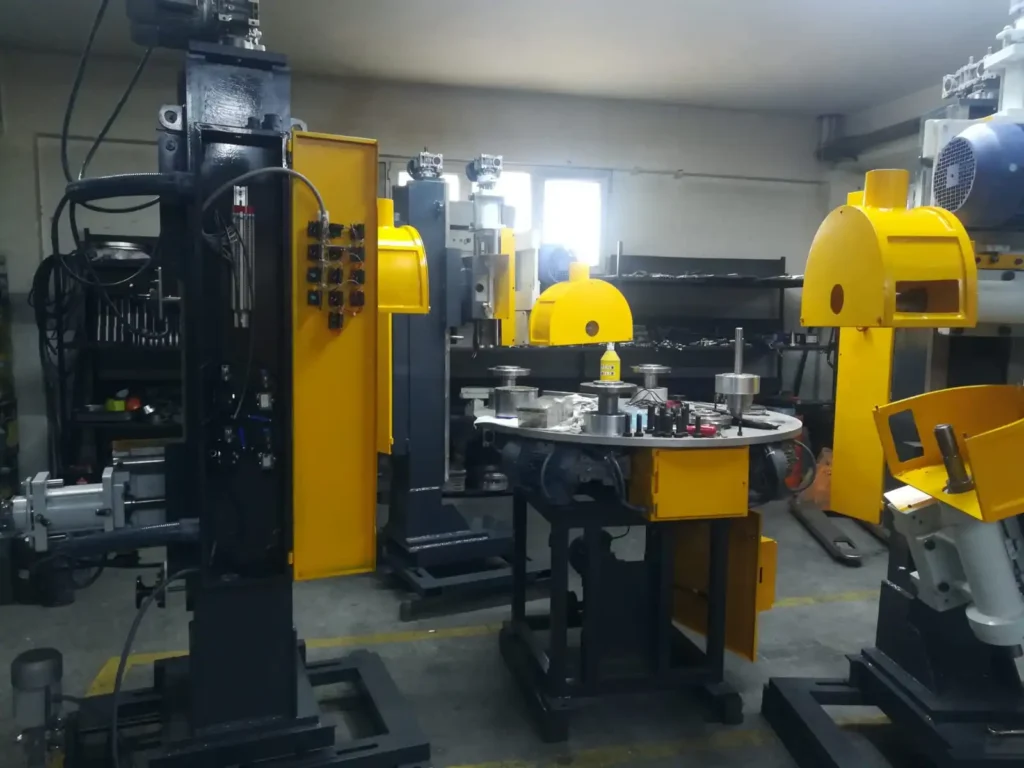
Categories
Machinery

Swing Arm Buffing Machine

Swing Arm Buffing Machine

Swing Arm Buffing Machine: A Polishing and Buffing Combo Machine combines two surface-finishing functions—polishing (removing surface imperfections and achieving a smooth texture) and buffing (enhancing surface gloss and shine)—into a single machine.

Key Components of Polishing and Buffing Machine

  1. Motor – Powers the rotating wheels, typically ranging from 0.5 to 2 HP depending on application.
  2. Polishing Wheel – Often made of abrasive materials like emery or silicon carbide, used for initial surface refinement.
  3. Buffing Wheel – Softer wheels made of cloth, felt, or other flexible materials, used with buffing compounds for shine.
  4. Work Rest/Support – Provides a platform to steady the workpiece.
  5. Speed Control (optional) – Allows for variable RPM to suit different materials and finishing stages.
  6. Dust Collector or Ports (optional) – Helps manage debris and metal dust during operation.

Applications

  • Metalworking: Removing rust, smoothing welds, and bright finishing on stainless steel, brass, aluminum, etc.
  • Woodworking: Polishing lacquered or painted wood surfaces.
  • Jewelry Making: Precision polishing of fine metal items.
  • Automotive: Chrome and aluminum trim restoration.
  • Plastics and Composites: Edge polishing and surface refinishing.

Advantages

  • Space Saving: One unit handles both polishing and buffing.
  • Cost-Effective: Eliminates the need to purchase two separate machines.
  • Increased Productivity: Enables quick change between operations.

A polishing and buffing combo machine is designed to handle both the initial surface smoothing (polishing) and the final high-gloss finishing (buffing) in a single unit. This type of machine typically features two spindles or shafts, each mounted with a different wheel—one abrasive polishing wheel and one softer buffing wheel made of cloth or felt. The machine is powered by an electric motor, often in the range of 0.5 to 2 horsepower, and may operate at fixed or variable speeds depending on the model. Operators use the polishing wheel to remove oxidation, scratches, or casting marks from metal, plastic, or wood surfaces. Once the desired smoothness is achieved, the workpiece is moved to the buffing wheel, often with an applied buffing compound, to bring out a mirror-like finish. These machines are commonly used in metal fabrication, automotive detailing, woodworking, jewelry making, and plastic finishing. Some models are equipped with safety features like spark guards, adjustable tool rests, and dust collection ports to enhance usability and maintain a clean workspace. Combo units are favored for their efficiency, cost-effectiveness, and the convenience of switching between two essential finishing operations without changing equipment.

Many polishing and buffing combo machines are bench-mounted, making them compact and suitable for workshops with limited space. Industrial-grade models may also be floor-mounted for handling larger or heavier workpieces. The choice of wheel materials and compounds plays a crucial role in achieving specific results—coarse abrasives for heavy material removal during polishing, and finer compounds like rouge or tripoli for delicate buffing tasks. Some machines allow quick wheel changes, which adds flexibility when working on different materials such as aluminum, stainless steel, brass, or even acrylics. Consistent maintenance, such as checking wheel wear and ensuring proper alignment, extends the machine’s life and ensures uniform surface finishes. Proper operator training is essential to avoid issues like over-polishing, which can deform soft metals, or under-buffing, which leaves dull surfaces. Overall, these combo machines provide a streamlined, dual-function approach to surface finishing that saves time and improves productivity across a variety of industries.

In practical use, the polishing and buffing combo machine becomes an integral part of any workshop that deals with surface refinement, whether in fabrication, restoration, or decorative finishing. When a raw or semi-finished part is introduced to the machine, it often carries imperfections such as tool marks, scale, oxidation, or general roughness from casting or machining. The first step is polishing—this is not just about aesthetics but also about preparing the surface for coating, plating, or further mechanical processing. The polishing wheel, usually embedded with abrasive particles or paired with an abrasive compound, cuts into the surface lightly to smooth out these defects. Depending on the material being worked on, wheels may vary from hard rubberized abrasives to cloth-based flaps loaded with cutting compounds.

Once the surface is polished to a uniform level of smoothness, the operator transitions to the buffing side of the machine. Buffing is a more delicate, finishing process aimed at producing a high-gloss, mirror-like shine. It uses soft, pliable wheels—often made from cotton, muslin, or felt—and relies on fine buffing compounds, which can range from brown tripoli for pre-polishing to white rouge or green chrome oxide for final finishing. The operator must be skilled in applying the right amount of pressure and compound to avoid burn marks, streaks, or surface inconsistencies. In many industries, this high-quality finish is not just for appearance—it reduces friction, enhances corrosion resistance, and in some cases, meets critical tolerance requirements for high-performance components.

The machine’s design often includes a solid base to minimize vibration, ensuring steady and safe operation. Some higher-end models come with variable speed controls, allowing the user to adjust the RPM to match the specific task. Lower speeds are ideal for buffing delicate materials, while higher speeds can be used during the polishing stage for quicker material removal. Safety considerations are also crucial—spark guards, eye shields, and even integrated vacuum ports for dust and particulate extraction are common in industrial setups. Metal polishing and buffing generate fine particles and heat, so proper ventilation and personal protective equipment (PPE) are essential for long-term use.

What truly sets the polishing and buffing combo machine apart from separate tools is its ability to streamline workflow. In production settings where throughput and finish quality must be balanced, having both functions integrated into a single station allows operators to move seamlessly from surface preparation to final finishing. This not only reduces equipment cost and space requirements but also cuts down on handling time, which in turn improves consistency and productivity. For small workshops, artisans, or businesses that work with metals, plastics, wood, or composite materials, this machine becomes a core asset—capable of delivering professional-grade finishes on everything from industrial parts to custom-crafted jewelry or automotive components.

Polishing and Buffing Combo Machine

Polishing and Buffing Combo Machine is a dual-purpose finishing tool designed to perform both polishing and buffing tasks using a single unit. It is widely used in workshops, manufacturing plants, fabrication facilities, automotive garages, and artisan studios where surface treatment is essential. The machine typically features two opposing spindles mounted on a shared motorized base—one side dedicated to polishing, and the other for buffing. This allows the user to transition quickly between the two processes without changing tools or workstations, significantly increasing efficiency and convenience.

In polishing, the goal is to remove surface imperfections such as scratches, oxidation, or tool marks by using an abrasive wheel or polishing compound. This process is aggressive compared to buffing and is usually the first step in surface preparation. Polishing wheels are typically made from harder materials like sisal, impregnated cloth, or synthetic abrasives. They can be combined with various grits of abrasive paste depending on the material being worked—whether it’s steel, aluminum, brass, plastic, or even wood.

Buffing follows polishing and serves as a finishing process. It’s more refined and aims to produce a high-gloss, reflective surface. Buffing wheels are softer, usually constructed from multiple layers of muslin, cotton, or felt. They’re used with buffing compounds—fine, wax-like substances that smooth and brighten the surface without removing significant material. Popular buffing compounds include white rouge (for light metals), green compound (for stainless steel), and red jeweler’s rouge (for soft, precious metals). Proper buffing not only enhances the visual appeal of a component but also improves surface characteristics such as corrosion resistance and cleanliness.

The motor driving the machine typically ranges from 0.5 HP to 2 HP depending on application requirements. Some models are single-speed, while more advanced machines offer variable speed control, which is crucial when switching between materials that require different surface treatments. High RPMs are ideal for aggressive polishing, while lower speeds are safer and more effective for delicate buffing operations.

Modern combo machines often include safety features such as spark guards, eye shields, and non-slip bases. Dust extraction ports or attachments for vacuum systems may also be present, especially in industrial models, as both polishing and buffing generate fine dust and debris that must be controlled to protect both the operator and nearby equipment. Additionally, adjustable tool rests are usually provided to support the workpiece during operation and reduce operator fatigue during extended use.

From a functional perspective, the polishing and buffing combo machine is a highly efficient solution for anyone needing to process metal, plastic, or wood components to a refined finish. It is valued not just for its space-saving design but for its ability to provide consistent and high-quality results. Industries that benefit from this machine include metal fabrication, automotive restoration, aerospace, woodworking, jewelry production, and even consumer electronics repair. Its versatility makes it one of the most practical finishing machines in any multi-material workshop.

The polishing and buffing combo machine continues to stand out in industrial and artisan settings due to its adaptability, ease of use, and the quality of surface finish it can provide. In a typical workflow, operators appreciate the seamless transition from polishing to buffing without the need to interrupt their process or reposition the workpiece between machines. This uninterrupted workflow not only saves time but also helps maintain uniformity in finish, especially on pieces that require consistent surface characteristics across multiple faces or parts. For example, in automotive restoration, chrome parts like bumpers or trim are often polished to remove pitting or discoloration before being buffed to a mirror-like shine. Similarly, in metal fabrication shops, welders and machinists use combo machines to clean up weld seams or machined surfaces before final finishing, enhancing both appearance and performance of the component.

The machine’s effectiveness depends heavily on the choice of wheel and compound combinations. For instance, a coarse polishing wheel combined with a heavy-cut compound is ideal for removing deep scratches or oxidation on hard metals like stainless steel, while a soft buffing wheel with a fine rouge compound is better suited for bringing out a reflective finish on softer materials such as aluminum or gold. Knowing how to match the right wheel, compound, and speed to the material is essential for achieving professional results. This level of control becomes especially valuable in fields like jewelry making or precision engineering, where surface quality has both aesthetic and functional importance.

Beyond its operational features, the polishing and buffing combo machine also contributes to workplace efficiency by consolidating two essential finishing functions into one compact footprint. This is particularly beneficial in smaller workshops where space and budget may not allow for multiple standalone machines. It reduces setup time, minimizes movement between tools, and simplifies maintenance routines, as the user only has to service one motor and one frame. In terms of durability, most commercial-grade combo machines are built with heavy-duty cast iron or steel housings, sealed bearings, and industrial-grade motors to withstand long hours of continuous use. These rugged designs are crucial in production environments where downtime can be costly.

Operator safety and ergonomics are also important considerations in the design and use of these machines. Since both polishing and buffing produce dust, heat, and sometimes sparks, machines are often equipped with shrouds or guards to contain debris, and many allow connection to external dust collection systems. Proper lighting, workpiece support, and non-slip bases also contribute to safer operation. Users are typically trained to wear protective gear, including safety glasses, gloves, and sometimes respirators, particularly when working with fine powders or toxic materials.

Overall, the polishing and buffing combo machine represents a balance of power, precision, and practicality. Whether used for industrial part finishing, fine metalwork, or decorative surface treatment, it provides a reliable and versatile solution that meets the needs of both high-volume operations and custom fabrication shops. Its dual-functionality not only enhances workflow and finish quality but also offers a smart investment for those seeking long-term value and consistent performance in surface finishing tasks.

In continuous operation, the polishing and buffing combo machine plays a critical role in quality assurance, especially where visual appeal and surface integrity are directly tied to product value. This is particularly evident in industries such as aerospace, medical device manufacturing, and high-end consumer goods, where even minor surface flaws can disqualify a part from being accepted. The machine allows for close control over the finishing process, which is vital in environments that demand tight tolerances and repeatable results. By adjusting variables like wheel hardness, compound abrasiveness, motor speed, and pressure applied, skilled operators can fine-tune the outcome to meet highly specific standards. The versatility of the machine extends further when additional accessories are introduced—such as tapered spindles for quick wheel changes, flexible shaft attachments for precision detailing, or specialized jigs for handling complex geometries and delicate parts.

From an economic standpoint, this machine offers both direct and indirect benefits. Directly, it reduces capital expenditure since a single unit performs two processes. Indirectly, it enhances labor productivity by reducing idle time between stages of surface preparation. A worker using a combo machine can complete more parts per hour compared to setups that require moving between separate stations or waiting for other machines to become available. Furthermore, as this tool becomes a central part of production flow, it can be easily incorporated into lean manufacturing systems or continuous improvement programs. The consistency it delivers allows for more accurate scheduling, fewer reworks, and higher customer satisfaction due to the improved finish quality of the end product.

The machine’s relevance also extends into educational and training environments. In technical schools, vocational programs, and maker spaces, combo machines are often used to teach students the fundamentals of surface finishing. Because they combine two essential techniques, they allow learners to understand the complete process flow—from material preparation to final polish—without needing a suite of equipment. This helps build foundational skills while encouraging safe and efficient work habits. Students can experiment with different materials and finishes, gaining insight into how small adjustments in speed, pressure, or compound can lead to dramatically different results. These lessons are invaluable for future careers in machining, fabrication, restoration, and design.

In artisan and craft settings, particularly among metal sculptors, custom knife makers, or furniture builders, the polishing and buffing combo machine becomes a creative tool as much as a technical one. Here, surface finish is not just about function or standardization—it’s part of the product’s identity. Whether aiming for a soft satin sheen on a wooden edge, a deep reflective polish on a custom blade, or a subtly aged patina on a brass fixture, this machine supports a wide range of artistic expressions. The ability to switch quickly between aggressive material removal and delicate final touches allows artisans to bring their visions to life with both efficiency and craftsmanship.

Over time, the durability of the combo machine pays off. With proper maintenance—such as regular cleaning, lubrication of moving parts, replacement of worn wheels, and occasional motor servicing—it can last for decades, becoming a reliable fixture in the workshop. Many users even customize or upgrade their machines with aftermarket parts like extended shafts, upgraded motors, or precision rests to better suit their specific workflow. This adaptability, combined with its dual-purpose design, cements the polishing and buffing combo machine as an enduring staple in both industrial and creative environments.

Angle Buffing Machine

Buffing Grinder Machine

An Angle Buffing Machine is a specialized power tool designed for polishing and buffing surfaces using a rotating abrasive or soft wheel mounted at a right angle to the motor shaft. Unlike standard bench-top or straight-shaft polishing tools, the angle buffing machine features a compact, angled head that allows operators to work on vertical, contoured, or hard-to-reach surfaces with greater control and flexibility. It’s widely used in automotive detailing, metal fabrication, construction, shipbuilding, and maintenance work where surface refinement must be performed in tight or awkward spaces.

The tool resembles an angle grinder in form and function but is optimized for polishing and buffing rather than cutting or grinding. Most models are handheld and powered either electrically or pneumatically. The head, usually set at 90 degrees to the body, holds a spindle or arbor onto which various buffing pads, wool bonnets, foam discs, or abrasive flap wheels can be attached using quick-change systems or threaded mounts. The rotation of the head combined with the angled configuration allows the user to apply consistent pressure across uneven or vertical surfaces such as car panels, stainless steel tanks, pipes, weld seams, and even interior corners of fabricated structures.

The motor in an angle buffing machine typically operates between 1,000 and 3,000 RPM, and many models offer variable speed control to suit different materials and compounds. Lower speeds are essential when working with heat-sensitive surfaces like plastics or paint, while higher speeds may be used for tougher polishing jobs on metal. The tool is often equipped with ergonomic handles, trigger locks, and soft starts for safety and comfort during prolonged use.

Angle buffing machines can be paired with a variety of buffing compounds depending on the material and desired finish—coarse compounds for initial polishing, and finer rouges for high-gloss buffing. In automotive use, for example, detailers use these machines with foam pads and polishing compounds to remove swirl marks, oxidation, and light scratches from painted surfaces. In marine and industrial environments, they are essential for cleaning and restoring stainless steel, aluminum, or coated surfaces subjected to harsh weather and chemicals.

Their portability and versatility make angle buffing machines ideal for on-site work, touch-ups, or maintenance tasks where bench machines are impractical. With proper training and care, they deliver professional-level finishes and are a key tool for anyone working in surface restoration or finishing.

The angle buffing machine continues to be a crucial tool in both professional and hobbyist settings where precision surface finishing is required in challenging or confined spaces. Its right-angle head configuration makes it especially useful for working on irregular geometries, edges, vertical planes, and interiors of structural components where straight or bench-mounted machines cannot reach effectively. For instance, in automotive refinishing, the angle buffing machine is commonly used on contoured body panels, bumpers, and tight areas around mirrors or trim, providing smooth transitions and high-gloss finishes without risking damage to surrounding parts. The angled design also makes it easier to maintain a steady polishing line across vertical surfaces, which is difficult to achieve with flat tools or orbital polishers.

Because it is a handheld tool, operator skill plays a significant role in the final finish quality. Users must learn to apply consistent pressure and maintain the correct angle and movement pattern to avoid issues such as holograms, swirl marks, or overheating of the surface. Variable speed control is an important feature in this context, as it allows the operator to tailor the machine’s performance to the material and stage of the buffing process. Lower speeds may be used to spread compound evenly or to perform finishing passes, while higher speeds are more appropriate for cutting back oxidation or leveling minor scratches. The use of speed-adjustable machines also minimizes the risk of burning through paint or soft coatings, which is a common concern with fixed-speed tools.

The range of attachments available for angle buffing machines adds to their versatility. Depending on the application, users can switch between wool pads for aggressive compounding, foam pads for fine polishing, or microfiber heads for ultra-fine finishing. In metalwork, users might employ abrasive non-woven discs to clean welds or remove oxidation before switching to cloth buffing wheels for a polished shine. The ability to swap out heads quickly means that a single tool can handle multiple stages of finishing without interruption. This modularity makes it highly efficient for professionals who need to maintain productivity while achieving superior surface quality.

In industrial environments such as shipbuilding, railcar fabrication, or pipeline maintenance, angle buffing machines are used to prepare metal surfaces for coating or inspection. Surfaces like aluminum bulkheads, steel hulls, or stainless steel piping require a specific degree of smoothness and cleanliness to meet technical and safety standards. The portability of the angle buffing machine allows technicians to move easily across large structures and perform work directly on-site, reducing the need for disassembly or transport of heavy components. This mobility is also valuable in maintenance settings, where equipment may need to be refurbished or retouched in place, such as in HVAC systems, tanks, or heavy machinery frames.

In more delicate or artistic applications, like musical instrument restoration or architectural metalwork, the angle buffing machine enables highly controlled work on complex or ornamental surfaces. The operator can carefully maneuver the tool around curves, ridges, or recesses to remove tarnish, smooth seams, or enhance luster without flattening detail or causing damage. Artists, conservators, and custom fabricators often rely on the angle buffing machine for this level of tactile precision, as it bridges the gap between coarse grinding tools and fine hand polishing.

Durability and ergonomics are key to long-term use, especially in professional settings where the tool might run for hours at a time. High-quality angle buffing machines are built with reinforced gear housings, sealed bearings to resist dust and moisture, and insulated motors that can handle continuous duty without overheating. Ergonomic design features such as vibration-dampening handles, compact head profiles, and lightweight body construction contribute to reduced user fatigue and more stable handling. Safety features, including soft-start mechanisms, electronic overload protection, and adjustable guard systems, are becoming standard in modern models, enhancing both usability and operator protection.

Ultimately, the angle buffing machine is not just a convenience but a necessity for any work environment that demands consistent, high-quality finishes in complex or confined spaces. Its combination of power, portability, and precision makes it a go-to solution across industries—from car detailing and metalworking to marine maintenance and fine craftsmanship. With proper technique, maintenance, and selection of accessories, it delivers professional-level results that rival more stationary equipment, while offering unmatched flexibility and control. Would you like recommendations on specific models or guidance for selecting pads and compounds for a certain type of material or finish?

As the demand for surface perfection continues to rise across industries, the angle buffing machine is becoming increasingly refined in terms of technology, materials, and performance features. Manufacturers now offer machines with digital speed displays, programmable settings, and intelligent load sensors that adjust torque output based on the resistance encountered during use. These features enhance both the precision and safety of the tool, especially in environments where surface finish standards are tightly regulated, such as aerospace or medical manufacturing. Digital control also allows more consistent performance over extended polishing sessions, reducing the variability that can occur due to operator fatigue or changing surface conditions.

Cordless versions of angle buffing machines have also emerged, thanks to advancements in lithium-ion battery technology. These portable units give users full freedom of movement without sacrificing much in terms of power or run time. In field maintenance, such as on wind turbines, large vehicles, or outdoor pipelines, this mobility can be crucial. While corded machines still dominate in terms of continuous heavy-duty use, cordless versions are gaining ground rapidly, especially in situations where convenience, accessibility, or safety (e.g., avoiding tripping hazards) are primary concerns.

The environmental and workplace health aspects of buffing and polishing are also gaining attention. Angle buffing machines often operate in environments where dust, metal particles, or compound residue are released into the air. These fine particulates pose both respiratory and cleanliness challenges. As a result, many industrial users now integrate dust shrouds, attach vacuum hoses, or work within ventilated booths. Proper personal protective equipment—including respirators, eye protection, gloves, and hearing protection—becomes essential, especially during extended use. Additionally, the compounds used with these machines have evolved to include water-based or low-residue formulas that are safer for the operator and easier to clean from the finished surface.

From a training perspective, the angle buffing machine is relatively easy to learn, but mastering it takes time. Novices often start with practice panels or scrap pieces to develop a feel for the right pressure and motion. Over time, skilled users learn to “read” the sound, vibration, and visual cues from the tool and the workpiece, adjusting their technique instinctively. For companies training multiple employees, this consistency in results becomes critical to maintaining product quality. Some manufacturers now offer training programs, demo units, and even simulator-based systems to accelerate the learning curve and improve safety.

Repair and maintenance of angle buffing machines are generally straightforward. Most models are designed with accessible brush housings, gearboxes, and motor components, making it possible to replace worn parts like carbon brushes, bearings, or power cords without sending the unit out for service. Keeping the machine clean—especially the spindle and venting system—is essential to maintaining its lifespan. If the machine becomes unbalanced due to uneven pad wear or misalignment, it can cause excessive vibration and reduced control, so regular inspection is a good practice. For industrial users, establishing a preventative maintenance routine helps ensure uptime and extends the life of both the machine and consumables.

In terms of innovation, some angle buffing machines are now incorporating orbital motion in addition to rotary action, blending the benefits of rotary and dual-action polishers. This hybrid movement reduces the risk of heat buildup and surface swirl, making the tool more forgiving for users and safer for delicate finishes like clear coats or polished plastics. These tools are especially popular in detailing and finishing work where surface perfection is critical but the risk of overworking an area must be minimized. They represent a natural evolution of the traditional angle buffing machine, pushing the limits of what’s possible with a handheld surface finishing tool.

The longevity and relevance of the angle buffing machine ultimately stem from its ability to adapt to new materials, new processes, and evolving user needs. Whether in the hands of a seasoned professional restoring a classic car, a technician polishing a turbine blade, or an artist finishing a hand-crafted sculpture, this tool continues to offer a blend of control, power, and versatility that few others can match. It remains a bridge between raw fabrication and final presentation, turning unfinished surfaces into polished, functional, and often beautiful results. Would you like to go into detail about compound selection for specific finishes or how to adapt the machine for curved or textured surfaces?

Polishing Cabinet Buffing Machine

Mirror Finish Polishing

Polishing Cabinet Buffing Machine is a specialized equipment designed to facilitate safe, controlled, and efficient polishing and buffing operations within an enclosed space. These machines typically consist of a cabinet or booth where the polishing and buffing processes take place, often equipped with one or more buffing wheels, abrasive pads, or brushes, a motor, and integrated systems for dust collection. They are commonly used in industries that require precise surface finishing of small to medium-sized components, such as jewelry manufacturing, electronics, metalworking, and automotive detailing. The primary advantage of a polishing cabinet buffing machine lies in its enclosed design, which helps contain debris, reduces exposure to hazardous materials, and minimizes environmental contamination.

The cabinet typically features transparent viewing panels made from durable acrylic or tempered glass, allowing the operator to monitor the workpiece while maintaining a safe distance from the moving parts. The interior of the cabinet is equipped with buffing wheels or abrasive pads mounted on motor-driven spindles, which rotate at varying speeds depending on the model. These spindles can accommodate different sizes and types of buffing wheels, ranging from coarse to fine materials such as wool, cotton, or felt, which are ideal for different stages of the polishing process. In many cases, the user can switch between polishing and buffing wheels to progressively refine the surface finish, from initial material removal to high-gloss final polish.

A key feature of the polishing cabinet buffing machine is its integrated dust and fume extraction system. Polishing and buffing generate fine dust and debris, particularly when working with metals like aluminum or stainless steel, or with certain composites. These particles can pose health risks when inhaled or cause a mess in the workplace. To mitigate this, polishing cabinet machines are equipped with powerful suction fans or vacuum systems that remove airborne particles from the cabinet, funneling them into filters or external collection bins. This feature is essential for maintaining a clean, safe working environment, especially in compliance with workplace health and safety standards.

These machines are typically designed for ease of use, with access doors or glove ports allowing the operator to insert their hands into the cabinet without opening it, thus maintaining a sealed environment. Glove ports enable precise control over the workpiece, and the compact design of the machine helps in controlling the work area’s lighting and dust levels. The interior often includes adjustable shelves or tool supports, providing convenience for setting the workpiece at the ideal height and angle for the operator.

The buffing cabinet is typically made of sturdy metal, such as steel or aluminum, to provide durability and stability during operation. Some higher-end models also include advanced features like built-in lighting, vibration-dampening components, and optional accessories such as polishing compounds or sprays, which can be applied directly to the workpiece while it is being buffed. These compounds can further enhance the polishing process, especially when working with materials that require a high-gloss finish, such as precious metals, glass, or acrylics.

The polishing cabinet buffing machine is especially valuable in high-precision fields where surface finish quality is critical. In jewelry manufacturing, for example, these machines allow for a meticulous, controlled polishing process that produces a flawless shine on rings, necklaces, bracelets, and other pieces without damaging the delicate details. In automotive applications, such as buffing chrome trim or headlight lenses, the cabinet helps achieve an even, smooth finish that enhances the appearance of the part while also providing a layer of protection against oxidation.

Overall, a polishing cabinet buffing machine provides a controlled, efficient, and safe solution for precision polishing and buffing tasks. The enclosed design ensures both safety and cleanliness, while the versatility in buffing wheel and compound options allows the user to adapt the machine for different materials and finishes. Its application spans a wide range of industries, making it an essential tool for professionals seeking high-quality surface finishes in a secure, effective manner.

The polishing cabinet buffing machine remains an essential tool in environments where precise, high-quality finishes are required. Its enclosed nature offers distinct advantages, not only for the operator’s safety but also for maintaining consistency and cleanliness in the workspace. The ability to control the working environment inside the cabinet makes it easier to handle intricate parts and delicate materials without worrying about contaminants or exposure to harmful polishing compounds and dust. This makes it particularly beneficial in fields like jewelry design and restoration, where intricate detailing and high-shine finishes are a hallmark of quality. The dust and debris removal system ensures that any fine particles produced during the process are efficiently extracted, improving air quality and reducing the risk of cross-contamination or scratches on the workpiece. The machine’s ability to maintain a stable, clean environment also extends the life of polishing wheels and reduces the need for frequent tool changes, as the buildup of abrasive material is minimized.

Another key aspect of these machines is the ability to easily adjust the polishing parameters. Many models come with variable-speed motors, allowing users to tailor the speed of the buffing wheels to suit the material being worked on. Softer materials, like aluminum or plastics, require slower speeds to avoid overheating or gouging, while harder metals like stainless steel might benefit from faster rotation to remove oxidation or achieve a mirror-like finish. These adjustments allow for greater control over the polishing process, ensuring that the finish meets the required standards without risking damage to the workpiece. The variety of polishing pads and wheels that can be used in these machines also makes them versatile, catering to different stages of the polishing process, from coarse grinding to fine polishing and buffing.

The compact and efficient nature of the polishing cabinet buffing machine also makes it ideal for shops or operations with limited space. Instead of needing multiple stations for different polishing tasks, a single polishing cabinet can handle a variety of materials and finishes, making it both a space-saver and a cost-effective solution. Operators can easily switch between tasks without needing to move the workpiece to different machines or setups. This efficiency is particularly valuable in high-volume production environments, where time and workflow are critical.

In addition to its functionality, the ergonomic design of the cabinet makes it easier for operators to perform long hours of buffing and polishing without experiencing undue strain. The ability to perform tasks through glove ports or from an upright position, with the workpiece secured at an optimal height, minimizes operator fatigue and increases overall comfort. This is an important consideration for environments where the operator’s well-being is a priority, such as in workshops with heavy or continuous polishing work.

From a safety perspective, the polishing cabinet buffing machine reduces the risk of accidents that can occur when using traditional open-bench polishing tools. With the operator enclosed within the cabinet, the likelihood of contact with moving parts is minimized. Additionally, the design often includes built-in safety features such as automatic shutoff mechanisms in case of overloads or unexpected malfunctions.

With regular maintenance, a polishing cabinet buffing machine can provide years of reliable service. Routine tasks like cleaning dust filters, inspecting buffing wheels for wear, and ensuring proper lubrication of moving parts keep the machine running smoothly. Many models also allow for easy replacement of worn-out components, such as brushes or wheels, helping to keep downtime to a minimum. This focus on durability and longevity is a significant benefit for businesses that rely on these machines for high-quality finishes on a daily basis.

In terms of application, polishing cabinet buffing machines are not limited to just one sector. Whether it’s polishing automotive parts, fine metal products, glassware, or even medical devices, these machines can adapt to a variety of materials and finishes. The precision offered by the enclosed, controlled environment allows for fine adjustments to the polishing process, ensuring that every part that leaves the machine meets the high standards required by the industry.

As industries continue to prioritize safety, efficiency, and quality, the polishing cabinet buffing machine remains a cornerstone tool for achieving professional finishes. Its ability to handle multiple polishing and buffing tasks while ensuring a safe, clean, and ergonomic workspace makes it a valuable asset in both small workshops and large-scale production facilities. Would you like more insights into choosing the right cabinet buffing machine for specific tasks or comparing models with unique features?

The versatility of polishing cabinet buffing machines extends to various industries, each benefiting from the machine’s ability to handle complex finishing tasks with precision and control. In industries such as aerospace, automotive manufacturing, and metalworking, where component appearance, durability, and surface integrity are paramount, polishing cabinet machines provide consistent, high-quality results. For example, in aerospace, precision-polished metal parts must meet stringent quality standards for both aesthetic and functional reasons, such as ensuring resistance to corrosion or minimizing drag. Polishing cabinet buffing machines allow technicians to fine-tune their processes to meet these exacting specifications, ensuring that even the smallest components, such as turbine blades or fuel fittings, are polished to perfection.

In automotive production, these machines are invaluable for detailing car parts, especially chrome and metal trim, which often require an immaculate finish to meet customer expectations and industry standards. The ability to maintain a controlled environment while polishing intricate surfaces, like grills, rims, or emblems, allows for a high-gloss finish without the risk of contamination from dust or compound residues. Polishing cabinet buffing machines help achieve the signature gleam that’s so important in vehicle aesthetics, from luxury cars to motorcycles.

In the field of medical devices, the quality of the finish on surgical instruments, implants, and prosthetics is crucial not only for the appearance but also for hygiene and functionality. Polishing cabinet buffing machines ensure that these parts are free from imperfections that could harbor bacteria or cause mechanical failure. For example, the smooth, polished finish on stainless steel surgical tools is not just about looks; it’s also essential for reducing the risk of infection and facilitating easier cleaning and sterilization. The precision of these machines makes them ideal for achieving such results.

Another major benefit of polishing cabinet buffing machines is their ability to handle delicate or highly specialized materials, such as gemstones, ceramics, and glass. In industries like jewelry design or glass manufacturing, where the material is often fragile or prone to scratching, the controlled environment inside a polishing cabinet helps prevent unintended damage. The ability to apply a controlled, even buffing action to such materials is essential for creating stunning finishes without compromising their integrity. In jewelry making, for instance, polishing cabinets are used to bring out the brilliance in metals like gold, platinum, and silver, as well as to perfect the clarity and shine of diamonds or other gemstones.

The adoption of polishing cabinet buffing machines in small-scale and artisan settings is also on the rise. Artists and small manufacturers who focus on custom or high-end products often rely on these machines for their precise control and ability to produce professional-grade finishes. Whether creating custom furniture, restoring antiques, or designing bespoke jewelry, the cabinet buffing machine offers a way to ensure consistent, high-quality results. It’s particularly useful in small shops where a single machine can handle multiple materials and finishes, providing versatility without requiring an array of separate machines.

As technology advances, polishing cabinet buffing machines are becoming more integrated with digital systems that allow for greater automation and efficiency. Some high-end models are now equipped with programmable controls, allowing users to input specific parameters such as speed, pressure, and compound type, creating a more automated process that can be repeated consistently. This reduces the potential for human error and ensures that each workpiece receives the exact same level of attention, making the polishing process both more reliable and efficient. This shift towards automation is especially beneficial in high-volume production settings, where consistency is crucial and reducing manual labor can lead to significant time and cost savings.

The environmental impact of polishing operations is another important consideration, and polishing cabinet buffing machines are increasingly designed with eco-friendly features. Many modern models incorporate filtration systems that reduce the amount of waste and pollutants released into the environment. For instance, some units use water-based or biodegradable compounds instead of traditional petrochemical-based polishing pastes, reducing the environmental footprint of the polishing process. Additionally, advancements in energy efficiency are helping to minimize power consumption, making these machines more sustainable for long-term use.

For businesses looking to optimize their operations, integrating polishing cabinet buffing machines with existing workflows is relatively straightforward. These machines can often be incorporated into automated production lines, where multiple parts need to be polished in a consistent and repeatable manner. The compact, enclosed design of the polishing cabinet makes it easy to fit into tight spaces or alongside other finishing equipment. Integration with dust extraction and filtration systems ensures that the entire polishing process remains clean and compliant with workplace health and safety regulations.

In terms of future trends, polishing cabinet buffing machines will continue to evolve, incorporating even more advanced technology such as touch-screen interfaces, real-time monitoring systems, and the ability to work with an even broader range of materials. These machines will continue to support industries that require precision and high-quality finishing, all while enhancing the overall safety, ergonomics, and environmental sustainability of the polishing process.

Whether for industrial, commercial, or artisanal use, polishing cabinet buffing machines represent a perfect balance of safety, efficiency, and high-performance. They provide a secure and controlled environment for achieving flawless finishes, protecting both the operator and the environment. With the right model, maintenance practices, and polishing compounds, businesses can ensure that they achieve the best possible surface finishes on a variety of materials, from metals to plastics and ceramics.

Would you like to explore more about specific polishing compounds or materials suitable for these machines, or perhaps recommendations on optimizing a polishing cabinet for your particular needs?

Industrial Buffing Machine

Dual-Station Polishing Machine

An industrial buffing machine is a high-powered tool used in commercial and industrial settings for polishing and finishing surfaces of various materials, such as metal, wood, plastic, and stone. These machines are designed to perform heavy-duty buffing tasks that require consistent, high-quality results across large quantities of parts or products. Industrial buffing machines are essential in sectors such as metalworking, automotive manufacturing, aerospace, and woodworking, where surface finishing is a critical step in ensuring the quality and appearance of the final product.

Industrial buffing machines come in a wide variety of configurations, from standalone bench-mounted models to larger, more complex systems that integrate multiple stages of polishing or are part of automated production lines. The main components typically include buffing wheels or pads, a powerful motor that drives the rotation of these wheels, and often an adjustable stand or frame to hold the workpiece at the correct angle for polishing. Many models are also equipped with speed controls, allowing operators to adjust the machine’s rotation speed based on the material being worked on and the stage of the buffing process.

The design of industrial buffing machines varies depending on the specific requirements of the task. For example, machines used for polishing large metal parts might feature larger buffing wheels, while those for finer detailing or finishing work might use smaller, more precise wheels. Some models are designed for specific applications, such as polishing automotive parts like chrome trim or buffing metal molds used in manufacturing, while others are more versatile and can handle a range of materials and finishes.

One of the key features of an industrial buffing machine is its motor, which is typically much more powerful than that found in smaller, consumer-grade polishers. These motors can be variable-speed to allow greater control over the polishing process. High RPMs (revolutions per minute) are ideal for quickly removing material or for aggressive polishing, while lower RPMs allow for finer finishing and a smoother, more reflective finish. For example, in metalworking, high speeds are used to cut back oxidation or remove rust, while slower speeds are ideal for fine polishing or creating a mirror-like finish.

Buffing wheels or pads are the heart of the industrial buffing process. These wheels come in a variety of materials such as cotton, felt, wool, and synthetic fibers, and are often treated with polishing compounds or abrasives to enhance their performance. For heavy-duty work, a stiff wheel might be used to remove oxidation or scratches, while softer, more delicate wheels are employed for final finishing. In some cases, the type of buffing compound used will depend on the material being polished. For example, a metal polish or abrasive compound might be used for polishing steel, while a gentler compound might be employed for polishing plastics or softer metals like aluminum or brass.

Industrial buffing machines also tend to feature built-in dust collection systems to manage the debris created during the buffing process. These systems help maintain a cleaner workspace and improve air quality by collecting the dust, metal filings, and polishing compound particles that are generated. This is particularly important in industries where worker health and cleanliness are a priority. In addition, the dust collection systems can improve the longevity of the buffing wheels and other components, as excessive dust buildup can lead to overheating or clogging of parts.

In larger-scale industrial operations, buffing machines may be integrated into automated production lines. These systems allow for consistent and repeatable polishing of high volumes of parts. In these setups, the buffing machine may be programmed to work with robotic arms or conveyors that feed parts into the polishing station, minimizing the need for manual handling and significantly improving efficiency. Such systems can be customized for specific products, enabling companies to meet high throughput requirements without sacrificing quality.

Safety is a major consideration with industrial buffing machines due to their high-speed rotation and potential hazards associated with polishing compounds and airborne debris. Machines are often equipped with safety guards or covers to prevent accidental contact with the buffing wheels. Operators are usually required to wear personal protective equipment (PPE), such as safety goggles, gloves, ear protection, and respiratory masks, especially in environments where fine dust or fumes may be present. Many machines also have emergency stop features and automatic shut-off mechanisms in case of overloads or malfunctions.

In terms of maintenance, industrial buffing machines require regular care to ensure that they continue to operate efficiently and effectively. This includes checking the motor and electrical components for wear, ensuring the buffing wheels are properly balanced, and cleaning or replacing the dust collection filters. Buffing wheels should be inspected for damage or wear, as a worn-out wheel can lead to uneven polishing or potential damage to the workpiece.

Given their durability, power, and ability to handle large-scale tasks, industrial buffing machines are a fundamental tool in many sectors. They ensure that products are finished to a high standard, improving both their appearance and functionality. In industries such as automotive, aerospace, metalworking, and manufacturing, these machines are vital for achieving the precision and surface finishes required for both aesthetic and practical purposes

Industrial buffing machines are designed to tackle demanding polishing tasks that require both power and precision. They are ideal for finishing large quantities of parts or high-volume production environments, where consistency and quality are essential. These machines can be used on a variety of materials, including metals, plastics, ceramics, glass, and composites, making them highly versatile in industries ranging from automotive and aerospace to metalworking, electronics, and manufacturing. The ability to perform both heavy-duty polishing and fine detailing allows these machines to meet the needs of a wide array of applications, such as restoring the shine to automotive parts, polishing turbine blades, buffing metal fixtures, or refining jewelry components.

What sets industrial buffing machines apart from consumer-grade tools is their robustness and ability to handle continuous operation without compromising on performance. High-speed motors, ranging from 1 horsepower (HP) to upwards of 10 HP or more, provide the necessary power for large-scale polishing tasks. This ensures that operators can maintain optimal production speeds while achieving a high-quality surface finish on parts of various sizes and shapes. In some cases, the motor’s power is supplemented by advanced speed control systems, allowing operators to dial in the perfect RPM for each task.

A key component of an industrial buffing machine is its buffing wheel, which can be tailored to specific applications based on the type of material and the level of finish required. Buffing wheels are available in different materials, such as cotton, wool, felt, or synthetic fibers, and they can be impregnated with various polishing compounds to enhance their cutting or finishing ability. For example, a wool wheel might be used for aggressive polishing tasks that involve removing oxidation or rust from metal parts, while a cotton wheel might be used for finer finishing or creating a mirror-like finish on softer metals or plastics.

Many industrial buffing machines come equipped with additional features such as oscillating or dual-action buffing motions. These motions are designed to reduce the risk of swirl marks or uneven finishes, especially when working with delicate or highly reflective surfaces. The oscillating motion helps to distribute the polishing compound more evenly and ensures that the surface being worked on receives consistent attention, which is especially important in industries that require a flawless finish, such as the luxury automotive or jewelry sectors.

Dust extraction and fume control systems are integral to industrial buffing machines, especially in environments where harmful particles or fumes might be released during the buffing process. These systems help capture and remove the fine dust, metal shavings, or polishing compound residues generated, which could otherwise contaminate the work area or pose a health risk to operators. Many machines feature integrated vacuum ports or separate dust collection units that help keep the workspace clean and safe. These systems are particularly important in industrial settings where maintaining air quality is essential for compliance with safety regulations.

Given the heavy-duty nature of these machines, maintenance is crucial to ensure their long-term reliability and performance. Regular inspection and replacement of buffing wheels, motor brushes, and polishing compounds are necessary to keep the machine running smoothly. Additionally, ensuring that the dust collection system is functioning properly, and that no debris or particles are clogging the system, helps prevent overheating and ensures efficient operation.

The integration of industrial buffing machines into production lines can further optimize efficiency in large-scale manufacturing environments. These machines can be automated to feed parts through buffing stations via conveyor belts or robotic arms, reducing manual labor and increasing throughput. In automated setups, buffing machines can be programmed to execute precise polishing sequences, ensuring consistency across large batches of parts. This level of automation not only speeds up production but also enhances product quality by reducing the risk of human error during the polishing process.

As industries continue to prioritize automation, sustainability, and efficiency, industrial buffing machines are also evolving to meet these needs. Many modern machines are designed to be energy-efficient, reducing power consumption and operational costs. Furthermore, advancements in buffing compounds, such as the development of water-based or eco-friendly formulas, help minimize the environmental impact of polishing tasks.

In conclusion, industrial buffing machines are indispensable in industries where high-quality, consistent surface finishes are a must. They are powerful, versatile, and designed for continuous operation, making them an essential part of many manufacturing and finishing processes. With the right maintenance, proper use of buffing compounds, and regular inspection, these machines can deliver exceptional results for a wide range of applications, from metal polishing to automotive detailing and beyond. Whether used in high-volume production environments or for specialized tasks, industrial buffing machines ensure that every part is finished to the highest standards. Would you like to explore specific manufacturers or features of these machines?

The industrial buffing machine’s ability to deliver consistent results in high-demand environments is one of the key reasons it remains indispensable across various sectors. As industries continue to evolve and the need for precision and efficiency grows, the role of buffing machines will likely expand, with advanced technologies integrating seamlessly into automated processes. One area of development is the incorporation of smart technology and sensors into buffing machines. These features can monitor the condition of the buffing wheels, track the pressure applied to the surface, or even detect anomalies in the polishing process. Real-time feedback allows operators to adjust settings or perform maintenance before issues arise, improving uptime and reducing the risk of defects in the final product.

For example, certain modern industrial buffing machines are now equipped with vibration sensors or load monitoring capabilities that can detect when a buffing wheel is out of balance or when the motor is under strain. This early detection can help prevent damage to the machine and the workpieces, ensuring that any issues are addressed before they result in costly downtime or quality control problems. Such advancements in machine diagnostics not only improve the efficiency of polishing operations but also help with predictive maintenance, which can be crucial for operations with high output demands.

Moreover, the flexibility of industrial buffing machines in accommodating a range of materials continues to make them invaluable. From polishing steel and aluminum to working on more delicate materials like plastics, ceramics, or glass, these machines can be tailored with various buffing compounds, pads, and wheels designed to suit the specific requirements of each material. This adaptability allows businesses to handle a wide array of products, from heavy machinery parts to intricate jewelry pieces, all while maintaining the high standards of finish that are expected in industries like automotive, aerospace, medical device manufacturing, and even art restoration.

With advancements in automation, the integration of buffing machines into larger manufacturing lines becomes increasingly seamless. Automated systems allow for continuous, high-speed polishing of parts, reducing manual labor and increasing throughput. This integration often includes conveyor belts or robotic arms that move parts into position for polishing, and some machines can even be programmed to apply specific pressure and speed settings to different parts of the product, ensuring a customized finish for each piece. Such systems are essential for industries like automotive manufacturing, where large quantities of parts need to be polished to the same high standard, or in industries where precision is paramount, such as the aerospace sector.

Environmental concerns and sustainability continue to be important factors in industrial manufacturing, and the development of more eco-friendly buffing systems is becoming increasingly relevant. For instance, using biodegradable or water-based polishing compounds helps reduce the environmental impact of the buffing process. Additionally, dust extraction and air filtration systems are being improved to capture even finer particles, further minimizing environmental exposure to harmful chemicals or metal dust. Some companies are also developing machines that use less energy and produce less noise, addressing both environmental and workplace safety concerns.

Another factor that makes industrial buffing machines essential is their role in quality control. In industries like metalworking, where the aesthetics and functionality of the parts are critical, the buffing process plays a key role in eliminating imperfections such as scratches, rust, or oxidation. Buffing ensures that the finished products have a smooth, even surface, free from defects that could compromise their performance or appearance. High-quality surface finishes can also improve the durability and longevity of products, particularly in industries that require resistance to corrosion or wear, such as the marine or oil and gas sectors.

In woodworking, where polishing and buffing are often done to enhance the natural appearance of the wood and provide a protective finish, industrial buffing machines play an essential role in producing furniture, cabinetry, or decorative items. The buffing process ensures that the wood surfaces are smooth and polished, free from marks or imperfections, and properly sealed. Similarly, in the electronics industry, where components need to have smooth, contaminant-free surfaces for optimal performance, buffing machines are used to polish parts like circuit boards, casings, and connectors, ensuring they meet industry standards for both function and appearance.

As industries move towards more precision-driven and technology-enhanced manufacturing, the role of industrial buffing machines will likely become even more integral. Machines with integrated software and advanced control systems could further reduce human error and improve efficiency, allowing for more complex and intricate finishes. In addition, the incorporation of artificial intelligence and machine learning could help optimize polishing processes by learning from past operations and adjusting settings automatically for the best results.

In summary, industrial buffing machines are continually evolving to meet the increasing demands for precision, efficiency, and sustainability. These machines are critical in industries where surface finish plays an important role in both aesthetics and functionality. From high-volume production settings to specialized craftsmanship, industrial buffing machines ensure that products meet the highest standards of quality and finish. As technology advances, these machines will only become more sophisticated, offering even more benefits in terms of automation, customization, and eco-friendliness. Would you like further details on any specific models or recommendations based on particular industrial needs?

Dust Collection Buffing Machine

Automatic Load/Unload Polishing Machine

dust collection buffing machine is a specialized tool designed for polishing and buffing tasks that includes an integrated dust extraction system to capture the debris generated during the buffing process. These machines are widely used in industrial settings, particularly in woodworking, metalworking, automotive manufacturing, and other industries where the polishing process can produce a significant amount of dust, shavings, or particulate matter.

The primary function of a dust collection buffing machine is to ensure a cleaner, safer work environment by capturing and removing harmful dust, polishing compounds, and metal shavings as they are created. This is especially important in environments where dust particles can pose health hazards to workers, create safety risks (e.g., explosions from flammable dust), or interfere with the quality of the finished product.

In a typical dust collection buffing machine setup, the machine is equipped with a high-efficiency dust collection system that either integrates directly with the buffing tool or operates as a standalone component. The dust extraction system usually consists of several key elements:

  1. Dust Hood or Shroud: A collection hood or shroud is positioned around the buffing wheel to capture the dust and particles generated during the polishing process. These hoods are strategically designed to enclose the work area around the wheel, minimizing the release of dust into the surrounding workspace.
  2. Vacuum System: The dust captured by the hood is then directed through a vacuum system. This system can be built into the buffing machine itself or connected to an external dust collector via flexible hoses. The vacuum system pulls the dust from the work area and transports it to a filtration unit, where it is safely contained.
  3. Filtration System: After the dust and debris are sucked into the vacuum system, they are passed through a filtration unit. Depending on the machine’s design, this filtration unit can include multi-stage filters to remove even fine particles. Common filter types include HEPA filters (high-efficiency particulate air filters), carbon filters for capturing fumes, or cyclone separators that remove larger debris before the air enters finer filters.
  4. Dust Collector or Hopper: The cleaned air is released back into the room, and the dust and debris are collected in a dust collector or hopper. The hopper or dust bin needs to be emptied regularly to prevent it from becoming clogged, and it may be equipped with a system to alert operators when it’s full.
  5. Workpiece Area or Booth: In some machines, especially those used in high-precision or sensitive applications, the dust collection system is integrated into an enclosed booth or workpiece area. This setup isolates the polishing process from the surrounding environment, providing an even cleaner working atmosphere and better control over the dust.

The inclusion of a dust collection system in a buffing machine offers several benefits:

  • Improved Air Quality: By removing harmful dust particles from the air, these machines help maintain a healthier work environment. In industries like woodworking, metalworking, and automotive, where the polishing process can release fine particulate matter, keeping the air clean is crucial for protecting workers’ respiratory health.
  • Enhanced Workplace Safety: Dust accumulation can create fire hazards, particularly when flammable polishing compounds or metals are involved. A dust collection buffing machine minimizes this risk by preventing the buildup of dust, which can otherwise become a source of ignition.
  • Better Product Quality: Dust and debris in the environment can contaminate the polishing process and lead to imperfections in the finished surface. A dust collection system helps prevent these contaminants from interfering with the finish, ensuring that parts and products are polished to a high standard without the risk of dust marks or scratches.
  • Cleaner Workspace: A cleaner work environment not only improves health and safety but also boosts productivity. Operators can work in a more organized and less cluttered environment, which reduces the time spent cleaning up after each task and keeps the workspace more efficient.
  • Compliance with Regulations: In many industries, dust collection is not just a best practice; it’s often a legal requirement. For example, in the woodworking industry, dust is considered a significant health hazard, and businesses must comply with OSHA (Occupational Safety and Health Administration) standards or similar regulations. Using a dust collection buffing machine ensures compliance with these regulations and minimizes the risk of penalties.

In industries like metalworking and automotive production, buffing machines with integrated dust collection systems help to keep surfaces free of contaminants that could affect the quality of polished parts. In metalworking, buffing processes often involve the use of abrasives, which can create fine metal dust. This dust, if not controlled, can result in contamination or affect the surface quality of the finished product. Similarly, in automotive production, using a dust collection system ensures that polishing compounds and fine particles are safely contained, preventing damage to delicate components like mirrors, trim, and bodywork.

In woodworking, dust collection is crucial because the fine dust from sanding, buffing, and polishing wooden surfaces can contain wood fibers that are harmful when inhaled. A dust collection buffing machine helps mitigate the health risks associated with these fine particulates, ensuring that the workspace remains clean and the air quality is improved.

Moreover, the integration of eco-friendly features into modern dust collection systems is becoming more prevalent. Newer systems are designed to be more energy-efficient, reducing the overall environmental impact of polishing operations. This can include optimized vacuum motors that consume less electricity or using sustainable materials for filters that are both effective and biodegradable.

The incorporation of smart technology into dust collection buffing machines is also on the rise. Some machines now feature real-time monitoring and diagnostics, where sensors can detect the level of dust buildup in the filtration system, alerting operators when maintenance is needed or when the filters need to be changed. This ensures that the dust collection system operates at peak efficiency, reducing the chances of downtime and maintaining the cleanliness of the work environment.

In conclusion, a dust collection buffing machine offers a comprehensive solution for industries that require high-quality surface finishes while ensuring that the work environment remains safe, clean, and efficient. The integration of powerful vacuum systems, efficient filtration, and dust collection technologies not only helps protect workers’ health but also ensures the smooth and flawless results that are expected in precision industries. Would you like more details on specific models or features of dust collection systems for buffing machines?

Dust collection buffing machines are a critical advancement in industrial polishing, combining the functions of polishing and dust management into a single, cohesive system. These machines are engineered to perform high-quality buffing while effectively capturing the dust and debris generated during the process, which is essential for maintaining both the quality of the finished product and the safety of the workspace. In industries where dust and particulate matter can negatively impact both product quality and worker health, having an integrated dust collection system helps to address these concerns while boosting operational efficiency.

The dust collection system works by drawing in the airborne particles that are created as the buffing wheel makes contact with the workpiece. This debris can range from polishing compounds to metal shavings, wood dust, or plastic particles, depending on the material being worked on. Without a dust collection system, these particles can scatter into the air and the surrounding environment, potentially contaminating the work area, affecting air quality, and increasing the risk of fire or health issues. In industries like woodworking, metalworking, and automotive, these particles are not only an inconvenience but also a serious safety hazard.

A properly designed dust collection system in a buffing machine includes a powerful suction system that pulls in dust from the immediate work area. This is often achieved by using a combination of collection hoods or shrouds that surround the buffing wheels and vacuum suction hoses that connect to a central dust collector. The dust is pulled through the system, where it passes through various filters designed to trap fine particles, ensuring that only clean air is returned to the workspace. In addition to improving air quality, this system reduces the need for manual cleaning, making the workspace less cluttered and more productive. Moreover, the collection of dust is especially important in environments with high-speed buffing operations, where large amounts of dust are generated quickly.

These machines are also crucial for maintaining the quality of the finish on the workpieces. When dust and other debris are allowed to remain in the environment, they can settle back onto the workpieces and cause imperfections in the final polished surface. Even small particles can lead to scratches, streaks, or uneven finishes. By collecting dust at the source, a dust collection buffing machine helps to preserve the integrity of the surface finish, ensuring that parts remain free from contaminants. This is particularly important in industries such as automotive manufacturing, where high-quality finishes are essential for both aesthetic appeal and functional performance.

Beyond improving air quality and product finishes, dust collection systems in buffing machines also play a significant role in ensuring workplace safety. In industries like woodworking, where wood dust is produced, the dust can be highly combustible, posing a fire risk. Similarly, metal dust, especially from materials like aluminum or steel, can present an explosion hazard if not properly controlled. A dust collection buffing machine helps mitigate these risks by capturing potentially hazardous dust and preventing it from accumulating in the workspace. In doing so, it also helps businesses comply with safety regulations and health standards, which may require the installation of dust extraction systems in certain industries to prevent harmful exposure.

Maintenance of dust collection buffing machines is an essential aspect of keeping them functioning efficiently. Over time, dust can build up in the system, especially in the filters and collection hoppers, so routine cleaning and maintenance are required to keep the system running at peak performance. Regularly checking and replacing filters, ensuring that the vacuum system is not clogged, and keeping the buffing wheels in good condition are all part of maintaining the machine and ensuring optimal dust collection. Many modern dust collection systems are equipped with sensors and monitoring systems that notify operators when the system is nearing full capacity or when the filters need to be replaced, making maintenance easier and reducing downtime.

Another advantage of these machines is their ability to help businesses reduce their environmental footprint. By capturing and containing dust, companies can reduce the amount of airborne particulate matter that is released into the environment. This is particularly relevant in industries where regulations surrounding air quality are stringent, such as woodworking or metalworking. Dust collection buffing machines contribute to a cleaner and more sustainable manufacturing process by preventing the release of harmful pollutants and minimizing waste.

The design and technology of dust collection systems are also evolving to be more energy-efficient and user-friendly. Modern machines often feature adjustable suction power, allowing operators to fine-tune the level of dust extraction based on the material and type of buffing work being done. This helps optimize energy consumption and ensure that the dust collection system is working as efficiently as possible. Additionally, quieter models are available, reducing the noise level in the workspace, which can improve the working conditions for operators and comply with noise reduction regulations.

The incorporation of smart technologies in dust collection buffing machines is also an emerging trend. Some machines now include digital controls, allowing for more precise operation and real-time monitoring of the dust collection process. These systems can track the efficiency of the dust extraction, alerting operators to any potential issues such as blockages or system malfunctions. This real-time data helps ensure that the dust collection system is always functioning optimally, improving both the quality of the work and the safety of the environment.

Overall, a dust collection buffing machine is an essential piece of equipment for many industries that rely on polishing and buffing processes. Whether it is a standalone unit or part of a larger automated production system, the inclusion of a dust collection system enhances safety, improves air quality, and ensures that finished products meet the highest standards of quality. By reducing the environmental impact, increasing workplace safety, and ensuring that the buffing process is efficient and precise, these machines provide a comprehensive solution for a wide range of industrial applications.

The continued development of dust collection buffing machines is driven by the increasing demand for higher productivity, enhanced worker safety, and improved environmental standards. As industries strive to streamline operations, reduce costs, and meet sustainability goals, the role of these machines has evolved beyond simple dust extraction. Modern dust collection buffing machines are now integrating sophisticated features that increase their effectiveness in a variety of applications.

For instance, advancements in filter technology have significantly improved the efficiency of dust extraction. High-efficiency particulate air (HEPA) filters, commonly used in these machines, can capture even the finest dust particles, which are often invisible to the naked eye but can still cause serious health risks if inhaled over time. Additionally, multi-stage filtration systems are now commonly used to enhance dust collection by first removing larger particles and then capturing the finer, more hazardous dust. This progression has made dust collection systems more reliable and effective, ensuring a cleaner and healthier work environment for operators.

The automation of dust collection systems is another notable trend. Many modern machines are designed to integrate seamlessly with automated production lines. For example, buffing machines with dust collection systems are increasingly being equipped with sensors that automatically adjust the suction power depending on the type of material being polished or the volume of dust being generated. This smart functionality helps to ensure optimal dust removal without wasting energy or resources. Automated monitoring systems can also track the condition of the filters, alerting operators when maintenance is needed or when filters should be replaced, thus reducing manual intervention and preventing system failures.

In addition to these technological advancements, compact and modular designs have made dust collection buffing machines more versatile and adaptable. Compact models are especially beneficial for businesses with limited space or smaller production setups, while modular designs allow for greater flexibility. These systems can be customized to meet specific production needs by adding or removing components like extra filtration stages, larger collection hoppers, or additional suction points. This flexibility ensures that businesses can tailor the machines to their operations, whether they are working with large-scale, high-volume manufacturing or smaller, more specialized tasks.

As sustainability becomes a growing concern across all industries, dust collection systems are being designed to reduce their environmental footprint. One such development is the integration of energy-efficient motors and components that reduce electricity consumption while maintaining high performance. Some dust collection buffing machines now use variable speed drives that adjust the motor’s power depending on the workload, further optimizing energy usage. By reducing the machine’s overall energy demand, companies can lower operational costs and contribute to their sustainability goals.

In the automotive industry, the integration of robotic arms with dust collection buffing machines is becoming more common. These robotic systems can be programmed to automatically position parts for buffing and polishing, while the dust collection system ensures that the area around the robot stays clean. This combination of robotics and dust collection enhances the precision and consistency of the buffing process, reduces the need for manual labor, and ensures that parts are finished to a high standard without contamination. This automated setup can be particularly useful for mass production of automotive components, where consistency is key and high-quality surface finishes are essential.

For industries involved in aerospace manufacturing, where polishing and buffing are critical for both the aesthetics and functionality of parts, dust collection systems play an integral role in maintaining a pristine work environment. Aerospace components require precise surface finishes to ensure both performance and safety. A dust collection buffing machine designed for this purpose helps ensure that the surfaces of critical components, such as turbine blades, wing parts, and fuselage sections, remain free from contamination or defects caused by dust particles. By capturing these particles before they settle onto the workpieces, the dust collection system plays a vital role in meeting the stringent standards set for aerospace components.

Woodworking is another industry where dust collection buffing machines are essential. Wood dust, if left uncontrolled, can create a host of problems, including respiratory issues for workers, increased risk of fire, and environmental contamination. By integrating dust collection into the buffing process, these machines not only improve the quality of the wood finish but also ensure compliance with health and safety regulations. In high-end woodworking, such as furniture making or musical instrument crafting, where fine surface finishes are necessary, dust collection buffing machines help create a pristine surface that is free from wood fibers and other contaminants.

In industries that work with metal finishes, such as precision machining or jewelry manufacturing, dust collection buffing machines are indispensable for both quality control and safety. Metals like aluminum, steel, and brass can produce fine dust particles during the buffing process, and the presence of this dust in the air can pose a health risk if not properly managed. By using an effective dust collection system, businesses can ensure that workers are not exposed to harmful metal particles while also maintaining a high standard of finish on the metal surfaces.

Furthermore, in industries like electronics manufacturing, where the cleanliness of the parts is critical for functionality, dust collection buffing machines are often used to polish and buff components such as circuit boards, connectors, and housings. Even a small amount of dust or debris can interfere with the performance of electronic devices, so it is essential to keep the work environment free of dust. These machines help ensure that all parts are polished to the highest standard and free from contaminants that could compromise their performance.

As companies continue to prioritize operational efficiencyworker safety, and environmental responsibility, the demand for dust collection buffing machines that offer both high-performance polishing and effective dust extraction will only continue to grow. Whether for large-scale industrial applications or specialized craftwork, these machines provide a versatile, efficient solution that meets the needs of modern manufacturing and finishing operations. With ongoing advancements in technology, design, and sustainability, dust collection buffing machines will remain an essential tool in a wide range of industries, ensuring cleaner environments, safer workplaces, and higher-quality finished products.

Wet Buffing Machine

Dual-Station Polishing Machine

wet buffing machine is a specialized type of polishing equipment that uses water or a liquid coolant during the buffing or polishing process to reduce friction, manage heat, and enhance the finish of the workpiece. Unlike dry buffing, which generates a lot of heat and can create airborne dust, wet buffing incorporates water or an oil-based compound that cools the surface and collects dust and debris, creating a cleaner and safer environment for both the operator and the workpiece.

Wet buffing machines are used in various industries, including metalworking, automotive, jewelry, and woodworking, and are ideal for applications where heat buildup can damage the material or when a smoother, more refined surface finish is required. These machines are especially useful in processes such as polishing metal, plastics, ceramics, or composites, where the material needs to retain its integrity without being overheated.

The key benefits of wet buffing machines include:

  1. Reduced Heat Generation: When buffing a surface, the friction between the buffing wheel and the material can generate significant amounts of heat. This heat can cause problems like discoloration, warping, or even material damage. Wet buffing minimizes heat buildup by cooling the surface as it is being polished, preventing heat-related damage and ensuring that the material stays in optimal condition.
  2. Improved Surface Finish: The presence of a liquid coolant during the buffing process helps to achieve a finer, more polished surface. The liquid helps to lubricate the surface and the buffing wheel, reducing friction and minimizing the chances of scratching or marring the workpiece. As a result, the surface finishes produced by wet buffing are typically smoother and more even, which is particularly important in industries like jewelry and precision machining.
  3. Dust Control: One of the primary concerns with dry buffing is the creation of fine dust and debris that can contaminate the work environment. Wet buffing helps control this issue by trapping the dust in the liquid, reducing the amount of airborne particulates. This is particularly advantageous in industries where dust can be hazardous to health or affect the quality of the finished product. By capturing the dust, wet buffing machines help maintain a cleaner workspace and improve air quality, contributing to a safer work environment.
  4. Extended Tool Life: The use of liquid coolant in wet buffing helps extend the life of both the buffing wheel and the workpiece. The liquid prevents excessive wear on the wheel and minimizes the chance of the material becoming overheated or damaged. The lubrication provided by the liquid can also prevent excessive friction, which can cause the wheel to wear down prematurely.
  5. Enhanced Material Protection: Wet buffing is particularly beneficial for sensitive or delicate materials that could be easily damaged by heat or excessive friction. For example, in industries like jewelry making, where precious metals and stones need to be polished, wet buffing helps preserve the material’s integrity while achieving a brilliant finish. The controlled environment created by the liquid coolant ensures that the materials are polished effectively without risking damage.
  6. Better Control Over Buffing Process: Wet buffing allows operators to have more control over the polishing process. By adjusting the flow of coolant, operators can manage the speed and temperature of the buffing wheel more precisely, ensuring that the material is polished to the desired specifications. This level of control is crucial in industries that require high precision and quality, such as aerospace or medical device manufacturing.

Wet buffing machines typically consist of several core components:

  1. Buffing Wheel: This is the main tool for polishing the surface of the material. It is usually made from cloth, felt, or a similar soft material and is designed to spin at high speeds. During the buffing process, the wheel is coated with polishing compounds or treated with the liquid coolant to achieve the desired finish.
  2. Liquid Coolant Reservoir: Wet buffing machines are equipped with a tank or reservoir that holds the liquid coolant, which can be water or a water-based solution. The liquid is directed to the buffing wheel and the workpiece, where it helps cool the material and carry away any debris or dust generated during the process.
  3. Pump and Delivery System: A pump circulates the liquid coolant from the reservoir to the buffing wheel. This system is typically designed to ensure that a consistent flow of liquid is delivered to the wheel, maintaining an even cooling effect during the buffing process.
  4. Suction or Filtration System: In many wet buffing machines, a suction or filtration system is included to capture the liquid and any debris created during the polishing process. This helps to maintain a clean work environment and ensures that the liquid coolant can be reused or filtered for efficiency.
  5. Workpiece Holding System: Wet buffing machines often include a system for holding or positioning the workpiece securely while it is being polished. Depending on the machine’s design, this can be a manual or automatic setup, ensuring that the workpiece is properly aligned with the buffing wheel for optimal results.
  6. Control Panel: Modern wet buffing machines typically include a control panel that allows operators to adjust settings such as wheel speed, coolant flow rate, and pressure. Some machines also have built-in monitoring systems that can provide real-time data on the buffing process, ensuring consistency and quality in the finish.

While wet buffing machines provide many advantages, there are some considerations to keep in mind:

  1. Maintenance: The liquid coolant used in wet buffing systems can become contaminated over time with debris and polishing compounds. This requires regular maintenance, including draining and replacing the coolant, as well as cleaning the filtration and suction systems to ensure that the machine operates efficiently.
  2. Slipperiness: The use of liquid coolant can create a slippery work environment. Operators should take care to ensure that the floor around the wet buffing machine is properly cleaned and maintained to reduce the risk of accidents.
  3. Water Quality: In some cases, the quality of the water used in the coolant can impact the effectiveness of the buffing process. Impurities in the water can cause streaks, spots, or residue to be left on the workpiece, requiring additional cleaning after polishing.
  4. Cost: Wet buffing machines are generally more expensive than their dry counterparts due to the added components like the coolant reservoir, pumps, and filtration systems. However, the additional cost is often justified by the superior finish and increased safety they offer.

Wet buffing machines are an essential tool in industries that require precise, high-quality surface finishes. From polishing metal to fine-tuning the appearance of delicate materials, these machines provide enhanced control, improved safety, and better environmental conditions for operators. Whether in manufacturing, jewelry making, or precision machining, wet buffing machines offer a versatile and effective solution for a wide range of polishing needs.

Wet buffing machines are widely used in industries that require a smooth, polished finish on their workpieces, while also ensuring that the materials remain free from contaminants like dust and debris. These machines are designed to incorporate water or liquid-based coolants into the buffing process, providing several significant advantages over traditional dry buffing methods. The liquid helps manage the heat generated during polishing, which can be crucial when working with sensitive materials that could be damaged by excessive friction. Additionally, it serves as a dust control mechanism, capturing particles and preventing them from becoming airborne, which reduces environmental and health risks. This is particularly important in environments where the dust could be hazardous, such as in woodworking or metalworking operations.

One of the key features of wet buffing machines is their ability to maintain a cool surface temperature during polishing. Buffing generates heat, which, if uncontrolled, can lead to a variety of problems, such as surface deformation, discoloration, or even material distortion. Wet buffing mitigates this risk by using coolants that are applied directly to the workpiece and the buffing wheel. This cooling action ensures that the surface temperature remains stable, allowing for high-quality finishes without the worry of heat-related damage.

Another important benefit of wet buffing is the superior surface finish it provides. The presence of liquid lubricants during the buffing process reduces friction between the buffing wheel and the material, allowing for a smoother, more refined finish. This makes wet buffing especially useful for materials that require a high level of surface precision, such as in the production of jewelry, fine metalworking, and the aerospace industry. The liquid also helps prevent scratches, streaks, or other imperfections that may arise from dry buffing, delivering a flawless, mirror-like finish.

Furthermore, wet buffing machines contribute to a cleaner and healthier work environment. The liquid coolant captures dust and debris that are generated during the polishing process, preventing them from becoming airborne. This eliminates the need for constant cleaning and reduces the risk of respiratory issues for workers who are exposed to dust on a regular basis. It also minimizes the potential for contaminants to settle back onto the workpiece, which could negatively affect the final finish. The built-in dust control system helps ensure that the work area remains clean and safe, and it can improve air quality in the workplace, leading to fewer health concerns for employees.

Wet buffing is particularly advantageous when working with softer or more sensitive materials. For example, materials such as aluminum, brass, or certain plastics are prone to heat buildup and can become damaged or discolored if subjected to excessive friction. By using a wet buffing machine, manufacturers can achieve a high-quality polish while preserving the integrity of these materials. This is especially crucial in industries like automotive or electronics manufacturing, where precision and surface integrity are key.

These machines also offer the benefit of extended tool life. Buffing wheels can wear down more quickly when used for dry buffing due to the increased friction and heat. Wet buffing reduces the wear and tear on the wheel, extending its lifespan and making the process more cost-effective in the long run. Additionally, the coolant helps to prevent the buffing wheel from clogging with polishing compounds, which can compromise its effectiveness and require more frequent maintenance.

A critical component of wet buffing systems is the filtration and recirculation of the coolant. Since the coolant often becomes contaminated with debris and polishing compounds during use, many wet buffing machines are equipped with filtration systems that remove impurities from the liquid. This ensures that the coolant remains effective throughout the process and can be reused, reducing waste and operational costs. Some machines even feature automated systems that monitor the condition of the coolant and alert operators when it’s time for a change. This can help streamline maintenance and prevent disruptions to production.

Another consideration when using wet buffing machines is the potential for water-related issues, such as rust or corrosion on non-stainless steel components. Therefore, manufacturers often design wet buffing machines with materials that resist rust and corrosion to ensure durability and longevity. In some cases, machines may feature additional drainage systems to prevent the accumulation of stagnant water, which can also help minimize the risk of corrosion.

While wet buffing machines are generally more complex than dry buffing machines due to their added components—such as the coolant reservoir, pumps, and filtration systems—the benefits they offer in terms of finish quality, safety, and efficiency often outweigh the added complexity. Moreover, technological advancements in the design of wet buffing machines have made them more user-friendly, with features like digital control panels, automated coolant monitoring, and easy-to-access maintenance points. These features not only improve the machine’s performance but also reduce the operational effort required to keep the system running smoothly.

For businesses that are highly concerned with sustainability, wet buffing machines can be a great asset. By minimizing airborne pollutants and reducing the wear and tear on tools, these machines contribute to both a cleaner work environment and lower operational costs over time. Furthermore, because they often recycle the coolant, these systems reduce water usage and waste, making them an eco-friendly choice for businesses seeking to reduce their environmental footprint.

In summary, wet buffing machines are essential tools for industries that require high-quality, precise, and clean polishing processes. Whether for metalworking, woodworking, or other applications, these machines provide several distinct advantages, such as reducing heat generation, improving surface finish, controlling dust, and extending tool life. The incorporation of advanced filtration and recirculation systems ensures that wet buffing machines operate efficiently, while also maintaining a safe and clean working environment for operators. As technology continues to evolve, wet buffing machines are becoming even more effective, versatile, and user-friendly, making them an invaluable part of many modern manufacturing processes.

Wet buffing machines continue to evolve as advancements in materials, design, and automation reshape the manufacturing and finishing industries. With a growing emphasis on sustainability, efficiency, and the increasing demand for high-quality surface finishes, these machines are integrating even more sophisticated features that make them indispensable in many sectors.

One of the notable developments is the integration of advanced monitoring systems that provide real-time feedback on the performance of the buffing process. These systems can track parameters such as coolant flowwheel speedpressure applied, and surface temperature to ensure that the machine operates at optimal conditions. For example, if the coolant flow is too low or the temperature rises above a certain threshold, the system can alert operators and automatically adjust the settings to prevent potential issues. This level of automation not only improves the consistency and quality of the finished product but also reduces the chances of human error.

Another significant trend is the adoption of multi-functional buffing systems that combine various processes, such as wet polishingdry buffing, and abrasive finishing, into a single machine. These all-in-one systems are designed to streamline production by reducing the number of machines required for different stages of the buffing or polishing process. For instance, a wet buffing machine may have interchangeable wheels or pads that can be used for different materials or finishes, allowing the operator to switch between processes without the need for a full equipment changeover. This versatility can significantly reduce downtime and increase production efficiency.

Moreover, robotic automation is making its way into wet buffing systems, particularly in high-volume industries such as automotive manufacturing or electronics production. Robotic arms equipped with buffing wheels and integrated with wet buffing systems can automatically handle the polishing and buffing tasks. These robotic systems can precisely position the workpieces, ensuring uniform polishing, while the integrated dust and coolant management systems ensure a clean and safe working environment. In addition to improving consistency, automation also frees up human operators to focus on more complex or strategic tasks, increasing overall productivity.

The rise of customizable buffing solutions is another development that has enhanced the utility of wet buffing machines. For instance, some manufacturers now offer machines that can be tailored to specific needs, such as buffing delicate materials or working with specialized polishing compounds. Customization options might include adjustable wheel speeds, specialized buffing pads, or even specialized coolant solutions designed for certain materials or finishes. These machines allow businesses to achieve the highest level of precision and efficiency, while also accommodating the diverse demands of various industries.

In sectors where cleanliness and contamination control are paramount, such as in pharmaceuticalsfood production, and biotechnology, wet buffing machines are being designed to meet stricter sanitary standards. These machines are made from materials that are resistant to corrosion and easy to clean, while their coolant systems are equipped with filtration systems that ensure no contaminants affect the workpieces. Additionally, some machines feature closed-loop systems that circulate coolant and prevent exposure to external contaminants, further improving the cleanliness of the process.

The integration of eco-friendly coolant options is also becoming more prevalent. Many manufacturers are moving away from traditional chemical-based coolants, which can be harmful to both the environment and human health, in favor of more sustainable alternatives. Water-based coolants that are biodegradable and less toxic to the environment are being increasingly used in wet buffing systems. Additionally, some machines are designed to handle the disposal or recycling of used coolants in an environmentally responsible manner, reducing waste and the overall environmental impact of the buffing process.

As industries increasingly focus on productivity and cost efficiency, manufacturers are developing wet buffing machines with higher throughput capabilities. These machines are designed to handle larger volumes of workpieces, while still maintaining the high-quality finishes that wet buffing is known for. Features like automated part handlingadjustable buffing speeds, and multi-stage polishing processes enable wet buffing machines to meet the demands of large-scale production runs without compromising on quality.

Furthermore, the importance of ergonomics in wet buffing machines cannot be overlooked. Many modern machines are being designed with operator comfort and safety in mind. Adjustable workstations, user-friendly interfaces, and noise reduction technologies are all integrated into the design to ensure that the buffing process is as comfortable and safe as possible for operators. Reducing the physical strain on workers and minimizing exposure to hazardous dust and debris not only improves the well-being of employees but also leads to better overall productivity.

In industries where high-precision finishes are required, such as aerospacemedical devices, and precision optics, wet buffing machines are essential for ensuring that each part meets the required specifications. The machines’ ability to control temperature and surface smoothness makes them invaluable in maintaining the structural integrity and aesthetic quality of highly detailed components. Additionally, the low-friction, controlled environment offered by wet buffing reduces the risk of introducing surface defects or imperfections, which is critical in these fields.

Lastly, maintenance and cost-effectiveness are always key considerations for businesses. With modern wet buffing machines, maintenance has become easier and more cost-effective due to the development of automated monitoring systems that can predict when maintenance is needed and alert operators in advance. This predictive maintenance minimizes downtime and reduces repair costs, leading to increased efficiency and longer machine lifespans. Additionally, by using recyclable coolants and integrating features that extend the life of consumables like buffing wheels, these machines can help businesses reduce operational costs over time.

In conclusion, wet buffing machines are crucial tools for industries that demand high-quality finishes, a clean working environment, and efficient production. With ongoing advancements in automation, customization, energy efficiency, and sustainability, these machines continue to evolve and meet the increasingly complex needs of modern manufacturing. Whether it’s for polishing delicate materials, achieving precise surface finishes, or improving worker safety, wet buffing machines offer significant advantages that make them indispensable in many industries.

Double Ended Buffing Machine

Dual-Station Polishing Machine

double-ended buffing machine is a type of polishing or buffing equipment that features two buffing wheels or heads, one at each end of the machine. This design allows operators to buff or polish multiple surfaces of a workpiece simultaneously or switch between different tasks without the need to reposition the workpiece. Double-ended buffing machines are often used in industries where high productivity, efficiency, and precision are required, such as in metalworking, automotive, jewelry, and woodworking.

These machines are versatile and can be used for a wide range of applications, from polishing metal parts to applying fine finishes to delicate materials. The double-ended design allows operators to complete a variety of tasks more efficiently compared to single-ended machines. For example, one end of the machine may be used for rough buffing with a coarser wheel or abrasive, while the other end may be set up with a finer wheel for final polishing. This enables quicker transitions between different polishing stages without having to switch out buffing wheels or adjust the machine.

Key Features and Benefits

  1. Increased Productivity: With two buffing wheels or heads, a double-ended buffing machine allows operators to work on two parts at once or use different types of wheels for various polishing processes. This helps save time and increases throughput in high-demand production environments, such as in manufacturing or large-scale metalworking operations.
  2. Dual Tasking: The ability to work with two different types of wheels (e.g., a coarse wheel and a fine wheel) on separate ends of the machine makes it possible to perform multiple polishing steps in a single pass. This versatility reduces the need for additional equipment and streamlines the polishing process, making it more efficient.
  3. Flexible Operation: Double-ended buffing machines can be equipped with different types of buffing wheels, pads, or brushes depending on the material being polished. This flexibility allows the same machine to be used for a wide range of applications, from heavy-duty metal polishing to fine finishes on delicate materials like wood, plastic, or glass.
  4. Reduced Downtime: Since operators can change between buffing heads without needing to stop the machine, downtime is minimized. The quick transitions between rough and fine polishing stages enhance the efficiency of the overall operation, particularly in industries where time is critical.
  5. Space Efficiency: Double-ended buffing machines are designed to accommodate two buffing heads within the same frame, making them space-efficient compared to having separate single-ended machines. This is especially useful in smaller workshops or manufacturing environments with limited space.
  6. Enhanced Safety: Many double-ended buffing machines come with safety features such as protective shields, dust collection systems, and adjustable speed controls. These features help protect the operator from flying debris, excessive dust, or overheating, making the work environment safer.
  7. Customization: The machine can be customized to fit the specific requirements of the operation. Buffing wheels of various sizes, materials, and hardness can be used, allowing for tailored results depending on the job. For instance, one wheel could be used for rough grinding, while the other is used for polishing with a finer compound.

Applications

  1. Metal Polishing: In industries like metalworkingautomotive, and aerospace, double-ended buffing machines are commonly used to polish metal parts such as automotive body panels, engine components, and industrial machinery. They are equipped with different buffing wheels or compounds to achieve both coarse and fine finishes on the same machine.
  2. Jewelry Making: For jewelers, these machines are ideal for achieving fine, mirror-like finishes on metal jewelry pieces. One end may use a coarse wheel to remove imperfections, while the other is used to apply a high-gloss finish, giving the jewelry its final, polished appearance.
  3. Woodworking: In the woodworking industry, double-ended buffing machines can be used to apply smooth, shiny finishes to wood products. Different buffing wheels can be used for rough sanding, polishing, and buffing, achieving smooth, glossy surfaces on furniture, cabinetry, and decorative wood pieces.
  4. Plastic PolishingPlastic manufacturers use double-ended buffing machines to achieve high-gloss finishes on plastic parts or components. The ability to use different types of buffing wheels helps prevent damage to softer materials like plastic while still providing a smooth, polished surface.
  5. Automotive Detailing: Double-ended buffing machines are frequently used in automotive detailing to polish vehicle surfaces. One end may be used for applying a rough compound to remove scratches and imperfections, while the other end is used for applying a finer compound to achieve a high-gloss, showroom finish.
  6. Glass and Ceramics: In industries working with glass or ceramics, double-ended buffing machines are used to polish the surface of glassware or ceramic tiles. The fine polishing process enhances the clarity and appearance of glass items, such as mirrors, windows, or glass sculptures.

Types of Buffing Wheels

Double-ended buffing machines can be fitted with a variety of buffing wheels to suit different materials and polishing requirements. Some common types of buffing wheels include:

  • Cloth Buffing Wheels: Typically used for general polishing and finishing, cloth wheels are soft and ideal for achieving a smooth, high-gloss finish.
  • Felt Buffing Wheels: Felt wheels are more rigid than cloth wheels and are often used for finer polishing or when applying compounds.
  • Abrasive Buffing Wheels: These wheels are used for more aggressive polishing and are typically used on harder materials or for removing surface imperfections.
  • Wire Brush Buffing Wheels: Wire brush wheels are used for cleaning and deburring surfaces, often in metalworking applications.

Considerations

  1. Power Requirements: Double-ended buffing machines typically require more power than single-ended models due to the dual motor setup. It’s important to ensure that the machine is compatible with the power supply of the workshop.
  2. Space and Footprint: While the double-ended design is space-efficient compared to having two separate machines, it still requires adequate workspace for proper operation, particularly if the machine is being used in a high-production setting with multiple operators.
  3. Dust and Debris: Buffing generates a significant amount of dust and debris, especially when working with abrasive wheels or polishing compounds. Ensuring that the machine has an effective dust collection system is essential for maintaining a clean and safe work environment. Some machines come with built-in dust collectors or can be connected to external dust extraction systems.
  4. Maintenance: Like any machinery, regular maintenance is essential to keep a double-ended buffing machine running smoothly. This includes checking the buffing wheels for wear, ensuring the motors are functioning correctly, and maintaining the coolant or lubrication systems.

In conclusion, double-ended buffing machines are powerful and efficient tools used across various industries for polishing, finishing, and refining the surfaces of materials. Their dual-wheel design increases productivity by allowing operators to perform multiple polishing steps simultaneously or use different types of wheels for different stages of polishing. Whether for metal, wood, plastic, or other materials, double-ended buffing machines provide a versatile and high-performing solution for a wide range of polishing applications.

Double-ended buffing machines continue to be a cornerstone in many industrial settings due to their efficiency and versatility. The ability to simultaneously operate two buffing heads or wheels allows for faster and more streamlined production, especially when dealing with high volumes of workpieces. These machines are particularly valuable in environments that require rapid transitions between different stages of the polishing process, reducing the time spent switching between machines or tools. As industries become more focused on optimizing productivity and reducing costs, double-ended buffing machines provide a significant advantage by allowing workers to handle multiple tasks in a single setup.

In addition to improving productivity, double-ended buffing machines also help maintain a high level of consistency and quality across a wide range of products. By using different buffing wheels or compounds on each end of the machine, operators can fine-tune the polishing process to achieve the desired finish for each type of material or workpiece. This level of customization is essential in sectors such as metalworking, jewelry making, or automotive detailing, where even the smallest imperfections can affect the final product’s appearance and performance. The flexibility to adjust the polishing stages and compounds on both ends of the machine ensures that each workpiece is polished with the right amount of pressure, speed, and consistency.

Another important benefit is the ergonomic design that many modern double-ended buffing machines offer. These machines often feature adjustable workstations, allowing operators to position the workpiece comfortably without unnecessary strain. The ability to customize the height or angle of the machine ensures that operators can work efficiently while reducing the risk of injury or fatigue. This is especially beneficial in high-volume environments where workers may spend long hours using the machine. The ergonomic setup, combined with the dual heads, ensures that workers can perform tasks without needing to constantly adjust their positions or the workpieces, leading to a more efficient and comfortable workday.

Furthermore, double-ended buffing machines can also incorporate advanced coolant systems or lubrication systems that enhance the polishing process. These systems not only help reduce heat buildup during polishing but also minimize friction, ensuring that the material being polished does not suffer from thermal damage or unwanted scratches. By keeping the surface cool and lubricated, these systems also help to extend the lifespan of both the buffing wheels and the workpieces themselves. The inclusion of coolant systems is particularly important when working with materials that are prone to overheating or warping, such as plastics or softer metals.

In terms of maintenance, double-ended buffing machines often have relatively low upkeep costs, especially when compared to other types of industrial equipment. With proper care, the buffing wheels can last for extended periods, and the machines themselves are built to endure the wear and tear associated with constant use. Regular cleaning and the replacement of worn-out components, such as buffing wheels or belts, are usually sufficient to keep the machine operating at peak performance. Additionally, many modern double-ended buffing machines come with built-in monitoring systems that track performance and alert operators to any issues before they lead to costly breakdowns. This predictive maintenance capability helps reduce downtime and ensures that production schedules are met without interruption.

From an environmental standpoint, double-ended buffing machines can contribute to more sustainable manufacturing processes. Many of these machines now feature energy-efficient motors and closed-loop coolant systems, which reduce the overall environmental footprint of the buffing process. By recycling coolant and using energy-efficient components, these machines help conserve resources and minimize waste, making them a more eco-friendly option for businesses looking to reduce their environmental impact. The dust collection systems, which capture debris and prevent it from becoming airborne, also contribute to cleaner air quality in the workplace, further promoting a safe and healthy environment for workers.

In industries that require precision finishes, such as aerospace or medical device manufacturing, double-ended buffing machines provide the necessary control to achieve exacting standards. The ability to use different wheel types and compounds for various stages of the process ensures that the final surface is smooth, uniform, and free of defects. In these applications, where the tolerance for imperfections is minimal, the versatility of a double-ended machine is essential in maintaining high standards of quality. The precise control over pressure, speed, and polishing compounds ensures that even the most intricate parts or delicate materials can be polished without compromising their structural integrity.

As technology continues to evolve, the integration of smart features into double-ended buffing machines is becoming increasingly common. These smart systems allow for enhanced control and monitoring of the buffing process. For instance, some machines now come equipped with digital displays that show real-time data about the polishing process, such as the speed of the wheels, the temperature of the workpiece, and the pressure applied. This data can be used to adjust settings dynamically, ensuring that each workpiece is polished to the highest standard. Additionally, some machines are now compatible with Internet of Things (IoT) technology, allowing operators to remotely monitor and control the machine via mobile apps or computers, which is especially useful in large production facilities with multiple machines in operation.

The continued development of robotic automation in buffing processes also plays a role in enhancing the capabilities of double-ended buffing machines. Robotic arms or automated systems can be integrated with the machine to handle workpieces, ensuring that each part is positioned and polished with the utmost precision. This automation not only increases the speed of the buffing process but also reduces the risk of human error, ensuring consistent and repeatable results with minimal intervention. For industries with large-scale production needs, robotic automation can drastically increase output while maintaining the quality of the finish.

In conclusion, double-ended buffing machines are an indispensable tool in various industries, offering a combination of productivity, precision, and versatility. Their ability to handle multiple polishing tasks simultaneously, coupled with advancements in automation and sustainability, makes them ideal for modern manufacturing environments. As industries continue to demand higher-quality finishes and more efficient processes, the role of double-ended buffing machines will only continue to grow, providing essential solutions for a wide range of applications. Whether it’s for metal, wood, plastic, or delicate materials, these machines provide the necessary features to achieve flawless surfaces while improving efficiency and reducing operational costs.

As the demand for high-quality finishes increases across a wide range of industries, double-ended buffing machines are likely to evolve further with more advanced features. One key area of development is the integration of artificial intelligence (AI) and machine learning to optimize the buffing process. With AI-powered systems, the machine could learn from the data it gathers during operation and adjust settings automatically to improve efficiency, reduce material waste, and enhance the quality of the final product. These systems could predict when a buffing wheel is becoming less effective and recommend maintenance or adjustments before a decline in performance occurs. This predictive capability could also extend to identifying when the polishing compound needs to be replenished or changed, helping to maintain a consistent finish throughout the production run.

Another trend is the use of advanced materials for buffing wheels and machine components. Manufacturers are experimenting with composite materialscarbon fiber, and diamond-coated wheels to extend the lifespan of the buffing heads and improve their effectiveness on harder or more delicate materials. For example, diamond-coated buffing wheels are particularly effective for polishing very hard surfaces, such as ceramicsstones, or titanium alloys, which are used in aerospace and medical devices. The use of these advanced materials enhances the overall precision and longevity of the machine, which is especially important in industries where quality control and performance are critical.

Additionally, energy efficiency continues to be a driving force in the design of double-ended buffing machines. As sustainability becomes a priority for many manufacturers, the need for energy-efficient equipment that consumes less power while maintaining high performance is more crucial than ever. Modern machines are incorporating features such as variable-speed motorsenergy-saving drives, and automatic shutdown systems that reduce power consumption when the machine is not in use. These improvements help companies meet both their production goals and environmental sustainability targets by lowering energy costs and reducing their carbon footprint.

As the industry moves toward greater automation, collaborative robots (cobots) are expected to play an increasingly important role in buffing operations. These cobots can work alongside human operators, taking on repetitive or physically demanding tasks, while still allowing humans to oversee the process and make adjustments as needed. Cobots equipped with buffing tools can work on one side of a workpiece, while the operator can focus on the other side, effectively increasing throughput without sacrificing quality. Moreover, since cobots are often designed to be easily programmable and flexible, they can be adapted for use in various stages of the polishing process, from rough buffing to final finishing.

Furthermore, the globalization of the manufacturing industry and the increased reliance on offshore production have prompted many companies to seek buffing machines that are adaptable to different types of workpieces and materials. Double-ended buffing machines, being versatile, are highly valued in these contexts because they can be used to handle multiple product types in a single production line. Whether it’s polishing automotive parts, consumer electronics, or industrial machinery components, double-ended machines offer manufacturers the ability to process diverse materials while maintaining high-quality finishes. This versatility is a key reason why they are commonly used in contract manufacturing and OEM production.

In line with the growing importance of precision engineering, future developments in double-ended buffing machines will likely focus on further enhancing the machine’s ability to deliver highly consistent results across a variety of material types and geometries. Advances in feedback systems such as force sensors or laser measurement technologies will enable the machine to adjust in real-time to subtle changes in the surface being polished. For example, sensors could detect changes in surface roughness or material hardness and automatically adjust the buffing speed, pressure, and wheel type to compensate for these variations. This would ensure that every workpiece, regardless of its size or complexity, receives the same level of attention and polish.

Moreover, digitalization in the form of cloud-based solutions could become an important feature of double-ended buffing machines in the future. By connecting the machines to cloud-based platforms, manufacturers could monitor the performance of the machines remotely, track maintenance schedules, and analyze production data in real time. This could lead to more efficient scheduling and resource management, as well as better decision-making regarding machine performance and product quality. It also offers the potential for predictive analytics, allowing companies to foresee issues and implement proactive measures to minimize downtime.

The continued evolution of integrated cleaning systems in buffing machines is another area where double-ended machines are expected to see significant improvements. In industries like aerospace and pharmaceuticals, cleanliness is paramount, and buffing machines must be able to handle sensitive materials without introducing contaminants. Future double-ended machines may feature even more advanced in-line cleaning mechanisms that can remove debris and dust from the workpieces automatically during the polishing process. These cleaning systems would integrate seamlessly with the buffing process, ensuring that finished products remain free from dirt, oil, or particles that could compromise their quality or functionality.

Furthermore, the emphasis on worker safety is likely to lead to continued improvements in the design of double-ended buffing machines. Safety standards and regulations are becoming stricter, particularly in industries where hazardous materials are used. Future machines will likely include enhanced safety features such as automated shutdown protocols in case of an emergency, more advanced dust extraction to protect against harmful airborne particles, and safety guards designed to prevent accidental contact with moving parts. These safety features will not only protect workers but will also help companies comply with evolving workplace safety regulations.

Finally, user interfaces will continue to evolve, with many double-ended buffing machines incorporating touchscreen controls and advanced software that allow operators to easily adjust machine settings, monitor progress, and optimize the buffing process. This makes machines more intuitive and user-friendly, reducing the learning curve for new operators and ensuring that the machine operates at its highest efficiency. Operators can also store and recall settings for specific processes or materials, which can further improve productivity and consistency.

In conclusion, double-ended buffing machines are poised to undergo further advancements, particularly in automation, energy efficiency, precision, and safety. As industries increasingly demand high-quality finishes, consistent results, and operational efficiency, the development of these machines will continue to reflect those needs. With advancements in AI, automation, and smart features, these machines will remain essential in industries ranging from automotive and aerospace to consumer goods and electronics. Whether for polishing metal, wood, plastic, or delicate materials, double-ended buffing machines will continue to be indispensable tools in manufacturing environments, providing superior surface finishes with precision, speed, and versatility.

Polishing Lathe Buffing Machine

Bench Buffing Machine

polishing lathe buffing machine is a specialized piece of equipment designed to polish or buff a variety of materials by rotating the workpiece on a lathe while a buffing wheel or pad is applied to it. This type of machine is often used in industries that require precise, high-quality finishes, such as in metalworking, jewelry making, woodworking, and plastics manufacturing.

The polishing lathe buffing machine typically consists of a rotating spindle where the workpiece is mounted, a motor that drives the spindle, and a buffing wheel or pad attached to another spindle or motor. The workpiece is rotated at high speed, and the buffing wheel or pad is applied to the surface of the piece to remove imperfections, smooth out rough surfaces, and give the workpiece a glossy finish.

Key Features of a Polishing Lathe Buffing Machine

  1. Precision and Control: One of the primary advantages of a polishing lathe buffing machine is the level of precision it offers. The lathe allows for uniform rotation of the workpiece, ensuring consistent application of the buffing process. This is particularly important in industries where surface quality is critical, such as in jewelry or aerospace applications.
  2. Versatility: The polishing lathe can be used for a wide range of materials, including metals, plastics, wood, and composites. By changing the type of buffing wheel or pad, operators can adjust the machine for different polishing tasks, from heavy-duty material removal to fine, high-gloss finishes.
  3. Multiple Buffing Stages: Often, polishing lathe buffing machines allow for different stages of polishing. For example, a rough buffing wheel may be used in the initial stages to remove material and smooth the surface, while a finer buffing wheel is used in later stages to achieve a mirror-like finish. This versatility ensures that the machine can handle multiple polishing processes on the same workpiece.
  4. Adjustable Speed: Many polishing lathe buffing machines come with adjustable speed controls that allow operators to fine-tune the rotation speed of the spindle and the buffing wheel. This is essential for controlling the level of polishing and ensuring that the workpiece is not overheated or damaged during the process.
  5. Motorized or Manual Operation: Some polishing lathes are fully motorized, with automated controls that make it easier to operate, while others may offer manual operation for more hands-on control. In industrial settings, motorized versions are typically preferred because they offer consistent speed and less operator fatigue.
  6. Dust Collection: Since buffing can generate a lot of dust and debris, many polishing lathe buffing machines are equipped with built-in dust collection systems. These systems help to maintain a clean work environment and protect the operator from inhaling harmful particles that can be created during the polishing process.
  7. Customization Options: Depending on the application, polishing lathes can be fitted with a variety of buffing tools and attachments, such as different sizes of buffing wheels, belts, or pads, as well as accessories like tool rests, adjustable tool holders, and more. This allows the machine to be adapted for specific tasks and materials.
  8. Safety Features: Modern polishing lathe buffing machines often include safety features like guards around the spinning parts, emergency shut-off switches, and protective covers for the buffing wheel to prevent accidents during operation. These features are particularly important when working with high-speed rotating equipment.

Applications of Polishing Lathe Buffing Machines

  1. Jewelry Making: Polishing lathes are widely used in the jewelry industry to achieve high-gloss finishes on metal rings, necklaces, bracelets, and other pieces. The controlled rotation of the workpiece on the lathe allows jewelers to achieve a consistent, smooth finish on delicate designs without damaging the material.
  2. Metalworking: In metalworking, polishing lathe buffing machines are used to give metal parts, such as automotive components, engine parts, or decorative metal items, a smooth, polished surface. These machines are ideal for removing oxidation, scale, and other imperfections from the metal’s surface.
  3. Woodworking: Woodworkers use polishing lathe buffing machines to polish and buff wooden objects, such as furniture, bowls, and ornamental pieces. These machines help to bring out the natural grain of the wood and give it a high-quality, glossy finish.
  4. Plastic Polishing: In the plastics industry, polishing lathes are used to give plastic components a smooth and shiny surface. This is often important in the production of high-end consumer products, such as acrylic displays or clear plastic covers, where clarity and smoothness are critical.
  5. Aerospace and Automotive: Polishing lathes are used in both the aerospace and automotive industries to refine metal and composite parts. Polishing machine components to a high level of precision is essential in these industries, where even small imperfections can affect performance and aesthetics.

Advantages of Polishing Lathe Buffing Machines

  1. High Precision: The lathe allows for controlled rotation of the workpiece, ensuring that the buffing process is precise and even. This level of precision is especially important in industries like jewelry making, where surface finish quality is paramount.
  2. Enhanced Surface Finish: By using multiple stages of buffing with different wheels or pads, polishing lathes can achieve a high-quality surface finish. This is especially useful in applications where a mirror-like shine or fine detail is required.
  3. Increased Efficiency: The ability to adjust the speed and pressure during the buffing process allows operators to optimize their workflow. Since polishing lathes can handle a range of materials and polishing tasks, they offer a highly efficient solution for manufacturers who need to process a variety of parts.
  4. Reduced Operator Fatigue: The motorized operation of many polishing lathes reduces the physical strain on the operator, making the process less tiring and more productive. The ease of use and ability to adjust settings also make it more accessible for workers.
  5. Dust and Debris Control: Integrated dust collection systems help to keep the work area clean and reduce the risks associated with airborne particles. This not only improves the work environment but also ensures that the finished products are free of contamination.

Considerations

  1. Initial Investment: Polishing lathe buffing machines can be a significant investment, especially when they come with advanced features like dust collection systems, adjustable speed controls, or custom attachments. However, their ability to improve efficiency and quality often justifies the cost.
  2. Maintenance: Regular maintenance is necessary to ensure that the polishing lathe functions smoothly. This includes checking the buffing wheels for wear, cleaning dust collection systems, and ensuring the lathe’s motor is in good working condition.
  3. Skill Requirement: While polishing lathes can be easier to operate than some other types of polishing machines, they still require a skilled operator to achieve the desired results. Knowledge of different polishing materials, wheel types, and polishing techniques is crucial for achieving a high-quality finish.
  4. Space Requirements: Polishing lathe buffing machines tend to have a larger footprint than some other polishing machines. Manufacturers need to ensure they have adequate space in their workshop or production area to accommodate these machines.

Conclusion

Polishing lathe buffing machines offer a precise and versatile solution for polishing a wide variety of materials. Their ability to handle different types of polishing tasks, from rough buffing to fine finishes, makes them an essential tool in industries like jewelry making, metalworking, woodworking, and plastic manufacturing. With their high precision, ease of use, and the ability to adjust for different materials and tasks, polishing lathe buffing machines continue to be a popular choice for those seeking high-quality, polished finishes.

Polishing lathe buffing machines are widely recognized for their ability to deliver high-quality finishes with precision and versatility. The ability to control the rotation speed and apply different buffing stages ensures that workpieces are polished uniformly, whether the task is to achieve a high-gloss shine or to smooth rough surfaces. This makes them a valuable tool in many industries that require delicate and detailed work. In addition to the precision they offer, these machines can handle a variety of materials, from metals and plastics to wood and composites, by simply switching out the buffing wheels or pads, allowing operators to easily adjust for different tasks and surface requirements.

As manufacturing processes become more automated and demand for consistent, high-quality products increases, polishing lathe buffing machines continue to evolve. In some cases, they are integrated with more advanced technologies, such as sensors that monitor the temperature of the workpiece or the pressure applied by the buffing wheels. These sensors can automatically adjust settings to optimize the process, preventing overheating or damaging the surface. The use of automated systems also helps reduce the need for manual intervention, ensuring more consistent results, even in high-volume production settings.

Another area of improvement is the integration of advanced dust collection and filtration systems, which are becoming increasingly important in ensuring cleaner, healthier working environments. As buffing can generate a significant amount of fine dust, these systems help reduce the amount of airborne particles that may be harmful to workers. The ability to manage this dust more efficiently also contributes to cleaner final products, as contaminants from dust or debris can compromise the finish.

Polishing lathe buffing machines are also benefiting from innovations in smart technology. The implementation of IoT (Internet of Things) capabilities in some machines allows operators to monitor real-time data on performance, including variables such as speed, temperature, and pressure. This data can be accessed remotely, enabling operators or maintenance teams to spot potential issues before they lead to machine failure or production delays. These advancements further enhance the machine’s efficiency, reducing downtime and allowing for more predictive maintenance schedules.

Additionally, improvements in the materials used for the buffing wheels themselves are contributing to the performance of these machines. The development of longer-lasting, more durable materials helps extend the lifespan of the buffing heads, reducing the frequency of wheel replacements and improving the consistency of the polishing results. Innovations such as diamond-coated or ceramic wheels are particularly useful for polishing harder materials, providing even finer finishes while maintaining their durability.

With the continuous improvements in energy efficiency, many polishing lathe buffing machines are now designed to use less power, reducing operational costs while still delivering optimal performance. The integration of variable-speed motors and energy-efficient components ensures that these machines can operate with minimal energy consumption, even during long hours of operation. This focus on sustainability is an essential consideration for manufacturers looking to reduce their environmental impact.

As industries increasingly seek automation and precision in polishing, the future of polishing lathe buffing machines lies in further integration of robotic systems. Robotic arms or collaborative robots (cobots) could work alongside human operators to load and unload workpieces, ensuring that the polishing process remains consistent and efficient. These robots could also handle repetitive tasks, freeing up human operators to focus on more complex aspects of the production process.

In conclusion, polishing lathe buffing machines are a critical tool for industries that require high-quality, precise finishes on a wide range of materials. With continuous advancements in technology, automation, and energy efficiency, these machines will continue to play an essential role in manufacturing, delivering both speed and precision while maintaining high standards of quality. Their versatility, adaptability, and the potential for further innovation make them indispensable in modern production lines, from jewelry manufacturing to automotive and aerospace applications.

The future of polishing lathe buffing machines looks promising with continuous advancements in several key areas. One of the major trends is the increased automation of polishing processes. As industries continue to push for higher levels of efficiency, more polishing lathe buffing machines are being integrated into automated production lines, reducing the need for manual intervention. Automation allows these machines to run continuously, improving output and minimizing human error. Automated loading and unloading systems, for example, ensure that workpieces are handled efficiently and consistently, leading to faster processing times and reduced labor costs.

Additionally, robotic integration is becoming more prevalent. Collaborative robots (cobots) are being used to assist with the polishing process by working alongside human operators. Cobots can take over repetitive and physically demanding tasks, such as loading parts into the lathe or applying a consistent level of pressure to the polishing wheel. These robots are designed to be easily programmable and flexible, allowing them to adapt to different polishing tasks and work seamlessly with other machines on the production line. The use of cobots not only increases efficiency but also enhances the quality of the finished products by maintaining consistent polishing results.

As the demand for smart manufacturing continues to grow, polishing lathe buffing machines are being equipped with advanced sensors and data analytics capabilities. These systems can monitor key variables such as speed, pressure, temperature, and vibration in real time, allowing operators to track the machine’s performance and make adjustments when necessary. The integration of artificial intelligence (AI) is also enhancing the machine’s ability to learn from past operations and optimize its settings for different types of materials and workpieces. For example, AI algorithms can analyze the data from previous polishing sessions to automatically adjust the machine’s speed, pressure, and polishing wheel type, ensuring optimal results every time.

In addition to performance monitoring, the development of predictive maintenance systems is improving the reliability and uptime of polishing lathe buffing machines. By analyzing the machine’s operating data, predictive maintenance software can identify potential issues before they become major problems, allowing for timely repairs or adjustments. This reduces the risk of unexpected downtime and ensures that the machine remains in peak operating condition, leading to greater productivity and reduced maintenance costs.

The evolution of material science is also playing a significant role in the future of polishing lathe buffing machines. Buffing wheels are being made from more advanced, durable materials that can handle higher speeds and provide finer finishes. For example, diamond-coated wheels are becoming increasingly popular for polishing hard metals and ceramics, providing longer life and a superior finish. The development of new abrasive materials also enables polishing machines to work more efficiently with a wider range of materials, including difficult-to-polish alloys and composites used in high-tech industries such as aerospace and electronics.

As environmental concerns grow, there is an increasing push towards sustainable manufacturing practices. Polishing lathe buffing machines are being designed with more eco-friendly features, such as energy-efficient motors, low-emission dust collection systems, and the use of biodegradable polishing compounds. Additionally, the increased use of closed-loop systems that recycle and reuse polishing fluids is helping to reduce waste and improve the environmental footprint of polishing operations. Manufacturers are also focusing on reducing the use of hazardous chemicals in the buffing process, opting for safer alternatives that meet environmental and safety regulations.

The future of polishing lathe buffing machines will also see a continued focus on ergonomics and operator safety. As the machines become more advanced, manufacturers are incorporating features that enhance user comfort and reduce the risk of accidents. For example, machines are now equipped with more user-friendly interfaces, including touchscreen controls and intuitive software, making it easier for operators to set up and monitor the machine. Safety features such as automatic emergency shutdown, dust and noise reduction, and protective barriers around the buffing wheels are becoming standard in many models to ensure a safer working environment.

Moreover, the rise of digitalization in manufacturing is transforming the way polishing lathe buffing machines are operated. Cloud-based platforms are being used to connect polishing machines to centralized control systems, allowing for remote monitoring and control of multiple machines from a single location. This connectivity also enables real-time collaboration between operators, engineers, and maintenance teams, improving communication and efficiency across the production floor. By having access to real-time data on machine performance and output, manufacturers can make more informed decisions, streamline operations, and improve product quality.

In specialized industries such as aerospacemedical device manufacturing, and luxury goods production, polishing lathe buffing machines will continue to play a crucial role in achieving the exacting standards required for highly finished, high-performance parts. For instance, in the aerospace industry, where components must meet stringent requirements for both aesthetics and functionality, polishing lathe buffing machines are essential for ensuring that parts are free of defects and have a flawless surface finish. Similarly, in medical device manufacturing, where precision is critical for the safety and performance of devices, polishing machines will remain indispensable for creating smooth, contamination-free surfaces on implants, surgical instruments, and other critical components.

As these industries evolve, polishing lathe buffing machines will continue to advance to meet new challenges, providing the flexibility, precision, and speed required to keep up with the increasing demands for high-quality finishes. In this context, manufacturers are likely to see more customizable machines that can handle a wider range of materials, sizes, and shapes, as well as advanced technologies that help optimize the polishing process for maximum productivity and minimum waste.

In conclusion, the future of polishing lathe buffing machines is marked by ongoing advancements in automation, smart technology, material science, and sustainability. As industries demand higher levels of precision, efficiency, and sustainability, polishing lathe buffing machines are poised to evolve into even more powerful, versatile, and eco-friendly tools. With the integration of AI, robotics, predictive maintenance, and eco-conscious design, these machines will continue to be a critical part of modern manufacturing, providing the quality and consistency needed for a wide variety of applications.

Vertical Buffing Machine

Automatic Cookware Polishing Machine

vertical buffing machine is a type of buffing equipment commonly used in manufacturing and finishing processes to polish and buff surfaces of various materials. The key distinguishing feature of this machine is its vertical spindle orientation, meaning that the buffing wheel or pad is mounted vertically rather than horizontally. This design allows for more precise control over the polishing process, making it ideal for polishing tall or intricate parts that may be difficult to process with a horizontal machine.

The vertical buffing machine typically consists of a vertically mounted spindle driven by a motor, with the buffing wheel or pad attached to the spindle. The workpiece is usually held stationary or rotated by a fixture or support platform. As the buffing wheel makes contact with the workpiece, it spins at high speeds, removing imperfections, smoothing rough surfaces, and giving the material a high-gloss finish.

Key Features of a Vertical Buffing Machine

  1. Vertical Spindle Configuration: The vertical orientation of the spindle allows for better access to parts that might be difficult to polish using a horizontal machine. This is particularly beneficial for polishing long, thin, or complex shapes, such as rods, bars, tubes, or other vertical components.
  2. Precision Buffing: The vertical setup provides a stable environment for controlled buffing, ensuring that the polishing process is even across the surface of the workpiece. This precision is essential in industries where high-quality finishes are required, such as in automotive parts, jewelry, and metalworking.
  3. Variable Speed Control: Many vertical buffing machines come equipped with adjustable speed controls, allowing operators to tailor the polishing process to different materials and workpieces. For instance, lower speeds may be used for more delicate materials, while higher speeds are suited for tougher surfaces that require more aggressive polishing.
  4. Dust Collection Systems: Buffing generates a significant amount of dust and debris, which can be harmful to both the operator and the environment. Many vertical buffing machines are equipped with dust collection systems to capture these particles and maintain a clean and safe workspace.
  5. Ergonomic Design: The vertical configuration of the machine can also contribute to a more ergonomic work setup. Operators can work at a comfortable height without having to bend over or exert unnecessary physical strain, especially when polishing large or heavy workpieces.
  6. Rotary and Stationary Buffing: Depending on the specific model, vertical buffing machines may either rotate the workpiece while the buffing wheel remains stationary, or both the workpiece and the buffing wheel may rotate. This flexibility allows the machine to be adapted to various types of polishing operations.
  7. Adjustable Workholding: Vertical buffing machines often feature adjustable clamps, chucks, or fixtures that can securely hold the workpiece in place. This ensures that the workpiece remains steady during the polishing process, improving the consistency and quality of the finish.
  8. High Precision Buffing Heads: Many vertical buffing machines are equipped with high-precision buffing heads that can be easily swapped out to suit different materials, finishes, or polishing stages. This versatility allows operators to use the machine for various polishing applications without needing multiple machines.

Applications of Vertical Buffing Machines

  1. Metal Finishing: Vertical buffing machines are commonly used in metalworking applications to achieve a polished, smooth surface on metal parts. Industries like automotive, aerospace, and construction use vertical buffing machines to polish components such as engine parts, decorative trim, or structural metal pieces.
  2. Jewelry Polishing: In the jewelry industry, vertical buffing machines are used to create a mirror-like finish on rings, necklaces, bracelets, and other metal jewelry. The ability to control the speed and pressure of the buffing process is critical in achieving high-quality finishes without damaging the delicate components.
  3. Plastic Polishing: Vertical buffing machines are also used to polish plastic parts, especially in applications where clarity and smoothness are important, such as in the production of clear acrylic displays, lenses, or automotive parts.
  4. Woodworking: Vertical buffing machines can be used in woodworking to polish and finish wooden items, such as furniture, cabinetry, or carved objects. These machines are ideal for achieving a glossy surface finish on wooden pieces without causing damage.
  5. Aerospace and Medical: In specialized industries such as aerospace and medical device manufacturing, vertical buffing machines are essential for polishing critical components. For instance, aerospace components such as turbine blades or medical implants require a flawless finish to meet regulatory standards.

Advantages of Vertical Buffing Machines

  1. Improved Access to Workpieces: The vertical orientation allows for easier access to certain types of workpieces, especially those that are tall, cylindrical, or awkwardly shaped. This makes the machine highly versatile in polishing parts that would otherwise be challenging to process with other types of buffing machines.
  2. Consistent Finishes: The vertical design of the machine helps ensure a uniform polishing process. With a stable and controlled approach, operators can achieve more consistent results, which is important in industries that demand high-quality surface finishes.
  3. Space Efficiency: Vertical buffing machines often have a smaller footprint than horizontal models, which can be beneficial in shops or production lines where space is limited. The vertical design can be integrated into tighter workspaces while still providing efficient polishing capabilities.
  4. Increased Flexibility: The ability to adjust speed, pressure, and the type of buffing wheel allows for greater flexibility in the polishing process. Operators can fine-tune the settings to suit different materials and desired finishes, making the machine adaptable to various tasks.
  5. Ergonomics and Operator Comfort: The vertical configuration can improve operator comfort by reducing the need to bend or strain during operation. This can help reduce fatigue, improve safety, and make it easier for workers to operate the machine for extended periods.
  6. Enhanced Productivity: Vertical buffing machines are designed for high-speed operation, which can improve throughput and productivity. By offering fast polishing speeds while maintaining high precision, these machines help streamline the finishing process and reduce turnaround times.

Considerations for Vertical Buffing Machines

  1. Initial Cost: Vertical buffing machines can be a significant investment, especially those with advanced features such as variable speed control, high-precision buffing heads, and integrated dust collection systems. However, the long-term benefits in terms of precision, productivity, and finish quality often justify the initial expense.
  2. Maintenance: Like all machinery, vertical buffing machines require regular maintenance to keep them in optimal working condition. This includes routine checks on the buffing wheels, cleaning of dust collection systems, and ensuring the motor and spindles are functioning properly.
  3. Operator Skill: Although vertical buffing machines are designed for efficiency and ease of use, operators still need a certain level of skill and experience to achieve the best results. Proper training is essential to ensure that the machine is used correctly and safely.
  4. Workpiece Compatibility: While vertical buffing machines are versatile, some workpieces may require specific adjustments or fixtures to be properly polished. Operators need to ensure that the workpiece is securely held in place and that the right buffing wheel or pad is used for the material.
  5. Space Considerations: While the vertical design can save space compared to horizontal buffing machines, it’s still important to ensure that there is sufficient clearance around the machine for both operation and maintenance.

Conclusion

Vertical buffing machines are a powerful and versatile tool used in a variety of industries to achieve high-quality, precise surface finishes. Their ability to handle tall, cylindrical, and irregularly shaped parts makes them ideal for polishing a wide range of materials, including metals, plastics, wood, and more. With features such as variable speed control, dust collection, and ergonomic design, vertical buffing machines offer both efficiency and ease of use. While they require a significant initial investment and regular maintenance, their precision, consistency, and flexibility make them an invaluable asset in any manufacturing or finishing operation.

Vertical buffing machines are highly valued in various industries due to their unique ability to handle workpieces that require precise polishing and finishing. Their vertical spindle configuration allows for more controlled and efficient polishing, especially when working with tall, cylindrical, or intricately shaped components. The versatility of these machines makes them suitable for a wide range of materials, including metals, plastics, wood, and composites. This adaptability enables manufacturers to achieve the desired surface finish without the need for multiple types of machines.

One of the standout features of vertical buffing machines is their ability to adjust to different polishing requirements. The machines often come equipped with variable speed controls, allowing operators to tailor the process to the specific material being polished. This capability is essential, especially in industries like automotive, aerospace, and medical device manufacturing, where the finish quality must meet stringent standards. By adjusting the speed, pressure, and buffing wheel type, operators can achieve a wide range of finishes, from satin to high-gloss, depending on the specific needs of the workpiece.

Another advantage of vertical buffing machines is the dust collection system that is often integrated into the design. Buffing and polishing processes can generate fine dust and debris, which can be harmful to both the environment and the health of workers. The dust collection system ensures that these particles are captured efficiently, maintaining a cleaner and safer workspace. This feature is especially important in industries that handle materials like metal, plastic, or composite, where fine particles can create health hazards if not properly managed.

Moreover, vertical buffing machines can improve operator ergonomics. The vertical design of the machine allows for a more natural and comfortable working posture, reducing the strain on workers during long hours of operation. This ergonomic design can help to improve productivity and reduce the likelihood of work-related injuries. The ability to access the workpiece from different angles, combined with an adjustable workholding system, further enhances the flexibility of these machines.

The productivity benefits of vertical buffing machines are also significant. By offering high-speed operation and the ability to fine-tune polishing parameters, these machines help reduce production times while maintaining excellent finish quality. This makes them an essential part of high-volume production environments, where time and efficiency are critical. In addition, the consistent quality of the finishes achieved by vertical buffing machines leads to fewer rework cycles, which can further improve overall manufacturing efficiency.

Vertical buffing machines are often equipped with specialized features designed to accommodate different types of workpieces. For instance, they may have adjustable workholding devices, such as clamps or chucks, that securely hold the workpiece in place during the polishing process. This ensures that the workpiece remains stable, allowing for even and uniform polishing across its surface. The flexibility to adjust the workholding system also enables these machines to accommodate various sizes and shapes, making them highly versatile tools in a wide range of industries.

Another benefit is the energy efficiency that modern vertical buffing machines offer. Many newer models are designed with energy-saving features, such as variable-speed motors that adjust power consumption based on the task at hand. This reduces the overall energy usage, making these machines more cost-effective to operate over the long term. With an increased emphasis on sustainability in manufacturing, energy-efficient machines that minimize waste and reduce operational costs are becoming more desirable.

In terms of maintenance, vertical buffing machines are generally designed to be low-maintenance, but regular care is still essential for ensuring long-term performance. Regular checks on the buffing wheels, spindles, and motor components are necessary to prevent breakdowns. In addition, operators should clean the dust collection system and inspect it for any blockages to ensure optimal air quality and machine performance. By adhering to a maintenance schedule, manufacturers can ensure that the machine operates at peak efficiency and that production is not interrupted due to unexpected downtime.

The market for vertical buffing machines continues to grow as industries demand higher-quality finishes and more efficient manufacturing processes. With the advancement of technology, these machines are becoming even more sophisticated, integrating features such as sensor technologyreal-time data monitoring, and AI-driven adjustments. These innovations allow for greater precision, improved control over the polishing process, and better overall results, especially when working with complex or delicate parts.

Vertical buffing machines are also becoming more adaptable to a wide range of industries. For example, in the aerospace sector, where components must meet exacting tolerances and surface finishes for both performance and aesthetics, vertical buffing machines play a crucial role. Similarly, in the automotive industry, these machines are used to polish engine components, trim parts, and other elements where surface quality is a critical factor in both function and appearance. Medical device manufacturers rely on vertical buffing machines for polishing implants and surgical instruments, ensuring that the surfaces are smooth and free from imperfections that could compromise functionality or safety.

The future of vertical buffing machines lies in further innovation aimed at improving efficiency, sustainability, and quality. With ongoing advancements in automation and robotics, future vertical buffing machines may be able to operate with minimal human intervention. Collaborative robots (cobots) may assist in tasks like loading and unloading parts, while sensors could monitor and adjust the polishing process in real-time to ensure the optimal finish is achieved. The integration of smart technology will enable manufacturers to remotely monitor and control machine performance, allowing for more efficient management of production schedules and quality control.

As industries continue to demand faster, more precise, and more cost-effective manufacturing processes, vertical buffing machines will remain a key component in achieving high-quality finishes on a wide range of materials. The combination of precision engineering, ergonomic design, and the flexibility to handle different materials and workpieces makes them a valuable asset for manufacturers aiming to meet the demands of modern production. The continued evolution of these machines, driven by technological advancements and a focus on sustainability, will further cement their role as essential tools in the manufacturing landscape.

As vertical buffing machines evolve, several trends are likely to shape their future. One such trend is the integration of smart manufacturing and Industry 4.0 technologies. With the growing adoption of the Internet of Things (IoT), vertical buffing machines are becoming increasingly interconnected with other machines and systems on the shop floor. This interconnectivity allows for real-time data sharing, enabling operators and managers to monitor machine performance, track production progress, and detect potential issues before they lead to downtime. For instance, sensors can continuously monitor key parameters like wheel speed, pressure, and temperature, and send alerts when maintenance is needed or when the polishing process is deviating from the optimal conditions.

Moreover, the use of artificial intelligence (AI) is becoming more prevalent in the operation of vertical buffing machines. AI algorithms can analyze historical data to identify patterns in the polishing process, optimize settings for specific materials or components, and even predict when maintenance or repairs will be needed. This predictive capability reduces the likelihood of unexpected machine failures and helps to streamline operations by ensuring that machines are always running at their best. AI-driven systems can also help operators adjust polishing techniques on the fly, adapting to variations in material properties or changes in environmental conditions, thereby ensuring consistent results across large production runs.

The growing demand for sustainability in manufacturing is another factor that will influence the future of vertical buffing machines. With increasing environmental regulations and a push for more eco-friendly practices, manufacturers are seeking ways to reduce the environmental impact of their polishing operations. In response, vertical buffing machines are being designed with greater energy efficiency, reduced waste generation, and improved material recycling systems. For example, closed-loop water and fluid recycling systems are being incorporated into buffing machines to minimize the amount of polishing fluid consumed and reduce wastewater production. Similarly, dust collection systems are becoming more efficient, capturing a greater percentage of particles and improving the air quality in production facilities.

The materials used in buffing wheels and pads are also advancing. Manufacturers are increasingly using high-performance materials that last longer, provide better polishing results, and are less prone to wear. These advanced materials improve the overall efficiency of vertical buffing machines by reducing the need for frequent wheel replacements, lowering maintenance costs, and enhancing the consistency of the polished finish. For example, the use of diamond-impregnated buffing wheels allows for finer and more precise finishes, especially when working with hard metals or ceramics. These wheels not only offer superior polishing performance but also have a longer lifespan, reducing downtime and material waste.

The rise of customization in manufacturing is also influencing the design and capabilities of vertical buffing machines. As industries move toward more specialized and bespoke products, buffing machines are being designed with greater flexibility. Manufacturers are increasingly looking for machines that can be easily adapted to different workpieces, finishes, and materials. This has led to the development of vertical buffing machines with customizable features, such as adjustable spindle speeds, interchangeable buffing heads, and programmable polishing cycles. This level of flexibility enables manufacturers to handle a wide variety of polishing tasks, from mass production runs to low-volume, high-precision work.

Additionally, the integration of robotics in polishing and buffing operations is expected to continue to grow. Robotic arms can be used to automate the process of loading and unloading parts, ensuring that the workpieces are handled precisely and without manual intervention. This automation reduces the risk of human error, speeds up the production process, and enhances the overall consistency of the finished product. In some cases, robots may also be used to perform the polishing itself, particularly in applications that require high precision and a high degree of repeatability. This shift towards automation allows manufacturers to increase their productivity while reducing labor costs and minimizing the risk of injuries associated with manual polishing tasks.

Safety will continue to be a key consideration in the design of vertical buffing machines. As manufacturing environments become more automated, ensuring that machines operate safely and do not pose a risk to workers will be a priority. Modern vertical buffing machines are likely to come equipped with a variety of safety features, such as automatic shut-off mechanismsemergency stop buttons, and protective enclosures that prevent operators from coming into direct contact with the spinning buffing wheels. Additionally, there will be a continued emphasis on minimizing noise and vibration during operation, both of which can contribute to worker fatigue and potential hearing loss over time.

The trend towards integration with enterprise resource planning (ERP) systems is another factor that will shape the future of vertical buffing machines. By connecting polishing equipment to the broader production management system, manufacturers will be able to track production metrics, manage inventory, and plan maintenance schedules more effectively. This integration improves the overall efficiency of the manufacturing process, as it allows for better coordination between polishing operations and other stages of production. For instance, real-time data from the buffing machine can be used to adjust scheduling, ensuring that parts are polished at the optimal time in the production process.

In the aerospacemedical, and automotive industries, where precision is paramount, vertical buffing machines will continue to evolve to meet the increasingly demanding requirements of these sectors. 3D polishing technologies and advanced simulation tools are expected to be integrated into vertical buffing machines, enabling manufacturers to virtually simulate the polishing process before it is executed. This will help identify potential issues early on, reduce trial and error, and ensure that the final product meets the desired specifications. In addition, precision polishing capabilities are likely to advance further, allowing manufacturers to achieve even finer and more uniform finishes on critical components.

Training and skill development for operators will also play a crucial role in the future of vertical buffing machines. As these machines become more advanced, operators will need to be skilled in working with high-tech features such as automation, robotics, and AI-driven systems. Manufacturers are likely to invest in specialized training programs to ensure that their workforce can effectively manage and maintain these sophisticated machines. Moreover, as the technology continues to evolve, operators will need to stay updated on the latest features and techniques to maximize the performance of their buffing machines.

In conclusion, the future of vertical buffing machines is shaped by advancements in automation, robotics, AI, and sustainability. These machines are becoming more efficient, precise, and flexible, allowing manufacturers to meet the growing demands for high-quality finishes across a wide range of materials and industries. With the integration of smart technologies, predictive maintenance, and eco-friendly features, vertical buffing machines will continue to play a crucial role in modern manufacturing. By adapting to these trends, manufacturers can improve productivity, reduce costs, and maintain the high standards required for a variety of demanding applications. As the technology continues to evolve, vertical buffing machines will remain at the forefront of the finishing process, enabling industries to produce high-quality, polished products with greater efficiency and consistency.

Swing Arm Buffing Machine

Pipe End Flaring Machine

swing arm buffing machine is a specialized polishing tool used in various manufacturing industries to achieve high-quality surface finishes on workpieces. The machine features a distinctive design that includes a swing arm mechanism, which allows the buffing wheel or polishing pad to move in a circular or sweeping motion. This setup makes it easier for operators to handle workpieces of varying shapes and sizes while maintaining a consistent and smooth finish. Swing arm buffing machines are widely used for polishing metal, wood, plastic, and other materials.

Key Features of a Swing Arm Buffing Machine

  1. Swing Arm Mechanism: The most distinctive feature of this machine is the swing arm, which holds the buffing wheel or pad and allows it to move in a sweeping motion. This feature offers flexibility, as the operator can maneuver the buffing wheel around the workpiece to achieve a uniform polish. The swing arm is typically mounted on a rotating base, enabling the buffing wheel to reach multiple angles of the workpiece without requiring it to be moved manually.
  2. Adjustable Arm Length and Angle: Most swing arm buffing machines allow for adjustable arm lengths and angles, providing greater control over the buffing process. This adjustability enables operators to work with various workpiece sizes and shapes, whether they are polishing small intricate parts or larger components. The ability to adjust the arm length also helps when dealing with awkwardly shaped items that may require more precise polishing.
  3. Variable Speed Control: Many swing arm buffing machines come equipped with variable speed controls, allowing operators to adjust the speed of the buffing wheel. This feature is essential for achieving different types of finishes, from light polishing to aggressive buffing. By controlling the speed, operators can optimize the process for different materials, ensuring a smooth and even finish without damaging the workpiece.
  4. Heavy-Duty Construction: These machines are built to handle tough polishing tasks and typically feature robust, heavy-duty construction to ensure long-term durability. The frame is usually made from high-quality steel or other strong materials, providing stability and reducing vibrations during operation. The solid build allows the machine to handle both light and heavy-duty polishing tasks with ease.
  5. Dust Collection Systems: Buffing and polishing processes generate significant amounts of dust and debris, which can pose health risks to operators and contribute to a dirty work environment. Many swing arm buffing machines are equipped with dust collection systems that capture the fine particles produced during polishing. These systems help maintain a clean and safe workspace, prevent clogging of the buffing wheels, and improve air quality.
  6. Ergonomic Design: Swing arm buffing machines are often designed with ergonomics in mind. The swing arm design allows operators to adjust the height and angle of the buffing wheel, reducing strain on the operator’s body. The ability to work at different angles also reduces fatigue, as the operator doesn’t need to constantly reposition the workpiece or buffing wheel.
  7. Easy Workpiece Handling: The swing arm mechanism simplifies the process of handling workpieces. Rather than manually repositioning the part, the operator can move the buffing wheel around the part, which is particularly helpful for large, bulky, or oddly shaped items. The setup also helps in achieving a uniform and consistent finish across all surfaces of the workpiece.
  8. Interchangeable Buffing Wheels: Swing arm buffing machines typically offer interchangeable buffing wheels or pads, which allow operators to choose the best type of wheel for the job. This makes it easy to adapt the machine to different materials and polishing stages, such as rough buffing, fine polishing, or achieving a mirror-like finish.

Applications of Swing Arm Buffing Machines

  1. Metal Polishing: Swing arm buffing machines are commonly used in the metalworking industry for polishing metal parts like automotive components, engine parts, jewelry, and decorative pieces. The ability to adjust the buffing wheel’s angle and speed makes these machines ideal for achieving high-quality metal finishes without damaging delicate surfaces.
  2. Plastic Polishing: These machines are also used for polishing plastics, especially in the automotive and consumer electronics industries. Whether it’s achieving a glossy finish on car trim or polishing acrylic or polycarbonate parts for electronics, the swing arm buffing machine provides the precision needed for these delicate materials.
  3. Woodworking: In the woodworking industry, swing arm buffing machines can be used to polish and finish wood surfaces, ensuring a smooth and glossy finish on furniture, cabinets, and decorative items. The adjustable arm length and angle help to efficiently buff large wooden pieces or intricate carvings, reducing manual labor and improving finish consistency.
  4. Glass Polishing: Swing arm buffing machines are also used in glass polishing applications, such as polishing glass edges, mirrors, and other glass components. The precise control over the buffing wheel helps prevent damage to glass surfaces while achieving a smooth, shiny finish.
  5. Jewelry Polishing: In the jewelry industry, swing arm buffing machines are used to achieve highly polished, mirror-like finishes on rings, necklaces, bracelets, and other fine jewelry items. The precision and flexibility of the swing arm mechanism are ideal for working with delicate and intricate pieces that require a high-quality finish.
  6. Aerospace and Automotive: Swing arm buffing machines are used in the aerospace and automotive industries to polish various parts, including turbine blades, car body parts, and other components that need a precise finish to meet aesthetic and functional requirements. The machine’s versatility makes it ideal for polishing both small and large parts with high precision.

Advantages of Swing Arm Buffing Machines

  1. Flexibility and Versatility: The ability to adjust the swing arm’s angle and length allows for greater versatility in polishing a wide range of workpieces. Whether the task requires polishing flat, cylindrical, or intricate surfaces, the swing arm mechanism makes it easier to achieve the desired finish without having to reposition the part.
  2. Consistency of Finish: The swing arm buffing machine provides consistent results by enabling the operator to maintain uniform pressure and speed across the workpiece. This results in a high-quality, consistent finish, which is critical in industries where precision and appearance are important.
  3. Increased Productivity: The ease of handling workpieces and the ability to achieve a smooth, even finish quickly can help improve productivity. Operators can polish more items in less time, which is particularly important in high-volume manufacturing environments.
  4. Reduced Operator Fatigue: The ergonomic design and adjustable features of swing arm buffing machines help reduce strain and fatigue on operators. By allowing for better access to workpieces and minimizing the need for constant repositioning, operators can work more efficiently and comfortably for extended periods.
  5. Cost-Effective: Swing arm buffing machines are relatively cost-effective when compared to other types of polishing equipment. They are designed for durability, and their ability to handle a wide variety of tasks makes them a good investment for businesses that require versatile polishing machines without a significant upfront cost.
  6. Improved Safety: With built-in dust collection systems and the ability to control the speed and pressure of the buffing process, swing arm buffing machines help improve safety in the workplace. Dust and debris are minimized, reducing the risk of inhalation or contamination. Furthermore, the ergonomic design helps prevent repetitive strain injuries, which are common in industries that require extended polishing sessions.
  7. Easy to Operate and Maintain: Swing arm buffing machines are typically easy to operate, with simple controls for adjusting speed and arm positioning. Additionally, maintaining these machines is straightforward, as many models have replaceable components such as buffing wheels and dust filters, which can be easily swapped out as needed.

Considerations for Swing Arm Buffing Machines

  1. Initial Investment: While swing arm buffing machines are generally affordable, higher-end models with advanced features (such as variable speed control and precision dust collection systems) can have a higher initial cost. However, the long-term benefits in terms of efficiency and finish quality often justify this investment.
  2. Space Requirements: Swing arm buffing machines typically require more space than other types of buffing equipment due to the swing arm’s extended reach. It’s important to ensure that the workspace is large enough to accommodate the machine and allow for easy movement of both the workpiece and the buffing wheel.
  3. Skill and Training: Although swing arm buffing machines are relatively easy to operate, they still require a certain level of skill to achieve the best results. Operators need to be trained in the proper handling techniques to ensure that the workpiece is polished uniformly without damage.
  4. Maintenance: Regular maintenance, such as checking the buffing wheel for wear and tear and ensuring the dust collection system is functioning properly, is necessary to keep the machine running efficiently. Neglecting maintenance can lead to reduced performance and potentially costly repairs down the line.

Conclusion

Swing arm buffing machines are versatile and efficient tools that play a vital role in achieving high-quality surface finishes across a wide range of industries. With their adjustable swing arm, variable speed control, and ergonomic design, these machines provide operators with flexibility and precision in polishing various materials. Whether used for metal, plastic, wood, or other materials, swing arm buffing machines help improve productivity, consistency, and safety in manufacturing environments. By providing a cost-effective and adaptable solution for polishing tasks, they remain an essential part of the finishing process in many industries.

The ongoing development of swing arm buffing machines reflects a broader movement in industrial finishing technology toward automation, precision, and efficiency. As manufacturers seek to increase throughput while maintaining high standards of quality, swing arm machines are becoming increasingly integrated with smart features that enhance both control and consistency. Modern models now incorporate digital controls that allow for precise setting of parameters such as speed, pressure, and cycle time. This level of precision not only improves finish quality but also reduces material waste and operator error. Operators can now program polishing routines that the machine follows consistently, making it possible to achieve uniform results across large production batches without constant supervision or adjustment.

Another major trend in swing arm buffing machine development is the adoption of servo motors and programmable logic controllers (PLCs). These technologies enable more nuanced and automated movement of the buffing arm, ensuring that complex geometries and surfaces are polished with uniform contact and pressure. With servo-driven motion, the arm can be made to follow intricate paths, adapting to workpiece contours with a level of precision that manual systems cannot match. In applications such as aerospace or medical device manufacturing, where surface perfection is critical, this capability is essential. It ensures that each component is finished to exact specifications, thereby reducing post-processing and quality control rework.

Manufacturers are also increasingly focused on reducing the physical strain on operators. Traditional buffing tasks can be physically demanding, often involving repetitive motion and extended periods of manual handling. Swing arm machines, particularly those with motorized arm movement and height-adjustable features, alleviate this strain by allowing the operator to bring the tool to the workpiece, rather than the reverse. This ergonomic benefit not only improves worker comfort but also reduces the risk of repetitive strain injuries, a concern in many industrial settings. Furthermore, with the integration of foot pedals and hands-free operation modes, productivity increases as workers can maintain steady control while keeping their hands free to position the workpiece or make adjustments.

In terms of sustainability, the push for greener manufacturing has also influenced the design of swing arm buffing machines. Energy-efficient motors are now standard in many models, reducing power consumption without sacrificing performance. Additionally, advanced dust and particle collection systems are being refined to better capture airborne debris generated during the polishing process. These systems not only improve air quality in the workspace, creating a safer environment for workers, but also allow for the reclamation and recycling of valuable materials such as metal dust. Some machines are even equipped with filters that separate and store different particle types for reuse or proper disposal, aligning with modern environmental and health standards.

The rise of hybrid materials and composites in manufacturing has further driven innovation in buffing equipment. Swing arm buffing machines must now accommodate a wide array of surface types, each with distinct hardness, thermal properties, and abrasion responses. To meet this challenge, manufacturers are developing machines with interchangeable buffing heads and materials that can be quickly swapped out to match the specific requirements of each job. Whether working with delicate plastics that can be easily marred, or hard metals that require aggressive polishing, the swing arm machine offers the versatility needed to adapt to each situation without requiring a complete equipment changeover.

Another noteworthy evolution is the use of real-time monitoring and feedback systems. Sensors embedded within the machine can now monitor pressure applied to the workpiece, temperature at the point of contact, and the condition of the buffing wheel. When certain thresholds are exceeded or components show signs of wear, the system can alert the operator or automatically adjust parameters to compensate. This minimizes the risk of surface damage due to overheating or over-polishing and extends the life of consumables like wheels and pads. In high-volume or precision-critical applications, this smart feedback loop adds a layer of quality assurance that manual inspection cannot match.

Looking to the future, swing arm buffing machines are likely to become even more connected through integration with broader factory systems. As part of a smart manufacturing environment, these machines can communicate with other equipment, feed data into enterprise systems, and even be monitored remotely. This connectivity allows managers to track machine performance, diagnose issues in real time, and schedule maintenance based on actual usage rather than fixed intervals. In large production environments, this contributes to more predictable operations, fewer breakdowns, and lower overall cost of ownership.

Customizability is another area where swing arm buffing machines excel and will continue to evolve. Depending on the production context, machines can be tailored with features like dual-head setups for simultaneous buffing, retractable arms for space-saving configurations, or modular designs that allow for easy upgrading as production needs change. These options enable businesses to start with a base model and scale capabilities over time, making swing arm machines a flexible investment that grows with the operation. Combined with improvements in software and user interfaces, even operators with limited experience can quickly become proficient, reducing training time and allowing for more fluid workforce deployment.

All of these developments underscore the continued importance of swing arm buffing machines in modern manufacturing. Whether used for mass production, precision finishing, or highly customized projects, they provide a unique blend of flexibility, control, and reliability that few other systems can match. As industries from automotive to aerospace continue to demand higher performance from their surface finishing processes, the swing arm buffing machine is poised to remain a vital part of the production landscape, evolving alongside advancements in materials, automation, and sustainability.

In addition to technical advancements, the role of swing arm buffing machines in optimizing workflow efficiency cannot be overstated. In many production facilities, particularly those engaged in small-batch or custom manufacturing, minimizing downtime between setup changes is crucial. Swing arm buffing machines support this requirement by allowing for rapid tool changes, intuitive repositioning of the buffing head, and fast adjustment of operational parameters. This adaptability means that operators can transition between tasks with minimal interruption, maintaining a smooth and continuous production cycle even when dealing with diverse components or short production runs. The reduction in changeover time directly impacts overall throughput, enabling businesses to meet tighter deadlines without compromising on finish quality.

Moreover, these machines provide a distinct advantage when it comes to handling components that have irregular geometries or complex contours. Traditional fixed-head polishing machines often struggle to maintain consistent contact pressure across varying surfaces, resulting in uneven finishes or the need for additional post-processing steps. The articulated nature of the swing arm allows for more natural movement around curved, concave, or angular parts, ensuring that the buffing wheel conforms better to the surface. This capability is especially beneficial in industries such as automotive restoration, musical instrument production, and high-end furniture finishing, where aesthetic details are as critical as structural integrity.

Another benefit is the ability to integrate these machines into semi-automated production cells. In such configurations, a swing arm buffing station might work in concert with robotic part loaders, conveyors, or inspection systems. The machine’s buffing cycle can be triggered automatically, and polishing routines can be synchronized with other stages of the manufacturing process. While fully robotic polishing systems are available, swing arm machines offer a more economical and modular step toward automation. They strike a balance between hands-on craftsmanship and programmable control, preserving the tactile quality of manual work while streamlining repetitive tasks.

In workshops focused on craftsmanship, such as those in the musical instrument, jewelry, or luxury goods sectors, swing arm buffing machines continue to serve as invaluable tools for artisans. Unlike rigid, fully automated systems, these machines allow operators to exercise nuanced control over the polishing process, making minute adjustments in real-time based on the material’s response and the visual feedback they receive. This human-guided flexibility ensures that each piece meets a high aesthetic standard—something that’s difficult to replicate with automation alone. The swing arm mechanism provides just enough mechanical support to reduce fatigue and increase consistency, while still giving the user the freedom to apply their expertise and finesse.

Even in high-volume settings, such as appliance manufacturing or architectural metalwork production, the durability and repeatability of swing arm buffing machines contribute to leaner and more cost-effective operations. These machines are designed for extended use under rigorous conditions, and many come with built-in safeguards to prevent overheating, excessive wheel wear, or operator misuse. Some models also include digital counters and timers that assist in production logging, helping supervisors keep track of cycle times and maintenance intervals. This data can be used to analyze performance trends, reduce waste, and implement continuous improvement initiatives within the production line.

Furthermore, as global supply chains become more decentralized and demand shifts toward more regional, responsive manufacturing, the versatility of swing arm buffing machines becomes even more relevant. These machines can be deployed effectively in both large-scale industrial plants and smaller, agile workshops. Their relatively compact footprint and low infrastructure requirements make them suitable for operations with limited space or resources, while still delivering professional-grade polishing results. This scalability allows manufacturers of all sizes to maintain competitive quality standards without making prohibitive capital investments.

In terms of consumables, the range of compatible buffing wheels and polishing compounds available for swing arm machines continues to expand. From sisal and cotton wheels to non-woven abrasives and diamond-impregnated pads, users can select the ideal medium for each material type and finish requirement. This compatibility with modern abrasive technology ensures that the machines remain relevant across a broad spectrum of applications. It also allows for experimentation and process refinement, as operators can fine-tune the combination of speed, pressure, and media to achieve custom finishes—whether matte, brushed, satin, or mirror-polished.

Lastly, the training and skill development associated with swing arm buffing machines should not be overlooked. These machines are ideal platforms for teaching new operators the principles of surface finishing, such as correct buffing angles, pressure control, and compound selection. Their manual interaction allows learners to develop a deeper understanding of how materials respond to polishing, which is knowledge that can be applied even when working with automated systems later on. For companies investing in workforce development, swing arm machines represent a practical tool for cultivating craftsmanship while supporting production needs.

In sum, the swing arm buffing machine embodies a unique intersection of tradition and innovation. It honors the hands-on precision of skilled labor while embracing technological enhancements that make polishing processes faster, safer, and more consistent. As industries continue to prioritize quality, adaptability, and efficiency, the swing arm buffing machine will remain a cornerstone of surface finishing operations—reliable, flexible, and ready to evolve with the demands of modern manufacturing. Would you like to continue with another machine type or expand on any specific use case?

Dual Spindle Buffing Machine

Bench Buffing Machine

The dual spindle buffing machine represents a significant evolution in surface finishing equipment, offering enhanced productivity, versatility, and operational efficiency. Designed with two independent or synchronized buffing spindles, this machine is particularly well-suited for medium to high-volume manufacturing environments where speed and consistency are critical. Each spindle can be outfitted with a different buffing wheel—varying in size, material, or abrasive level—allowing operators to perform sequential polishing operations without switching tools or setups. This setup streamlines the workflow, making it possible to move from a coarse to a fine finish in a single pass, significantly reducing process time and manual handling.

One of the key advantages of the dual spindle configuration is its ability to support either simultaneous or independent operation. In simultaneous mode, both spindles can be used by a single operator working on larger or more complex workpieces, or by two operators working on separate tasks at the same time, effectively doubling output capacity. This flexibility is invaluable in environments where a variety of product sizes and finishing requirements are present. For instance, in automotive component polishing or metal hardware manufacturing, operators can adapt the machine on the fly to different part geometries or finishing specifications without needing to reconfigure the system extensively.

Precision control is another hallmark of modern dual spindle buffing machines. Many models now come equipped with variable speed drives for each spindle, allowing the operator to fine-tune rotation speed to match the workpiece material and desired surface finish. Some machines even incorporate digital controllers and user interfaces that store preset configurations for different jobs, further improving repeatability and reducing operator error. The ability to independently set each spindle’s speed and direction also opens up opportunities for more specialized applications, such as cross-polishing or compound layering, where different abrasives are used in sequence to achieve a superior finish.

From an ergonomic and safety standpoint, dual spindle machines are designed to minimize operator fatigue and ensure a safer working environment. Features such as adjustable working heights, built-in lighting, and accessible emergency stop controls contribute to a more user-friendly experience. Additionally, integrated dust extraction systems can be installed between the spindles or externally to remove fine particulates generated during polishing. This not only helps maintain air quality in the workshop but also extends the life of buffing wheels and compounds by keeping them free from contamination.

Durability is a major design focus in dual spindle buffing machines, as they are often used in continuous-duty applications. Heavy-duty motors, reinforced spindle shafts, and vibration-resistant frames ensure stable, long-lasting performance even under rigorous operating conditions. These machines are typically constructed from high-grade steel or cast iron to minimize deflection and provide a solid platform for precision polishing. Many models are also designed for easy maintenance, with quick-access panels and modular components that simplify part replacement or service tasks.

In specialized industries, dual spindle buffing machines can be customized to meet highly specific needs. For example, in the aerospace or medical device sectors, where ultra-smooth finishes and contamination control are paramount, machines can be equipped with cleanroom-compatible enclosures and precision-tuned spindles. Alternatively, in woodworking or decorative metalwork, dual spindle units may be configured with larger diameter wheels and slower speeds to accommodate softer materials that are prone to burning or deformation. This adaptability makes the machine a valuable asset across a wide range of production environments.

As automation continues to advance, dual spindle machines are increasingly integrated into semi-automated and fully automated finishing lines. Robots or mechanical arms can be tasked with feeding parts into the machine, rotating workpieces for uniform coverage, or applying consistent pressure during buffing. Sensors and feedback systems monitor variables such as torque, vibration, and temperature, automatically adjusting machine settings or alerting operators to potential issues. These capabilities ensure not only consistent results but also prolonged equipment life and reduced downtime due to premature wear or operator oversight.

In conclusion, the dual spindle buffing machine offers a powerful combination of speed, versatility, and control, making it an ideal solution for high-precision, high-volume polishing applications. Its ability to perform multi-stage finishing processes in a compact footprint significantly enhances productivity while maintaining superior finish quality. Whether in metal fabrication, plastic polishing, or composite finishing, this machine provides a scalable, customizable, and efficient polishing solution that meets the evolving demands of modern manufacturing. Would you like to explore the next machine type or focus more deeply on a particular industry application?

As manufacturing demands continue to evolve toward higher throughput and increasingly diverse product ranges, the dual spindle buffing machine becomes even more indispensable. Its ability to handle two different buffing configurations at once not only saves time but also enhances finish quality by eliminating the need to move the workpiece between separate stations. This reduces the risk of handling damage, maintains alignment accuracy, and allows for smoother transitions between abrasive stages. In facilities where precision and cycle time are critical—such as in stainless steel appliance production or aerospace part finishing—the dual spindle setup streamlines operations while minimizing variability between parts. Operators can easily tailor each spindle for specific roles: one for heavy material removal and one for polishing, or one set up for hard metals and the other for softer or coated materials.

Beyond the sheer efficiency, this machine type offers an ideal balance between automation potential and human oversight. Unlike fully automated systems that often require extensive programming and rigid tooling, the dual spindle buffing machine gives operators control over the tactile elements of polishing while still benefiting from mechanical precision. This is particularly useful for jobs that involve slight variations in part geometry or surface condition—where operator judgment adds value but repetitive tasks need to be completed consistently. Additionally, the machine’s design supports both right-handed and left-handed operators with symmetric layout options and adjustable working positions, which is valuable in multi-operator settings where shift handovers are frequent.

The expanding role of Industry 4.0 technologies has also impacted the development of dual spindle machines. Newer models are now equipped with sensor arrays and digital integration features that allow them to collect and transmit performance data in real time. Operators and supervisors can monitor usage trends, identify inefficiencies, and plan preventive maintenance based on actual operating hours and stress loads rather than estimates. These smart capabilities make the dual spindle buffing machine not only a production tool but also a data-generating asset within the larger ecosystem of modern digital manufacturing. With integration into ERP and MES systems, machine usage can be tracked against production targets, material costs, and quality control metrics, offering insights that lead to better planning and resource management.

Another emerging feature in some advanced models is spindle synchronization, which allows both spindles to mirror each other’s movement or work in precisely timed opposition. This function is especially useful when symmetrical parts need to be polished simultaneously, such as in the production of pairs or mirrored assemblies. The coordination reduces human error and ensures uniform surface treatment, contributing to better part matching and improved visual aesthetics. In industries where symmetry and consistency matter—such as in consumer electronics casings, decorative fixtures, or automotive trim—this capability adds measurable value.

Consumable management is also more efficient with a dual spindle system. Since operators can dedicate one spindle to high-abrasion wheels and the other to finishing pads, each type of media experiences wear at a consistent and predictable rate. This separation reduces cross-contamination between abrasives and finishing compounds, ensuring cleaner finishes and extending the life of each wheel. Moreover, tool life can be monitored independently on each spindle, and digital prompts or visual alerts can notify users when a change is due, ensuring that the quality of work doesn’t degrade unnoticed.

Noise and vibration control are further considerations in machine design, particularly in installations where environmental comfort or safety regulations are paramount. Dual spindle buffing machines are often built with isolation mounts, sound-dampening enclosures, and precision-balanced spindles that minimize vibrations even at high RPMs. This not only protects the integrity of the surface finish but also reduces fatigue and long-term strain on operators working nearby. Some installations take this a step further with integrated soundproof booths or fully enclosed cells that contain dust and sound while allowing for visual monitoring through transparent panels.

Portability and modularity are also increasingly sought-after features, especially for workshops or production environments that deal with frequent layout changes. Some dual spindle machines are available in semi-mobile versions with lockable casters or modular bases that allow them to be repositioned easily. Others can be configured with interchangeable spindles, mounts, or attachments to serve as combination buffing, deburring, and sanding stations. This adaptability makes them especially valuable in prototyping labs, contract manufacturing shops, or mixed-use fabrication areas where versatility is key.

Ultimately, the dual spindle buffing machine represents not just a step up in capacity but a strategic advantage in achieving better throughput, improved quality control, and operational flexibility. Its dual-head configuration introduces a level of process efficiency that helps meet increasing market demands without sacrificing the craftsmanship and attention to detail required for high-quality finishes. As materials and manufacturing techniques continue to advance, the dual spindle buffing machine is well-positioned to remain a critical piece of finishing equipment, bridging the gap between manual dexterity and industrial-scale performance.

In expanding the capabilities of the dual spindle buffing machine even further, manufacturers have begun integrating programmable logic controllers (PLCs) and human-machine interfaces (HMIs) to streamline operation and enhance repeatability. These digital enhancements allow for the programming of precise operating sequences, including speed ramp-up, dwell times, and shutdown cycles, which can be repeated with high fidelity across multiple production runs. This is especially advantageous in sectors where finish consistency is not only aesthetic but also functional—such as in sealing surfaces for valves or aerospace components that require extremely tight tolerances. With PLC-based control, even relatively unskilled operators can manage sophisticated processes reliably, reducing training overhead and minimizing operator-dependent variation in output.

The use of robotic assistance in conjunction with dual spindle buffing machines is also increasing, especially in high-throughput operations. Collaborative robots, or cobots, can be deployed to hold, rotate, and manipulate parts against the buffing wheels, allowing for highly repeatable polishing of parts that would otherwise require considerable manual dexterity. These robotic integrations are often designed to work safely alongside human operators, using force sensors and adaptive feedback loops to maintain safe working conditions. The result is a hybrid workflow where robots handle repetitive or ergonomically challenging tasks, while humans focus on quality assurance and oversight, optimizing labor efficiency and reducing injury risk from prolonged exposure to vibration or dust.

Another area of advancement is the customization of spindle heads and arbor configurations. Depending on the specific application, dual spindle machines can be fitted with extended shafts for deep or recessed polishing, tapered spindles for quick wheel changes, or multi-mount hubs for compound wheel assemblies. This allows for further specialization, making it possible to polish both internal and external surfaces of complex assemblies within a single workstation. In industries such as tool and die making or medical device manufacturing, where intricate geometries and critical surface properties are standard, these custom spindle configurations provide both the flexibility and precision necessary to maintain competitive quality standards.

Thermal control also plays a crucial role in advanced applications. Excessive heat generated during buffing can degrade surface finishes, warp delicate materials, or cause compounds to break down prematurely. High-end dual spindle buffing machines often incorporate active cooling systems, such as forced air, misting nozzles, or temperature monitoring at the spindle hub, to manage thermal buildup during prolonged polishing cycles. These systems not only preserve material integrity but also extend the life of both the machine and its consumables, contributing to lower total cost of ownership over the long term.

Training and process documentation have likewise evolved alongside machine capabilities. Operators using dual spindle buffing machines are now frequently equipped with digital tablets or touchscreens that display real-time operating instructions, standard operating procedures (SOPs), and visual quality benchmarks. This ensures a consistent process across shifts and locations, particularly important for multi-site operations or when onboarding new staff. Many manufacturers even include video-based training modules or augmented reality (AR) overlays as part of their training systems, offering intuitive, on-the-job guidance that shortens the learning curve without compromising safety or productivity.

Environmental compliance and sustainability are also shaping how these machines are designed and used. With stricter regulations on particulate emissions, volatile compounds, and energy usage, modern dual spindle machines often feature closed-loop dust collection systems, low-emission motor technology, and energy-efficient inverters. Some models are equipped with monitoring systems that track consumable use and energy consumption, generating sustainability reports or alerts when thresholds are exceeded. This not only ensures compliance with regulations such as OSHA, EPA, or REACH, but also helps companies meet internal ESG (Environmental, Social, and Governance) targets without sacrificing operational capability.

As surface finishing continues to evolve beyond purely functional polishing into realms of decorative and branding differentiation, the dual spindle buffing machine’s ability to deliver customizable, high-quality finishes becomes increasingly important. From mirror-polished stainless steel architectural panels to intricately detailed brass fittings, the level of finish achievable with this machine can significantly influence a product’s perceived value and brand appeal. Its dual setup enables multi-step finishing sequences that would otherwise require separate machines, helping companies shorten lead times while delivering premium results that stand out in competitive markets.

In essence, the dual spindle buffing machine is more than just a polishing tool—it is a production enabler. Its dual-head configuration, digital integration, robotic compatibility, and adaptability to industry-specific requirements make it a cornerstone of modern finishing operations. Whether used in manual workflows or integrated into smart manufacturing systems, it delivers unmatched efficiency, consistency, and precision. As production demands continue to push the boundaries of quality and scalability, the dual spindle buffing machine is poised to remain an essential asset for any organization focused on high-quality surface finishing. Would you like to continue to the next machine type or further expand this one with diagrams, technical specs, or use-case examples?

Rotary Buffing Machine

Dual-Station Polishing Machine

The rotary buffing machine stands as a cornerstone in the surface finishing industry, known for its circular motion that delivers uniform, high-quality finishes across a variety of materials and part geometries. Unlike linear or belt-based polishing systems, the rotary action facilitates even distribution of pressure and compound, resulting in consistent polishing without streaks, burn marks, or uneven gloss. This makes rotary buffing machines particularly suited for applications where aesthetic appearance is critical, such as in the production of kitchen appliances, automobile parts, musical instruments, and architectural hardware.

At the heart of the rotary buffing machine is a rotating table or disc—often motorized and controlled for speed and torque—that holds the workpiece while one or more buffing heads move into position. These heads may be fixed, articulating, or robotically actuated, depending on the machine’s level of sophistication. The rotational movement of the workpiece, in conjunction with the spinning buffing wheels, ensures that every surface contour receives uniform exposure to the abrasive media. This dual motion is especially valuable for components with rounded, convex, or cylindrical profiles, such as cookware bottoms, faucet handles, or metal bowls, which are notoriously difficult to polish using linear methods.

One of the primary advantages of rotary buffing machines is their ability to be configured for both manual and automated operations. In manual setups, an operator positions and holds the workpiece while the rotary table and buffing head perform the polishing. In automated or semi-automated systems, parts are loaded onto fixtures or jigs mounted on the rotating disc, allowing for unattended or lightly supervised operation. The flexibility to move between manual craftsmanship and high-volume production makes the rotary buffing machine highly attractive to small workshops and large factories alike. Moreover, modern systems often incorporate quick-change fixtures and programmable buffing sequences, reducing setup times and increasing productivity across varied product lines.

The ability to control rotational speed independently for both the table and the buffing wheel is a defining characteristic of advanced rotary buffing systems. This feature enables operators to fine-tune the contact dynamics between wheel and surface, optimizing results for different material types and finish requirements. Softer materials like aluminum, brass, or plastics require gentler pressure and slower speeds to prevent distortion or melting, while harder materials like stainless steel or titanium benefit from higher surface speeds and more aggressive compound applications. Variable-speed drives and digital feedback systems ensure these parameters remain stable throughout the polishing cycle, regardless of load variations or environmental conditions.

Another key strength of the rotary buffing machine is its modularity. Machines can be outfitted with a variety of buffing heads—ranging from standard cotton or sisal wheels to more specialized nylon or flap wheels—depending on the level of aggressiveness or finish desired. Multiple heads can be arranged at various angles around the rotating work surface to simultaneously address different areas of the part, significantly reducing cycle times. This 360-degree coverage is ideal for symmetrical parts or assemblies where a uniform finish is critical. Some systems even include compound dispensing nozzles that apply polishing agents in a controlled manner, ensuring consistent application and minimizing waste or overspray.

Dust collection and workplace cleanliness are also thoughtfully addressed in many rotary buffing machine designs. Enclosed or semi-enclosed units often include integrated suction ports, downdraft tables, or peripheral dust skirts that capture airborne particulates at the source. This not only keeps the work area clean and safe but also preserves the clarity and effectiveness of the buffing compound on the wheel. Proper dust management is essential in industries such as food equipment manufacturing or medical device polishing, where surface contamination can lead to product rejection or failure.

The rotary buffing machine is especially effective when integrated into robotic polishing cells or CNC-controlled systems. In such setups, robotic arms handle the loading, unloading, and positioning of parts with exact precision, while the rotary table presents the part to multiple buffing wheels arranged in a predefined pattern. This orchestration allows for highly repeatable and consistent results, even on complex shapes or in tight tolerance applications. In addition, sensors can be used to monitor wheel wear, detect excessive vibration, or verify surface finish via optical scanning, enabling real-time quality control and proactive maintenance.

In summary, the rotary buffing machine is a versatile and highly efficient polishing solution that adapts to a wide range of materials, finishes, and production volumes. Its circular motion ensures even treatment of curved surfaces, while its compatibility with both manual and automated workflows makes it ideal for shops seeking a balance between precision and scalability. As finishing requirements become more demanding across industries, the rotary buffing machine continues to be an essential tool for achieving consistent, high-quality surface finishes. Would you like to expand further into applications or move on to another type of machine?

The rotary buffing machine’s capability to deliver continuous and smooth surface finishing without interruptions also lends itself well to high-volume production environments where part consistency is non-negotiable. Manufacturers dealing with components that must meet strict cosmetic standards, such as luxury goods or consumer electronics housings, often rely on the rotary motion to eliminate visible polish lines and achieve a mirror-like gloss across every unit. This consistency, combined with the machine’s ability to operate in a cyclical manner, makes it highly suitable for batch processing where identical results are required across thousands of parts. Operators or robotic arms can place multiple pieces on a rotating fixture, allowing the system to work on several units simultaneously in timed cycles, thereby multiplying output without increasing floor space.

Because the rotating motion naturally reduces the chance of overheating a specific section of the workpiece, the rotary buffing process is particularly gentle on delicate surfaces or coatings. This is critical when polishing plated parts, composite materials, or parts with thin-wall geometries, which could otherwise be compromised by localized friction or excessive contact pressure. The movement helps dissipate heat more evenly, extending the lifespan of both the polishing wheel and the part being finished. For this reason, rotary buffing machines are frequently used in industries where fine detail and surface preservation are paramount, such as jewelry, optical components, or musical instruments.

Another advantage lies in the ergonomic and operational benefits offered by the rotary configuration. Since the part is rotated under a stationary or adjustable buffing head, the operator does not need to reposition the component repeatedly to access various surfaces. This reduction in manual handling minimizes fatigue, improves safety, and ensures that even hard-to-reach areas receive equal polishing attention. Machines equipped with tilting tables or adjustable axes further expand this accessibility, allowing for compound angles or stepped contours to be polished in one uninterrupted cycle. This is especially useful in tool and die shops, where molds and complex dies must be finished to extremely tight tolerances with uniform texture and reflectivity.

The rotary buffing machine is also a favorite in rework and repair environments, particularly where parts need to be resurfaced or restored to their original shine after use. Automotive body shops, for instance, use rotary polishers to bring back the luster of aluminum wheels, stainless trim, or vintage chrome parts without damaging the underlying structure. The circular motion, when paired with the right compound and wheel combination, can gently remove oxidation, scratches, and blemishes while preserving sharp lines and details. This makes it an invaluable tool for restoration professionals working with both metals and plastics, where too much pressure or inconsistent buffing can lead to surface distortion or color change.

In advanced production settings, rotary buffing machines can be fitted with closed-loop control systems that monitor parameters such as torque resistance, surface pressure, and wheel RPM in real time. These systems adjust performance automatically to ensure that the polish quality remains constant, even as buffing wheels wear down or slight variances in part geometry occur. Integration with plant-wide data systems allows supervisors to track machine efficiency, identify bottlenecks, and schedule maintenance based on usage data rather than fixed intervals, increasing uptime and reducing the likelihood of unexpected breakdowns.

Moreover, many rotary buffing machines are now being designed with modular footprints and scalable configurations. A basic single-head, single-table system can later be upgraded with additional polishing heads, automated part changers, or compound feeding systems as production needs grow. This allows businesses to invest incrementally without having to replace their core machinery entirely. For contract manufacturers or small-to-midsize shops, this flexibility helps balance capital expenditure with operational growth, making the rotary buffing machine a future-ready platform that evolves alongside the business.

From a material standpoint, rotary buffing machines can handle a wide spectrum of substrates, including ferrous and non-ferrous metals, hard plastics, glass, and composites. This makes them ideal for operations that serve diverse industries or produce varied product lines. A single machine, with the right combination of wheels and compounds, can be used to polish stainless steel medical equipment in the morning, aluminum lighting fixtures in the afternoon, and acrylic display panels by evening, all with minimal changeover time. This adaptability maximizes machine utilization and reduces downtime associated with frequent setup adjustments.

In practice, the machine’s reliability and versatility often become central to a plant’s finishing operations. The repeatability of results and ease of operator training make it possible to maintain high quality without an overreliance on skilled labor. Because the motion and pressure dynamics are built into the machine’s design, the risk of human error is greatly minimized. Operators can be quickly trained to manage settings, load parts, monitor wheel wear, and apply compounds without needing years of experience, accelerating onboarding and cross-training processes in dynamic production environments.

As a cornerstone of both traditional and advanced manufacturing processes, the rotary buffing machine continues to play an essential role in achieving precise, consistent, and high-quality surface finishes. Its circular action, compatibility with automation, and scalability make it a powerful tool for industries that demand both beauty and function from their finished parts. Whether used in artisanal workshops or high-speed production lines, the machine delivers a level of polish and professionalism that meets the standards of even the most demanding applications.

The ongoing innovation in rotary buffing machines highlights their expanding role in modern manufacturing environments, particularly in industries where precision and aesthetic quality are equally important. One notable advancement is the incorporation of adaptive control systems that allow the machine to respond in real-time to changes in the workpiece or polishing conditions. These systems continuously monitor variables like wheel speed, pressure, and temperature, adjusting the machine’s behavior automatically to maintain optimal polishing conditions. For example, if the workpiece material is found to be slightly harder or softer than expected, the system will reduce or increase the speed of the buffing wheel accordingly, ensuring that the quality of the finish remains consistent regardless of material variation.

Furthermore, as manufacturing processes become more automated, rotary buffing machines are being integrated into fully automated production lines that handle the entire finishing process from start to finish without the need for human intervention. These systems often use robotic arms to load and unload parts onto rotating tables, while the rotary buffing machine performs the necessary surface treatments. Sensors and cameras positioned around the work area can monitor part positioning and wheel wear, while real-time feedback ensures the system is always operating at peak performance. Such fully automated cells are beneficial in environments where high production volumes, tight tolerances, and uniform finishes are crucial, such as in automotive parts manufacturing or electronics assembly.

In addition, rotary buffing machines are seeing increased use in specialized applications, such as the polishing of delicate or intricate parts that require a fine touch. For instance, in the production of high-end watch components, jewelry, and luxury products, the rotary action allows for an even and gentle polishing process that enhances the natural luster of the materials without damaging the intricate designs. In these sectors, where a flawless surface finish is a key selling point, rotary buffing machines are often chosen for their ability to produce results that meet both aesthetic and functional standards.

Another area of development is the application of rotary buffing machines in eco-friendly or sustainable manufacturing practices. Many modern systems incorporate energy-efficient motors, low-emission dust collection systems, and environmentally friendly polishing compounds to reduce the environmental impact of the polishing process. The integration of renewable energy sources, such as solar or wind power, into the operation of rotary buffing machines is also being explored, as companies seek to meet increasingly strict environmental regulations while maintaining high production standards. Additionally, innovations in compound recycling and waste reduction are helping to minimize the consumption of raw materials and reduce the overall ecological footprint of the buffing process.

The rotary buffing machine’s potential is also expanding in the realm of additive manufacturing, or 3D printing. As more industries adopt 3D printing technologies to create complex, customized components, the need for post-processing solutions, including polishing, becomes more significant. Rotary buffing machines are being used to smooth and finish 3D-printed parts, particularly those made from metals or plastic materials. In these applications, rotary buffing machines help to eliminate layer lines, enhance surface smoothness, and prepare the parts for coating or further assembly. The adaptability of rotary buffing machines to handle a wide variety of materials makes them ideal for these emerging applications, where the precision of the surface finish is critical to the part’s performance.

The versatility and reliability of rotary buffing machines also position them as crucial tools in industries where parts undergo multiple stages of surface treatment. For example, in the aerospace industry, components often undergo a series of processes, including deburring, grinding, polishing, and final buffing, to ensure that they meet the stringent standards required for safety and performance. The rotary buffing machine plays a key role in the final stages of this process, helping to achieve a smooth, reflective surface that reduces friction and enhances the part’s resistance to wear and corrosion. Similarly, in the medical device industry, rotary buffing machines are used to polish and finish surgical instruments, ensuring that they not only meet functional requirements but also have an aesthetically pleasing finish that meets regulatory standards.

As technology continues to evolve, the rotary buffing machine will likely continue to incorporate features that improve precision, efficiency, and adaptability. Future innovations may include even more advanced robotic integrations, AI-driven diagnostics, and smart machine learning systems that can predict when maintenance is required or suggest process adjustments based on historical data. Additionally, advancements in materials science may lead to new types of buffing compounds and wheels that offer superior performance while reducing wear and tear on both the machine and the parts being polished.

Ultimately, the rotary buffing machine’s enduring presence in the manufacturing world is a testament to its ability to adapt to changing production needs and technological advancements. Its simple yet effective rotational motion, combined with continuous improvements in automation, precision, and sustainability, ensures that the rotary buffing machine will remain an essential piece of equipment for achieving high-quality surface finishes across a wide range of industries. Whether used in high-volume production or specialized, small-batch applications, the rotary buffing machine provides the flexibility, consistency, and quality needed to meet the demands of modern manufacturing.

Cylindrical Buffing Machine

Automated Machining and Grinding Line

The cylindrical buffing machine is specifically designed for polishing cylindrical, tubular, or round parts, making it a critical tool in industries that require the finishing of pipes, rods, shafts, or other similar components. These machines provide an efficient method of achieving a uniform surface finish, removing imperfections, scratches, and oxidation, while improving both the aesthetic appeal and functional characteristics of the workpieces.

At its core, the cylindrical buffing machine operates by rotating the workpiece along its axis, while one or more buffing wheels or brushes, often mounted on adjustable spindles, move in a parallel or perpendicular motion to the cylinder’s surface. This allows for consistent pressure distribution over the full length of the cylinder, ensuring an even polish across the entire surface. Depending on the setup, multiple buffing heads may be used simultaneously to cover large surface areas quickly, making these machines well-suited for mass production environments or high-volume polishing of cylindrical parts.

One of the key advantages of the cylindrical buffing machine is its ability to handle both small and large diameter components with precision. Whether polishing a thin tube or a large pipe, the machine can be adjusted to accommodate varying sizes. The workpieces are typically secured in a fixture or held by specialized clamping systems, which can either rotate the part or move it along a linear path while the buffing wheels maintain contact with the surface. The precision of this system ensures a consistent finish on the cylindrical surface, which is particularly important in industries such as automotive, aerospace, and plumbing, where surface integrity and appearance are critical.

Cylindrical buffing machines are often equipped with features that optimize both the quality of the finish and the speed of the operation. These include adjustable speed controls for the rotation of the workpiece and the buffing wheels, as well as the ability to regulate pressure and the application of polishing compounds. In high-precision environments, where even minor surface imperfections can impact product quality, these adjustments allow operators to fine-tune the process to meet exact specifications.

Additionally, many modern cylindrical buffing machines integrate automatic compound feeding systems that apply polishing agents directly to the buffing wheel or workpiece. This ensures consistent and efficient compound application, helping to reduce waste while achieving optimal polishing results. For companies focused on sustainability, some systems are designed with closed-loop or filtration systems that capture and recycle excess compounds, further reducing environmental impact and operational costs.

The construction of the cylindrical buffing machine is typically robust, with heavy-duty frames and components designed to withstand continuous operation. These machines are built to provide long-lasting performance, even under the demands of high-production environments. In some cases, the machine may also include a cooling system to prevent excessive heat buildup during prolonged buffing, especially when working with harder materials like stainless steel, titanium, or hardened alloys.

The adaptability of the cylindrical buffing machine also allows it to be integrated into automated production lines. For example, robotic arms can be used to load and unload parts, while the cylindrical buffing machine performs its polishing function automatically. Such integration streamlines the production process, reduces labor costs, and minimizes human error, while increasing throughput and consistency. These automated systems are particularly valuable in industries where large quantities of similar cylindrical parts are produced, such as in the manufacturing of automotive components like drive shafts, exhaust pipes, or shock absorbers.

In industries such as food processing or pharmaceuticals, where hygiene is paramount, cylindrical buffing machines are sometimes used to polish pipes or tubes to a smooth finish, minimizing areas where bacteria or contaminants could accumulate. By achieving a mirror-like finish, these machines help to reduce the risk of contamination and ensure compliance with health and safety regulations.

Another emerging trend is the use of cylindrical buffing machines in the finishing of 3D-printed or additive-manufactured parts, especially those created from metal or composite materials. These parts often exhibit rough surfaces due to the layering process of 3D printing, and cylindrical buffing machines offer a reliable way to smooth out these surfaces. With the ability to polish both the interior and exterior surfaces of cylindrical 3D-printed components, the cylindrical buffing machine plays a crucial role in bridging the gap between additive manufacturing and traditional finishing processes.

Cylindrical buffing machines are also designed with flexibility in mind, able to handle a range of different materials, including ferrous and non-ferrous metals, plastics, and composites. The choice of buffing wheel material—cotton, wool, sisal, or specialized compounds—can be tailored to suit the specific hardness and texture of the workpiece, ensuring optimal results without causing damage to the surface.

In terms of maintenance, cylindrical buffing machines typically feature systems that allow for easy access to key components such as the buffing wheels, spindles, and motors. Regular maintenance of these parts ensures optimal performance and helps prevent unexpected downtime. Many machines are also designed to allow for quick wheel changes, which is especially beneficial when switching between different materials or finish types. Preventative maintenance programs, combined with easy access to machine components, help maintain operational efficiency and extend the lifespan of the machine.

In conclusion, cylindrical buffing machines are indispensable in the finishing process of cylindrical parts across various industries. Their ability to produce high-quality, consistent surface finishes with minimal operator intervention makes them a versatile and efficient solution for high-volume production environments. Whether used in automated systems, small-scale operations, or specialized sectors such as aerospace, automotive, or food processing, cylindrical buffing machines ensure that components meet both functional and aesthetic standards. Their ongoing evolution, particularly in terms of automation, sustainability, and material adaptability, guarantees that they will remain a crucial tool in the surface finishing industry for years to come.

The cylindrical buffing machine continues to evolve in terms of technology and design, adapting to the ever-growing demands of industries seeking higher precision and greater efficiency. As manufacturing processes become more automated, the integration of advanced technologies such as artificial intelligence, machine learning, and robotics into cylindrical buffing machines has become more common. These technological innovations allow for predictive maintenance, automatic adjustments to polishing parameters based on real-time data, and even the detection of defects during the buffing process. For instance, with AI-powered vision systems, cylindrical buffing machines can now scan parts in real time to identify surface defects or imperfections, automatically adjusting the buffing process to correct them before they become an issue, ensuring a higher level of consistency and quality control.

Furthermore, advancements in user interface design and digital control systems have made cylindrical buffing machines more intuitive and easier to operate. Operators can now use touchscreen panels or computer interfaces to set specific parameters, monitor machine performance, and receive real-time feedback on key metrics like wheel speed, pressure, and compound application. This level of automation not only improves efficiency but also reduces the likelihood of operator error, leading to more reliable and repeatable results. In high-volume environments, this digital integration streamlines operations by making it easier to set up, operate, and adjust the machine according to the specific needs of the job.

Another notable trend is the increasing use of cylindrical buffing machines in industries where material integrity and surface finish are crucial. For example, the oil and gas sector often requires the polishing of large cylindrical pipes and valves to ensure they meet industry standards for pressure resistance and corrosion resistance. In these cases, a cylindrical buffing machine not only improves the surface appearance but also ensures that critical surface imperfections that could lead to failure in high-stress environments are removed. Similarly, in industries like aerospace and automotive manufacturing, the machine plays a key role in polishing parts that need to meet strict dimensional tolerances and surface finish specifications to ensure performance, durability, and safety.

In sectors such as medical device manufacturing, cylindrical buffing machines are used to polish and finish components like surgical tools, dental implants, and other medical instruments. The ability to achieve smooth, precise finishes on these small but critical components is vital for both functional performance and patient safety. A well-polished surface can reduce the risk of bacterial growth, prevent damage to delicate tissues during use, and ensure that the device performs as intended over its entire lifecycle. The precision and adaptability of cylindrical buffing machines make them essential tools in these high-stakes industries, where any defect in surface quality could have significant consequences.

Cylindrical buffing machines also contribute to advancements in sustainable manufacturing practices. Many of these machines are being designed with more energy-efficient motors and processes that reduce waste and energy consumption during operation. Additionally, some models incorporate closed-loop filtration and recycling systems for polishing compounds, reducing the environmental impact of the buffing process. These systems help manufacturers comply with environmental regulations and reduce costs by minimizing the consumption of compounds, while also improving safety by ensuring that hazardous materials are properly contained and disposed of.

The versatility of cylindrical buffing machines extends beyond traditional materials like metals and plastics. As additive manufacturing (3D printing) continues to gain traction, cylindrical buffing machines are becoming an essential tool in post-processing 3D-printed parts. Additive manufacturing often results in rough surfaces, particularly in metal parts produced through techniques like powder bed fusion. Cylindrical buffing machines can help smooth these surfaces, giving 3D-printed components the desired finish and dimensional accuracy necessary for use in high-performance applications. This ability to process both traditional and 3D-printed materials makes cylindrical buffing machines an increasingly valuable asset in industries that utilize additive manufacturing for producing complex, customized components.

With all these advancements, cylindrical buffing machines are poised to continue their evolution in both functionality and application. The combination of automation, precision, and sustainability is shaping the future of surface finishing across a wide range of industries. The ability to seamlessly integrate these machines into broader production systems, reduce operator involvement, and improve the quality and consistency of finishes is driving their increasing adoption. Whether in high-volume manufacturing, precision industries, or specialized sectors like aerospace or medical devices, cylindrical buffing machines are essential tools for achieving the high-quality surface finishes that modern manufacturing demands.

As the demands of modern manufacturing continue to evolve, cylindrical buffing machines are increasingly being equipped with features that enhance not only their precision but also their versatility and adaptability. One area of focus is the integration of smart technologies, including the Internet of Things (IoT), into cylindrical buffing machines. This connectivity allows for real-time monitoring and diagnostics, which can help prevent unplanned downtime, improve maintenance schedules, and optimize machine performance. With IoT-enabled systems, manufacturers can track the health of the machine, monitor usage patterns, and even receive alerts when specific components need attention, ensuring a more proactive approach to machine care.

Additionally, the role of machine learning in the operation of cylindrical buffing machines is becoming more prominent. By utilizing historical data and predictive algorithms, these machines can anticipate the ideal settings for polishing, adjusting parameters like wheel speed, pressure, and compound application automatically based on the material type, part geometry, and desired finish. This level of sophistication reduces the need for manual adjustments and ensures that the polishing process remains consistent, even when parts vary slightly from one another. This is particularly valuable in industries where parts need to meet tight tolerances and any deviation in surface finish can affect overall performance or quality.

The growing demand for customizable and flexible manufacturing processes has led to further advancements in the design of cylindrical buffing machines. Modular designs now allow for the easy addition or removal of buffing heads, compound dispensers, or automated loading/unloading systems, allowing businesses to tailor the machine to specific production needs. For example, a company that specializes in polishing parts for multiple industries, from automotive to medical devices, can adjust the machine to handle a wide variety of part sizes, shapes, and materials without significant downtime or reconfiguration. This modularity is especially beneficial for smaller manufacturers or job shops that require the flexibility to handle both large-volume production runs and smaller, more specialized orders.

Another significant development is the enhancement of the buffing wheels and polishing compounds used in cylindrical buffing machines. Advances in materials science have led to the creation of more durable, efficient, and specialized buffing wheels that can work on a broader range of materials with greater precision. For instance, composite buffing wheels with enhanced resilience are being used to polish harder materials, like titanium or ceramics, while also extending the lifespan of the wheels themselves. New polishing compounds that are more effective at removing surface imperfections while being gentler on the material are also becoming more widely available. These improvements not only enhance the quality of the finish but also reduce the environmental impact by decreasing the amount of compound needed and minimizing waste.

In response to environmental concerns, manufacturers are also exploring ways to reduce the overall energy consumption of cylindrical buffing machines. Energy-efficient drive systems, as well as optimized motor control systems, are helping reduce the electrical consumption of the machines. Some newer models are designed to use less power while still maintaining high output and finishing quality, which is especially important as companies strive to meet sustainability goals and reduce operational costs. The incorporation of regenerative braking systems, where energy is captured and reused during certain parts of the buffing cycle, is also being explored as a way to further enhance energy efficiency.

The use of cylindrical buffing machines is also being expanded in sectors that were previously not associated with traditional polishing operations. For example, in the rapidly growing electric vehicle (EV) market, cylindrical buffing machines are used to finish components like electric motor housings, battery enclosures, and aluminum frames. These parts often require precise surface finishes to ensure they meet both functional and aesthetic standards. The ability to handle a variety of materials, including aluminum alloys and composite materials, positions cylindrical buffing machines as essential tools in the EV manufacturing process.

In the field of renewable energy, cylindrical buffing machines are being used to finish components for wind turbines and solar panels. These large-scale components require smooth, durable finishes to optimize performance and ensure long-term reliability, making the cylindrical buffing machine ideal for polishing critical parts like turbine blades, rotors, and frames. As the demand for renewable energy sources continues to rise, the ability to maintain high-quality surface finishes on these large parts becomes increasingly important, further driving the need for advanced cylindrical buffing technologies.

The customization options available in cylindrical buffing machines also open the door for their use in highly specialized fields, such as jewelry and luxury goods manufacturing. Polishing jewelry, watches, and other luxury items requires not only a flawless finish but also delicate handling to ensure that intricate designs and fine details are not damaged during the buffing process. Cylindrical buffing machines with fine-tuned controls allow for the precision required to polish these small, complex components without compromising their integrity.

Moreover, as global supply chains become increasingly interconnected, cylindrical buffing machines are being designed for easy integration into international manufacturing processes. With the ability to communicate with other machines, track parts throughout the manufacturing process, and share data with global production systems, these machines can seamlessly become part of larger, networked production lines. This connectivity enables manufacturers to achieve higher levels of productivity, better coordination across different stages of production, and more transparent tracking of part quality across global facilities.

As cylindrical buffing machines continue to evolve, the focus on adaptability, automation, and precision will likely drive their future development. The need for machines that can handle a broader range of materials, parts, and production volumes, while also improving energy efficiency and sustainability, will continue to shape the industry. Whether in traditional manufacturing, advanced industries like 3D printing, or emerging fields like renewable energy and electric vehicles, cylindrical buffing machines will remain integral to producing high-quality, consistent surface finishes that meet the demands of modern manufacturing.

Floor Buffing Machine

Automatic Cookware Polishing Machine

A floor buffing machine is an essential tool used in commercial and industrial settings to maintain clean, polished, and well-maintained floors. These machines are specifically designed for buffing, polishing, and maintaining the shine of various flooring types, including hardwood, vinyl, tile, concrete, marble, and more. Floor buffing machines are commonly used in environments such as schools, hospitals, shopping malls, office buildings, hotels, and factories to keep high-traffic areas looking clean and professional.

Floor buffing machines typically consist of a motorized base unit with a rotating pad or brush that moves across the floor’s surface. The machine uses rotational motion to apply pressure on the floor surface while also distributing polishing compounds, waxes, or cleaning solutions to enhance the floor’s appearance. The rotational speed of the buffer can be adjusted, depending on the type of floor and the desired finish.

These machines are designed to offer several key functions, including cleaning, polishing, and restoring the floor’s luster. Buffing works by smoothing out imperfections, scratches, and dull spots, and it is ideal for floors that have been stripped or waxed. Depending on the floor’s condition, buffing can remove surface-level dirt, stains, and scuffs, leaving behind a polished, glossy finish.

There are different types of floor buffing machines available, each tailored for specific purposes and types of flooring. The two most common types are:

  1. Single Disc Buffing Machines: These machines feature a single rotating disc that moves in a circular pattern across the floor. Single disc buffers are versatile, lightweight, and typically easier to maneuver, making them ideal for smaller areas or areas with limited access, such as corners. They can be used for both wet and dry polishing and can handle a variety of floor types.
  2. Dual-Disc Buffing Machines: Dual-disc machines feature two rotating pads, providing more power and coverage than single-disc models. These machines are more efficient in larger spaces and are better suited for commercial or industrial use. They are particularly useful when there is a need for a high level of polishing or restoration on floors that have been heavily used or are more worn down.

The most important feature of a floor buffing machine is its ability to apply even pressure to the floor surface, preventing damage while still achieving an effective clean. Buffing machines can be equipped with a variety of pads or brushes, depending on the task at hand. For instance, soft pads are ideal for polishing, while more aggressive brushes or pads are used for scrubbing or cleaning floors.

In addition to their basic functionality, modern floor buffing machines often come with various enhancements to improve performance and ease of use. Some advanced models come with features such as:

  • Variable Speed Control: This allows the operator to adjust the machine’s speed depending on the floor type, the condition of the surface, or the desired level of polishing.
  • Dust Collection Systems: These systems capture dust and debris generated during the buffing process, improving the air quality and reducing the need for post-cleaning of the floor.
  • Ergonomic Handles: Adjustable and comfortable handles help operators work for extended periods without fatigue, improving both the efficiency and safety of the job.
  • Heavy-Duty Construction: Many floor buffing machines are built with durable, industrial-grade materials that can withstand continuous use in commercial or industrial settings. This includes strong motors, heavy-duty frames, and long-lasting pads.
  • Automatic Solution Dispensing: Some models come with automatic solution dispensers that release floor cleaner or polish as the machine operates, improving efficiency and ensuring consistent coverage.

For floor buffing to be most effective, it should be performed regularly as part of an ongoing floor maintenance program. Buffing helps to preserve the integrity of the floor, extending its lifespan while maintaining its aesthetic appeal. Additionally, it enhances the safety of the floor by reducing the accumulation of dirt, grime, and debris that could lead to slips or falls.

Floor buffing machines are also used as part of the broader process of floor care, which often includes stripping, waxing, and sealing. Stripping involves the removal of old wax or polish buildup, followed by the application of fresh wax or polish. After waxing, a floor buffing machine is used to bring out the shine and provide a smooth, glossy finish. In some cases, floor buffers are used to maintain floors between more intensive waxing cycles.

In conclusion, a floor buffing machine is an essential tool for maintaining high-quality floors in environments where appearance and cleanliness are priorities. Whether you are looking to maintain a pristine shine in a luxury hotel lobby, keep a retail space looking polished, or ensure a safe, clean environment in a hospital, floor buffing machines offer a reliable and efficient solution for floor care. With technological advancements making them more user-friendly, effective, and adaptable to different surfaces, floor buffing machines remain a key piece of equipment in the world of commercial and industrial cleaning.

Floor buffing machines continue to evolve with new technologies and innovations designed to enhance performance, ease of use, and sustainability. As the demand for higher-quality finishes and more efficient cleaning processes grows, manufacturers are developing more advanced features that cater to specific needs, particularly in industries where cleanliness and floor aesthetics are paramount.

One of the latest trends in floor buffing machines is the increasing emphasis on environmentally friendly cleaning solutions. Manufacturers are focusing on creating buffers that minimize water and chemical usage, making them more eco-conscious. Some models feature a “dry” buffing process, which uses minimal or no liquid, reducing water waste and the need for cleaning chemicals. Additionally, floor buffing machines are now being designed with biodegradable polishing pads and eco-friendly compounds that are safer for both the environment and the user.

The incorporation of advanced motor technologies is another significant advancement. Many modern machines are equipped with brushless motors, which are not only more energy-efficient but also require less maintenance. Brushless motors reduce wear and tear on the machine, extending its lifespan and ensuring quieter, smoother operation. These motors also reduce the amount of carbon emissions generated by the machine, aligning with the growing trend of green technologies in cleaning equipment.

Another key innovation is the integration of robotic automation in floor buffing machines. Robotic floor buffers are beginning to gain popularity, especially in large facilities such as airports, shopping centers, and warehouses. These autonomous machines are equipped with sensors and cameras that allow them to navigate the environment, avoiding obstacles and adjusting their cleaning paths accordingly. Robotic floor buffing machines can operate autonomously for long hours, reducing the need for manual labor while maintaining consistent cleaning standards. This automation also allows operators to focus on other tasks, improving overall efficiency in large-scale cleaning operations.

The digitalization of floor buffing machines has also brought about significant improvements. Modern machines are now equipped with smart technology, allowing users to monitor performance, track maintenance schedules, and even troubleshoot potential issues remotely through mobile apps or cloud-based systems. Some machines are equipped with data analytics tools that provide detailed reports on machine performance, floor conditions, and usage patterns, helping facilities better manage their maintenance and cleaning schedules. This level of connectivity enhances operational efficiency, reduces downtime, and ensures that machines are functioning at their optimal capacity.

Ergonomics and operator comfort are becoming a higher priority in the design of floor buffing machines. Many newer models feature adjustable, padded handles that allow operators to adjust the height and angle of the machine for greater comfort during use. Some machines also incorporate vibration-reducing technology, which helps minimize hand and arm fatigue, especially when operators are using the machine for extended periods. These ergonomic improvements are especially important in environments where staff must operate the machines for long shifts, ensuring that their health and well-being are prioritized.

The mobility and maneuverability of floor buffing machines have also improved significantly. For example, lighter models with more compact designs are available, making it easier to transport and store the equipment. Additionally, some machines are designed with swivel casters and low-profile bodies, allowing them to navigate tight spaces, corners, and under furniture more easily. This flexibility is valuable in environments where space is limited, and it allows operators to reach areas that would be difficult for larger, bulkier machines to access.

As businesses continue to embrace smart cleaning solutions, floor buffing machines are becoming an integral part of a larger ecosystem of connected equipment. Many businesses are opting for integrated cleaning systems that connect floor buffing machines with other cleaning tools like vacuums, mops, and scrubbers. This integration ensures a holistic cleaning approach that enhances both efficiency and the overall cleanliness of facilities. For instance, floor buffing machines in these integrated systems can automatically adjust their cleaning parameters based on the specific floor type or area being cleaned, ensuring optimal results every time.

In addition to these technological advancements, training and safety features are also gaining attention. Manufacturers are developing machines that include safety sensors to prevent accidents, particularly when operators are working in busy, crowded environments. Some machines include automatic shutoff mechanisms or warning systems that alert operators to potential hazards, such as a blocked pad or an improperly secured floor. Training programs and online resources are also becoming more widespread, helping operators get the most out of their machines and stay up-to-date with the latest cleaning techniques and best practices.

The need for customization in floor buffing machines is also becoming more apparent. Different types of flooring require different care, and facilities are looking for machines that can be adjusted to meet specific cleaning needs. For example, certain buffing machines are designed specifically for hardwood floors, with gentler pads and specific pressure settings that preserve the floor’s integrity while still providing a polished finish. On the other hand, concrete or terrazzo floors may require more aggressive cleaning and polishing techniques, which can be accommodated with different pad options and higher-speed settings.

In industries like healthcare and foodservice, where cleanliness is critical, floor buffing machines can also be designed to meet specific health and safety standards. Hygienic design principles are being incorporated into the machines to minimize bacterial buildup and ensure that cleaning procedures adhere to industry regulations. For example, machines may feature sealed, non-porous components that are easy to disinfect, preventing contaminants from hiding in crevices.

The future of floor buffing machines lies in continued innovation that meets the growing demands for sustainability, efficiency, and safety. Whether it’s through the integration of AI, automation, or enhanced ergonomic designs, the evolution of floor buffing machines will continue to play a key role in the cleaning industry. As businesses strive for cleaner, greener, and more cost-effective solutions, these machines will adapt to meet these challenges, ensuring that floors remain spotless, safe, and polished for years to come.

Bench Buffing Machine

Bench Buffing Machine

bench buffing machine is a type of polishing and finishing tool that is commonly used in small to medium-sized workshops for polishing, buffing, and cleaning metal, plastic, and other materials. These machines are typically mounted on a workbench or table, providing stability and precision for various tasks such as polishing jewelry, automotive parts, tools, and small machinery components. Bench buffing machines are known for their compact size, ease of use, and versatility, making them a popular choice for businesses and hobbyists alike who need a high-quality finish on smaller parts.

Key Features of Bench Buffing Machines:

  1. Compact Design: As the name suggests, bench buffing machines are designed to be mounted on a workbench or placed on a solid surface. Their compact size allows them to fit into smaller workshops or spaces where larger floor-standing machines may not be practical.
  2. Rotating Buffing Wheels: The primary feature of a bench buffing machine is its rotating buffing wheels or polishing pads. These wheels spin at high speeds, applying pressure to the surface of a material to smooth it out, remove imperfections, and create a glossy finish. The wheels can vary in size and texture depending on the job at hand. Common materials for buffing wheels include cotton, wool, and synthetic fibers, which can be fitted with different compounds or abrasives to achieve the desired finish.
  3. Motorized Operation: Bench buffing machines are powered by electric motors that drive the rotation of the buffing wheels. These motors vary in power depending on the size of the machine and the type of work it’s designed for. More powerful motors are typically used for buffing harder materials or larger components, while smaller machines may have lower-powered motors for lighter polishing tasks.
  4. Adjustable Speed: Many bench buffing machines offer adjustable speed controls, allowing users to customize the rotation speed of the wheels based on the type of work they are doing. For example, lower speeds are typically used for finer polishing, while higher speeds are often required for heavy-duty buffing or removing scratches and imperfections from hard materials.
  5. Versatility: Bench buffing machines can be used for a wide range of polishing tasks, including:
    • Metal polishing: Commonly used in the automotive, jewelry, and manufacturing industries to give metals like aluminum, brass, and steel a mirror-like finish.
    • Wood polishing: Although primarily used for metal, some bench buffing machines can also be used with softer materials like wood, often for finishing or detailing.
    • Plastic and acrylic buffing: Bench buffing machines are often used to buff plastic or acrylic surfaces to achieve a smooth, high-gloss finish.
    • Small tools and equipment polishing: Polishing small tools, knives, and other handheld devices to remove scratches and restore their shine.
  6. Safety Features: Since buffing machines involve high-speed rotating parts, safety is an important consideration. Many bench buffing machines come equipped with safety guards that shield the user from flying debris or sparks. Additionally, some models feature dust collection systems to capture debris, preventing buildup on the workbench and reducing the amount of airborne dust and contaminants.
  7. Dust Collection: Some advanced bench buffing machines are equipped with integrated dust collection systems that help to keep the workspace clean and minimize exposure to harmful particles. These systems are particularly useful when buffing metals and plastics that can produce a fine dust that may be hazardous if inhaled over time.
  8. Compatibility with Buffing Compounds: Bench buffing machines are often used in conjunction with a variety of polishing compounds. These compounds help to improve the polishing process and achieve the desired finish. For instance, abrasive compounds can be used to remove scratches, while polishing compounds can provide a shiny, reflective finish. The type of compound used depends on the material being buffed and the desired result.

Types of Bench Buffing Machines:

  1. Single-Wheel Bench Buffing Machines: These are the simplest type of bench buffing machines, featuring a single rotating wheel for polishing. They are ideal for smaller jobs or when only one polishing surface is needed at a time.
  2. Dual-Wheel Bench Buffing Machines: Dual-wheel machines have two buffing wheels that allow for more efficient polishing by enabling the user to use two different compounds or materials at once. One wheel might be used for coarse polishing, while the other can be reserved for fine polishing or finishing work. This configuration is ideal for more versatile and complex tasks.
  3. High-Speed Bench Buffing Machines: These machines are designed for high-speed applications, often used for polishing harder materials or for tasks that require more power and precision. They are typically equipped with stronger motors and faster rotation speeds.
  4. Variable-Speed Bench Buffing Machines: Some bench buffing machines offer variable speed control, which allows the user to adjust the speed of the buffing wheels for different tasks. This feature is especially useful when working with delicate materials that require slower speeds for a finer finish or when faster speeds are needed to remove heavier imperfections.

Applications of Bench Buffing Machines:

  1. Jewelry Polishing: Bench buffing machines are commonly used in the jewelry industry to give jewelry pieces a high-quality finish. Polishing gold, silver, and precious stones can be done with a bench buffing machine to achieve a mirror-like shine.
  2. Automotive Detailing: Automotive detailers use bench buffing machines to restore the finish on car parts like wheels, bumpers, and chrome fixtures. The precision of a bench buffing machine allows for detailed work, such as buffing small areas of the car’s exterior or polishing metal components.
  3. Tool Restoration: Bench buffing machines are frequently used to polish and restore the edges of tools, such as chisels, knives, and saw blades. The high-speed rotation of the buffing wheel can help to remove rust and imperfections, restoring the tools to their original condition.
  4. Restoring Antique Objects: Antique collectors and restorers often use bench buffing machines to restore and polish antique metal objects, like old coins, brass fixtures, and other collectibles, without causing damage to delicate surfaces.

Conclusion:

In summary, a bench buffing machine is an indispensable tool for small to medium-sized polishing and finishing jobs, offering both precision and versatility in various industries. From jewelry polishing to tool restoration, these machines provide a high-quality finish with minimal effort. Whether you’re working in a workshop or a larger production facility, a bench buffing machine can help maintain the appearance and performance of metal, wood, plastic, and other materials, providing the ideal solution for achieving smooth, glossy, and professional-quality surfaces.

Bench buffing machines are versatile and efficient tools that play a crucial role in many industries by offering precise polishing and buffing capabilities. Their compact and user-friendly design makes them perfect for smaller spaces, such as workshops, jewelry studios, and automotive detail shops, where a high-quality finish is necessary. These machines can handle a wide variety of materials, including metals, plastics, wood, and acrylics, making them an essential piece of equipment for polishing, restoring, and enhancing the appearance of various components.

The core functionality of a bench buffing machine lies in its ability to rotate buffing wheels at high speeds, applying pressure to the surface of materials. The machine’s motor drives the rotation, allowing for a smooth and glossy finish on the workpiece. Users can customize the process by choosing different types of buffing wheels, each designed for specific tasks, such as coarse buffing for removing surface imperfections or finer wheels for achieving a polished, reflective surface. The ability to switch between various buffing compounds, such as abrasives for cleaning or polishing compounds for shine, further enhances the flexibility of these machines.

Safety features are also critical, given the fast-moving components of the machine. Bench buffing machines are designed with guards that protect the operator from debris or sparks. In many cases, dust collection systems are integrated to reduce airborne dust, which is especially important when buffing metals or plastics that can produce fine particles. These features not only ensure the safety of the user but also contribute to maintaining a clean and safe work environment.

The design and construction of a bench buffing machine make it adaptable to various polishing needs. Many machines are built with heavy-duty components that allow them to withstand continuous operation, especially in commercial settings where high levels of efficiency are necessary. At the same time, their relatively small size means they can be easily stored and transported, making them suitable for workshops that may be limited on space.

As technology advances, modern bench buffing machines incorporate more sophisticated features. Variable speed control is one such feature that gives users greater control over the buffing process. This control allows for a more tailored approach, adjusting the machine’s speed depending on the material being worked on or the desired level of finish. Additionally, ergonomic improvements in machine handles and controls make these tools more comfortable to operate for extended periods.

For industries that require highly specialized polishing, such as jewelry making or tool restoration, bench buffing machines offer an unparalleled combination of precision and power. Whether used for fine detailing on small, intricate pieces or for more robust buffing tasks, these machines remain indispensable tools in any workshop. As a result, they are integral in maintaining and enhancing the appearance, functionality, and lifespan of a wide range of materials and components.

Overall, the bench buffing machine is a versatile and indispensable tool for professionals in various fields. It continues to be an essential piece of equipment for anyone looking to achieve a high-quality, polished finish with precision and efficiency.

In addition to the core features of a bench buffing machine, one of its greatest advantages is its adaptability. The ability to interchange buffing wheels and compounds allows users to fine-tune their approach depending on the material they are working with. For example, a softer buffing wheel might be used for delicate items like jewelry, while a stiffer, more abrasive wheel could be employed for heavy-duty tasks like polishing metal components or removing rust from tools. The versatility in wheel choice ensures that users can achieve the right balance between aggressiveness and finesse in the polishing process.

Furthermore, bench buffing machines are increasingly becoming part of integrated workshop systems. These systems allow for greater efficiency by connecting the buffing machine with other machinery, such as grinders, drills, or sanders. This integration enables a smoother workflow, allowing operators to move from one task to the next without needing to switch equipment. This is particularly useful in environments where time is critical, such as in industrial settings or production lines.

When it comes to materials, bench buffing machines are used to enhance the appearance of a wide range of substrates. Metals, especially, benefit from the buffing process, as it removes oxidation, scratches, and imperfections, creating a smooth and shiny surface. In industries like automotive manufacturing and repair, this is essential for ensuring the parts are not only functional but aesthetically pleasing. Polishing automotive parts like bumpers, rims, and chrome trim is commonly done with bench buffing machines, allowing them to achieve a near-mirror finish that adds to the vehicle’s overall appeal.

For jewelry making, bench buffing machines are indispensable in creating high-quality, fine finishes on rings, necklaces, bracelets, and other pieces. The ability to polish precious metals such as gold, silver, platinum, and even softer metals like brass and copper is a key application of these machines. By using specialized polishing compounds, jewelers can restore the original luster of pieces or add a reflective shine to newly created items, giving them a professional, pristine look.

Another area where bench buffing machines shine is in tool restoration and maintenance. Over time, tools like knives, chisels, and other cutting instruments accumulate wear, scratches, and rust. The buffing process can help restore the tool to its original state, not only improving its appearance but also ensuring its functionality. Polishing edges helps to refine their sharpness, which can enhance the tool’s performance and prolong its lifespan. In addition, buffing is useful for the final step of tool manufacturing, providing a clean and polished finish that improves both appearance and durability.

The compact nature of the bench buffing machine also means that it can be used for small-scale production or for occasional polishing tasks without taking up too much space. For hobbyists or small businesses, this is a major advantage, as it allows for high-quality finishes without needing a large and expensive setup. The ability to fine-tune the polishing process based on individual projects is particularly beneficial for those working on unique, custom pieces that require extra attention to detail.

As workplace safety remains a key consideration, the design of modern bench buffing machines increasingly incorporates advanced safety features. Some machines come equipped with automatic shutoff mechanisms that engage if the machine overheats or if an obstruction is detected. Additionally, enhanced vibration control systems are being built into newer models to reduce operator fatigue, making the machines easier to handle during extended use. Protective eye shields, noise reduction features, and better dust collection systems also contribute to a safer and more comfortable working environment.

In terms of maintenance, bench buffing machines are relatively easy to maintain compared to more complex machinery. Regular cleaning of the buffing wheels, checking for wear, and ensuring the motor remains in good working condition can extend the life of the machine and maintain optimal performance. Many models also allow for quick wheel replacement, enabling the user to switch between different types of buffing materials as needed without significant downtime.

The ongoing evolution of bench buffing machines also reflects broader trends in the manufacturing and crafting industries, where precision, efficiency, and quality are paramount. With continued advancements in automationenergy efficiency, and smart technologies, the future of bench buffing machines holds exciting possibilities. Some models may soon integrate with cloud-based systems, offering users the ability to track machine performance, manage maintenance schedules, and even optimize polishing routines based on real-time feedback.

Ultimately, the bench buffing machine is not just a tool for polishing—it is an investment in achieving superior finishes, extending the life of materials, and enhancing the overall quality of products. Whether for small-scale craftsmanship or larger production runs, its ability to deliver consistent, high-quality results makes it an indispensable part of many industries. As technology continues to improve, these machines will only become more powerful, efficient, and user-friendly, providing even greater capabilities to those who rely on them for their work.

EMS Metalworking Machines

We design, manufacture and assembly metalworking machinery such as:

  • Hydraulic transfer press
  • Glass mosaic press
  • Hydraulic deep drawing press
  • Casting press
  • Hydraulic cold forming press
  • Hydroforming press
  • Composite press
  • Silicone rubber moulding press
  • Brake pad press
  • Melamine press
  • SMC & BMC Press
  • Labrotaroy press
  • Edge cutting trimming machine
  • Edge curling machine
  • Trimming beading machine
  • Trimming joggling machine
  • Cookware production line
  • Pipe bending machine
  • Profile bending machine
  • Bandsaw for metal
  • Cylindrical welding machine
  • Horizontal pres and cookware
  • Kitchenware, hotelware
  • Bakeware and cuttlery production machinery

as a complete line as well as an individual machine such as:

  • Edge cutting trimming beading machines
  • Polishing and grinding machines for pot and pans
  • Hydraulic drawing presses
  • Circle blanking machines
  • Riveting machine
  • Hole punching machines
  • Press feeding machine

You can check our machinery at work at: EMS Metalworking Machinery – YouTube

Applications:

Flange-punching

Beading and ribbing

Flanging

Trimming

Curling

Lock-seaming

Ribbing
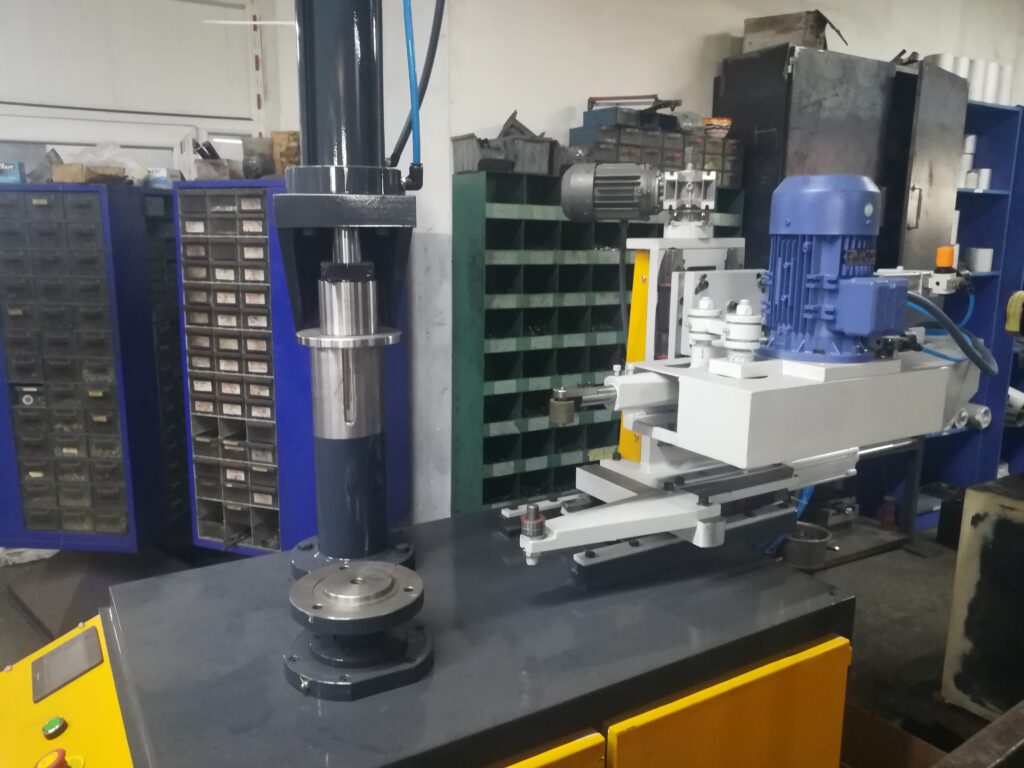
Categories
Machinery

Vertical Buffing Machine

Vertical Buffing Machine

Vertical Buffing Machine: A Polishing and Buffing Combo Machine combines two surface-finishing functions—polishing (removing surface imperfections and achieving a smooth texture) and buffing (enhancing surface gloss and shine)—into a single machine.

Key Components of Polishing and Buffing Machine

  1. Motor – Powers the rotating wheels, typically ranging from 0.5 to 2 HP depending on application.
  2. Polishing Wheel – Often made of abrasive materials like emery or silicon carbide, used for initial surface refinement.
  3. Buffing Wheel – Softer wheels made of cloth, felt, or other flexible materials, used with buffing compounds for shine.
  4. Work Rest/Support – Provides a platform to steady the workpiece.
  5. Speed Control (optional) – Allows for variable RPM to suit different materials and finishing stages.
  6. Dust Collector or Ports (optional) – Helps manage debris and metal dust during operation.

Applications

  • Metalworking: Removing rust, smoothing welds, and bright finishing on stainless steel, brass, aluminum, etc.
  • Woodworking: Polishing lacquered or painted wood surfaces.
  • Jewelry Making: Precision polishing of fine metal items.
  • Automotive: Chrome and aluminum trim restoration.
  • Plastics and Composites: Edge polishing and surface refinishing.

Advantages

  • Space Saving: One unit handles both polishing and buffing.
  • Cost-Effective: Eliminates the need to purchase two separate machines.
  • Increased Productivity: Enables quick change between operations.

A polishing and buffing combo machine is designed to handle both the initial surface smoothing (polishing) and the final high-gloss finishing (buffing) in a single unit. This type of machine typically features two spindles or shafts, each mounted with a different wheel—one abrasive polishing wheel and one softer buffing wheel made of cloth or felt. The machine is powered by an electric motor, often in the range of 0.5 to 2 horsepower, and may operate at fixed or variable speeds depending on the model. Operators use the polishing wheel to remove oxidation, scratches, or casting marks from metal, plastic, or wood surfaces. Once the desired smoothness is achieved, the workpiece is moved to the buffing wheel, often with an applied buffing compound, to bring out a mirror-like finish. These machines are commonly used in metal fabrication, automotive detailing, woodworking, jewelry making, and plastic finishing. Some models are equipped with safety features like spark guards, adjustable tool rests, and dust collection ports to enhance usability and maintain a clean workspace. Combo units are favored for their efficiency, cost-effectiveness, and the convenience of switching between two essential finishing operations without changing equipment.

Many polishing and buffing combo machines are bench-mounted, making them compact and suitable for workshops with limited space. Industrial-grade models may also be floor-mounted for handling larger or heavier workpieces. The choice of wheel materials and compounds plays a crucial role in achieving specific results—coarse abrasives for heavy material removal during polishing, and finer compounds like rouge or tripoli for delicate buffing tasks. Some machines allow quick wheel changes, which adds flexibility when working on different materials such as aluminum, stainless steel, brass, or even acrylics. Consistent maintenance, such as checking wheel wear and ensuring proper alignment, extends the machine’s life and ensures uniform surface finishes. Proper operator training is essential to avoid issues like over-polishing, which can deform soft metals, or under-buffing, which leaves dull surfaces. Overall, these combo machines provide a streamlined, dual-function approach to surface finishing that saves time and improves productivity across a variety of industries.

In practical use, the polishing and buffing combo machine becomes an integral part of any workshop that deals with surface refinement, whether in fabrication, restoration, or decorative finishing. When a raw or semi-finished part is introduced to the machine, it often carries imperfections such as tool marks, scale, oxidation, or general roughness from casting or machining. The first step is polishing—this is not just about aesthetics but also about preparing the surface for coating, plating, or further mechanical processing. The polishing wheel, usually embedded with abrasive particles or paired with an abrasive compound, cuts into the surface lightly to smooth out these defects. Depending on the material being worked on, wheels may vary from hard rubberized abrasives to cloth-based flaps loaded with cutting compounds.

Once the surface is polished to a uniform level of smoothness, the operator transitions to the buffing side of the machine. Buffing is a more delicate, finishing process aimed at producing a high-gloss, mirror-like shine. It uses soft, pliable wheels—often made from cotton, muslin, or felt—and relies on fine buffing compounds, which can range from brown tripoli for pre-polishing to white rouge or green chrome oxide for final finishing. The operator must be skilled in applying the right amount of pressure and compound to avoid burn marks, streaks, or surface inconsistencies. In many industries, this high-quality finish is not just for appearance—it reduces friction, enhances corrosion resistance, and in some cases, meets critical tolerance requirements for high-performance components.

The machine’s design often includes a solid base to minimize vibration, ensuring steady and safe operation. Some higher-end models come with variable speed controls, allowing the user to adjust the RPM to match the specific task. Lower speeds are ideal for buffing delicate materials, while higher speeds can be used during the polishing stage for quicker material removal. Safety considerations are also crucial—spark guards, eye shields, and even integrated vacuum ports for dust and particulate extraction are common in industrial setups. Metal polishing and buffing generate fine particles and heat, so proper ventilation and personal protective equipment (PPE) are essential for long-term use.

What truly sets the polishing and buffing combo machine apart from separate tools is its ability to streamline workflow. In production settings where throughput and finish quality must be balanced, having both functions integrated into a single station allows operators to move seamlessly from surface preparation to final finishing. This not only reduces equipment cost and space requirements but also cuts down on handling time, which in turn improves consistency and productivity. For small workshops, artisans, or businesses that work with metals, plastics, wood, or composite materials, this machine becomes a core asset—capable of delivering professional-grade finishes on everything from industrial parts to custom-crafted jewelry or automotive components.

Polishing and Buffing Combo Machine

Polishing and Buffing Combo Machine is a dual-purpose finishing tool designed to perform both polishing and buffing tasks using a single unit. It is widely used in workshops, manufacturing plants, fabrication facilities, automotive garages, and artisan studios where surface treatment is essential. The machine typically features two opposing spindles mounted on a shared motorized base—one side dedicated to polishing, and the other for buffing. This allows the user to transition quickly between the two processes without changing tools or workstations, significantly increasing efficiency and convenience.

In polishing, the goal is to remove surface imperfections such as scratches, oxidation, or tool marks by using an abrasive wheel or polishing compound. This process is aggressive compared to buffing and is usually the first step in surface preparation. Polishing wheels are typically made from harder materials like sisal, impregnated cloth, or synthetic abrasives. They can be combined with various grits of abrasive paste depending on the material being worked—whether it’s steel, aluminum, brass, plastic, or even wood.

Buffing follows polishing and serves as a finishing process. It’s more refined and aims to produce a high-gloss, reflective surface. Buffing wheels are softer, usually constructed from multiple layers of muslin, cotton, or felt. They’re used with buffing compounds—fine, wax-like substances that smooth and brighten the surface without removing significant material. Popular buffing compounds include white rouge (for light metals), green compound (for stainless steel), and red jeweler’s rouge (for soft, precious metals). Proper buffing not only enhances the visual appeal of a component but also improves surface characteristics such as corrosion resistance and cleanliness.

The motor driving the machine typically ranges from 0.5 HP to 2 HP depending on application requirements. Some models are single-speed, while more advanced machines offer variable speed control, which is crucial when switching between materials that require different surface treatments. High RPMs are ideal for aggressive polishing, while lower speeds are safer and more effective for delicate buffing operations.

Modern combo machines often include safety features such as spark guards, eye shields, and non-slip bases. Dust extraction ports or attachments for vacuum systems may also be present, especially in industrial models, as both polishing and buffing generate fine dust and debris that must be controlled to protect both the operator and nearby equipment. Additionally, adjustable tool rests are usually provided to support the workpiece during operation and reduce operator fatigue during extended use.

From a functional perspective, the polishing and buffing combo machine is a highly efficient solution for anyone needing to process metal, plastic, or wood components to a refined finish. It is valued not just for its space-saving design but for its ability to provide consistent and high-quality results. Industries that benefit from this machine include metal fabrication, automotive restoration, aerospace, woodworking, jewelry production, and even consumer electronics repair. Its versatility makes it one of the most practical finishing machines in any multi-material workshop.

The polishing and buffing combo machine continues to stand out in industrial and artisan settings due to its adaptability, ease of use, and the quality of surface finish it can provide. In a typical workflow, operators appreciate the seamless transition from polishing to buffing without the need to interrupt their process or reposition the workpiece between machines. This uninterrupted workflow not only saves time but also helps maintain uniformity in finish, especially on pieces that require consistent surface characteristics across multiple faces or parts. For example, in automotive restoration, chrome parts like bumpers or trim are often polished to remove pitting or discoloration before being buffed to a mirror-like shine. Similarly, in metal fabrication shops, welders and machinists use combo machines to clean up weld seams or machined surfaces before final finishing, enhancing both appearance and performance of the component.

The machine’s effectiveness depends heavily on the choice of wheel and compound combinations. For instance, a coarse polishing wheel combined with a heavy-cut compound is ideal for removing deep scratches or oxidation on hard metals like stainless steel, while a soft buffing wheel with a fine rouge compound is better suited for bringing out a reflective finish on softer materials such as aluminum or gold. Knowing how to match the right wheel, compound, and speed to the material is essential for achieving professional results. This level of control becomes especially valuable in fields like jewelry making or precision engineering, where surface quality has both aesthetic and functional importance.

Beyond its operational features, the polishing and buffing combo machine also contributes to workplace efficiency by consolidating two essential finishing functions into one compact footprint. This is particularly beneficial in smaller workshops where space and budget may not allow for multiple standalone machines. It reduces setup time, minimizes movement between tools, and simplifies maintenance routines, as the user only has to service one motor and one frame. In terms of durability, most commercial-grade combo machines are built with heavy-duty cast iron or steel housings, sealed bearings, and industrial-grade motors to withstand long hours of continuous use. These rugged designs are crucial in production environments where downtime can be costly.

Operator safety and ergonomics are also important considerations in the design and use of these machines. Since both polishing and buffing produce dust, heat, and sometimes sparks, machines are often equipped with shrouds or guards to contain debris, and many allow connection to external dust collection systems. Proper lighting, workpiece support, and non-slip bases also contribute to safer operation. Users are typically trained to wear protective gear, including safety glasses, gloves, and sometimes respirators, particularly when working with fine powders or toxic materials.

Overall, the polishing and buffing combo machine represents a balance of power, precision, and practicality. Whether used for industrial part finishing, fine metalwork, or decorative surface treatment, it provides a reliable and versatile solution that meets the needs of both high-volume operations and custom fabrication shops. Its dual-functionality not only enhances workflow and finish quality but also offers a smart investment for those seeking long-term value and consistent performance in surface finishing tasks.

In continuous operation, the polishing and buffing combo machine plays a critical role in quality assurance, especially where visual appeal and surface integrity are directly tied to product value. This is particularly evident in industries such as aerospace, medical device manufacturing, and high-end consumer goods, where even minor surface flaws can disqualify a part from being accepted. The machine allows for close control over the finishing process, which is vital in environments that demand tight tolerances and repeatable results. By adjusting variables like wheel hardness, compound abrasiveness, motor speed, and pressure applied, skilled operators can fine-tune the outcome to meet highly specific standards. The versatility of the machine extends further when additional accessories are introduced—such as tapered spindles for quick wheel changes, flexible shaft attachments for precision detailing, or specialized jigs for handling complex geometries and delicate parts.

From an economic standpoint, this machine offers both direct and indirect benefits. Directly, it reduces capital expenditure since a single unit performs two processes. Indirectly, it enhances labor productivity by reducing idle time between stages of surface preparation. A worker using a combo machine can complete more parts per hour compared to setups that require moving between separate stations or waiting for other machines to become available. Furthermore, as this tool becomes a central part of production flow, it can be easily incorporated into lean manufacturing systems or continuous improvement programs. The consistency it delivers allows for more accurate scheduling, fewer reworks, and higher customer satisfaction due to the improved finish quality of the end product.

The machine’s relevance also extends into educational and training environments. In technical schools, vocational programs, and maker spaces, combo machines are often used to teach students the fundamentals of surface finishing. Because they combine two essential techniques, they allow learners to understand the complete process flow—from material preparation to final polish—without needing a suite of equipment. This helps build foundational skills while encouraging safe and efficient work habits. Students can experiment with different materials and finishes, gaining insight into how small adjustments in speed, pressure, or compound can lead to dramatically different results. These lessons are invaluable for future careers in machining, fabrication, restoration, and design.

In artisan and craft settings, particularly among metal sculptors, custom knife makers, or furniture builders, the polishing and buffing combo machine becomes a creative tool as much as a technical one. Here, surface finish is not just about function or standardization—it’s part of the product’s identity. Whether aiming for a soft satin sheen on a wooden edge, a deep reflective polish on a custom blade, or a subtly aged patina on a brass fixture, this machine supports a wide range of artistic expressions. The ability to switch quickly between aggressive material removal and delicate final touches allows artisans to bring their visions to life with both efficiency and craftsmanship.

Over time, the durability of the combo machine pays off. With proper maintenance—such as regular cleaning, lubrication of moving parts, replacement of worn wheels, and occasional motor servicing—it can last for decades, becoming a reliable fixture in the workshop. Many users even customize or upgrade their machines with aftermarket parts like extended shafts, upgraded motors, or precision rests to better suit their specific workflow. This adaptability, combined with its dual-purpose design, cements the polishing and buffing combo machine as an enduring staple in both industrial and creative environments.

Angle Buffing Machine

Buffing Grinder Machine

An Angle Buffing Machine is a specialized power tool designed for polishing and buffing surfaces using a rotating abrasive or soft wheel mounted at a right angle to the motor shaft. Unlike standard bench-top or straight-shaft polishing tools, the angle buffing machine features a compact, angled head that allows operators to work on vertical, contoured, or hard-to-reach surfaces with greater control and flexibility. It’s widely used in automotive detailing, metal fabrication, construction, shipbuilding, and maintenance work where surface refinement must be performed in tight or awkward spaces.

The tool resembles an angle grinder in form and function but is optimized for polishing and buffing rather than cutting or grinding. Most models are handheld and powered either electrically or pneumatically. The head, usually set at 90 degrees to the body, holds a spindle or arbor onto which various buffing pads, wool bonnets, foam discs, or abrasive flap wheels can be attached using quick-change systems or threaded mounts. The rotation of the head combined with the angled configuration allows the user to apply consistent pressure across uneven or vertical surfaces such as car panels, stainless steel tanks, pipes, weld seams, and even interior corners of fabricated structures.

The motor in an angle buffing machine typically operates between 1,000 and 3,000 RPM, and many models offer variable speed control to suit different materials and compounds. Lower speeds are essential when working with heat-sensitive surfaces like plastics or paint, while higher speeds may be used for tougher polishing jobs on metal. The tool is often equipped with ergonomic handles, trigger locks, and soft starts for safety and comfort during prolonged use.

Angle buffing machines can be paired with a variety of buffing compounds depending on the material and desired finish—coarse compounds for initial polishing, and finer rouges for high-gloss buffing. In automotive use, for example, detailers use these machines with foam pads and polishing compounds to remove swirl marks, oxidation, and light scratches from painted surfaces. In marine and industrial environments, they are essential for cleaning and restoring stainless steel, aluminum, or coated surfaces subjected to harsh weather and chemicals.

Their portability and versatility make angle buffing machines ideal for on-site work, touch-ups, or maintenance tasks where bench machines are impractical. With proper training and care, they deliver professional-level finishes and are a key tool for anyone working in surface restoration or finishing.

The angle buffing machine continues to be a crucial tool in both professional and hobbyist settings where precision surface finishing is required in challenging or confined spaces. Its right-angle head configuration makes it especially useful for working on irregular geometries, edges, vertical planes, and interiors of structural components where straight or bench-mounted machines cannot reach effectively. For instance, in automotive refinishing, the angle buffing machine is commonly used on contoured body panels, bumpers, and tight areas around mirrors or trim, providing smooth transitions and high-gloss finishes without risking damage to surrounding parts. The angled design also makes it easier to maintain a steady polishing line across vertical surfaces, which is difficult to achieve with flat tools or orbital polishers.

Because it is a handheld tool, operator skill plays a significant role in the final finish quality. Users must learn to apply consistent pressure and maintain the correct angle and movement pattern to avoid issues such as holograms, swirl marks, or overheating of the surface. Variable speed control is an important feature in this context, as it allows the operator to tailor the machine’s performance to the material and stage of the buffing process. Lower speeds may be used to spread compound evenly or to perform finishing passes, while higher speeds are more appropriate for cutting back oxidation or leveling minor scratches. The use of speed-adjustable machines also minimizes the risk of burning through paint or soft coatings, which is a common concern with fixed-speed tools.

The range of attachments available for angle buffing machines adds to their versatility. Depending on the application, users can switch between wool pads for aggressive compounding, foam pads for fine polishing, or microfiber heads for ultra-fine finishing. In metalwork, users might employ abrasive non-woven discs to clean welds or remove oxidation before switching to cloth buffing wheels for a polished shine. The ability to swap out heads quickly means that a single tool can handle multiple stages of finishing without interruption. This modularity makes it highly efficient for professionals who need to maintain productivity while achieving superior surface quality.

In industrial environments such as shipbuilding, railcar fabrication, or pipeline maintenance, angle buffing machines are used to prepare metal surfaces for coating or inspection. Surfaces like aluminum bulkheads, steel hulls, or stainless steel piping require a specific degree of smoothness and cleanliness to meet technical and safety standards. The portability of the angle buffing machine allows technicians to move easily across large structures and perform work directly on-site, reducing the need for disassembly or transport of heavy components. This mobility is also valuable in maintenance settings, where equipment may need to be refurbished or retouched in place, such as in HVAC systems, tanks, or heavy machinery frames.

In more delicate or artistic applications, like musical instrument restoration or architectural metalwork, the angle buffing machine enables highly controlled work on complex or ornamental surfaces. The operator can carefully maneuver the tool around curves, ridges, or recesses to remove tarnish, smooth seams, or enhance luster without flattening detail or causing damage. Artists, conservators, and custom fabricators often rely on the angle buffing machine for this level of tactile precision, as it bridges the gap between coarse grinding tools and fine hand polishing.

Durability and ergonomics are key to long-term use, especially in professional settings where the tool might run for hours at a time. High-quality angle buffing machines are built with reinforced gear housings, sealed bearings to resist dust and moisture, and insulated motors that can handle continuous duty without overheating. Ergonomic design features such as vibration-dampening handles, compact head profiles, and lightweight body construction contribute to reduced user fatigue and more stable handling. Safety features, including soft-start mechanisms, electronic overload protection, and adjustable guard systems, are becoming standard in modern models, enhancing both usability and operator protection.

Ultimately, the angle buffing machine is not just a convenience but a necessity for any work environment that demands consistent, high-quality finishes in complex or confined spaces. Its combination of power, portability, and precision makes it a go-to solution across industries—from car detailing and metalworking to marine maintenance and fine craftsmanship. With proper technique, maintenance, and selection of accessories, it delivers professional-level results that rival more stationary equipment, while offering unmatched flexibility and control. Would you like recommendations on specific models or guidance for selecting pads and compounds for a certain type of material or finish?

As the demand for surface perfection continues to rise across industries, the angle buffing machine is becoming increasingly refined in terms of technology, materials, and performance features. Manufacturers now offer machines with digital speed displays, programmable settings, and intelligent load sensors that adjust torque output based on the resistance encountered during use. These features enhance both the precision and safety of the tool, especially in environments where surface finish standards are tightly regulated, such as aerospace or medical manufacturing. Digital control also allows more consistent performance over extended polishing sessions, reducing the variability that can occur due to operator fatigue or changing surface conditions.

Cordless versions of angle buffing machines have also emerged, thanks to advancements in lithium-ion battery technology. These portable units give users full freedom of movement without sacrificing much in terms of power or run time. In field maintenance, such as on wind turbines, large vehicles, or outdoor pipelines, this mobility can be crucial. While corded machines still dominate in terms of continuous heavy-duty use, cordless versions are gaining ground rapidly, especially in situations where convenience, accessibility, or safety (e.g., avoiding tripping hazards) are primary concerns.

The environmental and workplace health aspects of buffing and polishing are also gaining attention. Angle buffing machines often operate in environments where dust, metal particles, or compound residue are released into the air. These fine particulates pose both respiratory and cleanliness challenges. As a result, many industrial users now integrate dust shrouds, attach vacuum hoses, or work within ventilated booths. Proper personal protective equipment—including respirators, eye protection, gloves, and hearing protection—becomes essential, especially during extended use. Additionally, the compounds used with these machines have evolved to include water-based or low-residue formulas that are safer for the operator and easier to clean from the finished surface.

From a training perspective, the angle buffing machine is relatively easy to learn, but mastering it takes time. Novices often start with practice panels or scrap pieces to develop a feel for the right pressure and motion. Over time, skilled users learn to “read” the sound, vibration, and visual cues from the tool and the workpiece, adjusting their technique instinctively. For companies training multiple employees, this consistency in results becomes critical to maintaining product quality. Some manufacturers now offer training programs, demo units, and even simulator-based systems to accelerate the learning curve and improve safety.

Repair and maintenance of angle buffing machines are generally straightforward. Most models are designed with accessible brush housings, gearboxes, and motor components, making it possible to replace worn parts like carbon brushes, bearings, or power cords without sending the unit out for service. Keeping the machine clean—especially the spindle and venting system—is essential to maintaining its lifespan. If the machine becomes unbalanced due to uneven pad wear or misalignment, it can cause excessive vibration and reduced control, so regular inspection is a good practice. For industrial users, establishing a preventative maintenance routine helps ensure uptime and extends the life of both the machine and consumables.

In terms of innovation, some angle buffing machines are now incorporating orbital motion in addition to rotary action, blending the benefits of rotary and dual-action polishers. This hybrid movement reduces the risk of heat buildup and surface swirl, making the tool more forgiving for users and safer for delicate finishes like clear coats or polished plastics. These tools are especially popular in detailing and finishing work where surface perfection is critical but the risk of overworking an area must be minimized. They represent a natural evolution of the traditional angle buffing machine, pushing the limits of what’s possible with a handheld surface finishing tool.

The longevity and relevance of the angle buffing machine ultimately stem from its ability to adapt to new materials, new processes, and evolving user needs. Whether in the hands of a seasoned professional restoring a classic car, a technician polishing a turbine blade, or an artist finishing a hand-crafted sculpture, this tool continues to offer a blend of control, power, and versatility that few others can match. It remains a bridge between raw fabrication and final presentation, turning unfinished surfaces into polished, functional, and often beautiful results. Would you like to go into detail about compound selection for specific finishes or how to adapt the machine for curved or textured surfaces?

Polishing Cabinet Buffing Machine

Mirror Finish Polishing

Polishing Cabinet Buffing Machine is a specialized equipment designed to facilitate safe, controlled, and efficient polishing and buffing operations within an enclosed space. These machines typically consist of a cabinet or booth where the polishing and buffing processes take place, often equipped with one or more buffing wheels, abrasive pads, or brushes, a motor, and integrated systems for dust collection. They are commonly used in industries that require precise surface finishing of small to medium-sized components, such as jewelry manufacturing, electronics, metalworking, and automotive detailing. The primary advantage of a polishing cabinet buffing machine lies in its enclosed design, which helps contain debris, reduces exposure to hazardous materials, and minimizes environmental contamination.

The cabinet typically features transparent viewing panels made from durable acrylic or tempered glass, allowing the operator to monitor the workpiece while maintaining a safe distance from the moving parts. The interior of the cabinet is equipped with buffing wheels or abrasive pads mounted on motor-driven spindles, which rotate at varying speeds depending on the model. These spindles can accommodate different sizes and types of buffing wheels, ranging from coarse to fine materials such as wool, cotton, or felt, which are ideal for different stages of the polishing process. In many cases, the user can switch between polishing and buffing wheels to progressively refine the surface finish, from initial material removal to high-gloss final polish.

A key feature of the polishing cabinet buffing machine is its integrated dust and fume extraction system. Polishing and buffing generate fine dust and debris, particularly when working with metals like aluminum or stainless steel, or with certain composites. These particles can pose health risks when inhaled or cause a mess in the workplace. To mitigate this, polishing cabinet machines are equipped with powerful suction fans or vacuum systems that remove airborne particles from the cabinet, funneling them into filters or external collection bins. This feature is essential for maintaining a clean, safe working environment, especially in compliance with workplace health and safety standards.

These machines are typically designed for ease of use, with access doors or glove ports allowing the operator to insert their hands into the cabinet without opening it, thus maintaining a sealed environment. Glove ports enable precise control over the workpiece, and the compact design of the machine helps in controlling the work area’s lighting and dust levels. The interior often includes adjustable shelves or tool supports, providing convenience for setting the workpiece at the ideal height and angle for the operator.

The buffing cabinet is typically made of sturdy metal, such as steel or aluminum, to provide durability and stability during operation. Some higher-end models also include advanced features like built-in lighting, vibration-dampening components, and optional accessories such as polishing compounds or sprays, which can be applied directly to the workpiece while it is being buffed. These compounds can further enhance the polishing process, especially when working with materials that require a high-gloss finish, such as precious metals, glass, or acrylics.

The polishing cabinet buffing machine is especially valuable in high-precision fields where surface finish quality is critical. In jewelry manufacturing, for example, these machines allow for a meticulous, controlled polishing process that produces a flawless shine on rings, necklaces, bracelets, and other pieces without damaging the delicate details. In automotive applications, such as buffing chrome trim or headlight lenses, the cabinet helps achieve an even, smooth finish that enhances the appearance of the part while also providing a layer of protection against oxidation.

Overall, a polishing cabinet buffing machine provides a controlled, efficient, and safe solution for precision polishing and buffing tasks. The enclosed design ensures both safety and cleanliness, while the versatility in buffing wheel and compound options allows the user to adapt the machine for different materials and finishes. Its application spans a wide range of industries, making it an essential tool for professionals seeking high-quality surface finishes in a secure, effective manner.

The polishing cabinet buffing machine remains an essential tool in environments where precise, high-quality finishes are required. Its enclosed nature offers distinct advantages, not only for the operator’s safety but also for maintaining consistency and cleanliness in the workspace. The ability to control the working environment inside the cabinet makes it easier to handle intricate parts and delicate materials without worrying about contaminants or exposure to harmful polishing compounds and dust. This makes it particularly beneficial in fields like jewelry design and restoration, where intricate detailing and high-shine finishes are a hallmark of quality. The dust and debris removal system ensures that any fine particles produced during the process are efficiently extracted, improving air quality and reducing the risk of cross-contamination or scratches on the workpiece. The machine’s ability to maintain a stable, clean environment also extends the life of polishing wheels and reduces the need for frequent tool changes, as the buildup of abrasive material is minimized.

Another key aspect of these machines is the ability to easily adjust the polishing parameters. Many models come with variable-speed motors, allowing users to tailor the speed of the buffing wheels to suit the material being worked on. Softer materials, like aluminum or plastics, require slower speeds to avoid overheating or gouging, while harder metals like stainless steel might benefit from faster rotation to remove oxidation or achieve a mirror-like finish. These adjustments allow for greater control over the polishing process, ensuring that the finish meets the required standards without risking damage to the workpiece. The variety of polishing pads and wheels that can be used in these machines also makes them versatile, catering to different stages of the polishing process, from coarse grinding to fine polishing and buffing.

The compact and efficient nature of the polishing cabinet buffing machine also makes it ideal for shops or operations with limited space. Instead of needing multiple stations for different polishing tasks, a single polishing cabinet can handle a variety of materials and finishes, making it both a space-saver and a cost-effective solution. Operators can easily switch between tasks without needing to move the workpiece to different machines or setups. This efficiency is particularly valuable in high-volume production environments, where time and workflow are critical.

In addition to its functionality, the ergonomic design of the cabinet makes it easier for operators to perform long hours of buffing and polishing without experiencing undue strain. The ability to perform tasks through glove ports or from an upright position, with the workpiece secured at an optimal height, minimizes operator fatigue and increases overall comfort. This is an important consideration for environments where the operator’s well-being is a priority, such as in workshops with heavy or continuous polishing work.

From a safety perspective, the polishing cabinet buffing machine reduces the risk of accidents that can occur when using traditional open-bench polishing tools. With the operator enclosed within the cabinet, the likelihood of contact with moving parts is minimized. Additionally, the design often includes built-in safety features such as automatic shutoff mechanisms in case of overloads or unexpected malfunctions.

With regular maintenance, a polishing cabinet buffing machine can provide years of reliable service. Routine tasks like cleaning dust filters, inspecting buffing wheels for wear, and ensuring proper lubrication of moving parts keep the machine running smoothly. Many models also allow for easy replacement of worn-out components, such as brushes or wheels, helping to keep downtime to a minimum. This focus on durability and longevity is a significant benefit for businesses that rely on these machines for high-quality finishes on a daily basis.

In terms of application, polishing cabinet buffing machines are not limited to just one sector. Whether it’s polishing automotive parts, fine metal products, glassware, or even medical devices, these machines can adapt to a variety of materials and finishes. The precision offered by the enclosed, controlled environment allows for fine adjustments to the polishing process, ensuring that every part that leaves the machine meets the high standards required by the industry.

As industries continue to prioritize safety, efficiency, and quality, the polishing cabinet buffing machine remains a cornerstone tool for achieving professional finishes. Its ability to handle multiple polishing and buffing tasks while ensuring a safe, clean, and ergonomic workspace makes it a valuable asset in both small workshops and large-scale production facilities. Would you like more insights into choosing the right cabinet buffing machine for specific tasks or comparing models with unique features?

The versatility of polishing cabinet buffing machines extends to various industries, each benefiting from the machine’s ability to handle complex finishing tasks with precision and control. In industries such as aerospace, automotive manufacturing, and metalworking, where component appearance, durability, and surface integrity are paramount, polishing cabinet machines provide consistent, high-quality results. For example, in aerospace, precision-polished metal parts must meet stringent quality standards for both aesthetic and functional reasons, such as ensuring resistance to corrosion or minimizing drag. Polishing cabinet buffing machines allow technicians to fine-tune their processes to meet these exacting specifications, ensuring that even the smallest components, such as turbine blades or fuel fittings, are polished to perfection.

In automotive production, these machines are invaluable for detailing car parts, especially chrome and metal trim, which often require an immaculate finish to meet customer expectations and industry standards. The ability to maintain a controlled environment while polishing intricate surfaces, like grills, rims, or emblems, allows for a high-gloss finish without the risk of contamination from dust or compound residues. Polishing cabinet buffing machines help achieve the signature gleam that’s so important in vehicle aesthetics, from luxury cars to motorcycles.

In the field of medical devices, the quality of the finish on surgical instruments, implants, and prosthetics is crucial not only for the appearance but also for hygiene and functionality. Polishing cabinet buffing machines ensure that these parts are free from imperfections that could harbor bacteria or cause mechanical failure. For example, the smooth, polished finish on stainless steel surgical tools is not just about looks; it’s also essential for reducing the risk of infection and facilitating easier cleaning and sterilization. The precision of these machines makes them ideal for achieving such results.

Another major benefit of polishing cabinet buffing machines is their ability to handle delicate or highly specialized materials, such as gemstones, ceramics, and glass. In industries like jewelry design or glass manufacturing, where the material is often fragile or prone to scratching, the controlled environment inside a polishing cabinet helps prevent unintended damage. The ability to apply a controlled, even buffing action to such materials is essential for creating stunning finishes without compromising their integrity. In jewelry making, for instance, polishing cabinets are used to bring out the brilliance in metals like gold, platinum, and silver, as well as to perfect the clarity and shine of diamonds or other gemstones.

The adoption of polishing cabinet buffing machines in small-scale and artisan settings is also on the rise. Artists and small manufacturers who focus on custom or high-end products often rely on these machines for their precise control and ability to produce professional-grade finishes. Whether creating custom furniture, restoring antiques, or designing bespoke jewelry, the cabinet buffing machine offers a way to ensure consistent, high-quality results. It’s particularly useful in small shops where a single machine can handle multiple materials and finishes, providing versatility without requiring an array of separate machines.

As technology advances, polishing cabinet buffing machines are becoming more integrated with digital systems that allow for greater automation and efficiency. Some high-end models are now equipped with programmable controls, allowing users to input specific parameters such as speed, pressure, and compound type, creating a more automated process that can be repeated consistently. This reduces the potential for human error and ensures that each workpiece receives the exact same level of attention, making the polishing process both more reliable and efficient. This shift towards automation is especially beneficial in high-volume production settings, where consistency is crucial and reducing manual labor can lead to significant time and cost savings.

The environmental impact of polishing operations is another important consideration, and polishing cabinet buffing machines are increasingly designed with eco-friendly features. Many modern models incorporate filtration systems that reduce the amount of waste and pollutants released into the environment. For instance, some units use water-based or biodegradable compounds instead of traditional petrochemical-based polishing pastes, reducing the environmental footprint of the polishing process. Additionally, advancements in energy efficiency are helping to minimize power consumption, making these machines more sustainable for long-term use.

For businesses looking to optimize their operations, integrating polishing cabinet buffing machines with existing workflows is relatively straightforward. These machines can often be incorporated into automated production lines, where multiple parts need to be polished in a consistent and repeatable manner. The compact, enclosed design of the polishing cabinet makes it easy to fit into tight spaces or alongside other finishing equipment. Integration with dust extraction and filtration systems ensures that the entire polishing process remains clean and compliant with workplace health and safety regulations.

In terms of future trends, polishing cabinet buffing machines will continue to evolve, incorporating even more advanced technology such as touch-screen interfaces, real-time monitoring systems, and the ability to work with an even broader range of materials. These machines will continue to support industries that require precision and high-quality finishing, all while enhancing the overall safety, ergonomics, and environmental sustainability of the polishing process.

Whether for industrial, commercial, or artisanal use, polishing cabinet buffing machines represent a perfect balance of safety, efficiency, and high-performance. They provide a secure and controlled environment for achieving flawless finishes, protecting both the operator and the environment. With the right model, maintenance practices, and polishing compounds, businesses can ensure that they achieve the best possible surface finishes on a variety of materials, from metals to plastics and ceramics.

Would you like to explore more about specific polishing compounds or materials suitable for these machines, or perhaps recommendations on optimizing a polishing cabinet for your particular needs?

Industrial Buffing Machine

Dual-Station Polishing Machine

An industrial buffing machine is a high-powered tool used in commercial and industrial settings for polishing and finishing surfaces of various materials, such as metal, wood, plastic, and stone. These machines are designed to perform heavy-duty buffing tasks that require consistent, high-quality results across large quantities of parts or products. Industrial buffing machines are essential in sectors such as metalworking, automotive manufacturing, aerospace, and woodworking, where surface finishing is a critical step in ensuring the quality and appearance of the final product.

Industrial buffing machines come in a wide variety of configurations, from standalone bench-mounted models to larger, more complex systems that integrate multiple stages of polishing or are part of automated production lines. The main components typically include buffing wheels or pads, a powerful motor that drives the rotation of these wheels, and often an adjustable stand or frame to hold the workpiece at the correct angle for polishing. Many models are also equipped with speed controls, allowing operators to adjust the machine’s rotation speed based on the material being worked on and the stage of the buffing process.

The design of industrial buffing machines varies depending on the specific requirements of the task. For example, machines used for polishing large metal parts might feature larger buffing wheels, while those for finer detailing or finishing work might use smaller, more precise wheels. Some models are designed for specific applications, such as polishing automotive parts like chrome trim or buffing metal molds used in manufacturing, while others are more versatile and can handle a range of materials and finishes.

One of the key features of an industrial buffing machine is its motor, which is typically much more powerful than that found in smaller, consumer-grade polishers. These motors can be variable-speed to allow greater control over the polishing process. High RPMs (revolutions per minute) are ideal for quickly removing material or for aggressive polishing, while lower RPMs allow for finer finishing and a smoother, more reflective finish. For example, in metalworking, high speeds are used to cut back oxidation or remove rust, while slower speeds are ideal for fine polishing or creating a mirror-like finish.

Buffing wheels or pads are the heart of the industrial buffing process. These wheels come in a variety of materials such as cotton, felt, wool, and synthetic fibers, and are often treated with polishing compounds or abrasives to enhance their performance. For heavy-duty work, a stiff wheel might be used to remove oxidation or scratches, while softer, more delicate wheels are employed for final finishing. In some cases, the type of buffing compound used will depend on the material being polished. For example, a metal polish or abrasive compound might be used for polishing steel, while a gentler compound might be employed for polishing plastics or softer metals like aluminum or brass.

Industrial buffing machines also tend to feature built-in dust collection systems to manage the debris created during the buffing process. These systems help maintain a cleaner workspace and improve air quality by collecting the dust, metal filings, and polishing compound particles that are generated. This is particularly important in industries where worker health and cleanliness are a priority. In addition, the dust collection systems can improve the longevity of the buffing wheels and other components, as excessive dust buildup can lead to overheating or clogging of parts.

In larger-scale industrial operations, buffing machines may be integrated into automated production lines. These systems allow for consistent and repeatable polishing of high volumes of parts. In these setups, the buffing machine may be programmed to work with robotic arms or conveyors that feed parts into the polishing station, minimizing the need for manual handling and significantly improving efficiency. Such systems can be customized for specific products, enabling companies to meet high throughput requirements without sacrificing quality.

Safety is a major consideration with industrial buffing machines due to their high-speed rotation and potential hazards associated with polishing compounds and airborne debris. Machines are often equipped with safety guards or covers to prevent accidental contact with the buffing wheels. Operators are usually required to wear personal protective equipment (PPE), such as safety goggles, gloves, ear protection, and respiratory masks, especially in environments where fine dust or fumes may be present. Many machines also have emergency stop features and automatic shut-off mechanisms in case of overloads or malfunctions.

In terms of maintenance, industrial buffing machines require regular care to ensure that they continue to operate efficiently and effectively. This includes checking the motor and electrical components for wear, ensuring the buffing wheels are properly balanced, and cleaning or replacing the dust collection filters. Buffing wheels should be inspected for damage or wear, as a worn-out wheel can lead to uneven polishing or potential damage to the workpiece.

Given their durability, power, and ability to handle large-scale tasks, industrial buffing machines are a fundamental tool in many sectors. They ensure that products are finished to a high standard, improving both their appearance and functionality. In industries such as automotive, aerospace, metalworking, and manufacturing, these machines are vital for achieving the precision and surface finishes required for both aesthetic and practical purposes

Industrial buffing machines are designed to tackle demanding polishing tasks that require both power and precision. They are ideal for finishing large quantities of parts or high-volume production environments, where consistency and quality are essential. These machines can be used on a variety of materials, including metals, plastics, ceramics, glass, and composites, making them highly versatile in industries ranging from automotive and aerospace to metalworking, electronics, and manufacturing. The ability to perform both heavy-duty polishing and fine detailing allows these machines to meet the needs of a wide array of applications, such as restoring the shine to automotive parts, polishing turbine blades, buffing metal fixtures, or refining jewelry components.

What sets industrial buffing machines apart from consumer-grade tools is their robustness and ability to handle continuous operation without compromising on performance. High-speed motors, ranging from 1 horsepower (HP) to upwards of 10 HP or more, provide the necessary power for large-scale polishing tasks. This ensures that operators can maintain optimal production speeds while achieving a high-quality surface finish on parts of various sizes and shapes. In some cases, the motor’s power is supplemented by advanced speed control systems, allowing operators to dial in the perfect RPM for each task.

A key component of an industrial buffing machine is its buffing wheel, which can be tailored to specific applications based on the type of material and the level of finish required. Buffing wheels are available in different materials, such as cotton, wool, felt, or synthetic fibers, and they can be impregnated with various polishing compounds to enhance their cutting or finishing ability. For example, a wool wheel might be used for aggressive polishing tasks that involve removing oxidation or rust from metal parts, while a cotton wheel might be used for finer finishing or creating a mirror-like finish on softer metals or plastics.

Many industrial buffing machines come equipped with additional features such as oscillating or dual-action buffing motions. These motions are designed to reduce the risk of swirl marks or uneven finishes, especially when working with delicate or highly reflective surfaces. The oscillating motion helps to distribute the polishing compound more evenly and ensures that the surface being worked on receives consistent attention, which is especially important in industries that require a flawless finish, such as the luxury automotive or jewelry sectors.

Dust extraction and fume control systems are integral to industrial buffing machines, especially in environments where harmful particles or fumes might be released during the buffing process. These systems help capture and remove the fine dust, metal shavings, or polishing compound residues generated, which could otherwise contaminate the work area or pose a health risk to operators. Many machines feature integrated vacuum ports or separate dust collection units that help keep the workspace clean and safe. These systems are particularly important in industrial settings where maintaining air quality is essential for compliance with safety regulations.

Given the heavy-duty nature of these machines, maintenance is crucial to ensure their long-term reliability and performance. Regular inspection and replacement of buffing wheels, motor brushes, and polishing compounds are necessary to keep the machine running smoothly. Additionally, ensuring that the dust collection system is functioning properly, and that no debris or particles are clogging the system, helps prevent overheating and ensures efficient operation.

The integration of industrial buffing machines into production lines can further optimize efficiency in large-scale manufacturing environments. These machines can be automated to feed parts through buffing stations via conveyor belts or robotic arms, reducing manual labor and increasing throughput. In automated setups, buffing machines can be programmed to execute precise polishing sequences, ensuring consistency across large batches of parts. This level of automation not only speeds up production but also enhances product quality by reducing the risk of human error during the polishing process.

As industries continue to prioritize automation, sustainability, and efficiency, industrial buffing machines are also evolving to meet these needs. Many modern machines are designed to be energy-efficient, reducing power consumption and operational costs. Furthermore, advancements in buffing compounds, such as the development of water-based or eco-friendly formulas, help minimize the environmental impact of polishing tasks.

In conclusion, industrial buffing machines are indispensable in industries where high-quality, consistent surface finishes are a must. They are powerful, versatile, and designed for continuous operation, making them an essential part of many manufacturing and finishing processes. With the right maintenance, proper use of buffing compounds, and regular inspection, these machines can deliver exceptional results for a wide range of applications, from metal polishing to automotive detailing and beyond. Whether used in high-volume production environments or for specialized tasks, industrial buffing machines ensure that every part is finished to the highest standards. Would you like to explore specific manufacturers or features of these machines?

The industrial buffing machine’s ability to deliver consistent results in high-demand environments is one of the key reasons it remains indispensable across various sectors. As industries continue to evolve and the need for precision and efficiency grows, the role of buffing machines will likely expand, with advanced technologies integrating seamlessly into automated processes. One area of development is the incorporation of smart technology and sensors into buffing machines. These features can monitor the condition of the buffing wheels, track the pressure applied to the surface, or even detect anomalies in the polishing process. Real-time feedback allows operators to adjust settings or perform maintenance before issues arise, improving uptime and reducing the risk of defects in the final product.

For example, certain modern industrial buffing machines are now equipped with vibration sensors or load monitoring capabilities that can detect when a buffing wheel is out of balance or when the motor is under strain. This early detection can help prevent damage to the machine and the workpieces, ensuring that any issues are addressed before they result in costly downtime or quality control problems. Such advancements in machine diagnostics not only improve the efficiency of polishing operations but also help with predictive maintenance, which can be crucial for operations with high output demands.

Moreover, the flexibility of industrial buffing machines in accommodating a range of materials continues to make them invaluable. From polishing steel and aluminum to working on more delicate materials like plastics, ceramics, or glass, these machines can be tailored with various buffing compounds, pads, and wheels designed to suit the specific requirements of each material. This adaptability allows businesses to handle a wide array of products, from heavy machinery parts to intricate jewelry pieces, all while maintaining the high standards of finish that are expected in industries like automotive, aerospace, medical device manufacturing, and even art restoration.

With advancements in automation, the integration of buffing machines into larger manufacturing lines becomes increasingly seamless. Automated systems allow for continuous, high-speed polishing of parts, reducing manual labor and increasing throughput. This integration often includes conveyor belts or robotic arms that move parts into position for polishing, and some machines can even be programmed to apply specific pressure and speed settings to different parts of the product, ensuring a customized finish for each piece. Such systems are essential for industries like automotive manufacturing, where large quantities of parts need to be polished to the same high standard, or in industries where precision is paramount, such as the aerospace sector.

Environmental concerns and sustainability continue to be important factors in industrial manufacturing, and the development of more eco-friendly buffing systems is becoming increasingly relevant. For instance, using biodegradable or water-based polishing compounds helps reduce the environmental impact of the buffing process. Additionally, dust extraction and air filtration systems are being improved to capture even finer particles, further minimizing environmental exposure to harmful chemicals or metal dust. Some companies are also developing machines that use less energy and produce less noise, addressing both environmental and workplace safety concerns.

Another factor that makes industrial buffing machines essential is their role in quality control. In industries like metalworking, where the aesthetics and functionality of the parts are critical, the buffing process plays a key role in eliminating imperfections such as scratches, rust, or oxidation. Buffing ensures that the finished products have a smooth, even surface, free from defects that could compromise their performance or appearance. High-quality surface finishes can also improve the durability and longevity of products, particularly in industries that require resistance to corrosion or wear, such as the marine or oil and gas sectors.

In woodworking, where polishing and buffing are often done to enhance the natural appearance of the wood and provide a protective finish, industrial buffing machines play an essential role in producing furniture, cabinetry, or decorative items. The buffing process ensures that the wood surfaces are smooth and polished, free from marks or imperfections, and properly sealed. Similarly, in the electronics industry, where components need to have smooth, contaminant-free surfaces for optimal performance, buffing machines are used to polish parts like circuit boards, casings, and connectors, ensuring they meet industry standards for both function and appearance.

As industries move towards more precision-driven and technology-enhanced manufacturing, the role of industrial buffing machines will likely become even more integral. Machines with integrated software and advanced control systems could further reduce human error and improve efficiency, allowing for more complex and intricate finishes. In addition, the incorporation of artificial intelligence and machine learning could help optimize polishing processes by learning from past operations and adjusting settings automatically for the best results.

In summary, industrial buffing machines are continually evolving to meet the increasing demands for precision, efficiency, and sustainability. These machines are critical in industries where surface finish plays an important role in both aesthetics and functionality. From high-volume production settings to specialized craftsmanship, industrial buffing machines ensure that products meet the highest standards of quality and finish. As technology advances, these machines will only become more sophisticated, offering even more benefits in terms of automation, customization, and eco-friendliness. Would you like further details on any specific models or recommendations based on particular industrial needs?

Dust Collection Buffing Machine

Automatic Load/Unload Polishing Machine

dust collection buffing machine is a specialized tool designed for polishing and buffing tasks that includes an integrated dust extraction system to capture the debris generated during the buffing process. These machines are widely used in industrial settings, particularly in woodworking, metalworking, automotive manufacturing, and other industries where the polishing process can produce a significant amount of dust, shavings, or particulate matter.

The primary function of a dust collection buffing machine is to ensure a cleaner, safer work environment by capturing and removing harmful dust, polishing compounds, and metal shavings as they are created. This is especially important in environments where dust particles can pose health hazards to workers, create safety risks (e.g., explosions from flammable dust), or interfere with the quality of the finished product.

In a typical dust collection buffing machine setup, the machine is equipped with a high-efficiency dust collection system that either integrates directly with the buffing tool or operates as a standalone component. The dust extraction system usually consists of several key elements:

  1. Dust Hood or Shroud: A collection hood or shroud is positioned around the buffing wheel to capture the dust and particles generated during the polishing process. These hoods are strategically designed to enclose the work area around the wheel, minimizing the release of dust into the surrounding workspace.
  2. Vacuum System: The dust captured by the hood is then directed through a vacuum system. This system can be built into the buffing machine itself or connected to an external dust collector via flexible hoses. The vacuum system pulls the dust from the work area and transports it to a filtration unit, where it is safely contained.
  3. Filtration System: After the dust and debris are sucked into the vacuum system, they are passed through a filtration unit. Depending on the machine’s design, this filtration unit can include multi-stage filters to remove even fine particles. Common filter types include HEPA filters (high-efficiency particulate air filters), carbon filters for capturing fumes, or cyclone separators that remove larger debris before the air enters finer filters.
  4. Dust Collector or Hopper: The cleaned air is released back into the room, and the dust and debris are collected in a dust collector or hopper. The hopper or dust bin needs to be emptied regularly to prevent it from becoming clogged, and it may be equipped with a system to alert operators when it’s full.
  5. Workpiece Area or Booth: In some machines, especially those used in high-precision or sensitive applications, the dust collection system is integrated into an enclosed booth or workpiece area. This setup isolates the polishing process from the surrounding environment, providing an even cleaner working atmosphere and better control over the dust.

The inclusion of a dust collection system in a buffing machine offers several benefits:

  • Improved Air Quality: By removing harmful dust particles from the air, these machines help maintain a healthier work environment. In industries like woodworking, metalworking, and automotive, where the polishing process can release fine particulate matter, keeping the air clean is crucial for protecting workers’ respiratory health.
  • Enhanced Workplace Safety: Dust accumulation can create fire hazards, particularly when flammable polishing compounds or metals are involved. A dust collection buffing machine minimizes this risk by preventing the buildup of dust, which can otherwise become a source of ignition.
  • Better Product Quality: Dust and debris in the environment can contaminate the polishing process and lead to imperfections in the finished surface. A dust collection system helps prevent these contaminants from interfering with the finish, ensuring that parts and products are polished to a high standard without the risk of dust marks or scratches.
  • Cleaner Workspace: A cleaner work environment not only improves health and safety but also boosts productivity. Operators can work in a more organized and less cluttered environment, which reduces the time spent cleaning up after each task and keeps the workspace more efficient.
  • Compliance with Regulations: In many industries, dust collection is not just a best practice; it’s often a legal requirement. For example, in the woodworking industry, dust is considered a significant health hazard, and businesses must comply with OSHA (Occupational Safety and Health Administration) standards or similar regulations. Using a dust collection buffing machine ensures compliance with these regulations and minimizes the risk of penalties.

In industries like metalworking and automotive production, buffing machines with integrated dust collection systems help to keep surfaces free of contaminants that could affect the quality of polished parts. In metalworking, buffing processes often involve the use of abrasives, which can create fine metal dust. This dust, if not controlled, can result in contamination or affect the surface quality of the finished product. Similarly, in automotive production, using a dust collection system ensures that polishing compounds and fine particles are safely contained, preventing damage to delicate components like mirrors, trim, and bodywork.

In woodworking, dust collection is crucial because the fine dust from sanding, buffing, and polishing wooden surfaces can contain wood fibers that are harmful when inhaled. A dust collection buffing machine helps mitigate the health risks associated with these fine particulates, ensuring that the workspace remains clean and the air quality is improved.

Moreover, the integration of eco-friendly features into modern dust collection systems is becoming more prevalent. Newer systems are designed to be more energy-efficient, reducing the overall environmental impact of polishing operations. This can include optimized vacuum motors that consume less electricity or using sustainable materials for filters that are both effective and biodegradable.

The incorporation of smart technology into dust collection buffing machines is also on the rise. Some machines now feature real-time monitoring and diagnostics, where sensors can detect the level of dust buildup in the filtration system, alerting operators when maintenance is needed or when the filters need to be changed. This ensures that the dust collection system operates at peak efficiency, reducing the chances of downtime and maintaining the cleanliness of the work environment.

In conclusion, a dust collection buffing machine offers a comprehensive solution for industries that require high-quality surface finishes while ensuring that the work environment remains safe, clean, and efficient. The integration of powerful vacuum systems, efficient filtration, and dust collection technologies not only helps protect workers’ health but also ensures the smooth and flawless results that are expected in precision industries. Would you like more details on specific models or features of dust collection systems for buffing machines?

Dust collection buffing machines are a critical advancement in industrial polishing, combining the functions of polishing and dust management into a single, cohesive system. These machines are engineered to perform high-quality buffing while effectively capturing the dust and debris generated during the process, which is essential for maintaining both the quality of the finished product and the safety of the workspace. In industries where dust and particulate matter can negatively impact both product quality and worker health, having an integrated dust collection system helps to address these concerns while boosting operational efficiency.

The dust collection system works by drawing in the airborne particles that are created as the buffing wheel makes contact with the workpiece. This debris can range from polishing compounds to metal shavings, wood dust, or plastic particles, depending on the material being worked on. Without a dust collection system, these particles can scatter into the air and the surrounding environment, potentially contaminating the work area, affecting air quality, and increasing the risk of fire or health issues. In industries like woodworking, metalworking, and automotive, these particles are not only an inconvenience but also a serious safety hazard.

A properly designed dust collection system in a buffing machine includes a powerful suction system that pulls in dust from the immediate work area. This is often achieved by using a combination of collection hoods or shrouds that surround the buffing wheels and vacuum suction hoses that connect to a central dust collector. The dust is pulled through the system, where it passes through various filters designed to trap fine particles, ensuring that only clean air is returned to the workspace. In addition to improving air quality, this system reduces the need for manual cleaning, making the workspace less cluttered and more productive. Moreover, the collection of dust is especially important in environments with high-speed buffing operations, where large amounts of dust are generated quickly.

These machines are also crucial for maintaining the quality of the finish on the workpieces. When dust and other debris are allowed to remain in the environment, they can settle back onto the workpieces and cause imperfections in the final polished surface. Even small particles can lead to scratches, streaks, or uneven finishes. By collecting dust at the source, a dust collection buffing machine helps to preserve the integrity of the surface finish, ensuring that parts remain free from contaminants. This is particularly important in industries such as automotive manufacturing, where high-quality finishes are essential for both aesthetic appeal and functional performance.

Beyond improving air quality and product finishes, dust collection systems in buffing machines also play a significant role in ensuring workplace safety. In industries like woodworking, where wood dust is produced, the dust can be highly combustible, posing a fire risk. Similarly, metal dust, especially from materials like aluminum or steel, can present an explosion hazard if not properly controlled. A dust collection buffing machine helps mitigate these risks by capturing potentially hazardous dust and preventing it from accumulating in the workspace. In doing so, it also helps businesses comply with safety regulations and health standards, which may require the installation of dust extraction systems in certain industries to prevent harmful exposure.

Maintenance of dust collection buffing machines is an essential aspect of keeping them functioning efficiently. Over time, dust can build up in the system, especially in the filters and collection hoppers, so routine cleaning and maintenance are required to keep the system running at peak performance. Regularly checking and replacing filters, ensuring that the vacuum system is not clogged, and keeping the buffing wheels in good condition are all part of maintaining the machine and ensuring optimal dust collection. Many modern dust collection systems are equipped with sensors and monitoring systems that notify operators when the system is nearing full capacity or when the filters need to be replaced, making maintenance easier and reducing downtime.

Another advantage of these machines is their ability to help businesses reduce their environmental footprint. By capturing and containing dust, companies can reduce the amount of airborne particulate matter that is released into the environment. This is particularly relevant in industries where regulations surrounding air quality are stringent, such as woodworking or metalworking. Dust collection buffing machines contribute to a cleaner and more sustainable manufacturing process by preventing the release of harmful pollutants and minimizing waste.

The design and technology of dust collection systems are also evolving to be more energy-efficient and user-friendly. Modern machines often feature adjustable suction power, allowing operators to fine-tune the level of dust extraction based on the material and type of buffing work being done. This helps optimize energy consumption and ensure that the dust collection system is working as efficiently as possible. Additionally, quieter models are available, reducing the noise level in the workspace, which can improve the working conditions for operators and comply with noise reduction regulations.

The incorporation of smart technologies in dust collection buffing machines is also an emerging trend. Some machines now include digital controls, allowing for more precise operation and real-time monitoring of the dust collection process. These systems can track the efficiency of the dust extraction, alerting operators to any potential issues such as blockages or system malfunctions. This real-time data helps ensure that the dust collection system is always functioning optimally, improving both the quality of the work and the safety of the environment.

Overall, a dust collection buffing machine is an essential piece of equipment for many industries that rely on polishing and buffing processes. Whether it is a standalone unit or part of a larger automated production system, the inclusion of a dust collection system enhances safety, improves air quality, and ensures that finished products meet the highest standards of quality. By reducing the environmental impact, increasing workplace safety, and ensuring that the buffing process is efficient and precise, these machines provide a comprehensive solution for a wide range of industrial applications.

The continued development of dust collection buffing machines is driven by the increasing demand for higher productivity, enhanced worker safety, and improved environmental standards. As industries strive to streamline operations, reduce costs, and meet sustainability goals, the role of these machines has evolved beyond simple dust extraction. Modern dust collection buffing machines are now integrating sophisticated features that increase their effectiveness in a variety of applications.

For instance, advancements in filter technology have significantly improved the efficiency of dust extraction. High-efficiency particulate air (HEPA) filters, commonly used in these machines, can capture even the finest dust particles, which are often invisible to the naked eye but can still cause serious health risks if inhaled over time. Additionally, multi-stage filtration systems are now commonly used to enhance dust collection by first removing larger particles and then capturing the finer, more hazardous dust. This progression has made dust collection systems more reliable and effective, ensuring a cleaner and healthier work environment for operators.

The automation of dust collection systems is another notable trend. Many modern machines are designed to integrate seamlessly with automated production lines. For example, buffing machines with dust collection systems are increasingly being equipped with sensors that automatically adjust the suction power depending on the type of material being polished or the volume of dust being generated. This smart functionality helps to ensure optimal dust removal without wasting energy or resources. Automated monitoring systems can also track the condition of the filters, alerting operators when maintenance is needed or when filters should be replaced, thus reducing manual intervention and preventing system failures.

In addition to these technological advancements, compact and modular designs have made dust collection buffing machines more versatile and adaptable. Compact models are especially beneficial for businesses with limited space or smaller production setups, while modular designs allow for greater flexibility. These systems can be customized to meet specific production needs by adding or removing components like extra filtration stages, larger collection hoppers, or additional suction points. This flexibility ensures that businesses can tailor the machines to their operations, whether they are working with large-scale, high-volume manufacturing or smaller, more specialized tasks.

As sustainability becomes a growing concern across all industries, dust collection systems are being designed to reduce their environmental footprint. One such development is the integration of energy-efficient motors and components that reduce electricity consumption while maintaining high performance. Some dust collection buffing machines now use variable speed drives that adjust the motor’s power depending on the workload, further optimizing energy usage. By reducing the machine’s overall energy demand, companies can lower operational costs and contribute to their sustainability goals.

In the automotive industry, the integration of robotic arms with dust collection buffing machines is becoming more common. These robotic systems can be programmed to automatically position parts for buffing and polishing, while the dust collection system ensures that the area around the robot stays clean. This combination of robotics and dust collection enhances the precision and consistency of the buffing process, reduces the need for manual labor, and ensures that parts are finished to a high standard without contamination. This automated setup can be particularly useful for mass production of automotive components, where consistency is key and high-quality surface finishes are essential.

For industries involved in aerospace manufacturing, where polishing and buffing are critical for both the aesthetics and functionality of parts, dust collection systems play an integral role in maintaining a pristine work environment. Aerospace components require precise surface finishes to ensure both performance and safety. A dust collection buffing machine designed for this purpose helps ensure that the surfaces of critical components, such as turbine blades, wing parts, and fuselage sections, remain free from contamination or defects caused by dust particles. By capturing these particles before they settle onto the workpieces, the dust collection system plays a vital role in meeting the stringent standards set for aerospace components.

Woodworking is another industry where dust collection buffing machines are essential. Wood dust, if left uncontrolled, can create a host of problems, including respiratory issues for workers, increased risk of fire, and environmental contamination. By integrating dust collection into the buffing process, these machines not only improve the quality of the wood finish but also ensure compliance with health and safety regulations. In high-end woodworking, such as furniture making or musical instrument crafting, where fine surface finishes are necessary, dust collection buffing machines help create a pristine surface that is free from wood fibers and other contaminants.

In industries that work with metal finishes, such as precision machining or jewelry manufacturing, dust collection buffing machines are indispensable for both quality control and safety. Metals like aluminum, steel, and brass can produce fine dust particles during the buffing process, and the presence of this dust in the air can pose a health risk if not properly managed. By using an effective dust collection system, businesses can ensure that workers are not exposed to harmful metal particles while also maintaining a high standard of finish on the metal surfaces.

Furthermore, in industries like electronics manufacturing, where the cleanliness of the parts is critical for functionality, dust collection buffing machines are often used to polish and buff components such as circuit boards, connectors, and housings. Even a small amount of dust or debris can interfere with the performance of electronic devices, so it is essential to keep the work environment free of dust. These machines help ensure that all parts are polished to the highest standard and free from contaminants that could compromise their performance.

As companies continue to prioritize operational efficiencyworker safety, and environmental responsibility, the demand for dust collection buffing machines that offer both high-performance polishing and effective dust extraction will only continue to grow. Whether for large-scale industrial applications or specialized craftwork, these machines provide a versatile, efficient solution that meets the needs of modern manufacturing and finishing operations. With ongoing advancements in technology, design, and sustainability, dust collection buffing machines will remain an essential tool in a wide range of industries, ensuring cleaner environments, safer workplaces, and higher-quality finished products.

Wet Buffing Machine

Dual-Station Polishing Machine

wet buffing machine is a specialized type of polishing equipment that uses water or a liquid coolant during the buffing or polishing process to reduce friction, manage heat, and enhance the finish of the workpiece. Unlike dry buffing, which generates a lot of heat and can create airborne dust, wet buffing incorporates water or an oil-based compound that cools the surface and collects dust and debris, creating a cleaner and safer environment for both the operator and the workpiece.

Wet buffing machines are used in various industries, including metalworking, automotive, jewelry, and woodworking, and are ideal for applications where heat buildup can damage the material or when a smoother, more refined surface finish is required. These machines are especially useful in processes such as polishing metal, plastics, ceramics, or composites, where the material needs to retain its integrity without being overheated.

The key benefits of wet buffing machines include:

  1. Reduced Heat Generation: When buffing a surface, the friction between the buffing wheel and the material can generate significant amounts of heat. This heat can cause problems like discoloration, warping, or even material damage. Wet buffing minimizes heat buildup by cooling the surface as it is being polished, preventing heat-related damage and ensuring that the material stays in optimal condition.
  2. Improved Surface Finish: The presence of a liquid coolant during the buffing process helps to achieve a finer, more polished surface. The liquid helps to lubricate the surface and the buffing wheel, reducing friction and minimizing the chances of scratching or marring the workpiece. As a result, the surface finishes produced by wet buffing are typically smoother and more even, which is particularly important in industries like jewelry and precision machining.
  3. Dust Control: One of the primary concerns with dry buffing is the creation of fine dust and debris that can contaminate the work environment. Wet buffing helps control this issue by trapping the dust in the liquid, reducing the amount of airborne particulates. This is particularly advantageous in industries where dust can be hazardous to health or affect the quality of the finished product. By capturing the dust, wet buffing machines help maintain a cleaner workspace and improve air quality, contributing to a safer work environment.
  4. Extended Tool Life: The use of liquid coolant in wet buffing helps extend the life of both the buffing wheel and the workpiece. The liquid prevents excessive wear on the wheel and minimizes the chance of the material becoming overheated or damaged. The lubrication provided by the liquid can also prevent excessive friction, which can cause the wheel to wear down prematurely.
  5. Enhanced Material Protection: Wet buffing is particularly beneficial for sensitive or delicate materials that could be easily damaged by heat or excessive friction. For example, in industries like jewelry making, where precious metals and stones need to be polished, wet buffing helps preserve the material’s integrity while achieving a brilliant finish. The controlled environment created by the liquid coolant ensures that the materials are polished effectively without risking damage.
  6. Better Control Over Buffing Process: Wet buffing allows operators to have more control over the polishing process. By adjusting the flow of coolant, operators can manage the speed and temperature of the buffing wheel more precisely, ensuring that the material is polished to the desired specifications. This level of control is crucial in industries that require high precision and quality, such as aerospace or medical device manufacturing.

Wet buffing machines typically consist of several core components:

  1. Buffing Wheel: This is the main tool for polishing the surface of the material. It is usually made from cloth, felt, or a similar soft material and is designed to spin at high speeds. During the buffing process, the wheel is coated with polishing compounds or treated with the liquid coolant to achieve the desired finish.
  2. Liquid Coolant Reservoir: Wet buffing machines are equipped with a tank or reservoir that holds the liquid coolant, which can be water or a water-based solution. The liquid is directed to the buffing wheel and the workpiece, where it helps cool the material and carry away any debris or dust generated during the process.
  3. Pump and Delivery System: A pump circulates the liquid coolant from the reservoir to the buffing wheel. This system is typically designed to ensure that a consistent flow of liquid is delivered to the wheel, maintaining an even cooling effect during the buffing process.
  4. Suction or Filtration System: In many wet buffing machines, a suction or filtration system is included to capture the liquid and any debris created during the polishing process. This helps to maintain a clean work environment and ensures that the liquid coolant can be reused or filtered for efficiency.
  5. Workpiece Holding System: Wet buffing machines often include a system for holding or positioning the workpiece securely while it is being polished. Depending on the machine’s design, this can be a manual or automatic setup, ensuring that the workpiece is properly aligned with the buffing wheel for optimal results.
  6. Control Panel: Modern wet buffing machines typically include a control panel that allows operators to adjust settings such as wheel speed, coolant flow rate, and pressure. Some machines also have built-in monitoring systems that can provide real-time data on the buffing process, ensuring consistency and quality in the finish.

While wet buffing machines provide many advantages, there are some considerations to keep in mind:

  1. Maintenance: The liquid coolant used in wet buffing systems can become contaminated over time with debris and polishing compounds. This requires regular maintenance, including draining and replacing the coolant, as well as cleaning the filtration and suction systems to ensure that the machine operates efficiently.
  2. Slipperiness: The use of liquid coolant can create a slippery work environment. Operators should take care to ensure that the floor around the wet buffing machine is properly cleaned and maintained to reduce the risk of accidents.
  3. Water Quality: In some cases, the quality of the water used in the coolant can impact the effectiveness of the buffing process. Impurities in the water can cause streaks, spots, or residue to be left on the workpiece, requiring additional cleaning after polishing.
  4. Cost: Wet buffing machines are generally more expensive than their dry counterparts due to the added components like the coolant reservoir, pumps, and filtration systems. However, the additional cost is often justified by the superior finish and increased safety they offer.

Wet buffing machines are an essential tool in industries that require precise, high-quality surface finishes. From polishing metal to fine-tuning the appearance of delicate materials, these machines provide enhanced control, improved safety, and better environmental conditions for operators. Whether in manufacturing, jewelry making, or precision machining, wet buffing machines offer a versatile and effective solution for a wide range of polishing needs.

Wet buffing machines are widely used in industries that require a smooth, polished finish on their workpieces, while also ensuring that the materials remain free from contaminants like dust and debris. These machines are designed to incorporate water or liquid-based coolants into the buffing process, providing several significant advantages over traditional dry buffing methods. The liquid helps manage the heat generated during polishing, which can be crucial when working with sensitive materials that could be damaged by excessive friction. Additionally, it serves as a dust control mechanism, capturing particles and preventing them from becoming airborne, which reduces environmental and health risks. This is particularly important in environments where the dust could be hazardous, such as in woodworking or metalworking operations.

One of the key features of wet buffing machines is their ability to maintain a cool surface temperature during polishing. Buffing generates heat, which, if uncontrolled, can lead to a variety of problems, such as surface deformation, discoloration, or even material distortion. Wet buffing mitigates this risk by using coolants that are applied directly to the workpiece and the buffing wheel. This cooling action ensures that the surface temperature remains stable, allowing for high-quality finishes without the worry of heat-related damage.

Another important benefit of wet buffing is the superior surface finish it provides. The presence of liquid lubricants during the buffing process reduces friction between the buffing wheel and the material, allowing for a smoother, more refined finish. This makes wet buffing especially useful for materials that require a high level of surface precision, such as in the production of jewelry, fine metalworking, and the aerospace industry. The liquid also helps prevent scratches, streaks, or other imperfections that may arise from dry buffing, delivering a flawless, mirror-like finish.

Furthermore, wet buffing machines contribute to a cleaner and healthier work environment. The liquid coolant captures dust and debris that are generated during the polishing process, preventing them from becoming airborne. This eliminates the need for constant cleaning and reduces the risk of respiratory issues for workers who are exposed to dust on a regular basis. It also minimizes the potential for contaminants to settle back onto the workpiece, which could negatively affect the final finish. The built-in dust control system helps ensure that the work area remains clean and safe, and it can improve air quality in the workplace, leading to fewer health concerns for employees.

Wet buffing is particularly advantageous when working with softer or more sensitive materials. For example, materials such as aluminum, brass, or certain plastics are prone to heat buildup and can become damaged or discolored if subjected to excessive friction. By using a wet buffing machine, manufacturers can achieve a high-quality polish while preserving the integrity of these materials. This is especially crucial in industries like automotive or electronics manufacturing, where precision and surface integrity are key.

These machines also offer the benefit of extended tool life. Buffing wheels can wear down more quickly when used for dry buffing due to the increased friction and heat. Wet buffing reduces the wear and tear on the wheel, extending its lifespan and making the process more cost-effective in the long run. Additionally, the coolant helps to prevent the buffing wheel from clogging with polishing compounds, which can compromise its effectiveness and require more frequent maintenance.

A critical component of wet buffing systems is the filtration and recirculation of the coolant. Since the coolant often becomes contaminated with debris and polishing compounds during use, many wet buffing machines are equipped with filtration systems that remove impurities from the liquid. This ensures that the coolant remains effective throughout the process and can be reused, reducing waste and operational costs. Some machines even feature automated systems that monitor the condition of the coolant and alert operators when it’s time for a change. This can help streamline maintenance and prevent disruptions to production.

Another consideration when using wet buffing machines is the potential for water-related issues, such as rust or corrosion on non-stainless steel components. Therefore, manufacturers often design wet buffing machines with materials that resist rust and corrosion to ensure durability and longevity. In some cases, machines may feature additional drainage systems to prevent the accumulation of stagnant water, which can also help minimize the risk of corrosion.

While wet buffing machines are generally more complex than dry buffing machines due to their added components—such as the coolant reservoir, pumps, and filtration systems—the benefits they offer in terms of finish quality, safety, and efficiency often outweigh the added complexity. Moreover, technological advancements in the design of wet buffing machines have made them more user-friendly, with features like digital control panels, automated coolant monitoring, and easy-to-access maintenance points. These features not only improve the machine’s performance but also reduce the operational effort required to keep the system running smoothly.

For businesses that are highly concerned with sustainability, wet buffing machines can be a great asset. By minimizing airborne pollutants and reducing the wear and tear on tools, these machines contribute to both a cleaner work environment and lower operational costs over time. Furthermore, because they often recycle the coolant, these systems reduce water usage and waste, making them an eco-friendly choice for businesses seeking to reduce their environmental footprint.

In summary, wet buffing machines are essential tools for industries that require high-quality, precise, and clean polishing processes. Whether for metalworking, woodworking, or other applications, these machines provide several distinct advantages, such as reducing heat generation, improving surface finish, controlling dust, and extending tool life. The incorporation of advanced filtration and recirculation systems ensures that wet buffing machines operate efficiently, while also maintaining a safe and clean working environment for operators. As technology continues to evolve, wet buffing machines are becoming even more effective, versatile, and user-friendly, making them an invaluable part of many modern manufacturing processes.

Wet buffing machines continue to evolve as advancements in materials, design, and automation reshape the manufacturing and finishing industries. With a growing emphasis on sustainability, efficiency, and the increasing demand for high-quality surface finishes, these machines are integrating even more sophisticated features that make them indispensable in many sectors.

One of the notable developments is the integration of advanced monitoring systems that provide real-time feedback on the performance of the buffing process. These systems can track parameters such as coolant flowwheel speedpressure applied, and surface temperature to ensure that the machine operates at optimal conditions. For example, if the coolant flow is too low or the temperature rises above a certain threshold, the system can alert operators and automatically adjust the settings to prevent potential issues. This level of automation not only improves the consistency and quality of the finished product but also reduces the chances of human error.

Another significant trend is the adoption of multi-functional buffing systems that combine various processes, such as wet polishingdry buffing, and abrasive finishing, into a single machine. These all-in-one systems are designed to streamline production by reducing the number of machines required for different stages of the buffing or polishing process. For instance, a wet buffing machine may have interchangeable wheels or pads that can be used for different materials or finishes, allowing the operator to switch between processes without the need for a full equipment changeover. This versatility can significantly reduce downtime and increase production efficiency.

Moreover, robotic automation is making its way into wet buffing systems, particularly in high-volume industries such as automotive manufacturing or electronics production. Robotic arms equipped with buffing wheels and integrated with wet buffing systems can automatically handle the polishing and buffing tasks. These robotic systems can precisely position the workpieces, ensuring uniform polishing, while the integrated dust and coolant management systems ensure a clean and safe working environment. In addition to improving consistency, automation also frees up human operators to focus on more complex or strategic tasks, increasing overall productivity.

The rise of customizable buffing solutions is another development that has enhanced the utility of wet buffing machines. For instance, some manufacturers now offer machines that can be tailored to specific needs, such as buffing delicate materials or working with specialized polishing compounds. Customization options might include adjustable wheel speeds, specialized buffing pads, or even specialized coolant solutions designed for certain materials or finishes. These machines allow businesses to achieve the highest level of precision and efficiency, while also accommodating the diverse demands of various industries.

In sectors where cleanliness and contamination control are paramount, such as in pharmaceuticalsfood production, and biotechnology, wet buffing machines are being designed to meet stricter sanitary standards. These machines are made from materials that are resistant to corrosion and easy to clean, while their coolant systems are equipped with filtration systems that ensure no contaminants affect the workpieces. Additionally, some machines feature closed-loop systems that circulate coolant and prevent exposure to external contaminants, further improving the cleanliness of the process.

The integration of eco-friendly coolant options is also becoming more prevalent. Many manufacturers are moving away from traditional chemical-based coolants, which can be harmful to both the environment and human health, in favor of more sustainable alternatives. Water-based coolants that are biodegradable and less toxic to the environment are being increasingly used in wet buffing systems. Additionally, some machines are designed to handle the disposal or recycling of used coolants in an environmentally responsible manner, reducing waste and the overall environmental impact of the buffing process.

As industries increasingly focus on productivity and cost efficiency, manufacturers are developing wet buffing machines with higher throughput capabilities. These machines are designed to handle larger volumes of workpieces, while still maintaining the high-quality finishes that wet buffing is known for. Features like automated part handlingadjustable buffing speeds, and multi-stage polishing processes enable wet buffing machines to meet the demands of large-scale production runs without compromising on quality.

Furthermore, the importance of ergonomics in wet buffing machines cannot be overlooked. Many modern machines are being designed with operator comfort and safety in mind. Adjustable workstations, user-friendly interfaces, and noise reduction technologies are all integrated into the design to ensure that the buffing process is as comfortable and safe as possible for operators. Reducing the physical strain on workers and minimizing exposure to hazardous dust and debris not only improves the well-being of employees but also leads to better overall productivity.

In industries where high-precision finishes are required, such as aerospacemedical devices, and precision optics, wet buffing machines are essential for ensuring that each part meets the required specifications. The machines’ ability to control temperature and surface smoothness makes them invaluable in maintaining the structural integrity and aesthetic quality of highly detailed components. Additionally, the low-friction, controlled environment offered by wet buffing reduces the risk of introducing surface defects or imperfections, which is critical in these fields.

Lastly, maintenance and cost-effectiveness are always key considerations for businesses. With modern wet buffing machines, maintenance has become easier and more cost-effective due to the development of automated monitoring systems that can predict when maintenance is needed and alert operators in advance. This predictive maintenance minimizes downtime and reduces repair costs, leading to increased efficiency and longer machine lifespans. Additionally, by using recyclable coolants and integrating features that extend the life of consumables like buffing wheels, these machines can help businesses reduce operational costs over time.

In conclusion, wet buffing machines are crucial tools for industries that demand high-quality finishes, a clean working environment, and efficient production. With ongoing advancements in automation, customization, energy efficiency, and sustainability, these machines continue to evolve and meet the increasingly complex needs of modern manufacturing. Whether it’s for polishing delicate materials, achieving precise surface finishes, or improving worker safety, wet buffing machines offer significant advantages that make them indispensable in many industries.

Double Ended Buffing Machine

Dual-Station Polishing Machine

double-ended buffing machine is a type of polishing or buffing equipment that features two buffing wheels or heads, one at each end of the machine. This design allows operators to buff or polish multiple surfaces of a workpiece simultaneously or switch between different tasks without the need to reposition the workpiece. Double-ended buffing machines are often used in industries where high productivity, efficiency, and precision are required, such as in metalworking, automotive, jewelry, and woodworking.

These machines are versatile and can be used for a wide range of applications, from polishing metal parts to applying fine finishes to delicate materials. The double-ended design allows operators to complete a variety of tasks more efficiently compared to single-ended machines. For example, one end of the machine may be used for rough buffing with a coarser wheel or abrasive, while the other end may be set up with a finer wheel for final polishing. This enables quicker transitions between different polishing stages without having to switch out buffing wheels or adjust the machine.

Key Features and Benefits

  1. Increased Productivity: With two buffing wheels or heads, a double-ended buffing machine allows operators to work on two parts at once or use different types of wheels for various polishing processes. This helps save time and increases throughput in high-demand production environments, such as in manufacturing or large-scale metalworking operations.
  2. Dual Tasking: The ability to work with two different types of wheels (e.g., a coarse wheel and a fine wheel) on separate ends of the machine makes it possible to perform multiple polishing steps in a single pass. This versatility reduces the need for additional equipment and streamlines the polishing process, making it more efficient.
  3. Flexible Operation: Double-ended buffing machines can be equipped with different types of buffing wheels, pads, or brushes depending on the material being polished. This flexibility allows the same machine to be used for a wide range of applications, from heavy-duty metal polishing to fine finishes on delicate materials like wood, plastic, or glass.
  4. Reduced Downtime: Since operators can change between buffing heads without needing to stop the machine, downtime is minimized. The quick transitions between rough and fine polishing stages enhance the efficiency of the overall operation, particularly in industries where time is critical.
  5. Space Efficiency: Double-ended buffing machines are designed to accommodate two buffing heads within the same frame, making them space-efficient compared to having separate single-ended machines. This is especially useful in smaller workshops or manufacturing environments with limited space.
  6. Enhanced Safety: Many double-ended buffing machines come with safety features such as protective shields, dust collection systems, and adjustable speed controls. These features help protect the operator from flying debris, excessive dust, or overheating, making the work environment safer.
  7. Customization: The machine can be customized to fit the specific requirements of the operation. Buffing wheels of various sizes, materials, and hardness can be used, allowing for tailored results depending on the job. For instance, one wheel could be used for rough grinding, while the other is used for polishing with a finer compound.

Applications

  1. Metal Polishing: In industries like metalworkingautomotive, and aerospace, double-ended buffing machines are commonly used to polish metal parts such as automotive body panels, engine components, and industrial machinery. They are equipped with different buffing wheels or compounds to achieve both coarse and fine finishes on the same machine.
  2. Jewelry Making: For jewelers, these machines are ideal for achieving fine, mirror-like finishes on metal jewelry pieces. One end may use a coarse wheel to remove imperfections, while the other is used to apply a high-gloss finish, giving the jewelry its final, polished appearance.
  3. Woodworking: In the woodworking industry, double-ended buffing machines can be used to apply smooth, shiny finishes to wood products. Different buffing wheels can be used for rough sanding, polishing, and buffing, achieving smooth, glossy surfaces on furniture, cabinetry, and decorative wood pieces.
  4. Plastic PolishingPlastic manufacturers use double-ended buffing machines to achieve high-gloss finishes on plastic parts or components. The ability to use different types of buffing wheels helps prevent damage to softer materials like plastic while still providing a smooth, polished surface.
  5. Automotive Detailing: Double-ended buffing machines are frequently used in automotive detailing to polish vehicle surfaces. One end may be used for applying a rough compound to remove scratches and imperfections, while the other end is used for applying a finer compound to achieve a high-gloss, showroom finish.
  6. Glass and Ceramics: In industries working with glass or ceramics, double-ended buffing machines are used to polish the surface of glassware or ceramic tiles. The fine polishing process enhances the clarity and appearance of glass items, such as mirrors, windows, or glass sculptures.

Types of Buffing Wheels

Double-ended buffing machines can be fitted with a variety of buffing wheels to suit different materials and polishing requirements. Some common types of buffing wheels include:

  • Cloth Buffing Wheels: Typically used for general polishing and finishing, cloth wheels are soft and ideal for achieving a smooth, high-gloss finish.
  • Felt Buffing Wheels: Felt wheels are more rigid than cloth wheels and are often used for finer polishing or when applying compounds.
  • Abrasive Buffing Wheels: These wheels are used for more aggressive polishing and are typically used on harder materials or for removing surface imperfections.
  • Wire Brush Buffing Wheels: Wire brush wheels are used for cleaning and deburring surfaces, often in metalworking applications.

Considerations

  1. Power Requirements: Double-ended buffing machines typically require more power than single-ended models due to the dual motor setup. It’s important to ensure that the machine is compatible with the power supply of the workshop.
  2. Space and Footprint: While the double-ended design is space-efficient compared to having two separate machines, it still requires adequate workspace for proper operation, particularly if the machine is being used in a high-production setting with multiple operators.
  3. Dust and Debris: Buffing generates a significant amount of dust and debris, especially when working with abrasive wheels or polishing compounds. Ensuring that the machine has an effective dust collection system is essential for maintaining a clean and safe work environment. Some machines come with built-in dust collectors or can be connected to external dust extraction systems.
  4. Maintenance: Like any machinery, regular maintenance is essential to keep a double-ended buffing machine running smoothly. This includes checking the buffing wheels for wear, ensuring the motors are functioning correctly, and maintaining the coolant or lubrication systems.

In conclusion, double-ended buffing machines are powerful and efficient tools used across various industries for polishing, finishing, and refining the surfaces of materials. Their dual-wheel design increases productivity by allowing operators to perform multiple polishing steps simultaneously or use different types of wheels for different stages of polishing. Whether for metal, wood, plastic, or other materials, double-ended buffing machines provide a versatile and high-performing solution for a wide range of polishing applications.

Double-ended buffing machines continue to be a cornerstone in many industrial settings due to their efficiency and versatility. The ability to simultaneously operate two buffing heads or wheels allows for faster and more streamlined production, especially when dealing with high volumes of workpieces. These machines are particularly valuable in environments that require rapid transitions between different stages of the polishing process, reducing the time spent switching between machines or tools. As industries become more focused on optimizing productivity and reducing costs, double-ended buffing machines provide a significant advantage by allowing workers to handle multiple tasks in a single setup.

In addition to improving productivity, double-ended buffing machines also help maintain a high level of consistency and quality across a wide range of products. By using different buffing wheels or compounds on each end of the machine, operators can fine-tune the polishing process to achieve the desired finish for each type of material or workpiece. This level of customization is essential in sectors such as metalworking, jewelry making, or automotive detailing, where even the smallest imperfections can affect the final product’s appearance and performance. The flexibility to adjust the polishing stages and compounds on both ends of the machine ensures that each workpiece is polished with the right amount of pressure, speed, and consistency.

Another important benefit is the ergonomic design that many modern double-ended buffing machines offer. These machines often feature adjustable workstations, allowing operators to position the workpiece comfortably without unnecessary strain. The ability to customize the height or angle of the machine ensures that operators can work efficiently while reducing the risk of injury or fatigue. This is especially beneficial in high-volume environments where workers may spend long hours using the machine. The ergonomic setup, combined with the dual heads, ensures that workers can perform tasks without needing to constantly adjust their positions or the workpieces, leading to a more efficient and comfortable workday.

Furthermore, double-ended buffing machines can also incorporate advanced coolant systems or lubrication systems that enhance the polishing process. These systems not only help reduce heat buildup during polishing but also minimize friction, ensuring that the material being polished does not suffer from thermal damage or unwanted scratches. By keeping the surface cool and lubricated, these systems also help to extend the lifespan of both the buffing wheels and the workpieces themselves. The inclusion of coolant systems is particularly important when working with materials that are prone to overheating or warping, such as plastics or softer metals.

In terms of maintenance, double-ended buffing machines often have relatively low upkeep costs, especially when compared to other types of industrial equipment. With proper care, the buffing wheels can last for extended periods, and the machines themselves are built to endure the wear and tear associated with constant use. Regular cleaning and the replacement of worn-out components, such as buffing wheels or belts, are usually sufficient to keep the machine operating at peak performance. Additionally, many modern double-ended buffing machines come with built-in monitoring systems that track performance and alert operators to any issues before they lead to costly breakdowns. This predictive maintenance capability helps reduce downtime and ensures that production schedules are met without interruption.

From an environmental standpoint, double-ended buffing machines can contribute to more sustainable manufacturing processes. Many of these machines now feature energy-efficient motors and closed-loop coolant systems, which reduce the overall environmental footprint of the buffing process. By recycling coolant and using energy-efficient components, these machines help conserve resources and minimize waste, making them a more eco-friendly option for businesses looking to reduce their environmental impact. The dust collection systems, which capture debris and prevent it from becoming airborne, also contribute to cleaner air quality in the workplace, further promoting a safe and healthy environment for workers.

In industries that require precision finishes, such as aerospace or medical device manufacturing, double-ended buffing machines provide the necessary control to achieve exacting standards. The ability to use different wheel types and compounds for various stages of the process ensures that the final surface is smooth, uniform, and free of defects. In these applications, where the tolerance for imperfections is minimal, the versatility of a double-ended machine is essential in maintaining high standards of quality. The precise control over pressure, speed, and polishing compounds ensures that even the most intricate parts or delicate materials can be polished without compromising their structural integrity.

As technology continues to evolve, the integration of smart features into double-ended buffing machines is becoming increasingly common. These smart systems allow for enhanced control and monitoring of the buffing process. For instance, some machines now come equipped with digital displays that show real-time data about the polishing process, such as the speed of the wheels, the temperature of the workpiece, and the pressure applied. This data can be used to adjust settings dynamically, ensuring that each workpiece is polished to the highest standard. Additionally, some machines are now compatible with Internet of Things (IoT) technology, allowing operators to remotely monitor and control the machine via mobile apps or computers, which is especially useful in large production facilities with multiple machines in operation.

The continued development of robotic automation in buffing processes also plays a role in enhancing the capabilities of double-ended buffing machines. Robotic arms or automated systems can be integrated with the machine to handle workpieces, ensuring that each part is positioned and polished with the utmost precision. This automation not only increases the speed of the buffing process but also reduces the risk of human error, ensuring consistent and repeatable results with minimal intervention. For industries with large-scale production needs, robotic automation can drastically increase output while maintaining the quality of the finish.

In conclusion, double-ended buffing machines are an indispensable tool in various industries, offering a combination of productivity, precision, and versatility. Their ability to handle multiple polishing tasks simultaneously, coupled with advancements in automation and sustainability, makes them ideal for modern manufacturing environments. As industries continue to demand higher-quality finishes and more efficient processes, the role of double-ended buffing machines will only continue to grow, providing essential solutions for a wide range of applications. Whether it’s for metal, wood, plastic, or delicate materials, these machines provide the necessary features to achieve flawless surfaces while improving efficiency and reducing operational costs.

As the demand for high-quality finishes increases across a wide range of industries, double-ended buffing machines are likely to evolve further with more advanced features. One key area of development is the integration of artificial intelligence (AI) and machine learning to optimize the buffing process. With AI-powered systems, the machine could learn from the data it gathers during operation and adjust settings automatically to improve efficiency, reduce material waste, and enhance the quality of the final product. These systems could predict when a buffing wheel is becoming less effective and recommend maintenance or adjustments before a decline in performance occurs. This predictive capability could also extend to identifying when the polishing compound needs to be replenished or changed, helping to maintain a consistent finish throughout the production run.

Another trend is the use of advanced materials for buffing wheels and machine components. Manufacturers are experimenting with composite materialscarbon fiber, and diamond-coated wheels to extend the lifespan of the buffing heads and improve their effectiveness on harder or more delicate materials. For example, diamond-coated buffing wheels are particularly effective for polishing very hard surfaces, such as ceramicsstones, or titanium alloys, which are used in aerospace and medical devices. The use of these advanced materials enhances the overall precision and longevity of the machine, which is especially important in industries where quality control and performance are critical.

Additionally, energy efficiency continues to be a driving force in the design of double-ended buffing machines. As sustainability becomes a priority for many manufacturers, the need for energy-efficient equipment that consumes less power while maintaining high performance is more crucial than ever. Modern machines are incorporating features such as variable-speed motorsenergy-saving drives, and automatic shutdown systems that reduce power consumption when the machine is not in use. These improvements help companies meet both their production goals and environmental sustainability targets by lowering energy costs and reducing their carbon footprint.

As the industry moves toward greater automation, collaborative robots (cobots) are expected to play an increasingly important role in buffing operations. These cobots can work alongside human operators, taking on repetitive or physically demanding tasks, while still allowing humans to oversee the process and make adjustments as needed. Cobots equipped with buffing tools can work on one side of a workpiece, while the operator can focus on the other side, effectively increasing throughput without sacrificing quality. Moreover, since cobots are often designed to be easily programmable and flexible, they can be adapted for use in various stages of the polishing process, from rough buffing to final finishing.

Furthermore, the globalization of the manufacturing industry and the increased reliance on offshore production have prompted many companies to seek buffing machines that are adaptable to different types of workpieces and materials. Double-ended buffing machines, being versatile, are highly valued in these contexts because they can be used to handle multiple product types in a single production line. Whether it’s polishing automotive parts, consumer electronics, or industrial machinery components, double-ended machines offer manufacturers the ability to process diverse materials while maintaining high-quality finishes. This versatility is a key reason why they are commonly used in contract manufacturing and OEM production.

In line with the growing importance of precision engineering, future developments in double-ended buffing machines will likely focus on further enhancing the machine’s ability to deliver highly consistent results across a variety of material types and geometries. Advances in feedback systems such as force sensors or laser measurement technologies will enable the machine to adjust in real-time to subtle changes in the surface being polished. For example, sensors could detect changes in surface roughness or material hardness and automatically adjust the buffing speed, pressure, and wheel type to compensate for these variations. This would ensure that every workpiece, regardless of its size or complexity, receives the same level of attention and polish.

Moreover, digitalization in the form of cloud-based solutions could become an important feature of double-ended buffing machines in the future. By connecting the machines to cloud-based platforms, manufacturers could monitor the performance of the machines remotely, track maintenance schedules, and analyze production data in real time. This could lead to more efficient scheduling and resource management, as well as better decision-making regarding machine performance and product quality. It also offers the potential for predictive analytics, allowing companies to foresee issues and implement proactive measures to minimize downtime.

The continued evolution of integrated cleaning systems in buffing machines is another area where double-ended machines are expected to see significant improvements. In industries like aerospace and pharmaceuticals, cleanliness is paramount, and buffing machines must be able to handle sensitive materials without introducing contaminants. Future double-ended machines may feature even more advanced in-line cleaning mechanisms that can remove debris and dust from the workpieces automatically during the polishing process. These cleaning systems would integrate seamlessly with the buffing process, ensuring that finished products remain free from dirt, oil, or particles that could compromise their quality or functionality.

Furthermore, the emphasis on worker safety is likely to lead to continued improvements in the design of double-ended buffing machines. Safety standards and regulations are becoming stricter, particularly in industries where hazardous materials are used. Future machines will likely include enhanced safety features such as automated shutdown protocols in case of an emergency, more advanced dust extraction to protect against harmful airborne particles, and safety guards designed to prevent accidental contact with moving parts. These safety features will not only protect workers but will also help companies comply with evolving workplace safety regulations.

Finally, user interfaces will continue to evolve, with many double-ended buffing machines incorporating touchscreen controls and advanced software that allow operators to easily adjust machine settings, monitor progress, and optimize the buffing process. This makes machines more intuitive and user-friendly, reducing the learning curve for new operators and ensuring that the machine operates at its highest efficiency. Operators can also store and recall settings for specific processes or materials, which can further improve productivity and consistency.

In conclusion, double-ended buffing machines are poised to undergo further advancements, particularly in automation, energy efficiency, precision, and safety. As industries increasingly demand high-quality finishes, consistent results, and operational efficiency, the development of these machines will continue to reflect those needs. With advancements in AI, automation, and smart features, these machines will remain essential in industries ranging from automotive and aerospace to consumer goods and electronics. Whether for polishing metal, wood, plastic, or delicate materials, double-ended buffing machines will continue to be indispensable tools in manufacturing environments, providing superior surface finishes with precision, speed, and versatility.

Polishing Lathe Buffing Machine

Bench Buffing Machine

polishing lathe buffing machine is a specialized piece of equipment designed to polish or buff a variety of materials by rotating the workpiece on a lathe while a buffing wheel or pad is applied to it. This type of machine is often used in industries that require precise, high-quality finishes, such as in metalworking, jewelry making, woodworking, and plastics manufacturing.

The polishing lathe buffing machine typically consists of a rotating spindle where the workpiece is mounted, a motor that drives the spindle, and a buffing wheel or pad attached to another spindle or motor. The workpiece is rotated at high speed, and the buffing wheel or pad is applied to the surface of the piece to remove imperfections, smooth out rough surfaces, and give the workpiece a glossy finish.

Key Features of a Polishing Lathe Buffing Machine

  1. Precision and Control: One of the primary advantages of a polishing lathe buffing machine is the level of precision it offers. The lathe allows for uniform rotation of the workpiece, ensuring consistent application of the buffing process. This is particularly important in industries where surface quality is critical, such as in jewelry or aerospace applications.
  2. Versatility: The polishing lathe can be used for a wide range of materials, including metals, plastics, wood, and composites. By changing the type of buffing wheel or pad, operators can adjust the machine for different polishing tasks, from heavy-duty material removal to fine, high-gloss finishes.
  3. Multiple Buffing Stages: Often, polishing lathe buffing machines allow for different stages of polishing. For example, a rough buffing wheel may be used in the initial stages to remove material and smooth the surface, while a finer buffing wheel is used in later stages to achieve a mirror-like finish. This versatility ensures that the machine can handle multiple polishing processes on the same workpiece.
  4. Adjustable Speed: Many polishing lathe buffing machines come with adjustable speed controls that allow operators to fine-tune the rotation speed of the spindle and the buffing wheel. This is essential for controlling the level of polishing and ensuring that the workpiece is not overheated or damaged during the process.
  5. Motorized or Manual Operation: Some polishing lathes are fully motorized, with automated controls that make it easier to operate, while others may offer manual operation for more hands-on control. In industrial settings, motorized versions are typically preferred because they offer consistent speed and less operator fatigue.
  6. Dust Collection: Since buffing can generate a lot of dust and debris, many polishing lathe buffing machines are equipped with built-in dust collection systems. These systems help to maintain a clean work environment and protect the operator from inhaling harmful particles that can be created during the polishing process.
  7. Customization Options: Depending on the application, polishing lathes can be fitted with a variety of buffing tools and attachments, such as different sizes of buffing wheels, belts, or pads, as well as accessories like tool rests, adjustable tool holders, and more. This allows the machine to be adapted for specific tasks and materials.
  8. Safety Features: Modern polishing lathe buffing machines often include safety features like guards around the spinning parts, emergency shut-off switches, and protective covers for the buffing wheel to prevent accidents during operation. These features are particularly important when working with high-speed rotating equipment.

Applications of Polishing Lathe Buffing Machines

  1. Jewelry Making: Polishing lathes are widely used in the jewelry industry to achieve high-gloss finishes on metal rings, necklaces, bracelets, and other pieces. The controlled rotation of the workpiece on the lathe allows jewelers to achieve a consistent, smooth finish on delicate designs without damaging the material.
  2. Metalworking: In metalworking, polishing lathe buffing machines are used to give metal parts, such as automotive components, engine parts, or decorative metal items, a smooth, polished surface. These machines are ideal for removing oxidation, scale, and other imperfections from the metal’s surface.
  3. Woodworking: Woodworkers use polishing lathe buffing machines to polish and buff wooden objects, such as furniture, bowls, and ornamental pieces. These machines help to bring out the natural grain of the wood and give it a high-quality, glossy finish.
  4. Plastic Polishing: In the plastics industry, polishing lathes are used to give plastic components a smooth and shiny surface. This is often important in the production of high-end consumer products, such as acrylic displays or clear plastic covers, where clarity and smoothness are critical.
  5. Aerospace and Automotive: Polishing lathes are used in both the aerospace and automotive industries to refine metal and composite parts. Polishing machine components to a high level of precision is essential in these industries, where even small imperfections can affect performance and aesthetics.

Advantages of Polishing Lathe Buffing Machines

  1. High Precision: The lathe allows for controlled rotation of the workpiece, ensuring that the buffing process is precise and even. This level of precision is especially important in industries like jewelry making, where surface finish quality is paramount.
  2. Enhanced Surface Finish: By using multiple stages of buffing with different wheels or pads, polishing lathes can achieve a high-quality surface finish. This is especially useful in applications where a mirror-like shine or fine detail is required.
  3. Increased Efficiency: The ability to adjust the speed and pressure during the buffing process allows operators to optimize their workflow. Since polishing lathes can handle a range of materials and polishing tasks, they offer a highly efficient solution for manufacturers who need to process a variety of parts.
  4. Reduced Operator Fatigue: The motorized operation of many polishing lathes reduces the physical strain on the operator, making the process less tiring and more productive. The ease of use and ability to adjust settings also make it more accessible for workers.
  5. Dust and Debris Control: Integrated dust collection systems help to keep the work area clean and reduce the risks associated with airborne particles. This not only improves the work environment but also ensures that the finished products are free of contamination.

Considerations

  1. Initial Investment: Polishing lathe buffing machines can be a significant investment, especially when they come with advanced features like dust collection systems, adjustable speed controls, or custom attachments. However, their ability to improve efficiency and quality often justifies the cost.
  2. Maintenance: Regular maintenance is necessary to ensure that the polishing lathe functions smoothly. This includes checking the buffing wheels for wear, cleaning dust collection systems, and ensuring the lathe’s motor is in good working condition.
  3. Skill Requirement: While polishing lathes can be easier to operate than some other types of polishing machines, they still require a skilled operator to achieve the desired results. Knowledge of different polishing materials, wheel types, and polishing techniques is crucial for achieving a high-quality finish.
  4. Space Requirements: Polishing lathe buffing machines tend to have a larger footprint than some other polishing machines. Manufacturers need to ensure they have adequate space in their workshop or production area to accommodate these machines.

Conclusion

Polishing lathe buffing machines offer a precise and versatile solution for polishing a wide variety of materials. Their ability to handle different types of polishing tasks, from rough buffing to fine finishes, makes them an essential tool in industries like jewelry making, metalworking, woodworking, and plastic manufacturing. With their high precision, ease of use, and the ability to adjust for different materials and tasks, polishing lathe buffing machines continue to be a popular choice for those seeking high-quality, polished finishes.

Polishing lathe buffing machines are widely recognized for their ability to deliver high-quality finishes with precision and versatility. The ability to control the rotation speed and apply different buffing stages ensures that workpieces are polished uniformly, whether the task is to achieve a high-gloss shine or to smooth rough surfaces. This makes them a valuable tool in many industries that require delicate and detailed work. In addition to the precision they offer, these machines can handle a variety of materials, from metals and plastics to wood and composites, by simply switching out the buffing wheels or pads, allowing operators to easily adjust for different tasks and surface requirements.

As manufacturing processes become more automated and demand for consistent, high-quality products increases, polishing lathe buffing machines continue to evolve. In some cases, they are integrated with more advanced technologies, such as sensors that monitor the temperature of the workpiece or the pressure applied by the buffing wheels. These sensors can automatically adjust settings to optimize the process, preventing overheating or damaging the surface. The use of automated systems also helps reduce the need for manual intervention, ensuring more consistent results, even in high-volume production settings.

Another area of improvement is the integration of advanced dust collection and filtration systems, which are becoming increasingly important in ensuring cleaner, healthier working environments. As buffing can generate a significant amount of fine dust, these systems help reduce the amount of airborne particles that may be harmful to workers. The ability to manage this dust more efficiently also contributes to cleaner final products, as contaminants from dust or debris can compromise the finish.

Polishing lathe buffing machines are also benefiting from innovations in smart technology. The implementation of IoT (Internet of Things) capabilities in some machines allows operators to monitor real-time data on performance, including variables such as speed, temperature, and pressure. This data can be accessed remotely, enabling operators or maintenance teams to spot potential issues before they lead to machine failure or production delays. These advancements further enhance the machine’s efficiency, reducing downtime and allowing for more predictive maintenance schedules.

Additionally, improvements in the materials used for the buffing wheels themselves are contributing to the performance of these machines. The development of longer-lasting, more durable materials helps extend the lifespan of the buffing heads, reducing the frequency of wheel replacements and improving the consistency of the polishing results. Innovations such as diamond-coated or ceramic wheels are particularly useful for polishing harder materials, providing even finer finishes while maintaining their durability.

With the continuous improvements in energy efficiency, many polishing lathe buffing machines are now designed to use less power, reducing operational costs while still delivering optimal performance. The integration of variable-speed motors and energy-efficient components ensures that these machines can operate with minimal energy consumption, even during long hours of operation. This focus on sustainability is an essential consideration for manufacturers looking to reduce their environmental impact.

As industries increasingly seek automation and precision in polishing, the future of polishing lathe buffing machines lies in further integration of robotic systems. Robotic arms or collaborative robots (cobots) could work alongside human operators to load and unload workpieces, ensuring that the polishing process remains consistent and efficient. These robots could also handle repetitive tasks, freeing up human operators to focus on more complex aspects of the production process.

In conclusion, polishing lathe buffing machines are a critical tool for industries that require high-quality, precise finishes on a wide range of materials. With continuous advancements in technology, automation, and energy efficiency, these machines will continue to play an essential role in manufacturing, delivering both speed and precision while maintaining high standards of quality. Their versatility, adaptability, and the potential for further innovation make them indispensable in modern production lines, from jewelry manufacturing to automotive and aerospace applications.

The future of polishing lathe buffing machines looks promising with continuous advancements in several key areas. One of the major trends is the increased automation of polishing processes. As industries continue to push for higher levels of efficiency, more polishing lathe buffing machines are being integrated into automated production lines, reducing the need for manual intervention. Automation allows these machines to run continuously, improving output and minimizing human error. Automated loading and unloading systems, for example, ensure that workpieces are handled efficiently and consistently, leading to faster processing times and reduced labor costs.

Additionally, robotic integration is becoming more prevalent. Collaborative robots (cobots) are being used to assist with the polishing process by working alongside human operators. Cobots can take over repetitive and physically demanding tasks, such as loading parts into the lathe or applying a consistent level of pressure to the polishing wheel. These robots are designed to be easily programmable and flexible, allowing them to adapt to different polishing tasks and work seamlessly with other machines on the production line. The use of cobots not only increases efficiency but also enhances the quality of the finished products by maintaining consistent polishing results.

As the demand for smart manufacturing continues to grow, polishing lathe buffing machines are being equipped with advanced sensors and data analytics capabilities. These systems can monitor key variables such as speed, pressure, temperature, and vibration in real time, allowing operators to track the machine’s performance and make adjustments when necessary. The integration of artificial intelligence (AI) is also enhancing the machine’s ability to learn from past operations and optimize its settings for different types of materials and workpieces. For example, AI algorithms can analyze the data from previous polishing sessions to automatically adjust the machine’s speed, pressure, and polishing wheel type, ensuring optimal results every time.

In addition to performance monitoring, the development of predictive maintenance systems is improving the reliability and uptime of polishing lathe buffing machines. By analyzing the machine’s operating data, predictive maintenance software can identify potential issues before they become major problems, allowing for timely repairs or adjustments. This reduces the risk of unexpected downtime and ensures that the machine remains in peak operating condition, leading to greater productivity and reduced maintenance costs.

The evolution of material science is also playing a significant role in the future of polishing lathe buffing machines. Buffing wheels are being made from more advanced, durable materials that can handle higher speeds and provide finer finishes. For example, diamond-coated wheels are becoming increasingly popular for polishing hard metals and ceramics, providing longer life and a superior finish. The development of new abrasive materials also enables polishing machines to work more efficiently with a wider range of materials, including difficult-to-polish alloys and composites used in high-tech industries such as aerospace and electronics.

As environmental concerns grow, there is an increasing push towards sustainable manufacturing practices. Polishing lathe buffing machines are being designed with more eco-friendly features, such as energy-efficient motors, low-emission dust collection systems, and the use of biodegradable polishing compounds. Additionally, the increased use of closed-loop systems that recycle and reuse polishing fluids is helping to reduce waste and improve the environmental footprint of polishing operations. Manufacturers are also focusing on reducing the use of hazardous chemicals in the buffing process, opting for safer alternatives that meet environmental and safety regulations.

The future of polishing lathe buffing machines will also see a continued focus on ergonomics and operator safety. As the machines become more advanced, manufacturers are incorporating features that enhance user comfort and reduce the risk of accidents. For example, machines are now equipped with more user-friendly interfaces, including touchscreen controls and intuitive software, making it easier for operators to set up and monitor the machine. Safety features such as automatic emergency shutdown, dust and noise reduction, and protective barriers around the buffing wheels are becoming standard in many models to ensure a safer working environment.

Moreover, the rise of digitalization in manufacturing is transforming the way polishing lathe buffing machines are operated. Cloud-based platforms are being used to connect polishing machines to centralized control systems, allowing for remote monitoring and control of multiple machines from a single location. This connectivity also enables real-time collaboration between operators, engineers, and maintenance teams, improving communication and efficiency across the production floor. By having access to real-time data on machine performance and output, manufacturers can make more informed decisions, streamline operations, and improve product quality.

In specialized industries such as aerospacemedical device manufacturing, and luxury goods production, polishing lathe buffing machines will continue to play a crucial role in achieving the exacting standards required for highly finished, high-performance parts. For instance, in the aerospace industry, where components must meet stringent requirements for both aesthetics and functionality, polishing lathe buffing machines are essential for ensuring that parts are free of defects and have a flawless surface finish. Similarly, in medical device manufacturing, where precision is critical for the safety and performance of devices, polishing machines will remain indispensable for creating smooth, contamination-free surfaces on implants, surgical instruments, and other critical components.

As these industries evolve, polishing lathe buffing machines will continue to advance to meet new challenges, providing the flexibility, precision, and speed required to keep up with the increasing demands for high-quality finishes. In this context, manufacturers are likely to see more customizable machines that can handle a wider range of materials, sizes, and shapes, as well as advanced technologies that help optimize the polishing process for maximum productivity and minimum waste.

In conclusion, the future of polishing lathe buffing machines is marked by ongoing advancements in automation, smart technology, material science, and sustainability. As industries demand higher levels of precision, efficiency, and sustainability, polishing lathe buffing machines are poised to evolve into even more powerful, versatile, and eco-friendly tools. With the integration of AI, robotics, predictive maintenance, and eco-conscious design, these machines will continue to be a critical part of modern manufacturing, providing the quality and consistency needed for a wide variety of applications.

Vertical Buffing Machine

Automatic Cookware Polishing Machine

vertical buffing machine is a type of buffing equipment commonly used in manufacturing and finishing processes to polish and buff surfaces of various materials. The key distinguishing feature of this machine is its vertical spindle orientation, meaning that the buffing wheel or pad is mounted vertically rather than horizontally. This design allows for more precise control over the polishing process, making it ideal for polishing tall or intricate parts that may be difficult to process with a horizontal machine.

The vertical buffing machine typically consists of a vertically mounted spindle driven by a motor, with the buffing wheel or pad attached to the spindle. The workpiece is usually held stationary or rotated by a fixture or support platform. As the buffing wheel makes contact with the workpiece, it spins at high speeds, removing imperfections, smoothing rough surfaces, and giving the material a high-gloss finish.

Key Features of a Vertical Buffing Machine

  1. Vertical Spindle Configuration: The vertical orientation of the spindle allows for better access to parts that might be difficult to polish using a horizontal machine. This is particularly beneficial for polishing long, thin, or complex shapes, such as rods, bars, tubes, or other vertical components.
  2. Precision Buffing: The vertical setup provides a stable environment for controlled buffing, ensuring that the polishing process is even across the surface of the workpiece. This precision is essential in industries where high-quality finishes are required, such as in automotive parts, jewelry, and metalworking.
  3. Variable Speed Control: Many vertical buffing machines come equipped with adjustable speed controls, allowing operators to tailor the polishing process to different materials and workpieces. For instance, lower speeds may be used for more delicate materials, while higher speeds are suited for tougher surfaces that require more aggressive polishing.
  4. Dust Collection Systems: Buffing generates a significant amount of dust and debris, which can be harmful to both the operator and the environment. Many vertical buffing machines are equipped with dust collection systems to capture these particles and maintain a clean and safe workspace.
  5. Ergonomic Design: The vertical configuration of the machine can also contribute to a more ergonomic work setup. Operators can work at a comfortable height without having to bend over or exert unnecessary physical strain, especially when polishing large or heavy workpieces.
  6. Rotary and Stationary Buffing: Depending on the specific model, vertical buffing machines may either rotate the workpiece while the buffing wheel remains stationary, or both the workpiece and the buffing wheel may rotate. This flexibility allows the machine to be adapted to various types of polishing operations.
  7. Adjustable Workholding: Vertical buffing machines often feature adjustable clamps, chucks, or fixtures that can securely hold the workpiece in place. This ensures that the workpiece remains steady during the polishing process, improving the consistency and quality of the finish.
  8. High Precision Buffing Heads: Many vertical buffing machines are equipped with high-precision buffing heads that can be easily swapped out to suit different materials, finishes, or polishing stages. This versatility allows operators to use the machine for various polishing applications without needing multiple machines.

Applications of Vertical Buffing Machines

  1. Metal Finishing: Vertical buffing machines are commonly used in metalworking applications to achieve a polished, smooth surface on metal parts. Industries like automotive, aerospace, and construction use vertical buffing machines to polish components such as engine parts, decorative trim, or structural metal pieces.
  2. Jewelry Polishing: In the jewelry industry, vertical buffing machines are used to create a mirror-like finish on rings, necklaces, bracelets, and other metal jewelry. The ability to control the speed and pressure of the buffing process is critical in achieving high-quality finishes without damaging the delicate components.
  3. Plastic Polishing: Vertical buffing machines are also used to polish plastic parts, especially in applications where clarity and smoothness are important, such as in the production of clear acrylic displays, lenses, or automotive parts.
  4. Woodworking: Vertical buffing machines can be used in woodworking to polish and finish wooden items, such as furniture, cabinetry, or carved objects. These machines are ideal for achieving a glossy surface finish on wooden pieces without causing damage.
  5. Aerospace and Medical: In specialized industries such as aerospace and medical device manufacturing, vertical buffing machines are essential for polishing critical components. For instance, aerospace components such as turbine blades or medical implants require a flawless finish to meet regulatory standards.

Advantages of Vertical Buffing Machines

  1. Improved Access to Workpieces: The vertical orientation allows for easier access to certain types of workpieces, especially those that are tall, cylindrical, or awkwardly shaped. This makes the machine highly versatile in polishing parts that would otherwise be challenging to process with other types of buffing machines.
  2. Consistent Finishes: The vertical design of the machine helps ensure a uniform polishing process. With a stable and controlled approach, operators can achieve more consistent results, which is important in industries that demand high-quality surface finishes.
  3. Space Efficiency: Vertical buffing machines often have a smaller footprint than horizontal models, which can be beneficial in shops or production lines where space is limited. The vertical design can be integrated into tighter workspaces while still providing efficient polishing capabilities.
  4. Increased Flexibility: The ability to adjust speed, pressure, and the type of buffing wheel allows for greater flexibility in the polishing process. Operators can fine-tune the settings to suit different materials and desired finishes, making the machine adaptable to various tasks.
  5. Ergonomics and Operator Comfort: The vertical configuration can improve operator comfort by reducing the need to bend or strain during operation. This can help reduce fatigue, improve safety, and make it easier for workers to operate the machine for extended periods.
  6. Enhanced Productivity: Vertical buffing machines are designed for high-speed operation, which can improve throughput and productivity. By offering fast polishing speeds while maintaining high precision, these machines help streamline the finishing process and reduce turnaround times.

Considerations for Vertical Buffing Machines

  1. Initial Cost: Vertical buffing machines can be a significant investment, especially those with advanced features such as variable speed control, high-precision buffing heads, and integrated dust collection systems. However, the long-term benefits in terms of precision, productivity, and finish quality often justify the initial expense.
  2. Maintenance: Like all machinery, vertical buffing machines require regular maintenance to keep them in optimal working condition. This includes routine checks on the buffing wheels, cleaning of dust collection systems, and ensuring the motor and spindles are functioning properly.
  3. Operator Skill: Although vertical buffing machines are designed for efficiency and ease of use, operators still need a certain level of skill and experience to achieve the best results. Proper training is essential to ensure that the machine is used correctly and safely.
  4. Workpiece Compatibility: While vertical buffing machines are versatile, some workpieces may require specific adjustments or fixtures to be properly polished. Operators need to ensure that the workpiece is securely held in place and that the right buffing wheel or pad is used for the material.
  5. Space Considerations: While the vertical design can save space compared to horizontal buffing machines, it’s still important to ensure that there is sufficient clearance around the machine for both operation and maintenance.

Conclusion

Vertical buffing machines are a powerful and versatile tool used in a variety of industries to achieve high-quality, precise surface finishes. Their ability to handle tall, cylindrical, and irregularly shaped parts makes them ideal for polishing a wide range of materials, including metals, plastics, wood, and more. With features such as variable speed control, dust collection, and ergonomic design, vertical buffing machines offer both efficiency and ease of use. While they require a significant initial investment and regular maintenance, their precision, consistency, and flexibility make them an invaluable asset in any manufacturing or finishing operation.

Vertical buffing machines are highly valued in various industries due to their unique ability to handle workpieces that require precise polishing and finishing. Their vertical spindle configuration allows for more controlled and efficient polishing, especially when working with tall, cylindrical, or intricately shaped components. The versatility of these machines makes them suitable for a wide range of materials, including metals, plastics, wood, and composites. This adaptability enables manufacturers to achieve the desired surface finish without the need for multiple types of machines.

One of the standout features of vertical buffing machines is their ability to adjust to different polishing requirements. The machines often come equipped with variable speed controls, allowing operators to tailor the process to the specific material being polished. This capability is essential, especially in industries like automotive, aerospace, and medical device manufacturing, where the finish quality must meet stringent standards. By adjusting the speed, pressure, and buffing wheel type, operators can achieve a wide range of finishes, from satin to high-gloss, depending on the specific needs of the workpiece.

Another advantage of vertical buffing machines is the dust collection system that is often integrated into the design. Buffing and polishing processes can generate fine dust and debris, which can be harmful to both the environment and the health of workers. The dust collection system ensures that these particles are captured efficiently, maintaining a cleaner and safer workspace. This feature is especially important in industries that handle materials like metal, plastic, or composite, where fine particles can create health hazards if not properly managed.

Moreover, vertical buffing machines can improve operator ergonomics. The vertical design of the machine allows for a more natural and comfortable working posture, reducing the strain on workers during long hours of operation. This ergonomic design can help to improve productivity and reduce the likelihood of work-related injuries. The ability to access the workpiece from different angles, combined with an adjustable workholding system, further enhances the flexibility of these machines.

The productivity benefits of vertical buffing machines are also significant. By offering high-speed operation and the ability to fine-tune polishing parameters, these machines help reduce production times while maintaining excellent finish quality. This makes them an essential part of high-volume production environments, where time and efficiency are critical. In addition, the consistent quality of the finishes achieved by vertical buffing machines leads to fewer rework cycles, which can further improve overall manufacturing efficiency.

Vertical buffing machines are often equipped with specialized features designed to accommodate different types of workpieces. For instance, they may have adjustable workholding devices, such as clamps or chucks, that securely hold the workpiece in place during the polishing process. This ensures that the workpiece remains stable, allowing for even and uniform polishing across its surface. The flexibility to adjust the workholding system also enables these machines to accommodate various sizes and shapes, making them highly versatile tools in a wide range of industries.

Another benefit is the energy efficiency that modern vertical buffing machines offer. Many newer models are designed with energy-saving features, such as variable-speed motors that adjust power consumption based on the task at hand. This reduces the overall energy usage, making these machines more cost-effective to operate over the long term. With an increased emphasis on sustainability in manufacturing, energy-efficient machines that minimize waste and reduce operational costs are becoming more desirable.

In terms of maintenance, vertical buffing machines are generally designed to be low-maintenance, but regular care is still essential for ensuring long-term performance. Regular checks on the buffing wheels, spindles, and motor components are necessary to prevent breakdowns. In addition, operators should clean the dust collection system and inspect it for any blockages to ensure optimal air quality and machine performance. By adhering to a maintenance schedule, manufacturers can ensure that the machine operates at peak efficiency and that production is not interrupted due to unexpected downtime.

The market for vertical buffing machines continues to grow as industries demand higher-quality finishes and more efficient manufacturing processes. With the advancement of technology, these machines are becoming even more sophisticated, integrating features such as sensor technologyreal-time data monitoring, and AI-driven adjustments. These innovations allow for greater precision, improved control over the polishing process, and better overall results, especially when working with complex or delicate parts.

Vertical buffing machines are also becoming more adaptable to a wide range of industries. For example, in the aerospace sector, where components must meet exacting tolerances and surface finishes for both performance and aesthetics, vertical buffing machines play a crucial role. Similarly, in the automotive industry, these machines are used to polish engine components, trim parts, and other elements where surface quality is a critical factor in both function and appearance. Medical device manufacturers rely on vertical buffing machines for polishing implants and surgical instruments, ensuring that the surfaces are smooth and free from imperfections that could compromise functionality or safety.

The future of vertical buffing machines lies in further innovation aimed at improving efficiency, sustainability, and quality. With ongoing advancements in automation and robotics, future vertical buffing machines may be able to operate with minimal human intervention. Collaborative robots (cobots) may assist in tasks like loading and unloading parts, while sensors could monitor and adjust the polishing process in real-time to ensure the optimal finish is achieved. The integration of smart technology will enable manufacturers to remotely monitor and control machine performance, allowing for more efficient management of production schedules and quality control.

As industries continue to demand faster, more precise, and more cost-effective manufacturing processes, vertical buffing machines will remain a key component in achieving high-quality finishes on a wide range of materials. The combination of precision engineering, ergonomic design, and the flexibility to handle different materials and workpieces makes them a valuable asset for manufacturers aiming to meet the demands of modern production. The continued evolution of these machines, driven by technological advancements and a focus on sustainability, will further cement their role as essential tools in the manufacturing landscape.

As vertical buffing machines evolve, several trends are likely to shape their future. One such trend is the integration of smart manufacturing and Industry 4.0 technologies. With the growing adoption of the Internet of Things (IoT), vertical buffing machines are becoming increasingly interconnected with other machines and systems on the shop floor. This interconnectivity allows for real-time data sharing, enabling operators and managers to monitor machine performance, track production progress, and detect potential issues before they lead to downtime. For instance, sensors can continuously monitor key parameters like wheel speed, pressure, and temperature, and send alerts when maintenance is needed or when the polishing process is deviating from the optimal conditions.

Moreover, the use of artificial intelligence (AI) is becoming more prevalent in the operation of vertical buffing machines. AI algorithms can analyze historical data to identify patterns in the polishing process, optimize settings for specific materials or components, and even predict when maintenance or repairs will be needed. This predictive capability reduces the likelihood of unexpected machine failures and helps to streamline operations by ensuring that machines are always running at their best. AI-driven systems can also help operators adjust polishing techniques on the fly, adapting to variations in material properties or changes in environmental conditions, thereby ensuring consistent results across large production runs.

The growing demand for sustainability in manufacturing is another factor that will influence the future of vertical buffing machines. With increasing environmental regulations and a push for more eco-friendly practices, manufacturers are seeking ways to reduce the environmental impact of their polishing operations. In response, vertical buffing machines are being designed with greater energy efficiency, reduced waste generation, and improved material recycling systems. For example, closed-loop water and fluid recycling systems are being incorporated into buffing machines to minimize the amount of polishing fluid consumed and reduce wastewater production. Similarly, dust collection systems are becoming more efficient, capturing a greater percentage of particles and improving the air quality in production facilities.

The materials used in buffing wheels and pads are also advancing. Manufacturers are increasingly using high-performance materials that last longer, provide better polishing results, and are less prone to wear. These advanced materials improve the overall efficiency of vertical buffing machines by reducing the need for frequent wheel replacements, lowering maintenance costs, and enhancing the consistency of the polished finish. For example, the use of diamond-impregnated buffing wheels allows for finer and more precise finishes, especially when working with hard metals or ceramics. These wheels not only offer superior polishing performance but also have a longer lifespan, reducing downtime and material waste.

The rise of customization in manufacturing is also influencing the design and capabilities of vertical buffing machines. As industries move toward more specialized and bespoke products, buffing machines are being designed with greater flexibility. Manufacturers are increasingly looking for machines that can be easily adapted to different workpieces, finishes, and materials. This has led to the development of vertical buffing machines with customizable features, such as adjustable spindle speeds, interchangeable buffing heads, and programmable polishing cycles. This level of flexibility enables manufacturers to handle a wide variety of polishing tasks, from mass production runs to low-volume, high-precision work.

Additionally, the integration of robotics in polishing and buffing operations is expected to continue to grow. Robotic arms can be used to automate the process of loading and unloading parts, ensuring that the workpieces are handled precisely and without manual intervention. This automation reduces the risk of human error, speeds up the production process, and enhances the overall consistency of the finished product. In some cases, robots may also be used to perform the polishing itself, particularly in applications that require high precision and a high degree of repeatability. This shift towards automation allows manufacturers to increase their productivity while reducing labor costs and minimizing the risk of injuries associated with manual polishing tasks.

Safety will continue to be a key consideration in the design of vertical buffing machines. As manufacturing environments become more automated, ensuring that machines operate safely and do not pose a risk to workers will be a priority. Modern vertical buffing machines are likely to come equipped with a variety of safety features, such as automatic shut-off mechanismsemergency stop buttons, and protective enclosures that prevent operators from coming into direct contact with the spinning buffing wheels. Additionally, there will be a continued emphasis on minimizing noise and vibration during operation, both of which can contribute to worker fatigue and potential hearing loss over time.

The trend towards integration with enterprise resource planning (ERP) systems is another factor that will shape the future of vertical buffing machines. By connecting polishing equipment to the broader production management system, manufacturers will be able to track production metrics, manage inventory, and plan maintenance schedules more effectively. This integration improves the overall efficiency of the manufacturing process, as it allows for better coordination between polishing operations and other stages of production. For instance, real-time data from the buffing machine can be used to adjust scheduling, ensuring that parts are polished at the optimal time in the production process.

In the aerospacemedical, and automotive industries, where precision is paramount, vertical buffing machines will continue to evolve to meet the increasingly demanding requirements of these sectors. 3D polishing technologies and advanced simulation tools are expected to be integrated into vertical buffing machines, enabling manufacturers to virtually simulate the polishing process before it is executed. This will help identify potential issues early on, reduce trial and error, and ensure that the final product meets the desired specifications. In addition, precision polishing capabilities are likely to advance further, allowing manufacturers to achieve even finer and more uniform finishes on critical components.

Training and skill development for operators will also play a crucial role in the future of vertical buffing machines. As these machines become more advanced, operators will need to be skilled in working with high-tech features such as automation, robotics, and AI-driven systems. Manufacturers are likely to invest in specialized training programs to ensure that their workforce can effectively manage and maintain these sophisticated machines. Moreover, as the technology continues to evolve, operators will need to stay updated on the latest features and techniques to maximize the performance of their buffing machines.

In conclusion, the future of vertical buffing machines is shaped by advancements in automation, robotics, AI, and sustainability. These machines are becoming more efficient, precise, and flexible, allowing manufacturers to meet the growing demands for high-quality finishes across a wide range of materials and industries. With the integration of smart technologies, predictive maintenance, and eco-friendly features, vertical buffing machines will continue to play a crucial role in modern manufacturing. By adapting to these trends, manufacturers can improve productivity, reduce costs, and maintain the high standards required for a variety of demanding applications. As the technology continues to evolve, vertical buffing machines will remain at the forefront of the finishing process, enabling industries to produce high-quality, polished products with greater efficiency and consistency.

Swing Arm Buffing Machine

Pipe End Flaring Machine

swing arm buffing machine is a specialized polishing tool used in various manufacturing industries to achieve high-quality surface finishes on workpieces. The machine features a distinctive design that includes a swing arm mechanism, which allows the buffing wheel or polishing pad to move in a circular or sweeping motion. This setup makes it easier for operators to handle workpieces of varying shapes and sizes while maintaining a consistent and smooth finish. Swing arm buffing machines are widely used for polishing metal, wood, plastic, and other materials.

Key Features of a Swing Arm Buffing Machine

  1. Swing Arm Mechanism: The most distinctive feature of this machine is the swing arm, which holds the buffing wheel or pad and allows it to move in a sweeping motion. This feature offers flexibility, as the operator can maneuver the buffing wheel around the workpiece to achieve a uniform polish. The swing arm is typically mounted on a rotating base, enabling the buffing wheel to reach multiple angles of the workpiece without requiring it to be moved manually.
  2. Adjustable Arm Length and Angle: Most swing arm buffing machines allow for adjustable arm lengths and angles, providing greater control over the buffing process. This adjustability enables operators to work with various workpiece sizes and shapes, whether they are polishing small intricate parts or larger components. The ability to adjust the arm length also helps when dealing with awkwardly shaped items that may require more precise polishing.
  3. Variable Speed Control: Many swing arm buffing machines come equipped with variable speed controls, allowing operators to adjust the speed of the buffing wheel. This feature is essential for achieving different types of finishes, from light polishing to aggressive buffing. By controlling the speed, operators can optimize the process for different materials, ensuring a smooth and even finish without damaging the workpiece.
  4. Heavy-Duty Construction: These machines are built to handle tough polishing tasks and typically feature robust, heavy-duty construction to ensure long-term durability. The frame is usually made from high-quality steel or other strong materials, providing stability and reducing vibrations during operation. The solid build allows the machine to handle both light and heavy-duty polishing tasks with ease.
  5. Dust Collection Systems: Buffing and polishing processes generate significant amounts of dust and debris, which can pose health risks to operators and contribute to a dirty work environment. Many swing arm buffing machines are equipped with dust collection systems that capture the fine particles produced during polishing. These systems help maintain a clean and safe workspace, prevent clogging of the buffing wheels, and improve air quality.
  6. Ergonomic Design: Swing arm buffing machines are often designed with ergonomics in mind. The swing arm design allows operators to adjust the height and angle of the buffing wheel, reducing strain on the operator’s body. The ability to work at different angles also reduces fatigue, as the operator doesn’t need to constantly reposition the workpiece or buffing wheel.
  7. Easy Workpiece Handling: The swing arm mechanism simplifies the process of handling workpieces. Rather than manually repositioning the part, the operator can move the buffing wheel around the part, which is particularly helpful for large, bulky, or oddly shaped items. The setup also helps in achieving a uniform and consistent finish across all surfaces of the workpiece.
  8. Interchangeable Buffing Wheels: Swing arm buffing machines typically offer interchangeable buffing wheels or pads, which allow operators to choose the best type of wheel for the job. This makes it easy to adapt the machine to different materials and polishing stages, such as rough buffing, fine polishing, or achieving a mirror-like finish.

Applications of Swing Arm Buffing Machines

  1. Metal Polishing: Swing arm buffing machines are commonly used in the metalworking industry for polishing metal parts like automotive components, engine parts, jewelry, and decorative pieces. The ability to adjust the buffing wheel’s angle and speed makes these machines ideal for achieving high-quality metal finishes without damaging delicate surfaces.
  2. Plastic Polishing: These machines are also used for polishing plastics, especially in the automotive and consumer electronics industries. Whether it’s achieving a glossy finish on car trim or polishing acrylic or polycarbonate parts for electronics, the swing arm buffing machine provides the precision needed for these delicate materials.
  3. Woodworking: In the woodworking industry, swing arm buffing machines can be used to polish and finish wood surfaces, ensuring a smooth and glossy finish on furniture, cabinets, and decorative items. The adjustable arm length and angle help to efficiently buff large wooden pieces or intricate carvings, reducing manual labor and improving finish consistency.
  4. Glass Polishing: Swing arm buffing machines are also used in glass polishing applications, such as polishing glass edges, mirrors, and other glass components. The precise control over the buffing wheel helps prevent damage to glass surfaces while achieving a smooth, shiny finish.
  5. Jewelry Polishing: In the jewelry industry, swing arm buffing machines are used to achieve highly polished, mirror-like finishes on rings, necklaces, bracelets, and other fine jewelry items. The precision and flexibility of the swing arm mechanism are ideal for working with delicate and intricate pieces that require a high-quality finish.
  6. Aerospace and Automotive: Swing arm buffing machines are used in the aerospace and automotive industries to polish various parts, including turbine blades, car body parts, and other components that need a precise finish to meet aesthetic and functional requirements. The machine’s versatility makes it ideal for polishing both small and large parts with high precision.

Advantages of Swing Arm Buffing Machines

  1. Flexibility and Versatility: The ability to adjust the swing arm’s angle and length allows for greater versatility in polishing a wide range of workpieces. Whether the task requires polishing flat, cylindrical, or intricate surfaces, the swing arm mechanism makes it easier to achieve the desired finish without having to reposition the part.
  2. Consistency of Finish: The swing arm buffing machine provides consistent results by enabling the operator to maintain uniform pressure and speed across the workpiece. This results in a high-quality, consistent finish, which is critical in industries where precision and appearance are important.
  3. Increased Productivity: The ease of handling workpieces and the ability to achieve a smooth, even finish quickly can help improve productivity. Operators can polish more items in less time, which is particularly important in high-volume manufacturing environments.
  4. Reduced Operator Fatigue: The ergonomic design and adjustable features of swing arm buffing machines help reduce strain and fatigue on operators. By allowing for better access to workpieces and minimizing the need for constant repositioning, operators can work more efficiently and comfortably for extended periods.
  5. Cost-Effective: Swing arm buffing machines are relatively cost-effective when compared to other types of polishing equipment. They are designed for durability, and their ability to handle a wide variety of tasks makes them a good investment for businesses that require versatile polishing machines without a significant upfront cost.
  6. Improved Safety: With built-in dust collection systems and the ability to control the speed and pressure of the buffing process, swing arm buffing machines help improve safety in the workplace. Dust and debris are minimized, reducing the risk of inhalation or contamination. Furthermore, the ergonomic design helps prevent repetitive strain injuries, which are common in industries that require extended polishing sessions.
  7. Easy to Operate and Maintain: Swing arm buffing machines are typically easy to operate, with simple controls for adjusting speed and arm positioning. Additionally, maintaining these machines is straightforward, as many models have replaceable components such as buffing wheels and dust filters, which can be easily swapped out as needed.

Considerations for Swing Arm Buffing Machines

  1. Initial Investment: While swing arm buffing machines are generally affordable, higher-end models with advanced features (such as variable speed control and precision dust collection systems) can have a higher initial cost. However, the long-term benefits in terms of efficiency and finish quality often justify this investment.
  2. Space Requirements: Swing arm buffing machines typically require more space than other types of buffing equipment due to the swing arm’s extended reach. It’s important to ensure that the workspace is large enough to accommodate the machine and allow for easy movement of both the workpiece and the buffing wheel.
  3. Skill and Training: Although swing arm buffing machines are relatively easy to operate, they still require a certain level of skill to achieve the best results. Operators need to be trained in the proper handling techniques to ensure that the workpiece is polished uniformly without damage.
  4. Maintenance: Regular maintenance, such as checking the buffing wheel for wear and tear and ensuring the dust collection system is functioning properly, is necessary to keep the machine running efficiently. Neglecting maintenance can lead to reduced performance and potentially costly repairs down the line.

Conclusion

Swing arm buffing machines are versatile and efficient tools that play a vital role in achieving high-quality surface finishes across a wide range of industries. With their adjustable swing arm, variable speed control, and ergonomic design, these machines provide operators with flexibility and precision in polishing various materials. Whether used for metal, plastic, wood, or other materials, swing arm buffing machines help improve productivity, consistency, and safety in manufacturing environments. By providing a cost-effective and adaptable solution for polishing tasks, they remain an essential part of the finishing process in many industries.

The ongoing development of swing arm buffing machines reflects a broader movement in industrial finishing technology toward automation, precision, and efficiency. As manufacturers seek to increase throughput while maintaining high standards of quality, swing arm machines are becoming increasingly integrated with smart features that enhance both control and consistency. Modern models now incorporate digital controls that allow for precise setting of parameters such as speed, pressure, and cycle time. This level of precision not only improves finish quality but also reduces material waste and operator error. Operators can now program polishing routines that the machine follows consistently, making it possible to achieve uniform results across large production batches without constant supervision or adjustment.

Another major trend in swing arm buffing machine development is the adoption of servo motors and programmable logic controllers (PLCs). These technologies enable more nuanced and automated movement of the buffing arm, ensuring that complex geometries and surfaces are polished with uniform contact and pressure. With servo-driven motion, the arm can be made to follow intricate paths, adapting to workpiece contours with a level of precision that manual systems cannot match. In applications such as aerospace or medical device manufacturing, where surface perfection is critical, this capability is essential. It ensures that each component is finished to exact specifications, thereby reducing post-processing and quality control rework.

Manufacturers are also increasingly focused on reducing the physical strain on operators. Traditional buffing tasks can be physically demanding, often involving repetitive motion and extended periods of manual handling. Swing arm machines, particularly those with motorized arm movement and height-adjustable features, alleviate this strain by allowing the operator to bring the tool to the workpiece, rather than the reverse. This ergonomic benefit not only improves worker comfort but also reduces the risk of repetitive strain injuries, a concern in many industrial settings. Furthermore, with the integration of foot pedals and hands-free operation modes, productivity increases as workers can maintain steady control while keeping their hands free to position the workpiece or make adjustments.

In terms of sustainability, the push for greener manufacturing has also influenced the design of swing arm buffing machines. Energy-efficient motors are now standard in many models, reducing power consumption without sacrificing performance. Additionally, advanced dust and particle collection systems are being refined to better capture airborne debris generated during the polishing process. These systems not only improve air quality in the workspace, creating a safer environment for workers, but also allow for the reclamation and recycling of valuable materials such as metal dust. Some machines are even equipped with filters that separate and store different particle types for reuse or proper disposal, aligning with modern environmental and health standards.

The rise of hybrid materials and composites in manufacturing has further driven innovation in buffing equipment. Swing arm buffing machines must now accommodate a wide array of surface types, each with distinct hardness, thermal properties, and abrasion responses. To meet this challenge, manufacturers are developing machines with interchangeable buffing heads and materials that can be quickly swapped out to match the specific requirements of each job. Whether working with delicate plastics that can be easily marred, or hard metals that require aggressive polishing, the swing arm machine offers the versatility needed to adapt to each situation without requiring a complete equipment changeover.

Another noteworthy evolution is the use of real-time monitoring and feedback systems. Sensors embedded within the machine can now monitor pressure applied to the workpiece, temperature at the point of contact, and the condition of the buffing wheel. When certain thresholds are exceeded or components show signs of wear, the system can alert the operator or automatically adjust parameters to compensate. This minimizes the risk of surface damage due to overheating or over-polishing and extends the life of consumables like wheels and pads. In high-volume or precision-critical applications, this smart feedback loop adds a layer of quality assurance that manual inspection cannot match.

Looking to the future, swing arm buffing machines are likely to become even more connected through integration with broader factory systems. As part of a smart manufacturing environment, these machines can communicate with other equipment, feed data into enterprise systems, and even be monitored remotely. This connectivity allows managers to track machine performance, diagnose issues in real time, and schedule maintenance based on actual usage rather than fixed intervals. In large production environments, this contributes to more predictable operations, fewer breakdowns, and lower overall cost of ownership.

Customizability is another area where swing arm buffing machines excel and will continue to evolve. Depending on the production context, machines can be tailored with features like dual-head setups for simultaneous buffing, retractable arms for space-saving configurations, or modular designs that allow for easy upgrading as production needs change. These options enable businesses to start with a base model and scale capabilities over time, making swing arm machines a flexible investment that grows with the operation. Combined with improvements in software and user interfaces, even operators with limited experience can quickly become proficient, reducing training time and allowing for more fluid workforce deployment.

All of these developments underscore the continued importance of swing arm buffing machines in modern manufacturing. Whether used for mass production, precision finishing, or highly customized projects, they provide a unique blend of flexibility, control, and reliability that few other systems can match. As industries from automotive to aerospace continue to demand higher performance from their surface finishing processes, the swing arm buffing machine is poised to remain a vital part of the production landscape, evolving alongside advancements in materials, automation, and sustainability.

In addition to technical advancements, the role of swing arm buffing machines in optimizing workflow efficiency cannot be overstated. In many production facilities, particularly those engaged in small-batch or custom manufacturing, minimizing downtime between setup changes is crucial. Swing arm buffing machines support this requirement by allowing for rapid tool changes, intuitive repositioning of the buffing head, and fast adjustment of operational parameters. This adaptability means that operators can transition between tasks with minimal interruption, maintaining a smooth and continuous production cycle even when dealing with diverse components or short production runs. The reduction in changeover time directly impacts overall throughput, enabling businesses to meet tighter deadlines without compromising on finish quality.

Moreover, these machines provide a distinct advantage when it comes to handling components that have irregular geometries or complex contours. Traditional fixed-head polishing machines often struggle to maintain consistent contact pressure across varying surfaces, resulting in uneven finishes or the need for additional post-processing steps. The articulated nature of the swing arm allows for more natural movement around curved, concave, or angular parts, ensuring that the buffing wheel conforms better to the surface. This capability is especially beneficial in industries such as automotive restoration, musical instrument production, and high-end furniture finishing, where aesthetic details are as critical as structural integrity.

Another benefit is the ability to integrate these machines into semi-automated production cells. In such configurations, a swing arm buffing station might work in concert with robotic part loaders, conveyors, or inspection systems. The machine’s buffing cycle can be triggered automatically, and polishing routines can be synchronized with other stages of the manufacturing process. While fully robotic polishing systems are available, swing arm machines offer a more economical and modular step toward automation. They strike a balance between hands-on craftsmanship and programmable control, preserving the tactile quality of manual work while streamlining repetitive tasks.

In workshops focused on craftsmanship, such as those in the musical instrument, jewelry, or luxury goods sectors, swing arm buffing machines continue to serve as invaluable tools for artisans. Unlike rigid, fully automated systems, these machines allow operators to exercise nuanced control over the polishing process, making minute adjustments in real-time based on the material’s response and the visual feedback they receive. This human-guided flexibility ensures that each piece meets a high aesthetic standard—something that’s difficult to replicate with automation alone. The swing arm mechanism provides just enough mechanical support to reduce fatigue and increase consistency, while still giving the user the freedom to apply their expertise and finesse.

Even in high-volume settings, such as appliance manufacturing or architectural metalwork production, the durability and repeatability of swing arm buffing machines contribute to leaner and more cost-effective operations. These machines are designed for extended use under rigorous conditions, and many come with built-in safeguards to prevent overheating, excessive wheel wear, or operator misuse. Some models also include digital counters and timers that assist in production logging, helping supervisors keep track of cycle times and maintenance intervals. This data can be used to analyze performance trends, reduce waste, and implement continuous improvement initiatives within the production line.

Furthermore, as global supply chains become more decentralized and demand shifts toward more regional, responsive manufacturing, the versatility of swing arm buffing machines becomes even more relevant. These machines can be deployed effectively in both large-scale industrial plants and smaller, agile workshops. Their relatively compact footprint and low infrastructure requirements make them suitable for operations with limited space or resources, while still delivering professional-grade polishing results. This scalability allows manufacturers of all sizes to maintain competitive quality standards without making prohibitive capital investments.

In terms of consumables, the range of compatible buffing wheels and polishing compounds available for swing arm machines continues to expand. From sisal and cotton wheels to non-woven abrasives and diamond-impregnated pads, users can select the ideal medium for each material type and finish requirement. This compatibility with modern abrasive technology ensures that the machines remain relevant across a broad spectrum of applications. It also allows for experimentation and process refinement, as operators can fine-tune the combination of speed, pressure, and media to achieve custom finishes—whether matte, brushed, satin, or mirror-polished.

Lastly, the training and skill development associated with swing arm buffing machines should not be overlooked. These machines are ideal platforms for teaching new operators the principles of surface finishing, such as correct buffing angles, pressure control, and compound selection. Their manual interaction allows learners to develop a deeper understanding of how materials respond to polishing, which is knowledge that can be applied even when working with automated systems later on. For companies investing in workforce development, swing arm machines represent a practical tool for cultivating craftsmanship while supporting production needs.

In sum, the swing arm buffing machine embodies a unique intersection of tradition and innovation. It honors the hands-on precision of skilled labor while embracing technological enhancements that make polishing processes faster, safer, and more consistent. As industries continue to prioritize quality, adaptability, and efficiency, the swing arm buffing machine will remain a cornerstone of surface finishing operations—reliable, flexible, and ready to evolve with the demands of modern manufacturing. Would you like to continue with another machine type or expand on any specific use case?

Dual Spindle Buffing Machine

Bench Buffing Machine

The dual spindle buffing machine represents a significant evolution in surface finishing equipment, offering enhanced productivity, versatility, and operational efficiency. Designed with two independent or synchronized buffing spindles, this machine is particularly well-suited for medium to high-volume manufacturing environments where speed and consistency are critical. Each spindle can be outfitted with a different buffing wheel—varying in size, material, or abrasive level—allowing operators to perform sequential polishing operations without switching tools or setups. This setup streamlines the workflow, making it possible to move from a coarse to a fine finish in a single pass, significantly reducing process time and manual handling.

One of the key advantages of the dual spindle configuration is its ability to support either simultaneous or independent operation. In simultaneous mode, both spindles can be used by a single operator working on larger or more complex workpieces, or by two operators working on separate tasks at the same time, effectively doubling output capacity. This flexibility is invaluable in environments where a variety of product sizes and finishing requirements are present. For instance, in automotive component polishing or metal hardware manufacturing, operators can adapt the machine on the fly to different part geometries or finishing specifications without needing to reconfigure the system extensively.

Precision control is another hallmark of modern dual spindle buffing machines. Many models now come equipped with variable speed drives for each spindle, allowing the operator to fine-tune rotation speed to match the workpiece material and desired surface finish. Some machines even incorporate digital controllers and user interfaces that store preset configurations for different jobs, further improving repeatability and reducing operator error. The ability to independently set each spindle’s speed and direction also opens up opportunities for more specialized applications, such as cross-polishing or compound layering, where different abrasives are used in sequence to achieve a superior finish.

From an ergonomic and safety standpoint, dual spindle machines are designed to minimize operator fatigue and ensure a safer working environment. Features such as adjustable working heights, built-in lighting, and accessible emergency stop controls contribute to a more user-friendly experience. Additionally, integrated dust extraction systems can be installed between the spindles or externally to remove fine particulates generated during polishing. This not only helps maintain air quality in the workshop but also extends the life of buffing wheels and compounds by keeping them free from contamination.

Durability is a major design focus in dual spindle buffing machines, as they are often used in continuous-duty applications. Heavy-duty motors, reinforced spindle shafts, and vibration-resistant frames ensure stable, long-lasting performance even under rigorous operating conditions. These machines are typically constructed from high-grade steel or cast iron to minimize deflection and provide a solid platform for precision polishing. Many models are also designed for easy maintenance, with quick-access panels and modular components that simplify part replacement or service tasks.

In specialized industries, dual spindle buffing machines can be customized to meet highly specific needs. For example, in the aerospace or medical device sectors, where ultra-smooth finishes and contamination control are paramount, machines can be equipped with cleanroom-compatible enclosures and precision-tuned spindles. Alternatively, in woodworking or decorative metalwork, dual spindle units may be configured with larger diameter wheels and slower speeds to accommodate softer materials that are prone to burning or deformation. This adaptability makes the machine a valuable asset across a wide range of production environments.

As automation continues to advance, dual spindle machines are increasingly integrated into semi-automated and fully automated finishing lines. Robots or mechanical arms can be tasked with feeding parts into the machine, rotating workpieces for uniform coverage, or applying consistent pressure during buffing. Sensors and feedback systems monitor variables such as torque, vibration, and temperature, automatically adjusting machine settings or alerting operators to potential issues. These capabilities ensure not only consistent results but also prolonged equipment life and reduced downtime due to premature wear or operator oversight.

In conclusion, the dual spindle buffing machine offers a powerful combination of speed, versatility, and control, making it an ideal solution for high-precision, high-volume polishing applications. Its ability to perform multi-stage finishing processes in a compact footprint significantly enhances productivity while maintaining superior finish quality. Whether in metal fabrication, plastic polishing, or composite finishing, this machine provides a scalable, customizable, and efficient polishing solution that meets the evolving demands of modern manufacturing. Would you like to explore the next machine type or focus more deeply on a particular industry application?

As manufacturing demands continue to evolve toward higher throughput and increasingly diverse product ranges, the dual spindle buffing machine becomes even more indispensable. Its ability to handle two different buffing configurations at once not only saves time but also enhances finish quality by eliminating the need to move the workpiece between separate stations. This reduces the risk of handling damage, maintains alignment accuracy, and allows for smoother transitions between abrasive stages. In facilities where precision and cycle time are critical—such as in stainless steel appliance production or aerospace part finishing—the dual spindle setup streamlines operations while minimizing variability between parts. Operators can easily tailor each spindle for specific roles: one for heavy material removal and one for polishing, or one set up for hard metals and the other for softer or coated materials.

Beyond the sheer efficiency, this machine type offers an ideal balance between automation potential and human oversight. Unlike fully automated systems that often require extensive programming and rigid tooling, the dual spindle buffing machine gives operators control over the tactile elements of polishing while still benefiting from mechanical precision. This is particularly useful for jobs that involve slight variations in part geometry or surface condition—where operator judgment adds value but repetitive tasks need to be completed consistently. Additionally, the machine’s design supports both right-handed and left-handed operators with symmetric layout options and adjustable working positions, which is valuable in multi-operator settings where shift handovers are frequent.

The expanding role of Industry 4.0 technologies has also impacted the development of dual spindle machines. Newer models are now equipped with sensor arrays and digital integration features that allow them to collect and transmit performance data in real time. Operators and supervisors can monitor usage trends, identify inefficiencies, and plan preventive maintenance based on actual operating hours and stress loads rather than estimates. These smart capabilities make the dual spindle buffing machine not only a production tool but also a data-generating asset within the larger ecosystem of modern digital manufacturing. With integration into ERP and MES systems, machine usage can be tracked against production targets, material costs, and quality control metrics, offering insights that lead to better planning and resource management.

Another emerging feature in some advanced models is spindle synchronization, which allows both spindles to mirror each other’s movement or work in precisely timed opposition. This function is especially useful when symmetrical parts need to be polished simultaneously, such as in the production of pairs or mirrored assemblies. The coordination reduces human error and ensures uniform surface treatment, contributing to better part matching and improved visual aesthetics. In industries where symmetry and consistency matter—such as in consumer electronics casings, decorative fixtures, or automotive trim—this capability adds measurable value.

Consumable management is also more efficient with a dual spindle system. Since operators can dedicate one spindle to high-abrasion wheels and the other to finishing pads, each type of media experiences wear at a consistent and predictable rate. This separation reduces cross-contamination between abrasives and finishing compounds, ensuring cleaner finishes and extending the life of each wheel. Moreover, tool life can be monitored independently on each spindle, and digital prompts or visual alerts can notify users when a change is due, ensuring that the quality of work doesn’t degrade unnoticed.

Noise and vibration control are further considerations in machine design, particularly in installations where environmental comfort or safety regulations are paramount. Dual spindle buffing machines are often built with isolation mounts, sound-dampening enclosures, and precision-balanced spindles that minimize vibrations even at high RPMs. This not only protects the integrity of the surface finish but also reduces fatigue and long-term strain on operators working nearby. Some installations take this a step further with integrated soundproof booths or fully enclosed cells that contain dust and sound while allowing for visual monitoring through transparent panels.

Portability and modularity are also increasingly sought-after features, especially for workshops or production environments that deal with frequent layout changes. Some dual spindle machines are available in semi-mobile versions with lockable casters or modular bases that allow them to be repositioned easily. Others can be configured with interchangeable spindles, mounts, or attachments to serve as combination buffing, deburring, and sanding stations. This adaptability makes them especially valuable in prototyping labs, contract manufacturing shops, or mixed-use fabrication areas where versatility is key.

Ultimately, the dual spindle buffing machine represents not just a step up in capacity but a strategic advantage in achieving better throughput, improved quality control, and operational flexibility. Its dual-head configuration introduces a level of process efficiency that helps meet increasing market demands without sacrificing the craftsmanship and attention to detail required for high-quality finishes. As materials and manufacturing techniques continue to advance, the dual spindle buffing machine is well-positioned to remain a critical piece of finishing equipment, bridging the gap between manual dexterity and industrial-scale performance.

In expanding the capabilities of the dual spindle buffing machine even further, manufacturers have begun integrating programmable logic controllers (PLCs) and human-machine interfaces (HMIs) to streamline operation and enhance repeatability. These digital enhancements allow for the programming of precise operating sequences, including speed ramp-up, dwell times, and shutdown cycles, which can be repeated with high fidelity across multiple production runs. This is especially advantageous in sectors where finish consistency is not only aesthetic but also functional—such as in sealing surfaces for valves or aerospace components that require extremely tight tolerances. With PLC-based control, even relatively unskilled operators can manage sophisticated processes reliably, reducing training overhead and minimizing operator-dependent variation in output.

The use of robotic assistance in conjunction with dual spindle buffing machines is also increasing, especially in high-throughput operations. Collaborative robots, or cobots, can be deployed to hold, rotate, and manipulate parts against the buffing wheels, allowing for highly repeatable polishing of parts that would otherwise require considerable manual dexterity. These robotic integrations are often designed to work safely alongside human operators, using force sensors and adaptive feedback loops to maintain safe working conditions. The result is a hybrid workflow where robots handle repetitive or ergonomically challenging tasks, while humans focus on quality assurance and oversight, optimizing labor efficiency and reducing injury risk from prolonged exposure to vibration or dust.

Another area of advancement is the customization of spindle heads and arbor configurations. Depending on the specific application, dual spindle machines can be fitted with extended shafts for deep or recessed polishing, tapered spindles for quick wheel changes, or multi-mount hubs for compound wheel assemblies. This allows for further specialization, making it possible to polish both internal and external surfaces of complex assemblies within a single workstation. In industries such as tool and die making or medical device manufacturing, where intricate geometries and critical surface properties are standard, these custom spindle configurations provide both the flexibility and precision necessary to maintain competitive quality standards.

Thermal control also plays a crucial role in advanced applications. Excessive heat generated during buffing can degrade surface finishes, warp delicate materials, or cause compounds to break down prematurely. High-end dual spindle buffing machines often incorporate active cooling systems, such as forced air, misting nozzles, or temperature monitoring at the spindle hub, to manage thermal buildup during prolonged polishing cycles. These systems not only preserve material integrity but also extend the life of both the machine and its consumables, contributing to lower total cost of ownership over the long term.

Training and process documentation have likewise evolved alongside machine capabilities. Operators using dual spindle buffing machines are now frequently equipped with digital tablets or touchscreens that display real-time operating instructions, standard operating procedures (SOPs), and visual quality benchmarks. This ensures a consistent process across shifts and locations, particularly important for multi-site operations or when onboarding new staff. Many manufacturers even include video-based training modules or augmented reality (AR) overlays as part of their training systems, offering intuitive, on-the-job guidance that shortens the learning curve without compromising safety or productivity.

Environmental compliance and sustainability are also shaping how these machines are designed and used. With stricter regulations on particulate emissions, volatile compounds, and energy usage, modern dual spindle machines often feature closed-loop dust collection systems, low-emission motor technology, and energy-efficient inverters. Some models are equipped with monitoring systems that track consumable use and energy consumption, generating sustainability reports or alerts when thresholds are exceeded. This not only ensures compliance with regulations such as OSHA, EPA, or REACH, but also helps companies meet internal ESG (Environmental, Social, and Governance) targets without sacrificing operational capability.

As surface finishing continues to evolve beyond purely functional polishing into realms of decorative and branding differentiation, the dual spindle buffing machine’s ability to deliver customizable, high-quality finishes becomes increasingly important. From mirror-polished stainless steel architectural panels to intricately detailed brass fittings, the level of finish achievable with this machine can significantly influence a product’s perceived value and brand appeal. Its dual setup enables multi-step finishing sequences that would otherwise require separate machines, helping companies shorten lead times while delivering premium results that stand out in competitive markets.

In essence, the dual spindle buffing machine is more than just a polishing tool—it is a production enabler. Its dual-head configuration, digital integration, robotic compatibility, and adaptability to industry-specific requirements make it a cornerstone of modern finishing operations. Whether used in manual workflows or integrated into smart manufacturing systems, it delivers unmatched efficiency, consistency, and precision. As production demands continue to push the boundaries of quality and scalability, the dual spindle buffing machine is poised to remain an essential asset for any organization focused on high-quality surface finishing. Would you like to continue to the next machine type or further expand this one with diagrams, technical specs, or use-case examples?

Rotary Buffing Machine

Dual-Station Polishing Machine

The rotary buffing machine stands as a cornerstone in the surface finishing industry, known for its circular motion that delivers uniform, high-quality finishes across a variety of materials and part geometries. Unlike linear or belt-based polishing systems, the rotary action facilitates even distribution of pressure and compound, resulting in consistent polishing without streaks, burn marks, or uneven gloss. This makes rotary buffing machines particularly suited for applications where aesthetic appearance is critical, such as in the production of kitchen appliances, automobile parts, musical instruments, and architectural hardware.

At the heart of the rotary buffing machine is a rotating table or disc—often motorized and controlled for speed and torque—that holds the workpiece while one or more buffing heads move into position. These heads may be fixed, articulating, or robotically actuated, depending on the machine’s level of sophistication. The rotational movement of the workpiece, in conjunction with the spinning buffing wheels, ensures that every surface contour receives uniform exposure to the abrasive media. This dual motion is especially valuable for components with rounded, convex, or cylindrical profiles, such as cookware bottoms, faucet handles, or metal bowls, which are notoriously difficult to polish using linear methods.

One of the primary advantages of rotary buffing machines is their ability to be configured for both manual and automated operations. In manual setups, an operator positions and holds the workpiece while the rotary table and buffing head perform the polishing. In automated or semi-automated systems, parts are loaded onto fixtures or jigs mounted on the rotating disc, allowing for unattended or lightly supervised operation. The flexibility to move between manual craftsmanship and high-volume production makes the rotary buffing machine highly attractive to small workshops and large factories alike. Moreover, modern systems often incorporate quick-change fixtures and programmable buffing sequences, reducing setup times and increasing productivity across varied product lines.

The ability to control rotational speed independently for both the table and the buffing wheel is a defining characteristic of advanced rotary buffing systems. This feature enables operators to fine-tune the contact dynamics between wheel and surface, optimizing results for different material types and finish requirements. Softer materials like aluminum, brass, or plastics require gentler pressure and slower speeds to prevent distortion or melting, while harder materials like stainless steel or titanium benefit from higher surface speeds and more aggressive compound applications. Variable-speed drives and digital feedback systems ensure these parameters remain stable throughout the polishing cycle, regardless of load variations or environmental conditions.

Another key strength of the rotary buffing machine is its modularity. Machines can be outfitted with a variety of buffing heads—ranging from standard cotton or sisal wheels to more specialized nylon or flap wheels—depending on the level of aggressiveness or finish desired. Multiple heads can be arranged at various angles around the rotating work surface to simultaneously address different areas of the part, significantly reducing cycle times. This 360-degree coverage is ideal for symmetrical parts or assemblies where a uniform finish is critical. Some systems even include compound dispensing nozzles that apply polishing agents in a controlled manner, ensuring consistent application and minimizing waste or overspray.

Dust collection and workplace cleanliness are also thoughtfully addressed in many rotary buffing machine designs. Enclosed or semi-enclosed units often include integrated suction ports, downdraft tables, or peripheral dust skirts that capture airborne particulates at the source. This not only keeps the work area clean and safe but also preserves the clarity and effectiveness of the buffing compound on the wheel. Proper dust management is essential in industries such as food equipment manufacturing or medical device polishing, where surface contamination can lead to product rejection or failure.

The rotary buffing machine is especially effective when integrated into robotic polishing cells or CNC-controlled systems. In such setups, robotic arms handle the loading, unloading, and positioning of parts with exact precision, while the rotary table presents the part to multiple buffing wheels arranged in a predefined pattern. This orchestration allows for highly repeatable and consistent results, even on complex shapes or in tight tolerance applications. In addition, sensors can be used to monitor wheel wear, detect excessive vibration, or verify surface finish via optical scanning, enabling real-time quality control and proactive maintenance.

In summary, the rotary buffing machine is a versatile and highly efficient polishing solution that adapts to a wide range of materials, finishes, and production volumes. Its circular motion ensures even treatment of curved surfaces, while its compatibility with both manual and automated workflows makes it ideal for shops seeking a balance between precision and scalability. As finishing requirements become more demanding across industries, the rotary buffing machine continues to be an essential tool for achieving consistent, high-quality surface finishes. Would you like to expand further into applications or move on to another type of machine?

The rotary buffing machine’s capability to deliver continuous and smooth surface finishing without interruptions also lends itself well to high-volume production environments where part consistency is non-negotiable. Manufacturers dealing with components that must meet strict cosmetic standards, such as luxury goods or consumer electronics housings, often rely on the rotary motion to eliminate visible polish lines and achieve a mirror-like gloss across every unit. This consistency, combined with the machine’s ability to operate in a cyclical manner, makes it highly suitable for batch processing where identical results are required across thousands of parts. Operators or robotic arms can place multiple pieces on a rotating fixture, allowing the system to work on several units simultaneously in timed cycles, thereby multiplying output without increasing floor space.

Because the rotating motion naturally reduces the chance of overheating a specific section of the workpiece, the rotary buffing process is particularly gentle on delicate surfaces or coatings. This is critical when polishing plated parts, composite materials, or parts with thin-wall geometries, which could otherwise be compromised by localized friction or excessive contact pressure. The movement helps dissipate heat more evenly, extending the lifespan of both the polishing wheel and the part being finished. For this reason, rotary buffing machines are frequently used in industries where fine detail and surface preservation are paramount, such as jewelry, optical components, or musical instruments.

Another advantage lies in the ergonomic and operational benefits offered by the rotary configuration. Since the part is rotated under a stationary or adjustable buffing head, the operator does not need to reposition the component repeatedly to access various surfaces. This reduction in manual handling minimizes fatigue, improves safety, and ensures that even hard-to-reach areas receive equal polishing attention. Machines equipped with tilting tables or adjustable axes further expand this accessibility, allowing for compound angles or stepped contours to be polished in one uninterrupted cycle. This is especially useful in tool and die shops, where molds and complex dies must be finished to extremely tight tolerances with uniform texture and reflectivity.

The rotary buffing machine is also a favorite in rework and repair environments, particularly where parts need to be resurfaced or restored to their original shine after use. Automotive body shops, for instance, use rotary polishers to bring back the luster of aluminum wheels, stainless trim, or vintage chrome parts without damaging the underlying structure. The circular motion, when paired with the right compound and wheel combination, can gently remove oxidation, scratches, and blemishes while preserving sharp lines and details. This makes it an invaluable tool for restoration professionals working with both metals and plastics, where too much pressure or inconsistent buffing can lead to surface distortion or color change.

In advanced production settings, rotary buffing machines can be fitted with closed-loop control systems that monitor parameters such as torque resistance, surface pressure, and wheel RPM in real time. These systems adjust performance automatically to ensure that the polish quality remains constant, even as buffing wheels wear down or slight variances in part geometry occur. Integration with plant-wide data systems allows supervisors to track machine efficiency, identify bottlenecks, and schedule maintenance based on usage data rather than fixed intervals, increasing uptime and reducing the likelihood of unexpected breakdowns.

Moreover, many rotary buffing machines are now being designed with modular footprints and scalable configurations. A basic single-head, single-table system can later be upgraded with additional polishing heads, automated part changers, or compound feeding systems as production needs grow. This allows businesses to invest incrementally without having to replace their core machinery entirely. For contract manufacturers or small-to-midsize shops, this flexibility helps balance capital expenditure with operational growth, making the rotary buffing machine a future-ready platform that evolves alongside the business.

From a material standpoint, rotary buffing machines can handle a wide spectrum of substrates, including ferrous and non-ferrous metals, hard plastics, glass, and composites. This makes them ideal for operations that serve diverse industries or produce varied product lines. A single machine, with the right combination of wheels and compounds, can be used to polish stainless steel medical equipment in the morning, aluminum lighting fixtures in the afternoon, and acrylic display panels by evening, all with minimal changeover time. This adaptability maximizes machine utilization and reduces downtime associated with frequent setup adjustments.

In practice, the machine’s reliability and versatility often become central to a plant’s finishing operations. The repeatability of results and ease of operator training make it possible to maintain high quality without an overreliance on skilled labor. Because the motion and pressure dynamics are built into the machine’s design, the risk of human error is greatly minimized. Operators can be quickly trained to manage settings, load parts, monitor wheel wear, and apply compounds without needing years of experience, accelerating onboarding and cross-training processes in dynamic production environments.

As a cornerstone of both traditional and advanced manufacturing processes, the rotary buffing machine continues to play an essential role in achieving precise, consistent, and high-quality surface finishes. Its circular action, compatibility with automation, and scalability make it a powerful tool for industries that demand both beauty and function from their finished parts. Whether used in artisanal workshops or high-speed production lines, the machine delivers a level of polish and professionalism that meets the standards of even the most demanding applications.

The ongoing innovation in rotary buffing machines highlights their expanding role in modern manufacturing environments, particularly in industries where precision and aesthetic quality are equally important. One notable advancement is the incorporation of adaptive control systems that allow the machine to respond in real-time to changes in the workpiece or polishing conditions. These systems continuously monitor variables like wheel speed, pressure, and temperature, adjusting the machine’s behavior automatically to maintain optimal polishing conditions. For example, if the workpiece material is found to be slightly harder or softer than expected, the system will reduce or increase the speed of the buffing wheel accordingly, ensuring that the quality of the finish remains consistent regardless of material variation.

Furthermore, as manufacturing processes become more automated, rotary buffing machines are being integrated into fully automated production lines that handle the entire finishing process from start to finish without the need for human intervention. These systems often use robotic arms to load and unload parts onto rotating tables, while the rotary buffing machine performs the necessary surface treatments. Sensors and cameras positioned around the work area can monitor part positioning and wheel wear, while real-time feedback ensures the system is always operating at peak performance. Such fully automated cells are beneficial in environments where high production volumes, tight tolerances, and uniform finishes are crucial, such as in automotive parts manufacturing or electronics assembly.

In addition, rotary buffing machines are seeing increased use in specialized applications, such as the polishing of delicate or intricate parts that require a fine touch. For instance, in the production of high-end watch components, jewelry, and luxury products, the rotary action allows for an even and gentle polishing process that enhances the natural luster of the materials without damaging the intricate designs. In these sectors, where a flawless surface finish is a key selling point, rotary buffing machines are often chosen for their ability to produce results that meet both aesthetic and functional standards.

Another area of development is the application of rotary buffing machines in eco-friendly or sustainable manufacturing practices. Many modern systems incorporate energy-efficient motors, low-emission dust collection systems, and environmentally friendly polishing compounds to reduce the environmental impact of the polishing process. The integration of renewable energy sources, such as solar or wind power, into the operation of rotary buffing machines is also being explored, as companies seek to meet increasingly strict environmental regulations while maintaining high production standards. Additionally, innovations in compound recycling and waste reduction are helping to minimize the consumption of raw materials and reduce the overall ecological footprint of the buffing process.

The rotary buffing machine’s potential is also expanding in the realm of additive manufacturing, or 3D printing. As more industries adopt 3D printing technologies to create complex, customized components, the need for post-processing solutions, including polishing, becomes more significant. Rotary buffing machines are being used to smooth and finish 3D-printed parts, particularly those made from metals or plastic materials. In these applications, rotary buffing machines help to eliminate layer lines, enhance surface smoothness, and prepare the parts for coating or further assembly. The adaptability of rotary buffing machines to handle a wide variety of materials makes them ideal for these emerging applications, where the precision of the surface finish is critical to the part’s performance.

The versatility and reliability of rotary buffing machines also position them as crucial tools in industries where parts undergo multiple stages of surface treatment. For example, in the aerospace industry, components often undergo a series of processes, including deburring, grinding, polishing, and final buffing, to ensure that they meet the stringent standards required for safety and performance. The rotary buffing machine plays a key role in the final stages of this process, helping to achieve a smooth, reflective surface that reduces friction and enhances the part’s resistance to wear and corrosion. Similarly, in the medical device industry, rotary buffing machines are used to polish and finish surgical instruments, ensuring that they not only meet functional requirements but also have an aesthetically pleasing finish that meets regulatory standards.

As technology continues to evolve, the rotary buffing machine will likely continue to incorporate features that improve precision, efficiency, and adaptability. Future innovations may include even more advanced robotic integrations, AI-driven diagnostics, and smart machine learning systems that can predict when maintenance is required or suggest process adjustments based on historical data. Additionally, advancements in materials science may lead to new types of buffing compounds and wheels that offer superior performance while reducing wear and tear on both the machine and the parts being polished.

Ultimately, the rotary buffing machine’s enduring presence in the manufacturing world is a testament to its ability to adapt to changing production needs and technological advancements. Its simple yet effective rotational motion, combined with continuous improvements in automation, precision, and sustainability, ensures that the rotary buffing machine will remain an essential piece of equipment for achieving high-quality surface finishes across a wide range of industries. Whether used in high-volume production or specialized, small-batch applications, the rotary buffing machine provides the flexibility, consistency, and quality needed to meet the demands of modern manufacturing.

Cylindrical Buffing Machine

Automated Machining and Grinding Line

The cylindrical buffing machine is specifically designed for polishing cylindrical, tubular, or round parts, making it a critical tool in industries that require the finishing of pipes, rods, shafts, or other similar components. These machines provide an efficient method of achieving a uniform surface finish, removing imperfections, scratches, and oxidation, while improving both the aesthetic appeal and functional characteristics of the workpieces.

At its core, the cylindrical buffing machine operates by rotating the workpiece along its axis, while one or more buffing wheels or brushes, often mounted on adjustable spindles, move in a parallel or perpendicular motion to the cylinder’s surface. This allows for consistent pressure distribution over the full length of the cylinder, ensuring an even polish across the entire surface. Depending on the setup, multiple buffing heads may be used simultaneously to cover large surface areas quickly, making these machines well-suited for mass production environments or high-volume polishing of cylindrical parts.

One of the key advantages of the cylindrical buffing machine is its ability to handle both small and large diameter components with precision. Whether polishing a thin tube or a large pipe, the machine can be adjusted to accommodate varying sizes. The workpieces are typically secured in a fixture or held by specialized clamping systems, which can either rotate the part or move it along a linear path while the buffing wheels maintain contact with the surface. The precision of this system ensures a consistent finish on the cylindrical surface, which is particularly important in industries such as automotive, aerospace, and plumbing, where surface integrity and appearance are critical.

Cylindrical buffing machines are often equipped with features that optimize both the quality of the finish and the speed of the operation. These include adjustable speed controls for the rotation of the workpiece and the buffing wheels, as well as the ability to regulate pressure and the application of polishing compounds. In high-precision environments, where even minor surface imperfections can impact product quality, these adjustments allow operators to fine-tune the process to meet exact specifications.

Additionally, many modern cylindrical buffing machines integrate automatic compound feeding systems that apply polishing agents directly to the buffing wheel or workpiece. This ensures consistent and efficient compound application, helping to reduce waste while achieving optimal polishing results. For companies focused on sustainability, some systems are designed with closed-loop or filtration systems that capture and recycle excess compounds, further reducing environmental impact and operational costs.

The construction of the cylindrical buffing machine is typically robust, with heavy-duty frames and components designed to withstand continuous operation. These machines are built to provide long-lasting performance, even under the demands of high-production environments. In some cases, the machine may also include a cooling system to prevent excessive heat buildup during prolonged buffing, especially when working with harder materials like stainless steel, titanium, or hardened alloys.

The adaptability of the cylindrical buffing machine also allows it to be integrated into automated production lines. For example, robotic arms can be used to load and unload parts, while the cylindrical buffing machine performs its polishing function automatically. Such integration streamlines the production process, reduces labor costs, and minimizes human error, while increasing throughput and consistency. These automated systems are particularly valuable in industries where large quantities of similar cylindrical parts are produced, such as in the manufacturing of automotive components like drive shafts, exhaust pipes, or shock absorbers.

In industries such as food processing or pharmaceuticals, where hygiene is paramount, cylindrical buffing machines are sometimes used to polish pipes or tubes to a smooth finish, minimizing areas where bacteria or contaminants could accumulate. By achieving a mirror-like finish, these machines help to reduce the risk of contamination and ensure compliance with health and safety regulations.

Another emerging trend is the use of cylindrical buffing machines in the finishing of 3D-printed or additive-manufactured parts, especially those created from metal or composite materials. These parts often exhibit rough surfaces due to the layering process of 3D printing, and cylindrical buffing machines offer a reliable way to smooth out these surfaces. With the ability to polish both the interior and exterior surfaces of cylindrical 3D-printed components, the cylindrical buffing machine plays a crucial role in bridging the gap between additive manufacturing and traditional finishing processes.

Cylindrical buffing machines are also designed with flexibility in mind, able to handle a range of different materials, including ferrous and non-ferrous metals, plastics, and composites. The choice of buffing wheel material—cotton, wool, sisal, or specialized compounds—can be tailored to suit the specific hardness and texture of the workpiece, ensuring optimal results without causing damage to the surface.

In terms of maintenance, cylindrical buffing machines typically feature systems that allow for easy access to key components such as the buffing wheels, spindles, and motors. Regular maintenance of these parts ensures optimal performance and helps prevent unexpected downtime. Many machines are also designed to allow for quick wheel changes, which is especially beneficial when switching between different materials or finish types. Preventative maintenance programs, combined with easy access to machine components, help maintain operational efficiency and extend the lifespan of the machine.

In conclusion, cylindrical buffing machines are indispensable in the finishing process of cylindrical parts across various industries. Their ability to produce high-quality, consistent surface finishes with minimal operator intervention makes them a versatile and efficient solution for high-volume production environments. Whether used in automated systems, small-scale operations, or specialized sectors such as aerospace, automotive, or food processing, cylindrical buffing machines ensure that components meet both functional and aesthetic standards. Their ongoing evolution, particularly in terms of automation, sustainability, and material adaptability, guarantees that they will remain a crucial tool in the surface finishing industry for years to come.

The cylindrical buffing machine continues to evolve in terms of technology and design, adapting to the ever-growing demands of industries seeking higher precision and greater efficiency. As manufacturing processes become more automated, the integration of advanced technologies such as artificial intelligence, machine learning, and robotics into cylindrical buffing machines has become more common. These technological innovations allow for predictive maintenance, automatic adjustments to polishing parameters based on real-time data, and even the detection of defects during the buffing process. For instance, with AI-powered vision systems, cylindrical buffing machines can now scan parts in real time to identify surface defects or imperfections, automatically adjusting the buffing process to correct them before they become an issue, ensuring a higher level of consistency and quality control.

Furthermore, advancements in user interface design and digital control systems have made cylindrical buffing machines more intuitive and easier to operate. Operators can now use touchscreen panels or computer interfaces to set specific parameters, monitor machine performance, and receive real-time feedback on key metrics like wheel speed, pressure, and compound application. This level of automation not only improves efficiency but also reduces the likelihood of operator error, leading to more reliable and repeatable results. In high-volume environments, this digital integration streamlines operations by making it easier to set up, operate, and adjust the machine according to the specific needs of the job.

Another notable trend is the increasing use of cylindrical buffing machines in industries where material integrity and surface finish are crucial. For example, the oil and gas sector often requires the polishing of large cylindrical pipes and valves to ensure they meet industry standards for pressure resistance and corrosion resistance. In these cases, a cylindrical buffing machine not only improves the surface appearance but also ensures that critical surface imperfections that could lead to failure in high-stress environments are removed. Similarly, in industries like aerospace and automotive manufacturing, the machine plays a key role in polishing parts that need to meet strict dimensional tolerances and surface finish specifications to ensure performance, durability, and safety.

In sectors such as medical device manufacturing, cylindrical buffing machines are used to polish and finish components like surgical tools, dental implants, and other medical instruments. The ability to achieve smooth, precise finishes on these small but critical components is vital for both functional performance and patient safety. A well-polished surface can reduce the risk of bacterial growth, prevent damage to delicate tissues during use, and ensure that the device performs as intended over its entire lifecycle. The precision and adaptability of cylindrical buffing machines make them essential tools in these high-stakes industries, where any defect in surface quality could have significant consequences.

Cylindrical buffing machines also contribute to advancements in sustainable manufacturing practices. Many of these machines are being designed with more energy-efficient motors and processes that reduce waste and energy consumption during operation. Additionally, some models incorporate closed-loop filtration and recycling systems for polishing compounds, reducing the environmental impact of the buffing process. These systems help manufacturers comply with environmental regulations and reduce costs by minimizing the consumption of compounds, while also improving safety by ensuring that hazardous materials are properly contained and disposed of.

The versatility of cylindrical buffing machines extends beyond traditional materials like metals and plastics. As additive manufacturing (3D printing) continues to gain traction, cylindrical buffing machines are becoming an essential tool in post-processing 3D-printed parts. Additive manufacturing often results in rough surfaces, particularly in metal parts produced through techniques like powder bed fusion. Cylindrical buffing machines can help smooth these surfaces, giving 3D-printed components the desired finish and dimensional accuracy necessary for use in high-performance applications. This ability to process both traditional and 3D-printed materials makes cylindrical buffing machines an increasingly valuable asset in industries that utilize additive manufacturing for producing complex, customized components.

With all these advancements, cylindrical buffing machines are poised to continue their evolution in both functionality and application. The combination of automation, precision, and sustainability is shaping the future of surface finishing across a wide range of industries. The ability to seamlessly integrate these machines into broader production systems, reduce operator involvement, and improve the quality and consistency of finishes is driving their increasing adoption. Whether in high-volume manufacturing, precision industries, or specialized sectors like aerospace or medical devices, cylindrical buffing machines are essential tools for achieving the high-quality surface finishes that modern manufacturing demands.

As the demands of modern manufacturing continue to evolve, cylindrical buffing machines are increasingly being equipped with features that enhance not only their precision but also their versatility and adaptability. One area of focus is the integration of smart technologies, including the Internet of Things (IoT), into cylindrical buffing machines. This connectivity allows for real-time monitoring and diagnostics, which can help prevent unplanned downtime, improve maintenance schedules, and optimize machine performance. With IoT-enabled systems, manufacturers can track the health of the machine, monitor usage patterns, and even receive alerts when specific components need attention, ensuring a more proactive approach to machine care.

Additionally, the role of machine learning in the operation of cylindrical buffing machines is becoming more prominent. By utilizing historical data and predictive algorithms, these machines can anticipate the ideal settings for polishing, adjusting parameters like wheel speed, pressure, and compound application automatically based on the material type, part geometry, and desired finish. This level of sophistication reduces the need for manual adjustments and ensures that the polishing process remains consistent, even when parts vary slightly from one another. This is particularly valuable in industries where parts need to meet tight tolerances and any deviation in surface finish can affect overall performance or quality.

The growing demand for customizable and flexible manufacturing processes has led to further advancements in the design of cylindrical buffing machines. Modular designs now allow for the easy addition or removal of buffing heads, compound dispensers, or automated loading/unloading systems, allowing businesses to tailor the machine to specific production needs. For example, a company that specializes in polishing parts for multiple industries, from automotive to medical devices, can adjust the machine to handle a wide variety of part sizes, shapes, and materials without significant downtime or reconfiguration. This modularity is especially beneficial for smaller manufacturers or job shops that require the flexibility to handle both large-volume production runs and smaller, more specialized orders.

Another significant development is the enhancement of the buffing wheels and polishing compounds used in cylindrical buffing machines. Advances in materials science have led to the creation of more durable, efficient, and specialized buffing wheels that can work on a broader range of materials with greater precision. For instance, composite buffing wheels with enhanced resilience are being used to polish harder materials, like titanium or ceramics, while also extending the lifespan of the wheels themselves. New polishing compounds that are more effective at removing surface imperfections while being gentler on the material are also becoming more widely available. These improvements not only enhance the quality of the finish but also reduce the environmental impact by decreasing the amount of compound needed and minimizing waste.

In response to environmental concerns, manufacturers are also exploring ways to reduce the overall energy consumption of cylindrical buffing machines. Energy-efficient drive systems, as well as optimized motor control systems, are helping reduce the electrical consumption of the machines. Some newer models are designed to use less power while still maintaining high output and finishing quality, which is especially important as companies strive to meet sustainability goals and reduce operational costs. The incorporation of regenerative braking systems, where energy is captured and reused during certain parts of the buffing cycle, is also being explored as a way to further enhance energy efficiency.

The use of cylindrical buffing machines is also being expanded in sectors that were previously not associated with traditional polishing operations. For example, in the rapidly growing electric vehicle (EV) market, cylindrical buffing machines are used to finish components like electric motor housings, battery enclosures, and aluminum frames. These parts often require precise surface finishes to ensure they meet both functional and aesthetic standards. The ability to handle a variety of materials, including aluminum alloys and composite materials, positions cylindrical buffing machines as essential tools in the EV manufacturing process.

In the field of renewable energy, cylindrical buffing machines are being used to finish components for wind turbines and solar panels. These large-scale components require smooth, durable finishes to optimize performance and ensure long-term reliability, making the cylindrical buffing machine ideal for polishing critical parts like turbine blades, rotors, and frames. As the demand for renewable energy sources continues to rise, the ability to maintain high-quality surface finishes on these large parts becomes increasingly important, further driving the need for advanced cylindrical buffing technologies.

The customization options available in cylindrical buffing machines also open the door for their use in highly specialized fields, such as jewelry and luxury goods manufacturing. Polishing jewelry, watches, and other luxury items requires not only a flawless finish but also delicate handling to ensure that intricate designs and fine details are not damaged during the buffing process. Cylindrical buffing machines with fine-tuned controls allow for the precision required to polish these small, complex components without compromising their integrity.

Moreover, as global supply chains become increasingly interconnected, cylindrical buffing machines are being designed for easy integration into international manufacturing processes. With the ability to communicate with other machines, track parts throughout the manufacturing process, and share data with global production systems, these machines can seamlessly become part of larger, networked production lines. This connectivity enables manufacturers to achieve higher levels of productivity, better coordination across different stages of production, and more transparent tracking of part quality across global facilities.

As cylindrical buffing machines continue to evolve, the focus on adaptability, automation, and precision will likely drive their future development. The need for machines that can handle a broader range of materials, parts, and production volumes, while also improving energy efficiency and sustainability, will continue to shape the industry. Whether in traditional manufacturing, advanced industries like 3D printing, or emerging fields like renewable energy and electric vehicles, cylindrical buffing machines will remain integral to producing high-quality, consistent surface finishes that meet the demands of modern manufacturing.

Floor Buffing Machine

Automatic Cookware Polishing Machine

A floor buffing machine is an essential tool used in commercial and industrial settings to maintain clean, polished, and well-maintained floors. These machines are specifically designed for buffing, polishing, and maintaining the shine of various flooring types, including hardwood, vinyl, tile, concrete, marble, and more. Floor buffing machines are commonly used in environments such as schools, hospitals, shopping malls, office buildings, hotels, and factories to keep high-traffic areas looking clean and professional.

Floor buffing machines typically consist of a motorized base unit with a rotating pad or brush that moves across the floor’s surface. The machine uses rotational motion to apply pressure on the floor surface while also distributing polishing compounds, waxes, or cleaning solutions to enhance the floor’s appearance. The rotational speed of the buffer can be adjusted, depending on the type of floor and the desired finish.

These machines are designed to offer several key functions, including cleaning, polishing, and restoring the floor’s luster. Buffing works by smoothing out imperfections, scratches, and dull spots, and it is ideal for floors that have been stripped or waxed. Depending on the floor’s condition, buffing can remove surface-level dirt, stains, and scuffs, leaving behind a polished, glossy finish.

There are different types of floor buffing machines available, each tailored for specific purposes and types of flooring. The two most common types are:

  1. Single Disc Buffing Machines: These machines feature a single rotating disc that moves in a circular pattern across the floor. Single disc buffers are versatile, lightweight, and typically easier to maneuver, making them ideal for smaller areas or areas with limited access, such as corners. They can be used for both wet and dry polishing and can handle a variety of floor types.
  2. Dual-Disc Buffing Machines: Dual-disc machines feature two rotating pads, providing more power and coverage than single-disc models. These machines are more efficient in larger spaces and are better suited for commercial or industrial use. They are particularly useful when there is a need for a high level of polishing or restoration on floors that have been heavily used or are more worn down.

The most important feature of a floor buffing machine is its ability to apply even pressure to the floor surface, preventing damage while still achieving an effective clean. Buffing machines can be equipped with a variety of pads or brushes, depending on the task at hand. For instance, soft pads are ideal for polishing, while more aggressive brushes or pads are used for scrubbing or cleaning floors.

In addition to their basic functionality, modern floor buffing machines often come with various enhancements to improve performance and ease of use. Some advanced models come with features such as:

  • Variable Speed Control: This allows the operator to adjust the machine’s speed depending on the floor type, the condition of the surface, or the desired level of polishing.
  • Dust Collection Systems: These systems capture dust and debris generated during the buffing process, improving the air quality and reducing the need for post-cleaning of the floor.
  • Ergonomic Handles: Adjustable and comfortable handles help operators work for extended periods without fatigue, improving both the efficiency and safety of the job.
  • Heavy-Duty Construction: Many floor buffing machines are built with durable, industrial-grade materials that can withstand continuous use in commercial or industrial settings. This includes strong motors, heavy-duty frames, and long-lasting pads.
  • Automatic Solution Dispensing: Some models come with automatic solution dispensers that release floor cleaner or polish as the machine operates, improving efficiency and ensuring consistent coverage.

For floor buffing to be most effective, it should be performed regularly as part of an ongoing floor maintenance program. Buffing helps to preserve the integrity of the floor, extending its lifespan while maintaining its aesthetic appeal. Additionally, it enhances the safety of the floor by reducing the accumulation of dirt, grime, and debris that could lead to slips or falls.

Floor buffing machines are also used as part of the broader process of floor care, which often includes stripping, waxing, and sealing. Stripping involves the removal of old wax or polish buildup, followed by the application of fresh wax or polish. After waxing, a floor buffing machine is used to bring out the shine and provide a smooth, glossy finish. In some cases, floor buffers are used to maintain floors between more intensive waxing cycles.

In conclusion, a floor buffing machine is an essential tool for maintaining high-quality floors in environments where appearance and cleanliness are priorities. Whether you are looking to maintain a pristine shine in a luxury hotel lobby, keep a retail space looking polished, or ensure a safe, clean environment in a hospital, floor buffing machines offer a reliable and efficient solution for floor care. With technological advancements making them more user-friendly, effective, and adaptable to different surfaces, floor buffing machines remain a key piece of equipment in the world of commercial and industrial cleaning.

Floor buffing machines continue to evolve with new technologies and innovations designed to enhance performance, ease of use, and sustainability. As the demand for higher-quality finishes and more efficient cleaning processes grows, manufacturers are developing more advanced features that cater to specific needs, particularly in industries where cleanliness and floor aesthetics are paramount.

One of the latest trends in floor buffing machines is the increasing emphasis on environmentally friendly cleaning solutions. Manufacturers are focusing on creating buffers that minimize water and chemical usage, making them more eco-conscious. Some models feature a “dry” buffing process, which uses minimal or no liquid, reducing water waste and the need for cleaning chemicals. Additionally, floor buffing machines are now being designed with biodegradable polishing pads and eco-friendly compounds that are safer for both the environment and the user.

The incorporation of advanced motor technologies is another significant advancement. Many modern machines are equipped with brushless motors, which are not only more energy-efficient but also require less maintenance. Brushless motors reduce wear and tear on the machine, extending its lifespan and ensuring quieter, smoother operation. These motors also reduce the amount of carbon emissions generated by the machine, aligning with the growing trend of green technologies in cleaning equipment.

Another key innovation is the integration of robotic automation in floor buffing machines. Robotic floor buffers are beginning to gain popularity, especially in large facilities such as airports, shopping centers, and warehouses. These autonomous machines are equipped with sensors and cameras that allow them to navigate the environment, avoiding obstacles and adjusting their cleaning paths accordingly. Robotic floor buffing machines can operate autonomously for long hours, reducing the need for manual labor while maintaining consistent cleaning standards. This automation also allows operators to focus on other tasks, improving overall efficiency in large-scale cleaning operations.

The digitalization of floor buffing machines has also brought about significant improvements. Modern machines are now equipped with smart technology, allowing users to monitor performance, track maintenance schedules, and even troubleshoot potential issues remotely through mobile apps or cloud-based systems. Some machines are equipped with data analytics tools that provide detailed reports on machine performance, floor conditions, and usage patterns, helping facilities better manage their maintenance and cleaning schedules. This level of connectivity enhances operational efficiency, reduces downtime, and ensures that machines are functioning at their optimal capacity.

Ergonomics and operator comfort are becoming a higher priority in the design of floor buffing machines. Many newer models feature adjustable, padded handles that allow operators to adjust the height and angle of the machine for greater comfort during use. Some machines also incorporate vibration-reducing technology, which helps minimize hand and arm fatigue, especially when operators are using the machine for extended periods. These ergonomic improvements are especially important in environments where staff must operate the machines for long shifts, ensuring that their health and well-being are prioritized.

The mobility and maneuverability of floor buffing machines have also improved significantly. For example, lighter models with more compact designs are available, making it easier to transport and store the equipment. Additionally, some machines are designed with swivel casters and low-profile bodies, allowing them to navigate tight spaces, corners, and under furniture more easily. This flexibility is valuable in environments where space is limited, and it allows operators to reach areas that would be difficult for larger, bulkier machines to access.

As businesses continue to embrace smart cleaning solutions, floor buffing machines are becoming an integral part of a larger ecosystem of connected equipment. Many businesses are opting for integrated cleaning systems that connect floor buffing machines with other cleaning tools like vacuums, mops, and scrubbers. This integration ensures a holistic cleaning approach that enhances both efficiency and the overall cleanliness of facilities. For instance, floor buffing machines in these integrated systems can automatically adjust their cleaning parameters based on the specific floor type or area being cleaned, ensuring optimal results every time.

In addition to these technological advancements, training and safety features are also gaining attention. Manufacturers are developing machines that include safety sensors to prevent accidents, particularly when operators are working in busy, crowded environments. Some machines include automatic shutoff mechanisms or warning systems that alert operators to potential hazards, such as a blocked pad or an improperly secured floor. Training programs and online resources are also becoming more widespread, helping operators get the most out of their machines and stay up-to-date with the latest cleaning techniques and best practices.

The need for customization in floor buffing machines is also becoming more apparent. Different types of flooring require different care, and facilities are looking for machines that can be adjusted to meet specific cleaning needs. For example, certain buffing machines are designed specifically for hardwood floors, with gentler pads and specific pressure settings that preserve the floor’s integrity while still providing a polished finish. On the other hand, concrete or terrazzo floors may require more aggressive cleaning and polishing techniques, which can be accommodated with different pad options and higher-speed settings.

In industries like healthcare and foodservice, where cleanliness is critical, floor buffing machines can also be designed to meet specific health and safety standards. Hygienic design principles are being incorporated into the machines to minimize bacterial buildup and ensure that cleaning procedures adhere to industry regulations. For example, machines may feature sealed, non-porous components that are easy to disinfect, preventing contaminants from hiding in crevices.

The future of floor buffing machines lies in continued innovation that meets the growing demands for sustainability, efficiency, and safety. Whether it’s through the integration of AI, automation, or enhanced ergonomic designs, the evolution of floor buffing machines will continue to play a key role in the cleaning industry. As businesses strive for cleaner, greener, and more cost-effective solutions, these machines will adapt to meet these challenges, ensuring that floors remain spotless, safe, and polished for years to come.

Bench Buffing Machine

Bench Buffing Machine

bench buffing machine is a type of polishing and finishing tool that is commonly used in small to medium-sized workshops for polishing, buffing, and cleaning metal, plastic, and other materials. These machines are typically mounted on a workbench or table, providing stability and precision for various tasks such as polishing jewelry, automotive parts, tools, and small machinery components. Bench buffing machines are known for their compact size, ease of use, and versatility, making them a popular choice for businesses and hobbyists alike who need a high-quality finish on smaller parts.

Key Features of Bench Buffing Machines:

  1. Compact Design: As the name suggests, bench buffing machines are designed to be mounted on a workbench or placed on a solid surface. Their compact size allows them to fit into smaller workshops or spaces where larger floor-standing machines may not be practical.
  2. Rotating Buffing Wheels: The primary feature of a bench buffing machine is its rotating buffing wheels or polishing pads. These wheels spin at high speeds, applying pressure to the surface of a material to smooth it out, remove imperfections, and create a glossy finish. The wheels can vary in size and texture depending on the job at hand. Common materials for buffing wheels include cotton, wool, and synthetic fibers, which can be fitted with different compounds or abrasives to achieve the desired finish.
  3. Motorized Operation: Bench buffing machines are powered by electric motors that drive the rotation of the buffing wheels. These motors vary in power depending on the size of the machine and the type of work it’s designed for. More powerful motors are typically used for buffing harder materials or larger components, while smaller machines may have lower-powered motors for lighter polishing tasks.
  4. Adjustable Speed: Many bench buffing machines offer adjustable speed controls, allowing users to customize the rotation speed of the wheels based on the type of work they are doing. For example, lower speeds are typically used for finer polishing, while higher speeds are often required for heavy-duty buffing or removing scratches and imperfections from hard materials.
  5. Versatility: Bench buffing machines can be used for a wide range of polishing tasks, including:
    • Metal polishing: Commonly used in the automotive, jewelry, and manufacturing industries to give metals like aluminum, brass, and steel a mirror-like finish.
    • Wood polishing: Although primarily used for metal, some bench buffing machines can also be used with softer materials like wood, often for finishing or detailing.
    • Plastic and acrylic buffing: Bench buffing machines are often used to buff plastic or acrylic surfaces to achieve a smooth, high-gloss finish.
    • Small tools and equipment polishing: Polishing small tools, knives, and other handheld devices to remove scratches and restore their shine.
  6. Safety Features: Since buffing machines involve high-speed rotating parts, safety is an important consideration. Many bench buffing machines come equipped with safety guards that shield the user from flying debris or sparks. Additionally, some models feature dust collection systems to capture debris, preventing buildup on the workbench and reducing the amount of airborne dust and contaminants.
  7. Dust Collection: Some advanced bench buffing machines are equipped with integrated dust collection systems that help to keep the workspace clean and minimize exposure to harmful particles. These systems are particularly useful when buffing metals and plastics that can produce a fine dust that may be hazardous if inhaled over time.
  8. Compatibility with Buffing Compounds: Bench buffing machines are often used in conjunction with a variety of polishing compounds. These compounds help to improve the polishing process and achieve the desired finish. For instance, abrasive compounds can be used to remove scratches, while polishing compounds can provide a shiny, reflective finish. The type of compound used depends on the material being buffed and the desired result.

Types of Bench Buffing Machines:

  1. Single-Wheel Bench Buffing Machines: These are the simplest type of bench buffing machines, featuring a single rotating wheel for polishing. They are ideal for smaller jobs or when only one polishing surface is needed at a time.
  2. Dual-Wheel Bench Buffing Machines: Dual-wheel machines have two buffing wheels that allow for more efficient polishing by enabling the user to use two different compounds or materials at once. One wheel might be used for coarse polishing, while the other can be reserved for fine polishing or finishing work. This configuration is ideal for more versatile and complex tasks.
  3. High-Speed Bench Buffing Machines: These machines are designed for high-speed applications, often used for polishing harder materials or for tasks that require more power and precision. They are typically equipped with stronger motors and faster rotation speeds.
  4. Variable-Speed Bench Buffing Machines: Some bench buffing machines offer variable speed control, which allows the user to adjust the speed of the buffing wheels for different tasks. This feature is especially useful when working with delicate materials that require slower speeds for a finer finish or when faster speeds are needed to remove heavier imperfections.

Applications of Bench Buffing Machines:

  1. Jewelry Polishing: Bench buffing machines are commonly used in the jewelry industry to give jewelry pieces a high-quality finish. Polishing gold, silver, and precious stones can be done with a bench buffing machine to achieve a mirror-like shine.
  2. Automotive Detailing: Automotive detailers use bench buffing machines to restore the finish on car parts like wheels, bumpers, and chrome fixtures. The precision of a bench buffing machine allows for detailed work, such as buffing small areas of the car’s exterior or polishing metal components.
  3. Tool Restoration: Bench buffing machines are frequently used to polish and restore the edges of tools, such as chisels, knives, and saw blades. The high-speed rotation of the buffing wheel can help to remove rust and imperfections, restoring the tools to their original condition.
  4. Restoring Antique Objects: Antique collectors and restorers often use bench buffing machines to restore and polish antique metal objects, like old coins, brass fixtures, and other collectibles, without causing damage to delicate surfaces.

Conclusion:

In summary, a bench buffing machine is an indispensable tool for small to medium-sized polishing and finishing jobs, offering both precision and versatility in various industries. From jewelry polishing to tool restoration, these machines provide a high-quality finish with minimal effort. Whether you’re working in a workshop or a larger production facility, a bench buffing machine can help maintain the appearance and performance of metal, wood, plastic, and other materials, providing the ideal solution for achieving smooth, glossy, and professional-quality surfaces.

Bench buffing machines are versatile and efficient tools that play a crucial role in many industries by offering precise polishing and buffing capabilities. Their compact and user-friendly design makes them perfect for smaller spaces, such as workshops, jewelry studios, and automotive detail shops, where a high-quality finish is necessary. These machines can handle a wide variety of materials, including metals, plastics, wood, and acrylics, making them an essential piece of equipment for polishing, restoring, and enhancing the appearance of various components.

The core functionality of a bench buffing machine lies in its ability to rotate buffing wheels at high speeds, applying pressure to the surface of materials. The machine’s motor drives the rotation, allowing for a smooth and glossy finish on the workpiece. Users can customize the process by choosing different types of buffing wheels, each designed for specific tasks, such as coarse buffing for removing surface imperfections or finer wheels for achieving a polished, reflective surface. The ability to switch between various buffing compounds, such as abrasives for cleaning or polishing compounds for shine, further enhances the flexibility of these machines.

Safety features are also critical, given the fast-moving components of the machine. Bench buffing machines are designed with guards that protect the operator from debris or sparks. In many cases, dust collection systems are integrated to reduce airborne dust, which is especially important when buffing metals or plastics that can produce fine particles. These features not only ensure the safety of the user but also contribute to maintaining a clean and safe work environment.

The design and construction of a bench buffing machine make it adaptable to various polishing needs. Many machines are built with heavy-duty components that allow them to withstand continuous operation, especially in commercial settings where high levels of efficiency are necessary. At the same time, their relatively small size means they can be easily stored and transported, making them suitable for workshops that may be limited on space.

As technology advances, modern bench buffing machines incorporate more sophisticated features. Variable speed control is one such feature that gives users greater control over the buffing process. This control allows for a more tailored approach, adjusting the machine’s speed depending on the material being worked on or the desired level of finish. Additionally, ergonomic improvements in machine handles and controls make these tools more comfortable to operate for extended periods.

For industries that require highly specialized polishing, such as jewelry making or tool restoration, bench buffing machines offer an unparalleled combination of precision and power. Whether used for fine detailing on small, intricate pieces or for more robust buffing tasks, these machines remain indispensable tools in any workshop. As a result, they are integral in maintaining and enhancing the appearance, functionality, and lifespan of a wide range of materials and components.

Overall, the bench buffing machine is a versatile and indispensable tool for professionals in various fields. It continues to be an essential piece of equipment for anyone looking to achieve a high-quality, polished finish with precision and efficiency.

In addition to the core features of a bench buffing machine, one of its greatest advantages is its adaptability. The ability to interchange buffing wheels and compounds allows users to fine-tune their approach depending on the material they are working with. For example, a softer buffing wheel might be used for delicate items like jewelry, while a stiffer, more abrasive wheel could be employed for heavy-duty tasks like polishing metal components or removing rust from tools. The versatility in wheel choice ensures that users can achieve the right balance between aggressiveness and finesse in the polishing process.

Furthermore, bench buffing machines are increasingly becoming part of integrated workshop systems. These systems allow for greater efficiency by connecting the buffing machine with other machinery, such as grinders, drills, or sanders. This integration enables a smoother workflow, allowing operators to move from one task to the next without needing to switch equipment. This is particularly useful in environments where time is critical, such as in industrial settings or production lines.

When it comes to materials, bench buffing machines are used to enhance the appearance of a wide range of substrates. Metals, especially, benefit from the buffing process, as it removes oxidation, scratches, and imperfections, creating a smooth and shiny surface. In industries like automotive manufacturing and repair, this is essential for ensuring the parts are not only functional but aesthetically pleasing. Polishing automotive parts like bumpers, rims, and chrome trim is commonly done with bench buffing machines, allowing them to achieve a near-mirror finish that adds to the vehicle’s overall appeal.

For jewelry making, bench buffing machines are indispensable in creating high-quality, fine finishes on rings, necklaces, bracelets, and other pieces. The ability to polish precious metals such as gold, silver, platinum, and even softer metals like brass and copper is a key application of these machines. By using specialized polishing compounds, jewelers can restore the original luster of pieces or add a reflective shine to newly created items, giving them a professional, pristine look.

Another area where bench buffing machines shine is in tool restoration and maintenance. Over time, tools like knives, chisels, and other cutting instruments accumulate wear, scratches, and rust. The buffing process can help restore the tool to its original state, not only improving its appearance but also ensuring its functionality. Polishing edges helps to refine their sharpness, which can enhance the tool’s performance and prolong its lifespan. In addition, buffing is useful for the final step of tool manufacturing, providing a clean and polished finish that improves both appearance and durability.

The compact nature of the bench buffing machine also means that it can be used for small-scale production or for occasional polishing tasks without taking up too much space. For hobbyists or small businesses, this is a major advantage, as it allows for high-quality finishes without needing a large and expensive setup. The ability to fine-tune the polishing process based on individual projects is particularly beneficial for those working on unique, custom pieces that require extra attention to detail.

As workplace safety remains a key consideration, the design of modern bench buffing machines increasingly incorporates advanced safety features. Some machines come equipped with automatic shutoff mechanisms that engage if the machine overheats or if an obstruction is detected. Additionally, enhanced vibration control systems are being built into newer models to reduce operator fatigue, making the machines easier to handle during extended use. Protective eye shields, noise reduction features, and better dust collection systems also contribute to a safer and more comfortable working environment.

In terms of maintenance, bench buffing machines are relatively easy to maintain compared to more complex machinery. Regular cleaning of the buffing wheels, checking for wear, and ensuring the motor remains in good working condition can extend the life of the machine and maintain optimal performance. Many models also allow for quick wheel replacement, enabling the user to switch between different types of buffing materials as needed without significant downtime.

The ongoing evolution of bench buffing machines also reflects broader trends in the manufacturing and crafting industries, where precision, efficiency, and quality are paramount. With continued advancements in automationenergy efficiency, and smart technologies, the future of bench buffing machines holds exciting possibilities. Some models may soon integrate with cloud-based systems, offering users the ability to track machine performance, manage maintenance schedules, and even optimize polishing routines based on real-time feedback.

Ultimately, the bench buffing machine is not just a tool for polishing—it is an investment in achieving superior finishes, extending the life of materials, and enhancing the overall quality of products. Whether for small-scale craftsmanship or larger production runs, its ability to deliver consistent, high-quality results makes it an indispensable part of many industries. As technology continues to improve, these machines will only become more powerful, efficient, and user-friendly, providing even greater capabilities to those who rely on them for their work.

EMS Metalworking Machines

We design, manufacture and assembly metalworking machinery such as:

  • Hydraulic transfer press
  • Glass mosaic press
  • Hydraulic deep drawing press
  • Casting press
  • Hydraulic cold forming press
  • Hydroforming press
  • Composite press
  • Silicone rubber moulding press
  • Brake pad press
  • Melamine press
  • SMC & BMC Press
  • Labrotaroy press
  • Edge cutting trimming machine
  • Edge curling machine
  • Trimming beading machine
  • Trimming joggling machine
  • Cookware production line
  • Pipe bending machine
  • Profile bending machine
  • Bandsaw for metal
  • Cylindrical welding machine
  • Horizontal pres and cookware
  • Kitchenware, hotelware
  • Bakeware and cuttlery production machinery

as a complete line as well as an individual machine such as:

  • Edge cutting trimming beading machines
  • Polishing and grinding machines for pot and pans
  • Hydraulic drawing presses
  • Circle blanking machines
  • Riveting machine
  • Hole punching machines
  • Press feeding machine

You can check our machinery at work at: EMS Metalworking Machinery – YouTube

Applications:

Flange-punching

Beading and ribbing

Flanging

Trimming

Curling

Lock-seaming

Ribbing
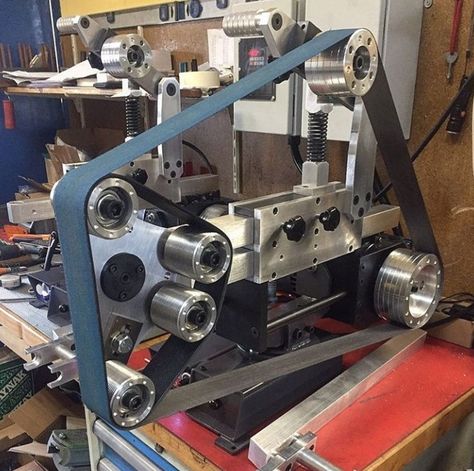
Categories
Machinery

Polishing Lathe Buffing Machine

Polishing Lathe Buffing Machine

Polishing Lathe Buffing Machine: A Polishing and Buffing Combo Machine combines two surface-finishing functions—polishing (removing surface imperfections and achieving a smooth texture) and buffing (enhancing surface gloss and shine)—into a single machine.

Key Components of Polishing and Buffing Machine

  1. Motor – Powers the rotating wheels, typically ranging from 0.5 to 2 HP depending on application.
  2. Polishing Wheel – Often made of abrasive materials like emery or silicon carbide, used for initial surface refinement.
  3. Buffing Wheel – Softer wheels made of cloth, felt, or other flexible materials, used with buffing compounds for shine.
  4. Work Rest/Support – Provides a platform to steady the workpiece.
  5. Speed Control (optional) – Allows for variable RPM to suit different materials and finishing stages.
  6. Dust Collector or Ports (optional) – Helps manage debris and metal dust during operation.

Applications

  • Metalworking: Removing rust, smoothing welds, and bright finishing on stainless steel, brass, aluminum, etc.
  • Woodworking: Polishing lacquered or painted wood surfaces.
  • Jewelry Making: Precision polishing of fine metal items.
  • Automotive: Chrome and aluminum trim restoration.
  • Plastics and Composites: Edge polishing and surface refinishing.

Advantages

  • Space Saving: One unit handles both polishing and buffing.
  • Cost-Effective: Eliminates the need to purchase two separate machines.
  • Increased Productivity: Enables quick change between operations.

A polishing and buffing combo machine is designed to handle both the initial surface smoothing (polishing) and the final high-gloss finishing (buffing) in a single unit. This type of machine typically features two spindles or shafts, each mounted with a different wheel—one abrasive polishing wheel and one softer buffing wheel made of cloth or felt. The machine is powered by an electric motor, often in the range of 0.5 to 2 horsepower, and may operate at fixed or variable speeds depending on the model. Operators use the polishing wheel to remove oxidation, scratches, or casting marks from metal, plastic, or wood surfaces. Once the desired smoothness is achieved, the workpiece is moved to the buffing wheel, often with an applied buffing compound, to bring out a mirror-like finish. These machines are commonly used in metal fabrication, automotive detailing, woodworking, jewelry making, and plastic finishing. Some models are equipped with safety features like spark guards, adjustable tool rests, and dust collection ports to enhance usability and maintain a clean workspace. Combo units are favored for their efficiency, cost-effectiveness, and the convenience of switching between two essential finishing operations without changing equipment.

Many polishing and buffing combo machines are bench-mounted, making them compact and suitable for workshops with limited space. Industrial-grade models may also be floor-mounted for handling larger or heavier workpieces. The choice of wheel materials and compounds plays a crucial role in achieving specific results—coarse abrasives for heavy material removal during polishing, and finer compounds like rouge or tripoli for delicate buffing tasks. Some machines allow quick wheel changes, which adds flexibility when working on different materials such as aluminum, stainless steel, brass, or even acrylics. Consistent maintenance, such as checking wheel wear and ensuring proper alignment, extends the machine’s life and ensures uniform surface finishes. Proper operator training is essential to avoid issues like over-polishing, which can deform soft metals, or under-buffing, which leaves dull surfaces. Overall, these combo machines provide a streamlined, dual-function approach to surface finishing that saves time and improves productivity across a variety of industries.

In practical use, the polishing and buffing combo machine becomes an integral part of any workshop that deals with surface refinement, whether in fabrication, restoration, or decorative finishing. When a raw or semi-finished part is introduced to the machine, it often carries imperfections such as tool marks, scale, oxidation, or general roughness from casting or machining. The first step is polishing—this is not just about aesthetics but also about preparing the surface for coating, plating, or further mechanical processing. The polishing wheel, usually embedded with abrasive particles or paired with an abrasive compound, cuts into the surface lightly to smooth out these defects. Depending on the material being worked on, wheels may vary from hard rubberized abrasives to cloth-based flaps loaded with cutting compounds.

Once the surface is polished to a uniform level of smoothness, the operator transitions to the buffing side of the machine. Buffing is a more delicate, finishing process aimed at producing a high-gloss, mirror-like shine. It uses soft, pliable wheels—often made from cotton, muslin, or felt—and relies on fine buffing compounds, which can range from brown tripoli for pre-polishing to white rouge or green chrome oxide for final finishing. The operator must be skilled in applying the right amount of pressure and compound to avoid burn marks, streaks, or surface inconsistencies. In many industries, this high-quality finish is not just for appearance—it reduces friction, enhances corrosion resistance, and in some cases, meets critical tolerance requirements for high-performance components.

The machine’s design often includes a solid base to minimize vibration, ensuring steady and safe operation. Some higher-end models come with variable speed controls, allowing the user to adjust the RPM to match the specific task. Lower speeds are ideal for buffing delicate materials, while higher speeds can be used during the polishing stage for quicker material removal. Safety considerations are also crucial—spark guards, eye shields, and even integrated vacuum ports for dust and particulate extraction are common in industrial setups. Metal polishing and buffing generate fine particles and heat, so proper ventilation and personal protective equipment (PPE) are essential for long-term use.

What truly sets the polishing and buffing combo machine apart from separate tools is its ability to streamline workflow. In production settings where throughput and finish quality must be balanced, having both functions integrated into a single station allows operators to move seamlessly from surface preparation to final finishing. This not only reduces equipment cost and space requirements but also cuts down on handling time, which in turn improves consistency and productivity. For small workshops, artisans, or businesses that work with metals, plastics, wood, or composite materials, this machine becomes a core asset—capable of delivering professional-grade finishes on everything from industrial parts to custom-crafted jewelry or automotive components.

Polishing and Buffing Combo Machine

Polishing and Buffing Combo Machine is a dual-purpose finishing tool designed to perform both polishing and buffing tasks using a single unit. It is widely used in workshops, manufacturing plants, fabrication facilities, automotive garages, and artisan studios where surface treatment is essential. The machine typically features two opposing spindles mounted on a shared motorized base—one side dedicated to polishing, and the other for buffing. This allows the user to transition quickly between the two processes without changing tools or workstations, significantly increasing efficiency and convenience.

In polishing, the goal is to remove surface imperfections such as scratches, oxidation, or tool marks by using an abrasive wheel or polishing compound. This process is aggressive compared to buffing and is usually the first step in surface preparation. Polishing wheels are typically made from harder materials like sisal, impregnated cloth, or synthetic abrasives. They can be combined with various grits of abrasive paste depending on the material being worked—whether it’s steel, aluminum, brass, plastic, or even wood.

Buffing follows polishing and serves as a finishing process. It’s more refined and aims to produce a high-gloss, reflective surface. Buffing wheels are softer, usually constructed from multiple layers of muslin, cotton, or felt. They’re used with buffing compounds—fine, wax-like substances that smooth and brighten the surface without removing significant material. Popular buffing compounds include white rouge (for light metals), green compound (for stainless steel), and red jeweler’s rouge (for soft, precious metals). Proper buffing not only enhances the visual appeal of a component but also improves surface characteristics such as corrosion resistance and cleanliness.

The motor driving the machine typically ranges from 0.5 HP to 2 HP depending on application requirements. Some models are single-speed, while more advanced machines offer variable speed control, which is crucial when switching between materials that require different surface treatments. High RPMs are ideal for aggressive polishing, while lower speeds are safer and more effective for delicate buffing operations.

Modern combo machines often include safety features such as spark guards, eye shields, and non-slip bases. Dust extraction ports or attachments for vacuum systems may also be present, especially in industrial models, as both polishing and buffing generate fine dust and debris that must be controlled to protect both the operator and nearby equipment. Additionally, adjustable tool rests are usually provided to support the workpiece during operation and reduce operator fatigue during extended use.

From a functional perspective, the polishing and buffing combo machine is a highly efficient solution for anyone needing to process metal, plastic, or wood components to a refined finish. It is valued not just for its space-saving design but for its ability to provide consistent and high-quality results. Industries that benefit from this machine include metal fabrication, automotive restoration, aerospace, woodworking, jewelry production, and even consumer electronics repair. Its versatility makes it one of the most practical finishing machines in any multi-material workshop.

The polishing and buffing combo machine continues to stand out in industrial and artisan settings due to its adaptability, ease of use, and the quality of surface finish it can provide. In a typical workflow, operators appreciate the seamless transition from polishing to buffing without the need to interrupt their process or reposition the workpiece between machines. This uninterrupted workflow not only saves time but also helps maintain uniformity in finish, especially on pieces that require consistent surface characteristics across multiple faces or parts. For example, in automotive restoration, chrome parts like bumpers or trim are often polished to remove pitting or discoloration before being buffed to a mirror-like shine. Similarly, in metal fabrication shops, welders and machinists use combo machines to clean up weld seams or machined surfaces before final finishing, enhancing both appearance and performance of the component.

The machine’s effectiveness depends heavily on the choice of wheel and compound combinations. For instance, a coarse polishing wheel combined with a heavy-cut compound is ideal for removing deep scratches or oxidation on hard metals like stainless steel, while a soft buffing wheel with a fine rouge compound is better suited for bringing out a reflective finish on softer materials such as aluminum or gold. Knowing how to match the right wheel, compound, and speed to the material is essential for achieving professional results. This level of control becomes especially valuable in fields like jewelry making or precision engineering, where surface quality has both aesthetic and functional importance.

Beyond its operational features, the polishing and buffing combo machine also contributes to workplace efficiency by consolidating two essential finishing functions into one compact footprint. This is particularly beneficial in smaller workshops where space and budget may not allow for multiple standalone machines. It reduces setup time, minimizes movement between tools, and simplifies maintenance routines, as the user only has to service one motor and one frame. In terms of durability, most commercial-grade combo machines are built with heavy-duty cast iron or steel housings, sealed bearings, and industrial-grade motors to withstand long hours of continuous use. These rugged designs are crucial in production environments where downtime can be costly.

Operator safety and ergonomics are also important considerations in the design and use of these machines. Since both polishing and buffing produce dust, heat, and sometimes sparks, machines are often equipped with shrouds or guards to contain debris, and many allow connection to external dust collection systems. Proper lighting, workpiece support, and non-slip bases also contribute to safer operation. Users are typically trained to wear protective gear, including safety glasses, gloves, and sometimes respirators, particularly when working with fine powders or toxic materials.

Overall, the polishing and buffing combo machine represents a balance of power, precision, and practicality. Whether used for industrial part finishing, fine metalwork, or decorative surface treatment, it provides a reliable and versatile solution that meets the needs of both high-volume operations and custom fabrication shops. Its dual-functionality not only enhances workflow and finish quality but also offers a smart investment for those seeking long-term value and consistent performance in surface finishing tasks.

In continuous operation, the polishing and buffing combo machine plays a critical role in quality assurance, especially where visual appeal and surface integrity are directly tied to product value. This is particularly evident in industries such as aerospace, medical device manufacturing, and high-end consumer goods, where even minor surface flaws can disqualify a part from being accepted. The machine allows for close control over the finishing process, which is vital in environments that demand tight tolerances and repeatable results. By adjusting variables like wheel hardness, compound abrasiveness, motor speed, and pressure applied, skilled operators can fine-tune the outcome to meet highly specific standards. The versatility of the machine extends further when additional accessories are introduced—such as tapered spindles for quick wheel changes, flexible shaft attachments for precision detailing, or specialized jigs for handling complex geometries and delicate parts.

From an economic standpoint, this machine offers both direct and indirect benefits. Directly, it reduces capital expenditure since a single unit performs two processes. Indirectly, it enhances labor productivity by reducing idle time between stages of surface preparation. A worker using a combo machine can complete more parts per hour compared to setups that require moving between separate stations or waiting for other machines to become available. Furthermore, as this tool becomes a central part of production flow, it can be easily incorporated into lean manufacturing systems or continuous improvement programs. The consistency it delivers allows for more accurate scheduling, fewer reworks, and higher customer satisfaction due to the improved finish quality of the end product.

The machine’s relevance also extends into educational and training environments. In technical schools, vocational programs, and maker spaces, combo machines are often used to teach students the fundamentals of surface finishing. Because they combine two essential techniques, they allow learners to understand the complete process flow—from material preparation to final polish—without needing a suite of equipment. This helps build foundational skills while encouraging safe and efficient work habits. Students can experiment with different materials and finishes, gaining insight into how small adjustments in speed, pressure, or compound can lead to dramatically different results. These lessons are invaluable for future careers in machining, fabrication, restoration, and design.

In artisan and craft settings, particularly among metal sculptors, custom knife makers, or furniture builders, the polishing and buffing combo machine becomes a creative tool as much as a technical one. Here, surface finish is not just about function or standardization—it’s part of the product’s identity. Whether aiming for a soft satin sheen on a wooden edge, a deep reflective polish on a custom blade, or a subtly aged patina on a brass fixture, this machine supports a wide range of artistic expressions. The ability to switch quickly between aggressive material removal and delicate final touches allows artisans to bring their visions to life with both efficiency and craftsmanship.

Over time, the durability of the combo machine pays off. With proper maintenance—such as regular cleaning, lubrication of moving parts, replacement of worn wheels, and occasional motor servicing—it can last for decades, becoming a reliable fixture in the workshop. Many users even customize or upgrade their machines with aftermarket parts like extended shafts, upgraded motors, or precision rests to better suit their specific workflow. This adaptability, combined with its dual-purpose design, cements the polishing and buffing combo machine as an enduring staple in both industrial and creative environments.

Angle Buffing Machine

Buffing Grinder Machine

An Angle Buffing Machine is a specialized power tool designed for polishing and buffing surfaces using a rotating abrasive or soft wheel mounted at a right angle to the motor shaft. Unlike standard bench-top or straight-shaft polishing tools, the angle buffing machine features a compact, angled head that allows operators to work on vertical, contoured, or hard-to-reach surfaces with greater control and flexibility. It’s widely used in automotive detailing, metal fabrication, construction, shipbuilding, and maintenance work where surface refinement must be performed in tight or awkward spaces.

The tool resembles an angle grinder in form and function but is optimized for polishing and buffing rather than cutting or grinding. Most models are handheld and powered either electrically or pneumatically. The head, usually set at 90 degrees to the body, holds a spindle or arbor onto which various buffing pads, wool bonnets, foam discs, or abrasive flap wheels can be attached using quick-change systems or threaded mounts. The rotation of the head combined with the angled configuration allows the user to apply consistent pressure across uneven or vertical surfaces such as car panels, stainless steel tanks, pipes, weld seams, and even interior corners of fabricated structures.

The motor in an angle buffing machine typically operates between 1,000 and 3,000 RPM, and many models offer variable speed control to suit different materials and compounds. Lower speeds are essential when working with heat-sensitive surfaces like plastics or paint, while higher speeds may be used for tougher polishing jobs on metal. The tool is often equipped with ergonomic handles, trigger locks, and soft starts for safety and comfort during prolonged use.

Angle buffing machines can be paired with a variety of buffing compounds depending on the material and desired finish—coarse compounds for initial polishing, and finer rouges for high-gloss buffing. In automotive use, for example, detailers use these machines with foam pads and polishing compounds to remove swirl marks, oxidation, and light scratches from painted surfaces. In marine and industrial environments, they are essential for cleaning and restoring stainless steel, aluminum, or coated surfaces subjected to harsh weather and chemicals.

Their portability and versatility make angle buffing machines ideal for on-site work, touch-ups, or maintenance tasks where bench machines are impractical. With proper training and care, they deliver professional-level finishes and are a key tool for anyone working in surface restoration or finishing.

The angle buffing machine continues to be a crucial tool in both professional and hobbyist settings where precision surface finishing is required in challenging or confined spaces. Its right-angle head configuration makes it especially useful for working on irregular geometries, edges, vertical planes, and interiors of structural components where straight or bench-mounted machines cannot reach effectively. For instance, in automotive refinishing, the angle buffing machine is commonly used on contoured body panels, bumpers, and tight areas around mirrors or trim, providing smooth transitions and high-gloss finishes without risking damage to surrounding parts. The angled design also makes it easier to maintain a steady polishing line across vertical surfaces, which is difficult to achieve with flat tools or orbital polishers.

Because it is a handheld tool, operator skill plays a significant role in the final finish quality. Users must learn to apply consistent pressure and maintain the correct angle and movement pattern to avoid issues such as holograms, swirl marks, or overheating of the surface. Variable speed control is an important feature in this context, as it allows the operator to tailor the machine’s performance to the material and stage of the buffing process. Lower speeds may be used to spread compound evenly or to perform finishing passes, while higher speeds are more appropriate for cutting back oxidation or leveling minor scratches. The use of speed-adjustable machines also minimizes the risk of burning through paint or soft coatings, which is a common concern with fixed-speed tools.

The range of attachments available for angle buffing machines adds to their versatility. Depending on the application, users can switch between wool pads for aggressive compounding, foam pads for fine polishing, or microfiber heads for ultra-fine finishing. In metalwork, users might employ abrasive non-woven discs to clean welds or remove oxidation before switching to cloth buffing wheels for a polished shine. The ability to swap out heads quickly means that a single tool can handle multiple stages of finishing without interruption. This modularity makes it highly efficient for professionals who need to maintain productivity while achieving superior surface quality.

In industrial environments such as shipbuilding, railcar fabrication, or pipeline maintenance, angle buffing machines are used to prepare metal surfaces for coating or inspection. Surfaces like aluminum bulkheads, steel hulls, or stainless steel piping require a specific degree of smoothness and cleanliness to meet technical and safety standards. The portability of the angle buffing machine allows technicians to move easily across large structures and perform work directly on-site, reducing the need for disassembly or transport of heavy components. This mobility is also valuable in maintenance settings, where equipment may need to be refurbished or retouched in place, such as in HVAC systems, tanks, or heavy machinery frames.

In more delicate or artistic applications, like musical instrument restoration or architectural metalwork, the angle buffing machine enables highly controlled work on complex or ornamental surfaces. The operator can carefully maneuver the tool around curves, ridges, or recesses to remove tarnish, smooth seams, or enhance luster without flattening detail or causing damage. Artists, conservators, and custom fabricators often rely on the angle buffing machine for this level of tactile precision, as it bridges the gap between coarse grinding tools and fine hand polishing.

Durability and ergonomics are key to long-term use, especially in professional settings where the tool might run for hours at a time. High-quality angle buffing machines are built with reinforced gear housings, sealed bearings to resist dust and moisture, and insulated motors that can handle continuous duty without overheating. Ergonomic design features such as vibration-dampening handles, compact head profiles, and lightweight body construction contribute to reduced user fatigue and more stable handling. Safety features, including soft-start mechanisms, electronic overload protection, and adjustable guard systems, are becoming standard in modern models, enhancing both usability and operator protection.

Ultimately, the angle buffing machine is not just a convenience but a necessity for any work environment that demands consistent, high-quality finishes in complex or confined spaces. Its combination of power, portability, and precision makes it a go-to solution across industries—from car detailing and metalworking to marine maintenance and fine craftsmanship. With proper technique, maintenance, and selection of accessories, it delivers professional-level results that rival more stationary equipment, while offering unmatched flexibility and control. Would you like recommendations on specific models or guidance for selecting pads and compounds for a certain type of material or finish?

As the demand for surface perfection continues to rise across industries, the angle buffing machine is becoming increasingly refined in terms of technology, materials, and performance features. Manufacturers now offer machines with digital speed displays, programmable settings, and intelligent load sensors that adjust torque output based on the resistance encountered during use. These features enhance both the precision and safety of the tool, especially in environments where surface finish standards are tightly regulated, such as aerospace or medical manufacturing. Digital control also allows more consistent performance over extended polishing sessions, reducing the variability that can occur due to operator fatigue or changing surface conditions.

Cordless versions of angle buffing machines have also emerged, thanks to advancements in lithium-ion battery technology. These portable units give users full freedom of movement without sacrificing much in terms of power or run time. In field maintenance, such as on wind turbines, large vehicles, or outdoor pipelines, this mobility can be crucial. While corded machines still dominate in terms of continuous heavy-duty use, cordless versions are gaining ground rapidly, especially in situations where convenience, accessibility, or safety (e.g., avoiding tripping hazards) are primary concerns.

The environmental and workplace health aspects of buffing and polishing are also gaining attention. Angle buffing machines often operate in environments where dust, metal particles, or compound residue are released into the air. These fine particulates pose both respiratory and cleanliness challenges. As a result, many industrial users now integrate dust shrouds, attach vacuum hoses, or work within ventilated booths. Proper personal protective equipment—including respirators, eye protection, gloves, and hearing protection—becomes essential, especially during extended use. Additionally, the compounds used with these machines have evolved to include water-based or low-residue formulas that are safer for the operator and easier to clean from the finished surface.

From a training perspective, the angle buffing machine is relatively easy to learn, but mastering it takes time. Novices often start with practice panels or scrap pieces to develop a feel for the right pressure and motion. Over time, skilled users learn to “read” the sound, vibration, and visual cues from the tool and the workpiece, adjusting their technique instinctively. For companies training multiple employees, this consistency in results becomes critical to maintaining product quality. Some manufacturers now offer training programs, demo units, and even simulator-based systems to accelerate the learning curve and improve safety.

Repair and maintenance of angle buffing machines are generally straightforward. Most models are designed with accessible brush housings, gearboxes, and motor components, making it possible to replace worn parts like carbon brushes, bearings, or power cords without sending the unit out for service. Keeping the machine clean—especially the spindle and venting system—is essential to maintaining its lifespan. If the machine becomes unbalanced due to uneven pad wear or misalignment, it can cause excessive vibration and reduced control, so regular inspection is a good practice. For industrial users, establishing a preventative maintenance routine helps ensure uptime and extends the life of both the machine and consumables.

In terms of innovation, some angle buffing machines are now incorporating orbital motion in addition to rotary action, blending the benefits of rotary and dual-action polishers. This hybrid movement reduces the risk of heat buildup and surface swirl, making the tool more forgiving for users and safer for delicate finishes like clear coats or polished plastics. These tools are especially popular in detailing and finishing work where surface perfection is critical but the risk of overworking an area must be minimized. They represent a natural evolution of the traditional angle buffing machine, pushing the limits of what’s possible with a handheld surface finishing tool.

The longevity and relevance of the angle buffing machine ultimately stem from its ability to adapt to new materials, new processes, and evolving user needs. Whether in the hands of a seasoned professional restoring a classic car, a technician polishing a turbine blade, or an artist finishing a hand-crafted sculpture, this tool continues to offer a blend of control, power, and versatility that few others can match. It remains a bridge between raw fabrication and final presentation, turning unfinished surfaces into polished, functional, and often beautiful results. Would you like to go into detail about compound selection for specific finishes or how to adapt the machine for curved or textured surfaces?

Polishing Cabinet Buffing Machine

Mirror Finish Polishing

Polishing Cabinet Buffing Machine is a specialized equipment designed to facilitate safe, controlled, and efficient polishing and buffing operations within an enclosed space. These machines typically consist of a cabinet or booth where the polishing and buffing processes take place, often equipped with one or more buffing wheels, abrasive pads, or brushes, a motor, and integrated systems for dust collection. They are commonly used in industries that require precise surface finishing of small to medium-sized components, such as jewelry manufacturing, electronics, metalworking, and automotive detailing. The primary advantage of a polishing cabinet buffing machine lies in its enclosed design, which helps contain debris, reduces exposure to hazardous materials, and minimizes environmental contamination.

The cabinet typically features transparent viewing panels made from durable acrylic or tempered glass, allowing the operator to monitor the workpiece while maintaining a safe distance from the moving parts. The interior of the cabinet is equipped with buffing wheels or abrasive pads mounted on motor-driven spindles, which rotate at varying speeds depending on the model. These spindles can accommodate different sizes and types of buffing wheels, ranging from coarse to fine materials such as wool, cotton, or felt, which are ideal for different stages of the polishing process. In many cases, the user can switch between polishing and buffing wheels to progressively refine the surface finish, from initial material removal to high-gloss final polish.

A key feature of the polishing cabinet buffing machine is its integrated dust and fume extraction system. Polishing and buffing generate fine dust and debris, particularly when working with metals like aluminum or stainless steel, or with certain composites. These particles can pose health risks when inhaled or cause a mess in the workplace. To mitigate this, polishing cabinet machines are equipped with powerful suction fans or vacuum systems that remove airborne particles from the cabinet, funneling them into filters or external collection bins. This feature is essential for maintaining a clean, safe working environment, especially in compliance with workplace health and safety standards.

These machines are typically designed for ease of use, with access doors or glove ports allowing the operator to insert their hands into the cabinet without opening it, thus maintaining a sealed environment. Glove ports enable precise control over the workpiece, and the compact design of the machine helps in controlling the work area’s lighting and dust levels. The interior often includes adjustable shelves or tool supports, providing convenience for setting the workpiece at the ideal height and angle for the operator.

The buffing cabinet is typically made of sturdy metal, such as steel or aluminum, to provide durability and stability during operation. Some higher-end models also include advanced features like built-in lighting, vibration-dampening components, and optional accessories such as polishing compounds or sprays, which can be applied directly to the workpiece while it is being buffed. These compounds can further enhance the polishing process, especially when working with materials that require a high-gloss finish, such as precious metals, glass, or acrylics.

The polishing cabinet buffing machine is especially valuable in high-precision fields where surface finish quality is critical. In jewelry manufacturing, for example, these machines allow for a meticulous, controlled polishing process that produces a flawless shine on rings, necklaces, bracelets, and other pieces without damaging the delicate details. In automotive applications, such as buffing chrome trim or headlight lenses, the cabinet helps achieve an even, smooth finish that enhances the appearance of the part while also providing a layer of protection against oxidation.

Overall, a polishing cabinet buffing machine provides a controlled, efficient, and safe solution for precision polishing and buffing tasks. The enclosed design ensures both safety and cleanliness, while the versatility in buffing wheel and compound options allows the user to adapt the machine for different materials and finishes. Its application spans a wide range of industries, making it an essential tool for professionals seeking high-quality surface finishes in a secure, effective manner.

The polishing cabinet buffing machine remains an essential tool in environments where precise, high-quality finishes are required. Its enclosed nature offers distinct advantages, not only for the operator’s safety but also for maintaining consistency and cleanliness in the workspace. The ability to control the working environment inside the cabinet makes it easier to handle intricate parts and delicate materials without worrying about contaminants or exposure to harmful polishing compounds and dust. This makes it particularly beneficial in fields like jewelry design and restoration, where intricate detailing and high-shine finishes are a hallmark of quality. The dust and debris removal system ensures that any fine particles produced during the process are efficiently extracted, improving air quality and reducing the risk of cross-contamination or scratches on the workpiece. The machine’s ability to maintain a stable, clean environment also extends the life of polishing wheels and reduces the need for frequent tool changes, as the buildup of abrasive material is minimized.

Another key aspect of these machines is the ability to easily adjust the polishing parameters. Many models come with variable-speed motors, allowing users to tailor the speed of the buffing wheels to suit the material being worked on. Softer materials, like aluminum or plastics, require slower speeds to avoid overheating or gouging, while harder metals like stainless steel might benefit from faster rotation to remove oxidation or achieve a mirror-like finish. These adjustments allow for greater control over the polishing process, ensuring that the finish meets the required standards without risking damage to the workpiece. The variety of polishing pads and wheels that can be used in these machines also makes them versatile, catering to different stages of the polishing process, from coarse grinding to fine polishing and buffing.

The compact and efficient nature of the polishing cabinet buffing machine also makes it ideal for shops or operations with limited space. Instead of needing multiple stations for different polishing tasks, a single polishing cabinet can handle a variety of materials and finishes, making it both a space-saver and a cost-effective solution. Operators can easily switch between tasks without needing to move the workpiece to different machines or setups. This efficiency is particularly valuable in high-volume production environments, where time and workflow are critical.

In addition to its functionality, the ergonomic design of the cabinet makes it easier for operators to perform long hours of buffing and polishing without experiencing undue strain. The ability to perform tasks through glove ports or from an upright position, with the workpiece secured at an optimal height, minimizes operator fatigue and increases overall comfort. This is an important consideration for environments where the operator’s well-being is a priority, such as in workshops with heavy or continuous polishing work.

From a safety perspective, the polishing cabinet buffing machine reduces the risk of accidents that can occur when using traditional open-bench polishing tools. With the operator enclosed within the cabinet, the likelihood of contact with moving parts is minimized. Additionally, the design often includes built-in safety features such as automatic shutoff mechanisms in case of overloads or unexpected malfunctions.

With regular maintenance, a polishing cabinet buffing machine can provide years of reliable service. Routine tasks like cleaning dust filters, inspecting buffing wheels for wear, and ensuring proper lubrication of moving parts keep the machine running smoothly. Many models also allow for easy replacement of worn-out components, such as brushes or wheels, helping to keep downtime to a minimum. This focus on durability and longevity is a significant benefit for businesses that rely on these machines for high-quality finishes on a daily basis.

In terms of application, polishing cabinet buffing machines are not limited to just one sector. Whether it’s polishing automotive parts, fine metal products, glassware, or even medical devices, these machines can adapt to a variety of materials and finishes. The precision offered by the enclosed, controlled environment allows for fine adjustments to the polishing process, ensuring that every part that leaves the machine meets the high standards required by the industry.

As industries continue to prioritize safety, efficiency, and quality, the polishing cabinet buffing machine remains a cornerstone tool for achieving professional finishes. Its ability to handle multiple polishing and buffing tasks while ensuring a safe, clean, and ergonomic workspace makes it a valuable asset in both small workshops and large-scale production facilities. Would you like more insights into choosing the right cabinet buffing machine for specific tasks or comparing models with unique features?

The versatility of polishing cabinet buffing machines extends to various industries, each benefiting from the machine’s ability to handle complex finishing tasks with precision and control. In industries such as aerospace, automotive manufacturing, and metalworking, where component appearance, durability, and surface integrity are paramount, polishing cabinet machines provide consistent, high-quality results. For example, in aerospace, precision-polished metal parts must meet stringent quality standards for both aesthetic and functional reasons, such as ensuring resistance to corrosion or minimizing drag. Polishing cabinet buffing machines allow technicians to fine-tune their processes to meet these exacting specifications, ensuring that even the smallest components, such as turbine blades or fuel fittings, are polished to perfection.

In automotive production, these machines are invaluable for detailing car parts, especially chrome and metal trim, which often require an immaculate finish to meet customer expectations and industry standards. The ability to maintain a controlled environment while polishing intricate surfaces, like grills, rims, or emblems, allows for a high-gloss finish without the risk of contamination from dust or compound residues. Polishing cabinet buffing machines help achieve the signature gleam that’s so important in vehicle aesthetics, from luxury cars to motorcycles.

In the field of medical devices, the quality of the finish on surgical instruments, implants, and prosthetics is crucial not only for the appearance but also for hygiene and functionality. Polishing cabinet buffing machines ensure that these parts are free from imperfections that could harbor bacteria or cause mechanical failure. For example, the smooth, polished finish on stainless steel surgical tools is not just about looks; it’s also essential for reducing the risk of infection and facilitating easier cleaning and sterilization. The precision of these machines makes them ideal for achieving such results.

Another major benefit of polishing cabinet buffing machines is their ability to handle delicate or highly specialized materials, such as gemstones, ceramics, and glass. In industries like jewelry design or glass manufacturing, where the material is often fragile or prone to scratching, the controlled environment inside a polishing cabinet helps prevent unintended damage. The ability to apply a controlled, even buffing action to such materials is essential for creating stunning finishes without compromising their integrity. In jewelry making, for instance, polishing cabinets are used to bring out the brilliance in metals like gold, platinum, and silver, as well as to perfect the clarity and shine of diamonds or other gemstones.

The adoption of polishing cabinet buffing machines in small-scale and artisan settings is also on the rise. Artists and small manufacturers who focus on custom or high-end products often rely on these machines for their precise control and ability to produce professional-grade finishes. Whether creating custom furniture, restoring antiques, or designing bespoke jewelry, the cabinet buffing machine offers a way to ensure consistent, high-quality results. It’s particularly useful in small shops where a single machine can handle multiple materials and finishes, providing versatility without requiring an array of separate machines.

As technology advances, polishing cabinet buffing machines are becoming more integrated with digital systems that allow for greater automation and efficiency. Some high-end models are now equipped with programmable controls, allowing users to input specific parameters such as speed, pressure, and compound type, creating a more automated process that can be repeated consistently. This reduces the potential for human error and ensures that each workpiece receives the exact same level of attention, making the polishing process both more reliable and efficient. This shift towards automation is especially beneficial in high-volume production settings, where consistency is crucial and reducing manual labor can lead to significant time and cost savings.

The environmental impact of polishing operations is another important consideration, and polishing cabinet buffing machines are increasingly designed with eco-friendly features. Many modern models incorporate filtration systems that reduce the amount of waste and pollutants released into the environment. For instance, some units use water-based or biodegradable compounds instead of traditional petrochemical-based polishing pastes, reducing the environmental footprint of the polishing process. Additionally, advancements in energy efficiency are helping to minimize power consumption, making these machines more sustainable for long-term use.

For businesses looking to optimize their operations, integrating polishing cabinet buffing machines with existing workflows is relatively straightforward. These machines can often be incorporated into automated production lines, where multiple parts need to be polished in a consistent and repeatable manner. The compact, enclosed design of the polishing cabinet makes it easy to fit into tight spaces or alongside other finishing equipment. Integration with dust extraction and filtration systems ensures that the entire polishing process remains clean and compliant with workplace health and safety regulations.

In terms of future trends, polishing cabinet buffing machines will continue to evolve, incorporating even more advanced technology such as touch-screen interfaces, real-time monitoring systems, and the ability to work with an even broader range of materials. These machines will continue to support industries that require precision and high-quality finishing, all while enhancing the overall safety, ergonomics, and environmental sustainability of the polishing process.

Whether for industrial, commercial, or artisanal use, polishing cabinet buffing machines represent a perfect balance of safety, efficiency, and high-performance. They provide a secure and controlled environment for achieving flawless finishes, protecting both the operator and the environment. With the right model, maintenance practices, and polishing compounds, businesses can ensure that they achieve the best possible surface finishes on a variety of materials, from metals to plastics and ceramics.

Would you like to explore more about specific polishing compounds or materials suitable for these machines, or perhaps recommendations on optimizing a polishing cabinet for your particular needs?

Industrial Buffing Machine

Dual-Station Polishing Machine

An industrial buffing machine is a high-powered tool used in commercial and industrial settings for polishing and finishing surfaces of various materials, such as metal, wood, plastic, and stone. These machines are designed to perform heavy-duty buffing tasks that require consistent, high-quality results across large quantities of parts or products. Industrial buffing machines are essential in sectors such as metalworking, automotive manufacturing, aerospace, and woodworking, where surface finishing is a critical step in ensuring the quality and appearance of the final product.

Industrial buffing machines come in a wide variety of configurations, from standalone bench-mounted models to larger, more complex systems that integrate multiple stages of polishing or are part of automated production lines. The main components typically include buffing wheels or pads, a powerful motor that drives the rotation of these wheels, and often an adjustable stand or frame to hold the workpiece at the correct angle for polishing. Many models are also equipped with speed controls, allowing operators to adjust the machine’s rotation speed based on the material being worked on and the stage of the buffing process.

The design of industrial buffing machines varies depending on the specific requirements of the task. For example, machines used for polishing large metal parts might feature larger buffing wheels, while those for finer detailing or finishing work might use smaller, more precise wheels. Some models are designed for specific applications, such as polishing automotive parts like chrome trim or buffing metal molds used in manufacturing, while others are more versatile and can handle a range of materials and finishes.

One of the key features of an industrial buffing machine is its motor, which is typically much more powerful than that found in smaller, consumer-grade polishers. These motors can be variable-speed to allow greater control over the polishing process. High RPMs (revolutions per minute) are ideal for quickly removing material or for aggressive polishing, while lower RPMs allow for finer finishing and a smoother, more reflective finish. For example, in metalworking, high speeds are used to cut back oxidation or remove rust, while slower speeds are ideal for fine polishing or creating a mirror-like finish.

Buffing wheels or pads are the heart of the industrial buffing process. These wheels come in a variety of materials such as cotton, felt, wool, and synthetic fibers, and are often treated with polishing compounds or abrasives to enhance their performance. For heavy-duty work, a stiff wheel might be used to remove oxidation or scratches, while softer, more delicate wheels are employed for final finishing. In some cases, the type of buffing compound used will depend on the material being polished. For example, a metal polish or abrasive compound might be used for polishing steel, while a gentler compound might be employed for polishing plastics or softer metals like aluminum or brass.

Industrial buffing machines also tend to feature built-in dust collection systems to manage the debris created during the buffing process. These systems help maintain a cleaner workspace and improve air quality by collecting the dust, metal filings, and polishing compound particles that are generated. This is particularly important in industries where worker health and cleanliness are a priority. In addition, the dust collection systems can improve the longevity of the buffing wheels and other components, as excessive dust buildup can lead to overheating or clogging of parts.

In larger-scale industrial operations, buffing machines may be integrated into automated production lines. These systems allow for consistent and repeatable polishing of high volumes of parts. In these setups, the buffing machine may be programmed to work with robotic arms or conveyors that feed parts into the polishing station, minimizing the need for manual handling and significantly improving efficiency. Such systems can be customized for specific products, enabling companies to meet high throughput requirements without sacrificing quality.

Safety is a major consideration with industrial buffing machines due to their high-speed rotation and potential hazards associated with polishing compounds and airborne debris. Machines are often equipped with safety guards or covers to prevent accidental contact with the buffing wheels. Operators are usually required to wear personal protective equipment (PPE), such as safety goggles, gloves, ear protection, and respiratory masks, especially in environments where fine dust or fumes may be present. Many machines also have emergency stop features and automatic shut-off mechanisms in case of overloads or malfunctions.

In terms of maintenance, industrial buffing machines require regular care to ensure that they continue to operate efficiently and effectively. This includes checking the motor and electrical components for wear, ensuring the buffing wheels are properly balanced, and cleaning or replacing the dust collection filters. Buffing wheels should be inspected for damage or wear, as a worn-out wheel can lead to uneven polishing or potential damage to the workpiece.

Given their durability, power, and ability to handle large-scale tasks, industrial buffing machines are a fundamental tool in many sectors. They ensure that products are finished to a high standard, improving both their appearance and functionality. In industries such as automotive, aerospace, metalworking, and manufacturing, these machines are vital for achieving the precision and surface finishes required for both aesthetic and practical purposes

Industrial buffing machines are designed to tackle demanding polishing tasks that require both power and precision. They are ideal for finishing large quantities of parts or high-volume production environments, where consistency and quality are essential. These machines can be used on a variety of materials, including metals, plastics, ceramics, glass, and composites, making them highly versatile in industries ranging from automotive and aerospace to metalworking, electronics, and manufacturing. The ability to perform both heavy-duty polishing and fine detailing allows these machines to meet the needs of a wide array of applications, such as restoring the shine to automotive parts, polishing turbine blades, buffing metal fixtures, or refining jewelry components.

What sets industrial buffing machines apart from consumer-grade tools is their robustness and ability to handle continuous operation without compromising on performance. High-speed motors, ranging from 1 horsepower (HP) to upwards of 10 HP or more, provide the necessary power for large-scale polishing tasks. This ensures that operators can maintain optimal production speeds while achieving a high-quality surface finish on parts of various sizes and shapes. In some cases, the motor’s power is supplemented by advanced speed control systems, allowing operators to dial in the perfect RPM for each task.

A key component of an industrial buffing machine is its buffing wheel, which can be tailored to specific applications based on the type of material and the level of finish required. Buffing wheels are available in different materials, such as cotton, wool, felt, or synthetic fibers, and they can be impregnated with various polishing compounds to enhance their cutting or finishing ability. For example, a wool wheel might be used for aggressive polishing tasks that involve removing oxidation or rust from metal parts, while a cotton wheel might be used for finer finishing or creating a mirror-like finish on softer metals or plastics.

Many industrial buffing machines come equipped with additional features such as oscillating or dual-action buffing motions. These motions are designed to reduce the risk of swirl marks or uneven finishes, especially when working with delicate or highly reflective surfaces. The oscillating motion helps to distribute the polishing compound more evenly and ensures that the surface being worked on receives consistent attention, which is especially important in industries that require a flawless finish, such as the luxury automotive or jewelry sectors.

Dust extraction and fume control systems are integral to industrial buffing machines, especially in environments where harmful particles or fumes might be released during the buffing process. These systems help capture and remove the fine dust, metal shavings, or polishing compound residues generated, which could otherwise contaminate the work area or pose a health risk to operators. Many machines feature integrated vacuum ports or separate dust collection units that help keep the workspace clean and safe. These systems are particularly important in industrial settings where maintaining air quality is essential for compliance with safety regulations.

Given the heavy-duty nature of these machines, maintenance is crucial to ensure their long-term reliability and performance. Regular inspection and replacement of buffing wheels, motor brushes, and polishing compounds are necessary to keep the machine running smoothly. Additionally, ensuring that the dust collection system is functioning properly, and that no debris or particles are clogging the system, helps prevent overheating and ensures efficient operation.

The integration of industrial buffing machines into production lines can further optimize efficiency in large-scale manufacturing environments. These machines can be automated to feed parts through buffing stations via conveyor belts or robotic arms, reducing manual labor and increasing throughput. In automated setups, buffing machines can be programmed to execute precise polishing sequences, ensuring consistency across large batches of parts. This level of automation not only speeds up production but also enhances product quality by reducing the risk of human error during the polishing process.

As industries continue to prioritize automation, sustainability, and efficiency, industrial buffing machines are also evolving to meet these needs. Many modern machines are designed to be energy-efficient, reducing power consumption and operational costs. Furthermore, advancements in buffing compounds, such as the development of water-based or eco-friendly formulas, help minimize the environmental impact of polishing tasks.

In conclusion, industrial buffing machines are indispensable in industries where high-quality, consistent surface finishes are a must. They are powerful, versatile, and designed for continuous operation, making them an essential part of many manufacturing and finishing processes. With the right maintenance, proper use of buffing compounds, and regular inspection, these machines can deliver exceptional results for a wide range of applications, from metal polishing to automotive detailing and beyond. Whether used in high-volume production environments or for specialized tasks, industrial buffing machines ensure that every part is finished to the highest standards. Would you like to explore specific manufacturers or features of these machines?

The industrial buffing machine’s ability to deliver consistent results in high-demand environments is one of the key reasons it remains indispensable across various sectors. As industries continue to evolve and the need for precision and efficiency grows, the role of buffing machines will likely expand, with advanced technologies integrating seamlessly into automated processes. One area of development is the incorporation of smart technology and sensors into buffing machines. These features can monitor the condition of the buffing wheels, track the pressure applied to the surface, or even detect anomalies in the polishing process. Real-time feedback allows operators to adjust settings or perform maintenance before issues arise, improving uptime and reducing the risk of defects in the final product.

For example, certain modern industrial buffing machines are now equipped with vibration sensors or load monitoring capabilities that can detect when a buffing wheel is out of balance or when the motor is under strain. This early detection can help prevent damage to the machine and the workpieces, ensuring that any issues are addressed before they result in costly downtime or quality control problems. Such advancements in machine diagnostics not only improve the efficiency of polishing operations but also help with predictive maintenance, which can be crucial for operations with high output demands.

Moreover, the flexibility of industrial buffing machines in accommodating a range of materials continues to make them invaluable. From polishing steel and aluminum to working on more delicate materials like plastics, ceramics, or glass, these machines can be tailored with various buffing compounds, pads, and wheels designed to suit the specific requirements of each material. This adaptability allows businesses to handle a wide array of products, from heavy machinery parts to intricate jewelry pieces, all while maintaining the high standards of finish that are expected in industries like automotive, aerospace, medical device manufacturing, and even art restoration.

With advancements in automation, the integration of buffing machines into larger manufacturing lines becomes increasingly seamless. Automated systems allow for continuous, high-speed polishing of parts, reducing manual labor and increasing throughput. This integration often includes conveyor belts or robotic arms that move parts into position for polishing, and some machines can even be programmed to apply specific pressure and speed settings to different parts of the product, ensuring a customized finish for each piece. Such systems are essential for industries like automotive manufacturing, where large quantities of parts need to be polished to the same high standard, or in industries where precision is paramount, such as the aerospace sector.

Environmental concerns and sustainability continue to be important factors in industrial manufacturing, and the development of more eco-friendly buffing systems is becoming increasingly relevant. For instance, using biodegradable or water-based polishing compounds helps reduce the environmental impact of the buffing process. Additionally, dust extraction and air filtration systems are being improved to capture even finer particles, further minimizing environmental exposure to harmful chemicals or metal dust. Some companies are also developing machines that use less energy and produce less noise, addressing both environmental and workplace safety concerns.

Another factor that makes industrial buffing machines essential is their role in quality control. In industries like metalworking, where the aesthetics and functionality of the parts are critical, the buffing process plays a key role in eliminating imperfections such as scratches, rust, or oxidation. Buffing ensures that the finished products have a smooth, even surface, free from defects that could compromise their performance or appearance. High-quality surface finishes can also improve the durability and longevity of products, particularly in industries that require resistance to corrosion or wear, such as the marine or oil and gas sectors.

In woodworking, where polishing and buffing are often done to enhance the natural appearance of the wood and provide a protective finish, industrial buffing machines play an essential role in producing furniture, cabinetry, or decorative items. The buffing process ensures that the wood surfaces are smooth and polished, free from marks or imperfections, and properly sealed. Similarly, in the electronics industry, where components need to have smooth, contaminant-free surfaces for optimal performance, buffing machines are used to polish parts like circuit boards, casings, and connectors, ensuring they meet industry standards for both function and appearance.

As industries move towards more precision-driven and technology-enhanced manufacturing, the role of industrial buffing machines will likely become even more integral. Machines with integrated software and advanced control systems could further reduce human error and improve efficiency, allowing for more complex and intricate finishes. In addition, the incorporation of artificial intelligence and machine learning could help optimize polishing processes by learning from past operations and adjusting settings automatically for the best results.

In summary, industrial buffing machines are continually evolving to meet the increasing demands for precision, efficiency, and sustainability. These machines are critical in industries where surface finish plays an important role in both aesthetics and functionality. From high-volume production settings to specialized craftsmanship, industrial buffing machines ensure that products meet the highest standards of quality and finish. As technology advances, these machines will only become more sophisticated, offering even more benefits in terms of automation, customization, and eco-friendliness. Would you like further details on any specific models or recommendations based on particular industrial needs?

Dust Collection Buffing Machine

Automatic Load/Unload Polishing Machine

dust collection buffing machine is a specialized tool designed for polishing and buffing tasks that includes an integrated dust extraction system to capture the debris generated during the buffing process. These machines are widely used in industrial settings, particularly in woodworking, metalworking, automotive manufacturing, and other industries where the polishing process can produce a significant amount of dust, shavings, or particulate matter.

The primary function of a dust collection buffing machine is to ensure a cleaner, safer work environment by capturing and removing harmful dust, polishing compounds, and metal shavings as they are created. This is especially important in environments where dust particles can pose health hazards to workers, create safety risks (e.g., explosions from flammable dust), or interfere with the quality of the finished product.

In a typical dust collection buffing machine setup, the machine is equipped with a high-efficiency dust collection system that either integrates directly with the buffing tool or operates as a standalone component. The dust extraction system usually consists of several key elements:

  1. Dust Hood or Shroud: A collection hood or shroud is positioned around the buffing wheel to capture the dust and particles generated during the polishing process. These hoods are strategically designed to enclose the work area around the wheel, minimizing the release of dust into the surrounding workspace.
  2. Vacuum System: The dust captured by the hood is then directed through a vacuum system. This system can be built into the buffing machine itself or connected to an external dust collector via flexible hoses. The vacuum system pulls the dust from the work area and transports it to a filtration unit, where it is safely contained.
  3. Filtration System: After the dust and debris are sucked into the vacuum system, they are passed through a filtration unit. Depending on the machine’s design, this filtration unit can include multi-stage filters to remove even fine particles. Common filter types include HEPA filters (high-efficiency particulate air filters), carbon filters for capturing fumes, or cyclone separators that remove larger debris before the air enters finer filters.
  4. Dust Collector or Hopper: The cleaned air is released back into the room, and the dust and debris are collected in a dust collector or hopper. The hopper or dust bin needs to be emptied regularly to prevent it from becoming clogged, and it may be equipped with a system to alert operators when it’s full.
  5. Workpiece Area or Booth: In some machines, especially those used in high-precision or sensitive applications, the dust collection system is integrated into an enclosed booth or workpiece area. This setup isolates the polishing process from the surrounding environment, providing an even cleaner working atmosphere and better control over the dust.

The inclusion of a dust collection system in a buffing machine offers several benefits:

  • Improved Air Quality: By removing harmful dust particles from the air, these machines help maintain a healthier work environment. In industries like woodworking, metalworking, and automotive, where the polishing process can release fine particulate matter, keeping the air clean is crucial for protecting workers’ respiratory health.
  • Enhanced Workplace Safety: Dust accumulation can create fire hazards, particularly when flammable polishing compounds or metals are involved. A dust collection buffing machine minimizes this risk by preventing the buildup of dust, which can otherwise become a source of ignition.
  • Better Product Quality: Dust and debris in the environment can contaminate the polishing process and lead to imperfections in the finished surface. A dust collection system helps prevent these contaminants from interfering with the finish, ensuring that parts and products are polished to a high standard without the risk of dust marks or scratches.
  • Cleaner Workspace: A cleaner work environment not only improves health and safety but also boosts productivity. Operators can work in a more organized and less cluttered environment, which reduces the time spent cleaning up after each task and keeps the workspace more efficient.
  • Compliance with Regulations: In many industries, dust collection is not just a best practice; it’s often a legal requirement. For example, in the woodworking industry, dust is considered a significant health hazard, and businesses must comply with OSHA (Occupational Safety and Health Administration) standards or similar regulations. Using a dust collection buffing machine ensures compliance with these regulations and minimizes the risk of penalties.

In industries like metalworking and automotive production, buffing machines with integrated dust collection systems help to keep surfaces free of contaminants that could affect the quality of polished parts. In metalworking, buffing processes often involve the use of abrasives, which can create fine metal dust. This dust, if not controlled, can result in contamination or affect the surface quality of the finished product. Similarly, in automotive production, using a dust collection system ensures that polishing compounds and fine particles are safely contained, preventing damage to delicate components like mirrors, trim, and bodywork.

In woodworking, dust collection is crucial because the fine dust from sanding, buffing, and polishing wooden surfaces can contain wood fibers that are harmful when inhaled. A dust collection buffing machine helps mitigate the health risks associated with these fine particulates, ensuring that the workspace remains clean and the air quality is improved.

Moreover, the integration of eco-friendly features into modern dust collection systems is becoming more prevalent. Newer systems are designed to be more energy-efficient, reducing the overall environmental impact of polishing operations. This can include optimized vacuum motors that consume less electricity or using sustainable materials for filters that are both effective and biodegradable.

The incorporation of smart technology into dust collection buffing machines is also on the rise. Some machines now feature real-time monitoring and diagnostics, where sensors can detect the level of dust buildup in the filtration system, alerting operators when maintenance is needed or when the filters need to be changed. This ensures that the dust collection system operates at peak efficiency, reducing the chances of downtime and maintaining the cleanliness of the work environment.

In conclusion, a dust collection buffing machine offers a comprehensive solution for industries that require high-quality surface finishes while ensuring that the work environment remains safe, clean, and efficient. The integration of powerful vacuum systems, efficient filtration, and dust collection technologies not only helps protect workers’ health but also ensures the smooth and flawless results that are expected in precision industries. Would you like more details on specific models or features of dust collection systems for buffing machines?

Dust collection buffing machines are a critical advancement in industrial polishing, combining the functions of polishing and dust management into a single, cohesive system. These machines are engineered to perform high-quality buffing while effectively capturing the dust and debris generated during the process, which is essential for maintaining both the quality of the finished product and the safety of the workspace. In industries where dust and particulate matter can negatively impact both product quality and worker health, having an integrated dust collection system helps to address these concerns while boosting operational efficiency.

The dust collection system works by drawing in the airborne particles that are created as the buffing wheel makes contact with the workpiece. This debris can range from polishing compounds to metal shavings, wood dust, or plastic particles, depending on the material being worked on. Without a dust collection system, these particles can scatter into the air and the surrounding environment, potentially contaminating the work area, affecting air quality, and increasing the risk of fire or health issues. In industries like woodworking, metalworking, and automotive, these particles are not only an inconvenience but also a serious safety hazard.

A properly designed dust collection system in a buffing machine includes a powerful suction system that pulls in dust from the immediate work area. This is often achieved by using a combination of collection hoods or shrouds that surround the buffing wheels and vacuum suction hoses that connect to a central dust collector. The dust is pulled through the system, where it passes through various filters designed to trap fine particles, ensuring that only clean air is returned to the workspace. In addition to improving air quality, this system reduces the need for manual cleaning, making the workspace less cluttered and more productive. Moreover, the collection of dust is especially important in environments with high-speed buffing operations, where large amounts of dust are generated quickly.

These machines are also crucial for maintaining the quality of the finish on the workpieces. When dust and other debris are allowed to remain in the environment, they can settle back onto the workpieces and cause imperfections in the final polished surface. Even small particles can lead to scratches, streaks, or uneven finishes. By collecting dust at the source, a dust collection buffing machine helps to preserve the integrity of the surface finish, ensuring that parts remain free from contaminants. This is particularly important in industries such as automotive manufacturing, where high-quality finishes are essential for both aesthetic appeal and functional performance.

Beyond improving air quality and product finishes, dust collection systems in buffing machines also play a significant role in ensuring workplace safety. In industries like woodworking, where wood dust is produced, the dust can be highly combustible, posing a fire risk. Similarly, metal dust, especially from materials like aluminum or steel, can present an explosion hazard if not properly controlled. A dust collection buffing machine helps mitigate these risks by capturing potentially hazardous dust and preventing it from accumulating in the workspace. In doing so, it also helps businesses comply with safety regulations and health standards, which may require the installation of dust extraction systems in certain industries to prevent harmful exposure.

Maintenance of dust collection buffing machines is an essential aspect of keeping them functioning efficiently. Over time, dust can build up in the system, especially in the filters and collection hoppers, so routine cleaning and maintenance are required to keep the system running at peak performance. Regularly checking and replacing filters, ensuring that the vacuum system is not clogged, and keeping the buffing wheels in good condition are all part of maintaining the machine and ensuring optimal dust collection. Many modern dust collection systems are equipped with sensors and monitoring systems that notify operators when the system is nearing full capacity or when the filters need to be replaced, making maintenance easier and reducing downtime.

Another advantage of these machines is their ability to help businesses reduce their environmental footprint. By capturing and containing dust, companies can reduce the amount of airborne particulate matter that is released into the environment. This is particularly relevant in industries where regulations surrounding air quality are stringent, such as woodworking or metalworking. Dust collection buffing machines contribute to a cleaner and more sustainable manufacturing process by preventing the release of harmful pollutants and minimizing waste.

The design and technology of dust collection systems are also evolving to be more energy-efficient and user-friendly. Modern machines often feature adjustable suction power, allowing operators to fine-tune the level of dust extraction based on the material and type of buffing work being done. This helps optimize energy consumption and ensure that the dust collection system is working as efficiently as possible. Additionally, quieter models are available, reducing the noise level in the workspace, which can improve the working conditions for operators and comply with noise reduction regulations.

The incorporation of smart technologies in dust collection buffing machines is also an emerging trend. Some machines now include digital controls, allowing for more precise operation and real-time monitoring of the dust collection process. These systems can track the efficiency of the dust extraction, alerting operators to any potential issues such as blockages or system malfunctions. This real-time data helps ensure that the dust collection system is always functioning optimally, improving both the quality of the work and the safety of the environment.

Overall, a dust collection buffing machine is an essential piece of equipment for many industries that rely on polishing and buffing processes. Whether it is a standalone unit or part of a larger automated production system, the inclusion of a dust collection system enhances safety, improves air quality, and ensures that finished products meet the highest standards of quality. By reducing the environmental impact, increasing workplace safety, and ensuring that the buffing process is efficient and precise, these machines provide a comprehensive solution for a wide range of industrial applications.

The continued development of dust collection buffing machines is driven by the increasing demand for higher productivity, enhanced worker safety, and improved environmental standards. As industries strive to streamline operations, reduce costs, and meet sustainability goals, the role of these machines has evolved beyond simple dust extraction. Modern dust collection buffing machines are now integrating sophisticated features that increase their effectiveness in a variety of applications.

For instance, advancements in filter technology have significantly improved the efficiency of dust extraction. High-efficiency particulate air (HEPA) filters, commonly used in these machines, can capture even the finest dust particles, which are often invisible to the naked eye but can still cause serious health risks if inhaled over time. Additionally, multi-stage filtration systems are now commonly used to enhance dust collection by first removing larger particles and then capturing the finer, more hazardous dust. This progression has made dust collection systems more reliable and effective, ensuring a cleaner and healthier work environment for operators.

The automation of dust collection systems is another notable trend. Many modern machines are designed to integrate seamlessly with automated production lines. For example, buffing machines with dust collection systems are increasingly being equipped with sensors that automatically adjust the suction power depending on the type of material being polished or the volume of dust being generated. This smart functionality helps to ensure optimal dust removal without wasting energy or resources. Automated monitoring systems can also track the condition of the filters, alerting operators when maintenance is needed or when filters should be replaced, thus reducing manual intervention and preventing system failures.

In addition to these technological advancements, compact and modular designs have made dust collection buffing machines more versatile and adaptable. Compact models are especially beneficial for businesses with limited space or smaller production setups, while modular designs allow for greater flexibility. These systems can be customized to meet specific production needs by adding or removing components like extra filtration stages, larger collection hoppers, or additional suction points. This flexibility ensures that businesses can tailor the machines to their operations, whether they are working with large-scale, high-volume manufacturing or smaller, more specialized tasks.

As sustainability becomes a growing concern across all industries, dust collection systems are being designed to reduce their environmental footprint. One such development is the integration of energy-efficient motors and components that reduce electricity consumption while maintaining high performance. Some dust collection buffing machines now use variable speed drives that adjust the motor’s power depending on the workload, further optimizing energy usage. By reducing the machine’s overall energy demand, companies can lower operational costs and contribute to their sustainability goals.

In the automotive industry, the integration of robotic arms with dust collection buffing machines is becoming more common. These robotic systems can be programmed to automatically position parts for buffing and polishing, while the dust collection system ensures that the area around the robot stays clean. This combination of robotics and dust collection enhances the precision and consistency of the buffing process, reduces the need for manual labor, and ensures that parts are finished to a high standard without contamination. This automated setup can be particularly useful for mass production of automotive components, where consistency is key and high-quality surface finishes are essential.

For industries involved in aerospace manufacturing, where polishing and buffing are critical for both the aesthetics and functionality of parts, dust collection systems play an integral role in maintaining a pristine work environment. Aerospace components require precise surface finishes to ensure both performance and safety. A dust collection buffing machine designed for this purpose helps ensure that the surfaces of critical components, such as turbine blades, wing parts, and fuselage sections, remain free from contamination or defects caused by dust particles. By capturing these particles before they settle onto the workpieces, the dust collection system plays a vital role in meeting the stringent standards set for aerospace components.

Woodworking is another industry where dust collection buffing machines are essential. Wood dust, if left uncontrolled, can create a host of problems, including respiratory issues for workers, increased risk of fire, and environmental contamination. By integrating dust collection into the buffing process, these machines not only improve the quality of the wood finish but also ensure compliance with health and safety regulations. In high-end woodworking, such as furniture making or musical instrument crafting, where fine surface finishes are necessary, dust collection buffing machines help create a pristine surface that is free from wood fibers and other contaminants.

In industries that work with metal finishes, such as precision machining or jewelry manufacturing, dust collection buffing machines are indispensable for both quality control and safety. Metals like aluminum, steel, and brass can produce fine dust particles during the buffing process, and the presence of this dust in the air can pose a health risk if not properly managed. By using an effective dust collection system, businesses can ensure that workers are not exposed to harmful metal particles while also maintaining a high standard of finish on the metal surfaces.

Furthermore, in industries like electronics manufacturing, where the cleanliness of the parts is critical for functionality, dust collection buffing machines are often used to polish and buff components such as circuit boards, connectors, and housings. Even a small amount of dust or debris can interfere with the performance of electronic devices, so it is essential to keep the work environment free of dust. These machines help ensure that all parts are polished to the highest standard and free from contaminants that could compromise their performance.

As companies continue to prioritize operational efficiencyworker safety, and environmental responsibility, the demand for dust collection buffing machines that offer both high-performance polishing and effective dust extraction will only continue to grow. Whether for large-scale industrial applications or specialized craftwork, these machines provide a versatile, efficient solution that meets the needs of modern manufacturing and finishing operations. With ongoing advancements in technology, design, and sustainability, dust collection buffing machines will remain an essential tool in a wide range of industries, ensuring cleaner environments, safer workplaces, and higher-quality finished products.

Wet Buffing Machine

Dual-Station Polishing Machine

wet buffing machine is a specialized type of polishing equipment that uses water or a liquid coolant during the buffing or polishing process to reduce friction, manage heat, and enhance the finish of the workpiece. Unlike dry buffing, which generates a lot of heat and can create airborne dust, wet buffing incorporates water or an oil-based compound that cools the surface and collects dust and debris, creating a cleaner and safer environment for both the operator and the workpiece.

Wet buffing machines are used in various industries, including metalworking, automotive, jewelry, and woodworking, and are ideal for applications where heat buildup can damage the material or when a smoother, more refined surface finish is required. These machines are especially useful in processes such as polishing metal, plastics, ceramics, or composites, where the material needs to retain its integrity without being overheated.

The key benefits of wet buffing machines include:

  1. Reduced Heat Generation: When buffing a surface, the friction between the buffing wheel and the material can generate significant amounts of heat. This heat can cause problems like discoloration, warping, or even material damage. Wet buffing minimizes heat buildup by cooling the surface as it is being polished, preventing heat-related damage and ensuring that the material stays in optimal condition.
  2. Improved Surface Finish: The presence of a liquid coolant during the buffing process helps to achieve a finer, more polished surface. The liquid helps to lubricate the surface and the buffing wheel, reducing friction and minimizing the chances of scratching or marring the workpiece. As a result, the surface finishes produced by wet buffing are typically smoother and more even, which is particularly important in industries like jewelry and precision machining.
  3. Dust Control: One of the primary concerns with dry buffing is the creation of fine dust and debris that can contaminate the work environment. Wet buffing helps control this issue by trapping the dust in the liquid, reducing the amount of airborne particulates. This is particularly advantageous in industries where dust can be hazardous to health or affect the quality of the finished product. By capturing the dust, wet buffing machines help maintain a cleaner workspace and improve air quality, contributing to a safer work environment.
  4. Extended Tool Life: The use of liquid coolant in wet buffing helps extend the life of both the buffing wheel and the workpiece. The liquid prevents excessive wear on the wheel and minimizes the chance of the material becoming overheated or damaged. The lubrication provided by the liquid can also prevent excessive friction, which can cause the wheel to wear down prematurely.
  5. Enhanced Material Protection: Wet buffing is particularly beneficial for sensitive or delicate materials that could be easily damaged by heat or excessive friction. For example, in industries like jewelry making, where precious metals and stones need to be polished, wet buffing helps preserve the material’s integrity while achieving a brilliant finish. The controlled environment created by the liquid coolant ensures that the materials are polished effectively without risking damage.
  6. Better Control Over Buffing Process: Wet buffing allows operators to have more control over the polishing process. By adjusting the flow of coolant, operators can manage the speed and temperature of the buffing wheel more precisely, ensuring that the material is polished to the desired specifications. This level of control is crucial in industries that require high precision and quality, such as aerospace or medical device manufacturing.

Wet buffing machines typically consist of several core components:

  1. Buffing Wheel: This is the main tool for polishing the surface of the material. It is usually made from cloth, felt, or a similar soft material and is designed to spin at high speeds. During the buffing process, the wheel is coated with polishing compounds or treated with the liquid coolant to achieve the desired finish.
  2. Liquid Coolant Reservoir: Wet buffing machines are equipped with a tank or reservoir that holds the liquid coolant, which can be water or a water-based solution. The liquid is directed to the buffing wheel and the workpiece, where it helps cool the material and carry away any debris or dust generated during the process.
  3. Pump and Delivery System: A pump circulates the liquid coolant from the reservoir to the buffing wheel. This system is typically designed to ensure that a consistent flow of liquid is delivered to the wheel, maintaining an even cooling effect during the buffing process.
  4. Suction or Filtration System: In many wet buffing machines, a suction or filtration system is included to capture the liquid and any debris created during the polishing process. This helps to maintain a clean work environment and ensures that the liquid coolant can be reused or filtered for efficiency.
  5. Workpiece Holding System: Wet buffing machines often include a system for holding or positioning the workpiece securely while it is being polished. Depending on the machine’s design, this can be a manual or automatic setup, ensuring that the workpiece is properly aligned with the buffing wheel for optimal results.
  6. Control Panel: Modern wet buffing machines typically include a control panel that allows operators to adjust settings such as wheel speed, coolant flow rate, and pressure. Some machines also have built-in monitoring systems that can provide real-time data on the buffing process, ensuring consistency and quality in the finish.

While wet buffing machines provide many advantages, there are some considerations to keep in mind:

  1. Maintenance: The liquid coolant used in wet buffing systems can become contaminated over time with debris and polishing compounds. This requires regular maintenance, including draining and replacing the coolant, as well as cleaning the filtration and suction systems to ensure that the machine operates efficiently.
  2. Slipperiness: The use of liquid coolant can create a slippery work environment. Operators should take care to ensure that the floor around the wet buffing machine is properly cleaned and maintained to reduce the risk of accidents.
  3. Water Quality: In some cases, the quality of the water used in the coolant can impact the effectiveness of the buffing process. Impurities in the water can cause streaks, spots, or residue to be left on the workpiece, requiring additional cleaning after polishing.
  4. Cost: Wet buffing machines are generally more expensive than their dry counterparts due to the added components like the coolant reservoir, pumps, and filtration systems. However, the additional cost is often justified by the superior finish and increased safety they offer.

Wet buffing machines are an essential tool in industries that require precise, high-quality surface finishes. From polishing metal to fine-tuning the appearance of delicate materials, these machines provide enhanced control, improved safety, and better environmental conditions for operators. Whether in manufacturing, jewelry making, or precision machining, wet buffing machines offer a versatile and effective solution for a wide range of polishing needs.

Wet buffing machines are widely used in industries that require a smooth, polished finish on their workpieces, while also ensuring that the materials remain free from contaminants like dust and debris. These machines are designed to incorporate water or liquid-based coolants into the buffing process, providing several significant advantages over traditional dry buffing methods. The liquid helps manage the heat generated during polishing, which can be crucial when working with sensitive materials that could be damaged by excessive friction. Additionally, it serves as a dust control mechanism, capturing particles and preventing them from becoming airborne, which reduces environmental and health risks. This is particularly important in environments where the dust could be hazardous, such as in woodworking or metalworking operations.

One of the key features of wet buffing machines is their ability to maintain a cool surface temperature during polishing. Buffing generates heat, which, if uncontrolled, can lead to a variety of problems, such as surface deformation, discoloration, or even material distortion. Wet buffing mitigates this risk by using coolants that are applied directly to the workpiece and the buffing wheel. This cooling action ensures that the surface temperature remains stable, allowing for high-quality finishes without the worry of heat-related damage.

Another important benefit of wet buffing is the superior surface finish it provides. The presence of liquid lubricants during the buffing process reduces friction between the buffing wheel and the material, allowing for a smoother, more refined finish. This makes wet buffing especially useful for materials that require a high level of surface precision, such as in the production of jewelry, fine metalworking, and the aerospace industry. The liquid also helps prevent scratches, streaks, or other imperfections that may arise from dry buffing, delivering a flawless, mirror-like finish.

Furthermore, wet buffing machines contribute to a cleaner and healthier work environment. The liquid coolant captures dust and debris that are generated during the polishing process, preventing them from becoming airborne. This eliminates the need for constant cleaning and reduces the risk of respiratory issues for workers who are exposed to dust on a regular basis. It also minimizes the potential for contaminants to settle back onto the workpiece, which could negatively affect the final finish. The built-in dust control system helps ensure that the work area remains clean and safe, and it can improve air quality in the workplace, leading to fewer health concerns for employees.

Wet buffing is particularly advantageous when working with softer or more sensitive materials. For example, materials such as aluminum, brass, or certain plastics are prone to heat buildup and can become damaged or discolored if subjected to excessive friction. By using a wet buffing machine, manufacturers can achieve a high-quality polish while preserving the integrity of these materials. This is especially crucial in industries like automotive or electronics manufacturing, where precision and surface integrity are key.

These machines also offer the benefit of extended tool life. Buffing wheels can wear down more quickly when used for dry buffing due to the increased friction and heat. Wet buffing reduces the wear and tear on the wheel, extending its lifespan and making the process more cost-effective in the long run. Additionally, the coolant helps to prevent the buffing wheel from clogging with polishing compounds, which can compromise its effectiveness and require more frequent maintenance.

A critical component of wet buffing systems is the filtration and recirculation of the coolant. Since the coolant often becomes contaminated with debris and polishing compounds during use, many wet buffing machines are equipped with filtration systems that remove impurities from the liquid. This ensures that the coolant remains effective throughout the process and can be reused, reducing waste and operational costs. Some machines even feature automated systems that monitor the condition of the coolant and alert operators when it’s time for a change. This can help streamline maintenance and prevent disruptions to production.

Another consideration when using wet buffing machines is the potential for water-related issues, such as rust or corrosion on non-stainless steel components. Therefore, manufacturers often design wet buffing machines with materials that resist rust and corrosion to ensure durability and longevity. In some cases, machines may feature additional drainage systems to prevent the accumulation of stagnant water, which can also help minimize the risk of corrosion.

While wet buffing machines are generally more complex than dry buffing machines due to their added components—such as the coolant reservoir, pumps, and filtration systems—the benefits they offer in terms of finish quality, safety, and efficiency often outweigh the added complexity. Moreover, technological advancements in the design of wet buffing machines have made them more user-friendly, with features like digital control panels, automated coolant monitoring, and easy-to-access maintenance points. These features not only improve the machine’s performance but also reduce the operational effort required to keep the system running smoothly.

For businesses that are highly concerned with sustainability, wet buffing machines can be a great asset. By minimizing airborne pollutants and reducing the wear and tear on tools, these machines contribute to both a cleaner work environment and lower operational costs over time. Furthermore, because they often recycle the coolant, these systems reduce water usage and waste, making them an eco-friendly choice for businesses seeking to reduce their environmental footprint.

In summary, wet buffing machines are essential tools for industries that require high-quality, precise, and clean polishing processes. Whether for metalworking, woodworking, or other applications, these machines provide several distinct advantages, such as reducing heat generation, improving surface finish, controlling dust, and extending tool life. The incorporation of advanced filtration and recirculation systems ensures that wet buffing machines operate efficiently, while also maintaining a safe and clean working environment for operators. As technology continues to evolve, wet buffing machines are becoming even more effective, versatile, and user-friendly, making them an invaluable part of many modern manufacturing processes.

Wet buffing machines continue to evolve as advancements in materials, design, and automation reshape the manufacturing and finishing industries. With a growing emphasis on sustainability, efficiency, and the increasing demand for high-quality surface finishes, these machines are integrating even more sophisticated features that make them indispensable in many sectors.

One of the notable developments is the integration of advanced monitoring systems that provide real-time feedback on the performance of the buffing process. These systems can track parameters such as coolant flowwheel speedpressure applied, and surface temperature to ensure that the machine operates at optimal conditions. For example, if the coolant flow is too low or the temperature rises above a certain threshold, the system can alert operators and automatically adjust the settings to prevent potential issues. This level of automation not only improves the consistency and quality of the finished product but also reduces the chances of human error.

Another significant trend is the adoption of multi-functional buffing systems that combine various processes, such as wet polishingdry buffing, and abrasive finishing, into a single machine. These all-in-one systems are designed to streamline production by reducing the number of machines required for different stages of the buffing or polishing process. For instance, a wet buffing machine may have interchangeable wheels or pads that can be used for different materials or finishes, allowing the operator to switch between processes without the need for a full equipment changeover. This versatility can significantly reduce downtime and increase production efficiency.

Moreover, robotic automation is making its way into wet buffing systems, particularly in high-volume industries such as automotive manufacturing or electronics production. Robotic arms equipped with buffing wheels and integrated with wet buffing systems can automatically handle the polishing and buffing tasks. These robotic systems can precisely position the workpieces, ensuring uniform polishing, while the integrated dust and coolant management systems ensure a clean and safe working environment. In addition to improving consistency, automation also frees up human operators to focus on more complex or strategic tasks, increasing overall productivity.

The rise of customizable buffing solutions is another development that has enhanced the utility of wet buffing machines. For instance, some manufacturers now offer machines that can be tailored to specific needs, such as buffing delicate materials or working with specialized polishing compounds. Customization options might include adjustable wheel speeds, specialized buffing pads, or even specialized coolant solutions designed for certain materials or finishes. These machines allow businesses to achieve the highest level of precision and efficiency, while also accommodating the diverse demands of various industries.

In sectors where cleanliness and contamination control are paramount, such as in pharmaceuticalsfood production, and biotechnology, wet buffing machines are being designed to meet stricter sanitary standards. These machines are made from materials that are resistant to corrosion and easy to clean, while their coolant systems are equipped with filtration systems that ensure no contaminants affect the workpieces. Additionally, some machines feature closed-loop systems that circulate coolant and prevent exposure to external contaminants, further improving the cleanliness of the process.

The integration of eco-friendly coolant options is also becoming more prevalent. Many manufacturers are moving away from traditional chemical-based coolants, which can be harmful to both the environment and human health, in favor of more sustainable alternatives. Water-based coolants that are biodegradable and less toxic to the environment are being increasingly used in wet buffing systems. Additionally, some machines are designed to handle the disposal or recycling of used coolants in an environmentally responsible manner, reducing waste and the overall environmental impact of the buffing process.

As industries increasingly focus on productivity and cost efficiency, manufacturers are developing wet buffing machines with higher throughput capabilities. These machines are designed to handle larger volumes of workpieces, while still maintaining the high-quality finishes that wet buffing is known for. Features like automated part handlingadjustable buffing speeds, and multi-stage polishing processes enable wet buffing machines to meet the demands of large-scale production runs without compromising on quality.

Furthermore, the importance of ergonomics in wet buffing machines cannot be overlooked. Many modern machines are being designed with operator comfort and safety in mind. Adjustable workstations, user-friendly interfaces, and noise reduction technologies are all integrated into the design to ensure that the buffing process is as comfortable and safe as possible for operators. Reducing the physical strain on workers and minimizing exposure to hazardous dust and debris not only improves the well-being of employees but also leads to better overall productivity.

In industries where high-precision finishes are required, such as aerospacemedical devices, and precision optics, wet buffing machines are essential for ensuring that each part meets the required specifications. The machines’ ability to control temperature and surface smoothness makes them invaluable in maintaining the structural integrity and aesthetic quality of highly detailed components. Additionally, the low-friction, controlled environment offered by wet buffing reduces the risk of introducing surface defects or imperfections, which is critical in these fields.

Lastly, maintenance and cost-effectiveness are always key considerations for businesses. With modern wet buffing machines, maintenance has become easier and more cost-effective due to the development of automated monitoring systems that can predict when maintenance is needed and alert operators in advance. This predictive maintenance minimizes downtime and reduces repair costs, leading to increased efficiency and longer machine lifespans. Additionally, by using recyclable coolants and integrating features that extend the life of consumables like buffing wheels, these machines can help businesses reduce operational costs over time.

In conclusion, wet buffing machines are crucial tools for industries that demand high-quality finishes, a clean working environment, and efficient production. With ongoing advancements in automation, customization, energy efficiency, and sustainability, these machines continue to evolve and meet the increasingly complex needs of modern manufacturing. Whether it’s for polishing delicate materials, achieving precise surface finishes, or improving worker safety, wet buffing machines offer significant advantages that make them indispensable in many industries.

Double Ended Buffing Machine

Dual-Station Polishing Machine

double-ended buffing machine is a type of polishing or buffing equipment that features two buffing wheels or heads, one at each end of the machine. This design allows operators to buff or polish multiple surfaces of a workpiece simultaneously or switch between different tasks without the need to reposition the workpiece. Double-ended buffing machines are often used in industries where high productivity, efficiency, and precision are required, such as in metalworking, automotive, jewelry, and woodworking.

These machines are versatile and can be used for a wide range of applications, from polishing metal parts to applying fine finishes to delicate materials. The double-ended design allows operators to complete a variety of tasks more efficiently compared to single-ended machines. For example, one end of the machine may be used for rough buffing with a coarser wheel or abrasive, while the other end may be set up with a finer wheel for final polishing. This enables quicker transitions between different polishing stages without having to switch out buffing wheels or adjust the machine.

Key Features and Benefits

  1. Increased Productivity: With two buffing wheels or heads, a double-ended buffing machine allows operators to work on two parts at once or use different types of wheels for various polishing processes. This helps save time and increases throughput in high-demand production environments, such as in manufacturing or large-scale metalworking operations.
  2. Dual Tasking: The ability to work with two different types of wheels (e.g., a coarse wheel and a fine wheel) on separate ends of the machine makes it possible to perform multiple polishing steps in a single pass. This versatility reduces the need for additional equipment and streamlines the polishing process, making it more efficient.
  3. Flexible Operation: Double-ended buffing machines can be equipped with different types of buffing wheels, pads, or brushes depending on the material being polished. This flexibility allows the same machine to be used for a wide range of applications, from heavy-duty metal polishing to fine finishes on delicate materials like wood, plastic, or glass.
  4. Reduced Downtime: Since operators can change between buffing heads without needing to stop the machine, downtime is minimized. The quick transitions between rough and fine polishing stages enhance the efficiency of the overall operation, particularly in industries where time is critical.
  5. Space Efficiency: Double-ended buffing machines are designed to accommodate two buffing heads within the same frame, making them space-efficient compared to having separate single-ended machines. This is especially useful in smaller workshops or manufacturing environments with limited space.
  6. Enhanced Safety: Many double-ended buffing machines come with safety features such as protective shields, dust collection systems, and adjustable speed controls. These features help protect the operator from flying debris, excessive dust, or overheating, making the work environment safer.
  7. Customization: The machine can be customized to fit the specific requirements of the operation. Buffing wheels of various sizes, materials, and hardness can be used, allowing for tailored results depending on the job. For instance, one wheel could be used for rough grinding, while the other is used for polishing with a finer compound.

Applications

  1. Metal Polishing: In industries like metalworkingautomotive, and aerospace, double-ended buffing machines are commonly used to polish metal parts such as automotive body panels, engine components, and industrial machinery. They are equipped with different buffing wheels or compounds to achieve both coarse and fine finishes on the same machine.
  2. Jewelry Making: For jewelers, these machines are ideal for achieving fine, mirror-like finishes on metal jewelry pieces. One end may use a coarse wheel to remove imperfections, while the other is used to apply a high-gloss finish, giving the jewelry its final, polished appearance.
  3. Woodworking: In the woodworking industry, double-ended buffing machines can be used to apply smooth, shiny finishes to wood products. Different buffing wheels can be used for rough sanding, polishing, and buffing, achieving smooth, glossy surfaces on furniture, cabinetry, and decorative wood pieces.
  4. Plastic PolishingPlastic manufacturers use double-ended buffing machines to achieve high-gloss finishes on plastic parts or components. The ability to use different types of buffing wheels helps prevent damage to softer materials like plastic while still providing a smooth, polished surface.
  5. Automotive Detailing: Double-ended buffing machines are frequently used in automotive detailing to polish vehicle surfaces. One end may be used for applying a rough compound to remove scratches and imperfections, while the other end is used for applying a finer compound to achieve a high-gloss, showroom finish.
  6. Glass and Ceramics: In industries working with glass or ceramics, double-ended buffing machines are used to polish the surface of glassware or ceramic tiles. The fine polishing process enhances the clarity and appearance of glass items, such as mirrors, windows, or glass sculptures.

Types of Buffing Wheels

Double-ended buffing machines can be fitted with a variety of buffing wheels to suit different materials and polishing requirements. Some common types of buffing wheels include:

  • Cloth Buffing Wheels: Typically used for general polishing and finishing, cloth wheels are soft and ideal for achieving a smooth, high-gloss finish.
  • Felt Buffing Wheels: Felt wheels are more rigid than cloth wheels and are often used for finer polishing or when applying compounds.
  • Abrasive Buffing Wheels: These wheels are used for more aggressive polishing and are typically used on harder materials or for removing surface imperfections.
  • Wire Brush Buffing Wheels: Wire brush wheels are used for cleaning and deburring surfaces, often in metalworking applications.

Considerations

  1. Power Requirements: Double-ended buffing machines typically require more power than single-ended models due to the dual motor setup. It’s important to ensure that the machine is compatible with the power supply of the workshop.
  2. Space and Footprint: While the double-ended design is space-efficient compared to having two separate machines, it still requires adequate workspace for proper operation, particularly if the machine is being used in a high-production setting with multiple operators.
  3. Dust and Debris: Buffing generates a significant amount of dust and debris, especially when working with abrasive wheels or polishing compounds. Ensuring that the machine has an effective dust collection system is essential for maintaining a clean and safe work environment. Some machines come with built-in dust collectors or can be connected to external dust extraction systems.
  4. Maintenance: Like any machinery, regular maintenance is essential to keep a double-ended buffing machine running smoothly. This includes checking the buffing wheels for wear, ensuring the motors are functioning correctly, and maintaining the coolant or lubrication systems.

In conclusion, double-ended buffing machines are powerful and efficient tools used across various industries for polishing, finishing, and refining the surfaces of materials. Their dual-wheel design increases productivity by allowing operators to perform multiple polishing steps simultaneously or use different types of wheels for different stages of polishing. Whether for metal, wood, plastic, or other materials, double-ended buffing machines provide a versatile and high-performing solution for a wide range of polishing applications.

Double-ended buffing machines continue to be a cornerstone in many industrial settings due to their efficiency and versatility. The ability to simultaneously operate two buffing heads or wheels allows for faster and more streamlined production, especially when dealing with high volumes of workpieces. These machines are particularly valuable in environments that require rapid transitions between different stages of the polishing process, reducing the time spent switching between machines or tools. As industries become more focused on optimizing productivity and reducing costs, double-ended buffing machines provide a significant advantage by allowing workers to handle multiple tasks in a single setup.

In addition to improving productivity, double-ended buffing machines also help maintain a high level of consistency and quality across a wide range of products. By using different buffing wheels or compounds on each end of the machine, operators can fine-tune the polishing process to achieve the desired finish for each type of material or workpiece. This level of customization is essential in sectors such as metalworking, jewelry making, or automotive detailing, where even the smallest imperfections can affect the final product’s appearance and performance. The flexibility to adjust the polishing stages and compounds on both ends of the machine ensures that each workpiece is polished with the right amount of pressure, speed, and consistency.

Another important benefit is the ergonomic design that many modern double-ended buffing machines offer. These machines often feature adjustable workstations, allowing operators to position the workpiece comfortably without unnecessary strain. The ability to customize the height or angle of the machine ensures that operators can work efficiently while reducing the risk of injury or fatigue. This is especially beneficial in high-volume environments where workers may spend long hours using the machine. The ergonomic setup, combined with the dual heads, ensures that workers can perform tasks without needing to constantly adjust their positions or the workpieces, leading to a more efficient and comfortable workday.

Furthermore, double-ended buffing machines can also incorporate advanced coolant systems or lubrication systems that enhance the polishing process. These systems not only help reduce heat buildup during polishing but also minimize friction, ensuring that the material being polished does not suffer from thermal damage or unwanted scratches. By keeping the surface cool and lubricated, these systems also help to extend the lifespan of both the buffing wheels and the workpieces themselves. The inclusion of coolant systems is particularly important when working with materials that are prone to overheating or warping, such as plastics or softer metals.

In terms of maintenance, double-ended buffing machines often have relatively low upkeep costs, especially when compared to other types of industrial equipment. With proper care, the buffing wheels can last for extended periods, and the machines themselves are built to endure the wear and tear associated with constant use. Regular cleaning and the replacement of worn-out components, such as buffing wheels or belts, are usually sufficient to keep the machine operating at peak performance. Additionally, many modern double-ended buffing machines come with built-in monitoring systems that track performance and alert operators to any issues before they lead to costly breakdowns. This predictive maintenance capability helps reduce downtime and ensures that production schedules are met without interruption.

From an environmental standpoint, double-ended buffing machines can contribute to more sustainable manufacturing processes. Many of these machines now feature energy-efficient motors and closed-loop coolant systems, which reduce the overall environmental footprint of the buffing process. By recycling coolant and using energy-efficient components, these machines help conserve resources and minimize waste, making them a more eco-friendly option for businesses looking to reduce their environmental impact. The dust collection systems, which capture debris and prevent it from becoming airborne, also contribute to cleaner air quality in the workplace, further promoting a safe and healthy environment for workers.

In industries that require precision finishes, such as aerospace or medical device manufacturing, double-ended buffing machines provide the necessary control to achieve exacting standards. The ability to use different wheel types and compounds for various stages of the process ensures that the final surface is smooth, uniform, and free of defects. In these applications, where the tolerance for imperfections is minimal, the versatility of a double-ended machine is essential in maintaining high standards of quality. The precise control over pressure, speed, and polishing compounds ensures that even the most intricate parts or delicate materials can be polished without compromising their structural integrity.

As technology continues to evolve, the integration of smart features into double-ended buffing machines is becoming increasingly common. These smart systems allow for enhanced control and monitoring of the buffing process. For instance, some machines now come equipped with digital displays that show real-time data about the polishing process, such as the speed of the wheels, the temperature of the workpiece, and the pressure applied. This data can be used to adjust settings dynamically, ensuring that each workpiece is polished to the highest standard. Additionally, some machines are now compatible with Internet of Things (IoT) technology, allowing operators to remotely monitor and control the machine via mobile apps or computers, which is especially useful in large production facilities with multiple machines in operation.

The continued development of robotic automation in buffing processes also plays a role in enhancing the capabilities of double-ended buffing machines. Robotic arms or automated systems can be integrated with the machine to handle workpieces, ensuring that each part is positioned and polished with the utmost precision. This automation not only increases the speed of the buffing process but also reduces the risk of human error, ensuring consistent and repeatable results with minimal intervention. For industries with large-scale production needs, robotic automation can drastically increase output while maintaining the quality of the finish.

In conclusion, double-ended buffing machines are an indispensable tool in various industries, offering a combination of productivity, precision, and versatility. Their ability to handle multiple polishing tasks simultaneously, coupled with advancements in automation and sustainability, makes them ideal for modern manufacturing environments. As industries continue to demand higher-quality finishes and more efficient processes, the role of double-ended buffing machines will only continue to grow, providing essential solutions for a wide range of applications. Whether it’s for metal, wood, plastic, or delicate materials, these machines provide the necessary features to achieve flawless surfaces while improving efficiency and reducing operational costs.

As the demand for high-quality finishes increases across a wide range of industries, double-ended buffing machines are likely to evolve further with more advanced features. One key area of development is the integration of artificial intelligence (AI) and machine learning to optimize the buffing process. With AI-powered systems, the machine could learn from the data it gathers during operation and adjust settings automatically to improve efficiency, reduce material waste, and enhance the quality of the final product. These systems could predict when a buffing wheel is becoming less effective and recommend maintenance or adjustments before a decline in performance occurs. This predictive capability could also extend to identifying when the polishing compound needs to be replenished or changed, helping to maintain a consistent finish throughout the production run.

Another trend is the use of advanced materials for buffing wheels and machine components. Manufacturers are experimenting with composite materialscarbon fiber, and diamond-coated wheels to extend the lifespan of the buffing heads and improve their effectiveness on harder or more delicate materials. For example, diamond-coated buffing wheels are particularly effective for polishing very hard surfaces, such as ceramicsstones, or titanium alloys, which are used in aerospace and medical devices. The use of these advanced materials enhances the overall precision and longevity of the machine, which is especially important in industries where quality control and performance are critical.

Additionally, energy efficiency continues to be a driving force in the design of double-ended buffing machines. As sustainability becomes a priority for many manufacturers, the need for energy-efficient equipment that consumes less power while maintaining high performance is more crucial than ever. Modern machines are incorporating features such as variable-speed motorsenergy-saving drives, and automatic shutdown systems that reduce power consumption when the machine is not in use. These improvements help companies meet both their production goals and environmental sustainability targets by lowering energy costs and reducing their carbon footprint.

As the industry moves toward greater automation, collaborative robots (cobots) are expected to play an increasingly important role in buffing operations. These cobots can work alongside human operators, taking on repetitive or physically demanding tasks, while still allowing humans to oversee the process and make adjustments as needed. Cobots equipped with buffing tools can work on one side of a workpiece, while the operator can focus on the other side, effectively increasing throughput without sacrificing quality. Moreover, since cobots are often designed to be easily programmable and flexible, they can be adapted for use in various stages of the polishing process, from rough buffing to final finishing.

Furthermore, the globalization of the manufacturing industry and the increased reliance on offshore production have prompted many companies to seek buffing machines that are adaptable to different types of workpieces and materials. Double-ended buffing machines, being versatile, are highly valued in these contexts because they can be used to handle multiple product types in a single production line. Whether it’s polishing automotive parts, consumer electronics, or industrial machinery components, double-ended machines offer manufacturers the ability to process diverse materials while maintaining high-quality finishes. This versatility is a key reason why they are commonly used in contract manufacturing and OEM production.

In line with the growing importance of precision engineering, future developments in double-ended buffing machines will likely focus on further enhancing the machine’s ability to deliver highly consistent results across a variety of material types and geometries. Advances in feedback systems such as force sensors or laser measurement technologies will enable the machine to adjust in real-time to subtle changes in the surface being polished. For example, sensors could detect changes in surface roughness or material hardness and automatically adjust the buffing speed, pressure, and wheel type to compensate for these variations. This would ensure that every workpiece, regardless of its size or complexity, receives the same level of attention and polish.

Moreover, digitalization in the form of cloud-based solutions could become an important feature of double-ended buffing machines in the future. By connecting the machines to cloud-based platforms, manufacturers could monitor the performance of the machines remotely, track maintenance schedules, and analyze production data in real time. This could lead to more efficient scheduling and resource management, as well as better decision-making regarding machine performance and product quality. It also offers the potential for predictive analytics, allowing companies to foresee issues and implement proactive measures to minimize downtime.

The continued evolution of integrated cleaning systems in buffing machines is another area where double-ended machines are expected to see significant improvements. In industries like aerospace and pharmaceuticals, cleanliness is paramount, and buffing machines must be able to handle sensitive materials without introducing contaminants. Future double-ended machines may feature even more advanced in-line cleaning mechanisms that can remove debris and dust from the workpieces automatically during the polishing process. These cleaning systems would integrate seamlessly with the buffing process, ensuring that finished products remain free from dirt, oil, or particles that could compromise their quality or functionality.

Furthermore, the emphasis on worker safety is likely to lead to continued improvements in the design of double-ended buffing machines. Safety standards and regulations are becoming stricter, particularly in industries where hazardous materials are used. Future machines will likely include enhanced safety features such as automated shutdown protocols in case of an emergency, more advanced dust extraction to protect against harmful airborne particles, and safety guards designed to prevent accidental contact with moving parts. These safety features will not only protect workers but will also help companies comply with evolving workplace safety regulations.

Finally, user interfaces will continue to evolve, with many double-ended buffing machines incorporating touchscreen controls and advanced software that allow operators to easily adjust machine settings, monitor progress, and optimize the buffing process. This makes machines more intuitive and user-friendly, reducing the learning curve for new operators and ensuring that the machine operates at its highest efficiency. Operators can also store and recall settings for specific processes or materials, which can further improve productivity and consistency.

In conclusion, double-ended buffing machines are poised to undergo further advancements, particularly in automation, energy efficiency, precision, and safety. As industries increasingly demand high-quality finishes, consistent results, and operational efficiency, the development of these machines will continue to reflect those needs. With advancements in AI, automation, and smart features, these machines will remain essential in industries ranging from automotive and aerospace to consumer goods and electronics. Whether for polishing metal, wood, plastic, or delicate materials, double-ended buffing machines will continue to be indispensable tools in manufacturing environments, providing superior surface finishes with precision, speed, and versatility.

Polishing Lathe Buffing Machine

Bench Buffing Machine

polishing lathe buffing machine is a specialized piece of equipment designed to polish or buff a variety of materials by rotating the workpiece on a lathe while a buffing wheel or pad is applied to it. This type of machine is often used in industries that require precise, high-quality finishes, such as in metalworking, jewelry making, woodworking, and plastics manufacturing.

The polishing lathe buffing machine typically consists of a rotating spindle where the workpiece is mounted, a motor that drives the spindle, and a buffing wheel or pad attached to another spindle or motor. The workpiece is rotated at high speed, and the buffing wheel or pad is applied to the surface of the piece to remove imperfections, smooth out rough surfaces, and give the workpiece a glossy finish.

Key Features of a Polishing Lathe Buffing Machine

  1. Precision and Control: One of the primary advantages of a polishing lathe buffing machine is the level of precision it offers. The lathe allows for uniform rotation of the workpiece, ensuring consistent application of the buffing process. This is particularly important in industries where surface quality is critical, such as in jewelry or aerospace applications.
  2. Versatility: The polishing lathe can be used for a wide range of materials, including metals, plastics, wood, and composites. By changing the type of buffing wheel or pad, operators can adjust the machine for different polishing tasks, from heavy-duty material removal to fine, high-gloss finishes.
  3. Multiple Buffing Stages: Often, polishing lathe buffing machines allow for different stages of polishing. For example, a rough buffing wheel may be used in the initial stages to remove material and smooth the surface, while a finer buffing wheel is used in later stages to achieve a mirror-like finish. This versatility ensures that the machine can handle multiple polishing processes on the same workpiece.
  4. Adjustable Speed: Many polishing lathe buffing machines come with adjustable speed controls that allow operators to fine-tune the rotation speed of the spindle and the buffing wheel. This is essential for controlling the level of polishing and ensuring that the workpiece is not overheated or damaged during the process.
  5. Motorized or Manual Operation: Some polishing lathes are fully motorized, with automated controls that make it easier to operate, while others may offer manual operation for more hands-on control. In industrial settings, motorized versions are typically preferred because they offer consistent speed and less operator fatigue.
  6. Dust Collection: Since buffing can generate a lot of dust and debris, many polishing lathe buffing machines are equipped with built-in dust collection systems. These systems help to maintain a clean work environment and protect the operator from inhaling harmful particles that can be created during the polishing process.
  7. Customization Options: Depending on the application, polishing lathes can be fitted with a variety of buffing tools and attachments, such as different sizes of buffing wheels, belts, or pads, as well as accessories like tool rests, adjustable tool holders, and more. This allows the machine to be adapted for specific tasks and materials.
  8. Safety Features: Modern polishing lathe buffing machines often include safety features like guards around the spinning parts, emergency shut-off switches, and protective covers for the buffing wheel to prevent accidents during operation. These features are particularly important when working with high-speed rotating equipment.

Applications of Polishing Lathe Buffing Machines

  1. Jewelry Making: Polishing lathes are widely used in the jewelry industry to achieve high-gloss finishes on metal rings, necklaces, bracelets, and other pieces. The controlled rotation of the workpiece on the lathe allows jewelers to achieve a consistent, smooth finish on delicate designs without damaging the material.
  2. Metalworking: In metalworking, polishing lathe buffing machines are used to give metal parts, such as automotive components, engine parts, or decorative metal items, a smooth, polished surface. These machines are ideal for removing oxidation, scale, and other imperfections from the metal’s surface.
  3. Woodworking: Woodworkers use polishing lathe buffing machines to polish and buff wooden objects, such as furniture, bowls, and ornamental pieces. These machines help to bring out the natural grain of the wood and give it a high-quality, glossy finish.
  4. Plastic Polishing: In the plastics industry, polishing lathes are used to give plastic components a smooth and shiny surface. This is often important in the production of high-end consumer products, such as acrylic displays or clear plastic covers, where clarity and smoothness are critical.
  5. Aerospace and Automotive: Polishing lathes are used in both the aerospace and automotive industries to refine metal and composite parts. Polishing machine components to a high level of precision is essential in these industries, where even small imperfections can affect performance and aesthetics.

Advantages of Polishing Lathe Buffing Machines

  1. High Precision: The lathe allows for controlled rotation of the workpiece, ensuring that the buffing process is precise and even. This level of precision is especially important in industries like jewelry making, where surface finish quality is paramount.
  2. Enhanced Surface Finish: By using multiple stages of buffing with different wheels or pads, polishing lathes can achieve a high-quality surface finish. This is especially useful in applications where a mirror-like shine or fine detail is required.
  3. Increased Efficiency: The ability to adjust the speed and pressure during the buffing process allows operators to optimize their workflow. Since polishing lathes can handle a range of materials and polishing tasks, they offer a highly efficient solution for manufacturers who need to process a variety of parts.
  4. Reduced Operator Fatigue: The motorized operation of many polishing lathes reduces the physical strain on the operator, making the process less tiring and more productive. The ease of use and ability to adjust settings also make it more accessible for workers.
  5. Dust and Debris Control: Integrated dust collection systems help to keep the work area clean and reduce the risks associated with airborne particles. This not only improves the work environment but also ensures that the finished products are free of contamination.

Considerations

  1. Initial Investment: Polishing lathe buffing machines can be a significant investment, especially when they come with advanced features like dust collection systems, adjustable speed controls, or custom attachments. However, their ability to improve efficiency and quality often justifies the cost.
  2. Maintenance: Regular maintenance is necessary to ensure that the polishing lathe functions smoothly. This includes checking the buffing wheels for wear, cleaning dust collection systems, and ensuring the lathe’s motor is in good working condition.
  3. Skill Requirement: While polishing lathes can be easier to operate than some other types of polishing machines, they still require a skilled operator to achieve the desired results. Knowledge of different polishing materials, wheel types, and polishing techniques is crucial for achieving a high-quality finish.
  4. Space Requirements: Polishing lathe buffing machines tend to have a larger footprint than some other polishing machines. Manufacturers need to ensure they have adequate space in their workshop or production area to accommodate these machines.

Conclusion

Polishing lathe buffing machines offer a precise and versatile solution for polishing a wide variety of materials. Their ability to handle different types of polishing tasks, from rough buffing to fine finishes, makes them an essential tool in industries like jewelry making, metalworking, woodworking, and plastic manufacturing. With their high precision, ease of use, and the ability to adjust for different materials and tasks, polishing lathe buffing machines continue to be a popular choice for those seeking high-quality, polished finishes.

Polishing lathe buffing machines are widely recognized for their ability to deliver high-quality finishes with precision and versatility. The ability to control the rotation speed and apply different buffing stages ensures that workpieces are polished uniformly, whether the task is to achieve a high-gloss shine or to smooth rough surfaces. This makes them a valuable tool in many industries that require delicate and detailed work. In addition to the precision they offer, these machines can handle a variety of materials, from metals and plastics to wood and composites, by simply switching out the buffing wheels or pads, allowing operators to easily adjust for different tasks and surface requirements.

As manufacturing processes become more automated and demand for consistent, high-quality products increases, polishing lathe buffing machines continue to evolve. In some cases, they are integrated with more advanced technologies, such as sensors that monitor the temperature of the workpiece or the pressure applied by the buffing wheels. These sensors can automatically adjust settings to optimize the process, preventing overheating or damaging the surface. The use of automated systems also helps reduce the need for manual intervention, ensuring more consistent results, even in high-volume production settings.

Another area of improvement is the integration of advanced dust collection and filtration systems, which are becoming increasingly important in ensuring cleaner, healthier working environments. As buffing can generate a significant amount of fine dust, these systems help reduce the amount of airborne particles that may be harmful to workers. The ability to manage this dust more efficiently also contributes to cleaner final products, as contaminants from dust or debris can compromise the finish.

Polishing lathe buffing machines are also benefiting from innovations in smart technology. The implementation of IoT (Internet of Things) capabilities in some machines allows operators to monitor real-time data on performance, including variables such as speed, temperature, and pressure. This data can be accessed remotely, enabling operators or maintenance teams to spot potential issues before they lead to machine failure or production delays. These advancements further enhance the machine’s efficiency, reducing downtime and allowing for more predictive maintenance schedules.

Additionally, improvements in the materials used for the buffing wheels themselves are contributing to the performance of these machines. The development of longer-lasting, more durable materials helps extend the lifespan of the buffing heads, reducing the frequency of wheel replacements and improving the consistency of the polishing results. Innovations such as diamond-coated or ceramic wheels are particularly useful for polishing harder materials, providing even finer finishes while maintaining their durability.

With the continuous improvements in energy efficiency, many polishing lathe buffing machines are now designed to use less power, reducing operational costs while still delivering optimal performance. The integration of variable-speed motors and energy-efficient components ensures that these machines can operate with minimal energy consumption, even during long hours of operation. This focus on sustainability is an essential consideration for manufacturers looking to reduce their environmental impact.

As industries increasingly seek automation and precision in polishing, the future of polishing lathe buffing machines lies in further integration of robotic systems. Robotic arms or collaborative robots (cobots) could work alongside human operators to load and unload workpieces, ensuring that the polishing process remains consistent and efficient. These robots could also handle repetitive tasks, freeing up human operators to focus on more complex aspects of the production process.

In conclusion, polishing lathe buffing machines are a critical tool for industries that require high-quality, precise finishes on a wide range of materials. With continuous advancements in technology, automation, and energy efficiency, these machines will continue to play an essential role in manufacturing, delivering both speed and precision while maintaining high standards of quality. Their versatility, adaptability, and the potential for further innovation make them indispensable in modern production lines, from jewelry manufacturing to automotive and aerospace applications.

The future of polishing lathe buffing machines looks promising with continuous advancements in several key areas. One of the major trends is the increased automation of polishing processes. As industries continue to push for higher levels of efficiency, more polishing lathe buffing machines are being integrated into automated production lines, reducing the need for manual intervention. Automation allows these machines to run continuously, improving output and minimizing human error. Automated loading and unloading systems, for example, ensure that workpieces are handled efficiently and consistently, leading to faster processing times and reduced labor costs.

Additionally, robotic integration is becoming more prevalent. Collaborative robots (cobots) are being used to assist with the polishing process by working alongside human operators. Cobots can take over repetitive and physically demanding tasks, such as loading parts into the lathe or applying a consistent level of pressure to the polishing wheel. These robots are designed to be easily programmable and flexible, allowing them to adapt to different polishing tasks and work seamlessly with other machines on the production line. The use of cobots not only increases efficiency but also enhances the quality of the finished products by maintaining consistent polishing results.

As the demand for smart manufacturing continues to grow, polishing lathe buffing machines are being equipped with advanced sensors and data analytics capabilities. These systems can monitor key variables such as speed, pressure, temperature, and vibration in real time, allowing operators to track the machine’s performance and make adjustments when necessary. The integration of artificial intelligence (AI) is also enhancing the machine’s ability to learn from past operations and optimize its settings for different types of materials and workpieces. For example, AI algorithms can analyze the data from previous polishing sessions to automatically adjust the machine’s speed, pressure, and polishing wheel type, ensuring optimal results every time.

In addition to performance monitoring, the development of predictive maintenance systems is improving the reliability and uptime of polishing lathe buffing machines. By analyzing the machine’s operating data, predictive maintenance software can identify potential issues before they become major problems, allowing for timely repairs or adjustments. This reduces the risk of unexpected downtime and ensures that the machine remains in peak operating condition, leading to greater productivity and reduced maintenance costs.

The evolution of material science is also playing a significant role in the future of polishing lathe buffing machines. Buffing wheels are being made from more advanced, durable materials that can handle higher speeds and provide finer finishes. For example, diamond-coated wheels are becoming increasingly popular for polishing hard metals and ceramics, providing longer life and a superior finish. The development of new abrasive materials also enables polishing machines to work more efficiently with a wider range of materials, including difficult-to-polish alloys and composites used in high-tech industries such as aerospace and electronics.

As environmental concerns grow, there is an increasing push towards sustainable manufacturing practices. Polishing lathe buffing machines are being designed with more eco-friendly features, such as energy-efficient motors, low-emission dust collection systems, and the use of biodegradable polishing compounds. Additionally, the increased use of closed-loop systems that recycle and reuse polishing fluids is helping to reduce waste and improve the environmental footprint of polishing operations. Manufacturers are also focusing on reducing the use of hazardous chemicals in the buffing process, opting for safer alternatives that meet environmental and safety regulations.

The future of polishing lathe buffing machines will also see a continued focus on ergonomics and operator safety. As the machines become more advanced, manufacturers are incorporating features that enhance user comfort and reduce the risk of accidents. For example, machines are now equipped with more user-friendly interfaces, including touchscreen controls and intuitive software, making it easier for operators to set up and monitor the machine. Safety features such as automatic emergency shutdown, dust and noise reduction, and protective barriers around the buffing wheels are becoming standard in many models to ensure a safer working environment.

Moreover, the rise of digitalization in manufacturing is transforming the way polishing lathe buffing machines are operated. Cloud-based platforms are being used to connect polishing machines to centralized control systems, allowing for remote monitoring and control of multiple machines from a single location. This connectivity also enables real-time collaboration between operators, engineers, and maintenance teams, improving communication and efficiency across the production floor. By having access to real-time data on machine performance and output, manufacturers can make more informed decisions, streamline operations, and improve product quality.

In specialized industries such as aerospacemedical device manufacturing, and luxury goods production, polishing lathe buffing machines will continue to play a crucial role in achieving the exacting standards required for highly finished, high-performance parts. For instance, in the aerospace industry, where components must meet stringent requirements for both aesthetics and functionality, polishing lathe buffing machines are essential for ensuring that parts are free of defects and have a flawless surface finish. Similarly, in medical device manufacturing, where precision is critical for the safety and performance of devices, polishing machines will remain indispensable for creating smooth, contamination-free surfaces on implants, surgical instruments, and other critical components.

As these industries evolve, polishing lathe buffing machines will continue to advance to meet new challenges, providing the flexibility, precision, and speed required to keep up with the increasing demands for high-quality finishes. In this context, manufacturers are likely to see more customizable machines that can handle a wider range of materials, sizes, and shapes, as well as advanced technologies that help optimize the polishing process for maximum productivity and minimum waste.

In conclusion, the future of polishing lathe buffing machines is marked by ongoing advancements in automation, smart technology, material science, and sustainability. As industries demand higher levels of precision, efficiency, and sustainability, polishing lathe buffing machines are poised to evolve into even more powerful, versatile, and eco-friendly tools. With the integration of AI, robotics, predictive maintenance, and eco-conscious design, these machines will continue to be a critical part of modern manufacturing, providing the quality and consistency needed for a wide variety of applications.

Vertical Buffing Machine

Automatic Cookware Polishing Machine

vertical buffing machine is a type of buffing equipment commonly used in manufacturing and finishing processes to polish and buff surfaces of various materials. The key distinguishing feature of this machine is its vertical spindle orientation, meaning that the buffing wheel or pad is mounted vertically rather than horizontally. This design allows for more precise control over the polishing process, making it ideal for polishing tall or intricate parts that may be difficult to process with a horizontal machine.

The vertical buffing machine typically consists of a vertically mounted spindle driven by a motor, with the buffing wheel or pad attached to the spindle. The workpiece is usually held stationary or rotated by a fixture or support platform. As the buffing wheel makes contact with the workpiece, it spins at high speeds, removing imperfections, smoothing rough surfaces, and giving the material a high-gloss finish.

Key Features of a Vertical Buffing Machine

  1. Vertical Spindle Configuration: The vertical orientation of the spindle allows for better access to parts that might be difficult to polish using a horizontal machine. This is particularly beneficial for polishing long, thin, or complex shapes, such as rods, bars, tubes, or other vertical components.
  2. Precision Buffing: The vertical setup provides a stable environment for controlled buffing, ensuring that the polishing process is even across the surface of the workpiece. This precision is essential in industries where high-quality finishes are required, such as in automotive parts, jewelry, and metalworking.
  3. Variable Speed Control: Many vertical buffing machines come equipped with adjustable speed controls, allowing operators to tailor the polishing process to different materials and workpieces. For instance, lower speeds may be used for more delicate materials, while higher speeds are suited for tougher surfaces that require more aggressive polishing.
  4. Dust Collection Systems: Buffing generates a significant amount of dust and debris, which can be harmful to both the operator and the environment. Many vertical buffing machines are equipped with dust collection systems to capture these particles and maintain a clean and safe workspace.
  5. Ergonomic Design: The vertical configuration of the machine can also contribute to a more ergonomic work setup. Operators can work at a comfortable height without having to bend over or exert unnecessary physical strain, especially when polishing large or heavy workpieces.
  6. Rotary and Stationary Buffing: Depending on the specific model, vertical buffing machines may either rotate the workpiece while the buffing wheel remains stationary, or both the workpiece and the buffing wheel may rotate. This flexibility allows the machine to be adapted to various types of polishing operations.
  7. Adjustable Workholding: Vertical buffing machines often feature adjustable clamps, chucks, or fixtures that can securely hold the workpiece in place. This ensures that the workpiece remains steady during the polishing process, improving the consistency and quality of the finish.
  8. High Precision Buffing Heads: Many vertical buffing machines are equipped with high-precision buffing heads that can be easily swapped out to suit different materials, finishes, or polishing stages. This versatility allows operators to use the machine for various polishing applications without needing multiple machines.

Applications of Vertical Buffing Machines

  1. Metal Finishing: Vertical buffing machines are commonly used in metalworking applications to achieve a polished, smooth surface on metal parts. Industries like automotive, aerospace, and construction use vertical buffing machines to polish components such as engine parts, decorative trim, or structural metal pieces.
  2. Jewelry Polishing: In the jewelry industry, vertical buffing machines are used to create a mirror-like finish on rings, necklaces, bracelets, and other metal jewelry. The ability to control the speed and pressure of the buffing process is critical in achieving high-quality finishes without damaging the delicate components.
  3. Plastic Polishing: Vertical buffing machines are also used to polish plastic parts, especially in applications where clarity and smoothness are important, such as in the production of clear acrylic displays, lenses, or automotive parts.
  4. Woodworking: Vertical buffing machines can be used in woodworking to polish and finish wooden items, such as furniture, cabinetry, or carved objects. These machines are ideal for achieving a glossy surface finish on wooden pieces without causing damage.
  5. Aerospace and Medical: In specialized industries such as aerospace and medical device manufacturing, vertical buffing machines are essential for polishing critical components. For instance, aerospace components such as turbine blades or medical implants require a flawless finish to meet regulatory standards.

Advantages of Vertical Buffing Machines

  1. Improved Access to Workpieces: The vertical orientation allows for easier access to certain types of workpieces, especially those that are tall, cylindrical, or awkwardly shaped. This makes the machine highly versatile in polishing parts that would otherwise be challenging to process with other types of buffing machines.
  2. Consistent Finishes: The vertical design of the machine helps ensure a uniform polishing process. With a stable and controlled approach, operators can achieve more consistent results, which is important in industries that demand high-quality surface finishes.
  3. Space Efficiency: Vertical buffing machines often have a smaller footprint than horizontal models, which can be beneficial in shops or production lines where space is limited. The vertical design can be integrated into tighter workspaces while still providing efficient polishing capabilities.
  4. Increased Flexibility: The ability to adjust speed, pressure, and the type of buffing wheel allows for greater flexibility in the polishing process. Operators can fine-tune the settings to suit different materials and desired finishes, making the machine adaptable to various tasks.
  5. Ergonomics and Operator Comfort: The vertical configuration can improve operator comfort by reducing the need to bend or strain during operation. This can help reduce fatigue, improve safety, and make it easier for workers to operate the machine for extended periods.
  6. Enhanced Productivity: Vertical buffing machines are designed for high-speed operation, which can improve throughput and productivity. By offering fast polishing speeds while maintaining high precision, these machines help streamline the finishing process and reduce turnaround times.

Considerations for Vertical Buffing Machines

  1. Initial Cost: Vertical buffing machines can be a significant investment, especially those with advanced features such as variable speed control, high-precision buffing heads, and integrated dust collection systems. However, the long-term benefits in terms of precision, productivity, and finish quality often justify the initial expense.
  2. Maintenance: Like all machinery, vertical buffing machines require regular maintenance to keep them in optimal working condition. This includes routine checks on the buffing wheels, cleaning of dust collection systems, and ensuring the motor and spindles are functioning properly.
  3. Operator Skill: Although vertical buffing machines are designed for efficiency and ease of use, operators still need a certain level of skill and experience to achieve the best results. Proper training is essential to ensure that the machine is used correctly and safely.
  4. Workpiece Compatibility: While vertical buffing machines are versatile, some workpieces may require specific adjustments or fixtures to be properly polished. Operators need to ensure that the workpiece is securely held in place and that the right buffing wheel or pad is used for the material.
  5. Space Considerations: While the vertical design can save space compared to horizontal buffing machines, it’s still important to ensure that there is sufficient clearance around the machine for both operation and maintenance.

Conclusion

Vertical buffing machines are a powerful and versatile tool used in a variety of industries to achieve high-quality, precise surface finishes. Their ability to handle tall, cylindrical, and irregularly shaped parts makes them ideal for polishing a wide range of materials, including metals, plastics, wood, and more. With features such as variable speed control, dust collection, and ergonomic design, vertical buffing machines offer both efficiency and ease of use. While they require a significant initial investment and regular maintenance, their precision, consistency, and flexibility make them an invaluable asset in any manufacturing or finishing operation.

Vertical buffing machines are highly valued in various industries due to their unique ability to handle workpieces that require precise polishing and finishing. Their vertical spindle configuration allows for more controlled and efficient polishing, especially when working with tall, cylindrical, or intricately shaped components. The versatility of these machines makes them suitable for a wide range of materials, including metals, plastics, wood, and composites. This adaptability enables manufacturers to achieve the desired surface finish without the need for multiple types of machines.

One of the standout features of vertical buffing machines is their ability to adjust to different polishing requirements. The machines often come equipped with variable speed controls, allowing operators to tailor the process to the specific material being polished. This capability is essential, especially in industries like automotive, aerospace, and medical device manufacturing, where the finish quality must meet stringent standards. By adjusting the speed, pressure, and buffing wheel type, operators can achieve a wide range of finishes, from satin to high-gloss, depending on the specific needs of the workpiece.

Another advantage of vertical buffing machines is the dust collection system that is often integrated into the design. Buffing and polishing processes can generate fine dust and debris, which can be harmful to both the environment and the health of workers. The dust collection system ensures that these particles are captured efficiently, maintaining a cleaner and safer workspace. This feature is especially important in industries that handle materials like metal, plastic, or composite, where fine particles can create health hazards if not properly managed.

Moreover, vertical buffing machines can improve operator ergonomics. The vertical design of the machine allows for a more natural and comfortable working posture, reducing the strain on workers during long hours of operation. This ergonomic design can help to improve productivity and reduce the likelihood of work-related injuries. The ability to access the workpiece from different angles, combined with an adjustable workholding system, further enhances the flexibility of these machines.

The productivity benefits of vertical buffing machines are also significant. By offering high-speed operation and the ability to fine-tune polishing parameters, these machines help reduce production times while maintaining excellent finish quality. This makes them an essential part of high-volume production environments, where time and efficiency are critical. In addition, the consistent quality of the finishes achieved by vertical buffing machines leads to fewer rework cycles, which can further improve overall manufacturing efficiency.

Vertical buffing machines are often equipped with specialized features designed to accommodate different types of workpieces. For instance, they may have adjustable workholding devices, such as clamps or chucks, that securely hold the workpiece in place during the polishing process. This ensures that the workpiece remains stable, allowing for even and uniform polishing across its surface. The flexibility to adjust the workholding system also enables these machines to accommodate various sizes and shapes, making them highly versatile tools in a wide range of industries.

Another benefit is the energy efficiency that modern vertical buffing machines offer. Many newer models are designed with energy-saving features, such as variable-speed motors that adjust power consumption based on the task at hand. This reduces the overall energy usage, making these machines more cost-effective to operate over the long term. With an increased emphasis on sustainability in manufacturing, energy-efficient machines that minimize waste and reduce operational costs are becoming more desirable.

In terms of maintenance, vertical buffing machines are generally designed to be low-maintenance, but regular care is still essential for ensuring long-term performance. Regular checks on the buffing wheels, spindles, and motor components are necessary to prevent breakdowns. In addition, operators should clean the dust collection system and inspect it for any blockages to ensure optimal air quality and machine performance. By adhering to a maintenance schedule, manufacturers can ensure that the machine operates at peak efficiency and that production is not interrupted due to unexpected downtime.

The market for vertical buffing machines continues to grow as industries demand higher-quality finishes and more efficient manufacturing processes. With the advancement of technology, these machines are becoming even more sophisticated, integrating features such as sensor technologyreal-time data monitoring, and AI-driven adjustments. These innovations allow for greater precision, improved control over the polishing process, and better overall results, especially when working with complex or delicate parts.

Vertical buffing machines are also becoming more adaptable to a wide range of industries. For example, in the aerospace sector, where components must meet exacting tolerances and surface finishes for both performance and aesthetics, vertical buffing machines play a crucial role. Similarly, in the automotive industry, these machines are used to polish engine components, trim parts, and other elements where surface quality is a critical factor in both function and appearance. Medical device manufacturers rely on vertical buffing machines for polishing implants and surgical instruments, ensuring that the surfaces are smooth and free from imperfections that could compromise functionality or safety.

The future of vertical buffing machines lies in further innovation aimed at improving efficiency, sustainability, and quality. With ongoing advancements in automation and robotics, future vertical buffing machines may be able to operate with minimal human intervention. Collaborative robots (cobots) may assist in tasks like loading and unloading parts, while sensors could monitor and adjust the polishing process in real-time to ensure the optimal finish is achieved. The integration of smart technology will enable manufacturers to remotely monitor and control machine performance, allowing for more efficient management of production schedules and quality control.

As industries continue to demand faster, more precise, and more cost-effective manufacturing processes, vertical buffing machines will remain a key component in achieving high-quality finishes on a wide range of materials. The combination of precision engineering, ergonomic design, and the flexibility to handle different materials and workpieces makes them a valuable asset for manufacturers aiming to meet the demands of modern production. The continued evolution of these machines, driven by technological advancements and a focus on sustainability, will further cement their role as essential tools in the manufacturing landscape.

As vertical buffing machines evolve, several trends are likely to shape their future. One such trend is the integration of smart manufacturing and Industry 4.0 technologies. With the growing adoption of the Internet of Things (IoT), vertical buffing machines are becoming increasingly interconnected with other machines and systems on the shop floor. This interconnectivity allows for real-time data sharing, enabling operators and managers to monitor machine performance, track production progress, and detect potential issues before they lead to downtime. For instance, sensors can continuously monitor key parameters like wheel speed, pressure, and temperature, and send alerts when maintenance is needed or when the polishing process is deviating from the optimal conditions.

Moreover, the use of artificial intelligence (AI) is becoming more prevalent in the operation of vertical buffing machines. AI algorithms can analyze historical data to identify patterns in the polishing process, optimize settings for specific materials or components, and even predict when maintenance or repairs will be needed. This predictive capability reduces the likelihood of unexpected machine failures and helps to streamline operations by ensuring that machines are always running at their best. AI-driven systems can also help operators adjust polishing techniques on the fly, adapting to variations in material properties or changes in environmental conditions, thereby ensuring consistent results across large production runs.

The growing demand for sustainability in manufacturing is another factor that will influence the future of vertical buffing machines. With increasing environmental regulations and a push for more eco-friendly practices, manufacturers are seeking ways to reduce the environmental impact of their polishing operations. In response, vertical buffing machines are being designed with greater energy efficiency, reduced waste generation, and improved material recycling systems. For example, closed-loop water and fluid recycling systems are being incorporated into buffing machines to minimize the amount of polishing fluid consumed and reduce wastewater production. Similarly, dust collection systems are becoming more efficient, capturing a greater percentage of particles and improving the air quality in production facilities.

The materials used in buffing wheels and pads are also advancing. Manufacturers are increasingly using high-performance materials that last longer, provide better polishing results, and are less prone to wear. These advanced materials improve the overall efficiency of vertical buffing machines by reducing the need for frequent wheel replacements, lowering maintenance costs, and enhancing the consistency of the polished finish. For example, the use of diamond-impregnated buffing wheels allows for finer and more precise finishes, especially when working with hard metals or ceramics. These wheels not only offer superior polishing performance but also have a longer lifespan, reducing downtime and material waste.

The rise of customization in manufacturing is also influencing the design and capabilities of vertical buffing machines. As industries move toward more specialized and bespoke products, buffing machines are being designed with greater flexibility. Manufacturers are increasingly looking for machines that can be easily adapted to different workpieces, finishes, and materials. This has led to the development of vertical buffing machines with customizable features, such as adjustable spindle speeds, interchangeable buffing heads, and programmable polishing cycles. This level of flexibility enables manufacturers to handle a wide variety of polishing tasks, from mass production runs to low-volume, high-precision work.

Additionally, the integration of robotics in polishing and buffing operations is expected to continue to grow. Robotic arms can be used to automate the process of loading and unloading parts, ensuring that the workpieces are handled precisely and without manual intervention. This automation reduces the risk of human error, speeds up the production process, and enhances the overall consistency of the finished product. In some cases, robots may also be used to perform the polishing itself, particularly in applications that require high precision and a high degree of repeatability. This shift towards automation allows manufacturers to increase their productivity while reducing labor costs and minimizing the risk of injuries associated with manual polishing tasks.

Safety will continue to be a key consideration in the design of vertical buffing machines. As manufacturing environments become more automated, ensuring that machines operate safely and do not pose a risk to workers will be a priority. Modern vertical buffing machines are likely to come equipped with a variety of safety features, such as automatic shut-off mechanismsemergency stop buttons, and protective enclosures that prevent operators from coming into direct contact with the spinning buffing wheels. Additionally, there will be a continued emphasis on minimizing noise and vibration during operation, both of which can contribute to worker fatigue and potential hearing loss over time.

The trend towards integration with enterprise resource planning (ERP) systems is another factor that will shape the future of vertical buffing machines. By connecting polishing equipment to the broader production management system, manufacturers will be able to track production metrics, manage inventory, and plan maintenance schedules more effectively. This integration improves the overall efficiency of the manufacturing process, as it allows for better coordination between polishing operations and other stages of production. For instance, real-time data from the buffing machine can be used to adjust scheduling, ensuring that parts are polished at the optimal time in the production process.

In the aerospacemedical, and automotive industries, where precision is paramount, vertical buffing machines will continue to evolve to meet the increasingly demanding requirements of these sectors. 3D polishing technologies and advanced simulation tools are expected to be integrated into vertical buffing machines, enabling manufacturers to virtually simulate the polishing process before it is executed. This will help identify potential issues early on, reduce trial and error, and ensure that the final product meets the desired specifications. In addition, precision polishing capabilities are likely to advance further, allowing manufacturers to achieve even finer and more uniform finishes on critical components.

Training and skill development for operators will also play a crucial role in the future of vertical buffing machines. As these machines become more advanced, operators will need to be skilled in working with high-tech features such as automation, robotics, and AI-driven systems. Manufacturers are likely to invest in specialized training programs to ensure that their workforce can effectively manage and maintain these sophisticated machines. Moreover, as the technology continues to evolve, operators will need to stay updated on the latest features and techniques to maximize the performance of their buffing machines.

In conclusion, the future of vertical buffing machines is shaped by advancements in automation, robotics, AI, and sustainability. These machines are becoming more efficient, precise, and flexible, allowing manufacturers to meet the growing demands for high-quality finishes across a wide range of materials and industries. With the integration of smart technologies, predictive maintenance, and eco-friendly features, vertical buffing machines will continue to play a crucial role in modern manufacturing. By adapting to these trends, manufacturers can improve productivity, reduce costs, and maintain the high standards required for a variety of demanding applications. As the technology continues to evolve, vertical buffing machines will remain at the forefront of the finishing process, enabling industries to produce high-quality, polished products with greater efficiency and consistency.

Swing Arm Buffing Machine

Pipe End Flaring Machine

swing arm buffing machine is a specialized polishing tool used in various manufacturing industries to achieve high-quality surface finishes on workpieces. The machine features a distinctive design that includes a swing arm mechanism, which allows the buffing wheel or polishing pad to move in a circular or sweeping motion. This setup makes it easier for operators to handle workpieces of varying shapes and sizes while maintaining a consistent and smooth finish. Swing arm buffing machines are widely used for polishing metal, wood, plastic, and other materials.

Key Features of a Swing Arm Buffing Machine

  1. Swing Arm Mechanism: The most distinctive feature of this machine is the swing arm, which holds the buffing wheel or pad and allows it to move in a sweeping motion. This feature offers flexibility, as the operator can maneuver the buffing wheel around the workpiece to achieve a uniform polish. The swing arm is typically mounted on a rotating base, enabling the buffing wheel to reach multiple angles of the workpiece without requiring it to be moved manually.
  2. Adjustable Arm Length and Angle: Most swing arm buffing machines allow for adjustable arm lengths and angles, providing greater control over the buffing process. This adjustability enables operators to work with various workpiece sizes and shapes, whether they are polishing small intricate parts or larger components. The ability to adjust the arm length also helps when dealing with awkwardly shaped items that may require more precise polishing.
  3. Variable Speed Control: Many swing arm buffing machines come equipped with variable speed controls, allowing operators to adjust the speed of the buffing wheel. This feature is essential for achieving different types of finishes, from light polishing to aggressive buffing. By controlling the speed, operators can optimize the process for different materials, ensuring a smooth and even finish without damaging the workpiece.
  4. Heavy-Duty Construction: These machines are built to handle tough polishing tasks and typically feature robust, heavy-duty construction to ensure long-term durability. The frame is usually made from high-quality steel or other strong materials, providing stability and reducing vibrations during operation. The solid build allows the machine to handle both light and heavy-duty polishing tasks with ease.
  5. Dust Collection Systems: Buffing and polishing processes generate significant amounts of dust and debris, which can pose health risks to operators and contribute to a dirty work environment. Many swing arm buffing machines are equipped with dust collection systems that capture the fine particles produced during polishing. These systems help maintain a clean and safe workspace, prevent clogging of the buffing wheels, and improve air quality.
  6. Ergonomic Design: Swing arm buffing machines are often designed with ergonomics in mind. The swing arm design allows operators to adjust the height and angle of the buffing wheel, reducing strain on the operator’s body. The ability to work at different angles also reduces fatigue, as the operator doesn’t need to constantly reposition the workpiece or buffing wheel.
  7. Easy Workpiece Handling: The swing arm mechanism simplifies the process of handling workpieces. Rather than manually repositioning the part, the operator can move the buffing wheel around the part, which is particularly helpful for large, bulky, or oddly shaped items. The setup also helps in achieving a uniform and consistent finish across all surfaces of the workpiece.
  8. Interchangeable Buffing Wheels: Swing arm buffing machines typically offer interchangeable buffing wheels or pads, which allow operators to choose the best type of wheel for the job. This makes it easy to adapt the machine to different materials and polishing stages, such as rough buffing, fine polishing, or achieving a mirror-like finish.

Applications of Swing Arm Buffing Machines

  1. Metal Polishing: Swing arm buffing machines are commonly used in the metalworking industry for polishing metal parts like automotive components, engine parts, jewelry, and decorative pieces. The ability to adjust the buffing wheel’s angle and speed makes these machines ideal for achieving high-quality metal finishes without damaging delicate surfaces.
  2. Plastic Polishing: These machines are also used for polishing plastics, especially in the automotive and consumer electronics industries. Whether it’s achieving a glossy finish on car trim or polishing acrylic or polycarbonate parts for electronics, the swing arm buffing machine provides the precision needed for these delicate materials.
  3. Woodworking: In the woodworking industry, swing arm buffing machines can be used to polish and finish wood surfaces, ensuring a smooth and glossy finish on furniture, cabinets, and decorative items. The adjustable arm length and angle help to efficiently buff large wooden pieces or intricate carvings, reducing manual labor and improving finish consistency.
  4. Glass Polishing: Swing arm buffing machines are also used in glass polishing applications, such as polishing glass edges, mirrors, and other glass components. The precise control over the buffing wheel helps prevent damage to glass surfaces while achieving a smooth, shiny finish.
  5. Jewelry Polishing: In the jewelry industry, swing arm buffing machines are used to achieve highly polished, mirror-like finishes on rings, necklaces, bracelets, and other fine jewelry items. The precision and flexibility of the swing arm mechanism are ideal for working with delicate and intricate pieces that require a high-quality finish.
  6. Aerospace and Automotive: Swing arm buffing machines are used in the aerospace and automotive industries to polish various parts, including turbine blades, car body parts, and other components that need a precise finish to meet aesthetic and functional requirements. The machine’s versatility makes it ideal for polishing both small and large parts with high precision.

Advantages of Swing Arm Buffing Machines

  1. Flexibility and Versatility: The ability to adjust the swing arm’s angle and length allows for greater versatility in polishing a wide range of workpieces. Whether the task requires polishing flat, cylindrical, or intricate surfaces, the swing arm mechanism makes it easier to achieve the desired finish without having to reposition the part.
  2. Consistency of Finish: The swing arm buffing machine provides consistent results by enabling the operator to maintain uniform pressure and speed across the workpiece. This results in a high-quality, consistent finish, which is critical in industries where precision and appearance are important.
  3. Increased Productivity: The ease of handling workpieces and the ability to achieve a smooth, even finish quickly can help improve productivity. Operators can polish more items in less time, which is particularly important in high-volume manufacturing environments.
  4. Reduced Operator Fatigue: The ergonomic design and adjustable features of swing arm buffing machines help reduce strain and fatigue on operators. By allowing for better access to workpieces and minimizing the need for constant repositioning, operators can work more efficiently and comfortably for extended periods.
  5. Cost-Effective: Swing arm buffing machines are relatively cost-effective when compared to other types of polishing equipment. They are designed for durability, and their ability to handle a wide variety of tasks makes them a good investment for businesses that require versatile polishing machines without a significant upfront cost.
  6. Improved Safety: With built-in dust collection systems and the ability to control the speed and pressure of the buffing process, swing arm buffing machines help improve safety in the workplace. Dust and debris are minimized, reducing the risk of inhalation or contamination. Furthermore, the ergonomic design helps prevent repetitive strain injuries, which are common in industries that require extended polishing sessions.
  7. Easy to Operate and Maintain: Swing arm buffing machines are typically easy to operate, with simple controls for adjusting speed and arm positioning. Additionally, maintaining these machines is straightforward, as many models have replaceable components such as buffing wheels and dust filters, which can be easily swapped out as needed.

Considerations for Swing Arm Buffing Machines

  1. Initial Investment: While swing arm buffing machines are generally affordable, higher-end models with advanced features (such as variable speed control and precision dust collection systems) can have a higher initial cost. However, the long-term benefits in terms of efficiency and finish quality often justify this investment.
  2. Space Requirements: Swing arm buffing machines typically require more space than other types of buffing equipment due to the swing arm’s extended reach. It’s important to ensure that the workspace is large enough to accommodate the machine and allow for easy movement of both the workpiece and the buffing wheel.
  3. Skill and Training: Although swing arm buffing machines are relatively easy to operate, they still require a certain level of skill to achieve the best results. Operators need to be trained in the proper handling techniques to ensure that the workpiece is polished uniformly without damage.
  4. Maintenance: Regular maintenance, such as checking the buffing wheel for wear and tear and ensuring the dust collection system is functioning properly, is necessary to keep the machine running efficiently. Neglecting maintenance can lead to reduced performance and potentially costly repairs down the line.

Conclusion

Swing arm buffing machines are versatile and efficient tools that play a vital role in achieving high-quality surface finishes across a wide range of industries. With their adjustable swing arm, variable speed control, and ergonomic design, these machines provide operators with flexibility and precision in polishing various materials. Whether used for metal, plastic, wood, or other materials, swing arm buffing machines help improve productivity, consistency, and safety in manufacturing environments. By providing a cost-effective and adaptable solution for polishing tasks, they remain an essential part of the finishing process in many industries.

The ongoing development of swing arm buffing machines reflects a broader movement in industrial finishing technology toward automation, precision, and efficiency. As manufacturers seek to increase throughput while maintaining high standards of quality, swing arm machines are becoming increasingly integrated with smart features that enhance both control and consistency. Modern models now incorporate digital controls that allow for precise setting of parameters such as speed, pressure, and cycle time. This level of precision not only improves finish quality but also reduces material waste and operator error. Operators can now program polishing routines that the machine follows consistently, making it possible to achieve uniform results across large production batches without constant supervision or adjustment.

Another major trend in swing arm buffing machine development is the adoption of servo motors and programmable logic controllers (PLCs). These technologies enable more nuanced and automated movement of the buffing arm, ensuring that complex geometries and surfaces are polished with uniform contact and pressure. With servo-driven motion, the arm can be made to follow intricate paths, adapting to workpiece contours with a level of precision that manual systems cannot match. In applications such as aerospace or medical device manufacturing, where surface perfection is critical, this capability is essential. It ensures that each component is finished to exact specifications, thereby reducing post-processing and quality control rework.

Manufacturers are also increasingly focused on reducing the physical strain on operators. Traditional buffing tasks can be physically demanding, often involving repetitive motion and extended periods of manual handling. Swing arm machines, particularly those with motorized arm movement and height-adjustable features, alleviate this strain by allowing the operator to bring the tool to the workpiece, rather than the reverse. This ergonomic benefit not only improves worker comfort but also reduces the risk of repetitive strain injuries, a concern in many industrial settings. Furthermore, with the integration of foot pedals and hands-free operation modes, productivity increases as workers can maintain steady control while keeping their hands free to position the workpiece or make adjustments.

In terms of sustainability, the push for greener manufacturing has also influenced the design of swing arm buffing machines. Energy-efficient motors are now standard in many models, reducing power consumption without sacrificing performance. Additionally, advanced dust and particle collection systems are being refined to better capture airborne debris generated during the polishing process. These systems not only improve air quality in the workspace, creating a safer environment for workers, but also allow for the reclamation and recycling of valuable materials such as metal dust. Some machines are even equipped with filters that separate and store different particle types for reuse or proper disposal, aligning with modern environmental and health standards.

The rise of hybrid materials and composites in manufacturing has further driven innovation in buffing equipment. Swing arm buffing machines must now accommodate a wide array of surface types, each with distinct hardness, thermal properties, and abrasion responses. To meet this challenge, manufacturers are developing machines with interchangeable buffing heads and materials that can be quickly swapped out to match the specific requirements of each job. Whether working with delicate plastics that can be easily marred, or hard metals that require aggressive polishing, the swing arm machine offers the versatility needed to adapt to each situation without requiring a complete equipment changeover.

Another noteworthy evolution is the use of real-time monitoring and feedback systems. Sensors embedded within the machine can now monitor pressure applied to the workpiece, temperature at the point of contact, and the condition of the buffing wheel. When certain thresholds are exceeded or components show signs of wear, the system can alert the operator or automatically adjust parameters to compensate. This minimizes the risk of surface damage due to overheating or over-polishing and extends the life of consumables like wheels and pads. In high-volume or precision-critical applications, this smart feedback loop adds a layer of quality assurance that manual inspection cannot match.

Looking to the future, swing arm buffing machines are likely to become even more connected through integration with broader factory systems. As part of a smart manufacturing environment, these machines can communicate with other equipment, feed data into enterprise systems, and even be monitored remotely. This connectivity allows managers to track machine performance, diagnose issues in real time, and schedule maintenance based on actual usage rather than fixed intervals. In large production environments, this contributes to more predictable operations, fewer breakdowns, and lower overall cost of ownership.

Customizability is another area where swing arm buffing machines excel and will continue to evolve. Depending on the production context, machines can be tailored with features like dual-head setups for simultaneous buffing, retractable arms for space-saving configurations, or modular designs that allow for easy upgrading as production needs change. These options enable businesses to start with a base model and scale capabilities over time, making swing arm machines a flexible investment that grows with the operation. Combined with improvements in software and user interfaces, even operators with limited experience can quickly become proficient, reducing training time and allowing for more fluid workforce deployment.

All of these developments underscore the continued importance of swing arm buffing machines in modern manufacturing. Whether used for mass production, precision finishing, or highly customized projects, they provide a unique blend of flexibility, control, and reliability that few other systems can match. As industries from automotive to aerospace continue to demand higher performance from their surface finishing processes, the swing arm buffing machine is poised to remain a vital part of the production landscape, evolving alongside advancements in materials, automation, and sustainability.

In addition to technical advancements, the role of swing arm buffing machines in optimizing workflow efficiency cannot be overstated. In many production facilities, particularly those engaged in small-batch or custom manufacturing, minimizing downtime between setup changes is crucial. Swing arm buffing machines support this requirement by allowing for rapid tool changes, intuitive repositioning of the buffing head, and fast adjustment of operational parameters. This adaptability means that operators can transition between tasks with minimal interruption, maintaining a smooth and continuous production cycle even when dealing with diverse components or short production runs. The reduction in changeover time directly impacts overall throughput, enabling businesses to meet tighter deadlines without compromising on finish quality.

Moreover, these machines provide a distinct advantage when it comes to handling components that have irregular geometries or complex contours. Traditional fixed-head polishing machines often struggle to maintain consistent contact pressure across varying surfaces, resulting in uneven finishes or the need for additional post-processing steps. The articulated nature of the swing arm allows for more natural movement around curved, concave, or angular parts, ensuring that the buffing wheel conforms better to the surface. This capability is especially beneficial in industries such as automotive restoration, musical instrument production, and high-end furniture finishing, where aesthetic details are as critical as structural integrity.

Another benefit is the ability to integrate these machines into semi-automated production cells. In such configurations, a swing arm buffing station might work in concert with robotic part loaders, conveyors, or inspection systems. The machine’s buffing cycle can be triggered automatically, and polishing routines can be synchronized with other stages of the manufacturing process. While fully robotic polishing systems are available, swing arm machines offer a more economical and modular step toward automation. They strike a balance between hands-on craftsmanship and programmable control, preserving the tactile quality of manual work while streamlining repetitive tasks.

In workshops focused on craftsmanship, such as those in the musical instrument, jewelry, or luxury goods sectors, swing arm buffing machines continue to serve as invaluable tools for artisans. Unlike rigid, fully automated systems, these machines allow operators to exercise nuanced control over the polishing process, making minute adjustments in real-time based on the material’s response and the visual feedback they receive. This human-guided flexibility ensures that each piece meets a high aesthetic standard—something that’s difficult to replicate with automation alone. The swing arm mechanism provides just enough mechanical support to reduce fatigue and increase consistency, while still giving the user the freedom to apply their expertise and finesse.

Even in high-volume settings, such as appliance manufacturing or architectural metalwork production, the durability and repeatability of swing arm buffing machines contribute to leaner and more cost-effective operations. These machines are designed for extended use under rigorous conditions, and many come with built-in safeguards to prevent overheating, excessive wheel wear, or operator misuse. Some models also include digital counters and timers that assist in production logging, helping supervisors keep track of cycle times and maintenance intervals. This data can be used to analyze performance trends, reduce waste, and implement continuous improvement initiatives within the production line.

Furthermore, as global supply chains become more decentralized and demand shifts toward more regional, responsive manufacturing, the versatility of swing arm buffing machines becomes even more relevant. These machines can be deployed effectively in both large-scale industrial plants and smaller, agile workshops. Their relatively compact footprint and low infrastructure requirements make them suitable for operations with limited space or resources, while still delivering professional-grade polishing results. This scalability allows manufacturers of all sizes to maintain competitive quality standards without making prohibitive capital investments.

In terms of consumables, the range of compatible buffing wheels and polishing compounds available for swing arm machines continues to expand. From sisal and cotton wheels to non-woven abrasives and diamond-impregnated pads, users can select the ideal medium for each material type and finish requirement. This compatibility with modern abrasive technology ensures that the machines remain relevant across a broad spectrum of applications. It also allows for experimentation and process refinement, as operators can fine-tune the combination of speed, pressure, and media to achieve custom finishes—whether matte, brushed, satin, or mirror-polished.

Lastly, the training and skill development associated with swing arm buffing machines should not be overlooked. These machines are ideal platforms for teaching new operators the principles of surface finishing, such as correct buffing angles, pressure control, and compound selection. Their manual interaction allows learners to develop a deeper understanding of how materials respond to polishing, which is knowledge that can be applied even when working with automated systems later on. For companies investing in workforce development, swing arm machines represent a practical tool for cultivating craftsmanship while supporting production needs.

In sum, the swing arm buffing machine embodies a unique intersection of tradition and innovation. It honors the hands-on precision of skilled labor while embracing technological enhancements that make polishing processes faster, safer, and more consistent. As industries continue to prioritize quality, adaptability, and efficiency, the swing arm buffing machine will remain a cornerstone of surface finishing operations—reliable, flexible, and ready to evolve with the demands of modern manufacturing. Would you like to continue with another machine type or expand on any specific use case?

Dual Spindle Buffing Machine

Bench Buffing Machine

The dual spindle buffing machine represents a significant evolution in surface finishing equipment, offering enhanced productivity, versatility, and operational efficiency. Designed with two independent or synchronized buffing spindles, this machine is particularly well-suited for medium to high-volume manufacturing environments where speed and consistency are critical. Each spindle can be outfitted with a different buffing wheel—varying in size, material, or abrasive level—allowing operators to perform sequential polishing operations without switching tools or setups. This setup streamlines the workflow, making it possible to move from a coarse to a fine finish in a single pass, significantly reducing process time and manual handling.

One of the key advantages of the dual spindle configuration is its ability to support either simultaneous or independent operation. In simultaneous mode, both spindles can be used by a single operator working on larger or more complex workpieces, or by two operators working on separate tasks at the same time, effectively doubling output capacity. This flexibility is invaluable in environments where a variety of product sizes and finishing requirements are present. For instance, in automotive component polishing or metal hardware manufacturing, operators can adapt the machine on the fly to different part geometries or finishing specifications without needing to reconfigure the system extensively.

Precision control is another hallmark of modern dual spindle buffing machines. Many models now come equipped with variable speed drives for each spindle, allowing the operator to fine-tune rotation speed to match the workpiece material and desired surface finish. Some machines even incorporate digital controllers and user interfaces that store preset configurations for different jobs, further improving repeatability and reducing operator error. The ability to independently set each spindle’s speed and direction also opens up opportunities for more specialized applications, such as cross-polishing or compound layering, where different abrasives are used in sequence to achieve a superior finish.

From an ergonomic and safety standpoint, dual spindle machines are designed to minimize operator fatigue and ensure a safer working environment. Features such as adjustable working heights, built-in lighting, and accessible emergency stop controls contribute to a more user-friendly experience. Additionally, integrated dust extraction systems can be installed between the spindles or externally to remove fine particulates generated during polishing. This not only helps maintain air quality in the workshop but also extends the life of buffing wheels and compounds by keeping them free from contamination.

Durability is a major design focus in dual spindle buffing machines, as they are often used in continuous-duty applications. Heavy-duty motors, reinforced spindle shafts, and vibration-resistant frames ensure stable, long-lasting performance even under rigorous operating conditions. These machines are typically constructed from high-grade steel or cast iron to minimize deflection and provide a solid platform for precision polishing. Many models are also designed for easy maintenance, with quick-access panels and modular components that simplify part replacement or service tasks.

In specialized industries, dual spindle buffing machines can be customized to meet highly specific needs. For example, in the aerospace or medical device sectors, where ultra-smooth finishes and contamination control are paramount, machines can be equipped with cleanroom-compatible enclosures and precision-tuned spindles. Alternatively, in woodworking or decorative metalwork, dual spindle units may be configured with larger diameter wheels and slower speeds to accommodate softer materials that are prone to burning or deformation. This adaptability makes the machine a valuable asset across a wide range of production environments.

As automation continues to advance, dual spindle machines are increasingly integrated into semi-automated and fully automated finishing lines. Robots or mechanical arms can be tasked with feeding parts into the machine, rotating workpieces for uniform coverage, or applying consistent pressure during buffing. Sensors and feedback systems monitor variables such as torque, vibration, and temperature, automatically adjusting machine settings or alerting operators to potential issues. These capabilities ensure not only consistent results but also prolonged equipment life and reduced downtime due to premature wear or operator oversight.

In conclusion, the dual spindle buffing machine offers a powerful combination of speed, versatility, and control, making it an ideal solution for high-precision, high-volume polishing applications. Its ability to perform multi-stage finishing processes in a compact footprint significantly enhances productivity while maintaining superior finish quality. Whether in metal fabrication, plastic polishing, or composite finishing, this machine provides a scalable, customizable, and efficient polishing solution that meets the evolving demands of modern manufacturing. Would you like to explore the next machine type or focus more deeply on a particular industry application?

As manufacturing demands continue to evolve toward higher throughput and increasingly diverse product ranges, the dual spindle buffing machine becomes even more indispensable. Its ability to handle two different buffing configurations at once not only saves time but also enhances finish quality by eliminating the need to move the workpiece between separate stations. This reduces the risk of handling damage, maintains alignment accuracy, and allows for smoother transitions between abrasive stages. In facilities where precision and cycle time are critical—such as in stainless steel appliance production or aerospace part finishing—the dual spindle setup streamlines operations while minimizing variability between parts. Operators can easily tailor each spindle for specific roles: one for heavy material removal and one for polishing, or one set up for hard metals and the other for softer or coated materials.

Beyond the sheer efficiency, this machine type offers an ideal balance between automation potential and human oversight. Unlike fully automated systems that often require extensive programming and rigid tooling, the dual spindle buffing machine gives operators control over the tactile elements of polishing while still benefiting from mechanical precision. This is particularly useful for jobs that involve slight variations in part geometry or surface condition—where operator judgment adds value but repetitive tasks need to be completed consistently. Additionally, the machine’s design supports both right-handed and left-handed operators with symmetric layout options and adjustable working positions, which is valuable in multi-operator settings where shift handovers are frequent.

The expanding role of Industry 4.0 technologies has also impacted the development of dual spindle machines. Newer models are now equipped with sensor arrays and digital integration features that allow them to collect and transmit performance data in real time. Operators and supervisors can monitor usage trends, identify inefficiencies, and plan preventive maintenance based on actual operating hours and stress loads rather than estimates. These smart capabilities make the dual spindle buffing machine not only a production tool but also a data-generating asset within the larger ecosystem of modern digital manufacturing. With integration into ERP and MES systems, machine usage can be tracked against production targets, material costs, and quality control metrics, offering insights that lead to better planning and resource management.

Another emerging feature in some advanced models is spindle synchronization, which allows both spindles to mirror each other’s movement or work in precisely timed opposition. This function is especially useful when symmetrical parts need to be polished simultaneously, such as in the production of pairs or mirrored assemblies. The coordination reduces human error and ensures uniform surface treatment, contributing to better part matching and improved visual aesthetics. In industries where symmetry and consistency matter—such as in consumer electronics casings, decorative fixtures, or automotive trim—this capability adds measurable value.

Consumable management is also more efficient with a dual spindle system. Since operators can dedicate one spindle to high-abrasion wheels and the other to finishing pads, each type of media experiences wear at a consistent and predictable rate. This separation reduces cross-contamination between abrasives and finishing compounds, ensuring cleaner finishes and extending the life of each wheel. Moreover, tool life can be monitored independently on each spindle, and digital prompts or visual alerts can notify users when a change is due, ensuring that the quality of work doesn’t degrade unnoticed.

Noise and vibration control are further considerations in machine design, particularly in installations where environmental comfort or safety regulations are paramount. Dual spindle buffing machines are often built with isolation mounts, sound-dampening enclosures, and precision-balanced spindles that minimize vibrations even at high RPMs. This not only protects the integrity of the surface finish but also reduces fatigue and long-term strain on operators working nearby. Some installations take this a step further with integrated soundproof booths or fully enclosed cells that contain dust and sound while allowing for visual monitoring through transparent panels.

Portability and modularity are also increasingly sought-after features, especially for workshops or production environments that deal with frequent layout changes. Some dual spindle machines are available in semi-mobile versions with lockable casters or modular bases that allow them to be repositioned easily. Others can be configured with interchangeable spindles, mounts, or attachments to serve as combination buffing, deburring, and sanding stations. This adaptability makes them especially valuable in prototyping labs, contract manufacturing shops, or mixed-use fabrication areas where versatility is key.

Ultimately, the dual spindle buffing machine represents not just a step up in capacity but a strategic advantage in achieving better throughput, improved quality control, and operational flexibility. Its dual-head configuration introduces a level of process efficiency that helps meet increasing market demands without sacrificing the craftsmanship and attention to detail required for high-quality finishes. As materials and manufacturing techniques continue to advance, the dual spindle buffing machine is well-positioned to remain a critical piece of finishing equipment, bridging the gap between manual dexterity and industrial-scale performance.

In expanding the capabilities of the dual spindle buffing machine even further, manufacturers have begun integrating programmable logic controllers (PLCs) and human-machine interfaces (HMIs) to streamline operation and enhance repeatability. These digital enhancements allow for the programming of precise operating sequences, including speed ramp-up, dwell times, and shutdown cycles, which can be repeated with high fidelity across multiple production runs. This is especially advantageous in sectors where finish consistency is not only aesthetic but also functional—such as in sealing surfaces for valves or aerospace components that require extremely tight tolerances. With PLC-based control, even relatively unskilled operators can manage sophisticated processes reliably, reducing training overhead and minimizing operator-dependent variation in output.

The use of robotic assistance in conjunction with dual spindle buffing machines is also increasing, especially in high-throughput operations. Collaborative robots, or cobots, can be deployed to hold, rotate, and manipulate parts against the buffing wheels, allowing for highly repeatable polishing of parts that would otherwise require considerable manual dexterity. These robotic integrations are often designed to work safely alongside human operators, using force sensors and adaptive feedback loops to maintain safe working conditions. The result is a hybrid workflow where robots handle repetitive or ergonomically challenging tasks, while humans focus on quality assurance and oversight, optimizing labor efficiency and reducing injury risk from prolonged exposure to vibration or dust.

Another area of advancement is the customization of spindle heads and arbor configurations. Depending on the specific application, dual spindle machines can be fitted with extended shafts for deep or recessed polishing, tapered spindles for quick wheel changes, or multi-mount hubs for compound wheel assemblies. This allows for further specialization, making it possible to polish both internal and external surfaces of complex assemblies within a single workstation. In industries such as tool and die making or medical device manufacturing, where intricate geometries and critical surface properties are standard, these custom spindle configurations provide both the flexibility and precision necessary to maintain competitive quality standards.

Thermal control also plays a crucial role in advanced applications. Excessive heat generated during buffing can degrade surface finishes, warp delicate materials, or cause compounds to break down prematurely. High-end dual spindle buffing machines often incorporate active cooling systems, such as forced air, misting nozzles, or temperature monitoring at the spindle hub, to manage thermal buildup during prolonged polishing cycles. These systems not only preserve material integrity but also extend the life of both the machine and its consumables, contributing to lower total cost of ownership over the long term.

Training and process documentation have likewise evolved alongside machine capabilities. Operators using dual spindle buffing machines are now frequently equipped with digital tablets or touchscreens that display real-time operating instructions, standard operating procedures (SOPs), and visual quality benchmarks. This ensures a consistent process across shifts and locations, particularly important for multi-site operations or when onboarding new staff. Many manufacturers even include video-based training modules or augmented reality (AR) overlays as part of their training systems, offering intuitive, on-the-job guidance that shortens the learning curve without compromising safety or productivity.

Environmental compliance and sustainability are also shaping how these machines are designed and used. With stricter regulations on particulate emissions, volatile compounds, and energy usage, modern dual spindle machines often feature closed-loop dust collection systems, low-emission motor technology, and energy-efficient inverters. Some models are equipped with monitoring systems that track consumable use and energy consumption, generating sustainability reports or alerts when thresholds are exceeded. This not only ensures compliance with regulations such as OSHA, EPA, or REACH, but also helps companies meet internal ESG (Environmental, Social, and Governance) targets without sacrificing operational capability.

As surface finishing continues to evolve beyond purely functional polishing into realms of decorative and branding differentiation, the dual spindle buffing machine’s ability to deliver customizable, high-quality finishes becomes increasingly important. From mirror-polished stainless steel architectural panels to intricately detailed brass fittings, the level of finish achievable with this machine can significantly influence a product’s perceived value and brand appeal. Its dual setup enables multi-step finishing sequences that would otherwise require separate machines, helping companies shorten lead times while delivering premium results that stand out in competitive markets.

In essence, the dual spindle buffing machine is more than just a polishing tool—it is a production enabler. Its dual-head configuration, digital integration, robotic compatibility, and adaptability to industry-specific requirements make it a cornerstone of modern finishing operations. Whether used in manual workflows or integrated into smart manufacturing systems, it delivers unmatched efficiency, consistency, and precision. As production demands continue to push the boundaries of quality and scalability, the dual spindle buffing machine is poised to remain an essential asset for any organization focused on high-quality surface finishing. Would you like to continue to the next machine type or further expand this one with diagrams, technical specs, or use-case examples?

Rotary Buffing Machine

Dual-Station Polishing Machine

The rotary buffing machine stands as a cornerstone in the surface finishing industry, known for its circular motion that delivers uniform, high-quality finishes across a variety of materials and part geometries. Unlike linear or belt-based polishing systems, the rotary action facilitates even distribution of pressure and compound, resulting in consistent polishing without streaks, burn marks, or uneven gloss. This makes rotary buffing machines particularly suited for applications where aesthetic appearance is critical, such as in the production of kitchen appliances, automobile parts, musical instruments, and architectural hardware.

At the heart of the rotary buffing machine is a rotating table or disc—often motorized and controlled for speed and torque—that holds the workpiece while one or more buffing heads move into position. These heads may be fixed, articulating, or robotically actuated, depending on the machine’s level of sophistication. The rotational movement of the workpiece, in conjunction with the spinning buffing wheels, ensures that every surface contour receives uniform exposure to the abrasive media. This dual motion is especially valuable for components with rounded, convex, or cylindrical profiles, such as cookware bottoms, faucet handles, or metal bowls, which are notoriously difficult to polish using linear methods.

One of the primary advantages of rotary buffing machines is their ability to be configured for both manual and automated operations. In manual setups, an operator positions and holds the workpiece while the rotary table and buffing head perform the polishing. In automated or semi-automated systems, parts are loaded onto fixtures or jigs mounted on the rotating disc, allowing for unattended or lightly supervised operation. The flexibility to move between manual craftsmanship and high-volume production makes the rotary buffing machine highly attractive to small workshops and large factories alike. Moreover, modern systems often incorporate quick-change fixtures and programmable buffing sequences, reducing setup times and increasing productivity across varied product lines.

The ability to control rotational speed independently for both the table and the buffing wheel is a defining characteristic of advanced rotary buffing systems. This feature enables operators to fine-tune the contact dynamics between wheel and surface, optimizing results for different material types and finish requirements. Softer materials like aluminum, brass, or plastics require gentler pressure and slower speeds to prevent distortion or melting, while harder materials like stainless steel or titanium benefit from higher surface speeds and more aggressive compound applications. Variable-speed drives and digital feedback systems ensure these parameters remain stable throughout the polishing cycle, regardless of load variations or environmental conditions.

Another key strength of the rotary buffing machine is its modularity. Machines can be outfitted with a variety of buffing heads—ranging from standard cotton or sisal wheels to more specialized nylon or flap wheels—depending on the level of aggressiveness or finish desired. Multiple heads can be arranged at various angles around the rotating work surface to simultaneously address different areas of the part, significantly reducing cycle times. This 360-degree coverage is ideal for symmetrical parts or assemblies where a uniform finish is critical. Some systems even include compound dispensing nozzles that apply polishing agents in a controlled manner, ensuring consistent application and minimizing waste or overspray.

Dust collection and workplace cleanliness are also thoughtfully addressed in many rotary buffing machine designs. Enclosed or semi-enclosed units often include integrated suction ports, downdraft tables, or peripheral dust skirts that capture airborne particulates at the source. This not only keeps the work area clean and safe but also preserves the clarity and effectiveness of the buffing compound on the wheel. Proper dust management is essential in industries such as food equipment manufacturing or medical device polishing, where surface contamination can lead to product rejection or failure.

The rotary buffing machine is especially effective when integrated into robotic polishing cells or CNC-controlled systems. In such setups, robotic arms handle the loading, unloading, and positioning of parts with exact precision, while the rotary table presents the part to multiple buffing wheels arranged in a predefined pattern. This orchestration allows for highly repeatable and consistent results, even on complex shapes or in tight tolerance applications. In addition, sensors can be used to monitor wheel wear, detect excessive vibration, or verify surface finish via optical scanning, enabling real-time quality control and proactive maintenance.

In summary, the rotary buffing machine is a versatile and highly efficient polishing solution that adapts to a wide range of materials, finishes, and production volumes. Its circular motion ensures even treatment of curved surfaces, while its compatibility with both manual and automated workflows makes it ideal for shops seeking a balance between precision and scalability. As finishing requirements become more demanding across industries, the rotary buffing machine continues to be an essential tool for achieving consistent, high-quality surface finishes. Would you like to expand further into applications or move on to another type of machine?

The rotary buffing machine’s capability to deliver continuous and smooth surface finishing without interruptions also lends itself well to high-volume production environments where part consistency is non-negotiable. Manufacturers dealing with components that must meet strict cosmetic standards, such as luxury goods or consumer electronics housings, often rely on the rotary motion to eliminate visible polish lines and achieve a mirror-like gloss across every unit. This consistency, combined with the machine’s ability to operate in a cyclical manner, makes it highly suitable for batch processing where identical results are required across thousands of parts. Operators or robotic arms can place multiple pieces on a rotating fixture, allowing the system to work on several units simultaneously in timed cycles, thereby multiplying output without increasing floor space.

Because the rotating motion naturally reduces the chance of overheating a specific section of the workpiece, the rotary buffing process is particularly gentle on delicate surfaces or coatings. This is critical when polishing plated parts, composite materials, or parts with thin-wall geometries, which could otherwise be compromised by localized friction or excessive contact pressure. The movement helps dissipate heat more evenly, extending the lifespan of both the polishing wheel and the part being finished. For this reason, rotary buffing machines are frequently used in industries where fine detail and surface preservation are paramount, such as jewelry, optical components, or musical instruments.

Another advantage lies in the ergonomic and operational benefits offered by the rotary configuration. Since the part is rotated under a stationary or adjustable buffing head, the operator does not need to reposition the component repeatedly to access various surfaces. This reduction in manual handling minimizes fatigue, improves safety, and ensures that even hard-to-reach areas receive equal polishing attention. Machines equipped with tilting tables or adjustable axes further expand this accessibility, allowing for compound angles or stepped contours to be polished in one uninterrupted cycle. This is especially useful in tool and die shops, where molds and complex dies must be finished to extremely tight tolerances with uniform texture and reflectivity.

The rotary buffing machine is also a favorite in rework and repair environments, particularly where parts need to be resurfaced or restored to their original shine after use. Automotive body shops, for instance, use rotary polishers to bring back the luster of aluminum wheels, stainless trim, or vintage chrome parts without damaging the underlying structure. The circular motion, when paired with the right compound and wheel combination, can gently remove oxidation, scratches, and blemishes while preserving sharp lines and details. This makes it an invaluable tool for restoration professionals working with both metals and plastics, where too much pressure or inconsistent buffing can lead to surface distortion or color change.

In advanced production settings, rotary buffing machines can be fitted with closed-loop control systems that monitor parameters such as torque resistance, surface pressure, and wheel RPM in real time. These systems adjust performance automatically to ensure that the polish quality remains constant, even as buffing wheels wear down or slight variances in part geometry occur. Integration with plant-wide data systems allows supervisors to track machine efficiency, identify bottlenecks, and schedule maintenance based on usage data rather than fixed intervals, increasing uptime and reducing the likelihood of unexpected breakdowns.

Moreover, many rotary buffing machines are now being designed with modular footprints and scalable configurations. A basic single-head, single-table system can later be upgraded with additional polishing heads, automated part changers, or compound feeding systems as production needs grow. This allows businesses to invest incrementally without having to replace their core machinery entirely. For contract manufacturers or small-to-midsize shops, this flexibility helps balance capital expenditure with operational growth, making the rotary buffing machine a future-ready platform that evolves alongside the business.

From a material standpoint, rotary buffing machines can handle a wide spectrum of substrates, including ferrous and non-ferrous metals, hard plastics, glass, and composites. This makes them ideal for operations that serve diverse industries or produce varied product lines. A single machine, with the right combination of wheels and compounds, can be used to polish stainless steel medical equipment in the morning, aluminum lighting fixtures in the afternoon, and acrylic display panels by evening, all with minimal changeover time. This adaptability maximizes machine utilization and reduces downtime associated with frequent setup adjustments.

In practice, the machine’s reliability and versatility often become central to a plant’s finishing operations. The repeatability of results and ease of operator training make it possible to maintain high quality without an overreliance on skilled labor. Because the motion and pressure dynamics are built into the machine’s design, the risk of human error is greatly minimized. Operators can be quickly trained to manage settings, load parts, monitor wheel wear, and apply compounds without needing years of experience, accelerating onboarding and cross-training processes in dynamic production environments.

As a cornerstone of both traditional and advanced manufacturing processes, the rotary buffing machine continues to play an essential role in achieving precise, consistent, and high-quality surface finishes. Its circular action, compatibility with automation, and scalability make it a powerful tool for industries that demand both beauty and function from their finished parts. Whether used in artisanal workshops or high-speed production lines, the machine delivers a level of polish and professionalism that meets the standards of even the most demanding applications.

The ongoing innovation in rotary buffing machines highlights their expanding role in modern manufacturing environments, particularly in industries where precision and aesthetic quality are equally important. One notable advancement is the incorporation of adaptive control systems that allow the machine to respond in real-time to changes in the workpiece or polishing conditions. These systems continuously monitor variables like wheel speed, pressure, and temperature, adjusting the machine’s behavior automatically to maintain optimal polishing conditions. For example, if the workpiece material is found to be slightly harder or softer than expected, the system will reduce or increase the speed of the buffing wheel accordingly, ensuring that the quality of the finish remains consistent regardless of material variation.

Furthermore, as manufacturing processes become more automated, rotary buffing machines are being integrated into fully automated production lines that handle the entire finishing process from start to finish without the need for human intervention. These systems often use robotic arms to load and unload parts onto rotating tables, while the rotary buffing machine performs the necessary surface treatments. Sensors and cameras positioned around the work area can monitor part positioning and wheel wear, while real-time feedback ensures the system is always operating at peak performance. Such fully automated cells are beneficial in environments where high production volumes, tight tolerances, and uniform finishes are crucial, such as in automotive parts manufacturing or electronics assembly.

In addition, rotary buffing machines are seeing increased use in specialized applications, such as the polishing of delicate or intricate parts that require a fine touch. For instance, in the production of high-end watch components, jewelry, and luxury products, the rotary action allows for an even and gentle polishing process that enhances the natural luster of the materials without damaging the intricate designs. In these sectors, where a flawless surface finish is a key selling point, rotary buffing machines are often chosen for their ability to produce results that meet both aesthetic and functional standards.

Another area of development is the application of rotary buffing machines in eco-friendly or sustainable manufacturing practices. Many modern systems incorporate energy-efficient motors, low-emission dust collection systems, and environmentally friendly polishing compounds to reduce the environmental impact of the polishing process. The integration of renewable energy sources, such as solar or wind power, into the operation of rotary buffing machines is also being explored, as companies seek to meet increasingly strict environmental regulations while maintaining high production standards. Additionally, innovations in compound recycling and waste reduction are helping to minimize the consumption of raw materials and reduce the overall ecological footprint of the buffing process.

The rotary buffing machine’s potential is also expanding in the realm of additive manufacturing, or 3D printing. As more industries adopt 3D printing technologies to create complex, customized components, the need for post-processing solutions, including polishing, becomes more significant. Rotary buffing machines are being used to smooth and finish 3D-printed parts, particularly those made from metals or plastic materials. In these applications, rotary buffing machines help to eliminate layer lines, enhance surface smoothness, and prepare the parts for coating or further assembly. The adaptability of rotary buffing machines to handle a wide variety of materials makes them ideal for these emerging applications, where the precision of the surface finish is critical to the part’s performance.

The versatility and reliability of rotary buffing machines also position them as crucial tools in industries where parts undergo multiple stages of surface treatment. For example, in the aerospace industry, components often undergo a series of processes, including deburring, grinding, polishing, and final buffing, to ensure that they meet the stringent standards required for safety and performance. The rotary buffing machine plays a key role in the final stages of this process, helping to achieve a smooth, reflective surface that reduces friction and enhances the part’s resistance to wear and corrosion. Similarly, in the medical device industry, rotary buffing machines are used to polish and finish surgical instruments, ensuring that they not only meet functional requirements but also have an aesthetically pleasing finish that meets regulatory standards.

As technology continues to evolve, the rotary buffing machine will likely continue to incorporate features that improve precision, efficiency, and adaptability. Future innovations may include even more advanced robotic integrations, AI-driven diagnostics, and smart machine learning systems that can predict when maintenance is required or suggest process adjustments based on historical data. Additionally, advancements in materials science may lead to new types of buffing compounds and wheels that offer superior performance while reducing wear and tear on both the machine and the parts being polished.

Ultimately, the rotary buffing machine’s enduring presence in the manufacturing world is a testament to its ability to adapt to changing production needs and technological advancements. Its simple yet effective rotational motion, combined with continuous improvements in automation, precision, and sustainability, ensures that the rotary buffing machine will remain an essential piece of equipment for achieving high-quality surface finishes across a wide range of industries. Whether used in high-volume production or specialized, small-batch applications, the rotary buffing machine provides the flexibility, consistency, and quality needed to meet the demands of modern manufacturing.

Cylindrical Buffing Machine

Automated Machining and Grinding Line

The cylindrical buffing machine is specifically designed for polishing cylindrical, tubular, or round parts, making it a critical tool in industries that require the finishing of pipes, rods, shafts, or other similar components. These machines provide an efficient method of achieving a uniform surface finish, removing imperfections, scratches, and oxidation, while improving both the aesthetic appeal and functional characteristics of the workpieces.

At its core, the cylindrical buffing machine operates by rotating the workpiece along its axis, while one or more buffing wheels or brushes, often mounted on adjustable spindles, move in a parallel or perpendicular motion to the cylinder’s surface. This allows for consistent pressure distribution over the full length of the cylinder, ensuring an even polish across the entire surface. Depending on the setup, multiple buffing heads may be used simultaneously to cover large surface areas quickly, making these machines well-suited for mass production environments or high-volume polishing of cylindrical parts.

One of the key advantages of the cylindrical buffing machine is its ability to handle both small and large diameter components with precision. Whether polishing a thin tube or a large pipe, the machine can be adjusted to accommodate varying sizes. The workpieces are typically secured in a fixture or held by specialized clamping systems, which can either rotate the part or move it along a linear path while the buffing wheels maintain contact with the surface. The precision of this system ensures a consistent finish on the cylindrical surface, which is particularly important in industries such as automotive, aerospace, and plumbing, where surface integrity and appearance are critical.

Cylindrical buffing machines are often equipped with features that optimize both the quality of the finish and the speed of the operation. These include adjustable speed controls for the rotation of the workpiece and the buffing wheels, as well as the ability to regulate pressure and the application of polishing compounds. In high-precision environments, where even minor surface imperfections can impact product quality, these adjustments allow operators to fine-tune the process to meet exact specifications.

Additionally, many modern cylindrical buffing machines integrate automatic compound feeding systems that apply polishing agents directly to the buffing wheel or workpiece. This ensures consistent and efficient compound application, helping to reduce waste while achieving optimal polishing results. For companies focused on sustainability, some systems are designed with closed-loop or filtration systems that capture and recycle excess compounds, further reducing environmental impact and operational costs.

The construction of the cylindrical buffing machine is typically robust, with heavy-duty frames and components designed to withstand continuous operation. These machines are built to provide long-lasting performance, even under the demands of high-production environments. In some cases, the machine may also include a cooling system to prevent excessive heat buildup during prolonged buffing, especially when working with harder materials like stainless steel, titanium, or hardened alloys.

The adaptability of the cylindrical buffing machine also allows it to be integrated into automated production lines. For example, robotic arms can be used to load and unload parts, while the cylindrical buffing machine performs its polishing function automatically. Such integration streamlines the production process, reduces labor costs, and minimizes human error, while increasing throughput and consistency. These automated systems are particularly valuable in industries where large quantities of similar cylindrical parts are produced, such as in the manufacturing of automotive components like drive shafts, exhaust pipes, or shock absorbers.

In industries such as food processing or pharmaceuticals, where hygiene is paramount, cylindrical buffing machines are sometimes used to polish pipes or tubes to a smooth finish, minimizing areas where bacteria or contaminants could accumulate. By achieving a mirror-like finish, these machines help to reduce the risk of contamination and ensure compliance with health and safety regulations.

Another emerging trend is the use of cylindrical buffing machines in the finishing of 3D-printed or additive-manufactured parts, especially those created from metal or composite materials. These parts often exhibit rough surfaces due to the layering process of 3D printing, and cylindrical buffing machines offer a reliable way to smooth out these surfaces. With the ability to polish both the interior and exterior surfaces of cylindrical 3D-printed components, the cylindrical buffing machine plays a crucial role in bridging the gap between additive manufacturing and traditional finishing processes.

Cylindrical buffing machines are also designed with flexibility in mind, able to handle a range of different materials, including ferrous and non-ferrous metals, plastics, and composites. The choice of buffing wheel material—cotton, wool, sisal, or specialized compounds—can be tailored to suit the specific hardness and texture of the workpiece, ensuring optimal results without causing damage to the surface.

In terms of maintenance, cylindrical buffing machines typically feature systems that allow for easy access to key components such as the buffing wheels, spindles, and motors. Regular maintenance of these parts ensures optimal performance and helps prevent unexpected downtime. Many machines are also designed to allow for quick wheel changes, which is especially beneficial when switching between different materials or finish types. Preventative maintenance programs, combined with easy access to machine components, help maintain operational efficiency and extend the lifespan of the machine.

In conclusion, cylindrical buffing machines are indispensable in the finishing process of cylindrical parts across various industries. Their ability to produce high-quality, consistent surface finishes with minimal operator intervention makes them a versatile and efficient solution for high-volume production environments. Whether used in automated systems, small-scale operations, or specialized sectors such as aerospace, automotive, or food processing, cylindrical buffing machines ensure that components meet both functional and aesthetic standards. Their ongoing evolution, particularly in terms of automation, sustainability, and material adaptability, guarantees that they will remain a crucial tool in the surface finishing industry for years to come.

The cylindrical buffing machine continues to evolve in terms of technology and design, adapting to the ever-growing demands of industries seeking higher precision and greater efficiency. As manufacturing processes become more automated, the integration of advanced technologies such as artificial intelligence, machine learning, and robotics into cylindrical buffing machines has become more common. These technological innovations allow for predictive maintenance, automatic adjustments to polishing parameters based on real-time data, and even the detection of defects during the buffing process. For instance, with AI-powered vision systems, cylindrical buffing machines can now scan parts in real time to identify surface defects or imperfections, automatically adjusting the buffing process to correct them before they become an issue, ensuring a higher level of consistency and quality control.

Furthermore, advancements in user interface design and digital control systems have made cylindrical buffing machines more intuitive and easier to operate. Operators can now use touchscreen panels or computer interfaces to set specific parameters, monitor machine performance, and receive real-time feedback on key metrics like wheel speed, pressure, and compound application. This level of automation not only improves efficiency but also reduces the likelihood of operator error, leading to more reliable and repeatable results. In high-volume environments, this digital integration streamlines operations by making it easier to set up, operate, and adjust the machine according to the specific needs of the job.

Another notable trend is the increasing use of cylindrical buffing machines in industries where material integrity and surface finish are crucial. For example, the oil and gas sector often requires the polishing of large cylindrical pipes and valves to ensure they meet industry standards for pressure resistance and corrosion resistance. In these cases, a cylindrical buffing machine not only improves the surface appearance but also ensures that critical surface imperfections that could lead to failure in high-stress environments are removed. Similarly, in industries like aerospace and automotive manufacturing, the machine plays a key role in polishing parts that need to meet strict dimensional tolerances and surface finish specifications to ensure performance, durability, and safety.

In sectors such as medical device manufacturing, cylindrical buffing machines are used to polish and finish components like surgical tools, dental implants, and other medical instruments. The ability to achieve smooth, precise finishes on these small but critical components is vital for both functional performance and patient safety. A well-polished surface can reduce the risk of bacterial growth, prevent damage to delicate tissues during use, and ensure that the device performs as intended over its entire lifecycle. The precision and adaptability of cylindrical buffing machines make them essential tools in these high-stakes industries, where any defect in surface quality could have significant consequences.

Cylindrical buffing machines also contribute to advancements in sustainable manufacturing practices. Many of these machines are being designed with more energy-efficient motors and processes that reduce waste and energy consumption during operation. Additionally, some models incorporate closed-loop filtration and recycling systems for polishing compounds, reducing the environmental impact of the buffing process. These systems help manufacturers comply with environmental regulations and reduce costs by minimizing the consumption of compounds, while also improving safety by ensuring that hazardous materials are properly contained and disposed of.

The versatility of cylindrical buffing machines extends beyond traditional materials like metals and plastics. As additive manufacturing (3D printing) continues to gain traction, cylindrical buffing machines are becoming an essential tool in post-processing 3D-printed parts. Additive manufacturing often results in rough surfaces, particularly in metal parts produced through techniques like powder bed fusion. Cylindrical buffing machines can help smooth these surfaces, giving 3D-printed components the desired finish and dimensional accuracy necessary for use in high-performance applications. This ability to process both traditional and 3D-printed materials makes cylindrical buffing machines an increasingly valuable asset in industries that utilize additive manufacturing for producing complex, customized components.

With all these advancements, cylindrical buffing machines are poised to continue their evolution in both functionality and application. The combination of automation, precision, and sustainability is shaping the future of surface finishing across a wide range of industries. The ability to seamlessly integrate these machines into broader production systems, reduce operator involvement, and improve the quality and consistency of finishes is driving their increasing adoption. Whether in high-volume manufacturing, precision industries, or specialized sectors like aerospace or medical devices, cylindrical buffing machines are essential tools for achieving the high-quality surface finishes that modern manufacturing demands.

As the demands of modern manufacturing continue to evolve, cylindrical buffing machines are increasingly being equipped with features that enhance not only their precision but also their versatility and adaptability. One area of focus is the integration of smart technologies, including the Internet of Things (IoT), into cylindrical buffing machines. This connectivity allows for real-time monitoring and diagnostics, which can help prevent unplanned downtime, improve maintenance schedules, and optimize machine performance. With IoT-enabled systems, manufacturers can track the health of the machine, monitor usage patterns, and even receive alerts when specific components need attention, ensuring a more proactive approach to machine care.

Additionally, the role of machine learning in the operation of cylindrical buffing machines is becoming more prominent. By utilizing historical data and predictive algorithms, these machines can anticipate the ideal settings for polishing, adjusting parameters like wheel speed, pressure, and compound application automatically based on the material type, part geometry, and desired finish. This level of sophistication reduces the need for manual adjustments and ensures that the polishing process remains consistent, even when parts vary slightly from one another. This is particularly valuable in industries where parts need to meet tight tolerances and any deviation in surface finish can affect overall performance or quality.

The growing demand for customizable and flexible manufacturing processes has led to further advancements in the design of cylindrical buffing machines. Modular designs now allow for the easy addition or removal of buffing heads, compound dispensers, or automated loading/unloading systems, allowing businesses to tailor the machine to specific production needs. For example, a company that specializes in polishing parts for multiple industries, from automotive to medical devices, can adjust the machine to handle a wide variety of part sizes, shapes, and materials without significant downtime or reconfiguration. This modularity is especially beneficial for smaller manufacturers or job shops that require the flexibility to handle both large-volume production runs and smaller, more specialized orders.

Another significant development is the enhancement of the buffing wheels and polishing compounds used in cylindrical buffing machines. Advances in materials science have led to the creation of more durable, efficient, and specialized buffing wheels that can work on a broader range of materials with greater precision. For instance, composite buffing wheels with enhanced resilience are being used to polish harder materials, like titanium or ceramics, while also extending the lifespan of the wheels themselves. New polishing compounds that are more effective at removing surface imperfections while being gentler on the material are also becoming more widely available. These improvements not only enhance the quality of the finish but also reduce the environmental impact by decreasing the amount of compound needed and minimizing waste.

In response to environmental concerns, manufacturers are also exploring ways to reduce the overall energy consumption of cylindrical buffing machines. Energy-efficient drive systems, as well as optimized motor control systems, are helping reduce the electrical consumption of the machines. Some newer models are designed to use less power while still maintaining high output and finishing quality, which is especially important as companies strive to meet sustainability goals and reduce operational costs. The incorporation of regenerative braking systems, where energy is captured and reused during certain parts of the buffing cycle, is also being explored as a way to further enhance energy efficiency.

The use of cylindrical buffing machines is also being expanded in sectors that were previously not associated with traditional polishing operations. For example, in the rapidly growing electric vehicle (EV) market, cylindrical buffing machines are used to finish components like electric motor housings, battery enclosures, and aluminum frames. These parts often require precise surface finishes to ensure they meet both functional and aesthetic standards. The ability to handle a variety of materials, including aluminum alloys and composite materials, positions cylindrical buffing machines as essential tools in the EV manufacturing process.

In the field of renewable energy, cylindrical buffing machines are being used to finish components for wind turbines and solar panels. These large-scale components require smooth, durable finishes to optimize performance and ensure long-term reliability, making the cylindrical buffing machine ideal for polishing critical parts like turbine blades, rotors, and frames. As the demand for renewable energy sources continues to rise, the ability to maintain high-quality surface finishes on these large parts becomes increasingly important, further driving the need for advanced cylindrical buffing technologies.

The customization options available in cylindrical buffing machines also open the door for their use in highly specialized fields, such as jewelry and luxury goods manufacturing. Polishing jewelry, watches, and other luxury items requires not only a flawless finish but also delicate handling to ensure that intricate designs and fine details are not damaged during the buffing process. Cylindrical buffing machines with fine-tuned controls allow for the precision required to polish these small, complex components without compromising their integrity.

Moreover, as global supply chains become increasingly interconnected, cylindrical buffing machines are being designed for easy integration into international manufacturing processes. With the ability to communicate with other machines, track parts throughout the manufacturing process, and share data with global production systems, these machines can seamlessly become part of larger, networked production lines. This connectivity enables manufacturers to achieve higher levels of productivity, better coordination across different stages of production, and more transparent tracking of part quality across global facilities.

As cylindrical buffing machines continue to evolve, the focus on adaptability, automation, and precision will likely drive their future development. The need for machines that can handle a broader range of materials, parts, and production volumes, while also improving energy efficiency and sustainability, will continue to shape the industry. Whether in traditional manufacturing, advanced industries like 3D printing, or emerging fields like renewable energy and electric vehicles, cylindrical buffing machines will remain integral to producing high-quality, consistent surface finishes that meet the demands of modern manufacturing.

Floor Buffing Machine

Automatic Cookware Polishing Machine

A floor buffing machine is an essential tool used in commercial and industrial settings to maintain clean, polished, and well-maintained floors. These machines are specifically designed for buffing, polishing, and maintaining the shine of various flooring types, including hardwood, vinyl, tile, concrete, marble, and more. Floor buffing machines are commonly used in environments such as schools, hospitals, shopping malls, office buildings, hotels, and factories to keep high-traffic areas looking clean and professional.

Floor buffing machines typically consist of a motorized base unit with a rotating pad or brush that moves across the floor’s surface. The machine uses rotational motion to apply pressure on the floor surface while also distributing polishing compounds, waxes, or cleaning solutions to enhance the floor’s appearance. The rotational speed of the buffer can be adjusted, depending on the type of floor and the desired finish.

These machines are designed to offer several key functions, including cleaning, polishing, and restoring the floor’s luster. Buffing works by smoothing out imperfections, scratches, and dull spots, and it is ideal for floors that have been stripped or waxed. Depending on the floor’s condition, buffing can remove surface-level dirt, stains, and scuffs, leaving behind a polished, glossy finish.

There are different types of floor buffing machines available, each tailored for specific purposes and types of flooring. The two most common types are:

  1. Single Disc Buffing Machines: These machines feature a single rotating disc that moves in a circular pattern across the floor. Single disc buffers are versatile, lightweight, and typically easier to maneuver, making them ideal for smaller areas or areas with limited access, such as corners. They can be used for both wet and dry polishing and can handle a variety of floor types.
  2. Dual-Disc Buffing Machines: Dual-disc machines feature two rotating pads, providing more power and coverage than single-disc models. These machines are more efficient in larger spaces and are better suited for commercial or industrial use. They are particularly useful when there is a need for a high level of polishing or restoration on floors that have been heavily used or are more worn down.

The most important feature of a floor buffing machine is its ability to apply even pressure to the floor surface, preventing damage while still achieving an effective clean. Buffing machines can be equipped with a variety of pads or brushes, depending on the task at hand. For instance, soft pads are ideal for polishing, while more aggressive brushes or pads are used for scrubbing or cleaning floors.

In addition to their basic functionality, modern floor buffing machines often come with various enhancements to improve performance and ease of use. Some advanced models come with features such as:

  • Variable Speed Control: This allows the operator to adjust the machine’s speed depending on the floor type, the condition of the surface, or the desired level of polishing.
  • Dust Collection Systems: These systems capture dust and debris generated during the buffing process, improving the air quality and reducing the need for post-cleaning of the floor.
  • Ergonomic Handles: Adjustable and comfortable handles help operators work for extended periods without fatigue, improving both the efficiency and safety of the job.
  • Heavy-Duty Construction: Many floor buffing machines are built with durable, industrial-grade materials that can withstand continuous use in commercial or industrial settings. This includes strong motors, heavy-duty frames, and long-lasting pads.
  • Automatic Solution Dispensing: Some models come with automatic solution dispensers that release floor cleaner or polish as the machine operates, improving efficiency and ensuring consistent coverage.

For floor buffing to be most effective, it should be performed regularly as part of an ongoing floor maintenance program. Buffing helps to preserve the integrity of the floor, extending its lifespan while maintaining its aesthetic appeal. Additionally, it enhances the safety of the floor by reducing the accumulation of dirt, grime, and debris that could lead to slips or falls.

Floor buffing machines are also used as part of the broader process of floor care, which often includes stripping, waxing, and sealing. Stripping involves the removal of old wax or polish buildup, followed by the application of fresh wax or polish. After waxing, a floor buffing machine is used to bring out the shine and provide a smooth, glossy finish. In some cases, floor buffers are used to maintain floors between more intensive waxing cycles.

In conclusion, a floor buffing machine is an essential tool for maintaining high-quality floors in environments where appearance and cleanliness are priorities. Whether you are looking to maintain a pristine shine in a luxury hotel lobby, keep a retail space looking polished, or ensure a safe, clean environment in a hospital, floor buffing machines offer a reliable and efficient solution for floor care. With technological advancements making them more user-friendly, effective, and adaptable to different surfaces, floor buffing machines remain a key piece of equipment in the world of commercial and industrial cleaning.

Floor buffing machines continue to evolve with new technologies and innovations designed to enhance performance, ease of use, and sustainability. As the demand for higher-quality finishes and more efficient cleaning processes grows, manufacturers are developing more advanced features that cater to specific needs, particularly in industries where cleanliness and floor aesthetics are paramount.

One of the latest trends in floor buffing machines is the increasing emphasis on environmentally friendly cleaning solutions. Manufacturers are focusing on creating buffers that minimize water and chemical usage, making them more eco-conscious. Some models feature a “dry” buffing process, which uses minimal or no liquid, reducing water waste and the need for cleaning chemicals. Additionally, floor buffing machines are now being designed with biodegradable polishing pads and eco-friendly compounds that are safer for both the environment and the user.

The incorporation of advanced motor technologies is another significant advancement. Many modern machines are equipped with brushless motors, which are not only more energy-efficient but also require less maintenance. Brushless motors reduce wear and tear on the machine, extending its lifespan and ensuring quieter, smoother operation. These motors also reduce the amount of carbon emissions generated by the machine, aligning with the growing trend of green technologies in cleaning equipment.

Another key innovation is the integration of robotic automation in floor buffing machines. Robotic floor buffers are beginning to gain popularity, especially in large facilities such as airports, shopping centers, and warehouses. These autonomous machines are equipped with sensors and cameras that allow them to navigate the environment, avoiding obstacles and adjusting their cleaning paths accordingly. Robotic floor buffing machines can operate autonomously for long hours, reducing the need for manual labor while maintaining consistent cleaning standards. This automation also allows operators to focus on other tasks, improving overall efficiency in large-scale cleaning operations.

The digitalization of floor buffing machines has also brought about significant improvements. Modern machines are now equipped with smart technology, allowing users to monitor performance, track maintenance schedules, and even troubleshoot potential issues remotely through mobile apps or cloud-based systems. Some machines are equipped with data analytics tools that provide detailed reports on machine performance, floor conditions, and usage patterns, helping facilities better manage their maintenance and cleaning schedules. This level of connectivity enhances operational efficiency, reduces downtime, and ensures that machines are functioning at their optimal capacity.

Ergonomics and operator comfort are becoming a higher priority in the design of floor buffing machines. Many newer models feature adjustable, padded handles that allow operators to adjust the height and angle of the machine for greater comfort during use. Some machines also incorporate vibration-reducing technology, which helps minimize hand and arm fatigue, especially when operators are using the machine for extended periods. These ergonomic improvements are especially important in environments where staff must operate the machines for long shifts, ensuring that their health and well-being are prioritized.

The mobility and maneuverability of floor buffing machines have also improved significantly. For example, lighter models with more compact designs are available, making it easier to transport and store the equipment. Additionally, some machines are designed with swivel casters and low-profile bodies, allowing them to navigate tight spaces, corners, and under furniture more easily. This flexibility is valuable in environments where space is limited, and it allows operators to reach areas that would be difficult for larger, bulkier machines to access.

As businesses continue to embrace smart cleaning solutions, floor buffing machines are becoming an integral part of a larger ecosystem of connected equipment. Many businesses are opting for integrated cleaning systems that connect floor buffing machines with other cleaning tools like vacuums, mops, and scrubbers. This integration ensures a holistic cleaning approach that enhances both efficiency and the overall cleanliness of facilities. For instance, floor buffing machines in these integrated systems can automatically adjust their cleaning parameters based on the specific floor type or area being cleaned, ensuring optimal results every time.

In addition to these technological advancements, training and safety features are also gaining attention. Manufacturers are developing machines that include safety sensors to prevent accidents, particularly when operators are working in busy, crowded environments. Some machines include automatic shutoff mechanisms or warning systems that alert operators to potential hazards, such as a blocked pad or an improperly secured floor. Training programs and online resources are also becoming more widespread, helping operators get the most out of their machines and stay up-to-date with the latest cleaning techniques and best practices.

The need for customization in floor buffing machines is also becoming more apparent. Different types of flooring require different care, and facilities are looking for machines that can be adjusted to meet specific cleaning needs. For example, certain buffing machines are designed specifically for hardwood floors, with gentler pads and specific pressure settings that preserve the floor’s integrity while still providing a polished finish. On the other hand, concrete or terrazzo floors may require more aggressive cleaning and polishing techniques, which can be accommodated with different pad options and higher-speed settings.

In industries like healthcare and foodservice, where cleanliness is critical, floor buffing machines can also be designed to meet specific health and safety standards. Hygienic design principles are being incorporated into the machines to minimize bacterial buildup and ensure that cleaning procedures adhere to industry regulations. For example, machines may feature sealed, non-porous components that are easy to disinfect, preventing contaminants from hiding in crevices.

The future of floor buffing machines lies in continued innovation that meets the growing demands for sustainability, efficiency, and safety. Whether it’s through the integration of AI, automation, or enhanced ergonomic designs, the evolution of floor buffing machines will continue to play a key role in the cleaning industry. As businesses strive for cleaner, greener, and more cost-effective solutions, these machines will adapt to meet these challenges, ensuring that floors remain spotless, safe, and polished for years to come.

Bench Buffing Machine

Bench Buffing Machine

bench buffing machine is a type of polishing and finishing tool that is commonly used in small to medium-sized workshops for polishing, buffing, and cleaning metal, plastic, and other materials. These machines are typically mounted on a workbench or table, providing stability and precision for various tasks such as polishing jewelry, automotive parts, tools, and small machinery components. Bench buffing machines are known for their compact size, ease of use, and versatility, making them a popular choice for businesses and hobbyists alike who need a high-quality finish on smaller parts.

Key Features of Bench Buffing Machines:

  1. Compact Design: As the name suggests, bench buffing machines are designed to be mounted on a workbench or placed on a solid surface. Their compact size allows them to fit into smaller workshops or spaces where larger floor-standing machines may not be practical.
  2. Rotating Buffing Wheels: The primary feature of a bench buffing machine is its rotating buffing wheels or polishing pads. These wheels spin at high speeds, applying pressure to the surface of a material to smooth it out, remove imperfections, and create a glossy finish. The wheels can vary in size and texture depending on the job at hand. Common materials for buffing wheels include cotton, wool, and synthetic fibers, which can be fitted with different compounds or abrasives to achieve the desired finish.
  3. Motorized Operation: Bench buffing machines are powered by electric motors that drive the rotation of the buffing wheels. These motors vary in power depending on the size of the machine and the type of work it’s designed for. More powerful motors are typically used for buffing harder materials or larger components, while smaller machines may have lower-powered motors for lighter polishing tasks.
  4. Adjustable Speed: Many bench buffing machines offer adjustable speed controls, allowing users to customize the rotation speed of the wheels based on the type of work they are doing. For example, lower speeds are typically used for finer polishing, while higher speeds are often required for heavy-duty buffing or removing scratches and imperfections from hard materials.
  5. Versatility: Bench buffing machines can be used for a wide range of polishing tasks, including:
    • Metal polishing: Commonly used in the automotive, jewelry, and manufacturing industries to give metals like aluminum, brass, and steel a mirror-like finish.
    • Wood polishing: Although primarily used for metal, some bench buffing machines can also be used with softer materials like wood, often for finishing or detailing.
    • Plastic and acrylic buffing: Bench buffing machines are often used to buff plastic or acrylic surfaces to achieve a smooth, high-gloss finish.
    • Small tools and equipment polishing: Polishing small tools, knives, and other handheld devices to remove scratches and restore their shine.
  6. Safety Features: Since buffing machines involve high-speed rotating parts, safety is an important consideration. Many bench buffing machines come equipped with safety guards that shield the user from flying debris or sparks. Additionally, some models feature dust collection systems to capture debris, preventing buildup on the workbench and reducing the amount of airborne dust and contaminants.
  7. Dust Collection: Some advanced bench buffing machines are equipped with integrated dust collection systems that help to keep the workspace clean and minimize exposure to harmful particles. These systems are particularly useful when buffing metals and plastics that can produce a fine dust that may be hazardous if inhaled over time.
  8. Compatibility with Buffing Compounds: Bench buffing machines are often used in conjunction with a variety of polishing compounds. These compounds help to improve the polishing process and achieve the desired finish. For instance, abrasive compounds can be used to remove scratches, while polishing compounds can provide a shiny, reflective finish. The type of compound used depends on the material being buffed and the desired result.

Types of Bench Buffing Machines:

  1. Single-Wheel Bench Buffing Machines: These are the simplest type of bench buffing machines, featuring a single rotating wheel for polishing. They are ideal for smaller jobs or when only one polishing surface is needed at a time.
  2. Dual-Wheel Bench Buffing Machines: Dual-wheel machines have two buffing wheels that allow for more efficient polishing by enabling the user to use two different compounds or materials at once. One wheel might be used for coarse polishing, while the other can be reserved for fine polishing or finishing work. This configuration is ideal for more versatile and complex tasks.
  3. High-Speed Bench Buffing Machines: These machines are designed for high-speed applications, often used for polishing harder materials or for tasks that require more power and precision. They are typically equipped with stronger motors and faster rotation speeds.
  4. Variable-Speed Bench Buffing Machines: Some bench buffing machines offer variable speed control, which allows the user to adjust the speed of the buffing wheels for different tasks. This feature is especially useful when working with delicate materials that require slower speeds for a finer finish or when faster speeds are needed to remove heavier imperfections.

Applications of Bench Buffing Machines:

  1. Jewelry Polishing: Bench buffing machines are commonly used in the jewelry industry to give jewelry pieces a high-quality finish. Polishing gold, silver, and precious stones can be done with a bench buffing machine to achieve a mirror-like shine.
  2. Automotive Detailing: Automotive detailers use bench buffing machines to restore the finish on car parts like wheels, bumpers, and chrome fixtures. The precision of a bench buffing machine allows for detailed work, such as buffing small areas of the car’s exterior or polishing metal components.
  3. Tool Restoration: Bench buffing machines are frequently used to polish and restore the edges of tools, such as chisels, knives, and saw blades. The high-speed rotation of the buffing wheel can help to remove rust and imperfections, restoring the tools to their original condition.
  4. Restoring Antique Objects: Antique collectors and restorers often use bench buffing machines to restore and polish antique metal objects, like old coins, brass fixtures, and other collectibles, without causing damage to delicate surfaces.

Conclusion:

In summary, a bench buffing machine is an indispensable tool for small to medium-sized polishing and finishing jobs, offering both precision and versatility in various industries. From jewelry polishing to tool restoration, these machines provide a high-quality finish with minimal effort. Whether you’re working in a workshop or a larger production facility, a bench buffing machine can help maintain the appearance and performance of metal, wood, plastic, and other materials, providing the ideal solution for achieving smooth, glossy, and professional-quality surfaces.

Bench buffing machines are versatile and efficient tools that play a crucial role in many industries by offering precise polishing and buffing capabilities. Their compact and user-friendly design makes them perfect for smaller spaces, such as workshops, jewelry studios, and automotive detail shops, where a high-quality finish is necessary. These machines can handle a wide variety of materials, including metals, plastics, wood, and acrylics, making them an essential piece of equipment for polishing, restoring, and enhancing the appearance of various components.

The core functionality of a bench buffing machine lies in its ability to rotate buffing wheels at high speeds, applying pressure to the surface of materials. The machine’s motor drives the rotation, allowing for a smooth and glossy finish on the workpiece. Users can customize the process by choosing different types of buffing wheels, each designed for specific tasks, such as coarse buffing for removing surface imperfections or finer wheels for achieving a polished, reflective surface. The ability to switch between various buffing compounds, such as abrasives for cleaning or polishing compounds for shine, further enhances the flexibility of these machines.

Safety features are also critical, given the fast-moving components of the machine. Bench buffing machines are designed with guards that protect the operator from debris or sparks. In many cases, dust collection systems are integrated to reduce airborne dust, which is especially important when buffing metals or plastics that can produce fine particles. These features not only ensure the safety of the user but also contribute to maintaining a clean and safe work environment.

The design and construction of a bench buffing machine make it adaptable to various polishing needs. Many machines are built with heavy-duty components that allow them to withstand continuous operation, especially in commercial settings where high levels of efficiency are necessary. At the same time, their relatively small size means they can be easily stored and transported, making them suitable for workshops that may be limited on space.

As technology advances, modern bench buffing machines incorporate more sophisticated features. Variable speed control is one such feature that gives users greater control over the buffing process. This control allows for a more tailored approach, adjusting the machine’s speed depending on the material being worked on or the desired level of finish. Additionally, ergonomic improvements in machine handles and controls make these tools more comfortable to operate for extended periods.

For industries that require highly specialized polishing, such as jewelry making or tool restoration, bench buffing machines offer an unparalleled combination of precision and power. Whether used for fine detailing on small, intricate pieces or for more robust buffing tasks, these machines remain indispensable tools in any workshop. As a result, they are integral in maintaining and enhancing the appearance, functionality, and lifespan of a wide range of materials and components.

Overall, the bench buffing machine is a versatile and indispensable tool for professionals in various fields. It continues to be an essential piece of equipment for anyone looking to achieve a high-quality, polished finish with precision and efficiency.

In addition to the core features of a bench buffing machine, one of its greatest advantages is its adaptability. The ability to interchange buffing wheels and compounds allows users to fine-tune their approach depending on the material they are working with. For example, a softer buffing wheel might be used for delicate items like jewelry, while a stiffer, more abrasive wheel could be employed for heavy-duty tasks like polishing metal components or removing rust from tools. The versatility in wheel choice ensures that users can achieve the right balance between aggressiveness and finesse in the polishing process.

Furthermore, bench buffing machines are increasingly becoming part of integrated workshop systems. These systems allow for greater efficiency by connecting the buffing machine with other machinery, such as grinders, drills, or sanders. This integration enables a smoother workflow, allowing operators to move from one task to the next without needing to switch equipment. This is particularly useful in environments where time is critical, such as in industrial settings or production lines.

When it comes to materials, bench buffing machines are used to enhance the appearance of a wide range of substrates. Metals, especially, benefit from the buffing process, as it removes oxidation, scratches, and imperfections, creating a smooth and shiny surface. In industries like automotive manufacturing and repair, this is essential for ensuring the parts are not only functional but aesthetically pleasing. Polishing automotive parts like bumpers, rims, and chrome trim is commonly done with bench buffing machines, allowing them to achieve a near-mirror finish that adds to the vehicle’s overall appeal.

For jewelry making, bench buffing machines are indispensable in creating high-quality, fine finishes on rings, necklaces, bracelets, and other pieces. The ability to polish precious metals such as gold, silver, platinum, and even softer metals like brass and copper is a key application of these machines. By using specialized polishing compounds, jewelers can restore the original luster of pieces or add a reflective shine to newly created items, giving them a professional, pristine look.

Another area where bench buffing machines shine is in tool restoration and maintenance. Over time, tools like knives, chisels, and other cutting instruments accumulate wear, scratches, and rust. The buffing process can help restore the tool to its original state, not only improving its appearance but also ensuring its functionality. Polishing edges helps to refine their sharpness, which can enhance the tool’s performance and prolong its lifespan. In addition, buffing is useful for the final step of tool manufacturing, providing a clean and polished finish that improves both appearance and durability.

The compact nature of the bench buffing machine also means that it can be used for small-scale production or for occasional polishing tasks without taking up too much space. For hobbyists or small businesses, this is a major advantage, as it allows for high-quality finishes without needing a large and expensive setup. The ability to fine-tune the polishing process based on individual projects is particularly beneficial for those working on unique, custom pieces that require extra attention to detail.

As workplace safety remains a key consideration, the design of modern bench buffing machines increasingly incorporates advanced safety features. Some machines come equipped with automatic shutoff mechanisms that engage if the machine overheats or if an obstruction is detected. Additionally, enhanced vibration control systems are being built into newer models to reduce operator fatigue, making the machines easier to handle during extended use. Protective eye shields, noise reduction features, and better dust collection systems also contribute to a safer and more comfortable working environment.

In terms of maintenance, bench buffing machines are relatively easy to maintain compared to more complex machinery. Regular cleaning of the buffing wheels, checking for wear, and ensuring the motor remains in good working condition can extend the life of the machine and maintain optimal performance. Many models also allow for quick wheel replacement, enabling the user to switch between different types of buffing materials as needed without significant downtime.

The ongoing evolution of bench buffing machines also reflects broader trends in the manufacturing and crafting industries, where precision, efficiency, and quality are paramount. With continued advancements in automationenergy efficiency, and smart technologies, the future of bench buffing machines holds exciting possibilities. Some models may soon integrate with cloud-based systems, offering users the ability to track machine performance, manage maintenance schedules, and even optimize polishing routines based on real-time feedback.

Ultimately, the bench buffing machine is not just a tool for polishing—it is an investment in achieving superior finishes, extending the life of materials, and enhancing the overall quality of products. Whether for small-scale craftsmanship or larger production runs, its ability to deliver consistent, high-quality results makes it an indispensable part of many industries. As technology continues to improve, these machines will only become more powerful, efficient, and user-friendly, providing even greater capabilities to those who rely on them for their work.

EMS Metalworking Machines

We design, manufacture and assembly metalworking machinery such as:

  • Hydraulic transfer press
  • Glass mosaic press
  • Hydraulic deep drawing press
  • Casting press
  • Hydraulic cold forming press
  • Hydroforming press
  • Composite press
  • Silicone rubber moulding press
  • Brake pad press
  • Melamine press
  • SMC & BMC Press
  • Labrotaroy press
  • Edge cutting trimming machine
  • Edge curling machine
  • Trimming beading machine
  • Trimming joggling machine
  • Cookware production line
  • Pipe bending machine
  • Profile bending machine
  • Bandsaw for metal
  • Cylindrical welding machine
  • Horizontal pres and cookware
  • Kitchenware, hotelware
  • Bakeware and cuttlery production machinery

as a complete line as well as an individual machine such as:

  • Edge cutting trimming beading machines
  • Polishing and grinding machines for pot and pans
  • Hydraulic drawing presses
  • Circle blanking machines
  • Riveting machine
  • Hole punching machines
  • Press feeding machine

You can check our machinery at work at: EMS Metalworking Machinery – YouTube

Applications:

Flange-punching

Beading and ribbing

Flanging

Trimming

Curling

Lock-seaming

Ribbing

Categories
Machinery

Double Ended Buffing Machine

Double Ended Buffing Machine

Double Ended Buffing Machine:A Polishing and Buffing Combo Machine combines two surface-finishing functions—polishing (removing surface imperfections and achieving a smooth texture) and buffing (enhancing surface gloss and shine)—into a single machine.

Key Components of Polishing and Buffing Machine

  1. Motor – Powers the rotating wheels, typically ranging from 0.5 to 2 HP depending on application.
  2. Polishing Wheel – Often made of abrasive materials like emery or silicon carbide, used for initial surface refinement.
  3. Buffing Wheel – Softer wheels made of cloth, felt, or other flexible materials, used with buffing compounds for shine.
  4. Work Rest/Support – Provides a platform to steady the workpiece.
  5. Speed Control (optional) – Allows for variable RPM to suit different materials and finishing stages.
  6. Dust Collector or Ports (optional) – Helps manage debris and metal dust during operation.

Applications

  • Metalworking: Removing rust, smoothing welds, and bright finishing on stainless steel, brass, aluminum, etc.
  • Woodworking: Polishing lacquered or painted wood surfaces.
  • Jewelry Making: Precision polishing of fine metal items.
  • Automotive: Chrome and aluminum trim restoration.
  • Plastics and Composites: Edge polishing and surface refinishing.

Advantages

  • Space Saving: One unit handles both polishing and buffing.
  • Cost-Effective: Eliminates the need to purchase two separate machines.
  • Increased Productivity: Enables quick change between operations.

A polishing and buffing combo machine is designed to handle both the initial surface smoothing (polishing) and the final high-gloss finishing (buffing) in a single unit. This type of machine typically features two spindles or shafts, each mounted with a different wheel—one abrasive polishing wheel and one softer buffing wheel made of cloth or felt. The machine is powered by an electric motor, often in the range of 0.5 to 2 horsepower, and may operate at fixed or variable speeds depending on the model. Operators use the polishing wheel to remove oxidation, scratches, or casting marks from metal, plastic, or wood surfaces. Once the desired smoothness is achieved, the workpiece is moved to the buffing wheel, often with an applied buffing compound, to bring out a mirror-like finish. These machines are commonly used in metal fabrication, automotive detailing, woodworking, jewelry making, and plastic finishing. Some models are equipped with safety features like spark guards, adjustable tool rests, and dust collection ports to enhance usability and maintain a clean workspace. Combo units are favored for their efficiency, cost-effectiveness, and the convenience of switching between two essential finishing operations without changing equipment.

Many polishing and buffing combo machines are bench-mounted, making them compact and suitable for workshops with limited space. Industrial-grade models may also be floor-mounted for handling larger or heavier workpieces. The choice of wheel materials and compounds plays a crucial role in achieving specific results—coarse abrasives for heavy material removal during polishing, and finer compounds like rouge or tripoli for delicate buffing tasks. Some machines allow quick wheel changes, which adds flexibility when working on different materials such as aluminum, stainless steel, brass, or even acrylics. Consistent maintenance, such as checking wheel wear and ensuring proper alignment, extends the machine’s life and ensures uniform surface finishes. Proper operator training is essential to avoid issues like over-polishing, which can deform soft metals, or under-buffing, which leaves dull surfaces. Overall, these combo machines provide a streamlined, dual-function approach to surface finishing that saves time and improves productivity across a variety of industries.

In practical use, the polishing and buffing combo machine becomes an integral part of any workshop that deals with surface refinement, whether in fabrication, restoration, or decorative finishing. When a raw or semi-finished part is introduced to the machine, it often carries imperfections such as tool marks, scale, oxidation, or general roughness from casting or machining. The first step is polishing—this is not just about aesthetics but also about preparing the surface for coating, plating, or further mechanical processing. The polishing wheel, usually embedded with abrasive particles or paired with an abrasive compound, cuts into the surface lightly to smooth out these defects. Depending on the material being worked on, wheels may vary from hard rubberized abrasives to cloth-based flaps loaded with cutting compounds.

Once the surface is polished to a uniform level of smoothness, the operator transitions to the buffing side of the machine. Buffing is a more delicate, finishing process aimed at producing a high-gloss, mirror-like shine. It uses soft, pliable wheels—often made from cotton, muslin, or felt—and relies on fine buffing compounds, which can range from brown tripoli for pre-polishing to white rouge or green chrome oxide for final finishing. The operator must be skilled in applying the right amount of pressure and compound to avoid burn marks, streaks, or surface inconsistencies. In many industries, this high-quality finish is not just for appearance—it reduces friction, enhances corrosion resistance, and in some cases, meets critical tolerance requirements for high-performance components.

The machine’s design often includes a solid base to minimize vibration, ensuring steady and safe operation. Some higher-end models come with variable speed controls, allowing the user to adjust the RPM to match the specific task. Lower speeds are ideal for buffing delicate materials, while higher speeds can be used during the polishing stage for quicker material removal. Safety considerations are also crucial—spark guards, eye shields, and even integrated vacuum ports for dust and particulate extraction are common in industrial setups. Metal polishing and buffing generate fine particles and heat, so proper ventilation and personal protective equipment (PPE) are essential for long-term use.

What truly sets the polishing and buffing combo machine apart from separate tools is its ability to streamline workflow. In production settings where throughput and finish quality must be balanced, having both functions integrated into a single station allows operators to move seamlessly from surface preparation to final finishing. This not only reduces equipment cost and space requirements but also cuts down on handling time, which in turn improves consistency and productivity. For small workshops, artisans, or businesses that work with metals, plastics, wood, or composite materials, this machine becomes a core asset—capable of delivering professional-grade finishes on everything from industrial parts to custom-crafted jewelry or automotive components.

Polishing and Buffing Combo Machine

Polishing and Buffing Combo Machine is a dual-purpose finishing tool designed to perform both polishing and buffing tasks using a single unit. It is widely used in workshops, manufacturing plants, fabrication facilities, automotive garages, and artisan studios where surface treatment is essential. The machine typically features two opposing spindles mounted on a shared motorized base—one side dedicated to polishing, and the other for buffing. This allows the user to transition quickly between the two processes without changing tools or workstations, significantly increasing efficiency and convenience.

In polishing, the goal is to remove surface imperfections such as scratches, oxidation, or tool marks by using an abrasive wheel or polishing compound. This process is aggressive compared to buffing and is usually the first step in surface preparation. Polishing wheels are typically made from harder materials like sisal, impregnated cloth, or synthetic abrasives. They can be combined with various grits of abrasive paste depending on the material being worked—whether it’s steel, aluminum, brass, plastic, or even wood.

Buffing follows polishing and serves as a finishing process. It’s more refined and aims to produce a high-gloss, reflective surface. Buffing wheels are softer, usually constructed from multiple layers of muslin, cotton, or felt. They’re used with buffing compounds—fine, wax-like substances that smooth and brighten the surface without removing significant material. Popular buffing compounds include white rouge (for light metals), green compound (for stainless steel), and red jeweler’s rouge (for soft, precious metals). Proper buffing not only enhances the visual appeal of a component but also improves surface characteristics such as corrosion resistance and cleanliness.

The motor driving the machine typically ranges from 0.5 HP to 2 HP depending on application requirements. Some models are single-speed, while more advanced machines offer variable speed control, which is crucial when switching between materials that require different surface treatments. High RPMs are ideal for aggressive polishing, while lower speeds are safer and more effective for delicate buffing operations.

Modern combo machines often include safety features such as spark guards, eye shields, and non-slip bases. Dust extraction ports or attachments for vacuum systems may also be present, especially in industrial models, as both polishing and buffing generate fine dust and debris that must be controlled to protect both the operator and nearby equipment. Additionally, adjustable tool rests are usually provided to support the workpiece during operation and reduce operator fatigue during extended use.

From a functional perspective, the polishing and buffing combo machine is a highly efficient solution for anyone needing to process metal, plastic, or wood components to a refined finish. It is valued not just for its space-saving design but for its ability to provide consistent and high-quality results. Industries that benefit from this machine include metal fabrication, automotive restoration, aerospace, woodworking, jewelry production, and even consumer electronics repair. Its versatility makes it one of the most practical finishing machines in any multi-material workshop.

The polishing and buffing combo machine continues to stand out in industrial and artisan settings due to its adaptability, ease of use, and the quality of surface finish it can provide. In a typical workflow, operators appreciate the seamless transition from polishing to buffing without the need to interrupt their process or reposition the workpiece between machines. This uninterrupted workflow not only saves time but also helps maintain uniformity in finish, especially on pieces that require consistent surface characteristics across multiple faces or parts. For example, in automotive restoration, chrome parts like bumpers or trim are often polished to remove pitting or discoloration before being buffed to a mirror-like shine. Similarly, in metal fabrication shops, welders and machinists use combo machines to clean up weld seams or machined surfaces before final finishing, enhancing both appearance and performance of the component.

The machine’s effectiveness depends heavily on the choice of wheel and compound combinations. For instance, a coarse polishing wheel combined with a heavy-cut compound is ideal for removing deep scratches or oxidation on hard metals like stainless steel, while a soft buffing wheel with a fine rouge compound is better suited for bringing out a reflective finish on softer materials such as aluminum or gold. Knowing how to match the right wheel, compound, and speed to the material is essential for achieving professional results. This level of control becomes especially valuable in fields like jewelry making or precision engineering, where surface quality has both aesthetic and functional importance.

Beyond its operational features, the polishing and buffing combo machine also contributes to workplace efficiency by consolidating two essential finishing functions into one compact footprint. This is particularly beneficial in smaller workshops where space and budget may not allow for multiple standalone machines. It reduces setup time, minimizes movement between tools, and simplifies maintenance routines, as the user only has to service one motor and one frame. In terms of durability, most commercial-grade combo machines are built with heavy-duty cast iron or steel housings, sealed bearings, and industrial-grade motors to withstand long hours of continuous use. These rugged designs are crucial in production environments where downtime can be costly.

Operator safety and ergonomics are also important considerations in the design and use of these machines. Since both polishing and buffing produce dust, heat, and sometimes sparks, machines are often equipped with shrouds or guards to contain debris, and many allow connection to external dust collection systems. Proper lighting, workpiece support, and non-slip bases also contribute to safer operation. Users are typically trained to wear protective gear, including safety glasses, gloves, and sometimes respirators, particularly when working with fine powders or toxic materials.

Overall, the polishing and buffing combo machine represents a balance of power, precision, and practicality. Whether used for industrial part finishing, fine metalwork, or decorative surface treatment, it provides a reliable and versatile solution that meets the needs of both high-volume operations and custom fabrication shops. Its dual-functionality not only enhances workflow and finish quality but also offers a smart investment for those seeking long-term value and consistent performance in surface finishing tasks.

In continuous operation, the polishing and buffing combo machine plays a critical role in quality assurance, especially where visual appeal and surface integrity are directly tied to product value. This is particularly evident in industries such as aerospace, medical device manufacturing, and high-end consumer goods, where even minor surface flaws can disqualify a part from being accepted. The machine allows for close control over the finishing process, which is vital in environments that demand tight tolerances and repeatable results. By adjusting variables like wheel hardness, compound abrasiveness, motor speed, and pressure applied, skilled operators can fine-tune the outcome to meet highly specific standards. The versatility of the machine extends further when additional accessories are introduced—such as tapered spindles for quick wheel changes, flexible shaft attachments for precision detailing, or specialized jigs for handling complex geometries and delicate parts.

From an economic standpoint, this machine offers both direct and indirect benefits. Directly, it reduces capital expenditure since a single unit performs two processes. Indirectly, it enhances labor productivity by reducing idle time between stages of surface preparation. A worker using a combo machine can complete more parts per hour compared to setups that require moving between separate stations or waiting for other machines to become available. Furthermore, as this tool becomes a central part of production flow, it can be easily incorporated into lean manufacturing systems or continuous improvement programs. The consistency it delivers allows for more accurate scheduling, fewer reworks, and higher customer satisfaction due to the improved finish quality of the end product.

The machine’s relevance also extends into educational and training environments. In technical schools, vocational programs, and maker spaces, combo machines are often used to teach students the fundamentals of surface finishing. Because they combine two essential techniques, they allow learners to understand the complete process flow—from material preparation to final polish—without needing a suite of equipment. This helps build foundational skills while encouraging safe and efficient work habits. Students can experiment with different materials and finishes, gaining insight into how small adjustments in speed, pressure, or compound can lead to dramatically different results. These lessons are invaluable for future careers in machining, fabrication, restoration, and design.

In artisan and craft settings, particularly among metal sculptors, custom knife makers, or furniture builders, the polishing and buffing combo machine becomes a creative tool as much as a technical one. Here, surface finish is not just about function or standardization—it’s part of the product’s identity. Whether aiming for a soft satin sheen on a wooden edge, a deep reflective polish on a custom blade, or a subtly aged patina on a brass fixture, this machine supports a wide range of artistic expressions. The ability to switch quickly between aggressive material removal and delicate final touches allows artisans to bring their visions to life with both efficiency and craftsmanship.

Over time, the durability of the combo machine pays off. With proper maintenance—such as regular cleaning, lubrication of moving parts, replacement of worn wheels, and occasional motor servicing—it can last for decades, becoming a reliable fixture in the workshop. Many users even customize or upgrade their machines with aftermarket parts like extended shafts, upgraded motors, or precision rests to better suit their specific workflow. This adaptability, combined with its dual-purpose design, cements the polishing and buffing combo machine as an enduring staple in both industrial and creative environments.

Angle Buffing Machine

Buffing Grinder Machine

An Angle Buffing Machine is a specialized power tool designed for polishing and buffing surfaces using a rotating abrasive or soft wheel mounted at a right angle to the motor shaft. Unlike standard bench-top or straight-shaft polishing tools, the angle buffing machine features a compact, angled head that allows operators to work on vertical, contoured, or hard-to-reach surfaces with greater control and flexibility. It’s widely used in automotive detailing, metal fabrication, construction, shipbuilding, and maintenance work where surface refinement must be performed in tight or awkward spaces.

The tool resembles an angle grinder in form and function but is optimized for polishing and buffing rather than cutting or grinding. Most models are handheld and powered either electrically or pneumatically. The head, usually set at 90 degrees to the body, holds a spindle or arbor onto which various buffing pads, wool bonnets, foam discs, or abrasive flap wheels can be attached using quick-change systems or threaded mounts. The rotation of the head combined with the angled configuration allows the user to apply consistent pressure across uneven or vertical surfaces such as car panels, stainless steel tanks, pipes, weld seams, and even interior corners of fabricated structures.

The motor in an angle buffing machine typically operates between 1,000 and 3,000 RPM, and many models offer variable speed control to suit different materials and compounds. Lower speeds are essential when working with heat-sensitive surfaces like plastics or paint, while higher speeds may be used for tougher polishing jobs on metal. The tool is often equipped with ergonomic handles, trigger locks, and soft starts for safety and comfort during prolonged use.

Angle buffing machines can be paired with a variety of buffing compounds depending on the material and desired finish—coarse compounds for initial polishing, and finer rouges for high-gloss buffing. In automotive use, for example, detailers use these machines with foam pads and polishing compounds to remove swirl marks, oxidation, and light scratches from painted surfaces. In marine and industrial environments, they are essential for cleaning and restoring stainless steel, aluminum, or coated surfaces subjected to harsh weather and chemicals.

Their portability and versatility make angle buffing machines ideal for on-site work, touch-ups, or maintenance tasks where bench machines are impractical. With proper training and care, they deliver professional-level finishes and are a key tool for anyone working in surface restoration or finishing.

The angle buffing machine continues to be a crucial tool in both professional and hobbyist settings where precision surface finishing is required in challenging or confined spaces. Its right-angle head configuration makes it especially useful for working on irregular geometries, edges, vertical planes, and interiors of structural components where straight or bench-mounted machines cannot reach effectively. For instance, in automotive refinishing, the angle buffing machine is commonly used on contoured body panels, bumpers, and tight areas around mirrors or trim, providing smooth transitions and high-gloss finishes without risking damage to surrounding parts. The angled design also makes it easier to maintain a steady polishing line across vertical surfaces, which is difficult to achieve with flat tools or orbital polishers.

Because it is a handheld tool, operator skill plays a significant role in the final finish quality. Users must learn to apply consistent pressure and maintain the correct angle and movement pattern to avoid issues such as holograms, swirl marks, or overheating of the surface. Variable speed control is an important feature in this context, as it allows the operator to tailor the machine’s performance to the material and stage of the buffing process. Lower speeds may be used to spread compound evenly or to perform finishing passes, while higher speeds are more appropriate for cutting back oxidation or leveling minor scratches. The use of speed-adjustable machines also minimizes the risk of burning through paint or soft coatings, which is a common concern with fixed-speed tools.

The range of attachments available for angle buffing machines adds to their versatility. Depending on the application, users can switch between wool pads for aggressive compounding, foam pads for fine polishing, or microfiber heads for ultra-fine finishing. In metalwork, users might employ abrasive non-woven discs to clean welds or remove oxidation before switching to cloth buffing wheels for a polished shine. The ability to swap out heads quickly means that a single tool can handle multiple stages of finishing without interruption. This modularity makes it highly efficient for professionals who need to maintain productivity while achieving superior surface quality.

In industrial environments such as shipbuilding, railcar fabrication, or pipeline maintenance, angle buffing machines are used to prepare metal surfaces for coating or inspection. Surfaces like aluminum bulkheads, steel hulls, or stainless steel piping require a specific degree of smoothness and cleanliness to meet technical and safety standards. The portability of the angle buffing machine allows technicians to move easily across large structures and perform work directly on-site, reducing the need for disassembly or transport of heavy components. This mobility is also valuable in maintenance settings, where equipment may need to be refurbished or retouched in place, such as in HVAC systems, tanks, or heavy machinery frames.

In more delicate or artistic applications, like musical instrument restoration or architectural metalwork, the angle buffing machine enables highly controlled work on complex or ornamental surfaces. The operator can carefully maneuver the tool around curves, ridges, or recesses to remove tarnish, smooth seams, or enhance luster without flattening detail or causing damage. Artists, conservators, and custom fabricators often rely on the angle buffing machine for this level of tactile precision, as it bridges the gap between coarse grinding tools and fine hand polishing.

Durability and ergonomics are key to long-term use, especially in professional settings where the tool might run for hours at a time. High-quality angle buffing machines are built with reinforced gear housings, sealed bearings to resist dust and moisture, and insulated motors that can handle continuous duty without overheating. Ergonomic design features such as vibration-dampening handles, compact head profiles, and lightweight body construction contribute to reduced user fatigue and more stable handling. Safety features, including soft-start mechanisms, electronic overload protection, and adjustable guard systems, are becoming standard in modern models, enhancing both usability and operator protection.

Ultimately, the angle buffing machine is not just a convenience but a necessity for any work environment that demands consistent, high-quality finishes in complex or confined spaces. Its combination of power, portability, and precision makes it a go-to solution across industries—from car detailing and metalworking to marine maintenance and fine craftsmanship. With proper technique, maintenance, and selection of accessories, it delivers professional-level results that rival more stationary equipment, while offering unmatched flexibility and control. Would you like recommendations on specific models or guidance for selecting pads and compounds for a certain type of material or finish?

As the demand for surface perfection continues to rise across industries, the angle buffing machine is becoming increasingly refined in terms of technology, materials, and performance features. Manufacturers now offer machines with digital speed displays, programmable settings, and intelligent load sensors that adjust torque output based on the resistance encountered during use. These features enhance both the precision and safety of the tool, especially in environments where surface finish standards are tightly regulated, such as aerospace or medical manufacturing. Digital control also allows more consistent performance over extended polishing sessions, reducing the variability that can occur due to operator fatigue or changing surface conditions.

Cordless versions of angle buffing machines have also emerged, thanks to advancements in lithium-ion battery technology. These portable units give users full freedom of movement without sacrificing much in terms of power or run time. In field maintenance, such as on wind turbines, large vehicles, or outdoor pipelines, this mobility can be crucial. While corded machines still dominate in terms of continuous heavy-duty use, cordless versions are gaining ground rapidly, especially in situations where convenience, accessibility, or safety (e.g., avoiding tripping hazards) are primary concerns.

The environmental and workplace health aspects of buffing and polishing are also gaining attention. Angle buffing machines often operate in environments where dust, metal particles, or compound residue are released into the air. These fine particulates pose both respiratory and cleanliness challenges. As a result, many industrial users now integrate dust shrouds, attach vacuum hoses, or work within ventilated booths. Proper personal protective equipment—including respirators, eye protection, gloves, and hearing protection—becomes essential, especially during extended use. Additionally, the compounds used with these machines have evolved to include water-based or low-residue formulas that are safer for the operator and easier to clean from the finished surface.

From a training perspective, the angle buffing machine is relatively easy to learn, but mastering it takes time. Novices often start with practice panels or scrap pieces to develop a feel for the right pressure and motion. Over time, skilled users learn to “read” the sound, vibration, and visual cues from the tool and the workpiece, adjusting their technique instinctively. For companies training multiple employees, this consistency in results becomes critical to maintaining product quality. Some manufacturers now offer training programs, demo units, and even simulator-based systems to accelerate the learning curve and improve safety.

Repair and maintenance of angle buffing machines are generally straightforward. Most models are designed with accessible brush housings, gearboxes, and motor components, making it possible to replace worn parts like carbon brushes, bearings, or power cords without sending the unit out for service. Keeping the machine clean—especially the spindle and venting system—is essential to maintaining its lifespan. If the machine becomes unbalanced due to uneven pad wear or misalignment, it can cause excessive vibration and reduced control, so regular inspection is a good practice. For industrial users, establishing a preventative maintenance routine helps ensure uptime and extends the life of both the machine and consumables.

In terms of innovation, some angle buffing machines are now incorporating orbital motion in addition to rotary action, blending the benefits of rotary and dual-action polishers. This hybrid movement reduces the risk of heat buildup and surface swirl, making the tool more forgiving for users and safer for delicate finishes like clear coats or polished plastics. These tools are especially popular in detailing and finishing work where surface perfection is critical but the risk of overworking an area must be minimized. They represent a natural evolution of the traditional angle buffing machine, pushing the limits of what’s possible with a handheld surface finishing tool.

The longevity and relevance of the angle buffing machine ultimately stem from its ability to adapt to new materials, new processes, and evolving user needs. Whether in the hands of a seasoned professional restoring a classic car, a technician polishing a turbine blade, or an artist finishing a hand-crafted sculpture, this tool continues to offer a blend of control, power, and versatility that few others can match. It remains a bridge between raw fabrication and final presentation, turning unfinished surfaces into polished, functional, and often beautiful results. Would you like to go into detail about compound selection for specific finishes or how to adapt the machine for curved or textured surfaces?

Polishing Cabinet Buffing Machine

Mirror Finish Polishing

Polishing Cabinet Buffing Machine is a specialized equipment designed to facilitate safe, controlled, and efficient polishing and buffing operations within an enclosed space. These machines typically consist of a cabinet or booth where the polishing and buffing processes take place, often equipped with one or more buffing wheels, abrasive pads, or brushes, a motor, and integrated systems for dust collection. They are commonly used in industries that require precise surface finishing of small to medium-sized components, such as jewelry manufacturing, electronics, metalworking, and automotive detailing. The primary advantage of a polishing cabinet buffing machine lies in its enclosed design, which helps contain debris, reduces exposure to hazardous materials, and minimizes environmental contamination.

The cabinet typically features transparent viewing panels made from durable acrylic or tempered glass, allowing the operator to monitor the workpiece while maintaining a safe distance from the moving parts. The interior of the cabinet is equipped with buffing wheels or abrasive pads mounted on motor-driven spindles, which rotate at varying speeds depending on the model. These spindles can accommodate different sizes and types of buffing wheels, ranging from coarse to fine materials such as wool, cotton, or felt, which are ideal for different stages of the polishing process. In many cases, the user can switch between polishing and buffing wheels to progressively refine the surface finish, from initial material removal to high-gloss final polish.

A key feature of the polishing cabinet buffing machine is its integrated dust and fume extraction system. Polishing and buffing generate fine dust and debris, particularly when working with metals like aluminum or stainless steel, or with certain composites. These particles can pose health risks when inhaled or cause a mess in the workplace. To mitigate this, polishing cabinet machines are equipped with powerful suction fans or vacuum systems that remove airborne particles from the cabinet, funneling them into filters or external collection bins. This feature is essential for maintaining a clean, safe working environment, especially in compliance with workplace health and safety standards.

These machines are typically designed for ease of use, with access doors or glove ports allowing the operator to insert their hands into the cabinet without opening it, thus maintaining a sealed environment. Glove ports enable precise control over the workpiece, and the compact design of the machine helps in controlling the work area’s lighting and dust levels. The interior often includes adjustable shelves or tool supports, providing convenience for setting the workpiece at the ideal height and angle for the operator.

The buffing cabinet is typically made of sturdy metal, such as steel or aluminum, to provide durability and stability during operation. Some higher-end models also include advanced features like built-in lighting, vibration-dampening components, and optional accessories such as polishing compounds or sprays, which can be applied directly to the workpiece while it is being buffed. These compounds can further enhance the polishing process, especially when working with materials that require a high-gloss finish, such as precious metals, glass, or acrylics.

The polishing cabinet buffing machine is especially valuable in high-precision fields where surface finish quality is critical. In jewelry manufacturing, for example, these machines allow for a meticulous, controlled polishing process that produces a flawless shine on rings, necklaces, bracelets, and other pieces without damaging the delicate details. In automotive applications, such as buffing chrome trim or headlight lenses, the cabinet helps achieve an even, smooth finish that enhances the appearance of the part while also providing a layer of protection against oxidation.

Overall, a polishing cabinet buffing machine provides a controlled, efficient, and safe solution for precision polishing and buffing tasks. The enclosed design ensures both safety and cleanliness, while the versatility in buffing wheel and compound options allows the user to adapt the machine for different materials and finishes. Its application spans a wide range of industries, making it an essential tool for professionals seeking high-quality surface finishes in a secure, effective manner.

The polishing cabinet buffing machine remains an essential tool in environments where precise, high-quality finishes are required. Its enclosed nature offers distinct advantages, not only for the operator’s safety but also for maintaining consistency and cleanliness in the workspace. The ability to control the working environment inside the cabinet makes it easier to handle intricate parts and delicate materials without worrying about contaminants or exposure to harmful polishing compounds and dust. This makes it particularly beneficial in fields like jewelry design and restoration, where intricate detailing and high-shine finishes are a hallmark of quality. The dust and debris removal system ensures that any fine particles produced during the process are efficiently extracted, improving air quality and reducing the risk of cross-contamination or scratches on the workpiece. The machine’s ability to maintain a stable, clean environment also extends the life of polishing wheels and reduces the need for frequent tool changes, as the buildup of abrasive material is minimized.

Another key aspect of these machines is the ability to easily adjust the polishing parameters. Many models come with variable-speed motors, allowing users to tailor the speed of the buffing wheels to suit the material being worked on. Softer materials, like aluminum or plastics, require slower speeds to avoid overheating or gouging, while harder metals like stainless steel might benefit from faster rotation to remove oxidation or achieve a mirror-like finish. These adjustments allow for greater control over the polishing process, ensuring that the finish meets the required standards without risking damage to the workpiece. The variety of polishing pads and wheels that can be used in these machines also makes them versatile, catering to different stages of the polishing process, from coarse grinding to fine polishing and buffing.

The compact and efficient nature of the polishing cabinet buffing machine also makes it ideal for shops or operations with limited space. Instead of needing multiple stations for different polishing tasks, a single polishing cabinet can handle a variety of materials and finishes, making it both a space-saver and a cost-effective solution. Operators can easily switch between tasks without needing to move the workpiece to different machines or setups. This efficiency is particularly valuable in high-volume production environments, where time and workflow are critical.

In addition to its functionality, the ergonomic design of the cabinet makes it easier for operators to perform long hours of buffing and polishing without experiencing undue strain. The ability to perform tasks through glove ports or from an upright position, with the workpiece secured at an optimal height, minimizes operator fatigue and increases overall comfort. This is an important consideration for environments where the operator’s well-being is a priority, such as in workshops with heavy or continuous polishing work.

From a safety perspective, the polishing cabinet buffing machine reduces the risk of accidents that can occur when using traditional open-bench polishing tools. With the operator enclosed within the cabinet, the likelihood of contact with moving parts is minimized. Additionally, the design often includes built-in safety features such as automatic shutoff mechanisms in case of overloads or unexpected malfunctions.

With regular maintenance, a polishing cabinet buffing machine can provide years of reliable service. Routine tasks like cleaning dust filters, inspecting buffing wheels for wear, and ensuring proper lubrication of moving parts keep the machine running smoothly. Many models also allow for easy replacement of worn-out components, such as brushes or wheels, helping to keep downtime to a minimum. This focus on durability and longevity is a significant benefit for businesses that rely on these machines for high-quality finishes on a daily basis.

In terms of application, polishing cabinet buffing machines are not limited to just one sector. Whether it’s polishing automotive parts, fine metal products, glassware, or even medical devices, these machines can adapt to a variety of materials and finishes. The precision offered by the enclosed, controlled environment allows for fine adjustments to the polishing process, ensuring that every part that leaves the machine meets the high standards required by the industry.

As industries continue to prioritize safety, efficiency, and quality, the polishing cabinet buffing machine remains a cornerstone tool for achieving professional finishes. Its ability to handle multiple polishing and buffing tasks while ensuring a safe, clean, and ergonomic workspace makes it a valuable asset in both small workshops and large-scale production facilities. Would you like more insights into choosing the right cabinet buffing machine for specific tasks or comparing models with unique features?

The versatility of polishing cabinet buffing machines extends to various industries, each benefiting from the machine’s ability to handle complex finishing tasks with precision and control. In industries such as aerospace, automotive manufacturing, and metalworking, where component appearance, durability, and surface integrity are paramount, polishing cabinet machines provide consistent, high-quality results. For example, in aerospace, precision-polished metal parts must meet stringent quality standards for both aesthetic and functional reasons, such as ensuring resistance to corrosion or minimizing drag. Polishing cabinet buffing machines allow technicians to fine-tune their processes to meet these exacting specifications, ensuring that even the smallest components, such as turbine blades or fuel fittings, are polished to perfection.

In automotive production, these machines are invaluable for detailing car parts, especially chrome and metal trim, which often require an immaculate finish to meet customer expectations and industry standards. The ability to maintain a controlled environment while polishing intricate surfaces, like grills, rims, or emblems, allows for a high-gloss finish without the risk of contamination from dust or compound residues. Polishing cabinet buffing machines help achieve the signature gleam that’s so important in vehicle aesthetics, from luxury cars to motorcycles.

In the field of medical devices, the quality of the finish on surgical instruments, implants, and prosthetics is crucial not only for the appearance but also for hygiene and functionality. Polishing cabinet buffing machines ensure that these parts are free from imperfections that could harbor bacteria or cause mechanical failure. For example, the smooth, polished finish on stainless steel surgical tools is not just about looks; it’s also essential for reducing the risk of infection and facilitating easier cleaning and sterilization. The precision of these machines makes them ideal for achieving such results.

Another major benefit of polishing cabinet buffing machines is their ability to handle delicate or highly specialized materials, such as gemstones, ceramics, and glass. In industries like jewelry design or glass manufacturing, where the material is often fragile or prone to scratching, the controlled environment inside a polishing cabinet helps prevent unintended damage. The ability to apply a controlled, even buffing action to such materials is essential for creating stunning finishes without compromising their integrity. In jewelry making, for instance, polishing cabinets are used to bring out the brilliance in metals like gold, platinum, and silver, as well as to perfect the clarity and shine of diamonds or other gemstones.

The adoption of polishing cabinet buffing machines in small-scale and artisan settings is also on the rise. Artists and small manufacturers who focus on custom or high-end products often rely on these machines for their precise control and ability to produce professional-grade finishes. Whether creating custom furniture, restoring antiques, or designing bespoke jewelry, the cabinet buffing machine offers a way to ensure consistent, high-quality results. It’s particularly useful in small shops where a single machine can handle multiple materials and finishes, providing versatility without requiring an array of separate machines.

As technology advances, polishing cabinet buffing machines are becoming more integrated with digital systems that allow for greater automation and efficiency. Some high-end models are now equipped with programmable controls, allowing users to input specific parameters such as speed, pressure, and compound type, creating a more automated process that can be repeated consistently. This reduces the potential for human error and ensures that each workpiece receives the exact same level of attention, making the polishing process both more reliable and efficient. This shift towards automation is especially beneficial in high-volume production settings, where consistency is crucial and reducing manual labor can lead to significant time and cost savings.

The environmental impact of polishing operations is another important consideration, and polishing cabinet buffing machines are increasingly designed with eco-friendly features. Many modern models incorporate filtration systems that reduce the amount of waste and pollutants released into the environment. For instance, some units use water-based or biodegradable compounds instead of traditional petrochemical-based polishing pastes, reducing the environmental footprint of the polishing process. Additionally, advancements in energy efficiency are helping to minimize power consumption, making these machines more sustainable for long-term use.

For businesses looking to optimize their operations, integrating polishing cabinet buffing machines with existing workflows is relatively straightforward. These machines can often be incorporated into automated production lines, where multiple parts need to be polished in a consistent and repeatable manner. The compact, enclosed design of the polishing cabinet makes it easy to fit into tight spaces or alongside other finishing equipment. Integration with dust extraction and filtration systems ensures that the entire polishing process remains clean and compliant with workplace health and safety regulations.

In terms of future trends, polishing cabinet buffing machines will continue to evolve, incorporating even more advanced technology such as touch-screen interfaces, real-time monitoring systems, and the ability to work with an even broader range of materials. These machines will continue to support industries that require precision and high-quality finishing, all while enhancing the overall safety, ergonomics, and environmental sustainability of the polishing process.

Whether for industrial, commercial, or artisanal use, polishing cabinet buffing machines represent a perfect balance of safety, efficiency, and high-performance. They provide a secure and controlled environment for achieving flawless finishes, protecting both the operator and the environment. With the right model, maintenance practices, and polishing compounds, businesses can ensure that they achieve the best possible surface finishes on a variety of materials, from metals to plastics and ceramics.

Would you like to explore more about specific polishing compounds or materials suitable for these machines, or perhaps recommendations on optimizing a polishing cabinet for your particular needs?

Industrial Buffing Machine

Dual-Station Polishing Machine

An industrial buffing machine is a high-powered tool used in commercial and industrial settings for polishing and finishing surfaces of various materials, such as metal, wood, plastic, and stone. These machines are designed to perform heavy-duty buffing tasks that require consistent, high-quality results across large quantities of parts or products. Industrial buffing machines are essential in sectors such as metalworking, automotive manufacturing, aerospace, and woodworking, where surface finishing is a critical step in ensuring the quality and appearance of the final product.

Industrial buffing machines come in a wide variety of configurations, from standalone bench-mounted models to larger, more complex systems that integrate multiple stages of polishing or are part of automated production lines. The main components typically include buffing wheels or pads, a powerful motor that drives the rotation of these wheels, and often an adjustable stand or frame to hold the workpiece at the correct angle for polishing. Many models are also equipped with speed controls, allowing operators to adjust the machine’s rotation speed based on the material being worked on and the stage of the buffing process.

The design of industrial buffing machines varies depending on the specific requirements of the task. For example, machines used for polishing large metal parts might feature larger buffing wheels, while those for finer detailing or finishing work might use smaller, more precise wheels. Some models are designed for specific applications, such as polishing automotive parts like chrome trim or buffing metal molds used in manufacturing, while others are more versatile and can handle a range of materials and finishes.

One of the key features of an industrial buffing machine is its motor, which is typically much more powerful than that found in smaller, consumer-grade polishers. These motors can be variable-speed to allow greater control over the polishing process. High RPMs (revolutions per minute) are ideal for quickly removing material or for aggressive polishing, while lower RPMs allow for finer finishing and a smoother, more reflective finish. For example, in metalworking, high speeds are used to cut back oxidation or remove rust, while slower speeds are ideal for fine polishing or creating a mirror-like finish.

Buffing wheels or pads are the heart of the industrial buffing process. These wheels come in a variety of materials such as cotton, felt, wool, and synthetic fibers, and are often treated with polishing compounds or abrasives to enhance their performance. For heavy-duty work, a stiff wheel might be used to remove oxidation or scratches, while softer, more delicate wheels are employed for final finishing. In some cases, the type of buffing compound used will depend on the material being polished. For example, a metal polish or abrasive compound might be used for polishing steel, while a gentler compound might be employed for polishing plastics or softer metals like aluminum or brass.

Industrial buffing machines also tend to feature built-in dust collection systems to manage the debris created during the buffing process. These systems help maintain a cleaner workspace and improve air quality by collecting the dust, metal filings, and polishing compound particles that are generated. This is particularly important in industries where worker health and cleanliness are a priority. In addition, the dust collection systems can improve the longevity of the buffing wheels and other components, as excessive dust buildup can lead to overheating or clogging of parts.

In larger-scale industrial operations, buffing machines may be integrated into automated production lines. These systems allow for consistent and repeatable polishing of high volumes of parts. In these setups, the buffing machine may be programmed to work with robotic arms or conveyors that feed parts into the polishing station, minimizing the need for manual handling and significantly improving efficiency. Such systems can be customized for specific products, enabling companies to meet high throughput requirements without sacrificing quality.

Safety is a major consideration with industrial buffing machines due to their high-speed rotation and potential hazards associated with polishing compounds and airborne debris. Machines are often equipped with safety guards or covers to prevent accidental contact with the buffing wheels. Operators are usually required to wear personal protective equipment (PPE), such as safety goggles, gloves, ear protection, and respiratory masks, especially in environments where fine dust or fumes may be present. Many machines also have emergency stop features and automatic shut-off mechanisms in case of overloads or malfunctions.

In terms of maintenance, industrial buffing machines require regular care to ensure that they continue to operate efficiently and effectively. This includes checking the motor and electrical components for wear, ensuring the buffing wheels are properly balanced, and cleaning or replacing the dust collection filters. Buffing wheels should be inspected for damage or wear, as a worn-out wheel can lead to uneven polishing or potential damage to the workpiece.

Given their durability, power, and ability to handle large-scale tasks, industrial buffing machines are a fundamental tool in many sectors. They ensure that products are finished to a high standard, improving both their appearance and functionality. In industries such as automotive, aerospace, metalworking, and manufacturing, these machines are vital for achieving the precision and surface finishes required for both aesthetic and practical purposes

Industrial buffing machines are designed to tackle demanding polishing tasks that require both power and precision. They are ideal for finishing large quantities of parts or high-volume production environments, where consistency and quality are essential. These machines can be used on a variety of materials, including metals, plastics, ceramics, glass, and composites, making them highly versatile in industries ranging from automotive and aerospace to metalworking, electronics, and manufacturing. The ability to perform both heavy-duty polishing and fine detailing allows these machines to meet the needs of a wide array of applications, such as restoring the shine to automotive parts, polishing turbine blades, buffing metal fixtures, or refining jewelry components.

What sets industrial buffing machines apart from consumer-grade tools is their robustness and ability to handle continuous operation without compromising on performance. High-speed motors, ranging from 1 horsepower (HP) to upwards of 10 HP or more, provide the necessary power for large-scale polishing tasks. This ensures that operators can maintain optimal production speeds while achieving a high-quality surface finish on parts of various sizes and shapes. In some cases, the motor’s power is supplemented by advanced speed control systems, allowing operators to dial in the perfect RPM for each task.

A key component of an industrial buffing machine is its buffing wheel, which can be tailored to specific applications based on the type of material and the level of finish required. Buffing wheels are available in different materials, such as cotton, wool, felt, or synthetic fibers, and they can be impregnated with various polishing compounds to enhance their cutting or finishing ability. For example, a wool wheel might be used for aggressive polishing tasks that involve removing oxidation or rust from metal parts, while a cotton wheel might be used for finer finishing or creating a mirror-like finish on softer metals or plastics.

Many industrial buffing machines come equipped with additional features such as oscillating or dual-action buffing motions. These motions are designed to reduce the risk of swirl marks or uneven finishes, especially when working with delicate or highly reflective surfaces. The oscillating motion helps to distribute the polishing compound more evenly and ensures that the surface being worked on receives consistent attention, which is especially important in industries that require a flawless finish, such as the luxury automotive or jewelry sectors.

Dust extraction and fume control systems are integral to industrial buffing machines, especially in environments where harmful particles or fumes might be released during the buffing process. These systems help capture and remove the fine dust, metal shavings, or polishing compound residues generated, which could otherwise contaminate the work area or pose a health risk to operators. Many machines feature integrated vacuum ports or separate dust collection units that help keep the workspace clean and safe. These systems are particularly important in industrial settings where maintaining air quality is essential for compliance with safety regulations.

Given the heavy-duty nature of these machines, maintenance is crucial to ensure their long-term reliability and performance. Regular inspection and replacement of buffing wheels, motor brushes, and polishing compounds are necessary to keep the machine running smoothly. Additionally, ensuring that the dust collection system is functioning properly, and that no debris or particles are clogging the system, helps prevent overheating and ensures efficient operation.

The integration of industrial buffing machines into production lines can further optimize efficiency in large-scale manufacturing environments. These machines can be automated to feed parts through buffing stations via conveyor belts or robotic arms, reducing manual labor and increasing throughput. In automated setups, buffing machines can be programmed to execute precise polishing sequences, ensuring consistency across large batches of parts. This level of automation not only speeds up production but also enhances product quality by reducing the risk of human error during the polishing process.

As industries continue to prioritize automation, sustainability, and efficiency, industrial buffing machines are also evolving to meet these needs. Many modern machines are designed to be energy-efficient, reducing power consumption and operational costs. Furthermore, advancements in buffing compounds, such as the development of water-based or eco-friendly formulas, help minimize the environmental impact of polishing tasks.

In conclusion, industrial buffing machines are indispensable in industries where high-quality, consistent surface finishes are a must. They are powerful, versatile, and designed for continuous operation, making them an essential part of many manufacturing and finishing processes. With the right maintenance, proper use of buffing compounds, and regular inspection, these machines can deliver exceptional results for a wide range of applications, from metal polishing to automotive detailing and beyond. Whether used in high-volume production environments or for specialized tasks, industrial buffing machines ensure that every part is finished to the highest standards. Would you like to explore specific manufacturers or features of these machines?

The industrial buffing machine’s ability to deliver consistent results in high-demand environments is one of the key reasons it remains indispensable across various sectors. As industries continue to evolve and the need for precision and efficiency grows, the role of buffing machines will likely expand, with advanced technologies integrating seamlessly into automated processes. One area of development is the incorporation of smart technology and sensors into buffing machines. These features can monitor the condition of the buffing wheels, track the pressure applied to the surface, or even detect anomalies in the polishing process. Real-time feedback allows operators to adjust settings or perform maintenance before issues arise, improving uptime and reducing the risk of defects in the final product.

For example, certain modern industrial buffing machines are now equipped with vibration sensors or load monitoring capabilities that can detect when a buffing wheel is out of balance or when the motor is under strain. This early detection can help prevent damage to the machine and the workpieces, ensuring that any issues are addressed before they result in costly downtime or quality control problems. Such advancements in machine diagnostics not only improve the efficiency of polishing operations but also help with predictive maintenance, which can be crucial for operations with high output demands.

Moreover, the flexibility of industrial buffing machines in accommodating a range of materials continues to make them invaluable. From polishing steel and aluminum to working on more delicate materials like plastics, ceramics, or glass, these machines can be tailored with various buffing compounds, pads, and wheels designed to suit the specific requirements of each material. This adaptability allows businesses to handle a wide array of products, from heavy machinery parts to intricate jewelry pieces, all while maintaining the high standards of finish that are expected in industries like automotive, aerospace, medical device manufacturing, and even art restoration.

With advancements in automation, the integration of buffing machines into larger manufacturing lines becomes increasingly seamless. Automated systems allow for continuous, high-speed polishing of parts, reducing manual labor and increasing throughput. This integration often includes conveyor belts or robotic arms that move parts into position for polishing, and some machines can even be programmed to apply specific pressure and speed settings to different parts of the product, ensuring a customized finish for each piece. Such systems are essential for industries like automotive manufacturing, where large quantities of parts need to be polished to the same high standard, or in industries where precision is paramount, such as the aerospace sector.

Environmental concerns and sustainability continue to be important factors in industrial manufacturing, and the development of more eco-friendly buffing systems is becoming increasingly relevant. For instance, using biodegradable or water-based polishing compounds helps reduce the environmental impact of the buffing process. Additionally, dust extraction and air filtration systems are being improved to capture even finer particles, further minimizing environmental exposure to harmful chemicals or metal dust. Some companies are also developing machines that use less energy and produce less noise, addressing both environmental and workplace safety concerns.

Another factor that makes industrial buffing machines essential is their role in quality control. In industries like metalworking, where the aesthetics and functionality of the parts are critical, the buffing process plays a key role in eliminating imperfections such as scratches, rust, or oxidation. Buffing ensures that the finished products have a smooth, even surface, free from defects that could compromise their performance or appearance. High-quality surface finishes can also improve the durability and longevity of products, particularly in industries that require resistance to corrosion or wear, such as the marine or oil and gas sectors.

In woodworking, where polishing and buffing are often done to enhance the natural appearance of the wood and provide a protective finish, industrial buffing machines play an essential role in producing furniture, cabinetry, or decorative items. The buffing process ensures that the wood surfaces are smooth and polished, free from marks or imperfections, and properly sealed. Similarly, in the electronics industry, where components need to have smooth, contaminant-free surfaces for optimal performance, buffing machines are used to polish parts like circuit boards, casings, and connectors, ensuring they meet industry standards for both function and appearance.

As industries move towards more precision-driven and technology-enhanced manufacturing, the role of industrial buffing machines will likely become even more integral. Machines with integrated software and advanced control systems could further reduce human error and improve efficiency, allowing for more complex and intricate finishes. In addition, the incorporation of artificial intelligence and machine learning could help optimize polishing processes by learning from past operations and adjusting settings automatically for the best results.

In summary, industrial buffing machines are continually evolving to meet the increasing demands for precision, efficiency, and sustainability. These machines are critical in industries where surface finish plays an important role in both aesthetics and functionality. From high-volume production settings to specialized craftsmanship, industrial buffing machines ensure that products meet the highest standards of quality and finish. As technology advances, these machines will only become more sophisticated, offering even more benefits in terms of automation, customization, and eco-friendliness. Would you like further details on any specific models or recommendations based on particular industrial needs?

Dust Collection Buffing Machine

Automatic Load/Unload Polishing Machine

dust collection buffing machine is a specialized tool designed for polishing and buffing tasks that includes an integrated dust extraction system to capture the debris generated during the buffing process. These machines are widely used in industrial settings, particularly in woodworking, metalworking, automotive manufacturing, and other industries where the polishing process can produce a significant amount of dust, shavings, or particulate matter.

The primary function of a dust collection buffing machine is to ensure a cleaner, safer work environment by capturing and removing harmful dust, polishing compounds, and metal shavings as they are created. This is especially important in environments where dust particles can pose health hazards to workers, create safety risks (e.g., explosions from flammable dust), or interfere with the quality of the finished product.

In a typical dust collection buffing machine setup, the machine is equipped with a high-efficiency dust collection system that either integrates directly with the buffing tool or operates as a standalone component. The dust extraction system usually consists of several key elements:

  1. Dust Hood or Shroud: A collection hood or shroud is positioned around the buffing wheel to capture the dust and particles generated during the polishing process. These hoods are strategically designed to enclose the work area around the wheel, minimizing the release of dust into the surrounding workspace.
  2. Vacuum System: The dust captured by the hood is then directed through a vacuum system. This system can be built into the buffing machine itself or connected to an external dust collector via flexible hoses. The vacuum system pulls the dust from the work area and transports it to a filtration unit, where it is safely contained.
  3. Filtration System: After the dust and debris are sucked into the vacuum system, they are passed through a filtration unit. Depending on the machine’s design, this filtration unit can include multi-stage filters to remove even fine particles. Common filter types include HEPA filters (high-efficiency particulate air filters), carbon filters for capturing fumes, or cyclone separators that remove larger debris before the air enters finer filters.
  4. Dust Collector or Hopper: The cleaned air is released back into the room, and the dust and debris are collected in a dust collector or hopper. The hopper or dust bin needs to be emptied regularly to prevent it from becoming clogged, and it may be equipped with a system to alert operators when it’s full.
  5. Workpiece Area or Booth: In some machines, especially those used in high-precision or sensitive applications, the dust collection system is integrated into an enclosed booth or workpiece area. This setup isolates the polishing process from the surrounding environment, providing an even cleaner working atmosphere and better control over the dust.

The inclusion of a dust collection system in a buffing machine offers several benefits:

  • Improved Air Quality: By removing harmful dust particles from the air, these machines help maintain a healthier work environment. In industries like woodworking, metalworking, and automotive, where the polishing process can release fine particulate matter, keeping the air clean is crucial for protecting workers’ respiratory health.
  • Enhanced Workplace Safety: Dust accumulation can create fire hazards, particularly when flammable polishing compounds or metals are involved. A dust collection buffing machine minimizes this risk by preventing the buildup of dust, which can otherwise become a source of ignition.
  • Better Product Quality: Dust and debris in the environment can contaminate the polishing process and lead to imperfections in the finished surface. A dust collection system helps prevent these contaminants from interfering with the finish, ensuring that parts and products are polished to a high standard without the risk of dust marks or scratches.
  • Cleaner Workspace: A cleaner work environment not only improves health and safety but also boosts productivity. Operators can work in a more organized and less cluttered environment, which reduces the time spent cleaning up after each task and keeps the workspace more efficient.
  • Compliance with Regulations: In many industries, dust collection is not just a best practice; it’s often a legal requirement. For example, in the woodworking industry, dust is considered a significant health hazard, and businesses must comply with OSHA (Occupational Safety and Health Administration) standards or similar regulations. Using a dust collection buffing machine ensures compliance with these regulations and minimizes the risk of penalties.

In industries like metalworking and automotive production, buffing machines with integrated dust collection systems help to keep surfaces free of contaminants that could affect the quality of polished parts. In metalworking, buffing processes often involve the use of abrasives, which can create fine metal dust. This dust, if not controlled, can result in contamination or affect the surface quality of the finished product. Similarly, in automotive production, using a dust collection system ensures that polishing compounds and fine particles are safely contained, preventing damage to delicate components like mirrors, trim, and bodywork.

In woodworking, dust collection is crucial because the fine dust from sanding, buffing, and polishing wooden surfaces can contain wood fibers that are harmful when inhaled. A dust collection buffing machine helps mitigate the health risks associated with these fine particulates, ensuring that the workspace remains clean and the air quality is improved.

Moreover, the integration of eco-friendly features into modern dust collection systems is becoming more prevalent. Newer systems are designed to be more energy-efficient, reducing the overall environmental impact of polishing operations. This can include optimized vacuum motors that consume less electricity or using sustainable materials for filters that are both effective and biodegradable.

The incorporation of smart technology into dust collection buffing machines is also on the rise. Some machines now feature real-time monitoring and diagnostics, where sensors can detect the level of dust buildup in the filtration system, alerting operators when maintenance is needed or when the filters need to be changed. This ensures that the dust collection system operates at peak efficiency, reducing the chances of downtime and maintaining the cleanliness of the work environment.

In conclusion, a dust collection buffing machine offers a comprehensive solution for industries that require high-quality surface finishes while ensuring that the work environment remains safe, clean, and efficient. The integration of powerful vacuum systems, efficient filtration, and dust collection technologies not only helps protect workers’ health but also ensures the smooth and flawless results that are expected in precision industries. Would you like more details on specific models or features of dust collection systems for buffing machines?

Dust collection buffing machines are a critical advancement in industrial polishing, combining the functions of polishing and dust management into a single, cohesive system. These machines are engineered to perform high-quality buffing while effectively capturing the dust and debris generated during the process, which is essential for maintaining both the quality of the finished product and the safety of the workspace. In industries where dust and particulate matter can negatively impact both product quality and worker health, having an integrated dust collection system helps to address these concerns while boosting operational efficiency.

The dust collection system works by drawing in the airborne particles that are created as the buffing wheel makes contact with the workpiece. This debris can range from polishing compounds to metal shavings, wood dust, or plastic particles, depending on the material being worked on. Without a dust collection system, these particles can scatter into the air and the surrounding environment, potentially contaminating the work area, affecting air quality, and increasing the risk of fire or health issues. In industries like woodworking, metalworking, and automotive, these particles are not only an inconvenience but also a serious safety hazard.

A properly designed dust collection system in a buffing machine includes a powerful suction system that pulls in dust from the immediate work area. This is often achieved by using a combination of collection hoods or shrouds that surround the buffing wheels and vacuum suction hoses that connect to a central dust collector. The dust is pulled through the system, where it passes through various filters designed to trap fine particles, ensuring that only clean air is returned to the workspace. In addition to improving air quality, this system reduces the need for manual cleaning, making the workspace less cluttered and more productive. Moreover, the collection of dust is especially important in environments with high-speed buffing operations, where large amounts of dust are generated quickly.

These machines are also crucial for maintaining the quality of the finish on the workpieces. When dust and other debris are allowed to remain in the environment, they can settle back onto the workpieces and cause imperfections in the final polished surface. Even small particles can lead to scratches, streaks, or uneven finishes. By collecting dust at the source, a dust collection buffing machine helps to preserve the integrity of the surface finish, ensuring that parts remain free from contaminants. This is particularly important in industries such as automotive manufacturing, where high-quality finishes are essential for both aesthetic appeal and functional performance.

Beyond improving air quality and product finishes, dust collection systems in buffing machines also play a significant role in ensuring workplace safety. In industries like woodworking, where wood dust is produced, the dust can be highly combustible, posing a fire risk. Similarly, metal dust, especially from materials like aluminum or steel, can present an explosion hazard if not properly controlled. A dust collection buffing machine helps mitigate these risks by capturing potentially hazardous dust and preventing it from accumulating in the workspace. In doing so, it also helps businesses comply with safety regulations and health standards, which may require the installation of dust extraction systems in certain industries to prevent harmful exposure.

Maintenance of dust collection buffing machines is an essential aspect of keeping them functioning efficiently. Over time, dust can build up in the system, especially in the filters and collection hoppers, so routine cleaning and maintenance are required to keep the system running at peak performance. Regularly checking and replacing filters, ensuring that the vacuum system is not clogged, and keeping the buffing wheels in good condition are all part of maintaining the machine and ensuring optimal dust collection. Many modern dust collection systems are equipped with sensors and monitoring systems that notify operators when the system is nearing full capacity or when the filters need to be replaced, making maintenance easier and reducing downtime.

Another advantage of these machines is their ability to help businesses reduce their environmental footprint. By capturing and containing dust, companies can reduce the amount of airborne particulate matter that is released into the environment. This is particularly relevant in industries where regulations surrounding air quality are stringent, such as woodworking or metalworking. Dust collection buffing machines contribute to a cleaner and more sustainable manufacturing process by preventing the release of harmful pollutants and minimizing waste.

The design and technology of dust collection systems are also evolving to be more energy-efficient and user-friendly. Modern machines often feature adjustable suction power, allowing operators to fine-tune the level of dust extraction based on the material and type of buffing work being done. This helps optimize energy consumption and ensure that the dust collection system is working as efficiently as possible. Additionally, quieter models are available, reducing the noise level in the workspace, which can improve the working conditions for operators and comply with noise reduction regulations.

The incorporation of smart technologies in dust collection buffing machines is also an emerging trend. Some machines now include digital controls, allowing for more precise operation and real-time monitoring of the dust collection process. These systems can track the efficiency of the dust extraction, alerting operators to any potential issues such as blockages or system malfunctions. This real-time data helps ensure that the dust collection system is always functioning optimally, improving both the quality of the work and the safety of the environment.

Overall, a dust collection buffing machine is an essential piece of equipment for many industries that rely on polishing and buffing processes. Whether it is a standalone unit or part of a larger automated production system, the inclusion of a dust collection system enhances safety, improves air quality, and ensures that finished products meet the highest standards of quality. By reducing the environmental impact, increasing workplace safety, and ensuring that the buffing process is efficient and precise, these machines provide a comprehensive solution for a wide range of industrial applications.

The continued development of dust collection buffing machines is driven by the increasing demand for higher productivity, enhanced worker safety, and improved environmental standards. As industries strive to streamline operations, reduce costs, and meet sustainability goals, the role of these machines has evolved beyond simple dust extraction. Modern dust collection buffing machines are now integrating sophisticated features that increase their effectiveness in a variety of applications.

For instance, advancements in filter technology have significantly improved the efficiency of dust extraction. High-efficiency particulate air (HEPA) filters, commonly used in these machines, can capture even the finest dust particles, which are often invisible to the naked eye but can still cause serious health risks if inhaled over time. Additionally, multi-stage filtration systems are now commonly used to enhance dust collection by first removing larger particles and then capturing the finer, more hazardous dust. This progression has made dust collection systems more reliable and effective, ensuring a cleaner and healthier work environment for operators.

The automation of dust collection systems is another notable trend. Many modern machines are designed to integrate seamlessly with automated production lines. For example, buffing machines with dust collection systems are increasingly being equipped with sensors that automatically adjust the suction power depending on the type of material being polished or the volume of dust being generated. This smart functionality helps to ensure optimal dust removal without wasting energy or resources. Automated monitoring systems can also track the condition of the filters, alerting operators when maintenance is needed or when filters should be replaced, thus reducing manual intervention and preventing system failures.

In addition to these technological advancements, compact and modular designs have made dust collection buffing machines more versatile and adaptable. Compact models are especially beneficial for businesses with limited space or smaller production setups, while modular designs allow for greater flexibility. These systems can be customized to meet specific production needs by adding or removing components like extra filtration stages, larger collection hoppers, or additional suction points. This flexibility ensures that businesses can tailor the machines to their operations, whether they are working with large-scale, high-volume manufacturing or smaller, more specialized tasks.

As sustainability becomes a growing concern across all industries, dust collection systems are being designed to reduce their environmental footprint. One such development is the integration of energy-efficient motors and components that reduce electricity consumption while maintaining high performance. Some dust collection buffing machines now use variable speed drives that adjust the motor’s power depending on the workload, further optimizing energy usage. By reducing the machine’s overall energy demand, companies can lower operational costs and contribute to their sustainability goals.

In the automotive industry, the integration of robotic arms with dust collection buffing machines is becoming more common. These robotic systems can be programmed to automatically position parts for buffing and polishing, while the dust collection system ensures that the area around the robot stays clean. This combination of robotics and dust collection enhances the precision and consistency of the buffing process, reduces the need for manual labor, and ensures that parts are finished to a high standard without contamination. This automated setup can be particularly useful for mass production of automotive components, where consistency is key and high-quality surface finishes are essential.

For industries involved in aerospace manufacturing, where polishing and buffing are critical for both the aesthetics and functionality of parts, dust collection systems play an integral role in maintaining a pristine work environment. Aerospace components require precise surface finishes to ensure both performance and safety. A dust collection buffing machine designed for this purpose helps ensure that the surfaces of critical components, such as turbine blades, wing parts, and fuselage sections, remain free from contamination or defects caused by dust particles. By capturing these particles before they settle onto the workpieces, the dust collection system plays a vital role in meeting the stringent standards set for aerospace components.

Woodworking is another industry where dust collection buffing machines are essential. Wood dust, if left uncontrolled, can create a host of problems, including respiratory issues for workers, increased risk of fire, and environmental contamination. By integrating dust collection into the buffing process, these machines not only improve the quality of the wood finish but also ensure compliance with health and safety regulations. In high-end woodworking, such as furniture making or musical instrument crafting, where fine surface finishes are necessary, dust collection buffing machines help create a pristine surface that is free from wood fibers and other contaminants.

In industries that work with metal finishes, such as precision machining or jewelry manufacturing, dust collection buffing machines are indispensable for both quality control and safety. Metals like aluminum, steel, and brass can produce fine dust particles during the buffing process, and the presence of this dust in the air can pose a health risk if not properly managed. By using an effective dust collection system, businesses can ensure that workers are not exposed to harmful metal particles while also maintaining a high standard of finish on the metal surfaces.

Furthermore, in industries like electronics manufacturing, where the cleanliness of the parts is critical for functionality, dust collection buffing machines are often used to polish and buff components such as circuit boards, connectors, and housings. Even a small amount of dust or debris can interfere with the performance of electronic devices, so it is essential to keep the work environment free of dust. These machines help ensure that all parts are polished to the highest standard and free from contaminants that could compromise their performance.

As companies continue to prioritize operational efficiencyworker safety, and environmental responsibility, the demand for dust collection buffing machines that offer both high-performance polishing and effective dust extraction will only continue to grow. Whether for large-scale industrial applications or specialized craftwork, these machines provide a versatile, efficient solution that meets the needs of modern manufacturing and finishing operations. With ongoing advancements in technology, design, and sustainability, dust collection buffing machines will remain an essential tool in a wide range of industries, ensuring cleaner environments, safer workplaces, and higher-quality finished products.

Wet Buffing Machine

Dual-Station Polishing Machine

wet buffing machine is a specialized type of polishing equipment that uses water or a liquid coolant during the buffing or polishing process to reduce friction, manage heat, and enhance the finish of the workpiece. Unlike dry buffing, which generates a lot of heat and can create airborne dust, wet buffing incorporates water or an oil-based compound that cools the surface and collects dust and debris, creating a cleaner and safer environment for both the operator and the workpiece.

Wet buffing machines are used in various industries, including metalworking, automotive, jewelry, and woodworking, and are ideal for applications where heat buildup can damage the material or when a smoother, more refined surface finish is required. These machines are especially useful in processes such as polishing metal, plastics, ceramics, or composites, where the material needs to retain its integrity without being overheated.

The key benefits of wet buffing machines include:

  1. Reduced Heat Generation: When buffing a surface, the friction between the buffing wheel and the material can generate significant amounts of heat. This heat can cause problems like discoloration, warping, or even material damage. Wet buffing minimizes heat buildup by cooling the surface as it is being polished, preventing heat-related damage and ensuring that the material stays in optimal condition.
  2. Improved Surface Finish: The presence of a liquid coolant during the buffing process helps to achieve a finer, more polished surface. The liquid helps to lubricate the surface and the buffing wheel, reducing friction and minimizing the chances of scratching or marring the workpiece. As a result, the surface finishes produced by wet buffing are typically smoother and more even, which is particularly important in industries like jewelry and precision machining.
  3. Dust Control: One of the primary concerns with dry buffing is the creation of fine dust and debris that can contaminate the work environment. Wet buffing helps control this issue by trapping the dust in the liquid, reducing the amount of airborne particulates. This is particularly advantageous in industries where dust can be hazardous to health or affect the quality of the finished product. By capturing the dust, wet buffing machines help maintain a cleaner workspace and improve air quality, contributing to a safer work environment.
  4. Extended Tool Life: The use of liquid coolant in wet buffing helps extend the life of both the buffing wheel and the workpiece. The liquid prevents excessive wear on the wheel and minimizes the chance of the material becoming overheated or damaged. The lubrication provided by the liquid can also prevent excessive friction, which can cause the wheel to wear down prematurely.
  5. Enhanced Material Protection: Wet buffing is particularly beneficial for sensitive or delicate materials that could be easily damaged by heat or excessive friction. For example, in industries like jewelry making, where precious metals and stones need to be polished, wet buffing helps preserve the material’s integrity while achieving a brilliant finish. The controlled environment created by the liquid coolant ensures that the materials are polished effectively without risking damage.
  6. Better Control Over Buffing Process: Wet buffing allows operators to have more control over the polishing process. By adjusting the flow of coolant, operators can manage the speed and temperature of the buffing wheel more precisely, ensuring that the material is polished to the desired specifications. This level of control is crucial in industries that require high precision and quality, such as aerospace or medical device manufacturing.

Wet buffing machines typically consist of several core components:

  1. Buffing Wheel: This is the main tool for polishing the surface of the material. It is usually made from cloth, felt, or a similar soft material and is designed to spin at high speeds. During the buffing process, the wheel is coated with polishing compounds or treated with the liquid coolant to achieve the desired finish.
  2. Liquid Coolant Reservoir: Wet buffing machines are equipped with a tank or reservoir that holds the liquid coolant, which can be water or a water-based solution. The liquid is directed to the buffing wheel and the workpiece, where it helps cool the material and carry away any debris or dust generated during the process.
  3. Pump and Delivery System: A pump circulates the liquid coolant from the reservoir to the buffing wheel. This system is typically designed to ensure that a consistent flow of liquid is delivered to the wheel, maintaining an even cooling effect during the buffing process.
  4. Suction or Filtration System: In many wet buffing machines, a suction or filtration system is included to capture the liquid and any debris created during the polishing process. This helps to maintain a clean work environment and ensures that the liquid coolant can be reused or filtered for efficiency.
  5. Workpiece Holding System: Wet buffing machines often include a system for holding or positioning the workpiece securely while it is being polished. Depending on the machine’s design, this can be a manual or automatic setup, ensuring that the workpiece is properly aligned with the buffing wheel for optimal results.
  6. Control Panel: Modern wet buffing machines typically include a control panel that allows operators to adjust settings such as wheel speed, coolant flow rate, and pressure. Some machines also have built-in monitoring systems that can provide real-time data on the buffing process, ensuring consistency and quality in the finish.

While wet buffing machines provide many advantages, there are some considerations to keep in mind:

  1. Maintenance: The liquid coolant used in wet buffing systems can become contaminated over time with debris and polishing compounds. This requires regular maintenance, including draining and replacing the coolant, as well as cleaning the filtration and suction systems to ensure that the machine operates efficiently.
  2. Slipperiness: The use of liquid coolant can create a slippery work environment. Operators should take care to ensure that the floor around the wet buffing machine is properly cleaned and maintained to reduce the risk of accidents.
  3. Water Quality: In some cases, the quality of the water used in the coolant can impact the effectiveness of the buffing process. Impurities in the water can cause streaks, spots, or residue to be left on the workpiece, requiring additional cleaning after polishing.
  4. Cost: Wet buffing machines are generally more expensive than their dry counterparts due to the added components like the coolant reservoir, pumps, and filtration systems. However, the additional cost is often justified by the superior finish and increased safety they offer.

Wet buffing machines are an essential tool in industries that require precise, high-quality surface finishes. From polishing metal to fine-tuning the appearance of delicate materials, these machines provide enhanced control, improved safety, and better environmental conditions for operators. Whether in manufacturing, jewelry making, or precision machining, wet buffing machines offer a versatile and effective solution for a wide range of polishing needs.

Wet buffing machines are widely used in industries that require a smooth, polished finish on their workpieces, while also ensuring that the materials remain free from contaminants like dust and debris. These machines are designed to incorporate water or liquid-based coolants into the buffing process, providing several significant advantages over traditional dry buffing methods. The liquid helps manage the heat generated during polishing, which can be crucial when working with sensitive materials that could be damaged by excessive friction. Additionally, it serves as a dust control mechanism, capturing particles and preventing them from becoming airborne, which reduces environmental and health risks. This is particularly important in environments where the dust could be hazardous, such as in woodworking or metalworking operations.

One of the key features of wet buffing machines is their ability to maintain a cool surface temperature during polishing. Buffing generates heat, which, if uncontrolled, can lead to a variety of problems, such as surface deformation, discoloration, or even material distortion. Wet buffing mitigates this risk by using coolants that are applied directly to the workpiece and the buffing wheel. This cooling action ensures that the surface temperature remains stable, allowing for high-quality finishes without the worry of heat-related damage.

Another important benefit of wet buffing is the superior surface finish it provides. The presence of liquid lubricants during the buffing process reduces friction between the buffing wheel and the material, allowing for a smoother, more refined finish. This makes wet buffing especially useful for materials that require a high level of surface precision, such as in the production of jewelry, fine metalworking, and the aerospace industry. The liquid also helps prevent scratches, streaks, or other imperfections that may arise from dry buffing, delivering a flawless, mirror-like finish.

Furthermore, wet buffing machines contribute to a cleaner and healthier work environment. The liquid coolant captures dust and debris that are generated during the polishing process, preventing them from becoming airborne. This eliminates the need for constant cleaning and reduces the risk of respiratory issues for workers who are exposed to dust on a regular basis. It also minimizes the potential for contaminants to settle back onto the workpiece, which could negatively affect the final finish. The built-in dust control system helps ensure that the work area remains clean and safe, and it can improve air quality in the workplace, leading to fewer health concerns for employees.

Wet buffing is particularly advantageous when working with softer or more sensitive materials. For example, materials such as aluminum, brass, or certain plastics are prone to heat buildup and can become damaged or discolored if subjected to excessive friction. By using a wet buffing machine, manufacturers can achieve a high-quality polish while preserving the integrity of these materials. This is especially crucial in industries like automotive or electronics manufacturing, where precision and surface integrity are key.

These machines also offer the benefit of extended tool life. Buffing wheels can wear down more quickly when used for dry buffing due to the increased friction and heat. Wet buffing reduces the wear and tear on the wheel, extending its lifespan and making the process more cost-effective in the long run. Additionally, the coolant helps to prevent the buffing wheel from clogging with polishing compounds, which can compromise its effectiveness and require more frequent maintenance.

A critical component of wet buffing systems is the filtration and recirculation of the coolant. Since the coolant often becomes contaminated with debris and polishing compounds during use, many wet buffing machines are equipped with filtration systems that remove impurities from the liquid. This ensures that the coolant remains effective throughout the process and can be reused, reducing waste and operational costs. Some machines even feature automated systems that monitor the condition of the coolant and alert operators when it’s time for a change. This can help streamline maintenance and prevent disruptions to production.

Another consideration when using wet buffing machines is the potential for water-related issues, such as rust or corrosion on non-stainless steel components. Therefore, manufacturers often design wet buffing machines with materials that resist rust and corrosion to ensure durability and longevity. In some cases, machines may feature additional drainage systems to prevent the accumulation of stagnant water, which can also help minimize the risk of corrosion.

While wet buffing machines are generally more complex than dry buffing machines due to their added components—such as the coolant reservoir, pumps, and filtration systems—the benefits they offer in terms of finish quality, safety, and efficiency often outweigh the added complexity. Moreover, technological advancements in the design of wet buffing machines have made them more user-friendly, with features like digital control panels, automated coolant monitoring, and easy-to-access maintenance points. These features not only improve the machine’s performance but also reduce the operational effort required to keep the system running smoothly.

For businesses that are highly concerned with sustainability, wet buffing machines can be a great asset. By minimizing airborne pollutants and reducing the wear and tear on tools, these machines contribute to both a cleaner work environment and lower operational costs over time. Furthermore, because they often recycle the coolant, these systems reduce water usage and waste, making them an eco-friendly choice for businesses seeking to reduce their environmental footprint.

In summary, wet buffing machines are essential tools for industries that require high-quality, precise, and clean polishing processes. Whether for metalworking, woodworking, or other applications, these machines provide several distinct advantages, such as reducing heat generation, improving surface finish, controlling dust, and extending tool life. The incorporation of advanced filtration and recirculation systems ensures that wet buffing machines operate efficiently, while also maintaining a safe and clean working environment for operators. As technology continues to evolve, wet buffing machines are becoming even more effective, versatile, and user-friendly, making them an invaluable part of many modern manufacturing processes.

Wet buffing machines continue to evolve as advancements in materials, design, and automation reshape the manufacturing and finishing industries. With a growing emphasis on sustainability, efficiency, and the increasing demand for high-quality surface finishes, these machines are integrating even more sophisticated features that make them indispensable in many sectors.

One of the notable developments is the integration of advanced monitoring systems that provide real-time feedback on the performance of the buffing process. These systems can track parameters such as coolant flowwheel speedpressure applied, and surface temperature to ensure that the machine operates at optimal conditions. For example, if the coolant flow is too low or the temperature rises above a certain threshold, the system can alert operators and automatically adjust the settings to prevent potential issues. This level of automation not only improves the consistency and quality of the finished product but also reduces the chances of human error.

Another significant trend is the adoption of multi-functional buffing systems that combine various processes, such as wet polishingdry buffing, and abrasive finishing, into a single machine. These all-in-one systems are designed to streamline production by reducing the number of machines required for different stages of the buffing or polishing process. For instance, a wet buffing machine may have interchangeable wheels or pads that can be used for different materials or finishes, allowing the operator to switch between processes without the need for a full equipment changeover. This versatility can significantly reduce downtime and increase production efficiency.

Moreover, robotic automation is making its way into wet buffing systems, particularly in high-volume industries such as automotive manufacturing or electronics production. Robotic arms equipped with buffing wheels and integrated with wet buffing systems can automatically handle the polishing and buffing tasks. These robotic systems can precisely position the workpieces, ensuring uniform polishing, while the integrated dust and coolant management systems ensure a clean and safe working environment. In addition to improving consistency, automation also frees up human operators to focus on more complex or strategic tasks, increasing overall productivity.

The rise of customizable buffing solutions is another development that has enhanced the utility of wet buffing machines. For instance, some manufacturers now offer machines that can be tailored to specific needs, such as buffing delicate materials or working with specialized polishing compounds. Customization options might include adjustable wheel speeds, specialized buffing pads, or even specialized coolant solutions designed for certain materials or finishes. These machines allow businesses to achieve the highest level of precision and efficiency, while also accommodating the diverse demands of various industries.

In sectors where cleanliness and contamination control are paramount, such as in pharmaceuticalsfood production, and biotechnology, wet buffing machines are being designed to meet stricter sanitary standards. These machines are made from materials that are resistant to corrosion and easy to clean, while their coolant systems are equipped with filtration systems that ensure no contaminants affect the workpieces. Additionally, some machines feature closed-loop systems that circulate coolant and prevent exposure to external contaminants, further improving the cleanliness of the process.

The integration of eco-friendly coolant options is also becoming more prevalent. Many manufacturers are moving away from traditional chemical-based coolants, which can be harmful to both the environment and human health, in favor of more sustainable alternatives. Water-based coolants that are biodegradable and less toxic to the environment are being increasingly used in wet buffing systems. Additionally, some machines are designed to handle the disposal or recycling of used coolants in an environmentally responsible manner, reducing waste and the overall environmental impact of the buffing process.

As industries increasingly focus on productivity and cost efficiency, manufacturers are developing wet buffing machines with higher throughput capabilities. These machines are designed to handle larger volumes of workpieces, while still maintaining the high-quality finishes that wet buffing is known for. Features like automated part handlingadjustable buffing speeds, and multi-stage polishing processes enable wet buffing machines to meet the demands of large-scale production runs without compromising on quality.

Furthermore, the importance of ergonomics in wet buffing machines cannot be overlooked. Many modern machines are being designed with operator comfort and safety in mind. Adjustable workstations, user-friendly interfaces, and noise reduction technologies are all integrated into the design to ensure that the buffing process is as comfortable and safe as possible for operators. Reducing the physical strain on workers and minimizing exposure to hazardous dust and debris not only improves the well-being of employees but also leads to better overall productivity.

In industries where high-precision finishes are required, such as aerospacemedical devices, and precision optics, wet buffing machines are essential for ensuring that each part meets the required specifications. The machines’ ability to control temperature and surface smoothness makes them invaluable in maintaining the structural integrity and aesthetic quality of highly detailed components. Additionally, the low-friction, controlled environment offered by wet buffing reduces the risk of introducing surface defects or imperfections, which is critical in these fields.

Lastly, maintenance and cost-effectiveness are always key considerations for businesses. With modern wet buffing machines, maintenance has become easier and more cost-effective due to the development of automated monitoring systems that can predict when maintenance is needed and alert operators in advance. This predictive maintenance minimizes downtime and reduces repair costs, leading to increased efficiency and longer machine lifespans. Additionally, by using recyclable coolants and integrating features that extend the life of consumables like buffing wheels, these machines can help businesses reduce operational costs over time.

In conclusion, wet buffing machines are crucial tools for industries that demand high-quality finishes, a clean working environment, and efficient production. With ongoing advancements in automation, customization, energy efficiency, and sustainability, these machines continue to evolve and meet the increasingly complex needs of modern manufacturing. Whether it’s for polishing delicate materials, achieving precise surface finishes, or improving worker safety, wet buffing machines offer significant advantages that make them indispensable in many industries.

Double Ended Buffing Machine

Dual-Station Polishing Machine

double-ended buffing machine is a type of polishing or buffing equipment that features two buffing wheels or heads, one at each end of the machine. This design allows operators to buff or polish multiple surfaces of a workpiece simultaneously or switch between different tasks without the need to reposition the workpiece. Double-ended buffing machines are often used in industries where high productivity, efficiency, and precision are required, such as in metalworking, automotive, jewelry, and woodworking.

These machines are versatile and can be used for a wide range of applications, from polishing metal parts to applying fine finishes to delicate materials. The double-ended design allows operators to complete a variety of tasks more efficiently compared to single-ended machines. For example, one end of the machine may be used for rough buffing with a coarser wheel or abrasive, while the other end may be set up with a finer wheel for final polishing. This enables quicker transitions between different polishing stages without having to switch out buffing wheels or adjust the machine.

Key Features and Benefits

  1. Increased Productivity: With two buffing wheels or heads, a double-ended buffing machine allows operators to work on two parts at once or use different types of wheels for various polishing processes. This helps save time and increases throughput in high-demand production environments, such as in manufacturing or large-scale metalworking operations.
  2. Dual Tasking: The ability to work with two different types of wheels (e.g., a coarse wheel and a fine wheel) on separate ends of the machine makes it possible to perform multiple polishing steps in a single pass. This versatility reduces the need for additional equipment and streamlines the polishing process, making it more efficient.
  3. Flexible Operation: Double-ended buffing machines can be equipped with different types of buffing wheels, pads, or brushes depending on the material being polished. This flexibility allows the same machine to be used for a wide range of applications, from heavy-duty metal polishing to fine finishes on delicate materials like wood, plastic, or glass.
  4. Reduced Downtime: Since operators can change between buffing heads without needing to stop the machine, downtime is minimized. The quick transitions between rough and fine polishing stages enhance the efficiency of the overall operation, particularly in industries where time is critical.
  5. Space Efficiency: Double-ended buffing machines are designed to accommodate two buffing heads within the same frame, making them space-efficient compared to having separate single-ended machines. This is especially useful in smaller workshops or manufacturing environments with limited space.
  6. Enhanced Safety: Many double-ended buffing machines come with safety features such as protective shields, dust collection systems, and adjustable speed controls. These features help protect the operator from flying debris, excessive dust, or overheating, making the work environment safer.
  7. Customization: The machine can be customized to fit the specific requirements of the operation. Buffing wheels of various sizes, materials, and hardness can be used, allowing for tailored results depending on the job. For instance, one wheel could be used for rough grinding, while the other is used for polishing with a finer compound.

Applications

  1. Metal Polishing: In industries like metalworkingautomotive, and aerospace, double-ended buffing machines are commonly used to polish metal parts such as automotive body panels, engine components, and industrial machinery. They are equipped with different buffing wheels or compounds to achieve both coarse and fine finishes on the same machine.
  2. Jewelry Making: For jewelers, these machines are ideal for achieving fine, mirror-like finishes on metal jewelry pieces. One end may use a coarse wheel to remove imperfections, while the other is used to apply a high-gloss finish, giving the jewelry its final, polished appearance.
  3. Woodworking: In the woodworking industry, double-ended buffing machines can be used to apply smooth, shiny finishes to wood products. Different buffing wheels can be used for rough sanding, polishing, and buffing, achieving smooth, glossy surfaces on furniture, cabinetry, and decorative wood pieces.
  4. Plastic PolishingPlastic manufacturers use double-ended buffing machines to achieve high-gloss finishes on plastic parts or components. The ability to use different types of buffing wheels helps prevent damage to softer materials like plastic while still providing a smooth, polished surface.
  5. Automotive Detailing: Double-ended buffing machines are frequently used in automotive detailing to polish vehicle surfaces. One end may be used for applying a rough compound to remove scratches and imperfections, while the other end is used for applying a finer compound to achieve a high-gloss, showroom finish.
  6. Glass and Ceramics: In industries working with glass or ceramics, double-ended buffing machines are used to polish the surface of glassware or ceramic tiles. The fine polishing process enhances the clarity and appearance of glass items, such as mirrors, windows, or glass sculptures.

Types of Buffing Wheels

Double-ended buffing machines can be fitted with a variety of buffing wheels to suit different materials and polishing requirements. Some common types of buffing wheels include:

  • Cloth Buffing Wheels: Typically used for general polishing and finishing, cloth wheels are soft and ideal for achieving a smooth, high-gloss finish.
  • Felt Buffing Wheels: Felt wheels are more rigid than cloth wheels and are often used for finer polishing or when applying compounds.
  • Abrasive Buffing Wheels: These wheels are used for more aggressive polishing and are typically used on harder materials or for removing surface imperfections.
  • Wire Brush Buffing Wheels: Wire brush wheels are used for cleaning and deburring surfaces, often in metalworking applications.

Considerations

  1. Power Requirements: Double-ended buffing machines typically require more power than single-ended models due to the dual motor setup. It’s important to ensure that the machine is compatible with the power supply of the workshop.
  2. Space and Footprint: While the double-ended design is space-efficient compared to having two separate machines, it still requires adequate workspace for proper operation, particularly if the machine is being used in a high-production setting with multiple operators.
  3. Dust and Debris: Buffing generates a significant amount of dust and debris, especially when working with abrasive wheels or polishing compounds. Ensuring that the machine has an effective dust collection system is essential for maintaining a clean and safe work environment. Some machines come with built-in dust collectors or can be connected to external dust extraction systems.
  4. Maintenance: Like any machinery, regular maintenance is essential to keep a double-ended buffing machine running smoothly. This includes checking the buffing wheels for wear, ensuring the motors are functioning correctly, and maintaining the coolant or lubrication systems.

In conclusion, double-ended buffing machines are powerful and efficient tools used across various industries for polishing, finishing, and refining the surfaces of materials. Their dual-wheel design increases productivity by allowing operators to perform multiple polishing steps simultaneously or use different types of wheels for different stages of polishing. Whether for metal, wood, plastic, or other materials, double-ended buffing machines provide a versatile and high-performing solution for a wide range of polishing applications.

Double-ended buffing machines continue to be a cornerstone in many industrial settings due to their efficiency and versatility. The ability to simultaneously operate two buffing heads or wheels allows for faster and more streamlined production, especially when dealing with high volumes of workpieces. These machines are particularly valuable in environments that require rapid transitions between different stages of the polishing process, reducing the time spent switching between machines or tools. As industries become more focused on optimizing productivity and reducing costs, double-ended buffing machines provide a significant advantage by allowing workers to handle multiple tasks in a single setup.

In addition to improving productivity, double-ended buffing machines also help maintain a high level of consistency and quality across a wide range of products. By using different buffing wheels or compounds on each end of the machine, operators can fine-tune the polishing process to achieve the desired finish for each type of material or workpiece. This level of customization is essential in sectors such as metalworking, jewelry making, or automotive detailing, where even the smallest imperfections can affect the final product’s appearance and performance. The flexibility to adjust the polishing stages and compounds on both ends of the machine ensures that each workpiece is polished with the right amount of pressure, speed, and consistency.

Another important benefit is the ergonomic design that many modern double-ended buffing machines offer. These machines often feature adjustable workstations, allowing operators to position the workpiece comfortably without unnecessary strain. The ability to customize the height or angle of the machine ensures that operators can work efficiently while reducing the risk of injury or fatigue. This is especially beneficial in high-volume environments where workers may spend long hours using the machine. The ergonomic setup, combined with the dual heads, ensures that workers can perform tasks without needing to constantly adjust their positions or the workpieces, leading to a more efficient and comfortable workday.

Furthermore, double-ended buffing machines can also incorporate advanced coolant systems or lubrication systems that enhance the polishing process. These systems not only help reduce heat buildup during polishing but also minimize friction, ensuring that the material being polished does not suffer from thermal damage or unwanted scratches. By keeping the surface cool and lubricated, these systems also help to extend the lifespan of both the buffing wheels and the workpieces themselves. The inclusion of coolant systems is particularly important when working with materials that are prone to overheating or warping, such as plastics or softer metals.

In terms of maintenance, double-ended buffing machines often have relatively low upkeep costs, especially when compared to other types of industrial equipment. With proper care, the buffing wheels can last for extended periods, and the machines themselves are built to endure the wear and tear associated with constant use. Regular cleaning and the replacement of worn-out components, such as buffing wheels or belts, are usually sufficient to keep the machine operating at peak performance. Additionally, many modern double-ended buffing machines come with built-in monitoring systems that track performance and alert operators to any issues before they lead to costly breakdowns. This predictive maintenance capability helps reduce downtime and ensures that production schedules are met without interruption.

From an environmental standpoint, double-ended buffing machines can contribute to more sustainable manufacturing processes. Many of these machines now feature energy-efficient motors and closed-loop coolant systems, which reduce the overall environmental footprint of the buffing process. By recycling coolant and using energy-efficient components, these machines help conserve resources and minimize waste, making them a more eco-friendly option for businesses looking to reduce their environmental impact. The dust collection systems, which capture debris and prevent it from becoming airborne, also contribute to cleaner air quality in the workplace, further promoting a safe and healthy environment for workers.

In industries that require precision finishes, such as aerospace or medical device manufacturing, double-ended buffing machines provide the necessary control to achieve exacting standards. The ability to use different wheel types and compounds for various stages of the process ensures that the final surface is smooth, uniform, and free of defects. In these applications, where the tolerance for imperfections is minimal, the versatility of a double-ended machine is essential in maintaining high standards of quality. The precise control over pressure, speed, and polishing compounds ensures that even the most intricate parts or delicate materials can be polished without compromising their structural integrity.

As technology continues to evolve, the integration of smart features into double-ended buffing machines is becoming increasingly common. These smart systems allow for enhanced control and monitoring of the buffing process. For instance, some machines now come equipped with digital displays that show real-time data about the polishing process, such as the speed of the wheels, the temperature of the workpiece, and the pressure applied. This data can be used to adjust settings dynamically, ensuring that each workpiece is polished to the highest standard. Additionally, some machines are now compatible with Internet of Things (IoT) technology, allowing operators to remotely monitor and control the machine via mobile apps or computers, which is especially useful in large production facilities with multiple machines in operation.

The continued development of robotic automation in buffing processes also plays a role in enhancing the capabilities of double-ended buffing machines. Robotic arms or automated systems can be integrated with the machine to handle workpieces, ensuring that each part is positioned and polished with the utmost precision. This automation not only increases the speed of the buffing process but also reduces the risk of human error, ensuring consistent and repeatable results with minimal intervention. For industries with large-scale production needs, robotic automation can drastically increase output while maintaining the quality of the finish.

In conclusion, double-ended buffing machines are an indispensable tool in various industries, offering a combination of productivity, precision, and versatility. Their ability to handle multiple polishing tasks simultaneously, coupled with advancements in automation and sustainability, makes them ideal for modern manufacturing environments. As industries continue to demand higher-quality finishes and more efficient processes, the role of double-ended buffing machines will only continue to grow, providing essential solutions for a wide range of applications. Whether it’s for metal, wood, plastic, or delicate materials, these machines provide the necessary features to achieve flawless surfaces while improving efficiency and reducing operational costs.

As the demand for high-quality finishes increases across a wide range of industries, double-ended buffing machines are likely to evolve further with more advanced features. One key area of development is the integration of artificial intelligence (AI) and machine learning to optimize the buffing process. With AI-powered systems, the machine could learn from the data it gathers during operation and adjust settings automatically to improve efficiency, reduce material waste, and enhance the quality of the final product. These systems could predict when a buffing wheel is becoming less effective and recommend maintenance or adjustments before a decline in performance occurs. This predictive capability could also extend to identifying when the polishing compound needs to be replenished or changed, helping to maintain a consistent finish throughout the production run.

Another trend is the use of advanced materials for buffing wheels and machine components. Manufacturers are experimenting with composite materialscarbon fiber, and diamond-coated wheels to extend the lifespan of the buffing heads and improve their effectiveness on harder or more delicate materials. For example, diamond-coated buffing wheels are particularly effective for polishing very hard surfaces, such as ceramicsstones, or titanium alloys, which are used in aerospace and medical devices. The use of these advanced materials enhances the overall precision and longevity of the machine, which is especially important in industries where quality control and performance are critical.

Additionally, energy efficiency continues to be a driving force in the design of double-ended buffing machines. As sustainability becomes a priority for many manufacturers, the need for energy-efficient equipment that consumes less power while maintaining high performance is more crucial than ever. Modern machines are incorporating features such as variable-speed motorsenergy-saving drives, and automatic shutdown systems that reduce power consumption when the machine is not in use. These improvements help companies meet both their production goals and environmental sustainability targets by lowering energy costs and reducing their carbon footprint.

As the industry moves toward greater automation, collaborative robots (cobots) are expected to play an increasingly important role in buffing operations. These cobots can work alongside human operators, taking on repetitive or physically demanding tasks, while still allowing humans to oversee the process and make adjustments as needed. Cobots equipped with buffing tools can work on one side of a workpiece, while the operator can focus on the other side, effectively increasing throughput without sacrificing quality. Moreover, since cobots are often designed to be easily programmable and flexible, they can be adapted for use in various stages of the polishing process, from rough buffing to final finishing.

Furthermore, the globalization of the manufacturing industry and the increased reliance on offshore production have prompted many companies to seek buffing machines that are adaptable to different types of workpieces and materials. Double-ended buffing machines, being versatile, are highly valued in these contexts because they can be used to handle multiple product types in a single production line. Whether it’s polishing automotive parts, consumer electronics, or industrial machinery components, double-ended machines offer manufacturers the ability to process diverse materials while maintaining high-quality finishes. This versatility is a key reason why they are commonly used in contract manufacturing and OEM production.

In line with the growing importance of precision engineering, future developments in double-ended buffing machines will likely focus on further enhancing the machine’s ability to deliver highly consistent results across a variety of material types and geometries. Advances in feedback systems such as force sensors or laser measurement technologies will enable the machine to adjust in real-time to subtle changes in the surface being polished. For example, sensors could detect changes in surface roughness or material hardness and automatically adjust the buffing speed, pressure, and wheel type to compensate for these variations. This would ensure that every workpiece, regardless of its size or complexity, receives the same level of attention and polish.

Moreover, digitalization in the form of cloud-based solutions could become an important feature of double-ended buffing machines in the future. By connecting the machines to cloud-based platforms, manufacturers could monitor the performance of the machines remotely, track maintenance schedules, and analyze production data in real time. This could lead to more efficient scheduling and resource management, as well as better decision-making regarding machine performance and product quality. It also offers the potential for predictive analytics, allowing companies to foresee issues and implement proactive measures to minimize downtime.

The continued evolution of integrated cleaning systems in buffing machines is another area where double-ended machines are expected to see significant improvements. In industries like aerospace and pharmaceuticals, cleanliness is paramount, and buffing machines must be able to handle sensitive materials without introducing contaminants. Future double-ended machines may feature even more advanced in-line cleaning mechanisms that can remove debris and dust from the workpieces automatically during the polishing process. These cleaning systems would integrate seamlessly with the buffing process, ensuring that finished products remain free from dirt, oil, or particles that could compromise their quality or functionality.

Furthermore, the emphasis on worker safety is likely to lead to continued improvements in the design of double-ended buffing machines. Safety standards and regulations are becoming stricter, particularly in industries where hazardous materials are used. Future machines will likely include enhanced safety features such as automated shutdown protocols in case of an emergency, more advanced dust extraction to protect against harmful airborne particles, and safety guards designed to prevent accidental contact with moving parts. These safety features will not only protect workers but will also help companies comply with evolving workplace safety regulations.

Finally, user interfaces will continue to evolve, with many double-ended buffing machines incorporating touchscreen controls and advanced software that allow operators to easily adjust machine settings, monitor progress, and optimize the buffing process. This makes machines more intuitive and user-friendly, reducing the learning curve for new operators and ensuring that the machine operates at its highest efficiency. Operators can also store and recall settings for specific processes or materials, which can further improve productivity and consistency.

In conclusion, double-ended buffing machines are poised to undergo further advancements, particularly in automation, energy efficiency, precision, and safety. As industries increasingly demand high-quality finishes, consistent results, and operational efficiency, the development of these machines will continue to reflect those needs. With advancements in AI, automation, and smart features, these machines will remain essential in industries ranging from automotive and aerospace to consumer goods and electronics. Whether for polishing metal, wood, plastic, or delicate materials, double-ended buffing machines will continue to be indispensable tools in manufacturing environments, providing superior surface finishes with precision, speed, and versatility.

Polishing Lathe Buffing Machine

Bench Buffing Machine

polishing lathe buffing machine is a specialized piece of equipment designed to polish or buff a variety of materials by rotating the workpiece on a lathe while a buffing wheel or pad is applied to it. This type of machine is often used in industries that require precise, high-quality finishes, such as in metalworking, jewelry making, woodworking, and plastics manufacturing.

The polishing lathe buffing machine typically consists of a rotating spindle where the workpiece is mounted, a motor that drives the spindle, and a buffing wheel or pad attached to another spindle or motor. The workpiece is rotated at high speed, and the buffing wheel or pad is applied to the surface of the piece to remove imperfections, smooth out rough surfaces, and give the workpiece a glossy finish.

Key Features of a Polishing Lathe Buffing Machine

  1. Precision and Control: One of the primary advantages of a polishing lathe buffing machine is the level of precision it offers. The lathe allows for uniform rotation of the workpiece, ensuring consistent application of the buffing process. This is particularly important in industries where surface quality is critical, such as in jewelry or aerospace applications.
  2. Versatility: The polishing lathe can be used for a wide range of materials, including metals, plastics, wood, and composites. By changing the type of buffing wheel or pad, operators can adjust the machine for different polishing tasks, from heavy-duty material removal to fine, high-gloss finishes.
  3. Multiple Buffing Stages: Often, polishing lathe buffing machines allow for different stages of polishing. For example, a rough buffing wheel may be used in the initial stages to remove material and smooth the surface, while a finer buffing wheel is used in later stages to achieve a mirror-like finish. This versatility ensures that the machine can handle multiple polishing processes on the same workpiece.
  4. Adjustable Speed: Many polishing lathe buffing machines come with adjustable speed controls that allow operators to fine-tune the rotation speed of the spindle and the buffing wheel. This is essential for controlling the level of polishing and ensuring that the workpiece is not overheated or damaged during the process.
  5. Motorized or Manual Operation: Some polishing lathes are fully motorized, with automated controls that make it easier to operate, while others may offer manual operation for more hands-on control. In industrial settings, motorized versions are typically preferred because they offer consistent speed and less operator fatigue.
  6. Dust Collection: Since buffing can generate a lot of dust and debris, many polishing lathe buffing machines are equipped with built-in dust collection systems. These systems help to maintain a clean work environment and protect the operator from inhaling harmful particles that can be created during the polishing process.
  7. Customization Options: Depending on the application, polishing lathes can be fitted with a variety of buffing tools and attachments, such as different sizes of buffing wheels, belts, or pads, as well as accessories like tool rests, adjustable tool holders, and more. This allows the machine to be adapted for specific tasks and materials.
  8. Safety Features: Modern polishing lathe buffing machines often include safety features like guards around the spinning parts, emergency shut-off switches, and protective covers for the buffing wheel to prevent accidents during operation. These features are particularly important when working with high-speed rotating equipment.

Applications of Polishing Lathe Buffing Machines

  1. Jewelry Making: Polishing lathes are widely used in the jewelry industry to achieve high-gloss finishes on metal rings, necklaces, bracelets, and other pieces. The controlled rotation of the workpiece on the lathe allows jewelers to achieve a consistent, smooth finish on delicate designs without damaging the material.
  2. Metalworking: In metalworking, polishing lathe buffing machines are used to give metal parts, such as automotive components, engine parts, or decorative metal items, a smooth, polished surface. These machines are ideal for removing oxidation, scale, and other imperfections from the metal’s surface.
  3. Woodworking: Woodworkers use polishing lathe buffing machines to polish and buff wooden objects, such as furniture, bowls, and ornamental pieces. These machines help to bring out the natural grain of the wood and give it a high-quality, glossy finish.
  4. Plastic Polishing: In the plastics industry, polishing lathes are used to give plastic components a smooth and shiny surface. This is often important in the production of high-end consumer products, such as acrylic displays or clear plastic covers, where clarity and smoothness are critical.
  5. Aerospace and Automotive: Polishing lathes are used in both the aerospace and automotive industries to refine metal and composite parts. Polishing machine components to a high level of precision is essential in these industries, where even small imperfections can affect performance and aesthetics.

Advantages of Polishing Lathe Buffing Machines

  1. High Precision: The lathe allows for controlled rotation of the workpiece, ensuring that the buffing process is precise and even. This level of precision is especially important in industries like jewelry making, where surface finish quality is paramount.
  2. Enhanced Surface Finish: By using multiple stages of buffing with different wheels or pads, polishing lathes can achieve a high-quality surface finish. This is especially useful in applications where a mirror-like shine or fine detail is required.
  3. Increased Efficiency: The ability to adjust the speed and pressure during the buffing process allows operators to optimize their workflow. Since polishing lathes can handle a range of materials and polishing tasks, they offer a highly efficient solution for manufacturers who need to process a variety of parts.
  4. Reduced Operator Fatigue: The motorized operation of many polishing lathes reduces the physical strain on the operator, making the process less tiring and more productive. The ease of use and ability to adjust settings also make it more accessible for workers.
  5. Dust and Debris Control: Integrated dust collection systems help to keep the work area clean and reduce the risks associated with airborne particles. This not only improves the work environment but also ensures that the finished products are free of contamination.

Considerations

  1. Initial Investment: Polishing lathe buffing machines can be a significant investment, especially when they come with advanced features like dust collection systems, adjustable speed controls, or custom attachments. However, their ability to improve efficiency and quality often justifies the cost.
  2. Maintenance: Regular maintenance is necessary to ensure that the polishing lathe functions smoothly. This includes checking the buffing wheels for wear, cleaning dust collection systems, and ensuring the lathe’s motor is in good working condition.
  3. Skill Requirement: While polishing lathes can be easier to operate than some other types of polishing machines, they still require a skilled operator to achieve the desired results. Knowledge of different polishing materials, wheel types, and polishing techniques is crucial for achieving a high-quality finish.
  4. Space Requirements: Polishing lathe buffing machines tend to have a larger footprint than some other polishing machines. Manufacturers need to ensure they have adequate space in their workshop or production area to accommodate these machines.

Conclusion

Polishing lathe buffing machines offer a precise and versatile solution for polishing a wide variety of materials. Their ability to handle different types of polishing tasks, from rough buffing to fine finishes, makes them an essential tool in industries like jewelry making, metalworking, woodworking, and plastic manufacturing. With their high precision, ease of use, and the ability to adjust for different materials and tasks, polishing lathe buffing machines continue to be a popular choice for those seeking high-quality, polished finishes.

Polishing lathe buffing machines are widely recognized for their ability to deliver high-quality finishes with precision and versatility. The ability to control the rotation speed and apply different buffing stages ensures that workpieces are polished uniformly, whether the task is to achieve a high-gloss shine or to smooth rough surfaces. This makes them a valuable tool in many industries that require delicate and detailed work. In addition to the precision they offer, these machines can handle a variety of materials, from metals and plastics to wood and composites, by simply switching out the buffing wheels or pads, allowing operators to easily adjust for different tasks and surface requirements.

As manufacturing processes become more automated and demand for consistent, high-quality products increases, polishing lathe buffing machines continue to evolve. In some cases, they are integrated with more advanced technologies, such as sensors that monitor the temperature of the workpiece or the pressure applied by the buffing wheels. These sensors can automatically adjust settings to optimize the process, preventing overheating or damaging the surface. The use of automated systems also helps reduce the need for manual intervention, ensuring more consistent results, even in high-volume production settings.

Another area of improvement is the integration of advanced dust collection and filtration systems, which are becoming increasingly important in ensuring cleaner, healthier working environments. As buffing can generate a significant amount of fine dust, these systems help reduce the amount of airborne particles that may be harmful to workers. The ability to manage this dust more efficiently also contributes to cleaner final products, as contaminants from dust or debris can compromise the finish.

Polishing lathe buffing machines are also benefiting from innovations in smart technology. The implementation of IoT (Internet of Things) capabilities in some machines allows operators to monitor real-time data on performance, including variables such as speed, temperature, and pressure. This data can be accessed remotely, enabling operators or maintenance teams to spot potential issues before they lead to machine failure or production delays. These advancements further enhance the machine’s efficiency, reducing downtime and allowing for more predictive maintenance schedules.

Additionally, improvements in the materials used for the buffing wheels themselves are contributing to the performance of these machines. The development of longer-lasting, more durable materials helps extend the lifespan of the buffing heads, reducing the frequency of wheel replacements and improving the consistency of the polishing results. Innovations such as diamond-coated or ceramic wheels are particularly useful for polishing harder materials, providing even finer finishes while maintaining their durability.

With the continuous improvements in energy efficiency, many polishing lathe buffing machines are now designed to use less power, reducing operational costs while still delivering optimal performance. The integration of variable-speed motors and energy-efficient components ensures that these machines can operate with minimal energy consumption, even during long hours of operation. This focus on sustainability is an essential consideration for manufacturers looking to reduce their environmental impact.

As industries increasingly seek automation and precision in polishing, the future of polishing lathe buffing machines lies in further integration of robotic systems. Robotic arms or collaborative robots (cobots) could work alongside human operators to load and unload workpieces, ensuring that the polishing process remains consistent and efficient. These robots could also handle repetitive tasks, freeing up human operators to focus on more complex aspects of the production process.

In conclusion, polishing lathe buffing machines are a critical tool for industries that require high-quality, precise finishes on a wide range of materials. With continuous advancements in technology, automation, and energy efficiency, these machines will continue to play an essential role in manufacturing, delivering both speed and precision while maintaining high standards of quality. Their versatility, adaptability, and the potential for further innovation make them indispensable in modern production lines, from jewelry manufacturing to automotive and aerospace applications.

The future of polishing lathe buffing machines looks promising with continuous advancements in several key areas. One of the major trends is the increased automation of polishing processes. As industries continue to push for higher levels of efficiency, more polishing lathe buffing machines are being integrated into automated production lines, reducing the need for manual intervention. Automation allows these machines to run continuously, improving output and minimizing human error. Automated loading and unloading systems, for example, ensure that workpieces are handled efficiently and consistently, leading to faster processing times and reduced labor costs.

Additionally, robotic integration is becoming more prevalent. Collaborative robots (cobots) are being used to assist with the polishing process by working alongside human operators. Cobots can take over repetitive and physically demanding tasks, such as loading parts into the lathe or applying a consistent level of pressure to the polishing wheel. These robots are designed to be easily programmable and flexible, allowing them to adapt to different polishing tasks and work seamlessly with other machines on the production line. The use of cobots not only increases efficiency but also enhances the quality of the finished products by maintaining consistent polishing results.

As the demand for smart manufacturing continues to grow, polishing lathe buffing machines are being equipped with advanced sensors and data analytics capabilities. These systems can monitor key variables such as speed, pressure, temperature, and vibration in real time, allowing operators to track the machine’s performance and make adjustments when necessary. The integration of artificial intelligence (AI) is also enhancing the machine’s ability to learn from past operations and optimize its settings for different types of materials and workpieces. For example, AI algorithms can analyze the data from previous polishing sessions to automatically adjust the machine’s speed, pressure, and polishing wheel type, ensuring optimal results every time.

In addition to performance monitoring, the development of predictive maintenance systems is improving the reliability and uptime of polishing lathe buffing machines. By analyzing the machine’s operating data, predictive maintenance software can identify potential issues before they become major problems, allowing for timely repairs or adjustments. This reduces the risk of unexpected downtime and ensures that the machine remains in peak operating condition, leading to greater productivity and reduced maintenance costs.

The evolution of material science is also playing a significant role in the future of polishing lathe buffing machines. Buffing wheels are being made from more advanced, durable materials that can handle higher speeds and provide finer finishes. For example, diamond-coated wheels are becoming increasingly popular for polishing hard metals and ceramics, providing longer life and a superior finish. The development of new abrasive materials also enables polishing machines to work more efficiently with a wider range of materials, including difficult-to-polish alloys and composites used in high-tech industries such as aerospace and electronics.

As environmental concerns grow, there is an increasing push towards sustainable manufacturing practices. Polishing lathe buffing machines are being designed with more eco-friendly features, such as energy-efficient motors, low-emission dust collection systems, and the use of biodegradable polishing compounds. Additionally, the increased use of closed-loop systems that recycle and reuse polishing fluids is helping to reduce waste and improve the environmental footprint of polishing operations. Manufacturers are also focusing on reducing the use of hazardous chemicals in the buffing process, opting for safer alternatives that meet environmental and safety regulations.

The future of polishing lathe buffing machines will also see a continued focus on ergonomics and operator safety. As the machines become more advanced, manufacturers are incorporating features that enhance user comfort and reduce the risk of accidents. For example, machines are now equipped with more user-friendly interfaces, including touchscreen controls and intuitive software, making it easier for operators to set up and monitor the machine. Safety features such as automatic emergency shutdown, dust and noise reduction, and protective barriers around the buffing wheels are becoming standard in many models to ensure a safer working environment.

Moreover, the rise of digitalization in manufacturing is transforming the way polishing lathe buffing machines are operated. Cloud-based platforms are being used to connect polishing machines to centralized control systems, allowing for remote monitoring and control of multiple machines from a single location. This connectivity also enables real-time collaboration between operators, engineers, and maintenance teams, improving communication and efficiency across the production floor. By having access to real-time data on machine performance and output, manufacturers can make more informed decisions, streamline operations, and improve product quality.

In specialized industries such as aerospacemedical device manufacturing, and luxury goods production, polishing lathe buffing machines will continue to play a crucial role in achieving the exacting standards required for highly finished, high-performance parts. For instance, in the aerospace industry, where components must meet stringent requirements for both aesthetics and functionality, polishing lathe buffing machines are essential for ensuring that parts are free of defects and have a flawless surface finish. Similarly, in medical device manufacturing, where precision is critical for the safety and performance of devices, polishing machines will remain indispensable for creating smooth, contamination-free surfaces on implants, surgical instruments, and other critical components.

As these industries evolve, polishing lathe buffing machines will continue to advance to meet new challenges, providing the flexibility, precision, and speed required to keep up with the increasing demands for high-quality finishes. In this context, manufacturers are likely to see more customizable machines that can handle a wider range of materials, sizes, and shapes, as well as advanced technologies that help optimize the polishing process for maximum productivity and minimum waste.

In conclusion, the future of polishing lathe buffing machines is marked by ongoing advancements in automation, smart technology, material science, and sustainability. As industries demand higher levels of precision, efficiency, and sustainability, polishing lathe buffing machines are poised to evolve into even more powerful, versatile, and eco-friendly tools. With the integration of AI, robotics, predictive maintenance, and eco-conscious design, these machines will continue to be a critical part of modern manufacturing, providing the quality and consistency needed for a wide variety of applications.

Vertical Buffing Machine

Automatic Cookware Polishing Machine

vertical buffing machine is a type of buffing equipment commonly used in manufacturing and finishing processes to polish and buff surfaces of various materials. The key distinguishing feature of this machine is its vertical spindle orientation, meaning that the buffing wheel or pad is mounted vertically rather than horizontally. This design allows for more precise control over the polishing process, making it ideal for polishing tall or intricate parts that may be difficult to process with a horizontal machine.

The vertical buffing machine typically consists of a vertically mounted spindle driven by a motor, with the buffing wheel or pad attached to the spindle. The workpiece is usually held stationary or rotated by a fixture or support platform. As the buffing wheel makes contact with the workpiece, it spins at high speeds, removing imperfections, smoothing rough surfaces, and giving the material a high-gloss finish.

Key Features of a Vertical Buffing Machine

  1. Vertical Spindle Configuration: The vertical orientation of the spindle allows for better access to parts that might be difficult to polish using a horizontal machine. This is particularly beneficial for polishing long, thin, or complex shapes, such as rods, bars, tubes, or other vertical components.
  2. Precision Buffing: The vertical setup provides a stable environment for controlled buffing, ensuring that the polishing process is even across the surface of the workpiece. This precision is essential in industries where high-quality finishes are required, such as in automotive parts, jewelry, and metalworking.
  3. Variable Speed Control: Many vertical buffing machines come equipped with adjustable speed controls, allowing operators to tailor the polishing process to different materials and workpieces. For instance, lower speeds may be used for more delicate materials, while higher speeds are suited for tougher surfaces that require more aggressive polishing.
  4. Dust Collection Systems: Buffing generates a significant amount of dust and debris, which can be harmful to both the operator and the environment. Many vertical buffing machines are equipped with dust collection systems to capture these particles and maintain a clean and safe workspace.
  5. Ergonomic Design: The vertical configuration of the machine can also contribute to a more ergonomic work setup. Operators can work at a comfortable height without having to bend over or exert unnecessary physical strain, especially when polishing large or heavy workpieces.
  6. Rotary and Stationary Buffing: Depending on the specific model, vertical buffing machines may either rotate the workpiece while the buffing wheel remains stationary, or both the workpiece and the buffing wheel may rotate. This flexibility allows the machine to be adapted to various types of polishing operations.
  7. Adjustable Workholding: Vertical buffing machines often feature adjustable clamps, chucks, or fixtures that can securely hold the workpiece in place. This ensures that the workpiece remains steady during the polishing process, improving the consistency and quality of the finish.
  8. High Precision Buffing Heads: Many vertical buffing machines are equipped with high-precision buffing heads that can be easily swapped out to suit different materials, finishes, or polishing stages. This versatility allows operators to use the machine for various polishing applications without needing multiple machines.

Applications of Vertical Buffing Machines

  1. Metal Finishing: Vertical buffing machines are commonly used in metalworking applications to achieve a polished, smooth surface on metal parts. Industries like automotive, aerospace, and construction use vertical buffing machines to polish components such as engine parts, decorative trim, or structural metal pieces.
  2. Jewelry Polishing: In the jewelry industry, vertical buffing machines are used to create a mirror-like finish on rings, necklaces, bracelets, and other metal jewelry. The ability to control the speed and pressure of the buffing process is critical in achieving high-quality finishes without damaging the delicate components.
  3. Plastic Polishing: Vertical buffing machines are also used to polish plastic parts, especially in applications where clarity and smoothness are important, such as in the production of clear acrylic displays, lenses, or automotive parts.
  4. Woodworking: Vertical buffing machines can be used in woodworking to polish and finish wooden items, such as furniture, cabinetry, or carved objects. These machines are ideal for achieving a glossy surface finish on wooden pieces without causing damage.
  5. Aerospace and Medical: In specialized industries such as aerospace and medical device manufacturing, vertical buffing machines are essential for polishing critical components. For instance, aerospace components such as turbine blades or medical implants require a flawless finish to meet regulatory standards.

Advantages of Vertical Buffing Machines

  1. Improved Access to Workpieces: The vertical orientation allows for easier access to certain types of workpieces, especially those that are tall, cylindrical, or awkwardly shaped. This makes the machine highly versatile in polishing parts that would otherwise be challenging to process with other types of buffing machines.
  2. Consistent Finishes: The vertical design of the machine helps ensure a uniform polishing process. With a stable and controlled approach, operators can achieve more consistent results, which is important in industries that demand high-quality surface finishes.
  3. Space Efficiency: Vertical buffing machines often have a smaller footprint than horizontal models, which can be beneficial in shops or production lines where space is limited. The vertical design can be integrated into tighter workspaces while still providing efficient polishing capabilities.
  4. Increased Flexibility: The ability to adjust speed, pressure, and the type of buffing wheel allows for greater flexibility in the polishing process. Operators can fine-tune the settings to suit different materials and desired finishes, making the machine adaptable to various tasks.
  5. Ergonomics and Operator Comfort: The vertical configuration can improve operator comfort by reducing the need to bend or strain during operation. This can help reduce fatigue, improve safety, and make it easier for workers to operate the machine for extended periods.
  6. Enhanced Productivity: Vertical buffing machines are designed for high-speed operation, which can improve throughput and productivity. By offering fast polishing speeds while maintaining high precision, these machines help streamline the finishing process and reduce turnaround times.

Considerations for Vertical Buffing Machines

  1. Initial Cost: Vertical buffing machines can be a significant investment, especially those with advanced features such as variable speed control, high-precision buffing heads, and integrated dust collection systems. However, the long-term benefits in terms of precision, productivity, and finish quality often justify the initial expense.
  2. Maintenance: Like all machinery, vertical buffing machines require regular maintenance to keep them in optimal working condition. This includes routine checks on the buffing wheels, cleaning of dust collection systems, and ensuring the motor and spindles are functioning properly.
  3. Operator Skill: Although vertical buffing machines are designed for efficiency and ease of use, operators still need a certain level of skill and experience to achieve the best results. Proper training is essential to ensure that the machine is used correctly and safely.
  4. Workpiece Compatibility: While vertical buffing machines are versatile, some workpieces may require specific adjustments or fixtures to be properly polished. Operators need to ensure that the workpiece is securely held in place and that the right buffing wheel or pad is used for the material.
  5. Space Considerations: While the vertical design can save space compared to horizontal buffing machines, it’s still important to ensure that there is sufficient clearance around the machine for both operation and maintenance.

Conclusion

Vertical buffing machines are a powerful and versatile tool used in a variety of industries to achieve high-quality, precise surface finishes. Their ability to handle tall, cylindrical, and irregularly shaped parts makes them ideal for polishing a wide range of materials, including metals, plastics, wood, and more. With features such as variable speed control, dust collection, and ergonomic design, vertical buffing machines offer both efficiency and ease of use. While they require a significant initial investment and regular maintenance, their precision, consistency, and flexibility make them an invaluable asset in any manufacturing or finishing operation.

Vertical buffing machines are highly valued in various industries due to their unique ability to handle workpieces that require precise polishing and finishing. Their vertical spindle configuration allows for more controlled and efficient polishing, especially when working with tall, cylindrical, or intricately shaped components. The versatility of these machines makes them suitable for a wide range of materials, including metals, plastics, wood, and composites. This adaptability enables manufacturers to achieve the desired surface finish without the need for multiple types of machines.

One of the standout features of vertical buffing machines is their ability to adjust to different polishing requirements. The machines often come equipped with variable speed controls, allowing operators to tailor the process to the specific material being polished. This capability is essential, especially in industries like automotive, aerospace, and medical device manufacturing, where the finish quality must meet stringent standards. By adjusting the speed, pressure, and buffing wheel type, operators can achieve a wide range of finishes, from satin to high-gloss, depending on the specific needs of the workpiece.

Another advantage of vertical buffing machines is the dust collection system that is often integrated into the design. Buffing and polishing processes can generate fine dust and debris, which can be harmful to both the environment and the health of workers. The dust collection system ensures that these particles are captured efficiently, maintaining a cleaner and safer workspace. This feature is especially important in industries that handle materials like metal, plastic, or composite, where fine particles can create health hazards if not properly managed.

Moreover, vertical buffing machines can improve operator ergonomics. The vertical design of the machine allows for a more natural and comfortable working posture, reducing the strain on workers during long hours of operation. This ergonomic design can help to improve productivity and reduce the likelihood of work-related injuries. The ability to access the workpiece from different angles, combined with an adjustable workholding system, further enhances the flexibility of these machines.

The productivity benefits of vertical buffing machines are also significant. By offering high-speed operation and the ability to fine-tune polishing parameters, these machines help reduce production times while maintaining excellent finish quality. This makes them an essential part of high-volume production environments, where time and efficiency are critical. In addition, the consistent quality of the finishes achieved by vertical buffing machines leads to fewer rework cycles, which can further improve overall manufacturing efficiency.

Vertical buffing machines are often equipped with specialized features designed to accommodate different types of workpieces. For instance, they may have adjustable workholding devices, such as clamps or chucks, that securely hold the workpiece in place during the polishing process. This ensures that the workpiece remains stable, allowing for even and uniform polishing across its surface. The flexibility to adjust the workholding system also enables these machines to accommodate various sizes and shapes, making them highly versatile tools in a wide range of industries.

Another benefit is the energy efficiency that modern vertical buffing machines offer. Many newer models are designed with energy-saving features, such as variable-speed motors that adjust power consumption based on the task at hand. This reduces the overall energy usage, making these machines more cost-effective to operate over the long term. With an increased emphasis on sustainability in manufacturing, energy-efficient machines that minimize waste and reduce operational costs are becoming more desirable.

In terms of maintenance, vertical buffing machines are generally designed to be low-maintenance, but regular care is still essential for ensuring long-term performance. Regular checks on the buffing wheels, spindles, and motor components are necessary to prevent breakdowns. In addition, operators should clean the dust collection system and inspect it for any blockages to ensure optimal air quality and machine performance. By adhering to a maintenance schedule, manufacturers can ensure that the machine operates at peak efficiency and that production is not interrupted due to unexpected downtime.

The market for vertical buffing machines continues to grow as industries demand higher-quality finishes and more efficient manufacturing processes. With the advancement of technology, these machines are becoming even more sophisticated, integrating features such as sensor technologyreal-time data monitoring, and AI-driven adjustments. These innovations allow for greater precision, improved control over the polishing process, and better overall results, especially when working with complex or delicate parts.

Vertical buffing machines are also becoming more adaptable to a wide range of industries. For example, in the aerospace sector, where components must meet exacting tolerances and surface finishes for both performance and aesthetics, vertical buffing machines play a crucial role. Similarly, in the automotive industry, these machines are used to polish engine components, trim parts, and other elements where surface quality is a critical factor in both function and appearance. Medical device manufacturers rely on vertical buffing machines for polishing implants and surgical instruments, ensuring that the surfaces are smooth and free from imperfections that could compromise functionality or safety.

The future of vertical buffing machines lies in further innovation aimed at improving efficiency, sustainability, and quality. With ongoing advancements in automation and robotics, future vertical buffing machines may be able to operate with minimal human intervention. Collaborative robots (cobots) may assist in tasks like loading and unloading parts, while sensors could monitor and adjust the polishing process in real-time to ensure the optimal finish is achieved. The integration of smart technology will enable manufacturers to remotely monitor and control machine performance, allowing for more efficient management of production schedules and quality control.

As industries continue to demand faster, more precise, and more cost-effective manufacturing processes, vertical buffing machines will remain a key component in achieving high-quality finishes on a wide range of materials. The combination of precision engineering, ergonomic design, and the flexibility to handle different materials and workpieces makes them a valuable asset for manufacturers aiming to meet the demands of modern production. The continued evolution of these machines, driven by technological advancements and a focus on sustainability, will further cement their role as essential tools in the manufacturing landscape.

As vertical buffing machines evolve, several trends are likely to shape their future. One such trend is the integration of smart manufacturing and Industry 4.0 technologies. With the growing adoption of the Internet of Things (IoT), vertical buffing machines are becoming increasingly interconnected with other machines and systems on the shop floor. This interconnectivity allows for real-time data sharing, enabling operators and managers to monitor machine performance, track production progress, and detect potential issues before they lead to downtime. For instance, sensors can continuously monitor key parameters like wheel speed, pressure, and temperature, and send alerts when maintenance is needed or when the polishing process is deviating from the optimal conditions.

Moreover, the use of artificial intelligence (AI) is becoming more prevalent in the operation of vertical buffing machines. AI algorithms can analyze historical data to identify patterns in the polishing process, optimize settings for specific materials or components, and even predict when maintenance or repairs will be needed. This predictive capability reduces the likelihood of unexpected machine failures and helps to streamline operations by ensuring that machines are always running at their best. AI-driven systems can also help operators adjust polishing techniques on the fly, adapting to variations in material properties or changes in environmental conditions, thereby ensuring consistent results across large production runs.

The growing demand for sustainability in manufacturing is another factor that will influence the future of vertical buffing machines. With increasing environmental regulations and a push for more eco-friendly practices, manufacturers are seeking ways to reduce the environmental impact of their polishing operations. In response, vertical buffing machines are being designed with greater energy efficiency, reduced waste generation, and improved material recycling systems. For example, closed-loop water and fluid recycling systems are being incorporated into buffing machines to minimize the amount of polishing fluid consumed and reduce wastewater production. Similarly, dust collection systems are becoming more efficient, capturing a greater percentage of particles and improving the air quality in production facilities.

The materials used in buffing wheels and pads are also advancing. Manufacturers are increasingly using high-performance materials that last longer, provide better polishing results, and are less prone to wear. These advanced materials improve the overall efficiency of vertical buffing machines by reducing the need for frequent wheel replacements, lowering maintenance costs, and enhancing the consistency of the polished finish. For example, the use of diamond-impregnated buffing wheels allows for finer and more precise finishes, especially when working with hard metals or ceramics. These wheels not only offer superior polishing performance but also have a longer lifespan, reducing downtime and material waste.

The rise of customization in manufacturing is also influencing the design and capabilities of vertical buffing machines. As industries move toward more specialized and bespoke products, buffing machines are being designed with greater flexibility. Manufacturers are increasingly looking for machines that can be easily adapted to different workpieces, finishes, and materials. This has led to the development of vertical buffing machines with customizable features, such as adjustable spindle speeds, interchangeable buffing heads, and programmable polishing cycles. This level of flexibility enables manufacturers to handle a wide variety of polishing tasks, from mass production runs to low-volume, high-precision work.

Additionally, the integration of robotics in polishing and buffing operations is expected to continue to grow. Robotic arms can be used to automate the process of loading and unloading parts, ensuring that the workpieces are handled precisely and without manual intervention. This automation reduces the risk of human error, speeds up the production process, and enhances the overall consistency of the finished product. In some cases, robots may also be used to perform the polishing itself, particularly in applications that require high precision and a high degree of repeatability. This shift towards automation allows manufacturers to increase their productivity while reducing labor costs and minimizing the risk of injuries associated with manual polishing tasks.

Safety will continue to be a key consideration in the design of vertical buffing machines. As manufacturing environments become more automated, ensuring that machines operate safely and do not pose a risk to workers will be a priority. Modern vertical buffing machines are likely to come equipped with a variety of safety features, such as automatic shut-off mechanismsemergency stop buttons, and protective enclosures that prevent operators from coming into direct contact with the spinning buffing wheels. Additionally, there will be a continued emphasis on minimizing noise and vibration during operation, both of which can contribute to worker fatigue and potential hearing loss over time.

The trend towards integration with enterprise resource planning (ERP) systems is another factor that will shape the future of vertical buffing machines. By connecting polishing equipment to the broader production management system, manufacturers will be able to track production metrics, manage inventory, and plan maintenance schedules more effectively. This integration improves the overall efficiency of the manufacturing process, as it allows for better coordination between polishing operations and other stages of production. For instance, real-time data from the buffing machine can be used to adjust scheduling, ensuring that parts are polished at the optimal time in the production process.

In the aerospacemedical, and automotive industries, where precision is paramount, vertical buffing machines will continue to evolve to meet the increasingly demanding requirements of these sectors. 3D polishing technologies and advanced simulation tools are expected to be integrated into vertical buffing machines, enabling manufacturers to virtually simulate the polishing process before it is executed. This will help identify potential issues early on, reduce trial and error, and ensure that the final product meets the desired specifications. In addition, precision polishing capabilities are likely to advance further, allowing manufacturers to achieve even finer and more uniform finishes on critical components.

Training and skill development for operators will also play a crucial role in the future of vertical buffing machines. As these machines become more advanced, operators will need to be skilled in working with high-tech features such as automation, robotics, and AI-driven systems. Manufacturers are likely to invest in specialized training programs to ensure that their workforce can effectively manage and maintain these sophisticated machines. Moreover, as the technology continues to evolve, operators will need to stay updated on the latest features and techniques to maximize the performance of their buffing machines.

In conclusion, the future of vertical buffing machines is shaped by advancements in automation, robotics, AI, and sustainability. These machines are becoming more efficient, precise, and flexible, allowing manufacturers to meet the growing demands for high-quality finishes across a wide range of materials and industries. With the integration of smart technologies, predictive maintenance, and eco-friendly features, vertical buffing machines will continue to play a crucial role in modern manufacturing. By adapting to these trends, manufacturers can improve productivity, reduce costs, and maintain the high standards required for a variety of demanding applications. As the technology continues to evolve, vertical buffing machines will remain at the forefront of the finishing process, enabling industries to produce high-quality, polished products with greater efficiency and consistency.

Swing Arm Buffing Machine

Pipe End Flaring Machine

swing arm buffing machine is a specialized polishing tool used in various manufacturing industries to achieve high-quality surface finishes on workpieces. The machine features a distinctive design that includes a swing arm mechanism, which allows the buffing wheel or polishing pad to move in a circular or sweeping motion. This setup makes it easier for operators to handle workpieces of varying shapes and sizes while maintaining a consistent and smooth finish. Swing arm buffing machines are widely used for polishing metal, wood, plastic, and other materials.

Key Features of a Swing Arm Buffing Machine

  1. Swing Arm Mechanism: The most distinctive feature of this machine is the swing arm, which holds the buffing wheel or pad and allows it to move in a sweeping motion. This feature offers flexibility, as the operator can maneuver the buffing wheel around the workpiece to achieve a uniform polish. The swing arm is typically mounted on a rotating base, enabling the buffing wheel to reach multiple angles of the workpiece without requiring it to be moved manually.
  2. Adjustable Arm Length and Angle: Most swing arm buffing machines allow for adjustable arm lengths and angles, providing greater control over the buffing process. This adjustability enables operators to work with various workpiece sizes and shapes, whether they are polishing small intricate parts or larger components. The ability to adjust the arm length also helps when dealing with awkwardly shaped items that may require more precise polishing.
  3. Variable Speed Control: Many swing arm buffing machines come equipped with variable speed controls, allowing operators to adjust the speed of the buffing wheel. This feature is essential for achieving different types of finishes, from light polishing to aggressive buffing. By controlling the speed, operators can optimize the process for different materials, ensuring a smooth and even finish without damaging the workpiece.
  4. Heavy-Duty Construction: These machines are built to handle tough polishing tasks and typically feature robust, heavy-duty construction to ensure long-term durability. The frame is usually made from high-quality steel or other strong materials, providing stability and reducing vibrations during operation. The solid build allows the machine to handle both light and heavy-duty polishing tasks with ease.
  5. Dust Collection Systems: Buffing and polishing processes generate significant amounts of dust and debris, which can pose health risks to operators and contribute to a dirty work environment. Many swing arm buffing machines are equipped with dust collection systems that capture the fine particles produced during polishing. These systems help maintain a clean and safe workspace, prevent clogging of the buffing wheels, and improve air quality.
  6. Ergonomic Design: Swing arm buffing machines are often designed with ergonomics in mind. The swing arm design allows operators to adjust the height and angle of the buffing wheel, reducing strain on the operator’s body. The ability to work at different angles also reduces fatigue, as the operator doesn’t need to constantly reposition the workpiece or buffing wheel.
  7. Easy Workpiece Handling: The swing arm mechanism simplifies the process of handling workpieces. Rather than manually repositioning the part, the operator can move the buffing wheel around the part, which is particularly helpful for large, bulky, or oddly shaped items. The setup also helps in achieving a uniform and consistent finish across all surfaces of the workpiece.
  8. Interchangeable Buffing Wheels: Swing arm buffing machines typically offer interchangeable buffing wheels or pads, which allow operators to choose the best type of wheel for the job. This makes it easy to adapt the machine to different materials and polishing stages, such as rough buffing, fine polishing, or achieving a mirror-like finish.

Applications of Swing Arm Buffing Machines

  1. Metal Polishing: Swing arm buffing machines are commonly used in the metalworking industry for polishing metal parts like automotive components, engine parts, jewelry, and decorative pieces. The ability to adjust the buffing wheel’s angle and speed makes these machines ideal for achieving high-quality metal finishes without damaging delicate surfaces.
  2. Plastic Polishing: These machines are also used for polishing plastics, especially in the automotive and consumer electronics industries. Whether it’s achieving a glossy finish on car trim or polishing acrylic or polycarbonate parts for electronics, the swing arm buffing machine provides the precision needed for these delicate materials.
  3. Woodworking: In the woodworking industry, swing arm buffing machines can be used to polish and finish wood surfaces, ensuring a smooth and glossy finish on furniture, cabinets, and decorative items. The adjustable arm length and angle help to efficiently buff large wooden pieces or intricate carvings, reducing manual labor and improving finish consistency.
  4. Glass Polishing: Swing arm buffing machines are also used in glass polishing applications, such as polishing glass edges, mirrors, and other glass components. The precise control over the buffing wheel helps prevent damage to glass surfaces while achieving a smooth, shiny finish.
  5. Jewelry Polishing: In the jewelry industry, swing arm buffing machines are used to achieve highly polished, mirror-like finishes on rings, necklaces, bracelets, and other fine jewelry items. The precision and flexibility of the swing arm mechanism are ideal for working with delicate and intricate pieces that require a high-quality finish.
  6. Aerospace and Automotive: Swing arm buffing machines are used in the aerospace and automotive industries to polish various parts, including turbine blades, car body parts, and other components that need a precise finish to meet aesthetic and functional requirements. The machine’s versatility makes it ideal for polishing both small and large parts with high precision.

Advantages of Swing Arm Buffing Machines

  1. Flexibility and Versatility: The ability to adjust the swing arm’s angle and length allows for greater versatility in polishing a wide range of workpieces. Whether the task requires polishing flat, cylindrical, or intricate surfaces, the swing arm mechanism makes it easier to achieve the desired finish without having to reposition the part.
  2. Consistency of Finish: The swing arm buffing machine provides consistent results by enabling the operator to maintain uniform pressure and speed across the workpiece. This results in a high-quality, consistent finish, which is critical in industries where precision and appearance are important.
  3. Increased Productivity: The ease of handling workpieces and the ability to achieve a smooth, even finish quickly can help improve productivity. Operators can polish more items in less time, which is particularly important in high-volume manufacturing environments.
  4. Reduced Operator Fatigue: The ergonomic design and adjustable features of swing arm buffing machines help reduce strain and fatigue on operators. By allowing for better access to workpieces and minimizing the need for constant repositioning, operators can work more efficiently and comfortably for extended periods.
  5. Cost-Effective: Swing arm buffing machines are relatively cost-effective when compared to other types of polishing equipment. They are designed for durability, and their ability to handle a wide variety of tasks makes them a good investment for businesses that require versatile polishing machines without a significant upfront cost.
  6. Improved Safety: With built-in dust collection systems and the ability to control the speed and pressure of the buffing process, swing arm buffing machines help improve safety in the workplace. Dust and debris are minimized, reducing the risk of inhalation or contamination. Furthermore, the ergonomic design helps prevent repetitive strain injuries, which are common in industries that require extended polishing sessions.
  7. Easy to Operate and Maintain: Swing arm buffing machines are typically easy to operate, with simple controls for adjusting speed and arm positioning. Additionally, maintaining these machines is straightforward, as many models have replaceable components such as buffing wheels and dust filters, which can be easily swapped out as needed.

Considerations for Swing Arm Buffing Machines

  1. Initial Investment: While swing arm buffing machines are generally affordable, higher-end models with advanced features (such as variable speed control and precision dust collection systems) can have a higher initial cost. However, the long-term benefits in terms of efficiency and finish quality often justify this investment.
  2. Space Requirements: Swing arm buffing machines typically require more space than other types of buffing equipment due to the swing arm’s extended reach. It’s important to ensure that the workspace is large enough to accommodate the machine and allow for easy movement of both the workpiece and the buffing wheel.
  3. Skill and Training: Although swing arm buffing machines are relatively easy to operate, they still require a certain level of skill to achieve the best results. Operators need to be trained in the proper handling techniques to ensure that the workpiece is polished uniformly without damage.
  4. Maintenance: Regular maintenance, such as checking the buffing wheel for wear and tear and ensuring the dust collection system is functioning properly, is necessary to keep the machine running efficiently. Neglecting maintenance can lead to reduced performance and potentially costly repairs down the line.

Conclusion

Swing arm buffing machines are versatile and efficient tools that play a vital role in achieving high-quality surface finishes across a wide range of industries. With their adjustable swing arm, variable speed control, and ergonomic design, these machines provide operators with flexibility and precision in polishing various materials. Whether used for metal, plastic, wood, or other materials, swing arm buffing machines help improve productivity, consistency, and safety in manufacturing environments. By providing a cost-effective and adaptable solution for polishing tasks, they remain an essential part of the finishing process in many industries.

The ongoing development of swing arm buffing machines reflects a broader movement in industrial finishing technology toward automation, precision, and efficiency. As manufacturers seek to increase throughput while maintaining high standards of quality, swing arm machines are becoming increasingly integrated with smart features that enhance both control and consistency. Modern models now incorporate digital controls that allow for precise setting of parameters such as speed, pressure, and cycle time. This level of precision not only improves finish quality but also reduces material waste and operator error. Operators can now program polishing routines that the machine follows consistently, making it possible to achieve uniform results across large production batches without constant supervision or adjustment.

Another major trend in swing arm buffing machine development is the adoption of servo motors and programmable logic controllers (PLCs). These technologies enable more nuanced and automated movement of the buffing arm, ensuring that complex geometries and surfaces are polished with uniform contact and pressure. With servo-driven motion, the arm can be made to follow intricate paths, adapting to workpiece contours with a level of precision that manual systems cannot match. In applications such as aerospace or medical device manufacturing, where surface perfection is critical, this capability is essential. It ensures that each component is finished to exact specifications, thereby reducing post-processing and quality control rework.

Manufacturers are also increasingly focused on reducing the physical strain on operators. Traditional buffing tasks can be physically demanding, often involving repetitive motion and extended periods of manual handling. Swing arm machines, particularly those with motorized arm movement and height-adjustable features, alleviate this strain by allowing the operator to bring the tool to the workpiece, rather than the reverse. This ergonomic benefit not only improves worker comfort but also reduces the risk of repetitive strain injuries, a concern in many industrial settings. Furthermore, with the integration of foot pedals and hands-free operation modes, productivity increases as workers can maintain steady control while keeping their hands free to position the workpiece or make adjustments.

In terms of sustainability, the push for greener manufacturing has also influenced the design of swing arm buffing machines. Energy-efficient motors are now standard in many models, reducing power consumption without sacrificing performance. Additionally, advanced dust and particle collection systems are being refined to better capture airborne debris generated during the polishing process. These systems not only improve air quality in the workspace, creating a safer environment for workers, but also allow for the reclamation and recycling of valuable materials such as metal dust. Some machines are even equipped with filters that separate and store different particle types for reuse or proper disposal, aligning with modern environmental and health standards.

The rise of hybrid materials and composites in manufacturing has further driven innovation in buffing equipment. Swing arm buffing machines must now accommodate a wide array of surface types, each with distinct hardness, thermal properties, and abrasion responses. To meet this challenge, manufacturers are developing machines with interchangeable buffing heads and materials that can be quickly swapped out to match the specific requirements of each job. Whether working with delicate plastics that can be easily marred, or hard metals that require aggressive polishing, the swing arm machine offers the versatility needed to adapt to each situation without requiring a complete equipment changeover.

Another noteworthy evolution is the use of real-time monitoring and feedback systems. Sensors embedded within the machine can now monitor pressure applied to the workpiece, temperature at the point of contact, and the condition of the buffing wheel. When certain thresholds are exceeded or components show signs of wear, the system can alert the operator or automatically adjust parameters to compensate. This minimizes the risk of surface damage due to overheating or over-polishing and extends the life of consumables like wheels and pads. In high-volume or precision-critical applications, this smart feedback loop adds a layer of quality assurance that manual inspection cannot match.

Looking to the future, swing arm buffing machines are likely to become even more connected through integration with broader factory systems. As part of a smart manufacturing environment, these machines can communicate with other equipment, feed data into enterprise systems, and even be monitored remotely. This connectivity allows managers to track machine performance, diagnose issues in real time, and schedule maintenance based on actual usage rather than fixed intervals. In large production environments, this contributes to more predictable operations, fewer breakdowns, and lower overall cost of ownership.

Customizability is another area where swing arm buffing machines excel and will continue to evolve. Depending on the production context, machines can be tailored with features like dual-head setups for simultaneous buffing, retractable arms for space-saving configurations, or modular designs that allow for easy upgrading as production needs change. These options enable businesses to start with a base model and scale capabilities over time, making swing arm machines a flexible investment that grows with the operation. Combined with improvements in software and user interfaces, even operators with limited experience can quickly become proficient, reducing training time and allowing for more fluid workforce deployment.

All of these developments underscore the continued importance of swing arm buffing machines in modern manufacturing. Whether used for mass production, precision finishing, or highly customized projects, they provide a unique blend of flexibility, control, and reliability that few other systems can match. As industries from automotive to aerospace continue to demand higher performance from their surface finishing processes, the swing arm buffing machine is poised to remain a vital part of the production landscape, evolving alongside advancements in materials, automation, and sustainability.

In addition to technical advancements, the role of swing arm buffing machines in optimizing workflow efficiency cannot be overstated. In many production facilities, particularly those engaged in small-batch or custom manufacturing, minimizing downtime between setup changes is crucial. Swing arm buffing machines support this requirement by allowing for rapid tool changes, intuitive repositioning of the buffing head, and fast adjustment of operational parameters. This adaptability means that operators can transition between tasks with minimal interruption, maintaining a smooth and continuous production cycle even when dealing with diverse components or short production runs. The reduction in changeover time directly impacts overall throughput, enabling businesses to meet tighter deadlines without compromising on finish quality.

Moreover, these machines provide a distinct advantage when it comes to handling components that have irregular geometries or complex contours. Traditional fixed-head polishing machines often struggle to maintain consistent contact pressure across varying surfaces, resulting in uneven finishes or the need for additional post-processing steps. The articulated nature of the swing arm allows for more natural movement around curved, concave, or angular parts, ensuring that the buffing wheel conforms better to the surface. This capability is especially beneficial in industries such as automotive restoration, musical instrument production, and high-end furniture finishing, where aesthetic details are as critical as structural integrity.

Another benefit is the ability to integrate these machines into semi-automated production cells. In such configurations, a swing arm buffing station might work in concert with robotic part loaders, conveyors, or inspection systems. The machine’s buffing cycle can be triggered automatically, and polishing routines can be synchronized with other stages of the manufacturing process. While fully robotic polishing systems are available, swing arm machines offer a more economical and modular step toward automation. They strike a balance between hands-on craftsmanship and programmable control, preserving the tactile quality of manual work while streamlining repetitive tasks.

In workshops focused on craftsmanship, such as those in the musical instrument, jewelry, or luxury goods sectors, swing arm buffing machines continue to serve as invaluable tools for artisans. Unlike rigid, fully automated systems, these machines allow operators to exercise nuanced control over the polishing process, making minute adjustments in real-time based on the material’s response and the visual feedback they receive. This human-guided flexibility ensures that each piece meets a high aesthetic standard—something that’s difficult to replicate with automation alone. The swing arm mechanism provides just enough mechanical support to reduce fatigue and increase consistency, while still giving the user the freedom to apply their expertise and finesse.

Even in high-volume settings, such as appliance manufacturing or architectural metalwork production, the durability and repeatability of swing arm buffing machines contribute to leaner and more cost-effective operations. These machines are designed for extended use under rigorous conditions, and many come with built-in safeguards to prevent overheating, excessive wheel wear, or operator misuse. Some models also include digital counters and timers that assist in production logging, helping supervisors keep track of cycle times and maintenance intervals. This data can be used to analyze performance trends, reduce waste, and implement continuous improvement initiatives within the production line.

Furthermore, as global supply chains become more decentralized and demand shifts toward more regional, responsive manufacturing, the versatility of swing arm buffing machines becomes even more relevant. These machines can be deployed effectively in both large-scale industrial plants and smaller, agile workshops. Their relatively compact footprint and low infrastructure requirements make them suitable for operations with limited space or resources, while still delivering professional-grade polishing results. This scalability allows manufacturers of all sizes to maintain competitive quality standards without making prohibitive capital investments.

In terms of consumables, the range of compatible buffing wheels and polishing compounds available for swing arm machines continues to expand. From sisal and cotton wheels to non-woven abrasives and diamond-impregnated pads, users can select the ideal medium for each material type and finish requirement. This compatibility with modern abrasive technology ensures that the machines remain relevant across a broad spectrum of applications. It also allows for experimentation and process refinement, as operators can fine-tune the combination of speed, pressure, and media to achieve custom finishes—whether matte, brushed, satin, or mirror-polished.

Lastly, the training and skill development associated with swing arm buffing machines should not be overlooked. These machines are ideal platforms for teaching new operators the principles of surface finishing, such as correct buffing angles, pressure control, and compound selection. Their manual interaction allows learners to develop a deeper understanding of how materials respond to polishing, which is knowledge that can be applied even when working with automated systems later on. For companies investing in workforce development, swing arm machines represent a practical tool for cultivating craftsmanship while supporting production needs.

In sum, the swing arm buffing machine embodies a unique intersection of tradition and innovation. It honors the hands-on precision of skilled labor while embracing technological enhancements that make polishing processes faster, safer, and more consistent. As industries continue to prioritize quality, adaptability, and efficiency, the swing arm buffing machine will remain a cornerstone of surface finishing operations—reliable, flexible, and ready to evolve with the demands of modern manufacturing. Would you like to continue with another machine type or expand on any specific use case?

Dual Spindle Buffing Machine

Bench Buffing Machine

The dual spindle buffing machine represents a significant evolution in surface finishing equipment, offering enhanced productivity, versatility, and operational efficiency. Designed with two independent or synchronized buffing spindles, this machine is particularly well-suited for medium to high-volume manufacturing environments where speed and consistency are critical. Each spindle can be outfitted with a different buffing wheel—varying in size, material, or abrasive level—allowing operators to perform sequential polishing operations without switching tools or setups. This setup streamlines the workflow, making it possible to move from a coarse to a fine finish in a single pass, significantly reducing process time and manual handling.

One of the key advantages of the dual spindle configuration is its ability to support either simultaneous or independent operation. In simultaneous mode, both spindles can be used by a single operator working on larger or more complex workpieces, or by two operators working on separate tasks at the same time, effectively doubling output capacity. This flexibility is invaluable in environments where a variety of product sizes and finishing requirements are present. For instance, in automotive component polishing or metal hardware manufacturing, operators can adapt the machine on the fly to different part geometries or finishing specifications without needing to reconfigure the system extensively.

Precision control is another hallmark of modern dual spindle buffing machines. Many models now come equipped with variable speed drives for each spindle, allowing the operator to fine-tune rotation speed to match the workpiece material and desired surface finish. Some machines even incorporate digital controllers and user interfaces that store preset configurations for different jobs, further improving repeatability and reducing operator error. The ability to independently set each spindle’s speed and direction also opens up opportunities for more specialized applications, such as cross-polishing or compound layering, where different abrasives are used in sequence to achieve a superior finish.

From an ergonomic and safety standpoint, dual spindle machines are designed to minimize operator fatigue and ensure a safer working environment. Features such as adjustable working heights, built-in lighting, and accessible emergency stop controls contribute to a more user-friendly experience. Additionally, integrated dust extraction systems can be installed between the spindles or externally to remove fine particulates generated during polishing. This not only helps maintain air quality in the workshop but also extends the life of buffing wheels and compounds by keeping them free from contamination.

Durability is a major design focus in dual spindle buffing machines, as they are often used in continuous-duty applications. Heavy-duty motors, reinforced spindle shafts, and vibration-resistant frames ensure stable, long-lasting performance even under rigorous operating conditions. These machines are typically constructed from high-grade steel or cast iron to minimize deflection and provide a solid platform for precision polishing. Many models are also designed for easy maintenance, with quick-access panels and modular components that simplify part replacement or service tasks.

In specialized industries, dual spindle buffing machines can be customized to meet highly specific needs. For example, in the aerospace or medical device sectors, where ultra-smooth finishes and contamination control are paramount, machines can be equipped with cleanroom-compatible enclosures and precision-tuned spindles. Alternatively, in woodworking or decorative metalwork, dual spindle units may be configured with larger diameter wheels and slower speeds to accommodate softer materials that are prone to burning or deformation. This adaptability makes the machine a valuable asset across a wide range of production environments.

As automation continues to advance, dual spindle machines are increasingly integrated into semi-automated and fully automated finishing lines. Robots or mechanical arms can be tasked with feeding parts into the machine, rotating workpieces for uniform coverage, or applying consistent pressure during buffing. Sensors and feedback systems monitor variables such as torque, vibration, and temperature, automatically adjusting machine settings or alerting operators to potential issues. These capabilities ensure not only consistent results but also prolonged equipment life and reduced downtime due to premature wear or operator oversight.

In conclusion, the dual spindle buffing machine offers a powerful combination of speed, versatility, and control, making it an ideal solution for high-precision, high-volume polishing applications. Its ability to perform multi-stage finishing processes in a compact footprint significantly enhances productivity while maintaining superior finish quality. Whether in metal fabrication, plastic polishing, or composite finishing, this machine provides a scalable, customizable, and efficient polishing solution that meets the evolving demands of modern manufacturing. Would you like to explore the next machine type or focus more deeply on a particular industry application?

As manufacturing demands continue to evolve toward higher throughput and increasingly diverse product ranges, the dual spindle buffing machine becomes even more indispensable. Its ability to handle two different buffing configurations at once not only saves time but also enhances finish quality by eliminating the need to move the workpiece between separate stations. This reduces the risk of handling damage, maintains alignment accuracy, and allows for smoother transitions between abrasive stages. In facilities where precision and cycle time are critical—such as in stainless steel appliance production or aerospace part finishing—the dual spindle setup streamlines operations while minimizing variability between parts. Operators can easily tailor each spindle for specific roles: one for heavy material removal and one for polishing, or one set up for hard metals and the other for softer or coated materials.

Beyond the sheer efficiency, this machine type offers an ideal balance between automation potential and human oversight. Unlike fully automated systems that often require extensive programming and rigid tooling, the dual spindle buffing machine gives operators control over the tactile elements of polishing while still benefiting from mechanical precision. This is particularly useful for jobs that involve slight variations in part geometry or surface condition—where operator judgment adds value but repetitive tasks need to be completed consistently. Additionally, the machine’s design supports both right-handed and left-handed operators with symmetric layout options and adjustable working positions, which is valuable in multi-operator settings where shift handovers are frequent.

The expanding role of Industry 4.0 technologies has also impacted the development of dual spindle machines. Newer models are now equipped with sensor arrays and digital integration features that allow them to collect and transmit performance data in real time. Operators and supervisors can monitor usage trends, identify inefficiencies, and plan preventive maintenance based on actual operating hours and stress loads rather than estimates. These smart capabilities make the dual spindle buffing machine not only a production tool but also a data-generating asset within the larger ecosystem of modern digital manufacturing. With integration into ERP and MES systems, machine usage can be tracked against production targets, material costs, and quality control metrics, offering insights that lead to better planning and resource management.

Another emerging feature in some advanced models is spindle synchronization, which allows both spindles to mirror each other’s movement or work in precisely timed opposition. This function is especially useful when symmetrical parts need to be polished simultaneously, such as in the production of pairs or mirrored assemblies. The coordination reduces human error and ensures uniform surface treatment, contributing to better part matching and improved visual aesthetics. In industries where symmetry and consistency matter—such as in consumer electronics casings, decorative fixtures, or automotive trim—this capability adds measurable value.

Consumable management is also more efficient with a dual spindle system. Since operators can dedicate one spindle to high-abrasion wheels and the other to finishing pads, each type of media experiences wear at a consistent and predictable rate. This separation reduces cross-contamination between abrasives and finishing compounds, ensuring cleaner finishes and extending the life of each wheel. Moreover, tool life can be monitored independently on each spindle, and digital prompts or visual alerts can notify users when a change is due, ensuring that the quality of work doesn’t degrade unnoticed.

Noise and vibration control are further considerations in machine design, particularly in installations where environmental comfort or safety regulations are paramount. Dual spindle buffing machines are often built with isolation mounts, sound-dampening enclosures, and precision-balanced spindles that minimize vibrations even at high RPMs. This not only protects the integrity of the surface finish but also reduces fatigue and long-term strain on operators working nearby. Some installations take this a step further with integrated soundproof booths or fully enclosed cells that contain dust and sound while allowing for visual monitoring through transparent panels.

Portability and modularity are also increasingly sought-after features, especially for workshops or production environments that deal with frequent layout changes. Some dual spindle machines are available in semi-mobile versions with lockable casters or modular bases that allow them to be repositioned easily. Others can be configured with interchangeable spindles, mounts, or attachments to serve as combination buffing, deburring, and sanding stations. This adaptability makes them especially valuable in prototyping labs, contract manufacturing shops, or mixed-use fabrication areas where versatility is key.

Ultimately, the dual spindle buffing machine represents not just a step up in capacity but a strategic advantage in achieving better throughput, improved quality control, and operational flexibility. Its dual-head configuration introduces a level of process efficiency that helps meet increasing market demands without sacrificing the craftsmanship and attention to detail required for high-quality finishes. As materials and manufacturing techniques continue to advance, the dual spindle buffing machine is well-positioned to remain a critical piece of finishing equipment, bridging the gap between manual dexterity and industrial-scale performance.

In expanding the capabilities of the dual spindle buffing machine even further, manufacturers have begun integrating programmable logic controllers (PLCs) and human-machine interfaces (HMIs) to streamline operation and enhance repeatability. These digital enhancements allow for the programming of precise operating sequences, including speed ramp-up, dwell times, and shutdown cycles, which can be repeated with high fidelity across multiple production runs. This is especially advantageous in sectors where finish consistency is not only aesthetic but also functional—such as in sealing surfaces for valves or aerospace components that require extremely tight tolerances. With PLC-based control, even relatively unskilled operators can manage sophisticated processes reliably, reducing training overhead and minimizing operator-dependent variation in output.

The use of robotic assistance in conjunction with dual spindle buffing machines is also increasing, especially in high-throughput operations. Collaborative robots, or cobots, can be deployed to hold, rotate, and manipulate parts against the buffing wheels, allowing for highly repeatable polishing of parts that would otherwise require considerable manual dexterity. These robotic integrations are often designed to work safely alongside human operators, using force sensors and adaptive feedback loops to maintain safe working conditions. The result is a hybrid workflow where robots handle repetitive or ergonomically challenging tasks, while humans focus on quality assurance and oversight, optimizing labor efficiency and reducing injury risk from prolonged exposure to vibration or dust.

Another area of advancement is the customization of spindle heads and arbor configurations. Depending on the specific application, dual spindle machines can be fitted with extended shafts for deep or recessed polishing, tapered spindles for quick wheel changes, or multi-mount hubs for compound wheel assemblies. This allows for further specialization, making it possible to polish both internal and external surfaces of complex assemblies within a single workstation. In industries such as tool and die making or medical device manufacturing, where intricate geometries and critical surface properties are standard, these custom spindle configurations provide both the flexibility and precision necessary to maintain competitive quality standards.

Thermal control also plays a crucial role in advanced applications. Excessive heat generated during buffing can degrade surface finishes, warp delicate materials, or cause compounds to break down prematurely. High-end dual spindle buffing machines often incorporate active cooling systems, such as forced air, misting nozzles, or temperature monitoring at the spindle hub, to manage thermal buildup during prolonged polishing cycles. These systems not only preserve material integrity but also extend the life of both the machine and its consumables, contributing to lower total cost of ownership over the long term.

Training and process documentation have likewise evolved alongside machine capabilities. Operators using dual spindle buffing machines are now frequently equipped with digital tablets or touchscreens that display real-time operating instructions, standard operating procedures (SOPs), and visual quality benchmarks. This ensures a consistent process across shifts and locations, particularly important for multi-site operations or when onboarding new staff. Many manufacturers even include video-based training modules or augmented reality (AR) overlays as part of their training systems, offering intuitive, on-the-job guidance that shortens the learning curve without compromising safety or productivity.

Environmental compliance and sustainability are also shaping how these machines are designed and used. With stricter regulations on particulate emissions, volatile compounds, and energy usage, modern dual spindle machines often feature closed-loop dust collection systems, low-emission motor technology, and energy-efficient inverters. Some models are equipped with monitoring systems that track consumable use and energy consumption, generating sustainability reports or alerts when thresholds are exceeded. This not only ensures compliance with regulations such as OSHA, EPA, or REACH, but also helps companies meet internal ESG (Environmental, Social, and Governance) targets without sacrificing operational capability.

As surface finishing continues to evolve beyond purely functional polishing into realms of decorative and branding differentiation, the dual spindle buffing machine’s ability to deliver customizable, high-quality finishes becomes increasingly important. From mirror-polished stainless steel architectural panels to intricately detailed brass fittings, the level of finish achievable with this machine can significantly influence a product’s perceived value and brand appeal. Its dual setup enables multi-step finishing sequences that would otherwise require separate machines, helping companies shorten lead times while delivering premium results that stand out in competitive markets.

In essence, the dual spindle buffing machine is more than just a polishing tool—it is a production enabler. Its dual-head configuration, digital integration, robotic compatibility, and adaptability to industry-specific requirements make it a cornerstone of modern finishing operations. Whether used in manual workflows or integrated into smart manufacturing systems, it delivers unmatched efficiency, consistency, and precision. As production demands continue to push the boundaries of quality and scalability, the dual spindle buffing machine is poised to remain an essential asset for any organization focused on high-quality surface finishing. Would you like to continue to the next machine type or further expand this one with diagrams, technical specs, or use-case examples?

Rotary Buffing Machine

Dual-Station Polishing Machine

The rotary buffing machine stands as a cornerstone in the surface finishing industry, known for its circular motion that delivers uniform, high-quality finishes across a variety of materials and part geometries. Unlike linear or belt-based polishing systems, the rotary action facilitates even distribution of pressure and compound, resulting in consistent polishing without streaks, burn marks, or uneven gloss. This makes rotary buffing machines particularly suited for applications where aesthetic appearance is critical, such as in the production of kitchen appliances, automobile parts, musical instruments, and architectural hardware.

At the heart of the rotary buffing machine is a rotating table or disc—often motorized and controlled for speed and torque—that holds the workpiece while one or more buffing heads move into position. These heads may be fixed, articulating, or robotically actuated, depending on the machine’s level of sophistication. The rotational movement of the workpiece, in conjunction with the spinning buffing wheels, ensures that every surface contour receives uniform exposure to the abrasive media. This dual motion is especially valuable for components with rounded, convex, or cylindrical profiles, such as cookware bottoms, faucet handles, or metal bowls, which are notoriously difficult to polish using linear methods.

One of the primary advantages of rotary buffing machines is their ability to be configured for both manual and automated operations. In manual setups, an operator positions and holds the workpiece while the rotary table and buffing head perform the polishing. In automated or semi-automated systems, parts are loaded onto fixtures or jigs mounted on the rotating disc, allowing for unattended or lightly supervised operation. The flexibility to move between manual craftsmanship and high-volume production makes the rotary buffing machine highly attractive to small workshops and large factories alike. Moreover, modern systems often incorporate quick-change fixtures and programmable buffing sequences, reducing setup times and increasing productivity across varied product lines.

The ability to control rotational speed independently for both the table and the buffing wheel is a defining characteristic of advanced rotary buffing systems. This feature enables operators to fine-tune the contact dynamics between wheel and surface, optimizing results for different material types and finish requirements. Softer materials like aluminum, brass, or plastics require gentler pressure and slower speeds to prevent distortion or melting, while harder materials like stainless steel or titanium benefit from higher surface speeds and more aggressive compound applications. Variable-speed drives and digital feedback systems ensure these parameters remain stable throughout the polishing cycle, regardless of load variations or environmental conditions.

Another key strength of the rotary buffing machine is its modularity. Machines can be outfitted with a variety of buffing heads—ranging from standard cotton or sisal wheels to more specialized nylon or flap wheels—depending on the level of aggressiveness or finish desired. Multiple heads can be arranged at various angles around the rotating work surface to simultaneously address different areas of the part, significantly reducing cycle times. This 360-degree coverage is ideal for symmetrical parts or assemblies where a uniform finish is critical. Some systems even include compound dispensing nozzles that apply polishing agents in a controlled manner, ensuring consistent application and minimizing waste or overspray.

Dust collection and workplace cleanliness are also thoughtfully addressed in many rotary buffing machine designs. Enclosed or semi-enclosed units often include integrated suction ports, downdraft tables, or peripheral dust skirts that capture airborne particulates at the source. This not only keeps the work area clean and safe but also preserves the clarity and effectiveness of the buffing compound on the wheel. Proper dust management is essential in industries such as food equipment manufacturing or medical device polishing, where surface contamination can lead to product rejection or failure.

The rotary buffing machine is especially effective when integrated into robotic polishing cells or CNC-controlled systems. In such setups, robotic arms handle the loading, unloading, and positioning of parts with exact precision, while the rotary table presents the part to multiple buffing wheels arranged in a predefined pattern. This orchestration allows for highly repeatable and consistent results, even on complex shapes or in tight tolerance applications. In addition, sensors can be used to monitor wheel wear, detect excessive vibration, or verify surface finish via optical scanning, enabling real-time quality control and proactive maintenance.

In summary, the rotary buffing machine is a versatile and highly efficient polishing solution that adapts to a wide range of materials, finishes, and production volumes. Its circular motion ensures even treatment of curved surfaces, while its compatibility with both manual and automated workflows makes it ideal for shops seeking a balance between precision and scalability. As finishing requirements become more demanding across industries, the rotary buffing machine continues to be an essential tool for achieving consistent, high-quality surface finishes. Would you like to expand further into applications or move on to another type of machine?

The rotary buffing machine’s capability to deliver continuous and smooth surface finishing without interruptions also lends itself well to high-volume production environments where part consistency is non-negotiable. Manufacturers dealing with components that must meet strict cosmetic standards, such as luxury goods or consumer electronics housings, often rely on the rotary motion to eliminate visible polish lines and achieve a mirror-like gloss across every unit. This consistency, combined with the machine’s ability to operate in a cyclical manner, makes it highly suitable for batch processing where identical results are required across thousands of parts. Operators or robotic arms can place multiple pieces on a rotating fixture, allowing the system to work on several units simultaneously in timed cycles, thereby multiplying output without increasing floor space.

Because the rotating motion naturally reduces the chance of overheating a specific section of the workpiece, the rotary buffing process is particularly gentle on delicate surfaces or coatings. This is critical when polishing plated parts, composite materials, or parts with thin-wall geometries, which could otherwise be compromised by localized friction or excessive contact pressure. The movement helps dissipate heat more evenly, extending the lifespan of both the polishing wheel and the part being finished. For this reason, rotary buffing machines are frequently used in industries where fine detail and surface preservation are paramount, such as jewelry, optical components, or musical instruments.

Another advantage lies in the ergonomic and operational benefits offered by the rotary configuration. Since the part is rotated under a stationary or adjustable buffing head, the operator does not need to reposition the component repeatedly to access various surfaces. This reduction in manual handling minimizes fatigue, improves safety, and ensures that even hard-to-reach areas receive equal polishing attention. Machines equipped with tilting tables or adjustable axes further expand this accessibility, allowing for compound angles or stepped contours to be polished in one uninterrupted cycle. This is especially useful in tool and die shops, where molds and complex dies must be finished to extremely tight tolerances with uniform texture and reflectivity.

The rotary buffing machine is also a favorite in rework and repair environments, particularly where parts need to be resurfaced or restored to their original shine after use. Automotive body shops, for instance, use rotary polishers to bring back the luster of aluminum wheels, stainless trim, or vintage chrome parts without damaging the underlying structure. The circular motion, when paired with the right compound and wheel combination, can gently remove oxidation, scratches, and blemishes while preserving sharp lines and details. This makes it an invaluable tool for restoration professionals working with both metals and plastics, where too much pressure or inconsistent buffing can lead to surface distortion or color change.

In advanced production settings, rotary buffing machines can be fitted with closed-loop control systems that monitor parameters such as torque resistance, surface pressure, and wheel RPM in real time. These systems adjust performance automatically to ensure that the polish quality remains constant, even as buffing wheels wear down or slight variances in part geometry occur. Integration with plant-wide data systems allows supervisors to track machine efficiency, identify bottlenecks, and schedule maintenance based on usage data rather than fixed intervals, increasing uptime and reducing the likelihood of unexpected breakdowns.

Moreover, many rotary buffing machines are now being designed with modular footprints and scalable configurations. A basic single-head, single-table system can later be upgraded with additional polishing heads, automated part changers, or compound feeding systems as production needs grow. This allows businesses to invest incrementally without having to replace their core machinery entirely. For contract manufacturers or small-to-midsize shops, this flexibility helps balance capital expenditure with operational growth, making the rotary buffing machine a future-ready platform that evolves alongside the business.

From a material standpoint, rotary buffing machines can handle a wide spectrum of substrates, including ferrous and non-ferrous metals, hard plastics, glass, and composites. This makes them ideal for operations that serve diverse industries or produce varied product lines. A single machine, with the right combination of wheels and compounds, can be used to polish stainless steel medical equipment in the morning, aluminum lighting fixtures in the afternoon, and acrylic display panels by evening, all with minimal changeover time. This adaptability maximizes machine utilization and reduces downtime associated with frequent setup adjustments.

In practice, the machine’s reliability and versatility often become central to a plant’s finishing operations. The repeatability of results and ease of operator training make it possible to maintain high quality without an overreliance on skilled labor. Because the motion and pressure dynamics are built into the machine’s design, the risk of human error is greatly minimized. Operators can be quickly trained to manage settings, load parts, monitor wheel wear, and apply compounds without needing years of experience, accelerating onboarding and cross-training processes in dynamic production environments.

As a cornerstone of both traditional and advanced manufacturing processes, the rotary buffing machine continues to play an essential role in achieving precise, consistent, and high-quality surface finishes. Its circular action, compatibility with automation, and scalability make it a powerful tool for industries that demand both beauty and function from their finished parts. Whether used in artisanal workshops or high-speed production lines, the machine delivers a level of polish and professionalism that meets the standards of even the most demanding applications.

The ongoing innovation in rotary buffing machines highlights their expanding role in modern manufacturing environments, particularly in industries where precision and aesthetic quality are equally important. One notable advancement is the incorporation of adaptive control systems that allow the machine to respond in real-time to changes in the workpiece or polishing conditions. These systems continuously monitor variables like wheel speed, pressure, and temperature, adjusting the machine’s behavior automatically to maintain optimal polishing conditions. For example, if the workpiece material is found to be slightly harder or softer than expected, the system will reduce or increase the speed of the buffing wheel accordingly, ensuring that the quality of the finish remains consistent regardless of material variation.

Furthermore, as manufacturing processes become more automated, rotary buffing machines are being integrated into fully automated production lines that handle the entire finishing process from start to finish without the need for human intervention. These systems often use robotic arms to load and unload parts onto rotating tables, while the rotary buffing machine performs the necessary surface treatments. Sensors and cameras positioned around the work area can monitor part positioning and wheel wear, while real-time feedback ensures the system is always operating at peak performance. Such fully automated cells are beneficial in environments where high production volumes, tight tolerances, and uniform finishes are crucial, such as in automotive parts manufacturing or electronics assembly.

In addition, rotary buffing machines are seeing increased use in specialized applications, such as the polishing of delicate or intricate parts that require a fine touch. For instance, in the production of high-end watch components, jewelry, and luxury products, the rotary action allows for an even and gentle polishing process that enhances the natural luster of the materials without damaging the intricate designs. In these sectors, where a flawless surface finish is a key selling point, rotary buffing machines are often chosen for their ability to produce results that meet both aesthetic and functional standards.

Another area of development is the application of rotary buffing machines in eco-friendly or sustainable manufacturing practices. Many modern systems incorporate energy-efficient motors, low-emission dust collection systems, and environmentally friendly polishing compounds to reduce the environmental impact of the polishing process. The integration of renewable energy sources, such as solar or wind power, into the operation of rotary buffing machines is also being explored, as companies seek to meet increasingly strict environmental regulations while maintaining high production standards. Additionally, innovations in compound recycling and waste reduction are helping to minimize the consumption of raw materials and reduce the overall ecological footprint of the buffing process.

The rotary buffing machine’s potential is also expanding in the realm of additive manufacturing, or 3D printing. As more industries adopt 3D printing technologies to create complex, customized components, the need for post-processing solutions, including polishing, becomes more significant. Rotary buffing machines are being used to smooth and finish 3D-printed parts, particularly those made from metals or plastic materials. In these applications, rotary buffing machines help to eliminate layer lines, enhance surface smoothness, and prepare the parts for coating or further assembly. The adaptability of rotary buffing machines to handle a wide variety of materials makes them ideal for these emerging applications, where the precision of the surface finish is critical to the part’s performance.

The versatility and reliability of rotary buffing machines also position them as crucial tools in industries where parts undergo multiple stages of surface treatment. For example, in the aerospace industry, components often undergo a series of processes, including deburring, grinding, polishing, and final buffing, to ensure that they meet the stringent standards required for safety and performance. The rotary buffing machine plays a key role in the final stages of this process, helping to achieve a smooth, reflective surface that reduces friction and enhances the part’s resistance to wear and corrosion. Similarly, in the medical device industry, rotary buffing machines are used to polish and finish surgical instruments, ensuring that they not only meet functional requirements but also have an aesthetically pleasing finish that meets regulatory standards.

As technology continues to evolve, the rotary buffing machine will likely continue to incorporate features that improve precision, efficiency, and adaptability. Future innovations may include even more advanced robotic integrations, AI-driven diagnostics, and smart machine learning systems that can predict when maintenance is required or suggest process adjustments based on historical data. Additionally, advancements in materials science may lead to new types of buffing compounds and wheels that offer superior performance while reducing wear and tear on both the machine and the parts being polished.

Ultimately, the rotary buffing machine’s enduring presence in the manufacturing world is a testament to its ability to adapt to changing production needs and technological advancements. Its simple yet effective rotational motion, combined with continuous improvements in automation, precision, and sustainability, ensures that the rotary buffing machine will remain an essential piece of equipment for achieving high-quality surface finishes across a wide range of industries. Whether used in high-volume production or specialized, small-batch applications, the rotary buffing machine provides the flexibility, consistency, and quality needed to meet the demands of modern manufacturing.

Cylindrical Buffing Machine

Automated Machining and Grinding Line

The cylindrical buffing machine is specifically designed for polishing cylindrical, tubular, or round parts, making it a critical tool in industries that require the finishing of pipes, rods, shafts, or other similar components. These machines provide an efficient method of achieving a uniform surface finish, removing imperfections, scratches, and oxidation, while improving both the aesthetic appeal and functional characteristics of the workpieces.

At its core, the cylindrical buffing machine operates by rotating the workpiece along its axis, while one or more buffing wheels or brushes, often mounted on adjustable spindles, move in a parallel or perpendicular motion to the cylinder’s surface. This allows for consistent pressure distribution over the full length of the cylinder, ensuring an even polish across the entire surface. Depending on the setup, multiple buffing heads may be used simultaneously to cover large surface areas quickly, making these machines well-suited for mass production environments or high-volume polishing of cylindrical parts.

One of the key advantages of the cylindrical buffing machine is its ability to handle both small and large diameter components with precision. Whether polishing a thin tube or a large pipe, the machine can be adjusted to accommodate varying sizes. The workpieces are typically secured in a fixture or held by specialized clamping systems, which can either rotate the part or move it along a linear path while the buffing wheels maintain contact with the surface. The precision of this system ensures a consistent finish on the cylindrical surface, which is particularly important in industries such as automotive, aerospace, and plumbing, where surface integrity and appearance are critical.

Cylindrical buffing machines are often equipped with features that optimize both the quality of the finish and the speed of the operation. These include adjustable speed controls for the rotation of the workpiece and the buffing wheels, as well as the ability to regulate pressure and the application of polishing compounds. In high-precision environments, where even minor surface imperfections can impact product quality, these adjustments allow operators to fine-tune the process to meet exact specifications.

Additionally, many modern cylindrical buffing machines integrate automatic compound feeding systems that apply polishing agents directly to the buffing wheel or workpiece. This ensures consistent and efficient compound application, helping to reduce waste while achieving optimal polishing results. For companies focused on sustainability, some systems are designed with closed-loop or filtration systems that capture and recycle excess compounds, further reducing environmental impact and operational costs.

The construction of the cylindrical buffing machine is typically robust, with heavy-duty frames and components designed to withstand continuous operation. These machines are built to provide long-lasting performance, even under the demands of high-production environments. In some cases, the machine may also include a cooling system to prevent excessive heat buildup during prolonged buffing, especially when working with harder materials like stainless steel, titanium, or hardened alloys.

The adaptability of the cylindrical buffing machine also allows it to be integrated into automated production lines. For example, robotic arms can be used to load and unload parts, while the cylindrical buffing machine performs its polishing function automatically. Such integration streamlines the production process, reduces labor costs, and minimizes human error, while increasing throughput and consistency. These automated systems are particularly valuable in industries where large quantities of similar cylindrical parts are produced, such as in the manufacturing of automotive components like drive shafts, exhaust pipes, or shock absorbers.

In industries such as food processing or pharmaceuticals, where hygiene is paramount, cylindrical buffing machines are sometimes used to polish pipes or tubes to a smooth finish, minimizing areas where bacteria or contaminants could accumulate. By achieving a mirror-like finish, these machines help to reduce the risk of contamination and ensure compliance with health and safety regulations.

Another emerging trend is the use of cylindrical buffing machines in the finishing of 3D-printed or additive-manufactured parts, especially those created from metal or composite materials. These parts often exhibit rough surfaces due to the layering process of 3D printing, and cylindrical buffing machines offer a reliable way to smooth out these surfaces. With the ability to polish both the interior and exterior surfaces of cylindrical 3D-printed components, the cylindrical buffing machine plays a crucial role in bridging the gap between additive manufacturing and traditional finishing processes.

Cylindrical buffing machines are also designed with flexibility in mind, able to handle a range of different materials, including ferrous and non-ferrous metals, plastics, and composites. The choice of buffing wheel material—cotton, wool, sisal, or specialized compounds—can be tailored to suit the specific hardness and texture of the workpiece, ensuring optimal results without causing damage to the surface.

In terms of maintenance, cylindrical buffing machines typically feature systems that allow for easy access to key components such as the buffing wheels, spindles, and motors. Regular maintenance of these parts ensures optimal performance and helps prevent unexpected downtime. Many machines are also designed to allow for quick wheel changes, which is especially beneficial when switching between different materials or finish types. Preventative maintenance programs, combined with easy access to machine components, help maintain operational efficiency and extend the lifespan of the machine.

In conclusion, cylindrical buffing machines are indispensable in the finishing process of cylindrical parts across various industries. Their ability to produce high-quality, consistent surface finishes with minimal operator intervention makes them a versatile and efficient solution for high-volume production environments. Whether used in automated systems, small-scale operations, or specialized sectors such as aerospace, automotive, or food processing, cylindrical buffing machines ensure that components meet both functional and aesthetic standards. Their ongoing evolution, particularly in terms of automation, sustainability, and material adaptability, guarantees that they will remain a crucial tool in the surface finishing industry for years to come.

The cylindrical buffing machine continues to evolve in terms of technology and design, adapting to the ever-growing demands of industries seeking higher precision and greater efficiency. As manufacturing processes become more automated, the integration of advanced technologies such as artificial intelligence, machine learning, and robotics into cylindrical buffing machines has become more common. These technological innovations allow for predictive maintenance, automatic adjustments to polishing parameters based on real-time data, and even the detection of defects during the buffing process. For instance, with AI-powered vision systems, cylindrical buffing machines can now scan parts in real time to identify surface defects or imperfections, automatically adjusting the buffing process to correct them before they become an issue, ensuring a higher level of consistency and quality control.

Furthermore, advancements in user interface design and digital control systems have made cylindrical buffing machines more intuitive and easier to operate. Operators can now use touchscreen panels or computer interfaces to set specific parameters, monitor machine performance, and receive real-time feedback on key metrics like wheel speed, pressure, and compound application. This level of automation not only improves efficiency but also reduces the likelihood of operator error, leading to more reliable and repeatable results. In high-volume environments, this digital integration streamlines operations by making it easier to set up, operate, and adjust the machine according to the specific needs of the job.

Another notable trend is the increasing use of cylindrical buffing machines in industries where material integrity and surface finish are crucial. For example, the oil and gas sector often requires the polishing of large cylindrical pipes and valves to ensure they meet industry standards for pressure resistance and corrosion resistance. In these cases, a cylindrical buffing machine not only improves the surface appearance but also ensures that critical surface imperfections that could lead to failure in high-stress environments are removed. Similarly, in industries like aerospace and automotive manufacturing, the machine plays a key role in polishing parts that need to meet strict dimensional tolerances and surface finish specifications to ensure performance, durability, and safety.

In sectors such as medical device manufacturing, cylindrical buffing machines are used to polish and finish components like surgical tools, dental implants, and other medical instruments. The ability to achieve smooth, precise finishes on these small but critical components is vital for both functional performance and patient safety. A well-polished surface can reduce the risk of bacterial growth, prevent damage to delicate tissues during use, and ensure that the device performs as intended over its entire lifecycle. The precision and adaptability of cylindrical buffing machines make them essential tools in these high-stakes industries, where any defect in surface quality could have significant consequences.

Cylindrical buffing machines also contribute to advancements in sustainable manufacturing practices. Many of these machines are being designed with more energy-efficient motors and processes that reduce waste and energy consumption during operation. Additionally, some models incorporate closed-loop filtration and recycling systems for polishing compounds, reducing the environmental impact of the buffing process. These systems help manufacturers comply with environmental regulations and reduce costs by minimizing the consumption of compounds, while also improving safety by ensuring that hazardous materials are properly contained and disposed of.

The versatility of cylindrical buffing machines extends beyond traditional materials like metals and plastics. As additive manufacturing (3D printing) continues to gain traction, cylindrical buffing machines are becoming an essential tool in post-processing 3D-printed parts. Additive manufacturing often results in rough surfaces, particularly in metal parts produced through techniques like powder bed fusion. Cylindrical buffing machines can help smooth these surfaces, giving 3D-printed components the desired finish and dimensional accuracy necessary for use in high-performance applications. This ability to process both traditional and 3D-printed materials makes cylindrical buffing machines an increasingly valuable asset in industries that utilize additive manufacturing for producing complex, customized components.

With all these advancements, cylindrical buffing machines are poised to continue their evolution in both functionality and application. The combination of automation, precision, and sustainability is shaping the future of surface finishing across a wide range of industries. The ability to seamlessly integrate these machines into broader production systems, reduce operator involvement, and improve the quality and consistency of finishes is driving their increasing adoption. Whether in high-volume manufacturing, precision industries, or specialized sectors like aerospace or medical devices, cylindrical buffing machines are essential tools for achieving the high-quality surface finishes that modern manufacturing demands.

As the demands of modern manufacturing continue to evolve, cylindrical buffing machines are increasingly being equipped with features that enhance not only their precision but also their versatility and adaptability. One area of focus is the integration of smart technologies, including the Internet of Things (IoT), into cylindrical buffing machines. This connectivity allows for real-time monitoring and diagnostics, which can help prevent unplanned downtime, improve maintenance schedules, and optimize machine performance. With IoT-enabled systems, manufacturers can track the health of the machine, monitor usage patterns, and even receive alerts when specific components need attention, ensuring a more proactive approach to machine care.

Additionally, the role of machine learning in the operation of cylindrical buffing machines is becoming more prominent. By utilizing historical data and predictive algorithms, these machines can anticipate the ideal settings for polishing, adjusting parameters like wheel speed, pressure, and compound application automatically based on the material type, part geometry, and desired finish. This level of sophistication reduces the need for manual adjustments and ensures that the polishing process remains consistent, even when parts vary slightly from one another. This is particularly valuable in industries where parts need to meet tight tolerances and any deviation in surface finish can affect overall performance or quality.

The growing demand for customizable and flexible manufacturing processes has led to further advancements in the design of cylindrical buffing machines. Modular designs now allow for the easy addition or removal of buffing heads, compound dispensers, or automated loading/unloading systems, allowing businesses to tailor the machine to specific production needs. For example, a company that specializes in polishing parts for multiple industries, from automotive to medical devices, can adjust the machine to handle a wide variety of part sizes, shapes, and materials without significant downtime or reconfiguration. This modularity is especially beneficial for smaller manufacturers or job shops that require the flexibility to handle both large-volume production runs and smaller, more specialized orders.

Another significant development is the enhancement of the buffing wheels and polishing compounds used in cylindrical buffing machines. Advances in materials science have led to the creation of more durable, efficient, and specialized buffing wheels that can work on a broader range of materials with greater precision. For instance, composite buffing wheels with enhanced resilience are being used to polish harder materials, like titanium or ceramics, while also extending the lifespan of the wheels themselves. New polishing compounds that are more effective at removing surface imperfections while being gentler on the material are also becoming more widely available. These improvements not only enhance the quality of the finish but also reduce the environmental impact by decreasing the amount of compound needed and minimizing waste.

In response to environmental concerns, manufacturers are also exploring ways to reduce the overall energy consumption of cylindrical buffing machines. Energy-efficient drive systems, as well as optimized motor control systems, are helping reduce the electrical consumption of the machines. Some newer models are designed to use less power while still maintaining high output and finishing quality, which is especially important as companies strive to meet sustainability goals and reduce operational costs. The incorporation of regenerative braking systems, where energy is captured and reused during certain parts of the buffing cycle, is also being explored as a way to further enhance energy efficiency.

The use of cylindrical buffing machines is also being expanded in sectors that were previously not associated with traditional polishing operations. For example, in the rapidly growing electric vehicle (EV) market, cylindrical buffing machines are used to finish components like electric motor housings, battery enclosures, and aluminum frames. These parts often require precise surface finishes to ensure they meet both functional and aesthetic standards. The ability to handle a variety of materials, including aluminum alloys and composite materials, positions cylindrical buffing machines as essential tools in the EV manufacturing process.

In the field of renewable energy, cylindrical buffing machines are being used to finish components for wind turbines and solar panels. These large-scale components require smooth, durable finishes to optimize performance and ensure long-term reliability, making the cylindrical buffing machine ideal for polishing critical parts like turbine blades, rotors, and frames. As the demand for renewable energy sources continues to rise, the ability to maintain high-quality surface finishes on these large parts becomes increasingly important, further driving the need for advanced cylindrical buffing technologies.

The customization options available in cylindrical buffing machines also open the door for their use in highly specialized fields, such as jewelry and luxury goods manufacturing. Polishing jewelry, watches, and other luxury items requires not only a flawless finish but also delicate handling to ensure that intricate designs and fine details are not damaged during the buffing process. Cylindrical buffing machines with fine-tuned controls allow for the precision required to polish these small, complex components without compromising their integrity.

Moreover, as global supply chains become increasingly interconnected, cylindrical buffing machines are being designed for easy integration into international manufacturing processes. With the ability to communicate with other machines, track parts throughout the manufacturing process, and share data with global production systems, these machines can seamlessly become part of larger, networked production lines. This connectivity enables manufacturers to achieve higher levels of productivity, better coordination across different stages of production, and more transparent tracking of part quality across global facilities.

As cylindrical buffing machines continue to evolve, the focus on adaptability, automation, and precision will likely drive their future development. The need for machines that can handle a broader range of materials, parts, and production volumes, while also improving energy efficiency and sustainability, will continue to shape the industry. Whether in traditional manufacturing, advanced industries like 3D printing, or emerging fields like renewable energy and electric vehicles, cylindrical buffing machines will remain integral to producing high-quality, consistent surface finishes that meet the demands of modern manufacturing.

Floor Buffing Machine

Automatic Cookware Polishing Machine

A floor buffing machine is an essential tool used in commercial and industrial settings to maintain clean, polished, and well-maintained floors. These machines are specifically designed for buffing, polishing, and maintaining the shine of various flooring types, including hardwood, vinyl, tile, concrete, marble, and more. Floor buffing machines are commonly used in environments such as schools, hospitals, shopping malls, office buildings, hotels, and factories to keep high-traffic areas looking clean and professional.

Floor buffing machines typically consist of a motorized base unit with a rotating pad or brush that moves across the floor’s surface. The machine uses rotational motion to apply pressure on the floor surface while also distributing polishing compounds, waxes, or cleaning solutions to enhance the floor’s appearance. The rotational speed of the buffer can be adjusted, depending on the type of floor and the desired finish.

These machines are designed to offer several key functions, including cleaning, polishing, and restoring the floor’s luster. Buffing works by smoothing out imperfections, scratches, and dull spots, and it is ideal for floors that have been stripped or waxed. Depending on the floor’s condition, buffing can remove surface-level dirt, stains, and scuffs, leaving behind a polished, glossy finish.

There are different types of floor buffing machines available, each tailored for specific purposes and types of flooring. The two most common types are:

  1. Single Disc Buffing Machines: These machines feature a single rotating disc that moves in a circular pattern across the floor. Single disc buffers are versatile, lightweight, and typically easier to maneuver, making them ideal for smaller areas or areas with limited access, such as corners. They can be used for both wet and dry polishing and can handle a variety of floor types.
  2. Dual-Disc Buffing Machines: Dual-disc machines feature two rotating pads, providing more power and coverage than single-disc models. These machines are more efficient in larger spaces and are better suited for commercial or industrial use. They are particularly useful when there is a need for a high level of polishing or restoration on floors that have been heavily used or are more worn down.

The most important feature of a floor buffing machine is its ability to apply even pressure to the floor surface, preventing damage while still achieving an effective clean. Buffing machines can be equipped with a variety of pads or brushes, depending on the task at hand. For instance, soft pads are ideal for polishing, while more aggressive brushes or pads are used for scrubbing or cleaning floors.

In addition to their basic functionality, modern floor buffing machines often come with various enhancements to improve performance and ease of use. Some advanced models come with features such as:

  • Variable Speed Control: This allows the operator to adjust the machine’s speed depending on the floor type, the condition of the surface, or the desired level of polishing.
  • Dust Collection Systems: These systems capture dust and debris generated during the buffing process, improving the air quality and reducing the need for post-cleaning of the floor.
  • Ergonomic Handles: Adjustable and comfortable handles help operators work for extended periods without fatigue, improving both the efficiency and safety of the job.
  • Heavy-Duty Construction: Many floor buffing machines are built with durable, industrial-grade materials that can withstand continuous use in commercial or industrial settings. This includes strong motors, heavy-duty frames, and long-lasting pads.
  • Automatic Solution Dispensing: Some models come with automatic solution dispensers that release floor cleaner or polish as the machine operates, improving efficiency and ensuring consistent coverage.

For floor buffing to be most effective, it should be performed regularly as part of an ongoing floor maintenance program. Buffing helps to preserve the integrity of the floor, extending its lifespan while maintaining its aesthetic appeal. Additionally, it enhances the safety of the floor by reducing the accumulation of dirt, grime, and debris that could lead to slips or falls.

Floor buffing machines are also used as part of the broader process of floor care, which often includes stripping, waxing, and sealing. Stripping involves the removal of old wax or polish buildup, followed by the application of fresh wax or polish. After waxing, a floor buffing machine is used to bring out the shine and provide a smooth, glossy finish. In some cases, floor buffers are used to maintain floors between more intensive waxing cycles.

In conclusion, a floor buffing machine is an essential tool for maintaining high-quality floors in environments where appearance and cleanliness are priorities. Whether you are looking to maintain a pristine shine in a luxury hotel lobby, keep a retail space looking polished, or ensure a safe, clean environment in a hospital, floor buffing machines offer a reliable and efficient solution for floor care. With technological advancements making them more user-friendly, effective, and adaptable to different surfaces, floor buffing machines remain a key piece of equipment in the world of commercial and industrial cleaning.

Floor buffing machines continue to evolve with new technologies and innovations designed to enhance performance, ease of use, and sustainability. As the demand for higher-quality finishes and more efficient cleaning processes grows, manufacturers are developing more advanced features that cater to specific needs, particularly in industries where cleanliness and floor aesthetics are paramount.

One of the latest trends in floor buffing machines is the increasing emphasis on environmentally friendly cleaning solutions. Manufacturers are focusing on creating buffers that minimize water and chemical usage, making them more eco-conscious. Some models feature a “dry” buffing process, which uses minimal or no liquid, reducing water waste and the need for cleaning chemicals. Additionally, floor buffing machines are now being designed with biodegradable polishing pads and eco-friendly compounds that are safer for both the environment and the user.

The incorporation of advanced motor technologies is another significant advancement. Many modern machines are equipped with brushless motors, which are not only more energy-efficient but also require less maintenance. Brushless motors reduce wear and tear on the machine, extending its lifespan and ensuring quieter, smoother operation. These motors also reduce the amount of carbon emissions generated by the machine, aligning with the growing trend of green technologies in cleaning equipment.

Another key innovation is the integration of robotic automation in floor buffing machines. Robotic floor buffers are beginning to gain popularity, especially in large facilities such as airports, shopping centers, and warehouses. These autonomous machines are equipped with sensors and cameras that allow them to navigate the environment, avoiding obstacles and adjusting their cleaning paths accordingly. Robotic floor buffing machines can operate autonomously for long hours, reducing the need for manual labor while maintaining consistent cleaning standards. This automation also allows operators to focus on other tasks, improving overall efficiency in large-scale cleaning operations.

The digitalization of floor buffing machines has also brought about significant improvements. Modern machines are now equipped with smart technology, allowing users to monitor performance, track maintenance schedules, and even troubleshoot potential issues remotely through mobile apps or cloud-based systems. Some machines are equipped with data analytics tools that provide detailed reports on machine performance, floor conditions, and usage patterns, helping facilities better manage their maintenance and cleaning schedules. This level of connectivity enhances operational efficiency, reduces downtime, and ensures that machines are functioning at their optimal capacity.

Ergonomics and operator comfort are becoming a higher priority in the design of floor buffing machines. Many newer models feature adjustable, padded handles that allow operators to adjust the height and angle of the machine for greater comfort during use. Some machines also incorporate vibration-reducing technology, which helps minimize hand and arm fatigue, especially when operators are using the machine for extended periods. These ergonomic improvements are especially important in environments where staff must operate the machines for long shifts, ensuring that their health and well-being are prioritized.

The mobility and maneuverability of floor buffing machines have also improved significantly. For example, lighter models with more compact designs are available, making it easier to transport and store the equipment. Additionally, some machines are designed with swivel casters and low-profile bodies, allowing them to navigate tight spaces, corners, and under furniture more easily. This flexibility is valuable in environments where space is limited, and it allows operators to reach areas that would be difficult for larger, bulkier machines to access.

As businesses continue to embrace smart cleaning solutions, floor buffing machines are becoming an integral part of a larger ecosystem of connected equipment. Many businesses are opting for integrated cleaning systems that connect floor buffing machines with other cleaning tools like vacuums, mops, and scrubbers. This integration ensures a holistic cleaning approach that enhances both efficiency and the overall cleanliness of facilities. For instance, floor buffing machines in these integrated systems can automatically adjust their cleaning parameters based on the specific floor type or area being cleaned, ensuring optimal results every time.

In addition to these technological advancements, training and safety features are also gaining attention. Manufacturers are developing machines that include safety sensors to prevent accidents, particularly when operators are working in busy, crowded environments. Some machines include automatic shutoff mechanisms or warning systems that alert operators to potential hazards, such as a blocked pad or an improperly secured floor. Training programs and online resources are also becoming more widespread, helping operators get the most out of their machines and stay up-to-date with the latest cleaning techniques and best practices.

The need for customization in floor buffing machines is also becoming more apparent. Different types of flooring require different care, and facilities are looking for machines that can be adjusted to meet specific cleaning needs. For example, certain buffing machines are designed specifically for hardwood floors, with gentler pads and specific pressure settings that preserve the floor’s integrity while still providing a polished finish. On the other hand, concrete or terrazzo floors may require more aggressive cleaning and polishing techniques, which can be accommodated with different pad options and higher-speed settings.

In industries like healthcare and foodservice, where cleanliness is critical, floor buffing machines can also be designed to meet specific health and safety standards. Hygienic design principles are being incorporated into the machines to minimize bacterial buildup and ensure that cleaning procedures adhere to industry regulations. For example, machines may feature sealed, non-porous components that are easy to disinfect, preventing contaminants from hiding in crevices.

The future of floor buffing machines lies in continued innovation that meets the growing demands for sustainability, efficiency, and safety. Whether it’s through the integration of AI, automation, or enhanced ergonomic designs, the evolution of floor buffing machines will continue to play a key role in the cleaning industry. As businesses strive for cleaner, greener, and more cost-effective solutions, these machines will adapt to meet these challenges, ensuring that floors remain spotless, safe, and polished for years to come.

Bench Buffing Machine

Bench Buffing Machine

bench buffing machine is a type of polishing and finishing tool that is commonly used in small to medium-sized workshops for polishing, buffing, and cleaning metal, plastic, and other materials. These machines are typically mounted on a workbench or table, providing stability and precision for various tasks such as polishing jewelry, automotive parts, tools, and small machinery components. Bench buffing machines are known for their compact size, ease of use, and versatility, making them a popular choice for businesses and hobbyists alike who need a high-quality finish on smaller parts.

Key Features of Bench Buffing Machines:

  1. Compact Design: As the name suggests, bench buffing machines are designed to be mounted on a workbench or placed on a solid surface. Their compact size allows them to fit into smaller workshops or spaces where larger floor-standing machines may not be practical.
  2. Rotating Buffing Wheels: The primary feature of a bench buffing machine is its rotating buffing wheels or polishing pads. These wheels spin at high speeds, applying pressure to the surface of a material to smooth it out, remove imperfections, and create a glossy finish. The wheels can vary in size and texture depending on the job at hand. Common materials for buffing wheels include cotton, wool, and synthetic fibers, which can be fitted with different compounds or abrasives to achieve the desired finish.
  3. Motorized Operation: Bench buffing machines are powered by electric motors that drive the rotation of the buffing wheels. These motors vary in power depending on the size of the machine and the type of work it’s designed for. More powerful motors are typically used for buffing harder materials or larger components, while smaller machines may have lower-powered motors for lighter polishing tasks.
  4. Adjustable Speed: Many bench buffing machines offer adjustable speed controls, allowing users to customize the rotation speed of the wheels based on the type of work they are doing. For example, lower speeds are typically used for finer polishing, while higher speeds are often required for heavy-duty buffing or removing scratches and imperfections from hard materials.
  5. Versatility: Bench buffing machines can be used for a wide range of polishing tasks, including:
    • Metal polishing: Commonly used in the automotive, jewelry, and manufacturing industries to give metals like aluminum, brass, and steel a mirror-like finish.
    • Wood polishing: Although primarily used for metal, some bench buffing machines can also be used with softer materials like wood, often for finishing or detailing.
    • Plastic and acrylic buffing: Bench buffing machines are often used to buff plastic or acrylic surfaces to achieve a smooth, high-gloss finish.
    • Small tools and equipment polishing: Polishing small tools, knives, and other handheld devices to remove scratches and restore their shine.
  6. Safety Features: Since buffing machines involve high-speed rotating parts, safety is an important consideration. Many bench buffing machines come equipped with safety guards that shield the user from flying debris or sparks. Additionally, some models feature dust collection systems to capture debris, preventing buildup on the workbench and reducing the amount of airborne dust and contaminants.
  7. Dust Collection: Some advanced bench buffing machines are equipped with integrated dust collection systems that help to keep the workspace clean and minimize exposure to harmful particles. These systems are particularly useful when buffing metals and plastics that can produce a fine dust that may be hazardous if inhaled over time.
  8. Compatibility with Buffing Compounds: Bench buffing machines are often used in conjunction with a variety of polishing compounds. These compounds help to improve the polishing process and achieve the desired finish. For instance, abrasive compounds can be used to remove scratches, while polishing compounds can provide a shiny, reflective finish. The type of compound used depends on the material being buffed and the desired result.

Types of Bench Buffing Machines:

  1. Single-Wheel Bench Buffing Machines: These are the simplest type of bench buffing machines, featuring a single rotating wheel for polishing. They are ideal for smaller jobs or when only one polishing surface is needed at a time.
  2. Dual-Wheel Bench Buffing Machines: Dual-wheel machines have two buffing wheels that allow for more efficient polishing by enabling the user to use two different compounds or materials at once. One wheel might be used for coarse polishing, while the other can be reserved for fine polishing or finishing work. This configuration is ideal for more versatile and complex tasks.
  3. High-Speed Bench Buffing Machines: These machines are designed for high-speed applications, often used for polishing harder materials or for tasks that require more power and precision. They are typically equipped with stronger motors and faster rotation speeds.
  4. Variable-Speed Bench Buffing Machines: Some bench buffing machines offer variable speed control, which allows the user to adjust the speed of the buffing wheels for different tasks. This feature is especially useful when working with delicate materials that require slower speeds for a finer finish or when faster speeds are needed to remove heavier imperfections.

Applications of Bench Buffing Machines:

  1. Jewelry Polishing: Bench buffing machines are commonly used in the jewelry industry to give jewelry pieces a high-quality finish. Polishing gold, silver, and precious stones can be done with a bench buffing machine to achieve a mirror-like shine.
  2. Automotive Detailing: Automotive detailers use bench buffing machines to restore the finish on car parts like wheels, bumpers, and chrome fixtures. The precision of a bench buffing machine allows for detailed work, such as buffing small areas of the car’s exterior or polishing metal components.
  3. Tool Restoration: Bench buffing machines are frequently used to polish and restore the edges of tools, such as chisels, knives, and saw blades. The high-speed rotation of the buffing wheel can help to remove rust and imperfections, restoring the tools to their original condition.
  4. Restoring Antique Objects: Antique collectors and restorers often use bench buffing machines to restore and polish antique metal objects, like old coins, brass fixtures, and other collectibles, without causing damage to delicate surfaces.

Conclusion:

In summary, a bench buffing machine is an indispensable tool for small to medium-sized polishing and finishing jobs, offering both precision and versatility in various industries. From jewelry polishing to tool restoration, these machines provide a high-quality finish with minimal effort. Whether you’re working in a workshop or a larger production facility, a bench buffing machine can help maintain the appearance and performance of metal, wood, plastic, and other materials, providing the ideal solution for achieving smooth, glossy, and professional-quality surfaces.

Bench buffing machines are versatile and efficient tools that play a crucial role in many industries by offering precise polishing and buffing capabilities. Their compact and user-friendly design makes them perfect for smaller spaces, such as workshops, jewelry studios, and automotive detail shops, where a high-quality finish is necessary. These machines can handle a wide variety of materials, including metals, plastics, wood, and acrylics, making them an essential piece of equipment for polishing, restoring, and enhancing the appearance of various components.

The core functionality of a bench buffing machine lies in its ability to rotate buffing wheels at high speeds, applying pressure to the surface of materials. The machine’s motor drives the rotation, allowing for a smooth and glossy finish on the workpiece. Users can customize the process by choosing different types of buffing wheels, each designed for specific tasks, such as coarse buffing for removing surface imperfections or finer wheels for achieving a polished, reflective surface. The ability to switch between various buffing compounds, such as abrasives for cleaning or polishing compounds for shine, further enhances the flexibility of these machines.

Safety features are also critical, given the fast-moving components of the machine. Bench buffing machines are designed with guards that protect the operator from debris or sparks. In many cases, dust collection systems are integrated to reduce airborne dust, which is especially important when buffing metals or plastics that can produce fine particles. These features not only ensure the safety of the user but also contribute to maintaining a clean and safe work environment.

The design and construction of a bench buffing machine make it adaptable to various polishing needs. Many machines are built with heavy-duty components that allow them to withstand continuous operation, especially in commercial settings where high levels of efficiency are necessary. At the same time, their relatively small size means they can be easily stored and transported, making them suitable for workshops that may be limited on space.

As technology advances, modern bench buffing machines incorporate more sophisticated features. Variable speed control is one such feature that gives users greater control over the buffing process. This control allows for a more tailored approach, adjusting the machine’s speed depending on the material being worked on or the desired level of finish. Additionally, ergonomic improvements in machine handles and controls make these tools more comfortable to operate for extended periods.

For industries that require highly specialized polishing, such as jewelry making or tool restoration, bench buffing machines offer an unparalleled combination of precision and power. Whether used for fine detailing on small, intricate pieces or for more robust buffing tasks, these machines remain indispensable tools in any workshop. As a result, they are integral in maintaining and enhancing the appearance, functionality, and lifespan of a wide range of materials and components.

Overall, the bench buffing machine is a versatile and indispensable tool for professionals in various fields. It continues to be an essential piece of equipment for anyone looking to achieve a high-quality, polished finish with precision and efficiency.

In addition to the core features of a bench buffing machine, one of its greatest advantages is its adaptability. The ability to interchange buffing wheels and compounds allows users to fine-tune their approach depending on the material they are working with. For example, a softer buffing wheel might be used for delicate items like jewelry, while a stiffer, more abrasive wheel could be employed for heavy-duty tasks like polishing metal components or removing rust from tools. The versatility in wheel choice ensures that users can achieve the right balance between aggressiveness and finesse in the polishing process.

Furthermore, bench buffing machines are increasingly becoming part of integrated workshop systems. These systems allow for greater efficiency by connecting the buffing machine with other machinery, such as grinders, drills, or sanders. This integration enables a smoother workflow, allowing operators to move from one task to the next without needing to switch equipment. This is particularly useful in environments where time is critical, such as in industrial settings or production lines.

When it comes to materials, bench buffing machines are used to enhance the appearance of a wide range of substrates. Metals, especially, benefit from the buffing process, as it removes oxidation, scratches, and imperfections, creating a smooth and shiny surface. In industries like automotive manufacturing and repair, this is essential for ensuring the parts are not only functional but aesthetically pleasing. Polishing automotive parts like bumpers, rims, and chrome trim is commonly done with bench buffing machines, allowing them to achieve a near-mirror finish that adds to the vehicle’s overall appeal.

For jewelry making, bench buffing machines are indispensable in creating high-quality, fine finishes on rings, necklaces, bracelets, and other pieces. The ability to polish precious metals such as gold, silver, platinum, and even softer metals like brass and copper is a key application of these machines. By using specialized polishing compounds, jewelers can restore the original luster of pieces or add a reflective shine to newly created items, giving them a professional, pristine look.

Another area where bench buffing machines shine is in tool restoration and maintenance. Over time, tools like knives, chisels, and other cutting instruments accumulate wear, scratches, and rust. The buffing process can help restore the tool to its original state, not only improving its appearance but also ensuring its functionality. Polishing edges helps to refine their sharpness, which can enhance the tool’s performance and prolong its lifespan. In addition, buffing is useful for the final step of tool manufacturing, providing a clean and polished finish that improves both appearance and durability.

The compact nature of the bench buffing machine also means that it can be used for small-scale production or for occasional polishing tasks without taking up too much space. For hobbyists or small businesses, this is a major advantage, as it allows for high-quality finishes without needing a large and expensive setup. The ability to fine-tune the polishing process based on individual projects is particularly beneficial for those working on unique, custom pieces that require extra attention to detail.

As workplace safety remains a key consideration, the design of modern bench buffing machines increasingly incorporates advanced safety features. Some machines come equipped with automatic shutoff mechanisms that engage if the machine overheats or if an obstruction is detected. Additionally, enhanced vibration control systems are being built into newer models to reduce operator fatigue, making the machines easier to handle during extended use. Protective eye shields, noise reduction features, and better dust collection systems also contribute to a safer and more comfortable working environment.

In terms of maintenance, bench buffing machines are relatively easy to maintain compared to more complex machinery. Regular cleaning of the buffing wheels, checking for wear, and ensuring the motor remains in good working condition can extend the life of the machine and maintain optimal performance. Many models also allow for quick wheel replacement, enabling the user to switch between different types of buffing materials as needed without significant downtime.

The ongoing evolution of bench buffing machines also reflects broader trends in the manufacturing and crafting industries, where precision, efficiency, and quality are paramount. With continued advancements in automationenergy efficiency, and smart technologies, the future of bench buffing machines holds exciting possibilities. Some models may soon integrate with cloud-based systems, offering users the ability to track machine performance, manage maintenance schedules, and even optimize polishing routines based on real-time feedback.

Ultimately, the bench buffing machine is not just a tool for polishing—it is an investment in achieving superior finishes, extending the life of materials, and enhancing the overall quality of products. Whether for small-scale craftsmanship or larger production runs, its ability to deliver consistent, high-quality results makes it an indispensable part of many industries. As technology continues to improve, these machines will only become more powerful, efficient, and user-friendly, providing even greater capabilities to those who rely on them for their work.

EMS Metalworking Machines

We design, manufacture and assembly metalworking machinery such as:

  • Hydraulic transfer press
  • Glass mosaic press
  • Hydraulic deep drawing press
  • Casting press
  • Hydraulic cold forming press
  • Hydroforming press
  • Composite press
  • Silicone rubber moulding press
  • Brake pad press
  • Melamine press
  • SMC & BMC Press
  • Labrotaroy press
  • Edge cutting trimming machine
  • Edge curling machine
  • Trimming beading machine
  • Trimming joggling machine
  • Cookware production line
  • Pipe bending machine
  • Profile bending machine
  • Bandsaw for metal
  • Cylindrical welding machine
  • Horizontal pres and cookware
  • Kitchenware, hotelware
  • Bakeware and cuttlery production machinery

as a complete line as well as an individual machine such as:

  • Edge cutting trimming beading machines
  • Polishing and grinding machines for pot and pans
  • Hydraulic drawing presses
  • Circle blanking machines
  • Riveting machine
  • Hole punching machines
  • Press feeding machine

You can check our machinery at work at: EMS Metalworking Machinery – YouTube

Applications:

Flange-punching

Beading and ribbing

Flanging

Trimming

Curling

Lock-seaming

Ribbing

Categories
Machinery

Industrial Buffing Machine

Industrial Buffing Machine

Industrial Buffing Machine: A Polishing and Buffing Combo Machine combines two surface-finishing functions—polishing (removing surface imperfections and achieving a smooth texture) and buffing (enhancing surface gloss and shine)—into a single machine.

Key Components of Polishing and Buffing Machine

  1. Motor – Powers the rotating wheels, typically ranging from 0.5 to 2 HP depending on application.
  2. Polishing Wheel – Often made of abrasive materials like emery or silicon carbide, used for initial surface refinement.
  3. Buffing Wheel – Softer wheels made of cloth, felt, or other flexible materials, used with buffing compounds for shine.
  4. Work Rest/Support – Provides a platform to steady the workpiece.
  5. Speed Control (optional) – Allows for variable RPM to suit different materials and finishing stages.
  6. Dust Collector or Ports (optional) – Helps manage debris and metal dust during operation.

Applications

  • Metalworking: Removing rust, smoothing welds, and bright finishing on stainless steel, brass, aluminum, etc.
  • Woodworking: Polishing lacquered or painted wood surfaces.
  • Jewelry Making: Precision polishing of fine metal items.
  • Automotive: Chrome and aluminum trim restoration.
  • Plastics and Composites: Edge polishing and surface refinishing.

Advantages

  • Space Saving: One unit handles both polishing and buffing.
  • Cost-Effective: Eliminates the need to purchase two separate machines.
  • Increased Productivity: Enables quick change between operations.

A polishing and buffing combo machine is designed to handle both the initial surface smoothing (polishing) and the final high-gloss finishing (buffing) in a single unit. This type of machine typically features two spindles or shafts, each mounted with a different wheel—one abrasive polishing wheel and one softer buffing wheel made of cloth or felt. The machine is powered by an electric motor, often in the range of 0.5 to 2 horsepower, and may operate at fixed or variable speeds depending on the model. Operators use the polishing wheel to remove oxidation, scratches, or casting marks from metal, plastic, or wood surfaces. Once the desired smoothness is achieved, the workpiece is moved to the buffing wheel, often with an applied buffing compound, to bring out a mirror-like finish. These machines are commonly used in metal fabrication, automotive detailing, woodworking, jewelry making, and plastic finishing. Some models are equipped with safety features like spark guards, adjustable tool rests, and dust collection ports to enhance usability and maintain a clean workspace. Combo units are favored for their efficiency, cost-effectiveness, and the convenience of switching between two essential finishing operations without changing equipment.

Many polishing and buffing combo machines are bench-mounted, making them compact and suitable for workshops with limited space. Industrial-grade models may also be floor-mounted for handling larger or heavier workpieces. The choice of wheel materials and compounds plays a crucial role in achieving specific results—coarse abrasives for heavy material removal during polishing, and finer compounds like rouge or tripoli for delicate buffing tasks. Some machines allow quick wheel changes, which adds flexibility when working on different materials such as aluminum, stainless steel, brass, or even acrylics. Consistent maintenance, such as checking wheel wear and ensuring proper alignment, extends the machine’s life and ensures uniform surface finishes. Proper operator training is essential to avoid issues like over-polishing, which can deform soft metals, or under-buffing, which leaves dull surfaces. Overall, these combo machines provide a streamlined, dual-function approach to surface finishing that saves time and improves productivity across a variety of industries.

In practical use, the polishing and buffing combo machine becomes an integral part of any workshop that deals with surface refinement, whether in fabrication, restoration, or decorative finishing. When a raw or semi-finished part is introduced to the machine, it often carries imperfections such as tool marks, scale, oxidation, or general roughness from casting or machining. The first step is polishing—this is not just about aesthetics but also about preparing the surface for coating, plating, or further mechanical processing. The polishing wheel, usually embedded with abrasive particles or paired with an abrasive compound, cuts into the surface lightly to smooth out these defects. Depending on the material being worked on, wheels may vary from hard rubberized abrasives to cloth-based flaps loaded with cutting compounds.

Once the surface is polished to a uniform level of smoothness, the operator transitions to the buffing side of the machine. Buffing is a more delicate, finishing process aimed at producing a high-gloss, mirror-like shine. It uses soft, pliable wheels—often made from cotton, muslin, or felt—and relies on fine buffing compounds, which can range from brown tripoli for pre-polishing to white rouge or green chrome oxide for final finishing. The operator must be skilled in applying the right amount of pressure and compound to avoid burn marks, streaks, or surface inconsistencies. In many industries, this high-quality finish is not just for appearance—it reduces friction, enhances corrosion resistance, and in some cases, meets critical tolerance requirements for high-performance components.

The machine’s design often includes a solid base to minimize vibration, ensuring steady and safe operation. Some higher-end models come with variable speed controls, allowing the user to adjust the RPM to match the specific task. Lower speeds are ideal for buffing delicate materials, while higher speeds can be used during the polishing stage for quicker material removal. Safety considerations are also crucial—spark guards, eye shields, and even integrated vacuum ports for dust and particulate extraction are common in industrial setups. Metal polishing and buffing generate fine particles and heat, so proper ventilation and personal protective equipment (PPE) are essential for long-term use.

What truly sets the polishing and buffing combo machine apart from separate tools is its ability to streamline workflow. In production settings where throughput and finish quality must be balanced, having both functions integrated into a single station allows operators to move seamlessly from surface preparation to final finishing. This not only reduces equipment cost and space requirements but also cuts down on handling time, which in turn improves consistency and productivity. For small workshops, artisans, or businesses that work with metals, plastics, wood, or composite materials, this machine becomes a core asset—capable of delivering professional-grade finishes on everything from industrial parts to custom-crafted jewelry or automotive components.

Polishing and Buffing Combo Machine

Polishing and Buffing Combo Machine is a dual-purpose finishing tool designed to perform both polishing and buffing tasks using a single unit. It is widely used in workshops, manufacturing plants, fabrication facilities, automotive garages, and artisan studios where surface treatment is essential. The machine typically features two opposing spindles mounted on a shared motorized base—one side dedicated to polishing, and the other for buffing. This allows the user to transition quickly between the two processes without changing tools or workstations, significantly increasing efficiency and convenience.

In polishing, the goal is to remove surface imperfections such as scratches, oxidation, or tool marks by using an abrasive wheel or polishing compound. This process is aggressive compared to buffing and is usually the first step in surface preparation. Polishing wheels are typically made from harder materials like sisal, impregnated cloth, or synthetic abrasives. They can be combined with various grits of abrasive paste depending on the material being worked—whether it’s steel, aluminum, brass, plastic, or even wood.

Buffing follows polishing and serves as a finishing process. It’s more refined and aims to produce a high-gloss, reflective surface. Buffing wheels are softer, usually constructed from multiple layers of muslin, cotton, or felt. They’re used with buffing compounds—fine, wax-like substances that smooth and brighten the surface without removing significant material. Popular buffing compounds include white rouge (for light metals), green compound (for stainless steel), and red jeweler’s rouge (for soft, precious metals). Proper buffing not only enhances the visual appeal of a component but also improves surface characteristics such as corrosion resistance and cleanliness.

The motor driving the machine typically ranges from 0.5 HP to 2 HP depending on application requirements. Some models are single-speed, while more advanced machines offer variable speed control, which is crucial when switching between materials that require different surface treatments. High RPMs are ideal for aggressive polishing, while lower speeds are safer and more effective for delicate buffing operations.

Modern combo machines often include safety features such as spark guards, eye shields, and non-slip bases. Dust extraction ports or attachments for vacuum systems may also be present, especially in industrial models, as both polishing and buffing generate fine dust and debris that must be controlled to protect both the operator and nearby equipment. Additionally, adjustable tool rests are usually provided to support the workpiece during operation and reduce operator fatigue during extended use.

From a functional perspective, the polishing and buffing combo machine is a highly efficient solution for anyone needing to process metal, plastic, or wood components to a refined finish. It is valued not just for its space-saving design but for its ability to provide consistent and high-quality results. Industries that benefit from this machine include metal fabrication, automotive restoration, aerospace, woodworking, jewelry production, and even consumer electronics repair. Its versatility makes it one of the most practical finishing machines in any multi-material workshop.

The polishing and buffing combo machine continues to stand out in industrial and artisan settings due to its adaptability, ease of use, and the quality of surface finish it can provide. In a typical workflow, operators appreciate the seamless transition from polishing to buffing without the need to interrupt their process or reposition the workpiece between machines. This uninterrupted workflow not only saves time but also helps maintain uniformity in finish, especially on pieces that require consistent surface characteristics across multiple faces or parts. For example, in automotive restoration, chrome parts like bumpers or trim are often polished to remove pitting or discoloration before being buffed to a mirror-like shine. Similarly, in metal fabrication shops, welders and machinists use combo machines to clean up weld seams or machined surfaces before final finishing, enhancing both appearance and performance of the component.

The machine’s effectiveness depends heavily on the choice of wheel and compound combinations. For instance, a coarse polishing wheel combined with a heavy-cut compound is ideal for removing deep scratches or oxidation on hard metals like stainless steel, while a soft buffing wheel with a fine rouge compound is better suited for bringing out a reflective finish on softer materials such as aluminum or gold. Knowing how to match the right wheel, compound, and speed to the material is essential for achieving professional results. This level of control becomes especially valuable in fields like jewelry making or precision engineering, where surface quality has both aesthetic and functional importance.

Beyond its operational features, the polishing and buffing combo machine also contributes to workplace efficiency by consolidating two essential finishing functions into one compact footprint. This is particularly beneficial in smaller workshops where space and budget may not allow for multiple standalone machines. It reduces setup time, minimizes movement between tools, and simplifies maintenance routines, as the user only has to service one motor and one frame. In terms of durability, most commercial-grade combo machines are built with heavy-duty cast iron or steel housings, sealed bearings, and industrial-grade motors to withstand long hours of continuous use. These rugged designs are crucial in production environments where downtime can be costly.

Operator safety and ergonomics are also important considerations in the design and use of these machines. Since both polishing and buffing produce dust, heat, and sometimes sparks, machines are often equipped with shrouds or guards to contain debris, and many allow connection to external dust collection systems. Proper lighting, workpiece support, and non-slip bases also contribute to safer operation. Users are typically trained to wear protective gear, including safety glasses, gloves, and sometimes respirators, particularly when working with fine powders or toxic materials.

Overall, the polishing and buffing combo machine represents a balance of power, precision, and practicality. Whether used for industrial part finishing, fine metalwork, or decorative surface treatment, it provides a reliable and versatile solution that meets the needs of both high-volume operations and custom fabrication shops. Its dual-functionality not only enhances workflow and finish quality but also offers a smart investment for those seeking long-term value and consistent performance in surface finishing tasks.

In continuous operation, the polishing and buffing combo machine plays a critical role in quality assurance, especially where visual appeal and surface integrity are directly tied to product value. This is particularly evident in industries such as aerospace, medical device manufacturing, and high-end consumer goods, where even minor surface flaws can disqualify a part from being accepted. The machine allows for close control over the finishing process, which is vital in environments that demand tight tolerances and repeatable results. By adjusting variables like wheel hardness, compound abrasiveness, motor speed, and pressure applied, skilled operators can fine-tune the outcome to meet highly specific standards. The versatility of the machine extends further when additional accessories are introduced—such as tapered spindles for quick wheel changes, flexible shaft attachments for precision detailing, or specialized jigs for handling complex geometries and delicate parts.

From an economic standpoint, this machine offers both direct and indirect benefits. Directly, it reduces capital expenditure since a single unit performs two processes. Indirectly, it enhances labor productivity by reducing idle time between stages of surface preparation. A worker using a combo machine can complete more parts per hour compared to setups that require moving between separate stations or waiting for other machines to become available. Furthermore, as this tool becomes a central part of production flow, it can be easily incorporated into lean manufacturing systems or continuous improvement programs. The consistency it delivers allows for more accurate scheduling, fewer reworks, and higher customer satisfaction due to the improved finish quality of the end product.

The machine’s relevance also extends into educational and training environments. In technical schools, vocational programs, and maker spaces, combo machines are often used to teach students the fundamentals of surface finishing. Because they combine two essential techniques, they allow learners to understand the complete process flow—from material preparation to final polish—without needing a suite of equipment. This helps build foundational skills while encouraging safe and efficient work habits. Students can experiment with different materials and finishes, gaining insight into how small adjustments in speed, pressure, or compound can lead to dramatically different results. These lessons are invaluable for future careers in machining, fabrication, restoration, and design.

In artisan and craft settings, particularly among metal sculptors, custom knife makers, or furniture builders, the polishing and buffing combo machine becomes a creative tool as much as a technical one. Here, surface finish is not just about function or standardization—it’s part of the product’s identity. Whether aiming for a soft satin sheen on a wooden edge, a deep reflective polish on a custom blade, or a subtly aged patina on a brass fixture, this machine supports a wide range of artistic expressions. The ability to switch quickly between aggressive material removal and delicate final touches allows artisans to bring their visions to life with both efficiency and craftsmanship.

Over time, the durability of the combo machine pays off. With proper maintenance—such as regular cleaning, lubrication of moving parts, replacement of worn wheels, and occasional motor servicing—it can last for decades, becoming a reliable fixture in the workshop. Many users even customize or upgrade their machines with aftermarket parts like extended shafts, upgraded motors, or precision rests to better suit their specific workflow. This adaptability, combined with its dual-purpose design, cements the polishing and buffing combo machine as an enduring staple in both industrial and creative environments.

Angle Buffing Machine

Buffing Grinder Machine

An Angle Buffing Machine is a specialized power tool designed for polishing and buffing surfaces using a rotating abrasive or soft wheel mounted at a right angle to the motor shaft. Unlike standard bench-top or straight-shaft polishing tools, the angle buffing machine features a compact, angled head that allows operators to work on vertical, contoured, or hard-to-reach surfaces with greater control and flexibility. It’s widely used in automotive detailing, metal fabrication, construction, shipbuilding, and maintenance work where surface refinement must be performed in tight or awkward spaces.

The tool resembles an angle grinder in form and function but is optimized for polishing and buffing rather than cutting or grinding. Most models are handheld and powered either electrically or pneumatically. The head, usually set at 90 degrees to the body, holds a spindle or arbor onto which various buffing pads, wool bonnets, foam discs, or abrasive flap wheels can be attached using quick-change systems or threaded mounts. The rotation of the head combined with the angled configuration allows the user to apply consistent pressure across uneven or vertical surfaces such as car panels, stainless steel tanks, pipes, weld seams, and even interior corners of fabricated structures.

The motor in an angle buffing machine typically operates between 1,000 and 3,000 RPM, and many models offer variable speed control to suit different materials and compounds. Lower speeds are essential when working with heat-sensitive surfaces like plastics or paint, while higher speeds may be used for tougher polishing jobs on metal. The tool is often equipped with ergonomic handles, trigger locks, and soft starts for safety and comfort during prolonged use.

Angle buffing machines can be paired with a variety of buffing compounds depending on the material and desired finish—coarse compounds for initial polishing, and finer rouges for high-gloss buffing. In automotive use, for example, detailers use these machines with foam pads and polishing compounds to remove swirl marks, oxidation, and light scratches from painted surfaces. In marine and industrial environments, they are essential for cleaning and restoring stainless steel, aluminum, or coated surfaces subjected to harsh weather and chemicals.

Their portability and versatility make angle buffing machines ideal for on-site work, touch-ups, or maintenance tasks where bench machines are impractical. With proper training and care, they deliver professional-level finishes and are a key tool for anyone working in surface restoration or finishing.

The angle buffing machine continues to be a crucial tool in both professional and hobbyist settings where precision surface finishing is required in challenging or confined spaces. Its right-angle head configuration makes it especially useful for working on irregular geometries, edges, vertical planes, and interiors of structural components where straight or bench-mounted machines cannot reach effectively. For instance, in automotive refinishing, the angle buffing machine is commonly used on contoured body panels, bumpers, and tight areas around mirrors or trim, providing smooth transitions and high-gloss finishes without risking damage to surrounding parts. The angled design also makes it easier to maintain a steady polishing line across vertical surfaces, which is difficult to achieve with flat tools or orbital polishers.

Because it is a handheld tool, operator skill plays a significant role in the final finish quality. Users must learn to apply consistent pressure and maintain the correct angle and movement pattern to avoid issues such as holograms, swirl marks, or overheating of the surface. Variable speed control is an important feature in this context, as it allows the operator to tailor the machine’s performance to the material and stage of the buffing process. Lower speeds may be used to spread compound evenly or to perform finishing passes, while higher speeds are more appropriate for cutting back oxidation or leveling minor scratches. The use of speed-adjustable machines also minimizes the risk of burning through paint or soft coatings, which is a common concern with fixed-speed tools.

The range of attachments available for angle buffing machines adds to their versatility. Depending on the application, users can switch between wool pads for aggressive compounding, foam pads for fine polishing, or microfiber heads for ultra-fine finishing. In metalwork, users might employ abrasive non-woven discs to clean welds or remove oxidation before switching to cloth buffing wheels for a polished shine. The ability to swap out heads quickly means that a single tool can handle multiple stages of finishing without interruption. This modularity makes it highly efficient for professionals who need to maintain productivity while achieving superior surface quality.

In industrial environments such as shipbuilding, railcar fabrication, or pipeline maintenance, angle buffing machines are used to prepare metal surfaces for coating or inspection. Surfaces like aluminum bulkheads, steel hulls, or stainless steel piping require a specific degree of smoothness and cleanliness to meet technical and safety standards. The portability of the angle buffing machine allows technicians to move easily across large structures and perform work directly on-site, reducing the need for disassembly or transport of heavy components. This mobility is also valuable in maintenance settings, where equipment may need to be refurbished or retouched in place, such as in HVAC systems, tanks, or heavy machinery frames.

In more delicate or artistic applications, like musical instrument restoration or architectural metalwork, the angle buffing machine enables highly controlled work on complex or ornamental surfaces. The operator can carefully maneuver the tool around curves, ridges, or recesses to remove tarnish, smooth seams, or enhance luster without flattening detail or causing damage. Artists, conservators, and custom fabricators often rely on the angle buffing machine for this level of tactile precision, as it bridges the gap between coarse grinding tools and fine hand polishing.

Durability and ergonomics are key to long-term use, especially in professional settings where the tool might run for hours at a time. High-quality angle buffing machines are built with reinforced gear housings, sealed bearings to resist dust and moisture, and insulated motors that can handle continuous duty without overheating. Ergonomic design features such as vibration-dampening handles, compact head profiles, and lightweight body construction contribute to reduced user fatigue and more stable handling. Safety features, including soft-start mechanisms, electronic overload protection, and adjustable guard systems, are becoming standard in modern models, enhancing both usability and operator protection.

Ultimately, the angle buffing machine is not just a convenience but a necessity for any work environment that demands consistent, high-quality finishes in complex or confined spaces. Its combination of power, portability, and precision makes it a go-to solution across industries—from car detailing and metalworking to marine maintenance and fine craftsmanship. With proper technique, maintenance, and selection of accessories, it delivers professional-level results that rival more stationary equipment, while offering unmatched flexibility and control. Would you like recommendations on specific models or guidance for selecting pads and compounds for a certain type of material or finish?

As the demand for surface perfection continues to rise across industries, the angle buffing machine is becoming increasingly refined in terms of technology, materials, and performance features. Manufacturers now offer machines with digital speed displays, programmable settings, and intelligent load sensors that adjust torque output based on the resistance encountered during use. These features enhance both the precision and safety of the tool, especially in environments where surface finish standards are tightly regulated, such as aerospace or medical manufacturing. Digital control also allows more consistent performance over extended polishing sessions, reducing the variability that can occur due to operator fatigue or changing surface conditions.

Cordless versions of angle buffing machines have also emerged, thanks to advancements in lithium-ion battery technology. These portable units give users full freedom of movement without sacrificing much in terms of power or run time. In field maintenance, such as on wind turbines, large vehicles, or outdoor pipelines, this mobility can be crucial. While corded machines still dominate in terms of continuous heavy-duty use, cordless versions are gaining ground rapidly, especially in situations where convenience, accessibility, or safety (e.g., avoiding tripping hazards) are primary concerns.

The environmental and workplace health aspects of buffing and polishing are also gaining attention. Angle buffing machines often operate in environments where dust, metal particles, or compound residue are released into the air. These fine particulates pose both respiratory and cleanliness challenges. As a result, many industrial users now integrate dust shrouds, attach vacuum hoses, or work within ventilated booths. Proper personal protective equipment—including respirators, eye protection, gloves, and hearing protection—becomes essential, especially during extended use. Additionally, the compounds used with these machines have evolved to include water-based or low-residue formulas that are safer for the operator and easier to clean from the finished surface.

From a training perspective, the angle buffing machine is relatively easy to learn, but mastering it takes time. Novices often start with practice panels or scrap pieces to develop a feel for the right pressure and motion. Over time, skilled users learn to “read” the sound, vibration, and visual cues from the tool and the workpiece, adjusting their technique instinctively. For companies training multiple employees, this consistency in results becomes critical to maintaining product quality. Some manufacturers now offer training programs, demo units, and even simulator-based systems to accelerate the learning curve and improve safety.

Repair and maintenance of angle buffing machines are generally straightforward. Most models are designed with accessible brush housings, gearboxes, and motor components, making it possible to replace worn parts like carbon brushes, bearings, or power cords without sending the unit out for service. Keeping the machine clean—especially the spindle and venting system—is essential to maintaining its lifespan. If the machine becomes unbalanced due to uneven pad wear or misalignment, it can cause excessive vibration and reduced control, so regular inspection is a good practice. For industrial users, establishing a preventative maintenance routine helps ensure uptime and extends the life of both the machine and consumables.

In terms of innovation, some angle buffing machines are now incorporating orbital motion in addition to rotary action, blending the benefits of rotary and dual-action polishers. This hybrid movement reduces the risk of heat buildup and surface swirl, making the tool more forgiving for users and safer for delicate finishes like clear coats or polished plastics. These tools are especially popular in detailing and finishing work where surface perfection is critical but the risk of overworking an area must be minimized. They represent a natural evolution of the traditional angle buffing machine, pushing the limits of what’s possible with a handheld surface finishing tool.

The longevity and relevance of the angle buffing machine ultimately stem from its ability to adapt to new materials, new processes, and evolving user needs. Whether in the hands of a seasoned professional restoring a classic car, a technician polishing a turbine blade, or an artist finishing a hand-crafted sculpture, this tool continues to offer a blend of control, power, and versatility that few others can match. It remains a bridge between raw fabrication and final presentation, turning unfinished surfaces into polished, functional, and often beautiful results. Would you like to go into detail about compound selection for specific finishes or how to adapt the machine for curved or textured surfaces?

Polishing Cabinet Buffing Machine

Mirror Finish Polishing

Polishing Cabinet Buffing Machine is a specialized equipment designed to facilitate safe, controlled, and efficient polishing and buffing operations within an enclosed space. These machines typically consist of a cabinet or booth where the polishing and buffing processes take place, often equipped with one or more buffing wheels, abrasive pads, or brushes, a motor, and integrated systems for dust collection. They are commonly used in industries that require precise surface finishing of small to medium-sized components, such as jewelry manufacturing, electronics, metalworking, and automotive detailing. The primary advantage of a polishing cabinet buffing machine lies in its enclosed design, which helps contain debris, reduces exposure to hazardous materials, and minimizes environmental contamination.

The cabinet typically features transparent viewing panels made from durable acrylic or tempered glass, allowing the operator to monitor the workpiece while maintaining a safe distance from the moving parts. The interior of the cabinet is equipped with buffing wheels or abrasive pads mounted on motor-driven spindles, which rotate at varying speeds depending on the model. These spindles can accommodate different sizes and types of buffing wheels, ranging from coarse to fine materials such as wool, cotton, or felt, which are ideal for different stages of the polishing process. In many cases, the user can switch between polishing and buffing wheels to progressively refine the surface finish, from initial material removal to high-gloss final polish.

A key feature of the polishing cabinet buffing machine is its integrated dust and fume extraction system. Polishing and buffing generate fine dust and debris, particularly when working with metals like aluminum or stainless steel, or with certain composites. These particles can pose health risks when inhaled or cause a mess in the workplace. To mitigate this, polishing cabinet machines are equipped with powerful suction fans or vacuum systems that remove airborne particles from the cabinet, funneling them into filters or external collection bins. This feature is essential for maintaining a clean, safe working environment, especially in compliance with workplace health and safety standards.

These machines are typically designed for ease of use, with access doors or glove ports allowing the operator to insert their hands into the cabinet without opening it, thus maintaining a sealed environment. Glove ports enable precise control over the workpiece, and the compact design of the machine helps in controlling the work area’s lighting and dust levels. The interior often includes adjustable shelves or tool supports, providing convenience for setting the workpiece at the ideal height and angle for the operator.

The buffing cabinet is typically made of sturdy metal, such as steel or aluminum, to provide durability and stability during operation. Some higher-end models also include advanced features like built-in lighting, vibration-dampening components, and optional accessories such as polishing compounds or sprays, which can be applied directly to the workpiece while it is being buffed. These compounds can further enhance the polishing process, especially when working with materials that require a high-gloss finish, such as precious metals, glass, or acrylics.

The polishing cabinet buffing machine is especially valuable in high-precision fields where surface finish quality is critical. In jewelry manufacturing, for example, these machines allow for a meticulous, controlled polishing process that produces a flawless shine on rings, necklaces, bracelets, and other pieces without damaging the delicate details. In automotive applications, such as buffing chrome trim or headlight lenses, the cabinet helps achieve an even, smooth finish that enhances the appearance of the part while also providing a layer of protection against oxidation.

Overall, a polishing cabinet buffing machine provides a controlled, efficient, and safe solution for precision polishing and buffing tasks. The enclosed design ensures both safety and cleanliness, while the versatility in buffing wheel and compound options allows the user to adapt the machine for different materials and finishes. Its application spans a wide range of industries, making it an essential tool for professionals seeking high-quality surface finishes in a secure, effective manner.

The polishing cabinet buffing machine remains an essential tool in environments where precise, high-quality finishes are required. Its enclosed nature offers distinct advantages, not only for the operator’s safety but also for maintaining consistency and cleanliness in the workspace. The ability to control the working environment inside the cabinet makes it easier to handle intricate parts and delicate materials without worrying about contaminants or exposure to harmful polishing compounds and dust. This makes it particularly beneficial in fields like jewelry design and restoration, where intricate detailing and high-shine finishes are a hallmark of quality. The dust and debris removal system ensures that any fine particles produced during the process are efficiently extracted, improving air quality and reducing the risk of cross-contamination or scratches on the workpiece. The machine’s ability to maintain a stable, clean environment also extends the life of polishing wheels and reduces the need for frequent tool changes, as the buildup of abrasive material is minimized.

Another key aspect of these machines is the ability to easily adjust the polishing parameters. Many models come with variable-speed motors, allowing users to tailor the speed of the buffing wheels to suit the material being worked on. Softer materials, like aluminum or plastics, require slower speeds to avoid overheating or gouging, while harder metals like stainless steel might benefit from faster rotation to remove oxidation or achieve a mirror-like finish. These adjustments allow for greater control over the polishing process, ensuring that the finish meets the required standards without risking damage to the workpiece. The variety of polishing pads and wheels that can be used in these machines also makes them versatile, catering to different stages of the polishing process, from coarse grinding to fine polishing and buffing.

The compact and efficient nature of the polishing cabinet buffing machine also makes it ideal for shops or operations with limited space. Instead of needing multiple stations for different polishing tasks, a single polishing cabinet can handle a variety of materials and finishes, making it both a space-saver and a cost-effective solution. Operators can easily switch between tasks without needing to move the workpiece to different machines or setups. This efficiency is particularly valuable in high-volume production environments, where time and workflow are critical.

In addition to its functionality, the ergonomic design of the cabinet makes it easier for operators to perform long hours of buffing and polishing without experiencing undue strain. The ability to perform tasks through glove ports or from an upright position, with the workpiece secured at an optimal height, minimizes operator fatigue and increases overall comfort. This is an important consideration for environments where the operator’s well-being is a priority, such as in workshops with heavy or continuous polishing work.

From a safety perspective, the polishing cabinet buffing machine reduces the risk of accidents that can occur when using traditional open-bench polishing tools. With the operator enclosed within the cabinet, the likelihood of contact with moving parts is minimized. Additionally, the design often includes built-in safety features such as automatic shutoff mechanisms in case of overloads or unexpected malfunctions.

With regular maintenance, a polishing cabinet buffing machine can provide years of reliable service. Routine tasks like cleaning dust filters, inspecting buffing wheels for wear, and ensuring proper lubrication of moving parts keep the machine running smoothly. Many models also allow for easy replacement of worn-out components, such as brushes or wheels, helping to keep downtime to a minimum. This focus on durability and longevity is a significant benefit for businesses that rely on these machines for high-quality finishes on a daily basis.

In terms of application, polishing cabinet buffing machines are not limited to just one sector. Whether it’s polishing automotive parts, fine metal products, glassware, or even medical devices, these machines can adapt to a variety of materials and finishes. The precision offered by the enclosed, controlled environment allows for fine adjustments to the polishing process, ensuring that every part that leaves the machine meets the high standards required by the industry.

As industries continue to prioritize safety, efficiency, and quality, the polishing cabinet buffing machine remains a cornerstone tool for achieving professional finishes. Its ability to handle multiple polishing and buffing tasks while ensuring a safe, clean, and ergonomic workspace makes it a valuable asset in both small workshops and large-scale production facilities. Would you like more insights into choosing the right cabinet buffing machine for specific tasks or comparing models with unique features?

The versatility of polishing cabinet buffing machines extends to various industries, each benefiting from the machine’s ability to handle complex finishing tasks with precision and control. In industries such as aerospace, automotive manufacturing, and metalworking, where component appearance, durability, and surface integrity are paramount, polishing cabinet machines provide consistent, high-quality results. For example, in aerospace, precision-polished metal parts must meet stringent quality standards for both aesthetic and functional reasons, such as ensuring resistance to corrosion or minimizing drag. Polishing cabinet buffing machines allow technicians to fine-tune their processes to meet these exacting specifications, ensuring that even the smallest components, such as turbine blades or fuel fittings, are polished to perfection.

In automotive production, these machines are invaluable for detailing car parts, especially chrome and metal trim, which often require an immaculate finish to meet customer expectations and industry standards. The ability to maintain a controlled environment while polishing intricate surfaces, like grills, rims, or emblems, allows for a high-gloss finish without the risk of contamination from dust or compound residues. Polishing cabinet buffing machines help achieve the signature gleam that’s so important in vehicle aesthetics, from luxury cars to motorcycles.

In the field of medical devices, the quality of the finish on surgical instruments, implants, and prosthetics is crucial not only for the appearance but also for hygiene and functionality. Polishing cabinet buffing machines ensure that these parts are free from imperfections that could harbor bacteria or cause mechanical failure. For example, the smooth, polished finish on stainless steel surgical tools is not just about looks; it’s also essential for reducing the risk of infection and facilitating easier cleaning and sterilization. The precision of these machines makes them ideal for achieving such results.

Another major benefit of polishing cabinet buffing machines is their ability to handle delicate or highly specialized materials, such as gemstones, ceramics, and glass. In industries like jewelry design or glass manufacturing, where the material is often fragile or prone to scratching, the controlled environment inside a polishing cabinet helps prevent unintended damage. The ability to apply a controlled, even buffing action to such materials is essential for creating stunning finishes without compromising their integrity. In jewelry making, for instance, polishing cabinets are used to bring out the brilliance in metals like gold, platinum, and silver, as well as to perfect the clarity and shine of diamonds or other gemstones.

The adoption of polishing cabinet buffing machines in small-scale and artisan settings is also on the rise. Artists and small manufacturers who focus on custom or high-end products often rely on these machines for their precise control and ability to produce professional-grade finishes. Whether creating custom furniture, restoring antiques, or designing bespoke jewelry, the cabinet buffing machine offers a way to ensure consistent, high-quality results. It’s particularly useful in small shops where a single machine can handle multiple materials and finishes, providing versatility without requiring an array of separate machines.

As technology advances, polishing cabinet buffing machines are becoming more integrated with digital systems that allow for greater automation and efficiency. Some high-end models are now equipped with programmable controls, allowing users to input specific parameters such as speed, pressure, and compound type, creating a more automated process that can be repeated consistently. This reduces the potential for human error and ensures that each workpiece receives the exact same level of attention, making the polishing process both more reliable and efficient. This shift towards automation is especially beneficial in high-volume production settings, where consistency is crucial and reducing manual labor can lead to significant time and cost savings.

The environmental impact of polishing operations is another important consideration, and polishing cabinet buffing machines are increasingly designed with eco-friendly features. Many modern models incorporate filtration systems that reduce the amount of waste and pollutants released into the environment. For instance, some units use water-based or biodegradable compounds instead of traditional petrochemical-based polishing pastes, reducing the environmental footprint of the polishing process. Additionally, advancements in energy efficiency are helping to minimize power consumption, making these machines more sustainable for long-term use.

For businesses looking to optimize their operations, integrating polishing cabinet buffing machines with existing workflows is relatively straightforward. These machines can often be incorporated into automated production lines, where multiple parts need to be polished in a consistent and repeatable manner. The compact, enclosed design of the polishing cabinet makes it easy to fit into tight spaces or alongside other finishing equipment. Integration with dust extraction and filtration systems ensures that the entire polishing process remains clean and compliant with workplace health and safety regulations.

In terms of future trends, polishing cabinet buffing machines will continue to evolve, incorporating even more advanced technology such as touch-screen interfaces, real-time monitoring systems, and the ability to work with an even broader range of materials. These machines will continue to support industries that require precision and high-quality finishing, all while enhancing the overall safety, ergonomics, and environmental sustainability of the polishing process.

Whether for industrial, commercial, or artisanal use, polishing cabinet buffing machines represent a perfect balance of safety, efficiency, and high-performance. They provide a secure and controlled environment for achieving flawless finishes, protecting both the operator and the environment. With the right model, maintenance practices, and polishing compounds, businesses can ensure that they achieve the best possible surface finishes on a variety of materials, from metals to plastics and ceramics.

Would you like to explore more about specific polishing compounds or materials suitable for these machines, or perhaps recommendations on optimizing a polishing cabinet for your particular needs?

Industrial Buffing Machine

Dual-Station Polishing Machine

An industrial buffing machine is a high-powered tool used in commercial and industrial settings for polishing and finishing surfaces of various materials, such as metal, wood, plastic, and stone. These machines are designed to perform heavy-duty buffing tasks that require consistent, high-quality results across large quantities of parts or products. Industrial buffing machines are essential in sectors such as metalworking, automotive manufacturing, aerospace, and woodworking, where surface finishing is a critical step in ensuring the quality and appearance of the final product.

Industrial buffing machines come in a wide variety of configurations, from standalone bench-mounted models to larger, more complex systems that integrate multiple stages of polishing or are part of automated production lines. The main components typically include buffing wheels or pads, a powerful motor that drives the rotation of these wheels, and often an adjustable stand or frame to hold the workpiece at the correct angle for polishing. Many models are also equipped with speed controls, allowing operators to adjust the machine’s rotation speed based on the material being worked on and the stage of the buffing process.

The design of industrial buffing machines varies depending on the specific requirements of the task. For example, machines used for polishing large metal parts might feature larger buffing wheels, while those for finer detailing or finishing work might use smaller, more precise wheels. Some models are designed for specific applications, such as polishing automotive parts like chrome trim or buffing metal molds used in manufacturing, while others are more versatile and can handle a range of materials and finishes.

One of the key features of an industrial buffing machine is its motor, which is typically much more powerful than that found in smaller, consumer-grade polishers. These motors can be variable-speed to allow greater control over the polishing process. High RPMs (revolutions per minute) are ideal for quickly removing material or for aggressive polishing, while lower RPMs allow for finer finishing and a smoother, more reflective finish. For example, in metalworking, high speeds are used to cut back oxidation or remove rust, while slower speeds are ideal for fine polishing or creating a mirror-like finish.

Buffing wheels or pads are the heart of the industrial buffing process. These wheels come in a variety of materials such as cotton, felt, wool, and synthetic fibers, and are often treated with polishing compounds or abrasives to enhance their performance. For heavy-duty work, a stiff wheel might be used to remove oxidation or scratches, while softer, more delicate wheels are employed for final finishing. In some cases, the type of buffing compound used will depend on the material being polished. For example, a metal polish or abrasive compound might be used for polishing steel, while a gentler compound might be employed for polishing plastics or softer metals like aluminum or brass.

Industrial buffing machines also tend to feature built-in dust collection systems to manage the debris created during the buffing process. These systems help maintain a cleaner workspace and improve air quality by collecting the dust, metal filings, and polishing compound particles that are generated. This is particularly important in industries where worker health and cleanliness are a priority. In addition, the dust collection systems can improve the longevity of the buffing wheels and other components, as excessive dust buildup can lead to overheating or clogging of parts.

In larger-scale industrial operations, buffing machines may be integrated into automated production lines. These systems allow for consistent and repeatable polishing of high volumes of parts. In these setups, the buffing machine may be programmed to work with robotic arms or conveyors that feed parts into the polishing station, minimizing the need for manual handling and significantly improving efficiency. Such systems can be customized for specific products, enabling companies to meet high throughput requirements without sacrificing quality.

Safety is a major consideration with industrial buffing machines due to their high-speed rotation and potential hazards associated with polishing compounds and airborne debris. Machines are often equipped with safety guards or covers to prevent accidental contact with the buffing wheels. Operators are usually required to wear personal protective equipment (PPE), such as safety goggles, gloves, ear protection, and respiratory masks, especially in environments where fine dust or fumes may be present. Many machines also have emergency stop features and automatic shut-off mechanisms in case of overloads or malfunctions.

In terms of maintenance, industrial buffing machines require regular care to ensure that they continue to operate efficiently and effectively. This includes checking the motor and electrical components for wear, ensuring the buffing wheels are properly balanced, and cleaning or replacing the dust collection filters. Buffing wheels should be inspected for damage or wear, as a worn-out wheel can lead to uneven polishing or potential damage to the workpiece.

Given their durability, power, and ability to handle large-scale tasks, industrial buffing machines are a fundamental tool in many sectors. They ensure that products are finished to a high standard, improving both their appearance and functionality. In industries such as automotive, aerospace, metalworking, and manufacturing, these machines are vital for achieving the precision and surface finishes required for both aesthetic and practical purposes

Industrial buffing machines are designed to tackle demanding polishing tasks that require both power and precision. They are ideal for finishing large quantities of parts or high-volume production environments, where consistency and quality are essential. These machines can be used on a variety of materials, including metals, plastics, ceramics, glass, and composites, making them highly versatile in industries ranging from automotive and aerospace to metalworking, electronics, and manufacturing. The ability to perform both heavy-duty polishing and fine detailing allows these machines to meet the needs of a wide array of applications, such as restoring the shine to automotive parts, polishing turbine blades, buffing metal fixtures, or refining jewelry components.

What sets industrial buffing machines apart from consumer-grade tools is their robustness and ability to handle continuous operation without compromising on performance. High-speed motors, ranging from 1 horsepower (HP) to upwards of 10 HP or more, provide the necessary power for large-scale polishing tasks. This ensures that operators can maintain optimal production speeds while achieving a high-quality surface finish on parts of various sizes and shapes. In some cases, the motor’s power is supplemented by advanced speed control systems, allowing operators to dial in the perfect RPM for each task.

A key component of an industrial buffing machine is its buffing wheel, which can be tailored to specific applications based on the type of material and the level of finish required. Buffing wheels are available in different materials, such as cotton, wool, felt, or synthetic fibers, and they can be impregnated with various polishing compounds to enhance their cutting or finishing ability. For example, a wool wheel might be used for aggressive polishing tasks that involve removing oxidation or rust from metal parts, while a cotton wheel might be used for finer finishing or creating a mirror-like finish on softer metals or plastics.

Many industrial buffing machines come equipped with additional features such as oscillating or dual-action buffing motions. These motions are designed to reduce the risk of swirl marks or uneven finishes, especially when working with delicate or highly reflective surfaces. The oscillating motion helps to distribute the polishing compound more evenly and ensures that the surface being worked on receives consistent attention, which is especially important in industries that require a flawless finish, such as the luxury automotive or jewelry sectors.

Dust extraction and fume control systems are integral to industrial buffing machines, especially in environments where harmful particles or fumes might be released during the buffing process. These systems help capture and remove the fine dust, metal shavings, or polishing compound residues generated, which could otherwise contaminate the work area or pose a health risk to operators. Many machines feature integrated vacuum ports or separate dust collection units that help keep the workspace clean and safe. These systems are particularly important in industrial settings where maintaining air quality is essential for compliance with safety regulations.

Given the heavy-duty nature of these machines, maintenance is crucial to ensure their long-term reliability and performance. Regular inspection and replacement of buffing wheels, motor brushes, and polishing compounds are necessary to keep the machine running smoothly. Additionally, ensuring that the dust collection system is functioning properly, and that no debris or particles are clogging the system, helps prevent overheating and ensures efficient operation.

The integration of industrial buffing machines into production lines can further optimize efficiency in large-scale manufacturing environments. These machines can be automated to feed parts through buffing stations via conveyor belts or robotic arms, reducing manual labor and increasing throughput. In automated setups, buffing machines can be programmed to execute precise polishing sequences, ensuring consistency across large batches of parts. This level of automation not only speeds up production but also enhances product quality by reducing the risk of human error during the polishing process.

As industries continue to prioritize automation, sustainability, and efficiency, industrial buffing machines are also evolving to meet these needs. Many modern machines are designed to be energy-efficient, reducing power consumption and operational costs. Furthermore, advancements in buffing compounds, such as the development of water-based or eco-friendly formulas, help minimize the environmental impact of polishing tasks.

In conclusion, industrial buffing machines are indispensable in industries where high-quality, consistent surface finishes are a must. They are powerful, versatile, and designed for continuous operation, making them an essential part of many manufacturing and finishing processes. With the right maintenance, proper use of buffing compounds, and regular inspection, these machines can deliver exceptional results for a wide range of applications, from metal polishing to automotive detailing and beyond. Whether used in high-volume production environments or for specialized tasks, industrial buffing machines ensure that every part is finished to the highest standards. Would you like to explore specific manufacturers or features of these machines?

The industrial buffing machine’s ability to deliver consistent results in high-demand environments is one of the key reasons it remains indispensable across various sectors. As industries continue to evolve and the need for precision and efficiency grows, the role of buffing machines will likely expand, with advanced technologies integrating seamlessly into automated processes. One area of development is the incorporation of smart technology and sensors into buffing machines. These features can monitor the condition of the buffing wheels, track the pressure applied to the surface, or even detect anomalies in the polishing process. Real-time feedback allows operators to adjust settings or perform maintenance before issues arise, improving uptime and reducing the risk of defects in the final product.

For example, certain modern industrial buffing machines are now equipped with vibration sensors or load monitoring capabilities that can detect when a buffing wheel is out of balance or when the motor is under strain. This early detection can help prevent damage to the machine and the workpieces, ensuring that any issues are addressed before they result in costly downtime or quality control problems. Such advancements in machine diagnostics not only improve the efficiency of polishing operations but also help with predictive maintenance, which can be crucial for operations with high output demands.

Moreover, the flexibility of industrial buffing machines in accommodating a range of materials continues to make them invaluable. From polishing steel and aluminum to working on more delicate materials like plastics, ceramics, or glass, these machines can be tailored with various buffing compounds, pads, and wheels designed to suit the specific requirements of each material. This adaptability allows businesses to handle a wide array of products, from heavy machinery parts to intricate jewelry pieces, all while maintaining the high standards of finish that are expected in industries like automotive, aerospace, medical device manufacturing, and even art restoration.

With advancements in automation, the integration of buffing machines into larger manufacturing lines becomes increasingly seamless. Automated systems allow for continuous, high-speed polishing of parts, reducing manual labor and increasing throughput. This integration often includes conveyor belts or robotic arms that move parts into position for polishing, and some machines can even be programmed to apply specific pressure and speed settings to different parts of the product, ensuring a customized finish for each piece. Such systems are essential for industries like automotive manufacturing, where large quantities of parts need to be polished to the same high standard, or in industries where precision is paramount, such as the aerospace sector.

Environmental concerns and sustainability continue to be important factors in industrial manufacturing, and the development of more eco-friendly buffing systems is becoming increasingly relevant. For instance, using biodegradable or water-based polishing compounds helps reduce the environmental impact of the buffing process. Additionally, dust extraction and air filtration systems are being improved to capture even finer particles, further minimizing environmental exposure to harmful chemicals or metal dust. Some companies are also developing machines that use less energy and produce less noise, addressing both environmental and workplace safety concerns.

Another factor that makes industrial buffing machines essential is their role in quality control. In industries like metalworking, where the aesthetics and functionality of the parts are critical, the buffing process plays a key role in eliminating imperfections such as scratches, rust, or oxidation. Buffing ensures that the finished products have a smooth, even surface, free from defects that could compromise their performance or appearance. High-quality surface finishes can also improve the durability and longevity of products, particularly in industries that require resistance to corrosion or wear, such as the marine or oil and gas sectors.

In woodworking, where polishing and buffing are often done to enhance the natural appearance of the wood and provide a protective finish, industrial buffing machines play an essential role in producing furniture, cabinetry, or decorative items. The buffing process ensures that the wood surfaces are smooth and polished, free from marks or imperfections, and properly sealed. Similarly, in the electronics industry, where components need to have smooth, contaminant-free surfaces for optimal performance, buffing machines are used to polish parts like circuit boards, casings, and connectors, ensuring they meet industry standards for both function and appearance.

As industries move towards more precision-driven and technology-enhanced manufacturing, the role of industrial buffing machines will likely become even more integral. Machines with integrated software and advanced control systems could further reduce human error and improve efficiency, allowing for more complex and intricate finishes. In addition, the incorporation of artificial intelligence and machine learning could help optimize polishing processes by learning from past operations and adjusting settings automatically for the best results.

In summary, industrial buffing machines are continually evolving to meet the increasing demands for precision, efficiency, and sustainability. These machines are critical in industries where surface finish plays an important role in both aesthetics and functionality. From high-volume production settings to specialized craftsmanship, industrial buffing machines ensure that products meet the highest standards of quality and finish. As technology advances, these machines will only become more sophisticated, offering even more benefits in terms of automation, customization, and eco-friendliness. Would you like further details on any specific models or recommendations based on particular industrial needs?

Dust Collection Buffing Machine

Automatic Load/Unload Polishing Machine

dust collection buffing machine is a specialized tool designed for polishing and buffing tasks that includes an integrated dust extraction system to capture the debris generated during the buffing process. These machines are widely used in industrial settings, particularly in woodworking, metalworking, automotive manufacturing, and other industries where the polishing process can produce a significant amount of dust, shavings, or particulate matter.

The primary function of a dust collection buffing machine is to ensure a cleaner, safer work environment by capturing and removing harmful dust, polishing compounds, and metal shavings as they are created. This is especially important in environments where dust particles can pose health hazards to workers, create safety risks (e.g., explosions from flammable dust), or interfere with the quality of the finished product.

In a typical dust collection buffing machine setup, the machine is equipped with a high-efficiency dust collection system that either integrates directly with the buffing tool or operates as a standalone component. The dust extraction system usually consists of several key elements:

  1. Dust Hood or Shroud: A collection hood or shroud is positioned around the buffing wheel to capture the dust and particles generated during the polishing process. These hoods are strategically designed to enclose the work area around the wheel, minimizing the release of dust into the surrounding workspace.
  2. Vacuum System: The dust captured by the hood is then directed through a vacuum system. This system can be built into the buffing machine itself or connected to an external dust collector via flexible hoses. The vacuum system pulls the dust from the work area and transports it to a filtration unit, where it is safely contained.
  3. Filtration System: After the dust and debris are sucked into the vacuum system, they are passed through a filtration unit. Depending on the machine’s design, this filtration unit can include multi-stage filters to remove even fine particles. Common filter types include HEPA filters (high-efficiency particulate air filters), carbon filters for capturing fumes, or cyclone separators that remove larger debris before the air enters finer filters.
  4. Dust Collector or Hopper: The cleaned air is released back into the room, and the dust and debris are collected in a dust collector or hopper. The hopper or dust bin needs to be emptied regularly to prevent it from becoming clogged, and it may be equipped with a system to alert operators when it’s full.
  5. Workpiece Area or Booth: In some machines, especially those used in high-precision or sensitive applications, the dust collection system is integrated into an enclosed booth or workpiece area. This setup isolates the polishing process from the surrounding environment, providing an even cleaner working atmosphere and better control over the dust.

The inclusion of a dust collection system in a buffing machine offers several benefits:

  • Improved Air Quality: By removing harmful dust particles from the air, these machines help maintain a healthier work environment. In industries like woodworking, metalworking, and automotive, where the polishing process can release fine particulate matter, keeping the air clean is crucial for protecting workers’ respiratory health.
  • Enhanced Workplace Safety: Dust accumulation can create fire hazards, particularly when flammable polishing compounds or metals are involved. A dust collection buffing machine minimizes this risk by preventing the buildup of dust, which can otherwise become a source of ignition.
  • Better Product Quality: Dust and debris in the environment can contaminate the polishing process and lead to imperfections in the finished surface. A dust collection system helps prevent these contaminants from interfering with the finish, ensuring that parts and products are polished to a high standard without the risk of dust marks or scratches.
  • Cleaner Workspace: A cleaner work environment not only improves health and safety but also boosts productivity. Operators can work in a more organized and less cluttered environment, which reduces the time spent cleaning up after each task and keeps the workspace more efficient.
  • Compliance with Regulations: In many industries, dust collection is not just a best practice; it’s often a legal requirement. For example, in the woodworking industry, dust is considered a significant health hazard, and businesses must comply with OSHA (Occupational Safety and Health Administration) standards or similar regulations. Using a dust collection buffing machine ensures compliance with these regulations and minimizes the risk of penalties.

In industries like metalworking and automotive production, buffing machines with integrated dust collection systems help to keep surfaces free of contaminants that could affect the quality of polished parts. In metalworking, buffing processes often involve the use of abrasives, which can create fine metal dust. This dust, if not controlled, can result in contamination or affect the surface quality of the finished product. Similarly, in automotive production, using a dust collection system ensures that polishing compounds and fine particles are safely contained, preventing damage to delicate components like mirrors, trim, and bodywork.

In woodworking, dust collection is crucial because the fine dust from sanding, buffing, and polishing wooden surfaces can contain wood fibers that are harmful when inhaled. A dust collection buffing machine helps mitigate the health risks associated with these fine particulates, ensuring that the workspace remains clean and the air quality is improved.

Moreover, the integration of eco-friendly features into modern dust collection systems is becoming more prevalent. Newer systems are designed to be more energy-efficient, reducing the overall environmental impact of polishing operations. This can include optimized vacuum motors that consume less electricity or using sustainable materials for filters that are both effective and biodegradable.

The incorporation of smart technology into dust collection buffing machines is also on the rise. Some machines now feature real-time monitoring and diagnostics, where sensors can detect the level of dust buildup in the filtration system, alerting operators when maintenance is needed or when the filters need to be changed. This ensures that the dust collection system operates at peak efficiency, reducing the chances of downtime and maintaining the cleanliness of the work environment.

In conclusion, a dust collection buffing machine offers a comprehensive solution for industries that require high-quality surface finishes while ensuring that the work environment remains safe, clean, and efficient. The integration of powerful vacuum systems, efficient filtration, and dust collection technologies not only helps protect workers’ health but also ensures the smooth and flawless results that are expected in precision industries. Would you like more details on specific models or features of dust collection systems for buffing machines?

Dust collection buffing machines are a critical advancement in industrial polishing, combining the functions of polishing and dust management into a single, cohesive system. These machines are engineered to perform high-quality buffing while effectively capturing the dust and debris generated during the process, which is essential for maintaining both the quality of the finished product and the safety of the workspace. In industries where dust and particulate matter can negatively impact both product quality and worker health, having an integrated dust collection system helps to address these concerns while boosting operational efficiency.

The dust collection system works by drawing in the airborne particles that are created as the buffing wheel makes contact with the workpiece. This debris can range from polishing compounds to metal shavings, wood dust, or plastic particles, depending on the material being worked on. Without a dust collection system, these particles can scatter into the air and the surrounding environment, potentially contaminating the work area, affecting air quality, and increasing the risk of fire or health issues. In industries like woodworking, metalworking, and automotive, these particles are not only an inconvenience but also a serious safety hazard.

A properly designed dust collection system in a buffing machine includes a powerful suction system that pulls in dust from the immediate work area. This is often achieved by using a combination of collection hoods or shrouds that surround the buffing wheels and vacuum suction hoses that connect to a central dust collector. The dust is pulled through the system, where it passes through various filters designed to trap fine particles, ensuring that only clean air is returned to the workspace. In addition to improving air quality, this system reduces the need for manual cleaning, making the workspace less cluttered and more productive. Moreover, the collection of dust is especially important in environments with high-speed buffing operations, where large amounts of dust are generated quickly.

These machines are also crucial for maintaining the quality of the finish on the workpieces. When dust and other debris are allowed to remain in the environment, they can settle back onto the workpieces and cause imperfections in the final polished surface. Even small particles can lead to scratches, streaks, or uneven finishes. By collecting dust at the source, a dust collection buffing machine helps to preserve the integrity of the surface finish, ensuring that parts remain free from contaminants. This is particularly important in industries such as automotive manufacturing, where high-quality finishes are essential for both aesthetic appeal and functional performance.

Beyond improving air quality and product finishes, dust collection systems in buffing machines also play a significant role in ensuring workplace safety. In industries like woodworking, where wood dust is produced, the dust can be highly combustible, posing a fire risk. Similarly, metal dust, especially from materials like aluminum or steel, can present an explosion hazard if not properly controlled. A dust collection buffing machine helps mitigate these risks by capturing potentially hazardous dust and preventing it from accumulating in the workspace. In doing so, it also helps businesses comply with safety regulations and health standards, which may require the installation of dust extraction systems in certain industries to prevent harmful exposure.

Maintenance of dust collection buffing machines is an essential aspect of keeping them functioning efficiently. Over time, dust can build up in the system, especially in the filters and collection hoppers, so routine cleaning and maintenance are required to keep the system running at peak performance. Regularly checking and replacing filters, ensuring that the vacuum system is not clogged, and keeping the buffing wheels in good condition are all part of maintaining the machine and ensuring optimal dust collection. Many modern dust collection systems are equipped with sensors and monitoring systems that notify operators when the system is nearing full capacity or when the filters need to be replaced, making maintenance easier and reducing downtime.

Another advantage of these machines is their ability to help businesses reduce their environmental footprint. By capturing and containing dust, companies can reduce the amount of airborne particulate matter that is released into the environment. This is particularly relevant in industries where regulations surrounding air quality are stringent, such as woodworking or metalworking. Dust collection buffing machines contribute to a cleaner and more sustainable manufacturing process by preventing the release of harmful pollutants and minimizing waste.

The design and technology of dust collection systems are also evolving to be more energy-efficient and user-friendly. Modern machines often feature adjustable suction power, allowing operators to fine-tune the level of dust extraction based on the material and type of buffing work being done. This helps optimize energy consumption and ensure that the dust collection system is working as efficiently as possible. Additionally, quieter models are available, reducing the noise level in the workspace, which can improve the working conditions for operators and comply with noise reduction regulations.

The incorporation of smart technologies in dust collection buffing machines is also an emerging trend. Some machines now include digital controls, allowing for more precise operation and real-time monitoring of the dust collection process. These systems can track the efficiency of the dust extraction, alerting operators to any potential issues such as blockages or system malfunctions. This real-time data helps ensure that the dust collection system is always functioning optimally, improving both the quality of the work and the safety of the environment.

Overall, a dust collection buffing machine is an essential piece of equipment for many industries that rely on polishing and buffing processes. Whether it is a standalone unit or part of a larger automated production system, the inclusion of a dust collection system enhances safety, improves air quality, and ensures that finished products meet the highest standards of quality. By reducing the environmental impact, increasing workplace safety, and ensuring that the buffing process is efficient and precise, these machines provide a comprehensive solution for a wide range of industrial applications.

The continued development of dust collection buffing machines is driven by the increasing demand for higher productivity, enhanced worker safety, and improved environmental standards. As industries strive to streamline operations, reduce costs, and meet sustainability goals, the role of these machines has evolved beyond simple dust extraction. Modern dust collection buffing machines are now integrating sophisticated features that increase their effectiveness in a variety of applications.

For instance, advancements in filter technology have significantly improved the efficiency of dust extraction. High-efficiency particulate air (HEPA) filters, commonly used in these machines, can capture even the finest dust particles, which are often invisible to the naked eye but can still cause serious health risks if inhaled over time. Additionally, multi-stage filtration systems are now commonly used to enhance dust collection by first removing larger particles and then capturing the finer, more hazardous dust. This progression has made dust collection systems more reliable and effective, ensuring a cleaner and healthier work environment for operators.

The automation of dust collection systems is another notable trend. Many modern machines are designed to integrate seamlessly with automated production lines. For example, buffing machines with dust collection systems are increasingly being equipped with sensors that automatically adjust the suction power depending on the type of material being polished or the volume of dust being generated. This smart functionality helps to ensure optimal dust removal without wasting energy or resources. Automated monitoring systems can also track the condition of the filters, alerting operators when maintenance is needed or when filters should be replaced, thus reducing manual intervention and preventing system failures.

In addition to these technological advancements, compact and modular designs have made dust collection buffing machines more versatile and adaptable. Compact models are especially beneficial for businesses with limited space or smaller production setups, while modular designs allow for greater flexibility. These systems can be customized to meet specific production needs by adding or removing components like extra filtration stages, larger collection hoppers, or additional suction points. This flexibility ensures that businesses can tailor the machines to their operations, whether they are working with large-scale, high-volume manufacturing or smaller, more specialized tasks.

As sustainability becomes a growing concern across all industries, dust collection systems are being designed to reduce their environmental footprint. One such development is the integration of energy-efficient motors and components that reduce electricity consumption while maintaining high performance. Some dust collection buffing machines now use variable speed drives that adjust the motor’s power depending on the workload, further optimizing energy usage. By reducing the machine’s overall energy demand, companies can lower operational costs and contribute to their sustainability goals.

In the automotive industry, the integration of robotic arms with dust collection buffing machines is becoming more common. These robotic systems can be programmed to automatically position parts for buffing and polishing, while the dust collection system ensures that the area around the robot stays clean. This combination of robotics and dust collection enhances the precision and consistency of the buffing process, reduces the need for manual labor, and ensures that parts are finished to a high standard without contamination. This automated setup can be particularly useful for mass production of automotive components, where consistency is key and high-quality surface finishes are essential.

For industries involved in aerospace manufacturing, where polishing and buffing are critical for both the aesthetics and functionality of parts, dust collection systems play an integral role in maintaining a pristine work environment. Aerospace components require precise surface finishes to ensure both performance and safety. A dust collection buffing machine designed for this purpose helps ensure that the surfaces of critical components, such as turbine blades, wing parts, and fuselage sections, remain free from contamination or defects caused by dust particles. By capturing these particles before they settle onto the workpieces, the dust collection system plays a vital role in meeting the stringent standards set for aerospace components.

Woodworking is another industry where dust collection buffing machines are essential. Wood dust, if left uncontrolled, can create a host of problems, including respiratory issues for workers, increased risk of fire, and environmental contamination. By integrating dust collection into the buffing process, these machines not only improve the quality of the wood finish but also ensure compliance with health and safety regulations. In high-end woodworking, such as furniture making or musical instrument crafting, where fine surface finishes are necessary, dust collection buffing machines help create a pristine surface that is free from wood fibers and other contaminants.

In industries that work with metal finishes, such as precision machining or jewelry manufacturing, dust collection buffing machines are indispensable for both quality control and safety. Metals like aluminum, steel, and brass can produce fine dust particles during the buffing process, and the presence of this dust in the air can pose a health risk if not properly managed. By using an effective dust collection system, businesses can ensure that workers are not exposed to harmful metal particles while also maintaining a high standard of finish on the metal surfaces.

Furthermore, in industries like electronics manufacturing, where the cleanliness of the parts is critical for functionality, dust collection buffing machines are often used to polish and buff components such as circuit boards, connectors, and housings. Even a small amount of dust or debris can interfere with the performance of electronic devices, so it is essential to keep the work environment free of dust. These machines help ensure that all parts are polished to the highest standard and free from contaminants that could compromise their performance.

As companies continue to prioritize operational efficiencyworker safety, and environmental responsibility, the demand for dust collection buffing machines that offer both high-performance polishing and effective dust extraction will only continue to grow. Whether for large-scale industrial applications or specialized craftwork, these machines provide a versatile, efficient solution that meets the needs of modern manufacturing and finishing operations. With ongoing advancements in technology, design, and sustainability, dust collection buffing machines will remain an essential tool in a wide range of industries, ensuring cleaner environments, safer workplaces, and higher-quality finished products.

Wet Buffing Machine

Dual-Station Polishing Machine

wet buffing machine is a specialized type of polishing equipment that uses water or a liquid coolant during the buffing or polishing process to reduce friction, manage heat, and enhance the finish of the workpiece. Unlike dry buffing, which generates a lot of heat and can create airborne dust, wet buffing incorporates water or an oil-based compound that cools the surface and collects dust and debris, creating a cleaner and safer environment for both the operator and the workpiece.

Wet buffing machines are used in various industries, including metalworking, automotive, jewelry, and woodworking, and are ideal for applications where heat buildup can damage the material or when a smoother, more refined surface finish is required. These machines are especially useful in processes such as polishing metal, plastics, ceramics, or composites, where the material needs to retain its integrity without being overheated.

The key benefits of wet buffing machines include:

  1. Reduced Heat Generation: When buffing a surface, the friction between the buffing wheel and the material can generate significant amounts of heat. This heat can cause problems like discoloration, warping, or even material damage. Wet buffing minimizes heat buildup by cooling the surface as it is being polished, preventing heat-related damage and ensuring that the material stays in optimal condition.
  2. Improved Surface Finish: The presence of a liquid coolant during the buffing process helps to achieve a finer, more polished surface. The liquid helps to lubricate the surface and the buffing wheel, reducing friction and minimizing the chances of scratching or marring the workpiece. As a result, the surface finishes produced by wet buffing are typically smoother and more even, which is particularly important in industries like jewelry and precision machining.
  3. Dust Control: One of the primary concerns with dry buffing is the creation of fine dust and debris that can contaminate the work environment. Wet buffing helps control this issue by trapping the dust in the liquid, reducing the amount of airborne particulates. This is particularly advantageous in industries where dust can be hazardous to health or affect the quality of the finished product. By capturing the dust, wet buffing machines help maintain a cleaner workspace and improve air quality, contributing to a safer work environment.
  4. Extended Tool Life: The use of liquid coolant in wet buffing helps extend the life of both the buffing wheel and the workpiece. The liquid prevents excessive wear on the wheel and minimizes the chance of the material becoming overheated or damaged. The lubrication provided by the liquid can also prevent excessive friction, which can cause the wheel to wear down prematurely.
  5. Enhanced Material Protection: Wet buffing is particularly beneficial for sensitive or delicate materials that could be easily damaged by heat or excessive friction. For example, in industries like jewelry making, where precious metals and stones need to be polished, wet buffing helps preserve the material’s integrity while achieving a brilliant finish. The controlled environment created by the liquid coolant ensures that the materials are polished effectively without risking damage.
  6. Better Control Over Buffing Process: Wet buffing allows operators to have more control over the polishing process. By adjusting the flow of coolant, operators can manage the speed and temperature of the buffing wheel more precisely, ensuring that the material is polished to the desired specifications. This level of control is crucial in industries that require high precision and quality, such as aerospace or medical device manufacturing.

Wet buffing machines typically consist of several core components:

  1. Buffing Wheel: This is the main tool for polishing the surface of the material. It is usually made from cloth, felt, or a similar soft material and is designed to spin at high speeds. During the buffing process, the wheel is coated with polishing compounds or treated with the liquid coolant to achieve the desired finish.
  2. Liquid Coolant Reservoir: Wet buffing machines are equipped with a tank or reservoir that holds the liquid coolant, which can be water or a water-based solution. The liquid is directed to the buffing wheel and the workpiece, where it helps cool the material and carry away any debris or dust generated during the process.
  3. Pump and Delivery System: A pump circulates the liquid coolant from the reservoir to the buffing wheel. This system is typically designed to ensure that a consistent flow of liquid is delivered to the wheel, maintaining an even cooling effect during the buffing process.
  4. Suction or Filtration System: In many wet buffing machines, a suction or filtration system is included to capture the liquid and any debris created during the polishing process. This helps to maintain a clean work environment and ensures that the liquid coolant can be reused or filtered for efficiency.
  5. Workpiece Holding System: Wet buffing machines often include a system for holding or positioning the workpiece securely while it is being polished. Depending on the machine’s design, this can be a manual or automatic setup, ensuring that the workpiece is properly aligned with the buffing wheel for optimal results.
  6. Control Panel: Modern wet buffing machines typically include a control panel that allows operators to adjust settings such as wheel speed, coolant flow rate, and pressure. Some machines also have built-in monitoring systems that can provide real-time data on the buffing process, ensuring consistency and quality in the finish.

While wet buffing machines provide many advantages, there are some considerations to keep in mind:

  1. Maintenance: The liquid coolant used in wet buffing systems can become contaminated over time with debris and polishing compounds. This requires regular maintenance, including draining and replacing the coolant, as well as cleaning the filtration and suction systems to ensure that the machine operates efficiently.
  2. Slipperiness: The use of liquid coolant can create a slippery work environment. Operators should take care to ensure that the floor around the wet buffing machine is properly cleaned and maintained to reduce the risk of accidents.
  3. Water Quality: In some cases, the quality of the water used in the coolant can impact the effectiveness of the buffing process. Impurities in the water can cause streaks, spots, or residue to be left on the workpiece, requiring additional cleaning after polishing.
  4. Cost: Wet buffing machines are generally more expensive than their dry counterparts due to the added components like the coolant reservoir, pumps, and filtration systems. However, the additional cost is often justified by the superior finish and increased safety they offer.

Wet buffing machines are an essential tool in industries that require precise, high-quality surface finishes. From polishing metal to fine-tuning the appearance of delicate materials, these machines provide enhanced control, improved safety, and better environmental conditions for operators. Whether in manufacturing, jewelry making, or precision machining, wet buffing machines offer a versatile and effective solution for a wide range of polishing needs.

Wet buffing machines are widely used in industries that require a smooth, polished finish on their workpieces, while also ensuring that the materials remain free from contaminants like dust and debris. These machines are designed to incorporate water or liquid-based coolants into the buffing process, providing several significant advantages over traditional dry buffing methods. The liquid helps manage the heat generated during polishing, which can be crucial when working with sensitive materials that could be damaged by excessive friction. Additionally, it serves as a dust control mechanism, capturing particles and preventing them from becoming airborne, which reduces environmental and health risks. This is particularly important in environments where the dust could be hazardous, such as in woodworking or metalworking operations.

One of the key features of wet buffing machines is their ability to maintain a cool surface temperature during polishing. Buffing generates heat, which, if uncontrolled, can lead to a variety of problems, such as surface deformation, discoloration, or even material distortion. Wet buffing mitigates this risk by using coolants that are applied directly to the workpiece and the buffing wheel. This cooling action ensures that the surface temperature remains stable, allowing for high-quality finishes without the worry of heat-related damage.

Another important benefit of wet buffing is the superior surface finish it provides. The presence of liquid lubricants during the buffing process reduces friction between the buffing wheel and the material, allowing for a smoother, more refined finish. This makes wet buffing especially useful for materials that require a high level of surface precision, such as in the production of jewelry, fine metalworking, and the aerospace industry. The liquid also helps prevent scratches, streaks, or other imperfections that may arise from dry buffing, delivering a flawless, mirror-like finish.

Furthermore, wet buffing machines contribute to a cleaner and healthier work environment. The liquid coolant captures dust and debris that are generated during the polishing process, preventing them from becoming airborne. This eliminates the need for constant cleaning and reduces the risk of respiratory issues for workers who are exposed to dust on a regular basis. It also minimizes the potential for contaminants to settle back onto the workpiece, which could negatively affect the final finish. The built-in dust control system helps ensure that the work area remains clean and safe, and it can improve air quality in the workplace, leading to fewer health concerns for employees.

Wet buffing is particularly advantageous when working with softer or more sensitive materials. For example, materials such as aluminum, brass, or certain plastics are prone to heat buildup and can become damaged or discolored if subjected to excessive friction. By using a wet buffing machine, manufacturers can achieve a high-quality polish while preserving the integrity of these materials. This is especially crucial in industries like automotive or electronics manufacturing, where precision and surface integrity are key.

These machines also offer the benefit of extended tool life. Buffing wheels can wear down more quickly when used for dry buffing due to the increased friction and heat. Wet buffing reduces the wear and tear on the wheel, extending its lifespan and making the process more cost-effective in the long run. Additionally, the coolant helps to prevent the buffing wheel from clogging with polishing compounds, which can compromise its effectiveness and require more frequent maintenance.

A critical component of wet buffing systems is the filtration and recirculation of the coolant. Since the coolant often becomes contaminated with debris and polishing compounds during use, many wet buffing machines are equipped with filtration systems that remove impurities from the liquid. This ensures that the coolant remains effective throughout the process and can be reused, reducing waste and operational costs. Some machines even feature automated systems that monitor the condition of the coolant and alert operators when it’s time for a change. This can help streamline maintenance and prevent disruptions to production.

Another consideration when using wet buffing machines is the potential for water-related issues, such as rust or corrosion on non-stainless steel components. Therefore, manufacturers often design wet buffing machines with materials that resist rust and corrosion to ensure durability and longevity. In some cases, machines may feature additional drainage systems to prevent the accumulation of stagnant water, which can also help minimize the risk of corrosion.

While wet buffing machines are generally more complex than dry buffing machines due to their added components—such as the coolant reservoir, pumps, and filtration systems—the benefits they offer in terms of finish quality, safety, and efficiency often outweigh the added complexity. Moreover, technological advancements in the design of wet buffing machines have made them more user-friendly, with features like digital control panels, automated coolant monitoring, and easy-to-access maintenance points. These features not only improve the machine’s performance but also reduce the operational effort required to keep the system running smoothly.

For businesses that are highly concerned with sustainability, wet buffing machines can be a great asset. By minimizing airborne pollutants and reducing the wear and tear on tools, these machines contribute to both a cleaner work environment and lower operational costs over time. Furthermore, because they often recycle the coolant, these systems reduce water usage and waste, making them an eco-friendly choice for businesses seeking to reduce their environmental footprint.

In summary, wet buffing machines are essential tools for industries that require high-quality, precise, and clean polishing processes. Whether for metalworking, woodworking, or other applications, these machines provide several distinct advantages, such as reducing heat generation, improving surface finish, controlling dust, and extending tool life. The incorporation of advanced filtration and recirculation systems ensures that wet buffing machines operate efficiently, while also maintaining a safe and clean working environment for operators. As technology continues to evolve, wet buffing machines are becoming even more effective, versatile, and user-friendly, making them an invaluable part of many modern manufacturing processes.

Wet buffing machines continue to evolve as advancements in materials, design, and automation reshape the manufacturing and finishing industries. With a growing emphasis on sustainability, efficiency, and the increasing demand for high-quality surface finishes, these machines are integrating even more sophisticated features that make them indispensable in many sectors.

One of the notable developments is the integration of advanced monitoring systems that provide real-time feedback on the performance of the buffing process. These systems can track parameters such as coolant flowwheel speedpressure applied, and surface temperature to ensure that the machine operates at optimal conditions. For example, if the coolant flow is too low or the temperature rises above a certain threshold, the system can alert operators and automatically adjust the settings to prevent potential issues. This level of automation not only improves the consistency and quality of the finished product but also reduces the chances of human error.

Another significant trend is the adoption of multi-functional buffing systems that combine various processes, such as wet polishingdry buffing, and abrasive finishing, into a single machine. These all-in-one systems are designed to streamline production by reducing the number of machines required for different stages of the buffing or polishing process. For instance, a wet buffing machine may have interchangeable wheels or pads that can be used for different materials or finishes, allowing the operator to switch between processes without the need for a full equipment changeover. This versatility can significantly reduce downtime and increase production efficiency.

Moreover, robotic automation is making its way into wet buffing systems, particularly in high-volume industries such as automotive manufacturing or electronics production. Robotic arms equipped with buffing wheels and integrated with wet buffing systems can automatically handle the polishing and buffing tasks. These robotic systems can precisely position the workpieces, ensuring uniform polishing, while the integrated dust and coolant management systems ensure a clean and safe working environment. In addition to improving consistency, automation also frees up human operators to focus on more complex or strategic tasks, increasing overall productivity.

The rise of customizable buffing solutions is another development that has enhanced the utility of wet buffing machines. For instance, some manufacturers now offer machines that can be tailored to specific needs, such as buffing delicate materials or working with specialized polishing compounds. Customization options might include adjustable wheel speeds, specialized buffing pads, or even specialized coolant solutions designed for certain materials or finishes. These machines allow businesses to achieve the highest level of precision and efficiency, while also accommodating the diverse demands of various industries.

In sectors where cleanliness and contamination control are paramount, such as in pharmaceuticalsfood production, and biotechnology, wet buffing machines are being designed to meet stricter sanitary standards. These machines are made from materials that are resistant to corrosion and easy to clean, while their coolant systems are equipped with filtration systems that ensure no contaminants affect the workpieces. Additionally, some machines feature closed-loop systems that circulate coolant and prevent exposure to external contaminants, further improving the cleanliness of the process.

The integration of eco-friendly coolant options is also becoming more prevalent. Many manufacturers are moving away from traditional chemical-based coolants, which can be harmful to both the environment and human health, in favor of more sustainable alternatives. Water-based coolants that are biodegradable and less toxic to the environment are being increasingly used in wet buffing systems. Additionally, some machines are designed to handle the disposal or recycling of used coolants in an environmentally responsible manner, reducing waste and the overall environmental impact of the buffing process.

As industries increasingly focus on productivity and cost efficiency, manufacturers are developing wet buffing machines with higher throughput capabilities. These machines are designed to handle larger volumes of workpieces, while still maintaining the high-quality finishes that wet buffing is known for. Features like automated part handlingadjustable buffing speeds, and multi-stage polishing processes enable wet buffing machines to meet the demands of large-scale production runs without compromising on quality.

Furthermore, the importance of ergonomics in wet buffing machines cannot be overlooked. Many modern machines are being designed with operator comfort and safety in mind. Adjustable workstations, user-friendly interfaces, and noise reduction technologies are all integrated into the design to ensure that the buffing process is as comfortable and safe as possible for operators. Reducing the physical strain on workers and minimizing exposure to hazardous dust and debris not only improves the well-being of employees but also leads to better overall productivity.

In industries where high-precision finishes are required, such as aerospacemedical devices, and precision optics, wet buffing machines are essential for ensuring that each part meets the required specifications. The machines’ ability to control temperature and surface smoothness makes them invaluable in maintaining the structural integrity and aesthetic quality of highly detailed components. Additionally, the low-friction, controlled environment offered by wet buffing reduces the risk of introducing surface defects or imperfections, which is critical in these fields.

Lastly, maintenance and cost-effectiveness are always key considerations for businesses. With modern wet buffing machines, maintenance has become easier and more cost-effective due to the development of automated monitoring systems that can predict when maintenance is needed and alert operators in advance. This predictive maintenance minimizes downtime and reduces repair costs, leading to increased efficiency and longer machine lifespans. Additionally, by using recyclable coolants and integrating features that extend the life of consumables like buffing wheels, these machines can help businesses reduce operational costs over time.

In conclusion, wet buffing machines are crucial tools for industries that demand high-quality finishes, a clean working environment, and efficient production. With ongoing advancements in automation, customization, energy efficiency, and sustainability, these machines continue to evolve and meet the increasingly complex needs of modern manufacturing. Whether it’s for polishing delicate materials, achieving precise surface finishes, or improving worker safety, wet buffing machines offer significant advantages that make them indispensable in many industries.

Double Ended Buffing Machine

Dual-Station Polishing Machine

double-ended buffing machine is a type of polishing or buffing equipment that features two buffing wheels or heads, one at each end of the machine. This design allows operators to buff or polish multiple surfaces of a workpiece simultaneously or switch between different tasks without the need to reposition the workpiece. Double-ended buffing machines are often used in industries where high productivity, efficiency, and precision are required, such as in metalworking, automotive, jewelry, and woodworking.

These machines are versatile and can be used for a wide range of applications, from polishing metal parts to applying fine finishes to delicate materials. The double-ended design allows operators to complete a variety of tasks more efficiently compared to single-ended machines. For example, one end of the machine may be used for rough buffing with a coarser wheel or abrasive, while the other end may be set up with a finer wheel for final polishing. This enables quicker transitions between different polishing stages without having to switch out buffing wheels or adjust the machine.

Key Features and Benefits

  1. Increased Productivity: With two buffing wheels or heads, a double-ended buffing machine allows operators to work on two parts at once or use different types of wheels for various polishing processes. This helps save time and increases throughput in high-demand production environments, such as in manufacturing or large-scale metalworking operations.
  2. Dual Tasking: The ability to work with two different types of wheels (e.g., a coarse wheel and a fine wheel) on separate ends of the machine makes it possible to perform multiple polishing steps in a single pass. This versatility reduces the need for additional equipment and streamlines the polishing process, making it more efficient.
  3. Flexible Operation: Double-ended buffing machines can be equipped with different types of buffing wheels, pads, or brushes depending on the material being polished. This flexibility allows the same machine to be used for a wide range of applications, from heavy-duty metal polishing to fine finishes on delicate materials like wood, plastic, or glass.
  4. Reduced Downtime: Since operators can change between buffing heads without needing to stop the machine, downtime is minimized. The quick transitions between rough and fine polishing stages enhance the efficiency of the overall operation, particularly in industries where time is critical.
  5. Space Efficiency: Double-ended buffing machines are designed to accommodate two buffing heads within the same frame, making them space-efficient compared to having separate single-ended machines. This is especially useful in smaller workshops or manufacturing environments with limited space.
  6. Enhanced Safety: Many double-ended buffing machines come with safety features such as protective shields, dust collection systems, and adjustable speed controls. These features help protect the operator from flying debris, excessive dust, or overheating, making the work environment safer.
  7. Customization: The machine can be customized to fit the specific requirements of the operation. Buffing wheels of various sizes, materials, and hardness can be used, allowing for tailored results depending on the job. For instance, one wheel could be used for rough grinding, while the other is used for polishing with a finer compound.

Applications

  1. Metal Polishing: In industries like metalworkingautomotive, and aerospace, double-ended buffing machines are commonly used to polish metal parts such as automotive body panels, engine components, and industrial machinery. They are equipped with different buffing wheels or compounds to achieve both coarse and fine finishes on the same machine.
  2. Jewelry Making: For jewelers, these machines are ideal for achieving fine, mirror-like finishes on metal jewelry pieces. One end may use a coarse wheel to remove imperfections, while the other is used to apply a high-gloss finish, giving the jewelry its final, polished appearance.
  3. Woodworking: In the woodworking industry, double-ended buffing machines can be used to apply smooth, shiny finishes to wood products. Different buffing wheels can be used for rough sanding, polishing, and buffing, achieving smooth, glossy surfaces on furniture, cabinetry, and decorative wood pieces.
  4. Plastic PolishingPlastic manufacturers use double-ended buffing machines to achieve high-gloss finishes on plastic parts or components. The ability to use different types of buffing wheels helps prevent damage to softer materials like plastic while still providing a smooth, polished surface.
  5. Automotive Detailing: Double-ended buffing machines are frequently used in automotive detailing to polish vehicle surfaces. One end may be used for applying a rough compound to remove scratches and imperfections, while the other end is used for applying a finer compound to achieve a high-gloss, showroom finish.
  6. Glass and Ceramics: In industries working with glass or ceramics, double-ended buffing machines are used to polish the surface of glassware or ceramic tiles. The fine polishing process enhances the clarity and appearance of glass items, such as mirrors, windows, or glass sculptures.

Types of Buffing Wheels

Double-ended buffing machines can be fitted with a variety of buffing wheels to suit different materials and polishing requirements. Some common types of buffing wheels include:

  • Cloth Buffing Wheels: Typically used for general polishing and finishing, cloth wheels are soft and ideal for achieving a smooth, high-gloss finish.
  • Felt Buffing Wheels: Felt wheels are more rigid than cloth wheels and are often used for finer polishing or when applying compounds.
  • Abrasive Buffing Wheels: These wheels are used for more aggressive polishing and are typically used on harder materials or for removing surface imperfections.
  • Wire Brush Buffing Wheels: Wire brush wheels are used for cleaning and deburring surfaces, often in metalworking applications.

Considerations

  1. Power Requirements: Double-ended buffing machines typically require more power than single-ended models due to the dual motor setup. It’s important to ensure that the machine is compatible with the power supply of the workshop.
  2. Space and Footprint: While the double-ended design is space-efficient compared to having two separate machines, it still requires adequate workspace for proper operation, particularly if the machine is being used in a high-production setting with multiple operators.
  3. Dust and Debris: Buffing generates a significant amount of dust and debris, especially when working with abrasive wheels or polishing compounds. Ensuring that the machine has an effective dust collection system is essential for maintaining a clean and safe work environment. Some machines come with built-in dust collectors or can be connected to external dust extraction systems.
  4. Maintenance: Like any machinery, regular maintenance is essential to keep a double-ended buffing machine running smoothly. This includes checking the buffing wheels for wear, ensuring the motors are functioning correctly, and maintaining the coolant or lubrication systems.

In conclusion, double-ended buffing machines are powerful and efficient tools used across various industries for polishing, finishing, and refining the surfaces of materials. Their dual-wheel design increases productivity by allowing operators to perform multiple polishing steps simultaneously or use different types of wheels for different stages of polishing. Whether for metal, wood, plastic, or other materials, double-ended buffing machines provide a versatile and high-performing solution for a wide range of polishing applications.

Double-ended buffing machines continue to be a cornerstone in many industrial settings due to their efficiency and versatility. The ability to simultaneously operate two buffing heads or wheels allows for faster and more streamlined production, especially when dealing with high volumes of workpieces. These machines are particularly valuable in environments that require rapid transitions between different stages of the polishing process, reducing the time spent switching between machines or tools. As industries become more focused on optimizing productivity and reducing costs, double-ended buffing machines provide a significant advantage by allowing workers to handle multiple tasks in a single setup.

In addition to improving productivity, double-ended buffing machines also help maintain a high level of consistency and quality across a wide range of products. By using different buffing wheels or compounds on each end of the machine, operators can fine-tune the polishing process to achieve the desired finish for each type of material or workpiece. This level of customization is essential in sectors such as metalworking, jewelry making, or automotive detailing, where even the smallest imperfections can affect the final product’s appearance and performance. The flexibility to adjust the polishing stages and compounds on both ends of the machine ensures that each workpiece is polished with the right amount of pressure, speed, and consistency.

Another important benefit is the ergonomic design that many modern double-ended buffing machines offer. These machines often feature adjustable workstations, allowing operators to position the workpiece comfortably without unnecessary strain. The ability to customize the height or angle of the machine ensures that operators can work efficiently while reducing the risk of injury or fatigue. This is especially beneficial in high-volume environments where workers may spend long hours using the machine. The ergonomic setup, combined with the dual heads, ensures that workers can perform tasks without needing to constantly adjust their positions or the workpieces, leading to a more efficient and comfortable workday.

Furthermore, double-ended buffing machines can also incorporate advanced coolant systems or lubrication systems that enhance the polishing process. These systems not only help reduce heat buildup during polishing but also minimize friction, ensuring that the material being polished does not suffer from thermal damage or unwanted scratches. By keeping the surface cool and lubricated, these systems also help to extend the lifespan of both the buffing wheels and the workpieces themselves. The inclusion of coolant systems is particularly important when working with materials that are prone to overheating or warping, such as plastics or softer metals.

In terms of maintenance, double-ended buffing machines often have relatively low upkeep costs, especially when compared to other types of industrial equipment. With proper care, the buffing wheels can last for extended periods, and the machines themselves are built to endure the wear and tear associated with constant use. Regular cleaning and the replacement of worn-out components, such as buffing wheels or belts, are usually sufficient to keep the machine operating at peak performance. Additionally, many modern double-ended buffing machines come with built-in monitoring systems that track performance and alert operators to any issues before they lead to costly breakdowns. This predictive maintenance capability helps reduce downtime and ensures that production schedules are met without interruption.

From an environmental standpoint, double-ended buffing machines can contribute to more sustainable manufacturing processes. Many of these machines now feature energy-efficient motors and closed-loop coolant systems, which reduce the overall environmental footprint of the buffing process. By recycling coolant and using energy-efficient components, these machines help conserve resources and minimize waste, making them a more eco-friendly option for businesses looking to reduce their environmental impact. The dust collection systems, which capture debris and prevent it from becoming airborne, also contribute to cleaner air quality in the workplace, further promoting a safe and healthy environment for workers.

In industries that require precision finishes, such as aerospace or medical device manufacturing, double-ended buffing machines provide the necessary control to achieve exacting standards. The ability to use different wheel types and compounds for various stages of the process ensures that the final surface is smooth, uniform, and free of defects. In these applications, where the tolerance for imperfections is minimal, the versatility of a double-ended machine is essential in maintaining high standards of quality. The precise control over pressure, speed, and polishing compounds ensures that even the most intricate parts or delicate materials can be polished without compromising their structural integrity.

As technology continues to evolve, the integration of smart features into double-ended buffing machines is becoming increasingly common. These smart systems allow for enhanced control and monitoring of the buffing process. For instance, some machines now come equipped with digital displays that show real-time data about the polishing process, such as the speed of the wheels, the temperature of the workpiece, and the pressure applied. This data can be used to adjust settings dynamically, ensuring that each workpiece is polished to the highest standard. Additionally, some machines are now compatible with Internet of Things (IoT) technology, allowing operators to remotely monitor and control the machine via mobile apps or computers, which is especially useful in large production facilities with multiple machines in operation.

The continued development of robotic automation in buffing processes also plays a role in enhancing the capabilities of double-ended buffing machines. Robotic arms or automated systems can be integrated with the machine to handle workpieces, ensuring that each part is positioned and polished with the utmost precision. This automation not only increases the speed of the buffing process but also reduces the risk of human error, ensuring consistent and repeatable results with minimal intervention. For industries with large-scale production needs, robotic automation can drastically increase output while maintaining the quality of the finish.

In conclusion, double-ended buffing machines are an indispensable tool in various industries, offering a combination of productivity, precision, and versatility. Their ability to handle multiple polishing tasks simultaneously, coupled with advancements in automation and sustainability, makes them ideal for modern manufacturing environments. As industries continue to demand higher-quality finishes and more efficient processes, the role of double-ended buffing machines will only continue to grow, providing essential solutions for a wide range of applications. Whether it’s for metal, wood, plastic, or delicate materials, these machines provide the necessary features to achieve flawless surfaces while improving efficiency and reducing operational costs.

As the demand for high-quality finishes increases across a wide range of industries, double-ended buffing machines are likely to evolve further with more advanced features. One key area of development is the integration of artificial intelligence (AI) and machine learning to optimize the buffing process. With AI-powered systems, the machine could learn from the data it gathers during operation and adjust settings automatically to improve efficiency, reduce material waste, and enhance the quality of the final product. These systems could predict when a buffing wheel is becoming less effective and recommend maintenance or adjustments before a decline in performance occurs. This predictive capability could also extend to identifying when the polishing compound needs to be replenished or changed, helping to maintain a consistent finish throughout the production run.

Another trend is the use of advanced materials for buffing wheels and machine components. Manufacturers are experimenting with composite materialscarbon fiber, and diamond-coated wheels to extend the lifespan of the buffing heads and improve their effectiveness on harder or more delicate materials. For example, diamond-coated buffing wheels are particularly effective for polishing very hard surfaces, such as ceramicsstones, or titanium alloys, which are used in aerospace and medical devices. The use of these advanced materials enhances the overall precision and longevity of the machine, which is especially important in industries where quality control and performance are critical.

Additionally, energy efficiency continues to be a driving force in the design of double-ended buffing machines. As sustainability becomes a priority for many manufacturers, the need for energy-efficient equipment that consumes less power while maintaining high performance is more crucial than ever. Modern machines are incorporating features such as variable-speed motorsenergy-saving drives, and automatic shutdown systems that reduce power consumption when the machine is not in use. These improvements help companies meet both their production goals and environmental sustainability targets by lowering energy costs and reducing their carbon footprint.

As the industry moves toward greater automation, collaborative robots (cobots) are expected to play an increasingly important role in buffing operations. These cobots can work alongside human operators, taking on repetitive or physically demanding tasks, while still allowing humans to oversee the process and make adjustments as needed. Cobots equipped with buffing tools can work on one side of a workpiece, while the operator can focus on the other side, effectively increasing throughput without sacrificing quality. Moreover, since cobots are often designed to be easily programmable and flexible, they can be adapted for use in various stages of the polishing process, from rough buffing to final finishing.

Furthermore, the globalization of the manufacturing industry and the increased reliance on offshore production have prompted many companies to seek buffing machines that are adaptable to different types of workpieces and materials. Double-ended buffing machines, being versatile, are highly valued in these contexts because they can be used to handle multiple product types in a single production line. Whether it’s polishing automotive parts, consumer electronics, or industrial machinery components, double-ended machines offer manufacturers the ability to process diverse materials while maintaining high-quality finishes. This versatility is a key reason why they are commonly used in contract manufacturing and OEM production.

In line with the growing importance of precision engineering, future developments in double-ended buffing machines will likely focus on further enhancing the machine’s ability to deliver highly consistent results across a variety of material types and geometries. Advances in feedback systems such as force sensors or laser measurement technologies will enable the machine to adjust in real-time to subtle changes in the surface being polished. For example, sensors could detect changes in surface roughness or material hardness and automatically adjust the buffing speed, pressure, and wheel type to compensate for these variations. This would ensure that every workpiece, regardless of its size or complexity, receives the same level of attention and polish.

Moreover, digitalization in the form of cloud-based solutions could become an important feature of double-ended buffing machines in the future. By connecting the machines to cloud-based platforms, manufacturers could monitor the performance of the machines remotely, track maintenance schedules, and analyze production data in real time. This could lead to more efficient scheduling and resource management, as well as better decision-making regarding machine performance and product quality. It also offers the potential for predictive analytics, allowing companies to foresee issues and implement proactive measures to minimize downtime.

The continued evolution of integrated cleaning systems in buffing machines is another area where double-ended machines are expected to see significant improvements. In industries like aerospace and pharmaceuticals, cleanliness is paramount, and buffing machines must be able to handle sensitive materials without introducing contaminants. Future double-ended machines may feature even more advanced in-line cleaning mechanisms that can remove debris and dust from the workpieces automatically during the polishing process. These cleaning systems would integrate seamlessly with the buffing process, ensuring that finished products remain free from dirt, oil, or particles that could compromise their quality or functionality.

Furthermore, the emphasis on worker safety is likely to lead to continued improvements in the design of double-ended buffing machines. Safety standards and regulations are becoming stricter, particularly in industries where hazardous materials are used. Future machines will likely include enhanced safety features such as automated shutdown protocols in case of an emergency, more advanced dust extraction to protect against harmful airborne particles, and safety guards designed to prevent accidental contact with moving parts. These safety features will not only protect workers but will also help companies comply with evolving workplace safety regulations.

Finally, user interfaces will continue to evolve, with many double-ended buffing machines incorporating touchscreen controls and advanced software that allow operators to easily adjust machine settings, monitor progress, and optimize the buffing process. This makes machines more intuitive and user-friendly, reducing the learning curve for new operators and ensuring that the machine operates at its highest efficiency. Operators can also store and recall settings for specific processes or materials, which can further improve productivity and consistency.

In conclusion, double-ended buffing machines are poised to undergo further advancements, particularly in automation, energy efficiency, precision, and safety. As industries increasingly demand high-quality finishes, consistent results, and operational efficiency, the development of these machines will continue to reflect those needs. With advancements in AI, automation, and smart features, these machines will remain essential in industries ranging from automotive and aerospace to consumer goods and electronics. Whether for polishing metal, wood, plastic, or delicate materials, double-ended buffing machines will continue to be indispensable tools in manufacturing environments, providing superior surface finishes with precision, speed, and versatility.

Polishing Lathe Buffing Machine

Bench Buffing Machine

polishing lathe buffing machine is a specialized piece of equipment designed to polish or buff a variety of materials by rotating the workpiece on a lathe while a buffing wheel or pad is applied to it. This type of machine is often used in industries that require precise, high-quality finishes, such as in metalworking, jewelry making, woodworking, and plastics manufacturing.

The polishing lathe buffing machine typically consists of a rotating spindle where the workpiece is mounted, a motor that drives the spindle, and a buffing wheel or pad attached to another spindle or motor. The workpiece is rotated at high speed, and the buffing wheel or pad is applied to the surface of the piece to remove imperfections, smooth out rough surfaces, and give the workpiece a glossy finish.

Key Features of a Polishing Lathe Buffing Machine

  1. Precision and Control: One of the primary advantages of a polishing lathe buffing machine is the level of precision it offers. The lathe allows for uniform rotation of the workpiece, ensuring consistent application of the buffing process. This is particularly important in industries where surface quality is critical, such as in jewelry or aerospace applications.
  2. Versatility: The polishing lathe can be used for a wide range of materials, including metals, plastics, wood, and composites. By changing the type of buffing wheel or pad, operators can adjust the machine for different polishing tasks, from heavy-duty material removal to fine, high-gloss finishes.
  3. Multiple Buffing Stages: Often, polishing lathe buffing machines allow for different stages of polishing. For example, a rough buffing wheel may be used in the initial stages to remove material and smooth the surface, while a finer buffing wheel is used in later stages to achieve a mirror-like finish. This versatility ensures that the machine can handle multiple polishing processes on the same workpiece.
  4. Adjustable Speed: Many polishing lathe buffing machines come with adjustable speed controls that allow operators to fine-tune the rotation speed of the spindle and the buffing wheel. This is essential for controlling the level of polishing and ensuring that the workpiece is not overheated or damaged during the process.
  5. Motorized or Manual Operation: Some polishing lathes are fully motorized, with automated controls that make it easier to operate, while others may offer manual operation for more hands-on control. In industrial settings, motorized versions are typically preferred because they offer consistent speed and less operator fatigue.
  6. Dust Collection: Since buffing can generate a lot of dust and debris, many polishing lathe buffing machines are equipped with built-in dust collection systems. These systems help to maintain a clean work environment and protect the operator from inhaling harmful particles that can be created during the polishing process.
  7. Customization Options: Depending on the application, polishing lathes can be fitted with a variety of buffing tools and attachments, such as different sizes of buffing wheels, belts, or pads, as well as accessories like tool rests, adjustable tool holders, and more. This allows the machine to be adapted for specific tasks and materials.
  8. Safety Features: Modern polishing lathe buffing machines often include safety features like guards around the spinning parts, emergency shut-off switches, and protective covers for the buffing wheel to prevent accidents during operation. These features are particularly important when working with high-speed rotating equipment.

Applications of Polishing Lathe Buffing Machines

  1. Jewelry Making: Polishing lathes are widely used in the jewelry industry to achieve high-gloss finishes on metal rings, necklaces, bracelets, and other pieces. The controlled rotation of the workpiece on the lathe allows jewelers to achieve a consistent, smooth finish on delicate designs without damaging the material.
  2. Metalworking: In metalworking, polishing lathe buffing machines are used to give metal parts, such as automotive components, engine parts, or decorative metal items, a smooth, polished surface. These machines are ideal for removing oxidation, scale, and other imperfections from the metal’s surface.
  3. Woodworking: Woodworkers use polishing lathe buffing machines to polish and buff wooden objects, such as furniture, bowls, and ornamental pieces. These machines help to bring out the natural grain of the wood and give it a high-quality, glossy finish.
  4. Plastic Polishing: In the plastics industry, polishing lathes are used to give plastic components a smooth and shiny surface. This is often important in the production of high-end consumer products, such as acrylic displays or clear plastic covers, where clarity and smoothness are critical.
  5. Aerospace and Automotive: Polishing lathes are used in both the aerospace and automotive industries to refine metal and composite parts. Polishing machine components to a high level of precision is essential in these industries, where even small imperfections can affect performance and aesthetics.

Advantages of Polishing Lathe Buffing Machines

  1. High Precision: The lathe allows for controlled rotation of the workpiece, ensuring that the buffing process is precise and even. This level of precision is especially important in industries like jewelry making, where surface finish quality is paramount.
  2. Enhanced Surface Finish: By using multiple stages of buffing with different wheels or pads, polishing lathes can achieve a high-quality surface finish. This is especially useful in applications where a mirror-like shine or fine detail is required.
  3. Increased Efficiency: The ability to adjust the speed and pressure during the buffing process allows operators to optimize their workflow. Since polishing lathes can handle a range of materials and polishing tasks, they offer a highly efficient solution for manufacturers who need to process a variety of parts.
  4. Reduced Operator Fatigue: The motorized operation of many polishing lathes reduces the physical strain on the operator, making the process less tiring and more productive. The ease of use and ability to adjust settings also make it more accessible for workers.
  5. Dust and Debris Control: Integrated dust collection systems help to keep the work area clean and reduce the risks associated with airborne particles. This not only improves the work environment but also ensures that the finished products are free of contamination.

Considerations

  1. Initial Investment: Polishing lathe buffing machines can be a significant investment, especially when they come with advanced features like dust collection systems, adjustable speed controls, or custom attachments. However, their ability to improve efficiency and quality often justifies the cost.
  2. Maintenance: Regular maintenance is necessary to ensure that the polishing lathe functions smoothly. This includes checking the buffing wheels for wear, cleaning dust collection systems, and ensuring the lathe’s motor is in good working condition.
  3. Skill Requirement: While polishing lathes can be easier to operate than some other types of polishing machines, they still require a skilled operator to achieve the desired results. Knowledge of different polishing materials, wheel types, and polishing techniques is crucial for achieving a high-quality finish.
  4. Space Requirements: Polishing lathe buffing machines tend to have a larger footprint than some other polishing machines. Manufacturers need to ensure they have adequate space in their workshop or production area to accommodate these machines.

Conclusion

Polishing lathe buffing machines offer a precise and versatile solution for polishing a wide variety of materials. Their ability to handle different types of polishing tasks, from rough buffing to fine finishes, makes them an essential tool in industries like jewelry making, metalworking, woodworking, and plastic manufacturing. With their high precision, ease of use, and the ability to adjust for different materials and tasks, polishing lathe buffing machines continue to be a popular choice for those seeking high-quality, polished finishes.

Polishing lathe buffing machines are widely recognized for their ability to deliver high-quality finishes with precision and versatility. The ability to control the rotation speed and apply different buffing stages ensures that workpieces are polished uniformly, whether the task is to achieve a high-gloss shine or to smooth rough surfaces. This makes them a valuable tool in many industries that require delicate and detailed work. In addition to the precision they offer, these machines can handle a variety of materials, from metals and plastics to wood and composites, by simply switching out the buffing wheels or pads, allowing operators to easily adjust for different tasks and surface requirements.

As manufacturing processes become more automated and demand for consistent, high-quality products increases, polishing lathe buffing machines continue to evolve. In some cases, they are integrated with more advanced technologies, such as sensors that monitor the temperature of the workpiece or the pressure applied by the buffing wheels. These sensors can automatically adjust settings to optimize the process, preventing overheating or damaging the surface. The use of automated systems also helps reduce the need for manual intervention, ensuring more consistent results, even in high-volume production settings.

Another area of improvement is the integration of advanced dust collection and filtration systems, which are becoming increasingly important in ensuring cleaner, healthier working environments. As buffing can generate a significant amount of fine dust, these systems help reduce the amount of airborne particles that may be harmful to workers. The ability to manage this dust more efficiently also contributes to cleaner final products, as contaminants from dust or debris can compromise the finish.

Polishing lathe buffing machines are also benefiting from innovations in smart technology. The implementation of IoT (Internet of Things) capabilities in some machines allows operators to monitor real-time data on performance, including variables such as speed, temperature, and pressure. This data can be accessed remotely, enabling operators or maintenance teams to spot potential issues before they lead to machine failure or production delays. These advancements further enhance the machine’s efficiency, reducing downtime and allowing for more predictive maintenance schedules.

Additionally, improvements in the materials used for the buffing wheels themselves are contributing to the performance of these machines. The development of longer-lasting, more durable materials helps extend the lifespan of the buffing heads, reducing the frequency of wheel replacements and improving the consistency of the polishing results. Innovations such as diamond-coated or ceramic wheels are particularly useful for polishing harder materials, providing even finer finishes while maintaining their durability.

With the continuous improvements in energy efficiency, many polishing lathe buffing machines are now designed to use less power, reducing operational costs while still delivering optimal performance. The integration of variable-speed motors and energy-efficient components ensures that these machines can operate with minimal energy consumption, even during long hours of operation. This focus on sustainability is an essential consideration for manufacturers looking to reduce their environmental impact.

As industries increasingly seek automation and precision in polishing, the future of polishing lathe buffing machines lies in further integration of robotic systems. Robotic arms or collaborative robots (cobots) could work alongside human operators to load and unload workpieces, ensuring that the polishing process remains consistent and efficient. These robots could also handle repetitive tasks, freeing up human operators to focus on more complex aspects of the production process.

In conclusion, polishing lathe buffing machines are a critical tool for industries that require high-quality, precise finishes on a wide range of materials. With continuous advancements in technology, automation, and energy efficiency, these machines will continue to play an essential role in manufacturing, delivering both speed and precision while maintaining high standards of quality. Their versatility, adaptability, and the potential for further innovation make them indispensable in modern production lines, from jewelry manufacturing to automotive and aerospace applications.

The future of polishing lathe buffing machines looks promising with continuous advancements in several key areas. One of the major trends is the increased automation of polishing processes. As industries continue to push for higher levels of efficiency, more polishing lathe buffing machines are being integrated into automated production lines, reducing the need for manual intervention. Automation allows these machines to run continuously, improving output and minimizing human error. Automated loading and unloading systems, for example, ensure that workpieces are handled efficiently and consistently, leading to faster processing times and reduced labor costs.

Additionally, robotic integration is becoming more prevalent. Collaborative robots (cobots) are being used to assist with the polishing process by working alongside human operators. Cobots can take over repetitive and physically demanding tasks, such as loading parts into the lathe or applying a consistent level of pressure to the polishing wheel. These robots are designed to be easily programmable and flexible, allowing them to adapt to different polishing tasks and work seamlessly with other machines on the production line. The use of cobots not only increases efficiency but also enhances the quality of the finished products by maintaining consistent polishing results.

As the demand for smart manufacturing continues to grow, polishing lathe buffing machines are being equipped with advanced sensors and data analytics capabilities. These systems can monitor key variables such as speed, pressure, temperature, and vibration in real time, allowing operators to track the machine’s performance and make adjustments when necessary. The integration of artificial intelligence (AI) is also enhancing the machine’s ability to learn from past operations and optimize its settings for different types of materials and workpieces. For example, AI algorithms can analyze the data from previous polishing sessions to automatically adjust the machine’s speed, pressure, and polishing wheel type, ensuring optimal results every time.

In addition to performance monitoring, the development of predictive maintenance systems is improving the reliability and uptime of polishing lathe buffing machines. By analyzing the machine’s operating data, predictive maintenance software can identify potential issues before they become major problems, allowing for timely repairs or adjustments. This reduces the risk of unexpected downtime and ensures that the machine remains in peak operating condition, leading to greater productivity and reduced maintenance costs.

The evolution of material science is also playing a significant role in the future of polishing lathe buffing machines. Buffing wheels are being made from more advanced, durable materials that can handle higher speeds and provide finer finishes. For example, diamond-coated wheels are becoming increasingly popular for polishing hard metals and ceramics, providing longer life and a superior finish. The development of new abrasive materials also enables polishing machines to work more efficiently with a wider range of materials, including difficult-to-polish alloys and composites used in high-tech industries such as aerospace and electronics.

As environmental concerns grow, there is an increasing push towards sustainable manufacturing practices. Polishing lathe buffing machines are being designed with more eco-friendly features, such as energy-efficient motors, low-emission dust collection systems, and the use of biodegradable polishing compounds. Additionally, the increased use of closed-loop systems that recycle and reuse polishing fluids is helping to reduce waste and improve the environmental footprint of polishing operations. Manufacturers are also focusing on reducing the use of hazardous chemicals in the buffing process, opting for safer alternatives that meet environmental and safety regulations.

The future of polishing lathe buffing machines will also see a continued focus on ergonomics and operator safety. As the machines become more advanced, manufacturers are incorporating features that enhance user comfort and reduce the risk of accidents. For example, machines are now equipped with more user-friendly interfaces, including touchscreen controls and intuitive software, making it easier for operators to set up and monitor the machine. Safety features such as automatic emergency shutdown, dust and noise reduction, and protective barriers around the buffing wheels are becoming standard in many models to ensure a safer working environment.

Moreover, the rise of digitalization in manufacturing is transforming the way polishing lathe buffing machines are operated. Cloud-based platforms are being used to connect polishing machines to centralized control systems, allowing for remote monitoring and control of multiple machines from a single location. This connectivity also enables real-time collaboration between operators, engineers, and maintenance teams, improving communication and efficiency across the production floor. By having access to real-time data on machine performance and output, manufacturers can make more informed decisions, streamline operations, and improve product quality.

In specialized industries such as aerospacemedical device manufacturing, and luxury goods production, polishing lathe buffing machines will continue to play a crucial role in achieving the exacting standards required for highly finished, high-performance parts. For instance, in the aerospace industry, where components must meet stringent requirements for both aesthetics and functionality, polishing lathe buffing machines are essential for ensuring that parts are free of defects and have a flawless surface finish. Similarly, in medical device manufacturing, where precision is critical for the safety and performance of devices, polishing machines will remain indispensable for creating smooth, contamination-free surfaces on implants, surgical instruments, and other critical components.

As these industries evolve, polishing lathe buffing machines will continue to advance to meet new challenges, providing the flexibility, precision, and speed required to keep up with the increasing demands for high-quality finishes. In this context, manufacturers are likely to see more customizable machines that can handle a wider range of materials, sizes, and shapes, as well as advanced technologies that help optimize the polishing process for maximum productivity and minimum waste.

In conclusion, the future of polishing lathe buffing machines is marked by ongoing advancements in automation, smart technology, material science, and sustainability. As industries demand higher levels of precision, efficiency, and sustainability, polishing lathe buffing machines are poised to evolve into even more powerful, versatile, and eco-friendly tools. With the integration of AI, robotics, predictive maintenance, and eco-conscious design, these machines will continue to be a critical part of modern manufacturing, providing the quality and consistency needed for a wide variety of applications.

Vertical Buffing Machine

Automatic Cookware Polishing Machine

vertical buffing machine is a type of buffing equipment commonly used in manufacturing and finishing processes to polish and buff surfaces of various materials. The key distinguishing feature of this machine is its vertical spindle orientation, meaning that the buffing wheel or pad is mounted vertically rather than horizontally. This design allows for more precise control over the polishing process, making it ideal for polishing tall or intricate parts that may be difficult to process with a horizontal machine.

The vertical buffing machine typically consists of a vertically mounted spindle driven by a motor, with the buffing wheel or pad attached to the spindle. The workpiece is usually held stationary or rotated by a fixture or support platform. As the buffing wheel makes contact with the workpiece, it spins at high speeds, removing imperfections, smoothing rough surfaces, and giving the material a high-gloss finish.

Key Features of a Vertical Buffing Machine

  1. Vertical Spindle Configuration: The vertical orientation of the spindle allows for better access to parts that might be difficult to polish using a horizontal machine. This is particularly beneficial for polishing long, thin, or complex shapes, such as rods, bars, tubes, or other vertical components.
  2. Precision Buffing: The vertical setup provides a stable environment for controlled buffing, ensuring that the polishing process is even across the surface of the workpiece. This precision is essential in industries where high-quality finishes are required, such as in automotive parts, jewelry, and metalworking.
  3. Variable Speed Control: Many vertical buffing machines come equipped with adjustable speed controls, allowing operators to tailor the polishing process to different materials and workpieces. For instance, lower speeds may be used for more delicate materials, while higher speeds are suited for tougher surfaces that require more aggressive polishing.
  4. Dust Collection Systems: Buffing generates a significant amount of dust and debris, which can be harmful to both the operator and the environment. Many vertical buffing machines are equipped with dust collection systems to capture these particles and maintain a clean and safe workspace.
  5. Ergonomic Design: The vertical configuration of the machine can also contribute to a more ergonomic work setup. Operators can work at a comfortable height without having to bend over or exert unnecessary physical strain, especially when polishing large or heavy workpieces.
  6. Rotary and Stationary Buffing: Depending on the specific model, vertical buffing machines may either rotate the workpiece while the buffing wheel remains stationary, or both the workpiece and the buffing wheel may rotate. This flexibility allows the machine to be adapted to various types of polishing operations.
  7. Adjustable Workholding: Vertical buffing machines often feature adjustable clamps, chucks, or fixtures that can securely hold the workpiece in place. This ensures that the workpiece remains steady during the polishing process, improving the consistency and quality of the finish.
  8. High Precision Buffing Heads: Many vertical buffing machines are equipped with high-precision buffing heads that can be easily swapped out to suit different materials, finishes, or polishing stages. This versatility allows operators to use the machine for various polishing applications without needing multiple machines.

Applications of Vertical Buffing Machines

  1. Metal Finishing: Vertical buffing machines are commonly used in metalworking applications to achieve a polished, smooth surface on metal parts. Industries like automotive, aerospace, and construction use vertical buffing machines to polish components such as engine parts, decorative trim, or structural metal pieces.
  2. Jewelry Polishing: In the jewelry industry, vertical buffing machines are used to create a mirror-like finish on rings, necklaces, bracelets, and other metal jewelry. The ability to control the speed and pressure of the buffing process is critical in achieving high-quality finishes without damaging the delicate components.
  3. Plastic Polishing: Vertical buffing machines are also used to polish plastic parts, especially in applications where clarity and smoothness are important, such as in the production of clear acrylic displays, lenses, or automotive parts.
  4. Woodworking: Vertical buffing machines can be used in woodworking to polish and finish wooden items, such as furniture, cabinetry, or carved objects. These machines are ideal for achieving a glossy surface finish on wooden pieces without causing damage.
  5. Aerospace and Medical: In specialized industries such as aerospace and medical device manufacturing, vertical buffing machines are essential for polishing critical components. For instance, aerospace components such as turbine blades or medical implants require a flawless finish to meet regulatory standards.

Advantages of Vertical Buffing Machines

  1. Improved Access to Workpieces: The vertical orientation allows for easier access to certain types of workpieces, especially those that are tall, cylindrical, or awkwardly shaped. This makes the machine highly versatile in polishing parts that would otherwise be challenging to process with other types of buffing machines.
  2. Consistent Finishes: The vertical design of the machine helps ensure a uniform polishing process. With a stable and controlled approach, operators can achieve more consistent results, which is important in industries that demand high-quality surface finishes.
  3. Space Efficiency: Vertical buffing machines often have a smaller footprint than horizontal models, which can be beneficial in shops or production lines where space is limited. The vertical design can be integrated into tighter workspaces while still providing efficient polishing capabilities.
  4. Increased Flexibility: The ability to adjust speed, pressure, and the type of buffing wheel allows for greater flexibility in the polishing process. Operators can fine-tune the settings to suit different materials and desired finishes, making the machine adaptable to various tasks.
  5. Ergonomics and Operator Comfort: The vertical configuration can improve operator comfort by reducing the need to bend or strain during operation. This can help reduce fatigue, improve safety, and make it easier for workers to operate the machine for extended periods.
  6. Enhanced Productivity: Vertical buffing machines are designed for high-speed operation, which can improve throughput and productivity. By offering fast polishing speeds while maintaining high precision, these machines help streamline the finishing process and reduce turnaround times.

Considerations for Vertical Buffing Machines

  1. Initial Cost: Vertical buffing machines can be a significant investment, especially those with advanced features such as variable speed control, high-precision buffing heads, and integrated dust collection systems. However, the long-term benefits in terms of precision, productivity, and finish quality often justify the initial expense.
  2. Maintenance: Like all machinery, vertical buffing machines require regular maintenance to keep them in optimal working condition. This includes routine checks on the buffing wheels, cleaning of dust collection systems, and ensuring the motor and spindles are functioning properly.
  3. Operator Skill: Although vertical buffing machines are designed for efficiency and ease of use, operators still need a certain level of skill and experience to achieve the best results. Proper training is essential to ensure that the machine is used correctly and safely.
  4. Workpiece Compatibility: While vertical buffing machines are versatile, some workpieces may require specific adjustments or fixtures to be properly polished. Operators need to ensure that the workpiece is securely held in place and that the right buffing wheel or pad is used for the material.
  5. Space Considerations: While the vertical design can save space compared to horizontal buffing machines, it’s still important to ensure that there is sufficient clearance around the machine for both operation and maintenance.

Conclusion

Vertical buffing machines are a powerful and versatile tool used in a variety of industries to achieve high-quality, precise surface finishes. Their ability to handle tall, cylindrical, and irregularly shaped parts makes them ideal for polishing a wide range of materials, including metals, plastics, wood, and more. With features such as variable speed control, dust collection, and ergonomic design, vertical buffing machines offer both efficiency and ease of use. While they require a significant initial investment and regular maintenance, their precision, consistency, and flexibility make them an invaluable asset in any manufacturing or finishing operation.

Vertical buffing machines are highly valued in various industries due to their unique ability to handle workpieces that require precise polishing and finishing. Their vertical spindle configuration allows for more controlled and efficient polishing, especially when working with tall, cylindrical, or intricately shaped components. The versatility of these machines makes them suitable for a wide range of materials, including metals, plastics, wood, and composites. This adaptability enables manufacturers to achieve the desired surface finish without the need for multiple types of machines.

One of the standout features of vertical buffing machines is their ability to adjust to different polishing requirements. The machines often come equipped with variable speed controls, allowing operators to tailor the process to the specific material being polished. This capability is essential, especially in industries like automotive, aerospace, and medical device manufacturing, where the finish quality must meet stringent standards. By adjusting the speed, pressure, and buffing wheel type, operators can achieve a wide range of finishes, from satin to high-gloss, depending on the specific needs of the workpiece.

Another advantage of vertical buffing machines is the dust collection system that is often integrated into the design. Buffing and polishing processes can generate fine dust and debris, which can be harmful to both the environment and the health of workers. The dust collection system ensures that these particles are captured efficiently, maintaining a cleaner and safer workspace. This feature is especially important in industries that handle materials like metal, plastic, or composite, where fine particles can create health hazards if not properly managed.

Moreover, vertical buffing machines can improve operator ergonomics. The vertical design of the machine allows for a more natural and comfortable working posture, reducing the strain on workers during long hours of operation. This ergonomic design can help to improve productivity and reduce the likelihood of work-related injuries. The ability to access the workpiece from different angles, combined with an adjustable workholding system, further enhances the flexibility of these machines.

The productivity benefits of vertical buffing machines are also significant. By offering high-speed operation and the ability to fine-tune polishing parameters, these machines help reduce production times while maintaining excellent finish quality. This makes them an essential part of high-volume production environments, where time and efficiency are critical. In addition, the consistent quality of the finishes achieved by vertical buffing machines leads to fewer rework cycles, which can further improve overall manufacturing efficiency.

Vertical buffing machines are often equipped with specialized features designed to accommodate different types of workpieces. For instance, they may have adjustable workholding devices, such as clamps or chucks, that securely hold the workpiece in place during the polishing process. This ensures that the workpiece remains stable, allowing for even and uniform polishing across its surface. The flexibility to adjust the workholding system also enables these machines to accommodate various sizes and shapes, making them highly versatile tools in a wide range of industries.

Another benefit is the energy efficiency that modern vertical buffing machines offer. Many newer models are designed with energy-saving features, such as variable-speed motors that adjust power consumption based on the task at hand. This reduces the overall energy usage, making these machines more cost-effective to operate over the long term. With an increased emphasis on sustainability in manufacturing, energy-efficient machines that minimize waste and reduce operational costs are becoming more desirable.

In terms of maintenance, vertical buffing machines are generally designed to be low-maintenance, but regular care is still essential for ensuring long-term performance. Regular checks on the buffing wheels, spindles, and motor components are necessary to prevent breakdowns. In addition, operators should clean the dust collection system and inspect it for any blockages to ensure optimal air quality and machine performance. By adhering to a maintenance schedule, manufacturers can ensure that the machine operates at peak efficiency and that production is not interrupted due to unexpected downtime.

The market for vertical buffing machines continues to grow as industries demand higher-quality finishes and more efficient manufacturing processes. With the advancement of technology, these machines are becoming even more sophisticated, integrating features such as sensor technologyreal-time data monitoring, and AI-driven adjustments. These innovations allow for greater precision, improved control over the polishing process, and better overall results, especially when working with complex or delicate parts.

Vertical buffing machines are also becoming more adaptable to a wide range of industries. For example, in the aerospace sector, where components must meet exacting tolerances and surface finishes for both performance and aesthetics, vertical buffing machines play a crucial role. Similarly, in the automotive industry, these machines are used to polish engine components, trim parts, and other elements where surface quality is a critical factor in both function and appearance. Medical device manufacturers rely on vertical buffing machines for polishing implants and surgical instruments, ensuring that the surfaces are smooth and free from imperfections that could compromise functionality or safety.

The future of vertical buffing machines lies in further innovation aimed at improving efficiency, sustainability, and quality. With ongoing advancements in automation and robotics, future vertical buffing machines may be able to operate with minimal human intervention. Collaborative robots (cobots) may assist in tasks like loading and unloading parts, while sensors could monitor and adjust the polishing process in real-time to ensure the optimal finish is achieved. The integration of smart technology will enable manufacturers to remotely monitor and control machine performance, allowing for more efficient management of production schedules and quality control.

As industries continue to demand faster, more precise, and more cost-effective manufacturing processes, vertical buffing machines will remain a key component in achieving high-quality finishes on a wide range of materials. The combination of precision engineering, ergonomic design, and the flexibility to handle different materials and workpieces makes them a valuable asset for manufacturers aiming to meet the demands of modern production. The continued evolution of these machines, driven by technological advancements and a focus on sustainability, will further cement their role as essential tools in the manufacturing landscape.

As vertical buffing machines evolve, several trends are likely to shape their future. One such trend is the integration of smart manufacturing and Industry 4.0 technologies. With the growing adoption of the Internet of Things (IoT), vertical buffing machines are becoming increasingly interconnected with other machines and systems on the shop floor. This interconnectivity allows for real-time data sharing, enabling operators and managers to monitor machine performance, track production progress, and detect potential issues before they lead to downtime. For instance, sensors can continuously monitor key parameters like wheel speed, pressure, and temperature, and send alerts when maintenance is needed or when the polishing process is deviating from the optimal conditions.

Moreover, the use of artificial intelligence (AI) is becoming more prevalent in the operation of vertical buffing machines. AI algorithms can analyze historical data to identify patterns in the polishing process, optimize settings for specific materials or components, and even predict when maintenance or repairs will be needed. This predictive capability reduces the likelihood of unexpected machine failures and helps to streamline operations by ensuring that machines are always running at their best. AI-driven systems can also help operators adjust polishing techniques on the fly, adapting to variations in material properties or changes in environmental conditions, thereby ensuring consistent results across large production runs.

The growing demand for sustainability in manufacturing is another factor that will influence the future of vertical buffing machines. With increasing environmental regulations and a push for more eco-friendly practices, manufacturers are seeking ways to reduce the environmental impact of their polishing operations. In response, vertical buffing machines are being designed with greater energy efficiency, reduced waste generation, and improved material recycling systems. For example, closed-loop water and fluid recycling systems are being incorporated into buffing machines to minimize the amount of polishing fluid consumed and reduce wastewater production. Similarly, dust collection systems are becoming more efficient, capturing a greater percentage of particles and improving the air quality in production facilities.

The materials used in buffing wheels and pads are also advancing. Manufacturers are increasingly using high-performance materials that last longer, provide better polishing results, and are less prone to wear. These advanced materials improve the overall efficiency of vertical buffing machines by reducing the need for frequent wheel replacements, lowering maintenance costs, and enhancing the consistency of the polished finish. For example, the use of diamond-impregnated buffing wheels allows for finer and more precise finishes, especially when working with hard metals or ceramics. These wheels not only offer superior polishing performance but also have a longer lifespan, reducing downtime and material waste.

The rise of customization in manufacturing is also influencing the design and capabilities of vertical buffing machines. As industries move toward more specialized and bespoke products, buffing machines are being designed with greater flexibility. Manufacturers are increasingly looking for machines that can be easily adapted to different workpieces, finishes, and materials. This has led to the development of vertical buffing machines with customizable features, such as adjustable spindle speeds, interchangeable buffing heads, and programmable polishing cycles. This level of flexibility enables manufacturers to handle a wide variety of polishing tasks, from mass production runs to low-volume, high-precision work.

Additionally, the integration of robotics in polishing and buffing operations is expected to continue to grow. Robotic arms can be used to automate the process of loading and unloading parts, ensuring that the workpieces are handled precisely and without manual intervention. This automation reduces the risk of human error, speeds up the production process, and enhances the overall consistency of the finished product. In some cases, robots may also be used to perform the polishing itself, particularly in applications that require high precision and a high degree of repeatability. This shift towards automation allows manufacturers to increase their productivity while reducing labor costs and minimizing the risk of injuries associated with manual polishing tasks.

Safety will continue to be a key consideration in the design of vertical buffing machines. As manufacturing environments become more automated, ensuring that machines operate safely and do not pose a risk to workers will be a priority. Modern vertical buffing machines are likely to come equipped with a variety of safety features, such as automatic shut-off mechanismsemergency stop buttons, and protective enclosures that prevent operators from coming into direct contact with the spinning buffing wheels. Additionally, there will be a continued emphasis on minimizing noise and vibration during operation, both of which can contribute to worker fatigue and potential hearing loss over time.

The trend towards integration with enterprise resource planning (ERP) systems is another factor that will shape the future of vertical buffing machines. By connecting polishing equipment to the broader production management system, manufacturers will be able to track production metrics, manage inventory, and plan maintenance schedules more effectively. This integration improves the overall efficiency of the manufacturing process, as it allows for better coordination between polishing operations and other stages of production. For instance, real-time data from the buffing machine can be used to adjust scheduling, ensuring that parts are polished at the optimal time in the production process.

In the aerospacemedical, and automotive industries, where precision is paramount, vertical buffing machines will continue to evolve to meet the increasingly demanding requirements of these sectors. 3D polishing technologies and advanced simulation tools are expected to be integrated into vertical buffing machines, enabling manufacturers to virtually simulate the polishing process before it is executed. This will help identify potential issues early on, reduce trial and error, and ensure that the final product meets the desired specifications. In addition, precision polishing capabilities are likely to advance further, allowing manufacturers to achieve even finer and more uniform finishes on critical components.

Training and skill development for operators will also play a crucial role in the future of vertical buffing machines. As these machines become more advanced, operators will need to be skilled in working with high-tech features such as automation, robotics, and AI-driven systems. Manufacturers are likely to invest in specialized training programs to ensure that their workforce can effectively manage and maintain these sophisticated machines. Moreover, as the technology continues to evolve, operators will need to stay updated on the latest features and techniques to maximize the performance of their buffing machines.

In conclusion, the future of vertical buffing machines is shaped by advancements in automation, robotics, AI, and sustainability. These machines are becoming more efficient, precise, and flexible, allowing manufacturers to meet the growing demands for high-quality finishes across a wide range of materials and industries. With the integration of smart technologies, predictive maintenance, and eco-friendly features, vertical buffing machines will continue to play a crucial role in modern manufacturing. By adapting to these trends, manufacturers can improve productivity, reduce costs, and maintain the high standards required for a variety of demanding applications. As the technology continues to evolve, vertical buffing machines will remain at the forefront of the finishing process, enabling industries to produce high-quality, polished products with greater efficiency and consistency.

Swing Arm Buffing Machine

Pipe End Flaring Machine

swing arm buffing machine is a specialized polishing tool used in various manufacturing industries to achieve high-quality surface finishes on workpieces. The machine features a distinctive design that includes a swing arm mechanism, which allows the buffing wheel or polishing pad to move in a circular or sweeping motion. This setup makes it easier for operators to handle workpieces of varying shapes and sizes while maintaining a consistent and smooth finish. Swing arm buffing machines are widely used for polishing metal, wood, plastic, and other materials.

Key Features of a Swing Arm Buffing Machine

  1. Swing Arm Mechanism: The most distinctive feature of this machine is the swing arm, which holds the buffing wheel or pad and allows it to move in a sweeping motion. This feature offers flexibility, as the operator can maneuver the buffing wheel around the workpiece to achieve a uniform polish. The swing arm is typically mounted on a rotating base, enabling the buffing wheel to reach multiple angles of the workpiece without requiring it to be moved manually.
  2. Adjustable Arm Length and Angle: Most swing arm buffing machines allow for adjustable arm lengths and angles, providing greater control over the buffing process. This adjustability enables operators to work with various workpiece sizes and shapes, whether they are polishing small intricate parts or larger components. The ability to adjust the arm length also helps when dealing with awkwardly shaped items that may require more precise polishing.
  3. Variable Speed Control: Many swing arm buffing machines come equipped with variable speed controls, allowing operators to adjust the speed of the buffing wheel. This feature is essential for achieving different types of finishes, from light polishing to aggressive buffing. By controlling the speed, operators can optimize the process for different materials, ensuring a smooth and even finish without damaging the workpiece.
  4. Heavy-Duty Construction: These machines are built to handle tough polishing tasks and typically feature robust, heavy-duty construction to ensure long-term durability. The frame is usually made from high-quality steel or other strong materials, providing stability and reducing vibrations during operation. The solid build allows the machine to handle both light and heavy-duty polishing tasks with ease.
  5. Dust Collection Systems: Buffing and polishing processes generate significant amounts of dust and debris, which can pose health risks to operators and contribute to a dirty work environment. Many swing arm buffing machines are equipped with dust collection systems that capture the fine particles produced during polishing. These systems help maintain a clean and safe workspace, prevent clogging of the buffing wheels, and improve air quality.
  6. Ergonomic Design: Swing arm buffing machines are often designed with ergonomics in mind. The swing arm design allows operators to adjust the height and angle of the buffing wheel, reducing strain on the operator’s body. The ability to work at different angles also reduces fatigue, as the operator doesn’t need to constantly reposition the workpiece or buffing wheel.
  7. Easy Workpiece Handling: The swing arm mechanism simplifies the process of handling workpieces. Rather than manually repositioning the part, the operator can move the buffing wheel around the part, which is particularly helpful for large, bulky, or oddly shaped items. The setup also helps in achieving a uniform and consistent finish across all surfaces of the workpiece.
  8. Interchangeable Buffing Wheels: Swing arm buffing machines typically offer interchangeable buffing wheels or pads, which allow operators to choose the best type of wheel for the job. This makes it easy to adapt the machine to different materials and polishing stages, such as rough buffing, fine polishing, or achieving a mirror-like finish.

Applications of Swing Arm Buffing Machines

  1. Metal Polishing: Swing arm buffing machines are commonly used in the metalworking industry for polishing metal parts like automotive components, engine parts, jewelry, and decorative pieces. The ability to adjust the buffing wheel’s angle and speed makes these machines ideal for achieving high-quality metal finishes without damaging delicate surfaces.
  2. Plastic Polishing: These machines are also used for polishing plastics, especially in the automotive and consumer electronics industries. Whether it’s achieving a glossy finish on car trim or polishing acrylic or polycarbonate parts for electronics, the swing arm buffing machine provides the precision needed for these delicate materials.
  3. Woodworking: In the woodworking industry, swing arm buffing machines can be used to polish and finish wood surfaces, ensuring a smooth and glossy finish on furniture, cabinets, and decorative items. The adjustable arm length and angle help to efficiently buff large wooden pieces or intricate carvings, reducing manual labor and improving finish consistency.
  4. Glass Polishing: Swing arm buffing machines are also used in glass polishing applications, such as polishing glass edges, mirrors, and other glass components. The precise control over the buffing wheel helps prevent damage to glass surfaces while achieving a smooth, shiny finish.
  5. Jewelry Polishing: In the jewelry industry, swing arm buffing machines are used to achieve highly polished, mirror-like finishes on rings, necklaces, bracelets, and other fine jewelry items. The precision and flexibility of the swing arm mechanism are ideal for working with delicate and intricate pieces that require a high-quality finish.
  6. Aerospace and Automotive: Swing arm buffing machines are used in the aerospace and automotive industries to polish various parts, including turbine blades, car body parts, and other components that need a precise finish to meet aesthetic and functional requirements. The machine’s versatility makes it ideal for polishing both small and large parts with high precision.

Advantages of Swing Arm Buffing Machines

  1. Flexibility and Versatility: The ability to adjust the swing arm’s angle and length allows for greater versatility in polishing a wide range of workpieces. Whether the task requires polishing flat, cylindrical, or intricate surfaces, the swing arm mechanism makes it easier to achieve the desired finish without having to reposition the part.
  2. Consistency of Finish: The swing arm buffing machine provides consistent results by enabling the operator to maintain uniform pressure and speed across the workpiece. This results in a high-quality, consistent finish, which is critical in industries where precision and appearance are important.
  3. Increased Productivity: The ease of handling workpieces and the ability to achieve a smooth, even finish quickly can help improve productivity. Operators can polish more items in less time, which is particularly important in high-volume manufacturing environments.
  4. Reduced Operator Fatigue: The ergonomic design and adjustable features of swing arm buffing machines help reduce strain and fatigue on operators. By allowing for better access to workpieces and minimizing the need for constant repositioning, operators can work more efficiently and comfortably for extended periods.
  5. Cost-Effective: Swing arm buffing machines are relatively cost-effective when compared to other types of polishing equipment. They are designed for durability, and their ability to handle a wide variety of tasks makes them a good investment for businesses that require versatile polishing machines without a significant upfront cost.
  6. Improved Safety: With built-in dust collection systems and the ability to control the speed and pressure of the buffing process, swing arm buffing machines help improve safety in the workplace. Dust and debris are minimized, reducing the risk of inhalation or contamination. Furthermore, the ergonomic design helps prevent repetitive strain injuries, which are common in industries that require extended polishing sessions.
  7. Easy to Operate and Maintain: Swing arm buffing machines are typically easy to operate, with simple controls for adjusting speed and arm positioning. Additionally, maintaining these machines is straightforward, as many models have replaceable components such as buffing wheels and dust filters, which can be easily swapped out as needed.

Considerations for Swing Arm Buffing Machines

  1. Initial Investment: While swing arm buffing machines are generally affordable, higher-end models with advanced features (such as variable speed control and precision dust collection systems) can have a higher initial cost. However, the long-term benefits in terms of efficiency and finish quality often justify this investment.
  2. Space Requirements: Swing arm buffing machines typically require more space than other types of buffing equipment due to the swing arm’s extended reach. It’s important to ensure that the workspace is large enough to accommodate the machine and allow for easy movement of both the workpiece and the buffing wheel.
  3. Skill and Training: Although swing arm buffing machines are relatively easy to operate, they still require a certain level of skill to achieve the best results. Operators need to be trained in the proper handling techniques to ensure that the workpiece is polished uniformly without damage.
  4. Maintenance: Regular maintenance, such as checking the buffing wheel for wear and tear and ensuring the dust collection system is functioning properly, is necessary to keep the machine running efficiently. Neglecting maintenance can lead to reduced performance and potentially costly repairs down the line.

Conclusion

Swing arm buffing machines are versatile and efficient tools that play a vital role in achieving high-quality surface finishes across a wide range of industries. With their adjustable swing arm, variable speed control, and ergonomic design, these machines provide operators with flexibility and precision in polishing various materials. Whether used for metal, plastic, wood, or other materials, swing arm buffing machines help improve productivity, consistency, and safety in manufacturing environments. By providing a cost-effective and adaptable solution for polishing tasks, they remain an essential part of the finishing process in many industries.

The ongoing development of swing arm buffing machines reflects a broader movement in industrial finishing technology toward automation, precision, and efficiency. As manufacturers seek to increase throughput while maintaining high standards of quality, swing arm machines are becoming increasingly integrated with smart features that enhance both control and consistency. Modern models now incorporate digital controls that allow for precise setting of parameters such as speed, pressure, and cycle time. This level of precision not only improves finish quality but also reduces material waste and operator error. Operators can now program polishing routines that the machine follows consistently, making it possible to achieve uniform results across large production batches without constant supervision or adjustment.

Another major trend in swing arm buffing machine development is the adoption of servo motors and programmable logic controllers (PLCs). These technologies enable more nuanced and automated movement of the buffing arm, ensuring that complex geometries and surfaces are polished with uniform contact and pressure. With servo-driven motion, the arm can be made to follow intricate paths, adapting to workpiece contours with a level of precision that manual systems cannot match. In applications such as aerospace or medical device manufacturing, where surface perfection is critical, this capability is essential. It ensures that each component is finished to exact specifications, thereby reducing post-processing and quality control rework.

Manufacturers are also increasingly focused on reducing the physical strain on operators. Traditional buffing tasks can be physically demanding, often involving repetitive motion and extended periods of manual handling. Swing arm machines, particularly those with motorized arm movement and height-adjustable features, alleviate this strain by allowing the operator to bring the tool to the workpiece, rather than the reverse. This ergonomic benefit not only improves worker comfort but also reduces the risk of repetitive strain injuries, a concern in many industrial settings. Furthermore, with the integration of foot pedals and hands-free operation modes, productivity increases as workers can maintain steady control while keeping their hands free to position the workpiece or make adjustments.

In terms of sustainability, the push for greener manufacturing has also influenced the design of swing arm buffing machines. Energy-efficient motors are now standard in many models, reducing power consumption without sacrificing performance. Additionally, advanced dust and particle collection systems are being refined to better capture airborne debris generated during the polishing process. These systems not only improve air quality in the workspace, creating a safer environment for workers, but also allow for the reclamation and recycling of valuable materials such as metal dust. Some machines are even equipped with filters that separate and store different particle types for reuse or proper disposal, aligning with modern environmental and health standards.

The rise of hybrid materials and composites in manufacturing has further driven innovation in buffing equipment. Swing arm buffing machines must now accommodate a wide array of surface types, each with distinct hardness, thermal properties, and abrasion responses. To meet this challenge, manufacturers are developing machines with interchangeable buffing heads and materials that can be quickly swapped out to match the specific requirements of each job. Whether working with delicate plastics that can be easily marred, or hard metals that require aggressive polishing, the swing arm machine offers the versatility needed to adapt to each situation without requiring a complete equipment changeover.

Another noteworthy evolution is the use of real-time monitoring and feedback systems. Sensors embedded within the machine can now monitor pressure applied to the workpiece, temperature at the point of contact, and the condition of the buffing wheel. When certain thresholds are exceeded or components show signs of wear, the system can alert the operator or automatically adjust parameters to compensate. This minimizes the risk of surface damage due to overheating or over-polishing and extends the life of consumables like wheels and pads. In high-volume or precision-critical applications, this smart feedback loop adds a layer of quality assurance that manual inspection cannot match.

Looking to the future, swing arm buffing machines are likely to become even more connected through integration with broader factory systems. As part of a smart manufacturing environment, these machines can communicate with other equipment, feed data into enterprise systems, and even be monitored remotely. This connectivity allows managers to track machine performance, diagnose issues in real time, and schedule maintenance based on actual usage rather than fixed intervals. In large production environments, this contributes to more predictable operations, fewer breakdowns, and lower overall cost of ownership.

Customizability is another area where swing arm buffing machines excel and will continue to evolve. Depending on the production context, machines can be tailored with features like dual-head setups for simultaneous buffing, retractable arms for space-saving configurations, or modular designs that allow for easy upgrading as production needs change. These options enable businesses to start with a base model and scale capabilities over time, making swing arm machines a flexible investment that grows with the operation. Combined with improvements in software and user interfaces, even operators with limited experience can quickly become proficient, reducing training time and allowing for more fluid workforce deployment.

All of these developments underscore the continued importance of swing arm buffing machines in modern manufacturing. Whether used for mass production, precision finishing, or highly customized projects, they provide a unique blend of flexibility, control, and reliability that few other systems can match. As industries from automotive to aerospace continue to demand higher performance from their surface finishing processes, the swing arm buffing machine is poised to remain a vital part of the production landscape, evolving alongside advancements in materials, automation, and sustainability.

In addition to technical advancements, the role of swing arm buffing machines in optimizing workflow efficiency cannot be overstated. In many production facilities, particularly those engaged in small-batch or custom manufacturing, minimizing downtime between setup changes is crucial. Swing arm buffing machines support this requirement by allowing for rapid tool changes, intuitive repositioning of the buffing head, and fast adjustment of operational parameters. This adaptability means that operators can transition between tasks with minimal interruption, maintaining a smooth and continuous production cycle even when dealing with diverse components or short production runs. The reduction in changeover time directly impacts overall throughput, enabling businesses to meet tighter deadlines without compromising on finish quality.

Moreover, these machines provide a distinct advantage when it comes to handling components that have irregular geometries or complex contours. Traditional fixed-head polishing machines often struggle to maintain consistent contact pressure across varying surfaces, resulting in uneven finishes or the need for additional post-processing steps. The articulated nature of the swing arm allows for more natural movement around curved, concave, or angular parts, ensuring that the buffing wheel conforms better to the surface. This capability is especially beneficial in industries such as automotive restoration, musical instrument production, and high-end furniture finishing, where aesthetic details are as critical as structural integrity.

Another benefit is the ability to integrate these machines into semi-automated production cells. In such configurations, a swing arm buffing station might work in concert with robotic part loaders, conveyors, or inspection systems. The machine’s buffing cycle can be triggered automatically, and polishing routines can be synchronized with other stages of the manufacturing process. While fully robotic polishing systems are available, swing arm machines offer a more economical and modular step toward automation. They strike a balance between hands-on craftsmanship and programmable control, preserving the tactile quality of manual work while streamlining repetitive tasks.

In workshops focused on craftsmanship, such as those in the musical instrument, jewelry, or luxury goods sectors, swing arm buffing machines continue to serve as invaluable tools for artisans. Unlike rigid, fully automated systems, these machines allow operators to exercise nuanced control over the polishing process, making minute adjustments in real-time based on the material’s response and the visual feedback they receive. This human-guided flexibility ensures that each piece meets a high aesthetic standard—something that’s difficult to replicate with automation alone. The swing arm mechanism provides just enough mechanical support to reduce fatigue and increase consistency, while still giving the user the freedom to apply their expertise and finesse.

Even in high-volume settings, such as appliance manufacturing or architectural metalwork production, the durability and repeatability of swing arm buffing machines contribute to leaner and more cost-effective operations. These machines are designed for extended use under rigorous conditions, and many come with built-in safeguards to prevent overheating, excessive wheel wear, or operator misuse. Some models also include digital counters and timers that assist in production logging, helping supervisors keep track of cycle times and maintenance intervals. This data can be used to analyze performance trends, reduce waste, and implement continuous improvement initiatives within the production line.

Furthermore, as global supply chains become more decentralized and demand shifts toward more regional, responsive manufacturing, the versatility of swing arm buffing machines becomes even more relevant. These machines can be deployed effectively in both large-scale industrial plants and smaller, agile workshops. Their relatively compact footprint and low infrastructure requirements make them suitable for operations with limited space or resources, while still delivering professional-grade polishing results. This scalability allows manufacturers of all sizes to maintain competitive quality standards without making prohibitive capital investments.

In terms of consumables, the range of compatible buffing wheels and polishing compounds available for swing arm machines continues to expand. From sisal and cotton wheels to non-woven abrasives and diamond-impregnated pads, users can select the ideal medium for each material type and finish requirement. This compatibility with modern abrasive technology ensures that the machines remain relevant across a broad spectrum of applications. It also allows for experimentation and process refinement, as operators can fine-tune the combination of speed, pressure, and media to achieve custom finishes—whether matte, brushed, satin, or mirror-polished.

Lastly, the training and skill development associated with swing arm buffing machines should not be overlooked. These machines are ideal platforms for teaching new operators the principles of surface finishing, such as correct buffing angles, pressure control, and compound selection. Their manual interaction allows learners to develop a deeper understanding of how materials respond to polishing, which is knowledge that can be applied even when working with automated systems later on. For companies investing in workforce development, swing arm machines represent a practical tool for cultivating craftsmanship while supporting production needs.

In sum, the swing arm buffing machine embodies a unique intersection of tradition and innovation. It honors the hands-on precision of skilled labor while embracing technological enhancements that make polishing processes faster, safer, and more consistent. As industries continue to prioritize quality, adaptability, and efficiency, the swing arm buffing machine will remain a cornerstone of surface finishing operations—reliable, flexible, and ready to evolve with the demands of modern manufacturing. Would you like to continue with another machine type or expand on any specific use case?

Dual Spindle Buffing Machine

Bench Buffing Machine

The dual spindle buffing machine represents a significant evolution in surface finishing equipment, offering enhanced productivity, versatility, and operational efficiency. Designed with two independent or synchronized buffing spindles, this machine is particularly well-suited for medium to high-volume manufacturing environments where speed and consistency are critical. Each spindle can be outfitted with a different buffing wheel—varying in size, material, or abrasive level—allowing operators to perform sequential polishing operations without switching tools or setups. This setup streamlines the workflow, making it possible to move from a coarse to a fine finish in a single pass, significantly reducing process time and manual handling.

One of the key advantages of the dual spindle configuration is its ability to support either simultaneous or independent operation. In simultaneous mode, both spindles can be used by a single operator working on larger or more complex workpieces, or by two operators working on separate tasks at the same time, effectively doubling output capacity. This flexibility is invaluable in environments where a variety of product sizes and finishing requirements are present. For instance, in automotive component polishing or metal hardware manufacturing, operators can adapt the machine on the fly to different part geometries or finishing specifications without needing to reconfigure the system extensively.

Precision control is another hallmark of modern dual spindle buffing machines. Many models now come equipped with variable speed drives for each spindle, allowing the operator to fine-tune rotation speed to match the workpiece material and desired surface finish. Some machines even incorporate digital controllers and user interfaces that store preset configurations for different jobs, further improving repeatability and reducing operator error. The ability to independently set each spindle’s speed and direction also opens up opportunities for more specialized applications, such as cross-polishing or compound layering, where different abrasives are used in sequence to achieve a superior finish.

From an ergonomic and safety standpoint, dual spindle machines are designed to minimize operator fatigue and ensure a safer working environment. Features such as adjustable working heights, built-in lighting, and accessible emergency stop controls contribute to a more user-friendly experience. Additionally, integrated dust extraction systems can be installed between the spindles or externally to remove fine particulates generated during polishing. This not only helps maintain air quality in the workshop but also extends the life of buffing wheels and compounds by keeping them free from contamination.

Durability is a major design focus in dual spindle buffing machines, as they are often used in continuous-duty applications. Heavy-duty motors, reinforced spindle shafts, and vibration-resistant frames ensure stable, long-lasting performance even under rigorous operating conditions. These machines are typically constructed from high-grade steel or cast iron to minimize deflection and provide a solid platform for precision polishing. Many models are also designed for easy maintenance, with quick-access panels and modular components that simplify part replacement or service tasks.

In specialized industries, dual spindle buffing machines can be customized to meet highly specific needs. For example, in the aerospace or medical device sectors, where ultra-smooth finishes and contamination control are paramount, machines can be equipped with cleanroom-compatible enclosures and precision-tuned spindles. Alternatively, in woodworking or decorative metalwork, dual spindle units may be configured with larger diameter wheels and slower speeds to accommodate softer materials that are prone to burning or deformation. This adaptability makes the machine a valuable asset across a wide range of production environments.

As automation continues to advance, dual spindle machines are increasingly integrated into semi-automated and fully automated finishing lines. Robots or mechanical arms can be tasked with feeding parts into the machine, rotating workpieces for uniform coverage, or applying consistent pressure during buffing. Sensors and feedback systems monitor variables such as torque, vibration, and temperature, automatically adjusting machine settings or alerting operators to potential issues. These capabilities ensure not only consistent results but also prolonged equipment life and reduced downtime due to premature wear or operator oversight.

In conclusion, the dual spindle buffing machine offers a powerful combination of speed, versatility, and control, making it an ideal solution for high-precision, high-volume polishing applications. Its ability to perform multi-stage finishing processes in a compact footprint significantly enhances productivity while maintaining superior finish quality. Whether in metal fabrication, plastic polishing, or composite finishing, this machine provides a scalable, customizable, and efficient polishing solution that meets the evolving demands of modern manufacturing. Would you like to explore the next machine type or focus more deeply on a particular industry application?

As manufacturing demands continue to evolve toward higher throughput and increasingly diverse product ranges, the dual spindle buffing machine becomes even more indispensable. Its ability to handle two different buffing configurations at once not only saves time but also enhances finish quality by eliminating the need to move the workpiece between separate stations. This reduces the risk of handling damage, maintains alignment accuracy, and allows for smoother transitions between abrasive stages. In facilities where precision and cycle time are critical—such as in stainless steel appliance production or aerospace part finishing—the dual spindle setup streamlines operations while minimizing variability between parts. Operators can easily tailor each spindle for specific roles: one for heavy material removal and one for polishing, or one set up for hard metals and the other for softer or coated materials.

Beyond the sheer efficiency, this machine type offers an ideal balance between automation potential and human oversight. Unlike fully automated systems that often require extensive programming and rigid tooling, the dual spindle buffing machine gives operators control over the tactile elements of polishing while still benefiting from mechanical precision. This is particularly useful for jobs that involve slight variations in part geometry or surface condition—where operator judgment adds value but repetitive tasks need to be completed consistently. Additionally, the machine’s design supports both right-handed and left-handed operators with symmetric layout options and adjustable working positions, which is valuable in multi-operator settings where shift handovers are frequent.

The expanding role of Industry 4.0 technologies has also impacted the development of dual spindle machines. Newer models are now equipped with sensor arrays and digital integration features that allow them to collect and transmit performance data in real time. Operators and supervisors can monitor usage trends, identify inefficiencies, and plan preventive maintenance based on actual operating hours and stress loads rather than estimates. These smart capabilities make the dual spindle buffing machine not only a production tool but also a data-generating asset within the larger ecosystem of modern digital manufacturing. With integration into ERP and MES systems, machine usage can be tracked against production targets, material costs, and quality control metrics, offering insights that lead to better planning and resource management.

Another emerging feature in some advanced models is spindle synchronization, which allows both spindles to mirror each other’s movement or work in precisely timed opposition. This function is especially useful when symmetrical parts need to be polished simultaneously, such as in the production of pairs or mirrored assemblies. The coordination reduces human error and ensures uniform surface treatment, contributing to better part matching and improved visual aesthetics. In industries where symmetry and consistency matter—such as in consumer electronics casings, decorative fixtures, or automotive trim—this capability adds measurable value.

Consumable management is also more efficient with a dual spindle system. Since operators can dedicate one spindle to high-abrasion wheels and the other to finishing pads, each type of media experiences wear at a consistent and predictable rate. This separation reduces cross-contamination between abrasives and finishing compounds, ensuring cleaner finishes and extending the life of each wheel. Moreover, tool life can be monitored independently on each spindle, and digital prompts or visual alerts can notify users when a change is due, ensuring that the quality of work doesn’t degrade unnoticed.

Noise and vibration control are further considerations in machine design, particularly in installations where environmental comfort or safety regulations are paramount. Dual spindle buffing machines are often built with isolation mounts, sound-dampening enclosures, and precision-balanced spindles that minimize vibrations even at high RPMs. This not only protects the integrity of the surface finish but also reduces fatigue and long-term strain on operators working nearby. Some installations take this a step further with integrated soundproof booths or fully enclosed cells that contain dust and sound while allowing for visual monitoring through transparent panels.

Portability and modularity are also increasingly sought-after features, especially for workshops or production environments that deal with frequent layout changes. Some dual spindle machines are available in semi-mobile versions with lockable casters or modular bases that allow them to be repositioned easily. Others can be configured with interchangeable spindles, mounts, or attachments to serve as combination buffing, deburring, and sanding stations. This adaptability makes them especially valuable in prototyping labs, contract manufacturing shops, or mixed-use fabrication areas where versatility is key.

Ultimately, the dual spindle buffing machine represents not just a step up in capacity but a strategic advantage in achieving better throughput, improved quality control, and operational flexibility. Its dual-head configuration introduces a level of process efficiency that helps meet increasing market demands without sacrificing the craftsmanship and attention to detail required for high-quality finishes. As materials and manufacturing techniques continue to advance, the dual spindle buffing machine is well-positioned to remain a critical piece of finishing equipment, bridging the gap between manual dexterity and industrial-scale performance.

In expanding the capabilities of the dual spindle buffing machine even further, manufacturers have begun integrating programmable logic controllers (PLCs) and human-machine interfaces (HMIs) to streamline operation and enhance repeatability. These digital enhancements allow for the programming of precise operating sequences, including speed ramp-up, dwell times, and shutdown cycles, which can be repeated with high fidelity across multiple production runs. This is especially advantageous in sectors where finish consistency is not only aesthetic but also functional—such as in sealing surfaces for valves or aerospace components that require extremely tight tolerances. With PLC-based control, even relatively unskilled operators can manage sophisticated processes reliably, reducing training overhead and minimizing operator-dependent variation in output.

The use of robotic assistance in conjunction with dual spindle buffing machines is also increasing, especially in high-throughput operations. Collaborative robots, or cobots, can be deployed to hold, rotate, and manipulate parts against the buffing wheels, allowing for highly repeatable polishing of parts that would otherwise require considerable manual dexterity. These robotic integrations are often designed to work safely alongside human operators, using force sensors and adaptive feedback loops to maintain safe working conditions. The result is a hybrid workflow where robots handle repetitive or ergonomically challenging tasks, while humans focus on quality assurance and oversight, optimizing labor efficiency and reducing injury risk from prolonged exposure to vibration or dust.

Another area of advancement is the customization of spindle heads and arbor configurations. Depending on the specific application, dual spindle machines can be fitted with extended shafts for deep or recessed polishing, tapered spindles for quick wheel changes, or multi-mount hubs for compound wheel assemblies. This allows for further specialization, making it possible to polish both internal and external surfaces of complex assemblies within a single workstation. In industries such as tool and die making or medical device manufacturing, where intricate geometries and critical surface properties are standard, these custom spindle configurations provide both the flexibility and precision necessary to maintain competitive quality standards.

Thermal control also plays a crucial role in advanced applications. Excessive heat generated during buffing can degrade surface finishes, warp delicate materials, or cause compounds to break down prematurely. High-end dual spindle buffing machines often incorporate active cooling systems, such as forced air, misting nozzles, or temperature monitoring at the spindle hub, to manage thermal buildup during prolonged polishing cycles. These systems not only preserve material integrity but also extend the life of both the machine and its consumables, contributing to lower total cost of ownership over the long term.

Training and process documentation have likewise evolved alongside machine capabilities. Operators using dual spindle buffing machines are now frequently equipped with digital tablets or touchscreens that display real-time operating instructions, standard operating procedures (SOPs), and visual quality benchmarks. This ensures a consistent process across shifts and locations, particularly important for multi-site operations or when onboarding new staff. Many manufacturers even include video-based training modules or augmented reality (AR) overlays as part of their training systems, offering intuitive, on-the-job guidance that shortens the learning curve without compromising safety or productivity.

Environmental compliance and sustainability are also shaping how these machines are designed and used. With stricter regulations on particulate emissions, volatile compounds, and energy usage, modern dual spindle machines often feature closed-loop dust collection systems, low-emission motor technology, and energy-efficient inverters. Some models are equipped with monitoring systems that track consumable use and energy consumption, generating sustainability reports or alerts when thresholds are exceeded. This not only ensures compliance with regulations such as OSHA, EPA, or REACH, but also helps companies meet internal ESG (Environmental, Social, and Governance) targets without sacrificing operational capability.

As surface finishing continues to evolve beyond purely functional polishing into realms of decorative and branding differentiation, the dual spindle buffing machine’s ability to deliver customizable, high-quality finishes becomes increasingly important. From mirror-polished stainless steel architectural panels to intricately detailed brass fittings, the level of finish achievable with this machine can significantly influence a product’s perceived value and brand appeal. Its dual setup enables multi-step finishing sequences that would otherwise require separate machines, helping companies shorten lead times while delivering premium results that stand out in competitive markets.

In essence, the dual spindle buffing machine is more than just a polishing tool—it is a production enabler. Its dual-head configuration, digital integration, robotic compatibility, and adaptability to industry-specific requirements make it a cornerstone of modern finishing operations. Whether used in manual workflows or integrated into smart manufacturing systems, it delivers unmatched efficiency, consistency, and precision. As production demands continue to push the boundaries of quality and scalability, the dual spindle buffing machine is poised to remain an essential asset for any organization focused on high-quality surface finishing. Would you like to continue to the next machine type or further expand this one with diagrams, technical specs, or use-case examples?

Rotary Buffing Machine

Dual-Station Polishing Machine

The rotary buffing machine stands as a cornerstone in the surface finishing industry, known for its circular motion that delivers uniform, high-quality finishes across a variety of materials and part geometries. Unlike linear or belt-based polishing systems, the rotary action facilitates even distribution of pressure and compound, resulting in consistent polishing without streaks, burn marks, or uneven gloss. This makes rotary buffing machines particularly suited for applications where aesthetic appearance is critical, such as in the production of kitchen appliances, automobile parts, musical instruments, and architectural hardware.

At the heart of the rotary buffing machine is a rotating table or disc—often motorized and controlled for speed and torque—that holds the workpiece while one or more buffing heads move into position. These heads may be fixed, articulating, or robotically actuated, depending on the machine’s level of sophistication. The rotational movement of the workpiece, in conjunction with the spinning buffing wheels, ensures that every surface contour receives uniform exposure to the abrasive media. This dual motion is especially valuable for components with rounded, convex, or cylindrical profiles, such as cookware bottoms, faucet handles, or metal bowls, which are notoriously difficult to polish using linear methods.

One of the primary advantages of rotary buffing machines is their ability to be configured for both manual and automated operations. In manual setups, an operator positions and holds the workpiece while the rotary table and buffing head perform the polishing. In automated or semi-automated systems, parts are loaded onto fixtures or jigs mounted on the rotating disc, allowing for unattended or lightly supervised operation. The flexibility to move between manual craftsmanship and high-volume production makes the rotary buffing machine highly attractive to small workshops and large factories alike. Moreover, modern systems often incorporate quick-change fixtures and programmable buffing sequences, reducing setup times and increasing productivity across varied product lines.

The ability to control rotational speed independently for both the table and the buffing wheel is a defining characteristic of advanced rotary buffing systems. This feature enables operators to fine-tune the contact dynamics between wheel and surface, optimizing results for different material types and finish requirements. Softer materials like aluminum, brass, or plastics require gentler pressure and slower speeds to prevent distortion or melting, while harder materials like stainless steel or titanium benefit from higher surface speeds and more aggressive compound applications. Variable-speed drives and digital feedback systems ensure these parameters remain stable throughout the polishing cycle, regardless of load variations or environmental conditions.

Another key strength of the rotary buffing machine is its modularity. Machines can be outfitted with a variety of buffing heads—ranging from standard cotton or sisal wheels to more specialized nylon or flap wheels—depending on the level of aggressiveness or finish desired. Multiple heads can be arranged at various angles around the rotating work surface to simultaneously address different areas of the part, significantly reducing cycle times. This 360-degree coverage is ideal for symmetrical parts or assemblies where a uniform finish is critical. Some systems even include compound dispensing nozzles that apply polishing agents in a controlled manner, ensuring consistent application and minimizing waste or overspray.

Dust collection and workplace cleanliness are also thoughtfully addressed in many rotary buffing machine designs. Enclosed or semi-enclosed units often include integrated suction ports, downdraft tables, or peripheral dust skirts that capture airborne particulates at the source. This not only keeps the work area clean and safe but also preserves the clarity and effectiveness of the buffing compound on the wheel. Proper dust management is essential in industries such as food equipment manufacturing or medical device polishing, where surface contamination can lead to product rejection or failure.

The rotary buffing machine is especially effective when integrated into robotic polishing cells or CNC-controlled systems. In such setups, robotic arms handle the loading, unloading, and positioning of parts with exact precision, while the rotary table presents the part to multiple buffing wheels arranged in a predefined pattern. This orchestration allows for highly repeatable and consistent results, even on complex shapes or in tight tolerance applications. In addition, sensors can be used to monitor wheel wear, detect excessive vibration, or verify surface finish via optical scanning, enabling real-time quality control and proactive maintenance.

In summary, the rotary buffing machine is a versatile and highly efficient polishing solution that adapts to a wide range of materials, finishes, and production volumes. Its circular motion ensures even treatment of curved surfaces, while its compatibility with both manual and automated workflows makes it ideal for shops seeking a balance between precision and scalability. As finishing requirements become more demanding across industries, the rotary buffing machine continues to be an essential tool for achieving consistent, high-quality surface finishes. Would you like to expand further into applications or move on to another type of machine?

The rotary buffing machine’s capability to deliver continuous and smooth surface finishing without interruptions also lends itself well to high-volume production environments where part consistency is non-negotiable. Manufacturers dealing with components that must meet strict cosmetic standards, such as luxury goods or consumer electronics housings, often rely on the rotary motion to eliminate visible polish lines and achieve a mirror-like gloss across every unit. This consistency, combined with the machine’s ability to operate in a cyclical manner, makes it highly suitable for batch processing where identical results are required across thousands of parts. Operators or robotic arms can place multiple pieces on a rotating fixture, allowing the system to work on several units simultaneously in timed cycles, thereby multiplying output without increasing floor space.

Because the rotating motion naturally reduces the chance of overheating a specific section of the workpiece, the rotary buffing process is particularly gentle on delicate surfaces or coatings. This is critical when polishing plated parts, composite materials, or parts with thin-wall geometries, which could otherwise be compromised by localized friction or excessive contact pressure. The movement helps dissipate heat more evenly, extending the lifespan of both the polishing wheel and the part being finished. For this reason, rotary buffing machines are frequently used in industries where fine detail and surface preservation are paramount, such as jewelry, optical components, or musical instruments.

Another advantage lies in the ergonomic and operational benefits offered by the rotary configuration. Since the part is rotated under a stationary or adjustable buffing head, the operator does not need to reposition the component repeatedly to access various surfaces. This reduction in manual handling minimizes fatigue, improves safety, and ensures that even hard-to-reach areas receive equal polishing attention. Machines equipped with tilting tables or adjustable axes further expand this accessibility, allowing for compound angles or stepped contours to be polished in one uninterrupted cycle. This is especially useful in tool and die shops, where molds and complex dies must be finished to extremely tight tolerances with uniform texture and reflectivity.

The rotary buffing machine is also a favorite in rework and repair environments, particularly where parts need to be resurfaced or restored to their original shine after use. Automotive body shops, for instance, use rotary polishers to bring back the luster of aluminum wheels, stainless trim, or vintage chrome parts without damaging the underlying structure. The circular motion, when paired with the right compound and wheel combination, can gently remove oxidation, scratches, and blemishes while preserving sharp lines and details. This makes it an invaluable tool for restoration professionals working with both metals and plastics, where too much pressure or inconsistent buffing can lead to surface distortion or color change.

In advanced production settings, rotary buffing machines can be fitted with closed-loop control systems that monitor parameters such as torque resistance, surface pressure, and wheel RPM in real time. These systems adjust performance automatically to ensure that the polish quality remains constant, even as buffing wheels wear down or slight variances in part geometry occur. Integration with plant-wide data systems allows supervisors to track machine efficiency, identify bottlenecks, and schedule maintenance based on usage data rather than fixed intervals, increasing uptime and reducing the likelihood of unexpected breakdowns.

Moreover, many rotary buffing machines are now being designed with modular footprints and scalable configurations. A basic single-head, single-table system can later be upgraded with additional polishing heads, automated part changers, or compound feeding systems as production needs grow. This allows businesses to invest incrementally without having to replace their core machinery entirely. For contract manufacturers or small-to-midsize shops, this flexibility helps balance capital expenditure with operational growth, making the rotary buffing machine a future-ready platform that evolves alongside the business.

From a material standpoint, rotary buffing machines can handle a wide spectrum of substrates, including ferrous and non-ferrous metals, hard plastics, glass, and composites. This makes them ideal for operations that serve diverse industries or produce varied product lines. A single machine, with the right combination of wheels and compounds, can be used to polish stainless steel medical equipment in the morning, aluminum lighting fixtures in the afternoon, and acrylic display panels by evening, all with minimal changeover time. This adaptability maximizes machine utilization and reduces downtime associated with frequent setup adjustments.

In practice, the machine’s reliability and versatility often become central to a plant’s finishing operations. The repeatability of results and ease of operator training make it possible to maintain high quality without an overreliance on skilled labor. Because the motion and pressure dynamics are built into the machine’s design, the risk of human error is greatly minimized. Operators can be quickly trained to manage settings, load parts, monitor wheel wear, and apply compounds without needing years of experience, accelerating onboarding and cross-training processes in dynamic production environments.

As a cornerstone of both traditional and advanced manufacturing processes, the rotary buffing machine continues to play an essential role in achieving precise, consistent, and high-quality surface finishes. Its circular action, compatibility with automation, and scalability make it a powerful tool for industries that demand both beauty and function from their finished parts. Whether used in artisanal workshops or high-speed production lines, the machine delivers a level of polish and professionalism that meets the standards of even the most demanding applications.

The ongoing innovation in rotary buffing machines highlights their expanding role in modern manufacturing environments, particularly in industries where precision and aesthetic quality are equally important. One notable advancement is the incorporation of adaptive control systems that allow the machine to respond in real-time to changes in the workpiece or polishing conditions. These systems continuously monitor variables like wheel speed, pressure, and temperature, adjusting the machine’s behavior automatically to maintain optimal polishing conditions. For example, if the workpiece material is found to be slightly harder or softer than expected, the system will reduce or increase the speed of the buffing wheel accordingly, ensuring that the quality of the finish remains consistent regardless of material variation.

Furthermore, as manufacturing processes become more automated, rotary buffing machines are being integrated into fully automated production lines that handle the entire finishing process from start to finish without the need for human intervention. These systems often use robotic arms to load and unload parts onto rotating tables, while the rotary buffing machine performs the necessary surface treatments. Sensors and cameras positioned around the work area can monitor part positioning and wheel wear, while real-time feedback ensures the system is always operating at peak performance. Such fully automated cells are beneficial in environments where high production volumes, tight tolerances, and uniform finishes are crucial, such as in automotive parts manufacturing or electronics assembly.

In addition, rotary buffing machines are seeing increased use in specialized applications, such as the polishing of delicate or intricate parts that require a fine touch. For instance, in the production of high-end watch components, jewelry, and luxury products, the rotary action allows for an even and gentle polishing process that enhances the natural luster of the materials without damaging the intricate designs. In these sectors, where a flawless surface finish is a key selling point, rotary buffing machines are often chosen for their ability to produce results that meet both aesthetic and functional standards.

Another area of development is the application of rotary buffing machines in eco-friendly or sustainable manufacturing practices. Many modern systems incorporate energy-efficient motors, low-emission dust collection systems, and environmentally friendly polishing compounds to reduce the environmental impact of the polishing process. The integration of renewable energy sources, such as solar or wind power, into the operation of rotary buffing machines is also being explored, as companies seek to meet increasingly strict environmental regulations while maintaining high production standards. Additionally, innovations in compound recycling and waste reduction are helping to minimize the consumption of raw materials and reduce the overall ecological footprint of the buffing process.

The rotary buffing machine’s potential is also expanding in the realm of additive manufacturing, or 3D printing. As more industries adopt 3D printing technologies to create complex, customized components, the need for post-processing solutions, including polishing, becomes more significant. Rotary buffing machines are being used to smooth and finish 3D-printed parts, particularly those made from metals or plastic materials. In these applications, rotary buffing machines help to eliminate layer lines, enhance surface smoothness, and prepare the parts for coating or further assembly. The adaptability of rotary buffing machines to handle a wide variety of materials makes them ideal for these emerging applications, where the precision of the surface finish is critical to the part’s performance.

The versatility and reliability of rotary buffing machines also position them as crucial tools in industries where parts undergo multiple stages of surface treatment. For example, in the aerospace industry, components often undergo a series of processes, including deburring, grinding, polishing, and final buffing, to ensure that they meet the stringent standards required for safety and performance. The rotary buffing machine plays a key role in the final stages of this process, helping to achieve a smooth, reflective surface that reduces friction and enhances the part’s resistance to wear and corrosion. Similarly, in the medical device industry, rotary buffing machines are used to polish and finish surgical instruments, ensuring that they not only meet functional requirements but also have an aesthetically pleasing finish that meets regulatory standards.

As technology continues to evolve, the rotary buffing machine will likely continue to incorporate features that improve precision, efficiency, and adaptability. Future innovations may include even more advanced robotic integrations, AI-driven diagnostics, and smart machine learning systems that can predict when maintenance is required or suggest process adjustments based on historical data. Additionally, advancements in materials science may lead to new types of buffing compounds and wheels that offer superior performance while reducing wear and tear on both the machine and the parts being polished.

Ultimately, the rotary buffing machine’s enduring presence in the manufacturing world is a testament to its ability to adapt to changing production needs and technological advancements. Its simple yet effective rotational motion, combined with continuous improvements in automation, precision, and sustainability, ensures that the rotary buffing machine will remain an essential piece of equipment for achieving high-quality surface finishes across a wide range of industries. Whether used in high-volume production or specialized, small-batch applications, the rotary buffing machine provides the flexibility, consistency, and quality needed to meet the demands of modern manufacturing.

Cylindrical Buffing Machine

Automated Machining and Grinding Line

The cylindrical buffing machine is specifically designed for polishing cylindrical, tubular, or round parts, making it a critical tool in industries that require the finishing of pipes, rods, shafts, or other similar components. These machines provide an efficient method of achieving a uniform surface finish, removing imperfections, scratches, and oxidation, while improving both the aesthetic appeal and functional characteristics of the workpieces.

At its core, the cylindrical buffing machine operates by rotating the workpiece along its axis, while one or more buffing wheels or brushes, often mounted on adjustable spindles, move in a parallel or perpendicular motion to the cylinder’s surface. This allows for consistent pressure distribution over the full length of the cylinder, ensuring an even polish across the entire surface. Depending on the setup, multiple buffing heads may be used simultaneously to cover large surface areas quickly, making these machines well-suited for mass production environments or high-volume polishing of cylindrical parts.

One of the key advantages of the cylindrical buffing machine is its ability to handle both small and large diameter components with precision. Whether polishing a thin tube or a large pipe, the machine can be adjusted to accommodate varying sizes. The workpieces are typically secured in a fixture or held by specialized clamping systems, which can either rotate the part or move it along a linear path while the buffing wheels maintain contact with the surface. The precision of this system ensures a consistent finish on the cylindrical surface, which is particularly important in industries such as automotive, aerospace, and plumbing, where surface integrity and appearance are critical.

Cylindrical buffing machines are often equipped with features that optimize both the quality of the finish and the speed of the operation. These include adjustable speed controls for the rotation of the workpiece and the buffing wheels, as well as the ability to regulate pressure and the application of polishing compounds. In high-precision environments, where even minor surface imperfections can impact product quality, these adjustments allow operators to fine-tune the process to meet exact specifications.

Additionally, many modern cylindrical buffing machines integrate automatic compound feeding systems that apply polishing agents directly to the buffing wheel or workpiece. This ensures consistent and efficient compound application, helping to reduce waste while achieving optimal polishing results. For companies focused on sustainability, some systems are designed with closed-loop or filtration systems that capture and recycle excess compounds, further reducing environmental impact and operational costs.

The construction of the cylindrical buffing machine is typically robust, with heavy-duty frames and components designed to withstand continuous operation. These machines are built to provide long-lasting performance, even under the demands of high-production environments. In some cases, the machine may also include a cooling system to prevent excessive heat buildup during prolonged buffing, especially when working with harder materials like stainless steel, titanium, or hardened alloys.

The adaptability of the cylindrical buffing machine also allows it to be integrated into automated production lines. For example, robotic arms can be used to load and unload parts, while the cylindrical buffing machine performs its polishing function automatically. Such integration streamlines the production process, reduces labor costs, and minimizes human error, while increasing throughput and consistency. These automated systems are particularly valuable in industries where large quantities of similar cylindrical parts are produced, such as in the manufacturing of automotive components like drive shafts, exhaust pipes, or shock absorbers.

In industries such as food processing or pharmaceuticals, where hygiene is paramount, cylindrical buffing machines are sometimes used to polish pipes or tubes to a smooth finish, minimizing areas where bacteria or contaminants could accumulate. By achieving a mirror-like finish, these machines help to reduce the risk of contamination and ensure compliance with health and safety regulations.

Another emerging trend is the use of cylindrical buffing machines in the finishing of 3D-printed or additive-manufactured parts, especially those created from metal or composite materials. These parts often exhibit rough surfaces due to the layering process of 3D printing, and cylindrical buffing machines offer a reliable way to smooth out these surfaces. With the ability to polish both the interior and exterior surfaces of cylindrical 3D-printed components, the cylindrical buffing machine plays a crucial role in bridging the gap between additive manufacturing and traditional finishing processes.

Cylindrical buffing machines are also designed with flexibility in mind, able to handle a range of different materials, including ferrous and non-ferrous metals, plastics, and composites. The choice of buffing wheel material—cotton, wool, sisal, or specialized compounds—can be tailored to suit the specific hardness and texture of the workpiece, ensuring optimal results without causing damage to the surface.

In terms of maintenance, cylindrical buffing machines typically feature systems that allow for easy access to key components such as the buffing wheels, spindles, and motors. Regular maintenance of these parts ensures optimal performance and helps prevent unexpected downtime. Many machines are also designed to allow for quick wheel changes, which is especially beneficial when switching between different materials or finish types. Preventative maintenance programs, combined with easy access to machine components, help maintain operational efficiency and extend the lifespan of the machine.

In conclusion, cylindrical buffing machines are indispensable in the finishing process of cylindrical parts across various industries. Their ability to produce high-quality, consistent surface finishes with minimal operator intervention makes them a versatile and efficient solution for high-volume production environments. Whether used in automated systems, small-scale operations, or specialized sectors such as aerospace, automotive, or food processing, cylindrical buffing machines ensure that components meet both functional and aesthetic standards. Their ongoing evolution, particularly in terms of automation, sustainability, and material adaptability, guarantees that they will remain a crucial tool in the surface finishing industry for years to come.

The cylindrical buffing machine continues to evolve in terms of technology and design, adapting to the ever-growing demands of industries seeking higher precision and greater efficiency. As manufacturing processes become more automated, the integration of advanced technologies such as artificial intelligence, machine learning, and robotics into cylindrical buffing machines has become more common. These technological innovations allow for predictive maintenance, automatic adjustments to polishing parameters based on real-time data, and even the detection of defects during the buffing process. For instance, with AI-powered vision systems, cylindrical buffing machines can now scan parts in real time to identify surface defects or imperfections, automatically adjusting the buffing process to correct them before they become an issue, ensuring a higher level of consistency and quality control.

Furthermore, advancements in user interface design and digital control systems have made cylindrical buffing machines more intuitive and easier to operate. Operators can now use touchscreen panels or computer interfaces to set specific parameters, monitor machine performance, and receive real-time feedback on key metrics like wheel speed, pressure, and compound application. This level of automation not only improves efficiency but also reduces the likelihood of operator error, leading to more reliable and repeatable results. In high-volume environments, this digital integration streamlines operations by making it easier to set up, operate, and adjust the machine according to the specific needs of the job.

Another notable trend is the increasing use of cylindrical buffing machines in industries where material integrity and surface finish are crucial. For example, the oil and gas sector often requires the polishing of large cylindrical pipes and valves to ensure they meet industry standards for pressure resistance and corrosion resistance. In these cases, a cylindrical buffing machine not only improves the surface appearance but also ensures that critical surface imperfections that could lead to failure in high-stress environments are removed. Similarly, in industries like aerospace and automotive manufacturing, the machine plays a key role in polishing parts that need to meet strict dimensional tolerances and surface finish specifications to ensure performance, durability, and safety.

In sectors such as medical device manufacturing, cylindrical buffing machines are used to polish and finish components like surgical tools, dental implants, and other medical instruments. The ability to achieve smooth, precise finishes on these small but critical components is vital for both functional performance and patient safety. A well-polished surface can reduce the risk of bacterial growth, prevent damage to delicate tissues during use, and ensure that the device performs as intended over its entire lifecycle. The precision and adaptability of cylindrical buffing machines make them essential tools in these high-stakes industries, where any defect in surface quality could have significant consequences.

Cylindrical buffing machines also contribute to advancements in sustainable manufacturing practices. Many of these machines are being designed with more energy-efficient motors and processes that reduce waste and energy consumption during operation. Additionally, some models incorporate closed-loop filtration and recycling systems for polishing compounds, reducing the environmental impact of the buffing process. These systems help manufacturers comply with environmental regulations and reduce costs by minimizing the consumption of compounds, while also improving safety by ensuring that hazardous materials are properly contained and disposed of.

The versatility of cylindrical buffing machines extends beyond traditional materials like metals and plastics. As additive manufacturing (3D printing) continues to gain traction, cylindrical buffing machines are becoming an essential tool in post-processing 3D-printed parts. Additive manufacturing often results in rough surfaces, particularly in metal parts produced through techniques like powder bed fusion. Cylindrical buffing machines can help smooth these surfaces, giving 3D-printed components the desired finish and dimensional accuracy necessary for use in high-performance applications. This ability to process both traditional and 3D-printed materials makes cylindrical buffing machines an increasingly valuable asset in industries that utilize additive manufacturing for producing complex, customized components.

With all these advancements, cylindrical buffing machines are poised to continue their evolution in both functionality and application. The combination of automation, precision, and sustainability is shaping the future of surface finishing across a wide range of industries. The ability to seamlessly integrate these machines into broader production systems, reduce operator involvement, and improve the quality and consistency of finishes is driving their increasing adoption. Whether in high-volume manufacturing, precision industries, or specialized sectors like aerospace or medical devices, cylindrical buffing machines are essential tools for achieving the high-quality surface finishes that modern manufacturing demands.

As the demands of modern manufacturing continue to evolve, cylindrical buffing machines are increasingly being equipped with features that enhance not only their precision but also their versatility and adaptability. One area of focus is the integration of smart technologies, including the Internet of Things (IoT), into cylindrical buffing machines. This connectivity allows for real-time monitoring and diagnostics, which can help prevent unplanned downtime, improve maintenance schedules, and optimize machine performance. With IoT-enabled systems, manufacturers can track the health of the machine, monitor usage patterns, and even receive alerts when specific components need attention, ensuring a more proactive approach to machine care.

Additionally, the role of machine learning in the operation of cylindrical buffing machines is becoming more prominent. By utilizing historical data and predictive algorithms, these machines can anticipate the ideal settings for polishing, adjusting parameters like wheel speed, pressure, and compound application automatically based on the material type, part geometry, and desired finish. This level of sophistication reduces the need for manual adjustments and ensures that the polishing process remains consistent, even when parts vary slightly from one another. This is particularly valuable in industries where parts need to meet tight tolerances and any deviation in surface finish can affect overall performance or quality.

The growing demand for customizable and flexible manufacturing processes has led to further advancements in the design of cylindrical buffing machines. Modular designs now allow for the easy addition or removal of buffing heads, compound dispensers, or automated loading/unloading systems, allowing businesses to tailor the machine to specific production needs. For example, a company that specializes in polishing parts for multiple industries, from automotive to medical devices, can adjust the machine to handle a wide variety of part sizes, shapes, and materials without significant downtime or reconfiguration. This modularity is especially beneficial for smaller manufacturers or job shops that require the flexibility to handle both large-volume production runs and smaller, more specialized orders.

Another significant development is the enhancement of the buffing wheels and polishing compounds used in cylindrical buffing machines. Advances in materials science have led to the creation of more durable, efficient, and specialized buffing wheels that can work on a broader range of materials with greater precision. For instance, composite buffing wheels with enhanced resilience are being used to polish harder materials, like titanium or ceramics, while also extending the lifespan of the wheels themselves. New polishing compounds that are more effective at removing surface imperfections while being gentler on the material are also becoming more widely available. These improvements not only enhance the quality of the finish but also reduce the environmental impact by decreasing the amount of compound needed and minimizing waste.

In response to environmental concerns, manufacturers are also exploring ways to reduce the overall energy consumption of cylindrical buffing machines. Energy-efficient drive systems, as well as optimized motor control systems, are helping reduce the electrical consumption of the machines. Some newer models are designed to use less power while still maintaining high output and finishing quality, which is especially important as companies strive to meet sustainability goals and reduce operational costs. The incorporation of regenerative braking systems, where energy is captured and reused during certain parts of the buffing cycle, is also being explored as a way to further enhance energy efficiency.

The use of cylindrical buffing machines is also being expanded in sectors that were previously not associated with traditional polishing operations. For example, in the rapidly growing electric vehicle (EV) market, cylindrical buffing machines are used to finish components like electric motor housings, battery enclosures, and aluminum frames. These parts often require precise surface finishes to ensure they meet both functional and aesthetic standards. The ability to handle a variety of materials, including aluminum alloys and composite materials, positions cylindrical buffing machines as essential tools in the EV manufacturing process.

In the field of renewable energy, cylindrical buffing machines are being used to finish components for wind turbines and solar panels. These large-scale components require smooth, durable finishes to optimize performance and ensure long-term reliability, making the cylindrical buffing machine ideal for polishing critical parts like turbine blades, rotors, and frames. As the demand for renewable energy sources continues to rise, the ability to maintain high-quality surface finishes on these large parts becomes increasingly important, further driving the need for advanced cylindrical buffing technologies.

The customization options available in cylindrical buffing machines also open the door for their use in highly specialized fields, such as jewelry and luxury goods manufacturing. Polishing jewelry, watches, and other luxury items requires not only a flawless finish but also delicate handling to ensure that intricate designs and fine details are not damaged during the buffing process. Cylindrical buffing machines with fine-tuned controls allow for the precision required to polish these small, complex components without compromising their integrity.

Moreover, as global supply chains become increasingly interconnected, cylindrical buffing machines are being designed for easy integration into international manufacturing processes. With the ability to communicate with other machines, track parts throughout the manufacturing process, and share data with global production systems, these machines can seamlessly become part of larger, networked production lines. This connectivity enables manufacturers to achieve higher levels of productivity, better coordination across different stages of production, and more transparent tracking of part quality across global facilities.

As cylindrical buffing machines continue to evolve, the focus on adaptability, automation, and precision will likely drive their future development. The need for machines that can handle a broader range of materials, parts, and production volumes, while also improving energy efficiency and sustainability, will continue to shape the industry. Whether in traditional manufacturing, advanced industries like 3D printing, or emerging fields like renewable energy and electric vehicles, cylindrical buffing machines will remain integral to producing high-quality, consistent surface finishes that meet the demands of modern manufacturing.

Floor Buffing Machine

Automatic Cookware Polishing Machine

A floor buffing machine is an essential tool used in commercial and industrial settings to maintain clean, polished, and well-maintained floors. These machines are specifically designed for buffing, polishing, and maintaining the shine of various flooring types, including hardwood, vinyl, tile, concrete, marble, and more. Floor buffing machines are commonly used in environments such as schools, hospitals, shopping malls, office buildings, hotels, and factories to keep high-traffic areas looking clean and professional.

Floor buffing machines typically consist of a motorized base unit with a rotating pad or brush that moves across the floor’s surface. The machine uses rotational motion to apply pressure on the floor surface while also distributing polishing compounds, waxes, or cleaning solutions to enhance the floor’s appearance. The rotational speed of the buffer can be adjusted, depending on the type of floor and the desired finish.

These machines are designed to offer several key functions, including cleaning, polishing, and restoring the floor’s luster. Buffing works by smoothing out imperfections, scratches, and dull spots, and it is ideal for floors that have been stripped or waxed. Depending on the floor’s condition, buffing can remove surface-level dirt, stains, and scuffs, leaving behind a polished, glossy finish.

There are different types of floor buffing machines available, each tailored for specific purposes and types of flooring. The two most common types are:

  1. Single Disc Buffing Machines: These machines feature a single rotating disc that moves in a circular pattern across the floor. Single disc buffers are versatile, lightweight, and typically easier to maneuver, making them ideal for smaller areas or areas with limited access, such as corners. They can be used for both wet and dry polishing and can handle a variety of floor types.
  2. Dual-Disc Buffing Machines: Dual-disc machines feature two rotating pads, providing more power and coverage than single-disc models. These machines are more efficient in larger spaces and are better suited for commercial or industrial use. They are particularly useful when there is a need for a high level of polishing or restoration on floors that have been heavily used or are more worn down.

The most important feature of a floor buffing machine is its ability to apply even pressure to the floor surface, preventing damage while still achieving an effective clean. Buffing machines can be equipped with a variety of pads or brushes, depending on the task at hand. For instance, soft pads are ideal for polishing, while more aggressive brushes or pads are used for scrubbing or cleaning floors.

In addition to their basic functionality, modern floor buffing machines often come with various enhancements to improve performance and ease of use. Some advanced models come with features such as:

  • Variable Speed Control: This allows the operator to adjust the machine’s speed depending on the floor type, the condition of the surface, or the desired level of polishing.
  • Dust Collection Systems: These systems capture dust and debris generated during the buffing process, improving the air quality and reducing the need for post-cleaning of the floor.
  • Ergonomic Handles: Adjustable and comfortable handles help operators work for extended periods without fatigue, improving both the efficiency and safety of the job.
  • Heavy-Duty Construction: Many floor buffing machines are built with durable, industrial-grade materials that can withstand continuous use in commercial or industrial settings. This includes strong motors, heavy-duty frames, and long-lasting pads.
  • Automatic Solution Dispensing: Some models come with automatic solution dispensers that release floor cleaner or polish as the machine operates, improving efficiency and ensuring consistent coverage.

For floor buffing to be most effective, it should be performed regularly as part of an ongoing floor maintenance program. Buffing helps to preserve the integrity of the floor, extending its lifespan while maintaining its aesthetic appeal. Additionally, it enhances the safety of the floor by reducing the accumulation of dirt, grime, and debris that could lead to slips or falls.

Floor buffing machines are also used as part of the broader process of floor care, which often includes stripping, waxing, and sealing. Stripping involves the removal of old wax or polish buildup, followed by the application of fresh wax or polish. After waxing, a floor buffing machine is used to bring out the shine and provide a smooth, glossy finish. In some cases, floor buffers are used to maintain floors between more intensive waxing cycles.

In conclusion, a floor buffing machine is an essential tool for maintaining high-quality floors in environments where appearance and cleanliness are priorities. Whether you are looking to maintain a pristine shine in a luxury hotel lobby, keep a retail space looking polished, or ensure a safe, clean environment in a hospital, floor buffing machines offer a reliable and efficient solution for floor care. With technological advancements making them more user-friendly, effective, and adaptable to different surfaces, floor buffing machines remain a key piece of equipment in the world of commercial and industrial cleaning.

Floor buffing machines continue to evolve with new technologies and innovations designed to enhance performance, ease of use, and sustainability. As the demand for higher-quality finishes and more efficient cleaning processes grows, manufacturers are developing more advanced features that cater to specific needs, particularly in industries where cleanliness and floor aesthetics are paramount.

One of the latest trends in floor buffing machines is the increasing emphasis on environmentally friendly cleaning solutions. Manufacturers are focusing on creating buffers that minimize water and chemical usage, making them more eco-conscious. Some models feature a “dry” buffing process, which uses minimal or no liquid, reducing water waste and the need for cleaning chemicals. Additionally, floor buffing machines are now being designed with biodegradable polishing pads and eco-friendly compounds that are safer for both the environment and the user.

The incorporation of advanced motor technologies is another significant advancement. Many modern machines are equipped with brushless motors, which are not only more energy-efficient but also require less maintenance. Brushless motors reduce wear and tear on the machine, extending its lifespan and ensuring quieter, smoother operation. These motors also reduce the amount of carbon emissions generated by the machine, aligning with the growing trend of green technologies in cleaning equipment.

Another key innovation is the integration of robotic automation in floor buffing machines. Robotic floor buffers are beginning to gain popularity, especially in large facilities such as airports, shopping centers, and warehouses. These autonomous machines are equipped with sensors and cameras that allow them to navigate the environment, avoiding obstacles and adjusting their cleaning paths accordingly. Robotic floor buffing machines can operate autonomously for long hours, reducing the need for manual labor while maintaining consistent cleaning standards. This automation also allows operators to focus on other tasks, improving overall efficiency in large-scale cleaning operations.

The digitalization of floor buffing machines has also brought about significant improvements. Modern machines are now equipped with smart technology, allowing users to monitor performance, track maintenance schedules, and even troubleshoot potential issues remotely through mobile apps or cloud-based systems. Some machines are equipped with data analytics tools that provide detailed reports on machine performance, floor conditions, and usage patterns, helping facilities better manage their maintenance and cleaning schedules. This level of connectivity enhances operational efficiency, reduces downtime, and ensures that machines are functioning at their optimal capacity.

Ergonomics and operator comfort are becoming a higher priority in the design of floor buffing machines. Many newer models feature adjustable, padded handles that allow operators to adjust the height and angle of the machine for greater comfort during use. Some machines also incorporate vibration-reducing technology, which helps minimize hand and arm fatigue, especially when operators are using the machine for extended periods. These ergonomic improvements are especially important in environments where staff must operate the machines for long shifts, ensuring that their health and well-being are prioritized.

The mobility and maneuverability of floor buffing machines have also improved significantly. For example, lighter models with more compact designs are available, making it easier to transport and store the equipment. Additionally, some machines are designed with swivel casters and low-profile bodies, allowing them to navigate tight spaces, corners, and under furniture more easily. This flexibility is valuable in environments where space is limited, and it allows operators to reach areas that would be difficult for larger, bulkier machines to access.

As businesses continue to embrace smart cleaning solutions, floor buffing machines are becoming an integral part of a larger ecosystem of connected equipment. Many businesses are opting for integrated cleaning systems that connect floor buffing machines with other cleaning tools like vacuums, mops, and scrubbers. This integration ensures a holistic cleaning approach that enhances both efficiency and the overall cleanliness of facilities. For instance, floor buffing machines in these integrated systems can automatically adjust their cleaning parameters based on the specific floor type or area being cleaned, ensuring optimal results every time.

In addition to these technological advancements, training and safety features are also gaining attention. Manufacturers are developing machines that include safety sensors to prevent accidents, particularly when operators are working in busy, crowded environments. Some machines include automatic shutoff mechanisms or warning systems that alert operators to potential hazards, such as a blocked pad or an improperly secured floor. Training programs and online resources are also becoming more widespread, helping operators get the most out of their machines and stay up-to-date with the latest cleaning techniques and best practices.

The need for customization in floor buffing machines is also becoming more apparent. Different types of flooring require different care, and facilities are looking for machines that can be adjusted to meet specific cleaning needs. For example, certain buffing machines are designed specifically for hardwood floors, with gentler pads and specific pressure settings that preserve the floor’s integrity while still providing a polished finish. On the other hand, concrete or terrazzo floors may require more aggressive cleaning and polishing techniques, which can be accommodated with different pad options and higher-speed settings.

In industries like healthcare and foodservice, where cleanliness is critical, floor buffing machines can also be designed to meet specific health and safety standards. Hygienic design principles are being incorporated into the machines to minimize bacterial buildup and ensure that cleaning procedures adhere to industry regulations. For example, machines may feature sealed, non-porous components that are easy to disinfect, preventing contaminants from hiding in crevices.

The future of floor buffing machines lies in continued innovation that meets the growing demands for sustainability, efficiency, and safety. Whether it’s through the integration of AI, automation, or enhanced ergonomic designs, the evolution of floor buffing machines will continue to play a key role in the cleaning industry. As businesses strive for cleaner, greener, and more cost-effective solutions, these machines will adapt to meet these challenges, ensuring that floors remain spotless, safe, and polished for years to come.

Bench Buffing Machine

Bench Buffing Machine

bench buffing machine is a type of polishing and finishing tool that is commonly used in small to medium-sized workshops for polishing, buffing, and cleaning metal, plastic, and other materials. These machines are typically mounted on a workbench or table, providing stability and precision for various tasks such as polishing jewelry, automotive parts, tools, and small machinery components. Bench buffing machines are known for their compact size, ease of use, and versatility, making them a popular choice for businesses and hobbyists alike who need a high-quality finish on smaller parts.

Key Features of Bench Buffing Machines:

  1. Compact Design: As the name suggests, bench buffing machines are designed to be mounted on a workbench or placed on a solid surface. Their compact size allows them to fit into smaller workshops or spaces where larger floor-standing machines may not be practical.
  2. Rotating Buffing Wheels: The primary feature of a bench buffing machine is its rotating buffing wheels or polishing pads. These wheels spin at high speeds, applying pressure to the surface of a material to smooth it out, remove imperfections, and create a glossy finish. The wheels can vary in size and texture depending on the job at hand. Common materials for buffing wheels include cotton, wool, and synthetic fibers, which can be fitted with different compounds or abrasives to achieve the desired finish.
  3. Motorized Operation: Bench buffing machines are powered by electric motors that drive the rotation of the buffing wheels. These motors vary in power depending on the size of the machine and the type of work it’s designed for. More powerful motors are typically used for buffing harder materials or larger components, while smaller machines may have lower-powered motors for lighter polishing tasks.
  4. Adjustable Speed: Many bench buffing machines offer adjustable speed controls, allowing users to customize the rotation speed of the wheels based on the type of work they are doing. For example, lower speeds are typically used for finer polishing, while higher speeds are often required for heavy-duty buffing or removing scratches and imperfections from hard materials.
  5. Versatility: Bench buffing machines can be used for a wide range of polishing tasks, including:
    • Metal polishing: Commonly used in the automotive, jewelry, and manufacturing industries to give metals like aluminum, brass, and steel a mirror-like finish.
    • Wood polishing: Although primarily used for metal, some bench buffing machines can also be used with softer materials like wood, often for finishing or detailing.
    • Plastic and acrylic buffing: Bench buffing machines are often used to buff plastic or acrylic surfaces to achieve a smooth, high-gloss finish.
    • Small tools and equipment polishing: Polishing small tools, knives, and other handheld devices to remove scratches and restore their shine.
  6. Safety Features: Since buffing machines involve high-speed rotating parts, safety is an important consideration. Many bench buffing machines come equipped with safety guards that shield the user from flying debris or sparks. Additionally, some models feature dust collection systems to capture debris, preventing buildup on the workbench and reducing the amount of airborne dust and contaminants.
  7. Dust Collection: Some advanced bench buffing machines are equipped with integrated dust collection systems that help to keep the workspace clean and minimize exposure to harmful particles. These systems are particularly useful when buffing metals and plastics that can produce a fine dust that may be hazardous if inhaled over time.
  8. Compatibility with Buffing Compounds: Bench buffing machines are often used in conjunction with a variety of polishing compounds. These compounds help to improve the polishing process and achieve the desired finish. For instance, abrasive compounds can be used to remove scratches, while polishing compounds can provide a shiny, reflective finish. The type of compound used depends on the material being buffed and the desired result.

Types of Bench Buffing Machines:

  1. Single-Wheel Bench Buffing Machines: These are the simplest type of bench buffing machines, featuring a single rotating wheel for polishing. They are ideal for smaller jobs or when only one polishing surface is needed at a time.
  2. Dual-Wheel Bench Buffing Machines: Dual-wheel machines have two buffing wheels that allow for more efficient polishing by enabling the user to use two different compounds or materials at once. One wheel might be used for coarse polishing, while the other can be reserved for fine polishing or finishing work. This configuration is ideal for more versatile and complex tasks.
  3. High-Speed Bench Buffing Machines: These machines are designed for high-speed applications, often used for polishing harder materials or for tasks that require more power and precision. They are typically equipped with stronger motors and faster rotation speeds.
  4. Variable-Speed Bench Buffing Machines: Some bench buffing machines offer variable speed control, which allows the user to adjust the speed of the buffing wheels for different tasks. This feature is especially useful when working with delicate materials that require slower speeds for a finer finish or when faster speeds are needed to remove heavier imperfections.

Applications of Bench Buffing Machines:

  1. Jewelry Polishing: Bench buffing machines are commonly used in the jewelry industry to give jewelry pieces a high-quality finish. Polishing gold, silver, and precious stones can be done with a bench buffing machine to achieve a mirror-like shine.
  2. Automotive Detailing: Automotive detailers use bench buffing machines to restore the finish on car parts like wheels, bumpers, and chrome fixtures. The precision of a bench buffing machine allows for detailed work, such as buffing small areas of the car’s exterior or polishing metal components.
  3. Tool Restoration: Bench buffing machines are frequently used to polish and restore the edges of tools, such as chisels, knives, and saw blades. The high-speed rotation of the buffing wheel can help to remove rust and imperfections, restoring the tools to their original condition.
  4. Restoring Antique Objects: Antique collectors and restorers often use bench buffing machines to restore and polish antique metal objects, like old coins, brass fixtures, and other collectibles, without causing damage to delicate surfaces.

Conclusion:

In summary, a bench buffing machine is an indispensable tool for small to medium-sized polishing and finishing jobs, offering both precision and versatility in various industries. From jewelry polishing to tool restoration, these machines provide a high-quality finish with minimal effort. Whether you’re working in a workshop or a larger production facility, a bench buffing machine can help maintain the appearance and performance of metal, wood, plastic, and other materials, providing the ideal solution for achieving smooth, glossy, and professional-quality surfaces.

Bench buffing machines are versatile and efficient tools that play a crucial role in many industries by offering precise polishing and buffing capabilities. Their compact and user-friendly design makes them perfect for smaller spaces, such as workshops, jewelry studios, and automotive detail shops, where a high-quality finish is necessary. These machines can handle a wide variety of materials, including metals, plastics, wood, and acrylics, making them an essential piece of equipment for polishing, restoring, and enhancing the appearance of various components.

The core functionality of a bench buffing machine lies in its ability to rotate buffing wheels at high speeds, applying pressure to the surface of materials. The machine’s motor drives the rotation, allowing for a smooth and glossy finish on the workpiece. Users can customize the process by choosing different types of buffing wheels, each designed for specific tasks, such as coarse buffing for removing surface imperfections or finer wheels for achieving a polished, reflective surface. The ability to switch between various buffing compounds, such as abrasives for cleaning or polishing compounds for shine, further enhances the flexibility of these machines.

Safety features are also critical, given the fast-moving components of the machine. Bench buffing machines are designed with guards that protect the operator from debris or sparks. In many cases, dust collection systems are integrated to reduce airborne dust, which is especially important when buffing metals or plastics that can produce fine particles. These features not only ensure the safety of the user but also contribute to maintaining a clean and safe work environment.

The design and construction of a bench buffing machine make it adaptable to various polishing needs. Many machines are built with heavy-duty components that allow them to withstand continuous operation, especially in commercial settings where high levels of efficiency are necessary. At the same time, their relatively small size means they can be easily stored and transported, making them suitable for workshops that may be limited on space.

As technology advances, modern bench buffing machines incorporate more sophisticated features. Variable speed control is one such feature that gives users greater control over the buffing process. This control allows for a more tailored approach, adjusting the machine’s speed depending on the material being worked on or the desired level of finish. Additionally, ergonomic improvements in machine handles and controls make these tools more comfortable to operate for extended periods.

For industries that require highly specialized polishing, such as jewelry making or tool restoration, bench buffing machines offer an unparalleled combination of precision and power. Whether used for fine detailing on small, intricate pieces or for more robust buffing tasks, these machines remain indispensable tools in any workshop. As a result, they are integral in maintaining and enhancing the appearance, functionality, and lifespan of a wide range of materials and components.

Overall, the bench buffing machine is a versatile and indispensable tool for professionals in various fields. It continues to be an essential piece of equipment for anyone looking to achieve a high-quality, polished finish with precision and efficiency.

In addition to the core features of a bench buffing machine, one of its greatest advantages is its adaptability. The ability to interchange buffing wheels and compounds allows users to fine-tune their approach depending on the material they are working with. For example, a softer buffing wheel might be used for delicate items like jewelry, while a stiffer, more abrasive wheel could be employed for heavy-duty tasks like polishing metal components or removing rust from tools. The versatility in wheel choice ensures that users can achieve the right balance between aggressiveness and finesse in the polishing process.

Furthermore, bench buffing machines are increasingly becoming part of integrated workshop systems. These systems allow for greater efficiency by connecting the buffing machine with other machinery, such as grinders, drills, or sanders. This integration enables a smoother workflow, allowing operators to move from one task to the next without needing to switch equipment. This is particularly useful in environments where time is critical, such as in industrial settings or production lines.

When it comes to materials, bench buffing machines are used to enhance the appearance of a wide range of substrates. Metals, especially, benefit from the buffing process, as it removes oxidation, scratches, and imperfections, creating a smooth and shiny surface. In industries like automotive manufacturing and repair, this is essential for ensuring the parts are not only functional but aesthetically pleasing. Polishing automotive parts like bumpers, rims, and chrome trim is commonly done with bench buffing machines, allowing them to achieve a near-mirror finish that adds to the vehicle’s overall appeal.

For jewelry making, bench buffing machines are indispensable in creating high-quality, fine finishes on rings, necklaces, bracelets, and other pieces. The ability to polish precious metals such as gold, silver, platinum, and even softer metals like brass and copper is a key application of these machines. By using specialized polishing compounds, jewelers can restore the original luster of pieces or add a reflective shine to newly created items, giving them a professional, pristine look.

Another area where bench buffing machines shine is in tool restoration and maintenance. Over time, tools like knives, chisels, and other cutting instruments accumulate wear, scratches, and rust. The buffing process can help restore the tool to its original state, not only improving its appearance but also ensuring its functionality. Polishing edges helps to refine their sharpness, which can enhance the tool’s performance and prolong its lifespan. In addition, buffing is useful for the final step of tool manufacturing, providing a clean and polished finish that improves both appearance and durability.

The compact nature of the bench buffing machine also means that it can be used for small-scale production or for occasional polishing tasks without taking up too much space. For hobbyists or small businesses, this is a major advantage, as it allows for high-quality finishes without needing a large and expensive setup. The ability to fine-tune the polishing process based on individual projects is particularly beneficial for those working on unique, custom pieces that require extra attention to detail.

As workplace safety remains a key consideration, the design of modern bench buffing machines increasingly incorporates advanced safety features. Some machines come equipped with automatic shutoff mechanisms that engage if the machine overheats or if an obstruction is detected. Additionally, enhanced vibration control systems are being built into newer models to reduce operator fatigue, making the machines easier to handle during extended use. Protective eye shields, noise reduction features, and better dust collection systems also contribute to a safer and more comfortable working environment.

In terms of maintenance, bench buffing machines are relatively easy to maintain compared to more complex machinery. Regular cleaning of the buffing wheels, checking for wear, and ensuring the motor remains in good working condition can extend the life of the machine and maintain optimal performance. Many models also allow for quick wheel replacement, enabling the user to switch between different types of buffing materials as needed without significant downtime.

The ongoing evolution of bench buffing machines also reflects broader trends in the manufacturing and crafting industries, where precision, efficiency, and quality are paramount. With continued advancements in automationenergy efficiency, and smart technologies, the future of bench buffing machines holds exciting possibilities. Some models may soon integrate with cloud-based systems, offering users the ability to track machine performance, manage maintenance schedules, and even optimize polishing routines based on real-time feedback.

Ultimately, the bench buffing machine is not just a tool for polishing—it is an investment in achieving superior finishes, extending the life of materials, and enhancing the overall quality of products. Whether for small-scale craftsmanship or larger production runs, its ability to deliver consistent, high-quality results makes it an indispensable part of many industries. As technology continues to improve, these machines will only become more powerful, efficient, and user-friendly, providing even greater capabilities to those who rely on them for their work.

EMS Metalworking Machines

We design, manufacture and assembly metalworking machinery such as:

  • Hydraulic transfer press
  • Glass mosaic press
  • Hydraulic deep drawing press
  • Casting press
  • Hydraulic cold forming press
  • Hydroforming press
  • Composite press
  • Silicone rubber moulding press
  • Brake pad press
  • Melamine press
  • SMC & BMC Press
  • Labrotaroy press
  • Edge cutting trimming machine
  • Edge curling machine
  • Trimming beading machine
  • Trimming joggling machine
  • Cookware production line
  • Pipe bending machine
  • Profile bending machine
  • Bandsaw for metal
  • Cylindrical welding machine
  • Horizontal pres and cookware
  • Kitchenware, hotelware
  • Bakeware and cuttlery production machinery

as a complete line as well as an individual machine such as:

  • Edge cutting trimming beading machines
  • Polishing and grinding machines for pot and pans
  • Hydraulic drawing presses
  • Circle blanking machines
  • Riveting machine
  • Hole punching machines
  • Press feeding machine

You can check our machinery at work at: EMS Metalworking Machinery – YouTube

Applications:

Flange-punching

Beading and ribbing

Flanging

Trimming

Curling

Lock-seaming

Ribbing