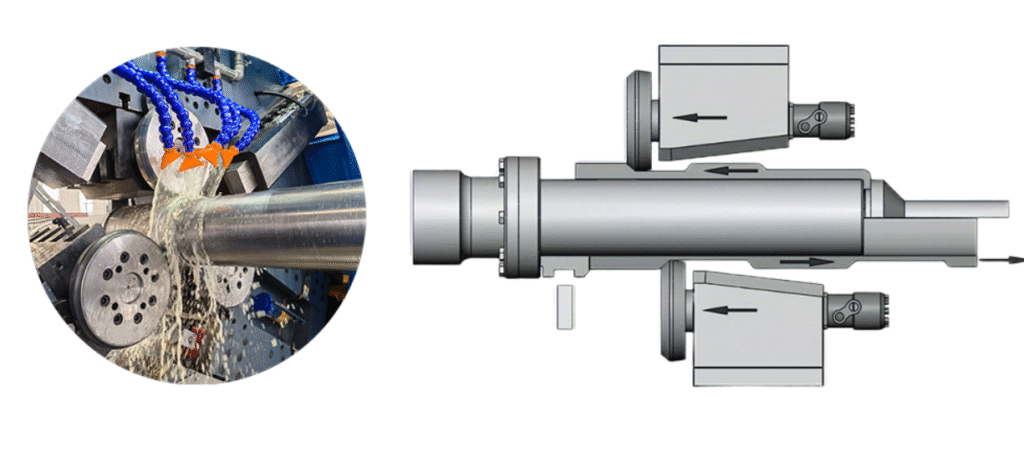
Pipe Spinning Machine: EMS Metalworking Machinery offers a comprehensive range of advanced tube and fan processing machines designed for high-precision, high-performance industrial applications. Our portfolio includes Tube Spinning Machines, Tube Flanging Machines, Copper Tube Spinning Machines, Pipe Spinning Machines, Tube End Closing Machines, and Fan Flanging Machines. Each machine is engineered to deliver superior quality, efficiency, and reliability while supporting a wide range of materials, sizes, and production requirements. EMS machines are ideal for manufacturers seeking precision, productivity, and long-term operational performance in metal forming and spinning applications.
The Tube Spinning Machine is a versatile solution for shaping cylindrical tubes into precise profiles with consistent wall thickness and surface finish. It employs a combination of rotary motion and controlled forming pressure to manipulate metal tubes into desired geometries. EMS Tube Spinning Machines are capable of handling steel, aluminum, copper, and other alloys, producing high-quality spun tubes for automotive, HVAC, industrial, and custom applications. These machines provide repeatable results, excellent dimensional accuracy, and smooth surface finishes, making them ideal for both high-volume production and specialized custom orders.
Tube Flanging Machines are designed to create precise flanges on tube ends, enhancing connectivity, sealing, and structural strength. EMS Tube Flanging Machines offer flexibility to handle various tube diameters, wall thicknesses, and materials. Equipped with hydraulic, mechanical, or CNC-controlled actuators, these machines ensure uniform flange geometry, consistent wall thickness, and high-quality surface finish. Flanging is critical for applications such as pipelines, ventilation systems, and industrial assemblies, where reliable sealing and fit are essential. EMS Tube Flanging Machines enable efficient, repeatable, and precise flange production with minimal waste and downtime.
The Copper Tube Spinning Machine specializes in forming and shaping copper tubes, offering precise control over wall thickness and surface quality. Copper is widely used for plumbing, refrigeration, and electrical applications due to its conductivity, corrosion resistance, and malleability. EMS Copper Tube Spinning Machines employ controlled spinning processes that maintain material integrity while producing high-quality finished products. These machines ensure uniformity, smooth surfaces, and accurate dimensions, supporting manufacturers in producing reliable copper tubes for industrial, commercial, and residential applications.
Pipe Spinning Machines are designed for shaping metal pipes into complex profiles or tapered geometries with consistent precision. EMS Pipe Spinning Machines utilize rotary forming, controlled force, and CNC guidance to produce high-quality spun pipes for automotive, aerospace, industrial, and energy sector applications. These machines can process steel, stainless steel, aluminum, and other alloys, offering versatility and precision for diverse manufacturing needs. By ensuring uniform wall thickness, smooth surfaces, and accurate diameters, EMS Pipe Spinning Machines enhance product quality, reduce scrap, and improve production efficiency.
The Tube End Closing Machine is engineered for securely sealing, closing, or forming the ends of metal tubes. This process is essential for pressure vessels, gas cylinders, automotive components, and industrial piping systems. EMS Tube End Closing Machines provide controlled forming using hydraulic, mechanical, or CNC systems to produce precise end geometry while maintaining wall thickness and surface quality. Mandrels and internal supports ensure tube stability during forming, preventing wrinkling or collapse. These machines deliver consistent, high-quality results across various tube diameters, materials, and wall thicknesses, supporting both high-volume and specialized production requirements.
Fan Flanging Machines are designed to produce accurate flanges on fan blades, impellers, and other ventilation system components. Proper flanging ensures structural integrity, precise fit, and optimal performance in assembled fans. EMS Fan Flanging Machines combine hydraulic, mechanical, and CNC technologies to form consistent flanges with precise wall thickness and smooth surfaces. They accommodate a wide range of materials, including steel, aluminum, and copper, and can handle various diameters and blade thicknesses. These machines are suitable for high-volume industrial fan production as well as custom or specialized applications, providing repeatable, high-quality results.
All EMS machines are built with durability, precision, and efficiency in mind. Rigid frames, high-quality tooling, and advanced control systems ensure consistent performance and long-term reliability. Many of our machines integrate CNC control and automation capabilities, allowing operators to achieve complex geometries, reduce setup time, and enhance productivity. Modular tooling, quick-change dies, and accessible components simplify maintenance and allow rapid adaptation to different materials, sizes, and production requirements. EMS Metalworking Machinery combines advanced engineering with practical usability to support manufacturers in producing high-quality metal tubes, pipes, and fan components efficiently and reliably.
EMS Metalworking Machinery is committed to supporting modern manufacturing with machines that combine innovation, precision, and flexibility. Whether producing spun tubes, flanged ends, copper components, spun pipes, closed tube ends, or fan flanges, EMS machines deliver reliable, repeatable, and high-quality results. Our machines are designed to handle diverse materials and complex geometries while maintaining structural integrity, surface finish, and dimensional accuracy. With EMS solutions, manufacturers can optimize production efficiency, reduce waste, maintain consistent quality, and meet the rigorous demands of industrial, commercial, and custom applications.
Tube Flanging Machine – High-Precision End Forming for Pipes and Tubes
A Tube Flanging Machine is a specialized end-forming system designed to create precise, durable, and uniform flanged edges on metal tubes and pipes. These machines are essential in industries where leak-proof, mechanically reinforced, or assembly-ready tube ends are required. Typical applications include HVAC systems, automotive exhausts, heat exchangers, fluid transfer lines, fire-fighting piping, steel drum manufacturing, and countless metalworking operations that rely on strong, dimensionally accurate flange geometry.
Modern tube flanging technology offers a combination of speed, repeatability, automation, and forming power, making it an indispensable machine for companies seeking to increase productivity while maintaining strict quality standards.
Purpose and Functionality
Tube flanging involves folding, shaping, or expanding the tube edge outward or inward to create a flange. This flange can serve multiple purposes:
- Improved sealing surface
- Reinforcement of tube ends
- Preparation for assembly (bolting, welding, clamping)
- Structural stability
- Aesthetic finishing
A tube flanging machine applies axial forming force using hydraulic or servo-driven actuators while controlling the material flow with specially designed tooling. The result is a smooth, crack-free, and dimensionally precise flange, even on high-strength materials.
Machine Types
Depending on production volume, tube size range, and application, Tube Flanging Machines are available in several configurations:
• Hydraulic Tube Flanging Machines
Robust, versatile, and ideal for medium to heavy-duty industrial operations. They provide high forming force and work well with a wide range of materials and wall thicknesses.
• CNC Servo Tube Flanging Machines
Equipped with servo-driven positioning and programmable cycles. These models offer high repeatability, low noise, and energy efficiency while enabling complex flange shapes and multi-step programs.
• Automatic Loading & Unloading Flanging Lines
Designed for mass production, these lines integrate:
- Tube feeding systems
- Automatic clamping
- Flanging cycle
- Unloading conveyors or robotic pickers
Perfect for automotive or HVAC mass-production environments.
Materials and Tube Sizes
A Tube Flanging Machine can operate on:
- Stainless steel
- Carbon steel
- Aluminum
- Copper
- Brass
- Alloy steels
- Special materials used in heat exchangers or chemical applications
Typical tube diameter ranges from Ø10 mm to Ø600 mm, depending on the machine model. Custom-built heavy-duty models can handle even larger tubes used in industrial ducts, tanks, or vessel manufacturing.
Key Features and Capabilities
1. High Forming Accuracy
Precision sensors and rigid construction ensure that each flange maintains consistent thickness, angle, and height — crucial for sealing and assembly.
2. Programmable Working Cycles
Advanced models allow the operator to store hundreds of programs for different tube diameters, materials, and flange geometries.
3. Heavy-Duty Tooling Design
Tooling is engineered to minimize material stress and prevent cracking during the forming process.
4. Quick Changeover
Fast tool changes reduce downtime and increase production efficiency, especially in multi-size operations.
5. Safety and Ergonomics
Guarding systems, electronic safety modules, and simplified operator interfaces ensure safe and comfortable working conditions.
6. Energy Efficiency
Servo control and optimized hydraulic systems reduce energy consumption while maintaining constant forming force.
Applications of Tube Flanging Machines
Tube flanging is essential in multiple sectors:
- Automotive Industry
Exhaust pipes, turbo charger connections, fluid pipes, fuel systems, and HVAC tubing. - HVAC & Refrigeration
Air-conditioning lines, heat exchanger tubes, and copper/aluminum coil ends. - Fire Protection Systems
Fire sprinkler piping, flange prep for bolted connections. - Metal Drums and Containers
Rolling flanges on steel cable drums, barrels, or cylindrical housings. - Aerospace & Defense
Precision flanges for high-pressure systems. - General Fabrication and Metalworking
Any application requiring a reinforced or aesthetically clean tube end.
Advantages of Using a Tube Flanging Machine
- Consistent and repeatable quality with zero defects
- Fast cycle times for mass production
- Reduced manual labor compared to traditional spinning or hammering
- High structural integrity of the formed flange
- Lower risk of cracking or deformation
- Flexibility to create flanges of different sizes and shapes
- Ability to work with thin and thick wall tubes alike
These advantages make tube flanging machines a strategic investment for manufacturers seeking to improve efficiency and final product reliability.
Optional Integrations and Custom Features
Modern tube flanging machines can include:
- Automatic lubrication systems
- Laser diameter measurement
- Hydraulic or servo mandrel expansion
- Multi-stage forming (flange + bead + collar)
- Tube trimming & hole punching modules
- Robot-based handling units
- Complete production cells with Industry 4.0 connectivity
For special projects, machines can be custom-designed with non-standard stroke lengths, forming heads, or clamping systems.
Quality Control and Precision
A well-engineered flanging machine performs forming with:
- Smooth material flow
- Controlled axial pressure
- Zero waviness on flange edges
- Perfect concentricity and roundness
- No thinning or cracking at the form transition
These quality points ensure that the final tubes are suitable for high-pressure, high-temperature, or structural load applications.
Why Choose a Professional Tube Flanging System
Compared to improvisational manual methods or outdated machinery, a modern tube flanging system delivers:
- Better production consistency
- Safer operation
- Faster throughput
- Higher precision
- Lower scrap rate
- Less operator dependency
When combined with CNC control, manufacturers gain programmability, data monitoring, real-time diagnostics, and full repeatability.
Tube Flanging Machine – Complete Technical Description and Industrial Application Guide
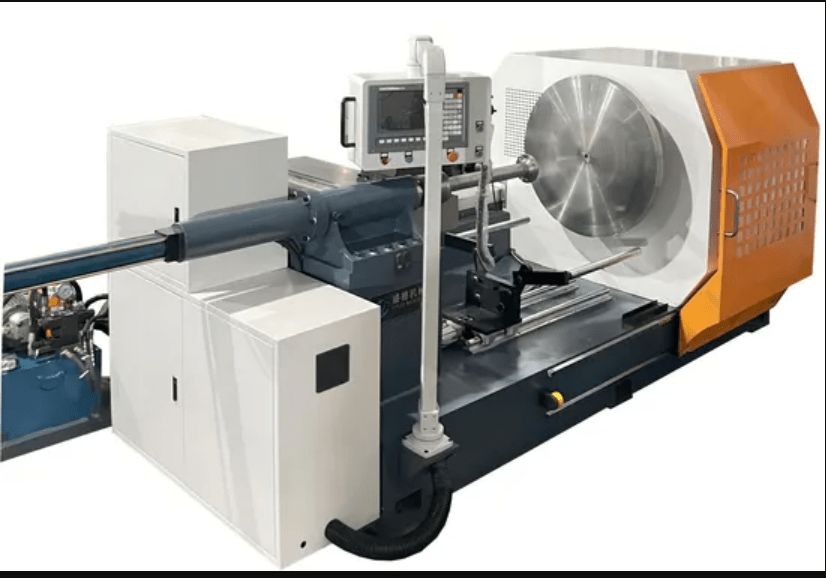
A Tube Flanging Machine is a highly specialized metal-forming system designed to create reliable, uniform, and mechanically enhanced flanges on the ends of pipes and tubes. This process is fundamental in industries where tube joints must offer high structural strength, airtightness, pressure resistance, and compatibility with bolted, welded, or clamped connections. From HVAC and automotive lines to chemical installations, heat exchangers, and high-pressure piping systems, flanging ensures that tube assemblies are prepared for demanding working conditions.
Unlike manual flanging or improvised forming methods, modern Tube Flanging Machines deliver precision, speed, and repeatability, allowing manufacturers to maintain strict dimensional tolerances and consistent forming quality. These machines combine hydraulic or servo-driven forming forces with custom-engineered tooling to produce flanges without cracks, wrinkles, or excessive thinning. Below is an in-depth, expanded description of the technology, covering every aspect of machine design, operation, applications, and advantages.
Introduction to the Tube Flanging Process
Tube flanging is the process of expanding or shaping the end of a tube outward (or inward) to create a rim-like structure known as a flange. The flange serves multiple roles depending on the application:
- Reinforcing the tube end to avoid deformation
- Creating a broader sealing surface for gaskets
- Allowing bolting or clamping of tube ends
- Improving tube connection stability
- Preparing tubes for welding or brazing
- Enhancing structural rigidity
- Providing a cleaner, more aesthetic finish
In many industries, flanges are essential for ensuring mechanical safety, pressure handling, and high-quality assembly. A professional flanging machine guarantees that these flanges are produced with consistent dimensions and without material defects.
Machine Construction and Forming Principles
A Tube Flanging Machine typically consists of the following components:
• Frame / Body
A heavy-duty welded steel structure ensures rigidity, precision, and vibration-free operation during forming. Machine frames are engineered to withstand repeated high force cycles and maintain alignment over years of operation.
• Hydraulic or Servo Forming Unit
The forming unit provides axial force that pushes the tool into the tube end.
- Hydraulic systems offer extremely high tonnage and are suitable for thick-walled tubes.
- Servo-driven systems provide programmable force profiles, energy savings, quiet operation, and exceptional repeatability.
• Mandrel and Tooling
Tooling design is crucial for achieving crack-free flanges.
- Internal mandrel supports the tube from inside, preventing collapse.
- External forming tool gradually shapes the flange according to programmed movement.
Custom tooling can be produced for different materials, flange angles, flange heights, and wall thicknesses.
• Clamping System
The clamping mechanism holds the tube firmly during forming to prevent rotation or slippage. Clamps may be hydraulic, pneumatic, or servo-electric depending on the machine type.
• Control System (CNC / PLC)
The control system manages all machine parameters:
- Stroke length
- Speed and force control
- Multi-step forming sequences
- Tool positioning
- Automatic cycle management
CNC flanging machines allow the operator to save hundreds of programs for different tube sizes and materials.
Types of Tube Flanging Machines
3.1 Hydraulic Tube Flanging Machines
These machines use hydraulic pressure to generate forming force. They are ideal for:
- Thick-walled pipes
- Heavy-duty industrial applications
- Steel tubes, pressure vessels, oil and gas piping
Advantages include high forming capability and durability.
3.2 CNC Servo Tube Flanging Machines
Advanced machines equipped with servo motors allow precise control over movement and force. Ideal for:
- Automotive exhaust systems
- HVAC tubing
- Precision stainless steel applications
Servo-driven machines offer low noise, repeatability, energy efficiency, and advanced programmability.
3.3 Automatic Tube Flanging Lines
For mass production environments, fully automated lines integrate:
- Automatic tube loading
- Positioning and clamping
- Multi-stage flanging
- Unloading conveyors or robotic pickers
These lines minimize labor requirements and ensure extremely high production speeds.
Materials, Tube Sizes, and Geometries
Tube flanging machines can process a wide range of materials:
- Stainless steel AISI 304 / 316
- Carbon steel
- Aluminum and aluminum alloys
- Copper and brass tubes
- Titanium (in advanced models)
- High-pressure alloy steels
- Nickel and heat-resistant alloys
Typical tube diameters range from 10 mm to 600 mm, although custom machines can handle much larger tubes for ducting, industrial drums, or structural metal fabrication.
Flanges can be designed in various forms:
- Standard 90° outward flange
- Rounded or radius flanges
- Inward flanges
- Curling edges
- Step flanges
- Multi-stage flange + bead combinations
Each geometry requires dedicated tooling and forming profiles.
Advanced Features and Options
Modern Tube Flanging Machines may include:
• Servo-controlled forming axis
Allows precise multi-step shaping with variable speed and force.
• Laser or camera measurement systems
Used for real-time diameter or flange height verification.
• Quick-change tooling
Minimizes downtime between product changes.
• Automatic lubrication
Ensures smooth forming and prevents tool wear.
• Mandrel expansion modules
Support thin-walled tubes during aggressive forming.
• Integrated trimming units
To cut or smooth tube edges before or after flanging.
• Industry 4.0 connectivity
Machine connectivity for production monitoring, maintenance data, and remote diagnostics.
Industrial Applications in Depth
6.1 Automotive Industry
Flanged tubes are used in:
- Exhaust pipes
- Turbo systems
- Fuel and hydraulic lines
- Vibration dampening tubes
High repeatability is critical for high-volume automotive production.
6.2 HVAC and Heat Exchangers
Flanged copper and aluminum tubes are essential in:
- Air-conditioning units
- Heat exchanger coils
- Chillers and cooling systems
Flanged ends allow secure brazing and improved sealing.
6.3 Oil, Gas, and Chemical Industry
Flanging ensures safer, leak-proof connections in systems handling:
- High pressure
- High temperature
- Corrosive chemicals
Stainless steel flanges are preferred for chemical resistance.
6.4 Firefighting Piping
Sprinkler systems use flanged pipes to allow fast assembly and bolted connections.
6.5 Metal Drum and Cylinder Manufacturing
Flanging is used to reinforce the edges of:
- Steel drums
- Cable drums
- Gas cylinders
- Pressure containers
6.6 Aerospace Industry
Precision flanges for lightweight tubing systems require extremely tight tolerances.
Advantages of Tube Flanging Machines
7.1 Precision and Repeatability
Machines maintain strict tolerances even after thousands of cycles.
7.2 Increased Productivity
Fast forming cycles boost throughput significantly compared to manual or semi-manual processes.
7.3 Reduced Material Waste
Controlled forming prevents defects such as cracking and thinning.
7.4 Safety
Integrated safety systems and enclosed forming areas reduce operator risk.
7.5 Lower Labor Dependency
Automation minimizes the need for skilled manual flanging operators.
7.6 Flexible Production
Easily change between tube diameters, materials, and flange types.
7.7 Consistent Finish Quality
Smooth, clean flanges require minimal post-processing.
8. Tooling Engineering and Forming Quality
Tooling design dramatically impacts forming success. High-quality tooling ensures:
- Proper material flow
- No wrinkling or cracking
- Even wall thickness distribution
- Perfect roundness and symmetry
- Smooth flange surface
Tool materials typically include high-strength alloy steel or special wear-resistant coatings.
9. Automation and Production Integration
Tube flanging machines can be seamlessly integrated into automated production lines:
- Robotic loading/unloading
- Tubing feed conveyors
- Barcode/RFID part identification
- Automated quality inspection
- Communication with MES/ERP systems
These integrations enable lights-out production and maximize output.
10. Quality Control and Standards
Professional machines ensure compliance with industrial standards such as:
- EN / DIN flanging requirements
- ASTM tube material compatibility
- Automotive and HVAC industry tolerances
- Pressure vessel manufacturing codes
Machines can include built-in sensors to monitor forming force, displacement, and deformation.
11. Why Choose a Tube Flanging Machine?
In modern manufacturing, the demand for reliability and precision makes tube flanging machines indispensable. Benefits include:
- Lower production costs
- Faster order fulfillment
- Large-scale batch consistency
- Extended tube lifespan
- Compatibility with automated factories
A tube flanging system is not merely a machine but a critical component of a high-quality metal fabrication workflow.
Tube Flanging Machine | High-Precision Tube End Forming Solutions by EMS Metalworking Machinery
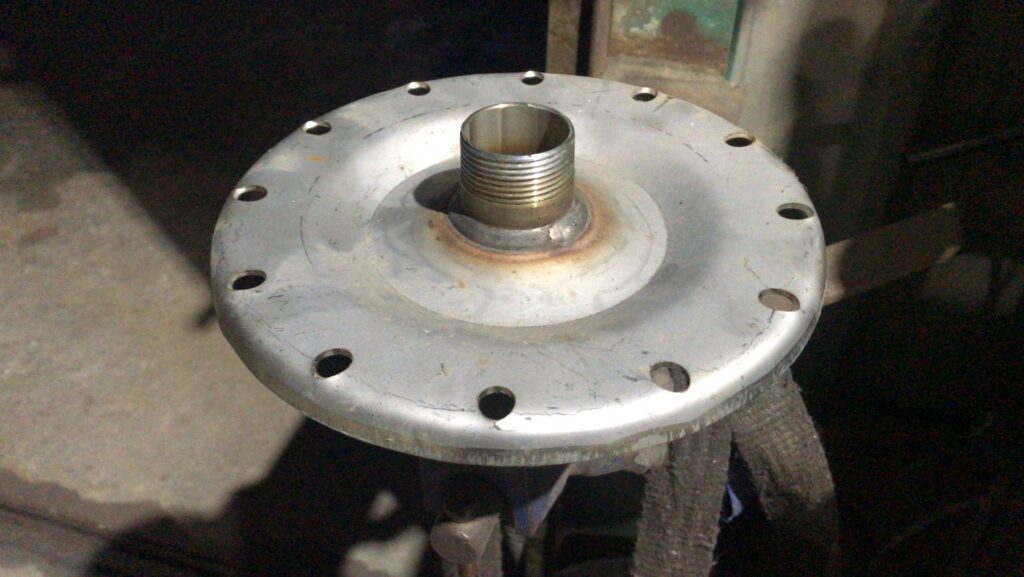
At EMS Metalworking Machinery, we design and manufacture advanced Tube Flanging Machines engineered for high-precision end forming, industrial durability, and continuous production efficiency. With decades of experience in metal forming technology, EMS provides robust flanging solutions used worldwide in automotive, HVAC, aerospace, fire-fighting piping, heat exchangers, and high-pressure fluid systems.
Our Tube Flanging Machines combine state-of-the-art CNC control, servo or hydraulic forming power, heavy-duty frames, and custom-engineered tooling to create perfectly formed flanges on metal tubes with unmatched consistency. Whether your production involves stainless steel, aluminum, copper, or thick-wall carbon steel pipes, EMS offers machines and custom tooling that ensure reliable, repeatable, and crack-free forming results.
Why Choose an EMS Tube Flanging Machine?
EMS machines are engineered for companies requiring:
- High-repeatability flanging for serial or mass production
- Zero-defect forming in demanding applications
- Long-lasting industrial machinery designed for 24/7 operation
- Flexible tooling solutions for various tube diameters and materials
- Seamless integration into automated production lines
Our commitment is simple: maximum forming precision, minimum production cost, and superior reliability.
1. Overview of the Tube Flanging Process
Tube flanging is a critical forming operation where the tube end is expanded or shaped outward to create a mechanically reinforced flange. This flange serves functional and structural purposes:
- Provides a sealing surface for gaskets
- Enables bolted, clamped, or welded connections
- Reinforces the tube end against deformation
- Enhances structural stability
- Improves assembly speed and safety
- Ensures pressure and leak resistance
In modern manufacturing, precision flanging is essential for components that operate under vibration, high pressure, thermal expansion, or corrosive environments. EMS machines ensure that every formed flange meets strict dimensional standards and is free from cracks, thinning, or distortion.
2. EMS Machine Construction & Engineering Excellence
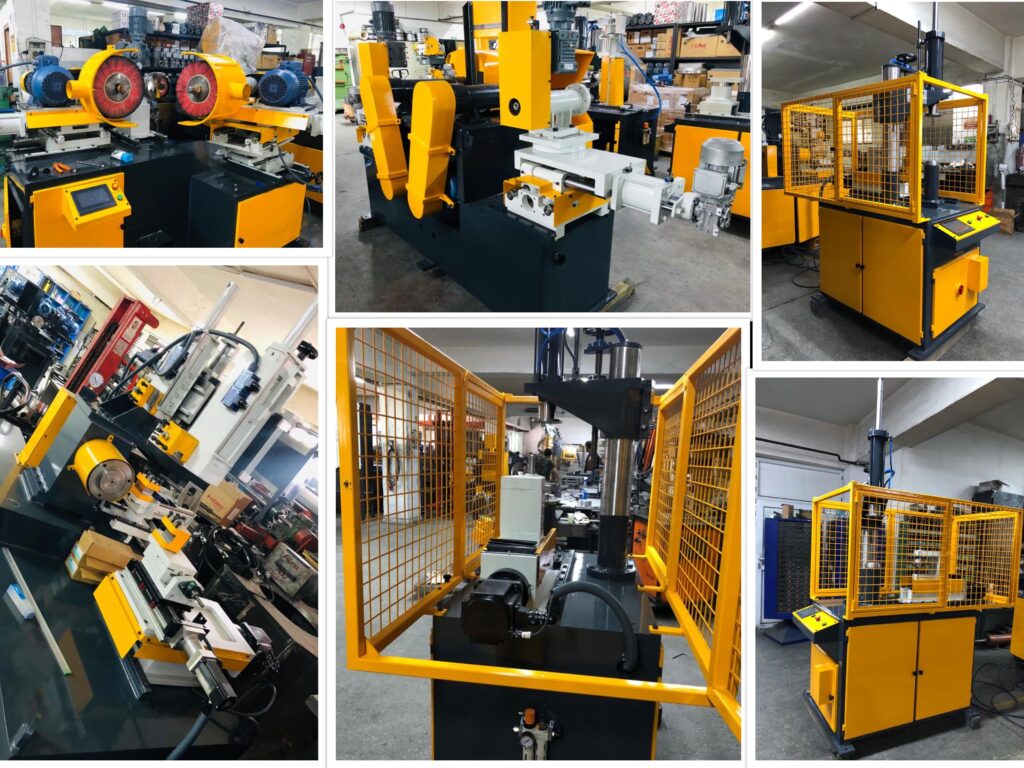
Heavy-Duty Machine Frame
All EMS Tube Flanging Machines are built on rigid, stress-relieved welded steel frames to ensure vibration-free operation and long-term structural integrity. This stability is essential for maintaining consistent flange geometry across thousands of forming cycles.
Hydraulic or Servo Forming System
EMS offers two high-performance forming technologies:
- Hydraulic Forming Machines – ideal for large diameters and thick-walled tubes requiring high forming tonnage.
- Servo-Driven CNC Flanging Machines – perfect for precision applications with superior repeatability, programmable force profiles, and energy efficiency.
Specialized Internal Mandrel + Forming Tools
Our tooling is engineered for maximum material flow without cracking. Internal mandrels support the tube during forming, while outer forming tools shape the flange precisely. EMS also produces custom tooling sets for complex geometries, unconventional materials, or multi-stage forming operations.
Precision Clamping System
Hydraulic or servo clamps hold the tube securely and ensure perfect alignment, preventing slippage, distortion, or eccentric forming.
Advanced CNC / PLC Control
EMS control systems offer:
- Multi-step forming cycles
- Adjustable speeds, pressures, and stroke lengths
- Storage of hundreds of flanging programs
- Operator-friendly touchscreen interface
- Diagnostic tools and smart alarms
3. Types of Tube Flanging Machines Offered by EMS
A. EMS Hydraulic Tube Flanging Machines
Designed for heavy-duty industrial applications, these machines provide high forming power and exceptional structural rigidity. They are ideal for:
- Large diameters
- Thick-walled carbon steel tubes
- Oil, gas, and pressure vessel industries
- Industrial ducting and structural tubing
B. EMS CNC Servo Tube Flanging Machines
Our CNC servo models offer superior precision, low noise, energy savings, and extremely fast cycle times. They are preferred in:
- Automotive tube production
- Stainless steel manufacturing
- Copper and aluminum HVAC production
- High-accuracy, thin-wall tube forming
C. EMS Fully Automated Flanging Lines
For mass production, EMS provides turnkey systems that can include:
- Automatic tube loading
- Positioning, clamping, and multi-stage forming
- Integrated trimming or beading
- Robotic unloading
- Quality inspection modules
Such lines drastically reduce labor costs and increase consistency in high-volume environments.
4. Supported Materials & Tube Sizes
EMS Tube Flanging Machines process:
- Stainless Steel (304, 316, Duplex, etc.)
- Carbon Steel & Mild Steel
- Aluminum & Aluminum Alloys
- Copper & Brass
- Titanium & High-Strength Alloys
- Nickel-Based & Heat-Resistant Materials
Tube diameters typically range from Ø10 mm to Ø600 mm, with custom solutions available for even larger industrial applications.
Flange forms available:
- 90° outward flange
- Curved or radius flanges
- Inward flanges
- Roll-formed curling edges
- Multi-step flanges
- Flange + bead combined forming
- Special geometries based on customer drawings
5. Key Features and Benefits of EMS Tube Flanging Machines
Precision & Repeatability
EMS machines guarantee consistent results with strict tolerances — essential for high-pressure systems and automotive standards.
High Production Efficiency
Fast forming cycles reduce production time and increase throughput.
Long Tool Life
Tooling designed by EMS ensures smooth forming, minimal friction, and maximum durability.
Zero-Defect Forming
Controlled force profiles and optimized tooling eliminate cracks, wrinkles, and deformation.
Industry 4.0 Compatibility
EMS machines can be equipped with:
- Data logging
- Production monitoring
- Remote diagnostics
- Preventive maintenance alerts
Flexible Operation
Fast tool change systems make EMS machines ideal for companies handling multiple tube sizes.
Operator Safety
Comprehensive safety modules (light curtains, emergency stops, safety PLCs) ensure a secure working environment.
6. Industrial Applications of EMS Tube Flanging Machines
Automotive Manufacturing
Flanged tubes for:
- Exhaust lines
- Turbocharger connections
- Fuel and hydraulic lines
- Engine cooling and HVAC tubes
EMS machines deliver the repeatability required for Tier-1 automotive suppliers.
HVAC & Refrigeration
Flanging is crucial for:
- Heat exchangers
- AC copper/aluminum lines
- Industrial chillers
- Cooling and refrigeration systems
Perfect flanges guarantee leak-free brazing and sealing.
Oil, Gas & Chemical Processing
Our machines produce flanges capable of resisting:
- High pressure
- High temperature
- Corrosive environments
Ideal for chemical plants, process lines, and stainless-steel piping systems.
Fire-Fighting & Sprinkler Pipe Systems
Flanged steel pipes allow fast installation, reduced welding, and reliable bolted connections.
Metal Drums & Cylinder Manufacturing
EMS flanging technology ensures reinforced, uniform edges on:
- Cable drums
- Oil / fuel drums
- Pressure-resistant cylinders
- Industrial storage tanks
Aerospace & Energy Industries
High-precision flanging for specialized lightweight alloy tubes used in demanding environments.
7. Tooling Engineering at EMS
Tooling quality is one of the core strengths of EMS Metalworking Machinery. Each tool is:
- Designed specifically for the customer’s application
- Manufactured from high-grade alloy steel
- Heat-treated for maximum wear resistance
- Polished to ensure smooth material flow
- Calibrated for long-term dimensional accuracy
Advanced tooling options include coatings, modular multi-step tools, mandrel expansion designs, and high-precision die sets for thin-walled tubes.
8. Automation & Integration Options
EMS provides full automation solutions such as:
- Robotic loading/unloading
- Tube conveyors
- Barcode/RFID reader integration
- In-line measuring & inspection
- Custom production cells
- Complete Industry 4.0 connectivity
These integrations transform the machine into a fully automatic production platform capable of 24/7 operation.
9. Quality Control & Standards
EMS machines are designed to comply with:
- DIN / EN flanging standards
- ASTM material and dimensional standards
- Automotive OEM specifications
- HVAC and refrigeration industry requirements
- Pressure vessel and industrial piping norms
We also offer in-machine sensors and calibrated forming force monitoring to ensure absolute consistency.
10. Why EMS Metalworking Machinery?
EMS offers a unique combination of:
- Engineering expertise in metal forming
- Fully customizable machines
- Robust industrial design
- Fast technical support and spare parts supply
- Global customer network and industry reputation
Our Tube Flanging Machines are built to last, engineered to perform, and designed to help manufacturers reduce costs while increasing production reliability.
Request a Quote or Technical Consultation
If you need a Tube Flanging Machine for your production line — whether standard, CNC, servo, or fully automated — EMS Metalworking Machinery can design the perfect solution tailored to your material, diameter range, and production volume.
A Tube Flanging Machine is one of the most essential and technically specialized systems in the world of modern metalworking, and at EMS Metalworking Machinery we have dedicated years of engineering expertise, manufacturing competence, and process-defined innovation to create machines that redefine what precision tube end forming can achieve. When manufacturers across automotive, HVAC, chemical processing, aerospace, energy, and industrial piping sectors require absolute repeatability, structural reliability, and long-term production consistency, they look for solutions that do not simply deform metal but transform it with control, intelligence, and a deep understanding of material behavior. This is where the Tube Flanging Machines produced by EMS Metalworking Machinery demonstrate their full value. By integrating meticulous mechanical design with high-level hydraulic or servo-driven forming technologies and advanced CNC control systems, EMS machines are engineered to deliver consistent, high-strength flanges across a wide spectrum of tube materials and geometries.
A flange formed on a tube is far more than an outward-bent rim. It is a mechanical interface that determines whether a joint will hold under pressure, whether a connection will leak, whether an assembly will withstand vibration, thermal expansion, corrosive environments, or dynamic load cycles. A flange must be geometrically perfect, structurally robust, and formed in a way that preserves the integrity of the original tube wall. This demands not only forming force but also controlled material flow, precise alignment, and stability in machine tooling and structure. EMS Tube Flanging Machines are designed around these principles. Every component, from the heavy-duty frame to the mandrels, forming dies, control units, clamping systems, hydraulic circuits, and servo axes, is optimized to deliver predictable material behavior even when forming thin-wall stainless steel, high-strength titanium alloys, thick-wall carbon steel tubes, soft copper, aluminum, or nickel-based alloys. The ability to switch between different materials without compromising forming quality is one of the defining achievements of EMS engineering.
The process of tube flanging may appear simple at first glance—press the tube end between tooling until a flange is created—but the underlying mechanics are highly complex. Metal does not flow uniformly by default; it stretches, compresses, and experiences localized stress concentrations that can lead to cracking, wrinkling, thinning, or unwanted distortion. Engineers at EMS understand these material behaviors deeply, which is why each Tube Flanging Machine is paired with application-specific tooling, refined forming paths, and carefully tuned control algorithms. The inner mandrel supports the tube from inside, preventing collapse, while the outer forming tool gradually shapes the flange. The angle, radius, height, and thickness of the flange all depend on how the tooling interacts with the tube, and EMS designs these interactions with precision. For manufacturers dealing with high-pressure piping, turbocharger connections, heat exchangers, or critical fluid transfer assemblies, the difference between a perfect flange and a flawed one can decide product success, warranty risk, or compliance with industry standards.
In industries such as automotive exhaust manufacturing, where thousands of tubes must be formed with identical specifications every day, productivity and repeatability become as important as forming precision. EMS Tube Flanging Machines are built specifically for such environments. The clamping system holds the tube firmly in place, ensuring that each flange is produced without slippage or misalignment. The hydraulic or servo forming systems operate with controlled speed, variable force profiles, and programmable stroke lengths, allowing the machine to adapt to thin-wall stainless steel or thick carbon steel simply by changing the program and tooling. For companies that produce stainless steel tubes for heat exchangers, HVAC systems, or industrial cooling units, right-angle flanges, soft radius flanges, or multi-stage flanges can be formed with equal accuracy. EMS machines are able to create clean, crack-free flanges even on materials with challenging metallurgical properties because the machine’s movement is smooth, predictable, and coordinated through CNC or PLC controllers designed to optimize forming forces at each stage of the cycle.
What sets EMS Metalworking Machinery apart in the global market is not only the capability of the machines but the engineering philosophy that underpins their design. EMS believes that a Tube Flanging Machine must not only produce a flange but must integrate seamlessly into the broader realities of industrial manufacturing. This means adaptability to automation, compatibility with robotic systems, integration with production monitoring software, and the capability to support multiple product variations with minimal downtime. Machine operators benefit from intuitive interfaces that allow them to select programs, adjust parameters, monitor pressures, and receive diagnostic feedback. Maintenance technicians gain from accessible machine components, robust construction, and durable tooling that reduces wear and extends service intervals. EMS’s approach ensures that the machine is not merely a piece of equipment but a dependable partner in production, capable of delivering consistent performance for years under demanding industrial conditions.
The Tube Flanging Machines manufactured by EMS are frequently integrated into fully automated production lines where tubes are fed into the system through conveyors or robotic arms. The tube is automatically positioned, clamped, and formed in a multi-stage process. Some customers require a flange followed by trimming, beading, expanding, or calibration, and EMS machines can be configured to perform multiple operations within one integrated cell. For mass-production industries, this level of automation eliminates human error, shortens cycle times, and ensures that each finished part meets the same exact specifications. For smaller-scale manufacturers who operate with labor flexibility, EMS machines can also be configured as stand-alone units with manual loading, but still offer programmable precision and rapid setup changes for small-batch production or prototyping.
Material versatility is one of the strongest attributes of EMS Tube Flanging Machines. Stainless steel tubes used in chemical processing or food-grade applications have different forming characteristics compared to aluminum tubes used in air-conditioning systems or copper tubes used in refrigeration coils. Carbon steel tubes for industrial piping require high force and strong support from the mandrel, while titanium and nickel alloys demand finely controlled forming sequences to avoid cracks. EMS machines are capable of handling all of these materials, with tooling designed specifically for each application. The ability to support tube diameters ranging from small precision tubes of 10 mm up to large structural tubes of 600 mm or more makes EMS solutions suitable for industries as diverse as automotive exhaust manufacturing, HVAC coil production, metal drum fabrication, gas cylinder reinforcement, and heavy industrial ducting. Custom machines can be constructed for extra-large diameters or specialized flange geometries such as inward flanging, curling, step flanging, or combined flange-and-bead operations.
The reliability of a flange is dependent on the internal and external geometry produced during forming. If the wall thickness becomes too thin at the flange root, the tube may fail under pressure. If the angle is not uniform, sealing surfaces may not align. If cracks appear due to improper material flow, the assembly becomes unsafe. EMS Metalworking Machinery designs each Tube Flanging Machine with sensors and control systems that regulate forming force and monitor displacement. This feedback ensures that the forming operation remains within safe material limits. Additionally, EMS offers advanced tooling options that minimize friction, distribute stress evenly, and guide material into the desired shape without overstretching. The result is a flange that is dimensionally accurate, mechanically strong, and ready for subsequent manufacturing processes such as welding, brazing, bolting, gasket sealing, or assembly into larger equipment.
Customers who operate in industries governed by strict standards—such as fire suppression piping, where flanged steel tubes must meet strict pressure and leak requirements—benefit greatly from EMS’s ability to deliver machines that produce consistent results. Fire sprinkler systems rely on pipes that maintain integrity even during thermal expansion and vibration, and the flanges must hold gaskets securely under varying loads. HVAC manufacturers need flanges that enable quick brazing and guarantee airtight connections. Chemical and petrochemical industries require flanges that resist corrosion and high pressure. Automotive manufacturers need flanges that survive repetitive thermal cycling, road vibration, and exhaust gas exposure. EMS Metalworking Machinery ensures that the flanges produced by its Tube Flanging Machines meet the expectations of these industries by providing machines that maintain strict tolerances, reduce defect rates, and deliver long-term mechanical consistency.
In the aerospace and energy sectors, where the tubes often carry fluids under extreme temperatures or serve as part of structural components, the material behavior becomes even more critical. Flange dimensions must be accurate within narrow tolerances, and structural integrity must be guaranteed. EMS machines provide the precision and control necessary to form flanges on lightweight high-strength materials such as titanium, Inconel, or high-alloy steels. These materials require careful force ramping, precise tool positioning, and often multi-stage forming routines to avoid cracks. The CNC control systems used in EMS machines can store hundreds of forming programs, each optimized for a specific tube type, diameter, and material grade. Operators can switch between jobs quickly, making the machines highly suitable for manufacturers who produce a diverse range of tube components within a single facility.
The design philosophy at EMS Metalworking Machinery extends beyond the mechanical construction of the machine into the realm of production analytics and Industry 4.0 integration. Modern manufacturing increasingly demands real-time monitoring, data-driven decision-making, preventive maintenance algorithms, and connectivity with central production control systems. EMS Tube Flanging Machines can be equipped with sensors that record cycle times, forming pressures, material data, tool life status, and production statistics. Through network connectivity, this information can be transmitted to factory management systems, enabling operators and managers to analyze machine performance, predict maintenance needs, and optimize production flow. In high-volume operations, this creates significant cost savings, reduces downtime, and ensures that the machine continues to operate at peak efficiency.
The engineering and tooling teams at EMS bring decades of experience to each customer project. Tooling design is a particularly critical aspect of tube flanging because the shape, surface finish, hardness, and dimensional accuracy of the tooling directly influence the forming results. EMS uses advanced software to simulate forming operations, ensuring that the tooling will guide the material into the correct shape without excessive strain. The mandrels, forming dies, and clamping jaws are manufactured from hardened alloy steels and often coated for durability and reduced friction. Some applications require modular tooling, where multiple forming steps can be completed using a sequence of tools that interact with the tube progressively. Other applications require single-step forming with specialized geometries. EMS handles all of these variations and ensures that the machine and tooling work together as a unified system for optimal forming performance.
Because EMS Metalworking Machinery works closely with customers from various industries, each machine is often tailored to the customer’s specific production goals. Some customers prioritize high-speed forming cycles, while others require the ability to handle a large variety of tube diameters within one machine. Some prefer servo-driven systems for precise control and energy efficiency, while others need hydraulic systems for maximum forming force. EMS offers both configurations, each engineered with the same level of durability and precision. The modular machine architecture allows EMS to incorporate additional functions such as tube trimming, deburring, expanding, end forming, or calibration within the same platform. This flexibility is particularly appreciated by manufacturers who want to reduce floor space, minimize part handling, and consolidate multiple operations into one machine.
Long-term reliability is a hallmark of EMS Metalworking Machinery products. The machines are built with reinforced structures, oversized linear guides, high-specification hydraulic components, and precise servo motors to ensure stability and accuracy over years of continuous operation. Maintenance access is designed into the machine layout to ensure that service routines such as lubrication, tool replacement, seal inspections, or hydraulic system checks can be performed quickly. Spare parts support and technical assistance are essential to maintaining customer operations, and EMS provides responsive after-sales service to ensure minimal downtime.
For manufacturers considering investment in tube flanging technology, the return on investment provided by an EMS Tube Flanging Machine is driven not only by the mechanical capability of the machine but also by its ability to reduce production errors, shorten cycle times, and deliver consistent quality. Poorly formed flanges can lead to assembly problems, leaks, cracks, or customer complaints. Reworking or scrapping these parts costs time and money, interrupts production flow, and may jeopardize delivery schedules. With an EMS machine, these risks are dramatically reduced. The machines are engineered to maintain dimensional accuracy even when switching between different batches of material or different tube suppliers. This ensures that customers can maintain smooth production regardless of variations in tube hardness or surface condition.
Another advantage of EMS Tube Flanging Machines is their adaptability to both small-scale custom fabrication shops and large-scale manufacturing plants. In smaller shops, the ability to quickly change tools and adjust parameters allows operators to produce prototypes, specialized components, or low-volume orders efficiently. In large plants, the machines can operate in a fully automated environment with minimal operator intervention. This scalability allows EMS customers to expand their production capabilities without having to replace their equipment entirely. Instead, they can build on the foundational strength of EMS machines and integrate additional modules, fixtures, or automation systems as their production needs grow.
For many customers across different industries, the quality of the flange determines the quality of their final product. An automotive exhaust manufacturer may require flanges that ensure airtight connections between pipes and mufflers. An HVAC coil manufacturer needs flanges that enable quick brazing without requiring excessive filler material. A fire suppression pipe manufacturer relies on flanged connections that will hold securely under high pressure during emergency situations. Each of these applications demands different flange shapes, thicknesses, tolerances, and forming characteristics, and EMS machines are designed to meet these demands through flexible programming, robust mechanical construction, and application-specific tooling.
The longevity of EMS machines is supported by rigorous testing and quality control during manufacturing. Each machine undergoes structural verification to ensure frame rigidity, hydraulic system pressure testing, alignment calibration of tooling, and verification of CNC or PLC control accuracy. Test tubes are formed to confirm that the flange geometry matches the programmed specifications. Customers receive detailed machine documentation, including hydraulic and electrical schematics, programming guidelines, setup procedures, and maintenance schedules. EMS also provides training for machine operators and technicians so that customers can maximize the utility of their equipment from the very first day.
Looking at the global metalworking industry, the demand for precision tube forming continues to rise, driven by the growth of industries such as electric vehicle manufacturing, renewable energy systems, and advanced heating/cooling technologies. These industries require lightweight materials, high-strength alloys, and tight-tolerance components. Tube flanging plays an increasingly important role as manufacturers transition to sophisticated system architectures where each component must work reliably within the broader assembly. EMS Metalworking Machinery positions itself as a trusted supplier to companies operating at the forefront of these industries, providing Tube Flanging Machines that are technically advanced, user-friendly, and suitable for both current and future production requirements.
The engineering team at EMS understands that a machine’s long-term performance depends not only on initial construction but also on continuous support. For this reason, EMS offers remote diagnostics capabilities, allowing service technicians to assist customers by reviewing machine parameters, analyzing forming cycles, and identifying potential issues before they lead to downtime. Preventive maintenance programs can be implemented to keep machines operating smoothly, and for customers with extremely demanding production environments, EMS can design custom maintenance intervals aligned with their operational schedules.
EMS Tube Flanging Machines reflect a combination of mechanical strength, precision engineering, software intelligence, and customer-focused adaptability. These machines are designed for manufacturers who need absolute control over their tube forming processes and who expect equipment that will perform reliably for many years. Whether used in high-volume automotive manufacturing, specialized aerospace applications, industrial piping, HVAC production, energy systems, metal drum and cylinder fabrication, or custom tube fabrication workshops, EMS machines deliver outstanding performance and consistent quality. With an understanding of material science, forming mechanics, automation technology, and industry-specific requirements, EMS continues to be a leader in Tube Flanging Machine manufacturing, helping customers around the world improve productivity, reduce costs, and maintain high standards of product integrity.
A Tube Flanging and Beading Machine manufactured by EMS Metalworking Machinery represents the culmination of decades of engineering knowledge, practical experience in the metal forming industry, and an ongoing commitment to delivering machines that exceed expectations in reliability, forming precision, and long-term durability. In industrial production environments where the quality of a flange or bead determines the integrity of an entire assembly, selecting a properly engineered machine is crucial, and EMS has established itself as a trusted global supplier of such technology. The Tube Flanging and Beading Machine is specifically designed to produce outward flanges, reinforced edges, rolled beads, or combined flange-and-bead geometries in a single continuous forming sequence, ensuring higher production efficiency and reduced labor dependency. The machine integrates a robust mechanical structure, advanced hydraulic or servo-driven forming systems, precision clamping mechanisms, and purpose-built tooling designed around each customer’s tube material, diameter, and production needs. As a result, the EMS Tube Flanging and Beading Machine has become a solution used in automotive exhaust fabrication, HVAC production, compressor tube manufacturing, pressure system assembly, fire suppression piping, stainless steel industrial systems, and many additional industries where tubes with reinforced ends provide safety, sealing, or structural performance advantages.
In modern manufacturing environments, the demand for consistent tube-end geometry is steadily increasing. Whether a production line requires a perfectly formed 90-degree flange, a rolled bead capable of resisting high internal pressure, or a combined flange-and-bead shape that allows for bolted or clamped assembly, a machine that can create both features in one cycle drastically increases efficiency. EMS understood this industrial requirement early and developed a machine platform that supports the combined forming of flanges and beads while avoiding the common problems of material cracking, thinning, wrinkling, and deformation. The engineering team at EMS places special emphasis on optimizing tool geometry, forming sequence timing, pressure application, and tube support during forming. This blend of mechanical stability and advanced forming control results in end products that meet strict tolerance requirements and satisfy the demands of global industries, including those governed by automotive standards, HVAC regulations, or pressure-system safety codes.
The machine’s primary goal is to ensure that every flange and bead formed on a tube meets the dimensional accuracy required for assembly, sealing, or long-term operation. To achieve this, the EMS Tube Flanging and Beading Machine is designed with a heavy-duty frame made of structural steel, stress-relieved to eliminate internal stress points that could otherwise cause vibration or mechanical drift during high-pressure forming. Vibrations or unstable forming motions are one of the leading causes of inconsistent flange thickness or uneven bead profiles. By eliminating these mechanical interferences, EMS ensures that forming results remain stable even during extended production shifts. The rigid frame also contributes to long-term machine life, which is an essential factor for factories looking to minimize downtime and maximize production throughput.
The forming system itself is engineered depending on the specific needs of each customer. EMS offers several configurations, including servo-electric, hydraulic, or hybrid forming systems. The hydraulic configuration is ideal for thick-walled steel tubes, heavy-duty industrial applications, or large-diameter pipes that require significant forming tonnage. The servo-electric configuration provides advanced repeatability, low noise levels, reduced energy consumption, and highly programmable forming cycles suitable for precision applications in automotive, stainless steel, or thin-wall material processing. Customers can select the forming method that best fits their production environment, ensuring optimal cycle times, forming force control, and repeatability.
One of the defining features of the EMS Tube Flanging and Beading Machine is the engineered tooling design, which is fully customized for each diameter and material combination. Tube materials behave differently under compression, expansion, and bending forces. Stainless steel, for example, tends to harden quickly during forming, while copper and aluminum require more delicate force application to prevent thinning. Carbon steel may tolerate high forming pressure but can wrinkle if unsupported. EMS engineers analyze each application by examining tube thickness, tensile strength, yield strength, hardness, weld seam conditions, and customer-required flange or bead dimensions. Based on this analysis, EMS designs an internal mandrel, external forming dies, clamping segments, and bead-forming rollers that create the desired shape through controlled material flow. Tool surfaces are polished to ensure smooth forming, reduce friction, and extend tool life. Heat-treated tool steels, carbide coatings, and modular tool sets are used to provide long operational life and easy maintenance. Tool life is an essential cost factor in tube manufacturing, and EMS prioritizes durability to reduce downtime and lower operating costs for its customers.
In flanging operations, the internal mandrel plays a key role in supporting the tube during expansion. Without proper internal support, the material can deform unevenly, causing tears or thinning. EMS designs mandrels that match the tube’s internal dimensions with precise tolerances, ensuring that the tube maintains its circular shape during the flange-forming stage. Once the flange is fully formed, the machine transitions into the beading stage, in which a bead is rolled onto the tube end. This bead may serve several functions: it may reinforce the tube end, provide a mechanical stop for hose attachments, create a sealing groove for clamps, or offer structural rigidity to resist internal or external pressure. The ability to form both flange and bead in a single cycle provides significant efficiency improvements compared to running tubes through two separate machines.
During the beading phase, the machine uses specially shaped forming dies or rolling tools to create the bead profile. The bead shape must be consistent across all pieces to ensure compatibility with hose clamps, seals, or assembly fixtures. EMS machines closely control forming force, speed, and progression to achieve uniform bead height, width, and radius. The transition between flanging and beading must be smooth, preventing deformation of the newly formed flange during bead creation. EMS developed a forming sequence logic that protects the integrity of the flange while the bead is created. This sequencing ensures that both features meet customer specifications and that no additional correction operations are required.
Clamping stability is another essential aspect of combined flanging and beading operations. If the tube shifts even slightly during forming, the flange may become eccentric or the bead may have inconsistent shape. EMS designs clamping jaws and holding fixtures that grip the tube firmly but gently, avoiding surface damage while preventing movement. Hydraulic or servo-driven clamping systems ensure strong holding forces and controlled release. The alignment between the tube, mandrel, and forming dies is maintained through precision machining and alignment systems built into the machine. These engineering considerations ensure repeatability, reduce scrap rates, and enhance overall production efficiency.
In addition to mechanical engineering, EMS emphasizes a user-friendly control system. The machine is equipped with a PLC or CNC-based control panel that allows operators to adjust forming speed, stroke length, forming force, beading progression, and return cycles. Operators can store hundreds of forming programs, making it simple to switch between different tube sizes or flange-bead combinations. In mass production environments, the ability to change tools and programs quickly is essential to maintaining productivity. EMS control systems include intuitive touchscreen interfaces, language options, smart error reporting, maintenance reminders, and real-time production monitoring. When integrated into a fully automated production line, the control system can communicate with robotic loaders, tube feeders, inspection systems, and conveyor systems.
The EMS Tube Flanging and Beading Machine is used in a wide range of industries. In automotive manufacturing, it is used to create reinforced tube ends for exhaust systems, turbocharger lines, cooling system tubes, and structural components requiring attachment points. Automotive production requires extremely tight tolerances and high repeatability, both of which the EMS machine delivers. In HVAC and refrigeration industries, flanged and beaded tubes ensure leak-free connections in air conditioning units, condensers, chillers, and heat exchangers. These tubes must withstand pressure fluctuations, temperature variations, and environmental exposure. The forming consistency delivered by EMS machines ensures long-term reliability and compatibility with fittings, seals, and brazing processes.
The machine is also widely used in industrial piping systems, especially in stainless steel tube fabrication for factories, chemical lines, process plants, and food industry installations. Stainless steel tubes must maintain precise geometry to ensure proper assembly, seal integrity, and compliance with pressure standards. The ability to form flanges and beads without material damage is essential. EMS machines are engineered to prevent cracking, a common problem when forming stainless steel or similar hard materials. The combination of controlled force application, optimized tool geometry, and reliable tube support ensures that every tube meets industry requirements.
In fire suppression and sprinkler systems, flanging and beading enable fast assembly with mechanical couplings. High-pressure water systems require reinforced tube ends capable of withstanding sudden surges or mechanical stress. EMS machines ensure that each forming step produces a strong, uniform geometry. This reliability helps reduce installation time and ensures system safety. Similar reliability is needed in pressure tank manufacturing, cylinder production, agricultural machine tubing, and industrial drum manufacturing, where reinforced edges provide structural stability and impact resistance.
The Tube Flanging and Beading Machine can also be supplied as part of a fully automated production line. EMS offers systems that include tube loading modules, length-checking stations, automatic tool change mechanisms, robotic unloading, and in-line inspection systems. Automation reduces labor costs, eliminates operator error, and increases production speed. Each automated installation is customized according to customer layout, production volume, and workflow. EMS engineers collaborate with customers to analyze plant requirements, design optimal machine placement, and program automated sequences that increase efficiency. This flexibility allows customers to scale production without purchasing separate machines for different forming tasks.
Quality control is integrated into the EMS Tube Flanging and Beading Machine. Sensors monitor forming pressure, cycle completion, and tool alignment. Advanced CNC models can log production data, detect abnormalities, and alert operators to maintenance needs. This predictive maintenance capability significantly reduces downtime and ensures consistent performance. EMS designs machines to comply with global standards such as automotive OEM tolerances, HVAC manufacturing regulations, and industrial piping requirements. Customers operating in regions with strict certification demands can rely on EMS to deliver machines that support compliance.
The long-term durability of the EMS Tube Flanging and Beading Machine is ensured through the use of high-quality components, precision machining, and robust engineering. Hydraulic systems are equipped with high-grade valves, pumps, and cylinders selected from reputable global brands. Servo systems use advanced motors and drives capable of maintaining precise control even after years of operation. Safety systems including emergency stops, light curtains, and protective guards are integrated into the machine. Electrical panels are built with industrial-grade components and designed for easy access during maintenance. The overall design reflects EMS’s dedication to producing machines that remain operational under demanding industrial conditions.
Customer support is another strength of EMS. Each machine is delivered with detailed documentation, user manuals, lubrication instructions, and troubleshooting guides. EMS technical teams provide remote support, spare parts, on-site installation assistance, and operator training. For customers with unique production needs, EMS offers consultation services to help optimize forming sequences, design new tooling, or upgrade existing machines. This level of technical collaboration helps customers improve output quality, reduce scrap, and achieve higher efficiency.
As industries worldwide continue to adopt advanced manufacturing technologies, the need for reliable and precise tube-end forming machines is growing. EMS remains committed to researching new forming techniques, improving machine software, and developing innovative tooling solutions. Ongoing investment in R&D ensures that EMS machines remain competitive and capable of meeting new industrial demands, such as lightweight material forming, higher precision tolerances, and faster production cycles.
In summary, the EMS Tube Flanging and Beading Machine is a comprehensive solution designed to meet the challenges of modern tube-end forming. With its robust structure, advanced forming systems, precision tooling, user-friendly controls, and automation compatibility, it provides a long-term production advantage to manufacturers in numerous industries. Its ability to produce both flanges and beads in a single cycle increases productivity, reduces equipment needs, and ensures consistent forming quality. EMS Metalworking Machinery continues to build its reputation as a leading manufacturer in the metal forming sector by designing machines that achieve exceptional results, maintain high reliability, and deliver measurable benefits to production environments. For any company seeking a high-quality solution for tube-end reinforcement, sealing preparation, or assembly readiness, the EMS Tube Flanging and Beading Machine stands out as a dependable and highly engineered choice that is designed to meet the needs of both today’s industries and future manufacturing developments.
EMS Tube Flanging + Trimming Machine
The Tube Flanging and Trimming Machine manufactured by EMS Metalworking Machinery is the result of a long engineering tradition centered around precision metal forming, production efficiency, and reliable industrial automation. In tube processing environments where accuracy of the tube end determines the quality and integrity of the final assembly, a machine that combines both flanging and trimming in one continuous sequence offers tremendous value. EMS designed this machine to eliminate the need for separate trimming and flanging stations, reduce manual handling, minimize cycle time, and ensure that every tube end meets strict dimensional standards. This combination of operations is especially important in industries such as automotive, HVAC, domestic appliances, fire suppression systems, stainless-steel piping assemblies, pressure equipment, and various industrial installations where tube ends must be both perfectly cut and mechanically shaped to allow sealing, welding, clamping, or assembly.
At the core of the EMS Tube Flanging and Trimming Machine is the principle that precision begins with the tube’s cut quality. If the tube end is not perfectly trimmed, the subsequent flange formation will be inconsistent, and the assembly may not fit correctly or may fail during operation. EMS engineers developed a robust trimming system capable of producing extremely smooth, perpendicular cuts regardless of material hardness, wall thickness, or tube diameter. Whether the tube is made from stainless steel, carbon steel, copper, aluminum, brass, or high-strength alloys, the trimming blades and holding system ensure a perfect cut every time. Unlike saw-cut or laser-cut tubes, which may have burrs, heat-affected zones, or slight irregularities, the trimming operation on the EMS machine provides a cold, chip-free, precision cut that prepares the material for an ideal flanging process. This consistency is what differentiates EMS machines from many other systems on the market and allows customers to achieve high production reliability and reduce rework or scrap.
Once trimming is completed, the tube transitions directly into the flanging sequence without requiring removal or repositioning. This continuous workflow eliminates alignment errors, reduces operator dependency, and ensures that the flange is always formed on a perfectly cut surface. The flanging system is engineered to apply uniform axial forming pressure and controlled material flow so the flange emerges with the required height, angle, roundness, and thickness distribution. The transition from trimming to flanging is carefully timed and mechanically synchronized to avoid vibrations, misalignment, or unwanted material stress. This integration between the two forming stages is one of the greatest strengths of the EMS machine, especially for companies that produce large volumes of tubes per shift and cannot afford inconsistent results or frequent adjustments.
The structural foundation of the EMS Tube Flanging and Trimming Machine is a heavy-duty, stress-relieved steel frame designed to withstand continuous industrial operation. Tube forming requires precise control of force, speed, and positioning; therefore the machine must be built with exceptional rigidity to prevent deflection or instability. EMS employs advanced welding techniques, CNC machining, and thermal stress-relief processes to ensure that the frame maintains perfect geometry over years of operation. The machine’s rigidity directly contributes to the precision of both trimming and flanging because each stage demands consistent tool alignment and controlled motion. Even minor frame distortions can lead to flange inconsistencies, uneven trimming, premature tool wear, and higher scrap rates. EMS’s commitment to structural stability reflects its focus on long-term operational reliability and customer satisfaction.
Tooling design is another essential component of the machine’s performance. For trimming operations, EMS uses specially developed carbide or high-speed steel blades depending on the material being processed. The blades are mounted in precision holders that ensure stable cutting pressure and eliminate chatter or vibration. The blade geometry is optimized according to tube thickness and material to reduce cutting forces, extend tool life, and maintain consistent results. Customers benefit from lower tooling costs and increased uptime because the EMS trimming system is engineered for longevity and easy maintenance. When a blade reaches the end of its usable life, it can be replaced within minutes, minimizing production interruption.
The flanging tooling is fully customized for each application. EMS engineers work with customer specifications to design internal mandrels, external forming dies, and clamping tools that match the required flange geometry. A proper flange requires controlled material expansion without cracking, thinning, or wrinkling. Stainless steel, for example, requires a gradual forming motion with carefully distributed pressure, whereas aluminum or copper allow more aggressive forming due to their ductility. High-strength steels or welded tubes require special mandrel designs that support the internal seam and prevent deformation. EMS considers all these factors during tooling development to ensure flawless forming results. The quality of the tooling directly affects the repeatability of the flange, so EMS invests heavily in high-precision machining, polishing, heat treatment, and surface finishing to guarantee long-lasting and consistent performance.
The machine’s clamping system ensures that the tube remains perfectly stationary during trimming and flanging. Any movement or vibration can cause uneven trimming or eccentric flanges. EMS employs hydraulic or servo-driven clamping units with adjustable pressure, allowing the machine to adapt to different tube materials without causing external surface damage. The clamping jaws are manufactured from hardened steel or coated materials to prevent marking while providing maximum gripping force. For customers producing tubes with decorative or polished surfaces, EMS offers specialized soft-contact clamping solutions that grip without scratching. This level of customization demonstrates EMS’s attention to practical production challenges and its ability to provide tailored solutions based on customer needs.
In many production environments, tube-end consistency is essential for sealing performance. For example, in HVAC systems, a flange that is even slightly asymmetrical may cause leaks or misalignment during assembly. In automotive components, flange geometry must meet strict standards to ensure compatibility with exhaust systems, turbo housings, coolant lines, or structural fittings. In fire suppression systems, flanged tubes must maintain pressure integrity during emergency situations. The EMS Tube Flanging and Trimming Machine is capable of meeting these high standards because it is designed to eliminate the variables that typically cause dimensional defects. By combining trimming and flanging in one continuous setup, the machine significantly reduces the risk of human error and ensures that the tube’s cut and flange complement one another perfectly.
The control system of the EMS machine plays a vital role in maintaining process consistency and ease of use. Operators interact with the machine through a modern PLC or CNC-based interface that allows them to adjust trimming depth, flanging force, forming speed, cycle progression, and return motion. The interface is intuitive, allowing quick setup changes and easy troubleshooting. It includes multi-language support, production counters, diagnostic tools, and maintenance reminders. Customers can program multiple tube specifications into the system and switch between them without needing to manually recalibrate the machine. This is especially useful in facilities that handle different product families or frequent diameter changes. EMS also offers the option to integrate the machine into automated production lines, complete with tube feeders, length detection systems, robotic handling, and outfeed conveyors. With these capabilities, the EMS Tube Flanging and Trimming Machine can function as a standalone workstation or as part of a fully automated manufacturing cell.
In environments where tube finishing quality must meet tight tolerances, EMS machines are highly valued for their accuracy. The trimming operation ensures that the tube end has no burrs, chips, or irregularities. This is especially important for welding processes, where the quality of the tube edge influences weld penetration, fusion consistency, and overall joint strength. Welders often struggle with tubes cut by saws or abrasive wheels because heat distortion or surface contamination affects welding results. The EMS trimming system resolves these issues by creating a cold-processed cut that is clean, perpendicular, and free from thermal effects. This results in improved weld preparation, reduced post-processing, and lower probability of weld defects. Combined with a precise flange, the resulting tube end becomes a high-quality component suitable for demanding applications.
The combined flanging and trimming process also improves production efficiency. Instead of processing tubes through a cutting station and then feeding them into a separate flanging machine, customers can complete both operations in one cycle. This reduces handling time, workforce requirements, equipment footprint, and overall cycle time. Factories often struggle with bottlenecks in tube forming operations due to sequential processing steps that require manual intervention. EMS solves this issue by integrating both functions into a single robust platform. The resulting workflow improvement provides measurable productivity gains and reduces the total cost of production.
The machine’s durability is another key advantage. EMS builds its machines for long-term industrial use, operating across multiple shifts per day without loss of accuracy. All mechanical components, including bearings, slides, guide rods, forming cylinders, and cutting spindles, are selected for heavy-duty performance. Lubrication systems ensure that moving components remain properly lubricated, reducing wear and extending service life. Electrical systems are built using high-quality components from global brands to ensure reliable operation in various environmental conditions. The machine is designed for easy maintenance, with accessible service points, clean routing of cables and hoses, and clear documentation provided with each machine.
The EMS Tube Flanging and Trimming Machine also excels in handling a wide range of tube diameters and material types. Tube diameters ranging from small precision tubes of 10 millimeters up to large industrial tubes exceeding 600 millimeters can be accommodated with appropriate mandrel and die tooling. Material versatility includes stainless steel, carbon steel, aluminum, copper, brass, titanium, and various high-strength alloys. Each material behaves differently during trimming and flanging, requiring tailored cutting blades, mandrel design, forming die geometry, and clamping pressure. EMS’s engineering team carefully analyzes these factors to create machines that can produce consistent, defect-free results across multiple material types, minimizing scrap, and ensuring that production goals are met regardless of material properties. This flexibility makes EMS machines ideal for multi-product facilities or manufacturers who frequently switch between tube sizes or material grades.
One of the critical aspects of combining flanging and trimming in one machine is the precise synchronization of operations. EMS engineers developed control algorithms and mechanical linkages that coordinate the trimming blade motion with the flanging mandrel and die motion. The synchronization ensures that as the tube end is trimmed, it immediately moves into the forming position without misalignment, vibration, or delay. Proper timing eliminates potential defects such as flange eccentricity, uneven wall thickness, or burr formation at the transition point. In high-speed production environments, this synchronization significantly enhances yield and reduces the likelihood of rejected parts. In addition, the machine’s hydraulic or servo-controlled forming systems can be programmed to follow material-specific force profiles, gradually increasing pressure to avoid sudden stress spikes that could lead to cracking, splitting, or thinning.
For manufacturers in automotive, aerospace, and industrial sectors, the ability to maintain strict tolerances is crucial. In automotive applications, for example, flanged tubes are used in exhaust systems, coolant lines, turbocharger piping, and structural assemblies, all of which require tight dimensional accuracy. Even minor deviations in flange height, angle, or wall thickness can create assembly problems, reduce sealing efficiency, or cause vibration issues. EMS machines achieve repeatable tolerances within fractions of a millimeter by maintaining rigid machine construction, precision tooling alignment, and real-time monitoring of forming forces. The trimming process also contributes to this precision by ensuring that the tube end is square, perpendicular, and free from defects before flanging. This combination ensures that every tube leaving the machine meets or exceeds quality expectations.
In addition to dimensional accuracy, material integrity is a primary concern. Tubes that have been improperly trimmed or flanged are prone to cracks, thinning, or internal stress concentrations, which can lead to failure in service. EMS addresses these concerns by carefully controlling forming parameters, ensuring gradual material flow, and supporting the tube internally with mandrels. The trimming blades are designed to minimize localized stress, preventing micro-cracks or distortions that could propagate during forming. The overall design ensures that the resulting flange is both geometrically precise and structurally sound, providing reliability in demanding applications such as pressurized piping, high-temperature exhaust systems, or chemically sensitive processing lines.
Ease of operation is another key feature of EMS Tube Flanging and Trimming Machines. Operators are provided with intuitive touch-screen interfaces, program selection menus, and visual feedback on machine performance. The control system stores multiple forming and trimming programs, enabling operators to switch quickly between product families or tube sizes without manual recalibration. Real-time monitoring of cutting force, forming pressure, and cycle progress allows operators to identify potential issues before they affect production quality. For facilities that prioritize lean manufacturing, the machine can be integrated into production monitoring systems, providing data on cycle times, output counts, maintenance intervals, and tool wear. This connectivity enables manufacturers to optimize production, minimize downtime, and plan preventive maintenance more effectively.
Automation compatibility is a further advantage of the EMS design. For high-volume production facilities, the Tube Flanging and Trimming Machine can be integrated with robotic loaders, conveyor systems, automatic tube feeders, and part pick-and-place mechanisms. This level of automation reduces the need for manual intervention, increases throughput, and maintains consistent quality. In smaller workshops or prototyping environments, the machine can operate as a semi-automated or standalone system, providing flexibility for various production scales. The modularity of EMS machines allows customers to expand or modify their systems as production demands evolve, making it a long-term investment in manufacturing capability.
The machine’s trimming system is particularly noteworthy because it achieves perpendicular and burr-free cuts without relying on abrasive or heat-intensive processes. This ensures that sensitive materials, such as stainless steel or aluminum alloys, are not compromised by thermal effects, micro-fractures, or surface hardening. Clean trimming prepares the tube for immediate flanging, welding, or assembly, reducing post-processing requirements. By combining trimming and flanging in one machine, EMS customers save floor space, reduce handling time, and minimize the risk of alignment errors between separate machines. This integration contributes directly to higher productivity and lower operational costs.
Tool life management is another focus of EMS engineering. Both trimming and flanging tools are manufactured from high-quality steels, often hardened and coated to withstand high pressures and abrasive tube surfaces. Tool maintenance and replacement are simplified by modular design, allowing operators to remove and replace blades, mandrels, or dies quickly. The durability of these components ensures long operational intervals and reduces overall production downtime. EMS also offers consultation on preventive maintenance schedules and tool rotation strategies to further optimize machine uptime and extend the life of critical components.
The combined flanging and trimming process also improves overall product quality consistency. In traditional setups where trimming and flanging are performed on separate machines, minor misalignments or handling errors can result in uneven flanges or imperfect cuts. EMS eliminates these risks by integrating both processes in a single platform, ensuring that each tube undergoes precise, continuous, and coordinated operations. The result is a consistent, high-quality output that meets exacting industrial standards, improves assembly efficiency, and reduces the need for quality inspection or rework.
The EMS Tube Flanging and Trimming Machine is suitable for a wide range of applications beyond automotive and HVAC. In fire suppression systems, the flanged and trimmed tube ends ensure secure connections with couplings, fittings, and valves. Industrial piping systems benefit from consistent end geometry that ensures leak-free joints and easy assembly. In pressure vessel fabrication, cylinder production, and metal drum manufacturing, tube ends are critical for sealing, structural strength, and assembly integrity. EMS machines deliver the precision and reliability required across these diverse sectors, providing operators and engineers with confidence in the finished product.
The machine is also capable of handling varying wall thicknesses with minimal setup changes. Whether processing thin-walled tubes used in refrigeration systems or thick-walled tubes for structural or high-pressure applications, EMS designs allow quick adjustments of clamping pressure, blade force, and forming parameters. This flexibility reduces changeover times and allows manufacturers to switch efficiently between different product lines. In high-mix, low-volume production environments, this capability is especially valuable, allowing factories to maintain high throughput without sacrificing quality.
Durability and long-term reliability are central to EMS machine design. The structural components, hydraulic cylinders, servo motors, bearings, and guide rails are selected for industrial-grade performance and extended operational life. Lubrication and maintenance systems are designed for accessibility, allowing technicians to perform routine service efficiently. Electrical systems are built with robust industrial-grade components to maintain consistent performance even in environments with fluctuating power or harsh conditions. Safety systems, including emergency stops, light barriers, and protective guarding, ensure that operators are shielded from potential hazards while the machine is running. This comprehensive design philosophy ensures that the EMS Tube Flanging and Trimming Machine remains productive, safe, and reliable for years of operation.
The EMS engineering team collaborates closely with customers to tailor each machine for specific production requirements. Customization can include tube diameter range, wall thickness, material types, flange geometry, trimming style, cycle speed, automation integration, and optional modules such as robotic feeding, in-line inspection, or part marking. This partnership approach ensures that each machine is optimized for the customer’s workflow, production volume, and quality standards. The result is a solution that enhances productivity, reduces scrap, and provides consistent quality across all manufactured tubes.
The EMS Tube Flanging and Trimming Machine also provides measurable advantages in terms of productivity and cost-efficiency. By combining two critical operations in one machine, manufacturers reduce handling, floor space requirements, and labor costs. Cycle times are shorter, and output per shift increases significantly compared to sequential processing on separate machines. Reduced scrap, consistent quality, and lower maintenance requirements contribute to a favorable total cost of ownership. This combination of efficiency, precision, and reliability is what makes EMS machines a preferred choice for manufacturers who prioritize high-quality tube-end forming and trimming.
Furthermore, the EMS machine is engineered with environmental considerations in mind. Efficient hydraulic systems, energy-saving servo drives, and low-noise operation reduce the overall energy consumption of the forming process. Reduced waste from improved trimming accuracy and minimal scrap contributes to sustainable manufacturing practices. EMS continues to develop new technologies aimed at increasing energy efficiency, reducing material waste, and enhancing the overall sustainability of industrial production.
The integration of sensors and real-time monitoring ensures that the EMS Tube Flanging and Trimming Machine maintains optimal performance. Forming pressure, blade force, cycle times, and operational parameters are continuously tracked and can be logged for quality assurance purposes. Advanced models provide alerts for tool wear, maintenance requirements, or deviations in material behavior. This proactive monitoring allows manufacturers to maintain high-quality standards, reduce unplanned downtime, and optimize production flow.
The EMS Tube Flanging and Trimming Machine is capable of producing precise and high-quality tube ends even under demanding industrial conditions. From stainless steel HVAC tubing to high-strength automotive exhaust pipes, the machine delivers repeatable results. By integrating trimming and flanging operations into a single system, EMS ensures that each tube is produced with minimal variation, ready for downstream assembly, welding, or installation. This combination of precision engineering, advanced control systems, and robust mechanical design exemplifies EMS’s commitment to high-quality, reliable tube processing solutions.
The versatility of the EMS Tube Flanging and Trimming Machine extends beyond standard flanging and trimming. The machine is capable of handling a wide array of production requirements, including custom flange angles, varying bead-like edges for mechanical reinforcement, and precision-length trimming for assemblies where exact tube length is critical. The integration of advanced PLC or CNC controls allows operators to store and recall production programs for multiple tube types, diameters, materials, and flange geometries. This capability is invaluable for manufacturers producing multiple product families on a single line, as it eliminates the need for time-consuming reconfiguration, reduces the likelihood of setup errors, and ensures consistent quality across different products. EMS’s dedication to software flexibility demonstrates an understanding of modern production challenges and the need for adaptive, intelligent machinery.
High-speed production does not compromise quality on EMS machines. Through careful synchronization of trimming and flanging cycles, the machine can operate at high throughput without introducing defects such as wall thinning, eccentric flanges, or burr formation. The trimming blades, reinforced with high-grade alloys and precision mounting, maintain perpendicularity and sharpness, ensuring smooth, clean cuts regardless of material thickness or toughness. The flanging mandrels and dies are designed to guide material flow evenly, preventing wrinkles, cracks, or uneven distribution of tube wall thickness. EMS combines mechanical precision, high-quality materials, and careful process engineering to achieve reliable performance even under continuous multi-shift production environments.
Automation and integration capabilities are further enhanced with EMS’s modular design philosophy. For customers seeking fully automated production lines, the machine can interface with robotic tube loading systems, conveyors, automated part pick-up, and in-line inspection systems. This level of integration allows complete unattended operation, improving productivity while maintaining high consistency and quality standards. In facilities that require partial automation, the EMS machine can operate as a semi-automated station, allowing operators to load and unload tubes manually while maintaining the advantages of synchronized trimming and flanging. This flexibility makes the machine suitable for large-scale production as well as specialized, low-volume manufacturing.
The control system on the EMS Tube Flanging and Trimming Machine provides comprehensive real-time monitoring and feedback. Key operational parameters such as trimming force, flange forming pressure, cycle duration, and alignment accuracy are continuously monitored. Advanced models can log this data for quality assurance, predictive maintenance, and process optimization purposes. If deviations occur, the machine can pause automatically, alerting operators to inspect the tool, tube, or process. This proactive approach minimizes the production of defective tubes, reduces scrap, and ensures reliable output. The combination of mechanical robustness and intelligent controls makes the EMS machine a trusted asset in any production environment requiring precision tube-end forming.
The EMS Tube Flanging and Trimming Machine is particularly advantageous in sectors where tube end quality directly affects safety, performance, or regulatory compliance. In automotive exhaust systems, for instance, improperly flanged or unevenly cut tubes can lead to leaks, misalignment, vibration, or accelerated wear. In pressure vessels, pipelines, and HVAC systems, tube-end quality determines sealing efficiency and operational reliability. By providing precise trimming and consistent flanging in one integrated system, EMS ensures that end-users achieve the highest quality standards, meet regulatory requirements, and maintain long-term system reliability.
One of the most critical features of the machine is its ability to handle high-strength and corrosion-resistant materials. Stainless steel, high-carbon alloys, and specialty metals often present forming challenges due to their hardness, work-hardening characteristics, and sensitivity to cracking. EMS addresses these challenges with carefully designed mandrels, die profiles, and clamping systems that distribute forming forces evenly while supporting the tube internally. This ensures that even challenging materials can be flanged and trimmed without defects, extending the range of applications for which the machine is suitable and increasing its value as a flexible production tool.
The trimming and flanging operations are also optimized to reduce noise, vibration, and energy consumption. Servo-driven systems provide precise force control and repeatable motion while consuming minimal energy compared to traditional hydraulic-only machines. Noise levels are reduced through mechanical damping, smooth material flow, and high-quality bearings, creating a more comfortable and safer working environment. These considerations reflect EMS’s commitment not only to production efficiency and precision but also to operator comfort, workplace safety, and sustainability.
The EMS Tube Flanging and Trimming Machine also supports lean manufacturing principles by reducing handling steps, eliminating redundant equipment, and enabling continuous flow production. By integrating two critical operations in a single machine, manufacturers can streamline workflows, reduce the risk of errors, and improve overall operational efficiency. Operators can focus on monitoring and quality control rather than physically transferring tubes between separate machines, reducing labor intensity and the potential for misalignment or damage. This integration aligns with modern factory practices aimed at maximizing throughput while minimizing waste, errors, and costs.
Maintenance and serviceability have been carefully considered in the EMS machine design. Critical components, such as cutting blades, mandrels, dies, bearings, and clamping units, are designed for easy access and quick replacement. Lubrication points are centralized, and service panels allow maintenance personnel to perform preventive servicing efficiently. EMS provides comprehensive manuals, maintenance schedules, and operator training to ensure that customers can maximize uptime and maintain high levels of productivity over the machine’s lifespan. Regular preventive maintenance, combined with durable components and high-quality construction, ensures that the machine remains a reliable asset for years of continuous production.
The ergonomic design of the machine enhances operator interaction and reduces fatigue. Controls are intuitively positioned, display panels are easy to read, and emergency stop systems are strategically located for immediate access. For operations that involve frequent changeovers or adjustments, these design elements improve workflow efficiency and operator comfort. EMS recognizes that operator efficiency is a critical component of overall productivity, and the machine’s design reflects this consideration by balancing mechanical robustness with user-centric ergonomics.
Another key advantage of the EMS Tube Flanging and Trimming Machine is its capacity for customization. Depending on production requirements, customers can specify tube diameters, material types, flange geometries, trimming styles, cycle speeds, and automation options. EMS works closely with customers to understand their specific needs, ensuring that the delivered machine integrates seamlessly into existing production lines or facility layouts. The ability to tailor each machine to the client’s requirements enhances production efficiency, reduces implementation time, and ensures that the machine delivers maximum value in its intended application.
The machine’s precision, durability, and flexibility make it an ideal choice for a wide range of industries beyond automotive and HVAC. Industrial piping, fire suppression systems, refrigeration, pressure vessels, stainless-steel processing, and high-performance tubing assemblies all benefit from the combined trimming and flanging capabilities. EMS machines are capable of handling both small-diameter tubes and large industrial tubes, ensuring that all produced components meet exacting quality standards, exhibit reliable mechanical properties, and are ready for assembly or installation immediately upon exiting the machine.
EMS continues to innovate in the field of tube processing machinery, developing new control algorithms, improved tool materials, and enhanced forming techniques. The ongoing research and development effort ensures that EMS machines remain at the forefront of industrial tube processing technology, capable of addressing emerging materials, stricter quality requirements, and higher production speeds. This commitment to continuous improvement ensures that customers investing in EMS Tube Flanging and Trimming Machines benefit from the latest technological advancements and receive long-term value and support.
In conclusion, the EMS Tube Flanging and Trimming Machine is a comprehensive solution that addresses modern manufacturing challenges in tube-end processing. Its integration of precise trimming and controlled flanging in a single, synchronized operation enhances efficiency, reduces labor dependency, improves quality consistency, and minimizes scrap. The machine’s robust construction, precision tooling, advanced control systems, and flexibility for automation make it suitable for a broad range of industrial applications, including automotive, HVAC, industrial piping, fire suppression, and pressure systems. EMS’s commitment to engineering excellence, durability, and customer support ensures that each machine delivers reliable performance, long operational life, and measurable productivity gains. For manufacturers seeking a high-quality, integrated solution for tube-end forming and trimming, the EMS Tube Flanging and Trimming Machine represents a trusted, versatile, and highly engineered choice that supports both current production demands and future growth opportunities.
EMS CNC Tube Flanging Machine
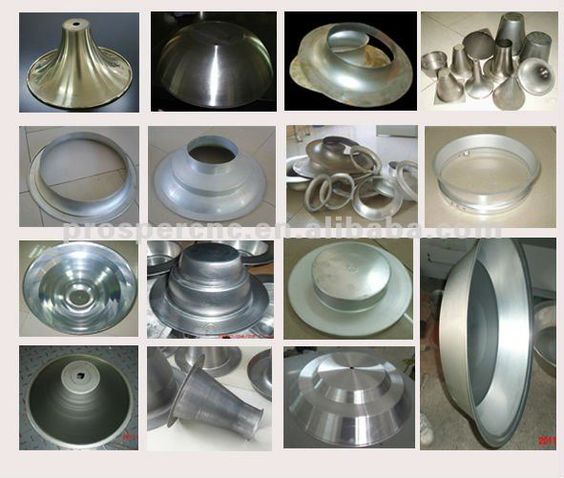
The EMS CNC Tube Flanging Machine represents a pinnacle in precision tube-end forming technology, combining the mechanical robustness of traditional forming machinery with the versatility, intelligence, and repeatability of CNC control. In modern industrial manufacturing, where the consistency of each flange affects the performance, safety, and assembly of products, CNC technology allows operators to achieve unmatched levels of accuracy and repeatability across diverse materials, tube diameters, and production volumes. EMS Metalworking Machinery has leveraged decades of engineering expertise to design a machine that seamlessly integrates computer numerical control with heavy-duty mechanical components, ensuring precise flanging of tubes for a wide array of applications including automotive, aerospace, HVAC, industrial piping, stainless steel fabrication, pressure vessel manufacturing, and high-performance tubing systems. The CNC platform not only enhances forming accuracy but also enables complex geometries, automated cycle adjustments, and integration with fully automated production lines, delivering measurable efficiency gains for manufacturers of all scales.
At the core of the EMS CNC Tube Flanging Machine is a rigid, stress-relieved frame constructed from high-grade structural steel. This frame provides the stability necessary for precise flanging operations, maintaining alignment between the tube, mandrel, and forming dies under high pressures. Any deviation in alignment can result in eccentric flanges, material thinning, or cracking, which is unacceptable in high-precision production environments. EMS engineers utilize advanced welding techniques, CNC-machined base plates, and thermal stress-relief procedures to ensure that the machine maintains perfect geometry throughout its operational lifespan. The rigidity of the frame not only contributes to the precision of each flange but also enhances the durability of the machine, allowing it to withstand continuous operation in high-volume production settings without compromising quality.
The CNC system provides unparalleled control over the flanging process. Operators can program flange height, angle, radius, wall thickness, and forming speed with remarkable precision. This level of control ensures consistent results across batches, reduces the need for operator intervention, and minimizes variability caused by manual adjustments. The CNC controller allows for the storage of multiple programs, making it simple to switch between different tube diameters, materials, or flange geometries without requiring extensive recalibration. This capability is particularly valuable in facilities that manufacture multiple product families or need to adapt quickly to changing production requirements. By integrating CNC technology, EMS provides manufacturers with a flexible and intelligent platform capable of meeting stringent industry standards.
Material versatility is a defining feature of the EMS CNC Tube Flanging Machine. The machine can process a wide range of tube diameters, wall thicknesses, and material types, including carbon steel, stainless steel, aluminum, copper, brass, titanium, and specialized alloys. Each material behaves differently under forming pressures; for example, stainless steel is prone to work-hardening, aluminum is more ductile, and high-strength carbon steels require controlled force to prevent cracking. The CNC system allows operators to precisely tailor forming parameters such as speed, force, and mandrel support to match the material properties, ensuring flawless flanges with consistent wall thickness and geometry. EMS combines this flexibility with customized tooling designs that include mandrels, external dies, and clamping systems optimized for each tube material and diameter.
The internal mandrel plays a crucial role in supporting the tube during flanging. In CNC-controlled operations, the mandrel can be dynamically positioned to adapt to different flange heights, diameters, or complex shapes, allowing the material to expand evenly without thinning or wrinkling. This precision support is particularly important when working with thin-walled tubes, high-strength alloys, or tubes with welded seams. By maintaining proper internal alignment and controlling the material flow, EMS ensures that each flange emerges with precise dimensions, structural integrity, and surface quality. The combination of CNC-controlled mandrel motion and external die shaping allows for complex flanges that may not be achievable with conventional mechanical machines, opening possibilities for advanced designs in high-tech applications.
The external forming dies are designed to complement the internal mandrel, shaping the tube end to the desired flange geometry. CNC control enables precise synchronization between the mandrel and the die, ensuring that material flow is consistent and controlled throughout the forming process. The dies are made from high-strength, wear-resistant materials and are often heat-treated or coated to extend service life. For high-volume production environments, EMS provides modular die systems that allow for quick changeovers between tube sizes or flange profiles. This modularity reduces downtime, enhances flexibility, and allows manufacturers to maintain high productivity levels while producing multiple product variations.
Clamping and holding systems are another critical aspect of the CNC Tube Flanging Machine. The machine uses hydraulic or servo-driven clamping jaws to securely hold the tube in position throughout the forming cycle. CNC control allows for precise adjustment of clamping pressure, adapting to different tube diameters, wall thicknesses, and material properties. Proper clamping is essential to prevent tube rotation, vibration, or misalignment during forming, which can lead to flange inconsistencies or defects. EMS engineers design the clamping system to minimize surface contact damage, using hardened or coated jaws for durable and safe tube gripping. This careful design ensures that even polished or delicate tubes can be processed without scratches or deformities.
The EMS CNC Tube Flanging Machine excels in high-volume production due to its ability to maintain consistent quality over long production runs. Unlike manual or semi-automated machines, where operator variability can introduce inconsistencies, CNC control ensures that every flange is identical to the programmed specifications. This repeatability is crucial for industries such as automotive and aerospace, where dimensional tolerances are tight, and any deviation can compromise assembly or performance. By combining mechanical stability, precise tooling, and CNC intelligence, EMS delivers a machine capable of producing flawless flanges batch after batch, reducing scrap and minimizing rework.
Safety is another core consideration in EMS CNC machine design. The machine is equipped with protective guards, light barriers, emergency stops, and interlocks to ensure that operators are shielded from moving components during operation. CNC systems also provide automated cycle monitoring and fault detection, pausing the machine if deviations occur or if maintenance is required. This combination of mechanical protection and intelligent control reduces the risk of accidents, enhances operator confidence, and supports compliance with industrial safety standards. Additionally, EMS machines are designed for ergonomic operation, with intuitive interfaces, accessible service points, and operator-friendly control panels.
Integration with automated production lines is a significant advantage of CNC-controlled flanging machines. EMS designs allow seamless connection with robotic tube loading systems, conveyors, automated inspection stations, and robotic unloading mechanisms. This level of automation enables continuous, unattended operation, increasing throughput while maintaining high precision. Facilities can implement complete automated cells where tubes are loaded, flanged, inspected, and packaged with minimal human intervention. Even in semi-automated setups, the CNC system provides precise control, reducing manual adjustments, preventing errors, and ensuring consistent quality. This flexibility makes EMS CNC machines suitable for both large-scale industrial plants and specialized manufacturing environments.
The CNC control system provides comprehensive monitoring and diagnostic capabilities. Operators can track cycle times, flange height, forming pressure, mandrel position, die alignment, and other critical parameters in real-time. Advanced models allow data logging for quality assurance, predictive maintenance, and process optimization. Alerts and alarms notify operators of deviations, tool wear, or maintenance needs, ensuring proactive intervention before defects or downtime occur. This intelligent monitoring enhances production reliability, improves operational efficiency, and allows manufacturers to maintain the highest quality standards without excessive manual oversight.
EMS also emphasizes ease of programming and adaptability in its CNC machines. Users can create, store, and recall complex flange programs quickly, allowing rapid adaptation to different tube diameters, materials, or flange designs. The system supports fine adjustments to forming speed, stroke, pressure, and mandrel alignment, enabling manufacturers to optimize production for both high-volume and high-precision applications. The ability to program complex geometries, including angled flanges, multi-step forming, or specialized profiles, provides versatility for advanced industrial applications. This programming flexibility ensures that the EMS CNC Tube Flanging Machine remains a valuable asset in facilities that demand adaptability and high performance.
The mechanical and structural design of the machine is complemented by robust electrical and hydraulic components. Servo motors, precision ball screws, linear guides, and hydraulic cylinders are selected for industrial-grade performance and longevity. All moving parts are engineered for smooth motion, low maintenance, and reliable operation under continuous production conditions. The integration of CNC intelligence with high-quality mechanical components ensures that the machine can operate efficiently at high speed without sacrificing precision or durability. EMS’s engineering approach combines mechanical expertise with advanced electronics to create a machine that is both powerful and precise.
In addition to standard flanging, the EMS CNC Tube Flanging Machine supports advanced applications such as flaring, tapered flanges, stepped flanges, and custom profiles. CNC control allows precise shaping of each tube end, making it possible to produce complex geometries that may be required for specialized assembly or industrial applications. This capability expands the range of products that manufacturers can produce on a single machine, reducing the need for multiple forming stations and lowering overall production costs. EMS’s dedication to advanced forming solutions ensures that clients can achieve high-quality, complex tube-end geometries with minimal effort.
The machine’s reliability is enhanced by predictive maintenance and condition monitoring. CNC systems track the usage of key components, including mandrels, dies, and bearings, and provide alerts for replacement or servicing before failures occur. This proactive approach minimizes unplanned downtime, extends component life, and maintains consistent production quality. Combined with EMS’s reputation for durable construction and high-quality materials, this predictive maintenance capability ensures that the CNC Tube Flanging Machine delivers reliable operation for years of continuous production.
The EMS CNC Tube Flanging Machine also supports lean manufacturing and efficient workflow integration. By combining precise flanging with programmable automation, manufacturers can reduce handling steps, minimize operator intervention, and maintain consistent output. Integration with automated tube feeders, robotic handling, and in-line inspection allows the machine to operate continuously in high-volume production environments while maintaining quality and precision. The combination of CNC intelligence, mechanical robustness, and flexible integration ensures that EMS machines can meet the evolving needs of modern industrial production.
The EMS CNC Tube Flanging Machine excels in producing consistent, high-quality flanges across a wide range of tube diameters and wall thicknesses. This adaptability makes it suitable for a diverse set of applications, from small-diameter precision tubing used in electronics or medical equipment to large industrial pipes employed in HVAC, plumbing, or chemical processing. The CNC system allows operators to precisely control every aspect of the forming process, including mandrel positioning, flange height, forming speed, and die pressure. This ensures that the tube end maintains structural integrity, uniform wall thickness, and precise dimensions regardless of the material properties. EMS engineers design each machine to be versatile, enabling manufacturers to handle multiple product types without compromising quality or efficiency.
The mandrel system in the CNC machine is key to achieving flawless flanges. Internally, the mandrel supports the tube during forming, preventing deformation, thinning, or cracking. CNC control allows the mandrel to move precisely in coordination with the die, accommodating various flange heights, diameters, and profiles. This dynamic adjustment capability is especially important when working with high-strength or corrosion-resistant alloys, which require gradual and carefully controlled material flow. The combination of internal mandrel support and external die shaping ensures even material distribution, eliminating wrinkles, cracks, or uneven wall thickness. EMS’s precision engineering allows manufacturers to produce complex flange geometries with confidence, reducing scrap and rework.
The external forming dies work in perfect synchrony with the CNC-controlled mandrel. Their high-precision design ensures consistent shaping of the tube end according to programmed specifications. Dies are made from hardened steel or coated materials for wear resistance, durability, and extended service life. Modular die designs allow quick changes between tube sizes or flange profiles, enabling manufacturers to switch production runs efficiently without sacrificing precision. This flexibility enhances productivity and supports a variety of industrial applications, allowing a single machine to serve multiple production requirements and reduce equipment costs.
Clamping systems in the EMS CNC Tube Flanging Machine are engineered to provide secure tube holding without surface damage. Hydraulic or servo-driven clamping jaws maintain consistent pressure during forming, preventing tube rotation or vibration that could lead to misaligned or inconsistent flanges. The CNC system allows operators to adjust clamping force precisely, accommodating different tube diameters, wall thicknesses, and materials. EMS also offers soft-contact clamping solutions for delicate or polished tubes, ensuring high-quality results without scratching or deforming the surface. Proper clamping is essential for achieving repeatable precision, and EMS places particular emphasis on this aspect to support demanding production standards.
One of the most significant advantages of CNC technology is the ability to store and recall multiple programs for different tube types. Manufacturers can program various flange heights, angles, profiles, and forming speeds, and the CNC system will execute each program with exact precision. This capability reduces setup time, minimizes human error, and allows for rapid changeovers between production runs. Facilities producing multiple product families benefit from increased efficiency and consistency, as the machine maintains uniform quality across diverse tube types without requiring manual recalibration or adjustments. The EMS CNC Tube Flanging Machine is therefore ideal for modern manufacturing environments that demand flexibility, speed, and repeatable accuracy.
The integration of CNC technology also enables advanced process monitoring and quality assurance. Real-time tracking of mandrel position, die pressure, forming speed, and cycle duration ensures that each flange is produced according to specifications. Deviations from programmed parameters trigger automatic alerts, pausing production to prevent defects. Data logging capabilities provide valuable insight for quality control, maintenance scheduling, and process optimization. EMS’s intelligent CNC system empowers manufacturers to achieve high-quality output while reducing scrap, improving productivity, and supporting regulatory compliance in industries with strict standards.
EMS places a strong emphasis on operator-friendly design. The CNC interface is intuitive, with clear visual displays, touch-screen controls, and multi-language support. Operators can easily select programs, adjust forming parameters, monitor production cycles, and access diagnostic information. This design reduces training time, improves operational efficiency, and allows production teams to focus on quality oversight rather than manual adjustments. Ergonomic considerations, such as strategically positioned control panels and accessible service points, further enhance the operator experience, reducing fatigue and promoting safe working conditions.
Durability and longevity are central to the EMS CNC Tube Flanging Machine design philosophy. Structural components, such as the frame, mandrel, die mounts, and clamping assemblies, are manufactured from high-strength materials to withstand continuous industrial use. Precision ball screws, linear guides, and servo motors are selected for long life and minimal maintenance. Hydraulic and electrical systems are built with industrial-grade components to ensure reliable performance under demanding conditions. The combination of robust mechanical design and advanced CNC control ensures that the machine maintains high precision, repeatability, and productivity over years of operation, making it a reliable long-term investment for manufacturers.
The CNC Tube Flanging Machine is capable of producing complex flange geometries that are difficult or impossible to achieve with traditional mechanical machines. For example, flared or tapered flanges, stepped profiles, and customized multi-level designs can be precisely formed using CNC control. This capability expands the range of products that manufacturers can produce on a single machine, reducing the need for multiple forming stations and lowering overall production costs. EMS’s commitment to advanced forming technology allows manufacturers to meet evolving market demands and create innovative products with precision and efficiency.
Automation integration is another key advantage of the EMS CNC platform. The machine can be connected to robotic tube loading systems, automated conveyors, inspection stations, and robotic unloading systems. This allows for fully unattended operation, increasing throughput and maintaining high consistency in production. Even in semi-automated environments, the CNC system ensures precise control over forming parameters, reducing variability and ensuring that every tube meets strict quality requirements. The flexibility to operate in both automated and semi-automated configurations makes EMS CNC machines suitable for a wide range of production scales and industrial applications.
The CNC Tube Flanging Machine supports lean manufacturing practices by reducing handling steps and eliminating the need for multiple machines in separate operations. By performing precise flanging on a single, CNC-controlled platform, manufacturers can streamline workflow, minimize labor intervention, and reduce the risk of errors. The combination of CNC precision and integrated mechanical design ensures that output is consistent, reliable, and ready for downstream assembly or installation. Manufacturers can achieve higher throughput, reduced scrap, and lower operational costs, aligning with modern production efficiency goals.
EMS engineers also consider energy efficiency and environmental impact in the design of the CNC Tube Flanging Machine. Servo-driven systems, optimized hydraulic circuits, and precision control minimize energy consumption while maintaining high productivity. Noise and vibration levels are reduced through mechanical damping, smooth material flow, and high-quality components, creating a safer and more comfortable working environment. By reducing energy use and waste, EMS machines support sustainable manufacturing practices while maintaining industrial performance standards.
Maintenance and serviceability are designed into the EMS CNC platform. Key components such as dies, mandrels, clamping jaws, ball screws, and linear guides are easily accessible for inspection, lubrication, or replacement. Modular designs allow quick tool changes to accommodate different tube sizes or flange profiles, minimizing downtime. The CNC system also monitors tool usage, cycle counts, and machine performance, providing alerts for preventive maintenance. This proactive approach helps manufacturers maintain production continuity, extend component life, and reduce unexpected downtime, ensuring that the machine delivers consistent performance over its operational life.
The CNC Tube Flanging Machine is particularly beneficial in industries where flange precision directly affects assembly integrity, sealing performance, and safety. In automotive systems, for example, flanges must align perfectly to avoid exhaust leaks, vibration, or misalignment. In HVAC or plumbing applications, flange accuracy is critical to ensure leak-free connections and reliable system performance. Industrial piping, pressure vessels, and fire suppression systems also demand high-quality flanges that maintain dimensional accuracy and structural integrity. EMS CNC machines meet these requirements through precise control, intelligent automation, and robust mechanical design, providing manufacturers with reliable, high-quality results.
The machine’s adaptability extends to material and tube-wall variability. Thin-walled tubes, high-strength alloys, or welded-seam tubes each pose specific forming challenges. The CNC system allows for precise adjustments to mandrel position, die pressure, and forming speed to accommodate these variations. This ensures that each flange is uniform, structurally sound, and free from defects such as cracks, thinning, or distortion. The flexibility to handle different materials and wall thicknesses reduces changeover times and allows manufacturers to produce multiple product lines on a single machine without compromising quality.
The EMS CNC Tube Flanging Machine is also equipped for advanced process documentation and traceability. Critical forming parameters, production counts, and quality metrics can be logged and stored for regulatory compliance, customer reporting, or internal quality assurance. This feature supports industries with strict documentation requirements, such as aerospace, automotive, and medical equipment manufacturing. Manufacturers can track each tube produced, ensuring accountability and confidence in product quality.
The EMS CNC Tube Flanging Machine ensures reliable and repeatable production even under continuous high-volume operation. The combination of precise CNC control, high-quality mechanical components, and robust structural design enables the machine to operate for extended periods without degradation in performance or accuracy. This reliability is essential for industrial environments where production continuity is critical, and even minor defects or downtime can result in significant losses. EMS machines are engineered to withstand the demands of multi-shift operation, providing manufacturers with confidence in their investment and minimizing unplanned interruptions.
A significant advantage of the EMS CNC Tube Flanging Machine is its capacity for producing complex, multi-step flanges in a single cycle. Traditional mechanical machines often require multiple operations or separate machines to achieve flanges with stepped profiles, flared edges, or specialized geometries. With CNC control, the EMS machine can execute precise mandrel and die movements to create these advanced profiles without additional handling or repositioning. This capability enhances efficiency, reduces labor requirements, and ensures that complex flanges are produced consistently and accurately on every tube. Manufacturers benefit from both time savings and higher product quality, particularly in industries requiring specialized tube-end designs.
The integration of sensors and real-time monitoring further enhances the machine’s capabilities. The CNC system continuously tracks mandrel position, die alignment, forming force, and cycle timing, providing immediate feedback to the operator. Deviations from programmed parameters trigger alarms or automatic pauses, allowing corrective action before defective parts are produced. Advanced models also offer full data logging for process optimization, quality assurance, and predictive maintenance. This data-driven approach allows manufacturers to analyze production trends, anticipate wear on tooling, and improve overall operational efficiency while maintaining strict adherence to quality standards.
Ease of use is a hallmark of the EMS CNC Tube Flanging Machine. Operators interact with the system through an intuitive, touch-screen interface that provides program selection, parameter adjustment, real-time monitoring, and diagnostic tools. Multi-language support and graphical displays make programming accessible even to operators with limited CNC experience. Complex flange geometries, material-specific forming profiles, and production variations can be stored and recalled instantly, reducing setup time and minimizing the risk of operator error. This operator-friendly design ensures that the machine can deliver high performance without requiring highly specialized personnel.
Durability is embedded into every aspect of the EMS CNC Tube Flanging Machine. Structural components, including the base, frame, mandrel support, and die mounts, are fabricated from high-strength materials and designed for minimal deflection under load. Linear guides, ball screws, and servo motors are selected for precision, longevity, and low maintenance, while hydraulic systems are optimized for smooth, consistent operation. Tooling is manufactured from hardened steel or coated materials to resist wear, and modular designs allow for quick changeovers between tube sizes or flange profiles. EMS’s emphasis on durability ensures that each machine provides consistent performance and reliable service over many years of operation.
The CNC Tube Flanging Machine also supports lean manufacturing principles by consolidating operations into a single, intelligent platform. By eliminating the need for multiple machines and handling steps, manufacturers can reduce floor space requirements, lower labor costs, and increase throughput. Automation integration with robotic loading, conveyors, and in-line inspection further streamlines production, allowing manufacturers to operate efficiently with minimal manual intervention. EMS machines deliver both flexibility and consistency, making them suitable for high-mix, high-volume, or specialized manufacturing environments.
Quality assurance is greatly enhanced by the precise control offered by CNC technology. Flanges are produced with exacting dimensional tolerances, uniform wall thickness, and smooth surfaces, minimizing the need for secondary processing or rework. This is particularly critical in industries where flange quality directly impacts assembly integrity, sealing performance, and system safety. Automotive exhaust lines, HVAC piping, industrial pipelines, pressure vessels, and specialized equipment all require precise tube-end forming, and the EMS CNC machine ensures that every component meets stringent quality standards.
The machine’s flexibility extends to a wide range of materials and wall thicknesses. Thin-walled tubes, high-strength alloys, welded-seam tubes, and corrosion-resistant materials each present unique challenges during forming. The CNC system allows operators to precisely control mandrel position, die pressure, and forming speed to accommodate these variations, ensuring that every flange maintains structural integrity and dimensional accuracy. This adaptability allows manufacturers to handle multiple materials and product types on a single machine without sacrificing quality or requiring extensive setup changes.
EMS also prioritizes operator safety and ergonomics. Protective guards, light barriers, emergency stops, and interlocks prevent access to moving components during operation, reducing the risk of accidents. The intuitive CNC interface and strategically positioned control panels enhance usability, while accessible maintenance points minimize strain during servicing. By combining safety features with ergonomic design, EMS ensures that the machine can be operated comfortably and safely over long production shifts.
The CNC Tube Flanging Machine contributes to operational efficiency by minimizing scrap and reducing rework. Precise trimming and forming, combined with real-time monitoring, ensure that each flange conforms to specifications. Any deviations are immediately detected, allowing operators to take corrective action before defective parts are produced. This precision reduces material waste, lowers production costs, and increases overall plant efficiency. Manufacturers benefit from both enhanced product quality and improved profitability due to reduced waste and higher throughput.
Maintenance and serviceability are key considerations in the EMS CNC machine design. Critical components such as mandrels, dies, clamping systems, ball screws, and linear guides are accessible for inspection, lubrication, and replacement. Modular designs allow rapid tool changes, minimizing downtime between production runs. The CNC system provides alerts for preventive maintenance, enabling operators to plan service interventions before failures occur. This proactive approach extends component life, maintains production continuity, and ensures consistent high-quality output over the machine’s operational life.
The EMS CNC Tube Flanging Machine also enables traceability and documentation for quality assurance. Production parameters, cycle counts, and quality metrics can be logged and stored for auditing, regulatory compliance, and process optimization. This is particularly valuable in industries such as aerospace, automotive, medical equipment, and high-pressure piping, where documentation and traceability are critical for certification and client assurance. Manufacturers can confidently demonstrate compliance with industry standards while maintaining consistent quality across all production runs.
Integration with broader manufacturing systems is seamless due to the intelligent CNC control. The machine can communicate with production monitoring software, automated tube feeding systems, robotic handling units, and in-line inspection stations. This connectivity allows manufacturers to implement fully automated, high-volume production lines that operate continuously with minimal human intervention. Even in semi-automated configurations, the CNC system maintains precise control, ensuring that every flange meets programmed specifications regardless of operator experience or environmental conditions.
The EMS CNC Tube Flanging Machine is engineered for versatility, precision, and long-term reliability. It is capable of producing standard flanges, flared edges, stepped profiles, and complex multi-step geometries, meeting the demands of modern industrial manufacturing. The combination of CNC intelligence, robust mechanical design, precision tooling, and flexible automation options makes it an essential tool for manufacturers who require consistent quality, high throughput, and adaptability to evolving production needs. EMS continues to invest in engineering excellence and innovation, ensuring that each CNC machine provides exceptional performance, operational efficiency, and a high return on investment.
With its ability to handle a wide range of tube diameters, wall thicknesses, and material types, the EMS CNC Tube Flanging Machine supports diverse industrial applications. Automotive exhaust systems, heat exchangers, HVAC installations, industrial pipelines, pressure vessels, and custom tube assemblies all benefit from the machine’s precision, consistency, and efficiency. The intelligent CNC control allows manufacturers to produce repeatable, high-quality flanges, reducing scrap, rework, and operational costs while maintaining the integrity and reliability of critical tube-end components.
In conclusion, the EMS CNC Tube Flanging Machine represents the state of the art in tube-end forming technology. Its combination of CNC control, robust mechanical design, precision tooling, automation capability, and operator-friendly interfaces provides manufacturers with an unparalleled solution for high-quality, high-volume production. The machine ensures repeatable precision, minimizes defects, optimizes productivity, and supports lean manufacturing principles. By integrating advanced CNC intelligence with durable mechanical engineering, EMS offers a machine that not only meets current production demands but is adaptable to future requirements, delivering long-term reliability, efficiency, and value across a wide range of industrial applications.
The EMS Hydraulic Tube Flanging Machine represents a highly versatile and robust solution for tube-end forming operations, combining the power of hydraulic actuation with precision engineering to achieve consistent and reliable flanges. Hydraulic forming technology is particularly well-suited for handling a wide range of tube diameters, wall thicknesses, and materials, including high-strength steels, stainless steel, aluminum, copper, brass, and specialized alloys. EMS Metalworking Machinery has designed the hydraulic flanging system to provide controlled force application, smooth material flow, and precise flange geometry, ensuring that each tube end is formed to exact specifications. The integration of hydraulics allows for gradual, uniform application of pressure, reducing the risk of cracking, thinning, or distortion, which is especially critical when processing thin-walled or high-strength tubes. EMS combines this mechanical power with advanced control systems and robust tooling to deliver a machine capable of meeting the demanding requirements of modern industrial production.
At the heart of the EMS Hydraulic Tube Flanging Machine is a rigid, stress-relieved frame constructed from high-strength structural steel. This frame provides the stability required to support the forces generated during hydraulic forming operations. Any deformation or misalignment in the frame can compromise the quality of the flange, leading to uneven wall thickness, eccentric geometry, or material failure. EMS engineers use precision fabrication techniques, thermal stress relief, and CNC-machined surfaces to ensure that the frame maintains perfect alignment under high pressures and continuous operation. The combination of structural integrity and hydraulic power allows the machine to produce uniform flanges consistently, even in demanding production environments with continuous multi-shift operation.
The hydraulic system is designed to deliver smooth, controlled force to the flanging mandrel and die. Unlike purely mechanical systems, hydraulic actuation allows for adjustable force profiles, enabling operators to apply gradual pressure during the initial stages of forming and increase it as needed for thicker or stronger materials. This controlled approach minimizes stress concentrations, reduces the likelihood of cracking or thinning, and ensures even material flow around the tube circumference. The EMS hydraulic system is engineered for precision, reliability, and repeatability, providing operators with confidence that each tube will be formed to exacting specifications regardless of material properties or wall thickness.
Internal mandrel support is a critical feature of the EMS Hydraulic Tube Flanging Machine. During the flanging process, the mandrel maintains tube alignment, supports the internal wall, and ensures that material flows evenly to form a consistent flange. The hydraulic actuation allows the mandrel to move in precise, controlled increments, accommodating different flange heights, diameters, and profiles. This level of control is particularly valuable when processing high-strength materials or tubes with thin walls, as it prevents deformation, cracking, or wrinkling. EMS engineers design mandrels to match the specific material, tube size, and flange geometry, ensuring optimal results for every application.
The external die works in coordination with the hydraulic mandrel to shape the flange accurately. Hydraulic pressure allows the die to apply consistent force across the tube circumference, eliminating uneven edges or eccentric flanges. Dies are manufactured from hardened steel or coated materials to resist wear and maintain precision over extended production runs. Modular die systems allow quick changeovers for different tube diameters, wall thicknesses, or flange profiles, reducing downtime and enhancing flexibility in production environments. The coordinated action of the mandrel and die ensures that every flange meets strict dimensional and structural standards, making the EMS Hydraulic Tube Flanging Machine suitable for critical applications where quality is paramount.
Clamping and tube-holding systems are designed to provide secure, non-damaging support during the forming process. Hydraulic clamping jaws maintain consistent pressure, preventing tube rotation, vibration, or misalignment. The force can be adjusted to accommodate various tube materials, diameters, and wall thicknesses, ensuring that delicate or polished surfaces are protected from scratches or deformation. Proper clamping is essential for achieving consistent flange geometry and structural integrity, and EMS engineers have designed these systems to maximize precision, durability, and ease of operation.
Hydraulic control offers significant advantages for handling a variety of materials. High-strength steels, stainless steel alloys, and specialized materials often require gradual, controlled forming to prevent cracking or distortion. Hydraulic actuation provides this capability, allowing force to be applied incrementally while maintaining alignment and support. For aluminum, copper, or brass tubes, hydraulic control ensures smooth material flow without excessive force, preserving surface quality and wall thickness. This adaptability enables manufacturers to process multiple materials and tube types on a single machine, improving production efficiency and reducing the need for separate forming stations.
The EMS Hydraulic Tube Flanging Machine is engineered for high-volume production without sacrificing quality. Hydraulic systems are capable of maintaining consistent pressure and force throughout long production runs, ensuring that every flange conforms to specifications. The smooth, continuous motion of the mandrel and die reduces vibrations, minimizes wall thinning, and prevents the formation of surface defects. This level of reliability and precision makes the EMS machine ideal for industrial applications where consistent tube-end quality is critical, including automotive, HVAC, industrial piping, pressure vessels, and fire suppression systems.
Automation compatibility enhances the versatility of the EMS Hydraulic Tube Flanging Machine. The system can be integrated with automated tube loading systems, conveyors, robotic handling units, and in-line inspection stations. This level of automation allows for continuous, unattended operation, increasing throughput while maintaining high-quality standards. Even in semi-automated setups, the hydraulic system provides precise control over force and positioning, ensuring repeatable results with minimal operator intervention. This flexibility allows manufacturers to scale production according to demand while maintaining consistent flange quality.
The operator interface is designed for simplicity and efficiency. Intuitive control panels provide real-time monitoring of hydraulic pressure, mandrel position, cycle times, and forming progress. Operators can adjust parameters, select programs for different tube diameters or flange profiles, and monitor machine performance through a user-friendly touch-screen interface. EMS prioritizes operator experience, ensuring that the machine can be operated safely and efficiently without extensive training, while maintaining the precision and repeatability required in industrial applications.
Durability is a hallmark of the EMS Hydraulic Tube Flanging Machine. Structural components, hydraulic cylinders, valves, pumps, and control systems are selected for long-term performance in demanding production environments. Components are designed to withstand the high pressures and repetitive motion associated with hydraulic forming, ensuring consistent results over extended operational periods. Tooling, including dies and mandrels, is manufactured from high-quality, wear-resistant materials, further enhancing the machine’s longevity. EMS’s commitment to durable design ensures that manufacturers can rely on the hydraulic flanging machine for years of continuous operation with minimal maintenance requirements.
The hydraulic system also provides energy efficiency and smooth operation. Compared to purely mechanical systems, hydraulic actuation delivers controlled force with minimal energy loss, reducing operational costs and improving workplace safety. Smooth, gradual forming reduces noise and vibration, creating a more comfortable working environment while minimizing stress on machine components. EMS combines high-quality hydraulic engineering with precise mechanical design to achieve optimal performance, energy efficiency, and operator comfort.
The EMS Hydraulic Tube Flanging Machine supports a wide range of flange geometries. Standard flanges, flared edges, stepped profiles, and custom designs can all be produced with high precision. Hydraulic actuation allows the operator to control forming pressure and stroke incrementally, accommodating complex profiles without compromising structural integrity. This versatility enables manufacturers to meet evolving production requirements, produce innovative designs, and reduce the need for multiple forming machines or secondary operations.
Quality assurance is enhanced through precise hydraulic control and real-time monitoring. The machine ensures consistent flange height, uniform wall thickness, and accurate tube-end geometry. Deviations in forming parameters, such as pressure, stroke, or alignment, are detected immediately, allowing operators to make adjustments before defective parts are produced. This results in reduced scrap, higher productivity, and reliable output, meeting the strict quality standards demanded in automotive, aerospace, industrial, and plumbing applications.
The EMS Hydraulic Tube Flanging Machine is also highly adaptable to varying tube sizes and wall thicknesses. Hydraulic force can be adjusted to accommodate thin-walled tubes, thick-walled industrial pipes, or tubes with varying material properties. This adaptability allows manufacturers to produce multiple product lines on a single machine without extensive changeovers, improving efficiency and reducing production costs. The flexibility of the hydraulic system, combined with modular tooling options, ensures that the EMS machine can meet a wide range of industrial production requirements.
Maintenance and serviceability are designed into the EMS Hydraulic Tube Flanging Machine. Hydraulic components, dies, mandrels, and clamping systems are accessible for inspection, lubrication, and replacement. Modular design allows quick tool changes, minimizing downtime and supporting efficient production. The system monitors hydraulic pressures, cycles, and component usage to provide alerts for preventive maintenance, helping manufacturers maintain high productivity and reduce unplanned downtime. EMS provides comprehensive manuals and operator training to ensure the machine can be maintained efficiently and effectively.
The EMS Hydraulic Tube Flanging Machine is engineered to deliver consistent, high-quality flanges even under continuous operation in demanding production environments. Its hydraulic actuation provides smooth, controlled force, allowing the machine to handle both small-diameter precision tubes and large industrial pipes without compromising structural integrity. By controlling the rate of pressure application, the machine minimizes stress concentrations and ensures uniform material flow, which is essential for high-strength or thin-walled tubes. This precision reduces the risk of defects such as cracking, wall thinning, wrinkling, or eccentric flanges, making the EMS hydraulic system particularly suitable for applications requiring exacting tolerances and repeatable quality.
The mandrel system plays a critical role in maintaining tube alignment during the flanging process. Internally, the mandrel provides support to the tube wall, preventing deformation while the external die shapes the flange. Hydraulic control allows the mandrel to move in precisely measured increments, accommodating variations in flange height, tube diameter, and wall thickness. This level of control is particularly beneficial for tubes made of high-strength steels, corrosion-resistant alloys, or thin-walled materials, which are prone to forming defects under excessive force. EMS engineers design mandrels to optimize internal support for each material type and tube size, ensuring that every flange maintains structural integrity and accurate geometry.
The external die system works in precise coordination with the hydraulic mandrel. Dies are manufactured from hardened steel or coated alloys to ensure long-term wear resistance and consistent shaping performance. Modular die designs allow rapid changeovers to accommodate different tube sizes, flange profiles, and wall thicknesses, minimizing downtime and supporting flexible production schedules. The hydraulic system ensures that die movement is smooth and controlled, applying even pressure around the tube circumference to eliminate uneven edges or eccentric flanges. The combination of mandrel support and die precision guarantees high-quality, repeatable results across a wide range of tube applications.
Clamping and holding systems are designed to secure tubes firmly during the forming process while preventing surface damage. Hydraulic or servo-driven clamps maintain consistent pressure, preventing tube rotation, vibration, or misalignment, which could compromise flange accuracy. Clamping force can be adjusted according to tube material, diameter, and wall thickness, ensuring that delicate or polished tubes are protected from scratches or deformation. EMS prioritizes proper clamping as a critical factor in achieving uniform flange geometry, structural integrity, and repeatable quality.
Hydraulic systems offer significant advantages for processing diverse materials. High-strength steels, stainless steel alloys, and specialized materials benefit from gradual, controlled force application, reducing the risk of cracking or distortion. Softer metals, such as aluminum or copper, can be formed smoothly without excessive pressure, preserving wall thickness and surface finish. This versatility allows manufacturers to produce multiple product lines on a single machine, reducing the need for multiple machines or complex changeovers and enhancing overall efficiency.
The EMS Hydraulic Tube Flanging Machine supports high-volume production while maintaining consistent quality. Hydraulic pressure can be precisely controlled and maintained throughout long production runs, ensuring that every flange meets dimensional and structural specifications. The smooth motion of the mandrel and die reduces vibrations and wall thinning, preventing defects and ensuring that each tube is ready for immediate assembly. This reliability makes the EMS hydraulic machine ideal for industrial applications where flange precision and repeatability are critical, including automotive exhaust systems, HVAC tubing, industrial piping, pressure vessels, and fire suppression systems.
Automation integration expands the machine’s capabilities. The EMS Hydraulic Tube Flanging Machine can interface with robotic tube loaders, conveyors, automated inspection stations, and robotic unloading systems. This integration enables continuous operation with minimal human intervention, increasing throughput and reducing labor requirements. Even in semi-automated configurations, the hydraulic system provides precise control over force and stroke, ensuring that flanges are produced consistently, regardless of operator experience. This flexibility allows manufacturers to scale production efficiently and maintain quality standards in high-demand environments.
The operator interface is designed to be intuitive and efficient. Hydraulic pressure, mandrel position, cycle times, and flange geometry are displayed in real time, allowing operators to monitor performance and make adjustments if necessary. Program selection for different tube diameters, wall thicknesses, or flange profiles is simple, and the user-friendly touch-screen interface reduces training time and minimizes the risk of operator error. EMS emphasizes operator ergonomics, ensuring that controls are accessible, service points are reachable, and operation is safe and comfortable even during long production shifts.
Durability and long-term reliability are hallmarks of the EMS Hydraulic Tube Flanging Machine. Structural components, including the frame, mandrel supports, die mounts, and clamping assemblies, are fabricated from high-strength materials to withstand high-pressure operation. Hydraulic cylinders, pumps, valves, and control systems are selected for industrial-grade performance, ensuring consistent operation over extended production periods. Tooling, including dies and mandrels, is designed for wear resistance and long service life. EMS’s focus on durable, high-quality components ensures that manufacturers can rely on the machine for years of continuous operation with minimal maintenance.
Energy efficiency and smooth operation are also key design considerations. Hydraulic systems provide controlled force with minimal energy loss, reducing operational costs while delivering precise, repeatable flanges. Smooth, gradual forming reduces noise and vibration, creating a safer and more comfortable working environment. EMS integrates hydraulic precision with robust mechanical design to achieve both energy efficiency and high performance, supporting sustainable and productive manufacturing operations.
The EMS Hydraulic Tube Flanging Machine accommodates a wide variety of flange geometries, including standard flanges, flared edges, stepped profiles, and custom designs. Hydraulic control allows operators to fine-tune forming pressure and stroke, enabling the production of complex profiles without compromising tube integrity. This versatility allows manufacturers to meet evolving production requirements, create innovative designs, and reduce the need for multiple forming machines or secondary operations.
Quality assurance is enhanced by hydraulic control and real-time monitoring. Each flange is produced with uniform wall thickness, consistent height, and accurate geometry. Deviations in forming parameters, such as pressure, stroke, or alignment, are immediately detected, allowing operators to intervene before defective tubes are produced. This proactive approach reduces scrap, minimizes rework, and ensures reliable output, meeting strict quality standards required in automotive, aerospace, industrial, and plumbing applications.
The hydraulic system is adaptable to a wide range of tube diameters and wall thicknesses. Thin-walled tubes, thick-walled industrial pipes, and tubes with varying material properties can all be processed effectively by adjusting hydraulic pressure and mandrel support. This flexibility allows manufacturers to produce multiple product lines on a single machine, improving operational efficiency, reducing setup time, and minimizing production costs. Combined with modular tooling options, EMS hydraulic machines provide exceptional versatility for diverse industrial applications.
Maintenance and serviceability are carefully designed into the EMS Hydraulic Tube Flanging Machine. Key components, including dies, mandrels, clamping systems, and hydraulic cylinders, are accessible for inspection, lubrication, or replacement. Modular tooling designs allow rapid changeovers, minimizing downtime between production runs. The hydraulic system includes monitoring and alerts for preventive maintenance, ensuring uninterrupted operation and extending the service life of critical components. EMS provides comprehensive manuals, training, and support to enable efficient maintenance and optimal machine performance.
The EMS Hydraulic Tube Flanging Machine ensures reliable, repeatable production over long operational cycles, making it ideal for industrial environments that demand high-quality, precise flanges. The controlled hydraulic actuation allows gradual material deformation, minimizing stress concentrations and ensuring uniform material flow around the tube circumference. This smooth forming process is essential for high-strength alloys, thin-walled tubes, or tubes with welded seams, which are prone to cracking, wall thinning, or eccentric flanges under uncontrolled pressure. EMS engineers have optimized the hydraulic system to deliver precise, repeatable force, ensuring that each tube end is formed according to exact specifications while maintaining structural integrity and dimensional accuracy.
The mandrel system remains a central component of the machine’s precision. Internal support prevents deformation and guides material flow during flanging, allowing the production of uniform, high-quality flanges. Hydraulic control provides precise, incremental mandrel movement, accommodating a wide range of flange heights, tube diameters, and wall thicknesses. This flexibility is critical when processing challenging materials such as high-strength steel, corrosion-resistant alloys, or thin-walled tubes, which require careful handling to avoid defects. EMS customizes mandrel designs for specific tube sizes and material types, ensuring optimal internal support and consistent results for every production run.
The external die operates in perfect coordination with the mandrel. Dies are fabricated from hardened steel or coated alloys for durability, wear resistance, and long-term precision. Hydraulic pressure ensures that the die applies uniform force across the tube circumference, eliminating uneven edges and eccentric flanges. Modular die systems allow quick changes between different tube sizes and flange profiles, reducing downtime and enhancing production flexibility. The combined action of the mandrel and die ensures precise flange geometry, uniform wall thickness, and structural integrity, enabling manufacturers to produce high-quality components for demanding industrial applications.
Clamping and holding systems are engineered for secure tube retention without surface damage. Hydraulic clamping jaws provide adjustable, consistent pressure to prevent tube rotation, vibration, or misalignment during forming. This is especially important for delicate or polished tubes, where scratches or dents could compromise product quality. EMS’s clamping system is designed for durability and precision, allowing operators to achieve consistent, repeatable results across various tube sizes and materials while maintaining surface integrity. Proper clamping contributes directly to the uniformity of the flange and the overall quality of the finished product.
The hydraulic system’s adaptability extends to diverse materials and wall thicknesses. High-strength steels, stainless steel, and specialized alloys benefit from gradual, controlled force application, preventing cracking or deformation. Softer metals, such as aluminum, copper, or brass, can be formed smoothly without over-stressing the material, preserving surface finish and wall thickness. This versatility allows manufacturers to process multiple materials and product lines on a single machine, eliminating the need for multiple machines and optimizing production efficiency. EMS’s hydraulic design provides reliable performance across a broad spectrum of industrial applications.
The EMS Hydraulic Tube Flanging Machine is engineered for continuous high-volume production. Hydraulic systems maintain stable pressure throughout long production cycles, ensuring consistent flange quality across all tubes. Smooth motion of the mandrel and die minimizes vibration and prevents wall thinning, yielding flanges that require minimal secondary processing. This reliability and repeatability make the machine suitable for automotive exhaust systems, HVAC tubing, industrial piping, pressure vessels, fire suppression systems, and other applications requiring high-quality, precision-formed flanges.
Integration with automation systems enhances production efficiency. EMS hydraulic machines can be connected to robotic tube loaders, automated conveyors, inspection stations, and robotic unloading mechanisms. This enables continuous, unattended operation with minimal human intervention, increasing throughput while maintaining consistent quality. Even in semi-automated setups, hydraulic control ensures accurate, repeatable flanges, reducing dependency on operator skill and minimizing the risk of errors. The machine’s automation compatibility allows manufacturers to scale production efficiently and reliably.
The operator interface is designed for simplicity and efficiency. Real-time monitoring of hydraulic pressure, mandrel position, forming progress, and cycle duration enables operators to oversee production easily. Parameter adjustments, program selection for various tube diameters or flange profiles, and machine diagnostics are accessible via an intuitive touch-screen interface. EMS emphasizes operator ergonomics and usability, ensuring that controls are accessible, service points are reachable, and operation is safe and comfortable. This user-friendly design allows operators to focus on quality assurance and production efficiency rather than complex machine adjustments.
Durability and long-term reliability are fundamental to the EMS Hydraulic Tube Flanging Machine. Structural components such as the frame, mandrel supports, die mounts, and clamping assemblies are made from high-strength materials to withstand repeated high-pressure operation. Hydraulic cylinders, valves, pumps, and control systems are industrial-grade, ensuring consistent performance and longevity. Tooling, including dies and mandrels, is wear-resistant and designed for extended production life. EMS’s focus on durable, high-quality components ensures that the machine provides reliable service and consistent precision over many years, making it a valuable long-term investment.
Energy efficiency and smooth operation are additional advantages. Hydraulic systems deliver precise force application with minimal energy loss, reducing operational costs while maintaining high productivity. Smooth, controlled forming reduces noise, vibration, and mechanical stress on components, creating a safer and more comfortable working environment. EMS integrates high-quality hydraulic components with robust mechanical engineering to achieve a combination of performance, efficiency, and operator comfort that supports sustainable manufacturing practices.
The EMS Hydraulic Tube Flanging Machine is capable of producing a wide range of flange geometries. Standard flanges, stepped profiles, flared edges, and custom designs can be produced with precise control over forming pressure and stroke. Hydraulic actuation allows incremental, controlled deformation of the tube, enabling the creation of complex flange profiles without compromising wall thickness or tube integrity. This versatility allows manufacturers to meet evolving market demands and produce innovative products on a single machine, reducing production costs and eliminating the need for multiple forming stations.
Quality assurance is enhanced through precise hydraulic control and real-time monitoring. Every flange is produced with uniform wall thickness, consistent height, and accurate tube-end geometry. Deviations in hydraulic pressure, mandrel alignment, or die movement trigger alerts, allowing operators to take corrective action before defective parts are produced. This proactive monitoring reduces scrap, increases productivity, and ensures that flanges meet stringent quality requirements, particularly in industries such as automotive, aerospace, industrial piping, and HVAC systems, where precision and consistency are essential.
The hydraulic system is highly adaptable, allowing manufacturers to process tubes with varying diameters, wall thicknesses, and material types on the same machine. Thin-walled tubes, thick industrial pipes, and high-strength alloys can all be formed effectively by adjusting hydraulic pressure and mandrel support. Modular tooling systems allow rapid changeovers between different tube sizes and flange profiles, reducing downtime and improving operational efficiency. This adaptability makes the EMS Hydraulic Tube Flanging Machine a versatile and cost-effective solution for diverse industrial applications.
Maintenance and serviceability are integral to the EMS Hydraulic Tube Flanging Machine design. Key components, including hydraulic cylinders, dies, mandrels, and clamping systems, are easily accessible for inspection, lubrication, and replacement. The system includes monitoring and alerts for preventive maintenance, ensuring uninterrupted operation and minimizing unplanned downtime. Modular tooling and quick-change systems allow operators to switch between different tube sizes and flange profiles efficiently. EMS provides comprehensive training and support, ensuring that operators and maintenance personnel can maximize machine performance and longevity.
In conclusion, the EMS Hydraulic Tube Flanging Machine represents a high-performance, versatile solution for modern industrial tube-end forming requirements. Combining hydraulic precision, robust mechanical engineering, durable tooling, and operator-friendly controls, the machine delivers consistent, repeatable, and high-quality flanges across a wide range of materials, tube diameters, and wall thicknesses. Its integration with automation systems, flexibility in flange geometries, energy efficiency, and long-term reliability make it an essential tool for manufacturers seeking precision, productivity, and cost-effectiveness. EMS Hydraulic Tube Flanging Machines provide industrial manufacturers with a dependable, intelligent, and versatile platform that ensures high-quality production, reduced waste, and optimized efficiency for years of continuous operation.
EMS Tube Spinning Machine
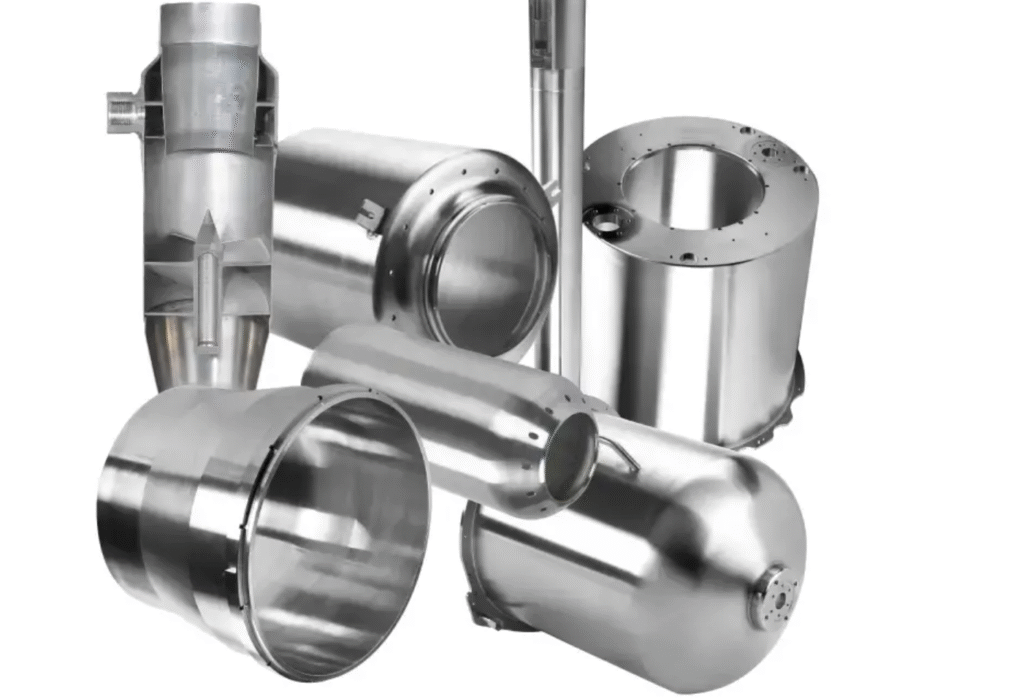
The EMS Tube Spinning Machine represents a state-of-the-art solution for precision metal spinning, designed to deliver high-quality cylindrical, conical, and complex rotationally symmetric components. Metal spinning is a versatile and cost-effective method for forming metal tubes and hollow parts from sheet or tubular stock, producing products with high dimensional accuracy, smooth surfaces, and consistent wall thickness. EMS Tube Spinning Machines are engineered to handle a wide range of materials, including stainless steel, aluminum, copper, brass, and high-strength alloys, allowing manufacturers to produce components for industries such as automotive, aerospace, HVAC, lighting, pressure vessels, and decorative metalwork. By combining robust mechanical engineering, advanced control systems, and precision tooling, EMS machines enable manufacturers to achieve high throughput while maintaining exceptional product quality and repeatability.
The core functionality of the EMS Tube Spinning Machine relies on precise rotation of the workpiece while applying controlled force through spinning tools or rollers. The machine’s rigid frame and high-quality bearings ensure smooth rotation and minimize vibration, which is critical for maintaining dimensional accuracy and surface quality. Tubular or sheet metal blanks are mounted on a mandrel or chuck, which rotates at controlled speeds while the spinning tool shapes the material into the desired geometry. EMS engineers design the mandrels and chucks for maximum stability, accommodating a range of diameters, wall thicknesses, and material types, ensuring that even delicate or thin-walled components can be spun without deformation or cracking.
One of the key advantages of EMS Tube Spinning Machines is their ability to produce parts with consistent wall thickness and precise dimensional control. The spinning process allows material to be stretched or compressed in a controlled manner, producing uniform thickness across the component while achieving complex shapes such as cones, cylinders, domes, and stepped profiles. The machine’s precision mechanical design, including rigid frames, adjustable tool posts, and precision bearings, ensures that the spinning force is applied evenly and accurately. This consistency is critical for applications such as automotive exhaust components, pressure vessels, and aerospace parts, where structural integrity, fit, and performance are paramount.
EMS Tube Spinning Machines are equipped with adjustable tool posts or rollers, allowing operators to control the angle, pressure, and position of the spinning tools. This flexibility enables the formation of intricate geometries, including flanges, lips, steps, and tapered profiles, in a single operation. By adjusting tool parameters, operators can optimize material flow to prevent thinning, cracking, or wrinkling, ensuring that each component meets tight specifications. Modular tooling systems also allow for quick changeovers between different part sizes or geometries, increasing production efficiency and reducing downtime. EMS’s focus on flexible, high-precision tooling ensures that manufacturers can meet diverse production requirements without sacrificing quality or efficiency.
The mandrel system in the EMS Tube Spinning Machine provides internal support to the workpiece during spinning, maintaining its shape and preventing deformation. Mandrels are engineered for stability, precision, and material compatibility, accommodating various tube diameters, wall thicknesses, and material types. For hollow or thin-walled components, internal mandrel support is essential to prevent collapse, wrinkling, or cracking. Hydraulic or mechanical adjustment mechanisms allow the mandrel to be positioned accurately, ensuring that the spinning process produces components with precise dimensions and consistent wall thickness. EMS engineers design mandrels for easy installation and removal, facilitating rapid setup and efficient production cycles.
Clamping and holding systems are critical for ensuring that the blank remains securely fixed to the mandrel or chuck during spinning. EMS machines feature robust clamping mechanisms, including adjustable jaws or hydraulic clamps, designed to hold the workpiece firmly without damaging the surface. Proper clamping prevents slippage, vibration, and misalignment, which can compromise part geometry and surface finish. EMS also provides soft-contact or protective clamping solutions for delicate or polished materials, ensuring that components are formed accurately without scratches or dents. Secure holding is essential for achieving repeatable, high-quality results in metal spinning operations.
The EMS Tube Spinning Machine can be operated manually, semi-automatically, or fully CNC-controlled, depending on the production requirements. CNC control provides precise regulation of spindle speed, tool position, feed rate, and forming pressure, allowing for highly repeatable and complex geometries. CNC programming also enables manufacturers to store multiple part designs, reducing setup time and eliminating human error. Fully automated CNC spinning allows for consistent production of large volumes of complex components, while manual or semi-automatic operation provides flexibility for custom or low-volume applications. EMS designs each machine to accommodate both production scales without compromising accuracy or efficiency.
Surface finish and dimensional accuracy are key benefits of EMS Tube Spinning Machines. The controlled rotation and precise application of forming force produce components with smooth, uniform surfaces that often require minimal secondary finishing. This reduces the need for polishing, machining, or other post-processing operations, saving time and reducing manufacturing costs. In addition, the consistent wall thickness achieved during spinning ensures that components meet structural and performance requirements, which is particularly important for pressure-bearing or load-critical applications. EMS machines enable manufacturers to produce parts that are both visually appealing and structurally sound.
Material versatility is a hallmark of EMS Tube Spinning Machines. The machines are capable of handling a wide range of metals and alloys, from soft aluminum and copper to high-strength steel and stainless steel. By adjusting spindle speed, tool pressure, and feed rate, operators can optimize the spinning process for different materials, ensuring that each component is formed without defects such as cracking, wrinkling, or excessive thinning. This flexibility allows manufacturers to produce a diverse product range on a single machine, reducing the need for multiple machines and increasing overall production efficiency. EMS’s material-handling expertise ensures reliable performance across a broad spectrum of industrial applications.
The rigidity and precision of the machine frame are essential for high-quality metal spinning. EMS frames are engineered to minimize deflection, vibration, and mechanical stress, maintaining spindle alignment and tool stability throughout the forming process. Precision linear guides, high-quality bearings, and carefully engineered mechanical linkages ensure smooth, accurate movement of tools and mandrels, providing consistent results even during long production runs. The combination of robust mechanical design and precise tool control allows manufacturers to produce high-quality spun components that meet stringent dimensional and structural requirements.
The EMS Tube Spinning Machine is capable of producing a wide range of part geometries. In addition to standard cylinders and cones, the machine can produce domed ends, stepped profiles, flanges, lips, and complex decorative or functional features. This versatility allows manufacturers to meet diverse industrial requirements, from automotive exhaust and HVAC components to aerospace structures, lighting fixtures, and decorative metalwork. The machine’s adjustable tooling and precision mandrel systems ensure that even complex profiles can be produced consistently and accurately, reducing scrap and minimizing secondary finishing operations.
Automation and integration are key features of EMS CNC Tube Spinning Machines. The machines can be connected to automated feeding systems, robotic handling, and in-line inspection stations, enabling fully automated production lines for high-volume components. Automation improves efficiency, reduces labor costs, and ensures consistent quality across all parts. Even in semi-automated or manual operation, the machine provides precise control over spindle speed, tool position, and forming pressure, allowing operators to produce consistent, high-quality components. EMS focuses on integration flexibility, allowing manufacturers to adapt the machine to their specific production environment and workflow.
The EMS Tube Spinning Machine offers exceptional control over wall thickness and material distribution, which is critical for applications requiring high structural integrity and uniformity. During the spinning process, the operator or CNC system controls the speed of rotation, tool angle, and pressure applied to the workpiece. This allows material to flow evenly along the surface, preventing localized thinning or stress concentrations. The result is a component with consistent mechanical properties and surface finish, ideal for load-bearing applications such as automotive exhaust systems, pressure vessels, and industrial piping. EMS’s precise mechanical design and robust construction ensure that each component maintains dimensional accuracy and structural integrity even during long production runs.
One of the distinguishing features of EMS Tube Spinning Machines is the combination of flexibility and precision. The machines can handle a wide range of diameters, wall thicknesses, and material types, allowing manufacturers to produce both standard and custom parts with ease. Adjustable tooling, modular mandrels, and variable feed rates enable rapid adaptation to new products or materials. This flexibility reduces setup times, eliminates the need for multiple specialized machines, and allows manufacturers to respond quickly to changing production demands. EMS machines are engineered to provide repeatable precision, ensuring that each part meets specifications regardless of material, size, or complexity.
The integration of CNC technology enhances the capabilities of EMS Tube Spinning Machines. CNC control provides precise regulation of spindle speed, feed rate, tool trajectory, and forming pressure. Operators can store multiple part programs and recall them instantly for production, reducing setup time and eliminating the risk of human error. CNC control also allows the creation of complex geometries, including tapered sections, stepped profiles, and domed ends, with exacting tolerances. This level of automation is particularly valuable for high-volume production, where consistency and repeatability are paramount. EMS CNC Tube Spinning Machines combine advanced automation with mechanical precision to deliver high-quality components efficiently and reliably.
Surface quality is a key benefit of EMS Tube Spinning Machines. Controlled spinning ensures a smooth, uniform surface finish that often requires minimal secondary processing. The uniform wall thickness and precise geometry reduce the need for machining, polishing, or other finishing operations, saving time and reducing manufacturing costs. High-quality surface finish is especially important for applications such as lighting fixtures, decorative metalwork, and aerospace components, where both aesthetic appeal and structural integrity are critical. EMS machines are designed to produce parts that meet both functional and visual standards without additional effort.
Material handling is optimized in EMS Tube Spinning Machines to accommodate a wide range of metals and alloys. Operators can adjust spindle speed, tool pressure, and feed rate to suit the specific material being processed. Softer metals such as aluminum and copper require lower pressure and smoother tool motion to prevent surface defects, while high-strength steels and stainless steels may require more controlled force and slower feed rates to maintain structural integrity. This adaptability ensures that manufacturers can produce diverse components on a single machine, reducing the need for multiple machines and improving overall production efficiency.
The rigidity of the machine frame is fundamental to precision spinning. EMS machines are built with high-strength structural steel, precision-machined surfaces, and reinforced frames to minimize deflection, vibration, and mechanical stress. This rigidity ensures that the spindle, mandrel, and tooling maintain precise alignment throughout the spinning process, producing parts with accurate dimensions and consistent wall thickness. High-quality linear guides, bearings, and mechanical linkages contribute to smooth, precise movement, allowing the machine to maintain high levels of accuracy even during extended production runs.
Mandrel design is another critical aspect of EMS Tube Spinning Machines. Mandrels provide internal support to the workpiece, ensuring that thin-walled or delicate components maintain shape during spinning. EMS designs mandrels to match the diameter, wall thickness, and geometry of each part, optimizing support and minimizing the risk of deformation or wrinkling. Mandrels can be easily installed and removed, allowing rapid setup changes and reducing downtime between production runs. The combination of mandrel support and precise tooling ensures consistent, high-quality components across a wide range of applications.
Clamping systems are designed to securely hold the workpiece without damaging its surface. EMS machines use adjustable hydraulic or mechanical clamps to prevent rotation, vibration, and misalignment. This secure holding is essential for producing precise components with consistent dimensions and surface quality. For delicate or polished materials, EMS provides protective clamping options that minimize the risk of scratches or dents. Proper clamping ensures that each part is formed accurately, maintaining structural integrity and aesthetic quality, while reducing the risk of scrap and rework.
EMS Tube Spinning Machines are designed to be versatile, accommodating standard and custom part geometries. Cylinders, cones, domes, flanges, lips, stepped profiles, and other complex shapes can all be produced with precision. Tooling and mandrel adjustments allow operators to create these geometries efficiently, reducing the need for multiple forming machines or secondary operations. This versatility allows manufacturers to respond quickly to customer specifications and market demands, producing both high-volume standard parts and low-volume custom components on a single machine.
Automation capabilities enhance production efficiency and flexibility. EMS CNC Tube Spinning Machines can be integrated with automated loading and unloading systems, conveyors, and in-line inspection stations. Fully automated setups allow continuous production with minimal human intervention, increasing throughput and reducing labor costs. Even in manual or semi-automated operation, the machine maintains precise control over tool motion, spindle speed, and forming force, ensuring consistent, repeatable results. This flexibility allows manufacturers to optimize production for both high-volume and small-batch runs while maintaining quality.
The EMS Tube Spinning Machine also provides exceptional repeatability. CNC or manual control ensures that each component is formed according to programmed or operator-set parameters, producing consistent dimensions, wall thickness, and surface finish. Deviations in tool position, spindle speed, or mandrel alignment can be monitored and corrected, preventing defective parts from entering production. This repeatability is critical for industrial applications such as automotive, aerospace, and HVAC components, where precise tolerances and consistent quality are essential for assembly and performance.
Maintenance and serviceability are integral to the EMS design. Key components, including mandrels, dies, clamping systems, and spindles, are accessible for inspection, lubrication, and replacement. Modular tooling systems allow rapid changeovers, reducing downtime and supporting efficient production schedules. EMS machines also include monitoring systems to track usage and performance, alerting operators to maintenance requirements and ensuring long-term reliability. Comprehensive manuals and operator training provide the knowledge necessary to maintain optimal machine performance and minimize unplanned downtime.
The EMS Tube Spinning Machine is designed to deliver exceptional precision and consistency, even during extended production runs. Its rigid frame, high-quality bearings, and precision linear guides ensure smooth and stable rotation of the workpiece, minimizing vibration and deflection. This stability is critical for producing components with tight dimensional tolerances and uniform wall thickness. EMS machines are engineered to maintain alignment between the spindle, mandrel, and spinning tools, ensuring that each component meets exact specifications regardless of production volume or material type. The combination of mechanical precision and advanced tool control allows manufacturers to produce high-quality parts reliably, reducing scrap, rework, and production costs.
One of the most important advantages of EMS Tube Spinning Machines is their ability to form complex geometries with high repeatability. Cylindrical, conical, stepped, domed, and flanged profiles can be produced efficiently, even for challenging materials or thin-walled tubes. Adjustable mandrels and tool posts provide precise control over forming pressure, tool angle, and feed rate, enabling operators to manipulate material flow accurately. This flexibility allows manufacturers to produce both standard and custom components on a single machine without compromising quality. EMS’s engineering ensures that each part is formed consistently, reducing the risk of defects and ensuring that finished components meet industry standards and customer requirements.
The operator interface is designed for ease of use, efficiency, and safety. CNC or semi-automatic control allows operators to program part dimensions, spindle speeds, tool paths, and forming pressures. Real-time monitoring of spindle rotation, tool position, and mandrel alignment provides instant feedback, enabling operators to adjust parameters as needed. EMS machines feature intuitive touch-screen interfaces, graphical displays, and multi-language support, simplifying setup and operation. Ergonomic control layouts and accessible service points allow operators to manage production comfortably, safely, and effectively, even during extended shifts. Operator-friendly design ensures high productivity while minimizing errors and fatigue.
Material versatility is a defining feature of EMS Tube Spinning Machines. They can handle a wide range of metals, including aluminum, copper, brass, stainless steel, and high-strength alloys. Operators can adjust spindle speed, tool pressure, and feed rate to suit specific materials, ensuring smooth material flow and consistent wall thickness. Soft metals require gentle forming to prevent surface defects, while stronger alloys require precise control to avoid cracking or deformation. EMS machines allow manufacturers to produce multiple product lines on a single platform, reducing the need for specialized equipment and maximizing production flexibility.
Surface finish and dimensional accuracy are enhanced through precise tool control and consistent material support. The spinning process stretches and compresses the material in a controlled manner, producing smooth, uniform surfaces and maintaining structural integrity. This reduces the need for secondary machining, polishing, or finishing operations, saving time and production costs. High-quality surface finish is essential in applications such as decorative metalwork, lighting components, aerospace parts, and automotive exhaust systems, where both aesthetics and functionality are critical. EMS machines ensure that every component meets the highest standards for both form and function.
The mandrel system provides critical internal support during the spinning process. Mandrels are designed for stability, accuracy, and material compatibility, maintaining the tube or blank’s shape while the spinning tools apply external pressure. Hydraulic or mechanical adjustment systems allow precise positioning, accommodating different diameters, wall thicknesses, and geometries. Internal support prevents deformation, wrinkling, or cracking, particularly for thin-walled or high-strength materials. EMS mandrels are also designed for quick installation and removal, enabling rapid changeovers between part sizes or designs, supporting flexible and efficient production schedules.
Clamping and holding systems are equally essential for precision. EMS machines use hydraulic or mechanical clamps to secure the workpiece without damaging its surface. Proper clamping prevents slippage, misalignment, and vibration, which could compromise dimensional accuracy or wall thickness uniformity. Protective clamping options are available for delicate or polished materials, ensuring that components remain free of scratches or dents. Secure clamping contributes directly to the quality and repeatability of each spun component, reducing scrap and minimizing the need for rework.
EMS Tube Spinning Machines are capable of both manual and automated operation. CNC control allows full automation, including spindle speed, tool trajectory, and feed rate, while manual operation provides flexibility for custom or low-volume parts. CNC programs can be stored and recalled for rapid production setup, reducing human error and ensuring consistent results. Automation enables high-volume production without sacrificing quality, while manual operation allows for adaptability when handling specialized parts, prototype runs, or experimental geometries. This combination of precision and flexibility allows EMS machines to serve a wide range of industrial needs.
Maintenance and serviceability are designed into every EMS Tube Spinning Machine. Critical components, including spindles, bearings, mandrels, and clamping systems, are easily accessible for inspection, lubrication, and replacement. Modular tooling systems allow quick changeovers between part sizes or profiles, minimizing downtime. The machine can also include monitoring and alerts for preventive maintenance, helping operators maintain continuous production while maximizing component life. EMS provides detailed documentation and training to ensure that maintenance is efficient and effective, supporting long-term operational reliability.
Automation integration enhances production efficiency further. EMS CNC Tube Spinning Machines can be paired with automated tube feeders, robotic loading and unloading systems, and in-line inspection stations. This allows manufacturers to implement fully automated production lines for high-volume parts, increasing throughput while maintaining consistent quality. Even in semi-automated setups, the machine’s precision control ensures that every component is spun according to specifications, providing repeatable quality regardless of operator skill or experience. EMS machines are designed to integrate seamlessly into modern manufacturing workflows, supporting both manual and automated production strategies.
Repeatability and quality assurance are key benefits of EMS Tube Spinning Machines. CNC control and precision mechanical design ensure that every component is produced with consistent dimensions, wall thickness, and surface finish. Deviations in tool position, spindle speed, or mandrel alignment can be monitored and corrected in real-time, preventing defective components from entering production. This repeatability is critical for high-performance applications, such as automotive, aerospace, HVAC, and industrial piping, where tolerance adherence and consistent quality are essential for safety, functionality, and assembly integrity.
The machine’s flexibility allows for the production of both standard and custom components. Cylindrical, conical, domed, flanged, stepped, and other complex geometries can be formed accurately on a single EMS Tube Spinning Machine. This versatility reduces the need for multiple machines, allowing manufacturers to respond quickly to customer specifications or changing production requirements. EMS’s combination of precise mandrels, adjustable tooling, and CNC or manual control ensures that all components meet strict quality standards while minimizing material waste and production costs.
Energy efficiency and smooth operation are additional advantages of EMS machines. High-quality bearings, rigid frames, and precise tool control reduce friction and mechanical stress, lowering energy consumption while maintaining high productivity. Smooth operation also reduces vibration and noise, providing a safer and more comfortable working environment. EMS integrates robust mechanical engineering with precision controls to achieve optimal performance, energy efficiency, and operator comfort, supporting sustainable manufacturing practices.
In conclusion, the EMS Tube Spinning Machine is a highly versatile, precise, and reliable solution for modern metal spinning operations. Its combination of robust mechanical engineering, flexible mandrel and tooling systems, CNC or manual control, and advanced automation integration allows manufacturers to produce high-quality, repeatable components across a wide range of materials and geometries. The machine’s precision, durability, and operator-friendly design enable efficient production of both standard and custom components, supporting industrial needs in automotive, aerospace, HVAC, decorative metalwork, and other sectors. EMS Tube Spinning Machines provide manufacturers with a dependable, intelligent, and versatile platform that ensures consistent quality, high productivity, and long-term operational reliability.
The EMS Tube Flanging + Beading Machine is a precision-engineered solution designed to perform two critical tube-end forming operations in a single, integrated system. Combining the processes of flanging and beading, this machine allows manufacturers to produce high-quality tube ends suitable for assembly, sealing, and joining in a wide variety of industrial applications. Flanging provides a widened or shaped tube edge, while beading creates a reinforcing ridge or groove along the circumference of the tube end, enhancing strength, alignment, and joint reliability. EMS Metalworking Machinery has engineered this dual-function machine to handle a wide range of tube diameters, wall thicknesses, and material types, including steel, stainless steel, aluminum, copper, and specialized alloys, ensuring both flexibility and precision in modern production environments.
At the heart of the EMS Tube Flanging + Beading Machine is a robust, stress-relieved frame constructed from high-strength structural steel. This frame provides the rigidity required to withstand the high forces generated during flanging and beading operations while maintaining alignment and stability. Precision-machined surfaces and CNC-finished components ensure that the mandrels, dies, and clamps maintain perfect alignment during operation, preventing deformation or misalignment that could compromise flange geometry or bead quality. The durable frame also minimizes vibrations and mechanical stress, contributing to smooth, accurate forming and long-term operational reliability. EMS engineers have focused on combining strength and precision to ensure that the machine can maintain consistent results even during high-volume production.
The hydraulic system of the EMS Tube Flanging + Beading Machine delivers controlled, adjustable force to both the flanging and beading operations. Unlike purely mechanical systems, hydraulic actuation allows for gradual, uniform pressure application, reducing the risk of cracking, wall thinning, or deformation. The hydraulic system is designed for precision, repeatability, and safety, providing smooth operation and precise control over the mandrel, die, and beading tool. By applying force incrementally, the machine accommodates variations in material properties, tube thickness, and diameter, ensuring that both the flange and bead are formed accurately and consistently across every production cycle.
Internal mandrel support is a key feature of the EMS system. During flanging, the mandrel maintains tube alignment and provides internal reinforcement to prevent collapsing or wrinkling of thin-walled or high-strength tubes. The hydraulic control allows the mandrel to move in precisely measured increments, ensuring that material flows evenly as the flange is formed. For beading, the mandrel serves as a stable foundation, enabling the beading tool to create a consistent ridge or groove along the tube circumference without distorting the rest of the tube. EMS engineers design mandrels to match the tube size, wall thickness, and material type, optimizing internal support and maximizing part quality.
The external flanging die and beading tools work in close coordination with the mandrel. Hardened steel or coated dies and tools are manufactured to withstand the high forces of forming operations while maintaining precision over long production runs. Modular tooling systems allow rapid changeovers between different tube diameters, wall thicknesses, or flange and bead profiles, reducing downtime and supporting flexible manufacturing. The coordinated action of the mandrel, flanging die, and beading tool ensures that each tube end meets stringent dimensional and structural specifications, providing high-quality components suitable for demanding industrial applications such as automotive, HVAC, pressure vessels, and industrial piping systems.
Clamping and tube-holding mechanisms are engineered to secure the workpiece firmly during both flanging and beading operations. Hydraulic or servo-controlled clamps maintain consistent pressure to prevent rotation, vibration, or misalignment, which could compromise flange geometry or bead uniformity. The clamping force can be adjusted for various tube materials and wall thicknesses, ensuring that delicate surfaces are protected from scratches or deformation. Proper tube support is critical for achieving repeatable, high-quality flanges and beads, and EMS engineers have designed these systems to maximize precision, durability, and operator convenience.
The EMS Tube Flanging + Beading Machine provides exceptional versatility in material handling. It can process thin-walled tubes, thick-walled industrial pipes, and a wide range of metals and alloys. Hydraulic control allows gradual, controlled force application for high-strength materials, preventing cracking or deformation during forming. Softer metals, such as aluminum or copper, can be formed smoothly without excessive force, preserving surface finish and wall thickness. This adaptability enables manufacturers to use a single machine for multiple product lines, improving efficiency and reducing the need for multiple forming stations.
The dual-function design of the EMS machine allows for high-volume production without sacrificing quality. Hydraulic pressure and precise tool control maintain consistent flange and bead dimensions across long production runs. The smooth motion of the mandrel, flanging die, and beading tool reduces vibrations and wall thinning, ensuring that each tube end meets exact specifications. This reliability makes the EMS Tube Flanging + Beading Machine ideal for industrial applications where consistency and structural integrity are critical, including automotive exhaust systems, industrial piping, HVAC ductwork, and pressure vessel components.
Automation capabilities enhance the machine’s productivity. The system can be integrated with automated tube loaders, conveyors, robotic handling systems, and in-line inspection stations. This integration allows continuous, unattended operation, increasing throughput while maintaining consistent quality. Even in semi-automated setups, hydraulic control ensures precise force and stroke management, producing repeatable flanges and beads with minimal operator intervention. EMS machines are designed to accommodate both manual and automated workflows, providing maximum flexibility for manufacturers.
The operator interface is intuitive and efficient. Touch-screen control panels provide real-time monitoring of hydraulic pressure, mandrel position, tool stroke, and cycle progress. Operators can adjust parameters for different tube diameters, wall thicknesses, or flange and bead profiles, ensuring consistent results for various products. EMS emphasizes ergonomic design and user-friendly controls, allowing operators to manage the machine safely and effectively, even during long production shifts. The interface simplifies setup, minimizes training requirements, and ensures reliable operation in high-demand production environments.
Durability is a hallmark of the EMS Tube Flanging + Beading Machine. Structural components, hydraulic cylinders, pumps, valves, dies, and tooling are selected for long-term performance in demanding industrial environments. Tooling, including flanging dies and beading tools, is made from wear-resistant materials to maintain precision over extended production cycles. EMS designs each machine to withstand high pressures, repetitive motions, and continuous operation, ensuring that manufacturers can rely on the machine for years of consistent performance with minimal maintenance.
Energy efficiency and smooth operation are important features of EMS hydraulic systems. Compared to mechanical systems, hydraulics deliver controlled force with minimal energy loss, reducing operating costs. Smooth, gradual forming reduces vibration, noise, and stress on components, creating a safer, more comfortable workplace. EMS combines high-quality hydraulic engineering with precision mechanical design to achieve optimal performance, efficiency, and operator comfort, supporting sustainable and cost-effective manufacturing processes.
The EMS Tube Flanging + Beading Machine supports a wide variety of flange and bead geometries. Standard flanges, flared edges, stepped profiles, and reinforced beads can all be produced with precise dimensional control. Hydraulic actuation allows incremental adjustment of forming pressure and stroke, enabling complex profiles without compromising wall thickness or tube integrity. This versatility allows manufacturers to meet diverse production requirements, produce custom components, and reduce the need for multiple machines or secondary forming operations.
Quality assurance is enhanced by hydraulic precision and real-time monitoring. The machine ensures consistent flange height, bead diameter, and wall thickness. Deviations in hydraulic pressure, mandrel alignment, or tool movement are detected immediately, allowing operators to correct issues before defective parts are produced. This proactive approach reduces scrap, increases productivity, and ensures that flanged and beaded tube ends meet stringent industrial standards, including those required for automotive, HVAC, industrial piping, and pressure vessel applications.
The EMS Copper Tube Spinning Machine is a precision-engineered solution specifically designed for forming high-quality copper tubes and hollow components through the metal spinning process. Copper, being a soft and highly ductile metal, requires careful handling during spinning to avoid surface imperfections, wall thinning, or cracking, especially when producing long, thin-walled tubes or complex geometries. EMS Tube Spinning Machines combine robust mechanical design, precise tool control, and hydraulic or CNC-assisted actuation to ensure that copper tubes are formed with consistent wall thickness, smooth surfaces, and accurate dimensions. This makes them ideal for applications in plumbing, HVAC systems, heat exchangers, electrical conductors, decorative metalwork, and industrial components that demand both aesthetic and structural quality.
At the heart of the EMS Copper Tube Spinning Machine is a rigid, stress-relieved frame constructed from high-strength steel. The frame provides the necessary stability to withstand the rotational and axial forces generated during spinning while maintaining precise alignment between the mandrel, chuck, and spinning tools. High-quality bearings and precision-machined components ensure smooth rotation of the workpiece, minimizing vibrations and deflections that could compromise surface finish or dimensional accuracy. EMS engineers have designed the frame to balance strength, precision, and operational durability, allowing for long production cycles without degradation of machine performance or part quality.
The spinning process relies on the precise application of force to shape the copper tube while it rotates on a mandrel or chuck. EMS machines use adjustable tool posts or rollers to apply controlled pressure along the surface of the tube. For copper, this is particularly important because excessive force can lead to thinning, wrinkling, or surface defects. The machine’s precision control allows operators to regulate tool angle, pressure, and speed, ensuring that the material flows evenly and the tube maintains consistent wall thickness throughout its length. EMS engineers optimize the tool geometry and positioning for copper’s unique properties, ensuring that each tube meets exacting standards of quality and repeatability.
Mandrel design is critical in copper tube spinning. EMS mandrels provide internal support to the tube during forming, preventing collapse or deformation of thin-walled sections. Mandrels are available in various sizes and shapes to accommodate different tube diameters, wall thicknesses, and part geometries. For copper, which is softer and more malleable than many other metals, precise mandrel support is essential to maintain dimensional accuracy and prevent wrinkling or surface blemishes. Hydraulic or mechanical adjustment systems allow the mandrel to move incrementally, ensuring uniform support throughout the spinning process. EMS designs mandrels for easy installation, adjustment, and removal, enabling rapid changeovers and flexible production.
Clamping and holding systems are engineered to secure copper tubes without damaging their surfaces. EMS machines employ hydraulic or mechanical clamps with adjustable pressure, ensuring that the tube remains fixed while spinning without being scratched or deformed. Proper clamping prevents slippage, misalignment, or vibration, which could compromise the quality of the spun component. Protective clamping options are available for polished or decorative copper tubes, maintaining aesthetic quality while supporting precision forming. EMS’s clamping solutions are designed for reliability, repeatability, and ease of use, ensuring consistent results for every production run.
The EMS Copper Tube Spinning Machine can operate in manual, semi-automatic, or fully CNC-controlled modes. CNC control allows precise regulation of spindle speed, tool trajectory, feed rate, and forming pressure. Operators can store multiple part programs and recall them instantly, reducing setup time and minimizing human error. CNC control is particularly valuable when producing complex or repeatable geometries, such as tapered sections, stepped profiles, domed ends, or flanged features. Even in manual or semi-automatic modes, the machine provides precise control over tool motion and pressure, ensuring that copper tubes are formed accurately and consistently. EMS machines offer a combination of flexibility and precision, accommodating both high-volume production and custom or prototype runs.
Surface finish is a major advantage of EMS Copper Tube Spinning Machines. Controlled spinning produces smooth, uniform surfaces with minimal need for secondary finishing. Copper’s malleable nature allows it to be formed into aesthetically pleasing, polished surfaces during the spinning process, making the machines ideal for decorative and functional applications alike. Wall thickness consistency is also maintained, ensuring that tubes meet structural and performance requirements for plumbing, HVAC, or heat exchanger systems. EMS machines enable manufacturers to produce high-quality copper components efficiently, reducing scrap, rework, and production costs.
Material versatility is enhanced by the machine’s adjustable parameters. Copper tubes of varying diameters, wall thicknesses, and alloy compositions can all be spun effectively. Operators adjust spindle speed, tool pressure, and feed rate to suit the specific characteristics of the copper being processed. Softer alloys require gentle, controlled forming to prevent deformation, while harder or work-hardened copper requires precise pressure management to maintain uniformity. EMS’s flexible design allows a single machine to handle multiple product lines, reducing the need for additional equipment and increasing production efficiency.
The machine’s rigidity and mechanical precision are essential for producing high-quality copper tubes. EMS frames are reinforced and machined to tight tolerances, ensuring that the spindle, mandrel, and tooling remain perfectly aligned throughout the spinning process. High-quality linear guides and precision bearings ensure smooth tool movement and rotation, reducing vibrations and the risk of surface defects. This combination of mechanical strength and precision control allows copper tubes to be spun with exceptional accuracy, maintaining consistent dimensions and wall thickness even in demanding production environments.
Tooling systems on EMS Copper Tube Spinning Machines are designed for flexibility and durability. Adjustable tool posts, rollers, and forming tools allow operators to produce a wide range of geometries, including straight tubes, tapered sections, stepped profiles, domed ends, flanges, and decorative features. Tooling can be quickly changed or adjusted to accommodate different part sizes or production requirements, reducing downtime and increasing operational efficiency. EMS ensures that the tools are made from durable, wear-resistant materials, maintaining precision and reliability throughout long production runs.
Automation integration enhances the productivity of EMS Copper Tube Spinning Machines. The machines can be equipped with robotic tube loaders, automated conveyors, and in-line inspection stations to create fully automated production lines. Automated systems allow continuous operation with minimal human intervention, increasing throughput while maintaining consistent quality. Even in semi-automated or manual operation, the machine maintains precise control over tool motion, spindle speed, and forming pressure, ensuring repeatable, high-quality copper tubes with minimal variation between parts. EMS designs machines to integrate seamlessly into both manual and automated workflows.
Repeatability and quality assurance are key benefits of EMS Copper Tube Spinning Machines. Each component is formed with consistent dimensions, wall thickness, and surface finish. CNC or hydraulic control systems monitor critical parameters, allowing deviations to be detected and corrected before defective parts are produced. This ensures that copper tubes meet strict industry standards for dimensional accuracy, surface quality, and structural integrity. Repeatable quality is especially important for applications such as plumbing, HVAC, heat exchangers, electrical conductors, and decorative metalwork, where consistent performance and appearance are essential.
The EMS Copper Tube Spinning Machine provides unparalleled control over wall thickness, material flow, and tube geometry. During spinning, copper’s high ductility allows the material to be stretched and compressed under precise pressure, producing uniform wall thickness and maintaining structural integrity. EMS machines employ adjustable feed rates, tool angles, and spindle speeds to control material movement, ensuring that tubes retain consistent dimensions throughout their length. Proper control of material flow is particularly important for long or thin-walled copper tubes, which can easily deform if excessive force is applied. By optimizing these parameters, EMS machines enable manufacturers to achieve precise, repeatable results while minimizing scrap and material waste.
The mandrel plays a central role in the EMS Copper Tube Spinning Machine, providing internal support during forming. Mandrels are custom-designed to match the tube diameter, wall thickness, and desired final geometry. This internal support prevents wrinkling, collapse, or uneven wall thinning, particularly when forming complex shapes such as tapered sections, stepped profiles, or domed ends. EMS engineers have developed mandrels that are durable, precise, and easy to install or remove, allowing quick changeovers between part sizes or designs. The combination of mandrel support and precise tooling ensures that copper tubes maintain both dimensional accuracy and structural integrity throughout the spinning process.
Clamping systems on the EMS Copper Tube Spinning Machine are designed to secure the workpiece firmly without damaging its surface. Hydraulic or mechanical clamps provide adjustable, consistent pressure to prevent rotation or vibration during forming. Protective clamping options are available for polished or decorative copper tubes, ensuring that surfaces remain free from scratches or dents. Proper clamping is essential for producing uniform flanges, domes, or tapered sections, as any movement during spinning can compromise wall thickness and surface finish. EMS clamping systems are engineered for durability, repeatability, and ease of operation, supporting high-quality production over long runs.
The EMS Copper Tube Spinning Machine supports a wide range of tube diameters, wall thicknesses, and copper alloys. Soft copper and high-strength alloys require different levels of forming pressure and spindle speed to achieve optimal results. Operators can adjust the machine parameters to accommodate each material, ensuring smooth, controlled deformation without compromising surface quality. This flexibility allows manufacturers to produce multiple product lines on a single machine, reducing the need for additional equipment and streamlining production. EMS machines are engineered to handle diverse copper materials with precision and reliability.
Precision and surface quality are key advantages of EMS Tube Spinning Machines. Controlled spinning produces smooth, uniform surfaces with minimal secondary finishing required. Wall thickness is maintained consistently, reducing the need for machining or polishing after forming. High-quality surfaces are critical for applications such as plumbing, HVAC, decorative metalwork, and electrical components, where both appearance and performance are important. EMS machines provide consistent results, ensuring that every copper tube meets strict dimensional, structural, and aesthetic standards.
CNC integration enhances the flexibility and repeatability of EMS Copper Tube Spinning Machines. CNC-controlled machines allow precise programming of spindle speed, feed rate, tool path, and forming pressure. Operators can store and recall multiple part programs, reducing setup time and eliminating human error. CNC control is particularly beneficial for complex geometries, such as tapered sections, flanges, domes, and stepped profiles, which require exact dimensional control. Even in semi-automated or manual operation, the machine maintains precise control over tool motion, ensuring high-quality copper tubes for diverse applications.
Automation integration further enhances productivity. EMS Copper Tube Spinning Machines can be combined with automated loading and unloading systems, conveyors, and in-line inspection stations. Fully automated production lines allow continuous operation with minimal human intervention, increasing throughput while maintaining consistent quality. Semi-automated operation still benefits from the machine’s precision control, producing repeatable results across multiple part sizes and designs. EMS machines are designed to integrate seamlessly into automated workflows, supporting both high-volume production and small-batch custom work.
Maintenance and serviceability are integral to EMS machine design. Key components, including mandrels, spindles, bearings, and clamping systems, are easily accessible for inspection, lubrication, and replacement. Modular tooling allows rapid changeovers between different tube sizes, wall thicknesses, or profiles, minimizing downtime and maximizing production efficiency. EMS also provides monitoring systems to alert operators to maintenance requirements, ensuring uninterrupted operation and long-term reliability. Comprehensive documentation and operator training support efficient maintenance practices and extend the operational life of the machine.
Energy efficiency and smooth operation are additional advantages. High-quality bearings, reinforced frames, and precision control minimize mechanical stress and energy consumption. Smooth, controlled spinning reduces vibration and noise, creating a safer and more comfortable working environment. EMS integrates robust mechanical engineering with advanced controls to achieve optimal energy efficiency, operational performance, and operator comfort, supporting cost-effective and sustainable manufacturing processes. The combination of low energy consumption, precision control, and smooth operation ensures long-term efficiency and reliability.
The EMS Copper Tube Spinning Machine is capable of producing a wide variety of tube geometries. Straight tubes, tapered sections, domed ends, stepped profiles, flanges, and decorative features can all be formed with high accuracy and repeatability. Adjustable mandrels and tooling allow rapid adaptation to new part designs or material types, reducing setup times and increasing operational flexibility. This versatility enables manufacturers to respond quickly to customer demands, produce both standard and custom copper components, and reduce the need for multiple specialized machines.
Repeatability and quality assurance are key benefits. CNC or hydraulic control systems monitor critical parameters such as tool position, mandrel alignment, spindle speed, and forming pressure. Any deviations are detected and corrected in real-time, preventing defective parts from being produced. This ensures that copper tubes meet strict dimensional, surface quality, and structural standards. Consistent repeatability is essential for industrial applications such as HVAC systems, plumbing, heat exchangers, and decorative metalwork, where reliability, performance, and aesthetics are critical.
The EMS Copper Tube Spinning Machine ensures exceptional consistency across long production runs, combining precision mechanical engineering, adjustable tooling, and advanced control systems. Its rigid frame minimizes deflection and vibration during spinning, maintaining accurate alignment between the spindle, mandrel, and forming tools. This stability allows the machine to produce copper tubes with precise dimensions, consistent wall thickness, and smooth surfaces, even under high-volume production. The combination of robust mechanical design and precise control reduces scrap, minimizes rework, and ensures that every tube meets strict quality standards.
Tooling systems are engineered for flexibility and durability. Adjustable tool posts, rollers, and forming dies allow operators to produce a wide range of tube shapes, including straight cylinders, tapered sections, stepped profiles, flanges, domed ends, and decorative features. Tooling materials are selected for wear resistance and long service life, ensuring that precision is maintained across thousands of parts. Modular tooling also allows rapid changeovers between different part sizes or geometries, minimizing downtime and supporting flexible production. EMS machines provide the tooling versatility necessary for both standard production runs and specialized custom orders.
The machine’s mandrel system provides critical internal support during the spinning process. Mandrels are precisely matched to tube diameter, wall thickness, and intended geometry, preventing wrinkling, deformation, or uneven wall thinning. Hydraulic or mechanical adjustment allows incremental positioning, ensuring uniform support along the tube length. This is particularly important for thin-walled copper tubes, which can easily collapse or distort under forming forces. EMS mandrels are also designed for quick installation and removal, allowing operators to switch between different tube sizes or part designs efficiently, supporting high productivity and operational flexibility.
Clamping systems maintain the tube securely in place throughout the spinning process. Hydraulic or mechanical clamps provide adjustable, consistent pressure, preventing rotation or misalignment while protecting the surface of the copper tube from scratches or deformation. Proper clamping ensures uniform wall thickness, accurate geometry, and smooth surface finish. Protective clamping solutions are available for polished or decorative copper tubes, preserving their aesthetic quality while supporting precision forming. EMS clamping systems are engineered for reliability, repeatability, and ease of operation, contributing to consistent high-quality output.
CNC integration enables precise control over spindle speed, feed rate, tool path, and forming pressure. Operators can store multiple part programs, enabling rapid setup for different tube designs and sizes. CNC control reduces human error, increases repeatability, and allows the production of complex geometries such as tapered sections, stepped profiles, flanged ends, and domed features. Even in semi-automated or manual operation, the machine provides precise regulation of tool motion and forming pressure, ensuring accurate and repeatable results. This flexibility allows EMS Copper Tube Spinning Machines to meet diverse industrial requirements with efficiency and reliability.
Automation integration enhances productivity and efficiency. EMS machines can be equipped with robotic tube loaders, automated conveyors, and in-line inspection systems, enabling fully automated production lines for high-volume copper tubes. Continuous operation with minimal human intervention increases throughput while maintaining consistent quality. Even in semi-automated setups, hydraulic and CNC control ensures precise force application and tool positioning, producing repeatable results across multiple part sizes and designs. EMS designs machines to integrate seamlessly into both manual and automated production workflows, supporting versatile manufacturing operations.
Energy efficiency is a key feature of EMS Copper Tube Spinning Machines. Precision-engineered bearings, rigid frames, and hydraulic control systems reduce friction, vibration, and mechanical stress, lowering energy consumption while maintaining high production rates. Smooth, controlled spinning reduces noise, vibration, and operator fatigue, creating a safer and more comfortable working environment. EMS combines advanced mechanical engineering and efficient control systems to achieve optimal energy utilization, operational performance, and operator comfort, supporting cost-effective and sustainable manufacturing processes.
Maintenance and serviceability are integral to the EMS design philosophy. Critical components, including mandrels, spindles, bearings, clamping systems, and tooling, are easily accessible for inspection, lubrication, and replacement. Modular tooling and quick-change mandrels allow rapid setup changes and minimal downtime between different production runs. Monitoring and diagnostic systems provide alerts for preventive maintenance, ensuring uninterrupted operation and extending the machine’s service life. Comprehensive documentation and operator training ensure that maintenance is carried out efficiently and effectively, maintaining consistent performance and reliability over the long term.
Repeatability and quality assurance are essential for EMS Copper Tube Spinning Machines. CNC or hydraulic control systems continuously monitor tool position, mandrel alignment, spindle speed, and forming pressure, detecting deviations in real-time and allowing operators to correct them immediately. This ensures that every copper tube meets strict dimensional tolerances, wall thickness consistency, and surface quality standards. Repeatable production is particularly important for applications such as plumbing, HVAC systems, heat exchangers, decorative metalwork, and electrical components, where reliability, performance, and aesthetics are critical.
The versatility of EMS Copper Tube Spinning Machines allows manufacturers to produce a wide variety of tube geometries and profiles on a single platform. Cylindrical tubes, tapered sections, stepped profiles, domed ends, flanged edges, and decorative or functional features can all be formed with precision. Adjustable mandrels, tool posts, and CNC or hydraulic control provide the flexibility to switch between different part sizes and shapes quickly, reducing the need for multiple machines and supporting high productivity. EMS machines allow manufacturers to respond rapidly to customer specifications and market demands without compromising quality or efficiency.
In addition to dimensional accuracy, surface quality is a major advantage. Controlled spinning produces smooth, uniform surfaces that often require minimal secondary finishing. Wall thickness is maintained consistently, reducing the need for machining, polishing, or additional processing. This is particularly beneficial for decorative copper components, heat exchangers, and visible plumbing parts, where aesthetics are as important as functionality. EMS machines enable manufacturers to produce high-quality copper tubes efficiently, reducing production costs and increasing overall throughput.
Finally, the EMS Copper Tube Spinning Machine provides a long-term, reliable solution for modern copper tube manufacturing. Its combination of robust mechanical construction, precision tooling, adjustable mandrel support, CNC or hydraulic control, and automation integration ensures consistent quality, high productivity, and operational flexibility. EMS machines are capable of handling a wide range of copper materials, tube sizes, wall thicknesses, and geometries, making them ideal for industries such as plumbing, HVAC, heat exchangers, electrical systems, and decorative metalwork. The machine delivers repeatable, high-quality copper tubes while minimizing scrap, reducing energy consumption, and supporting sustainable, cost-effective manufacturing practices.
The EMS Pipe Spinning Machine is a precision-engineered solution designed for the high-quality forming of metal pipes through the spinning process. Unlike conventional tube spinning, pipe spinning often involves larger diameters, thicker walls, and longer lengths, requiring a machine capable of handling greater forces while maintaining precise control over material flow, wall thickness, and overall geometry. EMS Metalworking Machinery has developed this machine with robust mechanical construction, precision tooling, and advanced control systems to ensure that each pipe produced meets stringent dimensional and surface quality standards. This machine is ideal for industrial applications such as HVAC ductwork, plumbing systems, pressure vessels, heat exchangers, and custom metal fabrication, where both structural integrity and visual quality are essential.
At the core of the EMS Pipe Spinning Machine is a highly rigid, stress-relieved frame made of high-strength structural steel. The frame is designed to withstand the significant rotational and axial forces generated during pipe spinning, preventing deflection, vibration, or misalignment that could compromise wall thickness or surface finish. Precision-machined guideways, linear bearings, and spindle assemblies ensure smooth rotation of the pipe and accurate positioning of the spinning tools. EMS engineers have emphasized the combination of strength, precision, and durability in the frame design to allow continuous, high-volume production without degradation of machine performance or quality of the spun pipes.
The spinning process in EMS Pipe Spinning Machines relies on the precise application of force to shape the pipe material as it rotates on a mandrel or spindle. Adjustable forming rollers or tools apply pressure incrementally along the surface of the pipe, gradually stretching and shaping the material without causing thinning, wrinkling, or cracking. This controlled material flow is especially critical for larger-diameter pipes or thicker walls, which require careful balance of force and speed to maintain structural integrity. EMS machines provide precise control over tool pressure, angle, and feed rate, ensuring uniform wall thickness, consistent geometry, and smooth surface finish across the entire length of the pipe.
Internal mandrel support is essential for achieving precise pipe geometry. EMS mandrels are engineered to match the pipe diameter, wall thickness, and design profile, providing stability and preventing deformation during spinning. For long or thin-walled pipes, the mandrel prevents collapse or wrinkling under the applied forming forces. Mandrels can be hydraulic, mechanical, or CNC-adjustable, allowing incremental movement to maintain uniform support throughout the spinning process. EMS designs mandrels for durability and ease of installation, enabling rapid changeovers between different pipe sizes or profiles and supporting efficient production schedules.
The clamping and holding system is designed to secure pipes without damaging the surface or affecting dimensional accuracy. Hydraulic or mechanical clamps maintain a consistent grip on the workpiece, preventing rotation, vibration, or misalignment during forming. The clamping force can be adjusted to accommodate different pipe diameters, wall thicknesses, or material types, ensuring that softer metals like aluminum or copper are not marred, while high-strength steel pipes remain firmly secured. Proper clamping is critical for repeatable, high-quality results, particularly for industrial pipes where precise diameters, wall thickness, and concentricity are required for assembly or joint integrity.
EMS Pipe Spinning Machines are highly versatile, capable of handling a wide range of pipe diameters, lengths, wall thicknesses, and materials. Soft metals such as copper and aluminum can be spun with lower forming pressures to preserve surface finish, while high-strength alloys and stainless steels require precise, controlled force to maintain geometry and prevent cracking. The machine’s adaptability allows manufacturers to produce multiple product lines using the same equipment, reducing the need for specialized machinery and increasing overall efficiency. EMS’s engineering ensures consistent performance across different materials, enabling high-quality production without compromise.
Surface finish and dimensional precision are key advantages of EMS Pipe Spinning Machines. Controlled spinning produces smooth, uniform surfaces with minimal need for secondary finishing operations. Wall thickness is maintained consistently, and pipes retain structural integrity and concentricity, essential for applications in HVAC systems, plumbing, heat exchangers, and industrial piping. High-quality surface finish is particularly important for decorative or exposed pipes, as well as for functional applications where precision fit and flow characteristics are critical. EMS machines provide manufacturers with the ability to produce high-quality pipes efficiently while minimizing scrap and rework.
CNC integration enhances the flexibility, repeatability, and precision of EMS Pipe Spinning Machines. CNC-controlled systems allow operators to program spindle speed, tool path, feed rate, and forming pressure, enabling the production of complex geometries such as tapered sections, stepped profiles, flanged ends, or domed terminations with consistent quality. Multiple programs can be stored and recalled instantly, reducing setup time and minimizing human error. Even in semi-automated or manual operation, the machine maintains precise control over tool motion and forming pressure, ensuring consistent results across multiple pipe sizes and designs. EMS CNC systems combine precision, automation, and operator convenience to support high-volume or custom production.
Automation integration further increases efficiency and throughput. EMS Pipe Spinning Machines can be paired with automated pipe loading and unloading systems, conveyors, and in-line inspection stations, allowing for fully automated production lines. Continuous operation with minimal human intervention increases output while maintaining consistent quality. Even in semi-automated setups, the machine provides precise control over forming forces and tool paths, producing repeatable results across multiple pipe sizes and geometries. EMS machines are designed to integrate seamlessly into modern automated workflows, supporting both high-volume industrial production and specialized custom manufacturing.
Energy efficiency and smooth operation are hallmarks of EMS Pipe Spinning Machines. High-quality bearings, reinforced frames, and hydraulic or CNC controls minimize friction, vibration, and mechanical stress, lowering energy consumption while maintaining productivity. Smooth, controlled spinning reduces noise and vibration, improving operator comfort and workplace safety. EMS combines precision engineering with energy-efficient design to achieve optimal operational performance, lower operating costs, and long-term reliability. The combination of energy efficiency, precision, and smooth operation ensures sustainable, cost-effective manufacturing processes for industrial pipe production.
Maintenance and serviceability are key features of EMS Pipe Spinning Machines. Critical components such as mandrels, spindles, bearings, clamping systems, and tooling are easily accessible for inspection, lubrication, and replacement. Modular tooling systems and quick-change mandrels allow rapid adjustment between different pipe sizes or geometries, minimizing downtime and maximizing production efficiency. Monitoring and diagnostic systems provide alerts for preventive maintenance, ensuring continuous operation and long-term machine reliability. EMS provides comprehensive documentation and operator training, supporting efficient maintenance practices and extending the operational life of the machine.
The EMS Pipe Spinning Machine provides precise control over material flow, wall thickness, and pipe geometry, even when working with large-diameter or long pipes. Controlled spinning ensures that the metal stretches and compresses uniformly, maintaining consistent wall thickness and structural integrity. The machine’s adjustable spindle speed, tool angle, and feed rate allow operators to optimize material flow for each pipe size and material type. Proper control of these parameters is critical when working with high-strength alloys or thin-walled pipes, which are more susceptible to deformation or surface defects under excessive force. EMS machines deliver precise, repeatable results while minimizing scrap and material waste, making them ideal for both high-volume production and specialized custom components.
The mandrel system is central to the EMS Pipe Spinning Machine’s performance. Mandrels are precision-engineered to provide internal support to pipes of various diameters, wall thicknesses, and materials. This support prevents collapse, wrinkling, or uneven wall thinning during forming. Hydraulic, mechanical, or CNC-adjustable mandrels allow incremental movement to maintain uniform support along the length of the pipe. EMS designs mandrels for durability, precision, and easy installation, enabling rapid changeovers between different pipe sizes or production runs. The mandrel system ensures dimensional accuracy and structural integrity, allowing manufacturers to produce pipes that meet strict industrial standards.
Clamping and holding systems are engineered for secure, reliable operation. Hydraulic or mechanical clamps provide adjustable, consistent pressure to prevent pipe rotation, vibration, or misalignment during forming. Proper clamping ensures uniform wall thickness, concentricity, and surface finish. Protective clamping options are available for polished or decorative pipes, preserving surface quality while maintaining precision. EMS clamping systems are designed for durability, repeatability, and operator convenience, ensuring high-quality production across a wide range of pipe materials, diameters, and wall thicknesses.
EMS Pipe Spinning Machines are versatile and capable of handling a wide range of materials, including steel, stainless steel, aluminum, copper, and high-strength alloys. Softer metals like aluminum or copper can be formed with lower forces to maintain surface quality, while harder or work-hardened metals require precise, controlled pressure to prevent deformation. This flexibility allows manufacturers to produce multiple product lines on a single machine, improving efficiency and reducing the need for specialized equipment. EMS machines maintain consistent performance across diverse materials, supporting both standard and custom production.
Surface finish is a key benefit of EMS Pipe Spinning Machines. Controlled spinning produces smooth, uniform surfaces with minimal secondary finishing required. Wall thickness is maintained consistently, ensuring that pipes meet structural and dimensional requirements. High-quality surface finish is critical for applications such as HVAC systems, plumbing, heat exchangers, industrial piping, and decorative metalwork. EMS machines enable manufacturers to produce pipes efficiently while minimizing scrap, rework, and finishing operations, reducing overall production costs.
CNC integration enhances the flexibility and precision of the EMS Pipe Spinning Machine. CNC-controlled machines allow operators to program spindle speed, tool path, feed rate, and forming pressure. Complex geometries such as tapered sections, stepped profiles, flanged ends, or domed terminations can be produced consistently with minimal manual intervention. Multiple programs can be stored and recalled quickly, reducing setup times and human error. Even in manual or semi-automatic operation, the machine maintains precise control over tool motion and forming pressure, ensuring high-quality results across multiple pipe designs and production runs.
Automation capabilities further improve productivity and efficiency. EMS Pipe Spinning Machines can be integrated with robotic pipe loaders, automated conveyors, and in-line inspection stations for fully automated production. Continuous operation with minimal human intervention increases throughput while maintaining consistent quality. Even in semi-automated setups, hydraulic and CNC control ensures precise tool positioning and force application, producing repeatable results across a wide range of pipe sizes and profiles. EMS machines are designed to integrate seamlessly into modern manufacturing workflows, supporting both high-volume industrial production and small-batch custom fabrication.
Durability and long-term reliability are hallmarks of EMS Pipe Spinning Machines. Structural components, spindles, bearings, clamping systems, mandrels, and tooling are designed for heavy-duty operation in demanding industrial environments. High-quality materials, precision machining, and careful engineering ensure that the machine maintains performance and precision over extended production cycles. EMS machines are built to withstand repetitive high-force operations, continuous production, and diverse material types without compromising quality or service life.
Energy efficiency is another important feature. Precision-engineered bearings, rigid frames, and hydraulic or CNC controls minimize friction, vibration, and mechanical stress, reducing energy consumption while maintaining high productivity. Smooth, controlled spinning also reduces noise and operator fatigue, creating a safer and more comfortable workplace. EMS combines advanced engineering and efficient design to optimize energy use, operational performance, and long-term reliability. This allows manufacturers to reduce production costs while maintaining high-quality output.
Maintenance and serviceability are built into the EMS design. Critical components, including mandrels, spindles, bearings, clamping systems, and tooling, are easily accessible for inspection, lubrication, and replacement. Modular tooling systems and quick-change mandrels allow rapid setup adjustments and minimal downtime. Monitoring and diagnostic systems provide alerts for preventive maintenance, ensuring uninterrupted operation and long-term machine reliability. EMS provides detailed documentation and training to ensure that maintenance is efficient, effective, and straightforward, supporting continuous production without unexpected interruptions.
Repeatability and quality assurance are central to EMS Pipe Spinning Machines. CNC or hydraulic control systems monitor critical parameters such as spindle speed, tool position, mandrel alignment, and forming pressure. Deviations are detected in real-time and corrected immediately, preventing defective parts from being produced. This ensures that every pipe meets strict dimensional tolerances, wall thickness consistency, and surface finish standards. Repeatable quality is particularly important for applications such as plumbing, HVAC, industrial piping, pressure vessels, and decorative components, where reliability, performance, and aesthetics are essential.
The versatility of EMS Pipe Spinning Machines allows for a wide range of pipe geometries. Straight cylinders, tapered sections, stepped profiles, domed ends, and flanged edges can all be produced with precision. Adjustable mandrels, tool posts, and CNC or hydraulic controls allow operators to switch between different part sizes and shapes quickly, reducing the need for multiple specialized machines and supporting high operational efficiency. EMS machines enable manufacturers to respond quickly to changing production requirements, custom orders, and diverse industrial applications.
The EMS Pipe Spinning Machine ensures consistent, high-quality production for long, large-diameter, and thick-walled pipes. Its rigid structural frame minimizes deflection and vibration during high-force spinning, maintaining alignment between the spindle, mandrel, and forming tools. This precision is essential for producing pipes with uniform wall thickness, smooth surfaces, and accurate geometry across long lengths. The combination of mechanical stability and precise control reduces scrap, prevents rework, and ensures that every pipe meets strict industrial quality standards, making the machine suitable for demanding applications such as HVAC systems, industrial piping, heat exchangers, pressure vessels, and decorative metalwork.
Tooling systems on EMS Pipe Spinning Machines are designed for flexibility, durability, and precision. Adjustable tool posts, forming rollers, and dies allow operators to create a wide variety of pipe geometries, including straight tubes, tapered sections, stepped profiles, flanged ends, and domed terminations. Tooling materials are selected for wear resistance, maintaining dimensional accuracy over thousands of parts. Modular tooling systems enable rapid changeovers between different pipe sizes or designs, minimizing downtime and supporting efficient production. EMS machines provide the versatility required to accommodate both standard production runs and specialized custom orders, enhancing operational efficiency and responsiveness.
Mandrel design and support are critical to the performance of EMS Pipe Spinning Machines. Mandrels are precisely engineered to provide internal support tailored to pipe diameter, wall thickness, and intended shape. Internal support prevents wrinkling, collapse, or uneven wall thinning during spinning. Hydraulic, mechanical, or CNC-adjustable mandrels allow incremental movement along the pipe length to maintain uniform support. EMS mandrels are durable, precise, and easy to install or remove, allowing operators to switch between different pipe sizes or profiles quickly. This ensures dimensional accuracy, structural integrity, and repeatable results across all production runs.
Clamping systems are engineered for reliable operation without damaging the pipe surface. Hydraulic or mechanical clamps hold the workpiece firmly, preventing rotation, vibration, or misalignment during forming. Adjustable clamping ensures that soft metals such as aluminum or copper are not marred, while high-strength steel or alloy pipes remain securely in place. Protective clamping options preserve surface quality for decorative or polished pipes, supporting both functional and aesthetic requirements. EMS clamping solutions are durable, repeatable, and user-friendly, contributing to the machine’s consistent high-quality output across diverse materials and pipe specifications.
The EMS Pipe Spinning Machine is capable of processing a wide range of metals and alloys. Soft materials such as aluminum, copper, and mild steel require controlled, gentle forming to preserve surface finish and wall integrity, while high-strength alloys demand precise force application to maintain geometry and prevent cracking. This versatility allows manufacturers to produce multiple product lines on a single machine, reducing the need for additional equipment and improving production efficiency. EMS designs machines to maintain consistent performance across different materials, supporting both high-volume industrial production and specialized custom fabrication.
Surface quality and dimensional precision are key benefits of EMS Pipe Spinning Machines. Controlled spinning produces smooth, uniform surfaces with minimal secondary finishing required. Consistent wall thickness and accurate geometry ensure that pipes meet structural and functional requirements, critical for industrial piping, HVAC systems, heat exchangers, and decorative applications. High-quality surfaces reduce rework and finishing costs, improve the appearance of exposed components, and ensure that functional pipes fit precisely with other system components. EMS machines enable efficient production while maintaining exceptional product quality.
CNC control enhances machine flexibility, precision, and repeatability. CNC systems allow operators to program spindle speed, tool path, feed rate, and forming pressure, enabling the production of complex geometries with consistent quality. Multiple programs can be stored and recalled instantly, minimizing setup times and reducing human error. Complex pipe features, including tapered sections, stepped profiles, flanged ends, and domed terminations, can be produced accurately with minimal manual adjustment. Even in semi-automated or manual operation, the machine maintains precise control over tool motion and forming forces, delivering reliable and repeatable results.
Automation integration boosts productivity and efficiency. EMS Pipe Spinning Machines can be combined with robotic pipe loaders, conveyors, and in-line inspection systems for fully automated production lines. Continuous operation with minimal human intervention increases output while maintaining quality. Semi-automated setups still benefit from hydraulic or CNC control, ensuring precise tool positioning and consistent forming pressure. EMS machines integrate seamlessly into modern manufacturing workflows, supporting high-volume production as well as custom, small-batch fabrication with consistent quality.
Energy efficiency and smooth operation are hallmarks of EMS Pipe Spinning Machines. High-quality bearings, reinforced frames, and precision-controlled hydraulic or CNC systems reduce friction, vibration, and mechanical stress, lowering energy consumption while maintaining high productivity. Controlled spinning also reduces noise and operator fatigue, creating a safer, more comfortable working environment. EMS combines advanced mechanical engineering with energy-efficient control systems to optimize operational performance, reduce costs, and support sustainable production practices. The combination of energy efficiency, precision, and durability ensures long-term value and cost-effective operation.
Maintenance and serviceability are designed into every EMS Pipe Spinning Machine. Critical components, including spindles, mandrels, bearings, clamping systems, and tooling, are accessible for inspection, lubrication, and replacement. Modular tooling and quick-change mandrels allow rapid adaptation to different pipe sizes or designs, minimizing downtime. Monitoring systems provide alerts for preventive maintenance, ensuring uninterrupted production and long-term reliability. EMS provides comprehensive documentation and operator training, enabling efficient and effective maintenance while extending machine service life and maintaining consistent performance.
Repeatability and quality assurance are central to EMS design. CNC or hydraulic control systems monitor key parameters, including spindle speed, tool position, mandrel alignment, and forming pressure, detecting deviations in real-time and allowing corrections to prevent defective parts. Pipes are produced with consistent wall thickness, precise geometry, and high-quality surface finish, meeting stringent industrial requirements. Repeatable quality is essential for critical applications such as HVAC systems, industrial piping, pressure vessels, heat exchangers, and decorative components, where structural integrity, performance, and aesthetics are paramount.
Finally, the EMS Pipe Spinning Machine delivers a long-term, reliable solution for industrial pipe production. Its combination of robust mechanical construction, precision tooling, adjustable mandrel support, CNC or hydraulic control, and automation integration ensures consistent quality, high productivity, and operational flexibility. The machine is capable of handling a wide range of pipe materials, diameters, wall thicknesses, and geometries, making it suitable for multiple industrial applications. EMS machines enable manufacturers to produce repeatable, high-quality pipes efficiently, minimizing scrap, reducing energy consumption, and supporting sustainable, cost-effective manufacturing practices.
EMS Tube End Closing Machine
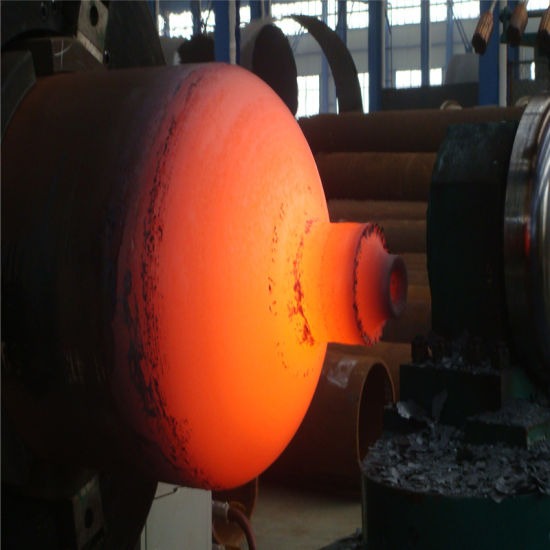
The EMS Tube End Closing Machine is a highly specialized industrial solution designed for reliably sealing, closing, or forming the ends of metal tubes with precision and consistency. Tube end closing is a critical process in industries such as pressure vessel manufacturing, gas cylinders, automotive components, HVAC systems, plumbing, and various industrial applications where secure and precise end sealing is essential for functionality and safety. EMS Metalworking Machinery has engineered these machines with robust mechanical structures, advanced control systems, and precision tooling to ensure that tube ends are closed accurately while maintaining dimensional integrity and surface quality. This ensures high reliability, long-term performance, and compliance with stringent industrial standards.
At the heart of the EMS Tube End Closing Machine is a rigid, precision-engineered frame constructed from high-strength steel. The frame provides the necessary stability to withstand axial forces and rotational torques applied during the tube end closing process. Proper rigidity ensures that the tube, mandrel, and forming tools remain aligned throughout the operation, preventing deformation, wrinkling, or misalignment of the tube end. EMS engineers have designed the machine to balance strength, precision, and durability, allowing it to operate reliably under high production demands and with tubes of varying diameters, wall thicknesses, and material types.
The process of tube end closing relies on precise application of pressure and forming techniques to seal or reshape the tube’s end. Depending on the application, the EMS Tube End Closing Machine can perform operations such as flaring, doming, hemming, beading, or mechanical closure. Controlled force is applied via hydraulic, mechanical, or CNC-controlled actuators, ensuring that the tube end deforms uniformly without compromising wall thickness or overall tube integrity. This precision is especially critical for pressure-containing tubes, where uneven forming or excessive thinning could lead to failures under operational conditions. EMS machines maintain tight tolerances and consistent end geometry across all production runs.
Mandrel and internal support systems are essential in tube end closing operations. EMS machines employ mandrels or internal dies designed to match the tube’s diameter, wall thickness, and intended end shape. The mandrel provides internal resistance, preventing collapse, wrinkling, or uneven deformation during the closure process. For tubes with thin walls or large diameters, this internal support ensures uniform wall thickness and dimensional accuracy. EMS designs mandrels for durability, precision, and ease of installation, enabling operators to change setups quickly between different tube sizes or end geometries while maintaining production efficiency.
Clamping systems are critical for securely holding tubes during the end closing process. EMS machines use hydraulic or mechanical clamps that provide adjustable pressure to prevent tube rotation, slippage, or misalignment. These clamps are designed to avoid damaging the tube surface, making them suitable for polished or decorative tubes as well as functional components. Proper clamping ensures that the forces applied during end closing are evenly distributed, producing consistent results for wall thickness, geometry, and surface finish. EMS clamping solutions are engineered for reliability, repeatability, and operator convenience, supporting high-quality production across a wide range of tube types.
The EMS Tube End Closing Machine supports a wide range of tube diameters, wall thicknesses, and material types, including steel, stainless steel, aluminum, copper, and specialized alloys. Softer metals can be closed with lower forming forces to preserve surface finish, while high-strength metals require precise, controlled pressure to maintain geometry and prevent cracking. This versatility allows manufacturers to produce multiple product lines using the same machine, improving operational efficiency and reducing the need for specialized equipment. EMS machines are designed to maintain consistent performance across diverse materials and tube sizes, ensuring reliable production in demanding industrial environments.
Surface quality and dimensional precision are significant advantages of EMS Tube End Closing Machines. Controlled forming produces smooth, uniform tube ends with minimal need for secondary finishing. Wall thickness consistency and accurate end geometry are critical for applications such as pressure vessels, gas cylinders, automotive tubes, and HVAC components. High-quality surface finish is especially important for exposed or decorative tubes, as well as functional tubes where precise fit and sealing are required. EMS machines enable manufacturers to produce tube ends with superior quality efficiently, reducing scrap, rework, and production costs while improving reliability and performance.
CNC control enhances the flexibility and precision of EMS Tube End Closing Machines. CNC systems allow operators to program forming parameters such as actuator speed, stroke length, forming force, and tool path. Complex tube end geometries, such as domed, flared, hemmed, or beaded ends, can be produced consistently with minimal manual intervention. Multiple programs can be stored and recalled instantly, reducing setup time and human error. Even in semi-automated or manual operation, the machine maintains precise control over forming pressure and tool motion, ensuring high-quality and repeatable results across all tube sizes and designs.
Automation integration further increases productivity and throughput. EMS Tube End Closing Machines can be combined with robotic tube feeders, automated conveyors, and in-line inspection systems to create fully automated production lines. Continuous operation with minimal human intervention increases output while maintaining consistent quality. Semi-automated setups still benefit from precise hydraulic or CNC control, producing uniform results with minimal operator oversight. EMS machines are designed for seamless integration into modern manufacturing workflows, supporting both high-volume industrial production and custom, small-batch fabrication with consistent quality and precision.
Durability and long-term reliability are fundamental to EMS design. The machine’s structural components, mandrels, clamps, actuators, and tooling are engineered for heavy-duty operation in demanding industrial environments. High-quality materials, precision machining, and robust mechanical design ensure that the machine maintains performance and accuracy over extended production cycles. EMS machines are capable of withstanding repeated high-force operations, continuous production, and diverse tube materials without compromising quality, safety, or service life, making them suitable for both industrial and specialized applications.
Energy efficiency and smooth operation are integral features of EMS Tube End Closing Machines. Precision bearings, reinforced frames, and hydraulic or CNC systems reduce mechanical stress, friction, and vibration, lowering energy consumption while maintaining productivity. Controlled forming also reduces noise and operator fatigue, creating a safer, more comfortable workplace. EMS combines advanced mechanical engineering and energy-efficient design to optimize operational performance, reduce operating costs, and support sustainable production practices. The combination of energy efficiency, precision, and durability ensures long-term value and cost-effective operation.
Maintenance and serviceability are integral to EMS machine design. Critical components, including mandrels, clamps, actuators, tooling, and bearings, are easily accessible for inspection, lubrication, or replacement. Modular tooling systems and quick-change mandrels allow rapid adaptation to different tube sizes or end geometries, minimizing downtime and maximizing production efficiency. Monitoring and diagnostic systems alert operators to preventive maintenance requirements, ensuring continuous operation and long-term reliability. EMS provides comprehensive documentation and training, supporting efficient maintenance practices and extending the machine’s operational lifespan.
The EMS Tube End Closing Machine provides precise control over forming pressure, tool motion, and tube geometry, ensuring consistent, high-quality results across all production runs. The machine is designed to handle tubes of varying diameters, wall thicknesses, and materials, maintaining uniform end geometry and wall thickness. Controlled force application ensures that softer metals like aluminum or copper are formed gently to preserve surface finish, while high-strength steel or alloy tubes are shaped precisely without risk of cracking or distortion. EMS machines allow operators to achieve repeatable, accurate results while minimizing scrap and reducing material waste, providing both economic and operational advantages.
Mandrel and internal support systems are critical in achieving precise tube end closure. EMS mandrels are engineered to provide internal stability to the tube during forming, preventing wrinkling, collapse, or uneven wall thickness. Hydraulic, mechanical, or CNC-adjustable mandrels allow incremental positioning along the tube length, ensuring uniform support throughout the forming process. For thin-walled or long tubes, this internal reinforcement is essential to maintain structural integrity and dimensional accuracy. EMS designs mandrels for durability, ease of use, and rapid changeover, enabling efficient production of different tube sizes and end geometries with minimal downtime.
Clamping and holding systems are designed to secure tubes without damaging their surfaces. Hydraulic or mechanical clamps provide adjustable pressure to prevent tube rotation, slippage, or misalignment during forming. Protective clamping options ensure that polished or decorative tubes remain unmarred while high-strength tubes are held firmly in place. Proper clamping ensures that the forces applied during tube end closure are evenly distributed, resulting in consistent wall thickness, precise geometry, and smooth surface finish. EMS clamps are engineered for reliability, repeatability, and operator convenience, supporting consistent high-quality results across diverse tube types.
The versatility of the EMS Tube End Closing Machine allows it to handle a wide variety of tube materials, including steel, stainless steel, aluminum, copper, and specialized alloys. Softer metals can be formed gently to preserve aesthetic and functional qualities, while harder alloys can be closed with controlled force to maintain geometry and prevent cracking. This flexibility enables manufacturers to produce multiple product lines on a single machine, reducing the need for specialized equipment and improving operational efficiency. EMS machines maintain consistent performance across different tube materials, diameters, and wall thicknesses, providing reliable results in demanding industrial environments.
Surface quality and dimensional precision are key benefits of the EMS Tube End Closing Machine. Controlled forming produces smooth, uniform tube ends that often require minimal secondary finishing. Wall thickness consistency and accurate end geometry are essential for industrial applications such as pressure vessels, gas cylinders, automotive tubes, HVAC components, and plumbing systems. High-quality surfaces reduce the need for additional machining or polishing, minimize scrap, and ensure reliable assembly and performance. EMS machines allow manufacturers to achieve these results efficiently, improving overall productivity and product reliability.
CNC control enhances the machine’s flexibility, precision, and repeatability. Operators can program spindle speed, forming pressure, stroke length, and tool path to produce complex tube end geometries consistently. Domed, flared, hemmed, and beaded tube ends can be formed with minimal manual intervention, and multiple programs can be stored and recalled for rapid changeovers between different tube sizes or designs. Even in semi-automatic or manual operation, the machine maintains precise control over tool motion and pressure, ensuring uniformity and repeatable quality across all production runs. CNC integration is particularly valuable for complex, high-volume, or precision-critical applications.
Automation integration further improves productivity and operational efficiency. EMS Tube End Closing Machines can be equipped with robotic tube loaders, automated conveyors, and in-line inspection systems, creating fully automated production lines capable of continuous operation. Minimal human intervention is required, reducing operator workload while maintaining consistent quality. Semi-automated setups still benefit from precise hydraulic or CNC control, producing uniform results across multiple tube diameters, wall thicknesses, and end geometries. EMS machines are designed to integrate seamlessly into automated workflows, supporting high-volume industrial production and specialized custom fabrication alike.
Durability and long-term reliability are central to the EMS design. The machine’s structural components, spindles, mandrels, clamps, actuators, and tooling are engineered for heavy-duty operation in demanding industrial environments. High-quality materials, precision machining, and robust mechanical design ensure that the machine maintains performance, precision, and accuracy over extended production cycles. EMS machines are capable of withstanding repetitive high-force operations, continuous production, and diverse tube materials without compromising quality, safety, or service life. This durability makes the EMS Tube End Closing Machine suitable for both industrial and specialized applications.
Energy efficiency and smooth operation are additional advantages. Precision-engineered bearings, reinforced frames, and hydraulic or CNC-controlled actuators reduce friction, vibration, and mechanical stress, lowering energy consumption while maintaining productivity. Controlled forming reduces noise and operator fatigue, providing a safer, more comfortable working environment. EMS combines advanced mechanical engineering with energy-efficient design to optimize performance, reduce operating costs, and support sustainable production practices. The combination of energy efficiency, precision, and reliability ensures long-term value and cost-effective operation for industrial manufacturers.
Maintenance and serviceability are built into the EMS Tube End Closing Machine. Critical components, including mandrels, clamps, actuators, tooling, and bearings, are accessible for inspection, lubrication, and replacement. Modular tooling and quick-change mandrels allow rapid adaptation to different tube sizes or end geometries, minimizing downtime and maximizing production efficiency. Monitoring and diagnostic systems provide alerts for preventive maintenance, ensuring uninterrupted operation and long-term reliability. EMS provides comprehensive documentation and training, enabling operators to maintain the machine efficiently and effectively while extending its operational lifespan.
The EMS Tube End Closing Machine ensures consistent, high-quality production for tubes of varying diameters, wall thicknesses, and materials. Its rigid frame maintains precise alignment between the tube, mandrel, and forming tools throughout the end closing process. This stability prevents deflection, vibration, or misalignment that could compromise wall thickness or surface quality. By combining mechanical strength with precise control over forming forces, EMS machines produce tubes with uniform ends, smooth surfaces, and consistent geometry, even in demanding industrial applications such as pressure vessels, gas cylinders, automotive components, HVAC systems, and plumbing networks.
Tooling systems are engineered for flexibility, precision, and durability. Adjustable tool posts, forming dies, and rollers allow operators to produce a wide variety of tube end geometries, including domed, flared, hemmed, and beaded ends. Tooling materials are chosen for wear resistance, ensuring accurate forming over thousands of cycles without degradation. Modular tooling systems allow quick changeovers between different tube sizes or designs, minimizing downtime and supporting efficient production. EMS machines provide the versatility required to handle both high-volume standard production and small-batch custom orders, enhancing operational efficiency and responsiveness.
Mandrel systems are critical to achieving precise tube end closure. Mandrels are designed to provide internal support that matches the tube diameter, wall thickness, and intended end shape. This support prevents wrinkling, collapse, or uneven wall thinning during forming. Hydraulic, mechanical, or CNC-adjustable mandrels allow incremental positioning along the tube length, maintaining uniform support during the operation. For thin-walled or large-diameter tubes, this internal reinforcement ensures consistent wall thickness and dimensional accuracy. EMS mandrels are durable, easy to install, and quickly replaceable, enabling efficient changeovers between different tube sizes and end geometries.
Clamping systems secure the tube throughout the forming process without damaging its surface. Hydraulic or mechanical clamps provide adjustable pressure to prevent rotation, misalignment, or slippage during operation. Protective clamping options are available for polished or decorative tubes, maintaining aesthetic quality while ensuring precision. Proper clamping ensures that forming forces are applied evenly, producing consistent wall thickness, precise end geometry, and high-quality surface finish. EMS clamps are designed for repeatability, reliability, and operator convenience, supporting high-quality production across a wide range of tube materials and diameters.
The EMS Tube End Closing Machine accommodates a wide range of materials, including steel, stainless steel, aluminum, copper, and high-strength alloys. Softer metals require careful force application to preserve surface quality, while harder or work-hardened alloys need precise control to prevent cracking or deformation. This versatility allows manufacturers to produce multiple product lines on a single machine, reducing the need for additional equipment and improving overall production efficiency. EMS machines deliver consistent, reliable performance across diverse tube sizes, wall thicknesses, and materials, supporting both industrial and specialized manufacturing applications.
Surface quality and dimensional precision are fundamental advantages of EMS machines. Controlled forming produces smooth, uniform tube ends with minimal need for secondary finishing operations. Wall thickness consistency and accurate end geometry are critical for industrial applications such as pressure vessels, gas cylinders, HVAC systems, plumbing, and automotive components. High-quality surface finish reduces scrap and rework while ensuring reliable assembly, sealing, and performance. EMS machines allow manufacturers to achieve these results efficiently, improving productivity and overall product quality.
CNC integration provides flexibility, precision, and repeatability in tube end forming. Operators can program stroke length, forming pressure, actuator speed, and tool path to produce complex geometries consistently. Domed, flared, hemmed, and beaded ends can be produced with minimal manual intervention, and multiple programs can be stored and recalled for rapid changeovers. Even in semi-automatic or manual operation, CNC control ensures precise tool motion and forming pressure, delivering repeatable results and maintaining high-quality output across all production runs. CNC integration is particularly valuable for high-volume production or precision-critical applications.
Automation integration further enhances productivity and efficiency. EMS Tube End Closing Machines can be integrated with robotic tube loaders, automated conveyors, and in-line inspection systems for fully automated production lines. Continuous operation with minimal human intervention increases throughput while maintaining consistent quality. Semi-automated setups also benefit from precise hydraulic or CNC control, producing uniform results across multiple tube diameters, wall thicknesses, and end geometries. EMS machines are designed for seamless integration into modern manufacturing workflows, supporting both high-volume industrial production and specialized custom fabrication.
Durability and long-term reliability are fundamental to EMS machines. The structural components, spindles, mandrels, clamps, actuators, and tooling are engineered for heavy-duty operation in demanding industrial environments. High-quality materials, precision machining, and robust mechanical design ensure that performance, precision, and accuracy are maintained over extended production cycles. EMS machines withstand repetitive high-force operations, continuous production, and a wide range of tube materials without compromising quality or service life, making them ideal for both industrial and specialized applications.
Energy efficiency and smooth operation are additional advantages. Precision-engineered bearings, reinforced frames, and hydraulic or CNC-controlled actuators minimize friction, vibration, and mechanical stress, lowering energy consumption while maintaining productivity. Controlled forming reduces noise and operator fatigue, providing a safer, more comfortable work environment. EMS combines advanced engineering with energy-efficient design to optimize operational performance, reduce operating costs, and support sustainable manufacturing practices. The combination of energy efficiency, precision, and durability ensures long-term value and cost-effective operation for industrial tube end closing processes.
Maintenance and serviceability are built into the EMS Tube End Closing Machine. Critical components, including mandrels, clamps, actuators, tooling, and bearings, are accessible for inspection, lubrication, and replacement. Modular tooling and quick-change mandrels allow rapid adaptation to different tube sizes or end geometries, minimizing downtime. Monitoring and diagnostic systems provide alerts for preventive maintenance, ensuring uninterrupted production and long-term reliability. EMS provides comprehensive documentation and training to support efficient maintenance practices and extend the machine’s operational lifespan.
Repeatability and quality assurance are central to EMS design. CNC or hydraulic control systems monitor key parameters, including tool motion, mandrel alignment, forming pressure, and actuator position. Deviations are detected in real-time and corrected immediately, preventing defective parts from being produced. This ensures consistent wall thickness, precise geometry, and high-quality surface finish across all tube end closures. Repeatable performance is essential for critical applications such as pressure vessels, gas cylinders, HVAC systems, automotive tubes, and plumbing components, where safety, reliability, and durability are paramount.
Finally, the EMS Tube End Closing Machine provides a reliable, long-term solution for modern tube manufacturing. Its combination of rigid mechanical construction, precision tooling, adjustable mandrel support, CNC or hydraulic control, and automation integration ensures consistent quality, high productivity, and operational flexibility. The machine can handle a wide range of tube materials, diameters, wall thicknesses, and end geometries, making it suitable for multiple industrial applications. EMS machines enable manufacturers to produce high-quality, repeatable tube end closures efficiently while minimizing scrap, reducing energy consumption, and supporting sustainable, cost-effective production practices.
EMS Fan Flanging Machine
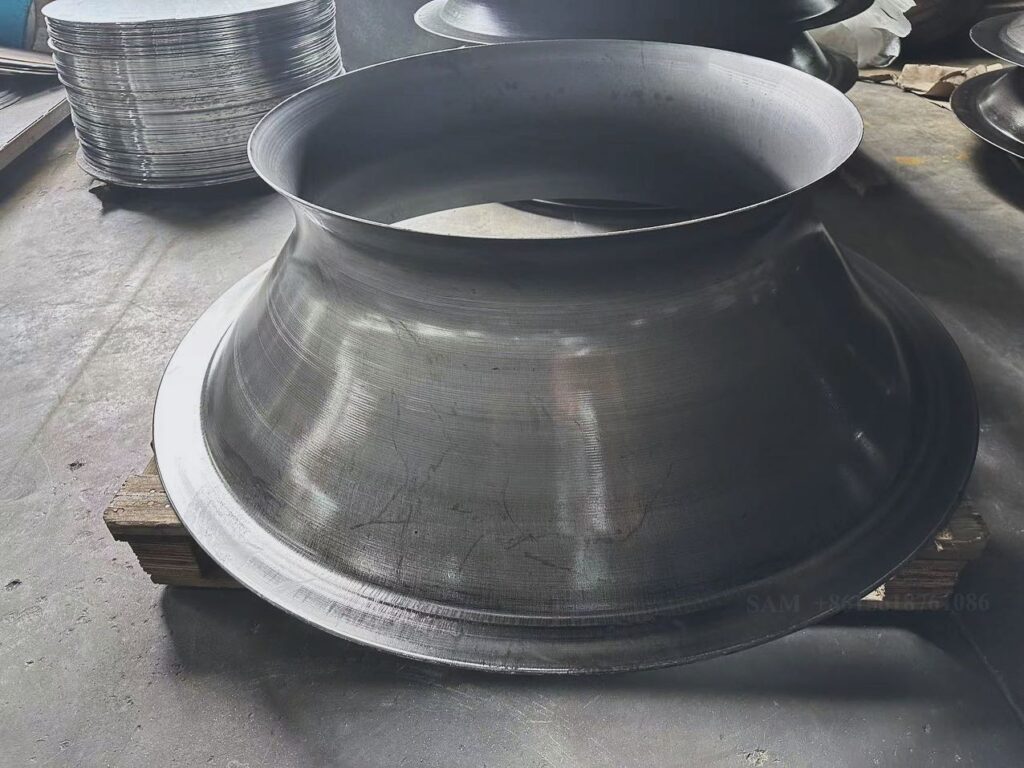
The EMS Fan Flanging Machine is a specialized industrial solution designed to form precise flanges on fan components, including impellers, axial fans, centrifugal fans, and other ventilation or air-handling systems. Flanging is a critical process for fan manufacturing, as it ensures proper fit, structural integrity, and performance in assembly. EMS Metalworking Machinery has engineered this machine to provide reliable, high-precision flanging with consistent results across varying material types, thicknesses, and fan geometries. By combining robust mechanical design, precision tooling, and advanced control systems, the EMS Fan Flanging Machine ensures that each flange is accurately formed, maintaining both dimensional and functional quality, which is essential for high-performance fans used in industrial, commercial, and residential applications.
At the core of the EMS Fan Flanging Machine is a rigid, precision-engineered frame constructed from high-strength steel. This frame provides the necessary stability to withstand the significant forces applied during the flanging process, preventing deflection, vibration, or misalignment. Proper alignment between the fan blade, flange forming tools, and rotational spindle ensures that flanges are formed with uniform wall thickness, precise angles, and smooth edges. EMS engineers have emphasized mechanical strength and precision in the design of the frame to guarantee consistent, repeatable results in high-volume production as well as for custom fan components with complex geometries.
The flanging process relies on the controlled application of force to deform the edge of the fan component into the desired flange shape. EMS machines use hydraulic, mechanical, or CNC-controlled actuators to apply consistent, uniform pressure, ensuring that the flange is formed without wrinkling, cracking, or uneven thickness. This precision is particularly important for thin or high-strength metal fan blades, which are susceptible to deformation or failure under uneven or excessive force. By maintaining tight tolerances and controlled material flow, EMS machines produce flanges that meet stringent industrial requirements for fit, alignment, and performance.
Tooling systems are designed for flexibility, precision, and durability. Adjustable tool posts, forming dies, and rollers allow operators to produce flanges of various diameters, angles, and profiles to suit different fan designs. Tooling materials are carefully selected for wear resistance and long service life, ensuring accuracy over thousands of cycles. Modular tooling systems enable rapid changeovers between fan sizes or designs, reducing downtime and supporting efficient production. EMS machines are engineered to handle both standard fan components and specialized custom designs, providing versatility and operational efficiency for manufacturers.
Clamping and holding systems are critical for maintaining stability and precision during the flanging process. EMS machines use hydraulic or mechanical clamps that securely hold the fan component without damaging its surface. Adjustable clamping ensures proper support for varying blade thicknesses, diameters, and materials. Protective clamping options are available for painted, polished, or decorative components, preserving surface quality while maintaining precise alignment. Proper clamping guarantees uniform wall thickness, accurate flange geometry, and smooth surface finish, supporting reliable assembly and high-quality performance in fan systems.
The EMS Fan Flanging Machine is capable of handling a wide variety of materials, including steel, stainless steel, aluminum, copper, and specialized alloys. Softer metals can be flanged with lower force to preserve surface finish, while high-strength or work-hardened metals require precise force control to prevent cracking or deformation. This versatility allows manufacturers to produce multiple fan component designs on a single machine, reducing the need for specialized equipment and increasing operational efficiency. EMS machines maintain consistent performance across different materials, ensuring reliable production for industrial, commercial, and custom fan applications.
Surface finish and dimensional precision are key advantages of the EMS Fan Flanging Machine. Controlled forming produces smooth, uniform flanges with minimal secondary finishing required. Accurate flange angles, consistent wall thickness, and precise diameters are essential for ensuring proper fit, performance, and structural integrity in assembled fan systems. High-quality surface finish is particularly important for decorative or exposed fan components, as well as for functional components that require precise assembly tolerances. EMS machines enable manufacturers to achieve these results efficiently, reducing scrap, rework, and production costs while ensuring high-quality output.
CNC integration enhances the precision, repeatability, and flexibility of the EMS Fan Flanging Machine. CNC-controlled systems allow operators to program spindle rotation, tool path, forming speed, and force, producing consistent flange geometry for complex fan designs. Multiple programs can be stored and recalled instantly, reducing setup times and human error. Even in semi-automatic or manual operation, CNC systems provide precise control over tool motion and forming pressure, ensuring uniform flanges across all fan components. This capability is particularly valuable for high-volume production and for specialized fan designs requiring tight tolerances and intricate geometries.
Automation integration further improves productivity and operational efficiency. EMS Fan Flanging Machines can be combined with automated component feeders, conveyors, and in-line inspection systems to create fully automated production lines. Continuous operation with minimal human intervention increases throughput while maintaining consistent quality. Semi-automated setups also benefit from precise hydraulic or CNC control, producing uniform flanges across multiple fan diameters, blade thicknesses, and profiles. EMS machines are designed for seamless integration into modern manufacturing workflows, supporting high-volume industrial production as well as specialized custom fabrication.
Durability and long-term reliability are fundamental to EMS design. Structural components, spindles, clamps, actuators, and tooling are engineered for heavy-duty operation in demanding industrial environments. High-quality materials, precision machining, and robust mechanical design ensure that the machine maintains performance, precision, and accuracy over extended production cycles. EMS machines are capable of withstanding repetitive high-force operations, continuous production, and diverse fan component materials without compromising quality or service life. This durability makes the EMS Fan Flanging Machine suitable for both industrial-scale and specialized fan manufacturing operations.
Energy efficiency and smooth operation are integral to the EMS Fan Flanging Machine. Precision bearings, reinforced frames, and hydraulic or CNC systems reduce friction, vibration, and mechanical stress, lowering energy consumption while maintaining productivity. Controlled flanging reduces noise and operator fatigue, creating a safer and more comfortable work environment. EMS combines advanced mechanical engineering with energy-efficient design to optimize operational performance, reduce operating costs, and support sustainable manufacturing practices. The combination of energy efficiency, precision, and durability ensures long-term value and cost-effective operation for fan component production.
Maintenance and serviceability are designed into every EMS Fan Flanging Machine. Critical components, including spindles, clamps, actuators, tooling, and bearings, are easily accessible for inspection, lubrication, and replacement. Modular tooling systems and quick-change dies allow rapid adaptation to different fan sizes or designs, minimizing downtime and maximizing production efficiency. Monitoring and diagnostic systems provide alerts for preventive maintenance, ensuring uninterrupted operation and long-term reliability. EMS provides comprehensive documentation and operator training to support efficient maintenance practices and extend the machine’s operational lifespan.
The EMS Fan Flanging Machine delivers precise control over flange formation, ensuring consistent wall thickness, accurate angles, and smooth edges across all fan components. The machine is designed to handle a wide range of fan diameters, blade thicknesses, and materials while maintaining uniformity in flange geometry. Controlled force application prevents cracking, wrinkling, or uneven thickness, even on thin or high-strength metals. EMS machines provide operators with the ability to produce repeatable, high-quality flanges efficiently, minimizing material waste and scrap, and optimizing operational productivity in both high-volume industrial and custom fan manufacturing environments.
Tooling and die systems are engineered for maximum flexibility and precision. Adjustable forming dies, tool posts, and rollers allow operators to create flanges of various diameters, angles, and profiles to suit different fan designs. Tooling materials are selected for durability and wear resistance, ensuring consistent performance over thousands of production cycles. Modular tooling allows rapid changeovers between fan sizes or designs, reducing setup time and improving operational efficiency. EMS machines are designed to accommodate both standard production requirements and specialized custom fan components, offering manufacturers versatility and adaptability in their operations.
The internal support system is critical for accurate flange formation. EMS machines utilize mandrels or internal supports that stabilize the fan component during the forming process, preventing deformation, wrinkling, or uneven wall thickness. Hydraulic, mechanical, or CNC-adjustable supports allow incremental positioning to maintain uniform pressure and support throughout the flange formation. This is especially important for large-diameter fans or thin-walled blades, which are prone to collapse or distortion under forming forces. EMS internal support systems ensure dimensional accuracy and structural integrity, enabling manufacturers to produce reliable, high-performance fan components.
Clamping systems are designed to hold fan components securely without damaging surfaces. Hydraulic or mechanical clamps provide adjustable pressure, preventing rotation, misalignment, or slippage during flange formation. Protective clamping is available for polished or decorative components, maintaining aesthetic quality while ensuring precise alignment and structural integrity. Proper clamping guarantees uniform wall thickness, precise flange geometry, and smooth surface finish, supporting high-quality assembly and reliable performance in fan systems. EMS clamps are engineered for repeatability, durability, and operator convenience, allowing consistent results across a variety of fan materials and sizes.
EMS Fan Flanging Machines accommodate a wide range of materials, including steel, stainless steel, aluminum, copper, and specialized alloys. Softer metals can be formed with lower force to maintain surface quality, while harder or work-hardened alloys require precise control to prevent cracking or distortion. This versatility enables manufacturers to produce multiple fan designs on a single machine, reducing the need for specialized equipment and improving operational efficiency. EMS machines maintain consistent performance and quality across different materials, diameters, and thicknesses, ensuring reliable production for industrial, commercial, and specialized fan applications.
Surface finish and dimensional precision are key advantages of EMS Fan Flanging Machines. Controlled forming produces smooth, uniform flanges with minimal secondary finishing required. Accurate flange angles, consistent wall thickness, and precise diameters are critical to ensure proper fit, structural integrity, and performance of assembled fan systems. High-quality surface finish is important for both functional and decorative applications, reducing scrap, rework, and finishing costs while ensuring reliable and visually appealing components. EMS machines allow manufacturers to achieve these results efficiently, supporting both high-volume production and custom fan fabrication.
CNC control enhances flexibility, repeatability, and precision. Operators can program spindle rotation, tool path, forming pressure, and speed to produce complex flange geometries with consistent quality. Multiple programs can be stored and recalled instantly, reducing setup times and human error. Complex flanges, such as stepped, tapered, or multi-radius profiles, can be formed accurately with minimal manual intervention. Even in semi-automatic or manual operation, CNC systems provide precise control over tool motion and forming pressure, ensuring consistent results across all fan sizes and designs. CNC integration is particularly valuable for high-volume production or applications with strict tolerance requirements.
Automation integration further increases efficiency and productivity. EMS Fan Flanging Machines can be integrated with robotic component feeders, automated conveyors, and in-line inspection systems for fully automated production lines. Continuous operation with minimal human intervention increases throughput while maintaining consistent quality. Semi-automated setups also benefit from hydraulic or CNC-controlled systems, producing uniform flanges across multiple fan diameters, blade thicknesses, and profiles. EMS machines are designed to integrate seamlessly into modern production workflows, supporting both industrial-scale and specialized fan manufacturing operations.
Durability and long-term reliability are central to EMS machine design. Structural components, spindles, clamps, actuators, and tooling are built for heavy-duty industrial use. High-quality materials, precision machining, and robust engineering ensure the machine maintains performance, accuracy, and precision over extended production cycles. EMS machines can handle repetitive high-force operations, continuous production, and a variety of fan component materials without compromising quality or service life. This durability ensures that manufacturers can rely on EMS Fan Flanging Machines for both long-term production and high-quality output.
Energy efficiency and smooth operation are integral to the design of EMS Fan Flanging Machines. Precision-engineered bearings, reinforced frames, and hydraulic or CNC control systems reduce friction, vibration, and mechanical stress, lowering energy consumption while maintaining productivity. Controlled flanging operations reduce noise and operator fatigue, creating a safer, more comfortable working environment. EMS combines advanced mechanical design with energy-efficient operation to optimize performance, reduce operating costs, and support sustainable manufacturing practices. The combination of efficiency, precision, and durability ensures a long-term, cost-effective solution for fan component production.
Maintenance and serviceability are built into the EMS Fan Flanging Machine. Critical components, including spindles, clamps, actuators, tooling, and bearings, are easily accessible for inspection, lubrication, and replacement. Modular tooling systems and quick-change dies allow rapid adaptation to different fan sizes or designs, minimizing downtime and maximizing production efficiency. Monitoring and diagnostic systems provide alerts for preventive maintenance, ensuring uninterrupted operation and long-term reliability. EMS provides comprehensive documentation and operator training to support efficient maintenance and extend the machine’s operational lifespan.
The EMS Fan Flanging Machine ensures consistent, high-quality production for fan components of varying diameters, blade thicknesses, and materials. Its rigid, precision-engineered frame maintains alignment between the spindle, forming tools, and fan component throughout the flanging process. This stability prevents vibration, deflection, or misalignment, which could compromise flange geometry, wall thickness, or surface quality. By combining mechanical rigidity with precise control over forming pressure and tool motion, EMS machines produce uniform flanges that meet stringent industrial standards, ensuring proper fit, structural integrity, and reliable performance in assembled fan systems.
Tooling systems are engineered for durability, precision, and versatility. Adjustable forming dies, rollers, and tool posts allow operators to produce flanges of varying angles, diameters, and profiles, accommodating diverse fan designs. Tooling materials are selected for wear resistance and long service life, ensuring consistent, accurate results across thousands of production cycles. Modular tooling systems and quick-change dies allow rapid adaptation to different fan sizes or geometries, minimizing downtime and increasing operational efficiency. EMS machines provide the flexibility required to handle both high-volume production and specialized custom fan designs, supporting diverse manufacturing requirements.
Internal support systems, including mandrels or adjustable dies, are critical for accurate flange formation. EMS machines provide internal stabilization for fan components during forming, preventing wrinkling, collapse, or uneven wall thickness. Hydraulic, mechanical, or CNC-adjustable supports allow incremental positioning, ensuring uniform pressure and consistent results throughout the flange formation process. This is particularly important for thin-walled blades or large-diameter fans, which are prone to deformation under high forming forces. EMS internal support systems maintain dimensional accuracy, structural integrity, and consistent quality for reliable, high-performance fan components.
Clamping and holding systems secure fan components during flanging while protecting surfaces. Hydraulic or mechanical clamps provide adjustable pressure to prevent rotation, misalignment, or slippage. Protective clamping options are available for polished, painted, or decorative components, preserving surface quality while maintaining precision. Proper clamping ensures even application of forming forces, producing consistent wall thickness, accurate flange geometry, and smooth surfaces. EMS clamps are designed for repeatability, durability, and operator convenience, supporting reliable results across a wide range of fan materials, diameters, and blade thicknesses.
EMS Fan Flanging Machines can handle a wide variety of materials, including steel, stainless steel, aluminum, copper, and specialized alloys. Softer metals are formed with lower force to maintain surface finish, while harder or work-hardened metals require precise control to prevent cracking or deformation. This versatility allows manufacturers to produce multiple fan designs on a single machine, improving operational efficiency and reducing the need for specialized equipment. EMS machines maintain consistent performance and high-quality output across different materials, diameters, and blade thicknesses, supporting both industrial-scale production and specialized custom applications.
Surface finish and dimensional precision are fundamental advantages of EMS machines. Controlled forming produces smooth, uniform flanges with minimal need for secondary finishing. Accurate flange angles, consistent wall thickness, and precise diameters are essential to ensure proper assembly, structural integrity, and performance in fan systems. High-quality surface finish reduces scrap, rework, and finishing costs while improving overall product reliability and aesthetics. EMS machines allow manufacturers to achieve these results efficiently, optimizing productivity and maintaining consistent quality standards across production runs.
CNC integration provides advanced control, flexibility, and repeatability. Operators can program spindle rotation, forming pressure, tool path, and speed to produce complex flange geometries accurately and consistently. Multiple programs can be stored and recalled instantly, allowing rapid changeovers between different fan sizes and designs. Complex flanges, such as stepped, tapered, or multi-radius profiles, can be formed with minimal manual intervention, reducing human error and setup time. Even in semi-automatic or manual operation, CNC systems maintain precise control over tool motion and pressure, ensuring uniform, repeatable results across all production runs.
Automation integration further enhances productivity and operational efficiency. EMS Fan Flanging Machines can be integrated with robotic loaders, automated conveyors, and in-line inspection systems for fully automated production lines. Continuous operation with minimal human intervention increases throughput while maintaining consistent quality. Semi-automated setups also benefit from hydraulic or CNC-controlled systems, producing uniform flanges across multiple fan diameters, blade thicknesses, and profiles. EMS machines are designed for seamless integration into modern manufacturing workflows, supporting both industrial-scale and specialized fan production with consistent quality and precision.
Durability and long-term reliability are core design principles of EMS machines. Structural components, spindles, clamps, actuators, and tooling are engineered for heavy-duty industrial use. High-quality materials, precision machining, and robust design ensure that the machine maintains accuracy, performance, and reliability over extended production cycles. EMS machines withstand repetitive high-force operations, continuous production, and diverse fan component materials without compromising quality or service life. This makes them suitable for both industrial-scale and specialized fan manufacturing operations, ensuring long-term operational efficiency and consistent high-quality output.
Energy efficiency and smooth operation are integral to EMS Fan Flanging Machines. Precision-engineered bearings, reinforced frames, and hydraulic or CNC-controlled actuators reduce friction, vibration, and mechanical stress, lowering energy consumption while maintaining productivity. Controlled flanging reduces noise and operator fatigue, creating a safer and more comfortable work environment. EMS combines advanced mechanical engineering with energy-efficient operation to optimize performance, reduce operating costs, and support sustainable manufacturing practices. The combination of efficiency, precision, and durability ensures long-term value and cost-effective operation for fan component production.
Maintenance and serviceability are built into every EMS Fan Flanging Machine. Critical components, including spindles, clamps, actuators, tooling, and bearings, are accessible for inspection, lubrication, and replacement. Modular tooling systems and quick-change dies allow rapid adaptation to different fan sizes or designs, minimizing downtime and maximizing production efficiency. Monitoring and diagnostic systems provide alerts for preventive maintenance, ensuring uninterrupted operation and long-term reliability. EMS provides comprehensive documentation and operator training, enabling efficient maintenance practices and extending the machine’s operational lifespan.
Repeatability and quality assurance are central to EMS design. CNC or hydraulic control systems monitor key parameters such as tool motion, spindle rotation, clamping pressure, and forming forces. Deviations are detected in real-time, allowing immediate correction and preventing defective parts from being produced. This ensures consistent wall thickness, precise flange geometry, and smooth surfaces across all fan components. Repeatable performance is essential for applications requiring precise fit, structural integrity, and reliable airflow performance, including industrial, commercial, and residential fan systems.
The EMS Fan Flanging Machine provides a long-term, reliable solution for modern fan manufacturing. Its combination of robust construction, precision tooling, adjustable mandrel support, CNC or hydraulic control, and automation integration ensures consistent quality, high productivity, and operational flexibility. The machine accommodates a wide range of fan materials, diameters, blade thicknesses, and flange geometries, making it suitable for multiple industrial and specialized applications. EMS machines allow manufacturers to produce high-quality, repeatable flanges efficiently while minimizing scrap, reducing energy consumption, and supporting sustainable, cost-effective production practices.
EMS Metalworking Machines
We design, manufacture and assembly metalworking machinery such as:
- Hydraulic transfer press
- Glass mosaic press
- Hydraulic deep drawing press
- Casting press
- Hydraulic cold forming press
- Hydroforming press
- Composite press
- Silicone rubber moulding press
- Brake pad press
- Melamine press
- SMC & BMC Press
- Labrotaroy press
- Edge cutting trimming machine
- Edge curling machine
- Trimming beading machine
- Trimming joggling machine
- Cookware production line
- Pipe bending machine
- Profile bending machine
- Bandsaw for metal
- Cylindrical welding machine
- Horizontal pres and cookware
- Kitchenware, hotelware
- Bakeware and cuttlery production machinery
as a complete line as well as an individual machine such as:
- Edge cutting trimming beading machines
- Polishing and grinding machines for pot and pans
- Hydraulic drawing presses
- Circle blanking machines
- Riveting machine
- Hole punching machines
- Press feeding machine
You can check our machinery at work at: EMS Metalworking Machinery – YouTube
Applications:
Flange-punching
Beading and ribbing
Flanging
Trimming
Curling
Lock-seaming
Ribbing