Categories
Machinery

Double Head Beading Machine

Double Head Beading Machine

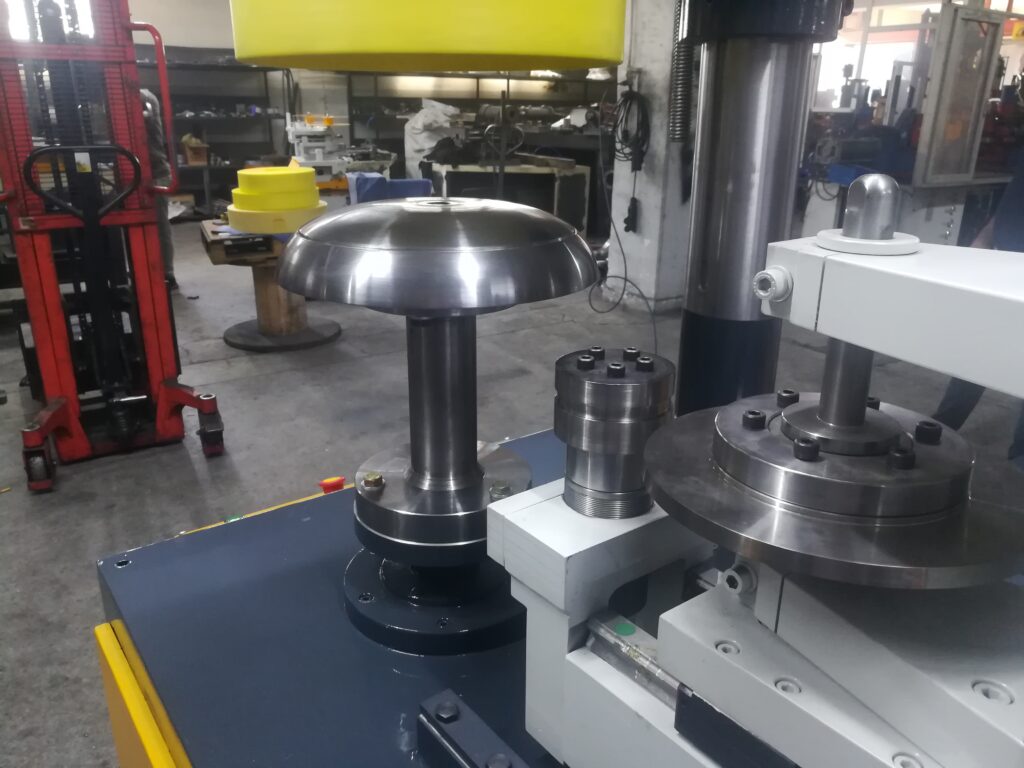
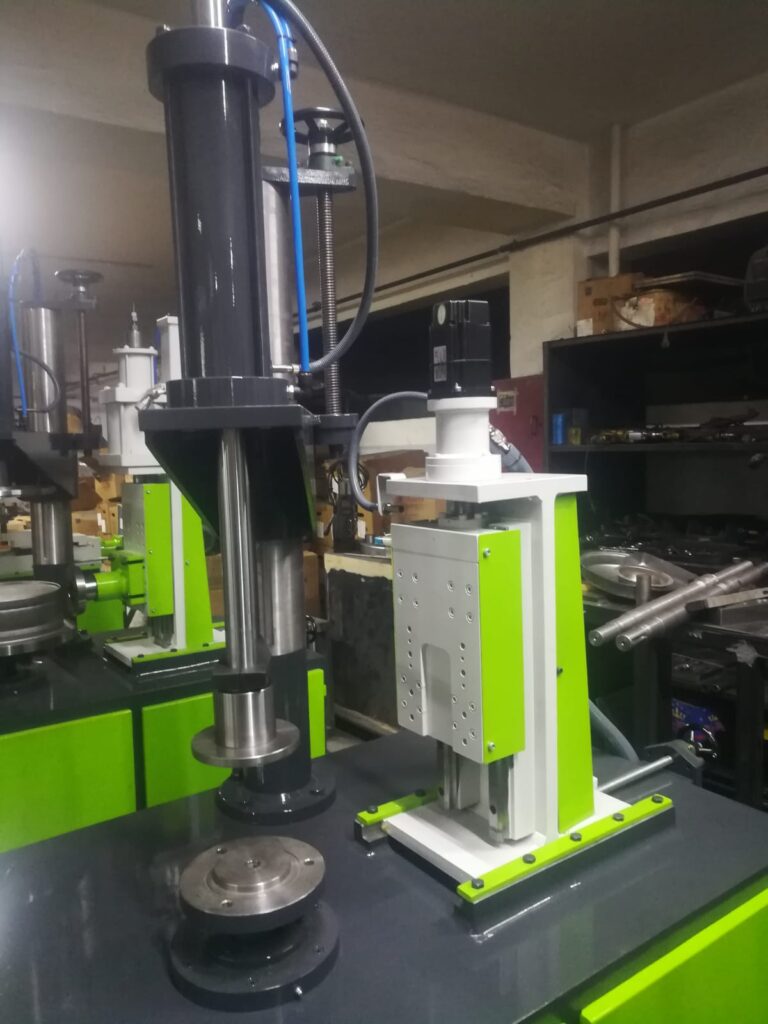
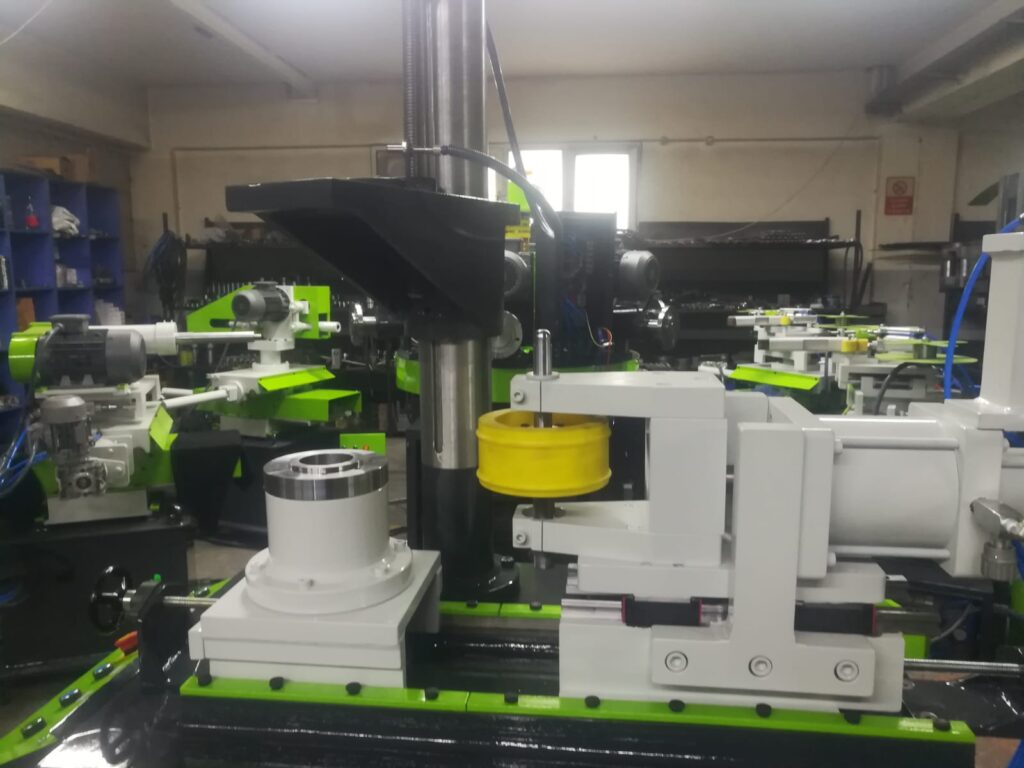
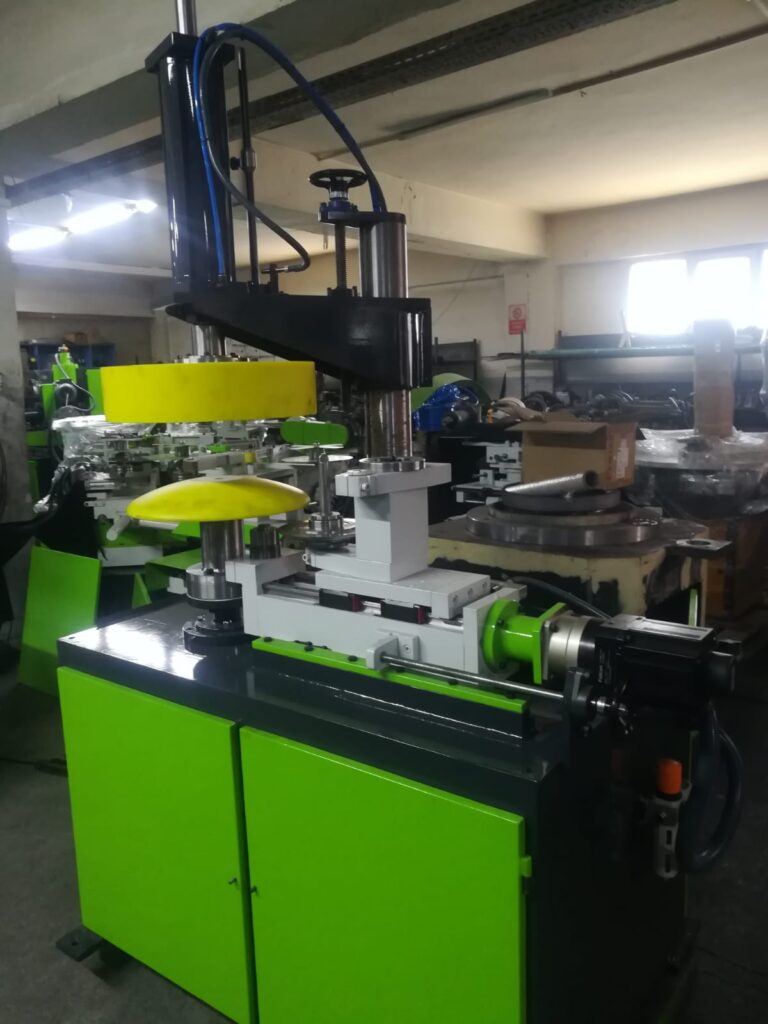
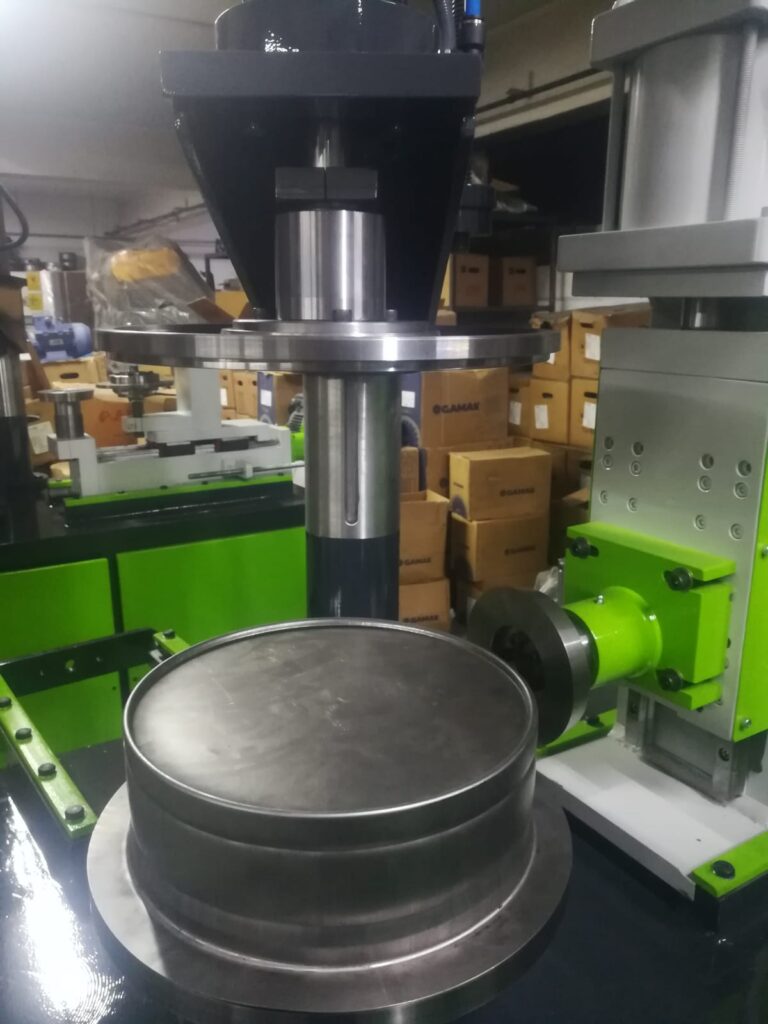
Double Head Beading Machine: A Trimming Beading Machine is an industrial machine used primarily in the metalworking and fabrication industries, especially in the manufacturing of cylindrical or conical metal components, such as drums, cans, pressure vessels, or HVAC ducting.

Purpose & Function of the Trimming-Beading Machine

  1. Trimming:
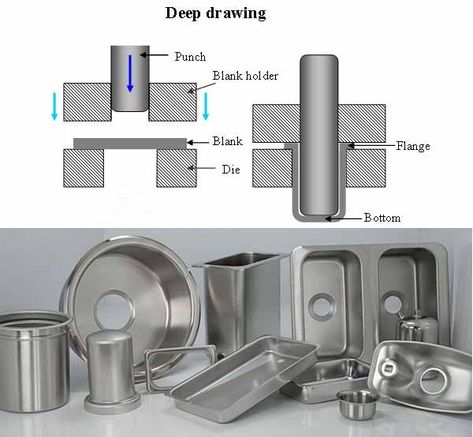
    • Removes excess metal from the edges of round or cylindrical workpieces after deep drawing or forming.
    • Ensures a uniform edge or prepares the part for welding or further processing.
  2. Beading:
    • Forms a bead (a rounded protrusion or indentation) on the edge of the metal part.
    • This adds strength and rigidity to the part, helps in sealing (in case of containers), or improves aesthetics and safety (e.g., eliminating sharp edges).

Key Features:

  • Rotary system: Workpieces are usually mounted and rotated while tooling trims or beads the edge.
  • Manual, semi-automatic, or fully automatic operation.
  • Adjustable tooling: To accommodate different diameters, thicknesses, or bead profiles.
  • Material compatibility: Works with steel, stainless steel, aluminum, copper, etc.

Common Applications:

  • Drum manufacturing
  • HVAC duct parts
  • Automotive mufflers or filters
  • Pressure vessels
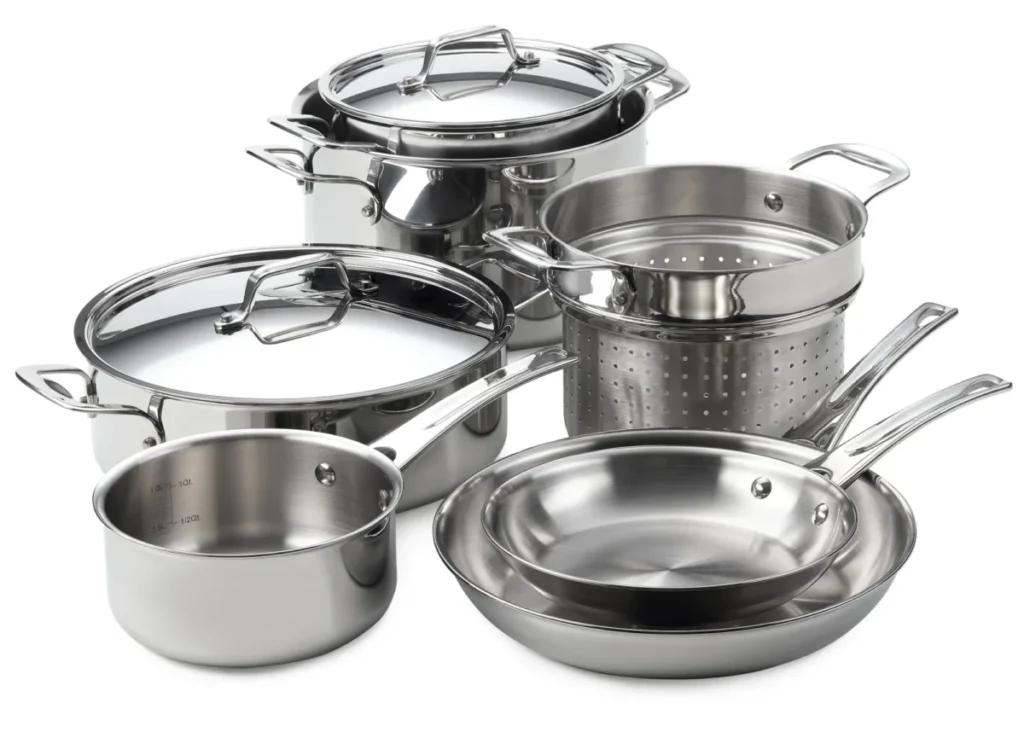
  • Kitchenware & cookware production

Variants:

  • Vertical or horizontal configurations
  • Integrated into production lines or used as standalone units.
  • Can include CNC controls for high precision and repeatability.

A trimming beading machine is used in metal fabrication to finish and reinforce the edges of cylindrical or conical metal parts such as drums, tanks, HVAC ducting, and pressure vessels. It performs two main operations: trimming and beading. Trimming involves removing any excess material from the edge of a workpiece after it has been formed, ensuring the edge is smooth, uniform, and ready for further processing like welding or sealing. Beading, on the other hand, forms a raised or indented bead along the edge of the metal, which strengthens the part, improves its appearance, and removes sharp edges for safety or sealing purposes.

The machine typically works by rotating the metal part while a set of forming tools or rollers engage with the edge to carry out trimming and beading. It can be operated manually, semi-automatically, or fully automatically depending on the production requirements. These machines are designed to handle various materials including mild steel, stainless steel, aluminum, and copper, and they come in different configurations such as vertical or horizontal types to suit different workshop layouts.

Tooling can be adjusted to accommodate different diameters, metal thicknesses, and bead profiles, making the machine versatile for a wide range of products. In higher-end models, CNC systems are integrated for better precision, speed, and repeatability, especially important in large-scale or high-specification manufacturing. The process not only ensures dimensional accuracy but also adds mechanical strength to the finished product by creating a reinforced edge, which is particularly important in containers that experience internal pressure or need secure sealing.

Trimming beading machines are essential in industries where the final product must meet strict dimensional and aesthetic standards. In applications such as drum manufacturing, the beading process ensures that the rim can support stacking or attachment of lids, while in HVAC ducting, beads improve airflow characteristics and provide locations for fastening or sealing. The machine’s ability to precisely control the depth and shape of the bead also plays a role in meeting regulatory or safety requirements, especially in pressure-rated vessels or food-grade containers.

The operational efficiency of a trimming beading machine greatly impacts production throughput. Modern machines often include quick-change tooling systems, digital position readouts, and automated clamping or centering devices to minimize setup time and improve consistency across batches. In high-volume production environments, these features are crucial in maintaining tight production schedules while reducing material waste and labor costs.

In addition to industrial use, smaller-scale or artisan manufacturers may also use simpler versions of these machines for products like cookware, artisanal metal containers, or decorative items. In such settings, the machine’s flexibility and ease of operation are often prioritized over full automation.

Maintenance of trimming beading machines involves regular inspection of tooling wear, lubrication of moving parts, and ensuring alignment of the rotating components to prevent runout or uneven finishes. High-quality machines are typically constructed with rigid frames and precision bearings to withstand the stresses of continuous operation while maintaining alignment and surface finish quality.

With the increasing integration of Industry 4.0 technologies, some trimming beading machines are also being equipped with sensors and IoT connectivity to enable real-time monitoring, predictive maintenance, and integration into smart manufacturing systems. This allows operators and managers to optimize machine usage, track performance data, and respond quickly to maintenance needs before they result in downtime.

Overall, the trimming beading machine is a versatile and indispensable piece of equipment in any manufacturing environment where round metal parts need to be finished with precision, strength, and consistency.

Integrated Trimming-Flanging-Beading Machine

An Integrated Trimming-Flanging-Beading Machine is a multifunctional piece of metal-forming equipment designed to streamline production by combining three essential operations—trimmingflanging, and beading—into a single, continuous process. This machine is especially useful in industries that manufacture cylindrical or conical components like drums, pressure vessels, tanks, and ducts, where these edge-finishing processes are critical to structural integrity, functionality, and aesthetics.

The process begins with trimming, which removes excess or uneven material from the edges of a spun, drawn, or welded workpiece. This ensures the part has a clean, uniform edge, which is crucial for downstream operations. Following trimming, the machine proceeds to flanging, where the edge is bent or turned outward (or inward) at a defined angle, typically to facilitate joining or to reinforce the structure. Finally, the beading operation forms a rounded protrusion or indentation along the edge, further strengthening the part, preventing deformation, and improving sealing or handling characteristics.

This integrated machine operates in a rotary fashion—holding the workpiece in a spinning chuck while sequential tooling units perform their respective operations. It may be manually operated for small-batch or low-complexity jobs, or fully automated for high-volume production lines. Advanced models often feature servo-controlled axesprogrammable tooling paths, and touchscreen HMIs (Human Machine Interfaces), allowing for precise control over each step of the process and quick changeovers between different part sizes or specifications.

The major advantages of using an integrated trimming-flanging-beading machine include reduced handling time, increased dimensional accuracy, space efficiency, and better overall productivity. Since the workpiece remains clamped and centered throughout the entire sequence, misalignment between operations is minimized, ensuring consistent quality and tight tolerances. Additionally, these machines reduce operator fatigue and training requirements, as multiple operations are handled automatically without manual repositioning of the part.

Industries such as automotiveappliance manufacturingoil and gas, and HVAC benefit greatly from this type of machine, especially when producing components like mufflers, filters, expansion tanks, or ducting collars. By centralizing operations, manufacturers can improve workflow, reduce machinery footprints, and meet increasing demands for speed and quality in competitive production environments.

An integrated trimming-flanging-beading machine represents a highly efficient evolution in metal fabrication, where multiple edge-forming processes are combined into one continuous cycle. Instead of transferring a part between separate machines for each step, the workpiece remains fixed in position while the machine sequentially performs trimming, flanging, and beading. This not only saves time but also enhances precision by eliminating the risk of misalignment that can occur during manual repositioning. The machine typically grips the cylindrical or conical workpiece in a rotating chuck, and tooling heads engage the edge as it spins, each performing its specific function in a pre-programmed sequence.

Trimming ensures the edge is smooth and dimensionally accurate, flanging then forms a bent lip that may serve as a mounting or sealing surface, and beading adds structural strength while improving the part’s functionality and sometimes its visual appeal. Because these steps are closely linked, integrating them into one cycle greatly benefits production speed and consistency. This is particularly important in industries where high volumes of standardized components are required, such as in the manufacture of metal drums, fire extinguishers, gas cylinders, air reservoirs, and HVAC parts.

Modern versions of these machines often include advanced features like servo motors, automated clamping systems, digital control panels, and recipe-based programming that allows operators to switch between product types with minimal downtime. These features enable high repeatability and tight tolerances even across large batches. In a production environment where efficiency and cost control are paramount, having a single operator manage a machine that performs three functions reduces labor costs and simplifies training.

Machine rigidity and build quality play a crucial role in achieving consistent results, especially when working with thicker materials or larger diameters. High-end models are engineered with vibration-dampening frames and heavy-duty bearings to maintain accuracy during continuous operation. Tooling life is also a consideration, with quick-change tool holders and hardened forming rollers helping reduce maintenance time and increase uptime.

In applications requiring strict compliance with safety or performance standards—such as pressure vessels or food-grade containers—the precise edge preparation and repeatable finish provided by an integrated machine can be critical. Moreover, as demand grows for connected and data-driven manufacturing, some integrated machines now feature IoT-enabled diagnostics and process monitoring, giving operators real-time feedback and allowing predictive maintenance to avoid unplanned stoppages.

Overall, the integrated trimming-flanging-beading machine offers a smart, compact, and highly capable solution for any manufacturing process involving round or cylindrical metal components. Its ability to increase output, reduce human error, and ensure uniform product quality makes it an indispensable asset in modern fabrication shops.

In production environments where time, precision, and consistency are critical, the integrated trimming-flanging-beading machine plays a central role in optimizing workflow. Its ability to handle multiple operations in a single clamping not only shortens cycle times but also enhances part integrity, as each process flows seamlessly into the next without interruptions or the need for re-alignment. This uninterrupted sequence ensures that all dimensional references—such as the trimmed edge, the flange angle, and the bead placement—are held to tighter tolerances than what is typically possible using separate machines.

As product designs evolve to meet more demanding specifications—whether it’s to reduce weight, improve sealing, or meet aesthetic expectations—machines like this allow for precise customization of edge geometry. Flange angles, bead radii, and edge profiles can be programmed or adjusted with minimal effort, often through a digital interface. This makes the machine especially useful in facilities that produce a wide range of components in varying sizes, wall thicknesses, and materials. From thin-walled aluminum ducts to heavy-gauge steel drums, the adaptability of the tooling and control systems allows the same machine to be used across different production lines with only minor adjustments.

Another important benefit is the reduction in material waste. Because trimming is performed as the first step with high precision, operators can work with slightly oversized blanks and then achieve perfect final dimensions during the process. Combined with consistent flanging and beading, this improves nesting and stacking of finished parts, as well as compatibility with lids, clamps, or mating components—especially in modular or interchangeable systems.

In terms of ergonomics and operator safety, integrated machines are often designed with protective enclosures, interlocks, and simplified control schemes. This not only prevents accidents but also makes the machine easier to operate, even for less-experienced workers. The automation of repetitive tasks reduces fatigue and minimizes the chances of human error, allowing operators to focus more on quality control and less on manual handling.

For manufacturers aiming to scale production without a corresponding increase in floor space, an integrated solution also addresses spatial efficiency. Replacing three standalone machines with a single integrated unit saves valuable factory real estate, simplifies material flow, and reduces energy consumption, especially when all processes are powered from a shared drive system or central control panel.

As the manufacturing sector increasingly leans toward lean production, energy efficiency, and smart manufacturing, integrated machines offer the technological edge to stay competitive. Whether it’s through networked controls, feedback loops that adjust forming pressure in real time, or cloud-based analytics that track cycle performance and machine health, these machines are positioned not only as workhorses but as intelligent nodes in the digital factory of the future.

Ultimately, the integrated trimming-flanging-beading machine exemplifies the evolution of metal-forming equipment—merging mechanical precision with digital intelligence to meet the growing demands of modern industry. It represents a shift from isolated, manual processes to streamlined, automated, and data-informed production systems capable of delivering high-quality results at scale.

In the broader context of industrial automation, the integrated trimming-flanging-beading machine also contributes to reducing production variability. In traditional setups where each process—trimming, flanging, and beading—is handled by a different operator or separate station, even small discrepancies in setup or handling can accumulate, resulting in parts that deviate from the design specification. By consolidating these operations into one controlled cycle, the machine minimizes those variables, ensuring uniformity across hundreds or thousands of components.

This level of control is especially beneficial in quality-sensitive applications such as in the food and beverage industry, where stainless steel containers must have smooth, sealed edges to comply with hygiene standards. Similarly, in the automotive and aerospace sectors, where every millimeter counts in terms of fit and performance, the machine’s ability to repeatedly form precise beads and flanges ensures the part will function reliably under pressure, vibration, or thermal stress.

One often overlooked advantage of this machine is its impact on inventory management and production scheduling. With fewer machines involved in the process, fewer parts are waiting in queues between operations, which means reduced work-in-progress (WIP) inventory. This leads to faster turnaround times and better flexibility in responding to urgent orders or design changes. For just-in-time (JIT) manufacturing systems, where excess inventory is seen as a cost burden, integrated machines align perfectly with lean production principles.

Maintenance-wise, the centralized nature of this machine simplifies upkeep. Instead of maintaining three separate machines with their own motors, lubrication systems, and wear components, technicians can focus on a single system. Scheduled maintenance becomes more predictable, and downtime is easier to manage, especially when the machine is equipped with diagnostic software or sensor feedback loops that alert operators to component wear or alignment issues before they escalate into breakdowns.

In terms of machine learning and adaptive manufacturing, future-ready versions of these machines can incorporate real-time monitoring systems that analyze force feedback, torque variations, or temperature fluctuations during forming. These systems can automatically adjust forming parameters on the fly, compensating for material inconsistencies or tooling wear without stopping the machine. Over time, the machine can build a data profile of each batch, helping engineers optimize not just the product but the process itself.

From a return-on-investment perspective, the initial capital cost of an integrated machine is often offset quickly by the cumulative savings in labor, floor space, tooling, and maintenance. The streamlined workflow also enhances traceability and documentation, which are critical in industries requiring audit trails, such as medical device manufacturing or pressure vessel certification. Many models are now built with connectivity in mind, allowing remote diagnostics, software updates, and even performance optimization from the manufacturer’s side, further enhancing uptime and long-term value.

At the end of the day, the integrated trimming-flanging-beading machine isn’t just a tool for shaping metal—it’s a platform for production efficiency, quality control, and process innovation. Whether for a high-volume production line or a precision-driven specialty workshop, this kind of machinery embodies the direction modern fabrication is heading: fewer steps, smarter control, tighter tolerances, and greater adaptability.

High-Speed Trimming and Beading Line

Integrated Trimming-Flanging-Beading Machine

High-Speed Trimming and Beading Line is a fully automated, continuous production system designed for rapid, precise processing of cylindrical or conical metal components—typically used in industries like packaging, automotive, HVAC, and container manufacturing. Unlike standalone or semi-automated machines, this line is engineered to operate at high throughput rates, often handling hundreds of parts per hour with minimal operator intervention.

In a typical configuration, components—such as can bodies, drum shells, or duct segments—enter the line via a conveyor or feeding system. They are automatically centered, clamped, and rotated while high-speed tooling units carry out trimming to remove any excess or uneven edge material, followed immediately by beading, where a reinforcing groove or profile is formed around the edge. These operations are completed in quick succession, synchronized by servo drives and PLC-based control systems to ensure perfect timing and minimal idle movement.

The key advantage of a high-speed line is not just speed, but consistency. Every part undergoes the same programmed cycle, eliminating the variability that can occur with manual or semi-automatic systems. The line typically includes automatic part detection, positioning sensors, and quality control features like laser measurement or vision systems to verify dimensions and detect defects in real-time. Faulty parts can be automatically rejected without stopping the line.

These systems are built for non-stop industrial environments, often running 24/7 with features like automatic lubrication, centralized dust or chip extraction, and quick-change tooling systems to minimize downtime during product changeovers. Material compatibility ranges from thin-gauge aluminum and tinplate to thicker steel and stainless steel, depending on the product and forming requirements.

For applications like food and chemical drums, paint cans, filter housings, or HVAC tubes, where edge quality, dimensional accuracy, and structural strength are essential, the high-speed trimming and beading line ensures products meet those demands at scale. Some setups also integrate with upstream and downstream processes, such as welding, leak testing, or flanging stations, creating a seamless manufacturing flow from raw shell to finished, edge-formed product.

With digital control systems and industry 4.0 integration, operators can monitor production metrics, schedule maintenance, and even perform remote diagnostics. All of this contributes to higher yield, lower scrap rates, and a faster return on investment, making these lines a cornerstone of modern high-volume metalworking facilities.

In a high-speed trimming and beading line, every component of the system is designed for efficiency, precision, and endurance. From the moment a shell or part enters the line, it is automatically aligned, clamped, and engaged with the tooling in one fluid motion. The trimming station, typically equipped with hardened rotary blades or shearing tools, removes any excess material from the edges with clean, burr-free cuts. The operation is synchronized so that the transition to the beading station is immediate and seamless, without the need for stopping or manual repositioning. The beading station then forms one or more reinforcing grooves, depending on the product requirements, using hardened rollers that are precisely positioned and pressure-controlled for consistent depth and profile.

Because the entire process is automated and continuous, the line can run at extremely high speeds—sometimes processing up to 60 to 120 parts per minute, depending on part size and complexity. This makes it ideal for mass production environments where downtime and inconsistency can be costly. Tooling setups are optimized for rapid changeovers, allowing manufacturers to switch between different product sizes or styles with minimal interruption. In more advanced systems, recipe-based controls store multiple configurations, so operators can switch batches with just a few inputs on a touchscreen interface.

The mechanical design of the line emphasizes both speed and stability. The rotating spindles, feeding mechanisms, and forming rollers are often driven by servo motors that allow for real-time adjustments in torque and speed, reducing stress on the components and ensuring a smooth forming cycle. The frame is built to absorb vibration and maintain tight tolerances over extended periods of operation, even under heavy workloads. Automated part ejection systems remove finished parts swiftly, often transferring them directly to a conveyor, stacker, or the next stage of assembly or inspection.

Integrated quality control is another hallmark of these systems. Vision cameras or laser scanners monitor each part as it passes through, checking for proper edge formation, bead depth, or surface defects. If an anomaly is detected, the system flags the part for removal without halting the entire line. This kind of in-line inspection ensures that only fully compliant parts move forward, reducing the risk of defective products reaching final assembly or packaging.

Energy efficiency and maintenance have also been addressed in modern high-speed lines. Regenerative drives recycle energy during deceleration, and lubrication systems are automated to keep moving parts in top condition without constant manual intervention. Some machines are equipped with predictive maintenance algorithms that alert operators to wear patterns or performance deviations, allowing them to schedule service before a failure occurs.

Manufacturers who invest in high-speed trimming and beading lines typically do so to support high-volume production while maintaining consistent quality and traceability. These lines are often found in facilities that operate around the clock, where every second of uptime translates directly to increased output and profitability. As production demands evolve and product designs become more complex, these systems can be upgraded or customized with additional forming heads, integrated flanging, embossing, or even marking systems, making them highly adaptable and future-proof.

The high-speed trimming and beading line represents the convergence of mechanical engineering, automation, and smart manufacturing. It transforms what were once labor-intensive, multi-step processes into a streamlined, high-output production system capable of meeting the tightest tolerances and fastest delivery schedules in the industry.

The reliability and repeatability of a high-speed trimming and beading line make it a core investment for companies focused on large-scale production where both throughput and precision are non-negotiable. These lines are built not just to run fast, but to run smart—capable of maintaining consistent quality over thousands of cycles without compromising dimensional tolerances or edge finish. This level of precision is especially critical when dealing with downstream automated assembly systems, where even minor variations in part geometry can cause jams, misfits, or alignment issues. By producing perfectly trimmed and beaded edges every time, the line ensures smooth integration into subsequent processes such as welding, sealing, painting, or packaging.

In facilities where product traceability is essential—such as in the food, chemical, or pharmaceutical sectors—these lines can be equipped with part serialization modules, barcode printers, or even direct part marking systems that log production details like date, batch number, and machine settings in real time. This data can be pushed to central production monitoring software, helping manufacturers maintain full traceability and comply with industry standards or customer audits.

Another major benefit lies in the operator experience. High-speed trimming and beading lines are designed for intuitive operation, often featuring centralized control panels with real-time diagnostics, maintenance reminders, and production analytics. Operators can view cycle counts, part output rates, alarm histories, and even get suggestions for optimal tool change intervals or cleaning schedules. This drastically reduces the learning curve and empowers production teams to run the equipment with confidence and minimal supervision.

Tool wear and part fatigue are inevitable in any high-speed operation, but the best systems address this with precision-engineered tooling made from high-durability alloys or carbide materials. Tooling stations are usually modular, allowing quick swaps for regrinding or replacement. Some lines are even equipped with automatic compensation systems that adjust tool positioning based on feedback from inline sensors, ensuring that even as tools wear, the product quality remains stable until the next scheduled change.

As environmental and sustainability standards grow more stringent, many manufacturers are turning to trimming and beading lines that optimize not just performance, but also energy usage and waste reduction. Scrap management systems, such as integrated chip collectors or magnetic conveyors, remove trimmings cleanly and efficiently, often recycling the waste directly into the production ecosystem. Reduced noise levels, enclosed tooling areas, and dust extraction also contribute to cleaner, safer working environments, helping companies meet occupational health and environmental safety targets.

Ultimately, the high-speed trimming and beading line is not just about maximizing output—it’s about achieving reliable, repeatable excellence at scale. Whether used in the production of paint cans, fire extinguishers, air ducts, or specialty industrial containers, these systems deliver a level of process control that manual or segmented setups simply can’t match. They enable manufacturers to stay competitive in an increasingly fast-paced market, providing the capacity to meet tight deadlines, accommodate custom orders, and maintain consistent product quality without compromise. With continued advancements in automation, software integration, and material science, these lines will only grow smarter, faster, and more essential to next-generation manufacturing.

Double Head Beading Machine

Detailed Description of the Trimming Process

Double Head Beading Machine is a specialized piece of equipment used in metal forming to create beads or reinforcing ridges along the edges of cylindrical or conical parts, such as drums, tanks, or HVAC ducts. Unlike single-head beading machines, which work on one edge at a time, the double head version is designed to form beads on both edges of a part simultaneously, significantly improving production efficiency, particularly in high-volume manufacturing environments.

The machine typically consists of two beading heads, each equipped with rollers that press into the edge of the rotating workpiece to form a raised or indented bead. The workpiece, often a metal cylinder or sheet, is fed into the machine, where it is clamped and rotated. As it rotates, the beading heads engage the edges, applying pressure and shaping the metal to the desired bead profile. By operating two heads at once, the machine doubles the output rate compared to a single-head system, making it ideal for operations that require high-speed processing and consistent quality across large batches.

Double head beading machines are used extensively in industries like automotive manufacturingpressure vessel productionHVAC, and metal container fabrication. For example, in the production of cylindrical tanks or drums, the beading process strengthens the edges, improving both structural integrity and ease of sealing. The bead also prevents the edges from deforming during handling or transport, ensuring that the parts maintain their shape and functionality under pressure.

The design of the double head machine often includes features like adjustable tooling, which allows for different bead sizes and shapes to be created depending on the part specifications. The tooling can be swapped or adjusted to accommodate varying metal thicknesses and diameters, making the machine highly versatile for different applications. Some models also feature servo-driven controls or CNC capabilities, enabling more precise control over the depth, shape, and placement of the beads, and allowing for easy programming for different production runs.

In addition to high-speed production, the double head beading machine offers improved precision and consistency in bead formation. Because both heads operate simultaneously, there is less risk of misalignment or variation between the edges, ensuring that both beads are identical and meet strict quality standards. This is particularly important when the beads need to align with other parts or fit securely into mounting brackets, lids, or seals.

The automation in modern double head beading machines also means that operators can monitor the entire production process through digital interfaces, reducing the risk of human error. Real-time feedback and diagnostics help operators ensure that the machine is functioning at optimal efficiency, and quick changeover features allow for faster transition between different part designs or sizes. Many advanced machines come with automatic part handling systems, further reducing the need for manual intervention and increasing overall throughput.

Double head beading machines are also equipped with safety features, such as enclosed work areasinterlock systems, and emergency stop buttons, ensuring that the operator can work safely during the high-speed operation. Additionally, dust collection and chip removal systems are often incorporated to maintain a clean workspace, improving both machine longevity and the operator’s working environment.

In summary, the double head beading machine offers a powerful solution for manufacturers looking to boost their production efficiency while maintaining high levels of precision and consistency. By simultaneously creating beads on both edges of the workpiece, it helps to reduce cycle times and increase output, making it a valuable asset in industries that require large-scale, high-quality metal forming.

A Double Head Beading Machine is a specialized tool used in metalworking to form reinforcing beads along the edges of cylindrical or conical metal parts. By utilizing two beading heads, this machine is capable of processing both edges of a workpiece simultaneously, significantly enhancing production speed and efficiency. The machine operates by feeding the part, which is typically a drum, tank, or duct component, into the system where it is clamped and rotated. As the workpiece rotates, each beading head engages one edge at a time, using rollers to apply pressure and shape the metal into a defined bead. This design essentially doubles the output rate compared to a single-head machine, making it particularly valuable in high-volume manufacturing environments where speed and consistency are paramount.

The primary function of the beads formed on these edges is to provide additional strength and structural integrity. In applications such as tank or drum production, the beads reinforce the edges, preventing deformation during handling and improving the sealing ability of the components. They also serve aesthetic purposes in some cases, giving the finished product a clean and uniform appearance. Beyond strengthening, beading also helps in parts fitting into other components, such as when parts need to align with mounting brackets, lids, or seals. The machine’s versatility allows it to work on a wide range of materials and part sizes, and it can be adjusted for varying metal thicknesses and diameters. With adjustable tooling and advanced control systems like servo motors or CNC interfaces, manufacturers can easily alter the bead size, shape, and depth to meet specific production requirements.

By simultaneously processing both edges, the double head design ensures high-quality consistency across large batches, reducing the chance of misalignment between the two beads and ensuring that they meet tight quality standards. This is essential for applications where precise, uniform bead formation is necessary for part compatibility and performance. The machine’s automation features allow for efficient operation, with many modern models incorporating digital interfaces for easy monitoring and adjustment of settings. This reduces the need for operator intervention and minimizes the risk of human error, thus increasing overall productivity.

Double Head Beading Machines are commonly used in industries such as automotive manufacturing, pressure vessel production, HVAC, and metal container fabrication. Their ability to handle high-speed production while maintaining precision makes them indispensable in these sectors. They not only improve production throughput but also reduce material waste by ensuring clean, uniform bead formation with minimal scrap. The machine is designed with safety in mind, incorporating protective enclosures and emergency stop mechanisms to ensure a safe working environment for operators. Additionally, dust collection and chip removal systems are built into the design to maintain cleanliness and prevent buildup that could affect machine performance or the operator’s health.

In conclusion, the Double Head Beading Machine is a powerful tool for manufacturers looking to increase their production capacity and maintain high standards of quality. By automating and streamlining the beading process, it reduces cycle times, improves output, and ensures consistent results, making it an invaluable asset in metalworking and manufacturing industries that require high-volume, precision metal forming.

The Double Head Beading Machine’s capacity for high-speed, simultaneous beading makes it a highly efficient solution for companies looking to scale production without sacrificing quality. Its dual-head design is particularly advantageous in industries where tight production deadlines and high-volume demands are standard. By processing two edges at once, the machine maximizes throughput and minimizes the time spent per part. This is a critical factor in industries where profitability is closely tied to the ability to produce large quantities of products quickly and efficiently, such as in the manufacturing of metal drums, pressure vessels, air ducts, and industrial tanks.

Furthermore, the use of advanced automation systems in modern double head beading machines not only improves production efficiency but also enhances control over the manufacturing process. These systems can be programmed to adjust the depth, shape, and position of the beads automatically, which ensures consistent results even with different part sizes or material types. Automated sensors and feedback loops monitor key parameters, such as pressure and speed, to ensure optimal performance during each cycle. This level of control minimizes the risk of defects, reduces waste, and maximizes the lifespan of tooling.

Another significant benefit is the reduced downtime associated with maintenance and tool changes. The modular design of these machines allows operators to quickly swap or adjust tools, ensuring that the line can continue operating with minimal interruption. With the use of predictive maintenance technologies, operators can be alerted to potential issues before they lead to machine failure, helping to avoid costly and time-consuming repairs.

For manufacturers focused on lean production, the high efficiency and reduced waste generated by the Double Head Beading Machine align well with modern manufacturing practices. The machine’s design helps to minimize the amount of scrap produced during the beading process, ensuring that more of the raw material is utilized effectively. This not only reduces costs but also contributes to more sustainable production practices, which are increasingly important in today’s environmentally conscious market.

Additionally, as industries push for greater product customization and variation, the flexibility of double head beading machines allows manufacturers to easily switch between different bead profiles and sizes. This versatility is critical for producing a wide range of products while maintaining high standards of quality and efficiency. Whether it’s creating a deep bead for structural reinforcement or a shallow bead for aesthetic purposes, the machine can be adjusted to accommodate these varying needs with ease.

As manufacturers continue to adopt Industry 4.0 principles, newer models of Double Head Beading Machines often come equipped with IoT (Internet of Things) capabilities, allowing for remote monitoring and data collection. This connectivity provides operators and managers with real-time insights into machine performance, which can be used to optimize production schedules, track productivity, and analyze trends in part quality. This level of data integration supports informed decision-making and helps manufacturers stay competitive in an increasingly data-driven industrial landscape.

Overall, the Double Head Beading Machine is a powerful tool that addresses the need for high-speed production, precision, and flexibility. By simultaneously processing two edges, it improves throughput, reduces cycle time, and maintains consistent product quality. Its integration with modern automation systems and predictive maintenance technology further enhances its value, making it an essential piece of equipment for manufacturers looking to streamline operations, reduce waste, and meet the demands of high-volume production while maintaining the flexibility to adapt to custom orders.

The continued evolution of the Double Head Beading Machine also includes innovations in user interface and integration with other parts of the production line. With the advent of more intuitive control systems, operators now have access to touchscreen interfaces, which allow them to easily input parameters such as bead size, material thickness, and speed. These systems also provide visual feedback, such as real-time machine status, cycle completion, and alerts for any malfunctions. The ability to control and monitor the beading process with greater precision and ease enhances operator efficiency and reduces the chances of human error.

For manufacturers with a diverse range of products or frequent design changes, the flexibility of the Double Head Beading Machine is a major asset. With programmable settings and quick-change tooling options, it is possible to seamlessly switch between different beading patterns, sizes, and materials. This adaptability ensures that the machine can handle variations in product design without the need for major adjustments or downtime, enabling manufacturers to meet a wide range of customer requirements and respond quickly to changing market demands.

One of the key factors that drive the adoption of Double Head Beading Machines in modern manufacturing is the emphasis on quality control. The precision with which beads are formed is critical, especially when components need to meet stringent specifications or must fit seamlessly into other parts. The dual-head configuration allows manufacturers to maintain uniform bead formation across large batches, ensuring that every part meets the same high standards for strength, appearance, and functionality. This consistency is essential in industries where even minor variations can affect the integrity of the final product.

The integration of robotic arms or automated part handling systems with Double Head Beading Machines is another emerging trend. These systems work in tandem with the beading process, removing finished parts from the machine and transferring them to the next stage of production, such as assembly or inspection. This automation reduces manual labor and accelerates the flow of materials, increasing overall throughput while reducing the risk of human error and handling damage.

With the push for sustainability in modern manufacturing, Double Head Beading Machines also contribute to more eco-friendly production. By reducing waste and scrap material, manufacturers can minimize their environmental impact. Additionally, many of these machines are built with energy-efficient components that reduce the power consumption during operation. The ability to recycle waste material, such as metal trimmings, further helps manufacturers contribute to sustainable practices while reducing costs.

The maintenance aspect of Double Head Beading Machines has also been significantly enhanced in recent years. In addition to automatic lubrication systems that ensure optimal tool performance and reduce wear, many models now come with condition monitoring systems. These systems track the performance of critical components, such as motors, rollers, and sensors, and can predict when maintenance is needed. This predictive approach helps to reduce unexpected downtime and extend the overall life of the machine, improving the return on investment.

As production facilities continue to adopt smart manufacturing techniques, the integration of data analytics into Double Head Beading Machines allows for the optimization of the beading process. Data collected during production, such as bead depth, machine speed, and part size, can be analyzed to identify patterns and inefficiencies. This information can be used to adjust the process parameters in real-time, ensuring that each part is produced to the highest standards while reducing waste and improving cycle times.

In the long term, the flexibility, efficiency, and precision of Double Head Beading Machines will continue to make them a valuable investment for manufacturers looking to stay competitive. As industry standards evolve and product designs become more complex, these machines will adapt to meet the needs of modern manufacturing, offering faster cycle times, higher-quality products, and greater flexibility to accommodate a diverse range of customer specifications. With the ongoing advancements in automation, digital control systems, and data analytics, the future of Double Head Beading Machines is poised to bring even greater improvements in productivity, quality, and cost-effectiveness.

Multi-Operation Trimming Beading System

Hydraulic Beading Machine

Multi-Operation Trimming Beading System is an advanced machine used in metalworking that integrates several distinct processes—trimming, beading, and often other secondary operations—into one unified system. This type of system is designed for high-volume production environments, where precision, speed, and versatility are paramount. The integration of multiple operations into a single machine streamlines production and reduces the need for separate machines, resulting in lower overall operating costs and increased efficiency.

The key features of a Multi-Operation Trimming Beading System include its ability to simultaneously trim the edges of a metal part to remove excess material while forming beads along the edges to strengthen, reinforce, or create specific geometries. This dual function eliminates the need for separate trimming and beading stations, improving throughput and reducing material handling time.

In the trimming process, the machine uses high-speed rotary cutters, shears, or blades to cleanly remove the excess material from the workpiece, ensuring a smooth, burr-free edge. Following trimming, the beading operation is carried out, typically using rollers or dies that apply pressure to form a raised bead or ridge along the edge of the part. This bead may serve multiple purposes, such as improving the structural integrity of the part, facilitating better sealing during assembly, or enhancing the product’s aesthetic appearance.

One of the most significant advantages of a Multi-Operation Trimming Beading System is its flexibility. These systems are capable of processing a wide range of materials, including thin-gauge metals like aluminum and steel, as well as thicker materials for more demanding applications. They can also handle varying part sizes, with adjustments made via the machine’s control system. Automated adjustments for different part sizes and bead profiles allow for quick changeovers between different production runs, ensuring minimal downtime and maximizing machine utilization.

Advanced versions of these systems are often equipped with servo-driven motors and programmable logic controllers (PLCs), enabling precise control over the trimming and beading operations. This precise control allows manufacturers to achieve tight tolerances, consistent bead depths, and high-quality finishes, which are critical in industries such as aerospace, automotive, HVAC, and container manufacturing. Some systems also feature CNC capabilities, allowing for automated, computer-controlled operations that can be programmed to handle complex part geometries or custom specifications.

Another benefit of these systems is their integration with downstream processes. Many multi-operation systems are designed to work seamlessly with other equipment, such as welding stations, flanging machines, or part handling systems. This integration enables a continuous flow of parts through the production line, minimizing the need for manual intervention and enhancing overall productivity. For example, once a part is trimmed and beaded, it can be automatically ejected and transferred to the next station for further processing, packaging, or inspection.

The addition of quality control features is another hallmark of a Multi-Operation Trimming Beading System. Many systems are equipped with sensors, vision cameras, or laser scanning technology to inspect the parts as they are processed. These systems can detect defects such as incorrect bead depth, uneven trimming, or dimensional inconsistencies. If any issues are detected, the system can either correct them automatically or reject faulty parts before they move further down the production line, ensuring that only high-quality components are produced.

Maintenance is simplified in multi-operation systems, as these machines typically include self-lubricating systemscondition monitoring, and predictive maintenance capabilities. Sensors monitor the condition of critical components, such as rollers, motors, and blades, and alert operators when maintenance is required, reducing unplanned downtime and prolonging the life of the equipment.

The efficiency of a Multi-Operation Trimming Beading System also extends to material handling. Parts are typically fed into the system by automated feeders or conveyors, which align and position the workpieces for processing. Once the parts are finished, they are automatically ejected and transferred to the next station, minimizing manual labor and reducing handling time. This high degree of automation not only increases throughput but also helps reduce the risk of defects caused by human error during part handling.

In summary, a Multi-Operation Trimming Beading System offers a streamlined, highly efficient solution for manufacturers looking to combine trimming and beading operations in a single system. Its ability to process various materials and part sizes, while ensuring high precision and consistent quality, makes it ideal for high-volume production environments. The integration of advanced controls, automation, and quality inspection systems further enhances its capabilities, allowing manufacturers to meet the demands of modern industrial production with reduced costs, faster cycle times, and greater product consistency.

The versatility and efficiency of a Multi-Operation Trimming Beading System can significantly impact a manufacturer’s ability to meet customer demands for both quality and turnaround time. With industries requiring increasingly precise and intricate components, these systems allow for customization without sacrificing speed or operational efficiency. Manufacturers can adjust the system to handle a variety of part sizes, bead profiles, and material types, ensuring that each batch meets strict specifications. This adaptability is particularly valuable in sectors such as automotiveconstructionelectronics, and consumer goods, where custom parts with unique geometries or functional requirements are frequently needed.

Additionally, as lean manufacturing continues to be a driving force in modern production, the multi-operation system aligns perfectly with these principles. By combining multiple processes in a single machine, manufacturers can reduce the need for additional equipment and labor, minimizing resource waste and operational costs. The ability to quickly switch between different part designs, combined with the automated handling of raw materials and finished products, ensures that production runs are more efficient and less prone to bottlenecks. This helps improve the overall efficiency of the manufacturing process and enhances output capacity.

Another important advantage of these systems is the reduced risk of human error. Automation plays a key role in ensuring consistent results across large production volumes. With manual intervention minimized, especially in high-speed production, the chances of mistakes due to improper setup, part misalignment, or inconsistent material handling are greatly reduced. Automated systems can also adjust processing parameters in real-time based on feedback, further enhancing product consistency.

From an operational standpoint, energy efficiency is increasingly a focus in industrial production. Many Multi-Operation Trimming Beading Systems are built with energy-saving technologies. These systems optimize energy usage by utilizing variable-speed drives, intelligent power management, and energy-efficient motors. Reducing energy consumption not only lowers operational costs but also supports sustainability initiatives by reducing the carbon footprint of production.

Moreover, data-driven insights are becoming a key part of modern manufacturing, and the multi-operation systems are increasingly equipped with advanced data-collection and analytics capabilities. Sensors embedded in the system capture critical operational data, including machine speed, processing time, tool wear, material throughput, and part quality. This data can be monitored in real-time through integrated systems, allowing production managers to make informed decisions and adjustments to optimize efficiency. Machine performance can also be tracked over time to predict when maintenance is due, reducing unplanned downtime and further increasing the overall productivity of the manufacturing line.

Another growing trend in multi-operation trimming beading systems is integration with Industry 4.0 technologies. This includes the ability to connect the system to cloud-based platforms or the company’s ERP (Enterprise Resource Planning) system, allowing for seamless data exchange across the entire production network. By connecting the trimming and beading process with other stages in the manufacturing workflow, manufacturers can gain end-to-end visibility into their operations, further improving decision-making, resource allocation, and production scheduling.

For companies that prioritize product traceability and compliance, multi-operation systems often come with built-in features such as barcode readersQR code scanners, and automatic part marking systems. These allow each part to be traced throughout its production journey, ensuring that it meets regulatory or quality standards. This is especially important in industries with stringent quality control requirements, such as aerospace or food-grade container production.

The use of these systems in flexible manufacturing environments also provides manufacturers with the capability to manage custom orders with ease. In today’s competitive landscape, companies are frequently tasked with producing smaller batch sizes or custom products to meet specific customer needs. The multi-operation trimming and beading system’s programmable control systems can quickly switch between different part configurations and produce complex parts with a high degree of accuracy, making it ideal for fulfilling customized orders efficiently.

As environmental concerns continue to shape the manufacturing industry, waste reduction is a major focus for many manufacturers. The multi-operation system can be designed to optimize material usage during the trimming phase, reducing scrap rates. Additionally, features like recycling systems or automatic scrap separation allow manufacturers to recycle the waste material from the process and reuse it in future production, further contributing to sustainability.

Lastly, the cost-effectiveness of these systems makes them a wise investment for manufacturers. While the initial cost of purchasing and setting up a multi-operation trimming beading system may be higher compared to simpler, standalone machines, the long-term savings in labor, operational efficiency, energy consumption, and material waste typically make up for this investment. The increased outputimproved product quality, and reduced need for maintenance also contribute to a quicker return on investment (ROI).

In conclusion, a Multi-Operation Trimming Beading System is an essential asset for manufacturers looking to streamline operations, improve product quality, and increase production efficiency. The combination of trimming, beading, and often additional processes within a single system allows for higher throughput, less downtime, and more flexibility in production. The ability to easily adapt to different part specifications and materials, while maintaining precision and reducing human error, makes these systems a cornerstone of modern manufacturing. Whether optimizing production flow, increasing sustainability, or meeting custom orders, these machines provide manufacturers with the tools they need to stay competitive in an ever-evolving industry.

As manufacturing continues to evolve in the face of new technologies and market demands, the role of Multi-Operation Trimming Beading Systems becomes even more critical in maintaining a competitive edge. Beyond the operational benefits of efficiency and precision, these systems are also central to supporting advanced manufacturing techniques such as just-in-time (JIT) production and mass customization.

For manufacturers working within JIT frameworks, the speed and flexibility of multi-operation systems are especially valuable. These systems can quickly adapt to different production volumes and part variations, making it easier for companies to maintain a lean inventory and reduce waste. The ability to rapidly produce small batches of customized parts without sacrificing quality or efficiency allows manufacturers to meet customer demands on tight timelines, all while keeping costs low. This becomes especially important when parts need to be delivered quickly to avoid production delays in industries such as automotiveaerospace, and consumer electronics.

The increasing trend of mass customization — where consumers or clients demand tailored products in high volumes — also benefits from the capabilities of multi-operation systems. These systems offer the flexibility to create custom parts with varying specifications, sizes, and features while maintaining high-speed production and minimal downtime. Customization can be accommodated without the need for entirely new setups, making it easier to deliver individualized components within larger production runs. This level of adaptability makes multi-operation trimming beading systems essential for companies that cater to specific client needs, offering both personalized solutions and the ability to scale production without delays.

Another critical aspect is the impact of advanced materials and new production techniques. As manufacturing continues to explore lighter, stronger, and more sustainable materials, multi-operation systems must evolve to accommodate these changes. Whether it’s lightweight alloys, composites, or advanced coatings, these systems can be adapted to handle a variety of materials with differing properties. With their ability to adjust parameters like speed, pressure, and tooling configurations, manufacturers can maintain quality standards when working with these new materials. For example, when using materials that are more susceptible to deformation or require delicate handling, the machine’s advanced control systems ensure that the right amount of force is applied to achieve precise beading and trimming without damaging the workpiece.

The evolution of additive manufacturing (3D printing) and hybrid manufacturing — which combines both additive and subtractive processes — is also influencing the capabilities of multi-operation systems. These systems can now work alongside or in conjunction with additive processes, allowing for greater flexibility in producing complex parts. Hybrid systems that integrate additive manufacturing processes, such as laser sintering or metal 3D printing, with trimming and beading processes, can offer more intricate and lightweight designs that were previously impossible or too costly to produce. By integrating these technologies, manufacturers can push the boundaries of part complexity while maintaining the cost-efficiency and speed of traditional manufacturing.

Automation and robotic systems continue to play a major role in expanding the functionality of multi-operation trimming beading systems. Integrating robotic arms into the system allows for more precise manipulation of parts, reducing the risk of deformation during handling and improving accuracy in both trimming and beading processes. Robots can also be used to load and unload parts automatically, reducing labor requirements and enhancing the overall throughput of the system. Furthermore, vision systems or AI-powered analytics can continuously inspect parts during processing to identify any inconsistencies in bead depth, trim alignment, or other features. If any flaws are detected, the system can make real-time adjustments or alert the operator, ensuring that only parts that meet strict quality standards continue through the production line.

The integration of digital twins and augmented reality (AR) technologies into multi-operation systems is also on the rise. A digital twin is a virtual replica of the physical system that allows manufacturers to simulate different production scenarios, predict potential issues, and optimize workflows before they even occur in the real world. This predictive capability can help manufacturers refine their processes, reduce downtime, and improve quality assurance. Similarly, augmented reality can assist operators by overlaying critical process information directly onto the workspace through AR glasses or screens, helping them with setup, adjustments, and troubleshooting in real-time. This cutting-edge technology ensures that operators have all the necessary information to make quick decisions and perform tasks efficiently.

Another area of continuous improvement in multi-operation systems is predictive quality control. Traditionally, quality control has been done at the end of the production line or after the part is finished. With the integration of real-time data collection and analytics, however, quality control can now occur throughout the entire production process. Sensors and machine learning algorithms can detect subtle variations in material properties, processing conditions, and machine performance, allowing for immediate corrective actions. This ensures that quality is maintained consistently from the start to the end of the manufacturing cycle, improving the overall quality of the finished product and reducing the risk of defects or rework.

As manufacturers face increasing pressure to operate more sustainably, energy consumption and resource optimization are becoming more important considerations for multi-operation systems. Energy-efficient design, low-waste manufacturing practices, and environmentally friendly processes are becoming standard features in newer models. For example, servo motors and variable-speed drives optimize power usage by adjusting energy consumption based on machine load and operational requirements, reducing energy waste during idle or low-load periods. Additionally, as scrap material is minimized through more accurate trimming and beading processes, manufacturers can improve their environmental footprint by using fewer raw materials and generating less waste. Some systems even include integrated systems for collecting and recycling scrap materials, further supporting sustainability goals.

Finally, as global supply chains and manufacturing networks become more interconnected, the ability to monitor and control multi-operation systems remotely is becoming an essential feature. With cloud-based platforms and Internet of Things (IoT) connectivity, manufacturers can access real-time data, troubleshoot issues, and make adjustments to the production line from anywhere in the world. This remote monitoring capability allows companies to optimize operations across multiple facilities, ensuring that machines are running at their peak performance no matter where they are located. It also enables more efficient collaboration between teams and suppliers, reducing lead times and improving communication throughout the supply chain.

In conclusion, the evolution of Multi-Operation Trimming Beading Systems reflects the continuous push toward greater flexibilityspeedprecision, and automation in manufacturing. By integrating the latest technologies — from AI-driven quality control to cloud-based remote monitoring — these systems provide manufacturers with a powerful tool for producing high-quality parts quickly and efficiently, all while reducing waste and enhancing sustainability. As the industry embraces new materials, manufacturing techniques, and production methods, multi-operation systems will remain at the forefront of ensuring that manufacturers can meet the growing demands for customization, speed, and precision in an increasingly competitive market.

Automatic Beading Machine

Multi-Operation Trimming Beading System

An Automatic Beading Machine is a specialized piece of equipment used in metalworking and manufacturing processes to form consistent, precise beads or ridges along the edges of metal sheets or parts. Beading is a critical process in industries where strength, reinforcement, and aesthetic appeal are required. This machine is designed to perform the beading operation automatically, making it an ideal choice for high-volume production environments where speed, precision, and consistency are essential.

Key Features and Benefits

  1. Automated Operation: The primary advantage of an automatic beading machine is its ability to operate with minimal manual intervention. Once the parameters are set (such as bead size, material type, and part configuration), the machine will perform the beading process continuously without the need for operator involvement during each cycle. This automation leads to significant improvements in production speed and reduces the likelihood of human error.
  2. Precision and Consistency: Automatic beading machines use advanced control systems, often powered by PLC (Programmable Logic Controllers) or CNC (Computer Numerical Control), to maintain highly accurate bead depth and alignment. This ensures that each part produced has consistent beads, even when manufacturing large quantities. Whether producing parts for the automotiveaerospace, or HVAC industries, the machine’s precision is critical to maintaining product integrity and quality standards.
  3. Versatility: Modern automatic beading machines can handle a wide variety of materials, including metals like steelaluminumcopper, and stainless steel, as well as composite materials. They are also capable of processing parts in various sizes, from small components to larger, more complex shapes. The machine can be adjusted to create beads with different profiles, such as shallow or deep beads, depending on the application.
  4. High-Speed Production: These machines are designed for high-speed operations, making them ideal for mass production. Their efficiency reduces cycle times significantly, enabling manufacturers to meet high-volume demands without compromising on quality. The ability to automate both the beading and the feeding process ensures that parts move smoothly through the production line with minimal downtime.
  5. Custom Bead Profiles: Automatic beading machines can produce a variety of bead profiles, including single beadsdouble beads, or complex shapes. The bead shape and depth can be easily modified through the machine’s control interface, allowing manufacturers to meet specific design requirements or functional needs (e.g., reinforcement for structural integrity, improved sealability, or aesthetic finishing).
  6. Reduced Labor Costs: By automating the beading process, manufacturers can significantly reduce labor costs. The machine’s high throughput and automated operation reduce the need for manual handling, setup, and supervision, allowing operators to focus on other aspects of production or quality control.
  7. Tooling and Maintenance: Automatic beading machines typically feature modular tooling systems, which makes it easier to change tooling and adapt the machine for different part sizes or bead profiles. This is particularly important when dealing with custom or frequent design changes. Additionally, many automatic beading machines have self-lubricating systems and condition monitoring features, reducing maintenance needs and extending the life of the machine.
  8. Quality Control Integration: Many modern automatic beading machines are equipped with vision systems or sensors to monitor the beading process in real time. These systems ensure that the beads are being formed correctly and to the required specifications. If any deviations are detected, the machine can make adjustments automatically or alert the operator for corrective action. This ensures that every part produced meets the quality standards without requiring additional manual inspection.
  9. Energy Efficiency: With the increasing focus on sustainability and cost savings, automatic beading machines are designed to be energy-efficient. Features such as variable-speed motorsservo-driven mechanisms, and intelligent power management help reduce energy consumption during production, lowering operational costs and supporting green manufacturing initiatives.

Applications

  1. Automotive Industry: In automotive manufacturing, beading is often used for metal components like body panels, exhaust systems, and structural elements. The automatic beading machine can efficiently create the required beads to reinforce parts and ensure they are both durable and visually appealing.
  2. HVAC Systems: Automatic beading machines are used to form beads on ductwork and other HVAC components. Beads help improve the structural integrity of air ducts and other parts, ensuring they can withstand pressure and stress during operation.
  3. Container Manufacturing: In industries like food and beverage or chemicals, automatic beading machines are used to form beads on metal containers, such as cans and barrels. The beads not only strengthen the containers but also improve their aesthetic appeal and ensure that they fit together tightly during sealing.
  4. Pressure Vessels: Beading is also crucial in the production of pressure vessels, where the beads help provide reinforcement and maintain the strength of the vessel under high-pressure conditions.
  5. Consumer Goods: In the production of household appliances, metal furniture, and other consumer goods, automatic beading machines can be used to add decorative beads, as well as functional beads to reinforce edges and joints.

Technological Advancements

  1. CNC Control: Many automatic beading machines are now equipped with CNC controls that allow for precise adjustments to bead size, depth, and pattern. CNC systems also enable batch production with consistent quality and easy program changes for different part designs.
  2. Robotic Integration: To improve automation and efficiency further, some machines are integrated with robotic arms to automatically load and unload parts. Robotic systems can also assist in moving parts through various stages of the production line, reducing manual labor and speeding up the overall production process.
  3. Remote Monitoring and IoT: Newer models of automatic beading machines are equipped with IoT capabilities, enabling remote monitoring and diagnostics. Operators can access performance data, receive alerts for potential issues, and even adjust machine settings from a remote location, optimizing uptime and minimizing downtime.
  4. Adaptive Control Systems: Advanced control systems equipped with machine learning algorithms are capable of adjusting the process in real-time based on the data they gather from each cycle. This adaptability ensures optimal beading quality throughout a long production run, reducing defects and scrap rates.

Conclusion

An Automatic Beading Machine is a crucial investment for manufacturers focused on high-volume production, precision, and cost efficiency. Its ability to automatically produce consistent, high-quality beads on metal components reduces labor costs, increases throughput, and improves the overall quality of the final product. With the integration of advanced technologies such as CNC control, robotics, and real-time monitoring systems, these machines are not only enhancing operational efficiency but are also positioning manufacturers to meet the growing demands for customization and sustainability in today’s competitive market. Whether for automotive, aerospace, HVAC, or consumer goods, an automatic beading machine helps ensure that parts are consistently produced with high strength, precision, and reliability.

An automatic beading machine is a highly efficient and specialized piece of equipment used in various industries for forming consistent beads or ridges along the edges of metal parts. These beads serve different purposes, including reinforcing edges, improving structural integrity, facilitating better sealing during assembly, and sometimes for aesthetic purposes. The key benefit of an automatic beading machine is its automation of the entire beading process, reducing the need for manual labor and increasing the speed and precision of production. Once the settings are configured, the machine can continuously produce parts with little to no operator intervention, reducing both labor costs and the risk of human error.

The primary advantage of an automatic beading machine is its ability to produce parts with highly consistent bead profiles. Whether it’s a shallow or deep bead, the machine maintains precision across large production volumes, which is crucial in industries where part consistency is key, such as in automotive manufacturing or aerospace. The ability to create beads that meet exacting standards, every time, makes these machines indispensable for manufacturers who need to maintain high product quality over long production runs.

The versatility of these machines is another important feature. Automatic beading machines can handle a variety of metals like aluminum, steel, copper, and stainless steel, and they can also work with composite materials. This versatility allows manufacturers to cater to different industry needs and adapt the machine for different part sizes and configurations. The bead profiles can be adjusted easily through the machine’s control system, which gives manufacturers the flexibility to meet specific design requirements, whether it’s for reinforcement, better sealing, or for visual appeal.

High-speed production is another key benefit. Automatic beading machines are designed to operate quickly, allowing for large quantities of parts to be processed in a short amount of time. This makes them ideal for high-volume manufacturing where the demand for efficiency is paramount. The automation of both the beading process and part feeding ensures that production is continuous, with minimal downtime between cycles. This is particularly important in industries like automotive and HVAC, where high volumes of parts need to be produced to tight deadlines.

In addition to speed, automatic beading machines also enhance the quality of the finished parts. Many modern machines come equipped with sensors, vision systems, and feedback mechanisms that monitor the beading process in real-time. If any deviation from the desired bead depth, alignment, or consistency is detected, the machine can automatically correct the issue or alert the operator. This ensures that defects are minimized, and only parts that meet the required specifications are produced, improving overall quality control.

The integration of robotics and automation in these machines has further enhanced their capabilities. Robotic arms can automatically load and unload parts, move them through different stages of production, or handle complex part geometries that might be difficult for human operators to manage. This automation reduces the need for manual intervention, speeds up the overall process, and ensures that parts are handled in a consistent manner, reducing the risk of damage or misalignment during production.

Energy efficiency is also becoming a significant focus in the design of automatic beading machines. Manufacturers are increasingly looking for ways to reduce energy consumption without sacrificing performance. Many new machines are equipped with servo-driven motors and variable-speed drives that adjust power usage based on the operational needs of the system. This not only lowers energy consumption but also reduces operational costs, contributing to more sustainable manufacturing practices.

The development of IoT (Internet of Things) capabilities has added another layer of sophistication to automatic beading machines. With IoT, manufacturers can monitor the performance of the machine remotely, access real-time production data, and even perform diagnostics or make adjustments without being physically present at the machine. This remote monitoring can help prevent downtime by alerting operators to potential issues before they become critical, thus enabling faster troubleshooting and minimizing interruptions in the production process.

Predictive maintenance is another growing trend in automatic beading machines. By collecting data on machine performance, such as tool wear, motor performance, and material handling, manufacturers can predict when maintenance will be needed and take proactive measures to prevent unexpected breakdowns. This predictive approach can significantly reduce downtime and extend the lifespan of the equipment, contributing to more efficient and cost-effective operations.

As industries continue to move toward more customized and flexible production systems, automatic beading machines are also evolving to handle smaller batch sizes and more complex part designs. The ability to quickly adjust the machine settings and switch between different part configurations without extensive downtime or retooling is crucial for manufacturers who need to produce custom parts on demand. This capability is especially beneficial for industries like aerospace, where custom components are often required, and for automotive manufacturers who produce a wide range of parts for different vehicle models.

In addition to the technical capabilities, automatic beading machines also contribute to reducing waste and improving resource efficiency. Since the machine processes material with high precision, it minimizes scrap rates and optimizes material usage. Many systems even include built-in scrap collection and recycling systems, allowing manufacturers to reuse the waste material from the beading process, contributing to sustainability efforts by reducing material waste.

The overall cost-effectiveness of automatic beading machines lies in their ability to combine high-speed production with precision, reducing both labor costs and scrap rates while improving quality and throughput. The initial investment in an automatic beading machine is often offset by the long-term savings in labor, energy, and material costs. For companies with high-volume, high-precision production needs, these machines offer a solid return on investment by enabling faster cycle times, reducing defects, and improving overall operational efficiency.

In conclusion, the automatic beading machine is an essential tool in modern manufacturing, offering a range of benefits from speed and precision to versatility and automation. These machines streamline the production process, reduce labor costs, enhance quality control, and contribute to sustainability efforts by minimizing waste. With advancements in technology, including the integration of robotics, IoT, and predictive maintenance, automatic beading machines are continually evolving to meet the demands of industries like automotive, aerospace, HVAC, and beyond. Their ability to handle a wide range of materials, part sizes, and bead profiles makes them invaluable for manufacturers looking to optimize their production processes, improve part quality, and stay competitive in a rapidly changing marketplace.

As the demand for higher production efficiency, precision, and customization continues to grow, the capabilities of automatic beading machines are expanding to meet these challenges. The integration of advanced control systems and sensor technologies has enabled these machines to not only improve production speeds but also optimize the overall process in real-time. One such development is the inclusion of adaptive control algorithms that adjust the operation of the machine based on the feedback it receives during the production process. This ensures that even if material properties or part designs change, the machine can automatically adjust its settings to maintain consistent bead formation and quality.

Another significant advancement is the development of multi-axis and multi-tool capabilities in some automatic beading machines. These systems can operate on multiple axes simultaneously, which allows for complex bead patterns and more intricate designs. By using different tools or molds in conjunction with each other, these machines can create more varied and unique bead profiles, further enhancing the machine’s versatility and adaptability to diverse manufacturing needs. This capability is especially important in industries like aerospace or automotive, where components require custom features and intricate designs for optimal performance.

Furthermore, the rise of Industry 4.0 principles—focused on the automation and data exchange in manufacturing technologies—has had a significant impact on automatic beading machines. Smart manufacturing systems, enabled by big data analytics and cloud computing, are now integrated into these machines. By collecting vast amounts of data throughout the production process, manufacturers can analyze performance trends, track machine health, and even predict when parts or components will need to be replaced. This wealth of data can be used to further fine-tune production lines and optimize the machine’s output, contributing to enhanced productivity and cost savings over time.

Collaborative robots (cobots) are also becoming more integrated into the beading process, particularly in environments where human interaction is still necessary but cannot be easily performed by traditional robots. Cobots can work alongside operators, assisting in tasks such as part loading, material handling, or even monitoring the production process. These machines have safety features that allow them to work in close proximity to humans without causing harm, increasing both productivity and flexibility.

An additional trend in the automatic beading machine landscape is the move towards modular design. Modular machines allow manufacturers to adapt their equipment quickly to meet changing production needs. Whether the demand increases, or new product lines need to be introduced, the modular nature of these systems means manufacturers can easily add or remove components such as additional beading headscustomized tooling, or extra automation modules. This scalability makes the machine a long-term investment, able to grow and evolve with the business, rather than requiring a complete overhaul when production needs change.

Another area where automatic beading machines are evolving is in the use of additive manufacturing technologies, often referred to as 3D printing, in conjunction with traditional methods. Some systems are now integrating additive and subtractive technologies into a hybrid process, allowing manufacturers to create more complex and customized part geometries. These hybrid machines can produce intricate parts using additive methods and then apply beading with traditional machining techniques to reinforce or finish the parts. This synergy allows for faster prototyping, reduced lead times, and the production of high-performance components that are tailored for specific functions.

Moreover, automatic beading machines are becoming more user-friendly, with advanced human-machine interfaces (HMIs) that feature intuitive touchscreen controls, making setup and operation easier for workers. These interfaces allow operators to quickly change settings, view real-time production data, and receive troubleshooting assistance through integrated diagnostic systems. This simplification of machine control helps reduce training time for operators and allows even less experienced workers to manage the beading process effectively.

The push towards sustainability is also influencing the design and operation of automatic beading machines. Manufacturers are increasingly looking for ways to reduce the environmental impact of their operations, and one way to achieve this is by minimizing material waste and energy consumption. Many newer models incorporate energy-saving features, such as regenerative braking systems, where the machine can capture and store energy from deceleration phases of operation, which can then be reused during other stages of production. Additionally, lean manufacturing principles are often embedded in the machine’s design, helping to optimize the use of materials, reduce scrap, and enhance resource efficiency.

The focus on quality assurance is another major development. With the integration of advanced machine vision systems, automatic beading machines can continuously monitor the quality of the bead as it is being formed. These systems use high-resolution cameras and sensors to inspect the bead in real time for defects such as uneven bead height, misalignment, or material inconsistencies. If a flaw is detected, the machine can adjust its parameters automatically or alert the operator to take corrective action. This level of automation in quality control reduces the need for post-production inspection and ensures that defective parts are identified early in the process.

As industries continue to push for faster product development cycles and more customized solutions, the ability of automatic beading machines to quickly adapt to new designs and specifications becomes even more critical. These machines are increasingly being incorporated into flexible, agile manufacturing systems where short production runs of customized parts are the norm, and turnaround times are tight. With their rapid retooling capabilities, these machines can produce a wide range of part designs in a short period, making them invaluable in industries that demand flexibility, such as electronicsmedical devices, and consumer products.

Finally, the increasing integration of artificial intelligence (AI) into manufacturing processes is helping to optimize the performance of automatic beading machines even further. AI algorithms can be used to predict potential issues with parts or tooling, suggest adjustments to improve part quality, or even recommend process changes based on historical data and trends. By leveraging the power of AI, manufacturers can anticipate problems before they occur, streamline production processes, and improve overall machine performance, leading to reduced downtime and higher productivity.

In summary, the automatic beading machine continues to evolve in response to the increasing demand for precision, efficiency, and flexibility in manufacturing. With advancements in automationroboticssustainability, and smart manufacturing technologies, these machines are now more capable than ever of meeting the challenges of modern production environments. They offer manufacturers significant advantages, including increased production speed, enhanced product quality, and reduced labor costs, all while contributing to more sustainable and efficient manufacturing processes. As these technologies continue to develop, automatic beading machines will play an even more crucial role in the future of manufacturing across a wide range of industries.

As the automatic beading machine technology continues to advance, further innovations are expected to transform the landscape of manufacturing even more significantly. These developments will continue to focus on improving overall efficiencyflexibility, and product quality, while reducing downtime and operational costs. The following are key areas where we expect further advancements to shape the future of automatic beading machines:

Increased Automation Integration

One of the most exciting trends in the evolution of automatic beading machines is the increasing use of full system integration across the production line. With more manufacturers adopting Industry 4.0 principles, the automatic beading machine will become a vital part of a larger smart factory. These systems will connect not just the beading machine itself, but also other stages of the manufacturing process, such as cutting, forming, and welding. This interconnectedness allows for a seamless workflow where the entire production line operates based on real-time data, with automated adjustments happening across machines to ensure peak performance. Integration with systems like enterprise resource planning (ERP) or manufacturing execution systems (MES) will also allow for better coordination, tracking, and optimization of resources and materials.

Predictive and Prescriptive Maintenance

While predictive maintenance has already gained traction, advancements in machine learning and artificial intelligence are making it increasingly accurate and actionable. Predictive models are being enhanced to predict not just when maintenance is needed, but to also offer prescriptive maintenance advice. In this scenario, the machine could not only alert the operator of an impending issue but also recommend specific actions to prevent breakdowns or minimize downtime, such as recalibrating a tool or replacing a specific component. This predictive and prescriptive maintenance approach reduces the reliance on scheduled downtime and avoids unscheduled stops, increasing the overall uptime and productivity of the machine.

Advanced Material Handling

Future automatic beading machines are likely to feature even more sophisticated material handling systems. Materials may be automatically identified and sorted using advanced sensors and machine vision, with robotic arms or automated guided vehicles (AGVs) moving parts from one machine to the next. These handling systems would work seamlessly with the beading machine, ensuring that each part is positioned correctly and that there are no errors in the flow of production. Such systems could even adjust material feeding rates in real-time based on the material’s condition or changes in production speed, further optimizing the process.

Real-time Quality Monitoring with AI

While many machines already incorporate vision systems for basic quality checks, the future of quality monitoring lies in the integration of artificial intelligence (AI) with deep learning capabilities. By analyzing vast amounts of image data from high-resolution cameras, AI systems can recognize subtle defects that may not be visible to the human eye. This could include detecting minor variations in bead shape, slight imperfections in metal thickness, or even identifying material inconsistencies. These AI-driven systems will not just flag defects but also offer insights on how to correct the process, ensuring that every part produced meets the highest standards.

Higher Customization Capabilities

As product designs continue to evolve and industries demand increasingly customized solutions, automatic beading machines will need to be able to handle a broader range of configurations. The ability to quickly change bead profiles and accommodate complex geometries with minimal downtime is crucial. Future machines could feature intelligent tooling systems that automatically adjust to different part shapes and sizes, or even fully programmable tooling, where the system can generate new bead designs without needing to manually change parts. This level of flexibility would allow manufacturers to produce highly customized parts with much faster turnaround times, offering a significant advantage in industries that demand agility, such as medical device manufacturing or aerospace.

Improved Energy Efficiency and Sustainability

Sustainability will continue to be a driving force in the development of automatic beading machines. As manufacturers face increasing pressure to reduce their carbon footprint and lower operational costs, energy-efficient technologies will become even more important. Machines will be designed with eco-friendly materialsenergy-saving motors, and recyclable components. Advanced systems will also minimize energy use by adjusting power consumption in real time, using smart energy management techniques that allow the machine to draw energy only when necessary, and optimize power usage during off-peak hours. Additionally, waste reduction technologies will be embedded into these systems, allowing for the recycling of scrap material directly into the production process, further contributing to zero-waste manufacturing.

Modular and Scalable Systems

The future of automatic beading machines is likely to feature more modular designs that allow for scalable production. In environments where production volume fluctuates, modular systems can be easily expanded or downsized to meet demand. This adaptability ensures that manufacturers can maintain flexibility in production without incurring the cost of purchasing new machines for each new product line. For example, a company manufacturing a limited run of parts could add only the necessary beading heads or adjust the machine’s capacity without needing to reconfigure the entire system. This ability to scale up or down based on production needs will become increasingly valuable, especially for industries that deal with custom orders or short-run productions.

Hybrid Manufacturing Technologies

The integration of hybrid manufacturing methods will also become more prominent in automatic beading machines. By combining traditional subtractive manufacturing (like cutting and beading) with additive manufacturing (3D printing), manufacturers can produce more complex parts in a shorter period. For example, 3D printed components could be used to create intricate geometries or internal structures within a part, and then beaded to reinforce the edges or enhance the sealing properties. Hybrid machines would allow manufacturers to offer innovative solutions with significantly reduced lead times, providing them with a competitive edge in industries requiring complex parts, like medical implants or aerospace components.

Human-Machine Collaboration

While automation will continue to play a significant role in automatic beading machines, there will also be a growing focus on enhancing human-machine collaboration. In the future, the relationship between human operators and machines will become more integrated. With augmented reality (AR) and virtual reality (VR) technologies, operators may be able to access real-time data and machine performance metrics through headsets or smart glasses. These devices could display critical information such as bead quality, machine status, and predictive maintenance alerts, allowing operators to intervene when necessary. Additionally, machine controls could become more intuitive, leveraging natural language processing or gesture-based controls to allow operators to interact with the machine more naturally and efficiently.

Global Supply Chain Integration

As manufacturing becomes more globalized, the need for machines that can be integrated into global supply chains is also increasing. Future automatic beading machines may be capable of being remotely operated or monitored from any location, allowing manufacturers to access real-time performance data, conduct remote diagnostics, and even make adjustments to the production process from across the globe. This level of connectivity could help companies improve their supply chain management, reduce delays, and ensure that parts are being produced to specification regardless of where the manufacturing facility is located.

Cost Efficiency

As automatic beading machines evolve with these advancements, the cost of operation will continue to decrease due to improved energy efficiencypredictive maintenance, and better material management. While the initial investment in advanced systems may be high, the long-term operational savings will make them increasingly attractive to manufacturers, especially those involved in high-volume or custom manufacturing. The ability to reduce downtime, maintain high-quality production standards, and reduce energy and material costs will result in a significant return on investment for companies.

In conclusion, the future of automatic beading machines is highly promising, driven by the continued integration of advanced technologies such as artificial intelligenceroboticsIoT, and sustainable manufacturing practices. These machines will not only become more efficient, flexible, and precise but also increasingly intelligent, capable of adapting to changing production needs, monitoring quality in real time, and reducing operational costs. The continued evolution of these machines will ensure that manufacturers can meet the demands of modern production, offering both high-quality products and cost-effective solutions to meet the ever-changing market landscape.

Cylinder End Trimming Machine

Cylinder End Trimming Machine

Cylinder End Trimming Machine is a specialized piece of equipment designed primarily for trimming the ends of cylindrical parts, such as tubes, pipes, or other round metal or plastic components, to a specific length or shape. These machines are widely used in industries such as automotiveaerospaceHVACoil and gas, and manufacturing, where precision trimming of cylinder ends is critical for subsequent processes like welding, assembly, or fitting into larger systems.

Key Features and Functions

  1. Precise End Trimming: The primary function of the cylinder end trimming machine is to remove excess material from the ends of cylindrical parts. The trimming is often done with high precision, ensuring that the parts meet tight dimensional tolerances. The machine can cut the ends of cylinders to a flat, beveled, or other custom shapes depending on the specific requirements of the application.
  2. High-Speed Operation: Cylinder end trimming machines are generally designed to operate at high speeds, allowing manufacturers to process large volumes of cylindrical parts in a short period of time. This speed is critical in high-volume production environments where efficiency is a priority.
  3. Versatility: These machines can accommodate a wide range of cylinder sizes, materials, and shapes. Depending on the design, they can handle both short and long tubes and often have adjustable fixtures or tooling to secure and center the cylinders accurately during the trimming process.
  4. Automation: Modern cylinder end trimming machines often include automated features, such as auto-feeding systemsautomated loading and unloading, and computerized controls. These systems can optimize the trimming process and reduce the need for manual intervention, making the operation more efficient and consistent. Some machines may also include vision systems to ensure proper alignment and quality checks in real time.
  5. Cutting Tools: The cutting tools used in cylinder end trimming machines vary depending on the material being processed. Common cutting tools include rotary cutterssaw blades, or laser cutting heads. The choice of cutting tool influences the quality of the cut, the smoothness of the edges, and the overall efficiency of the operation.
  6. Edge Quality: Cylinder end trimming machines are designed to achieve smooth, clean cuts on the cylinder ends, ensuring that the edges are free from burrs, sharp edges, or deformations. This is important because rough edges can interfere with the fitting and assembly of parts and can cause issues during subsequent processes like welding or sealing.
  7. Customization: Many cylinder end trimming machines can be customized to meet the specific requirements of a particular manufacturing operation. This includes the ability to trim different lengths, bevel the edges, or even add other features such as marking or engraving on the cylinder ends.

Advantages

  • Precision and Consistency: The ability to maintain tight tolerances ensures that the cylinder ends are uniform across a large batch of parts, improving quality control and reducing the need for post-production adjustments.
  • Increased Productivity: With automated feeding and trimming processes, cylinder end trimming machines increase throughput and reduce production times compared to manual trimming or less automated equipment.
  • Reduced Labor Costs: Automation in cylinder end trimming machines reduces the need for manual labor and the associated costs, allowing workers to focus on other areas of production.
  • Enhanced Safety: Modern machines are designed with safety in mind, incorporating features such as safety guardsemergency stops, and enclosed cutting areas to protect operators from potential hazards.

Applications

  • Automotive Industry: Cylinder end trimming machines are used for trimming metal parts such as exhaust pipes, shock absorber housings, and other cylindrical components that need precise end trimming for fitment in vehicle assemblies.
  • Aerospace: In aerospace manufacturing, cylinder end trimming is crucial for parts like fuel lines, engine components, and other tubing that must meet exacting standards for length and edge quality.
  • HVAC Systems: In the HVAC industry, cylindrical ducts and pipes are often trimmed to the correct length and fitted with precise edges to ensure they fit together properly during installation.
  • Oil and Gas: The oil and gas industry relies on cylinder end trimming machines to process pipes and tubing used in drilling, transportation, and installation of systems in both onshore and offshore environments.
  • Construction and Manufacturing: Cylinder end trimming machines are used to prepare pipes and tubes for assembly in various systems, such as plumbing, irrigation, and industrial systems.

Types of Cylinder End Trimming Machines

  1. Manual Cylinder End Trimming Machines: These machines require operators to manually load and align the cylinders. While they are less expensive, they are generally slower and less precise than automated systems.
  2. Semi-Automatic Cylinder End Trimming Machines: These machines offer a balance between manual labor and automation. Operators may need to load the cylinders and perform basic tasks, but the machine takes care of the cutting, allowing for faster processing and more consistent results.
  3. Fully Automatic Cylinder End Trimming Machines: These machines are entirely automated, with systems in place to load, align, cut, and unload cylinders with minimal human intervention. Fully automated machines are used in high-volume production environments where precision, speed, and efficiency are critical.
  4. CNC Cylinder End Trimming Machines: Computer Numerical Control (CNC) machines allow for high precision and flexibility in trimming cylinder ends. These machines are programmed with specific cutting parameters, enabling them to trim cylinders to precise lengths and shapes. They are ideal for custom applications or small-batch production where different sizes and shapes of cylinders are required.

Technological Trends

  • Laser Cutting: Some advanced cylinder end trimming machines are now incorporating laser cutting technology, allowing for even greater precision and faster cutting speeds. Laser systems are particularly useful for cutting harder materials or for applications that require a very clean, burr-free edge.
  • Integration with Robotic Systems: For high-precision and high-throughput environments, cylinder end trimming machines can be integrated with robotic arms for loading and unloading, as well as for part handling. This integration enables full automation of the entire process, from material input to finished part output.
  • IoT Connectivity: Some cylinder end trimming machines are incorporating Internet of Things (IoT) technologies, enabling remote monitoring and predictive maintenance capabilities. With IoT integration, operators and managers can access real-time data on machine performance, tool wear, and other critical factors, allowing for proactive maintenance and fewer unexpected breakdowns.

Conclusion

Cylinder End Trimming Machine is an essential tool for manufacturers that deal with cylindrical parts requiring precise, consistent trimming. By automating and optimizing the trimming process, these machines improve overall production efficiency and quality. As industries demand higher precision and faster turnarounds, the technological advancements in these machines are expected to continue. With the integration of advanced features such as robotic automation, laser cutting technology, and IoT connectivity, cylinder end trimming machines will be able to handle more complex and varied tasks while maintaining high accuracy. These advancements will also contribute to reducing operational costs and increasing flexibility in production.

The rise of smart manufacturing will further enhance the capabilities of cylinder end trimming machines. Operators will be able to monitor and control the trimming process in real time through integrated software systems. This will allow for immediate adjustments to be made if there are any inconsistencies or deviations from the desired specifications, ensuring that every part meets the required standards. Additionally, predictive analytics and machine learning algorithms will help to forecast potential maintenance issues before they disrupt production, reducing downtime and increasing machine lifespan.

Sustainability will also play a larger role in the design of future cylinder end trimming machines. Manufacturers are likely to focus on reducing energy consumption and material waste, adopting more eco-friendly production methods. This could include the development of energy-efficient motors and the incorporation of regenerative braking systems that capture and reuse energy during operation. By optimizing these aspects, cylinder end trimming machines can contribute to a more sustainable production process, which is becoming increasingly important in a world focused on reducing environmental impact.

The flexibility of these machines will be further enhanced through modular designs. Manufacturers will be able to add or remove components as needed to meet specific production requirements, which will make the machines more adaptable to different production runs or product variations. This scalability will allow businesses to adjust their production lines quickly and efficiently without needing to invest in entirely new equipment for every change in the product design.

Overall, as automatic systems and advanced technologies become more integrated, cylinder end trimming machines will continue to evolve to meet the growing demands of industries around the world. These machines will not only offer enhanced precision and faster processing times but also contribute to greater overall productivity and cost-effectiveness in manufacturing environments.

As the demand for faster production cycles and higher precision increases across various industries, the cylinder end trimming machine’s role will continue to expand. Beyond simple trimming, these machines will become integral to ensuring the overall efficiency and adaptability of manufacturing lines.

One key development will be enhanced material handling systems, such as automated conveyor belts or robotic arms, that work in tandem with cylinder end trimming machines. These systems can automatically load and unload cylinders, reducing the time spent by operators on manual handling and minimizing the risk of human error. Furthermore, vision systems integrated into the machine will improve part alignment and positioning before the trimming process, ensuring that each cylinder is correctly positioned for optimal precision.

In addition, customizable trimming capabilities will become a hallmark of future cylinder end trimming machines. As manufacturers increasingly require specialized parts with unique geometries, these machines will be able to trim parts to non-standard specifications, including beveled edgesangled cuts, and more complex profiles. The flexibility to modify trim lengths and designs without requiring extensive machine reconfiguration will make these machines even more valuable, especially for industries involved in producing customized or low-volume parts.

Data analytics will also play a larger role in the operation of these machines. Real-time data collection will allow operators to track trends in production, identify any inefficiencies, and optimize workflows. For instance, data on cutting speeds, material types, and tool wear could be analyzed to adjust machine settings for maximum efficiency. This level of insight into machine performance will not only streamline the trimming process but also improve the longevity of cutting tools and other machine components by enabling more precise and proactive maintenance schedules.

Another area for growth is advanced edge finishing technologies. While trimming ensures that cylinders are cut to the correct length, further processes like deburringpolishing, or sealing are often required to ensure that the edges are smooth and fit for their intended purpose. Future cylinder end trimming machines could incorporate these secondary processes into the same machine, streamlining the production process and reducing the need for separate machines. This integration could significantly cut down on handling time and reduce the chances of contamination or damage to parts between processes.

Remote monitoring and control will also become more common. With connected systems, operators and engineers could remotely access machine diagnostics, monitor performance metrics, and even adjust parameters from off-site locations. This is particularly beneficial for large-scale manufacturers with multiple production sites, as it allows for centralized oversight and easier coordination across different facilities. With such capabilities, troubleshooting and repair tasks could also be done remotely, ensuring faster resolutions to any issues and reducing downtime.

As the focus on sustainable manufacturing continues, cylinder end trimming machines will evolve to minimize material waste. Improved cutting techniques, such as laser-assisted trimming, could be employed to ensure cleaner cuts with minimal excess material. Additionally, waste materials generated during the trimming process can be recycled and reused in the production of new parts, contributing to a more circular economy.

The next generation of cylinder end trimming machines will likely integrate cutting-edge technologies such as AI-powered decision-making, enabling the machine to automatically adjust parameters based on environmental conditions, material changes, or quality checks. For instance, if a material batch has slight variances in thickness or hardness, the machine could self-adjust its cutting process to maintain the quality of the trim.

Overall, the continuous advancement of cylinder end trimming machines will lead to a future where these machines are not only more accurate and efficient but also smarter, greener, and more adaptable to the evolving needs of industries worldwide. The combination of automation, data-driven insights, and advanced cutting techniques will make cylinder end trimming machines indispensable in high-volume manufacturing environments and industries requiring precision and customization.

Tank Beading and Trimming Machine

Tank Beading and Trimming Machine

Tank Beading and Trimming Machine is an industrial machine designed to perform both beading and trimming operations on cylindrical tanks or similar vessels. These operations are crucial in industries where metal or plastic tanks, such as fuel tanks, pressure vessels, or HVAC units, need precise edge shaping and trimming for functionality, durability, and aesthetics.

Key Functions and Features

The tank beading and trimming machine combines two critical processes, ensuring that tanks are properly shaped and finished for their intended use. Below is an overview of its core functions:

  1. Beading: The beading process involves forming a raised bead or ridge around the perimeter of the tank. This bead strengthens the edge of the tank, preventing deformation, and ensures that the tank will fit securely when installed. The machine typically uses a rotating tool or roller to create a uniform bead, applying controlled pressure to the material to form a precise shape. This process is essential for tanks that need reinforcement around openings or for ensuring a proper seal during assembly.
  2. Trimming: The trimming function is used to ensure that the edges of the tank are clean and precisely cut to the desired length. This could involve removing excess material from the edges, ensuring smooth, even cuts that will allow the tank to fit into its intended position without sharp edges or burrs. Trimming is essential for ensuring a clean finish and eliminating any material defects that could compromise the tank’s integrity during later manufacturing stages, such as welding or sealing.
  3. Automated Operation: Many tank beading and trimming machines are automated to improve efficiency and precision. Automated feeding systems help feed the tanks into the machine, while adjustable tooling allows for quick changes to accommodate different tank sizes and shapes. The automation reduces manual labor and speeds up production, making it ideal for high-volume environments.
  4. Precision Control: These machines come equipped with advanced control systems, allowing for fine adjustments to be made to beading depth, trimming length, and other key parameters. Modern machines use CNC (Computer Numerical Control) systems to provide precise control over the process, ensuring consistent quality and reducing the chance of human error.
  5. Versatility: Tank beading and trimming machines can typically handle a variety of materials, including metals such as stainless steel, aluminum, and carbon steel, as well as some plastics. This versatility makes them suitable for industries such as automotive, aerospaceoil and gas, and HVAC systems, where tanks and cylindrical vessels are commonly used.

Advantages of Using a Tank Beading and Trimming Machine

  1. Improved Strength and Durability: The beading process reinforces the edges of the tank, making it more resistant to external forces, pressure changes, and potential leaks. It is particularly important for pressure vessels or fuel tanks, where the integrity of the tank must be maintained under various conditions.
  2. Enhanced Precision and Efficiency: By automating both beading and trimming, the machine ensures consistent results across large batches of tanks, which is difficult to achieve through manual labor. The precision ensures that all parts meet the required specifications without needing additional post-processing work, increasing overall production efficiency.
  3. Reduced Material Waste: Trimming machines remove excess material from tanks, but they do so in a controlled and efficient manner, minimizing material waste. This is especially important in industries where raw material costs are high, and the ability to maximize the use of available materials can improve cost-effectiveness.
  4. Faster Production: With high-speed operations, automated feeding, and precision trimming, the tank beading and trimming machine can process large volumes of tanks in a relatively short period, reducing cycle times and increasing overall throughput.
  5. Enhanced Edge Quality: The trimming function ensures that tank edges are smooth, burr-free, and ready for further processing, such as welding or fitting with seals. This is important for ensuring that parts fit together properly and maintain the structural integrity of the tank.

Applications of Tank Beading and Trimming Machines

Tank beading and trimming machines are used in a variety of industries where cylindrical tanks or vessels are a common component:

  1. Automotive: In the automotive industry, tanks such as fuel tanks or reservoirs are often formed using these machines. The beading process strengthens the tank’s edges, while trimming ensures a clean, precise finish that fits into the vehicle’s design.
  2. Aerospace: The aerospace industry uses high-precision tanks for fuel storage, hydraulic systems, and other purposes. Tank beading and trimming machines ensure that these tanks are reinforced and finished to exacting standards, with an emphasis on safety and structural integrity.
  3. Oil and Gas: Tanks used in the oil and gas industry must withstand high pressure and environmental stresses. Beading provides the necessary reinforcement, while trimming ensures that the tanks are shaped properly for installation and operation within pipeline systems or offshore platforms.
  4. HVAC: In heating, ventilation, and air conditioning (HVAC) systems, tanks are often used to hold refrigerants or pressurized fluids. The tank beading and trimming process ensures that the tanks are durable and capable of maintaining the necessary pressure levels.
  5. Industrial Manufacturing: Various other industrial applications require precise, strong tanks or cylindrical vessels, such as storage tanks for chemicals or liquids. The beading and trimming machine plays a critical role in ensuring that these vessels are correctly shaped and meet industry standards.

Technological Trends

  1. Automation and Robotics: As with many manufacturing processes, automation and robotics are being increasingly integrated into tank beading and trimming machines. The use of robotic arms for handling and positioning tanks helps reduce cycle time, while ensuring consistent, error-free placement. This automation also reduces labor costs and increases overall efficiency in production.
  2. CNC Integration: With the rise of CNC technology, many modern tank beading and trimming machines feature programmable controls that enable precise adjustments to be made during production. Operators can input specifications for various tank sizes and edge profiles, and the machine will automatically adjust settings to match these requirements. This capability is particularly valuable for high-mix, low-volume production, where multiple tank designs are needed in a short timeframe.
  3. Advanced Sensors: Some advanced machines now feature sensor-based technology that can detect defects in real-time. These sensors can ensure that the trimming and beading processes are carried out to the exact tolerances required, and any deviations are flagged for correction. This reduces the need for manual inspection and ensures higher quality assurance.
  4. Energy Efficiency: The demand for energy-efficient equipment continues to grow. Many modern tank beading and trimming machines incorporate features such as variable-speed motors and regenerative braking systems to reduce energy consumption. These improvements not only lower operational costs but also align with global sustainability trends, reducing the carbon footprint of the manufacturing process.
  5. Data Analytics and IoT Integration: With the increasing use of Internet of Things (IoT) in manufacturing, tank beading and trimming machines can now be connected to central control systems for real-time monitoring and performance tracking. Operators can remotely monitor the machine’s performance, track maintenance schedules, and identify any potential issues before they cause disruptions. This real-time data collection and analysis allow for optimized workflows, predictive maintenance, and improved decision-making.
  6. Customization Capabilities: As demand for customized products increases, tank beading and trimming machines are evolving to accommodate a wider range of shapes, sizes, and edge profiles. Adjustable tooling and modular systems allow for quick changes to accommodate different designs, making these machines more versatile in meeting customer-specific requirements.

Conclusion

Tank Beading and Trimming Machine is a critical piece of equipment in the manufacturing process of cylindrical tanks, providing both beading and trimming operations that enhance the strength, durability, and precision of the final product. With the integration of automation, CNC technology, and advanced monitoring systems, these machines will continue to evolve, offering manufacturers faster, more efficient, and more cost-effective ways to produce high-quality tanks. As industries demand greater customization, energy efficiency, and precision, the tank beading and trimming machine will remain an indispensable tool for producing strong, reliable, and precisely finished tanks across a variety of sectors.

Tank beading and trimming machines are becoming increasingly integral to modern manufacturing processes. With the continuous drive for improved efficiency and precision in industries such as automotive, aerospace, oil and gas, and HVAC, the capabilities of these machines are expanding. The combination of beading and trimming operations ensures that tanks are not only structurally sound but also ready for the next stages in production with minimal manual intervention. These machines are evolving to meet the growing demands for customized solutions, faster production times, and higher-quality products.

One of the biggest trends in tank beading and trimming machines is the integration of Industry 4.0 technologies. As more manufacturers look to adopt smart factories, tank beading and trimming machines are being outfitted with advanced sensorsautomated feedback loops, and predictive maintenance tools. These technologies enable the machines to continuously monitor performance, adjust settings in real-time, and even detect potential issues before they lead to downtime. This proactive approach helps keep production lines running smoothly and reduces the need for costly repairs.

Another notable development is the ability to handle more complex and diverse tank shapes. As industries demand increasingly customized designs, the versatility of these machines will expand to accommodate various tank geometries and edge profiles. This flexibility is important as it allows manufacturers to produce tanks with specific features, such as different bead profilesangle cuts, or non-standard shapes. The use of modular tooling and CNC programming allows for rapid adjustments between different production runs without requiring extensive reconfiguration.

Additionally, robotic integration is pushing the capabilities of tank beading and trimming machines even further. Robotics can be used for tasks such as loading and unloading tanks, which streamlines the entire process. When combined with machine vision systems, robots can also perform quality checks, ensuring that the beading and trimming operations meet exact specifications before parts are sent to the next stage. This combination of robotics, automation, and smart sensors makes it easier for manufacturers to scale up production and maintain high-quality standards across large batches of tanks.

As manufacturers focus on sustainability, energy-efficient tank beading and trimming machines are becoming more common. These machines are designed with energy-saving features, such as variable-speed motors and regenerative braking systems, which reduce power consumption during operation. This aligns with broader industry trends that seek to lower the environmental impact of manufacturing processes while keeping operating costs under control.

In the long term, the evolution of tank beading and trimming machines is likely to include further advancements in material handling automationsmart factory integration, and data-driven optimization. By tapping into real-time data and using analytics to improve decision-making, manufacturers will be able to streamline operations, reduce waste, and improve product quality. As industries continue to seek out greater productivity, precision, and sustainability, these machines will play an increasingly important role in shaping the future of manufacturing.

Looking ahead, the future of tank beading and trimming machines will be heavily influenced by advancements in artificial intelligence (AI) and machine learning. These technologies will enable machines to continuously learn from operational data, optimizing their settings for different materials, tank shapes, and production runs. AI-powered systems will not only enhance the accuracy of the beading and trimming processes but will also allow the machines to automatically adjust parameters in real time, adapting to changes in material properties or environmental conditions. For example, if a batch of raw material has slight variations in thickness or hardness, the system could detect these differences and adjust the trimming depth or beading pressure accordingly, ensuring that the final product meets stringent quality standards.

Another significant development is the integration of additive manufacturing (3D printing) technologies into tank production processes. While 3D printing is often used for prototyping and small-scale production, its role in large-scale manufacturing is increasing. In the future, tank beading and trimming machines may incorporate 3D-printed parts or features to enhance the production of complex, customized tanks. For example, 3D-printed molds or tooling could be used to quickly create custom beading or trimming profiles, allowing for faster iteration and greater design flexibility. This would also make it easier to manufacture low-volume, high-complexity tanks without the need for costly, specialized tooling.

Furthermore, the shift towards connected machines and industrial Internet of Things (IIoT) will play a crucial role in the development of tank beading and trimming machines. By integrating with centralized cloud-based platforms, these machines can exchange data with other machines on the production line and factory-wide systems. This connectivity will enable real-time monitoring of production, facilitate remote diagnostics, and offer greater insights into machine performance. Operators and managers will be able to make data-driven decisions on-the-fly, adjusting workflows or production schedules to optimize output. Additionally, this connectivity will improve the accuracy of predictive maintenance, helping to avoid unexpected breakdowns and extend the lifespan of machine components.

The global supply chain will also influence the design and operation of these machines. As manufacturers look to streamline their processes and reduce dependence on manual labor, the demand for highly automated and efficient systems will continue to rise. Manufacturers may also seek to increase the scalability of their operations, allowing them to produce different sizes of tanks or handle varying production volumes without requiring significant retooling. Modular designs, which allow for the addition or removal of specific features based on production needs, will become increasingly common in tank beading and trimming machines.

The drive for sustainable manufacturing practices will likely see even more focus on reducing material waste and improving resource efficiency in the production of tanks. The development of eco-friendly materials and recycling technologies could lead to the integration of systems that process waste materials from the trimming and beading process, converting them into reusable material for future production cycles. These measures will help manufacturers meet green certification standards and appeal to environmentally conscious consumers.

Moreover, virtual reality (VR) and augmented reality (AR) technologies could revolutionize the maintenance, training, and design of tank beading and trimming machines. VR and AR could be used for remote troubleshooting, enabling engineers to perform diagnostics on machines in real time without being physically present. Operators could use AR glasses to overlay instructions or troubleshooting steps directly onto their field of view, making it easier to perform maintenance tasks quickly and accurately. Similarly, VR-based training programs could provide new operators with immersive experiences of machine operations, improving their skills without requiring access to physical machines.

The increasing need for high-precision manufacturing in sectors like aerospacemedical devices, and automotive will push tank beading and trimming machines to operate with even tighter tolerances. Advances in laser-assisted trimming or high-precision cutting tools could be implemented to meet these demands, allowing for cleaner cuts, better edge finishes, and reduced post-processing work. With ultra-high-definition vision systems, these machines could automatically inspect the edges and surface quality of every tank, flagging any defects or discrepancies that could compromise the product’s performance.

Additionally, globalization will continue to influence the production of tank beading and trimming machines. As manufacturers in emerging markets adopt these advanced machines, the demand for affordable yet high-performance machines will increase. This could lead to more cost-effective models designed with simpler controls but still offering advanced capabilities such as quick-change tooling systemsautomated set-ups, and remote monitoring.

As the industry becomes more globalized, the machines may also need to adhere to more diverse international standards for quality, safety, and environmental impact. Manufacturers will need to keep up with these ever-evolving regulations, leading to the development of compliant, adaptable machines that can be easily upgraded to meet new requirements.

Finally, the focus on customization and flexibility in production lines will continue to drive improvements in tank beading and trimming machines. Companies that need to produce both large volumes of standard tanks and small batches of custom or specialty tanks will benefit from machines that can be quickly reconfigured to accommodate different designs. The ability to handle a wide variety of materials, tank shapes, and edge profiles will become a key selling point for these machines.

In summary, tank beading and trimming machines will continue to evolve, driven by the need for increased automation, precision, sustainability, and adaptability. As new technologies such as AI, robotics, and IoT become more integrated, the capabilities of these machines will expand, enabling manufacturers to meet the demands of a fast-changing, globalized market. Whether it’s producing tanks for the automotive industry or for specialized applications like aerospace, the future of tank beading and trimming machines will be shaped by the continued advancement of manufacturing technologies and the growing need for smarter, more efficient production systems.

Sheet Metal Beading Press

Sheet Metal Beading Press

Sheet Metal Beading Press is a specialized piece of equipment used to form beads or ridges on sheet metal. Beading, a process that involves creating a raised edge or profile along the length of a metal sheet, is crucial for adding strength, rigidity, and sometimes aesthetics to the material. Beading presses are widely used in various industries, including automotive, aerospace, HVAC (heating, ventilation, and air conditioning), and manufacturing of various metal parts, such as tanks, enclosures, and panels.

Key Functions of a Sheet Metal Beading Press

  1. Beading Formation: The primary function of a beading press is to create consistent beads or raised ridges on sheet metal. These beads are usually formed by passing the metal sheet through a set of dies that are specifically designed to impart the desired bead shape. The process strengthens the sheet metal and provides additional support for applications where the metal will be subjected to pressure or weight.
  2. Customization and Design: Sheet metal beading presses can be adjusted to create different bead profiles, sizes, and shapes based on specific design requirements. The ability to customize the beading process ensures that the metal sheets meet the exact needs of a particular application, whether it’s for reinforcement, aesthetic purposes, or functionality in parts that require a specific mechanical property.
  3. Material Handling: The beading press typically includes a material handling system, which helps feed the sheet metal into the machine automatically or manually. The metal sheet is held firmly in place during the beading process, preventing it from slipping or shifting, which could affect the consistency and accuracy of the beads.
  4. Trimming and Finishing: Some advanced sheet metal beading presses may incorporate additional features, such as trimming capabilities or edge finishing processes. These functions ensure that the metal sheet is precisely cut and that the bead formation is clean and free of burrs or imperfections.
  5. Speed and Efficiency: Modern sheet metal beading presses are designed for high-speed operation, allowing for the rapid production of large quantities of beaded metal sheets. This high-speed performance is essential for industries that require high throughput and efficiency in their manufacturing processes.
  6. Automated Systems: Many sheet metal beading presses are automated, reducing the need for manual intervention. Automated feeding, beading, and finishing systems make it easier to maintain consistent quality and throughput. They also enable operators to focus on other aspects of production, improving overall operational efficiency.

Types of Sheet Metal Beading Press Machines

  1. Manual Beading Press: These are more basic machines where the operator manually adjusts settings and feeds the metal into the press. While this type of machine may be slower and require more direct operator involvement, it is typically less expensive and suitable for small-scale operations or prototyping.
  2. Hydraulic Beading Press: These presses use hydraulic force to apply the necessary pressure for forming beads on sheet metal. Hydraulic beading presses are more powerful and capable of handling thicker or tougher materials compared to manual presses. They provide more consistent pressure and are typically more accurate, making them ideal for high-volume or high-precision production.
  3. Pneumatic Beading Press: Pneumatic beading presses operate using air pressure to create the necessary force for beading. These machines are often used in industries where quick setups and shorter cycle times are needed. They are less powerful than hydraulic presses but are often favored for their ability to handle lighter materials and their relatively low maintenance costs.
  4. CNC Beading Press: CNC (Computer Numerical Control) beading presses are advanced machines equipped with computer controls, allowing operators to program and automate the beading process with high precision. These machines can be used for complex designs and repetitive production runs, and the ability to store and recall settings makes them highly flexible for manufacturing a variety of parts.

Applications of Sheet Metal Beading Presses

  1. Automotive Industry: In the automotive sector, sheet metal beading presses are used to create reinforcement beads on parts such as body panelsfuel tanks, and engine components. Beads are essential in automotive manufacturing to increase the strength of thin sheet metal without adding significant weight.
  2. Aerospace Industry: Beading presses are used to produce parts such as aircraft skins and fuel cells. These components require precision and strength, and beading helps to maintain structural integrity while also reducing the weight of the final part.
  3. HVAC Systems: Beading is crucial in the production of air ductsventilation panels, and air conditioning units, where strength and durability are critical. Beads provide reinforcement for these parts, allowing them to withstand pressure changes and environmental factors.
  4. Construction: In the construction industry, beading presses are often used for producing roof panelswall panels, and enclosures that require additional rigidity. The beads help to prevent warping or deformation of large sheet metal surfaces when exposed to heavy loads or environmental stressors.
  5. Industrial Equipment: Beading presses are used in the production of tanksvessels, and other equipment that require strong, reinforced metal sheets. These parts are often subjected to internal pressure, so the beads enhance their ability to withstand such forces without failure.
  6. Appliances: Household appliances, such as refrigerators and washing machines, often feature sheet metal parts that have been beaded for added strength and longevity. Beading presses are used in the production of these components to ensure they can handle wear and tear over time.

Advantages of Sheet Metal Beading Presses

  1. Increased Strength: Beading provides additional reinforcement to sheet metal, making it stronger and more resistant to bending, deformation, and pressure. This is especially important in industries such as automotive and aerospace, where the integrity of metal parts is crucial.
  2. Precision and Consistency: With automated or CNC-controlled presses, manufacturers can achieve consistent bead formation with high precision, ensuring that every part meets the required specifications. This consistency improves product quality and reduces the risk of defects or errors.
  3. Speed and Efficiency: Modern beading presses are capable of handling high-speed production, allowing for fast and efficient manufacturing. This is particularly beneficial in high-volume production environments where time and cost savings are essential.
  4. Customization: Sheet metal beading presses offer flexibility in the types of beads they can create. This adaptability is important for industries that require unique bead shapes, sizes, or profiles, as it allows manufacturers to tailor the beading process to meet specific design requirements.
  5. Cost-Effective: While sheet metal beading presses may involve an initial investment, they often lead to cost savings in the long run. The ability to produce strong, precise parts with minimal waste reduces overall manufacturing costs, especially in industries with large-scale production.
  6. Durability: Beaded sheet metal parts tend to last longer, particularly when exposed to harsh environments or mechanical stress. This durability can be a critical factor in industries where the lifespan of equipment is a key concern, such as in aerospace or oil and gas production.

Future Trends

As technology continues to evolve, sheet metal beading presses are expected to incorporate even more advanced features. This includes further integration of automation and robotics, enabling fully automated production lines where the machines handle everything from material handling to final inspection. The use of smart sensors will also increase, allowing real-time monitoring and adjustments during the beading process for even greater precision and efficiency.

The demand for sustainable production is another trend influencing the development of these machines. Manufacturers are increasingly focused on reducing material waste, improving energy efficiency, and using environmentally friendly practices in their operations. New designs in sheet metal beading presses may focus on minimizing energy consumption while maximizing throughput, helping companies reduce their environmental footprint.

Finally, the rise of advanced materials and 3D printing may also influence the future design and capabilities of beading presses. These technologies may lead to the creation of machines capable of handling newer, more complex materials that require different approaches to beading or forming.

In conclusion, sheet metal beading presses are essential for industries that rely on the production of strong, precise, and durable metal components. With technological advancements, these machines will continue to evolve, offering greater flexibility, speed, and precision, while addressing the increasing demands for automation and sustainability in manufacturing.

As we continue to explore the future of sheet metal beading presses, it’s clear that several key innovations and trends will shape their evolution, enabling manufacturers to meet the growing demands for more complex, customized, and environmentally sustainable production processes. These developments will not only enhance the functionality of beading presses but also drive improvements in overall manufacturing efficiency and product quality.

Integration with Industry 4.0

One of the most exciting advancements is the integration of Industry 4.0 technologies into sheet metal beading presses. Industry 4.0, characterized by the use of smart factoriesInternet of Things (IoT), and cyber-physical systems, will enable beading presses to become more intelligent and interconnected. These machines will be capable of collecting and analyzing large amounts of data in real time, which can be used to optimize the beading process for various materials, thicknesses, and production runs.

With real-time data collection, the press could automatically adjust its operations to maintain consistent quality and precision, ensuring minimal defects and a reduction in material waste. For example, the machine could monitor the pressure applied to the sheet metal, detect slight variations in material thickness, and make real-time adjustments to ensure consistent bead formation without requiring manual intervention. This capability would greatly reduce human error, improve production accuracy, and lead to significant time and cost savings.

Furthermore, predictive maintenance is another aspect of Industry 4.0 that will enhance the performance of sheet metal beading presses. By continuously monitoring the machine’s components (e.g., hydraulic systems, pneumatic valves, or electrical motors), the press can predict when certain parts may require maintenance or replacement. This proactive approach helps avoid unexpected breakdowns, reduces downtime, and extends the machine’s lifespan, making operations more cost-effective.

Robotics and Automation

The use of robotics in conjunction with sheet metal beading presses is another area set for significant growth. Robots are already being employed in some industries for tasks like loading and unloading metal sheets or handling finished parts, but in the future, they will play an even more integral role in the beading process itself. For example, robots could assist with positioning the metal sheets accurately within the beading press or move completed parts to subsequent stages of production with minimal human involvement.

In addition, robots could be equipped with advanced vision systems and AI algorithms to assist in quality control. Using machine vision, robots can detect defects in the beads or metal sheets and reject any parts that don’t meet the required specifications. This would not only improve the quality of the final product but also reduce the need for manual inspection, saving both time and labor costs.

Automated setups could also become more common, where robotic arms or automated tool changers can quickly adjust the tooling and settings of the beading press to accommodate different sizes, profiles, or designs. This level of automation can drastically reduce setup time and improve the overall flexibility of the manufacturing process, especially for companies that need to switch between different product designs frequently.

Advanced Materials and New Technologies

The demand for advanced materials in industries like aerospace, automotive, and renewable energy is driving the development of beading presses capable of handling more specialized materials. These materials, such as high-strength alloyslightweight composites, and advanced steels, require more precise control during the beading process due to their unique properties. Sheet metal beading presses will need to evolve to accommodate these materials, potentially incorporating features like laser-assisted formingelectric field-assisted forming, or ultrasonic technology to reduce the risk of material damage while achieving the necessary bead formation.

For example, laser-assisted trimming could be incorporated into beading presses to cut through tougher materials with higher precision, while ultrasonic welding could be used in the beading process to join metal sheets more effectively, particularly in high-performance applications. As manufacturers move toward using lightweight materials in the production of parts for electric vehicles (EVs) or aircraft, beading presses will likely be designed to handle thin, flexible sheets that require gentler handling to avoid warping or distortion.

Sustainability and Eco-Friendly Practices

With growing environmental awareness and regulatory pressure, there is a significant push within the manufacturing industry to adopt more sustainable practices. Sheet metal beading presses will increasingly be designed with energy efficiency in mind. Innovations in motor design, such as the use of variable frequency drives (VFDs), will help reduce energy consumption by adjusting motor speeds based on demand, rather than running at constant speeds.

Another key area of focus will be material waste reduction. As beading presses are optimized for higher precision, the amount of scrap metal generated during production can be minimized. This not only reduces material costs but also minimizes the environmental impact of production. The ability to recycle scrap metal and incorporate it back into the production process is likely to become more widespread as part of the broader movement toward a circular economy. Beading presses may even feature on-site recycling systems that capture excess material during the beading process and reuse it in future runs.

Additionally, as manufacturers look to reduce their carbon footprint, the integration of green manufacturing processes will become more prominent. For example, water-based lubricants and environmentally friendly cooling fluids may replace traditional chemical coolants, helping to reduce the environmental impact of metalworking. The overall design of the beading press could also be optimized for easy disassembly and recycling at the end of its life cycle.

Flexible and Modular Systems

The demand for greater flexibility in manufacturing will lead to the development of modular beading presses. These systems can be easily reconfigured to handle different types of metal sheets, bead profiles, or production volumes. The ability to add or remove modules, such as extra pressing stations, robotic arms, or additional tooling, will allow manufacturers to scale operations according to their specific needs. This adaptability will be particularly beneficial for small-to-medium-sized businesses or manufacturers who need to produce a wide range of parts with varying specifications.

Furthermore, modular systems could be designed to handle multi-functional operations. For instance, a single machine might combine beading, trimming, punching, and even surface finishing in one streamlined operation. This integration would reduce the need for multiple machines and simplify production lines, lowering both costs and floor space requirements in factories.

Customization and 3D-Printed Tools

The increasing need for customized metal parts and short-run production will drive the adoption of 3D-printed tooling in sheet metal beading presses. 3D printing allows for rapid prototyping and the creation of complex tool geometries that were previously difficult or expensive to produce. Tooling such as dies, molds, and punches used in beading presses can be 3D-printed with high precision, reducing lead times and costs associated with traditional manufacturing methods.

Additionally, additive manufacturing may even be incorporated into the beading process itself. For example, a 3D printer could print temporary beads on a metal sheet for quick prototype testing, allowing manufacturers to assess different bead shapes and designs before committing to the final production tooling. This flexibility would enable faster iteration, improved product design, and more personalized solutions for customers.

Conclusion: The Future of Sheet Metal Beading Presses

The future of sheet metal beading presses looks promising, with continuous technological advancements driving efficiency, customization, and sustainability in manufacturing. The incorporation of Industry 4.0 technologies, automation, robotics, AI, and new materials will result in smarter, faster, and more versatile machines. At the same time, the push for eco-friendly practices and energy-efficient operations will help companies meet global environmental standards.

As industries demand more precise, durable, and lightweight components, sheet metal beading presses will evolve to handle more complex shapes and materials with greater accuracy. The integration of advanced manufacturing technologies will lead to smarter production systems, enabling manufacturers to respond more rapidly to market demands, reduce waste, and improve overall product quality.

In conclusion, sheet metal beading presses will continue to be a critical part of the production process, evolving to meet the changing needs of modern industries. Manufacturers who adopt these new technologies will benefit from greater flexibility, increased productivity, and a more sustainable approach to metalworking.

The future of sheet metal beading presses will be deeply influenced by the ongoing technological advancements that continue to shape manufacturing processes. As industries move toward more personalized products and shorter production cycles, the need for faster, more adaptable, and smarter machines becomes increasingly important. Automation will play a central role, making it possible to produce highly customized parts with minimal human intervention. The ability to quickly reconfigure beading presses for different sheet metal sizes, material types, or bead profiles will be critical to meeting the diverse demands of modern production lines.

The integration of advanced materials and multi-functional technologies will further expand the versatility of these machines. New, lightweight materials that require specific handling techniques will push the limits of current beading press technology. To keep up, manufacturers will need machines that can handle these materials without compromising on precision. Additionally, as industries move towards additive manufacturing and 3D printing, these technologies may complement beading presses, allowing for faster iterations of prototypes and highly specialized tool creation. The potential to print custom tooling directly in-house could drastically reduce lead times and increase flexibility, especially in industries like aerospace or automotive, where customized parts are frequently required.

The shift toward more sustainable manufacturing practices will also significantly influence the future of sheet metal beading presses. With the growing demand for reduced waste, energy consumption, and environmentally friendly processes, manufacturers will increasingly seek machines that align with green practices. Innovations like energy-efficient motorsrecyclable materials, and the development of closed-loop production systems will become common features in new beading presses. These machines will aim not only to reduce material waste but also to optimize power consumption, ensuring that the manufacturing process is as energy-efficient as possible. As regulatory pressure to reduce carbon footprints increases, businesses will be incentivized to adopt these greener technologies in order to remain competitive.

Another area of development lies in smart sensors and AI integration. Sheet metal beading presses equipped with advanced sensors will continuously monitor parameters like pressure, material thickness, and even temperature during the beading process. These sensors will feed data to an AI system that can make real-time adjustments to ensure the optimal formation of beads, preventing defects and minimizing the likelihood of downtime. The use of AI will allow these machines to learn from past performance and predict adjustments based on material variations, reducing the need for manual interventions and improving the consistency of production.

On the horizon, we may see cloud-connected systems that allow sheet metal beading presses to be part of a larger, interconnected manufacturing ecosystem. This connectivity will allow for real-time monitoring and remote diagnostics, meaning operators can troubleshoot problems or adjust machine settings from anywhere in the world. Data collected from various machines across production lines can also be analyzed to predict maintenance needs and optimize the performance of all equipment. This level of integration would enable manufacturers to achieve greater production efficiency, improve uptime, and reduce the likelihood of errors across entire factories.

One of the key drivers of future success will be customization and adaptability. As product designs continue to become more complex and specialized, sheet metal beading presses will need to be highly adaptable. Machines that can quickly change tooling, adjust bead profiles, and handle multiple types of sheet metal will be in high demand. The development of modular systems will allow manufacturers to easily modify or upgrade their equipment to meet changing demands without needing to replace entire machines.

As industries strive to meet increasing demand for high-performance parts that are both lightweight and strong, beading presses will evolve to accommodate more demanding production requirements. The trend toward more integrated systems means that beading presses will likely merge with other processes like trimming, punching, or even surface finishing, streamlining workflows and reducing the need for multiple machines. This combination of capabilities will make the production process faster, more efficient, and cost-effective, as it reduces the number of manual operations required and lowers the potential for errors.

With the global shift toward digitalization and smart manufacturing, the role of data-driven decision making will only grow. By collecting and analyzing detailed data on each step of the beading process, operators will be able to make more informed decisions, ensuring consistent quality and precision. In fact, the integration of machine learning algorithms could allow the press to adapt to slight variations in material quality or other production variables automatically, further reducing the need for human oversight.

In conclusion, the future of sheet metal beading presses will be shaped by a blend of automation, sustainability, and technological integration. These advances will allow for more precise, faster, and environmentally friendly manufacturing processes. As industries evolve, manufacturers will require machines that are not only highly efficient but also adaptable to new materials, designs, and production demands. The continued development of smart, connected, and energy-efficient sheet metal beading presses will be essential in meeting these growing expectations and in securing a competitive advantage in an increasingly complex global market.

Shell Trimming Beading Unit

Shell Trimming Beading Unit

Shell Trimming Beading Unit is a specialized piece of equipment commonly used in the production of metal shells, particularly in the manufacturing of tanks, pressure vessels, automotive components, and other similar products. This unit combines two essential processes—trimming and beading—into a single integrated machine, providing efficiency and accuracy in shaping and reinforcing metal shells.

Key Functions of a Shell Trimming Beading Unit

  1. Shell Trimming: The trimming function of the unit is responsible for cutting or removing excess material from the edges of the metal shell. This is typically done after the metal has been formed or shaped into a shell but before any final finishes are applied. The trimming process ensures that the metal shell is precisely cut to the required size and shape. It also removes any burrs or rough edges that might be present after the initial forming process. This step is essential to ensure that the shell fits correctly with other components or parts and that it meets the required specifications.
  2. Beading: Beading involves the creation of raised, often circular, ridges or beads along the edge or surface of the metal shell. Beads are typically used to provide additional strength, enhance the rigidity of the shell, or improve its appearance. Beads also help prevent the shell from warping or deforming under pressure. In the case of pressure vessels, for example, beads can enhance the structural integrity of the shell by reinforcing its ability to withstand internal pressure.
  3. Integrated Operation: The main advantage of a Shell Trimming Beading Unit is the integration of both trimming and beading functions into a single machine. This eliminates the need for multiple separate machines and streamlines the production process. After the shell is trimmed to the desired size, the unit automatically creates the required beads, ensuring that both processes are completed in one continuous operation.
  4. Customization: Depending on the specific requirements of the application, the machine can be adjusted to produce different bead shapes, sizes, and profiles. The beading process can be customized to fit the needs of different industries, such as automotive, aerospace, or heavy machinery manufacturing.
  5. Speed and Efficiency: Modern Shell Trimming Beading Units are designed to operate at high speeds, allowing for the efficient production of metal shells in large quantities. The integration of trimming and beading into one unit reduces the need for manual intervention and increases production throughput.

Applications of Shell Trimming Beading Units

  1. Pressure Vessels: In the production of pressure vessels (such as gas cylinders, storage tanks, or boilers), the integrity of the shell is critical to its performance. The Shell Trimming Beading Unit ensures that the shell is precisely trimmed and reinforced with beads to withstand internal pressure safely. The beading also helps to prevent the vessel from deformation over time.
  2. Automotive Components: Automotive manufacturers use shell trimming and beading units to produce metal components such as fuel tanks, engine parts, and chassis. Beading helps provide strength and durability to these components, allowing them to withstand the rigors of daily use, including vibrations and stresses during operation.
  3. Aerospace Manufacturing: Aerospace components, which require both strength and lightweight properties, benefit from the use of beaded metal shells. Shell trimming and beading units help to ensure that the components are precisely shaped and reinforced to meet the stringent safety and performance requirements of the aerospace industry.
  4. Heavy Machinery: Components such as tanks, casings, and other shell-like structures used in heavy machinery and industrial equipment are often produced using shell trimming beading units. The added rigidity from the beading helps these parts endure the stresses and strains they face in industrial environments.
  5. Consumer Appliances: Many household appliances, such as washing machines and refrigerators, contain metal parts that benefit from beading and trimming, including external panels or structural components. The Shell Trimming Beading Unit allows manufacturers to produce these parts quickly and efficiently while ensuring they are durable and aesthetically appealing.

Advantages of Shell Trimming Beading Units

  1. Cost Efficiency: By integrating both trimming and beading functions into one machine, manufacturers can reduce the need for multiple machines, lowering capital investment and maintenance costs. Additionally, the increased efficiency of production translates into lower labor and operational costs.
  2. Improved Product Quality: The precision of the trimming and beading processes ensures that metal shells are produced to tight tolerances, improving the overall quality of the final product. Beads also enhance the strength and rigidity of the shell, contributing to its durability and performance.
  3. Increased Productivity: The speed at which shell trimming beading units operate allows manufacturers to produce large quantities of parts in a relatively short amount of time. This makes the process ideal for high-volume manufacturing environments where time is critical.
  4. Reduced Waste: The trimming function ensures that metal sheets or shells are precisely cut to the correct dimensions, minimizing material waste. Additionally, the beading process helps to reinforce the material without adding significant weight or consuming excessive amounts of material.
  5. Customization Flexibility: The ability to adjust the machine for different sizes, bead shapes, and profiles allows manufacturers to tailor the output to specific design requirements. This versatility makes the shell trimming beading unit suitable for a wide range of applications across various industries.
  6. Simplified Production Flow: The integration of trimming and beading into a single machine reduces the need for manual handling and additional setups between different stages of production. This streamlined process results in fewer chances for errors, faster turnaround times, and more efficient workflows.

Future Trends in Shell Trimming Beading Units

As the manufacturing industry continues to evolve, shell trimming and beading units will likely see further advancements in technology, making them even more efficient and capable of handling a wider range of materials and production demands. Some potential trends include:

  1. Automation: The continued growth of automation in manufacturing will likely lead to more advanced shell trimming beading units that incorporate robotic arms, automatic loading and unloading, and fully automated setups. This will further reduce labor costs, improve consistency, and increase throughput.
  2. Smart Technology Integration: Incorporating AI and machine learning into shell trimming beading units could enhance their ability to detect defects, predict maintenance needs, and optimize production parameters. This technology could enable the machine to automatically adjust its settings in real time to accommodate different material properties or changing production conditions.
  3. Energy Efficiency: With increasing focus on sustainability, future shell trimming beading units may incorporate energy-efficient motors and advanced systems for reducing energy consumption. This is particularly important for industries that rely on large-scale production and are looking to reduce their environmental impact.
  4. Flexible Design: The ability to easily reconfigure and adapt machines for different production requirements will become more prevalent. Modular systems that can be quickly customized for different part sizes, bead designs, and material types will allow manufacturers to maintain flexibility in their production processes while meeting changing customer demands.
  5. Advanced Materials Handling: As the use of advanced materials like high-strength alloys, composites, and lightweight metals increases, shell trimming beading units will evolve to handle these materials more efficiently. Future machines may be equipped with specialized tooling and more advanced control systems to accommodate these materials without compromising quality.

In conclusion, a Shell Trimming Beading Unit plays a crucial role in the efficient and precise production of metal shells across various industries. By combining trimming and beading into one streamlined process, these units help reduce costs, improve product quality, and enhance productivity. As technological advancements continue to shape the manufacturing landscape, shell trimming beading units will continue to evolve, offering more flexibility, precision, and efficiency in their operation.

The future of Shell Trimming Beading Units will be greatly influenced by continued innovations in automation, material science, and smart manufacturing. As industries demand greater precision, speed, and flexibility, these units will evolve to meet the needs of modern production environments. The integration of cutting-edge technologies like artificial intelligence (AI), robotics, and Industry 4.0 principles will make Shell Trimming Beading Units more intelligent, adaptable, and efficient. For instance, AI could optimize machine settings based on real-time data, adjusting trimming and beading parameters automatically as the material properties change during production. This ability to respond dynamically to variations in material, thickness, or temperature would improve product consistency and reduce human error.

The trend toward fully automated production lines will also play a significant role. Shell Trimming Beading Units will likely be integrated with other machines and systems in a completely automated workflow. Robotic arms, conveyor systems, and smart sensors could be used to move parts from one stage of production to the next, minimizing the need for human intervention and speeding up production times. This automation will not only improve throughput but also reduce labor costs and improve safety by minimizing the risk of human error.

Furthermore, the demand for customization and flexibility in manufacturing will drive innovation in modular and scalable systems. Future Shell Trimming Beading Units might offer quick-change tooling or software that can be easily reprogrammed for different bead profiles, material types, or shell designs. This level of flexibility will be particularly important as industries shift towards just-in-time production and the need for rapid changeovers between production runs increases.

As manufacturing processes continue to be scrutinized for their environmental impact, there will be a greater emphasis on energy-efficient operations. Shell Trimming Beading Units of the future are likely to be designed with advanced motors and control systems to optimize power consumption. Additionally, machines may incorporate eco-friendly lubricants and cooling systems to reduce waste and environmental footprint. The overall design of these units will also focus on minimizing material waste, with advanced trimming techniques that ensure minimal scrap and enhanced yield from each metal sheet.

The integration of smart sensors will also be an important aspect of the future of these machines. These sensors can monitor factors like pressure, temperature, and material thickness, allowing for real-time adjustments during the trimming and beading processes. In addition to improving the quality of the final product, the sensors can be linked to a cloud-based system, allowing manufacturers to monitor machine performance remotely. This will help with predictive maintenance, identifying potential issues before they lead to costly downtime.

In terms of materials, as industries continue to explore advanced alloys and composite materials, Shell Trimming Beading Units will need to adapt to these new challenges. The ability to handle lighter, stronger materials such as carbon fiber compositeshigh-strength steel, or even aluminum alloys will be crucial for these machines. New tooling designs and adjustments to the beading and trimming processes may be necessary to handle these materials without causing damage or warping.

The increasing use of 3D printing in manufacturing will also influence the development of Shell Trimming Beading Units. 3D printing allows for rapid prototyping of metal parts and tooling, enabling manufacturers to experiment with different designs and configurations before finalizing the production process. Some Shell Trimming Beading Units may incorporate additive manufacturing capabilities, such as 3D-printed dies or custom tool heads, allowing for more customized and rapid production of metal parts.

The demand for precision and quality in industries such as aerospace, automotive, and energy will drive further improvements in the technology behind Shell Trimming Beading Units. These machines will need to meet higher standards for surface finish, dimensional accuracy, and structural integrity. The precision of both the trimming and beading processes will be crucial for components that must meet stringent regulatory standards or withstand extreme conditions, such as those found in pressure vessels, fuel tanks, or automotive chassis.

In addition to technological improvements, the role of data analytics will become more important in the future. By collecting data on every step of the trimming and beading process, manufacturers will be able to analyze performance and identify opportunities for improvement. This could include optimizing cycle times, reducing waste, improving quality control, and enhancing the overall efficiency of production. Advanced algorithms and machine learning techniques could be used to predict failures or inefficiencies in the process, leading to more proactive and efficient maintenance schedules.

Overall, the future of Shell Trimming Beading Units looks promising, with significant opportunities for innovation in automation, material handling, sustainability, and precision manufacturing. As the global manufacturing landscape becomes increasingly competitive, these units will need to evolve to stay ahead of the curve, meeting the demands of industries that require faster production times, higher-quality products, and greater customization. The combination of advanced technologies, sustainable practices, and adaptable design will make Shell Trimming Beading Units an even more integral part of modern manufacturing.

The continuous development of Shell Trimming Beading Units will also see advancements in integration with other manufacturing processes. In the future, these units may not just be standalone machines but part of a larger interconnected manufacturing ecosystem. By utilizing smart factory systems, such as Internet of Things (IoT) devices and cloud computing, Shell Trimming Beading Units could communicate with other machines on the production floor, sharing real-time data and allowing for a more synchronized operation. This integration will provide manufacturers with a holistic view of the entire production line, helping them make data-driven decisions that optimize efficiency and reduce downtime.

Additionally, the ability to monitor and control these units remotely will become more prevalent. With the rise of cloud-based monitoring systems, operators and maintenance teams could access the machine’s performance data from anywhere in the world. This remote monitoring could help in troubleshooting and ensuring optimal machine operation, even in cases where operators aren’t physically present on the shop floor. In this way, these systems could enhance operational flexibility, reduce the need for on-site personnel, and make it easier for manufacturers to manage multiple production sites.

The predictive maintenance capabilities in future Shell Trimming Beading Units will continue to evolve, moving beyond simple alerts to sophisticated predictive algorithms that foresee potential failures before they happen. By analyzing patterns in machine behavior and using data analytics, these units will be able to predict wear on components, requiring less frequent maintenance, and reducing the risk of unexpected breakdowns. This predictive approach could extend the lifespan of the equipment and increase uptime, ultimately improving the overall productivity of the production line.

Moreover, as companies strive for greater productivity and cost-efficiency, the need for multi-tasking machines will rise. Shell Trimming Beading Units will likely continue to evolve into multi-functional machines that can carry out not only trimming and beading but also additional tasks such as punching, embossing, or even welding. The ability to combine multiple processes into a single machine will save space, reduce the need for additional equipment, and streamline the production process, all of which are crucial factors for modern manufacturing environments.

The use of advanced simulation software in the design phase will also allow for better optimization of these units. By using virtual models to simulate the trimming and beading processes before actual production begins, manufacturers can fine-tune machine settings, tool designs, and production workflows to maximize efficiency and reduce errors. These simulations could also be used to test how different materials or designs would react during the trimming and beading processes, providing manufacturers with valuable insights into product quality and potential challenges ahead of time.

As the demand for personalized and small-batch production continues to rise, Shell Trimming Beading Units will need to offer even more flexibility. Instead of being limited to high-volume, standardized runs, these units will be optimized for rapid changeovers and adjustments between different part designs and sizes. Customization of products—whether for automotive, aerospace, or consumer goods—will require flexible systems capable of handling a variety of parts with different specifications, all while maintaining the high standards of quality and precision expected from these units.

The development of hybrid production methods is another emerging trend that could influence Shell Trimming Beading Units. For instance, combining traditional machining techniques with additive manufacturing (3D printing) could lead to new possibilities for production. In such a system, Shell Trimming Beading Units could be used in conjunction with 3D printers to create parts that would be difficult or costly to produce using conventional methods. This hybrid approach would enable manufacturers to combine the best of both worlds—speed and flexibility from 3D printing with the durability and precision of traditional metalworking techniques.

The focus on sustainability will also continue to be a driving force in the evolution of Shell Trimming Beading Units. As manufacturers face increasing pressure to reduce their carbon footprint and minimize waste, these machines will likely become more energy-efficient and capable of handling more sustainable materials. The demand for recycled metals and eco-friendly coatings is expected to rise, and these units will need to adapt to ensure that they can work with such materials without compromising the quality of the final product.

The development of advanced tooling will also contribute to the efficiency and flexibility of these units. Future Shell Trimming Beading Units may feature modular tooling systems that can be easily replaced or adjusted based on production needs. This could allow manufacturers to switch between different beading profiles or trimming methods without having to invest in entirely new machines or spend significant time on setup.

Finally, the human-machine interface (HMI) of Shell Trimming Beading Units will likely become even more intuitive and user-friendly. As machines become more complex, operators will need tools that make the operation of the equipment easier and more efficient. Advances in touchscreen interfacesaugmented reality (AR) support, and voice-controlled systems could help operators better understand machine performance, troubleshoot problems, and make adjustments in real time, all while reducing the learning curve associated with new technologies.

In conclusion, the future of Shell Trimming Beading Units will see a blend of automation, flexibility, and smart manufacturing practices. These machines will become integral components in modern, interconnected production lines, providing enhanced performance, higher quality, and faster production times. The combination of cutting-edge technologies—ranging from AI and IoT to predictive maintenance and advanced materials—will ensure that Shell Trimming Beading Units remain at the forefront of industrial manufacturing, enabling companies to meet the increasingly complex demands of the global market. As the industry continues to prioritize speed, efficiency, and sustainability, these machines will evolve to deliver on those promises while providing a platform for innovative new manufacturing techniques.

Metal Edge Beading Machine

Metal Edge Beading Machine

Metal Edge Beading Machine is a specialized piece of equipment used in the manufacturing of metal parts that require edge reinforcement or aesthetic enhancement. This machine is primarily employed in industries like automotive, aerospace, construction, and consumer goods, where metal sheets or components need to be strengthened along their edges or given a specific shape. The beading process involves creating a raised, often circular, ridge along the edge of the metal, which enhances its strength, durability, and appearance.

Key Functions of a Metal Edge Beading Machine

  1. Edge Beading: The primary function of this machine is to form beads along the edges of metal sheets or components. The beads can be used for several purposes, including increasing the metal’s resistance to deformation, enhancing the aesthetic appearance of the component, and providing additional structural support. The process can involve creating either a continuous bead or multiple beads, depending on the design specifications.
  2. Strengthening and Reinforcement: The edge beading process is often used to improve the strength and rigidity of metal parts. By adding beads to the edges, manufacturers can increase the metal’s ability to withstand mechanical stresses, vibrations, and external forces. This is especially important in applications where the metal parts are subjected to high pressure or stress, such as in tanks, pressure vessels, automotive bodies, and aerospace components.
  3. Customization: Metal Edge Beading Machines offer flexibility in the bead design, size, and pattern. The machine can be adjusted to create different bead profiles, such as round, oval, or custom shapes, based on the specific needs of the application. The distance between beads, as well as the depth and width of the bead, can be customized to match the part’s structural or aesthetic requirements.
  4. Versatility: These machines are capable of processing a wide range of materials, including steel, aluminum, and other alloys, which makes them suitable for various industries. The metal edge beading machine can work with sheets of different thicknesses and lengths, providing versatility in production.
  5. Enhanced Durability: The beads added to the edges of the metal components provide additional surface area, improving the part’s overall durability. This is particularly important in industries like construction, where components need to endure environmental exposure and mechanical wear.
  6. Aesthetic Benefits: In addition to its functional benefits, the beading process can improve the appearance of metal parts. For example, automotive manufacturers may use edge beading to create a smooth, polished look for parts like doors, hoods, and fenders. The beaded edges can also provide a uniform and consistent finish across large batches of parts, contributing to the overall quality of the product.

Applications of Metal Edge Beading Machines

  1. Automotive Industry: In automotive manufacturing, edge beading is used to reinforce and improve the appearance of metal body panels, doors, hoods, and other parts. The beading process enhances the strength of these components, helping them resist damage during impacts or accidents while contributing to the vehicle’s overall aesthetic appeal.
  2. Aerospace: Metal Edge Beading Machines are often used in the aerospace industry to create parts like fuel tanks, structural panels, and casings that need to withstand high stress and pressure. Beading can reinforce the edges of these parts, ensuring they maintain their integrity under extreme conditions, such as high-speed flight or exposure to harsh environments.
  3. Construction: In the construction industry, metal components like roofing sheets, siding, and structural elements often benefit from edge beading. The beads improve the structural stability of these components, helping them endure the physical demands of construction and long-term exposure to the elements.
  4. Pressure Vessels and Tanks: Metal Edge Beading Machines are crucial in the production of pressure vessels and tanks, such as those used in gas storage, chemical processing, and other industrial applications. Beads along the edges of these vessels provide reinforcement to withstand high internal pressures, reducing the risk of deformation or failure.
  5. Consumer Goods: Appliances such as refrigerators, washing machines, and air conditioners also benefit from edge beading. The process is used to add strength and visual appeal to parts like door panels, chassis, and other structural components.
  6. Heavy Machinery: Heavy machinery, including agricultural equipment, construction machinery, and industrial machines, often features beaded metal parts for additional strength and rigidity. The edge beading process can help these machines endure the harsh conditions they are exposed to in fields and construction sites.

Advantages of a Metal Edge Beading Machine

  1. Improved Strength and Durability: Beading increases the rigidity and overall strength of the metal part, making it more resistant to external forces, pressure, and wear. This leads to longer-lasting components that can perform reliably over time.
  2. Increased Efficiency: Metal Edge Beading Machines are designed for high-speed operation, making them ideal for large-scale manufacturing. They can process large volumes of metal parts quickly, reducing production time and increasing output.
  3. Cost-Effective: By integrating the beading process into the production line, manufacturers can avoid the need for additional steps or separate machines. This streamlines the process, reduces labor costs, and minimizes material waste, ultimately leading to cost savings.
  4. Customization: The ability to adjust the machine for different bead shapes, sizes, and spacing makes it highly customizable for a wide variety of products. This flexibility allows manufacturers to produce parts with different specifications or requirements without needing separate machines.
  5. Aesthetic Appeal: The beading process can be used to improve the visual appeal of metal parts. For industries where appearance is a key factor—such as in the automotive and consumer goods sectors—this adds significant value to the final product.
  6. Reduced Material Waste: Metal Edge Beading Machines are designed to optimize material usage by precisely shaping the beads. This minimizes scrap and waste, contributing to more sustainable manufacturing practices.
  7. Quality Control: Modern Metal Edge Beading Machines are often equipped with automated controls and sensors that monitor the production process. This ensures that each part meets the desired specifications for bead quality, strength, and uniformity, improving the consistency of the final product.

Future Trends in Metal Edge Beading Machines

  1. Automation and Smart Manufacturing: As manufacturing moves toward more automated and smart systems, Metal Edge Beading Machines will likely be integrated with robotic arms and automated material handling systems. These systems can reduce human intervention and enhance precision. AI and machine learning will also play a role in optimizing the beading process, automatically adjusting machine settings based on real-time data and improving the overall efficiency of production.
  2. Energy Efficiency: Future Metal Edge Beading Machines will likely feature more energy-efficient motors and systems designed to reduce energy consumption. As sustainability becomes more important in industrial manufacturing, the focus will shift toward machines that minimize their carbon footprint and energy use.
  3. Hybrid Production: With the increasing adoption of hybrid manufacturing methods, Metal Edge Beading Machines might combine traditional beading techniques with newer technologies, such as additive manufacturing (3D printing), to produce more complex parts. This could open up new possibilities for creating custom-shaped beads and optimizing material properties in ways that were previously not possible.
  4. Remote Monitoring and Maintenance: As part of the trend toward Industry 4.0, future machines may include features for remote monitoring, allowing operators to access performance data from anywhere in the world. Predictive maintenance capabilities will allow for more proactive machine servicing, reducing downtime and improving reliability.
  5. Material Versatility: As manufacturers work with a wider variety of materials, Metal Edge Beading Machines will need to adapt to handle new, lightweight alloys, composite materials, and high-strength metals. These advancements will require modifications in tooling and machine capabilities to ensure high-quality beading on diverse material types.

In conclusion, Metal Edge Beading Machines play a vital role in enhancing the strength, durability, and aesthetic appeal of metal components. By integrating edge reinforcement and customization into the production process, these machines offer significant advantages in efficiency, cost-effectiveness, and product quality. As manufacturing technologies evolve, Metal Edge Beading Machines will continue to adapt, offering greater flexibility, precision, and sustainability in producing high-performance metal parts across various industries.

As the manufacturing industry evolves, the demand for more advanced and efficient Metal Edge Beading Machines will increase. One of the most notable trends in this evolution will be the integration of automation and smart technologies. These machines will be able to operate with minimal human intervention, thanks to robotic armsautomated material handling systems, and advanced sensors that help monitor and control the beading process in real time. This automation will not only increase production speed but will also enhance precision and consistency in the final product, ensuring that each part meets the exact specifications required by the manufacturer.

Another critical development is the shift towards energy efficiency. Manufacturers are under increasing pressure to reduce their environmental impact, and Metal Edge Beading Machines will adapt by incorporating energy-saving motorslow-power control systems, and eco-friendly materials. These improvements will make it possible to run the machines more sustainably, reducing operational costs and minimizing their carbon footprint. Additionally, advancements in predictive maintenance will help keep machines running at peak efficiency, reducing unexpected downtime and costly repairs by identifying issues before they occur.

The ability to handle a wider range of materials will be another major trend. As industries push the boundaries of what’s possible with new alloys, lightweight materials, and even composites, Metal Edge Beading Machines will need to be adaptable. Machines that can process these diverse materials while maintaining the quality of the beads—whether on aluminumhigh-strength steel, or carbon fiber—will be in high demand. Manufacturers will need machines that can adjust to the different material properties, providing the same level of strength and finish required for each specific material.

Customization will continue to be a driving force in the future of Metal Edge Beading Machines. As products become more specialized and industries require unique shapes, sizes, and configurations, machines will be designed with modular tooling systems that allow easy adjustments to produce custom beads. These modular systems could allow manufacturers to change the bead size, shape, and profile quickly, ensuring that production lines can handle both large batches and small runs with equal efficiency.

The ability to monitor and control Metal Edge Beading Machines remotely will also become a standard feature. Operators will be able to track machine performance, analyze production data, and even adjust settings through cloud-based systems. This remote access will allow for faster troubleshooting and better overall management of the production process. Data gathered from these machines will be analyzed for insights into ways to improve efficiency, product quality, and overall machine performance, contributing to smarter and more data-driven decision-making in factories.

As part of the push for hybrid manufacturing, these machines might also integrate 3D printing technologies. This could allow for parts to be printed with a bead-like structure or provide an added layer of customization, opening up new possibilities for part design. Combining traditional metalworking techniques with additive manufacturing would offer more flexibility and reduce production costs for complex components. For example, manufacturers could use a combination of additive and subtractive methods to create parts that are lightweight yet structurally sound, incorporating beads directly into the printed designs.

Another significant focus in the future of these machines will be on quality control and real-time monitoring. With the help of advanced sensors and vision systems, Metal Edge Beading Machines will be able to ensure that every bead is formed according to precise standards, and any imperfections can be detected immediately. These systems will enable manufacturers to identify defects in the early stages of production, reducing scrap rates and minimizing the need for costly rework. Furthermore, the machines will be able to adjust the beading process automatically if any deviations from the ideal are detected, ensuring that the final product consistently meets quality standards.

The development of modular and scalable production lines will also play a significant role in the future. Metal Edge Beading Machines will be designed to work in interconnected manufacturing ecosystems, where they can communicate seamlessly with other equipment on the floor. This integration will allow for more streamlined workflows and faster production cycles, especially in high-volume manufacturing settings. The ability to scale production up or down based on demand, and to switch between different products with minimal downtime, will be crucial as industries move towards just-in-time production and lean manufacturing principles.

Finally, sustainability will continue to shape the future of Metal Edge Beading Machines. As industries place a greater emphasis on environmental responsibility, these machines will likely be designed to minimize material waste, optimize the use of resources, and reduce energy consumption. The goal will be to create more eco-friendly production processes, using less energy and generating less scrap metal. This could also include innovations such as closed-loop systems where metal waste is recycled back into the production process, helping manufacturers reduce their environmental footprint.

Overall, the future of Metal Edge Beading Machines is one that is marked by innovation, efficiency, and sustainability. As technology continues to advance, these machines will become more automated, versatile, and environmentally friendly, meeting the increasing demands of modern manufacturing while improving product quality and reducing operational costs. The combination of smarter, more connected systems and a focus on sustainable practices will help ensure that Metal Edge Beading Machines remain at the forefront of industrial production, enabling manufacturers to produce stronger, more durable, and aesthetically pleasing metal components for a variety of industries.

As manufacturing processes continue to evolve, Metal Edge Beading Machines are poised to become even more integral to industries requiring high-precision, durable, and aesthetically appealing metal parts. One of the key trends that will shape the future of these machines is the increasing importance of advanced robotics and artificial intelligence (AI) in manufacturing operations. With AI integration, these machines could become more intelligent in terms of adapting to different production environments. AI systems could learn from ongoing operations, identifying the most efficient parameters for specific materials or production requirements. The incorporation of machine learning would allow these machines to optimize themselves continuously, adjusting speeds, forces, and tooling on the fly, based on real-time data. This would result in better quality consistency and faster production rates.

Another important shift is the growing demand for multi-functional capabilities. As companies strive to reduce production costs and floor space, there will be an increasing preference for machines that can handle multiple operations. For instance, a single machine could be capable of not only edge beading but also other processes such as bending, punching, or even welding. This versatility will allow manufacturers to streamline their operations by consolidating different manufacturing steps into one machine, ultimately improving overall efficiency and reducing equipment needs. These multifunctional machines would be particularly valuable in industries like automotive manufacturing, where high-speed production with minimal downtime is crucial.

As the trend towards customization and personalized products grows, Metal Edge Beading Machines will need to provide greater flexibility in terms of part design. The machines may become more adaptable to handle small batch production runs, including prototypes or custom-made parts. The ability to quickly adjust to different part sizes and configurations without extensive downtime for retooling will be a key advantage. This will also be bolstered by the trend of digital twins and advanced simulation technologies, which will allow manufacturers to simulate the beading process before physical production begins. This could lead to better design optimization, cost reduction, and fewer errors in the final product.

The integration of additive manufacturing (3D printing) with Metal Edge Beading Machines will open up new possibilities in product development. While traditional beading methods focus on strengthening and shaping edges, additive manufacturing could allow for the creation of more complex designs that would be impossible or cost-prohibitive with conventional methods. For example, manufacturers could print complex lattice structures or intricate geometries and then use the edge beading process to reinforce the edges. This hybrid approach could produce parts with high strength-to-weight ratios and enhanced performance characteristics, perfect for industries like aerospace, where lightweight yet strong components are critical.

Moreover, the increased use of automation and machine connectivity will drive the evolution of Metal Edge Beading Machines. These machines will increasingly be linked to central management systems, allowing for real-time monitoring of production metrics such as bead uniformitymachine performance, and material consumption. This interconnected approach will enable predictive maintenance, meaning that the system can notify operators when a part is nearing the end of its lifespan or when performance is beginning to degrade, ensuring that issues are addressed before they result in costly downtime. Operators will be able to make adjustments remotely, often before problems arise, leading to a more efficient production flow.

The development of augmented reality (AR) for machine interfaces is another exciting avenue for the future of Metal Edge Beading Machines. With AR, operators could receive real-time data overlays directly in their field of view, showing them how the beading process is progressing, where adjustments need to be made, and where potential problems might arise. This hands-free system could enhance productivity by streamlining the decision-making process, reducing errors, and enabling faster troubleshooting. This could become particularly useful in high-volume environments where split-second decisions are critical to maintaining production efficiency.

As sustainability becomes a central concern across all manufacturing sectors, Metal Edge Beading Machines will need to be more energy-efficient and produce less waste. For example, they could incorporate closed-loop recycling systems where scrap metal generated during the beading process is automatically captured and recycled, minimizing material waste and reducing the environmental impact of production. These systems could also utilize energy-efficient drive systems and advanced cooling mechanisms, helping to reduce the overall energy consumption of machines.

Another important trend will be the increasing use of sustainable and recyclable materials in production. As the demand for eco-friendly and recycled metals grows, Metal Edge Beading Machines will be designed to work with these materials without compromising the quality of the bead or the strength of the finished part. The ability to process recycled metals could help companies meet environmental regulations while also reducing material costs. In industries like automotive and construction, where materials like aluminum and steel are often recycled, the ability to work with these materials efficiently will be a key competitive advantage.

Additionally, there will be a greater emphasis on product traceability in the future. As industries move towards Industry 4.0 standards, ensuring that each part can be traced from raw material to finished product will become increasingly important. With integrated data systems, Metal Edge Beading Machines will log every detail of the production process, including material used, machine settings, and output results. This data will help manufacturers maintain high levels of quality control, track the source of any defects, and comply with regulations that require traceability in sectors like aerospace and automotive manufacturing.

Furthermore, the continued development of robotic automation and machine learning algorithms will drive improvements in the efficiency and precision of Metal Edge Beading Machines. Robots could handle part loading, unloading, and even material handling in-between processes, reducing the need for manual labor and increasing speed. With machine learning, the machines can improve their own performance over time, adapting to material variations and continuously refining their operations based on past production runs.

Finally, the demand for smarter factory solutions will push the development of Metal Edge Beading Machines to integrate seamlessly with other manufacturing equipment on the shop floor. As factories become more digitally connected, these machines will be able to work alongside other automated systems, sharing data, adjusting schedules based on real-time feedback, and coordinating with other processes to optimize the production flow. This interconnectedness will lead to even greater efficiency, faster production times, and higher-quality products, providing manufacturers with a competitive edge in the global marketplace.

In summary, the future of Metal Edge Beading Machines is marked by technological innovation and the integration of automationAIsustainability, and flexibility. These advancements will not only improve the machines’ operational efficiency and product quality but will also help manufacturers meet the ever-growing demand for customized, high-performance, and eco-friendly products. The future of metal edge beading lies in adaptability—machines that can handle a wide range of materials, design specifications, and production volumes, all while operating more efficiently and sustainably. As industries continue to embrace the principles of smart manufacturing, Metal Edge Beading Machines will remain a cornerstone of high-quality, high-efficiency metal processing.

Circular Trimming Machine

Rotary Trimming Machine

Circular Trimming Machine is a specialized machine designed to trim the edges of circular or cylindrical metal parts, typically used in industries that manufacture pipes, tanks, drums, and other round components. The trimming process involves cutting off excess material or uneven edges to ensure that the part has a smooth, uniform, and precise circular edge. These machines are essential for ensuring the quality and consistency of metal parts, particularly those that require a perfect fit for further processing or assembly.

Key Features and Functions of a Circular Trimming Machine

  1. Precision Cutting: The primary function of a circular trimming machine is to trim the circular edges of metal parts with high precision. This ensures that the parts fit accurately in the next stages of production, whether they are being welded, assembled, or further processed. The precision is critical, as even minor imperfections in the trim can lead to issues in subsequent steps, such as poor welding or uneven assembly.
  2. Versatility: Circular trimming machines can accommodate a wide range of part sizes and thicknesses, from small, thin metal components to larger, thicker pieces. This makes them suitable for use in various industries, including aerospaceautomotiveconstruction, and oil & gas, where circular parts need to be trimmed with precision.
  3. Types of Trimming Tools: Circular trimming machines typically use rotating blades, circular cutters, or oscillating knives to remove excess material from the edges of circular parts. These tools are designed to provide clean cuts without distorting or damaging the underlying material. Depending on the part and material type, different cutting tools and techniques may be used to achieve the desired finish.
  4. Edge Finishing: In addition to trimming, these machines often feature an edge-finishing capability, which involves smoothing or rounding the cut edges to create a polished or deburred finish. This is especially important in industries where the parts will be exposed to high stress or pressure, such as in the production of pressure vessels, pipelines, or tanks.
  5. Automation and Control: Modern circular trimming machines are equipped with advanced numerical control (NC) or computer numerical control (CNC) systems, which provide precise control over the trimming process. These automated systems allow operators to program the machine for different part sizes, trimming angles, and cutting depths, ensuring consistency across multiple parts. The use of CNC systems reduces human error, increases repeatability, and enables high-volume production with minimal downtime.
  6. High-Speed Operation: Circular trimming machines are designed for high-speed operation to maximize productivity. They can trim multiple parts in quick succession, which is essential for large-scale manufacturing environments. The speed of the machine is typically adjustable, depending on the material being processed and the desired level of precision.
  7. Material Compatibility: Circular trimming machines can handle various materials, including steelaluminumstainless steel, and copper, as well as different alloys. The ability to work with multiple materials makes these machines highly versatile and valuable in industries where different metal types are used.
  8. Customizable Settings: Many circular trimming machines offer customizable settings for adjusting the cutting speeddepth, and tool type based on the specific requirements of the part being processed. This flexibility allows manufacturers to optimize the trimming process for different materials, shapes, and production needs.

Applications of Circular Trimming Machines

  1. Pipe and Tube Manufacturing: In the production of pipes and tubes, a circular trimming machine is used to trim the edges of pipes after they have been formed. This ensures that the pipes have smooth, uniform edges that are ready for welding, threading, or other finishing processes.
  2. Tank and Pressure Vessel Production: For the construction of tanks and pressure vessels, circular trimming machines are used to trim the edges of metal sheets that are rolled into cylindrical shapes. These parts often need to meet stringent quality and precision standards, especially when they are used to hold fluids or gases under pressure.
  3. Automotive Industry: In automotive manufacturing, circular trimming machines are used to trim parts such as wheelsbumpers, and exhaust pipes. These parts often need to be trimmed to precise dimensions to fit with other components in the vehicle assembly process.
  4. Aerospace: In aerospace manufacturing, where the tolerance and quality requirements are extremely high, circular trimming machines are used to trim and finish parts such as engine componentsfuel tanks, and aircraft body panels. The precision of the trimming ensures that parts meet the strict requirements for safety, performance, and durability.
  5. Food and Beverage Industry: Circular trimming machines can also be found in the food and beverage industry, where they are used to trim the edges of metal containers such as cans, bottles, or drums. The smooth edges created by trimming are essential to ensure safety and improve the overall appearance of the containers.
  6. Metal Fabrication: In general metal fabrication, circular trimming machines are used to create clean, accurate edges on metal discs, rings, or other round components that will be used in a variety of applications. This is especially important when producing parts for industries that demand high standards, such as medical devices and electrical equipment.
  7. Construction: Circular trimming machines are employed in the construction industry to trim components used in structural steel fabricationHVAC systems, and other infrastructure projects. Trimming the edges of metal components ensures that they fit together properly and maintain the structural integrity of the finished construction.

Advantages of Circular Trimming Machines

  1. High Precision: Circular trimming machines are designed for accuracy, ensuring that parts are trimmed to the exact specifications required. This level of precision is crucial in industries like aerospace, automotive, and heavy machinery, where even the smallest deviation can result in product failure.
  2. Increased Productivity: By automating the trimming process, circular trimming machines can significantly increase production rates. The ability to trim multiple parts in a short period reduces labor costs and speeds up the overall manufacturing process.
  3. Consistency: With CNC or NC control, these machines deliver consistent results across high volumes of parts, ensuring uniformity in product quality. This is important in industries where high-quality standards must be maintained for each component, such as in pressure vessel or aerospace production.
  4. Cost Efficiency: By improving speed and precision, circular trimming machines help reduce material waste and rework costs. This leads to more cost-effective production and a better return on investment for manufacturers.
  5. Versatility: Circular trimming machines are adaptable to a variety of part sizes, materials, and thicknesses. They can be used in multiple industries, from manufacturing simple metal discs to more complex parts used in industrial and aerospace applications.
  6. Safety and Ease of Operation: Modern circular trimming machines come with safety features such as automatic shut-off mechanismsguarding, and emergency stop buttons. These safety features protect operators from accidents and reduce the risk of injury. Additionally, user-friendly interfaces make it easier for operators to set up and monitor the machine, even for those with limited technical expertise.
  7. Edge Finishing: The trimming process can include additional steps like deburring or edge rounding, which further improves the quality of the final product. This is important when parts need to have smooth, polished edges for aesthetic or functional reasons.

Future Trends in Circular Trimming Machines

  1. Integration with Industry 4.0: As part of the move towards smart manufacturing, circular trimming machines will become more connected to other machines and systems in the factory. They will be able to communicate in real-time with other equipment, monitor performance, and provide data that can be used for predictive maintenance and production optimization.
  2. Increased Automation: Future circular trimming machines will likely become even more automated, with robots handling part loading and unloading, while advanced sensors provide real-time quality checks and adjustments. The result will be even faster production with higher precision.
  3. Customization and Adaptability: Circular trimming machines will increasingly be able to accommodate a wide variety of part shapes, sizes, and materials, allowing manufacturers to quickly switch between different production runs. This flexibility will be essential as industries demand more customized products and smaller production batches.
  4. Sustainability: As sustainability becomes a more significant concern in manufacturing, circular trimming machines may be designed to reduce energy consumption, minimize waste, and use eco-friendly materials. This could include incorporating energy-efficient drive systems and improving the recyclability of metal scrap.
  5. Advanced Cutting Tools: The development of new cutting technologies, such as laser cutting or water jet cutting, could be integrated into circular trimming machines, allowing for even more precise and versatile trimming options. These advanced cutting methods could handle complex or harder-to-machine materials that traditional methods might struggle with.

In conclusion, Circular Trimming Machines are essential tools in a variety of industries where precise and clean cuts are required on circular or cylindrical metal parts. They offer advantages in terms of speed, precision, and consistency, all of which contribute to more efficient and cost-effective manufacturing processes. As technology continues to evolve, these machines will likely become more automated, energy-efficient, and adaptable, meeting the growing demand for higher-quality products and smarter manufacturing systems.

Circular trimming machines are evolving rapidly to keep up with advancements in manufacturing and production demands. In particular, the integration of advanced automation systems is making these machines faster and more efficient. Through the use of robotic armsAI-driven sensors, and machine learning algorithms, the machines can now automatically adjust settings based on the material type, thickness, and desired edge finish, without requiring manual intervention. This results in higher production speeds, greater accuracy, and reduced chances of human error. The addition of real-time data analysis allows operators to track performance and detect potential issues before they cause any significant disruptions, improving overall operational efficiency.

As the demand for customized products continues to rise, circular trimming machines are also evolving to handle a greater variety of materials and part configurations. Modern machines are designed to work with not only traditional metals such as steel and aluminum but also composites and alloys that may require specialized trimming tools. By offering more flexibility in processing, these machines allow manufacturers to diversify their production capabilities and quickly adapt to market changes or new product designs. This adaptability is particularly beneficial for industries like aerospaceautomotive, and medical devices, where the need for specialized, custom components is common.

In terms of sustainability, circular trimming machines are being developed with a focus on reducing energy consumption and minimizing waste. New energy-efficient motors, intelligent power management systems, and closed-loop material recycling systems are becoming more common. These systems allow for the reuse of metal scrap, which reduces material waste and helps companies lower their environmental footprint. Additionally, the use of eco-friendly cutting fluids and lubricants is being explored to minimize the environmental impact of the cutting process itself. With growing pressure to meet sustainability goals, these machines are becoming an essential part of green manufacturing initiatives.

Circular trimming machines are also incorporating more advanced safety features. For example, laser scanners and advanced sensors can detect the position of the operator and automatically stop the machine if they come too close, reducing the risk of accidents. Guarding systems and emergency stop buttons are now more commonly built into the machines to protect workers from moving parts and potential hazards. Moreover, the ability to remotely monitor and control the machines via cloud-based platforms allows operators to manage production from a distance, enhancing both operational safety and flexibility.

The incorporation of Industry 4.0 technologies into circular trimming machines is one of the most exciting developments. As part of this trend, these machines are increasingly being integrated into larger smart factory ecosystems. This means that circular trimming machines can communicate seamlessly with other machines and systems, such as material handling equipmentrobotic arms, and quality control systems. This interconnectedness enables real-time optimization of the production line, with machines adjusting parameters automatically based on production demands or material availability. Predictive maintenance capabilities are also integrated, which use machine learning algorithms to analyze data from sensors and anticipate when a part will need maintenance or replacement, thus preventing unplanned downtime.

In the future, we can expect circular trimming machines to become more modular, offering manufacturers the ability to configure machines based on specific production needs. The modularity will extend to the trimming tools themselves, allowing quick changes between different tools or cutting methods. This will make it easier for manufacturers to switch between different production runs, reducing setup times and enhancing operational efficiency. Additionally, these modular systems may enable the integration of additive manufacturing (3D printing) and other hybrid technologies, enabling the creation of complex, customized geometries alongside traditional trimming operations.

The role of advanced cutting technologies, such as laser cutting and waterjet cutting, is likely to grow in the circular trimming machine sector. These technologies offer unparalleled precision and versatility, allowing manufacturers to trim parts with complex contours or intricate details that traditional cutting methods may struggle to achieve. The integration of these advanced cutting technologies could open up new possibilities for industries requiring highly specialized parts, such as medical equipmentaerospace components, and high-performance automotive parts. The ability to perform such intricate trimming processes would allow manufacturers to produce parts with more complex designs and functionality, driving innovation across multiple industries.

As manufacturers continue to demand faster, more flexible, and higher-quality production methods, circular trimming machines are becoming a key component in smart manufacturing systems. The integration of artificial intelligence, real-time data analytics, and advanced automation is making these machines more than just tools—they are becoming critical players in the efficient, high-quality production of metal parts. By offering greater precision, increased versatility, and enhanced sustainability, circular trimming machines will continue to evolve to meet the needs of an ever-changing manufacturing landscape. This ongoing innovation promises to shape the future of industries that rely on high-precision metal components, making circular trimming machines indispensable in the world of advanced manufacturing.

Looking forward, circular trimming machines will increasingly become an essential part of automated production lines. The integration of these machines into larger, highly automated workflows will allow manufacturers to maximize throughput while maintaining superior quality standards. As production lines become more complex, circular trimming machines will need to communicate not only with other machines but also with enterprise resource planning (ERP) systems, supply chain management tools, and inventory control systems. This connectivity will enable a streamlined approach to manufacturing, where parts are trimmed and processed in real-time according to demand, rather than being produced in large batches that require significant storage space and manual inventory management.

Furthermore, the rise of digital twins—virtual representations of physical machines—will enhance the monitoring and performance optimization of circular trimming machines. With digital twin technology, manufacturers will be able to simulate the trimming process, predict potential bottlenecks, and conduct virtual trials before executing on the physical machine. This simulation capability can drastically reduce setup times, improve the accuracy of the trimming process, and identify potential design flaws in components before they enter the production cycle. For example, designers could test how different materials or part geometries would respond to trimming before committing to a particular process, reducing the risks associated with physical trials.

Another promising advancement for circular trimming machines lies in their ability to support adaptive manufacturing. By incorporating advanced sensors and data-driven insights into the trimming process, machines could continuously adapt to fluctuations in material properties. For instance, if the hardness or thickness of the material changes between production runs, the machine could adjust its trimming parameters automatically, ensuring optimal performance without manual intervention. This would result in improved consistency, faster turnaround times, and less material waste, which is particularly important in industries with tight tolerances, such as aerospacemedical device manufacturing, and high-performance automotive components.

The development of intelligent feedback loops in these machines is another key feature that will shape their future. With the integration of real-time quality control systems, circular trimming machines will not only trim parts but also continuously inspect them during the trimming process. Automated vision systems or laser scanners could assess the trim’s quality, immediately identifying defects like burrs, irregular cuts, or dimensional discrepancies. If any defects are detected, the system could adjust the trimming operation instantly, maintaining part quality without the need for human intervention or rework. This real-time feedback would dramatically reduce the number of defective parts in production, lowering waste and improving overall throughput.

With the continued emphasis on sustainability, circular trimming machines are likely to evolve to handle recyclable materials more efficiently. As the pressure on industries to meet environmental regulations increases, these machines will likely be designed to work with a greater range of recycled metals and materials, which often require more delicate handling. Furthermore, the ability to recycle waste material directly within the trimming machine, through integrated material recovery systems, will play an important role in reducing overall production costs and environmental impacts. The machines will be capable of collecting and storing metal scrap generated during trimming, then returning it for reuse in the manufacturing process, helping to create a circular production loop.

Another key trend will be the growing focus on user interfaces and operator experience. Modern circular trimming machines will feature touchscreen panels with intuitive controls that enable even less experienced operators to efficiently adjust settings, monitor performance, and troubleshoot issues. These interfaces will be designed with augmented reality (AR) capabilities, allowing operators to overlay real-time production data and visual guidance on their work area. This enhanced visualization will simplify machine setup, reduce errors, and improve the training process for new operators, making the machines easier to use in diverse production environments.

On the material science front, advances in cutting tool technology are likely to revolutionize the circular trimming process. New materials such as diamond-coated toolssuperhard alloys, and ceramic inserts will offer better durability and sharper cutting edges, leading to longer tool life and less frequent tool changes. These improvements will result in fewer interruptions to the trimming process, increasing machine uptime and reducing maintenance costs. Additionally, cutting-edge technologies like laser-assisted cutting could allow circular trimming machines to cut through harder metals or composite materials more efficiently, opening up new applications in industries that require these advanced materials.

As industries continue to globalize, machine localization will become an important factor in circular trimming machines’ design and operation. To meet the diverse needs of different regions and production environments, manufacturers of circular trimming machines will likely offer machines that are adaptable to different voltage systems, operating conditions, and regional standards. These machines will also be capable of communicating in multiple languages and adapting to the local regulatory requirements for environmental safety and labor protection, making them suitable for international markets.

Looking ahead, hybrid manufacturing systems may also emerge, where circular trimming machines collaborate with additive manufacturing (3D printing) systems to create parts with both trimmed edges and additive features. This integration would allow for more complex and intricate part designs that combine the benefits of both traditional subtractive processes and modern additive technologies. For example, a part could be 3D printed with a complex internal structure and then have its edges precisely trimmed using a circular trimming machine, providing optimal strength and material efficiency.

As the need for higher performance and zero-defect manufacturing grows, circular trimming machines will become more intelligent, self-regulating systems, providing feedback, adjustments, and predictive insights to keep production running smoothly. Their role in manufacturing will continue to evolve from a simple trimming operation to a crucial component in smart manufacturing ecosystems. By continuously improving precision, adaptability, and integration with other systems, circular trimming machines will help businesses maintain a competitive edge in an increasingly fast-paced, globalized market.

In conclusion, circular trimming machines are set to become more automated, intelligent, sustainable, and integrated into the broader ecosystem of smart manufacturing. With advancements in technology, these machines will not only improve production speed and quality but also offer more flexibility to meet the evolving demands of diverse industries. Their role will be crucial in driving the future of high-precision metalworking, enabling manufacturers to create innovative, high-performance parts while reducing environmental impact and operational costs.

End Flanging and Beading Machine

End Flanging and Beading Machine

An End Flanging and Beading Machine is a specialized piece of equipment used in the metalworking and manufacturing industries, particularly in the production of cylindrical parts like tanks, drums, pipes, and other similar components. The machine performs two main operations—flanging and beading—on the ends of metal cylinders or sheets. These operations are critical for ensuring the structural integrity, ease of assembly, and functionality of metal components that are used in various industries like automotiveaerospacepressure vessel production, and construction.

Functionality of the End Flanging and Beading Machine

  1. End Flanging:
    • Flanging is the process of bending or curling the edge of a metal sheet or tube to create a flange—a raised rim or edge—at the end of a component. The flange is used for various purposes, such as creating a seal when joining parts together or for strength when attaching the component to another surface (such as bolting a drum lid or securing a pipe fitting).
    • In an end flanging machine, the metal part is fed into the machine, where the end is pressed or rolled to form the flange. The machine can precisely control the size of the flange, ensuring that it meets specific engineering requirements for the part’s intended use.
  2. End Beading:
    • Beading is the process of adding a bead or raised ridge along the edge of the metal part. Beads serve multiple purposes, such as reinforcing the edge for increased strength, improving the appearance of the part, or creating a tighter seal when joining two parts together (such as in tanks or drums).
    • In a beading machine, the end of the component is fed into rollers or dies that form a bead along the circumference. The bead can be smooth or patterned depending on the requirements and the type of material being processed.

Key Features of the End Flanging and Beading Machine

  • Precision and Accuracy: These machines are highly accurate, ensuring that the flange and bead dimensions are consistent across large production runs. This is especially important in applications where parts must fit together tightly or be able to withstand significant pressure, such as in the creation of pressure vessels or tanks.
  • Versatility: End flanging and beading machines can be used on a wide range of materials, including steelaluminum, and stainless steel, as well as copper and brass in some cases. The machine is adjustable to accommodate various thicknesses and diameters of the workpieces.
  • Automated and Manual Controls: Modern machines feature both manual and automatic controls. Automatic settings can adjust parameters such as flange size, bead height, and part feeding speed. The ability to automate these processes reduces labor costs, improves consistency, and increases throughput.
  • Customizable Die and Rollers: End flanging and beading machines come with interchangeable dies and rollers that can be customized for specific applications. This flexibility ensures that the machine can process different shapes and sizes of parts, from small components to large tanks or cylindrical parts.
  • High-Speed Production: These machines are often designed for high-speed operation, ensuring that large volumes of parts can be produced quickly and efficiently. This makes them ideal for industries that require mass production, such as the manufacturing of drums, pressure vessels, or HVAC components.
  • Enhanced Safety Features: Given that these machines handle metal sheets and parts under significant pressure, modern end flanging and beading machines come equipped with safety features such as emergency stop buttonsprotective guards, and sensors to prevent accidents and ensure operator safety.

Applications of End Flanging and Beading Machines

  1. Tank and Drum Production:
    • In the production of tanksdrums, and pressure vessels, end flanging and beading machines are used to create the flanged and beaded edges that allow for secure lids and better structural integrity. The flanges created are used for welding, bolting, or securing the ends of the tank or drum.
  2. Automotive Industry:
    • These machines are used in the automotive industry to produce components like exhaust systemsfuel tanks, and other cylindrical parts that require flanged and beaded edges for secure fitting, joining, or reinforcement.
  3. Aerospace Manufacturing:
    • In aerospace, where precision and strength are paramount, end flanging and beading machines are employed to produce parts such as aircraft fuel tankspressure vessels, and other cylindrical components that must withstand high pressure and environmental stress.
  4. Construction and HVAC Systems:
    • In the construction industry, these machines are used to produce ductingventilation pipes, and HVAC system components, where flanged edges are necessary for the connection of different segments of piping. Beading adds additional strength to these parts, ensuring they can withstand air pressure and external stresses.
  5. Food and Beverage Industry:
    • In the food and beverage industry, end flanging and beading machines are used for the production of metal cansbottles, and containers that require a sealed, secure edge. The beading process ensures a tighter seal for better preservation.

Advantages of Using End Flanging and Beading Machines

  • Improved Strength and Durability: Flanging and beading not only improve the appearance of the part but also significantly enhance its strength and structural integrity, making it more resistant to pressure, deformation, and wear.
  • Consistent Quality: The use of automated controls and interchangeable dies ensures that parts are consistently produced with the same high-quality standards. This consistency is essential in industries where precision is critical, such as aerospace and automotive manufacturing.
  • Efficiency: By automating the flanging and beading processes, these machines increase production speeds and reduce labor costs, making them ideal for high-volume manufacturing.
  • Cost-Effective: Although initial setup costs for these machines can be high, the long-term benefits of faster production, reduced waste, and improved part quality make them a cost-effective solution in industries with high production demands.
  • Customization: End flanging and beading machines can be customized to handle a variety of part sizes, materials, and configurations. This adaptability makes them suitable for use across different industries and for the production of a wide range of parts.

Future Trends in End Flanging and Beading Machines

The future of end flanging and beading machines will likely focus on further automation, with greater integration into Industry 4.0 systems. This would allow these machines to work seamlessly with other equipment on the factory floor, exchanging data and optimizing production in real time. Additionally, advancements in robotics may lead to even more automation, where robotic arms handle the feeding, positioning, and removal of parts, further improving efficiency and reducing human error.

There will also be a growing focus on sustainability. End flanging and beading machines will be designed to work with more eco-friendly materials and be more energy-efficient, reducing both costs and environmental impact. Furthermore, the ability to integrate recyclable materials into the production process will become increasingly important, especially as industries face greater regulatory pressures regarding sustainability.

Finally, as the demand for customized components continues to rise, these machines will evolve to allow for even more precise and flexible production. The use of advanced cutting technologieslaser systems, and smart tooling will likely play a role in making these machines more versatile and able to handle more complex geometries or materials.

In conclusion, end flanging and beading machines are crucial for the production of high-quality cylindrical parts used in a wide range of industries. Their ability to provide precision, strength, and versatility makes them indispensable in the manufacture of tanks, drums, pipes, and many other products. As technology advances, these machines will become even more automated, sustainable, and adaptable to meet the changing demands of modern manufacturing.

End flanging and beading machines are increasingly becoming integral to the production processes of industries that require cylindrical or tubular components. These machines not only streamline production but also enhance the functionality and durability of the parts they produce. With advancements in automationprecision, and sustainability, these machines are evolving to meet the growing demand for high-quality, high-performance parts.

In terms of automation, the integration of smart systems is revolutionizing the way end flanging and beading machines operate. These systems allow for continuous monitoring and adjustment of production parameters in real-time. As a result, manufacturers can optimize machine performance, reduce downtime, and prevent defects in parts before they occur. For example, the machine can automatically detect variations in material thickness or hardness and adjust the flanging and beading process to accommodate those changes, ensuring consistent product quality.

Moreover, the trend toward Industry 4.0 is pushing these machines to become more interconnected with other equipment on the shop floor. This interconnectivity enables data-driven decision-making, where information from sensors and control systems is gathered, analyzed, and acted upon instantly. Machines can adjust settings based on real-time feedback, optimize production schedules, and even predict when maintenance is needed, minimizing unplanned downtime and enhancing operational efficiency.

Another important development is the growing emphasis on energy efficiency and sustainability. Manufacturers are under increasing pressure to reduce their carbon footprint and minimize waste in production processes. Modern end flanging and beading machines are designed with energy-efficient motors and advanced power management systems that reduce energy consumption without sacrificing performance. Additionally, the ability to recycle material scrap generated during the flanging and beading process is becoming more common. Integrated systems can collect and reuse metal scrap, which helps reduce material costs and minimizes waste, contributing to more sustainable manufacturing practices.

As the global demand for customized products rises, end flanging and beading machines are being designed to offer greater flexibility in part configuration. The introduction of modular tooling systems enables manufacturers to quickly swap out dies and rollers, allowing for fast adjustments between production runs. This modularity allows for efficient transitions between different part designs, helping manufacturers meet diverse customer needs without sacrificing productivity or quality.

The evolution of smart manufacturing technologies also means that these machines will soon be able to process more advanced materials. With industries like aerospace, medical devices, and automotive pushing the boundaries of material science, end flanging and beading machines are being developed to handle composite materialshigh-strength alloys, and other non-traditional metals. These materials often require specialized tools and cutting techniques, and modern machines are incorporating the necessary adjustments to handle such materials effectively. The ability to handle a wider variety of materials opens up new markets for these machines and helps manufacturers stay competitive in industries that require advanced materials for their parts.

The trend of increasing machine intelligence is also a key factor in the future of end flanging and beading machines. With the integration of artificial intelligence (AI) and machine learning (ML), these machines will be able to adapt to production conditions autonomously, identifying patterns in the production process and making real-time adjustments for improved quality and efficiency. For example, the system might learn to detect subtle irregularities in the material that would normally go unnoticed by a human operator, preventing defects from occurring in the finished product. This level of automation significantly reduces the need for manual oversight, allowing operators to focus on other critical tasks.

In terms of operator experience, there is a shift towards user-friendly interfaces that make these machines easier to operate, even for less experienced personnel. Touchscreen controls and intuitive software are increasingly being incorporated into end flanging and beading machines, providing operators with real-time feedback, production data, and diagnostic information at their fingertips. Furthermore, the inclusion of augmented reality (AR) in operator training programs allows users to better understand machine functions and operation procedures, reducing the time it takes for new operators to become proficient and reducing human error during production.

The integration of predictive maintenance is another growing trend in these machines. By utilizing real-time data from sensors and machine learning algorithms, the system can predict when a component will fail or when maintenance is needed before it becomes a problem. This proactive approach to maintenance reduces the risk of unplanned downtime and extends the lifespan of the machine, leading to lower operating costs and improved machine reliability. Predictive maintenance not only improves the overall efficiency of the manufacturing process but also ensures that the machine operates at peak performance, reducing the chances of defects and ensuring consistent product quality.

As manufacturing processes become more globalized, end flanging and beading machines are being designed to be more adaptable to different regional standards and production requirements. This includes compatibility with various voltage systems, integration into different supply chains, and compliance with regional environmental regulations. The flexibility of these machines ensures they can be used in a wide range of manufacturing environments, from small-scale operations to large-scale industrial plants.

Looking further ahead, there is potential for even greater integration with additive manufacturing (3D printing). In the future, end flanging and beading machines could be used in hybrid production systems that combine traditional subtractive processes, such as flanging and beading, with additive techniques like 3D printing. This would allow for the creation of more complex part geometries that were previously difficult or impossible to achieve with traditional manufacturing methods alone. For example, 3D printing could be used to create intricate internal structures, while flanging and beading could reinforce the outer edges and provide strength to the part.

The future of end flanging and beading machines will also see improvements in accuracy and precision. As industries continue to demand higher precision, especially in fields like aerospace and medical device manufacturing, machines will need to achieve tighter tolerances and more complex geometries. Advancements in laser-assisted cuttingprecision forming tools, and adaptive control systems will allow these machines to achieve previously unachievable levels of accuracy, enabling manufacturers to produce parts with exceptional detail and strength.

In conclusion, end flanging and beading machines will continue to evolve to meet the demands of modern manufacturing. As automation, smart technologies, and sustainability continue to play a larger role in production, these machines will become even more efficient, adaptable, and intelligent. Their ability to produce high-quality, customizable parts with minimal waste will keep them at the forefront of industries such as aerospace, automotive, construction, and more. With continued innovation, end flanging and beading machines will remain essential tools in the production of cylindrical components, contributing to a more efficient and sustainable manufacturing future.

As we move forward, the role of data analytics and IoT integration in end flanging and beading machines will continue to expand. Machines will become increasingly connected, enabling manufacturers to collect vast amounts of operational data. This data can be analyzed in real time to detect potential inefficiencies, monitor machine health, and optimize performance. With the advent of real-time monitoring systems, operators will receive alerts about potential issues such as tool wear, material inconsistencies, or even system malfunctions before they escalate into costly downtime. By integrating with central cloud-based platforms, manufacturers can also access historical production data and perform deeper analyses on trends and patterns across different production batches, enabling them to make data-driven decisions to improve overall efficiency.

Another important trend is the move towards zero-defect manufacturing. In order to meet the increasingly stringent quality demands from industries like aerospace, medical devices, and automotive, the quality assurance aspect of end flanging and beading machines will become more sophisticated. These machines will integrate advanced inspection systems, such as 3D scanning or automated visual inspection technologies, which can detect microscopic defects or inconsistencies in the flanged or beaded edges. This level of precision will ensure that every component leaving the production line meets the required quality standards without the need for additional manual inspection or rework. The integration of machine vision systems can also improve the feedback loop, where the machine automatically adjusts its settings if an issue is detected during the production process, preventing defects from propagating through the system.

In terms of flexibility, future end flanging and beading machines will likely incorporate multi-functional tooling systems. These systems allow the machine to perform a variety of tasks beyond just flanging and beading. For example, the machine could include features like cutting, punching, or welding in addition to its core functions, allowing for a more streamlined production process. This all-in-one approach would reduce the need for multiple machines, optimize space on the shop floor, and decrease the number of manual interventions required during production.

Moreover, as manufacturers seek to reduce costs and improve lead times, the demand for rapid prototyping capabilities in end flanging and beading machines is expected to increase. The ability to quickly test new designs or adjust machine settings without long retooling times or complex setup procedures will give manufacturers a significant competitive edge. As a result, machines will incorporate quick-change tooling and automated setup routines to allow for faster transitions between product types or production runs. This adaptability will be particularly valuable in industries where customization and fast turnarounds are crucial.

In the future, there may also be a greater emphasis on smart tools and tool wear monitoring. As end flanging and beading machines process high volumes of parts, tool wear can significantly impact performance and product quality. Advanced monitoring systems could track the condition of tools in real-time, providing data on when tools need to be replaced or sharpened. This ensures that the machines are always operating at peak efficiency, reducing downtime and maintaining part consistency throughout production runs. Additionally, predictive algorithms could optimize tool life by adjusting parameters such as pressure, speed, or temperature based on the wear patterns detected.

Furthermore, the global trend toward sustainability will push manufacturers to design more eco-friendly machines. End flanging and beading machines will need to incorporate materials and processes that reduce energy consumption, waste, and emissions. For example, the machine’s power system could be optimized to use regenerative energy, where energy generated during the flanging or beading process (such as through braking) is captured and reused elsewhere in the machine. Additionally, closed-loop water systems or heat recovery systems could be incorporated to minimize water and energy usage during the cooling and lubrication stages, aligning with green manufacturing initiatives.

Additionally, as global supply chains become more complex and geographically dispersed, end flanging and beading machines will be increasingly designed for easy installation and remote diagnostics. Remote troubleshooting capabilities will allow technicians to diagnose and resolve issues from anywhere in the world without needing to be physically present, thereby reducing maintenance costs and downtime. Through the use of cloud-connected software platforms, service teams can access machine data, analyze performance metrics, and provide solutions in real time, even across vast distances. This will be especially helpful for multinational manufacturers with production facilities spread across different regions, ensuring consistent machine performance across all sites.

In terms of customization, end flanging and beading machines will cater to smaller production runs and more specialized orders. The demand for low-volume, high-mix production will rise, where manufacturers need to produce customized parts on-demand without long lead times. Machines will need to offer a greater level of adaptability to handle these varied production requirements, allowing manufacturers to quickly switch between different part designs without the need for extensive reconfiguration. Software-driven solutions will make it easier for operators to set up different production parameters for custom orders, further enhancing production flexibility.

The integration of artificial intelligence (AI) and machine learning (ML) will also play a larger role in future end flanging and beading machines. These technologies will allow machines to learn from historical production data and adjust parameters dynamically, ensuring optimal performance even in unpredictable or challenging conditions. The AI algorithms will help the machine predict how certain materials or environmental conditions will affect the flanging and beading process and automatically adjust its settings to account for these changes. Over time, these systems will continue to improve and refine production processes, leading to even greater efficiency and part quality.

With the advancement of 3D simulation and modeling tools, manufacturers will be able to test and optimize their end flanging and beading processes in virtual environments before committing to production. This reduces the need for physical prototypes, speeds up product development cycles, and cuts costs associated with trial-and-error testing. Virtual simulation tools will also allow manufacturers to evaluate the potential performance of a part after the flanging and beading process, ensuring that it meets both engineering requirements and quality standards before production begins.

As global markets continue to evolve, multi-market compatibility will also become a critical factor. Machines will be designed with features that enable easy adaptation to different market needs and regulatory environments. This could include the ability to work with a variety of local power supplies, customizable software interfaces, or compliance with regional manufacturing standards. Such flexibility will allow manufacturers to enter new markets or adapt to changing industry demands more seamlessly.

In conclusion, end flanging and beading machines will continue to evolve in response to the increasing demands for efficiency, flexibility, quality, and sustainability in modern manufacturing. Automation, smart technology integration, and environmental considerations will all play significant roles in shaping the future of these machines. By embracing these advancements, manufacturers will be able to produce high-quality, customizable, and sustainable parts more quickly and at lower costs, keeping them competitive in an ever-evolving global marketplace.

Servo-Controlled Beading Machine

Servo-Controlled Beading Machine

Servo-Controlled Beading Machine is a highly specialized and advanced piece of equipment used in the manufacturing of cylindrical or sheet metal parts that require a beaded edge. These machines are equipped with servo motors that provide precise control over the beading process, offering enhanced flexibility, efficiency, and accuracy compared to traditional machines.

The key advantage of a servo-controlled beading machine lies in its ability to use servo motors to control various aspects of the beading operation, including speed, force, and positioning. Servo motors allow for precise, repeatable movements, which is essential for producing parts with consistent beaded edges, especially in high-precision industries like automotive, aerospace, and HVAC manufacturing.

Features and Benefits of Servo-Controlled Beading Machines

  1. Precision Control:
    • Servo motors provide highly accurate positioning and speed control, allowing for precise adjustment of beading parameters. This means the machine can create consistent bead sizes, shapes, and placements even during long production runs or when handling different materials.
    • The high level of control ensures that parts meet strict engineering specifications for beaded edges, which is particularly important in applications that require parts to fit perfectly or handle pressure, such as in tanks, pipes, or drums.
  2. Enhanced Flexibility:
    • The machine can be easily adjusted to accommodate various part sizes, material types, and bead designs. Operators can change the settings quickly, enabling the machine to handle different production orders or switch between different part designs without significant downtime.
    • The system can be programmed to perform multiple beading operations on the same part or even handle customized bead patterns for specialized applications.
  3. High-Speed Production:
    • Servo-controlled beading machines are designed to operate at high speeds, improving overall production efficiency. The precise control of servo motors reduces cycle times, which helps to keep the production process fast and cost-effective while maintaining high-quality output.
    • Faster cycle times and reduced downtime for adjustments or retooling can significantly increase throughput, making the machine ideal for high-volume production environments.
  4. Reduced Wear and Tear:
    • Traditional mechanical beading machines often rely on gears or hydraulic systems, which can experience wear and tear over time, leading to maintenance issues and inconsistencies in the parts produced. Servo motors, on the other hand, are more durable and less prone to mechanical failures, reducing the frequency of maintenance and improving machine longevity.
    • The lack of traditional mechanical linkages reduces vibrations, which helps maintain the accuracy of the machine and the quality of the parts being produced.
  5. Energy Efficiency:
    • Servo motors are more energy-efficient compared to traditional drive systems. They consume power only when needed, adjusting speed and torque dynamically based on the demands of the beading operation. This leads to lower energy consumption, reducing operating costs over time.
    • The machine’s overall energy efficiency makes it a more sustainable option for manufacturers seeking to reduce their carbon footprint and operating costs.
  6. Automation and Integration:
    • Many servo-controlled beading machines are equipped with automation features, allowing for seamless integration into fully automated production lines. These machines can be connected to a central computer control system for monitoring and data collection, enabling manufacturers to analyze performance metrics, optimize production, and reduce human error.
    • The machine can also be equipped with automated material handling systems such as robotic arms or conveyor belts, allowing for continuous production without requiring manual intervention.
  7. Versatile Application:
    • Servo-controlled beading machines are versatile and can be used in a wide range of industries. They are commonly employed in the production of metal canstanksdrumspipesautomotive parts, and aerospace components, all of which require precise and consistent beading for sealing, reinforcement, or aesthetic purposes.
    • The flexibility of the machine allows for different materials, such as steelaluminum, and stainless steel, as well as composite materials, to be processed, ensuring it can meet the diverse needs of various manufacturing sectors.
  8. User-Friendly Interface:
    • Modern servo-controlled beading machines often feature touchscreen interfaces and programmable controllers that make it easy for operators to input desired settings, monitor machine status, and adjust parameters on the fly.
    • With intuitive controls, operators can quickly learn how to operate the machine, and adjustments to production parameters can be made with minimal training, improving overall workforce efficiency.
  9. Reduced Maintenance:
    • With fewer moving parts compared to traditional mechanical or hydraulic systems, servo-controlled beading machines require less frequent maintenance. The absence of gears, pulleys, and complex mechanical linkages reduces the potential for breakdowns and extends the lifespan of the machine.
    • Many modern servo-controlled machines come equipped with self-diagnostics and predictive maintenance features, which alert operators to potential issues before they cause a failure. This helps prevent costly downtime and ensures that the machine remains in optimal working condition.
  10. Enhanced Quality Control:
    • The precision and repeatability of servo motors mean that the quality of the beaded edges remains consistent across production runs. This is essential for industries that require parts with tight tolerances and high reliability.
    • Some machines are equipped with integrated inspection systems to automatically check the quality of the beads during production. If any inconsistencies are detected, the machine can adjust its settings to correct the issue in real time, ensuring that each part meets the required specifications.

Applications of Servo-Controlled Beading Machines

  • Automotive Manufacturing: In automotive production, servo-controlled beading machines are used to create beaded edges on components like fuel tanksexhaust systems, and body panels. The precision and speed of these machines are critical for ensuring that parts fit correctly and meet the required safety standards.
  • Aerospace: In the aerospace industry, these machines are used to manufacture high-precision parts, such as fuel tankspressure vessels, and other critical components that need to meet stringent weight, strength, and safety specifications.
  • HVAC Systems: Beading machines are used in the production of ductingpiping, and ventilation systems, where the beaded edges help to create stronger joints and more secure fittings.
  • Metal Containers: Servo-controlled beading machines are used to create consistent and reliable beads in metal cansbarrels, and drums, ensuring they are sealed tightly and ready for use in industries like food and beverage and chemical processing.
  • Industrial Tanks and Pressure Vessels: These machines are critical in industries where pressure vessels are required, such as oil & gaspharmaceutical, and chemical industries, to form beaded and flanged edges that ensure a tight, secure seal.

Future Trends

The future of servo-controlled beading machines lies in the integration of smart technologies. This includes the use of artificial intelligence (AI) and machine learning (ML) to predict optimal settings for different materials and production scenarios, as well as the integration with IoT platforms to allow for real-time data analysis and remote monitoring.

Additionally, the trend toward Industry 4.0 will see servo-controlled beading machines becoming even more interconnected, with seamless integration into larger production ecosystems. This will allow for better coordination across multiple machines, optimizing overall production efficiency.

Sustainability will also continue to be a key consideration, with energy-saving features and eco-friendly designs driving the development of more energy-efficient and environmentally responsible machines. The growing demand for customized parts will also push manufacturers to further develop flexible and adaptable machine solutions that can quickly switch between different product designs.

In conclusion, servo-controlled beading machines represent a leap forward in terms of precision, speed, and flexibility in the beading process. Their advanced capabilities make them invaluable in high-precision manufacturing environments, ensuring that parts are produced with consistent quality and efficiency. As technology continues to evolve, these machines will likely become even more automated, intelligent, and adaptable, further cementing their role in the modern manufacturing landscape.

Servo-controlled beading machines are becoming an essential tool in modern manufacturing processes, offering significant improvements over traditional mechanical or hydraulic systems. Their ability to precisely control speed, positioning, and force through servo motors provides a level of accuracy that is crucial for industries requiring high-quality, consistent parts. This precise control leads to reduced material waste, minimized errors, and enhanced product quality, making these machines a valuable asset in high-volume production environments.

One of the standout features of servo-controlled beading machines is their flexibility. These machines are adaptable to various materials and product sizes, enabling quick adjustments between different production runs without long downtime. This ability to change settings efficiently makes it easier to meet the demands of industries requiring customized or low-volume, high-mix production. Whether it’s metal cans, aerospace components, or automotive parts, the machine can easily accommodate diverse requirements, improving productivity and reducing the cost of retooling.

The energy efficiency of servo motors is another significant benefit, as they consume power only when necessary, dynamically adjusting to the demands of the beading process. This efficiency not only reduces electricity costs but also makes the machine more sustainable, which is increasingly important in the manufacturing world. The lack of traditional mechanical linkages, like gears or belts, also contributes to energy savings while reducing the wear and tear that can affect performance over time. As a result, manufacturers benefit from lower maintenance costs, fewer breakdowns, and increased uptime, ultimately leading to a more reliable and cost-effective production process.

Moreover, automation is another key advantage of servo-controlled beading machines. These machines can be integrated into fully automated production lines, enabling continuous operations with minimal human intervention. With the rise of Industry 4.0, the integration of smart technologies such as sensors, real-time monitoring systems, and predictive maintenance software has become more common. These technologies help ensure that machines operate at peak performance by automatically adjusting parameters based on feedback from the production process. This results in fewer errors, improved operational efficiency, and faster troubleshooting, reducing both the need for manual oversight and the risk of downtime.

In terms of quality control, servo-controlled beading machines offer unmatched precision. With the ability to create consistent, uniform beads, they are perfect for parts that require tight tolerances and strong, reliable seals. The use of real-time inspection systems further enhances this precision by automatically detecting defects or irregularities as they occur and making adjustments to correct them before they affect the production process. This eliminates the need for secondary inspections or rework, ensuring that every part meets the required standards without additional delays or costs.

The adaptability of these machines also allows for integration with other advanced manufacturing technologies, such as 3D printing or laser cutting, opening up new possibilities for hybrid production methods. These innovations enable manufacturers to experiment with more complex part designs or materials, pushing the boundaries of what is possible in terms of part geometry and functionality.

As industries continue to move toward sustainability, servo-controlled beading machines will play a key role in reducing energy consumption and material waste. By optimizing production processes through automation, minimizing the need for frequent tool changes, and maximizing the use of raw materials, these machines help manufacturers meet both their financial and environmental goals.

Looking ahead, servo-controlled beading machines will likely become even more advanced, incorporating AI-driven systems that not only optimize production based on real-time data but also predict potential issues before they occur. These systems will be able to analyze trends in production data, learn from past performance, and adjust the beading process autonomously, further improving efficiency and product quality.

In conclusion, servo-controlled beading machines represent a significant step forward in the evolution of manufacturing technology. By offering precisionflexibilityenergy efficiency, and automation, these machines are ideally suited to meet the demands of industries that require high-quality, customized parts. As technology continues to evolve, these machines will only become more integrated, intelligent, and capable, further enhancing their role in modern manufacturing and contributing to more efficient and sustainable production processes.

As servo-controlled beading machines evolve, they are expected to integrate even more advanced features that further enhance their capabilities and contribute to the overall efficiency of manufacturing processes. The continued integration of AI and machine learning will allow these machines to self-optimize based on real-time data, adapting to fluctuations in material properties, environmental conditions, or production speed without the need for human intervention. Machine learning algorithms could analyze historical performance data to predict the ideal settings for a particular job, reducing the time spent on trial and error and increasing the consistency of the finished product.

Another area of development is predictive maintenance. As these machines become more connected and data-driven, they will be equipped with sensors that monitor not only the condition of the motor and tooling but also the performance of other critical components, such as hydraulic systemspneumatic tools, or cooling mechanisms. By continuously tracking machine health, these systems will predict potential failures before they occur, allowing for scheduled maintenance that minimizes downtime and avoids costly repairs. Predictive maintenance can also extend the lifespan of the machine by preventing overuse of certain components, thus reducing the need for frequent replacements.

In addition to real-time diagnosticsremote monitoring is becoming more common in servo-controlled beading machines. Manufacturers can remotely access machine data from any location, enabling service teams to troubleshoot issues, adjust settings, and make improvements without needing to be physically present. This remote capability will be especially beneficial for companies with multiple production sites or large-scale operations, as it ensures consistent machine performance across all locations while reducing the need for on-site technicians.

The growing trend of customized production will also drive demand for machines that can handle a greater variety of part designs. Servo-controlled beading machines are well-suited to meet this demand, as they can easily be programmed to produce different bead shapes, sizes, and patterns depending on the product specifications. As the need for low-volume, high-mix production grows, these machines’ quick-change tooling and programmable control systems will allow manufacturers to switch between different tasks without lengthy retooling processes. This flexibility reduces setup times and improves overall productivity, especially when working with specialized or niche products that require customized beading.

On the material side, the growing use of advanced materials, such as composites and high-strength alloys, will also influence the design of future servo-controlled beading machines. These materials often have unique properties that require specialized handling. Servo-controlled machines can adapt to these materials more easily, adjusting the force and speed of the beading process to account for variations in material thickness, hardness, or flexibility. Additionally, the integration of laser scanning and 3D modeling technology can provide real-time feedback about material characteristics, allowing for more precise adjustments during the beading operation.

The user interface of servo-controlled beading machines will also evolve, with intuitive touchscreensvoice control, and augmented reality (AR) interfaces becoming more common. AR can overlay real-time data on physical machinery, guiding operators through setup procedures and troubleshooting processes with visual cues. This approach can significantly reduce human error, especially in training environments, and improve operational efficiency by providing operators with a clearer understanding of machine status, production metrics, and potential issues.

Another notable trend is the push for greener manufacturing processes. As environmental concerns continue to rise, companies are placing more emphasis on reducing their ecological footprint. Servo-controlled beading machines are inherently more energy-efficient than their mechanical counterparts, but future innovations could further enhance their sustainability. Closed-loop cooling systems and energy recovery technologies could help reduce energy consumption during production, while eco-friendly lubricants and non-toxic cleaning agents will make the machines more compatible with green manufacturing initiatives.

At the same time, the drive for increased throughput and faster production cycles will continue to be a major factor in the development of these machines. As industries like automotive, aerospace, and consumer electronics demand faster delivery times and more personalized products, servo-controlled beading machines will need to evolve to handle higher production volumes while maintaining high levels of quality. Manufacturers will need machines that can run 24/7 with minimal downtime, yet still produce parts with high precision, reliability, and minimal waste.

As the use of robotics becomes more widespread in manufacturing, servo-controlled beading machines will also be integrated with robotic arms and automated handling systems. These integrations will allow for fully automated production lines that require minimal human oversight, reducing labor costs and improving overall operational efficiency. Robotic systems can also help reduce the risk of injuries by performing repetitive or hazardous tasks, such as loading and unloading parts, while the machine focuses on the beading process itself.

In the coming years, collaborative robots (cobots) could work alongside human operators, offering flexibility and increasing safety in environments where humans are still needed for certain tasks. These cobots could interact with the servo-controlled beading machine, assisting with tasks like part alignment, inspection, or unloading finished parts, thereby allowing operators to focus on more complex tasks and reducing production cycle time.

Looking at the broader impact on the manufacturing industry, supply chain integration is another area where servo-controlled beading machines could see improvements. With the rise of smart factories, these machines could be connected to broader supply chain management systems, ensuring that materials, tools, and replacement parts are delivered just-in-time. This type of integration reduces inventory costs and ensures that the machine is always operating at its full capacity without unnecessary delays.

The development of data-driven manufacturing will also lead to the adoption of real-time performance analytics and cloud-based monitoring systems for servo-controlled beading machines. These systems will allow operators to track machine efficiency, quality metrics, and production rates remotely. Additionally, historical production data will help manufacturers identify trends, predict future production needs, and optimize workflows across entire production facilities.

Overall, the future of servo-controlled beading machines looks bright, with continuous improvements in precisionautomationenergy efficiency, and integration with new technologies. As industries continue to demand more customized, high-quality products delivered quickly and sustainably, these machines will play a critical role in meeting those challenges. Their ability to adapt to new materials, handle complex designs, and operate more efficiently positions them as a vital component of the future of manufacturing, contributing to both increased productivity and reduced environmental impact.

As we look further into the future of servo-controlled beading machines, we can expect more groundbreaking advancements in both the technology and their applications, driven by global trends in automationsustainability, and customization. These machines will increasingly be a core element of the manufacturing process, adapting to meet the demands of Industries 4.0 and contributing to a smarter, more efficient production ecosystem.

The rise of artificial intelligence (AI) will continue to influence the functionality of these machines. For instance, AI-powered systems can analyze vast amounts of production data to identify patterns, predict potential failures, and optimize the beading process on a micro level. Over time, AI algorithms will become more adept at adjusting not only machine parameters (such as speed, pressure, and force) but also material handling and post-production inspection, ensuring the highest possible quality while maintaining speed and reducing the likelihood of defects. This type of system will reduce reliance on operators for routine adjustments, allowing them to focus on higher-level tasks while the machine autonomously fine-tunes its performance in real-time.

The introduction of advanced sensor technology will further enhance the capabilities of servo-controlled beading machines. Sensors embedded in the machine or in the materials themselves will provide continuous feedback on a variety of parameters, including material thickness, temperature, surface roughness, and even the molecular structure of the metal being processed. This data can be integrated into the machine’s control system, enabling it to make real-time adjustments to its operations based on the material’s characteristics. This level of adaptability ensures that even the most challenging materials can be handled efficiently and precisely, making servo-controlled beading machines an invaluable tool for industries using exotic or custom-engineered materials, such as aerospace or specialized automotive applications.

In addition to these advancements, the integration of 3D printing or additive manufacturing technologies with servo-controlled beading machines could open up new possibilities in creating complex, multi-material parts with integrated beading features. For example, 3D printing could be used to produce a part with a customized structure that is then finished using a servo-controlled beading machine to add functional or decorative beads. This hybrid approach would allow manufacturers to produce highly complex components with intricate details that are difficult or impossible to achieve with traditional methods, all while maintaining high consistency and quality.

One of the most exciting possibilities in the future of these machines is their potential integration with blockchain technology, especially in industries that require stringent traceability and security of their production processes. In such applications, the production data from each step of the beading process could be recorded on an immutable blockchain ledger, ensuring that the integrity of the production process is verified and auditable. This would be particularly useful in sectors like pharmaceuticalsdefense, and aerospace, where product quality and regulatory compliance are paramount.

The growing importance of sustainability will also shape the future of servo-controlled beading machines. Manufacturers are increasingly being held accountable for their environmental impact, and reducing waste and energy consumption will be key areas of focus. Innovations in energy recovery systems will allow these machines to recycle energy from the beading process, improving their energy efficiency even further. Additionally, the use of eco-friendly materials and low-emission coatings will become more common in the production of these machines, ensuring that they align with the global push toward sustainable manufacturing practices.

As servo-controlled beading machines become more advanced, they will also become more intuitive and user-friendly, with increasingly sophisticated human-machine interfaces (HMIs). These HMIs will likely feature voice recognition and gesture control, allowing operators to interact with the machine more naturally and efficiently. Augmented Reality (AR) systems could overlay helpful data and instructions directly onto the machine or workpiece, offering real-time guidance for setup, maintenance, and troubleshooting. This could make it easier for workers with limited experience to operate the machines, ensuring that even in fast-paced or high-demand environments, the machines are run optimally.

Moreover, collaborative robots (cobots) will play a larger role in these production environments. Cobots can work alongside human operators, handling tasks like loading and unloading parts, handling raw materials, or inspecting the finished product. These robots will be designed to be easily reprogrammed and adaptable to different tasks, allowing manufacturers to quickly adjust to changing production requirements. Cobots will also help reduce repetitive strain injuries and improve worker safety by taking over physically demanding or potentially hazardous tasks, such as handling heavy materials or performing high-speed operations.

The continued development of internet of things (IoT) technology will also play a key role in the evolution of servo-controlled beading machines. These machines will become part of a larger networked manufacturing ecosystem, where each machine communicates with other systems on the factory floor. By sharing data about machine performance, production output, and material usage, manufacturers will gain a more comprehensive view of their operations. This will enable them to fine-tune processes across multiple machines and identify opportunities for improvement, ultimately leading to smart factories that are more adaptive, efficient, and profitable.

In terms of global competitiveness, servo-controlled beading machines will allow manufacturers in emerging markets to leapfrog traditional technologies, skipping over outdated systems and adopting cutting-edge solutions directly. This will provide these regions with the ability to produce high-quality, complex products while reducing labor costs, enhancing product consistency, and adhering to international standards. This shift could also lead to more localized production, with smaller manufacturers in diverse regions being able to compete with larger, more established players in the global market.

Looking forward, we can also expect to see more collaborative design processes between machine manufacturers and end-users. Through data sharing and the development of open-source platforms, companies will be able to tailor servo-controlled beading machines to meet the specific needs of their production environments. This level of collaboration will encourage more customized solutions, ensuring that each beading machine is optimized for the particular materials, designs, and manufacturing workflows of the user.

In summary, the future of servo-controlled beading machines looks incredibly promising, with advanced technologyincreased automationsustainability initiatives, and customization driving their evolution. These machines will continue to push the boundaries of precision, efficiency, and adaptability, enabling manufacturers to produce higher-quality products faster and at a lower cost. As these technologies converge, the role of servo-controlled beading machines in the global manufacturing ecosystem will become even more pivotal, ensuring that industries can meet the ever-growing demand for complex, high-performance products in an increasingly competitive and sustainable world.

Hydraulic Beading Machine

Hydraulic Beading Machine

Hydraulic Beading Machine is a specialized piece of equipment used in the manufacturing and shaping of sheet metal parts by creating uniform beads or ridges along the edges or surface of a metal workpiece. These beads provide strength, aesthetic appeal, and can be used to facilitate joining parts together or adding structural integrity. Hydraulic beading machines utilize a hydraulic system to generate the force required for these operations, making them ideal for working with thicker, harder materials or when high precision is necessary.

Key Features and Advantages of Hydraulic Beading Machines:

  1. High Force Capability:
    • Hydraulic systems are capable of generating very high forces, which makes hydraulic beading machines suitable for processing materials that are difficult to form with mechanical or pneumatic systems.
    • This feature allows them to work with a wide range of metals, including steelaluminumstainless steel, and copper, as well as other sheet metal materials that require significant force for shaping.
  2. Precision and Consistency:
    • The hydraulic system’s ability to provide constant pressure throughout the beading process ensures that beads are formed consistently and accurately. This is crucial when tight tolerances or uniform bead sizes are required.
    • The adjustable pressure settings enable operators to fine-tune the force for different material thicknesses and bead profiles, resulting in high-quality, repeatable outcomes.
  3. Adjustable Settings for Flexibility:
    • Many hydraulic beading machines come with adjustable stroke lengths, speeds, and pressure controls, allowing the machine to be adapted for various production needs.
    • This flexibility makes them versatile for different types of operations, such as single or multi-beading, flanging, or edge-forming.
  4. Increased Productivity:
    • Hydraulic systems enable fast cycle times by delivering high force quickly and efficiently. The power-driven nature of the hydraulic press makes the process faster than manual methods and is suitable for high-volume production runs.
    • Many machines are designed with automatic feeding systems and multi-stage processes, further boosting productivity.
  5. Durability and Low Maintenance:
    • Hydraulic beading machines are generally more durable and require less maintenance than mechanical machines. The absence of mechanical linkages like gears, pulleys, and belts reduces wear and tear, leading to longer machine life and fewer breakdowns.
    • Regular maintenance generally involves checking hydraulic fluid levels, ensuring seals are intact, and inspecting hydraulic components, which can be simpler and more cost-effective than maintaining traditional mechanical systems.
  6. Energy Efficiency:
    • While hydraulic systems are typically more energy-efficient than mechanical systems when performing tasks that require high force, they do consume more energy during operation than pneumatic machines. However, they do not require the same level of constant operation as mechanical machines, allowing them to save energy when not in use.
    • Many modern hydraulic beading machines have energy-saving features, such as variable displacement pumps, which adjust the energy consumption based on the workload.

Applications of Hydraulic Beading Machines:

  1. Automotive Manufacturing:
    • Hydraulic beading machines are used in the automotive industry to create strong, decorative, or functional beads in components like body panels, fuel tanks, and chassis parts.
    • The beads in automotive parts help enhance the overall strength of the panels and contribute to the aesthetics, such as in bumpers, fenders, and doors.
  2. Aerospace:
    • In aerospace manufacturing, hydraulic beading machines are employed to create structural features like ribs and beads that improve the strength-to-weight ratio of metal sheets used in aircraft components.
    • These machines are often used to process aluminum and other light yet strong materials that are common in aerospace applications.
  3. Sheet Metal Fabrication:
    • Hydraulic beading machines are often used in general sheet metal fabrication shops to form beads in products such as tankscylindrical containersductwork, and enclosures.
    • These beads provide both strength and aesthetic value, especially for products that need to be both durable and visually appealing.
  4. HVAC Systems:
    • In the manufacture of heating, ventilation, and air conditioning (HVAC) ducts, hydraulic beading machines help create the structural grooves or beads necessary for joining parts together securely.
    • The beads also help increase the rigidity of the ducting, ensuring the structural integrity of HVAC systems.
  5. Consumer Goods:
    • Hydraulic beading machines are also used to create decorative or functional beads in products such as kitchen applianceshome decor, and furniture.
    • The beading process can give these items a polished look while also adding strength to areas that may experience stress or wear.

Types of Hydraulic Beading Machines:

  1. Single-Station Hydraulic Beading Machine:
    • These machines are designed for a single beading operation at a time. Typically, they are used for lower-volume production or applications where only one specific bead profile is required.
  2. Multi-Station Hydraulic Beading Machine:
    • Multi-station machines are capable of performing multiple operations in a single cycle, such as beading, flanging, trimming, or forming. These machines are ideal for high-volume manufacturing runs where efficiency is key.
  3. CNC-Controlled Hydraulic Beading Machine:
    • For higher precision and automation, CNC (Computer Numerical Control) hydraulic beading machines are equipped with programmable controllers that allow operators to pre-set the desired bead patterns, pressure, speed, and cycle times.
    • These machines are ideal for complex, high-precision work that requires fine adjustments and quick changeovers between different products.
  4. Portable Hydraulic Beading Machine:
    • Portable versions of hydraulic beading machines are used for on-site applications, such as creating beads on larger parts that may not fit on a stationary machine. These portable units can be more compact but still offer powerful hydraulic force for on-the-go operations.

Conclusion:

Hydraulic beading machines are essential in industries where high precision, force, and versatility are required for the production of strong, durable, and aesthetically appealing metal components. With their ability to handle a wide range of materials and thicknesses, adjustable settings for various production requirements, and minimal maintenance needs, these machines are key to efficient, high-quality sheet metal forming. Whether in automotive manufacturingaerospace, or general fabrication, hydraulic beading machines help streamline production processes while ensuring optimal strength and consistency in the finished product.

Hydraulic beading machines are integral tools in industries requiring high-precision and high-force applications for shaping sheet metal. Their power comes from hydraulic systems, which allow them to generate the immense forces necessary to form beads on materials like steel, aluminum, and stainless steel. This enables the machine to create strong, uniform ridges or beads that can be both decorative and functional. Unlike mechanical machines, hydraulic beading machines don’t rely on mechanical linkages such as gears or belts, making them more reliable and easier to maintain over time. The hydraulic system is also very efficient at providing constant force, making it ideal for high-demand tasks.

These machines can be equipped with adjustable stroke lengths and pressure settings, which provide flexibility when working with different material thicknesses or when producing various bead sizes. This adaptability is a significant advantage in industries where material specifications and design details can change frequently. The ability to make quick adjustments and produce precise results with minimal human intervention ensures that these machines maintain high levels of accuracy and consistency. Moreover, since they use hydraulic fluid to transfer force, they tend to generate less wear and tear compared to mechanical systems, leading to a longer service life and reduced downtime.

The use of hydraulic beading machines is widespread in industries such as automotive, aerospace, HVAC, and general sheet metal fabrication. In automotive manufacturing, for instance, these machines are used to add structural integrity to vehicle body panels, such as doors, fenders, and bumpers, while also enhancing their aesthetic appearance. In aerospace, where materials need to be both lightweight and incredibly strong, hydraulic beading machines help create the structural components of aircraft, like ribs and flanges, with precision and reliability. Similarly, in HVAC systems, these machines are used to form beads that aid in joining and securing ductwork. Beyond industrial applications, hydraulic beading machines are also used in consumer goods manufacturing for parts that require a combination of functionality and visual appeal.

One of the key advantages of hydraulic beading machines is their high force capacity. Hydraulic systems can generate significantly more force than mechanical systems, which is essential when working with thicker or harder materials. This capability allows manufacturers to tackle a broader range of applications, from thin-gauge materials to thicker, high-strength alloys, with the same machine. This versatility is particularly important in industries that require a wide variety of part designs and material types. Additionally, hydraulic systems offer greater precision in force application, ensuring that the beads are formed with exacting detail and uniformity, reducing material waste and rework.

Moreover, the ease of automation in hydraulic beading machines has made them a popular choice in high-volume production environments. These machines can be equipped with automated feeders, robotic arms, or conveyor systems to streamline the production process, ensuring that parts are processed quickly and consistently. By using programmable controls or even CNC technology, manufacturers can quickly switch between different bead patterns or operational settings, minimizing setup times and maximizing productivity. This ability to adapt to a wide range of products and configurations is invaluable in industries where rapid production and customization are key.

Furthermore, the integration of sensor technology and machine monitoring systems has begun to enhance hydraulic beading machines. Sensors can provide real-time feedback on factors such as pressure, stroke length, and speed, allowing operators to fine-tune settings for optimal performance. These systems also help monitor the health of the machine, identifying potential issues before they cause breakdowns. This predictive maintenance reduces unexpected downtime and ensures machines remain operational for longer periods. Manufacturers are increasingly adopting Industry 4.0 technologies, and these machines are becoming more connected to broader production systems, allowing for greater data collection, analysis, and real-time decision-making.

Hydraulic beading machines are also growing in popularity because of their energy efficiency. While hydraulic systems can consume more energy compared to pneumatic systems, advancements in hydraulic technology, such as variable displacement pumps and energy recovery systems, have led to improvements in energy use. These innovations help optimize energy consumption by adjusting the hydraulic output based on the required force, leading to reduced overall energy costs. Additionally, hydraulic beading machines are more efficient when performing tasks that require high force, as they do not need to work continuously like pneumatic systems might, leading to overall energy savings during operation.

Despite their many advantages, one challenge with hydraulic beading machines is their need for regular maintenance. Since the system relies on hydraulic fluid to operate, it’s crucial to regularly check and replace the fluid to prevent wear or system failure. The seals and components of the hydraulic system also need periodic inspection to ensure proper performance. However, these maintenance tasks are generally straightforward compared to the more complex upkeep that mechanical systems require, and many machines come equipped with self-diagnostics to assist operators in identifying and addressing issues quickly.

As automation continues to evolve, hydraulic beading machines are expected to integrate with robotic systems and advanced control software. Cobots (collaborative robots) and other robotic technologies can work alongside human operators, taking over repetitive tasks like loading or unloading materials, while the beading machine focuses on its primary function. Such integration will increase operational efficiency, reduce human error, and improve safety on the production floor.

Another important area where hydraulic beading machines will continue to evolve is in their customization. With industries moving toward smaller, more specialized production runs, the need for machines that can easily switch between tasks or adjust for different product designs is increasing. Hydraulic systems, with their ability to be precisely controlled, make it easier to produce custom bead profiles for a wide range of parts, from automotive components to complex industrial machinery. These machines are likely to become even more programmable and adaptable, allowing manufacturers to change settings quickly and efficiently for different jobs.

Looking ahead, the integration of smart factory technologies will lead to even greater automation, efficiency, and data collection capabilities. Hydraulic beading machines will be able to communicate with other machines on the production line, adjusting their processes based on real-time data and feedback. This will lead to closed-loop systems that optimize production without human intervention, improving both output quality and speed. Manufacturers will be able to monitor performance, track part production, and even predict maintenance needs from centralized control systems, enhancing decision-making and improving overall factory operations.

In conclusion, hydraulic beading machines represent an essential part of modern metalworking operations, offering a unique combination of force, precision, and flexibility. As industries demand more complex designs and faster production cycles, these machines will continue to evolve with advancements in automation, energy efficiency, and material handling. Their ability to deliver high-quality, consistent results while handling a wide variety of materials and applications makes them indispensable for manufacturers in many sectors. The future of hydraulic beading machines looks promising, with innovations in AI, predictive maintenance, and smart manufacturing further increasing their capabilities and efficiencies.

The evolution of hydraulic beading machines is poised to continue in tandem with advancements in manufacturing technologies, driven by the increasing need for customizationprecision, and efficiency across a variety of industries. As manufacturing becomes more focused on personalized production, hydraulic beading machines are likely to incorporate more adaptive technologies that enable them to perform multiple functions without requiring significant reconfiguration. This will help companies produce diverse products at scale, with rapid changeover times and high consistency.

One of the key areas of future development is the integration of Artificial Intelligence (AI) and Machine Learning (ML) algorithms into hydraulic beading machines. These technologies can enhance the machine’s ability to learn from past operations, adapt to new materials, and optimize the beading process automatically. For instance, an AI-powered hydraulic beading machine could continuously adjust force and stroke length based on real-time feedback from sensors monitoring material properties like thickness, temperature, and even hardness. Over time, the system would learn how to process different materials more effectively, minimizing scrap, reducing the need for human intervention, and ensuring more consistent quality across different production runs.

Furthermore, the ability to integrate these machines into a networked environment is another exciting prospect. As more manufacturers move toward Industry 4.0, hydraulic beading machines will become part of an interconnected ecosystem where each machine communicates with others on the production floor. Real-time data exchange will allow manufacturers to track machine performance, identify bottlenecks, and optimize workflows dynamically. In a connected factory, hydraulic beading machines could automatically adjust to changes in production schedules, maintenance cycles, or material availability, minimizing downtime and maximizing throughput.

Another potential area for growth is the integration of smart sensors and IoT (Internet of Things) technology. These sensors can provide continuous, real-time monitoring of critical factors such as hydraulic fluid pressuremachine temperature, and force distribution, which will help improve both process monitoring and quality control. The data from these sensors can be used to predict maintenance needs, alert operators to potential issues, or even trigger automatic adjustments to maintain optimal performance. This predictive maintenance capability will drastically reduce the risk of unexpected breakdowns, which could otherwise halt production and lead to costly delays.

As energy efficiency becomes a central concern for manufacturers worldwide, hydraulic beading machines will continue to improve in this area. New technologies, like variable displacement pumps and energy regeneration systems, will allow the machines to use energy more efficiently. For example, excess hydraulic pressure from certain stages of the beading process could be captured and reused in other stages, significantly reducing overall energy consumption. These energy-saving features not only lower operating costs but also align with global sustainability goals by helping reduce the carbon footprint of manufacturing operations.

Additionally, advancements in material science may lead to new applications for hydraulic beading machines. With the development of lighterstronger materials—such as advanced composites or nano-engineered alloys—hydraulic beading machines will need to adapt to process these innovative materials. As manufacturers explore new possibilities for multi-material structures, the ability to bead different combinations of materials will become crucial. For example, hydraulic beading machines might need to be adjusted to handle materials that behave differently than traditional metals, such as composites used in aerospace or automotive industries, which may require special tooling or beading techniques.

Another interesting prospect is the growing trend toward additive manufacturing (3D printing) alongside traditional sheet metal forming. Hybrid systems that integrate beading with 3D printing could allow manufacturers to produce complex parts with integrated beads or structural features in a single operation. For example, additive manufacturing could be used to build a part layer by layer, and a hydraulic beading machine could then be used to add structural reinforcements or aesthetic details to the part. This combination of technologies could revolutionize industries like aerospace, automotive, and medical device manufacturing, where parts require both strength and light weight, or where intricate shapes with specific bead profiles are needed.

In terms of sustainability, as environmental regulations continue to tighten, the use of eco-friendly hydraulic fluids and recyclable materials in the manufacturing process will become more critical. Manufacturers are already looking into alternatives to conventional hydraulic fluids that are more biodegradable and less harmful to the environment. Moreover, efforts will be made to reduce the amount of waste produced during the beading process by utilizing closed-loop systems that recycle material scraps and hydraulic fluid.

As manufacturers strive for smarter, more efficient production environments, the development of modular hydraulic beading systems could also gain traction. These machines could be designed with interchangeable modules that allow manufacturers to switch between different types of operations or product configurations with minimal downtime. For instance, one module might be focused on single-pass beading, while another could handle multi-stage operations such as flangingtrimming, and beading in one automated cycle. This modular approach would increase flexibility and adaptability in the factory, allowing for fast reconfiguration without the need for entirely new machines.

Finally, the user interface for hydraulic beading machines is likely to undergo a transformation, becoming more intuitive and accessible. Operators will benefit from touchscreen panelsvoice command integration, and even augmented reality (AR) tools that provide real-time feedback and visual guidance for machine settings and operation. In high-skilled production environments, AR could even allow operators to see visual overlays of the beading process directly on the machine or part, offering step-by-step instructions and real-time alerts if issues arise. This could make it easier for both experienced and novice operators to manage complex beading tasks and ensure consistent results.

As the demand for high-quality, customized parts continues to grow, hydraulic beading machines will remain at the forefront of modern manufacturing. These machines will evolve with the technologies and needs of their industries, becoming more preciseenergy-efficientautomated, and flexible than ever before. Their ability to handle a variety of materials and applications, from basic sheet metal fabrication to cutting-edge aerospace components, ensures that hydraulic beading machines will play a key role in shaping the future of manufacturing. As these technologies converge, manufacturers can expect more cost-effective, faster, and environmentally-friendly solutions that deliver higher-quality products and contribute to a smarter, more sustainable industrial future.

CNC Trimming Beading Machine

CNC Trimming Beading Machine

CNC Trimming Beading Machine is a highly advanced and automated piece of equipment used in the sheet metal industry to perform precise trimming and beading operations on metal workpieces. The machine is controlled by Computer Numerical Control (CNC), which allows for highly accurate and repeatable processing of materials, offering the flexibility to create complex shapes, trim edges, and form beads with precision. CNC technology is integral to the machine’s ability to perform intricate operations without the need for manual adjustments, significantly improving productivity, consistency, and quality.

Key Features and Benefits of CNC Trimming Beading Machines:

  1. Precision and Accuracy:
    • CNC control ensures that trimming and beading operations are performed with high precision. The machine follows detailed digital instructions based on pre-programmed designs, ensuring that each part is consistently produced with the same dimensions and tolerances. This eliminates human error and significantly improves product quality.
    • High Repeatability: Once a program is set, the CNC system can repeatedly execute the same process with minimal deviation, ensuring uniformity across large production batches.
  2. Flexibility and Versatility:
    • CNC trimming beading machines are versatile and can be programmed to handle a wide range of tasks, from basic trimming and simple bead formation to more complex operations, such as multi-pass beading or edge-flanging. The ability to change programs quickly makes these machines highly adaptable to different production needs and part designs.
    • The programming capabilities allow for the creation of custom bead profiles, trim patterns, and multi-stage operations. This flexibility makes the machine ideal for industries with high customization demands, such as aerospaceautomotiveHVAC, and consumer goods manufacturing.
  3. Increased Efficiency:
    • The automated nature of CNC machines significantly reduces the need for manual labor, improving production speeds and reducing cycle times. Operators can input design files directly into the CNC system, which then takes over the entire trimming and beading process, reducing operator intervention and errors.
    • Faster Setup: Changing from one part design to another is quick and easy with CNC programming, enabling faster turnarounds for different production runs without needing to physically adjust or reconfigure the machine for each new task.
  4. Complex and Intricate Designs:
    • CNC technology enables the creation of more intricate and complex bead patterns and trim designs that would be difficult, if not impossible, to achieve with manual or semi-automated machines. The precision of CNC control allows for finer details, sharp corners, and tight radii that are consistent across all pieces.
    • Complex parts, such as those required in aerospace or automotive components, can be processed with great precision, where accuracy is crucial for both structural integrity and aesthetic appeal.
  5. Reduced Waste and Material Savings:
    • With CNC-controlled trimming and beading, material usage is optimized as the machine can follow the most efficient paths for cutting and shaping the metal. This reduces scrap and material waste compared to manual methods, leading to cost savings and more sustainable manufacturing practices.
    • The system also reduces the likelihood of over-trimming or under-trimming, ensuring that parts are precisely formed to the correct dimensions.
  6. Automated Monitoring and Control:
    • Many CNC trimming beading machines come equipped with real-time monitoring and diagnostic features, which allow operators to track the machine’s performance and make adjustments as needed. This reduces downtime by identifying potential issues before they become significant problems.
    • Error detection systems ensure that any deviations from the programmed design are immediately detected, minimizing defects and ensuring high-quality production.
  7. Advanced Tooling Integration:
    • CNC trimming beading machines can accommodate a range of advanced tooling options, allowing for multiple types of cuts, beads, and edges to be formed in a single cycle. Tooling changes are usually done automatically, further improving production efficiency and reducing the need for manual tool changes.
    • Depending on the machine’s configuration, it can perform additional operations like flangingnotching, or punching, making it a versatile tool for a wide variety of applications.
  8. High-Speed Operation:
    • Thanks to the automated and precise nature of CNC machines, trimming and beading can be completed at high speeds without sacrificing quality. These machines can handle large quantities of material in a short amount of time, making them ideal for industries requiring mass production or high throughput.
  9. Improved Safety:
    • CNC trimming beading machines are designed with built-in safety features, such as automatic shut-off systemsguards, and safety interlocks, which protect operators from potential hazards associated with metalworking. The automated nature of the machine also reduces the direct interaction of operators with the moving parts, further enhancing workplace safety.
    • The computerized control system ensures that all operations are precisely coordinated, minimizing the risk of accidents that may occur in manual or semi-automated machines.

Applications of CNC Trimming Beading Machines:

  1. Automotive Manufacturing:
    • In the automotive industry, CNC trimming beading machines are used to process body panels, doors, hoods, and other components. The precise beading and trimming provide not only structural strength but also contribute to the aesthetic appeal of the finished product. The ability to create intricate bead patterns ensures high-quality parts that meet strict safety and design standards.
    • Custom trim profiles can be created quickly for various vehicle models, allowing manufacturers to meet unique customer requirements.
  2. Aerospace:
    • CNC trimming beading machines are crucial for aerospace manufacturing, where precision is essential for parts like fuselage components, wing structures, and engine casings. The high precision ensures that parts fit together perfectly and meet the stringent regulatory standards for strength and safety in aircraft design.
    • These machines can handle both aluminum and titanium alloys, common in the aerospace industry, allowing for the creation of lightweight yet strong components.
  3. HVAC Industry:
    • CNC trimming beading machines are widely used in the manufacture of HVAC ducts, pipes, and fittings. Beads formed on sheet metal help to increase the strength and rigidity of the ducts and ensure proper sealing during assembly. The machine’s ability to precisely trim and bead these components ensures that they fit together with high accuracy, leading to fewer leaks and improved overall performance of the HVAC system.
  4. Consumer Electronics and Appliances:
    • CNC trimming beading machines are used in the manufacture of sheet metal parts for consumer electronics and home appliances. Whether it’s for the casing of a microwave, refrigerator, or computer, these machines can form precise beads and edges that provide both functional strength and an appealing design.
    • With the increasing demand for customized and compact designs, CNC machines are able to accommodate these specific needs efficiently.
  5. General Metal Fabrication:
    • CNC trimming beading machines are an essential tool for general sheet metal fabrication, including the production of tankscontainersenclosures, and furniture. Their ability to quickly and accurately process large sheets of metal ensures that products are manufactured efficiently with minimal waste and high quality.

Conclusion:

CNC Trimming Beading Machines are a significant technological advancement in sheet metal processing. By offering precision, flexibility, high-speed operation, and improved safety, these machines play a pivotal role in industries that require intricate, high-quality metal parts. With the ability to automate trimming, beading, and even multi-stage operations, these machines help improve productivity, reduce waste, and enhance the overall quality of the final product. The integration of CNC technology into the beading and trimming process allows manufacturers to meet the ever-increasing demand for custom designs, high precision, and cost efficiency, making them an indispensable tool in modern manufacturing.

CNC trimming beading machines have become essential in modern manufacturing due to their ability to automate and optimize the metalworking process. With the precision provided by CNC control, these machines can handle complex operations with ease, making them ideal for high-precision industries that demand exacting standards. The machines are programmed to execute trimming, beading, and even other related processes such as flanging and notching, all with consistent results. This level of automation not only reduces labor costs but also minimizes human error, ensuring uniformity across large batches of parts.

As the demand for precision and speed continues to rise, these machines are evolving with enhanced control systems, advanced tooling options, and better energy efficiency. The ability to process diverse materials, from mild steel to advanced alloys, gives CNC trimming beading machines a versatility that is unmatched by other systems. Additionally, many of these machines are designed to handle more than one operation in a single cycle, which increases throughput and reduces the need for multiple machines or manual intervention. The integration of advanced sensors and real-time monitoring allows operators to keep a constant check on the machine’s performance, ensuring optimal results and reducing downtime.

One of the major advantages of CNC trimming beading machines is their capacity for customizability. They can be programmed to produce various bead profiles, sizes, and shapes depending on the specific requirements of the part being produced. This flexibility is especially important in industries where product specifications frequently change or where complex shapes are needed. For instance, in the automotive industry, CNC beading machines can create strong and aesthetically pleasing beads on car body panels, improving both the durability and appearance of the parts. Similarly, in aerospace, the ability to form accurate and lightweight components is critical, and CNC machines ensure these parts meet the highest standards of quality.

Another benefit is the machine’s contribution to lean manufacturing. By reducing material waste through optimized trimming paths and efficient beading operations, CNC trimming beading machines help manufacturers meet sustainability goals. The automation of the processes also leads to faster production times, which is crucial for industries that operate under tight deadlines or in high-volume production environments. By streamlining operations, companies can increase their production capacity without compromising on quality, leading to improved overall performance and competitiveness in the marketplace.

With the growing need for smarter, more efficient factories, Industry 4.0 technologies are beginning to influence the development of CNC trimming beading machines. The integration of IoT (Internet of Things) capabilities allows these machines to collect data during the manufacturing process, which can be analyzed for insights on performance, maintenance needs, and operational improvements. This data-driven approach supports predictive maintenance, reducing the likelihood of unexpected breakdowns and minimizing downtime. Additionally, through better data analytics, manufacturers can fine-tune the performance of the machines to adapt to different materials and production requirements.

The future of CNC trimming beading machines lies in their integration with other technologies. Robotic systems may work alongside these machines to automate part handling, which will further reduce labor costs and improve operational efficiency. Robots can handle the loading and unloading of parts while the CNC machine focuses on the precision tasks of trimming and beading. This level of automation could lead to more streamlined workflows, reducing cycle times and further boosting production capacity. The development of advanced user interfaces also promises to make these machines easier to operate and configure, allowing even less experienced operators to achieve the same high-quality results with minimal training.

Additionally, CNC trimming beading machines are expected to become even more energy-efficient as new innovations in hydraulic systems, drive motors, and control algorithms are developed. With energy costs becoming an increasing concern for manufacturers worldwide, these improvements will help reduce overall operating expenses while ensuring that the machines maintain high performance. New servo-driven motors and energy recovery systems may allow these machines to conserve power during idle periods, further contributing to sustainable manufacturing practices.

In conclusion, CNC trimming beading machines represent the cutting edge of sheet metal processing technology. Their precision, versatility, and automation capabilities make them indispensable in industries ranging from automotive to aerospace and beyond. As manufacturing continues to evolve with advancements in automation, robotics, and data analytics, CNC trimming beading machines will remain at the forefront of production innovation, helping companies meet the demands for quality, efficiency, and customization.

As CNC trimming beading machines continue to evolve, the integration of Artificial Intelligence (AI) and Machine Learning (ML) could significantly enhance their capabilities. These technologies could enable the machines to learn from previous production runs, adapt to new materials, and continuously improve the accuracy and efficiency of trimming and beading operations. For instance, AI algorithms could monitor machine performance in real-time, analyzing data from sensors to detect patterns and predict potential issues before they arise, further reducing downtime and improving maintenance cycles.

AI could also optimize the beading process by automatically adjusting settings like pressure, speed, and tooling based on the material type, thickness, or desired bead profile. This means that manufacturers can produce a wider variety of parts with different specifications on the same machine, without needing to manually adjust settings or reprogram the machine for each new material or design. Over time, this would result in better overall efficiency and a more intelligent, self-optimizing production system.

Additionally, cloud computing is poised to play a key role in the future of CNC trimming beading machines. By connecting machines to cloud platforms, manufacturers can store production data remotely, analyze trends, and even control machines from distant locations. This cloud integration could allow for remote monitoring, enabling engineers or operators to diagnose issues, update programs, and even adjust machine parameters from anywhere in the world. This level of connectivity would be particularly beneficial in industries with multiple production sites or for manufacturers that operate on a global scale, enabling better coordination and quicker response times to any operational challenges.

Collaborative robots (cobots) might also complement CNC trimming beading machines, especially in environments where human operators still play a role in overseeing production but could benefit from assistance in handling parts or performing repetitive tasks. Cobots can work safely alongside human operators, helping with material handling, machine loading/unloading, or even adjusting the positioning of parts. With these robotic assistants, manufacturers can further reduce the physical strain on workers, allowing them to focus on higher-level tasks like quality control or process optimization.

As the demand for customized, small-batch production continues to grow, CNC trimming beading machines will likely become even more adaptable. They could evolve to handle smaller production runs with greater efficiency, offering quick changeovers from one design to another without the need for excessive downtime. This will make the machines more valuable for manufacturers in industries such as consumer electronicsmedical devices, or high-end automotive, where custom or low-volume parts are often required.

The advancements in material science will also have a significant impact on CNC trimming beading machines. As manufacturers begin using new, advanced materials such as compositescarbon fiber, and nano-engineered metals, the machines will need to adapt to these different material properties. These materials often have unique characteristics, such as different hardness, flexibility, and thermal conductivity, which will require fine-tuned processing parameters to achieve optimal results. CNC trimming beading machines, with their programmable control systems, will be well-suited to meet these challenges and enable manufacturers to process a wider range of materials efficiently.

Sustainability is becoming an increasingly important consideration for manufacturers, and CNC trimming beading machines will continue to play a role in meeting sustainability goals. Innovations in energy-efficient hydraulicsrecyclable materials, and the reduction of waste will further enhance the eco-friendly aspects of CNC machining. For example, the ability to recycle waste material generated during trimming and beading could be integrated into the machine’s system, reducing material costs and promoting sustainability. Furthermore, the move towards zero-waste manufacturing is becoming a key objective in many industries, and CNC trimming beading machines, with their precision and optimized material usage, will help companies achieve these goals.

In industries where high production volumes and short turnaround times are essential, CNC trimming beading machines will remain indispensable due to their ability to perform repetitive operations consistently at high speeds. Their ability to process large quantities of parts without sacrificing quality makes them ideal for applications like metal canscontainers, and large-scale industrial equipment. The ability to perform trimming and beading in a single operation reduces the need for additional handling and secondary operations, streamlining the overall production process and cutting down lead times.

Finally, as cybersecurity becomes a growing concern for connected manufacturing systems, CNC trimming beading machines will need to incorporate robust security features to safeguard sensitive production data and prevent unauthorized access to machine control systems. Manufacturers will likely prioritize machines with built-in encryption, secure communication protocols, and multi-layered authentication systems to ensure the integrity of their operations, particularly as they become increasingly connected to the broader Internet of Things (IoT) and other smart factory systems.

In summary, CNC trimming beading machines are poised to become even more advanced in the coming years, incorporating AI, cloud computing, robotics, and energy-efficient technologies. These innovations will increase the precision, flexibility, and efficiency of manufacturing, while also helping companies reduce costs, improve quality, and meet the growing demand for customized products. As the machine tool industry continues to innovate, CNC trimming beading machines will remain a crucial component of modern production systems, driving the next generation of smart manufacturing.

Rotary Trimming Machine

Rotary Trimming Machine

Rotary Trimming Machine is a specialized equipment used in various industries, particularly in metalworking and sheet metal fabrication, to trim or remove excess material from workpieces with the help of rotary tools. These machines are designed to provide high-speed trimming with precise control over the cutting process, resulting in clean, accurate edges. Rotary trimming machines are especially useful in applications where high-speed cutting, minimal heat generation, and consistent results are required.

Key Features and Benefits of Rotary Trimming Machines:

  1. High-Speed Operation:
    • Rotary trimming machines operate at high speeds, enabling them to trim large volumes of material quickly and efficiently. The rotary tool, usually in the form of a high-speed spinning blade or cutter, continuously removes material from the workpiece as it passes through the machine.
    • The speed at which the rotary cutter operates helps reduce cycle times, increasing production efficiency, especially for high-volume manufacturing processes.
  2. Precision Cutting:
    • These machines are known for their ability to deliver precise cuts, often with very tight tolerances. The rotary motion of the cutting tool allows for smooth and clean edges without excessive burrs or roughness, which is especially important in industries that require high-quality finishing, such as automotiveaerospace, and electronics manufacturing.
    • The accuracy of rotary trimming ensures that parts are consistently produced to exact specifications, minimizing rework and material waste.
  3. Versatility:
    • Rotary trimming machines are versatile and can be used on a wide range of materials, including metals, plastics, composites, and non-ferrous alloys. The type of cutting tool can be customized to suit the material being processed, allowing the machine to handle different thicknesses, shapes, and hardness levels.
    • The machine can be used for edge trimmingnotchingrounding, or shaping materials, offering flexibility for different types of part designs.
  4. Low Heat Generation:
    • Since the cutting tool is rotating at high speed, the heat generated during the cutting process is minimized. This is particularly beneficial when working with heat-sensitive materials like plastics and thin metal sheets, where excessive heat could cause warping, discoloration, or other undesirable effects.
    • Low heat generation also reduces the wear and tear on the cutting tools, improving their longevity and reducing the need for frequent tool replacements.
  5. Minimal Material Waste:
    • The precise nature of rotary trimming ensures that there is minimal material loss during the cutting process. Unlike traditional cutting methods, which may produce more scrap material, rotary trimming uses efficient cutting paths, resulting in less waste.
    • The machine can be programmed or adjusted to optimize the cutting pattern, ensuring that parts are maximized from the raw material, further enhancing cost-effectiveness.
  6. Automated and Continuous Operation:
    • Rotary trimming machines are often automated, which reduces the need for manual labor and increases productivity. Automation also ensures that the trimming process is consistent from part to part, eliminating variability and improving overall quality control.
    • The continuous operation capability of rotary trimming machines makes them ideal for large-scale production environments, where high throughput is necessary to meet demanding production schedules.
  7. Reduced Tool Wear:
    • The rotary motion of the cutting tool allows for even wear across the tool’s surface, reducing the likelihood of localized damage or excessive wear that can result from more traditional cutting methods. This even wear helps maintain the quality of the cut and prolongs the life of the tooling.
    • Additionally, some rotary trimming machines are designed with tool wear compensation mechanisms, which adjust the cutting parameters based on the condition of the tool, ensuring optimal performance throughout the production run.
  8. Compact and Space-Efficient Design:
    • Rotary trimming machines are often designed with compact footprints, making them suitable for smaller production areas where space is limited. Despite their small size, these machines are capable of handling high-speed operations and producing precise, clean cuts.
    • Their efficiency in terms of space and power usage makes them a good fit for both small-scale workshops and large industrial operations.
  9. Safety Features:
    • Modern rotary trimming machines come equipped with various safety features to protect operators. These can include emergency stop buttonsprotective shields, and safety interlocks that prevent access to the cutting area during operation.
    • The high-speed operation of rotary tools necessitates proper safety measures to prevent accidents and ensure a safe working environment for operators.

Applications of Rotary Trimming Machines:

  1. Automotive Industry:
    • In the automotive sector, rotary trimming machines are used to trim body panels, exterior trimdoor edges, and interior components. The precision cutting capability of these machines ensures that automotive parts fit together perfectly, contributing to both the structural integrity and aesthetics of the vehicle.
    • The high-speed trimming operation is essential for meeting the fast-paced demands of automotive manufacturing.
  2. Aerospace:
    • Rotary trimming machines are also crucial in the aerospace industry, where precision is key. These machines are used to trim parts like aircraft panelsengine components, and support structures. The ability to trim complex shapes and profiles with high accuracy is essential for aerospace applications, where safety and performance are paramount.
  3. Electronics Manufacturing:
    • In electronics, rotary trimming machines are used to trim components such as circuit boardsplastic enclosures, and electrical housings. The precision of these machines ensures that the parts are trimmed to exact specifications, contributing to the overall functionality and reliability of the electronic devices.
  4. Medical Devices:
    • Rotary trimming machines are used in the production of medical device components, such as surgical instrumentsdiagnostic equipment housings, and prosthetics. These parts often require precise trimming to ensure both functionality and safety for medical applications.
  5. Consumer Goods:
    • Rotary trimming machines are used to trim various components of consumer goods, including appliancesfurniture, and plastic products. The speed and accuracy of rotary trimming make it ideal for producing parts in large quantities while maintaining high levels of quality.
  6. Metal Fabrication:
    • In general metal fabrication, rotary trimming machines are used to trim edges, round corners, or remove excess material from metal sheets or tubes. The ability to handle high-speed cutting with minimal material loss makes them ideal for sheet metalwork, where clean edges are essential for further processing or assembly.
  7. Plastic and Composite Materials:
    • Rotary trimming is highly effective for processing plastics and composites, where clean cuts are required for injection-molded partsthermoformed plastics, and composite materials used in construction or automotive applications.
    • The low heat generation prevents distortion or melting of the plastic during the trimming process, ensuring high-quality results.

Conclusion:

Rotary trimming machines offer numerous advantages in precision, efficiency, and versatility across a range of industries. Their ability to handle high-speed operations with minimal heat generation makes them ideal for both metal and non-metal materials, providing manufacturers with a tool that ensures clean, precise cuts with minimal waste. Whether in the automotive, aerospace, electronics, or medical industries, rotary trimming machines enable high-quality production runs that meet the demands of modern manufacturing environments. The combination of speed, accuracy, and flexibility makes them a crucial asset in industries that require both high throughput and stringent quality control.

Rotary trimming machines are highly sought after in modern manufacturing due to their ability to efficiently and precisely trim materials at high speeds. They are capable of processing a variety of materials, including metals, plastics, and composites, and are designed to deliver clean, consistent cuts. The rotary action of the cutting tool helps minimize heat generation during the cutting process, making these machines particularly effective for materials that are sensitive to temperature changes, such as plastics or thin metal sheets. This precision and the reduced thermal impact contribute to maintaining the integrity of the material, preventing distortion, warping, or other quality issues.

One of the most significant benefits of rotary trimming machines is their speed. The high rotational speed of the cutting tools allows for quick trimming operations, which is essential for industries where high-volume production is key. This capability enables manufacturers to meet tight deadlines and produce large quantities of parts with minimal downtime. Coupled with automation features, rotary trimming machines often operate with minimal operator intervention, further boosting productivity and reducing the risk of human error.

Additionally, these machines are incredibly versatile, capable of performing not only trimming but also notching, rounding, and edge shaping operations. This versatility is beneficial for manufacturers who need to process a range of different parts, especially when the design requirements of each part change frequently. For example, automotive manufacturers may need to trim and shape body panels, door edges, or chassis components, while aerospace companies require precise trimming of engine components or aircraft panels. The adaptability of rotary trimming machines allows them to handle these diverse applications without the need for multiple different machines.

Another advantage is the reduced material waste. Because rotary trimming machines are highly precise, they use less material during the cutting process. This not only makes the operation more efficient but also leads to cost savings in raw materials, which can be a significant factor in industries where material costs are high. The ability to create parts with minimal scrap is especially important for manufacturers who are working with expensive metals or specialty materials, such as aerospace-grade alloys or medical-grade plastics.

Tool longevity is another benefit of rotary trimming machines. The design of the rotary cutters often allows for even wear across the tool’s surface, preventing localized damage that could affect the quality of the cuts. Additionally, many modern rotary trimming machines feature automatic tool wear monitoring and compensation systems. These features adjust cutting parameters as the tool wears, ensuring consistent performance over longer production runs and reducing the need for frequent tool replacements.

In addition to their technical capabilities, rotary trimming machines are energy-efficient compared to other types of cutting equipment. With advancements in motor technology and improved hydraulic or servo systems, these machines are designed to optimize energy use, reducing operational costs and helping manufacturers meet sustainability goals. As the demand for green manufacturing grows, rotary trimming machines can contribute to reducing the carbon footprint of production processes.

The integration of Industry 4.0 technologies is also playing a role in the evolution of rotary trimming machines. These machines are increasingly being equipped with IoT sensors that provide real-time data on their performance, allowing operators to monitor parameters like cutting speed, temperature, and tool condition remotely. By using cloud-based software and advanced analytics, manufacturers can track performance over time and identify potential issues before they lead to machine failure or quality issues. This predictive maintenance capability further reduces downtime and extends the lifespan of the equipment.

The safety features of rotary trimming machines have also evolved. Modern machines are equipped with various safeguards such as protective shields, emergency stop functions, and automated shutdown systems in the event of malfunctions. Additionally, some machines have integrated safety sensors that prevent the operator from accessing the cutting area while the machine is in operation, ensuring a safer working environment.

As rotary trimming machines continue to advance, the integration of robotics is becoming increasingly common. Collaborative robots (cobots) can work alongside the trimming machines, helping with tasks such as loading and unloading workpieces or handling complex part positioning. This can significantly improve the overall efficiency of the manufacturing process by reducing the time spent on manual labor and enhancing throughput. The synergy between robotic systems and rotary trimming machines will become even more crucial as manufacturers strive to meet rising production demands and push for faster cycle times.

In conclusion, rotary trimming machines are integral to modern manufacturing, offering a combination of speed, precision, and versatility that is essential for producing high-quality parts across a wide range of industries. Whether it’s the automotive, aerospace, electronics, or medical sectors, these machines contribute to enhanced productivity, reduced material waste, and improved part quality. With continued advancements in technology, rotary trimming machines will become even more efficient, adaptable, and connected, providing manufacturers with the tools they need to stay competitive in a rapidly evolving market.

The future of rotary trimming machines is likely to be shaped by several key trends and advancements in manufacturing technologies. One of the most notable developments is the increasing automation of trimming processes. As industries continue to demand higher productivity and faster turnaround times, rotary trimming machines are evolving to incorporate advanced automation systems. This shift reduces the dependency on manual labor and ensures consistent output with minimal human intervention. Automated features like automatic part feedingtool changes, and adjustment of trimming parameters based on real-time feedback will further optimize the trimming process, ensuring faster setups and more precise results.

In tandem with automation, smart manufacturing technologies will play a significant role in the future of rotary trimming machines. The integration of artificial intelligence (AI) and machine learning (ML) into the operation of rotary trimming machines will provide unprecedented levels of control and efficiency. These technologies can analyze data from sensors embedded in the machine to optimize performance dynamically. For instance, AI algorithms could learn from previous trimming runs and adjust parameters like speed, pressure, and cutting angle to improve the overall quality of cuts, minimize tool wear, and reduce material wastage. Additionally, these systems can offer predictive maintenance capabilities, identifying signs of potential machine failure before they cause significant downtime or damage.

Data-driven decision-making will be another benefit of these advancements. With the increased connectivity of rotary trimming machines to cloud-based platforms or manufacturing execution systems (MES), manufacturers will have real-time access to performance data and machine analytics. This data can be used to track trends, identify inefficiencies, and make informed decisions regarding production schedules, maintenance needs, and tool management. The ability to access this data remotely means that operators or production managers can monitor machine performance from anywhere, enabling more agile and responsive decision-making.

Another significant trend is the continued focus on sustainability and environmental responsibility. Rotary trimming machines are already becoming more energy-efficient, but the future will likely see even greater emphasis on reducing energy consumption and lowering carbon footprints. Manufacturers are increasingly looking for ways to make their processes more environmentally friendly, and the adoption of more energy-efficient motorsadvanced cooling systems, and waste-reduction technologies in rotary trimming machines will help meet these goals. Additionally, as more materials are recycled or repurposed, the ability of rotary trimming machines to handle a wider range of recyclable and eco-friendly materials will become increasingly important.

As manufacturing becomes more globalized and customized, rotary trimming machines will also be designed with flexibility in mind. The need to produce small batches of custom or made-to-order parts is growing across various industries. Rotary trimming machines will evolve to accommodate these demands by allowing for quick changeovers between different part types and designs. With user-friendly interfaces and programmable controls, operators will be able to adjust settings rapidly, reducing downtime and increasing the adaptability of the machines. This flexibility is particularly useful for industries like aerospaceautomotive, and consumer electronics, where each production run may involve unique specifications or require the trimming of complex geometries.

The ongoing development of advanced materials will also have a significant impact on the capabilities of rotary trimming machines. As new materials, such as high-strength alloyscomposites, and lightweight polymers, become more common in manufacturing, rotary trimming machines will need to be equipped with specialized cutting tools and adaptive control systems to handle these challenging materials. For example, composite materials can be particularly difficult to trim due to their unique properties, and rotary trimming machines will need to incorporate specialized tools and cutting techniques to ensure a clean cut without damaging the material. The ability to handle these advanced materials with precision and efficiency will be a key differentiator for rotary trimming machines in the future.

Customization of tooling will continue to be a key feature, as rotary trimming machines adapt to meet the needs of specific industries. Manufacturers will likely demand even more specialized tools to process certain materials or produce specific features, such as intricate engravingnotching, or shaping. The development of modular tool systems that can be quickly swapped or adjusted to handle different tasks will enhance the versatility and efficiency of rotary trimming machines.

Integration with other processes will also become increasingly common. In many production environments, rotary trimming machines are just one part of a larger production line that may include processes like stampingbendingwelding, and finishing. The future of rotary trimming machines may see them integrated more closely with other equipment, creating a more streamlined and automated workflow. For example, trimming and shaping could be combined with laser markingdeburrring, or coating operations in a single continuous process. This integration reduces handling times and lowers production costs while increasing overall throughput.

As the global manufacturing landscape becomes more interconnected and competitive, the demand for precisionefficiency, and flexibility will continue to grow. Rotary trimming machines, with their ability to provide high-speed, high-quality trimming, will remain at the forefront of these advancements. Their role in meeting the demands of modern manufacturing, especially as industries continue to evolve and adapt to new technologies, will remain crucial.

With these advancements in automation, smart technology, sustainability, and material versatility, the future of rotary trimming machines looks promising. As manufacturers seek ways to reduce costs, improve production efficiency, and meet changing customer demands, these machines will evolve to offer even greater precision, flexibility, and performance. In doing so, they will continue to play an essential role in high-speed, high-volume production across a broad spectrum of industries.

Bead Rolling Machine

Bead Rolling Machine

Bead Rolling Machine is a specialized piece of equipment used in metalworking, particularly in sheet metal fabrication, to create beads, grooves, or patterns on metal sheets or panels. The bead rolling process involves passing a metal sheet through rollers that exert pressure to form raised or indented lines or patterns, also known as beads, along the surface of the material. This technique is commonly used in industries like automotive, aerospace, HVAC, and construction to improve the strength, appearance, or functionality of parts.

Key Features of a Bead Rolling Machine:

  1. Roller Design:
    • The core component of a bead rolling machine is its set of rollers. These rollers are designed to create different shapes, including beads, grooves, and flanges, as the material passes through them. The rollers are often interchangeable, allowing for customization depending on the required bead pattern or size.
    • Rollers typically consist of upper and lower rollers: the upper roller applies the pressure that shapes the material, while the lower roller supports the sheet to prevent bending or deformation.
  2. Material Compatibility:
    • Bead rolling machines are typically used to process metal sheets, such as aluminum, steel, copper, and brass. However, they can also be used for other materials like plastic or thin composites depending on the machine’s configuration and the type of tooling used.
    • The thickness of the material being processed can vary, with machines designed to handle thin to moderately thick materials, making them versatile for a variety of applications.
  3. Customization of Beads:
    • Bead rolling machines allow for precise control over the size, depth, and shape of the beads. Different types of rollers or dies can create various bead profiles, including round, flat, oval, and more complex shapes.
    • The ability to control bead spacing, bead size, and depth ensures that the final product meets specific design requirements, whether for aesthetic, structural, or functional purposes.
  4. Manual or Powered Operation:
    • Bead rolling machines can be either manual or poweredManual bead rolling machines require the operator to rotate a handle or lever to feed the sheet metal through the rollers. This type is usually used for smaller-scale operations or hobbyist applications.
    • Powered bead rolling machines use electric or hydraulic motors to rotate the rollers, allowing for faster and more consistent processing. Powered machines are typically used for high-volume production in industrial settings, offering more control and precision.
  5. Adjustable Speed and Pressure:
    • Many bead rolling machines allow operators to adjust the speed and pressure at which the material passes through the rollers. This adjustment is crucial for handling different material thicknesses, achieving the desired bead depth, and preventing material damage.
    • Some machines also feature variable speed controls that help optimize the process for different types of materials and production needs.
  6. Applications of Bead Rolling Machines:
    • Automotive Manufacturing: Bead rolling machines are widely used in the automotive industry to add strength and rigidity to vehicle parts such as body panels, fenders, and hoods. The beads enhance the structural integrity of the parts without adding significant weight.
    • HVAC Ductwork: In the HVAC (Heating, Ventilation, and Air Conditioning) industry, bead rolling is used to create raised beads on sheet metal ducts. These beads improve the strength of the ductwork, making it more resistant to damage and providing better airflow.
    • Aerospace: Bead rolling machines are employed in the aerospace industry to manufacture lightweight, durable components for aircraft. Beads on metal panels help increase the stiffness of the material, which is crucial for maintaining the structural integrity of aircraft parts.
    • Construction and Roofing: Bead rolling is used in the construction industry for creating roof panelsmetal siding, and structural beams. The raised beads can provide additional strength and a more aesthetically pleasing finish.
    • Custom Fabrication: Bead rolling machines are also used for custom sheet metal fabrication, where unique designs and specific patterns are required for specialized parts, such as custom grills, metal enclosures, and decorative elements.
  7. Safety and Ergonomics:
    • Modern bead rolling machines come equipped with various safety features to protect operators. These include emergency stop buttonsprotective covers, and safety shields to prevent accidental contact with moving parts.
    • Many powered machines also include foot pedals or automatic controls to minimize operator fatigue and allow for better control during the rolling process.
  8. Maintenance and Tooling:
    • Regular maintenance is crucial for ensuring that bead rolling machines perform efficiently over time. This includes routine lubrication, checking the rollers for wear, and ensuring that the alignment is correct.
    • The rollers and dies used in bead rolling machines may need to be replaced or reconditioned periodically, depending on the intensity of usage and the materials being processed. Some machines offer easy access for quick changes of tooling.

Conclusion:

Bead rolling machines are essential tools in industries that require metal forming and shaping. By creating beads or grooves on metal sheets, these machines enhance the structural integrity, aesthetics, and functionality of parts. Whether in automotive manufacturing, HVAC production, aerospace, or custom fabrication, bead rolling machines provide an efficient and precise solution for producing high-quality, durable components. The combination of adjustable speed, customizable roller profiles, and automated or manual operation makes bead rolling machines versatile enough to meet a wide range of manufacturing needs.

Bead rolling machines play a vital role in various manufacturing processes where precision metalworking is required. Their ability to add beads, grooves, and intricate patterns to metal sheets enhances the functionality and visual appeal of parts, making them indispensable across multiple industries. These machines are designed to meet the needs of high-volume production while offering versatility for custom or low-volume runs. The process itself, involving the passage of metal sheets through rollers that shape the material into specific forms, is an effective way to increase the strength and stiffness of parts without adding significant weight.

The bead rolling process is particularly advantageous for industries where rigidity and structural integrity are crucial, but without compromising on the material’s lightness. The beads that are rolled onto the metal sheets serve to reinforce the material, enabling parts to bear more stress and impact. In automotive and aerospace industries, for example, reducing weight while maintaining strength is essential for fuel efficiency and performance, which is why bead rolling is a popular technique for creating body panels, brackets, and other structural components. Similarly, in construction and HVAC industries, the raised beads ensure that ductwork, roofing, and structural panels are more durable and capable of withstanding pressure and wear over time.

Another significant advantage of bead rolling is its ability to create aesthetic designs. For manufacturers involved in decorative metalworking or custom fabrication, bead rolling machines offer the flexibility to produce a wide range of patterns and textures. This makes them particularly valuable in applications where the appearance of the material is as important as its functionality, such as in decorative panels, custom grills, or architectural accents. With adjustable roller settings, operators can produce unique patterns that add texture, depth, and visual interest to otherwise flat metal surfaces.

The automation of bead rolling machines has made them even more effective in modern manufacturing environments. Powered bead rolling machines, equipped with motorized rollers and automated controls, can process materials faster and with greater consistency than manual machines. This increased automation reduces labor costs and minimizes the risk of human error, contributing to higher production rates and more uniform results. Automated systems can also be integrated with CNC controls, enabling precise adjustments to the machine’s settings based on the material’s characteristics or the desired bead pattern. This level of control enhances the machine’s flexibility and ensures that each piece meets the exact specifications required for a particular job.

While manual bead rolling machines remain in use for smaller-scale operations or when precise, hands-on control is needed, powered machines have become the preferred choice for larger operations that require speed and precision. The ability to quickly swap out tooling and adjust settings for different materials and part designs makes modern bead rolling machines adaptable to a wide range of projects. As industries continue to prioritize efficiency and quality, the demand for automated and versatile bead rolling machines will likely grow, pushing manufacturers to innovate and enhance their designs.

For maintenance, keeping bead rolling machines in optimal working condition is crucial for ensuring consistent performance. Regular checks for wear and tear, as well as lubrication of moving parts, help to prevent breakdowns and ensure the machine operates smoothly. The longevity of the rollers and dies is a key factor in maintaining the precision and quality of the bead rolling process. Some machines come with self-cleaning mechanisms or maintenance alerts to assist operators in keeping the equipment in top shape.

In terms of safety, modern bead rolling machines are designed with various protective features to prevent accidents and ensure the safety of operators. These features include emergency stopssafety shields, and guardrails that prevent hands or clothing from coming into contact with the rollers. Foot pedals or automatic shutoff functions further reduce the risk of injury by allowing operators to maintain control without needing to manually adjust the machine while it is in operation.

Finally, the future of bead rolling machines looks promising, with continued advancements in automation, smart technology, and energy efficiency. As industries increasingly adopt Industry 4.0 principles, bead rolling machines will likely become more integrated with real-time monitoring systems that can track machine performance, predict maintenance needs, and adjust parameters on the fly for optimal results. This move towards more intelligent, interconnected machines will not only enhance production capabilities but also contribute to a more sustainable manufacturing process by reducing waste, energy consumption, and material costs.

In conclusion, bead rolling machines are a cornerstone of precision metalworking in various industries, offering versatility, efficiency, and reliability in creating functional and decorative metal parts. As technology continues to evolve, these machines will adapt to meet the changing demands of modern manufacturing, providing greater flexibility, speed, and quality for a wide range of applications.

As manufacturing continues to evolve, Bead Rolling Machines will increasingly integrate cutting-edge technologies that enhance both their functionality and overall performance. One such advancement is the integration of robotic automation. Robotic systems can load and unload materials automatically, allowing bead rolling machines to work continuously without the need for manual intervention. This improves overall workflow efficiency and reduces the risk of human error. Additionally, the use of collaborative robots (cobots) could streamline operations even further by assisting with complex tasks such as part alignment, quality inspection, and secondary operations like deburring, all while ensuring a safe working environment.

Moreover, data analytics and IoT (Internet of Things) are expected to play a significant role in the future of bead rolling machines. As more machines are connected to the internet, they will provide valuable data on their operational performance. Machine learning algorithms can process this data to detect trends, identify inefficiencies, and predict potential failures before they occur. By monitoring the health of the machine in real-time, manufacturers can reduce downtime, avoid costly repairs, and improve overall equipment effectiveness (OEE). This predictive maintenance is already proving to be a game-changer in various industries by helping manufacturers optimize their operations and extend the life of their equipment.

The use of customized tooling will also see growth in the bead rolling machine market. Manufacturers often have unique requirements for part shapes, sizes, and specific patterns. The ability to quickly design and implement specialized rollers or dies will provide companies with the flexibility they need to cater to a diverse range of applications. Advanced CAD (computer-aided design) software, integrated into bead rolling systems, allows for the rapid prototyping and creation of tooling, making it easier to produce custom parts that meet precise specifications.

The drive for sustainability will also have an increasing impact on the design of bead rolling machines. Manufacturers are under pressure to reduce waste and energy consumption, and this will lead to innovations aimed at improving the environmental footprint of production processes. For example, newer bead rolling machines may feature energy-efficient motorseco-friendly lubrication systems, and designs that reduce material waste by optimizing the cutting process. Additionally, advances in the recycling of materials, especially metals, could lead to bead rolling machines that are better suited for processing recycled or repurposed materials, further contributing to a more sustainable manufacturing ecosystem.

As industries face heightened competition, the speed and precision of bead rolling machines will remain a key factor in staying competitive. The faster the machines can process materials without sacrificing quality, the more manufacturers will be able to meet the growing demands for high-quality, cost-effective products. This trend is particularly important in sectors where just-in-time production is crucial, as bead rolling machines capable of rapid setups and quick cycle times allow for smoother integration into lean manufacturing systems.

User interface and machine controls will continue to improve, making bead rolling machines even more accessible and easier to operate. Touchscreen interfaces, visual programming systems, and advanced software features are likely to become standard, allowing operators to quickly adjust settings, monitor performance, and troubleshoot problems. This user-friendly approach will also help reduce training time for new operators, ensuring that manufacturing teams can maximize machine productivity with minimal delays.

The versatility of bead rolling machines is expected to continue growing. In the past, these machines were primarily used for basic bead formation, but their functionality has expanded to accommodate various secondary operations, including flangingnotchingcutting, and shaping. The ability to combine these processes in a single machine not only increases efficiency but also reduces the need for additional equipment, further streamlining production lines.

In industries where aesthetic appeal is as important as functionality, such as the decorative metalwork and furniture design sectors, bead rolling machines are playing an increasingly important role. By offering a diverse array of patterns and textures, manufacturers can produce visually appealing products that also meet functional requirements, such as durability and strength. As design trends evolve, the bead rolling process will likely incorporate even more intricate patterns, contributing to the overall appeal of the finished product.

Looking ahead, globalization and the rise of custom manufacturing will drive the need for bead rolling machines capable of handling diverse materials, part designs, and production schedules. As companies compete in a global marketplace, those that can produce high-quality, cost-effective, and customized parts at speed will gain a competitive advantage. Bead rolling machines will continue to evolve, becoming more adaptable to changes in customer demand, material availability, and production processes.

In conclusion, bead rolling machines are set to become more integratedintelligent, and efficient as technology advances. The combination of automation, data analytics, energy efficiency, and customization will ensure that bead rolling remains a vital process in manufacturing for years to come. Whether in automotive, aerospace, construction, HVAC, or custom fabrication, these machines will continue to play a crucial role in shaping the products we rely on daily, enhancing both their strength and aesthetic appeal. With ongoing advancements, bead rolling machines will remain at the forefront of precision metalworking, helping manufacturers meet the challenges of an ever-evolving industrial landscape.

Edge Trimming Machine

Edge Trimming Machine

An Edge Trimming Machine is a type of industrial equipment used for the precise trimming or cutting of edges on various materials, especially in metalworking, woodworking, and plastics. These machines are typically employed to achieve a smooth, uniform, and finished edge on materials like sheet metal, panels, and other products that require neat, clean borders after they have been cut or shaped. Edge trimming is essential in industries that require high-quality finishes and accurate dimensions, such as aerospace, automotive, and manufacturing of consumer goods.

Edge trimming machines are designed to remove excess material from the edges of workpieces, improving their appearance and ensuring that the final product adheres to tight tolerances. In addition to offering a clean, finished edge, these machines can also help improve the material’s structural integrity by removing burrs, sharp edges, or any imperfections that may have resulted from previous machining processes.

Key Features of an Edge Trimming Machine:

  1. Precision Cutting:
    • One of the most significant advantages of an edge trimming machine is its ability to provide precise cuts, ensuring that the edges of materials are uniform and meet the required specifications. The machine is designed to trim the material in a way that eliminates any jagged or rough edges that may result from earlier stages in the production process.
  2. Variable Cutting Tools:
    • Many edge trimming machines come with adjustable or interchangeable cutting tools that can be used for various materials and thicknesses. Rotary cutting headsoscillating knives, or circular blades are commonly used in edge trimming machines, allowing for flexibility in operation. Depending on the specific requirements of the material or part, different tools can be selected to achieve the best results.
  3. Material Compatibility:
    • Edge trimming machines can handle a wide range of materials, including sheet metalplasticwood, and composite materials. This makes them highly versatile and useful in a broad range of industries, from automotive and aerospace to construction and consumer products.
  4. Automated Operation:
    • Many modern edge trimming machines are automated and incorporate CNC (Computer Numerical Control) technology, allowing for high precision and repeatability. Automated systems can adjust the cutting speed, pressure, and angle based on real-time data, ensuring that each edge is trimmed to the desired specification. This automation reduces the need for manual adjustments and speeds up the production process.
  5. Adjustable Speed and Pressure:
    • The speed and pressure of the cutting process can often be adjusted to accommodate different materials and trimming requirements. For example, softer materials may require slower cutting speeds or lighter pressure to prevent damage, while harder materials may require higher cutting speeds or more pressure to achieve an efficient cut.
  6. Deburring and Finishing:
    • In addition to trimming, many edge trimming machines also include features that can deburr the edges of the material, removing sharp or jagged edges. This ensures that the material is not only cleanly cut but also safe to handle. The machine may also perform a final finishing operation, smoothing out the edges and improving the overall surface finish.
  7. Safety Features:
    • Edge trimming machines come with various safety mechanisms to protect operators. These include emergency stop buttonsprotective coversguardrails, and interlocks to prevent accidental injury during operation. Ensuring safety is a priority, especially when handling high-speed cutting tools.
  8. Ease of Use:
    • Modern edge trimming machines are designed to be user-friendly, with intuitive controls and digital displays that allow operators to easily set up and operate the machine. Some machines also have preset programs for common trimming operations, making it easier to switch between different tasks or product types.
  9. Integration with Other Machines:
    • Edge trimming machines are often integrated into larger production lines, where they work in conjunction with other machinery such as cutting machinesbending machines, or forming machines. This integration helps optimize the production flow, reducing manual handling and streamlining operations.

Applications of Edge Trimming Machines:

  1. Automotive Industry:
    • Edge trimming machines are widely used in the automotive industry to trim the edges of metal body panelsdoors, and other components. These machines ensure that the edges are smooth and free from any burrs or rough spots, which could interfere with the assembly process or the quality of the finished product.
  2. Aerospace:
    • In the aerospace sector, edge trimming machines are used to trim the edges of aircraft parts and panels, ensuring that the materials meet strict standards for dimensional accuracy and finish. The precision offered by edge trimming machines is critical in ensuring the safety and performance of aircraft.
  3. Construction and HVAC:
    • In construction, edge trimming machines are used to trim metal sheetsducts, and roofing panels to ensure they fit correctly in building structures. Similarly, HVAC manufacturers use these machines to trim and finish the edges of ductwork and ventilation components for a perfect fit and enhanced durability.
  4. Woodworking:
    • In woodworking, edge trimming machines are used to trim the edges of wooden panels, boards, and veneer. These machines create smooth, uniform edges that are ready for further processing or finishing, ensuring that the final product has a polished, professional appearance.
  5. Plastic and Composite Materials:
    • Edge trimming machines are used to cut and finish the edges of plastic sheets, composite panels, and fiberglass components. These materials often require specific cutting techniques to prevent chipping or cracking, and edge trimming machines are well-suited for the task.
  6. Custom Fabrication:
    • For custom fabrication, edge trimming machines are essential in ensuring that materials are accurately trimmed to the required dimensions. Whether it’s for small-scale custom work or large production runs, these machines provide the precision and flexibility needed to meet specific customer demands.

Conclusion:

Edge trimming machines are critical tools in the manufacturing process, offering a precise and efficient solution for finishing the edges of materials across a wide range of industries. By removing burrs, imperfections, and rough edges, they ensure that materials not only meet strict dimensional tolerances but also have a smooth, aesthetically pleasing finish. As technology continues to improve, edge trimming machines are becoming increasingly automated, providing manufacturers with even greater precision, efficiency, and ease of operation. With their ability to handle various materials, provide deburring capabilities, and integrate with larger production lines, these machines will continue to be essential in high-quality production environments.

Edge trimming machines are fundamental to ensuring the quality and precision of materials in manufacturing processes. Their versatility allows them to accommodate a wide variety of materials, from metals to plastics, wood, and composites. The use of these machines helps streamline production lines, providing clean and accurate edge finishes that meet both aesthetic and functional requirements. This capability is particularly valuable in industries where part integrity, safety, and appearance are paramount, such as aerospace, automotive, and construction.

The machine’s ability to deliver precise edge cuts helps reduce the risk of material wastage, ensuring that parts are produced efficiently and within tolerances. By removing rough or jagged edges, edge trimming machines also improve the material’s overall structural integrity, especially in sheet metal applications where sharp edges could pose safety hazards or compromise assembly. Additionally, the smooth, finished edges produced by these machines often require less post-production work, allowing for faster turnaround times.

In industries such as automotive manufacturing, where a high volume of parts must be processed quickly and consistently, edge trimming machines are integral to maintaining product quality. These machines ensure that each component, from body panels to smaller components, is free from imperfections that could affect its fitment or functionality. Similarly, in the aerospace sector, where the strictest precision is required, edge trimming machines help create components that adhere to tight tolerances, ensuring safety and performance.

Automation has greatly enhanced the capabilities of edge trimming machines. Many modern systems are CNC-controlled, allowing for highly precise and repeatable cuts. This automation not only improves the consistency of edge trimming but also minimizes human error and reduces setup times. The integration of automated systems also boosts productivity by allowing machines to operate at higher speeds, processing materials faster without sacrificing quality. As industries demand faster production times while maintaining high standards, automated edge trimming machines will continue to be a vital component in manufacturing processes.

As with any machinery, proper maintenance is crucial for optimal performance. Regular inspection of parts such as cutting toolsrollers, and guides helps ensure the machine continues to operate at peak efficiency. Lubrication systems, for example, prevent wear and tear on moving parts, while wear-resistant materials extend the life of critical components. Predictive maintenance features, enabled by smart technologies, can alert operators to potential issues before they lead to machine downtime, making operations smoother and more cost-effective.

Looking to the future, edge trimming machines are likely to evolve further, incorporating smart technologies and integrating with broader manufacturing networks. This means edge trimming processes will not only be more efficient but also more adaptable. With IoT connectivity, machines will be able to share performance data in real time, allowing manufacturers to optimize production schedules, monitor machine health, and even adjust parameters automatically for different materials. This level of integration will lead to smarter factories, where machines communicate with each other and work in unison to improve the overall efficiency of the production line.

In the end, edge trimming machines offer manufacturers the ability to produce high-quality, functional, and visually appealing products. They ensure the edges of materials are clean, smooth, and free from imperfections, which is crucial for the structural and aesthetic requirements of various applications. As technology advances, these machines will only become more efficient, precise, and integrated, further solidifying their importance in modern manufacturing processes.

As manufacturing continues to evolve, edge trimming machines will increasingly incorporate new technologies that will enhance their capabilities even further. The adoption of advanced sensors and machine vision systems is expected to provide even more precise control over the trimming process. By using real-time feedback, these systems can detect minute deviations in the material’s thickness or surface quality, automatically adjusting the machine’s parameters to ensure consistent results. This level of precision will be especially beneficial in industries such as semiconductor manufacturing or optical products, where even the smallest defect can be detrimental.

Additionally, the trend toward sustainability will influence the development of edge trimming machines. As environmental concerns grow, manufacturers will seek ways to reduce waste and optimize material usage. Edge trimming machines could play a significant role in this by incorporating recycling systems that collect and reprocess trimmed material for reuse. This not only cuts down on scrap but also contributes to a circular manufacturing model, where materials are continuously reused and repurposed rather than discarded.

Energy efficiency will also be a key consideration in the future design of edge trimming machines. Manufacturers will continue to focus on reducing energy consumption during the operation of these machines. This could involve the use of low-power motorsmore efficient hydraulic systems, and regenerative energy technologies that capture and reuse energy produced during the trimming process. By improving the energy efficiency of these machines, manufacturers can lower their operational costs and reduce their environmental footprint.

Another area of growth for edge trimming machines is customization and adaptability. As consumer demand for personalized and bespoke products increases, the ability of edge trimming machines to handle a wide variety of materials and geometries will become even more important. Manufacturers will require machines that can easily switch between different trimming processes and work with a range of materials, thicknesses, and sizes. This versatility will make edge trimming machines even more essential in industries such as furniture manufacturingcustom automotive parts, and architectural components.

The role of data analytics in edge trimming operations will also continue to grow. By collecting data from the machines, manufacturers can gain valuable insights into production trendsmachine performance, and quality control. Advanced analytics tools can help manufacturers identify patterns in the production process that might indicate areas for improvement or potential problems. For example, if a machine consistently produces trimmed edges that do not meet quality standards, data analytics can help pinpoint the root cause, such as tool wear or material inconsistencies. This predictive approach allows for more proactive maintenance and better overall production management.

Furthermore, as the push toward Industry 4.0 accelerates, edge trimming machines will become even more integrated with the broader smart factory ecosystem. These machines will not only collect data but also be able to adjust operations autonomously based on inputs from other machines or sensors throughout the production line. This interconnectedness will lead to highly efficient, self-optimizing systems that can make real-time adjustments based on changes in material properties, production schedules, or product specifications.

In summary, the future of edge trimming machines will be defined by greater integration, adaptability, sustainability, and efficiency. Manufacturers will increasingly demand machines that offer smart capabilitiesdata-driven insights, and the flexibility to handle diverse materials and production needs. As these machines continue to evolve, they will remain a critical part of the manufacturing process, enabling industries to meet the growing demand for high-quality, precision-engineered products while simultaneously reducing costs, waste, and environmental impact.

Beading and Trimming Press

Integrated Trimming-Flanging-Beading Machine

Beading and Trimming Press is a type of industrial machine designed to perform both beading and trimming operations on sheet metal or other materials, typically used in the manufacturing of components for industries like automotive, HVAC, aerospace, and consumer goods. This press is particularly useful when precise edges and bead formations are required on parts such as metal panelscylindrical components, or decorative elements. By combining two distinct operations—beading and trimming—into one machine, manufacturers can streamline their production process, increase efficiency, and reduce the need for multiple machines.

Beading Process:

In the beading process, the machine creates raised, rolled, or shaped beads along the edge of the material. This is often done to enhance the material’s strength and rigidity, especially in thin sheet metal, as the beads reinforce the structure and prevent it from warping. Additionally, the beaded edges are often used for aesthetic purposes, providing a clean, finished appearance. The beading press uses specialized dies and rolls to form consistent beads, ensuring uniformity in both appearance and function.

Trimming Process:

The trimming aspect of the press refers to the precise cutting or removal of excess material from the edges or contours of a workpiece. The goal is to ensure that the material meets the required dimensions and tolerances, providing a smooth and accurate edge. In many cases, trimming removes burrssharp edges, or any irregularities resulting from previous manufacturing steps. Trimming operations help create parts that are not only functional but also ready for assembly or further processing.

Key Features of Beading and Trimming Presses:

  1. Dual Functionality:
    • The press combines both beading and trimming operations in a single machine, optimizing production time and reducing the need for multiple machines on the shop floor. This is particularly beneficial in high-volume manufacturing environments where efficiency and cost-saving are critical.
  2. Precision:
    • Beading and trimming presses offer high precision, ensuring that both the beading and trimming processes are consistent and meet tight tolerances. This is essential for industries that require exact specifications, such as aerospace or automotive manufacturing, where even small deviations can affect the final product’s functionality or fitment.
  3. Customization of Bead Shape:
    • The design of the bead can often be customized to meet the specific needs of the part being produced. The press allows manufacturers to create various bead shapes, such as round beadsV-shaped beads, or flat beads, depending on the application.
  4. Adjustable Press Settings:
    • Many beading and trimming presses come with adjustable settings that allow operators to control the amount of force applied, the size and shape of the bead, and the trimming depth. This versatility ensures that the press can handle a wide range of materials, from lightweight metals to heavier gauge materials, while maintaining consistent quality.
  5. Automated or Manual Operation:
    • Some models of beading and trimming presses are fully automated, while others may be semi-automated or require manual operation. Automated presses use CNC technology to control the machine’s movements, offering high precision and repeatability. Manual models, on the other hand, may be more affordable and suitable for smaller production runs or simpler operations.
  6. Energy Efficiency:
    • Modern presses are often designed with energy-efficient motors and hydraulic systems to reduce power consumption. Energy-efficient designs help lower operational costs, making them more economical in the long term.
  7. Safety Features:
    • Beading and trimming presses are equipped with various safety features to protect operators during use. These include emergency stop buttonsguard rails, and interlocking mechanisms that prevent the machine from operating when it’s unsafe to do so. Proper safety measures ensure a safe working environment in industrial settings.
  8. Integration with Other Equipment:
    • These presses can often be integrated into larger production lines, working in tandem with other machinery such as cutting machinespress brakes, and forming machines. This integration helps create a streamlined, continuous production process, minimizing the need for manual intervention and reducing the risk of errors.

Applications of Beading and Trimming Presses:

  1. Automotive Industry:
    • Beading and trimming presses are widely used in automotive manufacturing to process car body panelsdoors, and roofing sheets. These machines help form beads for added strength and trim the panels to precise dimensions, ensuring they fit correctly during assembly.
  2. Aerospace:
    • In the aerospace sector, these presses are used to process aircraft panels, ensuring that they meet strict aerodynamic and structural requirements. The ability to form beaded edges enhances the part’s strength and durability, which is crucial for flight safety.
  3. HVAC and Sheet Metal Fabrication:
    • In HVAC (Heating, Ventilation, and Air Conditioning) systems, beading and trimming presses are used to process sheet metal components such as ductsventilation panels, and fittings. The precise beading adds structural integrity, while the trimming ensures proper sizing and edge finish.
  4. Furniture Manufacturing:
    • Beading and trimming presses are also utilized in the furniture industry to process metal parts used in products like metal frames and decorative elements. The beading adds strength, while the trimming ensures that edges are clean and smooth for easy handling and assembly.
  5. Consumer Goods:
    • Manufacturers of appliance housingselectrical enclosures, and decorative metal items often rely on beading and trimming presses to produce components with precise dimensions and aesthetically pleasing finishes.
  6. Construction:
    • In construction, especially for the manufacture of roofing sheets and metal panels, these presses are used to ensure that parts fit together accurately and are structurally sound. Beading helps prevent warping, while trimming ensures clean edges for installation.

Conclusion:

Beading and trimming presses are crucial pieces of equipment in various manufacturing processes, providing both functional and aesthetic benefits. By combining two essential operations into one machine, they offer a cost-effective, efficient solution for high-volume production. Whether used in the automotive, aerospace, construction, or HVAC industries, these presses help manufacturers achieve precise results, minimize waste, and enhance the strength and appearance of the final product. With advances in automation, energy efficiency, and customization, beading and trimming presses will continue to play a significant role in shaping the future of precision manufacturing.

Beading and trimming presses are essential tools in modern manufacturing processes, offering a streamlined approach to improving the quality and precision of various components. These presses help manufacturers achieve both functional and aesthetic objectives, enabling the production of parts with clean, uniform edges and reinforced structures. The ability to combine two critical operations—beading and trimming—into one machine allows for greater efficiency and cost-effectiveness, making it an indispensable asset on production lines.

The versatility of beading and trimming presses is demonstrated by their ability to handle a wide range of materials, from thin sheet metal to thicker gauge metals and even plastics. This adaptability ensures that these machines can be used in multiple industries, such as automotive, aerospace, construction, and consumer goods manufacturing. By incorporating customizable settings for both beading and trimming, manufacturers can tailor the press to suit specific material types and product requirements, ensuring consistent quality across various applications.

As automation becomes more prevalent in the industry, many beading and trimming presses are now equipped with advanced CNC systems that offer precise control over both the beading and trimming processes. This automation allows for quicker setups, reduces human error, and ensures that every piece produced meets strict tolerance levels. It also allows for increased flexibility, as these machines can quickly switch between different part designs or material specifications without requiring significant downtime.

One of the key benefits of these machines is their ability to not only trim the material to the required dimensions but also to remove any imperfections such as burrs or sharp edges. This results in safer, higher-quality parts that are ready for further processing or assembly. In addition, the beading process itself helps increase the material’s strength and rigidity, making the end product more durable. For industries where performance and safety are critical, such as aerospace or automotive, these two operations are essential for ensuring that components are both functional and reliable.

In terms of production speed, beading and trimming presses help manufacturers meet high-volume demands without sacrificing quality. The combined functionality of both processes in a single machine reduces the need for multiple operations and, consequently, shortens production cycles. This increased throughput is particularly beneficial in industries where demand for components is high, such as in the production of automotive parts or HVAC systems.

The integration of energy-efficient motors and hydraulic systems in modern machines helps reduce operational costs, making these presses more economical for manufacturers in the long term. This is especially important as industries seek to reduce their carbon footprint and operating expenses. By consuming less energy, these presses help lower environmental impact while maintaining high performance.

As technology advances, the future of beading and trimming presses will likely involve greater integration with other production systems, allowing for real-time data exchange and process optimization. This could involve the use of IoT (Internet of Things) technology, where machines share data regarding their performance, allowing operators to monitor machine health and adjust parameters automatically to optimize production. Additionally, predictive maintenance tools will help ensure that machines remain in top condition by alerting operators to potential issues before they cause downtime, improving overall operational efficiency.

Overall, beading and trimming presses are indispensable tools that provide manufacturers with the precision, versatility, and efficiency required to meet the demands of modern production environments. With ongoing advancements in automation, energy efficiency, and smart technologies, these presses will continue to evolve, offering manufacturers new ways to optimize their processes, reduce costs, and improve the quality of their products. The combination of beading and trimming capabilities in one machine ensures that manufacturers can produce high-quality components quickly and efficiently, making these presses a critical part of a well-integrated manufacturing system.

As the manufacturing industry continues to evolve, the role of beading and trimming presses will become even more crucial in helping manufacturers stay competitive and meet increasing production demands. The continuous drive for higher efficiencybetter quality, and lower costs means that innovations in these machines will focus on incorporating smarter technologies, improved automation, and enhanced material compatibility.

One such advancement is the incorporation of advanced sensor technologies and machine learning capabilities into these presses. With sensors integrated into the machine, manufacturers can monitor the performance of the press in real-time, analyzing factors such as the condition of the beading and trimming tools, the temperature of critical components, and the alignment of the material being processed. This real-time data can be fed into machine learning algorithms that continuously optimize the machine’s performance based on historical data, material types, and specific production needs. This ensures that the press operates at peak efficiency, minimizing downtime and maximizing throughput.

Additionally, collaborative robots (cobots) are expected to play a growing role in beading and trimming operations. Cobots, which work alongside human operators, can assist with the loading and unloading of materials, freeing up the operator to focus on more complex tasks or adjusting settings. These robotic assistants can help reduce the physical strain on operators, improve safety, and increase the overall speed of production. With their ability to work in close proximity to human workers without posing a safety risk, cobots are becoming an integral part of many automated manufacturing systems.

The drive toward sustainability in manufacturing will also influence the design and function of beading and trimming presses. Manufacturers are increasingly focusing on reducing material waste and energy consumption while improving product quality. As a result, recycling systems that capture and repurpose scrap material will become a standard feature in many new beading and trimming presses. By collecting the excess material generated during the beading and trimming processes, these machines help minimize waste and lower the environmental impact of manufacturing. Additionally, the implementation of energy-efficient components such as servo motors or regenerative braking systems will help reduce the amount of electricity consumed during operation, contributing to a more sustainable manufacturing process.

Another significant trend is the customization of tooling and die sets to handle a broader range of materials and product designs. As industries move toward more customized products and smaller batch production runs, beading and trimming presses will need to be adaptable to meet these new demands. This means manufacturers will require presses with quick-change tooling systems, enabling them to easily switch between different materials, part sizes, and design specifications without requiring lengthy retooling processes. The ability to quickly adjust the machine for various production needs will be vital in maintaining flexibility and reducing lead times in today’s fast-paced market.

Moreover, as Industry 4.0 continues to gain traction, beading and trimming presses will be increasingly integrated into larger smart factory ecosystems. These smart factories use data-driven insights to monitor and optimize every aspect of the production process, from raw material input to finished product output. Beading and trimming presses equipped with IoT sensors can contribute to this process by providing valuable data on machine performance, quality control, and maintenance needs. By feeding this data into the overall manufacturing system, companies can create a more connected, agile, and efficient production environment.

In the future, we may also see an increased emphasis on predictive analytics and digital twins—virtual models of the machines and production processes that simulate performance and predict potential failures. Using predictive analytics, manufacturers can anticipate issues before they occur, such as tool wear, misalignments, or other operational inefficiencies. This proactive approach will help prevent costly downtime and reduce the need for emergency repairs, ultimately improving the reliability and longevity of the equipment.

The ergonomics of beading and trimming presses are also set to improve. As workplace safety and comfort become more critical in modern factories, manufacturers are designing machines with user-friendly interfaces and adjustable workstations to improve the ergonomics of the machine. These adjustments can reduce operator fatigue, improve precision, and enhance overall workflow efficiency, allowing for a smoother and more comfortable working experience.

Finally, as industries continue to demand more advanced, high-performance materials, beading and trimming presses will need to be able to handle a broader range of materials with varying properties. Whether it’s composite materialsadvanced alloys, or lightweight metals, the presses must be capable of adapting to different material types without compromising quality or efficiency. As more industries move towards lightweighting and material innovation, beading and trimming presses will need to incorporate features that can handle both conventional and emerging materials, ensuring they remain versatile and relevant in future manufacturing processes.

In summary, the future of beading and trimming presses is highly promising, with advancements in automation, smart technologies, and sustainability driving the development of more efficient, versatile, and adaptable machines. As the manufacturing industry continues to prioritize speed, quality, and cost reduction, these presses will remain essential tools in achieving precise, high-quality components for a wide range of industries. With continued innovation, the beading and trimming press will evolve to meet the ever-changing needs of modern manufacturing, helping companies stay ahead of the competition and deliver products that meet the highest standards of performance and design.

EMS Metalworking Machinery

We design, manufacture and assembly metalworking machinery such as:

  • Hydraulic transfer press
  • Glass mosaic press
  • Hydraulic deep drawing press
  • Casting press
  • Hydraulic cold forming press
  • Hydroforming press
  • Composite press
  • Silicone rubber moulding press
  • Brake pad press
  • Melamine press
  • SMC & BMC Press
  • Labrotaroy press
  • Edge cutting trimming machine
  • Edge curling machine
  • Trimming beading machine
  • Trimming joggling machine
  • Cookware production line
  • Pipe bending machine
  • Profile bending machine
  • Bandsaw for metal
  • Cylindrical welding machine
  • Horizontal pres and cookware
  • Kitchenware, hotelware
  • Bakeware and cuttlery production machinery

as a complete line as well as an individual machine such as:

  • Edge cutting trimming beading machines
  • Polishing and grinding machines for pot and pans
  • Hydraulic drawing presses
  • Circle blanking machines
  • Riveting machine
  • Hole punching machines
  • Press feeding machine

You can check our machinery at work at: EMS Metalworking Machinery – YouTube

Applications:

Flange-punching

Beading and ribbing

Flanging

Trimming

Curling

Lock-seaming

Ribbing
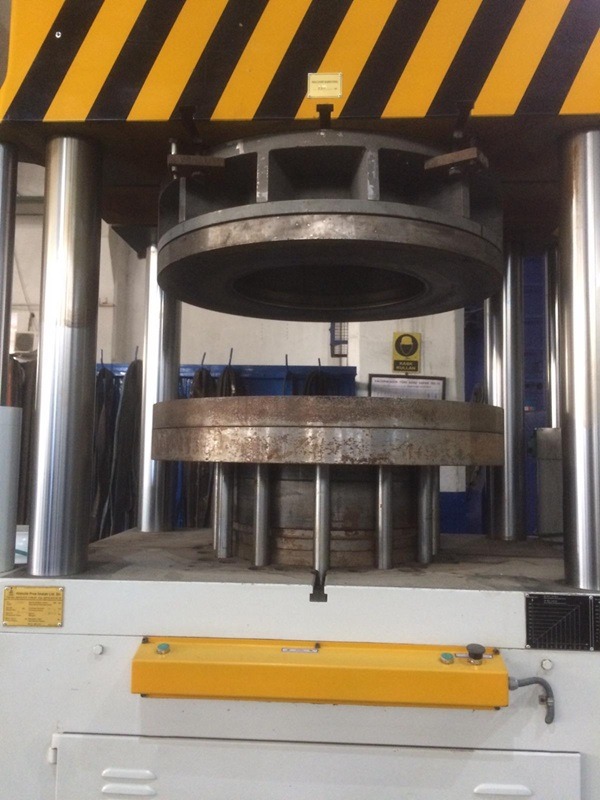
Categories
Machinery

High-Speed Trimming and Beading Line

High-Speed Trimming and Beading Line

High-Speed Trimming and Beading Line: A Trimming Beading Machine is an industrial machine used primarily in the metalworking and fabrication industries, especially in the manufacturing of cylindrical or conical metal components, such as drums, cans, pressure vessels, or HVAC ducting.

Purpose & Function of the Trimming-Beading Machine

  1. Trimming:
    • Removes excess metal from the edges of round or cylindrical workpieces after deep drawing or forming.
    • Ensures a uniform edge or prepares the part for welding or further processing.
  2. Beading:
    • Forms a bead (a rounded protrusion or indentation) on the edge of the metal part.
    • This adds strength and rigidity to the part, helps in sealing (in case of containers), or improves aesthetics and safety (e.g., eliminating sharp edges).

Key Features:

  • Rotary system: Workpieces are usually mounted and rotated while tooling trims or beads the edge.
  • Manual, semi-automatic, or fully automatic operation.
  • Adjustable tooling: To accommodate different diameters, thicknesses, or bead profiles.
  • Material compatibility: Works with steel, stainless steel, aluminum, copper, etc.

Common Applications:

  • Drum manufacturing
  • HVAC duct parts
  • Automotive mufflers or filters
  • Pressure vessels
  • Kitchenware & cookware production

Variants:

  • Vertical or horizontal configurations
  • Integrated into production lines or used as standalone units.
  • Can include CNC controls for high precision and repeatability.

A trimming beading machine is used in metal fabrication to finish and reinforce the edges of cylindrical or conical metal parts such as drums, tanks, HVAC ducting, and pressure vessels. It performs two main operations: trimming and beading. Trimming involves removing any excess material from the edge of a workpiece after it has been formed, ensuring the edge is smooth, uniform, and ready for further processing like welding or sealing. Beading, on the other hand, forms a raised or indented bead along the edge of the metal, which strengthens the part, improves its appearance, and removes sharp edges for safety or sealing purposes.

The machine typically works by rotating the metal part while a set of forming tools or rollers engage with the edge to carry out trimming and beading. It can be operated manually, semi-automatically, or fully automatically depending on the production requirements. These machines are designed to handle various materials including mild steel, stainless steel, aluminum, and copper, and they come in different configurations such as vertical or horizontal types to suit different workshop layouts.

Tooling can be adjusted to accommodate different diameters, metal thicknesses, and bead profiles, making the machine versatile for a wide range of products. In higher-end models, CNC systems are integrated for better precision, speed, and repeatability, especially important in large-scale or high-specification manufacturing. The process not only ensures dimensional accuracy but also adds mechanical strength to the finished product by creating a reinforced edge, which is particularly important in containers that experience internal pressure or need secure sealing.

Trimming beading machines are essential in industries where the final product must meet strict dimensional and aesthetic standards. In applications such as drum manufacturing, the beading process ensures that the rim can support stacking or attachment of lids, while in HVAC ducting, beads improve airflow characteristics and provide locations for fastening or sealing. The machine’s ability to precisely control the depth and shape of the bead also plays a role in meeting regulatory or safety requirements, especially in pressure-rated vessels or food-grade containers.

The operational efficiency of a trimming beading machine greatly impacts production throughput. Modern machines often include quick-change tooling systems, digital position readouts, and automated clamping or centering devices to minimize setup time and improve consistency across batches. In high-volume production environments, these features are crucial in maintaining tight production schedules while reducing material waste and labor costs.

In addition to industrial use, smaller-scale or artisan manufacturers may also use simpler versions of these machines for products like cookware, artisanal metal containers, or decorative items. In such settings, the machine’s flexibility and ease of operation are often prioritized over full automation.

Maintenance of trimming beading machines involves regular inspection of tooling wear, lubrication of moving parts, and ensuring alignment of the rotating components to prevent runout or uneven finishes. High-quality machines are typically constructed with rigid frames and precision bearings to withstand the stresses of continuous operation while maintaining alignment and surface finish quality.

With the increasing integration of Industry 4.0 technologies, some trimming beading machines are also being equipped with sensors and IoT connectivity to enable real-time monitoring, predictive maintenance, and integration into smart manufacturing systems. This allows operators and managers to optimize machine usage, track performance data, and respond quickly to maintenance needs before they result in downtime.

Overall, the trimming beading machine is a versatile and indispensable piece of equipment in any manufacturing environment where round metal parts need to be finished with precision, strength, and consistency.

Integrated Trimming-Flanging-Beading Machine

An Integrated Trimming-Flanging-Beading Machine is a multifunctional piece of metal-forming equipment designed to streamline production by combining three essential operations—trimmingflanging, and beading—into a single, continuous process. This machine is especially useful in industries that manufacture cylindrical or conical components like drums, pressure vessels, tanks, and ducts, where these edge-finishing processes are critical to structural integrity, functionality, and aesthetics.

The process begins with trimming, which removes excess or uneven material from the edges of a spun, drawn, or welded workpiece. This ensures the part has a clean, uniform edge, which is crucial for downstream operations. Following trimming, the machine proceeds to flanging, where the edge is bent or turned outward (or inward) at a defined angle, typically to facilitate joining or to reinforce the structure. Finally, the beading operation forms a rounded protrusion or indentation along the edge, further strengthening the part, preventing deformation, and improving sealing or handling characteristics.

This integrated machine operates in a rotary fashion—holding the workpiece in a spinning chuck while sequential tooling units perform their respective operations. It may be manually operated for small-batch or low-complexity jobs, or fully automated for high-volume production lines. Advanced models often feature servo-controlled axesprogrammable tooling paths, and touchscreen HMIs (Human Machine Interfaces), allowing for precise control over each step of the process and quick changeovers between different part sizes or specifications.

The major advantages of using an integrated trimming-flanging-beading machine include reduced handling time, increased dimensional accuracy, space efficiency, and better overall productivity. Since the workpiece remains clamped and centered throughout the entire sequence, misalignment between operations is minimized, ensuring consistent quality and tight tolerances. Additionally, these machines reduce operator fatigue and training requirements, as multiple operations are handled automatically without manual repositioning of the part.

Industries such as automotiveappliance manufacturingoil and gas, and HVAC benefit greatly from this type of machine, especially when producing components like mufflers, filters, expansion tanks, or ducting collars. By centralizing operations, manufacturers can improve workflow, reduce machinery footprints, and meet increasing demands for speed and quality in competitive production environments.

An integrated trimming-flanging-beading machine represents a highly efficient evolution in metal fabrication, where multiple edge-forming processes are combined into one continuous cycle. Instead of transferring a part between separate machines for each step, the workpiece remains fixed in position while the machine sequentially performs trimming, flanging, and beading. This not only saves time but also enhances precision by eliminating the risk of misalignment that can occur during manual repositioning. The machine typically grips the cylindrical or conical workpiece in a rotating chuck, and tooling heads engage the edge as it spins, each performing its specific function in a pre-programmed sequence.

Trimming ensures the edge is smooth and dimensionally accurate, flanging then forms a bent lip that may serve as a mounting or sealing surface, and beading adds structural strength while improving the part’s functionality and sometimes its visual appeal. Because these steps are closely linked, integrating them into one cycle greatly benefits production speed and consistency. This is particularly important in industries where high volumes of standardized components are required, such as in the manufacture of metal drums, fire extinguishers, gas cylinders, air reservoirs, and HVAC parts.

Modern versions of these machines often include advanced features like servo motors, automated clamping systems, digital control panels, and recipe-based programming that allows operators to switch between product types with minimal downtime. These features enable high repeatability and tight tolerances even across large batches. In a production environment where efficiency and cost control are paramount, having a single operator manage a machine that performs three functions reduces labor costs and simplifies training.

Machine rigidity and build quality play a crucial role in achieving consistent results, especially when working with thicker materials or larger diameters. High-end models are engineered with vibration-dampening frames and heavy-duty bearings to maintain accuracy during continuous operation. Tooling life is also a consideration, with quick-change tool holders and hardened forming rollers helping reduce maintenance time and increase uptime.

In applications requiring strict compliance with safety or performance standards—such as pressure vessels or food-grade containers—the precise edge preparation and repeatable finish provided by an integrated machine can be critical. Moreover, as demand grows for connected and data-driven manufacturing, some integrated machines now feature IoT-enabled diagnostics and process monitoring, giving operators real-time feedback and allowing predictive maintenance to avoid unplanned stoppages.

Overall, the integrated trimming-flanging-beading machine offers a smart, compact, and highly capable solution for any manufacturing process involving round or cylindrical metal components. Its ability to increase output, reduce human error, and ensure uniform product quality makes it an indispensable asset in modern fabrication shops.

In production environments where time, precision, and consistency are critical, the integrated trimming-flanging-beading machine plays a central role in optimizing workflow. Its ability to handle multiple operations in a single clamping not only shortens cycle times but also enhances part integrity, as each process flows seamlessly into the next without interruptions or the need for re-alignment. This uninterrupted sequence ensures that all dimensional references—such as the trimmed edge, the flange angle, and the bead placement—are held to tighter tolerances than what is typically possible using separate machines.

As product designs evolve to meet more demanding specifications—whether it’s to reduce weight, improve sealing, or meet aesthetic expectations—machines like this allow for precise customization of edge geometry. Flange angles, bead radii, and edge profiles can be programmed or adjusted with minimal effort, often through a digital interface. This makes the machine especially useful in facilities that produce a wide range of components in varying sizes, wall thicknesses, and materials. From thin-walled aluminum ducts to heavy-gauge steel drums, the adaptability of the tooling and control systems allows the same machine to be used across different production lines with only minor adjustments.

Another important benefit is the reduction in material waste. Because trimming is performed as the first step with high precision, operators can work with slightly oversized blanks and then achieve perfect final dimensions during the process. Combined with consistent flanging and beading, this improves nesting and stacking of finished parts, as well as compatibility with lids, clamps, or mating components—especially in modular or interchangeable systems.

In terms of ergonomics and operator safety, integrated machines are often designed with protective enclosures, interlocks, and simplified control schemes. This not only prevents accidents but also makes the machine easier to operate, even for less-experienced workers. The automation of repetitive tasks reduces fatigue and minimizes the chances of human error, allowing operators to focus more on quality control and less on manual handling.

For manufacturers aiming to scale production without a corresponding increase in floor space, an integrated solution also addresses spatial efficiency. Replacing three standalone machines with a single integrated unit saves valuable factory real estate, simplifies material flow, and reduces energy consumption, especially when all processes are powered from a shared drive system or central control panel.

As the manufacturing sector increasingly leans toward lean production, energy efficiency, and smart manufacturing, integrated machines offer the technological edge to stay competitive. Whether it’s through networked controls, feedback loops that adjust forming pressure in real time, or cloud-based analytics that track cycle performance and machine health, these machines are positioned not only as workhorses but as intelligent nodes in the digital factory of the future.

Ultimately, the integrated trimming-flanging-beading machine exemplifies the evolution of metal-forming equipment—merging mechanical precision with digital intelligence to meet the growing demands of modern industry. It represents a shift from isolated, manual processes to streamlined, automated, and data-informed production systems capable of delivering high-quality results at scale.

In the broader context of industrial automation, the integrated trimming-flanging-beading machine also contributes to reducing production variability. In traditional setups where each process—trimming, flanging, and beading—is handled by a different operator or separate station, even small discrepancies in setup or handling can accumulate, resulting in parts that deviate from the design specification. By consolidating these operations into one controlled cycle, the machine minimizes those variables, ensuring uniformity across hundreds or thousands of components.

This level of control is especially beneficial in quality-sensitive applications such as in the food and beverage industry, where stainless steel containers must have smooth, sealed edges to comply with hygiene standards. Similarly, in the automotive and aerospace sectors, where every millimeter counts in terms of fit and performance, the machine’s ability to repeatedly form precise beads and flanges ensures the part will function reliably under pressure, vibration, or thermal stress.

One often overlooked advantage of this machine is its impact on inventory management and production scheduling. With fewer machines involved in the process, fewer parts are waiting in queues between operations, which means reduced work-in-progress (WIP) inventory. This leads to faster turnaround times and better flexibility in responding to urgent orders or design changes. For just-in-time (JIT) manufacturing systems, where excess inventory is seen as a cost burden, integrated machines align perfectly with lean production principles.

Maintenance-wise, the centralized nature of this machine simplifies upkeep. Instead of maintaining three separate machines with their own motors, lubrication systems, and wear components, technicians can focus on a single system. Scheduled maintenance becomes more predictable, and downtime is easier to manage, especially when the machine is equipped with diagnostic software or sensor feedback loops that alert operators to component wear or alignment issues before they escalate into breakdowns.

In terms of machine learning and adaptive manufacturing, future-ready versions of these machines can incorporate real-time monitoring systems that analyze force feedback, torque variations, or temperature fluctuations during forming. These systems can automatically adjust forming parameters on the fly, compensating for material inconsistencies or tooling wear without stopping the machine. Over time, the machine can build a data profile of each batch, helping engineers optimize not just the product but the process itself.

From a return-on-investment perspective, the initial capital cost of an integrated machine is often offset quickly by the cumulative savings in labor, floor space, tooling, and maintenance. The streamlined workflow also enhances traceability and documentation, which are critical in industries requiring audit trails, such as medical device manufacturing or pressure vessel certification. Many models are now built with connectivity in mind, allowing remote diagnostics, software updates, and even performance optimization from the manufacturer’s side, further enhancing uptime and long-term value.

At the end of the day, the integrated trimming-flanging-beading machine isn’t just a tool for shaping metal—it’s a platform for production efficiency, quality control, and process innovation. Whether for a high-volume production line or a precision-driven specialty workshop, this kind of machinery embodies the direction modern fabrication is heading: fewer steps, smarter control, tighter tolerances, and greater adaptability.

High-Speed Trimming and Beading Line

Integrated Trimming-Flanging-Beading Machine

High-Speed Trimming and Beading Line is a fully automated, continuous production system designed for rapid, precise processing of cylindrical or conical metal components—typically used in industries like packaging, automotive, HVAC, and container manufacturing. Unlike standalone or semi-automated machines, this line is engineered to operate at high throughput rates, often handling hundreds of parts per hour with minimal operator intervention.

In a typical configuration, components—such as can bodies, drum shells, or duct segments—enter the line via a conveyor or feeding system. They are automatically centered, clamped, and rotated while high-speed tooling units carry out trimming to remove any excess or uneven edge material, followed immediately by beading, where a reinforcing groove or profile is formed around the edge. These operations are completed in quick succession, synchronized by servo drives and PLC-based control systems to ensure perfect timing and minimal idle movement.

The key advantage of a high-speed line is not just speed, but consistency. Every part undergoes the same programmed cycle, eliminating the variability that can occur with manual or semi-automatic systems. The line typically includes automatic part detection, positioning sensors, and quality control features like laser measurement or vision systems to verify dimensions and detect defects in real-time. Faulty parts can be automatically rejected without stopping the line.

These systems are built for non-stop industrial environments, often running 24/7 with features like automatic lubrication, centralized dust or chip extraction, and quick-change tooling systems to minimize downtime during product changeovers. Material compatibility ranges from thin-gauge aluminum and tinplate to thicker steel and stainless steel, depending on the product and forming requirements.

For applications like food and chemical drums, paint cans, filter housings, or HVAC tubes, where edge quality, dimensional accuracy, and structural strength are essential, the high-speed trimming and beading line ensures products meet those demands at scale. Some setups also integrate with upstream and downstream processes, such as welding, leak testing, or flanging stations, creating a seamless manufacturing flow from raw shell to finished, edge-formed product.

With digital control systems and industry 4.0 integration, operators can monitor production metrics, schedule maintenance, and even perform remote diagnostics. All of this contributes to higher yield, lower scrap rates, and a faster return on investment, making these lines a cornerstone of modern high-volume metalworking facilities.

In a high-speed trimming and beading line, every component of the system is designed for efficiency, precision, and endurance. From the moment a shell or part enters the line, it is automatically aligned, clamped, and engaged with the tooling in one fluid motion. The trimming station, typically equipped with hardened rotary blades or shearing tools, removes any excess material from the edges with clean, burr-free cuts. The operation is synchronized so that the transition to the beading station is immediate and seamless, without the need for stopping or manual repositioning. The beading station then forms one or more reinforcing grooves, depending on the product requirements, using hardened rollers that are precisely positioned and pressure-controlled for consistent depth and profile.

Because the entire process is automated and continuous, the line can run at extremely high speeds—sometimes processing up to 60 to 120 parts per minute, depending on part size and complexity. This makes it ideal for mass production environments where downtime and inconsistency can be costly. Tooling setups are optimized for rapid changeovers, allowing manufacturers to switch between different product sizes or styles with minimal interruption. In more advanced systems, recipe-based controls store multiple configurations, so operators can switch batches with just a few inputs on a touchscreen interface.

The mechanical design of the line emphasizes both speed and stability. The rotating spindles, feeding mechanisms, and forming rollers are often driven by servo motors that allow for real-time adjustments in torque and speed, reducing stress on the components and ensuring a smooth forming cycle. The frame is built to absorb vibration and maintain tight tolerances over extended periods of operation, even under heavy workloads. Automated part ejection systems remove finished parts swiftly, often transferring them directly to a conveyor, stacker, or the next stage of assembly or inspection.

Integrated quality control is another hallmark of these systems. Vision cameras or laser scanners monitor each part as it passes through, checking for proper edge formation, bead depth, or surface defects. If an anomaly is detected, the system flags the part for removal without halting the entire line. This kind of in-line inspection ensures that only fully compliant parts move forward, reducing the risk of defective products reaching final assembly or packaging.

Energy efficiency and maintenance have also been addressed in modern high-speed lines. Regenerative drives recycle energy during deceleration, and lubrication systems are automated to keep moving parts in top condition without constant manual intervention. Some machines are equipped with predictive maintenance algorithms that alert operators to wear patterns or performance deviations, allowing them to schedule service before a failure occurs.

Manufacturers who invest in high-speed trimming and beading lines typically do so to support high-volume production while maintaining consistent quality and traceability. These lines are often found in facilities that operate around the clock, where every second of uptime translates directly to increased output and profitability. As production demands evolve and product designs become more complex, these systems can be upgraded or customized with additional forming heads, integrated flanging, embossing, or even marking systems, making them highly adaptable and future-proof.

The high-speed trimming and beading line represents the convergence of mechanical engineering, automation, and smart manufacturing. It transforms what were once labor-intensive, multi-step processes into a streamlined, high-output production system capable of meeting the tightest tolerances and fastest delivery schedules in the industry.

The reliability and repeatability of a high-speed trimming and beading line make it a core investment for companies focused on large-scale production where both throughput and precision are non-negotiable. These lines are built not just to run fast, but to run smart—capable of maintaining consistent quality over thousands of cycles without compromising dimensional tolerances or edge finish. This level of precision is especially critical when dealing with downstream automated assembly systems, where even minor variations in part geometry can cause jams, misfits, or alignment issues. By producing perfectly trimmed and beaded edges every time, the line ensures smooth integration into subsequent processes such as welding, sealing, painting, or packaging.

In facilities where product traceability is essential—such as in the food, chemical, or pharmaceutical sectors—these lines can be equipped with part serialization modules, barcode printers, or even direct part marking systems that log production details like date, batch number, and machine settings in real time. This data can be pushed to central production monitoring software, helping manufacturers maintain full traceability and comply with industry standards or customer audits.

Another major benefit lies in the operator experience. High-speed trimming and beading lines are designed for intuitive operation, often featuring centralized control panels with real-time diagnostics, maintenance reminders, and production analytics. Operators can view cycle counts, part output rates, alarm histories, and even get suggestions for optimal tool change intervals or cleaning schedules. This drastically reduces the learning curve and empowers production teams to run the equipment with confidence and minimal supervision.

Tool wear and part fatigue are inevitable in any high-speed operation, but the best systems address this with precision-engineered tooling made from high-durability alloys or carbide materials. Tooling stations are usually modular, allowing quick swaps for regrinding or replacement. Some lines are even equipped with automatic compensation systems that adjust tool positioning based on feedback from inline sensors, ensuring that even as tools wear, the product quality remains stable until the next scheduled change.

As environmental and sustainability standards grow more stringent, many manufacturers are turning to trimming and beading lines that optimize not just performance, but also energy usage and waste reduction. Scrap management systems, such as integrated chip collectors or magnetic conveyors, remove trimmings cleanly and efficiently, often recycling the waste directly into the production ecosystem. Reduced noise levels, enclosed tooling areas, and dust extraction also contribute to cleaner, safer working environments, helping companies meet occupational health and environmental safety targets.

Ultimately, the high-speed trimming and beading line is not just about maximizing output—it’s about achieving reliable, repeatable excellence at scale. Whether used in the production of paint cans, fire extinguishers, air ducts, or specialty industrial containers, these systems deliver a level of process control that manual or segmented setups simply can’t match. They enable manufacturers to stay competitive in an increasingly fast-paced market, providing the capacity to meet tight deadlines, accommodate custom orders, and maintain consistent product quality without compromise. With continued advancements in automation, software integration, and material science, these lines will only grow smarter, faster, and more essential to next-generation manufacturing.

Double Head Beading Machine

Detailed Description of the Trimming Process

Double Head Beading Machine is a specialized piece of equipment used in metal forming to create beads or reinforcing ridges along the edges of cylindrical or conical parts, such as drums, tanks, or HVAC ducts. Unlike single-head beading machines, which work on one edge at a time, the double head version is designed to form beads on both edges of a part simultaneously, significantly improving production efficiency, particularly in high-volume manufacturing environments.

The machine typically consists of two beading heads, each equipped with rollers that press into the edge of the rotating workpiece to form a raised or indented bead. The workpiece, often a metal cylinder or sheet, is fed into the machine, where it is clamped and rotated. As it rotates, the beading heads engage the edges, applying pressure and shaping the metal to the desired bead profile. By operating two heads at once, the machine doubles the output rate compared to a single-head system, making it ideal for operations that require high-speed processing and consistent quality across large batches.

Double head beading machines are used extensively in industries like automotive manufacturingpressure vessel productionHVAC, and metal container fabrication. For example, in the production of cylindrical tanks or drums, the beading process strengthens the edges, improving both structural integrity and ease of sealing. The bead also prevents the edges from deforming during handling or transport, ensuring that the parts maintain their shape and functionality under pressure.

The design of the double head machine often includes features like adjustable tooling, which allows for different bead sizes and shapes to be created depending on the part specifications. The tooling can be swapped or adjusted to accommodate varying metal thicknesses and diameters, making the machine highly versatile for different applications. Some models also feature servo-driven controls or CNC capabilities, enabling more precise control over the depth, shape, and placement of the beads, and allowing for easy programming for different production runs.

In addition to high-speed production, the double head beading machine offers improved precision and consistency in bead formation. Because both heads operate simultaneously, there is less risk of misalignment or variation between the edges, ensuring that both beads are identical and meet strict quality standards. This is particularly important when the beads need to align with other parts or fit securely into mounting brackets, lids, or seals.

The automation in modern double head beading machines also means that operators can monitor the entire production process through digital interfaces, reducing the risk of human error. Real-time feedback and diagnostics help operators ensure that the machine is functioning at optimal efficiency, and quick changeover features allow for faster transition between different part designs or sizes. Many advanced machines come with automatic part handling systems, further reducing the need for manual intervention and increasing overall throughput.

Double head beading machines are also equipped with safety features, such as enclosed work areasinterlock systems, and emergency stop buttons, ensuring that the operator can work safely during the high-speed operation. Additionally, dust collection and chip removal systems are often incorporated to maintain a clean workspace, improving both machine longevity and the operator’s working environment.

In summary, the double head beading machine offers a powerful solution for manufacturers looking to boost their production efficiency while maintaining high levels of precision and consistency. By simultaneously creating beads on both edges of the workpiece, it helps to reduce cycle times and increase output, making it a valuable asset in industries that require large-scale, high-quality metal forming.

A Double Head Beading Machine is a specialized tool used in metalworking to form reinforcing beads along the edges of cylindrical or conical metal parts. By utilizing two beading heads, this machine is capable of processing both edges of a workpiece simultaneously, significantly enhancing production speed and efficiency. The machine operates by feeding the part, which is typically a drum, tank, or duct component, into the system where it is clamped and rotated. As the workpiece rotates, each beading head engages one edge at a time, using rollers to apply pressure and shape the metal into a defined bead. This design essentially doubles the output rate compared to a single-head machine, making it particularly valuable in high-volume manufacturing environments where speed and consistency are paramount.

The primary function of the beads formed on these edges is to provide additional strength and structural integrity. In applications such as tank or drum production, the beads reinforce the edges, preventing deformation during handling and improving the sealing ability of the components. They also serve aesthetic purposes in some cases, giving the finished product a clean and uniform appearance. Beyond strengthening, beading also helps in parts fitting into other components, such as when parts need to align with mounting brackets, lids, or seals. The machine’s versatility allows it to work on a wide range of materials and part sizes, and it can be adjusted for varying metal thicknesses and diameters. With adjustable tooling and advanced control systems like servo motors or CNC interfaces, manufacturers can easily alter the bead size, shape, and depth to meet specific production requirements.

By simultaneously processing both edges, the double head design ensures high-quality consistency across large batches, reducing the chance of misalignment between the two beads and ensuring that they meet tight quality standards. This is essential for applications where precise, uniform bead formation is necessary for part compatibility and performance. The machine’s automation features allow for efficient operation, with many modern models incorporating digital interfaces for easy monitoring and adjustment of settings. This reduces the need for operator intervention and minimizes the risk of human error, thus increasing overall productivity.

Double Head Beading Machines are commonly used in industries such as automotive manufacturing, pressure vessel production, HVAC, and metal container fabrication. Their ability to handle high-speed production while maintaining precision makes them indispensable in these sectors. They not only improve production throughput but also reduce material waste by ensuring clean, uniform bead formation with minimal scrap. The machine is designed with safety in mind, incorporating protective enclosures and emergency stop mechanisms to ensure a safe working environment for operators. Additionally, dust collection and chip removal systems are built into the design to maintain cleanliness and prevent buildup that could affect machine performance or the operator’s health.

In conclusion, the Double Head Beading Machine is a powerful tool for manufacturers looking to increase their production capacity and maintain high standards of quality. By automating and streamlining the beading process, it reduces cycle times, improves output, and ensures consistent results, making it an invaluable asset in metalworking and manufacturing industries that require high-volume, precision metal forming.

The Double Head Beading Machine’s capacity for high-speed, simultaneous beading makes it a highly efficient solution for companies looking to scale production without sacrificing quality. Its dual-head design is particularly advantageous in industries where tight production deadlines and high-volume demands are standard. By processing two edges at once, the machine maximizes throughput and minimizes the time spent per part. This is a critical factor in industries where profitability is closely tied to the ability to produce large quantities of products quickly and efficiently, such as in the manufacturing of metal drums, pressure vessels, air ducts, and industrial tanks.

Furthermore, the use of advanced automation systems in modern double head beading machines not only improves production efficiency but also enhances control over the manufacturing process. These systems can be programmed to adjust the depth, shape, and position of the beads automatically, which ensures consistent results even with different part sizes or material types. Automated sensors and feedback loops monitor key parameters, such as pressure and speed, to ensure optimal performance during each cycle. This level of control minimizes the risk of defects, reduces waste, and maximizes the lifespan of tooling.

Another significant benefit is the reduced downtime associated with maintenance and tool changes. The modular design of these machines allows operators to quickly swap or adjust tools, ensuring that the line can continue operating with minimal interruption. With the use of predictive maintenance technologies, operators can be alerted to potential issues before they lead to machine failure, helping to avoid costly and time-consuming repairs.

For manufacturers focused on lean production, the high efficiency and reduced waste generated by the Double Head Beading Machine align well with modern manufacturing practices. The machine’s design helps to minimize the amount of scrap produced during the beading process, ensuring that more of the raw material is utilized effectively. This not only reduces costs but also contributes to more sustainable production practices, which are increasingly important in today’s environmentally conscious market.

Additionally, as industries push for greater product customization and variation, the flexibility of double head beading machines allows manufacturers to easily switch between different bead profiles and sizes. This versatility is critical for producing a wide range of products while maintaining high standards of quality and efficiency. Whether it’s creating a deep bead for structural reinforcement or a shallow bead for aesthetic purposes, the machine can be adjusted to accommodate these varying needs with ease.

As manufacturers continue to adopt Industry 4.0 principles, newer models of Double Head Beading Machines often come equipped with IoT (Internet of Things) capabilities, allowing for remote monitoring and data collection. This connectivity provides operators and managers with real-time insights into machine performance, which can be used to optimize production schedules, track productivity, and analyze trends in part quality. This level of data integration supports informed decision-making and helps manufacturers stay competitive in an increasingly data-driven industrial landscape.

Overall, the Double Head Beading Machine is a powerful tool that addresses the need for high-speed production, precision, and flexibility. By simultaneously processing two edges, it improves throughput, reduces cycle time, and maintains consistent product quality. Its integration with modern automation systems and predictive maintenance technology further enhances its value, making it an essential piece of equipment for manufacturers looking to streamline operations, reduce waste, and meet the demands of high-volume production while maintaining the flexibility to adapt to custom orders.

The continued evolution of the Double Head Beading Machine also includes innovations in user interface and integration with other parts of the production line. With the advent of more intuitive control systems, operators now have access to touchscreen interfaces, which allow them to easily input parameters such as bead size, material thickness, and speed. These systems also provide visual feedback, such as real-time machine status, cycle completion, and alerts for any malfunctions. The ability to control and monitor the beading process with greater precision and ease enhances operator efficiency and reduces the chances of human error.

For manufacturers with a diverse range of products or frequent design changes, the flexibility of the Double Head Beading Machine is a major asset. With programmable settings and quick-change tooling options, it is possible to seamlessly switch between different beading patterns, sizes, and materials. This adaptability ensures that the machine can handle variations in product design without the need for major adjustments or downtime, enabling manufacturers to meet a wide range of customer requirements and respond quickly to changing market demands.

One of the key factors that drive the adoption of Double Head Beading Machines in modern manufacturing is the emphasis on quality control. The precision with which beads are formed is critical, especially when components need to meet stringent specifications or must fit seamlessly into other parts. The dual-head configuration allows manufacturers to maintain uniform bead formation across large batches, ensuring that every part meets the same high standards for strength, appearance, and functionality. This consistency is essential in industries where even minor variations can affect the integrity of the final product.

The integration of robotic arms or automated part handling systems with Double Head Beading Machines is another emerging trend. These systems work in tandem with the beading process, removing finished parts from the machine and transferring them to the next stage of production, such as assembly or inspection. This automation reduces manual labor and accelerates the flow of materials, increasing overall throughput while reducing the risk of human error and handling damage.

With the push for sustainability in modern manufacturing, Double Head Beading Machines also contribute to more eco-friendly production. By reducing waste and scrap material, manufacturers can minimize their environmental impact. Additionally, many of these machines are built with energy-efficient components that reduce the power consumption during operation. The ability to recycle waste material, such as metal trimmings, further helps manufacturers contribute to sustainable practices while reducing costs.

The maintenance aspect of Double Head Beading Machines has also been significantly enhanced in recent years. In addition to automatic lubrication systems that ensure optimal tool performance and reduce wear, many models now come with condition monitoring systems. These systems track the performance of critical components, such as motors, rollers, and sensors, and can predict when maintenance is needed. This predictive approach helps to reduce unexpected downtime and extend the overall life of the machine, improving the return on investment.

As production facilities continue to adopt smart manufacturing techniques, the integration of data analytics into Double Head Beading Machines allows for the optimization of the beading process. Data collected during production, such as bead depth, machine speed, and part size, can be analyzed to identify patterns and inefficiencies. This information can be used to adjust the process parameters in real-time, ensuring that each part is produced to the highest standards while reducing waste and improving cycle times.

In the long term, the flexibility, efficiency, and precision of Double Head Beading Machines will continue to make them a valuable investment for manufacturers looking to stay competitive. As industry standards evolve and product designs become more complex, these machines will adapt to meet the needs of modern manufacturing, offering faster cycle times, higher-quality products, and greater flexibility to accommodate a diverse range of customer specifications. With the ongoing advancements in automation, digital control systems, and data analytics, the future of Double Head Beading Machines is poised to bring even greater improvements in productivity, quality, and cost-effectiveness.

Multi-Operation Trimming Beading System

Hydraulic Beading Machine

Multi-Operation Trimming Beading System is an advanced machine used in metalworking that integrates several distinct processes—trimming, beading, and often other secondary operations—into one unified system. This type of system is designed for high-volume production environments, where precision, speed, and versatility are paramount. The integration of multiple operations into a single machine streamlines production and reduces the need for separate machines, resulting in lower overall operating costs and increased efficiency.

The key features of a Multi-Operation Trimming Beading System include its ability to simultaneously trim the edges of a metal part to remove excess material while forming beads along the edges to strengthen, reinforce, or create specific geometries. This dual function eliminates the need for separate trimming and beading stations, improving throughput and reducing material handling time.

In the trimming process, the machine uses high-speed rotary cutters, shears, or blades to cleanly remove the excess material from the workpiece, ensuring a smooth, burr-free edge. Following trimming, the beading operation is carried out, typically using rollers or dies that apply pressure to form a raised bead or ridge along the edge of the part. This bead may serve multiple purposes, such as improving the structural integrity of the part, facilitating better sealing during assembly, or enhancing the product’s aesthetic appearance.

One of the most significant advantages of a Multi-Operation Trimming Beading System is its flexibility. These systems are capable of processing a wide range of materials, including thin-gauge metals like aluminum and steel, as well as thicker materials for more demanding applications. They can also handle varying part sizes, with adjustments made via the machine’s control system. Automated adjustments for different part sizes and bead profiles allow for quick changeovers between different production runs, ensuring minimal downtime and maximizing machine utilization.

Advanced versions of these systems are often equipped with servo-driven motors and programmable logic controllers (PLCs), enabling precise control over the trimming and beading operations. This precise control allows manufacturers to achieve tight tolerances, consistent bead depths, and high-quality finishes, which are critical in industries such as aerospace, automotive, HVAC, and container manufacturing. Some systems also feature CNC capabilities, allowing for automated, computer-controlled operations that can be programmed to handle complex part geometries or custom specifications.

Another benefit of these systems is their integration with downstream processes. Many multi-operation systems are designed to work seamlessly with other equipment, such as welding stations, flanging machines, or part handling systems. This integration enables a continuous flow of parts through the production line, minimizing the need for manual intervention and enhancing overall productivity. For example, once a part is trimmed and beaded, it can be automatically ejected and transferred to the next station for further processing, packaging, or inspection.

The addition of quality control features is another hallmark of a Multi-Operation Trimming Beading System. Many systems are equipped with sensors, vision cameras, or laser scanning technology to inspect the parts as they are processed. These systems can detect defects such as incorrect bead depth, uneven trimming, or dimensional inconsistencies. If any issues are detected, the system can either correct them automatically or reject faulty parts before they move further down the production line, ensuring that only high-quality components are produced.

Maintenance is simplified in multi-operation systems, as these machines typically include self-lubricating systemscondition monitoring, and predictive maintenance capabilities. Sensors monitor the condition of critical components, such as rollers, motors, and blades, and alert operators when maintenance is required, reducing unplanned downtime and prolonging the life of the equipment.

The efficiency of a Multi-Operation Trimming Beading System also extends to material handling. Parts are typically fed into the system by automated feeders or conveyors, which align and position the workpieces for processing. Once the parts are finished, they are automatically ejected and transferred to the next station, minimizing manual labor and reducing handling time. This high degree of automation not only increases throughput but also helps reduce the risk of defects caused by human error during part handling.

In summary, a Multi-Operation Trimming Beading System offers a streamlined, highly efficient solution for manufacturers looking to combine trimming and beading operations in a single system. Its ability to process various materials and part sizes, while ensuring high precision and consistent quality, makes it ideal for high-volume production environments. The integration of advanced controls, automation, and quality inspection systems further enhances its capabilities, allowing manufacturers to meet the demands of modern industrial production with reduced costs, faster cycle times, and greater product consistency.

The versatility and efficiency of a Multi-Operation Trimming Beading System can significantly impact a manufacturer’s ability to meet customer demands for both quality and turnaround time. With industries requiring increasingly precise and intricate components, these systems allow for customization without sacrificing speed or operational efficiency. Manufacturers can adjust the system to handle a variety of part sizes, bead profiles, and material types, ensuring that each batch meets strict specifications. This adaptability is particularly valuable in sectors such as automotiveconstructionelectronics, and consumer goods, where custom parts with unique geometries or functional requirements are frequently needed.

Additionally, as lean manufacturing continues to be a driving force in modern production, the multi-operation system aligns perfectly with these principles. By combining multiple processes in a single machine, manufacturers can reduce the need for additional equipment and labor, minimizing resource waste and operational costs. The ability to quickly switch between different part designs, combined with the automated handling of raw materials and finished products, ensures that production runs are more efficient and less prone to bottlenecks. This helps improve the overall efficiency of the manufacturing process and enhances output capacity.

Another important advantage of these systems is the reduced risk of human error. Automation plays a key role in ensuring consistent results across large production volumes. With manual intervention minimized, especially in high-speed production, the chances of mistakes due to improper setup, part misalignment, or inconsistent material handling are greatly reduced. Automated systems can also adjust processing parameters in real-time based on feedback, further enhancing product consistency.

From an operational standpoint, energy efficiency is increasingly a focus in industrial production. Many Multi-Operation Trimming Beading Systems are built with energy-saving technologies. These systems optimize energy usage by utilizing variable-speed drives, intelligent power management, and energy-efficient motors. Reducing energy consumption not only lowers operational costs but also supports sustainability initiatives by reducing the carbon footprint of production.

Moreover, data-driven insights are becoming a key part of modern manufacturing, and the multi-operation systems are increasingly equipped with advanced data-collection and analytics capabilities. Sensors embedded in the system capture critical operational data, including machine speed, processing time, tool wear, material throughput, and part quality. This data can be monitored in real-time through integrated systems, allowing production managers to make informed decisions and adjustments to optimize efficiency. Machine performance can also be tracked over time to predict when maintenance is due, reducing unplanned downtime and further increasing the overall productivity of the manufacturing line.

Another growing trend in multi-operation trimming beading systems is integration with Industry 4.0 technologies. This includes the ability to connect the system to cloud-based platforms or the company’s ERP (Enterprise Resource Planning) system, allowing for seamless data exchange across the entire production network. By connecting the trimming and beading process with other stages in the manufacturing workflow, manufacturers can gain end-to-end visibility into their operations, further improving decision-making, resource allocation, and production scheduling.

For companies that prioritize product traceability and compliance, multi-operation systems often come with built-in features such as barcode readersQR code scanners, and automatic part marking systems. These allow each part to be traced throughout its production journey, ensuring that it meets regulatory or quality standards. This is especially important in industries with stringent quality control requirements, such as aerospace or food-grade container production.

The use of these systems in flexible manufacturing environments also provides manufacturers with the capability to manage custom orders with ease. In today’s competitive landscape, companies are frequently tasked with producing smaller batch sizes or custom products to meet specific customer needs. The multi-operation trimming and beading system’s programmable control systems can quickly switch between different part configurations and produce complex parts with a high degree of accuracy, making it ideal for fulfilling customized orders efficiently.

As environmental concerns continue to shape the manufacturing industry, waste reduction is a major focus for many manufacturers. The multi-operation system can be designed to optimize material usage during the trimming phase, reducing scrap rates. Additionally, features like recycling systems or automatic scrap separation allow manufacturers to recycle the waste material from the process and reuse it in future production, further contributing to sustainability.

Lastly, the cost-effectiveness of these systems makes them a wise investment for manufacturers. While the initial cost of purchasing and setting up a multi-operation trimming beading system may be higher compared to simpler, standalone machines, the long-term savings in labor, operational efficiency, energy consumption, and material waste typically make up for this investment. The increased outputimproved product quality, and reduced need for maintenance also contribute to a quicker return on investment (ROI).

In conclusion, a Multi-Operation Trimming Beading System is an essential asset for manufacturers looking to streamline operations, improve product quality, and increase production efficiency. The combination of trimming, beading, and often additional processes within a single system allows for higher throughput, less downtime, and more flexibility in production. The ability to easily adapt to different part specifications and materials, while maintaining precision and reducing human error, makes these systems a cornerstone of modern manufacturing. Whether optimizing production flow, increasing sustainability, or meeting custom orders, these machines provide manufacturers with the tools they need to stay competitive in an ever-evolving industry.

As manufacturing continues to evolve in the face of new technologies and market demands, the role of Multi-Operation Trimming Beading Systems becomes even more critical in maintaining a competitive edge. Beyond the operational benefits of efficiency and precision, these systems are also central to supporting advanced manufacturing techniques such as just-in-time (JIT) production and mass customization.

For manufacturers working within JIT frameworks, the speed and flexibility of multi-operation systems are especially valuable. These systems can quickly adapt to different production volumes and part variations, making it easier for companies to maintain a lean inventory and reduce waste. The ability to rapidly produce small batches of customized parts without sacrificing quality or efficiency allows manufacturers to meet customer demands on tight timelines, all while keeping costs low. This becomes especially important when parts need to be delivered quickly to avoid production delays in industries such as automotiveaerospace, and consumer electronics.

The increasing trend of mass customization — where consumers or clients demand tailored products in high volumes — also benefits from the capabilities of multi-operation systems. These systems offer the flexibility to create custom parts with varying specifications, sizes, and features while maintaining high-speed production and minimal downtime. Customization can be accommodated without the need for entirely new setups, making it easier to deliver individualized components within larger production runs. This level of adaptability makes multi-operation trimming beading systems essential for companies that cater to specific client needs, offering both personalized solutions and the ability to scale production without delays.

Another critical aspect is the impact of advanced materials and new production techniques. As manufacturing continues to explore lighter, stronger, and more sustainable materials, multi-operation systems must evolve to accommodate these changes. Whether it’s lightweight alloys, composites, or advanced coatings, these systems can be adapted to handle a variety of materials with differing properties. With their ability to adjust parameters like speed, pressure, and tooling configurations, manufacturers can maintain quality standards when working with these new materials. For example, when using materials that are more susceptible to deformation or require delicate handling, the machine’s advanced control systems ensure that the right amount of force is applied to achieve precise beading and trimming without damaging the workpiece.

The evolution of additive manufacturing (3D printing) and hybrid manufacturing — which combines both additive and subtractive processes — is also influencing the capabilities of multi-operation systems. These systems can now work alongside or in conjunction with additive processes, allowing for greater flexibility in producing complex parts. Hybrid systems that integrate additive manufacturing processes, such as laser sintering or metal 3D printing, with trimming and beading processes, can offer more intricate and lightweight designs that were previously impossible or too costly to produce. By integrating these technologies, manufacturers can push the boundaries of part complexity while maintaining the cost-efficiency and speed of traditional manufacturing.

Automation and robotic systems continue to play a major role in expanding the functionality of multi-operation trimming beading systems. Integrating robotic arms into the system allows for more precise manipulation of parts, reducing the risk of deformation during handling and improving accuracy in both trimming and beading processes. Robots can also be used to load and unload parts automatically, reducing labor requirements and enhancing the overall throughput of the system. Furthermore, vision systems or AI-powered analytics can continuously inspect parts during processing to identify any inconsistencies in bead depth, trim alignment, or other features. If any flaws are detected, the system can make real-time adjustments or alert the operator, ensuring that only parts that meet strict quality standards continue through the production line.

The integration of digital twins and augmented reality (AR) technologies into multi-operation systems is also on the rise. A digital twin is a virtual replica of the physical system that allows manufacturers to simulate different production scenarios, predict potential issues, and optimize workflows before they even occur in the real world. This predictive capability can help manufacturers refine their processes, reduce downtime, and improve quality assurance. Similarly, augmented reality can assist operators by overlaying critical process information directly onto the workspace through AR glasses or screens, helping them with setup, adjustments, and troubleshooting in real-time. This cutting-edge technology ensures that operators have all the necessary information to make quick decisions and perform tasks efficiently.

Another area of continuous improvement in multi-operation systems is predictive quality control. Traditionally, quality control has been done at the end of the production line or after the part is finished. With the integration of real-time data collection and analytics, however, quality control can now occur throughout the entire production process. Sensors and machine learning algorithms can detect subtle variations in material properties, processing conditions, and machine performance, allowing for immediate corrective actions. This ensures that quality is maintained consistently from the start to the end of the manufacturing cycle, improving the overall quality of the finished product and reducing the risk of defects or rework.

As manufacturers face increasing pressure to operate more sustainably, energy consumption and resource optimization are becoming more important considerations for multi-operation systems. Energy-efficient design, low-waste manufacturing practices, and environmentally friendly processes are becoming standard features in newer models. For example, servo motors and variable-speed drives optimize power usage by adjusting energy consumption based on machine load and operational requirements, reducing energy waste during idle or low-load periods. Additionally, as scrap material is minimized through more accurate trimming and beading processes, manufacturers can improve their environmental footprint by using fewer raw materials and generating less waste. Some systems even include integrated systems for collecting and recycling scrap materials, further supporting sustainability goals.

Finally, as global supply chains and manufacturing networks become more interconnected, the ability to monitor and control multi-operation systems remotely is becoming an essential feature. With cloud-based platforms and Internet of Things (IoT) connectivity, manufacturers can access real-time data, troubleshoot issues, and make adjustments to the production line from anywhere in the world. This remote monitoring capability allows companies to optimize operations across multiple facilities, ensuring that machines are running at their peak performance no matter where they are located. It also enables more efficient collaboration between teams and suppliers, reducing lead times and improving communication throughout the supply chain.

In conclusion, the evolution of Multi-Operation Trimming Beading Systems reflects the continuous push toward greater flexibilityspeedprecision, and automation in manufacturing. By integrating the latest technologies — from AI-driven quality control to cloud-based remote monitoring — these systems provide manufacturers with a powerful tool for producing high-quality parts quickly and efficiently, all while reducing waste and enhancing sustainability. As the industry embraces new materials, manufacturing techniques, and production methods, multi-operation systems will remain at the forefront of ensuring that manufacturers can meet the growing demands for customization, speed, and precision in an increasingly competitive market.

Automatic Beading Machine

Multi-Operation Trimming Beading System

An Automatic Beading Machine is a specialized piece of equipment used in metalworking and manufacturing processes to form consistent, precise beads or ridges along the edges of metal sheets or parts. Beading is a critical process in industries where strength, reinforcement, and aesthetic appeal are required. This machine is designed to perform the beading operation automatically, making it an ideal choice for high-volume production environments where speed, precision, and consistency are essential.

Key Features and Benefits

  1. Automated Operation: The primary advantage of an automatic beading machine is its ability to operate with minimal manual intervention. Once the parameters are set (such as bead size, material type, and part configuration), the machine will perform the beading process continuously without the need for operator involvement during each cycle. This automation leads to significant improvements in production speed and reduces the likelihood of human error.
  2. Precision and Consistency: Automatic beading machines use advanced control systems, often powered by PLC (Programmable Logic Controllers) or CNC (Computer Numerical Control), to maintain highly accurate bead depth and alignment. This ensures that each part produced has consistent beads, even when manufacturing large quantities. Whether producing parts for the automotiveaerospace, or HVAC industries, the machine’s precision is critical to maintaining product integrity and quality standards.
  3. Versatility: Modern automatic beading machines can handle a wide variety of materials, including metals like steelaluminumcopper, and stainless steel, as well as composite materials. They are also capable of processing parts in various sizes, from small components to larger, more complex shapes. The machine can be adjusted to create beads with different profiles, such as shallow or deep beads, depending on the application.
  4. High-Speed Production: These machines are designed for high-speed operations, making them ideal for mass production. Their efficiency reduces cycle times significantly, enabling manufacturers to meet high-volume demands without compromising on quality. The ability to automate both the beading and the feeding process ensures that parts move smoothly through the production line with minimal downtime.
  5. Custom Bead Profiles: Automatic beading machines can produce a variety of bead profiles, including single beadsdouble beads, or complex shapes. The bead shape and depth can be easily modified through the machine’s control interface, allowing manufacturers to meet specific design requirements or functional needs (e.g., reinforcement for structural integrity, improved sealability, or aesthetic finishing).
  6. Reduced Labor Costs: By automating the beading process, manufacturers can significantly reduce labor costs. The machine’s high throughput and automated operation reduce the need for manual handling, setup, and supervision, allowing operators to focus on other aspects of production or quality control.
  7. Tooling and Maintenance: Automatic beading machines typically feature modular tooling systems, which makes it easier to change tooling and adapt the machine for different part sizes or bead profiles. This is particularly important when dealing with custom or frequent design changes. Additionally, many automatic beading machines have self-lubricating systems and condition monitoring features, reducing maintenance needs and extending the life of the machine.
  8. Quality Control Integration: Many modern automatic beading machines are equipped with vision systems or sensors to monitor the beading process in real time. These systems ensure that the beads are being formed correctly and to the required specifications. If any deviations are detected, the machine can make adjustments automatically or alert the operator for corrective action. This ensures that every part produced meets the quality standards without requiring additional manual inspection.
  9. Energy Efficiency: With the increasing focus on sustainability and cost savings, automatic beading machines are designed to be energy-efficient. Features such as variable-speed motorsservo-driven mechanisms, and intelligent power management help reduce energy consumption during production, lowering operational costs and supporting green manufacturing initiatives.

Applications

  1. Automotive Industry: In automotive manufacturing, beading is often used for metal components like body panels, exhaust systems, and structural elements. The automatic beading machine can efficiently create the required beads to reinforce parts and ensure they are both durable and visually appealing.
  2. HVAC Systems: Automatic beading machines are used to form beads on ductwork and other HVAC components. Beads help improve the structural integrity of air ducts and other parts, ensuring they can withstand pressure and stress during operation.
  3. Container Manufacturing: In industries like food and beverage or chemicals, automatic beading machines are used to form beads on metal containers, such as cans and barrels. The beads not only strengthen the containers but also improve their aesthetic appeal and ensure that they fit together tightly during sealing.
  4. Pressure Vessels: Beading is also crucial in the production of pressure vessels, where the beads help provide reinforcement and maintain the strength of the vessel under high-pressure conditions.
  5. Consumer Goods: In the production of household appliances, metal furniture, and other consumer goods, automatic beading machines can be used to add decorative beads, as well as functional beads to reinforce edges and joints.

Technological Advancements

  1. CNC Control: Many automatic beading machines are now equipped with CNC controls that allow for precise adjustments to bead size, depth, and pattern. CNC systems also enable batch production with consistent quality and easy program changes for different part designs.
  2. Robotic Integration: To improve automation and efficiency further, some machines are integrated with robotic arms to automatically load and unload parts. Robotic systems can also assist in moving parts through various stages of the production line, reducing manual labor and speeding up the overall production process.
  3. Remote Monitoring and IoT: Newer models of automatic beading machines are equipped with IoT capabilities, enabling remote monitoring and diagnostics. Operators can access performance data, receive alerts for potential issues, and even adjust machine settings from a remote location, optimizing uptime and minimizing downtime.
  4. Adaptive Control Systems: Advanced control systems equipped with machine learning algorithms are capable of adjusting the process in real-time based on the data they gather from each cycle. This adaptability ensures optimal beading quality throughout a long production run, reducing defects and scrap rates.

Conclusion

An Automatic Beading Machine is a crucial investment for manufacturers focused on high-volume production, precision, and cost efficiency. Its ability to automatically produce consistent, high-quality beads on metal components reduces labor costs, increases throughput, and improves the overall quality of the final product. With the integration of advanced technologies such as CNC control, robotics, and real-time monitoring systems, these machines are not only enhancing operational efficiency but are also positioning manufacturers to meet the growing demands for customization and sustainability in today’s competitive market. Whether for automotive, aerospace, HVAC, or consumer goods, an automatic beading machine helps ensure that parts are consistently produced with high strength, precision, and reliability.

An automatic beading machine is a highly efficient and specialized piece of equipment used in various industries for forming consistent beads or ridges along the edges of metal parts. These beads serve different purposes, including reinforcing edges, improving structural integrity, facilitating better sealing during assembly, and sometimes for aesthetic purposes. The key benefit of an automatic beading machine is its automation of the entire beading process, reducing the need for manual labor and increasing the speed and precision of production. Once the settings are configured, the machine can continuously produce parts with little to no operator intervention, reducing both labor costs and the risk of human error.

The primary advantage of an automatic beading machine is its ability to produce parts with highly consistent bead profiles. Whether it’s a shallow or deep bead, the machine maintains precision across large production volumes, which is crucial in industries where part consistency is key, such as in automotive manufacturing or aerospace. The ability to create beads that meet exacting standards, every time, makes these machines indispensable for manufacturers who need to maintain high product quality over long production runs.

The versatility of these machines is another important feature. Automatic beading machines can handle a variety of metals like aluminum, steel, copper, and stainless steel, and they can also work with composite materials. This versatility allows manufacturers to cater to different industry needs and adapt the machine for different part sizes and configurations. The bead profiles can be adjusted easily through the machine’s control system, which gives manufacturers the flexibility to meet specific design requirements, whether it’s for reinforcement, better sealing, or for visual appeal.

High-speed production is another key benefit. Automatic beading machines are designed to operate quickly, allowing for large quantities of parts to be processed in a short amount of time. This makes them ideal for high-volume manufacturing where the demand for efficiency is paramount. The automation of both the beading process and part feeding ensures that production is continuous, with minimal downtime between cycles. This is particularly important in industries like automotive and HVAC, where high volumes of parts need to be produced to tight deadlines.

In addition to speed, automatic beading machines also enhance the quality of the finished parts. Many modern machines come equipped with sensors, vision systems, and feedback mechanisms that monitor the beading process in real-time. If any deviation from the desired bead depth, alignment, or consistency is detected, the machine can automatically correct the issue or alert the operator. This ensures that defects are minimized, and only parts that meet the required specifications are produced, improving overall quality control.

The integration of robotics and automation in these machines has further enhanced their capabilities. Robotic arms can automatically load and unload parts, move them through different stages of production, or handle complex part geometries that might be difficult for human operators to manage. This automation reduces the need for manual intervention, speeds up the overall process, and ensures that parts are handled in a consistent manner, reducing the risk of damage or misalignment during production.

Energy efficiency is also becoming a significant focus in the design of automatic beading machines. Manufacturers are increasingly looking for ways to reduce energy consumption without sacrificing performance. Many new machines are equipped with servo-driven motors and variable-speed drives that adjust power usage based on the operational needs of the system. This not only lowers energy consumption but also reduces operational costs, contributing to more sustainable manufacturing practices.

The development of IoT (Internet of Things) capabilities has added another layer of sophistication to automatic beading machines. With IoT, manufacturers can monitor the performance of the machine remotely, access real-time production data, and even perform diagnostics or make adjustments without being physically present at the machine. This remote monitoring can help prevent downtime by alerting operators to potential issues before they become critical, thus enabling faster troubleshooting and minimizing interruptions in the production process.

Predictive maintenance is another growing trend in automatic beading machines. By collecting data on machine performance, such as tool wear, motor performance, and material handling, manufacturers can predict when maintenance will be needed and take proactive measures to prevent unexpected breakdowns. This predictive approach can significantly reduce downtime and extend the lifespan of the equipment, contributing to more efficient and cost-effective operations.

As industries continue to move toward more customized and flexible production systems, automatic beading machines are also evolving to handle smaller batch sizes and more complex part designs. The ability to quickly adjust the machine settings and switch between different part configurations without extensive downtime or retooling is crucial for manufacturers who need to produce custom parts on demand. This capability is especially beneficial for industries like aerospace, where custom components are often required, and for automotive manufacturers who produce a wide range of parts for different vehicle models.

In addition to the technical capabilities, automatic beading machines also contribute to reducing waste and improving resource efficiency. Since the machine processes material with high precision, it minimizes scrap rates and optimizes material usage. Many systems even include built-in scrap collection and recycling systems, allowing manufacturers to reuse the waste material from the beading process, contributing to sustainability efforts by reducing material waste.

The overall cost-effectiveness of automatic beading machines lies in their ability to combine high-speed production with precision, reducing both labor costs and scrap rates while improving quality and throughput. The initial investment in an automatic beading machine is often offset by the long-term savings in labor, energy, and material costs. For companies with high-volume, high-precision production needs, these machines offer a solid return on investment by enabling faster cycle times, reducing defects, and improving overall operational efficiency.

In conclusion, the automatic beading machine is an essential tool in modern manufacturing, offering a range of benefits from speed and precision to versatility and automation. These machines streamline the production process, reduce labor costs, enhance quality control, and contribute to sustainability efforts by minimizing waste. With advancements in technology, including the integration of robotics, IoT, and predictive maintenance, automatic beading machines are continually evolving to meet the demands of industries like automotive, aerospace, HVAC, and beyond. Their ability to handle a wide range of materials, part sizes, and bead profiles makes them invaluable for manufacturers looking to optimize their production processes, improve part quality, and stay competitive in a rapidly changing marketplace.

As the demand for higher production efficiency, precision, and customization continues to grow, the capabilities of automatic beading machines are expanding to meet these challenges. The integration of advanced control systems and sensor technologies has enabled these machines to not only improve production speeds but also optimize the overall process in real-time. One such development is the inclusion of adaptive control algorithms that adjust the operation of the machine based on the feedback it receives during the production process. This ensures that even if material properties or part designs change, the machine can automatically adjust its settings to maintain consistent bead formation and quality.

Another significant advancement is the development of multi-axis and multi-tool capabilities in some automatic beading machines. These systems can operate on multiple axes simultaneously, which allows for complex bead patterns and more intricate designs. By using different tools or molds in conjunction with each other, these machines can create more varied and unique bead profiles, further enhancing the machine’s versatility and adaptability to diverse manufacturing needs. This capability is especially important in industries like aerospace or automotive, where components require custom features and intricate designs for optimal performance.

Furthermore, the rise of Industry 4.0 principles—focused on the automation and data exchange in manufacturing technologies—has had a significant impact on automatic beading machines. Smart manufacturing systems, enabled by big data analytics and cloud computing, are now integrated into these machines. By collecting vast amounts of data throughout the production process, manufacturers can analyze performance trends, track machine health, and even predict when parts or components will need to be replaced. This wealth of data can be used to further fine-tune production lines and optimize the machine’s output, contributing to enhanced productivity and cost savings over time.

Collaborative robots (cobots) are also becoming more integrated into the beading process, particularly in environments where human interaction is still necessary but cannot be easily performed by traditional robots. Cobots can work alongside operators, assisting in tasks such as part loading, material handling, or even monitoring the production process. These machines have safety features that allow them to work in close proximity to humans without causing harm, increasing both productivity and flexibility.

An additional trend in the automatic beading machine landscape is the move towards modular design. Modular machines allow manufacturers to adapt their equipment quickly to meet changing production needs. Whether the demand increases, or new product lines need to be introduced, the modular nature of these systems means manufacturers can easily add or remove components such as additional beading headscustomized tooling, or extra automation modules. This scalability makes the machine a long-term investment, able to grow and evolve with the business, rather than requiring a complete overhaul when production needs change.

Another area where automatic beading machines are evolving is in the use of additive manufacturing technologies, often referred to as 3D printing, in conjunction with traditional methods. Some systems are now integrating additive and subtractive technologies into a hybrid process, allowing manufacturers to create more complex and customized part geometries. These hybrid machines can produce intricate parts using additive methods and then apply beading with traditional machining techniques to reinforce or finish the parts. This synergy allows for faster prototyping, reduced lead times, and the production of high-performance components that are tailored for specific functions.

Moreover, automatic beading machines are becoming more user-friendly, with advanced human-machine interfaces (HMIs) that feature intuitive touchscreen controls, making setup and operation easier for workers. These interfaces allow operators to quickly change settings, view real-time production data, and receive troubleshooting assistance through integrated diagnostic systems. This simplification of machine control helps reduce training time for operators and allows even less experienced workers to manage the beading process effectively.

The push towards sustainability is also influencing the design and operation of automatic beading machines. Manufacturers are increasingly looking for ways to reduce the environmental impact of their operations, and one way to achieve this is by minimizing material waste and energy consumption. Many newer models incorporate energy-saving features, such as regenerative braking systems, where the machine can capture and store energy from deceleration phases of operation, which can then be reused during other stages of production. Additionally, lean manufacturing principles are often embedded in the machine’s design, helping to optimize the use of materials, reduce scrap, and enhance resource efficiency.

The focus on quality assurance is another major development. With the integration of advanced machine vision systems, automatic beading machines can continuously monitor the quality of the bead as it is being formed. These systems use high-resolution cameras and sensors to inspect the bead in real time for defects such as uneven bead height, misalignment, or material inconsistencies. If a flaw is detected, the machine can adjust its parameters automatically or alert the operator to take corrective action. This level of automation in quality control reduces the need for post-production inspection and ensures that defective parts are identified early in the process.

As industries continue to push for faster product development cycles and more customized solutions, the ability of automatic beading machines to quickly adapt to new designs and specifications becomes even more critical. These machines are increasingly being incorporated into flexible, agile manufacturing systems where short production runs of customized parts are the norm, and turnaround times are tight. With their rapid retooling capabilities, these machines can produce a wide range of part designs in a short period, making them invaluable in industries that demand flexibility, such as electronicsmedical devices, and consumer products.

Finally, the increasing integration of artificial intelligence (AI) into manufacturing processes is helping to optimize the performance of automatic beading machines even further. AI algorithms can be used to predict potential issues with parts or tooling, suggest adjustments to improve part quality, or even recommend process changes based on historical data and trends. By leveraging the power of AI, manufacturers can anticipate problems before they occur, streamline production processes, and improve overall machine performance, leading to reduced downtime and higher productivity.

In summary, the automatic beading machine continues to evolve in response to the increasing demand for precision, efficiency, and flexibility in manufacturing. With advancements in automationroboticssustainability, and smart manufacturing technologies, these machines are now more capable than ever of meeting the challenges of modern production environments. They offer manufacturers significant advantages, including increased production speed, enhanced product quality, and reduced labor costs, all while contributing to more sustainable and efficient manufacturing processes. As these technologies continue to develop, automatic beading machines will play an even more crucial role in the future of manufacturing across a wide range of industries.

As the automatic beading machine technology continues to advance, further innovations are expected to transform the landscape of manufacturing even more significantly. These developments will continue to focus on improving overall efficiencyflexibility, and product quality, while reducing downtime and operational costs. The following are key areas where we expect further advancements to shape the future of automatic beading machines:

Increased Automation Integration

One of the most exciting trends in the evolution of automatic beading machines is the increasing use of full system integration across the production line. With more manufacturers adopting Industry 4.0 principles, the automatic beading machine will become a vital part of a larger smart factory. These systems will connect not just the beading machine itself, but also other stages of the manufacturing process, such as cutting, forming, and welding. This interconnectedness allows for a seamless workflow where the entire production line operates based on real-time data, with automated adjustments happening across machines to ensure peak performance. Integration with systems like enterprise resource planning (ERP) or manufacturing execution systems (MES) will also allow for better coordination, tracking, and optimization of resources and materials.

Predictive and Prescriptive Maintenance

While predictive maintenance has already gained traction, advancements in machine learning and artificial intelligence are making it increasingly accurate and actionable. Predictive models are being enhanced to predict not just when maintenance is needed, but to also offer prescriptive maintenance advice. In this scenario, the machine could not only alert the operator of an impending issue but also recommend specific actions to prevent breakdowns or minimize downtime, such as recalibrating a tool or replacing a specific component. This predictive and prescriptive maintenance approach reduces the reliance on scheduled downtime and avoids unscheduled stops, increasing the overall uptime and productivity of the machine.

Advanced Material Handling

Future automatic beading machines are likely to feature even more sophisticated material handling systems. Materials may be automatically identified and sorted using advanced sensors and machine vision, with robotic arms or automated guided vehicles (AGVs) moving parts from one machine to the next. These handling systems would work seamlessly with the beading machine, ensuring that each part is positioned correctly and that there are no errors in the flow of production. Such systems could even adjust material feeding rates in real-time based on the material’s condition or changes in production speed, further optimizing the process.

Real-time Quality Monitoring with AI

While many machines already incorporate vision systems for basic quality checks, the future of quality monitoring lies in the integration of artificial intelligence (AI) with deep learning capabilities. By analyzing vast amounts of image data from high-resolution cameras, AI systems can recognize subtle defects that may not be visible to the human eye. This could include detecting minor variations in bead shape, slight imperfections in metal thickness, or even identifying material inconsistencies. These AI-driven systems will not just flag defects but also offer insights on how to correct the process, ensuring that every part produced meets the highest standards.

Higher Customization Capabilities

As product designs continue to evolve and industries demand increasingly customized solutions, automatic beading machines will need to be able to handle a broader range of configurations. The ability to quickly change bead profiles and accommodate complex geometries with minimal downtime is crucial. Future machines could feature intelligent tooling systems that automatically adjust to different part shapes and sizes, or even fully programmable tooling, where the system can generate new bead designs without needing to manually change parts. This level of flexibility would allow manufacturers to produce highly customized parts with much faster turnaround times, offering a significant advantage in industries that demand agility, such as medical device manufacturing or aerospace.

Improved Energy Efficiency and Sustainability

Sustainability will continue to be a driving force in the development of automatic beading machines. As manufacturers face increasing pressure to reduce their carbon footprint and lower operational costs, energy-efficient technologies will become even more important. Machines will be designed with eco-friendly materialsenergy-saving motors, and recyclable components. Advanced systems will also minimize energy use by adjusting power consumption in real time, using smart energy management techniques that allow the machine to draw energy only when necessary, and optimize power usage during off-peak hours. Additionally, waste reduction technologies will be embedded into these systems, allowing for the recycling of scrap material directly into the production process, further contributing to zero-waste manufacturing.

Modular and Scalable Systems

The future of automatic beading machines is likely to feature more modular designs that allow for scalable production. In environments where production volume fluctuates, modular systems can be easily expanded or downsized to meet demand. This adaptability ensures that manufacturers can maintain flexibility in production without incurring the cost of purchasing new machines for each new product line. For example, a company manufacturing a limited run of parts could add only the necessary beading heads or adjust the machine’s capacity without needing to reconfigure the entire system. This ability to scale up or down based on production needs will become increasingly valuable, especially for industries that deal with custom orders or short-run productions.

Hybrid Manufacturing Technologies

The integration of hybrid manufacturing methods will also become more prominent in automatic beading machines. By combining traditional subtractive manufacturing (like cutting and beading) with additive manufacturing (3D printing), manufacturers can produce more complex parts in a shorter period. For example, 3D printed components could be used to create intricate geometries or internal structures within a part, and then beaded to reinforce the edges or enhance the sealing properties. Hybrid machines would allow manufacturers to offer innovative solutions with significantly reduced lead times, providing them with a competitive edge in industries requiring complex parts, like medical implants or aerospace components.

Human-Machine Collaboration

While automation will continue to play a significant role in automatic beading machines, there will also be a growing focus on enhancing human-machine collaboration. In the future, the relationship between human operators and machines will become more integrated. With augmented reality (AR) and virtual reality (VR) technologies, operators may be able to access real-time data and machine performance metrics through headsets or smart glasses. These devices could display critical information such as bead quality, machine status, and predictive maintenance alerts, allowing operators to intervene when necessary. Additionally, machine controls could become more intuitive, leveraging natural language processing or gesture-based controls to allow operators to interact with the machine more naturally and efficiently.

Global Supply Chain Integration

As manufacturing becomes more globalized, the need for machines that can be integrated into global supply chains is also increasing. Future automatic beading machines may be capable of being remotely operated or monitored from any location, allowing manufacturers to access real-time performance data, conduct remote diagnostics, and even make adjustments to the production process from across the globe. This level of connectivity could help companies improve their supply chain management, reduce delays, and ensure that parts are being produced to specification regardless of where the manufacturing facility is located.

Cost Efficiency

As automatic beading machines evolve with these advancements, the cost of operation will continue to decrease due to improved energy efficiencypredictive maintenance, and better material management. While the initial investment in advanced systems may be high, the long-term operational savings will make them increasingly attractive to manufacturers, especially those involved in high-volume or custom manufacturing. The ability to reduce downtime, maintain high-quality production standards, and reduce energy and material costs will result in a significant return on investment for companies.

In conclusion, the future of automatic beading machines is highly promising, driven by the continued integration of advanced technologies such as artificial intelligenceroboticsIoT, and sustainable manufacturing practices. These machines will not only become more efficient, flexible, and precise but also increasingly intelligent, capable of adapting to changing production needs, monitoring quality in real time, and reducing operational costs. The continued evolution of these machines will ensure that manufacturers can meet the demands of modern production, offering both high-quality products and cost-effective solutions to meet the ever-changing market landscape.

Cylinder End Trimming Machine

Cylinder End Trimming Machine

Cylinder End Trimming Machine is a specialized piece of equipment designed primarily for trimming the ends of cylindrical parts, such as tubes, pipes, or other round metal or plastic components, to a specific length or shape. These machines are widely used in industries such as automotiveaerospaceHVACoil and gas, and manufacturing, where precision trimming of cylinder ends is critical for subsequent processes like welding, assembly, or fitting into larger systems.

Key Features and Functions

  1. Precise End Trimming: The primary function of the cylinder end trimming machine is to remove excess material from the ends of cylindrical parts. The trimming is often done with high precision, ensuring that the parts meet tight dimensional tolerances. The machine can cut the ends of cylinders to a flat, beveled, or other custom shapes depending on the specific requirements of the application.
  2. High-Speed Operation: Cylinder end trimming machines are generally designed to operate at high speeds, allowing manufacturers to process large volumes of cylindrical parts in a short period of time. This speed is critical in high-volume production environments where efficiency is a priority.
  3. Versatility: These machines can accommodate a wide range of cylinder sizes, materials, and shapes. Depending on the design, they can handle both short and long tubes and often have adjustable fixtures or tooling to secure and center the cylinders accurately during the trimming process.
  4. Automation: Modern cylinder end trimming machines often include automated features, such as auto-feeding systemsautomated loading and unloading, and computerized controls. These systems can optimize the trimming process and reduce the need for manual intervention, making the operation more efficient and consistent. Some machines may also include vision systems to ensure proper alignment and quality checks in real time.
  5. Cutting Tools: The cutting tools used in cylinder end trimming machines vary depending on the material being processed. Common cutting tools include rotary cutterssaw blades, or laser cutting heads. The choice of cutting tool influences the quality of the cut, the smoothness of the edges, and the overall efficiency of the operation.
  6. Edge Quality: Cylinder end trimming machines are designed to achieve smooth, clean cuts on the cylinder ends, ensuring that the edges are free from burrs, sharp edges, or deformations. This is important because rough edges can interfere with the fitting and assembly of parts and can cause issues during subsequent processes like welding or sealing.
  7. Customization: Many cylinder end trimming machines can be customized to meet the specific requirements of a particular manufacturing operation. This includes the ability to trim different lengths, bevel the edges, or even add other features such as marking or engraving on the cylinder ends.

Advantages

  • Precision and Consistency: The ability to maintain tight tolerances ensures that the cylinder ends are uniform across a large batch of parts, improving quality control and reducing the need for post-production adjustments.
  • Increased Productivity: With automated feeding and trimming processes, cylinder end trimming machines increase throughput and reduce production times compared to manual trimming or less automated equipment.
  • Reduced Labor Costs: Automation in cylinder end trimming machines reduces the need for manual labor and the associated costs, allowing workers to focus on other areas of production.
  • Enhanced Safety: Modern machines are designed with safety in mind, incorporating features such as safety guardsemergency stops, and enclosed cutting areas to protect operators from potential hazards.

Applications

  • Automotive Industry: Cylinder end trimming machines are used for trimming metal parts such as exhaust pipes, shock absorber housings, and other cylindrical components that need precise end trimming for fitment in vehicle assemblies.
  • Aerospace: In aerospace manufacturing, cylinder end trimming is crucial for parts like fuel lines, engine components, and other tubing that must meet exacting standards for length and edge quality.
  • HVAC Systems: In the HVAC industry, cylindrical ducts and pipes are often trimmed to the correct length and fitted with precise edges to ensure they fit together properly during installation.
  • Oil and Gas: The oil and gas industry relies on cylinder end trimming machines to process pipes and tubing used in drilling, transportation, and installation of systems in both onshore and offshore environments.
  • Construction and Manufacturing: Cylinder end trimming machines are used to prepare pipes and tubes for assembly in various systems, such as plumbing, irrigation, and industrial systems.

Types of Cylinder End Trimming Machines

  1. Manual Cylinder End Trimming Machines: These machines require operators to manually load and align the cylinders. While they are less expensive, they are generally slower and less precise than automated systems.
  2. Semi-Automatic Cylinder End Trimming Machines: These machines offer a balance between manual labor and automation. Operators may need to load the cylinders and perform basic tasks, but the machine takes care of the cutting, allowing for faster processing and more consistent results.
  3. Fully Automatic Cylinder End Trimming Machines: These machines are entirely automated, with systems in place to load, align, cut, and unload cylinders with minimal human intervention. Fully automated machines are used in high-volume production environments where precision, speed, and efficiency are critical.
  4. CNC Cylinder End Trimming Machines: Computer Numerical Control (CNC) machines allow for high precision and flexibility in trimming cylinder ends. These machines are programmed with specific cutting parameters, enabling them to trim cylinders to precise lengths and shapes. They are ideal for custom applications or small-batch production where different sizes and shapes of cylinders are required.

Technological Trends

  • Laser Cutting: Some advanced cylinder end trimming machines are now incorporating laser cutting technology, allowing for even greater precision and faster cutting speeds. Laser systems are particularly useful for cutting harder materials or for applications that require a very clean, burr-free edge.
  • Integration with Robotic Systems: For high-precision and high-throughput environments, cylinder end trimming machines can be integrated with robotic arms for loading and unloading, as well as for part handling. This integration enables full automation of the entire process, from material input to finished part output.
  • IoT Connectivity: Some cylinder end trimming machines are incorporating Internet of Things (IoT) technologies, enabling remote monitoring and predictive maintenance capabilities. With IoT integration, operators and managers can access real-time data on machine performance, tool wear, and other critical factors, allowing for proactive maintenance and fewer unexpected breakdowns.

Conclusion

Cylinder End Trimming Machine is an essential tool for manufacturers that deal with cylindrical parts requiring precise, consistent trimming. By automating and optimizing the trimming process, these machines improve overall production efficiency and quality. As industries demand higher precision and faster turnarounds, the technological advancements in these machines are expected to continue. With the integration of advanced features such as robotic automation, laser cutting technology, and IoT connectivity, cylinder end trimming machines will be able to handle more complex and varied tasks while maintaining high accuracy. These advancements will also contribute to reducing operational costs and increasing flexibility in production.

The rise of smart manufacturing will further enhance the capabilities of cylinder end trimming machines. Operators will be able to monitor and control the trimming process in real time through integrated software systems. This will allow for immediate adjustments to be made if there are any inconsistencies or deviations from the desired specifications, ensuring that every part meets the required standards. Additionally, predictive analytics and machine learning algorithms will help to forecast potential maintenance issues before they disrupt production, reducing downtime and increasing machine lifespan.

Sustainability will also play a larger role in the design of future cylinder end trimming machines. Manufacturers are likely to focus on reducing energy consumption and material waste, adopting more eco-friendly production methods. This could include the development of energy-efficient motors and the incorporation of regenerative braking systems that capture and reuse energy during operation. By optimizing these aspects, cylinder end trimming machines can contribute to a more sustainable production process, which is becoming increasingly important in a world focused on reducing environmental impact.

The flexibility of these machines will be further enhanced through modular designs. Manufacturers will be able to add or remove components as needed to meet specific production requirements, which will make the machines more adaptable to different production runs or product variations. This scalability will allow businesses to adjust their production lines quickly and efficiently without needing to invest in entirely new equipment for every change in the product design.

Overall, as automatic systems and advanced technologies become more integrated, cylinder end trimming machines will continue to evolve to meet the growing demands of industries around the world. These machines will not only offer enhanced precision and faster processing times but also contribute to greater overall productivity and cost-effectiveness in manufacturing environments.

As the demand for faster production cycles and higher precision increases across various industries, the cylinder end trimming machine’s role will continue to expand. Beyond simple trimming, these machines will become integral to ensuring the overall efficiency and adaptability of manufacturing lines.

One key development will be enhanced material handling systems, such as automated conveyor belts or robotic arms, that work in tandem with cylinder end trimming machines. These systems can automatically load and unload cylinders, reducing the time spent by operators on manual handling and minimizing the risk of human error. Furthermore, vision systems integrated into the machine will improve part alignment and positioning before the trimming process, ensuring that each cylinder is correctly positioned for optimal precision.

In addition, customizable trimming capabilities will become a hallmark of future cylinder end trimming machines. As manufacturers increasingly require specialized parts with unique geometries, these machines will be able to trim parts to non-standard specifications, including beveled edgesangled cuts, and more complex profiles. The flexibility to modify trim lengths and designs without requiring extensive machine reconfiguration will make these machines even more valuable, especially for industries involved in producing customized or low-volume parts.

Data analytics will also play a larger role in the operation of these machines. Real-time data collection will allow operators to track trends in production, identify any inefficiencies, and optimize workflows. For instance, data on cutting speeds, material types, and tool wear could be analyzed to adjust machine settings for maximum efficiency. This level of insight into machine performance will not only streamline the trimming process but also improve the longevity of cutting tools and other machine components by enabling more precise and proactive maintenance schedules.

Another area for growth is advanced edge finishing technologies. While trimming ensures that cylinders are cut to the correct length, further processes like deburringpolishing, or sealing are often required to ensure that the edges are smooth and fit for their intended purpose. Future cylinder end trimming machines could incorporate these secondary processes into the same machine, streamlining the production process and reducing the need for separate machines. This integration could significantly cut down on handling time and reduce the chances of contamination or damage to parts between processes.

Remote monitoring and control will also become more common. With connected systems, operators and engineers could remotely access machine diagnostics, monitor performance metrics, and even adjust parameters from off-site locations. This is particularly beneficial for large-scale manufacturers with multiple production sites, as it allows for centralized oversight and easier coordination across different facilities. With such capabilities, troubleshooting and repair tasks could also be done remotely, ensuring faster resolutions to any issues and reducing downtime.

As the focus on sustainable manufacturing continues, cylinder end trimming machines will evolve to minimize material waste. Improved cutting techniques, such as laser-assisted trimming, could be employed to ensure cleaner cuts with minimal excess material. Additionally, waste materials generated during the trimming process can be recycled and reused in the production of new parts, contributing to a more circular economy.

The next generation of cylinder end trimming machines will likely integrate cutting-edge technologies such as AI-powered decision-making, enabling the machine to automatically adjust parameters based on environmental conditions, material changes, or quality checks. For instance, if a material batch has slight variances in thickness or hardness, the machine could self-adjust its cutting process to maintain the quality of the trim.

Overall, the continuous advancement of cylinder end trimming machines will lead to a future where these machines are not only more accurate and efficient but also smarter, greener, and more adaptable to the evolving needs of industries worldwide. The combination of automation, data-driven insights, and advanced cutting techniques will make cylinder end trimming machines indispensable in high-volume manufacturing environments and industries requiring precision and customization.

Tank Beading and Trimming Machine

Tank Beading and Trimming Machine

Tank Beading and Trimming Machine is an industrial machine designed to perform both beading and trimming operations on cylindrical tanks or similar vessels. These operations are crucial in industries where metal or plastic tanks, such as fuel tanks, pressure vessels, or HVAC units, need precise edge shaping and trimming for functionality, durability, and aesthetics.

Key Functions and Features

The tank beading and trimming machine combines two critical processes, ensuring that tanks are properly shaped and finished for their intended use. Below is an overview of its core functions:

  1. Beading: The beading process involves forming a raised bead or ridge around the perimeter of the tank. This bead strengthens the edge of the tank, preventing deformation, and ensures that the tank will fit securely when installed. The machine typically uses a rotating tool or roller to create a uniform bead, applying controlled pressure to the material to form a precise shape. This process is essential for tanks that need reinforcement around openings or for ensuring a proper seal during assembly.
  2. Trimming: The trimming function is used to ensure that the edges of the tank are clean and precisely cut to the desired length. This could involve removing excess material from the edges, ensuring smooth, even cuts that will allow the tank to fit into its intended position without sharp edges or burrs. Trimming is essential for ensuring a clean finish and eliminating any material defects that could compromise the tank’s integrity during later manufacturing stages, such as welding or sealing.
  3. Automated Operation: Many tank beading and trimming machines are automated to improve efficiency and precision. Automated feeding systems help feed the tanks into the machine, while adjustable tooling allows for quick changes to accommodate different tank sizes and shapes. The automation reduces manual labor and speeds up production, making it ideal for high-volume environments.
  4. Precision Control: These machines come equipped with advanced control systems, allowing for fine adjustments to be made to beading depth, trimming length, and other key parameters. Modern machines use CNC (Computer Numerical Control) systems to provide precise control over the process, ensuring consistent quality and reducing the chance of human error.
  5. Versatility: Tank beading and trimming machines can typically handle a variety of materials, including metals such as stainless steel, aluminum, and carbon steel, as well as some plastics. This versatility makes them suitable for industries such as automotive, aerospaceoil and gas, and HVAC systems, where tanks and cylindrical vessels are commonly used.

Advantages of Using a Tank Beading and Trimming Machine

  1. Improved Strength and Durability: The beading process reinforces the edges of the tank, making it more resistant to external forces, pressure changes, and potential leaks. It is particularly important for pressure vessels or fuel tanks, where the integrity of the tank must be maintained under various conditions.
  2. Enhanced Precision and Efficiency: By automating both beading and trimming, the machine ensures consistent results across large batches of tanks, which is difficult to achieve through manual labor. The precision ensures that all parts meet the required specifications without needing additional post-processing work, increasing overall production efficiency.
  3. Reduced Material Waste: Trimming machines remove excess material from tanks, but they do so in a controlled and efficient manner, minimizing material waste. This is especially important in industries where raw material costs are high, and the ability to maximize the use of available materials can improve cost-effectiveness.
  4. Faster Production: With high-speed operations, automated feeding, and precision trimming, the tank beading and trimming machine can process large volumes of tanks in a relatively short period, reducing cycle times and increasing overall throughput.
  5. Enhanced Edge Quality: The trimming function ensures that tank edges are smooth, burr-free, and ready for further processing, such as welding or fitting with seals. This is important for ensuring that parts fit together properly and maintain the structural integrity of the tank.

Applications of Tank Beading and Trimming Machines

Tank beading and trimming machines are used in a variety of industries where cylindrical tanks or vessels are a common component:

  1. Automotive: In the automotive industry, tanks such as fuel tanks or reservoirs are often formed using these machines. The beading process strengthens the tank’s edges, while trimming ensures a clean, precise finish that fits into the vehicle’s design.
  2. Aerospace: The aerospace industry uses high-precision tanks for fuel storage, hydraulic systems, and other purposes. Tank beading and trimming machines ensure that these tanks are reinforced and finished to exacting standards, with an emphasis on safety and structural integrity.
  3. Oil and Gas: Tanks used in the oil and gas industry must withstand high pressure and environmental stresses. Beading provides the necessary reinforcement, while trimming ensures that the tanks are shaped properly for installation and operation within pipeline systems or offshore platforms.
  4. HVAC: In heating, ventilation, and air conditioning (HVAC) systems, tanks are often used to hold refrigerants or pressurized fluids. The tank beading and trimming process ensures that the tanks are durable and capable of maintaining the necessary pressure levels.
  5. Industrial Manufacturing: Various other industrial applications require precise, strong tanks or cylindrical vessels, such as storage tanks for chemicals or liquids. The beading and trimming machine plays a critical role in ensuring that these vessels are correctly shaped and meet industry standards.

Technological Trends

  1. Automation and Robotics: As with many manufacturing processes, automation and robotics are being increasingly integrated into tank beading and trimming machines. The use of robotic arms for handling and positioning tanks helps reduce cycle time, while ensuring consistent, error-free placement. This automation also reduces labor costs and increases overall efficiency in production.
  2. CNC Integration: With the rise of CNC technology, many modern tank beading and trimming machines feature programmable controls that enable precise adjustments to be made during production. Operators can input specifications for various tank sizes and edge profiles, and the machine will automatically adjust settings to match these requirements. This capability is particularly valuable for high-mix, low-volume production, where multiple tank designs are needed in a short timeframe.
  3. Advanced Sensors: Some advanced machines now feature sensor-based technology that can detect defects in real-time. These sensors can ensure that the trimming and beading processes are carried out to the exact tolerances required, and any deviations are flagged for correction. This reduces the need for manual inspection and ensures higher quality assurance.
  4. Energy Efficiency: The demand for energy-efficient equipment continues to grow. Many modern tank beading and trimming machines incorporate features such as variable-speed motors and regenerative braking systems to reduce energy consumption. These improvements not only lower operational costs but also align with global sustainability trends, reducing the carbon footprint of the manufacturing process.
  5. Data Analytics and IoT Integration: With the increasing use of Internet of Things (IoT) in manufacturing, tank beading and trimming machines can now be connected to central control systems for real-time monitoring and performance tracking. Operators can remotely monitor the machine’s performance, track maintenance schedules, and identify any potential issues before they cause disruptions. This real-time data collection and analysis allow for optimized workflows, predictive maintenance, and improved decision-making.
  6. Customization Capabilities: As demand for customized products increases, tank beading and trimming machines are evolving to accommodate a wider range of shapes, sizes, and edge profiles. Adjustable tooling and modular systems allow for quick changes to accommodate different designs, making these machines more versatile in meeting customer-specific requirements.

Conclusion

Tank Beading and Trimming Machine is a critical piece of equipment in the manufacturing process of cylindrical tanks, providing both beading and trimming operations that enhance the strength, durability, and precision of the final product. With the integration of automation, CNC technology, and advanced monitoring systems, these machines will continue to evolve, offering manufacturers faster, more efficient, and more cost-effective ways to produce high-quality tanks. As industries demand greater customization, energy efficiency, and precision, the tank beading and trimming machine will remain an indispensable tool for producing strong, reliable, and precisely finished tanks across a variety of sectors.

Tank beading and trimming machines are becoming increasingly integral to modern manufacturing processes. With the continuous drive for improved efficiency and precision in industries such as automotive, aerospace, oil and gas, and HVAC, the capabilities of these machines are expanding. The combination of beading and trimming operations ensures that tanks are not only structurally sound but also ready for the next stages in production with minimal manual intervention. These machines are evolving to meet the growing demands for customized solutions, faster production times, and higher-quality products.

One of the biggest trends in tank beading and trimming machines is the integration of Industry 4.0 technologies. As more manufacturers look to adopt smart factories, tank beading and trimming machines are being outfitted with advanced sensorsautomated feedback loops, and predictive maintenance tools. These technologies enable the machines to continuously monitor performance, adjust settings in real-time, and even detect potential issues before they lead to downtime. This proactive approach helps keep production lines running smoothly and reduces the need for costly repairs.

Another notable development is the ability to handle more complex and diverse tank shapes. As industries demand increasingly customized designs, the versatility of these machines will expand to accommodate various tank geometries and edge profiles. This flexibility is important as it allows manufacturers to produce tanks with specific features, such as different bead profilesangle cuts, or non-standard shapes. The use of modular tooling and CNC programming allows for rapid adjustments between different production runs without requiring extensive reconfiguration.

Additionally, robotic integration is pushing the capabilities of tank beading and trimming machines even further. Robotics can be used for tasks such as loading and unloading tanks, which streamlines the entire process. When combined with machine vision systems, robots can also perform quality checks, ensuring that the beading and trimming operations meet exact specifications before parts are sent to the next stage. This combination of robotics, automation, and smart sensors makes it easier for manufacturers to scale up production and maintain high-quality standards across large batches of tanks.

As manufacturers focus on sustainability, energy-efficient tank beading and trimming machines are becoming more common. These machines are designed with energy-saving features, such as variable-speed motors and regenerative braking systems, which reduce power consumption during operation. This aligns with broader industry trends that seek to lower the environmental impact of manufacturing processes while keeping operating costs under control.

In the long term, the evolution of tank beading and trimming machines is likely to include further advancements in material handling automationsmart factory integration, and data-driven optimization. By tapping into real-time data and using analytics to improve decision-making, manufacturers will be able to streamline operations, reduce waste, and improve product quality. As industries continue to seek out greater productivity, precision, and sustainability, these machines will play an increasingly important role in shaping the future of manufacturing.

Looking ahead, the future of tank beading and trimming machines will be heavily influenced by advancements in artificial intelligence (AI) and machine learning. These technologies will enable machines to continuously learn from operational data, optimizing their settings for different materials, tank shapes, and production runs. AI-powered systems will not only enhance the accuracy of the beading and trimming processes but will also allow the machines to automatically adjust parameters in real time, adapting to changes in material properties or environmental conditions. For example, if a batch of raw material has slight variations in thickness or hardness, the system could detect these differences and adjust the trimming depth or beading pressure accordingly, ensuring that the final product meets stringent quality standards.

Another significant development is the integration of additive manufacturing (3D printing) technologies into tank production processes. While 3D printing is often used for prototyping and small-scale production, its role in large-scale manufacturing is increasing. In the future, tank beading and trimming machines may incorporate 3D-printed parts or features to enhance the production of complex, customized tanks. For example, 3D-printed molds or tooling could be used to quickly create custom beading or trimming profiles, allowing for faster iteration and greater design flexibility. This would also make it easier to manufacture low-volume, high-complexity tanks without the need for costly, specialized tooling.

Furthermore, the shift towards connected machines and industrial Internet of Things (IIoT) will play a crucial role in the development of tank beading and trimming machines. By integrating with centralized cloud-based platforms, these machines can exchange data with other machines on the production line and factory-wide systems. This connectivity will enable real-time monitoring of production, facilitate remote diagnostics, and offer greater insights into machine performance. Operators and managers will be able to make data-driven decisions on-the-fly, adjusting workflows or production schedules to optimize output. Additionally, this connectivity will improve the accuracy of predictive maintenance, helping to avoid unexpected breakdowns and extend the lifespan of machine components.

The global supply chain will also influence the design and operation of these machines. As manufacturers look to streamline their processes and reduce dependence on manual labor, the demand for highly automated and efficient systems will continue to rise. Manufacturers may also seek to increase the scalability of their operations, allowing them to produce different sizes of tanks or handle varying production volumes without requiring significant retooling. Modular designs, which allow for the addition or removal of specific features based on production needs, will become increasingly common in tank beading and trimming machines.

The drive for sustainable manufacturing practices will likely see even more focus on reducing material waste and improving resource efficiency in the production of tanks. The development of eco-friendly materials and recycling technologies could lead to the integration of systems that process waste materials from the trimming and beading process, converting them into reusable material for future production cycles. These measures will help manufacturers meet green certification standards and appeal to environmentally conscious consumers.

Moreover, virtual reality (VR) and augmented reality (AR) technologies could revolutionize the maintenance, training, and design of tank beading and trimming machines. VR and AR could be used for remote troubleshooting, enabling engineers to perform diagnostics on machines in real time without being physically present. Operators could use AR glasses to overlay instructions or troubleshooting steps directly onto their field of view, making it easier to perform maintenance tasks quickly and accurately. Similarly, VR-based training programs could provide new operators with immersive experiences of machine operations, improving their skills without requiring access to physical machines.

The increasing need for high-precision manufacturing in sectors like aerospacemedical devices, and automotive will push tank beading and trimming machines to operate with even tighter tolerances. Advances in laser-assisted trimming or high-precision cutting tools could be implemented to meet these demands, allowing for cleaner cuts, better edge finishes, and reduced post-processing work. With ultra-high-definition vision systems, these machines could automatically inspect the edges and surface quality of every tank, flagging any defects or discrepancies that could compromise the product’s performance.

Additionally, globalization will continue to influence the production of tank beading and trimming machines. As manufacturers in emerging markets adopt these advanced machines, the demand for affordable yet high-performance machines will increase. This could lead to more cost-effective models designed with simpler controls but still offering advanced capabilities such as quick-change tooling systemsautomated set-ups, and remote monitoring.

As the industry becomes more globalized, the machines may also need to adhere to more diverse international standards for quality, safety, and environmental impact. Manufacturers will need to keep up with these ever-evolving regulations, leading to the development of compliant, adaptable machines that can be easily upgraded to meet new requirements.

Finally, the focus on customization and flexibility in production lines will continue to drive improvements in tank beading and trimming machines. Companies that need to produce both large volumes of standard tanks and small batches of custom or specialty tanks will benefit from machines that can be quickly reconfigured to accommodate different designs. The ability to handle a wide variety of materials, tank shapes, and edge profiles will become a key selling point for these machines.

In summary, tank beading and trimming machines will continue to evolve, driven by the need for increased automation, precision, sustainability, and adaptability. As new technologies such as AI, robotics, and IoT become more integrated, the capabilities of these machines will expand, enabling manufacturers to meet the demands of a fast-changing, globalized market. Whether it’s producing tanks for the automotive industry or for specialized applications like aerospace, the future of tank beading and trimming machines will be shaped by the continued advancement of manufacturing technologies and the growing need for smarter, more efficient production systems.

Sheet Metal Beading Press

Sheet Metal Beading Press

Sheet Metal Beading Press is a specialized piece of equipment used to form beads or ridges on sheet metal. Beading, a process that involves creating a raised edge or profile along the length of a metal sheet, is crucial for adding strength, rigidity, and sometimes aesthetics to the material. Beading presses are widely used in various industries, including automotive, aerospace, HVAC (heating, ventilation, and air conditioning), and manufacturing of various metal parts, such as tanks, enclosures, and panels.

Key Functions of a Sheet Metal Beading Press

  1. Beading Formation: The primary function of a beading press is to create consistent beads or raised ridges on sheet metal. These beads are usually formed by passing the metal sheet through a set of dies that are specifically designed to impart the desired bead shape. The process strengthens the sheet metal and provides additional support for applications where the metal will be subjected to pressure or weight.
  2. Customization and Design: Sheet metal beading presses can be adjusted to create different bead profiles, sizes, and shapes based on specific design requirements. The ability to customize the beading process ensures that the metal sheets meet the exact needs of a particular application, whether it’s for reinforcement, aesthetic purposes, or functionality in parts that require a specific mechanical property.
  3. Material Handling: The beading press typically includes a material handling system, which helps feed the sheet metal into the machine automatically or manually. The metal sheet is held firmly in place during the beading process, preventing it from slipping or shifting, which could affect the consistency and accuracy of the beads.
  4. Trimming and Finishing: Some advanced sheet metal beading presses may incorporate additional features, such as trimming capabilities or edge finishing processes. These functions ensure that the metal sheet is precisely cut and that the bead formation is clean and free of burrs or imperfections.
  5. Speed and Efficiency: Modern sheet metal beading presses are designed for high-speed operation, allowing for the rapid production of large quantities of beaded metal sheets. This high-speed performance is essential for industries that require high throughput and efficiency in their manufacturing processes.
  6. Automated Systems: Many sheet metal beading presses are automated, reducing the need for manual intervention. Automated feeding, beading, and finishing systems make it easier to maintain consistent quality and throughput. They also enable operators to focus on other aspects of production, improving overall operational efficiency.

Types of Sheet Metal Beading Press Machines

  1. Manual Beading Press: These are more basic machines where the operator manually adjusts settings and feeds the metal into the press. While this type of machine may be slower and require more direct operator involvement, it is typically less expensive and suitable for small-scale operations or prototyping.
  2. Hydraulic Beading Press: These presses use hydraulic force to apply the necessary pressure for forming beads on sheet metal. Hydraulic beading presses are more powerful and capable of handling thicker or tougher materials compared to manual presses. They provide more consistent pressure and are typically more accurate, making them ideal for high-volume or high-precision production.
  3. Pneumatic Beading Press: Pneumatic beading presses operate using air pressure to create the necessary force for beading. These machines are often used in industries where quick setups and shorter cycle times are needed. They are less powerful than hydraulic presses but are often favored for their ability to handle lighter materials and their relatively low maintenance costs.
  4. CNC Beading Press: CNC (Computer Numerical Control) beading presses are advanced machines equipped with computer controls, allowing operators to program and automate the beading process with high precision. These machines can be used for complex designs and repetitive production runs, and the ability to store and recall settings makes them highly flexible for manufacturing a variety of parts.

Applications of Sheet Metal Beading Presses

  1. Automotive Industry: In the automotive sector, sheet metal beading presses are used to create reinforcement beads on parts such as body panelsfuel tanks, and engine components. Beads are essential in automotive manufacturing to increase the strength of thin sheet metal without adding significant weight.
  2. Aerospace Industry: Beading presses are used to produce parts such as aircraft skins and fuel cells. These components require precision and strength, and beading helps to maintain structural integrity while also reducing the weight of the final part.
  3. HVAC Systems: Beading is crucial in the production of air ductsventilation panels, and air conditioning units, where strength and durability are critical. Beads provide reinforcement for these parts, allowing them to withstand pressure changes and environmental factors.
  4. Construction: In the construction industry, beading presses are often used for producing roof panelswall panels, and enclosures that require additional rigidity. The beads help to prevent warping or deformation of large sheet metal surfaces when exposed to heavy loads or environmental stressors.
  5. Industrial Equipment: Beading presses are used in the production of tanksvessels, and other equipment that require strong, reinforced metal sheets. These parts are often subjected to internal pressure, so the beads enhance their ability to withstand such forces without failure.
  6. Appliances: Household appliances, such as refrigerators and washing machines, often feature sheet metal parts that have been beaded for added strength and longevity. Beading presses are used in the production of these components to ensure they can handle wear and tear over time.

Advantages of Sheet Metal Beading Presses

  1. Increased Strength: Beading provides additional reinforcement to sheet metal, making it stronger and more resistant to bending, deformation, and pressure. This is especially important in industries such as automotive and aerospace, where the integrity of metal parts is crucial.
  2. Precision and Consistency: With automated or CNC-controlled presses, manufacturers can achieve consistent bead formation with high precision, ensuring that every part meets the required specifications. This consistency improves product quality and reduces the risk of defects or errors.
  3. Speed and Efficiency: Modern beading presses are capable of handling high-speed production, allowing for fast and efficient manufacturing. This is particularly beneficial in high-volume production environments where time and cost savings are essential.
  4. Customization: Sheet metal beading presses offer flexibility in the types of beads they can create. This adaptability is important for industries that require unique bead shapes, sizes, or profiles, as it allows manufacturers to tailor the beading process to meet specific design requirements.
  5. Cost-Effective: While sheet metal beading presses may involve an initial investment, they often lead to cost savings in the long run. The ability to produce strong, precise parts with minimal waste reduces overall manufacturing costs, especially in industries with large-scale production.
  6. Durability: Beaded sheet metal parts tend to last longer, particularly when exposed to harsh environments or mechanical stress. This durability can be a critical factor in industries where the lifespan of equipment is a key concern, such as in aerospace or oil and gas production.

Future Trends

As technology continues to evolve, sheet metal beading presses are expected to incorporate even more advanced features. This includes further integration of automation and robotics, enabling fully automated production lines where the machines handle everything from material handling to final inspection. The use of smart sensors will also increase, allowing real-time monitoring and adjustments during the beading process for even greater precision and efficiency.

The demand for sustainable production is another trend influencing the development of these machines. Manufacturers are increasingly focused on reducing material waste, improving energy efficiency, and using environmentally friendly practices in their operations. New designs in sheet metal beading presses may focus on minimizing energy consumption while maximizing throughput, helping companies reduce their environmental footprint.

Finally, the rise of advanced materials and 3D printing may also influence the future design and capabilities of beading presses. These technologies may lead to the creation of machines capable of handling newer, more complex materials that require different approaches to beading or forming.

In conclusion, sheet metal beading presses are essential for industries that rely on the production of strong, precise, and durable metal components. With technological advancements, these machines will continue to evolve, offering greater flexibility, speed, and precision, while addressing the increasing demands for automation and sustainability in manufacturing.

As we continue to explore the future of sheet metal beading presses, it’s clear that several key innovations and trends will shape their evolution, enabling manufacturers to meet the growing demands for more complex, customized, and environmentally sustainable production processes. These developments will not only enhance the functionality of beading presses but also drive improvements in overall manufacturing efficiency and product quality.

Integration with Industry 4.0

One of the most exciting advancements is the integration of Industry 4.0 technologies into sheet metal beading presses. Industry 4.0, characterized by the use of smart factoriesInternet of Things (IoT), and cyber-physical systems, will enable beading presses to become more intelligent and interconnected. These machines will be capable of collecting and analyzing large amounts of data in real time, which can be used to optimize the beading process for various materials, thicknesses, and production runs.

With real-time data collection, the press could automatically adjust its operations to maintain consistent quality and precision, ensuring minimal defects and a reduction in material waste. For example, the machine could monitor the pressure applied to the sheet metal, detect slight variations in material thickness, and make real-time adjustments to ensure consistent bead formation without requiring manual intervention. This capability would greatly reduce human error, improve production accuracy, and lead to significant time and cost savings.

Furthermore, predictive maintenance is another aspect of Industry 4.0 that will enhance the performance of sheet metal beading presses. By continuously monitoring the machine’s components (e.g., hydraulic systems, pneumatic valves, or electrical motors), the press can predict when certain parts may require maintenance or replacement. This proactive approach helps avoid unexpected breakdowns, reduces downtime, and extends the machine’s lifespan, making operations more cost-effective.

Robotics and Automation

The use of robotics in conjunction with sheet metal beading presses is another area set for significant growth. Robots are already being employed in some industries for tasks like loading and unloading metal sheets or handling finished parts, but in the future, they will play an even more integral role in the beading process itself. For example, robots could assist with positioning the metal sheets accurately within the beading press or move completed parts to subsequent stages of production with minimal human involvement.

In addition, robots could be equipped with advanced vision systems and AI algorithms to assist in quality control. Using machine vision, robots can detect defects in the beads or metal sheets and reject any parts that don’t meet the required specifications. This would not only improve the quality of the final product but also reduce the need for manual inspection, saving both time and labor costs.

Automated setups could also become more common, where robotic arms or automated tool changers can quickly adjust the tooling and settings of the beading press to accommodate different sizes, profiles, or designs. This level of automation can drastically reduce setup time and improve the overall flexibility of the manufacturing process, especially for companies that need to switch between different product designs frequently.

Advanced Materials and New Technologies

The demand for advanced materials in industries like aerospace, automotive, and renewable energy is driving the development of beading presses capable of handling more specialized materials. These materials, such as high-strength alloyslightweight composites, and advanced steels, require more precise control during the beading process due to their unique properties. Sheet metal beading presses will need to evolve to accommodate these materials, potentially incorporating features like laser-assisted formingelectric field-assisted forming, or ultrasonic technology to reduce the risk of material damage while achieving the necessary bead formation.

For example, laser-assisted trimming could be incorporated into beading presses to cut through tougher materials with higher precision, while ultrasonic welding could be used in the beading process to join metal sheets more effectively, particularly in high-performance applications. As manufacturers move toward using lightweight materials in the production of parts for electric vehicles (EVs) or aircraft, beading presses will likely be designed to handle thin, flexible sheets that require gentler handling to avoid warping or distortion.

Sustainability and Eco-Friendly Practices

With growing environmental awareness and regulatory pressure, there is a significant push within the manufacturing industry to adopt more sustainable practices. Sheet metal beading presses will increasingly be designed with energy efficiency in mind. Innovations in motor design, such as the use of variable frequency drives (VFDs), will help reduce energy consumption by adjusting motor speeds based on demand, rather than running at constant speeds.

Another key area of focus will be material waste reduction. As beading presses are optimized for higher precision, the amount of scrap metal generated during production can be minimized. This not only reduces material costs but also minimizes the environmental impact of production. The ability to recycle scrap metal and incorporate it back into the production process is likely to become more widespread as part of the broader movement toward a circular economy. Beading presses may even feature on-site recycling systems that capture excess material during the beading process and reuse it in future runs.

Additionally, as manufacturers look to reduce their carbon footprint, the integration of green manufacturing processes will become more prominent. For example, water-based lubricants and environmentally friendly cooling fluids may replace traditional chemical coolants, helping to reduce the environmental impact of metalworking. The overall design of the beading press could also be optimized for easy disassembly and recycling at the end of its life cycle.

Flexible and Modular Systems

The demand for greater flexibility in manufacturing will lead to the development of modular beading presses. These systems can be easily reconfigured to handle different types of metal sheets, bead profiles, or production volumes. The ability to add or remove modules, such as extra pressing stations, robotic arms, or additional tooling, will allow manufacturers to scale operations according to their specific needs. This adaptability will be particularly beneficial for small-to-medium-sized businesses or manufacturers who need to produce a wide range of parts with varying specifications.

Furthermore, modular systems could be designed to handle multi-functional operations. For instance, a single machine might combine beading, trimming, punching, and even surface finishing in one streamlined operation. This integration would reduce the need for multiple machines and simplify production lines, lowering both costs and floor space requirements in factories.

Customization and 3D-Printed Tools

The increasing need for customized metal parts and short-run production will drive the adoption of 3D-printed tooling in sheet metal beading presses. 3D printing allows for rapid prototyping and the creation of complex tool geometries that were previously difficult or expensive to produce. Tooling such as dies, molds, and punches used in beading presses can be 3D-printed with high precision, reducing lead times and costs associated with traditional manufacturing methods.

Additionally, additive manufacturing may even be incorporated into the beading process itself. For example, a 3D printer could print temporary beads on a metal sheet for quick prototype testing, allowing manufacturers to assess different bead shapes and designs before committing to the final production tooling. This flexibility would enable faster iteration, improved product design, and more personalized solutions for customers.

Conclusion: The Future of Sheet Metal Beading Presses

The future of sheet metal beading presses looks promising, with continuous technological advancements driving efficiency, customization, and sustainability in manufacturing. The incorporation of Industry 4.0 technologies, automation, robotics, AI, and new materials will result in smarter, faster, and more versatile machines. At the same time, the push for eco-friendly practices and energy-efficient operations will help companies meet global environmental standards.

As industries demand more precise, durable, and lightweight components, sheet metal beading presses will evolve to handle more complex shapes and materials with greater accuracy. The integration of advanced manufacturing technologies will lead to smarter production systems, enabling manufacturers to respond more rapidly to market demands, reduce waste, and improve overall product quality.

In conclusion, sheet metal beading presses will continue to be a critical part of the production process, evolving to meet the changing needs of modern industries. Manufacturers who adopt these new technologies will benefit from greater flexibility, increased productivity, and a more sustainable approach to metalworking.

The future of sheet metal beading presses will be deeply influenced by the ongoing technological advancements that continue to shape manufacturing processes. As industries move toward more personalized products and shorter production cycles, the need for faster, more adaptable, and smarter machines becomes increasingly important. Automation will play a central role, making it possible to produce highly customized parts with minimal human intervention. The ability to quickly reconfigure beading presses for different sheet metal sizes, material types, or bead profiles will be critical to meeting the diverse demands of modern production lines.

The integration of advanced materials and multi-functional technologies will further expand the versatility of these machines. New, lightweight materials that require specific handling techniques will push the limits of current beading press technology. To keep up, manufacturers will need machines that can handle these materials without compromising on precision. Additionally, as industries move towards additive manufacturing and 3D printing, these technologies may complement beading presses, allowing for faster iterations of prototypes and highly specialized tool creation. The potential to print custom tooling directly in-house could drastically reduce lead times and increase flexibility, especially in industries like aerospace or automotive, where customized parts are frequently required.

The shift toward more sustainable manufacturing practices will also significantly influence the future of sheet metal beading presses. With the growing demand for reduced waste, energy consumption, and environmentally friendly processes, manufacturers will increasingly seek machines that align with green practices. Innovations like energy-efficient motorsrecyclable materials, and the development of closed-loop production systems will become common features in new beading presses. These machines will aim not only to reduce material waste but also to optimize power consumption, ensuring that the manufacturing process is as energy-efficient as possible. As regulatory pressure to reduce carbon footprints increases, businesses will be incentivized to adopt these greener technologies in order to remain competitive.

Another area of development lies in smart sensors and AI integration. Sheet metal beading presses equipped with advanced sensors will continuously monitor parameters like pressure, material thickness, and even temperature during the beading process. These sensors will feed data to an AI system that can make real-time adjustments to ensure the optimal formation of beads, preventing defects and minimizing the likelihood of downtime. The use of AI will allow these machines to learn from past performance and predict adjustments based on material variations, reducing the need for manual interventions and improving the consistency of production.

On the horizon, we may see cloud-connected systems that allow sheet metal beading presses to be part of a larger, interconnected manufacturing ecosystem. This connectivity will allow for real-time monitoring and remote diagnostics, meaning operators can troubleshoot problems or adjust machine settings from anywhere in the world. Data collected from various machines across production lines can also be analyzed to predict maintenance needs and optimize the performance of all equipment. This level of integration would enable manufacturers to achieve greater production efficiency, improve uptime, and reduce the likelihood of errors across entire factories.

One of the key drivers of future success will be customization and adaptability. As product designs continue to become more complex and specialized, sheet metal beading presses will need to be highly adaptable. Machines that can quickly change tooling, adjust bead profiles, and handle multiple types of sheet metal will be in high demand. The development of modular systems will allow manufacturers to easily modify or upgrade their equipment to meet changing demands without needing to replace entire machines.

As industries strive to meet increasing demand for high-performance parts that are both lightweight and strong, beading presses will evolve to accommodate more demanding production requirements. The trend toward more integrated systems means that beading presses will likely merge with other processes like trimming, punching, or even surface finishing, streamlining workflows and reducing the need for multiple machines. This combination of capabilities will make the production process faster, more efficient, and cost-effective, as it reduces the number of manual operations required and lowers the potential for errors.

With the global shift toward digitalization and smart manufacturing, the role of data-driven decision making will only grow. By collecting and analyzing detailed data on each step of the beading process, operators will be able to make more informed decisions, ensuring consistent quality and precision. In fact, the integration of machine learning algorithms could allow the press to adapt to slight variations in material quality or other production variables automatically, further reducing the need for human oversight.

In conclusion, the future of sheet metal beading presses will be shaped by a blend of automation, sustainability, and technological integration. These advances will allow for more precise, faster, and environmentally friendly manufacturing processes. As industries evolve, manufacturers will require machines that are not only highly efficient but also adaptable to new materials, designs, and production demands. The continued development of smart, connected, and energy-efficient sheet metal beading presses will be essential in meeting these growing expectations and in securing a competitive advantage in an increasingly complex global market.

Shell Trimming Beading Unit

Shell Trimming Beading Unit

Shell Trimming Beading Unit is a specialized piece of equipment commonly used in the production of metal shells, particularly in the manufacturing of tanks, pressure vessels, automotive components, and other similar products. This unit combines two essential processes—trimming and beading—into a single integrated machine, providing efficiency and accuracy in shaping and reinforcing metal shells.

Key Functions of a Shell Trimming Beading Unit

  1. Shell Trimming: The trimming function of the unit is responsible for cutting or removing excess material from the edges of the metal shell. This is typically done after the metal has been formed or shaped into a shell but before any final finishes are applied. The trimming process ensures that the metal shell is precisely cut to the required size and shape. It also removes any burrs or rough edges that might be present after the initial forming process. This step is essential to ensure that the shell fits correctly with other components or parts and that it meets the required specifications.
  2. Beading: Beading involves the creation of raised, often circular, ridges or beads along the edge or surface of the metal shell. Beads are typically used to provide additional strength, enhance the rigidity of the shell, or improve its appearance. Beads also help prevent the shell from warping or deforming under pressure. In the case of pressure vessels, for example, beads can enhance the structural integrity of the shell by reinforcing its ability to withstand internal pressure.
  3. Integrated Operation: The main advantage of a Shell Trimming Beading Unit is the integration of both trimming and beading functions into a single machine. This eliminates the need for multiple separate machines and streamlines the production process. After the shell is trimmed to the desired size, the unit automatically creates the required beads, ensuring that both processes are completed in one continuous operation.
  4. Customization: Depending on the specific requirements of the application, the machine can be adjusted to produce different bead shapes, sizes, and profiles. The beading process can be customized to fit the needs of different industries, such as automotive, aerospace, or heavy machinery manufacturing.
  5. Speed and Efficiency: Modern Shell Trimming Beading Units are designed to operate at high speeds, allowing for the efficient production of metal shells in large quantities. The integration of trimming and beading into one unit reduces the need for manual intervention and increases production throughput.

Applications of Shell Trimming Beading Units

  1. Pressure Vessels: In the production of pressure vessels (such as gas cylinders, storage tanks, or boilers), the integrity of the shell is critical to its performance. The Shell Trimming Beading Unit ensures that the shell is precisely trimmed and reinforced with beads to withstand internal pressure safely. The beading also helps to prevent the vessel from deformation over time.
  2. Automotive Components: Automotive manufacturers use shell trimming and beading units to produce metal components such as fuel tanks, engine parts, and chassis. Beading helps provide strength and durability to these components, allowing them to withstand the rigors of daily use, including vibrations and stresses during operation.
  3. Aerospace Manufacturing: Aerospace components, which require both strength and lightweight properties, benefit from the use of beaded metal shells. Shell trimming and beading units help to ensure that the components are precisely shaped and reinforced to meet the stringent safety and performance requirements of the aerospace industry.
  4. Heavy Machinery: Components such as tanks, casings, and other shell-like structures used in heavy machinery and industrial equipment are often produced using shell trimming beading units. The added rigidity from the beading helps these parts endure the stresses and strains they face in industrial environments.
  5. Consumer Appliances: Many household appliances, such as washing machines and refrigerators, contain metal parts that benefit from beading and trimming, including external panels or structural components. The Shell Trimming Beading Unit allows manufacturers to produce these parts quickly and efficiently while ensuring they are durable and aesthetically appealing.

Advantages of Shell Trimming Beading Units

  1. Cost Efficiency: By integrating both trimming and beading functions into one machine, manufacturers can reduce the need for multiple machines, lowering capital investment and maintenance costs. Additionally, the increased efficiency of production translates into lower labor and operational costs.
  2. Improved Product Quality: The precision of the trimming and beading processes ensures that metal shells are produced to tight tolerances, improving the overall quality of the final product. Beads also enhance the strength and rigidity of the shell, contributing to its durability and performance.
  3. Increased Productivity: The speed at which shell trimming beading units operate allows manufacturers to produce large quantities of parts in a relatively short amount of time. This makes the process ideal for high-volume manufacturing environments where time is critical.
  4. Reduced Waste: The trimming function ensures that metal sheets or shells are precisely cut to the correct dimensions, minimizing material waste. Additionally, the beading process helps to reinforce the material without adding significant weight or consuming excessive amounts of material.
  5. Customization Flexibility: The ability to adjust the machine for different sizes, bead shapes, and profiles allows manufacturers to tailor the output to specific design requirements. This versatility makes the shell trimming beading unit suitable for a wide range of applications across various industries.
  6. Simplified Production Flow: The integration of trimming and beading into a single machine reduces the need for manual handling and additional setups between different stages of production. This streamlined process results in fewer chances for errors, faster turnaround times, and more efficient workflows.

Future Trends in Shell Trimming Beading Units

As the manufacturing industry continues to evolve, shell trimming and beading units will likely see further advancements in technology, making them even more efficient and capable of handling a wider range of materials and production demands. Some potential trends include:

  1. Automation: The continued growth of automation in manufacturing will likely lead to more advanced shell trimming beading units that incorporate robotic arms, automatic loading and unloading, and fully automated setups. This will further reduce labor costs, improve consistency, and increase throughput.
  2. Smart Technology Integration: Incorporating AI and machine learning into shell trimming beading units could enhance their ability to detect defects, predict maintenance needs, and optimize production parameters. This technology could enable the machine to automatically adjust its settings in real time to accommodate different material properties or changing production conditions.
  3. Energy Efficiency: With increasing focus on sustainability, future shell trimming beading units may incorporate energy-efficient motors and advanced systems for reducing energy consumption. This is particularly important for industries that rely on large-scale production and are looking to reduce their environmental impact.
  4. Flexible Design: The ability to easily reconfigure and adapt machines for different production requirements will become more prevalent. Modular systems that can be quickly customized for different part sizes, bead designs, and material types will allow manufacturers to maintain flexibility in their production processes while meeting changing customer demands.
  5. Advanced Materials Handling: As the use of advanced materials like high-strength alloys, composites, and lightweight metals increases, shell trimming beading units will evolve to handle these materials more efficiently. Future machines may be equipped with specialized tooling and more advanced control systems to accommodate these materials without compromising quality.

In conclusion, a Shell Trimming Beading Unit plays a crucial role in the efficient and precise production of metal shells across various industries. By combining trimming and beading into one streamlined process, these units help reduce costs, improve product quality, and enhance productivity. As technological advancements continue to shape the manufacturing landscape, shell trimming beading units will continue to evolve, offering more flexibility, precision, and efficiency in their operation.

The future of Shell Trimming Beading Units will be greatly influenced by continued innovations in automation, material science, and smart manufacturing. As industries demand greater precision, speed, and flexibility, these units will evolve to meet the needs of modern production environments. The integration of cutting-edge technologies like artificial intelligence (AI), robotics, and Industry 4.0 principles will make Shell Trimming Beading Units more intelligent, adaptable, and efficient. For instance, AI could optimize machine settings based on real-time data, adjusting trimming and beading parameters automatically as the material properties change during production. This ability to respond dynamically to variations in material, thickness, or temperature would improve product consistency and reduce human error.

The trend toward fully automated production lines will also play a significant role. Shell Trimming Beading Units will likely be integrated with other machines and systems in a completely automated workflow. Robotic arms, conveyor systems, and smart sensors could be used to move parts from one stage of production to the next, minimizing the need for human intervention and speeding up production times. This automation will not only improve throughput but also reduce labor costs and improve safety by minimizing the risk of human error.

Furthermore, the demand for customization and flexibility in manufacturing will drive innovation in modular and scalable systems. Future Shell Trimming Beading Units might offer quick-change tooling or software that can be easily reprogrammed for different bead profiles, material types, or shell designs. This level of flexibility will be particularly important as industries shift towards just-in-time production and the need for rapid changeovers between production runs increases.

As manufacturing processes continue to be scrutinized for their environmental impact, there will be a greater emphasis on energy-efficient operations. Shell Trimming Beading Units of the future are likely to be designed with advanced motors and control systems to optimize power consumption. Additionally, machines may incorporate eco-friendly lubricants and cooling systems to reduce waste and environmental footprint. The overall design of these units will also focus on minimizing material waste, with advanced trimming techniques that ensure minimal scrap and enhanced yield from each metal sheet.

The integration of smart sensors will also be an important aspect of the future of these machines. These sensors can monitor factors like pressure, temperature, and material thickness, allowing for real-time adjustments during the trimming and beading processes. In addition to improving the quality of the final product, the sensors can be linked to a cloud-based system, allowing manufacturers to monitor machine performance remotely. This will help with predictive maintenance, identifying potential issues before they lead to costly downtime.

In terms of materials, as industries continue to explore advanced alloys and composite materials, Shell Trimming Beading Units will need to adapt to these new challenges. The ability to handle lighter, stronger materials such as carbon fiber compositeshigh-strength steel, or even aluminum alloys will be crucial for these machines. New tooling designs and adjustments to the beading and trimming processes may be necessary to handle these materials without causing damage or warping.

The increasing use of 3D printing in manufacturing will also influence the development of Shell Trimming Beading Units. 3D printing allows for rapid prototyping of metal parts and tooling, enabling manufacturers to experiment with different designs and configurations before finalizing the production process. Some Shell Trimming Beading Units may incorporate additive manufacturing capabilities, such as 3D-printed dies or custom tool heads, allowing for more customized and rapid production of metal parts.

The demand for precision and quality in industries such as aerospace, automotive, and energy will drive further improvements in the technology behind Shell Trimming Beading Units. These machines will need to meet higher standards for surface finish, dimensional accuracy, and structural integrity. The precision of both the trimming and beading processes will be crucial for components that must meet stringent regulatory standards or withstand extreme conditions, such as those found in pressure vessels, fuel tanks, or automotive chassis.

In addition to technological improvements, the role of data analytics will become more important in the future. By collecting data on every step of the trimming and beading process, manufacturers will be able to analyze performance and identify opportunities for improvement. This could include optimizing cycle times, reducing waste, improving quality control, and enhancing the overall efficiency of production. Advanced algorithms and machine learning techniques could be used to predict failures or inefficiencies in the process, leading to more proactive and efficient maintenance schedules.

Overall, the future of Shell Trimming Beading Units looks promising, with significant opportunities for innovation in automation, material handling, sustainability, and precision manufacturing. As the global manufacturing landscape becomes increasingly competitive, these units will need to evolve to stay ahead of the curve, meeting the demands of industries that require faster production times, higher-quality products, and greater customization. The combination of advanced technologies, sustainable practices, and adaptable design will make Shell Trimming Beading Units an even more integral part of modern manufacturing.

The continuous development of Shell Trimming Beading Units will also see advancements in integration with other manufacturing processes. In the future, these units may not just be standalone machines but part of a larger interconnected manufacturing ecosystem. By utilizing smart factory systems, such as Internet of Things (IoT) devices and cloud computing, Shell Trimming Beading Units could communicate with other machines on the production floor, sharing real-time data and allowing for a more synchronized operation. This integration will provide manufacturers with a holistic view of the entire production line, helping them make data-driven decisions that optimize efficiency and reduce downtime.

Additionally, the ability to monitor and control these units remotely will become more prevalent. With the rise of cloud-based monitoring systems, operators and maintenance teams could access the machine’s performance data from anywhere in the world. This remote monitoring could help in troubleshooting and ensuring optimal machine operation, even in cases where operators aren’t physically present on the shop floor. In this way, these systems could enhance operational flexibility, reduce the need for on-site personnel, and make it easier for manufacturers to manage multiple production sites.

The predictive maintenance capabilities in future Shell Trimming Beading Units will continue to evolve, moving beyond simple alerts to sophisticated predictive algorithms that foresee potential failures before they happen. By analyzing patterns in machine behavior and using data analytics, these units will be able to predict wear on components, requiring less frequent maintenance, and reducing the risk of unexpected breakdowns. This predictive approach could extend the lifespan of the equipment and increase uptime, ultimately improving the overall productivity of the production line.

Moreover, as companies strive for greater productivity and cost-efficiency, the need for multi-tasking machines will rise. Shell Trimming Beading Units will likely continue to evolve into multi-functional machines that can carry out not only trimming and beading but also additional tasks such as punching, embossing, or even welding. The ability to combine multiple processes into a single machine will save space, reduce the need for additional equipment, and streamline the production process, all of which are crucial factors for modern manufacturing environments.

The use of advanced simulation software in the design phase will also allow for better optimization of these units. By using virtual models to simulate the trimming and beading processes before actual production begins, manufacturers can fine-tune machine settings, tool designs, and production workflows to maximize efficiency and reduce errors. These simulations could also be used to test how different materials or designs would react during the trimming and beading processes, providing manufacturers with valuable insights into product quality and potential challenges ahead of time.

As the demand for personalized and small-batch production continues to rise, Shell Trimming Beading Units will need to offer even more flexibility. Instead of being limited to high-volume, standardized runs, these units will be optimized for rapid changeovers and adjustments between different part designs and sizes. Customization of products—whether for automotive, aerospace, or consumer goods—will require flexible systems capable of handling a variety of parts with different specifications, all while maintaining the high standards of quality and precision expected from these units.

The development of hybrid production methods is another emerging trend that could influence Shell Trimming Beading Units. For instance, combining traditional machining techniques with additive manufacturing (3D printing) could lead to new possibilities for production. In such a system, Shell Trimming Beading Units could be used in conjunction with 3D printers to create parts that would be difficult or costly to produce using conventional methods. This hybrid approach would enable manufacturers to combine the best of both worlds—speed and flexibility from 3D printing with the durability and precision of traditional metalworking techniques.

The focus on sustainability will also continue to be a driving force in the evolution of Shell Trimming Beading Units. As manufacturers face increasing pressure to reduce their carbon footprint and minimize waste, these machines will likely become more energy-efficient and capable of handling more sustainable materials. The demand for recycled metals and eco-friendly coatings is expected to rise, and these units will need to adapt to ensure that they can work with such materials without compromising the quality of the final product.

The development of advanced tooling will also contribute to the efficiency and flexibility of these units. Future Shell Trimming Beading Units may feature modular tooling systems that can be easily replaced or adjusted based on production needs. This could allow manufacturers to switch between different beading profiles or trimming methods without having to invest in entirely new machines or spend significant time on setup.

Finally, the human-machine interface (HMI) of Shell Trimming Beading Units will likely become even more intuitive and user-friendly. As machines become more complex, operators will need tools that make the operation of the equipment easier and more efficient. Advances in touchscreen interfacesaugmented reality (AR) support, and voice-controlled systems could help operators better understand machine performance, troubleshoot problems, and make adjustments in real time, all while reducing the learning curve associated with new technologies.

In conclusion, the future of Shell Trimming Beading Units will see a blend of automation, flexibility, and smart manufacturing practices. These machines will become integral components in modern, interconnected production lines, providing enhanced performance, higher quality, and faster production times. The combination of cutting-edge technologies—ranging from AI and IoT to predictive maintenance and advanced materials—will ensure that Shell Trimming Beading Units remain at the forefront of industrial manufacturing, enabling companies to meet the increasingly complex demands of the global market. As the industry continues to prioritize speed, efficiency, and sustainability, these machines will evolve to deliver on those promises while providing a platform for innovative new manufacturing techniques.

Metal Edge Beading Machine

Metal Edge Beading Machine

Metal Edge Beading Machine is a specialized piece of equipment used in the manufacturing of metal parts that require edge reinforcement or aesthetic enhancement. This machine is primarily employed in industries like automotive, aerospace, construction, and consumer goods, where metal sheets or components need to be strengthened along their edges or given a specific shape. The beading process involves creating a raised, often circular, ridge along the edge of the metal, which enhances its strength, durability, and appearance.

Key Functions of a Metal Edge Beading Machine

  1. Edge Beading: The primary function of this machine is to form beads along the edges of metal sheets or components. The beads can be used for several purposes, including increasing the metal’s resistance to deformation, enhancing the aesthetic appearance of the component, and providing additional structural support. The process can involve creating either a continuous bead or multiple beads, depending on the design specifications.
  2. Strengthening and Reinforcement: The edge beading process is often used to improve the strength and rigidity of metal parts. By adding beads to the edges, manufacturers can increase the metal’s ability to withstand mechanical stresses, vibrations, and external forces. This is especially important in applications where the metal parts are subjected to high pressure or stress, such as in tanks, pressure vessels, automotive bodies, and aerospace components.
  3. Customization: Metal Edge Beading Machines offer flexibility in the bead design, size, and pattern. The machine can be adjusted to create different bead profiles, such as round, oval, or custom shapes, based on the specific needs of the application. The distance between beads, as well as the depth and width of the bead, can be customized to match the part’s structural or aesthetic requirements.
  4. Versatility: These machines are capable of processing a wide range of materials, including steel, aluminum, and other alloys, which makes them suitable for various industries. The metal edge beading machine can work with sheets of different thicknesses and lengths, providing versatility in production.
  5. Enhanced Durability: The beads added to the edges of the metal components provide additional surface area, improving the part’s overall durability. This is particularly important in industries like construction, where components need to endure environmental exposure and mechanical wear.
  6. Aesthetic Benefits: In addition to its functional benefits, the beading process can improve the appearance of metal parts. For example, automotive manufacturers may use edge beading to create a smooth, polished look for parts like doors, hoods, and fenders. The beaded edges can also provide a uniform and consistent finish across large batches of parts, contributing to the overall quality of the product.

Applications of Metal Edge Beading Machines

  1. Automotive Industry: In automotive manufacturing, edge beading is used to reinforce and improve the appearance of metal body panels, doors, hoods, and other parts. The beading process enhances the strength of these components, helping them resist damage during impacts or accidents while contributing to the vehicle’s overall aesthetic appeal.
  2. Aerospace: Metal Edge Beading Machines are often used in the aerospace industry to create parts like fuel tanks, structural panels, and casings that need to withstand high stress and pressure. Beading can reinforce the edges of these parts, ensuring they maintain their integrity under extreme conditions, such as high-speed flight or exposure to harsh environments.
  3. Construction: In the construction industry, metal components like roofing sheets, siding, and structural elements often benefit from edge beading. The beads improve the structural stability of these components, helping them endure the physical demands of construction and long-term exposure to the elements.
  4. Pressure Vessels and Tanks: Metal Edge Beading Machines are crucial in the production of pressure vessels and tanks, such as those used in gas storage, chemical processing, and other industrial applications. Beads along the edges of these vessels provide reinforcement to withstand high internal pressures, reducing the risk of deformation or failure.
  5. Consumer Goods: Appliances such as refrigerators, washing machines, and air conditioners also benefit from edge beading. The process is used to add strength and visual appeal to parts like door panels, chassis, and other structural components.
  6. Heavy Machinery: Heavy machinery, including agricultural equipment, construction machinery, and industrial machines, often features beaded metal parts for additional strength and rigidity. The edge beading process can help these machines endure the harsh conditions they are exposed to in fields and construction sites.

Advantages of a Metal Edge Beading Machine

  1. Improved Strength and Durability: Beading increases the rigidity and overall strength of the metal part, making it more resistant to external forces, pressure, and wear. This leads to longer-lasting components that can perform reliably over time.
  2. Increased Efficiency: Metal Edge Beading Machines are designed for high-speed operation, making them ideal for large-scale manufacturing. They can process large volumes of metal parts quickly, reducing production time and increasing output.
  3. Cost-Effective: By integrating the beading process into the production line, manufacturers can avoid the need for additional steps or separate machines. This streamlines the process, reduces labor costs, and minimizes material waste, ultimately leading to cost savings.
  4. Customization: The ability to adjust the machine for different bead shapes, sizes, and spacing makes it highly customizable for a wide variety of products. This flexibility allows manufacturers to produce parts with different specifications or requirements without needing separate machines.
  5. Aesthetic Appeal: The beading process can be used to improve the visual appeal of metal parts. For industries where appearance is a key factor—such as in the automotive and consumer goods sectors—this adds significant value to the final product.
  6. Reduced Material Waste: Metal Edge Beading Machines are designed to optimize material usage by precisely shaping the beads. This minimizes scrap and waste, contributing to more sustainable manufacturing practices.
  7. Quality Control: Modern Metal Edge Beading Machines are often equipped with automated controls and sensors that monitor the production process. This ensures that each part meets the desired specifications for bead quality, strength, and uniformity, improving the consistency of the final product.

Future Trends in Metal Edge Beading Machines

  1. Automation and Smart Manufacturing: As manufacturing moves toward more automated and smart systems, Metal Edge Beading Machines will likely be integrated with robotic arms and automated material handling systems. These systems can reduce human intervention and enhance precision. AI and machine learning will also play a role in optimizing the beading process, automatically adjusting machine settings based on real-time data and improving the overall efficiency of production.
  2. Energy Efficiency: Future Metal Edge Beading Machines will likely feature more energy-efficient motors and systems designed to reduce energy consumption. As sustainability becomes more important in industrial manufacturing, the focus will shift toward machines that minimize their carbon footprint and energy use.
  3. Hybrid Production: With the increasing adoption of hybrid manufacturing methods, Metal Edge Beading Machines might combine traditional beading techniques with newer technologies, such as additive manufacturing (3D printing), to produce more complex parts. This could open up new possibilities for creating custom-shaped beads and optimizing material properties in ways that were previously not possible.
  4. Remote Monitoring and Maintenance: As part of the trend toward Industry 4.0, future machines may include features for remote monitoring, allowing operators to access performance data from anywhere in the world. Predictive maintenance capabilities will allow for more proactive machine servicing, reducing downtime and improving reliability.
  5. Material Versatility: As manufacturers work with a wider variety of materials, Metal Edge Beading Machines will need to adapt to handle new, lightweight alloys, composite materials, and high-strength metals. These advancements will require modifications in tooling and machine capabilities to ensure high-quality beading on diverse material types.

In conclusion, Metal Edge Beading Machines play a vital role in enhancing the strength, durability, and aesthetic appeal of metal components. By integrating edge reinforcement and customization into the production process, these machines offer significant advantages in efficiency, cost-effectiveness, and product quality. As manufacturing technologies evolve, Metal Edge Beading Machines will continue to adapt, offering greater flexibility, precision, and sustainability in producing high-performance metal parts across various industries.

As the manufacturing industry evolves, the demand for more advanced and efficient Metal Edge Beading Machines will increase. One of the most notable trends in this evolution will be the integration of automation and smart technologies. These machines will be able to operate with minimal human intervention, thanks to robotic armsautomated material handling systems, and advanced sensors that help monitor and control the beading process in real time. This automation will not only increase production speed but will also enhance precision and consistency in the final product, ensuring that each part meets the exact specifications required by the manufacturer.

Another critical development is the shift towards energy efficiency. Manufacturers are under increasing pressure to reduce their environmental impact, and Metal Edge Beading Machines will adapt by incorporating energy-saving motorslow-power control systems, and eco-friendly materials. These improvements will make it possible to run the machines more sustainably, reducing operational costs and minimizing their carbon footprint. Additionally, advancements in predictive maintenance will help keep machines running at peak efficiency, reducing unexpected downtime and costly repairs by identifying issues before they occur.

The ability to handle a wider range of materials will be another major trend. As industries push the boundaries of what’s possible with new alloys, lightweight materials, and even composites, Metal Edge Beading Machines will need to be adaptable. Machines that can process these diverse materials while maintaining the quality of the beads—whether on aluminumhigh-strength steel, or carbon fiber—will be in high demand. Manufacturers will need machines that can adjust to the different material properties, providing the same level of strength and finish required for each specific material.

Customization will continue to be a driving force in the future of Metal Edge Beading Machines. As products become more specialized and industries require unique shapes, sizes, and configurations, machines will be designed with modular tooling systems that allow easy adjustments to produce custom beads. These modular systems could allow manufacturers to change the bead size, shape, and profile quickly, ensuring that production lines can handle both large batches and small runs with equal efficiency.

The ability to monitor and control Metal Edge Beading Machines remotely will also become a standard feature. Operators will be able to track machine performance, analyze production data, and even adjust settings through cloud-based systems. This remote access will allow for faster troubleshooting and better overall management of the production process. Data gathered from these machines will be analyzed for insights into ways to improve efficiency, product quality, and overall machine performance, contributing to smarter and more data-driven decision-making in factories.

As part of the push for hybrid manufacturing, these machines might also integrate 3D printing technologies. This could allow for parts to be printed with a bead-like structure or provide an added layer of customization, opening up new possibilities for part design. Combining traditional metalworking techniques with additive manufacturing would offer more flexibility and reduce production costs for complex components. For example, manufacturers could use a combination of additive and subtractive methods to create parts that are lightweight yet structurally sound, incorporating beads directly into the printed designs.

Another significant focus in the future of these machines will be on quality control and real-time monitoring. With the help of advanced sensors and vision systems, Metal Edge Beading Machines will be able to ensure that every bead is formed according to precise standards, and any imperfections can be detected immediately. These systems will enable manufacturers to identify defects in the early stages of production, reducing scrap rates and minimizing the need for costly rework. Furthermore, the machines will be able to adjust the beading process automatically if any deviations from the ideal are detected, ensuring that the final product consistently meets quality standards.

The development of modular and scalable production lines will also play a significant role in the future. Metal Edge Beading Machines will be designed to work in interconnected manufacturing ecosystems, where they can communicate seamlessly with other equipment on the floor. This integration will allow for more streamlined workflows and faster production cycles, especially in high-volume manufacturing settings. The ability to scale production up or down based on demand, and to switch between different products with minimal downtime, will be crucial as industries move towards just-in-time production and lean manufacturing principles.

Finally, sustainability will continue to shape the future of Metal Edge Beading Machines. As industries place a greater emphasis on environmental responsibility, these machines will likely be designed to minimize material waste, optimize the use of resources, and reduce energy consumption. The goal will be to create more eco-friendly production processes, using less energy and generating less scrap metal. This could also include innovations such as closed-loop systems where metal waste is recycled back into the production process, helping manufacturers reduce their environmental footprint.

Overall, the future of Metal Edge Beading Machines is one that is marked by innovation, efficiency, and sustainability. As technology continues to advance, these machines will become more automated, versatile, and environmentally friendly, meeting the increasing demands of modern manufacturing while improving product quality and reducing operational costs. The combination of smarter, more connected systems and a focus on sustainable practices will help ensure that Metal Edge Beading Machines remain at the forefront of industrial production, enabling manufacturers to produce stronger, more durable, and aesthetically pleasing metal components for a variety of industries.

As manufacturing processes continue to evolve, Metal Edge Beading Machines are poised to become even more integral to industries requiring high-precision, durable, and aesthetically appealing metal parts. One of the key trends that will shape the future of these machines is the increasing importance of advanced robotics and artificial intelligence (AI) in manufacturing operations. With AI integration, these machines could become more intelligent in terms of adapting to different production environments. AI systems could learn from ongoing operations, identifying the most efficient parameters for specific materials or production requirements. The incorporation of machine learning would allow these machines to optimize themselves continuously, adjusting speeds, forces, and tooling on the fly, based on real-time data. This would result in better quality consistency and faster production rates.

Another important shift is the growing demand for multi-functional capabilities. As companies strive to reduce production costs and floor space, there will be an increasing preference for machines that can handle multiple operations. For instance, a single machine could be capable of not only edge beading but also other processes such as bending, punching, or even welding. This versatility will allow manufacturers to streamline their operations by consolidating different manufacturing steps into one machine, ultimately improving overall efficiency and reducing equipment needs. These multifunctional machines would be particularly valuable in industries like automotive manufacturing, where high-speed production with minimal downtime is crucial.

As the trend towards customization and personalized products grows, Metal Edge Beading Machines will need to provide greater flexibility in terms of part design. The machines may become more adaptable to handle small batch production runs, including prototypes or custom-made parts. The ability to quickly adjust to different part sizes and configurations without extensive downtime for retooling will be a key advantage. This will also be bolstered by the trend of digital twins and advanced simulation technologies, which will allow manufacturers to simulate the beading process before physical production begins. This could lead to better design optimization, cost reduction, and fewer errors in the final product.

The integration of additive manufacturing (3D printing) with Metal Edge Beading Machines will open up new possibilities in product development. While traditional beading methods focus on strengthening and shaping edges, additive manufacturing could allow for the creation of more complex designs that would be impossible or cost-prohibitive with conventional methods. For example, manufacturers could print complex lattice structures or intricate geometries and then use the edge beading process to reinforce the edges. This hybrid approach could produce parts with high strength-to-weight ratios and enhanced performance characteristics, perfect for industries like aerospace, where lightweight yet strong components are critical.

Moreover, the increased use of automation and machine connectivity will drive the evolution of Metal Edge Beading Machines. These machines will increasingly be linked to central management systems, allowing for real-time monitoring of production metrics such as bead uniformitymachine performance, and material consumption. This interconnected approach will enable predictive maintenance, meaning that the system can notify operators when a part is nearing the end of its lifespan or when performance is beginning to degrade, ensuring that issues are addressed before they result in costly downtime. Operators will be able to make adjustments remotely, often before problems arise, leading to a more efficient production flow.

The development of augmented reality (AR) for machine interfaces is another exciting avenue for the future of Metal Edge Beading Machines. With AR, operators could receive real-time data overlays directly in their field of view, showing them how the beading process is progressing, where adjustments need to be made, and where potential problems might arise. This hands-free system could enhance productivity by streamlining the decision-making process, reducing errors, and enabling faster troubleshooting. This could become particularly useful in high-volume environments where split-second decisions are critical to maintaining production efficiency.

As sustainability becomes a central concern across all manufacturing sectors, Metal Edge Beading Machines will need to be more energy-efficient and produce less waste. For example, they could incorporate closed-loop recycling systems where scrap metal generated during the beading process is automatically captured and recycled, minimizing material waste and reducing the environmental impact of production. These systems could also utilize energy-efficient drive systems and advanced cooling mechanisms, helping to reduce the overall energy consumption of machines.

Another important trend will be the increasing use of sustainable and recyclable materials in production. As the demand for eco-friendly and recycled metals grows, Metal Edge Beading Machines will be designed to work with these materials without compromising the quality of the bead or the strength of the finished part. The ability to process recycled metals could help companies meet environmental regulations while also reducing material costs. In industries like automotive and construction, where materials like aluminum and steel are often recycled, the ability to work with these materials efficiently will be a key competitive advantage.

Additionally, there will be a greater emphasis on product traceability in the future. As industries move towards Industry 4.0 standards, ensuring that each part can be traced from raw material to finished product will become increasingly important. With integrated data systems, Metal Edge Beading Machines will log every detail of the production process, including material used, machine settings, and output results. This data will help manufacturers maintain high levels of quality control, track the source of any defects, and comply with regulations that require traceability in sectors like aerospace and automotive manufacturing.

Furthermore, the continued development of robotic automation and machine learning algorithms will drive improvements in the efficiency and precision of Metal Edge Beading Machines. Robots could handle part loading, unloading, and even material handling in-between processes, reducing the need for manual labor and increasing speed. With machine learning, the machines can improve their own performance over time, adapting to material variations and continuously refining their operations based on past production runs.

Finally, the demand for smarter factory solutions will push the development of Metal Edge Beading Machines to integrate seamlessly with other manufacturing equipment on the shop floor. As factories become more digitally connected, these machines will be able to work alongside other automated systems, sharing data, adjusting schedules based on real-time feedback, and coordinating with other processes to optimize the production flow. This interconnectedness will lead to even greater efficiency, faster production times, and higher-quality products, providing manufacturers with a competitive edge in the global marketplace.

In summary, the future of Metal Edge Beading Machines is marked by technological innovation and the integration of automationAIsustainability, and flexibility. These advancements will not only improve the machines’ operational efficiency and product quality but will also help manufacturers meet the ever-growing demand for customized, high-performance, and eco-friendly products. The future of metal edge beading lies in adaptability—machines that can handle a wide range of materials, design specifications, and production volumes, all while operating more efficiently and sustainably. As industries continue to embrace the principles of smart manufacturing, Metal Edge Beading Machines will remain a cornerstone of high-quality, high-efficiency metal processing.

Circular Trimming Machine

Rotary Trimming Machine

Circular Trimming Machine is a specialized machine designed to trim the edges of circular or cylindrical metal parts, typically used in industries that manufacture pipes, tanks, drums, and other round components. The trimming process involves cutting off excess material or uneven edges to ensure that the part has a smooth, uniform, and precise circular edge. These machines are essential for ensuring the quality and consistency of metal parts, particularly those that require a perfect fit for further processing or assembly.

Key Features and Functions of a Circular Trimming Machine

  1. Precision Cutting: The primary function of a circular trimming machine is to trim the circular edges of metal parts with high precision. This ensures that the parts fit accurately in the next stages of production, whether they are being welded, assembled, or further processed. The precision is critical, as even minor imperfections in the trim can lead to issues in subsequent steps, such as poor welding or uneven assembly.
  2. Versatility: Circular trimming machines can accommodate a wide range of part sizes and thicknesses, from small, thin metal components to larger, thicker pieces. This makes them suitable for use in various industries, including aerospaceautomotiveconstruction, and oil & gas, where circular parts need to be trimmed with precision.
  3. Types of Trimming Tools: Circular trimming machines typically use rotating blades, circular cutters, or oscillating knives to remove excess material from the edges of circular parts. These tools are designed to provide clean cuts without distorting or damaging the underlying material. Depending on the part and material type, different cutting tools and techniques may be used to achieve the desired finish.
  4. Edge Finishing: In addition to trimming, these machines often feature an edge-finishing capability, which involves smoothing or rounding the cut edges to create a polished or deburred finish. This is especially important in industries where the parts will be exposed to high stress or pressure, such as in the production of pressure vessels, pipelines, or tanks.
  5. Automation and Control: Modern circular trimming machines are equipped with advanced numerical control (NC) or computer numerical control (CNC) systems, which provide precise control over the trimming process. These automated systems allow operators to program the machine for different part sizes, trimming angles, and cutting depths, ensuring consistency across multiple parts. The use of CNC systems reduces human error, increases repeatability, and enables high-volume production with minimal downtime.
  6. High-Speed Operation: Circular trimming machines are designed for high-speed operation to maximize productivity. They can trim multiple parts in quick succession, which is essential for large-scale manufacturing environments. The speed of the machine is typically adjustable, depending on the material being processed and the desired level of precision.
  7. Material Compatibility: Circular trimming machines can handle various materials, including steelaluminumstainless steel, and copper, as well as different alloys. The ability to work with multiple materials makes these machines highly versatile and valuable in industries where different metal types are used.
  8. Customizable Settings: Many circular trimming machines offer customizable settings for adjusting the cutting speeddepth, and tool type based on the specific requirements of the part being processed. This flexibility allows manufacturers to optimize the trimming process for different materials, shapes, and production needs.

Applications of Circular Trimming Machines

  1. Pipe and Tube Manufacturing: In the production of pipes and tubes, a circular trimming machine is used to trim the edges of pipes after they have been formed. This ensures that the pipes have smooth, uniform edges that are ready for welding, threading, or other finishing processes.
  2. Tank and Pressure Vessel Production: For the construction of tanks and pressure vessels, circular trimming machines are used to trim the edges of metal sheets that are rolled into cylindrical shapes. These parts often need to meet stringent quality and precision standards, especially when they are used to hold fluids or gases under pressure.
  3. Automotive Industry: In automotive manufacturing, circular trimming machines are used to trim parts such as wheelsbumpers, and exhaust pipes. These parts often need to be trimmed to precise dimensions to fit with other components in the vehicle assembly process.
  4. Aerospace: In aerospace manufacturing, where the tolerance and quality requirements are extremely high, circular trimming machines are used to trim and finish parts such as engine componentsfuel tanks, and aircraft body panels. The precision of the trimming ensures that parts meet the strict requirements for safety, performance, and durability.
  5. Food and Beverage Industry: Circular trimming machines can also be found in the food and beverage industry, where they are used to trim the edges of metal containers such as cans, bottles, or drums. The smooth edges created by trimming are essential to ensure safety and improve the overall appearance of the containers.
  6. Metal Fabrication: In general metal fabrication, circular trimming machines are used to create clean, accurate edges on metal discs, rings, or other round components that will be used in a variety of applications. This is especially important when producing parts for industries that demand high standards, such as medical devices and electrical equipment.
  7. Construction: Circular trimming machines are employed in the construction industry to trim components used in structural steel fabricationHVAC systems, and other infrastructure projects. Trimming the edges of metal components ensures that they fit together properly and maintain the structural integrity of the finished construction.

Advantages of Circular Trimming Machines

  1. High Precision: Circular trimming machines are designed for accuracy, ensuring that parts are trimmed to the exact specifications required. This level of precision is crucial in industries like aerospace, automotive, and heavy machinery, where even the smallest deviation can result in product failure.
  2. Increased Productivity: By automating the trimming process, circular trimming machines can significantly increase production rates. The ability to trim multiple parts in a short period reduces labor costs and speeds up the overall manufacturing process.
  3. Consistency: With CNC or NC control, these machines deliver consistent results across high volumes of parts, ensuring uniformity in product quality. This is important in industries where high-quality standards must be maintained for each component, such as in pressure vessel or aerospace production.
  4. Cost Efficiency: By improving speed and precision, circular trimming machines help reduce material waste and rework costs. This leads to more cost-effective production and a better return on investment for manufacturers.
  5. Versatility: Circular trimming machines are adaptable to a variety of part sizes, materials, and thicknesses. They can be used in multiple industries, from manufacturing simple metal discs to more complex parts used in industrial and aerospace applications.
  6. Safety and Ease of Operation: Modern circular trimming machines come with safety features such as automatic shut-off mechanismsguarding, and emergency stop buttons. These safety features protect operators from accidents and reduce the risk of injury. Additionally, user-friendly interfaces make it easier for operators to set up and monitor the machine, even for those with limited technical expertise.
  7. Edge Finishing: The trimming process can include additional steps like deburring or edge rounding, which further improves the quality of the final product. This is important when parts need to have smooth, polished edges for aesthetic or functional reasons.

Future Trends in Circular Trimming Machines

  1. Integration with Industry 4.0: As part of the move towards smart manufacturing, circular trimming machines will become more connected to other machines and systems in the factory. They will be able to communicate in real-time with other equipment, monitor performance, and provide data that can be used for predictive maintenance and production optimization.
  2. Increased Automation: Future circular trimming machines will likely become even more automated, with robots handling part loading and unloading, while advanced sensors provide real-time quality checks and adjustments. The result will be even faster production with higher precision.
  3. Customization and Adaptability: Circular trimming machines will increasingly be able to accommodate a wide variety of part shapes, sizes, and materials, allowing manufacturers to quickly switch between different production runs. This flexibility will be essential as industries demand more customized products and smaller production batches.
  4. Sustainability: As sustainability becomes a more significant concern in manufacturing, circular trimming machines may be designed to reduce energy consumption, minimize waste, and use eco-friendly materials. This could include incorporating energy-efficient drive systems and improving the recyclability of metal scrap.
  5. Advanced Cutting Tools: The development of new cutting technologies, such as laser cutting or water jet cutting, could be integrated into circular trimming machines, allowing for even more precise and versatile trimming options. These advanced cutting methods could handle complex or harder-to-machine materials that traditional methods might struggle with.

In conclusion, Circular Trimming Machines are essential tools in a variety of industries where precise and clean cuts are required on circular or cylindrical metal parts. They offer advantages in terms of speed, precision, and consistency, all of which contribute to more efficient and cost-effective manufacturing processes. As technology continues to evolve, these machines will likely become more automated, energy-efficient, and adaptable, meeting the growing demand for higher-quality products and smarter manufacturing systems.

Circular trimming machines are evolving rapidly to keep up with advancements in manufacturing and production demands. In particular, the integration of advanced automation systems is making these machines faster and more efficient. Through the use of robotic armsAI-driven sensors, and machine learning algorithms, the machines can now automatically adjust settings based on the material type, thickness, and desired edge finish, without requiring manual intervention. This results in higher production speeds, greater accuracy, and reduced chances of human error. The addition of real-time data analysis allows operators to track performance and detect potential issues before they cause any significant disruptions, improving overall operational efficiency.

As the demand for customized products continues to rise, circular trimming machines are also evolving to handle a greater variety of materials and part configurations. Modern machines are designed to work with not only traditional metals such as steel and aluminum but also composites and alloys that may require specialized trimming tools. By offering more flexibility in processing, these machines allow manufacturers to diversify their production capabilities and quickly adapt to market changes or new product designs. This adaptability is particularly beneficial for industries like aerospaceautomotive, and medical devices, where the need for specialized, custom components is common.

In terms of sustainability, circular trimming machines are being developed with a focus on reducing energy consumption and minimizing waste. New energy-efficient motors, intelligent power management systems, and closed-loop material recycling systems are becoming more common. These systems allow for the reuse of metal scrap, which reduces material waste and helps companies lower their environmental footprint. Additionally, the use of eco-friendly cutting fluids and lubricants is being explored to minimize the environmental impact of the cutting process itself. With growing pressure to meet sustainability goals, these machines are becoming an essential part of green manufacturing initiatives.

Circular trimming machines are also incorporating more advanced safety features. For example, laser scanners and advanced sensors can detect the position of the operator and automatically stop the machine if they come too close, reducing the risk of accidents. Guarding systems and emergency stop buttons are now more commonly built into the machines to protect workers from moving parts and potential hazards. Moreover, the ability to remotely monitor and control the machines via cloud-based platforms allows operators to manage production from a distance, enhancing both operational safety and flexibility.

The incorporation of Industry 4.0 technologies into circular trimming machines is one of the most exciting developments. As part of this trend, these machines are increasingly being integrated into larger smart factory ecosystems. This means that circular trimming machines can communicate seamlessly with other machines and systems, such as material handling equipmentrobotic arms, and quality control systems. This interconnectedness enables real-time optimization of the production line, with machines adjusting parameters automatically based on production demands or material availability. Predictive maintenance capabilities are also integrated, which use machine learning algorithms to analyze data from sensors and anticipate when a part will need maintenance or replacement, thus preventing unplanned downtime.

In the future, we can expect circular trimming machines to become more modular, offering manufacturers the ability to configure machines based on specific production needs. The modularity will extend to the trimming tools themselves, allowing quick changes between different tools or cutting methods. This will make it easier for manufacturers to switch between different production runs, reducing setup times and enhancing operational efficiency. Additionally, these modular systems may enable the integration of additive manufacturing (3D printing) and other hybrid technologies, enabling the creation of complex, customized geometries alongside traditional trimming operations.

The role of advanced cutting technologies, such as laser cutting and waterjet cutting, is likely to grow in the circular trimming machine sector. These technologies offer unparalleled precision and versatility, allowing manufacturers to trim parts with complex contours or intricate details that traditional cutting methods may struggle to achieve. The integration of these advanced cutting technologies could open up new possibilities for industries requiring highly specialized parts, such as medical equipmentaerospace components, and high-performance automotive parts. The ability to perform such intricate trimming processes would allow manufacturers to produce parts with more complex designs and functionality, driving innovation across multiple industries.

As manufacturers continue to demand faster, more flexible, and higher-quality production methods, circular trimming machines are becoming a key component in smart manufacturing systems. The integration of artificial intelligence, real-time data analytics, and advanced automation is making these machines more than just tools—they are becoming critical players in the efficient, high-quality production of metal parts. By offering greater precision, increased versatility, and enhanced sustainability, circular trimming machines will continue to evolve to meet the needs of an ever-changing manufacturing landscape. This ongoing innovation promises to shape the future of industries that rely on high-precision metal components, making circular trimming machines indispensable in the world of advanced manufacturing.

Looking forward, circular trimming machines will increasingly become an essential part of automated production lines. The integration of these machines into larger, highly automated workflows will allow manufacturers to maximize throughput while maintaining superior quality standards. As production lines become more complex, circular trimming machines will need to communicate not only with other machines but also with enterprise resource planning (ERP) systems, supply chain management tools, and inventory control systems. This connectivity will enable a streamlined approach to manufacturing, where parts are trimmed and processed in real-time according to demand, rather than being produced in large batches that require significant storage space and manual inventory management.

Furthermore, the rise of digital twins—virtual representations of physical machines—will enhance the monitoring and performance optimization of circular trimming machines. With digital twin technology, manufacturers will be able to simulate the trimming process, predict potential bottlenecks, and conduct virtual trials before executing on the physical machine. This simulation capability can drastically reduce setup times, improve the accuracy of the trimming process, and identify potential design flaws in components before they enter the production cycle. For example, designers could test how different materials or part geometries would respond to trimming before committing to a particular process, reducing the risks associated with physical trials.

Another promising advancement for circular trimming machines lies in their ability to support adaptive manufacturing. By incorporating advanced sensors and data-driven insights into the trimming process, machines could continuously adapt to fluctuations in material properties. For instance, if the hardness or thickness of the material changes between production runs, the machine could adjust its trimming parameters automatically, ensuring optimal performance without manual intervention. This would result in improved consistency, faster turnaround times, and less material waste, which is particularly important in industries with tight tolerances, such as aerospacemedical device manufacturing, and high-performance automotive components.

The development of intelligent feedback loops in these machines is another key feature that will shape their future. With the integration of real-time quality control systems, circular trimming machines will not only trim parts but also continuously inspect them during the trimming process. Automated vision systems or laser scanners could assess the trim’s quality, immediately identifying defects like burrs, irregular cuts, or dimensional discrepancies. If any defects are detected, the system could adjust the trimming operation instantly, maintaining part quality without the need for human intervention or rework. This real-time feedback would dramatically reduce the number of defective parts in production, lowering waste and improving overall throughput.

With the continued emphasis on sustainability, circular trimming machines are likely to evolve to handle recyclable materials more efficiently. As the pressure on industries to meet environmental regulations increases, these machines will likely be designed to work with a greater range of recycled metals and materials, which often require more delicate handling. Furthermore, the ability to recycle waste material directly within the trimming machine, through integrated material recovery systems, will play an important role in reducing overall production costs and environmental impacts. The machines will be capable of collecting and storing metal scrap generated during trimming, then returning it for reuse in the manufacturing process, helping to create a circular production loop.

Another key trend will be the growing focus on user interfaces and operator experience. Modern circular trimming machines will feature touchscreen panels with intuitive controls that enable even less experienced operators to efficiently adjust settings, monitor performance, and troubleshoot issues. These interfaces will be designed with augmented reality (AR) capabilities, allowing operators to overlay real-time production data and visual guidance on their work area. This enhanced visualization will simplify machine setup, reduce errors, and improve the training process for new operators, making the machines easier to use in diverse production environments.

On the material science front, advances in cutting tool technology are likely to revolutionize the circular trimming process. New materials such as diamond-coated toolssuperhard alloys, and ceramic inserts will offer better durability and sharper cutting edges, leading to longer tool life and less frequent tool changes. These improvements will result in fewer interruptions to the trimming process, increasing machine uptime and reducing maintenance costs. Additionally, cutting-edge technologies like laser-assisted cutting could allow circular trimming machines to cut through harder metals or composite materials more efficiently, opening up new applications in industries that require these advanced materials.

As industries continue to globalize, machine localization will become an important factor in circular trimming machines’ design and operation. To meet the diverse needs of different regions and production environments, manufacturers of circular trimming machines will likely offer machines that are adaptable to different voltage systems, operating conditions, and regional standards. These machines will also be capable of communicating in multiple languages and adapting to the local regulatory requirements for environmental safety and labor protection, making them suitable for international markets.

Looking ahead, hybrid manufacturing systems may also emerge, where circular trimming machines collaborate with additive manufacturing (3D printing) systems to create parts with both trimmed edges and additive features. This integration would allow for more complex and intricate part designs that combine the benefits of both traditional subtractive processes and modern additive technologies. For example, a part could be 3D printed with a complex internal structure and then have its edges precisely trimmed using a circular trimming machine, providing optimal strength and material efficiency.

As the need for higher performance and zero-defect manufacturing grows, circular trimming machines will become more intelligent, self-regulating systems, providing feedback, adjustments, and predictive insights to keep production running smoothly. Their role in manufacturing will continue to evolve from a simple trimming operation to a crucial component in smart manufacturing ecosystems. By continuously improving precision, adaptability, and integration with other systems, circular trimming machines will help businesses maintain a competitive edge in an increasingly fast-paced, globalized market.

In conclusion, circular trimming machines are set to become more automated, intelligent, sustainable, and integrated into the broader ecosystem of smart manufacturing. With advancements in technology, these machines will not only improve production speed and quality but also offer more flexibility to meet the evolving demands of diverse industries. Their role will be crucial in driving the future of high-precision metalworking, enabling manufacturers to create innovative, high-performance parts while reducing environmental impact and operational costs.

End Flanging and Beading Machine

End Flanging and Beading Machine

An End Flanging and Beading Machine is a specialized piece of equipment used in the metalworking and manufacturing industries, particularly in the production of cylindrical parts like tanks, drums, pipes, and other similar components. The machine performs two main operations—flanging and beading—on the ends of metal cylinders or sheets. These operations are critical for ensuring the structural integrity, ease of assembly, and functionality of metal components that are used in various industries like automotiveaerospacepressure vessel production, and construction.

Functionality of the End Flanging and Beading Machine

  1. End Flanging:
    • Flanging is the process of bending or curling the edge of a metal sheet or tube to create a flange—a raised rim or edge—at the end of a component. The flange is used for various purposes, such as creating a seal when joining parts together or for strength when attaching the component to another surface (such as bolting a drum lid or securing a pipe fitting).
    • In an end flanging machine, the metal part is fed into the machine, where the end is pressed or rolled to form the flange. The machine can precisely control the size of the flange, ensuring that it meets specific engineering requirements for the part’s intended use.
  2. End Beading:
    • Beading is the process of adding a bead or raised ridge along the edge of the metal part. Beads serve multiple purposes, such as reinforcing the edge for increased strength, improving the appearance of the part, or creating a tighter seal when joining two parts together (such as in tanks or drums).
    • In a beading machine, the end of the component is fed into rollers or dies that form a bead along the circumference. The bead can be smooth or patterned depending on the requirements and the type of material being processed.

Key Features of the End Flanging and Beading Machine

  • Precision and Accuracy: These machines are highly accurate, ensuring that the flange and bead dimensions are consistent across large production runs. This is especially important in applications where parts must fit together tightly or be able to withstand significant pressure, such as in the creation of pressure vessels or tanks.
  • Versatility: End flanging and beading machines can be used on a wide range of materials, including steelaluminum, and stainless steel, as well as copper and brass in some cases. The machine is adjustable to accommodate various thicknesses and diameters of the workpieces.
  • Automated and Manual Controls: Modern machines feature both manual and automatic controls. Automatic settings can adjust parameters such as flange size, bead height, and part feeding speed. The ability to automate these processes reduces labor costs, improves consistency, and increases throughput.
  • Customizable Die and Rollers: End flanging and beading machines come with interchangeable dies and rollers that can be customized for specific applications. This flexibility ensures that the machine can process different shapes and sizes of parts, from small components to large tanks or cylindrical parts.
  • High-Speed Production: These machines are often designed for high-speed operation, ensuring that large volumes of parts can be produced quickly and efficiently. This makes them ideal for industries that require mass production, such as the manufacturing of drums, pressure vessels, or HVAC components.
  • Enhanced Safety Features: Given that these machines handle metal sheets and parts under significant pressure, modern end flanging and beading machines come equipped with safety features such as emergency stop buttonsprotective guards, and sensors to prevent accidents and ensure operator safety.

Applications of End Flanging and Beading Machines

  1. Tank and Drum Production:
    • In the production of tanksdrums, and pressure vessels, end flanging and beading machines are used to create the flanged and beaded edges that allow for secure lids and better structural integrity. The flanges created are used for welding, bolting, or securing the ends of the tank or drum.
  2. Automotive Industry:
    • These machines are used in the automotive industry to produce components like exhaust systemsfuel tanks, and other cylindrical parts that require flanged and beaded edges for secure fitting, joining, or reinforcement.
  3. Aerospace Manufacturing:
    • In aerospace, where precision and strength are paramount, end flanging and beading machines are employed to produce parts such as aircraft fuel tankspressure vessels, and other cylindrical components that must withstand high pressure and environmental stress.
  4. Construction and HVAC Systems:
    • In the construction industry, these machines are used to produce ductingventilation pipes, and HVAC system components, where flanged edges are necessary for the connection of different segments of piping. Beading adds additional strength to these parts, ensuring they can withstand air pressure and external stresses.
  5. Food and Beverage Industry:
    • In the food and beverage industry, end flanging and beading machines are used for the production of metal cansbottles, and containers that require a sealed, secure edge. The beading process ensures a tighter seal for better preservation.

Advantages of Using End Flanging and Beading Machines

  • Improved Strength and Durability: Flanging and beading not only improve the appearance of the part but also significantly enhance its strength and structural integrity, making it more resistant to pressure, deformation, and wear.
  • Consistent Quality: The use of automated controls and interchangeable dies ensures that parts are consistently produced with the same high-quality standards. This consistency is essential in industries where precision is critical, such as aerospace and automotive manufacturing.
  • Efficiency: By automating the flanging and beading processes, these machines increase production speeds and reduce labor costs, making them ideal for high-volume manufacturing.
  • Cost-Effective: Although initial setup costs for these machines can be high, the long-term benefits of faster production, reduced waste, and improved part quality make them a cost-effective solution in industries with high production demands.
  • Customization: End flanging and beading machines can be customized to handle a variety of part sizes, materials, and configurations. This adaptability makes them suitable for use across different industries and for the production of a wide range of parts.

Future Trends in End Flanging and Beading Machines

The future of end flanging and beading machines will likely focus on further automation, with greater integration into Industry 4.0 systems. This would allow these machines to work seamlessly with other equipment on the factory floor, exchanging data and optimizing production in real time. Additionally, advancements in robotics may lead to even more automation, where robotic arms handle the feeding, positioning, and removal of parts, further improving efficiency and reducing human error.

There will also be a growing focus on sustainability. End flanging and beading machines will be designed to work with more eco-friendly materials and be more energy-efficient, reducing both costs and environmental impact. Furthermore, the ability to integrate recyclable materials into the production process will become increasingly important, especially as industries face greater regulatory pressures regarding sustainability.

Finally, as the demand for customized components continues to rise, these machines will evolve to allow for even more precise and flexible production. The use of advanced cutting technologieslaser systems, and smart tooling will likely play a role in making these machines more versatile and able to handle more complex geometries or materials.

In conclusion, end flanging and beading machines are crucial for the production of high-quality cylindrical parts used in a wide range of industries. Their ability to provide precision, strength, and versatility makes them indispensable in the manufacture of tanks, drums, pipes, and many other products. As technology advances, these machines will become even more automated, sustainable, and adaptable to meet the changing demands of modern manufacturing.

End flanging and beading machines are increasingly becoming integral to the production processes of industries that require cylindrical or tubular components. These machines not only streamline production but also enhance the functionality and durability of the parts they produce. With advancements in automationprecision, and sustainability, these machines are evolving to meet the growing demand for high-quality, high-performance parts.

In terms of automation, the integration of smart systems is revolutionizing the way end flanging and beading machines operate. These systems allow for continuous monitoring and adjustment of production parameters in real-time. As a result, manufacturers can optimize machine performance, reduce downtime, and prevent defects in parts before they occur. For example, the machine can automatically detect variations in material thickness or hardness and adjust the flanging and beading process to accommodate those changes, ensuring consistent product quality.

Moreover, the trend toward Industry 4.0 is pushing these machines to become more interconnected with other equipment on the shop floor. This interconnectivity enables data-driven decision-making, where information from sensors and control systems is gathered, analyzed, and acted upon instantly. Machines can adjust settings based on real-time feedback, optimize production schedules, and even predict when maintenance is needed, minimizing unplanned downtime and enhancing operational efficiency.

Another important development is the growing emphasis on energy efficiency and sustainability. Manufacturers are under increasing pressure to reduce their carbon footprint and minimize waste in production processes. Modern end flanging and beading machines are designed with energy-efficient motors and advanced power management systems that reduce energy consumption without sacrificing performance. Additionally, the ability to recycle material scrap generated during the flanging and beading process is becoming more common. Integrated systems can collect and reuse metal scrap, which helps reduce material costs and minimizes waste, contributing to more sustainable manufacturing practices.

As the global demand for customized products rises, end flanging and beading machines are being designed to offer greater flexibility in part configuration. The introduction of modular tooling systems enables manufacturers to quickly swap out dies and rollers, allowing for fast adjustments between production runs. This modularity allows for efficient transitions between different part designs, helping manufacturers meet diverse customer needs without sacrificing productivity or quality.

The evolution of smart manufacturing technologies also means that these machines will soon be able to process more advanced materials. With industries like aerospace, medical devices, and automotive pushing the boundaries of material science, end flanging and beading machines are being developed to handle composite materialshigh-strength alloys, and other non-traditional metals. These materials often require specialized tools and cutting techniques, and modern machines are incorporating the necessary adjustments to handle such materials effectively. The ability to handle a wider variety of materials opens up new markets for these machines and helps manufacturers stay competitive in industries that require advanced materials for their parts.

The trend of increasing machine intelligence is also a key factor in the future of end flanging and beading machines. With the integration of artificial intelligence (AI) and machine learning (ML), these machines will be able to adapt to production conditions autonomously, identifying patterns in the production process and making real-time adjustments for improved quality and efficiency. For example, the system might learn to detect subtle irregularities in the material that would normally go unnoticed by a human operator, preventing defects from occurring in the finished product. This level of automation significantly reduces the need for manual oversight, allowing operators to focus on other critical tasks.

In terms of operator experience, there is a shift towards user-friendly interfaces that make these machines easier to operate, even for less experienced personnel. Touchscreen controls and intuitive software are increasingly being incorporated into end flanging and beading machines, providing operators with real-time feedback, production data, and diagnostic information at their fingertips. Furthermore, the inclusion of augmented reality (AR) in operator training programs allows users to better understand machine functions and operation procedures, reducing the time it takes for new operators to become proficient and reducing human error during production.

The integration of predictive maintenance is another growing trend in these machines. By utilizing real-time data from sensors and machine learning algorithms, the system can predict when a component will fail or when maintenance is needed before it becomes a problem. This proactive approach to maintenance reduces the risk of unplanned downtime and extends the lifespan of the machine, leading to lower operating costs and improved machine reliability. Predictive maintenance not only improves the overall efficiency of the manufacturing process but also ensures that the machine operates at peak performance, reducing the chances of defects and ensuring consistent product quality.

As manufacturing processes become more globalized, end flanging and beading machines are being designed to be more adaptable to different regional standards and production requirements. This includes compatibility with various voltage systems, integration into different supply chains, and compliance with regional environmental regulations. The flexibility of these machines ensures they can be used in a wide range of manufacturing environments, from small-scale operations to large-scale industrial plants.

Looking further ahead, there is potential for even greater integration with additive manufacturing (3D printing). In the future, end flanging and beading machines could be used in hybrid production systems that combine traditional subtractive processes, such as flanging and beading, with additive techniques like 3D printing. This would allow for the creation of more complex part geometries that were previously difficult or impossible to achieve with traditional manufacturing methods alone. For example, 3D printing could be used to create intricate internal structures, while flanging and beading could reinforce the outer edges and provide strength to the part.

The future of end flanging and beading machines will also see improvements in accuracy and precision. As industries continue to demand higher precision, especially in fields like aerospace and medical device manufacturing, machines will need to achieve tighter tolerances and more complex geometries. Advancements in laser-assisted cuttingprecision forming tools, and adaptive control systems will allow these machines to achieve previously unachievable levels of accuracy, enabling manufacturers to produce parts with exceptional detail and strength.

In conclusion, end flanging and beading machines will continue to evolve to meet the demands of modern manufacturing. As automation, smart technologies, and sustainability continue to play a larger role in production, these machines will become even more efficient, adaptable, and intelligent. Their ability to produce high-quality, customizable parts with minimal waste will keep them at the forefront of industries such as aerospace, automotive, construction, and more. With continued innovation, end flanging and beading machines will remain essential tools in the production of cylindrical components, contributing to a more efficient and sustainable manufacturing future.

As we move forward, the role of data analytics and IoT integration in end flanging and beading machines will continue to expand. Machines will become increasingly connected, enabling manufacturers to collect vast amounts of operational data. This data can be analyzed in real time to detect potential inefficiencies, monitor machine health, and optimize performance. With the advent of real-time monitoring systems, operators will receive alerts about potential issues such as tool wear, material inconsistencies, or even system malfunctions before they escalate into costly downtime. By integrating with central cloud-based platforms, manufacturers can also access historical production data and perform deeper analyses on trends and patterns across different production batches, enabling them to make data-driven decisions to improve overall efficiency.

Another important trend is the move towards zero-defect manufacturing. In order to meet the increasingly stringent quality demands from industries like aerospace, medical devices, and automotive, the quality assurance aspect of end flanging and beading machines will become more sophisticated. These machines will integrate advanced inspection systems, such as 3D scanning or automated visual inspection technologies, which can detect microscopic defects or inconsistencies in the flanged or beaded edges. This level of precision will ensure that every component leaving the production line meets the required quality standards without the need for additional manual inspection or rework. The integration of machine vision systems can also improve the feedback loop, where the machine automatically adjusts its settings if an issue is detected during the production process, preventing defects from propagating through the system.

In terms of flexibility, future end flanging and beading machines will likely incorporate multi-functional tooling systems. These systems allow the machine to perform a variety of tasks beyond just flanging and beading. For example, the machine could include features like cutting, punching, or welding in addition to its core functions, allowing for a more streamlined production process. This all-in-one approach would reduce the need for multiple machines, optimize space on the shop floor, and decrease the number of manual interventions required during production.

Moreover, as manufacturers seek to reduce costs and improve lead times, the demand for rapid prototyping capabilities in end flanging and beading machines is expected to increase. The ability to quickly test new designs or adjust machine settings without long retooling times or complex setup procedures will give manufacturers a significant competitive edge. As a result, machines will incorporate quick-change tooling and automated setup routines to allow for faster transitions between product types or production runs. This adaptability will be particularly valuable in industries where customization and fast turnarounds are crucial.

In the future, there may also be a greater emphasis on smart tools and tool wear monitoring. As end flanging and beading machines process high volumes of parts, tool wear can significantly impact performance and product quality. Advanced monitoring systems could track the condition of tools in real-time, providing data on when tools need to be replaced or sharpened. This ensures that the machines are always operating at peak efficiency, reducing downtime and maintaining part consistency throughout production runs. Additionally, predictive algorithms could optimize tool life by adjusting parameters such as pressure, speed, or temperature based on the wear patterns detected.

Furthermore, the global trend toward sustainability will push manufacturers to design more eco-friendly machines. End flanging and beading machines will need to incorporate materials and processes that reduce energy consumption, waste, and emissions. For example, the machine’s power system could be optimized to use regenerative energy, where energy generated during the flanging or beading process (such as through braking) is captured and reused elsewhere in the machine. Additionally, closed-loop water systems or heat recovery systems could be incorporated to minimize water and energy usage during the cooling and lubrication stages, aligning with green manufacturing initiatives.

Additionally, as global supply chains become more complex and geographically dispersed, end flanging and beading machines will be increasingly designed for easy installation and remote diagnostics. Remote troubleshooting capabilities will allow technicians to diagnose and resolve issues from anywhere in the world without needing to be physically present, thereby reducing maintenance costs and downtime. Through the use of cloud-connected software platforms, service teams can access machine data, analyze performance metrics, and provide solutions in real time, even across vast distances. This will be especially helpful for multinational manufacturers with production facilities spread across different regions, ensuring consistent machine performance across all sites.

In terms of customization, end flanging and beading machines will cater to smaller production runs and more specialized orders. The demand for low-volume, high-mix production will rise, where manufacturers need to produce customized parts on-demand without long lead times. Machines will need to offer a greater level of adaptability to handle these varied production requirements, allowing manufacturers to quickly switch between different part designs without the need for extensive reconfiguration. Software-driven solutions will make it easier for operators to set up different production parameters for custom orders, further enhancing production flexibility.

The integration of artificial intelligence (AI) and machine learning (ML) will also play a larger role in future end flanging and beading machines. These technologies will allow machines to learn from historical production data and adjust parameters dynamically, ensuring optimal performance even in unpredictable or challenging conditions. The AI algorithms will help the machine predict how certain materials or environmental conditions will affect the flanging and beading process and automatically adjust its settings to account for these changes. Over time, these systems will continue to improve and refine production processes, leading to even greater efficiency and part quality.

With the advancement of 3D simulation and modeling tools, manufacturers will be able to test and optimize their end flanging and beading processes in virtual environments before committing to production. This reduces the need for physical prototypes, speeds up product development cycles, and cuts costs associated with trial-and-error testing. Virtual simulation tools will also allow manufacturers to evaluate the potential performance of a part after the flanging and beading process, ensuring that it meets both engineering requirements and quality standards before production begins.

As global markets continue to evolve, multi-market compatibility will also become a critical factor. Machines will be designed with features that enable easy adaptation to different market needs and regulatory environments. This could include the ability to work with a variety of local power supplies, customizable software interfaces, or compliance with regional manufacturing standards. Such flexibility will allow manufacturers to enter new markets or adapt to changing industry demands more seamlessly.

In conclusion, end flanging and beading machines will continue to evolve in response to the increasing demands for efficiency, flexibility, quality, and sustainability in modern manufacturing. Automation, smart technology integration, and environmental considerations will all play significant roles in shaping the future of these machines. By embracing these advancements, manufacturers will be able to produce high-quality, customizable, and sustainable parts more quickly and at lower costs, keeping them competitive in an ever-evolving global marketplace.

Servo-Controlled Beading Machine

Servo-Controlled Beading Machine

Servo-Controlled Beading Machine is a highly specialized and advanced piece of equipment used in the manufacturing of cylindrical or sheet metal parts that require a beaded edge. These machines are equipped with servo motors that provide precise control over the beading process, offering enhanced flexibility, efficiency, and accuracy compared to traditional machines.

The key advantage of a servo-controlled beading machine lies in its ability to use servo motors to control various aspects of the beading operation, including speed, force, and positioning. Servo motors allow for precise, repeatable movements, which is essential for producing parts with consistent beaded edges, especially in high-precision industries like automotive, aerospace, and HVAC manufacturing.

Features and Benefits of Servo-Controlled Beading Machines

  1. Precision Control:
    • Servo motors provide highly accurate positioning and speed control, allowing for precise adjustment of beading parameters. This means the machine can create consistent bead sizes, shapes, and placements even during long production runs or when handling different materials.
    • The high level of control ensures that parts meet strict engineering specifications for beaded edges, which is particularly important in applications that require parts to fit perfectly or handle pressure, such as in tanks, pipes, or drums.
  2. Enhanced Flexibility:
    • The machine can be easily adjusted to accommodate various part sizes, material types, and bead designs. Operators can change the settings quickly, enabling the machine to handle different production orders or switch between different part designs without significant downtime.
    • The system can be programmed to perform multiple beading operations on the same part or even handle customized bead patterns for specialized applications.
  3. High-Speed Production:
    • Servo-controlled beading machines are designed to operate at high speeds, improving overall production efficiency. The precise control of servo motors reduces cycle times, which helps to keep the production process fast and cost-effective while maintaining high-quality output.
    • Faster cycle times and reduced downtime for adjustments or retooling can significantly increase throughput, making the machine ideal for high-volume production environments.
  4. Reduced Wear and Tear:
    • Traditional mechanical beading machines often rely on gears or hydraulic systems, which can experience wear and tear over time, leading to maintenance issues and inconsistencies in the parts produced. Servo motors, on the other hand, are more durable and less prone to mechanical failures, reducing the frequency of maintenance and improving machine longevity.
    • The lack of traditional mechanical linkages reduces vibrations, which helps maintain the accuracy of the machine and the quality of the parts being produced.
  5. Energy Efficiency:
    • Servo motors are more energy-efficient compared to traditional drive systems. They consume power only when needed, adjusting speed and torque dynamically based on the demands of the beading operation. This leads to lower energy consumption, reducing operating costs over time.
    • The machine’s overall energy efficiency makes it a more sustainable option for manufacturers seeking to reduce their carbon footprint and operating costs.
  6. Automation and Integration:
    • Many servo-controlled beading machines are equipped with automation features, allowing for seamless integration into fully automated production lines. These machines can be connected to a central computer control system for monitoring and data collection, enabling manufacturers to analyze performance metrics, optimize production, and reduce human error.
    • The machine can also be equipped with automated material handling systems such as robotic arms or conveyor belts, allowing for continuous production without requiring manual intervention.
  7. Versatile Application:
    • Servo-controlled beading machines are versatile and can be used in a wide range of industries. They are commonly employed in the production of metal canstanksdrumspipesautomotive parts, and aerospace components, all of which require precise and consistent beading for sealing, reinforcement, or aesthetic purposes.
    • The flexibility of the machine allows for different materials, such as steelaluminum, and stainless steel, as well as composite materials, to be processed, ensuring it can meet the diverse needs of various manufacturing sectors.
  8. User-Friendly Interface:
    • Modern servo-controlled beading machines often feature touchscreen interfaces and programmable controllers that make it easy for operators to input desired settings, monitor machine status, and adjust parameters on the fly.
    • With intuitive controls, operators can quickly learn how to operate the machine, and adjustments to production parameters can be made with minimal training, improving overall workforce efficiency.
  9. Reduced Maintenance:
    • With fewer moving parts compared to traditional mechanical or hydraulic systems, servo-controlled beading machines require less frequent maintenance. The absence of gears, pulleys, and complex mechanical linkages reduces the potential for breakdowns and extends the lifespan of the machine.
    • Many modern servo-controlled machines come equipped with self-diagnostics and predictive maintenance features, which alert operators to potential issues before they cause a failure. This helps prevent costly downtime and ensures that the machine remains in optimal working condition.
  10. Enhanced Quality Control:
    • The precision and repeatability of servo motors mean that the quality of the beaded edges remains consistent across production runs. This is essential for industries that require parts with tight tolerances and high reliability.
    • Some machines are equipped with integrated inspection systems to automatically check the quality of the beads during production. If any inconsistencies are detected, the machine can adjust its settings to correct the issue in real time, ensuring that each part meets the required specifications.

Applications of Servo-Controlled Beading Machines

  • Automotive Manufacturing: In automotive production, servo-controlled beading machines are used to create beaded edges on components like fuel tanksexhaust systems, and body panels. The precision and speed of these machines are critical for ensuring that parts fit correctly and meet the required safety standards.
  • Aerospace: In the aerospace industry, these machines are used to manufacture high-precision parts, such as fuel tankspressure vessels, and other critical components that need to meet stringent weight, strength, and safety specifications.
  • HVAC Systems: Beading machines are used in the production of ductingpiping, and ventilation systems, where the beaded edges help to create stronger joints and more secure fittings.
  • Metal Containers: Servo-controlled beading machines are used to create consistent and reliable beads in metal cansbarrels, and drums, ensuring they are sealed tightly and ready for use in industries like food and beverage and chemical processing.
  • Industrial Tanks and Pressure Vessels: These machines are critical in industries where pressure vessels are required, such as oil & gaspharmaceutical, and chemical industries, to form beaded and flanged edges that ensure a tight, secure seal.

Future Trends

The future of servo-controlled beading machines lies in the integration of smart technologies. This includes the use of artificial intelligence (AI) and machine learning (ML) to predict optimal settings for different materials and production scenarios, as well as the integration with IoT platforms to allow for real-time data analysis and remote monitoring.

Additionally, the trend toward Industry 4.0 will see servo-controlled beading machines becoming even more interconnected, with seamless integration into larger production ecosystems. This will allow for better coordination across multiple machines, optimizing overall production efficiency.

Sustainability will also continue to be a key consideration, with energy-saving features and eco-friendly designs driving the development of more energy-efficient and environmentally responsible machines. The growing demand for customized parts will also push manufacturers to further develop flexible and adaptable machine solutions that can quickly switch between different product designs.

In conclusion, servo-controlled beading machines represent a leap forward in terms of precision, speed, and flexibility in the beading process. Their advanced capabilities make them invaluable in high-precision manufacturing environments, ensuring that parts are produced with consistent quality and efficiency. As technology continues to evolve, these machines will likely become even more automated, intelligent, and adaptable, further cementing their role in the modern manufacturing landscape.

Servo-controlled beading machines are becoming an essential tool in modern manufacturing processes, offering significant improvements over traditional mechanical or hydraulic systems. Their ability to precisely control speed, positioning, and force through servo motors provides a level of accuracy that is crucial for industries requiring high-quality, consistent parts. This precise control leads to reduced material waste, minimized errors, and enhanced product quality, making these machines a valuable asset in high-volume production environments.

One of the standout features of servo-controlled beading machines is their flexibility. These machines are adaptable to various materials and product sizes, enabling quick adjustments between different production runs without long downtime. This ability to change settings efficiently makes it easier to meet the demands of industries requiring customized or low-volume, high-mix production. Whether it’s metal cans, aerospace components, or automotive parts, the machine can easily accommodate diverse requirements, improving productivity and reducing the cost of retooling.

The energy efficiency of servo motors is another significant benefit, as they consume power only when necessary, dynamically adjusting to the demands of the beading process. This efficiency not only reduces electricity costs but also makes the machine more sustainable, which is increasingly important in the manufacturing world. The lack of traditional mechanical linkages, like gears or belts, also contributes to energy savings while reducing the wear and tear that can affect performance over time. As a result, manufacturers benefit from lower maintenance costs, fewer breakdowns, and increased uptime, ultimately leading to a more reliable and cost-effective production process.

Moreover, automation is another key advantage of servo-controlled beading machines. These machines can be integrated into fully automated production lines, enabling continuous operations with minimal human intervention. With the rise of Industry 4.0, the integration of smart technologies such as sensors, real-time monitoring systems, and predictive maintenance software has become more common. These technologies help ensure that machines operate at peak performance by automatically adjusting parameters based on feedback from the production process. This results in fewer errors, improved operational efficiency, and faster troubleshooting, reducing both the need for manual oversight and the risk of downtime.

In terms of quality control, servo-controlled beading machines offer unmatched precision. With the ability to create consistent, uniform beads, they are perfect for parts that require tight tolerances and strong, reliable seals. The use of real-time inspection systems further enhances this precision by automatically detecting defects or irregularities as they occur and making adjustments to correct them before they affect the production process. This eliminates the need for secondary inspections or rework, ensuring that every part meets the required standards without additional delays or costs.

The adaptability of these machines also allows for integration with other advanced manufacturing technologies, such as 3D printing or laser cutting, opening up new possibilities for hybrid production methods. These innovations enable manufacturers to experiment with more complex part designs or materials, pushing the boundaries of what is possible in terms of part geometry and functionality.

As industries continue to move toward sustainability, servo-controlled beading machines will play a key role in reducing energy consumption and material waste. By optimizing production processes through automation, minimizing the need for frequent tool changes, and maximizing the use of raw materials, these machines help manufacturers meet both their financial and environmental goals.

Looking ahead, servo-controlled beading machines will likely become even more advanced, incorporating AI-driven systems that not only optimize production based on real-time data but also predict potential issues before they occur. These systems will be able to analyze trends in production data, learn from past performance, and adjust the beading process autonomously, further improving efficiency and product quality.

In conclusion, servo-controlled beading machines represent a significant step forward in the evolution of manufacturing technology. By offering precisionflexibilityenergy efficiency, and automation, these machines are ideally suited to meet the demands of industries that require high-quality, customized parts. As technology continues to evolve, these machines will only become more integrated, intelligent, and capable, further enhancing their role in modern manufacturing and contributing to more efficient and sustainable production processes.

As servo-controlled beading machines evolve, they are expected to integrate even more advanced features that further enhance their capabilities and contribute to the overall efficiency of manufacturing processes. The continued integration of AI and machine learning will allow these machines to self-optimize based on real-time data, adapting to fluctuations in material properties, environmental conditions, or production speed without the need for human intervention. Machine learning algorithms could analyze historical performance data to predict the ideal settings for a particular job, reducing the time spent on trial and error and increasing the consistency of the finished product.

Another area of development is predictive maintenance. As these machines become more connected and data-driven, they will be equipped with sensors that monitor not only the condition of the motor and tooling but also the performance of other critical components, such as hydraulic systemspneumatic tools, or cooling mechanisms. By continuously tracking machine health, these systems will predict potential failures before they occur, allowing for scheduled maintenance that minimizes downtime and avoids costly repairs. Predictive maintenance can also extend the lifespan of the machine by preventing overuse of certain components, thus reducing the need for frequent replacements.

In addition to real-time diagnosticsremote monitoring is becoming more common in servo-controlled beading machines. Manufacturers can remotely access machine data from any location, enabling service teams to troubleshoot issues, adjust settings, and make improvements without needing to be physically present. This remote capability will be especially beneficial for companies with multiple production sites or large-scale operations, as it ensures consistent machine performance across all locations while reducing the need for on-site technicians.

The growing trend of customized production will also drive demand for machines that can handle a greater variety of part designs. Servo-controlled beading machines are well-suited to meet this demand, as they can easily be programmed to produce different bead shapes, sizes, and patterns depending on the product specifications. As the need for low-volume, high-mix production grows, these machines’ quick-change tooling and programmable control systems will allow manufacturers to switch between different tasks without lengthy retooling processes. This flexibility reduces setup times and improves overall productivity, especially when working with specialized or niche products that require customized beading.

On the material side, the growing use of advanced materials, such as composites and high-strength alloys, will also influence the design of future servo-controlled beading machines. These materials often have unique properties that require specialized handling. Servo-controlled machines can adapt to these materials more easily, adjusting the force and speed of the beading process to account for variations in material thickness, hardness, or flexibility. Additionally, the integration of laser scanning and 3D modeling technology can provide real-time feedback about material characteristics, allowing for more precise adjustments during the beading operation.

The user interface of servo-controlled beading machines will also evolve, with intuitive touchscreensvoice control, and augmented reality (AR) interfaces becoming more common. AR can overlay real-time data on physical machinery, guiding operators through setup procedures and troubleshooting processes with visual cues. This approach can significantly reduce human error, especially in training environments, and improve operational efficiency by providing operators with a clearer understanding of machine status, production metrics, and potential issues.

Another notable trend is the push for greener manufacturing processes. As environmental concerns continue to rise, companies are placing more emphasis on reducing their ecological footprint. Servo-controlled beading machines are inherently more energy-efficient than their mechanical counterparts, but future innovations could further enhance their sustainability. Closed-loop cooling systems and energy recovery technologies could help reduce energy consumption during production, while eco-friendly lubricants and non-toxic cleaning agents will make the machines more compatible with green manufacturing initiatives.

At the same time, the drive for increased throughput and faster production cycles will continue to be a major factor in the development of these machines. As industries like automotive, aerospace, and consumer electronics demand faster delivery times and more personalized products, servo-controlled beading machines will need to evolve to handle higher production volumes while maintaining high levels of quality. Manufacturers will need machines that can run 24/7 with minimal downtime, yet still produce parts with high precision, reliability, and minimal waste.

As the use of robotics becomes more widespread in manufacturing, servo-controlled beading machines will also be integrated with robotic arms and automated handling systems. These integrations will allow for fully automated production lines that require minimal human oversight, reducing labor costs and improving overall operational efficiency. Robotic systems can also help reduce the risk of injuries by performing repetitive or hazardous tasks, such as loading and unloading parts, while the machine focuses on the beading process itself.

In the coming years, collaborative robots (cobots) could work alongside human operators, offering flexibility and increasing safety in environments where humans are still needed for certain tasks. These cobots could interact with the servo-controlled beading machine, assisting with tasks like part alignment, inspection, or unloading finished parts, thereby allowing operators to focus on more complex tasks and reducing production cycle time.

Looking at the broader impact on the manufacturing industry, supply chain integration is another area where servo-controlled beading machines could see improvements. With the rise of smart factories, these machines could be connected to broader supply chain management systems, ensuring that materials, tools, and replacement parts are delivered just-in-time. This type of integration reduces inventory costs and ensures that the machine is always operating at its full capacity without unnecessary delays.

The development of data-driven manufacturing will also lead to the adoption of real-time performance analytics and cloud-based monitoring systems for servo-controlled beading machines. These systems will allow operators to track machine efficiency, quality metrics, and production rates remotely. Additionally, historical production data will help manufacturers identify trends, predict future production needs, and optimize workflows across entire production facilities.

Overall, the future of servo-controlled beading machines looks bright, with continuous improvements in precisionautomationenergy efficiency, and integration with new technologies. As industries continue to demand more customized, high-quality products delivered quickly and sustainably, these machines will play a critical role in meeting those challenges. Their ability to adapt to new materials, handle complex designs, and operate more efficiently positions them as a vital component of the future of manufacturing, contributing to both increased productivity and reduced environmental impact.

As we look further into the future of servo-controlled beading machines, we can expect more groundbreaking advancements in both the technology and their applications, driven by global trends in automationsustainability, and customization. These machines will increasingly be a core element of the manufacturing process, adapting to meet the demands of Industries 4.0 and contributing to a smarter, more efficient production ecosystem.

The rise of artificial intelligence (AI) will continue to influence the functionality of these machines. For instance, AI-powered systems can analyze vast amounts of production data to identify patterns, predict potential failures, and optimize the beading process on a micro level. Over time, AI algorithms will become more adept at adjusting not only machine parameters (such as speed, pressure, and force) but also material handling and post-production inspection, ensuring the highest possible quality while maintaining speed and reducing the likelihood of defects. This type of system will reduce reliance on operators for routine adjustments, allowing them to focus on higher-level tasks while the machine autonomously fine-tunes its performance in real-time.

The introduction of advanced sensor technology will further enhance the capabilities of servo-controlled beading machines. Sensors embedded in the machine or in the materials themselves will provide continuous feedback on a variety of parameters, including material thickness, temperature, surface roughness, and even the molecular structure of the metal being processed. This data can be integrated into the machine’s control system, enabling it to make real-time adjustments to its operations based on the material’s characteristics. This level of adaptability ensures that even the most challenging materials can be handled efficiently and precisely, making servo-controlled beading machines an invaluable tool for industries using exotic or custom-engineered materials, such as aerospace or specialized automotive applications.

In addition to these advancements, the integration of 3D printing or additive manufacturing technologies with servo-controlled beading machines could open up new possibilities in creating complex, multi-material parts with integrated beading features. For example, 3D printing could be used to produce a part with a customized structure that is then finished using a servo-controlled beading machine to add functional or decorative beads. This hybrid approach would allow manufacturers to produce highly complex components with intricate details that are difficult or impossible to achieve with traditional methods, all while maintaining high consistency and quality.

One of the most exciting possibilities in the future of these machines is their potential integration with blockchain technology, especially in industries that require stringent traceability and security of their production processes. In such applications, the production data from each step of the beading process could be recorded on an immutable blockchain ledger, ensuring that the integrity of the production process is verified and auditable. This would be particularly useful in sectors like pharmaceuticalsdefense, and aerospace, where product quality and regulatory compliance are paramount.

The growing importance of sustainability will also shape the future of servo-controlled beading machines. Manufacturers are increasingly being held accountable for their environmental impact, and reducing waste and energy consumption will be key areas of focus. Innovations in energy recovery systems will allow these machines to recycle energy from the beading process, improving their energy efficiency even further. Additionally, the use of eco-friendly materials and low-emission coatings will become more common in the production of these machines, ensuring that they align with the global push toward sustainable manufacturing practices.

As servo-controlled beading machines become more advanced, they will also become more intuitive and user-friendly, with increasingly sophisticated human-machine interfaces (HMIs). These HMIs will likely feature voice recognition and gesture control, allowing operators to interact with the machine more naturally and efficiently. Augmented Reality (AR) systems could overlay helpful data and instructions directly onto the machine or workpiece, offering real-time guidance for setup, maintenance, and troubleshooting. This could make it easier for workers with limited experience to operate the machines, ensuring that even in fast-paced or high-demand environments, the machines are run optimally.

Moreover, collaborative robots (cobots) will play a larger role in these production environments. Cobots can work alongside human operators, handling tasks like loading and unloading parts, handling raw materials, or inspecting the finished product. These robots will be designed to be easily reprogrammed and adaptable to different tasks, allowing manufacturers to quickly adjust to changing production requirements. Cobots will also help reduce repetitive strain injuries and improve worker safety by taking over physically demanding or potentially hazardous tasks, such as handling heavy materials or performing high-speed operations.

The continued development of internet of things (IoT) technology will also play a key role in the evolution of servo-controlled beading machines. These machines will become part of a larger networked manufacturing ecosystem, where each machine communicates with other systems on the factory floor. By sharing data about machine performance, production output, and material usage, manufacturers will gain a more comprehensive view of their operations. This will enable them to fine-tune processes across multiple machines and identify opportunities for improvement, ultimately leading to smart factories that are more adaptive, efficient, and profitable.

In terms of global competitiveness, servo-controlled beading machines will allow manufacturers in emerging markets to leapfrog traditional technologies, skipping over outdated systems and adopting cutting-edge solutions directly. This will provide these regions with the ability to produce high-quality, complex products while reducing labor costs, enhancing product consistency, and adhering to international standards. This shift could also lead to more localized production, with smaller manufacturers in diverse regions being able to compete with larger, more established players in the global market.

Looking forward, we can also expect to see more collaborative design processes between machine manufacturers and end-users. Through data sharing and the development of open-source platforms, companies will be able to tailor servo-controlled beading machines to meet the specific needs of their production environments. This level of collaboration will encourage more customized solutions, ensuring that each beading machine is optimized for the particular materials, designs, and manufacturing workflows of the user.

In summary, the future of servo-controlled beading machines looks incredibly promising, with advanced technologyincreased automationsustainability initiatives, and customization driving their evolution. These machines will continue to push the boundaries of precision, efficiency, and adaptability, enabling manufacturers to produce higher-quality products faster and at a lower cost. As these technologies converge, the role of servo-controlled beading machines in the global manufacturing ecosystem will become even more pivotal, ensuring that industries can meet the ever-growing demand for complex, high-performance products in an increasingly competitive and sustainable world.

Hydraulic Beading Machine

Hydraulic Beading Machine

Hydraulic Beading Machine is a specialized piece of equipment used in the manufacturing and shaping of sheet metal parts by creating uniform beads or ridges along the edges or surface of a metal workpiece. These beads provide strength, aesthetic appeal, and can be used to facilitate joining parts together or adding structural integrity. Hydraulic beading machines utilize a hydraulic system to generate the force required for these operations, making them ideal for working with thicker, harder materials or when high precision is necessary.

Key Features and Advantages of Hydraulic Beading Machines:

  1. High Force Capability:
    • Hydraulic systems are capable of generating very high forces, which makes hydraulic beading machines suitable for processing materials that are difficult to form with mechanical or pneumatic systems.
    • This feature allows them to work with a wide range of metals, including steelaluminumstainless steel, and copper, as well as other sheet metal materials that require significant force for shaping.
  2. Precision and Consistency:
    • The hydraulic system’s ability to provide constant pressure throughout the beading process ensures that beads are formed consistently and accurately. This is crucial when tight tolerances or uniform bead sizes are required.
    • The adjustable pressure settings enable operators to fine-tune the force for different material thicknesses and bead profiles, resulting in high-quality, repeatable outcomes.
  3. Adjustable Settings for Flexibility:
    • Many hydraulic beading machines come with adjustable stroke lengths, speeds, and pressure controls, allowing the machine to be adapted for various production needs.
    • This flexibility makes them versatile for different types of operations, such as single or multi-beading, flanging, or edge-forming.
  4. Increased Productivity:
    • Hydraulic systems enable fast cycle times by delivering high force quickly and efficiently. The power-driven nature of the hydraulic press makes the process faster than manual methods and is suitable for high-volume production runs.
    • Many machines are designed with automatic feeding systems and multi-stage processes, further boosting productivity.
  5. Durability and Low Maintenance:
    • Hydraulic beading machines are generally more durable and require less maintenance than mechanical machines. The absence of mechanical linkages like gears, pulleys, and belts reduces wear and tear, leading to longer machine life and fewer breakdowns.
    • Regular maintenance generally involves checking hydraulic fluid levels, ensuring seals are intact, and inspecting hydraulic components, which can be simpler and more cost-effective than maintaining traditional mechanical systems.
  6. Energy Efficiency:
    • While hydraulic systems are typically more energy-efficient than mechanical systems when performing tasks that require high force, they do consume more energy during operation than pneumatic machines. However, they do not require the same level of constant operation as mechanical machines, allowing them to save energy when not in use.
    • Many modern hydraulic beading machines have energy-saving features, such as variable displacement pumps, which adjust the energy consumption based on the workload.

Applications of Hydraulic Beading Machines:

  1. Automotive Manufacturing:
    • Hydraulic beading machines are used in the automotive industry to create strong, decorative, or functional beads in components like body panels, fuel tanks, and chassis parts.
    • The beads in automotive parts help enhance the overall strength of the panels and contribute to the aesthetics, such as in bumpers, fenders, and doors.
  2. Aerospace:
    • In aerospace manufacturing, hydraulic beading machines are employed to create structural features like ribs and beads that improve the strength-to-weight ratio of metal sheets used in aircraft components.
    • These machines are often used to process aluminum and other light yet strong materials that are common in aerospace applications.
  3. Sheet Metal Fabrication:
    • Hydraulic beading machines are often used in general sheet metal fabrication shops to form beads in products such as tankscylindrical containersductwork, and enclosures.
    • These beads provide both strength and aesthetic value, especially for products that need to be both durable and visually appealing.
  4. HVAC Systems:
    • In the manufacture of heating, ventilation, and air conditioning (HVAC) ducts, hydraulic beading machines help create the structural grooves or beads necessary for joining parts together securely.
    • The beads also help increase the rigidity of the ducting, ensuring the structural integrity of HVAC systems.
  5. Consumer Goods:
    • Hydraulic beading machines are also used to create decorative or functional beads in products such as kitchen applianceshome decor, and furniture.
    • The beading process can give these items a polished look while also adding strength to areas that may experience stress or wear.

Types of Hydraulic Beading Machines:

  1. Single-Station Hydraulic Beading Machine:
    • These machines are designed for a single beading operation at a time. Typically, they are used for lower-volume production or applications where only one specific bead profile is required.
  2. Multi-Station Hydraulic Beading Machine:
    • Multi-station machines are capable of performing multiple operations in a single cycle, such as beading, flanging, trimming, or forming. These machines are ideal for high-volume manufacturing runs where efficiency is key.
  3. CNC-Controlled Hydraulic Beading Machine:
    • For higher precision and automation, CNC (Computer Numerical Control) hydraulic beading machines are equipped with programmable controllers that allow operators to pre-set the desired bead patterns, pressure, speed, and cycle times.
    • These machines are ideal for complex, high-precision work that requires fine adjustments and quick changeovers between different products.
  4. Portable Hydraulic Beading Machine:
    • Portable versions of hydraulic beading machines are used for on-site applications, such as creating beads on larger parts that may not fit on a stationary machine. These portable units can be more compact but still offer powerful hydraulic force for on-the-go operations.

Conclusion:

Hydraulic beading machines are essential in industries where high precision, force, and versatility are required for the production of strong, durable, and aesthetically appealing metal components. With their ability to handle a wide range of materials and thicknesses, adjustable settings for various production requirements, and minimal maintenance needs, these machines are key to efficient, high-quality sheet metal forming. Whether in automotive manufacturingaerospace, or general fabrication, hydraulic beading machines help streamline production processes while ensuring optimal strength and consistency in the finished product.

Hydraulic beading machines are integral tools in industries requiring high-precision and high-force applications for shaping sheet metal. Their power comes from hydraulic systems, which allow them to generate the immense forces necessary to form beads on materials like steel, aluminum, and stainless steel. This enables the machine to create strong, uniform ridges or beads that can be both decorative and functional. Unlike mechanical machines, hydraulic beading machines don’t rely on mechanical linkages such as gears or belts, making them more reliable and easier to maintain over time. The hydraulic system is also very efficient at providing constant force, making it ideal for high-demand tasks.

These machines can be equipped with adjustable stroke lengths and pressure settings, which provide flexibility when working with different material thicknesses or when producing various bead sizes. This adaptability is a significant advantage in industries where material specifications and design details can change frequently. The ability to make quick adjustments and produce precise results with minimal human intervention ensures that these machines maintain high levels of accuracy and consistency. Moreover, since they use hydraulic fluid to transfer force, they tend to generate less wear and tear compared to mechanical systems, leading to a longer service life and reduced downtime.

The use of hydraulic beading machines is widespread in industries such as automotive, aerospace, HVAC, and general sheet metal fabrication. In automotive manufacturing, for instance, these machines are used to add structural integrity to vehicle body panels, such as doors, fenders, and bumpers, while also enhancing their aesthetic appearance. In aerospace, where materials need to be both lightweight and incredibly strong, hydraulic beading machines help create the structural components of aircraft, like ribs and flanges, with precision and reliability. Similarly, in HVAC systems, these machines are used to form beads that aid in joining and securing ductwork. Beyond industrial applications, hydraulic beading machines are also used in consumer goods manufacturing for parts that require a combination of functionality and visual appeal.

One of the key advantages of hydraulic beading machines is their high force capacity. Hydraulic systems can generate significantly more force than mechanical systems, which is essential when working with thicker or harder materials. This capability allows manufacturers to tackle a broader range of applications, from thin-gauge materials to thicker, high-strength alloys, with the same machine. This versatility is particularly important in industries that require a wide variety of part designs and material types. Additionally, hydraulic systems offer greater precision in force application, ensuring that the beads are formed with exacting detail and uniformity, reducing material waste and rework.

Moreover, the ease of automation in hydraulic beading machines has made them a popular choice in high-volume production environments. These machines can be equipped with automated feeders, robotic arms, or conveyor systems to streamline the production process, ensuring that parts are processed quickly and consistently. By using programmable controls or even CNC technology, manufacturers can quickly switch between different bead patterns or operational settings, minimizing setup times and maximizing productivity. This ability to adapt to a wide range of products and configurations is invaluable in industries where rapid production and customization are key.

Furthermore, the integration of sensor technology and machine monitoring systems has begun to enhance hydraulic beading machines. Sensors can provide real-time feedback on factors such as pressure, stroke length, and speed, allowing operators to fine-tune settings for optimal performance. These systems also help monitor the health of the machine, identifying potential issues before they cause breakdowns. This predictive maintenance reduces unexpected downtime and ensures machines remain operational for longer periods. Manufacturers are increasingly adopting Industry 4.0 technologies, and these machines are becoming more connected to broader production systems, allowing for greater data collection, analysis, and real-time decision-making.

Hydraulic beading machines are also growing in popularity because of their energy efficiency. While hydraulic systems can consume more energy compared to pneumatic systems, advancements in hydraulic technology, such as variable displacement pumps and energy recovery systems, have led to improvements in energy use. These innovations help optimize energy consumption by adjusting the hydraulic output based on the required force, leading to reduced overall energy costs. Additionally, hydraulic beading machines are more efficient when performing tasks that require high force, as they do not need to work continuously like pneumatic systems might, leading to overall energy savings during operation.

Despite their many advantages, one challenge with hydraulic beading machines is their need for regular maintenance. Since the system relies on hydraulic fluid to operate, it’s crucial to regularly check and replace the fluid to prevent wear or system failure. The seals and components of the hydraulic system also need periodic inspection to ensure proper performance. However, these maintenance tasks are generally straightforward compared to the more complex upkeep that mechanical systems require, and many machines come equipped with self-diagnostics to assist operators in identifying and addressing issues quickly.

As automation continues to evolve, hydraulic beading machines are expected to integrate with robotic systems and advanced control software. Cobots (collaborative robots) and other robotic technologies can work alongside human operators, taking over repetitive tasks like loading or unloading materials, while the beading machine focuses on its primary function. Such integration will increase operational efficiency, reduce human error, and improve safety on the production floor.

Another important area where hydraulic beading machines will continue to evolve is in their customization. With industries moving toward smaller, more specialized production runs, the need for machines that can easily switch between tasks or adjust for different product designs is increasing. Hydraulic systems, with their ability to be precisely controlled, make it easier to produce custom bead profiles for a wide range of parts, from automotive components to complex industrial machinery. These machines are likely to become even more programmable and adaptable, allowing manufacturers to change settings quickly and efficiently for different jobs.

Looking ahead, the integration of smart factory technologies will lead to even greater automation, efficiency, and data collection capabilities. Hydraulic beading machines will be able to communicate with other machines on the production line, adjusting their processes based on real-time data and feedback. This will lead to closed-loop systems that optimize production without human intervention, improving both output quality and speed. Manufacturers will be able to monitor performance, track part production, and even predict maintenance needs from centralized control systems, enhancing decision-making and improving overall factory operations.

In conclusion, hydraulic beading machines represent an essential part of modern metalworking operations, offering a unique combination of force, precision, and flexibility. As industries demand more complex designs and faster production cycles, these machines will continue to evolve with advancements in automation, energy efficiency, and material handling. Their ability to deliver high-quality, consistent results while handling a wide variety of materials and applications makes them indispensable for manufacturers in many sectors. The future of hydraulic beading machines looks promising, with innovations in AI, predictive maintenance, and smart manufacturing further increasing their capabilities and efficiencies.

The evolution of hydraulic beading machines is poised to continue in tandem with advancements in manufacturing technologies, driven by the increasing need for customizationprecision, and efficiency across a variety of industries. As manufacturing becomes more focused on personalized production, hydraulic beading machines are likely to incorporate more adaptive technologies that enable them to perform multiple functions without requiring significant reconfiguration. This will help companies produce diverse products at scale, with rapid changeover times and high consistency.

One of the key areas of future development is the integration of Artificial Intelligence (AI) and Machine Learning (ML) algorithms into hydraulic beading machines. These technologies can enhance the machine’s ability to learn from past operations, adapt to new materials, and optimize the beading process automatically. For instance, an AI-powered hydraulic beading machine could continuously adjust force and stroke length based on real-time feedback from sensors monitoring material properties like thickness, temperature, and even hardness. Over time, the system would learn how to process different materials more effectively, minimizing scrap, reducing the need for human intervention, and ensuring more consistent quality across different production runs.

Furthermore, the ability to integrate these machines into a networked environment is another exciting prospect. As more manufacturers move toward Industry 4.0, hydraulic beading machines will become part of an interconnected ecosystem where each machine communicates with others on the production floor. Real-time data exchange will allow manufacturers to track machine performance, identify bottlenecks, and optimize workflows dynamically. In a connected factory, hydraulic beading machines could automatically adjust to changes in production schedules, maintenance cycles, or material availability, minimizing downtime and maximizing throughput.

Another potential area for growth is the integration of smart sensors and IoT (Internet of Things) technology. These sensors can provide continuous, real-time monitoring of critical factors such as hydraulic fluid pressuremachine temperature, and force distribution, which will help improve both process monitoring and quality control. The data from these sensors can be used to predict maintenance needs, alert operators to potential issues, or even trigger automatic adjustments to maintain optimal performance. This predictive maintenance capability will drastically reduce the risk of unexpected breakdowns, which could otherwise halt production and lead to costly delays.

As energy efficiency becomes a central concern for manufacturers worldwide, hydraulic beading machines will continue to improve in this area. New technologies, like variable displacement pumps and energy regeneration systems, will allow the machines to use energy more efficiently. For example, excess hydraulic pressure from certain stages of the beading process could be captured and reused in other stages, significantly reducing overall energy consumption. These energy-saving features not only lower operating costs but also align with global sustainability goals by helping reduce the carbon footprint of manufacturing operations.

Additionally, advancements in material science may lead to new applications for hydraulic beading machines. With the development of lighterstronger materials—such as advanced composites or nano-engineered alloys—hydraulic beading machines will need to adapt to process these innovative materials. As manufacturers explore new possibilities for multi-material structures, the ability to bead different combinations of materials will become crucial. For example, hydraulic beading machines might need to be adjusted to handle materials that behave differently than traditional metals, such as composites used in aerospace or automotive industries, which may require special tooling or beading techniques.

Another interesting prospect is the growing trend toward additive manufacturing (3D printing) alongside traditional sheet metal forming. Hybrid systems that integrate beading with 3D printing could allow manufacturers to produce complex parts with integrated beads or structural features in a single operation. For example, additive manufacturing could be used to build a part layer by layer, and a hydraulic beading machine could then be used to add structural reinforcements or aesthetic details to the part. This combination of technologies could revolutionize industries like aerospace, automotive, and medical device manufacturing, where parts require both strength and light weight, or where intricate shapes with specific bead profiles are needed.

In terms of sustainability, as environmental regulations continue to tighten, the use of eco-friendly hydraulic fluids and recyclable materials in the manufacturing process will become more critical. Manufacturers are already looking into alternatives to conventional hydraulic fluids that are more biodegradable and less harmful to the environment. Moreover, efforts will be made to reduce the amount of waste produced during the beading process by utilizing closed-loop systems that recycle material scraps and hydraulic fluid.

As manufacturers strive for smarter, more efficient production environments, the development of modular hydraulic beading systems could also gain traction. These machines could be designed with interchangeable modules that allow manufacturers to switch between different types of operations or product configurations with minimal downtime. For instance, one module might be focused on single-pass beading, while another could handle multi-stage operations such as flangingtrimming, and beading in one automated cycle. This modular approach would increase flexibility and adaptability in the factory, allowing for fast reconfiguration without the need for entirely new machines.

Finally, the user interface for hydraulic beading machines is likely to undergo a transformation, becoming more intuitive and accessible. Operators will benefit from touchscreen panelsvoice command integration, and even augmented reality (AR) tools that provide real-time feedback and visual guidance for machine settings and operation. In high-skilled production environments, AR could even allow operators to see visual overlays of the beading process directly on the machine or part, offering step-by-step instructions and real-time alerts if issues arise. This could make it easier for both experienced and novice operators to manage complex beading tasks and ensure consistent results.

As the demand for high-quality, customized parts continues to grow, hydraulic beading machines will remain at the forefront of modern manufacturing. These machines will evolve with the technologies and needs of their industries, becoming more preciseenergy-efficientautomated, and flexible than ever before. Their ability to handle a variety of materials and applications, from basic sheet metal fabrication to cutting-edge aerospace components, ensures that hydraulic beading machines will play a key role in shaping the future of manufacturing. As these technologies converge, manufacturers can expect more cost-effective, faster, and environmentally-friendly solutions that deliver higher-quality products and contribute to a smarter, more sustainable industrial future.

CNC Trimming Beading Machine

CNC Trimming Beading Machine

CNC Trimming Beading Machine is a highly advanced and automated piece of equipment used in the sheet metal industry to perform precise trimming and beading operations on metal workpieces. The machine is controlled by Computer Numerical Control (CNC), which allows for highly accurate and repeatable processing of materials, offering the flexibility to create complex shapes, trim edges, and form beads with precision. CNC technology is integral to the machine’s ability to perform intricate operations without the need for manual adjustments, significantly improving productivity, consistency, and quality.

Key Features and Benefits of CNC Trimming Beading Machines:

  1. Precision and Accuracy:
    • CNC control ensures that trimming and beading operations are performed with high precision. The machine follows detailed digital instructions based on pre-programmed designs, ensuring that each part is consistently produced with the same dimensions and tolerances. This eliminates human error and significantly improves product quality.
    • High Repeatability: Once a program is set, the CNC system can repeatedly execute the same process with minimal deviation, ensuring uniformity across large production batches.
  2. Flexibility and Versatility:
    • CNC trimming beading machines are versatile and can be programmed to handle a wide range of tasks, from basic trimming and simple bead formation to more complex operations, such as multi-pass beading or edge-flanging. The ability to change programs quickly makes these machines highly adaptable to different production needs and part designs.
    • The programming capabilities allow for the creation of custom bead profiles, trim patterns, and multi-stage operations. This flexibility makes the machine ideal for industries with high customization demands, such as aerospaceautomotiveHVAC, and consumer goods manufacturing.
  3. Increased Efficiency:
    • The automated nature of CNC machines significantly reduces the need for manual labor, improving production speeds and reducing cycle times. Operators can input design files directly into the CNC system, which then takes over the entire trimming and beading process, reducing operator intervention and errors.
    • Faster Setup: Changing from one part design to another is quick and easy with CNC programming, enabling faster turnarounds for different production runs without needing to physically adjust or reconfigure the machine for each new task.
  4. Complex and Intricate Designs:
    • CNC technology enables the creation of more intricate and complex bead patterns and trim designs that would be difficult, if not impossible, to achieve with manual or semi-automated machines. The precision of CNC control allows for finer details, sharp corners, and tight radii that are consistent across all pieces.
    • Complex parts, such as those required in aerospace or automotive components, can be processed with great precision, where accuracy is crucial for both structural integrity and aesthetic appeal.
  5. Reduced Waste and Material Savings:
    • With CNC-controlled trimming and beading, material usage is optimized as the machine can follow the most efficient paths for cutting and shaping the metal. This reduces scrap and material waste compared to manual methods, leading to cost savings and more sustainable manufacturing practices.
    • The system also reduces the likelihood of over-trimming or under-trimming, ensuring that parts are precisely formed to the correct dimensions.
  6. Automated Monitoring and Control:
    • Many CNC trimming beading machines come equipped with real-time monitoring and diagnostic features, which allow operators to track the machine’s performance and make adjustments as needed. This reduces downtime by identifying potential issues before they become significant problems.
    • Error detection systems ensure that any deviations from the programmed design are immediately detected, minimizing defects and ensuring high-quality production.
  7. Advanced Tooling Integration:
    • CNC trimming beading machines can accommodate a range of advanced tooling options, allowing for multiple types of cuts, beads, and edges to be formed in a single cycle. Tooling changes are usually done automatically, further improving production efficiency and reducing the need for manual tool changes.
    • Depending on the machine’s configuration, it can perform additional operations like flangingnotching, or punching, making it a versatile tool for a wide variety of applications.
  8. High-Speed Operation:
    • Thanks to the automated and precise nature of CNC machines, trimming and beading can be completed at high speeds without sacrificing quality. These machines can handle large quantities of material in a short amount of time, making them ideal for industries requiring mass production or high throughput.
  9. Improved Safety:
    • CNC trimming beading machines are designed with built-in safety features, such as automatic shut-off systemsguards, and safety interlocks, which protect operators from potential hazards associated with metalworking. The automated nature of the machine also reduces the direct interaction of operators with the moving parts, further enhancing workplace safety.
    • The computerized control system ensures that all operations are precisely coordinated, minimizing the risk of accidents that may occur in manual or semi-automated machines.

Applications of CNC Trimming Beading Machines:

  1. Automotive Manufacturing:
    • In the automotive industry, CNC trimming beading machines are used to process body panels, doors, hoods, and other components. The precise beading and trimming provide not only structural strength but also contribute to the aesthetic appeal of the finished product. The ability to create intricate bead patterns ensures high-quality parts that meet strict safety and design standards.
    • Custom trim profiles can be created quickly for various vehicle models, allowing manufacturers to meet unique customer requirements.
  2. Aerospace:
    • CNC trimming beading machines are crucial for aerospace manufacturing, where precision is essential for parts like fuselage components, wing structures, and engine casings. The high precision ensures that parts fit together perfectly and meet the stringent regulatory standards for strength and safety in aircraft design.
    • These machines can handle both aluminum and titanium alloys, common in the aerospace industry, allowing for the creation of lightweight yet strong components.
  3. HVAC Industry:
    • CNC trimming beading machines are widely used in the manufacture of HVAC ducts, pipes, and fittings. Beads formed on sheet metal help to increase the strength and rigidity of the ducts and ensure proper sealing during assembly. The machine’s ability to precisely trim and bead these components ensures that they fit together with high accuracy, leading to fewer leaks and improved overall performance of the HVAC system.
  4. Consumer Electronics and Appliances:
    • CNC trimming beading machines are used in the manufacture of sheet metal parts for consumer electronics and home appliances. Whether it’s for the casing of a microwave, refrigerator, or computer, these machines can form precise beads and edges that provide both functional strength and an appealing design.
    • With the increasing demand for customized and compact designs, CNC machines are able to accommodate these specific needs efficiently.
  5. General Metal Fabrication:
    • CNC trimming beading machines are an essential tool for general sheet metal fabrication, including the production of tankscontainersenclosures, and furniture. Their ability to quickly and accurately process large sheets of metal ensures that products are manufactured efficiently with minimal waste and high quality.

Conclusion:

CNC Trimming Beading Machines are a significant technological advancement in sheet metal processing. By offering precision, flexibility, high-speed operation, and improved safety, these machines play a pivotal role in industries that require intricate, high-quality metal parts. With the ability to automate trimming, beading, and even multi-stage operations, these machines help improve productivity, reduce waste, and enhance the overall quality of the final product. The integration of CNC technology into the beading and trimming process allows manufacturers to meet the ever-increasing demand for custom designs, high precision, and cost efficiency, making them an indispensable tool in modern manufacturing.

CNC trimming beading machines have become essential in modern manufacturing due to their ability to automate and optimize the metalworking process. With the precision provided by CNC control, these machines can handle complex operations with ease, making them ideal for high-precision industries that demand exacting standards. The machines are programmed to execute trimming, beading, and even other related processes such as flanging and notching, all with consistent results. This level of automation not only reduces labor costs but also minimizes human error, ensuring uniformity across large batches of parts.

As the demand for precision and speed continues to rise, these machines are evolving with enhanced control systems, advanced tooling options, and better energy efficiency. The ability to process diverse materials, from mild steel to advanced alloys, gives CNC trimming beading machines a versatility that is unmatched by other systems. Additionally, many of these machines are designed to handle more than one operation in a single cycle, which increases throughput and reduces the need for multiple machines or manual intervention. The integration of advanced sensors and real-time monitoring allows operators to keep a constant check on the machine’s performance, ensuring optimal results and reducing downtime.

One of the major advantages of CNC trimming beading machines is their capacity for customizability. They can be programmed to produce various bead profiles, sizes, and shapes depending on the specific requirements of the part being produced. This flexibility is especially important in industries where product specifications frequently change or where complex shapes are needed. For instance, in the automotive industry, CNC beading machines can create strong and aesthetically pleasing beads on car body panels, improving both the durability and appearance of the parts. Similarly, in aerospace, the ability to form accurate and lightweight components is critical, and CNC machines ensure these parts meet the highest standards of quality.

Another benefit is the machine’s contribution to lean manufacturing. By reducing material waste through optimized trimming paths and efficient beading operations, CNC trimming beading machines help manufacturers meet sustainability goals. The automation of the processes also leads to faster production times, which is crucial for industries that operate under tight deadlines or in high-volume production environments. By streamlining operations, companies can increase their production capacity without compromising on quality, leading to improved overall performance and competitiveness in the marketplace.

With the growing need for smarter, more efficient factories, Industry 4.0 technologies are beginning to influence the development of CNC trimming beading machines. The integration of IoT (Internet of Things) capabilities allows these machines to collect data during the manufacturing process, which can be analyzed for insights on performance, maintenance needs, and operational improvements. This data-driven approach supports predictive maintenance, reducing the likelihood of unexpected breakdowns and minimizing downtime. Additionally, through better data analytics, manufacturers can fine-tune the performance of the machines to adapt to different materials and production requirements.

The future of CNC trimming beading machines lies in their integration with other technologies. Robotic systems may work alongside these machines to automate part handling, which will further reduce labor costs and improve operational efficiency. Robots can handle the loading and unloading of parts while the CNC machine focuses on the precision tasks of trimming and beading. This level of automation could lead to more streamlined workflows, reducing cycle times and further boosting production capacity. The development of advanced user interfaces also promises to make these machines easier to operate and configure, allowing even less experienced operators to achieve the same high-quality results with minimal training.

Additionally, CNC trimming beading machines are expected to become even more energy-efficient as new innovations in hydraulic systems, drive motors, and control algorithms are developed. With energy costs becoming an increasing concern for manufacturers worldwide, these improvements will help reduce overall operating expenses while ensuring that the machines maintain high performance. New servo-driven motors and energy recovery systems may allow these machines to conserve power during idle periods, further contributing to sustainable manufacturing practices.

In conclusion, CNC trimming beading machines represent the cutting edge of sheet metal processing technology. Their precision, versatility, and automation capabilities make them indispensable in industries ranging from automotive to aerospace and beyond. As manufacturing continues to evolve with advancements in automation, robotics, and data analytics, CNC trimming beading machines will remain at the forefront of production innovation, helping companies meet the demands for quality, efficiency, and customization.

As CNC trimming beading machines continue to evolve, the integration of Artificial Intelligence (AI) and Machine Learning (ML) could significantly enhance their capabilities. These technologies could enable the machines to learn from previous production runs, adapt to new materials, and continuously improve the accuracy and efficiency of trimming and beading operations. For instance, AI algorithms could monitor machine performance in real-time, analyzing data from sensors to detect patterns and predict potential issues before they arise, further reducing downtime and improving maintenance cycles.

AI could also optimize the beading process by automatically adjusting settings like pressure, speed, and tooling based on the material type, thickness, or desired bead profile. This means that manufacturers can produce a wider variety of parts with different specifications on the same machine, without needing to manually adjust settings or reprogram the machine for each new material or design. Over time, this would result in better overall efficiency and a more intelligent, self-optimizing production system.

Additionally, cloud computing is poised to play a key role in the future of CNC trimming beading machines. By connecting machines to cloud platforms, manufacturers can store production data remotely, analyze trends, and even control machines from distant locations. This cloud integration could allow for remote monitoring, enabling engineers or operators to diagnose issues, update programs, and even adjust machine parameters from anywhere in the world. This level of connectivity would be particularly beneficial in industries with multiple production sites or for manufacturers that operate on a global scale, enabling better coordination and quicker response times to any operational challenges.

Collaborative robots (cobots) might also complement CNC trimming beading machines, especially in environments where human operators still play a role in overseeing production but could benefit from assistance in handling parts or performing repetitive tasks. Cobots can work safely alongside human operators, helping with material handling, machine loading/unloading, or even adjusting the positioning of parts. With these robotic assistants, manufacturers can further reduce the physical strain on workers, allowing them to focus on higher-level tasks like quality control or process optimization.

As the demand for customized, small-batch production continues to grow, CNC trimming beading machines will likely become even more adaptable. They could evolve to handle smaller production runs with greater efficiency, offering quick changeovers from one design to another without the need for excessive downtime. This will make the machines more valuable for manufacturers in industries such as consumer electronicsmedical devices, or high-end automotive, where custom or low-volume parts are often required.

The advancements in material science will also have a significant impact on CNC trimming beading machines. As manufacturers begin using new, advanced materials such as compositescarbon fiber, and nano-engineered metals, the machines will need to adapt to these different material properties. These materials often have unique characteristics, such as different hardness, flexibility, and thermal conductivity, which will require fine-tuned processing parameters to achieve optimal results. CNC trimming beading machines, with their programmable control systems, will be well-suited to meet these challenges and enable manufacturers to process a wider range of materials efficiently.

Sustainability is becoming an increasingly important consideration for manufacturers, and CNC trimming beading machines will continue to play a role in meeting sustainability goals. Innovations in energy-efficient hydraulicsrecyclable materials, and the reduction of waste will further enhance the eco-friendly aspects of CNC machining. For example, the ability to recycle waste material generated during trimming and beading could be integrated into the machine’s system, reducing material costs and promoting sustainability. Furthermore, the move towards zero-waste manufacturing is becoming a key objective in many industries, and CNC trimming beading machines, with their precision and optimized material usage, will help companies achieve these goals.

In industries where high production volumes and short turnaround times are essential, CNC trimming beading machines will remain indispensable due to their ability to perform repetitive operations consistently at high speeds. Their ability to process large quantities of parts without sacrificing quality makes them ideal for applications like metal canscontainers, and large-scale industrial equipment. The ability to perform trimming and beading in a single operation reduces the need for additional handling and secondary operations, streamlining the overall production process and cutting down lead times.

Finally, as cybersecurity becomes a growing concern for connected manufacturing systems, CNC trimming beading machines will need to incorporate robust security features to safeguard sensitive production data and prevent unauthorized access to machine control systems. Manufacturers will likely prioritize machines with built-in encryption, secure communication protocols, and multi-layered authentication systems to ensure the integrity of their operations, particularly as they become increasingly connected to the broader Internet of Things (IoT) and other smart factory systems.

In summary, CNC trimming beading machines are poised to become even more advanced in the coming years, incorporating AI, cloud computing, robotics, and energy-efficient technologies. These innovations will increase the precision, flexibility, and efficiency of manufacturing, while also helping companies reduce costs, improve quality, and meet the growing demand for customized products. As the machine tool industry continues to innovate, CNC trimming beading machines will remain a crucial component of modern production systems, driving the next generation of smart manufacturing.

Rotary Trimming Machine

Rotary Trimming Machine

Rotary Trimming Machine is a specialized equipment used in various industries, particularly in metalworking and sheet metal fabrication, to trim or remove excess material from workpieces with the help of rotary tools. These machines are designed to provide high-speed trimming with precise control over the cutting process, resulting in clean, accurate edges. Rotary trimming machines are especially useful in applications where high-speed cutting, minimal heat generation, and consistent results are required.

Key Features and Benefits of Rotary Trimming Machines:

  1. High-Speed Operation:
    • Rotary trimming machines operate at high speeds, enabling them to trim large volumes of material quickly and efficiently. The rotary tool, usually in the form of a high-speed spinning blade or cutter, continuously removes material from the workpiece as it passes through the machine.
    • The speed at which the rotary cutter operates helps reduce cycle times, increasing production efficiency, especially for high-volume manufacturing processes.
  2. Precision Cutting:
    • These machines are known for their ability to deliver precise cuts, often with very tight tolerances. The rotary motion of the cutting tool allows for smooth and clean edges without excessive burrs or roughness, which is especially important in industries that require high-quality finishing, such as automotiveaerospace, and electronics manufacturing.
    • The accuracy of rotary trimming ensures that parts are consistently produced to exact specifications, minimizing rework and material waste.
  3. Versatility:
    • Rotary trimming machines are versatile and can be used on a wide range of materials, including metals, plastics, composites, and non-ferrous alloys. The type of cutting tool can be customized to suit the material being processed, allowing the machine to handle different thicknesses, shapes, and hardness levels.
    • The machine can be used for edge trimmingnotchingrounding, or shaping materials, offering flexibility for different types of part designs.
  4. Low Heat Generation:
    • Since the cutting tool is rotating at high speed, the heat generated during the cutting process is minimized. This is particularly beneficial when working with heat-sensitive materials like plastics and thin metal sheets, where excessive heat could cause warping, discoloration, or other undesirable effects.
    • Low heat generation also reduces the wear and tear on the cutting tools, improving their longevity and reducing the need for frequent tool replacements.
  5. Minimal Material Waste:
    • The precise nature of rotary trimming ensures that there is minimal material loss during the cutting process. Unlike traditional cutting methods, which may produce more scrap material, rotary trimming uses efficient cutting paths, resulting in less waste.
    • The machine can be programmed or adjusted to optimize the cutting pattern, ensuring that parts are maximized from the raw material, further enhancing cost-effectiveness.
  6. Automated and Continuous Operation:
    • Rotary trimming machines are often automated, which reduces the need for manual labor and increases productivity. Automation also ensures that the trimming process is consistent from part to part, eliminating variability and improving overall quality control.
    • The continuous operation capability of rotary trimming machines makes them ideal for large-scale production environments, where high throughput is necessary to meet demanding production schedules.
  7. Reduced Tool Wear:
    • The rotary motion of the cutting tool allows for even wear across the tool’s surface, reducing the likelihood of localized damage or excessive wear that can result from more traditional cutting methods. This even wear helps maintain the quality of the cut and prolongs the life of the tooling.
    • Additionally, some rotary trimming machines are designed with tool wear compensation mechanisms, which adjust the cutting parameters based on the condition of the tool, ensuring optimal performance throughout the production run.
  8. Compact and Space-Efficient Design:
    • Rotary trimming machines are often designed with compact footprints, making them suitable for smaller production areas where space is limited. Despite their small size, these machines are capable of handling high-speed operations and producing precise, clean cuts.
    • Their efficiency in terms of space and power usage makes them a good fit for both small-scale workshops and large industrial operations.
  9. Safety Features:
    • Modern rotary trimming machines come equipped with various safety features to protect operators. These can include emergency stop buttonsprotective shields, and safety interlocks that prevent access to the cutting area during operation.
    • The high-speed operation of rotary tools necessitates proper safety measures to prevent accidents and ensure a safe working environment for operators.

Applications of Rotary Trimming Machines:

  1. Automotive Industry:
    • In the automotive sector, rotary trimming machines are used to trim body panels, exterior trimdoor edges, and interior components. The precision cutting capability of these machines ensures that automotive parts fit together perfectly, contributing to both the structural integrity and aesthetics of the vehicle.
    • The high-speed trimming operation is essential for meeting the fast-paced demands of automotive manufacturing.
  2. Aerospace:
    • Rotary trimming machines are also crucial in the aerospace industry, where precision is key. These machines are used to trim parts like aircraft panelsengine components, and support structures. The ability to trim complex shapes and profiles with high accuracy is essential for aerospace applications, where safety and performance are paramount.
  3. Electronics Manufacturing:
    • In electronics, rotary trimming machines are used to trim components such as circuit boardsplastic enclosures, and electrical housings. The precision of these machines ensures that the parts are trimmed to exact specifications, contributing to the overall functionality and reliability of the electronic devices.
  4. Medical Devices:
    • Rotary trimming machines are used in the production of medical device components, such as surgical instrumentsdiagnostic equipment housings, and prosthetics. These parts often require precise trimming to ensure both functionality and safety for medical applications.
  5. Consumer Goods:
    • Rotary trimming machines are used to trim various components of consumer goods, including appliancesfurniture, and plastic products. The speed and accuracy of rotary trimming make it ideal for producing parts in large quantities while maintaining high levels of quality.
  6. Metal Fabrication:
    • In general metal fabrication, rotary trimming machines are used to trim edges, round corners, or remove excess material from metal sheets or tubes. The ability to handle high-speed cutting with minimal material loss makes them ideal for sheet metalwork, where clean edges are essential for further processing or assembly.
  7. Plastic and Composite Materials:
    • Rotary trimming is highly effective for processing plastics and composites, where clean cuts are required for injection-molded partsthermoformed plastics, and composite materials used in construction or automotive applications.
    • The low heat generation prevents distortion or melting of the plastic during the trimming process, ensuring high-quality results.

Conclusion:

Rotary trimming machines offer numerous advantages in precision, efficiency, and versatility across a range of industries. Their ability to handle high-speed operations with minimal heat generation makes them ideal for both metal and non-metal materials, providing manufacturers with a tool that ensures clean, precise cuts with minimal waste. Whether in the automotive, aerospace, electronics, or medical industries, rotary trimming machines enable high-quality production runs that meet the demands of modern manufacturing environments. The combination of speed, accuracy, and flexibility makes them a crucial asset in industries that require both high throughput and stringent quality control.

Rotary trimming machines are highly sought after in modern manufacturing due to their ability to efficiently and precisely trim materials at high speeds. They are capable of processing a variety of materials, including metals, plastics, and composites, and are designed to deliver clean, consistent cuts. The rotary action of the cutting tool helps minimize heat generation during the cutting process, making these machines particularly effective for materials that are sensitive to temperature changes, such as plastics or thin metal sheets. This precision and the reduced thermal impact contribute to maintaining the integrity of the material, preventing distortion, warping, or other quality issues.

One of the most significant benefits of rotary trimming machines is their speed. The high rotational speed of the cutting tools allows for quick trimming operations, which is essential for industries where high-volume production is key. This capability enables manufacturers to meet tight deadlines and produce large quantities of parts with minimal downtime. Coupled with automation features, rotary trimming machines often operate with minimal operator intervention, further boosting productivity and reducing the risk of human error.

Additionally, these machines are incredibly versatile, capable of performing not only trimming but also notching, rounding, and edge shaping operations. This versatility is beneficial for manufacturers who need to process a range of different parts, especially when the design requirements of each part change frequently. For example, automotive manufacturers may need to trim and shape body panels, door edges, or chassis components, while aerospace companies require precise trimming of engine components or aircraft panels. The adaptability of rotary trimming machines allows them to handle these diverse applications without the need for multiple different machines.

Another advantage is the reduced material waste. Because rotary trimming machines are highly precise, they use less material during the cutting process. This not only makes the operation more efficient but also leads to cost savings in raw materials, which can be a significant factor in industries where material costs are high. The ability to create parts with minimal scrap is especially important for manufacturers who are working with expensive metals or specialty materials, such as aerospace-grade alloys or medical-grade plastics.

Tool longevity is another benefit of rotary trimming machines. The design of the rotary cutters often allows for even wear across the tool’s surface, preventing localized damage that could affect the quality of the cuts. Additionally, many modern rotary trimming machines feature automatic tool wear monitoring and compensation systems. These features adjust cutting parameters as the tool wears, ensuring consistent performance over longer production runs and reducing the need for frequent tool replacements.

In addition to their technical capabilities, rotary trimming machines are energy-efficient compared to other types of cutting equipment. With advancements in motor technology and improved hydraulic or servo systems, these machines are designed to optimize energy use, reducing operational costs and helping manufacturers meet sustainability goals. As the demand for green manufacturing grows, rotary trimming machines can contribute to reducing the carbon footprint of production processes.

The integration of Industry 4.0 technologies is also playing a role in the evolution of rotary trimming machines. These machines are increasingly being equipped with IoT sensors that provide real-time data on their performance, allowing operators to monitor parameters like cutting speed, temperature, and tool condition remotely. By using cloud-based software and advanced analytics, manufacturers can track performance over time and identify potential issues before they lead to machine failure or quality issues. This predictive maintenance capability further reduces downtime and extends the lifespan of the equipment.

The safety features of rotary trimming machines have also evolved. Modern machines are equipped with various safeguards such as protective shields, emergency stop functions, and automated shutdown systems in the event of malfunctions. Additionally, some machines have integrated safety sensors that prevent the operator from accessing the cutting area while the machine is in operation, ensuring a safer working environment.

As rotary trimming machines continue to advance, the integration of robotics is becoming increasingly common. Collaborative robots (cobots) can work alongside the trimming machines, helping with tasks such as loading and unloading workpieces or handling complex part positioning. This can significantly improve the overall efficiency of the manufacturing process by reducing the time spent on manual labor and enhancing throughput. The synergy between robotic systems and rotary trimming machines will become even more crucial as manufacturers strive to meet rising production demands and push for faster cycle times.

In conclusion, rotary trimming machines are integral to modern manufacturing, offering a combination of speed, precision, and versatility that is essential for producing high-quality parts across a wide range of industries. Whether it’s the automotive, aerospace, electronics, or medical sectors, these machines contribute to enhanced productivity, reduced material waste, and improved part quality. With continued advancements in technology, rotary trimming machines will become even more efficient, adaptable, and connected, providing manufacturers with the tools they need to stay competitive in a rapidly evolving market.

The future of rotary trimming machines is likely to be shaped by several key trends and advancements in manufacturing technologies. One of the most notable developments is the increasing automation of trimming processes. As industries continue to demand higher productivity and faster turnaround times, rotary trimming machines are evolving to incorporate advanced automation systems. This shift reduces the dependency on manual labor and ensures consistent output with minimal human intervention. Automated features like automatic part feedingtool changes, and adjustment of trimming parameters based on real-time feedback will further optimize the trimming process, ensuring faster setups and more precise results.

In tandem with automation, smart manufacturing technologies will play a significant role in the future of rotary trimming machines. The integration of artificial intelligence (AI) and machine learning (ML) into the operation of rotary trimming machines will provide unprecedented levels of control and efficiency. These technologies can analyze data from sensors embedded in the machine to optimize performance dynamically. For instance, AI algorithms could learn from previous trimming runs and adjust parameters like speed, pressure, and cutting angle to improve the overall quality of cuts, minimize tool wear, and reduce material wastage. Additionally, these systems can offer predictive maintenance capabilities, identifying signs of potential machine failure before they cause significant downtime or damage.

Data-driven decision-making will be another benefit of these advancements. With the increased connectivity of rotary trimming machines to cloud-based platforms or manufacturing execution systems (MES), manufacturers will have real-time access to performance data and machine analytics. This data can be used to track trends, identify inefficiencies, and make informed decisions regarding production schedules, maintenance needs, and tool management. The ability to access this data remotely means that operators or production managers can monitor machine performance from anywhere, enabling more agile and responsive decision-making.

Another significant trend is the continued focus on sustainability and environmental responsibility. Rotary trimming machines are already becoming more energy-efficient, but the future will likely see even greater emphasis on reducing energy consumption and lowering carbon footprints. Manufacturers are increasingly looking for ways to make their processes more environmentally friendly, and the adoption of more energy-efficient motorsadvanced cooling systems, and waste-reduction technologies in rotary trimming machines will help meet these goals. Additionally, as more materials are recycled or repurposed, the ability of rotary trimming machines to handle a wider range of recyclable and eco-friendly materials will become increasingly important.

As manufacturing becomes more globalized and customized, rotary trimming machines will also be designed with flexibility in mind. The need to produce small batches of custom or made-to-order parts is growing across various industries. Rotary trimming machines will evolve to accommodate these demands by allowing for quick changeovers between different part types and designs. With user-friendly interfaces and programmable controls, operators will be able to adjust settings rapidly, reducing downtime and increasing the adaptability of the machines. This flexibility is particularly useful for industries like aerospaceautomotive, and consumer electronics, where each production run may involve unique specifications or require the trimming of complex geometries.

The ongoing development of advanced materials will also have a significant impact on the capabilities of rotary trimming machines. As new materials, such as high-strength alloyscomposites, and lightweight polymers, become more common in manufacturing, rotary trimming machines will need to be equipped with specialized cutting tools and adaptive control systems to handle these challenging materials. For example, composite materials can be particularly difficult to trim due to their unique properties, and rotary trimming machines will need to incorporate specialized tools and cutting techniques to ensure a clean cut without damaging the material. The ability to handle these advanced materials with precision and efficiency will be a key differentiator for rotary trimming machines in the future.

Customization of tooling will continue to be a key feature, as rotary trimming machines adapt to meet the needs of specific industries. Manufacturers will likely demand even more specialized tools to process certain materials or produce specific features, such as intricate engravingnotching, or shaping. The development of modular tool systems that can be quickly swapped or adjusted to handle different tasks will enhance the versatility and efficiency of rotary trimming machines.

Integration with other processes will also become increasingly common. In many production environments, rotary trimming machines are just one part of a larger production line that may include processes like stampingbendingwelding, and finishing. The future of rotary trimming machines may see them integrated more closely with other equipment, creating a more streamlined and automated workflow. For example, trimming and shaping could be combined with laser markingdeburrring, or coating operations in a single continuous process. This integration reduces handling times and lowers production costs while increasing overall throughput.

As the global manufacturing landscape becomes more interconnected and competitive, the demand for precisionefficiency, and flexibility will continue to grow. Rotary trimming machines, with their ability to provide high-speed, high-quality trimming, will remain at the forefront of these advancements. Their role in meeting the demands of modern manufacturing, especially as industries continue to evolve and adapt to new technologies, will remain crucial.

With these advancements in automation, smart technology, sustainability, and material versatility, the future of rotary trimming machines looks promising. As manufacturers seek ways to reduce costs, improve production efficiency, and meet changing customer demands, these machines will evolve to offer even greater precision, flexibility, and performance. In doing so, they will continue to play an essential role in high-speed, high-volume production across a broad spectrum of industries.

Bead Rolling Machine

Bead Rolling Machine

Bead Rolling Machine is a specialized piece of equipment used in metalworking, particularly in sheet metal fabrication, to create beads, grooves, or patterns on metal sheets or panels. The bead rolling process involves passing a metal sheet through rollers that exert pressure to form raised or indented lines or patterns, also known as beads, along the surface of the material. This technique is commonly used in industries like automotive, aerospace, HVAC, and construction to improve the strength, appearance, or functionality of parts.

Key Features of a Bead Rolling Machine:

  1. Roller Design:
    • The core component of a bead rolling machine is its set of rollers. These rollers are designed to create different shapes, including beads, grooves, and flanges, as the material passes through them. The rollers are often interchangeable, allowing for customization depending on the required bead pattern or size.
    • Rollers typically consist of upper and lower rollers: the upper roller applies the pressure that shapes the material, while the lower roller supports the sheet to prevent bending or deformation.
  2. Material Compatibility:
    • Bead rolling machines are typically used to process metal sheets, such as aluminum, steel, copper, and brass. However, they can also be used for other materials like plastic or thin composites depending on the machine’s configuration and the type of tooling used.
    • The thickness of the material being processed can vary, with machines designed to handle thin to moderately thick materials, making them versatile for a variety of applications.
  3. Customization of Beads:
    • Bead rolling machines allow for precise control over the size, depth, and shape of the beads. Different types of rollers or dies can create various bead profiles, including round, flat, oval, and more complex shapes.
    • The ability to control bead spacing, bead size, and depth ensures that the final product meets specific design requirements, whether for aesthetic, structural, or functional purposes.
  4. Manual or Powered Operation:
    • Bead rolling machines can be either manual or poweredManual bead rolling machines require the operator to rotate a handle or lever to feed the sheet metal through the rollers. This type is usually used for smaller-scale operations or hobbyist applications.
    • Powered bead rolling machines use electric or hydraulic motors to rotate the rollers, allowing for faster and more consistent processing. Powered machines are typically used for high-volume production in industrial settings, offering more control and precision.
  5. Adjustable Speed and Pressure:
    • Many bead rolling machines allow operators to adjust the speed and pressure at which the material passes through the rollers. This adjustment is crucial for handling different material thicknesses, achieving the desired bead depth, and preventing material damage.
    • Some machines also feature variable speed controls that help optimize the process for different types of materials and production needs.
  6. Applications of Bead Rolling Machines:
    • Automotive Manufacturing: Bead rolling machines are widely used in the automotive industry to add strength and rigidity to vehicle parts such as body panels, fenders, and hoods. The beads enhance the structural integrity of the parts without adding significant weight.
    • HVAC Ductwork: In the HVAC (Heating, Ventilation, and Air Conditioning) industry, bead rolling is used to create raised beads on sheet metal ducts. These beads improve the strength of the ductwork, making it more resistant to damage and providing better airflow.
    • Aerospace: Bead rolling machines are employed in the aerospace industry to manufacture lightweight, durable components for aircraft. Beads on metal panels help increase the stiffness of the material, which is crucial for maintaining the structural integrity of aircraft parts.
    • Construction and Roofing: Bead rolling is used in the construction industry for creating roof panelsmetal siding, and structural beams. The raised beads can provide additional strength and a more aesthetically pleasing finish.
    • Custom Fabrication: Bead rolling machines are also used for custom sheet metal fabrication, where unique designs and specific patterns are required for specialized parts, such as custom grills, metal enclosures, and decorative elements.
  7. Safety and Ergonomics:
    • Modern bead rolling machines come equipped with various safety features to protect operators. These include emergency stop buttonsprotective covers, and safety shields to prevent accidental contact with moving parts.
    • Many powered machines also include foot pedals or automatic controls to minimize operator fatigue and allow for better control during the rolling process.
  8. Maintenance and Tooling:
    • Regular maintenance is crucial for ensuring that bead rolling machines perform efficiently over time. This includes routine lubrication, checking the rollers for wear, and ensuring that the alignment is correct.
    • The rollers and dies used in bead rolling machines may need to be replaced or reconditioned periodically, depending on the intensity of usage and the materials being processed. Some machines offer easy access for quick changes of tooling.

Conclusion:

Bead rolling machines are essential tools in industries that require metal forming and shaping. By creating beads or grooves on metal sheets, these machines enhance the structural integrity, aesthetics, and functionality of parts. Whether in automotive manufacturing, HVAC production, aerospace, or custom fabrication, bead rolling machines provide an efficient and precise solution for producing high-quality, durable components. The combination of adjustable speed, customizable roller profiles, and automated or manual operation makes bead rolling machines versatile enough to meet a wide range of manufacturing needs.

Bead rolling machines play a vital role in various manufacturing processes where precision metalworking is required. Their ability to add beads, grooves, and intricate patterns to metal sheets enhances the functionality and visual appeal of parts, making them indispensable across multiple industries. These machines are designed to meet the needs of high-volume production while offering versatility for custom or low-volume runs. The process itself, involving the passage of metal sheets through rollers that shape the material into specific forms, is an effective way to increase the strength and stiffness of parts without adding significant weight.

The bead rolling process is particularly advantageous for industries where rigidity and structural integrity are crucial, but without compromising on the material’s lightness. The beads that are rolled onto the metal sheets serve to reinforce the material, enabling parts to bear more stress and impact. In automotive and aerospace industries, for example, reducing weight while maintaining strength is essential for fuel efficiency and performance, which is why bead rolling is a popular technique for creating body panels, brackets, and other structural components. Similarly, in construction and HVAC industries, the raised beads ensure that ductwork, roofing, and structural panels are more durable and capable of withstanding pressure and wear over time.

Another significant advantage of bead rolling is its ability to create aesthetic designs. For manufacturers involved in decorative metalworking or custom fabrication, bead rolling machines offer the flexibility to produce a wide range of patterns and textures. This makes them particularly valuable in applications where the appearance of the material is as important as its functionality, such as in decorative panels, custom grills, or architectural accents. With adjustable roller settings, operators can produce unique patterns that add texture, depth, and visual interest to otherwise flat metal surfaces.

The automation of bead rolling machines has made them even more effective in modern manufacturing environments. Powered bead rolling machines, equipped with motorized rollers and automated controls, can process materials faster and with greater consistency than manual machines. This increased automation reduces labor costs and minimizes the risk of human error, contributing to higher production rates and more uniform results. Automated systems can also be integrated with CNC controls, enabling precise adjustments to the machine’s settings based on the material’s characteristics or the desired bead pattern. This level of control enhances the machine’s flexibility and ensures that each piece meets the exact specifications required for a particular job.

While manual bead rolling machines remain in use for smaller-scale operations or when precise, hands-on control is needed, powered machines have become the preferred choice for larger operations that require speed and precision. The ability to quickly swap out tooling and adjust settings for different materials and part designs makes modern bead rolling machines adaptable to a wide range of projects. As industries continue to prioritize efficiency and quality, the demand for automated and versatile bead rolling machines will likely grow, pushing manufacturers to innovate and enhance their designs.

For maintenance, keeping bead rolling machines in optimal working condition is crucial for ensuring consistent performance. Regular checks for wear and tear, as well as lubrication of moving parts, help to prevent breakdowns and ensure the machine operates smoothly. The longevity of the rollers and dies is a key factor in maintaining the precision and quality of the bead rolling process. Some machines come with self-cleaning mechanisms or maintenance alerts to assist operators in keeping the equipment in top shape.

In terms of safety, modern bead rolling machines are designed with various protective features to prevent accidents and ensure the safety of operators. These features include emergency stopssafety shields, and guardrails that prevent hands or clothing from coming into contact with the rollers. Foot pedals or automatic shutoff functions further reduce the risk of injury by allowing operators to maintain control without needing to manually adjust the machine while it is in operation.

Finally, the future of bead rolling machines looks promising, with continued advancements in automation, smart technology, and energy efficiency. As industries increasingly adopt Industry 4.0 principles, bead rolling machines will likely become more integrated with real-time monitoring systems that can track machine performance, predict maintenance needs, and adjust parameters on the fly for optimal results. This move towards more intelligent, interconnected machines will not only enhance production capabilities but also contribute to a more sustainable manufacturing process by reducing waste, energy consumption, and material costs.

In conclusion, bead rolling machines are a cornerstone of precision metalworking in various industries, offering versatility, efficiency, and reliability in creating functional and decorative metal parts. As technology continues to evolve, these machines will adapt to meet the changing demands of modern manufacturing, providing greater flexibility, speed, and quality for a wide range of applications.

As manufacturing continues to evolve, Bead Rolling Machines will increasingly integrate cutting-edge technologies that enhance both their functionality and overall performance. One such advancement is the integration of robotic automation. Robotic systems can load and unload materials automatically, allowing bead rolling machines to work continuously without the need for manual intervention. This improves overall workflow efficiency and reduces the risk of human error. Additionally, the use of collaborative robots (cobots) could streamline operations even further by assisting with complex tasks such as part alignment, quality inspection, and secondary operations like deburring, all while ensuring a safe working environment.

Moreover, data analytics and IoT (Internet of Things) are expected to play a significant role in the future of bead rolling machines. As more machines are connected to the internet, they will provide valuable data on their operational performance. Machine learning algorithms can process this data to detect trends, identify inefficiencies, and predict potential failures before they occur. By monitoring the health of the machine in real-time, manufacturers can reduce downtime, avoid costly repairs, and improve overall equipment effectiveness (OEE). This predictive maintenance is already proving to be a game-changer in various industries by helping manufacturers optimize their operations and extend the life of their equipment.

The use of customized tooling will also see growth in the bead rolling machine market. Manufacturers often have unique requirements for part shapes, sizes, and specific patterns. The ability to quickly design and implement specialized rollers or dies will provide companies with the flexibility they need to cater to a diverse range of applications. Advanced CAD (computer-aided design) software, integrated into bead rolling systems, allows for the rapid prototyping and creation of tooling, making it easier to produce custom parts that meet precise specifications.

The drive for sustainability will also have an increasing impact on the design of bead rolling machines. Manufacturers are under pressure to reduce waste and energy consumption, and this will lead to innovations aimed at improving the environmental footprint of production processes. For example, newer bead rolling machines may feature energy-efficient motorseco-friendly lubrication systems, and designs that reduce material waste by optimizing the cutting process. Additionally, advances in the recycling of materials, especially metals, could lead to bead rolling machines that are better suited for processing recycled or repurposed materials, further contributing to a more sustainable manufacturing ecosystem.

As industries face heightened competition, the speed and precision of bead rolling machines will remain a key factor in staying competitive. The faster the machines can process materials without sacrificing quality, the more manufacturers will be able to meet the growing demands for high-quality, cost-effective products. This trend is particularly important in sectors where just-in-time production is crucial, as bead rolling machines capable of rapid setups and quick cycle times allow for smoother integration into lean manufacturing systems.

User interface and machine controls will continue to improve, making bead rolling machines even more accessible and easier to operate. Touchscreen interfaces, visual programming systems, and advanced software features are likely to become standard, allowing operators to quickly adjust settings, monitor performance, and troubleshoot problems. This user-friendly approach will also help reduce training time for new operators, ensuring that manufacturing teams can maximize machine productivity with minimal delays.

The versatility of bead rolling machines is expected to continue growing. In the past, these machines were primarily used for basic bead formation, but their functionality has expanded to accommodate various secondary operations, including flangingnotchingcutting, and shaping. The ability to combine these processes in a single machine not only increases efficiency but also reduces the need for additional equipment, further streamlining production lines.

In industries where aesthetic appeal is as important as functionality, such as the decorative metalwork and furniture design sectors, bead rolling machines are playing an increasingly important role. By offering a diverse array of patterns and textures, manufacturers can produce visually appealing products that also meet functional requirements, such as durability and strength. As design trends evolve, the bead rolling process will likely incorporate even more intricate patterns, contributing to the overall appeal of the finished product.

Looking ahead, globalization and the rise of custom manufacturing will drive the need for bead rolling machines capable of handling diverse materials, part designs, and production schedules. As companies compete in a global marketplace, those that can produce high-quality, cost-effective, and customized parts at speed will gain a competitive advantage. Bead rolling machines will continue to evolve, becoming more adaptable to changes in customer demand, material availability, and production processes.

In conclusion, bead rolling machines are set to become more integratedintelligent, and efficient as technology advances. The combination of automation, data analytics, energy efficiency, and customization will ensure that bead rolling remains a vital process in manufacturing for years to come. Whether in automotive, aerospace, construction, HVAC, or custom fabrication, these machines will continue to play a crucial role in shaping the products we rely on daily, enhancing both their strength and aesthetic appeal. With ongoing advancements, bead rolling machines will remain at the forefront of precision metalworking, helping manufacturers meet the challenges of an ever-evolving industrial landscape.

Edge Trimming Machine

Edge Trimming Machine

An Edge Trimming Machine is a type of industrial equipment used for the precise trimming or cutting of edges on various materials, especially in metalworking, woodworking, and plastics. These machines are typically employed to achieve a smooth, uniform, and finished edge on materials like sheet metal, panels, and other products that require neat, clean borders after they have been cut or shaped. Edge trimming is essential in industries that require high-quality finishes and accurate dimensions, such as aerospace, automotive, and manufacturing of consumer goods.

Edge trimming machines are designed to remove excess material from the edges of workpieces, improving their appearance and ensuring that the final product adheres to tight tolerances. In addition to offering a clean, finished edge, these machines can also help improve the material’s structural integrity by removing burrs, sharp edges, or any imperfections that may have resulted from previous machining processes.

Key Features of an Edge Trimming Machine:

  1. Precision Cutting:
    • One of the most significant advantages of an edge trimming machine is its ability to provide precise cuts, ensuring that the edges of materials are uniform and meet the required specifications. The machine is designed to trim the material in a way that eliminates any jagged or rough edges that may result from earlier stages in the production process.
  2. Variable Cutting Tools:
    • Many edge trimming machines come with adjustable or interchangeable cutting tools that can be used for various materials and thicknesses. Rotary cutting headsoscillating knives, or circular blades are commonly used in edge trimming machines, allowing for flexibility in operation. Depending on the specific requirements of the material or part, different tools can be selected to achieve the best results.
  3. Material Compatibility:
    • Edge trimming machines can handle a wide range of materials, including sheet metalplasticwood, and composite materials. This makes them highly versatile and useful in a broad range of industries, from automotive and aerospace to construction and consumer products.
  4. Automated Operation:
    • Many modern edge trimming machines are automated and incorporate CNC (Computer Numerical Control) technology, allowing for high precision and repeatability. Automated systems can adjust the cutting speed, pressure, and angle based on real-time data, ensuring that each edge is trimmed to the desired specification. This automation reduces the need for manual adjustments and speeds up the production process.
  5. Adjustable Speed and Pressure:
    • The speed and pressure of the cutting process can often be adjusted to accommodate different materials and trimming requirements. For example, softer materials may require slower cutting speeds or lighter pressure to prevent damage, while harder materials may require higher cutting speeds or more pressure to achieve an efficient cut.
  6. Deburring and Finishing:
    • In addition to trimming, many edge trimming machines also include features that can deburr the edges of the material, removing sharp or jagged edges. This ensures that the material is not only cleanly cut but also safe to handle. The machine may also perform a final finishing operation, smoothing out the edges and improving the overall surface finish.
  7. Safety Features:
    • Edge trimming machines come with various safety mechanisms to protect operators. These include emergency stop buttonsprotective coversguardrails, and interlocks to prevent accidental injury during operation. Ensuring safety is a priority, especially when handling high-speed cutting tools.
  8. Ease of Use:
    • Modern edge trimming machines are designed to be user-friendly, with intuitive controls and digital displays that allow operators to easily set up and operate the machine. Some machines also have preset programs for common trimming operations, making it easier to switch between different tasks or product types.
  9. Integration with Other Machines:
    • Edge trimming machines are often integrated into larger production lines, where they work in conjunction with other machinery such as cutting machinesbending machines, or forming machines. This integration helps optimize the production flow, reducing manual handling and streamlining operations.

Applications of Edge Trimming Machines:

  1. Automotive Industry:
    • Edge trimming machines are widely used in the automotive industry to trim the edges of metal body panelsdoors, and other components. These machines ensure that the edges are smooth and free from any burrs or rough spots, which could interfere with the assembly process or the quality of the finished product.
  2. Aerospace:
    • In the aerospace sector, edge trimming machines are used to trim the edges of aircraft parts and panels, ensuring that the materials meet strict standards for dimensional accuracy and finish. The precision offered by edge trimming machines is critical in ensuring the safety and performance of aircraft.
  3. Construction and HVAC:
    • In construction, edge trimming machines are used to trim metal sheetsducts, and roofing panels to ensure they fit correctly in building structures. Similarly, HVAC manufacturers use these machines to trim and finish the edges of ductwork and ventilation components for a perfect fit and enhanced durability.
  4. Woodworking:
    • In woodworking, edge trimming machines are used to trim the edges of wooden panels, boards, and veneer. These machines create smooth, uniform edges that are ready for further processing or finishing, ensuring that the final product has a polished, professional appearance.
  5. Plastic and Composite Materials:
    • Edge trimming machines are used to cut and finish the edges of plastic sheets, composite panels, and fiberglass components. These materials often require specific cutting techniques to prevent chipping or cracking, and edge trimming machines are well-suited for the task.
  6. Custom Fabrication:
    • For custom fabrication, edge trimming machines are essential in ensuring that materials are accurately trimmed to the required dimensions. Whether it’s for small-scale custom work or large production runs, these machines provide the precision and flexibility needed to meet specific customer demands.

Conclusion:

Edge trimming machines are critical tools in the manufacturing process, offering a precise and efficient solution for finishing the edges of materials across a wide range of industries. By removing burrs, imperfections, and rough edges, they ensure that materials not only meet strict dimensional tolerances but also have a smooth, aesthetically pleasing finish. As technology continues to improve, edge trimming machines are becoming increasingly automated, providing manufacturers with even greater precision, efficiency, and ease of operation. With their ability to handle various materials, provide deburring capabilities, and integrate with larger production lines, these machines will continue to be essential in high-quality production environments.

Edge trimming machines are fundamental to ensuring the quality and precision of materials in manufacturing processes. Their versatility allows them to accommodate a wide variety of materials, from metals to plastics, wood, and composites. The use of these machines helps streamline production lines, providing clean and accurate edge finishes that meet both aesthetic and functional requirements. This capability is particularly valuable in industries where part integrity, safety, and appearance are paramount, such as aerospace, automotive, and construction.

The machine’s ability to deliver precise edge cuts helps reduce the risk of material wastage, ensuring that parts are produced efficiently and within tolerances. By removing rough or jagged edges, edge trimming machines also improve the material’s overall structural integrity, especially in sheet metal applications where sharp edges could pose safety hazards or compromise assembly. Additionally, the smooth, finished edges produced by these machines often require less post-production work, allowing for faster turnaround times.

In industries such as automotive manufacturing, where a high volume of parts must be processed quickly and consistently, edge trimming machines are integral to maintaining product quality. These machines ensure that each component, from body panels to smaller components, is free from imperfections that could affect its fitment or functionality. Similarly, in the aerospace sector, where the strictest precision is required, edge trimming machines help create components that adhere to tight tolerances, ensuring safety and performance.

Automation has greatly enhanced the capabilities of edge trimming machines. Many modern systems are CNC-controlled, allowing for highly precise and repeatable cuts. This automation not only improves the consistency of edge trimming but also minimizes human error and reduces setup times. The integration of automated systems also boosts productivity by allowing machines to operate at higher speeds, processing materials faster without sacrificing quality. As industries demand faster production times while maintaining high standards, automated edge trimming machines will continue to be a vital component in manufacturing processes.

As with any machinery, proper maintenance is crucial for optimal performance. Regular inspection of parts such as cutting toolsrollers, and guides helps ensure the machine continues to operate at peak efficiency. Lubrication systems, for example, prevent wear and tear on moving parts, while wear-resistant materials extend the life of critical components. Predictive maintenance features, enabled by smart technologies, can alert operators to potential issues before they lead to machine downtime, making operations smoother and more cost-effective.

Looking to the future, edge trimming machines are likely to evolve further, incorporating smart technologies and integrating with broader manufacturing networks. This means edge trimming processes will not only be more efficient but also more adaptable. With IoT connectivity, machines will be able to share performance data in real time, allowing manufacturers to optimize production schedules, monitor machine health, and even adjust parameters automatically for different materials. This level of integration will lead to smarter factories, where machines communicate with each other and work in unison to improve the overall efficiency of the production line.

In the end, edge trimming machines offer manufacturers the ability to produce high-quality, functional, and visually appealing products. They ensure the edges of materials are clean, smooth, and free from imperfections, which is crucial for the structural and aesthetic requirements of various applications. As technology advances, these machines will only become more efficient, precise, and integrated, further solidifying their importance in modern manufacturing processes.

As manufacturing continues to evolve, edge trimming machines will increasingly incorporate new technologies that will enhance their capabilities even further. The adoption of advanced sensors and machine vision systems is expected to provide even more precise control over the trimming process. By using real-time feedback, these systems can detect minute deviations in the material’s thickness or surface quality, automatically adjusting the machine’s parameters to ensure consistent results. This level of precision will be especially beneficial in industries such as semiconductor manufacturing or optical products, where even the smallest defect can be detrimental.

Additionally, the trend toward sustainability will influence the development of edge trimming machines. As environmental concerns grow, manufacturers will seek ways to reduce waste and optimize material usage. Edge trimming machines could play a significant role in this by incorporating recycling systems that collect and reprocess trimmed material for reuse. This not only cuts down on scrap but also contributes to a circular manufacturing model, where materials are continuously reused and repurposed rather than discarded.

Energy efficiency will also be a key consideration in the future design of edge trimming machines. Manufacturers will continue to focus on reducing energy consumption during the operation of these machines. This could involve the use of low-power motorsmore efficient hydraulic systems, and regenerative energy technologies that capture and reuse energy produced during the trimming process. By improving the energy efficiency of these machines, manufacturers can lower their operational costs and reduce their environmental footprint.

Another area of growth for edge trimming machines is customization and adaptability. As consumer demand for personalized and bespoke products increases, the ability of edge trimming machines to handle a wide variety of materials and geometries will become even more important. Manufacturers will require machines that can easily switch between different trimming processes and work with a range of materials, thicknesses, and sizes. This versatility will make edge trimming machines even more essential in industries such as furniture manufacturingcustom automotive parts, and architectural components.

The role of data analytics in edge trimming operations will also continue to grow. By collecting data from the machines, manufacturers can gain valuable insights into production trendsmachine performance, and quality control. Advanced analytics tools can help manufacturers identify patterns in the production process that might indicate areas for improvement or potential problems. For example, if a machine consistently produces trimmed edges that do not meet quality standards, data analytics can help pinpoint the root cause, such as tool wear or material inconsistencies. This predictive approach allows for more proactive maintenance and better overall production management.

Furthermore, as the push toward Industry 4.0 accelerates, edge trimming machines will become even more integrated with the broader smart factory ecosystem. These machines will not only collect data but also be able to adjust operations autonomously based on inputs from other machines or sensors throughout the production line. This interconnectedness will lead to highly efficient, self-optimizing systems that can make real-time adjustments based on changes in material properties, production schedules, or product specifications.

In summary, the future of edge trimming machines will be defined by greater integration, adaptability, sustainability, and efficiency. Manufacturers will increasingly demand machines that offer smart capabilitiesdata-driven insights, and the flexibility to handle diverse materials and production needs. As these machines continue to evolve, they will remain a critical part of the manufacturing process, enabling industries to meet the growing demand for high-quality, precision-engineered products while simultaneously reducing costs, waste, and environmental impact.

Beading and Trimming Press

Integrated Trimming-Flanging-Beading Machine

Beading and Trimming Press is a type of industrial machine designed to perform both beading and trimming operations on sheet metal or other materials, typically used in the manufacturing of components for industries like automotive, HVAC, aerospace, and consumer goods. This press is particularly useful when precise edges and bead formations are required on parts such as metal panelscylindrical components, or decorative elements. By combining two distinct operations—beading and trimming—into one machine, manufacturers can streamline their production process, increase efficiency, and reduce the need for multiple machines.

Beading Process:

In the beading process, the machine creates raised, rolled, or shaped beads along the edge of the material. This is often done to enhance the material’s strength and rigidity, especially in thin sheet metal, as the beads reinforce the structure and prevent it from warping. Additionally, the beaded edges are often used for aesthetic purposes, providing a clean, finished appearance. The beading press uses specialized dies and rolls to form consistent beads, ensuring uniformity in both appearance and function.

Trimming Process:

The trimming aspect of the press refers to the precise cutting or removal of excess material from the edges or contours of a workpiece. The goal is to ensure that the material meets the required dimensions and tolerances, providing a smooth and accurate edge. In many cases, trimming removes burrssharp edges, or any irregularities resulting from previous manufacturing steps. Trimming operations help create parts that are not only functional but also ready for assembly or further processing.

Key Features of Beading and Trimming Presses:

  1. Dual Functionality:
    • The press combines both beading and trimming operations in a single machine, optimizing production time and reducing the need for multiple machines on the shop floor. This is particularly beneficial in high-volume manufacturing environments where efficiency and cost-saving are critical.
  2. Precision:
    • Beading and trimming presses offer high precision, ensuring that both the beading and trimming processes are consistent and meet tight tolerances. This is essential for industries that require exact specifications, such as aerospace or automotive manufacturing, where even small deviations can affect the final product’s functionality or fitment.
  3. Customization of Bead Shape:
    • The design of the bead can often be customized to meet the specific needs of the part being produced. The press allows manufacturers to create various bead shapes, such as round beadsV-shaped beads, or flat beads, depending on the application.
  4. Adjustable Press Settings:
    • Many beading and trimming presses come with adjustable settings that allow operators to control the amount of force applied, the size and shape of the bead, and the trimming depth. This versatility ensures that the press can handle a wide range of materials, from lightweight metals to heavier gauge materials, while maintaining consistent quality.
  5. Automated or Manual Operation:
    • Some models of beading and trimming presses are fully automated, while others may be semi-automated or require manual operation. Automated presses use CNC technology to control the machine’s movements, offering high precision and repeatability. Manual models, on the other hand, may be more affordable and suitable for smaller production runs or simpler operations.
  6. Energy Efficiency:
    • Modern presses are often designed with energy-efficient motors and hydraulic systems to reduce power consumption. Energy-efficient designs help lower operational costs, making them more economical in the long term.
  7. Safety Features:
    • Beading and trimming presses are equipped with various safety features to protect operators during use. These include emergency stop buttonsguard rails, and interlocking mechanisms that prevent the machine from operating when it’s unsafe to do so. Proper safety measures ensure a safe working environment in industrial settings.
  8. Integration with Other Equipment:
    • These presses can often be integrated into larger production lines, working in tandem with other machinery such as cutting machinespress brakes, and forming machines. This integration helps create a streamlined, continuous production process, minimizing the need for manual intervention and reducing the risk of errors.

Applications of Beading and Trimming Presses:

  1. Automotive Industry:
    • Beading and trimming presses are widely used in automotive manufacturing to process car body panelsdoors, and roofing sheets. These machines help form beads for added strength and trim the panels to precise dimensions, ensuring they fit correctly during assembly.
  2. Aerospace:
    • In the aerospace sector, these presses are used to process aircraft panels, ensuring that they meet strict aerodynamic and structural requirements. The ability to form beaded edges enhances the part’s strength and durability, which is crucial for flight safety.
  3. HVAC and Sheet Metal Fabrication:
    • In HVAC (Heating, Ventilation, and Air Conditioning) systems, beading and trimming presses are used to process sheet metal components such as ductsventilation panels, and fittings. The precise beading adds structural integrity, while the trimming ensures proper sizing and edge finish.
  4. Furniture Manufacturing:
    • Beading and trimming presses are also utilized in the furniture industry to process metal parts used in products like metal frames and decorative elements. The beading adds strength, while the trimming ensures that edges are clean and smooth for easy handling and assembly.
  5. Consumer Goods:
    • Manufacturers of appliance housingselectrical enclosures, and decorative metal items often rely on beading and trimming presses to produce components with precise dimensions and aesthetically pleasing finishes.
  6. Construction:
    • In construction, especially for the manufacture of roofing sheets and metal panels, these presses are used to ensure that parts fit together accurately and are structurally sound. Beading helps prevent warping, while trimming ensures clean edges for installation.

Conclusion:

Beading and trimming presses are crucial pieces of equipment in various manufacturing processes, providing both functional and aesthetic benefits. By combining two essential operations into one machine, they offer a cost-effective, efficient solution for high-volume production. Whether used in the automotive, aerospace, construction, or HVAC industries, these presses help manufacturers achieve precise results, minimize waste, and enhance the strength and appearance of the final product. With advances in automation, energy efficiency, and customization, beading and trimming presses will continue to play a significant role in shaping the future of precision manufacturing.

Beading and trimming presses are essential tools in modern manufacturing processes, offering a streamlined approach to improving the quality and precision of various components. These presses help manufacturers achieve both functional and aesthetic objectives, enabling the production of parts with clean, uniform edges and reinforced structures. The ability to combine two critical operations—beading and trimming—into one machine allows for greater efficiency and cost-effectiveness, making it an indispensable asset on production lines.

The versatility of beading and trimming presses is demonstrated by their ability to handle a wide range of materials, from thin sheet metal to thicker gauge metals and even plastics. This adaptability ensures that these machines can be used in multiple industries, such as automotive, aerospace, construction, and consumer goods manufacturing. By incorporating customizable settings for both beading and trimming, manufacturers can tailor the press to suit specific material types and product requirements, ensuring consistent quality across various applications.

As automation becomes more prevalent in the industry, many beading and trimming presses are now equipped with advanced CNC systems that offer precise control over both the beading and trimming processes. This automation allows for quicker setups, reduces human error, and ensures that every piece produced meets strict tolerance levels. It also allows for increased flexibility, as these machines can quickly switch between different part designs or material specifications without requiring significant downtime.

One of the key benefits of these machines is their ability to not only trim the material to the required dimensions but also to remove any imperfections such as burrs or sharp edges. This results in safer, higher-quality parts that are ready for further processing or assembly. In addition, the beading process itself helps increase the material’s strength and rigidity, making the end product more durable. For industries where performance and safety are critical, such as aerospace or automotive, these two operations are essential for ensuring that components are both functional and reliable.

In terms of production speed, beading and trimming presses help manufacturers meet high-volume demands without sacrificing quality. The combined functionality of both processes in a single machine reduces the need for multiple operations and, consequently, shortens production cycles. This increased throughput is particularly beneficial in industries where demand for components is high, such as in the production of automotive parts or HVAC systems.

The integration of energy-efficient motors and hydraulic systems in modern machines helps reduce operational costs, making these presses more economical for manufacturers in the long term. This is especially important as industries seek to reduce their carbon footprint and operating expenses. By consuming less energy, these presses help lower environmental impact while maintaining high performance.

As technology advances, the future of beading and trimming presses will likely involve greater integration with other production systems, allowing for real-time data exchange and process optimization. This could involve the use of IoT (Internet of Things) technology, where machines share data regarding their performance, allowing operators to monitor machine health and adjust parameters automatically to optimize production. Additionally, predictive maintenance tools will help ensure that machines remain in top condition by alerting operators to potential issues before they cause downtime, improving overall operational efficiency.

Overall, beading and trimming presses are indispensable tools that provide manufacturers with the precision, versatility, and efficiency required to meet the demands of modern production environments. With ongoing advancements in automation, energy efficiency, and smart technologies, these presses will continue to evolve, offering manufacturers new ways to optimize their processes, reduce costs, and improve the quality of their products. The combination of beading and trimming capabilities in one machine ensures that manufacturers can produce high-quality components quickly and efficiently, making these presses a critical part of a well-integrated manufacturing system.

As the manufacturing industry continues to evolve, the role of beading and trimming presses will become even more crucial in helping manufacturers stay competitive and meet increasing production demands. The continuous drive for higher efficiencybetter quality, and lower costs means that innovations in these machines will focus on incorporating smarter technologies, improved automation, and enhanced material compatibility.

One such advancement is the incorporation of advanced sensor technologies and machine learning capabilities into these presses. With sensors integrated into the machine, manufacturers can monitor the performance of the press in real-time, analyzing factors such as the condition of the beading and trimming tools, the temperature of critical components, and the alignment of the material being processed. This real-time data can be fed into machine learning algorithms that continuously optimize the machine’s performance based on historical data, material types, and specific production needs. This ensures that the press operates at peak efficiency, minimizing downtime and maximizing throughput.

Additionally, collaborative robots (cobots) are expected to play a growing role in beading and trimming operations. Cobots, which work alongside human operators, can assist with the loading and unloading of materials, freeing up the operator to focus on more complex tasks or adjusting settings. These robotic assistants can help reduce the physical strain on operators, improve safety, and increase the overall speed of production. With their ability to work in close proximity to human workers without posing a safety risk, cobots are becoming an integral part of many automated manufacturing systems.

The drive toward sustainability in manufacturing will also influence the design and function of beading and trimming presses. Manufacturers are increasingly focusing on reducing material waste and energy consumption while improving product quality. As a result, recycling systems that capture and repurpose scrap material will become a standard feature in many new beading and trimming presses. By collecting the excess material generated during the beading and trimming processes, these machines help minimize waste and lower the environmental impact of manufacturing. Additionally, the implementation of energy-efficient components such as servo motors or regenerative braking systems will help reduce the amount of electricity consumed during operation, contributing to a more sustainable manufacturing process.

Another significant trend is the customization of tooling and die sets to handle a broader range of materials and product designs. As industries move toward more customized products and smaller batch production runs, beading and trimming presses will need to be adaptable to meet these new demands. This means manufacturers will require presses with quick-change tooling systems, enabling them to easily switch between different materials, part sizes, and design specifications without requiring lengthy retooling processes. The ability to quickly adjust the machine for various production needs will be vital in maintaining flexibility and reducing lead times in today’s fast-paced market.

Moreover, as Industry 4.0 continues to gain traction, beading and trimming presses will be increasingly integrated into larger smart factory ecosystems. These smart factories use data-driven insights to monitor and optimize every aspect of the production process, from raw material input to finished product output. Beading and trimming presses equipped with IoT sensors can contribute to this process by providing valuable data on machine performance, quality control, and maintenance needs. By feeding this data into the overall manufacturing system, companies can create a more connected, agile, and efficient production environment.

In the future, we may also see an increased emphasis on predictive analytics and digital twins—virtual models of the machines and production processes that simulate performance and predict potential failures. Using predictive analytics, manufacturers can anticipate issues before they occur, such as tool wear, misalignments, or other operational inefficiencies. This proactive approach will help prevent costly downtime and reduce the need for emergency repairs, ultimately improving the reliability and longevity of the equipment.

The ergonomics of beading and trimming presses are also set to improve. As workplace safety and comfort become more critical in modern factories, manufacturers are designing machines with user-friendly interfaces and adjustable workstations to improve the ergonomics of the machine. These adjustments can reduce operator fatigue, improve precision, and enhance overall workflow efficiency, allowing for a smoother and more comfortable working experience.

Finally, as industries continue to demand more advanced, high-performance materials, beading and trimming presses will need to be able to handle a broader range of materials with varying properties. Whether it’s composite materialsadvanced alloys, or lightweight metals, the presses must be capable of adapting to different material types without compromising quality or efficiency. As more industries move towards lightweighting and material innovation, beading and trimming presses will need to incorporate features that can handle both conventional and emerging materials, ensuring they remain versatile and relevant in future manufacturing processes.

In summary, the future of beading and trimming presses is highly promising, with advancements in automation, smart technologies, and sustainability driving the development of more efficient, versatile, and adaptable machines. As the manufacturing industry continues to prioritize speed, quality, and cost reduction, these presses will remain essential tools in achieving precise, high-quality components for a wide range of industries. With continued innovation, the beading and trimming press will evolve to meet the ever-changing needs of modern manufacturing, helping companies stay ahead of the competition and deliver products that meet the highest standards of performance and design.

EMS Metalworking Machinery

We design, manufacture and assembly metalworking machinery such as:

  • Hydraulic transfer press
  • Glass mosaic press
  • Hydraulic deep drawing press
  • Casting press
  • Hydraulic cold forming press
  • Hydroforming press
  • Composite press
  • Silicone rubber moulding press
  • Brake pad press
  • Melamine press
  • SMC & BMC Press
  • Labrotaroy press
  • Edge cutting trimming machine
  • Edge curling machine
  • Trimming beading machine
  • Trimming joggling machine
  • Cookware production line
  • Pipe bending machine
  • Profile bending machine
  • Bandsaw for metal
  • Cylindrical welding machine
  • Horizontal pres and cookware
  • Kitchenware, hotelware
  • Bakeware and cuttlery production machinery

as a complete line as well as an individual machine such as:

  • Edge cutting trimming beading machines
  • Polishing and grinding machines for pot and pans
  • Hydraulic drawing presses
  • Circle blanking machines
  • Riveting machine
  • Hole punching machines
  • Press feeding machine

You can check our machinery at work at: EMS Metalworking Machinery – YouTube

Applications:

Flange-punching

Beading and ribbing

Flanging

Trimming

Curling

Lock-seaming

Ribbing
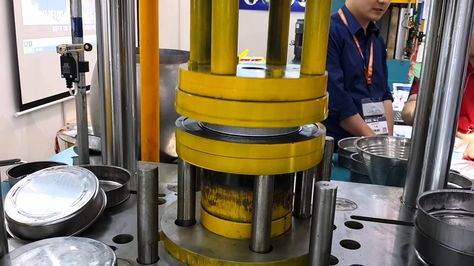
Categories
Machinery

Integrated Trimming-Flanging-Beading Machine

Integrated Trimming-Flanging-Beading Machine

Integrated Trimming-Flanging-Beading Machine: A Trimming Beading Machine is an industrial machine used primarily in the metalworking and fabrication industries, especially in the manufacturing of cylindrical or conical metal components, such as drums, cans, pressure vessels, or HVAC ducting.

Purpose & Function of the Trimming-Beading Machine

  1. Trimming:
    • Removes excess metal from the edges of round or cylindrical workpieces after deep drawing or forming.
    • Ensures a uniform edge or prepares the part for welding or further processing.
  2. Beading:
    • Forms a bead (a rounded protrusion or indentation) on the edge of the metal part.
    • This adds strength and rigidity to the part, helps in sealing (in case of containers), or improves aesthetics and safety (e.g., eliminating sharp edges).

Key Features:

  • Rotary system: Workpieces are usually mounted and rotated while tooling trims or beads the edge.
  • Manual, semi-automatic, or fully automatic operation.
  • Adjustable tooling: To accommodate different diameters, thicknesses, or bead profiles.
  • Material compatibility: Works with steel, stainless steel, aluminum, copper, etc.

Common Applications:

  • Drum manufacturing
  • HVAC duct parts
  • Automotive mufflers or filters
  • Pressure vessels
  • Kitchenware & cookware production

Variants:

  • Vertical or horizontal configurations
  • Integrated into production lines or used as standalone units.
  • Can include CNC controls for high precision and repeatability.

A trimming beading machine is used in metal fabrication to finish and reinforce the edges of cylindrical or conical metal parts such as drums, tanks, HVAC ducting, and pressure vessels. It performs two main operations: trimming and beading. Trimming involves removing any excess material from the edge of a workpiece after it has been formed, ensuring the edge is smooth, uniform, and ready for further processing like welding or sealing. Beading, on the other hand, forms a raised or indented bead along the edge of the metal, which strengthens the part, improves its appearance, and removes sharp edges for safety or sealing purposes.

The machine typically works by rotating the metal part while a set of forming tools or rollers engage with the edge to carry out trimming and beading. It can be operated manually, semi-automatically, or fully automatically depending on the production requirements. These machines are designed to handle various materials including mild steel, stainless steel, aluminum, and copper, and they come in different configurations such as vertical or horizontal types to suit different workshop layouts.

Tooling can be adjusted to accommodate different diameters, metal thicknesses, and bead profiles, making the machine versatile for a wide range of products. In higher-end models, CNC systems are integrated for better precision, speed, and repeatability, especially important in large-scale or high-specification manufacturing. The process not only ensures dimensional accuracy but also adds mechanical strength to the finished product by creating a reinforced edge, which is particularly important in containers that experience internal pressure or need secure sealing.

Trimming beading machines are essential in industries where the final product must meet strict dimensional and aesthetic standards. In applications such as drum manufacturing, the beading process ensures that the rim can support stacking or attachment of lids, while in HVAC ducting, beads improve airflow characteristics and provide locations for fastening or sealing. The machine’s ability to precisely control the depth and shape of the bead also plays a role in meeting regulatory or safety requirements, especially in pressure-rated vessels or food-grade containers.

The operational efficiency of a trimming beading machine greatly impacts production throughput. Modern machines often include quick-change tooling systems, digital position readouts, and automated clamping or centering devices to minimize setup time and improve consistency across batches. In high-volume production environments, these features are crucial in maintaining tight production schedules while reducing material waste and labor costs.

In addition to industrial use, smaller-scale or artisan manufacturers may also use simpler versions of these machines for products like cookware, artisanal metal containers, or decorative items. In such settings, the machine’s flexibility and ease of operation are often prioritized over full automation.

Maintenance of trimming beading machines involves regular inspection of tooling wear, lubrication of moving parts, and ensuring alignment of the rotating components to prevent runout or uneven finishes. High-quality machines are typically constructed with rigid frames and precision bearings to withstand the stresses of continuous operation while maintaining alignment and surface finish quality.

With the increasing integration of Industry 4.0 technologies, some trimming beading machines are also being equipped with sensors and IoT connectivity to enable real-time monitoring, predictive maintenance, and integration into smart manufacturing systems. This allows operators and managers to optimize machine usage, track performance data, and respond quickly to maintenance needs before they result in downtime.

Overall, the trimming beading machine is a versatile and indispensable piece of equipment in any manufacturing environment where round metal parts need to be finished with precision, strength, and consistency.

Integrated Trimming-Flanging-Beading Machine

An Integrated Trimming-Flanging-Beading Machine is a multifunctional piece of metal-forming equipment designed to streamline production by combining three essential operations—trimming, flanging, and beading—into a single, continuous process. This machine is especially useful in industries that manufacture cylindrical or conical components like drums, pressure vessels, tanks, and ducts, where these edge-finishing processes are critical to structural integrity, functionality, and aesthetics.

The process begins with trimming, which removes excess or uneven material from the edges of a spun, drawn, or welded workpiece. This ensures the part has a clean, uniform edge, which is crucial for downstream operations. Following trimming, the machine proceeds to flanging, where the edge is bent or turned outward (or inward) at a defined angle, typically to facilitate joining or to reinforce the structure. Finally, the beading operation forms a rounded protrusion or indentation along the edge, further strengthening the part, preventing deformation, and improving sealing or handling characteristics.

This integrated machine operates in a rotary fashion—holding the workpiece in a spinning chuck while sequential tooling units perform their respective operations. It may be manually operated for small-batch or low-complexity jobs, or fully automated for high-volume production lines. Advanced models often feature servo-controlled axes, programmable tooling paths, and touchscreen HMIs (Human Machine Interfaces), allowing for precise control over each step of the process and quick changeovers between different part sizes or specifications.

The major advantages of using an integrated trimming-flanging-beading machine include reduced handling time, increased dimensional accuracy, space efficiency, and better overall productivity. Since the workpiece remains clamped and centered throughout the entire sequence, misalignment between operations is minimized, ensuring consistent quality and tight tolerances. Additionally, these machines reduce operator fatigue and training requirements, as multiple operations are handled automatically without manual repositioning of the part.

Industries such as automotive, appliance manufacturing, oil and gas, and HVAC benefit greatly from this type of machine, especially when producing components like mufflers, filters, expansion tanks, or ducting collars. By centralizing operations, manufacturers can improve workflow, reduce machinery footprints, and meet increasing demands for speed and quality in competitive production environments.

An integrated trimming-flanging-beading machine represents a highly efficient evolution in metal fabrication, where multiple edge-forming processes are combined into one continuous cycle. Instead of transferring a part between separate machines for each step, the workpiece remains fixed in position while the machine sequentially performs trimming, flanging, and beading. This not only saves time but also enhances precision by eliminating the risk of misalignment that can occur during manual repositioning. The machine typically grips the cylindrical or conical workpiece in a rotating chuck, and tooling heads engage the edge as it spins, each performing its specific function in a pre-programmed sequence.

Trimming ensures the edge is smooth and dimensionally accurate, flanging then forms a bent lip that may serve as a mounting or sealing surface, and beading adds structural strength while improving the part’s functionality and sometimes its visual appeal. Because these steps are closely linked, integrating them into one cycle greatly benefits production speed and consistency. This is particularly important in industries where high volumes of standardized components are required, such as in the manufacture of metal drums, fire extinguishers, gas cylinders, air reservoirs, and HVAC parts.

Modern versions of these machines often include advanced features like servo motors, automated clamping systems, digital control panels, and recipe-based programming that allows operators to switch between product types with minimal downtime. These features enable high repeatability and tight tolerances even across large batches. In a production environment where efficiency and cost control are paramount, having a single operator manage a machine that performs three functions reduces labor costs and simplifies training.

Machine rigidity and build quality play a crucial role in achieving consistent results, especially when working with thicker materials or larger diameters. High-end models are engineered with vibration-dampening frames and heavy-duty bearings to maintain accuracy during continuous operation. Tooling life is also a consideration, with quick-change tool holders and hardened forming rollers helping reduce maintenance time and increase uptime.

In applications requiring strict compliance with safety or performance standards—such as pressure vessels or food-grade containers—the precise edge preparation and repeatable finish provided by an integrated machine can be critical. Moreover, as demand grows for connected and data-driven manufacturing, some integrated machines now feature IoT-enabled diagnostics and process monitoring, giving operators real-time feedback and allowing predictive maintenance to avoid unplanned stoppages.

Overall, the integrated trimming-flanging-beading machine offers a smart, compact, and highly capable solution for any manufacturing process involving round or cylindrical metal components. Its ability to increase output, reduce human error, and ensure uniform product quality makes it an indispensable asset in modern fabrication shops.

In production environments where time, precision, and consistency are critical, the integrated trimming-flanging-beading machine plays a central role in optimizing workflow. Its ability to handle multiple operations in a single clamping not only shortens cycle times but also enhances part integrity, as each process flows seamlessly into the next without interruptions or the need for re-alignment. This uninterrupted sequence ensures that all dimensional references—such as the trimmed edge, the flange angle, and the bead placement—are held to tighter tolerances than what is typically possible using separate machines.

As product designs evolve to meet more demanding specifications—whether it’s to reduce weight, improve sealing, or meet aesthetic expectations—machines like this allow for precise customization of edge geometry. Flange angles, bead radii, and edge profiles can be programmed or adjusted with minimal effort, often through a digital interface. This makes the machine especially useful in facilities that produce a wide range of components in varying sizes, wall thicknesses, and materials. From thin-walled aluminum ducts to heavy-gauge steel drums, the adaptability of the tooling and control systems allows the same machine to be used across different production lines with only minor adjustments.

Another important benefit is the reduction in material waste. Because trimming is performed as the first step with high precision, operators can work with slightly oversized blanks and then achieve perfect final dimensions during the process. Combined with consistent flanging and beading, this improves nesting and stacking of finished parts, as well as compatibility with lids, clamps, or mating components—especially in modular or interchangeable systems.

In terms of ergonomics and operator safety, integrated machines are often designed with protective enclosures, interlocks, and simplified control schemes. This not only prevents accidents but also makes the machine easier to operate, even for less-experienced workers. The automation of repetitive tasks reduces fatigue and minimizes the chances of human error, allowing operators to focus more on quality control and less on manual handling.

For manufacturers aiming to scale production without a corresponding increase in floor space, an integrated solution also addresses spatial efficiency. Replacing three standalone machines with a single integrated unit saves valuable factory real estate, simplifies material flow, and reduces energy consumption, especially when all processes are powered from a shared drive system or central control panel.

As the manufacturing sector increasingly leans toward lean production, energy efficiency, and smart manufacturing, integrated machines offer the technological edge to stay competitive. Whether it’s through networked controls, feedback loops that adjust forming pressure in real time, or cloud-based analytics that track cycle performance and machine health, these machines are positioned not only as workhorses but as intelligent nodes in the digital factory of the future.

Ultimately, the integrated trimming-flanging-beading machine exemplifies the evolution of metal-forming equipment—merging mechanical precision with digital intelligence to meet the growing demands of modern industry. It represents a shift from isolated, manual processes to streamlined, automated, and data-informed production systems capable of delivering high-quality results at scale.

In the broader context of industrial automation, the integrated trimming-flanging-beading machine also contributes to reducing production variability. In traditional setups where each process—trimming, flanging, and beading—is handled by a different operator or separate station, even small discrepancies in setup or handling can accumulate, resulting in parts that deviate from the design specification. By consolidating these operations into one controlled cycle, the machine minimizes those variables, ensuring uniformity across hundreds or thousands of components.

This level of control is especially beneficial in quality-sensitive applications such as in the food and beverage industry, where stainless steel containers must have smooth, sealed edges to comply with hygiene standards. Similarly, in the automotive and aerospace sectors, where every millimeter counts in terms of fit and performance, the machine’s ability to repeatedly form precise beads and flanges ensures the part will function reliably under pressure, vibration, or thermal stress.

One often overlooked advantage of this machine is its impact on inventory management and production scheduling. With fewer machines involved in the process, fewer parts are waiting in queues between operations, which means reduced work-in-progress (WIP) inventory. This leads to faster turnaround times and better flexibility in responding to urgent orders or design changes. For just-in-time (JIT) manufacturing systems, where excess inventory is seen as a cost burden, integrated machines align perfectly with lean production principles.

Maintenance-wise, the centralized nature of this machine simplifies upkeep. Instead of maintaining three separate machines with their own motors, lubrication systems, and wear components, technicians can focus on a single system. Scheduled maintenance becomes more predictable, and downtime is easier to manage, especially when the machine is equipped with diagnostic software or sensor feedback loops that alert operators to component wear or alignment issues before they escalate into breakdowns.

In terms of machine learning and adaptive manufacturing, future-ready versions of these machines can incorporate real-time monitoring systems that analyze force feedback, torque variations, or temperature fluctuations during forming. These systems can automatically adjust forming parameters on the fly, compensating for material inconsistencies or tooling wear without stopping the machine. Over time, the machine can build a data profile of each batch, helping engineers optimize not just the product but the process itself.

From a return-on-investment perspective, the initial capital cost of an integrated machine is often offset quickly by the cumulative savings in labor, floor space, tooling, and maintenance. The streamlined workflow also enhances traceability and documentation, which are critical in industries requiring audit trails, such as medical device manufacturing or pressure vessel certification. Many models are now built with connectivity in mind, allowing remote diagnostics, software updates, and even performance optimization from the manufacturer’s side, further enhancing uptime and long-term value.

At the end of the day, the integrated trimming-flanging-beading machine isn’t just a tool for shaping metal—it’s a platform for production efficiency, quality control, and process innovation. Whether for a high-volume production line or a precision-driven specialty workshop, this kind of machinery embodies the direction modern fabrication is heading: fewer steps, smarter control, tighter tolerances, and greater adaptability.

High-Speed Trimming and Beading Line

Integrated Trimming-Flanging-Beading Machine

A High-Speed Trimming and Beading Line is a fully automated, continuous production system designed for rapid, precise processing of cylindrical or conical metal components—typically used in industries like packaging, automotive, HVAC, and container manufacturing. Unlike standalone or semi-automated machines, this line is engineered to operate at high throughput rates, often handling hundreds of parts per hour with minimal operator intervention.

In a typical configuration, components—such as can bodies, drum shells, or duct segments—enter the line via a conveyor or feeding system. They are automatically centered, clamped, and rotated while high-speed tooling units carry out trimming to remove any excess or uneven edge material, followed immediately by beading, where a reinforcing groove or profile is formed around the edge. These operations are completed in quick succession, synchronized by servo drives and PLC-based control systems to ensure perfect timing and minimal idle movement.

The key advantage of a high-speed line is not just speed, but consistency. Every part undergoes the same programmed cycle, eliminating the variability that can occur with manual or semi-automatic systems. The line typically includes automatic part detection, positioning sensors, and quality control features like laser measurement or vision systems to verify dimensions and detect defects in real-time. Faulty parts can be automatically rejected without stopping the line.

These systems are built for non-stop industrial environments, often running 24/7 with features like automatic lubrication, centralized dust or chip extraction, and quick-change tooling systems to minimize downtime during product changeovers. Material compatibility ranges from thin-gauge aluminum and tinplate to thicker steel and stainless steel, depending on the product and forming requirements.

For applications like food and chemical drums, paint cans, filter housings, or HVAC tubes, where edge quality, dimensional accuracy, and structural strength are essential, the high-speed trimming and beading line ensures products meet those demands at scale. Some setups also integrate with upstream and downstream processes, such as welding, leak testing, or flanging stations, creating a seamless manufacturing flow from raw shell to finished, edge-formed product.

With digital control systems and industry 4.0 integration, operators can monitor production metrics, schedule maintenance, and even perform remote diagnostics. All of this contributes to higher yield, lower scrap rates, and a faster return on investment, making these lines a cornerstone of modern high-volume metalworking facilities.

In a high-speed trimming and beading line, every component of the system is designed for efficiency, precision, and endurance. From the moment a shell or part enters the line, it is automatically aligned, clamped, and engaged with the tooling in one fluid motion. The trimming station, typically equipped with hardened rotary blades or shearing tools, removes any excess material from the edges with clean, burr-free cuts. The operation is synchronized so that the transition to the beading station is immediate and seamless, without the need for stopping or manual repositioning. The beading station then forms one or more reinforcing grooves, depending on the product requirements, using hardened rollers that are precisely positioned and pressure-controlled for consistent depth and profile.

Because the entire process is automated and continuous, the line can run at extremely high speeds—sometimes processing up to 60 to 120 parts per minute, depending on part size and complexity. This makes it ideal for mass production environments where downtime and inconsistency can be costly. Tooling setups are optimized for rapid changeovers, allowing manufacturers to switch between different product sizes or styles with minimal interruption. In more advanced systems, recipe-based controls store multiple configurations, so operators can switch batches with just a few inputs on a touchscreen interface.

The mechanical design of the line emphasizes both speed and stability. The rotating spindles, feeding mechanisms, and forming rollers are often driven by servo motors that allow for real-time adjustments in torque and speed, reducing stress on the components and ensuring a smooth forming cycle. The frame is built to absorb vibration and maintain tight tolerances over extended periods of operation, even under heavy workloads. Automated part ejection systems remove finished parts swiftly, often transferring them directly to a conveyor, stacker, or the next stage of assembly or inspection.

Integrated quality control is another hallmark of these systems. Vision cameras or laser scanners monitor each part as it passes through, checking for proper edge formation, bead depth, or surface defects. If an anomaly is detected, the system flags the part for removal without halting the entire line. This kind of in-line inspection ensures that only fully compliant parts move forward, reducing the risk of defective products reaching final assembly or packaging.

Energy efficiency and maintenance have also been addressed in modern high-speed lines. Regenerative drives recycle energy during deceleration, and lubrication systems are automated to keep moving parts in top condition without constant manual intervention. Some machines are equipped with predictive maintenance algorithms that alert operators to wear patterns or performance deviations, allowing them to schedule service before a failure occurs.

Manufacturers who invest in high-speed trimming and beading lines typically do so to support high-volume production while maintaining consistent quality and traceability. These lines are often found in facilities that operate around the clock, where every second of uptime translates directly to increased output and profitability. As production demands evolve and product designs become more complex, these systems can be upgraded or customized with additional forming heads, integrated flanging, embossing, or even marking systems, making them highly adaptable and future-proof.

The high-speed trimming and beading line represents the convergence of mechanical engineering, automation, and smart manufacturing. It transforms what were once labor-intensive, multi-step processes into a streamlined, high-output production system capable of meeting the tightest tolerances and fastest delivery schedules in the industry.

The reliability and repeatability of a high-speed trimming and beading line make it a core investment for companies focused on large-scale production where both throughput and precision are non-negotiable. These lines are built not just to run fast, but to run smart—capable of maintaining consistent quality over thousands of cycles without compromising dimensional tolerances or edge finish. This level of precision is especially critical when dealing with downstream automated assembly systems, where even minor variations in part geometry can cause jams, misfits, or alignment issues. By producing perfectly trimmed and beaded edges every time, the line ensures smooth integration into subsequent processes such as welding, sealing, painting, or packaging.

In facilities where product traceability is essential—such as in the food, chemical, or pharmaceutical sectors—these lines can be equipped with part serialization modules, barcode printers, or even direct part marking systems that log production details like date, batch number, and machine settings in real time. This data can be pushed to central production monitoring software, helping manufacturers maintain full traceability and comply with industry standards or customer audits.

Another major benefit lies in the operator experience. High-speed trimming and beading lines are designed for intuitive operation, often featuring centralized control panels with real-time diagnostics, maintenance reminders, and production analytics. Operators can view cycle counts, part output rates, alarm histories, and even get suggestions for optimal tool change intervals or cleaning schedules. This drastically reduces the learning curve and empowers production teams to run the equipment with confidence and minimal supervision.

Tool wear and part fatigue are inevitable in any high-speed operation, but the best systems address this with precision-engineered tooling made from high-durability alloys or carbide materials. Tooling stations are usually modular, allowing quick swaps for regrinding or replacement. Some lines are even equipped with automatic compensation systems that adjust tool positioning based on feedback from inline sensors, ensuring that even as tools wear, the product quality remains stable until the next scheduled change.

As environmental and sustainability standards grow more stringent, many manufacturers are turning to trimming and beading lines that optimize not just performance, but also energy usage and waste reduction. Scrap management systems, such as integrated chip collectors or magnetic conveyors, remove trimmings cleanly and efficiently, often recycling the waste directly into the production ecosystem. Reduced noise levels, enclosed tooling areas, and dust extraction also contribute to cleaner, safer working environments, helping companies meet occupational health and environmental safety targets.

Ultimately, the high-speed trimming and beading line is not just about maximizing output—it’s about achieving reliable, repeatable excellence at scale. Whether used in the production of paint cans, fire extinguishers, air ducts, or specialty industrial containers, these systems deliver a level of process control that manual or segmented setups simply can’t match. They enable manufacturers to stay competitive in an increasingly fast-paced market, providing the capacity to meet tight deadlines, accommodate custom orders, and maintain consistent product quality without compromise. With continued advancements in automation, software integration, and material science, these lines will only grow smarter, faster, and more essential to next-generation manufacturing.

Double Head Beading Machine

Detailed Description of the Trimming Process

A Double Head Beading Machine is a specialized piece of equipment used in metal forming to create beads or reinforcing ridges along the edges of cylindrical or conical parts, such as drums, tanks, or HVAC ducts. Unlike single-head beading machines, which work on one edge at a time, the double head version is designed to form beads on both edges of a part simultaneously, significantly improving production efficiency, particularly in high-volume manufacturing environments.

The machine typically consists of two beading heads, each equipped with rollers that press into the edge of the rotating workpiece to form a raised or indented bead. The workpiece, often a metal cylinder or sheet, is fed into the machine, where it is clamped and rotated. As it rotates, the beading heads engage the edges, applying pressure and shaping the metal to the desired bead profile. By operating two heads at once, the machine doubles the output rate compared to a single-head system, making it ideal for operations that require high-speed processing and consistent quality across large batches.

Double head beading machines are used extensively in industries like automotive manufacturing, pressure vessel production, HVAC, and metal container fabrication. For example, in the production of cylindrical tanks or drums, the beading process strengthens the edges, improving both structural integrity and ease of sealing. The bead also prevents the edges from deforming during handling or transport, ensuring that the parts maintain their shape and functionality under pressure.

The design of the double head machine often includes features like adjustable tooling, which allows for different bead sizes and shapes to be created depending on the part specifications. The tooling can be swapped or adjusted to accommodate varying metal thicknesses and diameters, making the machine highly versatile for different applications. Some models also feature servo-driven controls or CNC capabilities, enabling more precise control over the depth, shape, and placement of the beads, and allowing for easy programming for different production runs.

In addition to high-speed production, the double head beading machine offers improved precision and consistency in bead formation. Because both heads operate simultaneously, there is less risk of misalignment or variation between the edges, ensuring that both beads are identical and meet strict quality standards. This is particularly important when the beads need to align with other parts or fit securely into mounting brackets, lids, or seals.

The automation in modern double head beading machines also means that operators can monitor the entire production process through digital interfaces, reducing the risk of human error. Real-time feedback and diagnostics help operators ensure that the machine is functioning at optimal efficiency, and quick changeover features allow for faster transition between different part designs or sizes. Many advanced machines come with automatic part handling systems, further reducing the need for manual intervention and increasing overall throughput.

Double head beading machines are also equipped with safety features, such as enclosed work areas, interlock systems, and emergency stop buttons, ensuring that the operator can work safely during the high-speed operation. Additionally, dust collection and chip removal systems are often incorporated to maintain a clean workspace, improving both machine longevity and the operator’s working environment.

In summary, the double head beading machine offers a powerful solution for manufacturers looking to boost their production efficiency while maintaining high levels of precision and consistency. By simultaneously creating beads on both edges of the workpiece, it helps to reduce cycle times and increase output, making it a valuable asset in industries that require large-scale, high-quality metal forming.

A Double Head Beading Machine is a specialized tool used in metalworking to form reinforcing beads along the edges of cylindrical or conical metal parts. By utilizing two beading heads, this machine is capable of processing both edges of a workpiece simultaneously, significantly enhancing production speed and efficiency. The machine operates by feeding the part, which is typically a drum, tank, or duct component, into the system where it is clamped and rotated. As the workpiece rotates, each beading head engages one edge at a time, using rollers to apply pressure and shape the metal into a defined bead. This design essentially doubles the output rate compared to a single-head machine, making it particularly valuable in high-volume manufacturing environments where speed and consistency are paramount.

The primary function of the beads formed on these edges is to provide additional strength and structural integrity. In applications such as tank or drum production, the beads reinforce the edges, preventing deformation during handling and improving the sealing ability of the components. They also serve aesthetic purposes in some cases, giving the finished product a clean and uniform appearance. Beyond strengthening, beading also helps in parts fitting into other components, such as when parts need to align with mounting brackets, lids, or seals. The machine’s versatility allows it to work on a wide range of materials and part sizes, and it can be adjusted for varying metal thicknesses and diameters. With adjustable tooling and advanced control systems like servo motors or CNC interfaces, manufacturers can easily alter the bead size, shape, and depth to meet specific production requirements.

By simultaneously processing both edges, the double head design ensures high-quality consistency across large batches, reducing the chance of misalignment between the two beads and ensuring that they meet tight quality standards. This is essential for applications where precise, uniform bead formation is necessary for part compatibility and performance. The machine’s automation features allow for efficient operation, with many modern models incorporating digital interfaces for easy monitoring and adjustment of settings. This reduces the need for operator intervention and minimizes the risk of human error, thus increasing overall productivity.

Double Head Beading Machines are commonly used in industries such as automotive manufacturing, pressure vessel production, HVAC, and metal container fabrication. Their ability to handle high-speed production while maintaining precision makes them indispensable in these sectors. They not only improve production throughput but also reduce material waste by ensuring clean, uniform bead formation with minimal scrap. The machine is designed with safety in mind, incorporating protective enclosures and emergency stop mechanisms to ensure a safe working environment for operators. Additionally, dust collection and chip removal systems are built into the design to maintain cleanliness and prevent buildup that could affect machine performance or the operator’s health.

In conclusion, the Double Head Beading Machine is a powerful tool for manufacturers looking to increase their production capacity and maintain high standards of quality. By automating and streamlining the beading process, it reduces cycle times, improves output, and ensures consistent results, making it an invaluable asset in metalworking and manufacturing industries that require high-volume, precision metal forming.

The Double Head Beading Machine’s capacity for high-speed, simultaneous beading makes it a highly efficient solution for companies looking to scale production without sacrificing quality. Its dual-head design is particularly advantageous in industries where tight production deadlines and high-volume demands are standard. By processing two edges at once, the machine maximizes throughput and minimizes the time spent per part. This is a critical factor in industries where profitability is closely tied to the ability to produce large quantities of products quickly and efficiently, such as in the manufacturing of metal drums, pressure vessels, air ducts, and industrial tanks.

Furthermore, the use of advanced automation systems in modern double head beading machines not only improves production efficiency but also enhances control over the manufacturing process. These systems can be programmed to adjust the depth, shape, and position of the beads automatically, which ensures consistent results even with different part sizes or material types. Automated sensors and feedback loops monitor key parameters, such as pressure and speed, to ensure optimal performance during each cycle. This level of control minimizes the risk of defects, reduces waste, and maximizes the lifespan of tooling.

Another significant benefit is the reduced downtime associated with maintenance and tool changes. The modular design of these machines allows operators to quickly swap or adjust tools, ensuring that the line can continue operating with minimal interruption. With the use of predictive maintenance technologies, operators can be alerted to potential issues before they lead to machine failure, helping to avoid costly and time-consuming repairs.

For manufacturers focused on lean production, the high efficiency and reduced waste generated by the Double Head Beading Machine align well with modern manufacturing practices. The machine’s design helps to minimize the amount of scrap produced during the beading process, ensuring that more of the raw material is utilized effectively. This not only reduces costs but also contributes to more sustainable production practices, which are increasingly important in today’s environmentally conscious market.

Additionally, as industries push for greater product customization and variation, the flexibility of double head beading machines allows manufacturers to easily switch between different bead profiles and sizes. This versatility is critical for producing a wide range of products while maintaining high standards of quality and efficiency. Whether it’s creating a deep bead for structural reinforcement or a shallow bead for aesthetic purposes, the machine can be adjusted to accommodate these varying needs with ease.

As manufacturers continue to adopt Industry 4.0 principles, newer models of Double Head Beading Machines often come equipped with IoT (Internet of Things) capabilities, allowing for remote monitoring and data collection. This connectivity provides operators and managers with real-time insights into machine performance, which can be used to optimize production schedules, track productivity, and analyze trends in part quality. This level of data integration supports informed decision-making and helps manufacturers stay competitive in an increasingly data-driven industrial landscape.

Overall, the Double Head Beading Machine is a powerful tool that addresses the need for high-speed production, precision, and flexibility. By simultaneously processing two edges, it improves throughput, reduces cycle time, and maintains consistent product quality. Its integration with modern automation systems and predictive maintenance technology further enhances its value, making it an essential piece of equipment for manufacturers looking to streamline operations, reduce waste, and meet the demands of high-volume production while maintaining the flexibility to adapt to custom orders.

The continued evolution of the Double Head Beading Machine also includes innovations in user interface and integration with other parts of the production line. With the advent of more intuitive control systems, operators now have access to touchscreen interfaces, which allow them to easily input parameters such as bead size, material thickness, and speed. These systems also provide visual feedback, such as real-time machine status, cycle completion, and alerts for any malfunctions. The ability to control and monitor the beading process with greater precision and ease enhances operator efficiency and reduces the chances of human error.

For manufacturers with a diverse range of products or frequent design changes, the flexibility of the Double Head Beading Machine is a major asset. With programmable settings and quick-change tooling options, it is possible to seamlessly switch between different beading patterns, sizes, and materials. This adaptability ensures that the machine can handle variations in product design without the need for major adjustments or downtime, enabling manufacturers to meet a wide range of customer requirements and respond quickly to changing market demands.

One of the key factors that drive the adoption of Double Head Beading Machines in modern manufacturing is the emphasis on quality control. The precision with which beads are formed is critical, especially when components need to meet stringent specifications or must fit seamlessly into other parts. The dual-head configuration allows manufacturers to maintain uniform bead formation across large batches, ensuring that every part meets the same high standards for strength, appearance, and functionality. This consistency is essential in industries where even minor variations can affect the integrity of the final product.

The integration of robotic arms or automated part handling systems with Double Head Beading Machines is another emerging trend. These systems work in tandem with the beading process, removing finished parts from the machine and transferring them to the next stage of production, such as assembly or inspection. This automation reduces manual labor and accelerates the flow of materials, increasing overall throughput while reducing the risk of human error and handling damage.

With the push for sustainability in modern manufacturing, Double Head Beading Machines also contribute to more eco-friendly production. By reducing waste and scrap material, manufacturers can minimize their environmental impact. Additionally, many of these machines are built with energy-efficient components that reduce the power consumption during operation. The ability to recycle waste material, such as metal trimmings, further helps manufacturers contribute to sustainable practices while reducing costs.

The maintenance aspect of Double Head Beading Machines has also been significantly enhanced in recent years. In addition to automatic lubrication systems that ensure optimal tool performance and reduce wear, many models now come with condition monitoring systems. These systems track the performance of critical components, such as motors, rollers, and sensors, and can predict when maintenance is needed. This predictive approach helps to reduce unexpected downtime and extend the overall life of the machine, improving the return on investment.

As production facilities continue to adopt smart manufacturing techniques, the integration of data analytics into Double Head Beading Machines allows for the optimization of the beading process. Data collected during production, such as bead depth, machine speed, and part size, can be analyzed to identify patterns and inefficiencies. This information can be used to adjust the process parameters in real-time, ensuring that each part is produced to the highest standards while reducing waste and improving cycle times.

In the long term, the flexibility, efficiency, and precision of Double Head Beading Machines will continue to make them a valuable investment for manufacturers looking to stay competitive. As industry standards evolve and product designs become more complex, these machines will adapt to meet the needs of modern manufacturing, offering faster cycle times, higher-quality products, and greater flexibility to accommodate a diverse range of customer specifications. With the ongoing advancements in automation, digital control systems, and data analytics, the future of Double Head Beading Machines is poised to bring even greater improvements in productivity, quality, and cost-effectiveness.

Multi-Operation Trimming Beading System

Hydraulic Beading Machine

A Multi-Operation Trimming Beading System is an advanced machine used in metalworking that integrates several distinct processes—trimming, beading, and often other secondary operations—into one unified system. This type of system is designed for high-volume production environments, where precision, speed, and versatility are paramount. The integration of multiple operations into a single machine streamlines production and reduces the need for separate machines, resulting in lower overall operating costs and increased efficiency.

The key features of a Multi-Operation Trimming Beading System include its ability to simultaneously trim the edges of a metal part to remove excess material while forming beads along the edges to strengthen, reinforce, or create specific geometries. This dual function eliminates the need for separate trimming and beading stations, improving throughput and reducing material handling time.

In the trimming process, the machine uses high-speed rotary cutters, shears, or blades to cleanly remove the excess material from the workpiece, ensuring a smooth, burr-free edge. Following trimming, the beading operation is carried out, typically using rollers or dies that apply pressure to form a raised bead or ridge along the edge of the part. This bead may serve multiple purposes, such as improving the structural integrity of the part, facilitating better sealing during assembly, or enhancing the product’s aesthetic appearance.

One of the most significant advantages of a Multi-Operation Trimming Beading System is its flexibility. These systems are capable of processing a wide range of materials, including thin-gauge metals like aluminum and steel, as well as thicker materials for more demanding applications. They can also handle varying part sizes, with adjustments made via the machine’s control system. Automated adjustments for different part sizes and bead profiles allow for quick changeovers between different production runs, ensuring minimal downtime and maximizing machine utilization.

Advanced versions of these systems are often equipped with servo-driven motors and programmable logic controllers (PLCs), enabling precise control over the trimming and beading operations. This precise control allows manufacturers to achieve tight tolerances, consistent bead depths, and high-quality finishes, which are critical in industries such as aerospace, automotive, HVAC, and container manufacturing. Some systems also feature CNC capabilities, allowing for automated, computer-controlled operations that can be programmed to handle complex part geometries or custom specifications.

Another benefit of these systems is their integration with downstream processes. Many multi-operation systems are designed to work seamlessly with other equipment, such as welding stations, flanging machines, or part handling systems. This integration enables a continuous flow of parts through the production line, minimizing the need for manual intervention and enhancing overall productivity. For example, once a part is trimmed and beaded, it can be automatically ejected and transferred to the next station for further processing, packaging, or inspection.

The addition of quality control features is another hallmark of a Multi-Operation Trimming Beading System. Many systems are equipped with sensors, vision cameras, or laser scanning technology to inspect the parts as they are processed. These systems can detect defects such as incorrect bead depth, uneven trimming, or dimensional inconsistencies. If any issues are detected, the system can either correct them automatically or reject faulty parts before they move further down the production line, ensuring that only high-quality components are produced.

Maintenance is simplified in multi-operation systems, as these machines typically include self-lubricating systems, condition monitoring, and predictive maintenance capabilities. Sensors monitor the condition of critical components, such as rollers, motors, and blades, and alert operators when maintenance is required, reducing unplanned downtime and prolonging the life of the equipment.

The efficiency of a Multi-Operation Trimming Beading System also extends to material handling. Parts are typically fed into the system by automated feeders or conveyors, which align and position the workpieces for processing. Once the parts are finished, they are automatically ejected and transferred to the next station, minimizing manual labor and reducing handling time. This high degree of automation not only increases throughput but also helps reduce the risk of defects caused by human error during part handling.

In summary, a Multi-Operation Trimming Beading System offers a streamlined, highly efficient solution for manufacturers looking to combine trimming and beading operations in a single system. Its ability to process various materials and part sizes, while ensuring high precision and consistent quality, makes it ideal for high-volume production environments. The integration of advanced controls, automation, and quality inspection systems further enhances its capabilities, allowing manufacturers to meet the demands of modern industrial production with reduced costs, faster cycle times, and greater product consistency.

The versatility and efficiency of a Multi-Operation Trimming Beading System can significantly impact a manufacturer’s ability to meet customer demands for both quality and turnaround time. With industries requiring increasingly precise and intricate components, these systems allow for customization without sacrificing speed or operational efficiency. Manufacturers can adjust the system to handle a variety of part sizes, bead profiles, and material types, ensuring that each batch meets strict specifications. This adaptability is particularly valuable in sectors such as automotive, construction, electronics, and consumer goods, where custom parts with unique geometries or functional requirements are frequently needed.

Additionally, as lean manufacturing continues to be a driving force in modern production, the multi-operation system aligns perfectly with these principles. By combining multiple processes in a single machine, manufacturers can reduce the need for additional equipment and labor, minimizing resource waste and operational costs. The ability to quickly switch between different part designs, combined with the automated handling of raw materials and finished products, ensures that production runs are more efficient and less prone to bottlenecks. This helps improve the overall efficiency of the manufacturing process and enhances output capacity.

Another important advantage of these systems is the reduced risk of human error. Automation plays a key role in ensuring consistent results across large production volumes. With manual intervention minimized, especially in high-speed production, the chances of mistakes due to improper setup, part misalignment, or inconsistent material handling are greatly reduced. Automated systems can also adjust processing parameters in real-time based on feedback, further enhancing product consistency.

From an operational standpoint, energy efficiency is increasingly a focus in industrial production. Many Multi-Operation Trimming Beading Systems are built with energy-saving technologies. These systems optimize energy usage by utilizing variable-speed drives, intelligent power management, and energy-efficient motors. Reducing energy consumption not only lowers operational costs but also supports sustainability initiatives by reducing the carbon footprint of production.

Moreover, data-driven insights are becoming a key part of modern manufacturing, and the multi-operation systems are increasingly equipped with advanced data-collection and analytics capabilities. Sensors embedded in the system capture critical operational data, including machine speed, processing time, tool wear, material throughput, and part quality. This data can be monitored in real-time through integrated systems, allowing production managers to make informed decisions and adjustments to optimize efficiency. Machine performance can also be tracked over time to predict when maintenance is due, reducing unplanned downtime and further increasing the overall productivity of the manufacturing line.

Another growing trend in multi-operation trimming beading systems is integration with Industry 4.0 technologies. This includes the ability to connect the system to cloud-based platforms or the company’s ERP (Enterprise Resource Planning) system, allowing for seamless data exchange across the entire production network. By connecting the trimming and beading process with other stages in the manufacturing workflow, manufacturers can gain end-to-end visibility into their operations, further improving decision-making, resource allocation, and production scheduling.

For companies that prioritize product traceability and compliance, multi-operation systems often come with built-in features such as barcode readers, QR code scanners, and automatic part marking systems. These allow each part to be traced throughout its production journey, ensuring that it meets regulatory or quality standards. This is especially important in industries with stringent quality control requirements, such as aerospace or food-grade container production.

The use of these systems in flexible manufacturing environments also provides manufacturers with the capability to manage custom orders with ease. In today’s competitive landscape, companies are frequently tasked with producing smaller batch sizes or custom products to meet specific customer needs. The multi-operation trimming and beading system’s programmable control systems can quickly switch between different part configurations and produce complex parts with a high degree of accuracy, making it ideal for fulfilling customized orders efficiently.

As environmental concerns continue to shape the manufacturing industry, waste reduction is a major focus for many manufacturers. The multi-operation system can be designed to optimize material usage during the trimming phase, reducing scrap rates. Additionally, features like recycling systems or automatic scrap separation allow manufacturers to recycle the waste material from the process and reuse it in future production, further contributing to sustainability.

Lastly, the cost-effectiveness of these systems makes them a wise investment for manufacturers. While the initial cost of purchasing and setting up a multi-operation trimming beading system may be higher compared to simpler, standalone machines, the long-term savings in labor, operational efficiency, energy consumption, and material waste typically make up for this investment. The increased output, improved product quality, and reduced need for maintenance also contribute to a quicker return on investment (ROI).

In conclusion, a Multi-Operation Trimming Beading System is an essential asset for manufacturers looking to streamline operations, improve product quality, and increase production efficiency. The combination of trimming, beading, and often additional processes within a single system allows for higher throughput, less downtime, and more flexibility in production. The ability to easily adapt to different part specifications and materials, while maintaining precision and reducing human error, makes these systems a cornerstone of modern manufacturing. Whether optimizing production flow, increasing sustainability, or meeting custom orders, these machines provide manufacturers with the tools they need to stay competitive in an ever-evolving industry.

As manufacturing continues to evolve in the face of new technologies and market demands, the role of Multi-Operation Trimming Beading Systems becomes even more critical in maintaining a competitive edge. Beyond the operational benefits of efficiency and precision, these systems are also central to supporting advanced manufacturing techniques such as just-in-time (JIT) production and mass customization.

For manufacturers working within JIT frameworks, the speed and flexibility of multi-operation systems are especially valuable. These systems can quickly adapt to different production volumes and part variations, making it easier for companies to maintain a lean inventory and reduce waste. The ability to rapidly produce small batches of customized parts without sacrificing quality or efficiency allows manufacturers to meet customer demands on tight timelines, all while keeping costs low. This becomes especially important when parts need to be delivered quickly to avoid production delays in industries such as automotive, aerospace, and consumer electronics.

The increasing trend of mass customization — where consumers or clients demand tailored products in high volumes — also benefits from the capabilities of multi-operation systems. These systems offer the flexibility to create custom parts with varying specifications, sizes, and features while maintaining high-speed production and minimal downtime. Customization can be accommodated without the need for entirely new setups, making it easier to deliver individualized components within larger production runs. This level of adaptability makes multi-operation trimming beading systems essential for companies that cater to specific client needs, offering both personalized solutions and the ability to scale production without delays.

Another critical aspect is the impact of advanced materials and new production techniques. As manufacturing continues to explore lighter, stronger, and more sustainable materials, multi-operation systems must evolve to accommodate these changes. Whether it’s lightweight alloys, composites, or advanced coatings, these systems can be adapted to handle a variety of materials with differing properties. With their ability to adjust parameters like speed, pressure, and tooling configurations, manufacturers can maintain quality standards when working with these new materials. For example, when using materials that are more susceptible to deformation or require delicate handling, the machine’s advanced control systems ensure that the right amount of force is applied to achieve precise beading and trimming without damaging the workpiece.

The evolution of additive manufacturing (3D printing) and hybrid manufacturing — which combines both additive and subtractive processes — is also influencing the capabilities of multi-operation systems. These systems can now work alongside or in conjunction with additive processes, allowing for greater flexibility in producing complex parts. Hybrid systems that integrate additive manufacturing processes, such as laser sintering or metal 3D printing, with trimming and beading processes, can offer more intricate and lightweight designs that were previously impossible or too costly to produce. By integrating these technologies, manufacturers can push the boundaries of part complexity while maintaining the cost-efficiency and speed of traditional manufacturing.

Automation and robotic systems continue to play a major role in expanding the functionality of multi-operation trimming beading systems. Integrating robotic arms into the system allows for more precise manipulation of parts, reducing the risk of deformation during handling and improving accuracy in both trimming and beading processes. Robots can also be used to load and unload parts automatically, reducing labor requirements and enhancing the overall throughput of the system. Furthermore, vision systems or AI-powered analytics can continuously inspect parts during processing to identify any inconsistencies in bead depth, trim alignment, or other features. If any flaws are detected, the system can make real-time adjustments or alert the operator, ensuring that only parts that meet strict quality standards continue through the production line.

The integration of digital twins and augmented reality (AR) technologies into multi-operation systems is also on the rise. A digital twin is a virtual replica of the physical system that allows manufacturers to simulate different production scenarios, predict potential issues, and optimize workflows before they even occur in the real world. This predictive capability can help manufacturers refine their processes, reduce downtime, and improve quality assurance. Similarly, augmented reality can assist operators by overlaying critical process information directly onto the workspace through AR glasses or screens, helping them with setup, adjustments, and troubleshooting in real-time. This cutting-edge technology ensures that operators have all the necessary information to make quick decisions and perform tasks efficiently.

Another area of continuous improvement in multi-operation systems is predictive quality control. Traditionally, quality control has been done at the end of the production line or after the part is finished. With the integration of real-time data collection and analytics, however, quality control can now occur throughout the entire production process. Sensors and machine learning algorithms can detect subtle variations in material properties, processing conditions, and machine performance, allowing for immediate corrective actions. This ensures that quality is maintained consistently from the start to the end of the manufacturing cycle, improving the overall quality of the finished product and reducing the risk of defects or rework.

As manufacturers face increasing pressure to operate more sustainably, energy consumption and resource optimization are becoming more important considerations for multi-operation systems. Energy-efficient design, low-waste manufacturing practices, and environmentally friendly processes are becoming standard features in newer models. For example, servo motors and variable-speed drives optimize power usage by adjusting energy consumption based on machine load and operational requirements, reducing energy waste during idle or low-load periods. Additionally, as scrap material is minimized through more accurate trimming and beading processes, manufacturers can improve their environmental footprint by using fewer raw materials and generating less waste. Some systems even include integrated systems for collecting and recycling scrap materials, further supporting sustainability goals.

Finally, as global supply chains and manufacturing networks become more interconnected, the ability to monitor and control multi-operation systems remotely is becoming an essential feature. With cloud-based platforms and Internet of Things (IoT) connectivity, manufacturers can access real-time data, troubleshoot issues, and make adjustments to the production line from anywhere in the world. This remote monitoring capability allows companies to optimize operations across multiple facilities, ensuring that machines are running at their peak performance no matter where they are located. It also enables more efficient collaboration between teams and suppliers, reducing lead times and improving communication throughout the supply chain.

In conclusion, the evolution of Multi-Operation Trimming Beading Systems reflects the continuous push toward greater flexibility, speed, precision, and automation in manufacturing. By integrating the latest technologies — from AI-driven quality control to cloud-based remote monitoring — these systems provide manufacturers with a powerful tool for producing high-quality parts quickly and efficiently, all while reducing waste and enhancing sustainability. As the industry embraces new materials, manufacturing techniques, and production methods, multi-operation systems will remain at the forefront of ensuring that manufacturers can meet the growing demands for customization, speed, and precision in an increasingly competitive market.

Automatic Beading Machine

Multi-Operation Trimming Beading System

An Automatic Beading Machine is a specialized piece of equipment used in metalworking and manufacturing processes to form consistent, precise beads or ridges along the edges of metal sheets or parts. Beading is a critical process in industries where strength, reinforcement, and aesthetic appeal are required. This machine is designed to perform the beading operation automatically, making it an ideal choice for high-volume production environments where speed, precision, and consistency are essential.

Key Features and Benefits

  1. Automated Operation: The primary advantage of an automatic beading machine is its ability to operate with minimal manual intervention. Once the parameters are set (such as bead size, material type, and part configuration), the machine will perform the beading process continuously without the need for operator involvement during each cycle. This automation leads to significant improvements in production speed and reduces the likelihood of human error.
  2. Precision and Consistency: Automatic beading machines use advanced control systems, often powered by PLC (Programmable Logic Controllers) or CNC (Computer Numerical Control), to maintain highly accurate bead depth and alignment. This ensures that each part produced has consistent beads, even when manufacturing large quantities. Whether producing parts for the automotive, aerospace, or HVAC industries, the machine’s precision is critical to maintaining product integrity and quality standards.
  3. Versatility: Modern automatic beading machines can handle a wide variety of materials, including metals like steel, aluminum, copper, and stainless steel, as well as composite materials. They are also capable of processing parts in various sizes, from small components to larger, more complex shapes. The machine can be adjusted to create beads with different profiles, such as shallow or deep beads, depending on the application.
  4. High-Speed Production: These machines are designed for high-speed operations, making them ideal for mass production. Their efficiency reduces cycle times significantly, enabling manufacturers to meet high-volume demands without compromising on quality. The ability to automate both the beading and the feeding process ensures that parts move smoothly through the production line with minimal downtime.
  5. Custom Bead Profiles: Automatic beading machines can produce a variety of bead profiles, including single beads, double beads, or complex shapes. The bead shape and depth can be easily modified through the machine’s control interface, allowing manufacturers to meet specific design requirements or functional needs (e.g., reinforcement for structural integrity, improved sealability, or aesthetic finishing).
  6. Reduced Labor Costs: By automating the beading process, manufacturers can significantly reduce labor costs. The machine’s high throughput and automated operation reduce the need for manual handling, setup, and supervision, allowing operators to focus on other aspects of production or quality control.
  7. Tooling and Maintenance: Automatic beading machines typically feature modular tooling systems, which makes it easier to change tooling and adapt the machine for different part sizes or bead profiles. This is particularly important when dealing with custom or frequent design changes. Additionally, many automatic beading machines have self-lubricating systems and condition monitoring features, reducing maintenance needs and extending the life of the machine.
  8. Quality Control Integration: Many modern automatic beading machines are equipped with vision systems or sensors to monitor the beading process in real time. These systems ensure that the beads are being formed correctly and to the required specifications. If any deviations are detected, the machine can make adjustments automatically or alert the operator for corrective action. This ensures that every part produced meets the quality standards without requiring additional manual inspection.
  9. Energy Efficiency: With the increasing focus on sustainability and cost savings, automatic beading machines are designed to be energy-efficient. Features such as variable-speed motors, servo-driven mechanisms, and intelligent power management help reduce energy consumption during production, lowering operational costs and supporting green manufacturing initiatives.

Applications

  1. Automotive Industry: In automotive manufacturing, beading is often used for metal components like body panels, exhaust systems, and structural elements. The automatic beading machine can efficiently create the required beads to reinforce parts and ensure they are both durable and visually appealing.
  2. HVAC Systems: Automatic beading machines are used to form beads on ductwork and other HVAC components. Beads help improve the structural integrity of air ducts and other parts, ensuring they can withstand pressure and stress during operation.
  3. Container Manufacturing: In industries like food and beverage or chemicals, automatic beading machines are used to form beads on metal containers, such as cans and barrels. The beads not only strengthen the containers but also improve their aesthetic appeal and ensure that they fit together tightly during sealing.
  4. Pressure Vessels: Beading is also crucial in the production of pressure vessels, where the beads help provide reinforcement and maintain the strength of the vessel under high-pressure conditions.
  5. Consumer Goods: In the production of household appliances, metal furniture, and other consumer goods, automatic beading machines can be used to add decorative beads, as well as functional beads to reinforce edges and joints.

Technological Advancements

  1. CNC Control: Many automatic beading machines are now equipped with CNC controls that allow for precise adjustments to bead size, depth, and pattern. CNC systems also enable batch production with consistent quality and easy program changes for different part designs.
  2. Robotic Integration: To improve automation and efficiency further, some machines are integrated with robotic arms to automatically load and unload parts. Robotic systems can also assist in moving parts through various stages of the production line, reducing manual labor and speeding up the overall production process.
  3. Remote Monitoring and IoT: Newer models of automatic beading machines are equipped with IoT capabilities, enabling remote monitoring and diagnostics. Operators can access performance data, receive alerts for potential issues, and even adjust machine settings from a remote location, optimizing uptime and minimizing downtime.
  4. Adaptive Control Systems: Advanced control systems equipped with machine learning algorithms are capable of adjusting the process in real-time based on the data they gather from each cycle. This adaptability ensures optimal beading quality throughout a long production run, reducing defects and scrap rates.

Conclusion

An Automatic Beading Machine is a crucial investment for manufacturers focused on high-volume production, precision, and cost efficiency. Its ability to automatically produce consistent, high-quality beads on metal components reduces labor costs, increases throughput, and improves the overall quality of the final product. With the integration of advanced technologies such as CNC control, robotics, and real-time monitoring systems, these machines are not only enhancing operational efficiency but are also positioning manufacturers to meet the growing demands for customization and sustainability in today’s competitive market. Whether for automotive, aerospace, HVAC, or consumer goods, an automatic beading machine helps ensure that parts are consistently produced with high strength, precision, and reliability.

An automatic beading machine is a highly efficient and specialized piece of equipment used in various industries for forming consistent beads or ridges along the edges of metal parts. These beads serve different purposes, including reinforcing edges, improving structural integrity, facilitating better sealing during assembly, and sometimes for aesthetic purposes. The key benefit of an automatic beading machine is its automation of the entire beading process, reducing the need for manual labor and increasing the speed and precision of production. Once the settings are configured, the machine can continuously produce parts with little to no operator intervention, reducing both labor costs and the risk of human error.

The primary advantage of an automatic beading machine is its ability to produce parts with highly consistent bead profiles. Whether it’s a shallow or deep bead, the machine maintains precision across large production volumes, which is crucial in industries where part consistency is key, such as in automotive manufacturing or aerospace. The ability to create beads that meet exacting standards, every time, makes these machines indispensable for manufacturers who need to maintain high product quality over long production runs.

The versatility of these machines is another important feature. Automatic beading machines can handle a variety of metals like aluminum, steel, copper, and stainless steel, and they can also work with composite materials. This versatility allows manufacturers to cater to different industry needs and adapt the machine for different part sizes and configurations. The bead profiles can be adjusted easily through the machine’s control system, which gives manufacturers the flexibility to meet specific design requirements, whether it’s for reinforcement, better sealing, or for visual appeal.

High-speed production is another key benefit. Automatic beading machines are designed to operate quickly, allowing for large quantities of parts to be processed in a short amount of time. This makes them ideal for high-volume manufacturing where the demand for efficiency is paramount. The automation of both the beading process and part feeding ensures that production is continuous, with minimal downtime between cycles. This is particularly important in industries like automotive and HVAC, where high volumes of parts need to be produced to tight deadlines.

In addition to speed, automatic beading machines also enhance the quality of the finished parts. Many modern machines come equipped with sensors, vision systems, and feedback mechanisms that monitor the beading process in real-time. If any deviation from the desired bead depth, alignment, or consistency is detected, the machine can automatically correct the issue or alert the operator. This ensures that defects are minimized, and only parts that meet the required specifications are produced, improving overall quality control.

The integration of robotics and automation in these machines has further enhanced their capabilities. Robotic arms can automatically load and unload parts, move them through different stages of production, or handle complex part geometries that might be difficult for human operators to manage. This automation reduces the need for manual intervention, speeds up the overall process, and ensures that parts are handled in a consistent manner, reducing the risk of damage or misalignment during production.

Energy efficiency is also becoming a significant focus in the design of automatic beading machines. Manufacturers are increasingly looking for ways to reduce energy consumption without sacrificing performance. Many new machines are equipped with servo-driven motors and variable-speed drives that adjust power usage based on the operational needs of the system. This not only lowers energy consumption but also reduces operational costs, contributing to more sustainable manufacturing practices.

The development of IoT (Internet of Things) capabilities has added another layer of sophistication to automatic beading machines. With IoT, manufacturers can monitor the performance of the machine remotely, access real-time production data, and even perform diagnostics or make adjustments without being physically present at the machine. This remote monitoring can help prevent downtime by alerting operators to potential issues before they become critical, thus enabling faster troubleshooting and minimizing interruptions in the production process.

Predictive maintenance is another growing trend in automatic beading machines. By collecting data on machine performance, such as tool wear, motor performance, and material handling, manufacturers can predict when maintenance will be needed and take proactive measures to prevent unexpected breakdowns. This predictive approach can significantly reduce downtime and extend the lifespan of the equipment, contributing to more efficient and cost-effective operations.

As industries continue to move toward more customized and flexible production systems, automatic beading machines are also evolving to handle smaller batch sizes and more complex part designs. The ability to quickly adjust the machine settings and switch between different part configurations without extensive downtime or retooling is crucial for manufacturers who need to produce custom parts on demand. This capability is especially beneficial for industries like aerospace, where custom components are often required, and for automotive manufacturers who produce a wide range of parts for different vehicle models.

In addition to the technical capabilities, automatic beading machines also contribute to reducing waste and improving resource efficiency. Since the machine processes material with high precision, it minimizes scrap rates and optimizes material usage. Many systems even include built-in scrap collection and recycling systems, allowing manufacturers to reuse the waste material from the beading process, contributing to sustainability efforts by reducing material waste.

The overall cost-effectiveness of automatic beading machines lies in their ability to combine high-speed production with precision, reducing both labor costs and scrap rates while improving quality and throughput. The initial investment in an automatic beading machine is often offset by the long-term savings in labor, energy, and material costs. For companies with high-volume, high-precision production needs, these machines offer a solid return on investment by enabling faster cycle times, reducing defects, and improving overall operational efficiency.

In conclusion, the automatic beading machine is an essential tool in modern manufacturing, offering a range of benefits from speed and precision to versatility and automation. These machines streamline the production process, reduce labor costs, enhance quality control, and contribute to sustainability efforts by minimizing waste. With advancements in technology, including the integration of robotics, IoT, and predictive maintenance, automatic beading machines are continually evolving to meet the demands of industries like automotive, aerospace, HVAC, and beyond. Their ability to handle a wide range of materials, part sizes, and bead profiles makes them invaluable for manufacturers looking to optimize their production processes, improve part quality, and stay competitive in a rapidly changing marketplace.

As the demand for higher production efficiency, precision, and customization continues to grow, the capabilities of automatic beading machines are expanding to meet these challenges. The integration of advanced control systems and sensor technologies has enabled these machines to not only improve production speeds but also optimize the overall process in real-time. One such development is the inclusion of adaptive control algorithms that adjust the operation of the machine based on the feedback it receives during the production process. This ensures that even if material properties or part designs change, the machine can automatically adjust its settings to maintain consistent bead formation and quality.

Another significant advancement is the development of multi-axis and multi-tool capabilities in some automatic beading machines. These systems can operate on multiple axes simultaneously, which allows for complex bead patterns and more intricate designs. By using different tools or molds in conjunction with each other, these machines can create more varied and unique bead profiles, further enhancing the machine’s versatility and adaptability to diverse manufacturing needs. This capability is especially important in industries like aerospace or automotive, where components require custom features and intricate designs for optimal performance.

Furthermore, the rise of Industry 4.0 principles—focused on the automation and data exchange in manufacturing technologies—has had a significant impact on automatic beading machines. Smart manufacturing systems, enabled by big data analytics and cloud computing, are now integrated into these machines. By collecting vast amounts of data throughout the production process, manufacturers can analyze performance trends, track machine health, and even predict when parts or components will need to be replaced. This wealth of data can be used to further fine-tune production lines and optimize the machine’s output, contributing to enhanced productivity and cost savings over time.

Collaborative robots (cobots) are also becoming more integrated into the beading process, particularly in environments where human interaction is still necessary but cannot be easily performed by traditional robots. Cobots can work alongside operators, assisting in tasks such as part loading, material handling, or even monitoring the production process. These machines have safety features that allow them to work in close proximity to humans without causing harm, increasing both productivity and flexibility.

An additional trend in the automatic beading machine landscape is the move towards modular design. Modular machines allow manufacturers to adapt their equipment quickly to meet changing production needs. Whether the demand increases, or new product lines need to be introduced, the modular nature of these systems means manufacturers can easily add or remove components such as additional beading heads, customized tooling, or extra automation modules. This scalability makes the machine a long-term investment, able to grow and evolve with the business, rather than requiring a complete overhaul when production needs change.

Another area where automatic beading machines are evolving is in the use of additive manufacturing technologies, often referred to as 3D printing, in conjunction with traditional methods. Some systems are now integrating additive and subtractive technologies into a hybrid process, allowing manufacturers to create more complex and customized part geometries. These hybrid machines can produce intricate parts using additive methods and then apply beading with traditional machining techniques to reinforce or finish the parts. This synergy allows for faster prototyping, reduced lead times, and the production of high-performance components that are tailored for specific functions.

Moreover, automatic beading machines are becoming more user-friendly, with advanced human-machine interfaces (HMIs) that feature intuitive touchscreen controls, making setup and operation easier for workers. These interfaces allow operators to quickly change settings, view real-time production data, and receive troubleshooting assistance through integrated diagnostic systems. This simplification of machine control helps reduce training time for operators and allows even less experienced workers to manage the beading process effectively.

The push towards sustainability is also influencing the design and operation of automatic beading machines. Manufacturers are increasingly looking for ways to reduce the environmental impact of their operations, and one way to achieve this is by minimizing material waste and energy consumption. Many newer models incorporate energy-saving features, such as regenerative braking systems, where the machine can capture and store energy from deceleration phases of operation, which can then be reused during other stages of production. Additionally, lean manufacturing principles are often embedded in the machine’s design, helping to optimize the use of materials, reduce scrap, and enhance resource efficiency.

The focus on quality assurance is another major development. With the integration of advanced machine vision systems, automatic beading machines can continuously monitor the quality of the bead as it is being formed. These systems use high-resolution cameras and sensors to inspect the bead in real time for defects such as uneven bead height, misalignment, or material inconsistencies. If a flaw is detected, the machine can adjust its parameters automatically or alert the operator to take corrective action. This level of automation in quality control reduces the need for post-production inspection and ensures that defective parts are identified early in the process.

As industries continue to push for faster product development cycles and more customized solutions, the ability of automatic beading machines to quickly adapt to new designs and specifications becomes even more critical. These machines are increasingly being incorporated into flexible, agile manufacturing systems where short production runs of customized parts are the norm, and turnaround times are tight. With their rapid retooling capabilities, these machines can produce a wide range of part designs in a short period, making them invaluable in industries that demand flexibility, such as electronics, medical devices, and consumer products.

Finally, the increasing integration of artificial intelligence (AI) into manufacturing processes is helping to optimize the performance of automatic beading machines even further. AI algorithms can be used to predict potential issues with parts or tooling, suggest adjustments to improve part quality, or even recommend process changes based on historical data and trends. By leveraging the power of AI, manufacturers can anticipate problems before they occur, streamline production processes, and improve overall machine performance, leading to reduced downtime and higher productivity.

In summary, the automatic beading machine continues to evolve in response to the increasing demand for precision, efficiency, and flexibility in manufacturing. With advancements in automation, robotics, sustainability, and smart manufacturing technologies, these machines are now more capable than ever of meeting the challenges of modern production environments. They offer manufacturers significant advantages, including increased production speed, enhanced product quality, and reduced labor costs, all while contributing to more sustainable and efficient manufacturing processes. As these technologies continue to develop, automatic beading machines will play an even more crucial role in the future of manufacturing across a wide range of industries.

As the automatic beading machine technology continues to advance, further innovations are expected to transform the landscape of manufacturing even more significantly. These developments will continue to focus on improving overall efficiency, flexibility, and product quality, while reducing downtime and operational costs. The following are key areas where we expect further advancements to shape the future of automatic beading machines:

Increased Automation Integration

One of the most exciting trends in the evolution of automatic beading machines is the increasing use of full system integration across the production line. With more manufacturers adopting Industry 4.0 principles, the automatic beading machine will become a vital part of a larger smart factory. These systems will connect not just the beading machine itself, but also other stages of the manufacturing process, such as cutting, forming, and welding. This interconnectedness allows for a seamless workflow where the entire production line operates based on real-time data, with automated adjustments happening across machines to ensure peak performance. Integration with systems like enterprise resource planning (ERP) or manufacturing execution systems (MES) will also allow for better coordination, tracking, and optimization of resources and materials.

Predictive and Prescriptive Maintenance

While predictive maintenance has already gained traction, advancements in machine learning and artificial intelligence are making it increasingly accurate and actionable. Predictive models are being enhanced to predict not just when maintenance is needed, but to also offer prescriptive maintenance advice. In this scenario, the machine could not only alert the operator of an impending issue but also recommend specific actions to prevent breakdowns or minimize downtime, such as recalibrating a tool or replacing a specific component. This predictive and prescriptive maintenance approach reduces the reliance on scheduled downtime and avoids unscheduled stops, increasing the overall uptime and productivity of the machine.

Advanced Material Handling

Future automatic beading machines are likely to feature even more sophisticated material handling systems. Materials may be automatically identified and sorted using advanced sensors and machine vision, with robotic arms or automated guided vehicles (AGVs) moving parts from one machine to the next. These handling systems would work seamlessly with the beading machine, ensuring that each part is positioned correctly and that there are no errors in the flow of production. Such systems could even adjust material feeding rates in real-time based on the material’s condition or changes in production speed, further optimizing the process.

Real-time Quality Monitoring with AI

While many machines already incorporate vision systems for basic quality checks, the future of quality monitoring lies in the integration of artificial intelligence (AI) with deep learning capabilities. By analyzing vast amounts of image data from high-resolution cameras, AI systems can recognize subtle defects that may not be visible to the human eye. This could include detecting minor variations in bead shape, slight imperfections in metal thickness, or even identifying material inconsistencies. These AI-driven systems will not just flag defects but also offer insights on how to correct the process, ensuring that every part produced meets the highest standards.

Higher Customization Capabilities

As product designs continue to evolve and industries demand increasingly customized solutions, automatic beading machines will need to be able to handle a broader range of configurations. The ability to quickly change bead profiles and accommodate complex geometries with minimal downtime is crucial. Future machines could feature intelligent tooling systems that automatically adjust to different part shapes and sizes, or even fully programmable tooling, where the system can generate new bead designs without needing to manually change parts. This level of flexibility would allow manufacturers to produce highly customized parts with much faster turnaround times, offering a significant advantage in industries that demand agility, such as medical device manufacturing or aerospace.

Improved Energy Efficiency and Sustainability

Sustainability will continue to be a driving force in the development of automatic beading machines. As manufacturers face increasing pressure to reduce their carbon footprint and lower operational costs, energy-efficient technologies will become even more important. Machines will be designed with eco-friendly materials, energy-saving motors, and recyclable components. Advanced systems will also minimize energy use by adjusting power consumption in real time, using smart energy management techniques that allow the machine to draw energy only when necessary, and optimize power usage during off-peak hours. Additionally, waste reduction technologies will be embedded into these systems, allowing for the recycling of scrap material directly into the production process, further contributing to zero-waste manufacturing.

Modular and Scalable Systems

The future of automatic beading machines is likely to feature more modular designs that allow for scalable production. In environments where production volume fluctuates, modular systems can be easily expanded or downsized to meet demand. This adaptability ensures that manufacturers can maintain flexibility in production without incurring the cost of purchasing new machines for each new product line. For example, a company manufacturing a limited run of parts could add only the necessary beading heads or adjust the machine’s capacity without needing to reconfigure the entire system. This ability to scale up or down based on production needs will become increasingly valuable, especially for industries that deal with custom orders or short-run productions.

Hybrid Manufacturing Technologies

The integration of hybrid manufacturing methods will also become more prominent in automatic beading machines. By combining traditional subtractive manufacturing (like cutting and beading) with additive manufacturing (3D printing), manufacturers can produce more complex parts in a shorter period. For example, 3D printed components could be used to create intricate geometries or internal structures within a part, and then beaded to reinforce the edges or enhance the sealing properties. Hybrid machines would allow manufacturers to offer innovative solutions with significantly reduced lead times, providing them with a competitive edge in industries requiring complex parts, like medical implants or aerospace components.

Human-Machine Collaboration

While automation will continue to play a significant role in automatic beading machines, there will also be a growing focus on enhancing human-machine collaboration. In the future, the relationship between human operators and machines will become more integrated. With augmented reality (AR) and virtual reality (VR) technologies, operators may be able to access real-time data and machine performance metrics through headsets or smart glasses. These devices could display critical information such as bead quality, machine status, and predictive maintenance alerts, allowing operators to intervene when necessary. Additionally, machine controls could become more intuitive, leveraging natural language processing or gesture-based controls to allow operators to interact with the machine more naturally and efficiently.

Global Supply Chain Integration

As manufacturing becomes more globalized, the need for machines that can be integrated into global supply chains is also increasing. Future automatic beading machines may be capable of being remotely operated or monitored from any location, allowing manufacturers to access real-time performance data, conduct remote diagnostics, and even make adjustments to the production process from across the globe. This level of connectivity could help companies improve their supply chain management, reduce delays, and ensure that parts are being produced to specification regardless of where the manufacturing facility is located.

Cost Efficiency

As automatic beading machines evolve with these advancements, the cost of operation will continue to decrease due to improved energy efficiency, predictive maintenance, and better material management. While the initial investment in advanced systems may be high, the long-term operational savings will make them increasingly attractive to manufacturers, especially those involved in high-volume or custom manufacturing. The ability to reduce downtime, maintain high-quality production standards, and reduce energy and material costs will result in a significant return on investment for companies.

In conclusion, the future of automatic beading machines is highly promising, driven by the continued integration of advanced technologies such as artificial intelligence, robotics, IoT, and sustainable manufacturing practices. These machines will not only become more efficient, flexible, and precise but also increasingly intelligent, capable of adapting to changing production needs, monitoring quality in real time, and reducing operational costs. The continued evolution of these machines will ensure that manufacturers can meet the demands of modern production, offering both high-quality products and cost-effective solutions to meet the ever-changing market landscape.

Cylinder End Trimming Machine

Cylinder End Trimming Machine

A Cylinder End Trimming Machine is a specialized piece of equipment designed primarily for trimming the ends of cylindrical parts, such as tubes, pipes, or other round metal or plastic components, to a specific length or shape. These machines are widely used in industries such as automotive, aerospace, HVAC, oil and gas, and manufacturing, where precision trimming of cylinder ends is critical for subsequent processes like welding, assembly, or fitting into larger systems.

Key Features and Functions

  1. Precise End Trimming: The primary function of the cylinder end trimming machine is to remove excess material from the ends of cylindrical parts. The trimming is often done with high precision, ensuring that the parts meet tight dimensional tolerances. The machine can cut the ends of cylinders to a flat, beveled, or other custom shapes depending on the specific requirements of the application.
  2. High-Speed Operation: Cylinder end trimming machines are generally designed to operate at high speeds, allowing manufacturers to process large volumes of cylindrical parts in a short period of time. This speed is critical in high-volume production environments where efficiency is a priority.
  3. Versatility: These machines can accommodate a wide range of cylinder sizes, materials, and shapes. Depending on the design, they can handle both short and long tubes and often have adjustable fixtures or tooling to secure and center the cylinders accurately during the trimming process.
  4. Automation: Modern cylinder end trimming machines often include automated features, such as auto-feeding systems, automated loading and unloading, and computerized controls. These systems can optimize the trimming process and reduce the need for manual intervention, making the operation more efficient and consistent. Some machines may also include vision systems to ensure proper alignment and quality checks in real time.
  5. Cutting Tools: The cutting tools used in cylinder end trimming machines vary depending on the material being processed. Common cutting tools include rotary cutters, saw blades, or laser cutting heads. The choice of cutting tool influences the quality of the cut, the smoothness of the edges, and the overall efficiency of the operation.
  6. Edge Quality: Cylinder end trimming machines are designed to achieve smooth, clean cuts on the cylinder ends, ensuring that the edges are free from burrs, sharp edges, or deformations. This is important because rough edges can interfere with the fitting and assembly of parts and can cause issues during subsequent processes like welding or sealing.
  7. Customization: Many cylinder end trimming machines can be customized to meet the specific requirements of a particular manufacturing operation. This includes the ability to trim different lengths, bevel the edges, or even add other features such as marking or engraving on the cylinder ends.

Advantages

  • Precision and Consistency: The ability to maintain tight tolerances ensures that the cylinder ends are uniform across a large batch of parts, improving quality control and reducing the need for post-production adjustments.
  • Increased Productivity: With automated feeding and trimming processes, cylinder end trimming machines increase throughput and reduce production times compared to manual trimming or less automated equipment.
  • Reduced Labor Costs: Automation in cylinder end trimming machines reduces the need for manual labor and the associated costs, allowing workers to focus on other areas of production.
  • Enhanced Safety: Modern machines are designed with safety in mind, incorporating features such as safety guards, emergency stops, and enclosed cutting areas to protect operators from potential hazards.

Applications

  • Automotive Industry: Cylinder end trimming machines are used for trimming metal parts such as exhaust pipes, shock absorber housings, and other cylindrical components that need precise end trimming for fitment in vehicle assemblies.
  • Aerospace: In aerospace manufacturing, cylinder end trimming is crucial for parts like fuel lines, engine components, and other tubing that must meet exacting standards for length and edge quality.
  • HVAC Systems: In the HVAC industry, cylindrical ducts and pipes are often trimmed to the correct length and fitted with precise edges to ensure they fit together properly during installation.
  • Oil and Gas: The oil and gas industry relies on cylinder end trimming machines to process pipes and tubing used in drilling, transportation, and installation of systems in both onshore and offshore environments.
  • Construction and Manufacturing: Cylinder end trimming machines are used to prepare pipes and tubes for assembly in various systems, such as plumbing, irrigation, and industrial systems.

Types of Cylinder End Trimming Machines

  1. Manual Cylinder End Trimming Machines: These machines require operators to manually load and align the cylinders. While they are less expensive, they are generally slower and less precise than automated systems.
  2. Semi-Automatic Cylinder End Trimming Machines: These machines offer a balance between manual labor and automation. Operators may need to load the cylinders and perform basic tasks, but the machine takes care of the cutting, allowing for faster processing and more consistent results.
  3. Fully Automatic Cylinder End Trimming Machines: These machines are entirely automated, with systems in place to load, align, cut, and unload cylinders with minimal human intervention. Fully automated machines are used in high-volume production environments where precision, speed, and efficiency are critical.
  4. CNC Cylinder End Trimming Machines: Computer Numerical Control (CNC) machines allow for high precision and flexibility in trimming cylinder ends. These machines are programmed with specific cutting parameters, enabling them to trim cylinders to precise lengths and shapes. They are ideal for custom applications or small-batch production where different sizes and shapes of cylinders are required.

Technological Trends

  • Laser Cutting: Some advanced cylinder end trimming machines are now incorporating laser cutting technology, allowing for even greater precision and faster cutting speeds. Laser systems are particularly useful for cutting harder materials or for applications that require a very clean, burr-free edge.
  • Integration with Robotic Systems: For high-precision and high-throughput environments, cylinder end trimming machines can be integrated with robotic arms for loading and unloading, as well as for part handling. This integration enables full automation of the entire process, from material input to finished part output.
  • IoT Connectivity: Some cylinder end trimming machines are incorporating Internet of Things (IoT) technologies, enabling remote monitoring and predictive maintenance capabilities. With IoT integration, operators and managers can access real-time data on machine performance, tool wear, and other critical factors, allowing for proactive maintenance and fewer unexpected breakdowns.

Conclusion

A Cylinder End Trimming Machine is an essential tool for manufacturers that deal with cylindrical parts requiring precise, consistent trimming. By automating and optimizing the trimming process, these machines improve overall production efficiency and quality. As industries demand higher precision and faster turnarounds, the technological advancements in these machines are expected to continue. With the integration of advanced features such as robotic automation, laser cutting technology, and IoT connectivity, cylinder end trimming machines will be able to handle more complex and varied tasks while maintaining high accuracy. These advancements will also contribute to reducing operational costs and increasing flexibility in production.

The rise of smart manufacturing will further enhance the capabilities of cylinder end trimming machines. Operators will be able to monitor and control the trimming process in real time through integrated software systems. This will allow for immediate adjustments to be made if there are any inconsistencies or deviations from the desired specifications, ensuring that every part meets the required standards. Additionally, predictive analytics and machine learning algorithms will help to forecast potential maintenance issues before they disrupt production, reducing downtime and increasing machine lifespan.

Sustainability will also play a larger role in the design of future cylinder end trimming machines. Manufacturers are likely to focus on reducing energy consumption and material waste, adopting more eco-friendly production methods. This could include the development of energy-efficient motors and the incorporation of regenerative braking systems that capture and reuse energy during operation. By optimizing these aspects, cylinder end trimming machines can contribute to a more sustainable production process, which is becoming increasingly important in a world focused on reducing environmental impact.

The flexibility of these machines will be further enhanced through modular designs. Manufacturers will be able to add or remove components as needed to meet specific production requirements, which will make the machines more adaptable to different production runs or product variations. This scalability will allow businesses to adjust their production lines quickly and efficiently without needing to invest in entirely new equipment for every change in the product design.

Overall, as automatic systems and advanced technologies become more integrated, cylinder end trimming machines will continue to evolve to meet the growing demands of industries around the world. These machines will not only offer enhanced precision and faster processing times but also contribute to greater overall productivity and cost-effectiveness in manufacturing environments.

As the demand for faster production cycles and higher precision increases across various industries, the cylinder end trimming machine’s role will continue to expand. Beyond simple trimming, these machines will become integral to ensuring the overall efficiency and adaptability of manufacturing lines.

One key development will be enhanced material handling systems, such as automated conveyor belts or robotic arms, that work in tandem with cylinder end trimming machines. These systems can automatically load and unload cylinders, reducing the time spent by operators on manual handling and minimizing the risk of human error. Furthermore, vision systems integrated into the machine will improve part alignment and positioning before the trimming process, ensuring that each cylinder is correctly positioned for optimal precision.

In addition, customizable trimming capabilities will become a hallmark of future cylinder end trimming machines. As manufacturers increasingly require specialized parts with unique geometries, these machines will be able to trim parts to non-standard specifications, including beveled edges, angled cuts, and more complex profiles. The flexibility to modify trim lengths and designs without requiring extensive machine reconfiguration will make these machines even more valuable, especially for industries involved in producing customized or low-volume parts.

Data analytics will also play a larger role in the operation of these machines. Real-time data collection will allow operators to track trends in production, identify any inefficiencies, and optimize workflows. For instance, data on cutting speeds, material types, and tool wear could be analyzed to adjust machine settings for maximum efficiency. This level of insight into machine performance will not only streamline the trimming process but also improve the longevity of cutting tools and other machine components by enabling more precise and proactive maintenance schedules.

Another area for growth is advanced edge finishing technologies. While trimming ensures that cylinders are cut to the correct length, further processes like deburring, polishing, or sealing are often required to ensure that the edges are smooth and fit for their intended purpose. Future cylinder end trimming machines could incorporate these secondary processes into the same machine, streamlining the production process and reducing the need for separate machines. This integration could significantly cut down on handling time and reduce the chances of contamination or damage to parts between processes.

Remote monitoring and control will also become more common. With connected systems, operators and engineers could remotely access machine diagnostics, monitor performance metrics, and even adjust parameters from off-site locations. This is particularly beneficial for large-scale manufacturers with multiple production sites, as it allows for centralized oversight and easier coordination across different facilities. With such capabilities, troubleshooting and repair tasks could also be done remotely, ensuring faster resolutions to any issues and reducing downtime.

As the focus on sustainable manufacturing continues, cylinder end trimming machines will evolve to minimize material waste. Improved cutting techniques, such as laser-assisted trimming, could be employed to ensure cleaner cuts with minimal excess material. Additionally, waste materials generated during the trimming process can be recycled and reused in the production of new parts, contributing to a more circular economy.

The next generation of cylinder end trimming machines will likely integrate cutting-edge technologies such as AI-powered decision-making, enabling the machine to automatically adjust parameters based on environmental conditions, material changes, or quality checks. For instance, if a material batch has slight variances in thickness or hardness, the machine could self-adjust its cutting process to maintain the quality of the trim.

Overall, the continuous advancement of cylinder end trimming machines will lead to a future where these machines are not only more accurate and efficient but also smarter, greener, and more adaptable to the evolving needs of industries worldwide. The combination of automation, data-driven insights, and advanced cutting techniques will make cylinder end trimming machines indispensable in high-volume manufacturing environments and industries requiring precision and customization.

Tank Beading and Trimming Machine

Tank Beading and Trimming Machine

A Tank Beading and Trimming Machine is an industrial machine designed to perform both beading and trimming operations on cylindrical tanks or similar vessels. These operations are crucial in industries where metal or plastic tanks, such as fuel tanks, pressure vessels, or HVAC units, need precise edge shaping and trimming for functionality, durability, and aesthetics.

Key Functions and Features

The tank beading and trimming machine combines two critical processes, ensuring that tanks are properly shaped and finished for their intended use. Below is an overview of its core functions:

  1. Beading: The beading process involves forming a raised bead or ridge around the perimeter of the tank. This bead strengthens the edge of the tank, preventing deformation, and ensures that the tank will fit securely when installed. The machine typically uses a rotating tool or roller to create a uniform bead, applying controlled pressure to the material to form a precise shape. This process is essential for tanks that need reinforcement around openings or for ensuring a proper seal during assembly.
  2. Trimming: The trimming function is used to ensure that the edges of the tank are clean and precisely cut to the desired length. This could involve removing excess material from the edges, ensuring smooth, even cuts that will allow the tank to fit into its intended position without sharp edges or burrs. Trimming is essential for ensuring a clean finish and eliminating any material defects that could compromise the tank’s integrity during later manufacturing stages, such as welding or sealing.
  3. Automated Operation: Many tank beading and trimming machines are automated to improve efficiency and precision. Automated feeding systems help feed the tanks into the machine, while adjustable tooling allows for quick changes to accommodate different tank sizes and shapes. The automation reduces manual labor and speeds up production, making it ideal for high-volume environments.
  4. Precision Control: These machines come equipped with advanced control systems, allowing for fine adjustments to be made to beading depth, trimming length, and other key parameters. Modern machines use CNC (Computer Numerical Control) systems to provide precise control over the process, ensuring consistent quality and reducing the chance of human error.
  5. Versatility: Tank beading and trimming machines can typically handle a variety of materials, including metals such as stainless steel, aluminum, and carbon steel, as well as some plastics. This versatility makes them suitable for industries such as automotive, aerospace, oil and gas, and HVAC systems, where tanks and cylindrical vessels are commonly used.

Advantages of Using a Tank Beading and Trimming Machine

  1. Improved Strength and Durability: The beading process reinforces the edges of the tank, making it more resistant to external forces, pressure changes, and potential leaks. It is particularly important for pressure vessels or fuel tanks, where the integrity of the tank must be maintained under various conditions.
  2. Enhanced Precision and Efficiency: By automating both beading and trimming, the machine ensures consistent results across large batches of tanks, which is difficult to achieve through manual labor. The precision ensures that all parts meet the required specifications without needing additional post-processing work, increasing overall production efficiency.
  3. Reduced Material Waste: Trimming machines remove excess material from tanks, but they do so in a controlled and efficient manner, minimizing material waste. This is especially important in industries where raw material costs are high, and the ability to maximize the use of available materials can improve cost-effectiveness.
  4. Faster Production: With high-speed operations, automated feeding, and precision trimming, the tank beading and trimming machine can process large volumes of tanks in a relatively short period, reducing cycle times and increasing overall throughput.
  5. Enhanced Edge Quality: The trimming function ensures that tank edges are smooth, burr-free, and ready for further processing, such as welding or fitting with seals. This is important for ensuring that parts fit together properly and maintain the structural integrity of the tank.

Applications of Tank Beading and Trimming Machines

Tank beading and trimming machines are used in a variety of industries where cylindrical tanks or vessels are a common component:

  1. Automotive: In the automotive industry, tanks such as fuel tanks or reservoirs are often formed using these machines. The beading process strengthens the tank’s edges, while trimming ensures a clean, precise finish that fits into the vehicle’s design.
  2. Aerospace: The aerospace industry uses high-precision tanks for fuel storage, hydraulic systems, and other purposes. Tank beading and trimming machines ensure that these tanks are reinforced and finished to exacting standards, with an emphasis on safety and structural integrity.
  3. Oil and Gas: Tanks used in the oil and gas industry must withstand high pressure and environmental stresses. Beading provides the necessary reinforcement, while trimming ensures that the tanks are shaped properly for installation and operation within pipeline systems or offshore platforms.
  4. HVAC: In heating, ventilation, and air conditioning (HVAC) systems, tanks are often used to hold refrigerants or pressurized fluids. The tank beading and trimming process ensures that the tanks are durable and capable of maintaining the necessary pressure levels.
  5. Industrial Manufacturing: Various other industrial applications require precise, strong tanks or cylindrical vessels, such as storage tanks for chemicals or liquids. The beading and trimming machine plays a critical role in ensuring that these vessels are correctly shaped and meet industry standards.

Technological Trends

  1. Automation and Robotics: As with many manufacturing processes, automation and robotics are being increasingly integrated into tank beading and trimming machines. The use of robotic arms for handling and positioning tanks helps reduce cycle time, while ensuring consistent, error-free placement. This automation also reduces labor costs and increases overall efficiency in production.
  2. CNC Integration: With the rise of CNC technology, many modern tank beading and trimming machines feature programmable controls that enable precise adjustments to be made during production. Operators can input specifications for various tank sizes and edge profiles, and the machine will automatically adjust settings to match these requirements. This capability is particularly valuable for high-mix, low-volume production, where multiple tank designs are needed in a short timeframe.
  3. Advanced Sensors: Some advanced machines now feature sensor-based technology that can detect defects in real-time. These sensors can ensure that the trimming and beading processes are carried out to the exact tolerances required, and any deviations are flagged for correction. This reduces the need for manual inspection and ensures higher quality assurance.
  4. Energy Efficiency: The demand for energy-efficient equipment continues to grow. Many modern tank beading and trimming machines incorporate features such as variable-speed motors and regenerative braking systems to reduce energy consumption. These improvements not only lower operational costs but also align with global sustainability trends, reducing the carbon footprint of the manufacturing process.
  5. Data Analytics and IoT Integration: With the increasing use of Internet of Things (IoT) in manufacturing, tank beading and trimming machines can now be connected to central control systems for real-time monitoring and performance tracking. Operators can remotely monitor the machine’s performance, track maintenance schedules, and identify any potential issues before they cause disruptions. This real-time data collection and analysis allow for optimized workflows, predictive maintenance, and improved decision-making.
  6. Customization Capabilities: As demand for customized products increases, tank beading and trimming machines are evolving to accommodate a wider range of shapes, sizes, and edge profiles. Adjustable tooling and modular systems allow for quick changes to accommodate different designs, making these machines more versatile in meeting customer-specific requirements.

Conclusion

A Tank Beading and Trimming Machine is a critical piece of equipment in the manufacturing process of cylindrical tanks, providing both beading and trimming operations that enhance the strength, durability, and precision of the final product. With the integration of automation, CNC technology, and advanced monitoring systems, these machines will continue to evolve, offering manufacturers faster, more efficient, and more cost-effective ways to produce high-quality tanks. As industries demand greater customization, energy efficiency, and precision, the tank beading and trimming machine will remain an indispensable tool for producing strong, reliable, and precisely finished tanks across a variety of sectors.

Tank beading and trimming machines are becoming increasingly integral to modern manufacturing processes. With the continuous drive for improved efficiency and precision in industries such as automotive, aerospace, oil and gas, and HVAC, the capabilities of these machines are expanding. The combination of beading and trimming operations ensures that tanks are not only structurally sound but also ready for the next stages in production with minimal manual intervention. These machines are evolving to meet the growing demands for customized solutions, faster production times, and higher-quality products.

One of the biggest trends in tank beading and trimming machines is the integration of Industry 4.0 technologies. As more manufacturers look to adopt smart factories, tank beading and trimming machines are being outfitted with advanced sensors, automated feedback loops, and predictive maintenance tools. These technologies enable the machines to continuously monitor performance, adjust settings in real-time, and even detect potential issues before they lead to downtime. This proactive approach helps keep production lines running smoothly and reduces the need for costly repairs.

Another notable development is the ability to handle more complex and diverse tank shapes. As industries demand increasingly customized designs, the versatility of these machines will expand to accommodate various tank geometries and edge profiles. This flexibility is important as it allows manufacturers to produce tanks with specific features, such as different bead profiles, angle cuts, or non-standard shapes. The use of modular tooling and CNC programming allows for rapid adjustments between different production runs without requiring extensive reconfiguration.

Additionally, robotic integration is pushing the capabilities of tank beading and trimming machines even further. Robotics can be used for tasks such as loading and unloading tanks, which streamlines the entire process. When combined with machine vision systems, robots can also perform quality checks, ensuring that the beading and trimming operations meet exact specifications before parts are sent to the next stage. This combination of robotics, automation, and smart sensors makes it easier for manufacturers to scale up production and maintain high-quality standards across large batches of tanks.

As manufacturers focus on sustainability, energy-efficient tank beading and trimming machines are becoming more common. These machines are designed with energy-saving features, such as variable-speed motors and regenerative braking systems, which reduce power consumption during operation. This aligns with broader industry trends that seek to lower the environmental impact of manufacturing processes while keeping operating costs under control.

In the long term, the evolution of tank beading and trimming machines is likely to include further advancements in material handling automation, smart factory integration, and data-driven optimization. By tapping into real-time data and using analytics to improve decision-making, manufacturers will be able to streamline operations, reduce waste, and improve product quality. As industries continue to seek out greater productivity, precision, and sustainability, these machines will play an increasingly important role in shaping the future of manufacturing.

Looking ahead, the future of tank beading and trimming machines will be heavily influenced by advancements in artificial intelligence (AI) and machine learning. These technologies will enable machines to continuously learn from operational data, optimizing their settings for different materials, tank shapes, and production runs. AI-powered systems will not only enhance the accuracy of the beading and trimming processes but will also allow the machines to automatically adjust parameters in real time, adapting to changes in material properties or environmental conditions. For example, if a batch of raw material has slight variations in thickness or hardness, the system could detect these differences and adjust the trimming depth or beading pressure accordingly, ensuring that the final product meets stringent quality standards.

Another significant development is the integration of additive manufacturing (3D printing) technologies into tank production processes. While 3D printing is often used for prototyping and small-scale production, its role in large-scale manufacturing is increasing. In the future, tank beading and trimming machines may incorporate 3D-printed parts or features to enhance the production of complex, customized tanks. For example, 3D-printed molds or tooling could be used to quickly create custom beading or trimming profiles, allowing for faster iteration and greater design flexibility. This would also make it easier to manufacture low-volume, high-complexity tanks without the need for costly, specialized tooling.

Furthermore, the shift towards connected machines and industrial Internet of Things (IIoT) will play a crucial role in the development of tank beading and trimming machines. By integrating with centralized cloud-based platforms, these machines can exchange data with other machines on the production line and factory-wide systems. This connectivity will enable real-time monitoring of production, facilitate remote diagnostics, and offer greater insights into machine performance. Operators and managers will be able to make data-driven decisions on-the-fly, adjusting workflows or production schedules to optimize output. Additionally, this connectivity will improve the accuracy of predictive maintenance, helping to avoid unexpected breakdowns and extend the lifespan of machine components.

The global supply chain will also influence the design and operation of these machines. As manufacturers look to streamline their processes and reduce dependence on manual labor, the demand for highly automated and efficient systems will continue to rise. Manufacturers may also seek to increase the scalability of their operations, allowing them to produce different sizes of tanks or handle varying production volumes without requiring significant retooling. Modular designs, which allow for the addition or removal of specific features based on production needs, will become increasingly common in tank beading and trimming machines.

The drive for sustainable manufacturing practices will likely see even more focus on reducing material waste and improving resource efficiency in the production of tanks. The development of eco-friendly materials and recycling technologies could lead to the integration of systems that process waste materials from the trimming and beading process, converting them into reusable material for future production cycles. These measures will help manufacturers meet green certification standards and appeal to environmentally conscious consumers.

Moreover, virtual reality (VR) and augmented reality (AR) technologies could revolutionize the maintenance, training, and design of tank beading and trimming machines. VR and AR could be used for remote troubleshooting, enabling engineers to perform diagnostics on machines in real time without being physically present. Operators could use AR glasses to overlay instructions or troubleshooting steps directly onto their field of view, making it easier to perform maintenance tasks quickly and accurately. Similarly, VR-based training programs could provide new operators with immersive experiences of machine operations, improving their skills without requiring access to physical machines.

The increasing need for high-precision manufacturing in sectors like aerospace, medical devices, and automotive will push tank beading and trimming machines to operate with even tighter tolerances. Advances in laser-assisted trimming or high-precision cutting tools could be implemented to meet these demands, allowing for cleaner cuts, better edge finishes, and reduced post-processing work. With ultra-high-definition vision systems, these machines could automatically inspect the edges and surface quality of every tank, flagging any defects or discrepancies that could compromise the product’s performance.

Additionally, globalization will continue to influence the production of tank beading and trimming machines. As manufacturers in emerging markets adopt these advanced machines, the demand for affordable yet high-performance machines will increase. This could lead to more cost-effective models designed with simpler controls but still offering advanced capabilities such as quick-change tooling systems, automated set-ups, and remote monitoring.

As the industry becomes more globalized, the machines may also need to adhere to more diverse international standards for quality, safety, and environmental impact. Manufacturers will need to keep up with these ever-evolving regulations, leading to the development of compliant, adaptable machines that can be easily upgraded to meet new requirements.

Finally, the focus on customization and flexibility in production lines will continue to drive improvements in tank beading and trimming machines. Companies that need to produce both large volumes of standard tanks and small batches of custom or specialty tanks will benefit from machines that can be quickly reconfigured to accommodate different designs. The ability to handle a wide variety of materials, tank shapes, and edge profiles will become a key selling point for these machines.

In summary, tank beading and trimming machines will continue to evolve, driven by the need for increased automation, precision, sustainability, and adaptability. As new technologies such as AI, robotics, and IoT become more integrated, the capabilities of these machines will expand, enabling manufacturers to meet the demands of a fast-changing, globalized market. Whether it’s producing tanks for the automotive industry or for specialized applications like aerospace, the future of tank beading and trimming machines will be shaped by the continued advancement of manufacturing technologies and the growing need for smarter, more efficient production systems.

Sheet Metal Beading Press

Sheet Metal Beading Press

A Sheet Metal Beading Press is a specialized piece of equipment used to form beads or ridges on sheet metal. Beading, a process that involves creating a raised edge or profile along the length of a metal sheet, is crucial for adding strength, rigidity, and sometimes aesthetics to the material. Beading presses are widely used in various industries, including automotive, aerospace, HVAC (heating, ventilation, and air conditioning), and manufacturing of various metal parts, such as tanks, enclosures, and panels.

Key Functions of a Sheet Metal Beading Press

  1. Beading Formation: The primary function of a beading press is to create consistent beads or raised ridges on sheet metal. These beads are usually formed by passing the metal sheet through a set of dies that are specifically designed to impart the desired bead shape. The process strengthens the sheet metal and provides additional support for applications where the metal will be subjected to pressure or weight.
  2. Customization and Design: Sheet metal beading presses can be adjusted to create different bead profiles, sizes, and shapes based on specific design requirements. The ability to customize the beading process ensures that the metal sheets meet the exact needs of a particular application, whether it’s for reinforcement, aesthetic purposes, or functionality in parts that require a specific mechanical property.
  3. Material Handling: The beading press typically includes a material handling system, which helps feed the sheet metal into the machine automatically or manually. The metal sheet is held firmly in place during the beading process, preventing it from slipping or shifting, which could affect the consistency and accuracy of the beads.
  4. Trimming and Finishing: Some advanced sheet metal beading presses may incorporate additional features, such as trimming capabilities or edge finishing processes. These functions ensure that the metal sheet is precisely cut and that the bead formation is clean and free of burrs or imperfections.
  5. Speed and Efficiency: Modern sheet metal beading presses are designed for high-speed operation, allowing for the rapid production of large quantities of beaded metal sheets. This high-speed performance is essential for industries that require high throughput and efficiency in their manufacturing processes.
  6. Automated Systems: Many sheet metal beading presses are automated, reducing the need for manual intervention. Automated feeding, beading, and finishing systems make it easier to maintain consistent quality and throughput. They also enable operators to focus on other aspects of production, improving overall operational efficiency.

Types of Sheet Metal Beading Press Machines

  1. Manual Beading Press: These are more basic machines where the operator manually adjusts settings and feeds the metal into the press. While this type of machine may be slower and require more direct operator involvement, it is typically less expensive and suitable for small-scale operations or prototyping.
  2. Hydraulic Beading Press: These presses use hydraulic force to apply the necessary pressure for forming beads on sheet metal. Hydraulic beading presses are more powerful and capable of handling thicker or tougher materials compared to manual presses. They provide more consistent pressure and are typically more accurate, making them ideal for high-volume or high-precision production.
  3. Pneumatic Beading Press: Pneumatic beading presses operate using air pressure to create the necessary force for beading. These machines are often used in industries where quick setups and shorter cycle times are needed. They are less powerful than hydraulic presses but are often favored for their ability to handle lighter materials and their relatively low maintenance costs.
  4. CNC Beading Press: CNC (Computer Numerical Control) beading presses are advanced machines equipped with computer controls, allowing operators to program and automate the beading process with high precision. These machines can be used for complex designs and repetitive production runs, and the ability to store and recall settings makes them highly flexible for manufacturing a variety of parts.

Applications of Sheet Metal Beading Presses

  1. Automotive Industry: In the automotive sector, sheet metal beading presses are used to create reinforcement beads on parts such as body panels, fuel tanks, and engine components. Beads are essential in automotive manufacturing to increase the strength of thin sheet metal without adding significant weight.
  2. Aerospace Industry: Beading presses are used to produce parts such as aircraft skins and fuel cells. These components require precision and strength, and beading helps to maintain structural integrity while also reducing the weight of the final part.
  3. HVAC Systems: Beading is crucial in the production of air ducts, ventilation panels, and air conditioning units, where strength and durability are critical. Beads provide reinforcement for these parts, allowing them to withstand pressure changes and environmental factors.
  4. Construction: In the construction industry, beading presses are often used for producing roof panels, wall panels, and enclosures that require additional rigidity. The beads help to prevent warping or deformation of large sheet metal surfaces when exposed to heavy loads or environmental stressors.
  5. Industrial Equipment: Beading presses are used in the production of tanks, vessels, and other equipment that require strong, reinforced metal sheets. These parts are often subjected to internal pressure, so the beads enhance their ability to withstand such forces without failure.
  6. Appliances: Household appliances, such as refrigerators and washing machines, often feature sheet metal parts that have been beaded for added strength and longevity. Beading presses are used in the production of these components to ensure they can handle wear and tear over time.

Advantages of Sheet Metal Beading Presses

  1. Increased Strength: Beading provides additional reinforcement to sheet metal, making it stronger and more resistant to bending, deformation, and pressure. This is especially important in industries such as automotive and aerospace, where the integrity of metal parts is crucial.
  2. Precision and Consistency: With automated or CNC-controlled presses, manufacturers can achieve consistent bead formation with high precision, ensuring that every part meets the required specifications. This consistency improves product quality and reduces the risk of defects or errors.
  3. Speed and Efficiency: Modern beading presses are capable of handling high-speed production, allowing for fast and efficient manufacturing. This is particularly beneficial in high-volume production environments where time and cost savings are essential.
  4. Customization: Sheet metal beading presses offer flexibility in the types of beads they can create. This adaptability is important for industries that require unique bead shapes, sizes, or profiles, as it allows manufacturers to tailor the beading process to meet specific design requirements.
  5. Cost-Effective: While sheet metal beading presses may involve an initial investment, they often lead to cost savings in the long run. The ability to produce strong, precise parts with minimal waste reduces overall manufacturing costs, especially in industries with large-scale production.
  6. Durability: Beaded sheet metal parts tend to last longer, particularly when exposed to harsh environments or mechanical stress. This durability can be a critical factor in industries where the lifespan of equipment is a key concern, such as in aerospace or oil and gas production.

Future Trends

As technology continues to evolve, sheet metal beading presses are expected to incorporate even more advanced features. This includes further integration of automation and robotics, enabling fully automated production lines where the machines handle everything from material handling to final inspection. The use of smart sensors will also increase, allowing real-time monitoring and adjustments during the beading process for even greater precision and efficiency.

The demand for sustainable production is another trend influencing the development of these machines. Manufacturers are increasingly focused on reducing material waste, improving energy efficiency, and using environmentally friendly practices in their operations. New designs in sheet metal beading presses may focus on minimizing energy consumption while maximizing throughput, helping companies reduce their environmental footprint.

Finally, the rise of advanced materials and 3D printing may also influence the future design and capabilities of beading presses. These technologies may lead to the creation of machines capable of handling newer, more complex materials that require different approaches to beading or forming.

In conclusion, sheet metal beading presses are essential for industries that rely on the production of strong, precise, and durable metal components. With technological advancements, these machines will continue to evolve, offering greater flexibility, speed, and precision, while addressing the increasing demands for automation and sustainability in manufacturing.

As we continue to explore the future of sheet metal beading presses, it’s clear that several key innovations and trends will shape their evolution, enabling manufacturers to meet the growing demands for more complex, customized, and environmentally sustainable production processes. These developments will not only enhance the functionality of beading presses but also drive improvements in overall manufacturing efficiency and product quality.

Integration with Industry 4.0

One of the most exciting advancements is the integration of Industry 4.0 technologies into sheet metal beading presses. Industry 4.0, characterized by the use of smart factories, Internet of Things (IoT), and cyber-physical systems, will enable beading presses to become more intelligent and interconnected. These machines will be capable of collecting and analyzing large amounts of data in real time, which can be used to optimize the beading process for various materials, thicknesses, and production runs.

With real-time data collection, the press could automatically adjust its operations to maintain consistent quality and precision, ensuring minimal defects and a reduction in material waste. For example, the machine could monitor the pressure applied to the sheet metal, detect slight variations in material thickness, and make real-time adjustments to ensure consistent bead formation without requiring manual intervention. This capability would greatly reduce human error, improve production accuracy, and lead to significant time and cost savings.

Furthermore, predictive maintenance is another aspect of Industry 4.0 that will enhance the performance of sheet metal beading presses. By continuously monitoring the machine’s components (e.g., hydraulic systems, pneumatic valves, or electrical motors), the press can predict when certain parts may require maintenance or replacement. This proactive approach helps avoid unexpected breakdowns, reduces downtime, and extends the machine’s lifespan, making operations more cost-effective.

Robotics and Automation

The use of robotics in conjunction with sheet metal beading presses is another area set for significant growth. Robots are already being employed in some industries for tasks like loading and unloading metal sheets or handling finished parts, but in the future, they will play an even more integral role in the beading process itself. For example, robots could assist with positioning the metal sheets accurately within the beading press or move completed parts to subsequent stages of production with minimal human involvement.

In addition, robots could be equipped with advanced vision systems and AI algorithms to assist in quality control. Using machine vision, robots can detect defects in the beads or metal sheets and reject any parts that don’t meet the required specifications. This would not only improve the quality of the final product but also reduce the need for manual inspection, saving both time and labor costs.

Automated setups could also become more common, where robotic arms or automated tool changers can quickly adjust the tooling and settings of the beading press to accommodate different sizes, profiles, or designs. This level of automation can drastically reduce setup time and improve the overall flexibility of the manufacturing process, especially for companies that need to switch between different product designs frequently.

Advanced Materials and New Technologies

The demand for advanced materials in industries like aerospace, automotive, and renewable energy is driving the development of beading presses capable of handling more specialized materials. These materials, such as high-strength alloys, lightweight composites, and advanced steels, require more precise control during the beading process due to their unique properties. Sheet metal beading presses will need to evolve to accommodate these materials, potentially incorporating features like laser-assisted forming, electric field-assisted forming, or ultrasonic technology to reduce the risk of material damage while achieving the necessary bead formation.

For example, laser-assisted trimming could be incorporated into beading presses to cut through tougher materials with higher precision, while ultrasonic welding could be used in the beading process to join metal sheets more effectively, particularly in high-performance applications. As manufacturers move toward using lightweight materials in the production of parts for electric vehicles (EVs) or aircraft, beading presses will likely be designed to handle thin, flexible sheets that require gentler handling to avoid warping or distortion.

Sustainability and Eco-Friendly Practices

With growing environmental awareness and regulatory pressure, there is a significant push within the manufacturing industry to adopt more sustainable practices. Sheet metal beading presses will increasingly be designed with energy efficiency in mind. Innovations in motor design, such as the use of variable frequency drives (VFDs), will help reduce energy consumption by adjusting motor speeds based on demand, rather than running at constant speeds.

Another key area of focus will be material waste reduction. As beading presses are optimized for higher precision, the amount of scrap metal generated during production can be minimized. This not only reduces material costs but also minimizes the environmental impact of production. The ability to recycle scrap metal and incorporate it back into the production process is likely to become more widespread as part of the broader movement toward a circular economy. Beading presses may even feature on-site recycling systems that capture excess material during the beading process and reuse it in future runs.

Additionally, as manufacturers look to reduce their carbon footprint, the integration of green manufacturing processes will become more prominent. For example, water-based lubricants and environmentally friendly cooling fluids may replace traditional chemical coolants, helping to reduce the environmental impact of metalworking. The overall design of the beading press could also be optimized for easy disassembly and recycling at the end of its life cycle.

Flexible and Modular Systems

The demand for greater flexibility in manufacturing will lead to the development of modular beading presses. These systems can be easily reconfigured to handle different types of metal sheets, bead profiles, or production volumes. The ability to add or remove modules, such as extra pressing stations, robotic arms, or additional tooling, will allow manufacturers to scale operations according to their specific needs. This adaptability will be particularly beneficial for small-to-medium-sized businesses or manufacturers who need to produce a wide range of parts with varying specifications.

Furthermore, modular systems could be designed to handle multi-functional operations. For instance, a single machine might combine beading, trimming, punching, and even surface finishing in one streamlined operation. This integration would reduce the need for multiple machines and simplify production lines, lowering both costs and floor space requirements in factories.

Customization and 3D-Printed Tools

The increasing need for customized metal parts and short-run production will drive the adoption of 3D-printed tooling in sheet metal beading presses. 3D printing allows for rapid prototyping and the creation of complex tool geometries that were previously difficult or expensive to produce. Tooling such as dies, molds, and punches used in beading presses can be 3D-printed with high precision, reducing lead times and costs associated with traditional manufacturing methods.

Additionally, additive manufacturing may even be incorporated into the beading process itself. For example, a 3D printer could print temporary beads on a metal sheet for quick prototype testing, allowing manufacturers to assess different bead shapes and designs before committing to the final production tooling. This flexibility would enable faster iteration, improved product design, and more personalized solutions for customers.

Conclusion: The Future of Sheet Metal Beading Presses

The future of sheet metal beading presses looks promising, with continuous technological advancements driving efficiency, customization, and sustainability in manufacturing. The incorporation of Industry 4.0 technologies, automation, robotics, AI, and new materials will result in smarter, faster, and more versatile machines. At the same time, the push for eco-friendly practices and energy-efficient operations will help companies meet global environmental standards.

As industries demand more precise, durable, and lightweight components, sheet metal beading presses will evolve to handle more complex shapes and materials with greater accuracy. The integration of advanced manufacturing technologies will lead to smarter production systems, enabling manufacturers to respond more rapidly to market demands, reduce waste, and improve overall product quality.

In conclusion, sheet metal beading presses will continue to be a critical part of the production process, evolving to meet the changing needs of modern industries. Manufacturers who adopt these new technologies will benefit from greater flexibility, increased productivity, and a more sustainable approach to metalworking.

The future of sheet metal beading presses will be deeply influenced by the ongoing technological advancements that continue to shape manufacturing processes. As industries move toward more personalized products and shorter production cycles, the need for faster, more adaptable, and smarter machines becomes increasingly important. Automation will play a central role, making it possible to produce highly customized parts with minimal human intervention. The ability to quickly reconfigure beading presses for different sheet metal sizes, material types, or bead profiles will be critical to meeting the diverse demands of modern production lines.

The integration of advanced materials and multi-functional technologies will further expand the versatility of these machines. New, lightweight materials that require specific handling techniques will push the limits of current beading press technology. To keep up, manufacturers will need machines that can handle these materials without compromising on precision. Additionally, as industries move towards additive manufacturing and 3D printing, these technologies may complement beading presses, allowing for faster iterations of prototypes and highly specialized tool creation. The potential to print custom tooling directly in-house could drastically reduce lead times and increase flexibility, especially in industries like aerospace or automotive, where customized parts are frequently required.

The shift toward more sustainable manufacturing practices will also significantly influence the future of sheet metal beading presses. With the growing demand for reduced waste, energy consumption, and environmentally friendly processes, manufacturers will increasingly seek machines that align with green practices. Innovations like energy-efficient motors, recyclable materials, and the development of closed-loop production systems will become common features in new beading presses. These machines will aim not only to reduce material waste but also to optimize power consumption, ensuring that the manufacturing process is as energy-efficient as possible. As regulatory pressure to reduce carbon footprints increases, businesses will be incentivized to adopt these greener technologies in order to remain competitive.

Another area of development lies in smart sensors and AI integration. Sheet metal beading presses equipped with advanced sensors will continuously monitor parameters like pressure, material thickness, and even temperature during the beading process. These sensors will feed data to an AI system that can make real-time adjustments to ensure the optimal formation of beads, preventing defects and minimizing the likelihood of downtime. The use of AI will allow these machines to learn from past performance and predict adjustments based on material variations, reducing the need for manual interventions and improving the consistency of production.

On the horizon, we may see cloud-connected systems that allow sheet metal beading presses to be part of a larger, interconnected manufacturing ecosystem. This connectivity will allow for real-time monitoring and remote diagnostics, meaning operators can troubleshoot problems or adjust machine settings from anywhere in the world. Data collected from various machines across production lines can also be analyzed to predict maintenance needs and optimize the performance of all equipment. This level of integration would enable manufacturers to achieve greater production efficiency, improve uptime, and reduce the likelihood of errors across entire factories.

One of the key drivers of future success will be customization and adaptability. As product designs continue to become more complex and specialized, sheet metal beading presses will need to be highly adaptable. Machines that can quickly change tooling, adjust bead profiles, and handle multiple types of sheet metal will be in high demand. The development of modular systems will allow manufacturers to easily modify or upgrade their equipment to meet changing demands without needing to replace entire machines.

As industries strive to meet increasing demand for high-performance parts that are both lightweight and strong, beading presses will evolve to accommodate more demanding production requirements. The trend toward more integrated systems means that beading presses will likely merge with other processes like trimming, punching, or even surface finishing, streamlining workflows and reducing the need for multiple machines. This combination of capabilities will make the production process faster, more efficient, and cost-effective, as it reduces the number of manual operations required and lowers the potential for errors.

With the global shift toward digitalization and smart manufacturing, the role of data-driven decision making will only grow. By collecting and analyzing detailed data on each step of the beading process, operators will be able to make more informed decisions, ensuring consistent quality and precision. In fact, the integration of machine learning algorithms could allow the press to adapt to slight variations in material quality or other production variables automatically, further reducing the need for human oversight.

In conclusion, the future of sheet metal beading presses will be shaped by a blend of automation, sustainability, and technological integration. These advances will allow for more precise, faster, and environmentally friendly manufacturing processes. As industries evolve, manufacturers will require machines that are not only highly efficient but also adaptable to new materials, designs, and production demands. The continued development of smart, connected, and energy-efficient sheet metal beading presses will be essential in meeting these growing expectations and in securing a competitive advantage in an increasingly complex global market.

Shell Trimming Beading Unit

Shell Trimming Beading Unit

A Shell Trimming Beading Unit is a specialized piece of equipment commonly used in the production of metal shells, particularly in the manufacturing of tanks, pressure vessels, automotive components, and other similar products. This unit combines two essential processes—trimming and beading—into a single integrated machine, providing efficiency and accuracy in shaping and reinforcing metal shells.

Key Functions of a Shell Trimming Beading Unit

  1. Shell Trimming: The trimming function of the unit is responsible for cutting or removing excess material from the edges of the metal shell. This is typically done after the metal has been formed or shaped into a shell but before any final finishes are applied. The trimming process ensures that the metal shell is precisely cut to the required size and shape. It also removes any burrs or rough edges that might be present after the initial forming process. This step is essential to ensure that the shell fits correctly with other components or parts and that it meets the required specifications.
  2. Beading: Beading involves the creation of raised, often circular, ridges or beads along the edge or surface of the metal shell. Beads are typically used to provide additional strength, enhance the rigidity of the shell, or improve its appearance. Beads also help prevent the shell from warping or deforming under pressure. In the case of pressure vessels, for example, beads can enhance the structural integrity of the shell by reinforcing its ability to withstand internal pressure.
  3. Integrated Operation: The main advantage of a Shell Trimming Beading Unit is the integration of both trimming and beading functions into a single machine. This eliminates the need for multiple separate machines and streamlines the production process. After the shell is trimmed to the desired size, the unit automatically creates the required beads, ensuring that both processes are completed in one continuous operation.
  4. Customization: Depending on the specific requirements of the application, the machine can be adjusted to produce different bead shapes, sizes, and profiles. The beading process can be customized to fit the needs of different industries, such as automotive, aerospace, or heavy machinery manufacturing.
  5. Speed and Efficiency: Modern Shell Trimming Beading Units are designed to operate at high speeds, allowing for the efficient production of metal shells in large quantities. The integration of trimming and beading into one unit reduces the need for manual intervention and increases production throughput.

Applications of Shell Trimming Beading Units

  1. Pressure Vessels: In the production of pressure vessels (such as gas cylinders, storage tanks, or boilers), the integrity of the shell is critical to its performance. The Shell Trimming Beading Unit ensures that the shell is precisely trimmed and reinforced with beads to withstand internal pressure safely. The beading also helps to prevent the vessel from deformation over time.
  2. Automotive Components: Automotive manufacturers use shell trimming and beading units to produce metal components such as fuel tanks, engine parts, and chassis. Beading helps provide strength and durability to these components, allowing them to withstand the rigors of daily use, including vibrations and stresses during operation.
  3. Aerospace Manufacturing: Aerospace components, which require both strength and lightweight properties, benefit from the use of beaded metal shells. Shell trimming and beading units help to ensure that the components are precisely shaped and reinforced to meet the stringent safety and performance requirements of the aerospace industry.
  4. Heavy Machinery: Components such as tanks, casings, and other shell-like structures used in heavy machinery and industrial equipment are often produced using shell trimming beading units. The added rigidity from the beading helps these parts endure the stresses and strains they face in industrial environments.
  5. Consumer Appliances: Many household appliances, such as washing machines and refrigerators, contain metal parts that benefit from beading and trimming, including external panels or structural components. The Shell Trimming Beading Unit allows manufacturers to produce these parts quickly and efficiently while ensuring they are durable and aesthetically appealing.

Advantages of Shell Trimming Beading Units

  1. Cost Efficiency: By integrating both trimming and beading functions into one machine, manufacturers can reduce the need for multiple machines, lowering capital investment and maintenance costs. Additionally, the increased efficiency of production translates into lower labor and operational costs.
  2. Improved Product Quality: The precision of the trimming and beading processes ensures that metal shells are produced to tight tolerances, improving the overall quality of the final product. Beads also enhance the strength and rigidity of the shell, contributing to its durability and performance.
  3. Increased Productivity: The speed at which shell trimming beading units operate allows manufacturers to produce large quantities of parts in a relatively short amount of time. This makes the process ideal for high-volume manufacturing environments where time is critical.
  4. Reduced Waste: The trimming function ensures that metal sheets or shells are precisely cut to the correct dimensions, minimizing material waste. Additionally, the beading process helps to reinforce the material without adding significant weight or consuming excessive amounts of material.
  5. Customization Flexibility: The ability to adjust the machine for different sizes, bead shapes, and profiles allows manufacturers to tailor the output to specific design requirements. This versatility makes the shell trimming beading unit suitable for a wide range of applications across various industries.
  6. Simplified Production Flow: The integration of trimming and beading into a single machine reduces the need for manual handling and additional setups between different stages of production. This streamlined process results in fewer chances for errors, faster turnaround times, and more efficient workflows.

Future Trends in Shell Trimming Beading Units

As the manufacturing industry continues to evolve, shell trimming and beading units will likely see further advancements in technology, making them even more efficient and capable of handling a wider range of materials and production demands. Some potential trends include:

  1. Automation: The continued growth of automation in manufacturing will likely lead to more advanced shell trimming beading units that incorporate robotic arms, automatic loading and unloading, and fully automated setups. This will further reduce labor costs, improve consistency, and increase throughput.
  2. Smart Technology Integration: Incorporating AI and machine learning into shell trimming beading units could enhance their ability to detect defects, predict maintenance needs, and optimize production parameters. This technology could enable the machine to automatically adjust its settings in real time to accommodate different material properties or changing production conditions.
  3. Energy Efficiency: With increasing focus on sustainability, future shell trimming beading units may incorporate energy-efficient motors and advanced systems for reducing energy consumption. This is particularly important for industries that rely on large-scale production and are looking to reduce their environmental impact.
  4. Flexible Design: The ability to easily reconfigure and adapt machines for different production requirements will become more prevalent. Modular systems that can be quickly customized for different part sizes, bead designs, and material types will allow manufacturers to maintain flexibility in their production processes while meeting changing customer demands.
  5. Advanced Materials Handling: As the use of advanced materials like high-strength alloys, composites, and lightweight metals increases, shell trimming beading units will evolve to handle these materials more efficiently. Future machines may be equipped with specialized tooling and more advanced control systems to accommodate these materials without compromising quality.

In conclusion, a Shell Trimming Beading Unit plays a crucial role in the efficient and precise production of metal shells across various industries. By combining trimming and beading into one streamlined process, these units help reduce costs, improve product quality, and enhance productivity. As technological advancements continue to shape the manufacturing landscape, shell trimming beading units will continue to evolve, offering more flexibility, precision, and efficiency in their operation.

The future of Shell Trimming Beading Units will be greatly influenced by continued innovations in automation, material science, and smart manufacturing. As industries demand greater precision, speed, and flexibility, these units will evolve to meet the needs of modern production environments. The integration of cutting-edge technologies like artificial intelligence (AI), robotics, and Industry 4.0 principles will make Shell Trimming Beading Units more intelligent, adaptable, and efficient. For instance, AI could optimize machine settings based on real-time data, adjusting trimming and beading parameters automatically as the material properties change during production. This ability to respond dynamically to variations in material, thickness, or temperature would improve product consistency and reduce human error.

The trend toward fully automated production lines will also play a significant role. Shell Trimming Beading Units will likely be integrated with other machines and systems in a completely automated workflow. Robotic arms, conveyor systems, and smart sensors could be used to move parts from one stage of production to the next, minimizing the need for human intervention and speeding up production times. This automation will not only improve throughput but also reduce labor costs and improve safety by minimizing the risk of human error.

Furthermore, the demand for customization and flexibility in manufacturing will drive innovation in modular and scalable systems. Future Shell Trimming Beading Units might offer quick-change tooling or software that can be easily reprogrammed for different bead profiles, material types, or shell designs. This level of flexibility will be particularly important as industries shift towards just-in-time production and the need for rapid changeovers between production runs increases.

As manufacturing processes continue to be scrutinized for their environmental impact, there will be a greater emphasis on energy-efficient operations. Shell Trimming Beading Units of the future are likely to be designed with advanced motors and control systems to optimize power consumption. Additionally, machines may incorporate eco-friendly lubricants and cooling systems to reduce waste and environmental footprint. The overall design of these units will also focus on minimizing material waste, with advanced trimming techniques that ensure minimal scrap and enhanced yield from each metal sheet.

The integration of smart sensors will also be an important aspect of the future of these machines. These sensors can monitor factors like pressure, temperature, and material thickness, allowing for real-time adjustments during the trimming and beading processes. In addition to improving the quality of the final product, the sensors can be linked to a cloud-based system, allowing manufacturers to monitor machine performance remotely. This will help with predictive maintenance, identifying potential issues before they lead to costly downtime.

In terms of materials, as industries continue to explore advanced alloys and composite materials, Shell Trimming Beading Units will need to adapt to these new challenges. The ability to handle lighter, stronger materials such as carbon fiber composites, high-strength steel, or even aluminum alloys will be crucial for these machines. New tooling designs and adjustments to the beading and trimming processes may be necessary to handle these materials without causing damage or warping.

The increasing use of 3D printing in manufacturing will also influence the development of Shell Trimming Beading Units. 3D printing allows for rapid prototyping of metal parts and tooling, enabling manufacturers to experiment with different designs and configurations before finalizing the production process. Some Shell Trimming Beading Units may incorporate additive manufacturing capabilities, such as 3D-printed dies or custom tool heads, allowing for more customized and rapid production of metal parts.

The demand for precision and quality in industries such as aerospace, automotive, and energy will drive further improvements in the technology behind Shell Trimming Beading Units. These machines will need to meet higher standards for surface finish, dimensional accuracy, and structural integrity. The precision of both the trimming and beading processes will be crucial for components that must meet stringent regulatory standards or withstand extreme conditions, such as those found in pressure vessels, fuel tanks, or automotive chassis.

In addition to technological improvements, the role of data analytics will become more important in the future. By collecting data on every step of the trimming and beading process, manufacturers will be able to analyze performance and identify opportunities for improvement. This could include optimizing cycle times, reducing waste, improving quality control, and enhancing the overall efficiency of production. Advanced algorithms and machine learning techniques could be used to predict failures or inefficiencies in the process, leading to more proactive and efficient maintenance schedules.

Overall, the future of Shell Trimming Beading Units looks promising, with significant opportunities for innovation in automation, material handling, sustainability, and precision manufacturing. As the global manufacturing landscape becomes increasingly competitive, these units will need to evolve to stay ahead of the curve, meeting the demands of industries that require faster production times, higher-quality products, and greater customization. The combination of advanced technologies, sustainable practices, and adaptable design will make Shell Trimming Beading Units an even more integral part of modern manufacturing.

The continuous development of Shell Trimming Beading Units will also see advancements in integration with other manufacturing processes. In the future, these units may not just be standalone machines but part of a larger interconnected manufacturing ecosystem. By utilizing smart factory systems, such as Internet of Things (IoT) devices and cloud computing, Shell Trimming Beading Units could communicate with other machines on the production floor, sharing real-time data and allowing for a more synchronized operation. This integration will provide manufacturers with a holistic view of the entire production line, helping them make data-driven decisions that optimize efficiency and reduce downtime.

Additionally, the ability to monitor and control these units remotely will become more prevalent. With the rise of cloud-based monitoring systems, operators and maintenance teams could access the machine’s performance data from anywhere in the world. This remote monitoring could help in troubleshooting and ensuring optimal machine operation, even in cases where operators aren’t physically present on the shop floor. In this way, these systems could enhance operational flexibility, reduce the need for on-site personnel, and make it easier for manufacturers to manage multiple production sites.

The predictive maintenance capabilities in future Shell Trimming Beading Units will continue to evolve, moving beyond simple alerts to sophisticated predictive algorithms that foresee potential failures before they happen. By analyzing patterns in machine behavior and using data analytics, these units will be able to predict wear on components, requiring less frequent maintenance, and reducing the risk of unexpected breakdowns. This predictive approach could extend the lifespan of the equipment and increase uptime, ultimately improving the overall productivity of the production line.

Moreover, as companies strive for greater productivity and cost-efficiency, the need for multi-tasking machines will rise. Shell Trimming Beading Units will likely continue to evolve into multi-functional machines that can carry out not only trimming and beading but also additional tasks such as punching, embossing, or even welding. The ability to combine multiple processes into a single machine will save space, reduce the need for additional equipment, and streamline the production process, all of which are crucial factors for modern manufacturing environments.

The use of advanced simulation software in the design phase will also allow for better optimization of these units. By using virtual models to simulate the trimming and beading processes before actual production begins, manufacturers can fine-tune machine settings, tool designs, and production workflows to maximize efficiency and reduce errors. These simulations could also be used to test how different materials or designs would react during the trimming and beading processes, providing manufacturers with valuable insights into product quality and potential challenges ahead of time.

As the demand for personalized and small-batch production continues to rise, Shell Trimming Beading Units will need to offer even more flexibility. Instead of being limited to high-volume, standardized runs, these units will be optimized for rapid changeovers and adjustments between different part designs and sizes. Customization of products—whether for automotive, aerospace, or consumer goods—will require flexible systems capable of handling a variety of parts with different specifications, all while maintaining the high standards of quality and precision expected from these units.

The development of hybrid production methods is another emerging trend that could influence Shell Trimming Beading Units. For instance, combining traditional machining techniques with additive manufacturing (3D printing) could lead to new possibilities for production. In such a system, Shell Trimming Beading Units could be used in conjunction with 3D printers to create parts that would be difficult or costly to produce using conventional methods. This hybrid approach would enable manufacturers to combine the best of both worlds—speed and flexibility from 3D printing with the durability and precision of traditional metalworking techniques.

The focus on sustainability will also continue to be a driving force in the evolution of Shell Trimming Beading Units. As manufacturers face increasing pressure to reduce their carbon footprint and minimize waste, these machines will likely become more energy-efficient and capable of handling more sustainable materials. The demand for recycled metals and eco-friendly coatings is expected to rise, and these units will need to adapt to ensure that they can work with such materials without compromising the quality of the final product.

The development of advanced tooling will also contribute to the efficiency and flexibility of these units. Future Shell Trimming Beading Units may feature modular tooling systems that can be easily replaced or adjusted based on production needs. This could allow manufacturers to switch between different beading profiles or trimming methods without having to invest in entirely new machines or spend significant time on setup.

Finally, the human-machine interface (HMI) of Shell Trimming Beading Units will likely become even more intuitive and user-friendly. As machines become more complex, operators will need tools that make the operation of the equipment easier and more efficient. Advances in touchscreen interfaces, augmented reality (AR) support, and voice-controlled systems could help operators better understand machine performance, troubleshoot problems, and make adjustments in real time, all while reducing the learning curve associated with new technologies.

In conclusion, the future of Shell Trimming Beading Units will see a blend of automation, flexibility, and smart manufacturing practices. These machines will become integral components in modern, interconnected production lines, providing enhanced performance, higher quality, and faster production times. The combination of cutting-edge technologies—ranging from AI and IoT to predictive maintenance and advanced materials—will ensure that Shell Trimming Beading Units remain at the forefront of industrial manufacturing, enabling companies to meet the increasingly complex demands of the global market. As the industry continues to prioritize speed, efficiency, and sustainability, these machines will evolve to deliver on those promises while providing a platform for innovative new manufacturing techniques.

Metal Edge Beading Machine

Metal Edge Beading Machine

A Metal Edge Beading Machine is a specialized piece of equipment used in the manufacturing of metal parts that require edge reinforcement or aesthetic enhancement. This machine is primarily employed in industries like automotive, aerospace, construction, and consumer goods, where metal sheets or components need to be strengthened along their edges or given a specific shape. The beading process involves creating a raised, often circular, ridge along the edge of the metal, which enhances its strength, durability, and appearance.

Key Functions of a Metal Edge Beading Machine

  1. Edge Beading: The primary function of this machine is to form beads along the edges of metal sheets or components. The beads can be used for several purposes, including increasing the metal’s resistance to deformation, enhancing the aesthetic appearance of the component, and providing additional structural support. The process can involve creating either a continuous bead or multiple beads, depending on the design specifications.
  2. Strengthening and Reinforcement: The edge beading process is often used to improve the strength and rigidity of metal parts. By adding beads to the edges, manufacturers can increase the metal’s ability to withstand mechanical stresses, vibrations, and external forces. This is especially important in applications where the metal parts are subjected to high pressure or stress, such as in tanks, pressure vessels, automotive bodies, and aerospace components.
  3. Customization: Metal Edge Beading Machines offer flexibility in the bead design, size, and pattern. The machine can be adjusted to create different bead profiles, such as round, oval, or custom shapes, based on the specific needs of the application. The distance between beads, as well as the depth and width of the bead, can be customized to match the part’s structural or aesthetic requirements.
  4. Versatility: These machines are capable of processing a wide range of materials, including steel, aluminum, and other alloys, which makes them suitable for various industries. The metal edge beading machine can work with sheets of different thicknesses and lengths, providing versatility in production.
  5. Enhanced Durability: The beads added to the edges of the metal components provide additional surface area, improving the part’s overall durability. This is particularly important in industries like construction, where components need to endure environmental exposure and mechanical wear.
  6. Aesthetic Benefits: In addition to its functional benefits, the beading process can improve the appearance of metal parts. For example, automotive manufacturers may use edge beading to create a smooth, polished look for parts like doors, hoods, and fenders. The beaded edges can also provide a uniform and consistent finish across large batches of parts, contributing to the overall quality of the product.

Applications of Metal Edge Beading Machines

  1. Automotive Industry: In automotive manufacturing, edge beading is used to reinforce and improve the appearance of metal body panels, doors, hoods, and other parts. The beading process enhances the strength of these components, helping them resist damage during impacts or accidents while contributing to the vehicle’s overall aesthetic appeal.
  2. Aerospace: Metal Edge Beading Machines are often used in the aerospace industry to create parts like fuel tanks, structural panels, and casings that need to withstand high stress and pressure. Beading can reinforce the edges of these parts, ensuring they maintain their integrity under extreme conditions, such as high-speed flight or exposure to harsh environments.
  3. Construction: In the construction industry, metal components like roofing sheets, siding, and structural elements often benefit from edge beading. The beads improve the structural stability of these components, helping them endure the physical demands of construction and long-term exposure to the elements.
  4. Pressure Vessels and Tanks: Metal Edge Beading Machines are crucial in the production of pressure vessels and tanks, such as those used in gas storage, chemical processing, and other industrial applications. Beads along the edges of these vessels provide reinforcement to withstand high internal pressures, reducing the risk of deformation or failure.
  5. Consumer Goods: Appliances such as refrigerators, washing machines, and air conditioners also benefit from edge beading. The process is used to add strength and visual appeal to parts like door panels, chassis, and other structural components.
  6. Heavy Machinery: Heavy machinery, including agricultural equipment, construction machinery, and industrial machines, often features beaded metal parts for additional strength and rigidity. The edge beading process can help these machines endure the harsh conditions they are exposed to in fields and construction sites.

Advantages of a Metal Edge Beading Machine

  1. Improved Strength and Durability: Beading increases the rigidity and overall strength of the metal part, making it more resistant to external forces, pressure, and wear. This leads to longer-lasting components that can perform reliably over time.
  2. Increased Efficiency: Metal Edge Beading Machines are designed for high-speed operation, making them ideal for large-scale manufacturing. They can process large volumes of metal parts quickly, reducing production time and increasing output.
  3. Cost-Effective: By integrating the beading process into the production line, manufacturers can avoid the need for additional steps or separate machines. This streamlines the process, reduces labor costs, and minimizes material waste, ultimately leading to cost savings.
  4. Customization: The ability to adjust the machine for different bead shapes, sizes, and spacing makes it highly customizable for a wide variety of products. This flexibility allows manufacturers to produce parts with different specifications or requirements without needing separate machines.
  5. Aesthetic Appeal: The beading process can be used to improve the visual appeal of metal parts. For industries where appearance is a key factor—such as in the automotive and consumer goods sectors—this adds significant value to the final product.
  6. Reduced Material Waste: Metal Edge Beading Machines are designed to optimize material usage by precisely shaping the beads. This minimizes scrap and waste, contributing to more sustainable manufacturing practices.
  7. Quality Control: Modern Metal Edge Beading Machines are often equipped with automated controls and sensors that monitor the production process. This ensures that each part meets the desired specifications for bead quality, strength, and uniformity, improving the consistency of the final product.

Future Trends in Metal Edge Beading Machines

  1. Automation and Smart Manufacturing: As manufacturing moves toward more automated and smart systems, Metal Edge Beading Machines will likely be integrated with robotic arms and automated material handling systems. These systems can reduce human intervention and enhance precision. AI and machine learning will also play a role in optimizing the beading process, automatically adjusting machine settings based on real-time data and improving the overall efficiency of production.
  2. Energy Efficiency: Future Metal Edge Beading Machines will likely feature more energy-efficient motors and systems designed to reduce energy consumption. As sustainability becomes more important in industrial manufacturing, the focus will shift toward machines that minimize their carbon footprint and energy use.
  3. Hybrid Production: With the increasing adoption of hybrid manufacturing methods, Metal Edge Beading Machines might combine traditional beading techniques with newer technologies, such as additive manufacturing (3D printing), to produce more complex parts. This could open up new possibilities for creating custom-shaped beads and optimizing material properties in ways that were previously not possible.
  4. Remote Monitoring and Maintenance: As part of the trend toward Industry 4.0, future machines may include features for remote monitoring, allowing operators to access performance data from anywhere in the world. Predictive maintenance capabilities will allow for more proactive machine servicing, reducing downtime and improving reliability.
  5. Material Versatility: As manufacturers work with a wider variety of materials, Metal Edge Beading Machines will need to adapt to handle new, lightweight alloys, composite materials, and high-strength metals. These advancements will require modifications in tooling and machine capabilities to ensure high-quality beading on diverse material types.

In conclusion, Metal Edge Beading Machines play a vital role in enhancing the strength, durability, and aesthetic appeal of metal components. By integrating edge reinforcement and customization into the production process, these machines offer significant advantages in efficiency, cost-effectiveness, and product quality. As manufacturing technologies evolve, Metal Edge Beading Machines will continue to adapt, offering greater flexibility, precision, and sustainability in producing high-performance metal parts across various industries.

As the manufacturing industry evolves, the demand for more advanced and efficient Metal Edge Beading Machines will increase. One of the most notable trends in this evolution will be the integration of automation and smart technologies. These machines will be able to operate with minimal human intervention, thanks to robotic arms, automated material handling systems, and advanced sensors that help monitor and control the beading process in real time. This automation will not only increase production speed but will also enhance precision and consistency in the final product, ensuring that each part meets the exact specifications required by the manufacturer.

Another critical development is the shift towards energy efficiency. Manufacturers are under increasing pressure to reduce their environmental impact, and Metal Edge Beading Machines will adapt by incorporating energy-saving motors, low-power control systems, and eco-friendly materials. These improvements will make it possible to run the machines more sustainably, reducing operational costs and minimizing their carbon footprint. Additionally, advancements in predictive maintenance will help keep machines running at peak efficiency, reducing unexpected downtime and costly repairs by identifying issues before they occur.

The ability to handle a wider range of materials will be another major trend. As industries push the boundaries of what’s possible with new alloys, lightweight materials, and even composites, Metal Edge Beading Machines will need to be adaptable. Machines that can process these diverse materials while maintaining the quality of the beads—whether on aluminum, high-strength steel, or carbon fiber—will be in high demand. Manufacturers will need machines that can adjust to the different material properties, providing the same level of strength and finish required for each specific material.

Customization will continue to be a driving force in the future of Metal Edge Beading Machines. As products become more specialized and industries require unique shapes, sizes, and configurations, machines will be designed with modular tooling systems that allow easy adjustments to produce custom beads. These modular systems could allow manufacturers to change the bead size, shape, and profile quickly, ensuring that production lines can handle both large batches and small runs with equal efficiency.

The ability to monitor and control Metal Edge Beading Machines remotely will also become a standard feature. Operators will be able to track machine performance, analyze production data, and even adjust settings through cloud-based systems. This remote access will allow for faster troubleshooting and better overall management of the production process. Data gathered from these machines will be analyzed for insights into ways to improve efficiency, product quality, and overall machine performance, contributing to smarter and more data-driven decision-making in factories.

As part of the push for hybrid manufacturing, these machines might also integrate 3D printing technologies. This could allow for parts to be printed with a bead-like structure or provide an added layer of customization, opening up new possibilities for part design. Combining traditional metalworking techniques with additive manufacturing would offer more flexibility and reduce production costs for complex components. For example, manufacturers could use a combination of additive and subtractive methods to create parts that are lightweight yet structurally sound, incorporating beads directly into the printed designs.

Another significant focus in the future of these machines will be on quality control and real-time monitoring. With the help of advanced sensors and vision systems, Metal Edge Beading Machines will be able to ensure that every bead is formed according to precise standards, and any imperfections can be detected immediately. These systems will enable manufacturers to identify defects in the early stages of production, reducing scrap rates and minimizing the need for costly rework. Furthermore, the machines will be able to adjust the beading process automatically if any deviations from the ideal are detected, ensuring that the final product consistently meets quality standards.

The development of modular and scalable production lines will also play a significant role in the future. Metal Edge Beading Machines will be designed to work in interconnected manufacturing ecosystems, where they can communicate seamlessly with other equipment on the floor. This integration will allow for more streamlined workflows and faster production cycles, especially in high-volume manufacturing settings. The ability to scale production up or down based on demand, and to switch between different products with minimal downtime, will be crucial as industries move towards just-in-time production and lean manufacturing principles.

Finally, sustainability will continue to shape the future of Metal Edge Beading Machines. As industries place a greater emphasis on environmental responsibility, these machines will likely be designed to minimize material waste, optimize the use of resources, and reduce energy consumption. The goal will be to create more eco-friendly production processes, using less energy and generating less scrap metal. This could also include innovations such as closed-loop systems where metal waste is recycled back into the production process, helping manufacturers reduce their environmental footprint.

Overall, the future of Metal Edge Beading Machines is one that is marked by innovation, efficiency, and sustainability. As technology continues to advance, these machines will become more automated, versatile, and environmentally friendly, meeting the increasing demands of modern manufacturing while improving product quality and reducing operational costs. The combination of smarter, more connected systems and a focus on sustainable practices will help ensure that Metal Edge Beading Machines remain at the forefront of industrial production, enabling manufacturers to produce stronger, more durable, and aesthetically pleasing metal components for a variety of industries.

As manufacturing processes continue to evolve, Metal Edge Beading Machines are poised to become even more integral to industries requiring high-precision, durable, and aesthetically appealing metal parts. One of the key trends that will shape the future of these machines is the increasing importance of advanced robotics and artificial intelligence (AI) in manufacturing operations. With AI integration, these machines could become more intelligent in terms of adapting to different production environments. AI systems could learn from ongoing operations, identifying the most efficient parameters for specific materials or production requirements. The incorporation of machine learning would allow these machines to optimize themselves continuously, adjusting speeds, forces, and tooling on the fly, based on real-time data. This would result in better quality consistency and faster production rates.

Another important shift is the growing demand for multi-functional capabilities. As companies strive to reduce production costs and floor space, there will be an increasing preference for machines that can handle multiple operations. For instance, a single machine could be capable of not only edge beading but also other processes such as bending, punching, or even welding. This versatility will allow manufacturers to streamline their operations by consolidating different manufacturing steps into one machine, ultimately improving overall efficiency and reducing equipment needs. These multifunctional machines would be particularly valuable in industries like automotive manufacturing, where high-speed production with minimal downtime is crucial.

As the trend towards customization and personalized products grows, Metal Edge Beading Machines will need to provide greater flexibility in terms of part design. The machines may become more adaptable to handle small batch production runs, including prototypes or custom-made parts. The ability to quickly adjust to different part sizes and configurations without extensive downtime for retooling will be a key advantage. This will also be bolstered by the trend of digital twins and advanced simulation technologies, which will allow manufacturers to simulate the beading process before physical production begins. This could lead to better design optimization, cost reduction, and fewer errors in the final product.

The integration of additive manufacturing (3D printing) with Metal Edge Beading Machines will open up new possibilities in product development. While traditional beading methods focus on strengthening and shaping edges, additive manufacturing could allow for the creation of more complex designs that would be impossible or cost-prohibitive with conventional methods. For example, manufacturers could print complex lattice structures or intricate geometries and then use the edge beading process to reinforce the edges. This hybrid approach could produce parts with high strength-to-weight ratios and enhanced performance characteristics, perfect for industries like aerospace, where lightweight yet strong components are critical.

Moreover, the increased use of automation and machine connectivity will drive the evolution of Metal Edge Beading Machines. These machines will increasingly be linked to central management systems, allowing for real-time monitoring of production metrics such as bead uniformity, machine performance, and material consumption. This interconnected approach will enable predictive maintenance, meaning that the system can notify operators when a part is nearing the end of its lifespan or when performance is beginning to degrade, ensuring that issues are addressed before they result in costly downtime. Operators will be able to make adjustments remotely, often before problems arise, leading to a more efficient production flow.

The development of augmented reality (AR) for machine interfaces is another exciting avenue for the future of Metal Edge Beading Machines. With AR, operators could receive real-time data overlays directly in their field of view, showing them how the beading process is progressing, where adjustments need to be made, and where potential problems might arise. This hands-free system could enhance productivity by streamlining the decision-making process, reducing errors, and enabling faster troubleshooting. This could become particularly useful in high-volume environments where split-second decisions are critical to maintaining production efficiency.

As sustainability becomes a central concern across all manufacturing sectors, Metal Edge Beading Machines will need to be more energy-efficient and produce less waste. For example, they could incorporate closed-loop recycling systems where scrap metal generated during the beading process is automatically captured and recycled, minimizing material waste and reducing the environmental impact of production. These systems could also utilize energy-efficient drive systems and advanced cooling mechanisms, helping to reduce the overall energy consumption of machines.

Another important trend will be the increasing use of sustainable and recyclable materials in production. As the demand for eco-friendly and recycled metals grows, Metal Edge Beading Machines will be designed to work with these materials without compromising the quality of the bead or the strength of the finished part. The ability to process recycled metals could help companies meet environmental regulations while also reducing material costs. In industries like automotive and construction, where materials like aluminum and steel are often recycled, the ability to work with these materials efficiently will be a key competitive advantage.

Additionally, there will be a greater emphasis on product traceability in the future. As industries move towards Industry 4.0 standards, ensuring that each part can be traced from raw material to finished product will become increasingly important. With integrated data systems, Metal Edge Beading Machines will log every detail of the production process, including material used, machine settings, and output results. This data will help manufacturers maintain high levels of quality control, track the source of any defects, and comply with regulations that require traceability in sectors like aerospace and automotive manufacturing.

Furthermore, the continued development of robotic automation and machine learning algorithms will drive improvements in the efficiency and precision of Metal Edge Beading Machines. Robots could handle part loading, unloading, and even material handling in-between processes, reducing the need for manual labor and increasing speed. With machine learning, the machines can improve their own performance over time, adapting to material variations and continuously refining their operations based on past production runs.

Finally, the demand for smarter factory solutions will push the development of Metal Edge Beading Machines to integrate seamlessly with other manufacturing equipment on the shop floor. As factories become more digitally connected, these machines will be able to work alongside other automated systems, sharing data, adjusting schedules based on real-time feedback, and coordinating with other processes to optimize the production flow. This interconnectedness will lead to even greater efficiency, faster production times, and higher-quality products, providing manufacturers with a competitive edge in the global marketplace.

In summary, the future of Metal Edge Beading Machines is marked by technological innovation and the integration of automation, AI, sustainability, and flexibility. These advancements will not only improve the machines’ operational efficiency and product quality but will also help manufacturers meet the ever-growing demand for customized, high-performance, and eco-friendly products. The future of metal edge beading lies in adaptability—machines that can handle a wide range of materials, design specifications, and production volumes, all while operating more efficiently and sustainably. As industries continue to embrace the principles of smart manufacturing, Metal Edge Beading Machines will remain a cornerstone of high-quality, high-efficiency metal processing.

Circular Trimming Machine

Rotary Trimming Machine

A Circular Trimming Machine is a specialized machine designed to trim the edges of circular or cylindrical metal parts, typically used in industries that manufacture pipes, tanks, drums, and other round components. The trimming process involves cutting off excess material or uneven edges to ensure that the part has a smooth, uniform, and precise circular edge. These machines are essential for ensuring the quality and consistency of metal parts, particularly those that require a perfect fit for further processing or assembly.

Key Features and Functions of a Circular Trimming Machine

  1. Precision Cutting: The primary function of a circular trimming machine is to trim the circular edges of metal parts with high precision. This ensures that the parts fit accurately in the next stages of production, whether they are being welded, assembled, or further processed. The precision is critical, as even minor imperfections in the trim can lead to issues in subsequent steps, such as poor welding or uneven assembly.
  2. Versatility: Circular trimming machines can accommodate a wide range of part sizes and thicknesses, from small, thin metal components to larger, thicker pieces. This makes them suitable for use in various industries, including aerospace, automotive, construction, and oil & gas, where circular parts need to be trimmed with precision.
  3. Types of Trimming Tools: Circular trimming machines typically use rotating blades, circular cutters, or oscillating knives to remove excess material from the edges of circular parts. These tools are designed to provide clean cuts without distorting or damaging the underlying material. Depending on the part and material type, different cutting tools and techniques may be used to achieve the desired finish.
  4. Edge Finishing: In addition to trimming, these machines often feature an edge-finishing capability, which involves smoothing or rounding the cut edges to create a polished or deburred finish. This is especially important in industries where the parts will be exposed to high stress or pressure, such as in the production of pressure vessels, pipelines, or tanks.
  5. Automation and Control: Modern circular trimming machines are equipped with advanced numerical control (NC) or computer numerical control (CNC) systems, which provide precise control over the trimming process. These automated systems allow operators to program the machine for different part sizes, trimming angles, and cutting depths, ensuring consistency across multiple parts. The use of CNC systems reduces human error, increases repeatability, and enables high-volume production with minimal downtime.
  6. High-Speed Operation: Circular trimming machines are designed for high-speed operation to maximize productivity. They can trim multiple parts in quick succession, which is essential for large-scale manufacturing environments. The speed of the machine is typically adjustable, depending on the material being processed and the desired level of precision.
  7. Material Compatibility: Circular trimming machines can handle various materials, including steel, aluminum, stainless steel, and copper, as well as different alloys. The ability to work with multiple materials makes these machines highly versatile and valuable in industries where different metal types are used.
  8. Customizable Settings: Many circular trimming machines offer customizable settings for adjusting the cutting speed, depth, and tool type based on the specific requirements of the part being processed. This flexibility allows manufacturers to optimize the trimming process for different materials, shapes, and production needs.

Applications of Circular Trimming Machines

  1. Pipe and Tube Manufacturing: In the production of pipes and tubes, a circular trimming machine is used to trim the edges of pipes after they have been formed. This ensures that the pipes have smooth, uniform edges that are ready for welding, threading, or other finishing processes.
  2. Tank and Pressure Vessel Production: For the construction of tanks and pressure vessels, circular trimming machines are used to trim the edges of metal sheets that are rolled into cylindrical shapes. These parts often need to meet stringent quality and precision standards, especially when they are used to hold fluids or gases under pressure.
  3. Automotive Industry: In automotive manufacturing, circular trimming machines are used to trim parts such as wheels, bumpers, and exhaust pipes. These parts often need to be trimmed to precise dimensions to fit with other components in the vehicle assembly process.
  4. Aerospace: In aerospace manufacturing, where the tolerance and quality requirements are extremely high, circular trimming machines are used to trim and finish parts such as engine components, fuel tanks, and aircraft body panels. The precision of the trimming ensures that parts meet the strict requirements for safety, performance, and durability.
  5. Food and Beverage Industry: Circular trimming machines can also be found in the food and beverage industry, where they are used to trim the edges of metal containers such as cans, bottles, or drums. The smooth edges created by trimming are essential to ensure safety and improve the overall appearance of the containers.
  6. Metal Fabrication: In general metal fabrication, circular trimming machines are used to create clean, accurate edges on metal discs, rings, or other round components that will be used in a variety of applications. This is especially important when producing parts for industries that demand high standards, such as medical devices and electrical equipment.
  7. Construction: Circular trimming machines are employed in the construction industry to trim components used in structural steel fabrication, HVAC systems, and other infrastructure projects. Trimming the edges of metal components ensures that they fit together properly and maintain the structural integrity of the finished construction.

Advantages of Circular Trimming Machines

  1. High Precision: Circular trimming machines are designed for accuracy, ensuring that parts are trimmed to the exact specifications required. This level of precision is crucial in industries like aerospace, automotive, and heavy machinery, where even the smallest deviation can result in product failure.
  2. Increased Productivity: By automating the trimming process, circular trimming machines can significantly increase production rates. The ability to trim multiple parts in a short period reduces labor costs and speeds up the overall manufacturing process.
  3. Consistency: With CNC or NC control, these machines deliver consistent results across high volumes of parts, ensuring uniformity in product quality. This is important in industries where high-quality standards must be maintained for each component, such as in pressure vessel or aerospace production.
  4. Cost Efficiency: By improving speed and precision, circular trimming machines help reduce material waste and rework costs. This leads to more cost-effective production and a better return on investment for manufacturers.
  5. Versatility: Circular trimming machines are adaptable to a variety of part sizes, materials, and thicknesses. They can be used in multiple industries, from manufacturing simple metal discs to more complex parts used in industrial and aerospace applications.
  6. Safety and Ease of Operation: Modern circular trimming machines come with safety features such as automatic shut-off mechanisms, guarding, and emergency stop buttons. These safety features protect operators from accidents and reduce the risk of injury. Additionally, user-friendly interfaces make it easier for operators to set up and monitor the machine, even for those with limited technical expertise.
  7. Edge Finishing: The trimming process can include additional steps like deburring or edge rounding, which further improves the quality of the final product. This is important when parts need to have smooth, polished edges for aesthetic or functional reasons.

Future Trends in Circular Trimming Machines

  1. Integration with Industry 4.0: As part of the move towards smart manufacturing, circular trimming machines will become more connected to other machines and systems in the factory. They will be able to communicate in real-time with other equipment, monitor performance, and provide data that can be used for predictive maintenance and production optimization.
  2. Increased Automation: Future circular trimming machines will likely become even more automated, with robots handling part loading and unloading, while advanced sensors provide real-time quality checks and adjustments. The result will be even faster production with higher precision.
  3. Customization and Adaptability: Circular trimming machines will increasingly be able to accommodate a wide variety of part shapes, sizes, and materials, allowing manufacturers to quickly switch between different production runs. This flexibility will be essential as industries demand more customized products and smaller production batches.
  4. Sustainability: As sustainability becomes a more significant concern in manufacturing, circular trimming machines may be designed to reduce energy consumption, minimize waste, and use eco-friendly materials. This could include incorporating energy-efficient drive systems and improving the recyclability of metal scrap.
  5. Advanced Cutting Tools: The development of new cutting technologies, such as laser cutting or water jet cutting, could be integrated into circular trimming machines, allowing for even more precise and versatile trimming options. These advanced cutting methods could handle complex or harder-to-machine materials that traditional methods might struggle with.

In conclusion, Circular Trimming Machines are essential tools in a variety of industries where precise and clean cuts are required on circular or cylindrical metal parts. They offer advantages in terms of speed, precision, and consistency, all of which contribute to more efficient and cost-effective manufacturing processes. As technology continues to evolve, these machines will likely become more automated, energy-efficient, and adaptable, meeting the growing demand for higher-quality products and smarter manufacturing systems.

Circular trimming machines are evolving rapidly to keep up with advancements in manufacturing and production demands. In particular, the integration of advanced automation systems is making these machines faster and more efficient. Through the use of robotic arms, AI-driven sensors, and machine learning algorithms, the machines can now automatically adjust settings based on the material type, thickness, and desired edge finish, without requiring manual intervention. This results in higher production speeds, greater accuracy, and reduced chances of human error. The addition of real-time data analysis allows operators to track performance and detect potential issues before they cause any significant disruptions, improving overall operational efficiency.

As the demand for customized products continues to rise, circular trimming machines are also evolving to handle a greater variety of materials and part configurations. Modern machines are designed to work with not only traditional metals such as steel and aluminum but also composites and alloys that may require specialized trimming tools. By offering more flexibility in processing, these machines allow manufacturers to diversify their production capabilities and quickly adapt to market changes or new product designs. This adaptability is particularly beneficial for industries like aerospace, automotive, and medical devices, where the need for specialized, custom components is common.

In terms of sustainability, circular trimming machines are being developed with a focus on reducing energy consumption and minimizing waste. New energy-efficient motors, intelligent power management systems, and closed-loop material recycling systems are becoming more common. These systems allow for the reuse of metal scrap, which reduces material waste and helps companies lower their environmental footprint. Additionally, the use of eco-friendly cutting fluids and lubricants is being explored to minimize the environmental impact of the cutting process itself. With growing pressure to meet sustainability goals, these machines are becoming an essential part of green manufacturing initiatives.

Circular trimming machines are also incorporating more advanced safety features. For example, laser scanners and advanced sensors can detect the position of the operator and automatically stop the machine if they come too close, reducing the risk of accidents. Guarding systems and emergency stop buttons are now more commonly built into the machines to protect workers from moving parts and potential hazards. Moreover, the ability to remotely monitor and control the machines via cloud-based platforms allows operators to manage production from a distance, enhancing both operational safety and flexibility.

The incorporation of Industry 4.0 technologies into circular trimming machines is one of the most exciting developments. As part of this trend, these machines are increasingly being integrated into larger smart factory ecosystems. This means that circular trimming machines can communicate seamlessly with other machines and systems, such as material handling equipment, robotic arms, and quality control systems. This interconnectedness enables real-time optimization of the production line, with machines adjusting parameters automatically based on production demands or material availability. Predictive maintenance capabilities are also integrated, which use machine learning algorithms to analyze data from sensors and anticipate when a part will need maintenance or replacement, thus preventing unplanned downtime.

In the future, we can expect circular trimming machines to become more modular, offering manufacturers the ability to configure machines based on specific production needs. The modularity will extend to the trimming tools themselves, allowing quick changes between different tools or cutting methods. This will make it easier for manufacturers to switch between different production runs, reducing setup times and enhancing operational efficiency. Additionally, these modular systems may enable the integration of additive manufacturing (3D printing) and other hybrid technologies, enabling the creation of complex, customized geometries alongside traditional trimming operations.

The role of advanced cutting technologies, such as laser cutting and waterjet cutting, is likely to grow in the circular trimming machine sector. These technologies offer unparalleled precision and versatility, allowing manufacturers to trim parts with complex contours or intricate details that traditional cutting methods may struggle to achieve. The integration of these advanced cutting technologies could open up new possibilities for industries requiring highly specialized parts, such as medical equipment, aerospace components, and high-performance automotive parts. The ability to perform such intricate trimming processes would allow manufacturers to produce parts with more complex designs and functionality, driving innovation across multiple industries.

As manufacturers continue to demand faster, more flexible, and higher-quality production methods, circular trimming machines are becoming a key component in smart manufacturing systems. The integration of artificial intelligence, real-time data analytics, and advanced automation is making these machines more than just tools—they are becoming critical players in the efficient, high-quality production of metal parts. By offering greater precision, increased versatility, and enhanced sustainability, circular trimming machines will continue to evolve to meet the needs of an ever-changing manufacturing landscape. This ongoing innovation promises to shape the future of industries that rely on high-precision metal components, making circular trimming machines indispensable in the world of advanced manufacturing.

Looking forward, circular trimming machines will increasingly become an essential part of automated production lines. The integration of these machines into larger, highly automated workflows will allow manufacturers to maximize throughput while maintaining superior quality standards. As production lines become more complex, circular trimming machines will need to communicate not only with other machines but also with enterprise resource planning (ERP) systems, supply chain management tools, and inventory control systems. This connectivity will enable a streamlined approach to manufacturing, where parts are trimmed and processed in real-time according to demand, rather than being produced in large batches that require significant storage space and manual inventory management.

Furthermore, the rise of digital twins—virtual representations of physical machines—will enhance the monitoring and performance optimization of circular trimming machines. With digital twin technology, manufacturers will be able to simulate the trimming process, predict potential bottlenecks, and conduct virtual trials before executing on the physical machine. This simulation capability can drastically reduce setup times, improve the accuracy of the trimming process, and identify potential design flaws in components before they enter the production cycle. For example, designers could test how different materials or part geometries would respond to trimming before committing to a particular process, reducing the risks associated with physical trials.

Another promising advancement for circular trimming machines lies in their ability to support adaptive manufacturing. By incorporating advanced sensors and data-driven insights into the trimming process, machines could continuously adapt to fluctuations in material properties. For instance, if the hardness or thickness of the material changes between production runs, the machine could adjust its trimming parameters automatically, ensuring optimal performance without manual intervention. This would result in improved consistency, faster turnaround times, and less material waste, which is particularly important in industries with tight tolerances, such as aerospace, medical device manufacturing, and high-performance automotive components.

The development of intelligent feedback loops in these machines is another key feature that will shape their future. With the integration of real-time quality control systems, circular trimming machines will not only trim parts but also continuously inspect them during the trimming process. Automated vision systems or laser scanners could assess the trim’s quality, immediately identifying defects like burrs, irregular cuts, or dimensional discrepancies. If any defects are detected, the system could adjust the trimming operation instantly, maintaining part quality without the need for human intervention or rework. This real-time feedback would dramatically reduce the number of defective parts in production, lowering waste and improving overall throughput.

With the continued emphasis on sustainability, circular trimming machines are likely to evolve to handle recyclable materials more efficiently. As the pressure on industries to meet environmental regulations increases, these machines will likely be designed to work with a greater range of recycled metals and materials, which often require more delicate handling. Furthermore, the ability to recycle waste material directly within the trimming machine, through integrated material recovery systems, will play an important role in reducing overall production costs and environmental impacts. The machines will be capable of collecting and storing metal scrap generated during trimming, then returning it for reuse in the manufacturing process, helping to create a circular production loop.

Another key trend will be the growing focus on user interfaces and operator experience. Modern circular trimming machines will feature touchscreen panels with intuitive controls that enable even less experienced operators to efficiently adjust settings, monitor performance, and troubleshoot issues. These interfaces will be designed with augmented reality (AR) capabilities, allowing operators to overlay real-time production data and visual guidance on their work area. This enhanced visualization will simplify machine setup, reduce errors, and improve the training process for new operators, making the machines easier to use in diverse production environments.

On the material science front, advances in cutting tool technology are likely to revolutionize the circular trimming process. New materials such as diamond-coated tools, superhard alloys, and ceramic inserts will offer better durability and sharper cutting edges, leading to longer tool life and less frequent tool changes. These improvements will result in fewer interruptions to the trimming process, increasing machine uptime and reducing maintenance costs. Additionally, cutting-edge technologies like laser-assisted cutting could allow circular trimming machines to cut through harder metals or composite materials more efficiently, opening up new applications in industries that require these advanced materials.

As industries continue to globalize, machine localization will become an important factor in circular trimming machines’ design and operation. To meet the diverse needs of different regions and production environments, manufacturers of circular trimming machines will likely offer machines that are adaptable to different voltage systems, operating conditions, and regional standards. These machines will also be capable of communicating in multiple languages and adapting to the local regulatory requirements for environmental safety and labor protection, making them suitable for international markets.

Looking ahead, hybrid manufacturing systems may also emerge, where circular trimming machines collaborate with additive manufacturing (3D printing) systems to create parts with both trimmed edges and additive features. This integration would allow for more complex and intricate part designs that combine the benefits of both traditional subtractive processes and modern additive technologies. For example, a part could be 3D printed with a complex internal structure and then have its edges precisely trimmed using a circular trimming machine, providing optimal strength and material efficiency.

As the need for higher performance and zero-defect manufacturing grows, circular trimming machines will become more intelligent, self-regulating systems, providing feedback, adjustments, and predictive insights to keep production running smoothly. Their role in manufacturing will continue to evolve from a simple trimming operation to a crucial component in smart manufacturing ecosystems. By continuously improving precision, adaptability, and integration with other systems, circular trimming machines will help businesses maintain a competitive edge in an increasingly fast-paced, globalized market.

In conclusion, circular trimming machines are set to become more automated, intelligent, sustainable, and integrated into the broader ecosystem of smart manufacturing. With advancements in technology, these machines will not only improve production speed and quality but also offer more flexibility to meet the evolving demands of diverse industries. Their role will be crucial in driving the future of high-precision metalworking, enabling manufacturers to create innovative, high-performance parts while reducing environmental impact and operational costs.

End Flanging and Beading Machine

End Flanging and Beading Machine

An End Flanging and Beading Machine is a specialized piece of equipment used in the metalworking and manufacturing industries, particularly in the production of cylindrical parts like tanks, drums, pipes, and other similar components. The machine performs two main operations—flanging and beading—on the ends of metal cylinders or sheets. These operations are critical for ensuring the structural integrity, ease of assembly, and functionality of metal components that are used in various industries like automotive, aerospace, pressure vessel production, and construction.

Functionality of the End Flanging and Beading Machine

  1. End Flanging:
    • Flanging is the process of bending or curling the edge of a metal sheet or tube to create a flange—a raised rim or edge—at the end of a component. The flange is used for various purposes, such as creating a seal when joining parts together or for strength when attaching the component to another surface (such as bolting a drum lid or securing a pipe fitting).
    • In an end flanging machine, the metal part is fed into the machine, where the end is pressed or rolled to form the flange. The machine can precisely control the size of the flange, ensuring that it meets specific engineering requirements for the part’s intended use.
  2. End Beading:
    • Beading is the process of adding a bead or raised ridge along the edge of the metal part. Beads serve multiple purposes, such as reinforcing the edge for increased strength, improving the appearance of the part, or creating a tighter seal when joining two parts together (such as in tanks or drums).
    • In a beading machine, the end of the component is fed into rollers or dies that form a bead along the circumference. The bead can be smooth or patterned depending on the requirements and the type of material being processed.

Key Features of the End Flanging and Beading Machine

  • Precision and Accuracy: These machines are highly accurate, ensuring that the flange and bead dimensions are consistent across large production runs. This is especially important in applications where parts must fit together tightly or be able to withstand significant pressure, such as in the creation of pressure vessels or tanks.
  • Versatility: End flanging and beading machines can be used on a wide range of materials, including steel, aluminum, and stainless steel, as well as copper and brass in some cases. The machine is adjustable to accommodate various thicknesses and diameters of the workpieces.
  • Automated and Manual Controls: Modern machines feature both manual and automatic controls. Automatic settings can adjust parameters such as flange size, bead height, and part feeding speed. The ability to automate these processes reduces labor costs, improves consistency, and increases throughput.
  • Customizable Die and Rollers: End flanging and beading machines come with interchangeable dies and rollers that can be customized for specific applications. This flexibility ensures that the machine can process different shapes and sizes of parts, from small components to large tanks or cylindrical parts.
  • High-Speed Production: These machines are often designed for high-speed operation, ensuring that large volumes of parts can be produced quickly and efficiently. This makes them ideal for industries that require mass production, such as the manufacturing of drums, pressure vessels, or HVAC components.
  • Enhanced Safety Features: Given that these machines handle metal sheets and parts under significant pressure, modern end flanging and beading machines come equipped with safety features such as emergency stop buttons, protective guards, and sensors to prevent accidents and ensure operator safety.

Applications of End Flanging and Beading Machines

  1. Tank and Drum Production:
    • In the production of tanks, drums, and pressure vessels, end flanging and beading machines are used to create the flanged and beaded edges that allow for secure lids and better structural integrity. The flanges created are used for welding, bolting, or securing the ends of the tank or drum.
  2. Automotive Industry:
    • These machines are used in the automotive industry to produce components like exhaust systems, fuel tanks, and other cylindrical parts that require flanged and beaded edges for secure fitting, joining, or reinforcement.
  3. Aerospace Manufacturing:
    • In aerospace, where precision and strength are paramount, end flanging and beading machines are employed to produce parts such as aircraft fuel tanks, pressure vessels, and other cylindrical components that must withstand high pressure and environmental stress.
  4. Construction and HVAC Systems:
    • In the construction industry, these machines are used to produce ducting, ventilation pipes, and HVAC system components, where flanged edges are necessary for the connection of different segments of piping. Beading adds additional strength to these parts, ensuring they can withstand air pressure and external stresses.
  5. Food and Beverage Industry:
    • In the food and beverage industry, end flanging and beading machines are used for the production of metal cans, bottles, and containers that require a sealed, secure edge. The beading process ensures a tighter seal for better preservation.

Advantages of Using End Flanging and Beading Machines

  • Improved Strength and Durability: Flanging and beading not only improve the appearance of the part but also significantly enhance its strength and structural integrity, making it more resistant to pressure, deformation, and wear.
  • Consistent Quality: The use of automated controls and interchangeable dies ensures that parts are consistently produced with the same high-quality standards. This consistency is essential in industries where precision is critical, such as aerospace and automotive manufacturing.
  • Efficiency: By automating the flanging and beading processes, these machines increase production speeds and reduce labor costs, making them ideal for high-volume manufacturing.
  • Cost-Effective: Although initial setup costs for these machines can be high, the long-term benefits of faster production, reduced waste, and improved part quality make them a cost-effective solution in industries with high production demands.
  • Customization: End flanging and beading machines can be customized to handle a variety of part sizes, materials, and configurations. This adaptability makes them suitable for use across different industries and for the production of a wide range of parts.

Future Trends in End Flanging and Beading Machines

The future of end flanging and beading machines will likely focus on further automation, with greater integration into Industry 4.0 systems. This would allow these machines to work seamlessly with other equipment on the factory floor, exchanging data and optimizing production in real time. Additionally, advancements in robotics may lead to even more automation, where robotic arms handle the feeding, positioning, and removal of parts, further improving efficiency and reducing human error.

There will also be a growing focus on sustainability. End flanging and beading machines will be designed to work with more eco-friendly materials and be more energy-efficient, reducing both costs and environmental impact. Furthermore, the ability to integrate recyclable materials into the production process will become increasingly important, especially as industries face greater regulatory pressures regarding sustainability.

Finally, as the demand for customized components continues to rise, these machines will evolve to allow for even more precise and flexible production. The use of advanced cutting technologies, laser systems, and smart tooling will likely play a role in making these machines more versatile and able to handle more complex geometries or materials.

In conclusion, end flanging and beading machines are crucial for the production of high-quality cylindrical parts used in a wide range of industries. Their ability to provide precision, strength, and versatility makes them indispensable in the manufacture of tanks, drums, pipes, and many other products. As technology advances, these machines will become even more automated, sustainable, and adaptable to meet the changing demands of modern manufacturing.

End flanging and beading machines are increasingly becoming integral to the production processes of industries that require cylindrical or tubular components. These machines not only streamline production but also enhance the functionality and durability of the parts they produce. With advancements in automation, precision, and sustainability, these machines are evolving to meet the growing demand for high-quality, high-performance parts.

In terms of automation, the integration of smart systems is revolutionizing the way end flanging and beading machines operate. These systems allow for continuous monitoring and adjustment of production parameters in real-time. As a result, manufacturers can optimize machine performance, reduce downtime, and prevent defects in parts before they occur. For example, the machine can automatically detect variations in material thickness or hardness and adjust the flanging and beading process to accommodate those changes, ensuring consistent product quality.

Moreover, the trend toward Industry 4.0 is pushing these machines to become more interconnected with other equipment on the shop floor. This interconnectivity enables data-driven decision-making, where information from sensors and control systems is gathered, analyzed, and acted upon instantly. Machines can adjust settings based on real-time feedback, optimize production schedules, and even predict when maintenance is needed, minimizing unplanned downtime and enhancing operational efficiency.

Another important development is the growing emphasis on energy efficiency and sustainability. Manufacturers are under increasing pressure to reduce their carbon footprint and minimize waste in production processes. Modern end flanging and beading machines are designed with energy-efficient motors and advanced power management systems that reduce energy consumption without sacrificing performance. Additionally, the ability to recycle material scrap generated during the flanging and beading process is becoming more common. Integrated systems can collect and reuse metal scrap, which helps reduce material costs and minimizes waste, contributing to more sustainable manufacturing practices.

As the global demand for customized products rises, end flanging and beading machines are being designed to offer greater flexibility in part configuration. The introduction of modular tooling systems enables manufacturers to quickly swap out dies and rollers, allowing for fast adjustments between production runs. This modularity allows for efficient transitions between different part designs, helping manufacturers meet diverse customer needs without sacrificing productivity or quality.

The evolution of smart manufacturing technologies also means that these machines will soon be able to process more advanced materials. With industries like aerospace, medical devices, and automotive pushing the boundaries of material science, end flanging and beading machines are being developed to handle composite materials, high-strength alloys, and other non-traditional metals. These materials often require specialized tools and cutting techniques, and modern machines are incorporating the necessary adjustments to handle such materials effectively. The ability to handle a wider variety of materials opens up new markets for these machines and helps manufacturers stay competitive in industries that require advanced materials for their parts.

The trend of increasing machine intelligence is also a key factor in the future of end flanging and beading machines. With the integration of artificial intelligence (AI) and machine learning (ML), these machines will be able to adapt to production conditions autonomously, identifying patterns in the production process and making real-time adjustments for improved quality and efficiency. For example, the system might learn to detect subtle irregularities in the material that would normally go unnoticed by a human operator, preventing defects from occurring in the finished product. This level of automation significantly reduces the need for manual oversight, allowing operators to focus on other critical tasks.

In terms of operator experience, there is a shift towards user-friendly interfaces that make these machines easier to operate, even for less experienced personnel. Touchscreen controls and intuitive software are increasingly being incorporated into end flanging and beading machines, providing operators with real-time feedback, production data, and diagnostic information at their fingertips. Furthermore, the inclusion of augmented reality (AR) in operator training programs allows users to better understand machine functions and operation procedures, reducing the time it takes for new operators to become proficient and reducing human error during production.

The integration of predictive maintenance is another growing trend in these machines. By utilizing real-time data from sensors and machine learning algorithms, the system can predict when a component will fail or when maintenance is needed before it becomes a problem. This proactive approach to maintenance reduces the risk of unplanned downtime and extends the lifespan of the machine, leading to lower operating costs and improved machine reliability. Predictive maintenance not only improves the overall efficiency of the manufacturing process but also ensures that the machine operates at peak performance, reducing the chances of defects and ensuring consistent product quality.

As manufacturing processes become more globalized, end flanging and beading machines are being designed to be more adaptable to different regional standards and production requirements. This includes compatibility with various voltage systems, integration into different supply chains, and compliance with regional environmental regulations. The flexibility of these machines ensures they can be used in a wide range of manufacturing environments, from small-scale operations to large-scale industrial plants.

Looking further ahead, there is potential for even greater integration with additive manufacturing (3D printing). In the future, end flanging and beading machines could be used in hybrid production systems that combine traditional subtractive processes, such as flanging and beading, with additive techniques like 3D printing. This would allow for the creation of more complex part geometries that were previously difficult or impossible to achieve with traditional manufacturing methods alone. For example, 3D printing could be used to create intricate internal structures, while flanging and beading could reinforce the outer edges and provide strength to the part.

The future of end flanging and beading machines will also see improvements in accuracy and precision. As industries continue to demand higher precision, especially in fields like aerospace and medical device manufacturing, machines will need to achieve tighter tolerances and more complex geometries. Advancements in laser-assisted cutting, precision forming tools, and adaptive control systems will allow these machines to achieve previously unachievable levels of accuracy, enabling manufacturers to produce parts with exceptional detail and strength.

In conclusion, end flanging and beading machines will continue to evolve to meet the demands of modern manufacturing. As automation, smart technologies, and sustainability continue to play a larger role in production, these machines will become even more efficient, adaptable, and intelligent. Their ability to produce high-quality, customizable parts with minimal waste will keep them at the forefront of industries such as aerospace, automotive, construction, and more. With continued innovation, end flanging and beading machines will remain essential tools in the production of cylindrical components, contributing to a more efficient and sustainable manufacturing future.

As we move forward, the role of data analytics and IoT integration in end flanging and beading machines will continue to expand. Machines will become increasingly connected, enabling manufacturers to collect vast amounts of operational data. This data can be analyzed in real time to detect potential inefficiencies, monitor machine health, and optimize performance. With the advent of real-time monitoring systems, operators will receive alerts about potential issues such as tool wear, material inconsistencies, or even system malfunctions before they escalate into costly downtime. By integrating with central cloud-based platforms, manufacturers can also access historical production data and perform deeper analyses on trends and patterns across different production batches, enabling them to make data-driven decisions to improve overall efficiency.

Another important trend is the move towards zero-defect manufacturing. In order to meet the increasingly stringent quality demands from industries like aerospace, medical devices, and automotive, the quality assurance aspect of end flanging and beading machines will become more sophisticated. These machines will integrate advanced inspection systems, such as 3D scanning or automated visual inspection technologies, which can detect microscopic defects or inconsistencies in the flanged or beaded edges. This level of precision will ensure that every component leaving the production line meets the required quality standards without the need for additional manual inspection or rework. The integration of machine vision systems can also improve the feedback loop, where the machine automatically adjusts its settings if an issue is detected during the production process, preventing defects from propagating through the system.

In terms of flexibility, future end flanging and beading machines will likely incorporate multi-functional tooling systems. These systems allow the machine to perform a variety of tasks beyond just flanging and beading. For example, the machine could include features like cutting, punching, or welding in addition to its core functions, allowing for a more streamlined production process. This all-in-one approach would reduce the need for multiple machines, optimize space on the shop floor, and decrease the number of manual interventions required during production.

Moreover, as manufacturers seek to reduce costs and improve lead times, the demand for rapid prototyping capabilities in end flanging and beading machines is expected to increase. The ability to quickly test new designs or adjust machine settings without long retooling times or complex setup procedures will give manufacturers a significant competitive edge. As a result, machines will incorporate quick-change tooling and automated setup routines to allow for faster transitions between product types or production runs. This adaptability will be particularly valuable in industries where customization and fast turnarounds are crucial.

In the future, there may also be a greater emphasis on smart tools and tool wear monitoring. As end flanging and beading machines process high volumes of parts, tool wear can significantly impact performance and product quality. Advanced monitoring systems could track the condition of tools in real-time, providing data on when tools need to be replaced or sharpened. This ensures that the machines are always operating at peak efficiency, reducing downtime and maintaining part consistency throughout production runs. Additionally, predictive algorithms could optimize tool life by adjusting parameters such as pressure, speed, or temperature based on the wear patterns detected.

Furthermore, the global trend toward sustainability will push manufacturers to design more eco-friendly machines. End flanging and beading machines will need to incorporate materials and processes that reduce energy consumption, waste, and emissions. For example, the machine’s power system could be optimized to use regenerative energy, where energy generated during the flanging or beading process (such as through braking) is captured and reused elsewhere in the machine. Additionally, closed-loop water systems or heat recovery systems could be incorporated to minimize water and energy usage during the cooling and lubrication stages, aligning with green manufacturing initiatives.

Additionally, as global supply chains become more complex and geographically dispersed, end flanging and beading machines will be increasingly designed for easy installation and remote diagnostics. Remote troubleshooting capabilities will allow technicians to diagnose and resolve issues from anywhere in the world without needing to be physically present, thereby reducing maintenance costs and downtime. Through the use of cloud-connected software platforms, service teams can access machine data, analyze performance metrics, and provide solutions in real time, even across vast distances. This will be especially helpful for multinational manufacturers with production facilities spread across different regions, ensuring consistent machine performance across all sites.

In terms of customization, end flanging and beading machines will cater to smaller production runs and more specialized orders. The demand for low-volume, high-mix production will rise, where manufacturers need to produce customized parts on-demand without long lead times. Machines will need to offer a greater level of adaptability to handle these varied production requirements, allowing manufacturers to quickly switch between different part designs without the need for extensive reconfiguration. Software-driven solutions will make it easier for operators to set up different production parameters for custom orders, further enhancing production flexibility.

The integration of artificial intelligence (AI) and machine learning (ML) will also play a larger role in future end flanging and beading machines. These technologies will allow machines to learn from historical production data and adjust parameters dynamically, ensuring optimal performance even in unpredictable or challenging conditions. The AI algorithms will help the machine predict how certain materials or environmental conditions will affect the flanging and beading process and automatically adjust its settings to account for these changes. Over time, these systems will continue to improve and refine production processes, leading to even greater efficiency and part quality.

With the advancement of 3D simulation and modeling tools, manufacturers will be able to test and optimize their end flanging and beading processes in virtual environments before committing to production. This reduces the need for physical prototypes, speeds up product development cycles, and cuts costs associated with trial-and-error testing. Virtual simulation tools will also allow manufacturers to evaluate the potential performance of a part after the flanging and beading process, ensuring that it meets both engineering requirements and quality standards before production begins.

As global markets continue to evolve, multi-market compatibility will also become a critical factor. Machines will be designed with features that enable easy adaptation to different market needs and regulatory environments. This could include the ability to work with a variety of local power supplies, customizable software interfaces, or compliance with regional manufacturing standards. Such flexibility will allow manufacturers to enter new markets or adapt to changing industry demands more seamlessly.

In conclusion, end flanging and beading machines will continue to evolve in response to the increasing demands for efficiency, flexibility, quality, and sustainability in modern manufacturing. Automation, smart technology integration, and environmental considerations will all play significant roles in shaping the future of these machines. By embracing these advancements, manufacturers will be able to produce high-quality, customizable, and sustainable parts more quickly and at lower costs, keeping them competitive in an ever-evolving global marketplace.

Servo-Controlled Beading Machine

Servo-Controlled Beading Machine

A Servo-Controlled Beading Machine is a highly specialized and advanced piece of equipment used in the manufacturing of cylindrical or sheet metal parts that require a beaded edge. These machines are equipped with servo motors that provide precise control over the beading process, offering enhanced flexibility, efficiency, and accuracy compared to traditional machines.

The key advantage of a servo-controlled beading machine lies in its ability to use servo motors to control various aspects of the beading operation, including speed, force, and positioning. Servo motors allow for precise, repeatable movements, which is essential for producing parts with consistent beaded edges, especially in high-precision industries like automotive, aerospace, and HVAC manufacturing.

Features and Benefits of Servo-Controlled Beading Machines

  1. Precision Control:
    • Servo motors provide highly accurate positioning and speed control, allowing for precise adjustment of beading parameters. This means the machine can create consistent bead sizes, shapes, and placements even during long production runs or when handling different materials.
    • The high level of control ensures that parts meet strict engineering specifications for beaded edges, which is particularly important in applications that require parts to fit perfectly or handle pressure, such as in tanks, pipes, or drums.
  2. Enhanced Flexibility:
    • The machine can be easily adjusted to accommodate various part sizes, material types, and bead designs. Operators can change the settings quickly, enabling the machine to handle different production orders or switch between different part designs without significant downtime.
    • The system can be programmed to perform multiple beading operations on the same part or even handle customized bead patterns for specialized applications.
  3. High-Speed Production:
    • Servo-controlled beading machines are designed to operate at high speeds, improving overall production efficiency. The precise control of servo motors reduces cycle times, which helps to keep the production process fast and cost-effective while maintaining high-quality output.
    • Faster cycle times and reduced downtime for adjustments or retooling can significantly increase throughput, making the machine ideal for high-volume production environments.
  4. Reduced Wear and Tear:
    • Traditional mechanical beading machines often rely on gears or hydraulic systems, which can experience wear and tear over time, leading to maintenance issues and inconsistencies in the parts produced. Servo motors, on the other hand, are more durable and less prone to mechanical failures, reducing the frequency of maintenance and improving machine longevity.
    • The lack of traditional mechanical linkages reduces vibrations, which helps maintain the accuracy of the machine and the quality of the parts being produced.
  5. Energy Efficiency:
    • Servo motors are more energy-efficient compared to traditional drive systems. They consume power only when needed, adjusting speed and torque dynamically based on the demands of the beading operation. This leads to lower energy consumption, reducing operating costs over time.
    • The machine’s overall energy efficiency makes it a more sustainable option for manufacturers seeking to reduce their carbon footprint and operating costs.
  6. Automation and Integration:
    • Many servo-controlled beading machines are equipped with automation features, allowing for seamless integration into fully automated production lines. These machines can be connected to a central computer control system for monitoring and data collection, enabling manufacturers to analyze performance metrics, optimize production, and reduce human error.
    • The machine can also be equipped with automated material handling systems such as robotic arms or conveyor belts, allowing for continuous production without requiring manual intervention.
  7. Versatile Application:
    • Servo-controlled beading machines are versatile and can be used in a wide range of industries. They are commonly employed in the production of metal cans, tanks, drums, pipes, automotive parts, and aerospace components, all of which require precise and consistent beading for sealing, reinforcement, or aesthetic purposes.
    • The flexibility of the machine allows for different materials, such as steel, aluminum, and stainless steel, as well as composite materials, to be processed, ensuring it can meet the diverse needs of various manufacturing sectors.
  8. User-Friendly Interface:
    • Modern servo-controlled beading machines often feature touchscreen interfaces and programmable controllers that make it easy for operators to input desired settings, monitor machine status, and adjust parameters on the fly.
    • With intuitive controls, operators can quickly learn how to operate the machine, and adjustments to production parameters can be made with minimal training, improving overall workforce efficiency.
  9. Reduced Maintenance:
    • With fewer moving parts compared to traditional mechanical or hydraulic systems, servo-controlled beading machines require less frequent maintenance. The absence of gears, pulleys, and complex mechanical linkages reduces the potential for breakdowns and extends the lifespan of the machine.
    • Many modern servo-controlled machines come equipped with self-diagnostics and predictive maintenance features, which alert operators to potential issues before they cause a failure. This helps prevent costly downtime and ensures that the machine remains in optimal working condition.
  10. Enhanced Quality Control:
    • The precision and repeatability of servo motors mean that the quality of the beaded edges remains consistent across production runs. This is essential for industries that require parts with tight tolerances and high reliability.
    • Some machines are equipped with integrated inspection systems to automatically check the quality of the beads during production. If any inconsistencies are detected, the machine can adjust its settings to correct the issue in real time, ensuring that each part meets the required specifications.

Applications of Servo-Controlled Beading Machines

  • Automotive Manufacturing: In automotive production, servo-controlled beading machines are used to create beaded edges on components like fuel tanks, exhaust systems, and body panels. The precision and speed of these machines are critical for ensuring that parts fit correctly and meet the required safety standards.
  • Aerospace: In the aerospace industry, these machines are used to manufacture high-precision parts, such as fuel tanks, pressure vessels, and other critical components that need to meet stringent weight, strength, and safety specifications.
  • HVAC Systems: Beading machines are used in the production of ducting, piping, and ventilation systems, where the beaded edges help to create stronger joints and more secure fittings.
  • Metal Containers: Servo-controlled beading machines are used to create consistent and reliable beads in metal cans, barrels, and drums, ensuring they are sealed tightly and ready for use in industries like food and beverage and chemical processing.
  • Industrial Tanks and Pressure Vessels: These machines are critical in industries where pressure vessels are required, such as oil & gas, pharmaceutical, and chemical industries, to form beaded and flanged edges that ensure a tight, secure seal.

Future Trends

The future of servo-controlled beading machines lies in the integration of smart technologies. This includes the use of artificial intelligence (AI) and machine learning (ML) to predict optimal settings for different materials and production scenarios, as well as the integration with IoT platforms to allow for real-time data analysis and remote monitoring.

Additionally, the trend toward Industry 4.0 will see servo-controlled beading machines becoming even more interconnected, with seamless integration into larger production ecosystems. This will allow for better coordination across multiple machines, optimizing overall production efficiency.

Sustainability will also continue to be a key consideration, with energy-saving features and eco-friendly designs driving the development of more energy-efficient and environmentally responsible machines. The growing demand for customized parts will also push manufacturers to further develop flexible and adaptable machine solutions that can quickly switch between different product designs.

In conclusion, servo-controlled beading machines represent a leap forward in terms of precision, speed, and flexibility in the beading process. Their advanced capabilities make them invaluable in high-precision manufacturing environments, ensuring that parts are produced with consistent quality and efficiency. As technology continues to evolve, these machines will likely become even more automated, intelligent, and adaptable, further cementing their role in the modern manufacturing landscape.

Servo-controlled beading machines are becoming an essential tool in modern manufacturing processes, offering significant improvements over traditional mechanical or hydraulic systems. Their ability to precisely control speed, positioning, and force through servo motors provides a level of accuracy that is crucial for industries requiring high-quality, consistent parts. This precise control leads to reduced material waste, minimized errors, and enhanced product quality, making these machines a valuable asset in high-volume production environments.

One of the standout features of servo-controlled beading machines is their flexibility. These machines are adaptable to various materials and product sizes, enabling quick adjustments between different production runs without long downtime. This ability to change settings efficiently makes it easier to meet the demands of industries requiring customized or low-volume, high-mix production. Whether it’s metal cans, aerospace components, or automotive parts, the machine can easily accommodate diverse requirements, improving productivity and reducing the cost of retooling.

The energy efficiency of servo motors is another significant benefit, as they consume power only when necessary, dynamically adjusting to the demands of the beading process. This efficiency not only reduces electricity costs but also makes the machine more sustainable, which is increasingly important in the manufacturing world. The lack of traditional mechanical linkages, like gears or belts, also contributes to energy savings while reducing the wear and tear that can affect performance over time. As a result, manufacturers benefit from lower maintenance costs, fewer breakdowns, and increased uptime, ultimately leading to a more reliable and cost-effective production process.

Moreover, automation is another key advantage of servo-controlled beading machines. These machines can be integrated into fully automated production lines, enabling continuous operations with minimal human intervention. With the rise of Industry 4.0, the integration of smart technologies such as sensors, real-time monitoring systems, and predictive maintenance software has become more common. These technologies help ensure that machines operate at peak performance by automatically adjusting parameters based on feedback from the production process. This results in fewer errors, improved operational efficiency, and faster troubleshooting, reducing both the need for manual oversight and the risk of downtime.

In terms of quality control, servo-controlled beading machines offer unmatched precision. With the ability to create consistent, uniform beads, they are perfect for parts that require tight tolerances and strong, reliable seals. The use of real-time inspection systems further enhances this precision by automatically detecting defects or irregularities as they occur and making adjustments to correct them before they affect the production process. This eliminates the need for secondary inspections or rework, ensuring that every part meets the required standards without additional delays or costs.

The adaptability of these machines also allows for integration with other advanced manufacturing technologies, such as 3D printing or laser cutting, opening up new possibilities for hybrid production methods. These innovations enable manufacturers to experiment with more complex part designs or materials, pushing the boundaries of what is possible in terms of part geometry and functionality.

As industries continue to move toward sustainability, servo-controlled beading machines will play a key role in reducing energy consumption and material waste. By optimizing production processes through automation, minimizing the need for frequent tool changes, and maximizing the use of raw materials, these machines help manufacturers meet both their financial and environmental goals.

Looking ahead, servo-controlled beading machines will likely become even more advanced, incorporating AI-driven systems that not only optimize production based on real-time data but also predict potential issues before they occur. These systems will be able to analyze trends in production data, learn from past performance, and adjust the beading process autonomously, further improving efficiency and product quality.

In conclusion, servo-controlled beading machines represent a significant step forward in the evolution of manufacturing technology. By offering precision, flexibility, energy efficiency, and automation, these machines are ideally suited to meet the demands of industries that require high-quality, customized parts. As technology continues to evolve, these machines will only become more integrated, intelligent, and capable, further enhancing their role in modern manufacturing and contributing to more efficient and sustainable production processes.

As servo-controlled beading machines evolve, they are expected to integrate even more advanced features that further enhance their capabilities and contribute to the overall efficiency of manufacturing processes. The continued integration of AI and machine learning will allow these machines to self-optimize based on real-time data, adapting to fluctuations in material properties, environmental conditions, or production speed without the need for human intervention. Machine learning algorithms could analyze historical performance data to predict the ideal settings for a particular job, reducing the time spent on trial and error and increasing the consistency of the finished product.

Another area of development is predictive maintenance. As these machines become more connected and data-driven, they will be equipped with sensors that monitor not only the condition of the motor and tooling but also the performance of other critical components, such as hydraulic systems, pneumatic tools, or cooling mechanisms. By continuously tracking machine health, these systems will predict potential failures before they occur, allowing for scheduled maintenance that minimizes downtime and avoids costly repairs. Predictive maintenance can also extend the lifespan of the machine by preventing overuse of certain components, thus reducing the need for frequent replacements.

In addition to real-time diagnostics, remote monitoring is becoming more common in servo-controlled beading machines. Manufacturers can remotely access machine data from any location, enabling service teams to troubleshoot issues, adjust settings, and make improvements without needing to be physically present. This remote capability will be especially beneficial for companies with multiple production sites or large-scale operations, as it ensures consistent machine performance across all locations while reducing the need for on-site technicians.

The growing trend of customized production will also drive demand for machines that can handle a greater variety of part designs. Servo-controlled beading machines are well-suited to meet this demand, as they can easily be programmed to produce different bead shapes, sizes, and patterns depending on the product specifications. As the need for low-volume, high-mix production grows, these machines’ quick-change tooling and programmable control systems will allow manufacturers to switch between different tasks without lengthy retooling processes. This flexibility reduces setup times and improves overall productivity, especially when working with specialized or niche products that require customized beading.

On the material side, the growing use of advanced materials, such as composites and high-strength alloys, will also influence the design of future servo-controlled beading machines. These materials often have unique properties that require specialized handling. Servo-controlled machines can adapt to these materials more easily, adjusting the force and speed of the beading process to account for variations in material thickness, hardness, or flexibility. Additionally, the integration of laser scanning and 3D modeling technology can provide real-time feedback about material characteristics, allowing for more precise adjustments during the beading operation.

The user interface of servo-controlled beading machines will also evolve, with intuitive touchscreens, voice control, and augmented reality (AR) interfaces becoming more common. AR can overlay real-time data on physical machinery, guiding operators through setup procedures and troubleshooting processes with visual cues. This approach can significantly reduce human error, especially in training environments, and improve operational efficiency by providing operators with a clearer understanding of machine status, production metrics, and potential issues.

Another notable trend is the push for greener manufacturing processes. As environmental concerns continue to rise, companies are placing more emphasis on reducing their ecological footprint. Servo-controlled beading machines are inherently more energy-efficient than their mechanical counterparts, but future innovations could further enhance their sustainability. Closed-loop cooling systems and energy recovery technologies could help reduce energy consumption during production, while eco-friendly lubricants and non-toxic cleaning agents will make the machines more compatible with green manufacturing initiatives.

At the same time, the drive for increased throughput and faster production cycles will continue to be a major factor in the development of these machines. As industries like automotive, aerospace, and consumer electronics demand faster delivery times and more personalized products, servo-controlled beading machines will need to evolve to handle higher production volumes while maintaining high levels of quality. Manufacturers will need machines that can run 24/7 with minimal downtime, yet still produce parts with high precision, reliability, and minimal waste.

As the use of robotics becomes more widespread in manufacturing, servo-controlled beading machines will also be integrated with robotic arms and automated handling systems. These integrations will allow for fully automated production lines that require minimal human oversight, reducing labor costs and improving overall operational efficiency. Robotic systems can also help reduce the risk of injuries by performing repetitive or hazardous tasks, such as loading and unloading parts, while the machine focuses on the beading process itself.

In the coming years, collaborative robots (cobots) could work alongside human operators, offering flexibility and increasing safety in environments where humans are still needed for certain tasks. These cobots could interact with the servo-controlled beading machine, assisting with tasks like part alignment, inspection, or unloading finished parts, thereby allowing operators to focus on more complex tasks and reducing production cycle time.

Looking at the broader impact on the manufacturing industry, supply chain integration is another area where servo-controlled beading machines could see improvements. With the rise of smart factories, these machines could be connected to broader supply chain management systems, ensuring that materials, tools, and replacement parts are delivered just-in-time. This type of integration reduces inventory costs and ensures that the machine is always operating at its full capacity without unnecessary delays.

The development of data-driven manufacturing will also lead to the adoption of real-time performance analytics and cloud-based monitoring systems for servo-controlled beading machines. These systems will allow operators to track machine efficiency, quality metrics, and production rates remotely. Additionally, historical production data will help manufacturers identify trends, predict future production needs, and optimize workflows across entire production facilities.

Overall, the future of servo-controlled beading machines looks bright, with continuous improvements in precision, automation, energy efficiency, and integration with new technologies. As industries continue to demand more customized, high-quality products delivered quickly and sustainably, these machines will play a critical role in meeting those challenges. Their ability to adapt to new materials, handle complex designs, and operate more efficiently positions them as a vital component of the future of manufacturing, contributing to both increased productivity and reduced environmental impact.

As we look further into the future of servo-controlled beading machines, we can expect more groundbreaking advancements in both the technology and their applications, driven by global trends in automation, sustainability, and customization. These machines will increasingly be a core element of the manufacturing process, adapting to meet the demands of Industries 4.0 and contributing to a smarter, more efficient production ecosystem.

The rise of artificial intelligence (AI) will continue to influence the functionality of these machines. For instance, AI-powered systems can analyze vast amounts of production data to identify patterns, predict potential failures, and optimize the beading process on a micro level. Over time, AI algorithms will become more adept at adjusting not only machine parameters (such as speed, pressure, and force) but also material handling and post-production inspection, ensuring the highest possible quality while maintaining speed and reducing the likelihood of defects. This type of system will reduce reliance on operators for routine adjustments, allowing them to focus on higher-level tasks while the machine autonomously fine-tunes its performance in real-time.

The introduction of advanced sensor technology will further enhance the capabilities of servo-controlled beading machines. Sensors embedded in the machine or in the materials themselves will provide continuous feedback on a variety of parameters, including material thickness, temperature, surface roughness, and even the molecular structure of the metal being processed. This data can be integrated into the machine’s control system, enabling it to make real-time adjustments to its operations based on the material’s characteristics. This level of adaptability ensures that even the most challenging materials can be handled efficiently and precisely, making servo-controlled beading machines an invaluable tool for industries using exotic or custom-engineered materials, such as aerospace or specialized automotive applications.

In addition to these advancements, the integration of 3D printing or additive manufacturing technologies with servo-controlled beading machines could open up new possibilities in creating complex, multi-material parts with integrated beading features. For example, 3D printing could be used to produce a part with a customized structure that is then finished using a servo-controlled beading machine to add functional or decorative beads. This hybrid approach would allow manufacturers to produce highly complex components with intricate details that are difficult or impossible to achieve with traditional methods, all while maintaining high consistency and quality.

One of the most exciting possibilities in the future of these machines is their potential integration with blockchain technology, especially in industries that require stringent traceability and security of their production processes. In such applications, the production data from each step of the beading process could be recorded on an immutable blockchain ledger, ensuring that the integrity of the production process is verified and auditable. This would be particularly useful in sectors like pharmaceuticals, defense, and aerospace, where product quality and regulatory compliance are paramount.

The growing importance of sustainability will also shape the future of servo-controlled beading machines. Manufacturers are increasingly being held accountable for their environmental impact, and reducing waste and energy consumption will be key areas of focus. Innovations in energy recovery systems will allow these machines to recycle energy from the beading process, improving their energy efficiency even further. Additionally, the use of eco-friendly materials and low-emission coatings will become more common in the production of these machines, ensuring that they align with the global push toward sustainable manufacturing practices.

As servo-controlled beading machines become more advanced, they will also become more intuitive and user-friendly, with increasingly sophisticated human-machine interfaces (HMIs). These HMIs will likely feature voice recognition and gesture control, allowing operators to interact with the machine more naturally and efficiently. Augmented Reality (AR) systems could overlay helpful data and instructions directly onto the machine or workpiece, offering real-time guidance for setup, maintenance, and troubleshooting. This could make it easier for workers with limited experience to operate the machines, ensuring that even in fast-paced or high-demand environments, the machines are run optimally.

Moreover, collaborative robots (cobots) will play a larger role in these production environments. Cobots can work alongside human operators, handling tasks like loading and unloading parts, handling raw materials, or inspecting the finished product. These robots will be designed to be easily reprogrammed and adaptable to different tasks, allowing manufacturers to quickly adjust to changing production requirements. Cobots will also help reduce repetitive strain injuries and improve worker safety by taking over physically demanding or potentially hazardous tasks, such as handling heavy materials or performing high-speed operations.

The continued development of internet of things (IoT) technology will also play a key role in the evolution of servo-controlled beading machines. These machines will become part of a larger networked manufacturing ecosystem, where each machine communicates with other systems on the factory floor. By sharing data about machine performance, production output, and material usage, manufacturers will gain a more comprehensive view of their operations. This will enable them to fine-tune processes across multiple machines and identify opportunities for improvement, ultimately leading to smart factories that are more adaptive, efficient, and profitable.

In terms of global competitiveness, servo-controlled beading machines will allow manufacturers in emerging markets to leapfrog traditional technologies, skipping over outdated systems and adopting cutting-edge solutions directly. This will provide these regions with the ability to produce high-quality, complex products while reducing labor costs, enhancing product consistency, and adhering to international standards. This shift could also lead to more localized production, with smaller manufacturers in diverse regions being able to compete with larger, more established players in the global market.

Looking forward, we can also expect to see more collaborative design processes between machine manufacturers and end-users. Through data sharing and the development of open-source platforms, companies will be able to tailor servo-controlled beading machines to meet the specific needs of their production environments. This level of collaboration will encourage more customized solutions, ensuring that each beading machine is optimized for the particular materials, designs, and manufacturing workflows of the user.

In summary, the future of servo-controlled beading machines looks incredibly promising, with advanced technology, increased automation, sustainability initiatives, and customization driving their evolution. These machines will continue to push the boundaries of precision, efficiency, and adaptability, enabling manufacturers to produce higher-quality products faster and at a lower cost. As these technologies converge, the role of servo-controlled beading machines in the global manufacturing ecosystem will become even more pivotal, ensuring that industries can meet the ever-growing demand for complex, high-performance products in an increasingly competitive and sustainable world.

Hydraulic Beading Machine

Hydraulic Beading Machine

A Hydraulic Beading Machine is a specialized piece of equipment used in the manufacturing and shaping of sheet metal parts by creating uniform beads or ridges along the edges or surface of a metal workpiece. These beads provide strength, aesthetic appeal, and can be used to facilitate joining parts together or adding structural integrity. Hydraulic beading machines utilize a hydraulic system to generate the force required for these operations, making them ideal for working with thicker, harder materials or when high precision is necessary.

Key Features and Advantages of Hydraulic Beading Machines:

  1. High Force Capability:
    • Hydraulic systems are capable of generating very high forces, which makes hydraulic beading machines suitable for processing materials that are difficult to form with mechanical or pneumatic systems.
    • This feature allows them to work with a wide range of metals, including steel, aluminum, stainless steel, and copper, as well as other sheet metal materials that require significant force for shaping.
  2. Precision and Consistency:
    • The hydraulic system’s ability to provide constant pressure throughout the beading process ensures that beads are formed consistently and accurately. This is crucial when tight tolerances or uniform bead sizes are required.
    • The adjustable pressure settings enable operators to fine-tune the force for different material thicknesses and bead profiles, resulting in high-quality, repeatable outcomes.
  3. Adjustable Settings for Flexibility:
    • Many hydraulic beading machines come with adjustable stroke lengths, speeds, and pressure controls, allowing the machine to be adapted for various production needs.
    • This flexibility makes them versatile for different types of operations, such as single or multi-beading, flanging, or edge-forming.
  4. Increased Productivity:
    • Hydraulic systems enable fast cycle times by delivering high force quickly and efficiently. The power-driven nature of the hydraulic press makes the process faster than manual methods and is suitable for high-volume production runs.
    • Many machines are designed with automatic feeding systems and multi-stage processes, further boosting productivity.
  5. Durability and Low Maintenance:
    • Hydraulic beading machines are generally more durable and require less maintenance than mechanical machines. The absence of mechanical linkages like gears, pulleys, and belts reduces wear and tear, leading to longer machine life and fewer breakdowns.
    • Regular maintenance generally involves checking hydraulic fluid levels, ensuring seals are intact, and inspecting hydraulic components, which can be simpler and more cost-effective than maintaining traditional mechanical systems.
  6. Energy Efficiency:
    • While hydraulic systems are typically more energy-efficient than mechanical systems when performing tasks that require high force, they do consume more energy during operation than pneumatic machines. However, they do not require the same level of constant operation as mechanical machines, allowing them to save energy when not in use.
    • Many modern hydraulic beading machines have energy-saving features, such as variable displacement pumps, which adjust the energy consumption based on the workload.

Applications of Hydraulic Beading Machines:

  1. Automotive Manufacturing:
    • Hydraulic beading machines are used in the automotive industry to create strong, decorative, or functional beads in components like body panels, fuel tanks, and chassis parts.
    • The beads in automotive parts help enhance the overall strength of the panels and contribute to the aesthetics, such as in bumpers, fenders, and doors.
  2. Aerospace:
    • In aerospace manufacturing, hydraulic beading machines are employed to create structural features like ribs and beads that improve the strength-to-weight ratio of metal sheets used in aircraft components.
    • These machines are often used to process aluminum and other light yet strong materials that are common in aerospace applications.
  3. Sheet Metal Fabrication:
    • Hydraulic beading machines are often used in general sheet metal fabrication shops to form beads in products such as tanks, cylindrical containers, ductwork, and enclosures.
    • These beads provide both strength and aesthetic value, especially for products that need to be both durable and visually appealing.
  4. HVAC Systems:
    • In the manufacture of heating, ventilation, and air conditioning (HVAC) ducts, hydraulic beading machines help create the structural grooves or beads necessary for joining parts together securely.
    • The beads also help increase the rigidity of the ducting, ensuring the structural integrity of HVAC systems.
  5. Consumer Goods:
    • Hydraulic beading machines are also used to create decorative or functional beads in products such as kitchen appliances, home decor, and furniture.
    • The beading process can give these items a polished look while also adding strength to areas that may experience stress or wear.

Types of Hydraulic Beading Machines:

  1. Single-Station Hydraulic Beading Machine:
    • These machines are designed for a single beading operation at a time. Typically, they are used for lower-volume production or applications where only one specific bead profile is required.
  2. Multi-Station Hydraulic Beading Machine:
    • Multi-station machines are capable of performing multiple operations in a single cycle, such as beading, flanging, trimming, or forming. These machines are ideal for high-volume manufacturing runs where efficiency is key.
  3. CNC-Controlled Hydraulic Beading Machine:
    • For higher precision and automation, CNC (Computer Numerical Control) hydraulic beading machines are equipped with programmable controllers that allow operators to pre-set the desired bead patterns, pressure, speed, and cycle times.
    • These machines are ideal for complex, high-precision work that requires fine adjustments and quick changeovers between different products.
  4. Portable Hydraulic Beading Machine:
    • Portable versions of hydraulic beading machines are used for on-site applications, such as creating beads on larger parts that may not fit on a stationary machine. These portable units can be more compact but still offer powerful hydraulic force for on-the-go operations.

Conclusion:

Hydraulic beading machines are essential in industries where high precision, force, and versatility are required for the production of strong, durable, and aesthetically appealing metal components. With their ability to handle a wide range of materials and thicknesses, adjustable settings for various production requirements, and minimal maintenance needs, these machines are key to efficient, high-quality sheet metal forming. Whether in automotive manufacturing, aerospace, or general fabrication, hydraulic beading machines help streamline production processes while ensuring optimal strength and consistency in the finished product.

Hydraulic beading machines are integral tools in industries requiring high-precision and high-force applications for shaping sheet metal. Their power comes from hydraulic systems, which allow them to generate the immense forces necessary to form beads on materials like steel, aluminum, and stainless steel. This enables the machine to create strong, uniform ridges or beads that can be both decorative and functional. Unlike mechanical machines, hydraulic beading machines don’t rely on mechanical linkages such as gears or belts, making them more reliable and easier to maintain over time. The hydraulic system is also very efficient at providing constant force, making it ideal for high-demand tasks.

These machines can be equipped with adjustable stroke lengths and pressure settings, which provide flexibility when working with different material thicknesses or when producing various bead sizes. This adaptability is a significant advantage in industries where material specifications and design details can change frequently. The ability to make quick adjustments and produce precise results with minimal human intervention ensures that these machines maintain high levels of accuracy and consistency. Moreover, since they use hydraulic fluid to transfer force, they tend to generate less wear and tear compared to mechanical systems, leading to a longer service life and reduced downtime.

The use of hydraulic beading machines is widespread in industries such as automotive, aerospace, HVAC, and general sheet metal fabrication. In automotive manufacturing, for instance, these machines are used to add structural integrity to vehicle body panels, such as doors, fenders, and bumpers, while also enhancing their aesthetic appearance. In aerospace, where materials need to be both lightweight and incredibly strong, hydraulic beading machines help create the structural components of aircraft, like ribs and flanges, with precision and reliability. Similarly, in HVAC systems, these machines are used to form beads that aid in joining and securing ductwork. Beyond industrial applications, hydraulic beading machines are also used in consumer goods manufacturing for parts that require a combination of functionality and visual appeal.

One of the key advantages of hydraulic beading machines is their high force capacity. Hydraulic systems can generate significantly more force than mechanical systems, which is essential when working with thicker or harder materials. This capability allows manufacturers to tackle a broader range of applications, from thin-gauge materials to thicker, high-strength alloys, with the same machine. This versatility is particularly important in industries that require a wide variety of part designs and material types. Additionally, hydraulic systems offer greater precision in force application, ensuring that the beads are formed with exacting detail and uniformity, reducing material waste and rework.

Moreover, the ease of automation in hydraulic beading machines has made them a popular choice in high-volume production environments. These machines can be equipped with automated feeders, robotic arms, or conveyor systems to streamline the production process, ensuring that parts are processed quickly and consistently. By using programmable controls or even CNC technology, manufacturers can quickly switch between different bead patterns or operational settings, minimizing setup times and maximizing productivity. This ability to adapt to a wide range of products and configurations is invaluable in industries where rapid production and customization are key.

Furthermore, the integration of sensor technology and machine monitoring systems has begun to enhance hydraulic beading machines. Sensors can provide real-time feedback on factors such as pressure, stroke length, and speed, allowing operators to fine-tune settings for optimal performance. These systems also help monitor the health of the machine, identifying potential issues before they cause breakdowns. This predictive maintenance reduces unexpected downtime and ensures machines remain operational for longer periods. Manufacturers are increasingly adopting Industry 4.0 technologies, and these machines are becoming more connected to broader production systems, allowing for greater data collection, analysis, and real-time decision-making.

Hydraulic beading machines are also growing in popularity because of their energy efficiency. While hydraulic systems can consume more energy compared to pneumatic systems, advancements in hydraulic technology, such as variable displacement pumps and energy recovery systems, have led to improvements in energy use. These innovations help optimize energy consumption by adjusting the hydraulic output based on the required force, leading to reduced overall energy costs. Additionally, hydraulic beading machines are more efficient when performing tasks that require high force, as they do not need to work continuously like pneumatic systems might, leading to overall energy savings during operation.

Despite their many advantages, one challenge with hydraulic beading machines is their need for regular maintenance. Since the system relies on hydraulic fluid to operate, it’s crucial to regularly check and replace the fluid to prevent wear or system failure. The seals and components of the hydraulic system also need periodic inspection to ensure proper performance. However, these maintenance tasks are generally straightforward compared to the more complex upkeep that mechanical systems require, and many machines come equipped with self-diagnostics to assist operators in identifying and addressing issues quickly.

As automation continues to evolve, hydraulic beading machines are expected to integrate with robotic systems and advanced control software. Cobots (collaborative robots) and other robotic technologies can work alongside human operators, taking over repetitive tasks like loading or unloading materials, while the beading machine focuses on its primary function. Such integration will increase operational efficiency, reduce human error, and improve safety on the production floor.

Another important area where hydraulic beading machines will continue to evolve is in their customization. With industries moving toward smaller, more specialized production runs, the need for machines that can easily switch between tasks or adjust for different product designs is increasing. Hydraulic systems, with their ability to be precisely controlled, make it easier to produce custom bead profiles for a wide range of parts, from automotive components to complex industrial machinery. These machines are likely to become even more programmable and adaptable, allowing manufacturers to change settings quickly and efficiently for different jobs.

Looking ahead, the integration of smart factory technologies will lead to even greater automation, efficiency, and data collection capabilities. Hydraulic beading machines will be able to communicate with other machines on the production line, adjusting their processes based on real-time data and feedback. This will lead to closed-loop systems that optimize production without human intervention, improving both output quality and speed. Manufacturers will be able to monitor performance, track part production, and even predict maintenance needs from centralized control systems, enhancing decision-making and improving overall factory operations.

In conclusion, hydraulic beading machines represent an essential part of modern metalworking operations, offering a unique combination of force, precision, and flexibility. As industries demand more complex designs and faster production cycles, these machines will continue to evolve with advancements in automation, energy efficiency, and material handling. Their ability to deliver high-quality, consistent results while handling a wide variety of materials and applications makes them indispensable for manufacturers in many sectors. The future of hydraulic beading machines looks promising, with innovations in AI, predictive maintenance, and smart manufacturing further increasing their capabilities and efficiencies.

The evolution of hydraulic beading machines is poised to continue in tandem with advancements in manufacturing technologies, driven by the increasing need for customization, precision, and efficiency across a variety of industries. As manufacturing becomes more focused on personalized production, hydraulic beading machines are likely to incorporate more adaptive technologies that enable them to perform multiple functions without requiring significant reconfiguration. This will help companies produce diverse products at scale, with rapid changeover times and high consistency.

One of the key areas of future development is the integration of Artificial Intelligence (AI) and Machine Learning (ML) algorithms into hydraulic beading machines. These technologies can enhance the machine’s ability to learn from past operations, adapt to new materials, and optimize the beading process automatically. For instance, an AI-powered hydraulic beading machine could continuously adjust force and stroke length based on real-time feedback from sensors monitoring material properties like thickness, temperature, and even hardness. Over time, the system would learn how to process different materials more effectively, minimizing scrap, reducing the need for human intervention, and ensuring more consistent quality across different production runs.

Furthermore, the ability to integrate these machines into a networked environment is another exciting prospect. As more manufacturers move toward Industry 4.0, hydraulic beading machines will become part of an interconnected ecosystem where each machine communicates with others on the production floor. Real-time data exchange will allow manufacturers to track machine performance, identify bottlenecks, and optimize workflows dynamically. In a connected factory, hydraulic beading machines could automatically adjust to changes in production schedules, maintenance cycles, or material availability, minimizing downtime and maximizing throughput.

Another potential area for growth is the integration of smart sensors and IoT (Internet of Things) technology. These sensors can provide continuous, real-time monitoring of critical factors such as hydraulic fluid pressure, machine temperature, and force distribution, which will help improve both process monitoring and quality control. The data from these sensors can be used to predict maintenance needs, alert operators to potential issues, or even trigger automatic adjustments to maintain optimal performance. This predictive maintenance capability will drastically reduce the risk of unexpected breakdowns, which could otherwise halt production and lead to costly delays.

As energy efficiency becomes a central concern for manufacturers worldwide, hydraulic beading machines will continue to improve in this area. New technologies, like variable displacement pumps and energy regeneration systems, will allow the machines to use energy more efficiently. For example, excess hydraulic pressure from certain stages of the beading process could be captured and reused in other stages, significantly reducing overall energy consumption. These energy-saving features not only lower operating costs but also align with global sustainability goals by helping reduce the carbon footprint of manufacturing operations.

Additionally, advancements in material science may lead to new applications for hydraulic beading machines. With the development of lighter, stronger materials—such as advanced composites or nano-engineered alloys—hydraulic beading machines will need to adapt to process these innovative materials. As manufacturers explore new possibilities for multi-material structures, the ability to bead different combinations of materials will become crucial. For example, hydraulic beading machines might need to be adjusted to handle materials that behave differently than traditional metals, such as composites used in aerospace or automotive industries, which may require special tooling or beading techniques.

Another interesting prospect is the growing trend toward additive manufacturing (3D printing) alongside traditional sheet metal forming. Hybrid systems that integrate beading with 3D printing could allow manufacturers to produce complex parts with integrated beads or structural features in a single operation. For example, additive manufacturing could be used to build a part layer by layer, and a hydraulic beading machine could then be used to add structural reinforcements or aesthetic details to the part. This combination of technologies could revolutionize industries like aerospace, automotive, and medical device manufacturing, where parts require both strength and light weight, or where intricate shapes with specific bead profiles are needed.

In terms of sustainability, as environmental regulations continue to tighten, the use of eco-friendly hydraulic fluids and recyclable materials in the manufacturing process will become more critical. Manufacturers are already looking into alternatives to conventional hydraulic fluids that are more biodegradable and less harmful to the environment. Moreover, efforts will be made to reduce the amount of waste produced during the beading process by utilizing closed-loop systems that recycle material scraps and hydraulic fluid.

As manufacturers strive for smarter, more efficient production environments, the development of modular hydraulic beading systems could also gain traction. These machines could be designed with interchangeable modules that allow manufacturers to switch between different types of operations or product configurations with minimal downtime. For instance, one module might be focused on single-pass beading, while another could handle multi-stage operations such as flanging, trimming, and beading in one automated cycle. This modular approach would increase flexibility and adaptability in the factory, allowing for fast reconfiguration without the need for entirely new machines.

Finally, the user interface for hydraulic beading machines is likely to undergo a transformation, becoming more intuitive and accessible. Operators will benefit from touchscreen panels, voice command integration, and even augmented reality (AR) tools that provide real-time feedback and visual guidance for machine settings and operation. In high-skilled production environments, AR could even allow operators to see visual overlays of the beading process directly on the machine or part, offering step-by-step instructions and real-time alerts if issues arise. This could make it easier for both experienced and novice operators to manage complex beading tasks and ensure consistent results.

As the demand for high-quality, customized parts continues to grow, hydraulic beading machines will remain at the forefront of modern manufacturing. These machines will evolve with the technologies and needs of their industries, becoming more precise, energy-efficient, automated, and flexible than ever before. Their ability to handle a variety of materials and applications, from basic sheet metal fabrication to cutting-edge aerospace components, ensures that hydraulic beading machines will play a key role in shaping the future of manufacturing. As these technologies converge, manufacturers can expect more cost-effective, faster, and environmentally-friendly solutions that deliver higher-quality products and contribute to a smarter, more sustainable industrial future.

CNC Trimming Beading Machine

CNC Trimming Beading Machine

A CNC Trimming Beading Machine is a highly advanced and automated piece of equipment used in the sheet metal industry to perform precise trimming and beading operations on metal workpieces. The machine is controlled by Computer Numerical Control (CNC), which allows for highly accurate and repeatable processing of materials, offering the flexibility to create complex shapes, trim edges, and form beads with precision. CNC technology is integral to the machine’s ability to perform intricate operations without the need for manual adjustments, significantly improving productivity, consistency, and quality.

Key Features and Benefits of CNC Trimming Beading Machines:

  1. Precision and Accuracy:
    • CNC control ensures that trimming and beading operations are performed with high precision. The machine follows detailed digital instructions based on pre-programmed designs, ensuring that each part is consistently produced with the same dimensions and tolerances. This eliminates human error and significantly improves product quality.
    • High Repeatability: Once a program is set, the CNC system can repeatedly execute the same process with minimal deviation, ensuring uniformity across large production batches.
  2. Flexibility and Versatility:
    • CNC trimming beading machines are versatile and can be programmed to handle a wide range of tasks, from basic trimming and simple bead formation to more complex operations, such as multi-pass beading or edge-flanging. The ability to change programs quickly makes these machines highly adaptable to different production needs and part designs.
    • The programming capabilities allow for the creation of custom bead profiles, trim patterns, and multi-stage operations. This flexibility makes the machine ideal for industries with high customization demands, such as aerospace, automotive, HVAC, and consumer goods manufacturing.
  3. Increased Efficiency:
    • The automated nature of CNC machines significantly reduces the need for manual labor, improving production speeds and reducing cycle times. Operators can input design files directly into the CNC system, which then takes over the entire trimming and beading process, reducing operator intervention and errors.
    • Faster Setup: Changing from one part design to another is quick and easy with CNC programming, enabling faster turnarounds for different production runs without needing to physically adjust or reconfigure the machine for each new task.
  4. Complex and Intricate Designs:
    • CNC technology enables the creation of more intricate and complex bead patterns and trim designs that would be difficult, if not impossible, to achieve with manual or semi-automated machines. The precision of CNC control allows for finer details, sharp corners, and tight radii that are consistent across all pieces.
    • Complex parts, such as those required in aerospace or automotive components, can be processed with great precision, where accuracy is crucial for both structural integrity and aesthetic appeal.
  5. Reduced Waste and Material Savings:
    • With CNC-controlled trimming and beading, material usage is optimized as the machine can follow the most efficient paths for cutting and shaping the metal. This reduces scrap and material waste compared to manual methods, leading to cost savings and more sustainable manufacturing practices.
    • The system also reduces the likelihood of over-trimming or under-trimming, ensuring that parts are precisely formed to the correct dimensions.
  6. Automated Monitoring and Control:
    • Many CNC trimming beading machines come equipped with real-time monitoring and diagnostic features, which allow operators to track the machine’s performance and make adjustments as needed. This reduces downtime by identifying potential issues before they become significant problems.
    • Error detection systems ensure that any deviations from the programmed design are immediately detected, minimizing defects and ensuring high-quality production.
  7. Advanced Tooling Integration:
    • CNC trimming beading machines can accommodate a range of advanced tooling options, allowing for multiple types of cuts, beads, and edges to be formed in a single cycle. Tooling changes are usually done automatically, further improving production efficiency and reducing the need for manual tool changes.
    • Depending on the machine’s configuration, it can perform additional operations like flanging, notching, or punching, making it a versatile tool for a wide variety of applications.
  8. High-Speed Operation:
    • Thanks to the automated and precise nature of CNC machines, trimming and beading can be completed at high speeds without sacrificing quality. These machines can handle large quantities of material in a short amount of time, making them ideal for industries requiring mass production or high throughput.
  9. Improved Safety:
    • CNC trimming beading machines are designed with built-in safety features, such as automatic shut-off systems, guards, and safety interlocks, which protect operators from potential hazards associated with metalworking. The automated nature of the machine also reduces the direct interaction of operators with the moving parts, further enhancing workplace safety.
    • The computerized control system ensures that all operations are precisely coordinated, minimizing the risk of accidents that may occur in manual or semi-automated machines.

Applications of CNC Trimming Beading Machines:

  1. Automotive Manufacturing:
    • In the automotive industry, CNC trimming beading machines are used to process body panels, doors, hoods, and other components. The precise beading and trimming provide not only structural strength but also contribute to the aesthetic appeal of the finished product. The ability to create intricate bead patterns ensures high-quality parts that meet strict safety and design standards.
    • Custom trim profiles can be created quickly for various vehicle models, allowing manufacturers to meet unique customer requirements.
  2. Aerospace:
    • CNC trimming beading machines are crucial for aerospace manufacturing, where precision is essential for parts like fuselage components, wing structures, and engine casings. The high precision ensures that parts fit together perfectly and meet the stringent regulatory standards for strength and safety in aircraft design.
    • These machines can handle both aluminum and titanium alloys, common in the aerospace industry, allowing for the creation of lightweight yet strong components.
  3. HVAC Industry:
    • CNC trimming beading machines are widely used in the manufacture of HVAC ducts, pipes, and fittings. Beads formed on sheet metal help to increase the strength and rigidity of the ducts and ensure proper sealing during assembly. The machine’s ability to precisely trim and bead these components ensures that they fit together with high accuracy, leading to fewer leaks and improved overall performance of the HVAC system.
  4. Consumer Electronics and Appliances:
    • CNC trimming beading machines are used in the manufacture of sheet metal parts for consumer electronics and home appliances. Whether it’s for the casing of a microwave, refrigerator, or computer, these machines can form precise beads and edges that provide both functional strength and an appealing design.
    • With the increasing demand for customized and compact designs, CNC machines are able to accommodate these specific needs efficiently.
  5. General Metal Fabrication:
    • CNC trimming beading machines are an essential tool for general sheet metal fabrication, including the production of tanks, containers, enclosures, and furniture. Their ability to quickly and accurately process large sheets of metal ensures that products are manufactured efficiently with minimal waste and high quality.

Conclusion:

CNC Trimming Beading Machines are a significant technological advancement in sheet metal processing. By offering precision, flexibility, high-speed operation, and improved safety, these machines play a pivotal role in industries that require intricate, high-quality metal parts. With the ability to automate trimming, beading, and even multi-stage operations, these machines help improve productivity, reduce waste, and enhance the overall quality of the final product. The integration of CNC technology into the beading and trimming process allows manufacturers to meet the ever-increasing demand for custom designs, high precision, and cost efficiency, making them an indispensable tool in modern manufacturing.

CNC trimming beading machines have become essential in modern manufacturing due to their ability to automate and optimize the metalworking process. With the precision provided by CNC control, these machines can handle complex operations with ease, making them ideal for high-precision industries that demand exacting standards. The machines are programmed to execute trimming, beading, and even other related processes such as flanging and notching, all with consistent results. This level of automation not only reduces labor costs but also minimizes human error, ensuring uniformity across large batches of parts.

As the demand for precision and speed continues to rise, these machines are evolving with enhanced control systems, advanced tooling options, and better energy efficiency. The ability to process diverse materials, from mild steel to advanced alloys, gives CNC trimming beading machines a versatility that is unmatched by other systems. Additionally, many of these machines are designed to handle more than one operation in a single cycle, which increases throughput and reduces the need for multiple machines or manual intervention. The integration of advanced sensors and real-time monitoring allows operators to keep a constant check on the machine’s performance, ensuring optimal results and reducing downtime.

One of the major advantages of CNC trimming beading machines is their capacity for customizability. They can be programmed to produce various bead profiles, sizes, and shapes depending on the specific requirements of the part being produced. This flexibility is especially important in industries where product specifications frequently change or where complex shapes are needed. For instance, in the automotive industry, CNC beading machines can create strong and aesthetically pleasing beads on car body panels, improving both the durability and appearance of the parts. Similarly, in aerospace, the ability to form accurate and lightweight components is critical, and CNC machines ensure these parts meet the highest standards of quality.

Another benefit is the machine’s contribution to lean manufacturing. By reducing material waste through optimized trimming paths and efficient beading operations, CNC trimming beading machines help manufacturers meet sustainability goals. The automation of the processes also leads to faster production times, which is crucial for industries that operate under tight deadlines or in high-volume production environments. By streamlining operations, companies can increase their production capacity without compromising on quality, leading to improved overall performance and competitiveness in the marketplace.

With the growing need for smarter, more efficient factories, Industry 4.0 technologies are beginning to influence the development of CNC trimming beading machines. The integration of IoT (Internet of Things) capabilities allows these machines to collect data during the manufacturing process, which can be analyzed for insights on performance, maintenance needs, and operational improvements. This data-driven approach supports predictive maintenance, reducing the likelihood of unexpected breakdowns and minimizing downtime. Additionally, through better data analytics, manufacturers can fine-tune the performance of the machines to adapt to different materials and production requirements.

The future of CNC trimming beading machines lies in their integration with other technologies. Robotic systems may work alongside these machines to automate part handling, which will further reduce labor costs and improve operational efficiency. Robots can handle the loading and unloading of parts while the CNC machine focuses on the precision tasks of trimming and beading. This level of automation could lead to more streamlined workflows, reducing cycle times and further boosting production capacity. The development of advanced user interfaces also promises to make these machines easier to operate and configure, allowing even less experienced operators to achieve the same high-quality results with minimal training.

Additionally, CNC trimming beading machines are expected to become even more energy-efficient as new innovations in hydraulic systems, drive motors, and control algorithms are developed. With energy costs becoming an increasing concern for manufacturers worldwide, these improvements will help reduce overall operating expenses while ensuring that the machines maintain high performance. New servo-driven motors and energy recovery systems may allow these machines to conserve power during idle periods, further contributing to sustainable manufacturing practices.

In conclusion, CNC trimming beading machines represent the cutting edge of sheet metal processing technology. Their precision, versatility, and automation capabilities make them indispensable in industries ranging from automotive to aerospace and beyond. As manufacturing continues to evolve with advancements in automation, robotics, and data analytics, CNC trimming beading machines will remain at the forefront of production innovation, helping companies meet the demands for quality, efficiency, and customization.

As CNC trimming beading machines continue to evolve, the integration of Artificial Intelligence (AI) and Machine Learning (ML) could significantly enhance their capabilities. These technologies could enable the machines to learn from previous production runs, adapt to new materials, and continuously improve the accuracy and efficiency of trimming and beading operations. For instance, AI algorithms could monitor machine performance in real-time, analyzing data from sensors to detect patterns and predict potential issues before they arise, further reducing downtime and improving maintenance cycles.

AI could also optimize the beading process by automatically adjusting settings like pressure, speed, and tooling based on the material type, thickness, or desired bead profile. This means that manufacturers can produce a wider variety of parts with different specifications on the same machine, without needing to manually adjust settings or reprogram the machine for each new material or design. Over time, this would result in better overall efficiency and a more intelligent, self-optimizing production system.

Additionally, cloud computing is poised to play a key role in the future of CNC trimming beading machines. By connecting machines to cloud platforms, manufacturers can store production data remotely, analyze trends, and even control machines from distant locations. This cloud integration could allow for remote monitoring, enabling engineers or operators to diagnose issues, update programs, and even adjust machine parameters from anywhere in the world. This level of connectivity would be particularly beneficial in industries with multiple production sites or for manufacturers that operate on a global scale, enabling better coordination and quicker response times to any operational challenges.

Collaborative robots (cobots) might also complement CNC trimming beading machines, especially in environments where human operators still play a role in overseeing production but could benefit from assistance in handling parts or performing repetitive tasks. Cobots can work safely alongside human operators, helping with material handling, machine loading/unloading, or even adjusting the positioning of parts. With these robotic assistants, manufacturers can further reduce the physical strain on workers, allowing them to focus on higher-level tasks like quality control or process optimization.

As the demand for customized, small-batch production continues to grow, CNC trimming beading machines will likely become even more adaptable. They could evolve to handle smaller production runs with greater efficiency, offering quick changeovers from one design to another without the need for excessive downtime. This will make the machines more valuable for manufacturers in industries such as consumer electronics, medical devices, or high-end automotive, where custom or low-volume parts are often required.

The advancements in material science will also have a significant impact on CNC trimming beading machines. As manufacturers begin using new, advanced materials such as composites, carbon fiber, and nano-engineered metals, the machines will need to adapt to these different material properties. These materials often have unique characteristics, such as different hardness, flexibility, and thermal conductivity, which will require fine-tuned processing parameters to achieve optimal results. CNC trimming beading machines, with their programmable control systems, will be well-suited to meet these challenges and enable manufacturers to process a wider range of materials efficiently.

Sustainability is becoming an increasingly important consideration for manufacturers, and CNC trimming beading machines will continue to play a role in meeting sustainability goals. Innovations in energy-efficient hydraulics, recyclable materials, and the reduction of waste will further enhance the eco-friendly aspects of CNC machining. For example, the ability to recycle waste material generated during trimming and beading could be integrated into the machine’s system, reducing material costs and promoting sustainability. Furthermore, the move towards zero-waste manufacturing is becoming a key objective in many industries, and CNC trimming beading machines, with their precision and optimized material usage, will help companies achieve these goals.

In industries where high production volumes and short turnaround times are essential, CNC trimming beading machines will remain indispensable due to their ability to perform repetitive operations consistently at high speeds. Their ability to process large quantities of parts without sacrificing quality makes them ideal for applications like metal cans, containers, and large-scale industrial equipment. The ability to perform trimming and beading in a single operation reduces the need for additional handling and secondary operations, streamlining the overall production process and cutting down lead times.

Finally, as cybersecurity becomes a growing concern for connected manufacturing systems, CNC trimming beading machines will need to incorporate robust security features to safeguard sensitive production data and prevent unauthorized access to machine control systems. Manufacturers will likely prioritize machines with built-in encryption, secure communication protocols, and multi-layered authentication systems to ensure the integrity of their operations, particularly as they become increasingly connected to the broader Internet of Things (IoT) and other smart factory systems.

In summary, CNC trimming beading machines are poised to become even more advanced in the coming years, incorporating AI, cloud computing, robotics, and energy-efficient technologies. These innovations will increase the precision, flexibility, and efficiency of manufacturing, while also helping companies reduce costs, improve quality, and meet the growing demand for customized products. As the machine tool industry continues to innovate, CNC trimming beading machines will remain a crucial component of modern production systems, driving the next generation of smart manufacturing.

Rotary Trimming Machine

Rotary Trimming Machine

A Rotary Trimming Machine is a specialized equipment used in various industries, particularly in metalworking and sheet metal fabrication, to trim or remove excess material from workpieces with the help of rotary tools. These machines are designed to provide high-speed trimming with precise control over the cutting process, resulting in clean, accurate edges. Rotary trimming machines are especially useful in applications where high-speed cutting, minimal heat generation, and consistent results are required.

Key Features and Benefits of Rotary Trimming Machines:

  1. High-Speed Operation:
    • Rotary trimming machines operate at high speeds, enabling them to trim large volumes of material quickly and efficiently. The rotary tool, usually in the form of a high-speed spinning blade or cutter, continuously removes material from the workpiece as it passes through the machine.
    • The speed at which the rotary cutter operates helps reduce cycle times, increasing production efficiency, especially for high-volume manufacturing processes.
  2. Precision Cutting:
    • These machines are known for their ability to deliver precise cuts, often with very tight tolerances. The rotary motion of the cutting tool allows for smooth and clean edges without excessive burrs or roughness, which is especially important in industries that require high-quality finishing, such as automotive, aerospace, and electronics manufacturing.
    • The accuracy of rotary trimming ensures that parts are consistently produced to exact specifications, minimizing rework and material waste.
  3. Versatility:
    • Rotary trimming machines are versatile and can be used on a wide range of materials, including metals, plastics, composites, and non-ferrous alloys. The type of cutting tool can be customized to suit the material being processed, allowing the machine to handle different thicknesses, shapes, and hardness levels.
    • The machine can be used for edge trimming, notching, rounding, or shaping materials, offering flexibility for different types of part designs.
  4. Low Heat Generation:
    • Since the cutting tool is rotating at high speed, the heat generated during the cutting process is minimized. This is particularly beneficial when working with heat-sensitive materials like plastics and thin metal sheets, where excessive heat could cause warping, discoloration, or other undesirable effects.
    • Low heat generation also reduces the wear and tear on the cutting tools, improving their longevity and reducing the need for frequent tool replacements.
  5. Minimal Material Waste:
    • The precise nature of rotary trimming ensures that there is minimal material loss during the cutting process. Unlike traditional cutting methods, which may produce more scrap material, rotary trimming uses efficient cutting paths, resulting in less waste.
    • The machine can be programmed or adjusted to optimize the cutting pattern, ensuring that parts are maximized from the raw material, further enhancing cost-effectiveness.
  6. Automated and Continuous Operation:
    • Rotary trimming machines are often automated, which reduces the need for manual labor and increases productivity. Automation also ensures that the trimming process is consistent from part to part, eliminating variability and improving overall quality control.
    • The continuous operation capability of rotary trimming machines makes them ideal for large-scale production environments, where high throughput is necessary to meet demanding production schedules.
  7. Reduced Tool Wear:
    • The rotary motion of the cutting tool allows for even wear across the tool’s surface, reducing the likelihood of localized damage or excessive wear that can result from more traditional cutting methods. This even wear helps maintain the quality of the cut and prolongs the life of the tooling.
    • Additionally, some rotary trimming machines are designed with tool wear compensation mechanisms, which adjust the cutting parameters based on the condition of the tool, ensuring optimal performance throughout the production run.
  8. Compact and Space-Efficient Design:
    • Rotary trimming machines are often designed with compact footprints, making them suitable for smaller production areas where space is limited. Despite their small size, these machines are capable of handling high-speed operations and producing precise, clean cuts.
    • Their efficiency in terms of space and power usage makes them a good fit for both small-scale workshops and large industrial operations.
  9. Safety Features:
    • Modern rotary trimming machines come equipped with various safety features to protect operators. These can include emergency stop buttons, protective shields, and safety interlocks that prevent access to the cutting area during operation.
    • The high-speed operation of rotary tools necessitates proper safety measures to prevent accidents and ensure a safe working environment for operators.

Applications of Rotary Trimming Machines:

  1. Automotive Industry:
    • In the automotive sector, rotary trimming machines are used to trim body panels, exterior trim, door edges, and interior components. The precision cutting capability of these machines ensures that automotive parts fit together perfectly, contributing to both the structural integrity and aesthetics of the vehicle.
    • The high-speed trimming operation is essential for meeting the fast-paced demands of automotive manufacturing.
  2. Aerospace:
    • Rotary trimming machines are also crucial in the aerospace industry, where precision is key. These machines are used to trim parts like aircraft panels, engine components, and support structures. The ability to trim complex shapes and profiles with high accuracy is essential for aerospace applications, where safety and performance are paramount.
  3. Electronics Manufacturing:
    • In electronics, rotary trimming machines are used to trim components such as circuit boards, plastic enclosures, and electrical housings. The precision of these machines ensures that the parts are trimmed to exact specifications, contributing to the overall functionality and reliability of the electronic devices.
  4. Medical Devices:
    • Rotary trimming machines are used in the production of medical device components, such as surgical instruments, diagnostic equipment housings, and prosthetics. These parts often require precise trimming to ensure both functionality and safety for medical applications.
  5. Consumer Goods:
    • Rotary trimming machines are used to trim various components of consumer goods, including appliances, furniture, and plastic products. The speed and accuracy of rotary trimming make it ideal for producing parts in large quantities while maintaining high levels of quality.
  6. Metal Fabrication:
    • In general metal fabrication, rotary trimming machines are used to trim edges, round corners, or remove excess material from metal sheets or tubes. The ability to handle high-speed cutting with minimal material loss makes them ideal for sheet metalwork, where clean edges are essential for further processing or assembly.
  7. Plastic and Composite Materials:
    • Rotary trimming is highly effective for processing plastics and composites, where clean cuts are required for injection-molded parts, thermoformed plastics, and composite materials used in construction or automotive applications.
    • The low heat generation prevents distortion or melting of the plastic during the trimming process, ensuring high-quality results.

Conclusion:

Rotary trimming machines offer numerous advantages in precision, efficiency, and versatility across a range of industries. Their ability to handle high-speed operations with minimal heat generation makes them ideal for both metal and non-metal materials, providing manufacturers with a tool that ensures clean, precise cuts with minimal waste. Whether in the automotive, aerospace, electronics, or medical industries, rotary trimming machines enable high-quality production runs that meet the demands of modern manufacturing environments. The combination of speed, accuracy, and flexibility makes them a crucial asset in industries that require both high throughput and stringent quality control.

Rotary trimming machines are highly sought after in modern manufacturing due to their ability to efficiently and precisely trim materials at high speeds. They are capable of processing a variety of materials, including metals, plastics, and composites, and are designed to deliver clean, consistent cuts. The rotary action of the cutting tool helps minimize heat generation during the cutting process, making these machines particularly effective for materials that are sensitive to temperature changes, such as plastics or thin metal sheets. This precision and the reduced thermal impact contribute to maintaining the integrity of the material, preventing distortion, warping, or other quality issues.

One of the most significant benefits of rotary trimming machines is their speed. The high rotational speed of the cutting tools allows for quick trimming operations, which is essential for industries where high-volume production is key. This capability enables manufacturers to meet tight deadlines and produce large quantities of parts with minimal downtime. Coupled with automation features, rotary trimming machines often operate with minimal operator intervention, further boosting productivity and reducing the risk of human error.

Additionally, these machines are incredibly versatile, capable of performing not only trimming but also notching, rounding, and edge shaping operations. This versatility is beneficial for manufacturers who need to process a range of different parts, especially when the design requirements of each part change frequently. For example, automotive manufacturers may need to trim and shape body panels, door edges, or chassis components, while aerospace companies require precise trimming of engine components or aircraft panels. The adaptability of rotary trimming machines allows them to handle these diverse applications without the need for multiple different machines.

Another advantage is the reduced material waste. Because rotary trimming machines are highly precise, they use less material during the cutting process. This not only makes the operation more efficient but also leads to cost savings in raw materials, which can be a significant factor in industries where material costs are high. The ability to create parts with minimal scrap is especially important for manufacturers who are working with expensive metals or specialty materials, such as aerospace-grade alloys or medical-grade plastics.

Tool longevity is another benefit of rotary trimming machines. The design of the rotary cutters often allows for even wear across the tool’s surface, preventing localized damage that could affect the quality of the cuts. Additionally, many modern rotary trimming machines feature automatic tool wear monitoring and compensation systems. These features adjust cutting parameters as the tool wears, ensuring consistent performance over longer production runs and reducing the need for frequent tool replacements.

In addition to their technical capabilities, rotary trimming machines are energy-efficient compared to other types of cutting equipment. With advancements in motor technology and improved hydraulic or servo systems, these machines are designed to optimize energy use, reducing operational costs and helping manufacturers meet sustainability goals. As the demand for green manufacturing grows, rotary trimming machines can contribute to reducing the carbon footprint of production processes.

The integration of Industry 4.0 technologies is also playing a role in the evolution of rotary trimming machines. These machines are increasingly being equipped with IoT sensors that provide real-time data on their performance, allowing operators to monitor parameters like cutting speed, temperature, and tool condition remotely. By using cloud-based software and advanced analytics, manufacturers can track performance over time and identify potential issues before they lead to machine failure or quality issues. This predictive maintenance capability further reduces downtime and extends the lifespan of the equipment.

The safety features of rotary trimming machines have also evolved. Modern machines are equipped with various safeguards such as protective shields, emergency stop functions, and automated shutdown systems in the event of malfunctions. Additionally, some machines have integrated safety sensors that prevent the operator from accessing the cutting area while the machine is in operation, ensuring a safer working environment.

As rotary trimming machines continue to advance, the integration of robotics is becoming increasingly common. Collaborative robots (cobots) can work alongside the trimming machines, helping with tasks such as loading and unloading workpieces or handling complex part positioning. This can significantly improve the overall efficiency of the manufacturing process by reducing the time spent on manual labor and enhancing throughput. The synergy between robotic systems and rotary trimming machines will become even more crucial as manufacturers strive to meet rising production demands and push for faster cycle times.

In conclusion, rotary trimming machines are integral to modern manufacturing, offering a combination of speed, precision, and versatility that is essential for producing high-quality parts across a wide range of industries. Whether it’s the automotive, aerospace, electronics, or medical sectors, these machines contribute to enhanced productivity, reduced material waste, and improved part quality. With continued advancements in technology, rotary trimming machines will become even more efficient, adaptable, and connected, providing manufacturers with the tools they need to stay competitive in a rapidly evolving market.

The future of rotary trimming machines is likely to be shaped by several key trends and advancements in manufacturing technologies. One of the most notable developments is the increasing automation of trimming processes. As industries continue to demand higher productivity and faster turnaround times, rotary trimming machines are evolving to incorporate advanced automation systems. This shift reduces the dependency on manual labor and ensures consistent output with minimal human intervention. Automated features like automatic part feeding, tool changes, and adjustment of trimming parameters based on real-time feedback will further optimize the trimming process, ensuring faster setups and more precise results.

In tandem with automation, smart manufacturing technologies will play a significant role in the future of rotary trimming machines. The integration of artificial intelligence (AI) and machine learning (ML) into the operation of rotary trimming machines will provide unprecedented levels of control and efficiency. These technologies can analyze data from sensors embedded in the machine to optimize performance dynamically. For instance, AI algorithms could learn from previous trimming runs and adjust parameters like speed, pressure, and cutting angle to improve the overall quality of cuts, minimize tool wear, and reduce material wastage. Additionally, these systems can offer predictive maintenance capabilities, identifying signs of potential machine failure before they cause significant downtime or damage.

Data-driven decision-making will be another benefit of these advancements. With the increased connectivity of rotary trimming machines to cloud-based platforms or manufacturing execution systems (MES), manufacturers will have real-time access to performance data and machine analytics. This data can be used to track trends, identify inefficiencies, and make informed decisions regarding production schedules, maintenance needs, and tool management. The ability to access this data remotely means that operators or production managers can monitor machine performance from anywhere, enabling more agile and responsive decision-making.

Another significant trend is the continued focus on sustainability and environmental responsibility. Rotary trimming machines are already becoming more energy-efficient, but the future will likely see even greater emphasis on reducing energy consumption and lowering carbon footprints. Manufacturers are increasingly looking for ways to make their processes more environmentally friendly, and the adoption of more energy-efficient motors, advanced cooling systems, and waste-reduction technologies in rotary trimming machines will help meet these goals. Additionally, as more materials are recycled or repurposed, the ability of rotary trimming machines to handle a wider range of recyclable and eco-friendly materials will become increasingly important.

As manufacturing becomes more globalized and customized, rotary trimming machines will also be designed with flexibility in mind. The need to produce small batches of custom or made-to-order parts is growing across various industries. Rotary trimming machines will evolve to accommodate these demands by allowing for quick changeovers between different part types and designs. With user-friendly interfaces and programmable controls, operators will be able to adjust settings rapidly, reducing downtime and increasing the adaptability of the machines. This flexibility is particularly useful for industries like aerospace, automotive, and consumer electronics, where each production run may involve unique specifications or require the trimming of complex geometries.

The ongoing development of advanced materials will also have a significant impact on the capabilities of rotary trimming machines. As new materials, such as high-strength alloys, composites, and lightweight polymers, become more common in manufacturing, rotary trimming machines will need to be equipped with specialized cutting tools and adaptive control systems to handle these challenging materials. For example, composite materials can be particularly difficult to trim due to their unique properties, and rotary trimming machines will need to incorporate specialized tools and cutting techniques to ensure a clean cut without damaging the material. The ability to handle these advanced materials with precision and efficiency will be a key differentiator for rotary trimming machines in the future.

Customization of tooling will continue to be a key feature, as rotary trimming machines adapt to meet the needs of specific industries. Manufacturers will likely demand even more specialized tools to process certain materials or produce specific features, such as intricate engraving, notching, or shaping. The development of modular tool systems that can be quickly swapped or adjusted to handle different tasks will enhance the versatility and efficiency of rotary trimming machines.

Integration with other processes will also become increasingly common. In many production environments, rotary trimming machines are just one part of a larger production line that may include processes like stamping, bending, welding, and finishing. The future of rotary trimming machines may see them integrated more closely with other equipment, creating a more streamlined and automated workflow. For example, trimming and shaping could be combined with laser marking, deburrring, or coating operations in a single continuous process. This integration reduces handling times and lowers production costs while increasing overall throughput.

As the global manufacturing landscape becomes more interconnected and competitive, the demand for precision, efficiency, and flexibility will continue to grow. Rotary trimming machines, with their ability to provide high-speed, high-quality trimming, will remain at the forefront of these advancements. Their role in meeting the demands of modern manufacturing, especially as industries continue to evolve and adapt to new technologies, will remain crucial.

With these advancements in automation, smart technology, sustainability, and material versatility, the future of rotary trimming machines looks promising. As manufacturers seek ways to reduce costs, improve production efficiency, and meet changing customer demands, these machines will evolve to offer even greater precision, flexibility, and performance. In doing so, they will continue to play an essential role in high-speed, high-volume production across a broad spectrum of industries.

Bead Rolling Machine

Bead Rolling Machine

A Bead Rolling Machine is a specialized piece of equipment used in metalworking, particularly in sheet metal fabrication, to create beads, grooves, or patterns on metal sheets or panels. The bead rolling process involves passing a metal sheet through rollers that exert pressure to form raised or indented lines or patterns, also known as beads, along the surface of the material. This technique is commonly used in industries like automotive, aerospace, HVAC, and construction to improve the strength, appearance, or functionality of parts.

Key Features of a Bead Rolling Machine:

  1. Roller Design:
    • The core component of a bead rolling machine is its set of rollers. These rollers are designed to create different shapes, including beads, grooves, and flanges, as the material passes through them. The rollers are often interchangeable, allowing for customization depending on the required bead pattern or size.
    • Rollers typically consist of upper and lower rollers: the upper roller applies the pressure that shapes the material, while the lower roller supports the sheet to prevent bending or deformation.
  2. Material Compatibility:
    • Bead rolling machines are typically used to process metal sheets, such as aluminum, steel, copper, and brass. However, they can also be used for other materials like plastic or thin composites depending on the machine’s configuration and the type of tooling used.
    • The thickness of the material being processed can vary, with machines designed to handle thin to moderately thick materials, making them versatile for a variety of applications.
  3. Customization of Beads:
    • Bead rolling machines allow for precise control over the size, depth, and shape of the beads. Different types of rollers or dies can create various bead profiles, including round, flat, oval, and more complex shapes.
    • The ability to control bead spacing, bead size, and depth ensures that the final product meets specific design requirements, whether for aesthetic, structural, or functional purposes.
  4. Manual or Powered Operation:
    • Bead rolling machines can be either manual or powered. Manual bead rolling machines require the operator to rotate a handle or lever to feed the sheet metal through the rollers. This type is usually used for smaller-scale operations or hobbyist applications.
    • Powered bead rolling machines use electric or hydraulic motors to rotate the rollers, allowing for faster and more consistent processing. Powered machines are typically used for high-volume production in industrial settings, offering more control and precision.
  5. Adjustable Speed and Pressure:
    • Many bead rolling machines allow operators to adjust the speed and pressure at which the material passes through the rollers. This adjustment is crucial for handling different material thicknesses, achieving the desired bead depth, and preventing material damage.
    • Some machines also feature variable speed controls that help optimize the process for different types of materials and production needs.
  6. Applications of Bead Rolling Machines:
    • Automotive Manufacturing: Bead rolling machines are widely used in the automotive industry to add strength and rigidity to vehicle parts such as body panels, fenders, and hoods. The beads enhance the structural integrity of the parts without adding significant weight.
    • HVAC Ductwork: In the HVAC (Heating, Ventilation, and Air Conditioning) industry, bead rolling is used to create raised beads on sheet metal ducts. These beads improve the strength of the ductwork, making it more resistant to damage and providing better airflow.
    • Aerospace: Bead rolling machines are employed in the aerospace industry to manufacture lightweight, durable components for aircraft. Beads on metal panels help increase the stiffness of the material, which is crucial for maintaining the structural integrity of aircraft parts.
    • Construction and Roofing: Bead rolling is used in the construction industry for creating roof panels, metal siding, and structural beams. The raised beads can provide additional strength and a more aesthetically pleasing finish.
    • Custom Fabrication: Bead rolling machines are also used for custom sheet metal fabrication, where unique designs and specific patterns are required for specialized parts, such as custom grills, metal enclosures, and decorative elements.
  7. Safety and Ergonomics:
    • Modern bead rolling machines come equipped with various safety features to protect operators. These include emergency stop buttons, protective covers, and safety shields to prevent accidental contact with moving parts.
    • Many powered machines also include foot pedals or automatic controls to minimize operator fatigue and allow for better control during the rolling process.
  8. Maintenance and Tooling:
    • Regular maintenance is crucial for ensuring that bead rolling machines perform efficiently over time. This includes routine lubrication, checking the rollers for wear, and ensuring that the alignment is correct.
    • The rollers and dies used in bead rolling machines may need to be replaced or reconditioned periodically, depending on the intensity of usage and the materials being processed. Some machines offer easy access for quick changes of tooling.

Conclusion:

Bead rolling machines are essential tools in industries that require metal forming and shaping. By creating beads or grooves on metal sheets, these machines enhance the structural integrity, aesthetics, and functionality of parts. Whether in automotive manufacturing, HVAC production, aerospace, or custom fabrication, bead rolling machines provide an efficient and precise solution for producing high-quality, durable components. The combination of adjustable speed, customizable roller profiles, and automated or manual operation makes bead rolling machines versatile enough to meet a wide range of manufacturing needs.

Bead rolling machines play a vital role in various manufacturing processes where precision metalworking is required. Their ability to add beads, grooves, and intricate patterns to metal sheets enhances the functionality and visual appeal of parts, making them indispensable across multiple industries. These machines are designed to meet the needs of high-volume production while offering versatility for custom or low-volume runs. The process itself, involving the passage of metal sheets through rollers that shape the material into specific forms, is an effective way to increase the strength and stiffness of parts without adding significant weight.

The bead rolling process is particularly advantageous for industries where rigidity and structural integrity are crucial, but without compromising on the material’s lightness. The beads that are rolled onto the metal sheets serve to reinforce the material, enabling parts to bear more stress and impact. In automotive and aerospace industries, for example, reducing weight while maintaining strength is essential for fuel efficiency and performance, which is why bead rolling is a popular technique for creating body panels, brackets, and other structural components. Similarly, in construction and HVAC industries, the raised beads ensure that ductwork, roofing, and structural panels are more durable and capable of withstanding pressure and wear over time.

Another significant advantage of bead rolling is its ability to create aesthetic designs. For manufacturers involved in decorative metalworking or custom fabrication, bead rolling machines offer the flexibility to produce a wide range of patterns and textures. This makes them particularly valuable in applications where the appearance of the material is as important as its functionality, such as in decorative panels, custom grills, or architectural accents. With adjustable roller settings, operators can produce unique patterns that add texture, depth, and visual interest to otherwise flat metal surfaces.

The automation of bead rolling machines has made them even more effective in modern manufacturing environments. Powered bead rolling machines, equipped with motorized rollers and automated controls, can process materials faster and with greater consistency than manual machines. This increased automation reduces labor costs and minimizes the risk of human error, contributing to higher production rates and more uniform results. Automated systems can also be integrated with CNC controls, enabling precise adjustments to the machine’s settings based on the material’s characteristics or the desired bead pattern. This level of control enhances the machine’s flexibility and ensures that each piece meets the exact specifications required for a particular job.

While manual bead rolling machines remain in use for smaller-scale operations or when precise, hands-on control is needed, powered machines have become the preferred choice for larger operations that require speed and precision. The ability to quickly swap out tooling and adjust settings for different materials and part designs makes modern bead rolling machines adaptable to a wide range of projects. As industries continue to prioritize efficiency and quality, the demand for automated and versatile bead rolling machines will likely grow, pushing manufacturers to innovate and enhance their designs.

For maintenance, keeping bead rolling machines in optimal working condition is crucial for ensuring consistent performance. Regular checks for wear and tear, as well as lubrication of moving parts, help to prevent breakdowns and ensure the machine operates smoothly. The longevity of the rollers and dies is a key factor in maintaining the precision and quality of the bead rolling process. Some machines come with self-cleaning mechanisms or maintenance alerts to assist operators in keeping the equipment in top shape.

In terms of safety, modern bead rolling machines are designed with various protective features to prevent accidents and ensure the safety of operators. These features include emergency stops, safety shields, and guardrails that prevent hands or clothing from coming into contact with the rollers. Foot pedals or automatic shutoff functions further reduce the risk of injury by allowing operators to maintain control without needing to manually adjust the machine while it is in operation.

Finally, the future of bead rolling machines looks promising, with continued advancements in automation, smart technology, and energy efficiency. As industries increasingly adopt Industry 4.0 principles, bead rolling machines will likely become more integrated with real-time monitoring systems that can track machine performance, predict maintenance needs, and adjust parameters on the fly for optimal results. This move towards more intelligent, interconnected machines will not only enhance production capabilities but also contribute to a more sustainable manufacturing process by reducing waste, energy consumption, and material costs.

In conclusion, bead rolling machines are a cornerstone of precision metalworking in various industries, offering versatility, efficiency, and reliability in creating functional and decorative metal parts. As technology continues to evolve, these machines will adapt to meet the changing demands of modern manufacturing, providing greater flexibility, speed, and quality for a wide range of applications.

As manufacturing continues to evolve, Bead Rolling Machines will increasingly integrate cutting-edge technologies that enhance both their functionality and overall performance. One such advancement is the integration of robotic automation. Robotic systems can load and unload materials automatically, allowing bead rolling machines to work continuously without the need for manual intervention. This improves overall workflow efficiency and reduces the risk of human error. Additionally, the use of collaborative robots (cobots) could streamline operations even further by assisting with complex tasks such as part alignment, quality inspection, and secondary operations like deburring, all while ensuring a safe working environment.

Moreover, data analytics and IoT (Internet of Things) are expected to play a significant role in the future of bead rolling machines. As more machines are connected to the internet, they will provide valuable data on their operational performance. Machine learning algorithms can process this data to detect trends, identify inefficiencies, and predict potential failures before they occur. By monitoring the health of the machine in real-time, manufacturers can reduce downtime, avoid costly repairs, and improve overall equipment effectiveness (OEE). This predictive maintenance is already proving to be a game-changer in various industries by helping manufacturers optimize their operations and extend the life of their equipment.

The use of customized tooling will also see growth in the bead rolling machine market. Manufacturers often have unique requirements for part shapes, sizes, and specific patterns. The ability to quickly design and implement specialized rollers or dies will provide companies with the flexibility they need to cater to a diverse range of applications. Advanced CAD (computer-aided design) software, integrated into bead rolling systems, allows for the rapid prototyping and creation of tooling, making it easier to produce custom parts that meet precise specifications.

The drive for sustainability will also have an increasing impact on the design of bead rolling machines. Manufacturers are under pressure to reduce waste and energy consumption, and this will lead to innovations aimed at improving the environmental footprint of production processes. For example, newer bead rolling machines may feature energy-efficient motors, eco-friendly lubrication systems, and designs that reduce material waste by optimizing the cutting process. Additionally, advances in the recycling of materials, especially metals, could lead to bead rolling machines that are better suited for processing recycled or repurposed materials, further contributing to a more sustainable manufacturing ecosystem.

As industries face heightened competition, the speed and precision of bead rolling machines will remain a key factor in staying competitive. The faster the machines can process materials without sacrificing quality, the more manufacturers will be able to meet the growing demands for high-quality, cost-effective products. This trend is particularly important in sectors where just-in-time production is crucial, as bead rolling machines capable of rapid setups and quick cycle times allow for smoother integration into lean manufacturing systems.

User interface and machine controls will continue to improve, making bead rolling machines even more accessible and easier to operate. Touchscreen interfaces, visual programming systems, and advanced software features are likely to become standard, allowing operators to quickly adjust settings, monitor performance, and troubleshoot problems. This user-friendly approach will also help reduce training time for new operators, ensuring that manufacturing teams can maximize machine productivity with minimal delays.

The versatility of bead rolling machines is expected to continue growing. In the past, these machines were primarily used for basic bead formation, but their functionality has expanded to accommodate various secondary operations, including flanging, notching, cutting, and shaping. The ability to combine these processes in a single machine not only increases efficiency but also reduces the need for additional equipment, further streamlining production lines.

In industries where aesthetic appeal is as important as functionality, such as the decorative metalwork and furniture design sectors, bead rolling machines are playing an increasingly important role. By offering a diverse array of patterns and textures, manufacturers can produce visually appealing products that also meet functional requirements, such as durability and strength. As design trends evolve, the bead rolling process will likely incorporate even more intricate patterns, contributing to the overall appeal of the finished product.

Looking ahead, globalization and the rise of custom manufacturing will drive the need for bead rolling machines capable of handling diverse materials, part designs, and production schedules. As companies compete in a global marketplace, those that can produce high-quality, cost-effective, and customized parts at speed will gain a competitive advantage. Bead rolling machines will continue to evolve, becoming more adaptable to changes in customer demand, material availability, and production processes.

In conclusion, bead rolling machines are set to become more integrated, intelligent, and efficient as technology advances. The combination of automation, data analytics, energy efficiency, and customization will ensure that bead rolling remains a vital process in manufacturing for years to come. Whether in automotive, aerospace, construction, HVAC, or custom fabrication, these machines will continue to play a crucial role in shaping the products we rely on daily, enhancing both their strength and aesthetic appeal. With ongoing advancements, bead rolling machines will remain at the forefront of precision metalworking, helping manufacturers meet the challenges of an ever-evolving industrial landscape.

Edge Trimming Machine

Edge Trimming Machine

An Edge Trimming Machine is a type of industrial equipment used for the precise trimming or cutting of edges on various materials, especially in metalworking, woodworking, and plastics. These machines are typically employed to achieve a smooth, uniform, and finished edge on materials like sheet metal, panels, and other products that require neat, clean borders after they have been cut or shaped. Edge trimming is essential in industries that require high-quality finishes and accurate dimensions, such as aerospace, automotive, and manufacturing of consumer goods.

Edge trimming machines are designed to remove excess material from the edges of workpieces, improving their appearance and ensuring that the final product adheres to tight tolerances. In addition to offering a clean, finished edge, these machines can also help improve the material’s structural integrity by removing burrs, sharp edges, or any imperfections that may have resulted from previous machining processes.

Key Features of an Edge Trimming Machine:

  1. Precision Cutting:
    • One of the most significant advantages of an edge trimming machine is its ability to provide precise cuts, ensuring that the edges of materials are uniform and meet the required specifications. The machine is designed to trim the material in a way that eliminates any jagged or rough edges that may result from earlier stages in the production process.
  2. Variable Cutting Tools:
    • Many edge trimming machines come with adjustable or interchangeable cutting tools that can be used for various materials and thicknesses. Rotary cutting heads, oscillating knives, or circular blades are commonly used in edge trimming machines, allowing for flexibility in operation. Depending on the specific requirements of the material or part, different tools can be selected to achieve the best results.
  3. Material Compatibility:
    • Edge trimming machines can handle a wide range of materials, including sheet metal, plastic, wood, and composite materials. This makes them highly versatile and useful in a broad range of industries, from automotive and aerospace to construction and consumer products.
  4. Automated Operation:
    • Many modern edge trimming machines are automated and incorporate CNC (Computer Numerical Control) technology, allowing for high precision and repeatability. Automated systems can adjust the cutting speed, pressure, and angle based on real-time data, ensuring that each edge is trimmed to the desired specification. This automation reduces the need for manual adjustments and speeds up the production process.
  5. Adjustable Speed and Pressure:
    • The speed and pressure of the cutting process can often be adjusted to accommodate different materials and trimming requirements. For example, softer materials may require slower cutting speeds or lighter pressure to prevent damage, while harder materials may require higher cutting speeds or more pressure to achieve an efficient cut.
  6. Deburring and Finishing:
    • In addition to trimming, many edge trimming machines also include features that can deburr the edges of the material, removing sharp or jagged edges. This ensures that the material is not only cleanly cut but also safe to handle. The machine may also perform a final finishing operation, smoothing out the edges and improving the overall surface finish.
  7. Safety Features:
    • Edge trimming machines come with various safety mechanisms to protect operators. These include emergency stop buttons, protective covers, guardrails, and interlocks to prevent accidental injury during operation. Ensuring safety is a priority, especially when handling high-speed cutting tools.
  8. Ease of Use:
    • Modern edge trimming machines are designed to be user-friendly, with intuitive controls and digital displays that allow operators to easily set up and operate the machine. Some machines also have preset programs for common trimming operations, making it easier to switch between different tasks or product types.
  9. Integration with Other Machines:
    • Edge trimming machines are often integrated into larger production lines, where they work in conjunction with other machinery such as cutting machines, bending machines, or forming machines. This integration helps optimize the production flow, reducing manual handling and streamlining operations.

Applications of Edge Trimming Machines:

  1. Automotive Industry:
    • Edge trimming machines are widely used in the automotive industry to trim the edges of metal body panels, doors, and other components. These machines ensure that the edges are smooth and free from any burrs or rough spots, which could interfere with the assembly process or the quality of the finished product.
  2. Aerospace:
    • In the aerospace sector, edge trimming machines are used to trim the edges of aircraft parts and panels, ensuring that the materials meet strict standards for dimensional accuracy and finish. The precision offered by edge trimming machines is critical in ensuring the safety and performance of aircraft.
  3. Construction and HVAC:
    • In construction, edge trimming machines are used to trim metal sheets, ducts, and roofing panels to ensure they fit correctly in building structures. Similarly, HVAC manufacturers use these machines to trim and finish the edges of ductwork and ventilation components for a perfect fit and enhanced durability.
  4. Woodworking:
    • In woodworking, edge trimming machines are used to trim the edges of wooden panels, boards, and veneer. These machines create smooth, uniform edges that are ready for further processing or finishing, ensuring that the final product has a polished, professional appearance.
  5. Plastic and Composite Materials:
    • Edge trimming machines are used to cut and finish the edges of plastic sheets, composite panels, and fiberglass components. These materials often require specific cutting techniques to prevent chipping or cracking, and edge trimming machines are well-suited for the task.
  6. Custom Fabrication:
    • For custom fabrication, edge trimming machines are essential in ensuring that materials are accurately trimmed to the required dimensions. Whether it’s for small-scale custom work or large production runs, these machines provide the precision and flexibility needed to meet specific customer demands.

Conclusion:

Edge trimming machines are critical tools in the manufacturing process, offering a precise and efficient solution for finishing the edges of materials across a wide range of industries. By removing burrs, imperfections, and rough edges, they ensure that materials not only meet strict dimensional tolerances but also have a smooth, aesthetically pleasing finish. As technology continues to improve, edge trimming machines are becoming increasingly automated, providing manufacturers with even greater precision, efficiency, and ease of operation. With their ability to handle various materials, provide deburring capabilities, and integrate with larger production lines, these machines will continue to be essential in high-quality production environments.

Edge trimming machines are fundamental to ensuring the quality and precision of materials in manufacturing processes. Their versatility allows them to accommodate a wide variety of materials, from metals to plastics, wood, and composites. The use of these machines helps streamline production lines, providing clean and accurate edge finishes that meet both aesthetic and functional requirements. This capability is particularly valuable in industries where part integrity, safety, and appearance are paramount, such as aerospace, automotive, and construction.

The machine’s ability to deliver precise edge cuts helps reduce the risk of material wastage, ensuring that parts are produced efficiently and within tolerances. By removing rough or jagged edges, edge trimming machines also improve the material’s overall structural integrity, especially in sheet metal applications where sharp edges could pose safety hazards or compromise assembly. Additionally, the smooth, finished edges produced by these machines often require less post-production work, allowing for faster turnaround times.

In industries such as automotive manufacturing, where a high volume of parts must be processed quickly and consistently, edge trimming machines are integral to maintaining product quality. These machines ensure that each component, from body panels to smaller components, is free from imperfections that could affect its fitment or functionality. Similarly, in the aerospace sector, where the strictest precision is required, edge trimming machines help create components that adhere to tight tolerances, ensuring safety and performance.

Automation has greatly enhanced the capabilities of edge trimming machines. Many modern systems are CNC-controlled, allowing for highly precise and repeatable cuts. This automation not only improves the consistency of edge trimming but also minimizes human error and reduces setup times. The integration of automated systems also boosts productivity by allowing machines to operate at higher speeds, processing materials faster without sacrificing quality. As industries demand faster production times while maintaining high standards, automated edge trimming machines will continue to be a vital component in manufacturing processes.

As with any machinery, proper maintenance is crucial for optimal performance. Regular inspection of parts such as cutting tools, rollers, and guides helps ensure the machine continues to operate at peak efficiency. Lubrication systems, for example, prevent wear and tear on moving parts, while wear-resistant materials extend the life of critical components. Predictive maintenance features, enabled by smart technologies, can alert operators to potential issues before they lead to machine downtime, making operations smoother and more cost-effective.

Looking to the future, edge trimming machines are likely to evolve further, incorporating smart technologies and integrating with broader manufacturing networks. This means edge trimming processes will not only be more efficient but also more adaptable. With IoT connectivity, machines will be able to share performance data in real time, allowing manufacturers to optimize production schedules, monitor machine health, and even adjust parameters automatically for different materials. This level of integration will lead to smarter factories, where machines communicate with each other and work in unison to improve the overall efficiency of the production line.

In the end, edge trimming machines offer manufacturers the ability to produce high-quality, functional, and visually appealing products. They ensure the edges of materials are clean, smooth, and free from imperfections, which is crucial for the structural and aesthetic requirements of various applications. As technology advances, these machines will only become more efficient, precise, and integrated, further solidifying their importance in modern manufacturing processes.

As manufacturing continues to evolve, edge trimming machines will increasingly incorporate new technologies that will enhance their capabilities even further. The adoption of advanced sensors and machine vision systems is expected to provide even more precise control over the trimming process. By using real-time feedback, these systems can detect minute deviations in the material’s thickness or surface quality, automatically adjusting the machine’s parameters to ensure consistent results. This level of precision will be especially beneficial in industries such as semiconductor manufacturing or optical products, where even the smallest defect can be detrimental.

Additionally, the trend toward sustainability will influence the development of edge trimming machines. As environmental concerns grow, manufacturers will seek ways to reduce waste and optimize material usage. Edge trimming machines could play a significant role in this by incorporating recycling systems that collect and reprocess trimmed material for reuse. This not only cuts down on scrap but also contributes to a circular manufacturing model, where materials are continuously reused and repurposed rather than discarded.

Energy efficiency will also be a key consideration in the future design of edge trimming machines. Manufacturers will continue to focus on reducing energy consumption during the operation of these machines. This could involve the use of low-power motors, more efficient hydraulic systems, and regenerative energy technologies that capture and reuse energy produced during the trimming process. By improving the energy efficiency of these machines, manufacturers can lower their operational costs and reduce their environmental footprint.

Another area of growth for edge trimming machines is customization and adaptability. As consumer demand for personalized and bespoke products increases, the ability of edge trimming machines to handle a wide variety of materials and geometries will become even more important. Manufacturers will require machines that can easily switch between different trimming processes and work with a range of materials, thicknesses, and sizes. This versatility will make edge trimming machines even more essential in industries such as furniture manufacturing, custom automotive parts, and architectural components.

The role of data analytics in edge trimming operations will also continue to grow. By collecting data from the machines, manufacturers can gain valuable insights into production trends, machine performance, and quality control. Advanced analytics tools can help manufacturers identify patterns in the production process that might indicate areas for improvement or potential problems. For example, if a machine consistently produces trimmed edges that do not meet quality standards, data analytics can help pinpoint the root cause, such as tool wear or material inconsistencies. This predictive approach allows for more proactive maintenance and better overall production management.

Furthermore, as the push toward Industry 4.0 accelerates, edge trimming machines will become even more integrated with the broader smart factory ecosystem. These machines will not only collect data but also be able to adjust operations autonomously based on inputs from other machines or sensors throughout the production line. This interconnectedness will lead to highly efficient, self-optimizing systems that can make real-time adjustments based on changes in material properties, production schedules, or product specifications.

In summary, the future of edge trimming machines will be defined by greater integration, adaptability, sustainability, and efficiency. Manufacturers will increasingly demand machines that offer smart capabilities, data-driven insights, and the flexibility to handle diverse materials and production needs. As these machines continue to evolve, they will remain a critical part of the manufacturing process, enabling industries to meet the growing demand for high-quality, precision-engineered products while simultaneously reducing costs, waste, and environmental impact.

Beading and Trimming Press

Integrated Trimming-Flanging-Beading Machine

A Beading and Trimming Press is a type of industrial machine designed to perform both beading and trimming operations on sheet metal or other materials, typically used in the manufacturing of components for industries like automotive, HVAC, aerospace, and consumer goods. This press is particularly useful when precise edges and bead formations are required on parts such as metal panels, cylindrical components, or decorative elements. By combining two distinct operations—beading and trimming—into one machine, manufacturers can streamline their production process, increase efficiency, and reduce the need for multiple machines.

Beading Process:

In the beading process, the machine creates raised, rolled, or shaped beads along the edge of the material. This is often done to enhance the material’s strength and rigidity, especially in thin sheet metal, as the beads reinforce the structure and prevent it from warping. Additionally, the beaded edges are often used for aesthetic purposes, providing a clean, finished appearance. The beading press uses specialized dies and rolls to form consistent beads, ensuring uniformity in both appearance and function.

Trimming Process:

The trimming aspect of the press refers to the precise cutting or removal of excess material from the edges or contours of a workpiece. The goal is to ensure that the material meets the required dimensions and tolerances, providing a smooth and accurate edge. In many cases, trimming removes burrs, sharp edges, or any irregularities resulting from previous manufacturing steps. Trimming operations help create parts that are not only functional but also ready for assembly or further processing.

Key Features of Beading and Trimming Presses:

  1. Dual Functionality:
    • The press combines both beading and trimming operations in a single machine, optimizing production time and reducing the need for multiple machines on the shop floor. This is particularly beneficial in high-volume manufacturing environments where efficiency and cost-saving are critical.
  2. Precision:
    • Beading and trimming presses offer high precision, ensuring that both the beading and trimming processes are consistent and meet tight tolerances. This is essential for industries that require exact specifications, such as aerospace or automotive manufacturing, where even small deviations can affect the final product’s functionality or fitment.
  3. Customization of Bead Shape:
    • The design of the bead can often be customized to meet the specific needs of the part being produced. The press allows manufacturers to create various bead shapes, such as round beads, V-shaped beads, or flat beads, depending on the application.
  4. Adjustable Press Settings:
    • Many beading and trimming presses come with adjustable settings that allow operators to control the amount of force applied, the size and shape of the bead, and the trimming depth. This versatility ensures that the press can handle a wide range of materials, from lightweight metals to heavier gauge materials, while maintaining consistent quality.
  5. Automated or Manual Operation:
    • Some models of beading and trimming presses are fully automated, while others may be semi-automated or require manual operation. Automated presses use CNC technology to control the machine’s movements, offering high precision and repeatability. Manual models, on the other hand, may be more affordable and suitable for smaller production runs or simpler operations.
  6. Energy Efficiency:
    • Modern presses are often designed with energy-efficient motors and hydraulic systems to reduce power consumption. Energy-efficient designs help lower operational costs, making them more economical in the long term.
  7. Safety Features:
    • Beading and trimming presses are equipped with various safety features to protect operators during use. These include emergency stop buttons, guard rails, and interlocking mechanisms that prevent the machine from operating when it’s unsafe to do so. Proper safety measures ensure a safe working environment in industrial settings.
  8. Integration with Other Equipment:
    • These presses can often be integrated into larger production lines, working in tandem with other machinery such as cutting machines, press brakes, and forming machines. This integration helps create a streamlined, continuous production process, minimizing the need for manual intervention and reducing the risk of errors.

Applications of Beading and Trimming Presses:

  1. Automotive Industry:
    • Beading and trimming presses are widely used in automotive manufacturing to process car body panels, doors, and roofing sheets. These machines help form beads for added strength and trim the panels to precise dimensions, ensuring they fit correctly during assembly.
  2. Aerospace:
    • In the aerospace sector, these presses are used to process aircraft panels, ensuring that they meet strict aerodynamic and structural requirements. The ability to form beaded edges enhances the part’s strength and durability, which is crucial for flight safety.
  3. HVAC and Sheet Metal Fabrication:
    • In HVAC (Heating, Ventilation, and Air Conditioning) systems, beading and trimming presses are used to process sheet metal components such as ducts, ventilation panels, and fittings. The precise beading adds structural integrity, while the trimming ensures proper sizing and edge finish.
  4. Furniture Manufacturing:
    • Beading and trimming presses are also utilized in the furniture industry to process metal parts used in products like metal frames and decorative elements. The beading adds strength, while the trimming ensures that edges are clean and smooth for easy handling and assembly.
  5. Consumer Goods:
    • Manufacturers of appliance housings, electrical enclosures, and decorative metal items often rely on beading and trimming presses to produce components with precise dimensions and aesthetically pleasing finishes.
  6. Construction:
    • In construction, especially for the manufacture of roofing sheets and metal panels, these presses are used to ensure that parts fit together accurately and are structurally sound. Beading helps prevent warping, while trimming ensures clean edges for installation.

Conclusion:

Beading and trimming presses are crucial pieces of equipment in various manufacturing processes, providing both functional and aesthetic benefits. By combining two essential operations into one machine, they offer a cost-effective, efficient solution for high-volume production. Whether used in the automotive, aerospace, construction, or HVAC industries, these presses help manufacturers achieve precise results, minimize waste, and enhance the strength and appearance of the final product. With advances in automation, energy efficiency, and customization, beading and trimming presses will continue to play a significant role in shaping the future of precision manufacturing.

Beading and trimming presses are essential tools in modern manufacturing processes, offering a streamlined approach to improving the quality and precision of various components. These presses help manufacturers achieve both functional and aesthetic objectives, enabling the production of parts with clean, uniform edges and reinforced structures. The ability to combine two critical operations—beading and trimming—into one machine allows for greater efficiency and cost-effectiveness, making it an indispensable asset on production lines.

The versatility of beading and trimming presses is demonstrated by their ability to handle a wide range of materials, from thin sheet metal to thicker gauge metals and even plastics. This adaptability ensures that these machines can be used in multiple industries, such as automotive, aerospace, construction, and consumer goods manufacturing. By incorporating customizable settings for both beading and trimming, manufacturers can tailor the press to suit specific material types and product requirements, ensuring consistent quality across various applications.

As automation becomes more prevalent in the industry, many beading and trimming presses are now equipped with advanced CNC systems that offer precise control over both the beading and trimming processes. This automation allows for quicker setups, reduces human error, and ensures that every piece produced meets strict tolerance levels. It also allows for increased flexibility, as these machines can quickly switch between different part designs or material specifications without requiring significant downtime.

One of the key benefits of these machines is their ability to not only trim the material to the required dimensions but also to remove any imperfections such as burrs or sharp edges. This results in safer, higher-quality parts that are ready for further processing or assembly. In addition, the beading process itself helps increase the material’s strength and rigidity, making the end product more durable. For industries where performance and safety are critical, such as aerospace or automotive, these two operations are essential for ensuring that components are both functional and reliable.

In terms of production speed, beading and trimming presses help manufacturers meet high-volume demands without sacrificing quality. The combined functionality of both processes in a single machine reduces the need for multiple operations and, consequently, shortens production cycles. This increased throughput is particularly beneficial in industries where demand for components is high, such as in the production of automotive parts or HVAC systems.

The integration of energy-efficient motors and hydraulic systems in modern machines helps reduce operational costs, making these presses more economical for manufacturers in the long term. This is especially important as industries seek to reduce their carbon footprint and operating expenses. By consuming less energy, these presses help lower environmental impact while maintaining high performance.

As technology advances, the future of beading and trimming presses will likely involve greater integration with other production systems, allowing for real-time data exchange and process optimization. This could involve the use of IoT (Internet of Things) technology, where machines share data regarding their performance, allowing operators to monitor machine health and adjust parameters automatically to optimize production. Additionally, predictive maintenance tools will help ensure that machines remain in top condition by alerting operators to potential issues before they cause downtime, improving overall operational efficiency.

Overall, beading and trimming presses are indispensable tools that provide manufacturers with the precision, versatility, and efficiency required to meet the demands of modern production environments. With ongoing advancements in automation, energy efficiency, and smart technologies, these presses will continue to evolve, offering manufacturers new ways to optimize their processes, reduce costs, and improve the quality of their products. The combination of beading and trimming capabilities in one machine ensures that manufacturers can produce high-quality components quickly and efficiently, making these presses a critical part of a well-integrated manufacturing system.

As the manufacturing industry continues to evolve, the role of beading and trimming presses will become even more crucial in helping manufacturers stay competitive and meet increasing production demands. The continuous drive for higher efficiency, better quality, and lower costs means that innovations in these machines will focus on incorporating smarter technologies, improved automation, and enhanced material compatibility.

One such advancement is the incorporation of advanced sensor technologies and machine learning capabilities into these presses. With sensors integrated into the machine, manufacturers can monitor the performance of the press in real-time, analyzing factors such as the condition of the beading and trimming tools, the temperature of critical components, and the alignment of the material being processed. This real-time data can be fed into machine learning algorithms that continuously optimize the machine’s performance based on historical data, material types, and specific production needs. This ensures that the press operates at peak efficiency, minimizing downtime and maximizing throughput.

Additionally, collaborative robots (cobots) are expected to play a growing role in beading and trimming operations. Cobots, which work alongside human operators, can assist with the loading and unloading of materials, freeing up the operator to focus on more complex tasks or adjusting settings. These robotic assistants can help reduce the physical strain on operators, improve safety, and increase the overall speed of production. With their ability to work in close proximity to human workers without posing a safety risk, cobots are becoming an integral part of many automated manufacturing systems.

The drive toward sustainability in manufacturing will also influence the design and function of beading and trimming presses. Manufacturers are increasingly focusing on reducing material waste and energy consumption while improving product quality. As a result, recycling systems that capture and repurpose scrap material will become a standard feature in many new beading and trimming presses. By collecting the excess material generated during the beading and trimming processes, these machines help minimize waste and lower the environmental impact of manufacturing. Additionally, the implementation of energy-efficient components such as servo motors or regenerative braking systems will help reduce the amount of electricity consumed during operation, contributing to a more sustainable manufacturing process.

Another significant trend is the customization of tooling and die sets to handle a broader range of materials and product designs. As industries move toward more customized products and smaller batch production runs, beading and trimming presses will need to be adaptable to meet these new demands. This means manufacturers will require presses with quick-change tooling systems, enabling them to easily switch between different materials, part sizes, and design specifications without requiring lengthy retooling processes. The ability to quickly adjust the machine for various production needs will be vital in maintaining flexibility and reducing lead times in today’s fast-paced market.

Moreover, as Industry 4.0 continues to gain traction, beading and trimming presses will be increasingly integrated into larger smart factory ecosystems. These smart factories use data-driven insights to monitor and optimize every aspect of the production process, from raw material input to finished product output. Beading and trimming presses equipped with IoT sensors can contribute to this process by providing valuable data on machine performance, quality control, and maintenance needs. By feeding this data into the overall manufacturing system, companies can create a more connected, agile, and efficient production environment.

In the future, we may also see an increased emphasis on predictive analytics and digital twins—virtual models of the machines and production processes that simulate performance and predict potential failures. Using predictive analytics, manufacturers can anticipate issues before they occur, such as tool wear, misalignments, or other operational inefficiencies. This proactive approach will help prevent costly downtime and reduce the need for emergency repairs, ultimately improving the reliability and longevity of the equipment.

The ergonomics of beading and trimming presses are also set to improve. As workplace safety and comfort become more critical in modern factories, manufacturers are designing machines with user-friendly interfaces and adjustable workstations to improve the ergonomics of the machine. These adjustments can reduce operator fatigue, improve precision, and enhance overall workflow efficiency, allowing for a smoother and more comfortable working experience.

Finally, as industries continue to demand more advanced, high-performance materials, beading and trimming presses will need to be able to handle a broader range of materials with varying properties. Whether it’s composite materials, advanced alloys, or lightweight metals, the presses must be capable of adapting to different material types without compromising quality or efficiency. As more industries move towards lightweighting and material innovation, beading and trimming presses will need to incorporate features that can handle both conventional and emerging materials, ensuring they remain versatile and relevant in future manufacturing processes.

In summary, the future of beading and trimming presses is highly promising, with advancements in automation, smart technologies, and sustainability driving the development of more efficient, versatile, and adaptable machines. As the manufacturing industry continues to prioritize speed, quality, and cost reduction, these presses will remain essential tools in achieving precise, high-quality components for a wide range of industries. With continued innovation, the beading and trimming press will evolve to meet the ever-changing needs of modern manufacturing, helping companies stay ahead of the competition and deliver products that meet the highest standards of performance and design.

EMS Metalworking Machinery

We design, manufacture and assembly metalworking machinery such as:

  • Hydraulic transfer press
  • Glass mosaic press
  • Hydraulic deep drawing press
  • Casting press
  • Hydraulic cold forming press
  • Hydroforming press
  • Composite press
  • Silicone rubber moulding press
  • Brake pad press
  • Melamine press
  • SMC & BMC Press
  • Labrotaroy press
  • Edge cutting trimming machine
  • Edge curling machine
  • Trimming beading machine
  • Trimming joggling machine
  • Cookware production line
  • Pipe bending machine
  • Profile bending machine
  • Bandsaw for metal
  • Cylindrical welding machine
  • Horizontal pres and cookware
  • Kitchenware, hotelware
  • Bakeware and cuttlery production machinery

as a complete line as well as an individual machine such as:

  • Edge cutting trimming beading machines
  • Polishing and grinding machines for pot and pans
  • Hydraulic drawing presses
  • Circle blanking machines
  • Riveting machine
  • Hole punching machines
  • Press feeding machine

You can check our machinery at work at: EMS Metalworking Machinery – YouTube

Applications:

Flange-punching

Beading and ribbing

Flanging

Trimming

Curling

Lock-seaming

Ribbing
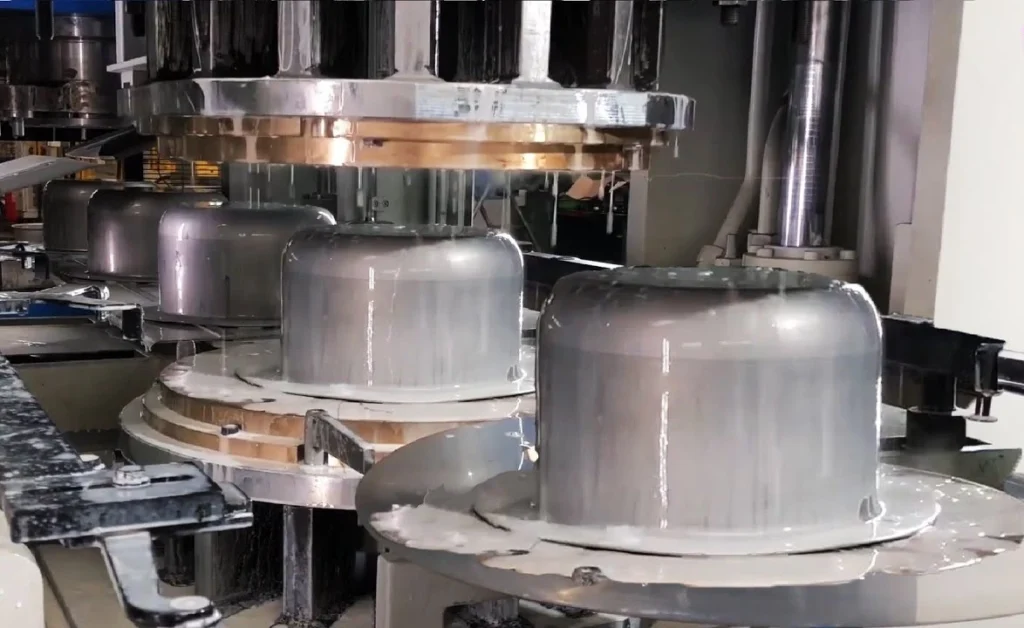
Categories
Machinery

Deep Draw Hydraulic Forming Machine

Deep Draw Hydraulic Forming Machine

Deep Draw Hydraulic Forming Machine: Deep drawing presses are specialized hydraulic machines used to transform flat metal sheets into three-dimensional shapes through a process known as deep drawing. This technique is widely employed in industries such as automotive, aerospace, packaging, and appliance manufacturing to produce components like fuel tanks, kitchen sinks, and various structural parts.

How Deep Drawing Presses Work:

The deep drawing process involves placing a metal blank (a flat sheet) over a die and then using a punch to press the blank into the die cavity, forming a desired shape. Hydraulic deep drawing presses apply controlled pressure to ensure the material flows smoothly into the die, minimizing defects like wrinkling or tearing.

Key Features of Deep Drawing Presses:

  • Hydraulic System: Utilizes hydraulic force to apply consistent and adjustable pressure, allowing for the formation of complex shapes without compromising material integrity. ​
  • Cushioning Mechanism: Incorporates a hydraulic cushion to support the material during forming, enhancing control over material flow and reducing the risk of defects. ​
  • Programmable Controls: Equipped with digital control panels that enable precise adjustments of pressure, stroke length, and speed, facilitating customization for various applications.

Advantages of Deep Drawing Presses:

  • Material Efficiency: Produces parts with minimal waste by utilizing near-net shaping, reducing material costs.
  • Structural Integrity: Ensures the formation of strong, uniform parts capable of withstanding operational stresses. ​
  • Design Flexibility: Allows for the creation of intricate and complex geometries that are challenging to achieve with other forming methods.​

Applications:

Deep drawing presses are essential in manufacturing processes that require high precision and efficiency. They are commonly used to produce items such as automotive body panels, appliance housings, and various structural components. ​

These resources provide comprehensive insights into the functionality, features, and applications of deep drawing presses in various industrial contexts.​

A deep drawing press is a hydraulic machine used to shape flat metal sheets into three-dimensional forms through a process known as deep drawing. This technique is essential in industries such as automotive, aerospace, and packaging, producing components like fuel tanks, kitchen sinks, and other structural parts. The process involves placing a metal blank (a flat sheet) over a die, then using a punch to press the blank into the die cavity, forming the desired shape.

The press works by applying controlled hydraulic pressure to ensure the metal flows smoothly into the die, minimizing defects like wrinkling or tearing. Hydraulic systems are key in these presses, as they allow for consistent and adjustable pressure, providing the force necessary to form complex shapes while maintaining the material’s integrity. Some presses also include a cushioning mechanism that enhances control over material flow during the forming process.

Deep drawing presses are equipped with programmable controls, allowing operators to adjust settings like pressure, stroke length, and speed for different applications. This flexibility leads to high material efficiency, as minimal waste is produced during the process, and structural integrity is maintained in the formed parts, which can withstand operational stresses. The ability to produce complex geometries is another advantage, enabling designs that may be challenging or impossible to achieve using other forming methods.

These presses are widely used in manufacturing processes requiring precision and efficiency. Common applications include automotive body panels, appliance housings, and other metal components.

Deep drawing presses are also valued for their ability to produce parts with high uniformity and strength. The hydraulic system ensures that the material is evenly distributed during the forming process, which helps to avoid issues like thinning or stretching of the material in certain areas. The use of high-pressure hydraulics makes it possible to form thick or high-strength materials that would otherwise be difficult to shape using traditional methods.

Another key advantage of deep drawing presses is their ability to work with a variety of materials, including stainless steel, aluminum, and other metals. The flexibility to handle different types of materials makes these presses highly versatile across industries, whether for producing thin-walled parts in packaging or more robust components for heavy machinery or vehicles.

Advanced versions of deep drawing presses may feature automation and robotics, further increasing efficiency and consistency in production. These systems can handle high-volume manufacturing with minimal human intervention, reducing labor costs and enhancing the overall speed of the process. Automation also improves precision, ensuring that each part is made to exact specifications, which is critical in industries where tight tolerances are necessary.

While deep drawing presses are crucial in large-scale manufacturing operations, they are also adapted for use in smaller batch production where specialized parts or custom designs are required. The ability to make detailed and intricate components means these presses are indispensable in sectors that demand high-quality metalworking, like the aerospace and medical device industries.

Overall, the deep drawing press is a fundamental tool for transforming flat metal sheets into complex, functional components, offering precision, efficiency, and versatility in various industrial applications.

As deep drawing presses continue to evolve, modern advancements focus on improving energy efficiency, reducing waste, and enhancing automation. One major development is the integration of more sophisticated control systems, which allow for real-time monitoring and adjustments during the forming process. These systems can automatically detect potential issues like material inconsistencies or improper die alignment and make corrective adjustments to ensure the parts are produced to the highest quality standards.

Additionally, research into materials science is helping to improve the performance of deep drawing presses. For example, new alloy compositions and metal treatments are making materials more malleable, which in turn reduces the force required to shape them and minimizes wear on the press itself. This not only extends the life of the equipment but also allows for more complex shapes to be drawn with fewer steps or additional processes.

Another significant trend is the adoption of hybrid press systems, which combine mechanical and hydraulic technologies. These hybrid presses offer the best of both worlds: the high-speed operation of mechanical presses and the flexibility of hydraulic presses. This hybrid approach allows manufacturers to achieve both high productivity and precise forming, making these presses ideal for industries with high demands for both volume and quality.

The maintenance and servicing of deep drawing presses have also seen improvements. Predictive maintenance technologies are increasingly being used, where sensors monitor the health of various components in the press (such as hydraulic pumps and dies) and predict when maintenance will be needed. This proactive approach reduces downtime and repair costs, ensuring the press operates at optimal efficiency for longer periods.

In industries where sustainability is a growing concern, deep drawing presses also play a role in reducing environmental impact. Their ability to minimize material waste through near-net shaping is one of the key ways they contribute to more sustainable manufacturing practices. Additionally, many presses now come with energy-saving features that reduce electricity consumption during the pressing process, making them more eco-friendly.

Overall, the deep drawing press is an indispensable tool in modern manufacturing, and its ongoing development ensures it remains central to the production of high-quality, intricate metal parts. As technology continues to advance, these presses will likely become even more efficient, versatile, and environmentally friendly, keeping pace with the increasing demands of industries worldwide.

Deep Draw Hydraulic Forming Machine

Deep Draw Hydraulic Forming Machine

deep draw hydraulic forming machine is a specialized type of hydraulic press designed for the deep drawing process, where flat metal sheets are transformed into three-dimensional shapes. It utilizes hydraulic force to apply precise pressure to the metal, enabling it to be shaped into deep, complex forms without cracking or breaking. These machines are commonly used in industries that require high-strength, intricate, and precise metal components, such as the automotive, aerospace, appliance, and packaging sectors.

In a deep draw hydraulic forming machine, the process begins with a metal blank being placed over a die. The machine uses a punch to press the metal blank into the die cavity, and through this process, the metal is drawn deep into the mold to form the desired shape. The hydraulic system is responsible for providing the force required for this operation, and it allows for better control over the pressure, stroke length, and speed, ensuring the material is evenly distributed and avoiding defects like wrinkling or tearing.

One of the primary advantages of using a hydraulic system for deep drawing is that it provides uniform pressure over the entire surface of the metal blank. This uniformity helps in maintaining the integrity of the material while forming, making it especially suitable for handling materials that are difficult to shape with traditional mechanical presses, such as high-strength steels or thicker metal sheets.

The deep draw hydraulic forming machine offers several advantages:

  1. Precision and Control: Hydraulic systems can be adjusted to provide consistent and controlled pressure, which is crucial for forming complex shapes with tight tolerances.
  2. Material Flexibility: These machines can handle a variety of materials, including metals with different thicknesses and hardness levels.
  3. Versatility in Design: Deep draw hydraulic machines are capable of producing intricate shapes, making them ideal for applications that require custom or highly detailed parts.
  4. High Efficiency: They are capable of producing large volumes of parts quickly, making them suitable for mass production in industries like automotive manufacturing.
  5. Minimal Material Waste: The deep drawing process is efficient in terms of material usage, as it reduces waste by closely matching the shape of the final part to the shape of the die.

Applications of Deep Draw Hydraulic Forming Machines:

  • Automotive Industry: Used to create car body panels, fuel tanks, and other structural components.
  • Aerospace: Production of parts like engine housings, brackets, and panels for aircraft.
  • Appliance Manufacturing: Making sinks, tubs, and other household metal items.
  • Packaging: Shaping metal containers or cans for food and beverage products.

Additionally, modern deep draw hydraulic forming machines often come equipped with advanced control systems and automation, improving the efficiency of the process and reducing the need for manual intervention. These features enhance production speed and allow for more precise adjustments during the drawing process, further improving part quality and consistency.

Overall, deep draw hydraulic forming machines are essential tools for industries that require the production of high-quality, complex, and durable metal parts, and their ongoing evolution continues to make them more efficient, versatile, and precise.

A deep draw hydraulic forming machine is specifically engineered to handle the deep drawing process, where metal sheets are transformed into complex three-dimensional shapes. This process involves applying controlled hydraulic pressure to shape flat metal blanks into desired forms, using a die and punch system. The hydraulic force is essential because it ensures consistent, uniform pressure throughout the forming process, which helps to avoid common issues such as material tearing, wrinkling, or thinning.

These machines are ideal for working with metals that are hard to shape using traditional methods, such as high-strength steels or thicker metal sheets. The flexibility of hydraulic systems allows for fine-tuning of the pressure, stroke length, and speed, offering precise control over the process. As a result, deep draw hydraulic forming machines can create intricate, detailed parts that are difficult to achieve with other types of presses.

One of the key benefits of using a hydraulic system is the ability to produce parts with high precision and minimal material waste. The uniformity of the pressure ensures that the material is evenly distributed during the forming process, which is crucial for parts that require tight tolerances. Moreover, these machines can work with a variety of materials, ranging from softer metals like aluminum to tougher materials like stainless steel, making them versatile across different industries.

The deep drawing process is highly efficient and can produce a large volume of parts quickly, which is especially valuable in mass production environments such as automotive or appliance manufacturing. The machines are designed to handle high volumes with minimal downtime, making them cost-effective for large-scale production. Additionally, they are often equipped with advanced control systems that allow for real-time adjustments to the pressing parameters, further enhancing the accuracy and quality of the final parts.

These machines are also widely used in industries like aerospace, where precision and structural integrity are crucial. For example, aircraft components such as brackets, panels, and engine parts are often made using deep drawing techniques. The machines can handle complex geometries that are necessary for these parts, ensuring they meet the stringent standards required for safety and performance.

Deep draw hydraulic forming machines are also evolving with the integration of automation, which further increases production speed and consistency. Automated systems can reduce the need for manual labor, cutting down on human error and increasing operational efficiency. Furthermore, predictive maintenance systems are being implemented to monitor the health of the equipment, ensuring that any potential issues are addressed before they result in machine downtime, thus optimizing the overall lifespan of the machine.

The versatility of these machines extends to custom manufacturing, where specialized or small-batch parts are needed. Their ability to create precise, custom shapes makes them essential for industries that require specialized components, such as the medical device industry, where precision is paramount.

Overall, deep draw hydraulic forming machines are indispensable tools for a wide range of industries, offering unparalleled precision, efficiency, and versatility in the production of high-quality metal parts. Their ability to handle complex shapes, a variety of materials, and high-volume production makes them a vital piece of equipment in modern manufacturing. As technology continues to advance, these machines will likely become even more energy-efficient, precise, and adaptable to the needs of various industries.

As deep draw hydraulic forming machines continue to evolve, several key improvements are enhancing their performance and versatility. One of the significant advancements is the integration of smart technologies. These machines are now often equipped with sensors that monitor key parameters such as temperature, pressure, and stroke length in real time. This data is then analyzed to optimize the forming process, ensuring the best possible outcome for each part. By continuously adjusting these parameters, the machines can detect any irregularities in the material or process before they result in defects, improving overall product quality.

In addition to smart sensors, deep draw hydraulic machines are increasingly adopting energy-saving technologies. These systems aim to reduce the power consumption of the press during the forming process. With rising energy costs and an increasing emphasis on sustainability, many manufacturers are investing in these energy-efficient models. Some machines now feature regenerative hydraulic systems, which recycle energy used during certain stages of the forming process, further reducing power consumption.

Another trend is the automation of material handling and die changeovers, which has significantly improved efficiency. The ability to quickly and automatically load new metal sheets and switch between different die sets allows the machine to maintain high productivity levels, even in industries that require frequent changes in part design. This automation can be integrated with robotics, allowing the machine to operate with minimal human intervention, further improving speed and consistency.

Customization capabilities have also become a focus of development for these machines. Manufacturers now offer deep draw hydraulic forming machines with modular designs that can be easily adjusted to meet the specific needs of different applications. Whether it’s altering the size of the die, modifying the stroke length, or adjusting the speed and pressure for different materials, these flexible designs make the machines suitable for a wide range of industries and production needs.

In terms of maintenance, these machines are becoming easier to maintain and service due to advanced diagnostics and predictive maintenance tools. The integration of sensors and machine learning algorithms allows the press to predict when maintenance will be required, preventing unexpected breakdowns. This shift towards proactive maintenance helps minimize downtime and extend the lifespan of the equipment, saving companies both time and money.

The use of hybrid systems that combine the advantages of both hydraulic and mechanical technologies is another development. These hybrid presses can offer high-speed production and precision while still maintaining the flexibility and force capabilities of hydraulic systems. The hybrid approach makes these machines even more adaptable to a variety of forming processes and materials, improving their overall utility in manufacturing.

Furthermore, the application of 3D modeling and simulation in the design phase is becoming more prevalent. Before a deep drawing press is ever used on a physical part, manufacturers can simulate the entire process digitally. This allows engineers to identify potential issues like material flow problems, wrinkles, or weak spots, and make adjustments to the design or parameters before the press ever makes contact with the metal. This simulation technology significantly reduces the likelihood of defects and accelerates the product development cycle.

As the manufacturing industry moves towards greater sustainability, eco-friendly materials are also being used more frequently in deep drawing processes. For example, some companies are exploring the use of recycled metals, which can be formed just as efficiently as new materials. This not only reduces the environmental footprint of the production process but also supports the growing demand for sustainable manufacturing practices.

In summary, deep draw hydraulic forming machines are becoming increasingly sophisticated, offering greater precision, energy efficiency, and automation. The integration of smart technologies, energy-saving features, and predictive maintenance tools are all contributing to more efficient and cost-effective operations. As industries continue to demand more complex, high-quality parts, these machines will evolve to meet those needs, ensuring that they remain an essential tool in modern manufacturing for years to come.

Automatic Deep Drawing Press

Deep Drawing Press for Compressed Gas Canisters

An automatic deep drawing press is an advanced version of the traditional deep drawing press, designed to automate and streamline the deep drawing process. These presses are typically used in industries that require high-volume production of complex, precise metal parts, such as the automotive, aerospace, appliance, and packaging sectors. The primary function of an automatic deep drawing press is to transform flat metal sheets into three-dimensional components by applying controlled pressure through a hydraulic or mechanical system, while incorporating automated features to improve efficiency, precision, and consistency.

The automation aspect of these presses involves integrating various technologies that handle processes such as material feeding, die changes, part removal, and quality control. This not only reduces the need for manual labor but also increases production speeds and minimizes human error. The entire production cycle is optimized for maximum efficiency, ensuring that each component is formed with high precision and minimal waste.

Automatic deep drawing presses are typically equipped with advanced control systems that allow for real-time monitoring and adjustments during the forming process. These control systems can adjust parameters such as pressure, stroke length, and speed, ensuring that each part is produced to exact specifications. The integration of sensors and feedback mechanisms allows for precise monitoring of the forming process, ensuring that the material flows properly into the die cavity and reducing the likelihood of defects such as wrinkling, thinning, or cracking.

Automation in material handling is another critical feature of automatic deep drawing presses. These presses are often equipped with robotic systems or conveyor belts that feed metal sheets into the machine, ensuring continuous production without the need for manual intervention. In some cases, automated die change systems are included, allowing the press to quickly switch between different dies based on the parts being produced, further enhancing production flexibility.

Automatic deep drawing presses can also integrate quality control systems that inspect each part as it is formed. Cameras, sensors, and laser measurement devices are commonly used to check for dimensional accuracy, surface defects, and overall part integrity. If any issues are detected, the system can automatically adjust the process parameters or reject the faulty part, ensuring that only high-quality components are produced.

The ability to handle multiple operations in one press cycle is another advantage of automatic deep drawing presses. Some models can perform not only the deep drawing process but also additional operations such as punching, trimming, or embossing, all within the same machine cycle. This reduces the need for multiple machines and simplifies the production process, further improving efficiency.

The energy efficiency of automatic deep drawing presses is also a key consideration. Modern versions are designed with energy-saving features, such as variable frequency drives (VFDs), which optimize the press’s energy consumption based on the load and operational demands. This makes them more eco-friendly and cost-effective, reducing both operational expenses and the environmental footprint of the manufacturing process.

Moreover, these presses often feature predictive maintenance capabilities. By incorporating sensors that monitor the condition of critical components such as hydraulic pumps, motors, and dies, automatic deep drawing presses can predict when maintenance is needed, allowing operators to address potential issues before they lead to machine failure. This proactive approach helps minimize downtime, increase the lifespan of the machine, and reduce repair costs.

In terms of applications, automatic deep drawing presses are widely used to manufacture complex parts such as automotive body panels, fuel tanks, appliance housings, and various structural components. The automation features make them ideal for industries where high-volume production with consistent quality is essential. These presses are capable of producing a large number of parts in a short period, making them indispensable for mass production in automotive and other large-scale manufacturing environments.

In summary, an automatic deep drawing press is an advanced solution that combines the benefits of deep drawing technology with modern automation. These presses increase efficiency, precision, and flexibility, allowing manufacturers to produce high-quality parts at a faster rate while minimizing the need for manual intervention. With automation integrated into every aspect of the process—from material handling to quality control—these presses offer significant improvements in production speed, cost-effectiveness, and part quality. As the manufacturing industry continues to demand more sophisticated and sustainable processes, automatic deep drawing presses will play a crucial role in meeting these needs.

As automatic deep drawing presses continue to evolve, several emerging trends and technologies are further enhancing their capabilities. One such development is the integration of AI and machine learning to optimize the forming process. With AI, these presses can analyze vast amounts of production data in real-time to detect patterns and predict the behavior of the material being formed. This allows for dynamic adjustments during the press cycle, improving part quality and reducing the risk of defects. Over time, the system learns from previous production runs, refining its performance and minimizing waste or errors.

Another exciting advancement is the incorporation of augmented reality (AR) and virtual reality (VR) into the operation and maintenance of automatic deep drawing presses. For example, operators can use AR glasses to overlay digital information onto the physical press, providing real-time data on the machine’s performance, current process parameters, or the status of various components. This improves decision-making and ensures that operators can quickly address any potential issues. Additionally, VR is increasingly used for training purposes, allowing new operators to simulate the operation of the press in a safe and controlled environment before working on the real machine.

Collaborative robots (cobots) are another area where automation in deep drawing presses is advancing. Unlike traditional industrial robots, cobots are designed to work alongside human operators. They can handle tasks such as loading and unloading parts, adjusting the material, or performing quality inspections. These cobots are highly flexible, easily programmed, and designed to enhance human productivity rather than replace human workers entirely. This collaboration between robots and humans can improve efficiency without sacrificing the expertise and decision-making capabilities of the operator.

The digital twin technology is also becoming more prevalent in automatic deep drawing presses. A digital twin is a virtual replica of the physical machine that continuously receives real-time data from the actual machine, creating a digital representation of its performance. Engineers can use this virtual model to simulate different scenarios, predict failures, optimize the process, and test new settings without having to make changes to the physical press. This technology allows for continuous improvement and proactive maintenance strategies, reducing downtime and increasing overall production reliability.

In terms of material innovation, some automatic deep drawing presses are being optimized to work with newer, advanced materials, such as lightweight alloys, composite materials, or high-strength steels. These materials often require different processing conditions, and the integration of adaptable systems in modern presses makes them capable of handling a wider range of materials, which is particularly beneficial for industries like aerospace and electric vehicles, where weight reduction is crucial.

One of the more sustainable innovations is the use of closed-loop recycling systems integrated into automatic deep drawing presses. These systems allow for the recycling of scrap material generated during the deep drawing process. The scrap is collected, melted down, and reintroduced into the production cycle, reducing waste and improving overall material efficiency. This approach aligns with the broader industry push toward sustainability, as it minimizes raw material consumption and reduces the environmental impact of manufacturing.

The user interface of automatic deep drawing presses has also evolved significantly. Modern presses feature intuitive touchscreen interfaces and advanced software that allow operators to easily program, monitor, and troubleshoot the machine. These systems can offer detailed visualizations of the production process, including simulations of the forming process, which can help in identifying potential problems before they arise. This improved user experience contributes to greater operational efficiency and reduces the risk of errors during operation.

Finally, flexible production is a significant benefit of automatic deep drawing presses. These machines are increasingly able to switch between different part designs with minimal downtime. This flexibility is particularly useful in industries that require frequent changes to the parts being produced, such as the automotive industry, where different models and parts need to be manufactured regularly. With automation handling the majority of the setup and changeover tasks, manufacturers can achieve shorter production cycles and faster time-to-market.

Overall, the advancements in automatic deep drawing presses are transforming the way metal forming processes are carried out. By incorporating AI, machine learning, AR/VR, collaborative robots, digital twins, and sustainable practices, these machines are becoming more efficient, adaptable, and capable of producing higher-quality parts with minimal waste. As these technologies continue to develop, we can expect automatic deep drawing presses to become even more integral to industries that rely on precision manufacturing, offering enhanced flexibility, improved production times, and significant cost savings.

As we move further into the era of Industry 4.0, the role of data analytics in automatic deep drawing presses will continue to grow in importance. These presses are increasingly being integrated into smart factories where data from multiple machines, sensors, and even external systems is collected and analyzed in real time. This vast amount of data can be used to optimize not only the performance of individual presses but also the entire manufacturing process. By analyzing this data, manufacturers can identify bottlenecks, predict future production needs, optimize maintenance schedules, and ultimately improve efficiency across the entire production line.

Advanced analytics platforms can also use this data to implement predictive analytics, allowing for better forecasting of production needs and potential machine failures. For example, using historical data, these platforms can predict when a component of the press is likely to wear out or fail. By addressing these issues before they happen, manufacturers can prevent unexpected downtime, reduce repair costs, and ensure consistent production output. This approach to predictive maintenance is a step beyond the traditional maintenance schedules and allows manufacturers to transition to a more proactive maintenance model.

In the context of part traceability, automatic deep drawing presses are increasingly being equipped with RFID (Radio Frequency Identification) and other tracking technologies to monitor and trace parts throughout the production process. Each part produced can be tagged with an RFID chip, allowing manufacturers to track its journey from material input to final product. This traceability is particularly valuable in industries with strict regulatory requirements, such as aerospace and automotive, where the safety and quality of each part are critical. By having detailed information on each part’s production history, manufacturers can easily identify any issues related to part defects, enhancing quality control and ensuring that only parts that meet stringent standards are shipped to customers.

Automatic deep drawing presses are also being integrated with supply chain management systems to improve overall manufacturing efficiency. By linking these machines to real-time inventory management systems, manufacturers can ensure that materials are automatically replenished as needed, preventing stockouts and delays in production. Additionally, just-in-time (JIT) production methods are becoming more feasible with these automated systems. JIT systems focus on producing only what is needed at the exact time it is needed, reducing inventory costs and improving operational efficiency. With an automatic deep drawing press connected to such a system, the factory can work seamlessly with supply chain partners, creating a more agile and responsive manufacturing environment.

Customization and flexibility are also becoming essential elements of the latest automatic deep drawing presses. Modern customers often demand unique, custom-made parts in lower volumes. Automatic deep drawing presses have adapted by incorporating flexible tooling systems that can be easily adjusted for different designs. This allows manufacturers to quickly produce low-volume, high-variety parts without needing to stop production or invest heavily in new tooling for each new part design. Such flexibility opens up new possibilities for niche markets, as manufacturers can now meet demand for customized products without sacrificing the efficiency and scalability of large-scale production.

With the growing importance of environmental sustainability, automatic deep drawing presses are being designed with more eco-friendly features. This includes not only energy-efficient systems but also measures to reduce the environmental impact of the materials used. For instance, the ability to work with recycled metals or environmentally friendly coatings reduces the carbon footprint of the manufacturing process. Moreover, by minimizing scrap and optimizing material usage, these presses help reduce waste, which is particularly important as industries face increasing pressure to adopt sustainable practices.

One area where automatic deep drawing presses are likely to continue evolving is the use of artificial intelligence (AI) for defect detection and quality assurance. AI algorithms can analyze visual data collected from cameras or other sensors during the deep drawing process to identify defects that may not be visible to the human eye, such as micro-cracks, surface imperfections, or dimensional inaccuracies. This AI-driven inspection can happen in real time, allowing for immediate corrective action, which drastically reduces the chances of defective parts making it to the next stage of production or the final customer.

The development of autonomous production systems is another frontier that automatic deep drawing presses are moving toward. As part of the smart factory ecosystem, these presses will be able to communicate with other machines and devices autonomously, adjusting their operations without human intervention based on real-time feedback from sensors, production schedules, and inventory data. This level of autonomy could lead to fully automated manufacturing lines capable of producing high-quality products without the need for constant human oversight, freeing up operators to focus on higher-level tasks like system optimization and problem-solving.

Another future advancement is multi-material forming. Modern automatic deep drawing presses are being designed to handle multi-material parts, which are becoming increasingly popular in industries like automotive, where parts need to be lightweight yet strong. These presses are capable of forming different materials or material composites in the same part, such as combining aluminum with steel or other lightweight alloys. This innovation is crucial for producing advanced parts for electric vehicles, where both strength and weight reduction are essential.

Additive manufacturing (3D printing) is another technology that might complement automatic deep drawing presses in the future. While deep drawing presses are excellent for mass production of uniform parts, 3D printing could allow for on-demand production of small, highly customized parts or tooling for the deep drawing process. The synergy between these technologies could offer manufacturers the flexibility of additive manufacturing while maintaining the speed and efficiency of traditional deep drawing presses.

In summary, the future of automatic deep drawing presses is bright, with continuous innovations improving their efficiency, adaptability, sustainability, and ability to produce high-quality parts. As manufacturing continues to shift towards more automation, data-driven decision-making, and flexibility, automatic deep drawing presses will remain at the forefront, helping industries meet the demands of modern production, whether for high-volume, custom, or complex parts. The integration of advanced technologies like AI, machine learning, robotics, and eco-friendly practices ensures that these presses will continue to play a pivotal role in shaping the future of manufacturing.

Deep Draw Forming Press

Sheet Metal Drawing Press

deep draw forming press is a specialized machine used in the metal forming process called deep drawing, which is used to transform flat metal sheets or blanks into three-dimensional parts with significant depth. This process is often used to produce parts with relatively complex geometries, such as automotive body panels, kitchen sinks, aerospace components, and packaging materials.

In deep drawing, a metal sheet is placed over a die, and a punch is used to force the sheet into the die cavity. The process stretches the metal, and the sheet takes the shape of the die, with the metal being drawn deeper as the punch moves downward. The forming press applies the necessary pressure to ensure the metal is drawn evenly and smoothly without defects such as tearing, wrinkling, or thinning.

The deep draw forming press typically consists of several key components:

  1. Frame: The press has a rigid frame that supports the entire machine structure and houses the die and punch. The frame is usually built to handle high pressures and forces during the deep drawing process.
  2. Hydraulic or Mechanical System: Deep draw forming presses can be powered hydraulically or mechanically. Hydraulic presses use fluid to apply force, providing a smooth, controlled, and adjustable pressure. Mechanical presses, on the other hand, use cams or cranks to drive the punch and exert pressure. Hydraulic presses are generally more flexible and are preferred for more complex forms and higher precision.
  3. Die and Punch: The die is the cavity or mold into which the metal is drawn, and the punch is the component that applies force to the metal to shape it. The die and punch are typically designed to match the specific geometry of the part being produced.
  4. Blank Holder: A blank holder is used to hold the edges of the metal sheet in place while the punch moves down. This is important to prevent wrinkles or unwanted deformation in the material.
  5. Control System: Modern deep draw forming presses often feature sophisticated control systems that allow operators to adjust parameters such as stroke, speed, and pressure in real-time to optimize the forming process.

Types of Deep Draw Forming Presses:

  • Hydraulic Deep Draw Press: These presses use hydraulic power to apply force to the material. They are often used for deep drawing processes requiring high precision and the ability to form complex geometries.
  • Mechanical Deep Draw Press: These presses use mechanical force, typically powered by cranks or cams. They are known for their speed and efficiency but might have less flexibility compared to hydraulic presses in terms of handling complex shapes.

Key Features and Advantages of Deep Draw Forming Presses:

  1. Precision and Consistency: Deep draw forming presses provide consistent pressure and control, allowing for high-precision manufacturing. This is essential for industries that demand tight tolerances and high-quality parts.
  2. Material Efficiency: The deep drawing process minimizes material waste, especially when compared to other forming methods. The metal is evenly distributed, which reduces the amount of scrap material generated.
  3. Versatility: Deep draw presses can handle a variety of metals, including aluminum, steel, copper, and brass, making them highly versatile across industries. Advanced presses can also be used with multiple materials or composite materials, depending on the application.
  4. High Production Rates: These presses can produce large quantities of parts quickly, making them suitable for high-volume production environments such as automotive manufacturing.
  5. Complex Shapes: Deep drawing is ideal for creating parts with complex shapes, such as those with deep cavities or intricate contours. The process is used to produce a variety of products, including beverage cans, automotive body parts, aerospace components, and medical devices.

Applications of Deep Draw Forming Presses:

  • Automotive Industry: Deep draw presses are widely used to manufacture vehicle body panels, engine components, fuel tanks, and other structural parts. They help produce lightweight yet strong parts, which are critical for the performance and safety of vehicles.
  • Aerospace: Components like fuselage panels, brackets, and engine housings are often produced using deep drawing. The aerospace industry demands parts with high strength-to-weight ratios and precise geometries, both of which deep draw presses can achieve.
  • Packaging: The packaging industry relies on deep drawing for the production of metal containers, such as beverage cans and aerosol cans. This application requires high-speed, high-volume production to meet demand.
  • Consumer Appliances: Kitchen sinks, bathtubs, and other household appliances are often made using deep draw forming presses. The ability to create large, uniform parts with minimal waste makes deep drawing ideal for this industry.
  • Medical Devices: Deep draw presses are used in the medical field for the production of containers, casings, and other components that require precision and high material integrity.

Process Considerations:

While deep drawing is highly effective, there are several important considerations to ensure the quality of the final product:

  1. Material Properties: The material being used must be capable of undergoing the drawing process without cracking. Materials with good formability, such as mild steel, aluminum, and brass, are commonly used.
  2. Blank Size and Thickness: The initial blank (the flat metal sheet) must be properly sized to ensure it can be drawn into the desired shape without defects. The thickness of the material also affects the process, with thicker materials being more difficult to draw and requiring more force.
  3. Lubrication: Lubrication is often used during deep drawing to reduce friction between the die, punch, and the metal. This helps prevent damage to the material and ensures smooth material flow into the die.
  4. Die Design: The design of the die and punch plays a crucial role in determining the success of the deep drawing process. Poorly designed dies can lead to defects like wrinkles, uneven thickness, or cracks in the material.

Challenges in Deep Drawing:

  1. Wrinkling: Wrinkling can occur when the material is not held securely in place, or when the metal does not flow properly into the die. Proper blank holding force and die design can help reduce this issue.
  2. Thinning or Fracturing: If the material is drawn too quickly or excessively, it may thin out too much or even fracture. Controlling the draw ratio, punch speed, and pressure helps mitigate these risks.
  3. Tool Wear: The dies and punches used in deep drawing can wear over time due to the high forces applied during the process. Regular maintenance and monitoring are required to ensure the longevity of tooling.

Conclusion:

A deep draw forming press is a critical tool in the manufacturing of metal parts, especially for industries that require high precision and complex shapes. Whether hydraulic or mechanical, these presses provide the force and control needed to shape metals efficiently and accurately. From automotive to aerospace to packaging, deep draw forming presses are indispensable in mass production environments, and ongoing technological advances continue to enhance their performance, efficiency, and versatility.

Deep draw forming presses play a crucial role in industries where mass production of precise, deep, and complex parts is essential. These presses are highly efficient for turning flat metal sheets into three-dimensional components, with minimal material waste and consistent quality. The process itself allows for the creation of complex shapes with relatively deep cavities, which would be difficult to achieve using other forming methods like stamping or bending.

The ability to work with a variety of metals, including steel, aluminum, brass, and copper, makes deep draw forming presses versatile tools for many industries. They are essential for producing large quantities of parts with intricate shapes, from automotive body panels to beverage cans. The precision that deep draw forming presses provide ensures that parts meet stringent quality and safety standards, especially in high-performance applications like aerospace, automotive, and medical industries.

The deep drawing process requires significant force, and the technology behind the presses must be robust to handle these demands. Hydraulic deep draw presses, which use fluid to generate force, are often preferred for more complex shapes and tighter tolerances. They provide the necessary flexibility to handle varying material thicknesses and more intricate designs. On the other hand, mechanical presses are known for their speed and can be more cost-effective for less complex parts or higher-volume production runs. Both types of presses rely on the same core principles—drawing metal into a die with a punch—but they differ in how they deliver the force and the range of applications they are best suited for.

One of the key advantages of deep draw forming presses is their ability to work with minimal material waste. Unlike other processes where much of the material is cut away, deep drawing ensures that most of the material is used in the final product. This efficiency is particularly important in industries where material costs are high or where the goal is to minimize the environmental impact of manufacturing. Additionally, the process can often be optimized to ensure uniform material distribution, preventing issues like thinning, tearing, or excessive stretching of the material.

Another notable benefit of deep drawing presses is their speed and productivity, which makes them highly valuable for high-volume manufacturing. The ability to produce large quantities of parts in a relatively short amount of time is vital for industries like automotive manufacturing, where hundreds or thousands of parts may be needed daily. The flexibility of modern deep drawing presses, especially those equipped with automated systems, allows for faster changeovers and a seamless transition between different part designs without compromising quality or efficiency.

However, the process is not without its challenges. Maintaining consistent part quality requires careful control over various factors, including material thickness, die design, lubrication, and punch speed. Without these factors properly controlled, defects like wrinkles, thinning, or cracking can occur, leading to the rejection of parts. For this reason, the role of the die and punch design becomes crucial. A well-designed die helps guide the metal smoothly into the desired shape and ensures that it doesn’t become distorted during the forming process.

Advanced control systems and automation in modern deep drawing presses help reduce human error and improve the consistency of production. Automation can handle tasks such as feeding material into the press, controlling the press speed and pressure, and even inspecting parts for defects after they are formed. The integration of sensors, cameras, and feedback loops enables real-time adjustments to the forming process, further enhancing the precision and quality of the final products.

Additionally, the integration of AI-driven defect detection and predictive maintenance is increasingly common. Machine learning algorithms can analyze patterns in the data from each press cycle and detect anomalies that might indicate problems, such as a tool that is beginning to wear out or a deviation in material properties. Predictive maintenance can prevent unexpected downtime by alerting operators to potential issues before they cause machine failure, ensuring that production runs smoothly without interruption.

Deep draw forming presses are also evolving to accommodate more sustainable manufacturing practices. By using closed-loop recycling systems, manufacturers can recycle scrap material generated during the deep drawing process, which reduces waste and makes the production process more environmentally friendly. Additionally, energy-efficient hydraulic systems and smart controls that optimize power usage based on the press’s workload further contribute to reducing energy consumption and the carbon footprint of the process.

In industries like aerospace, the demand for lightweight but strong parts is driving the need for deep draw presses capable of working with high-strength alloys and advanced composite materials. These materials require specialized tooling and more precise control over the forming process, and modern deep drawing presses can be equipped to handle such demanding requirements. Whether it’s an airplane fuselage part or a lightweight automotive component, deep drawing presses can produce high-quality components that meet both performance and safety standards.

With the growing importance of customization in manufacturing, deep draw forming presses are also adapting to handle smaller production runs or custom parts without sacrificing efficiency. The flexible tooling systems that can quickly be adjusted to accommodate different part designs allow manufacturers to stay competitive in markets where products are frequently updated or require variations. This flexibility ensures that the same deep drawing press can be used to create a wide range of components, reducing the need for multiple machines and further optimizing production efficiency.

Looking ahead, the ongoing development of deep draw forming presses will likely focus on increasing automation, improving material handling systems, and incorporating smart factory technologies. These developments will allow manufacturers to produce even more complex parts faster and with greater consistency, ultimately reducing costs and lead times while improving the quality and functionality of the products being made.

In summary, deep draw forming presses are integral to the production of high-quality, complex metal parts. As industries continue to demand higher efficiency, sustainability, and precision, these presses will remain a critical component of modern manufacturing processes. The continued integration of advanced technologies, automation, and smart systems will ensure that deep draw forming presses evolve to meet the ever-changing needs of industries worldwide. Whether for high-volume production or customized, low-volume runs, these presses will play a key role in shaping the future of manufacturing.

As the manufacturing landscape continues to evolve, deep draw forming presses are being pushed further in their capabilities and flexibility. The integration of Industry 4.0 principles, such as IoT (Internet of Things) connectivity, big data, and cloud computing, is becoming a key part of the deep draw forming process. These advancements allow for the creation of smart presses that can not only execute the forming process but also gather, store, and analyze performance data to improve operational efficiency and prevent unexpected downtime.

By linking deep draw forming presses to cloud-based platforms, manufacturers can perform real-time monitoring and diagnostics from anywhere in the world. These platforms can provide insights into the health of the machine, such as tool wear, part quality, and overall production status. This means that operators and managers can make better-informed decisions regarding production schedules, maintenance needs, and resource allocation without needing to be physically present on the factory floor.

The combination of sensor technology and machine learning will continue to enhance the precision of deep draw forming presses. Sensors embedded in the machine or on the dies can detect minute changes in temperature, pressure, and material behavior during the forming process. This real-time feedback can be used to make adjustments on the fly, ensuring that parts are produced with minimal defects. If the system detects an anomaly, such as an increase in the risk of cracking or wrinkling, it can automatically adjust the press’s parameters to compensate and avoid errors, reducing scrap rates and enhancing overall efficiency.

One of the notable trends is the shift toward additive manufacturing (3D printing) complementing traditional deep drawing. While deep drawing excels at producing high-volume parts with relatively uniform shapes, 3D printing offers the flexibility to create highly intricate or custom parts with lower production volumes. The combination of both processes can lead to greater flexibility in production, where 3D-printed molds, inserts, or tools can be used in conjunction with deep drawing to form more complex components that were previously impossible or cost-prohibitive to produce with conventional methods.

Digital twin technology is also becoming a major development in the deep drawing process. A digital twin is a virtual representation of the deep draw forming press that continuously receives real-time data from the physical machine. Engineers can use this virtual model to simulate different operational scenarios, test new configurations, and perform predictive maintenance before making physical adjustments to the machine. Digital twins allow manufacturers to experiment with different designs and process parameters, optimize the workflow, and ensure that the real-world press operates at peak efficiency.

As industries continue to focus on sustainability and reducing their environmental impact, deep draw forming presses are evolving to be more energy-efficient and less wasteful. The implementation of energy recovery systems, such as regenerative hydraulic systems, helps capture and reuse energy from the press’s movements, lowering energy consumption. Additionally, the reduction in material waste—by optimizing blank holder forces, material flow, and tooling designs—supports the shift toward greener manufacturing practices. By utilizing advanced modeling and simulation tools, manufacturers can optimize material use, ensuring that every sheet of metal is processed efficiently, with minimal scrap.

Another promising development is closed-loop quality control systems. In these systems, quality checks are integrated directly into the production cycle. For example, in-line sensors could monitor the thickness, formability, and dimensions of each part during the deep drawing process, providing immediate feedback. If any part falls out of specification, the system can make adjustments to the press in real-time, preventing the production of defective parts. This eliminates the need for post-production inspection and reduces the overall cost of quality assurance, ensuring that parts meet the required standards without slowing down the production process.

The future of tooling in deep drawing presses is also poised to benefit from advancements in advanced materials and 3D printing. 3D-printed molds and tools could become more widely used, allowing manufacturers to produce custom tooling for specific runs or even one-off parts without the time-consuming and costly process of traditional machining. These tools could be created with complex geometries that improve the forming process, reduce friction, and extend the life of tooling components.

Another innovation is the rise of multi-material deep drawing. As industries demand lighter and stronger parts, manufacturers are increasingly working with composites and multi-material solutions. Some deep drawing presses are being designed with the capability to handle combinations of materials, such as steel and aluminum or metal and plastic. This opens up new possibilities for lightweight, high-strength components, such as those required in electric vehicle (EV) production or other industries focused on improving energy efficiency.

Moreover, the growing trend of digitalization and automation in manufacturing is likely to lead to the wider implementation of robotics in the deep drawing process. Robotic systems can be used to load and unload parts, handle material, or even assist in adjusting die setups. In some cases, robots can take over manual tasks that are either too dangerous, repetitive, or time-consuming for human workers. The integration of robots and deep draw presses can increase overall throughput, reduce labor costs, and improve workplace safety.

The ability to customize production settings, switch between different parts, and adapt to changing demands will continue to be an important driver of innovation in the deep drawing press market. Manufacturers will benefit from presses that can seamlessly switch between products and be more adaptable to shifts in consumer demand. This capability is particularly important in sectors like consumer goods and automotive manufacturing, where production lines often need to accommodate multiple models or designs in quick succession.

Additionally, the push for lean manufacturing will continue to influence the development of deep draw forming presses. Lean principles, which aim to eliminate waste and improve efficiency, will likely become more ingrained in the operation of these presses. This could involve minimizing downtime, improving part handling, optimizing material usage, and increasing flexibility on the production line—all with the goal of maximizing throughput while minimizing unnecessary costs and waste.

In the coming years, artificial intelligence will likely play an even bigger role in optimizing the deep drawing process. AI-based algorithms could analyze production data, predict potential failures, optimize press settings, and improve tooling designs in real-time. As machine learning continues to evolve, these AI systems will become more adept at finding patterns and improving operational processes autonomously.

In conclusion, deep draw forming presses are becoming more intelligent, efficient, and adaptable as the demands of modern manufacturing increase. With advancements in automation, data analytics, and material science, these presses will continue to play an integral role in producing high-quality, cost-effective, and environmentally friendly products across a wide range of industries. As the manufacturing landscape evolves, deep draw forming presses will remain at the forefront of innovation, driving advancements in productivity, precision, and sustainability.

Single Action Drawing Press

High-Speed Drawing Press

Single Action Drawing Press is a type of press machine specifically designed for metal forming processes like deep drawing, punching, blanking, and forming operations. The term “single action” refers to the movement of only one ram or slide, which moves vertically in one direction—downward to form or shape the material—and then returns upward after the cycle is complete.

These presses are widely used in applications where straightforward, reliable, and efficient metal forming is required, especially for components that do not demand complex or multiple forming stages in a single operation.

Single action drawing presses consist of several key components, including the press frame, a single hydraulic or mechanical ram (slide), a die set, a punch, and a blank holder system. In the deep drawing process, a flat metal blank is placed on the die, held in place by a blank holder, and the punch (attached to the ram) descends to draw the material into the die cavity, forming the desired shape. Once the drawing is complete, the ram retracts, and the formed part is ejected or removed.

These presses are known for their simplicity and durability. They are typically easier to maintain and operate compared to more complex double or triple action presses. This makes them ideal for operations with high production volumes and relatively simple part geometries, such as cylindrical cans, cups, filters, and other symmetrical components.

Single action presses can be mechanical or hydraulic. Mechanical single action presses operate using a crankshaft or eccentric mechanism to convert rotary motion into linear motion. They are fast and efficient, ideal for operations where high-speed production is needed. Hydraulic single action presses, on the other hand, offer better control over force and speed, and are preferred for forming thicker materials or parts that require more precision.

One important limitation of single action presses is the absence of an independent blank holder or cushion system. In more complex drawing operations, especially those requiring greater control of material flow, a double action press—with a separately controlled blank holder—would be used instead. However, many modern single action presses integrate cushioning systems in the bed to apply controlled holding force to the blank, improving draw quality even in simpler press designs.

In summary, the Single Action Drawing Press is a reliable, efficient, and cost-effective solution for producing a wide range of drawn parts, especially where the complexity of shape or forming force does not demand more advanced multi-action press systems. Its straightforward operation and lower maintenance needs make it a popular choice for high-throughput manufacturing environments where speed and simplicity are prioritized.

The simplicity of a single action drawing press does not limit its capability; in fact, it is precisely this straightforward design that makes it an ideal solution for many industrial applications. In a production environment, where time, cost, and efficiency are critical factors, the reliability and consistency of a single action press become significant advantages. Its structure—typically a C-frame or H-frame depending on the application—allows for easy access and part handling, which is especially useful in manual or semi-automated operations. Operators can load and unload parts quickly, reducing cycle times and contributing to higher productivity.

These presses are commonly used in industries like automotive, cookware, packaging, and electronics, where components such as engine parts, metal containers, and enclosures are often formed through deep drawing. In many cases, the press operates in a continuous production cycle, where flat metal blanks are fed into the die, drawn into shape by the descending punch, and then ejected or removed after the operation. This cycle can be repeated thousands of times with minimal variation in part quality, which is crucial for mass production.

Although single action presses are best suited for relatively simple shapes, advancements in tooling design and die engineering have expanded the range of parts that can be formed with these machines. For example, by carefully designing the die radii, blank holder force, and punch speed, more intricate geometries can be drawn successfully, even within the limitations of a single action mechanism. In some cases, built-in features like cushion pins or pneumatic/electric bed cushions help simulate the effect of a secondary action, improving material control during the drawing operation.

In modern facilities, single action presses are often equipped with programmable logic controllers (PLCs), touch-screen interfaces, and safety systems to improve ease of use and ensure consistent performance. These control systems allow operators to adjust press settings quickly, monitor key process variables, and receive alerts in case of malfunctions. This integration of digital controls not only increases accuracy but also enhances safety, particularly in fast-paced industrial environments.

Hydraulic single action presses, in particular, offer precise control over both the downward stroke and the return stroke. The ability to adjust the ram speed and force at different stages of the draw allows operators to fine-tune the forming process to reduce defects such as tearing, wrinkling, or excessive thinning of the material. This is especially important when working with sensitive or high-cost materials where waste must be minimized. The consistent pressure application also ensures repeatable part dimensions, which is a critical requirement for quality assurance in industries like aerospace and medical manufacturing.

One of the other benefits of single action presses is the relatively low cost of ownership compared to more complex machines. They require less floor space, have fewer moving components, and typically consume less energy, especially when equipped with energy-efficient drive systems. Maintenance is also simpler, with fewer hydraulic lines or control systems to manage. This translates into lower downtime and reduced operational costs over the life of the machine.

Despite their limitations in complexity, single action drawing presses remain highly adaptable when integrated into automated production lines. They can be equipped with feeders, part ejectors, conveyors, and robotic arms to facilitate continuous operation and high-speed manufacturing. When used in conjunction with coil feeders or automated blank loaders, they can deliver high output with minimal operator intervention, making them a valuable part of lean manufacturing strategies.

As the demand for faster, smarter, and more sustainable manufacturing processes continues to grow, the role of the single action drawing press is evolving. With enhancements in control systems, tooling technology, and material handling automation, these presses are capable of much more than traditional forming operations. Their simplicity becomes a strength when paired with modern innovations, offering manufacturers a reliable, cost-effective platform for high-volume production without sacrificing quality or adaptability.

In future applications, these presses may increasingly feature real-time monitoring and AI-driven diagnostics to predict potential failures and optimize performance on the fly. Paired with cloud-based platforms and machine learning, even the most straightforward single action press could contribute to a highly efficient, interconnected smart factory ecosystem. This blend of mechanical reliability and digital intelligence ensures that the single action drawing press will continue to be a valuable asset in both traditional and modern manufacturing settings.

In addition to their adaptability and simplicity, single action drawing presses are gaining popularity in smaller-scale manufacturing environments and among specialized producers due to their manageable footprint and lower investment requirements. For manufacturers producing parts in medium to high volumes but without the complexity that would demand multi-action presses, a well-configured single action press provides the perfect balance between cost-efficiency and performance.

One of the ongoing developments in single action press design is the use of servo drive technology. Unlike traditional mechanical or hydraulic systems, servo-driven presses offer precise control over motion profiles, which allows the press to adapt its speed and force dynamically during the drawing cycle. This not only improves part quality but also reduces energy consumption and mechanical stress on the equipment. For example, a servo system can slow down the punch during the critical forming stage to prevent tearing, and then speed up the return stroke to reduce cycle time—achieving both quality and productivity in a single system.

Tooling advancements are also enhancing what a single action press can achieve. With high-strength tool steels, precision-ground dies, and specialized coatings such as titanium nitride (TiN) or diamond-like carbon (DLC), tools are now more wear-resistant and capable of handling tougher materials like stainless steel or high-strength aluminum alloys. This has opened the door for single action presses to be used in applications that were once limited to more advanced forming systems. Interchangeable die sets also allow for quick changeovers, which is crucial in today’s market where flexibility and short lead times are key competitive advantages.

Another area of improvement is in press frame construction. Modern single action presses are built with optimized structural designs to ensure better rigidity and minimal deflection during operation. The more stable and robust the frame, the more consistent the forming results, especially in deep draw applications where uniform pressure distribution is essential. Some presses use finite element analysis (FEA) during design to reduce stress concentrations and improve longevity, ensuring the press can withstand years of continuous use under high loads.

The inclusion of advanced lubrication systems is another enhancement in newer models. Proper lubrication during deep drawing is essential to minimize friction between the die and the workpiece, which helps in achieving smooth surface finishes and extending die life. Modern presses may feature automatic lubrication systems that apply the correct amount of lubricant at the right intervals, reducing manual effort and improving process control.

From an operational standpoint, many manufacturers now integrate quality assurance and part inspection systems directly into the press line. Cameras, laser sensors, or contact measurement probes can inspect parts as soon as they are formed, ensuring immediate feedback and reducing the chance of downstream issues. This form of in-process quality control is especially valuable in sectors with tight tolerances or regulatory compliance requirements, such as medical devices, defense, or precision electronics.

The evolving role of the single action drawing press isn’t just about technology—it’s also about strategic use in broader production systems. For example, they can be part of a hybrid forming cell that includes other types of presses, welding systems, and finishing equipment. In such setups, a single action press may handle an initial draw operation before passing the part to other stations for trimming, piercing, or assembly. This modular approach to production enables manufacturers to scale capacity, increase product variety, and adjust to market demands more flexibly.

Moreover, with increasing global attention on sustainability, manufacturers are scrutinizing energy use and waste generation in all phases of production. Single action presses, particularly newer hydraulic and servo models, are being designed with energy-saving modesintelligent standby functions, and low-noise hydraulic systems. These improvements not only reduce operational costs but also align with environmental certifications like ISO 14001 and help companies meet internal and regulatory sustainability targets.

Training and workforce considerations also play into the continued appeal of single action presses. Because of their relatively straightforward mechanics and intuitive controls, operators can be trained more quickly compared to more complex multi-action or CNC-controlled machines. This is especially important in regions facing skilled labor shortages or in facilities where frequent staff rotation is necessary. Digital training modules, AR/VR support, and remote assistance systems are being integrated to shorten the learning curve and reduce the risk of human error.

In conclusion, the single action drawing press remains a workhorse of modern manufacturing. Its basic principle—one downward stroke to shape a part—has been honed over decades, and its application continues to expand with the support of smart controls, advanced materials, and automation. Whether used in a standalone setup for high-speed production or integrated into a smart, flexible manufacturing cell, the single action press continues to offer unmatched reliability, simplicity, and adaptability. It’s a timeless tool that continues to evolve with the times, proving that even in an era of complex machinery, there is still tremendous value in simplicity done well.

Double Action Drawing Press

Deep Drawing Press for Pressure Vessel Ends

Double Action Drawing Press is a more advanced type of press machine used in deep drawing operations, offering greater control, precision, and flexibility compared to its single action counterpart. The defining feature of a double action press is its two independently operated slides: one for the blank holder (outer slide) and one for the drawing punch (inner slide). This separation allows for more precise management of material flow during the forming process, significantly improving the quality of drawn parts, especially those with deeper or more complex geometries.

In the deep drawing process, the outer slide (blank holder) descends first and applies a controlled holding force to the metal blank. This prevents issues like wrinkling or uncontrolled material movement. Then, the inner slide—carrying the punch—descends to draw the metal into the die cavity. Because both slides are independently controlled, the force, speed, and timing of each can be finely tuned to suit the specific requirements of the part being formed. This is particularly beneficial when working with high-strength materials or when producing components with tight tolerances.

Double action presses are commonly used in industries where high-precision and complex components are required, such as automotive, aerospace, cookware, electronics, and appliance manufacturing. Components like fuel tanks, oil pans, complex enclosures, or deep containers that require multiple stages of forming benefit greatly from the enhanced capabilities of double action systems.

These presses can be mechanicalhydraulic, or servo-driven. Mechanical double action presses are typically faster and used for high-volume production of less form-sensitive parts. Hydraulic models, on the other hand, offer much finer control over force and stroke at various stages, making them ideal for sensitive or difficult-to-form materials. Servo-driven double action presses are the most advanced, allowing full programmability and optimization of every motion profile, increasing both quality and throughput while reducing energy consumption.

Modern double action presses also support a high degree of automation and integration. They can be fitted with material feeders, part ejectors, robotic handling systems, and in-line inspection tools. These integrations create a seamless production line where parts are formed, checked, and transferred automatically, reducing cycle time and minimizing human error.

Another benefit of the double action design is its capability to perform multiple operations in a single cycle. For example, in addition to the deep drawing operation, secondary tasks such as trimming, piercing, or flanging can be integrated into the same die set, saving both time and tooling costs. This makes the press highly efficient for manufacturing complex components in fewer steps.

With the continued advancement of materials science and product design, double action drawing presses are playing an increasingly important role in enabling the manufacture of lightweight, high-strength, and precisely formed parts. Their flexibility in handling various shapes, sizes, and materials, combined with the precision of dual-slide control, ensures they remain a cornerstone technology in modern metal forming processes.

In modern manufacturing environments, the double action drawing press stands out not just for its mechanical capabilities, but also for how well it integrates with smart factory systems. With the rise of Industry 4.0, these presses are now equipped with advanced sensors, real-time monitoring systems, and cloud connectivity. This allows manufacturers to track performance metrics such as tonnage, stroke speed, energy consumption, and cycle time with high precision. These insights can be used to optimize production, predict maintenance needs, and reduce downtime—transforming the press into a data-generating node within an intelligent production ecosystem.

The core advantage of a double action press remains its independent control of the blank holder and punch. This makes it particularly effective for drawing operations that require a carefully managed material flow, such as forming deep or contoured parts where material thinning or tearing can easily occur. By adjusting the pressure applied by the blank holder relative to the punch stroke, operators can prevent defects like wrinkling around the flange or tearing in the sidewalls. This feature becomes essential when forming advanced high-strength steels, aluminum alloys, or other materials with lower ductility.

Advanced die designs used in double action presses often include progressive forming stages, where a single blank may undergo multiple shaping operations within one press cycle. Some presses are configured with cushioning systems beneath the die or in the bed to further enhance control over metal flow during the draw. These systems, whether hydraulic or mechanical, allow for precise back pressure on the part as it forms, aiding in the reduction of springback and ensuring better dimensional accuracy.

Additionally, many double action presses now support die-mounting flexibility, allowing quick-change die systems that reduce setup times dramatically. For manufacturers producing a wide range of parts or switching between different product runs, this flexibility is critical. Tooling systems can include quick-lock features, guided alignment, and programmable die settings that are stored in the press’s control system for fast retrieval and repeatability.

In terms of press construction, double action presses are usually of a straight-side (H-frame) design, which offers better resistance to deflection under load than the more open C-frame styles found in some single action presses. This results in higher part accuracy and consistency, especially under heavy or off-center loads. Some machines are even equipped with multi-point drive systems to distribute forming forces more evenly across the slide, which is particularly useful for large or asymmetrical parts.

Another growing area is the use of servo motors in double action presses. Servo technology allows for full programmability of motion profiles for both the inner and outer slides. Instead of relying on fixed cam or linkage systems, servo-driven presses can accelerate, decelerate, pause, or dwell at any point in the stroke. This ability not only improves formability and finish quality but also enables customization for each part type without mechanical changes. The same press can be optimized for fast shallow draws one moment and slow, deep draws the next—just by changing software parameters.

Environmental considerations are also being addressed in newer models. Energy recovery systems, quieter hydraulic drives, and variable-speed pumps are now common features that help reduce the overall environmental footprint of double action presses. In some factories, these presses operate with closed-loop fluid systems that reduce lubricant and coolant waste, making them both cleaner and more cost-efficient.

From an operator standpoint, safety and ease of use are paramount. Modern presses feature intuitive human-machine interfaces (HMIs) with touch-screen controls, diagnostics, and guided setup procedures. Safety is enhanced with light curtains, interlock systems, and automatic die alignment checks, all designed to protect the operator and ensure safe operation even under demanding production conditions.

Overall, the double action drawing press has evolved far beyond its basic function. It has become a critical element in precision metal forming, enabling manufacturers to meet the increasing demand for high-quality, lightweight, and complex parts. Whether producing deep-drawn automotive panels, high-performance aerospace components, or intricate consumer products, the double action press offers the control, adaptability, and efficiency needed in today’s competitive manufacturing landscape. As technology continues to advance, these machines will only become more capable, intelligent, and integral to smart, sustainable production strategies.

Triple Action Deep Drawing Press

Mechanical Laboratory Presses

Triple Action Deep Drawing Press represents the most advanced category of forming presses used for complex and demanding deep drawing operations. It features three independently controlled slides—the blank holder (outer slide), the drawing punch (inner slide), and a cushion or knockout ram (lower slide). This configuration offers the highest level of precision and control over material flow, making triple action presses ideal for forming deep, intricate, or high-difficulty parts where standard single or double action presses would struggle.

In operation, the outer slide descends first to apply pressure through the blank holder, securing the material in place to prevent wrinkling. The inner slide follows, pushing the punch downward to draw the material into the die cavity. Meanwhile, the third action—typically from the bed cushion—can either support the forming operation by applying counter-pressure from below or assist in ejecting the part once forming is complete. These three forces working in harmony provide superior control, particularly in cases where precise pressure distribution and timing are critical to avoid tearing or uneven wall thickness.

Triple action presses are most commonly found in automotive, aerospace, appliance, defense, and precision metal packaging industries, where components such as fuel tanks, door panels, battery housings, and structural enclosures require deep or complex draws with consistent quality. These machines are capable of producing parts with greater depth-to-diameter ratios, tighter tolerances, and more refined surface finishes, even when using difficult-to-form materials like high-strength steel, titanium, or aluminum alloys.

The third action, typically driven by a hydraulic cushion system, is a game-changer in managing reverse draw operations, ironing, redrawing, or complex geometries with reentrant shapes. It also enables programmable pressure profiles, allowing the operator to control force buildup throughout the forming cycle, which reduces the risk of defects and improves material flow across the die. This level of control is vital for forming parts with multiple contours, ribs, or steep draws.

Like their double action counterparts, triple action presses are often hydraulic or servo-hydraulic, providing smooth, controlled motion and the ability to finely tune each slide’s movement independently. Servo-controlled versions allow for advanced stroke profiles, multi-speed forming, and precise dwell control—all of which contribute to increased formability and better dimensional accuracy. These presses may also support multi-point blank holding systems, where pressure can be varied across different zones of the blank to manage metal flow with extreme accuracy.

The construction of a triple action press is typically very robust—often in a four-post or straight-side (H-frame) design—to ensure perfect alignment and rigidity under very high loads. Some models incorporate multi-point drive systems or pre-stressed tie-rod frames to handle the significant forces generated during large, deep drawing operations without deformation or misalignment.

Automation is deeply integrated in triple action press systems. They are usually equipped with robotic loadersconveyor systems, and automated part transfer mechanisms to keep production continuous and highly efficient. Die change systems are also automated, with quick-clamp setups and die identification systems that allow fast switchover and ensure the correct tooling is in place for each job.

With advanced control interfaces, operators can easily program and store complete recipes for different parts, making changeovers faster and reducing setup errors. Real-time monitoring, diagnostics, and preventive maintenance alerts ensure that the press operates reliably even in high-demand production environments. For industries with zero-defect expectations—like aerospace and medical device manufacturing—triple action presses often integrate vision inspectionforce monitoring, and digital twin simulations to guarantee quality at every stage.

In terms of energy efficiency, newer triple action presses are equipped with variable displacement pumpsenergy recovery systems, and low-friction guiding technologies that reduce overall energy consumption despite the increased complexity and power requirements of the machine.

In summary, the triple action deep drawing press represents the pinnacle of deep draw forming technology. Its triple-slide system allows unmatched precision, flexibility, and forming depth, empowering manufacturers to produce the most challenging parts with excellent repeatability and minimal waste. While it represents a higher initial investment, the combination of superior part quality, enhanced control, greater process capability, and integration with smart manufacturing systems makes the triple action press an essential tool for advanced, high-performance production lines.

Beyond their mechanical sophistication, triple action deep drawing presses are also playing a pivotal role in supporting new-generation materials and product innovations. As industries continue shifting toward lightweight design, especially in automotive and aerospace sectors, triple action presses are uniquely suited to handle ultra-high-strength steelsaluminum-magnesium alloysinconel, and titanium—materials that are often more challenging to form due to limited ductility or sensitivity to cracking and thinning.

Because these advanced materials demand carefully managed draw processes, the programmable and synchronized control of all three actions in a triple action press ensures that forming forces can be adjusted at every stage of the stroke. This minimizes the risks associated with localized thinning or work hardening, which can cause cracking. With intelligent feedback systems, some presses can even adjust force profiles in real-time based on sensor input, allowing adaptive forming—a key feature for consistent output and high part integrity.

Moreover, triple action presses are increasingly paired with multi-stage forming dies, enabling complex operations such as drawing, ironing, reverse drawing, curling, piercing, and trimming to occur within a single press stroke or in a progressive fashion. This consolidates the manufacturing process and drastically reduces the number of machines, handling steps, and time required to produce a finished part. The result is lower cycle times, reduced handling damage, and significant space savings on the production floor.

In high-volume production environments, automation and digital connectivity are essential. Triple action presses are commonly integrated with MES (Manufacturing Execution Systems) and ERP systems, which allow production teams to monitor output, track material usage, schedule maintenance, and ensure traceability of every part formed. For industries with strict quality documentation requirements—like medical, aerospace, or defense—this connectivity is invaluable.

Safety is another area where triple action presses excel. With multiple moving elements and very high forces involved, these machines are equipped with redundant safety systems, including light curtains, load monitoring, travel limit sensors, die clamping interlocks, and emergency stop protocols. In many cases, press monitoring software logs each stroke and verifies the press function in real time—automatically stopping the machine if a deviation from the programmed stroke profile is detected.

Another benefit of these presses is their extended die life. Since the forming forces can be distributed across the press stroke and supported from below with the third action (bed cushion), the stress concentration on the punch and die is lower. This means less wear, longer intervals between maintenance, and lower tooling costs over time. Combined with automated die lubrication and precise force control, triple action presses offer not just high performance, but also remarkable efficiency and economy in long-term operations.

In terms of size, triple action presses are available in a wide range of tonnages—from 500 tons up to 3000+ tons, depending on the application. Some extremely large models are custom-built for deep draw operations such as producing automotive body-in-white partslarge cookwaredomestic appliance shells, or aerospace structural components. These large presses may feature multiple cushion zonesdynamic balancing systems, and bed slide synchronization to maintain perfect alignment across massive working areas.

Looking ahead, AI-driven control algorithms and machine learning are starting to influence the future of triple action presses. By learning from previous jobs and forming trials, AI can recommend or even automatically set the ideal stroke profiles, pressure settings, and die combinations for each part type, further reducing scrap and operator dependency. This self-optimization trend is part of the larger move toward autonomous forming systems, where the press becomes part of a smart, self-correcting production line.

In conclusion, the triple action deep drawing press is more than just a powerful forming machine—it’s a comprehensive manufacturing platform. Its unparalleled forming control, versatility, and integration capability make it essential for producing the most complex and high-value components with precision and repeatability. For manufacturers investing in future-ready production, especially those targeting innovation, sustainability, and zero-defect goals, the triple action press provides the foundation for consistent success in demanding markets.

In addition to their technical sophistication, triple action deep drawing presses are also evolving to meet the demands of customization and low-volume production, which are becoming increasingly common in sectors like aerospace, EV (electric vehicle) manufacturing, defense, and medical device fabrication. These industries often require small batches of highly specialized parts with unique geometries. The triple action press, with its full programmability and tool-change flexibility, can adapt rapidly to such needs without compromising on accuracy or forming quality.

Modern machines now come with tool change automation features such as die libraries, automatic alignment systems, hydraulic clamping, and programmable die height adjustment. With these features, complete die changes that once took hours can now be completed in minutes. This not only reduces downtime but also makes just-in-time (JIT) production more viable—even for deep drawn components.

A significant advantage in today’s digital manufacturing landscape is the ability of triple action presses to simulate forming operations virtually before production even begins. Through finite element analysis (FEA) and digital twin technology, manufacturers can test tooling, stroke profiles, and material behaviors digitally to predict defects such as tearing, wrinkling, or springback. This proactive approach minimizes physical trial-and-error, saving material, time, and cost during new product introductions.

Furthermore, as sustainability becomes an increasingly central goal, triple action presses are being optimized for greener production. Their hydraulic circuits often include energy-saving modules like load-sensing pumpsenergy recovery accumulators, and idle shutdown functions. Combined with servo-driven hydraulic systems, they provide precise motion while reducing energy usage, oil temperature, and noise. In some plants, presses are connected to energy dashboards that track and analyze consumption, contributing to broader corporate environmental initiatives.

For high-speed applications, such as can body manufacturing or cosmetic container production, the triple action press’s ability to maintain high stroke rates without sacrificing part quality becomes essential. These high-speed models use advanced cooling systems, wear-resistant components, and real-time force feedback to sustain prolonged operation under tight tolerances.

From an operator’s perspective, ergonomics and ease of use are continuously being improved. Touchscreen HMIs now come with features like step-by-step setup guidance3D part visualizationtroubleshooting wizards, and remote diagnostics. Operators can receive alerts, maintenance reminders, and even augmented reality (AR)-based assistance via tablets or headsets to guide them through complex tasks. This not only shortens training time for new users but also improves safety and reduces human error.

In terms of global production trends, triple action presses are becoming increasingly common in modular manufacturing environments. For example, in automotive megaplants, multiple presses are arranged in tandem lines, forming a sequence of progressive forming steps, each performed by a specialized triple action press. These lines are often synchronized via centralized controllers, ensuring seamless part transfer and zero-buffer production flows—ideal for high-throughput manufacturing of structural or chassis components.

Moreover, manufacturers are now leveraging the connectivity of triple action presses for predictive maintenance. Sensors monitor component wear, oil quality, vibration, and temperature across critical systems. With AI-based analytics, the press can predict when a seal, valve, or slide guide may need attention and schedule service before a failure occurs. This proactive maintenance approach reduces unplanned downtime and extends equipment lifespan significantly.

To summarize, the triple action deep drawing press is no longer just a machine—it’s a smart forming platform that integrates mechanical power, digital intelligence, process flexibility, and sustainability. Whether it’s forming lightweight EV battery enclosures, aerospace bulkheads, deep-drawn cookware, or high-strength protective housings, this press offers unmatched versatility, control, and efficiency. As part complexity and material innovation continue to push boundaries, the triple action press stands ready—engineered not just for today’s manufacturing challenges, but for the adaptable, data-driven, and sustainable factories of the future.

Looking toward the future, the triple action deep drawing press is poised to play an even more significant role in innovative manufacturing techniques. As industries evolve and new materials and designs continue to emerge, these presses will adapt to meet new demands and opportunities in areas such as 3D metal printing integrationmulti-material forming, and smart materials.

Integration with 3D Metal Printing

One exciting possibility is the potential integration of 3D metal printing with traditional deep drawing processes. 3D printing allows manufacturers to create highly complex geometries that would be difficult or impossible to achieve with conventional methods. Hybrid manufacturing systems, combining 3D printing and traditional forming technologies, are already being explored in high-precision industries like aerospace. In such systems, a triple action deep drawing press could be used to form parts that have 3D-printed components or inserts, enabling the production of lightweight, complex parts with high strength-to-weight ratios.

This integration could also extend to additive tooling where 3D printed dies or parts of dies are used to complement the traditional metal forming process. For example, a 3D-printed insert might be added to a die cavity, allowing for intricate designs or customized features that are not achievable with traditional tooling alone. This type of multi-process hybridization could reduce lead times and tooling costs for low-volume or custom parts, providing further flexibility to industries demanding high precision.

Multi-Material Forming

As the push for lightweighting continues, especially in automotive and aerospace industries, there’s a growing trend toward the use of multi-material parts—components made from different materials in a single part to optimize strength, weight, and performance. The triple action press can be leveraged in these applications, especially when different metals (like aluminum, steel, or composites) or metal-plastic hybrids are involved.

Advanced dies, tooling, and press systems are being developed to handle multi-material stamping and deep drawing. In these systems, a triple action press would first draw one material, then possibly change or switch to another material with a different set of properties, all while managing each material’s specific forming needs. For example, a part could have an aluminum outer shell with a steel inner structure for added strength. The press would need to precisely control the material flow and forces at each stage to ensure the parts are formed without compromising the integrity of either material.

The capability to handle multiple materials in a single press operation will be a key enabler of advanced lightweight vehicle structures that combine high-strength steels, aluminum, and composites—all materials with very different forming characteristics.

Smart Materials and Adaptive Forming

Another future trend for triple action presses is working with smart materials that change their properties in response to external stimuli like temperature, electrical fields, or magnetic fields. Examples of these smart materials include shape memory alloys (SMAs)piezoelectric materials, or magnetorheological fluids. These materials are becoming more prominent in medical devices, robotics, and automotive applications where parts need to adapt to changing conditions.

Triple action presses, particularly when paired with adaptive control systems and real-time sensors, could adjust the force profiles or press stroke to accommodate the unique characteristics of smart materials during the deep drawing process. For instance, an SMA component could be formed using a lower initial pressure, and then as the temperature or another stimulus is applied, the press could increase pressure gradually to ensure the material behaves optimally during the forming process.

Further Advancements in Automation and AI

As part of the Industry 4.0 wave, artificial intelligence (AI) and machine learning are likely to play a pivotal role in the evolution of triple action presses. By incorporating AI-driven process control, these presses can evolve from simply following pre-programmed motions to continuously optimizing themselves in real-time based on sensor feedback. For example, AI can monitor the behavior of the blank holder, punch, and cushion in each stroke, learning from every part formed to optimize material flow and minimize defects such as thinning, wrinkling, or misalignment.

Moreover, these presses can be self-learning over time. As they operate, they gather data on material properties, tooling wear, cycle times, and part defects. Using this data, the press system can suggest or even autonomously implement improvements. This type of autonomous feedback loop would further minimize scrap rates, reduce setup times, and enhance overall production efficiency.

Furthermore, augmented reality (AR) could be integrated into operator interfaces, allowing maintenance personnel or operators to visualize the press’s internal systemstool wear, or forming progression in real-time. This could be coupled with remote diagnostics, enabling off-site experts to assist with troubleshooting or setup adjustments, thereby reducing downtime and enhancing machine uptime.

Enhancements in Sustainability

In the drive toward green manufacturing, triple action presses are likely to feature more eco-friendly systems, such as closed-loop cooling systems that reuse water or oil to reduce waste and improve thermal efficiency. Energy-efficient hydraulic systems, coupled with variable speed drives, would ensure that the press only consumes the necessary energy during forming cycles, reducing energy consumption while maintaining peak performance.

In addition, presses may include integrated systems for recycling scrap materials produced during the drawing process. For example, the system could use sensors to identify scrap pieces, sort them, and automatically send them to a recycling station. This could be particularly useful in industries like automotive manufacturing, where sheet metal waste can account for a large portion of production costs.

Conclusion

The triple action deep drawing press is an invaluable tool that will continue to evolve alongside innovations in materials science, manufacturing technology, and automation. Its exceptional precision, versatility, and ability to handle complex forming processes make it indispensable for industries that require high-quality, intricate, and lightweight parts.

Looking ahead, the continued integration of smart technologyadaptive controls, and sustainability-focused innovations will ensure that triple action presses remain at the forefront of advanced manufacturing. These machines will be integral in producing the next generation of parts for industries ranging from aerospace and automotive to medical devices and consumer electronics, enabling manufacturers to stay competitive in a world where product complexity, material variety, and environmental responsibility are more critical than ever.

Mechanical Deep Drawing Press

Mechanical Deep Drawing Press

mechanical deep drawing press is a type of forming machine designed for deep drawing processes, where a flat sheet or blank of metal is drawn into a die cavity to create a part with significant depth. Unlike hydraulic presses, which use fluid power to generate force, a mechanical deep drawing press uses a crank or flywheel mechanism to provide force. These presses are typically used for high-speed production in industries like automotive, appliance manufacturing, and metal packaging.

Key Features of a Mechanical Deep Drawing Press

  1. Crank Drive System: The key component of a mechanical deep drawing press is its crank drive mechanism. The press operates through a flywheel that stores kinetic energy and releases it to the crankshaft, which then transfers the motion to the slide. This system allows for fast, repetitive motion and is ideal for high-speed production, where rapid cycle times are required.
  2. High-Speed Operation: One of the biggest advantages of mechanical presses is their ability to operate at high speeds. The crank drive system ensures that the press can complete many strokes per minute (SPM), making them suitable for high-volume manufacturing runs. They are commonly used in applications where quick, repetitive actions are needed, such as in automotive body partsbeverage cans, or electronic enclosures.
  3. Precision and Power: Mechanical presses offer good precision due to their rigid mechanical systems. The crank drive mechanism ensures that force is applied consistently throughout the stroke. The press can deliver high tonnage at specific points in the stroke, particularly at the beginning when the blank is initially drawn. This precision is ideal for parts that require consistent part quality, like stamped metal parts with tight dimensional tolerances.
  4. Adjustable Stroke Length: Many mechanical deep drawing presses allow for adjustable stroke lengths, which provide flexibility in the depth of the parts being formed. This feature is especially useful for manufacturers who need to produce a wide range of parts with varying depth and complexity.
  5. Mechanical Power Transmission: Unlike hydraulic presses, which use fluid power, mechanical presses rely on gears, belts, and flywheels to transmit power to the die. This results in high mechanical efficiency. The mechanical transmission system also means that these presses require less maintenance than hydraulic presses, as there are fewer fluid-related components.
  6. High Tonnage Output: Mechanical deep drawing presses can generate high tonnage (up to several hundred tons, depending on the design), making them well-suited for forming thicker materials or larger parts. This high tonnage is applied in short bursts, which ensures powerful drawing without the energy losses associated with other types of presses.

Advantages of Mechanical Deep Drawing Presses

  1. Speed: One of the key advantages of mechanical presses is their high-speed operation. The crank mechanism is particularly suited for repetitive, fast strokes, which makes mechanical presses ideal for mass production in industries like automotive, appliance manufacturing, and packaging.
  2. Cost Efficiency: In many cases, mechanical presses can be more cost-effective than their hydraulic counterparts because they have simpler designs and fewer components that require maintenance. Mechanical presses tend to be more energy-efficient since they don’t rely on hydraulic pumps and fluid systems, which can consume more energy.
  3. Precision: The mechanical drive system offers good control over the forming process, ensuring that parts are made to tight tolerances. The press can provide a consistent stroke and force throughout the entire drawing process, which is critical for parts requiring high precision.
  4. Durability and Reliability: The mechanical nature of these presses means that they are highly durable. The absence of hydraulic components reduces the risk of fluid leaks and other maintenance issues, making mechanical presses particularly suited for continuous operations in high-volume production settings.

Limitations of Mechanical Deep Drawing Presses

  1. Limited Force Control: One of the primary drawbacks of a mechanical deep drawing press compared to hydraulic presses is that the force applied is less adjustable. The mechanical system typically operates at a fixed rate of force, which may not be ideal for complex or delicate parts that require varying levels of force throughout the draw.
  2. Limited Flexibility: While mechanical presses are excellent for high-speed production, they are not as flexible in handling a wide variety of part designs and materials. Hydraulic presses offer more flexibility in adjusting the force profile, but mechanical presses are generally best suited for high-volume, consistent part designs.
  3. Noise and Vibration: Mechanical presses, especially those operating at high speeds, can generate significant noise and vibration. These factors can be problematic in environments where noise control is a concern or where operators need to work in a quieter setting. Some high-speed mechanical presses have noise reduction systems, but they may still be noisier than hydraulic presses.

Applications of Mechanical Deep Drawing Presses

  • Automotive Industry: Mechanical deep drawing presses are widely used to produce components such as automotive body panelsfenders, and door parts. These parts require consistent quality and precision, and the high-speed capabilities of mechanical presses make them ideal for the volume of production required in the automotive sector.
  • Packaging: Mechanical presses are used to produce beverage cansfood containers, and other types of metal packaging. The ability to operate at high speeds makes them perfect for high-volume packaging production.
  • Appliances: The production of household appliances, such as washing machine tubsdryer drums, and refrigerator parts, is another common application. Mechanical presses provide the required tonnage and speed to form these large parts quickly and efficiently.
  • Consumer Electronics: Mechanical presses are used in the production of enclosures for electronic devicesmetal casings, and small intricate parts that require precise forming without the complexity of hydraulic adjustments.

Conclusion

The mechanical deep drawing press is a reliable, high-speed solution for mass production of deep-drawn parts. Its crank or flywheel-driven mechanism allows for fast, repetitive forming operations, making it ideal for industries that require high-volume production with consistent quality. While it may not offer the same flexibility as hydraulic presses, its speedprecision, and cost-effectiveness make it a staple in manufacturing environments where high tonnage output and high-speed cycles are essential. As the demand for cost-efficient, rapid, and accurate manufacturing continues, the mechanical deep drawing press will remain an essential tool for industries like automotive, packaging, and consumer electronics.

mechanical deep drawing press is a highly efficient tool for mass production, offering precise, high-speed forming of metal sheets into deep-drawn parts. The press relies on a crank or flywheel mechanism, which stores and releases kinetic energy to provide rapid, consistent motion. This is ideal for industries that require large volumes of parts in short cycles. The mechanical drive system is robust and reliable, with minimal need for maintenance compared to hydraulic presses, as it doesn’t involve fluid components. The high-speed operation makes mechanical presses excellent for applications where quick, repetitive strokes are necessary, such as automotive body parts, metal packaging, or appliance components.

One of the key strengths of mechanical presses is their high tonnage capability, which allows them to handle thicker materials or larger parts with significant forming force. The crank drive ensures that force is applied consistently throughout the press stroke, offering precision and maintaining tight tolerances. In industries like automotive manufacturing, the press’s ability to produce parts like fenders, door panels, or chassis components at high speeds while maintaining dimensional accuracy is invaluable. Similarly, in packaging, mechanical presses can efficiently produce metal cans or containers in high-volume runs, ensuring uniformity and minimizing scrap.

Despite its advantages, the mechanical deep drawing press has limitations. Its primary challenge lies in the fact that the force exerted during the drawing process is less adjustable compared to hydraulic systems. While hydraulic presses can vary the pressure throughout the stroke to accommodate different material properties or part designs, mechanical presses typically operate at a fixed force level. This can make them less flexible for forming complex shapes or handling a wide variety of materials that require different forming pressures. Additionally, mechanical presses can generate significant noise and vibration, which may be problematic in certain environments.

Nonetheless, the mechanical deep drawing press remains a preferred choice for many high-speed, high-volume operations. Its ability to handle large tonnages with precision and speed makes it a reliable option for producing metal parts that require consistent quality over long production runs. Over time, as industries continue to evolve and demand quicker, more efficient manufacturing processes, the mechanical deep drawing press will continue to be a cornerstone of many manufacturing lines, especially where cost-effectiveness, speed, and reliability are prioritized.

The mechanical deep drawing press is expected to continue evolving, with technological advancements that further enhance its speed, efficiency, and precision. One key area of improvement is in the automation of the press. As manufacturing moves further into the realm of Industry 4.0, integrating robotics and advanced sensors into mechanical presses can help streamline operations. Automation in material handling, die changing, and part ejection can drastically reduce cycle times and improve overall throughput. For example, robotic arms could automatically load and unload blanks, while advanced vision systems could inspect parts in real-time to ensure quality, allowing for a more hands-off operation and reducing human error.

Moreover, predictive maintenance and remote diagnostics are becoming more integrated into mechanical presses. By embedding sensors into key components like the crankshaft, die, and punch, operators can monitor the health of the press in real-time. Data collected from these sensors can be analyzed using machine learning algorithms to predict when certain components are likely to wear out or fail. This enables proactive maintenance, preventing costly downtime and extending the lifespan of the equipment. Additionally, with the ability to remotely diagnose issues, technicians can identify problems and make adjustments without being physically present, saving time and resources.

Another area seeing improvement is the development of smart die technology. Advances in die cooling systems and the use of wear-resistant coatings are reducing downtime for die maintenance. For example, a die with a built-in cooling system can maintain optimal temperatures during high-speed operations, preventing material deformation and improving part consistency. Similarly, the use of coatings that resist wear and tear, along with the application of laser-based surface treatments, can significantly prolong die life, reducing the need for frequent replacements.

As the industry shifts towards more sustainable practices, mechanical deep drawing presses are adapting to reduce energy consumption and material waste. Incorporating energy-efficient motors and regenerative braking systems helps capture and reuse energy during press movements. This not only reduces operational costs but also supports broader environmental goals. Furthermore, material recovery systems integrated into the press allow for the recycling of scrap materials directly into the process, improving material efficiency and reducing environmental impact.

In terms of customization, modern mechanical presses are becoming increasingly versatile. Advances in servo-mechanical systems enable more precise control over the press stroke and force application. While traditional mechanical presses operate with a fixed stroke and tonnage, servo-controlled systems allow operators to adjust these parameters in real-time. This provides greater flexibility to handle a wider variety of materials and part designs, increasing the press’s adaptability to different production requirements.

Finally, part complexity continues to increase as manufacturers seek to produce more intricate and lightweight components. Mechanical deep drawing presses, especially with servo-drive enhancements, are now capable of handling complex geometries while maintaining the speed and high tonnage required for mass production. These advances are particularly valuable in industries like aerospacemedical device manufacturing, and electronics, where intricate and lightweight metal parts are in high demand.

As we look to the future, the mechanical deep drawing press is set to remain an essential part of the manufacturing landscape, evolving to meet the challenges of faster production cyclescustomizationsustainability, and smart manufacturing. Whether producing automotive body panelsmetal cans, or precision aerospace components, these presses will continue to provide the speed, precision, and reliability needed for high-volume production, while incorporating the latest advancements in automation, predictive maintenance, and energy efficiency.

As the manufacturing industry continues to advance, the mechanical deep drawing press will further adapt to meet the demands of modern production environments. The growing need for advanced materials—such as high-strength alloys, lightweight metals, and composite materials—will influence the design and functionality of these presses. For instance, the increasing use of advanced high-strength steels (AHSS) in automotive manufacturing requires presses that can handle materials with higher tensile strengths without compromising part quality. Mechanical presses are evolving to handle these materials by incorporating advanced tooling that is specifically designed for high-strength materials, ensuring the forming process remains efficient and defect-free.

Moreover, multi-material forming is becoming more common in industries such as automotive, aerospace, and electronics. Mechanical deep drawing presses, especially those with enhanced control systems, are being optimized to process multiple materials in a single forming operation. For instance, automotive parts might need a combination of steel, aluminum, and plastic components, each requiring different forming conditions. With multi-material tooling and precise force control, mechanical presses can accommodate such complex requirements, enabling the production of hybrid parts that combine the best properties of different materials—such as the strength of steel and the lightness of aluminum.

Another significant trend is the development of integrated production lines where mechanical deep drawing presses are not isolated machines but part of a fully automated manufacturing system. These production lines connect various processes such as blanking, stamping, drawing, and trimming in a seamless flow. Advanced synchronization ensures that the entire process operates smoothly, minimizing downtime and increasing efficiency. The use of advanced robotics and AI-driven scheduling systems optimizes material flow and ensures that each press in the line operates at its maximum potential, reducing bottlenecks and increasing overall throughput.

As the pressure to improve part quality grows, mechanical presses are also adopting real-time process monitoring technologies. This involves integrating advanced sensors into the press to track key parameters like force distributionmaterial deformation, and tool wear. These sensors can detect issues such as wrinklingthinning, or misalignment early in the process, allowing for immediate adjustments to the press parameters. This real-time feedback not only enhances part quality but also reduces scrap rates by catching defects before they become costly problems. In industries like aerospace or medical device manufacturing, where the integrity of every part is critical, this level of precision is crucial.

The integration of artificial intelligence (AI) and machine learning (ML) is also becoming increasingly important in the optimization of mechanical deep drawing presses. AI can analyze vast amounts of production data to identify patterns that might not be immediately obvious to human operators. For example, machine learning algorithms can detect subtle changes in material behavior or environmental conditions that could affect the drawing process, allowing for proactive adjustments. Over time, the system “learns” from historical production data and continually improves, leading to even higher levels of efficiency, quality, and consistency.

The trend toward customized, low-volume production is also pushing the boundaries of what mechanical presses can do. In contrast to traditional mass production, manufacturers are increasingly asked to produce smaller batches of highly customized parts, often with shorter lead times. In response, mechanical presses are being equipped with quick-change tooling systems that allow for fast setup and reconfiguration. This flexibility reduces downtime and helps meet the demands of industries like medical deviceselectronics, and luxury automotive parts, where bespoke components are often required.

Sustainability, always a priority, is also shaping the future of the mechanical deep drawing press. Energy efficiency will continue to be a major focus, with manufacturers looking for ways to reduce their environmental impact while maintaining production speed and quality. This could involve optimizing the energy usage of the press through the use of regenerative braking systems and variable-speed motors. Additionally, sustainable manufacturing practices will likely see an increased push toward closed-loop recycling systems that enable scrap metal to be immediately processed and reused in the same production cycle, cutting down on waste and material costs.

Finally, the globalization of manufacturing means that mechanical deep drawing presses are also evolving to meet the requirements of diverse markets. For example, in regions like Asia, where high-speed, high-volume manufacturing is prevalent, presses are being designed for greater speed and efficiency to cater to the growing demand for consumer electronics, automotive parts, and packaging materials. Meanwhile, in Europe and North America, where there is a greater emphasis on quality control and customization, presses are being optimized for precision and flexibility.

As the manufacturing landscape continues to shift, the mechanical deep drawing press will remain a cornerstone of efficient, high-quality production. Its ability to handle a wide range of materials, produce parts with high precision, and operate at high speeds makes it a versatile and indispensable tool across various industries. With advancements in automationAI integration, and sustainability, the mechanical deep drawing press will continue to evolve, ensuring it meets the growing demands of modern manufacturing while maintaining its crucial role in high-volume production.

Sheet Metal Drawing Press

Precision Drawing Press

sheet metal drawing press is a specialized type of press used in the manufacturing process of forming sheet metal into 3D shapes through a process known as deep drawing. It applies mechanical or hydraulic force to a flat sheet of metal, known as a blank, which is then drawn into a mold or die cavity. This process allows manufacturers to create complex shapes, such as enclosurescar partsmetal containers, and electrical housings, with high precision and repeatability.

Working Mechanism

A sheet metal drawing press uses a die and punch system to shape the sheet metal. The process typically involves the following stages:

  1. Blanking: A flat metal sheet (the blank) is placed on the press bed. The blank is typically cut to the desired size before the forming process starts.
  2. Drawing: The punch descends onto the blank, pressing it into the cavity of the die. This process “draws” the sheet metal into the shape of the die, creating the part’s form. Depending on the part’s complexity and material, the depth of the draw can range from shallow to deep.
  3. Unloading: After the forming process, the part is removed from the die, and any excess material (such as flash or burrs) may be trimmed off.

Types of Sheet Metal Drawing Presses

  1. Mechanical Drawing Presses: These presses use a crank or flywheel mechanism to create a repetitive, high-speed motion. They are typically faster than hydraulic presses and are suitable for high-volume production. The force is constant throughout the stroke, which works well for parts with relatively simple shapes and uniform material characteristics.
  2. Hydraulic Drawing Presses: These presses use hydraulic cylinders to provide force. Hydraulic presses are ideal for forming more complex shapes or materials that require adjustable force. The force applied can vary throughout the stroke, offering more control and precision for deeper draws and intricate parts. Hydraulic presses also tend to be more flexible than mechanical presses, making them suitable for smaller batch production or prototypes.
  3. Pneumatic Drawing Presses: Pneumatic presses, though less common in deep drawing, use compressed air to apply force. These presses are typically used for lighter materials or applications where precision is not as critical, such as in some packaging applications.

Key Features of a Sheet Metal Drawing Press

  • Die Set: The die set is a critical component in the process. It consists of two parts: the female die (the cavity where the material is formed) and the male die (the punch that presses the material into the die). The die set design plays a crucial role in determining the part’s final shape and ensuring the process runs smoothly.
  • Blank Holder: A blank holder is used to hold the blank in place during the drawing process. It applies pressure to prevent wrinkling or excessive movement of the material as the punch forces it into the die.
  • Lubrication: Lubricants are often used in the process to reduce friction between the sheet metal and the die. Lubrication also helps prevent material tearing or deformation and ensures a smoother operation, leading to better surface quality.
  • Stroke Control: The stroke of the press is an important feature, as it determines how deep the punch travels into the die. Adjustable stroke lengths are common on advanced presses to accommodate different part depths and material types.
  • Speed Control: The speed at which the press operates is critical for cycle time and part quality. Variable-speed motors or servo drives can be used to adjust the press’s speed, ensuring that the metal is drawn smoothly and without damage.

Advantages of Sheet Metal Drawing Presses

  1. High Precision: Drawing presses are highly effective at producing parts with tight dimensional tolerances. The process provides consistent results with minimal distortion, ensuring parts meet strict specifications.
  2. Complex Geometries: Sheet metal drawing presses can create complex shapes, such as deep cups, boxes, or housings, that are difficult to produce with other methods like stamping or punching. This makes them ideal for creating intricate components for industries such as automotive, aerospace, and electronics.
  3. Material Efficiency: Since the process uses a single sheet of metal to form a part, material waste is minimized compared to other forming methods that might require multiple components or secondary operations. Furthermore, scrap metal from the process can often be recycled and reused, making the process more environmentally friendly.
  4. Cost-Effective for High-Volume Production: Once a drawing press is set up with the correct die, it can produce a large number of parts at a relatively low cost per unit. This makes sheet metal drawing presses particularly useful in mass production environments, such as for automotive panels or consumer electronics casings.
  5. Versatility: These presses are highly versatile and can be adapted to form a wide range of metals, including steelaluminumbrass, and copper, as well as newer advanced materials like high-strength steel (HSS). They are also suitable for various industries, from automotive to packaging to medical device manufacturing.

Challenges and Considerations

  1. Tooling Costs: The initial cost of tooling (dies) can be significant, particularly for more complex parts. Since the die plays such a crucial role in the drawing process, custom tooling may be required for each new part design, increasing the cost of development and setup.
  2. Material Limitations: Some materials, particularly those with low ductility or high hardness, may not be suitable for deep drawing. These materials are more prone to cracking, tearing, or wrinkling during the drawing process. The material’s formability must be considered when choosing the right press and process.
  3. Process Complexity: For parts with deep draws or complex shapes, the drawing process can become challenging. Issues like wrinklingthinning, or die wear can arise, requiring careful die design, pressure control, and lubrication strategies to mitigate them.
  4. Tool Wear: Over time, the die and punch surfaces can wear down due to friction and repeated use. Regular maintenance and possible re-coating or reworking of the dies are necessary to maintain high-quality parts and ensure continued operation.
  5. Cycle Time: While mechanical presses are faster than hydraulic presses, the cycle time can still be a consideration, especially for smaller batch production. Hydraulic presses, on the other hand, may have slower cycle times but provide more flexibility in force application.

Applications of Sheet Metal Drawing Presses

  • Automotive Manufacturing: Sheet metal drawing presses are widely used to produce automotive body panelsengine componentsdoorsfenders, and roof sections. These parts require high precision, strength, and consistency to meet strict automotive standards.
  • Packaging: In the packaging industry, sheet metal drawing presses are used to produce metal cansbottle caps, and food containers. The high-speed nature of the process makes it ideal for the mass production of these items.
  • Consumer Electronics: The production of metal housings for electronics, such as smartphoneslaptops, and TV enclosures, often involves deep drawing presses. The precision and ability to form intricate shapes are key to meeting the tight tolerances required for these products.
  • Appliances: Household appliances, such as washing machine drumsdryer parts, and refrigerator panels, are often produced using sheet metal drawing presses. These parts require both structural integrity and aesthetic quality.
  • Aerospace: The aerospace industry relies on deep drawing presses to produce aircraft components, such as fuel tankswing structures, and turbine components. These parts must be made from lightweight yet strong materials, making the precision of the drawing process critical.

Conclusion

The sheet metal drawing press is an indispensable tool in the manufacturing industry, providing high precision, speed, and efficiency for producing a wide range of metal parts. Whether used for automotive, aerospace, consumer electronics, or packaging, sheet metal drawing presses enable the creation of complex, deep-drawn shapes with minimal waste. With advances in automation, materials, and process control, the future of sheet metal drawing presses will continue to evolve, improving flexibility, cost-effectiveness, and sustainability.

The sheet metal drawing press remains a vital piece of equipment in various industries, delivering consistent, high-quality results with minimal material waste. Its ability to transform flat sheets of metal into complex shapes with great precision makes it indispensable in sectors like automotive, aerospace, electronics, and packaging. The versatility of these presses, capable of handling a wide range of materials such as steel, aluminum, and high-strength alloys, allows manufacturers to meet the growing demand for parts that require both strength and lightweight properties.

With advancements in automation, sheet metal drawing presses are becoming increasingly integrated into smart manufacturing systems, allowing for enhanced data trackingreal-time quality control, and maintenance monitoring. This integration ensures that parts are produced with minimal human intervention while maintaining high levels of precision and efficiency. Automated processes like robotic part handling and AI-driven inspection systems can further reduce cycle times and ensure that defects are detected and addressed immediately, improving overall production quality.

One of the key benefits of sheet metal drawing presses is their ability to create deep, intricate shapes that would otherwise be difficult or impossible to produce using other methods. The deep drawing process is particularly useful when creating parts like fuel tankscans, or complex automotive body components, where uniformity and strength are paramount. In these applications, the press’s ability to maintain consistent force throughout the drawing process is crucial for achieving a flawless finish.

Despite their many advantages, sheet metal drawing presses face challenges when it comes to materials that have low formability or high hardness, which can lead to cracking or tearing. Manufacturers must carefully select materials and adjust parameters such as die design and lubrication to ensure successful deep drawing. Advances in tooling and material science, however, are helping to mitigate some of these challenges, allowing for a broader range of materials to be processed more efficiently.

In terms of sustainability, sheet metal drawing presses have become more energy-efficient over time. Newer models incorporate energy recovery systemsservo-electric drives, and regenerative braking technologies to reduce energy consumption, making the process more environmentally friendly. Additionally, the ability to recycle scrap metal directly into the production cycle helps minimize waste, contributing to greener manufacturing practices.

With the continued evolution of servo-driven press systems and intelligent tooling, sheet metal drawing presses are poised to remain at the forefront of modern manufacturing. These innovations are enabling greater precisionspeed, and flexibility, making it easier for manufacturers to adapt to changing demands, whether in high-volume production or more specialized, low-volume runs. The future of sheet metal drawing presses lies in their ability to combine advanced automationAI integration, and sustainable practices to produce high-quality, cost-effective components across a variety of industries.

As the manufacturing landscape evolves, sheet metal drawing presses are continuously adapting to meet the demands of modern production processes. A significant trend is the increasing customization of parts, particularly in industries like automotiveelectronics, and medical devices, where specific, tailored components are required. Sheet metal drawing presses are evolving to support low-volume production and rapid prototyping, allowing manufacturers to produce complex, customized parts with a quick turnaround time. This is particularly beneficial for industries where bespoke designs or frequent changes in part specifications are common.

Industry 4.0 is also making a significant impact on the development of sheet metal drawing presses. The integration of smart sensorsIoT devices, and machine learning algorithms is providing manufacturers with valuable insights into every stage of the production process. These technologies enable predictive maintenance, meaning that potential issues—like tool wear, hydraulic pressure drops, or motor malfunctions—can be detected and addressed before they lead to costly downtime. Real-time data analysis also helps manufacturers adjust operations to improve efficiency, reduce waste, and optimize performance, ensuring a seamless flow through the production line.

As part of this transition, the focus on energy efficiency and sustainability continues to grow. Sheet metal drawing presses are now equipped with energy-efficient motorsvariable-speed drives, and power recovery systems that help reduce the overall energy footprint of the process. Additionally, modern presses are designed to incorporate closed-loop recycling systems, which allow scrap metal produced during the drawing process to be reused in real-time, reducing waste and contributing to more sustainable production methods.

Material advancements are also driving the evolution of sheet metal drawing presses. New high-performance materials, such as lightweight alloys (e.g., aluminum, magnesium), and advanced high-strength steels (AHSS), are being increasingly used in industries such as automotive and aerospace, where lighter, stronger components are required. These materials can be more difficult to form and require more precise control over the drawing process. Presses are being designed with advanced tooling and better lubrication systems to accommodate these materials while maintaining part quality and reducing defects such as wrinkling or tearing.

Additionally, there is a growing demand for multi-material forming. This involves combining different materials—such as metals with plastics or composites—into a single part or assembly, often used in automotive and aerospace applications. While multi-material forming is challenging, advances in sheet metal drawing presses are making it possible to handle these diverse materials in a single process, improving part strength, functionality, and overall performance.

Another exciting development in the field of sheet metal drawing presses is the move toward servo-electric drives. Unlike traditional hydraulic or mechanical systems, servo-electric presses provide more precise control over the force and speed of the press stroke, allowing for dynamic adjustments in real-time. This is especially important for parts that require varied drawing depths or force distribution throughout the process. Servo-electric drives also eliminate the need for hydraulic fluids, offering a cleaner, more environmentally friendly option while improving energy efficiency.

Collaborative robots (cobots) and other forms of automation are increasingly being integrated into the sheet metal drawing press process. These systems work alongside human operators to enhance productivity and reduce the physical strain on workers. For example, cobots can assist in loading blanksremoving finished parts, or even performing quality checks during production. The automation of secondary operations—such as trimming, stacking, and inspecting—further reduces labor costs and cycle times, while increasing overall production efficiency.

Looking ahead, sheet metal drawing presses are also set to benefit from continued advances in AI and machine learning. For instance, AI algorithms can help optimize the die design process by simulating how different materials behave under various conditions, thus minimizing trial-and-error during prototyping. These systems can also predict potential defects based on real-time data, allowing operators to make adjustments to the drawing parameters on-the-fly, reducing scrap and ensuring part quality.

As manufacturers face increasing pressure to improve production efficiency, reduce costs, and meet sustainability goals, the evolution of sheet metal drawing presses will continue to play a key role. Their ability to form complex parts with high precision, combined with emerging technologies like automationAI-driven optimization, and advanced materials processing, will allow these presses to remain essential to high-volume manufacturing for years to come.

Transfer Deep Drawing Press

Deep Drawing Press for Pressure Vessel Ends

Transfer Deep Drawing Press is a specialized type of forming press used in deep drawing operations that involve the transfer of the metal sheet (blank) through multiple stages of forming or processing. This type of press is often employed in the production of complex, high-precision parts in industries such as automotiveapplianceselectronics, and medical devices.

Key Features and Operation

Unlike conventional single-stage deep drawing presses, the transfer deep drawing press typically includes multiple stations (or workstations) that allow the blank to be moved through different forming processes. These stations usually consist of multiple diespunches, and presses that work in sequence to form the part in a controlled manner. The blank is transferred between these stations through mechanical or automated systems such as robotsconveyors, or other transfer mechanisms.

The main advantage of the transfer system is its ability to perform sequential operations on a part without the need to remove the part from the press after each stage. This is especially useful when producing parts that require multi-stage drawing (such as those with varying depths or complex geometries), reducing setup time, and enhancing overall production efficiency.

Process Overview

  1. Blank Loading: The process starts with a blank (a flat metal sheet) that is loaded into the first station of the press. The blank may be pre-cut to the desired size or be formed in the same press cycle. The blank is often held in place using a blank holder to ensure smooth deformation during the drawing process.
  2. Initial Drawing: The first station involves the initial drawing of the part, where a punch presses the blank into a die cavity. This step typically begins the formation of the desired shape, such as a shallow cup, container, or other component.
  3. Transfer Between Stations: After the initial draw, the part is transferred to subsequent stations. This transfer can be achieved using automated systems, such as a robotic armlinear transfer mechanism, or mechanical grippers. Each subsequent station performs a different part of the forming process, such as further drawing, ironing, or trimming.
  4. Multiple Drawing Stages: The part may undergo multiple stages of drawing to achieve a deep or complex shape. For instance, the first stage might form a shallow cup, while later stages refine the shape, deepen the draw, or adjust the thickness of the walls to meet the desired specifications.
  5. Final Trimming and Inspection: Once the part has passed through all required drawing and forming stations, it may go through a final trimming stage, where excess material is removed, such as any flash or unwanted edges. The part may also undergo visual inspection or dimensional checks to ensure it meets the required quality standards.
  6. Unloading: After all the stages are completed, the finished part is unloaded and can either move to further processing steps (such as assembly, coating, or heat treatment) or be stored for shipment.

Key Benefits of a Transfer Deep Drawing Press

  1. Increased Productivity: By transferring the part between multiple stations in a continuous process, cycle times are often reduced, leading to faster production. This is particularly beneficial in high-volume manufacturing environments, such as in the automotive industry, where parts need to be produced rapidly and efficiently.
  2. Multi-Stage Capability: Transfer presses allow for complex shapes and multi-stage operations to be performed in one continuous process, reducing the need for additional secondary operations. This can improve the overall quality and consistency of the parts produced, as they are handled less frequently and exposed to fewer variables.
  3. Reduced Handling and Downtime: Since parts are automatically transferred from one station to the next without being removed from the press, manual handling is minimized, reducing the risk of damage or contamination. The automation of the transfer process also reduces downtime between operations.
  4. Customization: The ability to incorporate multiple forming operations in one press means that transfer deep drawing presses are particularly suitable for producing complex or custom parts. For example, an automotive part with multiple layers, varying thicknesses, or intricate features can be processed efficiently in one integrated system.
  5. Material Efficiency: The continuous nature of the process and the use of blank holders during the drawing stages help to reduce material waste. The press design can ensure that the material is used effectively, minimizing the amount of scrap produced during the forming stages.

Applications of Transfer Deep Drawing Press

  • Automotive Industry: Transfer deep drawing presses are often used in the production of automotive components such as body panelsbumpersfuel tankssuspension parts, and engine components. These parts typically require multiple forming steps to achieve the desired strength, shape, and surface quality.
  • Aerospace Manufacturing: In aerospace, transfer deep drawing presses are used for making aircraft body partsfuel tanks, and engine components, where high strength and low weight are critical.
  • Consumer Appliances: Appliances such as washing machine drumsrefrigerator bodies, and dishwasher parts often involve the use of transfer deep drawing presses to form complex shapes and ensure precision in parts that are subject to high wear and tear.
  • Electronics: In the electronics industry, transfer deep drawing presses are employed to create metal housingsenclosures, and heat sinks. These parts must be precise, with smooth, consistent walls, and may also require fine details such as holes, slits, or mounting points.
  • Medical Devices: Transfer deep drawing presses are also used to manufacture medical components like surgical instrumentsimplants, and diagnostic equipment enclosures, where part accuracy and surface finish are critical.

Challenges of Transfer Deep Drawing Press

  1. Complex Setup and Maintenance: The multi-station design of transfer deep drawing presses requires careful setup and alignment of each stage. Additionally, the maintenance of the transfer systems, dies, and tooling can be complex, requiring specialized knowledge and precision to keep the system running smoothly.
  2. Tooling Costs: Custom dies and tooling designed for the transfer press process can be costly, especially when producing small batches or prototypes. However, the investment is typically justified in high-volume production runs, where the cost per part can be greatly reduced.
  3. Space and Floor Space Requirements: Transfer deep drawing presses require more space compared to single-station presses due to the multiple stations involved. This can be a consideration for manufacturers with limited floor space, especially in smaller or older factories.
  4. Material Limitations: While transfer deep drawing presses are versatile, they may encounter difficulties with certain materials that do not have adequate formability or ductility, particularly in deep-drawn applications. In such cases, additional pre-treatment processes or die modifications may be required.

Future Trends

The future of transfer deep drawing presses is likely to see further advances in automation and robotics to improve efficiency, reduce labor costs, and enhance the precision of the forming process. Additionally, AI-powered monitoring systems will be increasingly integrated to detect defects or irregularities in real-time, further optimizing the process.

As industries move towards sustainability and green manufacturing, transfer presses will likely evolve to incorporate energy-efficient technologies and recyclable materials, reducing their environmental impact while maintaining high performance and throughput.

Overall, transfer deep drawing presses will continue to be a crucial tool in industries that require high-quality, high-precision metal parts, with new technologies enhancing their capabilities and expanding their applications.

Transfer deep drawing presses are a crucial component in the manufacturing process, especially for industries that require the mass production of high-quality, complex metal parts. Their ability to streamline multi-stage forming processes into one continuous operation makes them invaluable in sectors like automotive, aerospace, and consumer appliances, where precision and speed are paramount. As these presses transfer parts automatically from one station to the next, they eliminate the need for manual handling, reducing the risk of part damage and contamination. This leads to faster production times and fewer defects, which is critical in industries where part quality and consistency are vital.

In the future, the integration of smart technology will make these presses even more efficient. Machine learning algorithms could be used to predict potential failures or inefficiencies during the drawing process. This would allow for predictive maintenance, where the system alerts operators about wear on tooling or any issues that could affect production. Additionally, robotic systems could further automate the handling of parts between stations, reducing reliance on human intervention, improving safety, and minimizing downtime. These systems would be able to adjust in real-time based on the data provided by sensors and AI-driven analytics, ensuring that each part is processed with maximum precision.

Another key advancement is the ongoing push for energy efficiency. Manufacturers are continuously looking for ways to reduce their environmental footprint, and transfer deep drawing presses are no exception. Newer models are being designed with servo-electric drives, which are more energy-efficient than traditional hydraulic systems, and provide better control over the force and speed of each press stroke. In addition to the energy savings, these presses are also designed with material recycling systems, allowing for the reuse of scrap metal directly in the production cycle, further contributing to sustainability.

The materials used in deep drawing also continue to evolve, with manufacturers increasingly adopting lightweight materials like aluminummagnesium, and advanced high-strength steels (AHSS). These materials present new challenges due to their specific forming requirements, but modern transfer presses are designed to accommodate these materials, often incorporating advanced lubrication systems and dies that help prevent issues like cracking, wrinkling, or tearing. The ability to handle a broader range of materials is allowing manufacturers to meet the demands of industries that require both strength and lightweight characteristics in their parts, such as the automotive and aerospace sectors.

As industries move towards mass customization, transfer deep drawing presses are also adapting to smaller batch sizes and more frequent changes in part design. Flexible tooling systems and modular press setups allow manufacturers to quickly adjust the press configurations, enabling efficient production of custom or low-volume parts without sacrificing quality or speed. This flexibility is especially beneficial in industries like electronics, where product designs are constantly evolving, and in medical device manufacturing, where specific parts are needed for different applications.

Despite the many advancements, transfer deep drawing presses still face some challenges, particularly in terms of tooling wear and the complexity of maintenance. The multiple stages of forming can place a significant amount of strain on the tooling, leading to more frequent maintenance requirements compared to simpler single-stage presses. As a result, manufacturers are focusing on tool life optimization and advanced materials for tooling to reduce downtime and extend the lifespan of dies and punches.

The future of transfer deep drawing presses lies in continued automationdata integration, and energy efficiency. By embracing the latest in robotics, artificial intelligence, and smart manufacturing technologies, these presses will remain at the heart of industries that require precision and efficiency in the mass production of complex metal parts. Whether it’s through advanced automationpredictive maintenance, or improved material handling systems, transfer deep drawing presses are positioned to drive the next generation of high-quality manufacturing.

As the demand for more complex and customized parts grows across industries, transfer deep drawing presses are evolving to support these needs by integrating advanced technologies that enhance their flexibility and capabilities. The continued development of servo-driven systems is one of the key drivers of this transformation, allowing for precise control of the pressing force and stroke speed, which is crucial when working with materials that have varying properties or require complex forms. These systems also enable real-time adjustments, ensuring that parts are drawn with the highest precision, even when there are fluctuations in material characteristics or production conditions.

Moreover, the ongoing push for industry 4.0 integration is leading to smarter transfer deep drawing presses. By embedding sensor technologies, presses can now collect and analyze real-time data regarding the temperature, pressure, and speed during the drawing process. This data can be processed through machine learning algorithms, which can predict potential issues, optimize operational parameters, and allow for automatic adjustments to enhance performance and minimize waste. The result is a more intelligent and self-optimizing production process that can adapt to changing conditions, improve overall quality, and reduce the risk of defects.

In the realm of materials science, transfer deep drawing presses are also being adapted to accommodate new composite materials and advanced alloys. These materials often present challenges during forming, requiring presses to exert precise control over the deformation process to prevent cracking, wrinkling, or unwanted thinning of the walls. As new alloys and composites are developed for industries such as automotiveaerospace, and electronics, these presses will need to handle increasingly sophisticated materials that combine high strength with lightweight properties, all while maintaining structural integrity throughout the forming process.

Another significant trend is the growing focus on sustainability. Transfer deep drawing presses are evolving to not only improve energy efficiency but also minimize the overall environmental footprint of the manufacturing process. New technologies are being developed to recover and recycle energy during the pressing cycle, significantly reducing energy consumption. For example, some presses are incorporating regenerative braking systems that capture energy from the press’s movements and convert it back into usable power, reducing the overall energy demand. Additionally, with increasing pressure from consumers and regulatory bodies for sustainable practices, manufacturers are turning to eco-friendly lubricants and recyclable tooling materials to further reduce environmental impact.

The development of advanced lubrication systems is also contributing to the improvement of transfer deep drawing presses. Proper lubrication is essential to reduce friction between the tool and the material, which helps prevent wear and tear on tooling and improves the quality of the final product. Modern presses are incorporating automated lubrication systems that ensure a consistent and controlled application of lubricant, minimizing waste and ensuring optimal performance throughout long production runs.

As the trend toward automated systems continues to grow, robotic handling is becoming increasingly common in the transfer deep drawing press process. Collaborative robots (cobots) are often integrated into these systems to assist in tasks such as loading and unloading parts, transferring them between different stations, and performing secondary operations like trimminginspection, and sorting. This not only speeds up the overall process but also reduces labor costs, improves part consistency, and decreases the likelihood of human error during handling.

A key challenge that manufacturers will face in the future is maintaining the balance between increasing automation and customization. As consumer demand for more personalized, specialized, and high-performance parts increases, the need for adaptability in the manufacturing process becomes critical. Transfer deep drawing presses will need to support shorter production cycles and the ability to quickly switch between different part designs without significant downtime or retooling. To address this, manufacturers are turning to modular press systems and quick-change tooling, which make it easier to adapt the press to different production requirements with minimal delays.

In the long term, the integration of digital twins could become a game-changer for the transfer deep drawing press industry. By creating a digital replica of the press and its operations, manufacturers can simulate and analyze every aspect of the forming process, from the behavior of the material to the performance of the tooling. This enables virtual testing and optimization of the entire process before the first physical part is produced, reducing the risk of defects and improving the efficiency of the manufacturing process.

With these advances in automationmaterial handlingdata analytics, and sustainability, the future of transfer deep drawing presses looks bright. They will continue to play a central role in producing high-quality, complex metal components in industries that require precision, speed, and cost-efficiency. Whether it’s through the integration of smart technologies, the adoption of eco-friendly practices, or the development of new materials and advanced tools, transfer deep drawing presses will remain at the forefront of manufacturing innovation, helping industries meet the growing demands of an increasingly complex and dynamic global marketplace.

Progressive Deep Drawing Press

Deep Drawing Stamping Press

Progressive Deep Drawing Press is a specialized type of press used in deep drawing operations, where the manufacturing process involves multiple steps or stages to form a part from a flat metal blank. This type of press is particularly useful for high-volume production of complex metal parts and is commonly used in industries like automotiveelectronicsappliances, and aerospace, where precise parts are needed with minimal waste and high efficiency.

In a progressive deep drawing press, the metal blank is moved through a series of stages or stations where each step in the forming process is carried out sequentially. The press is designed to transfer the blank from one station to the next, with each station performing a specific part of the drawing, shaping, or trimming process. This kind of setup allows for the continuous processing of parts, which makes it very efficient for producing parts that require multiple forming steps.

Key Features and Operation

The main principle behind the progressive die process in a deep drawing press is that different operations (such as blanking, drawing, trimming, and punching) occur at different stages in the press. Each stage performs a specific operation on the blank, gradually forming it into the final product. The blank is fed into the press, and as it moves through the series of stations, it undergoes the necessary transformations to become a fully formed part.

  1. Blank Feeding: The metal blank is fed into the first station of the press, where it is typically cut (or blanked) into the required shape. In some cases, the blank might already be pre-cut, but progressive dies often perform the blanking operation as part of the initial steps.
  2. Drawing: The first forming stage typically involves the drawing of the part. This is where the metal blank is drawn into a die cavity using a punch, transforming it from a flat sheet into a deeper shape, such as a cup or container. The depth of the draw may increase across several stages, depending on the complexity of the part.
  3. Shaping and Forming: As the blank moves through the subsequent stations, further shaping and drawing processes take place. This may include steps like ironing to reduce the wall thickness or necking to form narrower areas.
  4. Trimming: Progressive deep drawing presses typically include a trimming station that removes any excess material or flash from the part. Flash is the extra material that results from the forming process and is removed to ensure a clean, precise finished part.
  5. Punching and Secondary Operations: After the drawing and forming stages, the part may go through a punching station where holes or other features are added. Some progressive dies are also designed to perform secondary operations, such as notchingembossing, or forming small details on the part during the progression.
  6. Part Unloading: Once the final stage has been completed, the part is typically ejected from the press. In high-volume production environments, automatic handling systems or robots may assist in transferring the finished parts to the next stage of production.

Benefits of a Progressive Deep Drawing Press

  1. High Production Efficiency: One of the biggest advantages of using a progressive deep drawing press is its ability to produce large quantities of parts quickly and consistently. Since multiple forming steps are performed in sequence without the need to remove the part from the press, the process is highly efficient and can reduce cycle times significantly.
  2. Reduced Material Waste: The progressive die process is designed to minimize material waste. By using the material in an efficient and controlled manner, progressive deep drawing presses reduce scrap, which is important in industries with high material costs like automotive and aerospace.
  3. Consistency and Precision: Progressive deep drawing presses can produce parts with very high levels of consistency and precision. The automation of the process and the use of custom dies ensures that each part produced is identical, which is crucial in industries where quality control is a top priority.
  4. Complex Part Geometries: Progressive presses are ideal for producing complex and intricate geometries. Because the process involves multiple stations, manufacturers can design the press to gradually form parts with deep draws, varying wall thicknesses, and complex shapes.
  5. Cost-Effective for High-Volume Production: Progressive deep drawing presses are designed for high-volume manufacturing, making them cost-effective for large production runs. The automation of the process reduces labor costs and helps increase throughput, making the system suitable for industries that demand large quantities of parts.
  6. Flexible Design: Depending on the design of the progressive die, manufacturers can produce a wide range of parts from different metals and alloys, including steelaluminum, and copper. The die can be tailored to meet the specific requirements of the part being produced, ensuring high-quality results across different materials.

Applications of Progressive Deep Drawing Presses

Progressive deep drawing presses are widely used in industries that require high-quality, complex metal parts. Some typical applications include:

  • Automotive Industry: Progressive deep drawing presses are used to produce parts like automotive body panelsfuel tanksbrake components, and bumpers. These parts often need to be lightweight, durable, and able to withstand high levels of stress.
  • Aerospace: In the aerospace industry, progressive deep drawing presses are used to manufacture aircraft components such as fuel tanksengine parts, and housings. These parts require a high degree of precision and strength-to-weight ratio.
  • Electronics: The electronics industry uses progressive deep drawing presses to create parts like enclosures for computerselectrical boxes, and heat sinks for devices that need to dissipate heat efficiently.
  • Consumer Appliances: Progressive deep drawing presses are used in the manufacturing of components for home appliances, such as washing machine drumsmicrowave components, and refrigerator panels, where large volumes of parts are needed.
  • Medical Devices: Progressive deep drawing presses also play a role in producing medical components like surgical instrumentsimplants, and medical housings, where precise and high-quality parts are critical for safety and functionality.

Challenges of Progressive Deep Drawing Presses

  1. Tooling Costs: The initial investment in tooling for a progressive deep drawing press can be significant. Custom-designed dies for complex parts can be expensive to produce, particularly for small or custom batches. However, the investment typically pays off in high-volume production runs where the cost per part can be drastically reduced.
  2. Material Limitations: Not all materials are ideal for progressive deep drawing. Some materials, such as those with low formability, may require additional processing steps or modifications to the dies. Materials like high-strength steels and advanced alloys may require special attention during the drawing process to avoid defects like tearing or wrinkling.
  3. Die Wear and Maintenance: Progressive dies can experience wear over time due to the constant stress placed on them during the forming process. Regular maintenance is required to keep the press running smoothly and maintain the quality of the parts produced. Tool life optimization is essential to prevent defects caused by worn tooling.
  4. Complexity of Part Design: While progressive deep drawing presses can handle complex geometries, the part design must be carefully considered. The sequence of operations must be planned to minimize stress on the material and ensure that the part can be formed correctly at each stage. Complex designs may require special attention to the die configuration and part positioning.

Future Trends

As industries continue to evolve, the future of progressive deep drawing presses will likely see continued advancements in automation and data analytics. The integration of AI and machine learning to monitor and optimize production processes in real time will allow for even greater precision and efficiency. Additionally, additive manufacturing and 3D printing technologies could complement the traditional deep drawing process, offering more flexible and customized tooling solutions.

As manufacturers face increasing demands for sustainability and eco-friendly practices, progressive deep drawing presses will likely incorporate more energy-efficient systems and recyclable materials, further reducing the environmental impact of production processes.

In summary, progressive deep drawing presses are an essential tool in high-volume manufacturing, offering a precise, efficient, and cost-effective way to produce complex metal parts. With ongoing advancements in automation, material science, and process optimization, these presses will continue to be a critical component in industries requiring precision-engineered components.

Progressive deep drawing presses play a crucial role in the manufacturing of high-quality, complex metal parts, offering significant advantages in terms of efficiency and precision. These presses are designed to handle multiple forming operations in a single, continuous process. This allows manufacturers to produce parts with intricate shapes and varying dimensions while maintaining consistent quality and minimizing material waste. As industries demand higher production rates and greater part complexity, progressive deep drawing presses have evolved to meet these needs, offering faster cycle times and the ability to handle a wide range of materials.

The versatility of progressive deep drawing presses is one of their strongest features. These presses are capable of producing a variety of parts, from automotive components like body panels and brackets to aerospace parts such as fuel tanks and structural elements. Their adaptability also extends to the materials they can process, including steelaluminumbrass, and specialized high-strength alloys. The ability to work with these materials efficiently is critical for industries that require lightweight yet strong parts.

One of the most important advantages of progressive deep drawing presses is their ability to produce high-volume parts at a consistent level of precision. As the material moves from one station to the next, each forming operation is performed with minimal variation, ensuring that the final parts meet exacting specifications. This high level of consistency is essential for industries where quality control is critical, such as the medicalelectronics, and aerospace sectors. Furthermore, the use of automated loading and unloading systems further enhances efficiency, reducing the need for manual labor and decreasing the risk of part contamination or damage during handling.

Despite their advantages, progressive deep drawing presses do present some challenges. The tooling required for such presses can be costly, especially for custom or complex part designs. This initial investment in tooling, however, is offset by the high volume of parts produced, making the process cost-effective in large-scale manufacturing. Additionally, the wear and tear on tools due to constant use can affect the long-term efficiency of the press. Regular maintenance and periodic tool replacement are necessary to ensure that the press continues to operate at peak performance.

Another challenge comes in the form of material limitations. Some materials, particularly those with low formability or high strength, may require special treatment or handling during the drawing process to avoid issues like tearing or wrinkling. Advanced techniques and improvements in die design have made it possible to work with a wider range of materials, but manufacturers must still be mindful of how different metals behave during the forming process.

Looking forward, the future of progressive deep drawing presses is tied to the ongoing developments in automation and data-driven manufacturing. The integration of sensorsmachine learning algorithms, and real-time data analytics is transforming the way these presses operate. By monitoring the entire production process, manufacturers can optimize the forming conditions, predict potential issues, and make adjustments on the fly to improve efficiency and reduce defects. This will not only lead to more consistent parts but also improve overall machine uptime and reduce the likelihood of costly mistakes.

In addition to automation, there is a growing emphasis on sustainability within the manufacturing sector. Progressive deep drawing presses are increasingly being designed with energy-saving features, such as servo-electric drives that provide more precise control and lower energy consumption compared to traditional hydraulic systems. As regulations around energy use and emissions become stricter, these presses are evolving to meet the demands for more eco-friendly manufacturing processes. Manufacturers are also focusing on minimizing scrap material by improving the efficiency of material use, which not only reduces waste but also lowers overall production costs.

The adoption of advanced materials is another area where progressive deep drawing presses are likely to see significant improvements. With the growing use of lightweight materials such as carbon fiber and composites, manufacturers are developing presses that can handle these challenging materials. These materials often require different forming techniques, and as they become more widely used, progressive deep drawing presses will evolve to accommodate their unique characteristics, ensuring that parts can be formed without compromising strength or integrity.

Additionally, the concept of flexible manufacturing is becoming more important in modern production environments. As customers demand shorter lead times, greater customization, and more frequent design changes, progressive deep drawing presses are being adapted to handle smaller batch sizes without sacrificing efficiency. Modular tooling and quick-change systems allow manufacturers to switch between part designs more easily, reducing downtime and allowing for a more agile production process.

Progressive deep drawing presses are also expected to become more integrated with digital technologies. The development of digital twins—virtual replicas of the press and its components—will enable manufacturers to simulate the entire production process before it begins. This can help in identifying potential issues, optimizing part design, and reducing the likelihood of costly errors during production. Digital twins, coupled with predictive analytics, will allow manufacturers to make adjustments in real time, improving the overall efficiency and quality of the press operations.

As Industry 4.0 continues to shape manufacturing, progressive deep drawing presses will be at the forefront of these technological advancements. The combination of automationadvanced materials, and data-driven insights will ensure that these presses remain a key player in high-volume production environments, helping industries meet the growing demands for precision, efficiency, and sustainability. Ultimately, as these presses evolve, they will continue to play an essential role in shaping the future of manufacturing.

The progression of technology in progressive deep drawing presses will likely continue to foster greater precisionautomation, and sustainability in manufacturing. As the demand for highly intricate and customized parts increases, especially in industries such as automotiveaerospace, and consumer electronics, progressive presses are adapting to meet these new challenges. One of the key developments will be the integration of advanced sensors and smart technologies, allowing for real-time monitoring and optimization of the forming process.

This integration of sensors will provide manufacturers with detailed feedback on material behaviortooling condition, and press performance, which will allow for predictive maintenance. By monitoring wear and tear, temperature fluctuations, and pressure conditions, the system can predict equipment failures before they occur, reducing unplanned downtime and increasing the overall productivity of the press. Additionally, self-correcting systems will become more common, where the press automatically adjusts to maintain optimal conditions during the drawing process, improving both quality and consistency.

In terms of part design, we can expect increased flexibility in how parts are created. As the need for lighterstronger, and more durable materials grows, progressive deep drawing presses will become increasingly capable of handling a broader range of exotic materials such as titaniumcomposite metals, and special alloys. These materials often require advanced die designs to ensure they are properly formed without defects. With new material science advancements, the presses will be able to accommodate these specialized materials with ease, expanding their applicability across more industries.

Eco-conscious manufacturing practices will also become more ingrained in the design of progressive deep drawing presses. As industries and consumers push for greener production processes, these presses will incorporate more energy-efficient systems. For example, servo-driven presses will likely replace traditional hydraulic systems, offering higher precision while reducing energy consumption. Furthermore, recyclable materials and the use of non-toxic lubricants will help reduce the environmental impact of metal forming.

Another trend that will continue to shape the future of progressive deep drawing presses is additive manufacturing (3D printing). While deep drawing presses are designed for high-volume, mass production, 3D printing is increasingly being used for tooling, such as custom dies and complex forming tools. These 3D-printed tools can be designed to optimize the progressive die process, making it easier and faster to produce parts that require specific shapes and features. This hybrid approach of using 3D printing for tooling and progressive deep drawing for mass production allows for the flexibility of rapid prototyping while still benefiting from the speed and cost-effectiveness of traditional manufacturing.

As robotic integration becomes more prevalent, automated handling systems will continue to streamline operations in the production process. Robots will assist in loading, unloading, and even sorting parts with greater precision, minimizing human error and improving cycle times. These robots will be equipped with vision systems and AI algorithms to further enhance the accuracy and speed of these tasks. Such automation will be especially beneficial in high-volume environments where the consistency of part handling and transport is crucial to maintaining product quality.

To keep pace with the global demand for customizationshorter lead times, and more versatile production capabilities, the future of progressive deep drawing presses will also see an increase in modular systems. These systems will allow manufacturers to adjust the press quickly to different production requirements, reducing downtime between product changes. The flexibility to produce a variety of parts without having to overhaul the entire press will be a major advantage, especially for industries that require frequent design changes.

In the long term, progressive deep drawing presses could become an essential part of digital manufacturing ecosystems, where the entire production line is connected through a central system that manages every aspect of the process, from material input to final inspection. Cloud-based platforms could enable manufacturers to analyze large datasets from the press, offering insights into performance trends, bottlenecks, and areas for improvement. These systems will also allow for remote monitoring, diagnostics, and adjustments, further improving operational efficiency and reducing the need for on-site personnel.

As advanced manufacturing techniques continue to evolve, progressive deep drawing presses will remain integral to industries that demand high precision and high-volume production. Their ability to produce complex parts efficiently and with minimal waste will ensure their relevance as a key player in the future of manufacturing. The continued development of smart technologiesroboticseco-friendly practices, and material innovations will make progressive deep drawing presses even more capable, efficient, and adaptable, helping manufacturers meet the increasingly sophisticated needs of modern industries.

Looking further into the future of progressive deep drawing presses, the incorporation of artificial intelligence (AI) and machine learning will redefine how these presses operate. AI algorithms will be able to process vast amounts of data collected from the presses, including real-time monitoring of material flow, pressure, temperature, and speed. This data-driven approach will allow for precise adjustments to be made on the fly, improving the quality control process and reducing defects. These systems will become increasingly self-learning, using past production data to optimize future cycles, anticipate potential problems, and suggest operational improvements. The combination of AI and sensors will lead to presses that are not only automated but also adaptive, making them capable of handling a wider range of tasks with minimal human intervention.

The Internet of Things (IoT) is another technological advancement that will play a significant role in the evolution of progressive deep drawing presses. IoT devices can connect various parts of the manufacturing system, allowing for remote monitoring and diagnostics. This will enable engineers and operators to track the performance of presses in real-time, wherever they are located. By continuously monitoring critical parameters, IoT systems can alert operators to potential failures, allowing them to take corrective actions before they cause downtime. Additionally, the data collected through IoT systems will help manufacturers optimize workflows and predict maintenance needs, further reducing operational costs and improving uptime.

Another promising development is the use of augmented reality (AR) in conjunction with progressive deep drawing presses. AR systems can provide operators with real-time, overlay information about the press’s status, including system performance, pressure readings, and the condition of tools and dies. These augmented views can assist in guiding operators through maintenance tasks or troubleshooting issues without needing to consult manuals or rely solely on traditional control panels. This technology can also be used to provide remote assistance, allowing experts to offer guidance in real-time from anywhere in the world, improving response times and reducing downtime.

Furthermore, sustainability will remain a key focus in the future of progressive deep drawing presses. As regulations on energy consumption and waste reduction continue to tighten, presses will be increasingly designed with energy efficiency in mind. Advanced energy-saving mechanisms, such as regenerative braking systems, could be implemented to capture and reuse energy during certain phases of the forming cycle. Additionally, efforts will continue to develop eco-friendly lubricants and recyclable tooling materials, reducing the environmental impact of the production process. Manufacturers may also explore the possibility of using green energy sources, such as solar or wind power, to operate the presses, further reducing their carbon footprint.

The need for flexible production systems will drive the development of smart presses capable of switching between different part designs and production requirements with minimal downtime. These smart presses will incorporate modular tooling systems, which can be easily adjusted or replaced without requiring significant setup changes. The ability to switch between different part types quickly and efficiently will be particularly beneficial in industries like electronics, where custom parts are often required in small batches with short lead times. Moreover, real-time adaptation of the press settings based on part geometry or material properties will become a standard feature, further improving flexibility and reducing setup times.

The integration of additive manufacturing in progressive deep drawing presses is another area to watch. While 3D printing has traditionally been used for rapid prototyping, it is now becoming a key tool in tooling production. 3D-printed molds and dies can be customized and optimized for specific part designs, reducing lead times for tool production and enabling the creation of more complex geometries that were previously difficult or impossible to achieve with traditional methods. In the future, we may see additive manufacturing becoming even more integrated with progressive deep drawing presses, enabling the on-demand production of custom tooling that is perfectly suited to the specific needs of each part.

In addition to additive manufacturinghybrid systems that combine traditional progressive deep drawing with other forming methods, such as laser cutting or electrical discharge machining (EDM), could become more common. These hybrid systems would allow for even greater versatility in part production, enabling manufacturers to tackle more complex geometries while maintaining the efficiency of progressive deep drawing.

Another evolving trend is the emphasis on data-driven manufacturing. As progressive deep drawing presses become more connected, manufacturers will be able to collect and analyze detailed production data, including machine settings, material usage, and environmental conditions. This wealth of data will feed into advanced analytics tools that can predict and prevent quality issues before they occur, leading to higher yields and fewer defects. By leveraging predictive maintenance and analyzing historical data, manufacturers will be able to maximize the lifespan of their equipment and reduce the total cost of ownership.

Additionally, the development of cloud-based systems will allow for better collaboration and integration across the entire production chain. From initial design to final inspection, data collected at each step of the process will be stored and analyzed in real-time. This will not only improve decision-making but will also help manufacturers quickly respond to changing demands and shifting market conditions.

Looking even further ahead, the line between traditional progressive deep drawing presses and fully automated, autonomous factories could blur. As artificial intelligencerobotics, and IoT technologies continue to advance, we may see fully integrated production systems where progressive deep drawing presses work in harmony with other automated equipment, forming a cohesive, self-operating manufacturing ecosystem. In such a system, parts could be produced, inspected, and packaged without significant human intervention, drastically improving productivity and reducing the risk of human error.

In conclusion, the future of progressive deep drawing presses is bound to be shaped by technological innovations in automationsustainability, and advanced materials. As industries evolve and demand increasingly complex, high-precision parts at lower costs, these presses will become more versatile, efficient, and adaptable. The continued integration of smart technologies and data-driven manufacturing will enable presses to operate with greater precision and flexibility, while also ensuring that environmental sustainability remains a central focus in modern production processes.

Deep Drawing Stamping Press

Deep Draw Hydraulic Forming Machine

Deep Drawing Stamping Press is a specialized machine used in manufacturing to shape sheet metal into specific, often complex, three-dimensional forms. This press combines the principles of deep drawing and stamping to create precise parts, often used in industries such as automotiveaerospaceelectronics, and appliance manufacturing. It is particularly designed for producing shallow to deep formed parts with relatively high production volumes.

Key Features of a Deep Drawing Stamping Press:

  1. Combination of Drawing and Stamping:
    • The press uses a combination of drawing (where the material is pulled into a die to form a part) and stamping (where material is cut or shaped using force). This dual-action allows it to create parts that are both shaped and trimmed in one process, making it efficient for mass production.
  2. Die and Punch System:
    • A typical deep drawing stamping press consists of a punch and a die. The material is fed into the die, and a punch then applies pressure to the sheet, causing it to be drawn into the die cavity to form the part. In the case of stamping, the die may have cutting edges, allowing parts to be trimmed to their final size or shape as they are formed.
  3. Sheet Metal Processing:
    • The machine is designed to handle sheet metal, which is placed on the die or stamping station. The metal can be aluminumsteelbrass, or stainless steel, depending on the part requirements. The press applies force to the material, causing it to undergo plastic deformation as it conforms to the shape of the die.
  4. Precision and Repeatability:
    • Deep drawing stamping presses are known for their precision and ability to produce consistent results across large production runs. The combination of deep drawing and stamping ensures that parts not only have complex shapes but also meet stringent tolerance requirements.
  5. High Production Efficiency:
    • These presses are designed for high-speed operation, making them highly efficient for mass production. They can produce large quantities of parts in a relatively short amount of time, with consistent quality and minimal scrap material.

Applications of Deep Drawing Stamping Presses:

  1. Automotive Industry:
    • Used extensively to manufacture parts like car body panelsbracketsbumpersfuel tanks, and engine components. These parts often require both deep drawing and stamping operations for efficient mass production.
  2. Aerospace:
    • In aerospace manufacturing, deep drawing stamping presses are used to produce structural partsfuel tanks, and aircraft components that need to be lightweight, strong, and precisely formed.
  3. Electronics:
    • Used for forming metal parts for electronic enclosuresconnectors, and heat sinks. The high precision ensures that parts fit correctly and meet strict performance standards.
  4. Appliances:
    • These presses are also widely used to produce parts for household appliances such as washing machine drumsrefrigerator bodies, and stovetop components.

Types of Deep Drawing Stamping Presses:

  1. Single-Action Presses:
    • The most common type, where the die performs a single stroke or press to form and trim the material. This is often sufficient for simpler designs with less complexity.
  2. Double-Action Presses:
    • These presses have an additional motion, which allows for deeper drawing. They are used for parts that require more complex shapes or deeper drawing.
  3. Hydraulic Deep Drawing Stamping Presses:
    • These presses use hydraulic systems to apply force, providing greater control over the press’s speed and force application. They are often used for forming harder materials or more complex parts that require higher precision.
  4. Mechanical Deep Drawing Stamping Presses:
    • These operate using a mechanical drive system, offering faster cycle times and higher precision. They are often used for mass production of simpler parts that don’t require excessive forming depth.

Advantages of Deep Drawing Stamping Presses:

  1. High Precision and Consistency:
    • Deep drawing stamping presses provide exceptional precision and can produce large quantities of parts with minimal variation in dimensions.
  2. Cost-Effectiveness for High-Volume Production:
    • These presses are ideal for high-volume runs because they combine shaping and trimming in one press cycle, reducing the need for additional processing steps.
  3. Versatility in Part Design:
    • The combination of drawing and stamping allows manufacturers to produce a wide range of shapes and sizes, from shallow cups to deep drawn containers, as well as parts with intricate designs.
  4. Reduction of Material Waste:
    • The efficiency of the press, combined with advanced die design, ensures that material usage is optimized, minimizing waste and lowering production costs.
  5. Speed and Efficiency:
    • Deep drawing stamping presses operate at high speeds, ensuring that production cycles are completed quickly, leading to high throughput and faster lead times.

Challenges:

  1. Tooling Costs:
    • The dies and punches used in deep drawing stamping presses are custom-designed for each part. The initial tooling cost can be significant, especially for complex parts, though the cost is offset by high-volume production.
  2. Material Limitations:
    • Some materials, particularly those with low formability, can pose challenges during deep drawing. If the material doesn’t have the necessary properties, it can lead to issues such as wrinklingtearing, or cracking during the forming process.
  3. Tool Wear:
    • Due to the intense pressure and friction involved in deep drawing, tooling can wear out over time, which may necessitate frequent maintenance or replacement of dies and punches, adding to operational costs.
  4. Complexity in Part Design:
    • While deep drawing stamping presses are versatile, certain complex part geometries may require multiple steps or specialized tooling, making the design and production process more complicated.

In conclusion, deep drawing stamping presses are highly efficient machines used in various industries to produce high-precision metal parts with complex shapes. By combining the drawing and stamping processes, these presses enable manufacturers to create parts in a cost-effective and time-efficient manner, particularly for large-scale production runs. However, challenges such as tooling costs and material limitations must be considered to fully optimize the process for specific applications.

Deep drawing stamping presses are advanced machines used to form sheet metal into specific shapes by combining both drawing and stamping actions in one press cycle. These presses apply significant force to the sheet metal to form it into three-dimensional parts, and in many cases, the part is simultaneously trimmed to its final shape. They are widely used in industries such as automotive, aerospace, electronics, and appliance manufacturing, where high precision and high-volume production are required.

The process begins by feeding a flat sheet of metal into the press, where a punch and die system shapes the material. The punch applies downward force, drawing the sheet into the die, which shapes it into the desired form. In stamping, the press also trims the edges of the part, ensuring it is the correct size and shape. This combination of forming and trimming makes the process efficient and cost-effective, especially in mass production.

In these presses, there are usually several types, including single-action pressesdouble-action presses, and presses with hydraulic or mechanical drives. Each type offers specific advantages depending on the part requirements, material type, and production volume. Single-action presses are typically used for simpler designs and shallow draws, while double-action presses allow for deeper draws, making them ideal for more complex parts.

The hydraulic presses are particularly beneficial when more force control is needed, and they are often used for harder materials or deeper parts. On the other hand, mechanical presses are generally faster and used for simpler designs with higher production speeds. Despite their differences, all deep drawing stamping presses are designed for efficiency and speed, making them ideal for producing large quantities of parts in a short amount of time.

These presses excel in producing parts with consistent high quality. The precision and repeatability of deep drawing stamping presses allow manufacturers to produce complex parts with exacting tolerances. This is especially critical in industries like automotive and aerospace, where safety and performance depend on the parts being consistently produced to strict specifications.

The versatility of deep drawing stamping presses is another reason for their widespread use. They can handle a wide range of materials, including aluminumsteelbrass, and stainless steel, and are capable of creating a variety of part shapes, from shallow cups to deep cylindrical parts. This makes them suitable for producing a broad spectrum of components, from simple brackets to more intricate structural elements.

However, while deep drawing stamping presses offer many benefits, they do come with challenges. One of the primary challenges is the tooling cost, as custom dies and punches must be designed for each part. This can result in higher initial setup costs, particularly for complex parts or low-volume production runs. Additionally, the tools can wear out over time due to the high pressure and friction involved, requiring periodic maintenance or replacement. Material limitations can also pose challenges in deep drawing, as not all materials have the necessary formability to undergo the drawing process without issues like wrinklingtearing, or cracking.

Despite these challenges, deep drawing stamping presses are an essential part of modern manufacturing, offering a cost-effective, high-speed solution for producing high-precision, complex metal parts. Their ability to combine forming and trimming into one process increases efficiency, reduces scrap material, and lowers production costs, making them ideal for high-volume manufacturing. Additionally, the continued development of advanced automationAI, and data-driven manufacturing technologies is likely to enhance the capabilities of these presses in the future, allowing for even more precision, flexibility, and efficiency in the production process. The ability to create more intricate parts with minimal waste will continue to make these presses a cornerstone of industries requiring mass production of metal components.

As deep drawing stamping presses continue to evolve, several emerging trends and technologies will further enhance their capabilities and address existing challenges. The integration of smart technologiesautomation, and data analytics will play a crucial role in shaping the future of these presses, making them more efficient, precise, and adaptable to diverse production needs.

One of the most significant developments will be the use of IoT (Internet of Things) in deep drawing stamping presses. By embedding sensors throughout the press, manufacturers can monitor every aspect of the machine’s performance in real time. This allows for continuous data collection on factors such as temperaturepressurecycle time, and tool wear, enabling predictive maintenance and reducing the risk of unexpected breakdowns. IoT-enabled systems can also identify potential issues during the drawing process, such as material deformation or tool misalignment, and automatically adjust the press settings to prevent defects. This ensures consistent quality and reduces the need for manual intervention.

Artificial Intelligence (AI) and machine learning will further enhance these capabilities. By analyzing vast amounts of data collected from the press, AI algorithms can optimize the machine’s operation, adjusting parameters like forcespeed, and stroke length to achieve the best possible results for each specific part. Over time, these systems will learn from past production runs and improve the press’s ability to predict outcomes, thereby increasing productivity and reducing scrap rates. This adaptive approach to press control will be particularly valuable for manufacturers producing parts with complex geometries or varying material properties.

Another important trend is the shift toward energy-efficient systems in deep drawing stamping presses. As industries face growing pressure to reduce their carbon footprint and comply with stricter environmental regulations, presses are being designed with energy efficiency in mind. Servo-driven systems, for example, are becoming increasingly common in place of traditional hydraulic drives. These systems use electric motors to control the movement of the press, allowing for more precise control over energy consumption. Servo systems can adjust their power usage based on the required force, reducing energy waste and improving overall operational efficiency. In addition, regenerative braking systems may be incorporated into presses to capture and reuse energy during deceleration, further enhancing energy savings.

Sustainability is also a key consideration in the development of future deep drawing stamping presses. Manufacturers are exploring ways to minimize material waste and reduce the environmental impact of their processes. For instance, advancements in die design and tooling technology are enabling presses to form parts with minimal scrap material, thereby lowering material costs and reducing the amount of waste sent to landfills. Furthermore, there is a growing interest in using recyclable materials and eco-friendly lubricants in the forming process, which can help make metal stamping more environmentally sustainable. Manufacturers are also adopting practices such as closed-loop cooling systems, which reuse water in the cooling process to minimize water consumption and waste.

The use of additive manufacturing (3D printing) for tooling and prototype development is another exciting area for deep drawing stamping presses. As 3D printing technology advances, manufacturers can use it to create complex tooling components or even complete dies more quickly and cost-effectively than traditional machining methods. This capability enables rapid prototyping and customization, allowing manufacturers to test new designs or adjust tooling for small production runs without the high costs associated with traditional tooling fabrication. Furthermore, hybrid systems that combine traditional deep drawing stamping presses with 3D printing for creating custom parts and tooling could become more widespread, offering enhanced flexibility and faster production cycles.

The integration of robotics into the deep drawing stamping process will also become increasingly prevalent. Robots can be used for tasks such as feeding materialhandling partsloading and unloading dies, and quality inspection. This automation not only speeds up the production process but also reduces the risk of human error and improves workplace safety by minimizing direct interaction between operators and the press. Robots can also be equipped with advanced vision systems and AI to perform tasks like inspecting parts for defects or ensuring proper alignment, further improving the quality control process.

As the demand for customization increases across industries, deep drawing stamping presses will also see innovations aimed at improving their flexibility. The ability to quickly switch between different part designs, sizes, and materials will be essential to meet the needs of industries that require high-mix, low-volume productionModular press systems, where components such as dies and tooling can be easily swapped or adjusted, will become more common. These systems will allow manufacturers to reduce downtime between product changes and improve the adaptability of their production lines, making them more responsive to market trends and customer demands.

Finally, the concept of the digital factory will become more prominent in the world of deep drawing stamping presses. Digital twins — virtual models of the presses and their components — will be used to simulate and optimize the entire production process before actual production begins. These models can help identify potential bottlenecks, improve press configurations, and fine-tune tooling designs, leading to better product outcomes. Cloud-based systems will allow real-time collaboration between different departments, from design and engineering to production and maintenance, improving communication and overall efficiency.

The rise of smart factories will also enable deeper integration of deep drawing stamping presses with other automated systems on the shop floor. For example, presses could be linked to automated material handling systems that ensure sheets of metal are delivered to the press at the right time and in the correct orientation, reducing handling errors and increasing throughput. The entire production line could be synchronized using advanced software, enabling smoother transitions between different stages of the manufacturing process and increasing overall production efficiency.

As deep drawing stamping presses continue to evolve, their ability to handle more complex geometries, use advanced materials, and integrate with smart manufacturing technologies will only increase. These advancements will allow manufacturers to create even more sophisticated parts with greater precision, all while improving productivity, reducing waste, and enhancing sustainability. With the rise of Industry 4.0 technologies, deep drawing stamping presses will continue to be a cornerstone of efficient, high-quality manufacturing in industries across the globe.

Blank Holding Drawing Press

Blank Holding Drawing Press

Blank Holding Drawing Press is a specialized type of deep drawing press designed specifically for processes where blank holding is critical to achieving high-quality drawn parts. In deep drawing, blank holding refers to the application of controlled force on the outer edges (flange area) of the metal blank during the drawing operation to prevent wrinklingtearing, or shifting of the material as it’s drawn into the die. This is particularly important in producing deep or complex-shaped components with smooth, uniform surfaces and precise dimensional tolerances.

In a blank holding drawing press, a blank holder (or hold-down ring) works in tandem with the main punch and die. When the press cycle begins, the blank holder descends and applies pressure on the blank’s flange area. Then the punch moves downward, drawing the sheet into the die cavity while the blank holder continues to apply consistent pressure. This setup helps to control the material flow, allowing just the right amount of metal to enter the die cavity, thus reducing the risk of defects such as wrinkling on the flange or thinning in the cup wall.

These presses are essential for parts with significant depth-to-diameter ratios, where precise material control is necessary throughout the draw. Common applications include automotive body panelskitchen sinksaerospace components, and appliance housings, where both aesthetic quality and dimensional accuracy are essential.

Blank holding drawing presses may be hydraulicmechanical, or servo-driven, each offering unique advantages. Hydraulic presses provide highly controllable force application, ideal for parts requiring gradual drawing and delicate blank holding pressure adjustments. Mechanical versions are faster and typically suited for higher production volumes of less complex parts. Servo-driven systems combine precision with speed and flexibility, often used in automated or high-mix environments.

Modern blank holding systems may also feature programmable force profiles, allowing manufacturers to adjust the holding force dynamically during the press stroke. This adaptive force control enhances draw quality, especially in parts with complex contours or variable material thickness.

In short, blank holding drawing presses play a crucial role in precision deep drawing operations where surface quality, material flow, and part integrity are non-negotiable. Their ability to fine-tune the interaction between the blank, punch, and die ensures efficient production of high-quality deep drawn components across many industries.

Blank holding drawing presses continue to play a vital role in modern metal forming, especially as manufacturers increasingly demand precision, consistency, and speed. These presses are designed not just to shape metal, but to do so with a high level of control over how the material flows during the forming process. The blank holder, by applying controlled pressure on the outer edges of the sheet, ensures that the material feeds evenly into the die cavity, preventing defects that would otherwise compromise the integrity or appearance of the part. This function becomes especially important when working with thinner materials or more ductile metals, which are more prone to wrinkling and tearing if not managed properly.

As materials evolve—such as high-strength steels, aluminum alloys, and other advanced materials used in lightweighting initiatives—blank holding technology has had to evolve as well. These materials can behave unpredictably under forming stress, requiring not just more force but smarter force. Modern blank holding systems are now equipped with sensors and feedback loops that continuously monitor the forming process, allowing for adjustments in real-time. For instance, if the system detects a slight misalignment or excess material flow, it can automatically recalibrate the holding force to maintain optimal conditions. This minimizes scrap rates and ensures that every part that comes out of the press meets tight tolerances.

Automation has become increasingly intertwined with blank holding drawing presses. Robotic arms and automated feeders are now frequently used to load blanks into the press and unload finished components. These systems can be synchronized with the press operation for seamless integration, significantly increasing throughput and reducing cycle time. Additionally, this reduces operator fatigue and the potential for human error, which is especially beneficial in high-volume production environments.

Die design also plays a crucial role in the success of blank holding drawing presses. Precision-engineered dies with smooth contours and optimized radii help guide the metal flow more efficiently. In combination with blank holders, they can be tailored for specific part geometries, reducing the need for secondary finishing processes like trimming or deburring. Some presses are now built with modular tooling systems that allow quick changeovers, enabling manufacturers to switch between part types with minimal downtime. This makes them highly adaptable for both mass production and smaller, customized production runs.

Cooling and lubrication systems are another integral part of these presses. Effective lubrication between the blank, die, and punch reduces friction, minimizes wear on tooling, and helps maintain consistent material flow. In some systems, lubrication is applied selectively and even adjusted during the press cycle. Likewise, integrated cooling systems prevent overheating of critical components, maintaining dimensional stability and extending tool life.

As manufacturing continues to trend toward digitalization and smart factories, blank holding drawing presses are increasingly connected to centralized monitoring systems. Operators can track press performance, energy consumption, tool wear, and maintenance needs through intuitive software interfaces. These systems can alert operators to upcoming service intervals or potential issues, enabling predictive maintenance and minimizing unplanned downtime.

In essence, the blank holding drawing press has evolved into a highly intelligent and flexible system. It no longer merely applies force; it applies knowledge—anticipating how the metal will behave, adapting in real time, and producing complex components with precision and efficiency. Whether in the automotive industry where deep drawn panels must be flawless, or in the aerospace sector where strength-to-weight ratio is critical, these presses are a cornerstone of quality and reliability. With continued innovation in sensors, AI integration, and automation, the capabilities of blank holding drawing presses will only grow, cementing their role as indispensable machines in advanced metal forming operations.

The increasing complexity of component design across industries is pushing blank holding drawing presses to become even more sophisticated. One key area of development is in multi-stage drawing processes, where a part goes through several progressive forming steps within the same press setup or line. In such configurations, the blank holding system must not only maintain precision over a single stroke but must also coordinate with each sequential stage to ensure material flow remains consistent throughout. This level of coordination demands precise timing, dynamic pressure control, and often complex servo-actuated systems that can adapt at microsecond intervals.

Additionally, as part geometries become more intricate, especially with contours, curves, and integrated features such as ribs or flanges, the role of the blank holder extends beyond simply preventing wrinkling—it becomes an active element in shaping the part itself. In some advanced systems, segmented blank holders can apply variable force at different zones of the blank, effectively fine-tuning how specific areas of the metal behave during forming. This technique, often supported by finite element analysis during the design phase, allows for extremely detailed control over wall thickness, part symmetry, and material distribution, which is critical in aerospace and medical device applications.

Moreover, simulation and digital twin technologies are now being used to model the entire blank holding and drawing process before a single piece of metal is formed. These digital environments allow engineers to simulate how different materials, die designs, and blank holding strategies will affect the final part. Problems such as springback, thinning, or excessive force requirements can be anticipated and solved virtually. When implemented in practice, these simulations drastically reduce the number of physical trials required, saving both time and material costs.

One of the most notable advancements in blank holding drawing presses is the development of hybrid systems that combine hydraulic and servo-electric components. These machines offer the fine-tuned pressure control of hydraulics with the rapid motion and energy efficiency of servo systems. In such presses, the blank holder can be servo-controlled while the punch operates hydraulically, or vice versa, allowing manufacturers to optimize each element of the draw for speed, force, and accuracy. Hybrid configurations are particularly well-suited for complex forming tasks where different stages of the process have different performance requirements.

Another emerging application for blank holding drawing presses is in the forming of laminated or composite metal sheets. These materials often have very different mechanical properties from traditional sheet metals, and their multi-layer nature requires precise blank holding to avoid delamination, buckling, or internal damage. Special surface treatments or customized blank holder pads may be used in these cases to gently grip the blank while still allowing for necessary material flow.

Sustainability considerations are also influencing the design and operation of blank holding presses. Newer systems are being engineered with closed-loop oil systems, low-energy idle modes, and intelligent startup sequences that minimize energy consumption without sacrificing performance. Additionally, many manufacturers are investing in noise and vibration reduction technologies to create quieter, more comfortable working environments around large forming presses. These ergonomic and environmental improvements help not only with compliance and energy savings but also with long-term operator health and safety.

As global markets continue to demand shorter lead times and higher customization, the flexibility of blank holding drawing presses becomes even more important. Systems that can accommodate quick tooling changes, process a wide range of material grades and gauges, and integrate with automated material handling solutions are becoming the new standard. Manufacturers that leverage these capabilities can shift production more rapidly between product lines, reduce inventory requirements, and respond more effectively to market fluctuations.

Ultimately, the blank holding drawing press is a prime example of how traditional industrial machinery can be reimagined through smart engineering, digital integration, and a deep understanding of material science. Its evolution reflects a broader trend in manufacturing: machines are no longer just tools for applying force—they are intelligent systems capable of adapting, learning, and optimizing complex processes to produce parts that meet ever-higher standards of quality, precision, and efficiency. As this transformation continues, blank holding presses will remain essential assets in any high-performance metal forming operation.

Servo Deep Drawing Press

Overview of Friction Screw Presses

Servo Deep Drawing Press represents a major technological leap in the field of metal forming, combining the raw forming power of traditional presses with the precision, flexibility, and energy efficiency of servo motor technology. Unlike conventional mechanical or hydraulic presses that operate with fixed motion profiles, a servo press uses programmable electric servo motors to drive the ram and control movement throughout the stroke. This allows for precise control over position, speed, force, and dwell time—a game-changer in deep drawing applications.

At the heart of a servo deep drawing press is its ability to tailor the press cycle exactly to the material and part requirements. During the forming stroke, the ram’s speed can be dynamically adjusted—for example, it can move rapidly through non-critical portions of the stroke and slow down precisely as the material begins to flow into the die. This fine control not only improves part quality but also extends tool life, since it reduces shock and unnecessary wear. For materials that are difficult to form, like high-strength steel or aluminum alloys, this kind of programmable control makes it much easier to avoid defects like tearing, wrinkling, or thinning.

One of the most compelling features of a servo deep drawing press is its programmability. The entire motion profile—including ram movement, blank holder pressure, and dwell timing—can be programmed and stored for each part type. This makes changeovers between different products fast and efficient, which is critical in today’s high-mix, low-volume manufacturing environments. It also opens up the possibility of real-time process optimization, where adjustments can be made on the fly based on feedback from sensors monitoring material behavior, force application, or temperature conditions.

Servo presses are also remarkably energy-efficient. Because they only draw power when they are actively moving, and because motion can be optimized to eliminate wasted energy, they typically consume significantly less power than comparable hydraulic or mechanical presses. Some systems also incorporate regenerative braking, where the energy generated during deceleration phases is captured and reused, further lowering overall energy consumption and operating costs.

In addition to energy savings, servo systems run cleaner and quieter than hydraulic systems, since they do not require large amounts of pressurized oil or pumps. This contributes to a safer and more environmentally friendly workspace. Moreover, with fewer mechanical parts subject to wear, maintenance requirements are typically lower, leading to better uptime and lower long-term operating costs.

When it comes to automation integration, servo deep drawing presses shine. Their precise control makes them ideal for coordinated operations with robotic feeders, part manipulators, and in-line inspection systems. Since their movements are fully programmable, they can be synchronized perfectly with upstream and downstream processes—whether that means feeding pre-cut blanks, transferring parts between stages, or stacking finished components. This makes servo presses a key component in smart factory environments where end-to-end automation and data integration are essential.

Industries such as automotive, aerospace, electronics, and appliance manufacturing increasingly rely on servo deep drawing presses to produce complex components where high precision, repeatability, and material efficiency are critical. These machines are well-suited for forming intricate parts like structural body panels, battery housings, consumer electronics enclosures, and precision containers, where tight tolerances and flawless surfaces are non-negotiable.

Looking forward, servo deep drawing presses are expected to become even more intelligent, integrating AI and machine learning to self-optimize based on historical performance data and in-process feedback. These capabilities will enable even finer control over draw quality, reduce material waste, and further streamline tool setup and maintenance.

In essence, the servo deep drawing press embodies the future of high-performance metal forming. It offers not just power and precision, but adaptability, efficiency, and intelligence—qualities that make it indispensable in modern manufacturing environments that demand speed, flexibility, and excellence.

Building on the technological foundation of servo deep drawing presses, manufacturers are now leveraging their full potential by incorporating advanced digital ecosystems around them. These ecosystems often include Human-Machine Interfaces (HMIs), cloud-based monitoring systems, and Industrial Internet of Things (IIoT) sensors that collect real-time data from the machine. This connectivity allows for predictive maintenance, automatic quality control, and detailed production analytics, all of which contribute to more reliable and efficient operations.

For example, with built-in load cells and strain gauges, the servo press can monitor forming force throughout the stroke. If a deviation occurs—such as an unusual spike in force that might indicate a misalignment, material variation, or tooling wear—the system can either alert operators or automatically adjust the press parameters to compensate. This self-correcting behavior helps maintain consistent output even when working with variable-quality materials or transitioning between part batches.

Another important aspect of servo deep drawing presses is their quiet operation. Traditional hydraulic presses often generate high levels of noise and vibration, especially during pressure buildup and release phases. In contrast, servo presses offer near-silent operation during idle states and reduced vibration during forming, contributing to a more ergonomic and comfortable environment for operators. This quieter operation also allows presses to be installed in a wider range of settings, including near precision inspection stations or in cleanroom environments where vibrations could interfere with measurements or processes.

Tooling optimization is another area where servo presses offer significant advantages. Because the press motion can be fine-tuned with such high precision, die and punch designs can be optimized for smoother material flow, reducing the number of forming steps required. In some cases, parts that would traditionally need multiple drawing operations or intermediate annealing can now be formed in a single cycle thanks to better control over material strain and draw speed. This not only shortens the production cycle but also reduces tool wear and overall manufacturing costs.

Servo systems also support reverse forming and variable stroke depth operations with ease. Unlike mechanical presses that operate with fixed stroke lengths and motions, a servo press can be set to perform shallow or deep draws as needed, or even carry out intermediate forming actions within the same cycle. This is particularly useful in progressive forming or transfer press systems, where multiple operations are performed in sequence, and where part geometries may require highly customized press movements.

One of the transformative capabilities emerging from servo technology is motion profiling. Engineers can define complex motion curves where the press accelerates, decelerates, dwells, or even reverses at specific points in the stroke to precisely match the material’s behavior. For instance, during the initial contact with the blank, a slow approach minimizes shock, while a faster motion through the non-critical zone speeds up the process. At the critical forming zone, speed is reduced again to control flow and prevent tearing. These intelligent motion profiles not only improve quality but also dramatically reduce cycle times.

As manufacturers face increasing pressure to improve both product performance and sustainability, servo deep drawing presses are proving to be highly adaptable to green manufacturing goals. They support the use of recycled or difficult-to-form materials by offering better forming consistency. They reduce scrap generation through tighter process control and more consistent part quality. They also help minimize energy usage and lubricant consumption, aligning with stricter environmental standards and reducing the carbon footprint of production lines.

In highly competitive sectors like automotive and consumer electronics, where time to market and part performance are paramount, servo deep drawing presses allow for faster prototyping and quicker iterations. Since tooling changes are easier and motion profiles can be digitally reprogrammed, new designs can move from concept to production much more rapidly. This agility gives manufacturers a critical edge in responding to market changes and customer demands.

In summary, the servo deep drawing press is not just an evolution in press technology—it’s a revolution in how forming is approached. It combines smart control, adaptive motion, low energy consumption, and seamless automation in one highly efficient package. Whether it’s producing thousands of identical parts with pinpoint accuracy or adapting on the fly for custom components, the servo press has redefined what’s possible in deep drawing. As these machines continue to evolve with AI integration, real-time data analytics, and next-gen materials, they are set to remain a cornerstone of smart, sustainable, and high-performance manufacturing.

The evolution of servo deep drawing presses is also closely tied to advancements in material science, particularly the growing demand for lightweight, high-strength materials like aluminum alloysadvanced high-strength steels (AHSS), and even titanium or magnesium alloys. These materials offer significant advantages in reducing overall product weight—especially in the automotive and aerospace sectors—but they present serious challenges during forming due to their springback tendencies, limited formability, or sensitivity to strain rates. Servo presses, with their precise force and velocity control, are uniquely equipped to handle these materials by adjusting forming speedsdwell times, and blank holder pressure to avoid defects and achieve consistent shape retention.

Another critical advantage is in incremental forming and step-draw processes, which are becoming more popular for forming deep or complex geometries without overstressing the material. In these scenarios, the servo press can pause or dwell at specific points in the stroke, allowing the material to flow more uniformly before continuing. This technique can eliminate the need for intermediate annealing steps, saving time and energy while still producing high-quality, dimensionally stable components. The ability to program and reproduce such intricate motion sequences makes servo deep drawing presses far more versatile than traditional systems.

From a design standpoint, the reduction in reliance on large hydraulic systems means that servo presses are often more compact and modular. This opens the door to more flexible production line layouts, especially in space-constrained environments. In factories pursuing lean manufacturing or just-in-time production models, smaller footprint machines that can be quickly adapted or reconfigured are a significant asset.

On the software side, the trend is toward intuitive, user-friendly interfaces that allow even operators without deep technical expertise to program complex drawing cycles. Touchscreen HMIs, recipe management systems, and drag-and-drop motion editing make it easier to train staff, reduce setup time, and maintain consistency across shifts. These digital controls are often networked to Manufacturing Execution Systems (MES) and Enterprise Resource Planning (ERP) systems, enabling centralized tracking of output, downtime, and performance metrics.

A particularly exciting development is the use of real-time quality monitoring through vision systems and inline inspection tools. With servo press integration, deviations in part geometry, surface finish, or dimensions can be immediately detected and flagged for correction or rejection. In some cases, presses can even self-adjust mid-cycle or between cycles to compensate for drift or material variation. This closed-loop feedback not only improves yield but reduces reliance on post-process inspection and rework, ultimately shortening lead times and boosting profitability.

Servo deep drawing presses are also contributing to tool innovation. Because the press motion is no longer dictated by a flywheel or hydraulic circuit, die designers are free to explore more complex geometries and forming sequences. This has led to the development of multi-axis formingasymmetric drawing, and multi-stage progressive dies that can be synchronized precisely with the press stroke. The result is greater flexibility in part design and the ability to manufacture components that previously would have required multiple forming operations or even different types of equipment altogether.

Looking into the future, artificial intelligence (AI) and machine learning will further enhance the capabilities of servo deep drawing presses. AI algorithms can analyze large volumes of production data to identify optimal press parameters, predict tool wear, or even forecast future maintenance needs. Combined with cloud-based analytics, this allows for data-driven decision-making that improves both short-term efficiency and long-term strategic planning.

There is also a growing push toward zero-defect manufacturing, and servo presses are at the center of this movement. Their ability to consistently apply the right force, at the right speed, at the right moment—every single time—makes them ideal for operations where failure is not an option. In sectors like medical device manufacturing, battery production, and precision electronics, this reliability is a critical differentiator.

To sum it up, servo deep drawing presses represent the intersection of mechanical engineering, software innovation, and smart manufacturing. They are not just better presses—they are intelligent forming systems capable of adapting to complex demands, working seamlessly with automation, and producing exceptional results at high speed and low cost. As industries continue to demand more complex parts, better material usage, and faster delivery, the servo deep drawing press will remain a key player in shaping the future of advanced manufacturing.

CNC Deep Drawing Press

Deep Drawing Press for Compressed Gas Canisters

CNC Deep Drawing Press brings together the power of deep drawing technology with the intelligence and precision of Computer Numerical Control (CNC). This integration allows for highly automated, programmable, and repeatable metal forming operations that can meet the stringent quality and complexity demands of modern manufacturing. Unlike traditional presses, where much of the operation relies on mechanical linkages or manual adjustments, a CNC-controlled deep drawing press enables full digital control over the press cycle—offering unmatched flexibility, precision, and efficiency.

At its core, a CNC deep drawing press uses servo motors, programmable logic controllers (PLCs), and CNC interfaces to control the ram position, speed, blank holder force, dwell times, and even tool movement with exact precision. Each of these parameters can be tailored per job, per material, and even per stage within a single draw cycle. This high level of control is ideal for forming complex parts from difficult materials such as stainless steel, titanium, or aluminum alloys—where small differences in draw speed or pressure can result in defects like wrinkling, tearing, or surface distortion.

One of the most valuable features of CNC integration is recipe-based programming. Each part can have a pre-programmed “recipe” that defines not only the motion profile and timing of the press but also integrated actions like lubrication cycles, material feeding, or robotic part handling. These recipes can be saved, recalled, and transferred across machines, drastically reducing setup time, improving consistency, and allowing for quick changeovers between product lines.

The CNC system also allows for real-time monitoring and adaptive feedback. Sensors embedded in the press can detect force, speed, position, or temperature, feeding data back to the controller. If anything deviates from the expected parameters—such as material behaving differently or a tool wearing out—the system can adjust the cycle on the fly or alert the operator. This type of closed-loop control helps ensure part quality and prevents damage to tooling or machinery.

CNC deep drawing presses are particularly well-suited for multi-stage drawing operations, where a part must go through multiple forming steps, sometimes with different tools or pressure profiles. With CNC, each stage can be programmed with its own exact movement and timing, ensuring seamless transitions and uniform material flow throughout the entire process. This is critical when forming deep, complex components like pressure vessels, cooking pots, battery housings, or aerospace panels.

Additionally, multi-axis CNC systems can control more than just the primary ram. They can operate side cylinders, rotating tables, transfer arms, or even active tooling components. For example, in advanced forming setups, the blank holder can apply zoned or variable pressure, adapting to complex part geometries and preventing localized wrinkling. These dynamic features are made possible by the precision and versatility of CNC control.

From an operational standpoint, CNC presses bring significant efficiency and reliability. They allow for unattended or lightly-manned production shifts, thanks to their ability to run complex cycles consistently and safely. They can be integrated with vision systems, robotic loaders/unloaders, and automated part inspection stations, turning a standalone press into a fully connected smart cell.

Another advantage is in quality traceability. Because the CNC system logs every action, parameter, and event during a press cycle, manufacturers can keep detailed production records for each part or batch. This is especially important in regulated industries like medical device, aerospace, and automotive, where full traceability is often a compliance requirement.

CNC technology also supports remote diagnostics and control. Through Ethernet or wireless connectivity, maintenance personnel can access the machine’s operating status, update programs, or troubleshoot issues without being physically present. This reduces downtime and makes it easier to manage multiple machines across different production sites.

In terms of future potential, CNC deep drawing presses are becoming increasingly intertwined with AI-driven process optimization and digital twin simulations. These systems can model forming operations in a virtual environment before physical production begins, identifying potential problems and optimizing parameters in advance. Once the process begins, machine learning algorithms can continue refining performance based on real-world data, helping to improve yield, reduce scrap, and maximize tool life over time.

In conclusion, a CNC deep drawing press is a next-generation forming solution that goes beyond brute force to offer intelligent, adaptive, and high-speed manufacturing capabilities. Its combination of precision control, automation readiness, and digital integration makes it an essential tool for companies pushing the boundaries of part complexity, material performance, and production efficiency. Whether producing intricate enclosures, structural components, or seamless vessels, CNC deep drawing presses set the standard for modern, high-tech metal forming.

CNC deep drawing presses continue to redefine expectations in the forming industry by pushing the envelope of what’s possible in both precision and adaptability. Their strength lies not only in repeatable accuracy but also in how they enable manufacturers to respond quickly to design changes, material substitutions, or evolving production demands. This adaptability is crucial in today’s fast-paced, highly customized manufacturing environments, where short lead times and high product variety are the norm rather than the exception.

With CNC control, operations that once required manual adjustments between runs—such as changing stroke length, adjusting ram speed, or modifying blank holder pressure—are now entirely programmable. Operators can shift from producing shallow-drawn stainless steel trays to deep aluminum housings in a matter of minutes, simply by selecting a different program and loading a new tool set. This streamlined flexibility reduces downtime, increases throughput, and enhances overall productivity. It’s especially valuable in contract manufacturing or small-batch production environments where agility is a key competitive advantage.

One of the subtle but important benefits of CNC in deep drawing is its contribution to forming consistency across batches and over time. In conventional presses, even minor variations in press behavior or operator technique can lead to inconsistent part dimensions or surface finishes. With CNC systems, however, every cycle is digitally identical to the last. Motion profiles, timings, forces, and sequences are reproduced exactly as programmed. This precision virtually eliminates variability due to machine-related factors and ensures a level of repeatability that is essential for quality-sensitive industries like electronics, appliances, or precision automotive components.

Moreover, CNC presses significantly reduce the learning curve for operators. Traditional deep drawing requires a high level of experience and intuition to manage the subtleties of material flow and tooling behavior. But with CNC control and touchscreen-based user interfaces, even less experienced operators can run complex jobs with confidence. Systems often include visual setup guides, step-by-step program wizards, and built-in safety checks, allowing for faster training and safer operation. This reduces the reliance on specialized labor and helps maintain consistent output even with shifting personnel.

In terms of maintenance and reliability, CNC deep drawing presses excel due to their built-in diagnostics and machine health monitoring. These systems continuously track component wear, press alignment, lubrication levels, and force signatures. If anything falls outside of normal parameters, alerts are triggered before actual damage or downtime occurs. This predictive maintenance capability minimizes unplanned stoppages and supports more efficient service scheduling. Additionally, because these presses often rely on electric servo drives rather than complex hydraulic systems, they experience less fluid-related wear and typically require less frequent maintenance overall.

As manufacturers face increasing pressure to reduce their environmental impact, CNC deep drawing presses also contribute to sustainability efforts. Their precision reduces material waste by ensuring accurate first-pass yield. Their efficient drive systems use only the power needed for each specific operation, consuming less energy compared to older mechanical or hydraulic systems that run continuously. Many CNC presses also incorporate features like low-lubrication tooling and programmable cooling to reduce the use of oils and coolants, making the process cleaner and more eco-friendly.

On the horizon, as more manufacturing operations adopt Industry 4.0 principles, CNC deep drawing presses are becoming key nodes in fully connected production lines. They can communicate with upstream and downstream machines, share data with central control systems, and be orchestrated as part of an end-to-end automated workflow. Through these connections, production lines become smarter, more responsive, and better able to optimize performance in real time. Whether that means rerouting parts to alternate machines, adjusting forming speeds based on real-time material data, or forecasting tool replacement needs before they cause downtime, the capabilities offered by CNC-connected presses go well beyond traditional mechanical systems.

Ultimately, CNC deep drawing presses embody the fusion of time-tested metal forming principles with the intelligence, efficiency, and flexibility required for 21st-century manufacturing. They enable companies to produce stronger, lighter, and more complex components while staying agile and efficient. As part geometries become more intricate and performance requirements more demanding, the value of CNC-controlled deep drawing continues to grow, making it not just a useful tool, but a cornerstone of high-tech, high-performance production.

As CNC deep drawing presses continue to evolve, they are increasingly being developed with modularity and scalability in mind. This means manufacturers can start with a base system and gradually expand capabilities as production needs grow—adding automation modules like robotic feeders, material handling systems, tool changers, and integrated inspection units. This modular approach allows for phased investments while ensuring long-term adaptability to product line changes or increases in production volume. It also supports a more customized setup for each specific application, reducing overhead and maximizing return on investment.

Another key area where CNC technology shines is in enabling digital prototyping and virtual testing. Engineers can simulate the entire deep drawing cycle using advanced CAD/CAM software before physically pressing a single part. By digitally validating tool paths, press speeds, and blank holder forces, potential problems like wrinkling, tearing, or uneven flow can be identified and corrected in the design phase. This dramatically reduces the number of physical prototypes needed, shortens the development cycle, and allows companies to get new products to market faster. When paired with CNC presses, the digital-to-physical transition is seamless, as press parameters from the simulation can often be uploaded directly to the machine with minimal adjustment.

CNC presses also play a critical role in forming parts with high aesthetic requirements or precision tolerance demands, such as enclosures for electronics, high-end cookware, lighting fixtures, or decorative panels. Because the forming parameters can be tuned so precisely, surface finish and dimensional integrity are far superior to what is typically possible with traditional mechanical or hydraulic presses. This opens up opportunities to use deep drawing in industries where appearance, tight tolerances, and minimal post-processing are critical.

Furthermore, these presses are increasingly being integrated into smart factory ecosystems, where they not only execute tasks but contribute to strategic decisions. With real-time data being continuously logged—such as force curves, cycle times, material responses, and tool wear—presses become active participants in process optimization. This data can be used for root cause analysis when defects occur, or to identify opportunities to improve speed, efficiency, or quality across the production line. Over time, patterns emerge that can inform everything from inventory management to staff allocation to machine utilization strategies.

The implementation of advanced sensor arrays within CNC deep drawing presses is another area of rapid growth. These sensors capture everything from minute variations in pressure to vibrations in the toolset, enabling a deeper understanding of what happens during each cycle. When connected to AI algorithms, this data becomes a powerful resource—allowing the press to essentially “learn” how to make better parts with each successive run. In some systems, machine learning models have even begun to suggest adjustments or automatically fine-tune parameters on the fly, essentially enabling the press to self-optimize.

From a design and engineering perspective, this level of control and feedback gives unprecedented freedom. Designers are no longer constrained by the limitations of fixed tooling or the mechanical motion profiles of older presses. Complex, asymmetric, or highly contoured parts that once required multiple operations can often now be formed in one continuous, optimized cycle. This leads to not only more efficient production but also lighter and more structurally sound components—essential in fields like aerospace, automotive, and renewable energy systems.

In the global manufacturing landscape, CNC deep drawing presses also contribute to supply chain resilience. Because they can switch between jobs quickly and handle a wide range of materials and geometries, they allow manufacturers to be more self-reliant and responsive to changes in demand or raw material availability. This flexibility is critical in a world where agility, sustainability, and digital traceability are increasingly becoming prerequisites for competitiveness.

Overall, the CNC deep drawing press stands as a powerful example of what happens when mechanical precision meets digital intelligence. It’s no longer just a machine that shapes metal—it’s a sophisticated platform that supports innovation, accelerates development, enhances quality, and reduces waste. As industries continue to move toward smarter, cleaner, and faster manufacturing, the role of CNC-controlled deep drawing technology will only become more essential in delivering complex parts at scale, with speed, reliability, and excellence.

High-Speed Drawing Press

Sheet Metal Drawing Press

High-Speed Drawing Press is designed to meet the growing demand for increased production rates while maintaining high precision and quality in metal forming processes, particularly for deep drawing applications. These presses are engineered to handle fast cycle times without sacrificing part integrity, making them ideal for industries where large volumes of components must be produced quickly, such as automotive, electronics, consumer goods, and packaging.

At the heart of a high-speed drawing press is its ability to rapidly cycle through forming processes. This includes both the initial blanking stage and subsequent drawing steps, where the metal is progressively shaped into the desired form. Speed is achieved through advanced drive systems, typically utilizing servo motors or high-performance hydraulic systems, both of which provide fast response times and precise control over the press’s ram and other components. These systems allow the press to accelerate quickly at the start of each stroke, reach the necessary force quickly during forming, and decelerate just as fast to prevent excessive wear and tear on tooling or components.

The benefits of a high-speed drawing press are evident in industries that require mass production of parts like automotive body panels, appliances, or packaging materials. For example, in the automotive industry, exterior body panels, such as doors, hoods, and roof parts, often need to be produced in large volumes with tight tolerances. High-speed drawing presses enable manufacturers to achieve high throughput, producing large numbers of parts within a short timeframe, while still meeting the critical quality requirements for safety and fit.

One of the key elements that enable high-speed performance in these presses is advanced control systems. With the integration of CNC technology, manufacturers can program and control the exact timing, stroke length, and force distribution applied during the drawing process. These parameters can be optimized for the specific material and part geometry, ensuring that the press maintains consistent quality and avoids common problems like material distortion, wrinkling, or tearing that can occur when operating at higher speeds.

Moreover, multi-stage drawing capabilities allow these presses to perform complex part forming operations in a single cycle. For example, deep-drawn parts that traditionally required multiple drawing steps or intermediate annealing can now be processed in a continuous, high-speed operation. This reduces not only cycle time but also energy consumption, as fewer tools and presses are needed, making the process more efficient.

Another feature that contributes to the high-speed performance of these presses is their ability to adapt to varying material thicknesses and hardness levels. High-speed drawing presses are equipped with intelligent systems that adjust forming parameters dynamically based on material properties. For example, the blank holder force and drawing speed can be altered depending on the material’s strain rate sensitivity. This ensures that the press can handle both soft, ductile metals and harder, more challenging materials without compromising the quality of the formed part.

The tooling in high-speed drawing presses is also designed to handle rapid cycles and minimize wear. Many high-speed presses use advanced materials for tooling, such as high-strength alloys or coatings, that reduce friction and improve tool life. Additionally, advanced lubrication systems may be used to provide optimal lubrication only when necessary, minimizing excess fluid use while maintaining smooth operation.

In terms of automation, high-speed drawing presses often come with integrated material handling systems, such as robotic part feeders, automatic blank loaders, and part unloading systems. These automation features reduce cycle time by minimizing manual intervention and also ensure that the process can run continuously, which is essential for meeting high production targets. By minimizing the need for human operators to intervene in each cycle, these presses enhance both the speed and safety of production lines.

From a quality control standpoint, many high-speed drawing presses are equipped with real-time monitoring systems that track variables like force, stroke length, speed, and even temperature. These sensors provide immediate feedback on the process, enabling automatic adjustments if the system detects any deviations from the expected parameters. This real-time monitoring helps to maintain consistency and ensure that defective parts are rejected before they proceed too far down the line.

Energy efficiency is another important consideration in high-speed drawing presses. Despite their ability to cycle quickly, modern high-speed presses are designed to optimize power consumption by using servo-driven actuators and on-demand hydraulic systems. This minimizes energy usage during idle periods and maximizes efficiency during active cycles. Such energy savings can be significant, especially in high-volume operations where presses are running continuously.

High-speed drawing presses are increasingly being incorporated into Industry 4.0 environments, where they are connected to centralized control systems for real-time data analysis and process optimization. These systems can track the overall performance of the press, including uptime, efficiency, and maintenance needs. The data collected can then be used to predict machine health, plan preventative maintenance, and fine-tune production schedules to further reduce downtime and enhance overall productivity.

In summary, a high-speed drawing press is an essential tool for manufacturers aiming to produce large volumes of high-quality deep-drawn components at an accelerated rate. Through the combination of rapid cycle times, intelligent control systems, high-performance drive mechanisms, and automation, these presses are not only capable of meeting the demands of modern high-volume manufacturing but are also highly flexible in adapting to a wide range of materials, part designs, and production requirements. As the demand for faster production and tighter quality control increases, high-speed drawing presses are poised to remain at the forefront of metal forming technology.

High-speed drawing presses are revolutionizing the metal forming industry by combining speed with precision, enabling manufacturers to meet the high demands of modern production lines. These presses deliver fast cycle times while maintaining the quality of each part, thanks to the advanced integration of servo-driven systems and intelligent automation. The ability to handle high-volume production without compromising on accuracy is critical for industries like automotive, consumer electronics, and packaging, where the demand for components is growing exponentially.

A major advantage of high-speed drawing presses is their ability to perform complex forming operations in a single cycle. This efficiency is achieved through the continuous optimization of process parameters such as force distribution, blank holder pressure, and ram stroke speed. The precise control over these variables ensures that even the most intricate parts can be formed quickly, without defects like wrinkling, thinning, or material fracture. This capability significantly reduces the number of operations needed, which in turn lowers the overall production time and cost, making high-speed presses indispensable for large-scale manufacturing.

The integration of CNC control systems and sensor technologies into these presses is another key element driving their performance. These systems allow for fine-tuned control over each cycle, adapting to the specific requirements of the material being used and the complexity of the part being formed. This dynamic adjustment ensures that the press operates at optimal conditions, even when material properties fluctuate due to variations in temperature, thickness, or hardness. By adjusting the press settings in real time based on sensor feedback, the machine maintains the desired level of quality and performance across different materials and production runs.

Automation also plays a critical role in improving cycle time and efficiency in high-speed presses. Automated material handling systems, including robotic feeders and automatic part unloaders, reduce the need for manual intervention, allowing the press to run continuously with minimal downtime. These systems can automatically load raw blanks into the press and remove finished parts, significantly reducing the time spent between cycles. This not only speeds up production but also enhances worker safety by minimizing human interaction with the machine during its operation.

As manufacturing environments move towards greater connectivity and Industry 4.0 integration, high-speed drawing presses are becoming increasingly part of smart production systems. These presses are now equipped with real-time data analytics capabilities that allow operators to monitor and adjust the press performance remotely. Through this connectivity, manufacturers can gain valuable insights into their production processes, such as machine uptime, efficiency, and part quality. Predictive maintenance algorithms, powered by data collected from the press’s sensors, can also forecast potential failures before they happen, preventing unexpected breakdowns and reducing costly downtime.

Energy efficiency is another key aspect that high-speed presses bring to the table. Despite their fast cycle times, modern presses are designed with energy-saving features that reduce power consumption during idle periods. With the use of servo motors and on-demand hydraulic systems, these presses consume energy only when necessary, improving their overall energy efficiency. The reduced energy consumption not only cuts operational costs but also makes the press more sustainable, helping manufacturers meet environmental regulations and sustainability goals.

Furthermore, the use of advanced tooling materials and lubrication systems ensures that the high-speed drawing presses operate smoothly while minimizing wear and tear. These systems reduce friction between the die and the workpiece, improving both tool life and the surface finish of the formed parts. Enhanced tooling materials, such as high-strength steels or coated tool surfaces, ensure that the press can handle higher volumes and more demanding materials without the need for frequent tool replacements. This results in lower maintenance costs and higher overall productivity.

Quality control in high-speed drawing presses is also enhanced by the ability to integrate inline inspection systems. These systems monitor the forming process and evaluate parts for defects in real-time. If a part doesn’t meet the required specifications, it can be automatically rejected, ensuring that only high-quality products make it to the next stage of production. This level of monitoring increases the yield rate and reduces the amount of scrap produced, contributing to lower costs and less waste.

High-speed drawing presses are also highly adaptable to different part geometries and materials, making them versatile tools in manufacturing. With the ability to adjust press parameters based on part design, these presses can handle a wide variety of applications, from shallow draws for simple parts to deeper draws for more complex geometries. Their versatility allows manufacturers to stay competitive by offering a broader range of products without needing to invest in multiple different machines.

In conclusion, high-speed drawing presses have become a cornerstone of modern manufacturing, combining speed, efficiency, precision, and adaptability into a single, high-performance system. Their ability to handle complex, high-volume production with minimal downtime and maximum quality control makes them indispensable in industries where time-to-market, cost-effectiveness, and precision are paramount. As the demand for faster production cycles and more intricate parts continues to rise, the role of high-speed drawing presses in shaping the future of manufacturing will only grow more critical.

As high-speed drawing presses continue to advance, their role in shaping the future of manufacturing will only increase. The continuous improvements in machine learningartificial intelligence (AI), and data analytics are making these presses even smarter, enabling them to not only adapt to changing production demands but also optimize themselves based on real-time performance data. These innovations allow for even greater customization, faster prototyping, and better optimization of production lines, all while minimizing waste and energy consumption.

The ability to produce high-quality, complex parts at high speeds has broad implications for industries like aerospacemedical deviceselectronics, and renewable energy, where the demand for precision and performance is growing rapidly. These presses enable manufacturers to push the limits of design, enabling the production of components that would have been difficult, or even impossible, to form using traditional methods.

In aerospace, for instance, lightweight components made from high-strength alloys or composite materials require not only high precision but also optimized forming processes to reduce part weight while maintaining structural integrity. High-speed drawing presses can handle these advanced materials and complex geometries, offering both speed and accuracy, which is essential for the competitiveness of the industry in the global market.

Similarly, in the medical device industry, there is a growing need for parts that are both lightweight and durable, particularly in the production of implants, surgical instruments, and diagnostic equipment. The speed and precision offered by these presses allow for rapid production and innovation, meeting stringent quality and safety standards while reducing costs and lead times.

The ability to quickly respond to changes in market demand is also critical for industries like consumer electronics. As the market for devices such as smartphones, wearables, and laptops evolves, high-speed drawing presses can help manufacturers stay agile. They allow for quick changes in product design or material, helping manufacturers keep up with the rapid pace of innovation and ensuring products are delivered to the market faster.

Sustainability has become a significant concern across all industries, and high-speed drawing presses play an essential role in reducing environmental impact. By improving material efficiency, reducing energy consumption, and minimizing waste during the forming process, these presses contribute to more sustainable manufacturing practices. Their high precision ensures less scrap, while the efficient use of energy and materials reduces the carbon footprint of manufacturing operations. Many manufacturers are integrating recyclable materials or bio-based metals into the forming process, and high-speed drawing presses are adaptable to these materials, further enhancing sustainability efforts.

The ability to manufacture multi-material components or advanced alloys is another area where high-speed drawing presses excel. These presses are equipped to handle a range of materials, including aluminum, stainless steel, titanium, and other high-strength materials, as well as combinations of materials with different properties. This capability is crucial for the automotive and aerospace sectors, where parts often require specific materials in certain areas to meet performance criteria like strength, weight, and heat resistance.

On the automation front, robotic integration is becoming increasingly important in high-speed drawing press systems. As robots take over the handling of blanks, forming dies, and post-press processes like deburring or surface inspection, manufacturers are able to further reduce cycle time, labor costs, and human error. This seamless integration of robotics with press systems allows for truly continuous, high-speed operations, without the need for manual intervention.

Additionally, digital twin technology is making its way into high-speed drawing presses, allowing manufacturers to create virtual replicas of their machines and production systems. These digital twins help optimize performance by simulating real-world conditions and analyzing how different factors, like material types or press settings, impact part quality and productivity. Using digital twins, manufacturers can simulate the entire drawing process before any physical operation occurs, helping to avoid costly mistakes and reduce the time spent on trial-and-error runs.

In summary, the future of high-speed drawing presses is marked by technological integration that enhances speed, efficiency, and adaptability. By leveraging advancements in AI, robotics, data analytics, and materials science, these presses are enabling manufacturers to meet the growing demand for complex, high-precision parts while reducing production costs and environmental impact. As industries continue to evolve and manufacturing processes become more integrated, the role of high-speed drawing presses in meeting the challenges of the future will be pivotal. Their ability to adapt quickly to changing market conditions, handle diverse materials, and optimize performance in real-time will keep them at the forefront of modern manufacturing.

Hydroforming Deep Drawing Press

Robotic Sheet Shaping Line

Hydroforming Deep Drawing Press is a specialized machine that uses high-pressure hydraulic fluid to form metal sheets or tubes into complex shapes. This method combines the principles of deep drawing with the force and precision of hydroforming, providing advantages in both strength and part geometry. Hydroforming is increasingly being used in industries like automotive, aerospace, and manufacturing of metal components for consumer goods due to its ability to produce lightweight, high-strength, and geometrically complex parts.

In a traditional deep drawing process, a blank sheet of metal is placed over a die and pressed into shape with mechanical or hydraulic force. However, in hydroforming, the metal is shaped by hydraulic pressure applied to the surface of the metal sheet, typically inside a die cavity. The fluid pressure acts uniformly across the surface of the sheet, which helps to stretch and form the metal into its final shape. The force from the hydraulic fluid allows for more complex geometries and more uniform thickness distribution compared to traditional forming methods.

The key advantage of a hydroforming deep drawing press is its ability to produce parts with complex shapes and thin walls without compromising strength or material integrity. Since the pressure is applied evenly across the material, it can create parts that are both stronger and lighter, a significant benefit in industries like automotive, where reducing the weight of components is crucial for improving fuel efficiency and reducing emissions.

A hydroforming deep drawing press typically consists of the following main components:

  1. Hydraulic System: Provides the high-pressure fluid necessary for the forming process. The pressure is typically controlled with great precision to ensure optimal forming conditions.
  2. Forming Die: The die cavity that defines the final shape of the part. The metal sheet or tube is placed inside the die, and the hydraulic pressure shapes the material to conform to the die’s contours.
  3. Blank Holder: A component that holds the metal blank in place during the forming process. It ensures that the metal stays in position and does not move or wrinkle as the hydraulic pressure is applied.
  4. Pressing Mechanism: This includes the actuators and other components that apply pressure to the hydraulic fluid, ensuring the correct force is exerted during the forming process.
  5. Control System: Modern hydroforming presses use sophisticated control systems, often CNC-based, to regulate the pressure, timing, and motion of the hydraulic fluid and pressing mechanism. This provides flexibility and ensures high precision and repeatability.

The benefits of using a hydroforming deep drawing press include:

  1. Improved Material Utilization: Since the hydraulic pressure is uniformly distributed, there is less material waste, and the resulting parts can be stronger and lighter. This is particularly beneficial when working with advanced materials like high-strength steels, aluminum alloys, or other lightweight metals.
  2. Complex Geometries: Hydroforming allows for the creation of complex shapes that may be difficult or impossible to achieve with traditional stamping or deep drawing methods. This opens up new design possibilities, especially in industries that demand parts with intricate designs, like automotive or aerospace.
  3. Reduced Part Count: In some cases, hydroforming allows for the production of parts that would typically require multiple processes or assembly steps. For example, a component that would usually need to be welded together from several pieces can often be made as a single part, reducing both labor and material costs.
  4. Increased Strength and Stiffness: The parts formed through hydroforming are often stronger and stiffer than those created through conventional stamping. This makes them ideal for structural components in industries like automotive manufacturing, where both strength and weight reduction are critical.
  5. Improved Surface Finish: The uniform application of hydraulic pressure often results in a superior surface finish compared to conventional deep drawing, reducing the need for post-processing and improving the final appearance of the part.

Despite these advantages, hydroforming does come with some challenges. One of the main drawbacks is the initial cost of setting up a hydroforming system, which typically requires specialized equipment, tools, and high-pressure hydraulic systems. Additionally, there are some limitations in terms of the thickness of materials that can be used and the size of the parts that can be formed, as the hydraulic pressure must be applied uniformly across the entire surface.

Moreover, hydroforming processes often require complex tooling and die designs, which can increase upfront costs and design time. Also, the need for accurate control of the hydraulic pressure, along with material flow control, makes this a more technically demanding process compared to traditional stamping or drawing methods.

However, with advancements in technology, such as CNC controlsservo-driven hydraulic systems, and real-time monitoring, hydroforming deep drawing presses are becoming more efficient and accessible to manufacturers. These advancements help optimize the process, reduce downtime, and lower costs over time, making hydroforming a more attractive option for manufacturers looking to produce high-quality, complex parts at scale.

In terms of applications, hydroforming deep drawing presses are widely used in industries such as:

  • Automotive: To produce lightweight, high-strength components such as frame parts, engine components, exhaust parts, and structural body parts.
  • Aerospace: For forming parts like brackets, panels, and structural components that require a combination of strength and reduced weight.
  • Consumer Goods: For creating aesthetically complex products with high-performance requirements.
  • Electronics: In the production of enclosures and housings for electronic devices.

Overall, hydroforming deep drawing presses are a powerful tool for manufacturers seeking to optimize production efficiency, reduce material waste, and achieve complex part geometries. As the technology continues to evolve, it’s likely that the applications of hydroforming will continue to expand, offering even more possibilities for industries across the board.

As the technology behind hydroforming deep drawing presses continues to evolve, several new advancements are helping to enhance their capabilities and broaden their applications in manufacturing. One of the key trends is the integration of smart technologies into these systems, which significantly improves their efficiency, precision, and adaptability.

One of the most impactful innovations is the use of advanced sensors and real-time monitoring systems. These systems allow manufacturers to continuously track parameters such as pressure, temperature, material deformation, and force distribution during the hydroforming process. By analyzing these metrics in real time, manufacturers can make immediate adjustments to the process, optimizing the quality and consistency of the parts being produced. This level of precision ensures that each part is formed according to the exact specifications, reducing the likelihood of defects and minimizing scrap rates.

Another major advancement is the development of adaptive hydraulic systems. These systems allow for more flexible control over the pressure applied during the hydroforming process. With traditional systems, pressure is often applied in a uniform manner, but newer adaptive systems can change the pressure in different areas of the part, depending on the material’s behavior and the desired shape. This adaptability is especially beneficial when working with materials that exhibit non-linear flow behaviors, such as high-strength steel or composite metals. By fine-tuning the pressure distribution, manufacturers can ensure better material flow, reduce part defects, and enhance the mechanical properties of the finished component.

Digital twin technology is another innovation making its way into hydroforming deep drawing presses. A digital twin is a virtual representation of the physical machine and the production process. By creating a digital twin of the hydroforming system, manufacturers can simulate the entire forming process before any physical production begins. This simulation can help identify potential problems, such as areas where the material might wrinkle, tear, or experience excessive strain, allowing manufacturers to adjust the process before any actual parts are made. Digital twins also help in predictive maintenance, as they can monitor the health of the press in real time and provide warnings of potential failures before they occur, reducing downtime and extending the lifespan of the equipment.

Another important trend in hydroforming deep drawing presses is the focus on sustainability. As industries strive to reduce their environmental impact, hydroforming presses are becoming more energy-efficient. The use of servo-driven hydraulic systems and on-demand fluid pressure control has made these presses much more energy-efficient compared to traditional systems, which used constant fluid flow. By reducing the overall energy consumption of the press, manufacturers can lower their operational costs and contribute to sustainability goals.

In addition to energy savings, hydroforming also helps reduce material waste. Because the hydraulic pressure is applied evenly and uniformly, it allows for the creation of parts with optimized thickness distribution, which reduces the amount of scrap material produced. This is especially important in industries like automotive and aerospace, where lightweight parts with high strength-to-weight ratios are critical. By minimizing material waste, manufacturers can make better use of their raw materials, further improving the sustainability of their operations.

The versatility of hydroforming presses also continues to grow, enabling manufacturers to form a wider range of materials. In addition to traditional metals like aluminumsteel, and titanium, newer hydroforming presses can handle advanced materials such as carbon fiber compositeshigh-strength alloys, and superalloys. This versatility is crucial in industries such as aerospace, where lightweight yet high-strength materials are often required for critical components.

In automotive manufacturing, the ability to create lightweight structural components is one of the primary advantages of hydroforming. Parts such as vehicle framesbrackets, and suspension components can be produced with significant weight savings while maintaining or even enhancing their strength and durability. This contributes to improved fuel efficiency and vehicle performance, which is essential in the face of tightening environmental regulations and the growing demand for electric vehicles.

Moreover, as electric vehicles (EVs) become more prevalent, there is an increased need for specialized components, such as battery enclosures and heat exchangers, which can benefit from hydroforming. These parts often require complex geometries and high-strength properties to ensure safety and performance, making hydroforming an ideal solution for their production.

In aerospace, the demand for lightweight, high-performance parts is even more pronounced. Hydroforming presses allow for the production of intricate parts like engine bracketswing ribs, and panels that require a combination of strength, lightness, and precise geometries. By using hydroforming, manufacturers can reduce the weight of these components without sacrificing structural integrity, which is crucial in the aerospace industry where every kilogram saved translates to significant cost savings and increased performance.

The increasing complexity of product designs is another driver behind the growth of hydroforming. With customer demands for customizedunique, and ergonomically designed products, manufacturers are turning to hydroforming as a solution to meet these needs. The ability to form complex, customized parts with ease allows for quicker product iterations and greater flexibility in the design process.

In terms of future developments, there is a growing focus on integrating multiple forming processes into a single system. For example, hybrid systems that combine hydroforming with stampingpressing, or casting are gaining attention. These hybrid presses can reduce the number of steps required to produce a part, streamlining production and further reducing costs.

Additive manufacturing (3D printing) is another area where hydroforming could see further advancements. As 3D printing technology improves, there may be opportunities to combine hydroforming with additive manufacturing to create more complex tooling or parts with intricate internal geometries, improving the performance and reducing material use even further.

In conclusion, hydroforming deep drawing presses continue to offer significant advantages in terms of part complexity, material efficiency, strength-to-weight ratios, and sustainability. With advancements in smart technologies, digital control systems, and material capabilities, these presses are poised to play an even larger role in high-performance manufacturing across a variety of industries. As the industry adapts to new manufacturing needs, hydroforming presses will continue to evolve and lead the way in producing the next generation of lightweight, high-strength, and precisely shaped components.

As we look toward the future, the continued evolution of hydroforming deep drawing presses will be influenced by several key trends and emerging technologies that are poised to reshape manufacturing across industries. These advancements will focus on enhancing efficiency, precision, and adaptability to meet the increasingly complex demands of modern production. Here are some critical areas of innovation that will define the future of hydroforming presses:

1. Artificial Intelligence and Machine Learning Integration

One of the most significant future developments in hydroforming technology is the integration of artificial intelligence (AI) and machine learning (ML) algorithms into the press systems. These technologies can analyze large amounts of data from the production process in real-time and make autonomous adjustments to optimize the forming process. For example, AI could monitor the material flow, detect potential issues like wrinkles, thinning, or material defects, and make real-time adjustments to the hydraulic pressure or blank holding force to mitigate these issues before they occur.

Machine learning models can also be used to predict the behavior of materials based on historical data, helping to fine-tune the hydroforming process for different materials and part geometries. Over time, the system learns from past production runs, improving its efficiency and reducing the likelihood of errors. This type of intelligent system would allow manufacturers to continuously improve their processes without manual intervention, making the system more autonomous and less dependent on human operators.

2. Multi-Material Hydroforming

The ability to handle multiple materials in a single press system is becoming increasingly important in industries where parts need to be made from a combination of different metals, alloys, or even composite materials. Multi-material hydroforming systems are already under development, and they will enable manufacturers to create hybrid parts that combine the best properties of different materials.

For example, a component could combine the lightweight properties of aluminum with the high strength of steel in areas that require greater durability. In automotive applications, this could allow for the production of vehicle components that are optimized for performance, weight, and cost. By using multiple materials, manufacturers can create parts that meet the specific requirements of each part of the component, such as strength, thermal resistance, or electrical conductivity.

The challenge here is to develop process control systems that can adapt to the different behaviors of materials under high pressure. The need for precise control over pressure, temperature, and material flow is critical to successfully forming multi-material parts without defects. As the technology matures, multi-material hydroforming will offer new possibilities for more complex and efficient designs.

3. Advanced Tooling and Die Technologies

Tooling and dies play a pivotal role in the performance of hydroforming presses, and advancements in these areas will continue to enhance the capabilities of these machines. 3D printing is already being used to produce customized and complex tooling that could make traditional dies obsolete in some applications.

By using additive manufacturing to create dies with intricate internal cooling channels or customized geometries, manufacturers can improve the heat distribution during the forming process. This can help reduce thermal distortion and improve the material flow, leading to higher-quality parts. Furthermore, modular tooling systems are being explored, which would allow for quick changes between different part geometries or material types, making the hydroforming press more flexible and adaptable to various production runs.

4. Energy Efficiency and Sustainability

As manufacturers face increasing pressure to reduce their environmental footprint, energy efficiency will remain a top priority for future hydroforming presses. Innovations like regenerative energy systems—which capture and reuse energy during the press cycle—could make these presses more energy-efficient. These systems could capture the energy generated during the deceleration phase of the press and store it for reuse in future cycles, significantly reducing overall power consumption.

In addition to energy recovery, sustainable materials will also play a larger role in hydroforming processes. As industries look for ways to reduce their carbon footprint, there will be greater emphasis on using recyclable metals and bio-based alloys. Hydroforming presses are well-suited for these materials because of their ability to handle a wide range of material properties while maintaining quality and strength. Additionally, the ability to reduce scrap material during the forming process, as well as the ability to use thinner material while retaining strength, aligns with sustainability goals.

5. Digitalization and IoT Connectivity

The shift toward Industry 4.0 is driving the digital transformation of manufacturing. In hydroforming, this means an increased integration of Internet of Things (IoT) devices, which will enable real-time monitoring of machine performance, production data, and environmental conditions. With IoT-enabled hydroforming presses, manufacturers will have access to a wealth of information that can be used for predictive maintenance, process optimization, and real-time quality control.

Cloud-based platforms will also allow for remote monitoring of press operations, enabling manufacturers to make adjustments from anywhere in the world. This connectivity will also enable manufacturers to share performance data across global production facilities, optimizing machine performance and maintaining consistency across production runs.

Moreover, digital twins will become even more integrated into the production process. By using virtual replicas of the hydroforming press, manufacturers can simulate various forming scenarios, predict outcomes, and make necessary adjustments without physical trials. This simulation capability will significantly reduce the need for prototyping, saving both time and money.

6. High-Pressure Capabilities for New Materials

As the range of materials used in manufacturing continues to expand, there is a growing demand for hydroforming presses that can handle materials with higher strength or more complex compositions. Future presses will be designed to accommodate superalloyshigh-strength steels, and even advanced composites that require extremely high-pressure applications to form.

For instance, in aerospacetitanium and titanium alloys are increasingly used for their strength-to-weight ratio and resistance to high temperatures. These materials are difficult to form using traditional methods, but hydroforming provides the precision and control necessary to shape them into complex components. Future hydroforming presses will be designed to handle the high pressures required to process these materials efficiently, while maintaining part integrity and reducing defects.

7. Faster Cycle Times and Increased Throughput

As global demand for products grows, the ability to increase throughput without compromising quality becomes critical. The development of high-speed hydroforming presses will allow for faster cycle times, reducing the time it takes to form a part and increasing production capacity. By optimizing the press cycle and incorporating advanced automation such as robotic arms, manufacturers will be able to achieve faster transitions between part runs and eliminate bottlenecks in production.

Increased automation, such as automatic part loading and unloading, can help reduce labor costs, improve operational efficiency, and shorten the time from concept to production. This is especially valuable in industries with tight production schedules, such as the automotive and aerospace sectors, where efficiency directly impacts profitability.

Conclusion

Hydroforming deep drawing presses are poised to evolve dramatically over the next decade. As manufacturing becomes more advanced, these presses will incorporate cutting-edge technologies like AImachine learningmulti-material forming, and sustainability-driven innovations. These technologies will further enhance the press’s ability to produce parts with complex geometries, optimized material properties, and higher precision.

By embracing smart technologiesenergy-efficient systems, and advanced materials, hydroforming presses will continue to play a central role in producing the next generation of high-performance parts for industries such as automotive, aerospace, medical devices, and consumer electronics. As these innovations unfold, the manufacturing industry will be able to meet the growing demands for lightweight, strong, and complex components with greater efficiency and sustainability.

As the technology of hydroforming deep drawing presses progresses, manufacturers are focusing on improving not only the performance of the presses but also the overall manufacturing workflow. These advancements have the potential to radically transform how production is managed and how parts are created. The integration of advanced data analytics will allow operators to collect and interpret vast amounts of information during the production process. For example, sensors embedded within the press will be able to monitor every aspect of the forming process, from pressure and temperature to the exact shape and size of the part being formed. This data can be used not only for immediate process adjustments but also for long-term trend analysis, helping manufacturers identify opportunities for continuous improvement.

As production processes become more sophisticated, predictive analytics will become a central feature in managing hydroforming systems. By using historical data and AI, predictive models can forecast issues like equipment failure or deviations in material performance before they occur. This predictive capability will not only prevent costly downtimes but also help reduce the need for excessive maintenance, saving manufacturers both time and money. In industries with tight production schedules, such as automotive and aerospace, this level of automation and intelligence could be the difference between meeting a deadline or facing production delays.

In parallel with advancements in digital technologies, the demand for customization in products is increasing across many industries. Hydroforming deep drawing presses, with their ability to create intricate shapes and geometries, are well-suited to cater to this trend. The ability to produce small, customized batches of complex parts quickly and efficiently will be vital, particularly in industries where personalization or small-lot production is becoming more common. This includes automotive, medical devices, and even consumer electronics, where tailored products are increasingly in demand.

Furthermore, there is a growing emphasis on integration between different manufacturing processes. For example, combining hydroforming with additive manufacturing (3D printing) can provide a platform for creating tooling or even components that were previously impossible to manufacture. Imagine using 3D printing to create a die with cooling channels that optimize the temperature distribution during the forming process or a press that integrates both stamping and hydroforming to streamline production. This level of integration allows manufacturers to be more flexible and responsive to market demands, enabling them to pivot quickly and meet changing consumer preferences.

Another major consideration for the future of hydroforming presses is their adaptability to various material innovations. As new materials continue to emerge, there is an increasing demand for presses that can handle these materials efficiently. For instance, lightweight compositesadvanced polymer-metal hybrids, or even biodegradable alloys may require special handling and more refined control systems. The ability to adapt quickly to new materials without significant retooling or downtime is crucial to staying competitive in today’s fast-paced market. As the automotive industry, for example, moves towards electric vehicles, the demand for new materials and manufacturing techniques will continue to grow. Hydroforming presses are positioned to meet these challenges, providing high-quality, high-performance parts made from new materials that were once difficult to form.

Another trend gaining momentum is the demand for smaller, more compact equipment that can be used in a wider variety of production environments. Traditionally, hydroforming presses were large, high-capacity machines suited for high-volume manufacturing. However, as manufacturers look for ways to reduce their footprint and improve efficiency, there is increasing interest in smaller, more compact hydroforming systems that can deliver the same level of performance but with less floor space required. These presses may also be designed for easier integration into lean manufacturing systems, where quick setup times and flexibility are prioritized.

The advancements in material flow management will also play a key role in the future of hydroforming. As manufacturers strive for greater precision in part design, controlling material flow becomes essential to avoid defects like wrinkles, thinning, or excessive stretching. New technologies in material flow control will allow manufacturers to better manage how the material behaves under pressure, ensuring that it conforms perfectly to the die while maintaining optimal strength and thickness distribution. This will result in parts with improved performance characteristics and fewer rejections during quality control.

Finally, automation and robotics will continue to play a large role in enhancing the capabilities of hydroforming deep drawing presses. In the coming years, we can expect to see even more automated systems integrated into hydroforming presses. These systems will handle tasks such as part loading and unloading, die changing, and even visual inspection for quality assurance. Robotic systems could also be employed for real-time monitoring during the forming process, making micro-adjustments on the fly to maintain optimal conditions and minimize the risk of defects. Automation will significantly reduce the reliance on human intervention, increase production efficiency, and improve safety on the factory floor.

In conclusion, the future of hydroforming deep drawing presses is bright, with numerous technological advancements on the horizon that will improve their capabilities, efficiency, and adaptability. As the demands for higher-performance parts continue to rise, hydroforming presses will play an increasingly important role in industries ranging from automotive to aerospace and beyond. The integration of smart technologiesadvanced materials, and automated processes will help manufacturers meet these demands while also driving down costs, improving sustainability, and enabling greater flexibility in production. The evolving landscape of hydroforming technology promises a future where precision, efficiency, and innovation come together to create the next generation of high-performance parts.

As hydroforming deep drawing presses continue to evolve, several other developments will play a role in shaping their future. The growing emphasis on automation and digitization in manufacturing will not only improve operational efficiency but also enhance the predictive capabilities of hydroforming presses, enabling even greater control over production quality.

Advanced Simulation and Virtual Testing will become more prevalent, allowing manufacturers to simulate the hydroforming process and make adjustments virtually before any physical forming takes place. This capability will be particularly useful when working with new or complex materials. By creating virtual prototypes and running simulations, manufacturers can test different process parameters—such as pressure, material thickness, and temperature—without the cost or waste associated with physical trial-and-error. This reduces the time-to-market for new designs and ensures that the final product will meet performance standards before entering production.

The development of modular press systems could also revolutionize the flexibility of hydroforming presses. With modular systems, different elements of the press can be adjusted or swapped out to accommodate various materials, geometries, and production volumes. These versatile machines would allow manufacturers to customize their equipment more easily and quickly adapt to changes in production requirements, making them ideal for companies with a wide range of products or shifting market demands. Modular systems also provide opportunities for upgrades as technology advances, making the initial investment more future-proof and cost-effective over time.

Furthermore, the increasing adoption of robotics in the forming process could further enhance the capabilities of hydroforming presses. Robots could be used to handle tasks that require a high degree of precision, such as material loading, die positioning, or post-processing operations. Their integration with hydroforming presses could reduce cycle times, increase part consistency, and streamline workflows. Robotics could also enable more complex forming techniques that require simultaneous multi-axis movements, allowing manufacturers to create even more intricate part geometries.

In parallel, artificial intelligence (AI) will continue to play a crucial role in optimizing the hydroforming process. With AI-driven systems, manufacturers can analyze vast datasets gathered from sensors and cameras embedded in the press. These systems can learn from historical data, allowing them to detect subtle anomalies, predict potential failures, and even optimize process parameters for new production runs. The ability to make real-time adjustments based on predictive AI algorithms will not only improve the efficiency of the hydroforming process but also ensure consistent product quality, reduce waste, and minimize defects.

Another area of focus for the future of hydroforming presses will be improving the scalability of the technology. As industries demand faster production rates and higher volumes, manufacturers will look to enhance the scalability of their hydroforming presses to meet these needs. High-speed hydroforming presses, capable of forming parts at faster rates without sacrificing quality, will be in demand across sectors such as automotive, aerospace, and electronics. The ability to scale production up or down with ease, depending on market demands, will be critical for staying competitive in these industries.

As manufacturers strive for zero-defect production and the elimination of wasteclosed-loop feedback systems integrated with hydroforming presses will continue to evolve. These systems will allow for continuous monitoring of material flow, pressure, and other critical variables. By adjusting the forming parameters in real-time based on feedback from sensors, manufacturers will be able to reduce scrap rates, increase material efficiency, and produce components with superior quality and consistency. This closed-loop control will help manufacturers meet stringent quality standards while minimizing their environmental footprint.

Sustainability will remain a central concern, and innovations in eco-friendly materials will require hydroforming presses to adapt. As materials become more sustainable, such as biodegradable plastics or recycled metals, presses will need to be capable of handling these new substrates without compromising on strength or performance. These materials may require different handling, forming pressures, or temperature control, so presses must continue to evolve to keep pace with material innovation. Additionally, the energy efficiency of presses will remain a focus, with manufacturers exploring ways to reduce power consumption during production, such as through energy recovery systems or more efficient hydraulic designs.

Hydroforming deep drawing presses will also become a central part of the smart factory concept. In a smart factory environment, hydroforming presses will be integrated with other production systems, such as stamping presseswelding stations, and quality control systems, through a centralized digital platform. This connectivity will enable the real-time exchange of information across the entire manufacturing process, allowing for better coordination, quicker response times to changes, and more efficient use of resources. The ability to track parts as they move through the production process and make adjustments on the fly will result in more streamlined operations, fewer defects, and reduced lead times.

Moreover, as the industry transitions towards Industry 4.0, manufacturers will increasingly rely on big data to gain insights into their operations. The large volumes of data generated by sensors, AI systems, and other sources can be analyzed to identify inefficiencies, improve decision-making, and enable predictive maintenance. By leveraging this data, manufacturers can optimize their hydroforming processes, reduce costs, and increase production uptime.

Collaborative robotics could also play a significant role in the evolution of hydroforming deep drawing presses. These robots, designed to work alongside human operators, could handle delicate tasks such as material placement or post-processing, while allowing humans to focus on more complex aspects of the production process. The collaboration between robots and human workers will increase productivity and reduce the risk of injuries, creating a safer working environment.

Lastly, the integration of augmented reality (AR) and virtual reality (VR) technologies could provide operators with new tools to monitor and control the hydroforming process. With AR glasses, for example, operators could access real-time data and visualizations about the forming process, allowing them to make faster, more informed decisions. VR could be used to train workers or simulate production scenarios, giving them the experience of working with a hydroforming press without the risks of hands-on training in the factory environment.

In conclusion, the future of hydroforming deep drawing presses will be marked by a combination of technological advancements, automation, and integration with smart manufacturing systems. As manufacturers strive to meet the demands of industries requiring more complex parts, customized production runs, and higher efficiencies, hydroforming presses will continue to evolve to offer greater flexibility, sustainability, and precision. The ongoing advancements in materials, AI, robotics, and energy efficiency will make hydroforming presses indispensable in the manufacturing landscape, playing a central role in producing the next generation of high-performance, high-precision components for a variety of industries.

Precision Drawing Press

Cold Forming Presses

Precision Drawing Press is a specialized type of deep drawing press designed for producing parts with high dimensional accuracy and tight tolerances. These presses are used primarily in industries where the final product must meet strict specifications for shape, size, and surface quality, such as in aerospace, automotive, electronics, and medical device manufacturing.

The key feature of a Precision Drawing Press is its ability to exert consistent force during the forming process, ensuring that the material is drawn evenly and with minimal distortion. This precision is achieved through advanced control systems, high-quality tooling, and the ability to finely adjust the drawing parameters (such as pressure, speed, and material flow) during the forming process.

Key Features and Components of a Precision Drawing Press:

  1. High-Precision Control Systems: Precision drawing presses are equipped with advanced control systems that monitor and adjust various process parameters in real-time. These systems allow for fine-tuning of pressure, temperature, and material flow to ensure that the formed part meets exact specifications. Modern servo-controlled systems offer even greater accuracy, providing precise adjustments at every stage of the drawing process.
  2. Tooling and Die Design: The design and maintenance of tooling (dies) are critical in ensuring high precision during the drawing process. Precision drawing presses often use high-quality, precision-machined dies that are made from durable materials capable of maintaining their shape over long production runs. The dies are also engineered to accommodate the specific material being used, ensuring consistent material flow and reducing the risk of defects such as wrinkles, tearing, or thinning.
  3. Hydraulic or Mechanical Presses: Precision drawing presses can be either hydraulic or mechanical. Hydraulic presses are known for their smooth, adjustable force application, which is ideal for handling a wide range of materials. They also allow for more gradual and controlled pressure application, which is particularly important when forming delicate or thin-walled parts. On the other hand, mechanical presses offer high-speed performance and are often used in applications where speed and consistency are critical.
  4. Multi-Stage Forming: Many precision drawing presses feature multi-stage forming capabilities, where the part undergoes several drawing operations with intermediate checks and adjustments. This helps ensure that the material is progressively drawn to the desired shape without excessive strain or defects. In multi-stage drawing, each stage is designed to incrementally draw the material, reducing the risk of failure such as material breakage or excessive thinning.
  5. Material Handling and Feeding: Precise material handling is essential for maintaining high-quality production. Automated feeding systems are often used to ensure that the material is accurately aligned with the die at the start of the process. These systems can be equipped with sensors and vision systems to detect any material misalignment and make adjustments before the drawing operation begins.
  6. Surface Finishing and Inspection: After the part is drawn, it often undergoes post-processing steps such as surface finishing and inspection. Precision drawing presses may include integrated quality control systems with advanced sensors to inspect the part for any dimensional inaccuracies or defects such as cracks or surface imperfections. This ensures that the part meets the required standards before it moves to the next stage in the production process.

Applications of Precision Drawing Presses:

  • Automotive Industry: Precision drawing presses are used to manufacture high-precision automotive components such as body panelsengine parts, and structural components. These parts must meet strict dimensional tolerances for both safety and performance.
  • Aerospace: Aerospace components often require precision deep drawing to form lightweight but strong parts, such as engine componentsaircraft fuselage panels, and landing gear components. In this industry, even the smallest deviations from specifications can lead to safety concerns, making precision drawing presses essential.
  • Medical Devices: In the medical device industry, precision drawing presses are used to manufacture parts for devices such as surgical instrumentsimplants, and medical housing components. These parts must be formed with utmost precision to ensure proper function and safety.
  • Electronics: The electronics industry relies on precision drawing presses to create enclosures and casings for various devices such as smartphones, laptops, and other consumer electronics. The parts produced need to fit together perfectly for functionality and aesthetic purposes.

Advantages of Precision Drawing Presses:

  1. High Accuracy and Tolerances: Precision drawing presses allow manufacturers to produce parts with extremely tight tolerances, ensuring that each part meets the required specifications without the need for extensive post-processing.
  2. Reduced Scrap Rates: Due to their high precision, these presses help reduce the amount of scrap produced during the forming process. This is particularly important in industries where material costs are high, such as aerospace or automotive manufacturing.
  3. Improved Material Utilization: The controlled drawing process ensures that the material is used efficiently, reducing the amount of wasted material. This can lower production costs and improve overall efficiency.
  4. Enhanced Surface Finish: Precision drawing presses often provide superior surface finishes, which are important for parts that require minimal post-production finishing or are used in industries where appearance matters, such as in the production of consumer electronics or automotive components.
  5. Increased Production Speed: When coupled with advanced automation systems, precision drawing presses can achieve high cycle times, which increases production throughput without compromising on quality.

Challenges in Precision Drawing Press Operation:

  • Tooling Wear: Over time, the tooling used in precision drawing presses can wear down, especially when used to form high-strength materials. Regular maintenance and replacement of tooling are necessary to ensure the press operates within the required precision levels.
  • Material Variability: Variations in material properties, such as thickness, hardness, or elasticity, can affect the forming process. Manufacturers must carefully select and inspect materials before use in precision presses to minimize the risk of defects.
  • Complex Part Geometries: While precision drawing presses are highly versatile, forming very complex shapes may still present challenges. Manufacturers often need to experiment with different process parameters or incorporate additional forming stages to achieve the desired shape.

In conclusion, Precision Drawing Presses play a crucial role in producing high-precision, high-quality components across a range of industries. These presses combine advanced control systems, robust tooling, and sophisticated material handling techniques to ensure that every part meets strict dimensional standards. As industries continue to demand more complex, lighter, and stronger components, the need for precision drawing presses will only grow, and technological advancements will continue to enhance their capabilities and applications.

Precision drawing presses are integral to modern manufacturing, particularly when exacting standards are required for the final product. By enabling manufacturers to produce parts with tight tolerances, these presses facilitate the creation of components that are not only functional but also meet aesthetic and performance demands. This high degree of accuracy makes them essential for industries like automotive, aerospace, electronics, and medical devices, where precision is paramount.

The technology behind precision drawing presses is evolving rapidly, thanks to advancements in automationcontrol systems, and robotics. These systems are improving how the press operates, allowing for real-time adjustments based on feedback from sensors embedded within the press. This shift towards smarter, more interconnected equipment allows manufacturers to monitor every aspect of the forming process and adjust parameters instantly, ensuring that each part meets the exacting specifications required.

As industries move toward more sustainable manufacturing practices, precision drawing presses will play a crucial role in improving material efficiency. The reduction in scrap and waste during the forming process is not only cost-effective but also environmentally friendly. With greater control over material flow and pressure, manufacturers can use more recycled materials or eco-friendly alloys without compromising the integrity or performance of the final product.

At the same time, the complexity of parts being produced is increasing, particularly in sectors like automotive lightweighting and aerospace. In these industries, the ability to draw thin-walled, complex shapes with precision is critical for meeting both strength-to-weight ratios and performance standards. As material science progresses, there may be a need for precision drawing presses to work with advanced composites or metal alloys that are harder to form but provide superior strength and durability. These presses will need to adapt to accommodate new material properties without sacrificing the quality or speed of production.

The push for customization in many industries will also drive demand for precision drawing presses. With increasing consumer demand for tailored products, particularly in fields like automotive and electronics, there is a growing need for presses that can efficiently produce small batches of customized parts with high consistency. Precision drawing presses, especially those equipped with advanced automation and adaptive control systems, are well-suited to meet these demands. They offer the flexibility required to quickly change tooling, adjust process parameters, and efficiently produce a wide range of parts with minimal downtime.

The integration of additive manufacturing with traditional forming techniques, including deep drawing, is another emerging trend that may benefit from precision drawing presses. By combining the two, manufacturers could potentially 3D print tooling or produce parts that combine both additive and subtractive elements. Such hybrid production methods open up possibilities for creating geometrically complex parts with even greater material and design flexibility, expanding the potential applications of precision drawing presses even further.

As technology continues to evolve, the importance of real-time monitoring and data-driven decision-making will only grow. With the help of IoT (Internet of Things) technology, presses will be able to communicate with other equipment and sensors throughout the factory, sharing data on part quality, machine performance, and environmental conditions. This will allow manufacturers to make predictive adjustments and reduce the chances of part defects before they occur, improving overall production efficiency and minimizing downtime.

The continued development of energy-efficient technologies in presses is another area of focus. As environmental regulations become more stringent and companies seek to reduce their carbon footprints, precision drawing presses will need to evolve to incorporate energy-saving features such as regenerative braking systems or smart energy management tools. This will not only help meet regulatory requirements but also result in cost savings for manufacturers.

In terms of workforce management, precision drawing presses will increasingly be operated by highly skilled technicians and engineers who can leverage digital tools for monitoring, predictive maintenance, and troubleshooting. As a result, there will be a greater emphasis on training workers in advanced manufacturing technologies and digital competencies. This shift may lead to a more automated, data-driven manufacturing environment, where human intervention is minimized, and machinery runs autonomously with high levels of accuracy.

As more manufacturers adopt Industry 4.0 principles, precision drawing presses will likely become even more interconnected with other systems in the production line. For example, they may work alongside automated assembly linesinspection systems, and robotic post-processing units, creating a seamless workflow from start to finish. This level of integration will optimize production cycles, reduce errors, and enable real-time tracking of part progress through the entire manufacturing process.

In conclusion, precision drawing presses are not just critical to producing high-quality components today, but they will also play a major role in the future of manufacturing. As industries continue to innovate and demand more complex, efficient, and customized products, precision drawing presses will need to adapt and evolve. With the combination of smarter control systems, automation, energy efficiency, and integration with other manufacturing processes, these presses will continue to be an essential tool in producing the high-precision parts required for next-generation products. Manufacturers that can leverage these advancements will have a distinct competitive advantage, driving growth and success in an increasingly complex and demanding global market.

As the manufacturing landscape continues to evolve, the role of precision drawing presses will become increasingly pivotal in adapting to new market demands and technological innovations. One of the key areas where these presses will have a significant impact is in the development of lightweight materials. As industries like automotive and aerospace push toward fuel efficiency and environmental sustainability, there is an increasing demand for parts made from lighter materials that maintain strength and durability. Precision drawing presses will be instrumental in forming these materials, which often require special handling due to their unique properties. Advanced tooling and process controls will allow manufacturers to create high-strength, lightweight components without compromising structural integrity.

Another significant area for future growth in precision drawing presses is biomaterials and biocompatible parts. As the medical industry grows and demand increases for implants, prosthetics, and specialized medical devices, precision drawing presses will be needed to form complex, intricate components from materials like titanium and bioresorbable polymers. These materials must meet stringent regulatory standards and require the highest levels of accuracy during production. Precision presses will allow manufacturers to meet these standards by ensuring that the final parts are not only accurate but also safe and reliable for medical use.

Flexible manufacturing systems (FMS) are also expected to play a key role in the future of precision drawing presses. These systems allow for the integration of various forming, stamping, and cutting processes into a single line, enabling manufacturers to produce a range of products with minimal downtime. Precision drawing presses, integrated into these systems, will be able to handle a variety of materials and designs on the same production line, allowing companies to quickly pivot in response to changes in demand or shifts in market trends. This adaptability is becoming increasingly important as industries move toward more customized and small-batch production processes.

With the rise of smart factories, precision drawing presses will become even more connected within the larger digital ecosystem of manufacturing. The integration of advanced sensors, cameras, and data analytics into presses will allow for real-time monitoring of key production variables such as material thickness, temperature, and forming force. The data collected will be fed into centralized systems that provide predictive analytics, enabling manufacturers to anticipate potential issues before they occur and make proactive adjustments. This will lead to fewer defects, reduced scrap, and a higher-quality final product. Moreover, the real-time feedback will allow operators to fine-tune process parameters instantaneously, further enhancing efficiency and precision.

Collaborative robots (cobots) will also increasingly play a role in working alongside human operators in precision drawing press environments. These robots, designed to assist rather than replace human workers, will be able to handle tasks like loading and unloading materials, adjusting tool positions, and even performing quality inspections. Cobots will help reduce operator fatigue and improve safety while increasing the overall speed and accuracy of production. They will also allow human operators to focus on more complex tasks such as overseeing the process or adjusting parameters based on system feedback.

The implementation of artificial intelligence (AI) and machine learning in precision drawing presses will further enhance their capabilities. AI algorithms can analyze vast amounts of production data to identify patterns and predict outcomes, allowing manufacturers to optimize the press operation automatically. For example, AI could predict when a die is likely to wear out or when a machine part is approaching failure, allowing for predictive maintenance that reduces downtime and extends the life of the equipment. AI systems can also optimize press settings to ensure the highest level of part quality and consistency, while reducing material waste.

As sustainability continues to be a driving force in manufacturing, precision drawing presses will play a central role in reducing energy consumption and minimizing waste. The shift towards more energy-efficient machines, powered by regenerative systems and better hydraulic or electric drives, will contribute to a more environmentally conscious manufacturing process. Additionally, these presses will be designed with the goal of minimizing material waste by optimizing material usage and reducing scrap during the drawing process. Companies are increasingly focusing on circular manufacturing, where materials are reused and recycled, and precision drawing presses will play a significant role in enabling this transformation.

The globalization of manufacturing is another factor that will influence the future of precision drawing presses. As companies expand their operations into emerging markets, they will require advanced press systems that can produce high-precision components at competitive costs. Precision drawing presses that can operate in diverse environments and adapt to local material variations will be increasingly sought after. Furthermore, companies that can implement remote monitoring and global collaboration tools will be able to ensure consistency and quality across multiple production sites, allowing them to maintain high standards regardless of location.

Customization and personalization will continue to shape the future of precision drawing presses, especially in industries like automotive and consumer electronics, where personalized products are becoming more popular. For instance, the ability to customize car body parts or phone casings with unique shapes or designs requires presses capable of high flexibility in terms of material handling and die design. Manufacturers will also need to respond quickly to these demands, and the ability of precision drawing presses to handle short production runs with minimal setup time will be essential.

In the automotive industry, precision drawing presses will also support the development of electric vehicle (EV) components. As EVs continue to grow in popularity, the need for highly efficient, lightweight, and strong components will drive innovation in precision forming techniques. These parts, which can range from battery enclosures to structural components, will need to be produced with high precision to meet the specific requirements of EV performance, including weight reduction, battery safety, and energy efficiency.

Moreover, with the increasing integration of virtual reality (VR) and augmented reality (AR) into manufacturing processes, precision drawing presses may be used in conjunction with these technologies for training, maintenance, and process optimization. AR can provide real-time visual overlays for operators, helping them understand machine settings and operational status more intuitively. VR can be used for simulating the drawing process, allowing engineers to visualize the end-product and test different settings before production begins. These technologies will help bridge the gap between design and production, making the manufacturing process more seamless.

As industries continue to demand faster turnaround times and higher product quality, precision drawing presses will remain a cornerstone of modern manufacturing, continuously evolving to meet new challenges and opportunities. From the use of AI and robotics to sustainability and smart factory integration, precision drawing presses will continue to push the boundaries of what is possible in metal forming, ensuring that manufacturers stay competitive in an increasingly complex and fast-paced global market.

Vertical Deep Drawing Press

Deep Drawing Press for Stainless Steel Sinks

Vertical Deep Drawing Press is a specialized type of deep drawing press where the press’s ram moves vertically during the forming process. This configuration is primarily used for producing parts that require deep, cylindrical shapes, particularly in applications where the vertical alignment offers advantages in terms of space efficiency, material handling, or part geometry. Vertical presses are commonly used in the production of metal containersautomotive components, and aerospace parts.

Key Features and Advantages of Vertical Deep Drawing Press:

  1. Vertical Ram Movement: In a vertical deep drawing press, the ram (or punch) moves in a straight up-and-down motion, which can be advantageous when dealing with materials or part geometries that require a straight, precise force to draw the metal into the die. The vertical alignment also often simplifies the overall design of the press, making it more compact and easier to integrate into a production line.
  2. Compact Design: The vertical configuration allows for a more compact press, making it ideal for environments where space is limited. It also simplifies material handling, as parts can be fed directly into the die from above without requiring complex feeding mechanisms or handling systems.
  3. Efficient Material Flow: In deep drawing, controlling the flow of the material is critical to ensuring that the part is formed without defects such as wrinkles or tearing. The vertical setup helps to maintain a consistent and controlled material flow, as the material is naturally drawn into the die by gravity, reducing the likelihood of uneven material distribution.
  4. Cost-Effective for Certain Applications: Vertical deep drawing presses are often more cost-effective for producing parts with a straightforward, cylindrical shape. The simpler design means lower initial costs and easier maintenance compared to more complex horizontal presses.
  5. Suitable for Specific Shapes: Vertical presses are particularly suited for forming parts that require a high aspect ratio or deep, narrow shapes, such as tubescanscups, and deep-drawn containers. This makes them ideal for industries such as food and beverage packagingautomotive manufacturing, and consumer electronics.
  6. Better Access to Dies: Since the material is loaded from the top and the forming happens vertically, operators have better access to the die for maintenance or adjustments. This is especially useful in situations where precision is key and tooling may need to be frequently adjusted.
  7. Reduced Risk of Part Distortion: Because the material is drawn straight down into the die, vertical presses help reduce the risk of part distortion that can sometimes occur with horizontal presses. The vertical alignment of the ram ensures that the material is uniformly pressed, reducing variations in thickness that can lead to defects.

Applications of Vertical Deep Drawing Presses:

  • Metal Cans and Containers: These presses are widely used in the production of metal cans, such as beverage cans, food containers, and packaging products. The vertical motion allows for efficient formation of deep cylindrical shapes, which are crucial for these products.
  • Automotive Parts: Vertical deep drawing presses are also used to manufacture deep-drawn parts for the automotive industry, such as engine componentsbrake components, and exhaust parts. The ability to form high-strength, lightweight components with precision makes vertical presses valuable in automotive production.
  • Aerospace Components: In aerospace manufacturing, where lightweight, high-strength components are essential, vertical deep drawing presses are used to form parts like turbine componentslanding gear parts, and fuel tanks. These presses help ensure that the parts are formed with the required precision and strength-to-weight ratios.
  • Consumer Electronics: Vertical presses are used in the electronics industry to produce parts such as electrical enclosuresbattery cases, and other small components that require deep-drawing capabilities.
  • Packaging: The packaging industry, particularly in the production of deep-drawn metal containers for food and beverages, benefits from the vertical deep drawing press design. It allows for high-volume, efficient production of items such as aluminum cans and tins.

Challenges and Considerations:

  1. Limited Versatility: While vertical deep drawing presses excel at producing certain shapes, they may not be as versatile as other press configurations when it comes to producing a wide range of part shapes. Parts with complex geometries or multi-directional drawing requirements may not be ideal for vertical presses.
  2. Material Handling: While the compact design of vertical presses is an advantage in space-limited environments, the material handling system may need to be adapted for efficient feeding of the material into the press. Handling heavier or bulkier materials can sometimes be more challenging in a vertical setup.
  3. Tooling Design: The design of tooling for vertical presses must be carefully considered. In particular, the tooling and die setup must ensure that material is drawn evenly, and there should be minimal risk of part distortion during the forming process.
  4. Capacity and Size Limitations: Vertical presses may have limitations when it comes to the size of the parts they can form, especially in comparison to larger, horizontal deep drawing presses. If larger components are required, manufacturers may need to consider different configurations of presses.

Summary:

Vertical Deep Drawing Press offers a highly efficient, compact, and cost-effective solution for forming deep-drawn parts, particularly those with cylindrical or similar shapes. By utilizing vertical ram movement, these presses ensure a controlled material flow, reduce part distortion, and are especially effective in industries such as automotive, aerospace, packaging, and consumer electronics. However, their application is best suited to specific part geometries, and their versatility may be more limited compared to other types of deep drawing presses. As technology advances, vertical deep drawing presses will continue to play an important role in efficient manufacturing processes, especially in high-volume, precision-driven industries.

Vertical deep drawing presses are widely used in manufacturing for producing cylindrical parts or containers, such as cans and automotive components. They offer many benefits due to their straightforward design, making them more compact and space-efficient than other types of presses. The vertical movement of the ram ensures that the material is drawn evenly and consistently into the die, which helps reduce material distortion. This makes them ideal for producing high-quality parts, especially in industries where precision and high-volume production are essential.

These presses excel at forming deep-drawn parts with high aspect ratios, such as beverage cans or metal enclosures. They are designed to efficiently handle materials like aluminum, steel, and other metals that are commonly used in packaging and automotive parts. Since the material flows downward under gravity, it is less likely to wrinkle or tear during the forming process, which increases the reliability and consistency of the parts produced.

Moreover, vertical presses are ideal for environments where space is limited, as they have a smaller footprint than horizontal presses. This makes them especially useful in manufacturing facilities where space optimization is crucial. Their design also makes it easier for operators to load and unload materials, as parts are fed directly into the die from above, and the vertical motion allows easy access for maintenance and adjustments.

While vertical deep drawing presses are highly effective for producing standard cylindrical shapes, they are less versatile when it comes to more complex, multi-dimensional part geometries. This is one of the limitations, as certain parts with intricate designs might require horizontal or specialized presses. Additionally, larger parts may also present challenges, as the size and capacity of vertical presses are more constrained compared to larger horizontal presses.

In terms of tooling and die design, vertical presses are relatively straightforward, but careful consideration is required to ensure that the material flows evenly into the die without causing defects such as wrinkling or thinning. The tooling must be designed to accommodate the specific material properties and thickness of the parts being produced, which can vary depending on the application.

Overall, vertical deep drawing presses are an excellent choice for manufacturers producing cylindrical and deep-drawn parts in high volumes. They offer a simple, efficient, and cost-effective solution for many industries, particularly in automotive, packaging, and consumer electronics. As the demand for lightweight, strong, and precise components continues to grow, vertical deep drawing presses will remain a staple in modern manufacturing processes. Their ability to streamline production, improve material handling, and maintain consistent quality makes them indispensable for many applications.

Vertical deep drawing presses are increasingly being integrated into automated manufacturing lines, improving production speed and reducing human error. Automation allows these presses to work seamlessly with other machines, enhancing the overall efficiency of the production process. By incorporating robotic loading and unloading systems, the vertical deep drawing presses can operate continuously without the need for frequent operator intervention, which is ideal for high-volume manufacturing. Automated systems can also help in handling complex processes such as part inspection, which is critical for ensuring the high quality of the finished product.

In the automotive industry, lightweighting is a major trend, and vertical deep drawing presses are well-positioned to help meet this challenge. With the increasing demand for electric vehicles (EVs) and more fuel-efficient cars, manufacturers are turning to metals like aluminum and magnesium alloys for their ability to reduce weight without sacrificing strength. Vertical deep drawing presses are effective at handling these materials, ensuring that they are drawn into complex shapes without compromising their properties. The precision with which these presses can form parts is essential for ensuring the strength-to-weight ratio required for automotive applications, and it can help reduce the overall environmental footprint of the vehicles.

Vertical presses are also gaining traction in the aerospace sector, where high-performance, lightweight components are needed. Aerospace manufacturers rely on precision parts made from tough materials like titaniumhigh-strength steel, and composite metals. Vertical deep drawing presses are particularly effective for forming parts such as turbine bladesfuel tanks, and structural components, all of which must meet stringent quality standards. The ability to handle these materials with precision and minimize waste is crucial in an industry where safety and performance are paramount.

Another emerging trend is the integration of digital technologies like IoT (Internet of Things) sensors and data analytics into vertical deep drawing presses. These technologies allow for real-time monitoring of the forming process, which helps detect issues like material inconsistencies or equipment wear before they become major problems. By collecting and analyzing data from the press, manufacturers can predict when maintenance is required, reducing unexpected downtime and extending the lifespan of the machine. This type of predictive maintenance can be critical in high-volume manufacturing environments where equipment reliability is essential.

As sustainability becomes more important across all industries, vertical deep drawing presses will play a crucial role in reducing material waste. The efficiency of material handling and the precision with which the material is drawn into the die minimizes the amount of scrap produced during the forming process. This not only reduces costs for manufacturers but also helps them meet environmental regulations that are increasingly focused on reducing waste and promoting the reuse of materials.

Additionally, with growing concerns about the environmental impact of manufacturing, many companies are investing in energy-efficient technologies for their vertical deep drawing presses. Presses that use advanced hydraulic systems or electric drives instead of traditional pneumatic systems can significantly reduce energy consumption. This shift towards energy-efficient presses not only reduces operating costs but also helps manufacturers reduce their carbon footprint, in line with the push for greener manufacturing practices.

In terms of future developments, vertical deep drawing presses may become more flexible in their applications. The increasing use of additive manufacturing and hybrid forming technologies could lead to the development of presses that can combine traditional deep drawing with 3D printing techniques, enabling manufacturers to create complex, customized parts with even greater efficiency. These hybrid presses would allow companies to take advantage of the benefits of both traditional forming and additive manufacturing, providing greater design freedom and material efficiency.

Finally, the role of training and skill development cannot be overstated. As the complexity of manufacturing processes increases, operators and engineers will need to be trained in advanced manufacturing techniques, including the use of precision drawing presses. This will require investment in training programs and digital tools to ensure that the workforce is equipped with the necessary skills to manage and optimize the performance of these advanced machines. As automation and AI continue to play a larger role in manufacturing, human workers will need to focus more on overseeing complex systems and less on manual tasks.

In conclusion, vertical deep drawing presses are set to continue evolving, driven by technological advancements in automation, digitalization, and energy efficiency. Their ability to produce precise, high-quality parts with minimal material waste positions them as a cornerstone in the manufacturing of components for industries such as automotive, aerospace, and consumer electronics. As manufacturers look for ways to improve efficiency, reduce costs, and meet sustainability goals, vertical deep drawing presses will remain a critical tool in the modern manufacturing landscape.

EMS Metalworking Machinery

We design, manufacture and assembly metalworking machinery such as:

  • Hydraulic transfer press
  • Glass mosaic press
  • Hydraulic deep drawing press
  • Casting press
  • Hydraulic cold forming press
  • Hydroforming press
  • Composite press
  • Silicone rubber moulding press
  • Brake pad press
  • Melamine press
  • SMC & BMC Press
  • Labrotaroy press
  • Edge cutting trimming machine
  • Edge curling machine
  • Trimming beading machine
  • Trimming joggling machine
  • Cookware production line
  • Pipe bending machine
  • Profile bending machine
  • Bandsaw for metal
  • Cylindrical welding machine
  • Horizontal pres and cookware
  • Kitchenware, hotelware
  • Bakeware and cuttlery production machinery

as a complete line as well as an individual machine such as:

  • Edge cutting trimming beading machines
  • Polishing and grinding machines for pot and pans
  • Hydraulic drawing presses
  • Circle blanking machines
  • Riveting machine
  • Hole punching machines
  • Press feeding machine

You can check our machinery at work at: EMS Metalworking Machinery – YouTube

Applications:

Flange-punching

Beading and ribbing

Flanging

Trimming

Curling

Lock-seaming

Ribbing
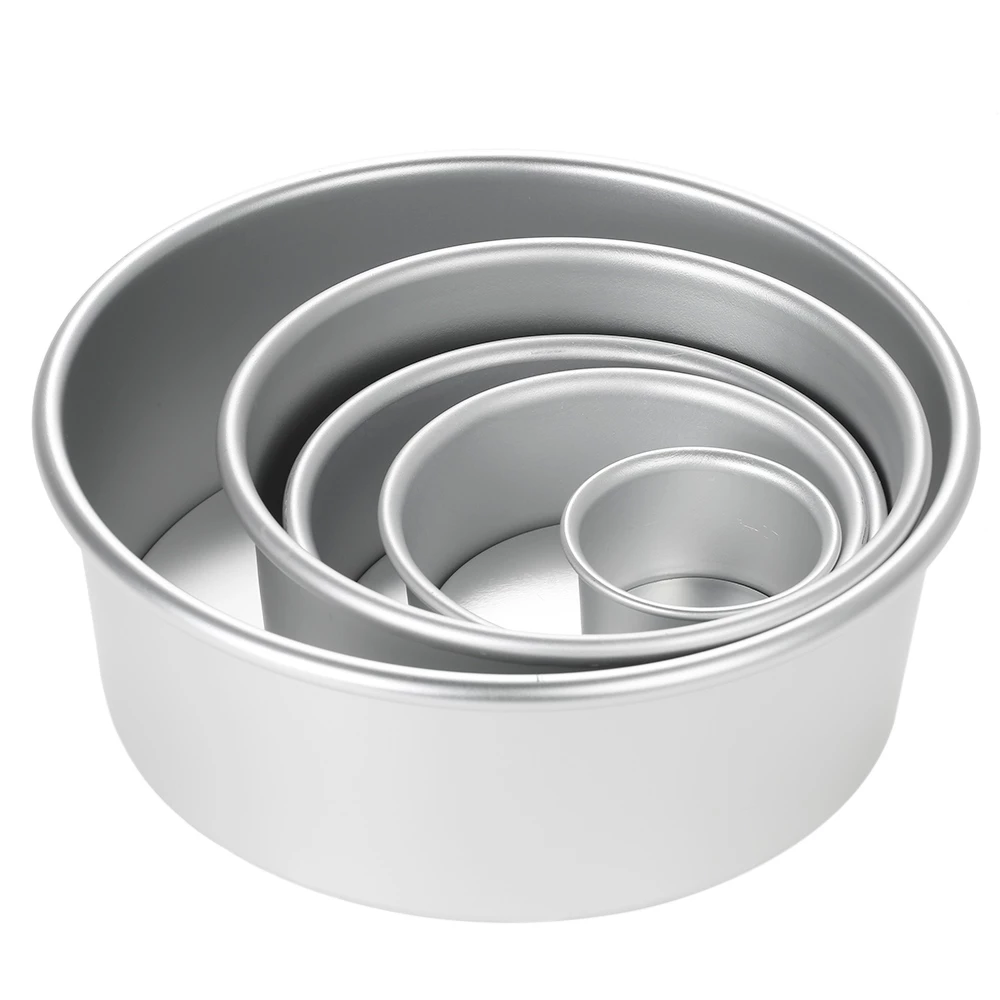
Categories
Machinery

Automatic Deep Drawing Press

Automatic Deep Drawing Press

Automatic Deep Drawing Press: Deep drawing presses are specialized hydraulic machines used to transform flat metal sheets into three-dimensional shapes through a process known as deep drawing. This technique is widely employed in industries such as automotive, aerospace, packaging, and appliance manufacturing to produce components like fuel tanks, kitchen sinks, and various structural parts.

How Deep Drawing Presses Work:

The deep drawing process involves placing a metal blank (a flat sheet) over a die and then using a punch to press the blank into the die cavity, forming a desired shape. Hydraulic deep drawing presses apply controlled pressure to ensure the material flows smoothly into the die, minimizing defects like wrinkling or tearing.

Key Features of Deep Drawing Presses:

  • Hydraulic System: Utilizes hydraulic force to apply consistent and adjustable pressure, allowing for the formation of complex shapes without compromising material integrity. ​
  • Cushioning Mechanism: Incorporates a hydraulic cushion to support the material during forming, enhancing control over material flow and reducing the risk of defects. ​
  • Programmable Controls: Equipped with digital control panels that enable precise adjustments of pressure, stroke length, and speed, facilitating customization for various applications.

Advantages of Deep Drawing Presses:

  • Material Efficiency: Produces parts with minimal waste by utilizing near-net shaping, reducing material costs.
  • Structural Integrity: Ensures the formation of strong, uniform parts capable of withstanding operational stresses. ​
  • Design Flexibility: Allows for the creation of intricate and complex geometries that are challenging to achieve with other forming methods.​

Applications:

Deep drawing presses are essential in manufacturing processes that require high precision and efficiency. They are commonly used to produce items such as automotive body panels, appliance housings, and various structural components. ​

These resources provide comprehensive insights into the functionality, features, and applications of deep drawing presses in various industrial contexts.​

A deep drawing press is a hydraulic machine used to shape flat metal sheets into three-dimensional forms through a process known as deep drawing. This technique is essential in industries such as automotive, aerospace, and packaging, producing components like fuel tanks, kitchen sinks, and other structural parts. The process involves placing a metal blank (a flat sheet) over a die, then using a punch to press the blank into the die cavity, forming the desired shape.

The press works by applying controlled hydraulic pressure to ensure the metal flows smoothly into the die, minimizing defects like wrinkling or tearing. Hydraulic systems are key in these presses, as they allow for consistent and adjustable pressure, providing the force necessary to form complex shapes while maintaining the material’s integrity. Some presses also include a cushioning mechanism that enhances control over material flow during the forming process.

Deep drawing presses are equipped with programmable controls, allowing operators to adjust settings like pressure, stroke length, and speed for different applications. This flexibility leads to high material efficiency, as minimal waste is produced during the process, and structural integrity is maintained in the formed parts, which can withstand operational stresses. The ability to produce complex geometries is another advantage, enabling designs that may be challenging or impossible to achieve using other forming methods.

These presses are widely used in manufacturing processes requiring precision and efficiency. Common applications include automotive body panels, appliance housings, and other metal components.

Deep drawing presses are also valued for their ability to produce parts with high uniformity and strength. The hydraulic system ensures that the material is evenly distributed during the forming process, which helps to avoid issues like thinning or stretching of the material in certain areas. The use of high-pressure hydraulics makes it possible to form thick or high-strength materials that would otherwise be difficult to shape using traditional methods.

Another key advantage of deep drawing presses is their ability to work with a variety of materials, including stainless steel, aluminum, and other metals. The flexibility to handle different types of materials makes these presses highly versatile across industries, whether for producing thin-walled parts in packaging or more robust components for heavy machinery or vehicles.

Advanced versions of deep drawing presses may feature automation and robotics, further increasing efficiency and consistency in production. These systems can handle high-volume manufacturing with minimal human intervention, reducing labor costs and enhancing the overall speed of the process. Automation also improves precision, ensuring that each part is made to exact specifications, which is critical in industries where tight tolerances are necessary.

While deep drawing presses are crucial in large-scale manufacturing operations, they are also adapted for use in smaller batch production where specialized parts or custom designs are required. The ability to make detailed and intricate components means these presses are indispensable in sectors that demand high-quality metalworking, like the aerospace and medical device industries.

Overall, the deep drawing press is a fundamental tool for transforming flat metal sheets into complex, functional components, offering precision, efficiency, and versatility in various industrial applications.

As deep drawing presses continue to evolve, modern advancements focus on improving energy efficiency, reducing waste, and enhancing automation. One major development is the integration of more sophisticated control systems, which allow for real-time monitoring and adjustments during the forming process. These systems can automatically detect potential issues like material inconsistencies or improper die alignment and make corrective adjustments to ensure the parts are produced to the highest quality standards.

Additionally, research into materials science is helping to improve the performance of deep drawing presses. For example, new alloy compositions and metal treatments are making materials more malleable, which in turn reduces the force required to shape them and minimizes wear on the press itself. This not only extends the life of the equipment but also allows for more complex shapes to be drawn with fewer steps or additional processes.

Another significant trend is the adoption of hybrid press systems, which combine mechanical and hydraulic technologies. These hybrid presses offer the best of both worlds: the high-speed operation of mechanical presses and the flexibility of hydraulic presses. This hybrid approach allows manufacturers to achieve both high productivity and precise forming, making these presses ideal for industries with high demands for both volume and quality.

The maintenance and servicing of deep drawing presses have also seen improvements. Predictive maintenance technologies are increasingly being used, where sensors monitor the health of various components in the press (such as hydraulic pumps and dies) and predict when maintenance will be needed. This proactive approach reduces downtime and repair costs, ensuring the press operates at optimal efficiency for longer periods.

In industries where sustainability is a growing concern, deep drawing presses also play a role in reducing environmental impact. Their ability to minimize material waste through near-net shaping is one of the key ways they contribute to more sustainable manufacturing practices. Additionally, many presses now come with energy-saving features that reduce electricity consumption during the pressing process, making them more eco-friendly.

Overall, the deep drawing press is an indispensable tool in modern manufacturing, and its ongoing development ensures it remains central to the production of high-quality, intricate metal parts. As technology continues to advance, these presses will likely become even more efficient, versatile, and environmentally friendly, keeping pace with the increasing demands of industries worldwide.

Deep Draw Hydraulic Forming Machine

Deep Draw Hydraulic Forming Machine

deep draw hydraulic forming machine is a specialized type of hydraulic press designed for the deep drawing process, where flat metal sheets are transformed into three-dimensional shapes. It utilizes hydraulic force to apply precise pressure to the metal, enabling it to be shaped into deep, complex forms without cracking or breaking. These machines are commonly used in industries that require high-strength, intricate, and precise metal components, such as the automotive, aerospace, appliance, and packaging sectors.

In a deep draw hydraulic forming machine, the process begins with a metal blank being placed over a die. The machine uses a punch to press the metal blank into the die cavity, and through this process, the metal is drawn deep into the mold to form the desired shape. The hydraulic system is responsible for providing the force required for this operation, and it allows for better control over the pressure, stroke length, and speed, ensuring the material is evenly distributed and avoiding defects like wrinkling or tearing.

One of the primary advantages of using a hydraulic system for deep drawing is that it provides uniform pressure over the entire surface of the metal blank. This uniformity helps in maintaining the integrity of the material while forming, making it especially suitable for handling materials that are difficult to shape with traditional mechanical presses, such as high-strength steels or thicker metal sheets.

The deep draw hydraulic forming machine offers several advantages:

  1. Precision and Control: Hydraulic systems can be adjusted to provide consistent and controlled pressure, which is crucial for forming complex shapes with tight tolerances.
  2. Material Flexibility: These machines can handle a variety of materials, including metals with different thicknesses and hardness levels.
  3. Versatility in Design: Deep draw hydraulic machines are capable of producing intricate shapes, making them ideal for applications that require custom or highly detailed parts.
  4. High Efficiency: They are capable of producing large volumes of parts quickly, making them suitable for mass production in industries like automotive manufacturing.
  5. Minimal Material Waste: The deep drawing process is efficient in terms of material usage, as it reduces waste by closely matching the shape of the final part to the shape of the die.

Applications of Deep Draw Hydraulic Forming Machines:

  • Automotive Industry: Used to create car body panels, fuel tanks, and other structural components.
  • Aerospace: Production of parts like engine housings, brackets, and panels for aircraft.
  • Appliance Manufacturing: Making sinks, tubs, and other household metal items.
  • Packaging: Shaping metal containers or cans for food and beverage products.

Additionally, modern deep draw hydraulic forming machines often come equipped with advanced control systems and automation, improving the efficiency of the process and reducing the need for manual intervention. These features enhance production speed and allow for more precise adjustments during the drawing process, further improving part quality and consistency.

Overall, deep draw hydraulic forming machines are essential tools for industries that require the production of high-quality, complex, and durable metal parts, and their ongoing evolution continues to make them more efficient, versatile, and precise.

A deep draw hydraulic forming machine is specifically engineered to handle the deep drawing process, where metal sheets are transformed into complex three-dimensional shapes. This process involves applying controlled hydraulic pressure to shape flat metal blanks into desired forms, using a die and punch system. The hydraulic force is essential because it ensures consistent, uniform pressure throughout the forming process, which helps to avoid common issues such as material tearing, wrinkling, or thinning.

These machines are ideal for working with metals that are hard to shape using traditional methods, such as high-strength steels or thicker metal sheets. The flexibility of hydraulic systems allows for fine-tuning of the pressure, stroke length, and speed, offering precise control over the process. As a result, deep draw hydraulic forming machines can create intricate, detailed parts that are difficult to achieve with other types of presses.

One of the key benefits of using a hydraulic system is the ability to produce parts with high precision and minimal material waste. The uniformity of the pressure ensures that the material is evenly distributed during the forming process, which is crucial for parts that require tight tolerances. Moreover, these machines can work with a variety of materials, ranging from softer metals like aluminum to tougher materials like stainless steel, making them versatile across different industries.

The deep drawing process is highly efficient and can produce a large volume of parts quickly, which is especially valuable in mass production environments such as automotive or appliance manufacturing. The machines are designed to handle high volumes with minimal downtime, making them cost-effective for large-scale production. Additionally, they are often equipped with advanced control systems that allow for real-time adjustments to the pressing parameters, further enhancing the accuracy and quality of the final parts.

These machines are also widely used in industries like aerospace, where precision and structural integrity are crucial. For example, aircraft components such as brackets, panels, and engine parts are often made using deep drawing techniques. The machines can handle complex geometries that are necessary for these parts, ensuring they meet the stringent standards required for safety and performance.

Deep draw hydraulic forming machines are also evolving with the integration of automation, which further increases production speed and consistency. Automated systems can reduce the need for manual labor, cutting down on human error and increasing operational efficiency. Furthermore, predictive maintenance systems are being implemented to monitor the health of the equipment, ensuring that any potential issues are addressed before they result in machine downtime, thus optimizing the overall lifespan of the machine.

The versatility of these machines extends to custom manufacturing, where specialized or small-batch parts are needed. Their ability to create precise, custom shapes makes them essential for industries that require specialized components, such as the medical device industry, where precision is paramount.

Overall, deep draw hydraulic forming machines are indispensable tools for a wide range of industries, offering unparalleled precision, efficiency, and versatility in the production of high-quality metal parts. Their ability to handle complex shapes, a variety of materials, and high-volume production makes them a vital piece of equipment in modern manufacturing. As technology continues to advance, these machines will likely become even more energy-efficient, precise, and adaptable to the needs of various industries.

As deep draw hydraulic forming machines continue to evolve, several key improvements are enhancing their performance and versatility. One of the significant advancements is the integration of smart technologies. These machines are now often equipped with sensors that monitor key parameters such as temperature, pressure, and stroke length in real time. This data is then analyzed to optimize the forming process, ensuring the best possible outcome for each part. By continuously adjusting these parameters, the machines can detect any irregularities in the material or process before they result in defects, improving overall product quality.

In addition to smart sensors, deep draw hydraulic machines are increasingly adopting energy-saving technologies. These systems aim to reduce the power consumption of the press during the forming process. With rising energy costs and an increasing emphasis on sustainability, many manufacturers are investing in these energy-efficient models. Some machines now feature regenerative hydraulic systems, which recycle energy used during certain stages of the forming process, further reducing power consumption.

Another trend is the automation of material handling and die changeovers, which has significantly improved efficiency. The ability to quickly and automatically load new metal sheets and switch between different die sets allows the machine to maintain high productivity levels, even in industries that require frequent changes in part design. This automation can be integrated with robotics, allowing the machine to operate with minimal human intervention, further improving speed and consistency.

Customization capabilities have also become a focus of development for these machines. Manufacturers now offer deep draw hydraulic forming machines with modular designs that can be easily adjusted to meet the specific needs of different applications. Whether it’s altering the size of the die, modifying the stroke length, or adjusting the speed and pressure for different materials, these flexible designs make the machines suitable for a wide range of industries and production needs.

In terms of maintenance, these machines are becoming easier to maintain and service due to advanced diagnostics and predictive maintenance tools. The integration of sensors and machine learning algorithms allows the press to predict when maintenance will be required, preventing unexpected breakdowns. This shift towards proactive maintenance helps minimize downtime and extend the lifespan of the equipment, saving companies both time and money.

The use of hybrid systems that combine the advantages of both hydraulic and mechanical technologies is another development. These hybrid presses can offer high-speed production and precision while still maintaining the flexibility and force capabilities of hydraulic systems. The hybrid approach makes these machines even more adaptable to a variety of forming processes and materials, improving their overall utility in manufacturing.

Furthermore, the application of 3D modeling and simulation in the design phase is becoming more prevalent. Before a deep drawing press is ever used on a physical part, manufacturers can simulate the entire process digitally. This allows engineers to identify potential issues like material flow problems, wrinkles, or weak spots, and make adjustments to the design or parameters before the press ever makes contact with the metal. This simulation technology significantly reduces the likelihood of defects and accelerates the product development cycle.

As the manufacturing industry moves towards greater sustainability, eco-friendly materials are also being used more frequently in deep drawing processes. For example, some companies are exploring the use of recycled metals, which can be formed just as efficiently as new materials. This not only reduces the environmental footprint of the production process but also supports the growing demand for sustainable manufacturing practices.

In summary, deep draw hydraulic forming machines are becoming increasingly sophisticated, offering greater precision, energy efficiency, and automation. The integration of smart technologies, energy-saving features, and predictive maintenance tools are all contributing to more efficient and cost-effective operations. As industries continue to demand more complex, high-quality parts, these machines will evolve to meet those needs, ensuring that they remain an essential tool in modern manufacturing for years to come.

Automatic Deep Drawing Press

Deep Drawing Press for Compressed Gas Canisters

An automatic deep drawing press is an advanced version of the traditional deep drawing press, designed to automate and streamline the deep drawing process. These presses are typically used in industries that require high-volume production of complex, precise metal parts, such as the automotive, aerospace, appliance, and packaging sectors. The primary function of an automatic deep drawing press is to transform flat metal sheets into three-dimensional components by applying controlled pressure through a hydraulic or mechanical system, while incorporating automated features to improve efficiency, precision, and consistency.

The automation aspect of these presses involves integrating various technologies that handle processes such as material feeding, die changes, part removal, and quality control. This not only reduces the need for manual labor but also increases production speeds and minimizes human error. The entire production cycle is optimized for maximum efficiency, ensuring that each component is formed with high precision and minimal waste.

Automatic deep drawing presses are typically equipped with advanced control systems that allow for real-time monitoring and adjustments during the forming process. These control systems can adjust parameters such as pressure, stroke length, and speed, ensuring that each part is produced to exact specifications. The integration of sensors and feedback mechanisms allows for precise monitoring of the forming process, ensuring that the material flows properly into the die cavity and reducing the likelihood of defects such as wrinkling, thinning, or cracking.

Automation in material handling is another critical feature of automatic deep drawing presses. These presses are often equipped with robotic systems or conveyor belts that feed metal sheets into the machine, ensuring continuous production without the need for manual intervention. In some cases, automated die change systems are included, allowing the press to quickly switch between different dies based on the parts being produced, further enhancing production flexibility.

Automatic deep drawing presses can also integrate quality control systems that inspect each part as it is formed. Cameras, sensors, and laser measurement devices are commonly used to check for dimensional accuracy, surface defects, and overall part integrity. If any issues are detected, the system can automatically adjust the process parameters or reject the faulty part, ensuring that only high-quality components are produced.

The ability to handle multiple operations in one press cycle is another advantage of automatic deep drawing presses. Some models can perform not only the deep drawing process but also additional operations such as punching, trimming, or embossing, all within the same machine cycle. This reduces the need for multiple machines and simplifies the production process, further improving efficiency.

The energy efficiency of automatic deep drawing presses is also a key consideration. Modern versions are designed with energy-saving features, such as variable frequency drives (VFDs), which optimize the press’s energy consumption based on the load and operational demands. This makes them more eco-friendly and cost-effective, reducing both operational expenses and the environmental footprint of the manufacturing process.

Moreover, these presses often feature predictive maintenance capabilities. By incorporating sensors that monitor the condition of critical components such as hydraulic pumps, motors, and dies, automatic deep drawing presses can predict when maintenance is needed, allowing operators to address potential issues before they lead to machine failure. This proactive approach helps minimize downtime, increase the lifespan of the machine, and reduce repair costs.

In terms of applications, automatic deep drawing presses are widely used to manufacture complex parts such as automotive body panels, fuel tanks, appliance housings, and various structural components. The automation features make them ideal for industries where high-volume production with consistent quality is essential. These presses are capable of producing a large number of parts in a short period, making them indispensable for mass production in automotive and other large-scale manufacturing environments.

In summary, an automatic deep drawing press is an advanced solution that combines the benefits of deep drawing technology with modern automation. These presses increase efficiency, precision, and flexibility, allowing manufacturers to produce high-quality parts at a faster rate while minimizing the need for manual intervention. With automation integrated into every aspect of the process—from material handling to quality control—these presses offer significant improvements in production speed, cost-effectiveness, and part quality. As the manufacturing industry continues to demand more sophisticated and sustainable processes, automatic deep drawing presses will play a crucial role in meeting these needs.

As automatic deep drawing presses continue to evolve, several emerging trends and technologies are further enhancing their capabilities. One such development is the integration of AI and machine learning to optimize the forming process. With AI, these presses can analyze vast amounts of production data in real-time to detect patterns and predict the behavior of the material being formed. This allows for dynamic adjustments during the press cycle, improving part quality and reducing the risk of defects. Over time, the system learns from previous production runs, refining its performance and minimizing waste or errors.

Another exciting advancement is the incorporation of augmented reality (AR) and virtual reality (VR) into the operation and maintenance of automatic deep drawing presses. For example, operators can use AR glasses to overlay digital information onto the physical press, providing real-time data on the machine’s performance, current process parameters, or the status of various components. This improves decision-making and ensures that operators can quickly address any potential issues. Additionally, VR is increasingly used for training purposes, allowing new operators to simulate the operation of the press in a safe and controlled environment before working on the real machine.

Collaborative robots (cobots) are another area where automation in deep drawing presses is advancing. Unlike traditional industrial robots, cobots are designed to work alongside human operators. They can handle tasks such as loading and unloading parts, adjusting the material, or performing quality inspections. These cobots are highly flexible, easily programmed, and designed to enhance human productivity rather than replace human workers entirely. This collaboration between robots and humans can improve efficiency without sacrificing the expertise and decision-making capabilities of the operator.

The digital twin technology is also becoming more prevalent in automatic deep drawing presses. A digital twin is a virtual replica of the physical machine that continuously receives real-time data from the actual machine, creating a digital representation of its performance. Engineers can use this virtual model to simulate different scenarios, predict failures, optimize the process, and test new settings without having to make changes to the physical press. This technology allows for continuous improvement and proactive maintenance strategies, reducing downtime and increasing overall production reliability.

In terms of material innovation, some automatic deep drawing presses are being optimized to work with newer, advanced materials, such as lightweight alloys, composite materials, or high-strength steels. These materials often require different processing conditions, and the integration of adaptable systems in modern presses makes them capable of handling a wider range of materials, which is particularly beneficial for industries like aerospace and electric vehicles, where weight reduction is crucial.

One of the more sustainable innovations is the use of closed-loop recycling systems integrated into automatic deep drawing presses. These systems allow for the recycling of scrap material generated during the deep drawing process. The scrap is collected, melted down, and reintroduced into the production cycle, reducing waste and improving overall material efficiency. This approach aligns with the broader industry push toward sustainability, as it minimizes raw material consumption and reduces the environmental impact of manufacturing.

The user interface of automatic deep drawing presses has also evolved significantly. Modern presses feature intuitive touchscreen interfaces and advanced software that allow operators to easily program, monitor, and troubleshoot the machine. These systems can offer detailed visualizations of the production process, including simulations of the forming process, which can help in identifying potential problems before they arise. This improved user experience contributes to greater operational efficiency and reduces the risk of errors during operation.

Finally, flexible production is a significant benefit of automatic deep drawing presses. These machines are increasingly able to switch between different part designs with minimal downtime. This flexibility is particularly useful in industries that require frequent changes to the parts being produced, such as the automotive industry, where different models and parts need to be manufactured regularly. With automation handling the majority of the setup and changeover tasks, manufacturers can achieve shorter production cycles and faster time-to-market.

Overall, the advancements in automatic deep drawing presses are transforming the way metal forming processes are carried out. By incorporating AI, machine learning, AR/VR, collaborative robots, digital twins, and sustainable practices, these machines are becoming more efficient, adaptable, and capable of producing higher-quality parts with minimal waste. As these technologies continue to develop, we can expect automatic deep drawing presses to become even more integral to industries that rely on precision manufacturing, offering enhanced flexibility, improved production times, and significant cost savings.

As we move further into the era of Industry 4.0, the role of data analytics in automatic deep drawing presses will continue to grow in importance. These presses are increasingly being integrated into smart factories where data from multiple machines, sensors, and even external systems is collected and analyzed in real time. This vast amount of data can be used to optimize not only the performance of individual presses but also the entire manufacturing process. By analyzing this data, manufacturers can identify bottlenecks, predict future production needs, optimize maintenance schedules, and ultimately improve efficiency across the entire production line.

Advanced analytics platforms can also use this data to implement predictive analytics, allowing for better forecasting of production needs and potential machine failures. For example, using historical data, these platforms can predict when a component of the press is likely to wear out or fail. By addressing these issues before they happen, manufacturers can prevent unexpected downtime, reduce repair costs, and ensure consistent production output. This approach to predictive maintenance is a step beyond the traditional maintenance schedules and allows manufacturers to transition to a more proactive maintenance model.

In the context of part traceability, automatic deep drawing presses are increasingly being equipped with RFID (Radio Frequency Identification) and other tracking technologies to monitor and trace parts throughout the production process. Each part produced can be tagged with an RFID chip, allowing manufacturers to track its journey from material input to final product. This traceability is particularly valuable in industries with strict regulatory requirements, such as aerospace and automotive, where the safety and quality of each part are critical. By having detailed information on each part’s production history, manufacturers can easily identify any issues related to part defects, enhancing quality control and ensuring that only parts that meet stringent standards are shipped to customers.

Automatic deep drawing presses are also being integrated with supply chain management systems to improve overall manufacturing efficiency. By linking these machines to real-time inventory management systems, manufacturers can ensure that materials are automatically replenished as needed, preventing stockouts and delays in production. Additionally, just-in-time (JIT) production methods are becoming more feasible with these automated systems. JIT systems focus on producing only what is needed at the exact time it is needed, reducing inventory costs and improving operational efficiency. With an automatic deep drawing press connected to such a system, the factory can work seamlessly with supply chain partners, creating a more agile and responsive manufacturing environment.

Customization and flexibility are also becoming essential elements of the latest automatic deep drawing presses. Modern customers often demand unique, custom-made parts in lower volumes. Automatic deep drawing presses have adapted by incorporating flexible tooling systems that can be easily adjusted for different designs. This allows manufacturers to quickly produce low-volume, high-variety parts without needing to stop production or invest heavily in new tooling for each new part design. Such flexibility opens up new possibilities for niche markets, as manufacturers can now meet demand for customized products without sacrificing the efficiency and scalability of large-scale production.

With the growing importance of environmental sustainability, automatic deep drawing presses are being designed with more eco-friendly features. This includes not only energy-efficient systems but also measures to reduce the environmental impact of the materials used. For instance, the ability to work with recycled metals or environmentally friendly coatings reduces the carbon footprint of the manufacturing process. Moreover, by minimizing scrap and optimizing material usage, these presses help reduce waste, which is particularly important as industries face increasing pressure to adopt sustainable practices.

One area where automatic deep drawing presses are likely to continue evolving is the use of artificial intelligence (AI) for defect detection and quality assurance. AI algorithms can analyze visual data collected from cameras or other sensors during the deep drawing process to identify defects that may not be visible to the human eye, such as micro-cracks, surface imperfections, or dimensional inaccuracies. This AI-driven inspection can happen in real time, allowing for immediate corrective action, which drastically reduces the chances of defective parts making it to the next stage of production or the final customer.

The development of autonomous production systems is another frontier that automatic deep drawing presses are moving toward. As part of the smart factory ecosystem, these presses will be able to communicate with other machines and devices autonomously, adjusting their operations without human intervention based on real-time feedback from sensors, production schedules, and inventory data. This level of autonomy could lead to fully automated manufacturing lines capable of producing high-quality products without the need for constant human oversight, freeing up operators to focus on higher-level tasks like system optimization and problem-solving.

Another future advancement is multi-material forming. Modern automatic deep drawing presses are being designed to handle multi-material parts, which are becoming increasingly popular in industries like automotive, where parts need to be lightweight yet strong. These presses are capable of forming different materials or material composites in the same part, such as combining aluminum with steel or other lightweight alloys. This innovation is crucial for producing advanced parts for electric vehicles, where both strength and weight reduction are essential.

Additive manufacturing (3D printing) is another technology that might complement automatic deep drawing presses in the future. While deep drawing presses are excellent for mass production of uniform parts, 3D printing could allow for on-demand production of small, highly customized parts or tooling for the deep drawing process. The synergy between these technologies could offer manufacturers the flexibility of additive manufacturing while maintaining the speed and efficiency of traditional deep drawing presses.

In summary, the future of automatic deep drawing presses is bright, with continuous innovations improving their efficiency, adaptability, sustainability, and ability to produce high-quality parts. As manufacturing continues to shift towards more automation, data-driven decision-making, and flexibility, automatic deep drawing presses will remain at the forefront, helping industries meet the demands of modern production, whether for high-volume, custom, or complex parts. The integration of advanced technologies like AI, machine learning, robotics, and eco-friendly practices ensures that these presses will continue to play a pivotal role in shaping the future of manufacturing.

Deep Draw Forming Press

Sheet Metal Drawing Press

deep draw forming press is a specialized machine used in the metal forming process called deep drawing, which is used to transform flat metal sheets or blanks into three-dimensional parts with significant depth. This process is often used to produce parts with relatively complex geometries, such as automotive body panels, kitchen sinks, aerospace components, and packaging materials.

In deep drawing, a metal sheet is placed over a die, and a punch is used to force the sheet into the die cavity. The process stretches the metal, and the sheet takes the shape of the die, with the metal being drawn deeper as the punch moves downward. The forming press applies the necessary pressure to ensure the metal is drawn evenly and smoothly without defects such as tearing, wrinkling, or thinning.

The deep draw forming press typically consists of several key components:

  1. Frame: The press has a rigid frame that supports the entire machine structure and houses the die and punch. The frame is usually built to handle high pressures and forces during the deep drawing process.
  2. Hydraulic or Mechanical System: Deep draw forming presses can be powered hydraulically or mechanically. Hydraulic presses use fluid to apply force, providing a smooth, controlled, and adjustable pressure. Mechanical presses, on the other hand, use cams or cranks to drive the punch and exert pressure. Hydraulic presses are generally more flexible and are preferred for more complex forms and higher precision.
  3. Die and Punch: The die is the cavity or mold into which the metal is drawn, and the punch is the component that applies force to the metal to shape it. The die and punch are typically designed to match the specific geometry of the part being produced.
  4. Blank Holder: A blank holder is used to hold the edges of the metal sheet in place while the punch moves down. This is important to prevent wrinkles or unwanted deformation in the material.
  5. Control System: Modern deep draw forming presses often feature sophisticated control systems that allow operators to adjust parameters such as stroke, speed, and pressure in real-time to optimize the forming process.

Types of Deep Draw Forming Presses:

  • Hydraulic Deep Draw Press: These presses use hydraulic power to apply force to the material. They are often used for deep drawing processes requiring high precision and the ability to form complex geometries.
  • Mechanical Deep Draw Press: These presses use mechanical force, typically powered by cranks or cams. They are known for their speed and efficiency but might have less flexibility compared to hydraulic presses in terms of handling complex shapes.

Key Features and Advantages of Deep Draw Forming Presses:

  1. Precision and Consistency: Deep draw forming presses provide consistent pressure and control, allowing for high-precision manufacturing. This is essential for industries that demand tight tolerances and high-quality parts.
  2. Material Efficiency: The deep drawing process minimizes material waste, especially when compared to other forming methods. The metal is evenly distributed, which reduces the amount of scrap material generated.
  3. Versatility: Deep draw presses can handle a variety of metals, including aluminum, steel, copper, and brass, making them highly versatile across industries. Advanced presses can also be used with multiple materials or composite materials, depending on the application.
  4. High Production Rates: These presses can produce large quantities of parts quickly, making them suitable for high-volume production environments such as automotive manufacturing.
  5. Complex Shapes: Deep drawing is ideal for creating parts with complex shapes, such as those with deep cavities or intricate contours. The process is used to produce a variety of products, including beverage cans, automotive body parts, aerospace components, and medical devices.

Applications of Deep Draw Forming Presses:

  • Automotive Industry: Deep draw presses are widely used to manufacture vehicle body panels, engine components, fuel tanks, and other structural parts. They help produce lightweight yet strong parts, which are critical for the performance and safety of vehicles.
  • Aerospace: Components like fuselage panels, brackets, and engine housings are often produced using deep drawing. The aerospace industry demands parts with high strength-to-weight ratios and precise geometries, both of which deep draw presses can achieve.
  • Packaging: The packaging industry relies on deep drawing for the production of metal containers, such as beverage cans and aerosol cans. This application requires high-speed, high-volume production to meet demand.
  • Consumer Appliances: Kitchen sinks, bathtubs, and other household appliances are often made using deep draw forming presses. The ability to create large, uniform parts with minimal waste makes deep drawing ideal for this industry.
  • Medical Devices: Deep draw presses are used in the medical field for the production of containers, casings, and other components that require precision and high material integrity.

Process Considerations:

While deep drawing is highly effective, there are several important considerations to ensure the quality of the final product:

  1. Material Properties: The material being used must be capable of undergoing the drawing process without cracking. Materials with good formability, such as mild steel, aluminum, and brass, are commonly used.
  2. Blank Size and Thickness: The initial blank (the flat metal sheet) must be properly sized to ensure it can be drawn into the desired shape without defects. The thickness of the material also affects the process, with thicker materials being more difficult to draw and requiring more force.
  3. Lubrication: Lubrication is often used during deep drawing to reduce friction between the die, punch, and the metal. This helps prevent damage to the material and ensures smooth material flow into the die.
  4. Die Design: The design of the die and punch plays a crucial role in determining the success of the deep drawing process. Poorly designed dies can lead to defects like wrinkles, uneven thickness, or cracks in the material.

Challenges in Deep Drawing:

  1. Wrinkling: Wrinkling can occur when the material is not held securely in place, or when the metal does not flow properly into the die. Proper blank holding force and die design can help reduce this issue.
  2. Thinning or Fracturing: If the material is drawn too quickly or excessively, it may thin out too much or even fracture. Controlling the draw ratio, punch speed, and pressure helps mitigate these risks.
  3. Tool Wear: The dies and punches used in deep drawing can wear over time due to the high forces applied during the process. Regular maintenance and monitoring are required to ensure the longevity of tooling.

Conclusion:

A deep draw forming press is a critical tool in the manufacturing of metal parts, especially for industries that require high precision and complex shapes. Whether hydraulic or mechanical, these presses provide the force and control needed to shape metals efficiently and accurately. From automotive to aerospace to packaging, deep draw forming presses are indispensable in mass production environments, and ongoing technological advances continue to enhance their performance, efficiency, and versatility.

Deep draw forming presses play a crucial role in industries where mass production of precise, deep, and complex parts is essential. These presses are highly efficient for turning flat metal sheets into three-dimensional components, with minimal material waste and consistent quality. The process itself allows for the creation of complex shapes with relatively deep cavities, which would be difficult to achieve using other forming methods like stamping or bending.

The ability to work with a variety of metals, including steel, aluminum, brass, and copper, makes deep draw forming presses versatile tools for many industries. They are essential for producing large quantities of parts with intricate shapes, from automotive body panels to beverage cans. The precision that deep draw forming presses provide ensures that parts meet stringent quality and safety standards, especially in high-performance applications like aerospace, automotive, and medical industries.

The deep drawing process requires significant force, and the technology behind the presses must be robust to handle these demands. Hydraulic deep draw presses, which use fluid to generate force, are often preferred for more complex shapes and tighter tolerances. They provide the necessary flexibility to handle varying material thicknesses and more intricate designs. On the other hand, mechanical presses are known for their speed and can be more cost-effective for less complex parts or higher-volume production runs. Both types of presses rely on the same core principles—drawing metal into a die with a punch—but they differ in how they deliver the force and the range of applications they are best suited for.

One of the key advantages of deep draw forming presses is their ability to work with minimal material waste. Unlike other processes where much of the material is cut away, deep drawing ensures that most of the material is used in the final product. This efficiency is particularly important in industries where material costs are high or where the goal is to minimize the environmental impact of manufacturing. Additionally, the process can often be optimized to ensure uniform material distribution, preventing issues like thinning, tearing, or excessive stretching of the material.

Another notable benefit of deep drawing presses is their speed and productivity, which makes them highly valuable for high-volume manufacturing. The ability to produce large quantities of parts in a relatively short amount of time is vital for industries like automotive manufacturing, where hundreds or thousands of parts may be needed daily. The flexibility of modern deep drawing presses, especially those equipped with automated systems, allows for faster changeovers and a seamless transition between different part designs without compromising quality or efficiency.

However, the process is not without its challenges. Maintaining consistent part quality requires careful control over various factors, including material thickness, die design, lubrication, and punch speed. Without these factors properly controlled, defects like wrinkles, thinning, or cracking can occur, leading to the rejection of parts. For this reason, the role of the die and punch design becomes crucial. A well-designed die helps guide the metal smoothly into the desired shape and ensures that it doesn’t become distorted during the forming process.

Advanced control systems and automation in modern deep drawing presses help reduce human error and improve the consistency of production. Automation can handle tasks such as feeding material into the press, controlling the press speed and pressure, and even inspecting parts for defects after they are formed. The integration of sensors, cameras, and feedback loops enables real-time adjustments to the forming process, further enhancing the precision and quality of the final products.

Additionally, the integration of AI-driven defect detection and predictive maintenance is increasingly common. Machine learning algorithms can analyze patterns in the data from each press cycle and detect anomalies that might indicate problems, such as a tool that is beginning to wear out or a deviation in material properties. Predictive maintenance can prevent unexpected downtime by alerting operators to potential issues before they cause machine failure, ensuring that production runs smoothly without interruption.

Deep draw forming presses are also evolving to accommodate more sustainable manufacturing practices. By using closed-loop recycling systems, manufacturers can recycle scrap material generated during the deep drawing process, which reduces waste and makes the production process more environmentally friendly. Additionally, energy-efficient hydraulic systems and smart controls that optimize power usage based on the press’s workload further contribute to reducing energy consumption and the carbon footprint of the process.

In industries like aerospace, the demand for lightweight but strong parts is driving the need for deep draw presses capable of working with high-strength alloys and advanced composite materials. These materials require specialized tooling and more precise control over the forming process, and modern deep drawing presses can be equipped to handle such demanding requirements. Whether it’s an airplane fuselage part or a lightweight automotive component, deep drawing presses can produce high-quality components that meet both performance and safety standards.

With the growing importance of customization in manufacturing, deep draw forming presses are also adapting to handle smaller production runs or custom parts without sacrificing efficiency. The flexible tooling systems that can quickly be adjusted to accommodate different part designs allow manufacturers to stay competitive in markets where products are frequently updated or require variations. This flexibility ensures that the same deep drawing press can be used to create a wide range of components, reducing the need for multiple machines and further optimizing production efficiency.

Looking ahead, the ongoing development of deep draw forming presses will likely focus on increasing automation, improving material handling systems, and incorporating smart factory technologies. These developments will allow manufacturers to produce even more complex parts faster and with greater consistency, ultimately reducing costs and lead times while improving the quality and functionality of the products being made.

In summary, deep draw forming presses are integral to the production of high-quality, complex metal parts. As industries continue to demand higher efficiency, sustainability, and precision, these presses will remain a critical component of modern manufacturing processes. The continued integration of advanced technologies, automation, and smart systems will ensure that deep draw forming presses evolve to meet the ever-changing needs of industries worldwide. Whether for high-volume production or customized, low-volume runs, these presses will play a key role in shaping the future of manufacturing.

As the manufacturing landscape continues to evolve, deep draw forming presses are being pushed further in their capabilities and flexibility. The integration of Industry 4.0 principles, such as IoT (Internet of Things) connectivity, big data, and cloud computing, is becoming a key part of the deep draw forming process. These advancements allow for the creation of smart presses that can not only execute the forming process but also gather, store, and analyze performance data to improve operational efficiency and prevent unexpected downtime.

By linking deep draw forming presses to cloud-based platforms, manufacturers can perform real-time monitoring and diagnostics from anywhere in the world. These platforms can provide insights into the health of the machine, such as tool wear, part quality, and overall production status. This means that operators and managers can make better-informed decisions regarding production schedules, maintenance needs, and resource allocation without needing to be physically present on the factory floor.

The combination of sensor technology and machine learning will continue to enhance the precision of deep draw forming presses. Sensors embedded in the machine or on the dies can detect minute changes in temperature, pressure, and material behavior during the forming process. This real-time feedback can be used to make adjustments on the fly, ensuring that parts are produced with minimal defects. If the system detects an anomaly, such as an increase in the risk of cracking or wrinkling, it can automatically adjust the press’s parameters to compensate and avoid errors, reducing scrap rates and enhancing overall efficiency.

One of the notable trends is the shift toward additive manufacturing (3D printing) complementing traditional deep drawing. While deep drawing excels at producing high-volume parts with relatively uniform shapes, 3D printing offers the flexibility to create highly intricate or custom parts with lower production volumes. The combination of both processes can lead to greater flexibility in production, where 3D-printed molds, inserts, or tools can be used in conjunction with deep drawing to form more complex components that were previously impossible or cost-prohibitive to produce with conventional methods.

Digital twin technology is also becoming a major development in the deep drawing process. A digital twin is a virtual representation of the deep draw forming press that continuously receives real-time data from the physical machine. Engineers can use this virtual model to simulate different operational scenarios, test new configurations, and perform predictive maintenance before making physical adjustments to the machine. Digital twins allow manufacturers to experiment with different designs and process parameters, optimize the workflow, and ensure that the real-world press operates at peak efficiency.

As industries continue to focus on sustainability and reducing their environmental impact, deep draw forming presses are evolving to be more energy-efficient and less wasteful. The implementation of energy recovery systems, such as regenerative hydraulic systems, helps capture and reuse energy from the press’s movements, lowering energy consumption. Additionally, the reduction in material waste—by optimizing blank holder forces, material flow, and tooling designs—supports the shift toward greener manufacturing practices. By utilizing advanced modeling and simulation tools, manufacturers can optimize material use, ensuring that every sheet of metal is processed efficiently, with minimal scrap.

Another promising development is closed-loop quality control systems. In these systems, quality checks are integrated directly into the production cycle. For example, in-line sensors could monitor the thickness, formability, and dimensions of each part during the deep drawing process, providing immediate feedback. If any part falls out of specification, the system can make adjustments to the press in real-time, preventing the production of defective parts. This eliminates the need for post-production inspection and reduces the overall cost of quality assurance, ensuring that parts meet the required standards without slowing down the production process.

The future of tooling in deep drawing presses is also poised to benefit from advancements in advanced materials and 3D printing. 3D-printed molds and tools could become more widely used, allowing manufacturers to produce custom tooling for specific runs or even one-off parts without the time-consuming and costly process of traditional machining. These tools could be created with complex geometries that improve the forming process, reduce friction, and extend the life of tooling components.

Another innovation is the rise of multi-material deep drawing. As industries demand lighter and stronger parts, manufacturers are increasingly working with composites and multi-material solutions. Some deep drawing presses are being designed with the capability to handle combinations of materials, such as steel and aluminum or metal and plastic. This opens up new possibilities for lightweight, high-strength components, such as those required in electric vehicle (EV) production or other industries focused on improving energy efficiency.

Moreover, the growing trend of digitalization and automation in manufacturing is likely to lead to the wider implementation of robotics in the deep drawing process. Robotic systems can be used to load and unload parts, handle material, or even assist in adjusting die setups. In some cases, robots can take over manual tasks that are either too dangerous, repetitive, or time-consuming for human workers. The integration of robots and deep draw presses can increase overall throughput, reduce labor costs, and improve workplace safety.

The ability to customize production settings, switch between different parts, and adapt to changing demands will continue to be an important driver of innovation in the deep drawing press market. Manufacturers will benefit from presses that can seamlessly switch between products and be more adaptable to shifts in consumer demand. This capability is particularly important in sectors like consumer goods and automotive manufacturing, where production lines often need to accommodate multiple models or designs in quick succession.

Additionally, the push for lean manufacturing will continue to influence the development of deep draw forming presses. Lean principles, which aim to eliminate waste and improve efficiency, will likely become more ingrained in the operation of these presses. This could involve minimizing downtime, improving part handling, optimizing material usage, and increasing flexibility on the production line—all with the goal of maximizing throughput while minimizing unnecessary costs and waste.

In the coming years, artificial intelligence will likely play an even bigger role in optimizing the deep drawing process. AI-based algorithms could analyze production data, predict potential failures, optimize press settings, and improve tooling designs in real-time. As machine learning continues to evolve, these AI systems will become more adept at finding patterns and improving operational processes autonomously.

In conclusion, deep draw forming presses are becoming more intelligent, efficient, and adaptable as the demands of modern manufacturing increase. With advancements in automation, data analytics, and material science, these presses will continue to play an integral role in producing high-quality, cost-effective, and environmentally friendly products across a wide range of industries. As the manufacturing landscape evolves, deep draw forming presses will remain at the forefront of innovation, driving advancements in productivity, precision, and sustainability.

Single Action Drawing Press

High-Speed Drawing Press

Single Action Drawing Press is a type of press machine specifically designed for metal forming processes like deep drawing, punching, blanking, and forming operations. The term “single action” refers to the movement of only one ram or slide, which moves vertically in one direction—downward to form or shape the material—and then returns upward after the cycle is complete.

These presses are widely used in applications where straightforward, reliable, and efficient metal forming is required, especially for components that do not demand complex or multiple forming stages in a single operation.

Single action drawing presses consist of several key components, including the press frame, a single hydraulic or mechanical ram (slide), a die set, a punch, and a blank holder system. In the deep drawing process, a flat metal blank is placed on the die, held in place by a blank holder, and the punch (attached to the ram) descends to draw the material into the die cavity, forming the desired shape. Once the drawing is complete, the ram retracts, and the formed part is ejected or removed.

These presses are known for their simplicity and durability. They are typically easier to maintain and operate compared to more complex double or triple action presses. This makes them ideal for operations with high production volumes and relatively simple part geometries, such as cylindrical cans, cups, filters, and other symmetrical components.

Single action presses can be mechanical or hydraulic. Mechanical single action presses operate using a crankshaft or eccentric mechanism to convert rotary motion into linear motion. They are fast and efficient, ideal for operations where high-speed production is needed. Hydraulic single action presses, on the other hand, offer better control over force and speed, and are preferred for forming thicker materials or parts that require more precision.

One important limitation of single action presses is the absence of an independent blank holder or cushion system. In more complex drawing operations, especially those requiring greater control of material flow, a double action press—with a separately controlled blank holder—would be used instead. However, many modern single action presses integrate cushioning systems in the bed to apply controlled holding force to the blank, improving draw quality even in simpler press designs.

In summary, the Single Action Drawing Press is a reliable, efficient, and cost-effective solution for producing a wide range of drawn parts, especially where the complexity of shape or forming force does not demand more advanced multi-action press systems. Its straightforward operation and lower maintenance needs make it a popular choice for high-throughput manufacturing environments where speed and simplicity are prioritized.

The simplicity of a single action drawing press does not limit its capability; in fact, it is precisely this straightforward design that makes it an ideal solution for many industrial applications. In a production environment, where time, cost, and efficiency are critical factors, the reliability and consistency of a single action press become significant advantages. Its structure—typically a C-frame or H-frame depending on the application—allows for easy access and part handling, which is especially useful in manual or semi-automated operations. Operators can load and unload parts quickly, reducing cycle times and contributing to higher productivity.

These presses are commonly used in industries like automotive, cookware, packaging, and electronics, where components such as engine parts, metal containers, and enclosures are often formed through deep drawing. In many cases, the press operates in a continuous production cycle, where flat metal blanks are fed into the die, drawn into shape by the descending punch, and then ejected or removed after the operation. This cycle can be repeated thousands of times with minimal variation in part quality, which is crucial for mass production.

Although single action presses are best suited for relatively simple shapes, advancements in tooling design and die engineering have expanded the range of parts that can be formed with these machines. For example, by carefully designing the die radii, blank holder force, and punch speed, more intricate geometries can be drawn successfully, even within the limitations of a single action mechanism. In some cases, built-in features like cushion pins or pneumatic/electric bed cushions help simulate the effect of a secondary action, improving material control during the drawing operation.

In modern facilities, single action presses are often equipped with programmable logic controllers (PLCs), touch-screen interfaces, and safety systems to improve ease of use and ensure consistent performance. These control systems allow operators to adjust press settings quickly, monitor key process variables, and receive alerts in case of malfunctions. This integration of digital controls not only increases accuracy but also enhances safety, particularly in fast-paced industrial environments.

Hydraulic single action presses, in particular, offer precise control over both the downward stroke and the return stroke. The ability to adjust the ram speed and force at different stages of the draw allows operators to fine-tune the forming process to reduce defects such as tearing, wrinkling, or excessive thinning of the material. This is especially important when working with sensitive or high-cost materials where waste must be minimized. The consistent pressure application also ensures repeatable part dimensions, which is a critical requirement for quality assurance in industries like aerospace and medical manufacturing.

One of the other benefits of single action presses is the relatively low cost of ownership compared to more complex machines. They require less floor space, have fewer moving components, and typically consume less energy, especially when equipped with energy-efficient drive systems. Maintenance is also simpler, with fewer hydraulic lines or control systems to manage. This translates into lower downtime and reduced operational costs over the life of the machine.

Despite their limitations in complexity, single action drawing presses remain highly adaptable when integrated into automated production lines. They can be equipped with feeders, part ejectors, conveyors, and robotic arms to facilitate continuous operation and high-speed manufacturing. When used in conjunction with coil feeders or automated blank loaders, they can deliver high output with minimal operator intervention, making them a valuable part of lean manufacturing strategies.

As the demand for faster, smarter, and more sustainable manufacturing processes continues to grow, the role of the single action drawing press is evolving. With enhancements in control systems, tooling technology, and material handling automation, these presses are capable of much more than traditional forming operations. Their simplicity becomes a strength when paired with modern innovations, offering manufacturers a reliable, cost-effective platform for high-volume production without sacrificing quality or adaptability.

In future applications, these presses may increasingly feature real-time monitoring and AI-driven diagnostics to predict potential failures and optimize performance on the fly. Paired with cloud-based platforms and machine learning, even the most straightforward single action press could contribute to a highly efficient, interconnected smart factory ecosystem. This blend of mechanical reliability and digital intelligence ensures that the single action drawing press will continue to be a valuable asset in both traditional and modern manufacturing settings.

In addition to their adaptability and simplicity, single action drawing presses are gaining popularity in smaller-scale manufacturing environments and among specialized producers due to their manageable footprint and lower investment requirements. For manufacturers producing parts in medium to high volumes but without the complexity that would demand multi-action presses, a well-configured single action press provides the perfect balance between cost-efficiency and performance.

One of the ongoing developments in single action press design is the use of servo drive technology. Unlike traditional mechanical or hydraulic systems, servo-driven presses offer precise control over motion profiles, which allows the press to adapt its speed and force dynamically during the drawing cycle. This not only improves part quality but also reduces energy consumption and mechanical stress on the equipment. For example, a servo system can slow down the punch during the critical forming stage to prevent tearing, and then speed up the return stroke to reduce cycle time—achieving both quality and productivity in a single system.

Tooling advancements are also enhancing what a single action press can achieve. With high-strength tool steels, precision-ground dies, and specialized coatings such as titanium nitride (TiN) or diamond-like carbon (DLC), tools are now more wear-resistant and capable of handling tougher materials like stainless steel or high-strength aluminum alloys. This has opened the door for single action presses to be used in applications that were once limited to more advanced forming systems. Interchangeable die sets also allow for quick changeovers, which is crucial in today’s market where flexibility and short lead times are key competitive advantages.

Another area of improvement is in press frame construction. Modern single action presses are built with optimized structural designs to ensure better rigidity and minimal deflection during operation. The more stable and robust the frame, the more consistent the forming results, especially in deep draw applications where uniform pressure distribution is essential. Some presses use finite element analysis (FEA) during design to reduce stress concentrations and improve longevity, ensuring the press can withstand years of continuous use under high loads.

The inclusion of advanced lubrication systems is another enhancement in newer models. Proper lubrication during deep drawing is essential to minimize friction between the die and the workpiece, which helps in achieving smooth surface finishes and extending die life. Modern presses may feature automatic lubrication systems that apply the correct amount of lubricant at the right intervals, reducing manual effort and improving process control.

From an operational standpoint, many manufacturers now integrate quality assurance and part inspection systems directly into the press line. Cameras, laser sensors, or contact measurement probes can inspect parts as soon as they are formed, ensuring immediate feedback and reducing the chance of downstream issues. This form of in-process quality control is especially valuable in sectors with tight tolerances or regulatory compliance requirements, such as medical devices, defense, or precision electronics.

The evolving role of the single action drawing press isn’t just about technology—it’s also about strategic use in broader production systems. For example, they can be part of a hybrid forming cell that includes other types of presses, welding systems, and finishing equipment. In such setups, a single action press may handle an initial draw operation before passing the part to other stations for trimming, piercing, or assembly. This modular approach to production enables manufacturers to scale capacity, increase product variety, and adjust to market demands more flexibly.

Moreover, with increasing global attention on sustainability, manufacturers are scrutinizing energy use and waste generation in all phases of production. Single action presses, particularly newer hydraulic and servo models, are being designed with energy-saving modesintelligent standby functions, and low-noise hydraulic systems. These improvements not only reduce operational costs but also align with environmental certifications like ISO 14001 and help companies meet internal and regulatory sustainability targets.

Training and workforce considerations also play into the continued appeal of single action presses. Because of their relatively straightforward mechanics and intuitive controls, operators can be trained more quickly compared to more complex multi-action or CNC-controlled machines. This is especially important in regions facing skilled labor shortages or in facilities where frequent staff rotation is necessary. Digital training modules, AR/VR support, and remote assistance systems are being integrated to shorten the learning curve and reduce the risk of human error.

In conclusion, the single action drawing press remains a workhorse of modern manufacturing. Its basic principle—one downward stroke to shape a part—has been honed over decades, and its application continues to expand with the support of smart controls, advanced materials, and automation. Whether used in a standalone setup for high-speed production or integrated into a smart, flexible manufacturing cell, the single action press continues to offer unmatched reliability, simplicity, and adaptability. It’s a timeless tool that continues to evolve with the times, proving that even in an era of complex machinery, there is still tremendous value in simplicity done well.

Double Action Drawing Press

Deep Drawing Press for Pressure Vessel Ends

Double Action Drawing Press is a more advanced type of press machine used in deep drawing operations, offering greater control, precision, and flexibility compared to its single action counterpart. The defining feature of a double action press is its two independently operated slides: one for the blank holder (outer slide) and one for the drawing punch (inner slide). This separation allows for more precise management of material flow during the forming process, significantly improving the quality of drawn parts, especially those with deeper or more complex geometries.

In the deep drawing process, the outer slide (blank holder) descends first and applies a controlled holding force to the metal blank. This prevents issues like wrinkling or uncontrolled material movement. Then, the inner slide—carrying the punch—descends to draw the metal into the die cavity. Because both slides are independently controlled, the force, speed, and timing of each can be finely tuned to suit the specific requirements of the part being formed. This is particularly beneficial when working with high-strength materials or when producing components with tight tolerances.

Double action presses are commonly used in industries where high-precision and complex components are required, such as automotive, aerospace, cookware, electronics, and appliance manufacturing. Components like fuel tanks, oil pans, complex enclosures, or deep containers that require multiple stages of forming benefit greatly from the enhanced capabilities of double action systems.

These presses can be mechanicalhydraulic, or servo-driven. Mechanical double action presses are typically faster and used for high-volume production of less form-sensitive parts. Hydraulic models, on the other hand, offer much finer control over force and stroke at various stages, making them ideal for sensitive or difficult-to-form materials. Servo-driven double action presses are the most advanced, allowing full programmability and optimization of every motion profile, increasing both quality and throughput while reducing energy consumption.

Modern double action presses also support a high degree of automation and integration. They can be fitted with material feeders, part ejectors, robotic handling systems, and in-line inspection tools. These integrations create a seamless production line where parts are formed, checked, and transferred automatically, reducing cycle time and minimizing human error.

Another benefit of the double action design is its capability to perform multiple operations in a single cycle. For example, in addition to the deep drawing operation, secondary tasks such as trimming, piercing, or flanging can be integrated into the same die set, saving both time and tooling costs. This makes the press highly efficient for manufacturing complex components in fewer steps.

With the continued advancement of materials science and product design, double action drawing presses are playing an increasingly important role in enabling the manufacture of lightweight, high-strength, and precisely formed parts. Their flexibility in handling various shapes, sizes, and materials, combined with the precision of dual-slide control, ensures they remain a cornerstone technology in modern metal forming processes.

In modern manufacturing environments, the double action drawing press stands out not just for its mechanical capabilities, but also for how well it integrates with smart factory systems. With the rise of Industry 4.0, these presses are now equipped with advanced sensors, real-time monitoring systems, and cloud connectivity. This allows manufacturers to track performance metrics such as tonnage, stroke speed, energy consumption, and cycle time with high precision. These insights can be used to optimize production, predict maintenance needs, and reduce downtime—transforming the press into a data-generating node within an intelligent production ecosystem.

The core advantage of a double action press remains its independent control of the blank holder and punch. This makes it particularly effective for drawing operations that require a carefully managed material flow, such as forming deep or contoured parts where material thinning or tearing can easily occur. By adjusting the pressure applied by the blank holder relative to the punch stroke, operators can prevent defects like wrinkling around the flange or tearing in the sidewalls. This feature becomes essential when forming advanced high-strength steels, aluminum alloys, or other materials with lower ductility.

Advanced die designs used in double action presses often include progressive forming stages, where a single blank may undergo multiple shaping operations within one press cycle. Some presses are configured with cushioning systems beneath the die or in the bed to further enhance control over metal flow during the draw. These systems, whether hydraulic or mechanical, allow for precise back pressure on the part as it forms, aiding in the reduction of springback and ensuring better dimensional accuracy.

Additionally, many double action presses now support die-mounting flexibility, allowing quick-change die systems that reduce setup times dramatically. For manufacturers producing a wide range of parts or switching between different product runs, this flexibility is critical. Tooling systems can include quick-lock features, guided alignment, and programmable die settings that are stored in the press’s control system for fast retrieval and repeatability.

In terms of press construction, double action presses are usually of a straight-side (H-frame) design, which offers better resistance to deflection under load than the more open C-frame styles found in some single action presses. This results in higher part accuracy and consistency, especially under heavy or off-center loads. Some machines are even equipped with multi-point drive systems to distribute forming forces more evenly across the slide, which is particularly useful for large or asymmetrical parts.

Another growing area is the use of servo motors in double action presses. Servo technology allows for full programmability of motion profiles for both the inner and outer slides. Instead of relying on fixed cam or linkage systems, servo-driven presses can accelerate, decelerate, pause, or dwell at any point in the stroke. This ability not only improves formability and finish quality but also enables customization for each part type without mechanical changes. The same press can be optimized for fast shallow draws one moment and slow, deep draws the next—just by changing software parameters.

Environmental considerations are also being addressed in newer models. Energy recovery systems, quieter hydraulic drives, and variable-speed pumps are now common features that help reduce the overall environmental footprint of double action presses. In some factories, these presses operate with closed-loop fluid systems that reduce lubricant and coolant waste, making them both cleaner and more cost-efficient.

From an operator standpoint, safety and ease of use are paramount. Modern presses feature intuitive human-machine interfaces (HMIs) with touch-screen controls, diagnostics, and guided setup procedures. Safety is enhanced with light curtains, interlock systems, and automatic die alignment checks, all designed to protect the operator and ensure safe operation even under demanding production conditions.

Overall, the double action drawing press has evolved far beyond its basic function. It has become a critical element in precision metal forming, enabling manufacturers to meet the increasing demand for high-quality, lightweight, and complex parts. Whether producing deep-drawn automotive panels, high-performance aerospace components, or intricate consumer products, the double action press offers the control, adaptability, and efficiency needed in today’s competitive manufacturing landscape. As technology continues to advance, these machines will only become more capable, intelligent, and integral to smart, sustainable production strategies.

Triple Action Deep Drawing Press

Mechanical Laboratory Presses

Triple Action Deep Drawing Press represents the most advanced category of forming presses used for complex and demanding deep drawing operations. It features three independently controlled slides—the blank holder (outer slide), the drawing punch (inner slide), and a cushion or knockout ram (lower slide). This configuration offers the highest level of precision and control over material flow, making triple action presses ideal for forming deep, intricate, or high-difficulty parts where standard single or double action presses would struggle.

In operation, the outer slide descends first to apply pressure through the blank holder, securing the material in place to prevent wrinkling. The inner slide follows, pushing the punch downward to draw the material into the die cavity. Meanwhile, the third action—typically from the bed cushion—can either support the forming operation by applying counter-pressure from below or assist in ejecting the part once forming is complete. These three forces working in harmony provide superior control, particularly in cases where precise pressure distribution and timing are critical to avoid tearing or uneven wall thickness.

Triple action presses are most commonly found in automotive, aerospace, appliance, defense, and precision metal packaging industries, where components such as fuel tanks, door panels, battery housings, and structural enclosures require deep or complex draws with consistent quality. These machines are capable of producing parts with greater depth-to-diameter ratios, tighter tolerances, and more refined surface finishes, even when using difficult-to-form materials like high-strength steel, titanium, or aluminum alloys.

The third action, typically driven by a hydraulic cushion system, is a game-changer in managing reverse draw operations, ironing, redrawing, or complex geometries with reentrant shapes. It also enables programmable pressure profiles, allowing the operator to control force buildup throughout the forming cycle, which reduces the risk of defects and improves material flow across the die. This level of control is vital for forming parts with multiple contours, ribs, or steep draws.

Like their double action counterparts, triple action presses are often hydraulic or servo-hydraulic, providing smooth, controlled motion and the ability to finely tune each slide’s movement independently. Servo-controlled versions allow for advanced stroke profiles, multi-speed forming, and precise dwell control—all of which contribute to increased formability and better dimensional accuracy. These presses may also support multi-point blank holding systems, where pressure can be varied across different zones of the blank to manage metal flow with extreme accuracy.

The construction of a triple action press is typically very robust—often in a four-post or straight-side (H-frame) design—to ensure perfect alignment and rigidity under very high loads. Some models incorporate multi-point drive systems or pre-stressed tie-rod frames to handle the significant forces generated during large, deep drawing operations without deformation or misalignment.

Automation is deeply integrated in triple action press systems. They are usually equipped with robotic loadersconveyor systems, and automated part transfer mechanisms to keep production continuous and highly efficient. Die change systems are also automated, with quick-clamp setups and die identification systems that allow fast switchover and ensure the correct tooling is in place for each job.

With advanced control interfaces, operators can easily program and store complete recipes for different parts, making changeovers faster and reducing setup errors. Real-time monitoring, diagnostics, and preventive maintenance alerts ensure that the press operates reliably even in high-demand production environments. For industries with zero-defect expectations—like aerospace and medical device manufacturing—triple action presses often integrate vision inspectionforce monitoring, and digital twin simulations to guarantee quality at every stage.

In terms of energy efficiency, newer triple action presses are equipped with variable displacement pumpsenergy recovery systems, and low-friction guiding technologies that reduce overall energy consumption despite the increased complexity and power requirements of the machine.

In summary, the triple action deep drawing press represents the pinnacle of deep draw forming technology. Its triple-slide system allows unmatched precision, flexibility, and forming depth, empowering manufacturers to produce the most challenging parts with excellent repeatability and minimal waste. While it represents a higher initial investment, the combination of superior part quality, enhanced control, greater process capability, and integration with smart manufacturing systems makes the triple action press an essential tool for advanced, high-performance production lines.

Beyond their mechanical sophistication, triple action deep drawing presses are also playing a pivotal role in supporting new-generation materials and product innovations. As industries continue shifting toward lightweight design, especially in automotive and aerospace sectors, triple action presses are uniquely suited to handle ultra-high-strength steelsaluminum-magnesium alloysinconel, and titanium—materials that are often more challenging to form due to limited ductility or sensitivity to cracking and thinning.

Because these advanced materials demand carefully managed draw processes, the programmable and synchronized control of all three actions in a triple action press ensures that forming forces can be adjusted at every stage of the stroke. This minimizes the risks associated with localized thinning or work hardening, which can cause cracking. With intelligent feedback systems, some presses can even adjust force profiles in real-time based on sensor input, allowing adaptive forming—a key feature for consistent output and high part integrity.

Moreover, triple action presses are increasingly paired with multi-stage forming dies, enabling complex operations such as drawing, ironing, reverse drawing, curling, piercing, and trimming to occur within a single press stroke or in a progressive fashion. This consolidates the manufacturing process and drastically reduces the number of machines, handling steps, and time required to produce a finished part. The result is lower cycle times, reduced handling damage, and significant space savings on the production floor.

In high-volume production environments, automation and digital connectivity are essential. Triple action presses are commonly integrated with MES (Manufacturing Execution Systems) and ERP systems, which allow production teams to monitor output, track material usage, schedule maintenance, and ensure traceability of every part formed. For industries with strict quality documentation requirements—like medical, aerospace, or defense—this connectivity is invaluable.

Safety is another area where triple action presses excel. With multiple moving elements and very high forces involved, these machines are equipped with redundant safety systems, including light curtains, load monitoring, travel limit sensors, die clamping interlocks, and emergency stop protocols. In many cases, press monitoring software logs each stroke and verifies the press function in real time—automatically stopping the machine if a deviation from the programmed stroke profile is detected.

Another benefit of these presses is their extended die life. Since the forming forces can be distributed across the press stroke and supported from below with the third action (bed cushion), the stress concentration on the punch and die is lower. This means less wear, longer intervals between maintenance, and lower tooling costs over time. Combined with automated die lubrication and precise force control, triple action presses offer not just high performance, but also remarkable efficiency and economy in long-term operations.

In terms of size, triple action presses are available in a wide range of tonnages—from 500 tons up to 3000+ tons, depending on the application. Some extremely large models are custom-built for deep draw operations such as producing automotive body-in-white partslarge cookwaredomestic appliance shells, or aerospace structural components. These large presses may feature multiple cushion zonesdynamic balancing systems, and bed slide synchronization to maintain perfect alignment across massive working areas.

Looking ahead, AI-driven control algorithms and machine learning are starting to influence the future of triple action presses. By learning from previous jobs and forming trials, AI can recommend or even automatically set the ideal stroke profiles, pressure settings, and die combinations for each part type, further reducing scrap and operator dependency. This self-optimization trend is part of the larger move toward autonomous forming systems, where the press becomes part of a smart, self-correcting production line.

In conclusion, the triple action deep drawing press is more than just a powerful forming machine—it’s a comprehensive manufacturing platform. Its unparalleled forming control, versatility, and integration capability make it essential for producing the most complex and high-value components with precision and repeatability. For manufacturers investing in future-ready production, especially those targeting innovation, sustainability, and zero-defect goals, the triple action press provides the foundation for consistent success in demanding markets.

In addition to their technical sophistication, triple action deep drawing presses are also evolving to meet the demands of customization and low-volume production, which are becoming increasingly common in sectors like aerospace, EV (electric vehicle) manufacturing, defense, and medical device fabrication. These industries often require small batches of highly specialized parts with unique geometries. The triple action press, with its full programmability and tool-change flexibility, can adapt rapidly to such needs without compromising on accuracy or forming quality.

Modern machines now come with tool change automation features such as die libraries, automatic alignment systems, hydraulic clamping, and programmable die height adjustment. With these features, complete die changes that once took hours can now be completed in minutes. This not only reduces downtime but also makes just-in-time (JIT) production more viable—even for deep drawn components.

A significant advantage in today’s digital manufacturing landscape is the ability of triple action presses to simulate forming operations virtually before production even begins. Through finite element analysis (FEA) and digital twin technology, manufacturers can test tooling, stroke profiles, and material behaviors digitally to predict defects such as tearing, wrinkling, or springback. This proactive approach minimizes physical trial-and-error, saving material, time, and cost during new product introductions.

Furthermore, as sustainability becomes an increasingly central goal, triple action presses are being optimized for greener production. Their hydraulic circuits often include energy-saving modules like load-sensing pumpsenergy recovery accumulators, and idle shutdown functions. Combined with servo-driven hydraulic systems, they provide precise motion while reducing energy usage, oil temperature, and noise. In some plants, presses are connected to energy dashboards that track and analyze consumption, contributing to broader corporate environmental initiatives.

For high-speed applications, such as can body manufacturing or cosmetic container production, the triple action press’s ability to maintain high stroke rates without sacrificing part quality becomes essential. These high-speed models use advanced cooling systems, wear-resistant components, and real-time force feedback to sustain prolonged operation under tight tolerances.

From an operator’s perspective, ergonomics and ease of use are continuously being improved. Touchscreen HMIs now come with features like step-by-step setup guidance3D part visualizationtroubleshooting wizards, and remote diagnostics. Operators can receive alerts, maintenance reminders, and even augmented reality (AR)-based assistance via tablets or headsets to guide them through complex tasks. This not only shortens training time for new users but also improves safety and reduces human error.

In terms of global production trends, triple action presses are becoming increasingly common in modular manufacturing environments. For example, in automotive megaplants, multiple presses are arranged in tandem lines, forming a sequence of progressive forming steps, each performed by a specialized triple action press. These lines are often synchronized via centralized controllers, ensuring seamless part transfer and zero-buffer production flows—ideal for high-throughput manufacturing of structural or chassis components.

Moreover, manufacturers are now leveraging the connectivity of triple action presses for predictive maintenance. Sensors monitor component wear, oil quality, vibration, and temperature across critical systems. With AI-based analytics, the press can predict when a seal, valve, or slide guide may need attention and schedule service before a failure occurs. This proactive maintenance approach reduces unplanned downtime and extends equipment lifespan significantly.

To summarize, the triple action deep drawing press is no longer just a machine—it’s a smart forming platform that integrates mechanical power, digital intelligence, process flexibility, and sustainability. Whether it’s forming lightweight EV battery enclosures, aerospace bulkheads, deep-drawn cookware, or high-strength protective housings, this press offers unmatched versatility, control, and efficiency. As part complexity and material innovation continue to push boundaries, the triple action press stands ready—engineered not just for today’s manufacturing challenges, but for the adaptable, data-driven, and sustainable factories of the future.

Looking toward the future, the triple action deep drawing press is poised to play an even more significant role in innovative manufacturing techniques. As industries evolve and new materials and designs continue to emerge, these presses will adapt to meet new demands and opportunities in areas such as 3D metal printing integrationmulti-material forming, and smart materials.

Integration with 3D Metal Printing

One exciting possibility is the potential integration of 3D metal printing with traditional deep drawing processes. 3D printing allows manufacturers to create highly complex geometries that would be difficult or impossible to achieve with conventional methods. Hybrid manufacturing systems, combining 3D printing and traditional forming technologies, are already being explored in high-precision industries like aerospace. In such systems, a triple action deep drawing press could be used to form parts that have 3D-printed components or inserts, enabling the production of lightweight, complex parts with high strength-to-weight ratios.

This integration could also extend to additive tooling where 3D printed dies or parts of dies are used to complement the traditional metal forming process. For example, a 3D-printed insert might be added to a die cavity, allowing for intricate designs or customized features that are not achievable with traditional tooling alone. This type of multi-process hybridization could reduce lead times and tooling costs for low-volume or custom parts, providing further flexibility to industries demanding high precision.

Multi-Material Forming

As the push for lightweighting continues, especially in automotive and aerospace industries, there’s a growing trend toward the use of multi-material parts—components made from different materials in a single part to optimize strength, weight, and performance. The triple action press can be leveraged in these applications, especially when different metals (like aluminum, steel, or composites) or metal-plastic hybrids are involved.

Advanced dies, tooling, and press systems are being developed to handle multi-material stamping and deep drawing. In these systems, a triple action press would first draw one material, then possibly change or switch to another material with a different set of properties, all while managing each material’s specific forming needs. For example, a part could have an aluminum outer shell with a steel inner structure for added strength. The press would need to precisely control the material flow and forces at each stage to ensure the parts are formed without compromising the integrity of either material.

The capability to handle multiple materials in a single press operation will be a key enabler of advanced lightweight vehicle structures that combine high-strength steels, aluminum, and composites—all materials with very different forming characteristics.

Smart Materials and Adaptive Forming

Another future trend for triple action presses is working with smart materials that change their properties in response to external stimuli like temperature, electrical fields, or magnetic fields. Examples of these smart materials include shape memory alloys (SMAs)piezoelectric materials, or magnetorheological fluids. These materials are becoming more prominent in medical devices, robotics, and automotive applications where parts need to adapt to changing conditions.

Triple action presses, particularly when paired with adaptive control systems and real-time sensors, could adjust the force profiles or press stroke to accommodate the unique characteristics of smart materials during the deep drawing process. For instance, an SMA component could be formed using a lower initial pressure, and then as the temperature or another stimulus is applied, the press could increase pressure gradually to ensure the material behaves optimally during the forming process.

Further Advancements in Automation and AI

As part of the Industry 4.0 wave, artificial intelligence (AI) and machine learning are likely to play a pivotal role in the evolution of triple action presses. By incorporating AI-driven process control, these presses can evolve from simply following pre-programmed motions to continuously optimizing themselves in real-time based on sensor feedback. For example, AI can monitor the behavior of the blank holder, punch, and cushion in each stroke, learning from every part formed to optimize material flow and minimize defects such as thinning, wrinkling, or misalignment.

Moreover, these presses can be self-learning over time. As they operate, they gather data on material properties, tooling wear, cycle times, and part defects. Using this data, the press system can suggest or even autonomously implement improvements. This type of autonomous feedback loop would further minimize scrap rates, reduce setup times, and enhance overall production efficiency.

Furthermore, augmented reality (AR) could be integrated into operator interfaces, allowing maintenance personnel or operators to visualize the press’s internal systemstool wear, or forming progression in real-time. This could be coupled with remote diagnostics, enabling off-site experts to assist with troubleshooting or setup adjustments, thereby reducing downtime and enhancing machine uptime.

Enhancements in Sustainability

In the drive toward green manufacturing, triple action presses are likely to feature more eco-friendly systems, such as closed-loop cooling systems that reuse water or oil to reduce waste and improve thermal efficiency. Energy-efficient hydraulic systems, coupled with variable speed drives, would ensure that the press only consumes the necessary energy during forming cycles, reducing energy consumption while maintaining peak performance.

In addition, presses may include integrated systems for recycling scrap materials produced during the drawing process. For example, the system could use sensors to identify scrap pieces, sort them, and automatically send them to a recycling station. This could be particularly useful in industries like automotive manufacturing, where sheet metal waste can account for a large portion of production costs.

Conclusion

The triple action deep drawing press is an invaluable tool that will continue to evolve alongside innovations in materials science, manufacturing technology, and automation. Its exceptional precision, versatility, and ability to handle complex forming processes make it indispensable for industries that require high-quality, intricate, and lightweight parts.

Looking ahead, the continued integration of smart technologyadaptive controls, and sustainability-focused innovations will ensure that triple action presses remain at the forefront of advanced manufacturing. These machines will be integral in producing the next generation of parts for industries ranging from aerospace and automotive to medical devices and consumer electronics, enabling manufacturers to stay competitive in a world where product complexity, material variety, and environmental responsibility are more critical than ever.

Mechanical Deep Drawing Press

Mechanical Deep Drawing Press

mechanical deep drawing press is a type of forming machine designed for deep drawing processes, where a flat sheet or blank of metal is drawn into a die cavity to create a part with significant depth. Unlike hydraulic presses, which use fluid power to generate force, a mechanical deep drawing press uses a crank or flywheel mechanism to provide force. These presses are typically used for high-speed production in industries like automotive, appliance manufacturing, and metal packaging.

Key Features of a Mechanical Deep Drawing Press

  1. Crank Drive System: The key component of a mechanical deep drawing press is its crank drive mechanism. The press operates through a flywheel that stores kinetic energy and releases it to the crankshaft, which then transfers the motion to the slide. This system allows for fast, repetitive motion and is ideal for high-speed production, where rapid cycle times are required.
  2. High-Speed Operation: One of the biggest advantages of mechanical presses is their ability to operate at high speeds. The crank drive system ensures that the press can complete many strokes per minute (SPM), making them suitable for high-volume manufacturing runs. They are commonly used in applications where quick, repetitive actions are needed, such as in automotive body partsbeverage cans, or electronic enclosures.
  3. Precision and Power: Mechanical presses offer good precision due to their rigid mechanical systems. The crank drive mechanism ensures that force is applied consistently throughout the stroke. The press can deliver high tonnage at specific points in the stroke, particularly at the beginning when the blank is initially drawn. This precision is ideal for parts that require consistent part quality, like stamped metal parts with tight dimensional tolerances.
  4. Adjustable Stroke Length: Many mechanical deep drawing presses allow for adjustable stroke lengths, which provide flexibility in the depth of the parts being formed. This feature is especially useful for manufacturers who need to produce a wide range of parts with varying depth and complexity.
  5. Mechanical Power Transmission: Unlike hydraulic presses, which use fluid power, mechanical presses rely on gears, belts, and flywheels to transmit power to the die. This results in high mechanical efficiency. The mechanical transmission system also means that these presses require less maintenance than hydraulic presses, as there are fewer fluid-related components.
  6. High Tonnage Output: Mechanical deep drawing presses can generate high tonnage (up to several hundred tons, depending on the design), making them well-suited for forming thicker materials or larger parts. This high tonnage is applied in short bursts, which ensures powerful drawing without the energy losses associated with other types of presses.

Advantages of Mechanical Deep Drawing Presses

  1. Speed: One of the key advantages of mechanical presses is their high-speed operation. The crank mechanism is particularly suited for repetitive, fast strokes, which makes mechanical presses ideal for mass production in industries like automotive, appliance manufacturing, and packaging.
  2. Cost Efficiency: In many cases, mechanical presses can be more cost-effective than their hydraulic counterparts because they have simpler designs and fewer components that require maintenance. Mechanical presses tend to be more energy-efficient since they don’t rely on hydraulic pumps and fluid systems, which can consume more energy.
  3. Precision: The mechanical drive system offers good control over the forming process, ensuring that parts are made to tight tolerances. The press can provide a consistent stroke and force throughout the entire drawing process, which is critical for parts requiring high precision.
  4. Durability and Reliability: The mechanical nature of these presses means that they are highly durable. The absence of hydraulic components reduces the risk of fluid leaks and other maintenance issues, making mechanical presses particularly suited for continuous operations in high-volume production settings.

Limitations of Mechanical Deep Drawing Presses

  1. Limited Force Control: One of the primary drawbacks of a mechanical deep drawing press compared to hydraulic presses is that the force applied is less adjustable. The mechanical system typically operates at a fixed rate of force, which may not be ideal for complex or delicate parts that require varying levels of force throughout the draw.
  2. Limited Flexibility: While mechanical presses are excellent for high-speed production, they are not as flexible in handling a wide variety of part designs and materials. Hydraulic presses offer more flexibility in adjusting the force profile, but mechanical presses are generally best suited for high-volume, consistent part designs.
  3. Noise and Vibration: Mechanical presses, especially those operating at high speeds, can generate significant noise and vibration. These factors can be problematic in environments where noise control is a concern or where operators need to work in a quieter setting. Some high-speed mechanical presses have noise reduction systems, but they may still be noisier than hydraulic presses.

Applications of Mechanical Deep Drawing Presses

  • Automotive Industry: Mechanical deep drawing presses are widely used to produce components such as automotive body panelsfenders, and door parts. These parts require consistent quality and precision, and the high-speed capabilities of mechanical presses make them ideal for the volume of production required in the automotive sector.
  • Packaging: Mechanical presses are used to produce beverage cansfood containers, and other types of metal packaging. The ability to operate at high speeds makes them perfect for high-volume packaging production.
  • Appliances: The production of household appliances, such as washing machine tubsdryer drums, and refrigerator parts, is another common application. Mechanical presses provide the required tonnage and speed to form these large parts quickly and efficiently.
  • Consumer Electronics: Mechanical presses are used in the production of enclosures for electronic devicesmetal casings, and small intricate parts that require precise forming without the complexity of hydraulic adjustments.

Conclusion

The mechanical deep drawing press is a reliable, high-speed solution for mass production of deep-drawn parts. Its crank or flywheel-driven mechanism allows for fast, repetitive forming operations, making it ideal for industries that require high-volume production with consistent quality. While it may not offer the same flexibility as hydraulic presses, its speedprecision, and cost-effectiveness make it a staple in manufacturing environments where high tonnage output and high-speed cycles are essential. As the demand for cost-efficient, rapid, and accurate manufacturing continues, the mechanical deep drawing press will remain an essential tool for industries like automotive, packaging, and consumer electronics.

mechanical deep drawing press is a highly efficient tool for mass production, offering precise, high-speed forming of metal sheets into deep-drawn parts. The press relies on a crank or flywheel mechanism, which stores and releases kinetic energy to provide rapid, consistent motion. This is ideal for industries that require large volumes of parts in short cycles. The mechanical drive system is robust and reliable, with minimal need for maintenance compared to hydraulic presses, as it doesn’t involve fluid components. The high-speed operation makes mechanical presses excellent for applications where quick, repetitive strokes are necessary, such as automotive body parts, metal packaging, or appliance components.

One of the key strengths of mechanical presses is their high tonnage capability, which allows them to handle thicker materials or larger parts with significant forming force. The crank drive ensures that force is applied consistently throughout the press stroke, offering precision and maintaining tight tolerances. In industries like automotive manufacturing, the press’s ability to produce parts like fenders, door panels, or chassis components at high speeds while maintaining dimensional accuracy is invaluable. Similarly, in packaging, mechanical presses can efficiently produce metal cans or containers in high-volume runs, ensuring uniformity and minimizing scrap.

Despite its advantages, the mechanical deep drawing press has limitations. Its primary challenge lies in the fact that the force exerted during the drawing process is less adjustable compared to hydraulic systems. While hydraulic presses can vary the pressure throughout the stroke to accommodate different material properties or part designs, mechanical presses typically operate at a fixed force level. This can make them less flexible for forming complex shapes or handling a wide variety of materials that require different forming pressures. Additionally, mechanical presses can generate significant noise and vibration, which may be problematic in certain environments.

Nonetheless, the mechanical deep drawing press remains a preferred choice for many high-speed, high-volume operations. Its ability to handle large tonnages with precision and speed makes it a reliable option for producing metal parts that require consistent quality over long production runs. Over time, as industries continue to evolve and demand quicker, more efficient manufacturing processes, the mechanical deep drawing press will continue to be a cornerstone of many manufacturing lines, especially where cost-effectiveness, speed, and reliability are prioritized.

The mechanical deep drawing press is expected to continue evolving, with technological advancements that further enhance its speed, efficiency, and precision. One key area of improvement is in the automation of the press. As manufacturing moves further into the realm of Industry 4.0, integrating robotics and advanced sensors into mechanical presses can help streamline operations. Automation in material handling, die changing, and part ejection can drastically reduce cycle times and improve overall throughput. For example, robotic arms could automatically load and unload blanks, while advanced vision systems could inspect parts in real-time to ensure quality, allowing for a more hands-off operation and reducing human error.

Moreover, predictive maintenance and remote diagnostics are becoming more integrated into mechanical presses. By embedding sensors into key components like the crankshaft, die, and punch, operators can monitor the health of the press in real-time. Data collected from these sensors can be analyzed using machine learning algorithms to predict when certain components are likely to wear out or fail. This enables proactive maintenance, preventing costly downtime and extending the lifespan of the equipment. Additionally, with the ability to remotely diagnose issues, technicians can identify problems and make adjustments without being physically present, saving time and resources.

Another area seeing improvement is the development of smart die technology. Advances in die cooling systems and the use of wear-resistant coatings are reducing downtime for die maintenance. For example, a die with a built-in cooling system can maintain optimal temperatures during high-speed operations, preventing material deformation and improving part consistency. Similarly, the use of coatings that resist wear and tear, along with the application of laser-based surface treatments, can significantly prolong die life, reducing the need for frequent replacements.

As the industry shifts towards more sustainable practices, mechanical deep drawing presses are adapting to reduce energy consumption and material waste. Incorporating energy-efficient motors and regenerative braking systems helps capture and reuse energy during press movements. This not only reduces operational costs but also supports broader environmental goals. Furthermore, material recovery systems integrated into the press allow for the recycling of scrap materials directly into the process, improving material efficiency and reducing environmental impact.

In terms of customization, modern mechanical presses are becoming increasingly versatile. Advances in servo-mechanical systems enable more precise control over the press stroke and force application. While traditional mechanical presses operate with a fixed stroke and tonnage, servo-controlled systems allow operators to adjust these parameters in real-time. This provides greater flexibility to handle a wider variety of materials and part designs, increasing the press’s adaptability to different production requirements.

Finally, part complexity continues to increase as manufacturers seek to produce more intricate and lightweight components. Mechanical deep drawing presses, especially with servo-drive enhancements, are now capable of handling complex geometries while maintaining the speed and high tonnage required for mass production. These advances are particularly valuable in industries like aerospacemedical device manufacturing, and electronics, where intricate and lightweight metal parts are in high demand.

As we look to the future, the mechanical deep drawing press is set to remain an essential part of the manufacturing landscape, evolving to meet the challenges of faster production cyclescustomizationsustainability, and smart manufacturing. Whether producing automotive body panelsmetal cans, or precision aerospace components, these presses will continue to provide the speed, precision, and reliability needed for high-volume production, while incorporating the latest advancements in automation, predictive maintenance, and energy efficiency.

As the manufacturing industry continues to advance, the mechanical deep drawing press will further adapt to meet the demands of modern production environments. The growing need for advanced materials—such as high-strength alloys, lightweight metals, and composite materials—will influence the design and functionality of these presses. For instance, the increasing use of advanced high-strength steels (AHSS) in automotive manufacturing requires presses that can handle materials with higher tensile strengths without compromising part quality. Mechanical presses are evolving to handle these materials by incorporating advanced tooling that is specifically designed for high-strength materials, ensuring the forming process remains efficient and defect-free.

Moreover, multi-material forming is becoming more common in industries such as automotive, aerospace, and electronics. Mechanical deep drawing presses, especially those with enhanced control systems, are being optimized to process multiple materials in a single forming operation. For instance, automotive parts might need a combination of steel, aluminum, and plastic components, each requiring different forming conditions. With multi-material tooling and precise force control, mechanical presses can accommodate such complex requirements, enabling the production of hybrid parts that combine the best properties of different materials—such as the strength of steel and the lightness of aluminum.

Another significant trend is the development of integrated production lines where mechanical deep drawing presses are not isolated machines but part of a fully automated manufacturing system. These production lines connect various processes such as blanking, stamping, drawing, and trimming in a seamless flow. Advanced synchronization ensures that the entire process operates smoothly, minimizing downtime and increasing efficiency. The use of advanced robotics and AI-driven scheduling systems optimizes material flow and ensures that each press in the line operates at its maximum potential, reducing bottlenecks and increasing overall throughput.

As the pressure to improve part quality grows, mechanical presses are also adopting real-time process monitoring technologies. This involves integrating advanced sensors into the press to track key parameters like force distributionmaterial deformation, and tool wear. These sensors can detect issues such as wrinklingthinning, or misalignment early in the process, allowing for immediate adjustments to the press parameters. This real-time feedback not only enhances part quality but also reduces scrap rates by catching defects before they become costly problems. In industries like aerospace or medical device manufacturing, where the integrity of every part is critical, this level of precision is crucial.

The integration of artificial intelligence (AI) and machine learning (ML) is also becoming increasingly important in the optimization of mechanical deep drawing presses. AI can analyze vast amounts of production data to identify patterns that might not be immediately obvious to human operators. For example, machine learning algorithms can detect subtle changes in material behavior or environmental conditions that could affect the drawing process, allowing for proactive adjustments. Over time, the system “learns” from historical production data and continually improves, leading to even higher levels of efficiency, quality, and consistency.

The trend toward customized, low-volume production is also pushing the boundaries of what mechanical presses can do. In contrast to traditional mass production, manufacturers are increasingly asked to produce smaller batches of highly customized parts, often with shorter lead times. In response, mechanical presses are being equipped with quick-change tooling systems that allow for fast setup and reconfiguration. This flexibility reduces downtime and helps meet the demands of industries like medical deviceselectronics, and luxury automotive parts, where bespoke components are often required.

Sustainability, always a priority, is also shaping the future of the mechanical deep drawing press. Energy efficiency will continue to be a major focus, with manufacturers looking for ways to reduce their environmental impact while maintaining production speed and quality. This could involve optimizing the energy usage of the press through the use of regenerative braking systems and variable-speed motors. Additionally, sustainable manufacturing practices will likely see an increased push toward closed-loop recycling systems that enable scrap metal to be immediately processed and reused in the same production cycle, cutting down on waste and material costs.

Finally, the globalization of manufacturing means that mechanical deep drawing presses are also evolving to meet the requirements of diverse markets. For example, in regions like Asia, where high-speed, high-volume manufacturing is prevalent, presses are being designed for greater speed and efficiency to cater to the growing demand for consumer electronics, automotive parts, and packaging materials. Meanwhile, in Europe and North America, where there is a greater emphasis on quality control and customization, presses are being optimized for precision and flexibility.

As the manufacturing landscape continues to shift, the mechanical deep drawing press will remain a cornerstone of efficient, high-quality production. Its ability to handle a wide range of materials, produce parts with high precision, and operate at high speeds makes it a versatile and indispensable tool across various industries. With advancements in automationAI integration, and sustainability, the mechanical deep drawing press will continue to evolve, ensuring it meets the growing demands of modern manufacturing while maintaining its crucial role in high-volume production.

Sheet Metal Drawing Press

Precision Drawing Press

sheet metal drawing press is a specialized type of press used in the manufacturing process of forming sheet metal into 3D shapes through a process known as deep drawing. It applies mechanical or hydraulic force to a flat sheet of metal, known as a blank, which is then drawn into a mold or die cavity. This process allows manufacturers to create complex shapes, such as enclosurescar partsmetal containers, and electrical housings, with high precision and repeatability.

Working Mechanism

A sheet metal drawing press uses a die and punch system to shape the sheet metal. The process typically involves the following stages:

  1. Blanking: A flat metal sheet (the blank) is placed on the press bed. The blank is typically cut to the desired size before the forming process starts.
  2. Drawing: The punch descends onto the blank, pressing it into the cavity of the die. This process “draws” the sheet metal into the shape of the die, creating the part’s form. Depending on the part’s complexity and material, the depth of the draw can range from shallow to deep.
  3. Unloading: After the forming process, the part is removed from the die, and any excess material (such as flash or burrs) may be trimmed off.

Types of Sheet Metal Drawing Presses

  1. Mechanical Drawing Presses: These presses use a crank or flywheel mechanism to create a repetitive, high-speed motion. They are typically faster than hydraulic presses and are suitable for high-volume production. The force is constant throughout the stroke, which works well for parts with relatively simple shapes and uniform material characteristics.
  2. Hydraulic Drawing Presses: These presses use hydraulic cylinders to provide force. Hydraulic presses are ideal for forming more complex shapes or materials that require adjustable force. The force applied can vary throughout the stroke, offering more control and precision for deeper draws and intricate parts. Hydraulic presses also tend to be more flexible than mechanical presses, making them suitable for smaller batch production or prototypes.
  3. Pneumatic Drawing Presses: Pneumatic presses, though less common in deep drawing, use compressed air to apply force. These presses are typically used for lighter materials or applications where precision is not as critical, such as in some packaging applications.

Key Features of a Sheet Metal Drawing Press

  • Die Set: The die set is a critical component in the process. It consists of two parts: the female die (the cavity where the material is formed) and the male die (the punch that presses the material into the die). The die set design plays a crucial role in determining the part’s final shape and ensuring the process runs smoothly.
  • Blank Holder: A blank holder is used to hold the blank in place during the drawing process. It applies pressure to prevent wrinkling or excessive movement of the material as the punch forces it into the die.
  • Lubrication: Lubricants are often used in the process to reduce friction between the sheet metal and the die. Lubrication also helps prevent material tearing or deformation and ensures a smoother operation, leading to better surface quality.
  • Stroke Control: The stroke of the press is an important feature, as it determines how deep the punch travels into the die. Adjustable stroke lengths are common on advanced presses to accommodate different part depths and material types.
  • Speed Control: The speed at which the press operates is critical for cycle time and part quality. Variable-speed motors or servo drives can be used to adjust the press’s speed, ensuring that the metal is drawn smoothly and without damage.

Advantages of Sheet Metal Drawing Presses

  1. High Precision: Drawing presses are highly effective at producing parts with tight dimensional tolerances. The process provides consistent results with minimal distortion, ensuring parts meet strict specifications.
  2. Complex Geometries: Sheet metal drawing presses can create complex shapes, such as deep cups, boxes, or housings, that are difficult to produce with other methods like stamping or punching. This makes them ideal for creating intricate components for industries such as automotive, aerospace, and electronics.
  3. Material Efficiency: Since the process uses a single sheet of metal to form a part, material waste is minimized compared to other forming methods that might require multiple components or secondary operations. Furthermore, scrap metal from the process can often be recycled and reused, making the process more environmentally friendly.
  4. Cost-Effective for High-Volume Production: Once a drawing press is set up with the correct die, it can produce a large number of parts at a relatively low cost per unit. This makes sheet metal drawing presses particularly useful in mass production environments, such as for automotive panels or consumer electronics casings.
  5. Versatility: These presses are highly versatile and can be adapted to form a wide range of metals, including steelaluminumbrass, and copper, as well as newer advanced materials like high-strength steel (HSS). They are also suitable for various industries, from automotive to packaging to medical device manufacturing.

Challenges and Considerations

  1. Tooling Costs: The initial cost of tooling (dies) can be significant, particularly for more complex parts. Since the die plays such a crucial role in the drawing process, custom tooling may be required for each new part design, increasing the cost of development and setup.
  2. Material Limitations: Some materials, particularly those with low ductility or high hardness, may not be suitable for deep drawing. These materials are more prone to cracking, tearing, or wrinkling during the drawing process. The material’s formability must be considered when choosing the right press and process.
  3. Process Complexity: For parts with deep draws or complex shapes, the drawing process can become challenging. Issues like wrinklingthinning, or die wear can arise, requiring careful die design, pressure control, and lubrication strategies to mitigate them.
  4. Tool Wear: Over time, the die and punch surfaces can wear down due to friction and repeated use. Regular maintenance and possible re-coating or reworking of the dies are necessary to maintain high-quality parts and ensure continued operation.
  5. Cycle Time: While mechanical presses are faster than hydraulic presses, the cycle time can still be a consideration, especially for smaller batch production. Hydraulic presses, on the other hand, may have slower cycle times but provide more flexibility in force application.

Applications of Sheet Metal Drawing Presses

  • Automotive Manufacturing: Sheet metal drawing presses are widely used to produce automotive body panelsengine componentsdoorsfenders, and roof sections. These parts require high precision, strength, and consistency to meet strict automotive standards.
  • Packaging: In the packaging industry, sheet metal drawing presses are used to produce metal cansbottle caps, and food containers. The high-speed nature of the process makes it ideal for the mass production of these items.
  • Consumer Electronics: The production of metal housings for electronics, such as smartphoneslaptops, and TV enclosures, often involves deep drawing presses. The precision and ability to form intricate shapes are key to meeting the tight tolerances required for these products.
  • Appliances: Household appliances, such as washing machine drumsdryer parts, and refrigerator panels, are often produced using sheet metal drawing presses. These parts require both structural integrity and aesthetic quality.
  • Aerospace: The aerospace industry relies on deep drawing presses to produce aircraft components, such as fuel tankswing structures, and turbine components. These parts must be made from lightweight yet strong materials, making the precision of the drawing process critical.

Conclusion

The sheet metal drawing press is an indispensable tool in the manufacturing industry, providing high precision, speed, and efficiency for producing a wide range of metal parts. Whether used for automotive, aerospace, consumer electronics, or packaging, sheet metal drawing presses enable the creation of complex, deep-drawn shapes with minimal waste. With advances in automation, materials, and process control, the future of sheet metal drawing presses will continue to evolve, improving flexibility, cost-effectiveness, and sustainability.

The sheet metal drawing press remains a vital piece of equipment in various industries, delivering consistent, high-quality results with minimal material waste. Its ability to transform flat sheets of metal into complex shapes with great precision makes it indispensable in sectors like automotive, aerospace, electronics, and packaging. The versatility of these presses, capable of handling a wide range of materials such as steel, aluminum, and high-strength alloys, allows manufacturers to meet the growing demand for parts that require both strength and lightweight properties.

With advancements in automation, sheet metal drawing presses are becoming increasingly integrated into smart manufacturing systems, allowing for enhanced data trackingreal-time quality control, and maintenance monitoring. This integration ensures that parts are produced with minimal human intervention while maintaining high levels of precision and efficiency. Automated processes like robotic part handling and AI-driven inspection systems can further reduce cycle times and ensure that defects are detected and addressed immediately, improving overall production quality.

One of the key benefits of sheet metal drawing presses is their ability to create deep, intricate shapes that would otherwise be difficult or impossible to produce using other methods. The deep drawing process is particularly useful when creating parts like fuel tankscans, or complex automotive body components, where uniformity and strength are paramount. In these applications, the press’s ability to maintain consistent force throughout the drawing process is crucial for achieving a flawless finish.

Despite their many advantages, sheet metal drawing presses face challenges when it comes to materials that have low formability or high hardness, which can lead to cracking or tearing. Manufacturers must carefully select materials and adjust parameters such as die design and lubrication to ensure successful deep drawing. Advances in tooling and material science, however, are helping to mitigate some of these challenges, allowing for a broader range of materials to be processed more efficiently.

In terms of sustainability, sheet metal drawing presses have become more energy-efficient over time. Newer models incorporate energy recovery systemsservo-electric drives, and regenerative braking technologies to reduce energy consumption, making the process more environmentally friendly. Additionally, the ability to recycle scrap metal directly into the production cycle helps minimize waste, contributing to greener manufacturing practices.

With the continued evolution of servo-driven press systems and intelligent tooling, sheet metal drawing presses are poised to remain at the forefront of modern manufacturing. These innovations are enabling greater precisionspeed, and flexibility, making it easier for manufacturers to adapt to changing demands, whether in high-volume production or more specialized, low-volume runs. The future of sheet metal drawing presses lies in their ability to combine advanced automationAI integration, and sustainable practices to produce high-quality, cost-effective components across a variety of industries.

As the manufacturing landscape evolves, sheet metal drawing presses are continuously adapting to meet the demands of modern production processes. A significant trend is the increasing customization of parts, particularly in industries like automotiveelectronics, and medical devices, where specific, tailored components are required. Sheet metal drawing presses are evolving to support low-volume production and rapid prototyping, allowing manufacturers to produce complex, customized parts with a quick turnaround time. This is particularly beneficial for industries where bespoke designs or frequent changes in part specifications are common.

Industry 4.0 is also making a significant impact on the development of sheet metal drawing presses. The integration of smart sensorsIoT devices, and machine learning algorithms is providing manufacturers with valuable insights into every stage of the production process. These technologies enable predictive maintenance, meaning that potential issues—like tool wear, hydraulic pressure drops, or motor malfunctions—can be detected and addressed before they lead to costly downtime. Real-time data analysis also helps manufacturers adjust operations to improve efficiency, reduce waste, and optimize performance, ensuring a seamless flow through the production line.

As part of this transition, the focus on energy efficiency and sustainability continues to grow. Sheet metal drawing presses are now equipped with energy-efficient motorsvariable-speed drives, and power recovery systems that help reduce the overall energy footprint of the process. Additionally, modern presses are designed to incorporate closed-loop recycling systems, which allow scrap metal produced during the drawing process to be reused in real-time, reducing waste and contributing to more sustainable production methods.

Material advancements are also driving the evolution of sheet metal drawing presses. New high-performance materials, such as lightweight alloys (e.g., aluminum, magnesium), and advanced high-strength steels (AHSS), are being increasingly used in industries such as automotive and aerospace, where lighter, stronger components are required. These materials can be more difficult to form and require more precise control over the drawing process. Presses are being designed with advanced tooling and better lubrication systems to accommodate these materials while maintaining part quality and reducing defects such as wrinkling or tearing.

Additionally, there is a growing demand for multi-material forming. This involves combining different materials—such as metals with plastics or composites—into a single part or assembly, often used in automotive and aerospace applications. While multi-material forming is challenging, advances in sheet metal drawing presses are making it possible to handle these diverse materials in a single process, improving part strength, functionality, and overall performance.

Another exciting development in the field of sheet metal drawing presses is the move toward servo-electric drives. Unlike traditional hydraulic or mechanical systems, servo-electric presses provide more precise control over the force and speed of the press stroke, allowing for dynamic adjustments in real-time. This is especially important for parts that require varied drawing depths or force distribution throughout the process. Servo-electric drives also eliminate the need for hydraulic fluids, offering a cleaner, more environmentally friendly option while improving energy efficiency.

Collaborative robots (cobots) and other forms of automation are increasingly being integrated into the sheet metal drawing press process. These systems work alongside human operators to enhance productivity and reduce the physical strain on workers. For example, cobots can assist in loading blanksremoving finished parts, or even performing quality checks during production. The automation of secondary operations—such as trimming, stacking, and inspecting—further reduces labor costs and cycle times, while increasing overall production efficiency.

Looking ahead, sheet metal drawing presses are also set to benefit from continued advances in AI and machine learning. For instance, AI algorithms can help optimize the die design process by simulating how different materials behave under various conditions, thus minimizing trial-and-error during prototyping. These systems can also predict potential defects based on real-time data, allowing operators to make adjustments to the drawing parameters on-the-fly, reducing scrap and ensuring part quality.

As manufacturers face increasing pressure to improve production efficiency, reduce costs, and meet sustainability goals, the evolution of sheet metal drawing presses will continue to play a key role. Their ability to form complex parts with high precision, combined with emerging technologies like automationAI-driven optimization, and advanced materials processing, will allow these presses to remain essential to high-volume manufacturing for years to come.

Transfer Deep Drawing Press

Deep Drawing Press for Pressure Vessel Ends

Transfer Deep Drawing Press is a specialized type of forming press used in deep drawing operations that involve the transfer of the metal sheet (blank) through multiple stages of forming or processing. This type of press is often employed in the production of complex, high-precision parts in industries such as automotiveapplianceselectronics, and medical devices.

Key Features and Operation

Unlike conventional single-stage deep drawing presses, the transfer deep drawing press typically includes multiple stations (or workstations) that allow the blank to be moved through different forming processes. These stations usually consist of multiple diespunches, and presses that work in sequence to form the part in a controlled manner. The blank is transferred between these stations through mechanical or automated systems such as robotsconveyors, or other transfer mechanisms.

The main advantage of the transfer system is its ability to perform sequential operations on a part without the need to remove the part from the press after each stage. This is especially useful when producing parts that require multi-stage drawing (such as those with varying depths or complex geometries), reducing setup time, and enhancing overall production efficiency.

Process Overview

  1. Blank Loading: The process starts with a blank (a flat metal sheet) that is loaded into the first station of the press. The blank may be pre-cut to the desired size or be formed in the same press cycle. The blank is often held in place using a blank holder to ensure smooth deformation during the drawing process.
  2. Initial Drawing: The first station involves the initial drawing of the part, where a punch presses the blank into a die cavity. This step typically begins the formation of the desired shape, such as a shallow cup, container, or other component.
  3. Transfer Between Stations: After the initial draw, the part is transferred to subsequent stations. This transfer can be achieved using automated systems, such as a robotic armlinear transfer mechanism, or mechanical grippers. Each subsequent station performs a different part of the forming process, such as further drawing, ironing, or trimming.
  4. Multiple Drawing Stages: The part may undergo multiple stages of drawing to achieve a deep or complex shape. For instance, the first stage might form a shallow cup, while later stages refine the shape, deepen the draw, or adjust the thickness of the walls to meet the desired specifications.
  5. Final Trimming and Inspection: Once the part has passed through all required drawing and forming stations, it may go through a final trimming stage, where excess material is removed, such as any flash or unwanted edges. The part may also undergo visual inspection or dimensional checks to ensure it meets the required quality standards.
  6. Unloading: After all the stages are completed, the finished part is unloaded and can either move to further processing steps (such as assembly, coating, or heat treatment) or be stored for shipment.

Key Benefits of a Transfer Deep Drawing Press

  1. Increased Productivity: By transferring the part between multiple stations in a continuous process, cycle times are often reduced, leading to faster production. This is particularly beneficial in high-volume manufacturing environments, such as in the automotive industry, where parts need to be produced rapidly and efficiently.
  2. Multi-Stage Capability: Transfer presses allow for complex shapes and multi-stage operations to be performed in one continuous process, reducing the need for additional secondary operations. This can improve the overall quality and consistency of the parts produced, as they are handled less frequently and exposed to fewer variables.
  3. Reduced Handling and Downtime: Since parts are automatically transferred from one station to the next without being removed from the press, manual handling is minimized, reducing the risk of damage or contamination. The automation of the transfer process also reduces downtime between operations.
  4. Customization: The ability to incorporate multiple forming operations in one press means that transfer deep drawing presses are particularly suitable for producing complex or custom parts. For example, an automotive part with multiple layers, varying thicknesses, or intricate features can be processed efficiently in one integrated system.
  5. Material Efficiency: The continuous nature of the process and the use of blank holders during the drawing stages help to reduce material waste. The press design can ensure that the material is used effectively, minimizing the amount of scrap produced during the forming stages.

Applications of Transfer Deep Drawing Press

  • Automotive Industry: Transfer deep drawing presses are often used in the production of automotive components such as body panelsbumpersfuel tankssuspension parts, and engine components. These parts typically require multiple forming steps to achieve the desired strength, shape, and surface quality.
  • Aerospace Manufacturing: In aerospace, transfer deep drawing presses are used for making aircraft body partsfuel tanks, and engine components, where high strength and low weight are critical.
  • Consumer Appliances: Appliances such as washing machine drumsrefrigerator bodies, and dishwasher parts often involve the use of transfer deep drawing presses to form complex shapes and ensure precision in parts that are subject to high wear and tear.
  • Electronics: In the electronics industry, transfer deep drawing presses are employed to create metal housingsenclosures, and heat sinks. These parts must be precise, with smooth, consistent walls, and may also require fine details such as holes, slits, or mounting points.
  • Medical Devices: Transfer deep drawing presses are also used to manufacture medical components like surgical instrumentsimplants, and diagnostic equipment enclosures, where part accuracy and surface finish are critical.

Challenges of Transfer Deep Drawing Press

  1. Complex Setup and Maintenance: The multi-station design of transfer deep drawing presses requires careful setup and alignment of each stage. Additionally, the maintenance of the transfer systems, dies, and tooling can be complex, requiring specialized knowledge and precision to keep the system running smoothly.
  2. Tooling Costs: Custom dies and tooling designed for the transfer press process can be costly, especially when producing small batches or prototypes. However, the investment is typically justified in high-volume production runs, where the cost per part can be greatly reduced.
  3. Space and Floor Space Requirements: Transfer deep drawing presses require more space compared to single-station presses due to the multiple stations involved. This can be a consideration for manufacturers with limited floor space, especially in smaller or older factories.
  4. Material Limitations: While transfer deep drawing presses are versatile, they may encounter difficulties with certain materials that do not have adequate formability or ductility, particularly in deep-drawn applications. In such cases, additional pre-treatment processes or die modifications may be required.

Future Trends

The future of transfer deep drawing presses is likely to see further advances in automation and robotics to improve efficiency, reduce labor costs, and enhance the precision of the forming process. Additionally, AI-powered monitoring systems will be increasingly integrated to detect defects or irregularities in real-time, further optimizing the process.

As industries move towards sustainability and green manufacturing, transfer presses will likely evolve to incorporate energy-efficient technologies and recyclable materials, reducing their environmental impact while maintaining high performance and throughput.

Overall, transfer deep drawing presses will continue to be a crucial tool in industries that require high-quality, high-precision metal parts, with new technologies enhancing their capabilities and expanding their applications.

Transfer deep drawing presses are a crucial component in the manufacturing process, especially for industries that require the mass production of high-quality, complex metal parts. Their ability to streamline multi-stage forming processes into one continuous operation makes them invaluable in sectors like automotive, aerospace, and consumer appliances, where precision and speed are paramount. As these presses transfer parts automatically from one station to the next, they eliminate the need for manual handling, reducing the risk of part damage and contamination. This leads to faster production times and fewer defects, which is critical in industries where part quality and consistency are vital.

In the future, the integration of smart technology will make these presses even more efficient. Machine learning algorithms could be used to predict potential failures or inefficiencies during the drawing process. This would allow for predictive maintenance, where the system alerts operators about wear on tooling or any issues that could affect production. Additionally, robotic systems could further automate the handling of parts between stations, reducing reliance on human intervention, improving safety, and minimizing downtime. These systems would be able to adjust in real-time based on the data provided by sensors and AI-driven analytics, ensuring that each part is processed with maximum precision.

Another key advancement is the ongoing push for energy efficiency. Manufacturers are continuously looking for ways to reduce their environmental footprint, and transfer deep drawing presses are no exception. Newer models are being designed with servo-electric drives, which are more energy-efficient than traditional hydraulic systems, and provide better control over the force and speed of each press stroke. In addition to the energy savings, these presses are also designed with material recycling systems, allowing for the reuse of scrap metal directly in the production cycle, further contributing to sustainability.

The materials used in deep drawing also continue to evolve, with manufacturers increasingly adopting lightweight materials like aluminummagnesium, and advanced high-strength steels (AHSS). These materials present new challenges due to their specific forming requirements, but modern transfer presses are designed to accommodate these materials, often incorporating advanced lubrication systems and dies that help prevent issues like cracking, wrinkling, or tearing. The ability to handle a broader range of materials is allowing manufacturers to meet the demands of industries that require both strength and lightweight characteristics in their parts, such as the automotive and aerospace sectors.

As industries move towards mass customization, transfer deep drawing presses are also adapting to smaller batch sizes and more frequent changes in part design. Flexible tooling systems and modular press setups allow manufacturers to quickly adjust the press configurations, enabling efficient production of custom or low-volume parts without sacrificing quality or speed. This flexibility is especially beneficial in industries like electronics, where product designs are constantly evolving, and in medical device manufacturing, where specific parts are needed for different applications.

Despite the many advancements, transfer deep drawing presses still face some challenges, particularly in terms of tooling wear and the complexity of maintenance. The multiple stages of forming can place a significant amount of strain on the tooling, leading to more frequent maintenance requirements compared to simpler single-stage presses. As a result, manufacturers are focusing on tool life optimization and advanced materials for tooling to reduce downtime and extend the lifespan of dies and punches.

The future of transfer deep drawing presses lies in continued automationdata integration, and energy efficiency. By embracing the latest in robotics, artificial intelligence, and smart manufacturing technologies, these presses will remain at the heart of industries that require precision and efficiency in the mass production of complex metal parts. Whether it’s through advanced automationpredictive maintenance, or improved material handling systems, transfer deep drawing presses are positioned to drive the next generation of high-quality manufacturing.

As the demand for more complex and customized parts grows across industries, transfer deep drawing presses are evolving to support these needs by integrating advanced technologies that enhance their flexibility and capabilities. The continued development of servo-driven systems is one of the key drivers of this transformation, allowing for precise control of the pressing force and stroke speed, which is crucial when working with materials that have varying properties or require complex forms. These systems also enable real-time adjustments, ensuring that parts are drawn with the highest precision, even when there are fluctuations in material characteristics or production conditions.

Moreover, the ongoing push for industry 4.0 integration is leading to smarter transfer deep drawing presses. By embedding sensor technologies, presses can now collect and analyze real-time data regarding the temperature, pressure, and speed during the drawing process. This data can be processed through machine learning algorithms, which can predict potential issues, optimize operational parameters, and allow for automatic adjustments to enhance performance and minimize waste. The result is a more intelligent and self-optimizing production process that can adapt to changing conditions, improve overall quality, and reduce the risk of defects.

In the realm of materials science, transfer deep drawing presses are also being adapted to accommodate new composite materials and advanced alloys. These materials often present challenges during forming, requiring presses to exert precise control over the deformation process to prevent cracking, wrinkling, or unwanted thinning of the walls. As new alloys and composites are developed for industries such as automotiveaerospace, and electronics, these presses will need to handle increasingly sophisticated materials that combine high strength with lightweight properties, all while maintaining structural integrity throughout the forming process.

Another significant trend is the growing focus on sustainability. Transfer deep drawing presses are evolving to not only improve energy efficiency but also minimize the overall environmental footprint of the manufacturing process. New technologies are being developed to recover and recycle energy during the pressing cycle, significantly reducing energy consumption. For example, some presses are incorporating regenerative braking systems that capture energy from the press’s movements and convert it back into usable power, reducing the overall energy demand. Additionally, with increasing pressure from consumers and regulatory bodies for sustainable practices, manufacturers are turning to eco-friendly lubricants and recyclable tooling materials to further reduce environmental impact.

The development of advanced lubrication systems is also contributing to the improvement of transfer deep drawing presses. Proper lubrication is essential to reduce friction between the tool and the material, which helps prevent wear and tear on tooling and improves the quality of the final product. Modern presses are incorporating automated lubrication systems that ensure a consistent and controlled application of lubricant, minimizing waste and ensuring optimal performance throughout long production runs.

As the trend toward automated systems continues to grow, robotic handling is becoming increasingly common in the transfer deep drawing press process. Collaborative robots (cobots) are often integrated into these systems to assist in tasks such as loading and unloading parts, transferring them between different stations, and performing secondary operations like trimminginspection, and sorting. This not only speeds up the overall process but also reduces labor costs, improves part consistency, and decreases the likelihood of human error during handling.

A key challenge that manufacturers will face in the future is maintaining the balance between increasing automation and customization. As consumer demand for more personalized, specialized, and high-performance parts increases, the need for adaptability in the manufacturing process becomes critical. Transfer deep drawing presses will need to support shorter production cycles and the ability to quickly switch between different part designs without significant downtime or retooling. To address this, manufacturers are turning to modular press systems and quick-change tooling, which make it easier to adapt the press to different production requirements with minimal delays.

In the long term, the integration of digital twins could become a game-changer for the transfer deep drawing press industry. By creating a digital replica of the press and its operations, manufacturers can simulate and analyze every aspect of the forming process, from the behavior of the material to the performance of the tooling. This enables virtual testing and optimization of the entire process before the first physical part is produced, reducing the risk of defects and improving the efficiency of the manufacturing process.

With these advances in automationmaterial handlingdata analytics, and sustainability, the future of transfer deep drawing presses looks bright. They will continue to play a central role in producing high-quality, complex metal components in industries that require precision, speed, and cost-efficiency. Whether it’s through the integration of smart technologies, the adoption of eco-friendly practices, or the development of new materials and advanced tools, transfer deep drawing presses will remain at the forefront of manufacturing innovation, helping industries meet the growing demands of an increasingly complex and dynamic global marketplace.

Progressive Deep Drawing Press

Deep Drawing Stamping Press

Progressive Deep Drawing Press is a specialized type of press used in deep drawing operations, where the manufacturing process involves multiple steps or stages to form a part from a flat metal blank. This type of press is particularly useful for high-volume production of complex metal parts and is commonly used in industries like automotiveelectronicsappliances, and aerospace, where precise parts are needed with minimal waste and high efficiency.

In a progressive deep drawing press, the metal blank is moved through a series of stages or stations where each step in the forming process is carried out sequentially. The press is designed to transfer the blank from one station to the next, with each station performing a specific part of the drawing, shaping, or trimming process. This kind of setup allows for the continuous processing of parts, which makes it very efficient for producing parts that require multiple forming steps.

Key Features and Operation

The main principle behind the progressive die process in a deep drawing press is that different operations (such as blanking, drawing, trimming, and punching) occur at different stages in the press. Each stage performs a specific operation on the blank, gradually forming it into the final product. The blank is fed into the press, and as it moves through the series of stations, it undergoes the necessary transformations to become a fully formed part.

  1. Blank Feeding: The metal blank is fed into the first station of the press, where it is typically cut (or blanked) into the required shape. In some cases, the blank might already be pre-cut, but progressive dies often perform the blanking operation as part of the initial steps.
  2. Drawing: The first forming stage typically involves the drawing of the part. This is where the metal blank is drawn into a die cavity using a punch, transforming it from a flat sheet into a deeper shape, such as a cup or container. The depth of the draw may increase across several stages, depending on the complexity of the part.
  3. Shaping and Forming: As the blank moves through the subsequent stations, further shaping and drawing processes take place. This may include steps like ironing to reduce the wall thickness or necking to form narrower areas.
  4. Trimming: Progressive deep drawing presses typically include a trimming station that removes any excess material or flash from the part. Flash is the extra material that results from the forming process and is removed to ensure a clean, precise finished part.
  5. Punching and Secondary Operations: After the drawing and forming stages, the part may go through a punching station where holes or other features are added. Some progressive dies are also designed to perform secondary operations, such as notchingembossing, or forming small details on the part during the progression.
  6. Part Unloading: Once the final stage has been completed, the part is typically ejected from the press. In high-volume production environments, automatic handling systems or robots may assist in transferring the finished parts to the next stage of production.

Benefits of a Progressive Deep Drawing Press

  1. High Production Efficiency: One of the biggest advantages of using a progressive deep drawing press is its ability to produce large quantities of parts quickly and consistently. Since multiple forming steps are performed in sequence without the need to remove the part from the press, the process is highly efficient and can reduce cycle times significantly.
  2. Reduced Material Waste: The progressive die process is designed to minimize material waste. By using the material in an efficient and controlled manner, progressive deep drawing presses reduce scrap, which is important in industries with high material costs like automotive and aerospace.
  3. Consistency and Precision: Progressive deep drawing presses can produce parts with very high levels of consistency and precision. The automation of the process and the use of custom dies ensures that each part produced is identical, which is crucial in industries where quality control is a top priority.
  4. Complex Part Geometries: Progressive presses are ideal for producing complex and intricate geometries. Because the process involves multiple stations, manufacturers can design the press to gradually form parts with deep draws, varying wall thicknesses, and complex shapes.
  5. Cost-Effective for High-Volume Production: Progressive deep drawing presses are designed for high-volume manufacturing, making them cost-effective for large production runs. The automation of the process reduces labor costs and helps increase throughput, making the system suitable for industries that demand large quantities of parts.
  6. Flexible Design: Depending on the design of the progressive die, manufacturers can produce a wide range of parts from different metals and alloys, including steelaluminum, and copper. The die can be tailored to meet the specific requirements of the part being produced, ensuring high-quality results across different materials.

Applications of Progressive Deep Drawing Presses

Progressive deep drawing presses are widely used in industries that require high-quality, complex metal parts. Some typical applications include:

  • Automotive Industry: Progressive deep drawing presses are used to produce parts like automotive body panelsfuel tanksbrake components, and bumpers. These parts often need to be lightweight, durable, and able to withstand high levels of stress.
  • Aerospace: In the aerospace industry, progressive deep drawing presses are used to manufacture aircraft components such as fuel tanksengine parts, and housings. These parts require a high degree of precision and strength-to-weight ratio.
  • Electronics: The electronics industry uses progressive deep drawing presses to create parts like enclosures for computerselectrical boxes, and heat sinks for devices that need to dissipate heat efficiently.
  • Consumer Appliances: Progressive deep drawing presses are used in the manufacturing of components for home appliances, such as washing machine drumsmicrowave components, and refrigerator panels, where large volumes of parts are needed.
  • Medical Devices: Progressive deep drawing presses also play a role in producing medical components like surgical instrumentsimplants, and medical housings, where precise and high-quality parts are critical for safety and functionality.

Challenges of Progressive Deep Drawing Presses

  1. Tooling Costs: The initial investment in tooling for a progressive deep drawing press can be significant. Custom-designed dies for complex parts can be expensive to produce, particularly for small or custom batches. However, the investment typically pays off in high-volume production runs where the cost per part can be drastically reduced.
  2. Material Limitations: Not all materials are ideal for progressive deep drawing. Some materials, such as those with low formability, may require additional processing steps or modifications to the dies. Materials like high-strength steels and advanced alloys may require special attention during the drawing process to avoid defects like tearing or wrinkling.
  3. Die Wear and Maintenance: Progressive dies can experience wear over time due to the constant stress placed on them during the forming process. Regular maintenance is required to keep the press running smoothly and maintain the quality of the parts produced. Tool life optimization is essential to prevent defects caused by worn tooling.
  4. Complexity of Part Design: While progressive deep drawing presses can handle complex geometries, the part design must be carefully considered. The sequence of operations must be planned to minimize stress on the material and ensure that the part can be formed correctly at each stage. Complex designs may require special attention to the die configuration and part positioning.

Future Trends

As industries continue to evolve, the future of progressive deep drawing presses will likely see continued advancements in automation and data analytics. The integration of AI and machine learning to monitor and optimize production processes in real time will allow for even greater precision and efficiency. Additionally, additive manufacturing and 3D printing technologies could complement the traditional deep drawing process, offering more flexible and customized tooling solutions.

As manufacturers face increasing demands for sustainability and eco-friendly practices, progressive deep drawing presses will likely incorporate more energy-efficient systems and recyclable materials, further reducing the environmental impact of production processes.

In summary, progressive deep drawing presses are an essential tool in high-volume manufacturing, offering a precise, efficient, and cost-effective way to produce complex metal parts. With ongoing advancements in automation, material science, and process optimization, these presses will continue to be a critical component in industries requiring precision-engineered components.

Progressive deep drawing presses play a crucial role in the manufacturing of high-quality, complex metal parts, offering significant advantages in terms of efficiency and precision. These presses are designed to handle multiple forming operations in a single, continuous process. This allows manufacturers to produce parts with intricate shapes and varying dimensions while maintaining consistent quality and minimizing material waste. As industries demand higher production rates and greater part complexity, progressive deep drawing presses have evolved to meet these needs, offering faster cycle times and the ability to handle a wide range of materials.

The versatility of progressive deep drawing presses is one of their strongest features. These presses are capable of producing a variety of parts, from automotive components like body panels and brackets to aerospace parts such as fuel tanks and structural elements. Their adaptability also extends to the materials they can process, including steelaluminumbrass, and specialized high-strength alloys. The ability to work with these materials efficiently is critical for industries that require lightweight yet strong parts.

One of the most important advantages of progressive deep drawing presses is their ability to produce high-volume parts at a consistent level of precision. As the material moves from one station to the next, each forming operation is performed with minimal variation, ensuring that the final parts meet exacting specifications. This high level of consistency is essential for industries where quality control is critical, such as the medicalelectronics, and aerospace sectors. Furthermore, the use of automated loading and unloading systems further enhances efficiency, reducing the need for manual labor and decreasing the risk of part contamination or damage during handling.

Despite their advantages, progressive deep drawing presses do present some challenges. The tooling required for such presses can be costly, especially for custom or complex part designs. This initial investment in tooling, however, is offset by the high volume of parts produced, making the process cost-effective in large-scale manufacturing. Additionally, the wear and tear on tools due to constant use can affect the long-term efficiency of the press. Regular maintenance and periodic tool replacement are necessary to ensure that the press continues to operate at peak performance.

Another challenge comes in the form of material limitations. Some materials, particularly those with low formability or high strength, may require special treatment or handling during the drawing process to avoid issues like tearing or wrinkling. Advanced techniques and improvements in die design have made it possible to work with a wider range of materials, but manufacturers must still be mindful of how different metals behave during the forming process.

Looking forward, the future of progressive deep drawing presses is tied to the ongoing developments in automation and data-driven manufacturing. The integration of sensorsmachine learning algorithms, and real-time data analytics is transforming the way these presses operate. By monitoring the entire production process, manufacturers can optimize the forming conditions, predict potential issues, and make adjustments on the fly to improve efficiency and reduce defects. This will not only lead to more consistent parts but also improve overall machine uptime and reduce the likelihood of costly mistakes.

In addition to automation, there is a growing emphasis on sustainability within the manufacturing sector. Progressive deep drawing presses are increasingly being designed with energy-saving features, such as servo-electric drives that provide more precise control and lower energy consumption compared to traditional hydraulic systems. As regulations around energy use and emissions become stricter, these presses are evolving to meet the demands for more eco-friendly manufacturing processes. Manufacturers are also focusing on minimizing scrap material by improving the efficiency of material use, which not only reduces waste but also lowers overall production costs.

The adoption of advanced materials is another area where progressive deep drawing presses are likely to see significant improvements. With the growing use of lightweight materials such as carbon fiber and composites, manufacturers are developing presses that can handle these challenging materials. These materials often require different forming techniques, and as they become more widely used, progressive deep drawing presses will evolve to accommodate their unique characteristics, ensuring that parts can be formed without compromising strength or integrity.

Additionally, the concept of flexible manufacturing is becoming more important in modern production environments. As customers demand shorter lead times, greater customization, and more frequent design changes, progressive deep drawing presses are being adapted to handle smaller batch sizes without sacrificing efficiency. Modular tooling and quick-change systems allow manufacturers to switch between part designs more easily, reducing downtime and allowing for a more agile production process.

Progressive deep drawing presses are also expected to become more integrated with digital technologies. The development of digital twins—virtual replicas of the press and its components—will enable manufacturers to simulate the entire production process before it begins. This can help in identifying potential issues, optimizing part design, and reducing the likelihood of costly errors during production. Digital twins, coupled with predictive analytics, will allow manufacturers to make adjustments in real time, improving the overall efficiency and quality of the press operations.

As Industry 4.0 continues to shape manufacturing, progressive deep drawing presses will be at the forefront of these technological advancements. The combination of automationadvanced materials, and data-driven insights will ensure that these presses remain a key player in high-volume production environments, helping industries meet the growing demands for precision, efficiency, and sustainability. Ultimately, as these presses evolve, they will continue to play an essential role in shaping the future of manufacturing.

The progression of technology in progressive deep drawing presses will likely continue to foster greater precisionautomation, and sustainability in manufacturing. As the demand for highly intricate and customized parts increases, especially in industries such as automotiveaerospace, and consumer electronics, progressive presses are adapting to meet these new challenges. One of the key developments will be the integration of advanced sensors and smart technologies, allowing for real-time monitoring and optimization of the forming process.

This integration of sensors will provide manufacturers with detailed feedback on material behaviortooling condition, and press performance, which will allow for predictive maintenance. By monitoring wear and tear, temperature fluctuations, and pressure conditions, the system can predict equipment failures before they occur, reducing unplanned downtime and increasing the overall productivity of the press. Additionally, self-correcting systems will become more common, where the press automatically adjusts to maintain optimal conditions during the drawing process, improving both quality and consistency.

In terms of part design, we can expect increased flexibility in how parts are created. As the need for lighterstronger, and more durable materials grows, progressive deep drawing presses will become increasingly capable of handling a broader range of exotic materials such as titaniumcomposite metals, and special alloys. These materials often require advanced die designs to ensure they are properly formed without defects. With new material science advancements, the presses will be able to accommodate these specialized materials with ease, expanding their applicability across more industries.

Eco-conscious manufacturing practices will also become more ingrained in the design of progressive deep drawing presses. As industries and consumers push for greener production processes, these presses will incorporate more energy-efficient systems. For example, servo-driven presses will likely replace traditional hydraulic systems, offering higher precision while reducing energy consumption. Furthermore, recyclable materials and the use of non-toxic lubricants will help reduce the environmental impact of metal forming.

Another trend that will continue to shape the future of progressive deep drawing presses is additive manufacturing (3D printing). While deep drawing presses are designed for high-volume, mass production, 3D printing is increasingly being used for tooling, such as custom dies and complex forming tools. These 3D-printed tools can be designed to optimize the progressive die process, making it easier and faster to produce parts that require specific shapes and features. This hybrid approach of using 3D printing for tooling and progressive deep drawing for mass production allows for the flexibility of rapid prototyping while still benefiting from the speed and cost-effectiveness of traditional manufacturing.

As robotic integration becomes more prevalent, automated handling systems will continue to streamline operations in the production process. Robots will assist in loading, unloading, and even sorting parts with greater precision, minimizing human error and improving cycle times. These robots will be equipped with vision systems and AI algorithms to further enhance the accuracy and speed of these tasks. Such automation will be especially beneficial in high-volume environments where the consistency of part handling and transport is crucial to maintaining product quality.

To keep pace with the global demand for customizationshorter lead times, and more versatile production capabilities, the future of progressive deep drawing presses will also see an increase in modular systems. These systems will allow manufacturers to adjust the press quickly to different production requirements, reducing downtime between product changes. The flexibility to produce a variety of parts without having to overhaul the entire press will be a major advantage, especially for industries that require frequent design changes.

In the long term, progressive deep drawing presses could become an essential part of digital manufacturing ecosystems, where the entire production line is connected through a central system that manages every aspect of the process, from material input to final inspection. Cloud-based platforms could enable manufacturers to analyze large datasets from the press, offering insights into performance trends, bottlenecks, and areas for improvement. These systems will also allow for remote monitoring, diagnostics, and adjustments, further improving operational efficiency and reducing the need for on-site personnel.

As advanced manufacturing techniques continue to evolve, progressive deep drawing presses will remain integral to industries that demand high precision and high-volume production. Their ability to produce complex parts efficiently and with minimal waste will ensure their relevance as a key player in the future of manufacturing. The continued development of smart technologiesroboticseco-friendly practices, and material innovations will make progressive deep drawing presses even more capable, efficient, and adaptable, helping manufacturers meet the increasingly sophisticated needs of modern industries.

Looking further into the future of progressive deep drawing presses, the incorporation of artificial intelligence (AI) and machine learning will redefine how these presses operate. AI algorithms will be able to process vast amounts of data collected from the presses, including real-time monitoring of material flow, pressure, temperature, and speed. This data-driven approach will allow for precise adjustments to be made on the fly, improving the quality control process and reducing defects. These systems will become increasingly self-learning, using past production data to optimize future cycles, anticipate potential problems, and suggest operational improvements. The combination of AI and sensors will lead to presses that are not only automated but also adaptive, making them capable of handling a wider range of tasks with minimal human intervention.

The Internet of Things (IoT) is another technological advancement that will play a significant role in the evolution of progressive deep drawing presses. IoT devices can connect various parts of the manufacturing system, allowing for remote monitoring and diagnostics. This will enable engineers and operators to track the performance of presses in real-time, wherever they are located. By continuously monitoring critical parameters, IoT systems can alert operators to potential failures, allowing them to take corrective actions before they cause downtime. Additionally, the data collected through IoT systems will help manufacturers optimize workflows and predict maintenance needs, further reducing operational costs and improving uptime.

Another promising development is the use of augmented reality (AR) in conjunction with progressive deep drawing presses. AR systems can provide operators with real-time, overlay information about the press’s status, including system performance, pressure readings, and the condition of tools and dies. These augmented views can assist in guiding operators through maintenance tasks or troubleshooting issues without needing to consult manuals or rely solely on traditional control panels. This technology can also be used to provide remote assistance, allowing experts to offer guidance in real-time from anywhere in the world, improving response times and reducing downtime.

Furthermore, sustainability will remain a key focus in the future of progressive deep drawing presses. As regulations on energy consumption and waste reduction continue to tighten, presses will be increasingly designed with energy efficiency in mind. Advanced energy-saving mechanisms, such as regenerative braking systems, could be implemented to capture and reuse energy during certain phases of the forming cycle. Additionally, efforts will continue to develop eco-friendly lubricants and recyclable tooling materials, reducing the environmental impact of the production process. Manufacturers may also explore the possibility of using green energy sources, such as solar or wind power, to operate the presses, further reducing their carbon footprint.

The need for flexible production systems will drive the development of smart presses capable of switching between different part designs and production requirements with minimal downtime. These smart presses will incorporate modular tooling systems, which can be easily adjusted or replaced without requiring significant setup changes. The ability to switch between different part types quickly and efficiently will be particularly beneficial in industries like electronics, where custom parts are often required in small batches with short lead times. Moreover, real-time adaptation of the press settings based on part geometry or material properties will become a standard feature, further improving flexibility and reducing setup times.

The integration of additive manufacturing in progressive deep drawing presses is another area to watch. While 3D printing has traditionally been used for rapid prototyping, it is now becoming a key tool in tooling production. 3D-printed molds and dies can be customized and optimized for specific part designs, reducing lead times for tool production and enabling the creation of more complex geometries that were previously difficult or impossible to achieve with traditional methods. In the future, we may see additive manufacturing becoming even more integrated with progressive deep drawing presses, enabling the on-demand production of custom tooling that is perfectly suited to the specific needs of each part.

In addition to additive manufacturinghybrid systems that combine traditional progressive deep drawing with other forming methods, such as laser cutting or electrical discharge machining (EDM), could become more common. These hybrid systems would allow for even greater versatility in part production, enabling manufacturers to tackle more complex geometries while maintaining the efficiency of progressive deep drawing.

Another evolving trend is the emphasis on data-driven manufacturing. As progressive deep drawing presses become more connected, manufacturers will be able to collect and analyze detailed production data, including machine settings, material usage, and environmental conditions. This wealth of data will feed into advanced analytics tools that can predict and prevent quality issues before they occur, leading to higher yields and fewer defects. By leveraging predictive maintenance and analyzing historical data, manufacturers will be able to maximize the lifespan of their equipment and reduce the total cost of ownership.

Additionally, the development of cloud-based systems will allow for better collaboration and integration across the entire production chain. From initial design to final inspection, data collected at each step of the process will be stored and analyzed in real-time. This will not only improve decision-making but will also help manufacturers quickly respond to changing demands and shifting market conditions.

Looking even further ahead, the line between traditional progressive deep drawing presses and fully automated, autonomous factories could blur. As artificial intelligencerobotics, and IoT technologies continue to advance, we may see fully integrated production systems where progressive deep drawing presses work in harmony with other automated equipment, forming a cohesive, self-operating manufacturing ecosystem. In such a system, parts could be produced, inspected, and packaged without significant human intervention, drastically improving productivity and reducing the risk of human error.

In conclusion, the future of progressive deep drawing presses is bound to be shaped by technological innovations in automationsustainability, and advanced materials. As industries evolve and demand increasingly complex, high-precision parts at lower costs, these presses will become more versatile, efficient, and adaptable. The continued integration of smart technologies and data-driven manufacturing will enable presses to operate with greater precision and flexibility, while also ensuring that environmental sustainability remains a central focus in modern production processes.

Deep Drawing Stamping Press

Deep Draw Hydraulic Forming Machine

Deep Drawing Stamping Press is a specialized machine used in manufacturing to shape sheet metal into specific, often complex, three-dimensional forms. This press combines the principles of deep drawing and stamping to create precise parts, often used in industries such as automotiveaerospaceelectronics, and appliance manufacturing. It is particularly designed for producing shallow to deep formed parts with relatively high production volumes.

Key Features of a Deep Drawing Stamping Press:

  1. Combination of Drawing and Stamping:
    • The press uses a combination of drawing (where the material is pulled into a die to form a part) and stamping (where material is cut or shaped using force). This dual-action allows it to create parts that are both shaped and trimmed in one process, making it efficient for mass production.
  2. Die and Punch System:
    • A typical deep drawing stamping press consists of a punch and a die. The material is fed into the die, and a punch then applies pressure to the sheet, causing it to be drawn into the die cavity to form the part. In the case of stamping, the die may have cutting edges, allowing parts to be trimmed to their final size or shape as they are formed.
  3. Sheet Metal Processing:
    • The machine is designed to handle sheet metal, which is placed on the die or stamping station. The metal can be aluminumsteelbrass, or stainless steel, depending on the part requirements. The press applies force to the material, causing it to undergo plastic deformation as it conforms to the shape of the die.
  4. Precision and Repeatability:
    • Deep drawing stamping presses are known for their precision and ability to produce consistent results across large production runs. The combination of deep drawing and stamping ensures that parts not only have complex shapes but also meet stringent tolerance requirements.
  5. High Production Efficiency:
    • These presses are designed for high-speed operation, making them highly efficient for mass production. They can produce large quantities of parts in a relatively short amount of time, with consistent quality and minimal scrap material.

Applications of Deep Drawing Stamping Presses:

  1. Automotive Industry:
    • Used extensively to manufacture parts like car body panelsbracketsbumpersfuel tanks, and engine components. These parts often require both deep drawing and stamping operations for efficient mass production.
  2. Aerospace:
    • In aerospace manufacturing, deep drawing stamping presses are used to produce structural partsfuel tanks, and aircraft components that need to be lightweight, strong, and precisely formed.
  3. Electronics:
    • Used for forming metal parts for electronic enclosuresconnectors, and heat sinks. The high precision ensures that parts fit correctly and meet strict performance standards.
  4. Appliances:
    • These presses are also widely used to produce parts for household appliances such as washing machine drumsrefrigerator bodies, and stovetop components.

Types of Deep Drawing Stamping Presses:

  1. Single-Action Presses:
    • The most common type, where the die performs a single stroke or press to form and trim the material. This is often sufficient for simpler designs with less complexity.
  2. Double-Action Presses:
    • These presses have an additional motion, which allows for deeper drawing. They are used for parts that require more complex shapes or deeper drawing.
  3. Hydraulic Deep Drawing Stamping Presses:
    • These presses use hydraulic systems to apply force, providing greater control over the press’s speed and force application. They are often used for forming harder materials or more complex parts that require higher precision.
  4. Mechanical Deep Drawing Stamping Presses:
    • These operate using a mechanical drive system, offering faster cycle times and higher precision. They are often used for mass production of simpler parts that don’t require excessive forming depth.

Advantages of Deep Drawing Stamping Presses:

  1. High Precision and Consistency:
    • Deep drawing stamping presses provide exceptional precision and can produce large quantities of parts with minimal variation in dimensions.
  2. Cost-Effectiveness for High-Volume Production:
    • These presses are ideal for high-volume runs because they combine shaping and trimming in one press cycle, reducing the need for additional processing steps.
  3. Versatility in Part Design:
    • The combination of drawing and stamping allows manufacturers to produce a wide range of shapes and sizes, from shallow cups to deep drawn containers, as well as parts with intricate designs.
  4. Reduction of Material Waste:
    • The efficiency of the press, combined with advanced die design, ensures that material usage is optimized, minimizing waste and lowering production costs.
  5. Speed and Efficiency:
    • Deep drawing stamping presses operate at high speeds, ensuring that production cycles are completed quickly, leading to high throughput and faster lead times.

Challenges:

  1. Tooling Costs:
    • The dies and punches used in deep drawing stamping presses are custom-designed for each part. The initial tooling cost can be significant, especially for complex parts, though the cost is offset by high-volume production.
  2. Material Limitations:
    • Some materials, particularly those with low formability, can pose challenges during deep drawing. If the material doesn’t have the necessary properties, it can lead to issues such as wrinklingtearing, or cracking during the forming process.
  3. Tool Wear:
    • Due to the intense pressure and friction involved in deep drawing, tooling can wear out over time, which may necessitate frequent maintenance or replacement of dies and punches, adding to operational costs.
  4. Complexity in Part Design:
    • While deep drawing stamping presses are versatile, certain complex part geometries may require multiple steps or specialized tooling, making the design and production process more complicated.

In conclusion, deep drawing stamping presses are highly efficient machines used in various industries to produce high-precision metal parts with complex shapes. By combining the drawing and stamping processes, these presses enable manufacturers to create parts in a cost-effective and time-efficient manner, particularly for large-scale production runs. However, challenges such as tooling costs and material limitations must be considered to fully optimize the process for specific applications.

Deep drawing stamping presses are advanced machines used to form sheet metal into specific shapes by combining both drawing and stamping actions in one press cycle. These presses apply significant force to the sheet metal to form it into three-dimensional parts, and in many cases, the part is simultaneously trimmed to its final shape. They are widely used in industries such as automotive, aerospace, electronics, and appliance manufacturing, where high precision and high-volume production are required.

The process begins by feeding a flat sheet of metal into the press, where a punch and die system shapes the material. The punch applies downward force, drawing the sheet into the die, which shapes it into the desired form. In stamping, the press also trims the edges of the part, ensuring it is the correct size and shape. This combination of forming and trimming makes the process efficient and cost-effective, especially in mass production.

In these presses, there are usually several types, including single-action pressesdouble-action presses, and presses with hydraulic or mechanical drives. Each type offers specific advantages depending on the part requirements, material type, and production volume. Single-action presses are typically used for simpler designs and shallow draws, while double-action presses allow for deeper draws, making them ideal for more complex parts.

The hydraulic presses are particularly beneficial when more force control is needed, and they are often used for harder materials or deeper parts. On the other hand, mechanical presses are generally faster and used for simpler designs with higher production speeds. Despite their differences, all deep drawing stamping presses are designed for efficiency and speed, making them ideal for producing large quantities of parts in a short amount of time.

These presses excel in producing parts with consistent high quality. The precision and repeatability of deep drawing stamping presses allow manufacturers to produce complex parts with exacting tolerances. This is especially critical in industries like automotive and aerospace, where safety and performance depend on the parts being consistently produced to strict specifications.

The versatility of deep drawing stamping presses is another reason for their widespread use. They can handle a wide range of materials, including aluminumsteelbrass, and stainless steel, and are capable of creating a variety of part shapes, from shallow cups to deep cylindrical parts. This makes them suitable for producing a broad spectrum of components, from simple brackets to more intricate structural elements.

However, while deep drawing stamping presses offer many benefits, they do come with challenges. One of the primary challenges is the tooling cost, as custom dies and punches must be designed for each part. This can result in higher initial setup costs, particularly for complex parts or low-volume production runs. Additionally, the tools can wear out over time due to the high pressure and friction involved, requiring periodic maintenance or replacement. Material limitations can also pose challenges in deep drawing, as not all materials have the necessary formability to undergo the drawing process without issues like wrinklingtearing, or cracking.

Despite these challenges, deep drawing stamping presses are an essential part of modern manufacturing, offering a cost-effective, high-speed solution for producing high-precision, complex metal parts. Their ability to combine forming and trimming into one process increases efficiency, reduces scrap material, and lowers production costs, making them ideal for high-volume manufacturing. Additionally, the continued development of advanced automationAI, and data-driven manufacturing technologies is likely to enhance the capabilities of these presses in the future, allowing for even more precision, flexibility, and efficiency in the production process. The ability to create more intricate parts with minimal waste will continue to make these presses a cornerstone of industries requiring mass production of metal components.

As deep drawing stamping presses continue to evolve, several emerging trends and technologies will further enhance their capabilities and address existing challenges. The integration of smart technologiesautomation, and data analytics will play a crucial role in shaping the future of these presses, making them more efficient, precise, and adaptable to diverse production needs.

One of the most significant developments will be the use of IoT (Internet of Things) in deep drawing stamping presses. By embedding sensors throughout the press, manufacturers can monitor every aspect of the machine’s performance in real time. This allows for continuous data collection on factors such as temperaturepressurecycle time, and tool wear, enabling predictive maintenance and reducing the risk of unexpected breakdowns. IoT-enabled systems can also identify potential issues during the drawing process, such as material deformation or tool misalignment, and automatically adjust the press settings to prevent defects. This ensures consistent quality and reduces the need for manual intervention.

Artificial Intelligence (AI) and machine learning will further enhance these capabilities. By analyzing vast amounts of data collected from the press, AI algorithms can optimize the machine’s operation, adjusting parameters like forcespeed, and stroke length to achieve the best possible results for each specific part. Over time, these systems will learn from past production runs and improve the press’s ability to predict outcomes, thereby increasing productivity and reducing scrap rates. This adaptive approach to press control will be particularly valuable for manufacturers producing parts with complex geometries or varying material properties.

Another important trend is the shift toward energy-efficient systems in deep drawing stamping presses. As industries face growing pressure to reduce their carbon footprint and comply with stricter environmental regulations, presses are being designed with energy efficiency in mind. Servo-driven systems, for example, are becoming increasingly common in place of traditional hydraulic drives. These systems use electric motors to control the movement of the press, allowing for more precise control over energy consumption. Servo systems can adjust their power usage based on the required force, reducing energy waste and improving overall operational efficiency. In addition, regenerative braking systems may be incorporated into presses to capture and reuse energy during deceleration, further enhancing energy savings.

Sustainability is also a key consideration in the development of future deep drawing stamping presses. Manufacturers are exploring ways to minimize material waste and reduce the environmental impact of their processes. For instance, advancements in die design and tooling technology are enabling presses to form parts with minimal scrap material, thereby lowering material costs and reducing the amount of waste sent to landfills. Furthermore, there is a growing interest in using recyclable materials and eco-friendly lubricants in the forming process, which can help make metal stamping more environmentally sustainable. Manufacturers are also adopting practices such as closed-loop cooling systems, which reuse water in the cooling process to minimize water consumption and waste.

The use of additive manufacturing (3D printing) for tooling and prototype development is another exciting area for deep drawing stamping presses. As 3D printing technology advances, manufacturers can use it to create complex tooling components or even complete dies more quickly and cost-effectively than traditional machining methods. This capability enables rapid prototyping and customization, allowing manufacturers to test new designs or adjust tooling for small production runs without the high costs associated with traditional tooling fabrication. Furthermore, hybrid systems that combine traditional deep drawing stamping presses with 3D printing for creating custom parts and tooling could become more widespread, offering enhanced flexibility and faster production cycles.

The integration of robotics into the deep drawing stamping process will also become increasingly prevalent. Robots can be used for tasks such as feeding materialhandling partsloading and unloading dies, and quality inspection. This automation not only speeds up the production process but also reduces the risk of human error and improves workplace safety by minimizing direct interaction between operators and the press. Robots can also be equipped with advanced vision systems and AI to perform tasks like inspecting parts for defects or ensuring proper alignment, further improving the quality control process.

As the demand for customization increases across industries, deep drawing stamping presses will also see innovations aimed at improving their flexibility. The ability to quickly switch between different part designs, sizes, and materials will be essential to meet the needs of industries that require high-mix, low-volume productionModular press systems, where components such as dies and tooling can be easily swapped or adjusted, will become more common. These systems will allow manufacturers to reduce downtime between product changes and improve the adaptability of their production lines, making them more responsive to market trends and customer demands.

Finally, the concept of the digital factory will become more prominent in the world of deep drawing stamping presses. Digital twins — virtual models of the presses and their components — will be used to simulate and optimize the entire production process before actual production begins. These models can help identify potential bottlenecks, improve press configurations, and fine-tune tooling designs, leading to better product outcomes. Cloud-based systems will allow real-time collaboration between different departments, from design and engineering to production and maintenance, improving communication and overall efficiency.

The rise of smart factories will also enable deeper integration of deep drawing stamping presses with other automated systems on the shop floor. For example, presses could be linked to automated material handling systems that ensure sheets of metal are delivered to the press at the right time and in the correct orientation, reducing handling errors and increasing throughput. The entire production line could be synchronized using advanced software, enabling smoother transitions between different stages of the manufacturing process and increasing overall production efficiency.

As deep drawing stamping presses continue to evolve, their ability to handle more complex geometries, use advanced materials, and integrate with smart manufacturing technologies will only increase. These advancements will allow manufacturers to create even more sophisticated parts with greater precision, all while improving productivity, reducing waste, and enhancing sustainability. With the rise of Industry 4.0 technologies, deep drawing stamping presses will continue to be a cornerstone of efficient, high-quality manufacturing in industries across the globe.

Blank Holding Drawing Press

Blank Holding Drawing Press

Blank Holding Drawing Press is a specialized type of deep drawing press designed specifically for processes where blank holding is critical to achieving high-quality drawn parts. In deep drawing, blank holding refers to the application of controlled force on the outer edges (flange area) of the metal blank during the drawing operation to prevent wrinklingtearing, or shifting of the material as it’s drawn into the die. This is particularly important in producing deep or complex-shaped components with smooth, uniform surfaces and precise dimensional tolerances.

In a blank holding drawing press, a blank holder (or hold-down ring) works in tandem with the main punch and die. When the press cycle begins, the blank holder descends and applies pressure on the blank’s flange area. Then the punch moves downward, drawing the sheet into the die cavity while the blank holder continues to apply consistent pressure. This setup helps to control the material flow, allowing just the right amount of metal to enter the die cavity, thus reducing the risk of defects such as wrinkling on the flange or thinning in the cup wall.

These presses are essential for parts with significant depth-to-diameter ratios, where precise material control is necessary throughout the draw. Common applications include automotive body panelskitchen sinksaerospace components, and appliance housings, where both aesthetic quality and dimensional accuracy are essential.

Blank holding drawing presses may be hydraulicmechanical, or servo-driven, each offering unique advantages. Hydraulic presses provide highly controllable force application, ideal for parts requiring gradual drawing and delicate blank holding pressure adjustments. Mechanical versions are faster and typically suited for higher production volumes of less complex parts. Servo-driven systems combine precision with speed and flexibility, often used in automated or high-mix environments.

Modern blank holding systems may also feature programmable force profiles, allowing manufacturers to adjust the holding force dynamically during the press stroke. This adaptive force control enhances draw quality, especially in parts with complex contours or variable material thickness.

In short, blank holding drawing presses play a crucial role in precision deep drawing operations where surface quality, material flow, and part integrity are non-negotiable. Their ability to fine-tune the interaction between the blank, punch, and die ensures efficient production of high-quality deep drawn components across many industries.

Blank holding drawing presses continue to play a vital role in modern metal forming, especially as manufacturers increasingly demand precision, consistency, and speed. These presses are designed not just to shape metal, but to do so with a high level of control over how the material flows during the forming process. The blank holder, by applying controlled pressure on the outer edges of the sheet, ensures that the material feeds evenly into the die cavity, preventing defects that would otherwise compromise the integrity or appearance of the part. This function becomes especially important when working with thinner materials or more ductile metals, which are more prone to wrinkling and tearing if not managed properly.

As materials evolve—such as high-strength steels, aluminum alloys, and other advanced materials used in lightweighting initiatives—blank holding technology has had to evolve as well. These materials can behave unpredictably under forming stress, requiring not just more force but smarter force. Modern blank holding systems are now equipped with sensors and feedback loops that continuously monitor the forming process, allowing for adjustments in real-time. For instance, if the system detects a slight misalignment or excess material flow, it can automatically recalibrate the holding force to maintain optimal conditions. This minimizes scrap rates and ensures that every part that comes out of the press meets tight tolerances.

Automation has become increasingly intertwined with blank holding drawing presses. Robotic arms and automated feeders are now frequently used to load blanks into the press and unload finished components. These systems can be synchronized with the press operation for seamless integration, significantly increasing throughput and reducing cycle time. Additionally, this reduces operator fatigue and the potential for human error, which is especially beneficial in high-volume production environments.

Die design also plays a crucial role in the success of blank holding drawing presses. Precision-engineered dies with smooth contours and optimized radii help guide the metal flow more efficiently. In combination with blank holders, they can be tailored for specific part geometries, reducing the need for secondary finishing processes like trimming or deburring. Some presses are now built with modular tooling systems that allow quick changeovers, enabling manufacturers to switch between part types with minimal downtime. This makes them highly adaptable for both mass production and smaller, customized production runs.

Cooling and lubrication systems are another integral part of these presses. Effective lubrication between the blank, die, and punch reduces friction, minimizes wear on tooling, and helps maintain consistent material flow. In some systems, lubrication is applied selectively and even adjusted during the press cycle. Likewise, integrated cooling systems prevent overheating of critical components, maintaining dimensional stability and extending tool life.

As manufacturing continues to trend toward digitalization and smart factories, blank holding drawing presses are increasingly connected to centralized monitoring systems. Operators can track press performance, energy consumption, tool wear, and maintenance needs through intuitive software interfaces. These systems can alert operators to upcoming service intervals or potential issues, enabling predictive maintenance and minimizing unplanned downtime.

In essence, the blank holding drawing press has evolved into a highly intelligent and flexible system. It no longer merely applies force; it applies knowledge—anticipating how the metal will behave, adapting in real time, and producing complex components with precision and efficiency. Whether in the automotive industry where deep drawn panels must be flawless, or in the aerospace sector where strength-to-weight ratio is critical, these presses are a cornerstone of quality and reliability. With continued innovation in sensors, AI integration, and automation, the capabilities of blank holding drawing presses will only grow, cementing their role as indispensable machines in advanced metal forming operations.

The increasing complexity of component design across industries is pushing blank holding drawing presses to become even more sophisticated. One key area of development is in multi-stage drawing processes, where a part goes through several progressive forming steps within the same press setup or line. In such configurations, the blank holding system must not only maintain precision over a single stroke but must also coordinate with each sequential stage to ensure material flow remains consistent throughout. This level of coordination demands precise timing, dynamic pressure control, and often complex servo-actuated systems that can adapt at microsecond intervals.

Additionally, as part geometries become more intricate, especially with contours, curves, and integrated features such as ribs or flanges, the role of the blank holder extends beyond simply preventing wrinkling—it becomes an active element in shaping the part itself. In some advanced systems, segmented blank holders can apply variable force at different zones of the blank, effectively fine-tuning how specific areas of the metal behave during forming. This technique, often supported by finite element analysis during the design phase, allows for extremely detailed control over wall thickness, part symmetry, and material distribution, which is critical in aerospace and medical device applications.

Moreover, simulation and digital twin technologies are now being used to model the entire blank holding and drawing process before a single piece of metal is formed. These digital environments allow engineers to simulate how different materials, die designs, and blank holding strategies will affect the final part. Problems such as springback, thinning, or excessive force requirements can be anticipated and solved virtually. When implemented in practice, these simulations drastically reduce the number of physical trials required, saving both time and material costs.

One of the most notable advancements in blank holding drawing presses is the development of hybrid systems that combine hydraulic and servo-electric components. These machines offer the fine-tuned pressure control of hydraulics with the rapid motion and energy efficiency of servo systems. In such presses, the blank holder can be servo-controlled while the punch operates hydraulically, or vice versa, allowing manufacturers to optimize each element of the draw for speed, force, and accuracy. Hybrid configurations are particularly well-suited for complex forming tasks where different stages of the process have different performance requirements.

Another emerging application for blank holding drawing presses is in the forming of laminated or composite metal sheets. These materials often have very different mechanical properties from traditional sheet metals, and their multi-layer nature requires precise blank holding to avoid delamination, buckling, or internal damage. Special surface treatments or customized blank holder pads may be used in these cases to gently grip the blank while still allowing for necessary material flow.

Sustainability considerations are also influencing the design and operation of blank holding presses. Newer systems are being engineered with closed-loop oil systems, low-energy idle modes, and intelligent startup sequences that minimize energy consumption without sacrificing performance. Additionally, many manufacturers are investing in noise and vibration reduction technologies to create quieter, more comfortable working environments around large forming presses. These ergonomic and environmental improvements help not only with compliance and energy savings but also with long-term operator health and safety.

As global markets continue to demand shorter lead times and higher customization, the flexibility of blank holding drawing presses becomes even more important. Systems that can accommodate quick tooling changes, process a wide range of material grades and gauges, and integrate with automated material handling solutions are becoming the new standard. Manufacturers that leverage these capabilities can shift production more rapidly between product lines, reduce inventory requirements, and respond more effectively to market fluctuations.

Ultimately, the blank holding drawing press is a prime example of how traditional industrial machinery can be reimagined through smart engineering, digital integration, and a deep understanding of material science. Its evolution reflects a broader trend in manufacturing: machines are no longer just tools for applying force—they are intelligent systems capable of adapting, learning, and optimizing complex processes to produce parts that meet ever-higher standards of quality, precision, and efficiency. As this transformation continues, blank holding presses will remain essential assets in any high-performance metal forming operation.

Servo Deep Drawing Press

Overview of Friction Screw Presses

Servo Deep Drawing Press represents a major technological leap in the field of metal forming, combining the raw forming power of traditional presses with the precision, flexibility, and energy efficiency of servo motor technology. Unlike conventional mechanical or hydraulic presses that operate with fixed motion profiles, a servo press uses programmable electric servo motors to drive the ram and control movement throughout the stroke. This allows for precise control over position, speed, force, and dwell time—a game-changer in deep drawing applications.

At the heart of a servo deep drawing press is its ability to tailor the press cycle exactly to the material and part requirements. During the forming stroke, the ram’s speed can be dynamically adjusted—for example, it can move rapidly through non-critical portions of the stroke and slow down precisely as the material begins to flow into the die. This fine control not only improves part quality but also extends tool life, since it reduces shock and unnecessary wear. For materials that are difficult to form, like high-strength steel or aluminum alloys, this kind of programmable control makes it much easier to avoid defects like tearing, wrinkling, or thinning.

One of the most compelling features of a servo deep drawing press is its programmability. The entire motion profile—including ram movement, blank holder pressure, and dwell timing—can be programmed and stored for each part type. This makes changeovers between different products fast and efficient, which is critical in today’s high-mix, low-volume manufacturing environments. It also opens up the possibility of real-time process optimization, where adjustments can be made on the fly based on feedback from sensors monitoring material behavior, force application, or temperature conditions.

Servo presses are also remarkably energy-efficient. Because they only draw power when they are actively moving, and because motion can be optimized to eliminate wasted energy, they typically consume significantly less power than comparable hydraulic or mechanical presses. Some systems also incorporate regenerative braking, where the energy generated during deceleration phases is captured and reused, further lowering overall energy consumption and operating costs.

In addition to energy savings, servo systems run cleaner and quieter than hydraulic systems, since they do not require large amounts of pressurized oil or pumps. This contributes to a safer and more environmentally friendly workspace. Moreover, with fewer mechanical parts subject to wear, maintenance requirements are typically lower, leading to better uptime and lower long-term operating costs.

When it comes to automation integration, servo deep drawing presses shine. Their precise control makes them ideal for coordinated operations with robotic feeders, part manipulators, and in-line inspection systems. Since their movements are fully programmable, they can be synchronized perfectly with upstream and downstream processes—whether that means feeding pre-cut blanks, transferring parts between stages, or stacking finished components. This makes servo presses a key component in smart factory environments where end-to-end automation and data integration are essential.

Industries such as automotive, aerospace, electronics, and appliance manufacturing increasingly rely on servo deep drawing presses to produce complex components where high precision, repeatability, and material efficiency are critical. These machines are well-suited for forming intricate parts like structural body panels, battery housings, consumer electronics enclosures, and precision containers, where tight tolerances and flawless surfaces are non-negotiable.

Looking forward, servo deep drawing presses are expected to become even more intelligent, integrating AI and machine learning to self-optimize based on historical performance data and in-process feedback. These capabilities will enable even finer control over draw quality, reduce material waste, and further streamline tool setup and maintenance.

In essence, the servo deep drawing press embodies the future of high-performance metal forming. It offers not just power and precision, but adaptability, efficiency, and intelligence—qualities that make it indispensable in modern manufacturing environments that demand speed, flexibility, and excellence.

Building on the technological foundation of servo deep drawing presses, manufacturers are now leveraging their full potential by incorporating advanced digital ecosystems around them. These ecosystems often include Human-Machine Interfaces (HMIs), cloud-based monitoring systems, and Industrial Internet of Things (IIoT) sensors that collect real-time data from the machine. This connectivity allows for predictive maintenance, automatic quality control, and detailed production analytics, all of which contribute to more reliable and efficient operations.

For example, with built-in load cells and strain gauges, the servo press can monitor forming force throughout the stroke. If a deviation occurs—such as an unusual spike in force that might indicate a misalignment, material variation, or tooling wear—the system can either alert operators or automatically adjust the press parameters to compensate. This self-correcting behavior helps maintain consistent output even when working with variable-quality materials or transitioning between part batches.

Another important aspect of servo deep drawing presses is their quiet operation. Traditional hydraulic presses often generate high levels of noise and vibration, especially during pressure buildup and release phases. In contrast, servo presses offer near-silent operation during idle states and reduced vibration during forming, contributing to a more ergonomic and comfortable environment for operators. This quieter operation also allows presses to be installed in a wider range of settings, including near precision inspection stations or in cleanroom environments where vibrations could interfere with measurements or processes.

Tooling optimization is another area where servo presses offer significant advantages. Because the press motion can be fine-tuned with such high precision, die and punch designs can be optimized for smoother material flow, reducing the number of forming steps required. In some cases, parts that would traditionally need multiple drawing operations or intermediate annealing can now be formed in a single cycle thanks to better control over material strain and draw speed. This not only shortens the production cycle but also reduces tool wear and overall manufacturing costs.

Servo systems also support reverse forming and variable stroke depth operations with ease. Unlike mechanical presses that operate with fixed stroke lengths and motions, a servo press can be set to perform shallow or deep draws as needed, or even carry out intermediate forming actions within the same cycle. This is particularly useful in progressive forming or transfer press systems, where multiple operations are performed in sequence, and where part geometries may require highly customized press movements.

One of the transformative capabilities emerging from servo technology is motion profiling. Engineers can define complex motion curves where the press accelerates, decelerates, dwells, or even reverses at specific points in the stroke to precisely match the material’s behavior. For instance, during the initial contact with the blank, a slow approach minimizes shock, while a faster motion through the non-critical zone speeds up the process. At the critical forming zone, speed is reduced again to control flow and prevent tearing. These intelligent motion profiles not only improve quality but also dramatically reduce cycle times.

As manufacturers face increasing pressure to improve both product performance and sustainability, servo deep drawing presses are proving to be highly adaptable to green manufacturing goals. They support the use of recycled or difficult-to-form materials by offering better forming consistency. They reduce scrap generation through tighter process control and more consistent part quality. They also help minimize energy usage and lubricant consumption, aligning with stricter environmental standards and reducing the carbon footprint of production lines.

In highly competitive sectors like automotive and consumer electronics, where time to market and part performance are paramount, servo deep drawing presses allow for faster prototyping and quicker iterations. Since tooling changes are easier and motion profiles can be digitally reprogrammed, new designs can move from concept to production much more rapidly. This agility gives manufacturers a critical edge in responding to market changes and customer demands.

In summary, the servo deep drawing press is not just an evolution in press technology—it’s a revolution in how forming is approached. It combines smart control, adaptive motion, low energy consumption, and seamless automation in one highly efficient package. Whether it’s producing thousands of identical parts with pinpoint accuracy or adapting on the fly for custom components, the servo press has redefined what’s possible in deep drawing. As these machines continue to evolve with AI integration, real-time data analytics, and next-gen materials, they are set to remain a cornerstone of smart, sustainable, and high-performance manufacturing.

The evolution of servo deep drawing presses is also closely tied to advancements in material science, particularly the growing demand for lightweight, high-strength materials like aluminum alloysadvanced high-strength steels (AHSS), and even titanium or magnesium alloys. These materials offer significant advantages in reducing overall product weight—especially in the automotive and aerospace sectors—but they present serious challenges during forming due to their springback tendencies, limited formability, or sensitivity to strain rates. Servo presses, with their precise force and velocity control, are uniquely equipped to handle these materials by adjusting forming speedsdwell times, and blank holder pressure to avoid defects and achieve consistent shape retention.

Another critical advantage is in incremental forming and step-draw processes, which are becoming more popular for forming deep or complex geometries without overstressing the material. In these scenarios, the servo press can pause or dwell at specific points in the stroke, allowing the material to flow more uniformly before continuing. This technique can eliminate the need for intermediate annealing steps, saving time and energy while still producing high-quality, dimensionally stable components. The ability to program and reproduce such intricate motion sequences makes servo deep drawing presses far more versatile than traditional systems.

From a design standpoint, the reduction in reliance on large hydraulic systems means that servo presses are often more compact and modular. This opens the door to more flexible production line layouts, especially in space-constrained environments. In factories pursuing lean manufacturing or just-in-time production models, smaller footprint machines that can be quickly adapted or reconfigured are a significant asset.

On the software side, the trend is toward intuitive, user-friendly interfaces that allow even operators without deep technical expertise to program complex drawing cycles. Touchscreen HMIs, recipe management systems, and drag-and-drop motion editing make it easier to train staff, reduce setup time, and maintain consistency across shifts. These digital controls are often networked to Manufacturing Execution Systems (MES) and Enterprise Resource Planning (ERP) systems, enabling centralized tracking of output, downtime, and performance metrics.

A particularly exciting development is the use of real-time quality monitoring through vision systems and inline inspection tools. With servo press integration, deviations in part geometry, surface finish, or dimensions can be immediately detected and flagged for correction or rejection. In some cases, presses can even self-adjust mid-cycle or between cycles to compensate for drift or material variation. This closed-loop feedback not only improves yield but reduces reliance on post-process inspection and rework, ultimately shortening lead times and boosting profitability.

Servo deep drawing presses are also contributing to tool innovation. Because the press motion is no longer dictated by a flywheel or hydraulic circuit, die designers are free to explore more complex geometries and forming sequences. This has led to the development of multi-axis formingasymmetric drawing, and multi-stage progressive dies that can be synchronized precisely with the press stroke. The result is greater flexibility in part design and the ability to manufacture components that previously would have required multiple forming operations or even different types of equipment altogether.

Looking into the future, artificial intelligence (AI) and machine learning will further enhance the capabilities of servo deep drawing presses. AI algorithms can analyze large volumes of production data to identify optimal press parameters, predict tool wear, or even forecast future maintenance needs. Combined with cloud-based analytics, this allows for data-driven decision-making that improves both short-term efficiency and long-term strategic planning.

There is also a growing push toward zero-defect manufacturing, and servo presses are at the center of this movement. Their ability to consistently apply the right force, at the right speed, at the right moment—every single time—makes them ideal for operations where failure is not an option. In sectors like medical device manufacturing, battery production, and precision electronics, this reliability is a critical differentiator.

To sum it up, servo deep drawing presses represent the intersection of mechanical engineering, software innovation, and smart manufacturing. They are not just better presses—they are intelligent forming systems capable of adapting to complex demands, working seamlessly with automation, and producing exceptional results at high speed and low cost. As industries continue to demand more complex parts, better material usage, and faster delivery, the servo deep drawing press will remain a key player in shaping the future of advanced manufacturing.

CNC Deep Drawing Press

Deep Drawing Press for Compressed Gas Canisters

CNC Deep Drawing Press brings together the power of deep drawing technology with the intelligence and precision of Computer Numerical Control (CNC). This integration allows for highly automated, programmable, and repeatable metal forming operations that can meet the stringent quality and complexity demands of modern manufacturing. Unlike traditional presses, where much of the operation relies on mechanical linkages or manual adjustments, a CNC-controlled deep drawing press enables full digital control over the press cycle—offering unmatched flexibility, precision, and efficiency.

At its core, a CNC deep drawing press uses servo motors, programmable logic controllers (PLCs), and CNC interfaces to control the ram position, speed, blank holder force, dwell times, and even tool movement with exact precision. Each of these parameters can be tailored per job, per material, and even per stage within a single draw cycle. This high level of control is ideal for forming complex parts from difficult materials such as stainless steel, titanium, or aluminum alloys—where small differences in draw speed or pressure can result in defects like wrinkling, tearing, or surface distortion.

One of the most valuable features of CNC integration is recipe-based programming. Each part can have a pre-programmed “recipe” that defines not only the motion profile and timing of the press but also integrated actions like lubrication cycles, material feeding, or robotic part handling. These recipes can be saved, recalled, and transferred across machines, drastically reducing setup time, improving consistency, and allowing for quick changeovers between product lines.

The CNC system also allows for real-time monitoring and adaptive feedback. Sensors embedded in the press can detect force, speed, position, or temperature, feeding data back to the controller. If anything deviates from the expected parameters—such as material behaving differently or a tool wearing out—the system can adjust the cycle on the fly or alert the operator. This type of closed-loop control helps ensure part quality and prevents damage to tooling or machinery.

CNC deep drawing presses are particularly well-suited for multi-stage drawing operations, where a part must go through multiple forming steps, sometimes with different tools or pressure profiles. With CNC, each stage can be programmed with its own exact movement and timing, ensuring seamless transitions and uniform material flow throughout the entire process. This is critical when forming deep, complex components like pressure vessels, cooking pots, battery housings, or aerospace panels.

Additionally, multi-axis CNC systems can control more than just the primary ram. They can operate side cylinders, rotating tables, transfer arms, or even active tooling components. For example, in advanced forming setups, the blank holder can apply zoned or variable pressure, adapting to complex part geometries and preventing localized wrinkling. These dynamic features are made possible by the precision and versatility of CNC control.

From an operational standpoint, CNC presses bring significant efficiency and reliability. They allow for unattended or lightly-manned production shifts, thanks to their ability to run complex cycles consistently and safely. They can be integrated with vision systems, robotic loaders/unloaders, and automated part inspection stations, turning a standalone press into a fully connected smart cell.

Another advantage is in quality traceability. Because the CNC system logs every action, parameter, and event during a press cycle, manufacturers can keep detailed production records for each part or batch. This is especially important in regulated industries like medical device, aerospace, and automotive, where full traceability is often a compliance requirement.

CNC technology also supports remote diagnostics and control. Through Ethernet or wireless connectivity, maintenance personnel can access the machine’s operating status, update programs, or troubleshoot issues without being physically present. This reduces downtime and makes it easier to manage multiple machines across different production sites.

In terms of future potential, CNC deep drawing presses are becoming increasingly intertwined with AI-driven process optimization and digital twin simulations. These systems can model forming operations in a virtual environment before physical production begins, identifying potential problems and optimizing parameters in advance. Once the process begins, machine learning algorithms can continue refining performance based on real-world data, helping to improve yield, reduce scrap, and maximize tool life over time.

In conclusion, a CNC deep drawing press is a next-generation forming solution that goes beyond brute force to offer intelligent, adaptive, and high-speed manufacturing capabilities. Its combination of precision control, automation readiness, and digital integration makes it an essential tool for companies pushing the boundaries of part complexity, material performance, and production efficiency. Whether producing intricate enclosures, structural components, or seamless vessels, CNC deep drawing presses set the standard for modern, high-tech metal forming.

CNC deep drawing presses continue to redefine expectations in the forming industry by pushing the envelope of what’s possible in both precision and adaptability. Their strength lies not only in repeatable accuracy but also in how they enable manufacturers to respond quickly to design changes, material substitutions, or evolving production demands. This adaptability is crucial in today’s fast-paced, highly customized manufacturing environments, where short lead times and high product variety are the norm rather than the exception.

With CNC control, operations that once required manual adjustments between runs—such as changing stroke length, adjusting ram speed, or modifying blank holder pressure—are now entirely programmable. Operators can shift from producing shallow-drawn stainless steel trays to deep aluminum housings in a matter of minutes, simply by selecting a different program and loading a new tool set. This streamlined flexibility reduces downtime, increases throughput, and enhances overall productivity. It’s especially valuable in contract manufacturing or small-batch production environments where agility is a key competitive advantage.

One of the subtle but important benefits of CNC in deep drawing is its contribution to forming consistency across batches and over time. In conventional presses, even minor variations in press behavior or operator technique can lead to inconsistent part dimensions or surface finishes. With CNC systems, however, every cycle is digitally identical to the last. Motion profiles, timings, forces, and sequences are reproduced exactly as programmed. This precision virtually eliminates variability due to machine-related factors and ensures a level of repeatability that is essential for quality-sensitive industries like electronics, appliances, or precision automotive components.

Moreover, CNC presses significantly reduce the learning curve for operators. Traditional deep drawing requires a high level of experience and intuition to manage the subtleties of material flow and tooling behavior. But with CNC control and touchscreen-based user interfaces, even less experienced operators can run complex jobs with confidence. Systems often include visual setup guides, step-by-step program wizards, and built-in safety checks, allowing for faster training and safer operation. This reduces the reliance on specialized labor and helps maintain consistent output even with shifting personnel.

In terms of maintenance and reliability, CNC deep drawing presses excel due to their built-in diagnostics and machine health monitoring. These systems continuously track component wear, press alignment, lubrication levels, and force signatures. If anything falls outside of normal parameters, alerts are triggered before actual damage or downtime occurs. This predictive maintenance capability minimizes unplanned stoppages and supports more efficient service scheduling. Additionally, because these presses often rely on electric servo drives rather than complex hydraulic systems, they experience less fluid-related wear and typically require less frequent maintenance overall.

As manufacturers face increasing pressure to reduce their environmental impact, CNC deep drawing presses also contribute to sustainability efforts. Their precision reduces material waste by ensuring accurate first-pass yield. Their efficient drive systems use only the power needed for each specific operation, consuming less energy compared to older mechanical or hydraulic systems that run continuously. Many CNC presses also incorporate features like low-lubrication tooling and programmable cooling to reduce the use of oils and coolants, making the process cleaner and more eco-friendly.

On the horizon, as more manufacturing operations adopt Industry 4.0 principles, CNC deep drawing presses are becoming key nodes in fully connected production lines. They can communicate with upstream and downstream machines, share data with central control systems, and be orchestrated as part of an end-to-end automated workflow. Through these connections, production lines become smarter, more responsive, and better able to optimize performance in real time. Whether that means rerouting parts to alternate machines, adjusting forming speeds based on real-time material data, or forecasting tool replacement needs before they cause downtime, the capabilities offered by CNC-connected presses go well beyond traditional mechanical systems.

Ultimately, CNC deep drawing presses embody the fusion of time-tested metal forming principles with the intelligence, efficiency, and flexibility required for 21st-century manufacturing. They enable companies to produce stronger, lighter, and more complex components while staying agile and efficient. As part geometries become more intricate and performance requirements more demanding, the value of CNC-controlled deep drawing continues to grow, making it not just a useful tool, but a cornerstone of high-tech, high-performance production.

As CNC deep drawing presses continue to evolve, they are increasingly being developed with modularity and scalability in mind. This means manufacturers can start with a base system and gradually expand capabilities as production needs grow—adding automation modules like robotic feeders, material handling systems, tool changers, and integrated inspection units. This modular approach allows for phased investments while ensuring long-term adaptability to product line changes or increases in production volume. It also supports a more customized setup for each specific application, reducing overhead and maximizing return on investment.

Another key area where CNC technology shines is in enabling digital prototyping and virtual testing. Engineers can simulate the entire deep drawing cycle using advanced CAD/CAM software before physically pressing a single part. By digitally validating tool paths, press speeds, and blank holder forces, potential problems like wrinkling, tearing, or uneven flow can be identified and corrected in the design phase. This dramatically reduces the number of physical prototypes needed, shortens the development cycle, and allows companies to get new products to market faster. When paired with CNC presses, the digital-to-physical transition is seamless, as press parameters from the simulation can often be uploaded directly to the machine with minimal adjustment.

CNC presses also play a critical role in forming parts with high aesthetic requirements or precision tolerance demands, such as enclosures for electronics, high-end cookware, lighting fixtures, or decorative panels. Because the forming parameters can be tuned so precisely, surface finish and dimensional integrity are far superior to what is typically possible with traditional mechanical or hydraulic presses. This opens up opportunities to use deep drawing in industries where appearance, tight tolerances, and minimal post-processing are critical.

Furthermore, these presses are increasingly being integrated into smart factory ecosystems, where they not only execute tasks but contribute to strategic decisions. With real-time data being continuously logged—such as force curves, cycle times, material responses, and tool wear—presses become active participants in process optimization. This data can be used for root cause analysis when defects occur, or to identify opportunities to improve speed, efficiency, or quality across the production line. Over time, patterns emerge that can inform everything from inventory management to staff allocation to machine utilization strategies.

The implementation of advanced sensor arrays within CNC deep drawing presses is another area of rapid growth. These sensors capture everything from minute variations in pressure to vibrations in the toolset, enabling a deeper understanding of what happens during each cycle. When connected to AI algorithms, this data becomes a powerful resource—allowing the press to essentially “learn” how to make better parts with each successive run. In some systems, machine learning models have even begun to suggest adjustments or automatically fine-tune parameters on the fly, essentially enabling the press to self-optimize.

From a design and engineering perspective, this level of control and feedback gives unprecedented freedom. Designers are no longer constrained by the limitations of fixed tooling or the mechanical motion profiles of older presses. Complex, asymmetric, or highly contoured parts that once required multiple operations can often now be formed in one continuous, optimized cycle. This leads to not only more efficient production but also lighter and more structurally sound components—essential in fields like aerospace, automotive, and renewable energy systems.

In the global manufacturing landscape, CNC deep drawing presses also contribute to supply chain resilience. Because they can switch between jobs quickly and handle a wide range of materials and geometries, they allow manufacturers to be more self-reliant and responsive to changes in demand or raw material availability. This flexibility is critical in a world where agility, sustainability, and digital traceability are increasingly becoming prerequisites for competitiveness.

Overall, the CNC deep drawing press stands as a powerful example of what happens when mechanical precision meets digital intelligence. It’s no longer just a machine that shapes metal—it’s a sophisticated platform that supports innovation, accelerates development, enhances quality, and reduces waste. As industries continue to move toward smarter, cleaner, and faster manufacturing, the role of CNC-controlled deep drawing technology will only become more essential in delivering complex parts at scale, with speed, reliability, and excellence.

High-Speed Drawing Press

Sheet Metal Drawing Press

High-Speed Drawing Press is designed to meet the growing demand for increased production rates while maintaining high precision and quality in metal forming processes, particularly for deep drawing applications. These presses are engineered to handle fast cycle times without sacrificing part integrity, making them ideal for industries where large volumes of components must be produced quickly, such as automotive, electronics, consumer goods, and packaging.

At the heart of a high-speed drawing press is its ability to rapidly cycle through forming processes. This includes both the initial blanking stage and subsequent drawing steps, where the metal is progressively shaped into the desired form. Speed is achieved through advanced drive systems, typically utilizing servo motors or high-performance hydraulic systems, both of which provide fast response times and precise control over the press’s ram and other components. These systems allow the press to accelerate quickly at the start of each stroke, reach the necessary force quickly during forming, and decelerate just as fast to prevent excessive wear and tear on tooling or components.

The benefits of a high-speed drawing press are evident in industries that require mass production of parts like automotive body panels, appliances, or packaging materials. For example, in the automotive industry, exterior body panels, such as doors, hoods, and roof parts, often need to be produced in large volumes with tight tolerances. High-speed drawing presses enable manufacturers to achieve high throughput, producing large numbers of parts within a short timeframe, while still meeting the critical quality requirements for safety and fit.

One of the key elements that enable high-speed performance in these presses is advanced control systems. With the integration of CNC technology, manufacturers can program and control the exact timing, stroke length, and force distribution applied during the drawing process. These parameters can be optimized for the specific material and part geometry, ensuring that the press maintains consistent quality and avoids common problems like material distortion, wrinkling, or tearing that can occur when operating at higher speeds.

Moreover, multi-stage drawing capabilities allow these presses to perform complex part forming operations in a single cycle. For example, deep-drawn parts that traditionally required multiple drawing steps or intermediate annealing can now be processed in a continuous, high-speed operation. This reduces not only cycle time but also energy consumption, as fewer tools and presses are needed, making the process more efficient.

Another feature that contributes to the high-speed performance of these presses is their ability to adapt to varying material thicknesses and hardness levels. High-speed drawing presses are equipped with intelligent systems that adjust forming parameters dynamically based on material properties. For example, the blank holder force and drawing speed can be altered depending on the material’s strain rate sensitivity. This ensures that the press can handle both soft, ductile metals and harder, more challenging materials without compromising the quality of the formed part.

The tooling in high-speed drawing presses is also designed to handle rapid cycles and minimize wear. Many high-speed presses use advanced materials for tooling, such as high-strength alloys or coatings, that reduce friction and improve tool life. Additionally, advanced lubrication systems may be used to provide optimal lubrication only when necessary, minimizing excess fluid use while maintaining smooth operation.

In terms of automation, high-speed drawing presses often come with integrated material handling systems, such as robotic part feeders, automatic blank loaders, and part unloading systems. These automation features reduce cycle time by minimizing manual intervention and also ensure that the process can run continuously, which is essential for meeting high production targets. By minimizing the need for human operators to intervene in each cycle, these presses enhance both the speed and safety of production lines.

From a quality control standpoint, many high-speed drawing presses are equipped with real-time monitoring systems that track variables like force, stroke length, speed, and even temperature. These sensors provide immediate feedback on the process, enabling automatic adjustments if the system detects any deviations from the expected parameters. This real-time monitoring helps to maintain consistency and ensure that defective parts are rejected before they proceed too far down the line.

Energy efficiency is another important consideration in high-speed drawing presses. Despite their ability to cycle quickly, modern high-speed presses are designed to optimize power consumption by using servo-driven actuators and on-demand hydraulic systems. This minimizes energy usage during idle periods and maximizes efficiency during active cycles. Such energy savings can be significant, especially in high-volume operations where presses are running continuously.

High-speed drawing presses are increasingly being incorporated into Industry 4.0 environments, where they are connected to centralized control systems for real-time data analysis and process optimization. These systems can track the overall performance of the press, including uptime, efficiency, and maintenance needs. The data collected can then be used to predict machine health, plan preventative maintenance, and fine-tune production schedules to further reduce downtime and enhance overall productivity.

In summary, a high-speed drawing press is an essential tool for manufacturers aiming to produce large volumes of high-quality deep-drawn components at an accelerated rate. Through the combination of rapid cycle times, intelligent control systems, high-performance drive mechanisms, and automation, these presses are not only capable of meeting the demands of modern high-volume manufacturing but are also highly flexible in adapting to a wide range of materials, part designs, and production requirements. As the demand for faster production and tighter quality control increases, high-speed drawing presses are poised to remain at the forefront of metal forming technology.

High-speed drawing presses are revolutionizing the metal forming industry by combining speed with precision, enabling manufacturers to meet the high demands of modern production lines. These presses deliver fast cycle times while maintaining the quality of each part, thanks to the advanced integration of servo-driven systems and intelligent automation. The ability to handle high-volume production without compromising on accuracy is critical for industries like automotive, consumer electronics, and packaging, where the demand for components is growing exponentially.

A major advantage of high-speed drawing presses is their ability to perform complex forming operations in a single cycle. This efficiency is achieved through the continuous optimization of process parameters such as force distribution, blank holder pressure, and ram stroke speed. The precise control over these variables ensures that even the most intricate parts can be formed quickly, without defects like wrinkling, thinning, or material fracture. This capability significantly reduces the number of operations needed, which in turn lowers the overall production time and cost, making high-speed presses indispensable for large-scale manufacturing.

The integration of CNC control systems and sensor technologies into these presses is another key element driving their performance. These systems allow for fine-tuned control over each cycle, adapting to the specific requirements of the material being used and the complexity of the part being formed. This dynamic adjustment ensures that the press operates at optimal conditions, even when material properties fluctuate due to variations in temperature, thickness, or hardness. By adjusting the press settings in real time based on sensor feedback, the machine maintains the desired level of quality and performance across different materials and production runs.

Automation also plays a critical role in improving cycle time and efficiency in high-speed presses. Automated material handling systems, including robotic feeders and automatic part unloaders, reduce the need for manual intervention, allowing the press to run continuously with minimal downtime. These systems can automatically load raw blanks into the press and remove finished parts, significantly reducing the time spent between cycles. This not only speeds up production but also enhances worker safety by minimizing human interaction with the machine during its operation.

As manufacturing environments move towards greater connectivity and Industry 4.0 integration, high-speed drawing presses are becoming increasingly part of smart production systems. These presses are now equipped with real-time data analytics capabilities that allow operators to monitor and adjust the press performance remotely. Through this connectivity, manufacturers can gain valuable insights into their production processes, such as machine uptime, efficiency, and part quality. Predictive maintenance algorithms, powered by data collected from the press’s sensors, can also forecast potential failures before they happen, preventing unexpected breakdowns and reducing costly downtime.

Energy efficiency is another key aspect that high-speed presses bring to the table. Despite their fast cycle times, modern presses are designed with energy-saving features that reduce power consumption during idle periods. With the use of servo motors and on-demand hydraulic systems, these presses consume energy only when necessary, improving their overall energy efficiency. The reduced energy consumption not only cuts operational costs but also makes the press more sustainable, helping manufacturers meet environmental regulations and sustainability goals.

Furthermore, the use of advanced tooling materials and lubrication systems ensures that the high-speed drawing presses operate smoothly while minimizing wear and tear. These systems reduce friction between the die and the workpiece, improving both tool life and the surface finish of the formed parts. Enhanced tooling materials, such as high-strength steels or coated tool surfaces, ensure that the press can handle higher volumes and more demanding materials without the need for frequent tool replacements. This results in lower maintenance costs and higher overall productivity.

Quality control in high-speed drawing presses is also enhanced by the ability to integrate inline inspection systems. These systems monitor the forming process and evaluate parts for defects in real-time. If a part doesn’t meet the required specifications, it can be automatically rejected, ensuring that only high-quality products make it to the next stage of production. This level of monitoring increases the yield rate and reduces the amount of scrap produced, contributing to lower costs and less waste.

High-speed drawing presses are also highly adaptable to different part geometries and materials, making them versatile tools in manufacturing. With the ability to adjust press parameters based on part design, these presses can handle a wide variety of applications, from shallow draws for simple parts to deeper draws for more complex geometries. Their versatility allows manufacturers to stay competitive by offering a broader range of products without needing to invest in multiple different machines.

In conclusion, high-speed drawing presses have become a cornerstone of modern manufacturing, combining speed, efficiency, precision, and adaptability into a single, high-performance system. Their ability to handle complex, high-volume production with minimal downtime and maximum quality control makes them indispensable in industries where time-to-market, cost-effectiveness, and precision are paramount. As the demand for faster production cycles and more intricate parts continues to rise, the role of high-speed drawing presses in shaping the future of manufacturing will only grow more critical.

As high-speed drawing presses continue to advance, their role in shaping the future of manufacturing will only increase. The continuous improvements in machine learningartificial intelligence (AI), and data analytics are making these presses even smarter, enabling them to not only adapt to changing production demands but also optimize themselves based on real-time performance data. These innovations allow for even greater customization, faster prototyping, and better optimization of production lines, all while minimizing waste and energy consumption.

The ability to produce high-quality, complex parts at high speeds has broad implications for industries like aerospacemedical deviceselectronics, and renewable energy, where the demand for precision and performance is growing rapidly. These presses enable manufacturers to push the limits of design, enabling the production of components that would have been difficult, or even impossible, to form using traditional methods.

In aerospace, for instance, lightweight components made from high-strength alloys or composite materials require not only high precision but also optimized forming processes to reduce part weight while maintaining structural integrity. High-speed drawing presses can handle these advanced materials and complex geometries, offering both speed and accuracy, which is essential for the competitiveness of the industry in the global market.

Similarly, in the medical device industry, there is a growing need for parts that are both lightweight and durable, particularly in the production of implants, surgical instruments, and diagnostic equipment. The speed and precision offered by these presses allow for rapid production and innovation, meeting stringent quality and safety standards while reducing costs and lead times.

The ability to quickly respond to changes in market demand is also critical for industries like consumer electronics. As the market for devices such as smartphones, wearables, and laptops evolves, high-speed drawing presses can help manufacturers stay agile. They allow for quick changes in product design or material, helping manufacturers keep up with the rapid pace of innovation and ensuring products are delivered to the market faster.

Sustainability has become a significant concern across all industries, and high-speed drawing presses play an essential role in reducing environmental impact. By improving material efficiency, reducing energy consumption, and minimizing waste during the forming process, these presses contribute to more sustainable manufacturing practices. Their high precision ensures less scrap, while the efficient use of energy and materials reduces the carbon footprint of manufacturing operations. Many manufacturers are integrating recyclable materials or bio-based metals into the forming process, and high-speed drawing presses are adaptable to these materials, further enhancing sustainability efforts.

The ability to manufacture multi-material components or advanced alloys is another area where high-speed drawing presses excel. These presses are equipped to handle a range of materials, including aluminum, stainless steel, titanium, and other high-strength materials, as well as combinations of materials with different properties. This capability is crucial for the automotive and aerospace sectors, where parts often require specific materials in certain areas to meet performance criteria like strength, weight, and heat resistance.

On the automation front, robotic integration is becoming increasingly important in high-speed drawing press systems. As robots take over the handling of blanks, forming dies, and post-press processes like deburring or surface inspection, manufacturers are able to further reduce cycle time, labor costs, and human error. This seamless integration of robotics with press systems allows for truly continuous, high-speed operations, without the need for manual intervention.

Additionally, digital twin technology is making its way into high-speed drawing presses, allowing manufacturers to create virtual replicas of their machines and production systems. These digital twins help optimize performance by simulating real-world conditions and analyzing how different factors, like material types or press settings, impact part quality and productivity. Using digital twins, manufacturers can simulate the entire drawing process before any physical operation occurs, helping to avoid costly mistakes and reduce the time spent on trial-and-error runs.

In summary, the future of high-speed drawing presses is marked by technological integration that enhances speed, efficiency, and adaptability. By leveraging advancements in AI, robotics, data analytics, and materials science, these presses are enabling manufacturers to meet the growing demand for complex, high-precision parts while reducing production costs and environmental impact. As industries continue to evolve and manufacturing processes become more integrated, the role of high-speed drawing presses in meeting the challenges of the future will be pivotal. Their ability to adapt quickly to changing market conditions, handle diverse materials, and optimize performance in real-time will keep them at the forefront of modern manufacturing.

Hydroforming Deep Drawing Press

Robotic Sheet Shaping Line

Hydroforming Deep Drawing Press is a specialized machine that uses high-pressure hydraulic fluid to form metal sheets or tubes into complex shapes. This method combines the principles of deep drawing with the force and precision of hydroforming, providing advantages in both strength and part geometry. Hydroforming is increasingly being used in industries like automotive, aerospace, and manufacturing of metal components for consumer goods due to its ability to produce lightweight, high-strength, and geometrically complex parts.

In a traditional deep drawing process, a blank sheet of metal is placed over a die and pressed into shape with mechanical or hydraulic force. However, in hydroforming, the metal is shaped by hydraulic pressure applied to the surface of the metal sheet, typically inside a die cavity. The fluid pressure acts uniformly across the surface of the sheet, which helps to stretch and form the metal into its final shape. The force from the hydraulic fluid allows for more complex geometries and more uniform thickness distribution compared to traditional forming methods.

The key advantage of a hydroforming deep drawing press is its ability to produce parts with complex shapes and thin walls without compromising strength or material integrity. Since the pressure is applied evenly across the material, it can create parts that are both stronger and lighter, a significant benefit in industries like automotive, where reducing the weight of components is crucial for improving fuel efficiency and reducing emissions.

A hydroforming deep drawing press typically consists of the following main components:

  1. Hydraulic System: Provides the high-pressure fluid necessary for the forming process. The pressure is typically controlled with great precision to ensure optimal forming conditions.
  2. Forming Die: The die cavity that defines the final shape of the part. The metal sheet or tube is placed inside the die, and the hydraulic pressure shapes the material to conform to the die’s contours.
  3. Blank Holder: A component that holds the metal blank in place during the forming process. It ensures that the metal stays in position and does not move or wrinkle as the hydraulic pressure is applied.
  4. Pressing Mechanism: This includes the actuators and other components that apply pressure to the hydraulic fluid, ensuring the correct force is exerted during the forming process.
  5. Control System: Modern hydroforming presses use sophisticated control systems, often CNC-based, to regulate the pressure, timing, and motion of the hydraulic fluid and pressing mechanism. This provides flexibility and ensures high precision and repeatability.

The benefits of using a hydroforming deep drawing press include:

  1. Improved Material Utilization: Since the hydraulic pressure is uniformly distributed, there is less material waste, and the resulting parts can be stronger and lighter. This is particularly beneficial when working with advanced materials like high-strength steels, aluminum alloys, or other lightweight metals.
  2. Complex Geometries: Hydroforming allows for the creation of complex shapes that may be difficult or impossible to achieve with traditional stamping or deep drawing methods. This opens up new design possibilities, especially in industries that demand parts with intricate designs, like automotive or aerospace.
  3. Reduced Part Count: In some cases, hydroforming allows for the production of parts that would typically require multiple processes or assembly steps. For example, a component that would usually need to be welded together from several pieces can often be made as a single part, reducing both labor and material costs.
  4. Increased Strength and Stiffness: The parts formed through hydroforming are often stronger and stiffer than those created through conventional stamping. This makes them ideal for structural components in industries like automotive manufacturing, where both strength and weight reduction are critical.
  5. Improved Surface Finish: The uniform application of hydraulic pressure often results in a superior surface finish compared to conventional deep drawing, reducing the need for post-processing and improving the final appearance of the part.

Despite these advantages, hydroforming does come with some challenges. One of the main drawbacks is the initial cost of setting up a hydroforming system, which typically requires specialized equipment, tools, and high-pressure hydraulic systems. Additionally, there are some limitations in terms of the thickness of materials that can be used and the size of the parts that can be formed, as the hydraulic pressure must be applied uniformly across the entire surface.

Moreover, hydroforming processes often require complex tooling and die designs, which can increase upfront costs and design time. Also, the need for accurate control of the hydraulic pressure, along with material flow control, makes this a more technically demanding process compared to traditional stamping or drawing methods.

However, with advancements in technology, such as CNC controlsservo-driven hydraulic systems, and real-time monitoring, hydroforming deep drawing presses are becoming more efficient and accessible to manufacturers. These advancements help optimize the process, reduce downtime, and lower costs over time, making hydroforming a more attractive option for manufacturers looking to produce high-quality, complex parts at scale.

In terms of applications, hydroforming deep drawing presses are widely used in industries such as:

  • Automotive: To produce lightweight, high-strength components such as frame parts, engine components, exhaust parts, and structural body parts.
  • Aerospace: For forming parts like brackets, panels, and structural components that require a combination of strength and reduced weight.
  • Consumer Goods: For creating aesthetically complex products with high-performance requirements.
  • Electronics: In the production of enclosures and housings for electronic devices.

Overall, hydroforming deep drawing presses are a powerful tool for manufacturers seeking to optimize production efficiency, reduce material waste, and achieve complex part geometries. As the technology continues to evolve, it’s likely that the applications of hydroforming will continue to expand, offering even more possibilities for industries across the board.

As the technology behind hydroforming deep drawing presses continues to evolve, several new advancements are helping to enhance their capabilities and broaden their applications in manufacturing. One of the key trends is the integration of smart technologies into these systems, which significantly improves their efficiency, precision, and adaptability.

One of the most impactful innovations is the use of advanced sensors and real-time monitoring systems. These systems allow manufacturers to continuously track parameters such as pressure, temperature, material deformation, and force distribution during the hydroforming process. By analyzing these metrics in real time, manufacturers can make immediate adjustments to the process, optimizing the quality and consistency of the parts being produced. This level of precision ensures that each part is formed according to the exact specifications, reducing the likelihood of defects and minimizing scrap rates.

Another major advancement is the development of adaptive hydraulic systems. These systems allow for more flexible control over the pressure applied during the hydroforming process. With traditional systems, pressure is often applied in a uniform manner, but newer adaptive systems can change the pressure in different areas of the part, depending on the material’s behavior and the desired shape. This adaptability is especially beneficial when working with materials that exhibit non-linear flow behaviors, such as high-strength steel or composite metals. By fine-tuning the pressure distribution, manufacturers can ensure better material flow, reduce part defects, and enhance the mechanical properties of the finished component.

Digital twin technology is another innovation making its way into hydroforming deep drawing presses. A digital twin is a virtual representation of the physical machine and the production process. By creating a digital twin of the hydroforming system, manufacturers can simulate the entire forming process before any physical production begins. This simulation can help identify potential problems, such as areas where the material might wrinkle, tear, or experience excessive strain, allowing manufacturers to adjust the process before any actual parts are made. Digital twins also help in predictive maintenance, as they can monitor the health of the press in real time and provide warnings of potential failures before they occur, reducing downtime and extending the lifespan of the equipment.

Another important trend in hydroforming deep drawing presses is the focus on sustainability. As industries strive to reduce their environmental impact, hydroforming presses are becoming more energy-efficient. The use of servo-driven hydraulic systems and on-demand fluid pressure control has made these presses much more energy-efficient compared to traditional systems, which used constant fluid flow. By reducing the overall energy consumption of the press, manufacturers can lower their operational costs and contribute to sustainability goals.

In addition to energy savings, hydroforming also helps reduce material waste. Because the hydraulic pressure is applied evenly and uniformly, it allows for the creation of parts with optimized thickness distribution, which reduces the amount of scrap material produced. This is especially important in industries like automotive and aerospace, where lightweight parts with high strength-to-weight ratios are critical. By minimizing material waste, manufacturers can make better use of their raw materials, further improving the sustainability of their operations.

The versatility of hydroforming presses also continues to grow, enabling manufacturers to form a wider range of materials. In addition to traditional metals like aluminumsteel, and titanium, newer hydroforming presses can handle advanced materials such as carbon fiber compositeshigh-strength alloys, and superalloys. This versatility is crucial in industries such as aerospace, where lightweight yet high-strength materials are often required for critical components.

In automotive manufacturing, the ability to create lightweight structural components is one of the primary advantages of hydroforming. Parts such as vehicle framesbrackets, and suspension components can be produced with significant weight savings while maintaining or even enhancing their strength and durability. This contributes to improved fuel efficiency and vehicle performance, which is essential in the face of tightening environmental regulations and the growing demand for electric vehicles.

Moreover, as electric vehicles (EVs) become more prevalent, there is an increased need for specialized components, such as battery enclosures and heat exchangers, which can benefit from hydroforming. These parts often require complex geometries and high-strength properties to ensure safety and performance, making hydroforming an ideal solution for their production.

In aerospace, the demand for lightweight, high-performance parts is even more pronounced. Hydroforming presses allow for the production of intricate parts like engine bracketswing ribs, and panels that require a combination of strength, lightness, and precise geometries. By using hydroforming, manufacturers can reduce the weight of these components without sacrificing structural integrity, which is crucial in the aerospace industry where every kilogram saved translates to significant cost savings and increased performance.

The increasing complexity of product designs is another driver behind the growth of hydroforming. With customer demands for customizedunique, and ergonomically designed products, manufacturers are turning to hydroforming as a solution to meet these needs. The ability to form complex, customized parts with ease allows for quicker product iterations and greater flexibility in the design process.

In terms of future developments, there is a growing focus on integrating multiple forming processes into a single system. For example, hybrid systems that combine hydroforming with stampingpressing, or casting are gaining attention. These hybrid presses can reduce the number of steps required to produce a part, streamlining production and further reducing costs.

Additive manufacturing (3D printing) is another area where hydroforming could see further advancements. As 3D printing technology improves, there may be opportunities to combine hydroforming with additive manufacturing to create more complex tooling or parts with intricate internal geometries, improving the performance and reducing material use even further.

In conclusion, hydroforming deep drawing presses continue to offer significant advantages in terms of part complexity, material efficiency, strength-to-weight ratios, and sustainability. With advancements in smart technologies, digital control systems, and material capabilities, these presses are poised to play an even larger role in high-performance manufacturing across a variety of industries. As the industry adapts to new manufacturing needs, hydroforming presses will continue to evolve and lead the way in producing the next generation of lightweight, high-strength, and precisely shaped components.

As we look toward the future, the continued evolution of hydroforming deep drawing presses will be influenced by several key trends and emerging technologies that are poised to reshape manufacturing across industries. These advancements will focus on enhancing efficiency, precision, and adaptability to meet the increasingly complex demands of modern production. Here are some critical areas of innovation that will define the future of hydroforming presses:

1. Artificial Intelligence and Machine Learning Integration

One of the most significant future developments in hydroforming technology is the integration of artificial intelligence (AI) and machine learning (ML) algorithms into the press systems. These technologies can analyze large amounts of data from the production process in real-time and make autonomous adjustments to optimize the forming process. For example, AI could monitor the material flow, detect potential issues like wrinkles, thinning, or material defects, and make real-time adjustments to the hydraulic pressure or blank holding force to mitigate these issues before they occur.

Machine learning models can also be used to predict the behavior of materials based on historical data, helping to fine-tune the hydroforming process for different materials and part geometries. Over time, the system learns from past production runs, improving its efficiency and reducing the likelihood of errors. This type of intelligent system would allow manufacturers to continuously improve their processes without manual intervention, making the system more autonomous and less dependent on human operators.

2. Multi-Material Hydroforming

The ability to handle multiple materials in a single press system is becoming increasingly important in industries where parts need to be made from a combination of different metals, alloys, or even composite materials. Multi-material hydroforming systems are already under development, and they will enable manufacturers to create hybrid parts that combine the best properties of different materials.

For example, a component could combine the lightweight properties of aluminum with the high strength of steel in areas that require greater durability. In automotive applications, this could allow for the production of vehicle components that are optimized for performance, weight, and cost. By using multiple materials, manufacturers can create parts that meet the specific requirements of each part of the component, such as strength, thermal resistance, or electrical conductivity.

The challenge here is to develop process control systems that can adapt to the different behaviors of materials under high pressure. The need for precise control over pressure, temperature, and material flow is critical to successfully forming multi-material parts without defects. As the technology matures, multi-material hydroforming will offer new possibilities for more complex and efficient designs.

3. Advanced Tooling and Die Technologies

Tooling and dies play a pivotal role in the performance of hydroforming presses, and advancements in these areas will continue to enhance the capabilities of these machines. 3D printing is already being used to produce customized and complex tooling that could make traditional dies obsolete in some applications.

By using additive manufacturing to create dies with intricate internal cooling channels or customized geometries, manufacturers can improve the heat distribution during the forming process. This can help reduce thermal distortion and improve the material flow, leading to higher-quality parts. Furthermore, modular tooling systems are being explored, which would allow for quick changes between different part geometries or material types, making the hydroforming press more flexible and adaptable to various production runs.

4. Energy Efficiency and Sustainability

As manufacturers face increasing pressure to reduce their environmental footprint, energy efficiency will remain a top priority for future hydroforming presses. Innovations like regenerative energy systems—which capture and reuse energy during the press cycle—could make these presses more energy-efficient. These systems could capture the energy generated during the deceleration phase of the press and store it for reuse in future cycles, significantly reducing overall power consumption.

In addition to energy recovery, sustainable materials will also play a larger role in hydroforming processes. As industries look for ways to reduce their carbon footprint, there will be greater emphasis on using recyclable metals and bio-based alloys. Hydroforming presses are well-suited for these materials because of their ability to handle a wide range of material properties while maintaining quality and strength. Additionally, the ability to reduce scrap material during the forming process, as well as the ability to use thinner material while retaining strength, aligns with sustainability goals.

5. Digitalization and IoT Connectivity

The shift toward Industry 4.0 is driving the digital transformation of manufacturing. In hydroforming, this means an increased integration of Internet of Things (IoT) devices, which will enable real-time monitoring of machine performance, production data, and environmental conditions. With IoT-enabled hydroforming presses, manufacturers will have access to a wealth of information that can be used for predictive maintenance, process optimization, and real-time quality control.

Cloud-based platforms will also allow for remote monitoring of press operations, enabling manufacturers to make adjustments from anywhere in the world. This connectivity will also enable manufacturers to share performance data across global production facilities, optimizing machine performance and maintaining consistency across production runs.

Moreover, digital twins will become even more integrated into the production process. By using virtual replicas of the hydroforming press, manufacturers can simulate various forming scenarios, predict outcomes, and make necessary adjustments without physical trials. This simulation capability will significantly reduce the need for prototyping, saving both time and money.

6. High-Pressure Capabilities for New Materials

As the range of materials used in manufacturing continues to expand, there is a growing demand for hydroforming presses that can handle materials with higher strength or more complex compositions. Future presses will be designed to accommodate superalloyshigh-strength steels, and even advanced composites that require extremely high-pressure applications to form.

For instance, in aerospacetitanium and titanium alloys are increasingly used for their strength-to-weight ratio and resistance to high temperatures. These materials are difficult to form using traditional methods, but hydroforming provides the precision and control necessary to shape them into complex components. Future hydroforming presses will be designed to handle the high pressures required to process these materials efficiently, while maintaining part integrity and reducing defects.

7. Faster Cycle Times and Increased Throughput

As global demand for products grows, the ability to increase throughput without compromising quality becomes critical. The development of high-speed hydroforming presses will allow for faster cycle times, reducing the time it takes to form a part and increasing production capacity. By optimizing the press cycle and incorporating advanced automation such as robotic arms, manufacturers will be able to achieve faster transitions between part runs and eliminate bottlenecks in production.

Increased automation, such as automatic part loading and unloading, can help reduce labor costs, improve operational efficiency, and shorten the time from concept to production. This is especially valuable in industries with tight production schedules, such as the automotive and aerospace sectors, where efficiency directly impacts profitability.

Conclusion

Hydroforming deep drawing presses are poised to evolve dramatically over the next decade. As manufacturing becomes more advanced, these presses will incorporate cutting-edge technologies like AImachine learningmulti-material forming, and sustainability-driven innovations. These technologies will further enhance the press’s ability to produce parts with complex geometries, optimized material properties, and higher precision.

By embracing smart technologiesenergy-efficient systems, and advanced materials, hydroforming presses will continue to play a central role in producing the next generation of high-performance parts for industries such as automotive, aerospace, medical devices, and consumer electronics. As these innovations unfold, the manufacturing industry will be able to meet the growing demands for lightweight, strong, and complex components with greater efficiency and sustainability.

As the technology of hydroforming deep drawing presses progresses, manufacturers are focusing on improving not only the performance of the presses but also the overall manufacturing workflow. These advancements have the potential to radically transform how production is managed and how parts are created. The integration of advanced data analytics will allow operators to collect and interpret vast amounts of information during the production process. For example, sensors embedded within the press will be able to monitor every aspect of the forming process, from pressure and temperature to the exact shape and size of the part being formed. This data can be used not only for immediate process adjustments but also for long-term trend analysis, helping manufacturers identify opportunities for continuous improvement.

As production processes become more sophisticated, predictive analytics will become a central feature in managing hydroforming systems. By using historical data and AI, predictive models can forecast issues like equipment failure or deviations in material performance before they occur. This predictive capability will not only prevent costly downtimes but also help reduce the need for excessive maintenance, saving manufacturers both time and money. In industries with tight production schedules, such as automotive and aerospace, this level of automation and intelligence could be the difference between meeting a deadline or facing production delays.

In parallel with advancements in digital technologies, the demand for customization in products is increasing across many industries. Hydroforming deep drawing presses, with their ability to create intricate shapes and geometries, are well-suited to cater to this trend. The ability to produce small, customized batches of complex parts quickly and efficiently will be vital, particularly in industries where personalization or small-lot production is becoming more common. This includes automotive, medical devices, and even consumer electronics, where tailored products are increasingly in demand.

Furthermore, there is a growing emphasis on integration between different manufacturing processes. For example, combining hydroforming with additive manufacturing (3D printing) can provide a platform for creating tooling or even components that were previously impossible to manufacture. Imagine using 3D printing to create a die with cooling channels that optimize the temperature distribution during the forming process or a press that integrates both stamping and hydroforming to streamline production. This level of integration allows manufacturers to be more flexible and responsive to market demands, enabling them to pivot quickly and meet changing consumer preferences.

Another major consideration for the future of hydroforming presses is their adaptability to various material innovations. As new materials continue to emerge, there is an increasing demand for presses that can handle these materials efficiently. For instance, lightweight compositesadvanced polymer-metal hybrids, or even biodegradable alloys may require special handling and more refined control systems. The ability to adapt quickly to new materials without significant retooling or downtime is crucial to staying competitive in today’s fast-paced market. As the automotive industry, for example, moves towards electric vehicles, the demand for new materials and manufacturing techniques will continue to grow. Hydroforming presses are positioned to meet these challenges, providing high-quality, high-performance parts made from new materials that were once difficult to form.

Another trend gaining momentum is the demand for smaller, more compact equipment that can be used in a wider variety of production environments. Traditionally, hydroforming presses were large, high-capacity machines suited for high-volume manufacturing. However, as manufacturers look for ways to reduce their footprint and improve efficiency, there is increasing interest in smaller, more compact hydroforming systems that can deliver the same level of performance but with less floor space required. These presses may also be designed for easier integration into lean manufacturing systems, where quick setup times and flexibility are prioritized.

The advancements in material flow management will also play a key role in the future of hydroforming. As manufacturers strive for greater precision in part design, controlling material flow becomes essential to avoid defects like wrinkles, thinning, or excessive stretching. New technologies in material flow control will allow manufacturers to better manage how the material behaves under pressure, ensuring that it conforms perfectly to the die while maintaining optimal strength and thickness distribution. This will result in parts with improved performance characteristics and fewer rejections during quality control.

Finally, automation and robotics will continue to play a large role in enhancing the capabilities of hydroforming deep drawing presses. In the coming years, we can expect to see even more automated systems integrated into hydroforming presses. These systems will handle tasks such as part loading and unloading, die changing, and even visual inspection for quality assurance. Robotic systems could also be employed for real-time monitoring during the forming process, making micro-adjustments on the fly to maintain optimal conditions and minimize the risk of defects. Automation will significantly reduce the reliance on human intervention, increase production efficiency, and improve safety on the factory floor.

In conclusion, the future of hydroforming deep drawing presses is bright, with numerous technological advancements on the horizon that will improve their capabilities, efficiency, and adaptability. As the demands for higher-performance parts continue to rise, hydroforming presses will play an increasingly important role in industries ranging from automotive to aerospace and beyond. The integration of smart technologiesadvanced materials, and automated processes will help manufacturers meet these demands while also driving down costs, improving sustainability, and enabling greater flexibility in production. The evolving landscape of hydroforming technology promises a future where precision, efficiency, and innovation come together to create the next generation of high-performance parts.

As hydroforming deep drawing presses continue to evolve, several other developments will play a role in shaping their future. The growing emphasis on automation and digitization in manufacturing will not only improve operational efficiency but also enhance the predictive capabilities of hydroforming presses, enabling even greater control over production quality.

Advanced Simulation and Virtual Testing will become more prevalent, allowing manufacturers to simulate the hydroforming process and make adjustments virtually before any physical forming takes place. This capability will be particularly useful when working with new or complex materials. By creating virtual prototypes and running simulations, manufacturers can test different process parameters—such as pressure, material thickness, and temperature—without the cost or waste associated with physical trial-and-error. This reduces the time-to-market for new designs and ensures that the final product will meet performance standards before entering production.

The development of modular press systems could also revolutionize the flexibility of hydroforming presses. With modular systems, different elements of the press can be adjusted or swapped out to accommodate various materials, geometries, and production volumes. These versatile machines would allow manufacturers to customize their equipment more easily and quickly adapt to changes in production requirements, making them ideal for companies with a wide range of products or shifting market demands. Modular systems also provide opportunities for upgrades as technology advances, making the initial investment more future-proof and cost-effective over time.

Furthermore, the increasing adoption of robotics in the forming process could further enhance the capabilities of hydroforming presses. Robots could be used to handle tasks that require a high degree of precision, such as material loading, die positioning, or post-processing operations. Their integration with hydroforming presses could reduce cycle times, increase part consistency, and streamline workflows. Robotics could also enable more complex forming techniques that require simultaneous multi-axis movements, allowing manufacturers to create even more intricate part geometries.

In parallel, artificial intelligence (AI) will continue to play a crucial role in optimizing the hydroforming process. With AI-driven systems, manufacturers can analyze vast datasets gathered from sensors and cameras embedded in the press. These systems can learn from historical data, allowing them to detect subtle anomalies, predict potential failures, and even optimize process parameters for new production runs. The ability to make real-time adjustments based on predictive AI algorithms will not only improve the efficiency of the hydroforming process but also ensure consistent product quality, reduce waste, and minimize defects.

Another area of focus for the future of hydroforming presses will be improving the scalability of the technology. As industries demand faster production rates and higher volumes, manufacturers will look to enhance the scalability of their hydroforming presses to meet these needs. High-speed hydroforming presses, capable of forming parts at faster rates without sacrificing quality, will be in demand across sectors such as automotive, aerospace, and electronics. The ability to scale production up or down with ease, depending on market demands, will be critical for staying competitive in these industries.

As manufacturers strive for zero-defect production and the elimination of wasteclosed-loop feedback systems integrated with hydroforming presses will continue to evolve. These systems will allow for continuous monitoring of material flow, pressure, and other critical variables. By adjusting the forming parameters in real-time based on feedback from sensors, manufacturers will be able to reduce scrap rates, increase material efficiency, and produce components with superior quality and consistency. This closed-loop control will help manufacturers meet stringent quality standards while minimizing their environmental footprint.

Sustainability will remain a central concern, and innovations in eco-friendly materials will require hydroforming presses to adapt. As materials become more sustainable, such as biodegradable plastics or recycled metals, presses will need to be capable of handling these new substrates without compromising on strength or performance. These materials may require different handling, forming pressures, or temperature control, so presses must continue to evolve to keep pace with material innovation. Additionally, the energy efficiency of presses will remain a focus, with manufacturers exploring ways to reduce power consumption during production, such as through energy recovery systems or more efficient hydraulic designs.

Hydroforming deep drawing presses will also become a central part of the smart factory concept. In a smart factory environment, hydroforming presses will be integrated with other production systems, such as stamping presseswelding stations, and quality control systems, through a centralized digital platform. This connectivity will enable the real-time exchange of information across the entire manufacturing process, allowing for better coordination, quicker response times to changes, and more efficient use of resources. The ability to track parts as they move through the production process and make adjustments on the fly will result in more streamlined operations, fewer defects, and reduced lead times.

Moreover, as the industry transitions towards Industry 4.0, manufacturers will increasingly rely on big data to gain insights into their operations. The large volumes of data generated by sensors, AI systems, and other sources can be analyzed to identify inefficiencies, improve decision-making, and enable predictive maintenance. By leveraging this data, manufacturers can optimize their hydroforming processes, reduce costs, and increase production uptime.

Collaborative robotics could also play a significant role in the evolution of hydroforming deep drawing presses. These robots, designed to work alongside human operators, could handle delicate tasks such as material placement or post-processing, while allowing humans to focus on more complex aspects of the production process. The collaboration between robots and human workers will increase productivity and reduce the risk of injuries, creating a safer working environment.

Lastly, the integration of augmented reality (AR) and virtual reality (VR) technologies could provide operators with new tools to monitor and control the hydroforming process. With AR glasses, for example, operators could access real-time data and visualizations about the forming process, allowing them to make faster, more informed decisions. VR could be used to train workers or simulate production scenarios, giving them the experience of working with a hydroforming press without the risks of hands-on training in the factory environment.

In conclusion, the future of hydroforming deep drawing presses will be marked by a combination of technological advancements, automation, and integration with smart manufacturing systems. As manufacturers strive to meet the demands of industries requiring more complex parts, customized production runs, and higher efficiencies, hydroforming presses will continue to evolve to offer greater flexibility, sustainability, and precision. The ongoing advancements in materials, AI, robotics, and energy efficiency will make hydroforming presses indispensable in the manufacturing landscape, playing a central role in producing the next generation of high-performance, high-precision components for a variety of industries.

Precision Drawing Press

Cold Forming Presses

Precision Drawing Press is a specialized type of deep drawing press designed for producing parts with high dimensional accuracy and tight tolerances. These presses are used primarily in industries where the final product must meet strict specifications for shape, size, and surface quality, such as in aerospace, automotive, electronics, and medical device manufacturing.

The key feature of a Precision Drawing Press is its ability to exert consistent force during the forming process, ensuring that the material is drawn evenly and with minimal distortion. This precision is achieved through advanced control systems, high-quality tooling, and the ability to finely adjust the drawing parameters (such as pressure, speed, and material flow) during the forming process.

Key Features and Components of a Precision Drawing Press:

  1. High-Precision Control Systems: Precision drawing presses are equipped with advanced control systems that monitor and adjust various process parameters in real-time. These systems allow for fine-tuning of pressure, temperature, and material flow to ensure that the formed part meets exact specifications. Modern servo-controlled systems offer even greater accuracy, providing precise adjustments at every stage of the drawing process.
  2. Tooling and Die Design: The design and maintenance of tooling (dies) are critical in ensuring high precision during the drawing process. Precision drawing presses often use high-quality, precision-machined dies that are made from durable materials capable of maintaining their shape over long production runs. The dies are also engineered to accommodate the specific material being used, ensuring consistent material flow and reducing the risk of defects such as wrinkles, tearing, or thinning.
  3. Hydraulic or Mechanical Presses: Precision drawing presses can be either hydraulic or mechanical. Hydraulic presses are known for their smooth, adjustable force application, which is ideal for handling a wide range of materials. They also allow for more gradual and controlled pressure application, which is particularly important when forming delicate or thin-walled parts. On the other hand, mechanical presses offer high-speed performance and are often used in applications where speed and consistency are critical.
  4. Multi-Stage Forming: Many precision drawing presses feature multi-stage forming capabilities, where the part undergoes several drawing operations with intermediate checks and adjustments. This helps ensure that the material is progressively drawn to the desired shape without excessive strain or defects. In multi-stage drawing, each stage is designed to incrementally draw the material, reducing the risk of failure such as material breakage or excessive thinning.
  5. Material Handling and Feeding: Precise material handling is essential for maintaining high-quality production. Automated feeding systems are often used to ensure that the material is accurately aligned with the die at the start of the process. These systems can be equipped with sensors and vision systems to detect any material misalignment and make adjustments before the drawing operation begins.
  6. Surface Finishing and Inspection: After the part is drawn, it often undergoes post-processing steps such as surface finishing and inspection. Precision drawing presses may include integrated quality control systems with advanced sensors to inspect the part for any dimensional inaccuracies or defects such as cracks or surface imperfections. This ensures that the part meets the required standards before it moves to the next stage in the production process.

Applications of Precision Drawing Presses:

  • Automotive Industry: Precision drawing presses are used to manufacture high-precision automotive components such as body panelsengine parts, and structural components. These parts must meet strict dimensional tolerances for both safety and performance.
  • Aerospace: Aerospace components often require precision deep drawing to form lightweight but strong parts, such as engine componentsaircraft fuselage panels, and landing gear components. In this industry, even the smallest deviations from specifications can lead to safety concerns, making precision drawing presses essential.
  • Medical Devices: In the medical device industry, precision drawing presses are used to manufacture parts for devices such as surgical instrumentsimplants, and medical housing components. These parts must be formed with utmost precision to ensure proper function and safety.
  • Electronics: The electronics industry relies on precision drawing presses to create enclosures and casings for various devices such as smartphones, laptops, and other consumer electronics. The parts produced need to fit together perfectly for functionality and aesthetic purposes.

Advantages of Precision Drawing Presses:

  1. High Accuracy and Tolerances: Precision drawing presses allow manufacturers to produce parts with extremely tight tolerances, ensuring that each part meets the required specifications without the need for extensive post-processing.
  2. Reduced Scrap Rates: Due to their high precision, these presses help reduce the amount of scrap produced during the forming process. This is particularly important in industries where material costs are high, such as aerospace or automotive manufacturing.
  3. Improved Material Utilization: The controlled drawing process ensures that the material is used efficiently, reducing the amount of wasted material. This can lower production costs and improve overall efficiency.
  4. Enhanced Surface Finish: Precision drawing presses often provide superior surface finishes, which are important for parts that require minimal post-production finishing or are used in industries where appearance matters, such as in the production of consumer electronics or automotive components.
  5. Increased Production Speed: When coupled with advanced automation systems, precision drawing presses can achieve high cycle times, which increases production throughput without compromising on quality.

Challenges in Precision Drawing Press Operation:

  • Tooling Wear: Over time, the tooling used in precision drawing presses can wear down, especially when used to form high-strength materials. Regular maintenance and replacement of tooling are necessary to ensure the press operates within the required precision levels.
  • Material Variability: Variations in material properties, such as thickness, hardness, or elasticity, can affect the forming process. Manufacturers must carefully select and inspect materials before use in precision presses to minimize the risk of defects.
  • Complex Part Geometries: While precision drawing presses are highly versatile, forming very complex shapes may still present challenges. Manufacturers often need to experiment with different process parameters or incorporate additional forming stages to achieve the desired shape.

In conclusion, Precision Drawing Presses play a crucial role in producing high-precision, high-quality components across a range of industries. These presses combine advanced control systems, robust tooling, and sophisticated material handling techniques to ensure that every part meets strict dimensional standards. As industries continue to demand more complex, lighter, and stronger components, the need for precision drawing presses will only grow, and technological advancements will continue to enhance their capabilities and applications.

Precision drawing presses are integral to modern manufacturing, particularly when exacting standards are required for the final product. By enabling manufacturers to produce parts with tight tolerances, these presses facilitate the creation of components that are not only functional but also meet aesthetic and performance demands. This high degree of accuracy makes them essential for industries like automotive, aerospace, electronics, and medical devices, where precision is paramount.

The technology behind precision drawing presses is evolving rapidly, thanks to advancements in automationcontrol systems, and robotics. These systems are improving how the press operates, allowing for real-time adjustments based on feedback from sensors embedded within the press. This shift towards smarter, more interconnected equipment allows manufacturers to monitor every aspect of the forming process and adjust parameters instantly, ensuring that each part meets the exacting specifications required.

As industries move toward more sustainable manufacturing practices, precision drawing presses will play a crucial role in improving material efficiency. The reduction in scrap and waste during the forming process is not only cost-effective but also environmentally friendly. With greater control over material flow and pressure, manufacturers can use more recycled materials or eco-friendly alloys without compromising the integrity or performance of the final product.

At the same time, the complexity of parts being produced is increasing, particularly in sectors like automotive lightweighting and aerospace. In these industries, the ability to draw thin-walled, complex shapes with precision is critical for meeting both strength-to-weight ratios and performance standards. As material science progresses, there may be a need for precision drawing presses to work with advanced composites or metal alloys that are harder to form but provide superior strength and durability. These presses will need to adapt to accommodate new material properties without sacrificing the quality or speed of production.

The push for customization in many industries will also drive demand for precision drawing presses. With increasing consumer demand for tailored products, particularly in fields like automotive and electronics, there is a growing need for presses that can efficiently produce small batches of customized parts with high consistency. Precision drawing presses, especially those equipped with advanced automation and adaptive control systems, are well-suited to meet these demands. They offer the flexibility required to quickly change tooling, adjust process parameters, and efficiently produce a wide range of parts with minimal downtime.

The integration of additive manufacturing with traditional forming techniques, including deep drawing, is another emerging trend that may benefit from precision drawing presses. By combining the two, manufacturers could potentially 3D print tooling or produce parts that combine both additive and subtractive elements. Such hybrid production methods open up possibilities for creating geometrically complex parts with even greater material and design flexibility, expanding the potential applications of precision drawing presses even further.

As technology continues to evolve, the importance of real-time monitoring and data-driven decision-making will only grow. With the help of IoT (Internet of Things) technology, presses will be able to communicate with other equipment and sensors throughout the factory, sharing data on part quality, machine performance, and environmental conditions. This will allow manufacturers to make predictive adjustments and reduce the chances of part defects before they occur, improving overall production efficiency and minimizing downtime.

The continued development of energy-efficient technologies in presses is another area of focus. As environmental regulations become more stringent and companies seek to reduce their carbon footprints, precision drawing presses will need to evolve to incorporate energy-saving features such as regenerative braking systems or smart energy management tools. This will not only help meet regulatory requirements but also result in cost savings for manufacturers.

In terms of workforce management, precision drawing presses will increasingly be operated by highly skilled technicians and engineers who can leverage digital tools for monitoring, predictive maintenance, and troubleshooting. As a result, there will be a greater emphasis on training workers in advanced manufacturing technologies and digital competencies. This shift may lead to a more automated, data-driven manufacturing environment, where human intervention is minimized, and machinery runs autonomously with high levels of accuracy.

As more manufacturers adopt Industry 4.0 principles, precision drawing presses will likely become even more interconnected with other systems in the production line. For example, they may work alongside automated assembly linesinspection systems, and robotic post-processing units, creating a seamless workflow from start to finish. This level of integration will optimize production cycles, reduce errors, and enable real-time tracking of part progress through the entire manufacturing process.

In conclusion, precision drawing presses are not just critical to producing high-quality components today, but they will also play a major role in the future of manufacturing. As industries continue to innovate and demand more complex, efficient, and customized products, precision drawing presses will need to adapt and evolve. With the combination of smarter control systems, automation, energy efficiency, and integration with other manufacturing processes, these presses will continue to be an essential tool in producing the high-precision parts required for next-generation products. Manufacturers that can leverage these advancements will have a distinct competitive advantage, driving growth and success in an increasingly complex and demanding global market.

As the manufacturing landscape continues to evolve, the role of precision drawing presses will become increasingly pivotal in adapting to new market demands and technological innovations. One of the key areas where these presses will have a significant impact is in the development of lightweight materials. As industries like automotive and aerospace push toward fuel efficiency and environmental sustainability, there is an increasing demand for parts made from lighter materials that maintain strength and durability. Precision drawing presses will be instrumental in forming these materials, which often require special handling due to their unique properties. Advanced tooling and process controls will allow manufacturers to create high-strength, lightweight components without compromising structural integrity.

Another significant area for future growth in precision drawing presses is biomaterials and biocompatible parts. As the medical industry grows and demand increases for implants, prosthetics, and specialized medical devices, precision drawing presses will be needed to form complex, intricate components from materials like titanium and bioresorbable polymers. These materials must meet stringent regulatory standards and require the highest levels of accuracy during production. Precision presses will allow manufacturers to meet these standards by ensuring that the final parts are not only accurate but also safe and reliable for medical use.

Flexible manufacturing systems (FMS) are also expected to play a key role in the future of precision drawing presses. These systems allow for the integration of various forming, stamping, and cutting processes into a single line, enabling manufacturers to produce a range of products with minimal downtime. Precision drawing presses, integrated into these systems, will be able to handle a variety of materials and designs on the same production line, allowing companies to quickly pivot in response to changes in demand or shifts in market trends. This adaptability is becoming increasingly important as industries move toward more customized and small-batch production processes.

With the rise of smart factories, precision drawing presses will become even more connected within the larger digital ecosystem of manufacturing. The integration of advanced sensors, cameras, and data analytics into presses will allow for real-time monitoring of key production variables such as material thickness, temperature, and forming force. The data collected will be fed into centralized systems that provide predictive analytics, enabling manufacturers to anticipate potential issues before they occur and make proactive adjustments. This will lead to fewer defects, reduced scrap, and a higher-quality final product. Moreover, the real-time feedback will allow operators to fine-tune process parameters instantaneously, further enhancing efficiency and precision.

Collaborative robots (cobots) will also increasingly play a role in working alongside human operators in precision drawing press environments. These robots, designed to assist rather than replace human workers, will be able to handle tasks like loading and unloading materials, adjusting tool positions, and even performing quality inspections. Cobots will help reduce operator fatigue and improve safety while increasing the overall speed and accuracy of production. They will also allow human operators to focus on more complex tasks such as overseeing the process or adjusting parameters based on system feedback.

The implementation of artificial intelligence (AI) and machine learning in precision drawing presses will further enhance their capabilities. AI algorithms can analyze vast amounts of production data to identify patterns and predict outcomes, allowing manufacturers to optimize the press operation automatically. For example, AI could predict when a die is likely to wear out or when a machine part is approaching failure, allowing for predictive maintenance that reduces downtime and extends the life of the equipment. AI systems can also optimize press settings to ensure the highest level of part quality and consistency, while reducing material waste.

As sustainability continues to be a driving force in manufacturing, precision drawing presses will play a central role in reducing energy consumption and minimizing waste. The shift towards more energy-efficient machines, powered by regenerative systems and better hydraulic or electric drives, will contribute to a more environmentally conscious manufacturing process. Additionally, these presses will be designed with the goal of minimizing material waste by optimizing material usage and reducing scrap during the drawing process. Companies are increasingly focusing on circular manufacturing, where materials are reused and recycled, and precision drawing presses will play a significant role in enabling this transformation.

The globalization of manufacturing is another factor that will influence the future of precision drawing presses. As companies expand their operations into emerging markets, they will require advanced press systems that can produce high-precision components at competitive costs. Precision drawing presses that can operate in diverse environments and adapt to local material variations will be increasingly sought after. Furthermore, companies that can implement remote monitoring and global collaboration tools will be able to ensure consistency and quality across multiple production sites, allowing them to maintain high standards regardless of location.

Customization and personalization will continue to shape the future of precision drawing presses, especially in industries like automotive and consumer electronics, where personalized products are becoming more popular. For instance, the ability to customize car body parts or phone casings with unique shapes or designs requires presses capable of high flexibility in terms of material handling and die design. Manufacturers will also need to respond quickly to these demands, and the ability of precision drawing presses to handle short production runs with minimal setup time will be essential.

In the automotive industry, precision drawing presses will also support the development of electric vehicle (EV) components. As EVs continue to grow in popularity, the need for highly efficient, lightweight, and strong components will drive innovation in precision forming techniques. These parts, which can range from battery enclosures to structural components, will need to be produced with high precision to meet the specific requirements of EV performance, including weight reduction, battery safety, and energy efficiency.

Moreover, with the increasing integration of virtual reality (VR) and augmented reality (AR) into manufacturing processes, precision drawing presses may be used in conjunction with these technologies for training, maintenance, and process optimization. AR can provide real-time visual overlays for operators, helping them understand machine settings and operational status more intuitively. VR can be used for simulating the drawing process, allowing engineers to visualize the end-product and test different settings before production begins. These technologies will help bridge the gap between design and production, making the manufacturing process more seamless.

As industries continue to demand faster turnaround times and higher product quality, precision drawing presses will remain a cornerstone of modern manufacturing, continuously evolving to meet new challenges and opportunities. From the use of AI and robotics to sustainability and smart factory integration, precision drawing presses will continue to push the boundaries of what is possible in metal forming, ensuring that manufacturers stay competitive in an increasingly complex and fast-paced global market.

Vertical Deep Drawing Press

Deep Drawing Press for Stainless Steel Sinks

Vertical Deep Drawing Press is a specialized type of deep drawing press where the press’s ram moves vertically during the forming process. This configuration is primarily used for producing parts that require deep, cylindrical shapes, particularly in applications where the vertical alignment offers advantages in terms of space efficiency, material handling, or part geometry. Vertical presses are commonly used in the production of metal containersautomotive components, and aerospace parts.

Key Features and Advantages of Vertical Deep Drawing Press:

  1. Vertical Ram Movement: In a vertical deep drawing press, the ram (or punch) moves in a straight up-and-down motion, which can be advantageous when dealing with materials or part geometries that require a straight, precise force to draw the metal into the die. The vertical alignment also often simplifies the overall design of the press, making it more compact and easier to integrate into a production line.
  2. Compact Design: The vertical configuration allows for a more compact press, making it ideal for environments where space is limited. It also simplifies material handling, as parts can be fed directly into the die from above without requiring complex feeding mechanisms or handling systems.
  3. Efficient Material Flow: In deep drawing, controlling the flow of the material is critical to ensuring that the part is formed without defects such as wrinkles or tearing. The vertical setup helps to maintain a consistent and controlled material flow, as the material is naturally drawn into the die by gravity, reducing the likelihood of uneven material distribution.
  4. Cost-Effective for Certain Applications: Vertical deep drawing presses are often more cost-effective for producing parts with a straightforward, cylindrical shape. The simpler design means lower initial costs and easier maintenance compared to more complex horizontal presses.
  5. Suitable for Specific Shapes: Vertical presses are particularly suited for forming parts that require a high aspect ratio or deep, narrow shapes, such as tubescanscups, and deep-drawn containers. This makes them ideal for industries such as food and beverage packagingautomotive manufacturing, and consumer electronics.
  6. Better Access to Dies: Since the material is loaded from the top and the forming happens vertically, operators have better access to the die for maintenance or adjustments. This is especially useful in situations where precision is key and tooling may need to be frequently adjusted.
  7. Reduced Risk of Part Distortion: Because the material is drawn straight down into the die, vertical presses help reduce the risk of part distortion that can sometimes occur with horizontal presses. The vertical alignment of the ram ensures that the material is uniformly pressed, reducing variations in thickness that can lead to defects.

Applications of Vertical Deep Drawing Presses:

  • Metal Cans and Containers: These presses are widely used in the production of metal cans, such as beverage cans, food containers, and packaging products. The vertical motion allows for efficient formation of deep cylindrical shapes, which are crucial for these products.
  • Automotive Parts: Vertical deep drawing presses are also used to manufacture deep-drawn parts for the automotive industry, such as engine componentsbrake components, and exhaust parts. The ability to form high-strength, lightweight components with precision makes vertical presses valuable in automotive production.
  • Aerospace Components: In aerospace manufacturing, where lightweight, high-strength components are essential, vertical deep drawing presses are used to form parts like turbine componentslanding gear parts, and fuel tanks. These presses help ensure that the parts are formed with the required precision and strength-to-weight ratios.
  • Consumer Electronics: Vertical presses are used in the electronics industry to produce parts such as electrical enclosuresbattery cases, and other small components that require deep-drawing capabilities.
  • Packaging: The packaging industry, particularly in the production of deep-drawn metal containers for food and beverages, benefits from the vertical deep drawing press design. It allows for high-volume, efficient production of items such as aluminum cans and tins.

Challenges and Considerations:

  1. Limited Versatility: While vertical deep drawing presses excel at producing certain shapes, they may not be as versatile as other press configurations when it comes to producing a wide range of part shapes. Parts with complex geometries or multi-directional drawing requirements may not be ideal for vertical presses.
  2. Material Handling: While the compact design of vertical presses is an advantage in space-limited environments, the material handling system may need to be adapted for efficient feeding of the material into the press. Handling heavier or bulkier materials can sometimes be more challenging in a vertical setup.
  3. Tooling Design: The design of tooling for vertical presses must be carefully considered. In particular, the tooling and die setup must ensure that material is drawn evenly, and there should be minimal risk of part distortion during the forming process.
  4. Capacity and Size Limitations: Vertical presses may have limitations when it comes to the size of the parts they can form, especially in comparison to larger, horizontal deep drawing presses. If larger components are required, manufacturers may need to consider different configurations of presses.

Summary:

Vertical Deep Drawing Press offers a highly efficient, compact, and cost-effective solution for forming deep-drawn parts, particularly those with cylindrical or similar shapes. By utilizing vertical ram movement, these presses ensure a controlled material flow, reduce part distortion, and are especially effective in industries such as automotive, aerospace, packaging, and consumer electronics. However, their application is best suited to specific part geometries, and their versatility may be more limited compared to other types of deep drawing presses. As technology advances, vertical deep drawing presses will continue to play an important role in efficient manufacturing processes, especially in high-volume, precision-driven industries.

Vertical deep drawing presses are widely used in manufacturing for producing cylindrical parts or containers, such as cans and automotive components. They offer many benefits due to their straightforward design, making them more compact and space-efficient than other types of presses. The vertical movement of the ram ensures that the material is drawn evenly and consistently into the die, which helps reduce material distortion. This makes them ideal for producing high-quality parts, especially in industries where precision and high-volume production are essential.

These presses excel at forming deep-drawn parts with high aspect ratios, such as beverage cans or metal enclosures. They are designed to efficiently handle materials like aluminum, steel, and other metals that are commonly used in packaging and automotive parts. Since the material flows downward under gravity, it is less likely to wrinkle or tear during the forming process, which increases the reliability and consistency of the parts produced.

Moreover, vertical presses are ideal for environments where space is limited, as they have a smaller footprint than horizontal presses. This makes them especially useful in manufacturing facilities where space optimization is crucial. Their design also makes it easier for operators to load and unload materials, as parts are fed directly into the die from above, and the vertical motion allows easy access for maintenance and adjustments.

While vertical deep drawing presses are highly effective for producing standard cylindrical shapes, they are less versatile when it comes to more complex, multi-dimensional part geometries. This is one of the limitations, as certain parts with intricate designs might require horizontal or specialized presses. Additionally, larger parts may also present challenges, as the size and capacity of vertical presses are more constrained compared to larger horizontal presses.

In terms of tooling and die design, vertical presses are relatively straightforward, but careful consideration is required to ensure that the material flows evenly into the die without causing defects such as wrinkling or thinning. The tooling must be designed to accommodate the specific material properties and thickness of the parts being produced, which can vary depending on the application.

Overall, vertical deep drawing presses are an excellent choice for manufacturers producing cylindrical and deep-drawn parts in high volumes. They offer a simple, efficient, and cost-effective solution for many industries, particularly in automotive, packaging, and consumer electronics. As the demand for lightweight, strong, and precise components continues to grow, vertical deep drawing presses will remain a staple in modern manufacturing processes. Their ability to streamline production, improve material handling, and maintain consistent quality makes them indispensable for many applications.

Vertical deep drawing presses are increasingly being integrated into automated manufacturing lines, improving production speed and reducing human error. Automation allows these presses to work seamlessly with other machines, enhancing the overall efficiency of the production process. By incorporating robotic loading and unloading systems, the vertical deep drawing presses can operate continuously without the need for frequent operator intervention, which is ideal for high-volume manufacturing. Automated systems can also help in handling complex processes such as part inspection, which is critical for ensuring the high quality of the finished product.

In the automotive industry, lightweighting is a major trend, and vertical deep drawing presses are well-positioned to help meet this challenge. With the increasing demand for electric vehicles (EVs) and more fuel-efficient cars, manufacturers are turning to metals like aluminum and magnesium alloys for their ability to reduce weight without sacrificing strength. Vertical deep drawing presses are effective at handling these materials, ensuring that they are drawn into complex shapes without compromising their properties. The precision with which these presses can form parts is essential for ensuring the strength-to-weight ratio required for automotive applications, and it can help reduce the overall environmental footprint of the vehicles.

Vertical presses are also gaining traction in the aerospace sector, where high-performance, lightweight components are needed. Aerospace manufacturers rely on precision parts made from tough materials like titaniumhigh-strength steel, and composite metals. Vertical deep drawing presses are particularly effective for forming parts such as turbine bladesfuel tanks, and structural components, all of which must meet stringent quality standards. The ability to handle these materials with precision and minimize waste is crucial in an industry where safety and performance are paramount.

Another emerging trend is the integration of digital technologies like IoT (Internet of Things) sensors and data analytics into vertical deep drawing presses. These technologies allow for real-time monitoring of the forming process, which helps detect issues like material inconsistencies or equipment wear before they become major problems. By collecting and analyzing data from the press, manufacturers can predict when maintenance is required, reducing unexpected downtime and extending the lifespan of the machine. This type of predictive maintenance can be critical in high-volume manufacturing environments where equipment reliability is essential.

As sustainability becomes more important across all industries, vertical deep drawing presses will play a crucial role in reducing material waste. The efficiency of material handling and the precision with which the material is drawn into the die minimizes the amount of scrap produced during the forming process. This not only reduces costs for manufacturers but also helps them meet environmental regulations that are increasingly focused on reducing waste and promoting the reuse of materials.

Additionally, with growing concerns about the environmental impact of manufacturing, many companies are investing in energy-efficient technologies for their vertical deep drawing presses. Presses that use advanced hydraulic systems or electric drives instead of traditional pneumatic systems can significantly reduce energy consumption. This shift towards energy-efficient presses not only reduces operating costs but also helps manufacturers reduce their carbon footprint, in line with the push for greener manufacturing practices.

In terms of future developments, vertical deep drawing presses may become more flexible in their applications. The increasing use of additive manufacturing and hybrid forming technologies could lead to the development of presses that can combine traditional deep drawing with 3D printing techniques, enabling manufacturers to create complex, customized parts with even greater efficiency. These hybrid presses would allow companies to take advantage of the benefits of both traditional forming and additive manufacturing, providing greater design freedom and material efficiency.

Finally, the role of training and skill development cannot be overstated. As the complexity of manufacturing processes increases, operators and engineers will need to be trained in advanced manufacturing techniques, including the use of precision drawing presses. This will require investment in training programs and digital tools to ensure that the workforce is equipped with the necessary skills to manage and optimize the performance of these advanced machines. As automation and AI continue to play a larger role in manufacturing, human workers will need to focus more on overseeing complex systems and less on manual tasks.

In conclusion, vertical deep drawing presses are set to continue evolving, driven by technological advancements in automation, digitalization, and energy efficiency. Their ability to produce precise, high-quality parts with minimal material waste positions them as a cornerstone in the manufacturing of components for industries such as automotive, aerospace, and consumer electronics. As manufacturers look for ways to improve efficiency, reduce costs, and meet sustainability goals, vertical deep drawing presses will remain a critical tool in the modern manufacturing landscape.

EMS Metalworking Machinery

We design, manufacture and assembly metalworking machinery such as:

  • Hydraulic transfer press
  • Glass mosaic press
  • Hydraulic deep drawing press
  • Casting press
  • Hydraulic cold forming press
  • Hydroforming press
  • Composite press
  • Silicone rubber moulding press
  • Brake pad press
  • Melamine press
  • SMC & BMC Press
  • Labrotaroy press
  • Edge cutting trimming machine
  • Edge curling machine
  • Trimming beading machine
  • Trimming joggling machine
  • Cookware production line
  • Pipe bending machine
  • Profile bending machine
  • Bandsaw for metal
  • Cylindrical welding machine
  • Horizontal pres and cookware
  • Kitchenware, hotelware
  • Bakeware and cuttlery production machinery

as a complete line as well as an individual machine such as:

  • Edge cutting trimming beading machines
  • Polishing and grinding machines for pot and pans
  • Hydraulic drawing presses
  • Circle blanking machines
  • Riveting machine
  • Hole punching machines
  • Press feeding machine

You can check our machinery at work at: EMS Metalworking Machinery – YouTube

Applications:

Flange-punching

Beading and ribbing

Flanging

Trimming

Curling

Lock-seaming

Ribbing
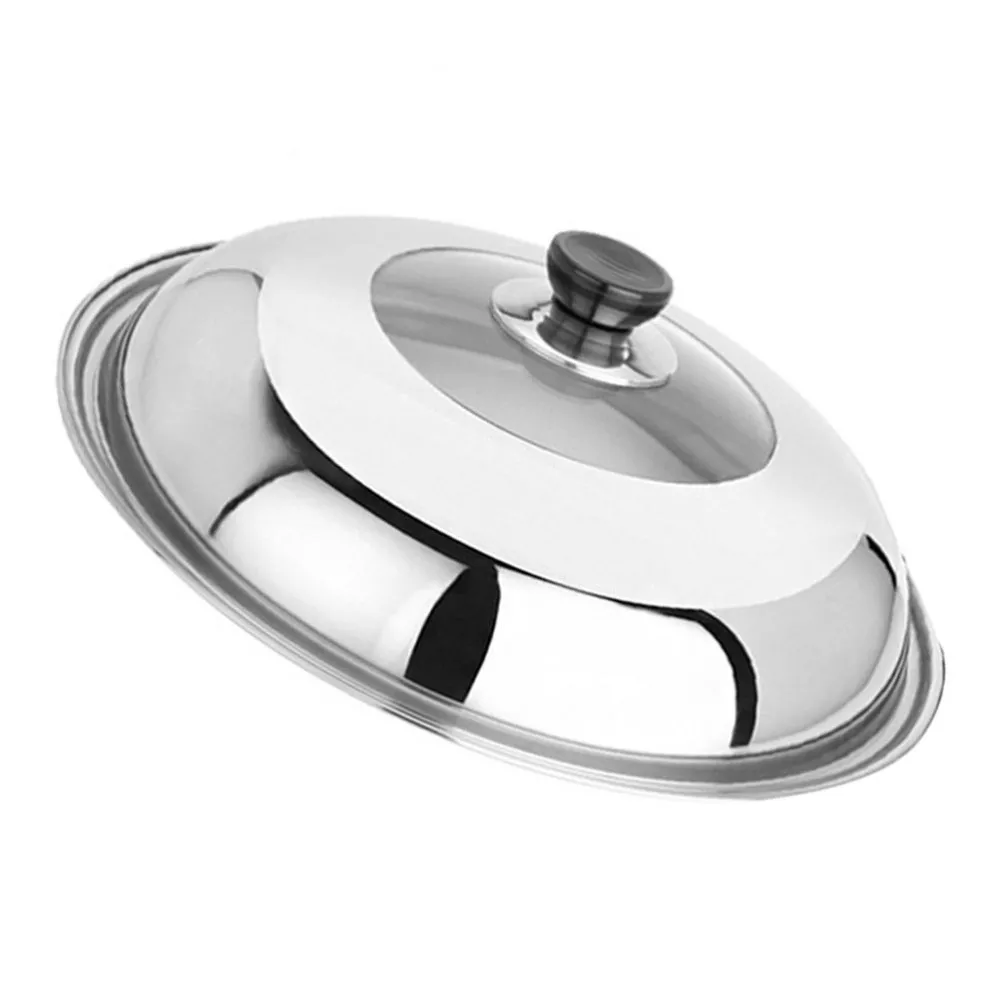
Categories
Machinery

Deep Draw Forming Press

Deep Draw Forming Press

Deep Draw Forming Press: Deep drawing presses are specialized hydraulic machines used to transform flat metal sheets into three-dimensional shapes through a process known as deep drawing. This technique is widely employed in industries such as automotive, aerospace, packaging, and appliance manufacturing to produce components like fuel tanks, kitchen sinks, and various structural parts.

How Deep Drawing Presses Work:

The deep drawing process involves placing a metal blank (a flat sheet) over a die and then using a punch to press the blank into the die cavity, forming a desired shape. Hydraulic deep drawing presses apply controlled pressure to ensure the material flows smoothly into the die, minimizing defects like wrinkling or tearing.

Key Features of Deep Drawing Presses:

  • Hydraulic System: Utilizes hydraulic force to apply consistent and adjustable pressure, allowing for the formation of complex shapes without compromising material integrity. ​
  • Cushioning Mechanism: Incorporates a hydraulic cushion to support the material during forming, enhancing control over material flow and reducing the risk of defects. ​
  • Programmable Controls: Equipped with digital control panels that enable precise adjustments of pressure, stroke length, and speed, facilitating customization for various applications.

Advantages of Deep Drawing Presses:

  • Material Efficiency: Produces parts with minimal waste by utilizing near-net shaping, reducing material costs.
  • Structural Integrity: Ensures the formation of strong, uniform parts capable of withstanding operational stresses. ​
  • Design Flexibility: Allows for the creation of intricate and complex geometries that are challenging to achieve with other forming methods.​

Applications:

Deep drawing presses are essential in manufacturing processes that require high precision and efficiency. They are commonly used to produce items such as automotive body panels, appliance housings, and various structural components. ​

These resources provide comprehensive insights into the functionality, features, and applications of deep drawing presses in various industrial contexts.​

A deep drawing press is a hydraulic machine used to shape flat metal sheets into three-dimensional forms through a process known as deep drawing. This technique is essential in industries such as automotive, aerospace, and packaging, producing components like fuel tanks, kitchen sinks, and other structural parts. The process involves placing a metal blank (a flat sheet) over a die, then using a punch to press the blank into the die cavity, forming the desired shape.

The press works by applying controlled hydraulic pressure to ensure the metal flows smoothly into the die, minimizing defects like wrinkling or tearing. Hydraulic systems are key in these presses, as they allow for consistent and adjustable pressure, providing the force necessary to form complex shapes while maintaining the material’s integrity. Some presses also include a cushioning mechanism that enhances control over material flow during the forming process.

Deep drawing presses are equipped with programmable controls, allowing operators to adjust settings like pressure, stroke length, and speed for different applications. This flexibility leads to high material efficiency, as minimal waste is produced during the process, and structural integrity is maintained in the formed parts, which can withstand operational stresses. The ability to produce complex geometries is another advantage, enabling designs that may be challenging or impossible to achieve using other forming methods.

These presses are widely used in manufacturing processes requiring precision and efficiency. Common applications include automotive body panels, appliance housings, and other metal components.

Deep drawing presses are also valued for their ability to produce parts with high uniformity and strength. The hydraulic system ensures that the material is evenly distributed during the forming process, which helps to avoid issues like thinning or stretching of the material in certain areas. The use of high-pressure hydraulics makes it possible to form thick or high-strength materials that would otherwise be difficult to shape using traditional methods.

Another key advantage of deep drawing presses is their ability to work with a variety of materials, including stainless steel, aluminum, and other metals. The flexibility to handle different types of materials makes these presses highly versatile across industries, whether for producing thin-walled parts in packaging or more robust components for heavy machinery or vehicles.

Advanced versions of deep drawing presses may feature automation and robotics, further increasing efficiency and consistency in production. These systems can handle high-volume manufacturing with minimal human intervention, reducing labor costs and enhancing the overall speed of the process. Automation also improves precision, ensuring that each part is made to exact specifications, which is critical in industries where tight tolerances are necessary.

While deep drawing presses are crucial in large-scale manufacturing operations, they are also adapted for use in smaller batch production where specialized parts or custom designs are required. The ability to make detailed and intricate components means these presses are indispensable in sectors that demand high-quality metalworking, like the aerospace and medical device industries.

Overall, the deep drawing press is a fundamental tool for transforming flat metal sheets into complex, functional components, offering precision, efficiency, and versatility in various industrial applications.

As deep drawing presses continue to evolve, modern advancements focus on improving energy efficiency, reducing waste, and enhancing automation. One major development is the integration of more sophisticated control systems, which allow for real-time monitoring and adjustments during the forming process. These systems can automatically detect potential issues like material inconsistencies or improper die alignment and make corrective adjustments to ensure the parts are produced to the highest quality standards.

Additionally, research into materials science is helping to improve the performance of deep drawing presses. For example, new alloy compositions and metal treatments are making materials more malleable, which in turn reduces the force required to shape them and minimizes wear on the press itself. This not only extends the life of the equipment but also allows for more complex shapes to be drawn with fewer steps or additional processes.

Another significant trend is the adoption of hybrid press systems, which combine mechanical and hydraulic technologies. These hybrid presses offer the best of both worlds: the high-speed operation of mechanical presses and the flexibility of hydraulic presses. This hybrid approach allows manufacturers to achieve both high productivity and precise forming, making these presses ideal for industries with high demands for both volume and quality.

The maintenance and servicing of deep drawing presses have also seen improvements. Predictive maintenance technologies are increasingly being used, where sensors monitor the health of various components in the press (such as hydraulic pumps and dies) and predict when maintenance will be needed. This proactive approach reduces downtime and repair costs, ensuring the press operates at optimal efficiency for longer periods.

In industries where sustainability is a growing concern, deep drawing presses also play a role in reducing environmental impact. Their ability to minimize material waste through near-net shaping is one of the key ways they contribute to more sustainable manufacturing practices. Additionally, many presses now come with energy-saving features that reduce electricity consumption during the pressing process, making them more eco-friendly.

Overall, the deep drawing press is an indispensable tool in modern manufacturing, and its ongoing development ensures it remains central to the production of high-quality, intricate metal parts. As technology continues to advance, these presses will likely become even more efficient, versatile, and environmentally friendly, keeping pace with the increasing demands of industries worldwide.

Deep Draw Hydraulic Forming Machine

Deep Draw Hydraulic Forming Machine

deep draw hydraulic forming machine is a specialized type of hydraulic press designed for the deep drawing process, where flat metal sheets are transformed into three-dimensional shapes. It utilizes hydraulic force to apply precise pressure to the metal, enabling it to be shaped into deep, complex forms without cracking or breaking. These machines are commonly used in industries that require high-strength, intricate, and precise metal components, such as the automotive, aerospace, appliance, and packaging sectors.

In a deep draw hydraulic forming machine, the process begins with a metal blank being placed over a die. The machine uses a punch to press the metal blank into the die cavity, and through this process, the metal is drawn deep into the mold to form the desired shape. The hydraulic system is responsible for providing the force required for this operation, and it allows for better control over the pressure, stroke length, and speed, ensuring the material is evenly distributed and avoiding defects like wrinkling or tearing.

One of the primary advantages of using a hydraulic system for deep drawing is that it provides uniform pressure over the entire surface of the metal blank. This uniformity helps in maintaining the integrity of the material while forming, making it especially suitable for handling materials that are difficult to shape with traditional mechanical presses, such as high-strength steels or thicker metal sheets.

The deep draw hydraulic forming machine offers several advantages:

  1. Precision and Control: Hydraulic systems can be adjusted to provide consistent and controlled pressure, which is crucial for forming complex shapes with tight tolerances.
  2. Material Flexibility: These machines can handle a variety of materials, including metals with different thicknesses and hardness levels.
  3. Versatility in Design: Deep draw hydraulic machines are capable of producing intricate shapes, making them ideal for applications that require custom or highly detailed parts.
  4. High Efficiency: They are capable of producing large volumes of parts quickly, making them suitable for mass production in industries like automotive manufacturing.
  5. Minimal Material Waste: The deep drawing process is efficient in terms of material usage, as it reduces waste by closely matching the shape of the final part to the shape of the die.

Applications of Deep Draw Hydraulic Forming Machines:

  • Automotive Industry: Used to create car body panels, fuel tanks, and other structural components.
  • Aerospace: Production of parts like engine housings, brackets, and panels for aircraft.
  • Appliance Manufacturing: Making sinks, tubs, and other household metal items.
  • Packaging: Shaping metal containers or cans for food and beverage products.

Additionally, modern deep draw hydraulic forming machines often come equipped with advanced control systems and automation, improving the efficiency of the process and reducing the need for manual intervention. These features enhance production speed and allow for more precise adjustments during the drawing process, further improving part quality and consistency.

Overall, deep draw hydraulic forming machines are essential tools for industries that require the production of high-quality, complex, and durable metal parts, and their ongoing evolution continues to make them more efficient, versatile, and precise.

A deep draw hydraulic forming machine is specifically engineered to handle the deep drawing process, where metal sheets are transformed into complex three-dimensional shapes. This process involves applying controlled hydraulic pressure to shape flat metal blanks into desired forms, using a die and punch system. The hydraulic force is essential because it ensures consistent, uniform pressure throughout the forming process, which helps to avoid common issues such as material tearing, wrinkling, or thinning.

These machines are ideal for working with metals that are hard to shape using traditional methods, such as high-strength steels or thicker metal sheets. The flexibility of hydraulic systems allows for fine-tuning of the pressure, stroke length, and speed, offering precise control over the process. As a result, deep draw hydraulic forming machines can create intricate, detailed parts that are difficult to achieve with other types of presses.

One of the key benefits of using a hydraulic system is the ability to produce parts with high precision and minimal material waste. The uniformity of the pressure ensures that the material is evenly distributed during the forming process, which is crucial for parts that require tight tolerances. Moreover, these machines can work with a variety of materials, ranging from softer metals like aluminum to tougher materials like stainless steel, making them versatile across different industries.

The deep drawing process is highly efficient and can produce a large volume of parts quickly, which is especially valuable in mass production environments such as automotive or appliance manufacturing. The machines are designed to handle high volumes with minimal downtime, making them cost-effective for large-scale production. Additionally, they are often equipped with advanced control systems that allow for real-time adjustments to the pressing parameters, further enhancing the accuracy and quality of the final parts.

These machines are also widely used in industries like aerospace, where precision and structural integrity are crucial. For example, aircraft components such as brackets, panels, and engine parts are often made using deep drawing techniques. The machines can handle complex geometries that are necessary for these parts, ensuring they meet the stringent standards required for safety and performance.

Deep draw hydraulic forming machines are also evolving with the integration of automation, which further increases production speed and consistency. Automated systems can reduce the need for manual labor, cutting down on human error and increasing operational efficiency. Furthermore, predictive maintenance systems are being implemented to monitor the health of the equipment, ensuring that any potential issues are addressed before they result in machine downtime, thus optimizing the overall lifespan of the machine.

The versatility of these machines extends to custom manufacturing, where specialized or small-batch parts are needed. Their ability to create precise, custom shapes makes them essential for industries that require specialized components, such as the medical device industry, where precision is paramount.

Overall, deep draw hydraulic forming machines are indispensable tools for a wide range of industries, offering unparalleled precision, efficiency, and versatility in the production of high-quality metal parts. Their ability to handle complex shapes, a variety of materials, and high-volume production makes them a vital piece of equipment in modern manufacturing. As technology continues to advance, these machines will likely become even more energy-efficient, precise, and adaptable to the needs of various industries.

As deep draw hydraulic forming machines continue to evolve, several key improvements are enhancing their performance and versatility. One of the significant advancements is the integration of smart technologies. These machines are now often equipped with sensors that monitor key parameters such as temperature, pressure, and stroke length in real time. This data is then analyzed to optimize the forming process, ensuring the best possible outcome for each part. By continuously adjusting these parameters, the machines can detect any irregularities in the material or process before they result in defects, improving overall product quality.

In addition to smart sensors, deep draw hydraulic machines are increasingly adopting energy-saving technologies. These systems aim to reduce the power consumption of the press during the forming process. With rising energy costs and an increasing emphasis on sustainability, many manufacturers are investing in these energy-efficient models. Some machines now feature regenerative hydraulic systems, which recycle energy used during certain stages of the forming process, further reducing power consumption.

Another trend is the automation of material handling and die changeovers, which has significantly improved efficiency. The ability to quickly and automatically load new metal sheets and switch between different die sets allows the machine to maintain high productivity levels, even in industries that require frequent changes in part design. This automation can be integrated with robotics, allowing the machine to operate with minimal human intervention, further improving speed and consistency.

Customization capabilities have also become a focus of development for these machines. Manufacturers now offer deep draw hydraulic forming machines with modular designs that can be easily adjusted to meet the specific needs of different applications. Whether it’s altering the size of the die, modifying the stroke length, or adjusting the speed and pressure for different materials, these flexible designs make the machines suitable for a wide range of industries and production needs.

In terms of maintenance, these machines are becoming easier to maintain and service due to advanced diagnostics and predictive maintenance tools. The integration of sensors and machine learning algorithms allows the press to predict when maintenance will be required, preventing unexpected breakdowns. This shift towards proactive maintenance helps minimize downtime and extend the lifespan of the equipment, saving companies both time and money.

The use of hybrid systems that combine the advantages of both hydraulic and mechanical technologies is another development. These hybrid presses can offer high-speed production and precision while still maintaining the flexibility and force capabilities of hydraulic systems. The hybrid approach makes these machines even more adaptable to a variety of forming processes and materials, improving their overall utility in manufacturing.

Furthermore, the application of 3D modeling and simulation in the design phase is becoming more prevalent. Before a deep drawing press is ever used on a physical part, manufacturers can simulate the entire process digitally. This allows engineers to identify potential issues like material flow problems, wrinkles, or weak spots, and make adjustments to the design or parameters before the press ever makes contact with the metal. This simulation technology significantly reduces the likelihood of defects and accelerates the product development cycle.

As the manufacturing industry moves towards greater sustainability, eco-friendly materials are also being used more frequently in deep drawing processes. For example, some companies are exploring the use of recycled metals, which can be formed just as efficiently as new materials. This not only reduces the environmental footprint of the production process but also supports the growing demand for sustainable manufacturing practices.

In summary, deep draw hydraulic forming machines are becoming increasingly sophisticated, offering greater precision, energy efficiency, and automation. The integration of smart technologies, energy-saving features, and predictive maintenance tools are all contributing to more efficient and cost-effective operations. As industries continue to demand more complex, high-quality parts, these machines will evolve to meet those needs, ensuring that they remain an essential tool in modern manufacturing for years to come.

Automatic Deep Drawing Press

Deep Drawing Press for Compressed Gas Canisters

An automatic deep drawing press is an advanced version of the traditional deep drawing press, designed to automate and streamline the deep drawing process. These presses are typically used in industries that require high-volume production of complex, precise metal parts, such as the automotive, aerospace, appliance, and packaging sectors. The primary function of an automatic deep drawing press is to transform flat metal sheets into three-dimensional components by applying controlled pressure through a hydraulic or mechanical system, while incorporating automated features to improve efficiency, precision, and consistency.

The automation aspect of these presses involves integrating various technologies that handle processes such as material feeding, die changes, part removal, and quality control. This not only reduces the need for manual labor but also increases production speeds and minimizes human error. The entire production cycle is optimized for maximum efficiency, ensuring that each component is formed with high precision and minimal waste.

Automatic deep drawing presses are typically equipped with advanced control systems that allow for real-time monitoring and adjustments during the forming process. These control systems can adjust parameters such as pressure, stroke length, and speed, ensuring that each part is produced to exact specifications. The integration of sensors and feedback mechanisms allows for precise monitoring of the forming process, ensuring that the material flows properly into the die cavity and reducing the likelihood of defects such as wrinkling, thinning, or cracking.

Automation in material handling is another critical feature of automatic deep drawing presses. These presses are often equipped with robotic systems or conveyor belts that feed metal sheets into the machine, ensuring continuous production without the need for manual intervention. In some cases, automated die change systems are included, allowing the press to quickly switch between different dies based on the parts being produced, further enhancing production flexibility.

Automatic deep drawing presses can also integrate quality control systems that inspect each part as it is formed. Cameras, sensors, and laser measurement devices are commonly used to check for dimensional accuracy, surface defects, and overall part integrity. If any issues are detected, the system can automatically adjust the process parameters or reject the faulty part, ensuring that only high-quality components are produced.

The ability to handle multiple operations in one press cycle is another advantage of automatic deep drawing presses. Some models can perform not only the deep drawing process but also additional operations such as punching, trimming, or embossing, all within the same machine cycle. This reduces the need for multiple machines and simplifies the production process, further improving efficiency.

The energy efficiency of automatic deep drawing presses is also a key consideration. Modern versions are designed with energy-saving features, such as variable frequency drives (VFDs), which optimize the press’s energy consumption based on the load and operational demands. This makes them more eco-friendly and cost-effective, reducing both operational expenses and the environmental footprint of the manufacturing process.

Moreover, these presses often feature predictive maintenance capabilities. By incorporating sensors that monitor the condition of critical components such as hydraulic pumps, motors, and dies, automatic deep drawing presses can predict when maintenance is needed, allowing operators to address potential issues before they lead to machine failure. This proactive approach helps minimize downtime, increase the lifespan of the machine, and reduce repair costs.

In terms of applications, automatic deep drawing presses are widely used to manufacture complex parts such as automotive body panels, fuel tanks, appliance housings, and various structural components. The automation features make them ideal for industries where high-volume production with consistent quality is essential. These presses are capable of producing a large number of parts in a short period, making them indispensable for mass production in automotive and other large-scale manufacturing environments.

In summary, an automatic deep drawing press is an advanced solution that combines the benefits of deep drawing technology with modern automation. These presses increase efficiency, precision, and flexibility, allowing manufacturers to produce high-quality parts at a faster rate while minimizing the need for manual intervention. With automation integrated into every aspect of the process—from material handling to quality control—these presses offer significant improvements in production speed, cost-effectiveness, and part quality. As the manufacturing industry continues to demand more sophisticated and sustainable processes, automatic deep drawing presses will play a crucial role in meeting these needs.

As automatic deep drawing presses continue to evolve, several emerging trends and technologies are further enhancing their capabilities. One such development is the integration of AI and machine learning to optimize the forming process. With AI, these presses can analyze vast amounts of production data in real-time to detect patterns and predict the behavior of the material being formed. This allows for dynamic adjustments during the press cycle, improving part quality and reducing the risk of defects. Over time, the system learns from previous production runs, refining its performance and minimizing waste or errors.

Another exciting advancement is the incorporation of augmented reality (AR) and virtual reality (VR) into the operation and maintenance of automatic deep drawing presses. For example, operators can use AR glasses to overlay digital information onto the physical press, providing real-time data on the machine’s performance, current process parameters, or the status of various components. This improves decision-making and ensures that operators can quickly address any potential issues. Additionally, VR is increasingly used for training purposes, allowing new operators to simulate the operation of the press in a safe and controlled environment before working on the real machine.

Collaborative robots (cobots) are another area where automation in deep drawing presses is advancing. Unlike traditional industrial robots, cobots are designed to work alongside human operators. They can handle tasks such as loading and unloading parts, adjusting the material, or performing quality inspections. These cobots are highly flexible, easily programmed, and designed to enhance human productivity rather than replace human workers entirely. This collaboration between robots and humans can improve efficiency without sacrificing the expertise and decision-making capabilities of the operator.

The digital twin technology is also becoming more prevalent in automatic deep drawing presses. A digital twin is a virtual replica of the physical machine that continuously receives real-time data from the actual machine, creating a digital representation of its performance. Engineers can use this virtual model to simulate different scenarios, predict failures, optimize the process, and test new settings without having to make changes to the physical press. This technology allows for continuous improvement and proactive maintenance strategies, reducing downtime and increasing overall production reliability.

In terms of material innovation, some automatic deep drawing presses are being optimized to work with newer, advanced materials, such as lightweight alloys, composite materials, or high-strength steels. These materials often require different processing conditions, and the integration of adaptable systems in modern presses makes them capable of handling a wider range of materials, which is particularly beneficial for industries like aerospace and electric vehicles, where weight reduction is crucial.

One of the more sustainable innovations is the use of closed-loop recycling systems integrated into automatic deep drawing presses. These systems allow for the recycling of scrap material generated during the deep drawing process. The scrap is collected, melted down, and reintroduced into the production cycle, reducing waste and improving overall material efficiency. This approach aligns with the broader industry push toward sustainability, as it minimizes raw material consumption and reduces the environmental impact of manufacturing.

The user interface of automatic deep drawing presses has also evolved significantly. Modern presses feature intuitive touchscreen interfaces and advanced software that allow operators to easily program, monitor, and troubleshoot the machine. These systems can offer detailed visualizations of the production process, including simulations of the forming process, which can help in identifying potential problems before they arise. This improved user experience contributes to greater operational efficiency and reduces the risk of errors during operation.

Finally, flexible production is a significant benefit of automatic deep drawing presses. These machines are increasingly able to switch between different part designs with minimal downtime. This flexibility is particularly useful in industries that require frequent changes to the parts being produced, such as the automotive industry, where different models and parts need to be manufactured regularly. With automation handling the majority of the setup and changeover tasks, manufacturers can achieve shorter production cycles and faster time-to-market.

Overall, the advancements in automatic deep drawing presses are transforming the way metal forming processes are carried out. By incorporating AI, machine learning, AR/VR, collaborative robots, digital twins, and sustainable practices, these machines are becoming more efficient, adaptable, and capable of producing higher-quality parts with minimal waste. As these technologies continue to develop, we can expect automatic deep drawing presses to become even more integral to industries that rely on precision manufacturing, offering enhanced flexibility, improved production times, and significant cost savings.

As we move further into the era of Industry 4.0, the role of data analytics in automatic deep drawing presses will continue to grow in importance. These presses are increasingly being integrated into smart factories where data from multiple machines, sensors, and even external systems is collected and analyzed in real time. This vast amount of data can be used to optimize not only the performance of individual presses but also the entire manufacturing process. By analyzing this data, manufacturers can identify bottlenecks, predict future production needs, optimize maintenance schedules, and ultimately improve efficiency across the entire production line.

Advanced analytics platforms can also use this data to implement predictive analytics, allowing for better forecasting of production needs and potential machine failures. For example, using historical data, these platforms can predict when a component of the press is likely to wear out or fail. By addressing these issues before they happen, manufacturers can prevent unexpected downtime, reduce repair costs, and ensure consistent production output. This approach to predictive maintenance is a step beyond the traditional maintenance schedules and allows manufacturers to transition to a more proactive maintenance model.

In the context of part traceability, automatic deep drawing presses are increasingly being equipped with RFID (Radio Frequency Identification) and other tracking technologies to monitor and trace parts throughout the production process. Each part produced can be tagged with an RFID chip, allowing manufacturers to track its journey from material input to final product. This traceability is particularly valuable in industries with strict regulatory requirements, such as aerospace and automotive, where the safety and quality of each part are critical. By having detailed information on each part’s production history, manufacturers can easily identify any issues related to part defects, enhancing quality control and ensuring that only parts that meet stringent standards are shipped to customers.

Automatic deep drawing presses are also being integrated with supply chain management systems to improve overall manufacturing efficiency. By linking these machines to real-time inventory management systems, manufacturers can ensure that materials are automatically replenished as needed, preventing stockouts and delays in production. Additionally, just-in-time (JIT) production methods are becoming more feasible with these automated systems. JIT systems focus on producing only what is needed at the exact time it is needed, reducing inventory costs and improving operational efficiency. With an automatic deep drawing press connected to such a system, the factory can work seamlessly with supply chain partners, creating a more agile and responsive manufacturing environment.

Customization and flexibility are also becoming essential elements of the latest automatic deep drawing presses. Modern customers often demand unique, custom-made parts in lower volumes. Automatic deep drawing presses have adapted by incorporating flexible tooling systems that can be easily adjusted for different designs. This allows manufacturers to quickly produce low-volume, high-variety parts without needing to stop production or invest heavily in new tooling for each new part design. Such flexibility opens up new possibilities for niche markets, as manufacturers can now meet demand for customized products without sacrificing the efficiency and scalability of large-scale production.

With the growing importance of environmental sustainability, automatic deep drawing presses are being designed with more eco-friendly features. This includes not only energy-efficient systems but also measures to reduce the environmental impact of the materials used. For instance, the ability to work with recycled metals or environmentally friendly coatings reduces the carbon footprint of the manufacturing process. Moreover, by minimizing scrap and optimizing material usage, these presses help reduce waste, which is particularly important as industries face increasing pressure to adopt sustainable practices.

One area where automatic deep drawing presses are likely to continue evolving is the use of artificial intelligence (AI) for defect detection and quality assurance. AI algorithms can analyze visual data collected from cameras or other sensors during the deep drawing process to identify defects that may not be visible to the human eye, such as micro-cracks, surface imperfections, or dimensional inaccuracies. This AI-driven inspection can happen in real time, allowing for immediate corrective action, which drastically reduces the chances of defective parts making it to the next stage of production or the final customer.

The development of autonomous production systems is another frontier that automatic deep drawing presses are moving toward. As part of the smart factory ecosystem, these presses will be able to communicate with other machines and devices autonomously, adjusting their operations without human intervention based on real-time feedback from sensors, production schedules, and inventory data. This level of autonomy could lead to fully automated manufacturing lines capable of producing high-quality products without the need for constant human oversight, freeing up operators to focus on higher-level tasks like system optimization and problem-solving.

Another future advancement is multi-material forming. Modern automatic deep drawing presses are being designed to handle multi-material parts, which are becoming increasingly popular in industries like automotive, where parts need to be lightweight yet strong. These presses are capable of forming different materials or material composites in the same part, such as combining aluminum with steel or other lightweight alloys. This innovation is crucial for producing advanced parts for electric vehicles, where both strength and weight reduction are essential.

Additive manufacturing (3D printing) is another technology that might complement automatic deep drawing presses in the future. While deep drawing presses are excellent for mass production of uniform parts, 3D printing could allow for on-demand production of small, highly customized parts or tooling for the deep drawing process. The synergy between these technologies could offer manufacturers the flexibility of additive manufacturing while maintaining the speed and efficiency of traditional deep drawing presses.

In summary, the future of automatic deep drawing presses is bright, with continuous innovations improving their efficiency, adaptability, sustainability, and ability to produce high-quality parts. As manufacturing continues to shift towards more automation, data-driven decision-making, and flexibility, automatic deep drawing presses will remain at the forefront, helping industries meet the demands of modern production, whether for high-volume, custom, or complex parts. The integration of advanced technologies like AI, machine learning, robotics, and eco-friendly practices ensures that these presses will continue to play a pivotal role in shaping the future of manufacturing.

Deep Draw Forming Press

Sheet Metal Drawing Press

deep draw forming press is a specialized machine used in the metal forming process called deep drawing, which is used to transform flat metal sheets or blanks into three-dimensional parts with significant depth. This process is often used to produce parts with relatively complex geometries, such as automotive body panels, kitchen sinks, aerospace components, and packaging materials.

In deep drawing, a metal sheet is placed over a die, and a punch is used to force the sheet into the die cavity. The process stretches the metal, and the sheet takes the shape of the die, with the metal being drawn deeper as the punch moves downward. The forming press applies the necessary pressure to ensure the metal is drawn evenly and smoothly without defects such as tearing, wrinkling, or thinning.

The deep draw forming press typically consists of several key components:

  1. Frame: The press has a rigid frame that supports the entire machine structure and houses the die and punch. The frame is usually built to handle high pressures and forces during the deep drawing process.
  2. Hydraulic or Mechanical System: Deep draw forming presses can be powered hydraulically or mechanically. Hydraulic presses use fluid to apply force, providing a smooth, controlled, and adjustable pressure. Mechanical presses, on the other hand, use cams or cranks to drive the punch and exert pressure. Hydraulic presses are generally more flexible and are preferred for more complex forms and higher precision.
  3. Die and Punch: The die is the cavity or mold into which the metal is drawn, and the punch is the component that applies force to the metal to shape it. The die and punch are typically designed to match the specific geometry of the part being produced.
  4. Blank Holder: A blank holder is used to hold the edges of the metal sheet in place while the punch moves down. This is important to prevent wrinkles or unwanted deformation in the material.
  5. Control System: Modern deep draw forming presses often feature sophisticated control systems that allow operators to adjust parameters such as stroke, speed, and pressure in real-time to optimize the forming process.

Types of Deep Draw Forming Presses:

  • Hydraulic Deep Draw Press: These presses use hydraulic power to apply force to the material. They are often used for deep drawing processes requiring high precision and the ability to form complex geometries.
  • Mechanical Deep Draw Press: These presses use mechanical force, typically powered by cranks or cams. They are known for their speed and efficiency but might have less flexibility compared to hydraulic presses in terms of handling complex shapes.

Key Features and Advantages of Deep Draw Forming Presses:

  1. Precision and Consistency: Deep draw forming presses provide consistent pressure and control, allowing for high-precision manufacturing. This is essential for industries that demand tight tolerances and high-quality parts.
  2. Material Efficiency: The deep drawing process minimizes material waste, especially when compared to other forming methods. The metal is evenly distributed, which reduces the amount of scrap material generated.
  3. Versatility: Deep draw presses can handle a variety of metals, including aluminum, steel, copper, and brass, making them highly versatile across industries. Advanced presses can also be used with multiple materials or composite materials, depending on the application.
  4. High Production Rates: These presses can produce large quantities of parts quickly, making them suitable for high-volume production environments such as automotive manufacturing.
  5. Complex Shapes: Deep drawing is ideal for creating parts with complex shapes, such as those with deep cavities or intricate contours. The process is used to produce a variety of products, including beverage cans, automotive body parts, aerospace components, and medical devices.

Applications of Deep Draw Forming Presses:

  • Automotive Industry: Deep draw presses are widely used to manufacture vehicle body panels, engine components, fuel tanks, and other structural parts. They help produce lightweight yet strong parts, which are critical for the performance and safety of vehicles.
  • Aerospace: Components like fuselage panels, brackets, and engine housings are often produced using deep drawing. The aerospace industry demands parts with high strength-to-weight ratios and precise geometries, both of which deep draw presses can achieve.
  • Packaging: The packaging industry relies on deep drawing for the production of metal containers, such as beverage cans and aerosol cans. This application requires high-speed, high-volume production to meet demand.
  • Consumer Appliances: Kitchen sinks, bathtubs, and other household appliances are often made using deep draw forming presses. The ability to create large, uniform parts with minimal waste makes deep drawing ideal for this industry.
  • Medical Devices: Deep draw presses are used in the medical field for the production of containers, casings, and other components that require precision and high material integrity.

Process Considerations:

While deep drawing is highly effective, there are several important considerations to ensure the quality of the final product:

  1. Material Properties: The material being used must be capable of undergoing the drawing process without cracking. Materials with good formability, such as mild steel, aluminum, and brass, are commonly used.
  2. Blank Size and Thickness: The initial blank (the flat metal sheet) must be properly sized to ensure it can be drawn into the desired shape without defects. The thickness of the material also affects the process, with thicker materials being more difficult to draw and requiring more force.
  3. Lubrication: Lubrication is often used during deep drawing to reduce friction between the die, punch, and the metal. This helps prevent damage to the material and ensures smooth material flow into the die.
  4. Die Design: The design of the die and punch plays a crucial role in determining the success of the deep drawing process. Poorly designed dies can lead to defects like wrinkles, uneven thickness, or cracks in the material.

Challenges in Deep Drawing:

  1. Wrinkling: Wrinkling can occur when the material is not held securely in place, or when the metal does not flow properly into the die. Proper blank holding force and die design can help reduce this issue.
  2. Thinning or Fracturing: If the material is drawn too quickly or excessively, it may thin out too much or even fracture. Controlling the draw ratio, punch speed, and pressure helps mitigate these risks.
  3. Tool Wear: The dies and punches used in deep drawing can wear over time due to the high forces applied during the process. Regular maintenance and monitoring are required to ensure the longevity of tooling.

Conclusion:

A deep draw forming press is a critical tool in the manufacturing of metal parts, especially for industries that require high precision and complex shapes. Whether hydraulic or mechanical, these presses provide the force and control needed to shape metals efficiently and accurately. From automotive to aerospace to packaging, deep draw forming presses are indispensable in mass production environments, and ongoing technological advances continue to enhance their performance, efficiency, and versatility.

Deep draw forming presses play a crucial role in industries where mass production of precise, deep, and complex parts is essential. These presses are highly efficient for turning flat metal sheets into three-dimensional components, with minimal material waste and consistent quality. The process itself allows for the creation of complex shapes with relatively deep cavities, which would be difficult to achieve using other forming methods like stamping or bending.

The ability to work with a variety of metals, including steel, aluminum, brass, and copper, makes deep draw forming presses versatile tools for many industries. They are essential for producing large quantities of parts with intricate shapes, from automotive body panels to beverage cans. The precision that deep draw forming presses provide ensures that parts meet stringent quality and safety standards, especially in high-performance applications like aerospace, automotive, and medical industries.

The deep drawing process requires significant force, and the technology behind the presses must be robust to handle these demands. Hydraulic deep draw presses, which use fluid to generate force, are often preferred for more complex shapes and tighter tolerances. They provide the necessary flexibility to handle varying material thicknesses and more intricate designs. On the other hand, mechanical presses are known for their speed and can be more cost-effective for less complex parts or higher-volume production runs. Both types of presses rely on the same core principles—drawing metal into a die with a punch—but they differ in how they deliver the force and the range of applications they are best suited for.

One of the key advantages of deep draw forming presses is their ability to work with minimal material waste. Unlike other processes where much of the material is cut away, deep drawing ensures that most of the material is used in the final product. This efficiency is particularly important in industries where material costs are high or where the goal is to minimize the environmental impact of manufacturing. Additionally, the process can often be optimized to ensure uniform material distribution, preventing issues like thinning, tearing, or excessive stretching of the material.

Another notable benefit of deep drawing presses is their speed and productivity, which makes them highly valuable for high-volume manufacturing. The ability to produce large quantities of parts in a relatively short amount of time is vital for industries like automotive manufacturing, where hundreds or thousands of parts may be needed daily. The flexibility of modern deep drawing presses, especially those equipped with automated systems, allows for faster changeovers and a seamless transition between different part designs without compromising quality or efficiency.

However, the process is not without its challenges. Maintaining consistent part quality requires careful control over various factors, including material thickness, die design, lubrication, and punch speed. Without these factors properly controlled, defects like wrinkles, thinning, or cracking can occur, leading to the rejection of parts. For this reason, the role of the die and punch design becomes crucial. A well-designed die helps guide the metal smoothly into the desired shape and ensures that it doesn’t become distorted during the forming process.

Advanced control systems and automation in modern deep drawing presses help reduce human error and improve the consistency of production. Automation can handle tasks such as feeding material into the press, controlling the press speed and pressure, and even inspecting parts for defects after they are formed. The integration of sensors, cameras, and feedback loops enables real-time adjustments to the forming process, further enhancing the precision and quality of the final products.

Additionally, the integration of AI-driven defect detection and predictive maintenance is increasingly common. Machine learning algorithms can analyze patterns in the data from each press cycle and detect anomalies that might indicate problems, such as a tool that is beginning to wear out or a deviation in material properties. Predictive maintenance can prevent unexpected downtime by alerting operators to potential issues before they cause machine failure, ensuring that production runs smoothly without interruption.

Deep draw forming presses are also evolving to accommodate more sustainable manufacturing practices. By using closed-loop recycling systems, manufacturers can recycle scrap material generated during the deep drawing process, which reduces waste and makes the production process more environmentally friendly. Additionally, energy-efficient hydraulic systems and smart controls that optimize power usage based on the press’s workload further contribute to reducing energy consumption and the carbon footprint of the process.

In industries like aerospace, the demand for lightweight but strong parts is driving the need for deep draw presses capable of working with high-strength alloys and advanced composite materials. These materials require specialized tooling and more precise control over the forming process, and modern deep drawing presses can be equipped to handle such demanding requirements. Whether it’s an airplane fuselage part or a lightweight automotive component, deep drawing presses can produce high-quality components that meet both performance and safety standards.

With the growing importance of customization in manufacturing, deep draw forming presses are also adapting to handle smaller production runs or custom parts without sacrificing efficiency. The flexible tooling systems that can quickly be adjusted to accommodate different part designs allow manufacturers to stay competitive in markets where products are frequently updated or require variations. This flexibility ensures that the same deep drawing press can be used to create a wide range of components, reducing the need for multiple machines and further optimizing production efficiency.

Looking ahead, the ongoing development of deep draw forming presses will likely focus on increasing automation, improving material handling systems, and incorporating smart factory technologies. These developments will allow manufacturers to produce even more complex parts faster and with greater consistency, ultimately reducing costs and lead times while improving the quality and functionality of the products being made.

In summary, deep draw forming presses are integral to the production of high-quality, complex metal parts. As industries continue to demand higher efficiency, sustainability, and precision, these presses will remain a critical component of modern manufacturing processes. The continued integration of advanced technologies, automation, and smart systems will ensure that deep draw forming presses evolve to meet the ever-changing needs of industries worldwide. Whether for high-volume production or customized, low-volume runs, these presses will play a key role in shaping the future of manufacturing.

As the manufacturing landscape continues to evolve, deep draw forming presses are being pushed further in their capabilities and flexibility. The integration of Industry 4.0 principles, such as IoT (Internet of Things) connectivity, big data, and cloud computing, is becoming a key part of the deep draw forming process. These advancements allow for the creation of smart presses that can not only execute the forming process but also gather, store, and analyze performance data to improve operational efficiency and prevent unexpected downtime.

By linking deep draw forming presses to cloud-based platforms, manufacturers can perform real-time monitoring and diagnostics from anywhere in the world. These platforms can provide insights into the health of the machine, such as tool wear, part quality, and overall production status. This means that operators and managers can make better-informed decisions regarding production schedules, maintenance needs, and resource allocation without needing to be physically present on the factory floor.

The combination of sensor technology and machine learning will continue to enhance the precision of deep draw forming presses. Sensors embedded in the machine or on the dies can detect minute changes in temperature, pressure, and material behavior during the forming process. This real-time feedback can be used to make adjustments on the fly, ensuring that parts are produced with minimal defects. If the system detects an anomaly, such as an increase in the risk of cracking or wrinkling, it can automatically adjust the press’s parameters to compensate and avoid errors, reducing scrap rates and enhancing overall efficiency.

One of the notable trends is the shift toward additive manufacturing (3D printing) complementing traditional deep drawing. While deep drawing excels at producing high-volume parts with relatively uniform shapes, 3D printing offers the flexibility to create highly intricate or custom parts with lower production volumes. The combination of both processes can lead to greater flexibility in production, where 3D-printed molds, inserts, or tools can be used in conjunction with deep drawing to form more complex components that were previously impossible or cost-prohibitive to produce with conventional methods.

Digital twin technology is also becoming a major development in the deep drawing process. A digital twin is a virtual representation of the deep draw forming press that continuously receives real-time data from the physical machine. Engineers can use this virtual model to simulate different operational scenarios, test new configurations, and perform predictive maintenance before making physical adjustments to the machine. Digital twins allow manufacturers to experiment with different designs and process parameters, optimize the workflow, and ensure that the real-world press operates at peak efficiency.

As industries continue to focus on sustainability and reducing their environmental impact, deep draw forming presses are evolving to be more energy-efficient and less wasteful. The implementation of energy recovery systems, such as regenerative hydraulic systems, helps capture and reuse energy from the press’s movements, lowering energy consumption. Additionally, the reduction in material waste—by optimizing blank holder forces, material flow, and tooling designs—supports the shift toward greener manufacturing practices. By utilizing advanced modeling and simulation tools, manufacturers can optimize material use, ensuring that every sheet of metal is processed efficiently, with minimal scrap.

Another promising development is closed-loop quality control systems. In these systems, quality checks are integrated directly into the production cycle. For example, in-line sensors could monitor the thickness, formability, and dimensions of each part during the deep drawing process, providing immediate feedback. If any part falls out of specification, the system can make adjustments to the press in real-time, preventing the production of defective parts. This eliminates the need for post-production inspection and reduces the overall cost of quality assurance, ensuring that parts meet the required standards without slowing down the production process.

The future of tooling in deep drawing presses is also poised to benefit from advancements in advanced materials and 3D printing. 3D-printed molds and tools could become more widely used, allowing manufacturers to produce custom tooling for specific runs or even one-off parts without the time-consuming and costly process of traditional machining. These tools could be created with complex geometries that improve the forming process, reduce friction, and extend the life of tooling components.

Another innovation is the rise of multi-material deep drawing. As industries demand lighter and stronger parts, manufacturers are increasingly working with composites and multi-material solutions. Some deep drawing presses are being designed with the capability to handle combinations of materials, such as steel and aluminum or metal and plastic. This opens up new possibilities for lightweight, high-strength components, such as those required in electric vehicle (EV) production or other industries focused on improving energy efficiency.

Moreover, the growing trend of digitalization and automation in manufacturing is likely to lead to the wider implementation of robotics in the deep drawing process. Robotic systems can be used to load and unload parts, handle material, or even assist in adjusting die setups. In some cases, robots can take over manual tasks that are either too dangerous, repetitive, or time-consuming for human workers. The integration of robots and deep draw presses can increase overall throughput, reduce labor costs, and improve workplace safety.

The ability to customize production settings, switch between different parts, and adapt to changing demands will continue to be an important driver of innovation in the deep drawing press market. Manufacturers will benefit from presses that can seamlessly switch between products and be more adaptable to shifts in consumer demand. This capability is particularly important in sectors like consumer goods and automotive manufacturing, where production lines often need to accommodate multiple models or designs in quick succession.

Additionally, the push for lean manufacturing will continue to influence the development of deep draw forming presses. Lean principles, which aim to eliminate waste and improve efficiency, will likely become more ingrained in the operation of these presses. This could involve minimizing downtime, improving part handling, optimizing material usage, and increasing flexibility on the production line—all with the goal of maximizing throughput while minimizing unnecessary costs and waste.

In the coming years, artificial intelligence will likely play an even bigger role in optimizing the deep drawing process. AI-based algorithms could analyze production data, predict potential failures, optimize press settings, and improve tooling designs in real-time. As machine learning continues to evolve, these AI systems will become more adept at finding patterns and improving operational processes autonomously.

In conclusion, deep draw forming presses are becoming more intelligent, efficient, and adaptable as the demands of modern manufacturing increase. With advancements in automation, data analytics, and material science, these presses will continue to play an integral role in producing high-quality, cost-effective, and environmentally friendly products across a wide range of industries. As the manufacturing landscape evolves, deep draw forming presses will remain at the forefront of innovation, driving advancements in productivity, precision, and sustainability.

Single Action Drawing Press

High-Speed Drawing Press

Single Action Drawing Press is a type of press machine specifically designed for metal forming processes like deep drawing, punching, blanking, and forming operations. The term “single action” refers to the movement of only one ram or slide, which moves vertically in one direction—downward to form or shape the material—and then returns upward after the cycle is complete.

These presses are widely used in applications where straightforward, reliable, and efficient metal forming is required, especially for components that do not demand complex or multiple forming stages in a single operation.

Single action drawing presses consist of several key components, including the press frame, a single hydraulic or mechanical ram (slide), a die set, a punch, and a blank holder system. In the deep drawing process, a flat metal blank is placed on the die, held in place by a blank holder, and the punch (attached to the ram) descends to draw the material into the die cavity, forming the desired shape. Once the drawing is complete, the ram retracts, and the formed part is ejected or removed.

These presses are known for their simplicity and durability. They are typically easier to maintain and operate compared to more complex double or triple action presses. This makes them ideal for operations with high production volumes and relatively simple part geometries, such as cylindrical cans, cups, filters, and other symmetrical components.

Single action presses can be mechanical or hydraulic. Mechanical single action presses operate using a crankshaft or eccentric mechanism to convert rotary motion into linear motion. They are fast and efficient, ideal for operations where high-speed production is needed. Hydraulic single action presses, on the other hand, offer better control over force and speed, and are preferred for forming thicker materials or parts that require more precision.

One important limitation of single action presses is the absence of an independent blank holder or cushion system. In more complex drawing operations, especially those requiring greater control of material flow, a double action press—with a separately controlled blank holder—would be used instead. However, many modern single action presses integrate cushioning systems in the bed to apply controlled holding force to the blank, improving draw quality even in simpler press designs.

In summary, the Single Action Drawing Press is a reliable, efficient, and cost-effective solution for producing a wide range of drawn parts, especially where the complexity of shape or forming force does not demand more advanced multi-action press systems. Its straightforward operation and lower maintenance needs make it a popular choice for high-throughput manufacturing environments where speed and simplicity are prioritized.

The simplicity of a single action drawing press does not limit its capability; in fact, it is precisely this straightforward design that makes it an ideal solution for many industrial applications. In a production environment, where time, cost, and efficiency are critical factors, the reliability and consistency of a single action press become significant advantages. Its structure—typically a C-frame or H-frame depending on the application—allows for easy access and part handling, which is especially useful in manual or semi-automated operations. Operators can load and unload parts quickly, reducing cycle times and contributing to higher productivity.

These presses are commonly used in industries like automotive, cookware, packaging, and electronics, where components such as engine parts, metal containers, and enclosures are often formed through deep drawing. In many cases, the press operates in a continuous production cycle, where flat metal blanks are fed into the die, drawn into shape by the descending punch, and then ejected or removed after the operation. This cycle can be repeated thousands of times with minimal variation in part quality, which is crucial for mass production.

Although single action presses are best suited for relatively simple shapes, advancements in tooling design and die engineering have expanded the range of parts that can be formed with these machines. For example, by carefully designing the die radii, blank holder force, and punch speed, more intricate geometries can be drawn successfully, even within the limitations of a single action mechanism. In some cases, built-in features like cushion pins or pneumatic/electric bed cushions help simulate the effect of a secondary action, improving material control during the drawing operation.

In modern facilities, single action presses are often equipped with programmable logic controllers (PLCs), touch-screen interfaces, and safety systems to improve ease of use and ensure consistent performance. These control systems allow operators to adjust press settings quickly, monitor key process variables, and receive alerts in case of malfunctions. This integration of digital controls not only increases accuracy but also enhances safety, particularly in fast-paced industrial environments.

Hydraulic single action presses, in particular, offer precise control over both the downward stroke and the return stroke. The ability to adjust the ram speed and force at different stages of the draw allows operators to fine-tune the forming process to reduce defects such as tearing, wrinkling, or excessive thinning of the material. This is especially important when working with sensitive or high-cost materials where waste must be minimized. The consistent pressure application also ensures repeatable part dimensions, which is a critical requirement for quality assurance in industries like aerospace and medical manufacturing.

One of the other benefits of single action presses is the relatively low cost of ownership compared to more complex machines. They require less floor space, have fewer moving components, and typically consume less energy, especially when equipped with energy-efficient drive systems. Maintenance is also simpler, with fewer hydraulic lines or control systems to manage. This translates into lower downtime and reduced operational costs over the life of the machine.

Despite their limitations in complexity, single action drawing presses remain highly adaptable when integrated into automated production lines. They can be equipped with feeders, part ejectors, conveyors, and robotic arms to facilitate continuous operation and high-speed manufacturing. When used in conjunction with coil feeders or automated blank loaders, they can deliver high output with minimal operator intervention, making them a valuable part of lean manufacturing strategies.

As the demand for faster, smarter, and more sustainable manufacturing processes continues to grow, the role of the single action drawing press is evolving. With enhancements in control systems, tooling technology, and material handling automation, these presses are capable of much more than traditional forming operations. Their simplicity becomes a strength when paired with modern innovations, offering manufacturers a reliable, cost-effective platform for high-volume production without sacrificing quality or adaptability.

In future applications, these presses may increasingly feature real-time monitoring and AI-driven diagnostics to predict potential failures and optimize performance on the fly. Paired with cloud-based platforms and machine learning, even the most straightforward single action press could contribute to a highly efficient, interconnected smart factory ecosystem. This blend of mechanical reliability and digital intelligence ensures that the single action drawing press will continue to be a valuable asset in both traditional and modern manufacturing settings.

In addition to their adaptability and simplicity, single action drawing presses are gaining popularity in smaller-scale manufacturing environments and among specialized producers due to their manageable footprint and lower investment requirements. For manufacturers producing parts in medium to high volumes but without the complexity that would demand multi-action presses, a well-configured single action press provides the perfect balance between cost-efficiency and performance.

One of the ongoing developments in single action press design is the use of servo drive technology. Unlike traditional mechanical or hydraulic systems, servo-driven presses offer precise control over motion profiles, which allows the press to adapt its speed and force dynamically during the drawing cycle. This not only improves part quality but also reduces energy consumption and mechanical stress on the equipment. For example, a servo system can slow down the punch during the critical forming stage to prevent tearing, and then speed up the return stroke to reduce cycle time—achieving both quality and productivity in a single system.

Tooling advancements are also enhancing what a single action press can achieve. With high-strength tool steels, precision-ground dies, and specialized coatings such as titanium nitride (TiN) or diamond-like carbon (DLC), tools are now more wear-resistant and capable of handling tougher materials like stainless steel or high-strength aluminum alloys. This has opened the door for single action presses to be used in applications that were once limited to more advanced forming systems. Interchangeable die sets also allow for quick changeovers, which is crucial in today’s market where flexibility and short lead times are key competitive advantages.

Another area of improvement is in press frame construction. Modern single action presses are built with optimized structural designs to ensure better rigidity and minimal deflection during operation. The more stable and robust the frame, the more consistent the forming results, especially in deep draw applications where uniform pressure distribution is essential. Some presses use finite element analysis (FEA) during design to reduce stress concentrations and improve longevity, ensuring the press can withstand years of continuous use under high loads.

The inclusion of advanced lubrication systems is another enhancement in newer models. Proper lubrication during deep drawing is essential to minimize friction between the die and the workpiece, which helps in achieving smooth surface finishes and extending die life. Modern presses may feature automatic lubrication systems that apply the correct amount of lubricant at the right intervals, reducing manual effort and improving process control.

From an operational standpoint, many manufacturers now integrate quality assurance and part inspection systems directly into the press line. Cameras, laser sensors, or contact measurement probes can inspect parts as soon as they are formed, ensuring immediate feedback and reducing the chance of downstream issues. This form of in-process quality control is especially valuable in sectors with tight tolerances or regulatory compliance requirements, such as medical devices, defense, or precision electronics.

The evolving role of the single action drawing press isn’t just about technology—it’s also about strategic use in broader production systems. For example, they can be part of a hybrid forming cell that includes other types of presses, welding systems, and finishing equipment. In such setups, a single action press may handle an initial draw operation before passing the part to other stations for trimming, piercing, or assembly. This modular approach to production enables manufacturers to scale capacity, increase product variety, and adjust to market demands more flexibly.

Moreover, with increasing global attention on sustainability, manufacturers are scrutinizing energy use and waste generation in all phases of production. Single action presses, particularly newer hydraulic and servo models, are being designed with energy-saving modesintelligent standby functions, and low-noise hydraulic systems. These improvements not only reduce operational costs but also align with environmental certifications like ISO 14001 and help companies meet internal and regulatory sustainability targets.

Training and workforce considerations also play into the continued appeal of single action presses. Because of their relatively straightforward mechanics and intuitive controls, operators can be trained more quickly compared to more complex multi-action or CNC-controlled machines. This is especially important in regions facing skilled labor shortages or in facilities where frequent staff rotation is necessary. Digital training modules, AR/VR support, and remote assistance systems are being integrated to shorten the learning curve and reduce the risk of human error.

In conclusion, the single action drawing press remains a workhorse of modern manufacturing. Its basic principle—one downward stroke to shape a part—has been honed over decades, and its application continues to expand with the support of smart controls, advanced materials, and automation. Whether used in a standalone setup for high-speed production or integrated into a smart, flexible manufacturing cell, the single action press continues to offer unmatched reliability, simplicity, and adaptability. It’s a timeless tool that continues to evolve with the times, proving that even in an era of complex machinery, there is still tremendous value in simplicity done well.

Double Action Drawing Press

Deep Drawing Press for Pressure Vessel Ends

Double Action Drawing Press is a more advanced type of press machine used in deep drawing operations, offering greater control, precision, and flexibility compared to its single action counterpart. The defining feature of a double action press is its two independently operated slides: one for the blank holder (outer slide) and one for the drawing punch (inner slide). This separation allows for more precise management of material flow during the forming process, significantly improving the quality of drawn parts, especially those with deeper or more complex geometries.

In the deep drawing process, the outer slide (blank holder) descends first and applies a controlled holding force to the metal blank. This prevents issues like wrinkling or uncontrolled material movement. Then, the inner slide—carrying the punch—descends to draw the metal into the die cavity. Because both slides are independently controlled, the force, speed, and timing of each can be finely tuned to suit the specific requirements of the part being formed. This is particularly beneficial when working with high-strength materials or when producing components with tight tolerances.

Double action presses are commonly used in industries where high-precision and complex components are required, such as automotive, aerospace, cookware, electronics, and appliance manufacturing. Components like fuel tanks, oil pans, complex enclosures, or deep containers that require multiple stages of forming benefit greatly from the enhanced capabilities of double action systems.

These presses can be mechanicalhydraulic, or servo-driven. Mechanical double action presses are typically faster and used for high-volume production of less form-sensitive parts. Hydraulic models, on the other hand, offer much finer control over force and stroke at various stages, making them ideal for sensitive or difficult-to-form materials. Servo-driven double action presses are the most advanced, allowing full programmability and optimization of every motion profile, increasing both quality and throughput while reducing energy consumption.

Modern double action presses also support a high degree of automation and integration. They can be fitted with material feeders, part ejectors, robotic handling systems, and in-line inspection tools. These integrations create a seamless production line where parts are formed, checked, and transferred automatically, reducing cycle time and minimizing human error.

Another benefit of the double action design is its capability to perform multiple operations in a single cycle. For example, in addition to the deep drawing operation, secondary tasks such as trimming, piercing, or flanging can be integrated into the same die set, saving both time and tooling costs. This makes the press highly efficient for manufacturing complex components in fewer steps.

With the continued advancement of materials science and product design, double action drawing presses are playing an increasingly important role in enabling the manufacture of lightweight, high-strength, and precisely formed parts. Their flexibility in handling various shapes, sizes, and materials, combined with the precision of dual-slide control, ensures they remain a cornerstone technology in modern metal forming processes.

In modern manufacturing environments, the double action drawing press stands out not just for its mechanical capabilities, but also for how well it integrates with smart factory systems. With the rise of Industry 4.0, these presses are now equipped with advanced sensors, real-time monitoring systems, and cloud connectivity. This allows manufacturers to track performance metrics such as tonnage, stroke speed, energy consumption, and cycle time with high precision. These insights can be used to optimize production, predict maintenance needs, and reduce downtime—transforming the press into a data-generating node within an intelligent production ecosystem.

The core advantage of a double action press remains its independent control of the blank holder and punch. This makes it particularly effective for drawing operations that require a carefully managed material flow, such as forming deep or contoured parts where material thinning or tearing can easily occur. By adjusting the pressure applied by the blank holder relative to the punch stroke, operators can prevent defects like wrinkling around the flange or tearing in the sidewalls. This feature becomes essential when forming advanced high-strength steels, aluminum alloys, or other materials with lower ductility.

Advanced die designs used in double action presses often include progressive forming stages, where a single blank may undergo multiple shaping operations within one press cycle. Some presses are configured with cushioning systems beneath the die or in the bed to further enhance control over metal flow during the draw. These systems, whether hydraulic or mechanical, allow for precise back pressure on the part as it forms, aiding in the reduction of springback and ensuring better dimensional accuracy.

Additionally, many double action presses now support die-mounting flexibility, allowing quick-change die systems that reduce setup times dramatically. For manufacturers producing a wide range of parts or switching between different product runs, this flexibility is critical. Tooling systems can include quick-lock features, guided alignment, and programmable die settings that are stored in the press’s control system for fast retrieval and repeatability.

In terms of press construction, double action presses are usually of a straight-side (H-frame) design, which offers better resistance to deflection under load than the more open C-frame styles found in some single action presses. This results in higher part accuracy and consistency, especially under heavy or off-center loads. Some machines are even equipped with multi-point drive systems to distribute forming forces more evenly across the slide, which is particularly useful for large or asymmetrical parts.

Another growing area is the use of servo motors in double action presses. Servo technology allows for full programmability of motion profiles for both the inner and outer slides. Instead of relying on fixed cam or linkage systems, servo-driven presses can accelerate, decelerate, pause, or dwell at any point in the stroke. This ability not only improves formability and finish quality but also enables customization for each part type without mechanical changes. The same press can be optimized for fast shallow draws one moment and slow, deep draws the next—just by changing software parameters.

Environmental considerations are also being addressed in newer models. Energy recovery systems, quieter hydraulic drives, and variable-speed pumps are now common features that help reduce the overall environmental footprint of double action presses. In some factories, these presses operate with closed-loop fluid systems that reduce lubricant and coolant waste, making them both cleaner and more cost-efficient.

From an operator standpoint, safety and ease of use are paramount. Modern presses feature intuitive human-machine interfaces (HMIs) with touch-screen controls, diagnostics, and guided setup procedures. Safety is enhanced with light curtains, interlock systems, and automatic die alignment checks, all designed to protect the operator and ensure safe operation even under demanding production conditions.

Overall, the double action drawing press has evolved far beyond its basic function. It has become a critical element in precision metal forming, enabling manufacturers to meet the increasing demand for high-quality, lightweight, and complex parts. Whether producing deep-drawn automotive panels, high-performance aerospace components, or intricate consumer products, the double action press offers the control, adaptability, and efficiency needed in today’s competitive manufacturing landscape. As technology continues to advance, these machines will only become more capable, intelligent, and integral to smart, sustainable production strategies.

Triple Action Deep Drawing Press

Mechanical Laboratory Presses

Triple Action Deep Drawing Press represents the most advanced category of forming presses used for complex and demanding deep drawing operations. It features three independently controlled slides—the blank holder (outer slide), the drawing punch (inner slide), and a cushion or knockout ram (lower slide). This configuration offers the highest level of precision and control over material flow, making triple action presses ideal for forming deep, intricate, or high-difficulty parts where standard single or double action presses would struggle.

In operation, the outer slide descends first to apply pressure through the blank holder, securing the material in place to prevent wrinkling. The inner slide follows, pushing the punch downward to draw the material into the die cavity. Meanwhile, the third action—typically from the bed cushion—can either support the forming operation by applying counter-pressure from below or assist in ejecting the part once forming is complete. These three forces working in harmony provide superior control, particularly in cases where precise pressure distribution and timing are critical to avoid tearing or uneven wall thickness.

Triple action presses are most commonly found in automotive, aerospace, appliance, defense, and precision metal packaging industries, where components such as fuel tanks, door panels, battery housings, and structural enclosures require deep or complex draws with consistent quality. These machines are capable of producing parts with greater depth-to-diameter ratios, tighter tolerances, and more refined surface finishes, even when using difficult-to-form materials like high-strength steel, titanium, or aluminum alloys.

The third action, typically driven by a hydraulic cushion system, is a game-changer in managing reverse draw operations, ironing, redrawing, or complex geometries with reentrant shapes. It also enables programmable pressure profiles, allowing the operator to control force buildup throughout the forming cycle, which reduces the risk of defects and improves material flow across the die. This level of control is vital for forming parts with multiple contours, ribs, or steep draws.

Like their double action counterparts, triple action presses are often hydraulic or servo-hydraulic, providing smooth, controlled motion and the ability to finely tune each slide’s movement independently. Servo-controlled versions allow for advanced stroke profiles, multi-speed forming, and precise dwell control—all of which contribute to increased formability and better dimensional accuracy. These presses may also support multi-point blank holding systems, where pressure can be varied across different zones of the blank to manage metal flow with extreme accuracy.

The construction of a triple action press is typically very robust—often in a four-post or straight-side (H-frame) design—to ensure perfect alignment and rigidity under very high loads. Some models incorporate multi-point drive systems or pre-stressed tie-rod frames to handle the significant forces generated during large, deep drawing operations without deformation or misalignment.

Automation is deeply integrated in triple action press systems. They are usually equipped with robotic loadersconveyor systems, and automated part transfer mechanisms to keep production continuous and highly efficient. Die change systems are also automated, with quick-clamp setups and die identification systems that allow fast switchover and ensure the correct tooling is in place for each job.

With advanced control interfaces, operators can easily program and store complete recipes for different parts, making changeovers faster and reducing setup errors. Real-time monitoring, diagnostics, and preventive maintenance alerts ensure that the press operates reliably even in high-demand production environments. For industries with zero-defect expectations—like aerospace and medical device manufacturing—triple action presses often integrate vision inspectionforce monitoring, and digital twin simulations to guarantee quality at every stage.

In terms of energy efficiency, newer triple action presses are equipped with variable displacement pumpsenergy recovery systems, and low-friction guiding technologies that reduce overall energy consumption despite the increased complexity and power requirements of the machine.

In summary, the triple action deep drawing press represents the pinnacle of deep draw forming technology. Its triple-slide system allows unmatched precision, flexibility, and forming depth, empowering manufacturers to produce the most challenging parts with excellent repeatability and minimal waste. While it represents a higher initial investment, the combination of superior part quality, enhanced control, greater process capability, and integration with smart manufacturing systems makes the triple action press an essential tool for advanced, high-performance production lines.

Beyond their mechanical sophistication, triple action deep drawing presses are also playing a pivotal role in supporting new-generation materials and product innovations. As industries continue shifting toward lightweight design, especially in automotive and aerospace sectors, triple action presses are uniquely suited to handle ultra-high-strength steelsaluminum-magnesium alloysinconel, and titanium—materials that are often more challenging to form due to limited ductility or sensitivity to cracking and thinning.

Because these advanced materials demand carefully managed draw processes, the programmable and synchronized control of all three actions in a triple action press ensures that forming forces can be adjusted at every stage of the stroke. This minimizes the risks associated with localized thinning or work hardening, which can cause cracking. With intelligent feedback systems, some presses can even adjust force profiles in real-time based on sensor input, allowing adaptive forming—a key feature for consistent output and high part integrity.

Moreover, triple action presses are increasingly paired with multi-stage forming dies, enabling complex operations such as drawing, ironing, reverse drawing, curling, piercing, and trimming to occur within a single press stroke or in a progressive fashion. This consolidates the manufacturing process and drastically reduces the number of machines, handling steps, and time required to produce a finished part. The result is lower cycle times, reduced handling damage, and significant space savings on the production floor.

In high-volume production environments, automation and digital connectivity are essential. Triple action presses are commonly integrated with MES (Manufacturing Execution Systems) and ERP systems, which allow production teams to monitor output, track material usage, schedule maintenance, and ensure traceability of every part formed. For industries with strict quality documentation requirements—like medical, aerospace, or defense—this connectivity is invaluable.

Safety is another area where triple action presses excel. With multiple moving elements and very high forces involved, these machines are equipped with redundant safety systems, including light curtains, load monitoring, travel limit sensors, die clamping interlocks, and emergency stop protocols. In many cases, press monitoring software logs each stroke and verifies the press function in real time—automatically stopping the machine if a deviation from the programmed stroke profile is detected.

Another benefit of these presses is their extended die life. Since the forming forces can be distributed across the press stroke and supported from below with the third action (bed cushion), the stress concentration on the punch and die is lower. This means less wear, longer intervals between maintenance, and lower tooling costs over time. Combined with automated die lubrication and precise force control, triple action presses offer not just high performance, but also remarkable efficiency and economy in long-term operations.

In terms of size, triple action presses are available in a wide range of tonnages—from 500 tons up to 3000+ tons, depending on the application. Some extremely large models are custom-built for deep draw operations such as producing automotive body-in-white partslarge cookwaredomestic appliance shells, or aerospace structural components. These large presses may feature multiple cushion zonesdynamic balancing systems, and bed slide synchronization to maintain perfect alignment across massive working areas.

Looking ahead, AI-driven control algorithms and machine learning are starting to influence the future of triple action presses. By learning from previous jobs and forming trials, AI can recommend or even automatically set the ideal stroke profiles, pressure settings, and die combinations for each part type, further reducing scrap and operator dependency. This self-optimization trend is part of the larger move toward autonomous forming systems, where the press becomes part of a smart, self-correcting production line.

In conclusion, the triple action deep drawing press is more than just a powerful forming machine—it’s a comprehensive manufacturing platform. Its unparalleled forming control, versatility, and integration capability make it essential for producing the most complex and high-value components with precision and repeatability. For manufacturers investing in future-ready production, especially those targeting innovation, sustainability, and zero-defect goals, the triple action press provides the foundation for consistent success in demanding markets.

In addition to their technical sophistication, triple action deep drawing presses are also evolving to meet the demands of customization and low-volume production, which are becoming increasingly common in sectors like aerospace, EV (electric vehicle) manufacturing, defense, and medical device fabrication. These industries often require small batches of highly specialized parts with unique geometries. The triple action press, with its full programmability and tool-change flexibility, can adapt rapidly to such needs without compromising on accuracy or forming quality.

Modern machines now come with tool change automation features such as die libraries, automatic alignment systems, hydraulic clamping, and programmable die height adjustment. With these features, complete die changes that once took hours can now be completed in minutes. This not only reduces downtime but also makes just-in-time (JIT) production more viable—even for deep drawn components.

A significant advantage in today’s digital manufacturing landscape is the ability of triple action presses to simulate forming operations virtually before production even begins. Through finite element analysis (FEA) and digital twin technology, manufacturers can test tooling, stroke profiles, and material behaviors digitally to predict defects such as tearing, wrinkling, or springback. This proactive approach minimizes physical trial-and-error, saving material, time, and cost during new product introductions.

Furthermore, as sustainability becomes an increasingly central goal, triple action presses are being optimized for greener production. Their hydraulic circuits often include energy-saving modules like load-sensing pumpsenergy recovery accumulators, and idle shutdown functions. Combined with servo-driven hydraulic systems, they provide precise motion while reducing energy usage, oil temperature, and noise. In some plants, presses are connected to energy dashboards that track and analyze consumption, contributing to broader corporate environmental initiatives.

For high-speed applications, such as can body manufacturing or cosmetic container production, the triple action press’s ability to maintain high stroke rates without sacrificing part quality becomes essential. These high-speed models use advanced cooling systems, wear-resistant components, and real-time force feedback to sustain prolonged operation under tight tolerances.

From an operator’s perspective, ergonomics and ease of use are continuously being improved. Touchscreen HMIs now come with features like step-by-step setup guidance3D part visualizationtroubleshooting wizards, and remote diagnostics. Operators can receive alerts, maintenance reminders, and even augmented reality (AR)-based assistance via tablets or headsets to guide them through complex tasks. This not only shortens training time for new users but also improves safety and reduces human error.

In terms of global production trends, triple action presses are becoming increasingly common in modular manufacturing environments. For example, in automotive megaplants, multiple presses are arranged in tandem lines, forming a sequence of progressive forming steps, each performed by a specialized triple action press. These lines are often synchronized via centralized controllers, ensuring seamless part transfer and zero-buffer production flows—ideal for high-throughput manufacturing of structural or chassis components.

Moreover, manufacturers are now leveraging the connectivity of triple action presses for predictive maintenance. Sensors monitor component wear, oil quality, vibration, and temperature across critical systems. With AI-based analytics, the press can predict when a seal, valve, or slide guide may need attention and schedule service before a failure occurs. This proactive maintenance approach reduces unplanned downtime and extends equipment lifespan significantly.

To summarize, the triple action deep drawing press is no longer just a machine—it’s a smart forming platform that integrates mechanical power, digital intelligence, process flexibility, and sustainability. Whether it’s forming lightweight EV battery enclosures, aerospace bulkheads, deep-drawn cookware, or high-strength protective housings, this press offers unmatched versatility, control, and efficiency. As part complexity and material innovation continue to push boundaries, the triple action press stands ready—engineered not just for today’s manufacturing challenges, but for the adaptable, data-driven, and sustainable factories of the future.

Looking toward the future, the triple action deep drawing press is poised to play an even more significant role in innovative manufacturing techniques. As industries evolve and new materials and designs continue to emerge, these presses will adapt to meet new demands and opportunities in areas such as 3D metal printing integrationmulti-material forming, and smart materials.

Integration with 3D Metal Printing

One exciting possibility is the potential integration of 3D metal printing with traditional deep drawing processes. 3D printing allows manufacturers to create highly complex geometries that would be difficult or impossible to achieve with conventional methods. Hybrid manufacturing systems, combining 3D printing and traditional forming technologies, are already being explored in high-precision industries like aerospace. In such systems, a triple action deep drawing press could be used to form parts that have 3D-printed components or inserts, enabling the production of lightweight, complex parts with high strength-to-weight ratios.

This integration could also extend to additive tooling where 3D printed dies or parts of dies are used to complement the traditional metal forming process. For example, a 3D-printed insert might be added to a die cavity, allowing for intricate designs or customized features that are not achievable with traditional tooling alone. This type of multi-process hybridization could reduce lead times and tooling costs for low-volume or custom parts, providing further flexibility to industries demanding high precision.

Multi-Material Forming

As the push for lightweighting continues, especially in automotive and aerospace industries, there’s a growing trend toward the use of multi-material parts—components made from different materials in a single part to optimize strength, weight, and performance. The triple action press can be leveraged in these applications, especially when different metals (like aluminum, steel, or composites) or metal-plastic hybrids are involved.

Advanced dies, tooling, and press systems are being developed to handle multi-material stamping and deep drawing. In these systems, a triple action press would first draw one material, then possibly change or switch to another material with a different set of properties, all while managing each material’s specific forming needs. For example, a part could have an aluminum outer shell with a steel inner structure for added strength. The press would need to precisely control the material flow and forces at each stage to ensure the parts are formed without compromising the integrity of either material.

The capability to handle multiple materials in a single press operation will be a key enabler of advanced lightweight vehicle structures that combine high-strength steels, aluminum, and composites—all materials with very different forming characteristics.

Smart Materials and Adaptive Forming

Another future trend for triple action presses is working with smart materials that change their properties in response to external stimuli like temperature, electrical fields, or magnetic fields. Examples of these smart materials include shape memory alloys (SMAs)piezoelectric materials, or magnetorheological fluids. These materials are becoming more prominent in medical devices, robotics, and automotive applications where parts need to adapt to changing conditions.

Triple action presses, particularly when paired with adaptive control systems and real-time sensors, could adjust the force profiles or press stroke to accommodate the unique characteristics of smart materials during the deep drawing process. For instance, an SMA component could be formed using a lower initial pressure, and then as the temperature or another stimulus is applied, the press could increase pressure gradually to ensure the material behaves optimally during the forming process.

Further Advancements in Automation and AI

As part of the Industry 4.0 wave, artificial intelligence (AI) and machine learning are likely to play a pivotal role in the evolution of triple action presses. By incorporating AI-driven process control, these presses can evolve from simply following pre-programmed motions to continuously optimizing themselves in real-time based on sensor feedback. For example, AI can monitor the behavior of the blank holder, punch, and cushion in each stroke, learning from every part formed to optimize material flow and minimize defects such as thinning, wrinkling, or misalignment.

Moreover, these presses can be self-learning over time. As they operate, they gather data on material properties, tooling wear, cycle times, and part defects. Using this data, the press system can suggest or even autonomously implement improvements. This type of autonomous feedback loop would further minimize scrap rates, reduce setup times, and enhance overall production efficiency.

Furthermore, augmented reality (AR) could be integrated into operator interfaces, allowing maintenance personnel or operators to visualize the press’s internal systemstool wear, or forming progression in real-time. This could be coupled with remote diagnostics, enabling off-site experts to assist with troubleshooting or setup adjustments, thereby reducing downtime and enhancing machine uptime.

Enhancements in Sustainability

In the drive toward green manufacturing, triple action presses are likely to feature more eco-friendly systems, such as closed-loop cooling systems that reuse water or oil to reduce waste and improve thermal efficiency. Energy-efficient hydraulic systems, coupled with variable speed drives, would ensure that the press only consumes the necessary energy during forming cycles, reducing energy consumption while maintaining peak performance.

In addition, presses may include integrated systems for recycling scrap materials produced during the drawing process. For example, the system could use sensors to identify scrap pieces, sort them, and automatically send them to a recycling station. This could be particularly useful in industries like automotive manufacturing, where sheet metal waste can account for a large portion of production costs.

Conclusion

The triple action deep drawing press is an invaluable tool that will continue to evolve alongside innovations in materials science, manufacturing technology, and automation. Its exceptional precision, versatility, and ability to handle complex forming processes make it indispensable for industries that require high-quality, intricate, and lightweight parts.

Looking ahead, the continued integration of smart technologyadaptive controls, and sustainability-focused innovations will ensure that triple action presses remain at the forefront of advanced manufacturing. These machines will be integral in producing the next generation of parts for industries ranging from aerospace and automotive to medical devices and consumer electronics, enabling manufacturers to stay competitive in a world where product complexity, material variety, and environmental responsibility are more critical than ever.

Mechanical Deep Drawing Press

Mechanical Deep Drawing Press

mechanical deep drawing press is a type of forming machine designed for deep drawing processes, where a flat sheet or blank of metal is drawn into a die cavity to create a part with significant depth. Unlike hydraulic presses, which use fluid power to generate force, a mechanical deep drawing press uses a crank or flywheel mechanism to provide force. These presses are typically used for high-speed production in industries like automotive, appliance manufacturing, and metal packaging.

Key Features of a Mechanical Deep Drawing Press

  1. Crank Drive System: The key component of a mechanical deep drawing press is its crank drive mechanism. The press operates through a flywheel that stores kinetic energy and releases it to the crankshaft, which then transfers the motion to the slide. This system allows for fast, repetitive motion and is ideal for high-speed production, where rapid cycle times are required.
  2. High-Speed Operation: One of the biggest advantages of mechanical presses is their ability to operate at high speeds. The crank drive system ensures that the press can complete many strokes per minute (SPM), making them suitable for high-volume manufacturing runs. They are commonly used in applications where quick, repetitive actions are needed, such as in automotive body partsbeverage cans, or electronic enclosures.
  3. Precision and Power: Mechanical presses offer good precision due to their rigid mechanical systems. The crank drive mechanism ensures that force is applied consistently throughout the stroke. The press can deliver high tonnage at specific points in the stroke, particularly at the beginning when the blank is initially drawn. This precision is ideal for parts that require consistent part quality, like stamped metal parts with tight dimensional tolerances.
  4. Adjustable Stroke Length: Many mechanical deep drawing presses allow for adjustable stroke lengths, which provide flexibility in the depth of the parts being formed. This feature is especially useful for manufacturers who need to produce a wide range of parts with varying depth and complexity.
  5. Mechanical Power Transmission: Unlike hydraulic presses, which use fluid power, mechanical presses rely on gears, belts, and flywheels to transmit power to the die. This results in high mechanical efficiency. The mechanical transmission system also means that these presses require less maintenance than hydraulic presses, as there are fewer fluid-related components.
  6. High Tonnage Output: Mechanical deep drawing presses can generate high tonnage (up to several hundred tons, depending on the design), making them well-suited for forming thicker materials or larger parts. This high tonnage is applied in short bursts, which ensures powerful drawing without the energy losses associated with other types of presses.

Advantages of Mechanical Deep Drawing Presses

  1. Speed: One of the key advantages of mechanical presses is their high-speed operation. The crank mechanism is particularly suited for repetitive, fast strokes, which makes mechanical presses ideal for mass production in industries like automotive, appliance manufacturing, and packaging.
  2. Cost Efficiency: In many cases, mechanical presses can be more cost-effective than their hydraulic counterparts because they have simpler designs and fewer components that require maintenance. Mechanical presses tend to be more energy-efficient since they don’t rely on hydraulic pumps and fluid systems, which can consume more energy.
  3. Precision: The mechanical drive system offers good control over the forming process, ensuring that parts are made to tight tolerances. The press can provide a consistent stroke and force throughout the entire drawing process, which is critical for parts requiring high precision.
  4. Durability and Reliability: The mechanical nature of these presses means that they are highly durable. The absence of hydraulic components reduces the risk of fluid leaks and other maintenance issues, making mechanical presses particularly suited for continuous operations in high-volume production settings.

Limitations of Mechanical Deep Drawing Presses

  1. Limited Force Control: One of the primary drawbacks of a mechanical deep drawing press compared to hydraulic presses is that the force applied is less adjustable. The mechanical system typically operates at a fixed rate of force, which may not be ideal for complex or delicate parts that require varying levels of force throughout the draw.
  2. Limited Flexibility: While mechanical presses are excellent for high-speed production, they are not as flexible in handling a wide variety of part designs and materials. Hydraulic presses offer more flexibility in adjusting the force profile, but mechanical presses are generally best suited for high-volume, consistent part designs.
  3. Noise and Vibration: Mechanical presses, especially those operating at high speeds, can generate significant noise and vibration. These factors can be problematic in environments where noise control is a concern or where operators need to work in a quieter setting. Some high-speed mechanical presses have noise reduction systems, but they may still be noisier than hydraulic presses.

Applications of Mechanical Deep Drawing Presses

  • Automotive Industry: Mechanical deep drawing presses are widely used to produce components such as automotive body panelsfenders, and door parts. These parts require consistent quality and precision, and the high-speed capabilities of mechanical presses make them ideal for the volume of production required in the automotive sector.
  • Packaging: Mechanical presses are used to produce beverage cansfood containers, and other types of metal packaging. The ability to operate at high speeds makes them perfect for high-volume packaging production.
  • Appliances: The production of household appliances, such as washing machine tubsdryer drums, and refrigerator parts, is another common application. Mechanical presses provide the required tonnage and speed to form these large parts quickly and efficiently.
  • Consumer Electronics: Mechanical presses are used in the production of enclosures for electronic devicesmetal casings, and small intricate parts that require precise forming without the complexity of hydraulic adjustments.

Conclusion

The mechanical deep drawing press is a reliable, high-speed solution for mass production of deep-drawn parts. Its crank or flywheel-driven mechanism allows for fast, repetitive forming operations, making it ideal for industries that require high-volume production with consistent quality. While it may not offer the same flexibility as hydraulic presses, its speedprecision, and cost-effectiveness make it a staple in manufacturing environments where high tonnage output and high-speed cycles are essential. As the demand for cost-efficient, rapid, and accurate manufacturing continues, the mechanical deep drawing press will remain an essential tool for industries like automotive, packaging, and consumer electronics.

mechanical deep drawing press is a highly efficient tool for mass production, offering precise, high-speed forming of metal sheets into deep-drawn parts. The press relies on a crank or flywheel mechanism, which stores and releases kinetic energy to provide rapid, consistent motion. This is ideal for industries that require large volumes of parts in short cycles. The mechanical drive system is robust and reliable, with minimal need for maintenance compared to hydraulic presses, as it doesn’t involve fluid components. The high-speed operation makes mechanical presses excellent for applications where quick, repetitive strokes are necessary, such as automotive body parts, metal packaging, or appliance components.

One of the key strengths of mechanical presses is their high tonnage capability, which allows them to handle thicker materials or larger parts with significant forming force. The crank drive ensures that force is applied consistently throughout the press stroke, offering precision and maintaining tight tolerances. In industries like automotive manufacturing, the press’s ability to produce parts like fenders, door panels, or chassis components at high speeds while maintaining dimensional accuracy is invaluable. Similarly, in packaging, mechanical presses can efficiently produce metal cans or containers in high-volume runs, ensuring uniformity and minimizing scrap.

Despite its advantages, the mechanical deep drawing press has limitations. Its primary challenge lies in the fact that the force exerted during the drawing process is less adjustable compared to hydraulic systems. While hydraulic presses can vary the pressure throughout the stroke to accommodate different material properties or part designs, mechanical presses typically operate at a fixed force level. This can make them less flexible for forming complex shapes or handling a wide variety of materials that require different forming pressures. Additionally, mechanical presses can generate significant noise and vibration, which may be problematic in certain environments.

Nonetheless, the mechanical deep drawing press remains a preferred choice for many high-speed, high-volume operations. Its ability to handle large tonnages with precision and speed makes it a reliable option for producing metal parts that require consistent quality over long production runs. Over time, as industries continue to evolve and demand quicker, more efficient manufacturing processes, the mechanical deep drawing press will continue to be a cornerstone of many manufacturing lines, especially where cost-effectiveness, speed, and reliability are prioritized.

The mechanical deep drawing press is expected to continue evolving, with technological advancements that further enhance its speed, efficiency, and precision. One key area of improvement is in the automation of the press. As manufacturing moves further into the realm of Industry 4.0, integrating robotics and advanced sensors into mechanical presses can help streamline operations. Automation in material handling, die changing, and part ejection can drastically reduce cycle times and improve overall throughput. For example, robotic arms could automatically load and unload blanks, while advanced vision systems could inspect parts in real-time to ensure quality, allowing for a more hands-off operation and reducing human error.

Moreover, predictive maintenance and remote diagnostics are becoming more integrated into mechanical presses. By embedding sensors into key components like the crankshaft, die, and punch, operators can monitor the health of the press in real-time. Data collected from these sensors can be analyzed using machine learning algorithms to predict when certain components are likely to wear out or fail. This enables proactive maintenance, preventing costly downtime and extending the lifespan of the equipment. Additionally, with the ability to remotely diagnose issues, technicians can identify problems and make adjustments without being physically present, saving time and resources.

Another area seeing improvement is the development of smart die technology. Advances in die cooling systems and the use of wear-resistant coatings are reducing downtime for die maintenance. For example, a die with a built-in cooling system can maintain optimal temperatures during high-speed operations, preventing material deformation and improving part consistency. Similarly, the use of coatings that resist wear and tear, along with the application of laser-based surface treatments, can significantly prolong die life, reducing the need for frequent replacements.

As the industry shifts towards more sustainable practices, mechanical deep drawing presses are adapting to reduce energy consumption and material waste. Incorporating energy-efficient motors and regenerative braking systems helps capture and reuse energy during press movements. This not only reduces operational costs but also supports broader environmental goals. Furthermore, material recovery systems integrated into the press allow for the recycling of scrap materials directly into the process, improving material efficiency and reducing environmental impact.

In terms of customization, modern mechanical presses are becoming increasingly versatile. Advances in servo-mechanical systems enable more precise control over the press stroke and force application. While traditional mechanical presses operate with a fixed stroke and tonnage, servo-controlled systems allow operators to adjust these parameters in real-time. This provides greater flexibility to handle a wider variety of materials and part designs, increasing the press’s adaptability to different production requirements.

Finally, part complexity continues to increase as manufacturers seek to produce more intricate and lightweight components. Mechanical deep drawing presses, especially with servo-drive enhancements, are now capable of handling complex geometries while maintaining the speed and high tonnage required for mass production. These advances are particularly valuable in industries like aerospacemedical device manufacturing, and electronics, where intricate and lightweight metal parts are in high demand.

As we look to the future, the mechanical deep drawing press is set to remain an essential part of the manufacturing landscape, evolving to meet the challenges of faster production cyclescustomizationsustainability, and smart manufacturing. Whether producing automotive body panelsmetal cans, or precision aerospace components, these presses will continue to provide the speed, precision, and reliability needed for high-volume production, while incorporating the latest advancements in automation, predictive maintenance, and energy efficiency.

As the manufacturing industry continues to advance, the mechanical deep drawing press will further adapt to meet the demands of modern production environments. The growing need for advanced materials—such as high-strength alloys, lightweight metals, and composite materials—will influence the design and functionality of these presses. For instance, the increasing use of advanced high-strength steels (AHSS) in automotive manufacturing requires presses that can handle materials with higher tensile strengths without compromising part quality. Mechanical presses are evolving to handle these materials by incorporating advanced tooling that is specifically designed for high-strength materials, ensuring the forming process remains efficient and defect-free.

Moreover, multi-material forming is becoming more common in industries such as automotive, aerospace, and electronics. Mechanical deep drawing presses, especially those with enhanced control systems, are being optimized to process multiple materials in a single forming operation. For instance, automotive parts might need a combination of steel, aluminum, and plastic components, each requiring different forming conditions. With multi-material tooling and precise force control, mechanical presses can accommodate such complex requirements, enabling the production of hybrid parts that combine the best properties of different materials—such as the strength of steel and the lightness of aluminum.

Another significant trend is the development of integrated production lines where mechanical deep drawing presses are not isolated machines but part of a fully automated manufacturing system. These production lines connect various processes such as blanking, stamping, drawing, and trimming in a seamless flow. Advanced synchronization ensures that the entire process operates smoothly, minimizing downtime and increasing efficiency. The use of advanced robotics and AI-driven scheduling systems optimizes material flow and ensures that each press in the line operates at its maximum potential, reducing bottlenecks and increasing overall throughput.

As the pressure to improve part quality grows, mechanical presses are also adopting real-time process monitoring technologies. This involves integrating advanced sensors into the press to track key parameters like force distributionmaterial deformation, and tool wear. These sensors can detect issues such as wrinklingthinning, or misalignment early in the process, allowing for immediate adjustments to the press parameters. This real-time feedback not only enhances part quality but also reduces scrap rates by catching defects before they become costly problems. In industries like aerospace or medical device manufacturing, where the integrity of every part is critical, this level of precision is crucial.

The integration of artificial intelligence (AI) and machine learning (ML) is also becoming increasingly important in the optimization of mechanical deep drawing presses. AI can analyze vast amounts of production data to identify patterns that might not be immediately obvious to human operators. For example, machine learning algorithms can detect subtle changes in material behavior or environmental conditions that could affect the drawing process, allowing for proactive adjustments. Over time, the system “learns” from historical production data and continually improves, leading to even higher levels of efficiency, quality, and consistency.

The trend toward customized, low-volume production is also pushing the boundaries of what mechanical presses can do. In contrast to traditional mass production, manufacturers are increasingly asked to produce smaller batches of highly customized parts, often with shorter lead times. In response, mechanical presses are being equipped with quick-change tooling systems that allow for fast setup and reconfiguration. This flexibility reduces downtime and helps meet the demands of industries like medical deviceselectronics, and luxury automotive parts, where bespoke components are often required.

Sustainability, always a priority, is also shaping the future of the mechanical deep drawing press. Energy efficiency will continue to be a major focus, with manufacturers looking for ways to reduce their environmental impact while maintaining production speed and quality. This could involve optimizing the energy usage of the press through the use of regenerative braking systems and variable-speed motors. Additionally, sustainable manufacturing practices will likely see an increased push toward closed-loop recycling systems that enable scrap metal to be immediately processed and reused in the same production cycle, cutting down on waste and material costs.

Finally, the globalization of manufacturing means that mechanical deep drawing presses are also evolving to meet the requirements of diverse markets. For example, in regions like Asia, where high-speed, high-volume manufacturing is prevalent, presses are being designed for greater speed and efficiency to cater to the growing demand for consumer electronics, automotive parts, and packaging materials. Meanwhile, in Europe and North America, where there is a greater emphasis on quality control and customization, presses are being optimized for precision and flexibility.

As the manufacturing landscape continues to shift, the mechanical deep drawing press will remain a cornerstone of efficient, high-quality production. Its ability to handle a wide range of materials, produce parts with high precision, and operate at high speeds makes it a versatile and indispensable tool across various industries. With advancements in automationAI integration, and sustainability, the mechanical deep drawing press will continue to evolve, ensuring it meets the growing demands of modern manufacturing while maintaining its crucial role in high-volume production.

Sheet Metal Drawing Press

Precision Drawing Press

sheet metal drawing press is a specialized type of press used in the manufacturing process of forming sheet metal into 3D shapes through a process known as deep drawing. It applies mechanical or hydraulic force to a flat sheet of metal, known as a blank, which is then drawn into a mold or die cavity. This process allows manufacturers to create complex shapes, such as enclosurescar partsmetal containers, and electrical housings, with high precision and repeatability.

Working Mechanism

A sheet metal drawing press uses a die and punch system to shape the sheet metal. The process typically involves the following stages:

  1. Blanking: A flat metal sheet (the blank) is placed on the press bed. The blank is typically cut to the desired size before the forming process starts.
  2. Drawing: The punch descends onto the blank, pressing it into the cavity of the die. This process “draws” the sheet metal into the shape of the die, creating the part’s form. Depending on the part’s complexity and material, the depth of the draw can range from shallow to deep.
  3. Unloading: After the forming process, the part is removed from the die, and any excess material (such as flash or burrs) may be trimmed off.

Types of Sheet Metal Drawing Presses

  1. Mechanical Drawing Presses: These presses use a crank or flywheel mechanism to create a repetitive, high-speed motion. They are typically faster than hydraulic presses and are suitable for high-volume production. The force is constant throughout the stroke, which works well for parts with relatively simple shapes and uniform material characteristics.
  2. Hydraulic Drawing Presses: These presses use hydraulic cylinders to provide force. Hydraulic presses are ideal for forming more complex shapes or materials that require adjustable force. The force applied can vary throughout the stroke, offering more control and precision for deeper draws and intricate parts. Hydraulic presses also tend to be more flexible than mechanical presses, making them suitable for smaller batch production or prototypes.
  3. Pneumatic Drawing Presses: Pneumatic presses, though less common in deep drawing, use compressed air to apply force. These presses are typically used for lighter materials or applications where precision is not as critical, such as in some packaging applications.

Key Features of a Sheet Metal Drawing Press

  • Die Set: The die set is a critical component in the process. It consists of two parts: the female die (the cavity where the material is formed) and the male die (the punch that presses the material into the die). The die set design plays a crucial role in determining the part’s final shape and ensuring the process runs smoothly.
  • Blank Holder: A blank holder is used to hold the blank in place during the drawing process. It applies pressure to prevent wrinkling or excessive movement of the material as the punch forces it into the die.
  • Lubrication: Lubricants are often used in the process to reduce friction between the sheet metal and the die. Lubrication also helps prevent material tearing or deformation and ensures a smoother operation, leading to better surface quality.
  • Stroke Control: The stroke of the press is an important feature, as it determines how deep the punch travels into the die. Adjustable stroke lengths are common on advanced presses to accommodate different part depths and material types.
  • Speed Control: The speed at which the press operates is critical for cycle time and part quality. Variable-speed motors or servo drives can be used to adjust the press’s speed, ensuring that the metal is drawn smoothly and without damage.

Advantages of Sheet Metal Drawing Presses

  1. High Precision: Drawing presses are highly effective at producing parts with tight dimensional tolerances. The process provides consistent results with minimal distortion, ensuring parts meet strict specifications.
  2. Complex Geometries: Sheet metal drawing presses can create complex shapes, such as deep cups, boxes, or housings, that are difficult to produce with other methods like stamping or punching. This makes them ideal for creating intricate components for industries such as automotive, aerospace, and electronics.
  3. Material Efficiency: Since the process uses a single sheet of metal to form a part, material waste is minimized compared to other forming methods that might require multiple components or secondary operations. Furthermore, scrap metal from the process can often be recycled and reused, making the process more environmentally friendly.
  4. Cost-Effective for High-Volume Production: Once a drawing press is set up with the correct die, it can produce a large number of parts at a relatively low cost per unit. This makes sheet metal drawing presses particularly useful in mass production environments, such as for automotive panels or consumer electronics casings.
  5. Versatility: These presses are highly versatile and can be adapted to form a wide range of metals, including steelaluminumbrass, and copper, as well as newer advanced materials like high-strength steel (HSS). They are also suitable for various industries, from automotive to packaging to medical device manufacturing.

Challenges and Considerations

  1. Tooling Costs: The initial cost of tooling (dies) can be significant, particularly for more complex parts. Since the die plays such a crucial role in the drawing process, custom tooling may be required for each new part design, increasing the cost of development and setup.
  2. Material Limitations: Some materials, particularly those with low ductility or high hardness, may not be suitable for deep drawing. These materials are more prone to cracking, tearing, or wrinkling during the drawing process. The material’s formability must be considered when choosing the right press and process.
  3. Process Complexity: For parts with deep draws or complex shapes, the drawing process can become challenging. Issues like wrinklingthinning, or die wear can arise, requiring careful die design, pressure control, and lubrication strategies to mitigate them.
  4. Tool Wear: Over time, the die and punch surfaces can wear down due to friction and repeated use. Regular maintenance and possible re-coating or reworking of the dies are necessary to maintain high-quality parts and ensure continued operation.
  5. Cycle Time: While mechanical presses are faster than hydraulic presses, the cycle time can still be a consideration, especially for smaller batch production. Hydraulic presses, on the other hand, may have slower cycle times but provide more flexibility in force application.

Applications of Sheet Metal Drawing Presses

  • Automotive Manufacturing: Sheet metal drawing presses are widely used to produce automotive body panelsengine componentsdoorsfenders, and roof sections. These parts require high precision, strength, and consistency to meet strict automotive standards.
  • Packaging: In the packaging industry, sheet metal drawing presses are used to produce metal cansbottle caps, and food containers. The high-speed nature of the process makes it ideal for the mass production of these items.
  • Consumer Electronics: The production of metal housings for electronics, such as smartphoneslaptops, and TV enclosures, often involves deep drawing presses. The precision and ability to form intricate shapes are key to meeting the tight tolerances required for these products.
  • Appliances: Household appliances, such as washing machine drumsdryer parts, and refrigerator panels, are often produced using sheet metal drawing presses. These parts require both structural integrity and aesthetic quality.
  • Aerospace: The aerospace industry relies on deep drawing presses to produce aircraft components, such as fuel tankswing structures, and turbine components. These parts must be made from lightweight yet strong materials, making the precision of the drawing process critical.

Conclusion

The sheet metal drawing press is an indispensable tool in the manufacturing industry, providing high precision, speed, and efficiency for producing a wide range of metal parts. Whether used for automotive, aerospace, consumer electronics, or packaging, sheet metal drawing presses enable the creation of complex, deep-drawn shapes with minimal waste. With advances in automation, materials, and process control, the future of sheet metal drawing presses will continue to evolve, improving flexibility, cost-effectiveness, and sustainability.

The sheet metal drawing press remains a vital piece of equipment in various industries, delivering consistent, high-quality results with minimal material waste. Its ability to transform flat sheets of metal into complex shapes with great precision makes it indispensable in sectors like automotive, aerospace, electronics, and packaging. The versatility of these presses, capable of handling a wide range of materials such as steel, aluminum, and high-strength alloys, allows manufacturers to meet the growing demand for parts that require both strength and lightweight properties.

With advancements in automation, sheet metal drawing presses are becoming increasingly integrated into smart manufacturing systems, allowing for enhanced data trackingreal-time quality control, and maintenance monitoring. This integration ensures that parts are produced with minimal human intervention while maintaining high levels of precision and efficiency. Automated processes like robotic part handling and AI-driven inspection systems can further reduce cycle times and ensure that defects are detected and addressed immediately, improving overall production quality.

One of the key benefits of sheet metal drawing presses is their ability to create deep, intricate shapes that would otherwise be difficult or impossible to produce using other methods. The deep drawing process is particularly useful when creating parts like fuel tankscans, or complex automotive body components, where uniformity and strength are paramount. In these applications, the press’s ability to maintain consistent force throughout the drawing process is crucial for achieving a flawless finish.

Despite their many advantages, sheet metal drawing presses face challenges when it comes to materials that have low formability or high hardness, which can lead to cracking or tearing. Manufacturers must carefully select materials and adjust parameters such as die design and lubrication to ensure successful deep drawing. Advances in tooling and material science, however, are helping to mitigate some of these challenges, allowing for a broader range of materials to be processed more efficiently.

In terms of sustainability, sheet metal drawing presses have become more energy-efficient over time. Newer models incorporate energy recovery systemsservo-electric drives, and regenerative braking technologies to reduce energy consumption, making the process more environmentally friendly. Additionally, the ability to recycle scrap metal directly into the production cycle helps minimize waste, contributing to greener manufacturing practices.

With the continued evolution of servo-driven press systems and intelligent tooling, sheet metal drawing presses are poised to remain at the forefront of modern manufacturing. These innovations are enabling greater precisionspeed, and flexibility, making it easier for manufacturers to adapt to changing demands, whether in high-volume production or more specialized, low-volume runs. The future of sheet metal drawing presses lies in their ability to combine advanced automationAI integration, and sustainable practices to produce high-quality, cost-effective components across a variety of industries.

As the manufacturing landscape evolves, sheet metal drawing presses are continuously adapting to meet the demands of modern production processes. A significant trend is the increasing customization of parts, particularly in industries like automotiveelectronics, and medical devices, where specific, tailored components are required. Sheet metal drawing presses are evolving to support low-volume production and rapid prototyping, allowing manufacturers to produce complex, customized parts with a quick turnaround time. This is particularly beneficial for industries where bespoke designs or frequent changes in part specifications are common.

Industry 4.0 is also making a significant impact on the development of sheet metal drawing presses. The integration of smart sensorsIoT devices, and machine learning algorithms is providing manufacturers with valuable insights into every stage of the production process. These technologies enable predictive maintenance, meaning that potential issues—like tool wear, hydraulic pressure drops, or motor malfunctions—can be detected and addressed before they lead to costly downtime. Real-time data analysis also helps manufacturers adjust operations to improve efficiency, reduce waste, and optimize performance, ensuring a seamless flow through the production line.

As part of this transition, the focus on energy efficiency and sustainability continues to grow. Sheet metal drawing presses are now equipped with energy-efficient motorsvariable-speed drives, and power recovery systems that help reduce the overall energy footprint of the process. Additionally, modern presses are designed to incorporate closed-loop recycling systems, which allow scrap metal produced during the drawing process to be reused in real-time, reducing waste and contributing to more sustainable production methods.

Material advancements are also driving the evolution of sheet metal drawing presses. New high-performance materials, such as lightweight alloys (e.g., aluminum, magnesium), and advanced high-strength steels (AHSS), are being increasingly used in industries such as automotive and aerospace, where lighter, stronger components are required. These materials can be more difficult to form and require more precise control over the drawing process. Presses are being designed with advanced tooling and better lubrication systems to accommodate these materials while maintaining part quality and reducing defects such as wrinkling or tearing.

Additionally, there is a growing demand for multi-material forming. This involves combining different materials—such as metals with plastics or composites—into a single part or assembly, often used in automotive and aerospace applications. While multi-material forming is challenging, advances in sheet metal drawing presses are making it possible to handle these diverse materials in a single process, improving part strength, functionality, and overall performance.

Another exciting development in the field of sheet metal drawing presses is the move toward servo-electric drives. Unlike traditional hydraulic or mechanical systems, servo-electric presses provide more precise control over the force and speed of the press stroke, allowing for dynamic adjustments in real-time. This is especially important for parts that require varied drawing depths or force distribution throughout the process. Servo-electric drives also eliminate the need for hydraulic fluids, offering a cleaner, more environmentally friendly option while improving energy efficiency.

Collaborative robots (cobots) and other forms of automation are increasingly being integrated into the sheet metal drawing press process. These systems work alongside human operators to enhance productivity and reduce the physical strain on workers. For example, cobots can assist in loading blanksremoving finished parts, or even performing quality checks during production. The automation of secondary operations—such as trimming, stacking, and inspecting—further reduces labor costs and cycle times, while increasing overall production efficiency.

Looking ahead, sheet metal drawing presses are also set to benefit from continued advances in AI and machine learning. For instance, AI algorithms can help optimize the die design process by simulating how different materials behave under various conditions, thus minimizing trial-and-error during prototyping. These systems can also predict potential defects based on real-time data, allowing operators to make adjustments to the drawing parameters on-the-fly, reducing scrap and ensuring part quality.

As manufacturers face increasing pressure to improve production efficiency, reduce costs, and meet sustainability goals, the evolution of sheet metal drawing presses will continue to play a key role. Their ability to form complex parts with high precision, combined with emerging technologies like automationAI-driven optimization, and advanced materials processing, will allow these presses to remain essential to high-volume manufacturing for years to come.

Transfer Deep Drawing Press

Deep Drawing Press for Pressure Vessel Ends

Transfer Deep Drawing Press is a specialized type of forming press used in deep drawing operations that involve the transfer of the metal sheet (blank) through multiple stages of forming or processing. This type of press is often employed in the production of complex, high-precision parts in industries such as automotiveapplianceselectronics, and medical devices.

Key Features and Operation

Unlike conventional single-stage deep drawing presses, the transfer deep drawing press typically includes multiple stations (or workstations) that allow the blank to be moved through different forming processes. These stations usually consist of multiple diespunches, and presses that work in sequence to form the part in a controlled manner. The blank is transferred between these stations through mechanical or automated systems such as robotsconveyors, or other transfer mechanisms.

The main advantage of the transfer system is its ability to perform sequential operations on a part without the need to remove the part from the press after each stage. This is especially useful when producing parts that require multi-stage drawing (such as those with varying depths or complex geometries), reducing setup time, and enhancing overall production efficiency.

Process Overview

  1. Blank Loading: The process starts with a blank (a flat metal sheet) that is loaded into the first station of the press. The blank may be pre-cut to the desired size or be formed in the same press cycle. The blank is often held in place using a blank holder to ensure smooth deformation during the drawing process.
  2. Initial Drawing: The first station involves the initial drawing of the part, where a punch presses the blank into a die cavity. This step typically begins the formation of the desired shape, such as a shallow cup, container, or other component.
  3. Transfer Between Stations: After the initial draw, the part is transferred to subsequent stations. This transfer can be achieved using automated systems, such as a robotic armlinear transfer mechanism, or mechanical grippers. Each subsequent station performs a different part of the forming process, such as further drawing, ironing, or trimming.
  4. Multiple Drawing Stages: The part may undergo multiple stages of drawing to achieve a deep or complex shape. For instance, the first stage might form a shallow cup, while later stages refine the shape, deepen the draw, or adjust the thickness of the walls to meet the desired specifications.
  5. Final Trimming and Inspection: Once the part has passed through all required drawing and forming stations, it may go through a final trimming stage, where excess material is removed, such as any flash or unwanted edges. The part may also undergo visual inspection or dimensional checks to ensure it meets the required quality standards.
  6. Unloading: After all the stages are completed, the finished part is unloaded and can either move to further processing steps (such as assembly, coating, or heat treatment) or be stored for shipment.

Key Benefits of a Transfer Deep Drawing Press

  1. Increased Productivity: By transferring the part between multiple stations in a continuous process, cycle times are often reduced, leading to faster production. This is particularly beneficial in high-volume manufacturing environments, such as in the automotive industry, where parts need to be produced rapidly and efficiently.
  2. Multi-Stage Capability: Transfer presses allow for complex shapes and multi-stage operations to be performed in one continuous process, reducing the need for additional secondary operations. This can improve the overall quality and consistency of the parts produced, as they are handled less frequently and exposed to fewer variables.
  3. Reduced Handling and Downtime: Since parts are automatically transferred from one station to the next without being removed from the press, manual handling is minimized, reducing the risk of damage or contamination. The automation of the transfer process also reduces downtime between operations.
  4. Customization: The ability to incorporate multiple forming operations in one press means that transfer deep drawing presses are particularly suitable for producing complex or custom parts. For example, an automotive part with multiple layers, varying thicknesses, or intricate features can be processed efficiently in one integrated system.
  5. Material Efficiency: The continuous nature of the process and the use of blank holders during the drawing stages help to reduce material waste. The press design can ensure that the material is used effectively, minimizing the amount of scrap produced during the forming stages.

Applications of Transfer Deep Drawing Press

  • Automotive Industry: Transfer deep drawing presses are often used in the production of automotive components such as body panelsbumpersfuel tankssuspension parts, and engine components. These parts typically require multiple forming steps to achieve the desired strength, shape, and surface quality.
  • Aerospace Manufacturing: In aerospace, transfer deep drawing presses are used for making aircraft body partsfuel tanks, and engine components, where high strength and low weight are critical.
  • Consumer Appliances: Appliances such as washing machine drumsrefrigerator bodies, and dishwasher parts often involve the use of transfer deep drawing presses to form complex shapes and ensure precision in parts that are subject to high wear and tear.
  • Electronics: In the electronics industry, transfer deep drawing presses are employed to create metal housingsenclosures, and heat sinks. These parts must be precise, with smooth, consistent walls, and may also require fine details such as holes, slits, or mounting points.
  • Medical Devices: Transfer deep drawing presses are also used to manufacture medical components like surgical instrumentsimplants, and diagnostic equipment enclosures, where part accuracy and surface finish are critical.

Challenges of Transfer Deep Drawing Press

  1. Complex Setup and Maintenance: The multi-station design of transfer deep drawing presses requires careful setup and alignment of each stage. Additionally, the maintenance of the transfer systems, dies, and tooling can be complex, requiring specialized knowledge and precision to keep the system running smoothly.
  2. Tooling Costs: Custom dies and tooling designed for the transfer press process can be costly, especially when producing small batches or prototypes. However, the investment is typically justified in high-volume production runs, where the cost per part can be greatly reduced.
  3. Space and Floor Space Requirements: Transfer deep drawing presses require more space compared to single-station presses due to the multiple stations involved. This can be a consideration for manufacturers with limited floor space, especially in smaller or older factories.
  4. Material Limitations: While transfer deep drawing presses are versatile, they may encounter difficulties with certain materials that do not have adequate formability or ductility, particularly in deep-drawn applications. In such cases, additional pre-treatment processes or die modifications may be required.

Future Trends

The future of transfer deep drawing presses is likely to see further advances in automation and robotics to improve efficiency, reduce labor costs, and enhance the precision of the forming process. Additionally, AI-powered monitoring systems will be increasingly integrated to detect defects or irregularities in real-time, further optimizing the process.

As industries move towards sustainability and green manufacturing, transfer presses will likely evolve to incorporate energy-efficient technologies and recyclable materials, reducing their environmental impact while maintaining high performance and throughput.

Overall, transfer deep drawing presses will continue to be a crucial tool in industries that require high-quality, high-precision metal parts, with new technologies enhancing their capabilities and expanding their applications.

Transfer deep drawing presses are a crucial component in the manufacturing process, especially for industries that require the mass production of high-quality, complex metal parts. Their ability to streamline multi-stage forming processes into one continuous operation makes them invaluable in sectors like automotive, aerospace, and consumer appliances, where precision and speed are paramount. As these presses transfer parts automatically from one station to the next, they eliminate the need for manual handling, reducing the risk of part damage and contamination. This leads to faster production times and fewer defects, which is critical in industries where part quality and consistency are vital.

In the future, the integration of smart technology will make these presses even more efficient. Machine learning algorithms could be used to predict potential failures or inefficiencies during the drawing process. This would allow for predictive maintenance, where the system alerts operators about wear on tooling or any issues that could affect production. Additionally, robotic systems could further automate the handling of parts between stations, reducing reliance on human intervention, improving safety, and minimizing downtime. These systems would be able to adjust in real-time based on the data provided by sensors and AI-driven analytics, ensuring that each part is processed with maximum precision.

Another key advancement is the ongoing push for energy efficiency. Manufacturers are continuously looking for ways to reduce their environmental footprint, and transfer deep drawing presses are no exception. Newer models are being designed with servo-electric drives, which are more energy-efficient than traditional hydraulic systems, and provide better control over the force and speed of each press stroke. In addition to the energy savings, these presses are also designed with material recycling systems, allowing for the reuse of scrap metal directly in the production cycle, further contributing to sustainability.

The materials used in deep drawing also continue to evolve, with manufacturers increasingly adopting lightweight materials like aluminummagnesium, and advanced high-strength steels (AHSS). These materials present new challenges due to their specific forming requirements, but modern transfer presses are designed to accommodate these materials, often incorporating advanced lubrication systems and dies that help prevent issues like cracking, wrinkling, or tearing. The ability to handle a broader range of materials is allowing manufacturers to meet the demands of industries that require both strength and lightweight characteristics in their parts, such as the automotive and aerospace sectors.

As industries move towards mass customization, transfer deep drawing presses are also adapting to smaller batch sizes and more frequent changes in part design. Flexible tooling systems and modular press setups allow manufacturers to quickly adjust the press configurations, enabling efficient production of custom or low-volume parts without sacrificing quality or speed. This flexibility is especially beneficial in industries like electronics, where product designs are constantly evolving, and in medical device manufacturing, where specific parts are needed for different applications.

Despite the many advancements, transfer deep drawing presses still face some challenges, particularly in terms of tooling wear and the complexity of maintenance. The multiple stages of forming can place a significant amount of strain on the tooling, leading to more frequent maintenance requirements compared to simpler single-stage presses. As a result, manufacturers are focusing on tool life optimization and advanced materials for tooling to reduce downtime and extend the lifespan of dies and punches.

The future of transfer deep drawing presses lies in continued automationdata integration, and energy efficiency. By embracing the latest in robotics, artificial intelligence, and smart manufacturing technologies, these presses will remain at the heart of industries that require precision and efficiency in the mass production of complex metal parts. Whether it’s through advanced automationpredictive maintenance, or improved material handling systems, transfer deep drawing presses are positioned to drive the next generation of high-quality manufacturing.

As the demand for more complex and customized parts grows across industries, transfer deep drawing presses are evolving to support these needs by integrating advanced technologies that enhance their flexibility and capabilities. The continued development of servo-driven systems is one of the key drivers of this transformation, allowing for precise control of the pressing force and stroke speed, which is crucial when working with materials that have varying properties or require complex forms. These systems also enable real-time adjustments, ensuring that parts are drawn with the highest precision, even when there are fluctuations in material characteristics or production conditions.

Moreover, the ongoing push for industry 4.0 integration is leading to smarter transfer deep drawing presses. By embedding sensor technologies, presses can now collect and analyze real-time data regarding the temperature, pressure, and speed during the drawing process. This data can be processed through machine learning algorithms, which can predict potential issues, optimize operational parameters, and allow for automatic adjustments to enhance performance and minimize waste. The result is a more intelligent and self-optimizing production process that can adapt to changing conditions, improve overall quality, and reduce the risk of defects.

In the realm of materials science, transfer deep drawing presses are also being adapted to accommodate new composite materials and advanced alloys. These materials often present challenges during forming, requiring presses to exert precise control over the deformation process to prevent cracking, wrinkling, or unwanted thinning of the walls. As new alloys and composites are developed for industries such as automotiveaerospace, and electronics, these presses will need to handle increasingly sophisticated materials that combine high strength with lightweight properties, all while maintaining structural integrity throughout the forming process.

Another significant trend is the growing focus on sustainability. Transfer deep drawing presses are evolving to not only improve energy efficiency but also minimize the overall environmental footprint of the manufacturing process. New technologies are being developed to recover and recycle energy during the pressing cycle, significantly reducing energy consumption. For example, some presses are incorporating regenerative braking systems that capture energy from the press’s movements and convert it back into usable power, reducing the overall energy demand. Additionally, with increasing pressure from consumers and regulatory bodies for sustainable practices, manufacturers are turning to eco-friendly lubricants and recyclable tooling materials to further reduce environmental impact.

The development of advanced lubrication systems is also contributing to the improvement of transfer deep drawing presses. Proper lubrication is essential to reduce friction between the tool and the material, which helps prevent wear and tear on tooling and improves the quality of the final product. Modern presses are incorporating automated lubrication systems that ensure a consistent and controlled application of lubricant, minimizing waste and ensuring optimal performance throughout long production runs.

As the trend toward automated systems continues to grow, robotic handling is becoming increasingly common in the transfer deep drawing press process. Collaborative robots (cobots) are often integrated into these systems to assist in tasks such as loading and unloading parts, transferring them between different stations, and performing secondary operations like trimminginspection, and sorting. This not only speeds up the overall process but also reduces labor costs, improves part consistency, and decreases the likelihood of human error during handling.

A key challenge that manufacturers will face in the future is maintaining the balance between increasing automation and customization. As consumer demand for more personalized, specialized, and high-performance parts increases, the need for adaptability in the manufacturing process becomes critical. Transfer deep drawing presses will need to support shorter production cycles and the ability to quickly switch between different part designs without significant downtime or retooling. To address this, manufacturers are turning to modular press systems and quick-change tooling, which make it easier to adapt the press to different production requirements with minimal delays.

In the long term, the integration of digital twins could become a game-changer for the transfer deep drawing press industry. By creating a digital replica of the press and its operations, manufacturers can simulate and analyze every aspect of the forming process, from the behavior of the material to the performance of the tooling. This enables virtual testing and optimization of the entire process before the first physical part is produced, reducing the risk of defects and improving the efficiency of the manufacturing process.

With these advances in automationmaterial handlingdata analytics, and sustainability, the future of transfer deep drawing presses looks bright. They will continue to play a central role in producing high-quality, complex metal components in industries that require precision, speed, and cost-efficiency. Whether it’s through the integration of smart technologies, the adoption of eco-friendly practices, or the development of new materials and advanced tools, transfer deep drawing presses will remain at the forefront of manufacturing innovation, helping industries meet the growing demands of an increasingly complex and dynamic global marketplace.

Progressive Deep Drawing Press

Deep Drawing Stamping Press

Progressive Deep Drawing Press is a specialized type of press used in deep drawing operations, where the manufacturing process involves multiple steps or stages to form a part from a flat metal blank. This type of press is particularly useful for high-volume production of complex metal parts and is commonly used in industries like automotiveelectronicsappliances, and aerospace, where precise parts are needed with minimal waste and high efficiency.

In a progressive deep drawing press, the metal blank is moved through a series of stages or stations where each step in the forming process is carried out sequentially. The press is designed to transfer the blank from one station to the next, with each station performing a specific part of the drawing, shaping, or trimming process. This kind of setup allows for the continuous processing of parts, which makes it very efficient for producing parts that require multiple forming steps.

Key Features and Operation

The main principle behind the progressive die process in a deep drawing press is that different operations (such as blanking, drawing, trimming, and punching) occur at different stages in the press. Each stage performs a specific operation on the blank, gradually forming it into the final product. The blank is fed into the press, and as it moves through the series of stations, it undergoes the necessary transformations to become a fully formed part.

  1. Blank Feeding: The metal blank is fed into the first station of the press, where it is typically cut (or blanked) into the required shape. In some cases, the blank might already be pre-cut, but progressive dies often perform the blanking operation as part of the initial steps.
  2. Drawing: The first forming stage typically involves the drawing of the part. This is where the metal blank is drawn into a die cavity using a punch, transforming it from a flat sheet into a deeper shape, such as a cup or container. The depth of the draw may increase across several stages, depending on the complexity of the part.
  3. Shaping and Forming: As the blank moves through the subsequent stations, further shaping and drawing processes take place. This may include steps like ironing to reduce the wall thickness or necking to form narrower areas.
  4. Trimming: Progressive deep drawing presses typically include a trimming station that removes any excess material or flash from the part. Flash is the extra material that results from the forming process and is removed to ensure a clean, precise finished part.
  5. Punching and Secondary Operations: After the drawing and forming stages, the part may go through a punching station where holes or other features are added. Some progressive dies are also designed to perform secondary operations, such as notchingembossing, or forming small details on the part during the progression.
  6. Part Unloading: Once the final stage has been completed, the part is typically ejected from the press. In high-volume production environments, automatic handling systems or robots may assist in transferring the finished parts to the next stage of production.

Benefits of a Progressive Deep Drawing Press

  1. High Production Efficiency: One of the biggest advantages of using a progressive deep drawing press is its ability to produce large quantities of parts quickly and consistently. Since multiple forming steps are performed in sequence without the need to remove the part from the press, the process is highly efficient and can reduce cycle times significantly.
  2. Reduced Material Waste: The progressive die process is designed to minimize material waste. By using the material in an efficient and controlled manner, progressive deep drawing presses reduce scrap, which is important in industries with high material costs like automotive and aerospace.
  3. Consistency and Precision: Progressive deep drawing presses can produce parts with very high levels of consistency and precision. The automation of the process and the use of custom dies ensures that each part produced is identical, which is crucial in industries where quality control is a top priority.
  4. Complex Part Geometries: Progressive presses are ideal for producing complex and intricate geometries. Because the process involves multiple stations, manufacturers can design the press to gradually form parts with deep draws, varying wall thicknesses, and complex shapes.
  5. Cost-Effective for High-Volume Production: Progressive deep drawing presses are designed for high-volume manufacturing, making them cost-effective for large production runs. The automation of the process reduces labor costs and helps increase throughput, making the system suitable for industries that demand large quantities of parts.
  6. Flexible Design: Depending on the design of the progressive die, manufacturers can produce a wide range of parts from different metals and alloys, including steelaluminum, and copper. The die can be tailored to meet the specific requirements of the part being produced, ensuring high-quality results across different materials.

Applications of Progressive Deep Drawing Presses

Progressive deep drawing presses are widely used in industries that require high-quality, complex metal parts. Some typical applications include:

  • Automotive Industry: Progressive deep drawing presses are used to produce parts like automotive body panelsfuel tanksbrake components, and bumpers. These parts often need to be lightweight, durable, and able to withstand high levels of stress.
  • Aerospace: In the aerospace industry, progressive deep drawing presses are used to manufacture aircraft components such as fuel tanksengine parts, and housings. These parts require a high degree of precision and strength-to-weight ratio.
  • Electronics: The electronics industry uses progressive deep drawing presses to create parts like enclosures for computerselectrical boxes, and heat sinks for devices that need to dissipate heat efficiently.
  • Consumer Appliances: Progressive deep drawing presses are used in the manufacturing of components for home appliances, such as washing machine drumsmicrowave components, and refrigerator panels, where large volumes of parts are needed.
  • Medical Devices: Progressive deep drawing presses also play a role in producing medical components like surgical instrumentsimplants, and medical housings, where precise and high-quality parts are critical for safety and functionality.

Challenges of Progressive Deep Drawing Presses

  1. Tooling Costs: The initial investment in tooling for a progressive deep drawing press can be significant. Custom-designed dies for complex parts can be expensive to produce, particularly for small or custom batches. However, the investment typically pays off in high-volume production runs where the cost per part can be drastically reduced.
  2. Material Limitations: Not all materials are ideal for progressive deep drawing. Some materials, such as those with low formability, may require additional processing steps or modifications to the dies. Materials like high-strength steels and advanced alloys may require special attention during the drawing process to avoid defects like tearing or wrinkling.
  3. Die Wear and Maintenance: Progressive dies can experience wear over time due to the constant stress placed on them during the forming process. Regular maintenance is required to keep the press running smoothly and maintain the quality of the parts produced. Tool life optimization is essential to prevent defects caused by worn tooling.
  4. Complexity of Part Design: While progressive deep drawing presses can handle complex geometries, the part design must be carefully considered. The sequence of operations must be planned to minimize stress on the material and ensure that the part can be formed correctly at each stage. Complex designs may require special attention to the die configuration and part positioning.

Future Trends

As industries continue to evolve, the future of progressive deep drawing presses will likely see continued advancements in automation and data analytics. The integration of AI and machine learning to monitor and optimize production processes in real time will allow for even greater precision and efficiency. Additionally, additive manufacturing and 3D printing technologies could complement the traditional deep drawing process, offering more flexible and customized tooling solutions.

As manufacturers face increasing demands for sustainability and eco-friendly practices, progressive deep drawing presses will likely incorporate more energy-efficient systems and recyclable materials, further reducing the environmental impact of production processes.

In summary, progressive deep drawing presses are an essential tool in high-volume manufacturing, offering a precise, efficient, and cost-effective way to produce complex metal parts. With ongoing advancements in automation, material science, and process optimization, these presses will continue to be a critical component in industries requiring precision-engineered components.

Progressive deep drawing presses play a crucial role in the manufacturing of high-quality, complex metal parts, offering significant advantages in terms of efficiency and precision. These presses are designed to handle multiple forming operations in a single, continuous process. This allows manufacturers to produce parts with intricate shapes and varying dimensions while maintaining consistent quality and minimizing material waste. As industries demand higher production rates and greater part complexity, progressive deep drawing presses have evolved to meet these needs, offering faster cycle times and the ability to handle a wide range of materials.

The versatility of progressive deep drawing presses is one of their strongest features. These presses are capable of producing a variety of parts, from automotive components like body panels and brackets to aerospace parts such as fuel tanks and structural elements. Their adaptability also extends to the materials they can process, including steelaluminumbrass, and specialized high-strength alloys. The ability to work with these materials efficiently is critical for industries that require lightweight yet strong parts.

One of the most important advantages of progressive deep drawing presses is their ability to produce high-volume parts at a consistent level of precision. As the material moves from one station to the next, each forming operation is performed with minimal variation, ensuring that the final parts meet exacting specifications. This high level of consistency is essential for industries where quality control is critical, such as the medicalelectronics, and aerospace sectors. Furthermore, the use of automated loading and unloading systems further enhances efficiency, reducing the need for manual labor and decreasing the risk of part contamination or damage during handling.

Despite their advantages, progressive deep drawing presses do present some challenges. The tooling required for such presses can be costly, especially for custom or complex part designs. This initial investment in tooling, however, is offset by the high volume of parts produced, making the process cost-effective in large-scale manufacturing. Additionally, the wear and tear on tools due to constant use can affect the long-term efficiency of the press. Regular maintenance and periodic tool replacement are necessary to ensure that the press continues to operate at peak performance.

Another challenge comes in the form of material limitations. Some materials, particularly those with low formability or high strength, may require special treatment or handling during the drawing process to avoid issues like tearing or wrinkling. Advanced techniques and improvements in die design have made it possible to work with a wider range of materials, but manufacturers must still be mindful of how different metals behave during the forming process.

Looking forward, the future of progressive deep drawing presses is tied to the ongoing developments in automation and data-driven manufacturing. The integration of sensorsmachine learning algorithms, and real-time data analytics is transforming the way these presses operate. By monitoring the entire production process, manufacturers can optimize the forming conditions, predict potential issues, and make adjustments on the fly to improve efficiency and reduce defects. This will not only lead to more consistent parts but also improve overall machine uptime and reduce the likelihood of costly mistakes.

In addition to automation, there is a growing emphasis on sustainability within the manufacturing sector. Progressive deep drawing presses are increasingly being designed with energy-saving features, such as servo-electric drives that provide more precise control and lower energy consumption compared to traditional hydraulic systems. As regulations around energy use and emissions become stricter, these presses are evolving to meet the demands for more eco-friendly manufacturing processes. Manufacturers are also focusing on minimizing scrap material by improving the efficiency of material use, which not only reduces waste but also lowers overall production costs.

The adoption of advanced materials is another area where progressive deep drawing presses are likely to see significant improvements. With the growing use of lightweight materials such as carbon fiber and composites, manufacturers are developing presses that can handle these challenging materials. These materials often require different forming techniques, and as they become more widely used, progressive deep drawing presses will evolve to accommodate their unique characteristics, ensuring that parts can be formed without compromising strength or integrity.

Additionally, the concept of flexible manufacturing is becoming more important in modern production environments. As customers demand shorter lead times, greater customization, and more frequent design changes, progressive deep drawing presses are being adapted to handle smaller batch sizes without sacrificing efficiency. Modular tooling and quick-change systems allow manufacturers to switch between part designs more easily, reducing downtime and allowing for a more agile production process.

Progressive deep drawing presses are also expected to become more integrated with digital technologies. The development of digital twins—virtual replicas of the press and its components—will enable manufacturers to simulate the entire production process before it begins. This can help in identifying potential issues, optimizing part design, and reducing the likelihood of costly errors during production. Digital twins, coupled with predictive analytics, will allow manufacturers to make adjustments in real time, improving the overall efficiency and quality of the press operations.

As Industry 4.0 continues to shape manufacturing, progressive deep drawing presses will be at the forefront of these technological advancements. The combination of automationadvanced materials, and data-driven insights will ensure that these presses remain a key player in high-volume production environments, helping industries meet the growing demands for precision, efficiency, and sustainability. Ultimately, as these presses evolve, they will continue to play an essential role in shaping the future of manufacturing.

The progression of technology in progressive deep drawing presses will likely continue to foster greater precisionautomation, and sustainability in manufacturing. As the demand for highly intricate and customized parts increases, especially in industries such as automotiveaerospace, and consumer electronics, progressive presses are adapting to meet these new challenges. One of the key developments will be the integration of advanced sensors and smart technologies, allowing for real-time monitoring and optimization of the forming process.

This integration of sensors will provide manufacturers with detailed feedback on material behaviortooling condition, and press performance, which will allow for predictive maintenance. By monitoring wear and tear, temperature fluctuations, and pressure conditions, the system can predict equipment failures before they occur, reducing unplanned downtime and increasing the overall productivity of the press. Additionally, self-correcting systems will become more common, where the press automatically adjusts to maintain optimal conditions during the drawing process, improving both quality and consistency.

In terms of part design, we can expect increased flexibility in how parts are created. As the need for lighterstronger, and more durable materials grows, progressive deep drawing presses will become increasingly capable of handling a broader range of exotic materials such as titaniumcomposite metals, and special alloys. These materials often require advanced die designs to ensure they are properly formed without defects. With new material science advancements, the presses will be able to accommodate these specialized materials with ease, expanding their applicability across more industries.

Eco-conscious manufacturing practices will also become more ingrained in the design of progressive deep drawing presses. As industries and consumers push for greener production processes, these presses will incorporate more energy-efficient systems. For example, servo-driven presses will likely replace traditional hydraulic systems, offering higher precision while reducing energy consumption. Furthermore, recyclable materials and the use of non-toxic lubricants will help reduce the environmental impact of metal forming.

Another trend that will continue to shape the future of progressive deep drawing presses is additive manufacturing (3D printing). While deep drawing presses are designed for high-volume, mass production, 3D printing is increasingly being used for tooling, such as custom dies and complex forming tools. These 3D-printed tools can be designed to optimize the progressive die process, making it easier and faster to produce parts that require specific shapes and features. This hybrid approach of using 3D printing for tooling and progressive deep drawing for mass production allows for the flexibility of rapid prototyping while still benefiting from the speed and cost-effectiveness of traditional manufacturing.

As robotic integration becomes more prevalent, automated handling systems will continue to streamline operations in the production process. Robots will assist in loading, unloading, and even sorting parts with greater precision, minimizing human error and improving cycle times. These robots will be equipped with vision systems and AI algorithms to further enhance the accuracy and speed of these tasks. Such automation will be especially beneficial in high-volume environments where the consistency of part handling and transport is crucial to maintaining product quality.

To keep pace with the global demand for customizationshorter lead times, and more versatile production capabilities, the future of progressive deep drawing presses will also see an increase in modular systems. These systems will allow manufacturers to adjust the press quickly to different production requirements, reducing downtime between product changes. The flexibility to produce a variety of parts without having to overhaul the entire press will be a major advantage, especially for industries that require frequent design changes.

In the long term, progressive deep drawing presses could become an essential part of digital manufacturing ecosystems, where the entire production line is connected through a central system that manages every aspect of the process, from material input to final inspection. Cloud-based platforms could enable manufacturers to analyze large datasets from the press, offering insights into performance trends, bottlenecks, and areas for improvement. These systems will also allow for remote monitoring, diagnostics, and adjustments, further improving operational efficiency and reducing the need for on-site personnel.

As advanced manufacturing techniques continue to evolve, progressive deep drawing presses will remain integral to industries that demand high precision and high-volume production. Their ability to produce complex parts efficiently and with minimal waste will ensure their relevance as a key player in the future of manufacturing. The continued development of smart technologiesroboticseco-friendly practices, and material innovations will make progressive deep drawing presses even more capable, efficient, and adaptable, helping manufacturers meet the increasingly sophisticated needs of modern industries.

Looking further into the future of progressive deep drawing presses, the incorporation of artificial intelligence (AI) and machine learning will redefine how these presses operate. AI algorithms will be able to process vast amounts of data collected from the presses, including real-time monitoring of material flow, pressure, temperature, and speed. This data-driven approach will allow for precise adjustments to be made on the fly, improving the quality control process and reducing defects. These systems will become increasingly self-learning, using past production data to optimize future cycles, anticipate potential problems, and suggest operational improvements. The combination of AI and sensors will lead to presses that are not only automated but also adaptive, making them capable of handling a wider range of tasks with minimal human intervention.

The Internet of Things (IoT) is another technological advancement that will play a significant role in the evolution of progressive deep drawing presses. IoT devices can connect various parts of the manufacturing system, allowing for remote monitoring and diagnostics. This will enable engineers and operators to track the performance of presses in real-time, wherever they are located. By continuously monitoring critical parameters, IoT systems can alert operators to potential failures, allowing them to take corrective actions before they cause downtime. Additionally, the data collected through IoT systems will help manufacturers optimize workflows and predict maintenance needs, further reducing operational costs and improving uptime.

Another promising development is the use of augmented reality (AR) in conjunction with progressive deep drawing presses. AR systems can provide operators with real-time, overlay information about the press’s status, including system performance, pressure readings, and the condition of tools and dies. These augmented views can assist in guiding operators through maintenance tasks or troubleshooting issues without needing to consult manuals or rely solely on traditional control panels. This technology can also be used to provide remote assistance, allowing experts to offer guidance in real-time from anywhere in the world, improving response times and reducing downtime.

Furthermore, sustainability will remain a key focus in the future of progressive deep drawing presses. As regulations on energy consumption and waste reduction continue to tighten, presses will be increasingly designed with energy efficiency in mind. Advanced energy-saving mechanisms, such as regenerative braking systems, could be implemented to capture and reuse energy during certain phases of the forming cycle. Additionally, efforts will continue to develop eco-friendly lubricants and recyclable tooling materials, reducing the environmental impact of the production process. Manufacturers may also explore the possibility of using green energy sources, such as solar or wind power, to operate the presses, further reducing their carbon footprint.

The need for flexible production systems will drive the development of smart presses capable of switching between different part designs and production requirements with minimal downtime. These smart presses will incorporate modular tooling systems, which can be easily adjusted or replaced without requiring significant setup changes. The ability to switch between different part types quickly and efficiently will be particularly beneficial in industries like electronics, where custom parts are often required in small batches with short lead times. Moreover, real-time adaptation of the press settings based on part geometry or material properties will become a standard feature, further improving flexibility and reducing setup times.

The integration of additive manufacturing in progressive deep drawing presses is another area to watch. While 3D printing has traditionally been used for rapid prototyping, it is now becoming a key tool in tooling production. 3D-printed molds and dies can be customized and optimized for specific part designs, reducing lead times for tool production and enabling the creation of more complex geometries that were previously difficult or impossible to achieve with traditional methods. In the future, we may see additive manufacturing becoming even more integrated with progressive deep drawing presses, enabling the on-demand production of custom tooling that is perfectly suited to the specific needs of each part.

In addition to additive manufacturinghybrid systems that combine traditional progressive deep drawing with other forming methods, such as laser cutting or electrical discharge machining (EDM), could become more common. These hybrid systems would allow for even greater versatility in part production, enabling manufacturers to tackle more complex geometries while maintaining the efficiency of progressive deep drawing.

Another evolving trend is the emphasis on data-driven manufacturing. As progressive deep drawing presses become more connected, manufacturers will be able to collect and analyze detailed production data, including machine settings, material usage, and environmental conditions. This wealth of data will feed into advanced analytics tools that can predict and prevent quality issues before they occur, leading to higher yields and fewer defects. By leveraging predictive maintenance and analyzing historical data, manufacturers will be able to maximize the lifespan of their equipment and reduce the total cost of ownership.

Additionally, the development of cloud-based systems will allow for better collaboration and integration across the entire production chain. From initial design to final inspection, data collected at each step of the process will be stored and analyzed in real-time. This will not only improve decision-making but will also help manufacturers quickly respond to changing demands and shifting market conditions.

Looking even further ahead, the line between traditional progressive deep drawing presses and fully automated, autonomous factories could blur. As artificial intelligencerobotics, and IoT technologies continue to advance, we may see fully integrated production systems where progressive deep drawing presses work in harmony with other automated equipment, forming a cohesive, self-operating manufacturing ecosystem. In such a system, parts could be produced, inspected, and packaged without significant human intervention, drastically improving productivity and reducing the risk of human error.

In conclusion, the future of progressive deep drawing presses is bound to be shaped by technological innovations in automationsustainability, and advanced materials. As industries evolve and demand increasingly complex, high-precision parts at lower costs, these presses will become more versatile, efficient, and adaptable. The continued integration of smart technologies and data-driven manufacturing will enable presses to operate with greater precision and flexibility, while also ensuring that environmental sustainability remains a central focus in modern production processes.

Deep Drawing Stamping Press

Deep Draw Hydraulic Forming Machine

Deep Drawing Stamping Press is a specialized machine used in manufacturing to shape sheet metal into specific, often complex, three-dimensional forms. This press combines the principles of deep drawing and stamping to create precise parts, often used in industries such as automotiveaerospaceelectronics, and appliance manufacturing. It is particularly designed for producing shallow to deep formed parts with relatively high production volumes.

Key Features of a Deep Drawing Stamping Press:

  1. Combination of Drawing and Stamping:
    • The press uses a combination of drawing (where the material is pulled into a die to form a part) and stamping (where material is cut or shaped using force). This dual-action allows it to create parts that are both shaped and trimmed in one process, making it efficient for mass production.
  2. Die and Punch System:
    • A typical deep drawing stamping press consists of a punch and a die. The material is fed into the die, and a punch then applies pressure to the sheet, causing it to be drawn into the die cavity to form the part. In the case of stamping, the die may have cutting edges, allowing parts to be trimmed to their final size or shape as they are formed.
  3. Sheet Metal Processing:
    • The machine is designed to handle sheet metal, which is placed on the die or stamping station. The metal can be aluminumsteelbrass, or stainless steel, depending on the part requirements. The press applies force to the material, causing it to undergo plastic deformation as it conforms to the shape of the die.
  4. Precision and Repeatability:
    • Deep drawing stamping presses are known for their precision and ability to produce consistent results across large production runs. The combination of deep drawing and stamping ensures that parts not only have complex shapes but also meet stringent tolerance requirements.
  5. High Production Efficiency:
    • These presses are designed for high-speed operation, making them highly efficient for mass production. They can produce large quantities of parts in a relatively short amount of time, with consistent quality and minimal scrap material.

Applications of Deep Drawing Stamping Presses:

  1. Automotive Industry:
    • Used extensively to manufacture parts like car body panelsbracketsbumpersfuel tanks, and engine components. These parts often require both deep drawing and stamping operations for efficient mass production.
  2. Aerospace:
    • In aerospace manufacturing, deep drawing stamping presses are used to produce structural partsfuel tanks, and aircraft components that need to be lightweight, strong, and precisely formed.
  3. Electronics:
    • Used for forming metal parts for electronic enclosuresconnectors, and heat sinks. The high precision ensures that parts fit correctly and meet strict performance standards.
  4. Appliances:
    • These presses are also widely used to produce parts for household appliances such as washing machine drumsrefrigerator bodies, and stovetop components.

Types of Deep Drawing Stamping Presses:

  1. Single-Action Presses:
    • The most common type, where the die performs a single stroke or press to form and trim the material. This is often sufficient for simpler designs with less complexity.
  2. Double-Action Presses:
    • These presses have an additional motion, which allows for deeper drawing. They are used for parts that require more complex shapes or deeper drawing.
  3. Hydraulic Deep Drawing Stamping Presses:
    • These presses use hydraulic systems to apply force, providing greater control over the press’s speed and force application. They are often used for forming harder materials or more complex parts that require higher precision.
  4. Mechanical Deep Drawing Stamping Presses:
    • These operate using a mechanical drive system, offering faster cycle times and higher precision. They are often used for mass production of simpler parts that don’t require excessive forming depth.

Advantages of Deep Drawing Stamping Presses:

  1. High Precision and Consistency:
    • Deep drawing stamping presses provide exceptional precision and can produce large quantities of parts with minimal variation in dimensions.
  2. Cost-Effectiveness for High-Volume Production:
    • These presses are ideal for high-volume runs because they combine shaping and trimming in one press cycle, reducing the need for additional processing steps.
  3. Versatility in Part Design:
    • The combination of drawing and stamping allows manufacturers to produce a wide range of shapes and sizes, from shallow cups to deep drawn containers, as well as parts with intricate designs.
  4. Reduction of Material Waste:
    • The efficiency of the press, combined with advanced die design, ensures that material usage is optimized, minimizing waste and lowering production costs.
  5. Speed and Efficiency:
    • Deep drawing stamping presses operate at high speeds, ensuring that production cycles are completed quickly, leading to high throughput and faster lead times.

Challenges:

  1. Tooling Costs:
    • The dies and punches used in deep drawing stamping presses are custom-designed for each part. The initial tooling cost can be significant, especially for complex parts, though the cost is offset by high-volume production.
  2. Material Limitations:
    • Some materials, particularly those with low formability, can pose challenges during deep drawing. If the material doesn’t have the necessary properties, it can lead to issues such as wrinklingtearing, or cracking during the forming process.
  3. Tool Wear:
    • Due to the intense pressure and friction involved in deep drawing, tooling can wear out over time, which may necessitate frequent maintenance or replacement of dies and punches, adding to operational costs.
  4. Complexity in Part Design:
    • While deep drawing stamping presses are versatile, certain complex part geometries may require multiple steps or specialized tooling, making the design and production process more complicated.

In conclusion, deep drawing stamping presses are highly efficient machines used in various industries to produce high-precision metal parts with complex shapes. By combining the drawing and stamping processes, these presses enable manufacturers to create parts in a cost-effective and time-efficient manner, particularly for large-scale production runs. However, challenges such as tooling costs and material limitations must be considered to fully optimize the process for specific applications.

Deep drawing stamping presses are advanced machines used to form sheet metal into specific shapes by combining both drawing and stamping actions in one press cycle. These presses apply significant force to the sheet metal to form it into three-dimensional parts, and in many cases, the part is simultaneously trimmed to its final shape. They are widely used in industries such as automotive, aerospace, electronics, and appliance manufacturing, where high precision and high-volume production are required.

The process begins by feeding a flat sheet of metal into the press, where a punch and die system shapes the material. The punch applies downward force, drawing the sheet into the die, which shapes it into the desired form. In stamping, the press also trims the edges of the part, ensuring it is the correct size and shape. This combination of forming and trimming makes the process efficient and cost-effective, especially in mass production.

In these presses, there are usually several types, including single-action pressesdouble-action presses, and presses with hydraulic or mechanical drives. Each type offers specific advantages depending on the part requirements, material type, and production volume. Single-action presses are typically used for simpler designs and shallow draws, while double-action presses allow for deeper draws, making them ideal for more complex parts.

The hydraulic presses are particularly beneficial when more force control is needed, and they are often used for harder materials or deeper parts. On the other hand, mechanical presses are generally faster and used for simpler designs with higher production speeds. Despite their differences, all deep drawing stamping presses are designed for efficiency and speed, making them ideal for producing large quantities of parts in a short amount of time.

These presses excel in producing parts with consistent high quality. The precision and repeatability of deep drawing stamping presses allow manufacturers to produce complex parts with exacting tolerances. This is especially critical in industries like automotive and aerospace, where safety and performance depend on the parts being consistently produced to strict specifications.

The versatility of deep drawing stamping presses is another reason for their widespread use. They can handle a wide range of materials, including aluminumsteelbrass, and stainless steel, and are capable of creating a variety of part shapes, from shallow cups to deep cylindrical parts. This makes them suitable for producing a broad spectrum of components, from simple brackets to more intricate structural elements.

However, while deep drawing stamping presses offer many benefits, they do come with challenges. One of the primary challenges is the tooling cost, as custom dies and punches must be designed for each part. This can result in higher initial setup costs, particularly for complex parts or low-volume production runs. Additionally, the tools can wear out over time due to the high pressure and friction involved, requiring periodic maintenance or replacement. Material limitations can also pose challenges in deep drawing, as not all materials have the necessary formability to undergo the drawing process without issues like wrinklingtearing, or cracking.

Despite these challenges, deep drawing stamping presses are an essential part of modern manufacturing, offering a cost-effective, high-speed solution for producing high-precision, complex metal parts. Their ability to combine forming and trimming into one process increases efficiency, reduces scrap material, and lowers production costs, making them ideal for high-volume manufacturing. Additionally, the continued development of advanced automationAI, and data-driven manufacturing technologies is likely to enhance the capabilities of these presses in the future, allowing for even more precision, flexibility, and efficiency in the production process. The ability to create more intricate parts with minimal waste will continue to make these presses a cornerstone of industries requiring mass production of metal components.

As deep drawing stamping presses continue to evolve, several emerging trends and technologies will further enhance their capabilities and address existing challenges. The integration of smart technologiesautomation, and data analytics will play a crucial role in shaping the future of these presses, making them more efficient, precise, and adaptable to diverse production needs.

One of the most significant developments will be the use of IoT (Internet of Things) in deep drawing stamping presses. By embedding sensors throughout the press, manufacturers can monitor every aspect of the machine’s performance in real time. This allows for continuous data collection on factors such as temperaturepressurecycle time, and tool wear, enabling predictive maintenance and reducing the risk of unexpected breakdowns. IoT-enabled systems can also identify potential issues during the drawing process, such as material deformation or tool misalignment, and automatically adjust the press settings to prevent defects. This ensures consistent quality and reduces the need for manual intervention.

Artificial Intelligence (AI) and machine learning will further enhance these capabilities. By analyzing vast amounts of data collected from the press, AI algorithms can optimize the machine’s operation, adjusting parameters like forcespeed, and stroke length to achieve the best possible results for each specific part. Over time, these systems will learn from past production runs and improve the press’s ability to predict outcomes, thereby increasing productivity and reducing scrap rates. This adaptive approach to press control will be particularly valuable for manufacturers producing parts with complex geometries or varying material properties.

Another important trend is the shift toward energy-efficient systems in deep drawing stamping presses. As industries face growing pressure to reduce their carbon footprint and comply with stricter environmental regulations, presses are being designed with energy efficiency in mind. Servo-driven systems, for example, are becoming increasingly common in place of traditional hydraulic drives. These systems use electric motors to control the movement of the press, allowing for more precise control over energy consumption. Servo systems can adjust their power usage based on the required force, reducing energy waste and improving overall operational efficiency. In addition, regenerative braking systems may be incorporated into presses to capture and reuse energy during deceleration, further enhancing energy savings.

Sustainability is also a key consideration in the development of future deep drawing stamping presses. Manufacturers are exploring ways to minimize material waste and reduce the environmental impact of their processes. For instance, advancements in die design and tooling technology are enabling presses to form parts with minimal scrap material, thereby lowering material costs and reducing the amount of waste sent to landfills. Furthermore, there is a growing interest in using recyclable materials and eco-friendly lubricants in the forming process, which can help make metal stamping more environmentally sustainable. Manufacturers are also adopting practices such as closed-loop cooling systems, which reuse water in the cooling process to minimize water consumption and waste.

The use of additive manufacturing (3D printing) for tooling and prototype development is another exciting area for deep drawing stamping presses. As 3D printing technology advances, manufacturers can use it to create complex tooling components or even complete dies more quickly and cost-effectively than traditional machining methods. This capability enables rapid prototyping and customization, allowing manufacturers to test new designs or adjust tooling for small production runs without the high costs associated with traditional tooling fabrication. Furthermore, hybrid systems that combine traditional deep drawing stamping presses with 3D printing for creating custom parts and tooling could become more widespread, offering enhanced flexibility and faster production cycles.

The integration of robotics into the deep drawing stamping process will also become increasingly prevalent. Robots can be used for tasks such as feeding materialhandling partsloading and unloading dies, and quality inspection. This automation not only speeds up the production process but also reduces the risk of human error and improves workplace safety by minimizing direct interaction between operators and the press. Robots can also be equipped with advanced vision systems and AI to perform tasks like inspecting parts for defects or ensuring proper alignment, further improving the quality control process.

As the demand for customization increases across industries, deep drawing stamping presses will also see innovations aimed at improving their flexibility. The ability to quickly switch between different part designs, sizes, and materials will be essential to meet the needs of industries that require high-mix, low-volume productionModular press systems, where components such as dies and tooling can be easily swapped or adjusted, will become more common. These systems will allow manufacturers to reduce downtime between product changes and improve the adaptability of their production lines, making them more responsive to market trends and customer demands.

Finally, the concept of the digital factory will become more prominent in the world of deep drawing stamping presses. Digital twins — virtual models of the presses and their components — will be used to simulate and optimize the entire production process before actual production begins. These models can help identify potential bottlenecks, improve press configurations, and fine-tune tooling designs, leading to better product outcomes. Cloud-based systems will allow real-time collaboration between different departments, from design and engineering to production and maintenance, improving communication and overall efficiency.

The rise of smart factories will also enable deeper integration of deep drawing stamping presses with other automated systems on the shop floor. For example, presses could be linked to automated material handling systems that ensure sheets of metal are delivered to the press at the right time and in the correct orientation, reducing handling errors and increasing throughput. The entire production line could be synchronized using advanced software, enabling smoother transitions between different stages of the manufacturing process and increasing overall production efficiency.

As deep drawing stamping presses continue to evolve, their ability to handle more complex geometries, use advanced materials, and integrate with smart manufacturing technologies will only increase. These advancements will allow manufacturers to create even more sophisticated parts with greater precision, all while improving productivity, reducing waste, and enhancing sustainability. With the rise of Industry 4.0 technologies, deep drawing stamping presses will continue to be a cornerstone of efficient, high-quality manufacturing in industries across the globe.

Blank Holding Drawing Press

Blank Holding Drawing Press

Blank Holding Drawing Press is a specialized type of deep drawing press designed specifically for processes where blank holding is critical to achieving high-quality drawn parts. In deep drawing, blank holding refers to the application of controlled force on the outer edges (flange area) of the metal blank during the drawing operation to prevent wrinklingtearing, or shifting of the material as it’s drawn into the die. This is particularly important in producing deep or complex-shaped components with smooth, uniform surfaces and precise dimensional tolerances.

In a blank holding drawing press, a blank holder (or hold-down ring) works in tandem with the main punch and die. When the press cycle begins, the blank holder descends and applies pressure on the blank’s flange area. Then the punch moves downward, drawing the sheet into the die cavity while the blank holder continues to apply consistent pressure. This setup helps to control the material flow, allowing just the right amount of metal to enter the die cavity, thus reducing the risk of defects such as wrinkling on the flange or thinning in the cup wall.

These presses are essential for parts with significant depth-to-diameter ratios, where precise material control is necessary throughout the draw. Common applications include automotive body panelskitchen sinksaerospace components, and appliance housings, where both aesthetic quality and dimensional accuracy are essential.

Blank holding drawing presses may be hydraulicmechanical, or servo-driven, each offering unique advantages. Hydraulic presses provide highly controllable force application, ideal for parts requiring gradual drawing and delicate blank holding pressure adjustments. Mechanical versions are faster and typically suited for higher production volumes of less complex parts. Servo-driven systems combine precision with speed and flexibility, often used in automated or high-mix environments.

Modern blank holding systems may also feature programmable force profiles, allowing manufacturers to adjust the holding force dynamically during the press stroke. This adaptive force control enhances draw quality, especially in parts with complex contours or variable material thickness.

In short, blank holding drawing presses play a crucial role in precision deep drawing operations where surface quality, material flow, and part integrity are non-negotiable. Their ability to fine-tune the interaction between the blank, punch, and die ensures efficient production of high-quality deep drawn components across many industries.

Blank holding drawing presses continue to play a vital role in modern metal forming, especially as manufacturers increasingly demand precision, consistency, and speed. These presses are designed not just to shape metal, but to do so with a high level of control over how the material flows during the forming process. The blank holder, by applying controlled pressure on the outer edges of the sheet, ensures that the material feeds evenly into the die cavity, preventing defects that would otherwise compromise the integrity or appearance of the part. This function becomes especially important when working with thinner materials or more ductile metals, which are more prone to wrinkling and tearing if not managed properly.

As materials evolve—such as high-strength steels, aluminum alloys, and other advanced materials used in lightweighting initiatives—blank holding technology has had to evolve as well. These materials can behave unpredictably under forming stress, requiring not just more force but smarter force. Modern blank holding systems are now equipped with sensors and feedback loops that continuously monitor the forming process, allowing for adjustments in real-time. For instance, if the system detects a slight misalignment or excess material flow, it can automatically recalibrate the holding force to maintain optimal conditions. This minimizes scrap rates and ensures that every part that comes out of the press meets tight tolerances.

Automation has become increasingly intertwined with blank holding drawing presses. Robotic arms and automated feeders are now frequently used to load blanks into the press and unload finished components. These systems can be synchronized with the press operation for seamless integration, significantly increasing throughput and reducing cycle time. Additionally, this reduces operator fatigue and the potential for human error, which is especially beneficial in high-volume production environments.

Die design also plays a crucial role in the success of blank holding drawing presses. Precision-engineered dies with smooth contours and optimized radii help guide the metal flow more efficiently. In combination with blank holders, they can be tailored for specific part geometries, reducing the need for secondary finishing processes like trimming or deburring. Some presses are now built with modular tooling systems that allow quick changeovers, enabling manufacturers to switch between part types with minimal downtime. This makes them highly adaptable for both mass production and smaller, customized production runs.

Cooling and lubrication systems are another integral part of these presses. Effective lubrication between the blank, die, and punch reduces friction, minimizes wear on tooling, and helps maintain consistent material flow. In some systems, lubrication is applied selectively and even adjusted during the press cycle. Likewise, integrated cooling systems prevent overheating of critical components, maintaining dimensional stability and extending tool life.

As manufacturing continues to trend toward digitalization and smart factories, blank holding drawing presses are increasingly connected to centralized monitoring systems. Operators can track press performance, energy consumption, tool wear, and maintenance needs through intuitive software interfaces. These systems can alert operators to upcoming service intervals or potential issues, enabling predictive maintenance and minimizing unplanned downtime.

In essence, the blank holding drawing press has evolved into a highly intelligent and flexible system. It no longer merely applies force; it applies knowledge—anticipating how the metal will behave, adapting in real time, and producing complex components with precision and efficiency. Whether in the automotive industry where deep drawn panels must be flawless, or in the aerospace sector where strength-to-weight ratio is critical, these presses are a cornerstone of quality and reliability. With continued innovation in sensors, AI integration, and automation, the capabilities of blank holding drawing presses will only grow, cementing their role as indispensable machines in advanced metal forming operations.

The increasing complexity of component design across industries is pushing blank holding drawing presses to become even more sophisticated. One key area of development is in multi-stage drawing processes, where a part goes through several progressive forming steps within the same press setup or line. In such configurations, the blank holding system must not only maintain precision over a single stroke but must also coordinate with each sequential stage to ensure material flow remains consistent throughout. This level of coordination demands precise timing, dynamic pressure control, and often complex servo-actuated systems that can adapt at microsecond intervals.

Additionally, as part geometries become more intricate, especially with contours, curves, and integrated features such as ribs or flanges, the role of the blank holder extends beyond simply preventing wrinkling—it becomes an active element in shaping the part itself. In some advanced systems, segmented blank holders can apply variable force at different zones of the blank, effectively fine-tuning how specific areas of the metal behave during forming. This technique, often supported by finite element analysis during the design phase, allows for extremely detailed control over wall thickness, part symmetry, and material distribution, which is critical in aerospace and medical device applications.

Moreover, simulation and digital twin technologies are now being used to model the entire blank holding and drawing process before a single piece of metal is formed. These digital environments allow engineers to simulate how different materials, die designs, and blank holding strategies will affect the final part. Problems such as springback, thinning, or excessive force requirements can be anticipated and solved virtually. When implemented in practice, these simulations drastically reduce the number of physical trials required, saving both time and material costs.

One of the most notable advancements in blank holding drawing presses is the development of hybrid systems that combine hydraulic and servo-electric components. These machines offer the fine-tuned pressure control of hydraulics with the rapid motion and energy efficiency of servo systems. In such presses, the blank holder can be servo-controlled while the punch operates hydraulically, or vice versa, allowing manufacturers to optimize each element of the draw for speed, force, and accuracy. Hybrid configurations are particularly well-suited for complex forming tasks where different stages of the process have different performance requirements.

Another emerging application for blank holding drawing presses is in the forming of laminated or composite metal sheets. These materials often have very different mechanical properties from traditional sheet metals, and their multi-layer nature requires precise blank holding to avoid delamination, buckling, or internal damage. Special surface treatments or customized blank holder pads may be used in these cases to gently grip the blank while still allowing for necessary material flow.

Sustainability considerations are also influencing the design and operation of blank holding presses. Newer systems are being engineered with closed-loop oil systems, low-energy idle modes, and intelligent startup sequences that minimize energy consumption without sacrificing performance. Additionally, many manufacturers are investing in noise and vibration reduction technologies to create quieter, more comfortable working environments around large forming presses. These ergonomic and environmental improvements help not only with compliance and energy savings but also with long-term operator health and safety.

As global markets continue to demand shorter lead times and higher customization, the flexibility of blank holding drawing presses becomes even more important. Systems that can accommodate quick tooling changes, process a wide range of material grades and gauges, and integrate with automated material handling solutions are becoming the new standard. Manufacturers that leverage these capabilities can shift production more rapidly between product lines, reduce inventory requirements, and respond more effectively to market fluctuations.

Ultimately, the blank holding drawing press is a prime example of how traditional industrial machinery can be reimagined through smart engineering, digital integration, and a deep understanding of material science. Its evolution reflects a broader trend in manufacturing: machines are no longer just tools for applying force—they are intelligent systems capable of adapting, learning, and optimizing complex processes to produce parts that meet ever-higher standards of quality, precision, and efficiency. As this transformation continues, blank holding presses will remain essential assets in any high-performance metal forming operation.

Servo Deep Drawing Press

Overview of Friction Screw Presses

Servo Deep Drawing Press represents a major technological leap in the field of metal forming, combining the raw forming power of traditional presses with the precision, flexibility, and energy efficiency of servo motor technology. Unlike conventional mechanical or hydraulic presses that operate with fixed motion profiles, a servo press uses programmable electric servo motors to drive the ram and control movement throughout the stroke. This allows for precise control over position, speed, force, and dwell time—a game-changer in deep drawing applications.

At the heart of a servo deep drawing press is its ability to tailor the press cycle exactly to the material and part requirements. During the forming stroke, the ram’s speed can be dynamically adjusted—for example, it can move rapidly through non-critical portions of the stroke and slow down precisely as the material begins to flow into the die. This fine control not only improves part quality but also extends tool life, since it reduces shock and unnecessary wear. For materials that are difficult to form, like high-strength steel or aluminum alloys, this kind of programmable control makes it much easier to avoid defects like tearing, wrinkling, or thinning.

One of the most compelling features of a servo deep drawing press is its programmability. The entire motion profile—including ram movement, blank holder pressure, and dwell timing—can be programmed and stored for each part type. This makes changeovers between different products fast and efficient, which is critical in today’s high-mix, low-volume manufacturing environments. It also opens up the possibility of real-time process optimization, where adjustments can be made on the fly based on feedback from sensors monitoring material behavior, force application, or temperature conditions.

Servo presses are also remarkably energy-efficient. Because they only draw power when they are actively moving, and because motion can be optimized to eliminate wasted energy, they typically consume significantly less power than comparable hydraulic or mechanical presses. Some systems also incorporate regenerative braking, where the energy generated during deceleration phases is captured and reused, further lowering overall energy consumption and operating costs.

In addition to energy savings, servo systems run cleaner and quieter than hydraulic systems, since they do not require large amounts of pressurized oil or pumps. This contributes to a safer and more environmentally friendly workspace. Moreover, with fewer mechanical parts subject to wear, maintenance requirements are typically lower, leading to better uptime and lower long-term operating costs.

When it comes to automation integration, servo deep drawing presses shine. Their precise control makes them ideal for coordinated operations with robotic feeders, part manipulators, and in-line inspection systems. Since their movements are fully programmable, they can be synchronized perfectly with upstream and downstream processes—whether that means feeding pre-cut blanks, transferring parts between stages, or stacking finished components. This makes servo presses a key component in smart factory environments where end-to-end automation and data integration are essential.

Industries such as automotive, aerospace, electronics, and appliance manufacturing increasingly rely on servo deep drawing presses to produce complex components where high precision, repeatability, and material efficiency are critical. These machines are well-suited for forming intricate parts like structural body panels, battery housings, consumer electronics enclosures, and precision containers, where tight tolerances and flawless surfaces are non-negotiable.

Looking forward, servo deep drawing presses are expected to become even more intelligent, integrating AI and machine learning to self-optimize based on historical performance data and in-process feedback. These capabilities will enable even finer control over draw quality, reduce material waste, and further streamline tool setup and maintenance.

In essence, the servo deep drawing press embodies the future of high-performance metal forming. It offers not just power and precision, but adaptability, efficiency, and intelligence—qualities that make it indispensable in modern manufacturing environments that demand speed, flexibility, and excellence.

Building on the technological foundation of servo deep drawing presses, manufacturers are now leveraging their full potential by incorporating advanced digital ecosystems around them. These ecosystems often include Human-Machine Interfaces (HMIs), cloud-based monitoring systems, and Industrial Internet of Things (IIoT) sensors that collect real-time data from the machine. This connectivity allows for predictive maintenance, automatic quality control, and detailed production analytics, all of which contribute to more reliable and efficient operations.

For example, with built-in load cells and strain gauges, the servo press can monitor forming force throughout the stroke. If a deviation occurs—such as an unusual spike in force that might indicate a misalignment, material variation, or tooling wear—the system can either alert operators or automatically adjust the press parameters to compensate. This self-correcting behavior helps maintain consistent output even when working with variable-quality materials or transitioning between part batches.

Another important aspect of servo deep drawing presses is their quiet operation. Traditional hydraulic presses often generate high levels of noise and vibration, especially during pressure buildup and release phases. In contrast, servo presses offer near-silent operation during idle states and reduced vibration during forming, contributing to a more ergonomic and comfortable environment for operators. This quieter operation also allows presses to be installed in a wider range of settings, including near precision inspection stations or in cleanroom environments where vibrations could interfere with measurements or processes.

Tooling optimization is another area where servo presses offer significant advantages. Because the press motion can be fine-tuned with such high precision, die and punch designs can be optimized for smoother material flow, reducing the number of forming steps required. In some cases, parts that would traditionally need multiple drawing operations or intermediate annealing can now be formed in a single cycle thanks to better control over material strain and draw speed. This not only shortens the production cycle but also reduces tool wear and overall manufacturing costs.

Servo systems also support reverse forming and variable stroke depth operations with ease. Unlike mechanical presses that operate with fixed stroke lengths and motions, a servo press can be set to perform shallow or deep draws as needed, or even carry out intermediate forming actions within the same cycle. This is particularly useful in progressive forming or transfer press systems, where multiple operations are performed in sequence, and where part geometries may require highly customized press movements.

One of the transformative capabilities emerging from servo technology is motion profiling. Engineers can define complex motion curves where the press accelerates, decelerates, dwells, or even reverses at specific points in the stroke to precisely match the material’s behavior. For instance, during the initial contact with the blank, a slow approach minimizes shock, while a faster motion through the non-critical zone speeds up the process. At the critical forming zone, speed is reduced again to control flow and prevent tearing. These intelligent motion profiles not only improve quality but also dramatically reduce cycle times.

As manufacturers face increasing pressure to improve both product performance and sustainability, servo deep drawing presses are proving to be highly adaptable to green manufacturing goals. They support the use of recycled or difficult-to-form materials by offering better forming consistency. They reduce scrap generation through tighter process control and more consistent part quality. They also help minimize energy usage and lubricant consumption, aligning with stricter environmental standards and reducing the carbon footprint of production lines.

In highly competitive sectors like automotive and consumer electronics, where time to market and part performance are paramount, servo deep drawing presses allow for faster prototyping and quicker iterations. Since tooling changes are easier and motion profiles can be digitally reprogrammed, new designs can move from concept to production much more rapidly. This agility gives manufacturers a critical edge in responding to market changes and customer demands.

In summary, the servo deep drawing press is not just an evolution in press technology—it’s a revolution in how forming is approached. It combines smart control, adaptive motion, low energy consumption, and seamless automation in one highly efficient package. Whether it’s producing thousands of identical parts with pinpoint accuracy or adapting on the fly for custom components, the servo press has redefined what’s possible in deep drawing. As these machines continue to evolve with AI integration, real-time data analytics, and next-gen materials, they are set to remain a cornerstone of smart, sustainable, and high-performance manufacturing.

The evolution of servo deep drawing presses is also closely tied to advancements in material science, particularly the growing demand for lightweight, high-strength materials like aluminum alloysadvanced high-strength steels (AHSS), and even titanium or magnesium alloys. These materials offer significant advantages in reducing overall product weight—especially in the automotive and aerospace sectors—but they present serious challenges during forming due to their springback tendencies, limited formability, or sensitivity to strain rates. Servo presses, with their precise force and velocity control, are uniquely equipped to handle these materials by adjusting forming speedsdwell times, and blank holder pressure to avoid defects and achieve consistent shape retention.

Another critical advantage is in incremental forming and step-draw processes, which are becoming more popular for forming deep or complex geometries without overstressing the material. In these scenarios, the servo press can pause or dwell at specific points in the stroke, allowing the material to flow more uniformly before continuing. This technique can eliminate the need for intermediate annealing steps, saving time and energy while still producing high-quality, dimensionally stable components. The ability to program and reproduce such intricate motion sequences makes servo deep drawing presses far more versatile than traditional systems.

From a design standpoint, the reduction in reliance on large hydraulic systems means that servo presses are often more compact and modular. This opens the door to more flexible production line layouts, especially in space-constrained environments. In factories pursuing lean manufacturing or just-in-time production models, smaller footprint machines that can be quickly adapted or reconfigured are a significant asset.

On the software side, the trend is toward intuitive, user-friendly interfaces that allow even operators without deep technical expertise to program complex drawing cycles. Touchscreen HMIs, recipe management systems, and drag-and-drop motion editing make it easier to train staff, reduce setup time, and maintain consistency across shifts. These digital controls are often networked to Manufacturing Execution Systems (MES) and Enterprise Resource Planning (ERP) systems, enabling centralized tracking of output, downtime, and performance metrics.

A particularly exciting development is the use of real-time quality monitoring through vision systems and inline inspection tools. With servo press integration, deviations in part geometry, surface finish, or dimensions can be immediately detected and flagged for correction or rejection. In some cases, presses can even self-adjust mid-cycle or between cycles to compensate for drift or material variation. This closed-loop feedback not only improves yield but reduces reliance on post-process inspection and rework, ultimately shortening lead times and boosting profitability.

Servo deep drawing presses are also contributing to tool innovation. Because the press motion is no longer dictated by a flywheel or hydraulic circuit, die designers are free to explore more complex geometries and forming sequences. This has led to the development of multi-axis formingasymmetric drawing, and multi-stage progressive dies that can be synchronized precisely with the press stroke. The result is greater flexibility in part design and the ability to manufacture components that previously would have required multiple forming operations or even different types of equipment altogether.

Looking into the future, artificial intelligence (AI) and machine learning will further enhance the capabilities of servo deep drawing presses. AI algorithms can analyze large volumes of production data to identify optimal press parameters, predict tool wear, or even forecast future maintenance needs. Combined with cloud-based analytics, this allows for data-driven decision-making that improves both short-term efficiency and long-term strategic planning.

There is also a growing push toward zero-defect manufacturing, and servo presses are at the center of this movement. Their ability to consistently apply the right force, at the right speed, at the right moment—every single time—makes them ideal for operations where failure is not an option. In sectors like medical device manufacturing, battery production, and precision electronics, this reliability is a critical differentiator.

To sum it up, servo deep drawing presses represent the intersection of mechanical engineering, software innovation, and smart manufacturing. They are not just better presses—they are intelligent forming systems capable of adapting to complex demands, working seamlessly with automation, and producing exceptional results at high speed and low cost. As industries continue to demand more complex parts, better material usage, and faster delivery, the servo deep drawing press will remain a key player in shaping the future of advanced manufacturing.

CNC Deep Drawing Press

Deep Drawing Press for Compressed Gas Canisters

CNC Deep Drawing Press brings together the power of deep drawing technology with the intelligence and precision of Computer Numerical Control (CNC). This integration allows for highly automated, programmable, and repeatable metal forming operations that can meet the stringent quality and complexity demands of modern manufacturing. Unlike traditional presses, where much of the operation relies on mechanical linkages or manual adjustments, a CNC-controlled deep drawing press enables full digital control over the press cycle—offering unmatched flexibility, precision, and efficiency.

At its core, a CNC deep drawing press uses servo motors, programmable logic controllers (PLCs), and CNC interfaces to control the ram position, speed, blank holder force, dwell times, and even tool movement with exact precision. Each of these parameters can be tailored per job, per material, and even per stage within a single draw cycle. This high level of control is ideal for forming complex parts from difficult materials such as stainless steel, titanium, or aluminum alloys—where small differences in draw speed or pressure can result in defects like wrinkling, tearing, or surface distortion.

One of the most valuable features of CNC integration is recipe-based programming. Each part can have a pre-programmed “recipe” that defines not only the motion profile and timing of the press but also integrated actions like lubrication cycles, material feeding, or robotic part handling. These recipes can be saved, recalled, and transferred across machines, drastically reducing setup time, improving consistency, and allowing for quick changeovers between product lines.

The CNC system also allows for real-time monitoring and adaptive feedback. Sensors embedded in the press can detect force, speed, position, or temperature, feeding data back to the controller. If anything deviates from the expected parameters—such as material behaving differently or a tool wearing out—the system can adjust the cycle on the fly or alert the operator. This type of closed-loop control helps ensure part quality and prevents damage to tooling or machinery.

CNC deep drawing presses are particularly well-suited for multi-stage drawing operations, where a part must go through multiple forming steps, sometimes with different tools or pressure profiles. With CNC, each stage can be programmed with its own exact movement and timing, ensuring seamless transitions and uniform material flow throughout the entire process. This is critical when forming deep, complex components like pressure vessels, cooking pots, battery housings, or aerospace panels.

Additionally, multi-axis CNC systems can control more than just the primary ram. They can operate side cylinders, rotating tables, transfer arms, or even active tooling components. For example, in advanced forming setups, the blank holder can apply zoned or variable pressure, adapting to complex part geometries and preventing localized wrinkling. These dynamic features are made possible by the precision and versatility of CNC control.

From an operational standpoint, CNC presses bring significant efficiency and reliability. They allow for unattended or lightly-manned production shifts, thanks to their ability to run complex cycles consistently and safely. They can be integrated with vision systems, robotic loaders/unloaders, and automated part inspection stations, turning a standalone press into a fully connected smart cell.

Another advantage is in quality traceability. Because the CNC system logs every action, parameter, and event during a press cycle, manufacturers can keep detailed production records for each part or batch. This is especially important in regulated industries like medical device, aerospace, and automotive, where full traceability is often a compliance requirement.

CNC technology also supports remote diagnostics and control. Through Ethernet or wireless connectivity, maintenance personnel can access the machine’s operating status, update programs, or troubleshoot issues without being physically present. This reduces downtime and makes it easier to manage multiple machines across different production sites.

In terms of future potential, CNC deep drawing presses are becoming increasingly intertwined with AI-driven process optimization and digital twin simulations. These systems can model forming operations in a virtual environment before physical production begins, identifying potential problems and optimizing parameters in advance. Once the process begins, machine learning algorithms can continue refining performance based on real-world data, helping to improve yield, reduce scrap, and maximize tool life over time.

In conclusion, a CNC deep drawing press is a next-generation forming solution that goes beyond brute force to offer intelligent, adaptive, and high-speed manufacturing capabilities. Its combination of precision control, automation readiness, and digital integration makes it an essential tool for companies pushing the boundaries of part complexity, material performance, and production efficiency. Whether producing intricate enclosures, structural components, or seamless vessels, CNC deep drawing presses set the standard for modern, high-tech metal forming.

CNC deep drawing presses continue to redefine expectations in the forming industry by pushing the envelope of what’s possible in both precision and adaptability. Their strength lies not only in repeatable accuracy but also in how they enable manufacturers to respond quickly to design changes, material substitutions, or evolving production demands. This adaptability is crucial in today’s fast-paced, highly customized manufacturing environments, where short lead times and high product variety are the norm rather than the exception.

With CNC control, operations that once required manual adjustments between runs—such as changing stroke length, adjusting ram speed, or modifying blank holder pressure—are now entirely programmable. Operators can shift from producing shallow-drawn stainless steel trays to deep aluminum housings in a matter of minutes, simply by selecting a different program and loading a new tool set. This streamlined flexibility reduces downtime, increases throughput, and enhances overall productivity. It’s especially valuable in contract manufacturing or small-batch production environments where agility is a key competitive advantage.

One of the subtle but important benefits of CNC in deep drawing is its contribution to forming consistency across batches and over time. In conventional presses, even minor variations in press behavior or operator technique can lead to inconsistent part dimensions or surface finishes. With CNC systems, however, every cycle is digitally identical to the last. Motion profiles, timings, forces, and sequences are reproduced exactly as programmed. This precision virtually eliminates variability due to machine-related factors and ensures a level of repeatability that is essential for quality-sensitive industries like electronics, appliances, or precision automotive components.

Moreover, CNC presses significantly reduce the learning curve for operators. Traditional deep drawing requires a high level of experience and intuition to manage the subtleties of material flow and tooling behavior. But with CNC control and touchscreen-based user interfaces, even less experienced operators can run complex jobs with confidence. Systems often include visual setup guides, step-by-step program wizards, and built-in safety checks, allowing for faster training and safer operation. This reduces the reliance on specialized labor and helps maintain consistent output even with shifting personnel.

In terms of maintenance and reliability, CNC deep drawing presses excel due to their built-in diagnostics and machine health monitoring. These systems continuously track component wear, press alignment, lubrication levels, and force signatures. If anything falls outside of normal parameters, alerts are triggered before actual damage or downtime occurs. This predictive maintenance capability minimizes unplanned stoppages and supports more efficient service scheduling. Additionally, because these presses often rely on electric servo drives rather than complex hydraulic systems, they experience less fluid-related wear and typically require less frequent maintenance overall.

As manufacturers face increasing pressure to reduce their environmental impact, CNC deep drawing presses also contribute to sustainability efforts. Their precision reduces material waste by ensuring accurate first-pass yield. Their efficient drive systems use only the power needed for each specific operation, consuming less energy compared to older mechanical or hydraulic systems that run continuously. Many CNC presses also incorporate features like low-lubrication tooling and programmable cooling to reduce the use of oils and coolants, making the process cleaner and more eco-friendly.

On the horizon, as more manufacturing operations adopt Industry 4.0 principles, CNC deep drawing presses are becoming key nodes in fully connected production lines. They can communicate with upstream and downstream machines, share data with central control systems, and be orchestrated as part of an end-to-end automated workflow. Through these connections, production lines become smarter, more responsive, and better able to optimize performance in real time. Whether that means rerouting parts to alternate machines, adjusting forming speeds based on real-time material data, or forecasting tool replacement needs before they cause downtime, the capabilities offered by CNC-connected presses go well beyond traditional mechanical systems.

Ultimately, CNC deep drawing presses embody the fusion of time-tested metal forming principles with the intelligence, efficiency, and flexibility required for 21st-century manufacturing. They enable companies to produce stronger, lighter, and more complex components while staying agile and efficient. As part geometries become more intricate and performance requirements more demanding, the value of CNC-controlled deep drawing continues to grow, making it not just a useful tool, but a cornerstone of high-tech, high-performance production.

As CNC deep drawing presses continue to evolve, they are increasingly being developed with modularity and scalability in mind. This means manufacturers can start with a base system and gradually expand capabilities as production needs grow—adding automation modules like robotic feeders, material handling systems, tool changers, and integrated inspection units. This modular approach allows for phased investments while ensuring long-term adaptability to product line changes or increases in production volume. It also supports a more customized setup for each specific application, reducing overhead and maximizing return on investment.

Another key area where CNC technology shines is in enabling digital prototyping and virtual testing. Engineers can simulate the entire deep drawing cycle using advanced CAD/CAM software before physically pressing a single part. By digitally validating tool paths, press speeds, and blank holder forces, potential problems like wrinkling, tearing, or uneven flow can be identified and corrected in the design phase. This dramatically reduces the number of physical prototypes needed, shortens the development cycle, and allows companies to get new products to market faster. When paired with CNC presses, the digital-to-physical transition is seamless, as press parameters from the simulation can often be uploaded directly to the machine with minimal adjustment.

CNC presses also play a critical role in forming parts with high aesthetic requirements or precision tolerance demands, such as enclosures for electronics, high-end cookware, lighting fixtures, or decorative panels. Because the forming parameters can be tuned so precisely, surface finish and dimensional integrity are far superior to what is typically possible with traditional mechanical or hydraulic presses. This opens up opportunities to use deep drawing in industries where appearance, tight tolerances, and minimal post-processing are critical.

Furthermore, these presses are increasingly being integrated into smart factory ecosystems, where they not only execute tasks but contribute to strategic decisions. With real-time data being continuously logged—such as force curves, cycle times, material responses, and tool wear—presses become active participants in process optimization. This data can be used for root cause analysis when defects occur, or to identify opportunities to improve speed, efficiency, or quality across the production line. Over time, patterns emerge that can inform everything from inventory management to staff allocation to machine utilization strategies.

The implementation of advanced sensor arrays within CNC deep drawing presses is another area of rapid growth. These sensors capture everything from minute variations in pressure to vibrations in the toolset, enabling a deeper understanding of what happens during each cycle. When connected to AI algorithms, this data becomes a powerful resource—allowing the press to essentially “learn” how to make better parts with each successive run. In some systems, machine learning models have even begun to suggest adjustments or automatically fine-tune parameters on the fly, essentially enabling the press to self-optimize.

From a design and engineering perspective, this level of control and feedback gives unprecedented freedom. Designers are no longer constrained by the limitations of fixed tooling or the mechanical motion profiles of older presses. Complex, asymmetric, or highly contoured parts that once required multiple operations can often now be formed in one continuous, optimized cycle. This leads to not only more efficient production but also lighter and more structurally sound components—essential in fields like aerospace, automotive, and renewable energy systems.

In the global manufacturing landscape, CNC deep drawing presses also contribute to supply chain resilience. Because they can switch between jobs quickly and handle a wide range of materials and geometries, they allow manufacturers to be more self-reliant and responsive to changes in demand or raw material availability. This flexibility is critical in a world where agility, sustainability, and digital traceability are increasingly becoming prerequisites for competitiveness.

Overall, the CNC deep drawing press stands as a powerful example of what happens when mechanical precision meets digital intelligence. It’s no longer just a machine that shapes metal—it’s a sophisticated platform that supports innovation, accelerates development, enhances quality, and reduces waste. As industries continue to move toward smarter, cleaner, and faster manufacturing, the role of CNC-controlled deep drawing technology will only become more essential in delivering complex parts at scale, with speed, reliability, and excellence.

High-Speed Drawing Press

Sheet Metal Drawing Press

High-Speed Drawing Press is designed to meet the growing demand for increased production rates while maintaining high precision and quality in metal forming processes, particularly for deep drawing applications. These presses are engineered to handle fast cycle times without sacrificing part integrity, making them ideal for industries where large volumes of components must be produced quickly, such as automotive, electronics, consumer goods, and packaging.

At the heart of a high-speed drawing press is its ability to rapidly cycle through forming processes. This includes both the initial blanking stage and subsequent drawing steps, where the metal is progressively shaped into the desired form. Speed is achieved through advanced drive systems, typically utilizing servo motors or high-performance hydraulic systems, both of which provide fast response times and precise control over the press’s ram and other components. These systems allow the press to accelerate quickly at the start of each stroke, reach the necessary force quickly during forming, and decelerate just as fast to prevent excessive wear and tear on tooling or components.

The benefits of a high-speed drawing press are evident in industries that require mass production of parts like automotive body panels, appliances, or packaging materials. For example, in the automotive industry, exterior body panels, such as doors, hoods, and roof parts, often need to be produced in large volumes with tight tolerances. High-speed drawing presses enable manufacturers to achieve high throughput, producing large numbers of parts within a short timeframe, while still meeting the critical quality requirements for safety and fit.

One of the key elements that enable high-speed performance in these presses is advanced control systems. With the integration of CNC technology, manufacturers can program and control the exact timing, stroke length, and force distribution applied during the drawing process. These parameters can be optimized for the specific material and part geometry, ensuring that the press maintains consistent quality and avoids common problems like material distortion, wrinkling, or tearing that can occur when operating at higher speeds.

Moreover, multi-stage drawing capabilities allow these presses to perform complex part forming operations in a single cycle. For example, deep-drawn parts that traditionally required multiple drawing steps or intermediate annealing can now be processed in a continuous, high-speed operation. This reduces not only cycle time but also energy consumption, as fewer tools and presses are needed, making the process more efficient.

Another feature that contributes to the high-speed performance of these presses is their ability to adapt to varying material thicknesses and hardness levels. High-speed drawing presses are equipped with intelligent systems that adjust forming parameters dynamically based on material properties. For example, the blank holder force and drawing speed can be altered depending on the material’s strain rate sensitivity. This ensures that the press can handle both soft, ductile metals and harder, more challenging materials without compromising the quality of the formed part.

The tooling in high-speed drawing presses is also designed to handle rapid cycles and minimize wear. Many high-speed presses use advanced materials for tooling, such as high-strength alloys or coatings, that reduce friction and improve tool life. Additionally, advanced lubrication systems may be used to provide optimal lubrication only when necessary, minimizing excess fluid use while maintaining smooth operation.

In terms of automation, high-speed drawing presses often come with integrated material handling systems, such as robotic part feeders, automatic blank loaders, and part unloading systems. These automation features reduce cycle time by minimizing manual intervention and also ensure that the process can run continuously, which is essential for meeting high production targets. By minimizing the need for human operators to intervene in each cycle, these presses enhance both the speed and safety of production lines.

From a quality control standpoint, many high-speed drawing presses are equipped with real-time monitoring systems that track variables like force, stroke length, speed, and even temperature. These sensors provide immediate feedback on the process, enabling automatic adjustments if the system detects any deviations from the expected parameters. This real-time monitoring helps to maintain consistency and ensure that defective parts are rejected before they proceed too far down the line.

Energy efficiency is another important consideration in high-speed drawing presses. Despite their ability to cycle quickly, modern high-speed presses are designed to optimize power consumption by using servo-driven actuators and on-demand hydraulic systems. This minimizes energy usage during idle periods and maximizes efficiency during active cycles. Such energy savings can be significant, especially in high-volume operations where presses are running continuously.

High-speed drawing presses are increasingly being incorporated into Industry 4.0 environments, where they are connected to centralized control systems for real-time data analysis and process optimization. These systems can track the overall performance of the press, including uptime, efficiency, and maintenance needs. The data collected can then be used to predict machine health, plan preventative maintenance, and fine-tune production schedules to further reduce downtime and enhance overall productivity.

In summary, a high-speed drawing press is an essential tool for manufacturers aiming to produce large volumes of high-quality deep-drawn components at an accelerated rate. Through the combination of rapid cycle times, intelligent control systems, high-performance drive mechanisms, and automation, these presses are not only capable of meeting the demands of modern high-volume manufacturing but are also highly flexible in adapting to a wide range of materials, part designs, and production requirements. As the demand for faster production and tighter quality control increases, high-speed drawing presses are poised to remain at the forefront of metal forming technology.

High-speed drawing presses are revolutionizing the metal forming industry by combining speed with precision, enabling manufacturers to meet the high demands of modern production lines. These presses deliver fast cycle times while maintaining the quality of each part, thanks to the advanced integration of servo-driven systems and intelligent automation. The ability to handle high-volume production without compromising on accuracy is critical for industries like automotive, consumer electronics, and packaging, where the demand for components is growing exponentially.

A major advantage of high-speed drawing presses is their ability to perform complex forming operations in a single cycle. This efficiency is achieved through the continuous optimization of process parameters such as force distribution, blank holder pressure, and ram stroke speed. The precise control over these variables ensures that even the most intricate parts can be formed quickly, without defects like wrinkling, thinning, or material fracture. This capability significantly reduces the number of operations needed, which in turn lowers the overall production time and cost, making high-speed presses indispensable for large-scale manufacturing.

The integration of CNC control systems and sensor technologies into these presses is another key element driving their performance. These systems allow for fine-tuned control over each cycle, adapting to the specific requirements of the material being used and the complexity of the part being formed. This dynamic adjustment ensures that the press operates at optimal conditions, even when material properties fluctuate due to variations in temperature, thickness, or hardness. By adjusting the press settings in real time based on sensor feedback, the machine maintains the desired level of quality and performance across different materials and production runs.

Automation also plays a critical role in improving cycle time and efficiency in high-speed presses. Automated material handling systems, including robotic feeders and automatic part unloaders, reduce the need for manual intervention, allowing the press to run continuously with minimal downtime. These systems can automatically load raw blanks into the press and remove finished parts, significantly reducing the time spent between cycles. This not only speeds up production but also enhances worker safety by minimizing human interaction with the machine during its operation.

As manufacturing environments move towards greater connectivity and Industry 4.0 integration, high-speed drawing presses are becoming increasingly part of smart production systems. These presses are now equipped with real-time data analytics capabilities that allow operators to monitor and adjust the press performance remotely. Through this connectivity, manufacturers can gain valuable insights into their production processes, such as machine uptime, efficiency, and part quality. Predictive maintenance algorithms, powered by data collected from the press’s sensors, can also forecast potential failures before they happen, preventing unexpected breakdowns and reducing costly downtime.

Energy efficiency is another key aspect that high-speed presses bring to the table. Despite their fast cycle times, modern presses are designed with energy-saving features that reduce power consumption during idle periods. With the use of servo motors and on-demand hydraulic systems, these presses consume energy only when necessary, improving their overall energy efficiency. The reduced energy consumption not only cuts operational costs but also makes the press more sustainable, helping manufacturers meet environmental regulations and sustainability goals.

Furthermore, the use of advanced tooling materials and lubrication systems ensures that the high-speed drawing presses operate smoothly while minimizing wear and tear. These systems reduce friction between the die and the workpiece, improving both tool life and the surface finish of the formed parts. Enhanced tooling materials, such as high-strength steels or coated tool surfaces, ensure that the press can handle higher volumes and more demanding materials without the need for frequent tool replacements. This results in lower maintenance costs and higher overall productivity.

Quality control in high-speed drawing presses is also enhanced by the ability to integrate inline inspection systems. These systems monitor the forming process and evaluate parts for defects in real-time. If a part doesn’t meet the required specifications, it can be automatically rejected, ensuring that only high-quality products make it to the next stage of production. This level of monitoring increases the yield rate and reduces the amount of scrap produced, contributing to lower costs and less waste.

High-speed drawing presses are also highly adaptable to different part geometries and materials, making them versatile tools in manufacturing. With the ability to adjust press parameters based on part design, these presses can handle a wide variety of applications, from shallow draws for simple parts to deeper draws for more complex geometries. Their versatility allows manufacturers to stay competitive by offering a broader range of products without needing to invest in multiple different machines.

In conclusion, high-speed drawing presses have become a cornerstone of modern manufacturing, combining speed, efficiency, precision, and adaptability into a single, high-performance system. Their ability to handle complex, high-volume production with minimal downtime and maximum quality control makes them indispensable in industries where time-to-market, cost-effectiveness, and precision are paramount. As the demand for faster production cycles and more intricate parts continues to rise, the role of high-speed drawing presses in shaping the future of manufacturing will only grow more critical.

As high-speed drawing presses continue to advance, their role in shaping the future of manufacturing will only increase. The continuous improvements in machine learningartificial intelligence (AI), and data analytics are making these presses even smarter, enabling them to not only adapt to changing production demands but also optimize themselves based on real-time performance data. These innovations allow for even greater customization, faster prototyping, and better optimization of production lines, all while minimizing waste and energy consumption.

The ability to produce high-quality, complex parts at high speeds has broad implications for industries like aerospacemedical deviceselectronics, and renewable energy, where the demand for precision and performance is growing rapidly. These presses enable manufacturers to push the limits of design, enabling the production of components that would have been difficult, or even impossible, to form using traditional methods.

In aerospace, for instance, lightweight components made from high-strength alloys or composite materials require not only high precision but also optimized forming processes to reduce part weight while maintaining structural integrity. High-speed drawing presses can handle these advanced materials and complex geometries, offering both speed and accuracy, which is essential for the competitiveness of the industry in the global market.

Similarly, in the medical device industry, there is a growing need for parts that are both lightweight and durable, particularly in the production of implants, surgical instruments, and diagnostic equipment. The speed and precision offered by these presses allow for rapid production and innovation, meeting stringent quality and safety standards while reducing costs and lead times.

The ability to quickly respond to changes in market demand is also critical for industries like consumer electronics. As the market for devices such as smartphones, wearables, and laptops evolves, high-speed drawing presses can help manufacturers stay agile. They allow for quick changes in product design or material, helping manufacturers keep up with the rapid pace of innovation and ensuring products are delivered to the market faster.

Sustainability has become a significant concern across all industries, and high-speed drawing presses play an essential role in reducing environmental impact. By improving material efficiency, reducing energy consumption, and minimizing waste during the forming process, these presses contribute to more sustainable manufacturing practices. Their high precision ensures less scrap, while the efficient use of energy and materials reduces the carbon footprint of manufacturing operations. Many manufacturers are integrating recyclable materials or bio-based metals into the forming process, and high-speed drawing presses are adaptable to these materials, further enhancing sustainability efforts.

The ability to manufacture multi-material components or advanced alloys is another area where high-speed drawing presses excel. These presses are equipped to handle a range of materials, including aluminum, stainless steel, titanium, and other high-strength materials, as well as combinations of materials with different properties. This capability is crucial for the automotive and aerospace sectors, where parts often require specific materials in certain areas to meet performance criteria like strength, weight, and heat resistance.

On the automation front, robotic integration is becoming increasingly important in high-speed drawing press systems. As robots take over the handling of blanks, forming dies, and post-press processes like deburring or surface inspection, manufacturers are able to further reduce cycle time, labor costs, and human error. This seamless integration of robotics with press systems allows for truly continuous, high-speed operations, without the need for manual intervention.

Additionally, digital twin technology is making its way into high-speed drawing presses, allowing manufacturers to create virtual replicas of their machines and production systems. These digital twins help optimize performance by simulating real-world conditions and analyzing how different factors, like material types or press settings, impact part quality and productivity. Using digital twins, manufacturers can simulate the entire drawing process before any physical operation occurs, helping to avoid costly mistakes and reduce the time spent on trial-and-error runs.

In summary, the future of high-speed drawing presses is marked by technological integration that enhances speed, efficiency, and adaptability. By leveraging advancements in AI, robotics, data analytics, and materials science, these presses are enabling manufacturers to meet the growing demand for complex, high-precision parts while reducing production costs and environmental impact. As industries continue to evolve and manufacturing processes become more integrated, the role of high-speed drawing presses in meeting the challenges of the future will be pivotal. Their ability to adapt quickly to changing market conditions, handle diverse materials, and optimize performance in real-time will keep them at the forefront of modern manufacturing.

Hydroforming Deep Drawing Press

Robotic Sheet Shaping Line

Hydroforming Deep Drawing Press is a specialized machine that uses high-pressure hydraulic fluid to form metal sheets or tubes into complex shapes. This method combines the principles of deep drawing with the force and precision of hydroforming, providing advantages in both strength and part geometry. Hydroforming is increasingly being used in industries like automotive, aerospace, and manufacturing of metal components for consumer goods due to its ability to produce lightweight, high-strength, and geometrically complex parts.

In a traditional deep drawing process, a blank sheet of metal is placed over a die and pressed into shape with mechanical or hydraulic force. However, in hydroforming, the metal is shaped by hydraulic pressure applied to the surface of the metal sheet, typically inside a die cavity. The fluid pressure acts uniformly across the surface of the sheet, which helps to stretch and form the metal into its final shape. The force from the hydraulic fluid allows for more complex geometries and more uniform thickness distribution compared to traditional forming methods.

The key advantage of a hydroforming deep drawing press is its ability to produce parts with complex shapes and thin walls without compromising strength or material integrity. Since the pressure is applied evenly across the material, it can create parts that are both stronger and lighter, a significant benefit in industries like automotive, where reducing the weight of components is crucial for improving fuel efficiency and reducing emissions.

A hydroforming deep drawing press typically consists of the following main components:

  1. Hydraulic System: Provides the high-pressure fluid necessary for the forming process. The pressure is typically controlled with great precision to ensure optimal forming conditions.
  2. Forming Die: The die cavity that defines the final shape of the part. The metal sheet or tube is placed inside the die, and the hydraulic pressure shapes the material to conform to the die’s contours.
  3. Blank Holder: A component that holds the metal blank in place during the forming process. It ensures that the metal stays in position and does not move or wrinkle as the hydraulic pressure is applied.
  4. Pressing Mechanism: This includes the actuators and other components that apply pressure to the hydraulic fluid, ensuring the correct force is exerted during the forming process.
  5. Control System: Modern hydroforming presses use sophisticated control systems, often CNC-based, to regulate the pressure, timing, and motion of the hydraulic fluid and pressing mechanism. This provides flexibility and ensures high precision and repeatability.

The benefits of using a hydroforming deep drawing press include:

  1. Improved Material Utilization: Since the hydraulic pressure is uniformly distributed, there is less material waste, and the resulting parts can be stronger and lighter. This is particularly beneficial when working with advanced materials like high-strength steels, aluminum alloys, or other lightweight metals.
  2. Complex Geometries: Hydroforming allows for the creation of complex shapes that may be difficult or impossible to achieve with traditional stamping or deep drawing methods. This opens up new design possibilities, especially in industries that demand parts with intricate designs, like automotive or aerospace.
  3. Reduced Part Count: In some cases, hydroforming allows for the production of parts that would typically require multiple processes or assembly steps. For example, a component that would usually need to be welded together from several pieces can often be made as a single part, reducing both labor and material costs.
  4. Increased Strength and Stiffness: The parts formed through hydroforming are often stronger and stiffer than those created through conventional stamping. This makes them ideal for structural components in industries like automotive manufacturing, where both strength and weight reduction are critical.
  5. Improved Surface Finish: The uniform application of hydraulic pressure often results in a superior surface finish compared to conventional deep drawing, reducing the need for post-processing and improving the final appearance of the part.

Despite these advantages, hydroforming does come with some challenges. One of the main drawbacks is the initial cost of setting up a hydroforming system, which typically requires specialized equipment, tools, and high-pressure hydraulic systems. Additionally, there are some limitations in terms of the thickness of materials that can be used and the size of the parts that can be formed, as the hydraulic pressure must be applied uniformly across the entire surface.

Moreover, hydroforming processes often require complex tooling and die designs, which can increase upfront costs and design time. Also, the need for accurate control of the hydraulic pressure, along with material flow control, makes this a more technically demanding process compared to traditional stamping or drawing methods.

However, with advancements in technology, such as CNC controlsservo-driven hydraulic systems, and real-time monitoring, hydroforming deep drawing presses are becoming more efficient and accessible to manufacturers. These advancements help optimize the process, reduce downtime, and lower costs over time, making hydroforming a more attractive option for manufacturers looking to produce high-quality, complex parts at scale.

In terms of applications, hydroforming deep drawing presses are widely used in industries such as:

  • Automotive: To produce lightweight, high-strength components such as frame parts, engine components, exhaust parts, and structural body parts.
  • Aerospace: For forming parts like brackets, panels, and structural components that require a combination of strength and reduced weight.
  • Consumer Goods: For creating aesthetically complex products with high-performance requirements.
  • Electronics: In the production of enclosures and housings for electronic devices.

Overall, hydroforming deep drawing presses are a powerful tool for manufacturers seeking to optimize production efficiency, reduce material waste, and achieve complex part geometries. As the technology continues to evolve, it’s likely that the applications of hydroforming will continue to expand, offering even more possibilities for industries across the board.

As the technology behind hydroforming deep drawing presses continues to evolve, several new advancements are helping to enhance their capabilities and broaden their applications in manufacturing. One of the key trends is the integration of smart technologies into these systems, which significantly improves their efficiency, precision, and adaptability.

One of the most impactful innovations is the use of advanced sensors and real-time monitoring systems. These systems allow manufacturers to continuously track parameters such as pressure, temperature, material deformation, and force distribution during the hydroforming process. By analyzing these metrics in real time, manufacturers can make immediate adjustments to the process, optimizing the quality and consistency of the parts being produced. This level of precision ensures that each part is formed according to the exact specifications, reducing the likelihood of defects and minimizing scrap rates.

Another major advancement is the development of adaptive hydraulic systems. These systems allow for more flexible control over the pressure applied during the hydroforming process. With traditional systems, pressure is often applied in a uniform manner, but newer adaptive systems can change the pressure in different areas of the part, depending on the material’s behavior and the desired shape. This adaptability is especially beneficial when working with materials that exhibit non-linear flow behaviors, such as high-strength steel or composite metals. By fine-tuning the pressure distribution, manufacturers can ensure better material flow, reduce part defects, and enhance the mechanical properties of the finished component.

Digital twin technology is another innovation making its way into hydroforming deep drawing presses. A digital twin is a virtual representation of the physical machine and the production process. By creating a digital twin of the hydroforming system, manufacturers can simulate the entire forming process before any physical production begins. This simulation can help identify potential problems, such as areas where the material might wrinkle, tear, or experience excessive strain, allowing manufacturers to adjust the process before any actual parts are made. Digital twins also help in predictive maintenance, as they can monitor the health of the press in real time and provide warnings of potential failures before they occur, reducing downtime and extending the lifespan of the equipment.

Another important trend in hydroforming deep drawing presses is the focus on sustainability. As industries strive to reduce their environmental impact, hydroforming presses are becoming more energy-efficient. The use of servo-driven hydraulic systems and on-demand fluid pressure control has made these presses much more energy-efficient compared to traditional systems, which used constant fluid flow. By reducing the overall energy consumption of the press, manufacturers can lower their operational costs and contribute to sustainability goals.

In addition to energy savings, hydroforming also helps reduce material waste. Because the hydraulic pressure is applied evenly and uniformly, it allows for the creation of parts with optimized thickness distribution, which reduces the amount of scrap material produced. This is especially important in industries like automotive and aerospace, where lightweight parts with high strength-to-weight ratios are critical. By minimizing material waste, manufacturers can make better use of their raw materials, further improving the sustainability of their operations.

The versatility of hydroforming presses also continues to grow, enabling manufacturers to form a wider range of materials. In addition to traditional metals like aluminumsteel, and titanium, newer hydroforming presses can handle advanced materials such as carbon fiber compositeshigh-strength alloys, and superalloys. This versatility is crucial in industries such as aerospace, where lightweight yet high-strength materials are often required for critical components.

In automotive manufacturing, the ability to create lightweight structural components is one of the primary advantages of hydroforming. Parts such as vehicle framesbrackets, and suspension components can be produced with significant weight savings while maintaining or even enhancing their strength and durability. This contributes to improved fuel efficiency and vehicle performance, which is essential in the face of tightening environmental regulations and the growing demand for electric vehicles.

Moreover, as electric vehicles (EVs) become more prevalent, there is an increased need for specialized components, such as battery enclosures and heat exchangers, which can benefit from hydroforming. These parts often require complex geometries and high-strength properties to ensure safety and performance, making hydroforming an ideal solution for their production.

In aerospace, the demand for lightweight, high-performance parts is even more pronounced. Hydroforming presses allow for the production of intricate parts like engine bracketswing ribs, and panels that require a combination of strength, lightness, and precise geometries. By using hydroforming, manufacturers can reduce the weight of these components without sacrificing structural integrity, which is crucial in the aerospace industry where every kilogram saved translates to significant cost savings and increased performance.

The increasing complexity of product designs is another driver behind the growth of hydroforming. With customer demands for customizedunique, and ergonomically designed products, manufacturers are turning to hydroforming as a solution to meet these needs. The ability to form complex, customized parts with ease allows for quicker product iterations and greater flexibility in the design process.

In terms of future developments, there is a growing focus on integrating multiple forming processes into a single system. For example, hybrid systems that combine hydroforming with stampingpressing, or casting are gaining attention. These hybrid presses can reduce the number of steps required to produce a part, streamlining production and further reducing costs.

Additive manufacturing (3D printing) is another area where hydroforming could see further advancements. As 3D printing technology improves, there may be opportunities to combine hydroforming with additive manufacturing to create more complex tooling or parts with intricate internal geometries, improving the performance and reducing material use even further.

In conclusion, hydroforming deep drawing presses continue to offer significant advantages in terms of part complexity, material efficiency, strength-to-weight ratios, and sustainability. With advancements in smart technologies, digital control systems, and material capabilities, these presses are poised to play an even larger role in high-performance manufacturing across a variety of industries. As the industry adapts to new manufacturing needs, hydroforming presses will continue to evolve and lead the way in producing the next generation of lightweight, high-strength, and precisely shaped components.

As we look toward the future, the continued evolution of hydroforming deep drawing presses will be influenced by several key trends and emerging technologies that are poised to reshape manufacturing across industries. These advancements will focus on enhancing efficiency, precision, and adaptability to meet the increasingly complex demands of modern production. Here are some critical areas of innovation that will define the future of hydroforming presses:

1. Artificial Intelligence and Machine Learning Integration

One of the most significant future developments in hydroforming technology is the integration of artificial intelligence (AI) and machine learning (ML) algorithms into the press systems. These technologies can analyze large amounts of data from the production process in real-time and make autonomous adjustments to optimize the forming process. For example, AI could monitor the material flow, detect potential issues like wrinkles, thinning, or material defects, and make real-time adjustments to the hydraulic pressure or blank holding force to mitigate these issues before they occur.

Machine learning models can also be used to predict the behavior of materials based on historical data, helping to fine-tune the hydroforming process for different materials and part geometries. Over time, the system learns from past production runs, improving its efficiency and reducing the likelihood of errors. This type of intelligent system would allow manufacturers to continuously improve their processes without manual intervention, making the system more autonomous and less dependent on human operators.

2. Multi-Material Hydroforming

The ability to handle multiple materials in a single press system is becoming increasingly important in industries where parts need to be made from a combination of different metals, alloys, or even composite materials. Multi-material hydroforming systems are already under development, and they will enable manufacturers to create hybrid parts that combine the best properties of different materials.

For example, a component could combine the lightweight properties of aluminum with the high strength of steel in areas that require greater durability. In automotive applications, this could allow for the production of vehicle components that are optimized for performance, weight, and cost. By using multiple materials, manufacturers can create parts that meet the specific requirements of each part of the component, such as strength, thermal resistance, or electrical conductivity.

The challenge here is to develop process control systems that can adapt to the different behaviors of materials under high pressure. The need for precise control over pressure, temperature, and material flow is critical to successfully forming multi-material parts without defects. As the technology matures, multi-material hydroforming will offer new possibilities for more complex and efficient designs.

3. Advanced Tooling and Die Technologies

Tooling and dies play a pivotal role in the performance of hydroforming presses, and advancements in these areas will continue to enhance the capabilities of these machines. 3D printing is already being used to produce customized and complex tooling that could make traditional dies obsolete in some applications.

By using additive manufacturing to create dies with intricate internal cooling channels or customized geometries, manufacturers can improve the heat distribution during the forming process. This can help reduce thermal distortion and improve the material flow, leading to higher-quality parts. Furthermore, modular tooling systems are being explored, which would allow for quick changes between different part geometries or material types, making the hydroforming press more flexible and adaptable to various production runs.

4. Energy Efficiency and Sustainability

As manufacturers face increasing pressure to reduce their environmental footprint, energy efficiency will remain a top priority for future hydroforming presses. Innovations like regenerative energy systems—which capture and reuse energy during the press cycle—could make these presses more energy-efficient. These systems could capture the energy generated during the deceleration phase of the press and store it for reuse in future cycles, significantly reducing overall power consumption.

In addition to energy recovery, sustainable materials will also play a larger role in hydroforming processes. As industries look for ways to reduce their carbon footprint, there will be greater emphasis on using recyclable metals and bio-based alloys. Hydroforming presses are well-suited for these materials because of their ability to handle a wide range of material properties while maintaining quality and strength. Additionally, the ability to reduce scrap material during the forming process, as well as the ability to use thinner material while retaining strength, aligns with sustainability goals.

5. Digitalization and IoT Connectivity

The shift toward Industry 4.0 is driving the digital transformation of manufacturing. In hydroforming, this means an increased integration of Internet of Things (IoT) devices, which will enable real-time monitoring of machine performance, production data, and environmental conditions. With IoT-enabled hydroforming presses, manufacturers will have access to a wealth of information that can be used for predictive maintenance, process optimization, and real-time quality control.

Cloud-based platforms will also allow for remote monitoring of press operations, enabling manufacturers to make adjustments from anywhere in the world. This connectivity will also enable manufacturers to share performance data across global production facilities, optimizing machine performance and maintaining consistency across production runs.

Moreover, digital twins will become even more integrated into the production process. By using virtual replicas of the hydroforming press, manufacturers can simulate various forming scenarios, predict outcomes, and make necessary adjustments without physical trials. This simulation capability will significantly reduce the need for prototyping, saving both time and money.

6. High-Pressure Capabilities for New Materials

As the range of materials used in manufacturing continues to expand, there is a growing demand for hydroforming presses that can handle materials with higher strength or more complex compositions. Future presses will be designed to accommodate superalloyshigh-strength steels, and even advanced composites that require extremely high-pressure applications to form.

For instance, in aerospacetitanium and titanium alloys are increasingly used for their strength-to-weight ratio and resistance to high temperatures. These materials are difficult to form using traditional methods, but hydroforming provides the precision and control necessary to shape them into complex components. Future hydroforming presses will be designed to handle the high pressures required to process these materials efficiently, while maintaining part integrity and reducing defects.

7. Faster Cycle Times and Increased Throughput

As global demand for products grows, the ability to increase throughput without compromising quality becomes critical. The development of high-speed hydroforming presses will allow for faster cycle times, reducing the time it takes to form a part and increasing production capacity. By optimizing the press cycle and incorporating advanced automation such as robotic arms, manufacturers will be able to achieve faster transitions between part runs and eliminate bottlenecks in production.

Increased automation, such as automatic part loading and unloading, can help reduce labor costs, improve operational efficiency, and shorten the time from concept to production. This is especially valuable in industries with tight production schedules, such as the automotive and aerospace sectors, where efficiency directly impacts profitability.

Conclusion

Hydroforming deep drawing presses are poised to evolve dramatically over the next decade. As manufacturing becomes more advanced, these presses will incorporate cutting-edge technologies like AImachine learningmulti-material forming, and sustainability-driven innovations. These technologies will further enhance the press’s ability to produce parts with complex geometries, optimized material properties, and higher precision.

By embracing smart technologiesenergy-efficient systems, and advanced materials, hydroforming presses will continue to play a central role in producing the next generation of high-performance parts for industries such as automotive, aerospace, medical devices, and consumer electronics. As these innovations unfold, the manufacturing industry will be able to meet the growing demands for lightweight, strong, and complex components with greater efficiency and sustainability.

As the technology of hydroforming deep drawing presses progresses, manufacturers are focusing on improving not only the performance of the presses but also the overall manufacturing workflow. These advancements have the potential to radically transform how production is managed and how parts are created. The integration of advanced data analytics will allow operators to collect and interpret vast amounts of information during the production process. For example, sensors embedded within the press will be able to monitor every aspect of the forming process, from pressure and temperature to the exact shape and size of the part being formed. This data can be used not only for immediate process adjustments but also for long-term trend analysis, helping manufacturers identify opportunities for continuous improvement.

As production processes become more sophisticated, predictive analytics will become a central feature in managing hydroforming systems. By using historical data and AI, predictive models can forecast issues like equipment failure or deviations in material performance before they occur. This predictive capability will not only prevent costly downtimes but also help reduce the need for excessive maintenance, saving manufacturers both time and money. In industries with tight production schedules, such as automotive and aerospace, this level of automation and intelligence could be the difference between meeting a deadline or facing production delays.

In parallel with advancements in digital technologies, the demand for customization in products is increasing across many industries. Hydroforming deep drawing presses, with their ability to create intricate shapes and geometries, are well-suited to cater to this trend. The ability to produce small, customized batches of complex parts quickly and efficiently will be vital, particularly in industries where personalization or small-lot production is becoming more common. This includes automotive, medical devices, and even consumer electronics, where tailored products are increasingly in demand.

Furthermore, there is a growing emphasis on integration between different manufacturing processes. For example, combining hydroforming with additive manufacturing (3D printing) can provide a platform for creating tooling or even components that were previously impossible to manufacture. Imagine using 3D printing to create a die with cooling channels that optimize the temperature distribution during the forming process or a press that integrates both stamping and hydroforming to streamline production. This level of integration allows manufacturers to be more flexible and responsive to market demands, enabling them to pivot quickly and meet changing consumer preferences.

Another major consideration for the future of hydroforming presses is their adaptability to various material innovations. As new materials continue to emerge, there is an increasing demand for presses that can handle these materials efficiently. For instance, lightweight compositesadvanced polymer-metal hybrids, or even biodegradable alloys may require special handling and more refined control systems. The ability to adapt quickly to new materials without significant retooling or downtime is crucial to staying competitive in today’s fast-paced market. As the automotive industry, for example, moves towards electric vehicles, the demand for new materials and manufacturing techniques will continue to grow. Hydroforming presses are positioned to meet these challenges, providing high-quality, high-performance parts made from new materials that were once difficult to form.

Another trend gaining momentum is the demand for smaller, more compact equipment that can be used in a wider variety of production environments. Traditionally, hydroforming presses were large, high-capacity machines suited for high-volume manufacturing. However, as manufacturers look for ways to reduce their footprint and improve efficiency, there is increasing interest in smaller, more compact hydroforming systems that can deliver the same level of performance but with less floor space required. These presses may also be designed for easier integration into lean manufacturing systems, where quick setup times and flexibility are prioritized.

The advancements in material flow management will also play a key role in the future of hydroforming. As manufacturers strive for greater precision in part design, controlling material flow becomes essential to avoid defects like wrinkles, thinning, or excessive stretching. New technologies in material flow control will allow manufacturers to better manage how the material behaves under pressure, ensuring that it conforms perfectly to the die while maintaining optimal strength and thickness distribution. This will result in parts with improved performance characteristics and fewer rejections during quality control.

Finally, automation and robotics will continue to play a large role in enhancing the capabilities of hydroforming deep drawing presses. In the coming years, we can expect to see even more automated systems integrated into hydroforming presses. These systems will handle tasks such as part loading and unloading, die changing, and even visual inspection for quality assurance. Robotic systems could also be employed for real-time monitoring during the forming process, making micro-adjustments on the fly to maintain optimal conditions and minimize the risk of defects. Automation will significantly reduce the reliance on human intervention, increase production efficiency, and improve safety on the factory floor.

In conclusion, the future of hydroforming deep drawing presses is bright, with numerous technological advancements on the horizon that will improve their capabilities, efficiency, and adaptability. As the demands for higher-performance parts continue to rise, hydroforming presses will play an increasingly important role in industries ranging from automotive to aerospace and beyond. The integration of smart technologiesadvanced materials, and automated processes will help manufacturers meet these demands while also driving down costs, improving sustainability, and enabling greater flexibility in production. The evolving landscape of hydroforming technology promises a future where precision, efficiency, and innovation come together to create the next generation of high-performance parts.

As hydroforming deep drawing presses continue to evolve, several other developments will play a role in shaping their future. The growing emphasis on automation and digitization in manufacturing will not only improve operational efficiency but also enhance the predictive capabilities of hydroforming presses, enabling even greater control over production quality.

Advanced Simulation and Virtual Testing will become more prevalent, allowing manufacturers to simulate the hydroforming process and make adjustments virtually before any physical forming takes place. This capability will be particularly useful when working with new or complex materials. By creating virtual prototypes and running simulations, manufacturers can test different process parameters—such as pressure, material thickness, and temperature—without the cost or waste associated with physical trial-and-error. This reduces the time-to-market for new designs and ensures that the final product will meet performance standards before entering production.

The development of modular press systems could also revolutionize the flexibility of hydroforming presses. With modular systems, different elements of the press can be adjusted or swapped out to accommodate various materials, geometries, and production volumes. These versatile machines would allow manufacturers to customize their equipment more easily and quickly adapt to changes in production requirements, making them ideal for companies with a wide range of products or shifting market demands. Modular systems also provide opportunities for upgrades as technology advances, making the initial investment more future-proof and cost-effective over time.

Furthermore, the increasing adoption of robotics in the forming process could further enhance the capabilities of hydroforming presses. Robots could be used to handle tasks that require a high degree of precision, such as material loading, die positioning, or post-processing operations. Their integration with hydroforming presses could reduce cycle times, increase part consistency, and streamline workflows. Robotics could also enable more complex forming techniques that require simultaneous multi-axis movements, allowing manufacturers to create even more intricate part geometries.

In parallel, artificial intelligence (AI) will continue to play a crucial role in optimizing the hydroforming process. With AI-driven systems, manufacturers can analyze vast datasets gathered from sensors and cameras embedded in the press. These systems can learn from historical data, allowing them to detect subtle anomalies, predict potential failures, and even optimize process parameters for new production runs. The ability to make real-time adjustments based on predictive AI algorithms will not only improve the efficiency of the hydroforming process but also ensure consistent product quality, reduce waste, and minimize defects.

Another area of focus for the future of hydroforming presses will be improving the scalability of the technology. As industries demand faster production rates and higher volumes, manufacturers will look to enhance the scalability of their hydroforming presses to meet these needs. High-speed hydroforming presses, capable of forming parts at faster rates without sacrificing quality, will be in demand across sectors such as automotive, aerospace, and electronics. The ability to scale production up or down with ease, depending on market demands, will be critical for staying competitive in these industries.

As manufacturers strive for zero-defect production and the elimination of wasteclosed-loop feedback systems integrated with hydroforming presses will continue to evolve. These systems will allow for continuous monitoring of material flow, pressure, and other critical variables. By adjusting the forming parameters in real-time based on feedback from sensors, manufacturers will be able to reduce scrap rates, increase material efficiency, and produce components with superior quality and consistency. This closed-loop control will help manufacturers meet stringent quality standards while minimizing their environmental footprint.

Sustainability will remain a central concern, and innovations in eco-friendly materials will require hydroforming presses to adapt. As materials become more sustainable, such as biodegradable plastics or recycled metals, presses will need to be capable of handling these new substrates without compromising on strength or performance. These materials may require different handling, forming pressures, or temperature control, so presses must continue to evolve to keep pace with material innovation. Additionally, the energy efficiency of presses will remain a focus, with manufacturers exploring ways to reduce power consumption during production, such as through energy recovery systems or more efficient hydraulic designs.

Hydroforming deep drawing presses will also become a central part of the smart factory concept. In a smart factory environment, hydroforming presses will be integrated with other production systems, such as stamping presseswelding stations, and quality control systems, through a centralized digital platform. This connectivity will enable the real-time exchange of information across the entire manufacturing process, allowing for better coordination, quicker response times to changes, and more efficient use of resources. The ability to track parts as they move through the production process and make adjustments on the fly will result in more streamlined operations, fewer defects, and reduced lead times.

Moreover, as the industry transitions towards Industry 4.0, manufacturers will increasingly rely on big data to gain insights into their operations. The large volumes of data generated by sensors, AI systems, and other sources can be analyzed to identify inefficiencies, improve decision-making, and enable predictive maintenance. By leveraging this data, manufacturers can optimize their hydroforming processes, reduce costs, and increase production uptime.

Collaborative robotics could also play a significant role in the evolution of hydroforming deep drawing presses. These robots, designed to work alongside human operators, could handle delicate tasks such as material placement or post-processing, while allowing humans to focus on more complex aspects of the production process. The collaboration between robots and human workers will increase productivity and reduce the risk of injuries, creating a safer working environment.

Lastly, the integration of augmented reality (AR) and virtual reality (VR) technologies could provide operators with new tools to monitor and control the hydroforming process. With AR glasses, for example, operators could access real-time data and visualizations about the forming process, allowing them to make faster, more informed decisions. VR could be used to train workers or simulate production scenarios, giving them the experience of working with a hydroforming press without the risks of hands-on training in the factory environment.

In conclusion, the future of hydroforming deep drawing presses will be marked by a combination of technological advancements, automation, and integration with smart manufacturing systems. As manufacturers strive to meet the demands of industries requiring more complex parts, customized production runs, and higher efficiencies, hydroforming presses will continue to evolve to offer greater flexibility, sustainability, and precision. The ongoing advancements in materials, AI, robotics, and energy efficiency will make hydroforming presses indispensable in the manufacturing landscape, playing a central role in producing the next generation of high-performance, high-precision components for a variety of industries.

Precision Drawing Press

Cold Forming Presses

Precision Drawing Press is a specialized type of deep drawing press designed for producing parts with high dimensional accuracy and tight tolerances. These presses are used primarily in industries where the final product must meet strict specifications for shape, size, and surface quality, such as in aerospace, automotive, electronics, and medical device manufacturing.

The key feature of a Precision Drawing Press is its ability to exert consistent force during the forming process, ensuring that the material is drawn evenly and with minimal distortion. This precision is achieved through advanced control systems, high-quality tooling, and the ability to finely adjust the drawing parameters (such as pressure, speed, and material flow) during the forming process.

Key Features and Components of a Precision Drawing Press:

  1. High-Precision Control Systems: Precision drawing presses are equipped with advanced control systems that monitor and adjust various process parameters in real-time. These systems allow for fine-tuning of pressure, temperature, and material flow to ensure that the formed part meets exact specifications. Modern servo-controlled systems offer even greater accuracy, providing precise adjustments at every stage of the drawing process.
  2. Tooling and Die Design: The design and maintenance of tooling (dies) are critical in ensuring high precision during the drawing process. Precision drawing presses often use high-quality, precision-machined dies that are made from durable materials capable of maintaining their shape over long production runs. The dies are also engineered to accommodate the specific material being used, ensuring consistent material flow and reducing the risk of defects such as wrinkles, tearing, or thinning.
  3. Hydraulic or Mechanical Presses: Precision drawing presses can be either hydraulic or mechanical. Hydraulic presses are known for their smooth, adjustable force application, which is ideal for handling a wide range of materials. They also allow for more gradual and controlled pressure application, which is particularly important when forming delicate or thin-walled parts. On the other hand, mechanical presses offer high-speed performance and are often used in applications where speed and consistency are critical.
  4. Multi-Stage Forming: Many precision drawing presses feature multi-stage forming capabilities, where the part undergoes several drawing operations with intermediate checks and adjustments. This helps ensure that the material is progressively drawn to the desired shape without excessive strain or defects. In multi-stage drawing, each stage is designed to incrementally draw the material, reducing the risk of failure such as material breakage or excessive thinning.
  5. Material Handling and Feeding: Precise material handling is essential for maintaining high-quality production. Automated feeding systems are often used to ensure that the material is accurately aligned with the die at the start of the process. These systems can be equipped with sensors and vision systems to detect any material misalignment and make adjustments before the drawing operation begins.
  6. Surface Finishing and Inspection: After the part is drawn, it often undergoes post-processing steps such as surface finishing and inspection. Precision drawing presses may include integrated quality control systems with advanced sensors to inspect the part for any dimensional inaccuracies or defects such as cracks or surface imperfections. This ensures that the part meets the required standards before it moves to the next stage in the production process.

Applications of Precision Drawing Presses:

  • Automotive Industry: Precision drawing presses are used to manufacture high-precision automotive components such as body panelsengine parts, and structural components. These parts must meet strict dimensional tolerances for both safety and performance.
  • Aerospace: Aerospace components often require precision deep drawing to form lightweight but strong parts, such as engine componentsaircraft fuselage panels, and landing gear components. In this industry, even the smallest deviations from specifications can lead to safety concerns, making precision drawing presses essential.
  • Medical Devices: In the medical device industry, precision drawing presses are used to manufacture parts for devices such as surgical instrumentsimplants, and medical housing components. These parts must be formed with utmost precision to ensure proper function and safety.
  • Electronics: The electronics industry relies on precision drawing presses to create enclosures and casings for various devices such as smartphones, laptops, and other consumer electronics. The parts produced need to fit together perfectly for functionality and aesthetic purposes.

Advantages of Precision Drawing Presses:

  1. High Accuracy and Tolerances: Precision drawing presses allow manufacturers to produce parts with extremely tight tolerances, ensuring that each part meets the required specifications without the need for extensive post-processing.
  2. Reduced Scrap Rates: Due to their high precision, these presses help reduce the amount of scrap produced during the forming process. This is particularly important in industries where material costs are high, such as aerospace or automotive manufacturing.
  3. Improved Material Utilization: The controlled drawing process ensures that the material is used efficiently, reducing the amount of wasted material. This can lower production costs and improve overall efficiency.
  4. Enhanced Surface Finish: Precision drawing presses often provide superior surface finishes, which are important for parts that require minimal post-production finishing or are used in industries where appearance matters, such as in the production of consumer electronics or automotive components.
  5. Increased Production Speed: When coupled with advanced automation systems, precision drawing presses can achieve high cycle times, which increases production throughput without compromising on quality.

Challenges in Precision Drawing Press Operation:

  • Tooling Wear: Over time, the tooling used in precision drawing presses can wear down, especially when used to form high-strength materials. Regular maintenance and replacement of tooling are necessary to ensure the press operates within the required precision levels.
  • Material Variability: Variations in material properties, such as thickness, hardness, or elasticity, can affect the forming process. Manufacturers must carefully select and inspect materials before use in precision presses to minimize the risk of defects.
  • Complex Part Geometries: While precision drawing presses are highly versatile, forming very complex shapes may still present challenges. Manufacturers often need to experiment with different process parameters or incorporate additional forming stages to achieve the desired shape.

In conclusion, Precision Drawing Presses play a crucial role in producing high-precision, high-quality components across a range of industries. These presses combine advanced control systems, robust tooling, and sophisticated material handling techniques to ensure that every part meets strict dimensional standards. As industries continue to demand more complex, lighter, and stronger components, the need for precision drawing presses will only grow, and technological advancements will continue to enhance their capabilities and applications.

Precision drawing presses are integral to modern manufacturing, particularly when exacting standards are required for the final product. By enabling manufacturers to produce parts with tight tolerances, these presses facilitate the creation of components that are not only functional but also meet aesthetic and performance demands. This high degree of accuracy makes them essential for industries like automotive, aerospace, electronics, and medical devices, where precision is paramount.

The technology behind precision drawing presses is evolving rapidly, thanks to advancements in automationcontrol systems, and robotics. These systems are improving how the press operates, allowing for real-time adjustments based on feedback from sensors embedded within the press. This shift towards smarter, more interconnected equipment allows manufacturers to monitor every aspect of the forming process and adjust parameters instantly, ensuring that each part meets the exacting specifications required.

As industries move toward more sustainable manufacturing practices, precision drawing presses will play a crucial role in improving material efficiency. The reduction in scrap and waste during the forming process is not only cost-effective but also environmentally friendly. With greater control over material flow and pressure, manufacturers can use more recycled materials or eco-friendly alloys without compromising the integrity or performance of the final product.

At the same time, the complexity of parts being produced is increasing, particularly in sectors like automotive lightweighting and aerospace. In these industries, the ability to draw thin-walled, complex shapes with precision is critical for meeting both strength-to-weight ratios and performance standards. As material science progresses, there may be a need for precision drawing presses to work with advanced composites or metal alloys that are harder to form but provide superior strength and durability. These presses will need to adapt to accommodate new material properties without sacrificing the quality or speed of production.

The push for customization in many industries will also drive demand for precision drawing presses. With increasing consumer demand for tailored products, particularly in fields like automotive and electronics, there is a growing need for presses that can efficiently produce small batches of customized parts with high consistency. Precision drawing presses, especially those equipped with advanced automation and adaptive control systems, are well-suited to meet these demands. They offer the flexibility required to quickly change tooling, adjust process parameters, and efficiently produce a wide range of parts with minimal downtime.

The integration of additive manufacturing with traditional forming techniques, including deep drawing, is another emerging trend that may benefit from precision drawing presses. By combining the two, manufacturers could potentially 3D print tooling or produce parts that combine both additive and subtractive elements. Such hybrid production methods open up possibilities for creating geometrically complex parts with even greater material and design flexibility, expanding the potential applications of precision drawing presses even further.

As technology continues to evolve, the importance of real-time monitoring and data-driven decision-making will only grow. With the help of IoT (Internet of Things) technology, presses will be able to communicate with other equipment and sensors throughout the factory, sharing data on part quality, machine performance, and environmental conditions. This will allow manufacturers to make predictive adjustments and reduce the chances of part defects before they occur, improving overall production efficiency and minimizing downtime.

The continued development of energy-efficient technologies in presses is another area of focus. As environmental regulations become more stringent and companies seek to reduce their carbon footprints, precision drawing presses will need to evolve to incorporate energy-saving features such as regenerative braking systems or smart energy management tools. This will not only help meet regulatory requirements but also result in cost savings for manufacturers.

In terms of workforce management, precision drawing presses will increasingly be operated by highly skilled technicians and engineers who can leverage digital tools for monitoring, predictive maintenance, and troubleshooting. As a result, there will be a greater emphasis on training workers in advanced manufacturing technologies and digital competencies. This shift may lead to a more automated, data-driven manufacturing environment, where human intervention is minimized, and machinery runs autonomously with high levels of accuracy.

As more manufacturers adopt Industry 4.0 principles, precision drawing presses will likely become even more interconnected with other systems in the production line. For example, they may work alongside automated assembly linesinspection systems, and robotic post-processing units, creating a seamless workflow from start to finish. This level of integration will optimize production cycles, reduce errors, and enable real-time tracking of part progress through the entire manufacturing process.

In conclusion, precision drawing presses are not just critical to producing high-quality components today, but they will also play a major role in the future of manufacturing. As industries continue to innovate and demand more complex, efficient, and customized products, precision drawing presses will need to adapt and evolve. With the combination of smarter control systems, automation, energy efficiency, and integration with other manufacturing processes, these presses will continue to be an essential tool in producing the high-precision parts required for next-generation products. Manufacturers that can leverage these advancements will have a distinct competitive advantage, driving growth and success in an increasingly complex and demanding global market.

As the manufacturing landscape continues to evolve, the role of precision drawing presses will become increasingly pivotal in adapting to new market demands and technological innovations. One of the key areas where these presses will have a significant impact is in the development of lightweight materials. As industries like automotive and aerospace push toward fuel efficiency and environmental sustainability, there is an increasing demand for parts made from lighter materials that maintain strength and durability. Precision drawing presses will be instrumental in forming these materials, which often require special handling due to their unique properties. Advanced tooling and process controls will allow manufacturers to create high-strength, lightweight components without compromising structural integrity.

Another significant area for future growth in precision drawing presses is biomaterials and biocompatible parts. As the medical industry grows and demand increases for implants, prosthetics, and specialized medical devices, precision drawing presses will be needed to form complex, intricate components from materials like titanium and bioresorbable polymers. These materials must meet stringent regulatory standards and require the highest levels of accuracy during production. Precision presses will allow manufacturers to meet these standards by ensuring that the final parts are not only accurate but also safe and reliable for medical use.

Flexible manufacturing systems (FMS) are also expected to play a key role in the future of precision drawing presses. These systems allow for the integration of various forming, stamping, and cutting processes into a single line, enabling manufacturers to produce a range of products with minimal downtime. Precision drawing presses, integrated into these systems, will be able to handle a variety of materials and designs on the same production line, allowing companies to quickly pivot in response to changes in demand or shifts in market trends. This adaptability is becoming increasingly important as industries move toward more customized and small-batch production processes.

With the rise of smart factories, precision drawing presses will become even more connected within the larger digital ecosystem of manufacturing. The integration of advanced sensors, cameras, and data analytics into presses will allow for real-time monitoring of key production variables such as material thickness, temperature, and forming force. The data collected will be fed into centralized systems that provide predictive analytics, enabling manufacturers to anticipate potential issues before they occur and make proactive adjustments. This will lead to fewer defects, reduced scrap, and a higher-quality final product. Moreover, the real-time feedback will allow operators to fine-tune process parameters instantaneously, further enhancing efficiency and precision.

Collaborative robots (cobots) will also increasingly play a role in working alongside human operators in precision drawing press environments. These robots, designed to assist rather than replace human workers, will be able to handle tasks like loading and unloading materials, adjusting tool positions, and even performing quality inspections. Cobots will help reduce operator fatigue and improve safety while increasing the overall speed and accuracy of production. They will also allow human operators to focus on more complex tasks such as overseeing the process or adjusting parameters based on system feedback.

The implementation of artificial intelligence (AI) and machine learning in precision drawing presses will further enhance their capabilities. AI algorithms can analyze vast amounts of production data to identify patterns and predict outcomes, allowing manufacturers to optimize the press operation automatically. For example, AI could predict when a die is likely to wear out or when a machine part is approaching failure, allowing for predictive maintenance that reduces downtime and extends the life of the equipment. AI systems can also optimize press settings to ensure the highest level of part quality and consistency, while reducing material waste.

As sustainability continues to be a driving force in manufacturing, precision drawing presses will play a central role in reducing energy consumption and minimizing waste. The shift towards more energy-efficient machines, powered by regenerative systems and better hydraulic or electric drives, will contribute to a more environmentally conscious manufacturing process. Additionally, these presses will be designed with the goal of minimizing material waste by optimizing material usage and reducing scrap during the drawing process. Companies are increasingly focusing on circular manufacturing, where materials are reused and recycled, and precision drawing presses will play a significant role in enabling this transformation.

The globalization of manufacturing is another factor that will influence the future of precision drawing presses. As companies expand their operations into emerging markets, they will require advanced press systems that can produce high-precision components at competitive costs. Precision drawing presses that can operate in diverse environments and adapt to local material variations will be increasingly sought after. Furthermore, companies that can implement remote monitoring and global collaboration tools will be able to ensure consistency and quality across multiple production sites, allowing them to maintain high standards regardless of location.

Customization and personalization will continue to shape the future of precision drawing presses, especially in industries like automotive and consumer electronics, where personalized products are becoming more popular. For instance, the ability to customize car body parts or phone casings with unique shapes or designs requires presses capable of high flexibility in terms of material handling and die design. Manufacturers will also need to respond quickly to these demands, and the ability of precision drawing presses to handle short production runs with minimal setup time will be essential.

In the automotive industry, precision drawing presses will also support the development of electric vehicle (EV) components. As EVs continue to grow in popularity, the need for highly efficient, lightweight, and strong components will drive innovation in precision forming techniques. These parts, which can range from battery enclosures to structural components, will need to be produced with high precision to meet the specific requirements of EV performance, including weight reduction, battery safety, and energy efficiency.

Moreover, with the increasing integration of virtual reality (VR) and augmented reality (AR) into manufacturing processes, precision drawing presses may be used in conjunction with these technologies for training, maintenance, and process optimization. AR can provide real-time visual overlays for operators, helping them understand machine settings and operational status more intuitively. VR can be used for simulating the drawing process, allowing engineers to visualize the end-product and test different settings before production begins. These technologies will help bridge the gap between design and production, making the manufacturing process more seamless.

As industries continue to demand faster turnaround times and higher product quality, precision drawing presses will remain a cornerstone of modern manufacturing, continuously evolving to meet new challenges and opportunities. From the use of AI and robotics to sustainability and smart factory integration, precision drawing presses will continue to push the boundaries of what is possible in metal forming, ensuring that manufacturers stay competitive in an increasingly complex and fast-paced global market.

Vertical Deep Drawing Press

Deep Drawing Press for Stainless Steel Sinks

Vertical Deep Drawing Press is a specialized type of deep drawing press where the press’s ram moves vertically during the forming process. This configuration is primarily used for producing parts that require deep, cylindrical shapes, particularly in applications where the vertical alignment offers advantages in terms of space efficiency, material handling, or part geometry. Vertical presses are commonly used in the production of metal containersautomotive components, and aerospace parts.

Key Features and Advantages of Vertical Deep Drawing Press:

  1. Vertical Ram Movement: In a vertical deep drawing press, the ram (or punch) moves in a straight up-and-down motion, which can be advantageous when dealing with materials or part geometries that require a straight, precise force to draw the metal into the die. The vertical alignment also often simplifies the overall design of the press, making it more compact and easier to integrate into a production line.
  2. Compact Design: The vertical configuration allows for a more compact press, making it ideal for environments where space is limited. It also simplifies material handling, as parts can be fed directly into the die from above without requiring complex feeding mechanisms or handling systems.
  3. Efficient Material Flow: In deep drawing, controlling the flow of the material is critical to ensuring that the part is formed without defects such as wrinkles or tearing. The vertical setup helps to maintain a consistent and controlled material flow, as the material is naturally drawn into the die by gravity, reducing the likelihood of uneven material distribution.
  4. Cost-Effective for Certain Applications: Vertical deep drawing presses are often more cost-effective for producing parts with a straightforward, cylindrical shape. The simpler design means lower initial costs and easier maintenance compared to more complex horizontal presses.
  5. Suitable for Specific Shapes: Vertical presses are particularly suited for forming parts that require a high aspect ratio or deep, narrow shapes, such as tubescanscups, and deep-drawn containers. This makes them ideal for industries such as food and beverage packagingautomotive manufacturing, and consumer electronics.
  6. Better Access to Dies: Since the material is loaded from the top and the forming happens vertically, operators have better access to the die for maintenance or adjustments. This is especially useful in situations where precision is key and tooling may need to be frequently adjusted.
  7. Reduced Risk of Part Distortion: Because the material is drawn straight down into the die, vertical presses help reduce the risk of part distortion that can sometimes occur with horizontal presses. The vertical alignment of the ram ensures that the material is uniformly pressed, reducing variations in thickness that can lead to defects.

Applications of Vertical Deep Drawing Presses:

  • Metal Cans and Containers: These presses are widely used in the production of metal cans, such as beverage cans, food containers, and packaging products. The vertical motion allows for efficient formation of deep cylindrical shapes, which are crucial for these products.
  • Automotive Parts: Vertical deep drawing presses are also used to manufacture deep-drawn parts for the automotive industry, such as engine componentsbrake components, and exhaust parts. The ability to form high-strength, lightweight components with precision makes vertical presses valuable in automotive production.
  • Aerospace Components: In aerospace manufacturing, where lightweight, high-strength components are essential, vertical deep drawing presses are used to form parts like turbine componentslanding gear parts, and fuel tanks. These presses help ensure that the parts are formed with the required precision and strength-to-weight ratios.
  • Consumer Electronics: Vertical presses are used in the electronics industry to produce parts such as electrical enclosuresbattery cases, and other small components that require deep-drawing capabilities.
  • Packaging: The packaging industry, particularly in the production of deep-drawn metal containers for food and beverages, benefits from the vertical deep drawing press design. It allows for high-volume, efficient production of items such as aluminum cans and tins.

Challenges and Considerations:

  1. Limited Versatility: While vertical deep drawing presses excel at producing certain shapes, they may not be as versatile as other press configurations when it comes to producing a wide range of part shapes. Parts with complex geometries or multi-directional drawing requirements may not be ideal for vertical presses.
  2. Material Handling: While the compact design of vertical presses is an advantage in space-limited environments, the material handling system may need to be adapted for efficient feeding of the material into the press. Handling heavier or bulkier materials can sometimes be more challenging in a vertical setup.
  3. Tooling Design: The design of tooling for vertical presses must be carefully considered. In particular, the tooling and die setup must ensure that material is drawn evenly, and there should be minimal risk of part distortion during the forming process.
  4. Capacity and Size Limitations: Vertical presses may have limitations when it comes to the size of the parts they can form, especially in comparison to larger, horizontal deep drawing presses. If larger components are required, manufacturers may need to consider different configurations of presses.

Summary:

Vertical Deep Drawing Press offers a highly efficient, compact, and cost-effective solution for forming deep-drawn parts, particularly those with cylindrical or similar shapes. By utilizing vertical ram movement, these presses ensure a controlled material flow, reduce part distortion, and are especially effective in industries such as automotive, aerospace, packaging, and consumer electronics. However, their application is best suited to specific part geometries, and their versatility may be more limited compared to other types of deep drawing presses. As technology advances, vertical deep drawing presses will continue to play an important role in efficient manufacturing processes, especially in high-volume, precision-driven industries.

Vertical deep drawing presses are widely used in manufacturing for producing cylindrical parts or containers, such as cans and automotive components. They offer many benefits due to their straightforward design, making them more compact and space-efficient than other types of presses. The vertical movement of the ram ensures that the material is drawn evenly and consistently into the die, which helps reduce material distortion. This makes them ideal for producing high-quality parts, especially in industries where precision and high-volume production are essential.

These presses excel at forming deep-drawn parts with high aspect ratios, such as beverage cans or metal enclosures. They are designed to efficiently handle materials like aluminum, steel, and other metals that are commonly used in packaging and automotive parts. Since the material flows downward under gravity, it is less likely to wrinkle or tear during the forming process, which increases the reliability and consistency of the parts produced.

Moreover, vertical presses are ideal for environments where space is limited, as they have a smaller footprint than horizontal presses. This makes them especially useful in manufacturing facilities where space optimization is crucial. Their design also makes it easier for operators to load and unload materials, as parts are fed directly into the die from above, and the vertical motion allows easy access for maintenance and adjustments.

While vertical deep drawing presses are highly effective for producing standard cylindrical shapes, they are less versatile when it comes to more complex, multi-dimensional part geometries. This is one of the limitations, as certain parts with intricate designs might require horizontal or specialized presses. Additionally, larger parts may also present challenges, as the size and capacity of vertical presses are more constrained compared to larger horizontal presses.

In terms of tooling and die design, vertical presses are relatively straightforward, but careful consideration is required to ensure that the material flows evenly into the die without causing defects such as wrinkling or thinning. The tooling must be designed to accommodate the specific material properties and thickness of the parts being produced, which can vary depending on the application.

Overall, vertical deep drawing presses are an excellent choice for manufacturers producing cylindrical and deep-drawn parts in high volumes. They offer a simple, efficient, and cost-effective solution for many industries, particularly in automotive, packaging, and consumer electronics. As the demand for lightweight, strong, and precise components continues to grow, vertical deep drawing presses will remain a staple in modern manufacturing processes. Their ability to streamline production, improve material handling, and maintain consistent quality makes them indispensable for many applications.

Vertical deep drawing presses are increasingly being integrated into automated manufacturing lines, improving production speed and reducing human error. Automation allows these presses to work seamlessly with other machines, enhancing the overall efficiency of the production process. By incorporating robotic loading and unloading systems, the vertical deep drawing presses can operate continuously without the need for frequent operator intervention, which is ideal for high-volume manufacturing. Automated systems can also help in handling complex processes such as part inspection, which is critical for ensuring the high quality of the finished product.

In the automotive industry, lightweighting is a major trend, and vertical deep drawing presses are well-positioned to help meet this challenge. With the increasing demand for electric vehicles (EVs) and more fuel-efficient cars, manufacturers are turning to metals like aluminum and magnesium alloys for their ability to reduce weight without sacrificing strength. Vertical deep drawing presses are effective at handling these materials, ensuring that they are drawn into complex shapes without compromising their properties. The precision with which these presses can form parts is essential for ensuring the strength-to-weight ratio required for automotive applications, and it can help reduce the overall environmental footprint of the vehicles.

Vertical presses are also gaining traction in the aerospace sector, where high-performance, lightweight components are needed. Aerospace manufacturers rely on precision parts made from tough materials like titaniumhigh-strength steel, and composite metals. Vertical deep drawing presses are particularly effective for forming parts such as turbine bladesfuel tanks, and structural components, all of which must meet stringent quality standards. The ability to handle these materials with precision and minimize waste is crucial in an industry where safety and performance are paramount.

Another emerging trend is the integration of digital technologies like IoT (Internet of Things) sensors and data analytics into vertical deep drawing presses. These technologies allow for real-time monitoring of the forming process, which helps detect issues like material inconsistencies or equipment wear before they become major problems. By collecting and analyzing data from the press, manufacturers can predict when maintenance is required, reducing unexpected downtime and extending the lifespan of the machine. This type of predictive maintenance can be critical in high-volume manufacturing environments where equipment reliability is essential.

As sustainability becomes more important across all industries, vertical deep drawing presses will play a crucial role in reducing material waste. The efficiency of material handling and the precision with which the material is drawn into the die minimizes the amount of scrap produced during the forming process. This not only reduces costs for manufacturers but also helps them meet environmental regulations that are increasingly focused on reducing waste and promoting the reuse of materials.

Additionally, with growing concerns about the environmental impact of manufacturing, many companies are investing in energy-efficient technologies for their vertical deep drawing presses. Presses that use advanced hydraulic systems or electric drives instead of traditional pneumatic systems can significantly reduce energy consumption. This shift towards energy-efficient presses not only reduces operating costs but also helps manufacturers reduce their carbon footprint, in line with the push for greener manufacturing practices.

In terms of future developments, vertical deep drawing presses may become more flexible in their applications. The increasing use of additive manufacturing and hybrid forming technologies could lead to the development of presses that can combine traditional deep drawing with 3D printing techniques, enabling manufacturers to create complex, customized parts with even greater efficiency. These hybrid presses would allow companies to take advantage of the benefits of both traditional forming and additive manufacturing, providing greater design freedom and material efficiency.

Finally, the role of training and skill development cannot be overstated. As the complexity of manufacturing processes increases, operators and engineers will need to be trained in advanced manufacturing techniques, including the use of precision drawing presses. This will require investment in training programs and digital tools to ensure that the workforce is equipped with the necessary skills to manage and optimize the performance of these advanced machines. As automation and AI continue to play a larger role in manufacturing, human workers will need to focus more on overseeing complex systems and less on manual tasks.

In conclusion, vertical deep drawing presses are set to continue evolving, driven by technological advancements in automation, digitalization, and energy efficiency. Their ability to produce precise, high-quality parts with minimal material waste positions them as a cornerstone in the manufacturing of components for industries such as automotive, aerospace, and consumer electronics. As manufacturers look for ways to improve efficiency, reduce costs, and meet sustainability goals, vertical deep drawing presses will remain a critical tool in the modern manufacturing landscape.

EMS Metalworking Machinery

We design, manufacture and assembly metalworking machinery such as:

  • Hydraulic transfer press
  • Glass mosaic press
  • Hydraulic deep drawing press
  • Casting press
  • Hydraulic cold forming press
  • Hydroforming press
  • Composite press
  • Silicone rubber moulding press
  • Brake pad press
  • Melamine press
  • SMC & BMC Press
  • Labrotaroy press
  • Edge cutting trimming machine
  • Edge curling machine
  • Trimming beading machine
  • Trimming joggling machine
  • Cookware production line
  • Pipe bending machine
  • Profile bending machine
  • Bandsaw for metal
  • Cylindrical welding machine
  • Horizontal pres and cookware
  • Kitchenware, hotelware
  • Bakeware and cuttlery production machinery

as a complete line as well as an individual machine such as:

  • Edge cutting trimming beading machines
  • Polishing and grinding machines for pot and pans
  • Hydraulic drawing presses
  • Circle blanking machines
  • Riveting machine
  • Hole punching machines
  • Press feeding machine

You can check our machinery at work at: EMS Metalworking Machinery – YouTube

Applications:

Flange-punching

Beading and ribbing

Flanging

Trimming

Curling

Lock-seaming

Ribbing
Categories
Machinery

Single Action Drawing Press

Single Action Drawing Press

Single Action Drawing Press: Deep drawing presses are specialized hydraulic machines used to transform flat metal sheets into three-dimensional shapes through a process known as deep drawing. This technique is widely employed in industries such as automotive, aerospace, packaging, and appliance manufacturing to produce components like fuel tanks, kitchen sinks, and various structural parts.

How Deep Drawing Presses Work:

The deep drawing process involves placing a metal blank (a flat sheet) over a die and then using a punch to press the blank into the die cavity, forming a desired shape. Hydraulic deep drawing presses apply controlled pressure to ensure the material flows smoothly into the die, minimizing defects like wrinkling or tearing.

Key Features of Deep Drawing Presses:

  • Hydraulic System: Utilizes hydraulic force to apply consistent and adjustable pressure, allowing for the formation of complex shapes without compromising material integrity. ​
  • Cushioning Mechanism: Incorporates a hydraulic cushion to support the material during forming, enhancing control over material flow and reducing the risk of defects. ​
  • Programmable Controls: Equipped with digital control panels that enable precise adjustments of pressure, stroke length, and speed, facilitating customization for various applications.

Advantages of Deep Drawing Presses:

  • Material Efficiency: Produces parts with minimal waste by utilizing near-net shaping, reducing material costs.
  • Structural Integrity: Ensures the formation of strong, uniform parts capable of withstanding operational stresses. ​
  • Design Flexibility: Allows for the creation of intricate and complex geometries that are challenging to achieve with other forming methods.​

Applications:

Deep drawing presses are essential in manufacturing processes that require high precision and efficiency. They are commonly used to produce items such as automotive body panels, appliance housings, and various structural components. ​

These resources provide comprehensive insights into the functionality, features, and applications of deep drawing presses in various industrial contexts.​

A deep drawing press is a hydraulic machine used to shape flat metal sheets into three-dimensional forms through a process known as deep drawing. This technique is essential in industries such as automotive, aerospace, and packaging, producing components like fuel tanks, kitchen sinks, and other structural parts. The process involves placing a metal blank (a flat sheet) over a die, then using a punch to press the blank into the die cavity, forming the desired shape.

The press works by applying controlled hydraulic pressure to ensure the metal flows smoothly into the die, minimizing defects like wrinkling or tearing. Hydraulic systems are key in these presses, as they allow for consistent and adjustable pressure, providing the force necessary to form complex shapes while maintaining the material’s integrity. Some presses also include a cushioning mechanism that enhances control over material flow during the forming process.

Deep drawing presses are equipped with programmable controls, allowing operators to adjust settings like pressure, stroke length, and speed for different applications. This flexibility leads to high material efficiency, as minimal waste is produced during the process, and structural integrity is maintained in the formed parts, which can withstand operational stresses. The ability to produce complex geometries is another advantage, enabling designs that may be challenging or impossible to achieve using other forming methods.

These presses are widely used in manufacturing processes requiring precision and efficiency. Common applications include automotive body panels, appliance housings, and other metal components.

Deep drawing presses are also valued for their ability to produce parts with high uniformity and strength. The hydraulic system ensures that the material is evenly distributed during the forming process, which helps to avoid issues like thinning or stretching of the material in certain areas. The use of high-pressure hydraulics makes it possible to form thick or high-strength materials that would otherwise be difficult to shape using traditional methods.

Another key advantage of deep drawing presses is their ability to work with a variety of materials, including stainless steel, aluminum, and other metals. The flexibility to handle different types of materials makes these presses highly versatile across industries, whether for producing thin-walled parts in packaging or more robust components for heavy machinery or vehicles.

Advanced versions of deep drawing presses may feature automation and robotics, further increasing efficiency and consistency in production. These systems can handle high-volume manufacturing with minimal human intervention, reducing labor costs and enhancing the overall speed of the process. Automation also improves precision, ensuring that each part is made to exact specifications, which is critical in industries where tight tolerances are necessary.

While deep drawing presses are crucial in large-scale manufacturing operations, they are also adapted for use in smaller batch production where specialized parts or custom designs are required. The ability to make detailed and intricate components means these presses are indispensable in sectors that demand high-quality metalworking, like the aerospace and medical device industries.

Overall, the deep drawing press is a fundamental tool for transforming flat metal sheets into complex, functional components, offering precision, efficiency, and versatility in various industrial applications.

As deep drawing presses continue to evolve, modern advancements focus on improving energy efficiency, reducing waste, and enhancing automation. One major development is the integration of more sophisticated control systems, which allow for real-time monitoring and adjustments during the forming process. These systems can automatically detect potential issues like material inconsistencies or improper die alignment and make corrective adjustments to ensure the parts are produced to the highest quality standards.

Additionally, research into materials science is helping to improve the performance of deep drawing presses. For example, new alloy compositions and metal treatments are making materials more malleable, which in turn reduces the force required to shape them and minimizes wear on the press itself. This not only extends the life of the equipment but also allows for more complex shapes to be drawn with fewer steps or additional processes.

Another significant trend is the adoption of hybrid press systems, which combine mechanical and hydraulic technologies. These hybrid presses offer the best of both worlds: the high-speed operation of mechanical presses and the flexibility of hydraulic presses. This hybrid approach allows manufacturers to achieve both high productivity and precise forming, making these presses ideal for industries with high demands for both volume and quality.

The maintenance and servicing of deep drawing presses have also seen improvements. Predictive maintenance technologies are increasingly being used, where sensors monitor the health of various components in the press (such as hydraulic pumps and dies) and predict when maintenance will be needed. This proactive approach reduces downtime and repair costs, ensuring the press operates at optimal efficiency for longer periods.

In industries where sustainability is a growing concern, deep drawing presses also play a role in reducing environmental impact. Their ability to minimize material waste through near-net shaping is one of the key ways they contribute to more sustainable manufacturing practices. Additionally, many presses now come with energy-saving features that reduce electricity consumption during the pressing process, making them more eco-friendly.

Overall, the deep drawing press is an indispensable tool in modern manufacturing, and its ongoing development ensures it remains central to the production of high-quality, intricate metal parts. As technology continues to advance, these presses will likely become even more efficient, versatile, and environmentally friendly, keeping pace with the increasing demands of industries worldwide.

Deep Draw Hydraulic Forming Machine

Deep Draw Hydraulic Forming Machine

deep draw hydraulic forming machine is a specialized type of hydraulic press designed for the deep drawing process, where flat metal sheets are transformed into three-dimensional shapes. It utilizes hydraulic force to apply precise pressure to the metal, enabling it to be shaped into deep, complex forms without cracking or breaking. These machines are commonly used in industries that require high-strength, intricate, and precise metal components, such as the automotive, aerospace, appliance, and packaging sectors.

In a deep draw hydraulic forming machine, the process begins with a metal blank being placed over a die. The machine uses a punch to press the metal blank into the die cavity, and through this process, the metal is drawn deep into the mold to form the desired shape. The hydraulic system is responsible for providing the force required for this operation, and it allows for better control over the pressure, stroke length, and speed, ensuring the material is evenly distributed and avoiding defects like wrinkling or tearing.

One of the primary advantages of using a hydraulic system for deep drawing is that it provides uniform pressure over the entire surface of the metal blank. This uniformity helps in maintaining the integrity of the material while forming, making it especially suitable for handling materials that are difficult to shape with traditional mechanical presses, such as high-strength steels or thicker metal sheets.

The deep draw hydraulic forming machine offers several advantages:

  1. Precision and Control: Hydraulic systems can be adjusted to provide consistent and controlled pressure, which is crucial for forming complex shapes with tight tolerances.
  2. Material Flexibility: These machines can handle a variety of materials, including metals with different thicknesses and hardness levels.
  3. Versatility in Design: Deep draw hydraulic machines are capable of producing intricate shapes, making them ideal for applications that require custom or highly detailed parts.
  4. High Efficiency: They are capable of producing large volumes of parts quickly, making them suitable for mass production in industries like automotive manufacturing.
  5. Minimal Material Waste: The deep drawing process is efficient in terms of material usage, as it reduces waste by closely matching the shape of the final part to the shape of the die.

Applications of Deep Draw Hydraulic Forming Machines:

  • Automotive Industry: Used to create car body panels, fuel tanks, and other structural components.
  • Aerospace: Production of parts like engine housings, brackets, and panels for aircraft.
  • Appliance Manufacturing: Making sinks, tubs, and other household metal items.
  • Packaging: Shaping metal containers or cans for food and beverage products.

Additionally, modern deep draw hydraulic forming machines often come equipped with advanced control systems and automation, improving the efficiency of the process and reducing the need for manual intervention. These features enhance production speed and allow for more precise adjustments during the drawing process, further improving part quality and consistency.

Overall, deep draw hydraulic forming machines are essential tools for industries that require the production of high-quality, complex, and durable metal parts, and their ongoing evolution continues to make them more efficient, versatile, and precise.

A deep draw hydraulic forming machine is specifically engineered to handle the deep drawing process, where metal sheets are transformed into complex three-dimensional shapes. This process involves applying controlled hydraulic pressure to shape flat metal blanks into desired forms, using a die and punch system. The hydraulic force is essential because it ensures consistent, uniform pressure throughout the forming process, which helps to avoid common issues such as material tearing, wrinkling, or thinning.

These machines are ideal for working with metals that are hard to shape using traditional methods, such as high-strength steels or thicker metal sheets. The flexibility of hydraulic systems allows for fine-tuning of the pressure, stroke length, and speed, offering precise control over the process. As a result, deep draw hydraulic forming machines can create intricate, detailed parts that are difficult to achieve with other types of presses.

One of the key benefits of using a hydraulic system is the ability to produce parts with high precision and minimal material waste. The uniformity of the pressure ensures that the material is evenly distributed during the forming process, which is crucial for parts that require tight tolerances. Moreover, these machines can work with a variety of materials, ranging from softer metals like aluminum to tougher materials like stainless steel, making them versatile across different industries.

The deep drawing process is highly efficient and can produce a large volume of parts quickly, which is especially valuable in mass production environments such as automotive or appliance manufacturing. The machines are designed to handle high volumes with minimal downtime, making them cost-effective for large-scale production. Additionally, they are often equipped with advanced control systems that allow for real-time adjustments to the pressing parameters, further enhancing the accuracy and quality of the final parts.

These machines are also widely used in industries like aerospace, where precision and structural integrity are crucial. For example, aircraft components such as brackets, panels, and engine parts are often made using deep drawing techniques. The machines can handle complex geometries that are necessary for these parts, ensuring they meet the stringent standards required for safety and performance.

Deep draw hydraulic forming machines are also evolving with the integration of automation, which further increases production speed and consistency. Automated systems can reduce the need for manual labor, cutting down on human error and increasing operational efficiency. Furthermore, predictive maintenance systems are being implemented to monitor the health of the equipment, ensuring that any potential issues are addressed before they result in machine downtime, thus optimizing the overall lifespan of the machine.

The versatility of these machines extends to custom manufacturing, where specialized or small-batch parts are needed. Their ability to create precise, custom shapes makes them essential for industries that require specialized components, such as the medical device industry, where precision is paramount.

Overall, deep draw hydraulic forming machines are indispensable tools for a wide range of industries, offering unparalleled precision, efficiency, and versatility in the production of high-quality metal parts. Their ability to handle complex shapes, a variety of materials, and high-volume production makes them a vital piece of equipment in modern manufacturing. As technology continues to advance, these machines will likely become even more energy-efficient, precise, and adaptable to the needs of various industries.

As deep draw hydraulic forming machines continue to evolve, several key improvements are enhancing their performance and versatility. One of the significant advancements is the integration of smart technologies. These machines are now often equipped with sensors that monitor key parameters such as temperature, pressure, and stroke length in real time. This data is then analyzed to optimize the forming process, ensuring the best possible outcome for each part. By continuously adjusting these parameters, the machines can detect any irregularities in the material or process before they result in defects, improving overall product quality.

In addition to smart sensors, deep draw hydraulic machines are increasingly adopting energy-saving technologies. These systems aim to reduce the power consumption of the press during the forming process. With rising energy costs and an increasing emphasis on sustainability, many manufacturers are investing in these energy-efficient models. Some machines now feature regenerative hydraulic systems, which recycle energy used during certain stages of the forming process, further reducing power consumption.

Another trend is the automation of material handling and die changeovers, which has significantly improved efficiency. The ability to quickly and automatically load new metal sheets and switch between different die sets allows the machine to maintain high productivity levels, even in industries that require frequent changes in part design. This automation can be integrated with robotics, allowing the machine to operate with minimal human intervention, further improving speed and consistency.

Customization capabilities have also become a focus of development for these machines. Manufacturers now offer deep draw hydraulic forming machines with modular designs that can be easily adjusted to meet the specific needs of different applications. Whether it’s altering the size of the die, modifying the stroke length, or adjusting the speed and pressure for different materials, these flexible designs make the machines suitable for a wide range of industries and production needs.

In terms of maintenance, these machines are becoming easier to maintain and service due to advanced diagnostics and predictive maintenance tools. The integration of sensors and machine learning algorithms allows the press to predict when maintenance will be required, preventing unexpected breakdowns. This shift towards proactive maintenance helps minimize downtime and extend the lifespan of the equipment, saving companies both time and money.

The use of hybrid systems that combine the advantages of both hydraulic and mechanical technologies is another development. These hybrid presses can offer high-speed production and precision while still maintaining the flexibility and force capabilities of hydraulic systems. The hybrid approach makes these machines even more adaptable to a variety of forming processes and materials, improving their overall utility in manufacturing.

Furthermore, the application of 3D modeling and simulation in the design phase is becoming more prevalent. Before a deep drawing press is ever used on a physical part, manufacturers can simulate the entire process digitally. This allows engineers to identify potential issues like material flow problems, wrinkles, or weak spots, and make adjustments to the design or parameters before the press ever makes contact with the metal. This simulation technology significantly reduces the likelihood of defects and accelerates the product development cycle.

As the manufacturing industry moves towards greater sustainability, eco-friendly materials are also being used more frequently in deep drawing processes. For example, some companies are exploring the use of recycled metals, which can be formed just as efficiently as new materials. This not only reduces the environmental footprint of the production process but also supports the growing demand for sustainable manufacturing practices.

In summary, deep draw hydraulic forming machines are becoming increasingly sophisticated, offering greater precision, energy efficiency, and automation. The integration of smart technologies, energy-saving features, and predictive maintenance tools are all contributing to more efficient and cost-effective operations. As industries continue to demand more complex, high-quality parts, these machines will evolve to meet those needs, ensuring that they remain an essential tool in modern manufacturing for years to come.

Automatic Deep Drawing Press

Deep Drawing Press for Compressed Gas Canisters

An automatic deep drawing press is an advanced version of the traditional deep drawing press, designed to automate and streamline the deep drawing process. These presses are typically used in industries that require high-volume production of complex, precise metal parts, such as the automotive, aerospace, appliance, and packaging sectors. The primary function of an automatic deep drawing press is to transform flat metal sheets into three-dimensional components by applying controlled pressure through a hydraulic or mechanical system, while incorporating automated features to improve efficiency, precision, and consistency.

The automation aspect of these presses involves integrating various technologies that handle processes such as material feeding, die changes, part removal, and quality control. This not only reduces the need for manual labor but also increases production speeds and minimizes human error. The entire production cycle is optimized for maximum efficiency, ensuring that each component is formed with high precision and minimal waste.

Automatic deep drawing presses are typically equipped with advanced control systems that allow for real-time monitoring and adjustments during the forming process. These control systems can adjust parameters such as pressure, stroke length, and speed, ensuring that each part is produced to exact specifications. The integration of sensors and feedback mechanisms allows for precise monitoring of the forming process, ensuring that the material flows properly into the die cavity and reducing the likelihood of defects such as wrinkling, thinning, or cracking.

Automation in material handling is another critical feature of automatic deep drawing presses. These presses are often equipped with robotic systems or conveyor belts that feed metal sheets into the machine, ensuring continuous production without the need for manual intervention. In some cases, automated die change systems are included, allowing the press to quickly switch between different dies based on the parts being produced, further enhancing production flexibility.

Automatic deep drawing presses can also integrate quality control systems that inspect each part as it is formed. Cameras, sensors, and laser measurement devices are commonly used to check for dimensional accuracy, surface defects, and overall part integrity. If any issues are detected, the system can automatically adjust the process parameters or reject the faulty part, ensuring that only high-quality components are produced.

The ability to handle multiple operations in one press cycle is another advantage of automatic deep drawing presses. Some models can perform not only the deep drawing process but also additional operations such as punching, trimming, or embossing, all within the same machine cycle. This reduces the need for multiple machines and simplifies the production process, further improving efficiency.

The energy efficiency of automatic deep drawing presses is also a key consideration. Modern versions are designed with energy-saving features, such as variable frequency drives (VFDs), which optimize the press’s energy consumption based on the load and operational demands. This makes them more eco-friendly and cost-effective, reducing both operational expenses and the environmental footprint of the manufacturing process.

Moreover, these presses often feature predictive maintenance capabilities. By incorporating sensors that monitor the condition of critical components such as hydraulic pumps, motors, and dies, automatic deep drawing presses can predict when maintenance is needed, allowing operators to address potential issues before they lead to machine failure. This proactive approach helps minimize downtime, increase the lifespan of the machine, and reduce repair costs.

In terms of applications, automatic deep drawing presses are widely used to manufacture complex parts such as automotive body panels, fuel tanks, appliance housings, and various structural components. The automation features make them ideal for industries where high-volume production with consistent quality is essential. These presses are capable of producing a large number of parts in a short period, making them indispensable for mass production in automotive and other large-scale manufacturing environments.

In summary, an automatic deep drawing press is an advanced solution that combines the benefits of deep drawing technology with modern automation. These presses increase efficiency, precision, and flexibility, allowing manufacturers to produce high-quality parts at a faster rate while minimizing the need for manual intervention. With automation integrated into every aspect of the process—from material handling to quality control—these presses offer significant improvements in production speed, cost-effectiveness, and part quality. As the manufacturing industry continues to demand more sophisticated and sustainable processes, automatic deep drawing presses will play a crucial role in meeting these needs.

As automatic deep drawing presses continue to evolve, several emerging trends and technologies are further enhancing their capabilities. One such development is the integration of AI and machine learning to optimize the forming process. With AI, these presses can analyze vast amounts of production data in real-time to detect patterns and predict the behavior of the material being formed. This allows for dynamic adjustments during the press cycle, improving part quality and reducing the risk of defects. Over time, the system learns from previous production runs, refining its performance and minimizing waste or errors.

Another exciting advancement is the incorporation of augmented reality (AR) and virtual reality (VR) into the operation and maintenance of automatic deep drawing presses. For example, operators can use AR glasses to overlay digital information onto the physical press, providing real-time data on the machine’s performance, current process parameters, or the status of various components. This improves decision-making and ensures that operators can quickly address any potential issues. Additionally, VR is increasingly used for training purposes, allowing new operators to simulate the operation of the press in a safe and controlled environment before working on the real machine.

Collaborative robots (cobots) are another area where automation in deep drawing presses is advancing. Unlike traditional industrial robots, cobots are designed to work alongside human operators. They can handle tasks such as loading and unloading parts, adjusting the material, or performing quality inspections. These cobots are highly flexible, easily programmed, and designed to enhance human productivity rather than replace human workers entirely. This collaboration between robots and humans can improve efficiency without sacrificing the expertise and decision-making capabilities of the operator.

The digital twin technology is also becoming more prevalent in automatic deep drawing presses. A digital twin is a virtual replica of the physical machine that continuously receives real-time data from the actual machine, creating a digital representation of its performance. Engineers can use this virtual model to simulate different scenarios, predict failures, optimize the process, and test new settings without having to make changes to the physical press. This technology allows for continuous improvement and proactive maintenance strategies, reducing downtime and increasing overall production reliability.

In terms of material innovation, some automatic deep drawing presses are being optimized to work with newer, advanced materials, such as lightweight alloys, composite materials, or high-strength steels. These materials often require different processing conditions, and the integration of adaptable systems in modern presses makes them capable of handling a wider range of materials, which is particularly beneficial for industries like aerospace and electric vehicles, where weight reduction is crucial.

One of the more sustainable innovations is the use of closed-loop recycling systems integrated into automatic deep drawing presses. These systems allow for the recycling of scrap material generated during the deep drawing process. The scrap is collected, melted down, and reintroduced into the production cycle, reducing waste and improving overall material efficiency. This approach aligns with the broader industry push toward sustainability, as it minimizes raw material consumption and reduces the environmental impact of manufacturing.

The user interface of automatic deep drawing presses has also evolved significantly. Modern presses feature intuitive touchscreen interfaces and advanced software that allow operators to easily program, monitor, and troubleshoot the machine. These systems can offer detailed visualizations of the production process, including simulations of the forming process, which can help in identifying potential problems before they arise. This improved user experience contributes to greater operational efficiency and reduces the risk of errors during operation.

Finally, flexible production is a significant benefit of automatic deep drawing presses. These machines are increasingly able to switch between different part designs with minimal downtime. This flexibility is particularly useful in industries that require frequent changes to the parts being produced, such as the automotive industry, where different models and parts need to be manufactured regularly. With automation handling the majority of the setup and changeover tasks, manufacturers can achieve shorter production cycles and faster time-to-market.

Overall, the advancements in automatic deep drawing presses are transforming the way metal forming processes are carried out. By incorporating AI, machine learning, AR/VR, collaborative robots, digital twins, and sustainable practices, these machines are becoming more efficient, adaptable, and capable of producing higher-quality parts with minimal waste. As these technologies continue to develop, we can expect automatic deep drawing presses to become even more integral to industries that rely on precision manufacturing, offering enhanced flexibility, improved production times, and significant cost savings.

As we move further into the era of Industry 4.0, the role of data analytics in automatic deep drawing presses will continue to grow in importance. These presses are increasingly being integrated into smart factories where data from multiple machines, sensors, and even external systems is collected and analyzed in real time. This vast amount of data can be used to optimize not only the performance of individual presses but also the entire manufacturing process. By analyzing this data, manufacturers can identify bottlenecks, predict future production needs, optimize maintenance schedules, and ultimately improve efficiency across the entire production line.

Advanced analytics platforms can also use this data to implement predictive analytics, allowing for better forecasting of production needs and potential machine failures. For example, using historical data, these platforms can predict when a component of the press is likely to wear out or fail. By addressing these issues before they happen, manufacturers can prevent unexpected downtime, reduce repair costs, and ensure consistent production output. This approach to predictive maintenance is a step beyond the traditional maintenance schedules and allows manufacturers to transition to a more proactive maintenance model.

In the context of part traceability, automatic deep drawing presses are increasingly being equipped with RFID (Radio Frequency Identification) and other tracking technologies to monitor and trace parts throughout the production process. Each part produced can be tagged with an RFID chip, allowing manufacturers to track its journey from material input to final product. This traceability is particularly valuable in industries with strict regulatory requirements, such as aerospace and automotive, where the safety and quality of each part are critical. By having detailed information on each part’s production history, manufacturers can easily identify any issues related to part defects, enhancing quality control and ensuring that only parts that meet stringent standards are shipped to customers.

Automatic deep drawing presses are also being integrated with supply chain management systems to improve overall manufacturing efficiency. By linking these machines to real-time inventory management systems, manufacturers can ensure that materials are automatically replenished as needed, preventing stockouts and delays in production. Additionally, just-in-time (JIT) production methods are becoming more feasible with these automated systems. JIT systems focus on producing only what is needed at the exact time it is needed, reducing inventory costs and improving operational efficiency. With an automatic deep drawing press connected to such a system, the factory can work seamlessly with supply chain partners, creating a more agile and responsive manufacturing environment.

Customization and flexibility are also becoming essential elements of the latest automatic deep drawing presses. Modern customers often demand unique, custom-made parts in lower volumes. Automatic deep drawing presses have adapted by incorporating flexible tooling systems that can be easily adjusted for different designs. This allows manufacturers to quickly produce low-volume, high-variety parts without needing to stop production or invest heavily in new tooling for each new part design. Such flexibility opens up new possibilities for niche markets, as manufacturers can now meet demand for customized products without sacrificing the efficiency and scalability of large-scale production.

With the growing importance of environmental sustainability, automatic deep drawing presses are being designed with more eco-friendly features. This includes not only energy-efficient systems but also measures to reduce the environmental impact of the materials used. For instance, the ability to work with recycled metals or environmentally friendly coatings reduces the carbon footprint of the manufacturing process. Moreover, by minimizing scrap and optimizing material usage, these presses help reduce waste, which is particularly important as industries face increasing pressure to adopt sustainable practices.

One area where automatic deep drawing presses are likely to continue evolving is the use of artificial intelligence (AI) for defect detection and quality assurance. AI algorithms can analyze visual data collected from cameras or other sensors during the deep drawing process to identify defects that may not be visible to the human eye, such as micro-cracks, surface imperfections, or dimensional inaccuracies. This AI-driven inspection can happen in real time, allowing for immediate corrective action, which drastically reduces the chances of defective parts making it to the next stage of production or the final customer.

The development of autonomous production systems is another frontier that automatic deep drawing presses are moving toward. As part of the smart factory ecosystem, these presses will be able to communicate with other machines and devices autonomously, adjusting their operations without human intervention based on real-time feedback from sensors, production schedules, and inventory data. This level of autonomy could lead to fully automated manufacturing lines capable of producing high-quality products without the need for constant human oversight, freeing up operators to focus on higher-level tasks like system optimization and problem-solving.

Another future advancement is multi-material forming. Modern automatic deep drawing presses are being designed to handle multi-material parts, which are becoming increasingly popular in industries like automotive, where parts need to be lightweight yet strong. These presses are capable of forming different materials or material composites in the same part, such as combining aluminum with steel or other lightweight alloys. This innovation is crucial for producing advanced parts for electric vehicles, where both strength and weight reduction are essential.

Additive manufacturing (3D printing) is another technology that might complement automatic deep drawing presses in the future. While deep drawing presses are excellent for mass production of uniform parts, 3D printing could allow for on-demand production of small, highly customized parts or tooling for the deep drawing process. The synergy between these technologies could offer manufacturers the flexibility of additive manufacturing while maintaining the speed and efficiency of traditional deep drawing presses.

In summary, the future of automatic deep drawing presses is bright, with continuous innovations improving their efficiency, adaptability, sustainability, and ability to produce high-quality parts. As manufacturing continues to shift towards more automation, data-driven decision-making, and flexibility, automatic deep drawing presses will remain at the forefront, helping industries meet the demands of modern production, whether for high-volume, custom, or complex parts. The integration of advanced technologies like AI, machine learning, robotics, and eco-friendly practices ensures that these presses will continue to play a pivotal role in shaping the future of manufacturing.

Deep Draw Forming Press

Sheet Metal Drawing Press

deep draw forming press is a specialized machine used in the metal forming process called deep drawing, which is used to transform flat metal sheets or blanks into three-dimensional parts with significant depth. This process is often used to produce parts with relatively complex geometries, such as automotive body panels, kitchen sinks, aerospace components, and packaging materials.

In deep drawing, a metal sheet is placed over a die, and a punch is used to force the sheet into the die cavity. The process stretches the metal, and the sheet takes the shape of the die, with the metal being drawn deeper as the punch moves downward. The forming press applies the necessary pressure to ensure the metal is drawn evenly and smoothly without defects such as tearing, wrinkling, or thinning.

The deep draw forming press typically consists of several key components:

  1. Frame: The press has a rigid frame that supports the entire machine structure and houses the die and punch. The frame is usually built to handle high pressures and forces during the deep drawing process.
  2. Hydraulic or Mechanical System: Deep draw forming presses can be powered hydraulically or mechanically. Hydraulic presses use fluid to apply force, providing a smooth, controlled, and adjustable pressure. Mechanical presses, on the other hand, use cams or cranks to drive the punch and exert pressure. Hydraulic presses are generally more flexible and are preferred for more complex forms and higher precision.
  3. Die and Punch: The die is the cavity or mold into which the metal is drawn, and the punch is the component that applies force to the metal to shape it. The die and punch are typically designed to match the specific geometry of the part being produced.
  4. Blank Holder: A blank holder is used to hold the edges of the metal sheet in place while the punch moves down. This is important to prevent wrinkles or unwanted deformation in the material.
  5. Control System: Modern deep draw forming presses often feature sophisticated control systems that allow operators to adjust parameters such as stroke, speed, and pressure in real-time to optimize the forming process.

Types of Deep Draw Forming Presses:

  • Hydraulic Deep Draw Press: These presses use hydraulic power to apply force to the material. They are often used for deep drawing processes requiring high precision and the ability to form complex geometries.
  • Mechanical Deep Draw Press: These presses use mechanical force, typically powered by cranks or cams. They are known for their speed and efficiency but might have less flexibility compared to hydraulic presses in terms of handling complex shapes.

Key Features and Advantages of Deep Draw Forming Presses:

  1. Precision and Consistency: Deep draw forming presses provide consistent pressure and control, allowing for high-precision manufacturing. This is essential for industries that demand tight tolerances and high-quality parts.
  2. Material Efficiency: The deep drawing process minimizes material waste, especially when compared to other forming methods. The metal is evenly distributed, which reduces the amount of scrap material generated.
  3. Versatility: Deep draw presses can handle a variety of metals, including aluminum, steel, copper, and brass, making them highly versatile across industries. Advanced presses can also be used with multiple materials or composite materials, depending on the application.
  4. High Production Rates: These presses can produce large quantities of parts quickly, making them suitable for high-volume production environments such as automotive manufacturing.
  5. Complex Shapes: Deep drawing is ideal for creating parts with complex shapes, such as those with deep cavities or intricate contours. The process is used to produce a variety of products, including beverage cans, automotive body parts, aerospace components, and medical devices.

Applications of Deep Draw Forming Presses:

  • Automotive Industry: Deep draw presses are widely used to manufacture vehicle body panels, engine components, fuel tanks, and other structural parts. They help produce lightweight yet strong parts, which are critical for the performance and safety of vehicles.
  • Aerospace: Components like fuselage panels, brackets, and engine housings are often produced using deep drawing. The aerospace industry demands parts with high strength-to-weight ratios and precise geometries, both of which deep draw presses can achieve.
  • Packaging: The packaging industry relies on deep drawing for the production of metal containers, such as beverage cans and aerosol cans. This application requires high-speed, high-volume production to meet demand.
  • Consumer Appliances: Kitchen sinks, bathtubs, and other household appliances are often made using deep draw forming presses. The ability to create large, uniform parts with minimal waste makes deep drawing ideal for this industry.
  • Medical Devices: Deep draw presses are used in the medical field for the production of containers, casings, and other components that require precision and high material integrity.

Process Considerations:

While deep drawing is highly effective, there are several important considerations to ensure the quality of the final product:

  1. Material Properties: The material being used must be capable of undergoing the drawing process without cracking. Materials with good formability, such as mild steel, aluminum, and brass, are commonly used.
  2. Blank Size and Thickness: The initial blank (the flat metal sheet) must be properly sized to ensure it can be drawn into the desired shape without defects. The thickness of the material also affects the process, with thicker materials being more difficult to draw and requiring more force.
  3. Lubrication: Lubrication is often used during deep drawing to reduce friction between the die, punch, and the metal. This helps prevent damage to the material and ensures smooth material flow into the die.
  4. Die Design: The design of the die and punch plays a crucial role in determining the success of the deep drawing process. Poorly designed dies can lead to defects like wrinkles, uneven thickness, or cracks in the material.

Challenges in Deep Drawing:

  1. Wrinkling: Wrinkling can occur when the material is not held securely in place, or when the metal does not flow properly into the die. Proper blank holding force and die design can help reduce this issue.
  2. Thinning or Fracturing: If the material is drawn too quickly or excessively, it may thin out too much or even fracture. Controlling the draw ratio, punch speed, and pressure helps mitigate these risks.
  3. Tool Wear: The dies and punches used in deep drawing can wear over time due to the high forces applied during the process. Regular maintenance and monitoring are required to ensure the longevity of tooling.

Conclusion:

A deep draw forming press is a critical tool in the manufacturing of metal parts, especially for industries that require high precision and complex shapes. Whether hydraulic or mechanical, these presses provide the force and control needed to shape metals efficiently and accurately. From automotive to aerospace to packaging, deep draw forming presses are indispensable in mass production environments, and ongoing technological advances continue to enhance their performance, efficiency, and versatility.

Deep draw forming presses play a crucial role in industries where mass production of precise, deep, and complex parts is essential. These presses are highly efficient for turning flat metal sheets into three-dimensional components, with minimal material waste and consistent quality. The process itself allows for the creation of complex shapes with relatively deep cavities, which would be difficult to achieve using other forming methods like stamping or bending.

The ability to work with a variety of metals, including steel, aluminum, brass, and copper, makes deep draw forming presses versatile tools for many industries. They are essential for producing large quantities of parts with intricate shapes, from automotive body panels to beverage cans. The precision that deep draw forming presses provide ensures that parts meet stringent quality and safety standards, especially in high-performance applications like aerospace, automotive, and medical industries.

The deep drawing process requires significant force, and the technology behind the presses must be robust to handle these demands. Hydraulic deep draw presses, which use fluid to generate force, are often preferred for more complex shapes and tighter tolerances. They provide the necessary flexibility to handle varying material thicknesses and more intricate designs. On the other hand, mechanical presses are known for their speed and can be more cost-effective for less complex parts or higher-volume production runs. Both types of presses rely on the same core principles—drawing metal into a die with a punch—but they differ in how they deliver the force and the range of applications they are best suited for.

One of the key advantages of deep draw forming presses is their ability to work with minimal material waste. Unlike other processes where much of the material is cut away, deep drawing ensures that most of the material is used in the final product. This efficiency is particularly important in industries where material costs are high or where the goal is to minimize the environmental impact of manufacturing. Additionally, the process can often be optimized to ensure uniform material distribution, preventing issues like thinning, tearing, or excessive stretching of the material.

Another notable benefit of deep drawing presses is their speed and productivity, which makes them highly valuable for high-volume manufacturing. The ability to produce large quantities of parts in a relatively short amount of time is vital for industries like automotive manufacturing, where hundreds or thousands of parts may be needed daily. The flexibility of modern deep drawing presses, especially those equipped with automated systems, allows for faster changeovers and a seamless transition between different part designs without compromising quality or efficiency.

However, the process is not without its challenges. Maintaining consistent part quality requires careful control over various factors, including material thickness, die design, lubrication, and punch speed. Without these factors properly controlled, defects like wrinkles, thinning, or cracking can occur, leading to the rejection of parts. For this reason, the role of the die and punch design becomes crucial. A well-designed die helps guide the metal smoothly into the desired shape and ensures that it doesn’t become distorted during the forming process.

Advanced control systems and automation in modern deep drawing presses help reduce human error and improve the consistency of production. Automation can handle tasks such as feeding material into the press, controlling the press speed and pressure, and even inspecting parts for defects after they are formed. The integration of sensors, cameras, and feedback loops enables real-time adjustments to the forming process, further enhancing the precision and quality of the final products.

Additionally, the integration of AI-driven defect detection and predictive maintenance is increasingly common. Machine learning algorithms can analyze patterns in the data from each press cycle and detect anomalies that might indicate problems, such as a tool that is beginning to wear out or a deviation in material properties. Predictive maintenance can prevent unexpected downtime by alerting operators to potential issues before they cause machine failure, ensuring that production runs smoothly without interruption.

Deep draw forming presses are also evolving to accommodate more sustainable manufacturing practices. By using closed-loop recycling systems, manufacturers can recycle scrap material generated during the deep drawing process, which reduces waste and makes the production process more environmentally friendly. Additionally, energy-efficient hydraulic systems and smart controls that optimize power usage based on the press’s workload further contribute to reducing energy consumption and the carbon footprint of the process.

In industries like aerospace, the demand for lightweight but strong parts is driving the need for deep draw presses capable of working with high-strength alloys and advanced composite materials. These materials require specialized tooling and more precise control over the forming process, and modern deep drawing presses can be equipped to handle such demanding requirements. Whether it’s an airplane fuselage part or a lightweight automotive component, deep drawing presses can produce high-quality components that meet both performance and safety standards.

With the growing importance of customization in manufacturing, deep draw forming presses are also adapting to handle smaller production runs or custom parts without sacrificing efficiency. The flexible tooling systems that can quickly be adjusted to accommodate different part designs allow manufacturers to stay competitive in markets where products are frequently updated or require variations. This flexibility ensures that the same deep drawing press can be used to create a wide range of components, reducing the need for multiple machines and further optimizing production efficiency.

Looking ahead, the ongoing development of deep draw forming presses will likely focus on increasing automation, improving material handling systems, and incorporating smart factory technologies. These developments will allow manufacturers to produce even more complex parts faster and with greater consistency, ultimately reducing costs and lead times while improving the quality and functionality of the products being made.

In summary, deep draw forming presses are integral to the production of high-quality, complex metal parts. As industries continue to demand higher efficiency, sustainability, and precision, these presses will remain a critical component of modern manufacturing processes. The continued integration of advanced technologies, automation, and smart systems will ensure that deep draw forming presses evolve to meet the ever-changing needs of industries worldwide. Whether for high-volume production or customized, low-volume runs, these presses will play a key role in shaping the future of manufacturing.

As the manufacturing landscape continues to evolve, deep draw forming presses are being pushed further in their capabilities and flexibility. The integration of Industry 4.0 principles, such as IoT (Internet of Things) connectivity, big data, and cloud computing, is becoming a key part of the deep draw forming process. These advancements allow for the creation of smart presses that can not only execute the forming process but also gather, store, and analyze performance data to improve operational efficiency and prevent unexpected downtime.

By linking deep draw forming presses to cloud-based platforms, manufacturers can perform real-time monitoring and diagnostics from anywhere in the world. These platforms can provide insights into the health of the machine, such as tool wear, part quality, and overall production status. This means that operators and managers can make better-informed decisions regarding production schedules, maintenance needs, and resource allocation without needing to be physically present on the factory floor.

The combination of sensor technology and machine learning will continue to enhance the precision of deep draw forming presses. Sensors embedded in the machine or on the dies can detect minute changes in temperature, pressure, and material behavior during the forming process. This real-time feedback can be used to make adjustments on the fly, ensuring that parts are produced with minimal defects. If the system detects an anomaly, such as an increase in the risk of cracking or wrinkling, it can automatically adjust the press’s parameters to compensate and avoid errors, reducing scrap rates and enhancing overall efficiency.

One of the notable trends is the shift toward additive manufacturing (3D printing) complementing traditional deep drawing. While deep drawing excels at producing high-volume parts with relatively uniform shapes, 3D printing offers the flexibility to create highly intricate or custom parts with lower production volumes. The combination of both processes can lead to greater flexibility in production, where 3D-printed molds, inserts, or tools can be used in conjunction with deep drawing to form more complex components that were previously impossible or cost-prohibitive to produce with conventional methods.

Digital twin technology is also becoming a major development in the deep drawing process. A digital twin is a virtual representation of the deep draw forming press that continuously receives real-time data from the physical machine. Engineers can use this virtual model to simulate different operational scenarios, test new configurations, and perform predictive maintenance before making physical adjustments to the machine. Digital twins allow manufacturers to experiment with different designs and process parameters, optimize the workflow, and ensure that the real-world press operates at peak efficiency.

As industries continue to focus on sustainability and reducing their environmental impact, deep draw forming presses are evolving to be more energy-efficient and less wasteful. The implementation of energy recovery systems, such as regenerative hydraulic systems, helps capture and reuse energy from the press’s movements, lowering energy consumption. Additionally, the reduction in material waste—by optimizing blank holder forces, material flow, and tooling designs—supports the shift toward greener manufacturing practices. By utilizing advanced modeling and simulation tools, manufacturers can optimize material use, ensuring that every sheet of metal is processed efficiently, with minimal scrap.

Another promising development is closed-loop quality control systems. In these systems, quality checks are integrated directly into the production cycle. For example, in-line sensors could monitor the thickness, formability, and dimensions of each part during the deep drawing process, providing immediate feedback. If any part falls out of specification, the system can make adjustments to the press in real-time, preventing the production of defective parts. This eliminates the need for post-production inspection and reduces the overall cost of quality assurance, ensuring that parts meet the required standards without slowing down the production process.

The future of tooling in deep drawing presses is also poised to benefit from advancements in advanced materials and 3D printing. 3D-printed molds and tools could become more widely used, allowing manufacturers to produce custom tooling for specific runs or even one-off parts without the time-consuming and costly process of traditional machining. These tools could be created with complex geometries that improve the forming process, reduce friction, and extend the life of tooling components.

Another innovation is the rise of multi-material deep drawing. As industries demand lighter and stronger parts, manufacturers are increasingly working with composites and multi-material solutions. Some deep drawing presses are being designed with the capability to handle combinations of materials, such as steel and aluminum or metal and plastic. This opens up new possibilities for lightweight, high-strength components, such as those required in electric vehicle (EV) production or other industries focused on improving energy efficiency.

Moreover, the growing trend of digitalization and automation in manufacturing is likely to lead to the wider implementation of robotics in the deep drawing process. Robotic systems can be used to load and unload parts, handle material, or even assist in adjusting die setups. In some cases, robots can take over manual tasks that are either too dangerous, repetitive, or time-consuming for human workers. The integration of robots and deep draw presses can increase overall throughput, reduce labor costs, and improve workplace safety.

The ability to customize production settings, switch between different parts, and adapt to changing demands will continue to be an important driver of innovation in the deep drawing press market. Manufacturers will benefit from presses that can seamlessly switch between products and be more adaptable to shifts in consumer demand. This capability is particularly important in sectors like consumer goods and automotive manufacturing, where production lines often need to accommodate multiple models or designs in quick succession.

Additionally, the push for lean manufacturing will continue to influence the development of deep draw forming presses. Lean principles, which aim to eliminate waste and improve efficiency, will likely become more ingrained in the operation of these presses. This could involve minimizing downtime, improving part handling, optimizing material usage, and increasing flexibility on the production line—all with the goal of maximizing throughput while minimizing unnecessary costs and waste.

In the coming years, artificial intelligence will likely play an even bigger role in optimizing the deep drawing process. AI-based algorithms could analyze production data, predict potential failures, optimize press settings, and improve tooling designs in real-time. As machine learning continues to evolve, these AI systems will become more adept at finding patterns and improving operational processes autonomously.

In conclusion, deep draw forming presses are becoming more intelligent, efficient, and adaptable as the demands of modern manufacturing increase. With advancements in automation, data analytics, and material science, these presses will continue to play an integral role in producing high-quality, cost-effective, and environmentally friendly products across a wide range of industries. As the manufacturing landscape evolves, deep draw forming presses will remain at the forefront of innovation, driving advancements in productivity, precision, and sustainability.

Single Action Drawing Press

High-Speed Drawing Press

Single Action Drawing Press is a type of press machine specifically designed for metal forming processes like deep drawing, punching, blanking, and forming operations. The term “single action” refers to the movement of only one ram or slide, which moves vertically in one direction—downward to form or shape the material—and then returns upward after the cycle is complete.

These presses are widely used in applications where straightforward, reliable, and efficient metal forming is required, especially for components that do not demand complex or multiple forming stages in a single operation.

Single action drawing presses consist of several key components, including the press frame, a single hydraulic or mechanical ram (slide), a die set, a punch, and a blank holder system. In the deep drawing process, a flat metal blank is placed on the die, held in place by a blank holder, and the punch (attached to the ram) descends to draw the material into the die cavity, forming the desired shape. Once the drawing is complete, the ram retracts, and the formed part is ejected or removed.

These presses are known for their simplicity and durability. They are typically easier to maintain and operate compared to more complex double or triple action presses. This makes them ideal for operations with high production volumes and relatively simple part geometries, such as cylindrical cans, cups, filters, and other symmetrical components.

Single action presses can be mechanical or hydraulic. Mechanical single action presses operate using a crankshaft or eccentric mechanism to convert rotary motion into linear motion. They are fast and efficient, ideal for operations where high-speed production is needed. Hydraulic single action presses, on the other hand, offer better control over force and speed, and are preferred for forming thicker materials or parts that require more precision.

One important limitation of single action presses is the absence of an independent blank holder or cushion system. In more complex drawing operations, especially those requiring greater control of material flow, a double action press—with a separately controlled blank holder—would be used instead. However, many modern single action presses integrate cushioning systems in the bed to apply controlled holding force to the blank, improving draw quality even in simpler press designs.

In summary, the Single Action Drawing Press is a reliable, efficient, and cost-effective solution for producing a wide range of drawn parts, especially where the complexity of shape or forming force does not demand more advanced multi-action press systems. Its straightforward operation and lower maintenance needs make it a popular choice for high-throughput manufacturing environments where speed and simplicity are prioritized.

The simplicity of a single action drawing press does not limit its capability; in fact, it is precisely this straightforward design that makes it an ideal solution for many industrial applications. In a production environment, where time, cost, and efficiency are critical factors, the reliability and consistency of a single action press become significant advantages. Its structure—typically a C-frame or H-frame depending on the application—allows for easy access and part handling, which is especially useful in manual or semi-automated operations. Operators can load and unload parts quickly, reducing cycle times and contributing to higher productivity.

These presses are commonly used in industries like automotive, cookware, packaging, and electronics, where components such as engine parts, metal containers, and enclosures are often formed through deep drawing. In many cases, the press operates in a continuous production cycle, where flat metal blanks are fed into the die, drawn into shape by the descending punch, and then ejected or removed after the operation. This cycle can be repeated thousands of times with minimal variation in part quality, which is crucial for mass production.

Although single action presses are best suited for relatively simple shapes, advancements in tooling design and die engineering have expanded the range of parts that can be formed with these machines. For example, by carefully designing the die radii, blank holder force, and punch speed, more intricate geometries can be drawn successfully, even within the limitations of a single action mechanism. In some cases, built-in features like cushion pins or pneumatic/electric bed cushions help simulate the effect of a secondary action, improving material control during the drawing operation.

In modern facilities, single action presses are often equipped with programmable logic controllers (PLCs), touch-screen interfaces, and safety systems to improve ease of use and ensure consistent performance. These control systems allow operators to adjust press settings quickly, monitor key process variables, and receive alerts in case of malfunctions. This integration of digital controls not only increases accuracy but also enhances safety, particularly in fast-paced industrial environments.

Hydraulic single action presses, in particular, offer precise control over both the downward stroke and the return stroke. The ability to adjust the ram speed and force at different stages of the draw allows operators to fine-tune the forming process to reduce defects such as tearing, wrinkling, or excessive thinning of the material. This is especially important when working with sensitive or high-cost materials where waste must be minimized. The consistent pressure application also ensures repeatable part dimensions, which is a critical requirement for quality assurance in industries like aerospace and medical manufacturing.

One of the other benefits of single action presses is the relatively low cost of ownership compared to more complex machines. They require less floor space, have fewer moving components, and typically consume less energy, especially when equipped with energy-efficient drive systems. Maintenance is also simpler, with fewer hydraulic lines or control systems to manage. This translates into lower downtime and reduced operational costs over the life of the machine.

Despite their limitations in complexity, single action drawing presses remain highly adaptable when integrated into automated production lines. They can be equipped with feeders, part ejectors, conveyors, and robotic arms to facilitate continuous operation and high-speed manufacturing. When used in conjunction with coil feeders or automated blank loaders, they can deliver high output with minimal operator intervention, making them a valuable part of lean manufacturing strategies.

As the demand for faster, smarter, and more sustainable manufacturing processes continues to grow, the role of the single action drawing press is evolving. With enhancements in control systems, tooling technology, and material handling automation, these presses are capable of much more than traditional forming operations. Their simplicity becomes a strength when paired with modern innovations, offering manufacturers a reliable, cost-effective platform for high-volume production without sacrificing quality or adaptability.

In future applications, these presses may increasingly feature real-time monitoring and AI-driven diagnostics to predict potential failures and optimize performance on the fly. Paired with cloud-based platforms and machine learning, even the most straightforward single action press could contribute to a highly efficient, interconnected smart factory ecosystem. This blend of mechanical reliability and digital intelligence ensures that the single action drawing press will continue to be a valuable asset in both traditional and modern manufacturing settings.

In addition to their adaptability and simplicity, single action drawing presses are gaining popularity in smaller-scale manufacturing environments and among specialized producers due to their manageable footprint and lower investment requirements. For manufacturers producing parts in medium to high volumes but without the complexity that would demand multi-action presses, a well-configured single action press provides the perfect balance between cost-efficiency and performance.

One of the ongoing developments in single action press design is the use of servo drive technology. Unlike traditional mechanical or hydraulic systems, servo-driven presses offer precise control over motion profiles, which allows the press to adapt its speed and force dynamically during the drawing cycle. This not only improves part quality but also reduces energy consumption and mechanical stress on the equipment. For example, a servo system can slow down the punch during the critical forming stage to prevent tearing, and then speed up the return stroke to reduce cycle time—achieving both quality and productivity in a single system.

Tooling advancements are also enhancing what a single action press can achieve. With high-strength tool steels, precision-ground dies, and specialized coatings such as titanium nitride (TiN) or diamond-like carbon (DLC), tools are now more wear-resistant and capable of handling tougher materials like stainless steel or high-strength aluminum alloys. This has opened the door for single action presses to be used in applications that were once limited to more advanced forming systems. Interchangeable die sets also allow for quick changeovers, which is crucial in today’s market where flexibility and short lead times are key competitive advantages.

Another area of improvement is in press frame construction. Modern single action presses are built with optimized structural designs to ensure better rigidity and minimal deflection during operation. The more stable and robust the frame, the more consistent the forming results, especially in deep draw applications where uniform pressure distribution is essential. Some presses use finite element analysis (FEA) during design to reduce stress concentrations and improve longevity, ensuring the press can withstand years of continuous use under high loads.

The inclusion of advanced lubrication systems is another enhancement in newer models. Proper lubrication during deep drawing is essential to minimize friction between the die and the workpiece, which helps in achieving smooth surface finishes and extending die life. Modern presses may feature automatic lubrication systems that apply the correct amount of lubricant at the right intervals, reducing manual effort and improving process control.

From an operational standpoint, many manufacturers now integrate quality assurance and part inspection systems directly into the press line. Cameras, laser sensors, or contact measurement probes can inspect parts as soon as they are formed, ensuring immediate feedback and reducing the chance of downstream issues. This form of in-process quality control is especially valuable in sectors with tight tolerances or regulatory compliance requirements, such as medical devices, defense, or precision electronics.

The evolving role of the single action drawing press isn’t just about technology—it’s also about strategic use in broader production systems. For example, they can be part of a hybrid forming cell that includes other types of presses, welding systems, and finishing equipment. In such setups, a single action press may handle an initial draw operation before passing the part to other stations for trimming, piercing, or assembly. This modular approach to production enables manufacturers to scale capacity, increase product variety, and adjust to market demands more flexibly.

Moreover, with increasing global attention on sustainability, manufacturers are scrutinizing energy use and waste generation in all phases of production. Single action presses, particularly newer hydraulic and servo models, are being designed with energy-saving modesintelligent standby functions, and low-noise hydraulic systems. These improvements not only reduce operational costs but also align with environmental certifications like ISO 14001 and help companies meet internal and regulatory sustainability targets.

Training and workforce considerations also play into the continued appeal of single action presses. Because of their relatively straightforward mechanics and intuitive controls, operators can be trained more quickly compared to more complex multi-action or CNC-controlled machines. This is especially important in regions facing skilled labor shortages or in facilities where frequent staff rotation is necessary. Digital training modules, AR/VR support, and remote assistance systems are being integrated to shorten the learning curve and reduce the risk of human error.

In conclusion, the single action drawing press remains a workhorse of modern manufacturing. Its basic principle—one downward stroke to shape a part—has been honed over decades, and its application continues to expand with the support of smart controls, advanced materials, and automation. Whether used in a standalone setup for high-speed production or integrated into a smart, flexible manufacturing cell, the single action press continues to offer unmatched reliability, simplicity, and adaptability. It’s a timeless tool that continues to evolve with the times, proving that even in an era of complex machinery, there is still tremendous value in simplicity done well.

Double Action Drawing Press

Deep Drawing Press for Pressure Vessel Ends

Double Action Drawing Press is a more advanced type of press machine used in deep drawing operations, offering greater control, precision, and flexibility compared to its single action counterpart. The defining feature of a double action press is its two independently operated slides: one for the blank holder (outer slide) and one for the drawing punch (inner slide). This separation allows for more precise management of material flow during the forming process, significantly improving the quality of drawn parts, especially those with deeper or more complex geometries.

In the deep drawing process, the outer slide (blank holder) descends first and applies a controlled holding force to the metal blank. This prevents issues like wrinkling or uncontrolled material movement. Then, the inner slide—carrying the punch—descends to draw the metal into the die cavity. Because both slides are independently controlled, the force, speed, and timing of each can be finely tuned to suit the specific requirements of the part being formed. This is particularly beneficial when working with high-strength materials or when producing components with tight tolerances.

Double action presses are commonly used in industries where high-precision and complex components are required, such as automotive, aerospace, cookware, electronics, and appliance manufacturing. Components like fuel tanks, oil pans, complex enclosures, or deep containers that require multiple stages of forming benefit greatly from the enhanced capabilities of double action systems.

These presses can be mechanicalhydraulic, or servo-driven. Mechanical double action presses are typically faster and used for high-volume production of less form-sensitive parts. Hydraulic models, on the other hand, offer much finer control over force and stroke at various stages, making them ideal for sensitive or difficult-to-form materials. Servo-driven double action presses are the most advanced, allowing full programmability and optimization of every motion profile, increasing both quality and throughput while reducing energy consumption.

Modern double action presses also support a high degree of automation and integration. They can be fitted with material feeders, part ejectors, robotic handling systems, and in-line inspection tools. These integrations create a seamless production line where parts are formed, checked, and transferred automatically, reducing cycle time and minimizing human error.

Another benefit of the double action design is its capability to perform multiple operations in a single cycle. For example, in addition to the deep drawing operation, secondary tasks such as trimming, piercing, or flanging can be integrated into the same die set, saving both time and tooling costs. This makes the press highly efficient for manufacturing complex components in fewer steps.

With the continued advancement of materials science and product design, double action drawing presses are playing an increasingly important role in enabling the manufacture of lightweight, high-strength, and precisely formed parts. Their flexibility in handling various shapes, sizes, and materials, combined with the precision of dual-slide control, ensures they remain a cornerstone technology in modern metal forming processes.

In modern manufacturing environments, the double action drawing press stands out not just for its mechanical capabilities, but also for how well it integrates with smart factory systems. With the rise of Industry 4.0, these presses are now equipped with advanced sensors, real-time monitoring systems, and cloud connectivity. This allows manufacturers to track performance metrics such as tonnage, stroke speed, energy consumption, and cycle time with high precision. These insights can be used to optimize production, predict maintenance needs, and reduce downtime—transforming the press into a data-generating node within an intelligent production ecosystem.

The core advantage of a double action press remains its independent control of the blank holder and punch. This makes it particularly effective for drawing operations that require a carefully managed material flow, such as forming deep or contoured parts where material thinning or tearing can easily occur. By adjusting the pressure applied by the blank holder relative to the punch stroke, operators can prevent defects like wrinkling around the flange or tearing in the sidewalls. This feature becomes essential when forming advanced high-strength steels, aluminum alloys, or other materials with lower ductility.

Advanced die designs used in double action presses often include progressive forming stages, where a single blank may undergo multiple shaping operations within one press cycle. Some presses are configured with cushioning systems beneath the die or in the bed to further enhance control over metal flow during the draw. These systems, whether hydraulic or mechanical, allow for precise back pressure on the part as it forms, aiding in the reduction of springback and ensuring better dimensional accuracy.

Additionally, many double action presses now support die-mounting flexibility, allowing quick-change die systems that reduce setup times dramatically. For manufacturers producing a wide range of parts or switching between different product runs, this flexibility is critical. Tooling systems can include quick-lock features, guided alignment, and programmable die settings that are stored in the press’s control system for fast retrieval and repeatability.

In terms of press construction, double action presses are usually of a straight-side (H-frame) design, which offers better resistance to deflection under load than the more open C-frame styles found in some single action presses. This results in higher part accuracy and consistency, especially under heavy or off-center loads. Some machines are even equipped with multi-point drive systems to distribute forming forces more evenly across the slide, which is particularly useful for large or asymmetrical parts.

Another growing area is the use of servo motors in double action presses. Servo technology allows for full programmability of motion profiles for both the inner and outer slides. Instead of relying on fixed cam or linkage systems, servo-driven presses can accelerate, decelerate, pause, or dwell at any point in the stroke. This ability not only improves formability and finish quality but also enables customization for each part type without mechanical changes. The same press can be optimized for fast shallow draws one moment and slow, deep draws the next—just by changing software parameters.

Environmental considerations are also being addressed in newer models. Energy recovery systems, quieter hydraulic drives, and variable-speed pumps are now common features that help reduce the overall environmental footprint of double action presses. In some factories, these presses operate with closed-loop fluid systems that reduce lubricant and coolant waste, making them both cleaner and more cost-efficient.

From an operator standpoint, safety and ease of use are paramount. Modern presses feature intuitive human-machine interfaces (HMIs) with touch-screen controls, diagnostics, and guided setup procedures. Safety is enhanced with light curtains, interlock systems, and automatic die alignment checks, all designed to protect the operator and ensure safe operation even under demanding production conditions.

Overall, the double action drawing press has evolved far beyond its basic function. It has become a critical element in precision metal forming, enabling manufacturers to meet the increasing demand for high-quality, lightweight, and complex parts. Whether producing deep-drawn automotive panels, high-performance aerospace components, or intricate consumer products, the double action press offers the control, adaptability, and efficiency needed in today’s competitive manufacturing landscape. As technology continues to advance, these machines will only become more capable, intelligent, and integral to smart, sustainable production strategies.

Triple Action Deep Drawing Press

Mechanical Laboratory Presses

Triple Action Deep Drawing Press represents the most advanced category of forming presses used for complex and demanding deep drawing operations. It features three independently controlled slides—the blank holder (outer slide), the drawing punch (inner slide), and a cushion or knockout ram (lower slide). This configuration offers the highest level of precision and control over material flow, making triple action presses ideal for forming deep, intricate, or high-difficulty parts where standard single or double action presses would struggle.

In operation, the outer slide descends first to apply pressure through the blank holder, securing the material in place to prevent wrinkling. The inner slide follows, pushing the punch downward to draw the material into the die cavity. Meanwhile, the third action—typically from the bed cushion—can either support the forming operation by applying counter-pressure from below or assist in ejecting the part once forming is complete. These three forces working in harmony provide superior control, particularly in cases where precise pressure distribution and timing are critical to avoid tearing or uneven wall thickness.

Triple action presses are most commonly found in automotive, aerospace, appliance, defense, and precision metal packaging industries, where components such as fuel tanks, door panels, battery housings, and structural enclosures require deep or complex draws with consistent quality. These machines are capable of producing parts with greater depth-to-diameter ratios, tighter tolerances, and more refined surface finishes, even when using difficult-to-form materials like high-strength steel, titanium, or aluminum alloys.

The third action, typically driven by a hydraulic cushion system, is a game-changer in managing reverse draw operations, ironing, redrawing, or complex geometries with reentrant shapes. It also enables programmable pressure profiles, allowing the operator to control force buildup throughout the forming cycle, which reduces the risk of defects and improves material flow across the die. This level of control is vital for forming parts with multiple contours, ribs, or steep draws.

Like their double action counterparts, triple action presses are often hydraulic or servo-hydraulic, providing smooth, controlled motion and the ability to finely tune each slide’s movement independently. Servo-controlled versions allow for advanced stroke profiles, multi-speed forming, and precise dwell control—all of which contribute to increased formability and better dimensional accuracy. These presses may also support multi-point blank holding systems, where pressure can be varied across different zones of the blank to manage metal flow with extreme accuracy.

The construction of a triple action press is typically very robust—often in a four-post or straight-side (H-frame) design—to ensure perfect alignment and rigidity under very high loads. Some models incorporate multi-point drive systems or pre-stressed tie-rod frames to handle the significant forces generated during large, deep drawing operations without deformation or misalignment.

Automation is deeply integrated in triple action press systems. They are usually equipped with robotic loadersconveyor systems, and automated part transfer mechanisms to keep production continuous and highly efficient. Die change systems are also automated, with quick-clamp setups and die identification systems that allow fast switchover and ensure the correct tooling is in place for each job.

With advanced control interfaces, operators can easily program and store complete recipes for different parts, making changeovers faster and reducing setup errors. Real-time monitoring, diagnostics, and preventive maintenance alerts ensure that the press operates reliably even in high-demand production environments. For industries with zero-defect expectations—like aerospace and medical device manufacturing—triple action presses often integrate vision inspectionforce monitoring, and digital twin simulations to guarantee quality at every stage.

In terms of energy efficiency, newer triple action presses are equipped with variable displacement pumpsenergy recovery systems, and low-friction guiding technologies that reduce overall energy consumption despite the increased complexity and power requirements of the machine.

In summary, the triple action deep drawing press represents the pinnacle of deep draw forming technology. Its triple-slide system allows unmatched precision, flexibility, and forming depth, empowering manufacturers to produce the most challenging parts with excellent repeatability and minimal waste. While it represents a higher initial investment, the combination of superior part quality, enhanced control, greater process capability, and integration with smart manufacturing systems makes the triple action press an essential tool for advanced, high-performance production lines.

Beyond their mechanical sophistication, triple action deep drawing presses are also playing a pivotal role in supporting new-generation materials and product innovations. As industries continue shifting toward lightweight design, especially in automotive and aerospace sectors, triple action presses are uniquely suited to handle ultra-high-strength steelsaluminum-magnesium alloysinconel, and titanium—materials that are often more challenging to form due to limited ductility or sensitivity to cracking and thinning.

Because these advanced materials demand carefully managed draw processes, the programmable and synchronized control of all three actions in a triple action press ensures that forming forces can be adjusted at every stage of the stroke. This minimizes the risks associated with localized thinning or work hardening, which can cause cracking. With intelligent feedback systems, some presses can even adjust force profiles in real-time based on sensor input, allowing adaptive forming—a key feature for consistent output and high part integrity.

Moreover, triple action presses are increasingly paired with multi-stage forming dies, enabling complex operations such as drawing, ironing, reverse drawing, curling, piercing, and trimming to occur within a single press stroke or in a progressive fashion. This consolidates the manufacturing process and drastically reduces the number of machines, handling steps, and time required to produce a finished part. The result is lower cycle times, reduced handling damage, and significant space savings on the production floor.

In high-volume production environments, automation and digital connectivity are essential. Triple action presses are commonly integrated with MES (Manufacturing Execution Systems) and ERP systems, which allow production teams to monitor output, track material usage, schedule maintenance, and ensure traceability of every part formed. For industries with strict quality documentation requirements—like medical, aerospace, or defense—this connectivity is invaluable.

Safety is another area where triple action presses excel. With multiple moving elements and very high forces involved, these machines are equipped with redundant safety systems, including light curtains, load monitoring, travel limit sensors, die clamping interlocks, and emergency stop protocols. In many cases, press monitoring software logs each stroke and verifies the press function in real time—automatically stopping the machine if a deviation from the programmed stroke profile is detected.

Another benefit of these presses is their extended die life. Since the forming forces can be distributed across the press stroke and supported from below with the third action (bed cushion), the stress concentration on the punch and die is lower. This means less wear, longer intervals between maintenance, and lower tooling costs over time. Combined with automated die lubrication and precise force control, triple action presses offer not just high performance, but also remarkable efficiency and economy in long-term operations.

In terms of size, triple action presses are available in a wide range of tonnages—from 500 tons up to 3000+ tons, depending on the application. Some extremely large models are custom-built for deep draw operations such as producing automotive body-in-white partslarge cookwaredomestic appliance shells, or aerospace structural components. These large presses may feature multiple cushion zonesdynamic balancing systems, and bed slide synchronization to maintain perfect alignment across massive working areas.

Looking ahead, AI-driven control algorithms and machine learning are starting to influence the future of triple action presses. By learning from previous jobs and forming trials, AI can recommend or even automatically set the ideal stroke profiles, pressure settings, and die combinations for each part type, further reducing scrap and operator dependency. This self-optimization trend is part of the larger move toward autonomous forming systems, where the press becomes part of a smart, self-correcting production line.

In conclusion, the triple action deep drawing press is more than just a powerful forming machine—it’s a comprehensive manufacturing platform. Its unparalleled forming control, versatility, and integration capability make it essential for producing the most complex and high-value components with precision and repeatability. For manufacturers investing in future-ready production, especially those targeting innovation, sustainability, and zero-defect goals, the triple action press provides the foundation for consistent success in demanding markets.

In addition to their technical sophistication, triple action deep drawing presses are also evolving to meet the demands of customization and low-volume production, which are becoming increasingly common in sectors like aerospace, EV (electric vehicle) manufacturing, defense, and medical device fabrication. These industries often require small batches of highly specialized parts with unique geometries. The triple action press, with its full programmability and tool-change flexibility, can adapt rapidly to such needs without compromising on accuracy or forming quality.

Modern machines now come with tool change automation features such as die libraries, automatic alignment systems, hydraulic clamping, and programmable die height adjustment. With these features, complete die changes that once took hours can now be completed in minutes. This not only reduces downtime but also makes just-in-time (JIT) production more viable—even for deep drawn components.

A significant advantage in today’s digital manufacturing landscape is the ability of triple action presses to simulate forming operations virtually before production even begins. Through finite element analysis (FEA) and digital twin technology, manufacturers can test tooling, stroke profiles, and material behaviors digitally to predict defects such as tearing, wrinkling, or springback. This proactive approach minimizes physical trial-and-error, saving material, time, and cost during new product introductions.

Furthermore, as sustainability becomes an increasingly central goal, triple action presses are being optimized for greener production. Their hydraulic circuits often include energy-saving modules like load-sensing pumpsenergy recovery accumulators, and idle shutdown functions. Combined with servo-driven hydraulic systems, they provide precise motion while reducing energy usage, oil temperature, and noise. In some plants, presses are connected to energy dashboards that track and analyze consumption, contributing to broader corporate environmental initiatives.

For high-speed applications, such as can body manufacturing or cosmetic container production, the triple action press’s ability to maintain high stroke rates without sacrificing part quality becomes essential. These high-speed models use advanced cooling systems, wear-resistant components, and real-time force feedback to sustain prolonged operation under tight tolerances.

From an operator’s perspective, ergonomics and ease of use are continuously being improved. Touchscreen HMIs now come with features like step-by-step setup guidance3D part visualizationtroubleshooting wizards, and remote diagnostics. Operators can receive alerts, maintenance reminders, and even augmented reality (AR)-based assistance via tablets or headsets to guide them through complex tasks. This not only shortens training time for new users but also improves safety and reduces human error.

In terms of global production trends, triple action presses are becoming increasingly common in modular manufacturing environments. For example, in automotive megaplants, multiple presses are arranged in tandem lines, forming a sequence of progressive forming steps, each performed by a specialized triple action press. These lines are often synchronized via centralized controllers, ensuring seamless part transfer and zero-buffer production flows—ideal for high-throughput manufacturing of structural or chassis components.

Moreover, manufacturers are now leveraging the connectivity of triple action presses for predictive maintenance. Sensors monitor component wear, oil quality, vibration, and temperature across critical systems. With AI-based analytics, the press can predict when a seal, valve, or slide guide may need attention and schedule service before a failure occurs. This proactive maintenance approach reduces unplanned downtime and extends equipment lifespan significantly.

To summarize, the triple action deep drawing press is no longer just a machine—it’s a smart forming platform that integrates mechanical power, digital intelligence, process flexibility, and sustainability. Whether it’s forming lightweight EV battery enclosures, aerospace bulkheads, deep-drawn cookware, or high-strength protective housings, this press offers unmatched versatility, control, and efficiency. As part complexity and material innovation continue to push boundaries, the triple action press stands ready—engineered not just for today’s manufacturing challenges, but for the adaptable, data-driven, and sustainable factories of the future.

Looking toward the future, the triple action deep drawing press is poised to play an even more significant role in innovative manufacturing techniques. As industries evolve and new materials and designs continue to emerge, these presses will adapt to meet new demands and opportunities in areas such as 3D metal printing integrationmulti-material forming, and smart materials.

Integration with 3D Metal Printing

One exciting possibility is the potential integration of 3D metal printing with traditional deep drawing processes. 3D printing allows manufacturers to create highly complex geometries that would be difficult or impossible to achieve with conventional methods. Hybrid manufacturing systems, combining 3D printing and traditional forming technologies, are already being explored in high-precision industries like aerospace. In such systems, a triple action deep drawing press could be used to form parts that have 3D-printed components or inserts, enabling the production of lightweight, complex parts with high strength-to-weight ratios.

This integration could also extend to additive tooling where 3D printed dies or parts of dies are used to complement the traditional metal forming process. For example, a 3D-printed insert might be added to a die cavity, allowing for intricate designs or customized features that are not achievable with traditional tooling alone. This type of multi-process hybridization could reduce lead times and tooling costs for low-volume or custom parts, providing further flexibility to industries demanding high precision.

Multi-Material Forming

As the push for lightweighting continues, especially in automotive and aerospace industries, there’s a growing trend toward the use of multi-material parts—components made from different materials in a single part to optimize strength, weight, and performance. The triple action press can be leveraged in these applications, especially when different metals (like aluminum, steel, or composites) or metal-plastic hybrids are involved.

Advanced dies, tooling, and press systems are being developed to handle multi-material stamping and deep drawing. In these systems, a triple action press would first draw one material, then possibly change or switch to another material with a different set of properties, all while managing each material’s specific forming needs. For example, a part could have an aluminum outer shell with a steel inner structure for added strength. The press would need to precisely control the material flow and forces at each stage to ensure the parts are formed without compromising the integrity of either material.

The capability to handle multiple materials in a single press operation will be a key enabler of advanced lightweight vehicle structures that combine high-strength steels, aluminum, and composites—all materials with very different forming characteristics.

Smart Materials and Adaptive Forming

Another future trend for triple action presses is working with smart materials that change their properties in response to external stimuli like temperature, electrical fields, or magnetic fields. Examples of these smart materials include shape memory alloys (SMAs)piezoelectric materials, or magnetorheological fluids. These materials are becoming more prominent in medical devices, robotics, and automotive applications where parts need to adapt to changing conditions.

Triple action presses, particularly when paired with adaptive control systems and real-time sensors, could adjust the force profiles or press stroke to accommodate the unique characteristics of smart materials during the deep drawing process. For instance, an SMA component could be formed using a lower initial pressure, and then as the temperature or another stimulus is applied, the press could increase pressure gradually to ensure the material behaves optimally during the forming process.

Further Advancements in Automation and AI

As part of the Industry 4.0 wave, artificial intelligence (AI) and machine learning are likely to play a pivotal role in the evolution of triple action presses. By incorporating AI-driven process control, these presses can evolve from simply following pre-programmed motions to continuously optimizing themselves in real-time based on sensor feedback. For example, AI can monitor the behavior of the blank holder, punch, and cushion in each stroke, learning from every part formed to optimize material flow and minimize defects such as thinning, wrinkling, or misalignment.

Moreover, these presses can be self-learning over time. As they operate, they gather data on material properties, tooling wear, cycle times, and part defects. Using this data, the press system can suggest or even autonomously implement improvements. This type of autonomous feedback loop would further minimize scrap rates, reduce setup times, and enhance overall production efficiency.

Furthermore, augmented reality (AR) could be integrated into operator interfaces, allowing maintenance personnel or operators to visualize the press’s internal systemstool wear, or forming progression in real-time. This could be coupled with remote diagnostics, enabling off-site experts to assist with troubleshooting or setup adjustments, thereby reducing downtime and enhancing machine uptime.

Enhancements in Sustainability

In the drive toward green manufacturing, triple action presses are likely to feature more eco-friendly systems, such as closed-loop cooling systems that reuse water or oil to reduce waste and improve thermal efficiency. Energy-efficient hydraulic systems, coupled with variable speed drives, would ensure that the press only consumes the necessary energy during forming cycles, reducing energy consumption while maintaining peak performance.

In addition, presses may include integrated systems for recycling scrap materials produced during the drawing process. For example, the system could use sensors to identify scrap pieces, sort them, and automatically send them to a recycling station. This could be particularly useful in industries like automotive manufacturing, where sheet metal waste can account for a large portion of production costs.

Conclusion

The triple action deep drawing press is an invaluable tool that will continue to evolve alongside innovations in materials science, manufacturing technology, and automation. Its exceptional precision, versatility, and ability to handle complex forming processes make it indispensable for industries that require high-quality, intricate, and lightweight parts.

Looking ahead, the continued integration of smart technologyadaptive controls, and sustainability-focused innovations will ensure that triple action presses remain at the forefront of advanced manufacturing. These machines will be integral in producing the next generation of parts for industries ranging from aerospace and automotive to medical devices and consumer electronics, enabling manufacturers to stay competitive in a world where product complexity, material variety, and environmental responsibility are more critical than ever.

Mechanical Deep Drawing Press

Mechanical Deep Drawing Press

mechanical deep drawing press is a type of forming machine designed for deep drawing processes, where a flat sheet or blank of metal is drawn into a die cavity to create a part with significant depth. Unlike hydraulic presses, which use fluid power to generate force, a mechanical deep drawing press uses a crank or flywheel mechanism to provide force. These presses are typically used for high-speed production in industries like automotive, appliance manufacturing, and metal packaging.

Key Features of a Mechanical Deep Drawing Press

  1. Crank Drive System: The key component of a mechanical deep drawing press is its crank drive mechanism. The press operates through a flywheel that stores kinetic energy and releases it to the crankshaft, which then transfers the motion to the slide. This system allows for fast, repetitive motion and is ideal for high-speed production, where rapid cycle times are required.
  2. High-Speed Operation: One of the biggest advantages of mechanical presses is their ability to operate at high speeds. The crank drive system ensures that the press can complete many strokes per minute (SPM), making them suitable for high-volume manufacturing runs. They are commonly used in applications where quick, repetitive actions are needed, such as in automotive body partsbeverage cans, or electronic enclosures.
  3. Precision and Power: Mechanical presses offer good precision due to their rigid mechanical systems. The crank drive mechanism ensures that force is applied consistently throughout the stroke. The press can deliver high tonnage at specific points in the stroke, particularly at the beginning when the blank is initially drawn. This precision is ideal for parts that require consistent part quality, like stamped metal parts with tight dimensional tolerances.
  4. Adjustable Stroke Length: Many mechanical deep drawing presses allow for adjustable stroke lengths, which provide flexibility in the depth of the parts being formed. This feature is especially useful for manufacturers who need to produce a wide range of parts with varying depth and complexity.
  5. Mechanical Power Transmission: Unlike hydraulic presses, which use fluid power, mechanical presses rely on gears, belts, and flywheels to transmit power to the die. This results in high mechanical efficiency. The mechanical transmission system also means that these presses require less maintenance than hydraulic presses, as there are fewer fluid-related components.
  6. High Tonnage Output: Mechanical deep drawing presses can generate high tonnage (up to several hundred tons, depending on the design), making them well-suited for forming thicker materials or larger parts. This high tonnage is applied in short bursts, which ensures powerful drawing without the energy losses associated with other types of presses.

Advantages of Mechanical Deep Drawing Presses

  1. Speed: One of the key advantages of mechanical presses is their high-speed operation. The crank mechanism is particularly suited for repetitive, fast strokes, which makes mechanical presses ideal for mass production in industries like automotive, appliance manufacturing, and packaging.
  2. Cost Efficiency: In many cases, mechanical presses can be more cost-effective than their hydraulic counterparts because they have simpler designs and fewer components that require maintenance. Mechanical presses tend to be more energy-efficient since they don’t rely on hydraulic pumps and fluid systems, which can consume more energy.
  3. Precision: The mechanical drive system offers good control over the forming process, ensuring that parts are made to tight tolerances. The press can provide a consistent stroke and force throughout the entire drawing process, which is critical for parts requiring high precision.
  4. Durability and Reliability: The mechanical nature of these presses means that they are highly durable. The absence of hydraulic components reduces the risk of fluid leaks and other maintenance issues, making mechanical presses particularly suited for continuous operations in high-volume production settings.

Limitations of Mechanical Deep Drawing Presses

  1. Limited Force Control: One of the primary drawbacks of a mechanical deep drawing press compared to hydraulic presses is that the force applied is less adjustable. The mechanical system typically operates at a fixed rate of force, which may not be ideal for complex or delicate parts that require varying levels of force throughout the draw.
  2. Limited Flexibility: While mechanical presses are excellent for high-speed production, they are not as flexible in handling a wide variety of part designs and materials. Hydraulic presses offer more flexibility in adjusting the force profile, but mechanical presses are generally best suited for high-volume, consistent part designs.
  3. Noise and Vibration: Mechanical presses, especially those operating at high speeds, can generate significant noise and vibration. These factors can be problematic in environments where noise control is a concern or where operators need to work in a quieter setting. Some high-speed mechanical presses have noise reduction systems, but they may still be noisier than hydraulic presses.

Applications of Mechanical Deep Drawing Presses

  • Automotive Industry: Mechanical deep drawing presses are widely used to produce components such as automotive body panelsfenders, and door parts. These parts require consistent quality and precision, and the high-speed capabilities of mechanical presses make them ideal for the volume of production required in the automotive sector.
  • Packaging: Mechanical presses are used to produce beverage cansfood containers, and other types of metal packaging. The ability to operate at high speeds makes them perfect for high-volume packaging production.
  • Appliances: The production of household appliances, such as washing machine tubsdryer drums, and refrigerator parts, is another common application. Mechanical presses provide the required tonnage and speed to form these large parts quickly and efficiently.
  • Consumer Electronics: Mechanical presses are used in the production of enclosures for electronic devicesmetal casings, and small intricate parts that require precise forming without the complexity of hydraulic adjustments.

Conclusion

The mechanical deep drawing press is a reliable, high-speed solution for mass production of deep-drawn parts. Its crank or flywheel-driven mechanism allows for fast, repetitive forming operations, making it ideal for industries that require high-volume production with consistent quality. While it may not offer the same flexibility as hydraulic presses, its speedprecision, and cost-effectiveness make it a staple in manufacturing environments where high tonnage output and high-speed cycles are essential. As the demand for cost-efficient, rapid, and accurate manufacturing continues, the mechanical deep drawing press will remain an essential tool for industries like automotive, packaging, and consumer electronics.

mechanical deep drawing press is a highly efficient tool for mass production, offering precise, high-speed forming of metal sheets into deep-drawn parts. The press relies on a crank or flywheel mechanism, which stores and releases kinetic energy to provide rapid, consistent motion. This is ideal for industries that require large volumes of parts in short cycles. The mechanical drive system is robust and reliable, with minimal need for maintenance compared to hydraulic presses, as it doesn’t involve fluid components. The high-speed operation makes mechanical presses excellent for applications where quick, repetitive strokes are necessary, such as automotive body parts, metal packaging, or appliance components.

One of the key strengths of mechanical presses is their high tonnage capability, which allows them to handle thicker materials or larger parts with significant forming force. The crank drive ensures that force is applied consistently throughout the press stroke, offering precision and maintaining tight tolerances. In industries like automotive manufacturing, the press’s ability to produce parts like fenders, door panels, or chassis components at high speeds while maintaining dimensional accuracy is invaluable. Similarly, in packaging, mechanical presses can efficiently produce metal cans or containers in high-volume runs, ensuring uniformity and minimizing scrap.

Despite its advantages, the mechanical deep drawing press has limitations. Its primary challenge lies in the fact that the force exerted during the drawing process is less adjustable compared to hydraulic systems. While hydraulic presses can vary the pressure throughout the stroke to accommodate different material properties or part designs, mechanical presses typically operate at a fixed force level. This can make them less flexible for forming complex shapes or handling a wide variety of materials that require different forming pressures. Additionally, mechanical presses can generate significant noise and vibration, which may be problematic in certain environments.

Nonetheless, the mechanical deep drawing press remains a preferred choice for many high-speed, high-volume operations. Its ability to handle large tonnages with precision and speed makes it a reliable option for producing metal parts that require consistent quality over long production runs. Over time, as industries continue to evolve and demand quicker, more efficient manufacturing processes, the mechanical deep drawing press will continue to be a cornerstone of many manufacturing lines, especially where cost-effectiveness, speed, and reliability are prioritized.

The mechanical deep drawing press is expected to continue evolving, with technological advancements that further enhance its speed, efficiency, and precision. One key area of improvement is in the automation of the press. As manufacturing moves further into the realm of Industry 4.0, integrating robotics and advanced sensors into mechanical presses can help streamline operations. Automation in material handling, die changing, and part ejection can drastically reduce cycle times and improve overall throughput. For example, robotic arms could automatically load and unload blanks, while advanced vision systems could inspect parts in real-time to ensure quality, allowing for a more hands-off operation and reducing human error.

Moreover, predictive maintenance and remote diagnostics are becoming more integrated into mechanical presses. By embedding sensors into key components like the crankshaft, die, and punch, operators can monitor the health of the press in real-time. Data collected from these sensors can be analyzed using machine learning algorithms to predict when certain components are likely to wear out or fail. This enables proactive maintenance, preventing costly downtime and extending the lifespan of the equipment. Additionally, with the ability to remotely diagnose issues, technicians can identify problems and make adjustments without being physically present, saving time and resources.

Another area seeing improvement is the development of smart die technology. Advances in die cooling systems and the use of wear-resistant coatings are reducing downtime for die maintenance. For example, a die with a built-in cooling system can maintain optimal temperatures during high-speed operations, preventing material deformation and improving part consistency. Similarly, the use of coatings that resist wear and tear, along with the application of laser-based surface treatments, can significantly prolong die life, reducing the need for frequent replacements.

As the industry shifts towards more sustainable practices, mechanical deep drawing presses are adapting to reduce energy consumption and material waste. Incorporating energy-efficient motors and regenerative braking systems helps capture and reuse energy during press movements. This not only reduces operational costs but also supports broader environmental goals. Furthermore, material recovery systems integrated into the press allow for the recycling of scrap materials directly into the process, improving material efficiency and reducing environmental impact.

In terms of customization, modern mechanical presses are becoming increasingly versatile. Advances in servo-mechanical systems enable more precise control over the press stroke and force application. While traditional mechanical presses operate with a fixed stroke and tonnage, servo-controlled systems allow operators to adjust these parameters in real-time. This provides greater flexibility to handle a wider variety of materials and part designs, increasing the press’s adaptability to different production requirements.

Finally, part complexity continues to increase as manufacturers seek to produce more intricate and lightweight components. Mechanical deep drawing presses, especially with servo-drive enhancements, are now capable of handling complex geometries while maintaining the speed and high tonnage required for mass production. These advances are particularly valuable in industries like aerospacemedical device manufacturing, and electronics, where intricate and lightweight metal parts are in high demand.

As we look to the future, the mechanical deep drawing press is set to remain an essential part of the manufacturing landscape, evolving to meet the challenges of faster production cyclescustomizationsustainability, and smart manufacturing. Whether producing automotive body panelsmetal cans, or precision aerospace components, these presses will continue to provide the speed, precision, and reliability needed for high-volume production, while incorporating the latest advancements in automation, predictive maintenance, and energy efficiency.

As the manufacturing industry continues to advance, the mechanical deep drawing press will further adapt to meet the demands of modern production environments. The growing need for advanced materials—such as high-strength alloys, lightweight metals, and composite materials—will influence the design and functionality of these presses. For instance, the increasing use of advanced high-strength steels (AHSS) in automotive manufacturing requires presses that can handle materials with higher tensile strengths without compromising part quality. Mechanical presses are evolving to handle these materials by incorporating advanced tooling that is specifically designed for high-strength materials, ensuring the forming process remains efficient and defect-free.

Moreover, multi-material forming is becoming more common in industries such as automotive, aerospace, and electronics. Mechanical deep drawing presses, especially those with enhanced control systems, are being optimized to process multiple materials in a single forming operation. For instance, automotive parts might need a combination of steel, aluminum, and plastic components, each requiring different forming conditions. With multi-material tooling and precise force control, mechanical presses can accommodate such complex requirements, enabling the production of hybrid parts that combine the best properties of different materials—such as the strength of steel and the lightness of aluminum.

Another significant trend is the development of integrated production lines where mechanical deep drawing presses are not isolated machines but part of a fully automated manufacturing system. These production lines connect various processes such as blanking, stamping, drawing, and trimming in a seamless flow. Advanced synchronization ensures that the entire process operates smoothly, minimizing downtime and increasing efficiency. The use of advanced robotics and AI-driven scheduling systems optimizes material flow and ensures that each press in the line operates at its maximum potential, reducing bottlenecks and increasing overall throughput.

As the pressure to improve part quality grows, mechanical presses are also adopting real-time process monitoring technologies. This involves integrating advanced sensors into the press to track key parameters like force distributionmaterial deformation, and tool wear. These sensors can detect issues such as wrinklingthinning, or misalignment early in the process, allowing for immediate adjustments to the press parameters. This real-time feedback not only enhances part quality but also reduces scrap rates by catching defects before they become costly problems. In industries like aerospace or medical device manufacturing, where the integrity of every part is critical, this level of precision is crucial.

The integration of artificial intelligence (AI) and machine learning (ML) is also becoming increasingly important in the optimization of mechanical deep drawing presses. AI can analyze vast amounts of production data to identify patterns that might not be immediately obvious to human operators. For example, machine learning algorithms can detect subtle changes in material behavior or environmental conditions that could affect the drawing process, allowing for proactive adjustments. Over time, the system “learns” from historical production data and continually improves, leading to even higher levels of efficiency, quality, and consistency.

The trend toward customized, low-volume production is also pushing the boundaries of what mechanical presses can do. In contrast to traditional mass production, manufacturers are increasingly asked to produce smaller batches of highly customized parts, often with shorter lead times. In response, mechanical presses are being equipped with quick-change tooling systems that allow for fast setup and reconfiguration. This flexibility reduces downtime and helps meet the demands of industries like medical deviceselectronics, and luxury automotive parts, where bespoke components are often required.

Sustainability, always a priority, is also shaping the future of the mechanical deep drawing press. Energy efficiency will continue to be a major focus, with manufacturers looking for ways to reduce their environmental impact while maintaining production speed and quality. This could involve optimizing the energy usage of the press through the use of regenerative braking systems and variable-speed motors. Additionally, sustainable manufacturing practices will likely see an increased push toward closed-loop recycling systems that enable scrap metal to be immediately processed and reused in the same production cycle, cutting down on waste and material costs.

Finally, the globalization of manufacturing means that mechanical deep drawing presses are also evolving to meet the requirements of diverse markets. For example, in regions like Asia, where high-speed, high-volume manufacturing is prevalent, presses are being designed for greater speed and efficiency to cater to the growing demand for consumer electronics, automotive parts, and packaging materials. Meanwhile, in Europe and North America, where there is a greater emphasis on quality control and customization, presses are being optimized for precision and flexibility.

As the manufacturing landscape continues to shift, the mechanical deep drawing press will remain a cornerstone of efficient, high-quality production. Its ability to handle a wide range of materials, produce parts with high precision, and operate at high speeds makes it a versatile and indispensable tool across various industries. With advancements in automationAI integration, and sustainability, the mechanical deep drawing press will continue to evolve, ensuring it meets the growing demands of modern manufacturing while maintaining its crucial role in high-volume production.

Sheet Metal Drawing Press

Precision Drawing Press

sheet metal drawing press is a specialized type of press used in the manufacturing process of forming sheet metal into 3D shapes through a process known as deep drawing. It applies mechanical or hydraulic force to a flat sheet of metal, known as a blank, which is then drawn into a mold or die cavity. This process allows manufacturers to create complex shapes, such as enclosurescar partsmetal containers, and electrical housings, with high precision and repeatability.

Working Mechanism

A sheet metal drawing press uses a die and punch system to shape the sheet metal. The process typically involves the following stages:

  1. Blanking: A flat metal sheet (the blank) is placed on the press bed. The blank is typically cut to the desired size before the forming process starts.
  2. Drawing: The punch descends onto the blank, pressing it into the cavity of the die. This process “draws” the sheet metal into the shape of the die, creating the part’s form. Depending on the part’s complexity and material, the depth of the draw can range from shallow to deep.
  3. Unloading: After the forming process, the part is removed from the die, and any excess material (such as flash or burrs) may be trimmed off.

Types of Sheet Metal Drawing Presses

  1. Mechanical Drawing Presses: These presses use a crank or flywheel mechanism to create a repetitive, high-speed motion. They are typically faster than hydraulic presses and are suitable for high-volume production. The force is constant throughout the stroke, which works well for parts with relatively simple shapes and uniform material characteristics.
  2. Hydraulic Drawing Presses: These presses use hydraulic cylinders to provide force. Hydraulic presses are ideal for forming more complex shapes or materials that require adjustable force. The force applied can vary throughout the stroke, offering more control and precision for deeper draws and intricate parts. Hydraulic presses also tend to be more flexible than mechanical presses, making them suitable for smaller batch production or prototypes.
  3. Pneumatic Drawing Presses: Pneumatic presses, though less common in deep drawing, use compressed air to apply force. These presses are typically used for lighter materials or applications where precision is not as critical, such as in some packaging applications.

Key Features of a Sheet Metal Drawing Press

  • Die Set: The die set is a critical component in the process. It consists of two parts: the female die (the cavity where the material is formed) and the male die (the punch that presses the material into the die). The die set design plays a crucial role in determining the part’s final shape and ensuring the process runs smoothly.
  • Blank Holder: A blank holder is used to hold the blank in place during the drawing process. It applies pressure to prevent wrinkling or excessive movement of the material as the punch forces it into the die.
  • Lubrication: Lubricants are often used in the process to reduce friction between the sheet metal and the die. Lubrication also helps prevent material tearing or deformation and ensures a smoother operation, leading to better surface quality.
  • Stroke Control: The stroke of the press is an important feature, as it determines how deep the punch travels into the die. Adjustable stroke lengths are common on advanced presses to accommodate different part depths and material types.
  • Speed Control: The speed at which the press operates is critical for cycle time and part quality. Variable-speed motors or servo drives can be used to adjust the press’s speed, ensuring that the metal is drawn smoothly and without damage.

Advantages of Sheet Metal Drawing Presses

  1. High Precision: Drawing presses are highly effective at producing parts with tight dimensional tolerances. The process provides consistent results with minimal distortion, ensuring parts meet strict specifications.
  2. Complex Geometries: Sheet metal drawing presses can create complex shapes, such as deep cups, boxes, or housings, that are difficult to produce with other methods like stamping or punching. This makes them ideal for creating intricate components for industries such as automotive, aerospace, and electronics.
  3. Material Efficiency: Since the process uses a single sheet of metal to form a part, material waste is minimized compared to other forming methods that might require multiple components or secondary operations. Furthermore, scrap metal from the process can often be recycled and reused, making the process more environmentally friendly.
  4. Cost-Effective for High-Volume Production: Once a drawing press is set up with the correct die, it can produce a large number of parts at a relatively low cost per unit. This makes sheet metal drawing presses particularly useful in mass production environments, such as for automotive panels or consumer electronics casings.
  5. Versatility: These presses are highly versatile and can be adapted to form a wide range of metals, including steelaluminumbrass, and copper, as well as newer advanced materials like high-strength steel (HSS). They are also suitable for various industries, from automotive to packaging to medical device manufacturing.

Challenges and Considerations

  1. Tooling Costs: The initial cost of tooling (dies) can be significant, particularly for more complex parts. Since the die plays such a crucial role in the drawing process, custom tooling may be required for each new part design, increasing the cost of development and setup.
  2. Material Limitations: Some materials, particularly those with low ductility or high hardness, may not be suitable for deep drawing. These materials are more prone to cracking, tearing, or wrinkling during the drawing process. The material’s formability must be considered when choosing the right press and process.
  3. Process Complexity: For parts with deep draws or complex shapes, the drawing process can become challenging. Issues like wrinklingthinning, or die wear can arise, requiring careful die design, pressure control, and lubrication strategies to mitigate them.
  4. Tool Wear: Over time, the die and punch surfaces can wear down due to friction and repeated use. Regular maintenance and possible re-coating or reworking of the dies are necessary to maintain high-quality parts and ensure continued operation.
  5. Cycle Time: While mechanical presses are faster than hydraulic presses, the cycle time can still be a consideration, especially for smaller batch production. Hydraulic presses, on the other hand, may have slower cycle times but provide more flexibility in force application.

Applications of Sheet Metal Drawing Presses

  • Automotive Manufacturing: Sheet metal drawing presses are widely used to produce automotive body panelsengine componentsdoorsfenders, and roof sections. These parts require high precision, strength, and consistency to meet strict automotive standards.
  • Packaging: In the packaging industry, sheet metal drawing presses are used to produce metal cansbottle caps, and food containers. The high-speed nature of the process makes it ideal for the mass production of these items.
  • Consumer Electronics: The production of metal housings for electronics, such as smartphoneslaptops, and TV enclosures, often involves deep drawing presses. The precision and ability to form intricate shapes are key to meeting the tight tolerances required for these products.
  • Appliances: Household appliances, such as washing machine drumsdryer parts, and refrigerator panels, are often produced using sheet metal drawing presses. These parts require both structural integrity and aesthetic quality.
  • Aerospace: The aerospace industry relies on deep drawing presses to produce aircraft components, such as fuel tankswing structures, and turbine components. These parts must be made from lightweight yet strong materials, making the precision of the drawing process critical.

Conclusion

The sheet metal drawing press is an indispensable tool in the manufacturing industry, providing high precision, speed, and efficiency for producing a wide range of metal parts. Whether used for automotive, aerospace, consumer electronics, or packaging, sheet metal drawing presses enable the creation of complex, deep-drawn shapes with minimal waste. With advances in automation, materials, and process control, the future of sheet metal drawing presses will continue to evolve, improving flexibility, cost-effectiveness, and sustainability.

The sheet metal drawing press remains a vital piece of equipment in various industries, delivering consistent, high-quality results with minimal material waste. Its ability to transform flat sheets of metal into complex shapes with great precision makes it indispensable in sectors like automotive, aerospace, electronics, and packaging. The versatility of these presses, capable of handling a wide range of materials such as steel, aluminum, and high-strength alloys, allows manufacturers to meet the growing demand for parts that require both strength and lightweight properties.

With advancements in automation, sheet metal drawing presses are becoming increasingly integrated into smart manufacturing systems, allowing for enhanced data trackingreal-time quality control, and maintenance monitoring. This integration ensures that parts are produced with minimal human intervention while maintaining high levels of precision and efficiency. Automated processes like robotic part handling and AI-driven inspection systems can further reduce cycle times and ensure that defects are detected and addressed immediately, improving overall production quality.

One of the key benefits of sheet metal drawing presses is their ability to create deep, intricate shapes that would otherwise be difficult or impossible to produce using other methods. The deep drawing process is particularly useful when creating parts like fuel tankscans, or complex automotive body components, where uniformity and strength are paramount. In these applications, the press’s ability to maintain consistent force throughout the drawing process is crucial for achieving a flawless finish.

Despite their many advantages, sheet metal drawing presses face challenges when it comes to materials that have low formability or high hardness, which can lead to cracking or tearing. Manufacturers must carefully select materials and adjust parameters such as die design and lubrication to ensure successful deep drawing. Advances in tooling and material science, however, are helping to mitigate some of these challenges, allowing for a broader range of materials to be processed more efficiently.

In terms of sustainability, sheet metal drawing presses have become more energy-efficient over time. Newer models incorporate energy recovery systemsservo-electric drives, and regenerative braking technologies to reduce energy consumption, making the process more environmentally friendly. Additionally, the ability to recycle scrap metal directly into the production cycle helps minimize waste, contributing to greener manufacturing practices.

With the continued evolution of servo-driven press systems and intelligent tooling, sheet metal drawing presses are poised to remain at the forefront of modern manufacturing. These innovations are enabling greater precisionspeed, and flexibility, making it easier for manufacturers to adapt to changing demands, whether in high-volume production or more specialized, low-volume runs. The future of sheet metal drawing presses lies in their ability to combine advanced automationAI integration, and sustainable practices to produce high-quality, cost-effective components across a variety of industries.

As the manufacturing landscape evolves, sheet metal drawing presses are continuously adapting to meet the demands of modern production processes. A significant trend is the increasing customization of parts, particularly in industries like automotiveelectronics, and medical devices, where specific, tailored components are required. Sheet metal drawing presses are evolving to support low-volume production and rapid prototyping, allowing manufacturers to produce complex, customized parts with a quick turnaround time. This is particularly beneficial for industries where bespoke designs or frequent changes in part specifications are common.

Industry 4.0 is also making a significant impact on the development of sheet metal drawing presses. The integration of smart sensorsIoT devices, and machine learning algorithms is providing manufacturers with valuable insights into every stage of the production process. These technologies enable predictive maintenance, meaning that potential issues—like tool wear, hydraulic pressure drops, or motor malfunctions—can be detected and addressed before they lead to costly downtime. Real-time data analysis also helps manufacturers adjust operations to improve efficiency, reduce waste, and optimize performance, ensuring a seamless flow through the production line.

As part of this transition, the focus on energy efficiency and sustainability continues to grow. Sheet metal drawing presses are now equipped with energy-efficient motorsvariable-speed drives, and power recovery systems that help reduce the overall energy footprint of the process. Additionally, modern presses are designed to incorporate closed-loop recycling systems, which allow scrap metal produced during the drawing process to be reused in real-time, reducing waste and contributing to more sustainable production methods.

Material advancements are also driving the evolution of sheet metal drawing presses. New high-performance materials, such as lightweight alloys (e.g., aluminum, magnesium), and advanced high-strength steels (AHSS), are being increasingly used in industries such as automotive and aerospace, where lighter, stronger components are required. These materials can be more difficult to form and require more precise control over the drawing process. Presses are being designed with advanced tooling and better lubrication systems to accommodate these materials while maintaining part quality and reducing defects such as wrinkling or tearing.

Additionally, there is a growing demand for multi-material forming. This involves combining different materials—such as metals with plastics or composites—into a single part or assembly, often used in automotive and aerospace applications. While multi-material forming is challenging, advances in sheet metal drawing presses are making it possible to handle these diverse materials in a single process, improving part strength, functionality, and overall performance.

Another exciting development in the field of sheet metal drawing presses is the move toward servo-electric drives. Unlike traditional hydraulic or mechanical systems, servo-electric presses provide more precise control over the force and speed of the press stroke, allowing for dynamic adjustments in real-time. This is especially important for parts that require varied drawing depths or force distribution throughout the process. Servo-electric drives also eliminate the need for hydraulic fluids, offering a cleaner, more environmentally friendly option while improving energy efficiency.

Collaborative robots (cobots) and other forms of automation are increasingly being integrated into the sheet metal drawing press process. These systems work alongside human operators to enhance productivity and reduce the physical strain on workers. For example, cobots can assist in loading blanksremoving finished parts, or even performing quality checks during production. The automation of secondary operations—such as trimming, stacking, and inspecting—further reduces labor costs and cycle times, while increasing overall production efficiency.

Looking ahead, sheet metal drawing presses are also set to benefit from continued advances in AI and machine learning. For instance, AI algorithms can help optimize the die design process by simulating how different materials behave under various conditions, thus minimizing trial-and-error during prototyping. These systems can also predict potential defects based on real-time data, allowing operators to make adjustments to the drawing parameters on-the-fly, reducing scrap and ensuring part quality.

As manufacturers face increasing pressure to improve production efficiency, reduce costs, and meet sustainability goals, the evolution of sheet metal drawing presses will continue to play a key role. Their ability to form complex parts with high precision, combined with emerging technologies like automationAI-driven optimization, and advanced materials processing, will allow these presses to remain essential to high-volume manufacturing for years to come.

Transfer Deep Drawing Press

Deep Drawing Press for Pressure Vessel Ends

Transfer Deep Drawing Press is a specialized type of forming press used in deep drawing operations that involve the transfer of the metal sheet (blank) through multiple stages of forming or processing. This type of press is often employed in the production of complex, high-precision parts in industries such as automotiveapplianceselectronics, and medical devices.

Key Features and Operation

Unlike conventional single-stage deep drawing presses, the transfer deep drawing press typically includes multiple stations (or workstations) that allow the blank to be moved through different forming processes. These stations usually consist of multiple diespunches, and presses that work in sequence to form the part in a controlled manner. The blank is transferred between these stations through mechanical or automated systems such as robotsconveyors, or other transfer mechanisms.

The main advantage of the transfer system is its ability to perform sequential operations on a part without the need to remove the part from the press after each stage. This is especially useful when producing parts that require multi-stage drawing (such as those with varying depths or complex geometries), reducing setup time, and enhancing overall production efficiency.

Process Overview

  1. Blank Loading: The process starts with a blank (a flat metal sheet) that is loaded into the first station of the press. The blank may be pre-cut to the desired size or be formed in the same press cycle. The blank is often held in place using a blank holder to ensure smooth deformation during the drawing process.
  2. Initial Drawing: The first station involves the initial drawing of the part, where a punch presses the blank into a die cavity. This step typically begins the formation of the desired shape, such as a shallow cup, container, or other component.
  3. Transfer Between Stations: After the initial draw, the part is transferred to subsequent stations. This transfer can be achieved using automated systems, such as a robotic armlinear transfer mechanism, or mechanical grippers. Each subsequent station performs a different part of the forming process, such as further drawing, ironing, or trimming.
  4. Multiple Drawing Stages: The part may undergo multiple stages of drawing to achieve a deep or complex shape. For instance, the first stage might form a shallow cup, while later stages refine the shape, deepen the draw, or adjust the thickness of the walls to meet the desired specifications.
  5. Final Trimming and Inspection: Once the part has passed through all required drawing and forming stations, it may go through a final trimming stage, where excess material is removed, such as any flash or unwanted edges. The part may also undergo visual inspection or dimensional checks to ensure it meets the required quality standards.
  6. Unloading: After all the stages are completed, the finished part is unloaded and can either move to further processing steps (such as assembly, coating, or heat treatment) or be stored for shipment.

Key Benefits of a Transfer Deep Drawing Press

  1. Increased Productivity: By transferring the part between multiple stations in a continuous process, cycle times are often reduced, leading to faster production. This is particularly beneficial in high-volume manufacturing environments, such as in the automotive industry, where parts need to be produced rapidly and efficiently.
  2. Multi-Stage Capability: Transfer presses allow for complex shapes and multi-stage operations to be performed in one continuous process, reducing the need for additional secondary operations. This can improve the overall quality and consistency of the parts produced, as they are handled less frequently and exposed to fewer variables.
  3. Reduced Handling and Downtime: Since parts are automatically transferred from one station to the next without being removed from the press, manual handling is minimized, reducing the risk of damage or contamination. The automation of the transfer process also reduces downtime between operations.
  4. Customization: The ability to incorporate multiple forming operations in one press means that transfer deep drawing presses are particularly suitable for producing complex or custom parts. For example, an automotive part with multiple layers, varying thicknesses, or intricate features can be processed efficiently in one integrated system.
  5. Material Efficiency: The continuous nature of the process and the use of blank holders during the drawing stages help to reduce material waste. The press design can ensure that the material is used effectively, minimizing the amount of scrap produced during the forming stages.

Applications of Transfer Deep Drawing Press

  • Automotive Industry: Transfer deep drawing presses are often used in the production of automotive components such as body panelsbumpersfuel tankssuspension parts, and engine components. These parts typically require multiple forming steps to achieve the desired strength, shape, and surface quality.
  • Aerospace Manufacturing: In aerospace, transfer deep drawing presses are used for making aircraft body partsfuel tanks, and engine components, where high strength and low weight are critical.
  • Consumer Appliances: Appliances such as washing machine drumsrefrigerator bodies, and dishwasher parts often involve the use of transfer deep drawing presses to form complex shapes and ensure precision in parts that are subject to high wear and tear.
  • Electronics: In the electronics industry, transfer deep drawing presses are employed to create metal housingsenclosures, and heat sinks. These parts must be precise, with smooth, consistent walls, and may also require fine details such as holes, slits, or mounting points.
  • Medical Devices: Transfer deep drawing presses are also used to manufacture medical components like surgical instrumentsimplants, and diagnostic equipment enclosures, where part accuracy and surface finish are critical.

Challenges of Transfer Deep Drawing Press

  1. Complex Setup and Maintenance: The multi-station design of transfer deep drawing presses requires careful setup and alignment of each stage. Additionally, the maintenance of the transfer systems, dies, and tooling can be complex, requiring specialized knowledge and precision to keep the system running smoothly.
  2. Tooling Costs: Custom dies and tooling designed for the transfer press process can be costly, especially when producing small batches or prototypes. However, the investment is typically justified in high-volume production runs, where the cost per part can be greatly reduced.
  3. Space and Floor Space Requirements: Transfer deep drawing presses require more space compared to single-station presses due to the multiple stations involved. This can be a consideration for manufacturers with limited floor space, especially in smaller or older factories.
  4. Material Limitations: While transfer deep drawing presses are versatile, they may encounter difficulties with certain materials that do not have adequate formability or ductility, particularly in deep-drawn applications. In such cases, additional pre-treatment processes or die modifications may be required.

Future Trends

The future of transfer deep drawing presses is likely to see further advances in automation and robotics to improve efficiency, reduce labor costs, and enhance the precision of the forming process. Additionally, AI-powered monitoring systems will be increasingly integrated to detect defects or irregularities in real-time, further optimizing the process.

As industries move towards sustainability and green manufacturing, transfer presses will likely evolve to incorporate energy-efficient technologies and recyclable materials, reducing their environmental impact while maintaining high performance and throughput.

Overall, transfer deep drawing presses will continue to be a crucial tool in industries that require high-quality, high-precision metal parts, with new technologies enhancing their capabilities and expanding their applications.

Transfer deep drawing presses are a crucial component in the manufacturing process, especially for industries that require the mass production of high-quality, complex metal parts. Their ability to streamline multi-stage forming processes into one continuous operation makes them invaluable in sectors like automotive, aerospace, and consumer appliances, where precision and speed are paramount. As these presses transfer parts automatically from one station to the next, they eliminate the need for manual handling, reducing the risk of part damage and contamination. This leads to faster production times and fewer defects, which is critical in industries where part quality and consistency are vital.

In the future, the integration of smart technology will make these presses even more efficient. Machine learning algorithms could be used to predict potential failures or inefficiencies during the drawing process. This would allow for predictive maintenance, where the system alerts operators about wear on tooling or any issues that could affect production. Additionally, robotic systems could further automate the handling of parts between stations, reducing reliance on human intervention, improving safety, and minimizing downtime. These systems would be able to adjust in real-time based on the data provided by sensors and AI-driven analytics, ensuring that each part is processed with maximum precision.

Another key advancement is the ongoing push for energy efficiency. Manufacturers are continuously looking for ways to reduce their environmental footprint, and transfer deep drawing presses are no exception. Newer models are being designed with servo-electric drives, which are more energy-efficient than traditional hydraulic systems, and provide better control over the force and speed of each press stroke. In addition to the energy savings, these presses are also designed with material recycling systems, allowing for the reuse of scrap metal directly in the production cycle, further contributing to sustainability.

The materials used in deep drawing also continue to evolve, with manufacturers increasingly adopting lightweight materials like aluminummagnesium, and advanced high-strength steels (AHSS). These materials present new challenges due to their specific forming requirements, but modern transfer presses are designed to accommodate these materials, often incorporating advanced lubrication systems and dies that help prevent issues like cracking, wrinkling, or tearing. The ability to handle a broader range of materials is allowing manufacturers to meet the demands of industries that require both strength and lightweight characteristics in their parts, such as the automotive and aerospace sectors.

As industries move towards mass customization, transfer deep drawing presses are also adapting to smaller batch sizes and more frequent changes in part design. Flexible tooling systems and modular press setups allow manufacturers to quickly adjust the press configurations, enabling efficient production of custom or low-volume parts without sacrificing quality or speed. This flexibility is especially beneficial in industries like electronics, where product designs are constantly evolving, and in medical device manufacturing, where specific parts are needed for different applications.

Despite the many advancements, transfer deep drawing presses still face some challenges, particularly in terms of tooling wear and the complexity of maintenance. The multiple stages of forming can place a significant amount of strain on the tooling, leading to more frequent maintenance requirements compared to simpler single-stage presses. As a result, manufacturers are focusing on tool life optimization and advanced materials for tooling to reduce downtime and extend the lifespan of dies and punches.

The future of transfer deep drawing presses lies in continued automationdata integration, and energy efficiency. By embracing the latest in robotics, artificial intelligence, and smart manufacturing technologies, these presses will remain at the heart of industries that require precision and efficiency in the mass production of complex metal parts. Whether it’s through advanced automationpredictive maintenance, or improved material handling systems, transfer deep drawing presses are positioned to drive the next generation of high-quality manufacturing.

As the demand for more complex and customized parts grows across industries, transfer deep drawing presses are evolving to support these needs by integrating advanced technologies that enhance their flexibility and capabilities. The continued development of servo-driven systems is one of the key drivers of this transformation, allowing for precise control of the pressing force and stroke speed, which is crucial when working with materials that have varying properties or require complex forms. These systems also enable real-time adjustments, ensuring that parts are drawn with the highest precision, even when there are fluctuations in material characteristics or production conditions.

Moreover, the ongoing push for industry 4.0 integration is leading to smarter transfer deep drawing presses. By embedding sensor technologies, presses can now collect and analyze real-time data regarding the temperature, pressure, and speed during the drawing process. This data can be processed through machine learning algorithms, which can predict potential issues, optimize operational parameters, and allow for automatic adjustments to enhance performance and minimize waste. The result is a more intelligent and self-optimizing production process that can adapt to changing conditions, improve overall quality, and reduce the risk of defects.

In the realm of materials science, transfer deep drawing presses are also being adapted to accommodate new composite materials and advanced alloys. These materials often present challenges during forming, requiring presses to exert precise control over the deformation process to prevent cracking, wrinkling, or unwanted thinning of the walls. As new alloys and composites are developed for industries such as automotiveaerospace, and electronics, these presses will need to handle increasingly sophisticated materials that combine high strength with lightweight properties, all while maintaining structural integrity throughout the forming process.

Another significant trend is the growing focus on sustainability. Transfer deep drawing presses are evolving to not only improve energy efficiency but also minimize the overall environmental footprint of the manufacturing process. New technologies are being developed to recover and recycle energy during the pressing cycle, significantly reducing energy consumption. For example, some presses are incorporating regenerative braking systems that capture energy from the press’s movements and convert it back into usable power, reducing the overall energy demand. Additionally, with increasing pressure from consumers and regulatory bodies for sustainable practices, manufacturers are turning to eco-friendly lubricants and recyclable tooling materials to further reduce environmental impact.

The development of advanced lubrication systems is also contributing to the improvement of transfer deep drawing presses. Proper lubrication is essential to reduce friction between the tool and the material, which helps prevent wear and tear on tooling and improves the quality of the final product. Modern presses are incorporating automated lubrication systems that ensure a consistent and controlled application of lubricant, minimizing waste and ensuring optimal performance throughout long production runs.

As the trend toward automated systems continues to grow, robotic handling is becoming increasingly common in the transfer deep drawing press process. Collaborative robots (cobots) are often integrated into these systems to assist in tasks such as loading and unloading parts, transferring them between different stations, and performing secondary operations like trimminginspection, and sorting. This not only speeds up the overall process but also reduces labor costs, improves part consistency, and decreases the likelihood of human error during handling.

A key challenge that manufacturers will face in the future is maintaining the balance between increasing automation and customization. As consumer demand for more personalized, specialized, and high-performance parts increases, the need for adaptability in the manufacturing process becomes critical. Transfer deep drawing presses will need to support shorter production cycles and the ability to quickly switch between different part designs without significant downtime or retooling. To address this, manufacturers are turning to modular press systems and quick-change tooling, which make it easier to adapt the press to different production requirements with minimal delays.

In the long term, the integration of digital twins could become a game-changer for the transfer deep drawing press industry. By creating a digital replica of the press and its operations, manufacturers can simulate and analyze every aspect of the forming process, from the behavior of the material to the performance of the tooling. This enables virtual testing and optimization of the entire process before the first physical part is produced, reducing the risk of defects and improving the efficiency of the manufacturing process.

With these advances in automationmaterial handlingdata analytics, and sustainability, the future of transfer deep drawing presses looks bright. They will continue to play a central role in producing high-quality, complex metal components in industries that require precision, speed, and cost-efficiency. Whether it’s through the integration of smart technologies, the adoption of eco-friendly practices, or the development of new materials and advanced tools, transfer deep drawing presses will remain at the forefront of manufacturing innovation, helping industries meet the growing demands of an increasingly complex and dynamic global marketplace.

Progressive Deep Drawing Press

Deep Drawing Stamping Press

Progressive Deep Drawing Press is a specialized type of press used in deep drawing operations, where the manufacturing process involves multiple steps or stages to form a part from a flat metal blank. This type of press is particularly useful for high-volume production of complex metal parts and is commonly used in industries like automotiveelectronicsappliances, and aerospace, where precise parts are needed with minimal waste and high efficiency.

In a progressive deep drawing press, the metal blank is moved through a series of stages or stations where each step in the forming process is carried out sequentially. The press is designed to transfer the blank from one station to the next, with each station performing a specific part of the drawing, shaping, or trimming process. This kind of setup allows for the continuous processing of parts, which makes it very efficient for producing parts that require multiple forming steps.

Key Features and Operation

The main principle behind the progressive die process in a deep drawing press is that different operations (such as blanking, drawing, trimming, and punching) occur at different stages in the press. Each stage performs a specific operation on the blank, gradually forming it into the final product. The blank is fed into the press, and as it moves through the series of stations, it undergoes the necessary transformations to become a fully formed part.

  1. Blank Feeding: The metal blank is fed into the first station of the press, where it is typically cut (or blanked) into the required shape. In some cases, the blank might already be pre-cut, but progressive dies often perform the blanking operation as part of the initial steps.
  2. Drawing: The first forming stage typically involves the drawing of the part. This is where the metal blank is drawn into a die cavity using a punch, transforming it from a flat sheet into a deeper shape, such as a cup or container. The depth of the draw may increase across several stages, depending on the complexity of the part.
  3. Shaping and Forming: As the blank moves through the subsequent stations, further shaping and drawing processes take place. This may include steps like ironing to reduce the wall thickness or necking to form narrower areas.
  4. Trimming: Progressive deep drawing presses typically include a trimming station that removes any excess material or flash from the part. Flash is the extra material that results from the forming process and is removed to ensure a clean, precise finished part.
  5. Punching and Secondary Operations: After the drawing and forming stages, the part may go through a punching station where holes or other features are added. Some progressive dies are also designed to perform secondary operations, such as notchingembossing, or forming small details on the part during the progression.
  6. Part Unloading: Once the final stage has been completed, the part is typically ejected from the press. In high-volume production environments, automatic handling systems or robots may assist in transferring the finished parts to the next stage of production.

Benefits of a Progressive Deep Drawing Press

  1. High Production Efficiency: One of the biggest advantages of using a progressive deep drawing press is its ability to produce large quantities of parts quickly and consistently. Since multiple forming steps are performed in sequence without the need to remove the part from the press, the process is highly efficient and can reduce cycle times significantly.
  2. Reduced Material Waste: The progressive die process is designed to minimize material waste. By using the material in an efficient and controlled manner, progressive deep drawing presses reduce scrap, which is important in industries with high material costs like automotive and aerospace.
  3. Consistency and Precision: Progressive deep drawing presses can produce parts with very high levels of consistency and precision. The automation of the process and the use of custom dies ensures that each part produced is identical, which is crucial in industries where quality control is a top priority.
  4. Complex Part Geometries: Progressive presses are ideal for producing complex and intricate geometries. Because the process involves multiple stations, manufacturers can design the press to gradually form parts with deep draws, varying wall thicknesses, and complex shapes.
  5. Cost-Effective for High-Volume Production: Progressive deep drawing presses are designed for high-volume manufacturing, making them cost-effective for large production runs. The automation of the process reduces labor costs and helps increase throughput, making the system suitable for industries that demand large quantities of parts.
  6. Flexible Design: Depending on the design of the progressive die, manufacturers can produce a wide range of parts from different metals and alloys, including steelaluminum, and copper. The die can be tailored to meet the specific requirements of the part being produced, ensuring high-quality results across different materials.

Applications of Progressive Deep Drawing Presses

Progressive deep drawing presses are widely used in industries that require high-quality, complex metal parts. Some typical applications include:

  • Automotive Industry: Progressive deep drawing presses are used to produce parts like automotive body panelsfuel tanksbrake components, and bumpers. These parts often need to be lightweight, durable, and able to withstand high levels of stress.
  • Aerospace: In the aerospace industry, progressive deep drawing presses are used to manufacture aircraft components such as fuel tanksengine parts, and housings. These parts require a high degree of precision and strength-to-weight ratio.
  • Electronics: The electronics industry uses progressive deep drawing presses to create parts like enclosures for computerselectrical boxes, and heat sinks for devices that need to dissipate heat efficiently.
  • Consumer Appliances: Progressive deep drawing presses are used in the manufacturing of components for home appliances, such as washing machine drumsmicrowave components, and refrigerator panels, where large volumes of parts are needed.
  • Medical Devices: Progressive deep drawing presses also play a role in producing medical components like surgical instrumentsimplants, and medical housings, where precise and high-quality parts are critical for safety and functionality.

Challenges of Progressive Deep Drawing Presses

  1. Tooling Costs: The initial investment in tooling for a progressive deep drawing press can be significant. Custom-designed dies for complex parts can be expensive to produce, particularly for small or custom batches. However, the investment typically pays off in high-volume production runs where the cost per part can be drastically reduced.
  2. Material Limitations: Not all materials are ideal for progressive deep drawing. Some materials, such as those with low formability, may require additional processing steps or modifications to the dies. Materials like high-strength steels and advanced alloys may require special attention during the drawing process to avoid defects like tearing or wrinkling.
  3. Die Wear and Maintenance: Progressive dies can experience wear over time due to the constant stress placed on them during the forming process. Regular maintenance is required to keep the press running smoothly and maintain the quality of the parts produced. Tool life optimization is essential to prevent defects caused by worn tooling.
  4. Complexity of Part Design: While progressive deep drawing presses can handle complex geometries, the part design must be carefully considered. The sequence of operations must be planned to minimize stress on the material and ensure that the part can be formed correctly at each stage. Complex designs may require special attention to the die configuration and part positioning.

Future Trends

As industries continue to evolve, the future of progressive deep drawing presses will likely see continued advancements in automation and data analytics. The integration of AI and machine learning to monitor and optimize production processes in real time will allow for even greater precision and efficiency. Additionally, additive manufacturing and 3D printing technologies could complement the traditional deep drawing process, offering more flexible and customized tooling solutions.

As manufacturers face increasing demands for sustainability and eco-friendly practices, progressive deep drawing presses will likely incorporate more energy-efficient systems and recyclable materials, further reducing the environmental impact of production processes.

In summary, progressive deep drawing presses are an essential tool in high-volume manufacturing, offering a precise, efficient, and cost-effective way to produce complex metal parts. With ongoing advancements in automation, material science, and process optimization, these presses will continue to be a critical component in industries requiring precision-engineered components.

Progressive deep drawing presses play a crucial role in the manufacturing of high-quality, complex metal parts, offering significant advantages in terms of efficiency and precision. These presses are designed to handle multiple forming operations in a single, continuous process. This allows manufacturers to produce parts with intricate shapes and varying dimensions while maintaining consistent quality and minimizing material waste. As industries demand higher production rates and greater part complexity, progressive deep drawing presses have evolved to meet these needs, offering faster cycle times and the ability to handle a wide range of materials.

The versatility of progressive deep drawing presses is one of their strongest features. These presses are capable of producing a variety of parts, from automotive components like body panels and brackets to aerospace parts such as fuel tanks and structural elements. Their adaptability also extends to the materials they can process, including steelaluminumbrass, and specialized high-strength alloys. The ability to work with these materials efficiently is critical for industries that require lightweight yet strong parts.

One of the most important advantages of progressive deep drawing presses is their ability to produce high-volume parts at a consistent level of precision. As the material moves from one station to the next, each forming operation is performed with minimal variation, ensuring that the final parts meet exacting specifications. This high level of consistency is essential for industries where quality control is critical, such as the medicalelectronics, and aerospace sectors. Furthermore, the use of automated loading and unloading systems further enhances efficiency, reducing the need for manual labor and decreasing the risk of part contamination or damage during handling.

Despite their advantages, progressive deep drawing presses do present some challenges. The tooling required for such presses can be costly, especially for custom or complex part designs. This initial investment in tooling, however, is offset by the high volume of parts produced, making the process cost-effective in large-scale manufacturing. Additionally, the wear and tear on tools due to constant use can affect the long-term efficiency of the press. Regular maintenance and periodic tool replacement are necessary to ensure that the press continues to operate at peak performance.

Another challenge comes in the form of material limitations. Some materials, particularly those with low formability or high strength, may require special treatment or handling during the drawing process to avoid issues like tearing or wrinkling. Advanced techniques and improvements in die design have made it possible to work with a wider range of materials, but manufacturers must still be mindful of how different metals behave during the forming process.

Looking forward, the future of progressive deep drawing presses is tied to the ongoing developments in automation and data-driven manufacturing. The integration of sensorsmachine learning algorithms, and real-time data analytics is transforming the way these presses operate. By monitoring the entire production process, manufacturers can optimize the forming conditions, predict potential issues, and make adjustments on the fly to improve efficiency and reduce defects. This will not only lead to more consistent parts but also improve overall machine uptime and reduce the likelihood of costly mistakes.

In addition to automation, there is a growing emphasis on sustainability within the manufacturing sector. Progressive deep drawing presses are increasingly being designed with energy-saving features, such as servo-electric drives that provide more precise control and lower energy consumption compared to traditional hydraulic systems. As regulations around energy use and emissions become stricter, these presses are evolving to meet the demands for more eco-friendly manufacturing processes. Manufacturers are also focusing on minimizing scrap material by improving the efficiency of material use, which not only reduces waste but also lowers overall production costs.

The adoption of advanced materials is another area where progressive deep drawing presses are likely to see significant improvements. With the growing use of lightweight materials such as carbon fiber and composites, manufacturers are developing presses that can handle these challenging materials. These materials often require different forming techniques, and as they become more widely used, progressive deep drawing presses will evolve to accommodate their unique characteristics, ensuring that parts can be formed without compromising strength or integrity.

Additionally, the concept of flexible manufacturing is becoming more important in modern production environments. As customers demand shorter lead times, greater customization, and more frequent design changes, progressive deep drawing presses are being adapted to handle smaller batch sizes without sacrificing efficiency. Modular tooling and quick-change systems allow manufacturers to switch between part designs more easily, reducing downtime and allowing for a more agile production process.

Progressive deep drawing presses are also expected to become more integrated with digital technologies. The development of digital twins—virtual replicas of the press and its components—will enable manufacturers to simulate the entire production process before it begins. This can help in identifying potential issues, optimizing part design, and reducing the likelihood of costly errors during production. Digital twins, coupled with predictive analytics, will allow manufacturers to make adjustments in real time, improving the overall efficiency and quality of the press operations.

As Industry 4.0 continues to shape manufacturing, progressive deep drawing presses will be at the forefront of these technological advancements. The combination of automationadvanced materials, and data-driven insights will ensure that these presses remain a key player in high-volume production environments, helping industries meet the growing demands for precision, efficiency, and sustainability. Ultimately, as these presses evolve, they will continue to play an essential role in shaping the future of manufacturing.

The progression of technology in progressive deep drawing presses will likely continue to foster greater precisionautomation, and sustainability in manufacturing. As the demand for highly intricate and customized parts increases, especially in industries such as automotiveaerospace, and consumer electronics, progressive presses are adapting to meet these new challenges. One of the key developments will be the integration of advanced sensors and smart technologies, allowing for real-time monitoring and optimization of the forming process.

This integration of sensors will provide manufacturers with detailed feedback on material behaviortooling condition, and press performance, which will allow for predictive maintenance. By monitoring wear and tear, temperature fluctuations, and pressure conditions, the system can predict equipment failures before they occur, reducing unplanned downtime and increasing the overall productivity of the press. Additionally, self-correcting systems will become more common, where the press automatically adjusts to maintain optimal conditions during the drawing process, improving both quality and consistency.

In terms of part design, we can expect increased flexibility in how parts are created. As the need for lighterstronger, and more durable materials grows, progressive deep drawing presses will become increasingly capable of handling a broader range of exotic materials such as titaniumcomposite metals, and special alloys. These materials often require advanced die designs to ensure they are properly formed without defects. With new material science advancements, the presses will be able to accommodate these specialized materials with ease, expanding their applicability across more industries.

Eco-conscious manufacturing practices will also become more ingrained in the design of progressive deep drawing presses. As industries and consumers push for greener production processes, these presses will incorporate more energy-efficient systems. For example, servo-driven presses will likely replace traditional hydraulic systems, offering higher precision while reducing energy consumption. Furthermore, recyclable materials and the use of non-toxic lubricants will help reduce the environmental impact of metal forming.

Another trend that will continue to shape the future of progressive deep drawing presses is additive manufacturing (3D printing). While deep drawing presses are designed for high-volume, mass production, 3D printing is increasingly being used for tooling, such as custom dies and complex forming tools. These 3D-printed tools can be designed to optimize the progressive die process, making it easier and faster to produce parts that require specific shapes and features. This hybrid approach of using 3D printing for tooling and progressive deep drawing for mass production allows for the flexibility of rapid prototyping while still benefiting from the speed and cost-effectiveness of traditional manufacturing.

As robotic integration becomes more prevalent, automated handling systems will continue to streamline operations in the production process. Robots will assist in loading, unloading, and even sorting parts with greater precision, minimizing human error and improving cycle times. These robots will be equipped with vision systems and AI algorithms to further enhance the accuracy and speed of these tasks. Such automation will be especially beneficial in high-volume environments where the consistency of part handling and transport is crucial to maintaining product quality.

To keep pace with the global demand for customizationshorter lead times, and more versatile production capabilities, the future of progressive deep drawing presses will also see an increase in modular systems. These systems will allow manufacturers to adjust the press quickly to different production requirements, reducing downtime between product changes. The flexibility to produce a variety of parts without having to overhaul the entire press will be a major advantage, especially for industries that require frequent design changes.

In the long term, progressive deep drawing presses could become an essential part of digital manufacturing ecosystems, where the entire production line is connected through a central system that manages every aspect of the process, from material input to final inspection. Cloud-based platforms could enable manufacturers to analyze large datasets from the press, offering insights into performance trends, bottlenecks, and areas for improvement. These systems will also allow for remote monitoring, diagnostics, and adjustments, further improving operational efficiency and reducing the need for on-site personnel.

As advanced manufacturing techniques continue to evolve, progressive deep drawing presses will remain integral to industries that demand high precision and high-volume production. Their ability to produce complex parts efficiently and with minimal waste will ensure their relevance as a key player in the future of manufacturing. The continued development of smart technologiesroboticseco-friendly practices, and material innovations will make progressive deep drawing presses even more capable, efficient, and adaptable, helping manufacturers meet the increasingly sophisticated needs of modern industries.

Looking further into the future of progressive deep drawing presses, the incorporation of artificial intelligence (AI) and machine learning will redefine how these presses operate. AI algorithms will be able to process vast amounts of data collected from the presses, including real-time monitoring of material flow, pressure, temperature, and speed. This data-driven approach will allow for precise adjustments to be made on the fly, improving the quality control process and reducing defects. These systems will become increasingly self-learning, using past production data to optimize future cycles, anticipate potential problems, and suggest operational improvements. The combination of AI and sensors will lead to presses that are not only automated but also adaptive, making them capable of handling a wider range of tasks with minimal human intervention.

The Internet of Things (IoT) is another technological advancement that will play a significant role in the evolution of progressive deep drawing presses. IoT devices can connect various parts of the manufacturing system, allowing for remote monitoring and diagnostics. This will enable engineers and operators to track the performance of presses in real-time, wherever they are located. By continuously monitoring critical parameters, IoT systems can alert operators to potential failures, allowing them to take corrective actions before they cause downtime. Additionally, the data collected through IoT systems will help manufacturers optimize workflows and predict maintenance needs, further reducing operational costs and improving uptime.

Another promising development is the use of augmented reality (AR) in conjunction with progressive deep drawing presses. AR systems can provide operators with real-time, overlay information about the press’s status, including system performance, pressure readings, and the condition of tools and dies. These augmented views can assist in guiding operators through maintenance tasks or troubleshooting issues without needing to consult manuals or rely solely on traditional control panels. This technology can also be used to provide remote assistance, allowing experts to offer guidance in real-time from anywhere in the world, improving response times and reducing downtime.

Furthermore, sustainability will remain a key focus in the future of progressive deep drawing presses. As regulations on energy consumption and waste reduction continue to tighten, presses will be increasingly designed with energy efficiency in mind. Advanced energy-saving mechanisms, such as regenerative braking systems, could be implemented to capture and reuse energy during certain phases of the forming cycle. Additionally, efforts will continue to develop eco-friendly lubricants and recyclable tooling materials, reducing the environmental impact of the production process. Manufacturers may also explore the possibility of using green energy sources, such as solar or wind power, to operate the presses, further reducing their carbon footprint.

The need for flexible production systems will drive the development of smart presses capable of switching between different part designs and production requirements with minimal downtime. These smart presses will incorporate modular tooling systems, which can be easily adjusted or replaced without requiring significant setup changes. The ability to switch between different part types quickly and efficiently will be particularly beneficial in industries like electronics, where custom parts are often required in small batches with short lead times. Moreover, real-time adaptation of the press settings based on part geometry or material properties will become a standard feature, further improving flexibility and reducing setup times.

The integration of additive manufacturing in progressive deep drawing presses is another area to watch. While 3D printing has traditionally been used for rapid prototyping, it is now becoming a key tool in tooling production. 3D-printed molds and dies can be customized and optimized for specific part designs, reducing lead times for tool production and enabling the creation of more complex geometries that were previously difficult or impossible to achieve with traditional methods. In the future, we may see additive manufacturing becoming even more integrated with progressive deep drawing presses, enabling the on-demand production of custom tooling that is perfectly suited to the specific needs of each part.

In addition to additive manufacturinghybrid systems that combine traditional progressive deep drawing with other forming methods, such as laser cutting or electrical discharge machining (EDM), could become more common. These hybrid systems would allow for even greater versatility in part production, enabling manufacturers to tackle more complex geometries while maintaining the efficiency of progressive deep drawing.

Another evolving trend is the emphasis on data-driven manufacturing. As progressive deep drawing presses become more connected, manufacturers will be able to collect and analyze detailed production data, including machine settings, material usage, and environmental conditions. This wealth of data will feed into advanced analytics tools that can predict and prevent quality issues before they occur, leading to higher yields and fewer defects. By leveraging predictive maintenance and analyzing historical data, manufacturers will be able to maximize the lifespan of their equipment and reduce the total cost of ownership.

Additionally, the development of cloud-based systems will allow for better collaboration and integration across the entire production chain. From initial design to final inspection, data collected at each step of the process will be stored and analyzed in real-time. This will not only improve decision-making but will also help manufacturers quickly respond to changing demands and shifting market conditions.

Looking even further ahead, the line between traditional progressive deep drawing presses and fully automated, autonomous factories could blur. As artificial intelligencerobotics, and IoT technologies continue to advance, we may see fully integrated production systems where progressive deep drawing presses work in harmony with other automated equipment, forming a cohesive, self-operating manufacturing ecosystem. In such a system, parts could be produced, inspected, and packaged without significant human intervention, drastically improving productivity and reducing the risk of human error.

In conclusion, the future of progressive deep drawing presses is bound to be shaped by technological innovations in automationsustainability, and advanced materials. As industries evolve and demand increasingly complex, high-precision parts at lower costs, these presses will become more versatile, efficient, and adaptable. The continued integration of smart technologies and data-driven manufacturing will enable presses to operate with greater precision and flexibility, while also ensuring that environmental sustainability remains a central focus in modern production processes.

Deep Drawing Stamping Press

Deep Draw Hydraulic Forming Machine

Deep Drawing Stamping Press is a specialized machine used in manufacturing to shape sheet metal into specific, often complex, three-dimensional forms. This press combines the principles of deep drawing and stamping to create precise parts, often used in industries such as automotiveaerospaceelectronics, and appliance manufacturing. It is particularly designed for producing shallow to deep formed parts with relatively high production volumes.

Key Features of a Deep Drawing Stamping Press:

  1. Combination of Drawing and Stamping:
    • The press uses a combination of drawing (where the material is pulled into a die to form a part) and stamping (where material is cut or shaped using force). This dual-action allows it to create parts that are both shaped and trimmed in one process, making it efficient for mass production.
  2. Die and Punch System:
    • A typical deep drawing stamping press consists of a punch and a die. The material is fed into the die, and a punch then applies pressure to the sheet, causing it to be drawn into the die cavity to form the part. In the case of stamping, the die may have cutting edges, allowing parts to be trimmed to their final size or shape as they are formed.
  3. Sheet Metal Processing:
    • The machine is designed to handle sheet metal, which is placed on the die or stamping station. The metal can be aluminumsteelbrass, or stainless steel, depending on the part requirements. The press applies force to the material, causing it to undergo plastic deformation as it conforms to the shape of the die.
  4. Precision and Repeatability:
    • Deep drawing stamping presses are known for their precision and ability to produce consistent results across large production runs. The combination of deep drawing and stamping ensures that parts not only have complex shapes but also meet stringent tolerance requirements.
  5. High Production Efficiency:
    • These presses are designed for high-speed operation, making them highly efficient for mass production. They can produce large quantities of parts in a relatively short amount of time, with consistent quality and minimal scrap material.

Applications of Deep Drawing Stamping Presses:

  1. Automotive Industry:
    • Used extensively to manufacture parts like car body panelsbracketsbumpersfuel tanks, and engine components. These parts often require both deep drawing and stamping operations for efficient mass production.
  2. Aerospace:
    • In aerospace manufacturing, deep drawing stamping presses are used to produce structural partsfuel tanks, and aircraft components that need to be lightweight, strong, and precisely formed.
  3. Electronics:
    • Used for forming metal parts for electronic enclosuresconnectors, and heat sinks. The high precision ensures that parts fit correctly and meet strict performance standards.
  4. Appliances:
    • These presses are also widely used to produce parts for household appliances such as washing machine drumsrefrigerator bodies, and stovetop components.

Types of Deep Drawing Stamping Presses:

  1. Single-Action Presses:
    • The most common type, where the die performs a single stroke or press to form and trim the material. This is often sufficient for simpler designs with less complexity.
  2. Double-Action Presses:
    • These presses have an additional motion, which allows for deeper drawing. They are used for parts that require more complex shapes or deeper drawing.
  3. Hydraulic Deep Drawing Stamping Presses:
    • These presses use hydraulic systems to apply force, providing greater control over the press’s speed and force application. They are often used for forming harder materials or more complex parts that require higher precision.
  4. Mechanical Deep Drawing Stamping Presses:
    • These operate using a mechanical drive system, offering faster cycle times and higher precision. They are often used for mass production of simpler parts that don’t require excessive forming depth.

Advantages of Deep Drawing Stamping Presses:

  1. High Precision and Consistency:
    • Deep drawing stamping presses provide exceptional precision and can produce large quantities of parts with minimal variation in dimensions.
  2. Cost-Effectiveness for High-Volume Production:
    • These presses are ideal for high-volume runs because they combine shaping and trimming in one press cycle, reducing the need for additional processing steps.
  3. Versatility in Part Design:
    • The combination of drawing and stamping allows manufacturers to produce a wide range of shapes and sizes, from shallow cups to deep drawn containers, as well as parts with intricate designs.
  4. Reduction of Material Waste:
    • The efficiency of the press, combined with advanced die design, ensures that material usage is optimized, minimizing waste and lowering production costs.
  5. Speed and Efficiency:
    • Deep drawing stamping presses operate at high speeds, ensuring that production cycles are completed quickly, leading to high throughput and faster lead times.

Challenges:

  1. Tooling Costs:
    • The dies and punches used in deep drawing stamping presses are custom-designed for each part. The initial tooling cost can be significant, especially for complex parts, though the cost is offset by high-volume production.
  2. Material Limitations:
    • Some materials, particularly those with low formability, can pose challenges during deep drawing. If the material doesn’t have the necessary properties, it can lead to issues such as wrinklingtearing, or cracking during the forming process.
  3. Tool Wear:
    • Due to the intense pressure and friction involved in deep drawing, tooling can wear out over time, which may necessitate frequent maintenance or replacement of dies and punches, adding to operational costs.
  4. Complexity in Part Design:
    • While deep drawing stamping presses are versatile, certain complex part geometries may require multiple steps or specialized tooling, making the design and production process more complicated.

In conclusion, deep drawing stamping presses are highly efficient machines used in various industries to produce high-precision metal parts with complex shapes. By combining the drawing and stamping processes, these presses enable manufacturers to create parts in a cost-effective and time-efficient manner, particularly for large-scale production runs. However, challenges such as tooling costs and material limitations must be considered to fully optimize the process for specific applications.

Deep drawing stamping presses are advanced machines used to form sheet metal into specific shapes by combining both drawing and stamping actions in one press cycle. These presses apply significant force to the sheet metal to form it into three-dimensional parts, and in many cases, the part is simultaneously trimmed to its final shape. They are widely used in industries such as automotive, aerospace, electronics, and appliance manufacturing, where high precision and high-volume production are required.

The process begins by feeding a flat sheet of metal into the press, where a punch and die system shapes the material. The punch applies downward force, drawing the sheet into the die, which shapes it into the desired form. In stamping, the press also trims the edges of the part, ensuring it is the correct size and shape. This combination of forming and trimming makes the process efficient and cost-effective, especially in mass production.

In these presses, there are usually several types, including single-action pressesdouble-action presses, and presses with hydraulic or mechanical drives. Each type offers specific advantages depending on the part requirements, material type, and production volume. Single-action presses are typically used for simpler designs and shallow draws, while double-action presses allow for deeper draws, making them ideal for more complex parts.

The hydraulic presses are particularly beneficial when more force control is needed, and they are often used for harder materials or deeper parts. On the other hand, mechanical presses are generally faster and used for simpler designs with higher production speeds. Despite their differences, all deep drawing stamping presses are designed for efficiency and speed, making them ideal for producing large quantities of parts in a short amount of time.

These presses excel in producing parts with consistent high quality. The precision and repeatability of deep drawing stamping presses allow manufacturers to produce complex parts with exacting tolerances. This is especially critical in industries like automotive and aerospace, where safety and performance depend on the parts being consistently produced to strict specifications.

The versatility of deep drawing stamping presses is another reason for their widespread use. They can handle a wide range of materials, including aluminumsteelbrass, and stainless steel, and are capable of creating a variety of part shapes, from shallow cups to deep cylindrical parts. This makes them suitable for producing a broad spectrum of components, from simple brackets to more intricate structural elements.

However, while deep drawing stamping presses offer many benefits, they do come with challenges. One of the primary challenges is the tooling cost, as custom dies and punches must be designed for each part. This can result in higher initial setup costs, particularly for complex parts or low-volume production runs. Additionally, the tools can wear out over time due to the high pressure and friction involved, requiring periodic maintenance or replacement. Material limitations can also pose challenges in deep drawing, as not all materials have the necessary formability to undergo the drawing process without issues like wrinklingtearing, or cracking.

Despite these challenges, deep drawing stamping presses are an essential part of modern manufacturing, offering a cost-effective, high-speed solution for producing high-precision, complex metal parts. Their ability to combine forming and trimming into one process increases efficiency, reduces scrap material, and lowers production costs, making them ideal for high-volume manufacturing. Additionally, the continued development of advanced automationAI, and data-driven manufacturing technologies is likely to enhance the capabilities of these presses in the future, allowing for even more precision, flexibility, and efficiency in the production process. The ability to create more intricate parts with minimal waste will continue to make these presses a cornerstone of industries requiring mass production of metal components.

As deep drawing stamping presses continue to evolve, several emerging trends and technologies will further enhance their capabilities and address existing challenges. The integration of smart technologiesautomation, and data analytics will play a crucial role in shaping the future of these presses, making them more efficient, precise, and adaptable to diverse production needs.

One of the most significant developments will be the use of IoT (Internet of Things) in deep drawing stamping presses. By embedding sensors throughout the press, manufacturers can monitor every aspect of the machine’s performance in real time. This allows for continuous data collection on factors such as temperaturepressurecycle time, and tool wear, enabling predictive maintenance and reducing the risk of unexpected breakdowns. IoT-enabled systems can also identify potential issues during the drawing process, such as material deformation or tool misalignment, and automatically adjust the press settings to prevent defects. This ensures consistent quality and reduces the need for manual intervention.

Artificial Intelligence (AI) and machine learning will further enhance these capabilities. By analyzing vast amounts of data collected from the press, AI algorithms can optimize the machine’s operation, adjusting parameters like forcespeed, and stroke length to achieve the best possible results for each specific part. Over time, these systems will learn from past production runs and improve the press’s ability to predict outcomes, thereby increasing productivity and reducing scrap rates. This adaptive approach to press control will be particularly valuable for manufacturers producing parts with complex geometries or varying material properties.

Another important trend is the shift toward energy-efficient systems in deep drawing stamping presses. As industries face growing pressure to reduce their carbon footprint and comply with stricter environmental regulations, presses are being designed with energy efficiency in mind. Servo-driven systems, for example, are becoming increasingly common in place of traditional hydraulic drives. These systems use electric motors to control the movement of the press, allowing for more precise control over energy consumption. Servo systems can adjust their power usage based on the required force, reducing energy waste and improving overall operational efficiency. In addition, regenerative braking systems may be incorporated into presses to capture and reuse energy during deceleration, further enhancing energy savings.

Sustainability is also a key consideration in the development of future deep drawing stamping presses. Manufacturers are exploring ways to minimize material waste and reduce the environmental impact of their processes. For instance, advancements in die design and tooling technology are enabling presses to form parts with minimal scrap material, thereby lowering material costs and reducing the amount of waste sent to landfills. Furthermore, there is a growing interest in using recyclable materials and eco-friendly lubricants in the forming process, which can help make metal stamping more environmentally sustainable. Manufacturers are also adopting practices such as closed-loop cooling systems, which reuse water in the cooling process to minimize water consumption and waste.

The use of additive manufacturing (3D printing) for tooling and prototype development is another exciting area for deep drawing stamping presses. As 3D printing technology advances, manufacturers can use it to create complex tooling components or even complete dies more quickly and cost-effectively than traditional machining methods. This capability enables rapid prototyping and customization, allowing manufacturers to test new designs or adjust tooling for small production runs without the high costs associated with traditional tooling fabrication. Furthermore, hybrid systems that combine traditional deep drawing stamping presses with 3D printing for creating custom parts and tooling could become more widespread, offering enhanced flexibility and faster production cycles.

The integration of robotics into the deep drawing stamping process will also become increasingly prevalent. Robots can be used for tasks such as feeding materialhandling partsloading and unloading dies, and quality inspection. This automation not only speeds up the production process but also reduces the risk of human error and improves workplace safety by minimizing direct interaction between operators and the press. Robots can also be equipped with advanced vision systems and AI to perform tasks like inspecting parts for defects or ensuring proper alignment, further improving the quality control process.

As the demand for customization increases across industries, deep drawing stamping presses will also see innovations aimed at improving their flexibility. The ability to quickly switch between different part designs, sizes, and materials will be essential to meet the needs of industries that require high-mix, low-volume productionModular press systems, where components such as dies and tooling can be easily swapped or adjusted, will become more common. These systems will allow manufacturers to reduce downtime between product changes and improve the adaptability of their production lines, making them more responsive to market trends and customer demands.

Finally, the concept of the digital factory will become more prominent in the world of deep drawing stamping presses. Digital twins — virtual models of the presses and their components — will be used to simulate and optimize the entire production process before actual production begins. These models can help identify potential bottlenecks, improve press configurations, and fine-tune tooling designs, leading to better product outcomes. Cloud-based systems will allow real-time collaboration between different departments, from design and engineering to production and maintenance, improving communication and overall efficiency.

The rise of smart factories will also enable deeper integration of deep drawing stamping presses with other automated systems on the shop floor. For example, presses could be linked to automated material handling systems that ensure sheets of metal are delivered to the press at the right time and in the correct orientation, reducing handling errors and increasing throughput. The entire production line could be synchronized using advanced software, enabling smoother transitions between different stages of the manufacturing process and increasing overall production efficiency.

As deep drawing stamping presses continue to evolve, their ability to handle more complex geometries, use advanced materials, and integrate with smart manufacturing technologies will only increase. These advancements will allow manufacturers to create even more sophisticated parts with greater precision, all while improving productivity, reducing waste, and enhancing sustainability. With the rise of Industry 4.0 technologies, deep drawing stamping presses will continue to be a cornerstone of efficient, high-quality manufacturing in industries across the globe.

Blank Holding Drawing Press

Blank Holding Drawing Press

Blank Holding Drawing Press is a specialized type of deep drawing press designed specifically for processes where blank holding is critical to achieving high-quality drawn parts. In deep drawing, blank holding refers to the application of controlled force on the outer edges (flange area) of the metal blank during the drawing operation to prevent wrinklingtearing, or shifting of the material as it’s drawn into the die. This is particularly important in producing deep or complex-shaped components with smooth, uniform surfaces and precise dimensional tolerances.

In a blank holding drawing press, a blank holder (or hold-down ring) works in tandem with the main punch and die. When the press cycle begins, the blank holder descends and applies pressure on the blank’s flange area. Then the punch moves downward, drawing the sheet into the die cavity while the blank holder continues to apply consistent pressure. This setup helps to control the material flow, allowing just the right amount of metal to enter the die cavity, thus reducing the risk of defects such as wrinkling on the flange or thinning in the cup wall.

These presses are essential for parts with significant depth-to-diameter ratios, where precise material control is necessary throughout the draw. Common applications include automotive body panelskitchen sinksaerospace components, and appliance housings, where both aesthetic quality and dimensional accuracy are essential.

Blank holding drawing presses may be hydraulicmechanical, or servo-driven, each offering unique advantages. Hydraulic presses provide highly controllable force application, ideal for parts requiring gradual drawing and delicate blank holding pressure adjustments. Mechanical versions are faster and typically suited for higher production volumes of less complex parts. Servo-driven systems combine precision with speed and flexibility, often used in automated or high-mix environments.

Modern blank holding systems may also feature programmable force profiles, allowing manufacturers to adjust the holding force dynamically during the press stroke. This adaptive force control enhances draw quality, especially in parts with complex contours or variable material thickness.

In short, blank holding drawing presses play a crucial role in precision deep drawing operations where surface quality, material flow, and part integrity are non-negotiable. Their ability to fine-tune the interaction between the blank, punch, and die ensures efficient production of high-quality deep drawn components across many industries.

Blank holding drawing presses continue to play a vital role in modern metal forming, especially as manufacturers increasingly demand precision, consistency, and speed. These presses are designed not just to shape metal, but to do so with a high level of control over how the material flows during the forming process. The blank holder, by applying controlled pressure on the outer edges of the sheet, ensures that the material feeds evenly into the die cavity, preventing defects that would otherwise compromise the integrity or appearance of the part. This function becomes especially important when working with thinner materials or more ductile metals, which are more prone to wrinkling and tearing if not managed properly.

As materials evolve—such as high-strength steels, aluminum alloys, and other advanced materials used in lightweighting initiatives—blank holding technology has had to evolve as well. These materials can behave unpredictably under forming stress, requiring not just more force but smarter force. Modern blank holding systems are now equipped with sensors and feedback loops that continuously monitor the forming process, allowing for adjustments in real-time. For instance, if the system detects a slight misalignment or excess material flow, it can automatically recalibrate the holding force to maintain optimal conditions. This minimizes scrap rates and ensures that every part that comes out of the press meets tight tolerances.

Automation has become increasingly intertwined with blank holding drawing presses. Robotic arms and automated feeders are now frequently used to load blanks into the press and unload finished components. These systems can be synchronized with the press operation for seamless integration, significantly increasing throughput and reducing cycle time. Additionally, this reduces operator fatigue and the potential for human error, which is especially beneficial in high-volume production environments.

Die design also plays a crucial role in the success of blank holding drawing presses. Precision-engineered dies with smooth contours and optimized radii help guide the metal flow more efficiently. In combination with blank holders, they can be tailored for specific part geometries, reducing the need for secondary finishing processes like trimming or deburring. Some presses are now built with modular tooling systems that allow quick changeovers, enabling manufacturers to switch between part types with minimal downtime. This makes them highly adaptable for both mass production and smaller, customized production runs.

Cooling and lubrication systems are another integral part of these presses. Effective lubrication between the blank, die, and punch reduces friction, minimizes wear on tooling, and helps maintain consistent material flow. In some systems, lubrication is applied selectively and even adjusted during the press cycle. Likewise, integrated cooling systems prevent overheating of critical components, maintaining dimensional stability and extending tool life.

As manufacturing continues to trend toward digitalization and smart factories, blank holding drawing presses are increasingly connected to centralized monitoring systems. Operators can track press performance, energy consumption, tool wear, and maintenance needs through intuitive software interfaces. These systems can alert operators to upcoming service intervals or potential issues, enabling predictive maintenance and minimizing unplanned downtime.

In essence, the blank holding drawing press has evolved into a highly intelligent and flexible system. It no longer merely applies force; it applies knowledge—anticipating how the metal will behave, adapting in real time, and producing complex components with precision and efficiency. Whether in the automotive industry where deep drawn panels must be flawless, or in the aerospace sector where strength-to-weight ratio is critical, these presses are a cornerstone of quality and reliability. With continued innovation in sensors, AI integration, and automation, the capabilities of blank holding drawing presses will only grow, cementing their role as indispensable machines in advanced metal forming operations.

The increasing complexity of component design across industries is pushing blank holding drawing presses to become even more sophisticated. One key area of development is in multi-stage drawing processes, where a part goes through several progressive forming steps within the same press setup or line. In such configurations, the blank holding system must not only maintain precision over a single stroke but must also coordinate with each sequential stage to ensure material flow remains consistent throughout. This level of coordination demands precise timing, dynamic pressure control, and often complex servo-actuated systems that can adapt at microsecond intervals.

Additionally, as part geometries become more intricate, especially with contours, curves, and integrated features such as ribs or flanges, the role of the blank holder extends beyond simply preventing wrinkling—it becomes an active element in shaping the part itself. In some advanced systems, segmented blank holders can apply variable force at different zones of the blank, effectively fine-tuning how specific areas of the metal behave during forming. This technique, often supported by finite element analysis during the design phase, allows for extremely detailed control over wall thickness, part symmetry, and material distribution, which is critical in aerospace and medical device applications.

Moreover, simulation and digital twin technologies are now being used to model the entire blank holding and drawing process before a single piece of metal is formed. These digital environments allow engineers to simulate how different materials, die designs, and blank holding strategies will affect the final part. Problems such as springback, thinning, or excessive force requirements can be anticipated and solved virtually. When implemented in practice, these simulations drastically reduce the number of physical trials required, saving both time and material costs.

One of the most notable advancements in blank holding drawing presses is the development of hybrid systems that combine hydraulic and servo-electric components. These machines offer the fine-tuned pressure control of hydraulics with the rapid motion and energy efficiency of servo systems. In such presses, the blank holder can be servo-controlled while the punch operates hydraulically, or vice versa, allowing manufacturers to optimize each element of the draw for speed, force, and accuracy. Hybrid configurations are particularly well-suited for complex forming tasks where different stages of the process have different performance requirements.

Another emerging application for blank holding drawing presses is in the forming of laminated or composite metal sheets. These materials often have very different mechanical properties from traditional sheet metals, and their multi-layer nature requires precise blank holding to avoid delamination, buckling, or internal damage. Special surface treatments or customized blank holder pads may be used in these cases to gently grip the blank while still allowing for necessary material flow.

Sustainability considerations are also influencing the design and operation of blank holding presses. Newer systems are being engineered with closed-loop oil systems, low-energy idle modes, and intelligent startup sequences that minimize energy consumption without sacrificing performance. Additionally, many manufacturers are investing in noise and vibration reduction technologies to create quieter, more comfortable working environments around large forming presses. These ergonomic and environmental improvements help not only with compliance and energy savings but also with long-term operator health and safety.

As global markets continue to demand shorter lead times and higher customization, the flexibility of blank holding drawing presses becomes even more important. Systems that can accommodate quick tooling changes, process a wide range of material grades and gauges, and integrate with automated material handling solutions are becoming the new standard. Manufacturers that leverage these capabilities can shift production more rapidly between product lines, reduce inventory requirements, and respond more effectively to market fluctuations.

Ultimately, the blank holding drawing press is a prime example of how traditional industrial machinery can be reimagined through smart engineering, digital integration, and a deep understanding of material science. Its evolution reflects a broader trend in manufacturing: machines are no longer just tools for applying force—they are intelligent systems capable of adapting, learning, and optimizing complex processes to produce parts that meet ever-higher standards of quality, precision, and efficiency. As this transformation continues, blank holding presses will remain essential assets in any high-performance metal forming operation.

Servo Deep Drawing Press

Overview of Friction Screw Presses

Servo Deep Drawing Press represents a major technological leap in the field of metal forming, combining the raw forming power of traditional presses with the precision, flexibility, and energy efficiency of servo motor technology. Unlike conventional mechanical or hydraulic presses that operate with fixed motion profiles, a servo press uses programmable electric servo motors to drive the ram and control movement throughout the stroke. This allows for precise control over position, speed, force, and dwell time—a game-changer in deep drawing applications.

At the heart of a servo deep drawing press is its ability to tailor the press cycle exactly to the material and part requirements. During the forming stroke, the ram’s speed can be dynamically adjusted—for example, it can move rapidly through non-critical portions of the stroke and slow down precisely as the material begins to flow into the die. This fine control not only improves part quality but also extends tool life, since it reduces shock and unnecessary wear. For materials that are difficult to form, like high-strength steel or aluminum alloys, this kind of programmable control makes it much easier to avoid defects like tearing, wrinkling, or thinning.

One of the most compelling features of a servo deep drawing press is its programmability. The entire motion profile—including ram movement, blank holder pressure, and dwell timing—can be programmed and stored for each part type. This makes changeovers between different products fast and efficient, which is critical in today’s high-mix, low-volume manufacturing environments. It also opens up the possibility of real-time process optimization, where adjustments can be made on the fly based on feedback from sensors monitoring material behavior, force application, or temperature conditions.

Servo presses are also remarkably energy-efficient. Because they only draw power when they are actively moving, and because motion can be optimized to eliminate wasted energy, they typically consume significantly less power than comparable hydraulic or mechanical presses. Some systems also incorporate regenerative braking, where the energy generated during deceleration phases is captured and reused, further lowering overall energy consumption and operating costs.

In addition to energy savings, servo systems run cleaner and quieter than hydraulic systems, since they do not require large amounts of pressurized oil or pumps. This contributes to a safer and more environmentally friendly workspace. Moreover, with fewer mechanical parts subject to wear, maintenance requirements are typically lower, leading to better uptime and lower long-term operating costs.

When it comes to automation integration, servo deep drawing presses shine. Their precise control makes them ideal for coordinated operations with robotic feeders, part manipulators, and in-line inspection systems. Since their movements are fully programmable, they can be synchronized perfectly with upstream and downstream processes—whether that means feeding pre-cut blanks, transferring parts between stages, or stacking finished components. This makes servo presses a key component in smart factory environments where end-to-end automation and data integration are essential.

Industries such as automotive, aerospace, electronics, and appliance manufacturing increasingly rely on servo deep drawing presses to produce complex components where high precision, repeatability, and material efficiency are critical. These machines are well-suited for forming intricate parts like structural body panels, battery housings, consumer electronics enclosures, and precision containers, where tight tolerances and flawless surfaces are non-negotiable.

Looking forward, servo deep drawing presses are expected to become even more intelligent, integrating AI and machine learning to self-optimize based on historical performance data and in-process feedback. These capabilities will enable even finer control over draw quality, reduce material waste, and further streamline tool setup and maintenance.

In essence, the servo deep drawing press embodies the future of high-performance metal forming. It offers not just power and precision, but adaptability, efficiency, and intelligence—qualities that make it indispensable in modern manufacturing environments that demand speed, flexibility, and excellence.

Building on the technological foundation of servo deep drawing presses, manufacturers are now leveraging their full potential by incorporating advanced digital ecosystems around them. These ecosystems often include Human-Machine Interfaces (HMIs), cloud-based monitoring systems, and Industrial Internet of Things (IIoT) sensors that collect real-time data from the machine. This connectivity allows for predictive maintenance, automatic quality control, and detailed production analytics, all of which contribute to more reliable and efficient operations.

For example, with built-in load cells and strain gauges, the servo press can monitor forming force throughout the stroke. If a deviation occurs—such as an unusual spike in force that might indicate a misalignment, material variation, or tooling wear—the system can either alert operators or automatically adjust the press parameters to compensate. This self-correcting behavior helps maintain consistent output even when working with variable-quality materials or transitioning between part batches.

Another important aspect of servo deep drawing presses is their quiet operation. Traditional hydraulic presses often generate high levels of noise and vibration, especially during pressure buildup and release phases. In contrast, servo presses offer near-silent operation during idle states and reduced vibration during forming, contributing to a more ergonomic and comfortable environment for operators. This quieter operation also allows presses to be installed in a wider range of settings, including near precision inspection stations or in cleanroom environments where vibrations could interfere with measurements or processes.

Tooling optimization is another area where servo presses offer significant advantages. Because the press motion can be fine-tuned with such high precision, die and punch designs can be optimized for smoother material flow, reducing the number of forming steps required. In some cases, parts that would traditionally need multiple drawing operations or intermediate annealing can now be formed in a single cycle thanks to better control over material strain and draw speed. This not only shortens the production cycle but also reduces tool wear and overall manufacturing costs.

Servo systems also support reverse forming and variable stroke depth operations with ease. Unlike mechanical presses that operate with fixed stroke lengths and motions, a servo press can be set to perform shallow or deep draws as needed, or even carry out intermediate forming actions within the same cycle. This is particularly useful in progressive forming or transfer press systems, where multiple operations are performed in sequence, and where part geometries may require highly customized press movements.

One of the transformative capabilities emerging from servo technology is motion profiling. Engineers can define complex motion curves where the press accelerates, decelerates, dwells, or even reverses at specific points in the stroke to precisely match the material’s behavior. For instance, during the initial contact with the blank, a slow approach minimizes shock, while a faster motion through the non-critical zone speeds up the process. At the critical forming zone, speed is reduced again to control flow and prevent tearing. These intelligent motion profiles not only improve quality but also dramatically reduce cycle times.

As manufacturers face increasing pressure to improve both product performance and sustainability, servo deep drawing presses are proving to be highly adaptable to green manufacturing goals. They support the use of recycled or difficult-to-form materials by offering better forming consistency. They reduce scrap generation through tighter process control and more consistent part quality. They also help minimize energy usage and lubricant consumption, aligning with stricter environmental standards and reducing the carbon footprint of production lines.

In highly competitive sectors like automotive and consumer electronics, where time to market and part performance are paramount, servo deep drawing presses allow for faster prototyping and quicker iterations. Since tooling changes are easier and motion profiles can be digitally reprogrammed, new designs can move from concept to production much more rapidly. This agility gives manufacturers a critical edge in responding to market changes and customer demands.

In summary, the servo deep drawing press is not just an evolution in press technology—it’s a revolution in how forming is approached. It combines smart control, adaptive motion, low energy consumption, and seamless automation in one highly efficient package. Whether it’s producing thousands of identical parts with pinpoint accuracy or adapting on the fly for custom components, the servo press has redefined what’s possible in deep drawing. As these machines continue to evolve with AI integration, real-time data analytics, and next-gen materials, they are set to remain a cornerstone of smart, sustainable, and high-performance manufacturing.

The evolution of servo deep drawing presses is also closely tied to advancements in material science, particularly the growing demand for lightweight, high-strength materials like aluminum alloysadvanced high-strength steels (AHSS), and even titanium or magnesium alloys. These materials offer significant advantages in reducing overall product weight—especially in the automotive and aerospace sectors—but they present serious challenges during forming due to their springback tendencies, limited formability, or sensitivity to strain rates. Servo presses, with their precise force and velocity control, are uniquely equipped to handle these materials by adjusting forming speedsdwell times, and blank holder pressure to avoid defects and achieve consistent shape retention.

Another critical advantage is in incremental forming and step-draw processes, which are becoming more popular for forming deep or complex geometries without overstressing the material. In these scenarios, the servo press can pause or dwell at specific points in the stroke, allowing the material to flow more uniformly before continuing. This technique can eliminate the need for intermediate annealing steps, saving time and energy while still producing high-quality, dimensionally stable components. The ability to program and reproduce such intricate motion sequences makes servo deep drawing presses far more versatile than traditional systems.

From a design standpoint, the reduction in reliance on large hydraulic systems means that servo presses are often more compact and modular. This opens the door to more flexible production line layouts, especially in space-constrained environments. In factories pursuing lean manufacturing or just-in-time production models, smaller footprint machines that can be quickly adapted or reconfigured are a significant asset.

On the software side, the trend is toward intuitive, user-friendly interfaces that allow even operators without deep technical expertise to program complex drawing cycles. Touchscreen HMIs, recipe management systems, and drag-and-drop motion editing make it easier to train staff, reduce setup time, and maintain consistency across shifts. These digital controls are often networked to Manufacturing Execution Systems (MES) and Enterprise Resource Planning (ERP) systems, enabling centralized tracking of output, downtime, and performance metrics.

A particularly exciting development is the use of real-time quality monitoring through vision systems and inline inspection tools. With servo press integration, deviations in part geometry, surface finish, or dimensions can be immediately detected and flagged for correction or rejection. In some cases, presses can even self-adjust mid-cycle or between cycles to compensate for drift or material variation. This closed-loop feedback not only improves yield but reduces reliance on post-process inspection and rework, ultimately shortening lead times and boosting profitability.

Servo deep drawing presses are also contributing to tool innovation. Because the press motion is no longer dictated by a flywheel or hydraulic circuit, die designers are free to explore more complex geometries and forming sequences. This has led to the development of multi-axis formingasymmetric drawing, and multi-stage progressive dies that can be synchronized precisely with the press stroke. The result is greater flexibility in part design and the ability to manufacture components that previously would have required multiple forming operations or even different types of equipment altogether.

Looking into the future, artificial intelligence (AI) and machine learning will further enhance the capabilities of servo deep drawing presses. AI algorithms can analyze large volumes of production data to identify optimal press parameters, predict tool wear, or even forecast future maintenance needs. Combined with cloud-based analytics, this allows for data-driven decision-making that improves both short-term efficiency and long-term strategic planning.

There is also a growing push toward zero-defect manufacturing, and servo presses are at the center of this movement. Their ability to consistently apply the right force, at the right speed, at the right moment—every single time—makes them ideal for operations where failure is not an option. In sectors like medical device manufacturing, battery production, and precision electronics, this reliability is a critical differentiator.

To sum it up, servo deep drawing presses represent the intersection of mechanical engineering, software innovation, and smart manufacturing. They are not just better presses—they are intelligent forming systems capable of adapting to complex demands, working seamlessly with automation, and producing exceptional results at high speed and low cost. As industries continue to demand more complex parts, better material usage, and faster delivery, the servo deep drawing press will remain a key player in shaping the future of advanced manufacturing.

CNC Deep Drawing Press

Deep Drawing Press for Compressed Gas Canisters

CNC Deep Drawing Press brings together the power of deep drawing technology with the intelligence and precision of Computer Numerical Control (CNC). This integration allows for highly automated, programmable, and repeatable metal forming operations that can meet the stringent quality and complexity demands of modern manufacturing. Unlike traditional presses, where much of the operation relies on mechanical linkages or manual adjustments, a CNC-controlled deep drawing press enables full digital control over the press cycle—offering unmatched flexibility, precision, and efficiency.

At its core, a CNC deep drawing press uses servo motors, programmable logic controllers (PLCs), and CNC interfaces to control the ram position, speed, blank holder force, dwell times, and even tool movement with exact precision. Each of these parameters can be tailored per job, per material, and even per stage within a single draw cycle. This high level of control is ideal for forming complex parts from difficult materials such as stainless steel, titanium, or aluminum alloys—where small differences in draw speed or pressure can result in defects like wrinkling, tearing, or surface distortion.

One of the most valuable features of CNC integration is recipe-based programming. Each part can have a pre-programmed “recipe” that defines not only the motion profile and timing of the press but also integrated actions like lubrication cycles, material feeding, or robotic part handling. These recipes can be saved, recalled, and transferred across machines, drastically reducing setup time, improving consistency, and allowing for quick changeovers between product lines.

The CNC system also allows for real-time monitoring and adaptive feedback. Sensors embedded in the press can detect force, speed, position, or temperature, feeding data back to the controller. If anything deviates from the expected parameters—such as material behaving differently or a tool wearing out—the system can adjust the cycle on the fly or alert the operator. This type of closed-loop control helps ensure part quality and prevents damage to tooling or machinery.

CNC deep drawing presses are particularly well-suited for multi-stage drawing operations, where a part must go through multiple forming steps, sometimes with different tools or pressure profiles. With CNC, each stage can be programmed with its own exact movement and timing, ensuring seamless transitions and uniform material flow throughout the entire process. This is critical when forming deep, complex components like pressure vessels, cooking pots, battery housings, or aerospace panels.

Additionally, multi-axis CNC systems can control more than just the primary ram. They can operate side cylinders, rotating tables, transfer arms, or even active tooling components. For example, in advanced forming setups, the blank holder can apply zoned or variable pressure, adapting to complex part geometries and preventing localized wrinkling. These dynamic features are made possible by the precision and versatility of CNC control.

From an operational standpoint, CNC presses bring significant efficiency and reliability. They allow for unattended or lightly-manned production shifts, thanks to their ability to run complex cycles consistently and safely. They can be integrated with vision systems, robotic loaders/unloaders, and automated part inspection stations, turning a standalone press into a fully connected smart cell.

Another advantage is in quality traceability. Because the CNC system logs every action, parameter, and event during a press cycle, manufacturers can keep detailed production records for each part or batch. This is especially important in regulated industries like medical device, aerospace, and automotive, where full traceability is often a compliance requirement.

CNC technology also supports remote diagnostics and control. Through Ethernet or wireless connectivity, maintenance personnel can access the machine’s operating status, update programs, or troubleshoot issues without being physically present. This reduces downtime and makes it easier to manage multiple machines across different production sites.

In terms of future potential, CNC deep drawing presses are becoming increasingly intertwined with AI-driven process optimization and digital twin simulations. These systems can model forming operations in a virtual environment before physical production begins, identifying potential problems and optimizing parameters in advance. Once the process begins, machine learning algorithms can continue refining performance based on real-world data, helping to improve yield, reduce scrap, and maximize tool life over time.

In conclusion, a CNC deep drawing press is a next-generation forming solution that goes beyond brute force to offer intelligent, adaptive, and high-speed manufacturing capabilities. Its combination of precision control, automation readiness, and digital integration makes it an essential tool for companies pushing the boundaries of part complexity, material performance, and production efficiency. Whether producing intricate enclosures, structural components, or seamless vessels, CNC deep drawing presses set the standard for modern, high-tech metal forming.

CNC deep drawing presses continue to redefine expectations in the forming industry by pushing the envelope of what’s possible in both precision and adaptability. Their strength lies not only in repeatable accuracy but also in how they enable manufacturers to respond quickly to design changes, material substitutions, or evolving production demands. This adaptability is crucial in today’s fast-paced, highly customized manufacturing environments, where short lead times and high product variety are the norm rather than the exception.

With CNC control, operations that once required manual adjustments between runs—such as changing stroke length, adjusting ram speed, or modifying blank holder pressure—are now entirely programmable. Operators can shift from producing shallow-drawn stainless steel trays to deep aluminum housings in a matter of minutes, simply by selecting a different program and loading a new tool set. This streamlined flexibility reduces downtime, increases throughput, and enhances overall productivity. It’s especially valuable in contract manufacturing or small-batch production environments where agility is a key competitive advantage.

One of the subtle but important benefits of CNC in deep drawing is its contribution to forming consistency across batches and over time. In conventional presses, even minor variations in press behavior or operator technique can lead to inconsistent part dimensions or surface finishes. With CNC systems, however, every cycle is digitally identical to the last. Motion profiles, timings, forces, and sequences are reproduced exactly as programmed. This precision virtually eliminates variability due to machine-related factors and ensures a level of repeatability that is essential for quality-sensitive industries like electronics, appliances, or precision automotive components.

Moreover, CNC presses significantly reduce the learning curve for operators. Traditional deep drawing requires a high level of experience and intuition to manage the subtleties of material flow and tooling behavior. But with CNC control and touchscreen-based user interfaces, even less experienced operators can run complex jobs with confidence. Systems often include visual setup guides, step-by-step program wizards, and built-in safety checks, allowing for faster training and safer operation. This reduces the reliance on specialized labor and helps maintain consistent output even with shifting personnel.

In terms of maintenance and reliability, CNC deep drawing presses excel due to their built-in diagnostics and machine health monitoring. These systems continuously track component wear, press alignment, lubrication levels, and force signatures. If anything falls outside of normal parameters, alerts are triggered before actual damage or downtime occurs. This predictive maintenance capability minimizes unplanned stoppages and supports more efficient service scheduling. Additionally, because these presses often rely on electric servo drives rather than complex hydraulic systems, they experience less fluid-related wear and typically require less frequent maintenance overall.

As manufacturers face increasing pressure to reduce their environmental impact, CNC deep drawing presses also contribute to sustainability efforts. Their precision reduces material waste by ensuring accurate first-pass yield. Their efficient drive systems use only the power needed for each specific operation, consuming less energy compared to older mechanical or hydraulic systems that run continuously. Many CNC presses also incorporate features like low-lubrication tooling and programmable cooling to reduce the use of oils and coolants, making the process cleaner and more eco-friendly.

On the horizon, as more manufacturing operations adopt Industry 4.0 principles, CNC deep drawing presses are becoming key nodes in fully connected production lines. They can communicate with upstream and downstream machines, share data with central control systems, and be orchestrated as part of an end-to-end automated workflow. Through these connections, production lines become smarter, more responsive, and better able to optimize performance in real time. Whether that means rerouting parts to alternate machines, adjusting forming speeds based on real-time material data, or forecasting tool replacement needs before they cause downtime, the capabilities offered by CNC-connected presses go well beyond traditional mechanical systems.

Ultimately, CNC deep drawing presses embody the fusion of time-tested metal forming principles with the intelligence, efficiency, and flexibility required for 21st-century manufacturing. They enable companies to produce stronger, lighter, and more complex components while staying agile and efficient. As part geometries become more intricate and performance requirements more demanding, the value of CNC-controlled deep drawing continues to grow, making it not just a useful tool, but a cornerstone of high-tech, high-performance production.

As CNC deep drawing presses continue to evolve, they are increasingly being developed with modularity and scalability in mind. This means manufacturers can start with a base system and gradually expand capabilities as production needs grow—adding automation modules like robotic feeders, material handling systems, tool changers, and integrated inspection units. This modular approach allows for phased investments while ensuring long-term adaptability to product line changes or increases in production volume. It also supports a more customized setup for each specific application, reducing overhead and maximizing return on investment.

Another key area where CNC technology shines is in enabling digital prototyping and virtual testing. Engineers can simulate the entire deep drawing cycle using advanced CAD/CAM software before physically pressing a single part. By digitally validating tool paths, press speeds, and blank holder forces, potential problems like wrinkling, tearing, or uneven flow can be identified and corrected in the design phase. This dramatically reduces the number of physical prototypes needed, shortens the development cycle, and allows companies to get new products to market faster. When paired with CNC presses, the digital-to-physical transition is seamless, as press parameters from the simulation can often be uploaded directly to the machine with minimal adjustment.

CNC presses also play a critical role in forming parts with high aesthetic requirements or precision tolerance demands, such as enclosures for electronics, high-end cookware, lighting fixtures, or decorative panels. Because the forming parameters can be tuned so precisely, surface finish and dimensional integrity are far superior to what is typically possible with traditional mechanical or hydraulic presses. This opens up opportunities to use deep drawing in industries where appearance, tight tolerances, and minimal post-processing are critical.

Furthermore, these presses are increasingly being integrated into smart factory ecosystems, where they not only execute tasks but contribute to strategic decisions. With real-time data being continuously logged—such as force curves, cycle times, material responses, and tool wear—presses become active participants in process optimization. This data can be used for root cause analysis when defects occur, or to identify opportunities to improve speed, efficiency, or quality across the production line. Over time, patterns emerge that can inform everything from inventory management to staff allocation to machine utilization strategies.

The implementation of advanced sensor arrays within CNC deep drawing presses is another area of rapid growth. These sensors capture everything from minute variations in pressure to vibrations in the toolset, enabling a deeper understanding of what happens during each cycle. When connected to AI algorithms, this data becomes a powerful resource—allowing the press to essentially “learn” how to make better parts with each successive run. In some systems, machine learning models have even begun to suggest adjustments or automatically fine-tune parameters on the fly, essentially enabling the press to self-optimize.

From a design and engineering perspective, this level of control and feedback gives unprecedented freedom. Designers are no longer constrained by the limitations of fixed tooling or the mechanical motion profiles of older presses. Complex, asymmetric, or highly contoured parts that once required multiple operations can often now be formed in one continuous, optimized cycle. This leads to not only more efficient production but also lighter and more structurally sound components—essential in fields like aerospace, automotive, and renewable energy systems.

In the global manufacturing landscape, CNC deep drawing presses also contribute to supply chain resilience. Because they can switch between jobs quickly and handle a wide range of materials and geometries, they allow manufacturers to be more self-reliant and responsive to changes in demand or raw material availability. This flexibility is critical in a world where agility, sustainability, and digital traceability are increasingly becoming prerequisites for competitiveness.

Overall, the CNC deep drawing press stands as a powerful example of what happens when mechanical precision meets digital intelligence. It’s no longer just a machine that shapes metal—it’s a sophisticated platform that supports innovation, accelerates development, enhances quality, and reduces waste. As industries continue to move toward smarter, cleaner, and faster manufacturing, the role of CNC-controlled deep drawing technology will only become more essential in delivering complex parts at scale, with speed, reliability, and excellence.

High-Speed Drawing Press

Sheet Metal Drawing Press

High-Speed Drawing Press is designed to meet the growing demand for increased production rates while maintaining high precision and quality in metal forming processes, particularly for deep drawing applications. These presses are engineered to handle fast cycle times without sacrificing part integrity, making them ideal for industries where large volumes of components must be produced quickly, such as automotive, electronics, consumer goods, and packaging.

At the heart of a high-speed drawing press is its ability to rapidly cycle through forming processes. This includes both the initial blanking stage and subsequent drawing steps, where the metal is progressively shaped into the desired form. Speed is achieved through advanced drive systems, typically utilizing servo motors or high-performance hydraulic systems, both of which provide fast response times and precise control over the press’s ram and other components. These systems allow the press to accelerate quickly at the start of each stroke, reach the necessary force quickly during forming, and decelerate just as fast to prevent excessive wear and tear on tooling or components.

The benefits of a high-speed drawing press are evident in industries that require mass production of parts like automotive body panels, appliances, or packaging materials. For example, in the automotive industry, exterior body panels, such as doors, hoods, and roof parts, often need to be produced in large volumes with tight tolerances. High-speed drawing presses enable manufacturers to achieve high throughput, producing large numbers of parts within a short timeframe, while still meeting the critical quality requirements for safety and fit.

One of the key elements that enable high-speed performance in these presses is advanced control systems. With the integration of CNC technology, manufacturers can program and control the exact timing, stroke length, and force distribution applied during the drawing process. These parameters can be optimized for the specific material and part geometry, ensuring that the press maintains consistent quality and avoids common problems like material distortion, wrinkling, or tearing that can occur when operating at higher speeds.

Moreover, multi-stage drawing capabilities allow these presses to perform complex part forming operations in a single cycle. For example, deep-drawn parts that traditionally required multiple drawing steps or intermediate annealing can now be processed in a continuous, high-speed operation. This reduces not only cycle time but also energy consumption, as fewer tools and presses are needed, making the process more efficient.

Another feature that contributes to the high-speed performance of these presses is their ability to adapt to varying material thicknesses and hardness levels. High-speed drawing presses are equipped with intelligent systems that adjust forming parameters dynamically based on material properties. For example, the blank holder force and drawing speed can be altered depending on the material’s strain rate sensitivity. This ensures that the press can handle both soft, ductile metals and harder, more challenging materials without compromising the quality of the formed part.

The tooling in high-speed drawing presses is also designed to handle rapid cycles and minimize wear. Many high-speed presses use advanced materials for tooling, such as high-strength alloys or coatings, that reduce friction and improve tool life. Additionally, advanced lubrication systems may be used to provide optimal lubrication only when necessary, minimizing excess fluid use while maintaining smooth operation.

In terms of automation, high-speed drawing presses often come with integrated material handling systems, such as robotic part feeders, automatic blank loaders, and part unloading systems. These automation features reduce cycle time by minimizing manual intervention and also ensure that the process can run continuously, which is essential for meeting high production targets. By minimizing the need for human operators to intervene in each cycle, these presses enhance both the speed and safety of production lines.

From a quality control standpoint, many high-speed drawing presses are equipped with real-time monitoring systems that track variables like force, stroke length, speed, and even temperature. These sensors provide immediate feedback on the process, enabling automatic adjustments if the system detects any deviations from the expected parameters. This real-time monitoring helps to maintain consistency and ensure that defective parts are rejected before they proceed too far down the line.

Energy efficiency is another important consideration in high-speed drawing presses. Despite their ability to cycle quickly, modern high-speed presses are designed to optimize power consumption by using servo-driven actuators and on-demand hydraulic systems. This minimizes energy usage during idle periods and maximizes efficiency during active cycles. Such energy savings can be significant, especially in high-volume operations where presses are running continuously.

High-speed drawing presses are increasingly being incorporated into Industry 4.0 environments, where they are connected to centralized control systems for real-time data analysis and process optimization. These systems can track the overall performance of the press, including uptime, efficiency, and maintenance needs. The data collected can then be used to predict machine health, plan preventative maintenance, and fine-tune production schedules to further reduce downtime and enhance overall productivity.

In summary, a high-speed drawing press is an essential tool for manufacturers aiming to produce large volumes of high-quality deep-drawn components at an accelerated rate. Through the combination of rapid cycle times, intelligent control systems, high-performance drive mechanisms, and automation, these presses are not only capable of meeting the demands of modern high-volume manufacturing but are also highly flexible in adapting to a wide range of materials, part designs, and production requirements. As the demand for faster production and tighter quality control increases, high-speed drawing presses are poised to remain at the forefront of metal forming technology.

High-speed drawing presses are revolutionizing the metal forming industry by combining speed with precision, enabling manufacturers to meet the high demands of modern production lines. These presses deliver fast cycle times while maintaining the quality of each part, thanks to the advanced integration of servo-driven systems and intelligent automation. The ability to handle high-volume production without compromising on accuracy is critical for industries like automotive, consumer electronics, and packaging, where the demand for components is growing exponentially.

A major advantage of high-speed drawing presses is their ability to perform complex forming operations in a single cycle. This efficiency is achieved through the continuous optimization of process parameters such as force distribution, blank holder pressure, and ram stroke speed. The precise control over these variables ensures that even the most intricate parts can be formed quickly, without defects like wrinkling, thinning, or material fracture. This capability significantly reduces the number of operations needed, which in turn lowers the overall production time and cost, making high-speed presses indispensable for large-scale manufacturing.

The integration of CNC control systems and sensor technologies into these presses is another key element driving their performance. These systems allow for fine-tuned control over each cycle, adapting to the specific requirements of the material being used and the complexity of the part being formed. This dynamic adjustment ensures that the press operates at optimal conditions, even when material properties fluctuate due to variations in temperature, thickness, or hardness. By adjusting the press settings in real time based on sensor feedback, the machine maintains the desired level of quality and performance across different materials and production runs.

Automation also plays a critical role in improving cycle time and efficiency in high-speed presses. Automated material handling systems, including robotic feeders and automatic part unloaders, reduce the need for manual intervention, allowing the press to run continuously with minimal downtime. These systems can automatically load raw blanks into the press and remove finished parts, significantly reducing the time spent between cycles. This not only speeds up production but also enhances worker safety by minimizing human interaction with the machine during its operation.

As manufacturing environments move towards greater connectivity and Industry 4.0 integration, high-speed drawing presses are becoming increasingly part of smart production systems. These presses are now equipped with real-time data analytics capabilities that allow operators to monitor and adjust the press performance remotely. Through this connectivity, manufacturers can gain valuable insights into their production processes, such as machine uptime, efficiency, and part quality. Predictive maintenance algorithms, powered by data collected from the press’s sensors, can also forecast potential failures before they happen, preventing unexpected breakdowns and reducing costly downtime.

Energy efficiency is another key aspect that high-speed presses bring to the table. Despite their fast cycle times, modern presses are designed with energy-saving features that reduce power consumption during idle periods. With the use of servo motors and on-demand hydraulic systems, these presses consume energy only when necessary, improving their overall energy efficiency. The reduced energy consumption not only cuts operational costs but also makes the press more sustainable, helping manufacturers meet environmental regulations and sustainability goals.

Furthermore, the use of advanced tooling materials and lubrication systems ensures that the high-speed drawing presses operate smoothly while minimizing wear and tear. These systems reduce friction between the die and the workpiece, improving both tool life and the surface finish of the formed parts. Enhanced tooling materials, such as high-strength steels or coated tool surfaces, ensure that the press can handle higher volumes and more demanding materials without the need for frequent tool replacements. This results in lower maintenance costs and higher overall productivity.

Quality control in high-speed drawing presses is also enhanced by the ability to integrate inline inspection systems. These systems monitor the forming process and evaluate parts for defects in real-time. If a part doesn’t meet the required specifications, it can be automatically rejected, ensuring that only high-quality products make it to the next stage of production. This level of monitoring increases the yield rate and reduces the amount of scrap produced, contributing to lower costs and less waste.

High-speed drawing presses are also highly adaptable to different part geometries and materials, making them versatile tools in manufacturing. With the ability to adjust press parameters based on part design, these presses can handle a wide variety of applications, from shallow draws for simple parts to deeper draws for more complex geometries. Their versatility allows manufacturers to stay competitive by offering a broader range of products without needing to invest in multiple different machines.

In conclusion, high-speed drawing presses have become a cornerstone of modern manufacturing, combining speed, efficiency, precision, and adaptability into a single, high-performance system. Their ability to handle complex, high-volume production with minimal downtime and maximum quality control makes them indispensable in industries where time-to-market, cost-effectiveness, and precision are paramount. As the demand for faster production cycles and more intricate parts continues to rise, the role of high-speed drawing presses in shaping the future of manufacturing will only grow more critical.

As high-speed drawing presses continue to advance, their role in shaping the future of manufacturing will only increase. The continuous improvements in machine learningartificial intelligence (AI), and data analytics are making these presses even smarter, enabling them to not only adapt to changing production demands but also optimize themselves based on real-time performance data. These innovations allow for even greater customization, faster prototyping, and better optimization of production lines, all while minimizing waste and energy consumption.

The ability to produce high-quality, complex parts at high speeds has broad implications for industries like aerospacemedical deviceselectronics, and renewable energy, where the demand for precision and performance is growing rapidly. These presses enable manufacturers to push the limits of design, enabling the production of components that would have been difficult, or even impossible, to form using traditional methods.

In aerospace, for instance, lightweight components made from high-strength alloys or composite materials require not only high precision but also optimized forming processes to reduce part weight while maintaining structural integrity. High-speed drawing presses can handle these advanced materials and complex geometries, offering both speed and accuracy, which is essential for the competitiveness of the industry in the global market.

Similarly, in the medical device industry, there is a growing need for parts that are both lightweight and durable, particularly in the production of implants, surgical instruments, and diagnostic equipment. The speed and precision offered by these presses allow for rapid production and innovation, meeting stringent quality and safety standards while reducing costs and lead times.

The ability to quickly respond to changes in market demand is also critical for industries like consumer electronics. As the market for devices such as smartphones, wearables, and laptops evolves, high-speed drawing presses can help manufacturers stay agile. They allow for quick changes in product design or material, helping manufacturers keep up with the rapid pace of innovation and ensuring products are delivered to the market faster.

Sustainability has become a significant concern across all industries, and high-speed drawing presses play an essential role in reducing environmental impact. By improving material efficiency, reducing energy consumption, and minimizing waste during the forming process, these presses contribute to more sustainable manufacturing practices. Their high precision ensures less scrap, while the efficient use of energy and materials reduces the carbon footprint of manufacturing operations. Many manufacturers are integrating recyclable materials or bio-based metals into the forming process, and high-speed drawing presses are adaptable to these materials, further enhancing sustainability efforts.

The ability to manufacture multi-material components or advanced alloys is another area where high-speed drawing presses excel. These presses are equipped to handle a range of materials, including aluminum, stainless steel, titanium, and other high-strength materials, as well as combinations of materials with different properties. This capability is crucial for the automotive and aerospace sectors, where parts often require specific materials in certain areas to meet performance criteria like strength, weight, and heat resistance.

On the automation front, robotic integration is becoming increasingly important in high-speed drawing press systems. As robots take over the handling of blanks, forming dies, and post-press processes like deburring or surface inspection, manufacturers are able to further reduce cycle time, labor costs, and human error. This seamless integration of robotics with press systems allows for truly continuous, high-speed operations, without the need for manual intervention.

Additionally, digital twin technology is making its way into high-speed drawing presses, allowing manufacturers to create virtual replicas of their machines and production systems. These digital twins help optimize performance by simulating real-world conditions and analyzing how different factors, like material types or press settings, impact part quality and productivity. Using digital twins, manufacturers can simulate the entire drawing process before any physical operation occurs, helping to avoid costly mistakes and reduce the time spent on trial-and-error runs.

In summary, the future of high-speed drawing presses is marked by technological integration that enhances speed, efficiency, and adaptability. By leveraging advancements in AI, robotics, data analytics, and materials science, these presses are enabling manufacturers to meet the growing demand for complex, high-precision parts while reducing production costs and environmental impact. As industries continue to evolve and manufacturing processes become more integrated, the role of high-speed drawing presses in meeting the challenges of the future will be pivotal. Their ability to adapt quickly to changing market conditions, handle diverse materials, and optimize performance in real-time will keep them at the forefront of modern manufacturing.

Hydroforming Deep Drawing Press

Robotic Sheet Shaping Line

Hydroforming Deep Drawing Press is a specialized machine that uses high-pressure hydraulic fluid to form metal sheets or tubes into complex shapes. This method combines the principles of deep drawing with the force and precision of hydroforming, providing advantages in both strength and part geometry. Hydroforming is increasingly being used in industries like automotive, aerospace, and manufacturing of metal components for consumer goods due to its ability to produce lightweight, high-strength, and geometrically complex parts.

In a traditional deep drawing process, a blank sheet of metal is placed over a die and pressed into shape with mechanical or hydraulic force. However, in hydroforming, the metal is shaped by hydraulic pressure applied to the surface of the metal sheet, typically inside a die cavity. The fluid pressure acts uniformly across the surface of the sheet, which helps to stretch and form the metal into its final shape. The force from the hydraulic fluid allows for more complex geometries and more uniform thickness distribution compared to traditional forming methods.

The key advantage of a hydroforming deep drawing press is its ability to produce parts with complex shapes and thin walls without compromising strength or material integrity. Since the pressure is applied evenly across the material, it can create parts that are both stronger and lighter, a significant benefit in industries like automotive, where reducing the weight of components is crucial for improving fuel efficiency and reducing emissions.

A hydroforming deep drawing press typically consists of the following main components:

  1. Hydraulic System: Provides the high-pressure fluid necessary for the forming process. The pressure is typically controlled with great precision to ensure optimal forming conditions.
  2. Forming Die: The die cavity that defines the final shape of the part. The metal sheet or tube is placed inside the die, and the hydraulic pressure shapes the material to conform to the die’s contours.
  3. Blank Holder: A component that holds the metal blank in place during the forming process. It ensures that the metal stays in position and does not move or wrinkle as the hydraulic pressure is applied.
  4. Pressing Mechanism: This includes the actuators and other components that apply pressure to the hydraulic fluid, ensuring the correct force is exerted during the forming process.
  5. Control System: Modern hydroforming presses use sophisticated control systems, often CNC-based, to regulate the pressure, timing, and motion of the hydraulic fluid and pressing mechanism. This provides flexibility and ensures high precision and repeatability.

The benefits of using a hydroforming deep drawing press include:

  1. Improved Material Utilization: Since the hydraulic pressure is uniformly distributed, there is less material waste, and the resulting parts can be stronger and lighter. This is particularly beneficial when working with advanced materials like high-strength steels, aluminum alloys, or other lightweight metals.
  2. Complex Geometries: Hydroforming allows for the creation of complex shapes that may be difficult or impossible to achieve with traditional stamping or deep drawing methods. This opens up new design possibilities, especially in industries that demand parts with intricate designs, like automotive or aerospace.
  3. Reduced Part Count: In some cases, hydroforming allows for the production of parts that would typically require multiple processes or assembly steps. For example, a component that would usually need to be welded together from several pieces can often be made as a single part, reducing both labor and material costs.
  4. Increased Strength and Stiffness: The parts formed through hydroforming are often stronger and stiffer than those created through conventional stamping. This makes them ideal for structural components in industries like automotive manufacturing, where both strength and weight reduction are critical.
  5. Improved Surface Finish: The uniform application of hydraulic pressure often results in a superior surface finish compared to conventional deep drawing, reducing the need for post-processing and improving the final appearance of the part.

Despite these advantages, hydroforming does come with some challenges. One of the main drawbacks is the initial cost of setting up a hydroforming system, which typically requires specialized equipment, tools, and high-pressure hydraulic systems. Additionally, there are some limitations in terms of the thickness of materials that can be used and the size of the parts that can be formed, as the hydraulic pressure must be applied uniformly across the entire surface.

Moreover, hydroforming processes often require complex tooling and die designs, which can increase upfront costs and design time. Also, the need for accurate control of the hydraulic pressure, along with material flow control, makes this a more technically demanding process compared to traditional stamping or drawing methods.

However, with advancements in technology, such as CNC controlsservo-driven hydraulic systems, and real-time monitoring, hydroforming deep drawing presses are becoming more efficient and accessible to manufacturers. These advancements help optimize the process, reduce downtime, and lower costs over time, making hydroforming a more attractive option for manufacturers looking to produce high-quality, complex parts at scale.

In terms of applications, hydroforming deep drawing presses are widely used in industries such as:

  • Automotive: To produce lightweight, high-strength components such as frame parts, engine components, exhaust parts, and structural body parts.
  • Aerospace: For forming parts like brackets, panels, and structural components that require a combination of strength and reduced weight.
  • Consumer Goods: For creating aesthetically complex products with high-performance requirements.
  • Electronics: In the production of enclosures and housings for electronic devices.

Overall, hydroforming deep drawing presses are a powerful tool for manufacturers seeking to optimize production efficiency, reduce material waste, and achieve complex part geometries. As the technology continues to evolve, it’s likely that the applications of hydroforming will continue to expand, offering even more possibilities for industries across the board.

As the technology behind hydroforming deep drawing presses continues to evolve, several new advancements are helping to enhance their capabilities and broaden their applications in manufacturing. One of the key trends is the integration of smart technologies into these systems, which significantly improves their efficiency, precision, and adaptability.

One of the most impactful innovations is the use of advanced sensors and real-time monitoring systems. These systems allow manufacturers to continuously track parameters such as pressure, temperature, material deformation, and force distribution during the hydroforming process. By analyzing these metrics in real time, manufacturers can make immediate adjustments to the process, optimizing the quality and consistency of the parts being produced. This level of precision ensures that each part is formed according to the exact specifications, reducing the likelihood of defects and minimizing scrap rates.

Another major advancement is the development of adaptive hydraulic systems. These systems allow for more flexible control over the pressure applied during the hydroforming process. With traditional systems, pressure is often applied in a uniform manner, but newer adaptive systems can change the pressure in different areas of the part, depending on the material’s behavior and the desired shape. This adaptability is especially beneficial when working with materials that exhibit non-linear flow behaviors, such as high-strength steel or composite metals. By fine-tuning the pressure distribution, manufacturers can ensure better material flow, reduce part defects, and enhance the mechanical properties of the finished component.

Digital twin technology is another innovation making its way into hydroforming deep drawing presses. A digital twin is a virtual representation of the physical machine and the production process. By creating a digital twin of the hydroforming system, manufacturers can simulate the entire forming process before any physical production begins. This simulation can help identify potential problems, such as areas where the material might wrinkle, tear, or experience excessive strain, allowing manufacturers to adjust the process before any actual parts are made. Digital twins also help in predictive maintenance, as they can monitor the health of the press in real time and provide warnings of potential failures before they occur, reducing downtime and extending the lifespan of the equipment.

Another important trend in hydroforming deep drawing presses is the focus on sustainability. As industries strive to reduce their environmental impact, hydroforming presses are becoming more energy-efficient. The use of servo-driven hydraulic systems and on-demand fluid pressure control has made these presses much more energy-efficient compared to traditional systems, which used constant fluid flow. By reducing the overall energy consumption of the press, manufacturers can lower their operational costs and contribute to sustainability goals.

In addition to energy savings, hydroforming also helps reduce material waste. Because the hydraulic pressure is applied evenly and uniformly, it allows for the creation of parts with optimized thickness distribution, which reduces the amount of scrap material produced. This is especially important in industries like automotive and aerospace, where lightweight parts with high strength-to-weight ratios are critical. By minimizing material waste, manufacturers can make better use of their raw materials, further improving the sustainability of their operations.

The versatility of hydroforming presses also continues to grow, enabling manufacturers to form a wider range of materials. In addition to traditional metals like aluminumsteel, and titanium, newer hydroforming presses can handle advanced materials such as carbon fiber compositeshigh-strength alloys, and superalloys. This versatility is crucial in industries such as aerospace, where lightweight yet high-strength materials are often required for critical components.

In automotive manufacturing, the ability to create lightweight structural components is one of the primary advantages of hydroforming. Parts such as vehicle framesbrackets, and suspension components can be produced with significant weight savings while maintaining or even enhancing their strength and durability. This contributes to improved fuel efficiency and vehicle performance, which is essential in the face of tightening environmental regulations and the growing demand for electric vehicles.

Moreover, as electric vehicles (EVs) become more prevalent, there is an increased need for specialized components, such as battery enclosures and heat exchangers, which can benefit from hydroforming. These parts often require complex geometries and high-strength properties to ensure safety and performance, making hydroforming an ideal solution for their production.

In aerospace, the demand for lightweight, high-performance parts is even more pronounced. Hydroforming presses allow for the production of intricate parts like engine bracketswing ribs, and panels that require a combination of strength, lightness, and precise geometries. By using hydroforming, manufacturers can reduce the weight of these components without sacrificing structural integrity, which is crucial in the aerospace industry where every kilogram saved translates to significant cost savings and increased performance.

The increasing complexity of product designs is another driver behind the growth of hydroforming. With customer demands for customizedunique, and ergonomically designed products, manufacturers are turning to hydroforming as a solution to meet these needs. The ability to form complex, customized parts with ease allows for quicker product iterations and greater flexibility in the design process.

In terms of future developments, there is a growing focus on integrating multiple forming processes into a single system. For example, hybrid systems that combine hydroforming with stampingpressing, or casting are gaining attention. These hybrid presses can reduce the number of steps required to produce a part, streamlining production and further reducing costs.

Additive manufacturing (3D printing) is another area where hydroforming could see further advancements. As 3D printing technology improves, there may be opportunities to combine hydroforming with additive manufacturing to create more complex tooling or parts with intricate internal geometries, improving the performance and reducing material use even further.

In conclusion, hydroforming deep drawing presses continue to offer significant advantages in terms of part complexity, material efficiency, strength-to-weight ratios, and sustainability. With advancements in smart technologies, digital control systems, and material capabilities, these presses are poised to play an even larger role in high-performance manufacturing across a variety of industries. As the industry adapts to new manufacturing needs, hydroforming presses will continue to evolve and lead the way in producing the next generation of lightweight, high-strength, and precisely shaped components.

As we look toward the future, the continued evolution of hydroforming deep drawing presses will be influenced by several key trends and emerging technologies that are poised to reshape manufacturing across industries. These advancements will focus on enhancing efficiency, precision, and adaptability to meet the increasingly complex demands of modern production. Here are some critical areas of innovation that will define the future of hydroforming presses:

1. Artificial Intelligence and Machine Learning Integration

One of the most significant future developments in hydroforming technology is the integration of artificial intelligence (AI) and machine learning (ML) algorithms into the press systems. These technologies can analyze large amounts of data from the production process in real-time and make autonomous adjustments to optimize the forming process. For example, AI could monitor the material flow, detect potential issues like wrinkles, thinning, or material defects, and make real-time adjustments to the hydraulic pressure or blank holding force to mitigate these issues before they occur.

Machine learning models can also be used to predict the behavior of materials based on historical data, helping to fine-tune the hydroforming process for different materials and part geometries. Over time, the system learns from past production runs, improving its efficiency and reducing the likelihood of errors. This type of intelligent system would allow manufacturers to continuously improve their processes without manual intervention, making the system more autonomous and less dependent on human operators.

2. Multi-Material Hydroforming

The ability to handle multiple materials in a single press system is becoming increasingly important in industries where parts need to be made from a combination of different metals, alloys, or even composite materials. Multi-material hydroforming systems are already under development, and they will enable manufacturers to create hybrid parts that combine the best properties of different materials.

For example, a component could combine the lightweight properties of aluminum with the high strength of steel in areas that require greater durability. In automotive applications, this could allow for the production of vehicle components that are optimized for performance, weight, and cost. By using multiple materials, manufacturers can create parts that meet the specific requirements of each part of the component, such as strength, thermal resistance, or electrical conductivity.

The challenge here is to develop process control systems that can adapt to the different behaviors of materials under high pressure. The need for precise control over pressure, temperature, and material flow is critical to successfully forming multi-material parts without defects. As the technology matures, multi-material hydroforming will offer new possibilities for more complex and efficient designs.

3. Advanced Tooling and Die Technologies

Tooling and dies play a pivotal role in the performance of hydroforming presses, and advancements in these areas will continue to enhance the capabilities of these machines. 3D printing is already being used to produce customized and complex tooling that could make traditional dies obsolete in some applications.

By using additive manufacturing to create dies with intricate internal cooling channels or customized geometries, manufacturers can improve the heat distribution during the forming process. This can help reduce thermal distortion and improve the material flow, leading to higher-quality parts. Furthermore, modular tooling systems are being explored, which would allow for quick changes between different part geometries or material types, making the hydroforming press more flexible and adaptable to various production runs.

4. Energy Efficiency and Sustainability

As manufacturers face increasing pressure to reduce their environmental footprint, energy efficiency will remain a top priority for future hydroforming presses. Innovations like regenerative energy systems—which capture and reuse energy during the press cycle—could make these presses more energy-efficient. These systems could capture the energy generated during the deceleration phase of the press and store it for reuse in future cycles, significantly reducing overall power consumption.

In addition to energy recovery, sustainable materials will also play a larger role in hydroforming processes. As industries look for ways to reduce their carbon footprint, there will be greater emphasis on using recyclable metals and bio-based alloys. Hydroforming presses are well-suited for these materials because of their ability to handle a wide range of material properties while maintaining quality and strength. Additionally, the ability to reduce scrap material during the forming process, as well as the ability to use thinner material while retaining strength, aligns with sustainability goals.

5. Digitalization and IoT Connectivity

The shift toward Industry 4.0 is driving the digital transformation of manufacturing. In hydroforming, this means an increased integration of Internet of Things (IoT) devices, which will enable real-time monitoring of machine performance, production data, and environmental conditions. With IoT-enabled hydroforming presses, manufacturers will have access to a wealth of information that can be used for predictive maintenance, process optimization, and real-time quality control.

Cloud-based platforms will also allow for remote monitoring of press operations, enabling manufacturers to make adjustments from anywhere in the world. This connectivity will also enable manufacturers to share performance data across global production facilities, optimizing machine performance and maintaining consistency across production runs.

Moreover, digital twins will become even more integrated into the production process. By using virtual replicas of the hydroforming press, manufacturers can simulate various forming scenarios, predict outcomes, and make necessary adjustments without physical trials. This simulation capability will significantly reduce the need for prototyping, saving both time and money.

6. High-Pressure Capabilities for New Materials

As the range of materials used in manufacturing continues to expand, there is a growing demand for hydroforming presses that can handle materials with higher strength or more complex compositions. Future presses will be designed to accommodate superalloyshigh-strength steels, and even advanced composites that require extremely high-pressure applications to form.

For instance, in aerospacetitanium and titanium alloys are increasingly used for their strength-to-weight ratio and resistance to high temperatures. These materials are difficult to form using traditional methods, but hydroforming provides the precision and control necessary to shape them into complex components. Future hydroforming presses will be designed to handle the high pressures required to process these materials efficiently, while maintaining part integrity and reducing defects.

7. Faster Cycle Times and Increased Throughput

As global demand for products grows, the ability to increase throughput without compromising quality becomes critical. The development of high-speed hydroforming presses will allow for faster cycle times, reducing the time it takes to form a part and increasing production capacity. By optimizing the press cycle and incorporating advanced automation such as robotic arms, manufacturers will be able to achieve faster transitions between part runs and eliminate bottlenecks in production.

Increased automation, such as automatic part loading and unloading, can help reduce labor costs, improve operational efficiency, and shorten the time from concept to production. This is especially valuable in industries with tight production schedules, such as the automotive and aerospace sectors, where efficiency directly impacts profitability.

Conclusion

Hydroforming deep drawing presses are poised to evolve dramatically over the next decade. As manufacturing becomes more advanced, these presses will incorporate cutting-edge technologies like AImachine learningmulti-material forming, and sustainability-driven innovations. These technologies will further enhance the press’s ability to produce parts with complex geometries, optimized material properties, and higher precision.

By embracing smart technologiesenergy-efficient systems, and advanced materials, hydroforming presses will continue to play a central role in producing the next generation of high-performance parts for industries such as automotive, aerospace, medical devices, and consumer electronics. As these innovations unfold, the manufacturing industry will be able to meet the growing demands for lightweight, strong, and complex components with greater efficiency and sustainability.

As the technology of hydroforming deep drawing presses progresses, manufacturers are focusing on improving not only the performance of the presses but also the overall manufacturing workflow. These advancements have the potential to radically transform how production is managed and how parts are created. The integration of advanced data analytics will allow operators to collect and interpret vast amounts of information during the production process. For example, sensors embedded within the press will be able to monitor every aspect of the forming process, from pressure and temperature to the exact shape and size of the part being formed. This data can be used not only for immediate process adjustments but also for long-term trend analysis, helping manufacturers identify opportunities for continuous improvement.

As production processes become more sophisticated, predictive analytics will become a central feature in managing hydroforming systems. By using historical data and AI, predictive models can forecast issues like equipment failure or deviations in material performance before they occur. This predictive capability will not only prevent costly downtimes but also help reduce the need for excessive maintenance, saving manufacturers both time and money. In industries with tight production schedules, such as automotive and aerospace, this level of automation and intelligence could be the difference between meeting a deadline or facing production delays.

In parallel with advancements in digital technologies, the demand for customization in products is increasing across many industries. Hydroforming deep drawing presses, with their ability to create intricate shapes and geometries, are well-suited to cater to this trend. The ability to produce small, customized batches of complex parts quickly and efficiently will be vital, particularly in industries where personalization or small-lot production is becoming more common. This includes automotive, medical devices, and even consumer electronics, where tailored products are increasingly in demand.

Furthermore, there is a growing emphasis on integration between different manufacturing processes. For example, combining hydroforming with additive manufacturing (3D printing) can provide a platform for creating tooling or even components that were previously impossible to manufacture. Imagine using 3D printing to create a die with cooling channels that optimize the temperature distribution during the forming process or a press that integrates both stamping and hydroforming to streamline production. This level of integration allows manufacturers to be more flexible and responsive to market demands, enabling them to pivot quickly and meet changing consumer preferences.

Another major consideration for the future of hydroforming presses is their adaptability to various material innovations. As new materials continue to emerge, there is an increasing demand for presses that can handle these materials efficiently. For instance, lightweight compositesadvanced polymer-metal hybrids, or even biodegradable alloys may require special handling and more refined control systems. The ability to adapt quickly to new materials without significant retooling or downtime is crucial to staying competitive in today’s fast-paced market. As the automotive industry, for example, moves towards electric vehicles, the demand for new materials and manufacturing techniques will continue to grow. Hydroforming presses are positioned to meet these challenges, providing high-quality, high-performance parts made from new materials that were once difficult to form.

Another trend gaining momentum is the demand for smaller, more compact equipment that can be used in a wider variety of production environments. Traditionally, hydroforming presses were large, high-capacity machines suited for high-volume manufacturing. However, as manufacturers look for ways to reduce their footprint and improve efficiency, there is increasing interest in smaller, more compact hydroforming systems that can deliver the same level of performance but with less floor space required. These presses may also be designed for easier integration into lean manufacturing systems, where quick setup times and flexibility are prioritized.

The advancements in material flow management will also play a key role in the future of hydroforming. As manufacturers strive for greater precision in part design, controlling material flow becomes essential to avoid defects like wrinkles, thinning, or excessive stretching. New technologies in material flow control will allow manufacturers to better manage how the material behaves under pressure, ensuring that it conforms perfectly to the die while maintaining optimal strength and thickness distribution. This will result in parts with improved performance characteristics and fewer rejections during quality control.

Finally, automation and robotics will continue to play a large role in enhancing the capabilities of hydroforming deep drawing presses. In the coming years, we can expect to see even more automated systems integrated into hydroforming presses. These systems will handle tasks such as part loading and unloading, die changing, and even visual inspection for quality assurance. Robotic systems could also be employed for real-time monitoring during the forming process, making micro-adjustments on the fly to maintain optimal conditions and minimize the risk of defects. Automation will significantly reduce the reliance on human intervention, increase production efficiency, and improve safety on the factory floor.

In conclusion, the future of hydroforming deep drawing presses is bright, with numerous technological advancements on the horizon that will improve their capabilities, efficiency, and adaptability. As the demands for higher-performance parts continue to rise, hydroforming presses will play an increasingly important role in industries ranging from automotive to aerospace and beyond. The integration of smart technologiesadvanced materials, and automated processes will help manufacturers meet these demands while also driving down costs, improving sustainability, and enabling greater flexibility in production. The evolving landscape of hydroforming technology promises a future where precision, efficiency, and innovation come together to create the next generation of high-performance parts.

As hydroforming deep drawing presses continue to evolve, several other developments will play a role in shaping their future. The growing emphasis on automation and digitization in manufacturing will not only improve operational efficiency but also enhance the predictive capabilities of hydroforming presses, enabling even greater control over production quality.

Advanced Simulation and Virtual Testing will become more prevalent, allowing manufacturers to simulate the hydroforming process and make adjustments virtually before any physical forming takes place. This capability will be particularly useful when working with new or complex materials. By creating virtual prototypes and running simulations, manufacturers can test different process parameters—such as pressure, material thickness, and temperature—without the cost or waste associated with physical trial-and-error. This reduces the time-to-market for new designs and ensures that the final product will meet performance standards before entering production.

The development of modular press systems could also revolutionize the flexibility of hydroforming presses. With modular systems, different elements of the press can be adjusted or swapped out to accommodate various materials, geometries, and production volumes. These versatile machines would allow manufacturers to customize their equipment more easily and quickly adapt to changes in production requirements, making them ideal for companies with a wide range of products or shifting market demands. Modular systems also provide opportunities for upgrades as technology advances, making the initial investment more future-proof and cost-effective over time.

Furthermore, the increasing adoption of robotics in the forming process could further enhance the capabilities of hydroforming presses. Robots could be used to handle tasks that require a high degree of precision, such as material loading, die positioning, or post-processing operations. Their integration with hydroforming presses could reduce cycle times, increase part consistency, and streamline workflows. Robotics could also enable more complex forming techniques that require simultaneous multi-axis movements, allowing manufacturers to create even more intricate part geometries.

In parallel, artificial intelligence (AI) will continue to play a crucial role in optimizing the hydroforming process. With AI-driven systems, manufacturers can analyze vast datasets gathered from sensors and cameras embedded in the press. These systems can learn from historical data, allowing them to detect subtle anomalies, predict potential failures, and even optimize process parameters for new production runs. The ability to make real-time adjustments based on predictive AI algorithms will not only improve the efficiency of the hydroforming process but also ensure consistent product quality, reduce waste, and minimize defects.

Another area of focus for the future of hydroforming presses will be improving the scalability of the technology. As industries demand faster production rates and higher volumes, manufacturers will look to enhance the scalability of their hydroforming presses to meet these needs. High-speed hydroforming presses, capable of forming parts at faster rates without sacrificing quality, will be in demand across sectors such as automotive, aerospace, and electronics. The ability to scale production up or down with ease, depending on market demands, will be critical for staying competitive in these industries.

As manufacturers strive for zero-defect production and the elimination of wasteclosed-loop feedback systems integrated with hydroforming presses will continue to evolve. These systems will allow for continuous monitoring of material flow, pressure, and other critical variables. By adjusting the forming parameters in real-time based on feedback from sensors, manufacturers will be able to reduce scrap rates, increase material efficiency, and produce components with superior quality and consistency. This closed-loop control will help manufacturers meet stringent quality standards while minimizing their environmental footprint.

Sustainability will remain a central concern, and innovations in eco-friendly materials will require hydroforming presses to adapt. As materials become more sustainable, such as biodegradable plastics or recycled metals, presses will need to be capable of handling these new substrates without compromising on strength or performance. These materials may require different handling, forming pressures, or temperature control, so presses must continue to evolve to keep pace with material innovation. Additionally, the energy efficiency of presses will remain a focus, with manufacturers exploring ways to reduce power consumption during production, such as through energy recovery systems or more efficient hydraulic designs.

Hydroforming deep drawing presses will also become a central part of the smart factory concept. In a smart factory environment, hydroforming presses will be integrated with other production systems, such as stamping presseswelding stations, and quality control systems, through a centralized digital platform. This connectivity will enable the real-time exchange of information across the entire manufacturing process, allowing for better coordination, quicker response times to changes, and more efficient use of resources. The ability to track parts as they move through the production process and make adjustments on the fly will result in more streamlined operations, fewer defects, and reduced lead times.

Moreover, as the industry transitions towards Industry 4.0, manufacturers will increasingly rely on big data to gain insights into their operations. The large volumes of data generated by sensors, AI systems, and other sources can be analyzed to identify inefficiencies, improve decision-making, and enable predictive maintenance. By leveraging this data, manufacturers can optimize their hydroforming processes, reduce costs, and increase production uptime.

Collaborative robotics could also play a significant role in the evolution of hydroforming deep drawing presses. These robots, designed to work alongside human operators, could handle delicate tasks such as material placement or post-processing, while allowing humans to focus on more complex aspects of the production process. The collaboration between robots and human workers will increase productivity and reduce the risk of injuries, creating a safer working environment.

Lastly, the integration of augmented reality (AR) and virtual reality (VR) technologies could provide operators with new tools to monitor and control the hydroforming process. With AR glasses, for example, operators could access real-time data and visualizations about the forming process, allowing them to make faster, more informed decisions. VR could be used to train workers or simulate production scenarios, giving them the experience of working with a hydroforming press without the risks of hands-on training in the factory environment.

In conclusion, the future of hydroforming deep drawing presses will be marked by a combination of technological advancements, automation, and integration with smart manufacturing systems. As manufacturers strive to meet the demands of industries requiring more complex parts, customized production runs, and higher efficiencies, hydroforming presses will continue to evolve to offer greater flexibility, sustainability, and precision. The ongoing advancements in materials, AI, robotics, and energy efficiency will make hydroforming presses indispensable in the manufacturing landscape, playing a central role in producing the next generation of high-performance, high-precision components for a variety of industries.

Precision Drawing Press

Cold Forming Presses

Precision Drawing Press is a specialized type of deep drawing press designed for producing parts with high dimensional accuracy and tight tolerances. These presses are used primarily in industries where the final product must meet strict specifications for shape, size, and surface quality, such as in aerospace, automotive, electronics, and medical device manufacturing.

The key feature of a Precision Drawing Press is its ability to exert consistent force during the forming process, ensuring that the material is drawn evenly and with minimal distortion. This precision is achieved through advanced control systems, high-quality tooling, and the ability to finely adjust the drawing parameters (such as pressure, speed, and material flow) during the forming process.

Key Features and Components of a Precision Drawing Press:

  1. High-Precision Control Systems: Precision drawing presses are equipped with advanced control systems that monitor and adjust various process parameters in real-time. These systems allow for fine-tuning of pressure, temperature, and material flow to ensure that the formed part meets exact specifications. Modern servo-controlled systems offer even greater accuracy, providing precise adjustments at every stage of the drawing process.
  2. Tooling and Die Design: The design and maintenance of tooling (dies) are critical in ensuring high precision during the drawing process. Precision drawing presses often use high-quality, precision-machined dies that are made from durable materials capable of maintaining their shape over long production runs. The dies are also engineered to accommodate the specific material being used, ensuring consistent material flow and reducing the risk of defects such as wrinkles, tearing, or thinning.
  3. Hydraulic or Mechanical Presses: Precision drawing presses can be either hydraulic or mechanical. Hydraulic presses are known for their smooth, adjustable force application, which is ideal for handling a wide range of materials. They also allow for more gradual and controlled pressure application, which is particularly important when forming delicate or thin-walled parts. On the other hand, mechanical presses offer high-speed performance and are often used in applications where speed and consistency are critical.
  4. Multi-Stage Forming: Many precision drawing presses feature multi-stage forming capabilities, where the part undergoes several drawing operations with intermediate checks and adjustments. This helps ensure that the material is progressively drawn to the desired shape without excessive strain or defects. In multi-stage drawing, each stage is designed to incrementally draw the material, reducing the risk of failure such as material breakage or excessive thinning.
  5. Material Handling and Feeding: Precise material handling is essential for maintaining high-quality production. Automated feeding systems are often used to ensure that the material is accurately aligned with the die at the start of the process. These systems can be equipped with sensors and vision systems to detect any material misalignment and make adjustments before the drawing operation begins.
  6. Surface Finishing and Inspection: After the part is drawn, it often undergoes post-processing steps such as surface finishing and inspection. Precision drawing presses may include integrated quality control systems with advanced sensors to inspect the part for any dimensional inaccuracies or defects such as cracks or surface imperfections. This ensures that the part meets the required standards before it moves to the next stage in the production process.

Applications of Precision Drawing Presses:

  • Automotive Industry: Precision drawing presses are used to manufacture high-precision automotive components such as body panelsengine parts, and structural components. These parts must meet strict dimensional tolerances for both safety and performance.
  • Aerospace: Aerospace components often require precision deep drawing to form lightweight but strong parts, such as engine componentsaircraft fuselage panels, and landing gear components. In this industry, even the smallest deviations from specifications can lead to safety concerns, making precision drawing presses essential.
  • Medical Devices: In the medical device industry, precision drawing presses are used to manufacture parts for devices such as surgical instrumentsimplants, and medical housing components. These parts must be formed with utmost precision to ensure proper function and safety.
  • Electronics: The electronics industry relies on precision drawing presses to create enclosures and casings for various devices such as smartphones, laptops, and other consumer electronics. The parts produced need to fit together perfectly for functionality and aesthetic purposes.

Advantages of Precision Drawing Presses:

  1. High Accuracy and Tolerances: Precision drawing presses allow manufacturers to produce parts with extremely tight tolerances, ensuring that each part meets the required specifications without the need for extensive post-processing.
  2. Reduced Scrap Rates: Due to their high precision, these presses help reduce the amount of scrap produced during the forming process. This is particularly important in industries where material costs are high, such as aerospace or automotive manufacturing.
  3. Improved Material Utilization: The controlled drawing process ensures that the material is used efficiently, reducing the amount of wasted material. This can lower production costs and improve overall efficiency.
  4. Enhanced Surface Finish: Precision drawing presses often provide superior surface finishes, which are important for parts that require minimal post-production finishing or are used in industries where appearance matters, such as in the production of consumer electronics or automotive components.
  5. Increased Production Speed: When coupled with advanced automation systems, precision drawing presses can achieve high cycle times, which increases production throughput without compromising on quality.

Challenges in Precision Drawing Press Operation:

  • Tooling Wear: Over time, the tooling used in precision drawing presses can wear down, especially when used to form high-strength materials. Regular maintenance and replacement of tooling are necessary to ensure the press operates within the required precision levels.
  • Material Variability: Variations in material properties, such as thickness, hardness, or elasticity, can affect the forming process. Manufacturers must carefully select and inspect materials before use in precision presses to minimize the risk of defects.
  • Complex Part Geometries: While precision drawing presses are highly versatile, forming very complex shapes may still present challenges. Manufacturers often need to experiment with different process parameters or incorporate additional forming stages to achieve the desired shape.

In conclusion, Precision Drawing Presses play a crucial role in producing high-precision, high-quality components across a range of industries. These presses combine advanced control systems, robust tooling, and sophisticated material handling techniques to ensure that every part meets strict dimensional standards. As industries continue to demand more complex, lighter, and stronger components, the need for precision drawing presses will only grow, and technological advancements will continue to enhance their capabilities and applications.

Precision drawing presses are integral to modern manufacturing, particularly when exacting standards are required for the final product. By enabling manufacturers to produce parts with tight tolerances, these presses facilitate the creation of components that are not only functional but also meet aesthetic and performance demands. This high degree of accuracy makes them essential for industries like automotive, aerospace, electronics, and medical devices, where precision is paramount.

The technology behind precision drawing presses is evolving rapidly, thanks to advancements in automationcontrol systems, and robotics. These systems are improving how the press operates, allowing for real-time adjustments based on feedback from sensors embedded within the press. This shift towards smarter, more interconnected equipment allows manufacturers to monitor every aspect of the forming process and adjust parameters instantly, ensuring that each part meets the exacting specifications required.

As industries move toward more sustainable manufacturing practices, precision drawing presses will play a crucial role in improving material efficiency. The reduction in scrap and waste during the forming process is not only cost-effective but also environmentally friendly. With greater control over material flow and pressure, manufacturers can use more recycled materials or eco-friendly alloys without compromising the integrity or performance of the final product.

At the same time, the complexity of parts being produced is increasing, particularly in sectors like automotive lightweighting and aerospace. In these industries, the ability to draw thin-walled, complex shapes with precision is critical for meeting both strength-to-weight ratios and performance standards. As material science progresses, there may be a need for precision drawing presses to work with advanced composites or metal alloys that are harder to form but provide superior strength and durability. These presses will need to adapt to accommodate new material properties without sacrificing the quality or speed of production.

The push for customization in many industries will also drive demand for precision drawing presses. With increasing consumer demand for tailored products, particularly in fields like automotive and electronics, there is a growing need for presses that can efficiently produce small batches of customized parts with high consistency. Precision drawing presses, especially those equipped with advanced automation and adaptive control systems, are well-suited to meet these demands. They offer the flexibility required to quickly change tooling, adjust process parameters, and efficiently produce a wide range of parts with minimal downtime.

The integration of additive manufacturing with traditional forming techniques, including deep drawing, is another emerging trend that may benefit from precision drawing presses. By combining the two, manufacturers could potentially 3D print tooling or produce parts that combine both additive and subtractive elements. Such hybrid production methods open up possibilities for creating geometrically complex parts with even greater material and design flexibility, expanding the potential applications of precision drawing presses even further.

As technology continues to evolve, the importance of real-time monitoring and data-driven decision-making will only grow. With the help of IoT (Internet of Things) technology, presses will be able to communicate with other equipment and sensors throughout the factory, sharing data on part quality, machine performance, and environmental conditions. This will allow manufacturers to make predictive adjustments and reduce the chances of part defects before they occur, improving overall production efficiency and minimizing downtime.

The continued development of energy-efficient technologies in presses is another area of focus. As environmental regulations become more stringent and companies seek to reduce their carbon footprints, precision drawing presses will need to evolve to incorporate energy-saving features such as regenerative braking systems or smart energy management tools. This will not only help meet regulatory requirements but also result in cost savings for manufacturers.

In terms of workforce management, precision drawing presses will increasingly be operated by highly skilled technicians and engineers who can leverage digital tools for monitoring, predictive maintenance, and troubleshooting. As a result, there will be a greater emphasis on training workers in advanced manufacturing technologies and digital competencies. This shift may lead to a more automated, data-driven manufacturing environment, where human intervention is minimized, and machinery runs autonomously with high levels of accuracy.

As more manufacturers adopt Industry 4.0 principles, precision drawing presses will likely become even more interconnected with other systems in the production line. For example, they may work alongside automated assembly linesinspection systems, and robotic post-processing units, creating a seamless workflow from start to finish. This level of integration will optimize production cycles, reduce errors, and enable real-time tracking of part progress through the entire manufacturing process.

In conclusion, precision drawing presses are not just critical to producing high-quality components today, but they will also play a major role in the future of manufacturing. As industries continue to innovate and demand more complex, efficient, and customized products, precision drawing presses will need to adapt and evolve. With the combination of smarter control systems, automation, energy efficiency, and integration with other manufacturing processes, these presses will continue to be an essential tool in producing the high-precision parts required for next-generation products. Manufacturers that can leverage these advancements will have a distinct competitive advantage, driving growth and success in an increasingly complex and demanding global market.

As the manufacturing landscape continues to evolve, the role of precision drawing presses will become increasingly pivotal in adapting to new market demands and technological innovations. One of the key areas where these presses will have a significant impact is in the development of lightweight materials. As industries like automotive and aerospace push toward fuel efficiency and environmental sustainability, there is an increasing demand for parts made from lighter materials that maintain strength and durability. Precision drawing presses will be instrumental in forming these materials, which often require special handling due to their unique properties. Advanced tooling and process controls will allow manufacturers to create high-strength, lightweight components without compromising structural integrity.

Another significant area for future growth in precision drawing presses is biomaterials and biocompatible parts. As the medical industry grows and demand increases for implants, prosthetics, and specialized medical devices, precision drawing presses will be needed to form complex, intricate components from materials like titanium and bioresorbable polymers. These materials must meet stringent regulatory standards and require the highest levels of accuracy during production. Precision presses will allow manufacturers to meet these standards by ensuring that the final parts are not only accurate but also safe and reliable for medical use.

Flexible manufacturing systems (FMS) are also expected to play a key role in the future of precision drawing presses. These systems allow for the integration of various forming, stamping, and cutting processes into a single line, enabling manufacturers to produce a range of products with minimal downtime. Precision drawing presses, integrated into these systems, will be able to handle a variety of materials and designs on the same production line, allowing companies to quickly pivot in response to changes in demand or shifts in market trends. This adaptability is becoming increasingly important as industries move toward more customized and small-batch production processes.

With the rise of smart factories, precision drawing presses will become even more connected within the larger digital ecosystem of manufacturing. The integration of advanced sensors, cameras, and data analytics into presses will allow for real-time monitoring of key production variables such as material thickness, temperature, and forming force. The data collected will be fed into centralized systems that provide predictive analytics, enabling manufacturers to anticipate potential issues before they occur and make proactive adjustments. This will lead to fewer defects, reduced scrap, and a higher-quality final product. Moreover, the real-time feedback will allow operators to fine-tune process parameters instantaneously, further enhancing efficiency and precision.

Collaborative robots (cobots) will also increasingly play a role in working alongside human operators in precision drawing press environments. These robots, designed to assist rather than replace human workers, will be able to handle tasks like loading and unloading materials, adjusting tool positions, and even performing quality inspections. Cobots will help reduce operator fatigue and improve safety while increasing the overall speed and accuracy of production. They will also allow human operators to focus on more complex tasks such as overseeing the process or adjusting parameters based on system feedback.

The implementation of artificial intelligence (AI) and machine learning in precision drawing presses will further enhance their capabilities. AI algorithms can analyze vast amounts of production data to identify patterns and predict outcomes, allowing manufacturers to optimize the press operation automatically. For example, AI could predict when a die is likely to wear out or when a machine part is approaching failure, allowing for predictive maintenance that reduces downtime and extends the life of the equipment. AI systems can also optimize press settings to ensure the highest level of part quality and consistency, while reducing material waste.

As sustainability continues to be a driving force in manufacturing, precision drawing presses will play a central role in reducing energy consumption and minimizing waste. The shift towards more energy-efficient machines, powered by regenerative systems and better hydraulic or electric drives, will contribute to a more environmentally conscious manufacturing process. Additionally, these presses will be designed with the goal of minimizing material waste by optimizing material usage and reducing scrap during the drawing process. Companies are increasingly focusing on circular manufacturing, where materials are reused and recycled, and precision drawing presses will play a significant role in enabling this transformation.

The globalization of manufacturing is another factor that will influence the future of precision drawing presses. As companies expand their operations into emerging markets, they will require advanced press systems that can produce high-precision components at competitive costs. Precision drawing presses that can operate in diverse environments and adapt to local material variations will be increasingly sought after. Furthermore, companies that can implement remote monitoring and global collaboration tools will be able to ensure consistency and quality across multiple production sites, allowing them to maintain high standards regardless of location.

Customization and personalization will continue to shape the future of precision drawing presses, especially in industries like automotive and consumer electronics, where personalized products are becoming more popular. For instance, the ability to customize car body parts or phone casings with unique shapes or designs requires presses capable of high flexibility in terms of material handling and die design. Manufacturers will also need to respond quickly to these demands, and the ability of precision drawing presses to handle short production runs with minimal setup time will be essential.

In the automotive industry, precision drawing presses will also support the development of electric vehicle (EV) components. As EVs continue to grow in popularity, the need for highly efficient, lightweight, and strong components will drive innovation in precision forming techniques. These parts, which can range from battery enclosures to structural components, will need to be produced with high precision to meet the specific requirements of EV performance, including weight reduction, battery safety, and energy efficiency.

Moreover, with the increasing integration of virtual reality (VR) and augmented reality (AR) into manufacturing processes, precision drawing presses may be used in conjunction with these technologies for training, maintenance, and process optimization. AR can provide real-time visual overlays for operators, helping them understand machine settings and operational status more intuitively. VR can be used for simulating the drawing process, allowing engineers to visualize the end-product and test different settings before production begins. These technologies will help bridge the gap between design and production, making the manufacturing process more seamless.

As industries continue to demand faster turnaround times and higher product quality, precision drawing presses will remain a cornerstone of modern manufacturing, continuously evolving to meet new challenges and opportunities. From the use of AI and robotics to sustainability and smart factory integration, precision drawing presses will continue to push the boundaries of what is possible in metal forming, ensuring that manufacturers stay competitive in an increasingly complex and fast-paced global market.

Vertical Deep Drawing Press

Deep Drawing Press for Stainless Steel Sinks

Vertical Deep Drawing Press is a specialized type of deep drawing press where the press’s ram moves vertically during the forming process. This configuration is primarily used for producing parts that require deep, cylindrical shapes, particularly in applications where the vertical alignment offers advantages in terms of space efficiency, material handling, or part geometry. Vertical presses are commonly used in the production of metal containersautomotive components, and aerospace parts.

Key Features and Advantages of Vertical Deep Drawing Press:

  1. Vertical Ram Movement: In a vertical deep drawing press, the ram (or punch) moves in a straight up-and-down motion, which can be advantageous when dealing with materials or part geometries that require a straight, precise force to draw the metal into the die. The vertical alignment also often simplifies the overall design of the press, making it more compact and easier to integrate into a production line.
  2. Compact Design: The vertical configuration allows for a more compact press, making it ideal for environments where space is limited. It also simplifies material handling, as parts can be fed directly into the die from above without requiring complex feeding mechanisms or handling systems.
  3. Efficient Material Flow: In deep drawing, controlling the flow of the material is critical to ensuring that the part is formed without defects such as wrinkles or tearing. The vertical setup helps to maintain a consistent and controlled material flow, as the material is naturally drawn into the die by gravity, reducing the likelihood of uneven material distribution.
  4. Cost-Effective for Certain Applications: Vertical deep drawing presses are often more cost-effective for producing parts with a straightforward, cylindrical shape. The simpler design means lower initial costs and easier maintenance compared to more complex horizontal presses.
  5. Suitable for Specific Shapes: Vertical presses are particularly suited for forming parts that require a high aspect ratio or deep, narrow shapes, such as tubescanscups, and deep-drawn containers. This makes them ideal for industries such as food and beverage packagingautomotive manufacturing, and consumer electronics.
  6. Better Access to Dies: Since the material is loaded from the top and the forming happens vertically, operators have better access to the die for maintenance or adjustments. This is especially useful in situations where precision is key and tooling may need to be frequently adjusted.
  7. Reduced Risk of Part Distortion: Because the material is drawn straight down into the die, vertical presses help reduce the risk of part distortion that can sometimes occur with horizontal presses. The vertical alignment of the ram ensures that the material is uniformly pressed, reducing variations in thickness that can lead to defects.

Applications of Vertical Deep Drawing Presses:

  • Metal Cans and Containers: These presses are widely used in the production of metal cans, such as beverage cans, food containers, and packaging products. The vertical motion allows for efficient formation of deep cylindrical shapes, which are crucial for these products.
  • Automotive Parts: Vertical deep drawing presses are also used to manufacture deep-drawn parts for the automotive industry, such as engine componentsbrake components, and exhaust parts. The ability to form high-strength, lightweight components with precision makes vertical presses valuable in automotive production.
  • Aerospace Components: In aerospace manufacturing, where lightweight, high-strength components are essential, vertical deep drawing presses are used to form parts like turbine componentslanding gear parts, and fuel tanks. These presses help ensure that the parts are formed with the required precision and strength-to-weight ratios.
  • Consumer Electronics: Vertical presses are used in the electronics industry to produce parts such as electrical enclosuresbattery cases, and other small components that require deep-drawing capabilities.
  • Packaging: The packaging industry, particularly in the production of deep-drawn metal containers for food and beverages, benefits from the vertical deep drawing press design. It allows for high-volume, efficient production of items such as aluminum cans and tins.

Challenges and Considerations:

  1. Limited Versatility: While vertical deep drawing presses excel at producing certain shapes, they may not be as versatile as other press configurations when it comes to producing a wide range of part shapes. Parts with complex geometries or multi-directional drawing requirements may not be ideal for vertical presses.
  2. Material Handling: While the compact design of vertical presses is an advantage in space-limited environments, the material handling system may need to be adapted for efficient feeding of the material into the press. Handling heavier or bulkier materials can sometimes be more challenging in a vertical setup.
  3. Tooling Design: The design of tooling for vertical presses must be carefully considered. In particular, the tooling and die setup must ensure that material is drawn evenly, and there should be minimal risk of part distortion during the forming process.
  4. Capacity and Size Limitations: Vertical presses may have limitations when it comes to the size of the parts they can form, especially in comparison to larger, horizontal deep drawing presses. If larger components are required, manufacturers may need to consider different configurations of presses.

Summary:

Vertical Deep Drawing Press offers a highly efficient, compact, and cost-effective solution for forming deep-drawn parts, particularly those with cylindrical or similar shapes. By utilizing vertical ram movement, these presses ensure a controlled material flow, reduce part distortion, and are especially effective in industries such as automotive, aerospace, packaging, and consumer electronics. However, their application is best suited to specific part geometries, and their versatility may be more limited compared to other types of deep drawing presses. As technology advances, vertical deep drawing presses will continue to play an important role in efficient manufacturing processes, especially in high-volume, precision-driven industries.

Vertical deep drawing presses are widely used in manufacturing for producing cylindrical parts or containers, such as cans and automotive components. They offer many benefits due to their straightforward design, making them more compact and space-efficient than other types of presses. The vertical movement of the ram ensures that the material is drawn evenly and consistently into the die, which helps reduce material distortion. This makes them ideal for producing high-quality parts, especially in industries where precision and high-volume production are essential.

These presses excel at forming deep-drawn parts with high aspect ratios, such as beverage cans or metal enclosures. They are designed to efficiently handle materials like aluminum, steel, and other metals that are commonly used in packaging and automotive parts. Since the material flows downward under gravity, it is less likely to wrinkle or tear during the forming process, which increases the reliability and consistency of the parts produced.

Moreover, vertical presses are ideal for environments where space is limited, as they have a smaller footprint than horizontal presses. This makes them especially useful in manufacturing facilities where space optimization is crucial. Their design also makes it easier for operators to load and unload materials, as parts are fed directly into the die from above, and the vertical motion allows easy access for maintenance and adjustments.

While vertical deep drawing presses are highly effective for producing standard cylindrical shapes, they are less versatile when it comes to more complex, multi-dimensional part geometries. This is one of the limitations, as certain parts with intricate designs might require horizontal or specialized presses. Additionally, larger parts may also present challenges, as the size and capacity of vertical presses are more constrained compared to larger horizontal presses.

In terms of tooling and die design, vertical presses are relatively straightforward, but careful consideration is required to ensure that the material flows evenly into the die without causing defects such as wrinkling or thinning. The tooling must be designed to accommodate the specific material properties and thickness of the parts being produced, which can vary depending on the application.

Overall, vertical deep drawing presses are an excellent choice for manufacturers producing cylindrical and deep-drawn parts in high volumes. They offer a simple, efficient, and cost-effective solution for many industries, particularly in automotive, packaging, and consumer electronics. As the demand for lightweight, strong, and precise components continues to grow, vertical deep drawing presses will remain a staple in modern manufacturing processes. Their ability to streamline production, improve material handling, and maintain consistent quality makes them indispensable for many applications.

Vertical deep drawing presses are increasingly being integrated into automated manufacturing lines, improving production speed and reducing human error. Automation allows these presses to work seamlessly with other machines, enhancing the overall efficiency of the production process. By incorporating robotic loading and unloading systems, the vertical deep drawing presses can operate continuously without the need for frequent operator intervention, which is ideal for high-volume manufacturing. Automated systems can also help in handling complex processes such as part inspection, which is critical for ensuring the high quality of the finished product.

In the automotive industry, lightweighting is a major trend, and vertical deep drawing presses are well-positioned to help meet this challenge. With the increasing demand for electric vehicles (EVs) and more fuel-efficient cars, manufacturers are turning to metals like aluminum and magnesium alloys for their ability to reduce weight without sacrificing strength. Vertical deep drawing presses are effective at handling these materials, ensuring that they are drawn into complex shapes without compromising their properties. The precision with which these presses can form parts is essential for ensuring the strength-to-weight ratio required for automotive applications, and it can help reduce the overall environmental footprint of the vehicles.

Vertical presses are also gaining traction in the aerospace sector, where high-performance, lightweight components are needed. Aerospace manufacturers rely on precision parts made from tough materials like titaniumhigh-strength steel, and composite metals. Vertical deep drawing presses are particularly effective for forming parts such as turbine bladesfuel tanks, and structural components, all of which must meet stringent quality standards. The ability to handle these materials with precision and minimize waste is crucial in an industry where safety and performance are paramount.

Another emerging trend is the integration of digital technologies like IoT (Internet of Things) sensors and data analytics into vertical deep drawing presses. These technologies allow for real-time monitoring of the forming process, which helps detect issues like material inconsistencies or equipment wear before they become major problems. By collecting and analyzing data from the press, manufacturers can predict when maintenance is required, reducing unexpected downtime and extending the lifespan of the machine. This type of predictive maintenance can be critical in high-volume manufacturing environments where equipment reliability is essential.

As sustainability becomes more important across all industries, vertical deep drawing presses will play a crucial role in reducing material waste. The efficiency of material handling and the precision with which the material is drawn into the die minimizes the amount of scrap produced during the forming process. This not only reduces costs for manufacturers but also helps them meet environmental regulations that are increasingly focused on reducing waste and promoting the reuse of materials.

Additionally, with growing concerns about the environmental impact of manufacturing, many companies are investing in energy-efficient technologies for their vertical deep drawing presses. Presses that use advanced hydraulic systems or electric drives instead of traditional pneumatic systems can significantly reduce energy consumption. This shift towards energy-efficient presses not only reduces operating costs but also helps manufacturers reduce their carbon footprint, in line with the push for greener manufacturing practices.

In terms of future developments, vertical deep drawing presses may become more flexible in their applications. The increasing use of additive manufacturing and hybrid forming technologies could lead to the development of presses that can combine traditional deep drawing with 3D printing techniques, enabling manufacturers to create complex, customized parts with even greater efficiency. These hybrid presses would allow companies to take advantage of the benefits of both traditional forming and additive manufacturing, providing greater design freedom and material efficiency.

Finally, the role of training and skill development cannot be overstated. As the complexity of manufacturing processes increases, operators and engineers will need to be trained in advanced manufacturing techniques, including the use of precision drawing presses. This will require investment in training programs and digital tools to ensure that the workforce is equipped with the necessary skills to manage and optimize the performance of these advanced machines. As automation and AI continue to play a larger role in manufacturing, human workers will need to focus more on overseeing complex systems and less on manual tasks.

In conclusion, vertical deep drawing presses are set to continue evolving, driven by technological advancements in automation, digitalization, and energy efficiency. Their ability to produce precise, high-quality parts with minimal material waste positions them as a cornerstone in the manufacturing of components for industries such as automotive, aerospace, and consumer electronics. As manufacturers look for ways to improve efficiency, reduce costs, and meet sustainability goals, vertical deep drawing presses will remain a critical tool in the modern manufacturing landscape.

EMS Metalworking Machinery

We design, manufacture and assembly metalworking machinery such as:

  • Hydraulic transfer press
  • Glass mosaic press
  • Hydraulic deep drawing press
  • Casting press
  • Hydraulic cold forming press
  • Hydroforming press
  • Composite press
  • Silicone rubber moulding press
  • Brake pad press
  • Melamine press
  • SMC & BMC Press
  • Labrotaroy press
  • Edge cutting trimming machine
  • Edge curling machine
  • Trimming beading machine
  • Trimming joggling machine
  • Cookware production line
  • Pipe bending machine
  • Profile bending machine
  • Bandsaw for metal
  • Cylindrical welding machine
  • Horizontal pres and cookware
  • Kitchenware, hotelware
  • Bakeware and cuttlery production machinery

as a complete line as well as an individual machine such as:

  • Edge cutting trimming beading machines
  • Polishing and grinding machines for pot and pans
  • Hydraulic drawing presses
  • Circle blanking machines
  • Riveting machine
  • Hole punching machines
  • Press feeding machine

You can check our machinery at work at: EMS Metalworking Machinery – YouTube

Applications:

Flange-punching

Beading and ribbing

Flanging

Trimming

Curling

Lock-seaming

Ribbing
Categories
Machinery

Double Action Drawing Press

Double Action Drawing Press

Double Action Drawing Press: Deep drawing presses are specialized hydraulic machines used to transform flat metal sheets into three-dimensional shapes through a process known as deep drawing. This technique is widely employed in industries such as automotive, aerospace, packaging, and appliance manufacturing to produce components like fuel tanks, kitchen sinks, and various structural parts.

How Deep Drawing Presses Work:

The deep drawing process involves placing a metal blank (a flat sheet) over a die and then using a punch to press the blank into the die cavity, forming a desired shape. Hydraulic deep drawing presses apply controlled pressure to ensure the material flows smoothly into the die, minimizing defects like wrinkling or tearing.

Key Features of Deep Drawing Presses:

  • Hydraulic System: Utilizes hydraulic force to apply consistent and adjustable pressure, allowing for the formation of complex shapes without compromising material integrity. ​
  • Cushioning Mechanism: Incorporates a hydraulic cushion to support the material during forming, enhancing control over material flow and reducing the risk of defects. ​
  • Programmable Controls: Equipped with digital control panels that enable precise adjustments of pressure, stroke length, and speed, facilitating customization for various applications.

Advantages of Deep Drawing Presses:

  • Material Efficiency: Produces parts with minimal waste by utilizing near-net shaping, reducing material costs.
  • Structural Integrity: Ensures the formation of strong, uniform parts capable of withstanding operational stresses. ​
  • Design Flexibility: Allows for the creation of intricate and complex geometries that are challenging to achieve with other forming methods.​

Applications:

Deep drawing presses are essential in manufacturing processes that require high precision and efficiency. They are commonly used to produce items such as automotive body panels, appliance housings, and various structural components. ​

These resources provide comprehensive insights into the functionality, features, and applications of deep drawing presses in various industrial contexts.​

A deep drawing press is a hydraulic machine used to shape flat metal sheets into three-dimensional forms through a process known as deep drawing. This technique is essential in industries such as automotive, aerospace, and packaging, producing components like fuel tanks, kitchen sinks, and other structural parts. The process involves placing a metal blank (a flat sheet) over a die, then using a punch to press the blank into the die cavity, forming the desired shape.

The press works by applying controlled hydraulic pressure to ensure the metal flows smoothly into the die, minimizing defects like wrinkling or tearing. Hydraulic systems are key in these presses, as they allow for consistent and adjustable pressure, providing the force necessary to form complex shapes while maintaining the material’s integrity. Some presses also include a cushioning mechanism that enhances control over material flow during the forming process.

Deep drawing presses are equipped with programmable controls, allowing operators to adjust settings like pressure, stroke length, and speed for different applications. This flexibility leads to high material efficiency, as minimal waste is produced during the process, and structural integrity is maintained in the formed parts, which can withstand operational stresses. The ability to produce complex geometries is another advantage, enabling designs that may be challenging or impossible to achieve using other forming methods.

These presses are widely used in manufacturing processes requiring precision and efficiency. Common applications include automotive body panels, appliance housings, and other metal components.

Deep drawing presses are also valued for their ability to produce parts with high uniformity and strength. The hydraulic system ensures that the material is evenly distributed during the forming process, which helps to avoid issues like thinning or stretching of the material in certain areas. The use of high-pressure hydraulics makes it possible to form thick or high-strength materials that would otherwise be difficult to shape using traditional methods.

Another key advantage of deep drawing presses is their ability to work with a variety of materials, including stainless steel, aluminum, and other metals. The flexibility to handle different types of materials makes these presses highly versatile across industries, whether for producing thin-walled parts in packaging or more robust components for heavy machinery or vehicles.

Advanced versions of deep drawing presses may feature automation and robotics, further increasing efficiency and consistency in production. These systems can handle high-volume manufacturing with minimal human intervention, reducing labor costs and enhancing the overall speed of the process. Automation also improves precision, ensuring that each part is made to exact specifications, which is critical in industries where tight tolerances are necessary.

While deep drawing presses are crucial in large-scale manufacturing operations, they are also adapted for use in smaller batch production where specialized parts or custom designs are required. The ability to make detailed and intricate components means these presses are indispensable in sectors that demand high-quality metalworking, like the aerospace and medical device industries.

Overall, the deep drawing press is a fundamental tool for transforming flat metal sheets into complex, functional components, offering precision, efficiency, and versatility in various industrial applications.

As deep drawing presses continue to evolve, modern advancements focus on improving energy efficiency, reducing waste, and enhancing automation. One major development is the integration of more sophisticated control systems, which allow for real-time monitoring and adjustments during the forming process. These systems can automatically detect potential issues like material inconsistencies or improper die alignment and make corrective adjustments to ensure the parts are produced to the highest quality standards.

Additionally, research into materials science is helping to improve the performance of deep drawing presses. For example, new alloy compositions and metal treatments are making materials more malleable, which in turn reduces the force required to shape them and minimizes wear on the press itself. This not only extends the life of the equipment but also allows for more complex shapes to be drawn with fewer steps or additional processes.

Another significant trend is the adoption of hybrid press systems, which combine mechanical and hydraulic technologies. These hybrid presses offer the best of both worlds: the high-speed operation of mechanical presses and the flexibility of hydraulic presses. This hybrid approach allows manufacturers to achieve both high productivity and precise forming, making these presses ideal for industries with high demands for both volume and quality.

The maintenance and servicing of deep drawing presses have also seen improvements. Predictive maintenance technologies are increasingly being used, where sensors monitor the health of various components in the press (such as hydraulic pumps and dies) and predict when maintenance will be needed. This proactive approach reduces downtime and repair costs, ensuring the press operates at optimal efficiency for longer periods.

In industries where sustainability is a growing concern, deep drawing presses also play a role in reducing environmental impact. Their ability to minimize material waste through near-net shaping is one of the key ways they contribute to more sustainable manufacturing practices. Additionally, many presses now come with energy-saving features that reduce electricity consumption during the pressing process, making them more eco-friendly.

Overall, the deep drawing press is an indispensable tool in modern manufacturing, and its ongoing development ensures it remains central to the production of high-quality, intricate metal parts. As technology continues to advance, these presses will likely become even more efficient, versatile, and environmentally friendly, keeping pace with the increasing demands of industries worldwide.

Deep Draw Hydraulic Forming Machine

Deep Draw Hydraulic Forming Machine

deep draw hydraulic forming machine is a specialized type of hydraulic press designed for the deep drawing process, where flat metal sheets are transformed into three-dimensional shapes. It utilizes hydraulic force to apply precise pressure to the metal, enabling it to be shaped into deep, complex forms without cracking or breaking. These machines are commonly used in industries that require high-strength, intricate, and precise metal components, such as the automotive, aerospace, appliance, and packaging sectors.

In a deep draw hydraulic forming machine, the process begins with a metal blank being placed over a die. The machine uses a punch to press the metal blank into the die cavity, and through this process, the metal is drawn deep into the mold to form the desired shape. The hydraulic system is responsible for providing the force required for this operation, and it allows for better control over the pressure, stroke length, and speed, ensuring the material is evenly distributed and avoiding defects like wrinkling or tearing.

One of the primary advantages of using a hydraulic system for deep drawing is that it provides uniform pressure over the entire surface of the metal blank. This uniformity helps in maintaining the integrity of the material while forming, making it especially suitable for handling materials that are difficult to shape with traditional mechanical presses, such as high-strength steels or thicker metal sheets.

The deep draw hydraulic forming machine offers several advantages:

  1. Precision and Control: Hydraulic systems can be adjusted to provide consistent and controlled pressure, which is crucial for forming complex shapes with tight tolerances.
  2. Material Flexibility: These machines can handle a variety of materials, including metals with different thicknesses and hardness levels.
  3. Versatility in Design: Deep draw hydraulic machines are capable of producing intricate shapes, making them ideal for applications that require custom or highly detailed parts.
  4. High Efficiency: They are capable of producing large volumes of parts quickly, making them suitable for mass production in industries like automotive manufacturing.
  5. Minimal Material Waste: The deep drawing process is efficient in terms of material usage, as it reduces waste by closely matching the shape of the final part to the shape of the die.

Applications of Deep Draw Hydraulic Forming Machines:

  • Automotive Industry: Used to create car body panels, fuel tanks, and other structural components.
  • Aerospace: Production of parts like engine housings, brackets, and panels for aircraft.
  • Appliance Manufacturing: Making sinks, tubs, and other household metal items.
  • Packaging: Shaping metal containers or cans for food and beverage products.

Additionally, modern deep draw hydraulic forming machines often come equipped with advanced control systems and automation, improving the efficiency of the process and reducing the need for manual intervention. These features enhance production speed and allow for more precise adjustments during the drawing process, further improving part quality and consistency.

Overall, deep draw hydraulic forming machines are essential tools for industries that require the production of high-quality, complex, and durable metal parts, and their ongoing evolution continues to make them more efficient, versatile, and precise.

A deep draw hydraulic forming machine is specifically engineered to handle the deep drawing process, where metal sheets are transformed into complex three-dimensional shapes. This process involves applying controlled hydraulic pressure to shape flat metal blanks into desired forms, using a die and punch system. The hydraulic force is essential because it ensures consistent, uniform pressure throughout the forming process, which helps to avoid common issues such as material tearing, wrinkling, or thinning.

These machines are ideal for working with metals that are hard to shape using traditional methods, such as high-strength steels or thicker metal sheets. The flexibility of hydraulic systems allows for fine-tuning of the pressure, stroke length, and speed, offering precise control over the process. As a result, deep draw hydraulic forming machines can create intricate, detailed parts that are difficult to achieve with other types of presses.

One of the key benefits of using a hydraulic system is the ability to produce parts with high precision and minimal material waste. The uniformity of the pressure ensures that the material is evenly distributed during the forming process, which is crucial for parts that require tight tolerances. Moreover, these machines can work with a variety of materials, ranging from softer metals like aluminum to tougher materials like stainless steel, making them versatile across different industries.

The deep drawing process is highly efficient and can produce a large volume of parts quickly, which is especially valuable in mass production environments such as automotive or appliance manufacturing. The machines are designed to handle high volumes with minimal downtime, making them cost-effective for large-scale production. Additionally, they are often equipped with advanced control systems that allow for real-time adjustments to the pressing parameters, further enhancing the accuracy and quality of the final parts.

These machines are also widely used in industries like aerospace, where precision and structural integrity are crucial. For example, aircraft components such as brackets, panels, and engine parts are often made using deep drawing techniques. The machines can handle complex geometries that are necessary for these parts, ensuring they meet the stringent standards required for safety and performance.

Deep draw hydraulic forming machines are also evolving with the integration of automation, which further increases production speed and consistency. Automated systems can reduce the need for manual labor, cutting down on human error and increasing operational efficiency. Furthermore, predictive maintenance systems are being implemented to monitor the health of the equipment, ensuring that any potential issues are addressed before they result in machine downtime, thus optimizing the overall lifespan of the machine.

The versatility of these machines extends to custom manufacturing, where specialized or small-batch parts are needed. Their ability to create precise, custom shapes makes them essential for industries that require specialized components, such as the medical device industry, where precision is paramount.

Overall, deep draw hydraulic forming machines are indispensable tools for a wide range of industries, offering unparalleled precision, efficiency, and versatility in the production of high-quality metal parts. Their ability to handle complex shapes, a variety of materials, and high-volume production makes them a vital piece of equipment in modern manufacturing. As technology continues to advance, these machines will likely become even more energy-efficient, precise, and adaptable to the needs of various industries.

As deep draw hydraulic forming machines continue to evolve, several key improvements are enhancing their performance and versatility. One of the significant advancements is the integration of smart technologies. These machines are now often equipped with sensors that monitor key parameters such as temperature, pressure, and stroke length in real time. This data is then analyzed to optimize the forming process, ensuring the best possible outcome for each part. By continuously adjusting these parameters, the machines can detect any irregularities in the material or process before they result in defects, improving overall product quality.

In addition to smart sensors, deep draw hydraulic machines are increasingly adopting energy-saving technologies. These systems aim to reduce the power consumption of the press during the forming process. With rising energy costs and an increasing emphasis on sustainability, many manufacturers are investing in these energy-efficient models. Some machines now feature regenerative hydraulic systems, which recycle energy used during certain stages of the forming process, further reducing power consumption.

Another trend is the automation of material handling and die changeovers, which has significantly improved efficiency. The ability to quickly and automatically load new metal sheets and switch between different die sets allows the machine to maintain high productivity levels, even in industries that require frequent changes in part design. This automation can be integrated with robotics, allowing the machine to operate with minimal human intervention, further improving speed and consistency.

Customization capabilities have also become a focus of development for these machines. Manufacturers now offer deep draw hydraulic forming machines with modular designs that can be easily adjusted to meet the specific needs of different applications. Whether it’s altering the size of the die, modifying the stroke length, or adjusting the speed and pressure for different materials, these flexible designs make the machines suitable for a wide range of industries and production needs.

In terms of maintenance, these machines are becoming easier to maintain and service due to advanced diagnostics and predictive maintenance tools. The integration of sensors and machine learning algorithms allows the press to predict when maintenance will be required, preventing unexpected breakdowns. This shift towards proactive maintenance helps minimize downtime and extend the lifespan of the equipment, saving companies both time and money.

The use of hybrid systems that combine the advantages of both hydraulic and mechanical technologies is another development. These hybrid presses can offer high-speed production and precision while still maintaining the flexibility and force capabilities of hydraulic systems. The hybrid approach makes these machines even more adaptable to a variety of forming processes and materials, improving their overall utility in manufacturing.

Furthermore, the application of 3D modeling and simulation in the design phase is becoming more prevalent. Before a deep drawing press is ever used on a physical part, manufacturers can simulate the entire process digitally. This allows engineers to identify potential issues like material flow problems, wrinkles, or weak spots, and make adjustments to the design or parameters before the press ever makes contact with the metal. This simulation technology significantly reduces the likelihood of defects and accelerates the product development cycle.

As the manufacturing industry moves towards greater sustainability, eco-friendly materials are also being used more frequently in deep drawing processes. For example, some companies are exploring the use of recycled metals, which can be formed just as efficiently as new materials. This not only reduces the environmental footprint of the production process but also supports the growing demand for sustainable manufacturing practices.

In summary, deep draw hydraulic forming machines are becoming increasingly sophisticated, offering greater precision, energy efficiency, and automation. The integration of smart technologies, energy-saving features, and predictive maintenance tools are all contributing to more efficient and cost-effective operations. As industries continue to demand more complex, high-quality parts, these machines will evolve to meet those needs, ensuring that they remain an essential tool in modern manufacturing for years to come.

Automatic Deep Drawing Press

Deep Drawing Press for Compressed Gas Canisters

An automatic deep drawing press is an advanced version of the traditional deep drawing press, designed to automate and streamline the deep drawing process. These presses are typically used in industries that require high-volume production of complex, precise metal parts, such as the automotive, aerospace, appliance, and packaging sectors. The primary function of an automatic deep drawing press is to transform flat metal sheets into three-dimensional components by applying controlled pressure through a hydraulic or mechanical system, while incorporating automated features to improve efficiency, precision, and consistency.

The automation aspect of these presses involves integrating various technologies that handle processes such as material feeding, die changes, part removal, and quality control. This not only reduces the need for manual labor but also increases production speeds and minimizes human error. The entire production cycle is optimized for maximum efficiency, ensuring that each component is formed with high precision and minimal waste.

Automatic deep drawing presses are typically equipped with advanced control systems that allow for real-time monitoring and adjustments during the forming process. These control systems can adjust parameters such as pressure, stroke length, and speed, ensuring that each part is produced to exact specifications. The integration of sensors and feedback mechanisms allows for precise monitoring of the forming process, ensuring that the material flows properly into the die cavity and reducing the likelihood of defects such as wrinkling, thinning, or cracking.

Automation in material handling is another critical feature of automatic deep drawing presses. These presses are often equipped with robotic systems or conveyor belts that feed metal sheets into the machine, ensuring continuous production without the need for manual intervention. In some cases, automated die change systems are included, allowing the press to quickly switch between different dies based on the parts being produced, further enhancing production flexibility.

Automatic deep drawing presses can also integrate quality control systems that inspect each part as it is formed. Cameras, sensors, and laser measurement devices are commonly used to check for dimensional accuracy, surface defects, and overall part integrity. If any issues are detected, the system can automatically adjust the process parameters or reject the faulty part, ensuring that only high-quality components are produced.

The ability to handle multiple operations in one press cycle is another advantage of automatic deep drawing presses. Some models can perform not only the deep drawing process but also additional operations such as punching, trimming, or embossing, all within the same machine cycle. This reduces the need for multiple machines and simplifies the production process, further improving efficiency.

The energy efficiency of automatic deep drawing presses is also a key consideration. Modern versions are designed with energy-saving features, such as variable frequency drives (VFDs), which optimize the press’s energy consumption based on the load and operational demands. This makes them more eco-friendly and cost-effective, reducing both operational expenses and the environmental footprint of the manufacturing process.

Moreover, these presses often feature predictive maintenance capabilities. By incorporating sensors that monitor the condition of critical components such as hydraulic pumps, motors, and dies, automatic deep drawing presses can predict when maintenance is needed, allowing operators to address potential issues before they lead to machine failure. This proactive approach helps minimize downtime, increase the lifespan of the machine, and reduce repair costs.

In terms of applications, automatic deep drawing presses are widely used to manufacture complex parts such as automotive body panels, fuel tanks, appliance housings, and various structural components. The automation features make them ideal for industries where high-volume production with consistent quality is essential. These presses are capable of producing a large number of parts in a short period, making them indispensable for mass production in automotive and other large-scale manufacturing environments.

In summary, an automatic deep drawing press is an advanced solution that combines the benefits of deep drawing technology with modern automation. These presses increase efficiency, precision, and flexibility, allowing manufacturers to produce high-quality parts at a faster rate while minimizing the need for manual intervention. With automation integrated into every aspect of the process—from material handling to quality control—these presses offer significant improvements in production speed, cost-effectiveness, and part quality. As the manufacturing industry continues to demand more sophisticated and sustainable processes, automatic deep drawing presses will play a crucial role in meeting these needs.

As automatic deep drawing presses continue to evolve, several emerging trends and technologies are further enhancing their capabilities. One such development is the integration of AI and machine learning to optimize the forming process. With AI, these presses can analyze vast amounts of production data in real-time to detect patterns and predict the behavior of the material being formed. This allows for dynamic adjustments during the press cycle, improving part quality and reducing the risk of defects. Over time, the system learns from previous production runs, refining its performance and minimizing waste or errors.

Another exciting advancement is the incorporation of augmented reality (AR) and virtual reality (VR) into the operation and maintenance of automatic deep drawing presses. For example, operators can use AR glasses to overlay digital information onto the physical press, providing real-time data on the machine’s performance, current process parameters, or the status of various components. This improves decision-making and ensures that operators can quickly address any potential issues. Additionally, VR is increasingly used for training purposes, allowing new operators to simulate the operation of the press in a safe and controlled environment before working on the real machine.

Collaborative robots (cobots) are another area where automation in deep drawing presses is advancing. Unlike traditional industrial robots, cobots are designed to work alongside human operators. They can handle tasks such as loading and unloading parts, adjusting the material, or performing quality inspections. These cobots are highly flexible, easily programmed, and designed to enhance human productivity rather than replace human workers entirely. This collaboration between robots and humans can improve efficiency without sacrificing the expertise and decision-making capabilities of the operator.

The digital twin technology is also becoming more prevalent in automatic deep drawing presses. A digital twin is a virtual replica of the physical machine that continuously receives real-time data from the actual machine, creating a digital representation of its performance. Engineers can use this virtual model to simulate different scenarios, predict failures, optimize the process, and test new settings without having to make changes to the physical press. This technology allows for continuous improvement and proactive maintenance strategies, reducing downtime and increasing overall production reliability.

In terms of material innovation, some automatic deep drawing presses are being optimized to work with newer, advanced materials, such as lightweight alloys, composite materials, or high-strength steels. These materials often require different processing conditions, and the integration of adaptable systems in modern presses makes them capable of handling a wider range of materials, which is particularly beneficial for industries like aerospace and electric vehicles, where weight reduction is crucial.

One of the more sustainable innovations is the use of closed-loop recycling systems integrated into automatic deep drawing presses. These systems allow for the recycling of scrap material generated during the deep drawing process. The scrap is collected, melted down, and reintroduced into the production cycle, reducing waste and improving overall material efficiency. This approach aligns with the broader industry push toward sustainability, as it minimizes raw material consumption and reduces the environmental impact of manufacturing.

The user interface of automatic deep drawing presses has also evolved significantly. Modern presses feature intuitive touchscreen interfaces and advanced software that allow operators to easily program, monitor, and troubleshoot the machine. These systems can offer detailed visualizations of the production process, including simulations of the forming process, which can help in identifying potential problems before they arise. This improved user experience contributes to greater operational efficiency and reduces the risk of errors during operation.

Finally, flexible production is a significant benefit of automatic deep drawing presses. These machines are increasingly able to switch between different part designs with minimal downtime. This flexibility is particularly useful in industries that require frequent changes to the parts being produced, such as the automotive industry, where different models and parts need to be manufactured regularly. With automation handling the majority of the setup and changeover tasks, manufacturers can achieve shorter production cycles and faster time-to-market.

Overall, the advancements in automatic deep drawing presses are transforming the way metal forming processes are carried out. By incorporating AI, machine learning, AR/VR, collaborative robots, digital twins, and sustainable practices, these machines are becoming more efficient, adaptable, and capable of producing higher-quality parts with minimal waste. As these technologies continue to develop, we can expect automatic deep drawing presses to become even more integral to industries that rely on precision manufacturing, offering enhanced flexibility, improved production times, and significant cost savings.

As we move further into the era of Industry 4.0, the role of data analytics in automatic deep drawing presses will continue to grow in importance. These presses are increasingly being integrated into smart factories where data from multiple machines, sensors, and even external systems is collected and analyzed in real time. This vast amount of data can be used to optimize not only the performance of individual presses but also the entire manufacturing process. By analyzing this data, manufacturers can identify bottlenecks, predict future production needs, optimize maintenance schedules, and ultimately improve efficiency across the entire production line.

Advanced analytics platforms can also use this data to implement predictive analytics, allowing for better forecasting of production needs and potential machine failures. For example, using historical data, these platforms can predict when a component of the press is likely to wear out or fail. By addressing these issues before they happen, manufacturers can prevent unexpected downtime, reduce repair costs, and ensure consistent production output. This approach to predictive maintenance is a step beyond the traditional maintenance schedules and allows manufacturers to transition to a more proactive maintenance model.

In the context of part traceability, automatic deep drawing presses are increasingly being equipped with RFID (Radio Frequency Identification) and other tracking technologies to monitor and trace parts throughout the production process. Each part produced can be tagged with an RFID chip, allowing manufacturers to track its journey from material input to final product. This traceability is particularly valuable in industries with strict regulatory requirements, such as aerospace and automotive, where the safety and quality of each part are critical. By having detailed information on each part’s production history, manufacturers can easily identify any issues related to part defects, enhancing quality control and ensuring that only parts that meet stringent standards are shipped to customers.

Automatic deep drawing presses are also being integrated with supply chain management systems to improve overall manufacturing efficiency. By linking these machines to real-time inventory management systems, manufacturers can ensure that materials are automatically replenished as needed, preventing stockouts and delays in production. Additionally, just-in-time (JIT) production methods are becoming more feasible with these automated systems. JIT systems focus on producing only what is needed at the exact time it is needed, reducing inventory costs and improving operational efficiency. With an automatic deep drawing press connected to such a system, the factory can work seamlessly with supply chain partners, creating a more agile and responsive manufacturing environment.

Customization and flexibility are also becoming essential elements of the latest automatic deep drawing presses. Modern customers often demand unique, custom-made parts in lower volumes. Automatic deep drawing presses have adapted by incorporating flexible tooling systems that can be easily adjusted for different designs. This allows manufacturers to quickly produce low-volume, high-variety parts without needing to stop production or invest heavily in new tooling for each new part design. Such flexibility opens up new possibilities for niche markets, as manufacturers can now meet demand for customized products without sacrificing the efficiency and scalability of large-scale production.

With the growing importance of environmental sustainability, automatic deep drawing presses are being designed with more eco-friendly features. This includes not only energy-efficient systems but also measures to reduce the environmental impact of the materials used. For instance, the ability to work with recycled metals or environmentally friendly coatings reduces the carbon footprint of the manufacturing process. Moreover, by minimizing scrap and optimizing material usage, these presses help reduce waste, which is particularly important as industries face increasing pressure to adopt sustainable practices.

One area where automatic deep drawing presses are likely to continue evolving is the use of artificial intelligence (AI) for defect detection and quality assurance. AI algorithms can analyze visual data collected from cameras or other sensors during the deep drawing process to identify defects that may not be visible to the human eye, such as micro-cracks, surface imperfections, or dimensional inaccuracies. This AI-driven inspection can happen in real time, allowing for immediate corrective action, which drastically reduces the chances of defective parts making it to the next stage of production or the final customer.

The development of autonomous production systems is another frontier that automatic deep drawing presses are moving toward. As part of the smart factory ecosystem, these presses will be able to communicate with other machines and devices autonomously, adjusting their operations without human intervention based on real-time feedback from sensors, production schedules, and inventory data. This level of autonomy could lead to fully automated manufacturing lines capable of producing high-quality products without the need for constant human oversight, freeing up operators to focus on higher-level tasks like system optimization and problem-solving.

Another future advancement is multi-material forming. Modern automatic deep drawing presses are being designed to handle multi-material parts, which are becoming increasingly popular in industries like automotive, where parts need to be lightweight yet strong. These presses are capable of forming different materials or material composites in the same part, such as combining aluminum with steel or other lightweight alloys. This innovation is crucial for producing advanced parts for electric vehicles, where both strength and weight reduction are essential.

Additive manufacturing (3D printing) is another technology that might complement automatic deep drawing presses in the future. While deep drawing presses are excellent for mass production of uniform parts, 3D printing could allow for on-demand production of small, highly customized parts or tooling for the deep drawing process. The synergy between these technologies could offer manufacturers the flexibility of additive manufacturing while maintaining the speed and efficiency of traditional deep drawing presses.

In summary, the future of automatic deep drawing presses is bright, with continuous innovations improving their efficiency, adaptability, sustainability, and ability to produce high-quality parts. As manufacturing continues to shift towards more automation, data-driven decision-making, and flexibility, automatic deep drawing presses will remain at the forefront, helping industries meet the demands of modern production, whether for high-volume, custom, or complex parts. The integration of advanced technologies like AI, machine learning, robotics, and eco-friendly practices ensures that these presses will continue to play a pivotal role in shaping the future of manufacturing.

Deep Draw Forming Press

Sheet Metal Drawing Press

deep draw forming press is a specialized machine used in the metal forming process called deep drawing, which is used to transform flat metal sheets or blanks into three-dimensional parts with significant depth. This process is often used to produce parts with relatively complex geometries, such as automotive body panels, kitchen sinks, aerospace components, and packaging materials.

In deep drawing, a metal sheet is placed over a die, and a punch is used to force the sheet into the die cavity. The process stretches the metal, and the sheet takes the shape of the die, with the metal being drawn deeper as the punch moves downward. The forming press applies the necessary pressure to ensure the metal is drawn evenly and smoothly without defects such as tearing, wrinkling, or thinning.

The deep draw forming press typically consists of several key components:

  1. Frame: The press has a rigid frame that supports the entire machine structure and houses the die and punch. The frame is usually built to handle high pressures and forces during the deep drawing process.
  2. Hydraulic or Mechanical System: Deep draw forming presses can be powered hydraulically or mechanically. Hydraulic presses use fluid to apply force, providing a smooth, controlled, and adjustable pressure. Mechanical presses, on the other hand, use cams or cranks to drive the punch and exert pressure. Hydraulic presses are generally more flexible and are preferred for more complex forms and higher precision.
  3. Die and Punch: The die is the cavity or mold into which the metal is drawn, and the punch is the component that applies force to the metal to shape it. The die and punch are typically designed to match the specific geometry of the part being produced.
  4. Blank Holder: A blank holder is used to hold the edges of the metal sheet in place while the punch moves down. This is important to prevent wrinkles or unwanted deformation in the material.
  5. Control System: Modern deep draw forming presses often feature sophisticated control systems that allow operators to adjust parameters such as stroke, speed, and pressure in real-time to optimize the forming process.

Types of Deep Draw Forming Presses:

  • Hydraulic Deep Draw Press: These presses use hydraulic power to apply force to the material. They are often used for deep drawing processes requiring high precision and the ability to form complex geometries.
  • Mechanical Deep Draw Press: These presses use mechanical force, typically powered by cranks or cams. They are known for their speed and efficiency but might have less flexibility compared to hydraulic presses in terms of handling complex shapes.

Key Features and Advantages of Deep Draw Forming Presses:

  1. Precision and Consistency: Deep draw forming presses provide consistent pressure and control, allowing for high-precision manufacturing. This is essential for industries that demand tight tolerances and high-quality parts.
  2. Material Efficiency: The deep drawing process minimizes material waste, especially when compared to other forming methods. The metal is evenly distributed, which reduces the amount of scrap material generated.
  3. Versatility: Deep draw presses can handle a variety of metals, including aluminum, steel, copper, and brass, making them highly versatile across industries. Advanced presses can also be used with multiple materials or composite materials, depending on the application.
  4. High Production Rates: These presses can produce large quantities of parts quickly, making them suitable for high-volume production environments such as automotive manufacturing.
  5. Complex Shapes: Deep drawing is ideal for creating parts with complex shapes, such as those with deep cavities or intricate contours. The process is used to produce a variety of products, including beverage cans, automotive body parts, aerospace components, and medical devices.

Applications of Deep Draw Forming Presses:

  • Automotive Industry: Deep draw presses are widely used to manufacture vehicle body panels, engine components, fuel tanks, and other structural parts. They help produce lightweight yet strong parts, which are critical for the performance and safety of vehicles.
  • Aerospace: Components like fuselage panels, brackets, and engine housings are often produced using deep drawing. The aerospace industry demands parts with high strength-to-weight ratios and precise geometries, both of which deep draw presses can achieve.
  • Packaging: The packaging industry relies on deep drawing for the production of metal containers, such as beverage cans and aerosol cans. This application requires high-speed, high-volume production to meet demand.
  • Consumer Appliances: Kitchen sinks, bathtubs, and other household appliances are often made using deep draw forming presses. The ability to create large, uniform parts with minimal waste makes deep drawing ideal for this industry.
  • Medical Devices: Deep draw presses are used in the medical field for the production of containers, casings, and other components that require precision and high material integrity.

Process Considerations:

While deep drawing is highly effective, there are several important considerations to ensure the quality of the final product:

  1. Material Properties: The material being used must be capable of undergoing the drawing process without cracking. Materials with good formability, such as mild steel, aluminum, and brass, are commonly used.
  2. Blank Size and Thickness: The initial blank (the flat metal sheet) must be properly sized to ensure it can be drawn into the desired shape without defects. The thickness of the material also affects the process, with thicker materials being more difficult to draw and requiring more force.
  3. Lubrication: Lubrication is often used during deep drawing to reduce friction between the die, punch, and the metal. This helps prevent damage to the material and ensures smooth material flow into the die.
  4. Die Design: The design of the die and punch plays a crucial role in determining the success of the deep drawing process. Poorly designed dies can lead to defects like wrinkles, uneven thickness, or cracks in the material.

Challenges in Deep Drawing:

  1. Wrinkling: Wrinkling can occur when the material is not held securely in place, or when the metal does not flow properly into the die. Proper blank holding force and die design can help reduce this issue.
  2. Thinning or Fracturing: If the material is drawn too quickly or excessively, it may thin out too much or even fracture. Controlling the draw ratio, punch speed, and pressure helps mitigate these risks.
  3. Tool Wear: The dies and punches used in deep drawing can wear over time due to the high forces applied during the process. Regular maintenance and monitoring are required to ensure the longevity of tooling.

Conclusion:

A deep draw forming press is a critical tool in the manufacturing of metal parts, especially for industries that require high precision and complex shapes. Whether hydraulic or mechanical, these presses provide the force and control needed to shape metals efficiently and accurately. From automotive to aerospace to packaging, deep draw forming presses are indispensable in mass production environments, and ongoing technological advances continue to enhance their performance, efficiency, and versatility.

Deep draw forming presses play a crucial role in industries where mass production of precise, deep, and complex parts is essential. These presses are highly efficient for turning flat metal sheets into three-dimensional components, with minimal material waste and consistent quality. The process itself allows for the creation of complex shapes with relatively deep cavities, which would be difficult to achieve using other forming methods like stamping or bending.

The ability to work with a variety of metals, including steel, aluminum, brass, and copper, makes deep draw forming presses versatile tools for many industries. They are essential for producing large quantities of parts with intricate shapes, from automotive body panels to beverage cans. The precision that deep draw forming presses provide ensures that parts meet stringent quality and safety standards, especially in high-performance applications like aerospace, automotive, and medical industries.

The deep drawing process requires significant force, and the technology behind the presses must be robust to handle these demands. Hydraulic deep draw presses, which use fluid to generate force, are often preferred for more complex shapes and tighter tolerances. They provide the necessary flexibility to handle varying material thicknesses and more intricate designs. On the other hand, mechanical presses are known for their speed and can be more cost-effective for less complex parts or higher-volume production runs. Both types of presses rely on the same core principles—drawing metal into a die with a punch—but they differ in how they deliver the force and the range of applications they are best suited for.

One of the key advantages of deep draw forming presses is their ability to work with minimal material waste. Unlike other processes where much of the material is cut away, deep drawing ensures that most of the material is used in the final product. This efficiency is particularly important in industries where material costs are high or where the goal is to minimize the environmental impact of manufacturing. Additionally, the process can often be optimized to ensure uniform material distribution, preventing issues like thinning, tearing, or excessive stretching of the material.

Another notable benefit of deep drawing presses is their speed and productivity, which makes them highly valuable for high-volume manufacturing. The ability to produce large quantities of parts in a relatively short amount of time is vital for industries like automotive manufacturing, where hundreds or thousands of parts may be needed daily. The flexibility of modern deep drawing presses, especially those equipped with automated systems, allows for faster changeovers and a seamless transition between different part designs without compromising quality or efficiency.

However, the process is not without its challenges. Maintaining consistent part quality requires careful control over various factors, including material thickness, die design, lubrication, and punch speed. Without these factors properly controlled, defects like wrinkles, thinning, or cracking can occur, leading to the rejection of parts. For this reason, the role of the die and punch design becomes crucial. A well-designed die helps guide the metal smoothly into the desired shape and ensures that it doesn’t become distorted during the forming process.

Advanced control systems and automation in modern deep drawing presses help reduce human error and improve the consistency of production. Automation can handle tasks such as feeding material into the press, controlling the press speed and pressure, and even inspecting parts for defects after they are formed. The integration of sensors, cameras, and feedback loops enables real-time adjustments to the forming process, further enhancing the precision and quality of the final products.

Additionally, the integration of AI-driven defect detection and predictive maintenance is increasingly common. Machine learning algorithms can analyze patterns in the data from each press cycle and detect anomalies that might indicate problems, such as a tool that is beginning to wear out or a deviation in material properties. Predictive maintenance can prevent unexpected downtime by alerting operators to potential issues before they cause machine failure, ensuring that production runs smoothly without interruption.

Deep draw forming presses are also evolving to accommodate more sustainable manufacturing practices. By using closed-loop recycling systems, manufacturers can recycle scrap material generated during the deep drawing process, which reduces waste and makes the production process more environmentally friendly. Additionally, energy-efficient hydraulic systems and smart controls that optimize power usage based on the press’s workload further contribute to reducing energy consumption and the carbon footprint of the process.

In industries like aerospace, the demand for lightweight but strong parts is driving the need for deep draw presses capable of working with high-strength alloys and advanced composite materials. These materials require specialized tooling and more precise control over the forming process, and modern deep drawing presses can be equipped to handle such demanding requirements. Whether it’s an airplane fuselage part or a lightweight automotive component, deep drawing presses can produce high-quality components that meet both performance and safety standards.

With the growing importance of customization in manufacturing, deep draw forming presses are also adapting to handle smaller production runs or custom parts without sacrificing efficiency. The flexible tooling systems that can quickly be adjusted to accommodate different part designs allow manufacturers to stay competitive in markets where products are frequently updated or require variations. This flexibility ensures that the same deep drawing press can be used to create a wide range of components, reducing the need for multiple machines and further optimizing production efficiency.

Looking ahead, the ongoing development of deep draw forming presses will likely focus on increasing automation, improving material handling systems, and incorporating smart factory technologies. These developments will allow manufacturers to produce even more complex parts faster and with greater consistency, ultimately reducing costs and lead times while improving the quality and functionality of the products being made.

In summary, deep draw forming presses are integral to the production of high-quality, complex metal parts. As industries continue to demand higher efficiency, sustainability, and precision, these presses will remain a critical component of modern manufacturing processes. The continued integration of advanced technologies, automation, and smart systems will ensure that deep draw forming presses evolve to meet the ever-changing needs of industries worldwide. Whether for high-volume production or customized, low-volume runs, these presses will play a key role in shaping the future of manufacturing.

As the manufacturing landscape continues to evolve, deep draw forming presses are being pushed further in their capabilities and flexibility. The integration of Industry 4.0 principles, such as IoT (Internet of Things) connectivity, big data, and cloud computing, is becoming a key part of the deep draw forming process. These advancements allow for the creation of smart presses that can not only execute the forming process but also gather, store, and analyze performance data to improve operational efficiency and prevent unexpected downtime.

By linking deep draw forming presses to cloud-based platforms, manufacturers can perform real-time monitoring and diagnostics from anywhere in the world. These platforms can provide insights into the health of the machine, such as tool wear, part quality, and overall production status. This means that operators and managers can make better-informed decisions regarding production schedules, maintenance needs, and resource allocation without needing to be physically present on the factory floor.

The combination of sensor technology and machine learning will continue to enhance the precision of deep draw forming presses. Sensors embedded in the machine or on the dies can detect minute changes in temperature, pressure, and material behavior during the forming process. This real-time feedback can be used to make adjustments on the fly, ensuring that parts are produced with minimal defects. If the system detects an anomaly, such as an increase in the risk of cracking or wrinkling, it can automatically adjust the press’s parameters to compensate and avoid errors, reducing scrap rates and enhancing overall efficiency.

One of the notable trends is the shift toward additive manufacturing (3D printing) complementing traditional deep drawing. While deep drawing excels at producing high-volume parts with relatively uniform shapes, 3D printing offers the flexibility to create highly intricate or custom parts with lower production volumes. The combination of both processes can lead to greater flexibility in production, where 3D-printed molds, inserts, or tools can be used in conjunction with deep drawing to form more complex components that were previously impossible or cost-prohibitive to produce with conventional methods.

Digital twin technology is also becoming a major development in the deep drawing process. A digital twin is a virtual representation of the deep draw forming press that continuously receives real-time data from the physical machine. Engineers can use this virtual model to simulate different operational scenarios, test new configurations, and perform predictive maintenance before making physical adjustments to the machine. Digital twins allow manufacturers to experiment with different designs and process parameters, optimize the workflow, and ensure that the real-world press operates at peak efficiency.

As industries continue to focus on sustainability and reducing their environmental impact, deep draw forming presses are evolving to be more energy-efficient and less wasteful. The implementation of energy recovery systems, such as regenerative hydraulic systems, helps capture and reuse energy from the press’s movements, lowering energy consumption. Additionally, the reduction in material waste—by optimizing blank holder forces, material flow, and tooling designs—supports the shift toward greener manufacturing practices. By utilizing advanced modeling and simulation tools, manufacturers can optimize material use, ensuring that every sheet of metal is processed efficiently, with minimal scrap.

Another promising development is closed-loop quality control systems. In these systems, quality checks are integrated directly into the production cycle. For example, in-line sensors could monitor the thickness, formability, and dimensions of each part during the deep drawing process, providing immediate feedback. If any part falls out of specification, the system can make adjustments to the press in real-time, preventing the production of defective parts. This eliminates the need for post-production inspection and reduces the overall cost of quality assurance, ensuring that parts meet the required standards without slowing down the production process.

The future of tooling in deep drawing presses is also poised to benefit from advancements in advanced materials and 3D printing. 3D-printed molds and tools could become more widely used, allowing manufacturers to produce custom tooling for specific runs or even one-off parts without the time-consuming and costly process of traditional machining. These tools could be created with complex geometries that improve the forming process, reduce friction, and extend the life of tooling components.

Another innovation is the rise of multi-material deep drawing. As industries demand lighter and stronger parts, manufacturers are increasingly working with composites and multi-material solutions. Some deep drawing presses are being designed with the capability to handle combinations of materials, such as steel and aluminum or metal and plastic. This opens up new possibilities for lightweight, high-strength components, such as those required in electric vehicle (EV) production or other industries focused on improving energy efficiency.

Moreover, the growing trend of digitalization and automation in manufacturing is likely to lead to the wider implementation of robotics in the deep drawing process. Robotic systems can be used to load and unload parts, handle material, or even assist in adjusting die setups. In some cases, robots can take over manual tasks that are either too dangerous, repetitive, or time-consuming for human workers. The integration of robots and deep draw presses can increase overall throughput, reduce labor costs, and improve workplace safety.

The ability to customize production settings, switch between different parts, and adapt to changing demands will continue to be an important driver of innovation in the deep drawing press market. Manufacturers will benefit from presses that can seamlessly switch between products and be more adaptable to shifts in consumer demand. This capability is particularly important in sectors like consumer goods and automotive manufacturing, where production lines often need to accommodate multiple models or designs in quick succession.

Additionally, the push for lean manufacturing will continue to influence the development of deep draw forming presses. Lean principles, which aim to eliminate waste and improve efficiency, will likely become more ingrained in the operation of these presses. This could involve minimizing downtime, improving part handling, optimizing material usage, and increasing flexibility on the production line—all with the goal of maximizing throughput while minimizing unnecessary costs and waste.

In the coming years, artificial intelligence will likely play an even bigger role in optimizing the deep drawing process. AI-based algorithms could analyze production data, predict potential failures, optimize press settings, and improve tooling designs in real-time. As machine learning continues to evolve, these AI systems will become more adept at finding patterns and improving operational processes autonomously.

In conclusion, deep draw forming presses are becoming more intelligent, efficient, and adaptable as the demands of modern manufacturing increase. With advancements in automation, data analytics, and material science, these presses will continue to play an integral role in producing high-quality, cost-effective, and environmentally friendly products across a wide range of industries. As the manufacturing landscape evolves, deep draw forming presses will remain at the forefront of innovation, driving advancements in productivity, precision, and sustainability.

Single Action Drawing Press

High-Speed Drawing Press

Single Action Drawing Press is a type of press machine specifically designed for metal forming processes like deep drawing, punching, blanking, and forming operations. The term “single action” refers to the movement of only one ram or slide, which moves vertically in one direction—downward to form or shape the material—and then returns upward after the cycle is complete.

These presses are widely used in applications where straightforward, reliable, and efficient metal forming is required, especially for components that do not demand complex or multiple forming stages in a single operation.

Single action drawing presses consist of several key components, including the press frame, a single hydraulic or mechanical ram (slide), a die set, a punch, and a blank holder system. In the deep drawing process, a flat metal blank is placed on the die, held in place by a blank holder, and the punch (attached to the ram) descends to draw the material into the die cavity, forming the desired shape. Once the drawing is complete, the ram retracts, and the formed part is ejected or removed.

These presses are known for their simplicity and durability. They are typically easier to maintain and operate compared to more complex double or triple action presses. This makes them ideal for operations with high production volumes and relatively simple part geometries, such as cylindrical cans, cups, filters, and other symmetrical components.

Single action presses can be mechanical or hydraulic. Mechanical single action presses operate using a crankshaft or eccentric mechanism to convert rotary motion into linear motion. They are fast and efficient, ideal for operations where high-speed production is needed. Hydraulic single action presses, on the other hand, offer better control over force and speed, and are preferred for forming thicker materials or parts that require more precision.

One important limitation of single action presses is the absence of an independent blank holder or cushion system. In more complex drawing operations, especially those requiring greater control of material flow, a double action press—with a separately controlled blank holder—would be used instead. However, many modern single action presses integrate cushioning systems in the bed to apply controlled holding force to the blank, improving draw quality even in simpler press designs.

In summary, the Single Action Drawing Press is a reliable, efficient, and cost-effective solution for producing a wide range of drawn parts, especially where the complexity of shape or forming force does not demand more advanced multi-action press systems. Its straightforward operation and lower maintenance needs make it a popular choice for high-throughput manufacturing environments where speed and simplicity are prioritized.

The simplicity of a single action drawing press does not limit its capability; in fact, it is precisely this straightforward design that makes it an ideal solution for many industrial applications. In a production environment, where time, cost, and efficiency are critical factors, the reliability and consistency of a single action press become significant advantages. Its structure—typically a C-frame or H-frame depending on the application—allows for easy access and part handling, which is especially useful in manual or semi-automated operations. Operators can load and unload parts quickly, reducing cycle times and contributing to higher productivity.

These presses are commonly used in industries like automotive, cookware, packaging, and electronics, where components such as engine parts, metal containers, and enclosures are often formed through deep drawing. In many cases, the press operates in a continuous production cycle, where flat metal blanks are fed into the die, drawn into shape by the descending punch, and then ejected or removed after the operation. This cycle can be repeated thousands of times with minimal variation in part quality, which is crucial for mass production.

Although single action presses are best suited for relatively simple shapes, advancements in tooling design and die engineering have expanded the range of parts that can be formed with these machines. For example, by carefully designing the die radii, blank holder force, and punch speed, more intricate geometries can be drawn successfully, even within the limitations of a single action mechanism. In some cases, built-in features like cushion pins or pneumatic/electric bed cushions help simulate the effect of a secondary action, improving material control during the drawing operation.

In modern facilities, single action presses are often equipped with programmable logic controllers (PLCs), touch-screen interfaces, and safety systems to improve ease of use and ensure consistent performance. These control systems allow operators to adjust press settings quickly, monitor key process variables, and receive alerts in case of malfunctions. This integration of digital controls not only increases accuracy but also enhances safety, particularly in fast-paced industrial environments.

Hydraulic single action presses, in particular, offer precise control over both the downward stroke and the return stroke. The ability to adjust the ram speed and force at different stages of the draw allows operators to fine-tune the forming process to reduce defects such as tearing, wrinkling, or excessive thinning of the material. This is especially important when working with sensitive or high-cost materials where waste must be minimized. The consistent pressure application also ensures repeatable part dimensions, which is a critical requirement for quality assurance in industries like aerospace and medical manufacturing.

One of the other benefits of single action presses is the relatively low cost of ownership compared to more complex machines. They require less floor space, have fewer moving components, and typically consume less energy, especially when equipped with energy-efficient drive systems. Maintenance is also simpler, with fewer hydraulic lines or control systems to manage. This translates into lower downtime and reduced operational costs over the life of the machine.

Despite their limitations in complexity, single action drawing presses remain highly adaptable when integrated into automated production lines. They can be equipped with feeders, part ejectors, conveyors, and robotic arms to facilitate continuous operation and high-speed manufacturing. When used in conjunction with coil feeders or automated blank loaders, they can deliver high output with minimal operator intervention, making them a valuable part of lean manufacturing strategies.

As the demand for faster, smarter, and more sustainable manufacturing processes continues to grow, the role of the single action drawing press is evolving. With enhancements in control systems, tooling technology, and material handling automation, these presses are capable of much more than traditional forming operations. Their simplicity becomes a strength when paired with modern innovations, offering manufacturers a reliable, cost-effective platform for high-volume production without sacrificing quality or adaptability.

In future applications, these presses may increasingly feature real-time monitoring and AI-driven diagnostics to predict potential failures and optimize performance on the fly. Paired with cloud-based platforms and machine learning, even the most straightforward single action press could contribute to a highly efficient, interconnected smart factory ecosystem. This blend of mechanical reliability and digital intelligence ensures that the single action drawing press will continue to be a valuable asset in both traditional and modern manufacturing settings.

In addition to their adaptability and simplicity, single action drawing presses are gaining popularity in smaller-scale manufacturing environments and among specialized producers due to their manageable footprint and lower investment requirements. For manufacturers producing parts in medium to high volumes but without the complexity that would demand multi-action presses, a well-configured single action press provides the perfect balance between cost-efficiency and performance.

One of the ongoing developments in single action press design is the use of servo drive technology. Unlike traditional mechanical or hydraulic systems, servo-driven presses offer precise control over motion profiles, which allows the press to adapt its speed and force dynamically during the drawing cycle. This not only improves part quality but also reduces energy consumption and mechanical stress on the equipment. For example, a servo system can slow down the punch during the critical forming stage to prevent tearing, and then speed up the return stroke to reduce cycle time—achieving both quality and productivity in a single system.

Tooling advancements are also enhancing what a single action press can achieve. With high-strength tool steels, precision-ground dies, and specialized coatings such as titanium nitride (TiN) or diamond-like carbon (DLC), tools are now more wear-resistant and capable of handling tougher materials like stainless steel or high-strength aluminum alloys. This has opened the door for single action presses to be used in applications that were once limited to more advanced forming systems. Interchangeable die sets also allow for quick changeovers, which is crucial in today’s market where flexibility and short lead times are key competitive advantages.

Another area of improvement is in press frame construction. Modern single action presses are built with optimized structural designs to ensure better rigidity and minimal deflection during operation. The more stable and robust the frame, the more consistent the forming results, especially in deep draw applications where uniform pressure distribution is essential. Some presses use finite element analysis (FEA) during design to reduce stress concentrations and improve longevity, ensuring the press can withstand years of continuous use under high loads.

The inclusion of advanced lubrication systems is another enhancement in newer models. Proper lubrication during deep drawing is essential to minimize friction between the die and the workpiece, which helps in achieving smooth surface finishes and extending die life. Modern presses may feature automatic lubrication systems that apply the correct amount of lubricant at the right intervals, reducing manual effort and improving process control.

From an operational standpoint, many manufacturers now integrate quality assurance and part inspection systems directly into the press line. Cameras, laser sensors, or contact measurement probes can inspect parts as soon as they are formed, ensuring immediate feedback and reducing the chance of downstream issues. This form of in-process quality control is especially valuable in sectors with tight tolerances or regulatory compliance requirements, such as medical devices, defense, or precision electronics.

The evolving role of the single action drawing press isn’t just about technology—it’s also about strategic use in broader production systems. For example, they can be part of a hybrid forming cell that includes other types of presses, welding systems, and finishing equipment. In such setups, a single action press may handle an initial draw operation before passing the part to other stations for trimming, piercing, or assembly. This modular approach to production enables manufacturers to scale capacity, increase product variety, and adjust to market demands more flexibly.

Moreover, with increasing global attention on sustainability, manufacturers are scrutinizing energy use and waste generation in all phases of production. Single action presses, particularly newer hydraulic and servo models, are being designed with energy-saving modesintelligent standby functions, and low-noise hydraulic systems. These improvements not only reduce operational costs but also align with environmental certifications like ISO 14001 and help companies meet internal and regulatory sustainability targets.

Training and workforce considerations also play into the continued appeal of single action presses. Because of their relatively straightforward mechanics and intuitive controls, operators can be trained more quickly compared to more complex multi-action or CNC-controlled machines. This is especially important in regions facing skilled labor shortages or in facilities where frequent staff rotation is necessary. Digital training modules, AR/VR support, and remote assistance systems are being integrated to shorten the learning curve and reduce the risk of human error.

In conclusion, the single action drawing press remains a workhorse of modern manufacturing. Its basic principle—one downward stroke to shape a part—has been honed over decades, and its application continues to expand with the support of smart controls, advanced materials, and automation. Whether used in a standalone setup for high-speed production or integrated into a smart, flexible manufacturing cell, the single action press continues to offer unmatched reliability, simplicity, and adaptability. It’s a timeless tool that continues to evolve with the times, proving that even in an era of complex machinery, there is still tremendous value in simplicity done well.

Double Action Drawing Press

Deep Drawing Press for Pressure Vessel Ends

Double Action Drawing Press is a more advanced type of press machine used in deep drawing operations, offering greater control, precision, and flexibility compared to its single action counterpart. The defining feature of a double action press is its two independently operated slides: one for the blank holder (outer slide) and one for the drawing punch (inner slide). This separation allows for more precise management of material flow during the forming process, significantly improving the quality of drawn parts, especially those with deeper or more complex geometries.

In the deep drawing process, the outer slide (blank holder) descends first and applies a controlled holding force to the metal blank. This prevents issues like wrinkling or uncontrolled material movement. Then, the inner slide—carrying the punch—descends to draw the metal into the die cavity. Because both slides are independently controlled, the force, speed, and timing of each can be finely tuned to suit the specific requirements of the part being formed. This is particularly beneficial when working with high-strength materials or when producing components with tight tolerances.

Double action presses are commonly used in industries where high-precision and complex components are required, such as automotive, aerospace, cookware, electronics, and appliance manufacturing. Components like fuel tanks, oil pans, complex enclosures, or deep containers that require multiple stages of forming benefit greatly from the enhanced capabilities of double action systems.

These presses can be mechanicalhydraulic, or servo-driven. Mechanical double action presses are typically faster and used for high-volume production of less form-sensitive parts. Hydraulic models, on the other hand, offer much finer control over force and stroke at various stages, making them ideal for sensitive or difficult-to-form materials. Servo-driven double action presses are the most advanced, allowing full programmability and optimization of every motion profile, increasing both quality and throughput while reducing energy consumption.

Modern double action presses also support a high degree of automation and integration. They can be fitted with material feeders, part ejectors, robotic handling systems, and in-line inspection tools. These integrations create a seamless production line where parts are formed, checked, and transferred automatically, reducing cycle time and minimizing human error.

Another benefit of the double action design is its capability to perform multiple operations in a single cycle. For example, in addition to the deep drawing operation, secondary tasks such as trimming, piercing, or flanging can be integrated into the same die set, saving both time and tooling costs. This makes the press highly efficient for manufacturing complex components in fewer steps.

With the continued advancement of materials science and product design, double action drawing presses are playing an increasingly important role in enabling the manufacture of lightweight, high-strength, and precisely formed parts. Their flexibility in handling various shapes, sizes, and materials, combined with the precision of dual-slide control, ensures they remain a cornerstone technology in modern metal forming processes.

In modern manufacturing environments, the double action drawing press stands out not just for its mechanical capabilities, but also for how well it integrates with smart factory systems. With the rise of Industry 4.0, these presses are now equipped with advanced sensors, real-time monitoring systems, and cloud connectivity. This allows manufacturers to track performance metrics such as tonnage, stroke speed, energy consumption, and cycle time with high precision. These insights can be used to optimize production, predict maintenance needs, and reduce downtime—transforming the press into a data-generating node within an intelligent production ecosystem.

The core advantage of a double action press remains its independent control of the blank holder and punch. This makes it particularly effective for drawing operations that require a carefully managed material flow, such as forming deep or contoured parts where material thinning or tearing can easily occur. By adjusting the pressure applied by the blank holder relative to the punch stroke, operators can prevent defects like wrinkling around the flange or tearing in the sidewalls. This feature becomes essential when forming advanced high-strength steels, aluminum alloys, or other materials with lower ductility.

Advanced die designs used in double action presses often include progressive forming stages, where a single blank may undergo multiple shaping operations within one press cycle. Some presses are configured with cushioning systems beneath the die or in the bed to further enhance control over metal flow during the draw. These systems, whether hydraulic or mechanical, allow for precise back pressure on the part as it forms, aiding in the reduction of springback and ensuring better dimensional accuracy.

Additionally, many double action presses now support die-mounting flexibility, allowing quick-change die systems that reduce setup times dramatically. For manufacturers producing a wide range of parts or switching between different product runs, this flexibility is critical. Tooling systems can include quick-lock features, guided alignment, and programmable die settings that are stored in the press’s control system for fast retrieval and repeatability.

In terms of press construction, double action presses are usually of a straight-side (H-frame) design, which offers better resistance to deflection under load than the more open C-frame styles found in some single action presses. This results in higher part accuracy and consistency, especially under heavy or off-center loads. Some machines are even equipped with multi-point drive systems to distribute forming forces more evenly across the slide, which is particularly useful for large or asymmetrical parts.

Another growing area is the use of servo motors in double action presses. Servo technology allows for full programmability of motion profiles for both the inner and outer slides. Instead of relying on fixed cam or linkage systems, servo-driven presses can accelerate, decelerate, pause, or dwell at any point in the stroke. This ability not only improves formability and finish quality but also enables customization for each part type without mechanical changes. The same press can be optimized for fast shallow draws one moment and slow, deep draws the next—just by changing software parameters.

Environmental considerations are also being addressed in newer models. Energy recovery systems, quieter hydraulic drives, and variable-speed pumps are now common features that help reduce the overall environmental footprint of double action presses. In some factories, these presses operate with closed-loop fluid systems that reduce lubricant and coolant waste, making them both cleaner and more cost-efficient.

From an operator standpoint, safety and ease of use are paramount. Modern presses feature intuitive human-machine interfaces (HMIs) with touch-screen controls, diagnostics, and guided setup procedures. Safety is enhanced with light curtains, interlock systems, and automatic die alignment checks, all designed to protect the operator and ensure safe operation even under demanding production conditions.

Overall, the double action drawing press has evolved far beyond its basic function. It has become a critical element in precision metal forming, enabling manufacturers to meet the increasing demand for high-quality, lightweight, and complex parts. Whether producing deep-drawn automotive panels, high-performance aerospace components, or intricate consumer products, the double action press offers the control, adaptability, and efficiency needed in today’s competitive manufacturing landscape. As technology continues to advance, these machines will only become more capable, intelligent, and integral to smart, sustainable production strategies.

Triple Action Deep Drawing Press

Mechanical Laboratory Presses

Triple Action Deep Drawing Press represents the most advanced category of forming presses used for complex and demanding deep drawing operations. It features three independently controlled slides—the blank holder (outer slide), the drawing punch (inner slide), and a cushion or knockout ram (lower slide). This configuration offers the highest level of precision and control over material flow, making triple action presses ideal for forming deep, intricate, or high-difficulty parts where standard single or double action presses would struggle.

In operation, the outer slide descends first to apply pressure through the blank holder, securing the material in place to prevent wrinkling. The inner slide follows, pushing the punch downward to draw the material into the die cavity. Meanwhile, the third action—typically from the bed cushion—can either support the forming operation by applying counter-pressure from below or assist in ejecting the part once forming is complete. These three forces working in harmony provide superior control, particularly in cases where precise pressure distribution and timing are critical to avoid tearing or uneven wall thickness.

Triple action presses are most commonly found in automotive, aerospace, appliance, defense, and precision metal packaging industries, where components such as fuel tanks, door panels, battery housings, and structural enclosures require deep or complex draws with consistent quality. These machines are capable of producing parts with greater depth-to-diameter ratios, tighter tolerances, and more refined surface finishes, even when using difficult-to-form materials like high-strength steel, titanium, or aluminum alloys.

The third action, typically driven by a hydraulic cushion system, is a game-changer in managing reverse draw operations, ironing, redrawing, or complex geometries with reentrant shapes. It also enables programmable pressure profiles, allowing the operator to control force buildup throughout the forming cycle, which reduces the risk of defects and improves material flow across the die. This level of control is vital for forming parts with multiple contours, ribs, or steep draws.

Like their double action counterparts, triple action presses are often hydraulic or servo-hydraulic, providing smooth, controlled motion and the ability to finely tune each slide’s movement independently. Servo-controlled versions allow for advanced stroke profiles, multi-speed forming, and precise dwell control—all of which contribute to increased formability and better dimensional accuracy. These presses may also support multi-point blank holding systems, where pressure can be varied across different zones of the blank to manage metal flow with extreme accuracy.

The construction of a triple action press is typically very robust—often in a four-post or straight-side (H-frame) design—to ensure perfect alignment and rigidity under very high loads. Some models incorporate multi-point drive systems or pre-stressed tie-rod frames to handle the significant forces generated during large, deep drawing operations without deformation or misalignment.

Automation is deeply integrated in triple action press systems. They are usually equipped with robotic loadersconveyor systems, and automated part transfer mechanisms to keep production continuous and highly efficient. Die change systems are also automated, with quick-clamp setups and die identification systems that allow fast switchover and ensure the correct tooling is in place for each job.

With advanced control interfaces, operators can easily program and store complete recipes for different parts, making changeovers faster and reducing setup errors. Real-time monitoring, diagnostics, and preventive maintenance alerts ensure that the press operates reliably even in high-demand production environments. For industries with zero-defect expectations—like aerospace and medical device manufacturing—triple action presses often integrate vision inspectionforce monitoring, and digital twin simulations to guarantee quality at every stage.

In terms of energy efficiency, newer triple action presses are equipped with variable displacement pumpsenergy recovery systems, and low-friction guiding technologies that reduce overall energy consumption despite the increased complexity and power requirements of the machine.

In summary, the triple action deep drawing press represents the pinnacle of deep draw forming technology. Its triple-slide system allows unmatched precision, flexibility, and forming depth, empowering manufacturers to produce the most challenging parts with excellent repeatability and minimal waste. While it represents a higher initial investment, the combination of superior part quality, enhanced control, greater process capability, and integration with smart manufacturing systems makes the triple action press an essential tool for advanced, high-performance production lines.

Beyond their mechanical sophistication, triple action deep drawing presses are also playing a pivotal role in supporting new-generation materials and product innovations. As industries continue shifting toward lightweight design, especially in automotive and aerospace sectors, triple action presses are uniquely suited to handle ultra-high-strength steelsaluminum-magnesium alloysinconel, and titanium—materials that are often more challenging to form due to limited ductility or sensitivity to cracking and thinning.

Because these advanced materials demand carefully managed draw processes, the programmable and synchronized control of all three actions in a triple action press ensures that forming forces can be adjusted at every stage of the stroke. This minimizes the risks associated with localized thinning or work hardening, which can cause cracking. With intelligent feedback systems, some presses can even adjust force profiles in real-time based on sensor input, allowing adaptive forming—a key feature for consistent output and high part integrity.

Moreover, triple action presses are increasingly paired with multi-stage forming dies, enabling complex operations such as drawing, ironing, reverse drawing, curling, piercing, and trimming to occur within a single press stroke or in a progressive fashion. This consolidates the manufacturing process and drastically reduces the number of machines, handling steps, and time required to produce a finished part. The result is lower cycle times, reduced handling damage, and significant space savings on the production floor.

In high-volume production environments, automation and digital connectivity are essential. Triple action presses are commonly integrated with MES (Manufacturing Execution Systems) and ERP systems, which allow production teams to monitor output, track material usage, schedule maintenance, and ensure traceability of every part formed. For industries with strict quality documentation requirements—like medical, aerospace, or defense—this connectivity is invaluable.

Safety is another area where triple action presses excel. With multiple moving elements and very high forces involved, these machines are equipped with redundant safety systems, including light curtains, load monitoring, travel limit sensors, die clamping interlocks, and emergency stop protocols. In many cases, press monitoring software logs each stroke and verifies the press function in real time—automatically stopping the machine if a deviation from the programmed stroke profile is detected.

Another benefit of these presses is their extended die life. Since the forming forces can be distributed across the press stroke and supported from below with the third action (bed cushion), the stress concentration on the punch and die is lower. This means less wear, longer intervals between maintenance, and lower tooling costs over time. Combined with automated die lubrication and precise force control, triple action presses offer not just high performance, but also remarkable efficiency and economy in long-term operations.

In terms of size, triple action presses are available in a wide range of tonnages—from 500 tons up to 3000+ tons, depending on the application. Some extremely large models are custom-built for deep draw operations such as producing automotive body-in-white partslarge cookwaredomestic appliance shells, or aerospace structural components. These large presses may feature multiple cushion zonesdynamic balancing systems, and bed slide synchronization to maintain perfect alignment across massive working areas.

Looking ahead, AI-driven control algorithms and machine learning are starting to influence the future of triple action presses. By learning from previous jobs and forming trials, AI can recommend or even automatically set the ideal stroke profiles, pressure settings, and die combinations for each part type, further reducing scrap and operator dependency. This self-optimization trend is part of the larger move toward autonomous forming systems, where the press becomes part of a smart, self-correcting production line.

In conclusion, the triple action deep drawing press is more than just a powerful forming machine—it’s a comprehensive manufacturing platform. Its unparalleled forming control, versatility, and integration capability make it essential for producing the most complex and high-value components with precision and repeatability. For manufacturers investing in future-ready production, especially those targeting innovation, sustainability, and zero-defect goals, the triple action press provides the foundation for consistent success in demanding markets.

In addition to their technical sophistication, triple action deep drawing presses are also evolving to meet the demands of customization and low-volume production, which are becoming increasingly common in sectors like aerospace, EV (electric vehicle) manufacturing, defense, and medical device fabrication. These industries often require small batches of highly specialized parts with unique geometries. The triple action press, with its full programmability and tool-change flexibility, can adapt rapidly to such needs without compromising on accuracy or forming quality.

Modern machines now come with tool change automation features such as die libraries, automatic alignment systems, hydraulic clamping, and programmable die height adjustment. With these features, complete die changes that once took hours can now be completed in minutes. This not only reduces downtime but also makes just-in-time (JIT) production more viable—even for deep drawn components.

A significant advantage in today’s digital manufacturing landscape is the ability of triple action presses to simulate forming operations virtually before production even begins. Through finite element analysis (FEA) and digital twin technology, manufacturers can test tooling, stroke profiles, and material behaviors digitally to predict defects such as tearing, wrinkling, or springback. This proactive approach minimizes physical trial-and-error, saving material, time, and cost during new product introductions.

Furthermore, as sustainability becomes an increasingly central goal, triple action presses are being optimized for greener production. Their hydraulic circuits often include energy-saving modules like load-sensing pumpsenergy recovery accumulators, and idle shutdown functions. Combined with servo-driven hydraulic systems, they provide precise motion while reducing energy usage, oil temperature, and noise. In some plants, presses are connected to energy dashboards that track and analyze consumption, contributing to broader corporate environmental initiatives.

For high-speed applications, such as can body manufacturing or cosmetic container production, the triple action press’s ability to maintain high stroke rates without sacrificing part quality becomes essential. These high-speed models use advanced cooling systems, wear-resistant components, and real-time force feedback to sustain prolonged operation under tight tolerances.

From an operator’s perspective, ergonomics and ease of use are continuously being improved. Touchscreen HMIs now come with features like step-by-step setup guidance3D part visualizationtroubleshooting wizards, and remote diagnostics. Operators can receive alerts, maintenance reminders, and even augmented reality (AR)-based assistance via tablets or headsets to guide them through complex tasks. This not only shortens training time for new users but also improves safety and reduces human error.

In terms of global production trends, triple action presses are becoming increasingly common in modular manufacturing environments. For example, in automotive megaplants, multiple presses are arranged in tandem lines, forming a sequence of progressive forming steps, each performed by a specialized triple action press. These lines are often synchronized via centralized controllers, ensuring seamless part transfer and zero-buffer production flows—ideal for high-throughput manufacturing of structural or chassis components.

Moreover, manufacturers are now leveraging the connectivity of triple action presses for predictive maintenance. Sensors monitor component wear, oil quality, vibration, and temperature across critical systems. With AI-based analytics, the press can predict when a seal, valve, or slide guide may need attention and schedule service before a failure occurs. This proactive maintenance approach reduces unplanned downtime and extends equipment lifespan significantly.

To summarize, the triple action deep drawing press is no longer just a machine—it’s a smart forming platform that integrates mechanical power, digital intelligence, process flexibility, and sustainability. Whether it’s forming lightweight EV battery enclosures, aerospace bulkheads, deep-drawn cookware, or high-strength protective housings, this press offers unmatched versatility, control, and efficiency. As part complexity and material innovation continue to push boundaries, the triple action press stands ready—engineered not just for today’s manufacturing challenges, but for the adaptable, data-driven, and sustainable factories of the future.

Looking toward the future, the triple action deep drawing press is poised to play an even more significant role in innovative manufacturing techniques. As industries evolve and new materials and designs continue to emerge, these presses will adapt to meet new demands and opportunities in areas such as 3D metal printing integrationmulti-material forming, and smart materials.

Integration with 3D Metal Printing

One exciting possibility is the potential integration of 3D metal printing with traditional deep drawing processes. 3D printing allows manufacturers to create highly complex geometries that would be difficult or impossible to achieve with conventional methods. Hybrid manufacturing systems, combining 3D printing and traditional forming technologies, are already being explored in high-precision industries like aerospace. In such systems, a triple action deep drawing press could be used to form parts that have 3D-printed components or inserts, enabling the production of lightweight, complex parts with high strength-to-weight ratios.

This integration could also extend to additive tooling where 3D printed dies or parts of dies are used to complement the traditional metal forming process. For example, a 3D-printed insert might be added to a die cavity, allowing for intricate designs or customized features that are not achievable with traditional tooling alone. This type of multi-process hybridization could reduce lead times and tooling costs for low-volume or custom parts, providing further flexibility to industries demanding high precision.

Multi-Material Forming

As the push for lightweighting continues, especially in automotive and aerospace industries, there’s a growing trend toward the use of multi-material parts—components made from different materials in a single part to optimize strength, weight, and performance. The triple action press can be leveraged in these applications, especially when different metals (like aluminum, steel, or composites) or metal-plastic hybrids are involved.

Advanced dies, tooling, and press systems are being developed to handle multi-material stamping and deep drawing. In these systems, a triple action press would first draw one material, then possibly change or switch to another material with a different set of properties, all while managing each material’s specific forming needs. For example, a part could have an aluminum outer shell with a steel inner structure for added strength. The press would need to precisely control the material flow and forces at each stage to ensure the parts are formed without compromising the integrity of either material.

The capability to handle multiple materials in a single press operation will be a key enabler of advanced lightweight vehicle structures that combine high-strength steels, aluminum, and composites—all materials with very different forming characteristics.

Smart Materials and Adaptive Forming

Another future trend for triple action presses is working with smart materials that change their properties in response to external stimuli like temperature, electrical fields, or magnetic fields. Examples of these smart materials include shape memory alloys (SMAs)piezoelectric materials, or magnetorheological fluids. These materials are becoming more prominent in medical devices, robotics, and automotive applications where parts need to adapt to changing conditions.

Triple action presses, particularly when paired with adaptive control systems and real-time sensors, could adjust the force profiles or press stroke to accommodate the unique characteristics of smart materials during the deep drawing process. For instance, an SMA component could be formed using a lower initial pressure, and then as the temperature or another stimulus is applied, the press could increase pressure gradually to ensure the material behaves optimally during the forming process.

Further Advancements in Automation and AI

As part of the Industry 4.0 wave, artificial intelligence (AI) and machine learning are likely to play a pivotal role in the evolution of triple action presses. By incorporating AI-driven process control, these presses can evolve from simply following pre-programmed motions to continuously optimizing themselves in real-time based on sensor feedback. For example, AI can monitor the behavior of the blank holder, punch, and cushion in each stroke, learning from every part formed to optimize material flow and minimize defects such as thinning, wrinkling, or misalignment.

Moreover, these presses can be self-learning over time. As they operate, they gather data on material properties, tooling wear, cycle times, and part defects. Using this data, the press system can suggest or even autonomously implement improvements. This type of autonomous feedback loop would further minimize scrap rates, reduce setup times, and enhance overall production efficiency.

Furthermore, augmented reality (AR) could be integrated into operator interfaces, allowing maintenance personnel or operators to visualize the press’s internal systemstool wear, or forming progression in real-time. This could be coupled with remote diagnostics, enabling off-site experts to assist with troubleshooting or setup adjustments, thereby reducing downtime and enhancing machine uptime.

Enhancements in Sustainability

In the drive toward green manufacturing, triple action presses are likely to feature more eco-friendly systems, such as closed-loop cooling systems that reuse water or oil to reduce waste and improve thermal efficiency. Energy-efficient hydraulic systems, coupled with variable speed drives, would ensure that the press only consumes the necessary energy during forming cycles, reducing energy consumption while maintaining peak performance.

In addition, presses may include integrated systems for recycling scrap materials produced during the drawing process. For example, the system could use sensors to identify scrap pieces, sort them, and automatically send them to a recycling station. This could be particularly useful in industries like automotive manufacturing, where sheet metal waste can account for a large portion of production costs.

Conclusion

The triple action deep drawing press is an invaluable tool that will continue to evolve alongside innovations in materials science, manufacturing technology, and automation. Its exceptional precision, versatility, and ability to handle complex forming processes make it indispensable for industries that require high-quality, intricate, and lightweight parts.

Looking ahead, the continued integration of smart technologyadaptive controls, and sustainability-focused innovations will ensure that triple action presses remain at the forefront of advanced manufacturing. These machines will be integral in producing the next generation of parts for industries ranging from aerospace and automotive to medical devices and consumer electronics, enabling manufacturers to stay competitive in a world where product complexity, material variety, and environmental responsibility are more critical than ever.

Mechanical Deep Drawing Press

Mechanical Deep Drawing Press

mechanical deep drawing press is a type of forming machine designed for deep drawing processes, where a flat sheet or blank of metal is drawn into a die cavity to create a part with significant depth. Unlike hydraulic presses, which use fluid power to generate force, a mechanical deep drawing press uses a crank or flywheel mechanism to provide force. These presses are typically used for high-speed production in industries like automotive, appliance manufacturing, and metal packaging.

Key Features of a Mechanical Deep Drawing Press

  1. Crank Drive System: The key component of a mechanical deep drawing press is its crank drive mechanism. The press operates through a flywheel that stores kinetic energy and releases it to the crankshaft, which then transfers the motion to the slide. This system allows for fast, repetitive motion and is ideal for high-speed production, where rapid cycle times are required.
  2. High-Speed Operation: One of the biggest advantages of mechanical presses is their ability to operate at high speeds. The crank drive system ensures that the press can complete many strokes per minute (SPM), making them suitable for high-volume manufacturing runs. They are commonly used in applications where quick, repetitive actions are needed, such as in automotive body partsbeverage cans, or electronic enclosures.
  3. Precision and Power: Mechanical presses offer good precision due to their rigid mechanical systems. The crank drive mechanism ensures that force is applied consistently throughout the stroke. The press can deliver high tonnage at specific points in the stroke, particularly at the beginning when the blank is initially drawn. This precision is ideal for parts that require consistent part quality, like stamped metal parts with tight dimensional tolerances.
  4. Adjustable Stroke Length: Many mechanical deep drawing presses allow for adjustable stroke lengths, which provide flexibility in the depth of the parts being formed. This feature is especially useful for manufacturers who need to produce a wide range of parts with varying depth and complexity.
  5. Mechanical Power Transmission: Unlike hydraulic presses, which use fluid power, mechanical presses rely on gears, belts, and flywheels to transmit power to the die. This results in high mechanical efficiency. The mechanical transmission system also means that these presses require less maintenance than hydraulic presses, as there are fewer fluid-related components.
  6. High Tonnage Output: Mechanical deep drawing presses can generate high tonnage (up to several hundred tons, depending on the design), making them well-suited for forming thicker materials or larger parts. This high tonnage is applied in short bursts, which ensures powerful drawing without the energy losses associated with other types of presses.

Advantages of Mechanical Deep Drawing Presses

  1. Speed: One of the key advantages of mechanical presses is their high-speed operation. The crank mechanism is particularly suited for repetitive, fast strokes, which makes mechanical presses ideal for mass production in industries like automotive, appliance manufacturing, and packaging.
  2. Cost Efficiency: In many cases, mechanical presses can be more cost-effective than their hydraulic counterparts because they have simpler designs and fewer components that require maintenance. Mechanical presses tend to be more energy-efficient since they don’t rely on hydraulic pumps and fluid systems, which can consume more energy.
  3. Precision: The mechanical drive system offers good control over the forming process, ensuring that parts are made to tight tolerances. The press can provide a consistent stroke and force throughout the entire drawing process, which is critical for parts requiring high precision.
  4. Durability and Reliability: The mechanical nature of these presses means that they are highly durable. The absence of hydraulic components reduces the risk of fluid leaks and other maintenance issues, making mechanical presses particularly suited for continuous operations in high-volume production settings.

Limitations of Mechanical Deep Drawing Presses

  1. Limited Force Control: One of the primary drawbacks of a mechanical deep drawing press compared to hydraulic presses is that the force applied is less adjustable. The mechanical system typically operates at a fixed rate of force, which may not be ideal for complex or delicate parts that require varying levels of force throughout the draw.
  2. Limited Flexibility: While mechanical presses are excellent for high-speed production, they are not as flexible in handling a wide variety of part designs and materials. Hydraulic presses offer more flexibility in adjusting the force profile, but mechanical presses are generally best suited for high-volume, consistent part designs.
  3. Noise and Vibration: Mechanical presses, especially those operating at high speeds, can generate significant noise and vibration. These factors can be problematic in environments where noise control is a concern or where operators need to work in a quieter setting. Some high-speed mechanical presses have noise reduction systems, but they may still be noisier than hydraulic presses.

Applications of Mechanical Deep Drawing Presses

  • Automotive Industry: Mechanical deep drawing presses are widely used to produce components such as automotive body panelsfenders, and door parts. These parts require consistent quality and precision, and the high-speed capabilities of mechanical presses make them ideal for the volume of production required in the automotive sector.
  • Packaging: Mechanical presses are used to produce beverage cansfood containers, and other types of metal packaging. The ability to operate at high speeds makes them perfect for high-volume packaging production.
  • Appliances: The production of household appliances, such as washing machine tubsdryer drums, and refrigerator parts, is another common application. Mechanical presses provide the required tonnage and speed to form these large parts quickly and efficiently.
  • Consumer Electronics: Mechanical presses are used in the production of enclosures for electronic devicesmetal casings, and small intricate parts that require precise forming without the complexity of hydraulic adjustments.

Conclusion

The mechanical deep drawing press is a reliable, high-speed solution for mass production of deep-drawn parts. Its crank or flywheel-driven mechanism allows for fast, repetitive forming operations, making it ideal for industries that require high-volume production with consistent quality. While it may not offer the same flexibility as hydraulic presses, its speedprecision, and cost-effectiveness make it a staple in manufacturing environments where high tonnage output and high-speed cycles are essential. As the demand for cost-efficient, rapid, and accurate manufacturing continues, the mechanical deep drawing press will remain an essential tool for industries like automotive, packaging, and consumer electronics.

mechanical deep drawing press is a highly efficient tool for mass production, offering precise, high-speed forming of metal sheets into deep-drawn parts. The press relies on a crank or flywheel mechanism, which stores and releases kinetic energy to provide rapid, consistent motion. This is ideal for industries that require large volumes of parts in short cycles. The mechanical drive system is robust and reliable, with minimal need for maintenance compared to hydraulic presses, as it doesn’t involve fluid components. The high-speed operation makes mechanical presses excellent for applications where quick, repetitive strokes are necessary, such as automotive body parts, metal packaging, or appliance components.

One of the key strengths of mechanical presses is their high tonnage capability, which allows them to handle thicker materials or larger parts with significant forming force. The crank drive ensures that force is applied consistently throughout the press stroke, offering precision and maintaining tight tolerances. In industries like automotive manufacturing, the press’s ability to produce parts like fenders, door panels, or chassis components at high speeds while maintaining dimensional accuracy is invaluable. Similarly, in packaging, mechanical presses can efficiently produce metal cans or containers in high-volume runs, ensuring uniformity and minimizing scrap.

Despite its advantages, the mechanical deep drawing press has limitations. Its primary challenge lies in the fact that the force exerted during the drawing process is less adjustable compared to hydraulic systems. While hydraulic presses can vary the pressure throughout the stroke to accommodate different material properties or part designs, mechanical presses typically operate at a fixed force level. This can make them less flexible for forming complex shapes or handling a wide variety of materials that require different forming pressures. Additionally, mechanical presses can generate significant noise and vibration, which may be problematic in certain environments.

Nonetheless, the mechanical deep drawing press remains a preferred choice for many high-speed, high-volume operations. Its ability to handle large tonnages with precision and speed makes it a reliable option for producing metal parts that require consistent quality over long production runs. Over time, as industries continue to evolve and demand quicker, more efficient manufacturing processes, the mechanical deep drawing press will continue to be a cornerstone of many manufacturing lines, especially where cost-effectiveness, speed, and reliability are prioritized.

The mechanical deep drawing press is expected to continue evolving, with technological advancements that further enhance its speed, efficiency, and precision. One key area of improvement is in the automation of the press. As manufacturing moves further into the realm of Industry 4.0, integrating robotics and advanced sensors into mechanical presses can help streamline operations. Automation in material handling, die changing, and part ejection can drastically reduce cycle times and improve overall throughput. For example, robotic arms could automatically load and unload blanks, while advanced vision systems could inspect parts in real-time to ensure quality, allowing for a more hands-off operation and reducing human error.

Moreover, predictive maintenance and remote diagnostics are becoming more integrated into mechanical presses. By embedding sensors into key components like the crankshaft, die, and punch, operators can monitor the health of the press in real-time. Data collected from these sensors can be analyzed using machine learning algorithms to predict when certain components are likely to wear out or fail. This enables proactive maintenance, preventing costly downtime and extending the lifespan of the equipment. Additionally, with the ability to remotely diagnose issues, technicians can identify problems and make adjustments without being physically present, saving time and resources.

Another area seeing improvement is the development of smart die technology. Advances in die cooling systems and the use of wear-resistant coatings are reducing downtime for die maintenance. For example, a die with a built-in cooling system can maintain optimal temperatures during high-speed operations, preventing material deformation and improving part consistency. Similarly, the use of coatings that resist wear and tear, along with the application of laser-based surface treatments, can significantly prolong die life, reducing the need for frequent replacements.

As the industry shifts towards more sustainable practices, mechanical deep drawing presses are adapting to reduce energy consumption and material waste. Incorporating energy-efficient motors and regenerative braking systems helps capture and reuse energy during press movements. This not only reduces operational costs but also supports broader environmental goals. Furthermore, material recovery systems integrated into the press allow for the recycling of scrap materials directly into the process, improving material efficiency and reducing environmental impact.

In terms of customization, modern mechanical presses are becoming increasingly versatile. Advances in servo-mechanical systems enable more precise control over the press stroke and force application. While traditional mechanical presses operate with a fixed stroke and tonnage, servo-controlled systems allow operators to adjust these parameters in real-time. This provides greater flexibility to handle a wider variety of materials and part designs, increasing the press’s adaptability to different production requirements.

Finally, part complexity continues to increase as manufacturers seek to produce more intricate and lightweight components. Mechanical deep drawing presses, especially with servo-drive enhancements, are now capable of handling complex geometries while maintaining the speed and high tonnage required for mass production. These advances are particularly valuable in industries like aerospacemedical device manufacturing, and electronics, where intricate and lightweight metal parts are in high demand.

As we look to the future, the mechanical deep drawing press is set to remain an essential part of the manufacturing landscape, evolving to meet the challenges of faster production cyclescustomizationsustainability, and smart manufacturing. Whether producing automotive body panelsmetal cans, or precision aerospace components, these presses will continue to provide the speed, precision, and reliability needed for high-volume production, while incorporating the latest advancements in automation, predictive maintenance, and energy efficiency.

As the manufacturing industry continues to advance, the mechanical deep drawing press will further adapt to meet the demands of modern production environments. The growing need for advanced materials—such as high-strength alloys, lightweight metals, and composite materials—will influence the design and functionality of these presses. For instance, the increasing use of advanced high-strength steels (AHSS) in automotive manufacturing requires presses that can handle materials with higher tensile strengths without compromising part quality. Mechanical presses are evolving to handle these materials by incorporating advanced tooling that is specifically designed for high-strength materials, ensuring the forming process remains efficient and defect-free.

Moreover, multi-material forming is becoming more common in industries such as automotive, aerospace, and electronics. Mechanical deep drawing presses, especially those with enhanced control systems, are being optimized to process multiple materials in a single forming operation. For instance, automotive parts might need a combination of steel, aluminum, and plastic components, each requiring different forming conditions. With multi-material tooling and precise force control, mechanical presses can accommodate such complex requirements, enabling the production of hybrid parts that combine the best properties of different materials—such as the strength of steel and the lightness of aluminum.

Another significant trend is the development of integrated production lines where mechanical deep drawing presses are not isolated machines but part of a fully automated manufacturing system. These production lines connect various processes such as blanking, stamping, drawing, and trimming in a seamless flow. Advanced synchronization ensures that the entire process operates smoothly, minimizing downtime and increasing efficiency. The use of advanced robotics and AI-driven scheduling systems optimizes material flow and ensures that each press in the line operates at its maximum potential, reducing bottlenecks and increasing overall throughput.

As the pressure to improve part quality grows, mechanical presses are also adopting real-time process monitoring technologies. This involves integrating advanced sensors into the press to track key parameters like force distributionmaterial deformation, and tool wear. These sensors can detect issues such as wrinklingthinning, or misalignment early in the process, allowing for immediate adjustments to the press parameters. This real-time feedback not only enhances part quality but also reduces scrap rates by catching defects before they become costly problems. In industries like aerospace or medical device manufacturing, where the integrity of every part is critical, this level of precision is crucial.

The integration of artificial intelligence (AI) and machine learning (ML) is also becoming increasingly important in the optimization of mechanical deep drawing presses. AI can analyze vast amounts of production data to identify patterns that might not be immediately obvious to human operators. For example, machine learning algorithms can detect subtle changes in material behavior or environmental conditions that could affect the drawing process, allowing for proactive adjustments. Over time, the system “learns” from historical production data and continually improves, leading to even higher levels of efficiency, quality, and consistency.

The trend toward customized, low-volume production is also pushing the boundaries of what mechanical presses can do. In contrast to traditional mass production, manufacturers are increasingly asked to produce smaller batches of highly customized parts, often with shorter lead times. In response, mechanical presses are being equipped with quick-change tooling systems that allow for fast setup and reconfiguration. This flexibility reduces downtime and helps meet the demands of industries like medical deviceselectronics, and luxury automotive parts, where bespoke components are often required.

Sustainability, always a priority, is also shaping the future of the mechanical deep drawing press. Energy efficiency will continue to be a major focus, with manufacturers looking for ways to reduce their environmental impact while maintaining production speed and quality. This could involve optimizing the energy usage of the press through the use of regenerative braking systems and variable-speed motors. Additionally, sustainable manufacturing practices will likely see an increased push toward closed-loop recycling systems that enable scrap metal to be immediately processed and reused in the same production cycle, cutting down on waste and material costs.

Finally, the globalization of manufacturing means that mechanical deep drawing presses are also evolving to meet the requirements of diverse markets. For example, in regions like Asia, where high-speed, high-volume manufacturing is prevalent, presses are being designed for greater speed and efficiency to cater to the growing demand for consumer electronics, automotive parts, and packaging materials. Meanwhile, in Europe and North America, where there is a greater emphasis on quality control and customization, presses are being optimized for precision and flexibility.

As the manufacturing landscape continues to shift, the mechanical deep drawing press will remain a cornerstone of efficient, high-quality production. Its ability to handle a wide range of materials, produce parts with high precision, and operate at high speeds makes it a versatile and indispensable tool across various industries. With advancements in automationAI integration, and sustainability, the mechanical deep drawing press will continue to evolve, ensuring it meets the growing demands of modern manufacturing while maintaining its crucial role in high-volume production.

Sheet Metal Drawing Press

Precision Drawing Press

sheet metal drawing press is a specialized type of press used in the manufacturing process of forming sheet metal into 3D shapes through a process known as deep drawing. It applies mechanical or hydraulic force to a flat sheet of metal, known as a blank, which is then drawn into a mold or die cavity. This process allows manufacturers to create complex shapes, such as enclosurescar partsmetal containers, and electrical housings, with high precision and repeatability.

Working Mechanism

A sheet metal drawing press uses a die and punch system to shape the sheet metal. The process typically involves the following stages:

  1. Blanking: A flat metal sheet (the blank) is placed on the press bed. The blank is typically cut to the desired size before the forming process starts.
  2. Drawing: The punch descends onto the blank, pressing it into the cavity of the die. This process “draws” the sheet metal into the shape of the die, creating the part’s form. Depending on the part’s complexity and material, the depth of the draw can range from shallow to deep.
  3. Unloading: After the forming process, the part is removed from the die, and any excess material (such as flash or burrs) may be trimmed off.

Types of Sheet Metal Drawing Presses

  1. Mechanical Drawing Presses: These presses use a crank or flywheel mechanism to create a repetitive, high-speed motion. They are typically faster than hydraulic presses and are suitable for high-volume production. The force is constant throughout the stroke, which works well for parts with relatively simple shapes and uniform material characteristics.
  2. Hydraulic Drawing Presses: These presses use hydraulic cylinders to provide force. Hydraulic presses are ideal for forming more complex shapes or materials that require adjustable force. The force applied can vary throughout the stroke, offering more control and precision for deeper draws and intricate parts. Hydraulic presses also tend to be more flexible than mechanical presses, making them suitable for smaller batch production or prototypes.
  3. Pneumatic Drawing Presses: Pneumatic presses, though less common in deep drawing, use compressed air to apply force. These presses are typically used for lighter materials or applications where precision is not as critical, such as in some packaging applications.

Key Features of a Sheet Metal Drawing Press

  • Die Set: The die set is a critical component in the process. It consists of two parts: the female die (the cavity where the material is formed) and the male die (the punch that presses the material into the die). The die set design plays a crucial role in determining the part’s final shape and ensuring the process runs smoothly.
  • Blank Holder: A blank holder is used to hold the blank in place during the drawing process. It applies pressure to prevent wrinkling or excessive movement of the material as the punch forces it into the die.
  • Lubrication: Lubricants are often used in the process to reduce friction between the sheet metal and the die. Lubrication also helps prevent material tearing or deformation and ensures a smoother operation, leading to better surface quality.
  • Stroke Control: The stroke of the press is an important feature, as it determines how deep the punch travels into the die. Adjustable stroke lengths are common on advanced presses to accommodate different part depths and material types.
  • Speed Control: The speed at which the press operates is critical for cycle time and part quality. Variable-speed motors or servo drives can be used to adjust the press’s speed, ensuring that the metal is drawn smoothly and without damage.

Advantages of Sheet Metal Drawing Presses

  1. High Precision: Drawing presses are highly effective at producing parts with tight dimensional tolerances. The process provides consistent results with minimal distortion, ensuring parts meet strict specifications.
  2. Complex Geometries: Sheet metal drawing presses can create complex shapes, such as deep cups, boxes, or housings, that are difficult to produce with other methods like stamping or punching. This makes them ideal for creating intricate components for industries such as automotive, aerospace, and electronics.
  3. Material Efficiency: Since the process uses a single sheet of metal to form a part, material waste is minimized compared to other forming methods that might require multiple components or secondary operations. Furthermore, scrap metal from the process can often be recycled and reused, making the process more environmentally friendly.
  4. Cost-Effective for High-Volume Production: Once a drawing press is set up with the correct die, it can produce a large number of parts at a relatively low cost per unit. This makes sheet metal drawing presses particularly useful in mass production environments, such as for automotive panels or consumer electronics casings.
  5. Versatility: These presses are highly versatile and can be adapted to form a wide range of metals, including steelaluminumbrass, and copper, as well as newer advanced materials like high-strength steel (HSS). They are also suitable for various industries, from automotive to packaging to medical device manufacturing.

Challenges and Considerations

  1. Tooling Costs: The initial cost of tooling (dies) can be significant, particularly for more complex parts. Since the die plays such a crucial role in the drawing process, custom tooling may be required for each new part design, increasing the cost of development and setup.
  2. Material Limitations: Some materials, particularly those with low ductility or high hardness, may not be suitable for deep drawing. These materials are more prone to cracking, tearing, or wrinkling during the drawing process. The material’s formability must be considered when choosing the right press and process.
  3. Process Complexity: For parts with deep draws or complex shapes, the drawing process can become challenging. Issues like wrinklingthinning, or die wear can arise, requiring careful die design, pressure control, and lubrication strategies to mitigate them.
  4. Tool Wear: Over time, the die and punch surfaces can wear down due to friction and repeated use. Regular maintenance and possible re-coating or reworking of the dies are necessary to maintain high-quality parts and ensure continued operation.
  5. Cycle Time: While mechanical presses are faster than hydraulic presses, the cycle time can still be a consideration, especially for smaller batch production. Hydraulic presses, on the other hand, may have slower cycle times but provide more flexibility in force application.

Applications of Sheet Metal Drawing Presses

  • Automotive Manufacturing: Sheet metal drawing presses are widely used to produce automotive body panelsengine componentsdoorsfenders, and roof sections. These parts require high precision, strength, and consistency to meet strict automotive standards.
  • Packaging: In the packaging industry, sheet metal drawing presses are used to produce metal cansbottle caps, and food containers. The high-speed nature of the process makes it ideal for the mass production of these items.
  • Consumer Electronics: The production of metal housings for electronics, such as smartphoneslaptops, and TV enclosures, often involves deep drawing presses. The precision and ability to form intricate shapes are key to meeting the tight tolerances required for these products.
  • Appliances: Household appliances, such as washing machine drumsdryer parts, and refrigerator panels, are often produced using sheet metal drawing presses. These parts require both structural integrity and aesthetic quality.
  • Aerospace: The aerospace industry relies on deep drawing presses to produce aircraft components, such as fuel tankswing structures, and turbine components. These parts must be made from lightweight yet strong materials, making the precision of the drawing process critical.

Conclusion

The sheet metal drawing press is an indispensable tool in the manufacturing industry, providing high precision, speed, and efficiency for producing a wide range of metal parts. Whether used for automotive, aerospace, consumer electronics, or packaging, sheet metal drawing presses enable the creation of complex, deep-drawn shapes with minimal waste. With advances in automation, materials, and process control, the future of sheet metal drawing presses will continue to evolve, improving flexibility, cost-effectiveness, and sustainability.

The sheet metal drawing press remains a vital piece of equipment in various industries, delivering consistent, high-quality results with minimal material waste. Its ability to transform flat sheets of metal into complex shapes with great precision makes it indispensable in sectors like automotive, aerospace, electronics, and packaging. The versatility of these presses, capable of handling a wide range of materials such as steel, aluminum, and high-strength alloys, allows manufacturers to meet the growing demand for parts that require both strength and lightweight properties.

With advancements in automation, sheet metal drawing presses are becoming increasingly integrated into smart manufacturing systems, allowing for enhanced data trackingreal-time quality control, and maintenance monitoring. This integration ensures that parts are produced with minimal human intervention while maintaining high levels of precision and efficiency. Automated processes like robotic part handling and AI-driven inspection systems can further reduce cycle times and ensure that defects are detected and addressed immediately, improving overall production quality.

One of the key benefits of sheet metal drawing presses is their ability to create deep, intricate shapes that would otherwise be difficult or impossible to produce using other methods. The deep drawing process is particularly useful when creating parts like fuel tankscans, or complex automotive body components, where uniformity and strength are paramount. In these applications, the press’s ability to maintain consistent force throughout the drawing process is crucial for achieving a flawless finish.

Despite their many advantages, sheet metal drawing presses face challenges when it comes to materials that have low formability or high hardness, which can lead to cracking or tearing. Manufacturers must carefully select materials and adjust parameters such as die design and lubrication to ensure successful deep drawing. Advances in tooling and material science, however, are helping to mitigate some of these challenges, allowing for a broader range of materials to be processed more efficiently.

In terms of sustainability, sheet metal drawing presses have become more energy-efficient over time. Newer models incorporate energy recovery systemsservo-electric drives, and regenerative braking technologies to reduce energy consumption, making the process more environmentally friendly. Additionally, the ability to recycle scrap metal directly into the production cycle helps minimize waste, contributing to greener manufacturing practices.

With the continued evolution of servo-driven press systems and intelligent tooling, sheet metal drawing presses are poised to remain at the forefront of modern manufacturing. These innovations are enabling greater precisionspeed, and flexibility, making it easier for manufacturers to adapt to changing demands, whether in high-volume production or more specialized, low-volume runs. The future of sheet metal drawing presses lies in their ability to combine advanced automationAI integration, and sustainable practices to produce high-quality, cost-effective components across a variety of industries.

As the manufacturing landscape evolves, sheet metal drawing presses are continuously adapting to meet the demands of modern production processes. A significant trend is the increasing customization of parts, particularly in industries like automotiveelectronics, and medical devices, where specific, tailored components are required. Sheet metal drawing presses are evolving to support low-volume production and rapid prototyping, allowing manufacturers to produce complex, customized parts with a quick turnaround time. This is particularly beneficial for industries where bespoke designs or frequent changes in part specifications are common.

Industry 4.0 is also making a significant impact on the development of sheet metal drawing presses. The integration of smart sensorsIoT devices, and machine learning algorithms is providing manufacturers with valuable insights into every stage of the production process. These technologies enable predictive maintenance, meaning that potential issues—like tool wear, hydraulic pressure drops, or motor malfunctions—can be detected and addressed before they lead to costly downtime. Real-time data analysis also helps manufacturers adjust operations to improve efficiency, reduce waste, and optimize performance, ensuring a seamless flow through the production line.

As part of this transition, the focus on energy efficiency and sustainability continues to grow. Sheet metal drawing presses are now equipped with energy-efficient motorsvariable-speed drives, and power recovery systems that help reduce the overall energy footprint of the process. Additionally, modern presses are designed to incorporate closed-loop recycling systems, which allow scrap metal produced during the drawing process to be reused in real-time, reducing waste and contributing to more sustainable production methods.

Material advancements are also driving the evolution of sheet metal drawing presses. New high-performance materials, such as lightweight alloys (e.g., aluminum, magnesium), and advanced high-strength steels (AHSS), are being increasingly used in industries such as automotive and aerospace, where lighter, stronger components are required. These materials can be more difficult to form and require more precise control over the drawing process. Presses are being designed with advanced tooling and better lubrication systems to accommodate these materials while maintaining part quality and reducing defects such as wrinkling or tearing.

Additionally, there is a growing demand for multi-material forming. This involves combining different materials—such as metals with plastics or composites—into a single part or assembly, often used in automotive and aerospace applications. While multi-material forming is challenging, advances in sheet metal drawing presses are making it possible to handle these diverse materials in a single process, improving part strength, functionality, and overall performance.

Another exciting development in the field of sheet metal drawing presses is the move toward servo-electric drives. Unlike traditional hydraulic or mechanical systems, servo-electric presses provide more precise control over the force and speed of the press stroke, allowing for dynamic adjustments in real-time. This is especially important for parts that require varied drawing depths or force distribution throughout the process. Servo-electric drives also eliminate the need for hydraulic fluids, offering a cleaner, more environmentally friendly option while improving energy efficiency.

Collaborative robots (cobots) and other forms of automation are increasingly being integrated into the sheet metal drawing press process. These systems work alongside human operators to enhance productivity and reduce the physical strain on workers. For example, cobots can assist in loading blanksremoving finished parts, or even performing quality checks during production. The automation of secondary operations—such as trimming, stacking, and inspecting—further reduces labor costs and cycle times, while increasing overall production efficiency.

Looking ahead, sheet metal drawing presses are also set to benefit from continued advances in AI and machine learning. For instance, AI algorithms can help optimize the die design process by simulating how different materials behave under various conditions, thus minimizing trial-and-error during prototyping. These systems can also predict potential defects based on real-time data, allowing operators to make adjustments to the drawing parameters on-the-fly, reducing scrap and ensuring part quality.

As manufacturers face increasing pressure to improve production efficiency, reduce costs, and meet sustainability goals, the evolution of sheet metal drawing presses will continue to play a key role. Their ability to form complex parts with high precision, combined with emerging technologies like automationAI-driven optimization, and advanced materials processing, will allow these presses to remain essential to high-volume manufacturing for years to come.

Transfer Deep Drawing Press

Deep Drawing Press for Pressure Vessel Ends

Transfer Deep Drawing Press is a specialized type of forming press used in deep drawing operations that involve the transfer of the metal sheet (blank) through multiple stages of forming or processing. This type of press is often employed in the production of complex, high-precision parts in industries such as automotiveapplianceselectronics, and medical devices.

Key Features and Operation

Unlike conventional single-stage deep drawing presses, the transfer deep drawing press typically includes multiple stations (or workstations) that allow the blank to be moved through different forming processes. These stations usually consist of multiple diespunches, and presses that work in sequence to form the part in a controlled manner. The blank is transferred between these stations through mechanical or automated systems such as robotsconveyors, or other transfer mechanisms.

The main advantage of the transfer system is its ability to perform sequential operations on a part without the need to remove the part from the press after each stage. This is especially useful when producing parts that require multi-stage drawing (such as those with varying depths or complex geometries), reducing setup time, and enhancing overall production efficiency.

Process Overview

  1. Blank Loading: The process starts with a blank (a flat metal sheet) that is loaded into the first station of the press. The blank may be pre-cut to the desired size or be formed in the same press cycle. The blank is often held in place using a blank holder to ensure smooth deformation during the drawing process.
  2. Initial Drawing: The first station involves the initial drawing of the part, where a punch presses the blank into a die cavity. This step typically begins the formation of the desired shape, such as a shallow cup, container, or other component.
  3. Transfer Between Stations: After the initial draw, the part is transferred to subsequent stations. This transfer can be achieved using automated systems, such as a robotic armlinear transfer mechanism, or mechanical grippers. Each subsequent station performs a different part of the forming process, such as further drawing, ironing, or trimming.
  4. Multiple Drawing Stages: The part may undergo multiple stages of drawing to achieve a deep or complex shape. For instance, the first stage might form a shallow cup, while later stages refine the shape, deepen the draw, or adjust the thickness of the walls to meet the desired specifications.
  5. Final Trimming and Inspection: Once the part has passed through all required drawing and forming stations, it may go through a final trimming stage, where excess material is removed, such as any flash or unwanted edges. The part may also undergo visual inspection or dimensional checks to ensure it meets the required quality standards.
  6. Unloading: After all the stages are completed, the finished part is unloaded and can either move to further processing steps (such as assembly, coating, or heat treatment) or be stored for shipment.

Key Benefits of a Transfer Deep Drawing Press

  1. Increased Productivity: By transferring the part between multiple stations in a continuous process, cycle times are often reduced, leading to faster production. This is particularly beneficial in high-volume manufacturing environments, such as in the automotive industry, where parts need to be produced rapidly and efficiently.
  2. Multi-Stage Capability: Transfer presses allow for complex shapes and multi-stage operations to be performed in one continuous process, reducing the need for additional secondary operations. This can improve the overall quality and consistency of the parts produced, as they are handled less frequently and exposed to fewer variables.
  3. Reduced Handling and Downtime: Since parts are automatically transferred from one station to the next without being removed from the press, manual handling is minimized, reducing the risk of damage or contamination. The automation of the transfer process also reduces downtime between operations.
  4. Customization: The ability to incorporate multiple forming operations in one press means that transfer deep drawing presses are particularly suitable for producing complex or custom parts. For example, an automotive part with multiple layers, varying thicknesses, or intricate features can be processed efficiently in one integrated system.
  5. Material Efficiency: The continuous nature of the process and the use of blank holders during the drawing stages help to reduce material waste. The press design can ensure that the material is used effectively, minimizing the amount of scrap produced during the forming stages.

Applications of Transfer Deep Drawing Press

  • Automotive Industry: Transfer deep drawing presses are often used in the production of automotive components such as body panelsbumpersfuel tankssuspension parts, and engine components. These parts typically require multiple forming steps to achieve the desired strength, shape, and surface quality.
  • Aerospace Manufacturing: In aerospace, transfer deep drawing presses are used for making aircraft body partsfuel tanks, and engine components, where high strength and low weight are critical.
  • Consumer Appliances: Appliances such as washing machine drumsrefrigerator bodies, and dishwasher parts often involve the use of transfer deep drawing presses to form complex shapes and ensure precision in parts that are subject to high wear and tear.
  • Electronics: In the electronics industry, transfer deep drawing presses are employed to create metal housingsenclosures, and heat sinks. These parts must be precise, with smooth, consistent walls, and may also require fine details such as holes, slits, or mounting points.
  • Medical Devices: Transfer deep drawing presses are also used to manufacture medical components like surgical instrumentsimplants, and diagnostic equipment enclosures, where part accuracy and surface finish are critical.

Challenges of Transfer Deep Drawing Press

  1. Complex Setup and Maintenance: The multi-station design of transfer deep drawing presses requires careful setup and alignment of each stage. Additionally, the maintenance of the transfer systems, dies, and tooling can be complex, requiring specialized knowledge and precision to keep the system running smoothly.
  2. Tooling Costs: Custom dies and tooling designed for the transfer press process can be costly, especially when producing small batches or prototypes. However, the investment is typically justified in high-volume production runs, where the cost per part can be greatly reduced.
  3. Space and Floor Space Requirements: Transfer deep drawing presses require more space compared to single-station presses due to the multiple stations involved. This can be a consideration for manufacturers with limited floor space, especially in smaller or older factories.
  4. Material Limitations: While transfer deep drawing presses are versatile, they may encounter difficulties with certain materials that do not have adequate formability or ductility, particularly in deep-drawn applications. In such cases, additional pre-treatment processes or die modifications may be required.

Future Trends

The future of transfer deep drawing presses is likely to see further advances in automation and robotics to improve efficiency, reduce labor costs, and enhance the precision of the forming process. Additionally, AI-powered monitoring systems will be increasingly integrated to detect defects or irregularities in real-time, further optimizing the process.

As industries move towards sustainability and green manufacturing, transfer presses will likely evolve to incorporate energy-efficient technologies and recyclable materials, reducing their environmental impact while maintaining high performance and throughput.

Overall, transfer deep drawing presses will continue to be a crucial tool in industries that require high-quality, high-precision metal parts, with new technologies enhancing their capabilities and expanding their applications.

Transfer deep drawing presses are a crucial component in the manufacturing process, especially for industries that require the mass production of high-quality, complex metal parts. Their ability to streamline multi-stage forming processes into one continuous operation makes them invaluable in sectors like automotive, aerospace, and consumer appliances, where precision and speed are paramount. As these presses transfer parts automatically from one station to the next, they eliminate the need for manual handling, reducing the risk of part damage and contamination. This leads to faster production times and fewer defects, which is critical in industries where part quality and consistency are vital.

In the future, the integration of smart technology will make these presses even more efficient. Machine learning algorithms could be used to predict potential failures or inefficiencies during the drawing process. This would allow for predictive maintenance, where the system alerts operators about wear on tooling or any issues that could affect production. Additionally, robotic systems could further automate the handling of parts between stations, reducing reliance on human intervention, improving safety, and minimizing downtime. These systems would be able to adjust in real-time based on the data provided by sensors and AI-driven analytics, ensuring that each part is processed with maximum precision.

Another key advancement is the ongoing push for energy efficiency. Manufacturers are continuously looking for ways to reduce their environmental footprint, and transfer deep drawing presses are no exception. Newer models are being designed with servo-electric drives, which are more energy-efficient than traditional hydraulic systems, and provide better control over the force and speed of each press stroke. In addition to the energy savings, these presses are also designed with material recycling systems, allowing for the reuse of scrap metal directly in the production cycle, further contributing to sustainability.

The materials used in deep drawing also continue to evolve, with manufacturers increasingly adopting lightweight materials like aluminummagnesium, and advanced high-strength steels (AHSS). These materials present new challenges due to their specific forming requirements, but modern transfer presses are designed to accommodate these materials, often incorporating advanced lubrication systems and dies that help prevent issues like cracking, wrinkling, or tearing. The ability to handle a broader range of materials is allowing manufacturers to meet the demands of industries that require both strength and lightweight characteristics in their parts, such as the automotive and aerospace sectors.

As industries move towards mass customization, transfer deep drawing presses are also adapting to smaller batch sizes and more frequent changes in part design. Flexible tooling systems and modular press setups allow manufacturers to quickly adjust the press configurations, enabling efficient production of custom or low-volume parts without sacrificing quality or speed. This flexibility is especially beneficial in industries like electronics, where product designs are constantly evolving, and in medical device manufacturing, where specific parts are needed for different applications.

Despite the many advancements, transfer deep drawing presses still face some challenges, particularly in terms of tooling wear and the complexity of maintenance. The multiple stages of forming can place a significant amount of strain on the tooling, leading to more frequent maintenance requirements compared to simpler single-stage presses. As a result, manufacturers are focusing on tool life optimization and advanced materials for tooling to reduce downtime and extend the lifespan of dies and punches.

The future of transfer deep drawing presses lies in continued automationdata integration, and energy efficiency. By embracing the latest in robotics, artificial intelligence, and smart manufacturing technologies, these presses will remain at the heart of industries that require precision and efficiency in the mass production of complex metal parts. Whether it’s through advanced automationpredictive maintenance, or improved material handling systems, transfer deep drawing presses are positioned to drive the next generation of high-quality manufacturing.

As the demand for more complex and customized parts grows across industries, transfer deep drawing presses are evolving to support these needs by integrating advanced technologies that enhance their flexibility and capabilities. The continued development of servo-driven systems is one of the key drivers of this transformation, allowing for precise control of the pressing force and stroke speed, which is crucial when working with materials that have varying properties or require complex forms. These systems also enable real-time adjustments, ensuring that parts are drawn with the highest precision, even when there are fluctuations in material characteristics or production conditions.

Moreover, the ongoing push for industry 4.0 integration is leading to smarter transfer deep drawing presses. By embedding sensor technologies, presses can now collect and analyze real-time data regarding the temperature, pressure, and speed during the drawing process. This data can be processed through machine learning algorithms, which can predict potential issues, optimize operational parameters, and allow for automatic adjustments to enhance performance and minimize waste. The result is a more intelligent and self-optimizing production process that can adapt to changing conditions, improve overall quality, and reduce the risk of defects.

In the realm of materials science, transfer deep drawing presses are also being adapted to accommodate new composite materials and advanced alloys. These materials often present challenges during forming, requiring presses to exert precise control over the deformation process to prevent cracking, wrinkling, or unwanted thinning of the walls. As new alloys and composites are developed for industries such as automotiveaerospace, and electronics, these presses will need to handle increasingly sophisticated materials that combine high strength with lightweight properties, all while maintaining structural integrity throughout the forming process.

Another significant trend is the growing focus on sustainability. Transfer deep drawing presses are evolving to not only improve energy efficiency but also minimize the overall environmental footprint of the manufacturing process. New technologies are being developed to recover and recycle energy during the pressing cycle, significantly reducing energy consumption. For example, some presses are incorporating regenerative braking systems that capture energy from the press’s movements and convert it back into usable power, reducing the overall energy demand. Additionally, with increasing pressure from consumers and regulatory bodies for sustainable practices, manufacturers are turning to eco-friendly lubricants and recyclable tooling materials to further reduce environmental impact.

The development of advanced lubrication systems is also contributing to the improvement of transfer deep drawing presses. Proper lubrication is essential to reduce friction between the tool and the material, which helps prevent wear and tear on tooling and improves the quality of the final product. Modern presses are incorporating automated lubrication systems that ensure a consistent and controlled application of lubricant, minimizing waste and ensuring optimal performance throughout long production runs.

As the trend toward automated systems continues to grow, robotic handling is becoming increasingly common in the transfer deep drawing press process. Collaborative robots (cobots) are often integrated into these systems to assist in tasks such as loading and unloading parts, transferring them between different stations, and performing secondary operations like trimminginspection, and sorting. This not only speeds up the overall process but also reduces labor costs, improves part consistency, and decreases the likelihood of human error during handling.

A key challenge that manufacturers will face in the future is maintaining the balance between increasing automation and customization. As consumer demand for more personalized, specialized, and high-performance parts increases, the need for adaptability in the manufacturing process becomes critical. Transfer deep drawing presses will need to support shorter production cycles and the ability to quickly switch between different part designs without significant downtime or retooling. To address this, manufacturers are turning to modular press systems and quick-change tooling, which make it easier to adapt the press to different production requirements with minimal delays.

In the long term, the integration of digital twins could become a game-changer for the transfer deep drawing press industry. By creating a digital replica of the press and its operations, manufacturers can simulate and analyze every aspect of the forming process, from the behavior of the material to the performance of the tooling. This enables virtual testing and optimization of the entire process before the first physical part is produced, reducing the risk of defects and improving the efficiency of the manufacturing process.

With these advances in automationmaterial handlingdata analytics, and sustainability, the future of transfer deep drawing presses looks bright. They will continue to play a central role in producing high-quality, complex metal components in industries that require precision, speed, and cost-efficiency. Whether it’s through the integration of smart technologies, the adoption of eco-friendly practices, or the development of new materials and advanced tools, transfer deep drawing presses will remain at the forefront of manufacturing innovation, helping industries meet the growing demands of an increasingly complex and dynamic global marketplace.

Progressive Deep Drawing Press

Deep Drawing Stamping Press

Progressive Deep Drawing Press is a specialized type of press used in deep drawing operations, where the manufacturing process involves multiple steps or stages to form a part from a flat metal blank. This type of press is particularly useful for high-volume production of complex metal parts and is commonly used in industries like automotiveelectronicsappliances, and aerospace, where precise parts are needed with minimal waste and high efficiency.

In a progressive deep drawing press, the metal blank is moved through a series of stages or stations where each step in the forming process is carried out sequentially. The press is designed to transfer the blank from one station to the next, with each station performing a specific part of the drawing, shaping, or trimming process. This kind of setup allows for the continuous processing of parts, which makes it very efficient for producing parts that require multiple forming steps.

Key Features and Operation

The main principle behind the progressive die process in a deep drawing press is that different operations (such as blanking, drawing, trimming, and punching) occur at different stages in the press. Each stage performs a specific operation on the blank, gradually forming it into the final product. The blank is fed into the press, and as it moves through the series of stations, it undergoes the necessary transformations to become a fully formed part.

  1. Blank Feeding: The metal blank is fed into the first station of the press, where it is typically cut (or blanked) into the required shape. In some cases, the blank might already be pre-cut, but progressive dies often perform the blanking operation as part of the initial steps.
  2. Drawing: The first forming stage typically involves the drawing of the part. This is where the metal blank is drawn into a die cavity using a punch, transforming it from a flat sheet into a deeper shape, such as a cup or container. The depth of the draw may increase across several stages, depending on the complexity of the part.
  3. Shaping and Forming: As the blank moves through the subsequent stations, further shaping and drawing processes take place. This may include steps like ironing to reduce the wall thickness or necking to form narrower areas.
  4. Trimming: Progressive deep drawing presses typically include a trimming station that removes any excess material or flash from the part. Flash is the extra material that results from the forming process and is removed to ensure a clean, precise finished part.
  5. Punching and Secondary Operations: After the drawing and forming stages, the part may go through a punching station where holes or other features are added. Some progressive dies are also designed to perform secondary operations, such as notchingembossing, or forming small details on the part during the progression.
  6. Part Unloading: Once the final stage has been completed, the part is typically ejected from the press. In high-volume production environments, automatic handling systems or robots may assist in transferring the finished parts to the next stage of production.

Benefits of a Progressive Deep Drawing Press

  1. High Production Efficiency: One of the biggest advantages of using a progressive deep drawing press is its ability to produce large quantities of parts quickly and consistently. Since multiple forming steps are performed in sequence without the need to remove the part from the press, the process is highly efficient and can reduce cycle times significantly.
  2. Reduced Material Waste: The progressive die process is designed to minimize material waste. By using the material in an efficient and controlled manner, progressive deep drawing presses reduce scrap, which is important in industries with high material costs like automotive and aerospace.
  3. Consistency and Precision: Progressive deep drawing presses can produce parts with very high levels of consistency and precision. The automation of the process and the use of custom dies ensures that each part produced is identical, which is crucial in industries where quality control is a top priority.
  4. Complex Part Geometries: Progressive presses are ideal for producing complex and intricate geometries. Because the process involves multiple stations, manufacturers can design the press to gradually form parts with deep draws, varying wall thicknesses, and complex shapes.
  5. Cost-Effective for High-Volume Production: Progressive deep drawing presses are designed for high-volume manufacturing, making them cost-effective for large production runs. The automation of the process reduces labor costs and helps increase throughput, making the system suitable for industries that demand large quantities of parts.
  6. Flexible Design: Depending on the design of the progressive die, manufacturers can produce a wide range of parts from different metals and alloys, including steelaluminum, and copper. The die can be tailored to meet the specific requirements of the part being produced, ensuring high-quality results across different materials.

Applications of Progressive Deep Drawing Presses

Progressive deep drawing presses are widely used in industries that require high-quality, complex metal parts. Some typical applications include:

  • Automotive Industry: Progressive deep drawing presses are used to produce parts like automotive body panelsfuel tanksbrake components, and bumpers. These parts often need to be lightweight, durable, and able to withstand high levels of stress.
  • Aerospace: In the aerospace industry, progressive deep drawing presses are used to manufacture aircraft components such as fuel tanksengine parts, and housings. These parts require a high degree of precision and strength-to-weight ratio.
  • Electronics: The electronics industry uses progressive deep drawing presses to create parts like enclosures for computerselectrical boxes, and heat sinks for devices that need to dissipate heat efficiently.
  • Consumer Appliances: Progressive deep drawing presses are used in the manufacturing of components for home appliances, such as washing machine drumsmicrowave components, and refrigerator panels, where large volumes of parts are needed.
  • Medical Devices: Progressive deep drawing presses also play a role in producing medical components like surgical instrumentsimplants, and medical housings, where precise and high-quality parts are critical for safety and functionality.

Challenges of Progressive Deep Drawing Presses

  1. Tooling Costs: The initial investment in tooling for a progressive deep drawing press can be significant. Custom-designed dies for complex parts can be expensive to produce, particularly for small or custom batches. However, the investment typically pays off in high-volume production runs where the cost per part can be drastically reduced.
  2. Material Limitations: Not all materials are ideal for progressive deep drawing. Some materials, such as those with low formability, may require additional processing steps or modifications to the dies. Materials like high-strength steels and advanced alloys may require special attention during the drawing process to avoid defects like tearing or wrinkling.
  3. Die Wear and Maintenance: Progressive dies can experience wear over time due to the constant stress placed on them during the forming process. Regular maintenance is required to keep the press running smoothly and maintain the quality of the parts produced. Tool life optimization is essential to prevent defects caused by worn tooling.
  4. Complexity of Part Design: While progressive deep drawing presses can handle complex geometries, the part design must be carefully considered. The sequence of operations must be planned to minimize stress on the material and ensure that the part can be formed correctly at each stage. Complex designs may require special attention to the die configuration and part positioning.

Future Trends

As industries continue to evolve, the future of progressive deep drawing presses will likely see continued advancements in automation and data analytics. The integration of AI and machine learning to monitor and optimize production processes in real time will allow for even greater precision and efficiency. Additionally, additive manufacturing and 3D printing technologies could complement the traditional deep drawing process, offering more flexible and customized tooling solutions.

As manufacturers face increasing demands for sustainability and eco-friendly practices, progressive deep drawing presses will likely incorporate more energy-efficient systems and recyclable materials, further reducing the environmental impact of production processes.

In summary, progressive deep drawing presses are an essential tool in high-volume manufacturing, offering a precise, efficient, and cost-effective way to produce complex metal parts. With ongoing advancements in automation, material science, and process optimization, these presses will continue to be a critical component in industries requiring precision-engineered components.

Progressive deep drawing presses play a crucial role in the manufacturing of high-quality, complex metal parts, offering significant advantages in terms of efficiency and precision. These presses are designed to handle multiple forming operations in a single, continuous process. This allows manufacturers to produce parts with intricate shapes and varying dimensions while maintaining consistent quality and minimizing material waste. As industries demand higher production rates and greater part complexity, progressive deep drawing presses have evolved to meet these needs, offering faster cycle times and the ability to handle a wide range of materials.

The versatility of progressive deep drawing presses is one of their strongest features. These presses are capable of producing a variety of parts, from automotive components like body panels and brackets to aerospace parts such as fuel tanks and structural elements. Their adaptability also extends to the materials they can process, including steelaluminumbrass, and specialized high-strength alloys. The ability to work with these materials efficiently is critical for industries that require lightweight yet strong parts.

One of the most important advantages of progressive deep drawing presses is their ability to produce high-volume parts at a consistent level of precision. As the material moves from one station to the next, each forming operation is performed with minimal variation, ensuring that the final parts meet exacting specifications. This high level of consistency is essential for industries where quality control is critical, such as the medicalelectronics, and aerospace sectors. Furthermore, the use of automated loading and unloading systems further enhances efficiency, reducing the need for manual labor and decreasing the risk of part contamination or damage during handling.

Despite their advantages, progressive deep drawing presses do present some challenges. The tooling required for such presses can be costly, especially for custom or complex part designs. This initial investment in tooling, however, is offset by the high volume of parts produced, making the process cost-effective in large-scale manufacturing. Additionally, the wear and tear on tools due to constant use can affect the long-term efficiency of the press. Regular maintenance and periodic tool replacement are necessary to ensure that the press continues to operate at peak performance.

Another challenge comes in the form of material limitations. Some materials, particularly those with low formability or high strength, may require special treatment or handling during the drawing process to avoid issues like tearing or wrinkling. Advanced techniques and improvements in die design have made it possible to work with a wider range of materials, but manufacturers must still be mindful of how different metals behave during the forming process.

Looking forward, the future of progressive deep drawing presses is tied to the ongoing developments in automation and data-driven manufacturing. The integration of sensorsmachine learning algorithms, and real-time data analytics is transforming the way these presses operate. By monitoring the entire production process, manufacturers can optimize the forming conditions, predict potential issues, and make adjustments on the fly to improve efficiency and reduce defects. This will not only lead to more consistent parts but also improve overall machine uptime and reduce the likelihood of costly mistakes.

In addition to automation, there is a growing emphasis on sustainability within the manufacturing sector. Progressive deep drawing presses are increasingly being designed with energy-saving features, such as servo-electric drives that provide more precise control and lower energy consumption compared to traditional hydraulic systems. As regulations around energy use and emissions become stricter, these presses are evolving to meet the demands for more eco-friendly manufacturing processes. Manufacturers are also focusing on minimizing scrap material by improving the efficiency of material use, which not only reduces waste but also lowers overall production costs.

The adoption of advanced materials is another area where progressive deep drawing presses are likely to see significant improvements. With the growing use of lightweight materials such as carbon fiber and composites, manufacturers are developing presses that can handle these challenging materials. These materials often require different forming techniques, and as they become more widely used, progressive deep drawing presses will evolve to accommodate their unique characteristics, ensuring that parts can be formed without compromising strength or integrity.

Additionally, the concept of flexible manufacturing is becoming more important in modern production environments. As customers demand shorter lead times, greater customization, and more frequent design changes, progressive deep drawing presses are being adapted to handle smaller batch sizes without sacrificing efficiency. Modular tooling and quick-change systems allow manufacturers to switch between part designs more easily, reducing downtime and allowing for a more agile production process.

Progressive deep drawing presses are also expected to become more integrated with digital technologies. The development of digital twins—virtual replicas of the press and its components—will enable manufacturers to simulate the entire production process before it begins. This can help in identifying potential issues, optimizing part design, and reducing the likelihood of costly errors during production. Digital twins, coupled with predictive analytics, will allow manufacturers to make adjustments in real time, improving the overall efficiency and quality of the press operations.

As Industry 4.0 continues to shape manufacturing, progressive deep drawing presses will be at the forefront of these technological advancements. The combination of automationadvanced materials, and data-driven insights will ensure that these presses remain a key player in high-volume production environments, helping industries meet the growing demands for precision, efficiency, and sustainability. Ultimately, as these presses evolve, they will continue to play an essential role in shaping the future of manufacturing.

The progression of technology in progressive deep drawing presses will likely continue to foster greater precisionautomation, and sustainability in manufacturing. As the demand for highly intricate and customized parts increases, especially in industries such as automotiveaerospace, and consumer electronics, progressive presses are adapting to meet these new challenges. One of the key developments will be the integration of advanced sensors and smart technologies, allowing for real-time monitoring and optimization of the forming process.

This integration of sensors will provide manufacturers with detailed feedback on material behaviortooling condition, and press performance, which will allow for predictive maintenance. By monitoring wear and tear, temperature fluctuations, and pressure conditions, the system can predict equipment failures before they occur, reducing unplanned downtime and increasing the overall productivity of the press. Additionally, self-correcting systems will become more common, where the press automatically adjusts to maintain optimal conditions during the drawing process, improving both quality and consistency.

In terms of part design, we can expect increased flexibility in how parts are created. As the need for lighterstronger, and more durable materials grows, progressive deep drawing presses will become increasingly capable of handling a broader range of exotic materials such as titaniumcomposite metals, and special alloys. These materials often require advanced die designs to ensure they are properly formed without defects. With new material science advancements, the presses will be able to accommodate these specialized materials with ease, expanding their applicability across more industries.

Eco-conscious manufacturing practices will also become more ingrained in the design of progressive deep drawing presses. As industries and consumers push for greener production processes, these presses will incorporate more energy-efficient systems. For example, servo-driven presses will likely replace traditional hydraulic systems, offering higher precision while reducing energy consumption. Furthermore, recyclable materials and the use of non-toxic lubricants will help reduce the environmental impact of metal forming.

Another trend that will continue to shape the future of progressive deep drawing presses is additive manufacturing (3D printing). While deep drawing presses are designed for high-volume, mass production, 3D printing is increasingly being used for tooling, such as custom dies and complex forming tools. These 3D-printed tools can be designed to optimize the progressive die process, making it easier and faster to produce parts that require specific shapes and features. This hybrid approach of using 3D printing for tooling and progressive deep drawing for mass production allows for the flexibility of rapid prototyping while still benefiting from the speed and cost-effectiveness of traditional manufacturing.

As robotic integration becomes more prevalent, automated handling systems will continue to streamline operations in the production process. Robots will assist in loading, unloading, and even sorting parts with greater precision, minimizing human error and improving cycle times. These robots will be equipped with vision systems and AI algorithms to further enhance the accuracy and speed of these tasks. Such automation will be especially beneficial in high-volume environments where the consistency of part handling and transport is crucial to maintaining product quality.

To keep pace with the global demand for customizationshorter lead times, and more versatile production capabilities, the future of progressive deep drawing presses will also see an increase in modular systems. These systems will allow manufacturers to adjust the press quickly to different production requirements, reducing downtime between product changes. The flexibility to produce a variety of parts without having to overhaul the entire press will be a major advantage, especially for industries that require frequent design changes.

In the long term, progressive deep drawing presses could become an essential part of digital manufacturing ecosystems, where the entire production line is connected through a central system that manages every aspect of the process, from material input to final inspection. Cloud-based platforms could enable manufacturers to analyze large datasets from the press, offering insights into performance trends, bottlenecks, and areas for improvement. These systems will also allow for remote monitoring, diagnostics, and adjustments, further improving operational efficiency and reducing the need for on-site personnel.

As advanced manufacturing techniques continue to evolve, progressive deep drawing presses will remain integral to industries that demand high precision and high-volume production. Their ability to produce complex parts efficiently and with minimal waste will ensure their relevance as a key player in the future of manufacturing. The continued development of smart technologiesroboticseco-friendly practices, and material innovations will make progressive deep drawing presses even more capable, efficient, and adaptable, helping manufacturers meet the increasingly sophisticated needs of modern industries.

Looking further into the future of progressive deep drawing presses, the incorporation of artificial intelligence (AI) and machine learning will redefine how these presses operate. AI algorithms will be able to process vast amounts of data collected from the presses, including real-time monitoring of material flow, pressure, temperature, and speed. This data-driven approach will allow for precise adjustments to be made on the fly, improving the quality control process and reducing defects. These systems will become increasingly self-learning, using past production data to optimize future cycles, anticipate potential problems, and suggest operational improvements. The combination of AI and sensors will lead to presses that are not only automated but also adaptive, making them capable of handling a wider range of tasks with minimal human intervention.

The Internet of Things (IoT) is another technological advancement that will play a significant role in the evolution of progressive deep drawing presses. IoT devices can connect various parts of the manufacturing system, allowing for remote monitoring and diagnostics. This will enable engineers and operators to track the performance of presses in real-time, wherever they are located. By continuously monitoring critical parameters, IoT systems can alert operators to potential failures, allowing them to take corrective actions before they cause downtime. Additionally, the data collected through IoT systems will help manufacturers optimize workflows and predict maintenance needs, further reducing operational costs and improving uptime.

Another promising development is the use of augmented reality (AR) in conjunction with progressive deep drawing presses. AR systems can provide operators with real-time, overlay information about the press’s status, including system performance, pressure readings, and the condition of tools and dies. These augmented views can assist in guiding operators through maintenance tasks or troubleshooting issues without needing to consult manuals or rely solely on traditional control panels. This technology can also be used to provide remote assistance, allowing experts to offer guidance in real-time from anywhere in the world, improving response times and reducing downtime.

Furthermore, sustainability will remain a key focus in the future of progressive deep drawing presses. As regulations on energy consumption and waste reduction continue to tighten, presses will be increasingly designed with energy efficiency in mind. Advanced energy-saving mechanisms, such as regenerative braking systems, could be implemented to capture and reuse energy during certain phases of the forming cycle. Additionally, efforts will continue to develop eco-friendly lubricants and recyclable tooling materials, reducing the environmental impact of the production process. Manufacturers may also explore the possibility of using green energy sources, such as solar or wind power, to operate the presses, further reducing their carbon footprint.

The need for flexible production systems will drive the development of smart presses capable of switching between different part designs and production requirements with minimal downtime. These smart presses will incorporate modular tooling systems, which can be easily adjusted or replaced without requiring significant setup changes. The ability to switch between different part types quickly and efficiently will be particularly beneficial in industries like electronics, where custom parts are often required in small batches with short lead times. Moreover, real-time adaptation of the press settings based on part geometry or material properties will become a standard feature, further improving flexibility and reducing setup times.

The integration of additive manufacturing in progressive deep drawing presses is another area to watch. While 3D printing has traditionally been used for rapid prototyping, it is now becoming a key tool in tooling production. 3D-printed molds and dies can be customized and optimized for specific part designs, reducing lead times for tool production and enabling the creation of more complex geometries that were previously difficult or impossible to achieve with traditional methods. In the future, we may see additive manufacturing becoming even more integrated with progressive deep drawing presses, enabling the on-demand production of custom tooling that is perfectly suited to the specific needs of each part.

In addition to additive manufacturinghybrid systems that combine traditional progressive deep drawing with other forming methods, such as laser cutting or electrical discharge machining (EDM), could become more common. These hybrid systems would allow for even greater versatility in part production, enabling manufacturers to tackle more complex geometries while maintaining the efficiency of progressive deep drawing.

Another evolving trend is the emphasis on data-driven manufacturing. As progressive deep drawing presses become more connected, manufacturers will be able to collect and analyze detailed production data, including machine settings, material usage, and environmental conditions. This wealth of data will feed into advanced analytics tools that can predict and prevent quality issues before they occur, leading to higher yields and fewer defects. By leveraging predictive maintenance and analyzing historical data, manufacturers will be able to maximize the lifespan of their equipment and reduce the total cost of ownership.

Additionally, the development of cloud-based systems will allow for better collaboration and integration across the entire production chain. From initial design to final inspection, data collected at each step of the process will be stored and analyzed in real-time. This will not only improve decision-making but will also help manufacturers quickly respond to changing demands and shifting market conditions.

Looking even further ahead, the line between traditional progressive deep drawing presses and fully automated, autonomous factories could blur. As artificial intelligencerobotics, and IoT technologies continue to advance, we may see fully integrated production systems where progressive deep drawing presses work in harmony with other automated equipment, forming a cohesive, self-operating manufacturing ecosystem. In such a system, parts could be produced, inspected, and packaged without significant human intervention, drastically improving productivity and reducing the risk of human error.

In conclusion, the future of progressive deep drawing presses is bound to be shaped by technological innovations in automationsustainability, and advanced materials. As industries evolve and demand increasingly complex, high-precision parts at lower costs, these presses will become more versatile, efficient, and adaptable. The continued integration of smart technologies and data-driven manufacturing will enable presses to operate with greater precision and flexibility, while also ensuring that environmental sustainability remains a central focus in modern production processes.

Deep Drawing Stamping Press

Deep Draw Hydraulic Forming Machine

Deep Drawing Stamping Press is a specialized machine used in manufacturing to shape sheet metal into specific, often complex, three-dimensional forms. This press combines the principles of deep drawing and stamping to create precise parts, often used in industries such as automotiveaerospaceelectronics, and appliance manufacturing. It is particularly designed for producing shallow to deep formed parts with relatively high production volumes.

Key Features of a Deep Drawing Stamping Press:

  1. Combination of Drawing and Stamping:
    • The press uses a combination of drawing (where the material is pulled into a die to form a part) and stamping (where material is cut or shaped using force). This dual-action allows it to create parts that are both shaped and trimmed in one process, making it efficient for mass production.
  2. Die and Punch System:
    • A typical deep drawing stamping press consists of a punch and a die. The material is fed into the die, and a punch then applies pressure to the sheet, causing it to be drawn into the die cavity to form the part. In the case of stamping, the die may have cutting edges, allowing parts to be trimmed to their final size or shape as they are formed.
  3. Sheet Metal Processing:
    • The machine is designed to handle sheet metal, which is placed on the die or stamping station. The metal can be aluminumsteelbrass, or stainless steel, depending on the part requirements. The press applies force to the material, causing it to undergo plastic deformation as it conforms to the shape of the die.
  4. Precision and Repeatability:
    • Deep drawing stamping presses are known for their precision and ability to produce consistent results across large production runs. The combination of deep drawing and stamping ensures that parts not only have complex shapes but also meet stringent tolerance requirements.
  5. High Production Efficiency:
    • These presses are designed for high-speed operation, making them highly efficient for mass production. They can produce large quantities of parts in a relatively short amount of time, with consistent quality and minimal scrap material.

Applications of Deep Drawing Stamping Presses:

  1. Automotive Industry:
    • Used extensively to manufacture parts like car body panelsbracketsbumpersfuel tanks, and engine components. These parts often require both deep drawing and stamping operations for efficient mass production.
  2. Aerospace:
    • In aerospace manufacturing, deep drawing stamping presses are used to produce structural partsfuel tanks, and aircraft components that need to be lightweight, strong, and precisely formed.
  3. Electronics:
    • Used for forming metal parts for electronic enclosuresconnectors, and heat sinks. The high precision ensures that parts fit correctly and meet strict performance standards.
  4. Appliances:
    • These presses are also widely used to produce parts for household appliances such as washing machine drumsrefrigerator bodies, and stovetop components.

Types of Deep Drawing Stamping Presses:

  1. Single-Action Presses:
    • The most common type, where the die performs a single stroke or press to form and trim the material. This is often sufficient for simpler designs with less complexity.
  2. Double-Action Presses:
    • These presses have an additional motion, which allows for deeper drawing. They are used for parts that require more complex shapes or deeper drawing.
  3. Hydraulic Deep Drawing Stamping Presses:
    • These presses use hydraulic systems to apply force, providing greater control over the press’s speed and force application. They are often used for forming harder materials or more complex parts that require higher precision.
  4. Mechanical Deep Drawing Stamping Presses:
    • These operate using a mechanical drive system, offering faster cycle times and higher precision. They are often used for mass production of simpler parts that don’t require excessive forming depth.

Advantages of Deep Drawing Stamping Presses:

  1. High Precision and Consistency:
    • Deep drawing stamping presses provide exceptional precision and can produce large quantities of parts with minimal variation in dimensions.
  2. Cost-Effectiveness for High-Volume Production:
    • These presses are ideal for high-volume runs because they combine shaping and trimming in one press cycle, reducing the need for additional processing steps.
  3. Versatility in Part Design:
    • The combination of drawing and stamping allows manufacturers to produce a wide range of shapes and sizes, from shallow cups to deep drawn containers, as well as parts with intricate designs.
  4. Reduction of Material Waste:
    • The efficiency of the press, combined with advanced die design, ensures that material usage is optimized, minimizing waste and lowering production costs.
  5. Speed and Efficiency:
    • Deep drawing stamping presses operate at high speeds, ensuring that production cycles are completed quickly, leading to high throughput and faster lead times.

Challenges:

  1. Tooling Costs:
    • The dies and punches used in deep drawing stamping presses are custom-designed for each part. The initial tooling cost can be significant, especially for complex parts, though the cost is offset by high-volume production.
  2. Material Limitations:
    • Some materials, particularly those with low formability, can pose challenges during deep drawing. If the material doesn’t have the necessary properties, it can lead to issues such as wrinklingtearing, or cracking during the forming process.
  3. Tool Wear:
    • Due to the intense pressure and friction involved in deep drawing, tooling can wear out over time, which may necessitate frequent maintenance or replacement of dies and punches, adding to operational costs.
  4. Complexity in Part Design:
    • While deep drawing stamping presses are versatile, certain complex part geometries may require multiple steps or specialized tooling, making the design and production process more complicated.

In conclusion, deep drawing stamping presses are highly efficient machines used in various industries to produce high-precision metal parts with complex shapes. By combining the drawing and stamping processes, these presses enable manufacturers to create parts in a cost-effective and time-efficient manner, particularly for large-scale production runs. However, challenges such as tooling costs and material limitations must be considered to fully optimize the process for specific applications.

Deep drawing stamping presses are advanced machines used to form sheet metal into specific shapes by combining both drawing and stamping actions in one press cycle. These presses apply significant force to the sheet metal to form it into three-dimensional parts, and in many cases, the part is simultaneously trimmed to its final shape. They are widely used in industries such as automotive, aerospace, electronics, and appliance manufacturing, where high precision and high-volume production are required.

The process begins by feeding a flat sheet of metal into the press, where a punch and die system shapes the material. The punch applies downward force, drawing the sheet into the die, which shapes it into the desired form. In stamping, the press also trims the edges of the part, ensuring it is the correct size and shape. This combination of forming and trimming makes the process efficient and cost-effective, especially in mass production.

In these presses, there are usually several types, including single-action pressesdouble-action presses, and presses with hydraulic or mechanical drives. Each type offers specific advantages depending on the part requirements, material type, and production volume. Single-action presses are typically used for simpler designs and shallow draws, while double-action presses allow for deeper draws, making them ideal for more complex parts.

The hydraulic presses are particularly beneficial when more force control is needed, and they are often used for harder materials or deeper parts. On the other hand, mechanical presses are generally faster and used for simpler designs with higher production speeds. Despite their differences, all deep drawing stamping presses are designed for efficiency and speed, making them ideal for producing large quantities of parts in a short amount of time.

These presses excel in producing parts with consistent high quality. The precision and repeatability of deep drawing stamping presses allow manufacturers to produce complex parts with exacting tolerances. This is especially critical in industries like automotive and aerospace, where safety and performance depend on the parts being consistently produced to strict specifications.

The versatility of deep drawing stamping presses is another reason for their widespread use. They can handle a wide range of materials, including aluminumsteelbrass, and stainless steel, and are capable of creating a variety of part shapes, from shallow cups to deep cylindrical parts. This makes them suitable for producing a broad spectrum of components, from simple brackets to more intricate structural elements.

However, while deep drawing stamping presses offer many benefits, they do come with challenges. One of the primary challenges is the tooling cost, as custom dies and punches must be designed for each part. This can result in higher initial setup costs, particularly for complex parts or low-volume production runs. Additionally, the tools can wear out over time due to the high pressure and friction involved, requiring periodic maintenance or replacement. Material limitations can also pose challenges in deep drawing, as not all materials have the necessary formability to undergo the drawing process without issues like wrinklingtearing, or cracking.

Despite these challenges, deep drawing stamping presses are an essential part of modern manufacturing, offering a cost-effective, high-speed solution for producing high-precision, complex metal parts. Their ability to combine forming and trimming into one process increases efficiency, reduces scrap material, and lowers production costs, making them ideal for high-volume manufacturing. Additionally, the continued development of advanced automationAI, and data-driven manufacturing technologies is likely to enhance the capabilities of these presses in the future, allowing for even more precision, flexibility, and efficiency in the production process. The ability to create more intricate parts with minimal waste will continue to make these presses a cornerstone of industries requiring mass production of metal components.

As deep drawing stamping presses continue to evolve, several emerging trends and technologies will further enhance their capabilities and address existing challenges. The integration of smart technologiesautomation, and data analytics will play a crucial role in shaping the future of these presses, making them more efficient, precise, and adaptable to diverse production needs.

One of the most significant developments will be the use of IoT (Internet of Things) in deep drawing stamping presses. By embedding sensors throughout the press, manufacturers can monitor every aspect of the machine’s performance in real time. This allows for continuous data collection on factors such as temperaturepressurecycle time, and tool wear, enabling predictive maintenance and reducing the risk of unexpected breakdowns. IoT-enabled systems can also identify potential issues during the drawing process, such as material deformation or tool misalignment, and automatically adjust the press settings to prevent defects. This ensures consistent quality and reduces the need for manual intervention.

Artificial Intelligence (AI) and machine learning will further enhance these capabilities. By analyzing vast amounts of data collected from the press, AI algorithms can optimize the machine’s operation, adjusting parameters like forcespeed, and stroke length to achieve the best possible results for each specific part. Over time, these systems will learn from past production runs and improve the press’s ability to predict outcomes, thereby increasing productivity and reducing scrap rates. This adaptive approach to press control will be particularly valuable for manufacturers producing parts with complex geometries or varying material properties.

Another important trend is the shift toward energy-efficient systems in deep drawing stamping presses. As industries face growing pressure to reduce their carbon footprint and comply with stricter environmental regulations, presses are being designed with energy efficiency in mind. Servo-driven systems, for example, are becoming increasingly common in place of traditional hydraulic drives. These systems use electric motors to control the movement of the press, allowing for more precise control over energy consumption. Servo systems can adjust their power usage based on the required force, reducing energy waste and improving overall operational efficiency. In addition, regenerative braking systems may be incorporated into presses to capture and reuse energy during deceleration, further enhancing energy savings.

Sustainability is also a key consideration in the development of future deep drawing stamping presses. Manufacturers are exploring ways to minimize material waste and reduce the environmental impact of their processes. For instance, advancements in die design and tooling technology are enabling presses to form parts with minimal scrap material, thereby lowering material costs and reducing the amount of waste sent to landfills. Furthermore, there is a growing interest in using recyclable materials and eco-friendly lubricants in the forming process, which can help make metal stamping more environmentally sustainable. Manufacturers are also adopting practices such as closed-loop cooling systems, which reuse water in the cooling process to minimize water consumption and waste.

The use of additive manufacturing (3D printing) for tooling and prototype development is another exciting area for deep drawing stamping presses. As 3D printing technology advances, manufacturers can use it to create complex tooling components or even complete dies more quickly and cost-effectively than traditional machining methods. This capability enables rapid prototyping and customization, allowing manufacturers to test new designs or adjust tooling for small production runs without the high costs associated with traditional tooling fabrication. Furthermore, hybrid systems that combine traditional deep drawing stamping presses with 3D printing for creating custom parts and tooling could become more widespread, offering enhanced flexibility and faster production cycles.

The integration of robotics into the deep drawing stamping process will also become increasingly prevalent. Robots can be used for tasks such as feeding materialhandling partsloading and unloading dies, and quality inspection. This automation not only speeds up the production process but also reduces the risk of human error and improves workplace safety by minimizing direct interaction between operators and the press. Robots can also be equipped with advanced vision systems and AI to perform tasks like inspecting parts for defects or ensuring proper alignment, further improving the quality control process.

As the demand for customization increases across industries, deep drawing stamping presses will also see innovations aimed at improving their flexibility. The ability to quickly switch between different part designs, sizes, and materials will be essential to meet the needs of industries that require high-mix, low-volume productionModular press systems, where components such as dies and tooling can be easily swapped or adjusted, will become more common. These systems will allow manufacturers to reduce downtime between product changes and improve the adaptability of their production lines, making them more responsive to market trends and customer demands.

Finally, the concept of the digital factory will become more prominent in the world of deep drawing stamping presses. Digital twins — virtual models of the presses and their components — will be used to simulate and optimize the entire production process before actual production begins. These models can help identify potential bottlenecks, improve press configurations, and fine-tune tooling designs, leading to better product outcomes. Cloud-based systems will allow real-time collaboration between different departments, from design and engineering to production and maintenance, improving communication and overall efficiency.

The rise of smart factories will also enable deeper integration of deep drawing stamping presses with other automated systems on the shop floor. For example, presses could be linked to automated material handling systems that ensure sheets of metal are delivered to the press at the right time and in the correct orientation, reducing handling errors and increasing throughput. The entire production line could be synchronized using advanced software, enabling smoother transitions between different stages of the manufacturing process and increasing overall production efficiency.

As deep drawing stamping presses continue to evolve, their ability to handle more complex geometries, use advanced materials, and integrate with smart manufacturing technologies will only increase. These advancements will allow manufacturers to create even more sophisticated parts with greater precision, all while improving productivity, reducing waste, and enhancing sustainability. With the rise of Industry 4.0 technologies, deep drawing stamping presses will continue to be a cornerstone of efficient, high-quality manufacturing in industries across the globe.

Blank Holding Drawing Press

Blank Holding Drawing Press

Blank Holding Drawing Press is a specialized type of deep drawing press designed specifically for processes where blank holding is critical to achieving high-quality drawn parts. In deep drawing, blank holding refers to the application of controlled force on the outer edges (flange area) of the metal blank during the drawing operation to prevent wrinklingtearing, or shifting of the material as it’s drawn into the die. This is particularly important in producing deep or complex-shaped components with smooth, uniform surfaces and precise dimensional tolerances.

In a blank holding drawing press, a blank holder (or hold-down ring) works in tandem with the main punch and die. When the press cycle begins, the blank holder descends and applies pressure on the blank’s flange area. Then the punch moves downward, drawing the sheet into the die cavity while the blank holder continues to apply consistent pressure. This setup helps to control the material flow, allowing just the right amount of metal to enter the die cavity, thus reducing the risk of defects such as wrinkling on the flange or thinning in the cup wall.

These presses are essential for parts with significant depth-to-diameter ratios, where precise material control is necessary throughout the draw. Common applications include automotive body panelskitchen sinksaerospace components, and appliance housings, where both aesthetic quality and dimensional accuracy are essential.

Blank holding drawing presses may be hydraulicmechanical, or servo-driven, each offering unique advantages. Hydraulic presses provide highly controllable force application, ideal for parts requiring gradual drawing and delicate blank holding pressure adjustments. Mechanical versions are faster and typically suited for higher production volumes of less complex parts. Servo-driven systems combine precision with speed and flexibility, often used in automated or high-mix environments.

Modern blank holding systems may also feature programmable force profiles, allowing manufacturers to adjust the holding force dynamically during the press stroke. This adaptive force control enhances draw quality, especially in parts with complex contours or variable material thickness.

In short, blank holding drawing presses play a crucial role in precision deep drawing operations where surface quality, material flow, and part integrity are non-negotiable. Their ability to fine-tune the interaction between the blank, punch, and die ensures efficient production of high-quality deep drawn components across many industries.

Blank holding drawing presses continue to play a vital role in modern metal forming, especially as manufacturers increasingly demand precision, consistency, and speed. These presses are designed not just to shape metal, but to do so with a high level of control over how the material flows during the forming process. The blank holder, by applying controlled pressure on the outer edges of the sheet, ensures that the material feeds evenly into the die cavity, preventing defects that would otherwise compromise the integrity or appearance of the part. This function becomes especially important when working with thinner materials or more ductile metals, which are more prone to wrinkling and tearing if not managed properly.

As materials evolve—such as high-strength steels, aluminum alloys, and other advanced materials used in lightweighting initiatives—blank holding technology has had to evolve as well. These materials can behave unpredictably under forming stress, requiring not just more force but smarter force. Modern blank holding systems are now equipped with sensors and feedback loops that continuously monitor the forming process, allowing for adjustments in real-time. For instance, if the system detects a slight misalignment or excess material flow, it can automatically recalibrate the holding force to maintain optimal conditions. This minimizes scrap rates and ensures that every part that comes out of the press meets tight tolerances.

Automation has become increasingly intertwined with blank holding drawing presses. Robotic arms and automated feeders are now frequently used to load blanks into the press and unload finished components. These systems can be synchronized with the press operation for seamless integration, significantly increasing throughput and reducing cycle time. Additionally, this reduces operator fatigue and the potential for human error, which is especially beneficial in high-volume production environments.

Die design also plays a crucial role in the success of blank holding drawing presses. Precision-engineered dies with smooth contours and optimized radii help guide the metal flow more efficiently. In combination with blank holders, they can be tailored for specific part geometries, reducing the need for secondary finishing processes like trimming or deburring. Some presses are now built with modular tooling systems that allow quick changeovers, enabling manufacturers to switch between part types with minimal downtime. This makes them highly adaptable for both mass production and smaller, customized production runs.

Cooling and lubrication systems are another integral part of these presses. Effective lubrication between the blank, die, and punch reduces friction, minimizes wear on tooling, and helps maintain consistent material flow. In some systems, lubrication is applied selectively and even adjusted during the press cycle. Likewise, integrated cooling systems prevent overheating of critical components, maintaining dimensional stability and extending tool life.

As manufacturing continues to trend toward digitalization and smart factories, blank holding drawing presses are increasingly connected to centralized monitoring systems. Operators can track press performance, energy consumption, tool wear, and maintenance needs through intuitive software interfaces. These systems can alert operators to upcoming service intervals or potential issues, enabling predictive maintenance and minimizing unplanned downtime.

In essence, the blank holding drawing press has evolved into a highly intelligent and flexible system. It no longer merely applies force; it applies knowledge—anticipating how the metal will behave, adapting in real time, and producing complex components with precision and efficiency. Whether in the automotive industry where deep drawn panels must be flawless, or in the aerospace sector where strength-to-weight ratio is critical, these presses are a cornerstone of quality and reliability. With continued innovation in sensors, AI integration, and automation, the capabilities of blank holding drawing presses will only grow, cementing their role as indispensable machines in advanced metal forming operations.

The increasing complexity of component design across industries is pushing blank holding drawing presses to become even more sophisticated. One key area of development is in multi-stage drawing processes, where a part goes through several progressive forming steps within the same press setup or line. In such configurations, the blank holding system must not only maintain precision over a single stroke but must also coordinate with each sequential stage to ensure material flow remains consistent throughout. This level of coordination demands precise timing, dynamic pressure control, and often complex servo-actuated systems that can adapt at microsecond intervals.

Additionally, as part geometries become more intricate, especially with contours, curves, and integrated features such as ribs or flanges, the role of the blank holder extends beyond simply preventing wrinkling—it becomes an active element in shaping the part itself. In some advanced systems, segmented blank holders can apply variable force at different zones of the blank, effectively fine-tuning how specific areas of the metal behave during forming. This technique, often supported by finite element analysis during the design phase, allows for extremely detailed control over wall thickness, part symmetry, and material distribution, which is critical in aerospace and medical device applications.

Moreover, simulation and digital twin technologies are now being used to model the entire blank holding and drawing process before a single piece of metal is formed. These digital environments allow engineers to simulate how different materials, die designs, and blank holding strategies will affect the final part. Problems such as springback, thinning, or excessive force requirements can be anticipated and solved virtually. When implemented in practice, these simulations drastically reduce the number of physical trials required, saving both time and material costs.

One of the most notable advancements in blank holding drawing presses is the development of hybrid systems that combine hydraulic and servo-electric components. These machines offer the fine-tuned pressure control of hydraulics with the rapid motion and energy efficiency of servo systems. In such presses, the blank holder can be servo-controlled while the punch operates hydraulically, or vice versa, allowing manufacturers to optimize each element of the draw for speed, force, and accuracy. Hybrid configurations are particularly well-suited for complex forming tasks where different stages of the process have different performance requirements.

Another emerging application for blank holding drawing presses is in the forming of laminated or composite metal sheets. These materials often have very different mechanical properties from traditional sheet metals, and their multi-layer nature requires precise blank holding to avoid delamination, buckling, or internal damage. Special surface treatments or customized blank holder pads may be used in these cases to gently grip the blank while still allowing for necessary material flow.

Sustainability considerations are also influencing the design and operation of blank holding presses. Newer systems are being engineered with closed-loop oil systems, low-energy idle modes, and intelligent startup sequences that minimize energy consumption without sacrificing performance. Additionally, many manufacturers are investing in noise and vibration reduction technologies to create quieter, more comfortable working environments around large forming presses. These ergonomic and environmental improvements help not only with compliance and energy savings but also with long-term operator health and safety.

As global markets continue to demand shorter lead times and higher customization, the flexibility of blank holding drawing presses becomes even more important. Systems that can accommodate quick tooling changes, process a wide range of material grades and gauges, and integrate with automated material handling solutions are becoming the new standard. Manufacturers that leverage these capabilities can shift production more rapidly between product lines, reduce inventory requirements, and respond more effectively to market fluctuations.

Ultimately, the blank holding drawing press is a prime example of how traditional industrial machinery can be reimagined through smart engineering, digital integration, and a deep understanding of material science. Its evolution reflects a broader trend in manufacturing: machines are no longer just tools for applying force—they are intelligent systems capable of adapting, learning, and optimizing complex processes to produce parts that meet ever-higher standards of quality, precision, and efficiency. As this transformation continues, blank holding presses will remain essential assets in any high-performance metal forming operation.

Servo Deep Drawing Press

Overview of Friction Screw Presses

Servo Deep Drawing Press represents a major technological leap in the field of metal forming, combining the raw forming power of traditional presses with the precision, flexibility, and energy efficiency of servo motor technology. Unlike conventional mechanical or hydraulic presses that operate with fixed motion profiles, a servo press uses programmable electric servo motors to drive the ram and control movement throughout the stroke. This allows for precise control over position, speed, force, and dwell time—a game-changer in deep drawing applications.

At the heart of a servo deep drawing press is its ability to tailor the press cycle exactly to the material and part requirements. During the forming stroke, the ram’s speed can be dynamically adjusted—for example, it can move rapidly through non-critical portions of the stroke and slow down precisely as the material begins to flow into the die. This fine control not only improves part quality but also extends tool life, since it reduces shock and unnecessary wear. For materials that are difficult to form, like high-strength steel or aluminum alloys, this kind of programmable control makes it much easier to avoid defects like tearing, wrinkling, or thinning.

One of the most compelling features of a servo deep drawing press is its programmability. The entire motion profile—including ram movement, blank holder pressure, and dwell timing—can be programmed and stored for each part type. This makes changeovers between different products fast and efficient, which is critical in today’s high-mix, low-volume manufacturing environments. It also opens up the possibility of real-time process optimization, where adjustments can be made on the fly based on feedback from sensors monitoring material behavior, force application, or temperature conditions.

Servo presses are also remarkably energy-efficient. Because they only draw power when they are actively moving, and because motion can be optimized to eliminate wasted energy, they typically consume significantly less power than comparable hydraulic or mechanical presses. Some systems also incorporate regenerative braking, where the energy generated during deceleration phases is captured and reused, further lowering overall energy consumption and operating costs.

In addition to energy savings, servo systems run cleaner and quieter than hydraulic systems, since they do not require large amounts of pressurized oil or pumps. This contributes to a safer and more environmentally friendly workspace. Moreover, with fewer mechanical parts subject to wear, maintenance requirements are typically lower, leading to better uptime and lower long-term operating costs.

When it comes to automation integration, servo deep drawing presses shine. Their precise control makes them ideal for coordinated operations with robotic feeders, part manipulators, and in-line inspection systems. Since their movements are fully programmable, they can be synchronized perfectly with upstream and downstream processes—whether that means feeding pre-cut blanks, transferring parts between stages, or stacking finished components. This makes servo presses a key component in smart factory environments where end-to-end automation and data integration are essential.

Industries such as automotive, aerospace, electronics, and appliance manufacturing increasingly rely on servo deep drawing presses to produce complex components where high precision, repeatability, and material efficiency are critical. These machines are well-suited for forming intricate parts like structural body panels, battery housings, consumer electronics enclosures, and precision containers, where tight tolerances and flawless surfaces are non-negotiable.

Looking forward, servo deep drawing presses are expected to become even more intelligent, integrating AI and machine learning to self-optimize based on historical performance data and in-process feedback. These capabilities will enable even finer control over draw quality, reduce material waste, and further streamline tool setup and maintenance.

In essence, the servo deep drawing press embodies the future of high-performance metal forming. It offers not just power and precision, but adaptability, efficiency, and intelligence—qualities that make it indispensable in modern manufacturing environments that demand speed, flexibility, and excellence.

Building on the technological foundation of servo deep drawing presses, manufacturers are now leveraging their full potential by incorporating advanced digital ecosystems around them. These ecosystems often include Human-Machine Interfaces (HMIs), cloud-based monitoring systems, and Industrial Internet of Things (IIoT) sensors that collect real-time data from the machine. This connectivity allows for predictive maintenance, automatic quality control, and detailed production analytics, all of which contribute to more reliable and efficient operations.

For example, with built-in load cells and strain gauges, the servo press can monitor forming force throughout the stroke. If a deviation occurs—such as an unusual spike in force that might indicate a misalignment, material variation, or tooling wear—the system can either alert operators or automatically adjust the press parameters to compensate. This self-correcting behavior helps maintain consistent output even when working with variable-quality materials or transitioning between part batches.

Another important aspect of servo deep drawing presses is their quiet operation. Traditional hydraulic presses often generate high levels of noise and vibration, especially during pressure buildup and release phases. In contrast, servo presses offer near-silent operation during idle states and reduced vibration during forming, contributing to a more ergonomic and comfortable environment for operators. This quieter operation also allows presses to be installed in a wider range of settings, including near precision inspection stations or in cleanroom environments where vibrations could interfere with measurements or processes.

Tooling optimization is another area where servo presses offer significant advantages. Because the press motion can be fine-tuned with such high precision, die and punch designs can be optimized for smoother material flow, reducing the number of forming steps required. In some cases, parts that would traditionally need multiple drawing operations or intermediate annealing can now be formed in a single cycle thanks to better control over material strain and draw speed. This not only shortens the production cycle but also reduces tool wear and overall manufacturing costs.

Servo systems also support reverse forming and variable stroke depth operations with ease. Unlike mechanical presses that operate with fixed stroke lengths and motions, a servo press can be set to perform shallow or deep draws as needed, or even carry out intermediate forming actions within the same cycle. This is particularly useful in progressive forming or transfer press systems, where multiple operations are performed in sequence, and where part geometries may require highly customized press movements.

One of the transformative capabilities emerging from servo technology is motion profiling. Engineers can define complex motion curves where the press accelerates, decelerates, dwells, or even reverses at specific points in the stroke to precisely match the material’s behavior. For instance, during the initial contact with the blank, a slow approach minimizes shock, while a faster motion through the non-critical zone speeds up the process. At the critical forming zone, speed is reduced again to control flow and prevent tearing. These intelligent motion profiles not only improve quality but also dramatically reduce cycle times.

As manufacturers face increasing pressure to improve both product performance and sustainability, servo deep drawing presses are proving to be highly adaptable to green manufacturing goals. They support the use of recycled or difficult-to-form materials by offering better forming consistency. They reduce scrap generation through tighter process control and more consistent part quality. They also help minimize energy usage and lubricant consumption, aligning with stricter environmental standards and reducing the carbon footprint of production lines.

In highly competitive sectors like automotive and consumer electronics, where time to market and part performance are paramount, servo deep drawing presses allow for faster prototyping and quicker iterations. Since tooling changes are easier and motion profiles can be digitally reprogrammed, new designs can move from concept to production much more rapidly. This agility gives manufacturers a critical edge in responding to market changes and customer demands.

In summary, the servo deep drawing press is not just an evolution in press technology—it’s a revolution in how forming is approached. It combines smart control, adaptive motion, low energy consumption, and seamless automation in one highly efficient package. Whether it’s producing thousands of identical parts with pinpoint accuracy or adapting on the fly for custom components, the servo press has redefined what’s possible in deep drawing. As these machines continue to evolve with AI integration, real-time data analytics, and next-gen materials, they are set to remain a cornerstone of smart, sustainable, and high-performance manufacturing.

The evolution of servo deep drawing presses is also closely tied to advancements in material science, particularly the growing demand for lightweight, high-strength materials like aluminum alloysadvanced high-strength steels (AHSS), and even titanium or magnesium alloys. These materials offer significant advantages in reducing overall product weight—especially in the automotive and aerospace sectors—but they present serious challenges during forming due to their springback tendencies, limited formability, or sensitivity to strain rates. Servo presses, with their precise force and velocity control, are uniquely equipped to handle these materials by adjusting forming speedsdwell times, and blank holder pressure to avoid defects and achieve consistent shape retention.

Another critical advantage is in incremental forming and step-draw processes, which are becoming more popular for forming deep or complex geometries without overstressing the material. In these scenarios, the servo press can pause or dwell at specific points in the stroke, allowing the material to flow more uniformly before continuing. This technique can eliminate the need for intermediate annealing steps, saving time and energy while still producing high-quality, dimensionally stable components. The ability to program and reproduce such intricate motion sequences makes servo deep drawing presses far more versatile than traditional systems.

From a design standpoint, the reduction in reliance on large hydraulic systems means that servo presses are often more compact and modular. This opens the door to more flexible production line layouts, especially in space-constrained environments. In factories pursuing lean manufacturing or just-in-time production models, smaller footprint machines that can be quickly adapted or reconfigured are a significant asset.

On the software side, the trend is toward intuitive, user-friendly interfaces that allow even operators without deep technical expertise to program complex drawing cycles. Touchscreen HMIs, recipe management systems, and drag-and-drop motion editing make it easier to train staff, reduce setup time, and maintain consistency across shifts. These digital controls are often networked to Manufacturing Execution Systems (MES) and Enterprise Resource Planning (ERP) systems, enabling centralized tracking of output, downtime, and performance metrics.

A particularly exciting development is the use of real-time quality monitoring through vision systems and inline inspection tools. With servo press integration, deviations in part geometry, surface finish, or dimensions can be immediately detected and flagged for correction or rejection. In some cases, presses can even self-adjust mid-cycle or between cycles to compensate for drift or material variation. This closed-loop feedback not only improves yield but reduces reliance on post-process inspection and rework, ultimately shortening lead times and boosting profitability.

Servo deep drawing presses are also contributing to tool innovation. Because the press motion is no longer dictated by a flywheel or hydraulic circuit, die designers are free to explore more complex geometries and forming sequences. This has led to the development of multi-axis formingasymmetric drawing, and multi-stage progressive dies that can be synchronized precisely with the press stroke. The result is greater flexibility in part design and the ability to manufacture components that previously would have required multiple forming operations or even different types of equipment altogether.

Looking into the future, artificial intelligence (AI) and machine learning will further enhance the capabilities of servo deep drawing presses. AI algorithms can analyze large volumes of production data to identify optimal press parameters, predict tool wear, or even forecast future maintenance needs. Combined with cloud-based analytics, this allows for data-driven decision-making that improves both short-term efficiency and long-term strategic planning.

There is also a growing push toward zero-defect manufacturing, and servo presses are at the center of this movement. Their ability to consistently apply the right force, at the right speed, at the right moment—every single time—makes them ideal for operations where failure is not an option. In sectors like medical device manufacturing, battery production, and precision electronics, this reliability is a critical differentiator.

To sum it up, servo deep drawing presses represent the intersection of mechanical engineering, software innovation, and smart manufacturing. They are not just better presses—they are intelligent forming systems capable of adapting to complex demands, working seamlessly with automation, and producing exceptional results at high speed and low cost. As industries continue to demand more complex parts, better material usage, and faster delivery, the servo deep drawing press will remain a key player in shaping the future of advanced manufacturing.

CNC Deep Drawing Press

Deep Drawing Press for Compressed Gas Canisters

CNC Deep Drawing Press brings together the power of deep drawing technology with the intelligence and precision of Computer Numerical Control (CNC). This integration allows for highly automated, programmable, and repeatable metal forming operations that can meet the stringent quality and complexity demands of modern manufacturing. Unlike traditional presses, where much of the operation relies on mechanical linkages or manual adjustments, a CNC-controlled deep drawing press enables full digital control over the press cycle—offering unmatched flexibility, precision, and efficiency.

At its core, a CNC deep drawing press uses servo motors, programmable logic controllers (PLCs), and CNC interfaces to control the ram position, speed, blank holder force, dwell times, and even tool movement with exact precision. Each of these parameters can be tailored per job, per material, and even per stage within a single draw cycle. This high level of control is ideal for forming complex parts from difficult materials such as stainless steel, titanium, or aluminum alloys—where small differences in draw speed or pressure can result in defects like wrinkling, tearing, or surface distortion.

One of the most valuable features of CNC integration is recipe-based programming. Each part can have a pre-programmed “recipe” that defines not only the motion profile and timing of the press but also integrated actions like lubrication cycles, material feeding, or robotic part handling. These recipes can be saved, recalled, and transferred across machines, drastically reducing setup time, improving consistency, and allowing for quick changeovers between product lines.

The CNC system also allows for real-time monitoring and adaptive feedback. Sensors embedded in the press can detect force, speed, position, or temperature, feeding data back to the controller. If anything deviates from the expected parameters—such as material behaving differently or a tool wearing out—the system can adjust the cycle on the fly or alert the operator. This type of closed-loop control helps ensure part quality and prevents damage to tooling or machinery.

CNC deep drawing presses are particularly well-suited for multi-stage drawing operations, where a part must go through multiple forming steps, sometimes with different tools or pressure profiles. With CNC, each stage can be programmed with its own exact movement and timing, ensuring seamless transitions and uniform material flow throughout the entire process. This is critical when forming deep, complex components like pressure vessels, cooking pots, battery housings, or aerospace panels.

Additionally, multi-axis CNC systems can control more than just the primary ram. They can operate side cylinders, rotating tables, transfer arms, or even active tooling components. For example, in advanced forming setups, the blank holder can apply zoned or variable pressure, adapting to complex part geometries and preventing localized wrinkling. These dynamic features are made possible by the precision and versatility of CNC control.

From an operational standpoint, CNC presses bring significant efficiency and reliability. They allow for unattended or lightly-manned production shifts, thanks to their ability to run complex cycles consistently and safely. They can be integrated with vision systems, robotic loaders/unloaders, and automated part inspection stations, turning a standalone press into a fully connected smart cell.

Another advantage is in quality traceability. Because the CNC system logs every action, parameter, and event during a press cycle, manufacturers can keep detailed production records for each part or batch. This is especially important in regulated industries like medical device, aerospace, and automotive, where full traceability is often a compliance requirement.

CNC technology also supports remote diagnostics and control. Through Ethernet or wireless connectivity, maintenance personnel can access the machine’s operating status, update programs, or troubleshoot issues without being physically present. This reduces downtime and makes it easier to manage multiple machines across different production sites.

In terms of future potential, CNC deep drawing presses are becoming increasingly intertwined with AI-driven process optimization and digital twin simulations. These systems can model forming operations in a virtual environment before physical production begins, identifying potential problems and optimizing parameters in advance. Once the process begins, machine learning algorithms can continue refining performance based on real-world data, helping to improve yield, reduce scrap, and maximize tool life over time.

In conclusion, a CNC deep drawing press is a next-generation forming solution that goes beyond brute force to offer intelligent, adaptive, and high-speed manufacturing capabilities. Its combination of precision control, automation readiness, and digital integration makes it an essential tool for companies pushing the boundaries of part complexity, material performance, and production efficiency. Whether producing intricate enclosures, structural components, or seamless vessels, CNC deep drawing presses set the standard for modern, high-tech metal forming.

CNC deep drawing presses continue to redefine expectations in the forming industry by pushing the envelope of what’s possible in both precision and adaptability. Their strength lies not only in repeatable accuracy but also in how they enable manufacturers to respond quickly to design changes, material substitutions, or evolving production demands. This adaptability is crucial in today’s fast-paced, highly customized manufacturing environments, where short lead times and high product variety are the norm rather than the exception.

With CNC control, operations that once required manual adjustments between runs—such as changing stroke length, adjusting ram speed, or modifying blank holder pressure—are now entirely programmable. Operators can shift from producing shallow-drawn stainless steel trays to deep aluminum housings in a matter of minutes, simply by selecting a different program and loading a new tool set. This streamlined flexibility reduces downtime, increases throughput, and enhances overall productivity. It’s especially valuable in contract manufacturing or small-batch production environments where agility is a key competitive advantage.

One of the subtle but important benefits of CNC in deep drawing is its contribution to forming consistency across batches and over time. In conventional presses, even minor variations in press behavior or operator technique can lead to inconsistent part dimensions or surface finishes. With CNC systems, however, every cycle is digitally identical to the last. Motion profiles, timings, forces, and sequences are reproduced exactly as programmed. This precision virtually eliminates variability due to machine-related factors and ensures a level of repeatability that is essential for quality-sensitive industries like electronics, appliances, or precision automotive components.

Moreover, CNC presses significantly reduce the learning curve for operators. Traditional deep drawing requires a high level of experience and intuition to manage the subtleties of material flow and tooling behavior. But with CNC control and touchscreen-based user interfaces, even less experienced operators can run complex jobs with confidence. Systems often include visual setup guides, step-by-step program wizards, and built-in safety checks, allowing for faster training and safer operation. This reduces the reliance on specialized labor and helps maintain consistent output even with shifting personnel.

In terms of maintenance and reliability, CNC deep drawing presses excel due to their built-in diagnostics and machine health monitoring. These systems continuously track component wear, press alignment, lubrication levels, and force signatures. If anything falls outside of normal parameters, alerts are triggered before actual damage or downtime occurs. This predictive maintenance capability minimizes unplanned stoppages and supports more efficient service scheduling. Additionally, because these presses often rely on electric servo drives rather than complex hydraulic systems, they experience less fluid-related wear and typically require less frequent maintenance overall.

As manufacturers face increasing pressure to reduce their environmental impact, CNC deep drawing presses also contribute to sustainability efforts. Their precision reduces material waste by ensuring accurate first-pass yield. Their efficient drive systems use only the power needed for each specific operation, consuming less energy compared to older mechanical or hydraulic systems that run continuously. Many CNC presses also incorporate features like low-lubrication tooling and programmable cooling to reduce the use of oils and coolants, making the process cleaner and more eco-friendly.

On the horizon, as more manufacturing operations adopt Industry 4.0 principles, CNC deep drawing presses are becoming key nodes in fully connected production lines. They can communicate with upstream and downstream machines, share data with central control systems, and be orchestrated as part of an end-to-end automated workflow. Through these connections, production lines become smarter, more responsive, and better able to optimize performance in real time. Whether that means rerouting parts to alternate machines, adjusting forming speeds based on real-time material data, or forecasting tool replacement needs before they cause downtime, the capabilities offered by CNC-connected presses go well beyond traditional mechanical systems.

Ultimately, CNC deep drawing presses embody the fusion of time-tested metal forming principles with the intelligence, efficiency, and flexibility required for 21st-century manufacturing. They enable companies to produce stronger, lighter, and more complex components while staying agile and efficient. As part geometries become more intricate and performance requirements more demanding, the value of CNC-controlled deep drawing continues to grow, making it not just a useful tool, but a cornerstone of high-tech, high-performance production.

As CNC deep drawing presses continue to evolve, they are increasingly being developed with modularity and scalability in mind. This means manufacturers can start with a base system and gradually expand capabilities as production needs grow—adding automation modules like robotic feeders, material handling systems, tool changers, and integrated inspection units. This modular approach allows for phased investments while ensuring long-term adaptability to product line changes or increases in production volume. It also supports a more customized setup for each specific application, reducing overhead and maximizing return on investment.

Another key area where CNC technology shines is in enabling digital prototyping and virtual testing. Engineers can simulate the entire deep drawing cycle using advanced CAD/CAM software before physically pressing a single part. By digitally validating tool paths, press speeds, and blank holder forces, potential problems like wrinkling, tearing, or uneven flow can be identified and corrected in the design phase. This dramatically reduces the number of physical prototypes needed, shortens the development cycle, and allows companies to get new products to market faster. When paired with CNC presses, the digital-to-physical transition is seamless, as press parameters from the simulation can often be uploaded directly to the machine with minimal adjustment.

CNC presses also play a critical role in forming parts with high aesthetic requirements or precision tolerance demands, such as enclosures for electronics, high-end cookware, lighting fixtures, or decorative panels. Because the forming parameters can be tuned so precisely, surface finish and dimensional integrity are far superior to what is typically possible with traditional mechanical or hydraulic presses. This opens up opportunities to use deep drawing in industries where appearance, tight tolerances, and minimal post-processing are critical.

Furthermore, these presses are increasingly being integrated into smart factory ecosystems, where they not only execute tasks but contribute to strategic decisions. With real-time data being continuously logged—such as force curves, cycle times, material responses, and tool wear—presses become active participants in process optimization. This data can be used for root cause analysis when defects occur, or to identify opportunities to improve speed, efficiency, or quality across the production line. Over time, patterns emerge that can inform everything from inventory management to staff allocation to machine utilization strategies.

The implementation of advanced sensor arrays within CNC deep drawing presses is another area of rapid growth. These sensors capture everything from minute variations in pressure to vibrations in the toolset, enabling a deeper understanding of what happens during each cycle. When connected to AI algorithms, this data becomes a powerful resource—allowing the press to essentially “learn” how to make better parts with each successive run. In some systems, machine learning models have even begun to suggest adjustments or automatically fine-tune parameters on the fly, essentially enabling the press to self-optimize.

From a design and engineering perspective, this level of control and feedback gives unprecedented freedom. Designers are no longer constrained by the limitations of fixed tooling or the mechanical motion profiles of older presses. Complex, asymmetric, or highly contoured parts that once required multiple operations can often now be formed in one continuous, optimized cycle. This leads to not only more efficient production but also lighter and more structurally sound components—essential in fields like aerospace, automotive, and renewable energy systems.

In the global manufacturing landscape, CNC deep drawing presses also contribute to supply chain resilience. Because they can switch between jobs quickly and handle a wide range of materials and geometries, they allow manufacturers to be more self-reliant and responsive to changes in demand or raw material availability. This flexibility is critical in a world where agility, sustainability, and digital traceability are increasingly becoming prerequisites for competitiveness.

Overall, the CNC deep drawing press stands as a powerful example of what happens when mechanical precision meets digital intelligence. It’s no longer just a machine that shapes metal—it’s a sophisticated platform that supports innovation, accelerates development, enhances quality, and reduces waste. As industries continue to move toward smarter, cleaner, and faster manufacturing, the role of CNC-controlled deep drawing technology will only become more essential in delivering complex parts at scale, with speed, reliability, and excellence.

High-Speed Drawing Press

Sheet Metal Drawing Press

High-Speed Drawing Press is designed to meet the growing demand for increased production rates while maintaining high precision and quality in metal forming processes, particularly for deep drawing applications. These presses are engineered to handle fast cycle times without sacrificing part integrity, making them ideal for industries where large volumes of components must be produced quickly, such as automotive, electronics, consumer goods, and packaging.

At the heart of a high-speed drawing press is its ability to rapidly cycle through forming processes. This includes both the initial blanking stage and subsequent drawing steps, where the metal is progressively shaped into the desired form. Speed is achieved through advanced drive systems, typically utilizing servo motors or high-performance hydraulic systems, both of which provide fast response times and precise control over the press’s ram and other components. These systems allow the press to accelerate quickly at the start of each stroke, reach the necessary force quickly during forming, and decelerate just as fast to prevent excessive wear and tear on tooling or components.

The benefits of a high-speed drawing press are evident in industries that require mass production of parts like automotive body panels, appliances, or packaging materials. For example, in the automotive industry, exterior body panels, such as doors, hoods, and roof parts, often need to be produced in large volumes with tight tolerances. High-speed drawing presses enable manufacturers to achieve high throughput, producing large numbers of parts within a short timeframe, while still meeting the critical quality requirements for safety and fit.

One of the key elements that enable high-speed performance in these presses is advanced control systems. With the integration of CNC technology, manufacturers can program and control the exact timing, stroke length, and force distribution applied during the drawing process. These parameters can be optimized for the specific material and part geometry, ensuring that the press maintains consistent quality and avoids common problems like material distortion, wrinkling, or tearing that can occur when operating at higher speeds.

Moreover, multi-stage drawing capabilities allow these presses to perform complex part forming operations in a single cycle. For example, deep-drawn parts that traditionally required multiple drawing steps or intermediate annealing can now be processed in a continuous, high-speed operation. This reduces not only cycle time but also energy consumption, as fewer tools and presses are needed, making the process more efficient.

Another feature that contributes to the high-speed performance of these presses is their ability to adapt to varying material thicknesses and hardness levels. High-speed drawing presses are equipped with intelligent systems that adjust forming parameters dynamically based on material properties. For example, the blank holder force and drawing speed can be altered depending on the material’s strain rate sensitivity. This ensures that the press can handle both soft, ductile metals and harder, more challenging materials without compromising the quality of the formed part.

The tooling in high-speed drawing presses is also designed to handle rapid cycles and minimize wear. Many high-speed presses use advanced materials for tooling, such as high-strength alloys or coatings, that reduce friction and improve tool life. Additionally, advanced lubrication systems may be used to provide optimal lubrication only when necessary, minimizing excess fluid use while maintaining smooth operation.

In terms of automation, high-speed drawing presses often come with integrated material handling systems, such as robotic part feeders, automatic blank loaders, and part unloading systems. These automation features reduce cycle time by minimizing manual intervention and also ensure that the process can run continuously, which is essential for meeting high production targets. By minimizing the need for human operators to intervene in each cycle, these presses enhance both the speed and safety of production lines.

From a quality control standpoint, many high-speed drawing presses are equipped with real-time monitoring systems that track variables like force, stroke length, speed, and even temperature. These sensors provide immediate feedback on the process, enabling automatic adjustments if the system detects any deviations from the expected parameters. This real-time monitoring helps to maintain consistency and ensure that defective parts are rejected before they proceed too far down the line.

Energy efficiency is another important consideration in high-speed drawing presses. Despite their ability to cycle quickly, modern high-speed presses are designed to optimize power consumption by using servo-driven actuators and on-demand hydraulic systems. This minimizes energy usage during idle periods and maximizes efficiency during active cycles. Such energy savings can be significant, especially in high-volume operations where presses are running continuously.

High-speed drawing presses are increasingly being incorporated into Industry 4.0 environments, where they are connected to centralized control systems for real-time data analysis and process optimization. These systems can track the overall performance of the press, including uptime, efficiency, and maintenance needs. The data collected can then be used to predict machine health, plan preventative maintenance, and fine-tune production schedules to further reduce downtime and enhance overall productivity.

In summary, a high-speed drawing press is an essential tool for manufacturers aiming to produce large volumes of high-quality deep-drawn components at an accelerated rate. Through the combination of rapid cycle times, intelligent control systems, high-performance drive mechanisms, and automation, these presses are not only capable of meeting the demands of modern high-volume manufacturing but are also highly flexible in adapting to a wide range of materials, part designs, and production requirements. As the demand for faster production and tighter quality control increases, high-speed drawing presses are poised to remain at the forefront of metal forming technology.

High-speed drawing presses are revolutionizing the metal forming industry by combining speed with precision, enabling manufacturers to meet the high demands of modern production lines. These presses deliver fast cycle times while maintaining the quality of each part, thanks to the advanced integration of servo-driven systems and intelligent automation. The ability to handle high-volume production without compromising on accuracy is critical for industries like automotive, consumer electronics, and packaging, where the demand for components is growing exponentially.

A major advantage of high-speed drawing presses is their ability to perform complex forming operations in a single cycle. This efficiency is achieved through the continuous optimization of process parameters such as force distribution, blank holder pressure, and ram stroke speed. The precise control over these variables ensures that even the most intricate parts can be formed quickly, without defects like wrinkling, thinning, or material fracture. This capability significantly reduces the number of operations needed, which in turn lowers the overall production time and cost, making high-speed presses indispensable for large-scale manufacturing.

The integration of CNC control systems and sensor technologies into these presses is another key element driving their performance. These systems allow for fine-tuned control over each cycle, adapting to the specific requirements of the material being used and the complexity of the part being formed. This dynamic adjustment ensures that the press operates at optimal conditions, even when material properties fluctuate due to variations in temperature, thickness, or hardness. By adjusting the press settings in real time based on sensor feedback, the machine maintains the desired level of quality and performance across different materials and production runs.

Automation also plays a critical role in improving cycle time and efficiency in high-speed presses. Automated material handling systems, including robotic feeders and automatic part unloaders, reduce the need for manual intervention, allowing the press to run continuously with minimal downtime. These systems can automatically load raw blanks into the press and remove finished parts, significantly reducing the time spent between cycles. This not only speeds up production but also enhances worker safety by minimizing human interaction with the machine during its operation.

As manufacturing environments move towards greater connectivity and Industry 4.0 integration, high-speed drawing presses are becoming increasingly part of smart production systems. These presses are now equipped with real-time data analytics capabilities that allow operators to monitor and adjust the press performance remotely. Through this connectivity, manufacturers can gain valuable insights into their production processes, such as machine uptime, efficiency, and part quality. Predictive maintenance algorithms, powered by data collected from the press’s sensors, can also forecast potential failures before they happen, preventing unexpected breakdowns and reducing costly downtime.

Energy efficiency is another key aspect that high-speed presses bring to the table. Despite their fast cycle times, modern presses are designed with energy-saving features that reduce power consumption during idle periods. With the use of servo motors and on-demand hydraulic systems, these presses consume energy only when necessary, improving their overall energy efficiency. The reduced energy consumption not only cuts operational costs but also makes the press more sustainable, helping manufacturers meet environmental regulations and sustainability goals.

Furthermore, the use of advanced tooling materials and lubrication systems ensures that the high-speed drawing presses operate smoothly while minimizing wear and tear. These systems reduce friction between the die and the workpiece, improving both tool life and the surface finish of the formed parts. Enhanced tooling materials, such as high-strength steels or coated tool surfaces, ensure that the press can handle higher volumes and more demanding materials without the need for frequent tool replacements. This results in lower maintenance costs and higher overall productivity.

Quality control in high-speed drawing presses is also enhanced by the ability to integrate inline inspection systems. These systems monitor the forming process and evaluate parts for defects in real-time. If a part doesn’t meet the required specifications, it can be automatically rejected, ensuring that only high-quality products make it to the next stage of production. This level of monitoring increases the yield rate and reduces the amount of scrap produced, contributing to lower costs and less waste.

High-speed drawing presses are also highly adaptable to different part geometries and materials, making them versatile tools in manufacturing. With the ability to adjust press parameters based on part design, these presses can handle a wide variety of applications, from shallow draws for simple parts to deeper draws for more complex geometries. Their versatility allows manufacturers to stay competitive by offering a broader range of products without needing to invest in multiple different machines.

In conclusion, high-speed drawing presses have become a cornerstone of modern manufacturing, combining speed, efficiency, precision, and adaptability into a single, high-performance system. Their ability to handle complex, high-volume production with minimal downtime and maximum quality control makes them indispensable in industries where time-to-market, cost-effectiveness, and precision are paramount. As the demand for faster production cycles and more intricate parts continues to rise, the role of high-speed drawing presses in shaping the future of manufacturing will only grow more critical.

As high-speed drawing presses continue to advance, their role in shaping the future of manufacturing will only increase. The continuous improvements in machine learningartificial intelligence (AI), and data analytics are making these presses even smarter, enabling them to not only adapt to changing production demands but also optimize themselves based on real-time performance data. These innovations allow for even greater customization, faster prototyping, and better optimization of production lines, all while minimizing waste and energy consumption.

The ability to produce high-quality, complex parts at high speeds has broad implications for industries like aerospacemedical deviceselectronics, and renewable energy, where the demand for precision and performance is growing rapidly. These presses enable manufacturers to push the limits of design, enabling the production of components that would have been difficult, or even impossible, to form using traditional methods.

In aerospace, for instance, lightweight components made from high-strength alloys or composite materials require not only high precision but also optimized forming processes to reduce part weight while maintaining structural integrity. High-speed drawing presses can handle these advanced materials and complex geometries, offering both speed and accuracy, which is essential for the competitiveness of the industry in the global market.

Similarly, in the medical device industry, there is a growing need for parts that are both lightweight and durable, particularly in the production of implants, surgical instruments, and diagnostic equipment. The speed and precision offered by these presses allow for rapid production and innovation, meeting stringent quality and safety standards while reducing costs and lead times.

The ability to quickly respond to changes in market demand is also critical for industries like consumer electronics. As the market for devices such as smartphones, wearables, and laptops evolves, high-speed drawing presses can help manufacturers stay agile. They allow for quick changes in product design or material, helping manufacturers keep up with the rapid pace of innovation and ensuring products are delivered to the market faster.

Sustainability has become a significant concern across all industries, and high-speed drawing presses play an essential role in reducing environmental impact. By improving material efficiency, reducing energy consumption, and minimizing waste during the forming process, these presses contribute to more sustainable manufacturing practices. Their high precision ensures less scrap, while the efficient use of energy and materials reduces the carbon footprint of manufacturing operations. Many manufacturers are integrating recyclable materials or bio-based metals into the forming process, and high-speed drawing presses are adaptable to these materials, further enhancing sustainability efforts.

The ability to manufacture multi-material components or advanced alloys is another area where high-speed drawing presses excel. These presses are equipped to handle a range of materials, including aluminum, stainless steel, titanium, and other high-strength materials, as well as combinations of materials with different properties. This capability is crucial for the automotive and aerospace sectors, where parts often require specific materials in certain areas to meet performance criteria like strength, weight, and heat resistance.

On the automation front, robotic integration is becoming increasingly important in high-speed drawing press systems. As robots take over the handling of blanks, forming dies, and post-press processes like deburring or surface inspection, manufacturers are able to further reduce cycle time, labor costs, and human error. This seamless integration of robotics with press systems allows for truly continuous, high-speed operations, without the need for manual intervention.

Additionally, digital twin technology is making its way into high-speed drawing presses, allowing manufacturers to create virtual replicas of their machines and production systems. These digital twins help optimize performance by simulating real-world conditions and analyzing how different factors, like material types or press settings, impact part quality and productivity. Using digital twins, manufacturers can simulate the entire drawing process before any physical operation occurs, helping to avoid costly mistakes and reduce the time spent on trial-and-error runs.

In summary, the future of high-speed drawing presses is marked by technological integration that enhances speed, efficiency, and adaptability. By leveraging advancements in AI, robotics, data analytics, and materials science, these presses are enabling manufacturers to meet the growing demand for complex, high-precision parts while reducing production costs and environmental impact. As industries continue to evolve and manufacturing processes become more integrated, the role of high-speed drawing presses in meeting the challenges of the future will be pivotal. Their ability to adapt quickly to changing market conditions, handle diverse materials, and optimize performance in real-time will keep them at the forefront of modern manufacturing.

Hydroforming Deep Drawing Press

Robotic Sheet Shaping Line

Hydroforming Deep Drawing Press is a specialized machine that uses high-pressure hydraulic fluid to form metal sheets or tubes into complex shapes. This method combines the principles of deep drawing with the force and precision of hydroforming, providing advantages in both strength and part geometry. Hydroforming is increasingly being used in industries like automotive, aerospace, and manufacturing of metal components for consumer goods due to its ability to produce lightweight, high-strength, and geometrically complex parts.

In a traditional deep drawing process, a blank sheet of metal is placed over a die and pressed into shape with mechanical or hydraulic force. However, in hydroforming, the metal is shaped by hydraulic pressure applied to the surface of the metal sheet, typically inside a die cavity. The fluid pressure acts uniformly across the surface of the sheet, which helps to stretch and form the metal into its final shape. The force from the hydraulic fluid allows for more complex geometries and more uniform thickness distribution compared to traditional forming methods.

The key advantage of a hydroforming deep drawing press is its ability to produce parts with complex shapes and thin walls without compromising strength or material integrity. Since the pressure is applied evenly across the material, it can create parts that are both stronger and lighter, a significant benefit in industries like automotive, where reducing the weight of components is crucial for improving fuel efficiency and reducing emissions.

A hydroforming deep drawing press typically consists of the following main components:

  1. Hydraulic System: Provides the high-pressure fluid necessary for the forming process. The pressure is typically controlled with great precision to ensure optimal forming conditions.
  2. Forming Die: The die cavity that defines the final shape of the part. The metal sheet or tube is placed inside the die, and the hydraulic pressure shapes the material to conform to the die’s contours.
  3. Blank Holder: A component that holds the metal blank in place during the forming process. It ensures that the metal stays in position and does not move or wrinkle as the hydraulic pressure is applied.
  4. Pressing Mechanism: This includes the actuators and other components that apply pressure to the hydraulic fluid, ensuring the correct force is exerted during the forming process.
  5. Control System: Modern hydroforming presses use sophisticated control systems, often CNC-based, to regulate the pressure, timing, and motion of the hydraulic fluid and pressing mechanism. This provides flexibility and ensures high precision and repeatability.

The benefits of using a hydroforming deep drawing press include:

  1. Improved Material Utilization: Since the hydraulic pressure is uniformly distributed, there is less material waste, and the resulting parts can be stronger and lighter. This is particularly beneficial when working with advanced materials like high-strength steels, aluminum alloys, or other lightweight metals.
  2. Complex Geometries: Hydroforming allows for the creation of complex shapes that may be difficult or impossible to achieve with traditional stamping or deep drawing methods. This opens up new design possibilities, especially in industries that demand parts with intricate designs, like automotive or aerospace.
  3. Reduced Part Count: In some cases, hydroforming allows for the production of parts that would typically require multiple processes or assembly steps. For example, a component that would usually need to be welded together from several pieces can often be made as a single part, reducing both labor and material costs.
  4. Increased Strength and Stiffness: The parts formed through hydroforming are often stronger and stiffer than those created through conventional stamping. This makes them ideal for structural components in industries like automotive manufacturing, where both strength and weight reduction are critical.
  5. Improved Surface Finish: The uniform application of hydraulic pressure often results in a superior surface finish compared to conventional deep drawing, reducing the need for post-processing and improving the final appearance of the part.

Despite these advantages, hydroforming does come with some challenges. One of the main drawbacks is the initial cost of setting up a hydroforming system, which typically requires specialized equipment, tools, and high-pressure hydraulic systems. Additionally, there are some limitations in terms of the thickness of materials that can be used and the size of the parts that can be formed, as the hydraulic pressure must be applied uniformly across the entire surface.

Moreover, hydroforming processes often require complex tooling and die designs, which can increase upfront costs and design time. Also, the need for accurate control of the hydraulic pressure, along with material flow control, makes this a more technically demanding process compared to traditional stamping or drawing methods.

However, with advancements in technology, such as CNC controlsservo-driven hydraulic systems, and real-time monitoring, hydroforming deep drawing presses are becoming more efficient and accessible to manufacturers. These advancements help optimize the process, reduce downtime, and lower costs over time, making hydroforming a more attractive option for manufacturers looking to produce high-quality, complex parts at scale.

In terms of applications, hydroforming deep drawing presses are widely used in industries such as:

  • Automotive: To produce lightweight, high-strength components such as frame parts, engine components, exhaust parts, and structural body parts.
  • Aerospace: For forming parts like brackets, panels, and structural components that require a combination of strength and reduced weight.
  • Consumer Goods: For creating aesthetically complex products with high-performance requirements.
  • Electronics: In the production of enclosures and housings for electronic devices.

Overall, hydroforming deep drawing presses are a powerful tool for manufacturers seeking to optimize production efficiency, reduce material waste, and achieve complex part geometries. As the technology continues to evolve, it’s likely that the applications of hydroforming will continue to expand, offering even more possibilities for industries across the board.

As the technology behind hydroforming deep drawing presses continues to evolve, several new advancements are helping to enhance their capabilities and broaden their applications in manufacturing. One of the key trends is the integration of smart technologies into these systems, which significantly improves their efficiency, precision, and adaptability.

One of the most impactful innovations is the use of advanced sensors and real-time monitoring systems. These systems allow manufacturers to continuously track parameters such as pressure, temperature, material deformation, and force distribution during the hydroforming process. By analyzing these metrics in real time, manufacturers can make immediate adjustments to the process, optimizing the quality and consistency of the parts being produced. This level of precision ensures that each part is formed according to the exact specifications, reducing the likelihood of defects and minimizing scrap rates.

Another major advancement is the development of adaptive hydraulic systems. These systems allow for more flexible control over the pressure applied during the hydroforming process. With traditional systems, pressure is often applied in a uniform manner, but newer adaptive systems can change the pressure in different areas of the part, depending on the material’s behavior and the desired shape. This adaptability is especially beneficial when working with materials that exhibit non-linear flow behaviors, such as high-strength steel or composite metals. By fine-tuning the pressure distribution, manufacturers can ensure better material flow, reduce part defects, and enhance the mechanical properties of the finished component.

Digital twin technology is another innovation making its way into hydroforming deep drawing presses. A digital twin is a virtual representation of the physical machine and the production process. By creating a digital twin of the hydroforming system, manufacturers can simulate the entire forming process before any physical production begins. This simulation can help identify potential problems, such as areas where the material might wrinkle, tear, or experience excessive strain, allowing manufacturers to adjust the process before any actual parts are made. Digital twins also help in predictive maintenance, as they can monitor the health of the press in real time and provide warnings of potential failures before they occur, reducing downtime and extending the lifespan of the equipment.

Another important trend in hydroforming deep drawing presses is the focus on sustainability. As industries strive to reduce their environmental impact, hydroforming presses are becoming more energy-efficient. The use of servo-driven hydraulic systems and on-demand fluid pressure control has made these presses much more energy-efficient compared to traditional systems, which used constant fluid flow. By reducing the overall energy consumption of the press, manufacturers can lower their operational costs and contribute to sustainability goals.

In addition to energy savings, hydroforming also helps reduce material waste. Because the hydraulic pressure is applied evenly and uniformly, it allows for the creation of parts with optimized thickness distribution, which reduces the amount of scrap material produced. This is especially important in industries like automotive and aerospace, where lightweight parts with high strength-to-weight ratios are critical. By minimizing material waste, manufacturers can make better use of their raw materials, further improving the sustainability of their operations.

The versatility of hydroforming presses also continues to grow, enabling manufacturers to form a wider range of materials. In addition to traditional metals like aluminumsteel, and titanium, newer hydroforming presses can handle advanced materials such as carbon fiber compositeshigh-strength alloys, and superalloys. This versatility is crucial in industries such as aerospace, where lightweight yet high-strength materials are often required for critical components.

In automotive manufacturing, the ability to create lightweight structural components is one of the primary advantages of hydroforming. Parts such as vehicle framesbrackets, and suspension components can be produced with significant weight savings while maintaining or even enhancing their strength and durability. This contributes to improved fuel efficiency and vehicle performance, which is essential in the face of tightening environmental regulations and the growing demand for electric vehicles.

Moreover, as electric vehicles (EVs) become more prevalent, there is an increased need for specialized components, such as battery enclosures and heat exchangers, which can benefit from hydroforming. These parts often require complex geometries and high-strength properties to ensure safety and performance, making hydroforming an ideal solution for their production.

In aerospace, the demand for lightweight, high-performance parts is even more pronounced. Hydroforming presses allow for the production of intricate parts like engine bracketswing ribs, and panels that require a combination of strength, lightness, and precise geometries. By using hydroforming, manufacturers can reduce the weight of these components without sacrificing structural integrity, which is crucial in the aerospace industry where every kilogram saved translates to significant cost savings and increased performance.

The increasing complexity of product designs is another driver behind the growth of hydroforming. With customer demands for customizedunique, and ergonomically designed products, manufacturers are turning to hydroforming as a solution to meet these needs. The ability to form complex, customized parts with ease allows for quicker product iterations and greater flexibility in the design process.

In terms of future developments, there is a growing focus on integrating multiple forming processes into a single system. For example, hybrid systems that combine hydroforming with stampingpressing, or casting are gaining attention. These hybrid presses can reduce the number of steps required to produce a part, streamlining production and further reducing costs.

Additive manufacturing (3D printing) is another area where hydroforming could see further advancements. As 3D printing technology improves, there may be opportunities to combine hydroforming with additive manufacturing to create more complex tooling or parts with intricate internal geometries, improving the performance and reducing material use even further.

In conclusion, hydroforming deep drawing presses continue to offer significant advantages in terms of part complexity, material efficiency, strength-to-weight ratios, and sustainability. With advancements in smart technologies, digital control systems, and material capabilities, these presses are poised to play an even larger role in high-performance manufacturing across a variety of industries. As the industry adapts to new manufacturing needs, hydroforming presses will continue to evolve and lead the way in producing the next generation of lightweight, high-strength, and precisely shaped components.

As we look toward the future, the continued evolution of hydroforming deep drawing presses will be influenced by several key trends and emerging technologies that are poised to reshape manufacturing across industries. These advancements will focus on enhancing efficiency, precision, and adaptability to meet the increasingly complex demands of modern production. Here are some critical areas of innovation that will define the future of hydroforming presses:

1. Artificial Intelligence and Machine Learning Integration

One of the most significant future developments in hydroforming technology is the integration of artificial intelligence (AI) and machine learning (ML) algorithms into the press systems. These technologies can analyze large amounts of data from the production process in real-time and make autonomous adjustments to optimize the forming process. For example, AI could monitor the material flow, detect potential issues like wrinkles, thinning, or material defects, and make real-time adjustments to the hydraulic pressure or blank holding force to mitigate these issues before they occur.

Machine learning models can also be used to predict the behavior of materials based on historical data, helping to fine-tune the hydroforming process for different materials and part geometries. Over time, the system learns from past production runs, improving its efficiency and reducing the likelihood of errors. This type of intelligent system would allow manufacturers to continuously improve their processes without manual intervention, making the system more autonomous and less dependent on human operators.

2. Multi-Material Hydroforming

The ability to handle multiple materials in a single press system is becoming increasingly important in industries where parts need to be made from a combination of different metals, alloys, or even composite materials. Multi-material hydroforming systems are already under development, and they will enable manufacturers to create hybrid parts that combine the best properties of different materials.

For example, a component could combine the lightweight properties of aluminum with the high strength of steel in areas that require greater durability. In automotive applications, this could allow for the production of vehicle components that are optimized for performance, weight, and cost. By using multiple materials, manufacturers can create parts that meet the specific requirements of each part of the component, such as strength, thermal resistance, or electrical conductivity.

The challenge here is to develop process control systems that can adapt to the different behaviors of materials under high pressure. The need for precise control over pressure, temperature, and material flow is critical to successfully forming multi-material parts without defects. As the technology matures, multi-material hydroforming will offer new possibilities for more complex and efficient designs.

3. Advanced Tooling and Die Technologies

Tooling and dies play a pivotal role in the performance of hydroforming presses, and advancements in these areas will continue to enhance the capabilities of these machines. 3D printing is already being used to produce customized and complex tooling that could make traditional dies obsolete in some applications.

By using additive manufacturing to create dies with intricate internal cooling channels or customized geometries, manufacturers can improve the heat distribution during the forming process. This can help reduce thermal distortion and improve the material flow, leading to higher-quality parts. Furthermore, modular tooling systems are being explored, which would allow for quick changes between different part geometries or material types, making the hydroforming press more flexible and adaptable to various production runs.

4. Energy Efficiency and Sustainability

As manufacturers face increasing pressure to reduce their environmental footprint, energy efficiency will remain a top priority for future hydroforming presses. Innovations like regenerative energy systems—which capture and reuse energy during the press cycle—could make these presses more energy-efficient. These systems could capture the energy generated during the deceleration phase of the press and store it for reuse in future cycles, significantly reducing overall power consumption.

In addition to energy recovery, sustainable materials will also play a larger role in hydroforming processes. As industries look for ways to reduce their carbon footprint, there will be greater emphasis on using recyclable metals and bio-based alloys. Hydroforming presses are well-suited for these materials because of their ability to handle a wide range of material properties while maintaining quality and strength. Additionally, the ability to reduce scrap material during the forming process, as well as the ability to use thinner material while retaining strength, aligns with sustainability goals.

5. Digitalization and IoT Connectivity

The shift toward Industry 4.0 is driving the digital transformation of manufacturing. In hydroforming, this means an increased integration of Internet of Things (IoT) devices, which will enable real-time monitoring of machine performance, production data, and environmental conditions. With IoT-enabled hydroforming presses, manufacturers will have access to a wealth of information that can be used for predictive maintenance, process optimization, and real-time quality control.

Cloud-based platforms will also allow for remote monitoring of press operations, enabling manufacturers to make adjustments from anywhere in the world. This connectivity will also enable manufacturers to share performance data across global production facilities, optimizing machine performance and maintaining consistency across production runs.

Moreover, digital twins will become even more integrated into the production process. By using virtual replicas of the hydroforming press, manufacturers can simulate various forming scenarios, predict outcomes, and make necessary adjustments without physical trials. This simulation capability will significantly reduce the need for prototyping, saving both time and money.

6. High-Pressure Capabilities for New Materials

As the range of materials used in manufacturing continues to expand, there is a growing demand for hydroforming presses that can handle materials with higher strength or more complex compositions. Future presses will be designed to accommodate superalloyshigh-strength steels, and even advanced composites that require extremely high-pressure applications to form.

For instance, in aerospacetitanium and titanium alloys are increasingly used for their strength-to-weight ratio and resistance to high temperatures. These materials are difficult to form using traditional methods, but hydroforming provides the precision and control necessary to shape them into complex components. Future hydroforming presses will be designed to handle the high pressures required to process these materials efficiently, while maintaining part integrity and reducing defects.

7. Faster Cycle Times and Increased Throughput

As global demand for products grows, the ability to increase throughput without compromising quality becomes critical. The development of high-speed hydroforming presses will allow for faster cycle times, reducing the time it takes to form a part and increasing production capacity. By optimizing the press cycle and incorporating advanced automation such as robotic arms, manufacturers will be able to achieve faster transitions between part runs and eliminate bottlenecks in production.

Increased automation, such as automatic part loading and unloading, can help reduce labor costs, improve operational efficiency, and shorten the time from concept to production. This is especially valuable in industries with tight production schedules, such as the automotive and aerospace sectors, where efficiency directly impacts profitability.

Conclusion

Hydroforming deep drawing presses are poised to evolve dramatically over the next decade. As manufacturing becomes more advanced, these presses will incorporate cutting-edge technologies like AImachine learningmulti-material forming, and sustainability-driven innovations. These technologies will further enhance the press’s ability to produce parts with complex geometries, optimized material properties, and higher precision.

By embracing smart technologiesenergy-efficient systems, and advanced materials, hydroforming presses will continue to play a central role in producing the next generation of high-performance parts for industries such as automotive, aerospace, medical devices, and consumer electronics. As these innovations unfold, the manufacturing industry will be able to meet the growing demands for lightweight, strong, and complex components with greater efficiency and sustainability.

As the technology of hydroforming deep drawing presses progresses, manufacturers are focusing on improving not only the performance of the presses but also the overall manufacturing workflow. These advancements have the potential to radically transform how production is managed and how parts are created. The integration of advanced data analytics will allow operators to collect and interpret vast amounts of information during the production process. For example, sensors embedded within the press will be able to monitor every aspect of the forming process, from pressure and temperature to the exact shape and size of the part being formed. This data can be used not only for immediate process adjustments but also for long-term trend analysis, helping manufacturers identify opportunities for continuous improvement.

As production processes become more sophisticated, predictive analytics will become a central feature in managing hydroforming systems. By using historical data and AI, predictive models can forecast issues like equipment failure or deviations in material performance before they occur. This predictive capability will not only prevent costly downtimes but also help reduce the need for excessive maintenance, saving manufacturers both time and money. In industries with tight production schedules, such as automotive and aerospace, this level of automation and intelligence could be the difference between meeting a deadline or facing production delays.

In parallel with advancements in digital technologies, the demand for customization in products is increasing across many industries. Hydroforming deep drawing presses, with their ability to create intricate shapes and geometries, are well-suited to cater to this trend. The ability to produce small, customized batches of complex parts quickly and efficiently will be vital, particularly in industries where personalization or small-lot production is becoming more common. This includes automotive, medical devices, and even consumer electronics, where tailored products are increasingly in demand.

Furthermore, there is a growing emphasis on integration between different manufacturing processes. For example, combining hydroforming with additive manufacturing (3D printing) can provide a platform for creating tooling or even components that were previously impossible to manufacture. Imagine using 3D printing to create a die with cooling channels that optimize the temperature distribution during the forming process or a press that integrates both stamping and hydroforming to streamline production. This level of integration allows manufacturers to be more flexible and responsive to market demands, enabling them to pivot quickly and meet changing consumer preferences.

Another major consideration for the future of hydroforming presses is their adaptability to various material innovations. As new materials continue to emerge, there is an increasing demand for presses that can handle these materials efficiently. For instance, lightweight compositesadvanced polymer-metal hybrids, or even biodegradable alloys may require special handling and more refined control systems. The ability to adapt quickly to new materials without significant retooling or downtime is crucial to staying competitive in today’s fast-paced market. As the automotive industry, for example, moves towards electric vehicles, the demand for new materials and manufacturing techniques will continue to grow. Hydroforming presses are positioned to meet these challenges, providing high-quality, high-performance parts made from new materials that were once difficult to form.

Another trend gaining momentum is the demand for smaller, more compact equipment that can be used in a wider variety of production environments. Traditionally, hydroforming presses were large, high-capacity machines suited for high-volume manufacturing. However, as manufacturers look for ways to reduce their footprint and improve efficiency, there is increasing interest in smaller, more compact hydroforming systems that can deliver the same level of performance but with less floor space required. These presses may also be designed for easier integration into lean manufacturing systems, where quick setup times and flexibility are prioritized.

The advancements in material flow management will also play a key role in the future of hydroforming. As manufacturers strive for greater precision in part design, controlling material flow becomes essential to avoid defects like wrinkles, thinning, or excessive stretching. New technologies in material flow control will allow manufacturers to better manage how the material behaves under pressure, ensuring that it conforms perfectly to the die while maintaining optimal strength and thickness distribution. This will result in parts with improved performance characteristics and fewer rejections during quality control.

Finally, automation and robotics will continue to play a large role in enhancing the capabilities of hydroforming deep drawing presses. In the coming years, we can expect to see even more automated systems integrated into hydroforming presses. These systems will handle tasks such as part loading and unloading, die changing, and even visual inspection for quality assurance. Robotic systems could also be employed for real-time monitoring during the forming process, making micro-adjustments on the fly to maintain optimal conditions and minimize the risk of defects. Automation will significantly reduce the reliance on human intervention, increase production efficiency, and improve safety on the factory floor.

In conclusion, the future of hydroforming deep drawing presses is bright, with numerous technological advancements on the horizon that will improve their capabilities, efficiency, and adaptability. As the demands for higher-performance parts continue to rise, hydroforming presses will play an increasingly important role in industries ranging from automotive to aerospace and beyond. The integration of smart technologiesadvanced materials, and automated processes will help manufacturers meet these demands while also driving down costs, improving sustainability, and enabling greater flexibility in production. The evolving landscape of hydroforming technology promises a future where precision, efficiency, and innovation come together to create the next generation of high-performance parts.

As hydroforming deep drawing presses continue to evolve, several other developments will play a role in shaping their future. The growing emphasis on automation and digitization in manufacturing will not only improve operational efficiency but also enhance the predictive capabilities of hydroforming presses, enabling even greater control over production quality.

Advanced Simulation and Virtual Testing will become more prevalent, allowing manufacturers to simulate the hydroforming process and make adjustments virtually before any physical forming takes place. This capability will be particularly useful when working with new or complex materials. By creating virtual prototypes and running simulations, manufacturers can test different process parameters—such as pressure, material thickness, and temperature—without the cost or waste associated with physical trial-and-error. This reduces the time-to-market for new designs and ensures that the final product will meet performance standards before entering production.

The development of modular press systems could also revolutionize the flexibility of hydroforming presses. With modular systems, different elements of the press can be adjusted or swapped out to accommodate various materials, geometries, and production volumes. These versatile machines would allow manufacturers to customize their equipment more easily and quickly adapt to changes in production requirements, making them ideal for companies with a wide range of products or shifting market demands. Modular systems also provide opportunities for upgrades as technology advances, making the initial investment more future-proof and cost-effective over time.

Furthermore, the increasing adoption of robotics in the forming process could further enhance the capabilities of hydroforming presses. Robots could be used to handle tasks that require a high degree of precision, such as material loading, die positioning, or post-processing operations. Their integration with hydroforming presses could reduce cycle times, increase part consistency, and streamline workflows. Robotics could also enable more complex forming techniques that require simultaneous multi-axis movements, allowing manufacturers to create even more intricate part geometries.

In parallel, artificial intelligence (AI) will continue to play a crucial role in optimizing the hydroforming process. With AI-driven systems, manufacturers can analyze vast datasets gathered from sensors and cameras embedded in the press. These systems can learn from historical data, allowing them to detect subtle anomalies, predict potential failures, and even optimize process parameters for new production runs. The ability to make real-time adjustments based on predictive AI algorithms will not only improve the efficiency of the hydroforming process but also ensure consistent product quality, reduce waste, and minimize defects.

Another area of focus for the future of hydroforming presses will be improving the scalability of the technology. As industries demand faster production rates and higher volumes, manufacturers will look to enhance the scalability of their hydroforming presses to meet these needs. High-speed hydroforming presses, capable of forming parts at faster rates without sacrificing quality, will be in demand across sectors such as automotive, aerospace, and electronics. The ability to scale production up or down with ease, depending on market demands, will be critical for staying competitive in these industries.

As manufacturers strive for zero-defect production and the elimination of wasteclosed-loop feedback systems integrated with hydroforming presses will continue to evolve. These systems will allow for continuous monitoring of material flow, pressure, and other critical variables. By adjusting the forming parameters in real-time based on feedback from sensors, manufacturers will be able to reduce scrap rates, increase material efficiency, and produce components with superior quality and consistency. This closed-loop control will help manufacturers meet stringent quality standards while minimizing their environmental footprint.

Sustainability will remain a central concern, and innovations in eco-friendly materials will require hydroforming presses to adapt. As materials become more sustainable, such as biodegradable plastics or recycled metals, presses will need to be capable of handling these new substrates without compromising on strength or performance. These materials may require different handling, forming pressures, or temperature control, so presses must continue to evolve to keep pace with material innovation. Additionally, the energy efficiency of presses will remain a focus, with manufacturers exploring ways to reduce power consumption during production, such as through energy recovery systems or more efficient hydraulic designs.

Hydroforming deep drawing presses will also become a central part of the smart factory concept. In a smart factory environment, hydroforming presses will be integrated with other production systems, such as stamping presseswelding stations, and quality control systems, through a centralized digital platform. This connectivity will enable the real-time exchange of information across the entire manufacturing process, allowing for better coordination, quicker response times to changes, and more efficient use of resources. The ability to track parts as they move through the production process and make adjustments on the fly will result in more streamlined operations, fewer defects, and reduced lead times.

Moreover, as the industry transitions towards Industry 4.0, manufacturers will increasingly rely on big data to gain insights into their operations. The large volumes of data generated by sensors, AI systems, and other sources can be analyzed to identify inefficiencies, improve decision-making, and enable predictive maintenance. By leveraging this data, manufacturers can optimize their hydroforming processes, reduce costs, and increase production uptime.

Collaborative robotics could also play a significant role in the evolution of hydroforming deep drawing presses. These robots, designed to work alongside human operators, could handle delicate tasks such as material placement or post-processing, while allowing humans to focus on more complex aspects of the production process. The collaboration between robots and human workers will increase productivity and reduce the risk of injuries, creating a safer working environment.

Lastly, the integration of augmented reality (AR) and virtual reality (VR) technologies could provide operators with new tools to monitor and control the hydroforming process. With AR glasses, for example, operators could access real-time data and visualizations about the forming process, allowing them to make faster, more informed decisions. VR could be used to train workers or simulate production scenarios, giving them the experience of working with a hydroforming press without the risks of hands-on training in the factory environment.

In conclusion, the future of hydroforming deep drawing presses will be marked by a combination of technological advancements, automation, and integration with smart manufacturing systems. As manufacturers strive to meet the demands of industries requiring more complex parts, customized production runs, and higher efficiencies, hydroforming presses will continue to evolve to offer greater flexibility, sustainability, and precision. The ongoing advancements in materials, AI, robotics, and energy efficiency will make hydroforming presses indispensable in the manufacturing landscape, playing a central role in producing the next generation of high-performance, high-precision components for a variety of industries.

Precision Drawing Press

Cold Forming Presses

Precision Drawing Press is a specialized type of deep drawing press designed for producing parts with high dimensional accuracy and tight tolerances. These presses are used primarily in industries where the final product must meet strict specifications for shape, size, and surface quality, such as in aerospace, automotive, electronics, and medical device manufacturing.

The key feature of a Precision Drawing Press is its ability to exert consistent force during the forming process, ensuring that the material is drawn evenly and with minimal distortion. This precision is achieved through advanced control systems, high-quality tooling, and the ability to finely adjust the drawing parameters (such as pressure, speed, and material flow) during the forming process.

Key Features and Components of a Precision Drawing Press:

  1. High-Precision Control Systems: Precision drawing presses are equipped with advanced control systems that monitor and adjust various process parameters in real-time. These systems allow for fine-tuning of pressure, temperature, and material flow to ensure that the formed part meets exact specifications. Modern servo-controlled systems offer even greater accuracy, providing precise adjustments at every stage of the drawing process.
  2. Tooling and Die Design: The design and maintenance of tooling (dies) are critical in ensuring high precision during the drawing process. Precision drawing presses often use high-quality, precision-machined dies that are made from durable materials capable of maintaining their shape over long production runs. The dies are also engineered to accommodate the specific material being used, ensuring consistent material flow and reducing the risk of defects such as wrinkles, tearing, or thinning.
  3. Hydraulic or Mechanical Presses: Precision drawing presses can be either hydraulic or mechanical. Hydraulic presses are known for their smooth, adjustable force application, which is ideal for handling a wide range of materials. They also allow for more gradual and controlled pressure application, which is particularly important when forming delicate or thin-walled parts. On the other hand, mechanical presses offer high-speed performance and are often used in applications where speed and consistency are critical.
  4. Multi-Stage Forming: Many precision drawing presses feature multi-stage forming capabilities, where the part undergoes several drawing operations with intermediate checks and adjustments. This helps ensure that the material is progressively drawn to the desired shape without excessive strain or defects. In multi-stage drawing, each stage is designed to incrementally draw the material, reducing the risk of failure such as material breakage or excessive thinning.
  5. Material Handling and Feeding: Precise material handling is essential for maintaining high-quality production. Automated feeding systems are often used to ensure that the material is accurately aligned with the die at the start of the process. These systems can be equipped with sensors and vision systems to detect any material misalignment and make adjustments before the drawing operation begins.
  6. Surface Finishing and Inspection: After the part is drawn, it often undergoes post-processing steps such as surface finishing and inspection. Precision drawing presses may include integrated quality control systems with advanced sensors to inspect the part for any dimensional inaccuracies or defects such as cracks or surface imperfections. This ensures that the part meets the required standards before it moves to the next stage in the production process.

Applications of Precision Drawing Presses:

  • Automotive Industry: Precision drawing presses are used to manufacture high-precision automotive components such as body panelsengine parts, and structural components. These parts must meet strict dimensional tolerances for both safety and performance.
  • Aerospace: Aerospace components often require precision deep drawing to form lightweight but strong parts, such as engine componentsaircraft fuselage panels, and landing gear components. In this industry, even the smallest deviations from specifications can lead to safety concerns, making precision drawing presses essential.
  • Medical Devices: In the medical device industry, precision drawing presses are used to manufacture parts for devices such as surgical instrumentsimplants, and medical housing components. These parts must be formed with utmost precision to ensure proper function and safety.
  • Electronics: The electronics industry relies on precision drawing presses to create enclosures and casings for various devices such as smartphones, laptops, and other consumer electronics. The parts produced need to fit together perfectly for functionality and aesthetic purposes.

Advantages of Precision Drawing Presses:

  1. High Accuracy and Tolerances: Precision drawing presses allow manufacturers to produce parts with extremely tight tolerances, ensuring that each part meets the required specifications without the need for extensive post-processing.
  2. Reduced Scrap Rates: Due to their high precision, these presses help reduce the amount of scrap produced during the forming process. This is particularly important in industries where material costs are high, such as aerospace or automotive manufacturing.
  3. Improved Material Utilization: The controlled drawing process ensures that the material is used efficiently, reducing the amount of wasted material. This can lower production costs and improve overall efficiency.
  4. Enhanced Surface Finish: Precision drawing presses often provide superior surface finishes, which are important for parts that require minimal post-production finishing or are used in industries where appearance matters, such as in the production of consumer electronics or automotive components.
  5. Increased Production Speed: When coupled with advanced automation systems, precision drawing presses can achieve high cycle times, which increases production throughput without compromising on quality.

Challenges in Precision Drawing Press Operation:

  • Tooling Wear: Over time, the tooling used in precision drawing presses can wear down, especially when used to form high-strength materials. Regular maintenance and replacement of tooling are necessary to ensure the press operates within the required precision levels.
  • Material Variability: Variations in material properties, such as thickness, hardness, or elasticity, can affect the forming process. Manufacturers must carefully select and inspect materials before use in precision presses to minimize the risk of defects.
  • Complex Part Geometries: While precision drawing presses are highly versatile, forming very complex shapes may still present challenges. Manufacturers often need to experiment with different process parameters or incorporate additional forming stages to achieve the desired shape.

In conclusion, Precision Drawing Presses play a crucial role in producing high-precision, high-quality components across a range of industries. These presses combine advanced control systems, robust tooling, and sophisticated material handling techniques to ensure that every part meets strict dimensional standards. As industries continue to demand more complex, lighter, and stronger components, the need for precision drawing presses will only grow, and technological advancements will continue to enhance their capabilities and applications.

Precision drawing presses are integral to modern manufacturing, particularly when exacting standards are required for the final product. By enabling manufacturers to produce parts with tight tolerances, these presses facilitate the creation of components that are not only functional but also meet aesthetic and performance demands. This high degree of accuracy makes them essential for industries like automotive, aerospace, electronics, and medical devices, where precision is paramount.

The technology behind precision drawing presses is evolving rapidly, thanks to advancements in automationcontrol systems, and robotics. These systems are improving how the press operates, allowing for real-time adjustments based on feedback from sensors embedded within the press. This shift towards smarter, more interconnected equipment allows manufacturers to monitor every aspect of the forming process and adjust parameters instantly, ensuring that each part meets the exacting specifications required.

As industries move toward more sustainable manufacturing practices, precision drawing presses will play a crucial role in improving material efficiency. The reduction in scrap and waste during the forming process is not only cost-effective but also environmentally friendly. With greater control over material flow and pressure, manufacturers can use more recycled materials or eco-friendly alloys without compromising the integrity or performance of the final product.

At the same time, the complexity of parts being produced is increasing, particularly in sectors like automotive lightweighting and aerospace. In these industries, the ability to draw thin-walled, complex shapes with precision is critical for meeting both strength-to-weight ratios and performance standards. As material science progresses, there may be a need for precision drawing presses to work with advanced composites or metal alloys that are harder to form but provide superior strength and durability. These presses will need to adapt to accommodate new material properties without sacrificing the quality or speed of production.

The push for customization in many industries will also drive demand for precision drawing presses. With increasing consumer demand for tailored products, particularly in fields like automotive and electronics, there is a growing need for presses that can efficiently produce small batches of customized parts with high consistency. Precision drawing presses, especially those equipped with advanced automation and adaptive control systems, are well-suited to meet these demands. They offer the flexibility required to quickly change tooling, adjust process parameters, and efficiently produce a wide range of parts with minimal downtime.

The integration of additive manufacturing with traditional forming techniques, including deep drawing, is another emerging trend that may benefit from precision drawing presses. By combining the two, manufacturers could potentially 3D print tooling or produce parts that combine both additive and subtractive elements. Such hybrid production methods open up possibilities for creating geometrically complex parts with even greater material and design flexibility, expanding the potential applications of precision drawing presses even further.

As technology continues to evolve, the importance of real-time monitoring and data-driven decision-making will only grow. With the help of IoT (Internet of Things) technology, presses will be able to communicate with other equipment and sensors throughout the factory, sharing data on part quality, machine performance, and environmental conditions. This will allow manufacturers to make predictive adjustments and reduce the chances of part defects before they occur, improving overall production efficiency and minimizing downtime.

The continued development of energy-efficient technologies in presses is another area of focus. As environmental regulations become more stringent and companies seek to reduce their carbon footprints, precision drawing presses will need to evolve to incorporate energy-saving features such as regenerative braking systems or smart energy management tools. This will not only help meet regulatory requirements but also result in cost savings for manufacturers.

In terms of workforce management, precision drawing presses will increasingly be operated by highly skilled technicians and engineers who can leverage digital tools for monitoring, predictive maintenance, and troubleshooting. As a result, there will be a greater emphasis on training workers in advanced manufacturing technologies and digital competencies. This shift may lead to a more automated, data-driven manufacturing environment, where human intervention is minimized, and machinery runs autonomously with high levels of accuracy.

As more manufacturers adopt Industry 4.0 principles, precision drawing presses will likely become even more interconnected with other systems in the production line. For example, they may work alongside automated assembly linesinspection systems, and robotic post-processing units, creating a seamless workflow from start to finish. This level of integration will optimize production cycles, reduce errors, and enable real-time tracking of part progress through the entire manufacturing process.

In conclusion, precision drawing presses are not just critical to producing high-quality components today, but they will also play a major role in the future of manufacturing. As industries continue to innovate and demand more complex, efficient, and customized products, precision drawing presses will need to adapt and evolve. With the combination of smarter control systems, automation, energy efficiency, and integration with other manufacturing processes, these presses will continue to be an essential tool in producing the high-precision parts required for next-generation products. Manufacturers that can leverage these advancements will have a distinct competitive advantage, driving growth and success in an increasingly complex and demanding global market.

As the manufacturing landscape continues to evolve, the role of precision drawing presses will become increasingly pivotal in adapting to new market demands and technological innovations. One of the key areas where these presses will have a significant impact is in the development of lightweight materials. As industries like automotive and aerospace push toward fuel efficiency and environmental sustainability, there is an increasing demand for parts made from lighter materials that maintain strength and durability. Precision drawing presses will be instrumental in forming these materials, which often require special handling due to their unique properties. Advanced tooling and process controls will allow manufacturers to create high-strength, lightweight components without compromising structural integrity.

Another significant area for future growth in precision drawing presses is biomaterials and biocompatible parts. As the medical industry grows and demand increases for implants, prosthetics, and specialized medical devices, precision drawing presses will be needed to form complex, intricate components from materials like titanium and bioresorbable polymers. These materials must meet stringent regulatory standards and require the highest levels of accuracy during production. Precision presses will allow manufacturers to meet these standards by ensuring that the final parts are not only accurate but also safe and reliable for medical use.

Flexible manufacturing systems (FMS) are also expected to play a key role in the future of precision drawing presses. These systems allow for the integration of various forming, stamping, and cutting processes into a single line, enabling manufacturers to produce a range of products with minimal downtime. Precision drawing presses, integrated into these systems, will be able to handle a variety of materials and designs on the same production line, allowing companies to quickly pivot in response to changes in demand or shifts in market trends. This adaptability is becoming increasingly important as industries move toward more customized and small-batch production processes.

With the rise of smart factories, precision drawing presses will become even more connected within the larger digital ecosystem of manufacturing. The integration of advanced sensors, cameras, and data analytics into presses will allow for real-time monitoring of key production variables such as material thickness, temperature, and forming force. The data collected will be fed into centralized systems that provide predictive analytics, enabling manufacturers to anticipate potential issues before they occur and make proactive adjustments. This will lead to fewer defects, reduced scrap, and a higher-quality final product. Moreover, the real-time feedback will allow operators to fine-tune process parameters instantaneously, further enhancing efficiency and precision.

Collaborative robots (cobots) will also increasingly play a role in working alongside human operators in precision drawing press environments. These robots, designed to assist rather than replace human workers, will be able to handle tasks like loading and unloading materials, adjusting tool positions, and even performing quality inspections. Cobots will help reduce operator fatigue and improve safety while increasing the overall speed and accuracy of production. They will also allow human operators to focus on more complex tasks such as overseeing the process or adjusting parameters based on system feedback.

The implementation of artificial intelligence (AI) and machine learning in precision drawing presses will further enhance their capabilities. AI algorithms can analyze vast amounts of production data to identify patterns and predict outcomes, allowing manufacturers to optimize the press operation automatically. For example, AI could predict when a die is likely to wear out or when a machine part is approaching failure, allowing for predictive maintenance that reduces downtime and extends the life of the equipment. AI systems can also optimize press settings to ensure the highest level of part quality and consistency, while reducing material waste.

As sustainability continues to be a driving force in manufacturing, precision drawing presses will play a central role in reducing energy consumption and minimizing waste. The shift towards more energy-efficient machines, powered by regenerative systems and better hydraulic or electric drives, will contribute to a more environmentally conscious manufacturing process. Additionally, these presses will be designed with the goal of minimizing material waste by optimizing material usage and reducing scrap during the drawing process. Companies are increasingly focusing on circular manufacturing, where materials are reused and recycled, and precision drawing presses will play a significant role in enabling this transformation.

The globalization of manufacturing is another factor that will influence the future of precision drawing presses. As companies expand their operations into emerging markets, they will require advanced press systems that can produce high-precision components at competitive costs. Precision drawing presses that can operate in diverse environments and adapt to local material variations will be increasingly sought after. Furthermore, companies that can implement remote monitoring and global collaboration tools will be able to ensure consistency and quality across multiple production sites, allowing them to maintain high standards regardless of location.

Customization and personalization will continue to shape the future of precision drawing presses, especially in industries like automotive and consumer electronics, where personalized products are becoming more popular. For instance, the ability to customize car body parts or phone casings with unique shapes or designs requires presses capable of high flexibility in terms of material handling and die design. Manufacturers will also need to respond quickly to these demands, and the ability of precision drawing presses to handle short production runs with minimal setup time will be essential.

In the automotive industry, precision drawing presses will also support the development of electric vehicle (EV) components. As EVs continue to grow in popularity, the need for highly efficient, lightweight, and strong components will drive innovation in precision forming techniques. These parts, which can range from battery enclosures to structural components, will need to be produced with high precision to meet the specific requirements of EV performance, including weight reduction, battery safety, and energy efficiency.

Moreover, with the increasing integration of virtual reality (VR) and augmented reality (AR) into manufacturing processes, precision drawing presses may be used in conjunction with these technologies for training, maintenance, and process optimization. AR can provide real-time visual overlays for operators, helping them understand machine settings and operational status more intuitively. VR can be used for simulating the drawing process, allowing engineers to visualize the end-product and test different settings before production begins. These technologies will help bridge the gap between design and production, making the manufacturing process more seamless.

As industries continue to demand faster turnaround times and higher product quality, precision drawing presses will remain a cornerstone of modern manufacturing, continuously evolving to meet new challenges and opportunities. From the use of AI and robotics to sustainability and smart factory integration, precision drawing presses will continue to push the boundaries of what is possible in metal forming, ensuring that manufacturers stay competitive in an increasingly complex and fast-paced global market.

Vertical Deep Drawing Press

Deep Drawing Press for Stainless Steel Sinks

Vertical Deep Drawing Press is a specialized type of deep drawing press where the press’s ram moves vertically during the forming process. This configuration is primarily used for producing parts that require deep, cylindrical shapes, particularly in applications where the vertical alignment offers advantages in terms of space efficiency, material handling, or part geometry. Vertical presses are commonly used in the production of metal containersautomotive components, and aerospace parts.

Key Features and Advantages of Vertical Deep Drawing Press:

  1. Vertical Ram Movement: In a vertical deep drawing press, the ram (or punch) moves in a straight up-and-down motion, which can be advantageous when dealing with materials or part geometries that require a straight, precise force to draw the metal into the die. The vertical alignment also often simplifies the overall design of the press, making it more compact and easier to integrate into a production line.
  2. Compact Design: The vertical configuration allows for a more compact press, making it ideal for environments where space is limited. It also simplifies material handling, as parts can be fed directly into the die from above without requiring complex feeding mechanisms or handling systems.
  3. Efficient Material Flow: In deep drawing, controlling the flow of the material is critical to ensuring that the part is formed without defects such as wrinkles or tearing. The vertical setup helps to maintain a consistent and controlled material flow, as the material is naturally drawn into the die by gravity, reducing the likelihood of uneven material distribution.
  4. Cost-Effective for Certain Applications: Vertical deep drawing presses are often more cost-effective for producing parts with a straightforward, cylindrical shape. The simpler design means lower initial costs and easier maintenance compared to more complex horizontal presses.
  5. Suitable for Specific Shapes: Vertical presses are particularly suited for forming parts that require a high aspect ratio or deep, narrow shapes, such as tubescanscups, and deep-drawn containers. This makes them ideal for industries such as food and beverage packagingautomotive manufacturing, and consumer electronics.
  6. Better Access to Dies: Since the material is loaded from the top and the forming happens vertically, operators have better access to the die for maintenance or adjustments. This is especially useful in situations where precision is key and tooling may need to be frequently adjusted.
  7. Reduced Risk of Part Distortion: Because the material is drawn straight down into the die, vertical presses help reduce the risk of part distortion that can sometimes occur with horizontal presses. The vertical alignment of the ram ensures that the material is uniformly pressed, reducing variations in thickness that can lead to defects.

Applications of Vertical Deep Drawing Presses:

  • Metal Cans and Containers: These presses are widely used in the production of metal cans, such as beverage cans, food containers, and packaging products. The vertical motion allows for efficient formation of deep cylindrical shapes, which are crucial for these products.
  • Automotive Parts: Vertical deep drawing presses are also used to manufacture deep-drawn parts for the automotive industry, such as engine componentsbrake components, and exhaust parts. The ability to form high-strength, lightweight components with precision makes vertical presses valuable in automotive production.
  • Aerospace Components: In aerospace manufacturing, where lightweight, high-strength components are essential, vertical deep drawing presses are used to form parts like turbine componentslanding gear parts, and fuel tanks. These presses help ensure that the parts are formed with the required precision and strength-to-weight ratios.
  • Consumer Electronics: Vertical presses are used in the electronics industry to produce parts such as electrical enclosuresbattery cases, and other small components that require deep-drawing capabilities.
  • Packaging: The packaging industry, particularly in the production of deep-drawn metal containers for food and beverages, benefits from the vertical deep drawing press design. It allows for high-volume, efficient production of items such as aluminum cans and tins.

Challenges and Considerations:

  1. Limited Versatility: While vertical deep drawing presses excel at producing certain shapes, they may not be as versatile as other press configurations when it comes to producing a wide range of part shapes. Parts with complex geometries or multi-directional drawing requirements may not be ideal for vertical presses.
  2. Material Handling: While the compact design of vertical presses is an advantage in space-limited environments, the material handling system may need to be adapted for efficient feeding of the material into the press. Handling heavier or bulkier materials can sometimes be more challenging in a vertical setup.
  3. Tooling Design: The design of tooling for vertical presses must be carefully considered. In particular, the tooling and die setup must ensure that material is drawn evenly, and there should be minimal risk of part distortion during the forming process.
  4. Capacity and Size Limitations: Vertical presses may have limitations when it comes to the size of the parts they can form, especially in comparison to larger, horizontal deep drawing presses. If larger components are required, manufacturers may need to consider different configurations of presses.

Summary:

Vertical Deep Drawing Press offers a highly efficient, compact, and cost-effective solution for forming deep-drawn parts, particularly those with cylindrical or similar shapes. By utilizing vertical ram movement, these presses ensure a controlled material flow, reduce part distortion, and are especially effective in industries such as automotive, aerospace, packaging, and consumer electronics. However, their application is best suited to specific part geometries, and their versatility may be more limited compared to other types of deep drawing presses. As technology advances, vertical deep drawing presses will continue to play an important role in efficient manufacturing processes, especially in high-volume, precision-driven industries.

Vertical deep drawing presses are widely used in manufacturing for producing cylindrical parts or containers, such as cans and automotive components. They offer many benefits due to their straightforward design, making them more compact and space-efficient than other types of presses. The vertical movement of the ram ensures that the material is drawn evenly and consistently into the die, which helps reduce material distortion. This makes them ideal for producing high-quality parts, especially in industries where precision and high-volume production are essential.

These presses excel at forming deep-drawn parts with high aspect ratios, such as beverage cans or metal enclosures. They are designed to efficiently handle materials like aluminum, steel, and other metals that are commonly used in packaging and automotive parts. Since the material flows downward under gravity, it is less likely to wrinkle or tear during the forming process, which increases the reliability and consistency of the parts produced.

Moreover, vertical presses are ideal for environments where space is limited, as they have a smaller footprint than horizontal presses. This makes them especially useful in manufacturing facilities where space optimization is crucial. Their design also makes it easier for operators to load and unload materials, as parts are fed directly into the die from above, and the vertical motion allows easy access for maintenance and adjustments.

While vertical deep drawing presses are highly effective for producing standard cylindrical shapes, they are less versatile when it comes to more complex, multi-dimensional part geometries. This is one of the limitations, as certain parts with intricate designs might require horizontal or specialized presses. Additionally, larger parts may also present challenges, as the size and capacity of vertical presses are more constrained compared to larger horizontal presses.

In terms of tooling and die design, vertical presses are relatively straightforward, but careful consideration is required to ensure that the material flows evenly into the die without causing defects such as wrinkling or thinning. The tooling must be designed to accommodate the specific material properties and thickness of the parts being produced, which can vary depending on the application.

Overall, vertical deep drawing presses are an excellent choice for manufacturers producing cylindrical and deep-drawn parts in high volumes. They offer a simple, efficient, and cost-effective solution for many industries, particularly in automotive, packaging, and consumer electronics. As the demand for lightweight, strong, and precise components continues to grow, vertical deep drawing presses will remain a staple in modern manufacturing processes. Their ability to streamline production, improve material handling, and maintain consistent quality makes them indispensable for many applications.

Vertical deep drawing presses are increasingly being integrated into automated manufacturing lines, improving production speed and reducing human error. Automation allows these presses to work seamlessly with other machines, enhancing the overall efficiency of the production process. By incorporating robotic loading and unloading systems, the vertical deep drawing presses can operate continuously without the need for frequent operator intervention, which is ideal for high-volume manufacturing. Automated systems can also help in handling complex processes such as part inspection, which is critical for ensuring the high quality of the finished product.

In the automotive industry, lightweighting is a major trend, and vertical deep drawing presses are well-positioned to help meet this challenge. With the increasing demand for electric vehicles (EVs) and more fuel-efficient cars, manufacturers are turning to metals like aluminum and magnesium alloys for their ability to reduce weight without sacrificing strength. Vertical deep drawing presses are effective at handling these materials, ensuring that they are drawn into complex shapes without compromising their properties. The precision with which these presses can form parts is essential for ensuring the strength-to-weight ratio required for automotive applications, and it can help reduce the overall environmental footprint of the vehicles.

Vertical presses are also gaining traction in the aerospace sector, where high-performance, lightweight components are needed. Aerospace manufacturers rely on precision parts made from tough materials like titaniumhigh-strength steel, and composite metals. Vertical deep drawing presses are particularly effective for forming parts such as turbine bladesfuel tanks, and structural components, all of which must meet stringent quality standards. The ability to handle these materials with precision and minimize waste is crucial in an industry where safety and performance are paramount.

Another emerging trend is the integration of digital technologies like IoT (Internet of Things) sensors and data analytics into vertical deep drawing presses. These technologies allow for real-time monitoring of the forming process, which helps detect issues like material inconsistencies or equipment wear before they become major problems. By collecting and analyzing data from the press, manufacturers can predict when maintenance is required, reducing unexpected downtime and extending the lifespan of the machine. This type of predictive maintenance can be critical in high-volume manufacturing environments where equipment reliability is essential.

As sustainability becomes more important across all industries, vertical deep drawing presses will play a crucial role in reducing material waste. The efficiency of material handling and the precision with which the material is drawn into the die minimizes the amount of scrap produced during the forming process. This not only reduces costs for manufacturers but also helps them meet environmental regulations that are increasingly focused on reducing waste and promoting the reuse of materials.

Additionally, with growing concerns about the environmental impact of manufacturing, many companies are investing in energy-efficient technologies for their vertical deep drawing presses. Presses that use advanced hydraulic systems or electric drives instead of traditional pneumatic systems can significantly reduce energy consumption. This shift towards energy-efficient presses not only reduces operating costs but also helps manufacturers reduce their carbon footprint, in line with the push for greener manufacturing practices.

In terms of future developments, vertical deep drawing presses may become more flexible in their applications. The increasing use of additive manufacturing and hybrid forming technologies could lead to the development of presses that can combine traditional deep drawing with 3D printing techniques, enabling manufacturers to create complex, customized parts with even greater efficiency. These hybrid presses would allow companies to take advantage of the benefits of both traditional forming and additive manufacturing, providing greater design freedom and material efficiency.

Finally, the role of training and skill development cannot be overstated. As the complexity of manufacturing processes increases, operators and engineers will need to be trained in advanced manufacturing techniques, including the use of precision drawing presses. This will require investment in training programs and digital tools to ensure that the workforce is equipped with the necessary skills to manage and optimize the performance of these advanced machines. As automation and AI continue to play a larger role in manufacturing, human workers will need to focus more on overseeing complex systems and less on manual tasks.

In conclusion, vertical deep drawing presses are set to continue evolving, driven by technological advancements in automation, digitalization, and energy efficiency. Their ability to produce precise, high-quality parts with minimal material waste positions them as a cornerstone in the manufacturing of components for industries such as automotive, aerospace, and consumer electronics. As manufacturers look for ways to improve efficiency, reduce costs, and meet sustainability goals, vertical deep drawing presses will remain a critical tool in the modern manufacturing landscape.

EMS Metalworking Machinery

We design, manufacture and assembly metalworking machinery such as:

  • Hydraulic transfer press
  • Glass mosaic press
  • Hydraulic deep drawing press
  • Casting press
  • Hydraulic cold forming press
  • Hydroforming press
  • Composite press
  • Silicone rubber moulding press
  • Brake pad press
  • Melamine press
  • SMC & BMC Press
  • Labrotaroy press
  • Edge cutting trimming machine
  • Edge curling machine
  • Trimming beading machine
  • Trimming joggling machine
  • Cookware production line
  • Pipe bending machine
  • Profile bending machine
  • Bandsaw for metal
  • Cylindrical welding machine
  • Horizontal pres and cookware
  • Kitchenware, hotelware
  • Bakeware and cuttlery production machinery

as a complete line as well as an individual machine such as:

  • Edge cutting trimming beading machines
  • Polishing and grinding machines for pot and pans
  • Hydraulic drawing presses
  • Circle blanking machines
  • Riveting machine
  • Hole punching machines
  • Press feeding machine

You can check our machinery at work at: EMS Metalworking Machinery – YouTube

Applications:

Flange-punching

Beading and ribbing

Flanging

Trimming

Curling

Lock-seaming

Ribbing

Categories
Machinery

Triple Action Deep Drawing Press

Triple Action Deep Drawing Press

Triple Action Deep Drawing Press: Deep drawing presses are specialized hydraulic machines used to transform flat metal sheets into three-dimensional shapes through a process known as deep drawing. This technique is widely employed in industries such as automotive, aerospace, packaging, and appliance manufacturing to produce components like fuel tanks, kitchen sinks, and various structural parts.

How Deep Drawing Presses Work:

The deep drawing process involves placing a metal blank (a flat sheet) over a die and then using a punch to press the blank into the die cavity, forming a desired shape. Hydraulic deep drawing presses apply controlled pressure to ensure the material flows smoothly into the die, minimizing defects like wrinkling or tearing.

Key Features of Deep Drawing Presses:

  • Hydraulic System: Utilizes hydraulic force to apply consistent and adjustable pressure, allowing for the formation of complex shapes without compromising material integrity. ​
  • Cushioning Mechanism: Incorporates a hydraulic cushion to support the material during forming, enhancing control over material flow and reducing the risk of defects. ​
  • Programmable Controls: Equipped with digital control panels that enable precise adjustments of pressure, stroke length, and speed, facilitating customization for various applications.

Advantages of Deep Drawing Presses:

  • Material Efficiency: Produces parts with minimal waste by utilizing near-net shaping, reducing material costs.
  • Structural Integrity: Ensures the formation of strong, uniform parts capable of withstanding operational stresses. ​
  • Design Flexibility: Allows for the creation of intricate and complex geometries that are challenging to achieve with other forming methods.​

Applications:

Deep drawing presses are essential in manufacturing processes that require high precision and efficiency. They are commonly used to produce items such as automotive body panels, appliance housings, and various structural components. ​

These resources provide comprehensive insights into the functionality, features, and applications of deep drawing presses in various industrial contexts.​

A deep drawing press is a hydraulic machine used to shape flat metal sheets into three-dimensional forms through a process known as deep drawing. This technique is essential in industries such as automotive, aerospace, and packaging, producing components like fuel tanks, kitchen sinks, and other structural parts. The process involves placing a metal blank (a flat sheet) over a die, then using a punch to press the blank into the die cavity, forming the desired shape.

The press works by applying controlled hydraulic pressure to ensure the metal flows smoothly into the die, minimizing defects like wrinkling or tearing. Hydraulic systems are key in these presses, as they allow for consistent and adjustable pressure, providing the force necessary to form complex shapes while maintaining the material’s integrity. Some presses also include a cushioning mechanism that enhances control over material flow during the forming process.

Deep drawing presses are equipped with programmable controls, allowing operators to adjust settings like pressure, stroke length, and speed for different applications. This flexibility leads to high material efficiency, as minimal waste is produced during the process, and structural integrity is maintained in the formed parts, which can withstand operational stresses. The ability to produce complex geometries is another advantage, enabling designs that may be challenging or impossible to achieve using other forming methods.

These presses are widely used in manufacturing processes requiring precision and efficiency. Common applications include automotive body panels, appliance housings, and other metal components.

Deep drawing presses are also valued for their ability to produce parts with high uniformity and strength. The hydraulic system ensures that the material is evenly distributed during the forming process, which helps to avoid issues like thinning or stretching of the material in certain areas. The use of high-pressure hydraulics makes it possible to form thick or high-strength materials that would otherwise be difficult to shape using traditional methods.

Another key advantage of deep drawing presses is their ability to work with a variety of materials, including stainless steel, aluminum, and other metals. The flexibility to handle different types of materials makes these presses highly versatile across industries, whether for producing thin-walled parts in packaging or more robust components for heavy machinery or vehicles.

Advanced versions of deep drawing presses may feature automation and robotics, further increasing efficiency and consistency in production. These systems can handle high-volume manufacturing with minimal human intervention, reducing labor costs and enhancing the overall speed of the process. Automation also improves precision, ensuring that each part is made to exact specifications, which is critical in industries where tight tolerances are necessary.

While deep drawing presses are crucial in large-scale manufacturing operations, they are also adapted for use in smaller batch production where specialized parts or custom designs are required. The ability to make detailed and intricate components means these presses are indispensable in sectors that demand high-quality metalworking, like the aerospace and medical device industries.

Overall, the deep drawing press is a fundamental tool for transforming flat metal sheets into complex, functional components, offering precision, efficiency, and versatility in various industrial applications.

As deep drawing presses continue to evolve, modern advancements focus on improving energy efficiency, reducing waste, and enhancing automation. One major development is the integration of more sophisticated control systems, which allow for real-time monitoring and adjustments during the forming process. These systems can automatically detect potential issues like material inconsistencies or improper die alignment and make corrective adjustments to ensure the parts are produced to the highest quality standards.

Additionally, research into materials science is helping to improve the performance of deep drawing presses. For example, new alloy compositions and metal treatments are making materials more malleable, which in turn reduces the force required to shape them and minimizes wear on the press itself. This not only extends the life of the equipment but also allows for more complex shapes to be drawn with fewer steps or additional processes.

Another significant trend is the adoption of hybrid press systems, which combine mechanical and hydraulic technologies. These hybrid presses offer the best of both worlds: the high-speed operation of mechanical presses and the flexibility of hydraulic presses. This hybrid approach allows manufacturers to achieve both high productivity and precise forming, making these presses ideal for industries with high demands for both volume and quality.

The maintenance and servicing of deep drawing presses have also seen improvements. Predictive maintenance technologies are increasingly being used, where sensors monitor the health of various components in the press (such as hydraulic pumps and dies) and predict when maintenance will be needed. This proactive approach reduces downtime and repair costs, ensuring the press operates at optimal efficiency for longer periods.

In industries where sustainability is a growing concern, deep drawing presses also play a role in reducing environmental impact. Their ability to minimize material waste through near-net shaping is one of the key ways they contribute to more sustainable manufacturing practices. Additionally, many presses now come with energy-saving features that reduce electricity consumption during the pressing process, making them more eco-friendly.

Overall, the deep drawing press is an indispensable tool in modern manufacturing, and its ongoing development ensures it remains central to the production of high-quality, intricate metal parts. As technology continues to advance, these presses will likely become even more efficient, versatile, and environmentally friendly, keeping pace with the increasing demands of industries worldwide.

Deep Draw Hydraulic Forming Machine

Deep Draw Hydraulic Forming Machine

deep draw hydraulic forming machine is a specialized type of hydraulic press designed for the deep drawing process, where flat metal sheets are transformed into three-dimensional shapes. It utilizes hydraulic force to apply precise pressure to the metal, enabling it to be shaped into deep, complex forms without cracking or breaking. These machines are commonly used in industries that require high-strength, intricate, and precise metal components, such as the automotive, aerospace, appliance, and packaging sectors.

In a deep draw hydraulic forming machine, the process begins with a metal blank being placed over a die. The machine uses a punch to press the metal blank into the die cavity, and through this process, the metal is drawn deep into the mold to form the desired shape. The hydraulic system is responsible for providing the force required for this operation, and it allows for better control over the pressure, stroke length, and speed, ensuring the material is evenly distributed and avoiding defects like wrinkling or tearing.

One of the primary advantages of using a hydraulic system for deep drawing is that it provides uniform pressure over the entire surface of the metal blank. This uniformity helps in maintaining the integrity of the material while forming, making it especially suitable for handling materials that are difficult to shape with traditional mechanical presses, such as high-strength steels or thicker metal sheets.

The deep draw hydraulic forming machine offers several advantages:

  1. Precision and Control: Hydraulic systems can be adjusted to provide consistent and controlled pressure, which is crucial for forming complex shapes with tight tolerances.
  2. Material Flexibility: These machines can handle a variety of materials, including metals with different thicknesses and hardness levels.
  3. Versatility in Design: Deep draw hydraulic machines are capable of producing intricate shapes, making them ideal for applications that require custom or highly detailed parts.
  4. High Efficiency: They are capable of producing large volumes of parts quickly, making them suitable for mass production in industries like automotive manufacturing.
  5. Minimal Material Waste: The deep drawing process is efficient in terms of material usage, as it reduces waste by closely matching the shape of the final part to the shape of the die.

Applications of Deep Draw Hydraulic Forming Machines:

  • Automotive Industry: Used to create car body panels, fuel tanks, and other structural components.
  • Aerospace: Production of parts like engine housings, brackets, and panels for aircraft.
  • Appliance Manufacturing: Making sinks, tubs, and other household metal items.
  • Packaging: Shaping metal containers or cans for food and beverage products.

Additionally, modern deep draw hydraulic forming machines often come equipped with advanced control systems and automation, improving the efficiency of the process and reducing the need for manual intervention. These features enhance production speed and allow for more precise adjustments during the drawing process, further improving part quality and consistency.

Overall, deep draw hydraulic forming machines are essential tools for industries that require the production of high-quality, complex, and durable metal parts, and their ongoing evolution continues to make them more efficient, versatile, and precise.

A deep draw hydraulic forming machine is specifically engineered to handle the deep drawing process, where metal sheets are transformed into complex three-dimensional shapes. This process involves applying controlled hydraulic pressure to shape flat metal blanks into desired forms, using a die and punch system. The hydraulic force is essential because it ensures consistent, uniform pressure throughout the forming process, which helps to avoid common issues such as material tearing, wrinkling, or thinning.

These machines are ideal for working with metals that are hard to shape using traditional methods, such as high-strength steels or thicker metal sheets. The flexibility of hydraulic systems allows for fine-tuning of the pressure, stroke length, and speed, offering precise control over the process. As a result, deep draw hydraulic forming machines can create intricate, detailed parts that are difficult to achieve with other types of presses.

One of the key benefits of using a hydraulic system is the ability to produce parts with high precision and minimal material waste. The uniformity of the pressure ensures that the material is evenly distributed during the forming process, which is crucial for parts that require tight tolerances. Moreover, these machines can work with a variety of materials, ranging from softer metals like aluminum to tougher materials like stainless steel, making them versatile across different industries.

The deep drawing process is highly efficient and can produce a large volume of parts quickly, which is especially valuable in mass production environments such as automotive or appliance manufacturing. The machines are designed to handle high volumes with minimal downtime, making them cost-effective for large-scale production. Additionally, they are often equipped with advanced control systems that allow for real-time adjustments to the pressing parameters, further enhancing the accuracy and quality of the final parts.

These machines are also widely used in industries like aerospace, where precision and structural integrity are crucial. For example, aircraft components such as brackets, panels, and engine parts are often made using deep drawing techniques. The machines can handle complex geometries that are necessary for these parts, ensuring they meet the stringent standards required for safety and performance.

Deep draw hydraulic forming machines are also evolving with the integration of automation, which further increases production speed and consistency. Automated systems can reduce the need for manual labor, cutting down on human error and increasing operational efficiency. Furthermore, predictive maintenance systems are being implemented to monitor the health of the equipment, ensuring that any potential issues are addressed before they result in machine downtime, thus optimizing the overall lifespan of the machine.

The versatility of these machines extends to custom manufacturing, where specialized or small-batch parts are needed. Their ability to create precise, custom shapes makes them essential for industries that require specialized components, such as the medical device industry, where precision is paramount.

Overall, deep draw hydraulic forming machines are indispensable tools for a wide range of industries, offering unparalleled precision, efficiency, and versatility in the production of high-quality metal parts. Their ability to handle complex shapes, a variety of materials, and high-volume production makes them a vital piece of equipment in modern manufacturing. As technology continues to advance, these machines will likely become even more energy-efficient, precise, and adaptable to the needs of various industries.

As deep draw hydraulic forming machines continue to evolve, several key improvements are enhancing their performance and versatility. One of the significant advancements is the integration of smart technologies. These machines are now often equipped with sensors that monitor key parameters such as temperature, pressure, and stroke length in real time. This data is then analyzed to optimize the forming process, ensuring the best possible outcome for each part. By continuously adjusting these parameters, the machines can detect any irregularities in the material or process before they result in defects, improving overall product quality.

In addition to smart sensors, deep draw hydraulic machines are increasingly adopting energy-saving technologies. These systems aim to reduce the power consumption of the press during the forming process. With rising energy costs and an increasing emphasis on sustainability, many manufacturers are investing in these energy-efficient models. Some machines now feature regenerative hydraulic systems, which recycle energy used during certain stages of the forming process, further reducing power consumption.

Another trend is the automation of material handling and die changeovers, which has significantly improved efficiency. The ability to quickly and automatically load new metal sheets and switch between different die sets allows the machine to maintain high productivity levels, even in industries that require frequent changes in part design. This automation can be integrated with robotics, allowing the machine to operate with minimal human intervention, further improving speed and consistency.

Customization capabilities have also become a focus of development for these machines. Manufacturers now offer deep draw hydraulic forming machines with modular designs that can be easily adjusted to meet the specific needs of different applications. Whether it’s altering the size of the die, modifying the stroke length, or adjusting the speed and pressure for different materials, these flexible designs make the machines suitable for a wide range of industries and production needs.

In terms of maintenance, these machines are becoming easier to maintain and service due to advanced diagnostics and predictive maintenance tools. The integration of sensors and machine learning algorithms allows the press to predict when maintenance will be required, preventing unexpected breakdowns. This shift towards proactive maintenance helps minimize downtime and extend the lifespan of the equipment, saving companies both time and money.

The use of hybrid systems that combine the advantages of both hydraulic and mechanical technologies is another development. These hybrid presses can offer high-speed production and precision while still maintaining the flexibility and force capabilities of hydraulic systems. The hybrid approach makes these machines even more adaptable to a variety of forming processes and materials, improving their overall utility in manufacturing.

Furthermore, the application of 3D modeling and simulation in the design phase is becoming more prevalent. Before a deep drawing press is ever used on a physical part, manufacturers can simulate the entire process digitally. This allows engineers to identify potential issues like material flow problems, wrinkles, or weak spots, and make adjustments to the design or parameters before the press ever makes contact with the metal. This simulation technology significantly reduces the likelihood of defects and accelerates the product development cycle.

As the manufacturing industry moves towards greater sustainability, eco-friendly materials are also being used more frequently in deep drawing processes. For example, some companies are exploring the use of recycled metals, which can be formed just as efficiently as new materials. This not only reduces the environmental footprint of the production process but also supports the growing demand for sustainable manufacturing practices.

In summary, deep draw hydraulic forming machines are becoming increasingly sophisticated, offering greater precision, energy efficiency, and automation. The integration of smart technologies, energy-saving features, and predictive maintenance tools are all contributing to more efficient and cost-effective operations. As industries continue to demand more complex, high-quality parts, these machines will evolve to meet those needs, ensuring that they remain an essential tool in modern manufacturing for years to come.

Automatic Deep Drawing Press

Deep Drawing Press for Compressed Gas Canisters

An automatic deep drawing press is an advanced version of the traditional deep drawing press, designed to automate and streamline the deep drawing process. These presses are typically used in industries that require high-volume production of complex, precise metal parts, such as the automotive, aerospace, appliance, and packaging sectors. The primary function of an automatic deep drawing press is to transform flat metal sheets into three-dimensional components by applying controlled pressure through a hydraulic or mechanical system, while incorporating automated features to improve efficiency, precision, and consistency.

The automation aspect of these presses involves integrating various technologies that handle processes such as material feeding, die changes, part removal, and quality control. This not only reduces the need for manual labor but also increases production speeds and minimizes human error. The entire production cycle is optimized for maximum efficiency, ensuring that each component is formed with high precision and minimal waste.

Automatic deep drawing presses are typically equipped with advanced control systems that allow for real-time monitoring and adjustments during the forming process. These control systems can adjust parameters such as pressure, stroke length, and speed, ensuring that each part is produced to exact specifications. The integration of sensors and feedback mechanisms allows for precise monitoring of the forming process, ensuring that the material flows properly into the die cavity and reducing the likelihood of defects such as wrinkling, thinning, or cracking.

Automation in material handling is another critical feature of automatic deep drawing presses. These presses are often equipped with robotic systems or conveyor belts that feed metal sheets into the machine, ensuring continuous production without the need for manual intervention. In some cases, automated die change systems are included, allowing the press to quickly switch between different dies based on the parts being produced, further enhancing production flexibility.

Automatic deep drawing presses can also integrate quality control systems that inspect each part as it is formed. Cameras, sensors, and laser measurement devices are commonly used to check for dimensional accuracy, surface defects, and overall part integrity. If any issues are detected, the system can automatically adjust the process parameters or reject the faulty part, ensuring that only high-quality components are produced.

The ability to handle multiple operations in one press cycle is another advantage of automatic deep drawing presses. Some models can perform not only the deep drawing process but also additional operations such as punching, trimming, or embossing, all within the same machine cycle. This reduces the need for multiple machines and simplifies the production process, further improving efficiency.

The energy efficiency of automatic deep drawing presses is also a key consideration. Modern versions are designed with energy-saving features, such as variable frequency drives (VFDs), which optimize the press’s energy consumption based on the load and operational demands. This makes them more eco-friendly and cost-effective, reducing both operational expenses and the environmental footprint of the manufacturing process.

Moreover, these presses often feature predictive maintenance capabilities. By incorporating sensors that monitor the condition of critical components such as hydraulic pumps, motors, and dies, automatic deep drawing presses can predict when maintenance is needed, allowing operators to address potential issues before they lead to machine failure. This proactive approach helps minimize downtime, increase the lifespan of the machine, and reduce repair costs.

In terms of applications, automatic deep drawing presses are widely used to manufacture complex parts such as automotive body panels, fuel tanks, appliance housings, and various structural components. The automation features make them ideal for industries where high-volume production with consistent quality is essential. These presses are capable of producing a large number of parts in a short period, making them indispensable for mass production in automotive and other large-scale manufacturing environments.

In summary, an automatic deep drawing press is an advanced solution that combines the benefits of deep drawing technology with modern automation. These presses increase efficiency, precision, and flexibility, allowing manufacturers to produce high-quality parts at a faster rate while minimizing the need for manual intervention. With automation integrated into every aspect of the process—from material handling to quality control—these presses offer significant improvements in production speed, cost-effectiveness, and part quality. As the manufacturing industry continues to demand more sophisticated and sustainable processes, automatic deep drawing presses will play a crucial role in meeting these needs.

As automatic deep drawing presses continue to evolve, several emerging trends and technologies are further enhancing their capabilities. One such development is the integration of AI and machine learning to optimize the forming process. With AI, these presses can analyze vast amounts of production data in real-time to detect patterns and predict the behavior of the material being formed. This allows for dynamic adjustments during the press cycle, improving part quality and reducing the risk of defects. Over time, the system learns from previous production runs, refining its performance and minimizing waste or errors.

Another exciting advancement is the incorporation of augmented reality (AR) and virtual reality (VR) into the operation and maintenance of automatic deep drawing presses. For example, operators can use AR glasses to overlay digital information onto the physical press, providing real-time data on the machine’s performance, current process parameters, or the status of various components. This improves decision-making and ensures that operators can quickly address any potential issues. Additionally, VR is increasingly used for training purposes, allowing new operators to simulate the operation of the press in a safe and controlled environment before working on the real machine.

Collaborative robots (cobots) are another area where automation in deep drawing presses is advancing. Unlike traditional industrial robots, cobots are designed to work alongside human operators. They can handle tasks such as loading and unloading parts, adjusting the material, or performing quality inspections. These cobots are highly flexible, easily programmed, and designed to enhance human productivity rather than replace human workers entirely. This collaboration between robots and humans can improve efficiency without sacrificing the expertise and decision-making capabilities of the operator.

The digital twin technology is also becoming more prevalent in automatic deep drawing presses. A digital twin is a virtual replica of the physical machine that continuously receives real-time data from the actual machine, creating a digital representation of its performance. Engineers can use this virtual model to simulate different scenarios, predict failures, optimize the process, and test new settings without having to make changes to the physical press. This technology allows for continuous improvement and proactive maintenance strategies, reducing downtime and increasing overall production reliability.

In terms of material innovation, some automatic deep drawing presses are being optimized to work with newer, advanced materials, such as lightweight alloys, composite materials, or high-strength steels. These materials often require different processing conditions, and the integration of adaptable systems in modern presses makes them capable of handling a wider range of materials, which is particularly beneficial for industries like aerospace and electric vehicles, where weight reduction is crucial.

One of the more sustainable innovations is the use of closed-loop recycling systems integrated into automatic deep drawing presses. These systems allow for the recycling of scrap material generated during the deep drawing process. The scrap is collected, melted down, and reintroduced into the production cycle, reducing waste and improving overall material efficiency. This approach aligns with the broader industry push toward sustainability, as it minimizes raw material consumption and reduces the environmental impact of manufacturing.

The user interface of automatic deep drawing presses has also evolved significantly. Modern presses feature intuitive touchscreen interfaces and advanced software that allow operators to easily program, monitor, and troubleshoot the machine. These systems can offer detailed visualizations of the production process, including simulations of the forming process, which can help in identifying potential problems before they arise. This improved user experience contributes to greater operational efficiency and reduces the risk of errors during operation.

Finally, flexible production is a significant benefit of automatic deep drawing presses. These machines are increasingly able to switch between different part designs with minimal downtime. This flexibility is particularly useful in industries that require frequent changes to the parts being produced, such as the automotive industry, where different models and parts need to be manufactured regularly. With automation handling the majority of the setup and changeover tasks, manufacturers can achieve shorter production cycles and faster time-to-market.

Overall, the advancements in automatic deep drawing presses are transforming the way metal forming processes are carried out. By incorporating AI, machine learning, AR/VR, collaborative robots, digital twins, and sustainable practices, these machines are becoming more efficient, adaptable, and capable of producing higher-quality parts with minimal waste. As these technologies continue to develop, we can expect automatic deep drawing presses to become even more integral to industries that rely on precision manufacturing, offering enhanced flexibility, improved production times, and significant cost savings.

As we move further into the era of Industry 4.0, the role of data analytics in automatic deep drawing presses will continue to grow in importance. These presses are increasingly being integrated into smart factories where data from multiple machines, sensors, and even external systems is collected and analyzed in real time. This vast amount of data can be used to optimize not only the performance of individual presses but also the entire manufacturing process. By analyzing this data, manufacturers can identify bottlenecks, predict future production needs, optimize maintenance schedules, and ultimately improve efficiency across the entire production line.

Advanced analytics platforms can also use this data to implement predictive analytics, allowing for better forecasting of production needs and potential machine failures. For example, using historical data, these platforms can predict when a component of the press is likely to wear out or fail. By addressing these issues before they happen, manufacturers can prevent unexpected downtime, reduce repair costs, and ensure consistent production output. This approach to predictive maintenance is a step beyond the traditional maintenance schedules and allows manufacturers to transition to a more proactive maintenance model.

In the context of part traceability, automatic deep drawing presses are increasingly being equipped with RFID (Radio Frequency Identification) and other tracking technologies to monitor and trace parts throughout the production process. Each part produced can be tagged with an RFID chip, allowing manufacturers to track its journey from material input to final product. This traceability is particularly valuable in industries with strict regulatory requirements, such as aerospace and automotive, where the safety and quality of each part are critical. By having detailed information on each part’s production history, manufacturers can easily identify any issues related to part defects, enhancing quality control and ensuring that only parts that meet stringent standards are shipped to customers.

Automatic deep drawing presses are also being integrated with supply chain management systems to improve overall manufacturing efficiency. By linking these machines to real-time inventory management systems, manufacturers can ensure that materials are automatically replenished as needed, preventing stockouts and delays in production. Additionally, just-in-time (JIT) production methods are becoming more feasible with these automated systems. JIT systems focus on producing only what is needed at the exact time it is needed, reducing inventory costs and improving operational efficiency. With an automatic deep drawing press connected to such a system, the factory can work seamlessly with supply chain partners, creating a more agile and responsive manufacturing environment.

Customization and flexibility are also becoming essential elements of the latest automatic deep drawing presses. Modern customers often demand unique, custom-made parts in lower volumes. Automatic deep drawing presses have adapted by incorporating flexible tooling systems that can be easily adjusted for different designs. This allows manufacturers to quickly produce low-volume, high-variety parts without needing to stop production or invest heavily in new tooling for each new part design. Such flexibility opens up new possibilities for niche markets, as manufacturers can now meet demand for customized products without sacrificing the efficiency and scalability of large-scale production.

With the growing importance of environmental sustainability, automatic deep drawing presses are being designed with more eco-friendly features. This includes not only energy-efficient systems but also measures to reduce the environmental impact of the materials used. For instance, the ability to work with recycled metals or environmentally friendly coatings reduces the carbon footprint of the manufacturing process. Moreover, by minimizing scrap and optimizing material usage, these presses help reduce waste, which is particularly important as industries face increasing pressure to adopt sustainable practices.

One area where automatic deep drawing presses are likely to continue evolving is the use of artificial intelligence (AI) for defect detection and quality assurance. AI algorithms can analyze visual data collected from cameras or other sensors during the deep drawing process to identify defects that may not be visible to the human eye, such as micro-cracks, surface imperfections, or dimensional inaccuracies. This AI-driven inspection can happen in real time, allowing for immediate corrective action, which drastically reduces the chances of defective parts making it to the next stage of production or the final customer.

The development of autonomous production systems is another frontier that automatic deep drawing presses are moving toward. As part of the smart factory ecosystem, these presses will be able to communicate with other machines and devices autonomously, adjusting their operations without human intervention based on real-time feedback from sensors, production schedules, and inventory data. This level of autonomy could lead to fully automated manufacturing lines capable of producing high-quality products without the need for constant human oversight, freeing up operators to focus on higher-level tasks like system optimization and problem-solving.

Another future advancement is multi-material forming. Modern automatic deep drawing presses are being designed to handle multi-material parts, which are becoming increasingly popular in industries like automotive, where parts need to be lightweight yet strong. These presses are capable of forming different materials or material composites in the same part, such as combining aluminum with steel or other lightweight alloys. This innovation is crucial for producing advanced parts for electric vehicles, where both strength and weight reduction are essential.

Additive manufacturing (3D printing) is another technology that might complement automatic deep drawing presses in the future. While deep drawing presses are excellent for mass production of uniform parts, 3D printing could allow for on-demand production of small, highly customized parts or tooling for the deep drawing process. The synergy between these technologies could offer manufacturers the flexibility of additive manufacturing while maintaining the speed and efficiency of traditional deep drawing presses.

In summary, the future of automatic deep drawing presses is bright, with continuous innovations improving their efficiency, adaptability, sustainability, and ability to produce high-quality parts. As manufacturing continues to shift towards more automation, data-driven decision-making, and flexibility, automatic deep drawing presses will remain at the forefront, helping industries meet the demands of modern production, whether for high-volume, custom, or complex parts. The integration of advanced technologies like AI, machine learning, robotics, and eco-friendly practices ensures that these presses will continue to play a pivotal role in shaping the future of manufacturing.

Deep Draw Forming Press

Sheet Metal Drawing Press

deep draw forming press is a specialized machine used in the metal forming process called deep drawing, which is used to transform flat metal sheets or blanks into three-dimensional parts with significant depth. This process is often used to produce parts with relatively complex geometries, such as automotive body panels, kitchen sinks, aerospace components, and packaging materials.

In deep drawing, a metal sheet is placed over a die, and a punch is used to force the sheet into the die cavity. The process stretches the metal, and the sheet takes the shape of the die, with the metal being drawn deeper as the punch moves downward. The forming press applies the necessary pressure to ensure the metal is drawn evenly and smoothly without defects such as tearing, wrinkling, or thinning.

The deep draw forming press typically consists of several key components:

  1. Frame: The press has a rigid frame that supports the entire machine structure and houses the die and punch. The frame is usually built to handle high pressures and forces during the deep drawing process.
  2. Hydraulic or Mechanical System: Deep draw forming presses can be powered hydraulically or mechanically. Hydraulic presses use fluid to apply force, providing a smooth, controlled, and adjustable pressure. Mechanical presses, on the other hand, use cams or cranks to drive the punch and exert pressure. Hydraulic presses are generally more flexible and are preferred for more complex forms and higher precision.
  3. Die and Punch: The die is the cavity or mold into which the metal is drawn, and the punch is the component that applies force to the metal to shape it. The die and punch are typically designed to match the specific geometry of the part being produced.
  4. Blank Holder: A blank holder is used to hold the edges of the metal sheet in place while the punch moves down. This is important to prevent wrinkles or unwanted deformation in the material.
  5. Control System: Modern deep draw forming presses often feature sophisticated control systems that allow operators to adjust parameters such as stroke, speed, and pressure in real-time to optimize the forming process.

Types of Deep Draw Forming Presses:

  • Hydraulic Deep Draw Press: These presses use hydraulic power to apply force to the material. They are often used for deep drawing processes requiring high precision and the ability to form complex geometries.
  • Mechanical Deep Draw Press: These presses use mechanical force, typically powered by cranks or cams. They are known for their speed and efficiency but might have less flexibility compared to hydraulic presses in terms of handling complex shapes.

Key Features and Advantages of Deep Draw Forming Presses:

  1. Precision and Consistency: Deep draw forming presses provide consistent pressure and control, allowing for high-precision manufacturing. This is essential for industries that demand tight tolerances and high-quality parts.
  2. Material Efficiency: The deep drawing process minimizes material waste, especially when compared to other forming methods. The metal is evenly distributed, which reduces the amount of scrap material generated.
  3. Versatility: Deep draw presses can handle a variety of metals, including aluminum, steel, copper, and brass, making them highly versatile across industries. Advanced presses can also be used with multiple materials or composite materials, depending on the application.
  4. High Production Rates: These presses can produce large quantities of parts quickly, making them suitable for high-volume production environments such as automotive manufacturing.
  5. Complex Shapes: Deep drawing is ideal for creating parts with complex shapes, such as those with deep cavities or intricate contours. The process is used to produce a variety of products, including beverage cans, automotive body parts, aerospace components, and medical devices.

Applications of Deep Draw Forming Presses:

  • Automotive Industry: Deep draw presses are widely used to manufacture vehicle body panels, engine components, fuel tanks, and other structural parts. They help produce lightweight yet strong parts, which are critical for the performance and safety of vehicles.
  • Aerospace: Components like fuselage panels, brackets, and engine housings are often produced using deep drawing. The aerospace industry demands parts with high strength-to-weight ratios and precise geometries, both of which deep draw presses can achieve.
  • Packaging: The packaging industry relies on deep drawing for the production of metal containers, such as beverage cans and aerosol cans. This application requires high-speed, high-volume production to meet demand.
  • Consumer Appliances: Kitchen sinks, bathtubs, and other household appliances are often made using deep draw forming presses. The ability to create large, uniform parts with minimal waste makes deep drawing ideal for this industry.
  • Medical Devices: Deep draw presses are used in the medical field for the production of containers, casings, and other components that require precision and high material integrity.

Process Considerations:

While deep drawing is highly effective, there are several important considerations to ensure the quality of the final product:

  1. Material Properties: The material being used must be capable of undergoing the drawing process without cracking. Materials with good formability, such as mild steel, aluminum, and brass, are commonly used.
  2. Blank Size and Thickness: The initial blank (the flat metal sheet) must be properly sized to ensure it can be drawn into the desired shape without defects. The thickness of the material also affects the process, with thicker materials being more difficult to draw and requiring more force.
  3. Lubrication: Lubrication is often used during deep drawing to reduce friction between the die, punch, and the metal. This helps prevent damage to the material and ensures smooth material flow into the die.
  4. Die Design: The design of the die and punch plays a crucial role in determining the success of the deep drawing process. Poorly designed dies can lead to defects like wrinkles, uneven thickness, or cracks in the material.

Challenges in Deep Drawing:

  1. Wrinkling: Wrinkling can occur when the material is not held securely in place, or when the metal does not flow properly into the die. Proper blank holding force and die design can help reduce this issue.
  2. Thinning or Fracturing: If the material is drawn too quickly or excessively, it may thin out too much or even fracture. Controlling the draw ratio, punch speed, and pressure helps mitigate these risks.
  3. Tool Wear: The dies and punches used in deep drawing can wear over time due to the high forces applied during the process. Regular maintenance and monitoring are required to ensure the longevity of tooling.

Conclusion:

A deep draw forming press is a critical tool in the manufacturing of metal parts, especially for industries that require high precision and complex shapes. Whether hydraulic or mechanical, these presses provide the force and control needed to shape metals efficiently and accurately. From automotive to aerospace to packaging, deep draw forming presses are indispensable in mass production environments, and ongoing technological advances continue to enhance their performance, efficiency, and versatility.

Deep draw forming presses play a crucial role in industries where mass production of precise, deep, and complex parts is essential. These presses are highly efficient for turning flat metal sheets into three-dimensional components, with minimal material waste and consistent quality. The process itself allows for the creation of complex shapes with relatively deep cavities, which would be difficult to achieve using other forming methods like stamping or bending.

The ability to work with a variety of metals, including steel, aluminum, brass, and copper, makes deep draw forming presses versatile tools for many industries. They are essential for producing large quantities of parts with intricate shapes, from automotive body panels to beverage cans. The precision that deep draw forming presses provide ensures that parts meet stringent quality and safety standards, especially in high-performance applications like aerospace, automotive, and medical industries.

The deep drawing process requires significant force, and the technology behind the presses must be robust to handle these demands. Hydraulic deep draw presses, which use fluid to generate force, are often preferred for more complex shapes and tighter tolerances. They provide the necessary flexibility to handle varying material thicknesses and more intricate designs. On the other hand, mechanical presses are known for their speed and can be more cost-effective for less complex parts or higher-volume production runs. Both types of presses rely on the same core principles—drawing metal into a die with a punch—but they differ in how they deliver the force and the range of applications they are best suited for.

One of the key advantages of deep draw forming presses is their ability to work with minimal material waste. Unlike other processes where much of the material is cut away, deep drawing ensures that most of the material is used in the final product. This efficiency is particularly important in industries where material costs are high or where the goal is to minimize the environmental impact of manufacturing. Additionally, the process can often be optimized to ensure uniform material distribution, preventing issues like thinning, tearing, or excessive stretching of the material.

Another notable benefit of deep drawing presses is their speed and productivity, which makes them highly valuable for high-volume manufacturing. The ability to produce large quantities of parts in a relatively short amount of time is vital for industries like automotive manufacturing, where hundreds or thousands of parts may be needed daily. The flexibility of modern deep drawing presses, especially those equipped with automated systems, allows for faster changeovers and a seamless transition between different part designs without compromising quality or efficiency.

However, the process is not without its challenges. Maintaining consistent part quality requires careful control over various factors, including material thickness, die design, lubrication, and punch speed. Without these factors properly controlled, defects like wrinkles, thinning, or cracking can occur, leading to the rejection of parts. For this reason, the role of the die and punch design becomes crucial. A well-designed die helps guide the metal smoothly into the desired shape and ensures that it doesn’t become distorted during the forming process.

Advanced control systems and automation in modern deep drawing presses help reduce human error and improve the consistency of production. Automation can handle tasks such as feeding material into the press, controlling the press speed and pressure, and even inspecting parts for defects after they are formed. The integration of sensors, cameras, and feedback loops enables real-time adjustments to the forming process, further enhancing the precision and quality of the final products.

Additionally, the integration of AI-driven defect detection and predictive maintenance is increasingly common. Machine learning algorithms can analyze patterns in the data from each press cycle and detect anomalies that might indicate problems, such as a tool that is beginning to wear out or a deviation in material properties. Predictive maintenance can prevent unexpected downtime by alerting operators to potential issues before they cause machine failure, ensuring that production runs smoothly without interruption.

Deep draw forming presses are also evolving to accommodate more sustainable manufacturing practices. By using closed-loop recycling systems, manufacturers can recycle scrap material generated during the deep drawing process, which reduces waste and makes the production process more environmentally friendly. Additionally, energy-efficient hydraulic systems and smart controls that optimize power usage based on the press’s workload further contribute to reducing energy consumption and the carbon footprint of the process.

In industries like aerospace, the demand for lightweight but strong parts is driving the need for deep draw presses capable of working with high-strength alloys and advanced composite materials. These materials require specialized tooling and more precise control over the forming process, and modern deep drawing presses can be equipped to handle such demanding requirements. Whether it’s an airplane fuselage part or a lightweight automotive component, deep drawing presses can produce high-quality components that meet both performance and safety standards.

With the growing importance of customization in manufacturing, deep draw forming presses are also adapting to handle smaller production runs or custom parts without sacrificing efficiency. The flexible tooling systems that can quickly be adjusted to accommodate different part designs allow manufacturers to stay competitive in markets where products are frequently updated or require variations. This flexibility ensures that the same deep drawing press can be used to create a wide range of components, reducing the need for multiple machines and further optimizing production efficiency.

Looking ahead, the ongoing development of deep draw forming presses will likely focus on increasing automation, improving material handling systems, and incorporating smart factory technologies. These developments will allow manufacturers to produce even more complex parts faster and with greater consistency, ultimately reducing costs and lead times while improving the quality and functionality of the products being made.

In summary, deep draw forming presses are integral to the production of high-quality, complex metal parts. As industries continue to demand higher efficiency, sustainability, and precision, these presses will remain a critical component of modern manufacturing processes. The continued integration of advanced technologies, automation, and smart systems will ensure that deep draw forming presses evolve to meet the ever-changing needs of industries worldwide. Whether for high-volume production or customized, low-volume runs, these presses will play a key role in shaping the future of manufacturing.

As the manufacturing landscape continues to evolve, deep draw forming presses are being pushed further in their capabilities and flexibility. The integration of Industry 4.0 principles, such as IoT (Internet of Things) connectivity, big data, and cloud computing, is becoming a key part of the deep draw forming process. These advancements allow for the creation of smart presses that can not only execute the forming process but also gather, store, and analyze performance data to improve operational efficiency and prevent unexpected downtime.

By linking deep draw forming presses to cloud-based platforms, manufacturers can perform real-time monitoring and diagnostics from anywhere in the world. These platforms can provide insights into the health of the machine, such as tool wear, part quality, and overall production status. This means that operators and managers can make better-informed decisions regarding production schedules, maintenance needs, and resource allocation without needing to be physically present on the factory floor.

The combination of sensor technology and machine learning will continue to enhance the precision of deep draw forming presses. Sensors embedded in the machine or on the dies can detect minute changes in temperature, pressure, and material behavior during the forming process. This real-time feedback can be used to make adjustments on the fly, ensuring that parts are produced with minimal defects. If the system detects an anomaly, such as an increase in the risk of cracking or wrinkling, it can automatically adjust the press’s parameters to compensate and avoid errors, reducing scrap rates and enhancing overall efficiency.

One of the notable trends is the shift toward additive manufacturing (3D printing) complementing traditional deep drawing. While deep drawing excels at producing high-volume parts with relatively uniform shapes, 3D printing offers the flexibility to create highly intricate or custom parts with lower production volumes. The combination of both processes can lead to greater flexibility in production, where 3D-printed molds, inserts, or tools can be used in conjunction with deep drawing to form more complex components that were previously impossible or cost-prohibitive to produce with conventional methods.

Digital twin technology is also becoming a major development in the deep drawing process. A digital twin is a virtual representation of the deep draw forming press that continuously receives real-time data from the physical machine. Engineers can use this virtual model to simulate different operational scenarios, test new configurations, and perform predictive maintenance before making physical adjustments to the machine. Digital twins allow manufacturers to experiment with different designs and process parameters, optimize the workflow, and ensure that the real-world press operates at peak efficiency.

As industries continue to focus on sustainability and reducing their environmental impact, deep draw forming presses are evolving to be more energy-efficient and less wasteful. The implementation of energy recovery systems, such as regenerative hydraulic systems, helps capture and reuse energy from the press’s movements, lowering energy consumption. Additionally, the reduction in material waste—by optimizing blank holder forces, material flow, and tooling designs—supports the shift toward greener manufacturing practices. By utilizing advanced modeling and simulation tools, manufacturers can optimize material use, ensuring that every sheet of metal is processed efficiently, with minimal scrap.

Another promising development is closed-loop quality control systems. In these systems, quality checks are integrated directly into the production cycle. For example, in-line sensors could monitor the thickness, formability, and dimensions of each part during the deep drawing process, providing immediate feedback. If any part falls out of specification, the system can make adjustments to the press in real-time, preventing the production of defective parts. This eliminates the need for post-production inspection and reduces the overall cost of quality assurance, ensuring that parts meet the required standards without slowing down the production process.

The future of tooling in deep drawing presses is also poised to benefit from advancements in advanced materials and 3D printing. 3D-printed molds and tools could become more widely used, allowing manufacturers to produce custom tooling for specific runs or even one-off parts without the time-consuming and costly process of traditional machining. These tools could be created with complex geometries that improve the forming process, reduce friction, and extend the life of tooling components.

Another innovation is the rise of multi-material deep drawing. As industries demand lighter and stronger parts, manufacturers are increasingly working with composites and multi-material solutions. Some deep drawing presses are being designed with the capability to handle combinations of materials, such as steel and aluminum or metal and plastic. This opens up new possibilities for lightweight, high-strength components, such as those required in electric vehicle (EV) production or other industries focused on improving energy efficiency.

Moreover, the growing trend of digitalization and automation in manufacturing is likely to lead to the wider implementation of robotics in the deep drawing process. Robotic systems can be used to load and unload parts, handle material, or even assist in adjusting die setups. In some cases, robots can take over manual tasks that are either too dangerous, repetitive, or time-consuming for human workers. The integration of robots and deep draw presses can increase overall throughput, reduce labor costs, and improve workplace safety.

The ability to customize production settings, switch between different parts, and adapt to changing demands will continue to be an important driver of innovation in the deep drawing press market. Manufacturers will benefit from presses that can seamlessly switch between products and be more adaptable to shifts in consumer demand. This capability is particularly important in sectors like consumer goods and automotive manufacturing, where production lines often need to accommodate multiple models or designs in quick succession.

Additionally, the push for lean manufacturing will continue to influence the development of deep draw forming presses. Lean principles, which aim to eliminate waste and improve efficiency, will likely become more ingrained in the operation of these presses. This could involve minimizing downtime, improving part handling, optimizing material usage, and increasing flexibility on the production line—all with the goal of maximizing throughput while minimizing unnecessary costs and waste.

In the coming years, artificial intelligence will likely play an even bigger role in optimizing the deep drawing process. AI-based algorithms could analyze production data, predict potential failures, optimize press settings, and improve tooling designs in real-time. As machine learning continues to evolve, these AI systems will become more adept at finding patterns and improving operational processes autonomously.

In conclusion, deep draw forming presses are becoming more intelligent, efficient, and adaptable as the demands of modern manufacturing increase. With advancements in automation, data analytics, and material science, these presses will continue to play an integral role in producing high-quality, cost-effective, and environmentally friendly products across a wide range of industries. As the manufacturing landscape evolves, deep draw forming presses will remain at the forefront of innovation, driving advancements in productivity, precision, and sustainability.

Single Action Drawing Press

High-Speed Drawing Press

Single Action Drawing Press is a type of press machine specifically designed for metal forming processes like deep drawing, punching, blanking, and forming operations. The term “single action” refers to the movement of only one ram or slide, which moves vertically in one direction—downward to form or shape the material—and then returns upward after the cycle is complete.

These presses are widely used in applications where straightforward, reliable, and efficient metal forming is required, especially for components that do not demand complex or multiple forming stages in a single operation.

Single action drawing presses consist of several key components, including the press frame, a single hydraulic or mechanical ram (slide), a die set, a punch, and a blank holder system. In the deep drawing process, a flat metal blank is placed on the die, held in place by a blank holder, and the punch (attached to the ram) descends to draw the material into the die cavity, forming the desired shape. Once the drawing is complete, the ram retracts, and the formed part is ejected or removed.

These presses are known for their simplicity and durability. They are typically easier to maintain and operate compared to more complex double or triple action presses. This makes them ideal for operations with high production volumes and relatively simple part geometries, such as cylindrical cans, cups, filters, and other symmetrical components.

Single action presses can be mechanical or hydraulic. Mechanical single action presses operate using a crankshaft or eccentric mechanism to convert rotary motion into linear motion. They are fast and efficient, ideal for operations where high-speed production is needed. Hydraulic single action presses, on the other hand, offer better control over force and speed, and are preferred for forming thicker materials or parts that require more precision.

One important limitation of single action presses is the absence of an independent blank holder or cushion system. In more complex drawing operations, especially those requiring greater control of material flow, a double action press—with a separately controlled blank holder—would be used instead. However, many modern single action presses integrate cushioning systems in the bed to apply controlled holding force to the blank, improving draw quality even in simpler press designs.

In summary, the Single Action Drawing Press is a reliable, efficient, and cost-effective solution for producing a wide range of drawn parts, especially where the complexity of shape or forming force does not demand more advanced multi-action press systems. Its straightforward operation and lower maintenance needs make it a popular choice for high-throughput manufacturing environments where speed and simplicity are prioritized.

The simplicity of a single action drawing press does not limit its capability; in fact, it is precisely this straightforward design that makes it an ideal solution for many industrial applications. In a production environment, where time, cost, and efficiency are critical factors, the reliability and consistency of a single action press become significant advantages. Its structure—typically a C-frame or H-frame depending on the application—allows for easy access and part handling, which is especially useful in manual or semi-automated operations. Operators can load and unload parts quickly, reducing cycle times and contributing to higher productivity.

These presses are commonly used in industries like automotive, cookware, packaging, and electronics, where components such as engine parts, metal containers, and enclosures are often formed through deep drawing. In many cases, the press operates in a continuous production cycle, where flat metal blanks are fed into the die, drawn into shape by the descending punch, and then ejected or removed after the operation. This cycle can be repeated thousands of times with minimal variation in part quality, which is crucial for mass production.

Although single action presses are best suited for relatively simple shapes, advancements in tooling design and die engineering have expanded the range of parts that can be formed with these machines. For example, by carefully designing the die radii, blank holder force, and punch speed, more intricate geometries can be drawn successfully, even within the limitations of a single action mechanism. In some cases, built-in features like cushion pins or pneumatic/electric bed cushions help simulate the effect of a secondary action, improving material control during the drawing operation.

In modern facilities, single action presses are often equipped with programmable logic controllers (PLCs), touch-screen interfaces, and safety systems to improve ease of use and ensure consistent performance. These control systems allow operators to adjust press settings quickly, monitor key process variables, and receive alerts in case of malfunctions. This integration of digital controls not only increases accuracy but also enhances safety, particularly in fast-paced industrial environments.

Hydraulic single action presses, in particular, offer precise control over both the downward stroke and the return stroke. The ability to adjust the ram speed and force at different stages of the draw allows operators to fine-tune the forming process to reduce defects such as tearing, wrinkling, or excessive thinning of the material. This is especially important when working with sensitive or high-cost materials where waste must be minimized. The consistent pressure application also ensures repeatable part dimensions, which is a critical requirement for quality assurance in industries like aerospace and medical manufacturing.

One of the other benefits of single action presses is the relatively low cost of ownership compared to more complex machines. They require less floor space, have fewer moving components, and typically consume less energy, especially when equipped with energy-efficient drive systems. Maintenance is also simpler, with fewer hydraulic lines or control systems to manage. This translates into lower downtime and reduced operational costs over the life of the machine.

Despite their limitations in complexity, single action drawing presses remain highly adaptable when integrated into automated production lines. They can be equipped with feeders, part ejectors, conveyors, and robotic arms to facilitate continuous operation and high-speed manufacturing. When used in conjunction with coil feeders or automated blank loaders, they can deliver high output with minimal operator intervention, making them a valuable part of lean manufacturing strategies.

As the demand for faster, smarter, and more sustainable manufacturing processes continues to grow, the role of the single action drawing press is evolving. With enhancements in control systems, tooling technology, and material handling automation, these presses are capable of much more than traditional forming operations. Their simplicity becomes a strength when paired with modern innovations, offering manufacturers a reliable, cost-effective platform for high-volume production without sacrificing quality or adaptability.

In future applications, these presses may increasingly feature real-time monitoring and AI-driven diagnostics to predict potential failures and optimize performance on the fly. Paired with cloud-based platforms and machine learning, even the most straightforward single action press could contribute to a highly efficient, interconnected smart factory ecosystem. This blend of mechanical reliability and digital intelligence ensures that the single action drawing press will continue to be a valuable asset in both traditional and modern manufacturing settings.

In addition to their adaptability and simplicity, single action drawing presses are gaining popularity in smaller-scale manufacturing environments and among specialized producers due to their manageable footprint and lower investment requirements. For manufacturers producing parts in medium to high volumes but without the complexity that would demand multi-action presses, a well-configured single action press provides the perfect balance between cost-efficiency and performance.

One of the ongoing developments in single action press design is the use of servo drive technology. Unlike traditional mechanical or hydraulic systems, servo-driven presses offer precise control over motion profiles, which allows the press to adapt its speed and force dynamically during the drawing cycle. This not only improves part quality but also reduces energy consumption and mechanical stress on the equipment. For example, a servo system can slow down the punch during the critical forming stage to prevent tearing, and then speed up the return stroke to reduce cycle time—achieving both quality and productivity in a single system.

Tooling advancements are also enhancing what a single action press can achieve. With high-strength tool steels, precision-ground dies, and specialized coatings such as titanium nitride (TiN) or diamond-like carbon (DLC), tools are now more wear-resistant and capable of handling tougher materials like stainless steel or high-strength aluminum alloys. This has opened the door for single action presses to be used in applications that were once limited to more advanced forming systems. Interchangeable die sets also allow for quick changeovers, which is crucial in today’s market where flexibility and short lead times are key competitive advantages.

Another area of improvement is in press frame construction. Modern single action presses are built with optimized structural designs to ensure better rigidity and minimal deflection during operation. The more stable and robust the frame, the more consistent the forming results, especially in deep draw applications where uniform pressure distribution is essential. Some presses use finite element analysis (FEA) during design to reduce stress concentrations and improve longevity, ensuring the press can withstand years of continuous use under high loads.

The inclusion of advanced lubrication systems is another enhancement in newer models. Proper lubrication during deep drawing is essential to minimize friction between the die and the workpiece, which helps in achieving smooth surface finishes and extending die life. Modern presses may feature automatic lubrication systems that apply the correct amount of lubricant at the right intervals, reducing manual effort and improving process control.

From an operational standpoint, many manufacturers now integrate quality assurance and part inspection systems directly into the press line. Cameras, laser sensors, or contact measurement probes can inspect parts as soon as they are formed, ensuring immediate feedback and reducing the chance of downstream issues. This form of in-process quality control is especially valuable in sectors with tight tolerances or regulatory compliance requirements, such as medical devices, defense, or precision electronics.

The evolving role of the single action drawing press isn’t just about technology—it’s also about strategic use in broader production systems. For example, they can be part of a hybrid forming cell that includes other types of presses, welding systems, and finishing equipment. In such setups, a single action press may handle an initial draw operation before passing the part to other stations for trimming, piercing, or assembly. This modular approach to production enables manufacturers to scale capacity, increase product variety, and adjust to market demands more flexibly.

Moreover, with increasing global attention on sustainability, manufacturers are scrutinizing energy use and waste generation in all phases of production. Single action presses, particularly newer hydraulic and servo models, are being designed with energy-saving modesintelligent standby functions, and low-noise hydraulic systems. These improvements not only reduce operational costs but also align with environmental certifications like ISO 14001 and help companies meet internal and regulatory sustainability targets.

Training and workforce considerations also play into the continued appeal of single action presses. Because of their relatively straightforward mechanics and intuitive controls, operators can be trained more quickly compared to more complex multi-action or CNC-controlled machines. This is especially important in regions facing skilled labor shortages or in facilities where frequent staff rotation is necessary. Digital training modules, AR/VR support, and remote assistance systems are being integrated to shorten the learning curve and reduce the risk of human error.

In conclusion, the single action drawing press remains a workhorse of modern manufacturing. Its basic principle—one downward stroke to shape a part—has been honed over decades, and its application continues to expand with the support of smart controls, advanced materials, and automation. Whether used in a standalone setup for high-speed production or integrated into a smart, flexible manufacturing cell, the single action press continues to offer unmatched reliability, simplicity, and adaptability. It’s a timeless tool that continues to evolve with the times, proving that even in an era of complex machinery, there is still tremendous value in simplicity done well.

Double Action Drawing Press

Deep Drawing Press for Pressure Vessel Ends

Double Action Drawing Press is a more advanced type of press machine used in deep drawing operations, offering greater control, precision, and flexibility compared to its single action counterpart. The defining feature of a double action press is its two independently operated slides: one for the blank holder (outer slide) and one for the drawing punch (inner slide). This separation allows for more precise management of material flow during the forming process, significantly improving the quality of drawn parts, especially those with deeper or more complex geometries.

In the deep drawing process, the outer slide (blank holder) descends first and applies a controlled holding force to the metal blank. This prevents issues like wrinkling or uncontrolled material movement. Then, the inner slide—carrying the punch—descends to draw the metal into the die cavity. Because both slides are independently controlled, the force, speed, and timing of each can be finely tuned to suit the specific requirements of the part being formed. This is particularly beneficial when working with high-strength materials or when producing components with tight tolerances.

Double action presses are commonly used in industries where high-precision and complex components are required, such as automotive, aerospace, cookware, electronics, and appliance manufacturing. Components like fuel tanks, oil pans, complex enclosures, or deep containers that require multiple stages of forming benefit greatly from the enhanced capabilities of double action systems.

These presses can be mechanicalhydraulic, or servo-driven. Mechanical double action presses are typically faster and used for high-volume production of less form-sensitive parts. Hydraulic models, on the other hand, offer much finer control over force and stroke at various stages, making them ideal for sensitive or difficult-to-form materials. Servo-driven double action presses are the most advanced, allowing full programmability and optimization of every motion profile, increasing both quality and throughput while reducing energy consumption.

Modern double action presses also support a high degree of automation and integration. They can be fitted with material feeders, part ejectors, robotic handling systems, and in-line inspection tools. These integrations create a seamless production line where parts are formed, checked, and transferred automatically, reducing cycle time and minimizing human error.

Another benefit of the double action design is its capability to perform multiple operations in a single cycle. For example, in addition to the deep drawing operation, secondary tasks such as trimming, piercing, or flanging can be integrated into the same die set, saving both time and tooling costs. This makes the press highly efficient for manufacturing complex components in fewer steps.

With the continued advancement of materials science and product design, double action drawing presses are playing an increasingly important role in enabling the manufacture of lightweight, high-strength, and precisely formed parts. Their flexibility in handling various shapes, sizes, and materials, combined with the precision of dual-slide control, ensures they remain a cornerstone technology in modern metal forming processes.

In modern manufacturing environments, the double action drawing press stands out not just for its mechanical capabilities, but also for how well it integrates with smart factory systems. With the rise of Industry 4.0, these presses are now equipped with advanced sensors, real-time monitoring systems, and cloud connectivity. This allows manufacturers to track performance metrics such as tonnage, stroke speed, energy consumption, and cycle time with high precision. These insights can be used to optimize production, predict maintenance needs, and reduce downtime—transforming the press into a data-generating node within an intelligent production ecosystem.

The core advantage of a double action press remains its independent control of the blank holder and punch. This makes it particularly effective for drawing operations that require a carefully managed material flow, such as forming deep or contoured parts where material thinning or tearing can easily occur. By adjusting the pressure applied by the blank holder relative to the punch stroke, operators can prevent defects like wrinkling around the flange or tearing in the sidewalls. This feature becomes essential when forming advanced high-strength steels, aluminum alloys, or other materials with lower ductility.

Advanced die designs used in double action presses often include progressive forming stages, where a single blank may undergo multiple shaping operations within one press cycle. Some presses are configured with cushioning systems beneath the die or in the bed to further enhance control over metal flow during the draw. These systems, whether hydraulic or mechanical, allow for precise back pressure on the part as it forms, aiding in the reduction of springback and ensuring better dimensional accuracy.

Additionally, many double action presses now support die-mounting flexibility, allowing quick-change die systems that reduce setup times dramatically. For manufacturers producing a wide range of parts or switching between different product runs, this flexibility is critical. Tooling systems can include quick-lock features, guided alignment, and programmable die settings that are stored in the press’s control system for fast retrieval and repeatability.

In terms of press construction, double action presses are usually of a straight-side (H-frame) design, which offers better resistance to deflection under load than the more open C-frame styles found in some single action presses. This results in higher part accuracy and consistency, especially under heavy or off-center loads. Some machines are even equipped with multi-point drive systems to distribute forming forces more evenly across the slide, which is particularly useful for large or asymmetrical parts.

Another growing area is the use of servo motors in double action presses. Servo technology allows for full programmability of motion profiles for both the inner and outer slides. Instead of relying on fixed cam or linkage systems, servo-driven presses can accelerate, decelerate, pause, or dwell at any point in the stroke. This ability not only improves formability and finish quality but also enables customization for each part type without mechanical changes. The same press can be optimized for fast shallow draws one moment and slow, deep draws the next—just by changing software parameters.

Environmental considerations are also being addressed in newer models. Energy recovery systems, quieter hydraulic drives, and variable-speed pumps are now common features that help reduce the overall environmental footprint of double action presses. In some factories, these presses operate with closed-loop fluid systems that reduce lubricant and coolant waste, making them both cleaner and more cost-efficient.

From an operator standpoint, safety and ease of use are paramount. Modern presses feature intuitive human-machine interfaces (HMIs) with touch-screen controls, diagnostics, and guided setup procedures. Safety is enhanced with light curtains, interlock systems, and automatic die alignment checks, all designed to protect the operator and ensure safe operation even under demanding production conditions.

Overall, the double action drawing press has evolved far beyond its basic function. It has become a critical element in precision metal forming, enabling manufacturers to meet the increasing demand for high-quality, lightweight, and complex parts. Whether producing deep-drawn automotive panels, high-performance aerospace components, or intricate consumer products, the double action press offers the control, adaptability, and efficiency needed in today’s competitive manufacturing landscape. As technology continues to advance, these machines will only become more capable, intelligent, and integral to smart, sustainable production strategies.

Triple Action Deep Drawing Press

Mechanical Laboratory Presses

Triple Action Deep Drawing Press represents the most advanced category of forming presses used for complex and demanding deep drawing operations. It features three independently controlled slides—the blank holder (outer slide), the drawing punch (inner slide), and a cushion or knockout ram (lower slide). This configuration offers the highest level of precision and control over material flow, making triple action presses ideal for forming deep, intricate, or high-difficulty parts where standard single or double action presses would struggle.

In operation, the outer slide descends first to apply pressure through the blank holder, securing the material in place to prevent wrinkling. The inner slide follows, pushing the punch downward to draw the material into the die cavity. Meanwhile, the third action—typically from the bed cushion—can either support the forming operation by applying counter-pressure from below or assist in ejecting the part once forming is complete. These three forces working in harmony provide superior control, particularly in cases where precise pressure distribution and timing are critical to avoid tearing or uneven wall thickness.

Triple action presses are most commonly found in automotive, aerospace, appliance, defense, and precision metal packaging industries, where components such as fuel tanks, door panels, battery housings, and structural enclosures require deep or complex draws with consistent quality. These machines are capable of producing parts with greater depth-to-diameter ratios, tighter tolerances, and more refined surface finishes, even when using difficult-to-form materials like high-strength steel, titanium, or aluminum alloys.

The third action, typically driven by a hydraulic cushion system, is a game-changer in managing reverse draw operations, ironing, redrawing, or complex geometries with reentrant shapes. It also enables programmable pressure profiles, allowing the operator to control force buildup throughout the forming cycle, which reduces the risk of defects and improves material flow across the die. This level of control is vital for forming parts with multiple contours, ribs, or steep draws.

Like their double action counterparts, triple action presses are often hydraulic or servo-hydraulic, providing smooth, controlled motion and the ability to finely tune each slide’s movement independently. Servo-controlled versions allow for advanced stroke profiles, multi-speed forming, and precise dwell control—all of which contribute to increased formability and better dimensional accuracy. These presses may also support multi-point blank holding systems, where pressure can be varied across different zones of the blank to manage metal flow with extreme accuracy.

The construction of a triple action press is typically very robust—often in a four-post or straight-side (H-frame) design—to ensure perfect alignment and rigidity under very high loads. Some models incorporate multi-point drive systems or pre-stressed tie-rod frames to handle the significant forces generated during large, deep drawing operations without deformation or misalignment.

Automation is deeply integrated in triple action press systems. They are usually equipped with robotic loadersconveyor systems, and automated part transfer mechanisms to keep production continuous and highly efficient. Die change systems are also automated, with quick-clamp setups and die identification systems that allow fast switchover and ensure the correct tooling is in place for each job.

With advanced control interfaces, operators can easily program and store complete recipes for different parts, making changeovers faster and reducing setup errors. Real-time monitoring, diagnostics, and preventive maintenance alerts ensure that the press operates reliably even in high-demand production environments. For industries with zero-defect expectations—like aerospace and medical device manufacturing—triple action presses often integrate vision inspectionforce monitoring, and digital twin simulations to guarantee quality at every stage.

In terms of energy efficiency, newer triple action presses are equipped with variable displacement pumpsenergy recovery systems, and low-friction guiding technologies that reduce overall energy consumption despite the increased complexity and power requirements of the machine.

In summary, the triple action deep drawing press represents the pinnacle of deep draw forming technology. Its triple-slide system allows unmatched precision, flexibility, and forming depth, empowering manufacturers to produce the most challenging parts with excellent repeatability and minimal waste. While it represents a higher initial investment, the combination of superior part quality, enhanced control, greater process capability, and integration with smart manufacturing systems makes the triple action press an essential tool for advanced, high-performance production lines.

Beyond their mechanical sophistication, triple action deep drawing presses are also playing a pivotal role in supporting new-generation materials and product innovations. As industries continue shifting toward lightweight design, especially in automotive and aerospace sectors, triple action presses are uniquely suited to handle ultra-high-strength steelsaluminum-magnesium alloysinconel, and titanium—materials that are often more challenging to form due to limited ductility or sensitivity to cracking and thinning.

Because these advanced materials demand carefully managed draw processes, the programmable and synchronized control of all three actions in a triple action press ensures that forming forces can be adjusted at every stage of the stroke. This minimizes the risks associated with localized thinning or work hardening, which can cause cracking. With intelligent feedback systems, some presses can even adjust force profiles in real-time based on sensor input, allowing adaptive forming—a key feature for consistent output and high part integrity.

Moreover, triple action presses are increasingly paired with multi-stage forming dies, enabling complex operations such as drawing, ironing, reverse drawing, curling, piercing, and trimming to occur within a single press stroke or in a progressive fashion. This consolidates the manufacturing process and drastically reduces the number of machines, handling steps, and time required to produce a finished part. The result is lower cycle times, reduced handling damage, and significant space savings on the production floor.

In high-volume production environments, automation and digital connectivity are essential. Triple action presses are commonly integrated with MES (Manufacturing Execution Systems) and ERP systems, which allow production teams to monitor output, track material usage, schedule maintenance, and ensure traceability of every part formed. For industries with strict quality documentation requirements—like medical, aerospace, or defense—this connectivity is invaluable.

Safety is another area where triple action presses excel. With multiple moving elements and very high forces involved, these machines are equipped with redundant safety systems, including light curtains, load monitoring, travel limit sensors, die clamping interlocks, and emergency stop protocols. In many cases, press monitoring software logs each stroke and verifies the press function in real time—automatically stopping the machine if a deviation from the programmed stroke profile is detected.

Another benefit of these presses is their extended die life. Since the forming forces can be distributed across the press stroke and supported from below with the third action (bed cushion), the stress concentration on the punch and die is lower. This means less wear, longer intervals between maintenance, and lower tooling costs over time. Combined with automated die lubrication and precise force control, triple action presses offer not just high performance, but also remarkable efficiency and economy in long-term operations.

In terms of size, triple action presses are available in a wide range of tonnages—from 500 tons up to 3000+ tons, depending on the application. Some extremely large models are custom-built for deep draw operations such as producing automotive body-in-white partslarge cookwaredomestic appliance shells, or aerospace structural components. These large presses may feature multiple cushion zonesdynamic balancing systems, and bed slide synchronization to maintain perfect alignment across massive working areas.

Looking ahead, AI-driven control algorithms and machine learning are starting to influence the future of triple action presses. By learning from previous jobs and forming trials, AI can recommend or even automatically set the ideal stroke profiles, pressure settings, and die combinations for each part type, further reducing scrap and operator dependency. This self-optimization trend is part of the larger move toward autonomous forming systems, where the press becomes part of a smart, self-correcting production line.

In conclusion, the triple action deep drawing press is more than just a powerful forming machine—it’s a comprehensive manufacturing platform. Its unparalleled forming control, versatility, and integration capability make it essential for producing the most complex and high-value components with precision and repeatability. For manufacturers investing in future-ready production, especially those targeting innovation, sustainability, and zero-defect goals, the triple action press provides the foundation for consistent success in demanding markets.

In addition to their technical sophistication, triple action deep drawing presses are also evolving to meet the demands of customization and low-volume production, which are becoming increasingly common in sectors like aerospace, EV (electric vehicle) manufacturing, defense, and medical device fabrication. These industries often require small batches of highly specialized parts with unique geometries. The triple action press, with its full programmability and tool-change flexibility, can adapt rapidly to such needs without compromising on accuracy or forming quality.

Modern machines now come with tool change automation features such as die libraries, automatic alignment systems, hydraulic clamping, and programmable die height adjustment. With these features, complete die changes that once took hours can now be completed in minutes. This not only reduces downtime but also makes just-in-time (JIT) production more viable—even for deep drawn components.

A significant advantage in today’s digital manufacturing landscape is the ability of triple action presses to simulate forming operations virtually before production even begins. Through finite element analysis (FEA) and digital twin technology, manufacturers can test tooling, stroke profiles, and material behaviors digitally to predict defects such as tearing, wrinkling, or springback. This proactive approach minimizes physical trial-and-error, saving material, time, and cost during new product introductions.

Furthermore, as sustainability becomes an increasingly central goal, triple action presses are being optimized for greener production. Their hydraulic circuits often include energy-saving modules like load-sensing pumpsenergy recovery accumulators, and idle shutdown functions. Combined with servo-driven hydraulic systems, they provide precise motion while reducing energy usage, oil temperature, and noise. In some plants, presses are connected to energy dashboards that track and analyze consumption, contributing to broader corporate environmental initiatives.

For high-speed applications, such as can body manufacturing or cosmetic container production, the triple action press’s ability to maintain high stroke rates without sacrificing part quality becomes essential. These high-speed models use advanced cooling systems, wear-resistant components, and real-time force feedback to sustain prolonged operation under tight tolerances.

From an operator’s perspective, ergonomics and ease of use are continuously being improved. Touchscreen HMIs now come with features like step-by-step setup guidance3D part visualizationtroubleshooting wizards, and remote diagnostics. Operators can receive alerts, maintenance reminders, and even augmented reality (AR)-based assistance via tablets or headsets to guide them through complex tasks. This not only shortens training time for new users but also improves safety and reduces human error.

In terms of global production trends, triple action presses are becoming increasingly common in modular manufacturing environments. For example, in automotive megaplants, multiple presses are arranged in tandem lines, forming a sequence of progressive forming steps, each performed by a specialized triple action press. These lines are often synchronized via centralized controllers, ensuring seamless part transfer and zero-buffer production flows—ideal for high-throughput manufacturing of structural or chassis components.

Moreover, manufacturers are now leveraging the connectivity of triple action presses for predictive maintenance. Sensors monitor component wear, oil quality, vibration, and temperature across critical systems. With AI-based analytics, the press can predict when a seal, valve, or slide guide may need attention and schedule service before a failure occurs. This proactive maintenance approach reduces unplanned downtime and extends equipment lifespan significantly.

To summarize, the triple action deep drawing press is no longer just a machine—it’s a smart forming platform that integrates mechanical power, digital intelligence, process flexibility, and sustainability. Whether it’s forming lightweight EV battery enclosures, aerospace bulkheads, deep-drawn cookware, or high-strength protective housings, this press offers unmatched versatility, control, and efficiency. As part complexity and material innovation continue to push boundaries, the triple action press stands ready—engineered not just for today’s manufacturing challenges, but for the adaptable, data-driven, and sustainable factories of the future.

Looking toward the future, the triple action deep drawing press is poised to play an even more significant role in innovative manufacturing techniques. As industries evolve and new materials and designs continue to emerge, these presses will adapt to meet new demands and opportunities in areas such as 3D metal printing integrationmulti-material forming, and smart materials.

Integration with 3D Metal Printing

One exciting possibility is the potential integration of 3D metal printing with traditional deep drawing processes. 3D printing allows manufacturers to create highly complex geometries that would be difficult or impossible to achieve with conventional methods. Hybrid manufacturing systems, combining 3D printing and traditional forming technologies, are already being explored in high-precision industries like aerospace. In such systems, a triple action deep drawing press could be used to form parts that have 3D-printed components or inserts, enabling the production of lightweight, complex parts with high strength-to-weight ratios.

This integration could also extend to additive tooling where 3D printed dies or parts of dies are used to complement the traditional metal forming process. For example, a 3D-printed insert might be added to a die cavity, allowing for intricate designs or customized features that are not achievable with traditional tooling alone. This type of multi-process hybridization could reduce lead times and tooling costs for low-volume or custom parts, providing further flexibility to industries demanding high precision.

Multi-Material Forming

As the push for lightweighting continues, especially in automotive and aerospace industries, there’s a growing trend toward the use of multi-material parts—components made from different materials in a single part to optimize strength, weight, and performance. The triple action press can be leveraged in these applications, especially when different metals (like aluminum, steel, or composites) or metal-plastic hybrids are involved.

Advanced dies, tooling, and press systems are being developed to handle multi-material stamping and deep drawing. In these systems, a triple action press would first draw one material, then possibly change or switch to another material with a different set of properties, all while managing each material’s specific forming needs. For example, a part could have an aluminum outer shell with a steel inner structure for added strength. The press would need to precisely control the material flow and forces at each stage to ensure the parts are formed without compromising the integrity of either material.

The capability to handle multiple materials in a single press operation will be a key enabler of advanced lightweight vehicle structures that combine high-strength steels, aluminum, and composites—all materials with very different forming characteristics.

Smart Materials and Adaptive Forming

Another future trend for triple action presses is working with smart materials that change their properties in response to external stimuli like temperature, electrical fields, or magnetic fields. Examples of these smart materials include shape memory alloys (SMAs)piezoelectric materials, or magnetorheological fluids. These materials are becoming more prominent in medical devices, robotics, and automotive applications where parts need to adapt to changing conditions.

Triple action presses, particularly when paired with adaptive control systems and real-time sensors, could adjust the force profiles or press stroke to accommodate the unique characteristics of smart materials during the deep drawing process. For instance, an SMA component could be formed using a lower initial pressure, and then as the temperature or another stimulus is applied, the press could increase pressure gradually to ensure the material behaves optimally during the forming process.

Further Advancements in Automation and AI

As part of the Industry 4.0 wave, artificial intelligence (AI) and machine learning are likely to play a pivotal role in the evolution of triple action presses. By incorporating AI-driven process control, these presses can evolve from simply following pre-programmed motions to continuously optimizing themselves in real-time based on sensor feedback. For example, AI can monitor the behavior of the blank holder, punch, and cushion in each stroke, learning from every part formed to optimize material flow and minimize defects such as thinning, wrinkling, or misalignment.

Moreover, these presses can be self-learning over time. As they operate, they gather data on material properties, tooling wear, cycle times, and part defects. Using this data, the press system can suggest or even autonomously implement improvements. This type of autonomous feedback loop would further minimize scrap rates, reduce setup times, and enhance overall production efficiency.

Furthermore, augmented reality (AR) could be integrated into operator interfaces, allowing maintenance personnel or operators to visualize the press’s internal systemstool wear, or forming progression in real-time. This could be coupled with remote diagnostics, enabling off-site experts to assist with troubleshooting or setup adjustments, thereby reducing downtime and enhancing machine uptime.

Enhancements in Sustainability

In the drive toward green manufacturing, triple action presses are likely to feature more eco-friendly systems, such as closed-loop cooling systems that reuse water or oil to reduce waste and improve thermal efficiency. Energy-efficient hydraulic systems, coupled with variable speed drives, would ensure that the press only consumes the necessary energy during forming cycles, reducing energy consumption while maintaining peak performance.

In addition, presses may include integrated systems for recycling scrap materials produced during the drawing process. For example, the system could use sensors to identify scrap pieces, sort them, and automatically send them to a recycling station. This could be particularly useful in industries like automotive manufacturing, where sheet metal waste can account for a large portion of production costs.

Conclusion

The triple action deep drawing press is an invaluable tool that will continue to evolve alongside innovations in materials science, manufacturing technology, and automation. Its exceptional precision, versatility, and ability to handle complex forming processes make it indispensable for industries that require high-quality, intricate, and lightweight parts.

Looking ahead, the continued integration of smart technologyadaptive controls, and sustainability-focused innovations will ensure that triple action presses remain at the forefront of advanced manufacturing. These machines will be integral in producing the next generation of parts for industries ranging from aerospace and automotive to medical devices and consumer electronics, enabling manufacturers to stay competitive in a world where product complexity, material variety, and environmental responsibility are more critical than ever.

Mechanical Deep Drawing Press

Mechanical Deep Drawing Press

mechanical deep drawing press is a type of forming machine designed for deep drawing processes, where a flat sheet or blank of metal is drawn into a die cavity to create a part with significant depth. Unlike hydraulic presses, which use fluid power to generate force, a mechanical deep drawing press uses a crank or flywheel mechanism to provide force. These presses are typically used for high-speed production in industries like automotive, appliance manufacturing, and metal packaging.

Key Features of a Mechanical Deep Drawing Press

  1. Crank Drive System: The key component of a mechanical deep drawing press is its crank drive mechanism. The press operates through a flywheel that stores kinetic energy and releases it to the crankshaft, which then transfers the motion to the slide. This system allows for fast, repetitive motion and is ideal for high-speed production, where rapid cycle times are required.
  2. High-Speed Operation: One of the biggest advantages of mechanical presses is their ability to operate at high speeds. The crank drive system ensures that the press can complete many strokes per minute (SPM), making them suitable for high-volume manufacturing runs. They are commonly used in applications where quick, repetitive actions are needed, such as in automotive body partsbeverage cans, or electronic enclosures.
  3. Precision and Power: Mechanical presses offer good precision due to their rigid mechanical systems. The crank drive mechanism ensures that force is applied consistently throughout the stroke. The press can deliver high tonnage at specific points in the stroke, particularly at the beginning when the blank is initially drawn. This precision is ideal for parts that require consistent part quality, like stamped metal parts with tight dimensional tolerances.
  4. Adjustable Stroke Length: Many mechanical deep drawing presses allow for adjustable stroke lengths, which provide flexibility in the depth of the parts being formed. This feature is especially useful for manufacturers who need to produce a wide range of parts with varying depth and complexity.
  5. Mechanical Power Transmission: Unlike hydraulic presses, which use fluid power, mechanical presses rely on gears, belts, and flywheels to transmit power to the die. This results in high mechanical efficiency. The mechanical transmission system also means that these presses require less maintenance than hydraulic presses, as there are fewer fluid-related components.
  6. High Tonnage Output: Mechanical deep drawing presses can generate high tonnage (up to several hundred tons, depending on the design), making them well-suited for forming thicker materials or larger parts. This high tonnage is applied in short bursts, which ensures powerful drawing without the energy losses associated with other types of presses.

Advantages of Mechanical Deep Drawing Presses

  1. Speed: One of the key advantages of mechanical presses is their high-speed operation. The crank mechanism is particularly suited for repetitive, fast strokes, which makes mechanical presses ideal for mass production in industries like automotive, appliance manufacturing, and packaging.
  2. Cost Efficiency: In many cases, mechanical presses can be more cost-effective than their hydraulic counterparts because they have simpler designs and fewer components that require maintenance. Mechanical presses tend to be more energy-efficient since they don’t rely on hydraulic pumps and fluid systems, which can consume more energy.
  3. Precision: The mechanical drive system offers good control over the forming process, ensuring that parts are made to tight tolerances. The press can provide a consistent stroke and force throughout the entire drawing process, which is critical for parts requiring high precision.
  4. Durability and Reliability: The mechanical nature of these presses means that they are highly durable. The absence of hydraulic components reduces the risk of fluid leaks and other maintenance issues, making mechanical presses particularly suited for continuous operations in high-volume production settings.

Limitations of Mechanical Deep Drawing Presses

  1. Limited Force Control: One of the primary drawbacks of a mechanical deep drawing press compared to hydraulic presses is that the force applied is less adjustable. The mechanical system typically operates at a fixed rate of force, which may not be ideal for complex or delicate parts that require varying levels of force throughout the draw.
  2. Limited Flexibility: While mechanical presses are excellent for high-speed production, they are not as flexible in handling a wide variety of part designs and materials. Hydraulic presses offer more flexibility in adjusting the force profile, but mechanical presses are generally best suited for high-volume, consistent part designs.
  3. Noise and Vibration: Mechanical presses, especially those operating at high speeds, can generate significant noise and vibration. These factors can be problematic in environments where noise control is a concern or where operators need to work in a quieter setting. Some high-speed mechanical presses have noise reduction systems, but they may still be noisier than hydraulic presses.

Applications of Mechanical Deep Drawing Presses

  • Automotive Industry: Mechanical deep drawing presses are widely used to produce components such as automotive body panelsfenders, and door parts. These parts require consistent quality and precision, and the high-speed capabilities of mechanical presses make them ideal for the volume of production required in the automotive sector.
  • Packaging: Mechanical presses are used to produce beverage cansfood containers, and other types of metal packaging. The ability to operate at high speeds makes them perfect for high-volume packaging production.
  • Appliances: The production of household appliances, such as washing machine tubsdryer drums, and refrigerator parts, is another common application. Mechanical presses provide the required tonnage and speed to form these large parts quickly and efficiently.
  • Consumer Electronics: Mechanical presses are used in the production of enclosures for electronic devicesmetal casings, and small intricate parts that require precise forming without the complexity of hydraulic adjustments.

Conclusion

The mechanical deep drawing press is a reliable, high-speed solution for mass production of deep-drawn parts. Its crank or flywheel-driven mechanism allows for fast, repetitive forming operations, making it ideal for industries that require high-volume production with consistent quality. While it may not offer the same flexibility as hydraulic presses, its speedprecision, and cost-effectiveness make it a staple in manufacturing environments where high tonnage output and high-speed cycles are essential. As the demand for cost-efficient, rapid, and accurate manufacturing continues, the mechanical deep drawing press will remain an essential tool for industries like automotive, packaging, and consumer electronics.

mechanical deep drawing press is a highly efficient tool for mass production, offering precise, high-speed forming of metal sheets into deep-drawn parts. The press relies on a crank or flywheel mechanism, which stores and releases kinetic energy to provide rapid, consistent motion. This is ideal for industries that require large volumes of parts in short cycles. The mechanical drive system is robust and reliable, with minimal need for maintenance compared to hydraulic presses, as it doesn’t involve fluid components. The high-speed operation makes mechanical presses excellent for applications where quick, repetitive strokes are necessary, such as automotive body parts, metal packaging, or appliance components.

One of the key strengths of mechanical presses is their high tonnage capability, which allows them to handle thicker materials or larger parts with significant forming force. The crank drive ensures that force is applied consistently throughout the press stroke, offering precision and maintaining tight tolerances. In industries like automotive manufacturing, the press’s ability to produce parts like fenders, door panels, or chassis components at high speeds while maintaining dimensional accuracy is invaluable. Similarly, in packaging, mechanical presses can efficiently produce metal cans or containers in high-volume runs, ensuring uniformity and minimizing scrap.

Despite its advantages, the mechanical deep drawing press has limitations. Its primary challenge lies in the fact that the force exerted during the drawing process is less adjustable compared to hydraulic systems. While hydraulic presses can vary the pressure throughout the stroke to accommodate different material properties or part designs, mechanical presses typically operate at a fixed force level. This can make them less flexible for forming complex shapes or handling a wide variety of materials that require different forming pressures. Additionally, mechanical presses can generate significant noise and vibration, which may be problematic in certain environments.

Nonetheless, the mechanical deep drawing press remains a preferred choice for many high-speed, high-volume operations. Its ability to handle large tonnages with precision and speed makes it a reliable option for producing metal parts that require consistent quality over long production runs. Over time, as industries continue to evolve and demand quicker, more efficient manufacturing processes, the mechanical deep drawing press will continue to be a cornerstone of many manufacturing lines, especially where cost-effectiveness, speed, and reliability are prioritized.

The mechanical deep drawing press is expected to continue evolving, with technological advancements that further enhance its speed, efficiency, and precision. One key area of improvement is in the automation of the press. As manufacturing moves further into the realm of Industry 4.0, integrating robotics and advanced sensors into mechanical presses can help streamline operations. Automation in material handling, die changing, and part ejection can drastically reduce cycle times and improve overall throughput. For example, robotic arms could automatically load and unload blanks, while advanced vision systems could inspect parts in real-time to ensure quality, allowing for a more hands-off operation and reducing human error.

Moreover, predictive maintenance and remote diagnostics are becoming more integrated into mechanical presses. By embedding sensors into key components like the crankshaft, die, and punch, operators can monitor the health of the press in real-time. Data collected from these sensors can be analyzed using machine learning algorithms to predict when certain components are likely to wear out or fail. This enables proactive maintenance, preventing costly downtime and extending the lifespan of the equipment. Additionally, with the ability to remotely diagnose issues, technicians can identify problems and make adjustments without being physically present, saving time and resources.

Another area seeing improvement is the development of smart die technology. Advances in die cooling systems and the use of wear-resistant coatings are reducing downtime for die maintenance. For example, a die with a built-in cooling system can maintain optimal temperatures during high-speed operations, preventing material deformation and improving part consistency. Similarly, the use of coatings that resist wear and tear, along with the application of laser-based surface treatments, can significantly prolong die life, reducing the need for frequent replacements.

As the industry shifts towards more sustainable practices, mechanical deep drawing presses are adapting to reduce energy consumption and material waste. Incorporating energy-efficient motors and regenerative braking systems helps capture and reuse energy during press movements. This not only reduces operational costs but also supports broader environmental goals. Furthermore, material recovery systems integrated into the press allow for the recycling of scrap materials directly into the process, improving material efficiency and reducing environmental impact.

In terms of customization, modern mechanical presses are becoming increasingly versatile. Advances in servo-mechanical systems enable more precise control over the press stroke and force application. While traditional mechanical presses operate with a fixed stroke and tonnage, servo-controlled systems allow operators to adjust these parameters in real-time. This provides greater flexibility to handle a wider variety of materials and part designs, increasing the press’s adaptability to different production requirements.

Finally, part complexity continues to increase as manufacturers seek to produce more intricate and lightweight components. Mechanical deep drawing presses, especially with servo-drive enhancements, are now capable of handling complex geometries while maintaining the speed and high tonnage required for mass production. These advances are particularly valuable in industries like aerospacemedical device manufacturing, and electronics, where intricate and lightweight metal parts are in high demand.

As we look to the future, the mechanical deep drawing press is set to remain an essential part of the manufacturing landscape, evolving to meet the challenges of faster production cyclescustomizationsustainability, and smart manufacturing. Whether producing automotive body panelsmetal cans, or precision aerospace components, these presses will continue to provide the speed, precision, and reliability needed for high-volume production, while incorporating the latest advancements in automation, predictive maintenance, and energy efficiency.

As the manufacturing industry continues to advance, the mechanical deep drawing press will further adapt to meet the demands of modern production environments. The growing need for advanced materials—such as high-strength alloys, lightweight metals, and composite materials—will influence the design and functionality of these presses. For instance, the increasing use of advanced high-strength steels (AHSS) in automotive manufacturing requires presses that can handle materials with higher tensile strengths without compromising part quality. Mechanical presses are evolving to handle these materials by incorporating advanced tooling that is specifically designed for high-strength materials, ensuring the forming process remains efficient and defect-free.

Moreover, multi-material forming is becoming more common in industries such as automotive, aerospace, and electronics. Mechanical deep drawing presses, especially those with enhanced control systems, are being optimized to process multiple materials in a single forming operation. For instance, automotive parts might need a combination of steel, aluminum, and plastic components, each requiring different forming conditions. With multi-material tooling and precise force control, mechanical presses can accommodate such complex requirements, enabling the production of hybrid parts that combine the best properties of different materials—such as the strength of steel and the lightness of aluminum.

Another significant trend is the development of integrated production lines where mechanical deep drawing presses are not isolated machines but part of a fully automated manufacturing system. These production lines connect various processes such as blanking, stamping, drawing, and trimming in a seamless flow. Advanced synchronization ensures that the entire process operates smoothly, minimizing downtime and increasing efficiency. The use of advanced robotics and AI-driven scheduling systems optimizes material flow and ensures that each press in the line operates at its maximum potential, reducing bottlenecks and increasing overall throughput.

As the pressure to improve part quality grows, mechanical presses are also adopting real-time process monitoring technologies. This involves integrating advanced sensors into the press to track key parameters like force distributionmaterial deformation, and tool wear. These sensors can detect issues such as wrinklingthinning, or misalignment early in the process, allowing for immediate adjustments to the press parameters. This real-time feedback not only enhances part quality but also reduces scrap rates by catching defects before they become costly problems. In industries like aerospace or medical device manufacturing, where the integrity of every part is critical, this level of precision is crucial.

The integration of artificial intelligence (AI) and machine learning (ML) is also becoming increasingly important in the optimization of mechanical deep drawing presses. AI can analyze vast amounts of production data to identify patterns that might not be immediately obvious to human operators. For example, machine learning algorithms can detect subtle changes in material behavior or environmental conditions that could affect the drawing process, allowing for proactive adjustments. Over time, the system “learns” from historical production data and continually improves, leading to even higher levels of efficiency, quality, and consistency.

The trend toward customized, low-volume production is also pushing the boundaries of what mechanical presses can do. In contrast to traditional mass production, manufacturers are increasingly asked to produce smaller batches of highly customized parts, often with shorter lead times. In response, mechanical presses are being equipped with quick-change tooling systems that allow for fast setup and reconfiguration. This flexibility reduces downtime and helps meet the demands of industries like medical deviceselectronics, and luxury automotive parts, where bespoke components are often required.

Sustainability, always a priority, is also shaping the future of the mechanical deep drawing press. Energy efficiency will continue to be a major focus, with manufacturers looking for ways to reduce their environmental impact while maintaining production speed and quality. This could involve optimizing the energy usage of the press through the use of regenerative braking systems and variable-speed motors. Additionally, sustainable manufacturing practices will likely see an increased push toward closed-loop recycling systems that enable scrap metal to be immediately processed and reused in the same production cycle, cutting down on waste and material costs.

Finally, the globalization of manufacturing means that mechanical deep drawing presses are also evolving to meet the requirements of diverse markets. For example, in regions like Asia, where high-speed, high-volume manufacturing is prevalent, presses are being designed for greater speed and efficiency to cater to the growing demand for consumer electronics, automotive parts, and packaging materials. Meanwhile, in Europe and North America, where there is a greater emphasis on quality control and customization, presses are being optimized for precision and flexibility.

As the manufacturing landscape continues to shift, the mechanical deep drawing press will remain a cornerstone of efficient, high-quality production. Its ability to handle a wide range of materials, produce parts with high precision, and operate at high speeds makes it a versatile and indispensable tool across various industries. With advancements in automationAI integration, and sustainability, the mechanical deep drawing press will continue to evolve, ensuring it meets the growing demands of modern manufacturing while maintaining its crucial role in high-volume production.

Sheet Metal Drawing Press

Precision Drawing Press

sheet metal drawing press is a specialized type of press used in the manufacturing process of forming sheet metal into 3D shapes through a process known as deep drawing. It applies mechanical or hydraulic force to a flat sheet of metal, known as a blank, which is then drawn into a mold or die cavity. This process allows manufacturers to create complex shapes, such as enclosurescar partsmetal containers, and electrical housings, with high precision and repeatability.

Working Mechanism

A sheet metal drawing press uses a die and punch system to shape the sheet metal. The process typically involves the following stages:

  1. Blanking: A flat metal sheet (the blank) is placed on the press bed. The blank is typically cut to the desired size before the forming process starts.
  2. Drawing: The punch descends onto the blank, pressing it into the cavity of the die. This process “draws” the sheet metal into the shape of the die, creating the part’s form. Depending on the part’s complexity and material, the depth of the draw can range from shallow to deep.
  3. Unloading: After the forming process, the part is removed from the die, and any excess material (such as flash or burrs) may be trimmed off.

Types of Sheet Metal Drawing Presses

  1. Mechanical Drawing Presses: These presses use a crank or flywheel mechanism to create a repetitive, high-speed motion. They are typically faster than hydraulic presses and are suitable for high-volume production. The force is constant throughout the stroke, which works well for parts with relatively simple shapes and uniform material characteristics.
  2. Hydraulic Drawing Presses: These presses use hydraulic cylinders to provide force. Hydraulic presses are ideal for forming more complex shapes or materials that require adjustable force. The force applied can vary throughout the stroke, offering more control and precision for deeper draws and intricate parts. Hydraulic presses also tend to be more flexible than mechanical presses, making them suitable for smaller batch production or prototypes.
  3. Pneumatic Drawing Presses: Pneumatic presses, though less common in deep drawing, use compressed air to apply force. These presses are typically used for lighter materials or applications where precision is not as critical, such as in some packaging applications.

Key Features of a Sheet Metal Drawing Press

  • Die Set: The die set is a critical component in the process. It consists of two parts: the female die (the cavity where the material is formed) and the male die (the punch that presses the material into the die). The die set design plays a crucial role in determining the part’s final shape and ensuring the process runs smoothly.
  • Blank Holder: A blank holder is used to hold the blank in place during the drawing process. It applies pressure to prevent wrinkling or excessive movement of the material as the punch forces it into the die.
  • Lubrication: Lubricants are often used in the process to reduce friction between the sheet metal and the die. Lubrication also helps prevent material tearing or deformation and ensures a smoother operation, leading to better surface quality.
  • Stroke Control: The stroke of the press is an important feature, as it determines how deep the punch travels into the die. Adjustable stroke lengths are common on advanced presses to accommodate different part depths and material types.
  • Speed Control: The speed at which the press operates is critical for cycle time and part quality. Variable-speed motors or servo drives can be used to adjust the press’s speed, ensuring that the metal is drawn smoothly and without damage.

Advantages of Sheet Metal Drawing Presses

  1. High Precision: Drawing presses are highly effective at producing parts with tight dimensional tolerances. The process provides consistent results with minimal distortion, ensuring parts meet strict specifications.
  2. Complex Geometries: Sheet metal drawing presses can create complex shapes, such as deep cups, boxes, or housings, that are difficult to produce with other methods like stamping or punching. This makes them ideal for creating intricate components for industries such as automotive, aerospace, and electronics.
  3. Material Efficiency: Since the process uses a single sheet of metal to form a part, material waste is minimized compared to other forming methods that might require multiple components or secondary operations. Furthermore, scrap metal from the process can often be recycled and reused, making the process more environmentally friendly.
  4. Cost-Effective for High-Volume Production: Once a drawing press is set up with the correct die, it can produce a large number of parts at a relatively low cost per unit. This makes sheet metal drawing presses particularly useful in mass production environments, such as for automotive panels or consumer electronics casings.
  5. Versatility: These presses are highly versatile and can be adapted to form a wide range of metals, including steelaluminumbrass, and copper, as well as newer advanced materials like high-strength steel (HSS). They are also suitable for various industries, from automotive to packaging to medical device manufacturing.

Challenges and Considerations

  1. Tooling Costs: The initial cost of tooling (dies) can be significant, particularly for more complex parts. Since the die plays such a crucial role in the drawing process, custom tooling may be required for each new part design, increasing the cost of development and setup.
  2. Material Limitations: Some materials, particularly those with low ductility or high hardness, may not be suitable for deep drawing. These materials are more prone to cracking, tearing, or wrinkling during the drawing process. The material’s formability must be considered when choosing the right press and process.
  3. Process Complexity: For parts with deep draws or complex shapes, the drawing process can become challenging. Issues like wrinklingthinning, or die wear can arise, requiring careful die design, pressure control, and lubrication strategies to mitigate them.
  4. Tool Wear: Over time, the die and punch surfaces can wear down due to friction and repeated use. Regular maintenance and possible re-coating or reworking of the dies are necessary to maintain high-quality parts and ensure continued operation.
  5. Cycle Time: While mechanical presses are faster than hydraulic presses, the cycle time can still be a consideration, especially for smaller batch production. Hydraulic presses, on the other hand, may have slower cycle times but provide more flexibility in force application.

Applications of Sheet Metal Drawing Presses

  • Automotive Manufacturing: Sheet metal drawing presses are widely used to produce automotive body panelsengine componentsdoorsfenders, and roof sections. These parts require high precision, strength, and consistency to meet strict automotive standards.
  • Packaging: In the packaging industry, sheet metal drawing presses are used to produce metal cansbottle caps, and food containers. The high-speed nature of the process makes it ideal for the mass production of these items.
  • Consumer Electronics: The production of metal housings for electronics, such as smartphoneslaptops, and TV enclosures, often involves deep drawing presses. The precision and ability to form intricate shapes are key to meeting the tight tolerances required for these products.
  • Appliances: Household appliances, such as washing machine drumsdryer parts, and refrigerator panels, are often produced using sheet metal drawing presses. These parts require both structural integrity and aesthetic quality.
  • Aerospace: The aerospace industry relies on deep drawing presses to produce aircraft components, such as fuel tankswing structures, and turbine components. These parts must be made from lightweight yet strong materials, making the precision of the drawing process critical.

Conclusion

The sheet metal drawing press is an indispensable tool in the manufacturing industry, providing high precision, speed, and efficiency for producing a wide range of metal parts. Whether used for automotive, aerospace, consumer electronics, or packaging, sheet metal drawing presses enable the creation of complex, deep-drawn shapes with minimal waste. With advances in automation, materials, and process control, the future of sheet metal drawing presses will continue to evolve, improving flexibility, cost-effectiveness, and sustainability.

The sheet metal drawing press remains a vital piece of equipment in various industries, delivering consistent, high-quality results with minimal material waste. Its ability to transform flat sheets of metal into complex shapes with great precision makes it indispensable in sectors like automotive, aerospace, electronics, and packaging. The versatility of these presses, capable of handling a wide range of materials such as steel, aluminum, and high-strength alloys, allows manufacturers to meet the growing demand for parts that require both strength and lightweight properties.

With advancements in automation, sheet metal drawing presses are becoming increasingly integrated into smart manufacturing systems, allowing for enhanced data trackingreal-time quality control, and maintenance monitoring. This integration ensures that parts are produced with minimal human intervention while maintaining high levels of precision and efficiency. Automated processes like robotic part handling and AI-driven inspection systems can further reduce cycle times and ensure that defects are detected and addressed immediately, improving overall production quality.

One of the key benefits of sheet metal drawing presses is their ability to create deep, intricate shapes that would otherwise be difficult or impossible to produce using other methods. The deep drawing process is particularly useful when creating parts like fuel tankscans, or complex automotive body components, where uniformity and strength are paramount. In these applications, the press’s ability to maintain consistent force throughout the drawing process is crucial for achieving a flawless finish.

Despite their many advantages, sheet metal drawing presses face challenges when it comes to materials that have low formability or high hardness, which can lead to cracking or tearing. Manufacturers must carefully select materials and adjust parameters such as die design and lubrication to ensure successful deep drawing. Advances in tooling and material science, however, are helping to mitigate some of these challenges, allowing for a broader range of materials to be processed more efficiently.

In terms of sustainability, sheet metal drawing presses have become more energy-efficient over time. Newer models incorporate energy recovery systemsservo-electric drives, and regenerative braking technologies to reduce energy consumption, making the process more environmentally friendly. Additionally, the ability to recycle scrap metal directly into the production cycle helps minimize waste, contributing to greener manufacturing practices.

With the continued evolution of servo-driven press systems and intelligent tooling, sheet metal drawing presses are poised to remain at the forefront of modern manufacturing. These innovations are enabling greater precisionspeed, and flexibility, making it easier for manufacturers to adapt to changing demands, whether in high-volume production or more specialized, low-volume runs. The future of sheet metal drawing presses lies in their ability to combine advanced automationAI integration, and sustainable practices to produce high-quality, cost-effective components across a variety of industries.

As the manufacturing landscape evolves, sheet metal drawing presses are continuously adapting to meet the demands of modern production processes. A significant trend is the increasing customization of parts, particularly in industries like automotiveelectronics, and medical devices, where specific, tailored components are required. Sheet metal drawing presses are evolving to support low-volume production and rapid prototyping, allowing manufacturers to produce complex, customized parts with a quick turnaround time. This is particularly beneficial for industries where bespoke designs or frequent changes in part specifications are common.

Industry 4.0 is also making a significant impact on the development of sheet metal drawing presses. The integration of smart sensorsIoT devices, and machine learning algorithms is providing manufacturers with valuable insights into every stage of the production process. These technologies enable predictive maintenance, meaning that potential issues—like tool wear, hydraulic pressure drops, or motor malfunctions—can be detected and addressed before they lead to costly downtime. Real-time data analysis also helps manufacturers adjust operations to improve efficiency, reduce waste, and optimize performance, ensuring a seamless flow through the production line.

As part of this transition, the focus on energy efficiency and sustainability continues to grow. Sheet metal drawing presses are now equipped with energy-efficient motorsvariable-speed drives, and power recovery systems that help reduce the overall energy footprint of the process. Additionally, modern presses are designed to incorporate closed-loop recycling systems, which allow scrap metal produced during the drawing process to be reused in real-time, reducing waste and contributing to more sustainable production methods.

Material advancements are also driving the evolution of sheet metal drawing presses. New high-performance materials, such as lightweight alloys (e.g., aluminum, magnesium), and advanced high-strength steels (AHSS), are being increasingly used in industries such as automotive and aerospace, where lighter, stronger components are required. These materials can be more difficult to form and require more precise control over the drawing process. Presses are being designed with advanced tooling and better lubrication systems to accommodate these materials while maintaining part quality and reducing defects such as wrinkling or tearing.

Additionally, there is a growing demand for multi-material forming. This involves combining different materials—such as metals with plastics or composites—into a single part or assembly, often used in automotive and aerospace applications. While multi-material forming is challenging, advances in sheet metal drawing presses are making it possible to handle these diverse materials in a single process, improving part strength, functionality, and overall performance.

Another exciting development in the field of sheet metal drawing presses is the move toward servo-electric drives. Unlike traditional hydraulic or mechanical systems, servo-electric presses provide more precise control over the force and speed of the press stroke, allowing for dynamic adjustments in real-time. This is especially important for parts that require varied drawing depths or force distribution throughout the process. Servo-electric drives also eliminate the need for hydraulic fluids, offering a cleaner, more environmentally friendly option while improving energy efficiency.

Collaborative robots (cobots) and other forms of automation are increasingly being integrated into the sheet metal drawing press process. These systems work alongside human operators to enhance productivity and reduce the physical strain on workers. For example, cobots can assist in loading blanksremoving finished parts, or even performing quality checks during production. The automation of secondary operations—such as trimming, stacking, and inspecting—further reduces labor costs and cycle times, while increasing overall production efficiency.

Looking ahead, sheet metal drawing presses are also set to benefit from continued advances in AI and machine learning. For instance, AI algorithms can help optimize the die design process by simulating how different materials behave under various conditions, thus minimizing trial-and-error during prototyping. These systems can also predict potential defects based on real-time data, allowing operators to make adjustments to the drawing parameters on-the-fly, reducing scrap and ensuring part quality.

As manufacturers face increasing pressure to improve production efficiency, reduce costs, and meet sustainability goals, the evolution of sheet metal drawing presses will continue to play a key role. Their ability to form complex parts with high precision, combined with emerging technologies like automationAI-driven optimization, and advanced materials processing, will allow these presses to remain essential to high-volume manufacturing for years to come.

Transfer Deep Drawing Press

Deep Drawing Press for Pressure Vessel Ends

Transfer Deep Drawing Press is a specialized type of forming press used in deep drawing operations that involve the transfer of the metal sheet (blank) through multiple stages of forming or processing. This type of press is often employed in the production of complex, high-precision parts in industries such as automotiveapplianceselectronics, and medical devices.

Key Features and Operation

Unlike conventional single-stage deep drawing presses, the transfer deep drawing press typically includes multiple stations (or workstations) that allow the blank to be moved through different forming processes. These stations usually consist of multiple diespunches, and presses that work in sequence to form the part in a controlled manner. The blank is transferred between these stations through mechanical or automated systems such as robotsconveyors, or other transfer mechanisms.

The main advantage of the transfer system is its ability to perform sequential operations on a part without the need to remove the part from the press after each stage. This is especially useful when producing parts that require multi-stage drawing (such as those with varying depths or complex geometries), reducing setup time, and enhancing overall production efficiency.

Process Overview

  1. Blank Loading: The process starts with a blank (a flat metal sheet) that is loaded into the first station of the press. The blank may be pre-cut to the desired size or be formed in the same press cycle. The blank is often held in place using a blank holder to ensure smooth deformation during the drawing process.
  2. Initial Drawing: The first station involves the initial drawing of the part, where a punch presses the blank into a die cavity. This step typically begins the formation of the desired shape, such as a shallow cup, container, or other component.
  3. Transfer Between Stations: After the initial draw, the part is transferred to subsequent stations. This transfer can be achieved using automated systems, such as a robotic armlinear transfer mechanism, or mechanical grippers. Each subsequent station performs a different part of the forming process, such as further drawing, ironing, or trimming.
  4. Multiple Drawing Stages: The part may undergo multiple stages of drawing to achieve a deep or complex shape. For instance, the first stage might form a shallow cup, while later stages refine the shape, deepen the draw, or adjust the thickness of the walls to meet the desired specifications.
  5. Final Trimming and Inspection: Once the part has passed through all required drawing and forming stations, it may go through a final trimming stage, where excess material is removed, such as any flash or unwanted edges. The part may also undergo visual inspection or dimensional checks to ensure it meets the required quality standards.
  6. Unloading: After all the stages are completed, the finished part is unloaded and can either move to further processing steps (such as assembly, coating, or heat treatment) or be stored for shipment.

Key Benefits of a Transfer Deep Drawing Press

  1. Increased Productivity: By transferring the part between multiple stations in a continuous process, cycle times are often reduced, leading to faster production. This is particularly beneficial in high-volume manufacturing environments, such as in the automotive industry, where parts need to be produced rapidly and efficiently.
  2. Multi-Stage Capability: Transfer presses allow for complex shapes and multi-stage operations to be performed in one continuous process, reducing the need for additional secondary operations. This can improve the overall quality and consistency of the parts produced, as they are handled less frequently and exposed to fewer variables.
  3. Reduced Handling and Downtime: Since parts are automatically transferred from one station to the next without being removed from the press, manual handling is minimized, reducing the risk of damage or contamination. The automation of the transfer process also reduces downtime between operations.
  4. Customization: The ability to incorporate multiple forming operations in one press means that transfer deep drawing presses are particularly suitable for producing complex or custom parts. For example, an automotive part with multiple layers, varying thicknesses, or intricate features can be processed efficiently in one integrated system.
  5. Material Efficiency: The continuous nature of the process and the use of blank holders during the drawing stages help to reduce material waste. The press design can ensure that the material is used effectively, minimizing the amount of scrap produced during the forming stages.

Applications of Transfer Deep Drawing Press

  • Automotive Industry: Transfer deep drawing presses are often used in the production of automotive components such as body panelsbumpersfuel tankssuspension parts, and engine components. These parts typically require multiple forming steps to achieve the desired strength, shape, and surface quality.
  • Aerospace Manufacturing: In aerospace, transfer deep drawing presses are used for making aircraft body partsfuel tanks, and engine components, where high strength and low weight are critical.
  • Consumer Appliances: Appliances such as washing machine drumsrefrigerator bodies, and dishwasher parts often involve the use of transfer deep drawing presses to form complex shapes and ensure precision in parts that are subject to high wear and tear.
  • Electronics: In the electronics industry, transfer deep drawing presses are employed to create metal housingsenclosures, and heat sinks. These parts must be precise, with smooth, consistent walls, and may also require fine details such as holes, slits, or mounting points.
  • Medical Devices: Transfer deep drawing presses are also used to manufacture medical components like surgical instrumentsimplants, and diagnostic equipment enclosures, where part accuracy and surface finish are critical.

Challenges of Transfer Deep Drawing Press

  1. Complex Setup and Maintenance: The multi-station design of transfer deep drawing presses requires careful setup and alignment of each stage. Additionally, the maintenance of the transfer systems, dies, and tooling can be complex, requiring specialized knowledge and precision to keep the system running smoothly.
  2. Tooling Costs: Custom dies and tooling designed for the transfer press process can be costly, especially when producing small batches or prototypes. However, the investment is typically justified in high-volume production runs, where the cost per part can be greatly reduced.
  3. Space and Floor Space Requirements: Transfer deep drawing presses require more space compared to single-station presses due to the multiple stations involved. This can be a consideration for manufacturers with limited floor space, especially in smaller or older factories.
  4. Material Limitations: While transfer deep drawing presses are versatile, they may encounter difficulties with certain materials that do not have adequate formability or ductility, particularly in deep-drawn applications. In such cases, additional pre-treatment processes or die modifications may be required.

Future Trends

The future of transfer deep drawing presses is likely to see further advances in automation and robotics to improve efficiency, reduce labor costs, and enhance the precision of the forming process. Additionally, AI-powered monitoring systems will be increasingly integrated to detect defects or irregularities in real-time, further optimizing the process.

As industries move towards sustainability and green manufacturing, transfer presses will likely evolve to incorporate energy-efficient technologies and recyclable materials, reducing their environmental impact while maintaining high performance and throughput.

Overall, transfer deep drawing presses will continue to be a crucial tool in industries that require high-quality, high-precision metal parts, with new technologies enhancing their capabilities and expanding their applications.

Transfer deep drawing presses are a crucial component in the manufacturing process, especially for industries that require the mass production of high-quality, complex metal parts. Their ability to streamline multi-stage forming processes into one continuous operation makes them invaluable in sectors like automotive, aerospace, and consumer appliances, where precision and speed are paramount. As these presses transfer parts automatically from one station to the next, they eliminate the need for manual handling, reducing the risk of part damage and contamination. This leads to faster production times and fewer defects, which is critical in industries where part quality and consistency are vital.

In the future, the integration of smart technology will make these presses even more efficient. Machine learning algorithms could be used to predict potential failures or inefficiencies during the drawing process. This would allow for predictive maintenance, where the system alerts operators about wear on tooling or any issues that could affect production. Additionally, robotic systems could further automate the handling of parts between stations, reducing reliance on human intervention, improving safety, and minimizing downtime. These systems would be able to adjust in real-time based on the data provided by sensors and AI-driven analytics, ensuring that each part is processed with maximum precision.

Another key advancement is the ongoing push for energy efficiency. Manufacturers are continuously looking for ways to reduce their environmental footprint, and transfer deep drawing presses are no exception. Newer models are being designed with servo-electric drives, which are more energy-efficient than traditional hydraulic systems, and provide better control over the force and speed of each press stroke. In addition to the energy savings, these presses are also designed with material recycling systems, allowing for the reuse of scrap metal directly in the production cycle, further contributing to sustainability.

The materials used in deep drawing also continue to evolve, with manufacturers increasingly adopting lightweight materials like aluminummagnesium, and advanced high-strength steels (AHSS). These materials present new challenges due to their specific forming requirements, but modern transfer presses are designed to accommodate these materials, often incorporating advanced lubrication systems and dies that help prevent issues like cracking, wrinkling, or tearing. The ability to handle a broader range of materials is allowing manufacturers to meet the demands of industries that require both strength and lightweight characteristics in their parts, such as the automotive and aerospace sectors.

As industries move towards mass customization, transfer deep drawing presses are also adapting to smaller batch sizes and more frequent changes in part design. Flexible tooling systems and modular press setups allow manufacturers to quickly adjust the press configurations, enabling efficient production of custom or low-volume parts without sacrificing quality or speed. This flexibility is especially beneficial in industries like electronics, where product designs are constantly evolving, and in medical device manufacturing, where specific parts are needed for different applications.

Despite the many advancements, transfer deep drawing presses still face some challenges, particularly in terms of tooling wear and the complexity of maintenance. The multiple stages of forming can place a significant amount of strain on the tooling, leading to more frequent maintenance requirements compared to simpler single-stage presses. As a result, manufacturers are focusing on tool life optimization and advanced materials for tooling to reduce downtime and extend the lifespan of dies and punches.

The future of transfer deep drawing presses lies in continued automationdata integration, and energy efficiency. By embracing the latest in robotics, artificial intelligence, and smart manufacturing technologies, these presses will remain at the heart of industries that require precision and efficiency in the mass production of complex metal parts. Whether it’s through advanced automationpredictive maintenance, or improved material handling systems, transfer deep drawing presses are positioned to drive the next generation of high-quality manufacturing.

As the demand for more complex and customized parts grows across industries, transfer deep drawing presses are evolving to support these needs by integrating advanced technologies that enhance their flexibility and capabilities. The continued development of servo-driven systems is one of the key drivers of this transformation, allowing for precise control of the pressing force and stroke speed, which is crucial when working with materials that have varying properties or require complex forms. These systems also enable real-time adjustments, ensuring that parts are drawn with the highest precision, even when there are fluctuations in material characteristics or production conditions.

Moreover, the ongoing push for industry 4.0 integration is leading to smarter transfer deep drawing presses. By embedding sensor technologies, presses can now collect and analyze real-time data regarding the temperature, pressure, and speed during the drawing process. This data can be processed through machine learning algorithms, which can predict potential issues, optimize operational parameters, and allow for automatic adjustments to enhance performance and minimize waste. The result is a more intelligent and self-optimizing production process that can adapt to changing conditions, improve overall quality, and reduce the risk of defects.

In the realm of materials science, transfer deep drawing presses are also being adapted to accommodate new composite materials and advanced alloys. These materials often present challenges during forming, requiring presses to exert precise control over the deformation process to prevent cracking, wrinkling, or unwanted thinning of the walls. As new alloys and composites are developed for industries such as automotiveaerospace, and electronics, these presses will need to handle increasingly sophisticated materials that combine high strength with lightweight properties, all while maintaining structural integrity throughout the forming process.

Another significant trend is the growing focus on sustainability. Transfer deep drawing presses are evolving to not only improve energy efficiency but also minimize the overall environmental footprint of the manufacturing process. New technologies are being developed to recover and recycle energy during the pressing cycle, significantly reducing energy consumption. For example, some presses are incorporating regenerative braking systems that capture energy from the press’s movements and convert it back into usable power, reducing the overall energy demand. Additionally, with increasing pressure from consumers and regulatory bodies for sustainable practices, manufacturers are turning to eco-friendly lubricants and recyclable tooling materials to further reduce environmental impact.

The development of advanced lubrication systems is also contributing to the improvement of transfer deep drawing presses. Proper lubrication is essential to reduce friction between the tool and the material, which helps prevent wear and tear on tooling and improves the quality of the final product. Modern presses are incorporating automated lubrication systems that ensure a consistent and controlled application of lubricant, minimizing waste and ensuring optimal performance throughout long production runs.

As the trend toward automated systems continues to grow, robotic handling is becoming increasingly common in the transfer deep drawing press process. Collaborative robots (cobots) are often integrated into these systems to assist in tasks such as loading and unloading parts, transferring them between different stations, and performing secondary operations like trimminginspection, and sorting. This not only speeds up the overall process but also reduces labor costs, improves part consistency, and decreases the likelihood of human error during handling.

A key challenge that manufacturers will face in the future is maintaining the balance between increasing automation and customization. As consumer demand for more personalized, specialized, and high-performance parts increases, the need for adaptability in the manufacturing process becomes critical. Transfer deep drawing presses will need to support shorter production cycles and the ability to quickly switch between different part designs without significant downtime or retooling. To address this, manufacturers are turning to modular press systems and quick-change tooling, which make it easier to adapt the press to different production requirements with minimal delays.

In the long term, the integration of digital twins could become a game-changer for the transfer deep drawing press industry. By creating a digital replica of the press and its operations, manufacturers can simulate and analyze every aspect of the forming process, from the behavior of the material to the performance of the tooling. This enables virtual testing and optimization of the entire process before the first physical part is produced, reducing the risk of defects and improving the efficiency of the manufacturing process.

With these advances in automationmaterial handlingdata analytics, and sustainability, the future of transfer deep drawing presses looks bright. They will continue to play a central role in producing high-quality, complex metal components in industries that require precision, speed, and cost-efficiency. Whether it’s through the integration of smart technologies, the adoption of eco-friendly practices, or the development of new materials and advanced tools, transfer deep drawing presses will remain at the forefront of manufacturing innovation, helping industries meet the growing demands of an increasingly complex and dynamic global marketplace.

Progressive Deep Drawing Press

Deep Drawing Stamping Press

Progressive Deep Drawing Press is a specialized type of press used in deep drawing operations, where the manufacturing process involves multiple steps or stages to form a part from a flat metal blank. This type of press is particularly useful for high-volume production of complex metal parts and is commonly used in industries like automotiveelectronicsappliances, and aerospace, where precise parts are needed with minimal waste and high efficiency.

In a progressive deep drawing press, the metal blank is moved through a series of stages or stations where each step in the forming process is carried out sequentially. The press is designed to transfer the blank from one station to the next, with each station performing a specific part of the drawing, shaping, or trimming process. This kind of setup allows for the continuous processing of parts, which makes it very efficient for producing parts that require multiple forming steps.

Key Features and Operation

The main principle behind the progressive die process in a deep drawing press is that different operations (such as blanking, drawing, trimming, and punching) occur at different stages in the press. Each stage performs a specific operation on the blank, gradually forming it into the final product. The blank is fed into the press, and as it moves through the series of stations, it undergoes the necessary transformations to become a fully formed part.

  1. Blank Feeding: The metal blank is fed into the first station of the press, where it is typically cut (or blanked) into the required shape. In some cases, the blank might already be pre-cut, but progressive dies often perform the blanking operation as part of the initial steps.
  2. Drawing: The first forming stage typically involves the drawing of the part. This is where the metal blank is drawn into a die cavity using a punch, transforming it from a flat sheet into a deeper shape, such as a cup or container. The depth of the draw may increase across several stages, depending on the complexity of the part.
  3. Shaping and Forming: As the blank moves through the subsequent stations, further shaping and drawing processes take place. This may include steps like ironing to reduce the wall thickness or necking to form narrower areas.
  4. Trimming: Progressive deep drawing presses typically include a trimming station that removes any excess material or flash from the part. Flash is the extra material that results from the forming process and is removed to ensure a clean, precise finished part.
  5. Punching and Secondary Operations: After the drawing and forming stages, the part may go through a punching station where holes or other features are added. Some progressive dies are also designed to perform secondary operations, such as notchingembossing, or forming small details on the part during the progression.
  6. Part Unloading: Once the final stage has been completed, the part is typically ejected from the press. In high-volume production environments, automatic handling systems or robots may assist in transferring the finished parts to the next stage of production.

Benefits of a Progressive Deep Drawing Press

  1. High Production Efficiency: One of the biggest advantages of using a progressive deep drawing press is its ability to produce large quantities of parts quickly and consistently. Since multiple forming steps are performed in sequence without the need to remove the part from the press, the process is highly efficient and can reduce cycle times significantly.
  2. Reduced Material Waste: The progressive die process is designed to minimize material waste. By using the material in an efficient and controlled manner, progressive deep drawing presses reduce scrap, which is important in industries with high material costs like automotive and aerospace.
  3. Consistency and Precision: Progressive deep drawing presses can produce parts with very high levels of consistency and precision. The automation of the process and the use of custom dies ensures that each part produced is identical, which is crucial in industries where quality control is a top priority.
  4. Complex Part Geometries: Progressive presses are ideal for producing complex and intricate geometries. Because the process involves multiple stations, manufacturers can design the press to gradually form parts with deep draws, varying wall thicknesses, and complex shapes.
  5. Cost-Effective for High-Volume Production: Progressive deep drawing presses are designed for high-volume manufacturing, making them cost-effective for large production runs. The automation of the process reduces labor costs and helps increase throughput, making the system suitable for industries that demand large quantities of parts.
  6. Flexible Design: Depending on the design of the progressive die, manufacturers can produce a wide range of parts from different metals and alloys, including steelaluminum, and copper. The die can be tailored to meet the specific requirements of the part being produced, ensuring high-quality results across different materials.

Applications of Progressive Deep Drawing Presses

Progressive deep drawing presses are widely used in industries that require high-quality, complex metal parts. Some typical applications include:

  • Automotive Industry: Progressive deep drawing presses are used to produce parts like automotive body panelsfuel tanksbrake components, and bumpers. These parts often need to be lightweight, durable, and able to withstand high levels of stress.
  • Aerospace: In the aerospace industry, progressive deep drawing presses are used to manufacture aircraft components such as fuel tanksengine parts, and housings. These parts require a high degree of precision and strength-to-weight ratio.
  • Electronics: The electronics industry uses progressive deep drawing presses to create parts like enclosures for computerselectrical boxes, and heat sinks for devices that need to dissipate heat efficiently.
  • Consumer Appliances: Progressive deep drawing presses are used in the manufacturing of components for home appliances, such as washing machine drumsmicrowave components, and refrigerator panels, where large volumes of parts are needed.
  • Medical Devices: Progressive deep drawing presses also play a role in producing medical components like surgical instrumentsimplants, and medical housings, where precise and high-quality parts are critical for safety and functionality.

Challenges of Progressive Deep Drawing Presses

  1. Tooling Costs: The initial investment in tooling for a progressive deep drawing press can be significant. Custom-designed dies for complex parts can be expensive to produce, particularly for small or custom batches. However, the investment typically pays off in high-volume production runs where the cost per part can be drastically reduced.
  2. Material Limitations: Not all materials are ideal for progressive deep drawing. Some materials, such as those with low formability, may require additional processing steps or modifications to the dies. Materials like high-strength steels and advanced alloys may require special attention during the drawing process to avoid defects like tearing or wrinkling.
  3. Die Wear and Maintenance: Progressive dies can experience wear over time due to the constant stress placed on them during the forming process. Regular maintenance is required to keep the press running smoothly and maintain the quality of the parts produced. Tool life optimization is essential to prevent defects caused by worn tooling.
  4. Complexity of Part Design: While progressive deep drawing presses can handle complex geometries, the part design must be carefully considered. The sequence of operations must be planned to minimize stress on the material and ensure that the part can be formed correctly at each stage. Complex designs may require special attention to the die configuration and part positioning.

Future Trends

As industries continue to evolve, the future of progressive deep drawing presses will likely see continued advancements in automation and data analytics. The integration of AI and machine learning to monitor and optimize production processes in real time will allow for even greater precision and efficiency. Additionally, additive manufacturing and 3D printing technologies could complement the traditional deep drawing process, offering more flexible and customized tooling solutions.

As manufacturers face increasing demands for sustainability and eco-friendly practices, progressive deep drawing presses will likely incorporate more energy-efficient systems and recyclable materials, further reducing the environmental impact of production processes.

In summary, progressive deep drawing presses are an essential tool in high-volume manufacturing, offering a precise, efficient, and cost-effective way to produce complex metal parts. With ongoing advancements in automation, material science, and process optimization, these presses will continue to be a critical component in industries requiring precision-engineered components.

Progressive deep drawing presses play a crucial role in the manufacturing of high-quality, complex metal parts, offering significant advantages in terms of efficiency and precision. These presses are designed to handle multiple forming operations in a single, continuous process. This allows manufacturers to produce parts with intricate shapes and varying dimensions while maintaining consistent quality and minimizing material waste. As industries demand higher production rates and greater part complexity, progressive deep drawing presses have evolved to meet these needs, offering faster cycle times and the ability to handle a wide range of materials.

The versatility of progressive deep drawing presses is one of their strongest features. These presses are capable of producing a variety of parts, from automotive components like body panels and brackets to aerospace parts such as fuel tanks and structural elements. Their adaptability also extends to the materials they can process, including steelaluminumbrass, and specialized high-strength alloys. The ability to work with these materials efficiently is critical for industries that require lightweight yet strong parts.

One of the most important advantages of progressive deep drawing presses is their ability to produce high-volume parts at a consistent level of precision. As the material moves from one station to the next, each forming operation is performed with minimal variation, ensuring that the final parts meet exacting specifications. This high level of consistency is essential for industries where quality control is critical, such as the medicalelectronics, and aerospace sectors. Furthermore, the use of automated loading and unloading systems further enhances efficiency, reducing the need for manual labor and decreasing the risk of part contamination or damage during handling.

Despite their advantages, progressive deep drawing presses do present some challenges. The tooling required for such presses can be costly, especially for custom or complex part designs. This initial investment in tooling, however, is offset by the high volume of parts produced, making the process cost-effective in large-scale manufacturing. Additionally, the wear and tear on tools due to constant use can affect the long-term efficiency of the press. Regular maintenance and periodic tool replacement are necessary to ensure that the press continues to operate at peak performance.

Another challenge comes in the form of material limitations. Some materials, particularly those with low formability or high strength, may require special treatment or handling during the drawing process to avoid issues like tearing or wrinkling. Advanced techniques and improvements in die design have made it possible to work with a wider range of materials, but manufacturers must still be mindful of how different metals behave during the forming process.

Looking forward, the future of progressive deep drawing presses is tied to the ongoing developments in automation and data-driven manufacturing. The integration of sensorsmachine learning algorithms, and real-time data analytics is transforming the way these presses operate. By monitoring the entire production process, manufacturers can optimize the forming conditions, predict potential issues, and make adjustments on the fly to improve efficiency and reduce defects. This will not only lead to more consistent parts but also improve overall machine uptime and reduce the likelihood of costly mistakes.

In addition to automation, there is a growing emphasis on sustainability within the manufacturing sector. Progressive deep drawing presses are increasingly being designed with energy-saving features, such as servo-electric drives that provide more precise control and lower energy consumption compared to traditional hydraulic systems. As regulations around energy use and emissions become stricter, these presses are evolving to meet the demands for more eco-friendly manufacturing processes. Manufacturers are also focusing on minimizing scrap material by improving the efficiency of material use, which not only reduces waste but also lowers overall production costs.

The adoption of advanced materials is another area where progressive deep drawing presses are likely to see significant improvements. With the growing use of lightweight materials such as carbon fiber and composites, manufacturers are developing presses that can handle these challenging materials. These materials often require different forming techniques, and as they become more widely used, progressive deep drawing presses will evolve to accommodate their unique characteristics, ensuring that parts can be formed without compromising strength or integrity.

Additionally, the concept of flexible manufacturing is becoming more important in modern production environments. As customers demand shorter lead times, greater customization, and more frequent design changes, progressive deep drawing presses are being adapted to handle smaller batch sizes without sacrificing efficiency. Modular tooling and quick-change systems allow manufacturers to switch between part designs more easily, reducing downtime and allowing for a more agile production process.

Progressive deep drawing presses are also expected to become more integrated with digital technologies. The development of digital twins—virtual replicas of the press and its components—will enable manufacturers to simulate the entire production process before it begins. This can help in identifying potential issues, optimizing part design, and reducing the likelihood of costly errors during production. Digital twins, coupled with predictive analytics, will allow manufacturers to make adjustments in real time, improving the overall efficiency and quality of the press operations.

As Industry 4.0 continues to shape manufacturing, progressive deep drawing presses will be at the forefront of these technological advancements. The combination of automationadvanced materials, and data-driven insights will ensure that these presses remain a key player in high-volume production environments, helping industries meet the growing demands for precision, efficiency, and sustainability. Ultimately, as these presses evolve, they will continue to play an essential role in shaping the future of manufacturing.

The progression of technology in progressive deep drawing presses will likely continue to foster greater precisionautomation, and sustainability in manufacturing. As the demand for highly intricate and customized parts increases, especially in industries such as automotiveaerospace, and consumer electronics, progressive presses are adapting to meet these new challenges. One of the key developments will be the integration of advanced sensors and smart technologies, allowing for real-time monitoring and optimization of the forming process.

This integration of sensors will provide manufacturers with detailed feedback on material behaviortooling condition, and press performance, which will allow for predictive maintenance. By monitoring wear and tear, temperature fluctuations, and pressure conditions, the system can predict equipment failures before they occur, reducing unplanned downtime and increasing the overall productivity of the press. Additionally, self-correcting systems will become more common, where the press automatically adjusts to maintain optimal conditions during the drawing process, improving both quality and consistency.

In terms of part design, we can expect increased flexibility in how parts are created. As the need for lighterstronger, and more durable materials grows, progressive deep drawing presses will become increasingly capable of handling a broader range of exotic materials such as titaniumcomposite metals, and special alloys. These materials often require advanced die designs to ensure they are properly formed without defects. With new material science advancements, the presses will be able to accommodate these specialized materials with ease, expanding their applicability across more industries.

Eco-conscious manufacturing practices will also become more ingrained in the design of progressive deep drawing presses. As industries and consumers push for greener production processes, these presses will incorporate more energy-efficient systems. For example, servo-driven presses will likely replace traditional hydraulic systems, offering higher precision while reducing energy consumption. Furthermore, recyclable materials and the use of non-toxic lubricants will help reduce the environmental impact of metal forming.

Another trend that will continue to shape the future of progressive deep drawing presses is additive manufacturing (3D printing). While deep drawing presses are designed for high-volume, mass production, 3D printing is increasingly being used for tooling, such as custom dies and complex forming tools. These 3D-printed tools can be designed to optimize the progressive die process, making it easier and faster to produce parts that require specific shapes and features. This hybrid approach of using 3D printing for tooling and progressive deep drawing for mass production allows for the flexibility of rapid prototyping while still benefiting from the speed and cost-effectiveness of traditional manufacturing.

As robotic integration becomes more prevalent, automated handling systems will continue to streamline operations in the production process. Robots will assist in loading, unloading, and even sorting parts with greater precision, minimizing human error and improving cycle times. These robots will be equipped with vision systems and AI algorithms to further enhance the accuracy and speed of these tasks. Such automation will be especially beneficial in high-volume environments where the consistency of part handling and transport is crucial to maintaining product quality.

To keep pace with the global demand for customizationshorter lead times, and more versatile production capabilities, the future of progressive deep drawing presses will also see an increase in modular systems. These systems will allow manufacturers to adjust the press quickly to different production requirements, reducing downtime between product changes. The flexibility to produce a variety of parts without having to overhaul the entire press will be a major advantage, especially for industries that require frequent design changes.

In the long term, progressive deep drawing presses could become an essential part of digital manufacturing ecosystems, where the entire production line is connected through a central system that manages every aspect of the process, from material input to final inspection. Cloud-based platforms could enable manufacturers to analyze large datasets from the press, offering insights into performance trends, bottlenecks, and areas for improvement. These systems will also allow for remote monitoring, diagnostics, and adjustments, further improving operational efficiency and reducing the need for on-site personnel.

As advanced manufacturing techniques continue to evolve, progressive deep drawing presses will remain integral to industries that demand high precision and high-volume production. Their ability to produce complex parts efficiently and with minimal waste will ensure their relevance as a key player in the future of manufacturing. The continued development of smart technologiesroboticseco-friendly practices, and material innovations will make progressive deep drawing presses even more capable, efficient, and adaptable, helping manufacturers meet the increasingly sophisticated needs of modern industries.

Looking further into the future of progressive deep drawing presses, the incorporation of artificial intelligence (AI) and machine learning will redefine how these presses operate. AI algorithms will be able to process vast amounts of data collected from the presses, including real-time monitoring of material flow, pressure, temperature, and speed. This data-driven approach will allow for precise adjustments to be made on the fly, improving the quality control process and reducing defects. These systems will become increasingly self-learning, using past production data to optimize future cycles, anticipate potential problems, and suggest operational improvements. The combination of AI and sensors will lead to presses that are not only automated but also adaptive, making them capable of handling a wider range of tasks with minimal human intervention.

The Internet of Things (IoT) is another technological advancement that will play a significant role in the evolution of progressive deep drawing presses. IoT devices can connect various parts of the manufacturing system, allowing for remote monitoring and diagnostics. This will enable engineers and operators to track the performance of presses in real-time, wherever they are located. By continuously monitoring critical parameters, IoT systems can alert operators to potential failures, allowing them to take corrective actions before they cause downtime. Additionally, the data collected through IoT systems will help manufacturers optimize workflows and predict maintenance needs, further reducing operational costs and improving uptime.

Another promising development is the use of augmented reality (AR) in conjunction with progressive deep drawing presses. AR systems can provide operators with real-time, overlay information about the press’s status, including system performance, pressure readings, and the condition of tools and dies. These augmented views can assist in guiding operators through maintenance tasks or troubleshooting issues without needing to consult manuals or rely solely on traditional control panels. This technology can also be used to provide remote assistance, allowing experts to offer guidance in real-time from anywhere in the world, improving response times and reducing downtime.

Furthermore, sustainability will remain a key focus in the future of progressive deep drawing presses. As regulations on energy consumption and waste reduction continue to tighten, presses will be increasingly designed with energy efficiency in mind. Advanced energy-saving mechanisms, such as regenerative braking systems, could be implemented to capture and reuse energy during certain phases of the forming cycle. Additionally, efforts will continue to develop eco-friendly lubricants and recyclable tooling materials, reducing the environmental impact of the production process. Manufacturers may also explore the possibility of using green energy sources, such as solar or wind power, to operate the presses, further reducing their carbon footprint.

The need for flexible production systems will drive the development of smart presses capable of switching between different part designs and production requirements with minimal downtime. These smart presses will incorporate modular tooling systems, which can be easily adjusted or replaced without requiring significant setup changes. The ability to switch between different part types quickly and efficiently will be particularly beneficial in industries like electronics, where custom parts are often required in small batches with short lead times. Moreover, real-time adaptation of the press settings based on part geometry or material properties will become a standard feature, further improving flexibility and reducing setup times.

The integration of additive manufacturing in progressive deep drawing presses is another area to watch. While 3D printing has traditionally been used for rapid prototyping, it is now becoming a key tool in tooling production. 3D-printed molds and dies can be customized and optimized for specific part designs, reducing lead times for tool production and enabling the creation of more complex geometries that were previously difficult or impossible to achieve with traditional methods. In the future, we may see additive manufacturing becoming even more integrated with progressive deep drawing presses, enabling the on-demand production of custom tooling that is perfectly suited to the specific needs of each part.

In addition to additive manufacturinghybrid systems that combine traditional progressive deep drawing with other forming methods, such as laser cutting or electrical discharge machining (EDM), could become more common. These hybrid systems would allow for even greater versatility in part production, enabling manufacturers to tackle more complex geometries while maintaining the efficiency of progressive deep drawing.

Another evolving trend is the emphasis on data-driven manufacturing. As progressive deep drawing presses become more connected, manufacturers will be able to collect and analyze detailed production data, including machine settings, material usage, and environmental conditions. This wealth of data will feed into advanced analytics tools that can predict and prevent quality issues before they occur, leading to higher yields and fewer defects. By leveraging predictive maintenance and analyzing historical data, manufacturers will be able to maximize the lifespan of their equipment and reduce the total cost of ownership.

Additionally, the development of cloud-based systems will allow for better collaboration and integration across the entire production chain. From initial design to final inspection, data collected at each step of the process will be stored and analyzed in real-time. This will not only improve decision-making but will also help manufacturers quickly respond to changing demands and shifting market conditions.

Looking even further ahead, the line between traditional progressive deep drawing presses and fully automated, autonomous factories could blur. As artificial intelligencerobotics, and IoT technologies continue to advance, we may see fully integrated production systems where progressive deep drawing presses work in harmony with other automated equipment, forming a cohesive, self-operating manufacturing ecosystem. In such a system, parts could be produced, inspected, and packaged without significant human intervention, drastically improving productivity and reducing the risk of human error.

In conclusion, the future of progressive deep drawing presses is bound to be shaped by technological innovations in automationsustainability, and advanced materials. As industries evolve and demand increasingly complex, high-precision parts at lower costs, these presses will become more versatile, efficient, and adaptable. The continued integration of smart technologies and data-driven manufacturing will enable presses to operate with greater precision and flexibility, while also ensuring that environmental sustainability remains a central focus in modern production processes.

Deep Drawing Stamping Press

Deep Draw Hydraulic Forming Machine

Deep Drawing Stamping Press is a specialized machine used in manufacturing to shape sheet metal into specific, often complex, three-dimensional forms. This press combines the principles of deep drawing and stamping to create precise parts, often used in industries such as automotiveaerospaceelectronics, and appliance manufacturing. It is particularly designed for producing shallow to deep formed parts with relatively high production volumes.

Key Features of a Deep Drawing Stamping Press:

  1. Combination of Drawing and Stamping:
    • The press uses a combination of drawing (where the material is pulled into a die to form a part) and stamping (where material is cut or shaped using force). This dual-action allows it to create parts that are both shaped and trimmed in one process, making it efficient for mass production.
  2. Die and Punch System:
    • A typical deep drawing stamping press consists of a punch and a die. The material is fed into the die, and a punch then applies pressure to the sheet, causing it to be drawn into the die cavity to form the part. In the case of stamping, the die may have cutting edges, allowing parts to be trimmed to their final size or shape as they are formed.
  3. Sheet Metal Processing:
    • The machine is designed to handle sheet metal, which is placed on the die or stamping station. The metal can be aluminumsteelbrass, or stainless steel, depending on the part requirements. The press applies force to the material, causing it to undergo plastic deformation as it conforms to the shape of the die.
  4. Precision and Repeatability:
    • Deep drawing stamping presses are known for their precision and ability to produce consistent results across large production runs. The combination of deep drawing and stamping ensures that parts not only have complex shapes but also meet stringent tolerance requirements.
  5. High Production Efficiency:
    • These presses are designed for high-speed operation, making them highly efficient for mass production. They can produce large quantities of parts in a relatively short amount of time, with consistent quality and minimal scrap material.

Applications of Deep Drawing Stamping Presses:

  1. Automotive Industry:
    • Used extensively to manufacture parts like car body panelsbracketsbumpersfuel tanks, and engine components. These parts often require both deep drawing and stamping operations for efficient mass production.
  2. Aerospace:
    • In aerospace manufacturing, deep drawing stamping presses are used to produce structural partsfuel tanks, and aircraft components that need to be lightweight, strong, and precisely formed.
  3. Electronics:
    • Used for forming metal parts for electronic enclosuresconnectors, and heat sinks. The high precision ensures that parts fit correctly and meet strict performance standards.
  4. Appliances:
    • These presses are also widely used to produce parts for household appliances such as washing machine drumsrefrigerator bodies, and stovetop components.

Types of Deep Drawing Stamping Presses:

  1. Single-Action Presses:
    • The most common type, where the die performs a single stroke or press to form and trim the material. This is often sufficient for simpler designs with less complexity.
  2. Double-Action Presses:
    • These presses have an additional motion, which allows for deeper drawing. They are used for parts that require more complex shapes or deeper drawing.
  3. Hydraulic Deep Drawing Stamping Presses:
    • These presses use hydraulic systems to apply force, providing greater control over the press’s speed and force application. They are often used for forming harder materials or more complex parts that require higher precision.
  4. Mechanical Deep Drawing Stamping Presses:
    • These operate using a mechanical drive system, offering faster cycle times and higher precision. They are often used for mass production of simpler parts that don’t require excessive forming depth.

Advantages of Deep Drawing Stamping Presses:

  1. High Precision and Consistency:
    • Deep drawing stamping presses provide exceptional precision and can produce large quantities of parts with minimal variation in dimensions.
  2. Cost-Effectiveness for High-Volume Production:
    • These presses are ideal for high-volume runs because they combine shaping and trimming in one press cycle, reducing the need for additional processing steps.
  3. Versatility in Part Design:
    • The combination of drawing and stamping allows manufacturers to produce a wide range of shapes and sizes, from shallow cups to deep drawn containers, as well as parts with intricate designs.
  4. Reduction of Material Waste:
    • The efficiency of the press, combined with advanced die design, ensures that material usage is optimized, minimizing waste and lowering production costs.
  5. Speed and Efficiency:
    • Deep drawing stamping presses operate at high speeds, ensuring that production cycles are completed quickly, leading to high throughput and faster lead times.

Challenges:

  1. Tooling Costs:
    • The dies and punches used in deep drawing stamping presses are custom-designed for each part. The initial tooling cost can be significant, especially for complex parts, though the cost is offset by high-volume production.
  2. Material Limitations:
    • Some materials, particularly those with low formability, can pose challenges during deep drawing. If the material doesn’t have the necessary properties, it can lead to issues such as wrinklingtearing, or cracking during the forming process.
  3. Tool Wear:
    • Due to the intense pressure and friction involved in deep drawing, tooling can wear out over time, which may necessitate frequent maintenance or replacement of dies and punches, adding to operational costs.
  4. Complexity in Part Design:
    • While deep drawing stamping presses are versatile, certain complex part geometries may require multiple steps or specialized tooling, making the design and production process more complicated.

In conclusion, deep drawing stamping presses are highly efficient machines used in various industries to produce high-precision metal parts with complex shapes. By combining the drawing and stamping processes, these presses enable manufacturers to create parts in a cost-effective and time-efficient manner, particularly for large-scale production runs. However, challenges such as tooling costs and material limitations must be considered to fully optimize the process for specific applications.

Deep drawing stamping presses are advanced machines used to form sheet metal into specific shapes by combining both drawing and stamping actions in one press cycle. These presses apply significant force to the sheet metal to form it into three-dimensional parts, and in many cases, the part is simultaneously trimmed to its final shape. They are widely used in industries such as automotive, aerospace, electronics, and appliance manufacturing, where high precision and high-volume production are required.

The process begins by feeding a flat sheet of metal into the press, where a punch and die system shapes the material. The punch applies downward force, drawing the sheet into the die, which shapes it into the desired form. In stamping, the press also trims the edges of the part, ensuring it is the correct size and shape. This combination of forming and trimming makes the process efficient and cost-effective, especially in mass production.

In these presses, there are usually several types, including single-action pressesdouble-action presses, and presses with hydraulic or mechanical drives. Each type offers specific advantages depending on the part requirements, material type, and production volume. Single-action presses are typically used for simpler designs and shallow draws, while double-action presses allow for deeper draws, making them ideal for more complex parts.

The hydraulic presses are particularly beneficial when more force control is needed, and they are often used for harder materials or deeper parts. On the other hand, mechanical presses are generally faster and used for simpler designs with higher production speeds. Despite their differences, all deep drawing stamping presses are designed for efficiency and speed, making them ideal for producing large quantities of parts in a short amount of time.

These presses excel in producing parts with consistent high quality. The precision and repeatability of deep drawing stamping presses allow manufacturers to produce complex parts with exacting tolerances. This is especially critical in industries like automotive and aerospace, where safety and performance depend on the parts being consistently produced to strict specifications.

The versatility of deep drawing stamping presses is another reason for their widespread use. They can handle a wide range of materials, including aluminumsteelbrass, and stainless steel, and are capable of creating a variety of part shapes, from shallow cups to deep cylindrical parts. This makes them suitable for producing a broad spectrum of components, from simple brackets to more intricate structural elements.

However, while deep drawing stamping presses offer many benefits, they do come with challenges. One of the primary challenges is the tooling cost, as custom dies and punches must be designed for each part. This can result in higher initial setup costs, particularly for complex parts or low-volume production runs. Additionally, the tools can wear out over time due to the high pressure and friction involved, requiring periodic maintenance or replacement. Material limitations can also pose challenges in deep drawing, as not all materials have the necessary formability to undergo the drawing process without issues like wrinklingtearing, or cracking.

Despite these challenges, deep drawing stamping presses are an essential part of modern manufacturing, offering a cost-effective, high-speed solution for producing high-precision, complex metal parts. Their ability to combine forming and trimming into one process increases efficiency, reduces scrap material, and lowers production costs, making them ideal for high-volume manufacturing. Additionally, the continued development of advanced automationAI, and data-driven manufacturing technologies is likely to enhance the capabilities of these presses in the future, allowing for even more precision, flexibility, and efficiency in the production process. The ability to create more intricate parts with minimal waste will continue to make these presses a cornerstone of industries requiring mass production of metal components.

As deep drawing stamping presses continue to evolve, several emerging trends and technologies will further enhance their capabilities and address existing challenges. The integration of smart technologiesautomation, and data analytics will play a crucial role in shaping the future of these presses, making them more efficient, precise, and adaptable to diverse production needs.

One of the most significant developments will be the use of IoT (Internet of Things) in deep drawing stamping presses. By embedding sensors throughout the press, manufacturers can monitor every aspect of the machine’s performance in real time. This allows for continuous data collection on factors such as temperaturepressurecycle time, and tool wear, enabling predictive maintenance and reducing the risk of unexpected breakdowns. IoT-enabled systems can also identify potential issues during the drawing process, such as material deformation or tool misalignment, and automatically adjust the press settings to prevent defects. This ensures consistent quality and reduces the need for manual intervention.

Artificial Intelligence (AI) and machine learning will further enhance these capabilities. By analyzing vast amounts of data collected from the press, AI algorithms can optimize the machine’s operation, adjusting parameters like forcespeed, and stroke length to achieve the best possible results for each specific part. Over time, these systems will learn from past production runs and improve the press’s ability to predict outcomes, thereby increasing productivity and reducing scrap rates. This adaptive approach to press control will be particularly valuable for manufacturers producing parts with complex geometries or varying material properties.

Another important trend is the shift toward energy-efficient systems in deep drawing stamping presses. As industries face growing pressure to reduce their carbon footprint and comply with stricter environmental regulations, presses are being designed with energy efficiency in mind. Servo-driven systems, for example, are becoming increasingly common in place of traditional hydraulic drives. These systems use electric motors to control the movement of the press, allowing for more precise control over energy consumption. Servo systems can adjust their power usage based on the required force, reducing energy waste and improving overall operational efficiency. In addition, regenerative braking systems may be incorporated into presses to capture and reuse energy during deceleration, further enhancing energy savings.

Sustainability is also a key consideration in the development of future deep drawing stamping presses. Manufacturers are exploring ways to minimize material waste and reduce the environmental impact of their processes. For instance, advancements in die design and tooling technology are enabling presses to form parts with minimal scrap material, thereby lowering material costs and reducing the amount of waste sent to landfills. Furthermore, there is a growing interest in using recyclable materials and eco-friendly lubricants in the forming process, which can help make metal stamping more environmentally sustainable. Manufacturers are also adopting practices such as closed-loop cooling systems, which reuse water in the cooling process to minimize water consumption and waste.

The use of additive manufacturing (3D printing) for tooling and prototype development is another exciting area for deep drawing stamping presses. As 3D printing technology advances, manufacturers can use it to create complex tooling components or even complete dies more quickly and cost-effectively than traditional machining methods. This capability enables rapid prototyping and customization, allowing manufacturers to test new designs or adjust tooling for small production runs without the high costs associated with traditional tooling fabrication. Furthermore, hybrid systems that combine traditional deep drawing stamping presses with 3D printing for creating custom parts and tooling could become more widespread, offering enhanced flexibility and faster production cycles.

The integration of robotics into the deep drawing stamping process will also become increasingly prevalent. Robots can be used for tasks such as feeding materialhandling partsloading and unloading dies, and quality inspection. This automation not only speeds up the production process but also reduces the risk of human error and improves workplace safety by minimizing direct interaction between operators and the press. Robots can also be equipped with advanced vision systems and AI to perform tasks like inspecting parts for defects or ensuring proper alignment, further improving the quality control process.

As the demand for customization increases across industries, deep drawing stamping presses will also see innovations aimed at improving their flexibility. The ability to quickly switch between different part designs, sizes, and materials will be essential to meet the needs of industries that require high-mix, low-volume productionModular press systems, where components such as dies and tooling can be easily swapped or adjusted, will become more common. These systems will allow manufacturers to reduce downtime between product changes and improve the adaptability of their production lines, making them more responsive to market trends and customer demands.

Finally, the concept of the digital factory will become more prominent in the world of deep drawing stamping presses. Digital twins — virtual models of the presses and their components — will be used to simulate and optimize the entire production process before actual production begins. These models can help identify potential bottlenecks, improve press configurations, and fine-tune tooling designs, leading to better product outcomes. Cloud-based systems will allow real-time collaboration between different departments, from design and engineering to production and maintenance, improving communication and overall efficiency.

The rise of smart factories will also enable deeper integration of deep drawing stamping presses with other automated systems on the shop floor. For example, presses could be linked to automated material handling systems that ensure sheets of metal are delivered to the press at the right time and in the correct orientation, reducing handling errors and increasing throughput. The entire production line could be synchronized using advanced software, enabling smoother transitions between different stages of the manufacturing process and increasing overall production efficiency.

As deep drawing stamping presses continue to evolve, their ability to handle more complex geometries, use advanced materials, and integrate with smart manufacturing technologies will only increase. These advancements will allow manufacturers to create even more sophisticated parts with greater precision, all while improving productivity, reducing waste, and enhancing sustainability. With the rise of Industry 4.0 technologies, deep drawing stamping presses will continue to be a cornerstone of efficient, high-quality manufacturing in industries across the globe.

Blank Holding Drawing Press

Blank Holding Drawing Press

Blank Holding Drawing Press is a specialized type of deep drawing press designed specifically for processes where blank holding is critical to achieving high-quality drawn parts. In deep drawing, blank holding refers to the application of controlled force on the outer edges (flange area) of the metal blank during the drawing operation to prevent wrinklingtearing, or shifting of the material as it’s drawn into the die. This is particularly important in producing deep or complex-shaped components with smooth, uniform surfaces and precise dimensional tolerances.

In a blank holding drawing press, a blank holder (or hold-down ring) works in tandem with the main punch and die. When the press cycle begins, the blank holder descends and applies pressure on the blank’s flange area. Then the punch moves downward, drawing the sheet into the die cavity while the blank holder continues to apply consistent pressure. This setup helps to control the material flow, allowing just the right amount of metal to enter the die cavity, thus reducing the risk of defects such as wrinkling on the flange or thinning in the cup wall.

These presses are essential for parts with significant depth-to-diameter ratios, where precise material control is necessary throughout the draw. Common applications include automotive body panelskitchen sinksaerospace components, and appliance housings, where both aesthetic quality and dimensional accuracy are essential.

Blank holding drawing presses may be hydraulicmechanical, or servo-driven, each offering unique advantages. Hydraulic presses provide highly controllable force application, ideal for parts requiring gradual drawing and delicate blank holding pressure adjustments. Mechanical versions are faster and typically suited for higher production volumes of less complex parts. Servo-driven systems combine precision with speed and flexibility, often used in automated or high-mix environments.

Modern blank holding systems may also feature programmable force profiles, allowing manufacturers to adjust the holding force dynamically during the press stroke. This adaptive force control enhances draw quality, especially in parts with complex contours or variable material thickness.

In short, blank holding drawing presses play a crucial role in precision deep drawing operations where surface quality, material flow, and part integrity are non-negotiable. Their ability to fine-tune the interaction between the blank, punch, and die ensures efficient production of high-quality deep drawn components across many industries.

Blank holding drawing presses continue to play a vital role in modern metal forming, especially as manufacturers increasingly demand precision, consistency, and speed. These presses are designed not just to shape metal, but to do so with a high level of control over how the material flows during the forming process. The blank holder, by applying controlled pressure on the outer edges of the sheet, ensures that the material feeds evenly into the die cavity, preventing defects that would otherwise compromise the integrity or appearance of the part. This function becomes especially important when working with thinner materials or more ductile metals, which are more prone to wrinkling and tearing if not managed properly.

As materials evolve—such as high-strength steels, aluminum alloys, and other advanced materials used in lightweighting initiatives—blank holding technology has had to evolve as well. These materials can behave unpredictably under forming stress, requiring not just more force but smarter force. Modern blank holding systems are now equipped with sensors and feedback loops that continuously monitor the forming process, allowing for adjustments in real-time. For instance, if the system detects a slight misalignment or excess material flow, it can automatically recalibrate the holding force to maintain optimal conditions. This minimizes scrap rates and ensures that every part that comes out of the press meets tight tolerances.

Automation has become increasingly intertwined with blank holding drawing presses. Robotic arms and automated feeders are now frequently used to load blanks into the press and unload finished components. These systems can be synchronized with the press operation for seamless integration, significantly increasing throughput and reducing cycle time. Additionally, this reduces operator fatigue and the potential for human error, which is especially beneficial in high-volume production environments.

Die design also plays a crucial role in the success of blank holding drawing presses. Precision-engineered dies with smooth contours and optimized radii help guide the metal flow more efficiently. In combination with blank holders, they can be tailored for specific part geometries, reducing the need for secondary finishing processes like trimming or deburring. Some presses are now built with modular tooling systems that allow quick changeovers, enabling manufacturers to switch between part types with minimal downtime. This makes them highly adaptable for both mass production and smaller, customized production runs.

Cooling and lubrication systems are another integral part of these presses. Effective lubrication between the blank, die, and punch reduces friction, minimizes wear on tooling, and helps maintain consistent material flow. In some systems, lubrication is applied selectively and even adjusted during the press cycle. Likewise, integrated cooling systems prevent overheating of critical components, maintaining dimensional stability and extending tool life.

As manufacturing continues to trend toward digitalization and smart factories, blank holding drawing presses are increasingly connected to centralized monitoring systems. Operators can track press performance, energy consumption, tool wear, and maintenance needs through intuitive software interfaces. These systems can alert operators to upcoming service intervals or potential issues, enabling predictive maintenance and minimizing unplanned downtime.

In essence, the blank holding drawing press has evolved into a highly intelligent and flexible system. It no longer merely applies force; it applies knowledge—anticipating how the metal will behave, adapting in real time, and producing complex components with precision and efficiency. Whether in the automotive industry where deep drawn panels must be flawless, or in the aerospace sector where strength-to-weight ratio is critical, these presses are a cornerstone of quality and reliability. With continued innovation in sensors, AI integration, and automation, the capabilities of blank holding drawing presses will only grow, cementing their role as indispensable machines in advanced metal forming operations.

The increasing complexity of component design across industries is pushing blank holding drawing presses to become even more sophisticated. One key area of development is in multi-stage drawing processes, where a part goes through several progressive forming steps within the same press setup or line. In such configurations, the blank holding system must not only maintain precision over a single stroke but must also coordinate with each sequential stage to ensure material flow remains consistent throughout. This level of coordination demands precise timing, dynamic pressure control, and often complex servo-actuated systems that can adapt at microsecond intervals.

Additionally, as part geometries become more intricate, especially with contours, curves, and integrated features such as ribs or flanges, the role of the blank holder extends beyond simply preventing wrinkling—it becomes an active element in shaping the part itself. In some advanced systems, segmented blank holders can apply variable force at different zones of the blank, effectively fine-tuning how specific areas of the metal behave during forming. This technique, often supported by finite element analysis during the design phase, allows for extremely detailed control over wall thickness, part symmetry, and material distribution, which is critical in aerospace and medical device applications.

Moreover, simulation and digital twin technologies are now being used to model the entire blank holding and drawing process before a single piece of metal is formed. These digital environments allow engineers to simulate how different materials, die designs, and blank holding strategies will affect the final part. Problems such as springback, thinning, or excessive force requirements can be anticipated and solved virtually. When implemented in practice, these simulations drastically reduce the number of physical trials required, saving both time and material costs.

One of the most notable advancements in blank holding drawing presses is the development of hybrid systems that combine hydraulic and servo-electric components. These machines offer the fine-tuned pressure control of hydraulics with the rapid motion and energy efficiency of servo systems. In such presses, the blank holder can be servo-controlled while the punch operates hydraulically, or vice versa, allowing manufacturers to optimize each element of the draw for speed, force, and accuracy. Hybrid configurations are particularly well-suited for complex forming tasks where different stages of the process have different performance requirements.

Another emerging application for blank holding drawing presses is in the forming of laminated or composite metal sheets. These materials often have very different mechanical properties from traditional sheet metals, and their multi-layer nature requires precise blank holding to avoid delamination, buckling, or internal damage. Special surface treatments or customized blank holder pads may be used in these cases to gently grip the blank while still allowing for necessary material flow.

Sustainability considerations are also influencing the design and operation of blank holding presses. Newer systems are being engineered with closed-loop oil systems, low-energy idle modes, and intelligent startup sequences that minimize energy consumption without sacrificing performance. Additionally, many manufacturers are investing in noise and vibration reduction technologies to create quieter, more comfortable working environments around large forming presses. These ergonomic and environmental improvements help not only with compliance and energy savings but also with long-term operator health and safety.

As global markets continue to demand shorter lead times and higher customization, the flexibility of blank holding drawing presses becomes even more important. Systems that can accommodate quick tooling changes, process a wide range of material grades and gauges, and integrate with automated material handling solutions are becoming the new standard. Manufacturers that leverage these capabilities can shift production more rapidly between product lines, reduce inventory requirements, and respond more effectively to market fluctuations.

Ultimately, the blank holding drawing press is a prime example of how traditional industrial machinery can be reimagined through smart engineering, digital integration, and a deep understanding of material science. Its evolution reflects a broader trend in manufacturing: machines are no longer just tools for applying force—they are intelligent systems capable of adapting, learning, and optimizing complex processes to produce parts that meet ever-higher standards of quality, precision, and efficiency. As this transformation continues, blank holding presses will remain essential assets in any high-performance metal forming operation.

Servo Deep Drawing Press

Overview of Friction Screw Presses

Servo Deep Drawing Press represents a major technological leap in the field of metal forming, combining the raw forming power of traditional presses with the precision, flexibility, and energy efficiency of servo motor technology. Unlike conventional mechanical or hydraulic presses that operate with fixed motion profiles, a servo press uses programmable electric servo motors to drive the ram and control movement throughout the stroke. This allows for precise control over position, speed, force, and dwell time—a game-changer in deep drawing applications.

At the heart of a servo deep drawing press is its ability to tailor the press cycle exactly to the material and part requirements. During the forming stroke, the ram’s speed can be dynamically adjusted—for example, it can move rapidly through non-critical portions of the stroke and slow down precisely as the material begins to flow into the die. This fine control not only improves part quality but also extends tool life, since it reduces shock and unnecessary wear. For materials that are difficult to form, like high-strength steel or aluminum alloys, this kind of programmable control makes it much easier to avoid defects like tearing, wrinkling, or thinning.

One of the most compelling features of a servo deep drawing press is its programmability. The entire motion profile—including ram movement, blank holder pressure, and dwell timing—can be programmed and stored for each part type. This makes changeovers between different products fast and efficient, which is critical in today’s high-mix, low-volume manufacturing environments. It also opens up the possibility of real-time process optimization, where adjustments can be made on the fly based on feedback from sensors monitoring material behavior, force application, or temperature conditions.

Servo presses are also remarkably energy-efficient. Because they only draw power when they are actively moving, and because motion can be optimized to eliminate wasted energy, they typically consume significantly less power than comparable hydraulic or mechanical presses. Some systems also incorporate regenerative braking, where the energy generated during deceleration phases is captured and reused, further lowering overall energy consumption and operating costs.

In addition to energy savings, servo systems run cleaner and quieter than hydraulic systems, since they do not require large amounts of pressurized oil or pumps. This contributes to a safer and more environmentally friendly workspace. Moreover, with fewer mechanical parts subject to wear, maintenance requirements are typically lower, leading to better uptime and lower long-term operating costs.

When it comes to automation integration, servo deep drawing presses shine. Their precise control makes them ideal for coordinated operations with robotic feeders, part manipulators, and in-line inspection systems. Since their movements are fully programmable, they can be synchronized perfectly with upstream and downstream processes—whether that means feeding pre-cut blanks, transferring parts between stages, or stacking finished components. This makes servo presses a key component in smart factory environments where end-to-end automation and data integration are essential.

Industries such as automotive, aerospace, electronics, and appliance manufacturing increasingly rely on servo deep drawing presses to produce complex components where high precision, repeatability, and material efficiency are critical. These machines are well-suited for forming intricate parts like structural body panels, battery housings, consumer electronics enclosures, and precision containers, where tight tolerances and flawless surfaces are non-negotiable.

Looking forward, servo deep drawing presses are expected to become even more intelligent, integrating AI and machine learning to self-optimize based on historical performance data and in-process feedback. These capabilities will enable even finer control over draw quality, reduce material waste, and further streamline tool setup and maintenance.

In essence, the servo deep drawing press embodies the future of high-performance metal forming. It offers not just power and precision, but adaptability, efficiency, and intelligence—qualities that make it indispensable in modern manufacturing environments that demand speed, flexibility, and excellence.

Building on the technological foundation of servo deep drawing presses, manufacturers are now leveraging their full potential by incorporating advanced digital ecosystems around them. These ecosystems often include Human-Machine Interfaces (HMIs), cloud-based monitoring systems, and Industrial Internet of Things (IIoT) sensors that collect real-time data from the machine. This connectivity allows for predictive maintenance, automatic quality control, and detailed production analytics, all of which contribute to more reliable and efficient operations.

For example, with built-in load cells and strain gauges, the servo press can monitor forming force throughout the stroke. If a deviation occurs—such as an unusual spike in force that might indicate a misalignment, material variation, or tooling wear—the system can either alert operators or automatically adjust the press parameters to compensate. This self-correcting behavior helps maintain consistent output even when working with variable-quality materials or transitioning between part batches.

Another important aspect of servo deep drawing presses is their quiet operation. Traditional hydraulic presses often generate high levels of noise and vibration, especially during pressure buildup and release phases. In contrast, servo presses offer near-silent operation during idle states and reduced vibration during forming, contributing to a more ergonomic and comfortable environment for operators. This quieter operation also allows presses to be installed in a wider range of settings, including near precision inspection stations or in cleanroom environments where vibrations could interfere with measurements or processes.

Tooling optimization is another area where servo presses offer significant advantages. Because the press motion can be fine-tuned with such high precision, die and punch designs can be optimized for smoother material flow, reducing the number of forming steps required. In some cases, parts that would traditionally need multiple drawing operations or intermediate annealing can now be formed in a single cycle thanks to better control over material strain and draw speed. This not only shortens the production cycle but also reduces tool wear and overall manufacturing costs.

Servo systems also support reverse forming and variable stroke depth operations with ease. Unlike mechanical presses that operate with fixed stroke lengths and motions, a servo press can be set to perform shallow or deep draws as needed, or even carry out intermediate forming actions within the same cycle. This is particularly useful in progressive forming or transfer press systems, where multiple operations are performed in sequence, and where part geometries may require highly customized press movements.

One of the transformative capabilities emerging from servo technology is motion profiling. Engineers can define complex motion curves where the press accelerates, decelerates, dwells, or even reverses at specific points in the stroke to precisely match the material’s behavior. For instance, during the initial contact with the blank, a slow approach minimizes shock, while a faster motion through the non-critical zone speeds up the process. At the critical forming zone, speed is reduced again to control flow and prevent tearing. These intelligent motion profiles not only improve quality but also dramatically reduce cycle times.

As manufacturers face increasing pressure to improve both product performance and sustainability, servo deep drawing presses are proving to be highly adaptable to green manufacturing goals. They support the use of recycled or difficult-to-form materials by offering better forming consistency. They reduce scrap generation through tighter process control and more consistent part quality. They also help minimize energy usage and lubricant consumption, aligning with stricter environmental standards and reducing the carbon footprint of production lines.

In highly competitive sectors like automotive and consumer electronics, where time to market and part performance are paramount, servo deep drawing presses allow for faster prototyping and quicker iterations. Since tooling changes are easier and motion profiles can be digitally reprogrammed, new designs can move from concept to production much more rapidly. This agility gives manufacturers a critical edge in responding to market changes and customer demands.

In summary, the servo deep drawing press is not just an evolution in press technology—it’s a revolution in how forming is approached. It combines smart control, adaptive motion, low energy consumption, and seamless automation in one highly efficient package. Whether it’s producing thousands of identical parts with pinpoint accuracy or adapting on the fly for custom components, the servo press has redefined what’s possible in deep drawing. As these machines continue to evolve with AI integration, real-time data analytics, and next-gen materials, they are set to remain a cornerstone of smart, sustainable, and high-performance manufacturing.

The evolution of servo deep drawing presses is also closely tied to advancements in material science, particularly the growing demand for lightweight, high-strength materials like aluminum alloysadvanced high-strength steels (AHSS), and even titanium or magnesium alloys. These materials offer significant advantages in reducing overall product weight—especially in the automotive and aerospace sectors—but they present serious challenges during forming due to their springback tendencies, limited formability, or sensitivity to strain rates. Servo presses, with their precise force and velocity control, are uniquely equipped to handle these materials by adjusting forming speedsdwell times, and blank holder pressure to avoid defects and achieve consistent shape retention.

Another critical advantage is in incremental forming and step-draw processes, which are becoming more popular for forming deep or complex geometries without overstressing the material. In these scenarios, the servo press can pause or dwell at specific points in the stroke, allowing the material to flow more uniformly before continuing. This technique can eliminate the need for intermediate annealing steps, saving time and energy while still producing high-quality, dimensionally stable components. The ability to program and reproduce such intricate motion sequences makes servo deep drawing presses far more versatile than traditional systems.

From a design standpoint, the reduction in reliance on large hydraulic systems means that servo presses are often more compact and modular. This opens the door to more flexible production line layouts, especially in space-constrained environments. In factories pursuing lean manufacturing or just-in-time production models, smaller footprint machines that can be quickly adapted or reconfigured are a significant asset.

On the software side, the trend is toward intuitive, user-friendly interfaces that allow even operators without deep technical expertise to program complex drawing cycles. Touchscreen HMIs, recipe management systems, and drag-and-drop motion editing make it easier to train staff, reduce setup time, and maintain consistency across shifts. These digital controls are often networked to Manufacturing Execution Systems (MES) and Enterprise Resource Planning (ERP) systems, enabling centralized tracking of output, downtime, and performance metrics.

A particularly exciting development is the use of real-time quality monitoring through vision systems and inline inspection tools. With servo press integration, deviations in part geometry, surface finish, or dimensions can be immediately detected and flagged for correction or rejection. In some cases, presses can even self-adjust mid-cycle or between cycles to compensate for drift or material variation. This closed-loop feedback not only improves yield but reduces reliance on post-process inspection and rework, ultimately shortening lead times and boosting profitability.

Servo deep drawing presses are also contributing to tool innovation. Because the press motion is no longer dictated by a flywheel or hydraulic circuit, die designers are free to explore more complex geometries and forming sequences. This has led to the development of multi-axis formingasymmetric drawing, and multi-stage progressive dies that can be synchronized precisely with the press stroke. The result is greater flexibility in part design and the ability to manufacture components that previously would have required multiple forming operations or even different types of equipment altogether.

Looking into the future, artificial intelligence (AI) and machine learning will further enhance the capabilities of servo deep drawing presses. AI algorithms can analyze large volumes of production data to identify optimal press parameters, predict tool wear, or even forecast future maintenance needs. Combined with cloud-based analytics, this allows for data-driven decision-making that improves both short-term efficiency and long-term strategic planning.

There is also a growing push toward zero-defect manufacturing, and servo presses are at the center of this movement. Their ability to consistently apply the right force, at the right speed, at the right moment—every single time—makes them ideal for operations where failure is not an option. In sectors like medical device manufacturing, battery production, and precision electronics, this reliability is a critical differentiator.

To sum it up, servo deep drawing presses represent the intersection of mechanical engineering, software innovation, and smart manufacturing. They are not just better presses—they are intelligent forming systems capable of adapting to complex demands, working seamlessly with automation, and producing exceptional results at high speed and low cost. As industries continue to demand more complex parts, better material usage, and faster delivery, the servo deep drawing press will remain a key player in shaping the future of advanced manufacturing.

CNC Deep Drawing Press

Deep Drawing Press for Compressed Gas Canisters

CNC Deep Drawing Press brings together the power of deep drawing technology with the intelligence and precision of Computer Numerical Control (CNC). This integration allows for highly automated, programmable, and repeatable metal forming operations that can meet the stringent quality and complexity demands of modern manufacturing. Unlike traditional presses, where much of the operation relies on mechanical linkages or manual adjustments, a CNC-controlled deep drawing press enables full digital control over the press cycle—offering unmatched flexibility, precision, and efficiency.

At its core, a CNC deep drawing press uses servo motors, programmable logic controllers (PLCs), and CNC interfaces to control the ram position, speed, blank holder force, dwell times, and even tool movement with exact precision. Each of these parameters can be tailored per job, per material, and even per stage within a single draw cycle. This high level of control is ideal for forming complex parts from difficult materials such as stainless steel, titanium, or aluminum alloys—where small differences in draw speed or pressure can result in defects like wrinkling, tearing, or surface distortion.

One of the most valuable features of CNC integration is recipe-based programming. Each part can have a pre-programmed “recipe” that defines not only the motion profile and timing of the press but also integrated actions like lubrication cycles, material feeding, or robotic part handling. These recipes can be saved, recalled, and transferred across machines, drastically reducing setup time, improving consistency, and allowing for quick changeovers between product lines.

The CNC system also allows for real-time monitoring and adaptive feedback. Sensors embedded in the press can detect force, speed, position, or temperature, feeding data back to the controller. If anything deviates from the expected parameters—such as material behaving differently or a tool wearing out—the system can adjust the cycle on the fly or alert the operator. This type of closed-loop control helps ensure part quality and prevents damage to tooling or machinery.

CNC deep drawing presses are particularly well-suited for multi-stage drawing operations, where a part must go through multiple forming steps, sometimes with different tools or pressure profiles. With CNC, each stage can be programmed with its own exact movement and timing, ensuring seamless transitions and uniform material flow throughout the entire process. This is critical when forming deep, complex components like pressure vessels, cooking pots, battery housings, or aerospace panels.

Additionally, multi-axis CNC systems can control more than just the primary ram. They can operate side cylinders, rotating tables, transfer arms, or even active tooling components. For example, in advanced forming setups, the blank holder can apply zoned or variable pressure, adapting to complex part geometries and preventing localized wrinkling. These dynamic features are made possible by the precision and versatility of CNC control.

From an operational standpoint, CNC presses bring significant efficiency and reliability. They allow for unattended or lightly-manned production shifts, thanks to their ability to run complex cycles consistently and safely. They can be integrated with vision systems, robotic loaders/unloaders, and automated part inspection stations, turning a standalone press into a fully connected smart cell.

Another advantage is in quality traceability. Because the CNC system logs every action, parameter, and event during a press cycle, manufacturers can keep detailed production records for each part or batch. This is especially important in regulated industries like medical device, aerospace, and automotive, where full traceability is often a compliance requirement.

CNC technology also supports remote diagnostics and control. Through Ethernet or wireless connectivity, maintenance personnel can access the machine’s operating status, update programs, or troubleshoot issues without being physically present. This reduces downtime and makes it easier to manage multiple machines across different production sites.

In terms of future potential, CNC deep drawing presses are becoming increasingly intertwined with AI-driven process optimization and digital twin simulations. These systems can model forming operations in a virtual environment before physical production begins, identifying potential problems and optimizing parameters in advance. Once the process begins, machine learning algorithms can continue refining performance based on real-world data, helping to improve yield, reduce scrap, and maximize tool life over time.

In conclusion, a CNC deep drawing press is a next-generation forming solution that goes beyond brute force to offer intelligent, adaptive, and high-speed manufacturing capabilities. Its combination of precision control, automation readiness, and digital integration makes it an essential tool for companies pushing the boundaries of part complexity, material performance, and production efficiency. Whether producing intricate enclosures, structural components, or seamless vessels, CNC deep drawing presses set the standard for modern, high-tech metal forming.

CNC deep drawing presses continue to redefine expectations in the forming industry by pushing the envelope of what’s possible in both precision and adaptability. Their strength lies not only in repeatable accuracy but also in how they enable manufacturers to respond quickly to design changes, material substitutions, or evolving production demands. This adaptability is crucial in today’s fast-paced, highly customized manufacturing environments, where short lead times and high product variety are the norm rather than the exception.

With CNC control, operations that once required manual adjustments between runs—such as changing stroke length, adjusting ram speed, or modifying blank holder pressure—are now entirely programmable. Operators can shift from producing shallow-drawn stainless steel trays to deep aluminum housings in a matter of minutes, simply by selecting a different program and loading a new tool set. This streamlined flexibility reduces downtime, increases throughput, and enhances overall productivity. It’s especially valuable in contract manufacturing or small-batch production environments where agility is a key competitive advantage.

One of the subtle but important benefits of CNC in deep drawing is its contribution to forming consistency across batches and over time. In conventional presses, even minor variations in press behavior or operator technique can lead to inconsistent part dimensions or surface finishes. With CNC systems, however, every cycle is digitally identical to the last. Motion profiles, timings, forces, and sequences are reproduced exactly as programmed. This precision virtually eliminates variability due to machine-related factors and ensures a level of repeatability that is essential for quality-sensitive industries like electronics, appliances, or precision automotive components.

Moreover, CNC presses significantly reduce the learning curve for operators. Traditional deep drawing requires a high level of experience and intuition to manage the subtleties of material flow and tooling behavior. But with CNC control and touchscreen-based user interfaces, even less experienced operators can run complex jobs with confidence. Systems often include visual setup guides, step-by-step program wizards, and built-in safety checks, allowing for faster training and safer operation. This reduces the reliance on specialized labor and helps maintain consistent output even with shifting personnel.

In terms of maintenance and reliability, CNC deep drawing presses excel due to their built-in diagnostics and machine health monitoring. These systems continuously track component wear, press alignment, lubrication levels, and force signatures. If anything falls outside of normal parameters, alerts are triggered before actual damage or downtime occurs. This predictive maintenance capability minimizes unplanned stoppages and supports more efficient service scheduling. Additionally, because these presses often rely on electric servo drives rather than complex hydraulic systems, they experience less fluid-related wear and typically require less frequent maintenance overall.

As manufacturers face increasing pressure to reduce their environmental impact, CNC deep drawing presses also contribute to sustainability efforts. Their precision reduces material waste by ensuring accurate first-pass yield. Their efficient drive systems use only the power needed for each specific operation, consuming less energy compared to older mechanical or hydraulic systems that run continuously. Many CNC presses also incorporate features like low-lubrication tooling and programmable cooling to reduce the use of oils and coolants, making the process cleaner and more eco-friendly.

On the horizon, as more manufacturing operations adopt Industry 4.0 principles, CNC deep drawing presses are becoming key nodes in fully connected production lines. They can communicate with upstream and downstream machines, share data with central control systems, and be orchestrated as part of an end-to-end automated workflow. Through these connections, production lines become smarter, more responsive, and better able to optimize performance in real time. Whether that means rerouting parts to alternate machines, adjusting forming speeds based on real-time material data, or forecasting tool replacement needs before they cause downtime, the capabilities offered by CNC-connected presses go well beyond traditional mechanical systems.

Ultimately, CNC deep drawing presses embody the fusion of time-tested metal forming principles with the intelligence, efficiency, and flexibility required for 21st-century manufacturing. They enable companies to produce stronger, lighter, and more complex components while staying agile and efficient. As part geometries become more intricate and performance requirements more demanding, the value of CNC-controlled deep drawing continues to grow, making it not just a useful tool, but a cornerstone of high-tech, high-performance production.

As CNC deep drawing presses continue to evolve, they are increasingly being developed with modularity and scalability in mind. This means manufacturers can start with a base system and gradually expand capabilities as production needs grow—adding automation modules like robotic feeders, material handling systems, tool changers, and integrated inspection units. This modular approach allows for phased investments while ensuring long-term adaptability to product line changes or increases in production volume. It also supports a more customized setup for each specific application, reducing overhead and maximizing return on investment.

Another key area where CNC technology shines is in enabling digital prototyping and virtual testing. Engineers can simulate the entire deep drawing cycle using advanced CAD/CAM software before physically pressing a single part. By digitally validating tool paths, press speeds, and blank holder forces, potential problems like wrinkling, tearing, or uneven flow can be identified and corrected in the design phase. This dramatically reduces the number of physical prototypes needed, shortens the development cycle, and allows companies to get new products to market faster. When paired with CNC presses, the digital-to-physical transition is seamless, as press parameters from the simulation can often be uploaded directly to the machine with minimal adjustment.

CNC presses also play a critical role in forming parts with high aesthetic requirements or precision tolerance demands, such as enclosures for electronics, high-end cookware, lighting fixtures, or decorative panels. Because the forming parameters can be tuned so precisely, surface finish and dimensional integrity are far superior to what is typically possible with traditional mechanical or hydraulic presses. This opens up opportunities to use deep drawing in industries where appearance, tight tolerances, and minimal post-processing are critical.

Furthermore, these presses are increasingly being integrated into smart factory ecosystems, where they not only execute tasks but contribute to strategic decisions. With real-time data being continuously logged—such as force curves, cycle times, material responses, and tool wear—presses become active participants in process optimization. This data can be used for root cause analysis when defects occur, or to identify opportunities to improve speed, efficiency, or quality across the production line. Over time, patterns emerge that can inform everything from inventory management to staff allocation to machine utilization strategies.

The implementation of advanced sensor arrays within CNC deep drawing presses is another area of rapid growth. These sensors capture everything from minute variations in pressure to vibrations in the toolset, enabling a deeper understanding of what happens during each cycle. When connected to AI algorithms, this data becomes a powerful resource—allowing the press to essentially “learn” how to make better parts with each successive run. In some systems, machine learning models have even begun to suggest adjustments or automatically fine-tune parameters on the fly, essentially enabling the press to self-optimize.

From a design and engineering perspective, this level of control and feedback gives unprecedented freedom. Designers are no longer constrained by the limitations of fixed tooling or the mechanical motion profiles of older presses. Complex, asymmetric, or highly contoured parts that once required multiple operations can often now be formed in one continuous, optimized cycle. This leads to not only more efficient production but also lighter and more structurally sound components—essential in fields like aerospace, automotive, and renewable energy systems.

In the global manufacturing landscape, CNC deep drawing presses also contribute to supply chain resilience. Because they can switch between jobs quickly and handle a wide range of materials and geometries, they allow manufacturers to be more self-reliant and responsive to changes in demand or raw material availability. This flexibility is critical in a world where agility, sustainability, and digital traceability are increasingly becoming prerequisites for competitiveness.

Overall, the CNC deep drawing press stands as a powerful example of what happens when mechanical precision meets digital intelligence. It’s no longer just a machine that shapes metal—it’s a sophisticated platform that supports innovation, accelerates development, enhances quality, and reduces waste. As industries continue to move toward smarter, cleaner, and faster manufacturing, the role of CNC-controlled deep drawing technology will only become more essential in delivering complex parts at scale, with speed, reliability, and excellence.

High-Speed Drawing Press

Sheet Metal Drawing Press

High-Speed Drawing Press is designed to meet the growing demand for increased production rates while maintaining high precision and quality in metal forming processes, particularly for deep drawing applications. These presses are engineered to handle fast cycle times without sacrificing part integrity, making them ideal for industries where large volumes of components must be produced quickly, such as automotive, electronics, consumer goods, and packaging.

At the heart of a high-speed drawing press is its ability to rapidly cycle through forming processes. This includes both the initial blanking stage and subsequent drawing steps, where the metal is progressively shaped into the desired form. Speed is achieved through advanced drive systems, typically utilizing servo motors or high-performance hydraulic systems, both of which provide fast response times and precise control over the press’s ram and other components. These systems allow the press to accelerate quickly at the start of each stroke, reach the necessary force quickly during forming, and decelerate just as fast to prevent excessive wear and tear on tooling or components.

The benefits of a high-speed drawing press are evident in industries that require mass production of parts like automotive body panels, appliances, or packaging materials. For example, in the automotive industry, exterior body panels, such as doors, hoods, and roof parts, often need to be produced in large volumes with tight tolerances. High-speed drawing presses enable manufacturers to achieve high throughput, producing large numbers of parts within a short timeframe, while still meeting the critical quality requirements for safety and fit.

One of the key elements that enable high-speed performance in these presses is advanced control systems. With the integration of CNC technology, manufacturers can program and control the exact timing, stroke length, and force distribution applied during the drawing process. These parameters can be optimized for the specific material and part geometry, ensuring that the press maintains consistent quality and avoids common problems like material distortion, wrinkling, or tearing that can occur when operating at higher speeds.

Moreover, multi-stage drawing capabilities allow these presses to perform complex part forming operations in a single cycle. For example, deep-drawn parts that traditionally required multiple drawing steps or intermediate annealing can now be processed in a continuous, high-speed operation. This reduces not only cycle time but also energy consumption, as fewer tools and presses are needed, making the process more efficient.

Another feature that contributes to the high-speed performance of these presses is their ability to adapt to varying material thicknesses and hardness levels. High-speed drawing presses are equipped with intelligent systems that adjust forming parameters dynamically based on material properties. For example, the blank holder force and drawing speed can be altered depending on the material’s strain rate sensitivity. This ensures that the press can handle both soft, ductile metals and harder, more challenging materials without compromising the quality of the formed part.

The tooling in high-speed drawing presses is also designed to handle rapid cycles and minimize wear. Many high-speed presses use advanced materials for tooling, such as high-strength alloys or coatings, that reduce friction and improve tool life. Additionally, advanced lubrication systems may be used to provide optimal lubrication only when necessary, minimizing excess fluid use while maintaining smooth operation.

In terms of automation, high-speed drawing presses often come with integrated material handling systems, such as robotic part feeders, automatic blank loaders, and part unloading systems. These automation features reduce cycle time by minimizing manual intervention and also ensure that the process can run continuously, which is essential for meeting high production targets. By minimizing the need for human operators to intervene in each cycle, these presses enhance both the speed and safety of production lines.

From a quality control standpoint, many high-speed drawing presses are equipped with real-time monitoring systems that track variables like force, stroke length, speed, and even temperature. These sensors provide immediate feedback on the process, enabling automatic adjustments if the system detects any deviations from the expected parameters. This real-time monitoring helps to maintain consistency and ensure that defective parts are rejected before they proceed too far down the line.

Energy efficiency is another important consideration in high-speed drawing presses. Despite their ability to cycle quickly, modern high-speed presses are designed to optimize power consumption by using servo-driven actuators and on-demand hydraulic systems. This minimizes energy usage during idle periods and maximizes efficiency during active cycles. Such energy savings can be significant, especially in high-volume operations where presses are running continuously.

High-speed drawing presses are increasingly being incorporated into Industry 4.0 environments, where they are connected to centralized control systems for real-time data analysis and process optimization. These systems can track the overall performance of the press, including uptime, efficiency, and maintenance needs. The data collected can then be used to predict machine health, plan preventative maintenance, and fine-tune production schedules to further reduce downtime and enhance overall productivity.

In summary, a high-speed drawing press is an essential tool for manufacturers aiming to produce large volumes of high-quality deep-drawn components at an accelerated rate. Through the combination of rapid cycle times, intelligent control systems, high-performance drive mechanisms, and automation, these presses are not only capable of meeting the demands of modern high-volume manufacturing but are also highly flexible in adapting to a wide range of materials, part designs, and production requirements. As the demand for faster production and tighter quality control increases, high-speed drawing presses are poised to remain at the forefront of metal forming technology.

High-speed drawing presses are revolutionizing the metal forming industry by combining speed with precision, enabling manufacturers to meet the high demands of modern production lines. These presses deliver fast cycle times while maintaining the quality of each part, thanks to the advanced integration of servo-driven systems and intelligent automation. The ability to handle high-volume production without compromising on accuracy is critical for industries like automotive, consumer electronics, and packaging, where the demand for components is growing exponentially.

A major advantage of high-speed drawing presses is their ability to perform complex forming operations in a single cycle. This efficiency is achieved through the continuous optimization of process parameters such as force distribution, blank holder pressure, and ram stroke speed. The precise control over these variables ensures that even the most intricate parts can be formed quickly, without defects like wrinkling, thinning, or material fracture. This capability significantly reduces the number of operations needed, which in turn lowers the overall production time and cost, making high-speed presses indispensable for large-scale manufacturing.

The integration of CNC control systems and sensor technologies into these presses is another key element driving their performance. These systems allow for fine-tuned control over each cycle, adapting to the specific requirements of the material being used and the complexity of the part being formed. This dynamic adjustment ensures that the press operates at optimal conditions, even when material properties fluctuate due to variations in temperature, thickness, or hardness. By adjusting the press settings in real time based on sensor feedback, the machine maintains the desired level of quality and performance across different materials and production runs.

Automation also plays a critical role in improving cycle time and efficiency in high-speed presses. Automated material handling systems, including robotic feeders and automatic part unloaders, reduce the need for manual intervention, allowing the press to run continuously with minimal downtime. These systems can automatically load raw blanks into the press and remove finished parts, significantly reducing the time spent between cycles. This not only speeds up production but also enhances worker safety by minimizing human interaction with the machine during its operation.

As manufacturing environments move towards greater connectivity and Industry 4.0 integration, high-speed drawing presses are becoming increasingly part of smart production systems. These presses are now equipped with real-time data analytics capabilities that allow operators to monitor and adjust the press performance remotely. Through this connectivity, manufacturers can gain valuable insights into their production processes, such as machine uptime, efficiency, and part quality. Predictive maintenance algorithms, powered by data collected from the press’s sensors, can also forecast potential failures before they happen, preventing unexpected breakdowns and reducing costly downtime.

Energy efficiency is another key aspect that high-speed presses bring to the table. Despite their fast cycle times, modern presses are designed with energy-saving features that reduce power consumption during idle periods. With the use of servo motors and on-demand hydraulic systems, these presses consume energy only when necessary, improving their overall energy efficiency. The reduced energy consumption not only cuts operational costs but also makes the press more sustainable, helping manufacturers meet environmental regulations and sustainability goals.

Furthermore, the use of advanced tooling materials and lubrication systems ensures that the high-speed drawing presses operate smoothly while minimizing wear and tear. These systems reduce friction between the die and the workpiece, improving both tool life and the surface finish of the formed parts. Enhanced tooling materials, such as high-strength steels or coated tool surfaces, ensure that the press can handle higher volumes and more demanding materials without the need for frequent tool replacements. This results in lower maintenance costs and higher overall productivity.

Quality control in high-speed drawing presses is also enhanced by the ability to integrate inline inspection systems. These systems monitor the forming process and evaluate parts for defects in real-time. If a part doesn’t meet the required specifications, it can be automatically rejected, ensuring that only high-quality products make it to the next stage of production. This level of monitoring increases the yield rate and reduces the amount of scrap produced, contributing to lower costs and less waste.

High-speed drawing presses are also highly adaptable to different part geometries and materials, making them versatile tools in manufacturing. With the ability to adjust press parameters based on part design, these presses can handle a wide variety of applications, from shallow draws for simple parts to deeper draws for more complex geometries. Their versatility allows manufacturers to stay competitive by offering a broader range of products without needing to invest in multiple different machines.

In conclusion, high-speed drawing presses have become a cornerstone of modern manufacturing, combining speed, efficiency, precision, and adaptability into a single, high-performance system. Their ability to handle complex, high-volume production with minimal downtime and maximum quality control makes them indispensable in industries where time-to-market, cost-effectiveness, and precision are paramount. As the demand for faster production cycles and more intricate parts continues to rise, the role of high-speed drawing presses in shaping the future of manufacturing will only grow more critical.

As high-speed drawing presses continue to advance, their role in shaping the future of manufacturing will only increase. The continuous improvements in machine learningartificial intelligence (AI), and data analytics are making these presses even smarter, enabling them to not only adapt to changing production demands but also optimize themselves based on real-time performance data. These innovations allow for even greater customization, faster prototyping, and better optimization of production lines, all while minimizing waste and energy consumption.

The ability to produce high-quality, complex parts at high speeds has broad implications for industries like aerospacemedical deviceselectronics, and renewable energy, where the demand for precision and performance is growing rapidly. These presses enable manufacturers to push the limits of design, enabling the production of components that would have been difficult, or even impossible, to form using traditional methods.

In aerospace, for instance, lightweight components made from high-strength alloys or composite materials require not only high precision but also optimized forming processes to reduce part weight while maintaining structural integrity. High-speed drawing presses can handle these advanced materials and complex geometries, offering both speed and accuracy, which is essential for the competitiveness of the industry in the global market.

Similarly, in the medical device industry, there is a growing need for parts that are both lightweight and durable, particularly in the production of implants, surgical instruments, and diagnostic equipment. The speed and precision offered by these presses allow for rapid production and innovation, meeting stringent quality and safety standards while reducing costs and lead times.

The ability to quickly respond to changes in market demand is also critical for industries like consumer electronics. As the market for devices such as smartphones, wearables, and laptops evolves, high-speed drawing presses can help manufacturers stay agile. They allow for quick changes in product design or material, helping manufacturers keep up with the rapid pace of innovation and ensuring products are delivered to the market faster.

Sustainability has become a significant concern across all industries, and high-speed drawing presses play an essential role in reducing environmental impact. By improving material efficiency, reducing energy consumption, and minimizing waste during the forming process, these presses contribute to more sustainable manufacturing practices. Their high precision ensures less scrap, while the efficient use of energy and materials reduces the carbon footprint of manufacturing operations. Many manufacturers are integrating recyclable materials or bio-based metals into the forming process, and high-speed drawing presses are adaptable to these materials, further enhancing sustainability efforts.

The ability to manufacture multi-material components or advanced alloys is another area where high-speed drawing presses excel. These presses are equipped to handle a range of materials, including aluminum, stainless steel, titanium, and other high-strength materials, as well as combinations of materials with different properties. This capability is crucial for the automotive and aerospace sectors, where parts often require specific materials in certain areas to meet performance criteria like strength, weight, and heat resistance.

On the automation front, robotic integration is becoming increasingly important in high-speed drawing press systems. As robots take over the handling of blanks, forming dies, and post-press processes like deburring or surface inspection, manufacturers are able to further reduce cycle time, labor costs, and human error. This seamless integration of robotics with press systems allows for truly continuous, high-speed operations, without the need for manual intervention.

Additionally, digital twin technology is making its way into high-speed drawing presses, allowing manufacturers to create virtual replicas of their machines and production systems. These digital twins help optimize performance by simulating real-world conditions and analyzing how different factors, like material types or press settings, impact part quality and productivity. Using digital twins, manufacturers can simulate the entire drawing process before any physical operation occurs, helping to avoid costly mistakes and reduce the time spent on trial-and-error runs.

In summary, the future of high-speed drawing presses is marked by technological integration that enhances speed, efficiency, and adaptability. By leveraging advancements in AI, robotics, data analytics, and materials science, these presses are enabling manufacturers to meet the growing demand for complex, high-precision parts while reducing production costs and environmental impact. As industries continue to evolve and manufacturing processes become more integrated, the role of high-speed drawing presses in meeting the challenges of the future will be pivotal. Their ability to adapt quickly to changing market conditions, handle diverse materials, and optimize performance in real-time will keep them at the forefront of modern manufacturing.

Hydroforming Deep Drawing Press

Robotic Sheet Shaping Line

Hydroforming Deep Drawing Press is a specialized machine that uses high-pressure hydraulic fluid to form metal sheets or tubes into complex shapes. This method combines the principles of deep drawing with the force and precision of hydroforming, providing advantages in both strength and part geometry. Hydroforming is increasingly being used in industries like automotive, aerospace, and manufacturing of metal components for consumer goods due to its ability to produce lightweight, high-strength, and geometrically complex parts.

In a traditional deep drawing process, a blank sheet of metal is placed over a die and pressed into shape with mechanical or hydraulic force. However, in hydroforming, the metal is shaped by hydraulic pressure applied to the surface of the metal sheet, typically inside a die cavity. The fluid pressure acts uniformly across the surface of the sheet, which helps to stretch and form the metal into its final shape. The force from the hydraulic fluid allows for more complex geometries and more uniform thickness distribution compared to traditional forming methods.

The key advantage of a hydroforming deep drawing press is its ability to produce parts with complex shapes and thin walls without compromising strength or material integrity. Since the pressure is applied evenly across the material, it can create parts that are both stronger and lighter, a significant benefit in industries like automotive, where reducing the weight of components is crucial for improving fuel efficiency and reducing emissions.

A hydroforming deep drawing press typically consists of the following main components:

  1. Hydraulic System: Provides the high-pressure fluid necessary for the forming process. The pressure is typically controlled with great precision to ensure optimal forming conditions.
  2. Forming Die: The die cavity that defines the final shape of the part. The metal sheet or tube is placed inside the die, and the hydraulic pressure shapes the material to conform to the die’s contours.
  3. Blank Holder: A component that holds the metal blank in place during the forming process. It ensures that the metal stays in position and does not move or wrinkle as the hydraulic pressure is applied.
  4. Pressing Mechanism: This includes the actuators and other components that apply pressure to the hydraulic fluid, ensuring the correct force is exerted during the forming process.
  5. Control System: Modern hydroforming presses use sophisticated control systems, often CNC-based, to regulate the pressure, timing, and motion of the hydraulic fluid and pressing mechanism. This provides flexibility and ensures high precision and repeatability.

The benefits of using a hydroforming deep drawing press include:

  1. Improved Material Utilization: Since the hydraulic pressure is uniformly distributed, there is less material waste, and the resulting parts can be stronger and lighter. This is particularly beneficial when working with advanced materials like high-strength steels, aluminum alloys, or other lightweight metals.
  2. Complex Geometries: Hydroforming allows for the creation of complex shapes that may be difficult or impossible to achieve with traditional stamping or deep drawing methods. This opens up new design possibilities, especially in industries that demand parts with intricate designs, like automotive or aerospace.
  3. Reduced Part Count: In some cases, hydroforming allows for the production of parts that would typically require multiple processes or assembly steps. For example, a component that would usually need to be welded together from several pieces can often be made as a single part, reducing both labor and material costs.
  4. Increased Strength and Stiffness: The parts formed through hydroforming are often stronger and stiffer than those created through conventional stamping. This makes them ideal for structural components in industries like automotive manufacturing, where both strength and weight reduction are critical.
  5. Improved Surface Finish: The uniform application of hydraulic pressure often results in a superior surface finish compared to conventional deep drawing, reducing the need for post-processing and improving the final appearance of the part.

Despite these advantages, hydroforming does come with some challenges. One of the main drawbacks is the initial cost of setting up a hydroforming system, which typically requires specialized equipment, tools, and high-pressure hydraulic systems. Additionally, there are some limitations in terms of the thickness of materials that can be used and the size of the parts that can be formed, as the hydraulic pressure must be applied uniformly across the entire surface.

Moreover, hydroforming processes often require complex tooling and die designs, which can increase upfront costs and design time. Also, the need for accurate control of the hydraulic pressure, along with material flow control, makes this a more technically demanding process compared to traditional stamping or drawing methods.

However, with advancements in technology, such as CNC controlsservo-driven hydraulic systems, and real-time monitoring, hydroforming deep drawing presses are becoming more efficient and accessible to manufacturers. These advancements help optimize the process, reduce downtime, and lower costs over time, making hydroforming a more attractive option for manufacturers looking to produce high-quality, complex parts at scale.

In terms of applications, hydroforming deep drawing presses are widely used in industries such as:

  • Automotive: To produce lightweight, high-strength components such as frame parts, engine components, exhaust parts, and structural body parts.
  • Aerospace: For forming parts like brackets, panels, and structural components that require a combination of strength and reduced weight.
  • Consumer Goods: For creating aesthetically complex products with high-performance requirements.
  • Electronics: In the production of enclosures and housings for electronic devices.

Overall, hydroforming deep drawing presses are a powerful tool for manufacturers seeking to optimize production efficiency, reduce material waste, and achieve complex part geometries. As the technology continues to evolve, it’s likely that the applications of hydroforming will continue to expand, offering even more possibilities for industries across the board.

As the technology behind hydroforming deep drawing presses continues to evolve, several new advancements are helping to enhance their capabilities and broaden their applications in manufacturing. One of the key trends is the integration of smart technologies into these systems, which significantly improves their efficiency, precision, and adaptability.

One of the most impactful innovations is the use of advanced sensors and real-time monitoring systems. These systems allow manufacturers to continuously track parameters such as pressure, temperature, material deformation, and force distribution during the hydroforming process. By analyzing these metrics in real time, manufacturers can make immediate adjustments to the process, optimizing the quality and consistency of the parts being produced. This level of precision ensures that each part is formed according to the exact specifications, reducing the likelihood of defects and minimizing scrap rates.

Another major advancement is the development of adaptive hydraulic systems. These systems allow for more flexible control over the pressure applied during the hydroforming process. With traditional systems, pressure is often applied in a uniform manner, but newer adaptive systems can change the pressure in different areas of the part, depending on the material’s behavior and the desired shape. This adaptability is especially beneficial when working with materials that exhibit non-linear flow behaviors, such as high-strength steel or composite metals. By fine-tuning the pressure distribution, manufacturers can ensure better material flow, reduce part defects, and enhance the mechanical properties of the finished component.

Digital twin technology is another innovation making its way into hydroforming deep drawing presses. A digital twin is a virtual representation of the physical machine and the production process. By creating a digital twin of the hydroforming system, manufacturers can simulate the entire forming process before any physical production begins. This simulation can help identify potential problems, such as areas where the material might wrinkle, tear, or experience excessive strain, allowing manufacturers to adjust the process before any actual parts are made. Digital twins also help in predictive maintenance, as they can monitor the health of the press in real time and provide warnings of potential failures before they occur, reducing downtime and extending the lifespan of the equipment.

Another important trend in hydroforming deep drawing presses is the focus on sustainability. As industries strive to reduce their environmental impact, hydroforming presses are becoming more energy-efficient. The use of servo-driven hydraulic systems and on-demand fluid pressure control has made these presses much more energy-efficient compared to traditional systems, which used constant fluid flow. By reducing the overall energy consumption of the press, manufacturers can lower their operational costs and contribute to sustainability goals.

In addition to energy savings, hydroforming also helps reduce material waste. Because the hydraulic pressure is applied evenly and uniformly, it allows for the creation of parts with optimized thickness distribution, which reduces the amount of scrap material produced. This is especially important in industries like automotive and aerospace, where lightweight parts with high strength-to-weight ratios are critical. By minimizing material waste, manufacturers can make better use of their raw materials, further improving the sustainability of their operations.

The versatility of hydroforming presses also continues to grow, enabling manufacturers to form a wider range of materials. In addition to traditional metals like aluminumsteel, and titanium, newer hydroforming presses can handle advanced materials such as carbon fiber compositeshigh-strength alloys, and superalloys. This versatility is crucial in industries such as aerospace, where lightweight yet high-strength materials are often required for critical components.

In automotive manufacturing, the ability to create lightweight structural components is one of the primary advantages of hydroforming. Parts such as vehicle framesbrackets, and suspension components can be produced with significant weight savings while maintaining or even enhancing their strength and durability. This contributes to improved fuel efficiency and vehicle performance, which is essential in the face of tightening environmental regulations and the growing demand for electric vehicles.

Moreover, as electric vehicles (EVs) become more prevalent, there is an increased need for specialized components, such as battery enclosures and heat exchangers, which can benefit from hydroforming. These parts often require complex geometries and high-strength properties to ensure safety and performance, making hydroforming an ideal solution for their production.

In aerospace, the demand for lightweight, high-performance parts is even more pronounced. Hydroforming presses allow for the production of intricate parts like engine bracketswing ribs, and panels that require a combination of strength, lightness, and precise geometries. By using hydroforming, manufacturers can reduce the weight of these components without sacrificing structural integrity, which is crucial in the aerospace industry where every kilogram saved translates to significant cost savings and increased performance.

The increasing complexity of product designs is another driver behind the growth of hydroforming. With customer demands for customizedunique, and ergonomically designed products, manufacturers are turning to hydroforming as a solution to meet these needs. The ability to form complex, customized parts with ease allows for quicker product iterations and greater flexibility in the design process.

In terms of future developments, there is a growing focus on integrating multiple forming processes into a single system. For example, hybrid systems that combine hydroforming with stampingpressing, or casting are gaining attention. These hybrid presses can reduce the number of steps required to produce a part, streamlining production and further reducing costs.

Additive manufacturing (3D printing) is another area where hydroforming could see further advancements. As 3D printing technology improves, there may be opportunities to combine hydroforming with additive manufacturing to create more complex tooling or parts with intricate internal geometries, improving the performance and reducing material use even further.

In conclusion, hydroforming deep drawing presses continue to offer significant advantages in terms of part complexity, material efficiency, strength-to-weight ratios, and sustainability. With advancements in smart technologies, digital control systems, and material capabilities, these presses are poised to play an even larger role in high-performance manufacturing across a variety of industries. As the industry adapts to new manufacturing needs, hydroforming presses will continue to evolve and lead the way in producing the next generation of lightweight, high-strength, and precisely shaped components.

As we look toward the future, the continued evolution of hydroforming deep drawing presses will be influenced by several key trends and emerging technologies that are poised to reshape manufacturing across industries. These advancements will focus on enhancing efficiency, precision, and adaptability to meet the increasingly complex demands of modern production. Here are some critical areas of innovation that will define the future of hydroforming presses:

1. Artificial Intelligence and Machine Learning Integration

One of the most significant future developments in hydroforming technology is the integration of artificial intelligence (AI) and machine learning (ML) algorithms into the press systems. These technologies can analyze large amounts of data from the production process in real-time and make autonomous adjustments to optimize the forming process. For example, AI could monitor the material flow, detect potential issues like wrinkles, thinning, or material defects, and make real-time adjustments to the hydraulic pressure or blank holding force to mitigate these issues before they occur.

Machine learning models can also be used to predict the behavior of materials based on historical data, helping to fine-tune the hydroforming process for different materials and part geometries. Over time, the system learns from past production runs, improving its efficiency and reducing the likelihood of errors. This type of intelligent system would allow manufacturers to continuously improve their processes without manual intervention, making the system more autonomous and less dependent on human operators.

2. Multi-Material Hydroforming

The ability to handle multiple materials in a single press system is becoming increasingly important in industries where parts need to be made from a combination of different metals, alloys, or even composite materials. Multi-material hydroforming systems are already under development, and they will enable manufacturers to create hybrid parts that combine the best properties of different materials.

For example, a component could combine the lightweight properties of aluminum with the high strength of steel in areas that require greater durability. In automotive applications, this could allow for the production of vehicle components that are optimized for performance, weight, and cost. By using multiple materials, manufacturers can create parts that meet the specific requirements of each part of the component, such as strength, thermal resistance, or electrical conductivity.

The challenge here is to develop process control systems that can adapt to the different behaviors of materials under high pressure. The need for precise control over pressure, temperature, and material flow is critical to successfully forming multi-material parts without defects. As the technology matures, multi-material hydroforming will offer new possibilities for more complex and efficient designs.

3. Advanced Tooling and Die Technologies

Tooling and dies play a pivotal role in the performance of hydroforming presses, and advancements in these areas will continue to enhance the capabilities of these machines. 3D printing is already being used to produce customized and complex tooling that could make traditional dies obsolete in some applications.

By using additive manufacturing to create dies with intricate internal cooling channels or customized geometries, manufacturers can improve the heat distribution during the forming process. This can help reduce thermal distortion and improve the material flow, leading to higher-quality parts. Furthermore, modular tooling systems are being explored, which would allow for quick changes between different part geometries or material types, making the hydroforming press more flexible and adaptable to various production runs.

4. Energy Efficiency and Sustainability

As manufacturers face increasing pressure to reduce their environmental footprint, energy efficiency will remain a top priority for future hydroforming presses. Innovations like regenerative energy systems—which capture and reuse energy during the press cycle—could make these presses more energy-efficient. These systems could capture the energy generated during the deceleration phase of the press and store it for reuse in future cycles, significantly reducing overall power consumption.

In addition to energy recovery, sustainable materials will also play a larger role in hydroforming processes. As industries look for ways to reduce their carbon footprint, there will be greater emphasis on using recyclable metals and bio-based alloys. Hydroforming presses are well-suited for these materials because of their ability to handle a wide range of material properties while maintaining quality and strength. Additionally, the ability to reduce scrap material during the forming process, as well as the ability to use thinner material while retaining strength, aligns with sustainability goals.

5. Digitalization and IoT Connectivity

The shift toward Industry 4.0 is driving the digital transformation of manufacturing. In hydroforming, this means an increased integration of Internet of Things (IoT) devices, which will enable real-time monitoring of machine performance, production data, and environmental conditions. With IoT-enabled hydroforming presses, manufacturers will have access to a wealth of information that can be used for predictive maintenance, process optimization, and real-time quality control.

Cloud-based platforms will also allow for remote monitoring of press operations, enabling manufacturers to make adjustments from anywhere in the world. This connectivity will also enable manufacturers to share performance data across global production facilities, optimizing machine performance and maintaining consistency across production runs.

Moreover, digital twins will become even more integrated into the production process. By using virtual replicas of the hydroforming press, manufacturers can simulate various forming scenarios, predict outcomes, and make necessary adjustments without physical trials. This simulation capability will significantly reduce the need for prototyping, saving both time and money.

6. High-Pressure Capabilities for New Materials

As the range of materials used in manufacturing continues to expand, there is a growing demand for hydroforming presses that can handle materials with higher strength or more complex compositions. Future presses will be designed to accommodate superalloyshigh-strength steels, and even advanced composites that require extremely high-pressure applications to form.

For instance, in aerospacetitanium and titanium alloys are increasingly used for their strength-to-weight ratio and resistance to high temperatures. These materials are difficult to form using traditional methods, but hydroforming provides the precision and control necessary to shape them into complex components. Future hydroforming presses will be designed to handle the high pressures required to process these materials efficiently, while maintaining part integrity and reducing defects.

7. Faster Cycle Times and Increased Throughput

As global demand for products grows, the ability to increase throughput without compromising quality becomes critical. The development of high-speed hydroforming presses will allow for faster cycle times, reducing the time it takes to form a part and increasing production capacity. By optimizing the press cycle and incorporating advanced automation such as robotic arms, manufacturers will be able to achieve faster transitions between part runs and eliminate bottlenecks in production.

Increased automation, such as automatic part loading and unloading, can help reduce labor costs, improve operational efficiency, and shorten the time from concept to production. This is especially valuable in industries with tight production schedules, such as the automotive and aerospace sectors, where efficiency directly impacts profitability.

Conclusion

Hydroforming deep drawing presses are poised to evolve dramatically over the next decade. As manufacturing becomes more advanced, these presses will incorporate cutting-edge technologies like AImachine learningmulti-material forming, and sustainability-driven innovations. These technologies will further enhance the press’s ability to produce parts with complex geometries, optimized material properties, and higher precision.

By embracing smart technologiesenergy-efficient systems, and advanced materials, hydroforming presses will continue to play a central role in producing the next generation of high-performance parts for industries such as automotive, aerospace, medical devices, and consumer electronics. As these innovations unfold, the manufacturing industry will be able to meet the growing demands for lightweight, strong, and complex components with greater efficiency and sustainability.

As the technology of hydroforming deep drawing presses progresses, manufacturers are focusing on improving not only the performance of the presses but also the overall manufacturing workflow. These advancements have the potential to radically transform how production is managed and how parts are created. The integration of advanced data analytics will allow operators to collect and interpret vast amounts of information during the production process. For example, sensors embedded within the press will be able to monitor every aspect of the forming process, from pressure and temperature to the exact shape and size of the part being formed. This data can be used not only for immediate process adjustments but also for long-term trend analysis, helping manufacturers identify opportunities for continuous improvement.

As production processes become more sophisticated, predictive analytics will become a central feature in managing hydroforming systems. By using historical data and AI, predictive models can forecast issues like equipment failure or deviations in material performance before they occur. This predictive capability will not only prevent costly downtimes but also help reduce the need for excessive maintenance, saving manufacturers both time and money. In industries with tight production schedules, such as automotive and aerospace, this level of automation and intelligence could be the difference between meeting a deadline or facing production delays.

In parallel with advancements in digital technologies, the demand for customization in products is increasing across many industries. Hydroforming deep drawing presses, with their ability to create intricate shapes and geometries, are well-suited to cater to this trend. The ability to produce small, customized batches of complex parts quickly and efficiently will be vital, particularly in industries where personalization or small-lot production is becoming more common. This includes automotive, medical devices, and even consumer electronics, where tailored products are increasingly in demand.

Furthermore, there is a growing emphasis on integration between different manufacturing processes. For example, combining hydroforming with additive manufacturing (3D printing) can provide a platform for creating tooling or even components that were previously impossible to manufacture. Imagine using 3D printing to create a die with cooling channels that optimize the temperature distribution during the forming process or a press that integrates both stamping and hydroforming to streamline production. This level of integration allows manufacturers to be more flexible and responsive to market demands, enabling them to pivot quickly and meet changing consumer preferences.

Another major consideration for the future of hydroforming presses is their adaptability to various material innovations. As new materials continue to emerge, there is an increasing demand for presses that can handle these materials efficiently. For instance, lightweight compositesadvanced polymer-metal hybrids, or even biodegradable alloys may require special handling and more refined control systems. The ability to adapt quickly to new materials without significant retooling or downtime is crucial to staying competitive in today’s fast-paced market. As the automotive industry, for example, moves towards electric vehicles, the demand for new materials and manufacturing techniques will continue to grow. Hydroforming presses are positioned to meet these challenges, providing high-quality, high-performance parts made from new materials that were once difficult to form.

Another trend gaining momentum is the demand for smaller, more compact equipment that can be used in a wider variety of production environments. Traditionally, hydroforming presses were large, high-capacity machines suited for high-volume manufacturing. However, as manufacturers look for ways to reduce their footprint and improve efficiency, there is increasing interest in smaller, more compact hydroforming systems that can deliver the same level of performance but with less floor space required. These presses may also be designed for easier integration into lean manufacturing systems, where quick setup times and flexibility are prioritized.

The advancements in material flow management will also play a key role in the future of hydroforming. As manufacturers strive for greater precision in part design, controlling material flow becomes essential to avoid defects like wrinkles, thinning, or excessive stretching. New technologies in material flow control will allow manufacturers to better manage how the material behaves under pressure, ensuring that it conforms perfectly to the die while maintaining optimal strength and thickness distribution. This will result in parts with improved performance characteristics and fewer rejections during quality control.

Finally, automation and robotics will continue to play a large role in enhancing the capabilities of hydroforming deep drawing presses. In the coming years, we can expect to see even more automated systems integrated into hydroforming presses. These systems will handle tasks such as part loading and unloading, die changing, and even visual inspection for quality assurance. Robotic systems could also be employed for real-time monitoring during the forming process, making micro-adjustments on the fly to maintain optimal conditions and minimize the risk of defects. Automation will significantly reduce the reliance on human intervention, increase production efficiency, and improve safety on the factory floor.

In conclusion, the future of hydroforming deep drawing presses is bright, with numerous technological advancements on the horizon that will improve their capabilities, efficiency, and adaptability. As the demands for higher-performance parts continue to rise, hydroforming presses will play an increasingly important role in industries ranging from automotive to aerospace and beyond. The integration of smart technologiesadvanced materials, and automated processes will help manufacturers meet these demands while also driving down costs, improving sustainability, and enabling greater flexibility in production. The evolving landscape of hydroforming technology promises a future where precision, efficiency, and innovation come together to create the next generation of high-performance parts.

As hydroforming deep drawing presses continue to evolve, several other developments will play a role in shaping their future. The growing emphasis on automation and digitization in manufacturing will not only improve operational efficiency but also enhance the predictive capabilities of hydroforming presses, enabling even greater control over production quality.

Advanced Simulation and Virtual Testing will become more prevalent, allowing manufacturers to simulate the hydroforming process and make adjustments virtually before any physical forming takes place. This capability will be particularly useful when working with new or complex materials. By creating virtual prototypes and running simulations, manufacturers can test different process parameters—such as pressure, material thickness, and temperature—without the cost or waste associated with physical trial-and-error. This reduces the time-to-market for new designs and ensures that the final product will meet performance standards before entering production.

The development of modular press systems could also revolutionize the flexibility of hydroforming presses. With modular systems, different elements of the press can be adjusted or swapped out to accommodate various materials, geometries, and production volumes. These versatile machines would allow manufacturers to customize their equipment more easily and quickly adapt to changes in production requirements, making them ideal for companies with a wide range of products or shifting market demands. Modular systems also provide opportunities for upgrades as technology advances, making the initial investment more future-proof and cost-effective over time.

Furthermore, the increasing adoption of robotics in the forming process could further enhance the capabilities of hydroforming presses. Robots could be used to handle tasks that require a high degree of precision, such as material loading, die positioning, or post-processing operations. Their integration with hydroforming presses could reduce cycle times, increase part consistency, and streamline workflows. Robotics could also enable more complex forming techniques that require simultaneous multi-axis movements, allowing manufacturers to create even more intricate part geometries.

In parallel, artificial intelligence (AI) will continue to play a crucial role in optimizing the hydroforming process. With AI-driven systems, manufacturers can analyze vast datasets gathered from sensors and cameras embedded in the press. These systems can learn from historical data, allowing them to detect subtle anomalies, predict potential failures, and even optimize process parameters for new production runs. The ability to make real-time adjustments based on predictive AI algorithms will not only improve the efficiency of the hydroforming process but also ensure consistent product quality, reduce waste, and minimize defects.

Another area of focus for the future of hydroforming presses will be improving the scalability of the technology. As industries demand faster production rates and higher volumes, manufacturers will look to enhance the scalability of their hydroforming presses to meet these needs. High-speed hydroforming presses, capable of forming parts at faster rates without sacrificing quality, will be in demand across sectors such as automotive, aerospace, and electronics. The ability to scale production up or down with ease, depending on market demands, will be critical for staying competitive in these industries.

As manufacturers strive for zero-defect production and the elimination of wasteclosed-loop feedback systems integrated with hydroforming presses will continue to evolve. These systems will allow for continuous monitoring of material flow, pressure, and other critical variables. By adjusting the forming parameters in real-time based on feedback from sensors, manufacturers will be able to reduce scrap rates, increase material efficiency, and produce components with superior quality and consistency. This closed-loop control will help manufacturers meet stringent quality standards while minimizing their environmental footprint.

Sustainability will remain a central concern, and innovations in eco-friendly materials will require hydroforming presses to adapt. As materials become more sustainable, such as biodegradable plastics or recycled metals, presses will need to be capable of handling these new substrates without compromising on strength or performance. These materials may require different handling, forming pressures, or temperature control, so presses must continue to evolve to keep pace with material innovation. Additionally, the energy efficiency of presses will remain a focus, with manufacturers exploring ways to reduce power consumption during production, such as through energy recovery systems or more efficient hydraulic designs.

Hydroforming deep drawing presses will also become a central part of the smart factory concept. In a smart factory environment, hydroforming presses will be integrated with other production systems, such as stamping presseswelding stations, and quality control systems, through a centralized digital platform. This connectivity will enable the real-time exchange of information across the entire manufacturing process, allowing for better coordination, quicker response times to changes, and more efficient use of resources. The ability to track parts as they move through the production process and make adjustments on the fly will result in more streamlined operations, fewer defects, and reduced lead times.

Moreover, as the industry transitions towards Industry 4.0, manufacturers will increasingly rely on big data to gain insights into their operations. The large volumes of data generated by sensors, AI systems, and other sources can be analyzed to identify inefficiencies, improve decision-making, and enable predictive maintenance. By leveraging this data, manufacturers can optimize their hydroforming processes, reduce costs, and increase production uptime.

Collaborative robotics could also play a significant role in the evolution of hydroforming deep drawing presses. These robots, designed to work alongside human operators, could handle delicate tasks such as material placement or post-processing, while allowing humans to focus on more complex aspects of the production process. The collaboration between robots and human workers will increase productivity and reduce the risk of injuries, creating a safer working environment.

Lastly, the integration of augmented reality (AR) and virtual reality (VR) technologies could provide operators with new tools to monitor and control the hydroforming process. With AR glasses, for example, operators could access real-time data and visualizations about the forming process, allowing them to make faster, more informed decisions. VR could be used to train workers or simulate production scenarios, giving them the experience of working with a hydroforming press without the risks of hands-on training in the factory environment.

In conclusion, the future of hydroforming deep drawing presses will be marked by a combination of technological advancements, automation, and integration with smart manufacturing systems. As manufacturers strive to meet the demands of industries requiring more complex parts, customized production runs, and higher efficiencies, hydroforming presses will continue to evolve to offer greater flexibility, sustainability, and precision. The ongoing advancements in materials, AI, robotics, and energy efficiency will make hydroforming presses indispensable in the manufacturing landscape, playing a central role in producing the next generation of high-performance, high-precision components for a variety of industries.

Precision Drawing Press

Cold Forming Presses

Precision Drawing Press is a specialized type of deep drawing press designed for producing parts with high dimensional accuracy and tight tolerances. These presses are used primarily in industries where the final product must meet strict specifications for shape, size, and surface quality, such as in aerospace, automotive, electronics, and medical device manufacturing.

The key feature of a Precision Drawing Press is its ability to exert consistent force during the forming process, ensuring that the material is drawn evenly and with minimal distortion. This precision is achieved through advanced control systems, high-quality tooling, and the ability to finely adjust the drawing parameters (such as pressure, speed, and material flow) during the forming process.

Key Features and Components of a Precision Drawing Press:

  1. High-Precision Control Systems: Precision drawing presses are equipped with advanced control systems that monitor and adjust various process parameters in real-time. These systems allow for fine-tuning of pressure, temperature, and material flow to ensure that the formed part meets exact specifications. Modern servo-controlled systems offer even greater accuracy, providing precise adjustments at every stage of the drawing process.
  2. Tooling and Die Design: The design and maintenance of tooling (dies) are critical in ensuring high precision during the drawing process. Precision drawing presses often use high-quality, precision-machined dies that are made from durable materials capable of maintaining their shape over long production runs. The dies are also engineered to accommodate the specific material being used, ensuring consistent material flow and reducing the risk of defects such as wrinkles, tearing, or thinning.
  3. Hydraulic or Mechanical Presses: Precision drawing presses can be either hydraulic or mechanical. Hydraulic presses are known for their smooth, adjustable force application, which is ideal for handling a wide range of materials. They also allow for more gradual and controlled pressure application, which is particularly important when forming delicate or thin-walled parts. On the other hand, mechanical presses offer high-speed performance and are often used in applications where speed and consistency are critical.
  4. Multi-Stage Forming: Many precision drawing presses feature multi-stage forming capabilities, where the part undergoes several drawing operations with intermediate checks and adjustments. This helps ensure that the material is progressively drawn to the desired shape without excessive strain or defects. In multi-stage drawing, each stage is designed to incrementally draw the material, reducing the risk of failure such as material breakage or excessive thinning.
  5. Material Handling and Feeding: Precise material handling is essential for maintaining high-quality production. Automated feeding systems are often used to ensure that the material is accurately aligned with the die at the start of the process. These systems can be equipped with sensors and vision systems to detect any material misalignment and make adjustments before the drawing operation begins.
  6. Surface Finishing and Inspection: After the part is drawn, it often undergoes post-processing steps such as surface finishing and inspection. Precision drawing presses may include integrated quality control systems with advanced sensors to inspect the part for any dimensional inaccuracies or defects such as cracks or surface imperfections. This ensures that the part meets the required standards before it moves to the next stage in the production process.

Applications of Precision Drawing Presses:

  • Automotive Industry: Precision drawing presses are used to manufacture high-precision automotive components such as body panelsengine parts, and structural components. These parts must meet strict dimensional tolerances for both safety and performance.
  • Aerospace: Aerospace components often require precision deep drawing to form lightweight but strong parts, such as engine componentsaircraft fuselage panels, and landing gear components. In this industry, even the smallest deviations from specifications can lead to safety concerns, making precision drawing presses essential.
  • Medical Devices: In the medical device industry, precision drawing presses are used to manufacture parts for devices such as surgical instrumentsimplants, and medical housing components. These parts must be formed with utmost precision to ensure proper function and safety.
  • Electronics: The electronics industry relies on precision drawing presses to create enclosures and casings for various devices such as smartphones, laptops, and other consumer electronics. The parts produced need to fit together perfectly for functionality and aesthetic purposes.

Advantages of Precision Drawing Presses:

  1. High Accuracy and Tolerances: Precision drawing presses allow manufacturers to produce parts with extremely tight tolerances, ensuring that each part meets the required specifications without the need for extensive post-processing.
  2. Reduced Scrap Rates: Due to their high precision, these presses help reduce the amount of scrap produced during the forming process. This is particularly important in industries where material costs are high, such as aerospace or automotive manufacturing.
  3. Improved Material Utilization: The controlled drawing process ensures that the material is used efficiently, reducing the amount of wasted material. This can lower production costs and improve overall efficiency.
  4. Enhanced Surface Finish: Precision drawing presses often provide superior surface finishes, which are important for parts that require minimal post-production finishing or are used in industries where appearance matters, such as in the production of consumer electronics or automotive components.
  5. Increased Production Speed: When coupled with advanced automation systems, precision drawing presses can achieve high cycle times, which increases production throughput without compromising on quality.

Challenges in Precision Drawing Press Operation:

  • Tooling Wear: Over time, the tooling used in precision drawing presses can wear down, especially when used to form high-strength materials. Regular maintenance and replacement of tooling are necessary to ensure the press operates within the required precision levels.
  • Material Variability: Variations in material properties, such as thickness, hardness, or elasticity, can affect the forming process. Manufacturers must carefully select and inspect materials before use in precision presses to minimize the risk of defects.
  • Complex Part Geometries: While precision drawing presses are highly versatile, forming very complex shapes may still present challenges. Manufacturers often need to experiment with different process parameters or incorporate additional forming stages to achieve the desired shape.

In conclusion, Precision Drawing Presses play a crucial role in producing high-precision, high-quality components across a range of industries. These presses combine advanced control systems, robust tooling, and sophisticated material handling techniques to ensure that every part meets strict dimensional standards. As industries continue to demand more complex, lighter, and stronger components, the need for precision drawing presses will only grow, and technological advancements will continue to enhance their capabilities and applications.

Precision drawing presses are integral to modern manufacturing, particularly when exacting standards are required for the final product. By enabling manufacturers to produce parts with tight tolerances, these presses facilitate the creation of components that are not only functional but also meet aesthetic and performance demands. This high degree of accuracy makes them essential for industries like automotive, aerospace, electronics, and medical devices, where precision is paramount.

The technology behind precision drawing presses is evolving rapidly, thanks to advancements in automationcontrol systems, and robotics. These systems are improving how the press operates, allowing for real-time adjustments based on feedback from sensors embedded within the press. This shift towards smarter, more interconnected equipment allows manufacturers to monitor every aspect of the forming process and adjust parameters instantly, ensuring that each part meets the exacting specifications required.

As industries move toward more sustainable manufacturing practices, precision drawing presses will play a crucial role in improving material efficiency. The reduction in scrap and waste during the forming process is not only cost-effective but also environmentally friendly. With greater control over material flow and pressure, manufacturers can use more recycled materials or eco-friendly alloys without compromising the integrity or performance of the final product.

At the same time, the complexity of parts being produced is increasing, particularly in sectors like automotive lightweighting and aerospace. In these industries, the ability to draw thin-walled, complex shapes with precision is critical for meeting both strength-to-weight ratios and performance standards. As material science progresses, there may be a need for precision drawing presses to work with advanced composites or metal alloys that are harder to form but provide superior strength and durability. These presses will need to adapt to accommodate new material properties without sacrificing the quality or speed of production.

The push for customization in many industries will also drive demand for precision drawing presses. With increasing consumer demand for tailored products, particularly in fields like automotive and electronics, there is a growing need for presses that can efficiently produce small batches of customized parts with high consistency. Precision drawing presses, especially those equipped with advanced automation and adaptive control systems, are well-suited to meet these demands. They offer the flexibility required to quickly change tooling, adjust process parameters, and efficiently produce a wide range of parts with minimal downtime.

The integration of additive manufacturing with traditional forming techniques, including deep drawing, is another emerging trend that may benefit from precision drawing presses. By combining the two, manufacturers could potentially 3D print tooling or produce parts that combine both additive and subtractive elements. Such hybrid production methods open up possibilities for creating geometrically complex parts with even greater material and design flexibility, expanding the potential applications of precision drawing presses even further.

As technology continues to evolve, the importance of real-time monitoring and data-driven decision-making will only grow. With the help of IoT (Internet of Things) technology, presses will be able to communicate with other equipment and sensors throughout the factory, sharing data on part quality, machine performance, and environmental conditions. This will allow manufacturers to make predictive adjustments and reduce the chances of part defects before they occur, improving overall production efficiency and minimizing downtime.

The continued development of energy-efficient technologies in presses is another area of focus. As environmental regulations become more stringent and companies seek to reduce their carbon footprints, precision drawing presses will need to evolve to incorporate energy-saving features such as regenerative braking systems or smart energy management tools. This will not only help meet regulatory requirements but also result in cost savings for manufacturers.

In terms of workforce management, precision drawing presses will increasingly be operated by highly skilled technicians and engineers who can leverage digital tools for monitoring, predictive maintenance, and troubleshooting. As a result, there will be a greater emphasis on training workers in advanced manufacturing technologies and digital competencies. This shift may lead to a more automated, data-driven manufacturing environment, where human intervention is minimized, and machinery runs autonomously with high levels of accuracy.

As more manufacturers adopt Industry 4.0 principles, precision drawing presses will likely become even more interconnected with other systems in the production line. For example, they may work alongside automated assembly linesinspection systems, and robotic post-processing units, creating a seamless workflow from start to finish. This level of integration will optimize production cycles, reduce errors, and enable real-time tracking of part progress through the entire manufacturing process.

In conclusion, precision drawing presses are not just critical to producing high-quality components today, but they will also play a major role in the future of manufacturing. As industries continue to innovate and demand more complex, efficient, and customized products, precision drawing presses will need to adapt and evolve. With the combination of smarter control systems, automation, energy efficiency, and integration with other manufacturing processes, these presses will continue to be an essential tool in producing the high-precision parts required for next-generation products. Manufacturers that can leverage these advancements will have a distinct competitive advantage, driving growth and success in an increasingly complex and demanding global market.

As the manufacturing landscape continues to evolve, the role of precision drawing presses will become increasingly pivotal in adapting to new market demands and technological innovations. One of the key areas where these presses will have a significant impact is in the development of lightweight materials. As industries like automotive and aerospace push toward fuel efficiency and environmental sustainability, there is an increasing demand for parts made from lighter materials that maintain strength and durability. Precision drawing presses will be instrumental in forming these materials, which often require special handling due to their unique properties. Advanced tooling and process controls will allow manufacturers to create high-strength, lightweight components without compromising structural integrity.

Another significant area for future growth in precision drawing presses is biomaterials and biocompatible parts. As the medical industry grows and demand increases for implants, prosthetics, and specialized medical devices, precision drawing presses will be needed to form complex, intricate components from materials like titanium and bioresorbable polymers. These materials must meet stringent regulatory standards and require the highest levels of accuracy during production. Precision presses will allow manufacturers to meet these standards by ensuring that the final parts are not only accurate but also safe and reliable for medical use.

Flexible manufacturing systems (FMS) are also expected to play a key role in the future of precision drawing presses. These systems allow for the integration of various forming, stamping, and cutting processes into a single line, enabling manufacturers to produce a range of products with minimal downtime. Precision drawing presses, integrated into these systems, will be able to handle a variety of materials and designs on the same production line, allowing companies to quickly pivot in response to changes in demand or shifts in market trends. This adaptability is becoming increasingly important as industries move toward more customized and small-batch production processes.

With the rise of smart factories, precision drawing presses will become even more connected within the larger digital ecosystem of manufacturing. The integration of advanced sensors, cameras, and data analytics into presses will allow for real-time monitoring of key production variables such as material thickness, temperature, and forming force. The data collected will be fed into centralized systems that provide predictive analytics, enabling manufacturers to anticipate potential issues before they occur and make proactive adjustments. This will lead to fewer defects, reduced scrap, and a higher-quality final product. Moreover, the real-time feedback will allow operators to fine-tune process parameters instantaneously, further enhancing efficiency and precision.

Collaborative robots (cobots) will also increasingly play a role in working alongside human operators in precision drawing press environments. These robots, designed to assist rather than replace human workers, will be able to handle tasks like loading and unloading materials, adjusting tool positions, and even performing quality inspections. Cobots will help reduce operator fatigue and improve safety while increasing the overall speed and accuracy of production. They will also allow human operators to focus on more complex tasks such as overseeing the process or adjusting parameters based on system feedback.

The implementation of artificial intelligence (AI) and machine learning in precision drawing presses will further enhance their capabilities. AI algorithms can analyze vast amounts of production data to identify patterns and predict outcomes, allowing manufacturers to optimize the press operation automatically. For example, AI could predict when a die is likely to wear out or when a machine part is approaching failure, allowing for predictive maintenance that reduces downtime and extends the life of the equipment. AI systems can also optimize press settings to ensure the highest level of part quality and consistency, while reducing material waste.

As sustainability continues to be a driving force in manufacturing, precision drawing presses will play a central role in reducing energy consumption and minimizing waste. The shift towards more energy-efficient machines, powered by regenerative systems and better hydraulic or electric drives, will contribute to a more environmentally conscious manufacturing process. Additionally, these presses will be designed with the goal of minimizing material waste by optimizing material usage and reducing scrap during the drawing process. Companies are increasingly focusing on circular manufacturing, where materials are reused and recycled, and precision drawing presses will play a significant role in enabling this transformation.

The globalization of manufacturing is another factor that will influence the future of precision drawing presses. As companies expand their operations into emerging markets, they will require advanced press systems that can produce high-precision components at competitive costs. Precision drawing presses that can operate in diverse environments and adapt to local material variations will be increasingly sought after. Furthermore, companies that can implement remote monitoring and global collaboration tools will be able to ensure consistency and quality across multiple production sites, allowing them to maintain high standards regardless of location.

Customization and personalization will continue to shape the future of precision drawing presses, especially in industries like automotive and consumer electronics, where personalized products are becoming more popular. For instance, the ability to customize car body parts or phone casings with unique shapes or designs requires presses capable of high flexibility in terms of material handling and die design. Manufacturers will also need to respond quickly to these demands, and the ability of precision drawing presses to handle short production runs with minimal setup time will be essential.

In the automotive industry, precision drawing presses will also support the development of electric vehicle (EV) components. As EVs continue to grow in popularity, the need for highly efficient, lightweight, and strong components will drive innovation in precision forming techniques. These parts, which can range from battery enclosures to structural components, will need to be produced with high precision to meet the specific requirements of EV performance, including weight reduction, battery safety, and energy efficiency.

Moreover, with the increasing integration of virtual reality (VR) and augmented reality (AR) into manufacturing processes, precision drawing presses may be used in conjunction with these technologies for training, maintenance, and process optimization. AR can provide real-time visual overlays for operators, helping them understand machine settings and operational status more intuitively. VR can be used for simulating the drawing process, allowing engineers to visualize the end-product and test different settings before production begins. These technologies will help bridge the gap between design and production, making the manufacturing process more seamless.

As industries continue to demand faster turnaround times and higher product quality, precision drawing presses will remain a cornerstone of modern manufacturing, continuously evolving to meet new challenges and opportunities. From the use of AI and robotics to sustainability and smart factory integration, precision drawing presses will continue to push the boundaries of what is possible in metal forming, ensuring that manufacturers stay competitive in an increasingly complex and fast-paced global market.

Vertical Deep Drawing Press

Deep Drawing Press for Stainless Steel Sinks

Vertical Deep Drawing Press is a specialized type of deep drawing press where the press’s ram moves vertically during the forming process. This configuration is primarily used for producing parts that require deep, cylindrical shapes, particularly in applications where the vertical alignment offers advantages in terms of space efficiency, material handling, or part geometry. Vertical presses are commonly used in the production of metal containersautomotive components, and aerospace parts.

Key Features and Advantages of Vertical Deep Drawing Press:

  1. Vertical Ram Movement: In a vertical deep drawing press, the ram (or punch) moves in a straight up-and-down motion, which can be advantageous when dealing with materials or part geometries that require a straight, precise force to draw the metal into the die. The vertical alignment also often simplifies the overall design of the press, making it more compact and easier to integrate into a production line.
  2. Compact Design: The vertical configuration allows for a more compact press, making it ideal for environments where space is limited. It also simplifies material handling, as parts can be fed directly into the die from above without requiring complex feeding mechanisms or handling systems.
  3. Efficient Material Flow: In deep drawing, controlling the flow of the material is critical to ensuring that the part is formed without defects such as wrinkles or tearing. The vertical setup helps to maintain a consistent and controlled material flow, as the material is naturally drawn into the die by gravity, reducing the likelihood of uneven material distribution.
  4. Cost-Effective for Certain Applications: Vertical deep drawing presses are often more cost-effective for producing parts with a straightforward, cylindrical shape. The simpler design means lower initial costs and easier maintenance compared to more complex horizontal presses.
  5. Suitable for Specific Shapes: Vertical presses are particularly suited for forming parts that require a high aspect ratio or deep, narrow shapes, such as tubescanscups, and deep-drawn containers. This makes them ideal for industries such as food and beverage packagingautomotive manufacturing, and consumer electronics.
  6. Better Access to Dies: Since the material is loaded from the top and the forming happens vertically, operators have better access to the die for maintenance or adjustments. This is especially useful in situations where precision is key and tooling may need to be frequently adjusted.
  7. Reduced Risk of Part Distortion: Because the material is drawn straight down into the die, vertical presses help reduce the risk of part distortion that can sometimes occur with horizontal presses. The vertical alignment of the ram ensures that the material is uniformly pressed, reducing variations in thickness that can lead to defects.

Applications of Vertical Deep Drawing Presses:

  • Metal Cans and Containers: These presses are widely used in the production of metal cans, such as beverage cans, food containers, and packaging products. The vertical motion allows for efficient formation of deep cylindrical shapes, which are crucial for these products.
  • Automotive Parts: Vertical deep drawing presses are also used to manufacture deep-drawn parts for the automotive industry, such as engine componentsbrake components, and exhaust parts. The ability to form high-strength, lightweight components with precision makes vertical presses valuable in automotive production.
  • Aerospace Components: In aerospace manufacturing, where lightweight, high-strength components are essential, vertical deep drawing presses are used to form parts like turbine componentslanding gear parts, and fuel tanks. These presses help ensure that the parts are formed with the required precision and strength-to-weight ratios.
  • Consumer Electronics: Vertical presses are used in the electronics industry to produce parts such as electrical enclosuresbattery cases, and other small components that require deep-drawing capabilities.
  • Packaging: The packaging industry, particularly in the production of deep-drawn metal containers for food and beverages, benefits from the vertical deep drawing press design. It allows for high-volume, efficient production of items such as aluminum cans and tins.

Challenges and Considerations:

  1. Limited Versatility: While vertical deep drawing presses excel at producing certain shapes, they may not be as versatile as other press configurations when it comes to producing a wide range of part shapes. Parts with complex geometries or multi-directional drawing requirements may not be ideal for vertical presses.
  2. Material Handling: While the compact design of vertical presses is an advantage in space-limited environments, the material handling system may need to be adapted for efficient feeding of the material into the press. Handling heavier or bulkier materials can sometimes be more challenging in a vertical setup.
  3. Tooling Design: The design of tooling for vertical presses must be carefully considered. In particular, the tooling and die setup must ensure that material is drawn evenly, and there should be minimal risk of part distortion during the forming process.
  4. Capacity and Size Limitations: Vertical presses may have limitations when it comes to the size of the parts they can form, especially in comparison to larger, horizontal deep drawing presses. If larger components are required, manufacturers may need to consider different configurations of presses.

Summary:

Vertical Deep Drawing Press offers a highly efficient, compact, and cost-effective solution for forming deep-drawn parts, particularly those with cylindrical or similar shapes. By utilizing vertical ram movement, these presses ensure a controlled material flow, reduce part distortion, and are especially effective in industries such as automotive, aerospace, packaging, and consumer electronics. However, their application is best suited to specific part geometries, and their versatility may be more limited compared to other types of deep drawing presses. As technology advances, vertical deep drawing presses will continue to play an important role in efficient manufacturing processes, especially in high-volume, precision-driven industries.

Vertical deep drawing presses are widely used in manufacturing for producing cylindrical parts or containers, such as cans and automotive components. They offer many benefits due to their straightforward design, making them more compact and space-efficient than other types of presses. The vertical movement of the ram ensures that the material is drawn evenly and consistently into the die, which helps reduce material distortion. This makes them ideal for producing high-quality parts, especially in industries where precision and high-volume production are essential.

These presses excel at forming deep-drawn parts with high aspect ratios, such as beverage cans or metal enclosures. They are designed to efficiently handle materials like aluminum, steel, and other metals that are commonly used in packaging and automotive parts. Since the material flows downward under gravity, it is less likely to wrinkle or tear during the forming process, which increases the reliability and consistency of the parts produced.

Moreover, vertical presses are ideal for environments where space is limited, as they have a smaller footprint than horizontal presses. This makes them especially useful in manufacturing facilities where space optimization is crucial. Their design also makes it easier for operators to load and unload materials, as parts are fed directly into the die from above, and the vertical motion allows easy access for maintenance and adjustments.

While vertical deep drawing presses are highly effective for producing standard cylindrical shapes, they are less versatile when it comes to more complex, multi-dimensional part geometries. This is one of the limitations, as certain parts with intricate designs might require horizontal or specialized presses. Additionally, larger parts may also present challenges, as the size and capacity of vertical presses are more constrained compared to larger horizontal presses.

In terms of tooling and die design, vertical presses are relatively straightforward, but careful consideration is required to ensure that the material flows evenly into the die without causing defects such as wrinkling or thinning. The tooling must be designed to accommodate the specific material properties and thickness of the parts being produced, which can vary depending on the application.

Overall, vertical deep drawing presses are an excellent choice for manufacturers producing cylindrical and deep-drawn parts in high volumes. They offer a simple, efficient, and cost-effective solution for many industries, particularly in automotive, packaging, and consumer electronics. As the demand for lightweight, strong, and precise components continues to grow, vertical deep drawing presses will remain a staple in modern manufacturing processes. Their ability to streamline production, improve material handling, and maintain consistent quality makes them indispensable for many applications.

Vertical deep drawing presses are increasingly being integrated into automated manufacturing lines, improving production speed and reducing human error. Automation allows these presses to work seamlessly with other machines, enhancing the overall efficiency of the production process. By incorporating robotic loading and unloading systems, the vertical deep drawing presses can operate continuously without the need for frequent operator intervention, which is ideal for high-volume manufacturing. Automated systems can also help in handling complex processes such as part inspection, which is critical for ensuring the high quality of the finished product.

In the automotive industry, lightweighting is a major trend, and vertical deep drawing presses are well-positioned to help meet this challenge. With the increasing demand for electric vehicles (EVs) and more fuel-efficient cars, manufacturers are turning to metals like aluminum and magnesium alloys for their ability to reduce weight without sacrificing strength. Vertical deep drawing presses are effective at handling these materials, ensuring that they are drawn into complex shapes without compromising their properties. The precision with which these presses can form parts is essential for ensuring the strength-to-weight ratio required for automotive applications, and it can help reduce the overall environmental footprint of the vehicles.

Vertical presses are also gaining traction in the aerospace sector, where high-performance, lightweight components are needed. Aerospace manufacturers rely on precision parts made from tough materials like titaniumhigh-strength steel, and composite metals. Vertical deep drawing presses are particularly effective for forming parts such as turbine bladesfuel tanks, and structural components, all of which must meet stringent quality standards. The ability to handle these materials with precision and minimize waste is crucial in an industry where safety and performance are paramount.

Another emerging trend is the integration of digital technologies like IoT (Internet of Things) sensors and data analytics into vertical deep drawing presses. These technologies allow for real-time monitoring of the forming process, which helps detect issues like material inconsistencies or equipment wear before they become major problems. By collecting and analyzing data from the press, manufacturers can predict when maintenance is required, reducing unexpected downtime and extending the lifespan of the machine. This type of predictive maintenance can be critical in high-volume manufacturing environments where equipment reliability is essential.

As sustainability becomes more important across all industries, vertical deep drawing presses will play a crucial role in reducing material waste. The efficiency of material handling and the precision with which the material is drawn into the die minimizes the amount of scrap produced during the forming process. This not only reduces costs for manufacturers but also helps them meet environmental regulations that are increasingly focused on reducing waste and promoting the reuse of materials.

Additionally, with growing concerns about the environmental impact of manufacturing, many companies are investing in energy-efficient technologies for their vertical deep drawing presses. Presses that use advanced hydraulic systems or electric drives instead of traditional pneumatic systems can significantly reduce energy consumption. This shift towards energy-efficient presses not only reduces operating costs but also helps manufacturers reduce their carbon footprint, in line with the push for greener manufacturing practices.

In terms of future developments, vertical deep drawing presses may become more flexible in their applications. The increasing use of additive manufacturing and hybrid forming technologies could lead to the development of presses that can combine traditional deep drawing with 3D printing techniques, enabling manufacturers to create complex, customized parts with even greater efficiency. These hybrid presses would allow companies to take advantage of the benefits of both traditional forming and additive manufacturing, providing greater design freedom and material efficiency.

Finally, the role of training and skill development cannot be overstated. As the complexity of manufacturing processes increases, operators and engineers will need to be trained in advanced manufacturing techniques, including the use of precision drawing presses. This will require investment in training programs and digital tools to ensure that the workforce is equipped with the necessary skills to manage and optimize the performance of these advanced machines. As automation and AI continue to play a larger role in manufacturing, human workers will need to focus more on overseeing complex systems and less on manual tasks.

In conclusion, vertical deep drawing presses are set to continue evolving, driven by technological advancements in automation, digitalization, and energy efficiency. Their ability to produce precise, high-quality parts with minimal material waste positions them as a cornerstone in the manufacturing of components for industries such as automotive, aerospace, and consumer electronics. As manufacturers look for ways to improve efficiency, reduce costs, and meet sustainability goals, vertical deep drawing presses will remain a critical tool in the modern manufacturing landscape.

EMS Metalworking Machinery

We design, manufacture and assembly metalworking machinery such as:

  • Hydraulic transfer press
  • Glass mosaic press
  • Hydraulic deep drawing press
  • Casting press
  • Hydraulic cold forming press
  • Hydroforming press
  • Composite press
  • Silicone rubber moulding press
  • Brake pad press
  • Melamine press
  • SMC & BMC Press
  • Labrotaroy press
  • Edge cutting trimming machine
  • Edge curling machine
  • Trimming beading machine
  • Trimming joggling machine
  • Cookware production line
  • Pipe bending machine
  • Profile bending machine
  • Bandsaw for metal
  • Cylindrical welding machine
  • Horizontal pres and cookware
  • Kitchenware, hotelware
  • Bakeware and cuttlery production machinery

as a complete line as well as an individual machine such as:

  • Edge cutting trimming beading machines
  • Polishing and grinding machines for pot and pans
  • Hydraulic drawing presses
  • Circle blanking machines
  • Riveting machine
  • Hole punching machines
  • Press feeding machine

You can check our machinery at work at: EMS Metalworking Machinery – YouTube

Applications:

Flange-punching

Beading and ribbing

Flanging

Trimming

Curling

Lock-seaming

Ribbing

Categories
Machinery

Mechanical Deep Drawing Press

Mechanical Deep Drawing Press

Mechanical Deep Drawing Press: Deep drawing presses are specialized hydraulic machines used to transform flat metal sheets into three-dimensional shapes through a process known as deep drawing. This technique is widely employed in industries such as automotive, aerospace, packaging, and appliance manufacturing to produce components like fuel tanks, kitchen sinks, and various structural parts.

How Deep Drawing Presses Work:

The deep drawing process involves placing a metal blank (a flat sheet) over a die and then using a punch to press the blank into the die cavity, forming a desired shape. Hydraulic deep drawing presses apply controlled pressure to ensure the material flows smoothly into the die, minimizing defects like wrinkling or tearing.

Key Features of Deep Drawing Presses:

  • Hydraulic System: Utilizes hydraulic force to apply consistent and adjustable pressure, allowing for the formation of complex shapes without compromising material integrity. ​
  • Cushioning Mechanism: Incorporates a hydraulic cushion to support the material during forming, enhancing control over material flow and reducing the risk of defects. ​
  • Programmable Controls: Equipped with digital control panels that enable precise adjustments of pressure, stroke length, and speed, facilitating customization for various applications.

Advantages of Deep Drawing Presses:

  • Material Efficiency: Produces parts with minimal waste by utilizing near-net shaping, reducing material costs.
  • Structural Integrity: Ensures the formation of strong, uniform parts capable of withstanding operational stresses. ​
  • Design Flexibility: Allows for the creation of intricate and complex geometries that are challenging to achieve with other forming methods.​

Applications:

Deep drawing presses are essential in manufacturing processes that require high precision and efficiency. They are commonly used to produce items such as automotive body panels, appliance housings, and various structural components. ​

These resources provide comprehensive insights into the functionality, features, and applications of deep drawing presses in various industrial contexts.​

A deep drawing press is a hydraulic machine used to shape flat metal sheets into three-dimensional forms through a process known as deep drawing. This technique is essential in industries such as automotive, aerospace, and packaging, producing components like fuel tanks, kitchen sinks, and other structural parts. The process involves placing a metal blank (a flat sheet) over a die, then using a punch to press the blank into the die cavity, forming the desired shape.

The press works by applying controlled hydraulic pressure to ensure the metal flows smoothly into the die, minimizing defects like wrinkling or tearing. Hydraulic systems are key in these presses, as they allow for consistent and adjustable pressure, providing the force necessary to form complex shapes while maintaining the material’s integrity. Some presses also include a cushioning mechanism that enhances control over material flow during the forming process.

Deep drawing presses are equipped with programmable controls, allowing operators to adjust settings like pressure, stroke length, and speed for different applications. This flexibility leads to high material efficiency, as minimal waste is produced during the process, and structural integrity is maintained in the formed parts, which can withstand operational stresses. The ability to produce complex geometries is another advantage, enabling designs that may be challenging or impossible to achieve using other forming methods.

These presses are widely used in manufacturing processes requiring precision and efficiency. Common applications include automotive body panels, appliance housings, and other metal components.

Deep drawing presses are also valued for their ability to produce parts with high uniformity and strength. The hydraulic system ensures that the material is evenly distributed during the forming process, which helps to avoid issues like thinning or stretching of the material in certain areas. The use of high-pressure hydraulics makes it possible to form thick or high-strength materials that would otherwise be difficult to shape using traditional methods.

Another key advantage of deep drawing presses is their ability to work with a variety of materials, including stainless steel, aluminum, and other metals. The flexibility to handle different types of materials makes these presses highly versatile across industries, whether for producing thin-walled parts in packaging or more robust components for heavy machinery or vehicles.

Advanced versions of deep drawing presses may feature automation and robotics, further increasing efficiency and consistency in production. These systems can handle high-volume manufacturing with minimal human intervention, reducing labor costs and enhancing the overall speed of the process. Automation also improves precision, ensuring that each part is made to exact specifications, which is critical in industries where tight tolerances are necessary.

While deep drawing presses are crucial in large-scale manufacturing operations, they are also adapted for use in smaller batch production where specialized parts or custom designs are required. The ability to make detailed and intricate components means these presses are indispensable in sectors that demand high-quality metalworking, like the aerospace and medical device industries.

Overall, the deep drawing press is a fundamental tool for transforming flat metal sheets into complex, functional components, offering precision, efficiency, and versatility in various industrial applications.

As deep drawing presses continue to evolve, modern advancements focus on improving energy efficiency, reducing waste, and enhancing automation. One major development is the integration of more sophisticated control systems, which allow for real-time monitoring and adjustments during the forming process. These systems can automatically detect potential issues like material inconsistencies or improper die alignment and make corrective adjustments to ensure the parts are produced to the highest quality standards.

Additionally, research into materials science is helping to improve the performance of deep drawing presses. For example, new alloy compositions and metal treatments are making materials more malleable, which in turn reduces the force required to shape them and minimizes wear on the press itself. This not only extends the life of the equipment but also allows for more complex shapes to be drawn with fewer steps or additional processes.

Another significant trend is the adoption of hybrid press systems, which combine mechanical and hydraulic technologies. These hybrid presses offer the best of both worlds: the high-speed operation of mechanical presses and the flexibility of hydraulic presses. This hybrid approach allows manufacturers to achieve both high productivity and precise forming, making these presses ideal for industries with high demands for both volume and quality.

The maintenance and servicing of deep drawing presses have also seen improvements. Predictive maintenance technologies are increasingly being used, where sensors monitor the health of various components in the press (such as hydraulic pumps and dies) and predict when maintenance will be needed. This proactive approach reduces downtime and repair costs, ensuring the press operates at optimal efficiency for longer periods.

In industries where sustainability is a growing concern, deep drawing presses also play a role in reducing environmental impact. Their ability to minimize material waste through near-net shaping is one of the key ways they contribute to more sustainable manufacturing practices. Additionally, many presses now come with energy-saving features that reduce electricity consumption during the pressing process, making them more eco-friendly.

Overall, the deep drawing press is an indispensable tool in modern manufacturing, and its ongoing development ensures it remains central to the production of high-quality, intricate metal parts. As technology continues to advance, these presses will likely become even more efficient, versatile, and environmentally friendly, keeping pace with the increasing demands of industries worldwide.

Deep Draw Hydraulic Forming Machine

Deep Draw Hydraulic Forming Machine

deep draw hydraulic forming machine is a specialized type of hydraulic press designed for the deep drawing process, where flat metal sheets are transformed into three-dimensional shapes. It utilizes hydraulic force to apply precise pressure to the metal, enabling it to be shaped into deep, complex forms without cracking or breaking. These machines are commonly used in industries that require high-strength, intricate, and precise metal components, such as the automotive, aerospace, appliance, and packaging sectors.

In a deep draw hydraulic forming machine, the process begins with a metal blank being placed over a die. The machine uses a punch to press the metal blank into the die cavity, and through this process, the metal is drawn deep into the mold to form the desired shape. The hydraulic system is responsible for providing the force required for this operation, and it allows for better control over the pressure, stroke length, and speed, ensuring the material is evenly distributed and avoiding defects like wrinkling or tearing.

One of the primary advantages of using a hydraulic system for deep drawing is that it provides uniform pressure over the entire surface of the metal blank. This uniformity helps in maintaining the integrity of the material while forming, making it especially suitable for handling materials that are difficult to shape with traditional mechanical presses, such as high-strength steels or thicker metal sheets.

The deep draw hydraulic forming machine offers several advantages:

  1. Precision and Control: Hydraulic systems can be adjusted to provide consistent and controlled pressure, which is crucial for forming complex shapes with tight tolerances.
  2. Material Flexibility: These machines can handle a variety of materials, including metals with different thicknesses and hardness levels.
  3. Versatility in Design: Deep draw hydraulic machines are capable of producing intricate shapes, making them ideal for applications that require custom or highly detailed parts.
  4. High Efficiency: They are capable of producing large volumes of parts quickly, making them suitable for mass production in industries like automotive manufacturing.
  5. Minimal Material Waste: The deep drawing process is efficient in terms of material usage, as it reduces waste by closely matching the shape of the final part to the shape of the die.

Applications of Deep Draw Hydraulic Forming Machines:

  • Automotive Industry: Used to create car body panels, fuel tanks, and other structural components.
  • Aerospace: Production of parts like engine housings, brackets, and panels for aircraft.
  • Appliance Manufacturing: Making sinks, tubs, and other household metal items.
  • Packaging: Shaping metal containers or cans for food and beverage products.

Additionally, modern deep draw hydraulic forming machines often come equipped with advanced control systems and automation, improving the efficiency of the process and reducing the need for manual intervention. These features enhance production speed and allow for more precise adjustments during the drawing process, further improving part quality and consistency.

Overall, deep draw hydraulic forming machines are essential tools for industries that require the production of high-quality, complex, and durable metal parts, and their ongoing evolution continues to make them more efficient, versatile, and precise.

A deep draw hydraulic forming machine is specifically engineered to handle the deep drawing process, where metal sheets are transformed into complex three-dimensional shapes. This process involves applying controlled hydraulic pressure to shape flat metal blanks into desired forms, using a die and punch system. The hydraulic force is essential because it ensures consistent, uniform pressure throughout the forming process, which helps to avoid common issues such as material tearing, wrinkling, or thinning.

These machines are ideal for working with metals that are hard to shape using traditional methods, such as high-strength steels or thicker metal sheets. The flexibility of hydraulic systems allows for fine-tuning of the pressure, stroke length, and speed, offering precise control over the process. As a result, deep draw hydraulic forming machines can create intricate, detailed parts that are difficult to achieve with other types of presses.

One of the key benefits of using a hydraulic system is the ability to produce parts with high precision and minimal material waste. The uniformity of the pressure ensures that the material is evenly distributed during the forming process, which is crucial for parts that require tight tolerances. Moreover, these machines can work with a variety of materials, ranging from softer metals like aluminum to tougher materials like stainless steel, making them versatile across different industries.

The deep drawing process is highly efficient and can produce a large volume of parts quickly, which is especially valuable in mass production environments such as automotive or appliance manufacturing. The machines are designed to handle high volumes with minimal downtime, making them cost-effective for large-scale production. Additionally, they are often equipped with advanced control systems that allow for real-time adjustments to the pressing parameters, further enhancing the accuracy and quality of the final parts.

These machines are also widely used in industries like aerospace, where precision and structural integrity are crucial. For example, aircraft components such as brackets, panels, and engine parts are often made using deep drawing techniques. The machines can handle complex geometries that are necessary for these parts, ensuring they meet the stringent standards required for safety and performance.

Deep draw hydraulic forming machines are also evolving with the integration of automation, which further increases production speed and consistency. Automated systems can reduce the need for manual labor, cutting down on human error and increasing operational efficiency. Furthermore, predictive maintenance systems are being implemented to monitor the health of the equipment, ensuring that any potential issues are addressed before they result in machine downtime, thus optimizing the overall lifespan of the machine.

The versatility of these machines extends to custom manufacturing, where specialized or small-batch parts are needed. Their ability to create precise, custom shapes makes them essential for industries that require specialized components, such as the medical device industry, where precision is paramount.

Overall, deep draw hydraulic forming machines are indispensable tools for a wide range of industries, offering unparalleled precision, efficiency, and versatility in the production of high-quality metal parts. Their ability to handle complex shapes, a variety of materials, and high-volume production makes them a vital piece of equipment in modern manufacturing. As technology continues to advance, these machines will likely become even more energy-efficient, precise, and adaptable to the needs of various industries.

As deep draw hydraulic forming machines continue to evolve, several key improvements are enhancing their performance and versatility. One of the significant advancements is the integration of smart technologies. These machines are now often equipped with sensors that monitor key parameters such as temperature, pressure, and stroke length in real time. This data is then analyzed to optimize the forming process, ensuring the best possible outcome for each part. By continuously adjusting these parameters, the machines can detect any irregularities in the material or process before they result in defects, improving overall product quality.

In addition to smart sensors, deep draw hydraulic machines are increasingly adopting energy-saving technologies. These systems aim to reduce the power consumption of the press during the forming process. With rising energy costs and an increasing emphasis on sustainability, many manufacturers are investing in these energy-efficient models. Some machines now feature regenerative hydraulic systems, which recycle energy used during certain stages of the forming process, further reducing power consumption.

Another trend is the automation of material handling and die changeovers, which has significantly improved efficiency. The ability to quickly and automatically load new metal sheets and switch between different die sets allows the machine to maintain high productivity levels, even in industries that require frequent changes in part design. This automation can be integrated with robotics, allowing the machine to operate with minimal human intervention, further improving speed and consistency.

Customization capabilities have also become a focus of development for these machines. Manufacturers now offer deep draw hydraulic forming machines with modular designs that can be easily adjusted to meet the specific needs of different applications. Whether it’s altering the size of the die, modifying the stroke length, or adjusting the speed and pressure for different materials, these flexible designs make the machines suitable for a wide range of industries and production needs.

In terms of maintenance, these machines are becoming easier to maintain and service due to advanced diagnostics and predictive maintenance tools. The integration of sensors and machine learning algorithms allows the press to predict when maintenance will be required, preventing unexpected breakdowns. This shift towards proactive maintenance helps minimize downtime and extend the lifespan of the equipment, saving companies both time and money.

The use of hybrid systems that combine the advantages of both hydraulic and mechanical technologies is another development. These hybrid presses can offer high-speed production and precision while still maintaining the flexibility and force capabilities of hydraulic systems. The hybrid approach makes these machines even more adaptable to a variety of forming processes and materials, improving their overall utility in manufacturing.

Furthermore, the application of 3D modeling and simulation in the design phase is becoming more prevalent. Before a deep drawing press is ever used on a physical part, manufacturers can simulate the entire process digitally. This allows engineers to identify potential issues like material flow problems, wrinkles, or weak spots, and make adjustments to the design or parameters before the press ever makes contact with the metal. This simulation technology significantly reduces the likelihood of defects and accelerates the product development cycle.

As the manufacturing industry moves towards greater sustainability, eco-friendly materials are also being used more frequently in deep drawing processes. For example, some companies are exploring the use of recycled metals, which can be formed just as efficiently as new materials. This not only reduces the environmental footprint of the production process but also supports the growing demand for sustainable manufacturing practices.

In summary, deep draw hydraulic forming machines are becoming increasingly sophisticated, offering greater precision, energy efficiency, and automation. The integration of smart technologies, energy-saving features, and predictive maintenance tools are all contributing to more efficient and cost-effective operations. As industries continue to demand more complex, high-quality parts, these machines will evolve to meet those needs, ensuring that they remain an essential tool in modern manufacturing for years to come.

Automatic Deep Drawing Press

Deep Drawing Press for Compressed Gas Canisters

An automatic deep drawing press is an advanced version of the traditional deep drawing press, designed to automate and streamline the deep drawing process. These presses are typically used in industries that require high-volume production of complex, precise metal parts, such as the automotive, aerospace, appliance, and packaging sectors. The primary function of an automatic deep drawing press is to transform flat metal sheets into three-dimensional components by applying controlled pressure through a hydraulic or mechanical system, while incorporating automated features to improve efficiency, precision, and consistency.

The automation aspect of these presses involves integrating various technologies that handle processes such as material feeding, die changes, part removal, and quality control. This not only reduces the need for manual labor but also increases production speeds and minimizes human error. The entire production cycle is optimized for maximum efficiency, ensuring that each component is formed with high precision and minimal waste.

Automatic deep drawing presses are typically equipped with advanced control systems that allow for real-time monitoring and adjustments during the forming process. These control systems can adjust parameters such as pressure, stroke length, and speed, ensuring that each part is produced to exact specifications. The integration of sensors and feedback mechanisms allows for precise monitoring of the forming process, ensuring that the material flows properly into the die cavity and reducing the likelihood of defects such as wrinkling, thinning, or cracking.

Automation in material handling is another critical feature of automatic deep drawing presses. These presses are often equipped with robotic systems or conveyor belts that feed metal sheets into the machine, ensuring continuous production without the need for manual intervention. In some cases, automated die change systems are included, allowing the press to quickly switch between different dies based on the parts being produced, further enhancing production flexibility.

Automatic deep drawing presses can also integrate quality control systems that inspect each part as it is formed. Cameras, sensors, and laser measurement devices are commonly used to check for dimensional accuracy, surface defects, and overall part integrity. If any issues are detected, the system can automatically adjust the process parameters or reject the faulty part, ensuring that only high-quality components are produced.

The ability to handle multiple operations in one press cycle is another advantage of automatic deep drawing presses. Some models can perform not only the deep drawing process but also additional operations such as punching, trimming, or embossing, all within the same machine cycle. This reduces the need for multiple machines and simplifies the production process, further improving efficiency.

The energy efficiency of automatic deep drawing presses is also a key consideration. Modern versions are designed with energy-saving features, such as variable frequency drives (VFDs), which optimize the press’s energy consumption based on the load and operational demands. This makes them more eco-friendly and cost-effective, reducing both operational expenses and the environmental footprint of the manufacturing process.

Moreover, these presses often feature predictive maintenance capabilities. By incorporating sensors that monitor the condition of critical components such as hydraulic pumps, motors, and dies, automatic deep drawing presses can predict when maintenance is needed, allowing operators to address potential issues before they lead to machine failure. This proactive approach helps minimize downtime, increase the lifespan of the machine, and reduce repair costs.

In terms of applications, automatic deep drawing presses are widely used to manufacture complex parts such as automotive body panels, fuel tanks, appliance housings, and various structural components. The automation features make them ideal for industries where high-volume production with consistent quality is essential. These presses are capable of producing a large number of parts in a short period, making them indispensable for mass production in automotive and other large-scale manufacturing environments.

In summary, an automatic deep drawing press is an advanced solution that combines the benefits of deep drawing technology with modern automation. These presses increase efficiency, precision, and flexibility, allowing manufacturers to produce high-quality parts at a faster rate while minimizing the need for manual intervention. With automation integrated into every aspect of the process—from material handling to quality control—these presses offer significant improvements in production speed, cost-effectiveness, and part quality. As the manufacturing industry continues to demand more sophisticated and sustainable processes, automatic deep drawing presses will play a crucial role in meeting these needs.

As automatic deep drawing presses continue to evolve, several emerging trends and technologies are further enhancing their capabilities. One such development is the integration of AI and machine learning to optimize the forming process. With AI, these presses can analyze vast amounts of production data in real-time to detect patterns and predict the behavior of the material being formed. This allows for dynamic adjustments during the press cycle, improving part quality and reducing the risk of defects. Over time, the system learns from previous production runs, refining its performance and minimizing waste or errors.

Another exciting advancement is the incorporation of augmented reality (AR) and virtual reality (VR) into the operation and maintenance of automatic deep drawing presses. For example, operators can use AR glasses to overlay digital information onto the physical press, providing real-time data on the machine’s performance, current process parameters, or the status of various components. This improves decision-making and ensures that operators can quickly address any potential issues. Additionally, VR is increasingly used for training purposes, allowing new operators to simulate the operation of the press in a safe and controlled environment before working on the real machine.

Collaborative robots (cobots) are another area where automation in deep drawing presses is advancing. Unlike traditional industrial robots, cobots are designed to work alongside human operators. They can handle tasks such as loading and unloading parts, adjusting the material, or performing quality inspections. These cobots are highly flexible, easily programmed, and designed to enhance human productivity rather than replace human workers entirely. This collaboration between robots and humans can improve efficiency without sacrificing the expertise and decision-making capabilities of the operator.

The digital twin technology is also becoming more prevalent in automatic deep drawing presses. A digital twin is a virtual replica of the physical machine that continuously receives real-time data from the actual machine, creating a digital representation of its performance. Engineers can use this virtual model to simulate different scenarios, predict failures, optimize the process, and test new settings without having to make changes to the physical press. This technology allows for continuous improvement and proactive maintenance strategies, reducing downtime and increasing overall production reliability.

In terms of material innovation, some automatic deep drawing presses are being optimized to work with newer, advanced materials, such as lightweight alloys, composite materials, or high-strength steels. These materials often require different processing conditions, and the integration of adaptable systems in modern presses makes them capable of handling a wider range of materials, which is particularly beneficial for industries like aerospace and electric vehicles, where weight reduction is crucial.

One of the more sustainable innovations is the use of closed-loop recycling systems integrated into automatic deep drawing presses. These systems allow for the recycling of scrap material generated during the deep drawing process. The scrap is collected, melted down, and reintroduced into the production cycle, reducing waste and improving overall material efficiency. This approach aligns with the broader industry push toward sustainability, as it minimizes raw material consumption and reduces the environmental impact of manufacturing.

The user interface of automatic deep drawing presses has also evolved significantly. Modern presses feature intuitive touchscreen interfaces and advanced software that allow operators to easily program, monitor, and troubleshoot the machine. These systems can offer detailed visualizations of the production process, including simulations of the forming process, which can help in identifying potential problems before they arise. This improved user experience contributes to greater operational efficiency and reduces the risk of errors during operation.

Finally, flexible production is a significant benefit of automatic deep drawing presses. These machines are increasingly able to switch between different part designs with minimal downtime. This flexibility is particularly useful in industries that require frequent changes to the parts being produced, such as the automotive industry, where different models and parts need to be manufactured regularly. With automation handling the majority of the setup and changeover tasks, manufacturers can achieve shorter production cycles and faster time-to-market.

Overall, the advancements in automatic deep drawing presses are transforming the way metal forming processes are carried out. By incorporating AI, machine learning, AR/VR, collaborative robots, digital twins, and sustainable practices, these machines are becoming more efficient, adaptable, and capable of producing higher-quality parts with minimal waste. As these technologies continue to develop, we can expect automatic deep drawing presses to become even more integral to industries that rely on precision manufacturing, offering enhanced flexibility, improved production times, and significant cost savings.

As we move further into the era of Industry 4.0, the role of data analytics in automatic deep drawing presses will continue to grow in importance. These presses are increasingly being integrated into smart factories where data from multiple machines, sensors, and even external systems is collected and analyzed in real time. This vast amount of data can be used to optimize not only the performance of individual presses but also the entire manufacturing process. By analyzing this data, manufacturers can identify bottlenecks, predict future production needs, optimize maintenance schedules, and ultimately improve efficiency across the entire production line.

Advanced analytics platforms can also use this data to implement predictive analytics, allowing for better forecasting of production needs and potential machine failures. For example, using historical data, these platforms can predict when a component of the press is likely to wear out or fail. By addressing these issues before they happen, manufacturers can prevent unexpected downtime, reduce repair costs, and ensure consistent production output. This approach to predictive maintenance is a step beyond the traditional maintenance schedules and allows manufacturers to transition to a more proactive maintenance model.

In the context of part traceability, automatic deep drawing presses are increasingly being equipped with RFID (Radio Frequency Identification) and other tracking technologies to monitor and trace parts throughout the production process. Each part produced can be tagged with an RFID chip, allowing manufacturers to track its journey from material input to final product. This traceability is particularly valuable in industries with strict regulatory requirements, such as aerospace and automotive, where the safety and quality of each part are critical. By having detailed information on each part’s production history, manufacturers can easily identify any issues related to part defects, enhancing quality control and ensuring that only parts that meet stringent standards are shipped to customers.

Automatic deep drawing presses are also being integrated with supply chain management systems to improve overall manufacturing efficiency. By linking these machines to real-time inventory management systems, manufacturers can ensure that materials are automatically replenished as needed, preventing stockouts and delays in production. Additionally, just-in-time (JIT) production methods are becoming more feasible with these automated systems. JIT systems focus on producing only what is needed at the exact time it is needed, reducing inventory costs and improving operational efficiency. With an automatic deep drawing press connected to such a system, the factory can work seamlessly with supply chain partners, creating a more agile and responsive manufacturing environment.

Customization and flexibility are also becoming essential elements of the latest automatic deep drawing presses. Modern customers often demand unique, custom-made parts in lower volumes. Automatic deep drawing presses have adapted by incorporating flexible tooling systems that can be easily adjusted for different designs. This allows manufacturers to quickly produce low-volume, high-variety parts without needing to stop production or invest heavily in new tooling for each new part design. Such flexibility opens up new possibilities for niche markets, as manufacturers can now meet demand for customized products without sacrificing the efficiency and scalability of large-scale production.

With the growing importance of environmental sustainability, automatic deep drawing presses are being designed with more eco-friendly features. This includes not only energy-efficient systems but also measures to reduce the environmental impact of the materials used. For instance, the ability to work with recycled metals or environmentally friendly coatings reduces the carbon footprint of the manufacturing process. Moreover, by minimizing scrap and optimizing material usage, these presses help reduce waste, which is particularly important as industries face increasing pressure to adopt sustainable practices.

One area where automatic deep drawing presses are likely to continue evolving is the use of artificial intelligence (AI) for defect detection and quality assurance. AI algorithms can analyze visual data collected from cameras or other sensors during the deep drawing process to identify defects that may not be visible to the human eye, such as micro-cracks, surface imperfections, or dimensional inaccuracies. This AI-driven inspection can happen in real time, allowing for immediate corrective action, which drastically reduces the chances of defective parts making it to the next stage of production or the final customer.

The development of autonomous production systems is another frontier that automatic deep drawing presses are moving toward. As part of the smart factory ecosystem, these presses will be able to communicate with other machines and devices autonomously, adjusting their operations without human intervention based on real-time feedback from sensors, production schedules, and inventory data. This level of autonomy could lead to fully automated manufacturing lines capable of producing high-quality products without the need for constant human oversight, freeing up operators to focus on higher-level tasks like system optimization and problem-solving.

Another future advancement is multi-material forming. Modern automatic deep drawing presses are being designed to handle multi-material parts, which are becoming increasingly popular in industries like automotive, where parts need to be lightweight yet strong. These presses are capable of forming different materials or material composites in the same part, such as combining aluminum with steel or other lightweight alloys. This innovation is crucial for producing advanced parts for electric vehicles, where both strength and weight reduction are essential.

Additive manufacturing (3D printing) is another technology that might complement automatic deep drawing presses in the future. While deep drawing presses are excellent for mass production of uniform parts, 3D printing could allow for on-demand production of small, highly customized parts or tooling for the deep drawing process. The synergy between these technologies could offer manufacturers the flexibility of additive manufacturing while maintaining the speed and efficiency of traditional deep drawing presses.

In summary, the future of automatic deep drawing presses is bright, with continuous innovations improving their efficiency, adaptability, sustainability, and ability to produce high-quality parts. As manufacturing continues to shift towards more automation, data-driven decision-making, and flexibility, automatic deep drawing presses will remain at the forefront, helping industries meet the demands of modern production, whether for high-volume, custom, or complex parts. The integration of advanced technologies like AI, machine learning, robotics, and eco-friendly practices ensures that these presses will continue to play a pivotal role in shaping the future of manufacturing.

Deep Draw Forming Press

Sheet Metal Drawing Press

deep draw forming press is a specialized machine used in the metal forming process called deep drawing, which is used to transform flat metal sheets or blanks into three-dimensional parts with significant depth. This process is often used to produce parts with relatively complex geometries, such as automotive body panels, kitchen sinks, aerospace components, and packaging materials.

In deep drawing, a metal sheet is placed over a die, and a punch is used to force the sheet into the die cavity. The process stretches the metal, and the sheet takes the shape of the die, with the metal being drawn deeper as the punch moves downward. The forming press applies the necessary pressure to ensure the metal is drawn evenly and smoothly without defects such as tearing, wrinkling, or thinning.

The deep draw forming press typically consists of several key components:

  1. Frame: The press has a rigid frame that supports the entire machine structure and houses the die and punch. The frame is usually built to handle high pressures and forces during the deep drawing process.
  2. Hydraulic or Mechanical System: Deep draw forming presses can be powered hydraulically or mechanically. Hydraulic presses use fluid to apply force, providing a smooth, controlled, and adjustable pressure. Mechanical presses, on the other hand, use cams or cranks to drive the punch and exert pressure. Hydraulic presses are generally more flexible and are preferred for more complex forms and higher precision.
  3. Die and Punch: The die is the cavity or mold into which the metal is drawn, and the punch is the component that applies force to the metal to shape it. The die and punch are typically designed to match the specific geometry of the part being produced.
  4. Blank Holder: A blank holder is used to hold the edges of the metal sheet in place while the punch moves down. This is important to prevent wrinkles or unwanted deformation in the material.
  5. Control System: Modern deep draw forming presses often feature sophisticated control systems that allow operators to adjust parameters such as stroke, speed, and pressure in real-time to optimize the forming process.

Types of Deep Draw Forming Presses:

  • Hydraulic Deep Draw Press: These presses use hydraulic power to apply force to the material. They are often used for deep drawing processes requiring high precision and the ability to form complex geometries.
  • Mechanical Deep Draw Press: These presses use mechanical force, typically powered by cranks or cams. They are known for their speed and efficiency but might have less flexibility compared to hydraulic presses in terms of handling complex shapes.

Key Features and Advantages of Deep Draw Forming Presses:

  1. Precision and Consistency: Deep draw forming presses provide consistent pressure and control, allowing for high-precision manufacturing. This is essential for industries that demand tight tolerances and high-quality parts.
  2. Material Efficiency: The deep drawing process minimizes material waste, especially when compared to other forming methods. The metal is evenly distributed, which reduces the amount of scrap material generated.
  3. Versatility: Deep draw presses can handle a variety of metals, including aluminum, steel, copper, and brass, making them highly versatile across industries. Advanced presses can also be used with multiple materials or composite materials, depending on the application.
  4. High Production Rates: These presses can produce large quantities of parts quickly, making them suitable for high-volume production environments such as automotive manufacturing.
  5. Complex Shapes: Deep drawing is ideal for creating parts with complex shapes, such as those with deep cavities or intricate contours. The process is used to produce a variety of products, including beverage cans, automotive body parts, aerospace components, and medical devices.

Applications of Deep Draw Forming Presses:

  • Automotive Industry: Deep draw presses are widely used to manufacture vehicle body panels, engine components, fuel tanks, and other structural parts. They help produce lightweight yet strong parts, which are critical for the performance and safety of vehicles.
  • Aerospace: Components like fuselage panels, brackets, and engine housings are often produced using deep drawing. The aerospace industry demands parts with high strength-to-weight ratios and precise geometries, both of which deep draw presses can achieve.
  • Packaging: The packaging industry relies on deep drawing for the production of metal containers, such as beverage cans and aerosol cans. This application requires high-speed, high-volume production to meet demand.
  • Consumer Appliances: Kitchen sinks, bathtubs, and other household appliances are often made using deep draw forming presses. The ability to create large, uniform parts with minimal waste makes deep drawing ideal for this industry.
  • Medical Devices: Deep draw presses are used in the medical field for the production of containers, casings, and other components that require precision and high material integrity.

Process Considerations:

While deep drawing is highly effective, there are several important considerations to ensure the quality of the final product:

  1. Material Properties: The material being used must be capable of undergoing the drawing process without cracking. Materials with good formability, such as mild steel, aluminum, and brass, are commonly used.
  2. Blank Size and Thickness: The initial blank (the flat metal sheet) must be properly sized to ensure it can be drawn into the desired shape without defects. The thickness of the material also affects the process, with thicker materials being more difficult to draw and requiring more force.
  3. Lubrication: Lubrication is often used during deep drawing to reduce friction between the die, punch, and the metal. This helps prevent damage to the material and ensures smooth material flow into the die.
  4. Die Design: The design of the die and punch plays a crucial role in determining the success of the deep drawing process. Poorly designed dies can lead to defects like wrinkles, uneven thickness, or cracks in the material.

Challenges in Deep Drawing:

  1. Wrinkling: Wrinkling can occur when the material is not held securely in place, or when the metal does not flow properly into the die. Proper blank holding force and die design can help reduce this issue.
  2. Thinning or Fracturing: If the material is drawn too quickly or excessively, it may thin out too much or even fracture. Controlling the draw ratio, punch speed, and pressure helps mitigate these risks.
  3. Tool Wear: The dies and punches used in deep drawing can wear over time due to the high forces applied during the process. Regular maintenance and monitoring are required to ensure the longevity of tooling.

Conclusion:

A deep draw forming press is a critical tool in the manufacturing of metal parts, especially for industries that require high precision and complex shapes. Whether hydraulic or mechanical, these presses provide the force and control needed to shape metals efficiently and accurately. From automotive to aerospace to packaging, deep draw forming presses are indispensable in mass production environments, and ongoing technological advances continue to enhance their performance, efficiency, and versatility.

Deep draw forming presses play a crucial role in industries where mass production of precise, deep, and complex parts is essential. These presses are highly efficient for turning flat metal sheets into three-dimensional components, with minimal material waste and consistent quality. The process itself allows for the creation of complex shapes with relatively deep cavities, which would be difficult to achieve using other forming methods like stamping or bending.

The ability to work with a variety of metals, including steel, aluminum, brass, and copper, makes deep draw forming presses versatile tools for many industries. They are essential for producing large quantities of parts with intricate shapes, from automotive body panels to beverage cans. The precision that deep draw forming presses provide ensures that parts meet stringent quality and safety standards, especially in high-performance applications like aerospace, automotive, and medical industries.

The deep drawing process requires significant force, and the technology behind the presses must be robust to handle these demands. Hydraulic deep draw presses, which use fluid to generate force, are often preferred for more complex shapes and tighter tolerances. They provide the necessary flexibility to handle varying material thicknesses and more intricate designs. On the other hand, mechanical presses are known for their speed and can be more cost-effective for less complex parts or higher-volume production runs. Both types of presses rely on the same core principles—drawing metal into a die with a punch—but they differ in how they deliver the force and the range of applications they are best suited for.

One of the key advantages of deep draw forming presses is their ability to work with minimal material waste. Unlike other processes where much of the material is cut away, deep drawing ensures that most of the material is used in the final product. This efficiency is particularly important in industries where material costs are high or where the goal is to minimize the environmental impact of manufacturing. Additionally, the process can often be optimized to ensure uniform material distribution, preventing issues like thinning, tearing, or excessive stretching of the material.

Another notable benefit of deep drawing presses is their speed and productivity, which makes them highly valuable for high-volume manufacturing. The ability to produce large quantities of parts in a relatively short amount of time is vital for industries like automotive manufacturing, where hundreds or thousands of parts may be needed daily. The flexibility of modern deep drawing presses, especially those equipped with automated systems, allows for faster changeovers and a seamless transition between different part designs without compromising quality or efficiency.

However, the process is not without its challenges. Maintaining consistent part quality requires careful control over various factors, including material thickness, die design, lubrication, and punch speed. Without these factors properly controlled, defects like wrinkles, thinning, or cracking can occur, leading to the rejection of parts. For this reason, the role of the die and punch design becomes crucial. A well-designed die helps guide the metal smoothly into the desired shape and ensures that it doesn’t become distorted during the forming process.

Advanced control systems and automation in modern deep drawing presses help reduce human error and improve the consistency of production. Automation can handle tasks such as feeding material into the press, controlling the press speed and pressure, and even inspecting parts for defects after they are formed. The integration of sensors, cameras, and feedback loops enables real-time adjustments to the forming process, further enhancing the precision and quality of the final products.

Additionally, the integration of AI-driven defect detection and predictive maintenance is increasingly common. Machine learning algorithms can analyze patterns in the data from each press cycle and detect anomalies that might indicate problems, such as a tool that is beginning to wear out or a deviation in material properties. Predictive maintenance can prevent unexpected downtime by alerting operators to potential issues before they cause machine failure, ensuring that production runs smoothly without interruption.

Deep draw forming presses are also evolving to accommodate more sustainable manufacturing practices. By using closed-loop recycling systems, manufacturers can recycle scrap material generated during the deep drawing process, which reduces waste and makes the production process more environmentally friendly. Additionally, energy-efficient hydraulic systems and smart controls that optimize power usage based on the press’s workload further contribute to reducing energy consumption and the carbon footprint of the process.

In industries like aerospace, the demand for lightweight but strong parts is driving the need for deep draw presses capable of working with high-strength alloys and advanced composite materials. These materials require specialized tooling and more precise control over the forming process, and modern deep drawing presses can be equipped to handle such demanding requirements. Whether it’s an airplane fuselage part or a lightweight automotive component, deep drawing presses can produce high-quality components that meet both performance and safety standards.

With the growing importance of customization in manufacturing, deep draw forming presses are also adapting to handle smaller production runs or custom parts without sacrificing efficiency. The flexible tooling systems that can quickly be adjusted to accommodate different part designs allow manufacturers to stay competitive in markets where products are frequently updated or require variations. This flexibility ensures that the same deep drawing press can be used to create a wide range of components, reducing the need for multiple machines and further optimizing production efficiency.

Looking ahead, the ongoing development of deep draw forming presses will likely focus on increasing automation, improving material handling systems, and incorporating smart factory technologies. These developments will allow manufacturers to produce even more complex parts faster and with greater consistency, ultimately reducing costs and lead times while improving the quality and functionality of the products being made.

In summary, deep draw forming presses are integral to the production of high-quality, complex metal parts. As industries continue to demand higher efficiency, sustainability, and precision, these presses will remain a critical component of modern manufacturing processes. The continued integration of advanced technologies, automation, and smart systems will ensure that deep draw forming presses evolve to meet the ever-changing needs of industries worldwide. Whether for high-volume production or customized, low-volume runs, these presses will play a key role in shaping the future of manufacturing.

As the manufacturing landscape continues to evolve, deep draw forming presses are being pushed further in their capabilities and flexibility. The integration of Industry 4.0 principles, such as IoT (Internet of Things) connectivity, big data, and cloud computing, is becoming a key part of the deep draw forming process. These advancements allow for the creation of smart presses that can not only execute the forming process but also gather, store, and analyze performance data to improve operational efficiency and prevent unexpected downtime.

By linking deep draw forming presses to cloud-based platforms, manufacturers can perform real-time monitoring and diagnostics from anywhere in the world. These platforms can provide insights into the health of the machine, such as tool wear, part quality, and overall production status. This means that operators and managers can make better-informed decisions regarding production schedules, maintenance needs, and resource allocation without needing to be physically present on the factory floor.

The combination of sensor technology and machine learning will continue to enhance the precision of deep draw forming presses. Sensors embedded in the machine or on the dies can detect minute changes in temperature, pressure, and material behavior during the forming process. This real-time feedback can be used to make adjustments on the fly, ensuring that parts are produced with minimal defects. If the system detects an anomaly, such as an increase in the risk of cracking or wrinkling, it can automatically adjust the press’s parameters to compensate and avoid errors, reducing scrap rates and enhancing overall efficiency.

One of the notable trends is the shift toward additive manufacturing (3D printing) complementing traditional deep drawing. While deep drawing excels at producing high-volume parts with relatively uniform shapes, 3D printing offers the flexibility to create highly intricate or custom parts with lower production volumes. The combination of both processes can lead to greater flexibility in production, where 3D-printed molds, inserts, or tools can be used in conjunction with deep drawing to form more complex components that were previously impossible or cost-prohibitive to produce with conventional methods.

Digital twin technology is also becoming a major development in the deep drawing process. A digital twin is a virtual representation of the deep draw forming press that continuously receives real-time data from the physical machine. Engineers can use this virtual model to simulate different operational scenarios, test new configurations, and perform predictive maintenance before making physical adjustments to the machine. Digital twins allow manufacturers to experiment with different designs and process parameters, optimize the workflow, and ensure that the real-world press operates at peak efficiency.

As industries continue to focus on sustainability and reducing their environmental impact, deep draw forming presses are evolving to be more energy-efficient and less wasteful. The implementation of energy recovery systems, such as regenerative hydraulic systems, helps capture and reuse energy from the press’s movements, lowering energy consumption. Additionally, the reduction in material waste—by optimizing blank holder forces, material flow, and tooling designs—supports the shift toward greener manufacturing practices. By utilizing advanced modeling and simulation tools, manufacturers can optimize material use, ensuring that every sheet of metal is processed efficiently, with minimal scrap.

Another promising development is closed-loop quality control systems. In these systems, quality checks are integrated directly into the production cycle. For example, in-line sensors could monitor the thickness, formability, and dimensions of each part during the deep drawing process, providing immediate feedback. If any part falls out of specification, the system can make adjustments to the press in real-time, preventing the production of defective parts. This eliminates the need for post-production inspection and reduces the overall cost of quality assurance, ensuring that parts meet the required standards without slowing down the production process.

The future of tooling in deep drawing presses is also poised to benefit from advancements in advanced materials and 3D printing. 3D-printed molds and tools could become more widely used, allowing manufacturers to produce custom tooling for specific runs or even one-off parts without the time-consuming and costly process of traditional machining. These tools could be created with complex geometries that improve the forming process, reduce friction, and extend the life of tooling components.

Another innovation is the rise of multi-material deep drawing. As industries demand lighter and stronger parts, manufacturers are increasingly working with composites and multi-material solutions. Some deep drawing presses are being designed with the capability to handle combinations of materials, such as steel and aluminum or metal and plastic. This opens up new possibilities for lightweight, high-strength components, such as those required in electric vehicle (EV) production or other industries focused on improving energy efficiency.

Moreover, the growing trend of digitalization and automation in manufacturing is likely to lead to the wider implementation of robotics in the deep drawing process. Robotic systems can be used to load and unload parts, handle material, or even assist in adjusting die setups. In some cases, robots can take over manual tasks that are either too dangerous, repetitive, or time-consuming for human workers. The integration of robots and deep draw presses can increase overall throughput, reduce labor costs, and improve workplace safety.

The ability to customize production settings, switch between different parts, and adapt to changing demands will continue to be an important driver of innovation in the deep drawing press market. Manufacturers will benefit from presses that can seamlessly switch between products and be more adaptable to shifts in consumer demand. This capability is particularly important in sectors like consumer goods and automotive manufacturing, where production lines often need to accommodate multiple models or designs in quick succession.

Additionally, the push for lean manufacturing will continue to influence the development of deep draw forming presses. Lean principles, which aim to eliminate waste and improve efficiency, will likely become more ingrained in the operation of these presses. This could involve minimizing downtime, improving part handling, optimizing material usage, and increasing flexibility on the production line—all with the goal of maximizing throughput while minimizing unnecessary costs and waste.

In the coming years, artificial intelligence will likely play an even bigger role in optimizing the deep drawing process. AI-based algorithms could analyze production data, predict potential failures, optimize press settings, and improve tooling designs in real-time. As machine learning continues to evolve, these AI systems will become more adept at finding patterns and improving operational processes autonomously.

In conclusion, deep draw forming presses are becoming more intelligent, efficient, and adaptable as the demands of modern manufacturing increase. With advancements in automation, data analytics, and material science, these presses will continue to play an integral role in producing high-quality, cost-effective, and environmentally friendly products across a wide range of industries. As the manufacturing landscape evolves, deep draw forming presses will remain at the forefront of innovation, driving advancements in productivity, precision, and sustainability.

Single Action Drawing Press

High-Speed Drawing Press

Single Action Drawing Press is a type of press machine specifically designed for metal forming processes like deep drawing, punching, blanking, and forming operations. The term “single action” refers to the movement of only one ram or slide, which moves vertically in one direction—downward to form or shape the material—and then returns upward after the cycle is complete.

These presses are widely used in applications where straightforward, reliable, and efficient metal forming is required, especially for components that do not demand complex or multiple forming stages in a single operation.

Single action drawing presses consist of several key components, including the press frame, a single hydraulic or mechanical ram (slide), a die set, a punch, and a blank holder system. In the deep drawing process, a flat metal blank is placed on the die, held in place by a blank holder, and the punch (attached to the ram) descends to draw the material into the die cavity, forming the desired shape. Once the drawing is complete, the ram retracts, and the formed part is ejected or removed.

These presses are known for their simplicity and durability. They are typically easier to maintain and operate compared to more complex double or triple action presses. This makes them ideal for operations with high production volumes and relatively simple part geometries, such as cylindrical cans, cups, filters, and other symmetrical components.

Single action presses can be mechanical or hydraulic. Mechanical single action presses operate using a crankshaft or eccentric mechanism to convert rotary motion into linear motion. They are fast and efficient, ideal for operations where high-speed production is needed. Hydraulic single action presses, on the other hand, offer better control over force and speed, and are preferred for forming thicker materials or parts that require more precision.

One important limitation of single action presses is the absence of an independent blank holder or cushion system. In more complex drawing operations, especially those requiring greater control of material flow, a double action press—with a separately controlled blank holder—would be used instead. However, many modern single action presses integrate cushioning systems in the bed to apply controlled holding force to the blank, improving draw quality even in simpler press designs.

In summary, the Single Action Drawing Press is a reliable, efficient, and cost-effective solution for producing a wide range of drawn parts, especially where the complexity of shape or forming force does not demand more advanced multi-action press systems. Its straightforward operation and lower maintenance needs make it a popular choice for high-throughput manufacturing environments where speed and simplicity are prioritized.

The simplicity of a single action drawing press does not limit its capability; in fact, it is precisely this straightforward design that makes it an ideal solution for many industrial applications. In a production environment, where time, cost, and efficiency are critical factors, the reliability and consistency of a single action press become significant advantages. Its structure—typically a C-frame or H-frame depending on the application—allows for easy access and part handling, which is especially useful in manual or semi-automated operations. Operators can load and unload parts quickly, reducing cycle times and contributing to higher productivity.

These presses are commonly used in industries like automotive, cookware, packaging, and electronics, where components such as engine parts, metal containers, and enclosures are often formed through deep drawing. In many cases, the press operates in a continuous production cycle, where flat metal blanks are fed into the die, drawn into shape by the descending punch, and then ejected or removed after the operation. This cycle can be repeated thousands of times with minimal variation in part quality, which is crucial for mass production.

Although single action presses are best suited for relatively simple shapes, advancements in tooling design and die engineering have expanded the range of parts that can be formed with these machines. For example, by carefully designing the die radii, blank holder force, and punch speed, more intricate geometries can be drawn successfully, even within the limitations of a single action mechanism. In some cases, built-in features like cushion pins or pneumatic/electric bed cushions help simulate the effect of a secondary action, improving material control during the drawing operation.

In modern facilities, single action presses are often equipped with programmable logic controllers (PLCs), touch-screen interfaces, and safety systems to improve ease of use and ensure consistent performance. These control systems allow operators to adjust press settings quickly, monitor key process variables, and receive alerts in case of malfunctions. This integration of digital controls not only increases accuracy but also enhances safety, particularly in fast-paced industrial environments.

Hydraulic single action presses, in particular, offer precise control over both the downward stroke and the return stroke. The ability to adjust the ram speed and force at different stages of the draw allows operators to fine-tune the forming process to reduce defects such as tearing, wrinkling, or excessive thinning of the material. This is especially important when working with sensitive or high-cost materials where waste must be minimized. The consistent pressure application also ensures repeatable part dimensions, which is a critical requirement for quality assurance in industries like aerospace and medical manufacturing.

One of the other benefits of single action presses is the relatively low cost of ownership compared to more complex machines. They require less floor space, have fewer moving components, and typically consume less energy, especially when equipped with energy-efficient drive systems. Maintenance is also simpler, with fewer hydraulic lines or control systems to manage. This translates into lower downtime and reduced operational costs over the life of the machine.

Despite their limitations in complexity, single action drawing presses remain highly adaptable when integrated into automated production lines. They can be equipped with feeders, part ejectors, conveyors, and robotic arms to facilitate continuous operation and high-speed manufacturing. When used in conjunction with coil feeders or automated blank loaders, they can deliver high output with minimal operator intervention, making them a valuable part of lean manufacturing strategies.

As the demand for faster, smarter, and more sustainable manufacturing processes continues to grow, the role of the single action drawing press is evolving. With enhancements in control systems, tooling technology, and material handling automation, these presses are capable of much more than traditional forming operations. Their simplicity becomes a strength when paired with modern innovations, offering manufacturers a reliable, cost-effective platform for high-volume production without sacrificing quality or adaptability.

In future applications, these presses may increasingly feature real-time monitoring and AI-driven diagnostics to predict potential failures and optimize performance on the fly. Paired with cloud-based platforms and machine learning, even the most straightforward single action press could contribute to a highly efficient, interconnected smart factory ecosystem. This blend of mechanical reliability and digital intelligence ensures that the single action drawing press will continue to be a valuable asset in both traditional and modern manufacturing settings.

In addition to their adaptability and simplicity, single action drawing presses are gaining popularity in smaller-scale manufacturing environments and among specialized producers due to their manageable footprint and lower investment requirements. For manufacturers producing parts in medium to high volumes but without the complexity that would demand multi-action presses, a well-configured single action press provides the perfect balance between cost-efficiency and performance.

One of the ongoing developments in single action press design is the use of servo drive technology. Unlike traditional mechanical or hydraulic systems, servo-driven presses offer precise control over motion profiles, which allows the press to adapt its speed and force dynamically during the drawing cycle. This not only improves part quality but also reduces energy consumption and mechanical stress on the equipment. For example, a servo system can slow down the punch during the critical forming stage to prevent tearing, and then speed up the return stroke to reduce cycle time—achieving both quality and productivity in a single system.

Tooling advancements are also enhancing what a single action press can achieve. With high-strength tool steels, precision-ground dies, and specialized coatings such as titanium nitride (TiN) or diamond-like carbon (DLC), tools are now more wear-resistant and capable of handling tougher materials like stainless steel or high-strength aluminum alloys. This has opened the door for single action presses to be used in applications that were once limited to more advanced forming systems. Interchangeable die sets also allow for quick changeovers, which is crucial in today’s market where flexibility and short lead times are key competitive advantages.

Another area of improvement is in press frame construction. Modern single action presses are built with optimized structural designs to ensure better rigidity and minimal deflection during operation. The more stable and robust the frame, the more consistent the forming results, especially in deep draw applications where uniform pressure distribution is essential. Some presses use finite element analysis (FEA) during design to reduce stress concentrations and improve longevity, ensuring the press can withstand years of continuous use under high loads.

The inclusion of advanced lubrication systems is another enhancement in newer models. Proper lubrication during deep drawing is essential to minimize friction between the die and the workpiece, which helps in achieving smooth surface finishes and extending die life. Modern presses may feature automatic lubrication systems that apply the correct amount of lubricant at the right intervals, reducing manual effort and improving process control.

From an operational standpoint, many manufacturers now integrate quality assurance and part inspection systems directly into the press line. Cameras, laser sensors, or contact measurement probes can inspect parts as soon as they are formed, ensuring immediate feedback and reducing the chance of downstream issues. This form of in-process quality control is especially valuable in sectors with tight tolerances or regulatory compliance requirements, such as medical devices, defense, or precision electronics.

The evolving role of the single action drawing press isn’t just about technology—it’s also about strategic use in broader production systems. For example, they can be part of a hybrid forming cell that includes other types of presses, welding systems, and finishing equipment. In such setups, a single action press may handle an initial draw operation before passing the part to other stations for trimming, piercing, or assembly. This modular approach to production enables manufacturers to scale capacity, increase product variety, and adjust to market demands more flexibly.

Moreover, with increasing global attention on sustainability, manufacturers are scrutinizing energy use and waste generation in all phases of production. Single action presses, particularly newer hydraulic and servo models, are being designed with energy-saving modesintelligent standby functions, and low-noise hydraulic systems. These improvements not only reduce operational costs but also align with environmental certifications like ISO 14001 and help companies meet internal and regulatory sustainability targets.

Training and workforce considerations also play into the continued appeal of single action presses. Because of their relatively straightforward mechanics and intuitive controls, operators can be trained more quickly compared to more complex multi-action or CNC-controlled machines. This is especially important in regions facing skilled labor shortages or in facilities where frequent staff rotation is necessary. Digital training modules, AR/VR support, and remote assistance systems are being integrated to shorten the learning curve and reduce the risk of human error.

In conclusion, the single action drawing press remains a workhorse of modern manufacturing. Its basic principle—one downward stroke to shape a part—has been honed over decades, and its application continues to expand with the support of smart controls, advanced materials, and automation. Whether used in a standalone setup for high-speed production or integrated into a smart, flexible manufacturing cell, the single action press continues to offer unmatched reliability, simplicity, and adaptability. It’s a timeless tool that continues to evolve with the times, proving that even in an era of complex machinery, there is still tremendous value in simplicity done well.

Double Action Drawing Press

Deep Drawing Press for Pressure Vessel Ends

Double Action Drawing Press is a more advanced type of press machine used in deep drawing operations, offering greater control, precision, and flexibility compared to its single action counterpart. The defining feature of a double action press is its two independently operated slides: one for the blank holder (outer slide) and one for the drawing punch (inner slide). This separation allows for more precise management of material flow during the forming process, significantly improving the quality of drawn parts, especially those with deeper or more complex geometries.

In the deep drawing process, the outer slide (blank holder) descends first and applies a controlled holding force to the metal blank. This prevents issues like wrinkling or uncontrolled material movement. Then, the inner slide—carrying the punch—descends to draw the metal into the die cavity. Because both slides are independently controlled, the force, speed, and timing of each can be finely tuned to suit the specific requirements of the part being formed. This is particularly beneficial when working with high-strength materials or when producing components with tight tolerances.

Double action presses are commonly used in industries where high-precision and complex components are required, such as automotive, aerospace, cookware, electronics, and appliance manufacturing. Components like fuel tanks, oil pans, complex enclosures, or deep containers that require multiple stages of forming benefit greatly from the enhanced capabilities of double action systems.

These presses can be mechanicalhydraulic, or servo-driven. Mechanical double action presses are typically faster and used for high-volume production of less form-sensitive parts. Hydraulic models, on the other hand, offer much finer control over force and stroke at various stages, making them ideal for sensitive or difficult-to-form materials. Servo-driven double action presses are the most advanced, allowing full programmability and optimization of every motion profile, increasing both quality and throughput while reducing energy consumption.

Modern double action presses also support a high degree of automation and integration. They can be fitted with material feeders, part ejectors, robotic handling systems, and in-line inspection tools. These integrations create a seamless production line where parts are formed, checked, and transferred automatically, reducing cycle time and minimizing human error.

Another benefit of the double action design is its capability to perform multiple operations in a single cycle. For example, in addition to the deep drawing operation, secondary tasks such as trimming, piercing, or flanging can be integrated into the same die set, saving both time and tooling costs. This makes the press highly efficient for manufacturing complex components in fewer steps.

With the continued advancement of materials science and product design, double action drawing presses are playing an increasingly important role in enabling the manufacture of lightweight, high-strength, and precisely formed parts. Their flexibility in handling various shapes, sizes, and materials, combined with the precision of dual-slide control, ensures they remain a cornerstone technology in modern metal forming processes.

In modern manufacturing environments, the double action drawing press stands out not just for its mechanical capabilities, but also for how well it integrates with smart factory systems. With the rise of Industry 4.0, these presses are now equipped with advanced sensors, real-time monitoring systems, and cloud connectivity. This allows manufacturers to track performance metrics such as tonnage, stroke speed, energy consumption, and cycle time with high precision. These insights can be used to optimize production, predict maintenance needs, and reduce downtime—transforming the press into a data-generating node within an intelligent production ecosystem.

The core advantage of a double action press remains its independent control of the blank holder and punch. This makes it particularly effective for drawing operations that require a carefully managed material flow, such as forming deep or contoured parts where material thinning or tearing can easily occur. By adjusting the pressure applied by the blank holder relative to the punch stroke, operators can prevent defects like wrinkling around the flange or tearing in the sidewalls. This feature becomes essential when forming advanced high-strength steels, aluminum alloys, or other materials with lower ductility.

Advanced die designs used in double action presses often include progressive forming stages, where a single blank may undergo multiple shaping operations within one press cycle. Some presses are configured with cushioning systems beneath the die or in the bed to further enhance control over metal flow during the draw. These systems, whether hydraulic or mechanical, allow for precise back pressure on the part as it forms, aiding in the reduction of springback and ensuring better dimensional accuracy.

Additionally, many double action presses now support die-mounting flexibility, allowing quick-change die systems that reduce setup times dramatically. For manufacturers producing a wide range of parts or switching between different product runs, this flexibility is critical. Tooling systems can include quick-lock features, guided alignment, and programmable die settings that are stored in the press’s control system for fast retrieval and repeatability.

In terms of press construction, double action presses are usually of a straight-side (H-frame) design, which offers better resistance to deflection under load than the more open C-frame styles found in some single action presses. This results in higher part accuracy and consistency, especially under heavy or off-center loads. Some machines are even equipped with multi-point drive systems to distribute forming forces more evenly across the slide, which is particularly useful for large or asymmetrical parts.

Another growing area is the use of servo motors in double action presses. Servo technology allows for full programmability of motion profiles for both the inner and outer slides. Instead of relying on fixed cam or linkage systems, servo-driven presses can accelerate, decelerate, pause, or dwell at any point in the stroke. This ability not only improves formability and finish quality but also enables customization for each part type without mechanical changes. The same press can be optimized for fast shallow draws one moment and slow, deep draws the next—just by changing software parameters.

Environmental considerations are also being addressed in newer models. Energy recovery systems, quieter hydraulic drives, and variable-speed pumps are now common features that help reduce the overall environmental footprint of double action presses. In some factories, these presses operate with closed-loop fluid systems that reduce lubricant and coolant waste, making them both cleaner and more cost-efficient.

From an operator standpoint, safety and ease of use are paramount. Modern presses feature intuitive human-machine interfaces (HMIs) with touch-screen controls, diagnostics, and guided setup procedures. Safety is enhanced with light curtains, interlock systems, and automatic die alignment checks, all designed to protect the operator and ensure safe operation even under demanding production conditions.

Overall, the double action drawing press has evolved far beyond its basic function. It has become a critical element in precision metal forming, enabling manufacturers to meet the increasing demand for high-quality, lightweight, and complex parts. Whether producing deep-drawn automotive panels, high-performance aerospace components, or intricate consumer products, the double action press offers the control, adaptability, and efficiency needed in today’s competitive manufacturing landscape. As technology continues to advance, these machines will only become more capable, intelligent, and integral to smart, sustainable production strategies.

Triple Action Deep Drawing Press

Mechanical Laboratory Presses

Triple Action Deep Drawing Press represents the most advanced category of forming presses used for complex and demanding deep drawing operations. It features three independently controlled slides—the blank holder (outer slide), the drawing punch (inner slide), and a cushion or knockout ram (lower slide). This configuration offers the highest level of precision and control over material flow, making triple action presses ideal for forming deep, intricate, or high-difficulty parts where standard single or double action presses would struggle.

In operation, the outer slide descends first to apply pressure through the blank holder, securing the material in place to prevent wrinkling. The inner slide follows, pushing the punch downward to draw the material into the die cavity. Meanwhile, the third action—typically from the bed cushion—can either support the forming operation by applying counter-pressure from below or assist in ejecting the part once forming is complete. These three forces working in harmony provide superior control, particularly in cases where precise pressure distribution and timing are critical to avoid tearing or uneven wall thickness.

Triple action presses are most commonly found in automotive, aerospace, appliance, defense, and precision metal packaging industries, where components such as fuel tanks, door panels, battery housings, and structural enclosures require deep or complex draws with consistent quality. These machines are capable of producing parts with greater depth-to-diameter ratios, tighter tolerances, and more refined surface finishes, even when using difficult-to-form materials like high-strength steel, titanium, or aluminum alloys.

The third action, typically driven by a hydraulic cushion system, is a game-changer in managing reverse draw operations, ironing, redrawing, or complex geometries with reentrant shapes. It also enables programmable pressure profiles, allowing the operator to control force buildup throughout the forming cycle, which reduces the risk of defects and improves material flow across the die. This level of control is vital for forming parts with multiple contours, ribs, or steep draws.

Like their double action counterparts, triple action presses are often hydraulic or servo-hydraulic, providing smooth, controlled motion and the ability to finely tune each slide’s movement independently. Servo-controlled versions allow for advanced stroke profiles, multi-speed forming, and precise dwell control—all of which contribute to increased formability and better dimensional accuracy. These presses may also support multi-point blank holding systems, where pressure can be varied across different zones of the blank to manage metal flow with extreme accuracy.

The construction of a triple action press is typically very robust—often in a four-post or straight-side (H-frame) design—to ensure perfect alignment and rigidity under very high loads. Some models incorporate multi-point drive systems or pre-stressed tie-rod frames to handle the significant forces generated during large, deep drawing operations without deformation or misalignment.

Automation is deeply integrated in triple action press systems. They are usually equipped with robotic loadersconveyor systems, and automated part transfer mechanisms to keep production continuous and highly efficient. Die change systems are also automated, with quick-clamp setups and die identification systems that allow fast switchover and ensure the correct tooling is in place for each job.

With advanced control interfaces, operators can easily program and store complete recipes for different parts, making changeovers faster and reducing setup errors. Real-time monitoring, diagnostics, and preventive maintenance alerts ensure that the press operates reliably even in high-demand production environments. For industries with zero-defect expectations—like aerospace and medical device manufacturing—triple action presses often integrate vision inspectionforce monitoring, and digital twin simulations to guarantee quality at every stage.

In terms of energy efficiency, newer triple action presses are equipped with variable displacement pumpsenergy recovery systems, and low-friction guiding technologies that reduce overall energy consumption despite the increased complexity and power requirements of the machine.

In summary, the triple action deep drawing press represents the pinnacle of deep draw forming technology. Its triple-slide system allows unmatched precision, flexibility, and forming depth, empowering manufacturers to produce the most challenging parts with excellent repeatability and minimal waste. While it represents a higher initial investment, the combination of superior part quality, enhanced control, greater process capability, and integration with smart manufacturing systems makes the triple action press an essential tool for advanced, high-performance production lines.

Beyond their mechanical sophistication, triple action deep drawing presses are also playing a pivotal role in supporting new-generation materials and product innovations. As industries continue shifting toward lightweight design, especially in automotive and aerospace sectors, triple action presses are uniquely suited to handle ultra-high-strength steelsaluminum-magnesium alloysinconel, and titanium—materials that are often more challenging to form due to limited ductility or sensitivity to cracking and thinning.

Because these advanced materials demand carefully managed draw processes, the programmable and synchronized control of all three actions in a triple action press ensures that forming forces can be adjusted at every stage of the stroke. This minimizes the risks associated with localized thinning or work hardening, which can cause cracking. With intelligent feedback systems, some presses can even adjust force profiles in real-time based on sensor input, allowing adaptive forming—a key feature for consistent output and high part integrity.

Moreover, triple action presses are increasingly paired with multi-stage forming dies, enabling complex operations such as drawing, ironing, reverse drawing, curling, piercing, and trimming to occur within a single press stroke or in a progressive fashion. This consolidates the manufacturing process and drastically reduces the number of machines, handling steps, and time required to produce a finished part. The result is lower cycle times, reduced handling damage, and significant space savings on the production floor.

In high-volume production environments, automation and digital connectivity are essential. Triple action presses are commonly integrated with MES (Manufacturing Execution Systems) and ERP systems, which allow production teams to monitor output, track material usage, schedule maintenance, and ensure traceability of every part formed. For industries with strict quality documentation requirements—like medical, aerospace, or defense—this connectivity is invaluable.

Safety is another area where triple action presses excel. With multiple moving elements and very high forces involved, these machines are equipped with redundant safety systems, including light curtains, load monitoring, travel limit sensors, die clamping interlocks, and emergency stop protocols. In many cases, press monitoring software logs each stroke and verifies the press function in real time—automatically stopping the machine if a deviation from the programmed stroke profile is detected.

Another benefit of these presses is their extended die life. Since the forming forces can be distributed across the press stroke and supported from below with the third action (bed cushion), the stress concentration on the punch and die is lower. This means less wear, longer intervals between maintenance, and lower tooling costs over time. Combined with automated die lubrication and precise force control, triple action presses offer not just high performance, but also remarkable efficiency and economy in long-term operations.

In terms of size, triple action presses are available in a wide range of tonnages—from 500 tons up to 3000+ tons, depending on the application. Some extremely large models are custom-built for deep draw operations such as producing automotive body-in-white partslarge cookwaredomestic appliance shells, or aerospace structural components. These large presses may feature multiple cushion zonesdynamic balancing systems, and bed slide synchronization to maintain perfect alignment across massive working areas.

Looking ahead, AI-driven control algorithms and machine learning are starting to influence the future of triple action presses. By learning from previous jobs and forming trials, AI can recommend or even automatically set the ideal stroke profiles, pressure settings, and die combinations for each part type, further reducing scrap and operator dependency. This self-optimization trend is part of the larger move toward autonomous forming systems, where the press becomes part of a smart, self-correcting production line.

In conclusion, the triple action deep drawing press is more than just a powerful forming machine—it’s a comprehensive manufacturing platform. Its unparalleled forming control, versatility, and integration capability make it essential for producing the most complex and high-value components with precision and repeatability. For manufacturers investing in future-ready production, especially those targeting innovation, sustainability, and zero-defect goals, the triple action press provides the foundation for consistent success in demanding markets.

In addition to their technical sophistication, triple action deep drawing presses are also evolving to meet the demands of customization and low-volume production, which are becoming increasingly common in sectors like aerospace, EV (electric vehicle) manufacturing, defense, and medical device fabrication. These industries often require small batches of highly specialized parts with unique geometries. The triple action press, with its full programmability and tool-change flexibility, can adapt rapidly to such needs without compromising on accuracy or forming quality.

Modern machines now come with tool change automation features such as die libraries, automatic alignment systems, hydraulic clamping, and programmable die height adjustment. With these features, complete die changes that once took hours can now be completed in minutes. This not only reduces downtime but also makes just-in-time (JIT) production more viable—even for deep drawn components.

A significant advantage in today’s digital manufacturing landscape is the ability of triple action presses to simulate forming operations virtually before production even begins. Through finite element analysis (FEA) and digital twin technology, manufacturers can test tooling, stroke profiles, and material behaviors digitally to predict defects such as tearing, wrinkling, or springback. This proactive approach minimizes physical trial-and-error, saving material, time, and cost during new product introductions.

Furthermore, as sustainability becomes an increasingly central goal, triple action presses are being optimized for greener production. Their hydraulic circuits often include energy-saving modules like load-sensing pumpsenergy recovery accumulators, and idle shutdown functions. Combined with servo-driven hydraulic systems, they provide precise motion while reducing energy usage, oil temperature, and noise. In some plants, presses are connected to energy dashboards that track and analyze consumption, contributing to broader corporate environmental initiatives.

For high-speed applications, such as can body manufacturing or cosmetic container production, the triple action press’s ability to maintain high stroke rates without sacrificing part quality becomes essential. These high-speed models use advanced cooling systems, wear-resistant components, and real-time force feedback to sustain prolonged operation under tight tolerances.

From an operator’s perspective, ergonomics and ease of use are continuously being improved. Touchscreen HMIs now come with features like step-by-step setup guidance3D part visualizationtroubleshooting wizards, and remote diagnostics. Operators can receive alerts, maintenance reminders, and even augmented reality (AR)-based assistance via tablets or headsets to guide them through complex tasks. This not only shortens training time for new users but also improves safety and reduces human error.

In terms of global production trends, triple action presses are becoming increasingly common in modular manufacturing environments. For example, in automotive megaplants, multiple presses are arranged in tandem lines, forming a sequence of progressive forming steps, each performed by a specialized triple action press. These lines are often synchronized via centralized controllers, ensuring seamless part transfer and zero-buffer production flows—ideal for high-throughput manufacturing of structural or chassis components.

Moreover, manufacturers are now leveraging the connectivity of triple action presses for predictive maintenance. Sensors monitor component wear, oil quality, vibration, and temperature across critical systems. With AI-based analytics, the press can predict when a seal, valve, or slide guide may need attention and schedule service before a failure occurs. This proactive maintenance approach reduces unplanned downtime and extends equipment lifespan significantly.

To summarize, the triple action deep drawing press is no longer just a machine—it’s a smart forming platform that integrates mechanical power, digital intelligence, process flexibility, and sustainability. Whether it’s forming lightweight EV battery enclosures, aerospace bulkheads, deep-drawn cookware, or high-strength protective housings, this press offers unmatched versatility, control, and efficiency. As part complexity and material innovation continue to push boundaries, the triple action press stands ready—engineered not just for today’s manufacturing challenges, but for the adaptable, data-driven, and sustainable factories of the future.

Looking toward the future, the triple action deep drawing press is poised to play an even more significant role in innovative manufacturing techniques. As industries evolve and new materials and designs continue to emerge, these presses will adapt to meet new demands and opportunities in areas such as 3D metal printing integrationmulti-material forming, and smart materials.

Integration with 3D Metal Printing

One exciting possibility is the potential integration of 3D metal printing with traditional deep drawing processes. 3D printing allows manufacturers to create highly complex geometries that would be difficult or impossible to achieve with conventional methods. Hybrid manufacturing systems, combining 3D printing and traditional forming technologies, are already being explored in high-precision industries like aerospace. In such systems, a triple action deep drawing press could be used to form parts that have 3D-printed components or inserts, enabling the production of lightweight, complex parts with high strength-to-weight ratios.

This integration could also extend to additive tooling where 3D printed dies or parts of dies are used to complement the traditional metal forming process. For example, a 3D-printed insert might be added to a die cavity, allowing for intricate designs or customized features that are not achievable with traditional tooling alone. This type of multi-process hybridization could reduce lead times and tooling costs for low-volume or custom parts, providing further flexibility to industries demanding high precision.

Multi-Material Forming

As the push for lightweighting continues, especially in automotive and aerospace industries, there’s a growing trend toward the use of multi-material parts—components made from different materials in a single part to optimize strength, weight, and performance. The triple action press can be leveraged in these applications, especially when different metals (like aluminum, steel, or composites) or metal-plastic hybrids are involved.

Advanced dies, tooling, and press systems are being developed to handle multi-material stamping and deep drawing. In these systems, a triple action press would first draw one material, then possibly change or switch to another material with a different set of properties, all while managing each material’s specific forming needs. For example, a part could have an aluminum outer shell with a steel inner structure for added strength. The press would need to precisely control the material flow and forces at each stage to ensure the parts are formed without compromising the integrity of either material.

The capability to handle multiple materials in a single press operation will be a key enabler of advanced lightweight vehicle structures that combine high-strength steels, aluminum, and composites—all materials with very different forming characteristics.

Smart Materials and Adaptive Forming

Another future trend for triple action presses is working with smart materials that change their properties in response to external stimuli like temperature, electrical fields, or magnetic fields. Examples of these smart materials include shape memory alloys (SMAs)piezoelectric materials, or magnetorheological fluids. These materials are becoming more prominent in medical devices, robotics, and automotive applications where parts need to adapt to changing conditions.

Triple action presses, particularly when paired with adaptive control systems and real-time sensors, could adjust the force profiles or press stroke to accommodate the unique characteristics of smart materials during the deep drawing process. For instance, an SMA component could be formed using a lower initial pressure, and then as the temperature or another stimulus is applied, the press could increase pressure gradually to ensure the material behaves optimally during the forming process.

Further Advancements in Automation and AI

As part of the Industry 4.0 wave, artificial intelligence (AI) and machine learning are likely to play a pivotal role in the evolution of triple action presses. By incorporating AI-driven process control, these presses can evolve from simply following pre-programmed motions to continuously optimizing themselves in real-time based on sensor feedback. For example, AI can monitor the behavior of the blank holder, punch, and cushion in each stroke, learning from every part formed to optimize material flow and minimize defects such as thinning, wrinkling, or misalignment.

Moreover, these presses can be self-learning over time. As they operate, they gather data on material properties, tooling wear, cycle times, and part defects. Using this data, the press system can suggest or even autonomously implement improvements. This type of autonomous feedback loop would further minimize scrap rates, reduce setup times, and enhance overall production efficiency.

Furthermore, augmented reality (AR) could be integrated into operator interfaces, allowing maintenance personnel or operators to visualize the press’s internal systemstool wear, or forming progression in real-time. This could be coupled with remote diagnostics, enabling off-site experts to assist with troubleshooting or setup adjustments, thereby reducing downtime and enhancing machine uptime.

Enhancements in Sustainability

In the drive toward green manufacturing, triple action presses are likely to feature more eco-friendly systems, such as closed-loop cooling systems that reuse water or oil to reduce waste and improve thermal efficiency. Energy-efficient hydraulic systems, coupled with variable speed drives, would ensure that the press only consumes the necessary energy during forming cycles, reducing energy consumption while maintaining peak performance.

In addition, presses may include integrated systems for recycling scrap materials produced during the drawing process. For example, the system could use sensors to identify scrap pieces, sort them, and automatically send them to a recycling station. This could be particularly useful in industries like automotive manufacturing, where sheet metal waste can account for a large portion of production costs.

Conclusion

The triple action deep drawing press is an invaluable tool that will continue to evolve alongside innovations in materials science, manufacturing technology, and automation. Its exceptional precision, versatility, and ability to handle complex forming processes make it indispensable for industries that require high-quality, intricate, and lightweight parts.

Looking ahead, the continued integration of smart technologyadaptive controls, and sustainability-focused innovations will ensure that triple action presses remain at the forefront of advanced manufacturing. These machines will be integral in producing the next generation of parts for industries ranging from aerospace and automotive to medical devices and consumer electronics, enabling manufacturers to stay competitive in a world where product complexity, material variety, and environmental responsibility are more critical than ever.

Mechanical Deep Drawing Press

Mechanical Deep Drawing Press

mechanical deep drawing press is a type of forming machine designed for deep drawing processes, where a flat sheet or blank of metal is drawn into a die cavity to create a part with significant depth. Unlike hydraulic presses, which use fluid power to generate force, a mechanical deep drawing press uses a crank or flywheel mechanism to provide force. These presses are typically used for high-speed production in industries like automotive, appliance manufacturing, and metal packaging.

Key Features of a Mechanical Deep Drawing Press

  1. Crank Drive System: The key component of a mechanical deep drawing press is its crank drive mechanism. The press operates through a flywheel that stores kinetic energy and releases it to the crankshaft, which then transfers the motion to the slide. This system allows for fast, repetitive motion and is ideal for high-speed production, where rapid cycle times are required.
  2. High-Speed Operation: One of the biggest advantages of mechanical presses is their ability to operate at high speeds. The crank drive system ensures that the press can complete many strokes per minute (SPM), making them suitable for high-volume manufacturing runs. They are commonly used in applications where quick, repetitive actions are needed, such as in automotive body partsbeverage cans, or electronic enclosures.
  3. Precision and Power: Mechanical presses offer good precision due to their rigid mechanical systems. The crank drive mechanism ensures that force is applied consistently throughout the stroke. The press can deliver high tonnage at specific points in the stroke, particularly at the beginning when the blank is initially drawn. This precision is ideal for parts that require consistent part quality, like stamped metal parts with tight dimensional tolerances.
  4. Adjustable Stroke Length: Many mechanical deep drawing presses allow for adjustable stroke lengths, which provide flexibility in the depth of the parts being formed. This feature is especially useful for manufacturers who need to produce a wide range of parts with varying depth and complexity.
  5. Mechanical Power Transmission: Unlike hydraulic presses, which use fluid power, mechanical presses rely on gears, belts, and flywheels to transmit power to the die. This results in high mechanical efficiency. The mechanical transmission system also means that these presses require less maintenance than hydraulic presses, as there are fewer fluid-related components.
  6. High Tonnage Output: Mechanical deep drawing presses can generate high tonnage (up to several hundred tons, depending on the design), making them well-suited for forming thicker materials or larger parts. This high tonnage is applied in short bursts, which ensures powerful drawing without the energy losses associated with other types of presses.

Advantages of Mechanical Deep Drawing Presses

  1. Speed: One of the key advantages of mechanical presses is their high-speed operation. The crank mechanism is particularly suited for repetitive, fast strokes, which makes mechanical presses ideal for mass production in industries like automotive, appliance manufacturing, and packaging.
  2. Cost Efficiency: In many cases, mechanical presses can be more cost-effective than their hydraulic counterparts because they have simpler designs and fewer components that require maintenance. Mechanical presses tend to be more energy-efficient since they don’t rely on hydraulic pumps and fluid systems, which can consume more energy.
  3. Precision: The mechanical drive system offers good control over the forming process, ensuring that parts are made to tight tolerances. The press can provide a consistent stroke and force throughout the entire drawing process, which is critical for parts requiring high precision.
  4. Durability and Reliability: The mechanical nature of these presses means that they are highly durable. The absence of hydraulic components reduces the risk of fluid leaks and other maintenance issues, making mechanical presses particularly suited for continuous operations in high-volume production settings.

Limitations of Mechanical Deep Drawing Presses

  1. Limited Force Control: One of the primary drawbacks of a mechanical deep drawing press compared to hydraulic presses is that the force applied is less adjustable. The mechanical system typically operates at a fixed rate of force, which may not be ideal for complex or delicate parts that require varying levels of force throughout the draw.
  2. Limited Flexibility: While mechanical presses are excellent for high-speed production, they are not as flexible in handling a wide variety of part designs and materials. Hydraulic presses offer more flexibility in adjusting the force profile, but mechanical presses are generally best suited for high-volume, consistent part designs.
  3. Noise and Vibration: Mechanical presses, especially those operating at high speeds, can generate significant noise and vibration. These factors can be problematic in environments where noise control is a concern or where operators need to work in a quieter setting. Some high-speed mechanical presses have noise reduction systems, but they may still be noisier than hydraulic presses.

Applications of Mechanical Deep Drawing Presses

  • Automotive Industry: Mechanical deep drawing presses are widely used to produce components such as automotive body panelsfenders, and door parts. These parts require consistent quality and precision, and the high-speed capabilities of mechanical presses make them ideal for the volume of production required in the automotive sector.
  • Packaging: Mechanical presses are used to produce beverage cansfood containers, and other types of metal packaging. The ability to operate at high speeds makes them perfect for high-volume packaging production.
  • Appliances: The production of household appliances, such as washing machine tubsdryer drums, and refrigerator parts, is another common application. Mechanical presses provide the required tonnage and speed to form these large parts quickly and efficiently.
  • Consumer Electronics: Mechanical presses are used in the production of enclosures for electronic devicesmetal casings, and small intricate parts that require precise forming without the complexity of hydraulic adjustments.

Conclusion

The mechanical deep drawing press is a reliable, high-speed solution for mass production of deep-drawn parts. Its crank or flywheel-driven mechanism allows for fast, repetitive forming operations, making it ideal for industries that require high-volume production with consistent quality. While it may not offer the same flexibility as hydraulic presses, its speedprecision, and cost-effectiveness make it a staple in manufacturing environments where high tonnage output and high-speed cycles are essential. As the demand for cost-efficient, rapid, and accurate manufacturing continues, the mechanical deep drawing press will remain an essential tool for industries like automotive, packaging, and consumer electronics.

mechanical deep drawing press is a highly efficient tool for mass production, offering precise, high-speed forming of metal sheets into deep-drawn parts. The press relies on a crank or flywheel mechanism, which stores and releases kinetic energy to provide rapid, consistent motion. This is ideal for industries that require large volumes of parts in short cycles. The mechanical drive system is robust and reliable, with minimal need for maintenance compared to hydraulic presses, as it doesn’t involve fluid components. The high-speed operation makes mechanical presses excellent for applications where quick, repetitive strokes are necessary, such as automotive body parts, metal packaging, or appliance components.

One of the key strengths of mechanical presses is their high tonnage capability, which allows them to handle thicker materials or larger parts with significant forming force. The crank drive ensures that force is applied consistently throughout the press stroke, offering precision and maintaining tight tolerances. In industries like automotive manufacturing, the press’s ability to produce parts like fenders, door panels, or chassis components at high speeds while maintaining dimensional accuracy is invaluable. Similarly, in packaging, mechanical presses can efficiently produce metal cans or containers in high-volume runs, ensuring uniformity and minimizing scrap.

Despite its advantages, the mechanical deep drawing press has limitations. Its primary challenge lies in the fact that the force exerted during the drawing process is less adjustable compared to hydraulic systems. While hydraulic presses can vary the pressure throughout the stroke to accommodate different material properties or part designs, mechanical presses typically operate at a fixed force level. This can make them less flexible for forming complex shapes or handling a wide variety of materials that require different forming pressures. Additionally, mechanical presses can generate significant noise and vibration, which may be problematic in certain environments.

Nonetheless, the mechanical deep drawing press remains a preferred choice for many high-speed, high-volume operations. Its ability to handle large tonnages with precision and speed makes it a reliable option for producing metal parts that require consistent quality over long production runs. Over time, as industries continue to evolve and demand quicker, more efficient manufacturing processes, the mechanical deep drawing press will continue to be a cornerstone of many manufacturing lines, especially where cost-effectiveness, speed, and reliability are prioritized.

The mechanical deep drawing press is expected to continue evolving, with technological advancements that further enhance its speed, efficiency, and precision. One key area of improvement is in the automation of the press. As manufacturing moves further into the realm of Industry 4.0, integrating robotics and advanced sensors into mechanical presses can help streamline operations. Automation in material handling, die changing, and part ejection can drastically reduce cycle times and improve overall throughput. For example, robotic arms could automatically load and unload blanks, while advanced vision systems could inspect parts in real-time to ensure quality, allowing for a more hands-off operation and reducing human error.

Moreover, predictive maintenance and remote diagnostics are becoming more integrated into mechanical presses. By embedding sensors into key components like the crankshaft, die, and punch, operators can monitor the health of the press in real-time. Data collected from these sensors can be analyzed using machine learning algorithms to predict when certain components are likely to wear out or fail. This enables proactive maintenance, preventing costly downtime and extending the lifespan of the equipment. Additionally, with the ability to remotely diagnose issues, technicians can identify problems and make adjustments without being physically present, saving time and resources.

Another area seeing improvement is the development of smart die technology. Advances in die cooling systems and the use of wear-resistant coatings are reducing downtime for die maintenance. For example, a die with a built-in cooling system can maintain optimal temperatures during high-speed operations, preventing material deformation and improving part consistency. Similarly, the use of coatings that resist wear and tear, along with the application of laser-based surface treatments, can significantly prolong die life, reducing the need for frequent replacements.

As the industry shifts towards more sustainable practices, mechanical deep drawing presses are adapting to reduce energy consumption and material waste. Incorporating energy-efficient motors and regenerative braking systems helps capture and reuse energy during press movements. This not only reduces operational costs but also supports broader environmental goals. Furthermore, material recovery systems integrated into the press allow for the recycling of scrap materials directly into the process, improving material efficiency and reducing environmental impact.

In terms of customization, modern mechanical presses are becoming increasingly versatile. Advances in servo-mechanical systems enable more precise control over the press stroke and force application. While traditional mechanical presses operate with a fixed stroke and tonnage, servo-controlled systems allow operators to adjust these parameters in real-time. This provides greater flexibility to handle a wider variety of materials and part designs, increasing the press’s adaptability to different production requirements.

Finally, part complexity continues to increase as manufacturers seek to produce more intricate and lightweight components. Mechanical deep drawing presses, especially with servo-drive enhancements, are now capable of handling complex geometries while maintaining the speed and high tonnage required for mass production. These advances are particularly valuable in industries like aerospacemedical device manufacturing, and electronics, where intricate and lightweight metal parts are in high demand.

As we look to the future, the mechanical deep drawing press is set to remain an essential part of the manufacturing landscape, evolving to meet the challenges of faster production cyclescustomizationsustainability, and smart manufacturing. Whether producing automotive body panelsmetal cans, or precision aerospace components, these presses will continue to provide the speed, precision, and reliability needed for high-volume production, while incorporating the latest advancements in automation, predictive maintenance, and energy efficiency.

As the manufacturing industry continues to advance, the mechanical deep drawing press will further adapt to meet the demands of modern production environments. The growing need for advanced materials—such as high-strength alloys, lightweight metals, and composite materials—will influence the design and functionality of these presses. For instance, the increasing use of advanced high-strength steels (AHSS) in automotive manufacturing requires presses that can handle materials with higher tensile strengths without compromising part quality. Mechanical presses are evolving to handle these materials by incorporating advanced tooling that is specifically designed for high-strength materials, ensuring the forming process remains efficient and defect-free.

Moreover, multi-material forming is becoming more common in industries such as automotive, aerospace, and electronics. Mechanical deep drawing presses, especially those with enhanced control systems, are being optimized to process multiple materials in a single forming operation. For instance, automotive parts might need a combination of steel, aluminum, and plastic components, each requiring different forming conditions. With multi-material tooling and precise force control, mechanical presses can accommodate such complex requirements, enabling the production of hybrid parts that combine the best properties of different materials—such as the strength of steel and the lightness of aluminum.

Another significant trend is the development of integrated production lines where mechanical deep drawing presses are not isolated machines but part of a fully automated manufacturing system. These production lines connect various processes such as blanking, stamping, drawing, and trimming in a seamless flow. Advanced synchronization ensures that the entire process operates smoothly, minimizing downtime and increasing efficiency. The use of advanced robotics and AI-driven scheduling systems optimizes material flow and ensures that each press in the line operates at its maximum potential, reducing bottlenecks and increasing overall throughput.

As the pressure to improve part quality grows, mechanical presses are also adopting real-time process monitoring technologies. This involves integrating advanced sensors into the press to track key parameters like force distributionmaterial deformation, and tool wear. These sensors can detect issues such as wrinklingthinning, or misalignment early in the process, allowing for immediate adjustments to the press parameters. This real-time feedback not only enhances part quality but also reduces scrap rates by catching defects before they become costly problems. In industries like aerospace or medical device manufacturing, where the integrity of every part is critical, this level of precision is crucial.

The integration of artificial intelligence (AI) and machine learning (ML) is also becoming increasingly important in the optimization of mechanical deep drawing presses. AI can analyze vast amounts of production data to identify patterns that might not be immediately obvious to human operators. For example, machine learning algorithms can detect subtle changes in material behavior or environmental conditions that could affect the drawing process, allowing for proactive adjustments. Over time, the system “learns” from historical production data and continually improves, leading to even higher levels of efficiency, quality, and consistency.

The trend toward customized, low-volume production is also pushing the boundaries of what mechanical presses can do. In contrast to traditional mass production, manufacturers are increasingly asked to produce smaller batches of highly customized parts, often with shorter lead times. In response, mechanical presses are being equipped with quick-change tooling systems that allow for fast setup and reconfiguration. This flexibility reduces downtime and helps meet the demands of industries like medical deviceselectronics, and luxury automotive parts, where bespoke components are often required.

Sustainability, always a priority, is also shaping the future of the mechanical deep drawing press. Energy efficiency will continue to be a major focus, with manufacturers looking for ways to reduce their environmental impact while maintaining production speed and quality. This could involve optimizing the energy usage of the press through the use of regenerative braking systems and variable-speed motors. Additionally, sustainable manufacturing practices will likely see an increased push toward closed-loop recycling systems that enable scrap metal to be immediately processed and reused in the same production cycle, cutting down on waste and material costs.

Finally, the globalization of manufacturing means that mechanical deep drawing presses are also evolving to meet the requirements of diverse markets. For example, in regions like Asia, where high-speed, high-volume manufacturing is prevalent, presses are being designed for greater speed and efficiency to cater to the growing demand for consumer electronics, automotive parts, and packaging materials. Meanwhile, in Europe and North America, where there is a greater emphasis on quality control and customization, presses are being optimized for precision and flexibility.

As the manufacturing landscape continues to shift, the mechanical deep drawing press will remain a cornerstone of efficient, high-quality production. Its ability to handle a wide range of materials, produce parts with high precision, and operate at high speeds makes it a versatile and indispensable tool across various industries. With advancements in automationAI integration, and sustainability, the mechanical deep drawing press will continue to evolve, ensuring it meets the growing demands of modern manufacturing while maintaining its crucial role in high-volume production.

Sheet Metal Drawing Press

Precision Drawing Press

sheet metal drawing press is a specialized type of press used in the manufacturing process of forming sheet metal into 3D shapes through a process known as deep drawing. It applies mechanical or hydraulic force to a flat sheet of metal, known as a blank, which is then drawn into a mold or die cavity. This process allows manufacturers to create complex shapes, such as enclosurescar partsmetal containers, and electrical housings, with high precision and repeatability.

Working Mechanism

A sheet metal drawing press uses a die and punch system to shape the sheet metal. The process typically involves the following stages:

  1. Blanking: A flat metal sheet (the blank) is placed on the press bed. The blank is typically cut to the desired size before the forming process starts.
  2. Drawing: The punch descends onto the blank, pressing it into the cavity of the die. This process “draws” the sheet metal into the shape of the die, creating the part’s form. Depending on the part’s complexity and material, the depth of the draw can range from shallow to deep.
  3. Unloading: After the forming process, the part is removed from the die, and any excess material (such as flash or burrs) may be trimmed off.

Types of Sheet Metal Drawing Presses

  1. Mechanical Drawing Presses: These presses use a crank or flywheel mechanism to create a repetitive, high-speed motion. They are typically faster than hydraulic presses and are suitable for high-volume production. The force is constant throughout the stroke, which works well for parts with relatively simple shapes and uniform material characteristics.
  2. Hydraulic Drawing Presses: These presses use hydraulic cylinders to provide force. Hydraulic presses are ideal for forming more complex shapes or materials that require adjustable force. The force applied can vary throughout the stroke, offering more control and precision for deeper draws and intricate parts. Hydraulic presses also tend to be more flexible than mechanical presses, making them suitable for smaller batch production or prototypes.
  3. Pneumatic Drawing Presses: Pneumatic presses, though less common in deep drawing, use compressed air to apply force. These presses are typically used for lighter materials or applications where precision is not as critical, such as in some packaging applications.

Key Features of a Sheet Metal Drawing Press

  • Die Set: The die set is a critical component in the process. It consists of two parts: the female die (the cavity where the material is formed) and the male die (the punch that presses the material into the die). The die set design plays a crucial role in determining the part’s final shape and ensuring the process runs smoothly.
  • Blank Holder: A blank holder is used to hold the blank in place during the drawing process. It applies pressure to prevent wrinkling or excessive movement of the material as the punch forces it into the die.
  • Lubrication: Lubricants are often used in the process to reduce friction between the sheet metal and the die. Lubrication also helps prevent material tearing or deformation and ensures a smoother operation, leading to better surface quality.
  • Stroke Control: The stroke of the press is an important feature, as it determines how deep the punch travels into the die. Adjustable stroke lengths are common on advanced presses to accommodate different part depths and material types.
  • Speed Control: The speed at which the press operates is critical for cycle time and part quality. Variable-speed motors or servo drives can be used to adjust the press’s speed, ensuring that the metal is drawn smoothly and without damage.

Advantages of Sheet Metal Drawing Presses

  1. High Precision: Drawing presses are highly effective at producing parts with tight dimensional tolerances. The process provides consistent results with minimal distortion, ensuring parts meet strict specifications.
  2. Complex Geometries: Sheet metal drawing presses can create complex shapes, such as deep cups, boxes, or housings, that are difficult to produce with other methods like stamping or punching. This makes them ideal for creating intricate components for industries such as automotive, aerospace, and electronics.
  3. Material Efficiency: Since the process uses a single sheet of metal to form a part, material waste is minimized compared to other forming methods that might require multiple components or secondary operations. Furthermore, scrap metal from the process can often be recycled and reused, making the process more environmentally friendly.
  4. Cost-Effective for High-Volume Production: Once a drawing press is set up with the correct die, it can produce a large number of parts at a relatively low cost per unit. This makes sheet metal drawing presses particularly useful in mass production environments, such as for automotive panels or consumer electronics casings.
  5. Versatility: These presses are highly versatile and can be adapted to form a wide range of metals, including steelaluminumbrass, and copper, as well as newer advanced materials like high-strength steel (HSS). They are also suitable for various industries, from automotive to packaging to medical device manufacturing.

Challenges and Considerations

  1. Tooling Costs: The initial cost of tooling (dies) can be significant, particularly for more complex parts. Since the die plays such a crucial role in the drawing process, custom tooling may be required for each new part design, increasing the cost of development and setup.
  2. Material Limitations: Some materials, particularly those with low ductility or high hardness, may not be suitable for deep drawing. These materials are more prone to cracking, tearing, or wrinkling during the drawing process. The material’s formability must be considered when choosing the right press and process.
  3. Process Complexity: For parts with deep draws or complex shapes, the drawing process can become challenging. Issues like wrinklingthinning, or die wear can arise, requiring careful die design, pressure control, and lubrication strategies to mitigate them.
  4. Tool Wear: Over time, the die and punch surfaces can wear down due to friction and repeated use. Regular maintenance and possible re-coating or reworking of the dies are necessary to maintain high-quality parts and ensure continued operation.
  5. Cycle Time: While mechanical presses are faster than hydraulic presses, the cycle time can still be a consideration, especially for smaller batch production. Hydraulic presses, on the other hand, may have slower cycle times but provide more flexibility in force application.

Applications of Sheet Metal Drawing Presses

  • Automotive Manufacturing: Sheet metal drawing presses are widely used to produce automotive body panelsengine componentsdoorsfenders, and roof sections. These parts require high precision, strength, and consistency to meet strict automotive standards.
  • Packaging: In the packaging industry, sheet metal drawing presses are used to produce metal cansbottle caps, and food containers. The high-speed nature of the process makes it ideal for the mass production of these items.
  • Consumer Electronics: The production of metal housings for electronics, such as smartphoneslaptops, and TV enclosures, often involves deep drawing presses. The precision and ability to form intricate shapes are key to meeting the tight tolerances required for these products.
  • Appliances: Household appliances, such as washing machine drumsdryer parts, and refrigerator panels, are often produced using sheet metal drawing presses. These parts require both structural integrity and aesthetic quality.
  • Aerospace: The aerospace industry relies on deep drawing presses to produce aircraft components, such as fuel tankswing structures, and turbine components. These parts must be made from lightweight yet strong materials, making the precision of the drawing process critical.

Conclusion

The sheet metal drawing press is an indispensable tool in the manufacturing industry, providing high precision, speed, and efficiency for producing a wide range of metal parts. Whether used for automotive, aerospace, consumer electronics, or packaging, sheet metal drawing presses enable the creation of complex, deep-drawn shapes with minimal waste. With advances in automation, materials, and process control, the future of sheet metal drawing presses will continue to evolve, improving flexibility, cost-effectiveness, and sustainability.

The sheet metal drawing press remains a vital piece of equipment in various industries, delivering consistent, high-quality results with minimal material waste. Its ability to transform flat sheets of metal into complex shapes with great precision makes it indispensable in sectors like automotive, aerospace, electronics, and packaging. The versatility of these presses, capable of handling a wide range of materials such as steel, aluminum, and high-strength alloys, allows manufacturers to meet the growing demand for parts that require both strength and lightweight properties.

With advancements in automation, sheet metal drawing presses are becoming increasingly integrated into smart manufacturing systems, allowing for enhanced data trackingreal-time quality control, and maintenance monitoring. This integration ensures that parts are produced with minimal human intervention while maintaining high levels of precision and efficiency. Automated processes like robotic part handling and AI-driven inspection systems can further reduce cycle times and ensure that defects are detected and addressed immediately, improving overall production quality.

One of the key benefits of sheet metal drawing presses is their ability to create deep, intricate shapes that would otherwise be difficult or impossible to produce using other methods. The deep drawing process is particularly useful when creating parts like fuel tankscans, or complex automotive body components, where uniformity and strength are paramount. In these applications, the press’s ability to maintain consistent force throughout the drawing process is crucial for achieving a flawless finish.

Despite their many advantages, sheet metal drawing presses face challenges when it comes to materials that have low formability or high hardness, which can lead to cracking or tearing. Manufacturers must carefully select materials and adjust parameters such as die design and lubrication to ensure successful deep drawing. Advances in tooling and material science, however, are helping to mitigate some of these challenges, allowing for a broader range of materials to be processed more efficiently.

In terms of sustainability, sheet metal drawing presses have become more energy-efficient over time. Newer models incorporate energy recovery systemsservo-electric drives, and regenerative braking technologies to reduce energy consumption, making the process more environmentally friendly. Additionally, the ability to recycle scrap metal directly into the production cycle helps minimize waste, contributing to greener manufacturing practices.

With the continued evolution of servo-driven press systems and intelligent tooling, sheet metal drawing presses are poised to remain at the forefront of modern manufacturing. These innovations are enabling greater precisionspeed, and flexibility, making it easier for manufacturers to adapt to changing demands, whether in high-volume production or more specialized, low-volume runs. The future of sheet metal drawing presses lies in their ability to combine advanced automationAI integration, and sustainable practices to produce high-quality, cost-effective components across a variety of industries.

As the manufacturing landscape evolves, sheet metal drawing presses are continuously adapting to meet the demands of modern production processes. A significant trend is the increasing customization of parts, particularly in industries like automotiveelectronics, and medical devices, where specific, tailored components are required. Sheet metal drawing presses are evolving to support low-volume production and rapid prototyping, allowing manufacturers to produce complex, customized parts with a quick turnaround time. This is particularly beneficial for industries where bespoke designs or frequent changes in part specifications are common.

Industry 4.0 is also making a significant impact on the development of sheet metal drawing presses. The integration of smart sensorsIoT devices, and machine learning algorithms is providing manufacturers with valuable insights into every stage of the production process. These technologies enable predictive maintenance, meaning that potential issues—like tool wear, hydraulic pressure drops, or motor malfunctions—can be detected and addressed before they lead to costly downtime. Real-time data analysis also helps manufacturers adjust operations to improve efficiency, reduce waste, and optimize performance, ensuring a seamless flow through the production line.

As part of this transition, the focus on energy efficiency and sustainability continues to grow. Sheet metal drawing presses are now equipped with energy-efficient motorsvariable-speed drives, and power recovery systems that help reduce the overall energy footprint of the process. Additionally, modern presses are designed to incorporate closed-loop recycling systems, which allow scrap metal produced during the drawing process to be reused in real-time, reducing waste and contributing to more sustainable production methods.

Material advancements are also driving the evolution of sheet metal drawing presses. New high-performance materials, such as lightweight alloys (e.g., aluminum, magnesium), and advanced high-strength steels (AHSS), are being increasingly used in industries such as automotive and aerospace, where lighter, stronger components are required. These materials can be more difficult to form and require more precise control over the drawing process. Presses are being designed with advanced tooling and better lubrication systems to accommodate these materials while maintaining part quality and reducing defects such as wrinkling or tearing.

Additionally, there is a growing demand for multi-material forming. This involves combining different materials—such as metals with plastics or composites—into a single part or assembly, often used in automotive and aerospace applications. While multi-material forming is challenging, advances in sheet metal drawing presses are making it possible to handle these diverse materials in a single process, improving part strength, functionality, and overall performance.

Another exciting development in the field of sheet metal drawing presses is the move toward servo-electric drives. Unlike traditional hydraulic or mechanical systems, servo-electric presses provide more precise control over the force and speed of the press stroke, allowing for dynamic adjustments in real-time. This is especially important for parts that require varied drawing depths or force distribution throughout the process. Servo-electric drives also eliminate the need for hydraulic fluids, offering a cleaner, more environmentally friendly option while improving energy efficiency.

Collaborative robots (cobots) and other forms of automation are increasingly being integrated into the sheet metal drawing press process. These systems work alongside human operators to enhance productivity and reduce the physical strain on workers. For example, cobots can assist in loading blanksremoving finished parts, or even performing quality checks during production. The automation of secondary operations—such as trimming, stacking, and inspecting—further reduces labor costs and cycle times, while increasing overall production efficiency.

Looking ahead, sheet metal drawing presses are also set to benefit from continued advances in AI and machine learning. For instance, AI algorithms can help optimize the die design process by simulating how different materials behave under various conditions, thus minimizing trial-and-error during prototyping. These systems can also predict potential defects based on real-time data, allowing operators to make adjustments to the drawing parameters on-the-fly, reducing scrap and ensuring part quality.

As manufacturers face increasing pressure to improve production efficiency, reduce costs, and meet sustainability goals, the evolution of sheet metal drawing presses will continue to play a key role. Their ability to form complex parts with high precision, combined with emerging technologies like automationAI-driven optimization, and advanced materials processing, will allow these presses to remain essential to high-volume manufacturing for years to come.

Transfer Deep Drawing Press

Deep Drawing Press for Pressure Vessel Ends

Transfer Deep Drawing Press is a specialized type of forming press used in deep drawing operations that involve the transfer of the metal sheet (blank) through multiple stages of forming or processing. This type of press is often employed in the production of complex, high-precision parts in industries such as automotiveapplianceselectronics, and medical devices.

Key Features and Operation

Unlike conventional single-stage deep drawing presses, the transfer deep drawing press typically includes multiple stations (or workstations) that allow the blank to be moved through different forming processes. These stations usually consist of multiple diespunches, and presses that work in sequence to form the part in a controlled manner. The blank is transferred between these stations through mechanical or automated systems such as robotsconveyors, or other transfer mechanisms.

The main advantage of the transfer system is its ability to perform sequential operations on a part without the need to remove the part from the press after each stage. This is especially useful when producing parts that require multi-stage drawing (such as those with varying depths or complex geometries), reducing setup time, and enhancing overall production efficiency.

Process Overview

  1. Blank Loading: The process starts with a blank (a flat metal sheet) that is loaded into the first station of the press. The blank may be pre-cut to the desired size or be formed in the same press cycle. The blank is often held in place using a blank holder to ensure smooth deformation during the drawing process.
  2. Initial Drawing: The first station involves the initial drawing of the part, where a punch presses the blank into a die cavity. This step typically begins the formation of the desired shape, such as a shallow cup, container, or other component.
  3. Transfer Between Stations: After the initial draw, the part is transferred to subsequent stations. This transfer can be achieved using automated systems, such as a robotic armlinear transfer mechanism, or mechanical grippers. Each subsequent station performs a different part of the forming process, such as further drawing, ironing, or trimming.
  4. Multiple Drawing Stages: The part may undergo multiple stages of drawing to achieve a deep or complex shape. For instance, the first stage might form a shallow cup, while later stages refine the shape, deepen the draw, or adjust the thickness of the walls to meet the desired specifications.
  5. Final Trimming and Inspection: Once the part has passed through all required drawing and forming stations, it may go through a final trimming stage, where excess material is removed, such as any flash or unwanted edges. The part may also undergo visual inspection or dimensional checks to ensure it meets the required quality standards.
  6. Unloading: After all the stages are completed, the finished part is unloaded and can either move to further processing steps (such as assembly, coating, or heat treatment) or be stored for shipment.

Key Benefits of a Transfer Deep Drawing Press

  1. Increased Productivity: By transferring the part between multiple stations in a continuous process, cycle times are often reduced, leading to faster production. This is particularly beneficial in high-volume manufacturing environments, such as in the automotive industry, where parts need to be produced rapidly and efficiently.
  2. Multi-Stage Capability: Transfer presses allow for complex shapes and multi-stage operations to be performed in one continuous process, reducing the need for additional secondary operations. This can improve the overall quality and consistency of the parts produced, as they are handled less frequently and exposed to fewer variables.
  3. Reduced Handling and Downtime: Since parts are automatically transferred from one station to the next without being removed from the press, manual handling is minimized, reducing the risk of damage or contamination. The automation of the transfer process also reduces downtime between operations.
  4. Customization: The ability to incorporate multiple forming operations in one press means that transfer deep drawing presses are particularly suitable for producing complex or custom parts. For example, an automotive part with multiple layers, varying thicknesses, or intricate features can be processed efficiently in one integrated system.
  5. Material Efficiency: The continuous nature of the process and the use of blank holders during the drawing stages help to reduce material waste. The press design can ensure that the material is used effectively, minimizing the amount of scrap produced during the forming stages.

Applications of Transfer Deep Drawing Press

  • Automotive Industry: Transfer deep drawing presses are often used in the production of automotive components such as body panelsbumpersfuel tankssuspension parts, and engine components. These parts typically require multiple forming steps to achieve the desired strength, shape, and surface quality.
  • Aerospace Manufacturing: In aerospace, transfer deep drawing presses are used for making aircraft body partsfuel tanks, and engine components, where high strength and low weight are critical.
  • Consumer Appliances: Appliances such as washing machine drumsrefrigerator bodies, and dishwasher parts often involve the use of transfer deep drawing presses to form complex shapes and ensure precision in parts that are subject to high wear and tear.
  • Electronics: In the electronics industry, transfer deep drawing presses are employed to create metal housingsenclosures, and heat sinks. These parts must be precise, with smooth, consistent walls, and may also require fine details such as holes, slits, or mounting points.
  • Medical Devices: Transfer deep drawing presses are also used to manufacture medical components like surgical instrumentsimplants, and diagnostic equipment enclosures, where part accuracy and surface finish are critical.

Challenges of Transfer Deep Drawing Press

  1. Complex Setup and Maintenance: The multi-station design of transfer deep drawing presses requires careful setup and alignment of each stage. Additionally, the maintenance of the transfer systems, dies, and tooling can be complex, requiring specialized knowledge and precision to keep the system running smoothly.
  2. Tooling Costs: Custom dies and tooling designed for the transfer press process can be costly, especially when producing small batches or prototypes. However, the investment is typically justified in high-volume production runs, where the cost per part can be greatly reduced.
  3. Space and Floor Space Requirements: Transfer deep drawing presses require more space compared to single-station presses due to the multiple stations involved. This can be a consideration for manufacturers with limited floor space, especially in smaller or older factories.
  4. Material Limitations: While transfer deep drawing presses are versatile, they may encounter difficulties with certain materials that do not have adequate formability or ductility, particularly in deep-drawn applications. In such cases, additional pre-treatment processes or die modifications may be required.

Future Trends

The future of transfer deep drawing presses is likely to see further advances in automation and robotics to improve efficiency, reduce labor costs, and enhance the precision of the forming process. Additionally, AI-powered monitoring systems will be increasingly integrated to detect defects or irregularities in real-time, further optimizing the process.

As industries move towards sustainability and green manufacturing, transfer presses will likely evolve to incorporate energy-efficient technologies and recyclable materials, reducing their environmental impact while maintaining high performance and throughput.

Overall, transfer deep drawing presses will continue to be a crucial tool in industries that require high-quality, high-precision metal parts, with new technologies enhancing their capabilities and expanding their applications.

Transfer deep drawing presses are a crucial component in the manufacturing process, especially for industries that require the mass production of high-quality, complex metal parts. Their ability to streamline multi-stage forming processes into one continuous operation makes them invaluable in sectors like automotive, aerospace, and consumer appliances, where precision and speed are paramount. As these presses transfer parts automatically from one station to the next, they eliminate the need for manual handling, reducing the risk of part damage and contamination. This leads to faster production times and fewer defects, which is critical in industries where part quality and consistency are vital.

In the future, the integration of smart technology will make these presses even more efficient. Machine learning algorithms could be used to predict potential failures or inefficiencies during the drawing process. This would allow for predictive maintenance, where the system alerts operators about wear on tooling or any issues that could affect production. Additionally, robotic systems could further automate the handling of parts between stations, reducing reliance on human intervention, improving safety, and minimizing downtime. These systems would be able to adjust in real-time based on the data provided by sensors and AI-driven analytics, ensuring that each part is processed with maximum precision.

Another key advancement is the ongoing push for energy efficiency. Manufacturers are continuously looking for ways to reduce their environmental footprint, and transfer deep drawing presses are no exception. Newer models are being designed with servo-electric drives, which are more energy-efficient than traditional hydraulic systems, and provide better control over the force and speed of each press stroke. In addition to the energy savings, these presses are also designed with material recycling systems, allowing for the reuse of scrap metal directly in the production cycle, further contributing to sustainability.

The materials used in deep drawing also continue to evolve, with manufacturers increasingly adopting lightweight materials like aluminummagnesium, and advanced high-strength steels (AHSS). These materials present new challenges due to their specific forming requirements, but modern transfer presses are designed to accommodate these materials, often incorporating advanced lubrication systems and dies that help prevent issues like cracking, wrinkling, or tearing. The ability to handle a broader range of materials is allowing manufacturers to meet the demands of industries that require both strength and lightweight characteristics in their parts, such as the automotive and aerospace sectors.

As industries move towards mass customization, transfer deep drawing presses are also adapting to smaller batch sizes and more frequent changes in part design. Flexible tooling systems and modular press setups allow manufacturers to quickly adjust the press configurations, enabling efficient production of custom or low-volume parts without sacrificing quality or speed. This flexibility is especially beneficial in industries like electronics, where product designs are constantly evolving, and in medical device manufacturing, where specific parts are needed for different applications.

Despite the many advancements, transfer deep drawing presses still face some challenges, particularly in terms of tooling wear and the complexity of maintenance. The multiple stages of forming can place a significant amount of strain on the tooling, leading to more frequent maintenance requirements compared to simpler single-stage presses. As a result, manufacturers are focusing on tool life optimization and advanced materials for tooling to reduce downtime and extend the lifespan of dies and punches.

The future of transfer deep drawing presses lies in continued automationdata integration, and energy efficiency. By embracing the latest in robotics, artificial intelligence, and smart manufacturing technologies, these presses will remain at the heart of industries that require precision and efficiency in the mass production of complex metal parts. Whether it’s through advanced automationpredictive maintenance, or improved material handling systems, transfer deep drawing presses are positioned to drive the next generation of high-quality manufacturing.

As the demand for more complex and customized parts grows across industries, transfer deep drawing presses are evolving to support these needs by integrating advanced technologies that enhance their flexibility and capabilities. The continued development of servo-driven systems is one of the key drivers of this transformation, allowing for precise control of the pressing force and stroke speed, which is crucial when working with materials that have varying properties or require complex forms. These systems also enable real-time adjustments, ensuring that parts are drawn with the highest precision, even when there are fluctuations in material characteristics or production conditions.

Moreover, the ongoing push for industry 4.0 integration is leading to smarter transfer deep drawing presses. By embedding sensor technologies, presses can now collect and analyze real-time data regarding the temperature, pressure, and speed during the drawing process. This data can be processed through machine learning algorithms, which can predict potential issues, optimize operational parameters, and allow for automatic adjustments to enhance performance and minimize waste. The result is a more intelligent and self-optimizing production process that can adapt to changing conditions, improve overall quality, and reduce the risk of defects.

In the realm of materials science, transfer deep drawing presses are also being adapted to accommodate new composite materials and advanced alloys. These materials often present challenges during forming, requiring presses to exert precise control over the deformation process to prevent cracking, wrinkling, or unwanted thinning of the walls. As new alloys and composites are developed for industries such as automotiveaerospace, and electronics, these presses will need to handle increasingly sophisticated materials that combine high strength with lightweight properties, all while maintaining structural integrity throughout the forming process.

Another significant trend is the growing focus on sustainability. Transfer deep drawing presses are evolving to not only improve energy efficiency but also minimize the overall environmental footprint of the manufacturing process. New technologies are being developed to recover and recycle energy during the pressing cycle, significantly reducing energy consumption. For example, some presses are incorporating regenerative braking systems that capture energy from the press’s movements and convert it back into usable power, reducing the overall energy demand. Additionally, with increasing pressure from consumers and regulatory bodies for sustainable practices, manufacturers are turning to eco-friendly lubricants and recyclable tooling materials to further reduce environmental impact.

The development of advanced lubrication systems is also contributing to the improvement of transfer deep drawing presses. Proper lubrication is essential to reduce friction between the tool and the material, which helps prevent wear and tear on tooling and improves the quality of the final product. Modern presses are incorporating automated lubrication systems that ensure a consistent and controlled application of lubricant, minimizing waste and ensuring optimal performance throughout long production runs.

As the trend toward automated systems continues to grow, robotic handling is becoming increasingly common in the transfer deep drawing press process. Collaborative robots (cobots) are often integrated into these systems to assist in tasks such as loading and unloading parts, transferring them between different stations, and performing secondary operations like trimminginspection, and sorting. This not only speeds up the overall process but also reduces labor costs, improves part consistency, and decreases the likelihood of human error during handling.

A key challenge that manufacturers will face in the future is maintaining the balance between increasing automation and customization. As consumer demand for more personalized, specialized, and high-performance parts increases, the need for adaptability in the manufacturing process becomes critical. Transfer deep drawing presses will need to support shorter production cycles and the ability to quickly switch between different part designs without significant downtime or retooling. To address this, manufacturers are turning to modular press systems and quick-change tooling, which make it easier to adapt the press to different production requirements with minimal delays.

In the long term, the integration of digital twins could become a game-changer for the transfer deep drawing press industry. By creating a digital replica of the press and its operations, manufacturers can simulate and analyze every aspect of the forming process, from the behavior of the material to the performance of the tooling. This enables virtual testing and optimization of the entire process before the first physical part is produced, reducing the risk of defects and improving the efficiency of the manufacturing process.

With these advances in automationmaterial handlingdata analytics, and sustainability, the future of transfer deep drawing presses looks bright. They will continue to play a central role in producing high-quality, complex metal components in industries that require precision, speed, and cost-efficiency. Whether it’s through the integration of smart technologies, the adoption of eco-friendly practices, or the development of new materials and advanced tools, transfer deep drawing presses will remain at the forefront of manufacturing innovation, helping industries meet the growing demands of an increasingly complex and dynamic global marketplace.

Progressive Deep Drawing Press

Deep Drawing Stamping Press

Progressive Deep Drawing Press is a specialized type of press used in deep drawing operations, where the manufacturing process involves multiple steps or stages to form a part from a flat metal blank. This type of press is particularly useful for high-volume production of complex metal parts and is commonly used in industries like automotiveelectronicsappliances, and aerospace, where precise parts are needed with minimal waste and high efficiency.

In a progressive deep drawing press, the metal blank is moved through a series of stages or stations where each step in the forming process is carried out sequentially. The press is designed to transfer the blank from one station to the next, with each station performing a specific part of the drawing, shaping, or trimming process. This kind of setup allows for the continuous processing of parts, which makes it very efficient for producing parts that require multiple forming steps.

Key Features and Operation

The main principle behind the progressive die process in a deep drawing press is that different operations (such as blanking, drawing, trimming, and punching) occur at different stages in the press. Each stage performs a specific operation on the blank, gradually forming it into the final product. The blank is fed into the press, and as it moves through the series of stations, it undergoes the necessary transformations to become a fully formed part.

  1. Blank Feeding: The metal blank is fed into the first station of the press, where it is typically cut (or blanked) into the required shape. In some cases, the blank might already be pre-cut, but progressive dies often perform the blanking operation as part of the initial steps.
  2. Drawing: The first forming stage typically involves the drawing of the part. This is where the metal blank is drawn into a die cavity using a punch, transforming it from a flat sheet into a deeper shape, such as a cup or container. The depth of the draw may increase across several stages, depending on the complexity of the part.
  3. Shaping and Forming: As the blank moves through the subsequent stations, further shaping and drawing processes take place. This may include steps like ironing to reduce the wall thickness or necking to form narrower areas.
  4. Trimming: Progressive deep drawing presses typically include a trimming station that removes any excess material or flash from the part. Flash is the extra material that results from the forming process and is removed to ensure a clean, precise finished part.
  5. Punching and Secondary Operations: After the drawing and forming stages, the part may go through a punching station where holes or other features are added. Some progressive dies are also designed to perform secondary operations, such as notchingembossing, or forming small details on the part during the progression.
  6. Part Unloading: Once the final stage has been completed, the part is typically ejected from the press. In high-volume production environments, automatic handling systems or robots may assist in transferring the finished parts to the next stage of production.

Benefits of a Progressive Deep Drawing Press

  1. High Production Efficiency: One of the biggest advantages of using a progressive deep drawing press is its ability to produce large quantities of parts quickly and consistently. Since multiple forming steps are performed in sequence without the need to remove the part from the press, the process is highly efficient and can reduce cycle times significantly.
  2. Reduced Material Waste: The progressive die process is designed to minimize material waste. By using the material in an efficient and controlled manner, progressive deep drawing presses reduce scrap, which is important in industries with high material costs like automotive and aerospace.
  3. Consistency and Precision: Progressive deep drawing presses can produce parts with very high levels of consistency and precision. The automation of the process and the use of custom dies ensures that each part produced is identical, which is crucial in industries where quality control is a top priority.
  4. Complex Part Geometries: Progressive presses are ideal for producing complex and intricate geometries. Because the process involves multiple stations, manufacturers can design the press to gradually form parts with deep draws, varying wall thicknesses, and complex shapes.
  5. Cost-Effective for High-Volume Production: Progressive deep drawing presses are designed for high-volume manufacturing, making them cost-effective for large production runs. The automation of the process reduces labor costs and helps increase throughput, making the system suitable for industries that demand large quantities of parts.
  6. Flexible Design: Depending on the design of the progressive die, manufacturers can produce a wide range of parts from different metals and alloys, including steelaluminum, and copper. The die can be tailored to meet the specific requirements of the part being produced, ensuring high-quality results across different materials.

Applications of Progressive Deep Drawing Presses

Progressive deep drawing presses are widely used in industries that require high-quality, complex metal parts. Some typical applications include:

  • Automotive Industry: Progressive deep drawing presses are used to produce parts like automotive body panelsfuel tanksbrake components, and bumpers. These parts often need to be lightweight, durable, and able to withstand high levels of stress.
  • Aerospace: In the aerospace industry, progressive deep drawing presses are used to manufacture aircraft components such as fuel tanksengine parts, and housings. These parts require a high degree of precision and strength-to-weight ratio.
  • Electronics: The electronics industry uses progressive deep drawing presses to create parts like enclosures for computerselectrical boxes, and heat sinks for devices that need to dissipate heat efficiently.
  • Consumer Appliances: Progressive deep drawing presses are used in the manufacturing of components for home appliances, such as washing machine drumsmicrowave components, and refrigerator panels, where large volumes of parts are needed.
  • Medical Devices: Progressive deep drawing presses also play a role in producing medical components like surgical instrumentsimplants, and medical housings, where precise and high-quality parts are critical for safety and functionality.

Challenges of Progressive Deep Drawing Presses

  1. Tooling Costs: The initial investment in tooling for a progressive deep drawing press can be significant. Custom-designed dies for complex parts can be expensive to produce, particularly for small or custom batches. However, the investment typically pays off in high-volume production runs where the cost per part can be drastically reduced.
  2. Material Limitations: Not all materials are ideal for progressive deep drawing. Some materials, such as those with low formability, may require additional processing steps or modifications to the dies. Materials like high-strength steels and advanced alloys may require special attention during the drawing process to avoid defects like tearing or wrinkling.
  3. Die Wear and Maintenance: Progressive dies can experience wear over time due to the constant stress placed on them during the forming process. Regular maintenance is required to keep the press running smoothly and maintain the quality of the parts produced. Tool life optimization is essential to prevent defects caused by worn tooling.
  4. Complexity of Part Design: While progressive deep drawing presses can handle complex geometries, the part design must be carefully considered. The sequence of operations must be planned to minimize stress on the material and ensure that the part can be formed correctly at each stage. Complex designs may require special attention to the die configuration and part positioning.

Future Trends

As industries continue to evolve, the future of progressive deep drawing presses will likely see continued advancements in automation and data analytics. The integration of AI and machine learning to monitor and optimize production processes in real time will allow for even greater precision and efficiency. Additionally, additive manufacturing and 3D printing technologies could complement the traditional deep drawing process, offering more flexible and customized tooling solutions.

As manufacturers face increasing demands for sustainability and eco-friendly practices, progressive deep drawing presses will likely incorporate more energy-efficient systems and recyclable materials, further reducing the environmental impact of production processes.

In summary, progressive deep drawing presses are an essential tool in high-volume manufacturing, offering a precise, efficient, and cost-effective way to produce complex metal parts. With ongoing advancements in automation, material science, and process optimization, these presses will continue to be a critical component in industries requiring precision-engineered components.

Progressive deep drawing presses play a crucial role in the manufacturing of high-quality, complex metal parts, offering significant advantages in terms of efficiency and precision. These presses are designed to handle multiple forming operations in a single, continuous process. This allows manufacturers to produce parts with intricate shapes and varying dimensions while maintaining consistent quality and minimizing material waste. As industries demand higher production rates and greater part complexity, progressive deep drawing presses have evolved to meet these needs, offering faster cycle times and the ability to handle a wide range of materials.

The versatility of progressive deep drawing presses is one of their strongest features. These presses are capable of producing a variety of parts, from automotive components like body panels and brackets to aerospace parts such as fuel tanks and structural elements. Their adaptability also extends to the materials they can process, including steelaluminumbrass, and specialized high-strength alloys. The ability to work with these materials efficiently is critical for industries that require lightweight yet strong parts.

One of the most important advantages of progressive deep drawing presses is their ability to produce high-volume parts at a consistent level of precision. As the material moves from one station to the next, each forming operation is performed with minimal variation, ensuring that the final parts meet exacting specifications. This high level of consistency is essential for industries where quality control is critical, such as the medicalelectronics, and aerospace sectors. Furthermore, the use of automated loading and unloading systems further enhances efficiency, reducing the need for manual labor and decreasing the risk of part contamination or damage during handling.

Despite their advantages, progressive deep drawing presses do present some challenges. The tooling required for such presses can be costly, especially for custom or complex part designs. This initial investment in tooling, however, is offset by the high volume of parts produced, making the process cost-effective in large-scale manufacturing. Additionally, the wear and tear on tools due to constant use can affect the long-term efficiency of the press. Regular maintenance and periodic tool replacement are necessary to ensure that the press continues to operate at peak performance.

Another challenge comes in the form of material limitations. Some materials, particularly those with low formability or high strength, may require special treatment or handling during the drawing process to avoid issues like tearing or wrinkling. Advanced techniques and improvements in die design have made it possible to work with a wider range of materials, but manufacturers must still be mindful of how different metals behave during the forming process.

Looking forward, the future of progressive deep drawing presses is tied to the ongoing developments in automation and data-driven manufacturing. The integration of sensorsmachine learning algorithms, and real-time data analytics is transforming the way these presses operate. By monitoring the entire production process, manufacturers can optimize the forming conditions, predict potential issues, and make adjustments on the fly to improve efficiency and reduce defects. This will not only lead to more consistent parts but also improve overall machine uptime and reduce the likelihood of costly mistakes.

In addition to automation, there is a growing emphasis on sustainability within the manufacturing sector. Progressive deep drawing presses are increasingly being designed with energy-saving features, such as servo-electric drives that provide more precise control and lower energy consumption compared to traditional hydraulic systems. As regulations around energy use and emissions become stricter, these presses are evolving to meet the demands for more eco-friendly manufacturing processes. Manufacturers are also focusing on minimizing scrap material by improving the efficiency of material use, which not only reduces waste but also lowers overall production costs.

The adoption of advanced materials is another area where progressive deep drawing presses are likely to see significant improvements. With the growing use of lightweight materials such as carbon fiber and composites, manufacturers are developing presses that can handle these challenging materials. These materials often require different forming techniques, and as they become more widely used, progressive deep drawing presses will evolve to accommodate their unique characteristics, ensuring that parts can be formed without compromising strength or integrity.

Additionally, the concept of flexible manufacturing is becoming more important in modern production environments. As customers demand shorter lead times, greater customization, and more frequent design changes, progressive deep drawing presses are being adapted to handle smaller batch sizes without sacrificing efficiency. Modular tooling and quick-change systems allow manufacturers to switch between part designs more easily, reducing downtime and allowing for a more agile production process.

Progressive deep drawing presses are also expected to become more integrated with digital technologies. The development of digital twins—virtual replicas of the press and its components—will enable manufacturers to simulate the entire production process before it begins. This can help in identifying potential issues, optimizing part design, and reducing the likelihood of costly errors during production. Digital twins, coupled with predictive analytics, will allow manufacturers to make adjustments in real time, improving the overall efficiency and quality of the press operations.

As Industry 4.0 continues to shape manufacturing, progressive deep drawing presses will be at the forefront of these technological advancements. The combination of automationadvanced materials, and data-driven insights will ensure that these presses remain a key player in high-volume production environments, helping industries meet the growing demands for precision, efficiency, and sustainability. Ultimately, as these presses evolve, they will continue to play an essential role in shaping the future of manufacturing.

The progression of technology in progressive deep drawing presses will likely continue to foster greater precisionautomation, and sustainability in manufacturing. As the demand for highly intricate and customized parts increases, especially in industries such as automotiveaerospace, and consumer electronics, progressive presses are adapting to meet these new challenges. One of the key developments will be the integration of advanced sensors and smart technologies, allowing for real-time monitoring and optimization of the forming process.

This integration of sensors will provide manufacturers with detailed feedback on material behaviortooling condition, and press performance, which will allow for predictive maintenance. By monitoring wear and tear, temperature fluctuations, and pressure conditions, the system can predict equipment failures before they occur, reducing unplanned downtime and increasing the overall productivity of the press. Additionally, self-correcting systems will become more common, where the press automatically adjusts to maintain optimal conditions during the drawing process, improving both quality and consistency.

In terms of part design, we can expect increased flexibility in how parts are created. As the need for lighterstronger, and more durable materials grows, progressive deep drawing presses will become increasingly capable of handling a broader range of exotic materials such as titaniumcomposite metals, and special alloys. These materials often require advanced die designs to ensure they are properly formed without defects. With new material science advancements, the presses will be able to accommodate these specialized materials with ease, expanding their applicability across more industries.

Eco-conscious manufacturing practices will also become more ingrained in the design of progressive deep drawing presses. As industries and consumers push for greener production processes, these presses will incorporate more energy-efficient systems. For example, servo-driven presses will likely replace traditional hydraulic systems, offering higher precision while reducing energy consumption. Furthermore, recyclable materials and the use of non-toxic lubricants will help reduce the environmental impact of metal forming.

Another trend that will continue to shape the future of progressive deep drawing presses is additive manufacturing (3D printing). While deep drawing presses are designed for high-volume, mass production, 3D printing is increasingly being used for tooling, such as custom dies and complex forming tools. These 3D-printed tools can be designed to optimize the progressive die process, making it easier and faster to produce parts that require specific shapes and features. This hybrid approach of using 3D printing for tooling and progressive deep drawing for mass production allows for the flexibility of rapid prototyping while still benefiting from the speed and cost-effectiveness of traditional manufacturing.

As robotic integration becomes more prevalent, automated handling systems will continue to streamline operations in the production process. Robots will assist in loading, unloading, and even sorting parts with greater precision, minimizing human error and improving cycle times. These robots will be equipped with vision systems and AI algorithms to further enhance the accuracy and speed of these tasks. Such automation will be especially beneficial in high-volume environments where the consistency of part handling and transport is crucial to maintaining product quality.

To keep pace with the global demand for customizationshorter lead times, and more versatile production capabilities, the future of progressive deep drawing presses will also see an increase in modular systems. These systems will allow manufacturers to adjust the press quickly to different production requirements, reducing downtime between product changes. The flexibility to produce a variety of parts without having to overhaul the entire press will be a major advantage, especially for industries that require frequent design changes.

In the long term, progressive deep drawing presses could become an essential part of digital manufacturing ecosystems, where the entire production line is connected through a central system that manages every aspect of the process, from material input to final inspection. Cloud-based platforms could enable manufacturers to analyze large datasets from the press, offering insights into performance trends, bottlenecks, and areas for improvement. These systems will also allow for remote monitoring, diagnostics, and adjustments, further improving operational efficiency and reducing the need for on-site personnel.

As advanced manufacturing techniques continue to evolve, progressive deep drawing presses will remain integral to industries that demand high precision and high-volume production. Their ability to produce complex parts efficiently and with minimal waste will ensure their relevance as a key player in the future of manufacturing. The continued development of smart technologiesroboticseco-friendly practices, and material innovations will make progressive deep drawing presses even more capable, efficient, and adaptable, helping manufacturers meet the increasingly sophisticated needs of modern industries.

Looking further into the future of progressive deep drawing presses, the incorporation of artificial intelligence (AI) and machine learning will redefine how these presses operate. AI algorithms will be able to process vast amounts of data collected from the presses, including real-time monitoring of material flow, pressure, temperature, and speed. This data-driven approach will allow for precise adjustments to be made on the fly, improving the quality control process and reducing defects. These systems will become increasingly self-learning, using past production data to optimize future cycles, anticipate potential problems, and suggest operational improvements. The combination of AI and sensors will lead to presses that are not only automated but also adaptive, making them capable of handling a wider range of tasks with minimal human intervention.

The Internet of Things (IoT) is another technological advancement that will play a significant role in the evolution of progressive deep drawing presses. IoT devices can connect various parts of the manufacturing system, allowing for remote monitoring and diagnostics. This will enable engineers and operators to track the performance of presses in real-time, wherever they are located. By continuously monitoring critical parameters, IoT systems can alert operators to potential failures, allowing them to take corrective actions before they cause downtime. Additionally, the data collected through IoT systems will help manufacturers optimize workflows and predict maintenance needs, further reducing operational costs and improving uptime.

Another promising development is the use of augmented reality (AR) in conjunction with progressive deep drawing presses. AR systems can provide operators with real-time, overlay information about the press’s status, including system performance, pressure readings, and the condition of tools and dies. These augmented views can assist in guiding operators through maintenance tasks or troubleshooting issues without needing to consult manuals or rely solely on traditional control panels. This technology can also be used to provide remote assistance, allowing experts to offer guidance in real-time from anywhere in the world, improving response times and reducing downtime.

Furthermore, sustainability will remain a key focus in the future of progressive deep drawing presses. As regulations on energy consumption and waste reduction continue to tighten, presses will be increasingly designed with energy efficiency in mind. Advanced energy-saving mechanisms, such as regenerative braking systems, could be implemented to capture and reuse energy during certain phases of the forming cycle. Additionally, efforts will continue to develop eco-friendly lubricants and recyclable tooling materials, reducing the environmental impact of the production process. Manufacturers may also explore the possibility of using green energy sources, such as solar or wind power, to operate the presses, further reducing their carbon footprint.

The need for flexible production systems will drive the development of smart presses capable of switching between different part designs and production requirements with minimal downtime. These smart presses will incorporate modular tooling systems, which can be easily adjusted or replaced without requiring significant setup changes. The ability to switch between different part types quickly and efficiently will be particularly beneficial in industries like electronics, where custom parts are often required in small batches with short lead times. Moreover, real-time adaptation of the press settings based on part geometry or material properties will become a standard feature, further improving flexibility and reducing setup times.

The integration of additive manufacturing in progressive deep drawing presses is another area to watch. While 3D printing has traditionally been used for rapid prototyping, it is now becoming a key tool in tooling production. 3D-printed molds and dies can be customized and optimized for specific part designs, reducing lead times for tool production and enabling the creation of more complex geometries that were previously difficult or impossible to achieve with traditional methods. In the future, we may see additive manufacturing becoming even more integrated with progressive deep drawing presses, enabling the on-demand production of custom tooling that is perfectly suited to the specific needs of each part.

In addition to additive manufacturinghybrid systems that combine traditional progressive deep drawing with other forming methods, such as laser cutting or electrical discharge machining (EDM), could become more common. These hybrid systems would allow for even greater versatility in part production, enabling manufacturers to tackle more complex geometries while maintaining the efficiency of progressive deep drawing.

Another evolving trend is the emphasis on data-driven manufacturing. As progressive deep drawing presses become more connected, manufacturers will be able to collect and analyze detailed production data, including machine settings, material usage, and environmental conditions. This wealth of data will feed into advanced analytics tools that can predict and prevent quality issues before they occur, leading to higher yields and fewer defects. By leveraging predictive maintenance and analyzing historical data, manufacturers will be able to maximize the lifespan of their equipment and reduce the total cost of ownership.

Additionally, the development of cloud-based systems will allow for better collaboration and integration across the entire production chain. From initial design to final inspection, data collected at each step of the process will be stored and analyzed in real-time. This will not only improve decision-making but will also help manufacturers quickly respond to changing demands and shifting market conditions.

Looking even further ahead, the line between traditional progressive deep drawing presses and fully automated, autonomous factories could blur. As artificial intelligencerobotics, and IoT technologies continue to advance, we may see fully integrated production systems where progressive deep drawing presses work in harmony with other automated equipment, forming a cohesive, self-operating manufacturing ecosystem. In such a system, parts could be produced, inspected, and packaged without significant human intervention, drastically improving productivity and reducing the risk of human error.

In conclusion, the future of progressive deep drawing presses is bound to be shaped by technological innovations in automationsustainability, and advanced materials. As industries evolve and demand increasingly complex, high-precision parts at lower costs, these presses will become more versatile, efficient, and adaptable. The continued integration of smart technologies and data-driven manufacturing will enable presses to operate with greater precision and flexibility, while also ensuring that environmental sustainability remains a central focus in modern production processes.

Deep Drawing Stamping Press

Deep Draw Hydraulic Forming Machine

Deep Drawing Stamping Press is a specialized machine used in manufacturing to shape sheet metal into specific, often complex, three-dimensional forms. This press combines the principles of deep drawing and stamping to create precise parts, often used in industries such as automotiveaerospaceelectronics, and appliance manufacturing. It is particularly designed for producing shallow to deep formed parts with relatively high production volumes.

Key Features of a Deep Drawing Stamping Press:

  1. Combination of Drawing and Stamping:
    • The press uses a combination of drawing (where the material is pulled into a die to form a part) and stamping (where material is cut or shaped using force). This dual-action allows it to create parts that are both shaped and trimmed in one process, making it efficient for mass production.
  2. Die and Punch System:
    • A typical deep drawing stamping press consists of a punch and a die. The material is fed into the die, and a punch then applies pressure to the sheet, causing it to be drawn into the die cavity to form the part. In the case of stamping, the die may have cutting edges, allowing parts to be trimmed to their final size or shape as they are formed.
  3. Sheet Metal Processing:
    • The machine is designed to handle sheet metal, which is placed on the die or stamping station. The metal can be aluminumsteelbrass, or stainless steel, depending on the part requirements. The press applies force to the material, causing it to undergo plastic deformation as it conforms to the shape of the die.
  4. Precision and Repeatability:
    • Deep drawing stamping presses are known for their precision and ability to produce consistent results across large production runs. The combination of deep drawing and stamping ensures that parts not only have complex shapes but also meet stringent tolerance requirements.
  5. High Production Efficiency:
    • These presses are designed for high-speed operation, making them highly efficient for mass production. They can produce large quantities of parts in a relatively short amount of time, with consistent quality and minimal scrap material.

Applications of Deep Drawing Stamping Presses:

  1. Automotive Industry:
    • Used extensively to manufacture parts like car body panelsbracketsbumpersfuel tanks, and engine components. These parts often require both deep drawing and stamping operations for efficient mass production.
  2. Aerospace:
    • In aerospace manufacturing, deep drawing stamping presses are used to produce structural partsfuel tanks, and aircraft components that need to be lightweight, strong, and precisely formed.
  3. Electronics:
    • Used for forming metal parts for electronic enclosuresconnectors, and heat sinks. The high precision ensures that parts fit correctly and meet strict performance standards.
  4. Appliances:
    • These presses are also widely used to produce parts for household appliances such as washing machine drumsrefrigerator bodies, and stovetop components.

Types of Deep Drawing Stamping Presses:

  1. Single-Action Presses:
    • The most common type, where the die performs a single stroke or press to form and trim the material. This is often sufficient for simpler designs with less complexity.
  2. Double-Action Presses:
    • These presses have an additional motion, which allows for deeper drawing. They are used for parts that require more complex shapes or deeper drawing.
  3. Hydraulic Deep Drawing Stamping Presses:
    • These presses use hydraulic systems to apply force, providing greater control over the press’s speed and force application. They are often used for forming harder materials or more complex parts that require higher precision.
  4. Mechanical Deep Drawing Stamping Presses:
    • These operate using a mechanical drive system, offering faster cycle times and higher precision. They are often used for mass production of simpler parts that don’t require excessive forming depth.

Advantages of Deep Drawing Stamping Presses:

  1. High Precision and Consistency:
    • Deep drawing stamping presses provide exceptional precision and can produce large quantities of parts with minimal variation in dimensions.
  2. Cost-Effectiveness for High-Volume Production:
    • These presses are ideal for high-volume runs because they combine shaping and trimming in one press cycle, reducing the need for additional processing steps.
  3. Versatility in Part Design:
    • The combination of drawing and stamping allows manufacturers to produce a wide range of shapes and sizes, from shallow cups to deep drawn containers, as well as parts with intricate designs.
  4. Reduction of Material Waste:
    • The efficiency of the press, combined with advanced die design, ensures that material usage is optimized, minimizing waste and lowering production costs.
  5. Speed and Efficiency:
    • Deep drawing stamping presses operate at high speeds, ensuring that production cycles are completed quickly, leading to high throughput and faster lead times.

Challenges:

  1. Tooling Costs:
    • The dies and punches used in deep drawing stamping presses are custom-designed for each part. The initial tooling cost can be significant, especially for complex parts, though the cost is offset by high-volume production.
  2. Material Limitations:
    • Some materials, particularly those with low formability, can pose challenges during deep drawing. If the material doesn’t have the necessary properties, it can lead to issues such as wrinklingtearing, or cracking during the forming process.
  3. Tool Wear:
    • Due to the intense pressure and friction involved in deep drawing, tooling can wear out over time, which may necessitate frequent maintenance or replacement of dies and punches, adding to operational costs.
  4. Complexity in Part Design:
    • While deep drawing stamping presses are versatile, certain complex part geometries may require multiple steps or specialized tooling, making the design and production process more complicated.

In conclusion, deep drawing stamping presses are highly efficient machines used in various industries to produce high-precision metal parts with complex shapes. By combining the drawing and stamping processes, these presses enable manufacturers to create parts in a cost-effective and time-efficient manner, particularly for large-scale production runs. However, challenges such as tooling costs and material limitations must be considered to fully optimize the process for specific applications.

Deep drawing stamping presses are advanced machines used to form sheet metal into specific shapes by combining both drawing and stamping actions in one press cycle. These presses apply significant force to the sheet metal to form it into three-dimensional parts, and in many cases, the part is simultaneously trimmed to its final shape. They are widely used in industries such as automotive, aerospace, electronics, and appliance manufacturing, where high precision and high-volume production are required.

The process begins by feeding a flat sheet of metal into the press, where a punch and die system shapes the material. The punch applies downward force, drawing the sheet into the die, which shapes it into the desired form. In stamping, the press also trims the edges of the part, ensuring it is the correct size and shape. This combination of forming and trimming makes the process efficient and cost-effective, especially in mass production.

In these presses, there are usually several types, including single-action pressesdouble-action presses, and presses with hydraulic or mechanical drives. Each type offers specific advantages depending on the part requirements, material type, and production volume. Single-action presses are typically used for simpler designs and shallow draws, while double-action presses allow for deeper draws, making them ideal for more complex parts.

The hydraulic presses are particularly beneficial when more force control is needed, and they are often used for harder materials or deeper parts. On the other hand, mechanical presses are generally faster and used for simpler designs with higher production speeds. Despite their differences, all deep drawing stamping presses are designed for efficiency and speed, making them ideal for producing large quantities of parts in a short amount of time.

These presses excel in producing parts with consistent high quality. The precision and repeatability of deep drawing stamping presses allow manufacturers to produce complex parts with exacting tolerances. This is especially critical in industries like automotive and aerospace, where safety and performance depend on the parts being consistently produced to strict specifications.

The versatility of deep drawing stamping presses is another reason for their widespread use. They can handle a wide range of materials, including aluminumsteelbrass, and stainless steel, and are capable of creating a variety of part shapes, from shallow cups to deep cylindrical parts. This makes them suitable for producing a broad spectrum of components, from simple brackets to more intricate structural elements.

However, while deep drawing stamping presses offer many benefits, they do come with challenges. One of the primary challenges is the tooling cost, as custom dies and punches must be designed for each part. This can result in higher initial setup costs, particularly for complex parts or low-volume production runs. Additionally, the tools can wear out over time due to the high pressure and friction involved, requiring periodic maintenance or replacement. Material limitations can also pose challenges in deep drawing, as not all materials have the necessary formability to undergo the drawing process without issues like wrinklingtearing, or cracking.

Despite these challenges, deep drawing stamping presses are an essential part of modern manufacturing, offering a cost-effective, high-speed solution for producing high-precision, complex metal parts. Their ability to combine forming and trimming into one process increases efficiency, reduces scrap material, and lowers production costs, making them ideal for high-volume manufacturing. Additionally, the continued development of advanced automationAI, and data-driven manufacturing technologies is likely to enhance the capabilities of these presses in the future, allowing for even more precision, flexibility, and efficiency in the production process. The ability to create more intricate parts with minimal waste will continue to make these presses a cornerstone of industries requiring mass production of metal components.

As deep drawing stamping presses continue to evolve, several emerging trends and technologies will further enhance their capabilities and address existing challenges. The integration of smart technologiesautomation, and data analytics will play a crucial role in shaping the future of these presses, making them more efficient, precise, and adaptable to diverse production needs.

One of the most significant developments will be the use of IoT (Internet of Things) in deep drawing stamping presses. By embedding sensors throughout the press, manufacturers can monitor every aspect of the machine’s performance in real time. This allows for continuous data collection on factors such as temperaturepressurecycle time, and tool wear, enabling predictive maintenance and reducing the risk of unexpected breakdowns. IoT-enabled systems can also identify potential issues during the drawing process, such as material deformation or tool misalignment, and automatically adjust the press settings to prevent defects. This ensures consistent quality and reduces the need for manual intervention.

Artificial Intelligence (AI) and machine learning will further enhance these capabilities. By analyzing vast amounts of data collected from the press, AI algorithms can optimize the machine’s operation, adjusting parameters like forcespeed, and stroke length to achieve the best possible results for each specific part. Over time, these systems will learn from past production runs and improve the press’s ability to predict outcomes, thereby increasing productivity and reducing scrap rates. This adaptive approach to press control will be particularly valuable for manufacturers producing parts with complex geometries or varying material properties.

Another important trend is the shift toward energy-efficient systems in deep drawing stamping presses. As industries face growing pressure to reduce their carbon footprint and comply with stricter environmental regulations, presses are being designed with energy efficiency in mind. Servo-driven systems, for example, are becoming increasingly common in place of traditional hydraulic drives. These systems use electric motors to control the movement of the press, allowing for more precise control over energy consumption. Servo systems can adjust their power usage based on the required force, reducing energy waste and improving overall operational efficiency. In addition, regenerative braking systems may be incorporated into presses to capture and reuse energy during deceleration, further enhancing energy savings.

Sustainability is also a key consideration in the development of future deep drawing stamping presses. Manufacturers are exploring ways to minimize material waste and reduce the environmental impact of their processes. For instance, advancements in die design and tooling technology are enabling presses to form parts with minimal scrap material, thereby lowering material costs and reducing the amount of waste sent to landfills. Furthermore, there is a growing interest in using recyclable materials and eco-friendly lubricants in the forming process, which can help make metal stamping more environmentally sustainable. Manufacturers are also adopting practices such as closed-loop cooling systems, which reuse water in the cooling process to minimize water consumption and waste.

The use of additive manufacturing (3D printing) for tooling and prototype development is another exciting area for deep drawing stamping presses. As 3D printing technology advances, manufacturers can use it to create complex tooling components or even complete dies more quickly and cost-effectively than traditional machining methods. This capability enables rapid prototyping and customization, allowing manufacturers to test new designs or adjust tooling for small production runs without the high costs associated with traditional tooling fabrication. Furthermore, hybrid systems that combine traditional deep drawing stamping presses with 3D printing for creating custom parts and tooling could become more widespread, offering enhanced flexibility and faster production cycles.

The integration of robotics into the deep drawing stamping process will also become increasingly prevalent. Robots can be used for tasks such as feeding materialhandling partsloading and unloading dies, and quality inspection. This automation not only speeds up the production process but also reduces the risk of human error and improves workplace safety by minimizing direct interaction between operators and the press. Robots can also be equipped with advanced vision systems and AI to perform tasks like inspecting parts for defects or ensuring proper alignment, further improving the quality control process.

As the demand for customization increases across industries, deep drawing stamping presses will also see innovations aimed at improving their flexibility. The ability to quickly switch between different part designs, sizes, and materials will be essential to meet the needs of industries that require high-mix, low-volume productionModular press systems, where components such as dies and tooling can be easily swapped or adjusted, will become more common. These systems will allow manufacturers to reduce downtime between product changes and improve the adaptability of their production lines, making them more responsive to market trends and customer demands.

Finally, the concept of the digital factory will become more prominent in the world of deep drawing stamping presses. Digital twins — virtual models of the presses and their components — will be used to simulate and optimize the entire production process before actual production begins. These models can help identify potential bottlenecks, improve press configurations, and fine-tune tooling designs, leading to better product outcomes. Cloud-based systems will allow real-time collaboration between different departments, from design and engineering to production and maintenance, improving communication and overall efficiency.

The rise of smart factories will also enable deeper integration of deep drawing stamping presses with other automated systems on the shop floor. For example, presses could be linked to automated material handling systems that ensure sheets of metal are delivered to the press at the right time and in the correct orientation, reducing handling errors and increasing throughput. The entire production line could be synchronized using advanced software, enabling smoother transitions between different stages of the manufacturing process and increasing overall production efficiency.

As deep drawing stamping presses continue to evolve, their ability to handle more complex geometries, use advanced materials, and integrate with smart manufacturing technologies will only increase. These advancements will allow manufacturers to create even more sophisticated parts with greater precision, all while improving productivity, reducing waste, and enhancing sustainability. With the rise of Industry 4.0 technologies, deep drawing stamping presses will continue to be a cornerstone of efficient, high-quality manufacturing in industries across the globe.

Blank Holding Drawing Press

Blank Holding Drawing Press

Blank Holding Drawing Press is a specialized type of deep drawing press designed specifically for processes where blank holding is critical to achieving high-quality drawn parts. In deep drawing, blank holding refers to the application of controlled force on the outer edges (flange area) of the metal blank during the drawing operation to prevent wrinklingtearing, or shifting of the material as it’s drawn into the die. This is particularly important in producing deep or complex-shaped components with smooth, uniform surfaces and precise dimensional tolerances.

In a blank holding drawing press, a blank holder (or hold-down ring) works in tandem with the main punch and die. When the press cycle begins, the blank holder descends and applies pressure on the blank’s flange area. Then the punch moves downward, drawing the sheet into the die cavity while the blank holder continues to apply consistent pressure. This setup helps to control the material flow, allowing just the right amount of metal to enter the die cavity, thus reducing the risk of defects such as wrinkling on the flange or thinning in the cup wall.

These presses are essential for parts with significant depth-to-diameter ratios, where precise material control is necessary throughout the draw. Common applications include automotive body panelskitchen sinksaerospace components, and appliance housings, where both aesthetic quality and dimensional accuracy are essential.

Blank holding drawing presses may be hydraulicmechanical, or servo-driven, each offering unique advantages. Hydraulic presses provide highly controllable force application, ideal for parts requiring gradual drawing and delicate blank holding pressure adjustments. Mechanical versions are faster and typically suited for higher production volumes of less complex parts. Servo-driven systems combine precision with speed and flexibility, often used in automated or high-mix environments.

Modern blank holding systems may also feature programmable force profiles, allowing manufacturers to adjust the holding force dynamically during the press stroke. This adaptive force control enhances draw quality, especially in parts with complex contours or variable material thickness.

In short, blank holding drawing presses play a crucial role in precision deep drawing operations where surface quality, material flow, and part integrity are non-negotiable. Their ability to fine-tune the interaction between the blank, punch, and die ensures efficient production of high-quality deep drawn components across many industries.

Blank holding drawing presses continue to play a vital role in modern metal forming, especially as manufacturers increasingly demand precision, consistency, and speed. These presses are designed not just to shape metal, but to do so with a high level of control over how the material flows during the forming process. The blank holder, by applying controlled pressure on the outer edges of the sheet, ensures that the material feeds evenly into the die cavity, preventing defects that would otherwise compromise the integrity or appearance of the part. This function becomes especially important when working with thinner materials or more ductile metals, which are more prone to wrinkling and tearing if not managed properly.

As materials evolve—such as high-strength steels, aluminum alloys, and other advanced materials used in lightweighting initiatives—blank holding technology has had to evolve as well. These materials can behave unpredictably under forming stress, requiring not just more force but smarter force. Modern blank holding systems are now equipped with sensors and feedback loops that continuously monitor the forming process, allowing for adjustments in real-time. For instance, if the system detects a slight misalignment or excess material flow, it can automatically recalibrate the holding force to maintain optimal conditions. This minimizes scrap rates and ensures that every part that comes out of the press meets tight tolerances.

Automation has become increasingly intertwined with blank holding drawing presses. Robotic arms and automated feeders are now frequently used to load blanks into the press and unload finished components. These systems can be synchronized with the press operation for seamless integration, significantly increasing throughput and reducing cycle time. Additionally, this reduces operator fatigue and the potential for human error, which is especially beneficial in high-volume production environments.

Die design also plays a crucial role in the success of blank holding drawing presses. Precision-engineered dies with smooth contours and optimized radii help guide the metal flow more efficiently. In combination with blank holders, they can be tailored for specific part geometries, reducing the need for secondary finishing processes like trimming or deburring. Some presses are now built with modular tooling systems that allow quick changeovers, enabling manufacturers to switch between part types with minimal downtime. This makes them highly adaptable for both mass production and smaller, customized production runs.

Cooling and lubrication systems are another integral part of these presses. Effective lubrication between the blank, die, and punch reduces friction, minimizes wear on tooling, and helps maintain consistent material flow. In some systems, lubrication is applied selectively and even adjusted during the press cycle. Likewise, integrated cooling systems prevent overheating of critical components, maintaining dimensional stability and extending tool life.

As manufacturing continues to trend toward digitalization and smart factories, blank holding drawing presses are increasingly connected to centralized monitoring systems. Operators can track press performance, energy consumption, tool wear, and maintenance needs through intuitive software interfaces. These systems can alert operators to upcoming service intervals or potential issues, enabling predictive maintenance and minimizing unplanned downtime.

In essence, the blank holding drawing press has evolved into a highly intelligent and flexible system. It no longer merely applies force; it applies knowledge—anticipating how the metal will behave, adapting in real time, and producing complex components with precision and efficiency. Whether in the automotive industry where deep drawn panels must be flawless, or in the aerospace sector where strength-to-weight ratio is critical, these presses are a cornerstone of quality and reliability. With continued innovation in sensors, AI integration, and automation, the capabilities of blank holding drawing presses will only grow, cementing their role as indispensable machines in advanced metal forming operations.

The increasing complexity of component design across industries is pushing blank holding drawing presses to become even more sophisticated. One key area of development is in multi-stage drawing processes, where a part goes through several progressive forming steps within the same press setup or line. In such configurations, the blank holding system must not only maintain precision over a single stroke but must also coordinate with each sequential stage to ensure material flow remains consistent throughout. This level of coordination demands precise timing, dynamic pressure control, and often complex servo-actuated systems that can adapt at microsecond intervals.

Additionally, as part geometries become more intricate, especially with contours, curves, and integrated features such as ribs or flanges, the role of the blank holder extends beyond simply preventing wrinkling—it becomes an active element in shaping the part itself. In some advanced systems, segmented blank holders can apply variable force at different zones of the blank, effectively fine-tuning how specific areas of the metal behave during forming. This technique, often supported by finite element analysis during the design phase, allows for extremely detailed control over wall thickness, part symmetry, and material distribution, which is critical in aerospace and medical device applications.

Moreover, simulation and digital twin technologies are now being used to model the entire blank holding and drawing process before a single piece of metal is formed. These digital environments allow engineers to simulate how different materials, die designs, and blank holding strategies will affect the final part. Problems such as springback, thinning, or excessive force requirements can be anticipated and solved virtually. When implemented in practice, these simulations drastically reduce the number of physical trials required, saving both time and material costs.

One of the most notable advancements in blank holding drawing presses is the development of hybrid systems that combine hydraulic and servo-electric components. These machines offer the fine-tuned pressure control of hydraulics with the rapid motion and energy efficiency of servo systems. In such presses, the blank holder can be servo-controlled while the punch operates hydraulically, or vice versa, allowing manufacturers to optimize each element of the draw for speed, force, and accuracy. Hybrid configurations are particularly well-suited for complex forming tasks where different stages of the process have different performance requirements.

Another emerging application for blank holding drawing presses is in the forming of laminated or composite metal sheets. These materials often have very different mechanical properties from traditional sheet metals, and their multi-layer nature requires precise blank holding to avoid delamination, buckling, or internal damage. Special surface treatments or customized blank holder pads may be used in these cases to gently grip the blank while still allowing for necessary material flow.

Sustainability considerations are also influencing the design and operation of blank holding presses. Newer systems are being engineered with closed-loop oil systems, low-energy idle modes, and intelligent startup sequences that minimize energy consumption without sacrificing performance. Additionally, many manufacturers are investing in noise and vibration reduction technologies to create quieter, more comfortable working environments around large forming presses. These ergonomic and environmental improvements help not only with compliance and energy savings but also with long-term operator health and safety.

As global markets continue to demand shorter lead times and higher customization, the flexibility of blank holding drawing presses becomes even more important. Systems that can accommodate quick tooling changes, process a wide range of material grades and gauges, and integrate with automated material handling solutions are becoming the new standard. Manufacturers that leverage these capabilities can shift production more rapidly between product lines, reduce inventory requirements, and respond more effectively to market fluctuations.

Ultimately, the blank holding drawing press is a prime example of how traditional industrial machinery can be reimagined through smart engineering, digital integration, and a deep understanding of material science. Its evolution reflects a broader trend in manufacturing: machines are no longer just tools for applying force—they are intelligent systems capable of adapting, learning, and optimizing complex processes to produce parts that meet ever-higher standards of quality, precision, and efficiency. As this transformation continues, blank holding presses will remain essential assets in any high-performance metal forming operation.

Servo Deep Drawing Press

Overview of Friction Screw Presses

Servo Deep Drawing Press represents a major technological leap in the field of metal forming, combining the raw forming power of traditional presses with the precision, flexibility, and energy efficiency of servo motor technology. Unlike conventional mechanical or hydraulic presses that operate with fixed motion profiles, a servo press uses programmable electric servo motors to drive the ram and control movement throughout the stroke. This allows for precise control over position, speed, force, and dwell time—a game-changer in deep drawing applications.

At the heart of a servo deep drawing press is its ability to tailor the press cycle exactly to the material and part requirements. During the forming stroke, the ram’s speed can be dynamically adjusted—for example, it can move rapidly through non-critical portions of the stroke and slow down precisely as the material begins to flow into the die. This fine control not only improves part quality but also extends tool life, since it reduces shock and unnecessary wear. For materials that are difficult to form, like high-strength steel or aluminum alloys, this kind of programmable control makes it much easier to avoid defects like tearing, wrinkling, or thinning.

One of the most compelling features of a servo deep drawing press is its programmability. The entire motion profile—including ram movement, blank holder pressure, and dwell timing—can be programmed and stored for each part type. This makes changeovers between different products fast and efficient, which is critical in today’s high-mix, low-volume manufacturing environments. It also opens up the possibility of real-time process optimization, where adjustments can be made on the fly based on feedback from sensors monitoring material behavior, force application, or temperature conditions.

Servo presses are also remarkably energy-efficient. Because they only draw power when they are actively moving, and because motion can be optimized to eliminate wasted energy, they typically consume significantly less power than comparable hydraulic or mechanical presses. Some systems also incorporate regenerative braking, where the energy generated during deceleration phases is captured and reused, further lowering overall energy consumption and operating costs.

In addition to energy savings, servo systems run cleaner and quieter than hydraulic systems, since they do not require large amounts of pressurized oil or pumps. This contributes to a safer and more environmentally friendly workspace. Moreover, with fewer mechanical parts subject to wear, maintenance requirements are typically lower, leading to better uptime and lower long-term operating costs.

When it comes to automation integration, servo deep drawing presses shine. Their precise control makes them ideal for coordinated operations with robotic feeders, part manipulators, and in-line inspection systems. Since their movements are fully programmable, they can be synchronized perfectly with upstream and downstream processes—whether that means feeding pre-cut blanks, transferring parts between stages, or stacking finished components. This makes servo presses a key component in smart factory environments where end-to-end automation and data integration are essential.

Industries such as automotive, aerospace, electronics, and appliance manufacturing increasingly rely on servo deep drawing presses to produce complex components where high precision, repeatability, and material efficiency are critical. These machines are well-suited for forming intricate parts like structural body panels, battery housings, consumer electronics enclosures, and precision containers, where tight tolerances and flawless surfaces are non-negotiable.

Looking forward, servo deep drawing presses are expected to become even more intelligent, integrating AI and machine learning to self-optimize based on historical performance data and in-process feedback. These capabilities will enable even finer control over draw quality, reduce material waste, and further streamline tool setup and maintenance.

In essence, the servo deep drawing press embodies the future of high-performance metal forming. It offers not just power and precision, but adaptability, efficiency, and intelligence—qualities that make it indispensable in modern manufacturing environments that demand speed, flexibility, and excellence.

Building on the technological foundation of servo deep drawing presses, manufacturers are now leveraging their full potential by incorporating advanced digital ecosystems around them. These ecosystems often include Human-Machine Interfaces (HMIs), cloud-based monitoring systems, and Industrial Internet of Things (IIoT) sensors that collect real-time data from the machine. This connectivity allows for predictive maintenance, automatic quality control, and detailed production analytics, all of which contribute to more reliable and efficient operations.

For example, with built-in load cells and strain gauges, the servo press can monitor forming force throughout the stroke. If a deviation occurs—such as an unusual spike in force that might indicate a misalignment, material variation, or tooling wear—the system can either alert operators or automatically adjust the press parameters to compensate. This self-correcting behavior helps maintain consistent output even when working with variable-quality materials or transitioning between part batches.

Another important aspect of servo deep drawing presses is their quiet operation. Traditional hydraulic presses often generate high levels of noise and vibration, especially during pressure buildup and release phases. In contrast, servo presses offer near-silent operation during idle states and reduced vibration during forming, contributing to a more ergonomic and comfortable environment for operators. This quieter operation also allows presses to be installed in a wider range of settings, including near precision inspection stations or in cleanroom environments where vibrations could interfere with measurements or processes.

Tooling optimization is another area where servo presses offer significant advantages. Because the press motion can be fine-tuned with such high precision, die and punch designs can be optimized for smoother material flow, reducing the number of forming steps required. In some cases, parts that would traditionally need multiple drawing operations or intermediate annealing can now be formed in a single cycle thanks to better control over material strain and draw speed. This not only shortens the production cycle but also reduces tool wear and overall manufacturing costs.

Servo systems also support reverse forming and variable stroke depth operations with ease. Unlike mechanical presses that operate with fixed stroke lengths and motions, a servo press can be set to perform shallow or deep draws as needed, or even carry out intermediate forming actions within the same cycle. This is particularly useful in progressive forming or transfer press systems, where multiple operations are performed in sequence, and where part geometries may require highly customized press movements.

One of the transformative capabilities emerging from servo technology is motion profiling. Engineers can define complex motion curves where the press accelerates, decelerates, dwells, or even reverses at specific points in the stroke to precisely match the material’s behavior. For instance, during the initial contact with the blank, a slow approach minimizes shock, while a faster motion through the non-critical zone speeds up the process. At the critical forming zone, speed is reduced again to control flow and prevent tearing. These intelligent motion profiles not only improve quality but also dramatically reduce cycle times.

As manufacturers face increasing pressure to improve both product performance and sustainability, servo deep drawing presses are proving to be highly adaptable to green manufacturing goals. They support the use of recycled or difficult-to-form materials by offering better forming consistency. They reduce scrap generation through tighter process control and more consistent part quality. They also help minimize energy usage and lubricant consumption, aligning with stricter environmental standards and reducing the carbon footprint of production lines.

In highly competitive sectors like automotive and consumer electronics, where time to market and part performance are paramount, servo deep drawing presses allow for faster prototyping and quicker iterations. Since tooling changes are easier and motion profiles can be digitally reprogrammed, new designs can move from concept to production much more rapidly. This agility gives manufacturers a critical edge in responding to market changes and customer demands.

In summary, the servo deep drawing press is not just an evolution in press technology—it’s a revolution in how forming is approached. It combines smart control, adaptive motion, low energy consumption, and seamless automation in one highly efficient package. Whether it’s producing thousands of identical parts with pinpoint accuracy or adapting on the fly for custom components, the servo press has redefined what’s possible in deep drawing. As these machines continue to evolve with AI integration, real-time data analytics, and next-gen materials, they are set to remain a cornerstone of smart, sustainable, and high-performance manufacturing.

The evolution of servo deep drawing presses is also closely tied to advancements in material science, particularly the growing demand for lightweight, high-strength materials like aluminum alloysadvanced high-strength steels (AHSS), and even titanium or magnesium alloys. These materials offer significant advantages in reducing overall product weight—especially in the automotive and aerospace sectors—but they present serious challenges during forming due to their springback tendencies, limited formability, or sensitivity to strain rates. Servo presses, with their precise force and velocity control, are uniquely equipped to handle these materials by adjusting forming speedsdwell times, and blank holder pressure to avoid defects and achieve consistent shape retention.

Another critical advantage is in incremental forming and step-draw processes, which are becoming more popular for forming deep or complex geometries without overstressing the material. In these scenarios, the servo press can pause or dwell at specific points in the stroke, allowing the material to flow more uniformly before continuing. This technique can eliminate the need for intermediate annealing steps, saving time and energy while still producing high-quality, dimensionally stable components. The ability to program and reproduce such intricate motion sequences makes servo deep drawing presses far more versatile than traditional systems.

From a design standpoint, the reduction in reliance on large hydraulic systems means that servo presses are often more compact and modular. This opens the door to more flexible production line layouts, especially in space-constrained environments. In factories pursuing lean manufacturing or just-in-time production models, smaller footprint machines that can be quickly adapted or reconfigured are a significant asset.

On the software side, the trend is toward intuitive, user-friendly interfaces that allow even operators without deep technical expertise to program complex drawing cycles. Touchscreen HMIs, recipe management systems, and drag-and-drop motion editing make it easier to train staff, reduce setup time, and maintain consistency across shifts. These digital controls are often networked to Manufacturing Execution Systems (MES) and Enterprise Resource Planning (ERP) systems, enabling centralized tracking of output, downtime, and performance metrics.

A particularly exciting development is the use of real-time quality monitoring through vision systems and inline inspection tools. With servo press integration, deviations in part geometry, surface finish, or dimensions can be immediately detected and flagged for correction or rejection. In some cases, presses can even self-adjust mid-cycle or between cycles to compensate for drift or material variation. This closed-loop feedback not only improves yield but reduces reliance on post-process inspection and rework, ultimately shortening lead times and boosting profitability.

Servo deep drawing presses are also contributing to tool innovation. Because the press motion is no longer dictated by a flywheel or hydraulic circuit, die designers are free to explore more complex geometries and forming sequences. This has led to the development of multi-axis formingasymmetric drawing, and multi-stage progressive dies that can be synchronized precisely with the press stroke. The result is greater flexibility in part design and the ability to manufacture components that previously would have required multiple forming operations or even different types of equipment altogether.

Looking into the future, artificial intelligence (AI) and machine learning will further enhance the capabilities of servo deep drawing presses. AI algorithms can analyze large volumes of production data to identify optimal press parameters, predict tool wear, or even forecast future maintenance needs. Combined with cloud-based analytics, this allows for data-driven decision-making that improves both short-term efficiency and long-term strategic planning.

There is also a growing push toward zero-defect manufacturing, and servo presses are at the center of this movement. Their ability to consistently apply the right force, at the right speed, at the right moment—every single time—makes them ideal for operations where failure is not an option. In sectors like medical device manufacturing, battery production, and precision electronics, this reliability is a critical differentiator.

To sum it up, servo deep drawing presses represent the intersection of mechanical engineering, software innovation, and smart manufacturing. They are not just better presses—they are intelligent forming systems capable of adapting to complex demands, working seamlessly with automation, and producing exceptional results at high speed and low cost. As industries continue to demand more complex parts, better material usage, and faster delivery, the servo deep drawing press will remain a key player in shaping the future of advanced manufacturing.

CNC Deep Drawing Press

Deep Drawing Press for Compressed Gas Canisters

CNC Deep Drawing Press brings together the power of deep drawing technology with the intelligence and precision of Computer Numerical Control (CNC). This integration allows for highly automated, programmable, and repeatable metal forming operations that can meet the stringent quality and complexity demands of modern manufacturing. Unlike traditional presses, where much of the operation relies on mechanical linkages or manual adjustments, a CNC-controlled deep drawing press enables full digital control over the press cycle—offering unmatched flexibility, precision, and efficiency.

At its core, a CNC deep drawing press uses servo motors, programmable logic controllers (PLCs), and CNC interfaces to control the ram position, speed, blank holder force, dwell times, and even tool movement with exact precision. Each of these parameters can be tailored per job, per material, and even per stage within a single draw cycle. This high level of control is ideal for forming complex parts from difficult materials such as stainless steel, titanium, or aluminum alloys—where small differences in draw speed or pressure can result in defects like wrinkling, tearing, or surface distortion.

One of the most valuable features of CNC integration is recipe-based programming. Each part can have a pre-programmed “recipe” that defines not only the motion profile and timing of the press but also integrated actions like lubrication cycles, material feeding, or robotic part handling. These recipes can be saved, recalled, and transferred across machines, drastically reducing setup time, improving consistency, and allowing for quick changeovers between product lines.

The CNC system also allows for real-time monitoring and adaptive feedback. Sensors embedded in the press can detect force, speed, position, or temperature, feeding data back to the controller. If anything deviates from the expected parameters—such as material behaving differently or a tool wearing out—the system can adjust the cycle on the fly or alert the operator. This type of closed-loop control helps ensure part quality and prevents damage to tooling or machinery.

CNC deep drawing presses are particularly well-suited for multi-stage drawing operations, where a part must go through multiple forming steps, sometimes with different tools or pressure profiles. With CNC, each stage can be programmed with its own exact movement and timing, ensuring seamless transitions and uniform material flow throughout the entire process. This is critical when forming deep, complex components like pressure vessels, cooking pots, battery housings, or aerospace panels.

Additionally, multi-axis CNC systems can control more than just the primary ram. They can operate side cylinders, rotating tables, transfer arms, or even active tooling components. For example, in advanced forming setups, the blank holder can apply zoned or variable pressure, adapting to complex part geometries and preventing localized wrinkling. These dynamic features are made possible by the precision and versatility of CNC control.

From an operational standpoint, CNC presses bring significant efficiency and reliability. They allow for unattended or lightly-manned production shifts, thanks to their ability to run complex cycles consistently and safely. They can be integrated with vision systems, robotic loaders/unloaders, and automated part inspection stations, turning a standalone press into a fully connected smart cell.

Another advantage is in quality traceability. Because the CNC system logs every action, parameter, and event during a press cycle, manufacturers can keep detailed production records for each part or batch. This is especially important in regulated industries like medical device, aerospace, and automotive, where full traceability is often a compliance requirement.

CNC technology also supports remote diagnostics and control. Through Ethernet or wireless connectivity, maintenance personnel can access the machine’s operating status, update programs, or troubleshoot issues without being physically present. This reduces downtime and makes it easier to manage multiple machines across different production sites.

In terms of future potential, CNC deep drawing presses are becoming increasingly intertwined with AI-driven process optimization and digital twin simulations. These systems can model forming operations in a virtual environment before physical production begins, identifying potential problems and optimizing parameters in advance. Once the process begins, machine learning algorithms can continue refining performance based on real-world data, helping to improve yield, reduce scrap, and maximize tool life over time.

In conclusion, a CNC deep drawing press is a next-generation forming solution that goes beyond brute force to offer intelligent, adaptive, and high-speed manufacturing capabilities. Its combination of precision control, automation readiness, and digital integration makes it an essential tool for companies pushing the boundaries of part complexity, material performance, and production efficiency. Whether producing intricate enclosures, structural components, or seamless vessels, CNC deep drawing presses set the standard for modern, high-tech metal forming.

CNC deep drawing presses continue to redefine expectations in the forming industry by pushing the envelope of what’s possible in both precision and adaptability. Their strength lies not only in repeatable accuracy but also in how they enable manufacturers to respond quickly to design changes, material substitutions, or evolving production demands. This adaptability is crucial in today’s fast-paced, highly customized manufacturing environments, where short lead times and high product variety are the norm rather than the exception.

With CNC control, operations that once required manual adjustments between runs—such as changing stroke length, adjusting ram speed, or modifying blank holder pressure—are now entirely programmable. Operators can shift from producing shallow-drawn stainless steel trays to deep aluminum housings in a matter of minutes, simply by selecting a different program and loading a new tool set. This streamlined flexibility reduces downtime, increases throughput, and enhances overall productivity. It’s especially valuable in contract manufacturing or small-batch production environments where agility is a key competitive advantage.

One of the subtle but important benefits of CNC in deep drawing is its contribution to forming consistency across batches and over time. In conventional presses, even minor variations in press behavior or operator technique can lead to inconsistent part dimensions or surface finishes. With CNC systems, however, every cycle is digitally identical to the last. Motion profiles, timings, forces, and sequences are reproduced exactly as programmed. This precision virtually eliminates variability due to machine-related factors and ensures a level of repeatability that is essential for quality-sensitive industries like electronics, appliances, or precision automotive components.

Moreover, CNC presses significantly reduce the learning curve for operators. Traditional deep drawing requires a high level of experience and intuition to manage the subtleties of material flow and tooling behavior. But with CNC control and touchscreen-based user interfaces, even less experienced operators can run complex jobs with confidence. Systems often include visual setup guides, step-by-step program wizards, and built-in safety checks, allowing for faster training and safer operation. This reduces the reliance on specialized labor and helps maintain consistent output even with shifting personnel.

In terms of maintenance and reliability, CNC deep drawing presses excel due to their built-in diagnostics and machine health monitoring. These systems continuously track component wear, press alignment, lubrication levels, and force signatures. If anything falls outside of normal parameters, alerts are triggered before actual damage or downtime occurs. This predictive maintenance capability minimizes unplanned stoppages and supports more efficient service scheduling. Additionally, because these presses often rely on electric servo drives rather than complex hydraulic systems, they experience less fluid-related wear and typically require less frequent maintenance overall.

As manufacturers face increasing pressure to reduce their environmental impact, CNC deep drawing presses also contribute to sustainability efforts. Their precision reduces material waste by ensuring accurate first-pass yield. Their efficient drive systems use only the power needed for each specific operation, consuming less energy compared to older mechanical or hydraulic systems that run continuously. Many CNC presses also incorporate features like low-lubrication tooling and programmable cooling to reduce the use of oils and coolants, making the process cleaner and more eco-friendly.

On the horizon, as more manufacturing operations adopt Industry 4.0 principles, CNC deep drawing presses are becoming key nodes in fully connected production lines. They can communicate with upstream and downstream machines, share data with central control systems, and be orchestrated as part of an end-to-end automated workflow. Through these connections, production lines become smarter, more responsive, and better able to optimize performance in real time. Whether that means rerouting parts to alternate machines, adjusting forming speeds based on real-time material data, or forecasting tool replacement needs before they cause downtime, the capabilities offered by CNC-connected presses go well beyond traditional mechanical systems.

Ultimately, CNC deep drawing presses embody the fusion of time-tested metal forming principles with the intelligence, efficiency, and flexibility required for 21st-century manufacturing. They enable companies to produce stronger, lighter, and more complex components while staying agile and efficient. As part geometries become more intricate and performance requirements more demanding, the value of CNC-controlled deep drawing continues to grow, making it not just a useful tool, but a cornerstone of high-tech, high-performance production.

As CNC deep drawing presses continue to evolve, they are increasingly being developed with modularity and scalability in mind. This means manufacturers can start with a base system and gradually expand capabilities as production needs grow—adding automation modules like robotic feeders, material handling systems, tool changers, and integrated inspection units. This modular approach allows for phased investments while ensuring long-term adaptability to product line changes or increases in production volume. It also supports a more customized setup for each specific application, reducing overhead and maximizing return on investment.

Another key area where CNC technology shines is in enabling digital prototyping and virtual testing. Engineers can simulate the entire deep drawing cycle using advanced CAD/CAM software before physically pressing a single part. By digitally validating tool paths, press speeds, and blank holder forces, potential problems like wrinkling, tearing, or uneven flow can be identified and corrected in the design phase. This dramatically reduces the number of physical prototypes needed, shortens the development cycle, and allows companies to get new products to market faster. When paired with CNC presses, the digital-to-physical transition is seamless, as press parameters from the simulation can often be uploaded directly to the machine with minimal adjustment.

CNC presses also play a critical role in forming parts with high aesthetic requirements or precision tolerance demands, such as enclosures for electronics, high-end cookware, lighting fixtures, or decorative panels. Because the forming parameters can be tuned so precisely, surface finish and dimensional integrity are far superior to what is typically possible with traditional mechanical or hydraulic presses. This opens up opportunities to use deep drawing in industries where appearance, tight tolerances, and minimal post-processing are critical.

Furthermore, these presses are increasingly being integrated into smart factory ecosystems, where they not only execute tasks but contribute to strategic decisions. With real-time data being continuously logged—such as force curves, cycle times, material responses, and tool wear—presses become active participants in process optimization. This data can be used for root cause analysis when defects occur, or to identify opportunities to improve speed, efficiency, or quality across the production line. Over time, patterns emerge that can inform everything from inventory management to staff allocation to machine utilization strategies.

The implementation of advanced sensor arrays within CNC deep drawing presses is another area of rapid growth. These sensors capture everything from minute variations in pressure to vibrations in the toolset, enabling a deeper understanding of what happens during each cycle. When connected to AI algorithms, this data becomes a powerful resource—allowing the press to essentially “learn” how to make better parts with each successive run. In some systems, machine learning models have even begun to suggest adjustments or automatically fine-tune parameters on the fly, essentially enabling the press to self-optimize.

From a design and engineering perspective, this level of control and feedback gives unprecedented freedom. Designers are no longer constrained by the limitations of fixed tooling or the mechanical motion profiles of older presses. Complex, asymmetric, or highly contoured parts that once required multiple operations can often now be formed in one continuous, optimized cycle. This leads to not only more efficient production but also lighter and more structurally sound components—essential in fields like aerospace, automotive, and renewable energy systems.

In the global manufacturing landscape, CNC deep drawing presses also contribute to supply chain resilience. Because they can switch between jobs quickly and handle a wide range of materials and geometries, they allow manufacturers to be more self-reliant and responsive to changes in demand or raw material availability. This flexibility is critical in a world where agility, sustainability, and digital traceability are increasingly becoming prerequisites for competitiveness.

Overall, the CNC deep drawing press stands as a powerful example of what happens when mechanical precision meets digital intelligence. It’s no longer just a machine that shapes metal—it’s a sophisticated platform that supports innovation, accelerates development, enhances quality, and reduces waste. As industries continue to move toward smarter, cleaner, and faster manufacturing, the role of CNC-controlled deep drawing technology will only become more essential in delivering complex parts at scale, with speed, reliability, and excellence.

High-Speed Drawing Press

Sheet Metal Drawing Press

High-Speed Drawing Press is designed to meet the growing demand for increased production rates while maintaining high precision and quality in metal forming processes, particularly for deep drawing applications. These presses are engineered to handle fast cycle times without sacrificing part integrity, making them ideal for industries where large volumes of components must be produced quickly, such as automotive, electronics, consumer goods, and packaging.

At the heart of a high-speed drawing press is its ability to rapidly cycle through forming processes. This includes both the initial blanking stage and subsequent drawing steps, where the metal is progressively shaped into the desired form. Speed is achieved through advanced drive systems, typically utilizing servo motors or high-performance hydraulic systems, both of which provide fast response times and precise control over the press’s ram and other components. These systems allow the press to accelerate quickly at the start of each stroke, reach the necessary force quickly during forming, and decelerate just as fast to prevent excessive wear and tear on tooling or components.

The benefits of a high-speed drawing press are evident in industries that require mass production of parts like automotive body panels, appliances, or packaging materials. For example, in the automotive industry, exterior body panels, such as doors, hoods, and roof parts, often need to be produced in large volumes with tight tolerances. High-speed drawing presses enable manufacturers to achieve high throughput, producing large numbers of parts within a short timeframe, while still meeting the critical quality requirements for safety and fit.

One of the key elements that enable high-speed performance in these presses is advanced control systems. With the integration of CNC technology, manufacturers can program and control the exact timing, stroke length, and force distribution applied during the drawing process. These parameters can be optimized for the specific material and part geometry, ensuring that the press maintains consistent quality and avoids common problems like material distortion, wrinkling, or tearing that can occur when operating at higher speeds.

Moreover, multi-stage drawing capabilities allow these presses to perform complex part forming operations in a single cycle. For example, deep-drawn parts that traditionally required multiple drawing steps or intermediate annealing can now be processed in a continuous, high-speed operation. This reduces not only cycle time but also energy consumption, as fewer tools and presses are needed, making the process more efficient.

Another feature that contributes to the high-speed performance of these presses is their ability to adapt to varying material thicknesses and hardness levels. High-speed drawing presses are equipped with intelligent systems that adjust forming parameters dynamically based on material properties. For example, the blank holder force and drawing speed can be altered depending on the material’s strain rate sensitivity. This ensures that the press can handle both soft, ductile metals and harder, more challenging materials without compromising the quality of the formed part.

The tooling in high-speed drawing presses is also designed to handle rapid cycles and minimize wear. Many high-speed presses use advanced materials for tooling, such as high-strength alloys or coatings, that reduce friction and improve tool life. Additionally, advanced lubrication systems may be used to provide optimal lubrication only when necessary, minimizing excess fluid use while maintaining smooth operation.

In terms of automation, high-speed drawing presses often come with integrated material handling systems, such as robotic part feeders, automatic blank loaders, and part unloading systems. These automation features reduce cycle time by minimizing manual intervention and also ensure that the process can run continuously, which is essential for meeting high production targets. By minimizing the need for human operators to intervene in each cycle, these presses enhance both the speed and safety of production lines.

From a quality control standpoint, many high-speed drawing presses are equipped with real-time monitoring systems that track variables like force, stroke length, speed, and even temperature. These sensors provide immediate feedback on the process, enabling automatic adjustments if the system detects any deviations from the expected parameters. This real-time monitoring helps to maintain consistency and ensure that defective parts are rejected before they proceed too far down the line.

Energy efficiency is another important consideration in high-speed drawing presses. Despite their ability to cycle quickly, modern high-speed presses are designed to optimize power consumption by using servo-driven actuators and on-demand hydraulic systems. This minimizes energy usage during idle periods and maximizes efficiency during active cycles. Such energy savings can be significant, especially in high-volume operations where presses are running continuously.

High-speed drawing presses are increasingly being incorporated into Industry 4.0 environments, where they are connected to centralized control systems for real-time data analysis and process optimization. These systems can track the overall performance of the press, including uptime, efficiency, and maintenance needs. The data collected can then be used to predict machine health, plan preventative maintenance, and fine-tune production schedules to further reduce downtime and enhance overall productivity.

In summary, a high-speed drawing press is an essential tool for manufacturers aiming to produce large volumes of high-quality deep-drawn components at an accelerated rate. Through the combination of rapid cycle times, intelligent control systems, high-performance drive mechanisms, and automation, these presses are not only capable of meeting the demands of modern high-volume manufacturing but are also highly flexible in adapting to a wide range of materials, part designs, and production requirements. As the demand for faster production and tighter quality control increases, high-speed drawing presses are poised to remain at the forefront of metal forming technology.

High-speed drawing presses are revolutionizing the metal forming industry by combining speed with precision, enabling manufacturers to meet the high demands of modern production lines. These presses deliver fast cycle times while maintaining the quality of each part, thanks to the advanced integration of servo-driven systems and intelligent automation. The ability to handle high-volume production without compromising on accuracy is critical for industries like automotive, consumer electronics, and packaging, where the demand for components is growing exponentially.

A major advantage of high-speed drawing presses is their ability to perform complex forming operations in a single cycle. This efficiency is achieved through the continuous optimization of process parameters such as force distribution, blank holder pressure, and ram stroke speed. The precise control over these variables ensures that even the most intricate parts can be formed quickly, without defects like wrinkling, thinning, or material fracture. This capability significantly reduces the number of operations needed, which in turn lowers the overall production time and cost, making high-speed presses indispensable for large-scale manufacturing.

The integration of CNC control systems and sensor technologies into these presses is another key element driving their performance. These systems allow for fine-tuned control over each cycle, adapting to the specific requirements of the material being used and the complexity of the part being formed. This dynamic adjustment ensures that the press operates at optimal conditions, even when material properties fluctuate due to variations in temperature, thickness, or hardness. By adjusting the press settings in real time based on sensor feedback, the machine maintains the desired level of quality and performance across different materials and production runs.

Automation also plays a critical role in improving cycle time and efficiency in high-speed presses. Automated material handling systems, including robotic feeders and automatic part unloaders, reduce the need for manual intervention, allowing the press to run continuously with minimal downtime. These systems can automatically load raw blanks into the press and remove finished parts, significantly reducing the time spent between cycles. This not only speeds up production but also enhances worker safety by minimizing human interaction with the machine during its operation.

As manufacturing environments move towards greater connectivity and Industry 4.0 integration, high-speed drawing presses are becoming increasingly part of smart production systems. These presses are now equipped with real-time data analytics capabilities that allow operators to monitor and adjust the press performance remotely. Through this connectivity, manufacturers can gain valuable insights into their production processes, such as machine uptime, efficiency, and part quality. Predictive maintenance algorithms, powered by data collected from the press’s sensors, can also forecast potential failures before they happen, preventing unexpected breakdowns and reducing costly downtime.

Energy efficiency is another key aspect that high-speed presses bring to the table. Despite their fast cycle times, modern presses are designed with energy-saving features that reduce power consumption during idle periods. With the use of servo motors and on-demand hydraulic systems, these presses consume energy only when necessary, improving their overall energy efficiency. The reduced energy consumption not only cuts operational costs but also makes the press more sustainable, helping manufacturers meet environmental regulations and sustainability goals.

Furthermore, the use of advanced tooling materials and lubrication systems ensures that the high-speed drawing presses operate smoothly while minimizing wear and tear. These systems reduce friction between the die and the workpiece, improving both tool life and the surface finish of the formed parts. Enhanced tooling materials, such as high-strength steels or coated tool surfaces, ensure that the press can handle higher volumes and more demanding materials without the need for frequent tool replacements. This results in lower maintenance costs and higher overall productivity.

Quality control in high-speed drawing presses is also enhanced by the ability to integrate inline inspection systems. These systems monitor the forming process and evaluate parts for defects in real-time. If a part doesn’t meet the required specifications, it can be automatically rejected, ensuring that only high-quality products make it to the next stage of production. This level of monitoring increases the yield rate and reduces the amount of scrap produced, contributing to lower costs and less waste.

High-speed drawing presses are also highly adaptable to different part geometries and materials, making them versatile tools in manufacturing. With the ability to adjust press parameters based on part design, these presses can handle a wide variety of applications, from shallow draws for simple parts to deeper draws for more complex geometries. Their versatility allows manufacturers to stay competitive by offering a broader range of products without needing to invest in multiple different machines.

In conclusion, high-speed drawing presses have become a cornerstone of modern manufacturing, combining speed, efficiency, precision, and adaptability into a single, high-performance system. Their ability to handle complex, high-volume production with minimal downtime and maximum quality control makes them indispensable in industries where time-to-market, cost-effectiveness, and precision are paramount. As the demand for faster production cycles and more intricate parts continues to rise, the role of high-speed drawing presses in shaping the future of manufacturing will only grow more critical.

As high-speed drawing presses continue to advance, their role in shaping the future of manufacturing will only increase. The continuous improvements in machine learningartificial intelligence (AI), and data analytics are making these presses even smarter, enabling them to not only adapt to changing production demands but also optimize themselves based on real-time performance data. These innovations allow for even greater customization, faster prototyping, and better optimization of production lines, all while minimizing waste and energy consumption.

The ability to produce high-quality, complex parts at high speeds has broad implications for industries like aerospacemedical deviceselectronics, and renewable energy, where the demand for precision and performance is growing rapidly. These presses enable manufacturers to push the limits of design, enabling the production of components that would have been difficult, or even impossible, to form using traditional methods.

In aerospace, for instance, lightweight components made from high-strength alloys or composite materials require not only high precision but also optimized forming processes to reduce part weight while maintaining structural integrity. High-speed drawing presses can handle these advanced materials and complex geometries, offering both speed and accuracy, which is essential for the competitiveness of the industry in the global market.

Similarly, in the medical device industry, there is a growing need for parts that are both lightweight and durable, particularly in the production of implants, surgical instruments, and diagnostic equipment. The speed and precision offered by these presses allow for rapid production and innovation, meeting stringent quality and safety standards while reducing costs and lead times.

The ability to quickly respond to changes in market demand is also critical for industries like consumer electronics. As the market for devices such as smartphones, wearables, and laptops evolves, high-speed drawing presses can help manufacturers stay agile. They allow for quick changes in product design or material, helping manufacturers keep up with the rapid pace of innovation and ensuring products are delivered to the market faster.

Sustainability has become a significant concern across all industries, and high-speed drawing presses play an essential role in reducing environmental impact. By improving material efficiency, reducing energy consumption, and minimizing waste during the forming process, these presses contribute to more sustainable manufacturing practices. Their high precision ensures less scrap, while the efficient use of energy and materials reduces the carbon footprint of manufacturing operations. Many manufacturers are integrating recyclable materials or bio-based metals into the forming process, and high-speed drawing presses are adaptable to these materials, further enhancing sustainability efforts.

The ability to manufacture multi-material components or advanced alloys is another area where high-speed drawing presses excel. These presses are equipped to handle a range of materials, including aluminum, stainless steel, titanium, and other high-strength materials, as well as combinations of materials with different properties. This capability is crucial for the automotive and aerospace sectors, where parts often require specific materials in certain areas to meet performance criteria like strength, weight, and heat resistance.

On the automation front, robotic integration is becoming increasingly important in high-speed drawing press systems. As robots take over the handling of blanks, forming dies, and post-press processes like deburring or surface inspection, manufacturers are able to further reduce cycle time, labor costs, and human error. This seamless integration of robotics with press systems allows for truly continuous, high-speed operations, without the need for manual intervention.

Additionally, digital twin technology is making its way into high-speed drawing presses, allowing manufacturers to create virtual replicas of their machines and production systems. These digital twins help optimize performance by simulating real-world conditions and analyzing how different factors, like material types or press settings, impact part quality and productivity. Using digital twins, manufacturers can simulate the entire drawing process before any physical operation occurs, helping to avoid costly mistakes and reduce the time spent on trial-and-error runs.

In summary, the future of high-speed drawing presses is marked by technological integration that enhances speed, efficiency, and adaptability. By leveraging advancements in AI, robotics, data analytics, and materials science, these presses are enabling manufacturers to meet the growing demand for complex, high-precision parts while reducing production costs and environmental impact. As industries continue to evolve and manufacturing processes become more integrated, the role of high-speed drawing presses in meeting the challenges of the future will be pivotal. Their ability to adapt quickly to changing market conditions, handle diverse materials, and optimize performance in real-time will keep them at the forefront of modern manufacturing.

Hydroforming Deep Drawing Press

Robotic Sheet Shaping Line

Hydroforming Deep Drawing Press is a specialized machine that uses high-pressure hydraulic fluid to form metal sheets or tubes into complex shapes. This method combines the principles of deep drawing with the force and precision of hydroforming, providing advantages in both strength and part geometry. Hydroforming is increasingly being used in industries like automotive, aerospace, and manufacturing of metal components for consumer goods due to its ability to produce lightweight, high-strength, and geometrically complex parts.

In a traditional deep drawing process, a blank sheet of metal is placed over a die and pressed into shape with mechanical or hydraulic force. However, in hydroforming, the metal is shaped by hydraulic pressure applied to the surface of the metal sheet, typically inside a die cavity. The fluid pressure acts uniformly across the surface of the sheet, which helps to stretch and form the metal into its final shape. The force from the hydraulic fluid allows for more complex geometries and more uniform thickness distribution compared to traditional forming methods.

The key advantage of a hydroforming deep drawing press is its ability to produce parts with complex shapes and thin walls without compromising strength or material integrity. Since the pressure is applied evenly across the material, it can create parts that are both stronger and lighter, a significant benefit in industries like automotive, where reducing the weight of components is crucial for improving fuel efficiency and reducing emissions.

A hydroforming deep drawing press typically consists of the following main components:

  1. Hydraulic System: Provides the high-pressure fluid necessary for the forming process. The pressure is typically controlled with great precision to ensure optimal forming conditions.
  2. Forming Die: The die cavity that defines the final shape of the part. The metal sheet or tube is placed inside the die, and the hydraulic pressure shapes the material to conform to the die’s contours.
  3. Blank Holder: A component that holds the metal blank in place during the forming process. It ensures that the metal stays in position and does not move or wrinkle as the hydraulic pressure is applied.
  4. Pressing Mechanism: This includes the actuators and other components that apply pressure to the hydraulic fluid, ensuring the correct force is exerted during the forming process.
  5. Control System: Modern hydroforming presses use sophisticated control systems, often CNC-based, to regulate the pressure, timing, and motion of the hydraulic fluid and pressing mechanism. This provides flexibility and ensures high precision and repeatability.

The benefits of using a hydroforming deep drawing press include:

  1. Improved Material Utilization: Since the hydraulic pressure is uniformly distributed, there is less material waste, and the resulting parts can be stronger and lighter. This is particularly beneficial when working with advanced materials like high-strength steels, aluminum alloys, or other lightweight metals.
  2. Complex Geometries: Hydroforming allows for the creation of complex shapes that may be difficult or impossible to achieve with traditional stamping or deep drawing methods. This opens up new design possibilities, especially in industries that demand parts with intricate designs, like automotive or aerospace.
  3. Reduced Part Count: In some cases, hydroforming allows for the production of parts that would typically require multiple processes or assembly steps. For example, a component that would usually need to be welded together from several pieces can often be made as a single part, reducing both labor and material costs.
  4. Increased Strength and Stiffness: The parts formed through hydroforming are often stronger and stiffer than those created through conventional stamping. This makes them ideal for structural components in industries like automotive manufacturing, where both strength and weight reduction are critical.
  5. Improved Surface Finish: The uniform application of hydraulic pressure often results in a superior surface finish compared to conventional deep drawing, reducing the need for post-processing and improving the final appearance of the part.

Despite these advantages, hydroforming does come with some challenges. One of the main drawbacks is the initial cost of setting up a hydroforming system, which typically requires specialized equipment, tools, and high-pressure hydraulic systems. Additionally, there are some limitations in terms of the thickness of materials that can be used and the size of the parts that can be formed, as the hydraulic pressure must be applied uniformly across the entire surface.

Moreover, hydroforming processes often require complex tooling and die designs, which can increase upfront costs and design time. Also, the need for accurate control of the hydraulic pressure, along with material flow control, makes this a more technically demanding process compared to traditional stamping or drawing methods.

However, with advancements in technology, such as CNC controlsservo-driven hydraulic systems, and real-time monitoring, hydroforming deep drawing presses are becoming more efficient and accessible to manufacturers. These advancements help optimize the process, reduce downtime, and lower costs over time, making hydroforming a more attractive option for manufacturers looking to produce high-quality, complex parts at scale.

In terms of applications, hydroforming deep drawing presses are widely used in industries such as:

  • Automotive: To produce lightweight, high-strength components such as frame parts, engine components, exhaust parts, and structural body parts.
  • Aerospace: For forming parts like brackets, panels, and structural components that require a combination of strength and reduced weight.
  • Consumer Goods: For creating aesthetically complex products with high-performance requirements.
  • Electronics: In the production of enclosures and housings for electronic devices.

Overall, hydroforming deep drawing presses are a powerful tool for manufacturers seeking to optimize production efficiency, reduce material waste, and achieve complex part geometries. As the technology continues to evolve, it’s likely that the applications of hydroforming will continue to expand, offering even more possibilities for industries across the board.

As the technology behind hydroforming deep drawing presses continues to evolve, several new advancements are helping to enhance their capabilities and broaden their applications in manufacturing. One of the key trends is the integration of smart technologies into these systems, which significantly improves their efficiency, precision, and adaptability.

One of the most impactful innovations is the use of advanced sensors and real-time monitoring systems. These systems allow manufacturers to continuously track parameters such as pressure, temperature, material deformation, and force distribution during the hydroforming process. By analyzing these metrics in real time, manufacturers can make immediate adjustments to the process, optimizing the quality and consistency of the parts being produced. This level of precision ensures that each part is formed according to the exact specifications, reducing the likelihood of defects and minimizing scrap rates.

Another major advancement is the development of adaptive hydraulic systems. These systems allow for more flexible control over the pressure applied during the hydroforming process. With traditional systems, pressure is often applied in a uniform manner, but newer adaptive systems can change the pressure in different areas of the part, depending on the material’s behavior and the desired shape. This adaptability is especially beneficial when working with materials that exhibit non-linear flow behaviors, such as high-strength steel or composite metals. By fine-tuning the pressure distribution, manufacturers can ensure better material flow, reduce part defects, and enhance the mechanical properties of the finished component.

Digital twin technology is another innovation making its way into hydroforming deep drawing presses. A digital twin is a virtual representation of the physical machine and the production process. By creating a digital twin of the hydroforming system, manufacturers can simulate the entire forming process before any physical production begins. This simulation can help identify potential problems, such as areas where the material might wrinkle, tear, or experience excessive strain, allowing manufacturers to adjust the process before any actual parts are made. Digital twins also help in predictive maintenance, as they can monitor the health of the press in real time and provide warnings of potential failures before they occur, reducing downtime and extending the lifespan of the equipment.

Another important trend in hydroforming deep drawing presses is the focus on sustainability. As industries strive to reduce their environmental impact, hydroforming presses are becoming more energy-efficient. The use of servo-driven hydraulic systems and on-demand fluid pressure control has made these presses much more energy-efficient compared to traditional systems, which used constant fluid flow. By reducing the overall energy consumption of the press, manufacturers can lower their operational costs and contribute to sustainability goals.

In addition to energy savings, hydroforming also helps reduce material waste. Because the hydraulic pressure is applied evenly and uniformly, it allows for the creation of parts with optimized thickness distribution, which reduces the amount of scrap material produced. This is especially important in industries like automotive and aerospace, where lightweight parts with high strength-to-weight ratios are critical. By minimizing material waste, manufacturers can make better use of their raw materials, further improving the sustainability of their operations.

The versatility of hydroforming presses also continues to grow, enabling manufacturers to form a wider range of materials. In addition to traditional metals like aluminumsteel, and titanium, newer hydroforming presses can handle advanced materials such as carbon fiber compositeshigh-strength alloys, and superalloys. This versatility is crucial in industries such as aerospace, where lightweight yet high-strength materials are often required for critical components.

In automotive manufacturing, the ability to create lightweight structural components is one of the primary advantages of hydroforming. Parts such as vehicle framesbrackets, and suspension components can be produced with significant weight savings while maintaining or even enhancing their strength and durability. This contributes to improved fuel efficiency and vehicle performance, which is essential in the face of tightening environmental regulations and the growing demand for electric vehicles.

Moreover, as electric vehicles (EVs) become more prevalent, there is an increased need for specialized components, such as battery enclosures and heat exchangers, which can benefit from hydroforming. These parts often require complex geometries and high-strength properties to ensure safety and performance, making hydroforming an ideal solution for their production.

In aerospace, the demand for lightweight, high-performance parts is even more pronounced. Hydroforming presses allow for the production of intricate parts like engine bracketswing ribs, and panels that require a combination of strength, lightness, and precise geometries. By using hydroforming, manufacturers can reduce the weight of these components without sacrificing structural integrity, which is crucial in the aerospace industry where every kilogram saved translates to significant cost savings and increased performance.

The increasing complexity of product designs is another driver behind the growth of hydroforming. With customer demands for customizedunique, and ergonomically designed products, manufacturers are turning to hydroforming as a solution to meet these needs. The ability to form complex, customized parts with ease allows for quicker product iterations and greater flexibility in the design process.

In terms of future developments, there is a growing focus on integrating multiple forming processes into a single system. For example, hybrid systems that combine hydroforming with stampingpressing, or casting are gaining attention. These hybrid presses can reduce the number of steps required to produce a part, streamlining production and further reducing costs.

Additive manufacturing (3D printing) is another area where hydroforming could see further advancements. As 3D printing technology improves, there may be opportunities to combine hydroforming with additive manufacturing to create more complex tooling or parts with intricate internal geometries, improving the performance and reducing material use even further.

In conclusion, hydroforming deep drawing presses continue to offer significant advantages in terms of part complexity, material efficiency, strength-to-weight ratios, and sustainability. With advancements in smart technologies, digital control systems, and material capabilities, these presses are poised to play an even larger role in high-performance manufacturing across a variety of industries. As the industry adapts to new manufacturing needs, hydroforming presses will continue to evolve and lead the way in producing the next generation of lightweight, high-strength, and precisely shaped components.

As we look toward the future, the continued evolution of hydroforming deep drawing presses will be influenced by several key trends and emerging technologies that are poised to reshape manufacturing across industries. These advancements will focus on enhancing efficiency, precision, and adaptability to meet the increasingly complex demands of modern production. Here are some critical areas of innovation that will define the future of hydroforming presses:

1. Artificial Intelligence and Machine Learning Integration

One of the most significant future developments in hydroforming technology is the integration of artificial intelligence (AI) and machine learning (ML) algorithms into the press systems. These technologies can analyze large amounts of data from the production process in real-time and make autonomous adjustments to optimize the forming process. For example, AI could monitor the material flow, detect potential issues like wrinkles, thinning, or material defects, and make real-time adjustments to the hydraulic pressure or blank holding force to mitigate these issues before they occur.

Machine learning models can also be used to predict the behavior of materials based on historical data, helping to fine-tune the hydroforming process for different materials and part geometries. Over time, the system learns from past production runs, improving its efficiency and reducing the likelihood of errors. This type of intelligent system would allow manufacturers to continuously improve their processes without manual intervention, making the system more autonomous and less dependent on human operators.

2. Multi-Material Hydroforming

The ability to handle multiple materials in a single press system is becoming increasingly important in industries where parts need to be made from a combination of different metals, alloys, or even composite materials. Multi-material hydroforming systems are already under development, and they will enable manufacturers to create hybrid parts that combine the best properties of different materials.

For example, a component could combine the lightweight properties of aluminum with the high strength of steel in areas that require greater durability. In automotive applications, this could allow for the production of vehicle components that are optimized for performance, weight, and cost. By using multiple materials, manufacturers can create parts that meet the specific requirements of each part of the component, such as strength, thermal resistance, or electrical conductivity.

The challenge here is to develop process control systems that can adapt to the different behaviors of materials under high pressure. The need for precise control over pressure, temperature, and material flow is critical to successfully forming multi-material parts without defects. As the technology matures, multi-material hydroforming will offer new possibilities for more complex and efficient designs.

3. Advanced Tooling and Die Technologies

Tooling and dies play a pivotal role in the performance of hydroforming presses, and advancements in these areas will continue to enhance the capabilities of these machines. 3D printing is already being used to produce customized and complex tooling that could make traditional dies obsolete in some applications.

By using additive manufacturing to create dies with intricate internal cooling channels or customized geometries, manufacturers can improve the heat distribution during the forming process. This can help reduce thermal distortion and improve the material flow, leading to higher-quality parts. Furthermore, modular tooling systems are being explored, which would allow for quick changes between different part geometries or material types, making the hydroforming press more flexible and adaptable to various production runs.

4. Energy Efficiency and Sustainability

As manufacturers face increasing pressure to reduce their environmental footprint, energy efficiency will remain a top priority for future hydroforming presses. Innovations like regenerative energy systems—which capture and reuse energy during the press cycle—could make these presses more energy-efficient. These systems could capture the energy generated during the deceleration phase of the press and store it for reuse in future cycles, significantly reducing overall power consumption.

In addition to energy recovery, sustainable materials will also play a larger role in hydroforming processes. As industries look for ways to reduce their carbon footprint, there will be greater emphasis on using recyclable metals and bio-based alloys. Hydroforming presses are well-suited for these materials because of their ability to handle a wide range of material properties while maintaining quality and strength. Additionally, the ability to reduce scrap material during the forming process, as well as the ability to use thinner material while retaining strength, aligns with sustainability goals.

5. Digitalization and IoT Connectivity

The shift toward Industry 4.0 is driving the digital transformation of manufacturing. In hydroforming, this means an increased integration of Internet of Things (IoT) devices, which will enable real-time monitoring of machine performance, production data, and environmental conditions. With IoT-enabled hydroforming presses, manufacturers will have access to a wealth of information that can be used for predictive maintenance, process optimization, and real-time quality control.

Cloud-based platforms will also allow for remote monitoring of press operations, enabling manufacturers to make adjustments from anywhere in the world. This connectivity will also enable manufacturers to share performance data across global production facilities, optimizing machine performance and maintaining consistency across production runs.

Moreover, digital twins will become even more integrated into the production process. By using virtual replicas of the hydroforming press, manufacturers can simulate various forming scenarios, predict outcomes, and make necessary adjustments without physical trials. This simulation capability will significantly reduce the need for prototyping, saving both time and money.

6. High-Pressure Capabilities for New Materials

As the range of materials used in manufacturing continues to expand, there is a growing demand for hydroforming presses that can handle materials with higher strength or more complex compositions. Future presses will be designed to accommodate superalloyshigh-strength steels, and even advanced composites that require extremely high-pressure applications to form.

For instance, in aerospacetitanium and titanium alloys are increasingly used for their strength-to-weight ratio and resistance to high temperatures. These materials are difficult to form using traditional methods, but hydroforming provides the precision and control necessary to shape them into complex components. Future hydroforming presses will be designed to handle the high pressures required to process these materials efficiently, while maintaining part integrity and reducing defects.

7. Faster Cycle Times and Increased Throughput

As global demand for products grows, the ability to increase throughput without compromising quality becomes critical. The development of high-speed hydroforming presses will allow for faster cycle times, reducing the time it takes to form a part and increasing production capacity. By optimizing the press cycle and incorporating advanced automation such as robotic arms, manufacturers will be able to achieve faster transitions between part runs and eliminate bottlenecks in production.

Increased automation, such as automatic part loading and unloading, can help reduce labor costs, improve operational efficiency, and shorten the time from concept to production. This is especially valuable in industries with tight production schedules, such as the automotive and aerospace sectors, where efficiency directly impacts profitability.

Conclusion

Hydroforming deep drawing presses are poised to evolve dramatically over the next decade. As manufacturing becomes more advanced, these presses will incorporate cutting-edge technologies like AImachine learningmulti-material forming, and sustainability-driven innovations. These technologies will further enhance the press’s ability to produce parts with complex geometries, optimized material properties, and higher precision.

By embracing smart technologiesenergy-efficient systems, and advanced materials, hydroforming presses will continue to play a central role in producing the next generation of high-performance parts for industries such as automotive, aerospace, medical devices, and consumer electronics. As these innovations unfold, the manufacturing industry will be able to meet the growing demands for lightweight, strong, and complex components with greater efficiency and sustainability.

As the technology of hydroforming deep drawing presses progresses, manufacturers are focusing on improving not only the performance of the presses but also the overall manufacturing workflow. These advancements have the potential to radically transform how production is managed and how parts are created. The integration of advanced data analytics will allow operators to collect and interpret vast amounts of information during the production process. For example, sensors embedded within the press will be able to monitor every aspect of the forming process, from pressure and temperature to the exact shape and size of the part being formed. This data can be used not only for immediate process adjustments but also for long-term trend analysis, helping manufacturers identify opportunities for continuous improvement.

As production processes become more sophisticated, predictive analytics will become a central feature in managing hydroforming systems. By using historical data and AI, predictive models can forecast issues like equipment failure or deviations in material performance before they occur. This predictive capability will not only prevent costly downtimes but also help reduce the need for excessive maintenance, saving manufacturers both time and money. In industries with tight production schedules, such as automotive and aerospace, this level of automation and intelligence could be the difference between meeting a deadline or facing production delays.

In parallel with advancements in digital technologies, the demand for customization in products is increasing across many industries. Hydroforming deep drawing presses, with their ability to create intricate shapes and geometries, are well-suited to cater to this trend. The ability to produce small, customized batches of complex parts quickly and efficiently will be vital, particularly in industries where personalization or small-lot production is becoming more common. This includes automotive, medical devices, and even consumer electronics, where tailored products are increasingly in demand.

Furthermore, there is a growing emphasis on integration between different manufacturing processes. For example, combining hydroforming with additive manufacturing (3D printing) can provide a platform for creating tooling or even components that were previously impossible to manufacture. Imagine using 3D printing to create a die with cooling channels that optimize the temperature distribution during the forming process or a press that integrates both stamping and hydroforming to streamline production. This level of integration allows manufacturers to be more flexible and responsive to market demands, enabling them to pivot quickly and meet changing consumer preferences.

Another major consideration for the future of hydroforming presses is their adaptability to various material innovations. As new materials continue to emerge, there is an increasing demand for presses that can handle these materials efficiently. For instance, lightweight compositesadvanced polymer-metal hybrids, or even biodegradable alloys may require special handling and more refined control systems. The ability to adapt quickly to new materials without significant retooling or downtime is crucial to staying competitive in today’s fast-paced market. As the automotive industry, for example, moves towards electric vehicles, the demand for new materials and manufacturing techniques will continue to grow. Hydroforming presses are positioned to meet these challenges, providing high-quality, high-performance parts made from new materials that were once difficult to form.

Another trend gaining momentum is the demand for smaller, more compact equipment that can be used in a wider variety of production environments. Traditionally, hydroforming presses were large, high-capacity machines suited for high-volume manufacturing. However, as manufacturers look for ways to reduce their footprint and improve efficiency, there is increasing interest in smaller, more compact hydroforming systems that can deliver the same level of performance but with less floor space required. These presses may also be designed for easier integration into lean manufacturing systems, where quick setup times and flexibility are prioritized.

The advancements in material flow management will also play a key role in the future of hydroforming. As manufacturers strive for greater precision in part design, controlling material flow becomes essential to avoid defects like wrinkles, thinning, or excessive stretching. New technologies in material flow control will allow manufacturers to better manage how the material behaves under pressure, ensuring that it conforms perfectly to the die while maintaining optimal strength and thickness distribution. This will result in parts with improved performance characteristics and fewer rejections during quality control.

Finally, automation and robotics will continue to play a large role in enhancing the capabilities of hydroforming deep drawing presses. In the coming years, we can expect to see even more automated systems integrated into hydroforming presses. These systems will handle tasks such as part loading and unloading, die changing, and even visual inspection for quality assurance. Robotic systems could also be employed for real-time monitoring during the forming process, making micro-adjustments on the fly to maintain optimal conditions and minimize the risk of defects. Automation will significantly reduce the reliance on human intervention, increase production efficiency, and improve safety on the factory floor.

In conclusion, the future of hydroforming deep drawing presses is bright, with numerous technological advancements on the horizon that will improve their capabilities, efficiency, and adaptability. As the demands for higher-performance parts continue to rise, hydroforming presses will play an increasingly important role in industries ranging from automotive to aerospace and beyond. The integration of smart technologiesadvanced materials, and automated processes will help manufacturers meet these demands while also driving down costs, improving sustainability, and enabling greater flexibility in production. The evolving landscape of hydroforming technology promises a future where precision, efficiency, and innovation come together to create the next generation of high-performance parts.

As hydroforming deep drawing presses continue to evolve, several other developments will play a role in shaping their future. The growing emphasis on automation and digitization in manufacturing will not only improve operational efficiency but also enhance the predictive capabilities of hydroforming presses, enabling even greater control over production quality.

Advanced Simulation and Virtual Testing will become more prevalent, allowing manufacturers to simulate the hydroforming process and make adjustments virtually before any physical forming takes place. This capability will be particularly useful when working with new or complex materials. By creating virtual prototypes and running simulations, manufacturers can test different process parameters—such as pressure, material thickness, and temperature—without the cost or waste associated with physical trial-and-error. This reduces the time-to-market for new designs and ensures that the final product will meet performance standards before entering production.

The development of modular press systems could also revolutionize the flexibility of hydroforming presses. With modular systems, different elements of the press can be adjusted or swapped out to accommodate various materials, geometries, and production volumes. These versatile machines would allow manufacturers to customize their equipment more easily and quickly adapt to changes in production requirements, making them ideal for companies with a wide range of products or shifting market demands. Modular systems also provide opportunities for upgrades as technology advances, making the initial investment more future-proof and cost-effective over time.

Furthermore, the increasing adoption of robotics in the forming process could further enhance the capabilities of hydroforming presses. Robots could be used to handle tasks that require a high degree of precision, such as material loading, die positioning, or post-processing operations. Their integration with hydroforming presses could reduce cycle times, increase part consistency, and streamline workflows. Robotics could also enable more complex forming techniques that require simultaneous multi-axis movements, allowing manufacturers to create even more intricate part geometries.

In parallel, artificial intelligence (AI) will continue to play a crucial role in optimizing the hydroforming process. With AI-driven systems, manufacturers can analyze vast datasets gathered from sensors and cameras embedded in the press. These systems can learn from historical data, allowing them to detect subtle anomalies, predict potential failures, and even optimize process parameters for new production runs. The ability to make real-time adjustments based on predictive AI algorithms will not only improve the efficiency of the hydroforming process but also ensure consistent product quality, reduce waste, and minimize defects.

Another area of focus for the future of hydroforming presses will be improving the scalability of the technology. As industries demand faster production rates and higher volumes, manufacturers will look to enhance the scalability of their hydroforming presses to meet these needs. High-speed hydroforming presses, capable of forming parts at faster rates without sacrificing quality, will be in demand across sectors such as automotive, aerospace, and electronics. The ability to scale production up or down with ease, depending on market demands, will be critical for staying competitive in these industries.

As manufacturers strive for zero-defect production and the elimination of wasteclosed-loop feedback systems integrated with hydroforming presses will continue to evolve. These systems will allow for continuous monitoring of material flow, pressure, and other critical variables. By adjusting the forming parameters in real-time based on feedback from sensors, manufacturers will be able to reduce scrap rates, increase material efficiency, and produce components with superior quality and consistency. This closed-loop control will help manufacturers meet stringent quality standards while minimizing their environmental footprint.

Sustainability will remain a central concern, and innovations in eco-friendly materials will require hydroforming presses to adapt. As materials become more sustainable, such as biodegradable plastics or recycled metals, presses will need to be capable of handling these new substrates without compromising on strength or performance. These materials may require different handling, forming pressures, or temperature control, so presses must continue to evolve to keep pace with material innovation. Additionally, the energy efficiency of presses will remain a focus, with manufacturers exploring ways to reduce power consumption during production, such as through energy recovery systems or more efficient hydraulic designs.

Hydroforming deep drawing presses will also become a central part of the smart factory concept. In a smart factory environment, hydroforming presses will be integrated with other production systems, such as stamping presseswelding stations, and quality control systems, through a centralized digital platform. This connectivity will enable the real-time exchange of information across the entire manufacturing process, allowing for better coordination, quicker response times to changes, and more efficient use of resources. The ability to track parts as they move through the production process and make adjustments on the fly will result in more streamlined operations, fewer defects, and reduced lead times.

Moreover, as the industry transitions towards Industry 4.0, manufacturers will increasingly rely on big data to gain insights into their operations. The large volumes of data generated by sensors, AI systems, and other sources can be analyzed to identify inefficiencies, improve decision-making, and enable predictive maintenance. By leveraging this data, manufacturers can optimize their hydroforming processes, reduce costs, and increase production uptime.

Collaborative robotics could also play a significant role in the evolution of hydroforming deep drawing presses. These robots, designed to work alongside human operators, could handle delicate tasks such as material placement or post-processing, while allowing humans to focus on more complex aspects of the production process. The collaboration between robots and human workers will increase productivity and reduce the risk of injuries, creating a safer working environment.

Lastly, the integration of augmented reality (AR) and virtual reality (VR) technologies could provide operators with new tools to monitor and control the hydroforming process. With AR glasses, for example, operators could access real-time data and visualizations about the forming process, allowing them to make faster, more informed decisions. VR could be used to train workers or simulate production scenarios, giving them the experience of working with a hydroforming press without the risks of hands-on training in the factory environment.

In conclusion, the future of hydroforming deep drawing presses will be marked by a combination of technological advancements, automation, and integration with smart manufacturing systems. As manufacturers strive to meet the demands of industries requiring more complex parts, customized production runs, and higher efficiencies, hydroforming presses will continue to evolve to offer greater flexibility, sustainability, and precision. The ongoing advancements in materials, AI, robotics, and energy efficiency will make hydroforming presses indispensable in the manufacturing landscape, playing a central role in producing the next generation of high-performance, high-precision components for a variety of industries.

Precision Drawing Press

Cold Forming Presses

Precision Drawing Press is a specialized type of deep drawing press designed for producing parts with high dimensional accuracy and tight tolerances. These presses are used primarily in industries where the final product must meet strict specifications for shape, size, and surface quality, such as in aerospace, automotive, electronics, and medical device manufacturing.

The key feature of a Precision Drawing Press is its ability to exert consistent force during the forming process, ensuring that the material is drawn evenly and with minimal distortion. This precision is achieved through advanced control systems, high-quality tooling, and the ability to finely adjust the drawing parameters (such as pressure, speed, and material flow) during the forming process.

Key Features and Components of a Precision Drawing Press:

  1. High-Precision Control Systems: Precision drawing presses are equipped with advanced control systems that monitor and adjust various process parameters in real-time. These systems allow for fine-tuning of pressure, temperature, and material flow to ensure that the formed part meets exact specifications. Modern servo-controlled systems offer even greater accuracy, providing precise adjustments at every stage of the drawing process.
  2. Tooling and Die Design: The design and maintenance of tooling (dies) are critical in ensuring high precision during the drawing process. Precision drawing presses often use high-quality, precision-machined dies that are made from durable materials capable of maintaining their shape over long production runs. The dies are also engineered to accommodate the specific material being used, ensuring consistent material flow and reducing the risk of defects such as wrinkles, tearing, or thinning.
  3. Hydraulic or Mechanical Presses: Precision drawing presses can be either hydraulic or mechanical. Hydraulic presses are known for their smooth, adjustable force application, which is ideal for handling a wide range of materials. They also allow for more gradual and controlled pressure application, which is particularly important when forming delicate or thin-walled parts. On the other hand, mechanical presses offer high-speed performance and are often used in applications where speed and consistency are critical.
  4. Multi-Stage Forming: Many precision drawing presses feature multi-stage forming capabilities, where the part undergoes several drawing operations with intermediate checks and adjustments. This helps ensure that the material is progressively drawn to the desired shape without excessive strain or defects. In multi-stage drawing, each stage is designed to incrementally draw the material, reducing the risk of failure such as material breakage or excessive thinning.
  5. Material Handling and Feeding: Precise material handling is essential for maintaining high-quality production. Automated feeding systems are often used to ensure that the material is accurately aligned with the die at the start of the process. These systems can be equipped with sensors and vision systems to detect any material misalignment and make adjustments before the drawing operation begins.
  6. Surface Finishing and Inspection: After the part is drawn, it often undergoes post-processing steps such as surface finishing and inspection. Precision drawing presses may include integrated quality control systems with advanced sensors to inspect the part for any dimensional inaccuracies or defects such as cracks or surface imperfections. This ensures that the part meets the required standards before it moves to the next stage in the production process.

Applications of Precision Drawing Presses:

  • Automotive Industry: Precision drawing presses are used to manufacture high-precision automotive components such as body panelsengine parts, and structural components. These parts must meet strict dimensional tolerances for both safety and performance.
  • Aerospace: Aerospace components often require precision deep drawing to form lightweight but strong parts, such as engine componentsaircraft fuselage panels, and landing gear components. In this industry, even the smallest deviations from specifications can lead to safety concerns, making precision drawing presses essential.
  • Medical Devices: In the medical device industry, precision drawing presses are used to manufacture parts for devices such as surgical instrumentsimplants, and medical housing components. These parts must be formed with utmost precision to ensure proper function and safety.
  • Electronics: The electronics industry relies on precision drawing presses to create enclosures and casings for various devices such as smartphones, laptops, and other consumer electronics. The parts produced need to fit together perfectly for functionality and aesthetic purposes.

Advantages of Precision Drawing Presses:

  1. High Accuracy and Tolerances: Precision drawing presses allow manufacturers to produce parts with extremely tight tolerances, ensuring that each part meets the required specifications without the need for extensive post-processing.
  2. Reduced Scrap Rates: Due to their high precision, these presses help reduce the amount of scrap produced during the forming process. This is particularly important in industries where material costs are high, such as aerospace or automotive manufacturing.
  3. Improved Material Utilization: The controlled drawing process ensures that the material is used efficiently, reducing the amount of wasted material. This can lower production costs and improve overall efficiency.
  4. Enhanced Surface Finish: Precision drawing presses often provide superior surface finishes, which are important for parts that require minimal post-production finishing or are used in industries where appearance matters, such as in the production of consumer electronics or automotive components.
  5. Increased Production Speed: When coupled with advanced automation systems, precision drawing presses can achieve high cycle times, which increases production throughput without compromising on quality.

Challenges in Precision Drawing Press Operation:

  • Tooling Wear: Over time, the tooling used in precision drawing presses can wear down, especially when used to form high-strength materials. Regular maintenance and replacement of tooling are necessary to ensure the press operates within the required precision levels.
  • Material Variability: Variations in material properties, such as thickness, hardness, or elasticity, can affect the forming process. Manufacturers must carefully select and inspect materials before use in precision presses to minimize the risk of defects.
  • Complex Part Geometries: While precision drawing presses are highly versatile, forming very complex shapes may still present challenges. Manufacturers often need to experiment with different process parameters or incorporate additional forming stages to achieve the desired shape.

In conclusion, Precision Drawing Presses play a crucial role in producing high-precision, high-quality components across a range of industries. These presses combine advanced control systems, robust tooling, and sophisticated material handling techniques to ensure that every part meets strict dimensional standards. As industries continue to demand more complex, lighter, and stronger components, the need for precision drawing presses will only grow, and technological advancements will continue to enhance their capabilities and applications.

Precision drawing presses are integral to modern manufacturing, particularly when exacting standards are required for the final product. By enabling manufacturers to produce parts with tight tolerances, these presses facilitate the creation of components that are not only functional but also meet aesthetic and performance demands. This high degree of accuracy makes them essential for industries like automotive, aerospace, electronics, and medical devices, where precision is paramount.

The technology behind precision drawing presses is evolving rapidly, thanks to advancements in automationcontrol systems, and robotics. These systems are improving how the press operates, allowing for real-time adjustments based on feedback from sensors embedded within the press. This shift towards smarter, more interconnected equipment allows manufacturers to monitor every aspect of the forming process and adjust parameters instantly, ensuring that each part meets the exacting specifications required.

As industries move toward more sustainable manufacturing practices, precision drawing presses will play a crucial role in improving material efficiency. The reduction in scrap and waste during the forming process is not only cost-effective but also environmentally friendly. With greater control over material flow and pressure, manufacturers can use more recycled materials or eco-friendly alloys without compromising the integrity or performance of the final product.

At the same time, the complexity of parts being produced is increasing, particularly in sectors like automotive lightweighting and aerospace. In these industries, the ability to draw thin-walled, complex shapes with precision is critical for meeting both strength-to-weight ratios and performance standards. As material science progresses, there may be a need for precision drawing presses to work with advanced composites or metal alloys that are harder to form but provide superior strength and durability. These presses will need to adapt to accommodate new material properties without sacrificing the quality or speed of production.

The push for customization in many industries will also drive demand for precision drawing presses. With increasing consumer demand for tailored products, particularly in fields like automotive and electronics, there is a growing need for presses that can efficiently produce small batches of customized parts with high consistency. Precision drawing presses, especially those equipped with advanced automation and adaptive control systems, are well-suited to meet these demands. They offer the flexibility required to quickly change tooling, adjust process parameters, and efficiently produce a wide range of parts with minimal downtime.

The integration of additive manufacturing with traditional forming techniques, including deep drawing, is another emerging trend that may benefit from precision drawing presses. By combining the two, manufacturers could potentially 3D print tooling or produce parts that combine both additive and subtractive elements. Such hybrid production methods open up possibilities for creating geometrically complex parts with even greater material and design flexibility, expanding the potential applications of precision drawing presses even further.

As technology continues to evolve, the importance of real-time monitoring and data-driven decision-making will only grow. With the help of IoT (Internet of Things) technology, presses will be able to communicate with other equipment and sensors throughout the factory, sharing data on part quality, machine performance, and environmental conditions. This will allow manufacturers to make predictive adjustments and reduce the chances of part defects before they occur, improving overall production efficiency and minimizing downtime.

The continued development of energy-efficient technologies in presses is another area of focus. As environmental regulations become more stringent and companies seek to reduce their carbon footprints, precision drawing presses will need to evolve to incorporate energy-saving features such as regenerative braking systems or smart energy management tools. This will not only help meet regulatory requirements but also result in cost savings for manufacturers.

In terms of workforce management, precision drawing presses will increasingly be operated by highly skilled technicians and engineers who can leverage digital tools for monitoring, predictive maintenance, and troubleshooting. As a result, there will be a greater emphasis on training workers in advanced manufacturing technologies and digital competencies. This shift may lead to a more automated, data-driven manufacturing environment, where human intervention is minimized, and machinery runs autonomously with high levels of accuracy.

As more manufacturers adopt Industry 4.0 principles, precision drawing presses will likely become even more interconnected with other systems in the production line. For example, they may work alongside automated assembly linesinspection systems, and robotic post-processing units, creating a seamless workflow from start to finish. This level of integration will optimize production cycles, reduce errors, and enable real-time tracking of part progress through the entire manufacturing process.

In conclusion, precision drawing presses are not just critical to producing high-quality components today, but they will also play a major role in the future of manufacturing. As industries continue to innovate and demand more complex, efficient, and customized products, precision drawing presses will need to adapt and evolve. With the combination of smarter control systems, automation, energy efficiency, and integration with other manufacturing processes, these presses will continue to be an essential tool in producing the high-precision parts required for next-generation products. Manufacturers that can leverage these advancements will have a distinct competitive advantage, driving growth and success in an increasingly complex and demanding global market.

As the manufacturing landscape continues to evolve, the role of precision drawing presses will become increasingly pivotal in adapting to new market demands and technological innovations. One of the key areas where these presses will have a significant impact is in the development of lightweight materials. As industries like automotive and aerospace push toward fuel efficiency and environmental sustainability, there is an increasing demand for parts made from lighter materials that maintain strength and durability. Precision drawing presses will be instrumental in forming these materials, which often require special handling due to their unique properties. Advanced tooling and process controls will allow manufacturers to create high-strength, lightweight components without compromising structural integrity.

Another significant area for future growth in precision drawing presses is biomaterials and biocompatible parts. As the medical industry grows and demand increases for implants, prosthetics, and specialized medical devices, precision drawing presses will be needed to form complex, intricate components from materials like titanium and bioresorbable polymers. These materials must meet stringent regulatory standards and require the highest levels of accuracy during production. Precision presses will allow manufacturers to meet these standards by ensuring that the final parts are not only accurate but also safe and reliable for medical use.

Flexible manufacturing systems (FMS) are also expected to play a key role in the future of precision drawing presses. These systems allow for the integration of various forming, stamping, and cutting processes into a single line, enabling manufacturers to produce a range of products with minimal downtime. Precision drawing presses, integrated into these systems, will be able to handle a variety of materials and designs on the same production line, allowing companies to quickly pivot in response to changes in demand or shifts in market trends. This adaptability is becoming increasingly important as industries move toward more customized and small-batch production processes.

With the rise of smart factories, precision drawing presses will become even more connected within the larger digital ecosystem of manufacturing. The integration of advanced sensors, cameras, and data analytics into presses will allow for real-time monitoring of key production variables such as material thickness, temperature, and forming force. The data collected will be fed into centralized systems that provide predictive analytics, enabling manufacturers to anticipate potential issues before they occur and make proactive adjustments. This will lead to fewer defects, reduced scrap, and a higher-quality final product. Moreover, the real-time feedback will allow operators to fine-tune process parameters instantaneously, further enhancing efficiency and precision.

Collaborative robots (cobots) will also increasingly play a role in working alongside human operators in precision drawing press environments. These robots, designed to assist rather than replace human workers, will be able to handle tasks like loading and unloading materials, adjusting tool positions, and even performing quality inspections. Cobots will help reduce operator fatigue and improve safety while increasing the overall speed and accuracy of production. They will also allow human operators to focus on more complex tasks such as overseeing the process or adjusting parameters based on system feedback.

The implementation of artificial intelligence (AI) and machine learning in precision drawing presses will further enhance their capabilities. AI algorithms can analyze vast amounts of production data to identify patterns and predict outcomes, allowing manufacturers to optimize the press operation automatically. For example, AI could predict when a die is likely to wear out or when a machine part is approaching failure, allowing for predictive maintenance that reduces downtime and extends the life of the equipment. AI systems can also optimize press settings to ensure the highest level of part quality and consistency, while reducing material waste.

As sustainability continues to be a driving force in manufacturing, precision drawing presses will play a central role in reducing energy consumption and minimizing waste. The shift towards more energy-efficient machines, powered by regenerative systems and better hydraulic or electric drives, will contribute to a more environmentally conscious manufacturing process. Additionally, these presses will be designed with the goal of minimizing material waste by optimizing material usage and reducing scrap during the drawing process. Companies are increasingly focusing on circular manufacturing, where materials are reused and recycled, and precision drawing presses will play a significant role in enabling this transformation.

The globalization of manufacturing is another factor that will influence the future of precision drawing presses. As companies expand their operations into emerging markets, they will require advanced press systems that can produce high-precision components at competitive costs. Precision drawing presses that can operate in diverse environments and adapt to local material variations will be increasingly sought after. Furthermore, companies that can implement remote monitoring and global collaboration tools will be able to ensure consistency and quality across multiple production sites, allowing them to maintain high standards regardless of location.

Customization and personalization will continue to shape the future of precision drawing presses, especially in industries like automotive and consumer electronics, where personalized products are becoming more popular. For instance, the ability to customize car body parts or phone casings with unique shapes or designs requires presses capable of high flexibility in terms of material handling and die design. Manufacturers will also need to respond quickly to these demands, and the ability of precision drawing presses to handle short production runs with minimal setup time will be essential.

In the automotive industry, precision drawing presses will also support the development of electric vehicle (EV) components. As EVs continue to grow in popularity, the need for highly efficient, lightweight, and strong components will drive innovation in precision forming techniques. These parts, which can range from battery enclosures to structural components, will need to be produced with high precision to meet the specific requirements of EV performance, including weight reduction, battery safety, and energy efficiency.

Moreover, with the increasing integration of virtual reality (VR) and augmented reality (AR) into manufacturing processes, precision drawing presses may be used in conjunction with these technologies for training, maintenance, and process optimization. AR can provide real-time visual overlays for operators, helping them understand machine settings and operational status more intuitively. VR can be used for simulating the drawing process, allowing engineers to visualize the end-product and test different settings before production begins. These technologies will help bridge the gap between design and production, making the manufacturing process more seamless.

As industries continue to demand faster turnaround times and higher product quality, precision drawing presses will remain a cornerstone of modern manufacturing, continuously evolving to meet new challenges and opportunities. From the use of AI and robotics to sustainability and smart factory integration, precision drawing presses will continue to push the boundaries of what is possible in metal forming, ensuring that manufacturers stay competitive in an increasingly complex and fast-paced global market.

Vertical Deep Drawing Press

Deep Drawing Press for Stainless Steel Sinks

Vertical Deep Drawing Press is a specialized type of deep drawing press where the press’s ram moves vertically during the forming process. This configuration is primarily used for producing parts that require deep, cylindrical shapes, particularly in applications where the vertical alignment offers advantages in terms of space efficiency, material handling, or part geometry. Vertical presses are commonly used in the production of metal containersautomotive components, and aerospace parts.

Key Features and Advantages of Vertical Deep Drawing Press:

  1. Vertical Ram Movement: In a vertical deep drawing press, the ram (or punch) moves in a straight up-and-down motion, which can be advantageous when dealing with materials or part geometries that require a straight, precise force to draw the metal into the die. The vertical alignment also often simplifies the overall design of the press, making it more compact and easier to integrate into a production line.
  2. Compact Design: The vertical configuration allows for a more compact press, making it ideal for environments where space is limited. It also simplifies material handling, as parts can be fed directly into the die from above without requiring complex feeding mechanisms or handling systems.
  3. Efficient Material Flow: In deep drawing, controlling the flow of the material is critical to ensuring that the part is formed without defects such as wrinkles or tearing. The vertical setup helps to maintain a consistent and controlled material flow, as the material is naturally drawn into the die by gravity, reducing the likelihood of uneven material distribution.
  4. Cost-Effective for Certain Applications: Vertical deep drawing presses are often more cost-effective for producing parts with a straightforward, cylindrical shape. The simpler design means lower initial costs and easier maintenance compared to more complex horizontal presses.
  5. Suitable for Specific Shapes: Vertical presses are particularly suited for forming parts that require a high aspect ratio or deep, narrow shapes, such as tubescanscups, and deep-drawn containers. This makes them ideal for industries such as food and beverage packagingautomotive manufacturing, and consumer electronics.
  6. Better Access to Dies: Since the material is loaded from the top and the forming happens vertically, operators have better access to the die for maintenance or adjustments. This is especially useful in situations where precision is key and tooling may need to be frequently adjusted.
  7. Reduced Risk of Part Distortion: Because the material is drawn straight down into the die, vertical presses help reduce the risk of part distortion that can sometimes occur with horizontal presses. The vertical alignment of the ram ensures that the material is uniformly pressed, reducing variations in thickness that can lead to defects.

Applications of Vertical Deep Drawing Presses:

  • Metal Cans and Containers: These presses are widely used in the production of metal cans, such as beverage cans, food containers, and packaging products. The vertical motion allows for efficient formation of deep cylindrical shapes, which are crucial for these products.
  • Automotive Parts: Vertical deep drawing presses are also used to manufacture deep-drawn parts for the automotive industry, such as engine componentsbrake components, and exhaust parts. The ability to form high-strength, lightweight components with precision makes vertical presses valuable in automotive production.
  • Aerospace Components: In aerospace manufacturing, where lightweight, high-strength components are essential, vertical deep drawing presses are used to form parts like turbine componentslanding gear parts, and fuel tanks. These presses help ensure that the parts are formed with the required precision and strength-to-weight ratios.
  • Consumer Electronics: Vertical presses are used in the electronics industry to produce parts such as electrical enclosuresbattery cases, and other small components that require deep-drawing capabilities.
  • Packaging: The packaging industry, particularly in the production of deep-drawn metal containers for food and beverages, benefits from the vertical deep drawing press design. It allows for high-volume, efficient production of items such as aluminum cans and tins.

Challenges and Considerations:

  1. Limited Versatility: While vertical deep drawing presses excel at producing certain shapes, they may not be as versatile as other press configurations when it comes to producing a wide range of part shapes. Parts with complex geometries or multi-directional drawing requirements may not be ideal for vertical presses.
  2. Material Handling: While the compact design of vertical presses is an advantage in space-limited environments, the material handling system may need to be adapted for efficient feeding of the material into the press. Handling heavier or bulkier materials can sometimes be more challenging in a vertical setup.
  3. Tooling Design: The design of tooling for vertical presses must be carefully considered. In particular, the tooling and die setup must ensure that material is drawn evenly, and there should be minimal risk of part distortion during the forming process.
  4. Capacity and Size Limitations: Vertical presses may have limitations when it comes to the size of the parts they can form, especially in comparison to larger, horizontal deep drawing presses. If larger components are required, manufacturers may need to consider different configurations of presses.

Summary:

Vertical Deep Drawing Press offers a highly efficient, compact, and cost-effective solution for forming deep-drawn parts, particularly those with cylindrical or similar shapes. By utilizing vertical ram movement, these presses ensure a controlled material flow, reduce part distortion, and are especially effective in industries such as automotive, aerospace, packaging, and consumer electronics. However, their application is best suited to specific part geometries, and their versatility may be more limited compared to other types of deep drawing presses. As technology advances, vertical deep drawing presses will continue to play an important role in efficient manufacturing processes, especially in high-volume, precision-driven industries.

Vertical deep drawing presses are widely used in manufacturing for producing cylindrical parts or containers, such as cans and automotive components. They offer many benefits due to their straightforward design, making them more compact and space-efficient than other types of presses. The vertical movement of the ram ensures that the material is drawn evenly and consistently into the die, which helps reduce material distortion. This makes them ideal for producing high-quality parts, especially in industries where precision and high-volume production are essential.

These presses excel at forming deep-drawn parts with high aspect ratios, such as beverage cans or metal enclosures. They are designed to efficiently handle materials like aluminum, steel, and other metals that are commonly used in packaging and automotive parts. Since the material flows downward under gravity, it is less likely to wrinkle or tear during the forming process, which increases the reliability and consistency of the parts produced.

Moreover, vertical presses are ideal for environments where space is limited, as they have a smaller footprint than horizontal presses. This makes them especially useful in manufacturing facilities where space optimization is crucial. Their design also makes it easier for operators to load and unload materials, as parts are fed directly into the die from above, and the vertical motion allows easy access for maintenance and adjustments.

While vertical deep drawing presses are highly effective for producing standard cylindrical shapes, they are less versatile when it comes to more complex, multi-dimensional part geometries. This is one of the limitations, as certain parts with intricate designs might require horizontal or specialized presses. Additionally, larger parts may also present challenges, as the size and capacity of vertical presses are more constrained compared to larger horizontal presses.

In terms of tooling and die design, vertical presses are relatively straightforward, but careful consideration is required to ensure that the material flows evenly into the die without causing defects such as wrinkling or thinning. The tooling must be designed to accommodate the specific material properties and thickness of the parts being produced, which can vary depending on the application.

Overall, vertical deep drawing presses are an excellent choice for manufacturers producing cylindrical and deep-drawn parts in high volumes. They offer a simple, efficient, and cost-effective solution for many industries, particularly in automotive, packaging, and consumer electronics. As the demand for lightweight, strong, and precise components continues to grow, vertical deep drawing presses will remain a staple in modern manufacturing processes. Their ability to streamline production, improve material handling, and maintain consistent quality makes them indispensable for many applications.

Vertical deep drawing presses are increasingly being integrated into automated manufacturing lines, improving production speed and reducing human error. Automation allows these presses to work seamlessly with other machines, enhancing the overall efficiency of the production process. By incorporating robotic loading and unloading systems, the vertical deep drawing presses can operate continuously without the need for frequent operator intervention, which is ideal for high-volume manufacturing. Automated systems can also help in handling complex processes such as part inspection, which is critical for ensuring the high quality of the finished product.

In the automotive industry, lightweighting is a major trend, and vertical deep drawing presses are well-positioned to help meet this challenge. With the increasing demand for electric vehicles (EVs) and more fuel-efficient cars, manufacturers are turning to metals like aluminum and magnesium alloys for their ability to reduce weight without sacrificing strength. Vertical deep drawing presses are effective at handling these materials, ensuring that they are drawn into complex shapes without compromising their properties. The precision with which these presses can form parts is essential for ensuring the strength-to-weight ratio required for automotive applications, and it can help reduce the overall environmental footprint of the vehicles.

Vertical presses are also gaining traction in the aerospace sector, where high-performance, lightweight components are needed. Aerospace manufacturers rely on precision parts made from tough materials like titaniumhigh-strength steel, and composite metals. Vertical deep drawing presses are particularly effective for forming parts such as turbine bladesfuel tanks, and structural components, all of which must meet stringent quality standards. The ability to handle these materials with precision and minimize waste is crucial in an industry where safety and performance are paramount.

Another emerging trend is the integration of digital technologies like IoT (Internet of Things) sensors and data analytics into vertical deep drawing presses. These technologies allow for real-time monitoring of the forming process, which helps detect issues like material inconsistencies or equipment wear before they become major problems. By collecting and analyzing data from the press, manufacturers can predict when maintenance is required, reducing unexpected downtime and extending the lifespan of the machine. This type of predictive maintenance can be critical in high-volume manufacturing environments where equipment reliability is essential.

As sustainability becomes more important across all industries, vertical deep drawing presses will play a crucial role in reducing material waste. The efficiency of material handling and the precision with which the material is drawn into the die minimizes the amount of scrap produced during the forming process. This not only reduces costs for manufacturers but also helps them meet environmental regulations that are increasingly focused on reducing waste and promoting the reuse of materials.

Additionally, with growing concerns about the environmental impact of manufacturing, many companies are investing in energy-efficient technologies for their vertical deep drawing presses. Presses that use advanced hydraulic systems or electric drives instead of traditional pneumatic systems can significantly reduce energy consumption. This shift towards energy-efficient presses not only reduces operating costs but also helps manufacturers reduce their carbon footprint, in line with the push for greener manufacturing practices.

In terms of future developments, vertical deep drawing presses may become more flexible in their applications. The increasing use of additive manufacturing and hybrid forming technologies could lead to the development of presses that can combine traditional deep drawing with 3D printing techniques, enabling manufacturers to create complex, customized parts with even greater efficiency. These hybrid presses would allow companies to take advantage of the benefits of both traditional forming and additive manufacturing, providing greater design freedom and material efficiency.

Finally, the role of training and skill development cannot be overstated. As the complexity of manufacturing processes increases, operators and engineers will need to be trained in advanced manufacturing techniques, including the use of precision drawing presses. This will require investment in training programs and digital tools to ensure that the workforce is equipped with the necessary skills to manage and optimize the performance of these advanced machines. As automation and AI continue to play a larger role in manufacturing, human workers will need to focus more on overseeing complex systems and less on manual tasks.

In conclusion, vertical deep drawing presses are set to continue evolving, driven by technological advancements in automation, digitalization, and energy efficiency. Their ability to produce precise, high-quality parts with minimal material waste positions them as a cornerstone in the manufacturing of components for industries such as automotive, aerospace, and consumer electronics. As manufacturers look for ways to improve efficiency, reduce costs, and meet sustainability goals, vertical deep drawing presses will remain a critical tool in the modern manufacturing landscape.

EMS Metalworking Machinery

We design, manufacture and assembly metalworking machinery such as:

  • Hydraulic transfer press
  • Glass mosaic press
  • Hydraulic deep drawing press
  • Casting press
  • Hydraulic cold forming press
  • Hydroforming press
  • Composite press
  • Silicone rubber moulding press
  • Brake pad press
  • Melamine press
  • SMC & BMC Press
  • Labrotaroy press
  • Edge cutting trimming machine
  • Edge curling machine
  • Trimming beading machine
  • Trimming joggling machine
  • Cookware production line
  • Pipe bending machine
  • Profile bending machine
  • Bandsaw for metal
  • Cylindrical welding machine
  • Horizontal pres and cookware
  • Kitchenware, hotelware
  • Bakeware and cuttlery production machinery

as a complete line as well as an individual machine such as:

  • Edge cutting trimming beading machines
  • Polishing and grinding machines for pot and pans
  • Hydraulic drawing presses
  • Circle blanking machines
  • Riveting machine
  • Hole punching machines
  • Press feeding machine

You can check our machinery at work at: EMS Metalworking Machinery – YouTube

Applications:

Flange-punching

Beading and ribbing

Flanging

Trimming

Curling

Lock-seaming

Ribbing